By DONNELL SUGGS
There are many symbols of Atlanta’s history and mark on this country’s legacy. On the 30th anniversary of the 1996 Summer Olympic Games, arguably the moment the world recognized Atlanta for what it was, is, and could be, there were conversations being had about moving a signature piece of Olympic history from its home.
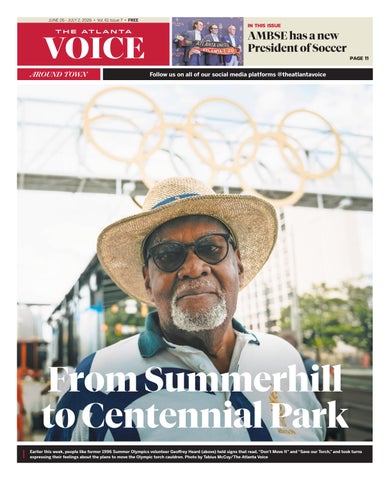
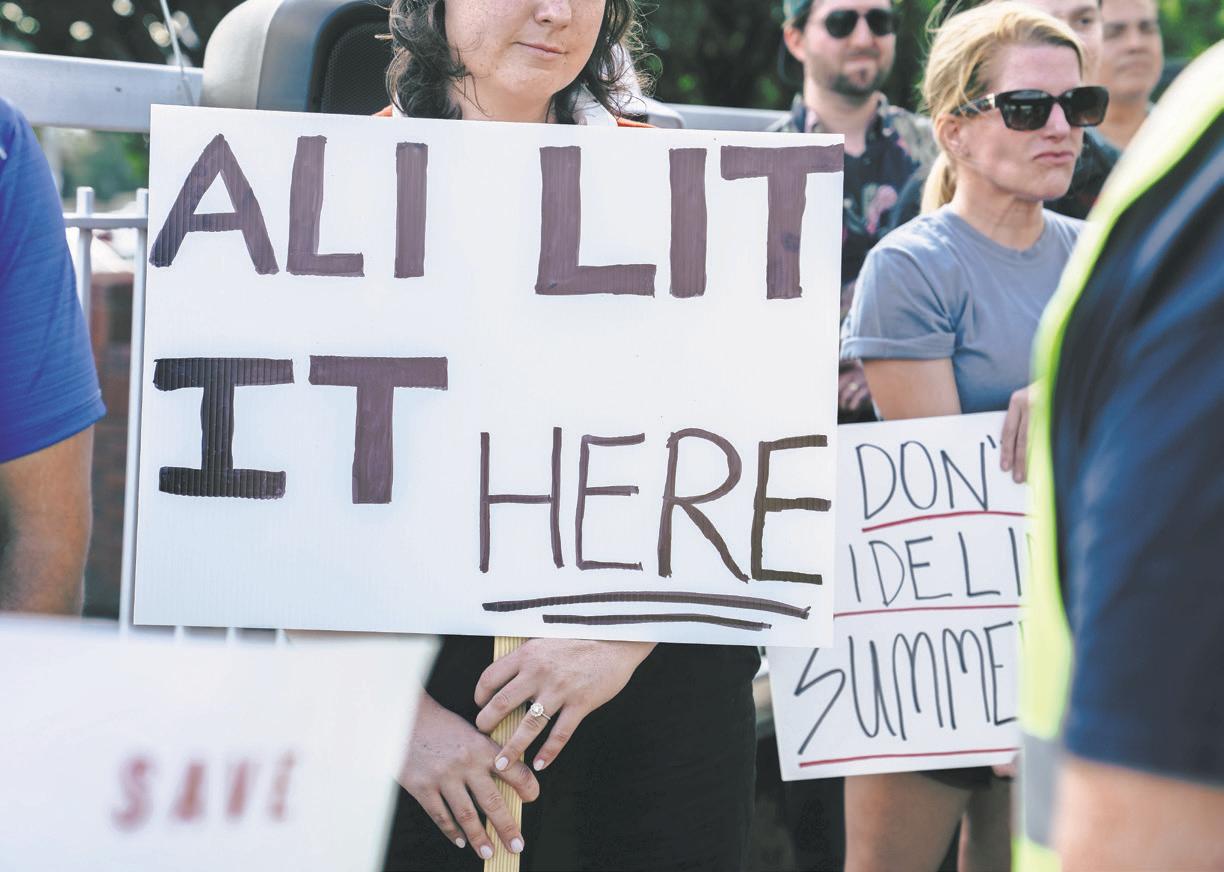
People held signs that read, “Don’t Move It” and “Save our Torch,” and took turns expressing their feelings about the plans to move the Olympic torch cauldron.
The Olympic cauldron, first lit by the late globally recognized boxing legend Muhammad Ali in the summer of 1996 in Summerhill, may be removed from its tower home and placed in Centennial Olympic Park. Georgia State University and the University System of Georgia are behind the move, and did not reach out to local groups such as the Summerhill Neighborhood Development Corp., Organized Neighbors of Summerhill, and interested parties such as Columbus Ward. An original member of the community group SMP, acronym for the three neighborhoods that now surround the Olympic cauldron, Summerhill, Mechanicsville, and Peopletown, Ward was in attendance for the “Save Our Torch” rally in Summerhill on Monday night.
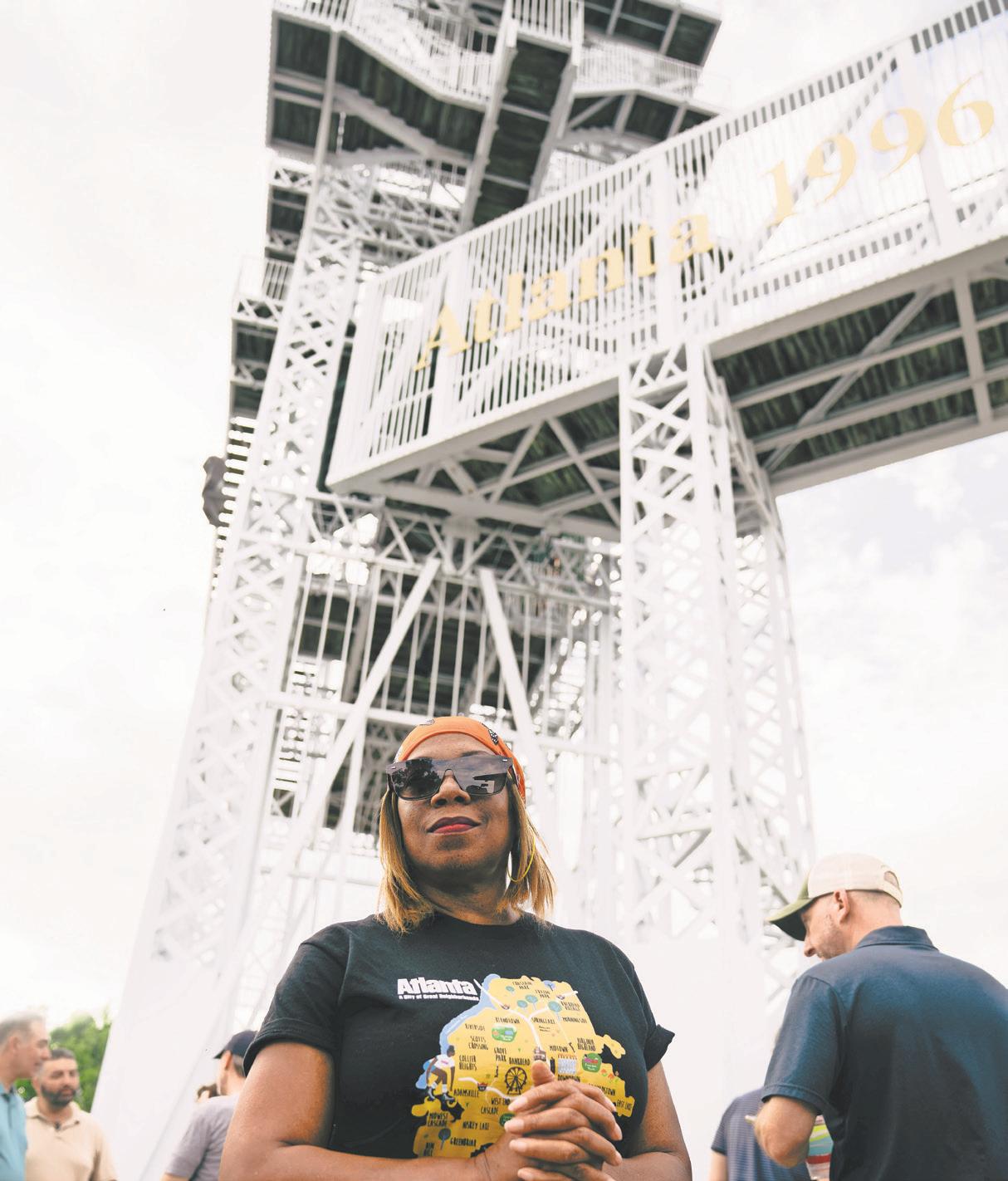
Ward, like many other people, remembers the promises made to SMP residents when Atlanta landed the Summer Olympic bid in 1990. The level of displacement that occurred downtown in anticipation of and preparation for the Games changed Atlanta’s landscape. Many people use the fate of Techwood Homes as an example of displacement that took place more than 30 years ago. Ward said many promises were made but not kept. He doesn’t understand why come back to Summerhill to make changes that are not necessary.
“We tried to work this stuff out because we knew there would be something,” Ward said. “There were promises made to the neighborhood, and we just want them to keep their promise.”
The fact that Summerhill is one of Atlanta’s longest-standing Black neighborhoods has made some of the people at the rally, most of whom were not Black, question the reasoning for moving the torch. A meeting with Georgia State officials and the Board of Regents was scheduled for Tuesday, June 23, but it was canceled. There are tentative
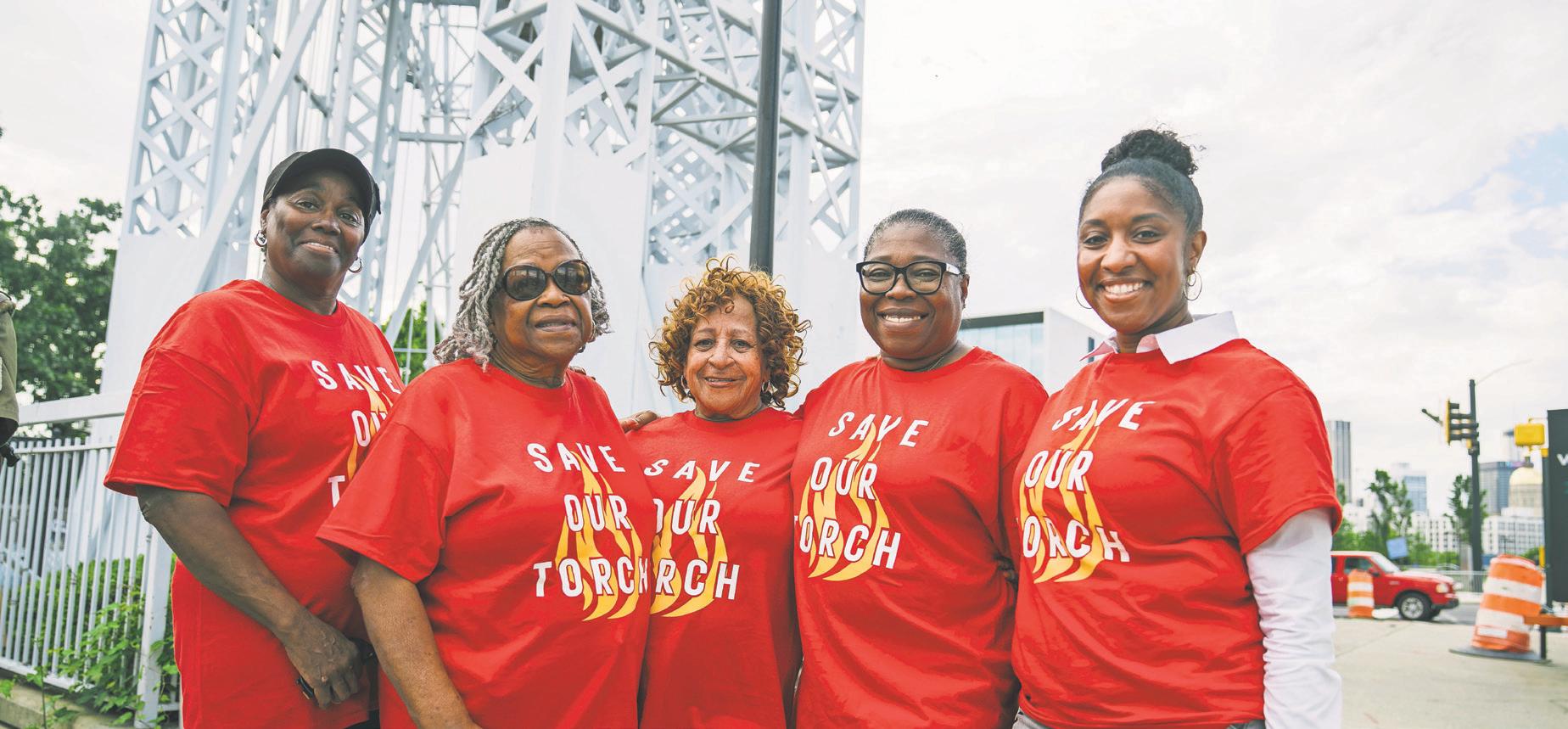
plans to have the meeting after the Independence Day holiday. There has been no public explanation for the move yet.
“Who would have thought this would have been a conversation?” said Atlanta native and educator C. Delores Lee-Furlow. “This is something worth rallying for. Power to the people.”
The back of Lee-Furlow’s t-shirt read, “Ask Me About My Hood.”
Georgia State Representative Phil Olayele grabbed the microphone and faced the small crowd of people gathered under the Olympic torch. He told them that he came straight over from the State Capitol, where his fellow representatives were taking part in a redistricting special session. Olayele represents District 59, but wanted to be clear that Summerhill and, more specifically, the Olympic torch belonged to all Georgians and should not be moved.
“It’s who we are,” Olayele said. “So keep fighting and using your voice.”
Olayele cited the large gatherings inside the State Capitol on the first day of redistricting, Wednesday, June 17, as an example of what people can accomplish when they are on the same page.
Cheron Pitchford, the executive director of the Summerhill Neighborhood Development Corporation, believes the move says more about the disrespect for Summerhill’s residents and less about anything expansion plans Georgia State
University may have.
“This is not a symbol, it’s a marker,” Pitchford said of the cauldron. “This is the actual place where this happened. It’s disrespectful to our community.”
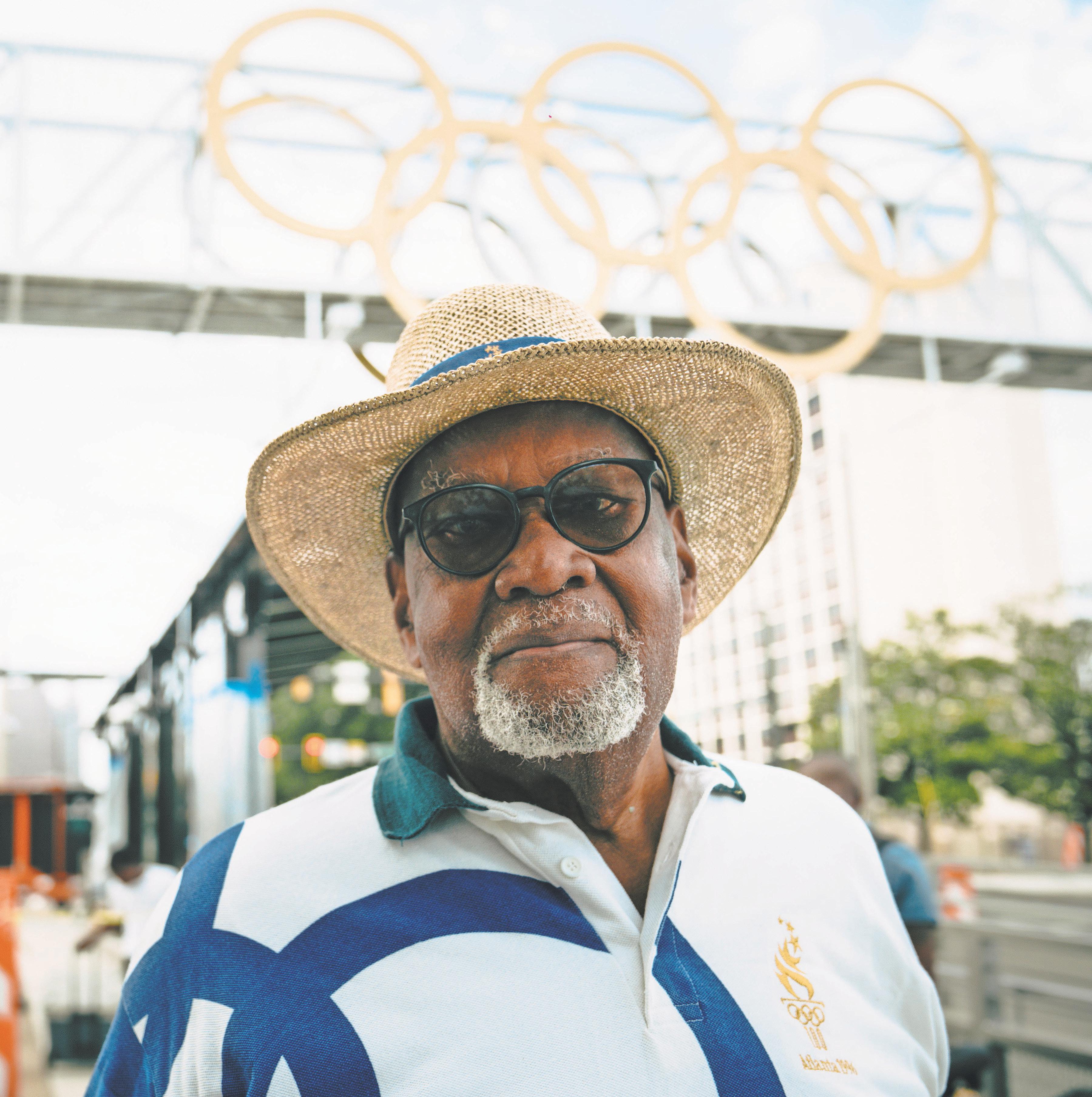
An older man leaned against a black SUV and watched the rally as people periodically walked over to him to pay their respects. Geoffrey Heard grew up in Elberton, Georgia, but moved to Summerhill as a young man to live with relatives. A member of the volunteer staff for the 1996 Summer Olympics, Ward dressed for the occasion, wearing his original Olympic straw hat and striped polo shirt. He was here before the torch was lit and has fond memories of the night Ali lit a torch, shining a bright light on his adopted home.
“I think this is another opportunity for the power structure to take advantage of the community. A community that has been taken advantage of for years,” Heard said. “This community has suffered for so long, to remove this marker now, that’s like moving a piece of history.”
Heard said that it doesn’t make any sense to remove historical markers. The plans do not include removing the bridge, which can be seen from miles away and includes golden Olympic rings.
“Nothing against Centennial Olympic Park, but this is where the Olympics began,” Heard said. “To take the cauldron would be an insult to this community.”
By LAURA NWOGU
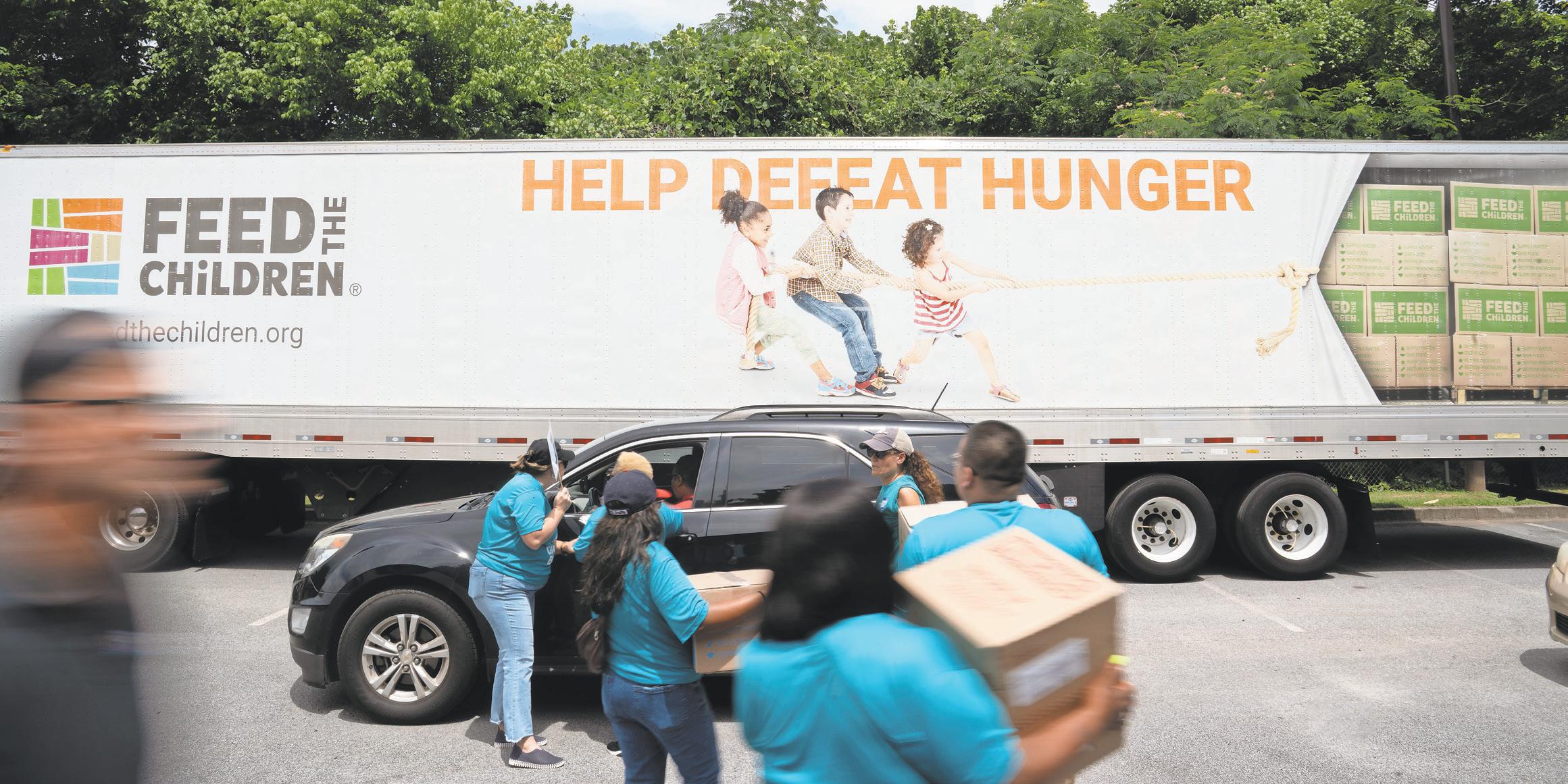
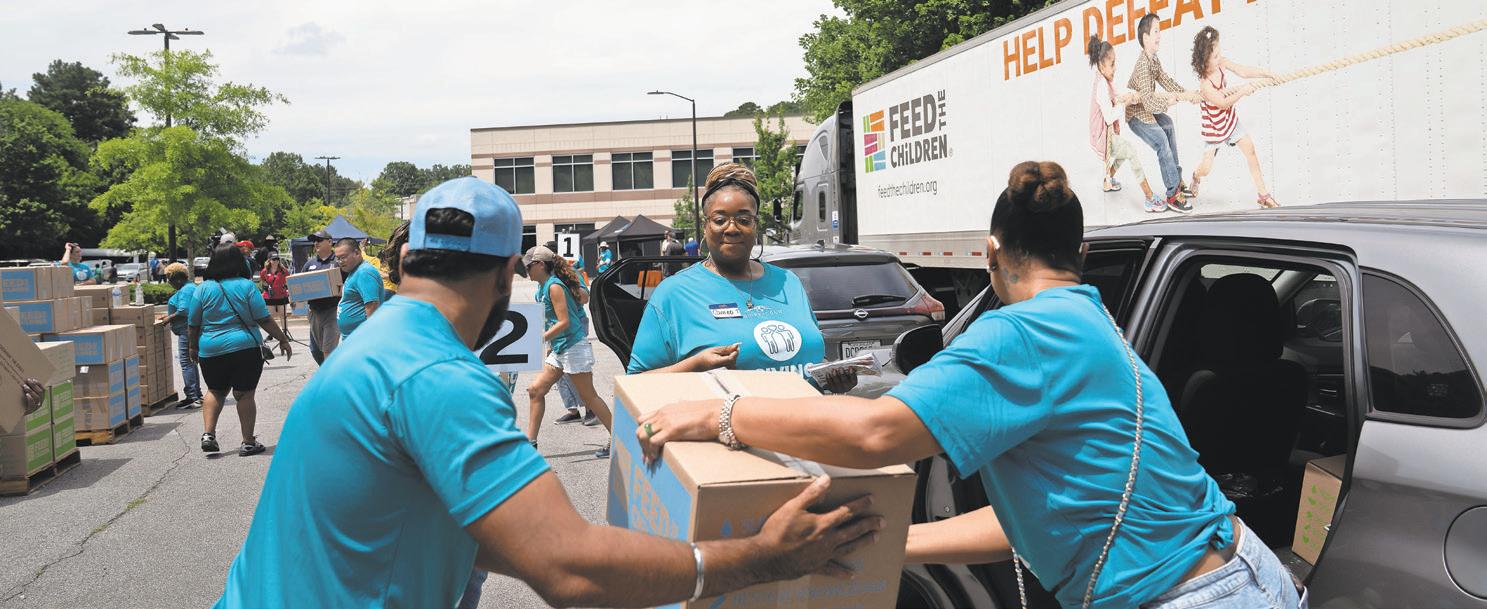
Boxes of free food items and personal care products were stacked up outside of the Andrew and Walter Young Family YMCA on Wednesday afternoon as a DJ spun records and 400 families lined up in their cars to receive what, for many, would be a great help as inflation continues to impact households.
“This is how you give back to the community,” a woman yelled from inside her car. She gave a thumbs-up to the Americold volunteers who were preparing to greet the families and load cars. “I love it.”
In partnership with Feed the Children and Boys & Girls Clubs of Metro Atlanta, Americold hosted a resource rally to support 400 families experiencing hunger and hardship across the Metro Atlanta area. Distribution was on a first-come, first-served basis, with each family receiving a 25-pound box of shelf-stable food and a 15-pound box of essentials, including personal care items such as wet wipes, Dove soap, and sunscreen.
“Tonight, one in four children is going to go to bed hungry somewhere in the world. Those numbers are staggering, and we think that they’re unacceptable,” said Colleen Ridenhour, the chief growth and strategy officer at Feed the Children. “Today, you are part of the hope in changing that reality. You are part of us changing those statistics, and we know that if we provide families with the food and essentials that they need to stay healthy, they are able to help their children develop and grow. They’re able to help their children’s development and dreams.”
The resource rally marked Americold and Feeding the Children’s tenth year of partnership. In that decade, Ridenhour shared that they’ve delivered more than 1.9 million meals, impacting more than 400,000 families. Together, the organizations have distributed more than 2.1 million pounds of food.

“The impact that we’ve been able to have through this partnership and the communities in which we operate and live and serve has a huge impact on us as an organization,” said Rob Chambers, the CEO of Americold. “We’re fortunate to be at a mission-driven company that has such an organic mission of helping our customers to feed the world, and being able to live that through this partnership for the past 10 years has meant as much to us as it has to the communities where we’ve been able to give back.”
By By JOSEPH WILLIAMS
Most Americans have never heard of Josh Hokit, and probably couldn’t pick the failed pro football player-turnedUFC fighter out of a photo lineup.
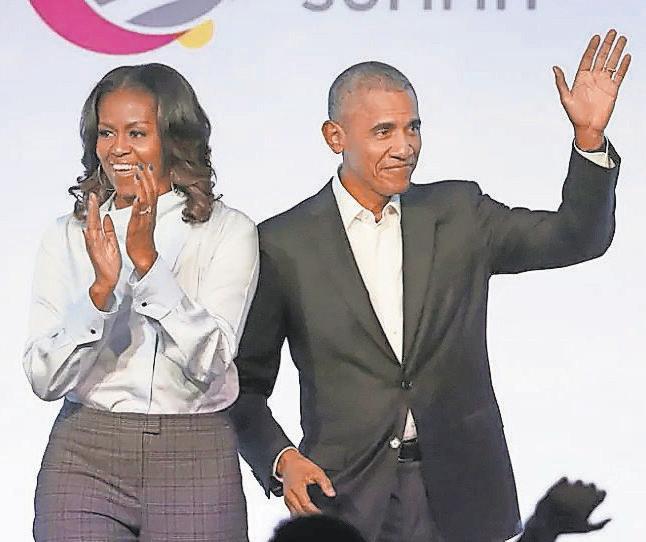
But on Sunday night, after winning the biggest fight of his life on the White House lawn in front of President Donald Trump, Hokit decided that directing a line of tired, worn-out misogynoir at former First Lady Michelle Obama would extend his 15 minutes of MAGA fame.
So, flush from victory in the ring, Hokit blathered into a mic during a post-fight interview that Michelle Obama is “a man” — resurrecting a bizarre, far-right conspiracy theory that also echoes one of the oldest tropes in the racism handbook.
Welcome to the MAGAverse
What he said was nothing new; the bigoted lie about Michelle Obama dates to former President Barack Obama’s first run for the White House in 2008. Hokim’s outburst matters, though, because it happened on a prominent platform at the center of American power.
Put another way: the problem isn’t that some meat-headed journeyman fighter insulted Black America’s forever first lady. The problem is that he felt free to do it with his whole chest, in front of the nation’s chief executive, on live TV, before millions of viewers. And his audience barely flinched.
Outraged critics on the left have demanded that Trump condemn Hokit, though few of them are holding their breath. For nearly a decade, Trump has refused to apologize for offensive, racist rhetoric — particularly if it demeans his political opponents or revs up the MAGA base. Still, the incident begs a larger question: why, more than a decade after her family left the White House and she became a private citizen, has Michelle Obama remained a target of far-right attacks that question her womanhood, appearance, and humanity?
The answer lies at the intersection of political grievance, sexism, and good, old-fashioned racism.
Analysts say white men like Hokit see changing demographics,
shifting gender roles, and the rise of powerful women like Michelle Obama as evidence that America is leaving them behind. At the same time, Trump’s willingness to indulge them, by saying the quiet, racist part out loud, is the fuel that powers his political engine.
It helps explain why a tasteless insult from a second-rate MMA fighter — something that might otherwise have disappeared into the noise of social media — found an audience online. For red-pilled denizens of the manosphere, Hokit’s idiotic barb was a declaration of cultural allegiance at a time when white male resentment has become its own identity.
For the former first lady, however, the attack is nothing new. Since entering the public arena, activists on the right have described or depicted Michelle Obama as nearly every ugly racial stereotype — from an angry Black woman to a gorilla. But those attacks aren’t original, either; rather, they are merely updates to a very long history of white America diminishing and denigrating Black American women.
‘A Disgrace’
Malcolm X once said, “The most disrespected person in America is the Black woman.” That statement played out in real time after Trump returned to power, when some 600,000 Black women — branded unqualified DEI hires, non-essential employees or both — lost their
jobs, many of them during the White House’s Department of Government Efficiency purge last year.
Moreover, the Hokit controversy erupted at perhaps the most symbolic venue imaginable: a UFC fight card staged to celebrate Trump’s 80th birthday and the upcoming 250th anniversary of American independence. The setting, and the occasion, symbolized how thoroughly Trump has blurred the lines between politics, white grievance, and entertainment spectacle.
On social media, critics slammed Hokit, including former NFL star Robert Griffin III. He called the fighter’s statement “a disgrace. It takes a really small man to use his biggest moment to attack a woman by calling her a man.”
Jemele Hill, a prominent Black sportswriter and author, used sarcasm to make her point: “Nothing says let’s celebrate America quite like that. Truly special.” Even UFC president Dana White — a staunch Trump ally and, to a degree, Hokit’s boss — said the fighter’s “nasty” remarks had no place in the sport.
But Sen. Rafael Warnock, a Georgia Democrat who also presides over the historic Ebeneezer Baptist Church in Atlanta, got to the heart of the matter. Appearing on MSNow, Warnock said Michelle Obama’s accomplishments — including degrees from Harvard and Princeton and a successful legal career before entering the White House — are meaningless to Hokit
and his supporters, who refuse to see Black people as fully human.
“This harkens to the darkest days of our country’s history,” he said. “This is not political speech. This is immoral speech. This is bigotry. This is evil come alive in words, because words have power.”
Meanwhile, Trump himself has repeatedly and unapologetically pushed ideas and rhetoric that have lived on the fringes of American political life. He launched his career attacking President Obama, pushing the racist “birther” conspiracy theory; over a decade, Trump has normalized insults and personal attacks that presidents of either party would have considered beneath the office. His boorishness, experts say, helped create a permission structure in which racist or sexist attacks that should be disqualifying are anything but.
Against that backdrop, Hokit’s verbal assault on the former first lady felt less like a random, isolated outburst than a continuation of Trump’s long-running campaign of “othering” the nation’s first Black first family. Still, it went beyond a crude attack by a no-name MMA fighter.
Historians, Black feminist scholars, and media researchers have long documented how prominent Black women are subjected to remarks that question their femininity, portray them as angry or physically threatening, and cast them as somehow outside traditional (read: white) womanhood. It fits into the American tradition of policing Black women’s bodies, gender, and public visibility, dating back to slavery. But there’s a hidden, present-day danger. When slandering Black women becomes routine, Black women stop being recognized as human. They become jokes, memes, talking points, and applause lines. Yet the persistence of those attacks says less about Michelle Obama than it does about a culture still struggling to accept powerful Black women on their own terms.
Clearly, the nation’s first Black first lady — glamorous, accomplished and unapologetic — still lives, rentfree, in the minds of Trump and his MAGA supporters. As long as that’s the case, misogynoir against her, and against Black women in general, will never go out of style.
FOUNDED
May 11, 1966
FOUNDER/EDITOR
Ed Clayton Immortalis Memoria
PUBLISHER/EDITOR
J. Lowell Ware
Immortalis Memoria
The Atlanta Voice honors the life of J. Lowell Ware.
PUBLISHER
Janis Ware
PRESIDENT/ GENERAL MANAGER
James A. Washington 2018-2024
COO Richard Dunn rdunn@theatlantavoice.com
DEVELOPMENT SPECIALIST
Jazmine Brazier jbrazier@theatlantavoice.com
EXECUTIVE ASSISTANT TO PUBLISHER
Chia Suggs csuggs@theatlantavoice.com
EDITOR IN CHIEF Donnell Suggs editor@theatlantavoice.com
GENERAL ASSIGNMENT REPORTERS Laura Nwogu lnwogu@theatlantavoice.com Noah Washington nwashington@theatlantavoice.com
BUSINESS REPORTER
Tabius H. McCoy tmccoy@theatlantavoice.com
EDITOR AT LARGE Stan Washington swashington@theatlantavoice.com
ADVERTISING, SALES & CIRCULATION
ADVERTISING ADMINISTRATOR
Chia Suggs advertising@theatlantavoice.com
SALES
RDW Jackson rdwadman@gmail.com
SUBMISSIONS editor@theatlantavoice.com
DIRECTOR OF PUBLIC RELATIONS
Martel Sharpe msharpe@theatlantavoice.com
CONTACT INFORMATION
633 Pryor Street, S.W. Atlanta, GA 30312 Office: 404-524-6426 info@theatlantavoice.com

By LAURA NWOGU
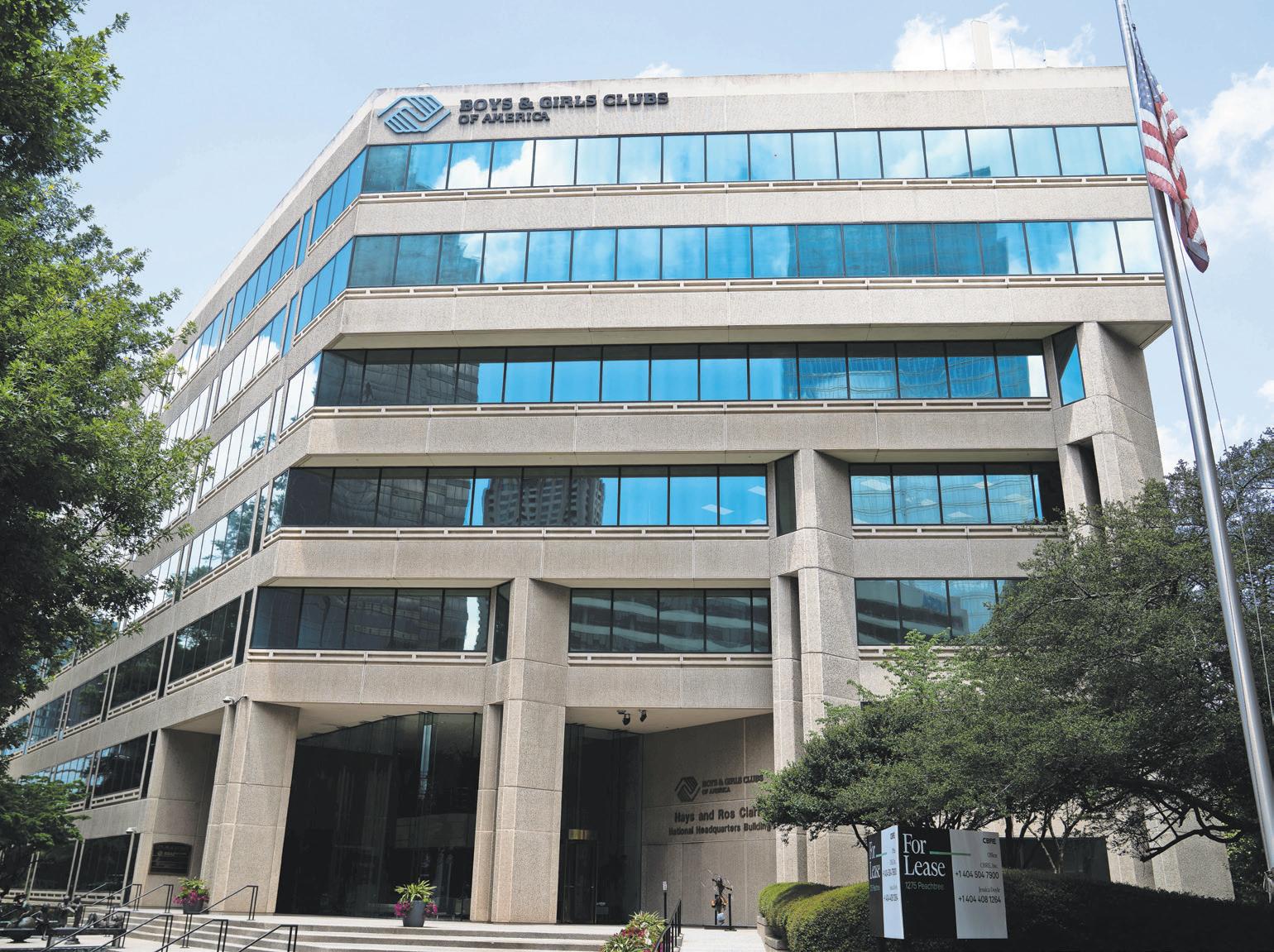
Free Game Academy, an educational organization that provides free tutoring, mentorship, virtual exam prep, and academic resources for K-12 students, is hosting an inaugural “Level Up” celebration on June 27 to honor 100 nominated students from Atlanta and Jackson, Mississippi. The event will take place at the Boys and Girls Club in Chamblee from 10:30 a.m.4:30 p.m. to celebrate the academic growth, persistence, and personal development of students in fourth through eighth grade, with a variety of activities, experience zones, and giveaways.
In partnership with The Robinson Legacy Foundation, Huntington Bank, Target, Coca-Cola, and other community partners, Free Game Academy has curated an event that is not only focused on fun and development but also cheering on students who are leveling up to the next grade.
“This event is to galvanize and to celebrate education, because we want them to know that this is the moment in time you need to celebrate going to the next grade and the communities that surround them,” said Natasha
Reed, a coach for Free Game Academy. “We always try to focus on making education accessible, especially to our rural area students who don’t have as many options as our inner city students. We partner with a lot of brands to provide free resources, free prizes, free gifts, and to make education more fun, more engaging, and more rewarding.”
The celebration will feature activations focused on exploring self-expression, manners and professional readiness, financial literacy, digital and gaming, and providing lunch and a place for guardians and parents to connect and share what they need.
“A lot of times when you talk about students, people forget about the parents, and the parents are a big part of their village, as are the educators … we try to empower all the way around,” Reed said.
The event will close with an evening at Big Play Entertainment Center in Atlanta. If this sounds like something a student in your life would be interested in, Free Game Academy is currently giving away 20 complimentary passes available on their socials at https://linktr.ee/ freegameacademy.








By LAURA NWOGU
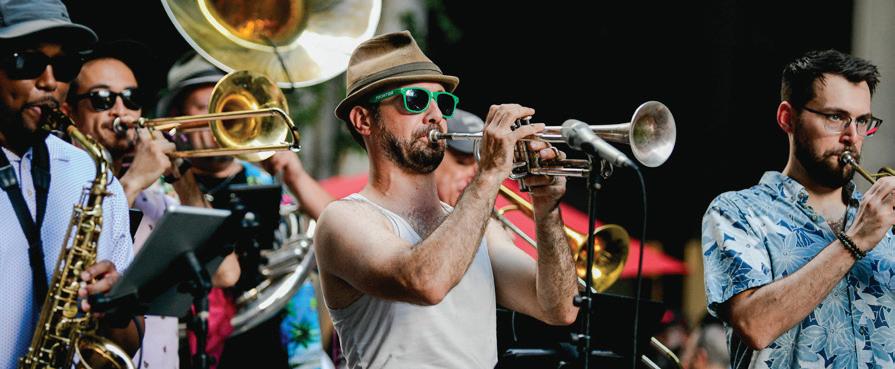
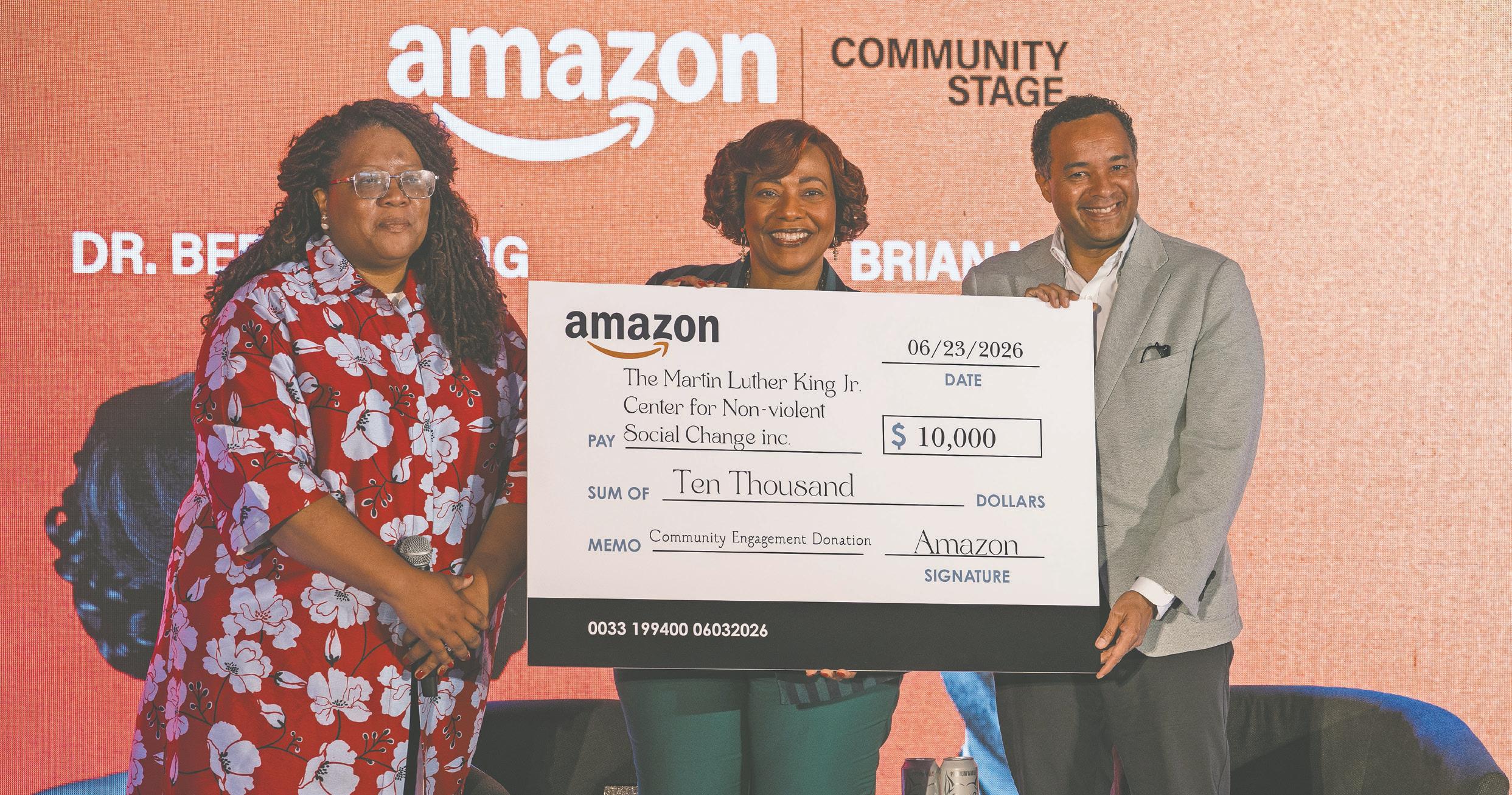
The Atlanta Cultural Exchange is underway and has transformed the CTR (former CNN Center) into a hub for live culture, creative performance, and global exchange during the FIFA World Cup. While Tuesday was a break from the FIFA Fan Festival, located just steps from the CTR, the building was alive with panels from headline keynote speakers such as King Center CEO Dr. Bernice King.
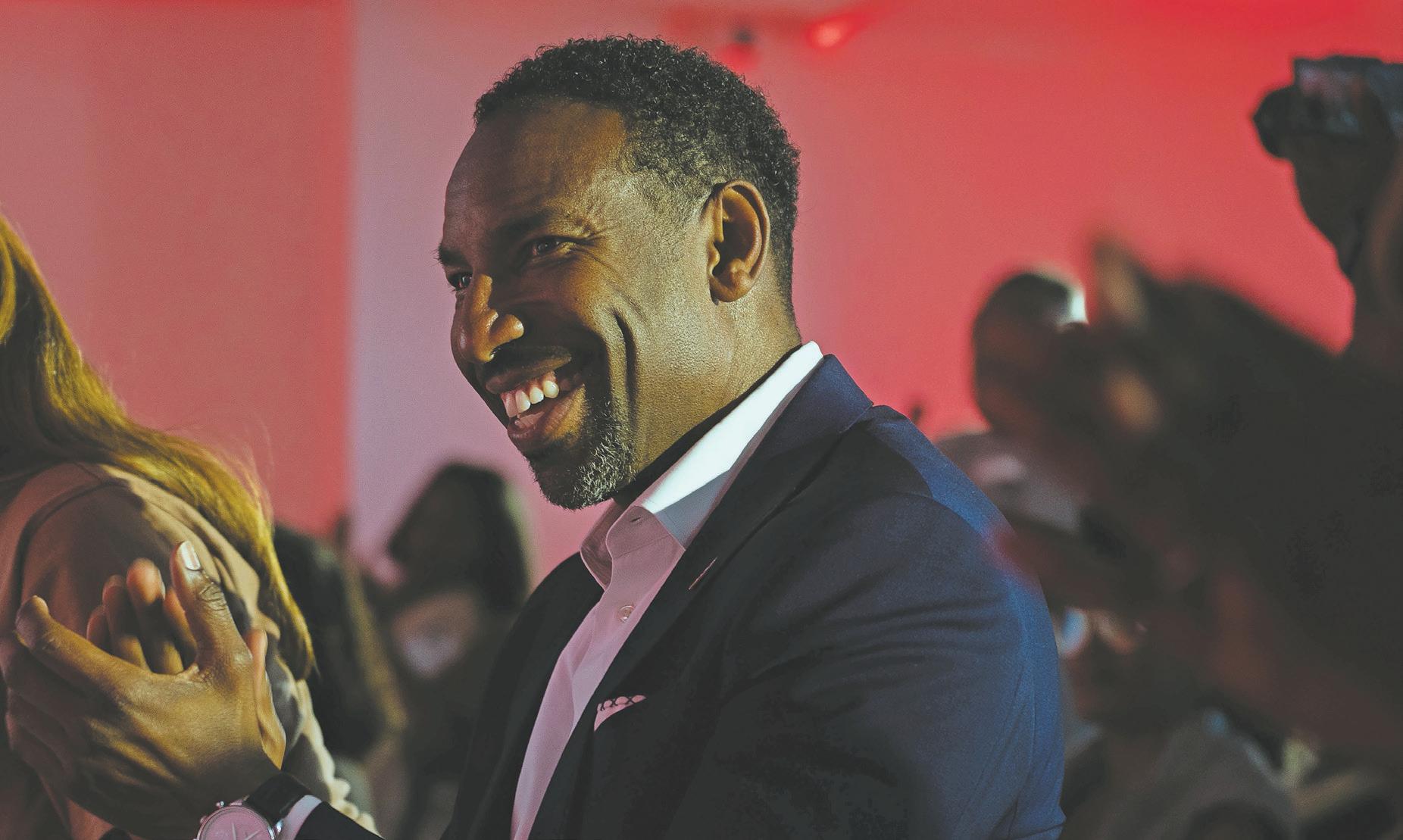
While Atlanta Mayor Andre Dickens sat in the front row, the global director of community engagement at Amazon, Brian Kenner, sat down with King to talk about the Atlanta community and the role technology plays in connecting people worldwide.
Kenner touched on Martin Luther King Jr.’s vision for a community where people advance the principles of justice, social responsibility, and love. He questioned how technology and increased connectivity could help us toward that vision today.
“ We have to always remember
that technology is a tool. It is an amazing tool that has had the ability to connect us in ways that we never dreamed or thought of, but in
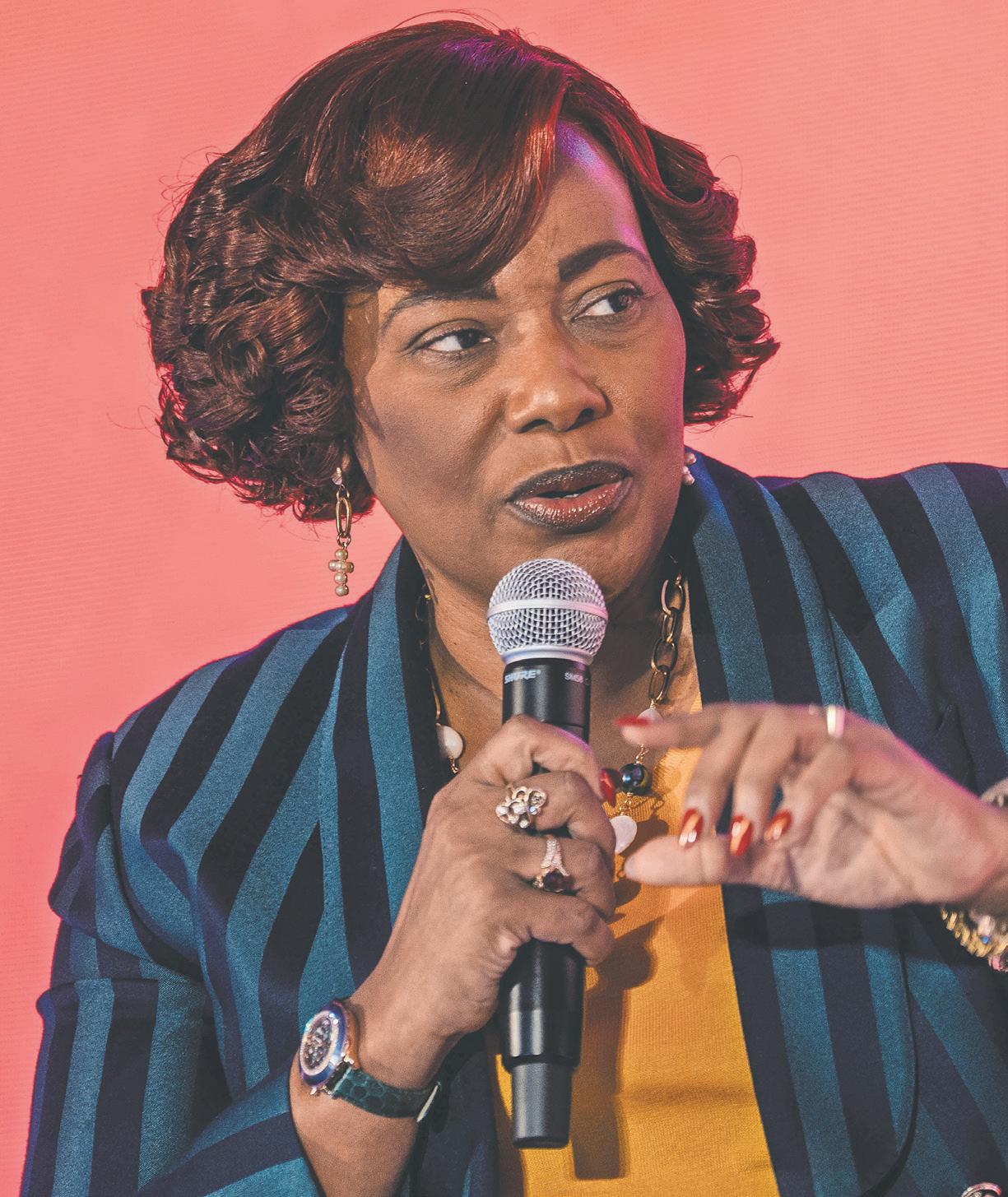
approaching it, we always have to remember that we have to balance our humanity with technology,” King said. “We have to always stay connected to our compassion, our care, and our humanity.
King commended the Atlanta community for the progress it’s made in increasing economic developments while bridging gaps and building protections against
displacement. King reminisced about the time when Atlanta’s white population refused to honor her father after he was awarded the Nobel Peace Prize in 1965. After a push by former Atlanta Mayor Ivan Allen and threats by Coca-Cola leaders Robert Woodruff and Paul Austin to relocate the company’s headquarters, King was honored with a dinner.
“I remember one of the most inspiring quotes of my father, and I want y’all to sit with this, because I’m still sitting with it. He said, ‘Life at its best is the creative synthesis of opposites in perfect harmony,” King said. “Now, for my father, it was about, when you have all of these differences, how do we wed these threads of truths that come from different perspectives?”
By NOAH WASHINGTON
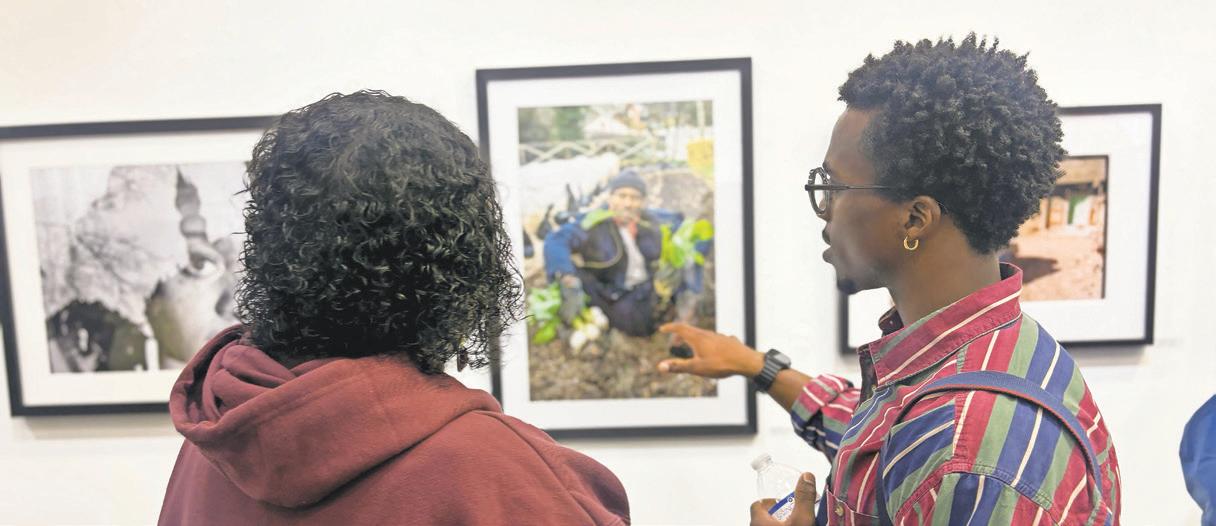
Last week, the Atlanta Photography Group opened two new exhibits for viewers: “#filmisnotdead 2026,” a celebration of analog photography, and “Joy and the Everyday 2026,” an exploration of joy in everyday life. Both exhibitions will be on display through July 17, 2026.
“#filmisnotdead 2026” drew submissions from photographers for a show built entirely around what film can do that digital cannot. Selections were made by Michael Behlen, founder and publisher of Analog Forever Magazine, who has spent years championing the work of emerging and established film photographers.
Among the artists featured in the film exhibition is The Atlanta Voice business reporter/photographer Tabius McCoy.
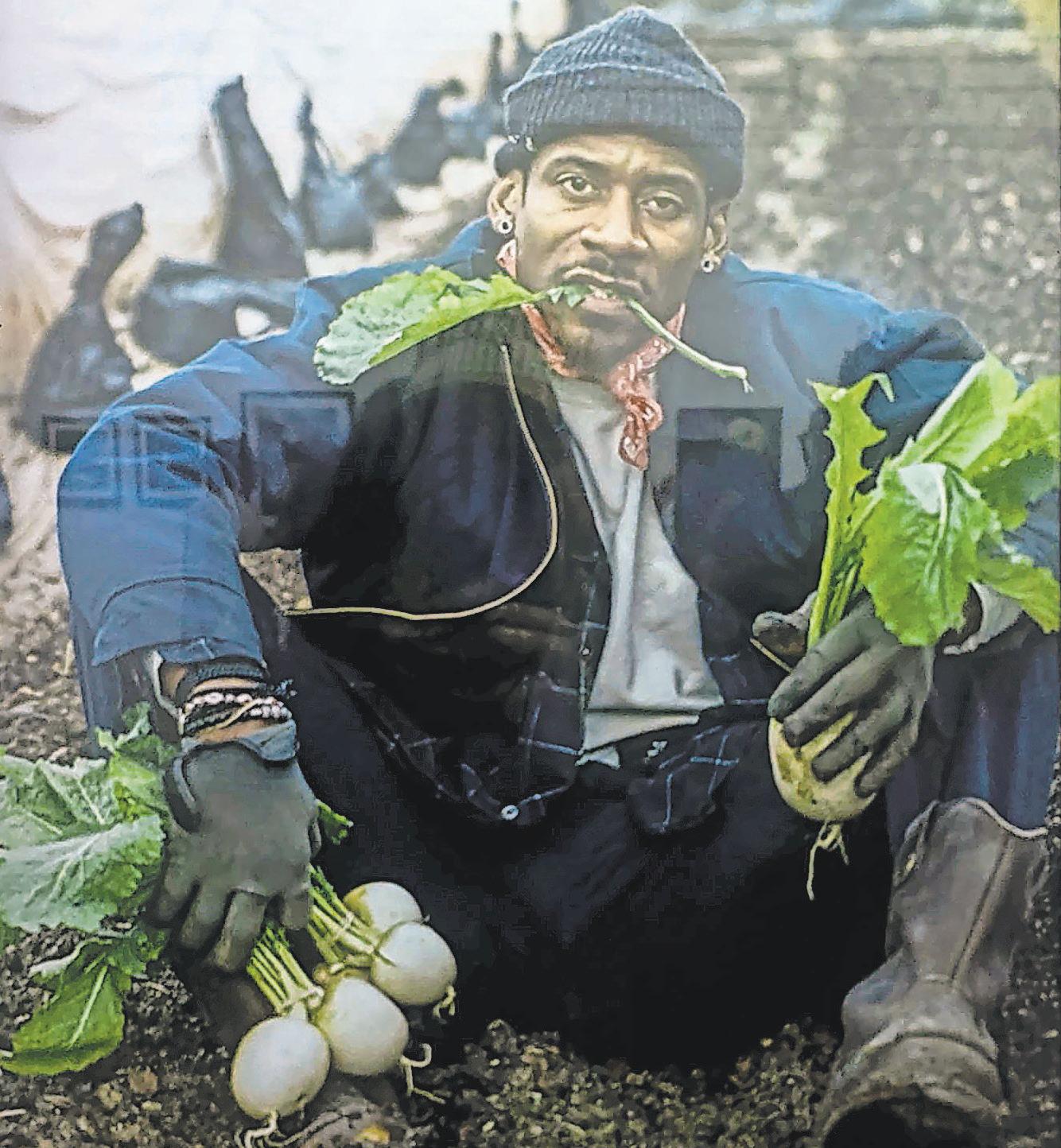
McCoy’s image was shot outside Patchwork City Farms in Atlanta’s Oakland City neighborhood, part of a longer project documenting Black farmers that he began after moving back to Atlanta in 2024.
“I began sort of going back to looking at my ancestors,” McCoy said.
The photo, taken in 2024, shows a farmer biting into a radish, an unposed moment McCoy said he didn’t direct.
“I didn’t ask him to do that,” McCoy said. “I just kind of waited for the moment.”
McCoy said he had quietly posted the image on Instagram before deciding to submit it to a film-specific show.
“This is always one of my favorite photos, so why not submit it on film?” McCoy said.
He said he hopes the image, like the rest of his ongoing series, challenges assumptions about who works the land.
“If you go look up a farmer now on Google, nine times out of 10 are not Black,” McCoy said. “I want people to kind of see that Black people do grow in agriculture, I want every photo to feel like my grandma and granddad’s photo book.”
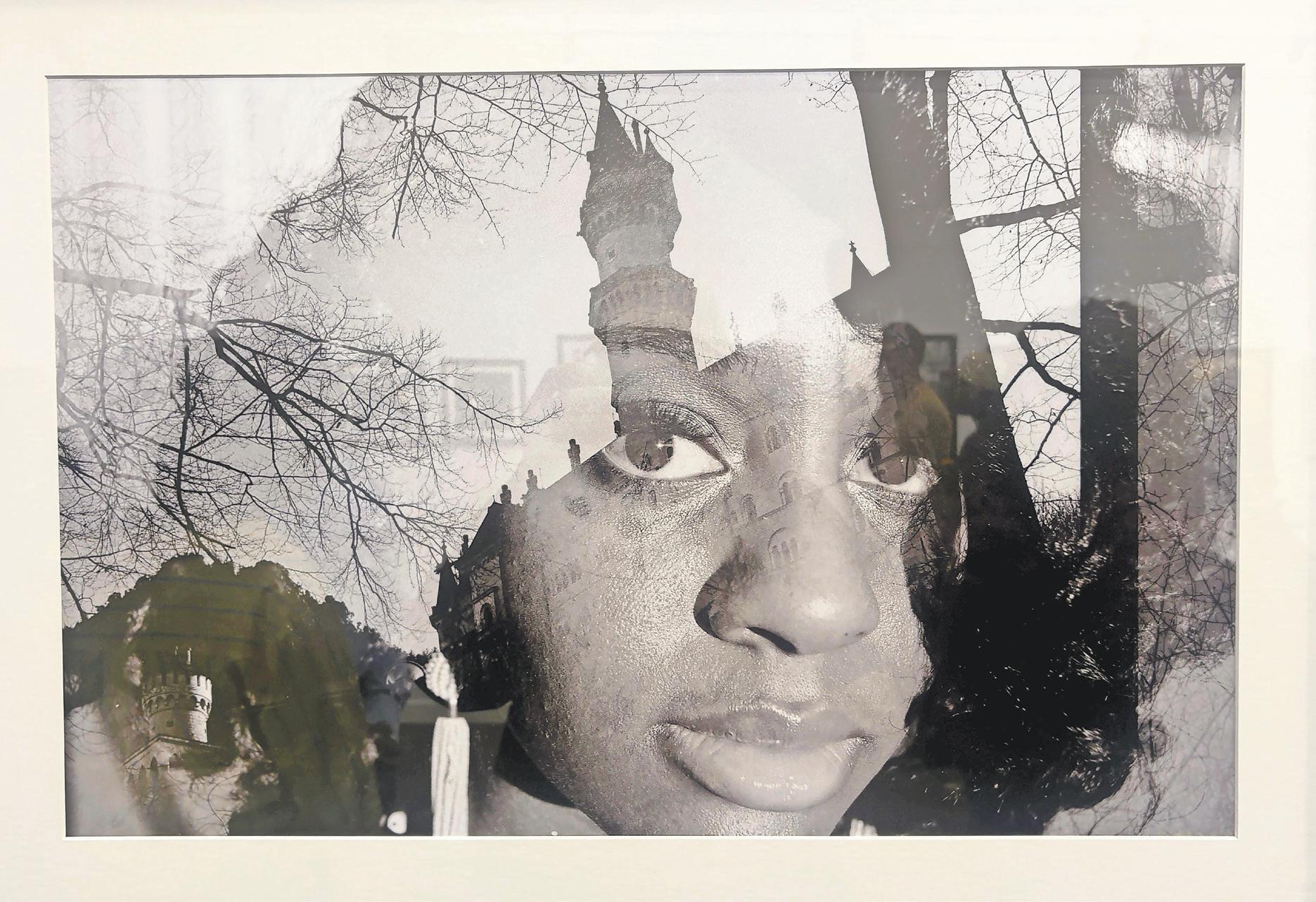
Another artist featured in the exhibit is Atlanta photographer Calvin Tigre. Tigre’s photo on display is a double exposure he never intended to create. He said he bought a camera on Facebook Marketplace that came loaded with an old roll of film and shot over it, not realizing the roll wasn’t blank.
“I thought my photos were messed up, I thought something had gone
rolls through his part-time job at a camera store and deliberately shoots over them, without knowing what will surface.
“Sometimes it’s ugly, but in a beautiful way as well,” Tigre said.
He said the layered effect is only possible because of how long the original film sat unused.
“The first exposure sat on that roll of film for 30, 40, 50 years until I came along and shot over the top of it, and then developed it,” Tigre said. “So it’s only doable on the analog medium.”
wrong because they had been double exposed with something else,” Tigre said. “But upon further inspection, I realized what a gift from the photo gods.”
The image layers a portrait Tigre shot of his wife over what appears to be a German castle, captured by a
stranger years before Tigre was born.
“My composition and the original photographer’s composition lined up perfectly to create what you see,” Tigre said.
Tigre, who has shot film for about six years, now seeks out abandoned
The second exhibition, “Joy and the Everyday 2026,” was juried by Emilia Mickevicius, Ph.D., Norton Family Assistant Curator of Photography at the Center for Creative Photography. The show explores how photographers find and capture joy in ordinary life, whether through a striking view, a quiet street scene, or
an object someone holds dear.
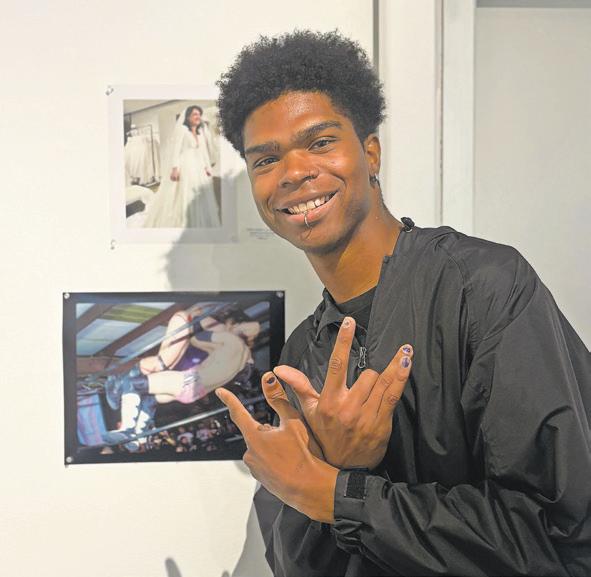
Genesis Tillman, a 29-year-old Atlanta-based photographer who documents events in a gonzo journalism style, is showing with the Atlanta Photography Group for the first time. His image was taken at Bimbo Con, an annual event in Asheville centered on queer advocacy and harm reduction.
“There will basically be tables where they’ll pass out pamphlets on things going on in Nashville that a lot of people aren’t really talking about, or even just in Appalachia, or in the country,” Tillman said.
Tillman said past editions of the event have included sport-oriented programming, and this year’s gathering featured wrestling, with a tiein to the Pride Wrestling Alliance.
“It was really, really cool, and nice to see a lot of people kind of make that happen,” Tillman said.
He said his image speaks to the show’s theme through resilience.
“When it comes to being queer in general, a lot of people’s bodies and livelihoods are essentially at risk,” Tillman said. “Bimbo Con itself was pretty much people just doing a lot more with less.”
By NOAH WASHINGTON
Cbrooks Gallery celebrated its first anniversary this month with an exhibition that turns the gallery’s walls into a playlist, bringing together 35 works by 26 artists, all centered on the sounds that have shaped Black culture.
Gallery founder Courtney Brooks opened the space on June 12, 2025, and chose Black Music Month to mark the milestone. The result is “Playlist,” a show encompassing the wide work of and genres of Black music; made with photography, mixed media, collage, and painting, each piece tied to a song, genre, or artist that inspired it.
“Music is my love language, and it’s a dedication to that,” Brooks said. “I wanted to share artists whose work expressed that in all different forms.”
Brooks included her own piece, “Breakin,” in the show, though she said she typically holds her work back. The piece, created in 2022, was first featured in Art Beats + Lyrics, the traveling art exhibition founded by Jamaal Barber. Brooks made it as a tribute to 50 years of hip-hop and to her lifelong love of breakdancing.
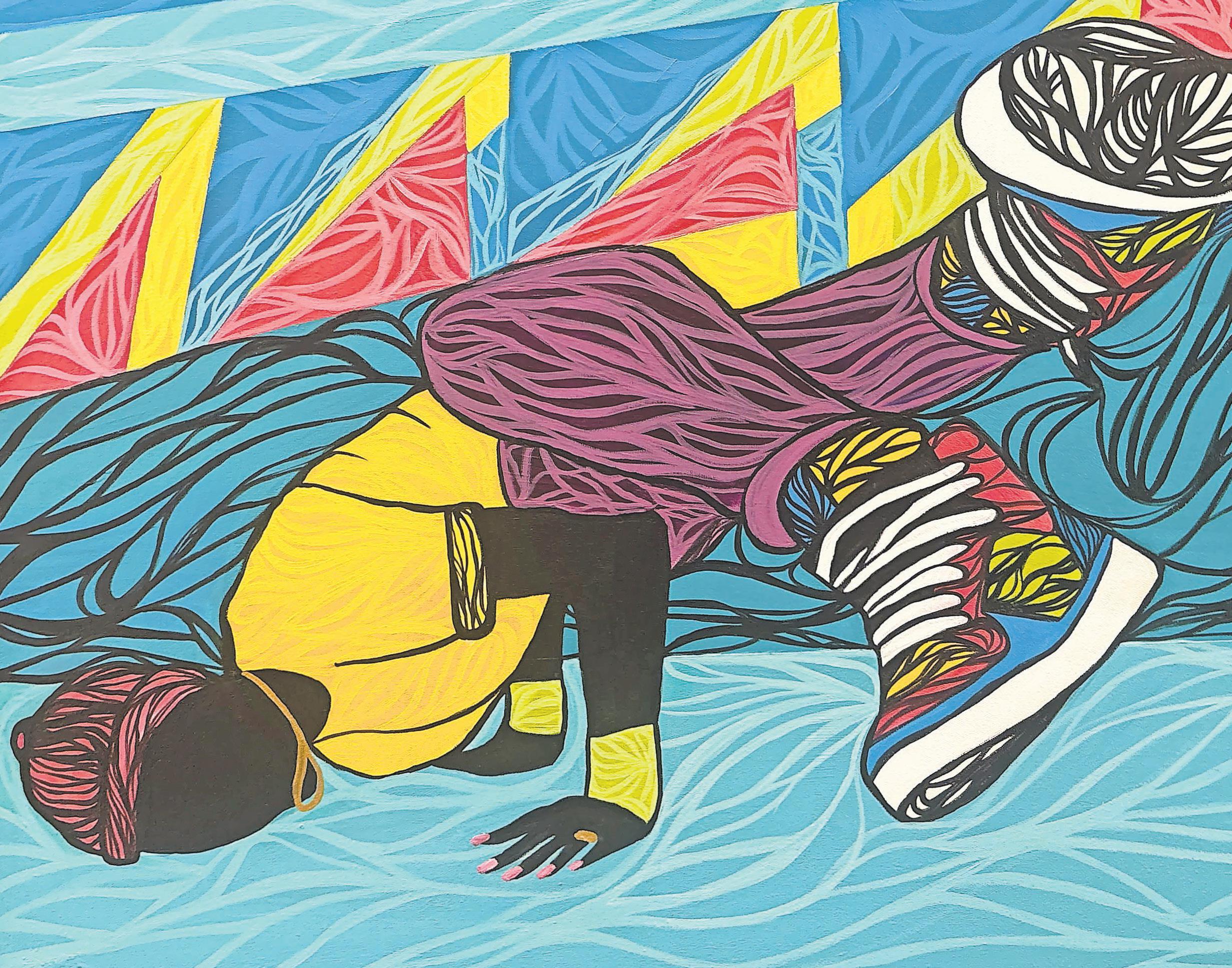
“I always wanted to be a fly girl, so dancing has always been like my special place in my heart,” Brooks said. “I found it would be a great piece to display in the show, and I realized there are no dancing pieces, so I was just like, okay, if it’s ready.”
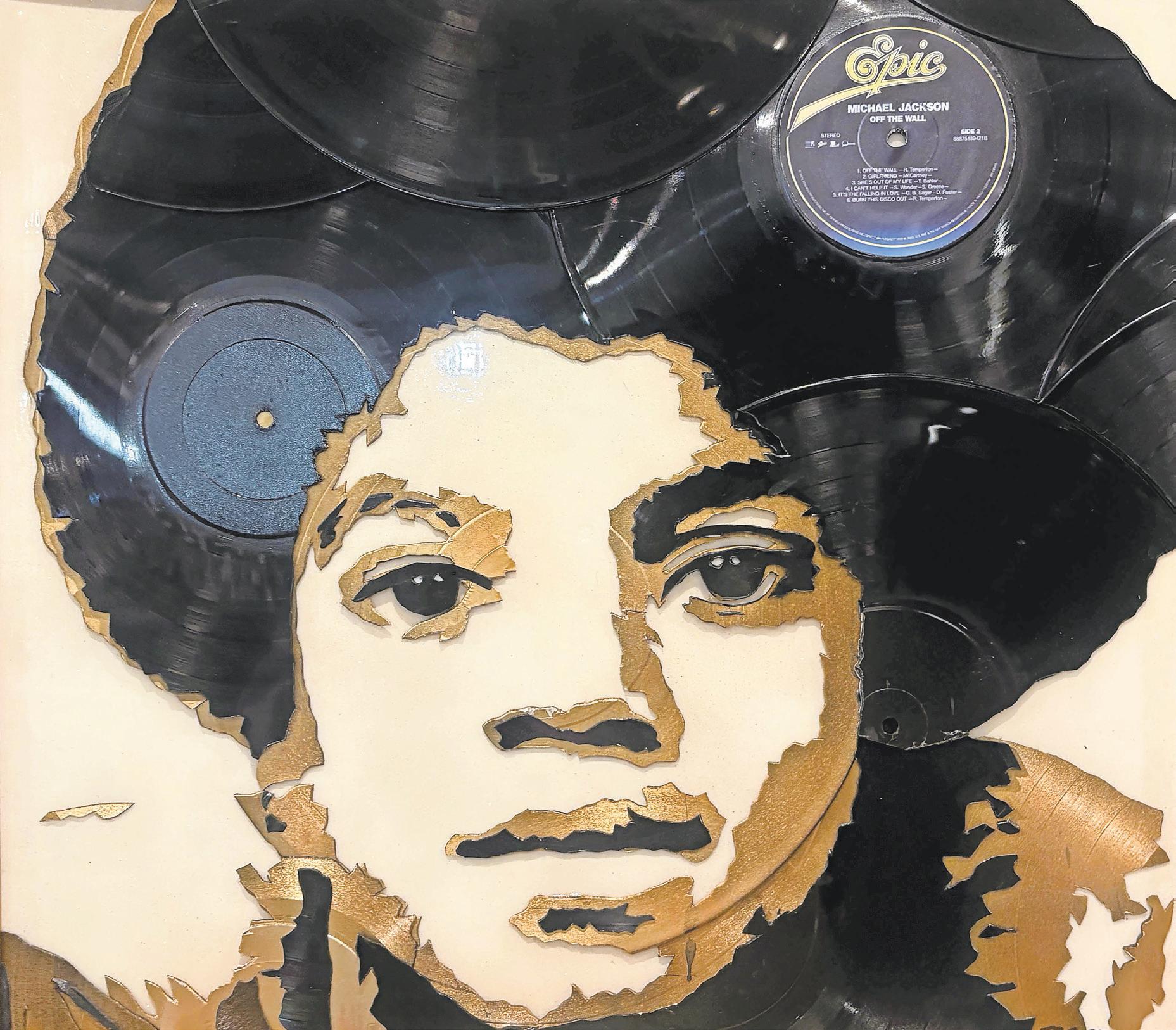
The exhibition moves across genres, from blues and gospel to reggae and go-go. A piece by Michael Johnson depicts a young Michael Jackson made up of record vinyl, while Brooks contributed a second
abstract work inspired by Maze and Frankie Beverly’s “Before I Let Go.”
“It’s just what music is and how music inspires us to create,” Brooks said. “It’s not necessarily just about the particular artist itself, but what that melody, what that tone, what that beat may bring to you when you’re creating.”
Among the artists in the show is Faif Quinn, whose digital photograph explores R&B as an outlet for emotional release. In an artist statement, Quinn described R&B as a vessel for “the catharsis of expressing this chaotic life,” tracing the genre’s blend of melancholy and joy as a reflection of Black American experience.
“This digital photograph displays that natural inner chaos against a gradient of melancholy, or blueness, much like the musical genre of its namesake,” Quinn said. “My hope is that it contributes a visual that dares to articulate that turmoil that R&B often contemplates.”
“Playlist” is Cbrooks Gallery’s sixth exhibition since opening and runs through Aug. 22. Brooks said the gallery has additional programming planned for July tied to the show.
Reflecting on the gallery’s first year, Brooks said she sees it as a gathering place as much as an exhibition space, one built to introduce new collectors to art while showcasing established and emerging talent side by side.
“I always curate my shows where we have established artists, up-andcoming artists, emerging,” Brooks said. “We’re always just trying to create more engagement and opportunities to learn and educate people about the artists and the work itself.”

By JATIKA HUDSON
Nearly 64 percent of Black children in America are vaccinated by 24 months of age. At almost every milestone—infant inoculations, first days of school, and traveling abroad—children need vaccinations to protect them from illnesses. Only 6.9 percent of children are unvaccinated in the United States, according to the Centers for Disease Control and Prevention. In Georgia, that number is 4.8 percent, according to Healthbeat Atlanta. Following a recent measles outbreak of around 2,000 cases, state leaders and medical professionals continue to strongly encourage vaccinations.
Even after the outbreak, some parents still choose not to vaccinate their children—not because they don’t love them, but because they love them beyond the fear that comes from the media, Big Pharma, and even healthcare professionals.
As a Muslim, at the start of every school year, Amina Ali obtains a religious objection to vaccination letter for her sons. She says the comments and looks she receives from other parents about not vaccinating her children haven’t, and still don’t, bother her. Ali, an Atlanta native and Grady baby, is unabashed about not getting her three sons—ages 3, 6, and 9—vaccinated. She carries with her a history of distrust
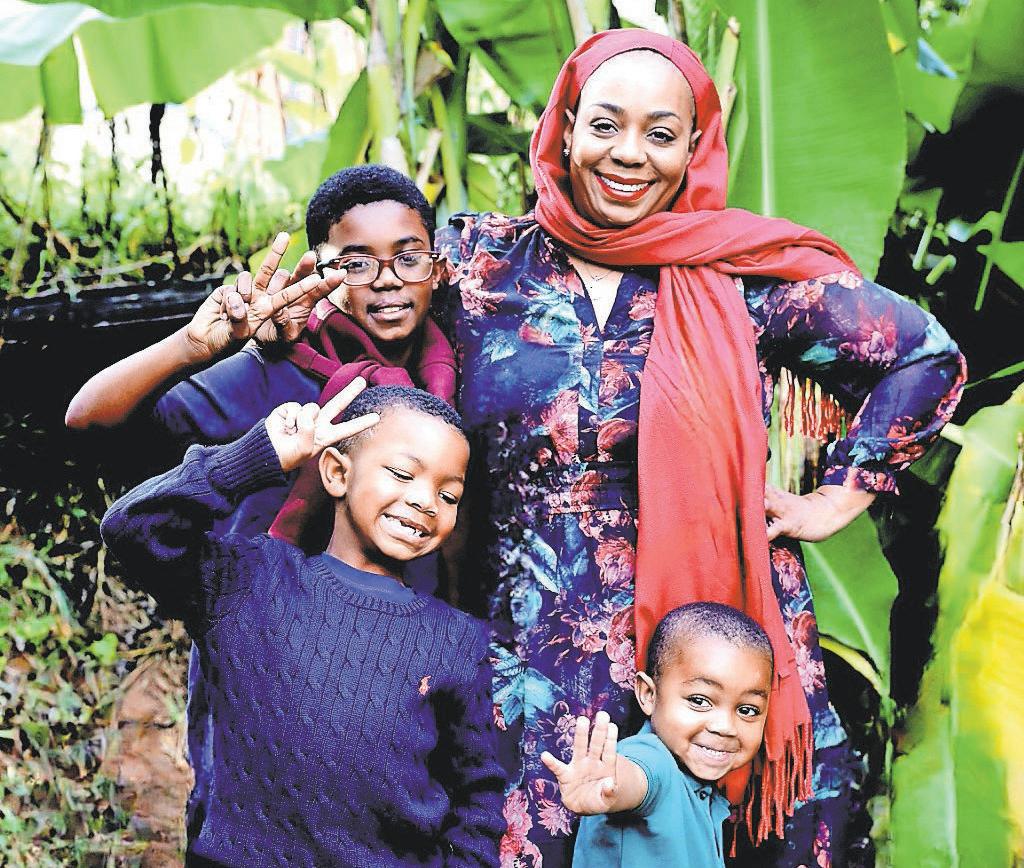
Her mother’s rebellion against inoculations heightened Ali’s curiosity, and as she got older, she did her own research and grew to appreciate the choices her family’s matriarch made. Understanding the Black community’s distrust of the medical industry, she vowed she would make the same decision for her own children.
Today, Ali is watching her boys grow into healthy young men who haven’t experienced any major health issues. She says she relies on natural remedies to fight illnesses and keep her family healthy.
Ali says her pediatrician has taken time to explain the value of vaccinations, but she hasn’t budged on her decision.
“I did go through regular doctor channels, and they do their job and tell me about the various vaccinations that he would need upon birth, and it’s a hard no from me,” she says.
playing high school tennis.
“My oldest son was making his way up to a tennis tournament, and he caught the flu. It was so bad they had to shut the tournament down,” she remembers. “He brought the flu home to his younger brother, who then developed pneumonia from it.”
The experience was frightening for her family, but she says she was grateful her sons had the added protection of being vaccinated to help their bodies fight the viral infection.
Dr. James has been in private practice since 2002 and says she hasn’t had many parents reject vaccinations. But when they do, she always takes the time to explain that the protection vaccinations provide isn’t just for the child. As families live in a world that can be very unsafe, everyone plays a role in keeping one another healthy.
of the medical industry and vaccinations. Instead, she relies on natural remedies to help her family heal from illnesses.
Her mother never vaccinated her or her four siblings, and as Ali got older and had children of her own, she knew she would follow in her mother’s footsteps.
“I was never vaccinated. My mama did not play that. So, I got no vaccines growing up,” she explains.

“The only thing that I would agree to was the vitamin K drops they put in their eyes. But no doctor has ever been able to explain to me, adequately, the benefit of any vaccine. Especially knowing I wasn’t vaccinated.”
Dr. Steen James, M.D., a board-certified pediatrician at Pediatric Village PC, is an avid supporter of vaccinating children. She says the vow she took to do no harm and keep children safe and healthy remains at the heart of her practice. She often shares a personal story about when one of her sons became ill while
“Our society is very multi-generational in terms of the household. So, oftentimes, if not in the household, there are grandparents, aunties, and uncles nearby, and some of these people have chronic conditions,” she explains. “So, I educate my young parents, especially. If your child goes to their grandmother’s house, an unvaccinated child can infect them. And as we get older, our bodies may not be able to fight off diseases as well. So, when I talk to them about outcomes, it’s not only the child, but the people around them that they love.”

By STAFF REPORT
Everyone is racing to build artificial intelligence. Few are asking who it actually understands.
Today, Onyx Impact officially launched Aisha (pronounced Eye-ee-sha), an AI chat assistant built from the ground up to better serve the people mainstream AI has failed. Aisha centers Black sources and history as foundational principles. That design produces better context and better answers for everyone who uses this tool.
AI is not neutral. It is shaped by the priorities, blind spots, and cultural defaults of its creators. ChatGPT recommended the death penalty more often when defendants sounded Black. AI image generators default to dark skin for crime and light skin for CEO.
A study of 4 million job applications found AI hiring tools systematically rejected Black applicants across every major industry. This is what Black communities have been handed. Aisha exists because the communities most harmed by AI deserve a better tool built with them at the center.
“Existing AI answers questions. Aisha delivers understanding,” said Esosa Osa, Founder and CEO of Onyx Impact. “We built Aisha because too many systems still

Aisha is an AI-assistant that centers Black sources, history, and lived experience to deliver sharper answers, stronger privacy, and AI that works for the people mainstream platforms have failed
miss the context and the lived experiences shaping how Black communities communicate online and engage information in real life. From minimizing environmental impact, to prioritizing privacy, to elevating forgotten and erased voices in American culture, Aisha aims to create a better AI that works for the people mainstream AI has failed.”
Originally launched as a web-based chatbot in 2025, Aisha has now evolved into a fully immersive app experience. Aisha platforms Black-led and historically grounded sources. Users navigate misinformation and an ever-changing news environment with clarity and context.
The launch comes amid growing national conversations around artificial intelligence, including concerns about bias in AI systems,
the spread of misinformation, data privacy, surveillance, and the disproportionate environmental impact AI infrastructure is having on Black and Brown communities.
“We believe AI companies should do more to reduce bias, extraction, and exclusion; that is why we created Aisha,” Osa said. “Black communities deserve to help shape the future of this technology, not just react to it after the fact. Aisha is about access, agency, safety, and making sure our people are not left behind in one of the biggest technological shifts of our lifetime.”
Unlike traditional AI systems built primarily to maximize profits and scale, Aisha was designed to reduce bias, increase privacy, and ensure safety while applying cultural signals that recognize nuance, understand context, and engage with the language, history, and lived experiences shaping everyday conversations in Black communities.
Onyx Impact says Aisha reflects its larger mission to strengthen information integrity and create safer digital spaces for Black communities online.
Aisha’s Key Features:
• PRIORITIZING PRIVACY: Aisha prioritizes user privacy. We do NOT use user data or personal information to train our model.
We do not use conversations for other business purposes. Your conversations are encrypted and hashed and are only accessible by you.
• BUILT TO REDUCE BIAS AND HARM: Where other AI tools have demonstrated tendencies toward biased and harmful responses, Aisha operates within defined boundaries designed to reduce bias and harm.
• QUALITY SOURCING: Aisha prioritizes vetted sources. Aisha often cites Black news and other high-quality sources in answers, exposing audiences to better information in every conversation.
• ENVIRONMENTALLY RESPONSIBLE: AI data centers land disproportionately in Black communities. Aisha’s local model uses data centers in Vancouver, Calgary, and Montreal, provided by Contabo, an environmentally responsible server provider. Aisha’s highly bespoke Anthropic model follows Anthropic policy to cover all grid upgrade costs from its data centers, bring new power generation online to match its energy consumption, and invest in water-efficient cooling at every facility. Aisha is now available for download at Aisha.ai, the App Store, and Google Play platforms.
By DONNELL SUGGS
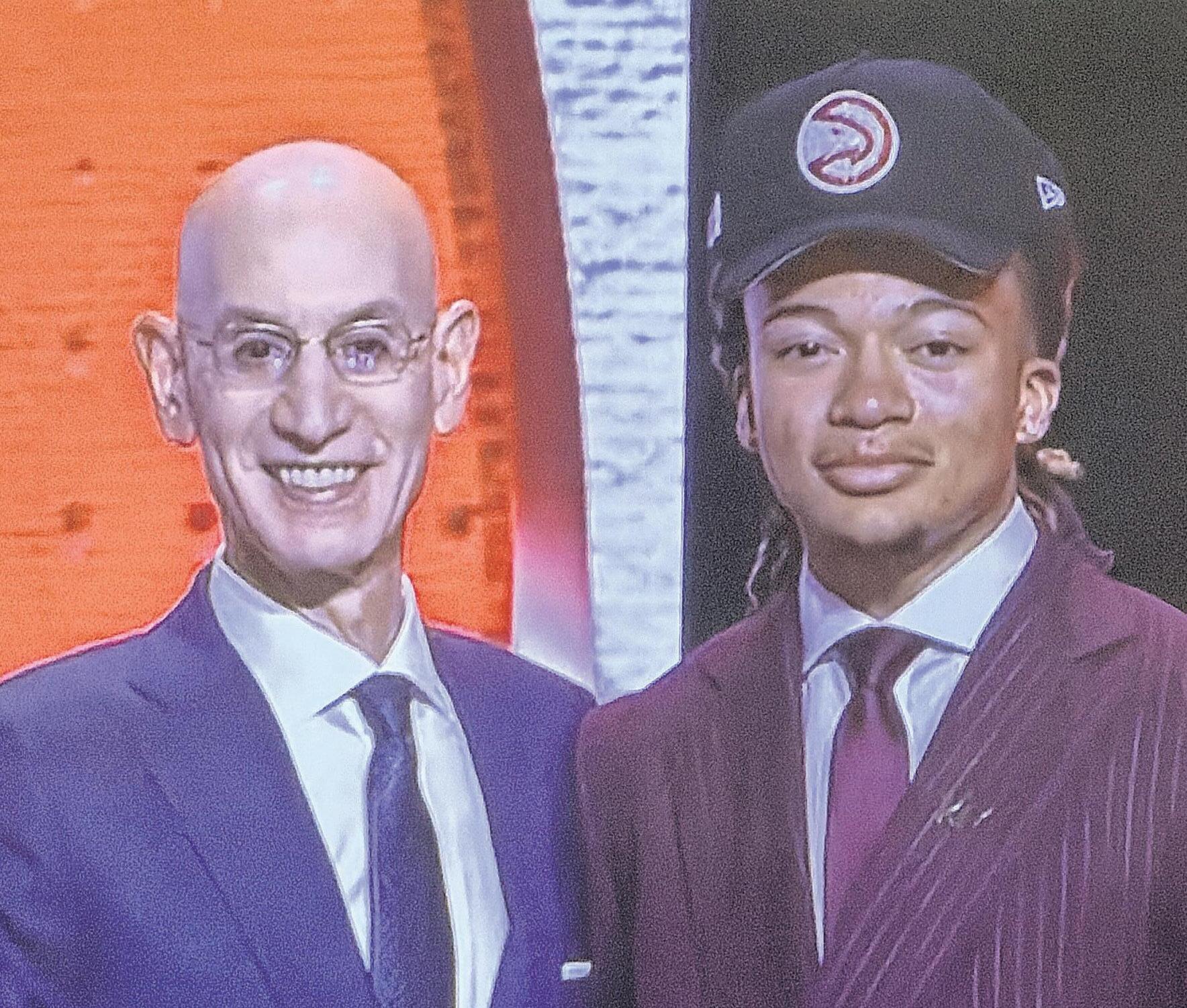
The first round of the 2026 NBA draft took place on Tuesday night. The Atlanta Hawks had two first-round draft picks in this year’s draft. The draft follows a successful 2025-2026 campaign that saw the Hawks not only make the playoffs but also win back a large majority of their fan base, which had seemed alienated after the team traded All-Star guard Trae Young to the Washington Wizards. With their first pick in this year’s draft, the eighth overall, the Atlanta Hawks selected University of Houston guard Kingston Flemings. A 6’4” guard out of Newport News, Virginia, Flemings was a freshman All-American during his sole collegiate season.
With the 23rd overall selection, the Hawks selected St. John’s forward, Zuby Ejiofor.
During his three seasons at St. John’s, Ejiofor improved his scoring and rebounding averages every season. He was recruited to Kansas after a standout high school career in Garland, Texas.
With the team’s only second-round pick, which began in the 57th slot, the team traded up to get former University of North Carolina center Henri Veesar.
Veesar, a 22-7ear-old seven-footer from Estonia, averaged 17 points, nearly nine rebounds, and two assists per game for the Tar Heels last season.
Flemings spoke to the media via Zoom half an hour after he was selected. He said he was anxious while waiting for his name to be called and was happy to hear that Atlanta had selected him. “Knowing I’m going to a good organization is
exciting to me,” Flemings said.
Flenings cited Philadelphia 76ers star Tyrese Maxey as a player he models his game after.
Over the past five years, for example, the Hawks have had successes and failures at the NBA Draft. Players like Jalen Johnson, drafted 20th overall in 2021, and Onyeka Okongwu, drafted sixth overall in 2020, have become starters and key players for the franchise. While the former first overall pick in the 2024 draft, Zaccahrie Risacher, hasn’t lived up to the hype associated with being the top pick in a draft. Last season, Risacher averaged 9.6 points and 3.8 rebounds on 45.5% shooting from the field and was virtually out of head coach Quin Snyder’s rotation during the playoff series against the eventual champion New York Knicks.
By DONNELL SUGGS
BIRMINGHAM, AL. - The two kids in little league uniforms held a microphone aloft and stood next to the Baseball Hall of Famer. The kids, Shyne Moore and Ian Felton, both eight years old, are players in the Park West Little League Baseball program in Birmingham, and the former Major League Baseball star CC Sabathia is one of the best pitchers of his generation. All three individuals are Black, and they, along with many other Black former major league and youth players, were there to share their love of the great American pastime.
“Rickwood Field feels like home,” Sabathia said to a reporter who asked him about being back in town for the East-West Classic, an exhibition game involving former pro players. “I feel an obligation to come down here and put this on every year.”
Major League Baseball’s youth organization, PlayBall, hosted a clinic on historic Rickwood Field in Birmingham before the game this afternoon. The connection between a former Negro League ballpark and the
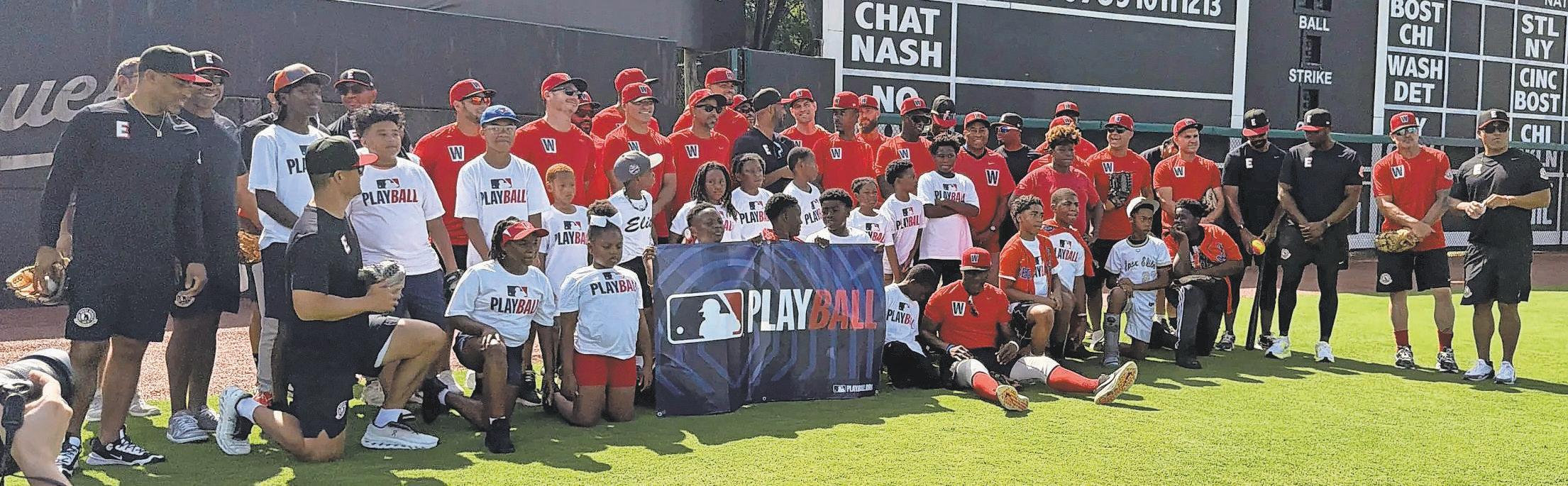
Black youth players taking part in the clinic on Juneteenth wasn’t lost on some of the players, including a couple of former Atlanta Braves.
“Just the Juneteenth aspect of it alone is such a meaningful thing for people who look like me,” former MLB veteran BJ Upton said. Upton played two seasons in Atlanta in 2013 and 2014, and for a dozen years overall. “We know what the players went through to make it possible for me and my brother to be allowed to play in the major leagues.”
Upton paused and repeated the
word “allowed” to emphasize the fact that Black players were prohibited from playing Major League Baseball for decades until the late Jackie Robinson made his debut for the Brooklyn Dodgers on April 15, 1947. The legendary debut of the future Hall of Famer and globally recognized trailblazer is now officially Jackie Robinson Day in Major League Baseball.
“I think it’s important because all of us Black players come back here to where it started for a lot of Black players who came before us,” said Justin of Rickwood Field and
By DONNELL SUGGS
AMB Sports and Entertainment
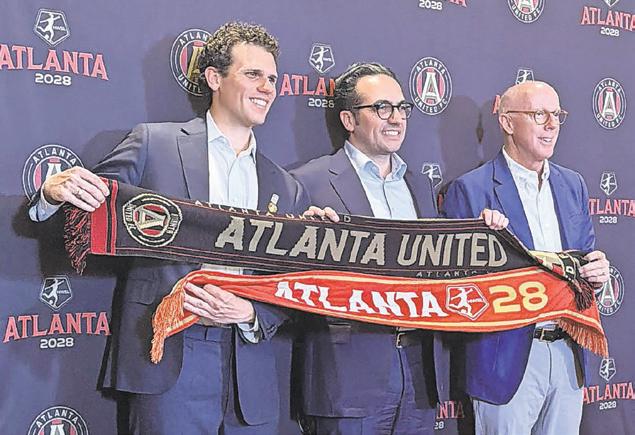
(AMBSE) introduced its new President of Soccer this morning. The press conference for Mauricio Culebro, the former Chief Operating Officer of the Mexican Football Federation, and a 20-plus-year veteran of football operations, took place inside the Arthur M. Blank Family Office.
A quiet man wearing a navy-blue and skyblue shirt, Culebro took questions from the media after being introduced by AMBSE CEO Rich McKay and AMBSE VP of Executive Strategy Josh Blank.
“What Arthur Black has built here has created an ecosystem like no other in the world,” said Culebro, who told the media that he has been in town for a week and has been able to see both FIFA World Cup matches at Mercedes-Benz Stadium.
“I have seen why Atlanta is the epicenter of soccer in the United States,” he said.
Culebro said local soccer supporters can be sure he would put all of his experience to work for the better of both clubs. He said he also understands the passion for soccer
in this city, which seems to have waned a bit as Atlanta United is mired in a slump. The crowds at Atlanta United matches were once as lively and loud as the ones Culebro saw while watching Spain, Cabo Verde, and Saudi Arabia, for example.
As president of soccer, Culebro will be in charge of the operations for both Atlanta United and the forthcoming Atlanta National Women’s League franchise. He was one of dozens of applicants for the job, according to McKay, who said Sportsology conducted the search. That list was narrowed down to a top five, then to two, and ultimately, Culebro was chosen.
“It was a pretty thorough search, and we felt like this is a very critical hire,” McKay said.
Blank called the job of president of soccer, “a very unique role for us.”
Culebro has experience running men’s and women’s clubs in Mexico, thus making him the right man for the job in Atlanta, according to Blank, who said there were four key factors to hiring a president of soccer for both clubs. The factors: Culebro’s overall experience, how to expand Atlanta’s already
players like all-time great Willie Mays. “Juneteenth is an important day for Black people, and this is kind of like a homecoming.”
The number of Black American Major League Baseball players remains low despite the interest in the sport, particularly in the South. There were 64 Black American players on MLB opening day rosters at the start of the 2026 season. That’s less than 7% participation from a population of nearly 52 million Black Americans.
The morning included kids
hearing from former players, going through baseball drills, getting a bat and ball, and receiving baseball cards for their efforts. Asked if they enjoyed talking to players like Sabathia and others, Shyne said he did. “It’s good because I get to ask them questions.
Ian said, “ I like that I get to talk to professional players.”
When asked if either of them wanted to be Major League Baseball players when they grew up, both said they did.
Justin Upton signed t-shirts for some of the kids in between laughing and joking with other former ball players. A kid who once dreamed of playing Major League Baseball, too, Upton had his big brother, BJ, to look up to and emulate. The younger Upton, now 38, knows these kids are looking up to him these days, and events like this are among the few chances to see Black baseball players up close.
“I hope we can continue this,” Upton said. “It’s kind of like a tradition.”
This year was the third year for the East-West Classic at Rickwood Field.
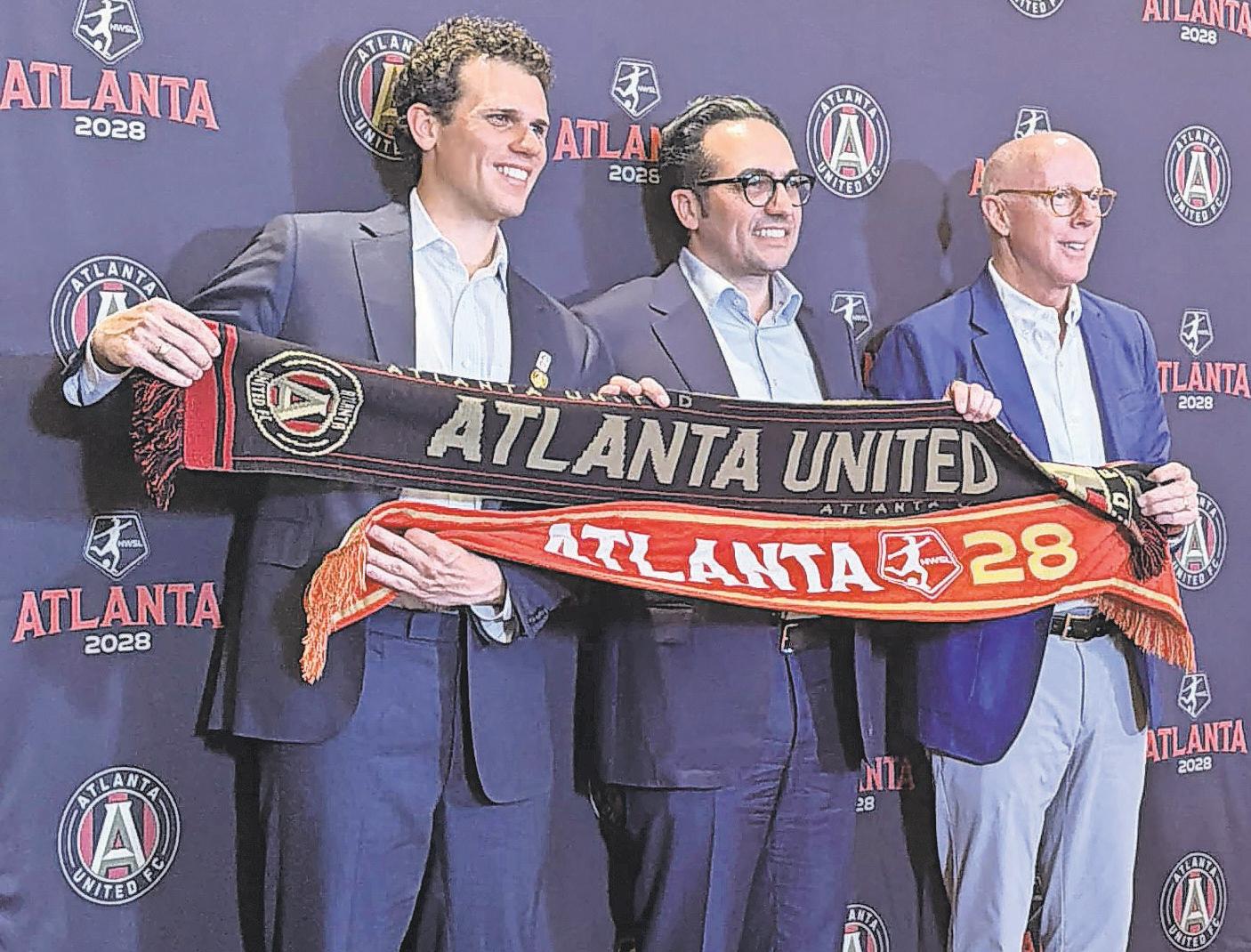
large soccer footprint, experience with women’s soccer, and a value-based candidate.
“Mauricio checked all of our core values,” Blank said.
One of the most important decisions Culebro will make in the coming weeks, during the FIFA World Cup, and while the Major League Soccer season is on a break, will be who the next chief soccer officer for the NWSL Atlanta team will be.
“At the end of the day, I know how this works,” said Culebro. “At the end of the day, we’re a soccer team, and the results have to come on the pitch.”
By DENNIS MALCOLM ByRON AKA ALE SHARPTON
Ispent a lot of time in a family member’s Kia Sportage about a decade ago, so I was looking forward to seeing how this compact SUV has evolved with the top-of-the-line 2026 X-Pro Prestige version. And yes, I was impressed.
At first look, my review model was handsomely dressed in Wolf Gray with a contrasting black roof and matching black interior, already looking more expensive than its $39,590 price tag. The rugged styling, 17-inch all-terrain tires, elevated stance, and aggressive front fascia said it was ready for whatever came its way, whether it was navigating through Atlanta traffic or escaping it altogether. Its looks demonstrated how Kia wanted today’s Sportage to look more adventurous and rugged compared to yesteryear’s family-focused intentions. Power comes from a 187-horsepower four-cylinder engine paired with an eightspeed automatic transmission. To be real, acceleration was adequate for daily driving, but drivers seeking

a more, shall we say, “spirited” experience may find it somewhat underwhelming when merging onto busy highways or making quick passes. But again, I had to remind myself what this SUV was designed to be, especially considering how thirsty a punchier six-cylinder engine would be. Instead, today’s version focuses
on delivering dependable transportation wrapped in an attractive package loaded with premium features. In that regard, Kia gets a trophy.Inside, the cabin feels far more upscale than what the automaker is asking for. Premium synthetic leather seating, heated and ventilated front seats, a heated steering
wheel, and a power-adjustable passenger seat create a comfortable environment for both driver and passengers. The spacious interior also makes it an excellent choice for families, road trips, and firsttime SUV buyers looking for room to grow. The heated windshield is solar control glass which helps
maintain a cooler cabin, and the airy feel from the panoramic sunroof were all noticeable upgrades as well. Technology gets some shine too. The large digital displays, 360 surround-view camera system, blind-spot camera, Digital Key 2.0, theater-quality Harman Kardon audio system through eight speakers, and advanced driver-assistance features help the Sportage stay current with today’s tech demands. Safety gets some love too. Features such as reverse automatic emergency braking, blind-spot monitoring, parking sensors, highway driving assist, and Kia’s generous suite of driver-assistance technologies provide peace of mind, especially for family road trips.For under $40K, the 2026 Sportage X-Pro Prestige offers an impressive bang for the buck. The combo of practicality, tech, comfort, and rugged styling makes this one of the strongest values in the very competitive compact SUV segment. Ultimately, Kia has stepped their game up over the years, and this Sportage proves it.For more information, visit Kia.com.