Georgia Legislative Black Caucus renews fight to bring much-needed support for Black farmers


Georgia Legislative Black Caucus renews fight to bring much-needed support for Black farmers
BY DONNELL SUGGS
Maryland Governor Wes Moore gave the commencement speech at Morehouse College graduation ceremony Sunday morning.
Moore, the only Black governor in the United States of America, was sworn in as the 63rd governor of Maryland on January 18. Moore, 44, was one of three men to be bestowed honorary doctorate degrees Sunday, along with the late National Basketball Association legend and Civil Rights era leader Bill Russell and Dr. Roderic Ivan Pettigrew, a Morehouse alum.
"This is such a unique place with such a unique and beautiful history, name another place in the country where you have a graduation and there are more alumni than there are graduates themselves," Moore said about the crowd that awaited him when he took the stage. "It really is setting a really powerful tone and message to all the graduates about the fraternity that they are entering into."
Morehouse College President David A. Thomas upon presenting the honorary degree to Moore said of Moore, "He will go forth as a Morehouse man." During the introduction of Moore, Thomas joked that in eight years when he calls Moore at the White House to come back to Morehouse to give a speech he "won't say no."
A husband and father of two, Moore has a godfather that graduated from Morehouse, Class of 1953, and said he believes there's a common pride that all Morehouse men share.
"Soon, you will walk across this stage, and in that moment, each of you will go from being a man of Morehouse to being a Morehouse man," he said. "Do not forget the rocks you are standing on men of

Moore currently has an approval rating over 50%, according to a Goucher College survey from earlier this month. As he stood on the stage he spoke of the odds he was against when he decided to run for governor, and that he still faces as the only Black governor in this country.
"A few years ago, nobody would have believed that I could be elected governor of my state, " Moore said. "And it wasn't just because I was polling 1%...it's because nobody thought that people who look like you and like me could lead Maryland."
Moore talked about the hard days during his campaign and
the many historic inspirations he continues to have as governor.
"Men of Morehouse I stand before you as the first Black governor of my state and only the third Black governor ever elected in our nation's history with a single message: Our history is our power," Moore said.
Other topics of his speech were
book banning, the "muzzling" of educators and the importance of recognizing Black history in this country.
On the importance of learning and passing along Black history Moore, a Takoma Park, Maryland native and United States Army veteran told The Atlanta Voice, "Our history is our strength. If you understand where you come from, if you understand the shoulders that you're standing on, if you understand, not just the struggles, but the sacrifices that people have made in order for you to be there, then nothing is impossible."
On book banning he said, "When politicians ban books and muzzle educators, they say it's an effort to prevent "discomfort and guilt"but we know that's not true."
He added that there is a danger of book banning and the attempts to whitewash American history. "The thing that I wanted all Morehouse men to understand is embrace your history, learn it, defend it, cherish it, share it and be unapologetic about it, because if you understand your past you will get a better understanding of your path."
The Morehouse College Class of 2023 has three valedictorians. Prior to Moore taking the stage, President Thomas said of the three valedictorians, "You are all examples of the excellence that is Morehouse College."
During his speech Moore closed by saying, "Men of Morehouse, I need you to be lifelong learners and loyal ambassadors of your history. It is the only way ahead. He continued, "Then, I need you to take your history and use it to make history of your own."
Maryland Governor Wes Moore (right) gave the commencement speech at Morehouse College Sunday, May 21, 2003.
BY DONNELL SUGGS
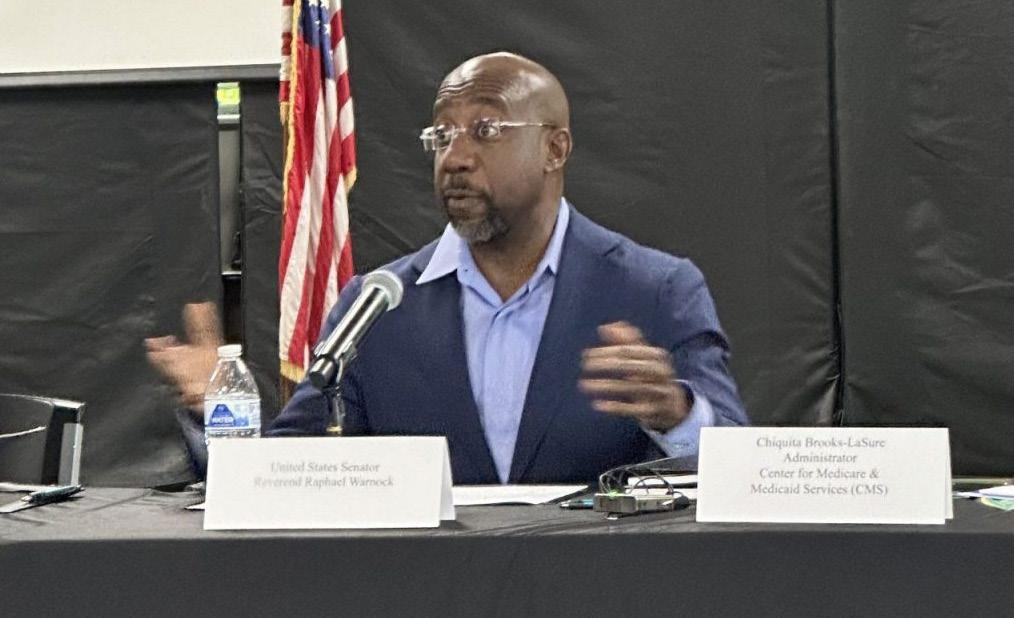
Senator Raphael Warnock (D-Ga) visited Southside Medical Center Monday, May 22. Warnock. The junior senator and senior pastor at historic Ebenezer Baptist Church spoke with Southside Medical Center CEO & president David Williams, Centers for Medicare & Medicaid Services Administrator Chiquita Brooks-LaSure and healthcare advocates about his work to cut cost of insulin for seniors.
Following a tour of the facility, Warnock sat down to address recent action he has taken in Washington to cut the cost of insulin for all Americans, not just seniors.
"Insulin should not be expensive for anybody," he said. "We have seen insulin costs skyrocket because pharmaceutical companies have taken us to the cleaners just because they can."
Warnock and Senator John Kennedy (RLa.) introduced the Affordable Insulin Now Act in March. The bipartisan supported bill would cap the price of insulin for all patients at $35 for a 30-day supply.
More than 37 million Americans suffer from diabetes, according to the Center for Disease Control and Prevention (CDC). About 1 in 10 Americans have diabetes, and according to the CDC 1 in 5 have it and don't know.
One of the advocates on the panel alongside Warnock, Williams and Brooks-LaSure was D'Juana Dudley, an executive assistant at Southside Medical and more particularly to that days events, an insulin user and diabetic.
Dudley was 34 when she was diagnosed with diabetes. She now takes multiple insulins to combat the disease and disclosed that diabetes runs in her family. "My experience with diabetes is from my family history. I have a grandmother and grandfather who both died from diabetes," she said.
The reduction in the cost of insulin has helped her stay on track with her doctor's orders and with the necessary amount of insulin she needs. Despite being employed and insured, Dudley credited Southside Medical Center for helping save her life.
"I take a diabetic infusion and we have a diabetic infusion clinic here," she said. "That gives you energy, makes you feel great about yourself and they tell you how to manage your eating habits."
Dudley said people at her church always ask her diabetes-related questions because of her work and familiarity with the disease. The lowered cost of insulins for seniors has helped Georgians like the people Dudley attends church with.
"The act of making it affordable can save hundreds of thousands of lives," said Williams. "This is not just a political act, it's a
human act."
About his work on lowering costs of insulin Warnock said, "I do it because I believe healthcare is a human right."
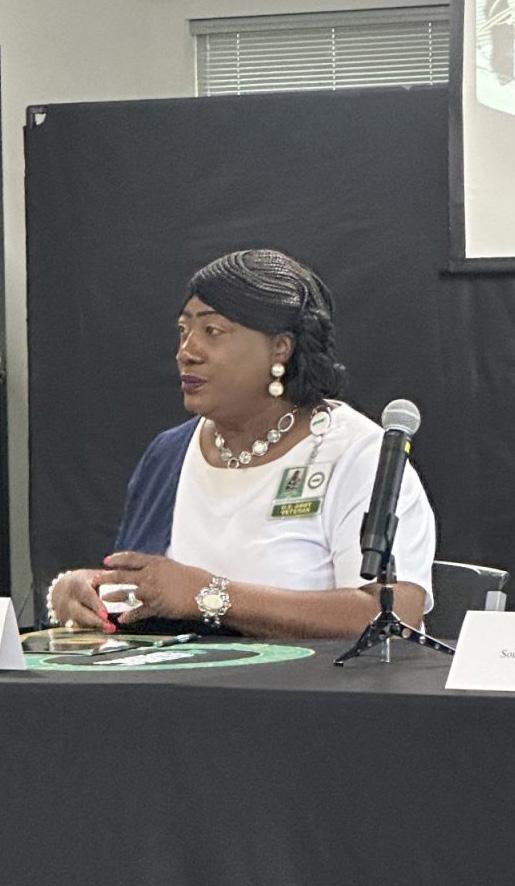






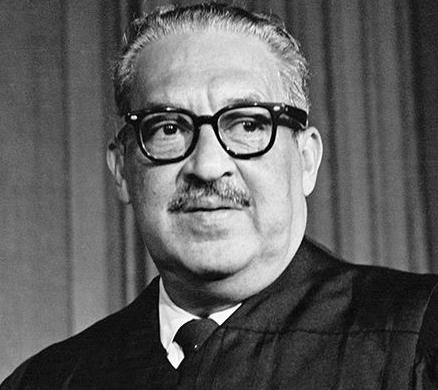
“History teaches that grave threats to liberty often come in times of urgency, when constitutional rights seem too extravagant to endure.”
— Thurgood Marshall
Maryland Governor Wes Moore signed a bill recognizing the 6888th Battalion — Black women who served their country when their country did not serve them.
BY FRANCES “TONI” DRAPER
The month of May has many celebrations — there’s May Day, Cinco de Mayo, Mother’s Day, World Press Freedom Day, and even African World Heritage Day, to name a few. May is also Arthritis Awareness Month, Better Sleep Month, Mental Health Awareness Month, National Walking Month, Women’s Health Care Month, and Military Appreciation Month.
And then there’s Memorial Day — a day set aside to honor and mourn the U.S. military personnel who died while serving in the Armed Forces.
On Memorial Day, flags are flown. Parades are planned. Cemeteries are visited. And military personnel are remembered and honored.
Yet, outside of the Tuskegee Airmen, there is little widespread recognition of Black Americans who served in this country’s military — even though more than one million African American men and women served in every branch of the U.S. armed forces during World War II.
Until recently, one of the least recognized groups of Blacks in the armed forces was the 6888th Central Postal Directory. However, on May 3, 2023, Governor Wes Moore — the only sitting Black governor in the United States — signed the 6888th Bill, which stipulates that “the Maryland governor annually shall proclaim March 9 as 6888th Central Postal Directory Battalion Day.”
The 6888th Central Postal Directory Battalion was an all-Black and Hispanic, all-female battalion that served during World War II. Despite their important role in sorting and delivering mail to American troops in Europe, the battalion’s
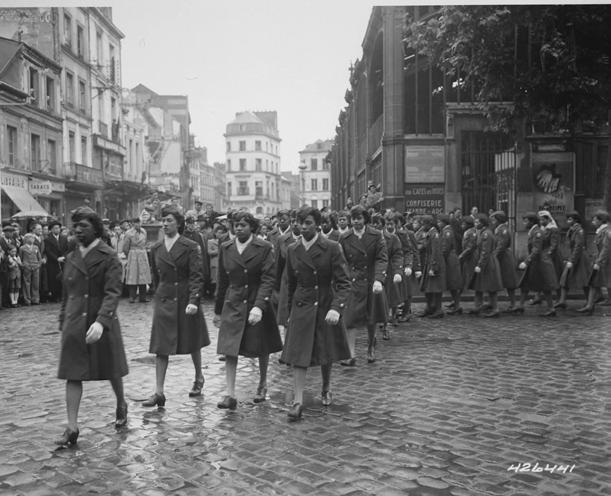
contribution to the war effort was largely unknown to the public for many years.
There are several reasons why the 6888th Battalion remained relatively unknown. One reason is that their work was not seen as glamorous or exciting compared to combat roles, and therefore their contributions were often overlooked or minimized.
More importantly, because the battalion was made up primarily of Black women, their achievements were often dismissed or ignored due to systemic racism and sexism. And the 6888th Battalion’s work was often shrouded in secrecy, as their mission involved handling sensitive and confidential mail for American troops.
As a result, their work was not widely publicized, and the battalion was often moved from place to place without much fanfare or recognition.
It was not until many years after
the war that the contributions of the 6888th Battalion began to be recognized and celebrated.
In recent years, there has been increased awareness of the battalion’s achievements, and efforts have been made to honor their service and ensure that their contributions to the war effort are not forgotten.
“The women of the 6888th were discouraged when they discovered warehouses crammed from floor to ceiling with mail and packages that had not been delivered for at least two years,” Kevin M. Hymel wrote for the Army Historical Foundation. “Rats the size of cats had broken into some of the Christmas care packages for front line soldiers and eaten their contents. The women went to work, organizing a system that would break the bottleneck of undelivered mail.”
Hymel went on to say that “Work conditions were less than ideal. The women pitched mail in damp,
FOUNDED May 11, 1966
FOUNDER/EDITOR
Ed Clayton Immortalis Memoria
PUBLISHER/EDITOR
J. Lowell Ware Immortalis Memoria
poorly lit warehouses without heat. The windows were all painted over for blackout conditions. To battle the cold, some women resorted to wearing ski pants, field jackets, fatigues, or anything else to keep warm. They worked eighthour rotating shifts, seven days a week. The job, which was supposed to take them six months, was completed in only three.”
Their motto was “No mail, low morale.” They focused on getting mail to soldiers and raising their morale.
I could go on and on about the 6888th and their amazing service to this country, especially during a time when Black women were marginalized and ignored.
I could spend hours writing about these 855 women who were stationed in Europe working three 24-hour shifts, seven days a week, to sort 18 million letters addressed to U.S. troops scattered across Europe during World War II.
I could write about the three 6888th members who died there and were buried in Normandy in coffins made by French prisoners.
I could write about their commanders Major Charity Adams (the first Black woman to be an officer in the Women’s Army Auxiliary Corps — later called WACS), Captains Mary F. Kearney and Bernice G. Henderson.
I could revere the name of my aunt, PFC Vashti Murphy Matthews, who was a member of the 6888th — although we never heard her talk about her time in the Army.
And I could certainly point out that if it weren’t for the AFRO’s extensive coverage (1945-1946) of these brave soldiers, the names and hometowns of many would not be known today.
Read full article online at www.theatlantavoice.com
The Atlanta Voice honors the life of J. Lowell Ware.
PUBLISHER Janis Ware jlware@theatlantavoice.com
PRESIDENT/ GENERAL MANAGER
James A. Washington jaws@theatlantavoice.com
EXECUTIVE ASSISTANT TO PUBLISHER
Chia Suggs csuggs@theatlantavoice.com
DIRECTOR OF PUBLIC RELATIONS
Martel Sharpe msharpe@theatlantavoice.com
EDITOR IN CHIEF Donnell Suggs editor@theatlantavoice.com
GENERAL ASSIGNMENT REPORTER Janelle Ward jward@theatlantavoice.com
GENERAL ASSIGNMENT REPORTER Isaiah Singleton isingleton@theatlantavoice.com
GENERAL ASSIGNMENT REPORTER Noah Washington nwashington@theatlantavoice.com
MANAGING EDITOR, DIGITAL Itoro Umontuen iumontuen@theatlantavoice.com
ADVERTISING, SALES & CIRCULATION
ADVERTISING ADMINISTRATOR
Chia Suggs advertising@theatlantavoice.com
CIRCULATION MANAGER
Terry Milliner
SALES
R.D.W. Jackson rdwadman@gmail.com
SUBMISSIONS editor@theatlantavoice.com
CONTACT INFORMATION
633 Pryor Street, S.W. Atlanta, GA 30312 Office: 404-524-6426 info@theatlantavoice.com

SPIRITUALLY SPEAKING
BY JAMES A. WASHINGTON
The Atlanta Voice
e all understand the concept of a “card-carrying member.” As a matter of fact, you can be categorized by what affiliation you hold by what cards are in your purse or wallet.
To be blatantly honest, we’ve got card-carrying Democrats and Republicans. You can get a membership card for every organization from the NAACP to the ACLU.
The more I study the more I’m moved to realize that being a professed card-carrying Christian man or woman of faith, is, as I’ve said countless times, tantamount to putting a bull’s eye on your back and inviting an artillery barrage on your location.
Scripture tells us that accepting Jesus Christ as a way of life is never an easy task. Being crucified, thrown to the lions for fun and games, beheaded or ostracized were all very real possibilities for early Christians; those who be-
Once you commit your life to Christ, isn’t it interesting the kind of attention you attract?
lieved and then lived according to the Word of God. Is today so different?
Once you commit your life to Christ, isn’t it interesting the kind of attention you attract?
“Be self-controlled and alert. Your enemy, the devil, prowls around like a roaring lion looking for someone to devour. Resist him, standing firm in faith, because you know that your brothers throughout the world are undergoing the same kind of sufferings.” (1 Peter 5:8-9.)
Looking around the world today, it is ludicrous not to recognize that religious persecution is still the number one cause of war and man’s inhumanity to man.
CNN will attest to the fact that
people all over the planet are being systematically annihilated for the so-called God they worship. We sometimes take for granted the religious freedom we have (or used to have) in this country and I believe it has lulled us into a sense that being a Christian is easy.
Well, it’s not and never has been. It’s empowering. It’s enlightening. It’s eternal. But it is not easy.
The good news is we are not alone and never have been. Living for God is the reality of human existence. Christians believe in life after physical death.
We have some insight into what to expect. Faith lets us know the difference between the physical and the eternal.
Is it a wonder then, that belief in
a deity who demands love and appreciates mercy causes an adverse reaction from those who believe otherwise? Isn’t it a wonder that those who love Christ invite the wrath of Lucifer in all his forms?
That target on your back should be worn like a red badge of courage because courage is what it’s going to take to first withstand the ridicule of the world and next the scorn of those who would tempt the weaknesses of your passions and addictions, let alone threaten your very life.
I continue to be moved by the acts of faith contained in the bible and those we see every day, where a simple declaration that Christ is the Son of God is an invitation to certain and immediate harm and yes even death.
Let me at least acknowledge that there is a target on my back and thereby tell the world I’m very easy to find.
May God bless and keep you always.
BY STAFF REPORTS
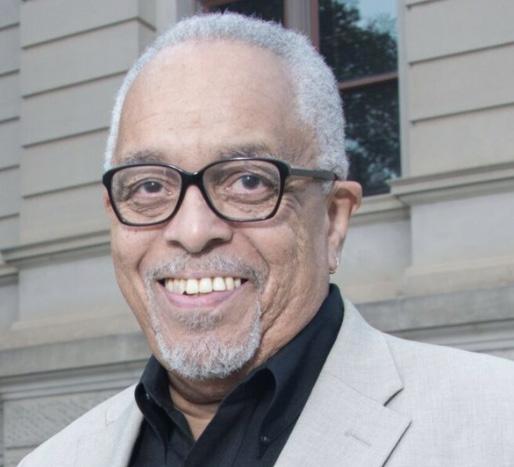
Maynard Eaton, multi-award-winning journalist and media communications professional, with a career spanning over five decades, died late Tuesday evening in his sleep after a brief battle with lung cancer, according to his family. Eaton, 73, has left a legacy of impactful reporting and social change that includes his time as a reporter and editor for The Atlanta Voice.
Most recently Eaton served as Endowed Professor, Scripps Howard School of Journalism and Communications at Hampton University.
Eaton began his career in 1970 after graduating from Hampton Institute’s Mass Media Arts Program, as WVEC-TV’s first African American newsman. In 2022, Eaton came full-circle with his appointment as Endowed Professor of Journalism at Hampton University.
During his occupation, Eaton has been recognized as a broadcast journalist, political columnist, media/ public relations consultant, free-lance writer, executive editor. Eaton’s most enduring legacy will be the plethora of journalists he has trained and mentored during tenures as a professor at both Clark-Atlanta and Hampton universities.
An EMMY Award-winning television news reporter, Eaton was in the vanguard of Amer-
ica’s first Black news reporters on prime time television, and was distinguished as one of the Country’s most influential media professionals.
He conducted innumerable high-profile interviews throughout his career, including heads of state, political luminaries, renowned entertainers and athletes, and Civil Rights heroes. He most recently wrote feature articles for the Spelman College Messenger, and NABJ’s Black News & Views.
Eaton served as National Communications Director for the Southern Christian Leadership Conference (SCLC), Dr. Martin
Luther King’s Legacy Organization.
SCLC President Dr. Charles Steele worked with Eaton for over a decade. “He brought his journalism skills to SCLC and an insight and expertise that is irreplaceable,” asserts Steele. “He was committed to telling the story of the Movement and I will always remember with appreciation his dedication to his craft”.
Known for his news reporting at Atlanta City Hall, as well as under the gold dome of Georgia’s Capitol, Maynard Eaton provided unprecedented news content and coverage. His television news reporting era forever endeared him to the citizens of Atlanta, and they continue to hail him in the streets of Atlanta and throughout the South.
Eaton garnered numerous awards and accolades during his illustrious career. In 2008 he was named Journalist of the Year by the Rainbow/PUSH civil rights group. From 1978 to 1986, Eaton was a multi-award winning political reporter for WXIA-TV in Atlanta.
He won eight EMMY Awards for television news reporting/writing, while at WXIA, WPLG-TV in Miami and WVEC-TV in Hampton. He was also honored for his work as a political commentator for WTLK-TV and WATL-TV in Atlanta; a producer/reporter for World News Monitor; southeast field producer for USA Today and BET television; and writer/talent for Ebony Journal and Prime
Time, two highly regarded and locally produced television magazine shows.
In addition to honors in broadcasting, Eaton won two Atlanta Association of Black Journalist awards for his excellence in writing and reporting, including the Journalist of the Year award in 1985 from the Atlanta Association of Black Journalists (AABJ) and several significant honors from the National Association of Black Journalists (NABJ). He received honors from Communication Excellence to Black Audiences (CEBA), and three writing awards from the Associated Press. He landed an honor with the National Newspaper Publishers Award (NNPA) in 2007; a coveted Gannett News Service reporting award and, for many years, was named on the list of prestigious individuals with Who’s Who in Black Atlanta. Eaton also wrote cover stories for that prestigious publication on Ambassador Andrew Young, civil rights icons Rev. Joseph Lowery, Rev. Ralph David Abernathy and Atlanta Mayor Shirley Franklin.
Eaton received his Master of Arts degree from Columbia University’s Graduate School of Journalism, where he was mentored by the late Fred Friendly (former president of CBS News), and holds a BA degree in Mass Media Arts from Hampton Institute. Additional reporting for this story was done by Eaton Media Group
BY STAN WASHINGTON
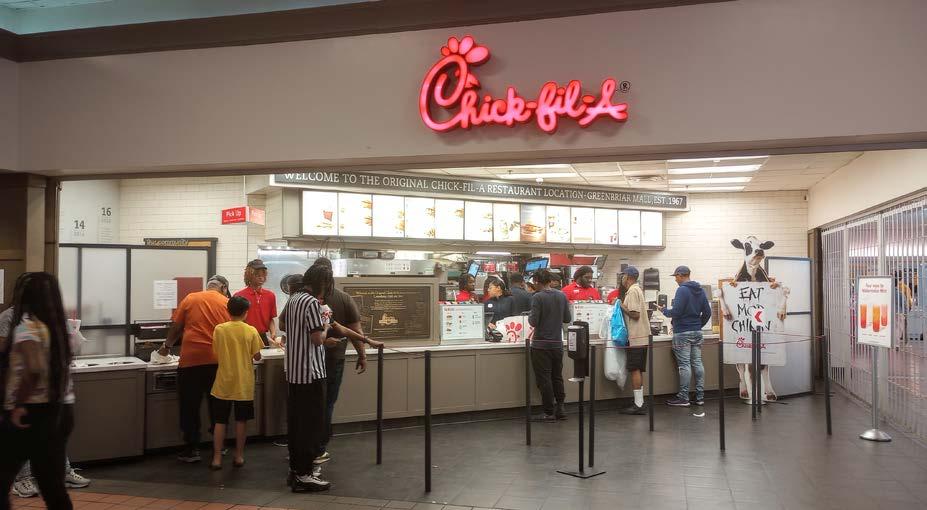
After 56 years, Chick-fil-A will cease operations at Greenbriar Mall in southwest Atlanta.
The closing at the city’s first shopping mall and Chick-fil-A’s first location, doesn’t necessarily mean the declining mall is about to close. It’s more of a corporate strategy to move out declining malls across the country.
With the growth of shopping malls starting in the late 1960s through the mid-90s, Chick-fil-A, who pioneered the fast food restaurant in malls, experienced tremendous growth during those years and became a household name in the southeast.
When the restaurant opened its first store in 1967 at Greenbriar Mall the Ben Hill community was still predominantly white and was just at the beginning of the white flight to the suburbs.
In less than a decade the demographics has changed over to mostly middle class blacks, that did not affect the sales of the store. The store continued to have respectful sales to this day.
Seeing the slowing growth of shopping malls during the decade of the 1980s, the company opened its first stand-alone store in 1986 on North Druid Hills in Atlanta. The advantages were immediate.
Having free standing stores meant
the company had more control over its hours. Most malls opened by 10 a.m. and closed by 9 p.m. except during the Christmas shopping season. Now the stores could open earlier for breakfast, stay open until 10 p.m. and they could add a drive-thru like their burger competitors - McDonald’s and Burger King.
Greenbriar had shortened its hours after the pandemic to 11 a.m. to 7 p.m.
Two weeks ago the store posted a sign letting customers know that after
Saturday, May 20 the curtain comes down on this historic location. It asks its customers to either go to the location at Camp Creek Marketplace or on Cascade Road.
The closing of the restaurant follows the closing of another long standing restaurant in Captain D’s which had a stand-alone store out front of the mall.
The closure of the Greenbriar location will be followed with the opening of a new location at the busy intersec-
tion of Boulevard and Ponce de Leon Avenue, next door to the Popeye’s Chicken.
Chick-fil-A Milestones
(Source: Chick-fil-A)
1946 - Truett Cathy opens his original diner, the Dwarf Grill, in the Atlanta suburb of Hapeville (later renamed Dwarf House®)
1964 - After testing out hundreds of recipes, Truett Cathy created the recipe for the original chicken sandwich
with two pickles on a toasted butter bun in 1964.
1967 - Truett Cathy pioneers in-mall dining with the opening of the first Chick-fil-A restaurant in Greenbriar Mall.
1973 - Truett Cathy establishes the Team member Scholarship program to encourage employees to further their education.
1977 - Chick-filA introduces freshly squeezed lemonade.
1982 - Chick-fil-A becomes the first restaurant chain to sell chicken nuggets nationally.
1985 - Waffle Potato Fries are introduced.
1986 - The first stand-alone restaurant opens on North Druid Hills Road in Atlanta.
The first breakfast item is introduced, the Chick-fil-A Chicken Biscuit.
1989 - Chargrilled chicken sandwich is introduced.
1995 - Chick-n-strips are introduced.
1996 - Chick-fil-A begins its longtime sponsorship of the Peach Bowl.
2006 - Handspun milkshakes and the spicy chicken sandwich are introduced.
2006 - System wide sales surpasses $2 billion.
2014 - Founder Truett Cathy passes away at the age of 93.
BY ISAIAH SINGLETON
The Metropolitan Atlanta Transit Authority (MARTA) Board of Directors held an in-person public hearing and community exchange Tuesday at the DeKalb County Public Library to consider the proposed fiscal year 2024 Operating and Capital Budgets. During the public hearing, citizens voiced their concerns to the MARTA board regarding the proposed budget and any other MARTA-related comments.
Proud MARTA user Apostle Lazarus said although he appreciates MARTA and all their hard work, he wishes he had a greater chance to review the budget outside of the meeting.
“I came tonight thinking I’d have a greater chance to review the budget,
but I wish there were more available documents that we could take with us such as highlights of the budget and the presentation,” he said. “I think the time frame works well, I am going to trust the process, but just make things more available. I appreciate the sign language person here, but a lot of us are visually impaired, so large print material would help.”
Additionally, Lazarus said MARTA should focus more on providing excellence to services such as customer service, delivering capital programs, and strengthening the MARTA brand.
“In the budget, it says $93.5 million is going to the capital and $2.6 million for station cleaning. We really need to look at this, our stations are deplorable. I’ve told Collie Greenwood
and others that trash at the stations is deplorable,” he said. “There’s a motto going around saying, ‘Keep MARTA clean’, we must get it clean first. We can divert some of those monies from all the Lindbergh staff into really keeping our stations, buses, and trains clean.”
Budgetarily, Lazarus said, there needs to be more money for the MARTA police.
“I was surprised to see there were over 400 officers because I use it every day, but not a day goes by where I see more than five, and many days during the pandemic, I didn’t see any, so where are they and what are they doing,” he said. “I looked at the strategic priorities, and I agree, you are demonstrating fiscal responsibility.
You are paid to do that, or we would send you to get orange jackets and what not. I do trust that this is happening from the board and staff.”
Member of the Jehovah’s Christian Witnesses Delton Hansberry said he wants improvements made soon regarding MARTA after incidents of being denied access to the handicap access disability entrance.
“As you can see, I am disabled, so I am forced to represent a certain segment of our community that appears to not be given proper services,” he said. “Sometimes we have been accused of not being involved in the community. I’ve said over the years, they need more diversity with MARTA Mobility. People of Caucasian descent, Asian descent, and other de-
scents so that there’s a diversity in the level of services. I believe there needs to be more of a compliance of constitutional freedom and amenities.”
Hansberry also said he believes the expansion of projects and access to stations in Clayton and Fulton County needs to be improved.
“It’s a shame that Fulton County experienced no service for a couple of years, so I hope they pursue these things soon," he said.
Proposed MARTA 2024 Operating and Capital Budgets:
• Operating Revenues: $632.4 mil-
lion
BY JANELLE WARD
The Georgia World Congress Center Authority announced in a press release earlier this month that ‘Look Up Atlanta’ – the largest fireworks display in the southeastern United States and the largest metropolitan display in the country – will return for its second year this summer, in accordance with Fourth of July weekend.
The Atlanta Symphony Orchestra is slated to headline this year’s Independence Day celebration, which is scheduled for July 1 in Centennial Olympic Park.
“GWCCA has hosted a patriotic celebration in Centennial Olympic Park for more than 25 years,” said Holly Richmond, director of communications at the Georgia World Congress Center Authority. “It was our way of thanking our neighbors and the community for their support.”
Although the GWCCA has hosted firework shows in Centennial



Olympic Park previously, the organization hosted its inaugural ‘Look Up Atlanta’ event in 2022, a commemoration of the cultural qualities that distinguish the city from others like it.
“As we came out of the pandemic, we realized we had the opportunity to reimagine this celebration and create something special that not only gave a nod to our community for its perseverance over the last few years, but recognized everything that makes Atlanta, and Georgia, a great place to call home – from our sports teams and attractions to the culturally diverse and celebrated food and arts scene,” Richmond said. “We were thrilled with the reception ‘Look Up Atlanta’ received last year and are now committed to building upon this special foundation to deliver something that becomes part of the fabric of our city for years to come.”
Last year’s event saw approximately 10,000 guests filling Centennial Olympic Park, and Richmond said total attendance





for Look Up Atlanta may have surpassed well over 20,000, if accounting for crowds of spectators observing the fireworks display from downtown.
Richmond also said that this year’s attendees should expect to enjoy a variety of activities hosted by representatives from Atlanta’s sports teams, as well as an array of food and beverage options avail-








able for an extra fee.
In addition to selections from the Atlanta Symphony Orchestra, winners of the GWCCA’s Georgia Music Showcase will assist in providing music for the event. Georgia-based artists interested in entering the contest can sign up to participate on the official ‘Look Up Atlanta’ website until May 26.
Semifinalists will compete for a









slot in Saturday’s show on June 6 and 7, with the GWCCA announcing winners on the following Friday, June 9.
For those unable to make it to the park in person on July 1, the GWCCA selected partnering network Gray Television to exclusively broadcast the musical performances and fireworks display across the state via its web of affiliate stations.
“What sets ‘Look Up Atlanta’ apart is that, in addition to a fabulous fireworks show, we are celebrating everything that makes Atlanta, and Georgia, a great place to live,” said Richmond. “We are bringing together the best of Atlanta for Atlantans.”
Tickets to attend are now available on the ‘Look Up Atlanta’ website. General admission entry costs $10 and VIP packages, which grant access to a reserved viewing area for musical performances, as well as access to exclusive bars, activities and experiences, are available for $20 per child and $40 per adult.









BY ITORO UMONTUEN
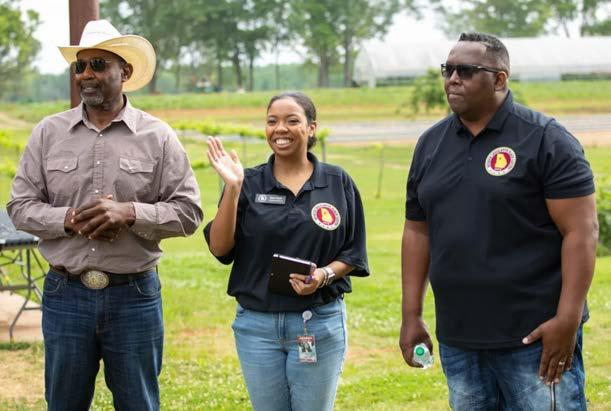
Monday morning, members of the Georgia Legislative Black Caucus (GLBC) toured three Black-family owned farms in and around middle Georgia. In addition to the tours, the GLBC conducted roundtable discussion along with the Agriculture Department at Fort Valley State University, a land grant HBCU which was founded in 1895. Among those on the tour are farmers that currently raise cattle and produce hemp. The goal of the tour was not solely about learning the economics of farming, but the role Black-owned farms play in creating jobs while simultaneously protecting the legacies of Black-family owned farms and ensuring their long-term futures.
Currently, one out of seven Georgians right now work in the agriculture industry. The farm-totable movement has taken hold among Georgia’s consumers. How so? The agriculture industry contributes approximately $69.4 billion annually to Georgia’s economy, according to the University of Georgia Center for Agribusiness & Economic Development. Additionally, the total farm gate value was $14.69 billion in 2021 according to a report compiled by UGA. And yet, Black farmers in Georgia continue to fight an uphill battle for equity, quality investment, and market share in a state where entrepreneurship is not only praised but often highly encouraged.
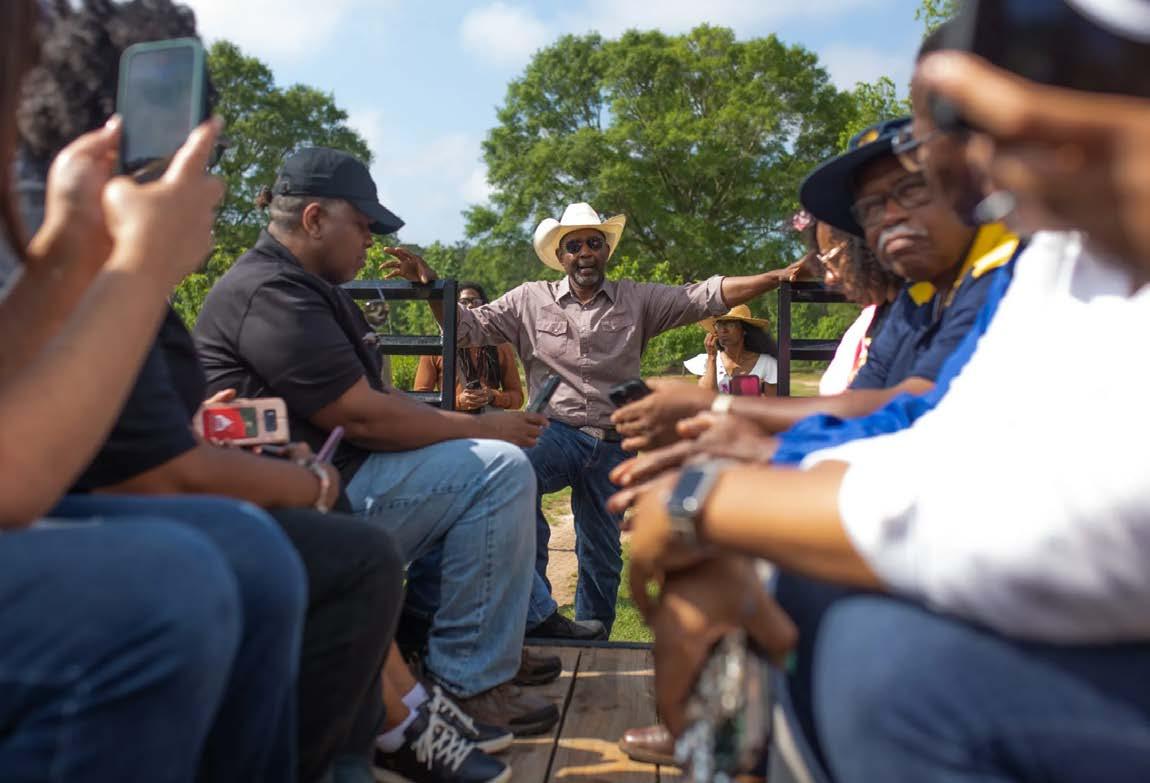
The first farm on the tour was the Bugg Family Farm. With more than 230 acres, Addis Bugg Jr told everyone the farm has been in the family for five generations since 1879. The farm raises cattle while growing muscadines, berries, apples, kale, sweet onions and even watermelons. During the tour, Bugg Jr explained how his father, Cornelius Bugg, had difficulties in getting loans and the impacts it currently has with his stewardship of the farm.
“I can tell you a lot of stories growing up where my dad did go into town to try to apply for loans,”
Bugg Jr said. “He was denied and denied and denied. There’s not one time that I went into town and got a loan for anything to advance the farm. I rather slow-walk it. So that’s why I say we could be much further. I don’t know if the farm is producing enough to even justify going to get a $300,000 loan and advance ourselves with new equipment. We are just slow-walking it right now.”
Bugg Jr said he would love to build a meat processing center in order to not only sell his cattle, but also be able to sell the meat to prospective buyers while creating a farm-to-table model that would better sustain his farm and allow the family to invest for much-needed resources.
Black farm ownership has dropped 90% in the 20th Century due to discriminatory lending practices from governmental agencies that have denied struggling
farmers access to low-interest loans and grants. In 2022, farmers of color were half as likely as white farmers to have subsidized loan applications approved.
“These farmers are often denied for having low or no credit score, despite the USDA being considered the “lender of last resort” for producers who cannot get credit elsewhere,” said Georgia State Representative Carl Gilliard, in a statement. “The limited options for building credit puts Black family farms at severe risk of foreclosure, threatening a key economic engine that keeps rural communities of color afloat.”
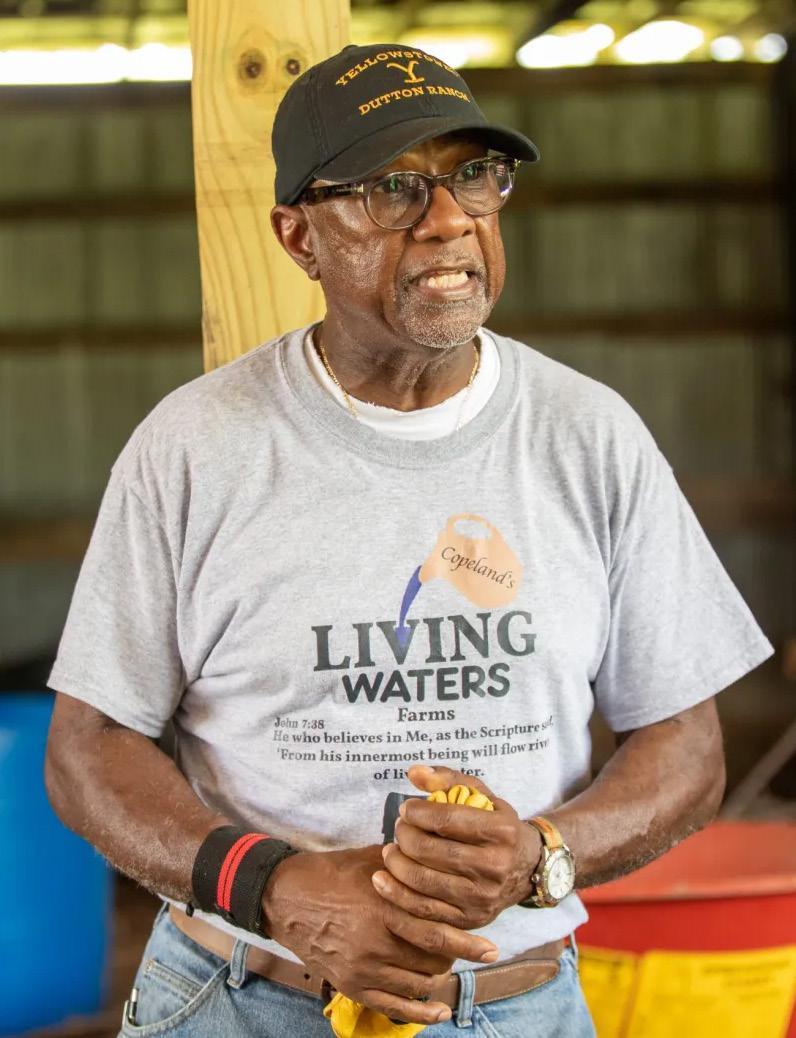
The second farm the GLBC visited was the Living Waters Farms in Manchester. The farm is owned and managed by Jo and Paul Copeland and has more than 300 acres spread out over two properties. Copeland raises select angus and sim-angus cattle. He’s also harvesting hay and growing different kinds of grass. Paul Copeland told
See FARMERS on page 9
Continued from page 8
the group he specifically needs help financing the specific blend of feed he’s producing at Living Waters.
“As a matter of fact, I’ve developed a feed formula that can take anywhere from 10% to 28% protein based on what your cows’ needs,” Copeland said. “That feed can be adjusted to horses, goats, cattle, hogs, whatever, I need some help getting that off the ground number one. Number two, I need money for pouring that cement [for the hay harvesting operation] and hiring folks and training people in order to be entrepreneurs.”
Copeland, by trade, is an engineer. He studies the level of beef that each bovine produces. He says that the beef that you’re consuming will be good for your palate, it won’t just sit there, it will be digestible and digestible very well with a low cholesterol level. He too would like investment for an on-site meat processing facility.
The group would have lunch at Fort Valley State University and the discussion dovetailed toward chats about funding, education,
and ensuring their voices are heard when certain bills come up in the Georgia Legislature. Dr. Mark Latimore, Dean of the Cooperative Extension Program at Fort Valley State University, emphasized that increased funding for local Black farmers would not only benefit their businesses but also address food deserts in rural areas of our state.
“We see this as an opportunity to build a network and a base so that all farmers, whether small or large, can benefit and grow,” Latimore said.
That proposed network could be affected by legislation signed by Governor Kemp. House Bill 128 was signed on April 25th and it is aimed at streamlining certifications for minority, women, and veteran-owned businesses and increasing access to state procurement opportunities. Here’s the issue: State Representative El-Mahdi Holly said during the roundtable that Governor Kemp was pressured by numerous local businessmen to re-evaluate minority contracts in an effort to “dilute the definition of minority businesses.”
“I think as legislators a dual role, not only in introducing legislation,
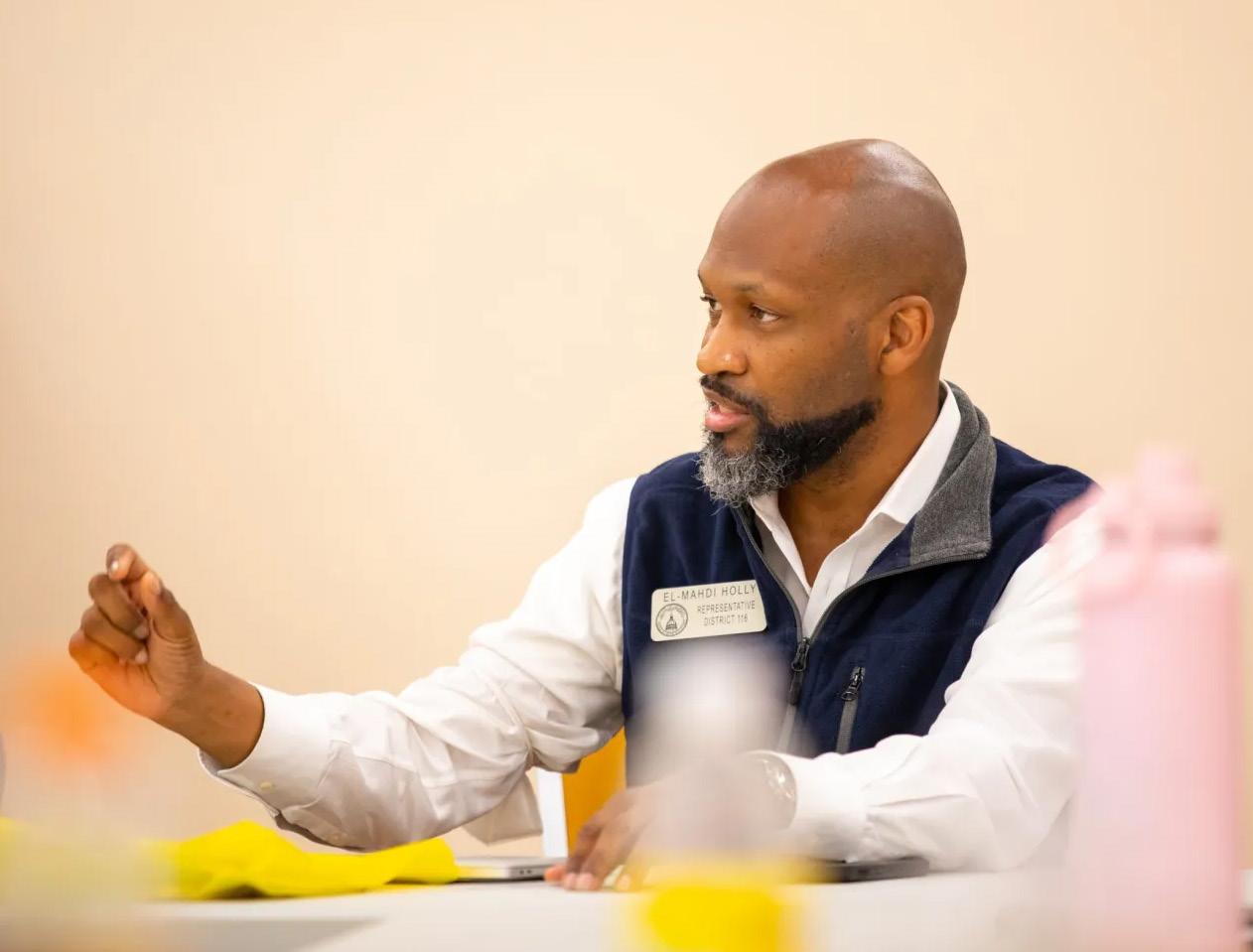
and trying to encourage our colleagues who live have either long been a supporter of a system that refuses to see Black farmers or at least have chalked up the problem of getting those funds made available to plausible deniability and indifference,” explained Representative Holly. “All we need is them to admit that the funding is not making it available directly to those Black farmers. And that can be the impetus for lawsuits that can compel the state to do the right thing.”
Even though Black farmers in Georgia share the same plight as their contemporaries in Alabama, Florida, South Carolina and Tennessee, this group of farmers, advocates, and legislators used this tour to arm themselves with the information for the policy fights and funding wars that loom over the horizon.
Darlene Roberts is a self-described City Girl from Miami. After her husband, Senior Master Sergeant James Roberts passed away, she began to take care of the farm located in Crawford County, Georgia that was a hobby for her husband. Her farm grows blueberries, cucumbers, muscadines, squash, tomatoes and zucchini. She also owned a spa in Macon but it was too much for her to tend to the farm and the spa, so she moved the spa to a sprawling room attached to her home. Roberts also has a vineyard on her property as well.
Roberts also credited the program at Fort Valley State to help her get started.
“Because if you teach us, oh we’re going to learn and I’m going to make it happen,” Roberts said.
“I’m a one woman show besides the people that come to help me. What you see is either I swim or I sink, and there were many times that I wanted to sink.”
Roberts said she runs her farm solely from the income it generates. However, she too would like extra funding.
“But it’s so much hard sweat and tears that have been put into the vineyard that I refuse to let it go,” Roberts continued. So it’s just me … it’s just me, but to have those resources and people to help and you know, just a community that we can go to.”
Representative Gilliard responded by informing the room that each time a box of food was filled and distributed during the COVID-19 pandemic, a farmer was paid.
“When COVID hit, everybody and your mama were feeding people all over the nation. Every time there was a box that was assembled, somebody got paid,” said Representative Gilliard. “So as the owner of a 501C3 organization that feeds the hungry, every time you saw that box, some farmer benefited. Municipalities knew about that money. The local municipalities from the mayor to the county com-
missioner, and Congressmen and Senators in D.C. knew because they were channeling to their friends to become the vendors.”
The members of the Georgia Legislative Black Caucus that traveled to the three Black-family owned farms say this is only the beginning of a fight to finally level the playing fields for Black farmers as well as Georgia’s public Historically Black Colleges. Everyone was moved seeing the families that are trying to make it and make it on what they just have and not what they really need. But in order for their plans to work, there must be a collective buy-in from the local level which includes the mayors and county commissioners actively engaging with the legislators to push for positive changes.
“We are serious about a roll out of legislation,” Gilliard explained. “But we’re going to be asking as we travel around the state of Georgia for help from organizations. We’re going to ask for help from the NAACP, the Urban League of Greater Atlanta, and whoever else that’s involved, to send letters to pass local resolutions and support that legislation and to call your senators, your state reps, the Governor, the Lieutenant Governor and tell them to move it forward and give us a hearing so we can move the needle forward.”
BY MENRA MAPFUMO
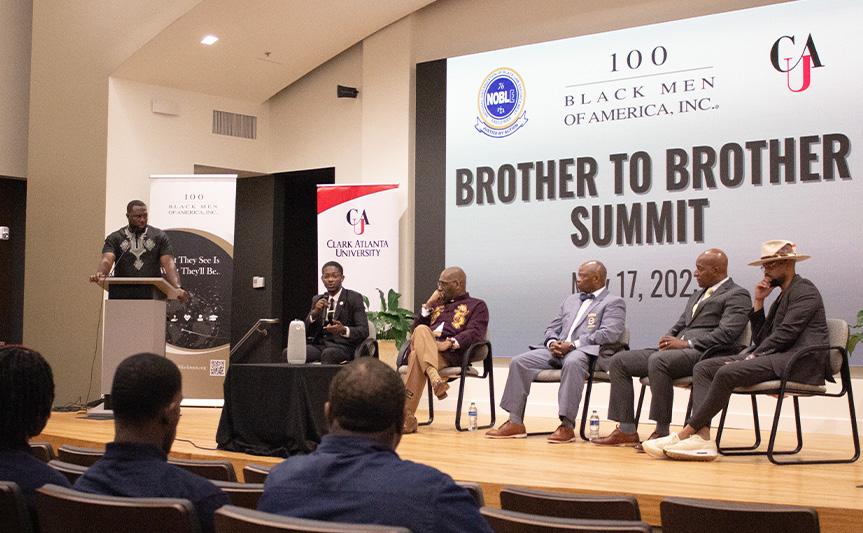
Clark Atlanta University hosted ‘The Brother to Brother Summit: A Conversation with the Voices on the Ground Wednesday, May 17.
The event was presented by 100 Black Men of America, INC. and the National Association of Black Law Enforcement Executives (NOBLE).
The summit was a panel discussion to address possible changes to gun law legislation and mental health challenges affecting young Black men. Student Vice President of the Men of Clark Atlanta University Darien Richards, Interfaith Chair Jamal Bryant, Former Chief of Police of Atlanta and the First Vice President of NOBLE Rodney Bryant, Anti-Gun Violence Committee Chair Joshua Byrd, and Eduprenuer Alfred “Shivy” Brooks were the panel guests. The National Public Policy Committee Chair Dr. Wes Bellamy was the panel moderator.
Black male high school students from B.E.S.T. Academy and Frederick Douglass High School were in attendance.
Panelists were asked “What do you believe to be the root cause of gun violence within black and brown communities and what are some solutions?”
Interfaith Chair Jamal Bryant expressed,
“Gun violence is America’s love language... this is not the fruit of broken families, but a broken country. We have had, this year, 235 mass shootings and not one piece of legislation being offered...I think it is not as much a Black American problem as much as it is an American problem and America has to take full accountability responsibility for it.”
Former Atlanta Police Department Chief
Rodney Bryant responded, “I do not think there is one solution to this problem. The reality is African Americans are disproportionately affected by gun violence regardless of who the perpetrator may be. It is an American problem. We have to address this as a nation as a whole. What we see everyday is we are three times as likely to be victimized by gun violence as any other race and that
is a problem. That is something that needs to be addressed even more significantly and where I think this evolved from is that our culture has been traumatized so much. And guns becoming a common language in our community, that has to be addressed through education, through parenting, and through legislation.”
Byrd added, “...What is not being done and fortunately what we have been able to do particularly at B.E.S.T. academy offers youth conflict resolution training... sensible legislation will also be great, but it is our perspective that we should treat violence and gun violence in the same way we treat car accidents with seatbelts. The same way we treated cigarette smoking and the same way we addressed Covid-19. When people are dying it is a public health issue.”
Panelists were also asked, “What are some things you think we could do to address [gun laws]?
Brooks proposed, “...responsibility to secure firearms in homes and in vehicles. A fine if [the gun] is stolen in the vehicle and it was not stolen in a locked compartment...it is going to be very hard to ban assault weapons...I would propose we have a limit on magazine capacity to only ten and we tax the ammunition 500 or 700 percent. You make it so unaffordable that it is not the go to.
BY NOAH WASHINGTON
On May 2, 2023, the Writers Guild of America (WGA) launched a strike after negotiations with the Alliance of Motion Picture and Television Producers (AMPTP) failed. One of the primary concerns is the decline in compensation for writers in the streaming era. According to the WGA, nearly half of all writers work for the minimum basic agreement, and the rates of purchasing screenplays have declined by 14% over the past five years when adjusted for inflation according to the WGA.
Negotiations had been ongoing since February, but the WGA put a "pattern of demands" up for a vote by its members in February, and 98.4% of members voted in favor of the demands.
The city of Atlanta and Georgia as a whole, the sites of major film and television production the past decade, have been severely affected by the WGA strike. Several productions have been halted as a result of ongoing discussions between the WGA and AMPTP. This includes shows like Stranger Things and Marvel’s upcoming movie, Blade. Keith Arthur Bolden, professional actor and professor of drama and dance at Spelman College offered insight into productions coming to an abrupt halt.
“ I feel it, the lack of auditions, I feel the lack of work coming down the pipe,” Bolden told The Atlanta Voice recently.
Ryan Richmond, an Atlanta native currently working as a WGA member on Hulu’s Unreasonable Doubt also offered his own thoughts on the strike. “It all boils down to
money and the level of transparency and what the streamers are willing to relinquish,” Richmond told The Atlanta Voice.
Richmond got his first WGA credit after completing the project, How to Fall in Love with Anyone, produced by Malcolm D. Lee through his company Black Male Productions.
AI being involved in the writing process is another issue being addressed in this strike. Writers are fearful that their jobs will be replaced by this new emerging technology.
“AI is so newly introduced to the world in such a manner, It’s important that you know it does not make the physical and human writer obsolete,” Richmond said. “What the writer is creating is not a life of computers, it's a human life that we're replicating on
screen for entertainment.”
Atlanta-born veteran writer and producer, Diallo Riddle, who started his career as a writer on Late Night with Jimmy Fallon and is now heading his own shows such as HBO MAX’s Southside and IFC’s Sherman’s Showcase. Diallo has his own thoughts as a writer toward this problem. “I think many industries will have to come face-to-face with the ramifications of AI,” Riddle shared with The Atlanta Voice.
The WGA has demanded increased minimum compensation for all media, increased residuals, appropriate TV series-writing compensation from pre- to post-production, increased contributions to pension and health plans, the strengthening of professional standards, and overall protections for writers.
BY JANELLE WARD
One of Atlanta’s largest music festivals will return to Piedmont Park this September.
Organizers at Music Midtown announced the music festival’s return over social media on Tuesday, following a year-long hiatus allegedly prompted by state firearm laws prohibiting the festival from instilling temporary gun bans on public property.
The three-day weekend event is scheduled to take place from September 15-17 this year. Guns N’ Roses, Lil Baby and Billie Eilish are three of six total musical acts slated to headline.
The announcement was released following the hosting of Shaky Knees earlier this month, another annual music festival which celebrated its 10th anniversary in Old Fourth Ward’s Central Park this year.
Music Midtown has historically banned “weapons [and] explosives of any kind” from its grounds, and the principle remains intact for this year’s event, according to the festival’s website.
The festival also updated its safety policy earlier this week, stating organizers will increase security presence around the venue and conduct “full and complete airport-style search[es]” of attendees prior to entering the park.
“The safety and well-being of our fans, artists, guests and staff is paramount,” the statement reads. “Organizers work closely with local officials to ensure the safest possible experience.”
Tickets for the festival were made available to the public for presale on Thursday.
Continued from page 6
• Passenger Revenue: $82.7 million
• Station Parking: $1.7 million
• Total Advertising: $7 million
• Total Lease Income: $9.6 million
• Other Revenues: $4.1 million
• Federal Operating Assistance: $81.5 million
• Interest Income: $15.8 million
Net Operating Expenses - $631.4 million
• Labor Total: $490.5 million
• Non-Labor Total: $221.9 million
• Gross Operating Expenses: $712.4 million
• Capital Allocation ($81 million)
The proposed FY 2024 Operating and Capital Budgets are available to view during regular business hours at MARTA headquarters, Monday – Friday, 8:30 a.m. to 5 p.m.
There will be another in-person meeting Thursday, May 18 starting with a community exchange where the community can ask questions regarding the budget at 6 p.m.
The meeting will take place at MARTA Headquarters, 2424 Piedmont Road, Atlanta. To join virtually, visit www.itsmarta.com. Also, to view the proposed budget online, visit https://www.itsmarta. com/public-hearings-meetings.aspx.

BY JANELLE WARD
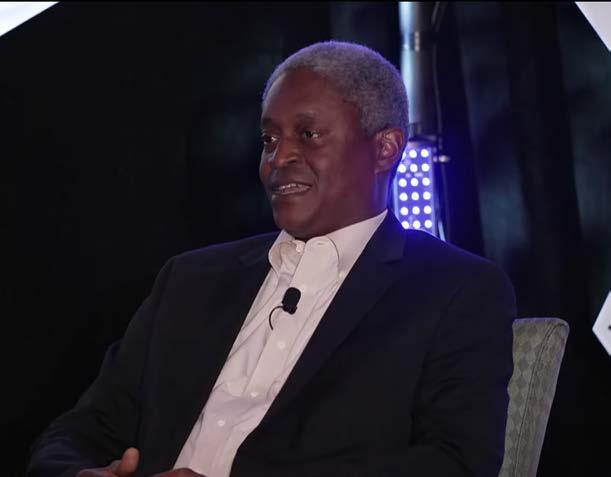
Federal Reserve Bank of Atlanta president Raphael Bostic spoke on inflation, policy interference and the debt ceiling in a keynote address Tuesday evening, closing the Fed’s twoday Financial Markets Conference in Amelia Island, Florida alongside Chicago Fed president, Austan Goolsbee.
Bostic, who has served as Atlanta Fed president and CEO since 2017, said during his remarks that he expects inflation to fall over time, but doesn’t predict rates will fall below the desired threshold before the year’s end.
“We’ve come a long way, but we’ve still got quite a ways to go,” Bostic said. “I think we’ll make some good progress, but I’m expecting it’s going to be a little bumpy.”
Bostic also said that business owners are actively working to restore wage increments within their companies that were thrown off-balance with the emergence of the pandemic in 2020.
“I think that we should just all remember that in many ways, this is still a pandemic economy,” Bostic said. “And the things that we’re dealing with are a byproduct of policy decisions, of business decisions [and] the experiences we had through the pandemic where a lot of people were home working, but still getting paid.”
Bostic said this imbalance of strengths in the economy supports his theory that inflation will reach its target without requiring major intervention in the form of policy from the Federal Reserve.
The Atlanta Fed hosts its Financial Markets Conference each year, bringing together economic leaders and experts from all over the country to discuss changes in the global financial market, along with the policies that may be implemented to counteract them. This year’s conference, entitled “Old Challenges in New Clothes: Outfitting Finance, Technology, and
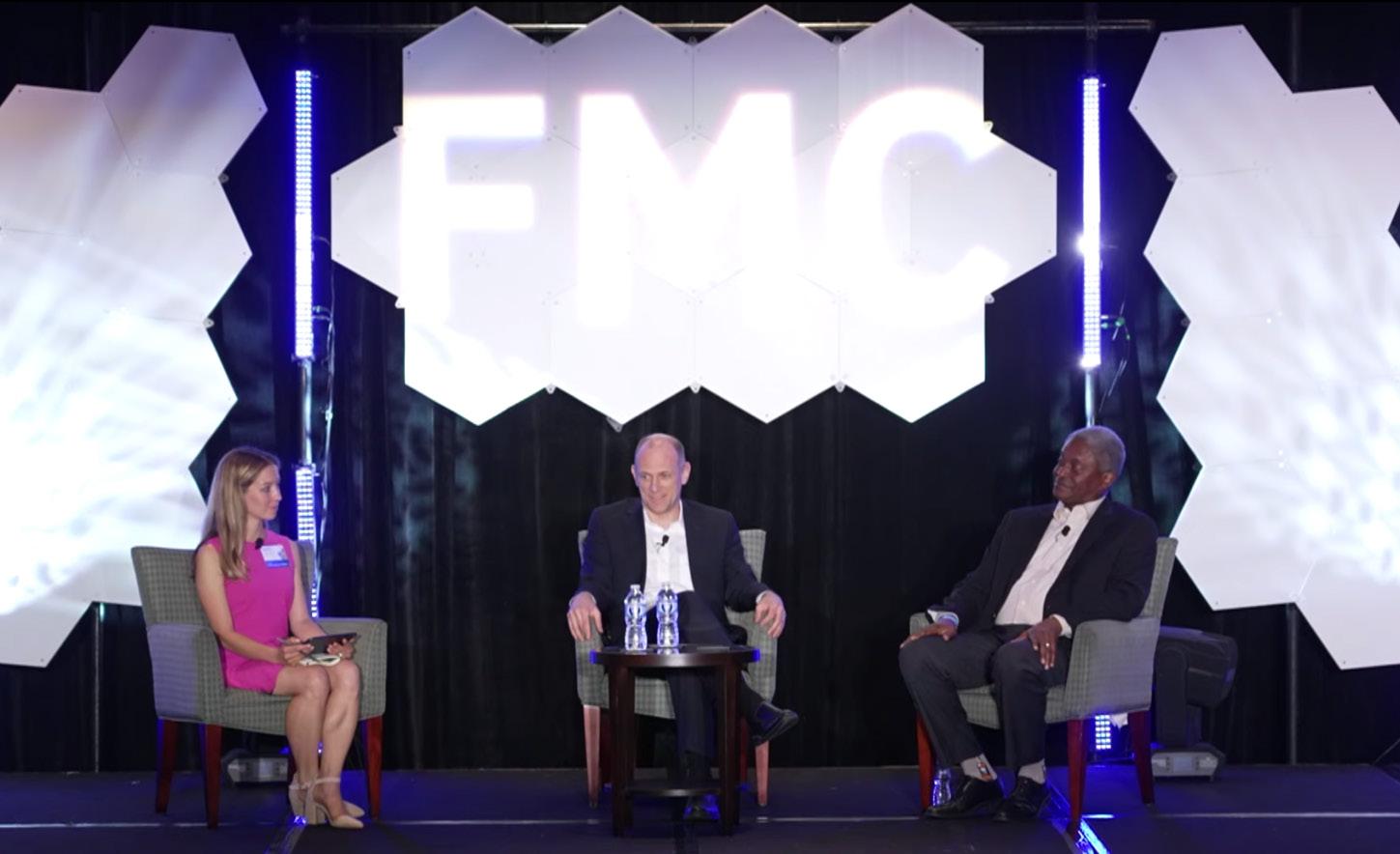
Regulation for the Mid-2020s,” focused on impending economic concerns, like inflation across various industries, and the technological advances sparking shifts in the financial system.
Bostic and Goolsbee also discussed the state of financial institutions in the aftermath of the Signature Bank, First Republic Bank and Silicon Valley Bank collapses. Bostic said that the bank failures of the past few months haven’t hinted at larger issues within the banking industry, but instead reveal discrepancies affecting a minority of bank owners nationwide.
“I don’t know that we have a crisis right now in financial markets,” Bostic said. “We have a small number of institutions that have risk management strategies that work less well than you would like, and the markets have made
a judgment. And that judgment hasn’t led to a similar judgment for a large number of other institutions.”
The Fed presidents also talked about the potential debt ceiling bind, a crisis that could lead to a widespread economic recession if not timely settled by federal government leadership. Goolsbee said the impending dilemma affects many high-ranking parties and agencies in the credit and lending industries, leaving congressional representatives in Washington D.C. with one course of action going forward.
“As Chair [Jerome] Powell said, there really isn’t any alternative. [Congress] is going to have to raise the debt ceiling,” Goolsbee said. “The only question is, how much pain are we going to have before that happens?”
BY KELUNDRA SMITH
Jasmine Brown is used to being the only one, or one of a few African American students in high-achieving academic spaces. Growing up in Central New Jersey,she heard white class- mates attribute her admission to top universi- ties as a matter of affirmative action. However, knowing how to armor herself against microaggressions, like being denied access to her lab because a white professor didn’t believe she was a student,doesn’t make it any less lonely or tiresome. In fact, it is that experience, which occurred when Brown was earning her bachelor’s degree at Washington University inSt. Louis, that inspired her to pen the new book,“Twice As Hard.” Brown started writing “Twice As Hard” as her the- sis project while she was on a Rhodes Scholarship at Oxford University. In the book, she interweaves parts of her experience with the obstacles that some of the first Black women doctors faced to become licensed practicing physicians.
Each chapter of the book is about a different woman’s experience, starting with Dr. Rebecca Lee Crumpler in 1864 through Dr. Risa Lavizzo-Mourey in 1979. Frombeing denied entry to medical school, to the closure of programs at historically Black colleges and universities, to white professors and classmates excluding them from study groups, the road to M.D. or O.D. has been fraught for women, especially Black women who make up less than 3% of all licensed physicians.
Brown is currently a medical student at the Perel- man School of Medicine at the University of Penn- sylvania. Here are excerpts from our conversation with Brown Where she shares her own experiences in medical school, why she chose to write “Twice As Hard” and her hopes for the future.
When did you know you wanted to become a doctor?
I became interested in medicine in high school, because I was trying to figure out what I wanted to major in and I had an interest in psychology, but I was unable to take classes at my high school. I started taking online courses through Coursera and MIT OpenCourseWare, and one of the psychology pro- fessors introduced neuroscience as an intersection between biology and psychology. I didn’t know what a research career was, so I thought because I was in- terested in science I thought that equaled medicine. When I went to undergrad, I started exploring both fields. I enjoyed being able to
apply my passion for neuroscience and biology to help people during a vulnerable time in their lives. I don’t have any family in medicine, so it felt like taking a bit of a risk.
What conversations, if any, were had in your home about race and racism at work?
I’m not sure if I remember explicit conversations about racism in the workplace. I definitely had experiences with racism growing up and I felt like I could talk to my parents about that. Since being in (medical) school, but more in a work environment, I’ve had a lot more conversations with them about it. One thing I do remember is that they are both engineers, and my mom was often the only Black woman where she worked. They also talked about how there were only a few Black engineers when they were in school, but that’s about it.
You describe in the book having peers underestimate you in high school and college. What made you feel a book is the best way to reach people and describe the experience of being lonely?
I’ve been passionate about diversity in academia since high school. When I got to Washington University in St. Louis and I began to have challenges – and noticed some of my Black friends had similar challenges – I created the Minority Association of Rising Scientists as a means to counteract the racism we were experiencing. At the time, that work felt like it needed to be on the periphery because I had to do my pre-med classes and the biomedical research that was expected of me to be a competitive appli- cant for medical school, but it was really meaningful to me. When I got to Oxford, I had the chance to do my masters on my topic and I felt privileged that I could focus on it. Before that point, I had never met a Black woman physician and it was inspirational learning about their journeys. I was also the only Black per- son in the (Oxford Centre for the History of Science, Medicine andTechnology.) Usually with the thesis projects, they’re stored in the Oxford archive, but I thought if the thesis was only stored there it wouldn’t reach the people I wanted to reach. A book felt like a way to reach more people.
In the book, you write a lot about generational wealth. For example, you cite that nationally, ap- proximately half of all entering medical students come from families in the richest 20th percentile of the population. How does the doctor’s socio- economic class impact care from your perspective?
Similar to race or gender, we bring this set of
theatlantavoice.com/support-our-publication/
experiences into our work that affects the way we take in data. Medicine is an imperfect science. We see a patient; they tell us their story; and we look at vitals, but a big part of diagnosis is in that history taking. When you’re unable to relate to a person’s perspective, it can have a big impact on your understanding of their medical situation and how you’re able to care for them. In school, I’ve learned how much socioeconomic factors affect a patient’s health outcomes, even more than medication. Someone who comes from a privileged background, and doesn’t have anyone close to them who has had financial struggles, may not understand that a patient may not be able to afford medica- tion, or take time off from work.
In your author’s note, you distinguish between the challenges that Black people with ancestral lineage in the U.S. face versus what those from Africa or the Ca- ribbean face. Unpack that for me.
It goes back to the financial back- ground. In the U.S., we have a lineage of slavery and oppression. African Americans were punished for learning how to read and write, and communities were terrorized when they started to find success. This led to a wealth gap among Black Americans. At the same time, second- and third-generation students from Africa and the Caribbean experience more barriers migrating to the U.S. than European immigrants. To come to the U.S., people from Africa or the Caribbean have to have more money. That filters out people who don’t have a high level of income and
education. The majority of African immigrants in medical school have parents who possess college degrees, but there’s a large pro- portion of American Black people who are first-gen- eration college students. That’s why there are more African and Caribbean immigrants in medicine than American Black people.
In all of the women’s stories, you talk about their love lives and family lives and also the cost of their ambitions on their relationships. How does that contribute to making becoming a doc- tor “twice as hard?”
That’s a big topic I talk about with other Black women in medicine. The higher level of success you get, that can lead to challenges in the dating arena. You may be seen as less desirable. If you are a man who gets a Rhodes Scholarship, you’re more desir- able than a woman who earns one. That goes back to gender roles of who's considered the provider versus the homemaker. I’ve had friends who found challenges while they were dating because the men they were dating had high expectations of how much time they should be at home, knowing they were in medical school. It puts pressure on women (when they are deciding on a) specialty and contributes to the staunch lack of diversity in surgical fields be- cause the training is so long and can be inflexible. If you’re in the O.R., you can’t leave because your child is getting out of daycare.
Read full article online at www.theatlantavoice.com

BY DONNELL SUGGS
Nobu Hotel Atlanta, which opened in November 2022, is one of the city’s newest staycation destinations. The hotel has the unique advantage of not only being in the heart of tony Buckhead, but next door to GA-400 surrounded by a pair of major shopping destinations.
The 152-room hotel was designed by New York City-based architecture and design firm The Rockwell Group and blends in well with neighboring Phipps Plaza, Lenox Mall and the other skyscrapers at the intersection of Lenox and Peachtree roads.
Simon Property Group might be the most excited about the prospect of the hospitality arm of what looks to be a fully-functioning multipurpose tourist destination.
Nobu Hotel Atlanta has spacious rooms (below) and easy access to shopping at Phipps Plaza, which is accessible via an elevator and parking garage. The access is a special feature of the hotel, according to sources attached to the
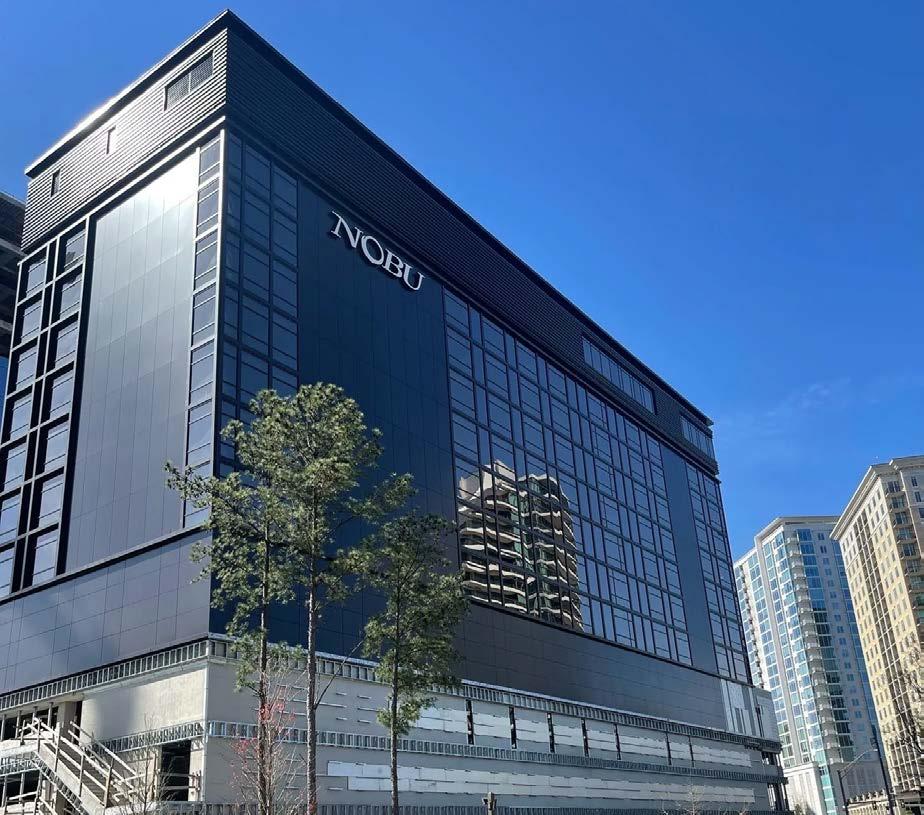
project. The new LEGOLAND Discovery Center is also a short walk from the hotel.
“You can spend a weekend here [at Nobu Hotel Atlanta] and not even leave,” said Simon Property Group Senior Vice President, Development & Asset Intensification Patrick Peterman.
The hotel has the typical features, such as a rooftop swimming pool and a gym, fitness center Life Time, on the premises, but also features a one-bedroom villa on the ninth floor. The hotel’s only suite includes a view of Kennesaw Mountain and Stone Mountain in the distance, and the entirety of Buckhead below. There is also an option of privatizing the rooftop pool which is adjacent to the suite.
Nobu restaurant, located on the ground level of the hotel, makes the combination hotel-restaurant an easy sell for both visitors and residents alike.
BY ISAIAH SINGLETON
School is almost done and summer is right around the corner. Many parents and guardians may be looking for summer camp programs in the Atlanta metro area they can put their kids into this summer. The Atlanta Voice chose (in no specific order) the following six summer camp programs:
1. Atlanta Botanical Garden - Intown Atlanta
• Camps include programs for ages 4-6 and 7-10, encouraging campers to create art, conduct experiments, and play games. Ex-
plore the beautiful plants and creatures throughout the Garden with two camps: Plant Power and Garden Friends.
2. Callanwolde Summer CampsDruid Hills
• Callanwolde offers summer fun for kids and teens of all ages! These week-long camps and intensives offer a chance to learn new skills, develop your talent, and create –all onsite at the historic estate. Offerings include artistically themed weeks at Callanwolde Creative Camp, portfolio-and-skill building Teen Summer Studios, The Art House for younger campers, and
Summer Dance for dancers of all levels. Dunwoody Nature Center Summer Camp
3. Dunwoody Nature Center
Summer Camp – Dunwoody
• Children will enjoy exploring a variety of Camp Themes each week, and camps are available in separate age groups for kids 4-13 years old. Combining traditional day camp fun and sleep-away camp activities, they’ll play games, make crafts, do experiments, hike on the trails, play on the playground, and more!
4. The Walker School - Marietta
• Over 500 campers enjoy a di-
verse selection of academic, athletic, and artistic opportunities – just walking distance from Marietta Square. Choose from half-day or full-day options; early morning drop off and late pickup is also available.
5. Summer Art Camp High Museum of Art – Atlanta
• With options for 1st -8th graders, campers will explore the collection, sketch in the galleries, and create artwork. Campers will enjoy themed weeks such as Hogwarts, Costumes & Contraptions, SpaceArt Exploration, Pops of Color, and Messy Masterpieces. Dive into art
this summer at the High.
6. Atlanta History Center - Buckhead
• Campers will explore a variety of enriching camps, including History Summer Camps and Writing Summer Camps centered around different themes. Featured themes are Around the World in 5 Days, Your Hand in History, All-Star Atlanta, Fantastic Mysteries and Where to Find Them, Just Mything Around, Race to the Deadline: Broadcast Edition, Little Feet, Big Steps: How Kids Impact History and the World, and Power of Pen: Writing Essentials.
JUNE 10, 2023
cosplay, one for contestants who have made 60 percent or less of their costume and one for those who made 60 percent or more of their
er, you start to get into the motion of making things and it doesn’t matter if you make it all or just a little of it. When I first started, my first two cosplays were bought. I didn’t make anything for them. But in 2017, I collaborated with a very close friend of mine and he took me through the ropes of how to build armor. So from then ty much has come from my creative mindset,” day or single day memberships. Four-day memberships are $85.00 to $95.00. Single day tickets range from $40.00 – $55.00 (kids 9 and under free). Game tournament registration and separate concert tickets are also available. Visit


Friday Night Kick-Of f Party
Friday, June 9, 6PM – 9PM @ John Howell Park, Near Barnett St.
PURCHASE TICKETS NOW!


5K Race Registration Saturday, June 10, 8AM
Start @ Lanier/Virginia Ave
REGISTER: active.com
For more information visit: vahisummerfest.org
LEAD SYSTEM TEST ENGINEER
Cooper Lighting LLC seeks a Lead Systm Tst Eng (Peachtree City, GA) to devise & execute tst strtgy & anlyz rslts w/ emphasis on automtn for cutting edge Zigbee/BLE Mesh based IoT sols for Lighting apps. Reqs Bach dgr in Elctrnc Eng or rltd field & 5 yrs of Systm tst exp. Exp must invlve the fllwng: Python Scrptng; robot framewrk (Selenium/ Appium Library & locator strtgs); Scrum prcss & Agile methdlgs; sftwr QA methdlgs, tools & prcsss; cnnctd systms using either ZigBee, BLEMESH or Wi-Fi Protocol; & web apps, Mobile apps, & Embddd Frmwr. Email resume to: taamericas@signify.com & ref job title & job code 20-GA.
SOLUTION ARCHITECT, MOBILE
The Coca-Cola Company (Atlanta, GA) This position will report to the senior director of the America’s regional delivery center and will work to support the digital growth of Coca-Cola’s North America and Latin America operating unit. This role has responsibility for end-to-end architecture and engineering of mobile technology stack. Please email resumes to abamato@coca-cola.com ref job #JD521633
PRODUCT OWNER
The Coca-Cola Company (Atlanta, GA) The position will be responsible for leading the management, implementation, and execution of digital products. The role will lead technical aspects in the evaluation, troubleshooting and implementation of new software features working with technical teams, marketing teams, customers, and commercial teams. Please email resumes to abamato@coca-cola.com ref job #LB527294