By LAURA NWOGU
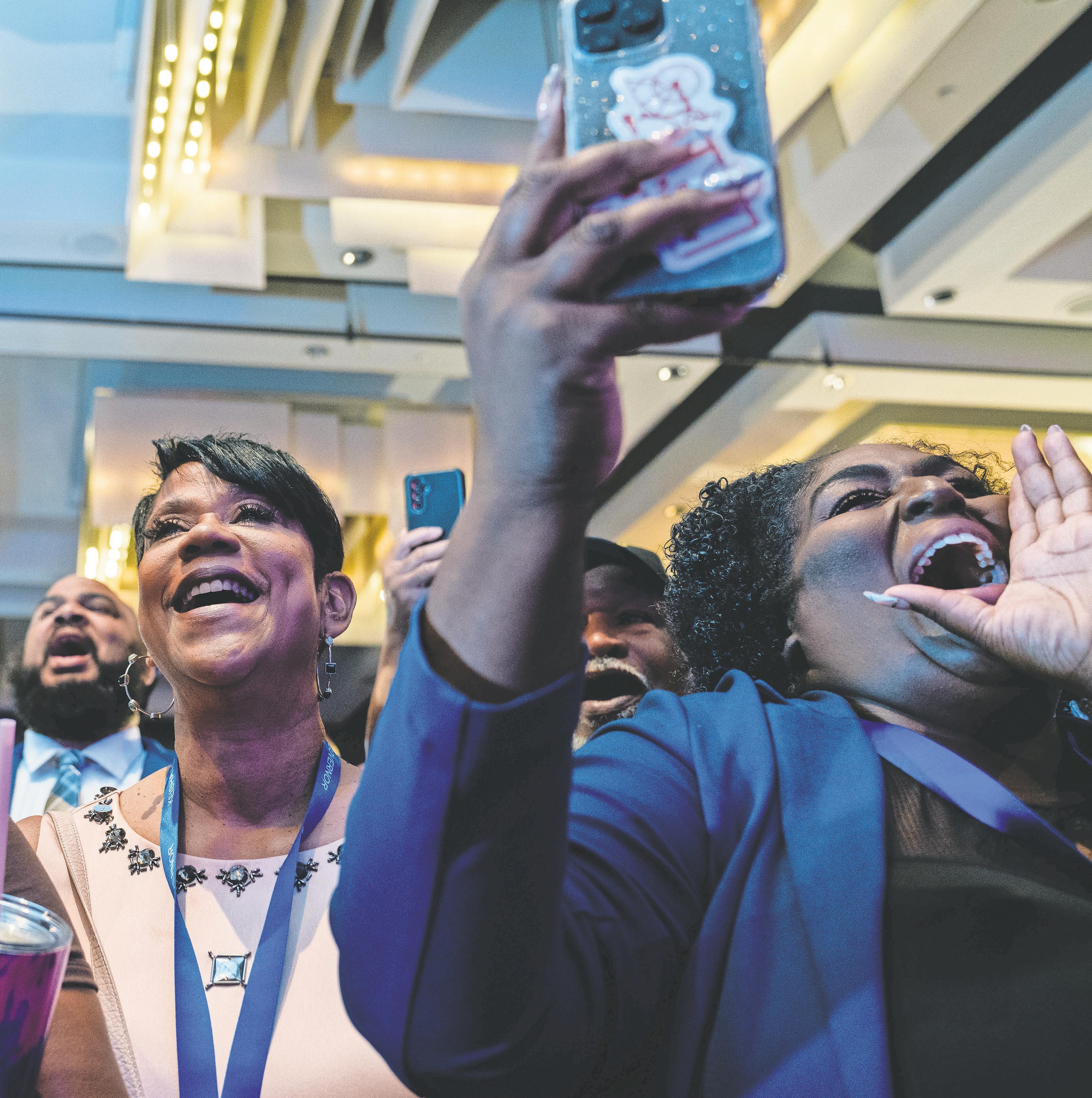
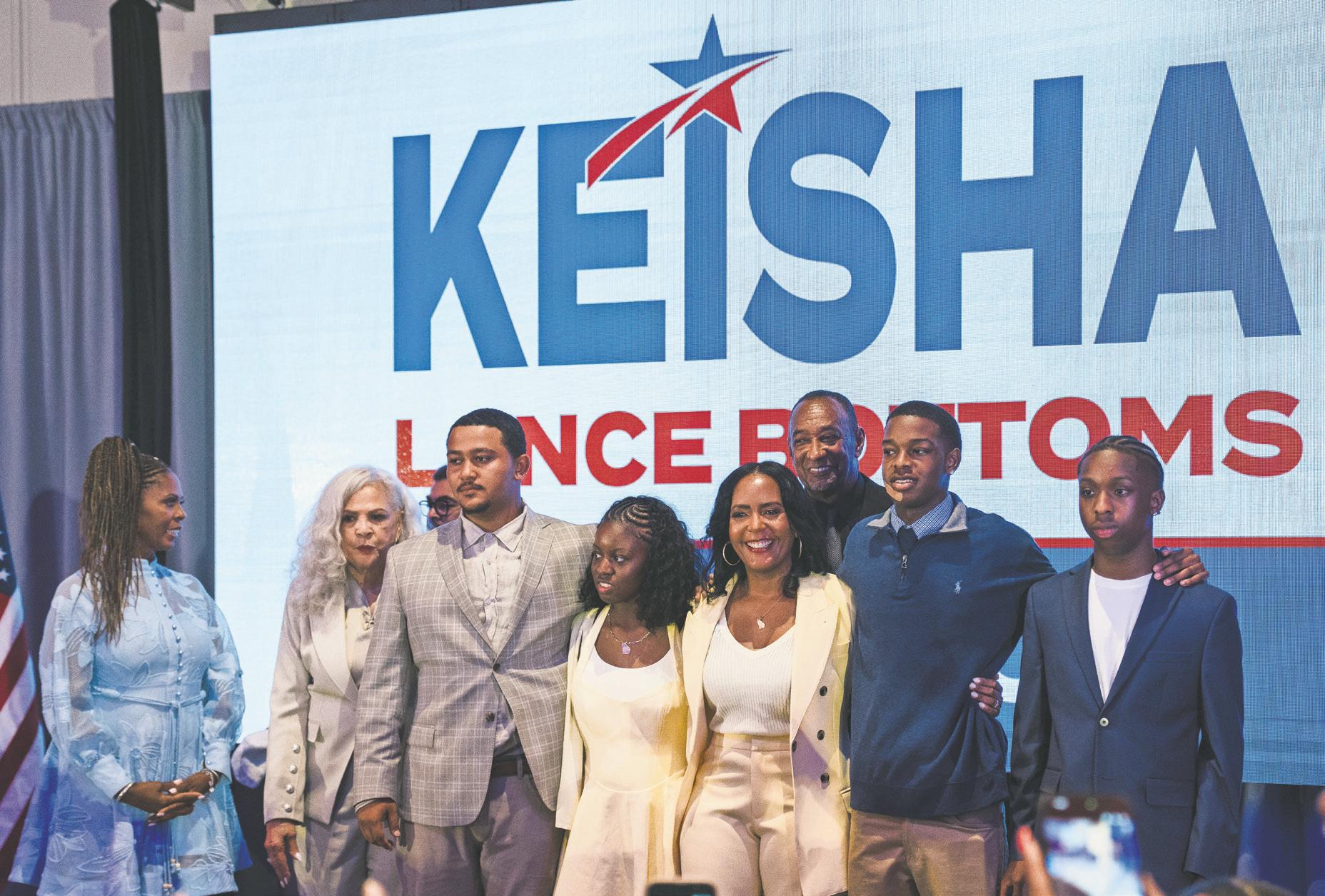
In the hour before polls closed on election day in Georgia, the international ballroom at the Hyatt Regency Atlanta was decked out in red, white, and blue balloons and signs campaigning for Keisha Lance Bottoms for the next Governor of Georgia. In the hours that followed, the election results showed that the former Atlanta mayor had won the Democratic governor’s primary.
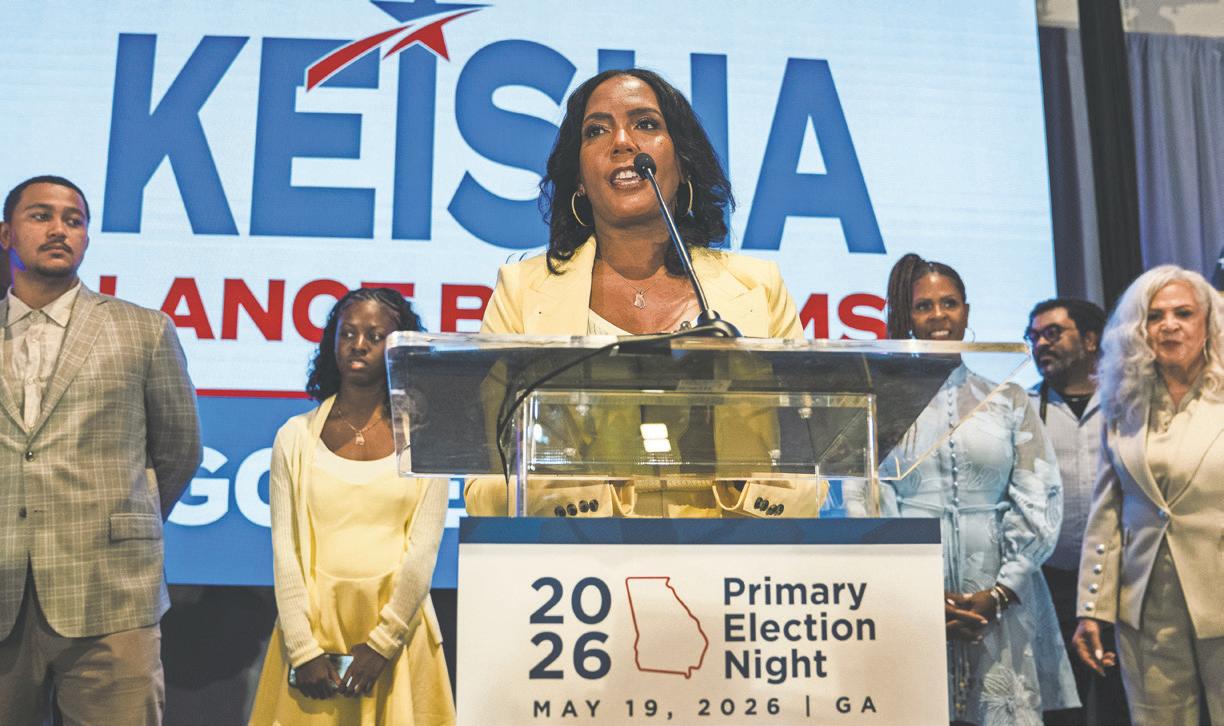
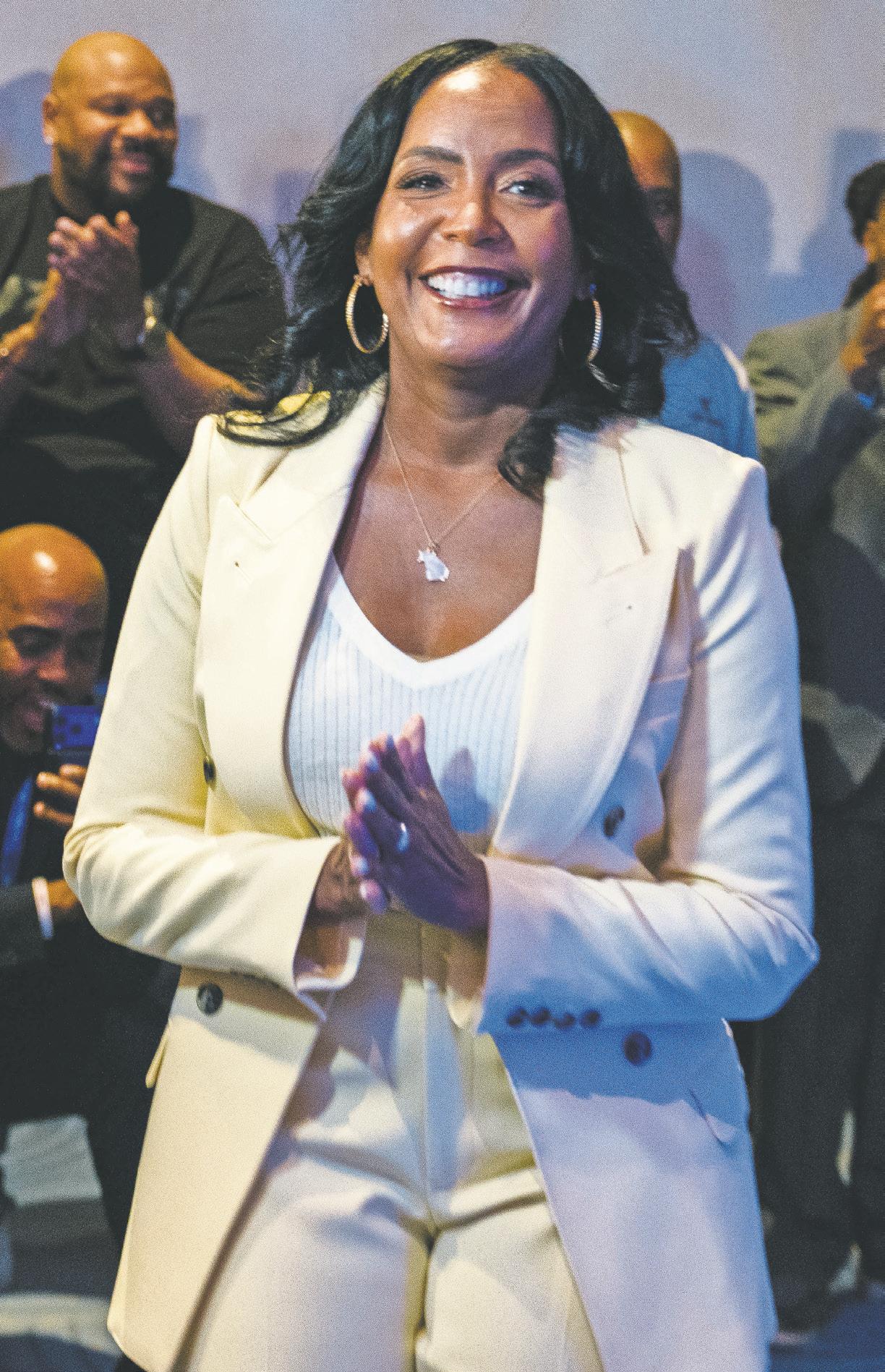
When Bottoms took the stage in a bright yellow suit with her family standing behind her and an audience of supporters in front of her, it was clear that gratitude overwhelmed her.
“I am humbled to be your Democratic nominee for governor,” Bottoms said. “I am reminded that the grace of God is sufficient… It is that faith that has led me to offer myself as a candidate for governor of this great state. I am a fighter, and I could not rest knowing that people across this state needed someone to stand in the gap and fight on their behalf. Georgians sent a clear message tonight that they want a fighter, someone who will stand up to Donald Trump and all of the chaos that’s raising costs, that’s hurting our economy, that threatens the rights that generations before us fought for and died for.
“As a great urban poet once said, ‘I ain’t never scared.’”
Georgia saw record-breaking early voting numbers ahead of the Tuesday primary election. According to the Georgia Secretary of State’s office, over 1 million Georgians turned out for early voting. When the polls closed at 7 p.m and results started trickling in, Bottoms led the polls for the Democratic nominee. Her rivals included six other gubernatorial candidates, many with names familiar to Georgians, including former Lt. Gov. Geoff Duncan, former Georgia State Sen. Jason Esteves, and former DeKalb County CEO Michael Thurmond. State Rep. Derrick Jackson, former pastor Olu Brown, and
Amanda Duffy rounded out the Democratic candidates.
Bottoms ran a campaign centered on voting rights protection, affordable housing initiatives, and lowering the cost of living for working families.
Fulton County resident and Navy veteran Tomorra Wiley said she has been campaigning for Bottoms for nearly a year.
“I’ve been on the campaign since July of last year. I believe in her dreams and goals. Actually, she’s one of the people who motivated me to get clean, and now I am seven years clean,” Wiley shared. “I think it says that Georgia is ready for a change.
We’re ready for a new balance. The time has come. I think we’re turning into a blue state. I think, in some ways, we’re a purple state. I think that Georgia is becoming, with Atlanta, a more inclusive state, and I think that the rural areas of Georgia need just as much advocacy as Atlanta. That’s one thing that’s going to pull us through, and if we work together as a state, we’ll make it a great state.”
Republican candidates Burt Jones and Rick Jackson have advanced to a runoff. If Bottoms wins the governorship against one of them in November, Democrats will reclaim the governor’s office for the first time in more than two decades. She will also
become the first Black female governor in U.S. history.
“Georgia, the power is in our hands. Go let them know,” Bottoms said in her final remarks to the audience as T.I.’s “Let ‘Em Know” blared over the ballroom speakers.
By DONNELL SUGGS
The 2026 Georgia primary elections took place on Tuesday, and the results signal a level of change in the Peach State. Black woman Keisha Lance Bottoms will represent the Democrats in November; Tanya Miller, who won 84.55% of the vote, will face a Republican opponent for the right to be called the state’s attorney general. Nikki Porcher, having won 30% of the vote in the labor commissioner’s race, forced a runoff with Michelle Michi Sanchez, the incumbent, who won 25% of the vote. State Rep. Jasmine Clark continues her journey towards Congress in District 13 after winning 56.13% of the vote. She will face her Republican opponent in November for the right to replace the late Congressman David Scott in Washington, D.C., while dentist, reality TV star, and political newcomer Dr. Heavenly Kimes finished second in that race with an impressive 21.4%.
And a former judge will compete in a one-on-one election for the Democratic nod for secretary of state.
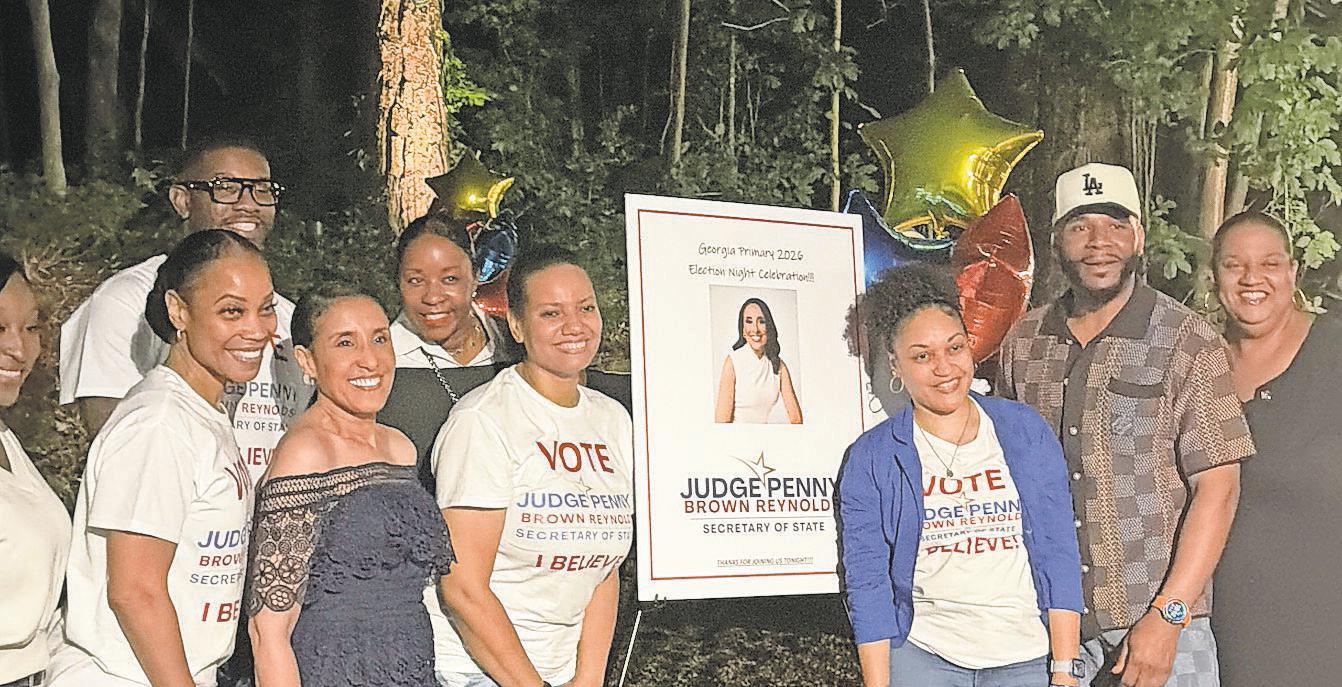
Judge Penny Brown Reynolds hugged one partygoer and danced
Vernon Jones and Tim Fleming shared the majority of the votes on Tuesday. At 11 p.m., Fleming held 39% of the votes, while Jones, a serial candidate for many top political seats, had nearly 30%. Kelvin King, a veteran of the United States Air Force and business owner, finished third with nearly 16% of the vote after running a successful grassroots campaign.
Earlier that day, Patsy Thompson, 80, was wheeled out of the polling station at the C.T. Martin Natatorium & Recreation Center in Southwest Atlanta. The lifelong Atlanta resident just finished voting and was waiting on the curb for her ride to arrive.
Just a few feet from Thompson, Former Atlanta Mayor, State Representative, and Ambassador to the United Nations, Andrew Young, 94, had just finished voting.
Barbara Landers, 87, looked on from a shady spot near the entrance. The C.T. Martin Rec Center isn’t her polling place, so the staffers gave her the right address to a polling station a mile away. She was on her way there when she stopped to speak with The Atlanta Voice about the importance of voting in every election.
with another. The watch party for her campaign for the Democratic Party’s nomination for the Secretary of State was underway at her home, and at 9 p.m., two hours after most polls closed, her lead over fellow candidate Dana Barrett was by more than 40,000 votes (208,174-165,198). Less than 50% of the votes had been counted at that point, but the expectation of qualifying for a runoff, which would take place from Monday, June 8 to Friday, June 12, was in hand. At 10
p.m., Brown Reynolds’ lead grew to over 50,000 votes, but the percentages were still hovering around 43%, not enough to take the election outright.
Fellow Democratic candidates Cam Ashling and Adrian Consonery, Jr. took up 23% of the vote, virtually guaranteeing a runoff before the complete election results were in.
The Republican side of the election for secretary of state will also require a runoff. And another Black candidate will be involved.
Asked why she believes it’s so important to vote, even after more than six decades of doing so, Thompson said, “Because I’m used to voting. That’s why I go every year.”
With Keisha Lance Bottoms winning Democratic nomination for governor in a landslide, the voters who will need to come to the polls in June, might not be as energized as they were tonight. That could hurt Brown Reynolds’ efforts, whose campaign heavily depends on the Black and female voter base.
“It’s important to vote because I don’t like what’s going on,” she said. “They’re giving us senior citizens a hard time.”
Statewide results for the governor’s race have also resulted in at least one runoff. The Republican side of the ticket will have to be resolved in a runoff. State Senator Burt Jones and billionaire businessman Rick Jackson will have to meet again next month. At 10 p.m., Jones held a 5% lead over Jackson. Former Georgia Secretary of State Brad Raffensperger and Georgia Attorney General Chris Carr took up 25% of the vote, helping make a runoff possible.
By NOAH WASHINGTON
The Jason Esteves election night watch party didn’t feel like a typical gathering of election night hopefuls pulling for their candidate.
It felt like a family reunion. Kids playing basketball, family units gathered around picnic tables, jokes being told, followed by the sounds of joyful laughter, all happening at Scofflaw Brewing Co in West Midtown.
Esteves, who entered the May 19 Democratic primary for governor of Georgia in April 2025, fell short Tuesday night, losing the nomination to former Atlanta Mayor Keisha Lance Bottoms. Bottoms secured more than 55% of the vote, clearing the threshold needed to avoid a runoff and advance to the November general election.
The candidate addressed his supporters before the race was called, acknowledging a close contest while urging confidence.
“This race is too close to call, with many votes that are left uncounted, but I know that the wait may sometimes feel scary, but we must remain confident that our election process, as we wait for results, will play out in our favor,” Esteves told the crowd. “This
campaign has received a broad base of support all across Georgia from voters who are excited about a new generation of leadership.”
Despite the loss, Esteves entered the night with momentum. Standing before the packed room, he spoke to the vision that had animated his campaign from the start.
“Look around you. This is what a multi-generational, multi-racial coalition looks like,” he said. “People have coalesced around a message and a campaign that restores hope, that stays focused on the issues that people care about the most, that believes that if we invest in ourselves and invest in our families, we can build a better Georgia for all of us.”
Daniel Blackman, a friend of the candidate who attended the watch party, said his focus was already fixed on November.
“I’m really just looking forward to November,” Blackman said. “This is a huge moment for Democrats to get behind whoever our nominee is, and we’ve got to be very intentional about making sure we do the work over the next several months to turn this state in the right direction.”
Christopher Bruce, deputy executive director of the ACLU of Georgia, said the issues driving Democratic voters in the primary
would remain central regardless of who emerged as the nominee.
“Georgians care about what they care about: health care, infrastructure, education, and all the other litmus test issues,” Bruce said. “If you’re not catching that with everyone in a moderate manner, you may have a problem.”
Esteves platform centered on cost of living, education, and reproductive rights. He pledged historic investments in Georgia schools from early childhood through adulthood, including expanding pre-K to all threeand four-year-olds, making technical college tuition-free, and increasing teachers’ pay. He campaigned explicitly on repealing Georgia’s six-week abortion ban, arguing that women’s healthcare decisions belong to patients and their doctors, not politicians.
In a crowded Democratic field, Esteves argued that his background positioned him to build the broad coalition Democrats would need to end a 27-year losing streak in the governor’s race. Tuesday, that argument was not enough to overtake Bottoms, who was well-known across the state and was the only Black woman candidate for governor at a time when Black women are the bedrock of Democratic support in Georgia.
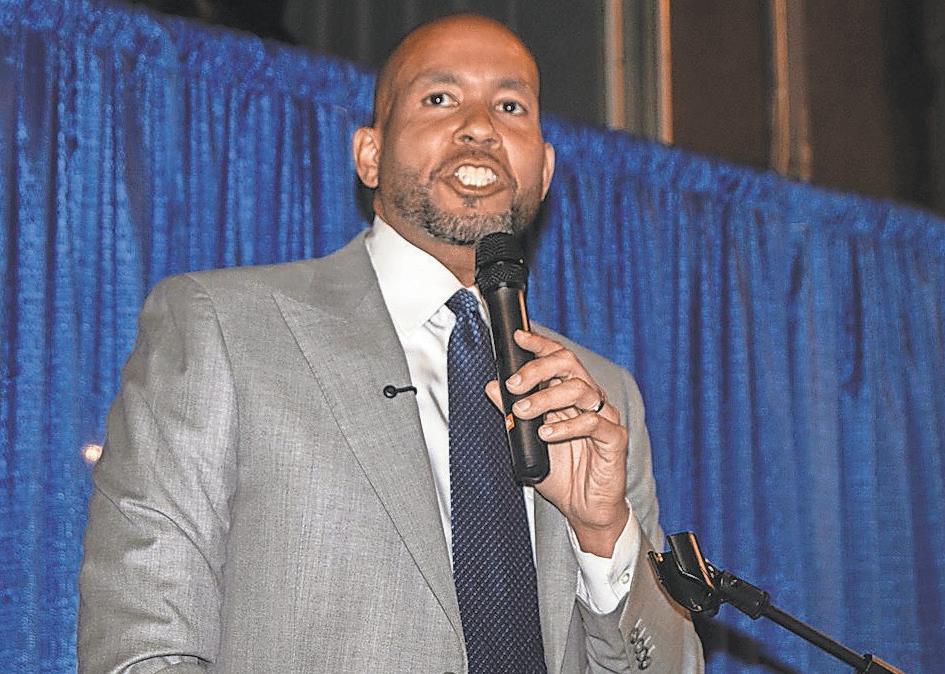
Esteves, who entered the May 19 Democratic primary for governor of Georgia in April 2025, fell short Tuesday night, losing the nomination to former Atlanta Mayor Keisha Lance Bottoms.
Esteves closed his remarks to supporters with a note of personal gratitude, honoring family members in the room and invoking his late mother.
“My parents instill the values that I’ve taken with me all along my life,” he said, “and I am so grateful to my parents, but especially to my mom, for the journey that I’ve been on to lead my community better than how I found it.”
By DR. GAIL C. CHRISTOPHER
If you consume a steady diet of daily news and political commentary, you might believe that, when it comes to race, our nation is hopelessly fractured. Yet, when we look past the noise and examine how people actually live their lives, a completely different reality emerges.
Indeed, new research shows Americans are rejecting explicit racial bias and are building meaningful, lasting relationships across racial lines.
The Brookings Institution’s “Interracial Cooperation in the United States” report and the National Collaborative for Health Equity’s (NCHE) 3rd Annual Heart of America Survey show we are finding common ground, fostering cooperation, and that our capacity for connection is far stronger than the forces pulling us apart.
We are a nation evolving, healing, and yearning for unity.
Decades ago, those of us devoted to social justice sought to move the conversation beyond basic “race relations” towards structural, institutional racism. We fought to dismantle the artificial hierarchy of human value — the deeply flawed belief that some groups of people matter more than others.
The Brookings report shows Americans reject that hierarchy.
Nearly 9 in 10 respondents say that race is not a factor in their business decisions, according to the report. Furthermore, 83% say the same when selecting their friends.
This trend extends directly into the workplace. In hypothetical hiring scenarios, 85% of respondents demonstrated entirely race-neutral preferences. Candidate qualifications, interview performance, and credentials carried the day. Race explained only a tiny fraction of hiring decisions.
These numbers validate a truth I have long believed: when we strip away racial politics and posturing, most Americans want fairness. We want to see ourselves in one another and move beyond the artificial barriers history has placed between us.
The Brookings data, produced alongside scholars at Gallup and the Brookings Institution’s Center for Community Uplift, highlights how interracial exposure has become a normal part of the American experience. Today, 83% of Americans work next to colleagues of different races, and nearly half have diverse supervisors.
These everyday interactions foster deep familiarity, help dissolve lingering stereotypes, and reduce prejudice through shared experiences.
Andre M. Perry, a senior fellow and director at Brookings, captured this dynamic perfectly. He noted that people’s day-to-day realities reflect a vastly different America from the one seen on social media or described by politicians.
We are witnessing genuine progress, mapped out in the millions of ordinary interactions Americans have with one another. The data contradicts
constant assertions that our nation is hopelessly divided by race.
We see this progress most intimately in our friendship networks. The study found that 72% of adults have at least one friend of another race, and more than half have a close friend of a different race. Most importantly, the quality of these relationships matches that of same-race friendships. Once formed, these cross-racial bonds are deeply rewarding and entirely genuine.
Perhaps the most beautiful evidence of this societal shift exists in our romantic partnerships.
Among adults aged 30 and under, 35% are in interracial relationships, compared with 14% among those aged 70 and over. Those data points make the trajectory of our society unmistakably clear. For younger generations, racial boundaries are becoming irrelevant in matters of the heart. Love is leading the way, bridging gaps that previous generations thought were uncrossable.
The NCHE’s Third Annual Heart of America Survey, meanwhile, captures the nation’s emotional pulse. Conducted by Burson’s Insights, Data, and Intelligence Group, it reveals a citizenry exhausted by division and hungry for healing.
For example, more than three-quarters of respondents believe we can overcome our current challenges through shared understanding. Moreover, 72% are proud of their American identity, reflecting widespread hope for a more cohesive society. Nearly 90% of respondents say they want to belong and trust one another.
We are a nation grappling with profound challenges, yet we maintain a powerful commitment to fairness and equality. When we adopt a human perspective — when we set aside our fears, politics, and greed — we fundamentally want peace.
One of the Heart of America survey’s most encouraging aspects is the consensus on issues that are routinely portrayed as hopelessly divisive.
Take immigration, for example: despite heated, often toxic rhetoric on the issue, nearly three-quarters of Americans agree that immigrants, regardless of their legal status, should be guaranteed due process. Even more striking, 77% believe that immigrants enrich American society. Majorities hold this view across both racial and political lines.
On the matter of racial healing, Americans largely agree on the necessary first steps. More than 8 in 10 believe educating children on the true history of race and racism in the U.S. is important for reconciliation. It’s a belief that enjoys broad support: 90% of Democrats and 78% of Republicans agree. Similarly, Americans understand the value of inclusive workplaces. The survey found that 89% of Democrats and 70% of Republicans agree that racial diversity on the job is vital to address the lingering harms of racism. We are also having more nuanced conversations about redress for past wrongs, with 43% of respondents reacting positively to reparations for the harms of slavery.

Twin studies from the Brookings Institution and the National Collaborative for Health Equity show rising cross-racial relationships and a deep hunger for unity. iStock.com/hachiware
We are finding common ground. We are agreeing on the basic facts of our history and the necessary steps to build a fairer future.
Acknowledging the Work Ahead Optimism does not require us to ignore reality.
The Brookings report notes that residential segregation and occupational clustering continue to limit interracial contact for many people. Black, Asian, and Latino workers often have fewer colleagues of different races than their overall population shares would predict.
Yet the studies suggest that our capacity for overcoming these remaining barriers is incredibly strong. Sustained exposure and collaboration are the keys to reducing racial prejudice, and we are engaging in that collaboration more than ever before.
Shannon-Janean Currie, founder of Empirica Advisors and lead researcher for the Heart of America Survey, said these findings challenge the limiting assumption that division defines the American experience. While structural barriers remain, the data show a broad, undeniable readiness for cooperation and fairness.
Americans are ready for leaders who prioritize this collaboration. A decisive 86% of respondents said they would support a leader who actively aims to unite the country, even if they disagree with that leader on specific policy issues. We are longing for leadership that matches our innate desire for cohesion.
An Undeniable Message of Hope
Viewed side by side, the Brookings and NCHE surveys deliver an undeniable message of hope.
One study documents our daily interactions, showing they are increasingly cooperative, integrated, and fair. The other reveals the broader landscape, revealing a public that is empathetic, hopeful, and eager for unity.
As we look toward the future, these findings offer a blueprint for lasting progress. The path forward lies not in digging deeper trenches but in
FOUNDED
May 11, 1966
FOUNDER/EDITOR
Ed Clayton Immortalis Memoria
PUBLISHER/EDITOR
J. Lowell Ware Immortalis Memoria
The Atlanta Voice honors the life of J. Lowell Ware.
PUBLISHER
Janis Ware
PRESIDENT/
GENERAL MANAGER
James A. Washington 2018-2024
COO Richard Dunn rdunn@theatlantavoice.com
DEVELOPMENT SPECIALIST
Jazmine Brazier jbrazier@theatlantavoice.com
EXECUTIVE ASSISTANT TO PUBLISHER
Chia Suggs csuggs@theatlantavoice.com
EDITOR IN CHIEF
Donnell Suggs editor@theatlantavoice.com
GENERAL ASSIGNMENT REPORTERS
Isaiah Gutierrez isingleton@theatlantavoice.com
Laura Nwogu lnwogu@theatlantavoice.com
Noah Washington nwashington@theatlantavoice.com
BUSINESS REPORTER
Tabius H. McCoy tmccoy@theatlantavoice.com
EDITOR AT LARGE
Stan Washington swashington@theatlantavoice.com
ADVERTISING, SALES & CIRCULATION
ADVERTISING ADMINISTRATOR
Chia Suggs advertising@theatlantavoice.com
SALES
RDW Jackson rdwadman@gmail.com
SUBMISSIONS editor@theatlantavoice.com
DIRECTOR OF PUBLIC RELATIONS
Martel Sharpe msharpe@theatlantavoice.com
CONTACT INFORMATION
633 Pryor Street, S.W. Atlanta, GA 30312
Office: 404-524-6426 info@theatlantavoice.com


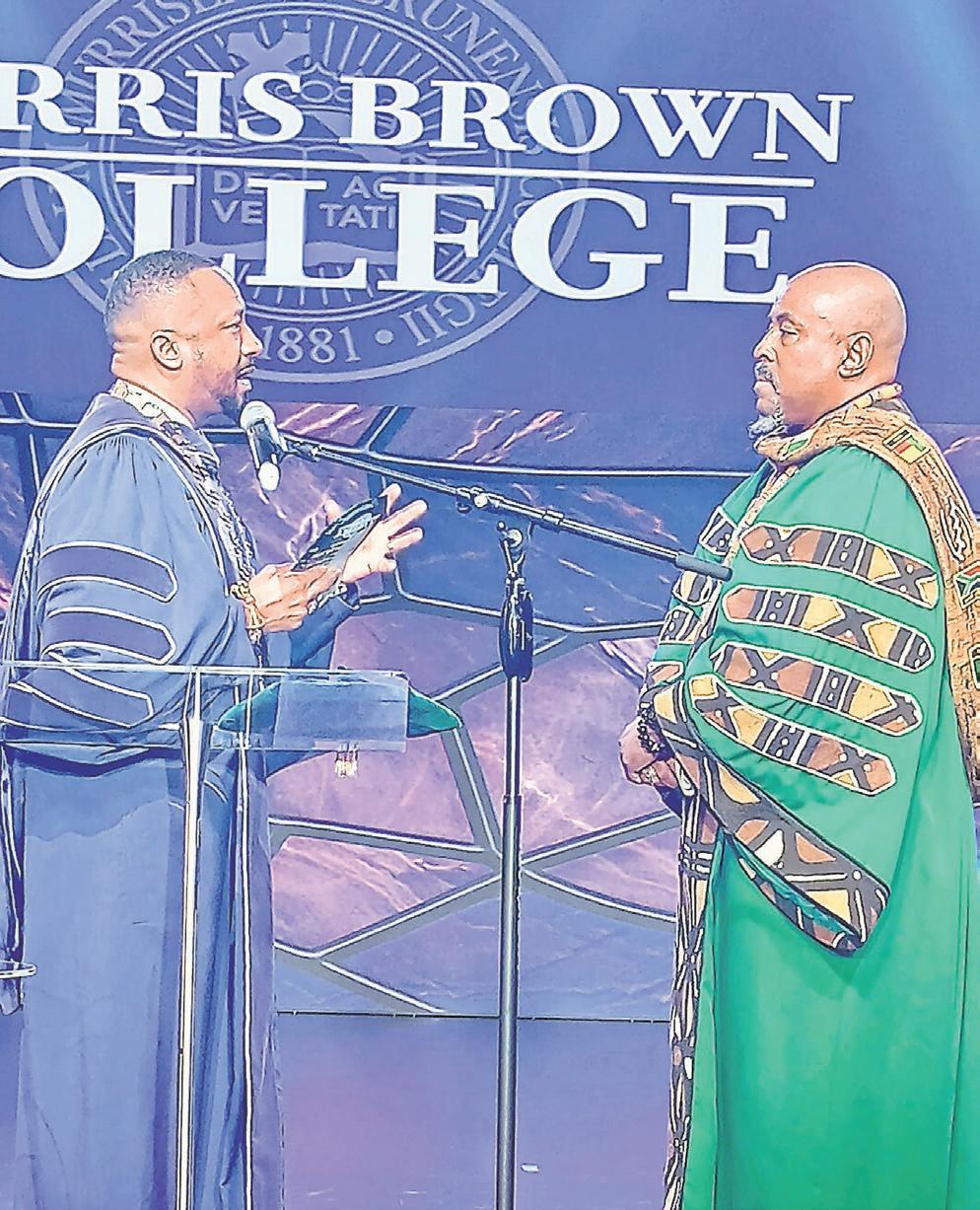
By STAN WASHINGTON
For many years, the only news coming out of Morris Brown College in Atlanta was negative. The HBCU institution steadily lost students, staff, faculty, and accreditation over the past two decades. Today, however, all the news has been positive.
The college regained its accreditation in 2022 and recently had it extended through 2031. On Saturday, May 16, the college will hold commencement exercises for 93 students at Saint Philips AME Church, 240 Candler Road. The students will receive degrees in Business, Psychology, Music, General Studies, Hospitality Management, Organizational Management and Leadership, and Global Management and Applied Leadership.
Former Atlanta Falcons player and philanthropist Warrick Dunn is the scheduled Commencement speaker.
Now a limited partner owner of the team, Dunn will be awarded an honorary Doctor of Humane Letters degree in recognition of his outstanding contributions to community service,
philanthropy, and leadership.
“These are truly exciting times at Morris Brown College,” said MBC President Dr. Kevin James. “We’re recognizing the anniversary of our 145th year while also celebrating both our reaffirmation of accreditation and our largest graduating class since our 2022 reaccreditation. This Restoration Class reflects a dedicated group of scholars who set their eyes on Morris Brown College and stayed committed all the way through.”
Being a college president has long been a goal of his, James said. Once he got on that pathway, he heard about the opening at Morris Brown, sent in his resume to the AME Church, got an interview, and subsequently was hired. Although some of his peers questioned why he would want to take on the leadership of the troubled four-year liberal arts institution, he felt confident that he could turn MBC around. ‘I felt that I could do it. I believe that God sent me to do it, and here we are seven years later, and we have done it,” James said.
When James became president, enrollment at the college stood at 20 students. Seven years later, enrollment

stands at 513, which he says is on track with their plan to increase enrollment. Before the busy graduation season began, James took some time to talk with The Atlanta Voice about some of the “exciting” changes that are occurring at the college. Below are edited comments from that conversation.
Atlanta Voice: What sets today’s Morris Brown apart from other HBCUs?
Kevin James: Now, everyone says they love their HBCU. I understand that, but I have never seen people give their lives to their college. When I came to Morris Brown, there were faculty and staff who literally were paying to keep the lights on. Now, when I first came to the school, I asked them to bring me all of the bills. They were seven paychecks behind. Many were alumni. I couldn’t believe it. I couldn’t understand it. I couldn’t work somewhere for free, no matter how much I loved it. What really sets Morris Brown apart is this culture of how we were founded – doing more with
See FUTURE on page 7










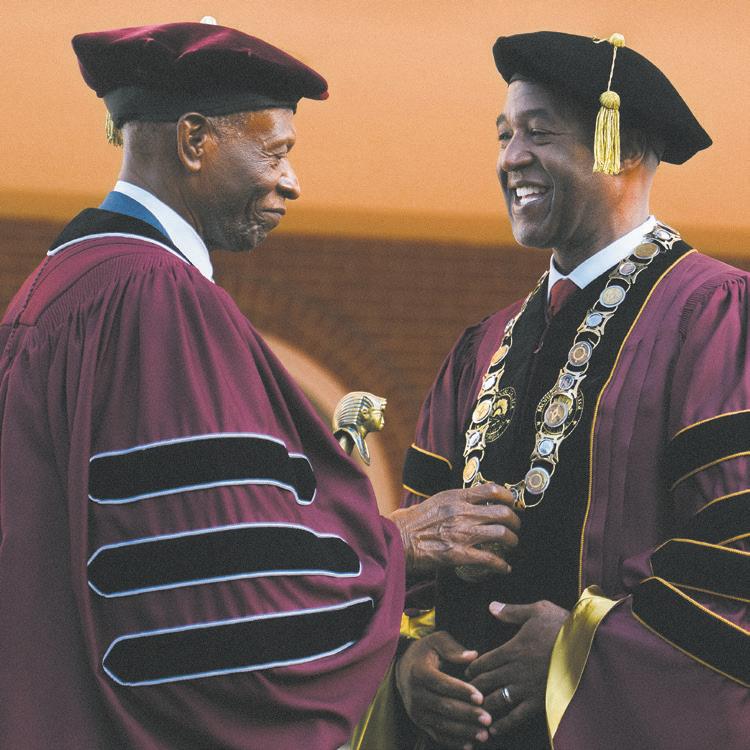
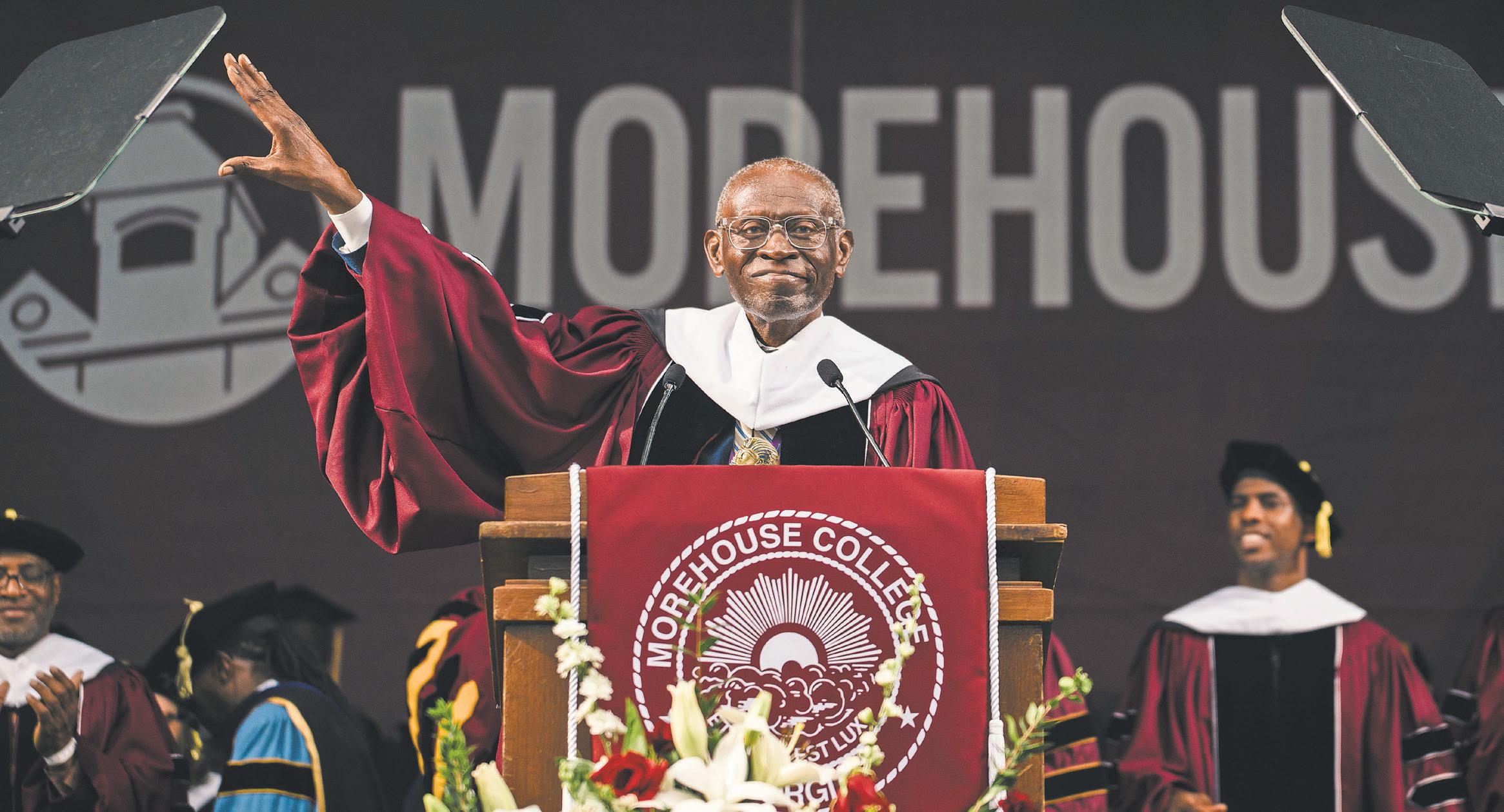
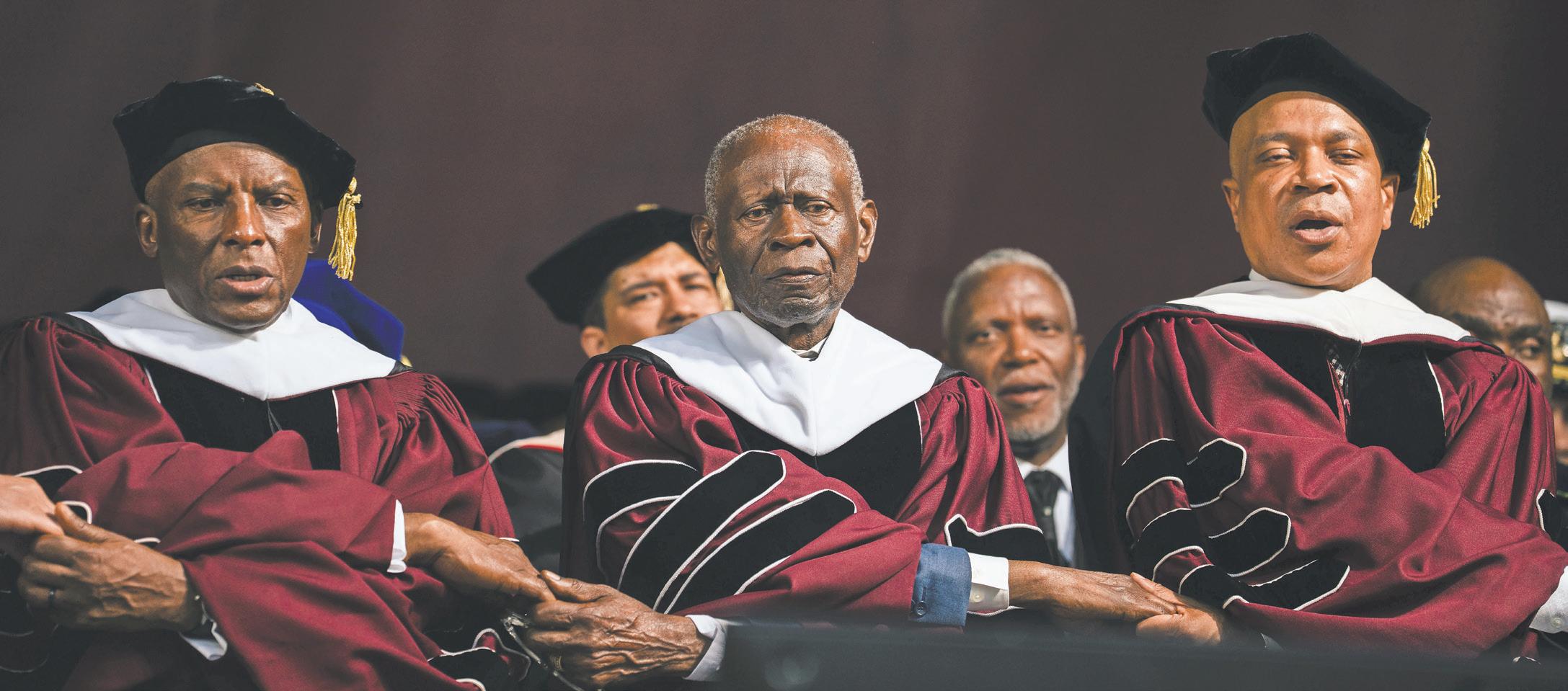
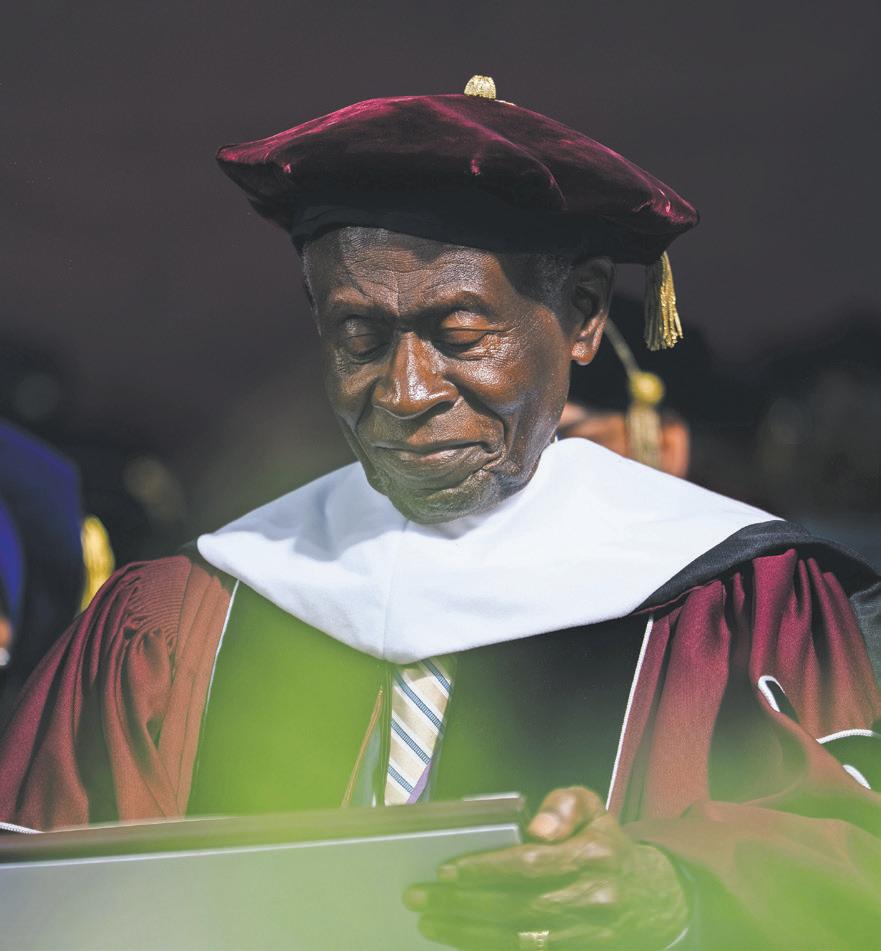
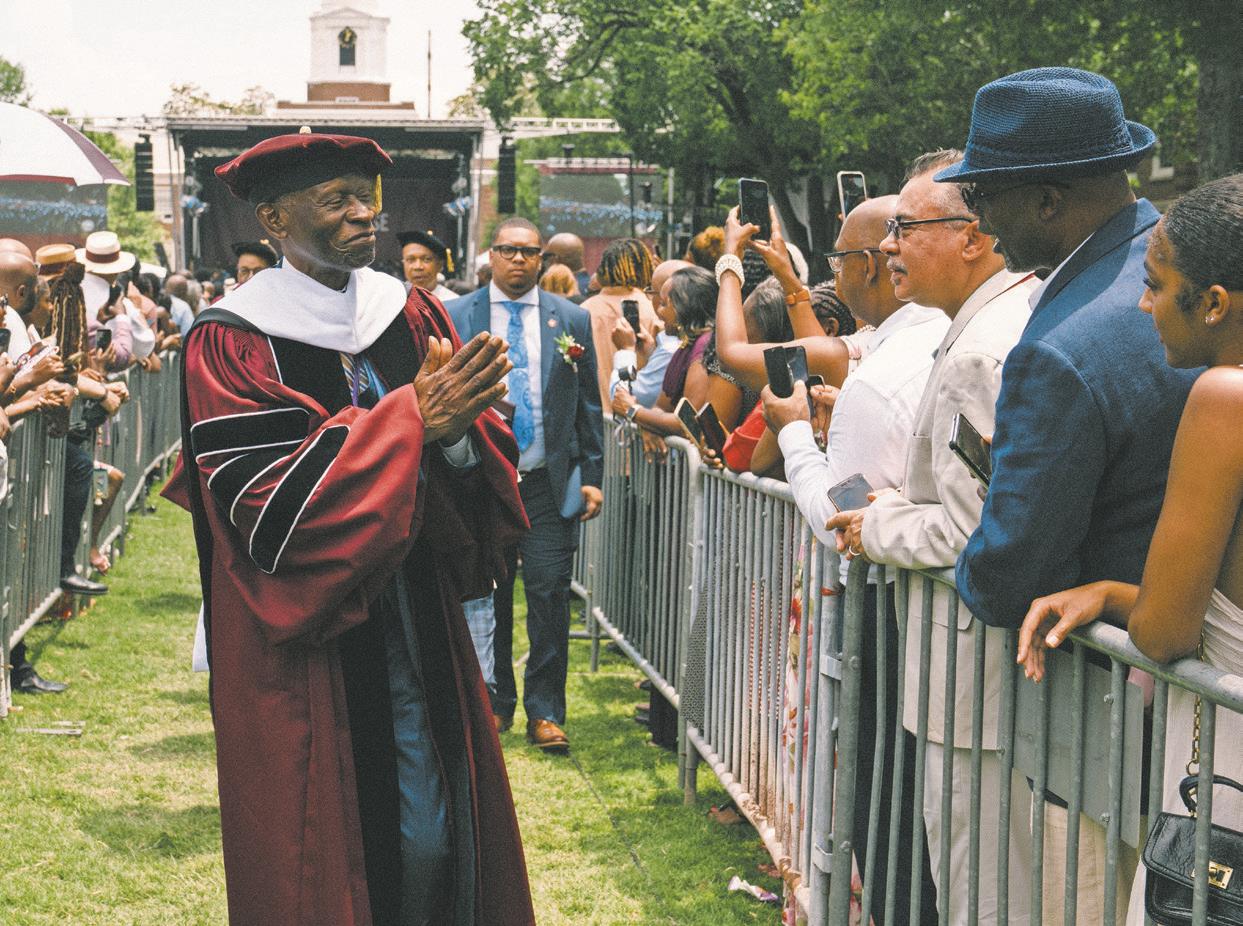
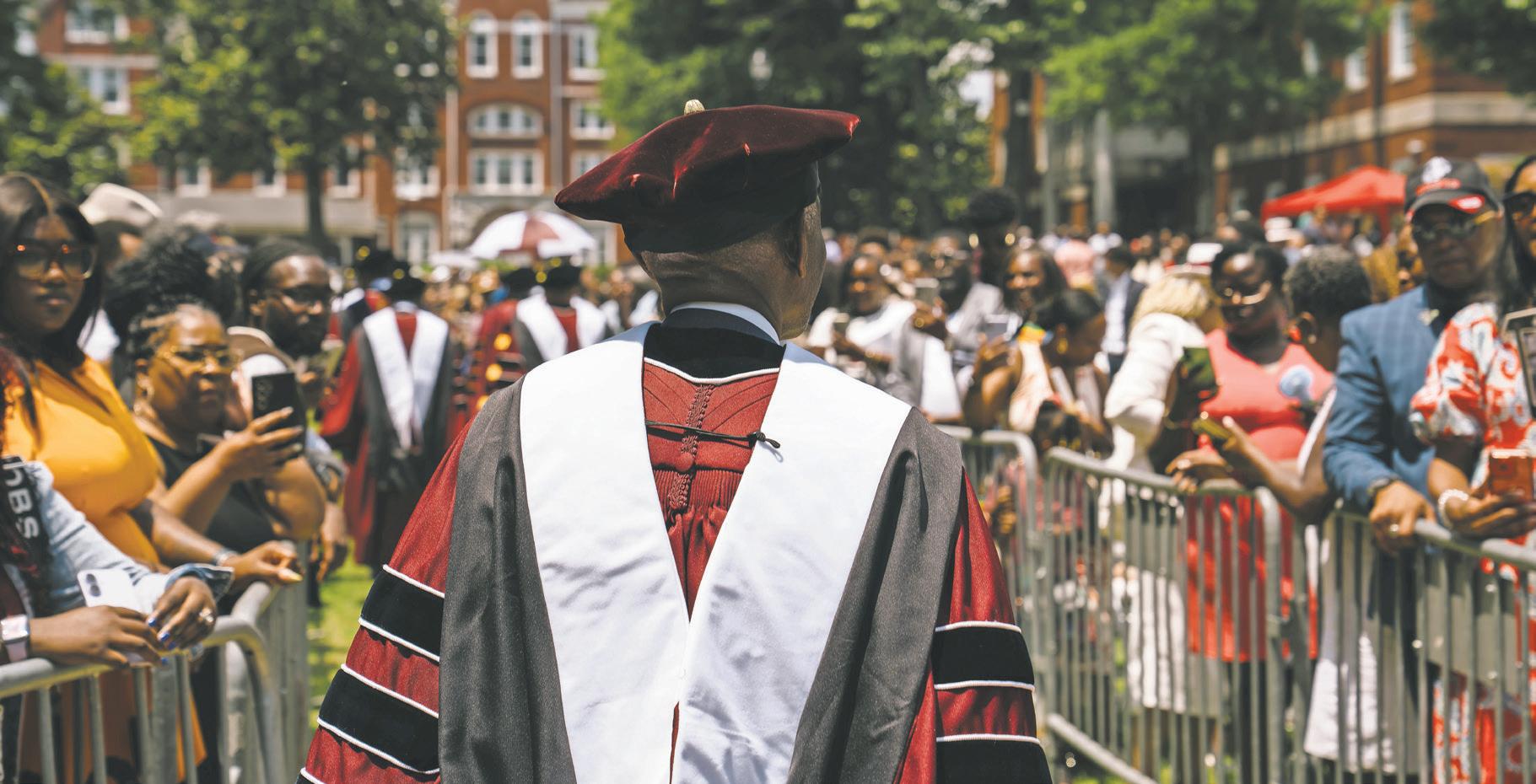
The Morehouse College Class of 2026 celebrated commencement during a milestone ceremony that also marked Dean Carter’s final graduation before retirement. The event honored years of leadership, mentorship, and dedication to the Morehouse legacy.
By ISAIAH GUTIERREZ
Eighty years after delivering the first-ever CARE PACKAGE® boxes to postwar Europe on May 11, 1946, the Atlanta-based global humanitarian organization CARE is marking the milestone with a team celebration at its Downtown Headquarters.
Stocked with essential food supplies and everyday comforts, the boxes quickly became powerful symbols of American compassion.
This movement was started by 22 American civic, relief, and charitable organizations that joined forces in New York City to form the Cooperative for American Remittances to Europe, an effort that would become CARE, the Cooperative for Assistance and Relief Everywhere.
In the 80 years that followed, CARE has grown into a leading humanitarian organization fighting global poverty in more than 120 countries.
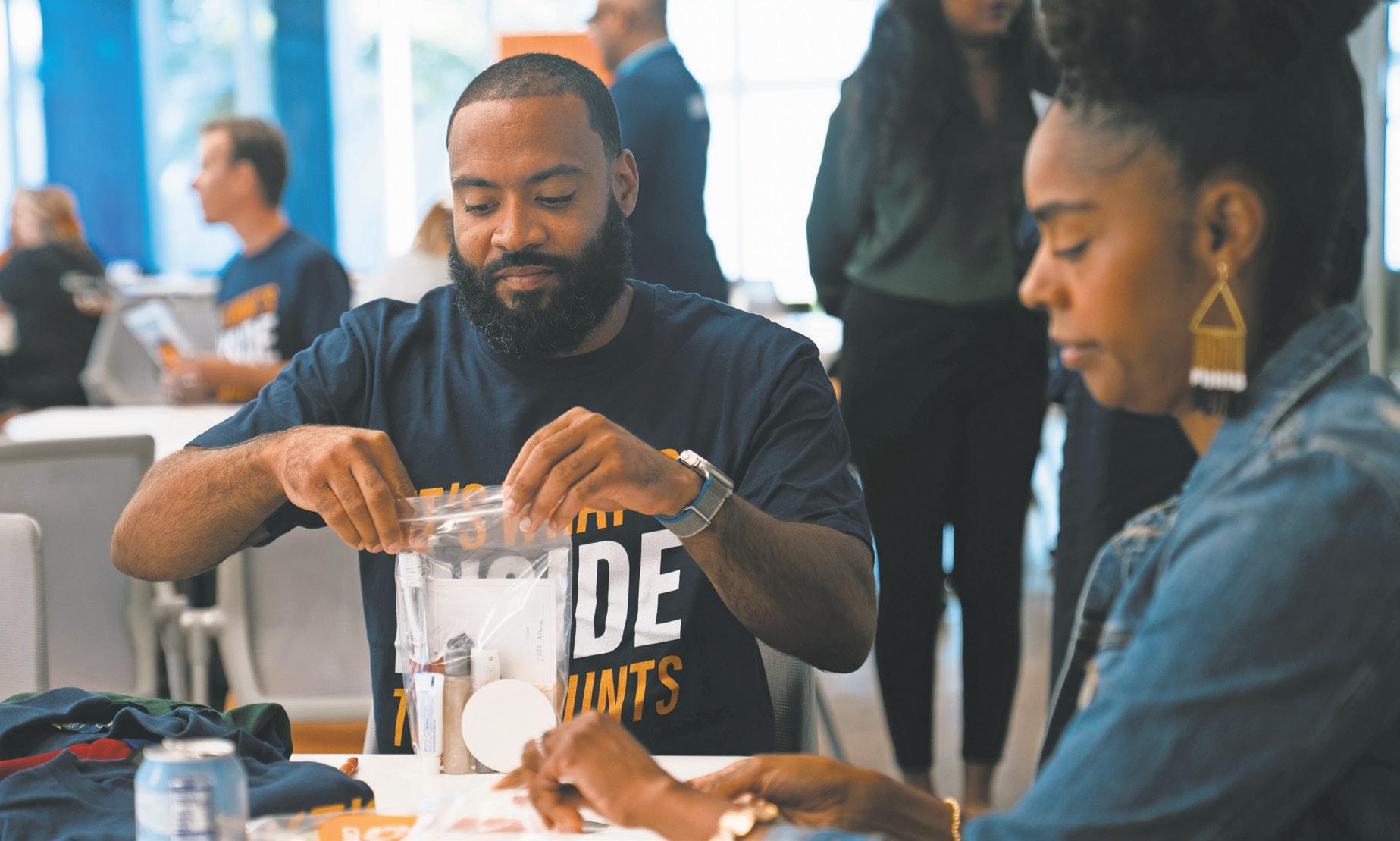
Nearly 100 CARE staff came together to commemorate the unique history and legacy of the CARE PACKAGE and to pack disaster relief supply kits, which will be deployed to support individuals coping with the aftermath of disasters and other emergencies.
During the celebration, CARE officials highlighted various packages such as hygiene, mother and baby, and caregiver care packages, aiming
Continued from page 5
to reach 500,000 people by 2030 through over 40 partners in 11 states.
According to CARE, they plan to pack 500 hygiene kits for Family Promise of Cobb County.
Atlanta Chief Financial and Operating Officer Ranil DeSilva said it’s been eighty years since they started their original CARE packages.
“It’s a symbol of the American people’s generosity and sincerity to really help the world. This all started in World War II, in 1946, when we first delivered the care package to Europe. It landed in the ports of Normandy, Normandy in France, where we delivered 15,000 care packages,” he said. “That’s the start of it, and today we are celebrating by using the next-generation care package.”
DeSilva said, given the global challenges now, he believes it’s an important point where organizations like CARE are supporting the community.
“We’re doing a lot of CARE packaging today that’s focused on American communities, especially women and families that are in need of support, especially in crisis and humanitarian challenges that people are facing,” he said. “We are packaging a lot of hygiene and kids’ packaging that’s going to help the community to navigate through some of the challenges.”
DeSilva adds it’s not the only component, but CARE is also working with the Atlanta community of
less, being resilient and not taking no for an answer. That culture has permeated for 145 years throughout every class. These relationships are not normal relationships with these people. What sets MBC apart is the culture, the small family environment, the togetherness of what a Brownite really means, and getting a quality education with support that lasts a lifetime.
AV: What are some of the courses MBC offers that you feel will prepare students for the workforce in the 21st century?
KJ: Under the business discipline, we have some programs that only we are the only HBCU in Georgia to have a hospitality management degree. The Arthur Blank Family Foundation found our program interesting, and they donated $3 million for us to scale our hospitality program. We have a four-year degree program in hospitality. We want to be the premier HBCU for folks who want to work in restaurants, hotels, and other aspects of
women who are pregnant, struggling in certain areas, such as health.
“We are a big part of the Atlanta community,” he said.
“The CARE PACKAGE showed what’s possible when people come together to support one another,” said Michelle Nunn, President and CEO of CARE. “Reconnecting Americans to the CARE PACKAGE helps carry forward the culture of care that emerged after World War II. At a time when humanitarian
the hospitality industry.
Another unique program we have is e-sports. When I became president seven years ago, I kept hearing about e-sports. I had never heard of it before. E-sports stand for Electronic Sports, which has been around for decades. I just saw something recently that E-sports will become a trillion-dollar industry. So we put it under our business category. We want our students to learn about the business of gaming. The business of social media and streaming. The business of content creation. People aren’t buying cable anymore; they are streaming. We’ve also added a drone technology component to our esports program, where our students can become licensed certified drone pilots. That is a big industry. We offer psychology, several genres of music education, including church music and production. You know Morris Brown is known for music.
We have a competitive esports team that plays other colleges’ esports teams. We are very excited about that as well. If our students enter a tournament and the top prize is $1000, if the student wins, they get to keep 90 percent of that, and 10 percent goes back to support the program.
needs are rising and aid resources are dwindling; we are looking to bring that same spirit of compassion to families facing crises around the world and here at home.”
Additionally, CARE is introducing the CARE PACKAGE for Emergencies, an innovative evolution of the original CARE PACKAGE designed for today’s global crises. It supports those affected by humanitarian emergencies around the world.
AV: Nowadays, it’s difficult for a working student or adult to go back to school at a four-year college to get a degree.
KJ: We found that not everyone, especially working adults don’t want to go to school for four years. They want to come and get a quick credential so they can go to work. What we did was create stackable credits.
We have four certificate programs: Business Entrepreneurship, Nonprofit Management. Esports and Hospitality. You can take 24 credits and go straight to work. When the Arthur Black Family Foundation was enamored of our one-year certificate, because they need people now. They don’t want to wait four years. With the stackable credits, you can take those eight credits and go straight to work, or you can continue into the bachelor’s program, and you don’t lose any time.
AV: In general, attendance at four-year liberal arts colleges is trending down (except for HBCUs). Why are they missing out with so many young people today?
KJ: I am learning that a lot of students don’t have the social skills, the people skills, those skills that the Internet/social media
Each package is a lightweight and customizable kit housed in three easy-to-carry nylon packs that can support a family of four for up to one month, and includes nearly 40 items for addressing urgent shelter, cooking, water, and hygiene needs. CARE aims to reach one million people with these new kits by 2030. The CARE PACKAGE for Emergencies has already been piloted in the Philippines, Bangladesh, Nepal, Mozambique, and Malawi.
has disrupted. For example, a lot of my fraternity brothers of 2025-26 don’t know how to sit and have a conversation with a stranger. They are uncomfortable with that. They are more comfortable sending a text. A lot of those things we took for granted when we were growing up, we considered normal. Many of these students not only in how they interact with each other, but they don’t know how to interact on the job, a handshake, walking into a room and not having the sense to say Good Morning or Good Afternoon or How are y’all doing or whatever greeting. A lot of our college students struggle with that.
AV: Looking down the road 5 to 10 years from now, what do you think we as African Americans need to prepare for now?
KJ: We have to get ready for these technology changes, i.e., AI, etc. Morris Brown is in the process of looking at what new program we are going to add within the next 12 to 15 months. The conversation is leaning towards we need to add an AI degree and some unique technology information field. There are so many changes happening that we really need to get ready for them.
SPONSORED CONTENT
PROVIDED BY JPMORGANCHASE
Depending on where you are in your homeownership journey, refinancing your mortgage can be an effective strategy to help you meet your financial goals. Refinancing may help you save money over time or add money back to your monthly budget if you score a lower interest rate. And depending on the type of refinance you choose, you could also borrow against your home’s equity to pay down debt or make a major purchase. Understanding when and why a refinance might make sense is the first step toward getting the most from this financial tool. There are also different types of refinances to consider, and one might work better for your goals than another.
Roshown McLeod, Chase Home Lending Manager in Atlanta, [WC1] explains more about the refinancing process and how you can navigate it in today’s market.
What is refinancing?
Refinancing replaces your current mortgage with a new one—usually with a new rate and/or terms. It can often also come with a new set of closing costs. It may also come with a new lender.
So when does it make sense to refinance? You might want to consider a refinance if you want to:
Change the loan length or lower your monthly paymentsSecure a better or lower interest rate to save on monthly paymentsSwitch from an adjustable-rate mortgage to a fixed-rate one.Change the loan type to remove mortgage insurance costsAccess your home equity to fund home improvements, buying another property, or consolidate debt.
How does refinancing work?
Much like your original mortgage, the refinancing process involves a thorough review of your current financial status to determine if you qualify.
Here’s an example of what a lender may review:
Credit score and history: Score requirements vary by lender and loan type; 620 is a general minimum for conventional mortgages. Lenders want to see responsible credit use, such as a positive payment history on your debt.Debt-to-income (DTI) ratio: This metric shows how much debt you have in relation to your income. To calculate your DTI, add up your monthly debt payments and divide by your gross monthly income. Then multiply by 100 to get a percentage. A low DTI lets lenders know you’ll likely be able to manage your monthly payments with minimal issues.Property value and equity: Many homeowners have built equity over time, and the real estate market can cause

property values to appreciate as well. When refinancing, your current loan balance and market value of the property will help the lender calculate a loan-to-value (LTV) ratio. Refinancing qualifications usually prefer lower LTVs.
What are my refinancing options and how do I choose the right one?
Let’s break down a few commonly offered types of refinancing:
Rate-and-term refinance: This option allows you to replace your current loan with a new one with a different interest rate, different term or both. The primary aim is to secure terms that better suit your current financial situation, while the principal balance remains the same. Cashout refinance: A cash-out refinance allows you to replace your existing mortgage with a new loan for more than you currently owe, leveraging equity you’ve built up in your home. This type of mortgage refinance might be more suited for those who need funds for significant expenses,
such as home renovations or debt consolidation. No closing cost refinance: A no closing cost refinance allows borrowers to refinance without paying the upfront fees usually required. The lender may charge a slightly higher interest rate or fold the closing costs into the total loan amount.
Understanding your current financial goals and needs can help you decide which option works best.
The bottom line
Refinancing can be a smart financial move for many people. You may be able to save money in the long term, and you also have options to take cash out if that’s what would support your goals. A qualified mortgage professional or home lending advisor can help clarify whether a mortgage refinance makes sense for you and ensure you’re on the right path to achieving your financial goals.
For more information, visit chase.com/afford.
For informational/educational purposes
only: Views and strategies described in this article or provided via links may not be appropriate for everyone and are not intended as specific advice/recommendation for any business. Information has been obtained from sources believed to be reliable, but JPMorgan Chase & Co. or its affiliates and/or subsidiaries do not warrant its completeness or accuracy. The material is not intended to provide legal, tax, or financial advice or to indicate the availability or suitability of any JPMorgan Chase Bank, N.A. product or service. You should carefully consider your needs and objectives before making any decisions and consult the appropriate professional(s). Outlooks and past performance are not guarantees of future results. JPMorgan Chase & Co. and its affiliates are not responsible for, and do not provide or endorse third party products, services, or other content.
Deposit products provided by JPMorgan Chase Bank, N.A. Member FDIC. Equal Opportunity Lender.
© 2026 JPMorgan Chase & Co.
By NOAH WASHINGTON
Standing before an Amy Sherald painting is an exercise in aspiration. Her canvases, saturated with soft pastels and bold chromatic contrasts, construct an American landscape where Black subjects exist not at the margins of the imagination, but squarely at its center.
On May 15, the High Museum of Art opens “Amy Sherald: American Sublime,” a mid-career retrospective featuring more than 35 paintings made between 2007 and 2024. It is the largest exhibition of Sherald’s work to date, and Atlanta is its final stop.
The road to the High was anything but straightforward. The exhibition, organized by the San Francisco Museum of Modern Art, was originally slated to close its national tour at the National Portrait Gallery in Washington, D.C. That changed after the Trump administration signed an executive order directing Smithsonian institutions to remove what it called “un-American content” from their exhibitions and programming.
“Amy was concerned that her work could potentially be censored,” said Angelica Arbelaez, assistant curator of modern and contemporary art at the High, “and that, for her, was something that she did not want for this exhibition.”
Sherald made the difficult decision to cancel the D.C. stop. Museums across the country moved quickly to fill the vacancy, and the High secured the fourth and final slot following the Baltimore Museum of Art. The announcement came in September 2024 at the museum’s Driskell Gala, where High Director Rand Suffolk made it official. What followed was roughly six months of coordination between the High, SFMOMA, Sherald’s studio, and her gallery, Hauser & Wirth.
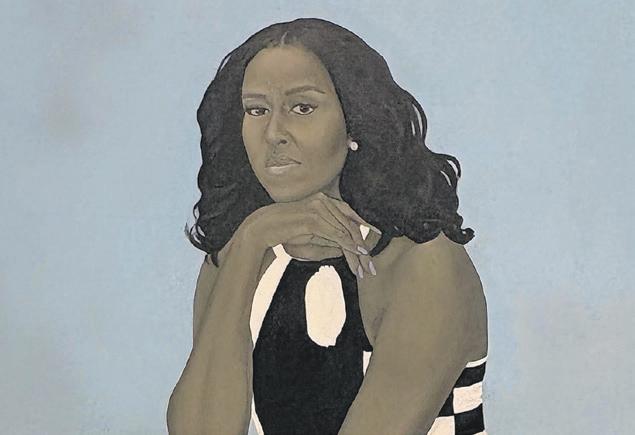
Atlanta’s connection to Sherald runs deep. She was born in Columbus, Georgia, and attended Clark Atlanta University, earning her BFA in 1997. The High has honored her before, awarding her the David C. Driskell Prize in African American Art and Art History in 2018. Her portrait of former First Lady Michelle Obama appeared at the museum as part of the 2022 Obama


Portraits Tour, and a diptych of two motorcyclists was included in the 2024 “Giants” exhibition drawn from the collection of Alicia Keys and Swizz Beatz.
“American Sublime” brings that
history into focus. The exhibition presents the Michelle Obama portrait alongside dozens of other works, many featuring ordinary Black Americans rendered with the same gravity and care typically

reserved for heads of state. The show is organized into five thematic sections tracing Sherald’s development as an artist, from her early explorations of identity and performance to her most monumental, large-scale works and also includes a film showcasing her process.
“I grew up in a world that was very black and white,” Sherald said during a public conversation at the High. “It wasn’t until I moved back here for five or six years to take care of family that I realized a great part of my personality had been shaped by performance, that assimilation was something I felt very comfortable with, making people feel comfortable with my presence. And I think that found its way into the work early on.”
Among the exhibition’s most significant works is Sherald’s Vanity Fair portrait of Breonna Taylor, a commission she approached with painstaking care. She met Taylor’s family, watched videos to hear her laugh, and composed the work deliberately to counter the rapid, often dehumanizing circulation of Taylor’s image following her 2020 death at the hands of Louisville police. It was the first time Sherald had painted someone who was not alive and present before her.
“We decided not to have Taylor isolated and sort of memorialized,” Arbelaez said, “but to have her among friends, among her peers, and to just acknowledge that in spite of the tragedy that fell upon her, she was just an ordinary girl
before all of that.”
The dress Taylor wears in the portrait was designed by Jasmine Elder, an Atlanta-based designer. A small ring on Taylor’s hand was included to honor her relationship with her partner, who had intended to propose to her before her death.
Also on view is “For Love, and for Country,” which reimagines Alfred Eisenstaedt’s iconic V-J Day photograph with Black subjects at the center, and Sherald’s first triptych, “Ecclesia (The Meeting of Inheritance and Horizons),” created specifically for this exhibition.
Sherald has spoken about her work as an act of historical reclamation, describing the process of making paintings as one that reaches across time. “As Black artists, making work, we’re almost quantum leaping,” she said. “Every time I make a painting, I’m constantly reaching back from the past, but we have to be simultaneously in each era, present with the now and in the past, while also trying to expand into something greater for the future.”
“American Sublime” runs May 15 through Sept. 27 at the High Museum of Art.
“I hope visitors will walk away understanding how Amy developed as an artist, how she has been thinking about the way images work, how they create meaning, how they circulate in the world,” Arbelaez said. “She has a very deep and incredible commitment to rendering Black American life with joy, dignity, and confidence.”
By DONNELL SUGGS
The Atlanta Braves, keepers of one of the best overall records in Major League Baseball, along with the Tampa Bay Rays, will host the Washington Nationals this weekend. The series opener on Friday, May 22, has a regular 7:15 p.m. first pitch, but the Saturday and Sunday games have a 4:10 p.m. first pitch.
The Braves played four games in the nation’s capital in April and came away with three wins by scoring 24 runs during those victories. During the first game of the series, Bryce Elder started and struck out six Nationals in a 9-4 victory. The Braves lost the second game 11-4, but bounced back to win the third game 8-6 after Didier Fuentes started, going only three innings and giving up four earned runs. Despite the rough outing, Fuentes still managed to strike out seven Nationals. Lately, he has been
more of a middle-relief arm out of the Braves’ bullpen, but he can still put in a spot start when needed. JR Ricthie pitched well during the fourth game of the series, a 7-2 victory for Atlanta. The rookie went seven innings, giving up just two earned runs in the process, while striking out seven. The Braves’ offense got three-hit games from Ozzie Albies, Michael Harris II, and Matt Olson.
Earlier this week, the Braves spent four days in South Florida, playing a four-game series against an improved Miami Marlins team. It didn’t start well. The Braves lost the series opener 12-0, the first double-digit loss of the year. They won the second game 8-4 behind a 10-strikeout, five-inning performance from Martin Perez. Chris Sale started game three of the series and won his ninth game of the season. Sale went seven innings, giving up just four hits and an earned run to go along with eight

strikeouts. The Braves won 9-1. It was the second series against the Marlins this season. The Braves
took two of three games in Miami in April. Atlanta lost the series opener 10-4, before winning the next two
games 6-5 and 6-3 on Jackie Robinson Day.
Ronald Acuna, Jr. had missed both series against the Chicago Cubs and Boston Red Sox, both won by the Braves, but was back in the lineup for the Marlins series. Against the Marlins this season, Acuna, Jr. hadn’t exactly been lighting things up. Batting leadoff in all three games, he was 3-11 with four strikeouts and no RBI. The Braves did manage to score 16 runs, and Acuna, Jr. was 2-4 in the third and series-deciding game.
During this most recent series in Miami, Acuna, Jr. missed the first game on Monday, but was added to the active roster. Down by a dozen runs, there was no reason for Acuna, Jr. to play. The Venezuelan star outfielder returning to the lineup will allow Braves manager Walt Weiss to move catcher Drake Baldwin out of the leadoff spot. Acuna hot leadoff during the games on Tuesday and Wednesday.
By LAURA NWOGU
The FIFA World Cup Trophy Tour by Coca-Cola has landed in Atlanta, heightening the anticipation of the tournament’s first time in the city, where eight matches are set for the world’s most-watched sporting event. The Coca Cola Company, a longstanding partner of the tournament, has taken the legendary trophy on the road for 20 years, giving fans a unique opportunity to witness the prize — only ever touched by FIFA champions — up close.
The 2026 tour includes 75 stops across 30 countries, with a 70% focus on host countries.
The 18-carat solid-gold trophy was unveiled at a presentation at the Coca-Cola headquarters in Atlanta on Thursday morning. FIFA legend Carlos Puyol, a former player for Futbol Club Barcelona and 2010 World Cup winner, was in attendance to mark the occasion, holding the trophy to the sky after the cover was lifted. Puyol was joined by Georgia Gov. Brian Kemp, Atlanta Mayor Andre Dickens, The Coca-Cola Company CEO Henrique Braun, and East Region Vice President of Coca-Cola United Chace Crawford.
“We appreciate the great

partnership between the city and the state, and we’re ready to meet this historic moment for Atlanta, but also for all of Georgia. It’s hard to believe, after all the years of planning and preparation, the long-awaited FIFA World Cup 2026 is finally upon us,” Kemp said.
The 20th anniversary of the troupe tour also marks 30 years since Atlanta hosted the 1996 Centennial Olympic Games. Ambassador Andrew Young, who was instrumental in bringing the 1996 Olympic Games to Atlanta as Atlanta’s mayor, sat in the audience along with his wife to
witness another historic event for the city.
“Thirty years have gone by since those Olympic Games, and in that time, we have hosted Super Bowls, Final Four games, college football national championships, and much, much more. But this will be the closest thing we have come to matching, and maybe even surpassing, the scale of the event that truly established Atlanta as a global destination,” Kemp said. “Now for an entire summer, people from across our state will welcome a world audience, as they did in the magical summer of
1996, and we cannot wait once again to show the world what southern hospitality is all about.”
Kemp and Dickens highlighted the impact the World Cup will have on Atlanta, from galvanizing small businesses to increasing tourism. They assured the Georgians that they have taken the necessary precautions to ensure public safety with an event of this scale, on the state and local level.
“Your city government and your mayor have been very busy preparing to ensure that every visitor walks away with Atlanta and Georgia on their minds for years to come. My emergency preparedness team and Showcase Atlanta team have been planning and prepping for this moment for many years with the FIFA team, with our state partners, and so people are going to leave with Georgia and Atlanta on their minds,” Dickens said.
“Somebody is making things better for you and for the world, from our roads to our streets to our parks and our green spaces, wayfinding, signage. Everything is getting an upgrade for this moment, and we have you covered on things like sidewalks, signal modernization, ADA
improvements, and better lighting. The Atlanta Police Department, the fire department, our E911 have been coordinating with state and federal partners. Every single week we have a meeting, and that’s to ensure that residents and visitors alike are safe, and they’re going to have an enjoyable experience.”
The trophy tour will be open to the public in Atlanta starting Friday, May 14, from 2-9 p.m., and continuing through Saturday, May 15, from 2-8 p.m., at the Mercedes-Benz Stadium’s The Home Depot Backyard. Fans can secure up to 4 free tickets for the activation online here. If advance tickets aren’t available for a preferred stop and time, fans can still register on-site for the chance to take a picture with the iconic trophy.
“We create culture while honoring our history. Our modern city was built by people who refused limitations and placed themselves into the group project, as we call it,” Dickens said. “So, the FIFA World Cup represents movement energy and global unity, values that Atlanta embodies naturally, and this FIFA trophy tour symbolizes connections between cities, cultures, states, countries, and people around the world.”
By DR. DAVID JONES Medical Director, Anthem Blue Cross and Blue Shield in Georgia
Most people don’t plan for a mental health crisis. But millions will experience one this year, often with no clear idea ofwhere to turn. It shows up during moments of loss, stress, illness, or major life changes. When it does, the first few dayscan feel overwhelming, emotional, and urgent.
In 2025, over 28 million adults with a mental illness did not receive any mental health treatment, highlighting the urgentneed for clearer, faster paths to care. Navigation is key and what happens in the first 72 hours can make a realdifference.
Here’s what individuals and families should know — before they ever need it.
1. You’re Not Alone: The First 72 Hours Can Shape What Comes Next
The hours immediately after a mental health crisis are often the most intense. In Georgia, how quickly someone receivessupport can influence whether a situation stabilizes or escalates.
During this time, the focus is on three essentials: reducing immediate risk, calming emotional distress, andconnecting people to next-step care. When these needs are addressed early, people are more likely to recover andavoid repeat crises.
Most importantly, no one has to go through a mental health crisis alone. If someone is in immediate danger, emergencyservices are appropriate. For emotional distress or suicidal thoughts, the 988 Suicide & Crisis
Lifeline is available 24/7by call or text, free and confidential. The Georgia Crisis and Access Line (GCAL) is available 24/7 at 1-800-715-4225 forfree, confidential health with mental health, substance use or development disability crises. Early connections totrained support can help de-escalate a situation and guide next steps before it worsens.
2. Waiting Makes a Crisis WorseEven When People Think They’re “Overreacting”
One of the biggest reasons people don’t seek help right away is uncertainty: Is this serious enough? The answer is almostalways yes. Delays in care can allow symptoms to escalate, increasing the likelihood of

emergency room visits orinpatient stays - outcomes that are more disruptive and expensive.
3. Reduce Risk Before Taking Next Steps/Making Long-Term Decisions
Families often feel pressure to “fix everything” quickly. But in the early days of a mental health crisis, reducing risk comes first
This phase is about providing reassurance, clarity, and reducing immediate distress. Decisions about therapy, medication,or long-term treatment plans come after the crisis begins to ease, giving the brain and body time to settle.
Helpful questions to ask early include:
• Who is our main point of contact right now?
• What support is available today or this week?
• What is the next short-term step?
4. There’s No “Wrong Door” to Get Help.
Many people assume that a mental health crisis automatically means a long emergency room visit. In reality, support canstart in many ways, and there’s no wrong door.
People may reach out through a primary care doctor, a virtual visit, an employee assistance program (EAP), or a crisisline like 988 The goal across these options is the same: fast access to the right level of support, without added stressor complexity. Asking for help during a mental health crisis is hard, and the response should lighten the load, not more overwhelming.Early intervention works best when people feel heard and taken seriously, receive clear next steps, and know supportwill continue
beyond the first conversation.
Health plans, providers, and community or advocacy organizations play an important role by simplifying navigation andconnecting people to care quickly and close to home.
In Georgia, the Anthem Blue Cross and Blue Shield Foundation invested $2.9 million in organizations like Sostento,ensuring providers have tools to remove access barriers to mental health services. These investments supported 1,100no-cost health access rides and 2,544 patient screenings, assessments, and referral options, connecting individuals tothe treatment they need.
5. The First 72 Hours Are the Beginning, Not the End
We’ve made real progress in talking about mental health. But talking about it isn’t the same as accessing care.
When someone reaches out for help, they shouldn’t have to navigate a complex system in the middle of a crisis. The first 72 hours should feel clear, connected, and responsive.
Peer support specialists are often recommended (separately, or in addition to treatment) and helpful in manycircumstances. These trained professionals often have lived experience with mental health or substance use challenges and are trained to provide emotional support, practical guidance andencouragement – helping people feel understood and less alone.
When care is easier to access, people get help sooner, stay engaged longer, and are less likely to experience repeatcrises. Better experiences lead to better outcomes and lower costs for everyone.
For mental health resources, visit www.anthem.com/mental-health

Spacious 1-Bedroom Affordable! Rent Based on Annual Income Amenities, Great Location, and Convenient to Marta Please call for detailed information (404) 586-9098

RFP for Residences of Hope located at 875 Carter Street NW, Atlanta, GA . BIDS DUE: June 1, 2026, at 2:00 pm
PRE-BID MEETING will be held on site on May 12, 2026, at 10:00 am.
PLANS: Hard Copies of plans available upon request and at subcontractor’s expense from A1 BluePrint (www.a1blue.com), Phone: 404-524-8881 OR for a link contact Linda at Lstache@gormanusa.com.
Contact Info: Linda Stache, Gorman & Company, Phone: 608-835-5177
CERTIFICATIONS: SBE/MBE/WBE/EBE/DBE/VBE, Section 3 and a prevailing wage rate project. This project is also BABA, NGBS Bronze and HEAR project
FULTON COUNTY ADVERTISEMENT FOR BIDS
Sealed Bids for 26ITB1607343C-JNJ Asphalt/Concrete Pavement Maintenance & Repair Services for the Department of Real Estate & Asset Management will be accepted by the Fulton County Department of Purchasing & Contract Compliance online via BidNet Direct athttps://bidnetdirect.com/georgia/fultoncounty on Tuesday, June 23, 2026 local (Eastern) time at 11:00 A.M..
All Solicitations submitted will be read no later than 11:15 a.m. on the stated due date via a virtual zoom meeting. Virtual Zoom Link: https://zoom.us/j/91542966859
SCOPE OF WORK: Fulton County, Georgia “County” is seeking bids from qualified bidders to provide Asphalt/Concrete Pavement Maintenance and Repair Services on as needed basis.
The detailed scope of work and technical specifications are outlined in the Scope of Work, Section 3 of this bid document.
BID BOND: N/A






General instructions, specifications and/or plans for this project can be Downloaded Free of charge athttps://www.bidnetdirect.com/Georgia/ fultoncounty under “Bid Opportunities”. Fee: N/A








14.8 acres of roaming wildlife with a stream, pasture & a small pond. This secluded prime property is located in Tiger, Ga. $450,000. POC @ 912-492-7873.
Lisa Lynn Brown International Nurture Institute (L.L.B.I.N.I.) is a Non-Profit organization- Empowering Autistic, Non-Verbal, Disabled, and marginalized communities through education, research, and American Sign Language instruction. Many families lack access to vital communication tools— L.L.B.I.N.I. bridges this gap by providing resources that build autonomy, confidence, and connection. Your support helps fuel A.S.L. instruction programs, educational materials, and community development initiatives that transform lives.
Join us as a grant partner and help expand access to communication and dignity. Contact: LLBINI@outlook.com

Term of Contract: One (1) Year with two (2) Renewal options.
Pre-Bid Conference: will be held online via a virtual Zoom Conference on Tuesday, June 02, 2026 at 10:00 A.M., to provide bidders with information regarding this project and to address any questions. Join Zoom Meeting: https://zoom.us/j/94853890686
If you have any questions regarding this project please contact Jakeiah Johnson, APA, MBA, CCA, CPM Phone: (404) 612-7885 or E-mail: jakeiah.johnson@fultoncountyga.gov.
Fulton County reserves the right to accept or reject any or all bids and to waive technicalities.