
By NOAH WASHINGTON
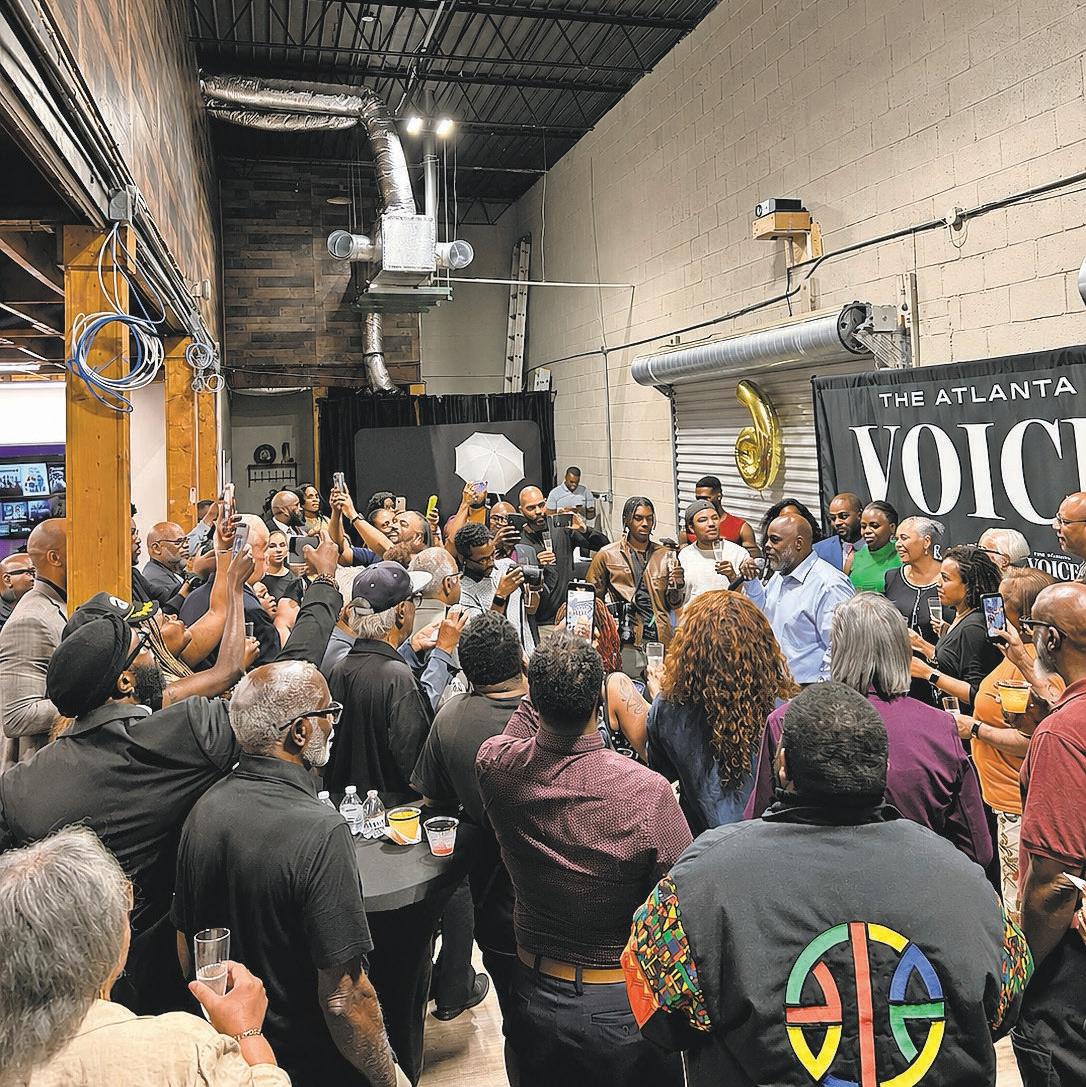
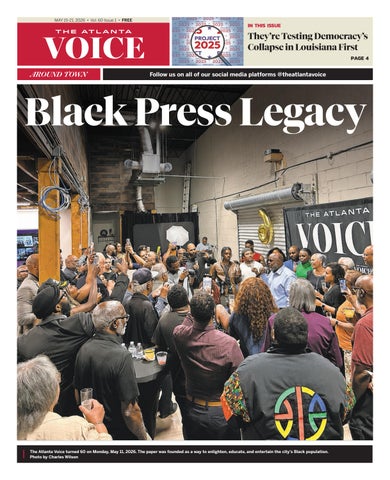
The Atlanta Voice celebrated its 60th anniversary Monday evening, gathering journalists, community leaders, and longtime supporters to honor six decades of Black press publishing in one of America’s most storied cities.
The publication was founded in 1966 by J. Lowell Ware and Ed Clayton, driven by a mission that became the paper’s enduring motto: “A People Without A Voice Cannot Be Heard.” The two men launched the paper amid the Civil Rights Movement, born from the refusal of white-owned Atlanta media to give fair coverage to the movement unfolding in the city’s streets. Clayton died shortly after the first issue was produced, leaving Ware as the sole publisher.
The 1966 founding came at a moment when Black Americans were fighting for rights that should have already been guaranteed, and when the stories of that fight were being ignored or distorted by mainstream outlets. Six decades later, with voting rights under renewed pressure and the federal government’s posture toward civil rights protections shifting sharply, many at Monday’s celebration drew a quiet but unmistakable line between then and now.
The celebration took place in the publication’s longtime home on Pryor Street. The Atlanta Voice COO, Richard Dunn, Ware’s oldest grandson, noted that it carries its own history. “You’re currently standing in what used to be the printing press room,” Dunn told guests. “Once you own your own printing press, you can say what you want to say, say it how you want to, as often as possible.”
Dunn said the press once served not only The Atlanta Voice but also other Black publications, printing editions of The Final Call, Muhammad Speaks, Rolling Out, and others. “They were all printed in this room,” he said.
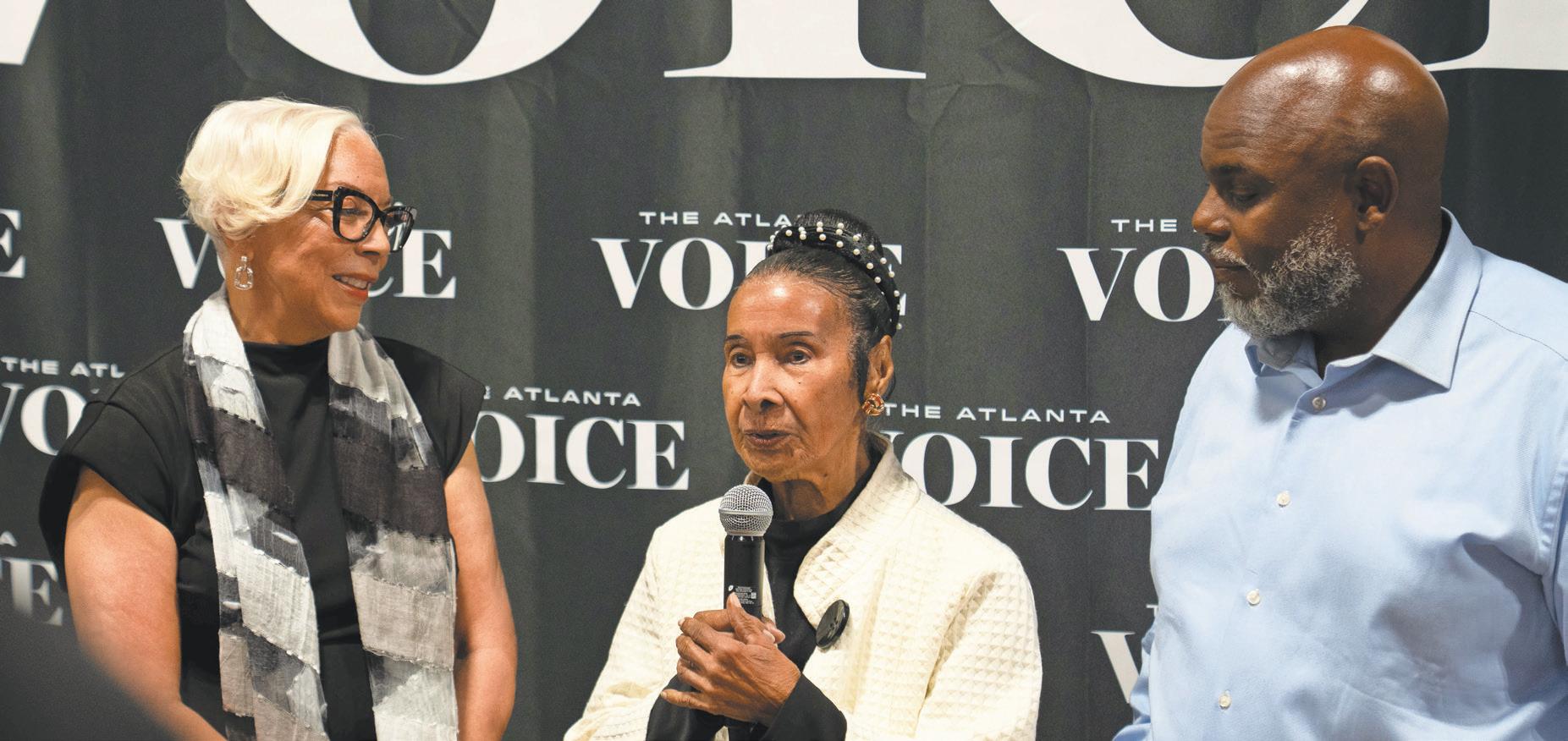
Among the evening’s honored guests was Xernona Clayton, a civil rights icon whose late husband, Ed Clayton, co-founded the paper alongside Ware. Clayton passed before the first issue reached stands, but his vision carried forward.
Xernona Clayton reflected warmly on the paper’s longevity.
“I was glad to see you still here,” she said. “It makes you feel like, boy, this was good enough to last. And here it is.”
She credited her husband’s editorial instincts for building early readership. “If you didn’t get a paper right away when it came out, you were hard-pressed to get one. They were just flying off the stands because they knew there was something special in there.”
When asked what she hopes for the next 60 years, Clayton kept it simple. “That it keeps getting better and better. You’ve got to add newness. You’ve got to add freshness. You’ve got to be accurate.”
Since J. Lowell Ware’s death in 1991, his daughter Janis Ware has served as publisher, guiding the paper through decades of industry upheaval. Speaking to guests on Monday, she reflected on the weight and privilege of the role.
“This is now 49 years later,” she said to the attending audience. “I’m looking forward to transitioning out and being able to live my best life.”
Dunn credited Janis Ware not only with sustaining the publication but also with positioning it for a third generation. “She has run this operation longer than my
grandfather did,” he said. “She has been dealt a lot of respect and gratitude for carrying on with this vision, and not only that, scaling it, and most importantly, putting this organization in a position to be delivered to the third generation.”
Stan Washington, a veteran journalist who has served as editor of The Atlanta Voice four times across five decades, traced his first connection to the paper to the summer of 1972, when he interned there as a freshman at Clark College. He knew J. Lowell
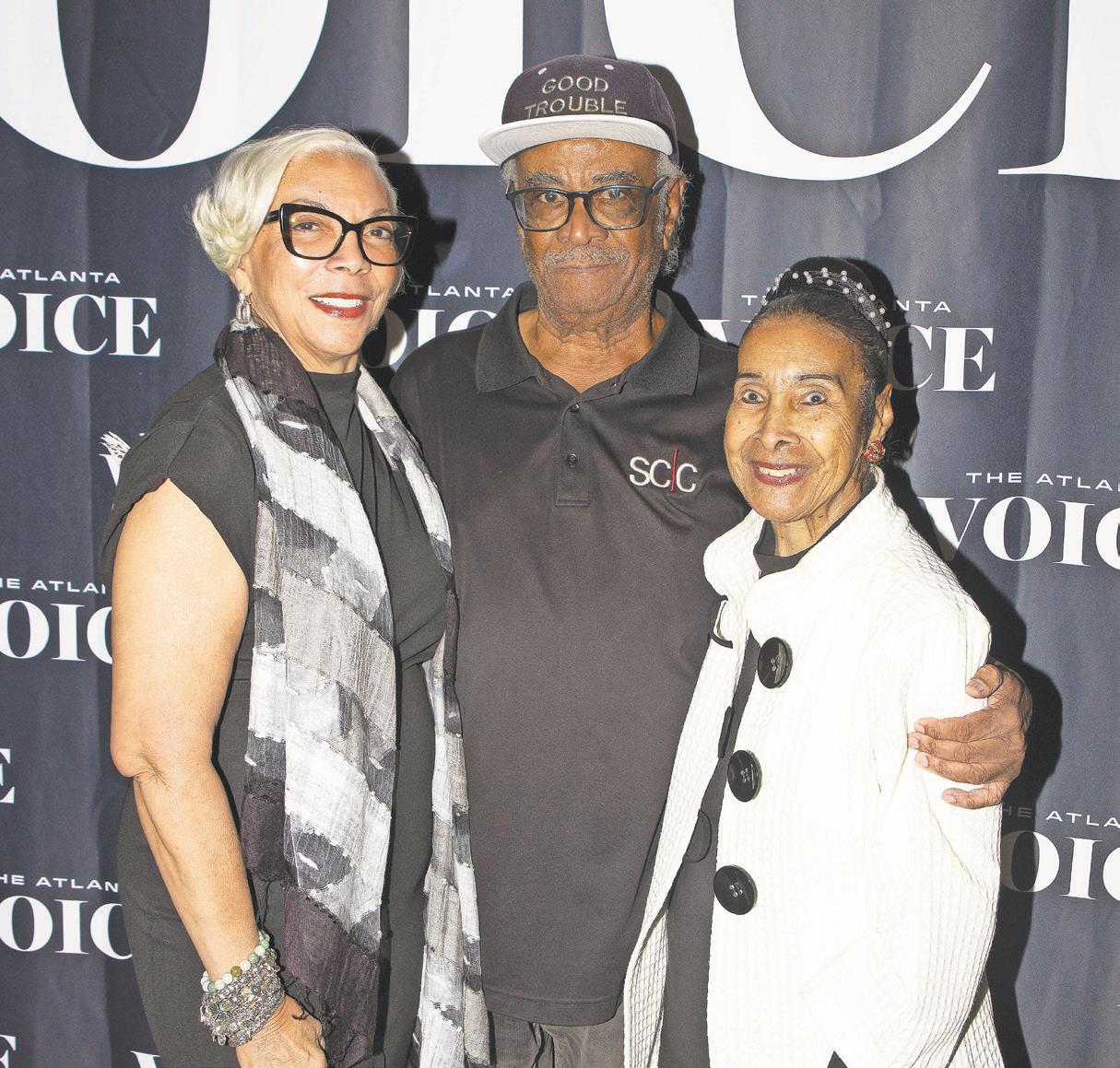
Ware personally described him as “a no-nonsense, activist journalist,” one whose editorial fire feels particularly relevant now.
The parallels between the paper’s founding era and today are difficult to ignore. The Atlanta Voice was launched because Black Atlanta could not trust mainstream outlets to tell its story honestly. In 2026, with voting rights legislation stalled, civil rights enforcement weakened at the federal level, and misinformation spreading rapidly across digital platforms, that original distrust has found new reasons to persist.
Washington addressed the moment directly. “Let me warn the readers that we have been through worse times,” he said. “These are not the worst of times. It may be for some young people, but there were times that were much worse than this that The Atlanta Voice has survived, and its mission hasn’t changed.”
He framed the paper’s role not just as documentation, but as orientation for a community navigating uncertain ground. “The mission of the voice is to give people without a voice a chance to be heard, to give them the information they need in order to make an informed decision. The fight continues, and the voice is there.”
Also attending the celebration was Karen Duckett, founder of Duckett Design Group, one of Atlanta’s most respected architecture and design firms. Duckett served as a joint venture partner
on the design of Hartsfield-Jackson Atlanta International Airport, a $1.3 billion project representing the largest contract awarded to an African American woman-owned design firm in the world. She spoke to the paper’s growing reach and responsibility in an era of shrinking local news.
“Since the Atlanta Journal-Constitution has stopped printing, you are now the storyteller for so many more people who don’t use the internet, but can’t afford the internet, but can afford the paper,” Duckett said. “We need it. It’s badly needed now.”
Tory Edwards, part of the Atlanta Influences Everything creative collective, said the paper’s legacy is inseparable from the broader story of Black Atlanta.
“The Atlanta Voice is one of the few legendary legacy entities that’s been able to preserve our stories and the way we storytell and carry on and pass them on to the next generation,” Edwards said.
Dr. Rhonda Ware, daughter of founder J. Lowell Ware and sister to publisher Janis Ware, reflected on what the paper has meant across generations, from its origins in the family’s basement during the Civil Rights Movement to its role in the current political moment.
“When my father started, it was in challenging times when we had no voice,” Ware said. “We need the African American newspaper to tell our stories.”
By DONNELL SUGGS
The former mayor of Atlanta wants to be Georgia’s first Black and female governor.
Keisha Lance Bottoms sat on a couch inside a dimly lit room at Retreat by The Gathering Spot, enjoying the natural lighting set forth by the afternoon sky. It was just past 2 p.m. and she had a long day of doing interviews with local media and there was still one more interview to go. Running for citywide elections was one thing, but running for the top spot in the state was another entirely. Still, she sat with a smile on her face ready to answer questions about why she should be Georgia’s next governor.
On Monday, May 11, Bottoms sat down for an interview with The Atlanta Voice before she and her campaign staff headed to Columbus to talk with voters. With less than 8 days before voters made their way
to polls to vote in the general primary election on Tuesday, May 19, Bottoms stated her case.
“I’m a battle-tested leader. I’ve led through the crisis, I’ve led through Trump 1.0, so I know what it means to have to lead through chaos and still be able to deliver for our communities,” Bottoms said.
She credits her time within the former Biden/Harris administration as an extra bit of experience that her competition in the race for governor does not have. “Being able to see how you get things done, it’s something that nobody else brings to the table,” she said.
Atlanta is Georgia’s capital city, and Bottoms’ time as the mayor can be seen as a gift and a curse depending on who you ask. She believes it should be seen as an advantage.
Over a half-million votes have been cast during the early voting period, which ends on Friday, May
15. Traditionally, primary elections in Georgia and around the country do not get the attention that November and presidential elections get. When asked if that was a concern for her and her candidacy, Bottoms didn’t look bothered. She said the primaries being scheduled in May with runoffs, if necessary, scheduled in June, are recipes for low turnout. “And I believe it is by design,” she said.
“I think in this season a lot of people are checked out, and for good reason,” she said. “For some people, it’s just being mentally exhausted. For other people, life is just lifting. I do believe the closer we get to election day, the larger the turnout will be.”
She said by the time November comes around the voters will be “fully engaged.”
Bottoms said it’s all about “counting the votes one by one” and making sure the people she
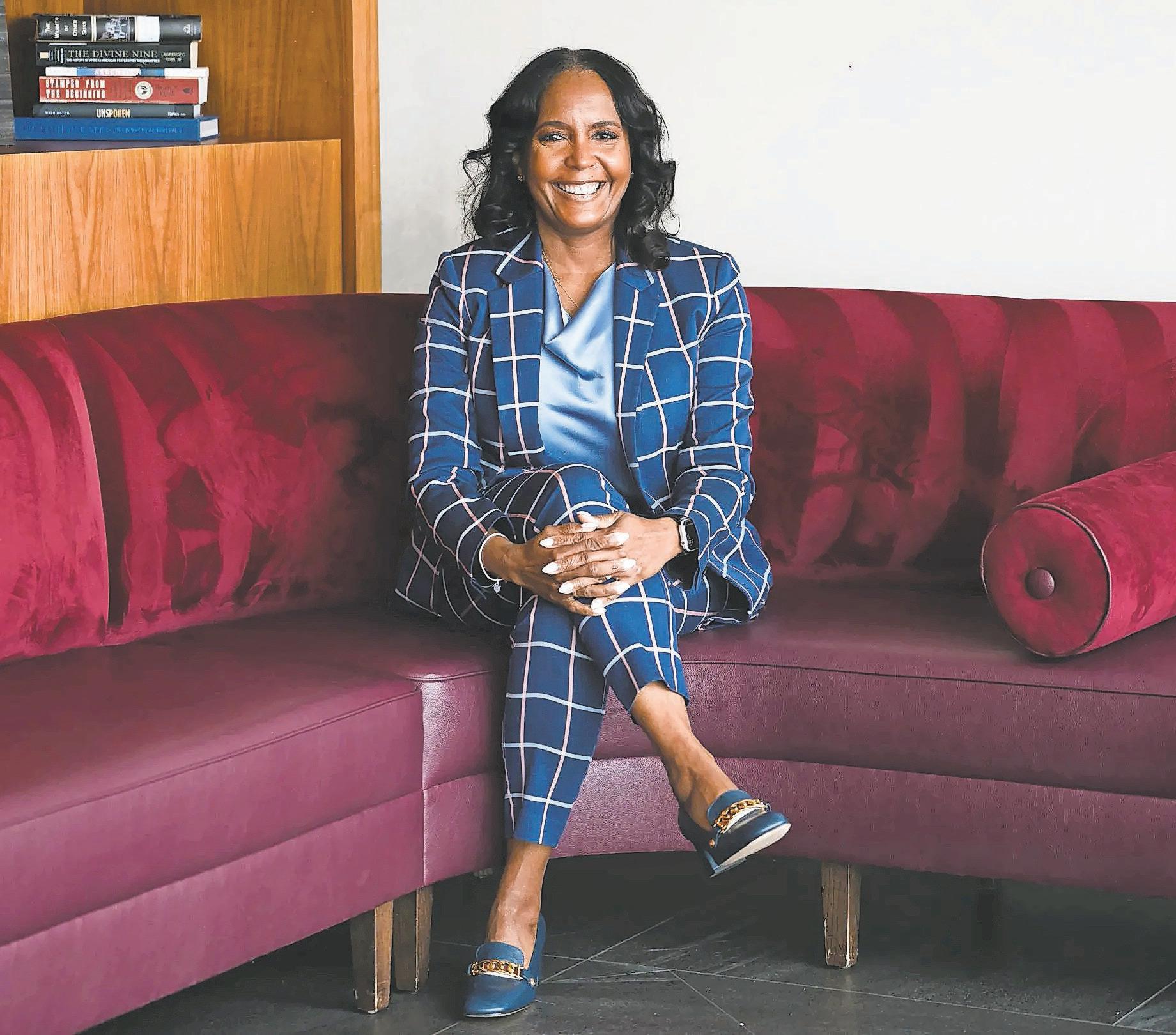
“I’m a battle-tested leader. I’ve led through the crisis, I’ve led through Trump 1.0, so I know what it means to have to lead through chaos and still be able to deliver for our communities,” Bottoms said. Photo by Tabius McCoy/The Atlanta Voice
hopes supports her do turn out to vote. She still has campaign stops and events in Augusta, Macon, Savannah, Valdosta, and in between.
“We’re not taking anybody for granted,” she said. “We’ll be moving
around the state, and we’re going to keep working the state, working to earn votes through election day and then there will be a reset and
See BOTTOMS on page 5

Small businesses don’t just power Georgia’s economy, they power our communities.
At Georgia Power, we know running a business isn’t easy. That’s why our Small Business Energy Savings program helps small businesses lower energy usage through LED lighting upgrades, HVAC maintenance and smart thermostats. When your business saves, you gain the freedom to reinvest where it matters most: your people, your customers, and what comes next. Apply today and start
By JULIENNE LOUISANDERSON
Decades ago, W. E. B. Du Bois warned, “As goes the South, so goes the nation.” That warning carries renewed weight after last week, when Louisiana experienced two significant challenges to its democratic systems.
Yet the state is also actively pushing back, positioning itself as a proving ground for both the erosion of power and the strategies to resist it.
On April 29th, in a decision that eviscerated the Voting Rights Act, the Supreme Court struck down Louisiana’s congressional map. The decision effectively dismantled the largest Black voting district in the state, effectively suppressing the votes of thousands of Black Louisianans — including mine. The NAACP and the American Civil Liberties Union have already filed lawsuits challenging the ruling.
Blueprint, not Policy
Just days later, the Louisiana legislature eliminated the position held by Calvin Duncan, a formerly incarcerated Black man who had been elected clerk of the local criminal district court. Framed as a matter of structural efficiency, the legislature effectively fired an elected official whose job was to advance reform and accountability.
With the support of the ACLU, Duncan sued and won in federal court, restoring his power.
But what’s happening in Louisiana isn’t just policy—it’s a blueprint.
Southern states like Alabama, Tennessee, South Carolina, Georgia, and Florida are advancing their own policies that similarly threaten Black voting power — moves straight out of Project 2025, the far-right road map to reshape and dismantle democratic institutions.
Front-Row Seat
While it became an issue during the 2024 presidential election, Project 2025 policies had unfolded in Louisiana years before Trump’s first executive order. Since 2023, under Governor Jeff Landry, the state has sought to restructure political systems and limit access to power, particularly

for his own constituents.
I don’t write about this as a distant observer. I am a Black woman, born and raised in Louisiana, where I still live and work. I’ve seen how decisions made in Baton Rouge don’t stay in government buildings; they show up in courtrooms, classrooms, and everyday life.
One of Landry’s early actions was reversing a key component of the “Raise the Age” law, designed to reduce the number of underage people serving time in state penitentiaries. The governor lowered the age at which young people can be tried as adults to age 17, exposing more children to the adult criminal legal system.
Like so many “tough on crime” policies, the effect is not evenly distributed. It lands hardest on the most vulnerable, including Black and poor children. Weeks after the vote, I saw a former student sitting behind bars for breaking into a car during the 2025 Louisiana snowstorm — seeking shelter when the entire state had shut down.
Slow Erosion
This is how erosion works—not through one sweeping decision, but through policy shifts that reshape outcomes over time.
But Louisiana residents have not been passive.
In 2025, voters rejected all four proposed constitutional amendments that would have expanded
legislative control over the courts, reshaped tax policy, and altered aspects of the criminal legal system. It was evidence of the power of the people. And we are being called to do so again.
On May 16, voters here will face a slate of constitutional amendments that could reshape our schools, courts, and communities, proposals that could directly affect how resources, justice, and opportunity are distributed. Together, these bills represent a continued effort to shift power away from communities and toward politicians, another key component of Project 2025.
Thousands, including myself, have turned out in record numbers, set to create a historic election turnout. This is why Louisiana matters: it’s where policies are tested, and then replicated.
Georgia, Kentucky, and Washington, D.C., passed more punitive crime bills. Coordinated strategies, like the “trigger laws” that activated abortion bans across 13 states, including Louisiana, show how what begins here does not stay here; the same strategies being used here to weaken voting power, reshape courts, and limit rights are poised to spread nationally — and scale up.
Southern Strategies
That means the South is the critical battleground for the future of American democracy.
And we must continue to fight back.
Across the South, Southerners are fighting for their rights. In Florida, grassroots organizing helped flip Jacksonville’s mayoral seat to blue. Georgia currently has its most diverse legislature. Virginia and Alabama have driven major voting rights victories, with courts forcing the redraw of congressional maps to restore fair representation. All of these efforts make clear that even in states labeled “red,” power is being contested, reshaped, and reclaimed.
The erosion of fair courts, representative districts, and accountable leadership isn’t partisan; it’s structural. And when power becomes more concentrated, everyday people and Black communities lose their ability to shape what happens next.
That is why this moment demands attention beyond state lines. We must listen to the warning Du Bois offered generations ago. Other states would be wise to look here for what’s next, so they can prepare and resist.
Julienne Louis-Anderson is a native of New Orleans, Louisiana. She is also a former educator who writes about the intersection of culture and politics with education and human development. She is also a Public Voices Fellow of The OpEd Project in partnership with the National Black Child Development Institute.
FOUNDED May 11, 1966
FOUNDER/EDITOR
Ed Clayton
Immortalis Memoria
PUBLISHER/EDITOR
J. Lowell Ware Immortalis Memoria
The Atlanta Voice honors the life of J. Lowell Ware.
PUBLISHER Janis Ware
PRESIDENT/ GENERAL MANAGER
James A. Washington 2018-2024
COO Richard Dunn rdunn@theatlantavoice.com
DEVELOPMENT SPECIALIST
Jazmine Brazier jbrazier@theatlantavoice.com
EXECUTIVE ASSISTANT TO PUBLISHER
Chia Suggs csuggs@theatlantavoice.com
EDITOR IN CHIEF Donnell Suggs editor@theatlantavoice.com
GENERAL ASSIGNMENT REPORTERS
Isaiah Gutierrez isingleton@theatlantavoice.com
Laura Nwogu lnwogu@theatlantavoice.com
Noah Washington nwashington@theatlantavoice.com
BUSINESS REPORTER
Tabius H. McCoy tmccoy@theatlantavoice.com
EDITOR AT LARGE Stan Washington swashington@theatlantavoice.com
ADVERTISING, SALES & CIRCULATION
ADVERTISING ADMINISTRATOR
Chia Suggs advertising@theatlantavoice.com
SALES
RDW Jackson rdwadman@gmail.com
SUBMISSIONS editor@theatlantavoice.com
DIRECTOR OF PUBLIC RELATIONS
Martel Sharpe msharpe@theatlantavoice.com
CONTACT INFORMATION
633 Pryor Street, S.W. Atlanta, GA 30312 Office: 404-524-6426 info@theatlantavoice.com


By LAURA NWOGU
Early voting for the Georgia primaries is underway, and the seat of attorney general is up for grabs, with prosecutor and civil rights attorney Tanya Miller hoping to take the helm as the state’s chief legal officer.
With over two decades of experience in the courtroom, Miller is uniquely positioned for this moment. But before she joined the front lines of justice, she shared that she grew up in a working-class home where they lived “one paycheck away from complete and utter disaster.” Miller said watching her mother work hard day in and day out and struggle to make ends meet helped her deeply understand the plight of working people.
“I wished someone would fight for my mom, and I was ultimately driven by that; I took on the role of her protector, even at a young age,” Miller said. “I guess it was just my personality, but that feeling that people need someone to stand up for them is what drew me to the law, what sent me to law school, and really has shaped the way that I view the use of my talent and my skill as a lawyer.”
Miller is a Georgia State Representative (District 62) who has worked as a state and federal homicide prosecutor and civil rights lawyer, fighting for women, children, families, the injured, and wrongfully accused. Through her work, she has become a voice for Georgians, working on their behalf. She views the attorney general’s office as an opportunity to continue that work at scale.
“It is really what the office should be about. It’s not what it has been about. But certainly, there is great potential in that office to do really wonderful work on behalf of working families all across the state of Georgia. It is not lost on me that this is a moment in our history where we have to give everything we have to protect our rights,” Miller said. “This moment in our history feels like the time where everybody has to be all hands on deck to fight for our democracy.”
Miller’s platform and what she hopes it
Continued from page 3
we’ll go from there.”
A runoff, at least on the Democratic side, looks eminent. Bottoms, who has been through a runoff election in the past, says the sooner the better.
“For the purposes of Democrats, the sooner we are able to consolidate, the better,” she said. “On the republican side, there are millions upon millions of dollars of their personal fortunes that they have poured into this
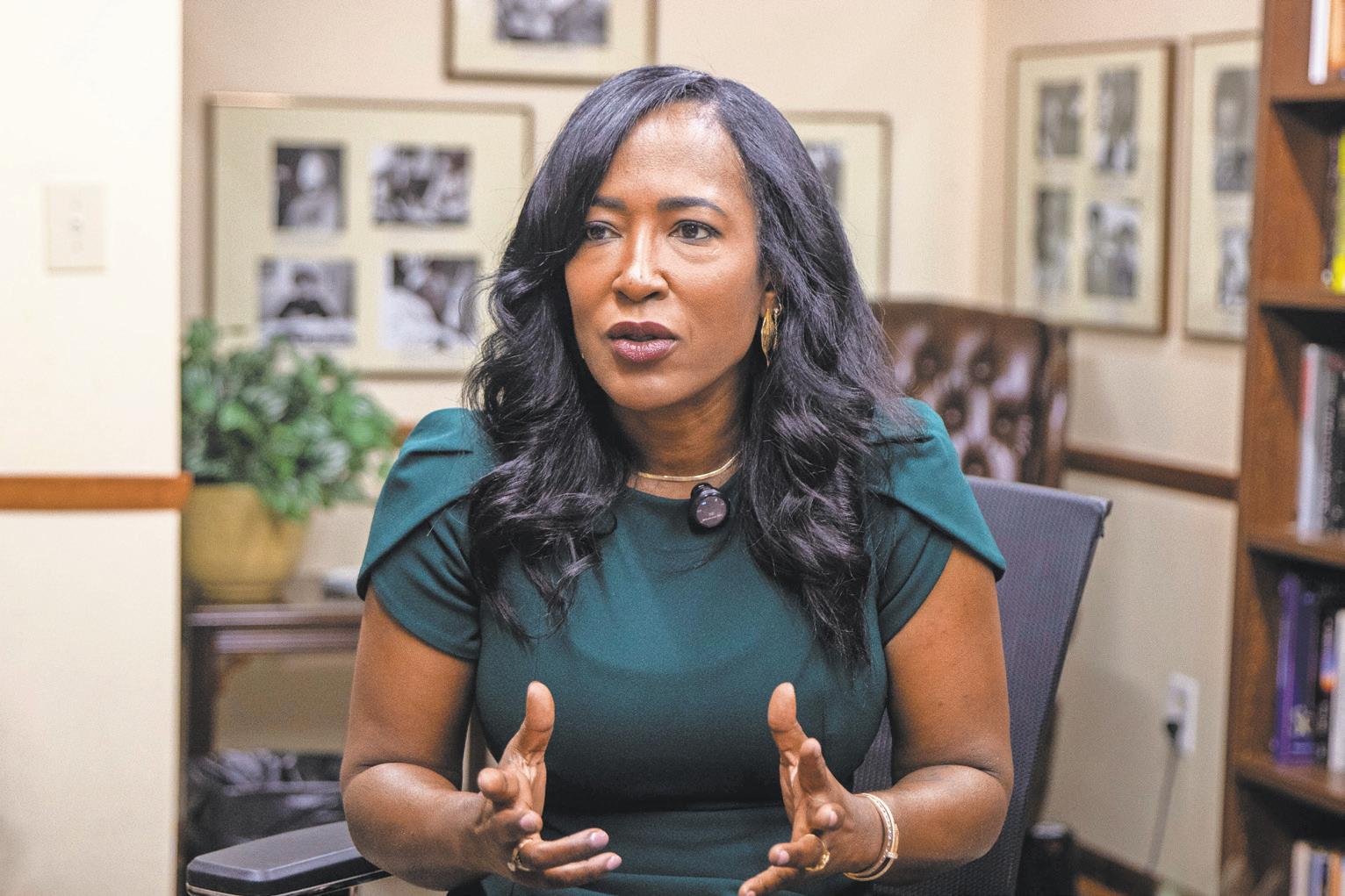
means to the people of Georgia is summed up in three words: lawyer, watchdog, protector. She hopes to build a Georgia that is safer for children and the community and fairer for workers and small businesses. For Miller, that looks like targeting and dismantling violent criminal networks and human trafficking rings, prioritizing the prosecution of crimes against children and domestic violence, holding people accountable no matter how powerful they are, cracking down on consumer fraud, safeguarding the right to vote and fighting discrimination in all forms, challenging unfair and unjust rate hikes from power and utility monopolies and launching investigations into the grocery supply chain to uncover elements that are artificially inflating the cost of food.
One of her commitments is to champion small business, ensuring a level playing field so they can compete and grow alongside larger corporations.
race. Our resources are being split among seven candidates, so the sooner we can consolidate, the stronger we’ll be for November.”
Georgia has some of the lowest gas prices in the country, but with the prices hovering near $4.00 per gallon, the prices still are a long way from average. Those costs trickle down to the voters. United States President Donald Trump has said the prices will “drop like a rock,” but for now, they haven’t. Bottoms was asked what she would do about those prices if she were elected Georgia’s next governor.
“I think we should continue to suspend the
“Ultimately, the platform that I am running on takes into account small businesses just as much as it does working and middle class families. We also know that the insurance industry has literally been having its way with small businesses and working families for the better part of decades in this state. They go largely unregulated. If they are regulated, it is performance only, and that really needs to change.
“I think the attorney general needs to take a more active role when insurance companies deny claims en masse—like we saw them do in California to a larger extent with the fires and to a smaller extent here in Georgia with the hurricanes—and also in the rate-setting process. Someone needs to be a voice for the people when it comes to these big corporations who just get away with delaying, denying, cheating, and really, in some instances, it’s akin to theft.”
Miller was critical of the current attorney general, Chris Carr. She believes he has not
gas tax until this unnecessary war is over,” she said. “For as burdensome as it is just on individuals, think about Delta Airlines, a major employer in this state, who has to spend an additional $2 billion on oil. That price is passed on to the consumer.”
Bottoms said the war in Iran is “frustrating” and “concerning”.
“When you think about a city like Atlanta, and the metro Atlanta area, we are car-reliant. And think about communities throughout the state that don’t have access to public transportation.”
Asked what the first order of business
taken on the “big fights” to protect Georgians and has treated the position from the point of view of a politician, not a prosecutor.
“Prosecutors get up and go to work every day saying, ‘How are we making life better for the community?’ Our job every day is to get up and choose to do the right thing, to follow the law, and what we have seen is silence in the face of some of the biggest challenges that the state has faced.
“We have had multiple environmental catastrophes. Where has the attorney general been? We’ve had the federal government come down here and seize ballots from 2020. Where has the attorney general been? We had a $140 million Ponzi scheme that happened on his watch that fleeced hundreds of Georgians out of their hard-earned money. Where has he been? He has largely been silent when it matters the most.”
Miller was vocal about her commitment to investigating and tackling price gouging resulting from natural disasters and companies that use those moments to cheat Georgians when they are most vulnerable, and the housing crisis due in part to corporate property owners colluding with each other using artificial intelligence to keep rents artificially high.
Miller encouraged Georgians to vote early and emphasized that their vote matters and counts in influencing the direction of the state and country.
She said she hopes Georgians view her campaign and career as a showcase of her care and love for people.
“I have a record of standing up for people and taking on bullies and being relentless in that fight. I want them to know and believe, if I had my choice, that I am who I say I am, and that I’m going to do what I say I’m going to do. I think this office belongs to the people. I think all elected offices belong to the people. And I view their vote, and ultimately, if I am selected, their choice for me as not a position that I have gained, but really as a trust that I hold for them and for the purpose of doing good work for them.”
would be if Keisha Lance Bottoms was elected governor, she reflected back on her family’s roots in Crawfordville, Georgia, a tiny town in Taliaferro County.
“The opportunity to offer myself as a candidate for governor, I’m sure, exceeds all expectations of my ancestors,” she said.
Bottoms said Medicaid expansion is a huge priority, but the affordability issues Georgians are facing is of equal importance.
“The needs are so plentiful, but wrapping our arms around the affordability crisis and preparing for Medicaid expansion will be priorities,” Bottoms said.
By NOAH WASHINGTON
W.E.B. Du Bois
believed art divorced from social truth was no art at all. EuGene V Byrd III built an entire exhibition around proving him right.
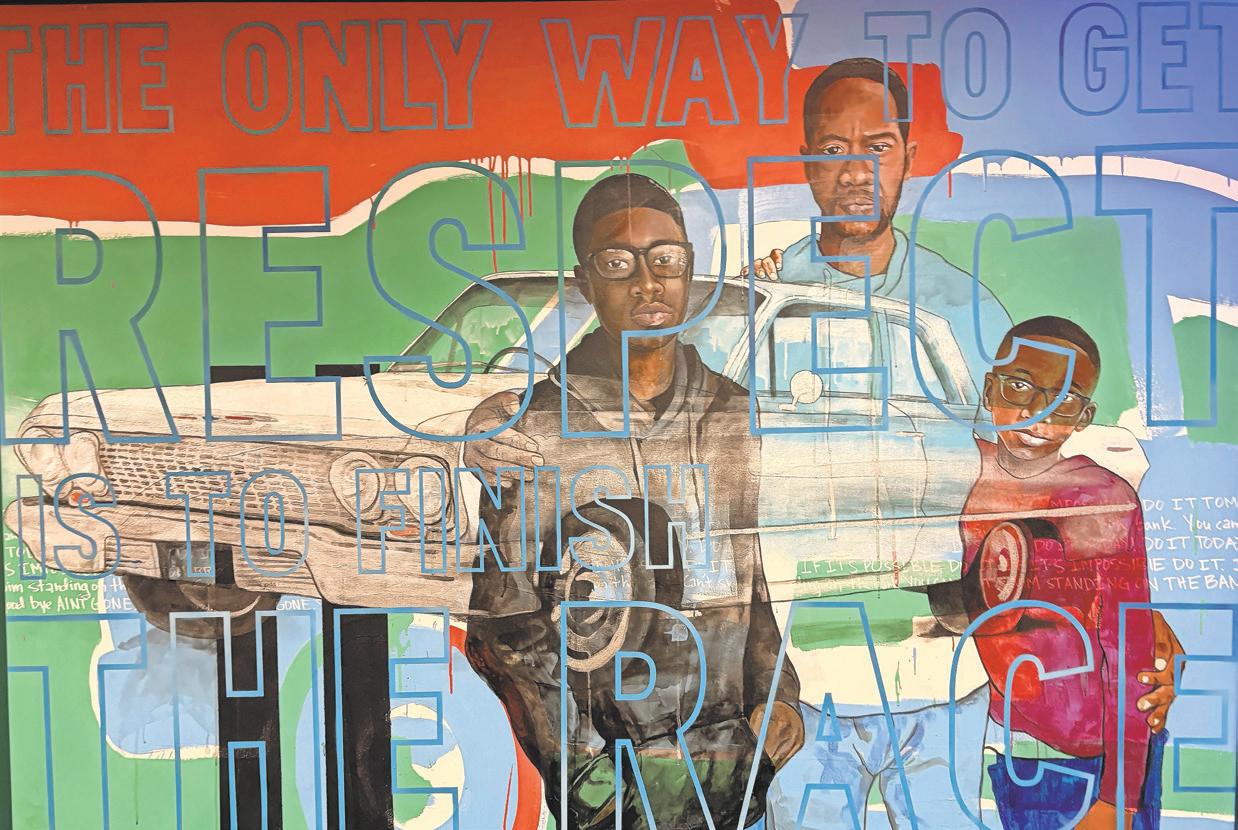
The “Politically inCorrect” group fine art exhibition opened Friday at Railroad ATL inside the Future Gallery at 255 Ted Turner Drive SW, bringing together more than 50 artists across painting, photography, sculpture, and collage to address what curator and founder Eugene V. Byrd III calls an overdue conversation.
“Right now, it’s like, when you think about 20 years from now, when people look at your body of work as an artist,” Byrd said. “What was I doing creatively? If I were just painting flowers, I feel like I would be doing a disservice.”
The show, which features an estimated 110 to 120 pieces, was born from what Byrd described as a growing silence among artists during a turbulent political period. Inspired by the W.E.B. Du Bois tradition of art as social responsibility, Byrd said he designed the open-call exhibition not to lead artists to any particular conclusion, but to ask a simple question: What do you have to say?
“It wasn’t leading them in any way,” he said. “It was just like, what do you got to say? Where do you stand?”
The show runs through May 30, when a closing reception and artist talk is scheduled from 5 to 10 p.m. The exhibition tagline, printed on its promotional material, reads: “Unfiltered. Uncensored. Unapologetic.”
Byrd himself, a direct descendant
of Black Wall Street, traces his commitment to culturally rooted art back to his upbringing in the Midwest.
Born in Wichita, Kansas, and raised with family ties to Tulsa, Oklahoma, he said places like Brown v. Board of Education’s Topeka and pre-Civil War “Bloody Kansas” shaped his artistic consciousness in ways he only came to fully understand as an adult.
“There’s a lot of Black history in the Midwest,” Byrd said. “You realize things when you get older, but it’s just always been there.”
He relocated the gallery in February after five years at Underground Atlanta, where he said a lack of institutional support for arts and culture
programming ultimately made the move necessary. He launched the current space’s first exhibition in March and said the opportunity at the new establishment development renewed his sense of purpose in the city.
Among the artists featured is Faif Quin, whose single-piece contribution, “The Americans Dilemma, Part Four: The Ballad of Chuck’s Rec Wheel, We Are Gathered Here Today,” generated immediate conversation at the opening. The large-format photograph depicts a group of diverse individuals, wearing blindfolds and dressed as though attending a funeral, gathered around frames with withered flowers and mirrors.
Quin said the piece was prompted by the September 2025 killing of conservative commentator Charlie Kirk and what followed.
“Shortly thereafter, violence against Black people spiked,” Quin said. “I’m not a political analyst, but I’m not crazy to relate the two.”
The blindfolds, Quin explained, were intentional, meant to invite the viewer to step into the image rather than simply observe it.
“I wanted to remove their eyes because I feel like eyes represent the soul,” Quin said. “I wanted the audience to be the eyes.”
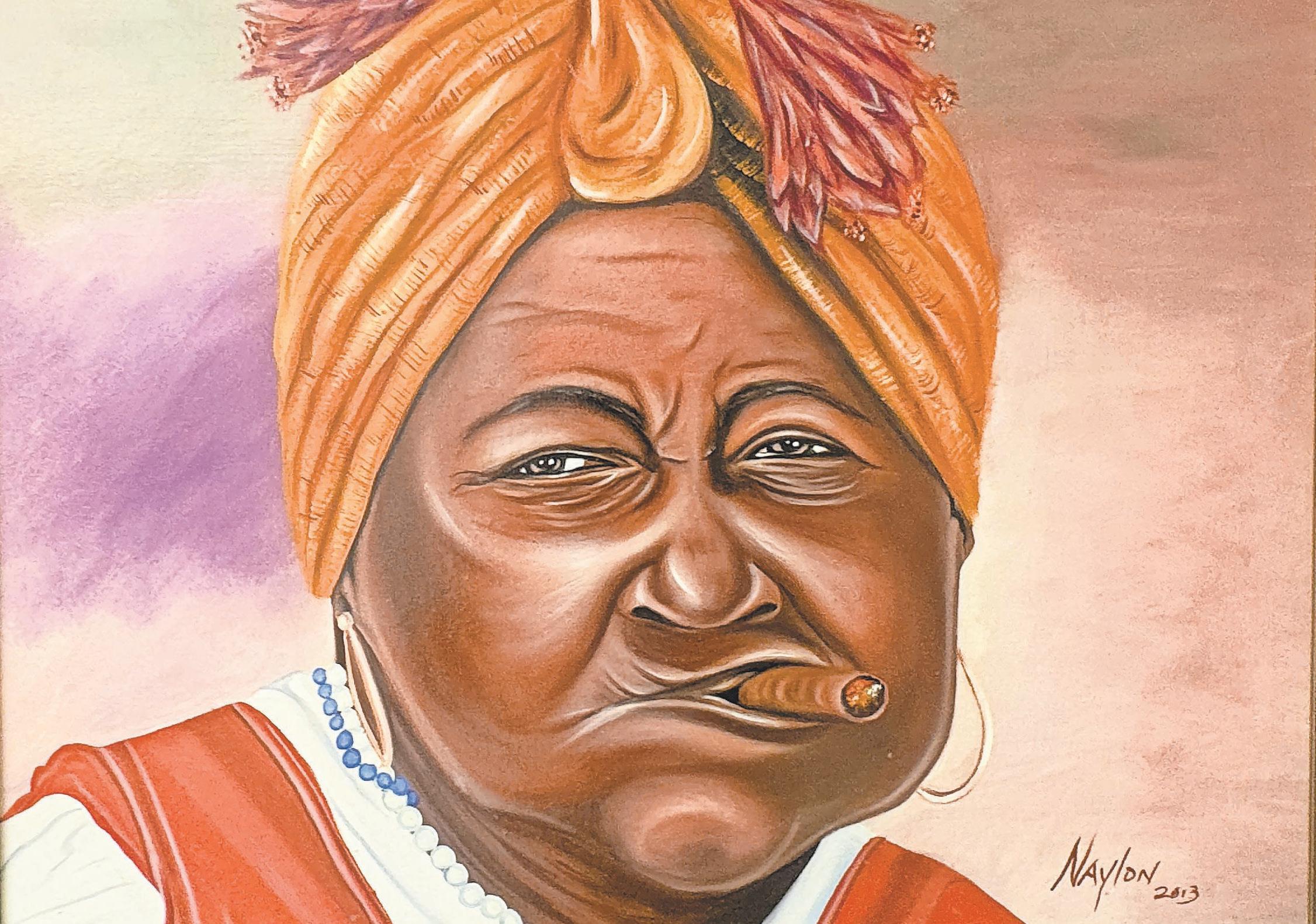
Brooklyn-born painter Naylon D. Mitchell, who has called Atlanta home for the past 30 years, displayed a piece
titled “Mama Rosa,” a portrait drawn from a photograph he encountered on social media depicting a Cuban woman. Mitchell, who has also worked as an actor since age 17, said he paints from photographs with the intention of leaving interpretation open.
“It could be interpreted so many different ways,” Mitchell said. “You can kind of fill in the blanks yourself.”
Timothy LaGrone, a Grand Rapids, Michigan native who has lived in Atlanta since 2003, contributed a colored pencil work titled “Veins of
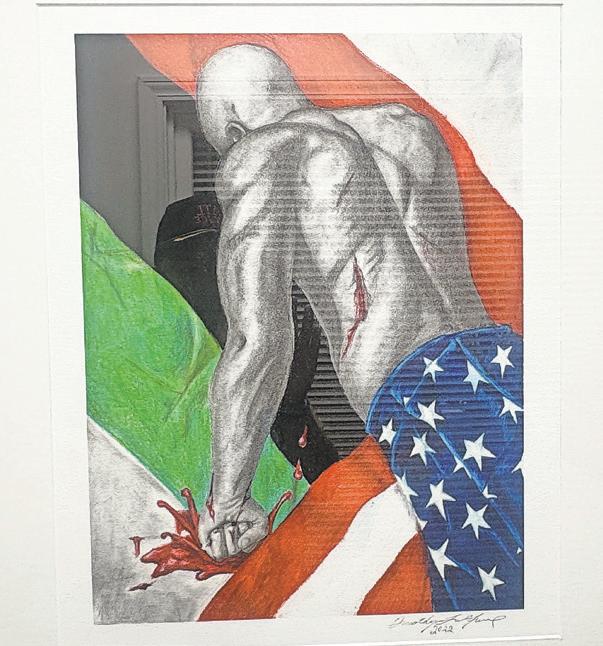
Diaspora,” in which a figure is depicted wrapped in both an American flag and an African flag, with visible markings on his body representing, in LaGrone’s words, what Black Americans endured over the past 400 years.
“Things haven’t really changed much,” LaGrone said. “The current administration is trying to turn the clock back and ignore the history that we’ve gone through.”
For Byrd, the artists showing at the exhibition, including some whose galleries have declined to exhibit politically charged work, represent a kind of cultural resistance he hopes viewers carry with them after leaving.
“I want people to leave with some optimism, for sure, some hope,” he said. “To know that there is some resistance to what’s going on, that there is a shift that could be happening, and it can start with the arts.”
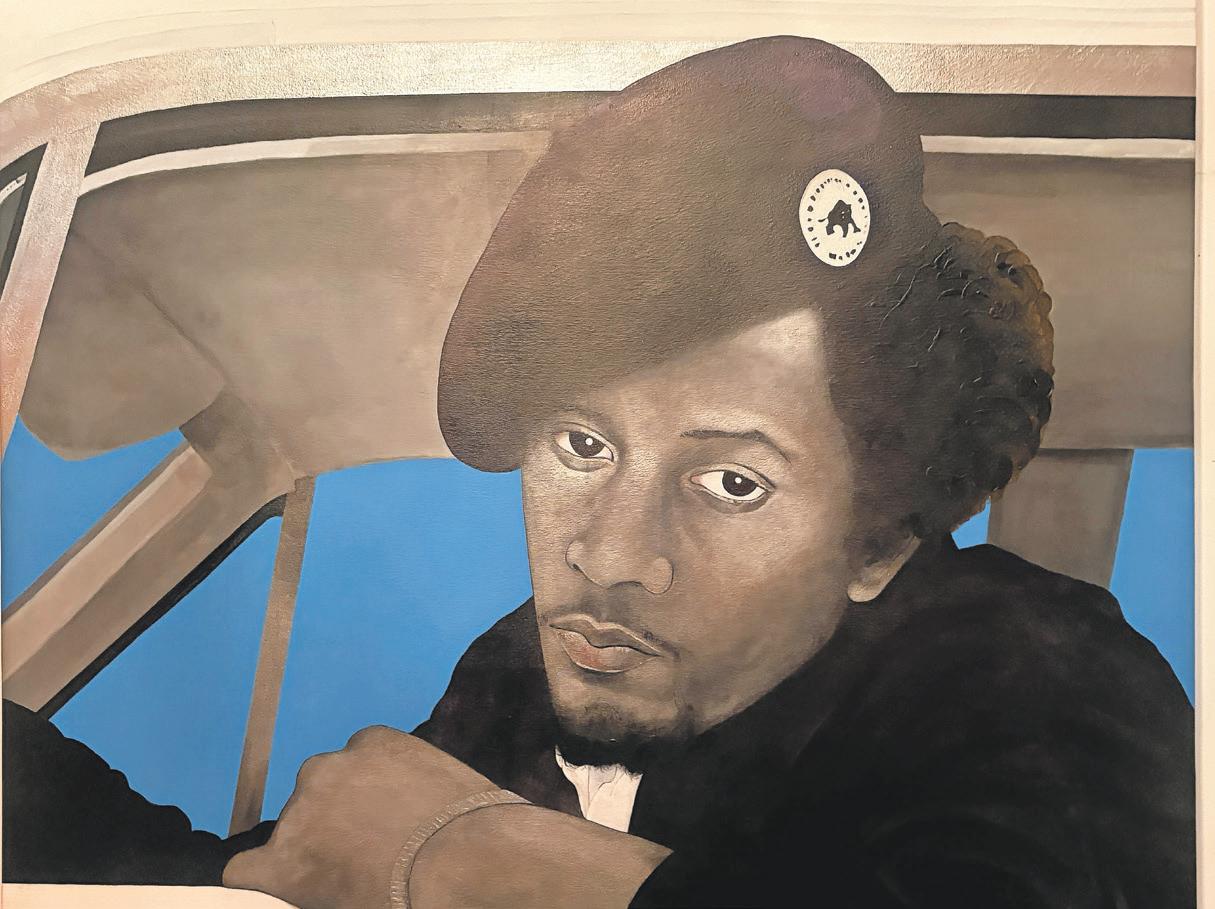
By 360 PHOTOBOOTH EVENTZ
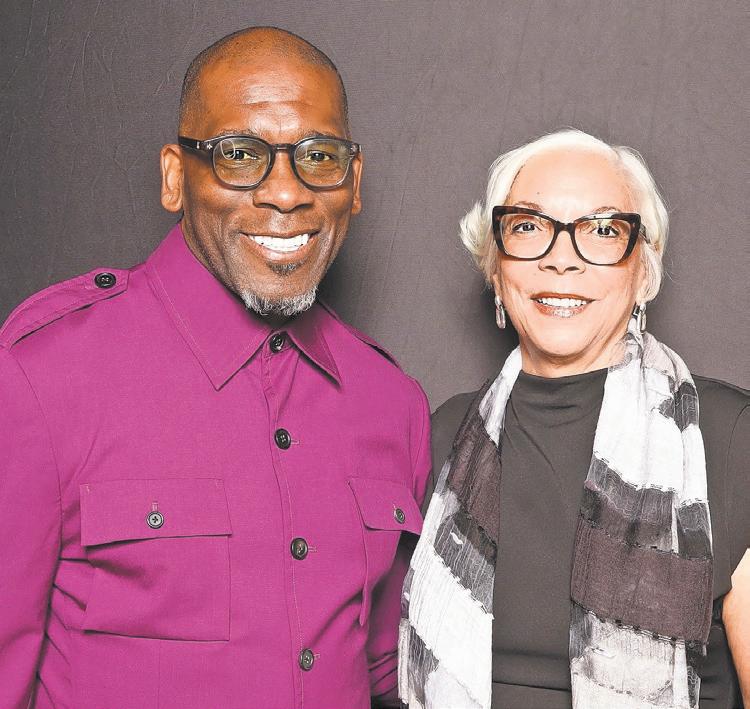
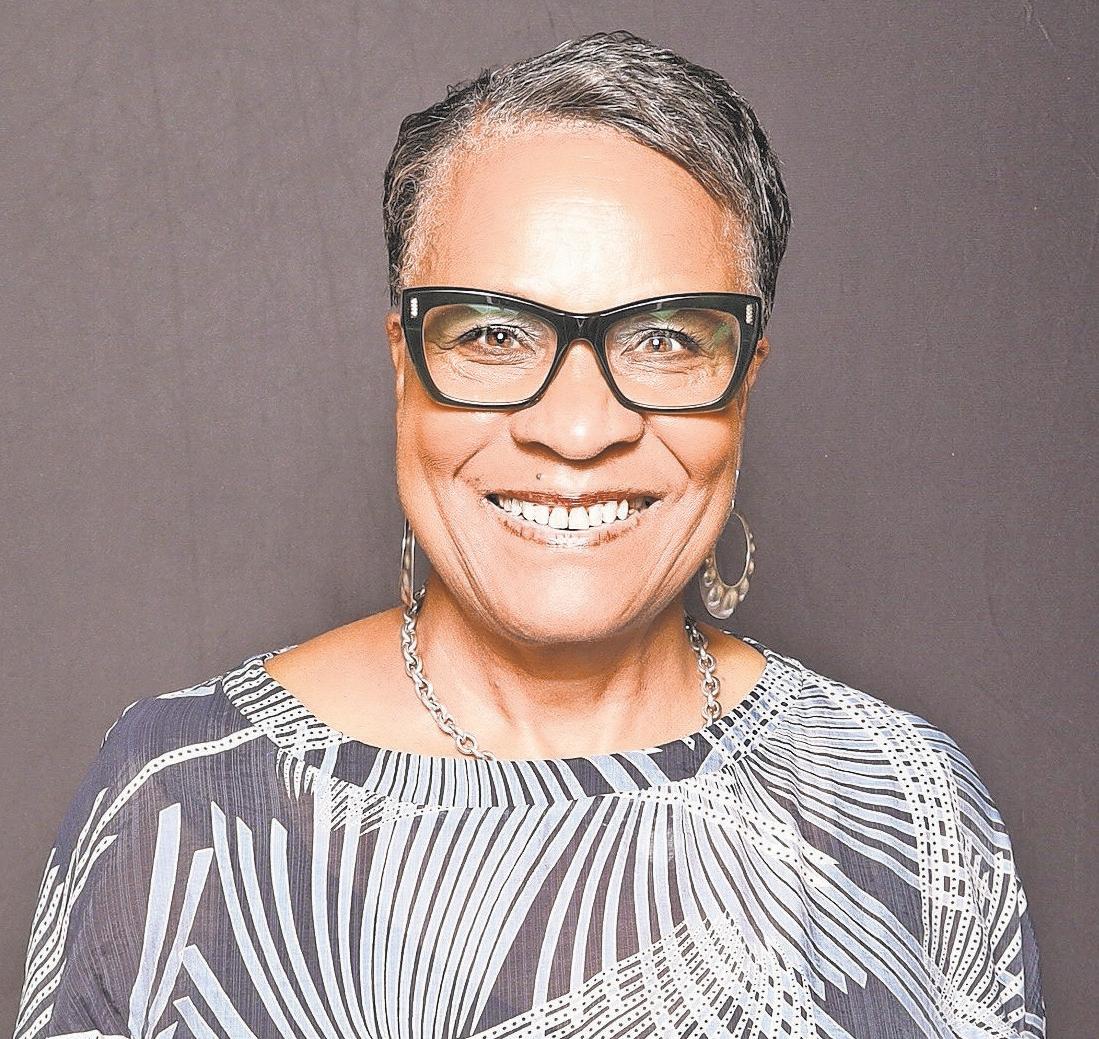
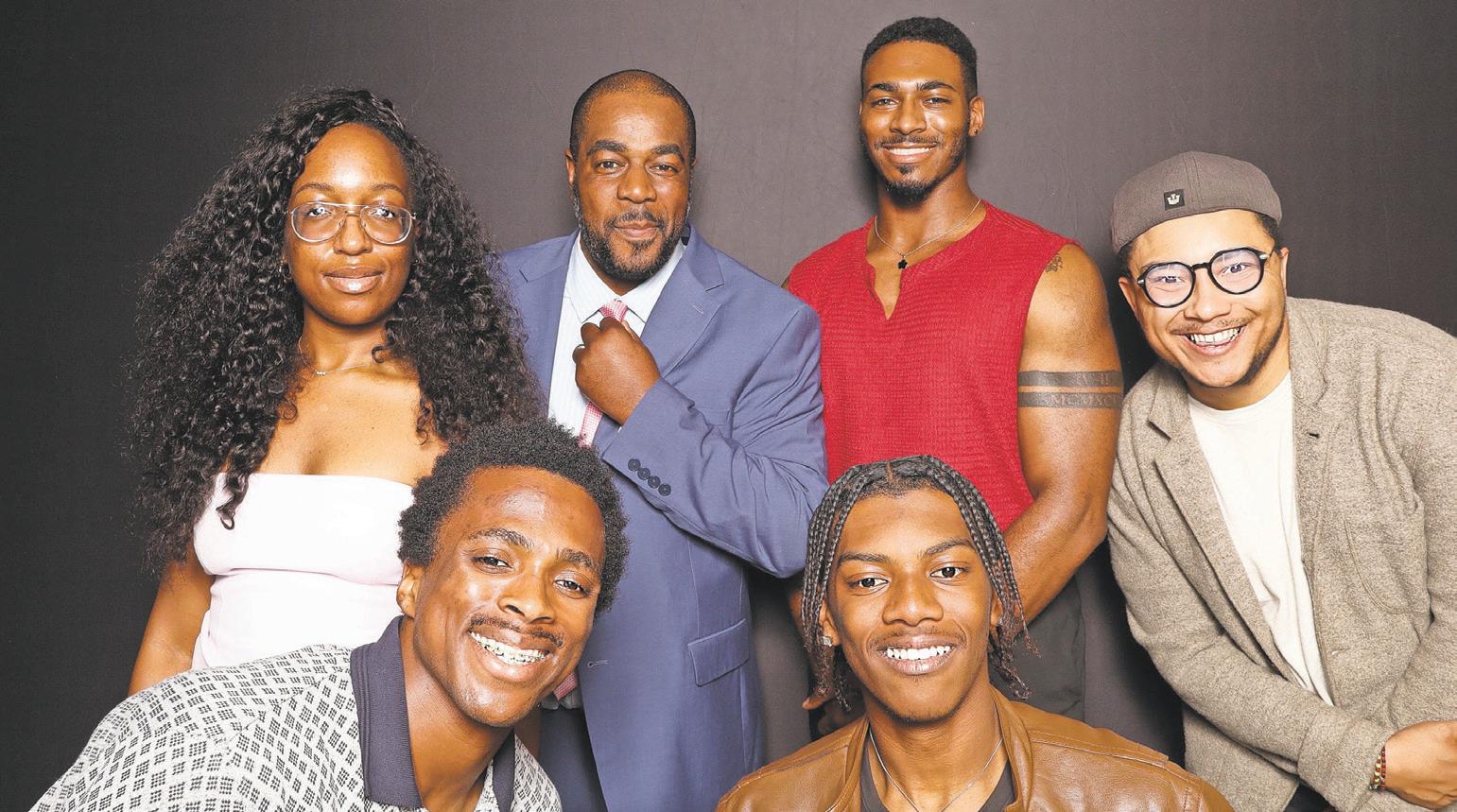
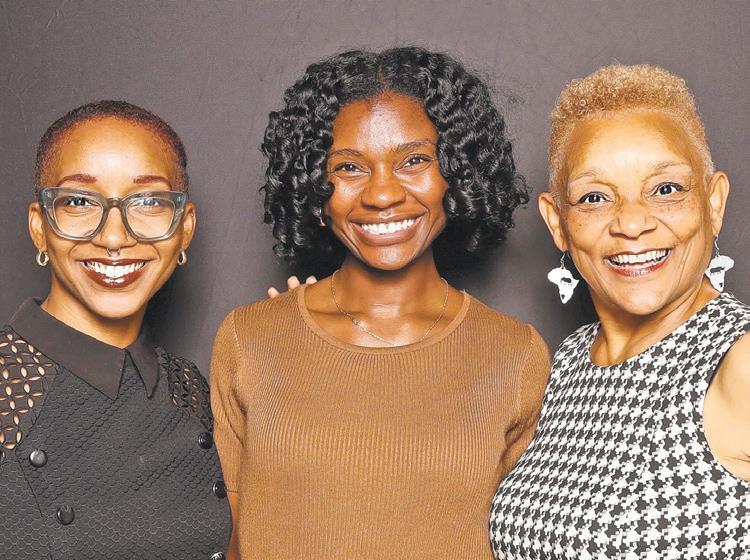
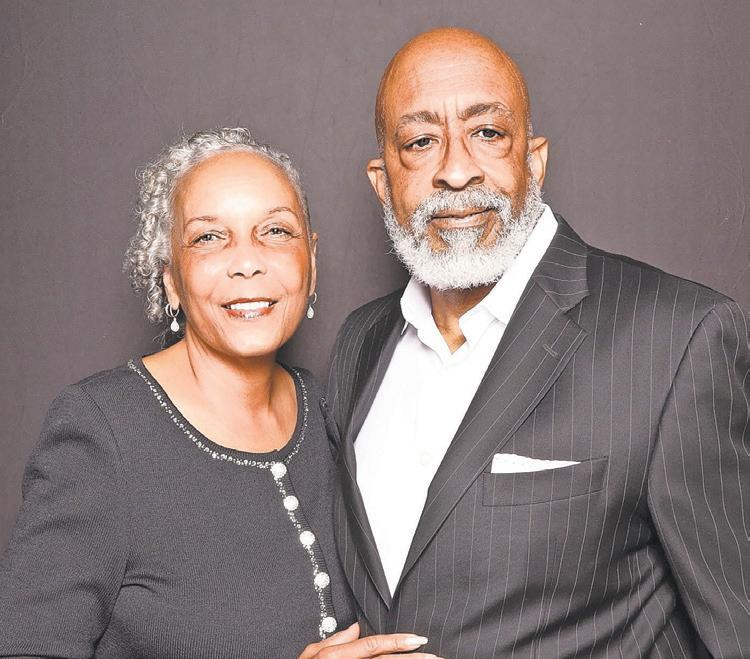
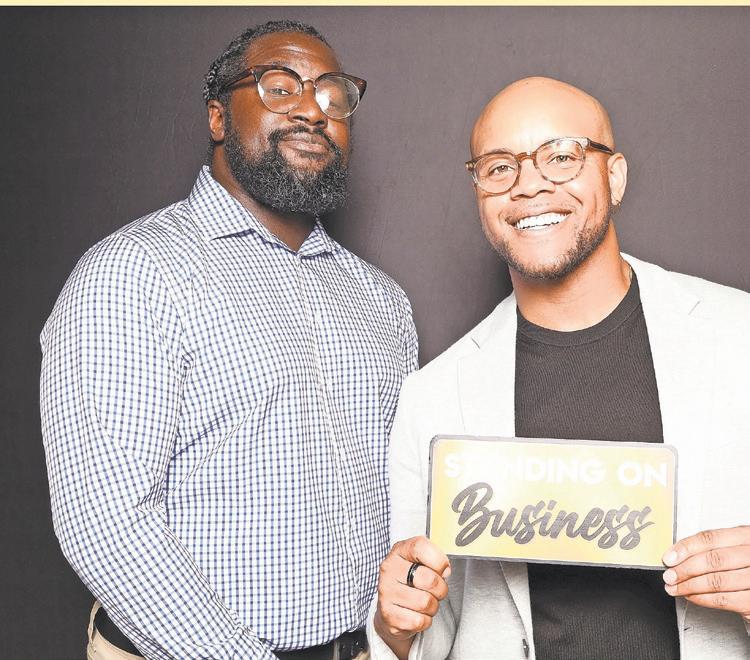
By DONNELL SUGGS
The race for Georgia’s next labor commissioner is on the ballot for the upcoming midterm election, and Nikki Porcher, a newcomer to statewide politics, wants to be the woman who wins that particular race.
Porcher is among five Democrats running for the position against the current Georgia Labor Commissioner, Barbara Rivera Holmes, who was appointed to that office by Georgia Governor Brian Kemp on April 4, 2025.
Porcher dropped by The Atlanta Voice building on Friday morning to talk about campaigning across the state, what makes her the best candidate for the job, and running against competitors who have unsuccessfully run for other offices and now want to run for labor commissioner.
Born in New Jersey, Porcher (pronounced por-shay) first visited Georgia as a middle school student during the 1996 Summer Olympic Games. Aboard a church bus, Porcher and some of her classmates traveled south to see what all the fuss was about. Though impressed by the trip, she didn’t return to Georgia again until she was in the United States Air Force and stationed in Middle Georgia at Robins Air Force Base.
From an eight-year career in the military to motherhood, to starting a successful business, Buy From A Black Woman, Porcher believes she has what it takes to be labor commissioner despite never holding a political office or having run a political campaign.
“So often when we have our candidates, they are from the ‘I see it and I know how to fix it” group and not from the ‘I’ve been in it, I’ve solved those problems, and I want to
By NOAH WASHINGTON
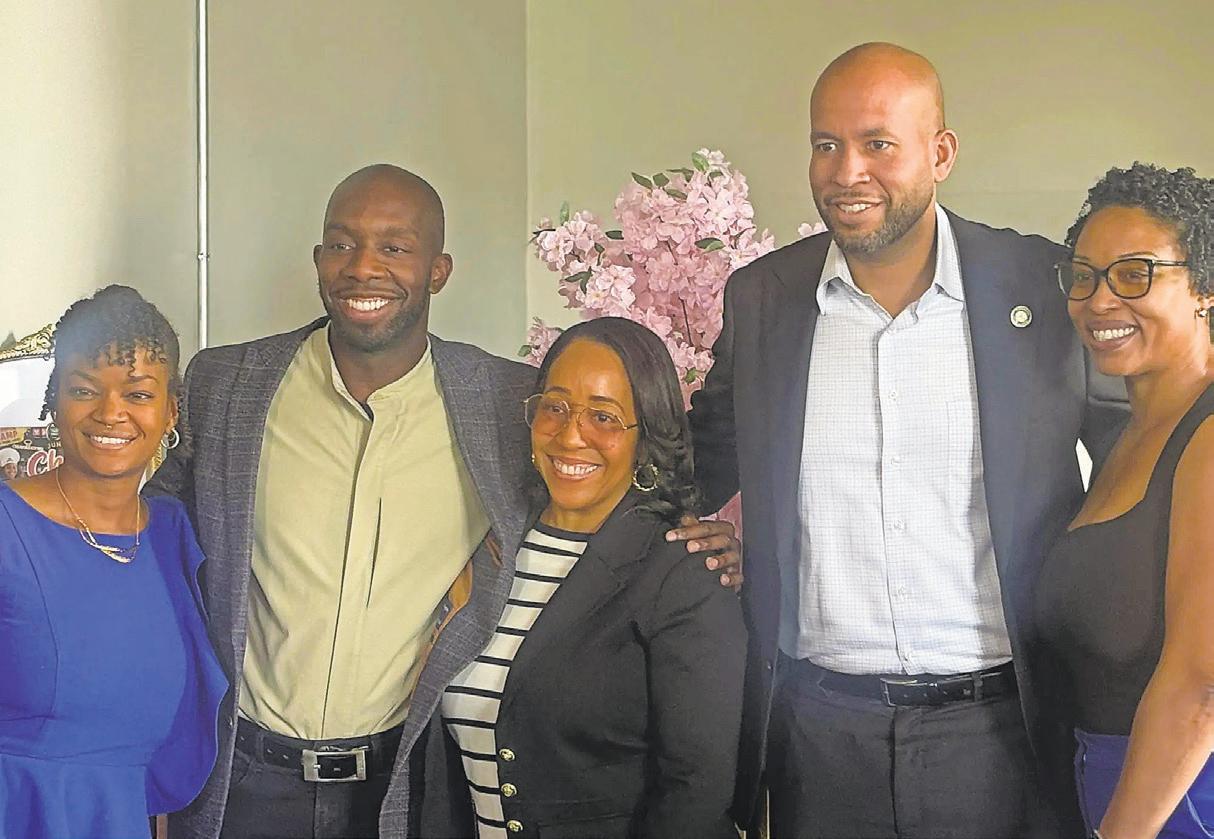
Three Georgia political candidates gathered Thursday at Koncept House, 141 Mangum St. SW, for the Roundtable of Black Community Impact, centering the concerns of attending Black voters ahead of upcoming primaries.
Moderated by Khadijah Robinson, a general partner at Big Adventures and head of the Lift Incubator Program with the Center for Black Entrepreneurship, and Dawn Montgomery, a Black Press USA reporter and culture critic. The roundtable brought together Jason Esteves, candidate for governor of Georgia; Mo Ivory, candidate for Fulton County Commission chair; and Dr. Everton Blair Jr, candidate for Georgia’s 13th Congressional District seat, left vacant following the death of longtime Rep. David Scott.
Robinson said the gathering was designed not as an endorsement, but as a vehicle for transparency.
“We are in a very interesting time in our history, one that I think warrants us really being very intentional about holding our elected officials accountable,” Robinson said, “and particularly accountable to our communities, to the people that they actually represent.”
Esteves, running on a platform
of health, wealth, and opportunity, spoke directly to what he called a disconnect between Democratic messaging and the daily realities of Black Georgians.
“If you were struggling to make ends meet, if you were struggling to rent or buy a home, then you couldn’t care less what is happening with Donald Trump,” Esteves said. “You care about what’s happening in your community.”
He outlined commitments to expand Medicaid, lower private health insurance costs, create pathways to homeownership and small business ownership, and invest in a free technical college system. On HBCUs, Esteves pledged to appoint a Board of Regents member specifically to represent public HBCUs, make those institutions financially whole after decades of underfunding, and position them as pipelines to careers.
“I’ve been to those campuses, all the way down to the landscaping, very different,” he said, “and that’s a lack of resources.”
Esteves also cast his campaign in broader terms, situating Black Georgians as central to the state’s identity and future.
“I want Georgia to be a state where you can thrive, no matter where you live, no matter who you are,” he said. “When I think about the
Black community in this state, we have contributed to the greatness of what Georgia is today in many ways, whether it’s the business community, the arts, the infrastructure.”
Ivory, a current Fulton County District 4 commissioner seeking the chair position, has built a career in law, education, and media around making complex systems accessible to everyday people. She brought that same directness to Thursday’s roundtable, drawing attention to what she called decades of neglect across four critical areas: the county jail, the courts, health care access in South Fulton, and election integrity.
“Doing the same thing over and over and expecting a different result is the definition of insanity,” Ivory said. “Fulton County needs new leadership.”
She said her first act as chair would be ordering a forensic audit of the county budget, something she said has not been done in 30 years. Ivory also highlighted a stark geographic disparity in how Fulton County resources are allocated, arguing the county’s billion-dollar budget rarely reaches the communities that need it most.
“It always goes federal, state, skip the county, goes straight to the hype of Atlanta,” she said, “and this budget right here is a billion-dollar
fix it for everyone else” group. I’ve been unemployed in Georgia, a veteran in Georgia, a school teacher in Georgia, and a single parent raising a Black son in Georgia.”
Current Democratic gubernatorial candidate Michael Thurmond and the late Al Scott were the only Black men to hold the office over the past 40 years. There has never been a Black woman elected labor commissioner. Porcher, who was deployed during her tour of duty to Iran, Iraq, and Turkey, believes there’s room for change in the labor commissioner’s office.
“The strongest person who can win against the current Republican labor commissioner is me,” Porcher said. “The workforce is women, Black women, minority, so if we are saying we want these people supported, we need
See PORCHER on page 9
budget with a B, and it’s not being spent on the south side of Fulton.”
Ivory, who would become the first African American woman and first Latina to chair the Fulton County Commission if elected, was unambiguous about her motivation. “I came to serve and to have an impact,” she said.
“Georgia’s 13th Congressional District does not have representation,” Blair said. “We have a gap in the resources and the infrastructure that should exist in the district office right now.”
He pledged to open satellite offices in each of the district’s six counties and outlined a nine-point Black economic agenda focused on education, health care, small business investment and redirecting federal spending away from what he called “endless wars.”
“I see a huge opportunity for us to build a new generation of leaders in Congress,” Blair said, “those who will stand up and reinvest that money into working families’ pockets.”
Blair, the former Board Chair of Gwinnett County Public Schools and the first African American elected to that role, spoke with equal urgency. The son of Jamaican immigrants who settled in Georgia’s 13th District, Blair said the American Dream his family pursued is increasingly out of reach for the district’s residents, pointing to corporate homebuying, long commutes to job centers, rising utility costs from data centers, and unaffordable health care.
By DONNELL SUGGS
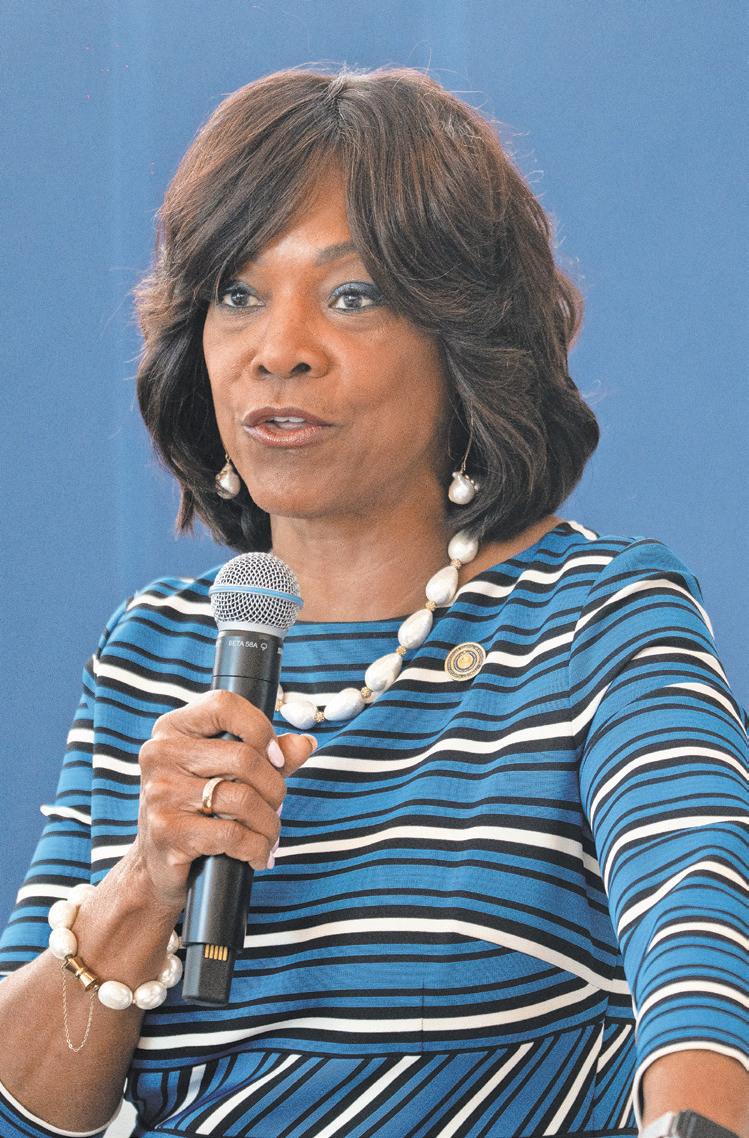
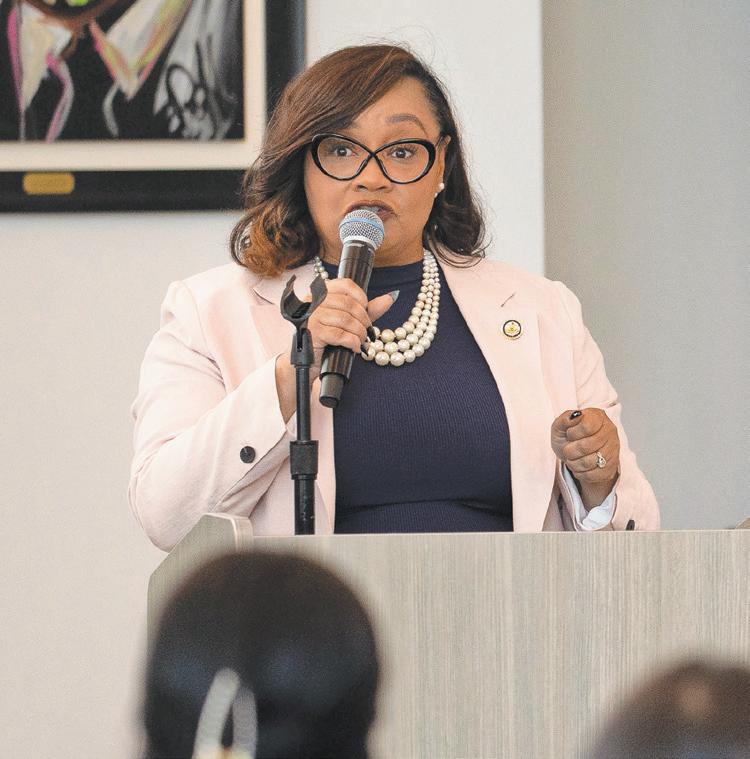
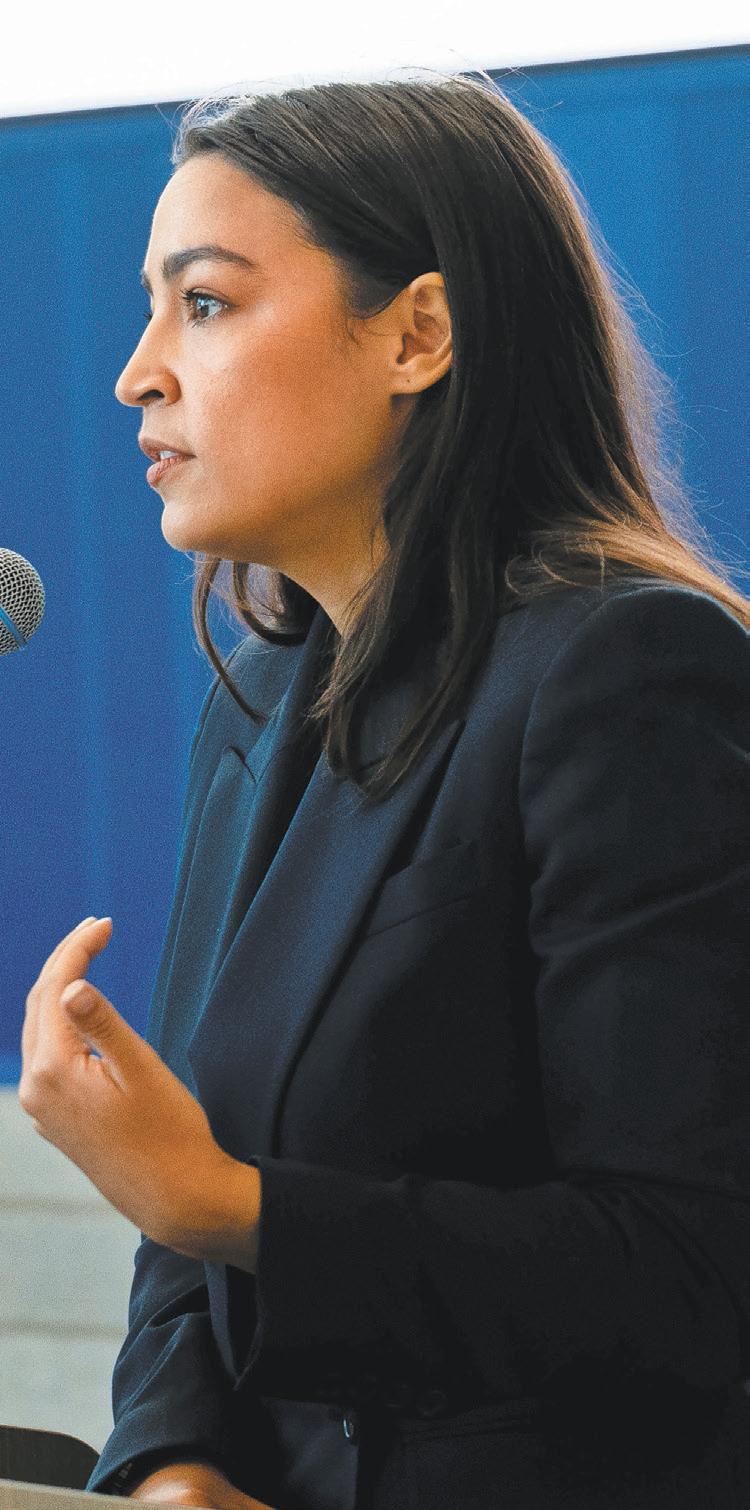
At the Calvin Smyre Education Conference Center at Morehouse School of Medicine (MSM), Congresswoman Alexandria Ocasio-Cortez (D-NY), Congresswoman Nikema Williams (D-Ga), and MSM President CEO Dr. Valerie Montgomery Rice each spoke about what maternal health and the work that needs to be done to even the playing field in the United States means to them.
Monday was Ocasio-Cortez’s first visit to MSM and the Atlanta University Center and she said she was impressed by what she saw during a tour of the campus and what she learned is being done to train Black and brown physicians.
“You all are delivering results where the rest of American medicine is not,” Ocasio-Cortez said. “The issue of motherhood is one of the core issues we have. The way that we care for women, and especially Black women, is how we measure health care in this country.”
It’s been a busy couple of days in the Peach State for Ocasio-Cortez, a native of the Bronx, New York. On Saturday, she endorsed former Georgia gubernatorial candidate, State representative, and current candidate for Senate District 7 (Duluth, Lawrenceville, Norcross, Peachtree Corners, and Suwanee), Ruwa Romman, and attended Sunday service at Ebenezer Baptist Church on Mother’s Day. Ocasio-Cortez is in Georgia for a number of reasons, including redistricting taking place across the country, including in Louisiana, Maryland, and the South in Tennessee.
Asked if her visit helped further her understanding of Atlanta’s importance to the national political picture, Ocasio-Cortez answered in the affirmative. “It’s been really inspiring to be here.”
“I think that what we’re seeing in Atlanta is both, not just the impacts in great detail and specificity of how policy changes are showing up in communities like the ones in Atlanta, but also where some of the great promises for solutions are,” she said. “We have the greatest density of innovative leaders at the site of where all of these impacts are happening.”
Continued from page 8
to have someone who actually supports these people.”
Porcher acknowledged that current Georgia Labor Commissioner Barbara Rivera Holmes, a native of San Juan, Puerto Rico, checks both of those boxes, minority and female, but she was appointed. Georgia voters did not decide who their labor commissioner is. This election will provide that opportunity.
“Now it’s time for Georgia to actually elect one,” Porcher said. “I can earn the voters’ trust
by showing my track record, by letting them know that we have been blindly trusting these people, and it hasn’t been working. It’s time to trust somebody where it does work.”
Porcher told the Atlanta Voice that she has campaigned in 40 counties since September.
“We’re not just saying vote for us, or blindly trust us, we’re showing up to where they are,” she said. “We don’t want them to trust us just because we’re saying we’re the best candidate.”
The price of gas and food has been an issue she has heard from voters.
“I know what it’s like to be on the other side of people giving you false claims and false
Congresswoman Williams, a frequent visitor to MSM, recently introduced the Blood Pressure Matters Act which will require insurance companies and thus hospitals to give self-monitoring blood pressure devices to women as they are being discharged following giving birth.
“I’m grateful that MSM is still training doctors who look at the whole patient,” Williams said.
MSM Executive Director of the Center for Maternal Health Equity, Dr. Natalie Hernandez-Green, said of Ocasio-Cortez’s visit, “I think it’s a wonderful opportunity that nationally, someone who doesn’t represent Georgia is coming here. A lot of the initiatives that we do here, Congresswoman Ocasio-Cortez has been supportive of.”
Georgia remains at the top of the list of highest rates of maternal death in the country. And the race most affected is, by and large, Black women.
Pamela Winn is one of those women, and she was in attendance on Monday. Wearing a denim blazer and a navy blue outfit, she wanted to hear what the congresswoman had to say. She also had something to say. Winn lost her baby while incarcerated for a white-collar crime. She is now an advocate on behalf of women who are considered the least of these because of the time they may have spent in prison or jail.
“It’s interesting that she’s coming here today,” Winn, the founder of RestoreHER USA, an advocacy group. said. “I’m excited to know that she is inquiring because we definitely need more awareness.”
Winn doesn’t want what happened to her to continue happening around the country.
“Hopefully, we’ll be able to capitalize on this and get some policies to change,” she said.
After Ocasio-Cortez, Montgomery-Rice, Congresswoman Williams, and others had finished talking, two maternal health panels took place.
Before she left the event for a tour of the labs at MSM, Ocasio-Cortez was asked if the recent attacks on freedoms and rights by the current presidential administration would continue, and what, if anything, Congress and local
promises,” Porcher said. “I’m not sitting here saying I have all of the answers.”
The early voting period in Georgia is two weeks old, and election day is Tuesday, May 19. Porcher said early voting is more important now than ever because of changes to voting rights laws by the United States Supreme Court.
Porcher said being informed gives voters a chance to research who is running for the different offices. “You have a lot of people who run as a hobby,” she said. For example, Democratic Labor Commissioner candidate Christian Wise Smith lost a primary election for Fulton County District Attorney to current
for
politicians could expect.
“What I do know is that if there is any attempt out here in Atlanta or in Georgia, the message we want to send is that Georgia is not alone, and we will be here standing with leaders like Congresswoman Williams and many others to fight against changes after the gutting of the Voting Rights Act and any of the other impacts we are seeing here in maternal health,” Ocasio-Cortez said.
Fulton County District Attorney Fani Willis by 60,000-plus votes in 2024.
Asked what she wants Georgia voters to know about her as a candidate that they might not learn from her campaign website or social media, Porcher said she would like them to know she is one of them.
“In a country where we are dealing with attacks on voting rights, there is a Black woman who decided to put herself and her family, and her life on the line to ensure that working Georgians have a person who supports them as they work for Georgia, that’s a very bold and audacious thing,” Porcher said. “I know what it’s like.”
By LAURA NWOGU
George Monger is the CEO and President of Connect Music, a data-driven music and technology company focused on empowering independent artists and labels in the Southeast. The Atlanta Voice sat down with Monger to discuss how he’s using artificial intelligence to advance this goal, his artist-first approach, and the importance of creating opportunities for independent artists in the South.
The Atlanta Voice: How did your journey as CEO of Connect Music begin, and why did you want to get into the music industry?
George Monger: “I’ve been interested in music since I was a kid. My brother’s a classical opera singer, and my sister played in a band. I had no musical talent at all. I drummed loosely. Through that, I developed a passion for music, watching the growth of No Limit, Cash Money, and all those record companies in the mid-late 90s. From there, I was putting on rap battles in the school hallways, and as I graduated high school in 2007, I saw YouTube really take off. I convinced another company to give me a distribution deal with just a letter. I would have never given it to me (laughs).
“That sparked a curiosity for me. From there, I worked in nonprofit music, served as chief operating officer of the Memphis
Symphony Orchestra for a while, and then said, ‘Alright, let me go back to for-profit.’ I worked for a local company in Memphis, and after 4 years, they decided it was best for us to part ways. By the end of that week, I realized it was an opportunity for me to build the tech. I knew how to get that done and how to secure direct relationships with the streaming partners. We started with the slow grind. It was artists who might do 3,000 or 4,000 streams a week, but we were really just building out how the business was going to operate. It was one success after another, when I really sat back and said, ‘Oh, this is real. I should raise capital, hire staff, and grow the business.’ It really honed in on the business’s value proposition for independent artists.
AV: I’m going to come back to that artist-first approach that Connect Music has, but let’s say we have an up-and-coming independent artist with us, and they hear about Connect Music. How would you explain what the company could do for them and their careers?
GM: “Connect Music is a closed platform system, and candidly, we don’t work with everybody. The continuum is sort of do-it-yourself. We partner with them, adding education to the mix as we help them grow. We have one artist from Memphis. He was making $500 a month. Today, he generates about $4,000 a month, and he’s still very early in his career,
but that’s right at $50,000 a year from something that he continues to get better at. The other side of the continuum where we work is artists who are coming out of major labels. What happens is now they have this fame, but they don’t have the infrastructure. So, we work with them from a label services perspective to make sure they have all the infrastructure you could get inside of a major label system, and we make sure we can advance capital to them to create marketing budgets and promotional efforts. That is the value-add in that middle tier for artists.”
AV: You recently announced $80 million in new financing, which is an amazing feat. What does that mean for you to see that investment in Connect music and what you’re building?
GM: “It’s further validation for what we see from the artists already. We don’t spend money on marketing the business. We work closely with our artists, and our artists bring other artists to us. It’s validation when institutional capital looks at the business, and we’re able to put more capital into more staff, more talent, more technology to support the creators. And most importantly, we’re able to put more capital in these artists’ pockets. We don’t look to acquire ownership in music, but there are opportunities where an artist says,
See MONGER on page 12
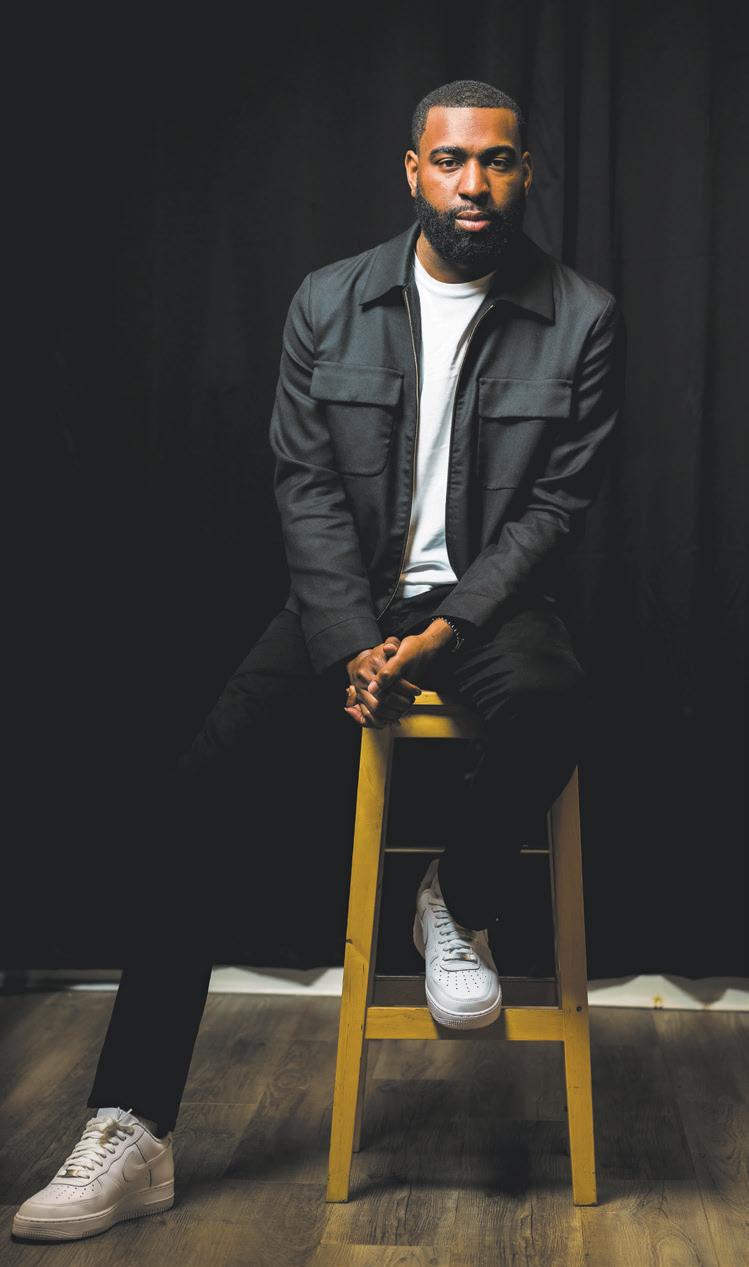
By DENNIS MALCOLM ByRON AKA ALE SHARPTON
The 2026 Chevrolet
Equinox ACTIV AWD represents the ideal formula for those who want practicality, comfort, and even a little edginess regarding styling in an SUV. Presented in the carmaker’s Radiant Red Tintcoat exterior and Maple Sugar interior, my reviewed ACTIV trim gets a nice bump in upscale feel and ruggedness, which I always look for. This Equinox delivers.
Chevrolet presents the 2026 Equinox in three trims—LT, RS, and ACTIV—and the latter is focused on the outdoors. Roof rails, 17-inch wheels encased in all-terrain tires, front fog lamps, LED headlights and taillamps give us the confidence to take on virtually any terrain. Of course, there are also applauded everyday conveniences,
including the autosense power liftgate perfect for grocery runs, airport pickups, or loading gear for a weekend trip with fam and friends.
The Equinox starts at just under $35K, but the reviewed ACTIV shows why there is a moderate price hike when you include different packages and interior upgrades. After being greeted by the optional panoramic sunroof which immediately presents a spacious feel, there is also the massive 11.3-inch infotainment display paired with an 11inch digital driver cluster; wireless Apple CarPlay and Android Auto come standard. Heated front seats, ventilated front seats, heated rear outboard seats, suede microfiber seating surfaces, memory settings, and dual-zone climate control add to the appreciated appointments thanks mostly to the Convenience III package ($950).
How about the drive? The

Equinox comes with a 1.5-liter turbocharged DOHC engine paired with an 8-speed automatic transmission and all-wheel drive.
I’m not revving this engine at the stoplight, but it delivers enough punch for everyday commuting and highway excursions. On the
fuel side, we get 26 mpg combined (25 city/29 highway), which does the job but could be better.
When it comes to safety, Equinox swings for the fences. Enhanced automatic emergency braking, lane keep assist, blind zone steering assist, rear cross traffic braking, adaptive cruise control, and intersection automatic emergency braking all come standard. The optional Safety and Technology Package ($945) adds HD surround vision, rear pedestrian alert, traffic sign recognition, and a slick rear camera mirror.
Overall, the 2026 Equinox ACTIV AWD delivers just enough style, comfort, and everyday practicality for a decent price tag that will make you feel good every time you park it in the garage.
For more information, visit Chevrolet.com.
By DONNELL SUGGS
Atlanta Braves won another series following a 4-1 victory over the Chicago Cubs on Wednesday night. Against the best teams in baseball, teams like the Los Angeles Dodgers and Cubs, the Braves have more than held their own this season. When you look at Braves firstyear manager Walt Weiss, you’d think his team isn’t playing well and wasn’t the first team in Major League Baseball to win 30 games.
After the game on Wednesday, Weiss was asked what the ceiling was for his team. “It’s never easy, but you try to attack the day every day,” he said. “Then you look up at the end and it should be pretty good.”
Though the 2026 season is far from over, at the moment, whether Weiss wants to admit it or not, the Braves are the best team in baseball.
This season, the Braves’ offense has continued to find a way to generate runs whenever needed, and that goes a long way to the team’s current position at the top of the MLB mountain. On Tuesday, while down 2-1 to the Cubs in the fifth inning, the Braves got a solo home run from Austin Riley, a two-run

On Wednesday, Mauricio Dubon was hitting leadoff for the first time this season. His big moment of the night would come in the eighth inning when his two-run home run over the left field fence put Atlanta up 4-1. Drake Baldwin had been in that lead spot for the past week and a half, with Ronald Acuna, Jr. out of the lineup. In this game, Baldwin hit second and hit a solo home run to give Atlanta a 1-0 lead in the fourth inning. In the same game, backup catcher Sandy Leon and right fielder Jose Azocar hit eighth and ninth in the lineup, and both found themselves on base following singles in the third inning. It’s all working.

home run from Mike Yastrzemski, and an RBI double off the right field wall from Matt Olson to go ahead 5-2. The versatility of the lineup has been on full display this season as first-year manager Walt Weiss has tinkered with everything from who is batting leadoff to who is playing designated hitter to who is batting in the ninth spot. It’s all worked.
Michael Harris II has hit in every spot from cleanup to ninth. This season, under Weiss, Harris II is hitting over .300 with seven home runs and 23 RBI. Last season, he didn’t reach those numbers until well after the All-Star break. Harris II had hits in both of the first two games of the series against the Cubs. It’s a work in progress.
Second baseman Ha-Seong Kim was back in the lineup for the first time this season, and while batting seventh, he got a big hit in the eighth inning. Yastrzemski pinch
hit for Azocar in the eighth inning with two runners on base and doubled to center to drive in the go-ahead run and put the Braves ahead 2-1. It’s all working out.
“Big hits for Yaz and Dubey keep on keeping on,” said Weiss about the offensive contributions on Wednesday night. “Everyone’s chipping in.”
Chris Sale made his ninth start of the season on Thursday. Spencer Strider is scheduled to make
his third start of the season over the weekend. Bryce Elder, in the middle of a career year, will make his 10th start against the Red Sox. Elder’s ERA remains under 2.00 in 54 innings.
Over the Weekend: The Braves will host the Boston Red Sox in a three-game series beginning on Friday night. Spencer Strider and Bryce Elder, both coming off quality starts their last time on the mound, will get started during the series.
By DONNELL SUGGS
FAYETTEVILLE, GA. - The old man took hold of the large silver scissors and positioned himself on stage behind the big red banner. Along with Chick-fil-A CEO Dan Cathy and U.S. Soccer Federation CEO JT Batson, Blank officially opened the Arthur M. Blank U.S. Soccer National Training Center, the new home for the United States national soccer teams.
Georgia can officially take the moniker of “Soccer City, USA,” and Blank is a big reason why. Everyone who took the stage on Thursday afternoon thanked Blank for his philanthropy and forward thinking. It was just 12 years ago when the announcement was made that Blank, the owner of the Atlanta Falcons and co-founder of Home Depot with Bernie Marcus, was bringing a Major League Soccer franchise, Atlanta United.
When Blank first took the stage, one of the ribbon-cutting programs was in his hand. “I’m holding on to this tightly. I’m going to get it framed,” Blank said.
Blank shared the story of how Batson, Major League Soccer Commissioner Don Garber, and others pitched him on the
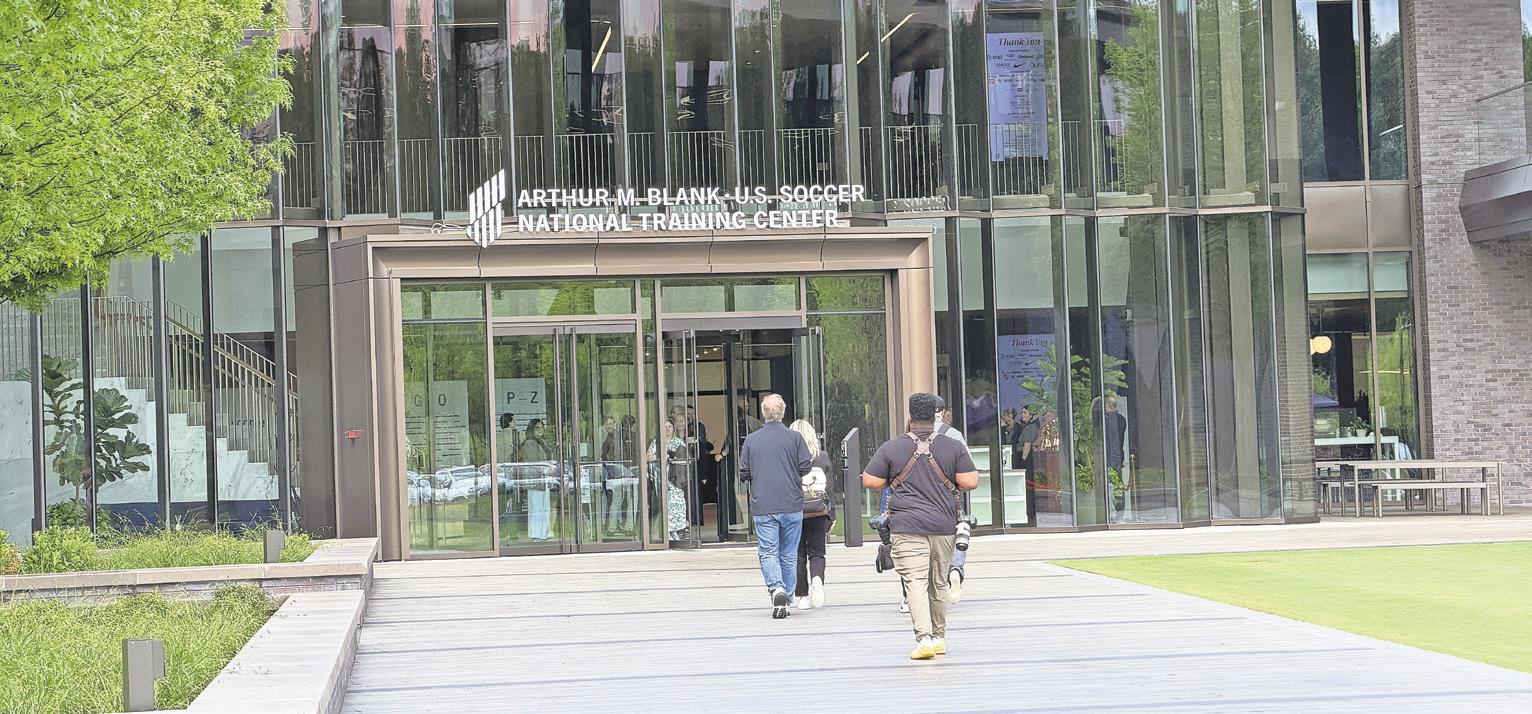
It will serve as the headquarters for this country’s 27 soccer clubs, including the men’s and women’s national teams and all national-level youth teams.
case for building a national training center a half-hour south of Atlanta in Fayette County. He said the first five minutes of the pitch were all he needed to hear.
“It was the vision, passion, energy, and soul of soccer that did it for me,” Blank said.
On getting his name on the building where the United States’ best players will
train and prepare for future World Cups, the billionaire businessman said, “For me, it’s just a blessing.”
The National Training Center is located in Fayetteville on a 200-acre plot of land surrounded by farms and winding two-lane roads. It will serve as the headquarters for this country’s 27 soccer clubs, including
the men’s and women’s national teams and all national-level youth teams. Batson used one of Atlanta Mayor Andre Dickens’ tag lines and called the training center a “group project.”
“Everyone here believed in the future of the National Training Center,” said Batson through sobs. “This group project reflects the best of this city, state, and sport.”
United States Women’s National Team head coach Emma Hayes was also in attendance and spoke to the crowd before Blank took the stage. Hayes, born and raised in London, said the United States has played a large role in her life and used the ribbon-cutting as another soccer-related moment in her timeline.
“When I think about today, I think about belonging,” she said.
Former United States National Team defender Oguchi Onyewu opened the ceremony by sharing his story of coming up through the ranks and what it would have been like to have a soccer-dedicated training center like this available.
“Today, all of us are part of something truly historic,” he said. “This is the new home for soccer in America.”
MAY 15-21, 2026 • www.theatlantavoice.com

Spacious 1-Bedroom Affordable! Rent Based on Annual Income Amenities, Great Location, and Convenient to Marta Please call for detailed information (404) 586-9098

RFP for The Sanctuary located at 265 Washington St SW, Atlanta, GA.
BIDS DUE: May 14, 2026, at 2:00 pm
PRE-BID MEETING will be held on site on April 28, 2026, at 10:00 am.
PLANS: Hard Copies of plans available upon request and at subcontractor’s expense from A1 BluePrint (www.a1blue.com), Phone: 404-524-8881 OR for a link contact Linda at Lstache@gormanusa.com.
Contact Info: Linda Stache, Gorman & Company, Phone: 608-835-5177
CERTIFICATIONS: SBE/MBE/WBE/EBE/DBE/VBE, and a prevailing wage rate project. This project is also NGBS Bronze, Invest Atlanta and DCA project
Lisa Lynn Brown International Nurture Institute (L.L.B.I.N.I.) is a Non-Profit organization- Empowering Autistic, Non-Verbal, Disabled, and marginalized communities through education, research, and American Sign Language instruction. Many families lack access to vital communication tools— L.L.B.I.N.I. bridges this gap by providing resources that build autonomy, confidence, and connection. Your support helps fuel A.S.L. instruction programs, educational materials, and community development initiatives that transform lives.
Join us as a grant partner and help expand access to communication and dignity.
Contact: LLBINI@outlook.com
RFP for Residences of Hope located at 875 Carter Street NW, Atlanta, GA .
BIDS DUE: June 1, 2026, at 2:00 pm
PRE-BID MEETING will be held on site on May 12, 2026, at 10:00 am.
PLANS: Hard Copies of plans available upon request and at subcontractor’s expense from A1 BluePrint (www.a1blue.com), Phone: 404-524-8881 OR for a link contact Linda at Lstache@gormanusa.com.
Contact Info: Linda Stache, Gorman & Company, Phone: 608-835-5177
CERTIFICATIONS: SBE/MBE/WBE/EBE/DBE/VBE, Section 3 and a prevailing wage rate project. This project is also BABA, NGBS Bronze and HEAR project

FULTON COUNTY ADVERTISEMENT FOR BID
Bid solicitation for 26ITB1618163B-RT Residential Properties Home Inspection Services for the Department of Community Development, will be accepted online through BidNet Direct. All Bids submitted must be received no later than 11:00 a.m. local (Eastern) time on Tuesday, June 06, 2026 https://www.bidnetdirect.com/ georgia/fultoncounty.
Scope of Work: Fulton County, Georgia (“County”) The selected firm will provide residential home inspection services on residential properties associated with various community development programs.
In order to obtain complete information about this solicitation, please click the link below where this document and supporting documents can be downloaded, https://www.bidnetdirect.com/georgia/fultoncounty
Fee: N/A
Term of Contract: This is an annual agreement with two (2) one (1) year renewal options.
Pre-Bid Conference: will be held virtually online via a Zoom Conference on Thursday, May 21, 2026 at 11:00 A.M. to provide bidders with information regarding this project and to address any questions. Join Zoom Link: https://zoom.us/j/94364252135?pwd=jVcCm9qiGeM51hvAH Kj1I3HSr6LQWz.1
Passcode:184197 Phone one-tap: +14703812552,,94364252135#,,,,*184197#US(Atlanta) +14702509358 ,,94364252135#,,,,*184197#
If you have any questions regarding this project please contact Roderic Terrell, APA, (404) 612-7965 or Email:roderic.terrell@ fultoncountyga.gov. Fulton County reserves the right to accept or reject any and all applications and to waive technicalities.
Continued from page 10
I’ve worked with this catalog, I want to sell it. That empowers us and enables us to deploy more capital to acquire those assets or create unique revenue opportunities with those artists.
“It was a real shot in the arm for the business to continue to grow and be based in the South.
AV: The South got something to say.
GM: “The South got something to say.”
AV: Artists retaining ownership of their masters is a rare gift, as we’ve seen throughout the years and decades with a bunch of different artists. And Connect Music has this artist-first approach. How were you able to build that from the ground up?
GM: “Artist first for me is very simple. There is no song without the songwriter. There’s no sound recording without the artist. Why should they be put in a position to have to give up those rights in perpetuity for dollars today? There’s too much capital. Music is an asset. We can monetize these assets. We can track its performance. As companies, we can help you recognize how to maximize collection, and so because of that, there’s no reason that business wins and creativity loses. It should be a win-win.”
AV: Connect Music marries tech, finance, and music together. I know some artists can be wary of AI, but does Connect use AI to elevate and benefit artists?
GM: “That’s a fantastic question. Number one, if you don’t like change, you’re gonna hate extinction. As an industry, we have experienced that before. The music industry experienced declines in physical CD sales, piracy, and other factors. Then we saw the fear related to streaming in the early days. And so with AI, there are two parts to it, and I think one of them that is most concerning to artists is the generative AI — write me a song that sounds like this artist and in this genre. There are tiers to what generative AI is. If we’re going to allow you to train your models on music, copyright sound recordings, and publishing the words and melody, we need to make sure you have a way to track that, with some sort of revenue-sharing structure. And as things refine, there needs to be more attribution rights to know this came directly from you, so that we can create a residual revenue stream from the usage and creation of those assets. And that’s where I see a lot of collaboration and opportunity as we continue to have these conversations with these third parties.”
AV: “Years from now, what do you hope people say about the impact that Connect Music has had on the music industry.
GM: “In the next 5 to 10 years, it’s really about impact. That’s what it’s about for us. How have we impacted hip hop and R&B today? Hopefully, it’s across multiple genres. But most importantly, we’ve made sure that artists have been able to change the trajectory of their lives. That’s what’s important for me.”