
By ISAIAH SINGLETON
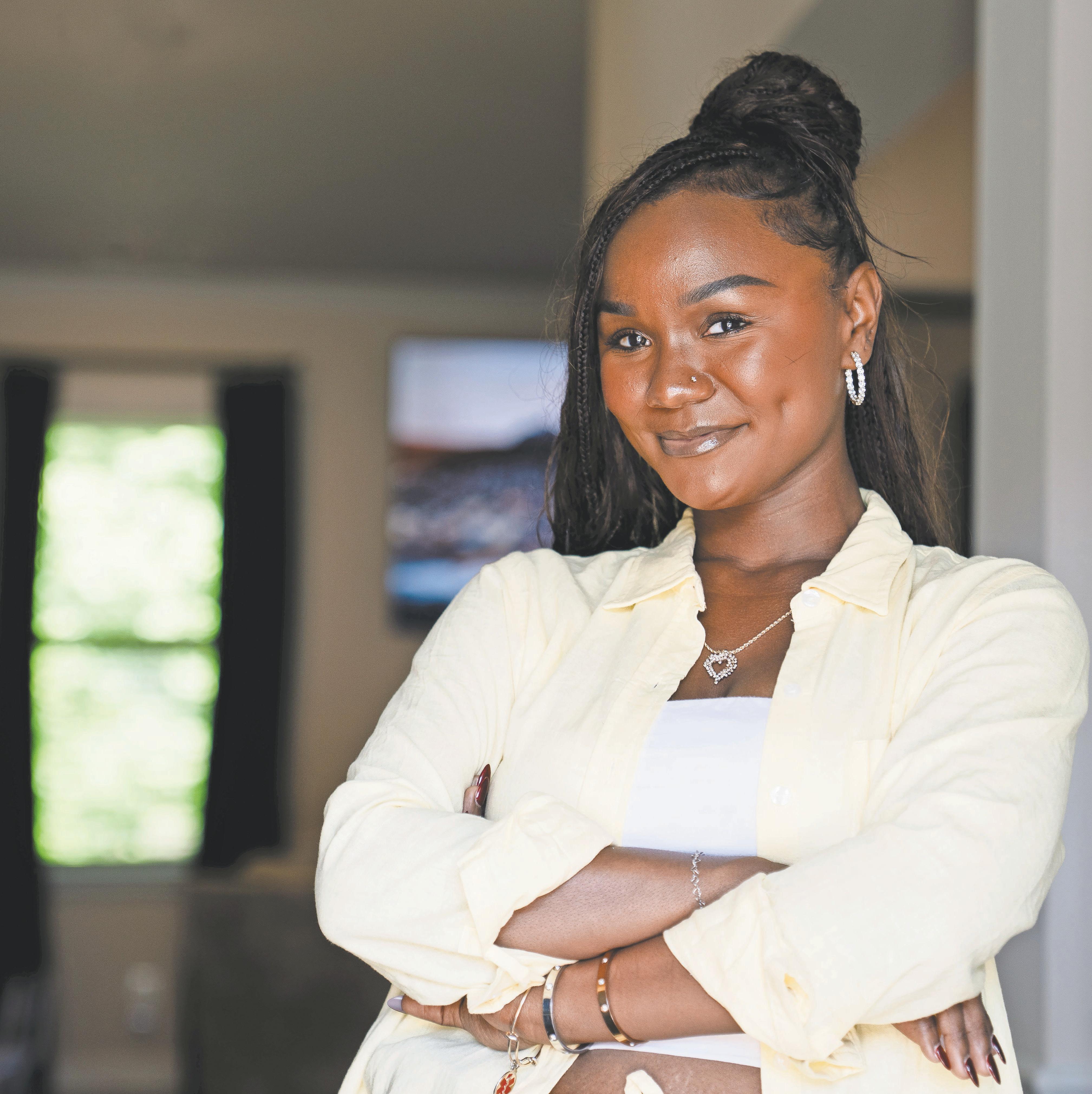
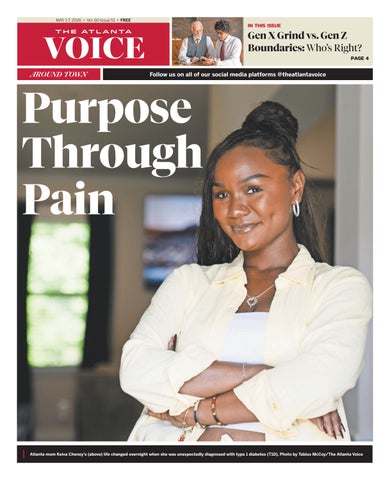
Keiva Cheney’s life changed overnight when she was unexpectedly diagnosed with Type 1 diabetes or insulin-dependent diabetes. According to the Mayo Clinic, the sources and causes of the condition are unknown. For Cheney, it quickly became a way of life.
Type 1 diabetes, according to the Centers for Disease Control and Prevention (CDC), is a chronic autoimmune condition in which the immune system mistakenly attacks insulin-producing beta cells in the pancreas, leading to little to no insulin production. It requires lifelong daily insulin administration, blood sugar monitoring, and careful management to prevent complications of high blood sugar.
It is not caused by diet or lifestyle, can develop at any age, and is typically diagnosed in children or young adults. Today, an estimated 67,933 Georgian adults live with T1D, according to an IQVIA analysis of claims data.
When Keiva was diagnosed at 22, she was otherwise healthy, had no family history, and believed, like many, that T1D only affects children. Instead, she learned she’d been living with the disease long before symptoms appeared.
Her experience reflects a broader reality: more than half of new T1D diagnoses occur in adults, and 90% of people diagnosed have no family history at all.
Now a mom, Cheney is using her platform as a Georgia-based content creator to share her story publicly and help other families understand the important role that screening plays in detecting T1D early.
Cheney says that back in June 2018, she was misdiagnosed six months prior to getting her final diagnosis of T1D.

“I vividly remember losing so much weight, I was around 140 pounds, and the day I was diagnosed, I was 112 pounds,” she said. “That within itself says a lot, but I was extremely confused because I knew something was off with my body and it wasn’t normal.”
Cheney also said she would feel like she was falling asleep driving, which is a big indicator that something was off. She says she had every symptom correlating to T1D: frequent urination, excessive thirst, and heavy thrush.
“It was an overwhelming and confusing time for me, and when I finally got the diagnosis, while it was also a big sense of relief, it was also devastating,” she said. “Because I felt like what I knew as my normal life was now completely different moving forward. I must manage this by the second, by the minute, and by the hour for the rest of my life.”
Although she says finding out was stressful, Cheney says T1D led her to her purpose and became a catalyst for everything she is doing today.
Dr. Shara Bialo, a pediatric endocrinologist and senior medical director of T1D immunology at Sanofi, said the understanding of T1D is actively expanding and that Type 2 diabetes is very different. The primary difference

By LAURA NWOGU
DeKalb County residents gathered at the county’s bimonthly board of commissioners meeting to
express public concerns and requests. Outside of public comments, the meeting focused on celebrating Earth Day and honoring Kathy Register, district director to Congressman Hank Johnson and the lifelong best friend of DeKalb County Commissioner Mereda David Johnson, who died in October 2025.
During the meeting, April 28 was declared DeKalb County Climate Champion Day. The committee awarded Rev. Dr. Gerald L. Durley as the inaugural recipient of the DeKalb County Climate Champions award for leading with faith, courage, and conviction while advocating for environmental justice.
“Never quit, never give up, never bow, never break, never back up.
This is your time. This is your moment,” Durley said as he accepted his award. “Follow the leadership of a deity greater than yourself, and you’ll always be successful.”
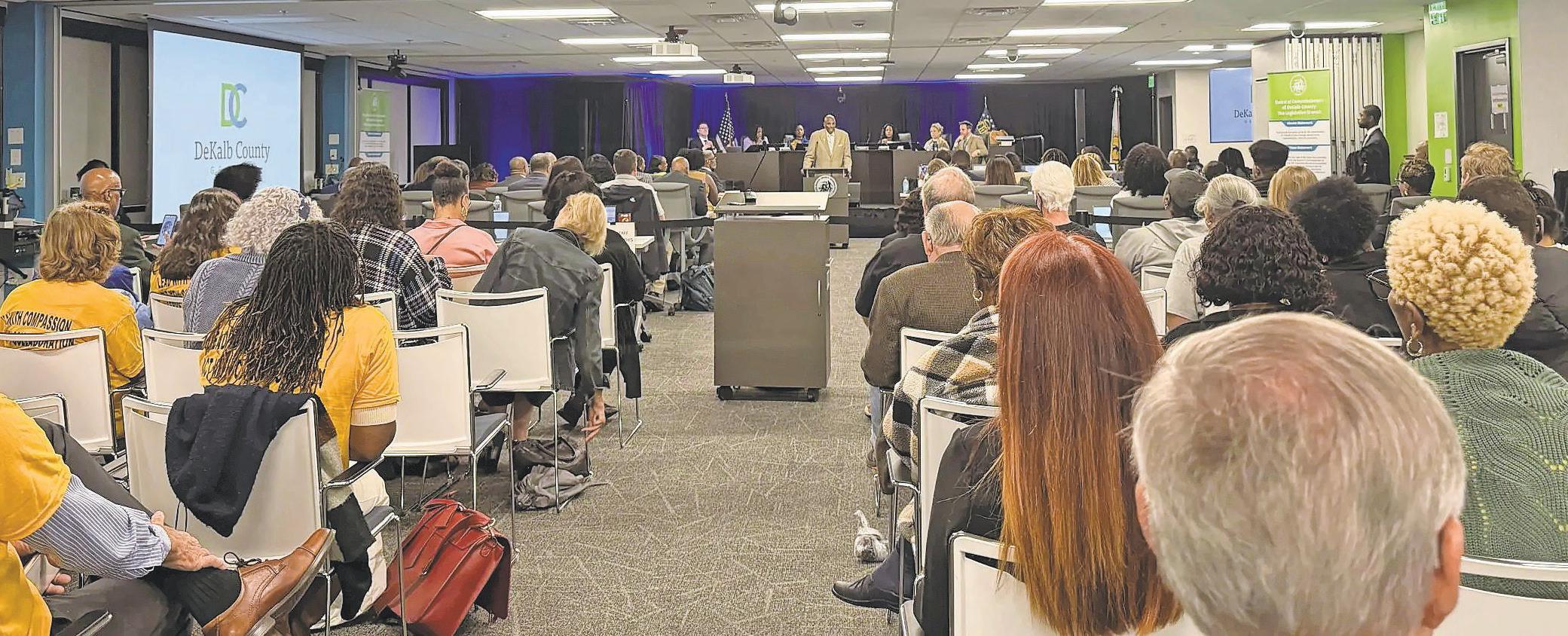
Residents expressed a range of concerns and requests, from concerns about data centers to requests for speed humps in a DeKalb County neighborhood after a fatal accident and for summer camp funding for performing arts

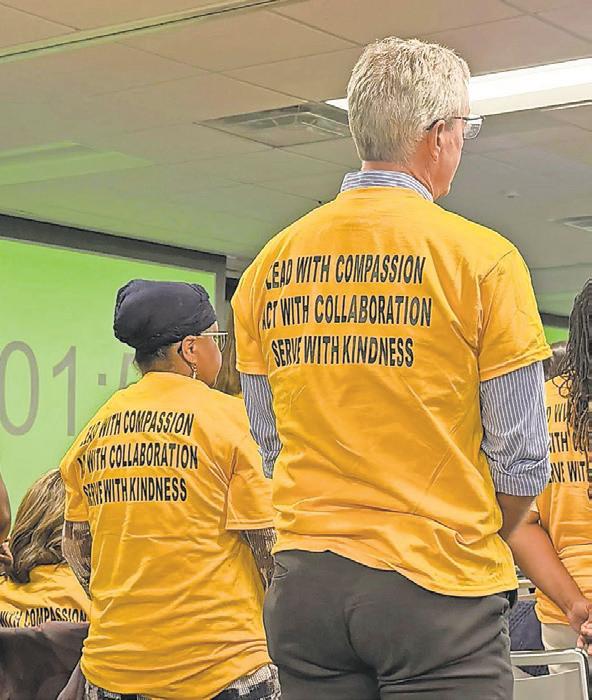
students. Many audience members wore yellow shirts with the phrase “Lead with compassion, act with collaboration, and serve with kindness” printed on the back. They called for more to be done in support of their unhoused neighbors.
“The time is now, and it’s also extremely important that there’s a plan in place,” said Sue Sullivan, director of Park 500, DeKalb County’s new transitional housing project that is a key initiative in battling homelessness.
By SHARIF EL-MEKKI
During a recent Freedom Friday podcast, our host, Chris Stewart, pointed out that we are living in a time when four, sometimes five, generations are working side by side, exposing fault lines around toughness, trauma, and what “safety” should mean at work.
As a proud member of Generation X, I am realizing that what we called “professionalism” looks a lot like unspoken pain management. But younger colleagues — millennials and Gen Z — name what we endured, and ask for psychological safety out loud.
Sometimes, older generations meet that request with eye rolls, especially when “safety” becomes a means to dodge accountability, deadlines, and timeliness.
Critics love to drag Zoomers and millennials as “soft” or “entitled,” but the jokes obscure a real question: How do we build workplaces where people can do hard things without accepting harm as the cost?
Punctuality is (Not) Optional
I remember a millennial coworker who told her supervisor that pointing out the many grammatical errors in a public-facing PowerPoint was unnecessary, even a form of “whiteness.” Another millennial — who routinely arrived late to meetings, stopping for coffee and conversation on the way — scoffed at the expectation of being on time, even as he loudly championed Black excellence.
When I encounter these mindsets, I think about my parents and teachers I’ve had. Excellence in the classroom was an expectation — the minimum standard. My parents, meanwhile, did a good job instilling a sense of timeliness in me. Fewer things grind my gears than hearing, “We’re on CPT,” a.k.a. “colored people’s time.”
I also grew up memorizing and internalizing a passage from a book by Vernon Brundage Jr.: “Excuses are tools of incompetence used to build bridges to nowhere and monuments of nothingness, and those who use them seldom specialize in anything else.” We were inspired by Haki Madhubuti’s

insistence that “all that is good in the world takes work; everything else is jive.”
Those words shaped how many of us understand responsibility, follow-through, and what it means to be serious about our people.
The Grind vs. Self-Care
My generation grew up sandwiched between the grind ethic of Baby Boomers and the culture-shifting impatience of millennials. Many of us learned early on the job not to talk about what hurt. You powered through, stayed loyal, and proved your worth by what you could endure.
When we entered the workforce, toxic behaviors — from short-tempered supervisors and racist colleagues to impossible workloads — were framed as “paying dues” or “having a strong work ethic.”
By the time Gen Z arrived, naming microaggressions, setting boundaries, and rejecting certain conditions altogether, some of us were so accustomed to the poison that youngsters’ refusal to consume it felt like an insult to our resilience.
But they are not wrong to want something different.
Millennials and Gen Z came of age equipped with language for trauma, mental health, and identity, a lexicon that simply did not exist when my generation entered the workforce. They witnessed entire industries demand loyalty, then use people up. They understand that no job is worth chronic harm.
When younger generations ask for wellness benefits, flexible schedules, culturally competent leadership, or clear anti-racist policies, they are not asking to avoid work; they are asking to avoid unnecessary harm so they can actually do the work.
At the same time, I worry that the pendulum could swing too far in the other direction. Real change still takes real work: intellectual rigor, honest effort, and a willingness to do unglamorous, sustained labor. There is a difference between selfcare and self-absorption, and we blur that line at our collective risk.
I say that as someone whose own formation was shaped by adults who did not romanticize rest. If we kids said we were tired, the elders around us — people actively fomenting revolutionary thought and action — would ask, “What would Harriet, Malcolm, Fannie, Ella do if they were tired? Take a nap during the revolution?”
Still, my generation has learning to do. Maybe the real work for Gen X is to maintain our sense of duty and discipline while learning to build movements that do not grind people into dust. That tension is where I try to live now: honoring the elders who taught me to keep working and listening to the young people teaching that how we work matters just as much as what we are working for.
So how do we move from “you’re
soft” versus “you’re toxic” to something more honest and useful? By telling the truth about what each generation was trained to believe about work, safety, and conflict— and then asking what we want to keep and what we need to let go. By designing practices that honor both accountability and care. Setting clear expectations and feedback, paired with norms that make it safe to say, “I’m at capacity,” before damage is done.
It might look like Gen X leaders modeling what we were rarely offered: taking time off without guilt, addressing bias directly rather than swallowing it, or apologizing when “toughness” spills into harm. And it might look like younger colleagues recognizing that change work is a marathon, not a sprint, and that elders have earned curiosity and respect.
We must build a workplace culture where worth is measured not by how much harm we can absorb, but by how willing we are to create conditions where everyone can contribute, heal, and grow. That requires both the discipline my elders demanded and the boundaries younger generations insist on. It requires us to honor the people who never took a day off from the struggle — and build a world where our descendants will not have to destroy themselves just to keep that struggle alive.
Sharif El-Mekki is the founder and chief executive officer of the Center for Black Educator Development.
FOUNDED May 11, 1966
FOUNDER/EDITOR
Ed Clayton
Immortalis Memoria
PUBLISHER/EDITOR
J. Lowell Ware
Immortalis Memoria
The Atlanta Voice honors the life of J. Lowell Ware.
PUBLISHER
Janis Ware
PRESIDENT/
GENERAL MANAGER
James A. Washington 2018-2024
EXECUTIVE ASSISTANT TO PUBLISHER
Chia Suggs csuggs@theatlantavoice.com
EDITOR IN CHIEF Donnell Suggs editor@theatlantavoice.com
GENERAL ASSIGNMENT REPORTERS
Isaiah Singleton isingleton@theatlantavoice.com
Laura Nwogu lnwogu@theatlantavoice.com
Noah Washington nwashington@theatlantavoice.com
BUSINESS REPORTER
Tabius H. McCoy tmccoy@theatlantavoice.com
EDITOR AT LARGE Stan Washington swashington@theatlantavoice.com
ADVERTISING, SALES & CIRCULATION
ADVERTISING ADMINISTRATOR
Chia Suggs advertising@theatlantavoice.com
SALES
RDW Jackson rdwadman@gmail.com
SUBMISSIONS editor@theatlantavoice.com
DIRECTOR OF PUBLIC RELATIONS
Martel Sharpe msharpe@theatlantavoice.com
CONTACT INFORMATION
633 Pryor Street, S.W. Atlanta, GA 30312
Office: 404-524-6426 info@theatlantavoice.com

By DONNELL SUGGS
CUMMING, GA. – Early voting for the upcoming midterm elections begins on Monday, April 27, and runs through Friday, May 15. For the men and women running for the many offices that will help decide the laws and way of life in Georgia, there’s no time to waste.
For former college football coach and current Republican senatorial candidate Derek Dooley, there’s no better time than now to get the word out about what he wants to do if he is elected to represent the Republican Party following the primary election on May 19. Dooley told the crowd at Tam’s Backstage, a local restaurant, that he knows they have seen plenty of television ads from his opponents.
“I don’t have $70 million to do commercials like the other guy in the other race,” said Dooley of Republican gubernatorial candidate and fellow newcomer to Georgia
Continued from page 2
politics, Rick Jackson.
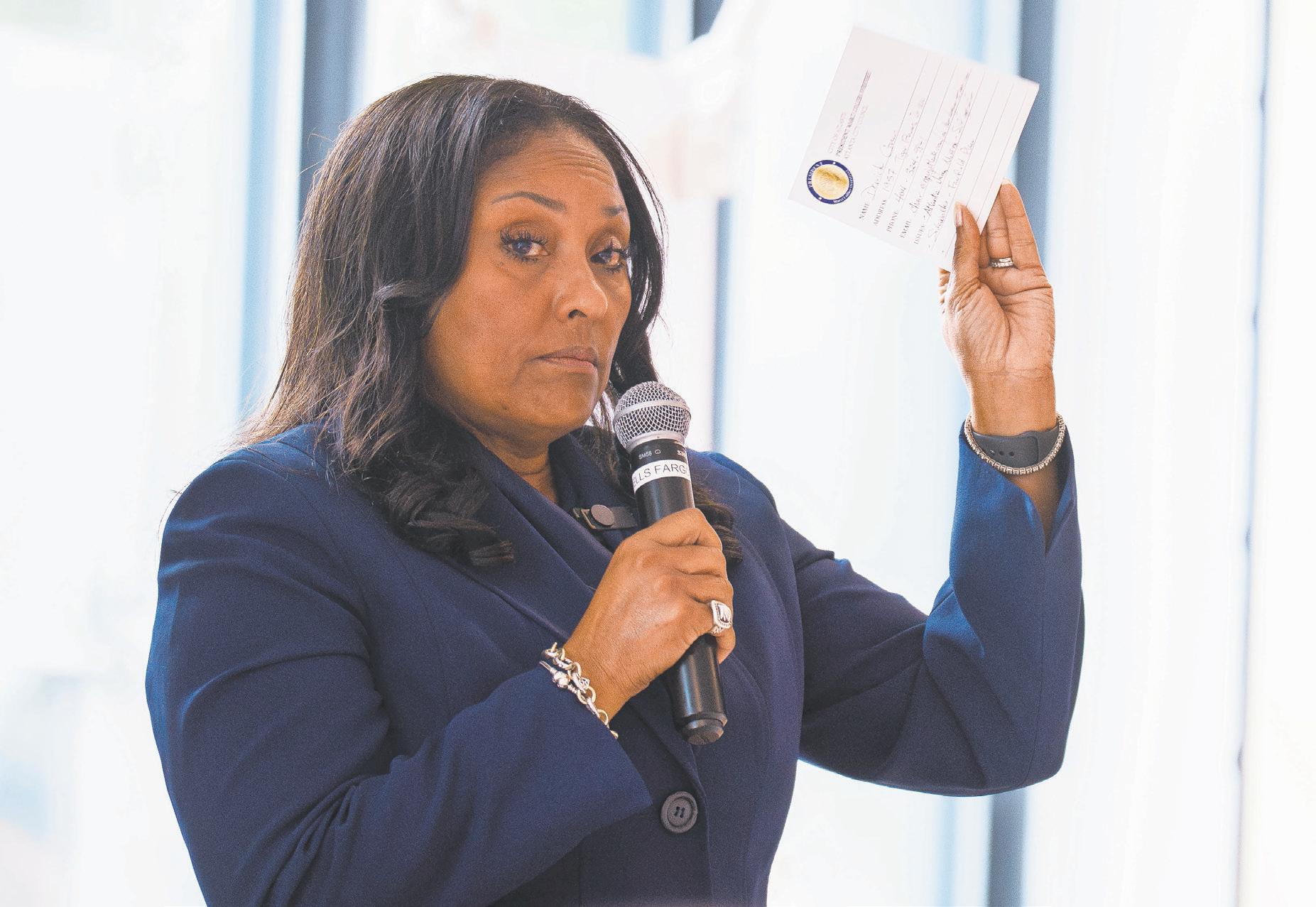
During the one-hour event, Dooley revealed his five-point “Georgia First” contract on Monday. Holding the paper in his left hand, while he held a microphone in his right, Dooley said he was at Tam’s Backstage in Cumming to face voters and let them know he has a plan. “There is an opportunity to win if we have the right candidate,” he said.
Dooley has been publicly endorsed by fellow University of Georgia graduate and current Georgia Governor Brian Kemp, and he knows that will not be enough to unseat popular Democratic Senator Jon Ossoff in November.
“Beating Ossoff is not going to be easy,” said Dooley. “Your vote alone is not going to win us this thing. It’s going to take more.”
Another Republican candidate in this race is State Senator Mike Collins (GA-10). Dooley
between type 1 and 2 is that T1D is strictly driven by your immune system getting confused and attacking part of itself.
“Type 1 diabetes has multiple stages, the first of which don’t create any symptoms, so it’s happening under the surface, and you would never know it,” she said. “Your immune system erroneously perceives it like a virus or bacteria, so it attacks the part of the body that creates insulin, called beta cells.”
Bialo has also been living with T1D for a long time. She says research used to believe it happens out of the blue and very quickly, but the more they studied and learned, the more they realized the autoimmune attack takes place one to two years before people start experiencing symptoms.
“Stage one is when there’s evidence on a blood test that the Autoimmune System is like a flame. and attacking your insulin-producing cells. These are called diabetes autoantibodies, and if you have two or more of them in your blood, through a blood test, that indicates that you have stage one, type one diabetes,” she said. “When your blood sugars are totally normal, you feel fine, you look fine. However, you have these indicators in the blood, sort of like a check engine light on a car, signaling there’s a problem.”
Over time, she says, it will inevitably progress to stage two, where those autoantibodies and autoimmune attacks are continuing. The majority of people being diagnosed, though are in stage 3, where the cells that make insulin can’t produce anymore because they are being fought off, which leads to a super high blood sugar where people often seek medical help.
understands he needs Kemp’s endorsement, a two-time winner of gubernatorial elections over a popular Democratic candidate. Kemp and First Lady Marty Kemp were in attendance on Monday.
“We’re here working for our friend Derek Dooley,” said Kemp, who grew up down the street from the Dooley family. “I want to win and get our Senate seat back. This is an opportunity to have the right candidate in Washington.”
Kemp has never been a fan of Ossoff and told the small crowd inside Tam’s that the senator was not a good representation of what Georgia needs in Washington.
Cheryl Chadsworth, a senior citizen and admitted regular voter, said she showed up at Tam’s to hear what Dooley had to say. She was familiar with his candidacy, but didn’t know much about his platform.
“I really want to hear what he has to say. I’m confused about some of
the political standings, and I’m really hoping to get a sense of who is running for the Senate,” she said.
During his speech, Dooley mentioned that he wanted to talk to as many voters as possible, not just those in heavily Republican territory like Cumming.
“There’s not going to be a place that we won’t go. I’m going to hit every part,” Dooley said. “I’m selling who I am as someone running for office, and I think a lot of people can resonate with that.”
Dooley coached football on the collegiate and professional level for nearly three decades and likes to say he is in the “Young people business.”
“I’ve been impacting young people and families, and it didn’t matter what their race was or income was,” Dooley said. “It’s about listening to them and respecting them, and going up there and fighting for them.”
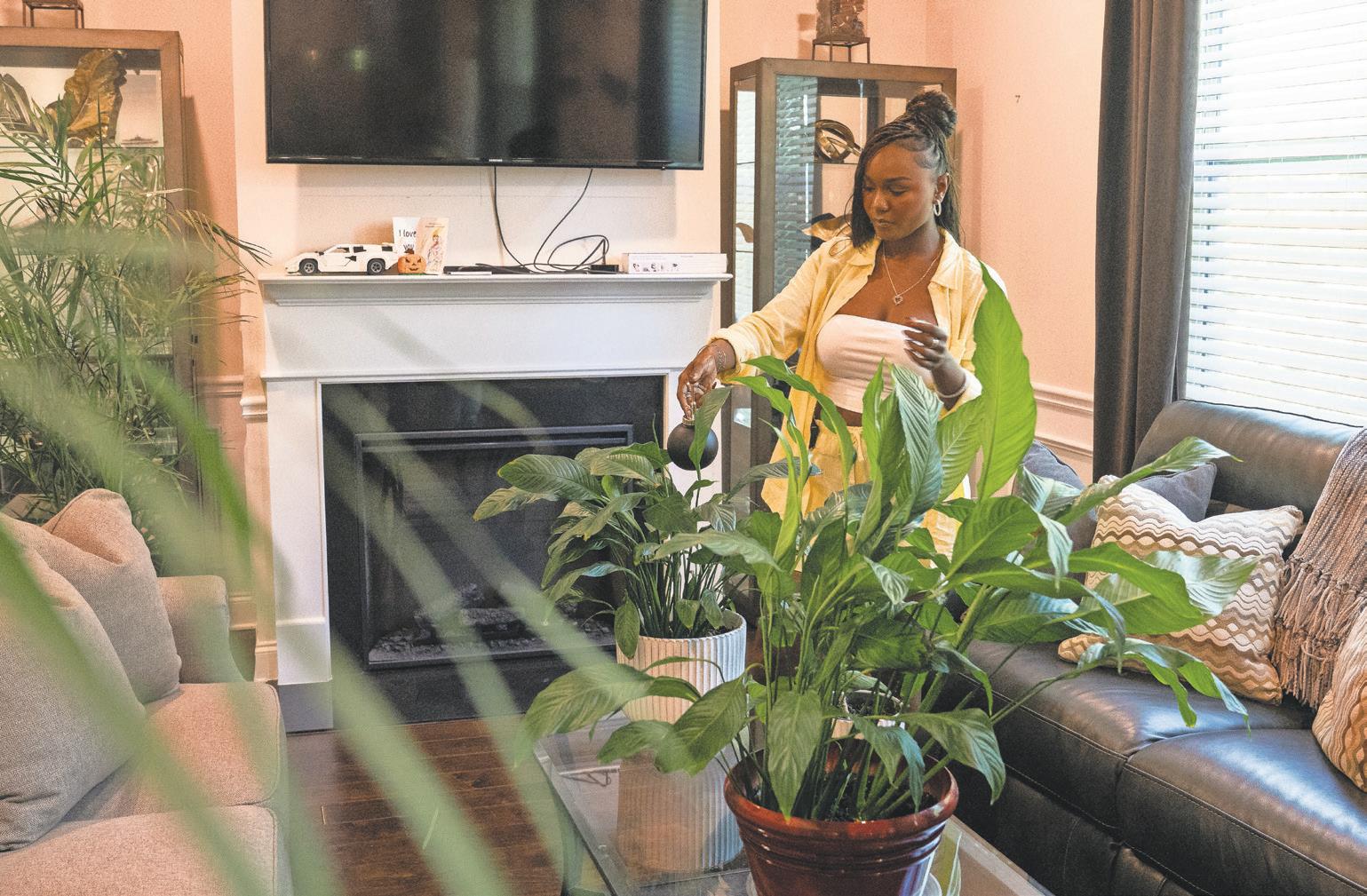
While living with T1D, Cheney says she wishes she knew about screening for it because she was going to the doctor for regular checkups for months.
“I was going to emergency rooms, hospitals, and they didn’t catch it. They would check my levels and send me home, but I felt like I was wasting away never getting any blood work done,” she said. “It feels like your entire world is crumbling at the very beginning because it came out of left field, and I had no time for preparation.
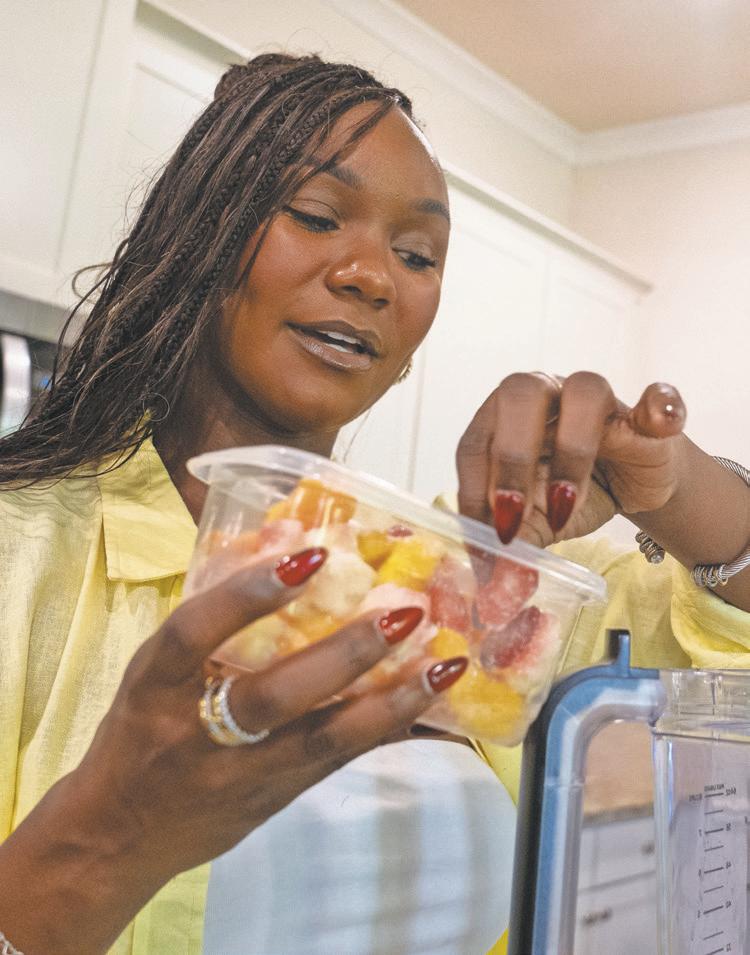
Suddenly, Cheney was measuring her blood sugar levels and keeping track of what impacts blood sugar in general. She says it’s not just food and exercise, but stress, menstruation, and illness.
“I give myself insulin through my insulin pump or injection by needle because my body isn’t producing it anymore,” she said. “It
requires very careful management because if I give too little, my blood sugars go too high, but if I give too much, it can be very detrimental to my health, like having seizures or even death from overdosing. It’s a delicate balance that’s suddenly necessary to navigate.”
This, she says, is why screening early is crucial, because then you know a bit more about what’s coming and how to prepare, so you’re not dealing with it all at once at the moment.
Living with T1D for the last 33 years, Bialo says the most important thing is being able to adjust on the fly because no matter what plan you may have set, you can do everything right, but everything could go wrong as well.
Additionally, as a mom, Cheney says she has already decided to get her daughter screened.
“From the time I had her, I went to our pediatrician and asked, ‘When can I get her screened?’ And as a mother, it’s our job to
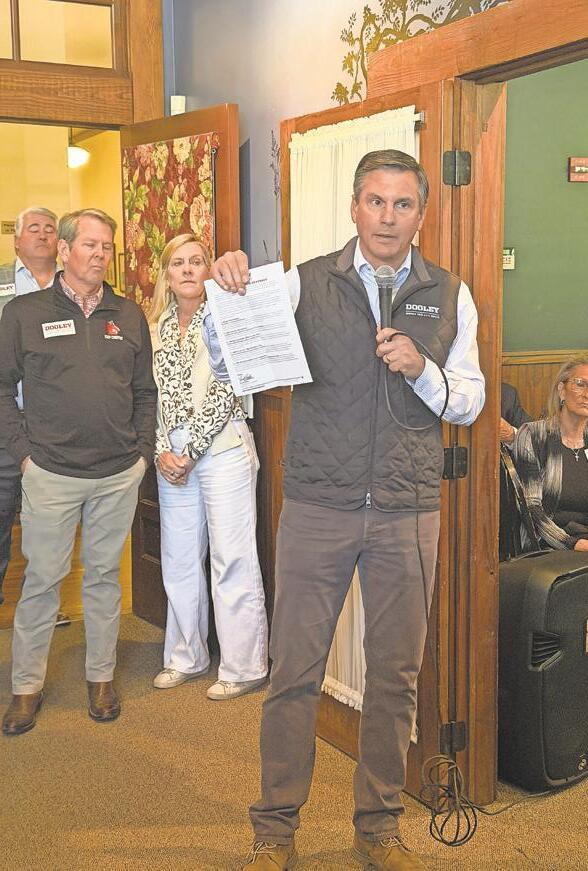
Republican senatorial candidate and former college
Derek Dooley (above) held a small campaign event at Tam’s Backstage in Cumming. “We have to get the right candidate in this race,” Dooley said. Photo by Donnell Suggs/The Atlanta Voice
protect our children,” she said. “For me, getting her screened early is also me protecting her, knowing that I had no first-degree family history of T1D, but she does now. My baby girl knows what T1D is, when my sugar is high, she knows I need insulin, she’s a baby genius.”
Cheney says she would now tell her eightyear-old self to breathe.
“You must be positive. Being in that moment, no one wants to hear ‘you’ll get through this, be positive,’ because you must let it soak for a second because this is something that came out of left field,” she said. “For me, I would tell myself to breathe, relax, and learn. That’s all you can do.”
Getting screened early, Bialo says, has many benefits in identifying T1D in its earliest asymptomatic stages.
“There’s no bigger benefit than just time to take your time, to process, to digest, to understand what it is that’s taking place, to learn how to manage before you find yourself in a crisis situation,” she said. “The majority of people, up to 60% of children, up to 30% of adults, don’t have that opportunity, and they end up presenting in something called diabetic ketoacidosis, which is a life-threatening complication of undiagnosed type one diabetes that can land you in an intensive care unit.”
If we screen and monitor, Bialo said, we keep track of where the blood sugars are going, and the years after screening, we can bring the rate of diabetic ketoacidosis, or DPA, from double-digit percentages down to under 5%.
For advice, Cheney says to advocate for yourself because doctors aren’t perfect and can make mistakes.
“Take that extra step because maybe in your gut you know something isn’t right or you look in the mirror and know something may not be right, you have to learn, read, and share information and resources,” she said.
By NOAH WASHINGTON
More than a cen-
tury after W.E.B. Du Bois presented photographs and data charts documenting Black American life at the 1900 Paris Exposition, his vision has found a new home in Atlanta’s West End, at the African Diaspora Art Museum of Atlanta, known as ADAMA.
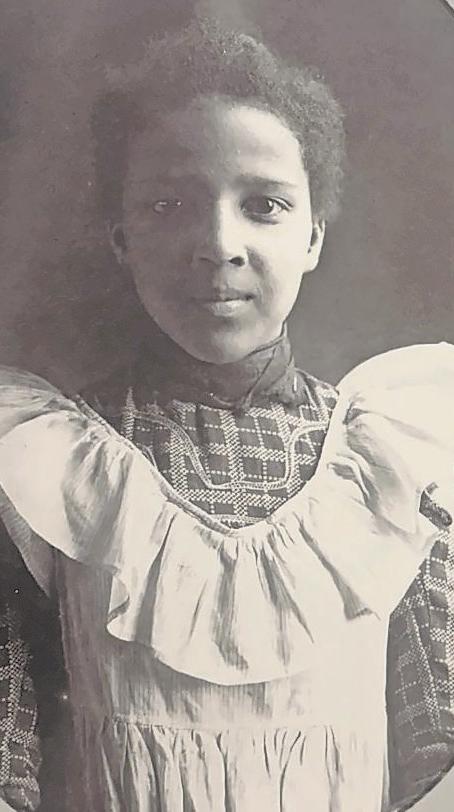
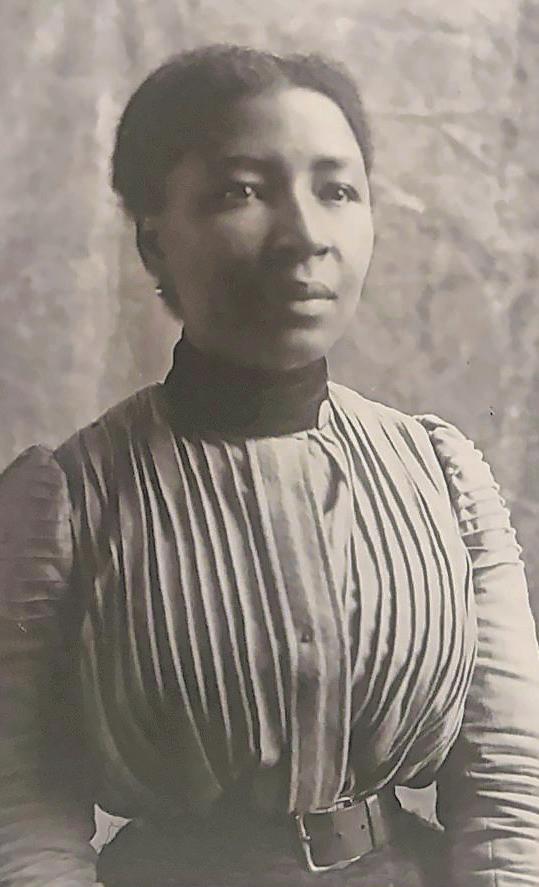
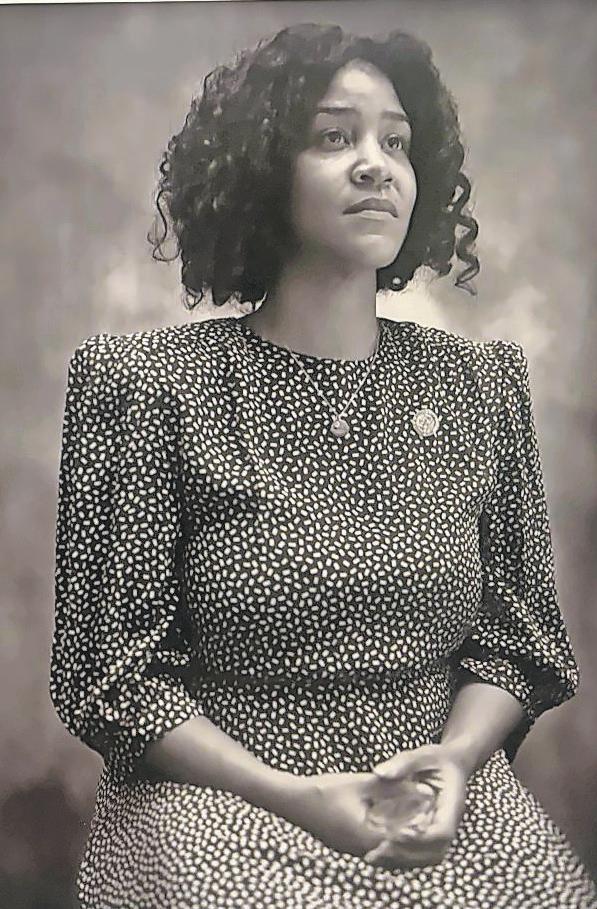
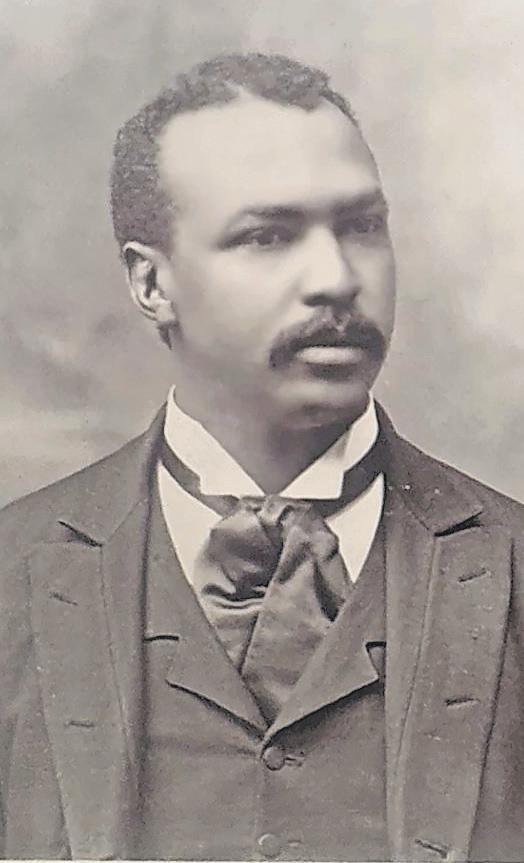
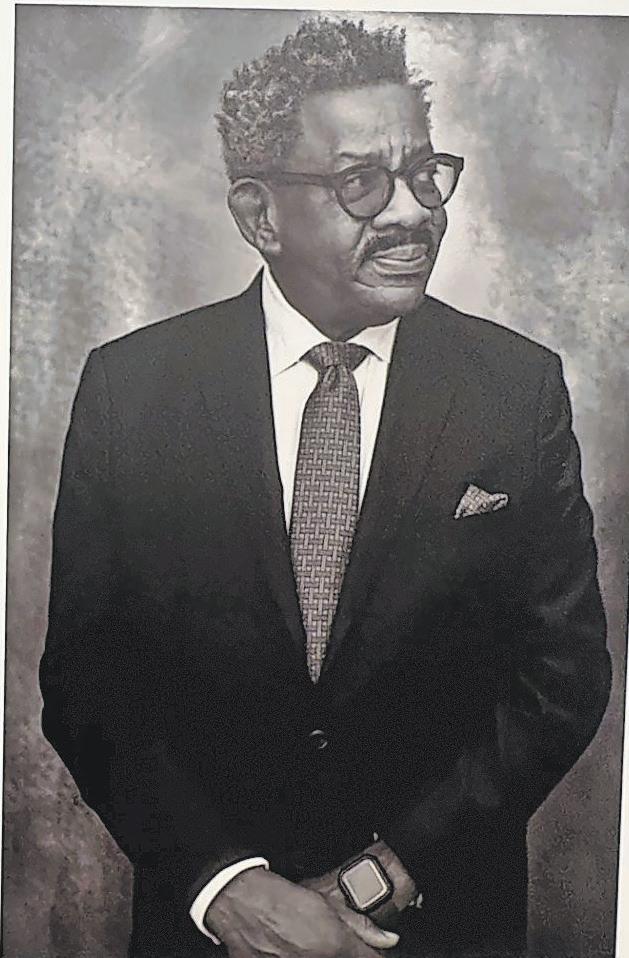
“W.E.B. Du Bois Revisited: Reimagining Du Bois’ Exhibit of American Negroes” pairs historical photographs taken by Atlanta photographer Thomas E. Askew with contemporary portraits and updated data visualizations. The exhibit, which first debuted at Clark Atlanta University in February, is now on view at ADAMA for approximately two weeks.
The project began as part of the Atlanta Journal-Constitution’s annual Black History Month series. According to Miller, it was Suggs, a veteran reporter at the AJC, who reached out to her to handle the photography after Donastorg pitched the concept.
“We’re never going to have a story that says Martin Luther King Jr. won the Nobel Peace Prize or Rosa Parks sat on the back of the bus,” Suggs said. “We’re going to have stories about the talented tenth, about double consciousness, about
small things that you probably never heard of or heard glimpses of and didn’t know.”
The idea came from Mirtha Donastorg, a business reporter at the AJC. Donastorg said she had been reading Du Bois’ work and was struck by how little attention had been paid to its Atlanta-specific content.
“About half of those charts and photographs focused on Atlanta and Georgia, and there had never been an exploration or revisiting of
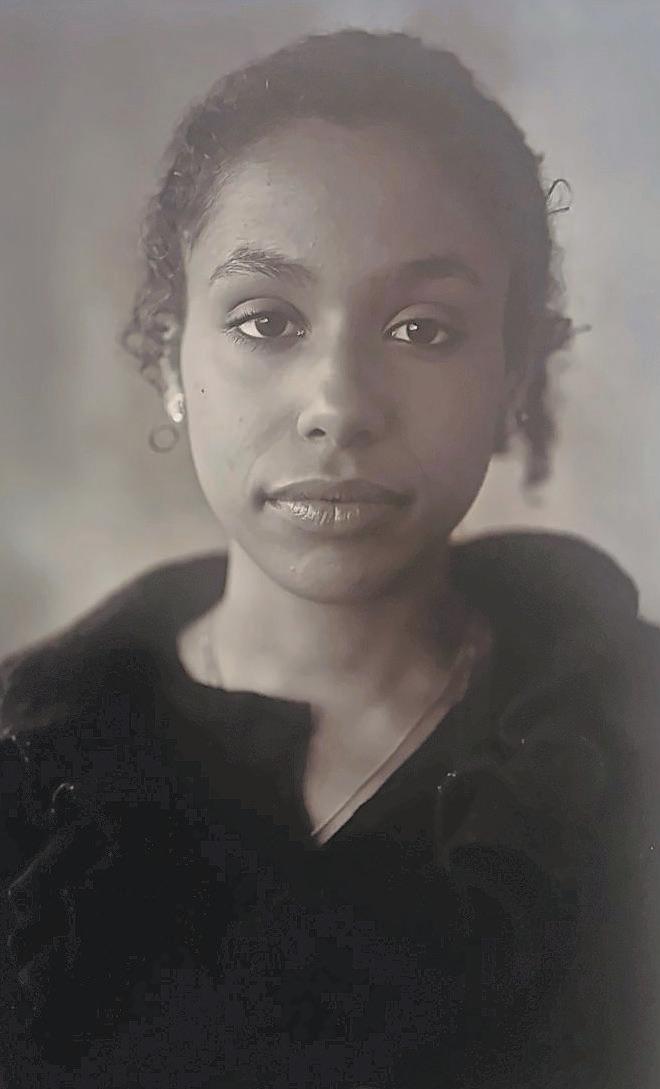
the Atlanta data and charts,” Donastorg said. “I wanted to see what these look like with contemporary data, what it looks like with a contemporary look at Atlanta.”
The work on the project began in December of 2025. All of the historical photographs from Du Bois’ original 1900 Paris exhibit were taken by Askew, a local Black photographer from Atlanta. Most subjects in those images remain unidentified.
“If you look at the cut line, it will say a man, or a boy, a Black boy,” Suggs said. “No names are attached. We don’t know if they’re doctors, we don’t know if they’re lawyers, we don’t know if they’re pharmacists. But we do know they represented a certain aspect of Black beauty, and that’s what we wanted to recreate.”
Miller said choosing contemporary subjects was a blend of intention and instinct. Some pairings, including Clark Atlanta University President George T. French alongside a portrait of Du Bois himself, were planned from the start. Others took shape only after she had shot her subjects and then searched the Library of Congress archives for historical counterparts.
“For a lot of the reference photos, a lot of them didn’t have names, so we just kind of paired up based on how we felt like they connected within contemporary subjects,” Miller said.
She said the goal was to represent the full range of contemporary Atlanta.
“I just kind of wanted to find people that represent contemporary Atlanta, and that’s from doctors to scholars, entrepreneurs, artists,” Miller said. “Kind of finding different people that reflect the people Du Bois wanted to share in the past and what contemporary Atlanta looks like right now.”
The land on which ADAMA sits formally belonged to Clark College, one of two historic institutions, alongside Atlanta University, that merged in 1988 to form Clark Atlanta University. It was at Atlanta University where W.E.B. Du Bois spent more than two decades as a faculty member in the history and economics departments, conducting research on Black American life and popularizing the concept of the ‘talented tenth.’
For Pecou, that layered history makes the Pittsburgh neighborhood more than just a convenient address. It is, he says, a kind of sacred ground, a place where Black intellectual life, Black commerce, and Black community have long intersected, and where ADAMA’s presence feels less like a new arrival than a continuation.
“To be able to bring this exhibition here, to be able to tell this story, to expose this community to this history, many folks in this neighborhood may not even realize that history and that connection,” Pecou said. “I felt like it was an important
and really powerful message.”
Pecou is also among the contemporary subjects featured in the exhibit, photographed alongside an unnamed historical portrait from Askew’s collection. He said his only regret is that the run is short.
“My only regret is that the exhibition won’t be longer,” Pecou said. “It’s kind of a pop-up thing. We had a space and we were able to accommodate.”
Miller said she hopes visitors leave with a sense of both distance traveled and connection across time.
“I want them to think about the past and the present,” she said. “We’ve done so much in just these 126 years, despite so much. I want them to kind of look back and reflect on what the people before us did to set up for now, and to think about themselves in the present.”
Suggs said that connection between eras revealed itself most powerfully when the team saw the old and new photographs side by side for the first time.
“We never set out to match any of these photographs with people,” he said. “But when Natrice took all the photographs and we sat down and looked at them, we were like, oh my God. It just kind of shows you how Black people are almost timeless. We all still kind of have these similarities. And I think that this shows the connection, that we’re all always going to be connected.”
By ISAIAH SINGLETON
Basketball legend, cultural icon, and longtime brand partner, Shaquille O’Neal, hosted a ‘Suit Up’ event at JCPenney with local Clayton State University students.
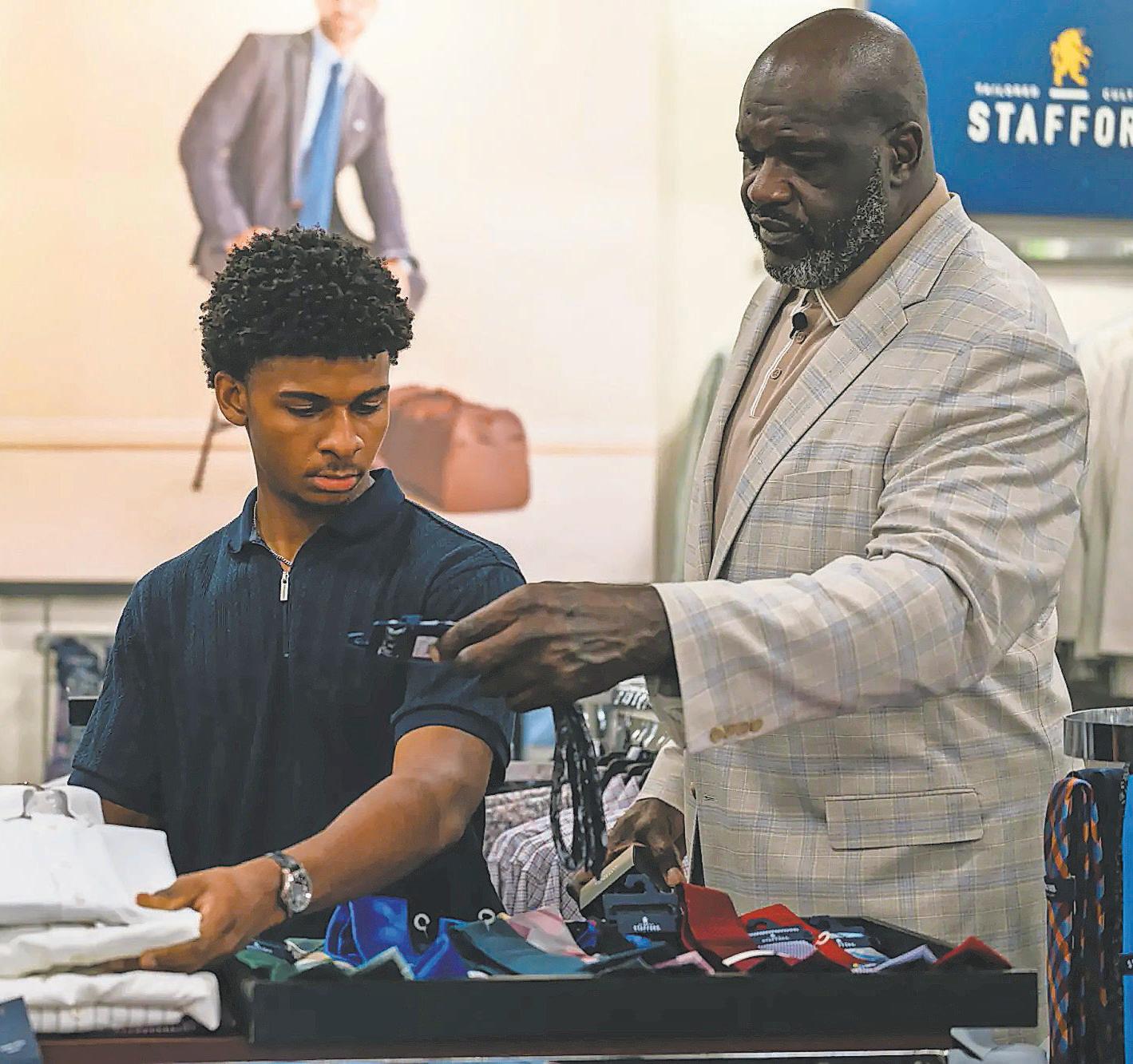
The event allows O’Neal to take the students shopping for his popular XLG collection to help them graduate and prepare for their future endeavors. Additionally, O’Neal celebrated the launch of his brand-new fragrance, EQLIPSE, available only at JCPenney.
Each student received a $500 expense card to shop for the collection and received Shaq’s new fragrance EQLIPSE.
They also were able to take professional headshots and portraits as well.
The XLG collection clothing line caters specifically to big and tall men. O’Neal’s making a big and tall line fits because Shaq is synonymous with big and tall.
EQLIPSE is a bold, aromatic woody fragrance exclusively at JCPenney. This fragrance features notes of bergamot, violet, vetiver, and amber. Marketed for its warm, magnetic scent profile, it’s
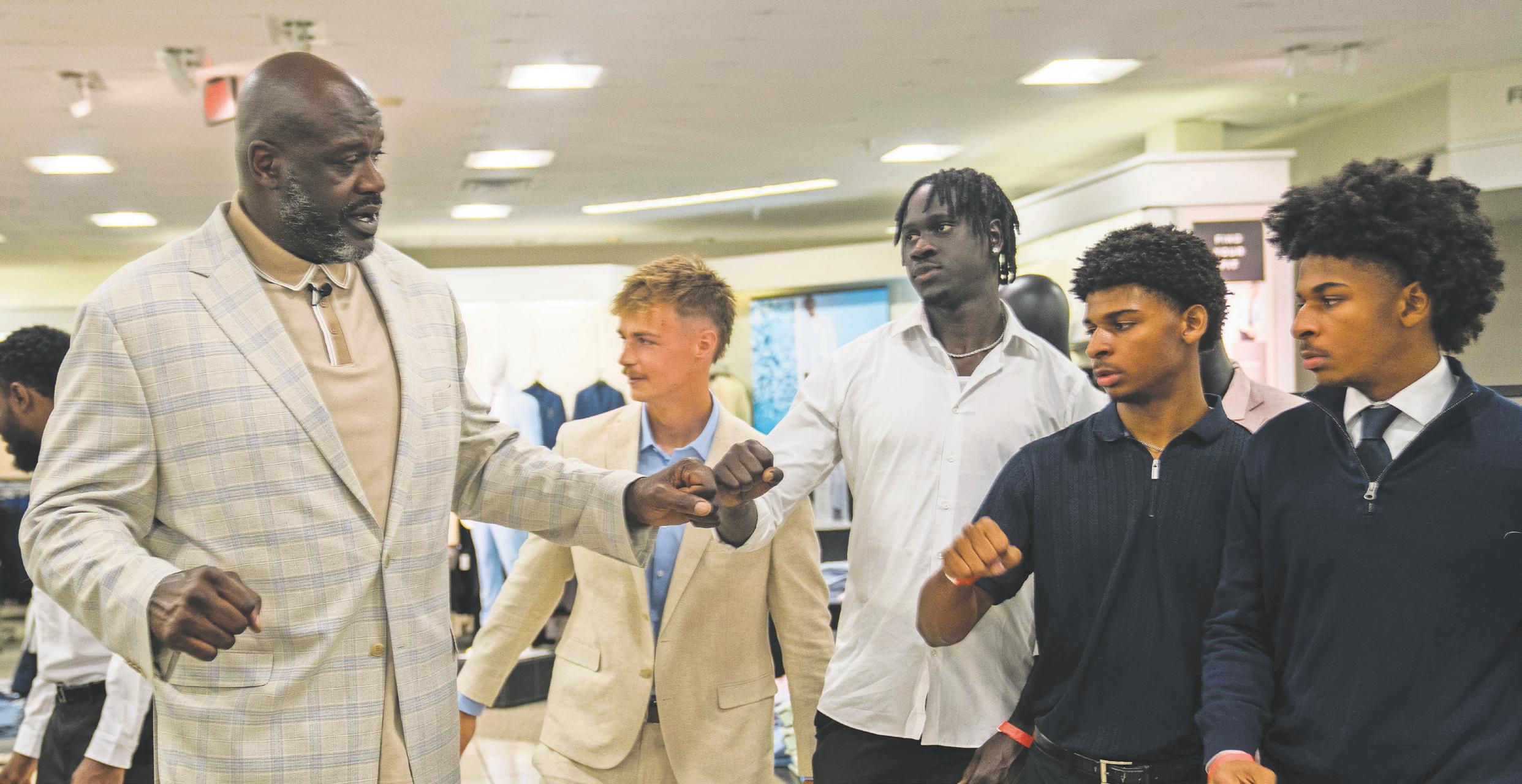
priced at $55 for a 4.2oz and $60 for a 2-piece gift.
Upcoming senior at Clayton State University, Sonny Simpson, said he was excited to meet Shaq
and be able to pick out different suits in the collection.
“Shaq is one of my idols, and my palms are sweaty as we speak now,” he said. “I have been looking
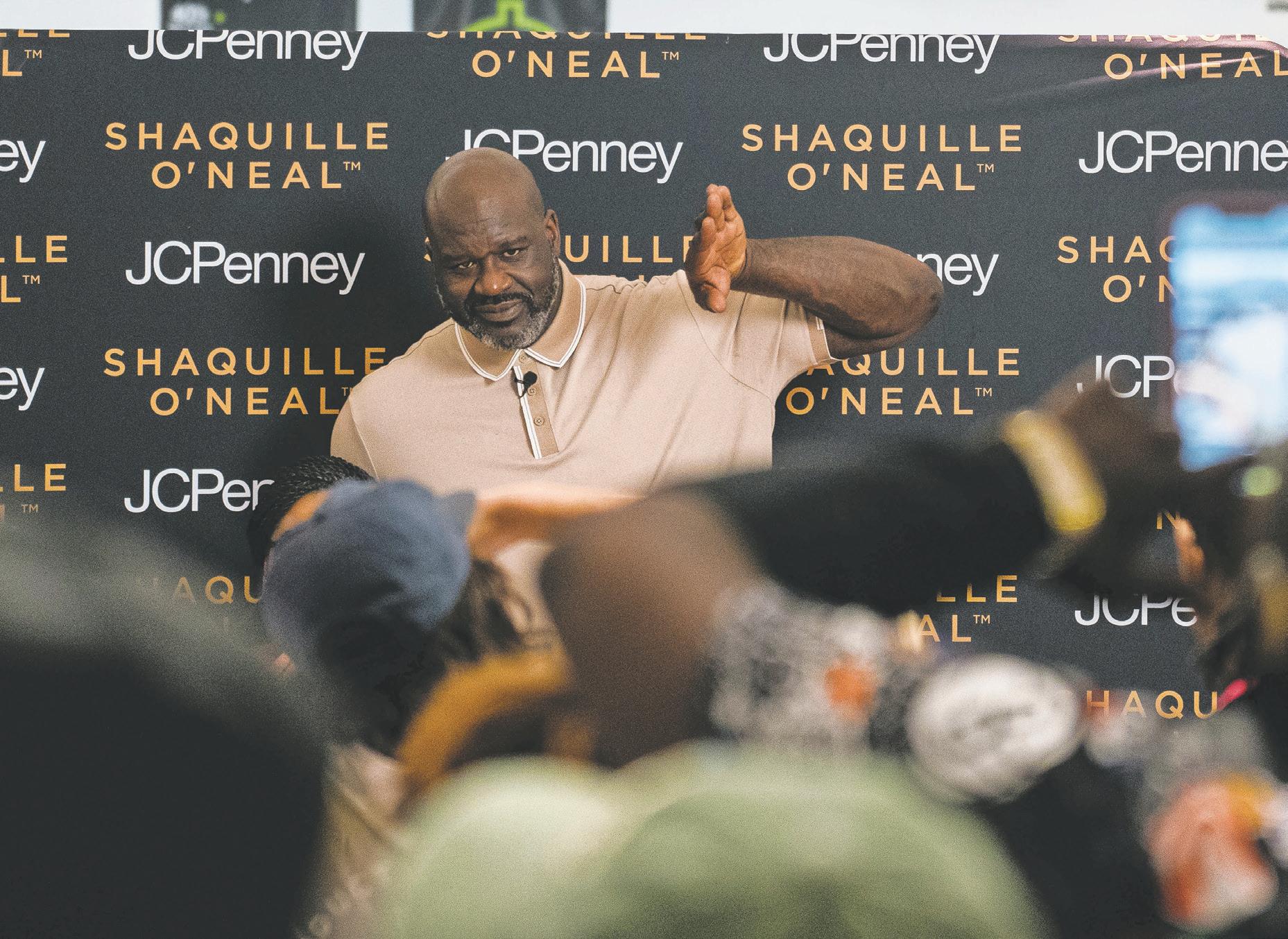
around at the collection since we got here, and I have so many options to choose from. This is a really cool experience.”
Freshman Fabian Partner, a General Business major, said he felt good about seeing Shaq and being blessed by the legend himself at such a generous event.
“We just came from the award ceremony at Clayton State University, so it’s a great day, and now we’re meeting Shaq and shopping his collection,” he said. “He’s a well-known celebrity, and it’s really awesome to see how down-to-earth he really is, and we get to buy some of his own suits that he wears.”
By ISAIAH SINGLETON
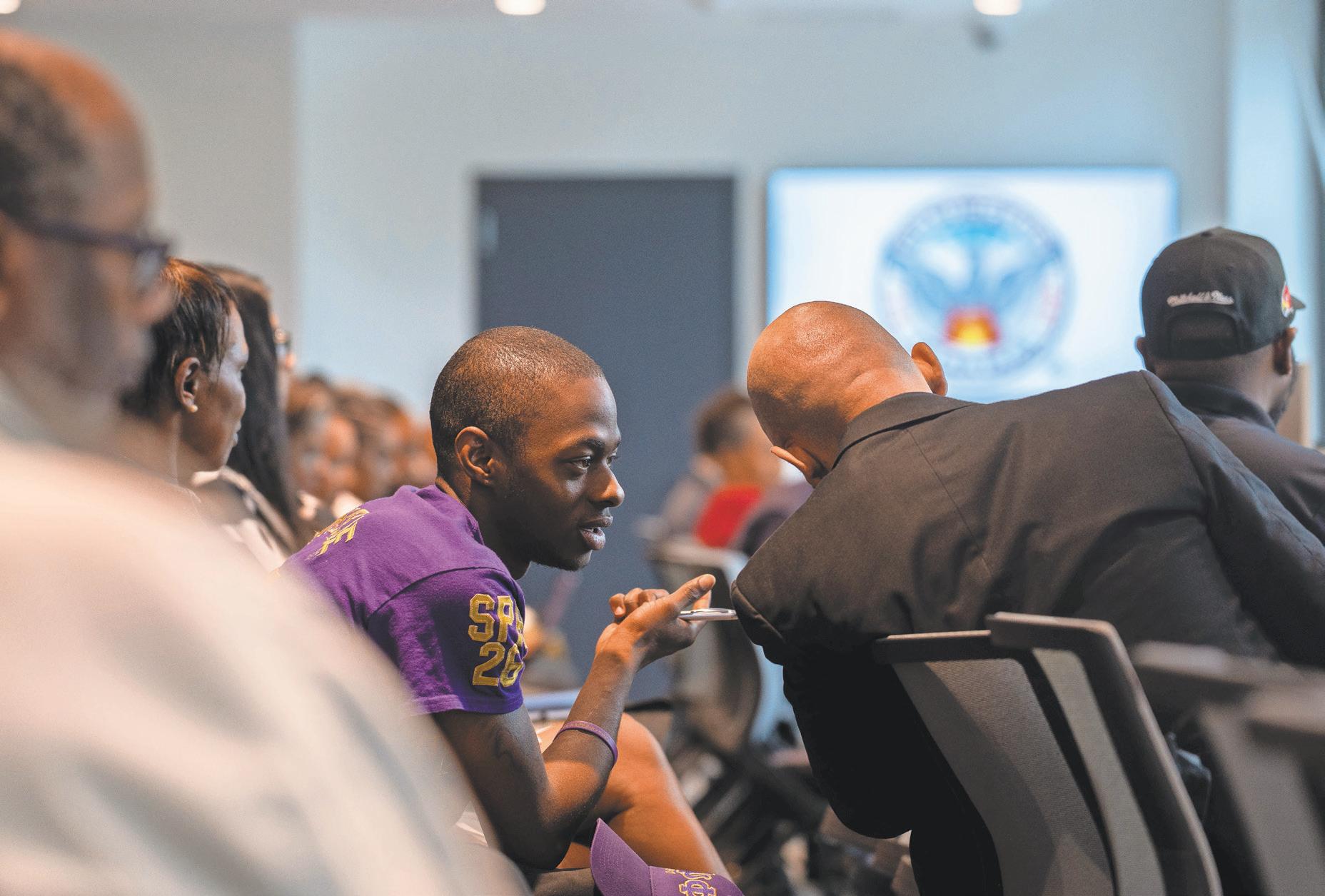
Atlanta City Council President Marci Collier Overstreet hosted a Presidential Town Hall in the Community on Wednesday evening at the Russell Innovation Center for Entrepreneurs.
The town hall provided residents with an opportunity to engage directly with city leadership, hear updates on key initiatives, and access valuable community resources.
The town hall comes at a pivotal moment, marking the completion of the first quarter of President Overstreet’s first term as Council President. The event brought together city departments, state legislators, and community-based organizations to share information and respond to questions from the public.
Overstreet said this town hall is about accountability, transparency, and connection.
“As we move through the first quarter of my term, it is critical that I hear directly from the people we serve, provide a clear update on our progress, and ensure residents have access to the resources they need. Our work is strongest when it is informed by the voices of our community,” she said.
The event also featured representatives from various city departments, including MARTA, City Planning, and Constituent Services, to address community needs. Collier highlighted the importance
quality of life.
Commissioner of the Atlanta Department of Transportation Solomon Caviness emphasized ongoing infrastructure improvements and the Vision Zero initiative to reduce traffic fatalities.
The introduction of the Atlanta community response and diversion dashboard allows residents to compare 311 and 911 calls and review outcomes.
“We are here to improve the quality of life for all Atlantans and folks that touch us. This administration is focused on improving and moving Atlanta forward,” he said. “We have been nonstop paving, building sidewalks, improving cascade, making sure that we see the difference and we are that change. We are here for all of those most vulnerable, we want to make sure that you can cross the street.
He says by 2040 they want to get the death and injury rates to zero.
of community input, especially with the upcoming FIFA World Cup.
State Senator Sonya Halpern spoke about her focus on making government work for people, including lowering costs, protecting consumers, and strengthening schools. She stressed the importance of collaboration between different levels of government and her role as a connector to ensure community voices are heard at the state level.
“My focus is making sure that government works for people in real ways and in the State Senate, where I have been for six years, I just completed my sixth session, that means lowering costs, where we can protecting consumers, strengthening our schools and making sure our communities are safe, healthy and positioned to grow,” she said. “Georgia is an absolutely growing state and so making
sure that we are best positioned to make sure that the success we see at the shape state level is shared.”
Also, Michelle Arrington, assistant general manager of external affairs for MARTA, highlighted the transit agency’s initiatives, including affordable housing through transit-oriented development, food security partnerships, and community engagement programs like station soccer pitches.
“MARTA is ready. People keep asking, and so we’re excited,” she said. “We’ll have transit ambassadors. We’ll have to make sure, make sure passengers are safe and secure. Atlanta is unique and has five stations and walking distance, and not a lot of cities have that. We’re encouraging you all to use that we are busy and engaged, happy to be a part of the fabric of Atlanta.”
MARTA also launched a bus network redesign, a ride-share service, and a bus rapid transit line, and will introduce new fare collection in May and rail cars on June 4.
The agency is also preparing for the World Cup with transit ambassadors and says they are ready. Also, there are no plans for fare increases during the World Cup, according to MARTA officials.
The town hall also included focused on community services and initiatives with key points including the five priority areas: housing, jobs, education, public safety, and
During the town hall meeting, many residents discussed the need for infrastructure improvements on Oakland Road, sidewalks on Hamilton Road, and the disparity between Campbellton and Cascade Roads. Another resident asked Overstreet and Halpern, what does the city need from the state legislature to accelerate sidewalk expansion and expand transit expansion system.
Overstreet said one of their goals is for the city to buy into MARTA.
“MARTA needs help from the state,” she said.
Halpern said she isn’t sure what the state can do on sidewalks in Atlanta-on-Atlanta streets.
“I’m not sure what we can do on sidewalks, necessarily, but I will say that Georgia is the only state in the nation where the state is not helping to subsidize their public transit system, so Marta does not get money from the state to operate,” she said. “What the state does do for MARTA is allow them to do the referendum for the penny, which then goes into their operations, which then helps them do the projects that they do.”
Halpern says there is a relationship between the state and MARTA in that way. The other thing, she says, is they’ve got a share-like ride fund that exists as well.
“We’re not changing the world tonight, but we want to make sure your voices are heard, and you get the resources you need,” Overstreet said. “This is how we make Atlanta better.”
By NOAH WASHINGTON
As the old saying goes, the crowd went wild, and that was emphasized for the artist known as DDG.
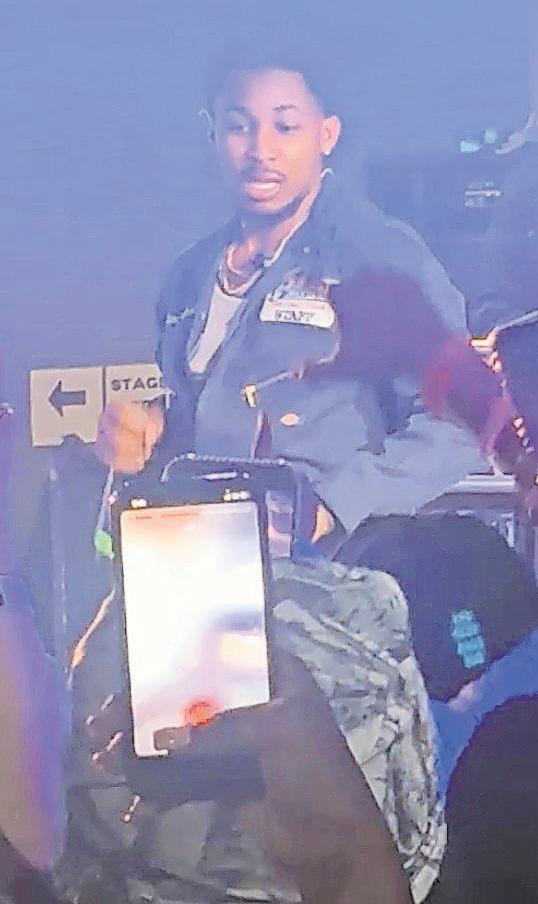
Streamer and artist Darryl Dwayne Granberry Jr., known professionally as DDG,
brought his “Blame the Chat” tour to The Vinyl, a standing-room venue in Midtown Atlanta, Tuesday night, for a ready Gen-Z crowd.
The evening, hosted by Dashe Frost, opened with a performance of “Troublemaker” by Taylor Jasmine, before Paidway T.O. took the stage, playing through several of his records and immediately pressing the crowd for reciprocal energy.
“Let’s take it all the way, Atlanta,” Paidway T.O. told the room, setting a tone that held for the rest of the night.
Frost returned between sets to keep the momentum going before Baby Rich closed out the opening acts. Rich addressed the audience directly, leaning into his own comeup story.
“I was couch surfing,” he said. “Penthouse in L.A., all because I believe in myself.” He capped the moment by debuting unreleased music for the crowd, framing the room as family before dropping new material.
Then DDG came out, and the crowd went wild.
Atlanta is the fifth stop on the tour, which was built in real time with DDG’s Twitch audience during last year’s Hit-A-Thon. The “Blame the Chat” album was shaped by that fan-driven energy, and Granberry carried it into the live setting, calling on the room to raise their lights early in the set.
“I need all your energy,” he told the crowd. “Come on.”
The show also drew from DDG’s “Moo” and “Don’t Overthink It” projects. Not just a recording artist, Granberry has built a parallel career as a Twitch streamer, a dual identity now central to his brand and the creative DNA of the current tour, one that has cultivated a loyal following over more than a decade.
“I’ve been a fan of DDG since the YouTube days,” said Johnathan Neal, an attendee. “I stopped watching TV to watch YouTube, and DDG was one of the ones, for over 10 years.”
Tuesday’s show made clear Atlanta knows the assignment, turning up from the jump and not letting go, embodying the rallying cry that echoed through the room all night, “Are you ready to turn up?”
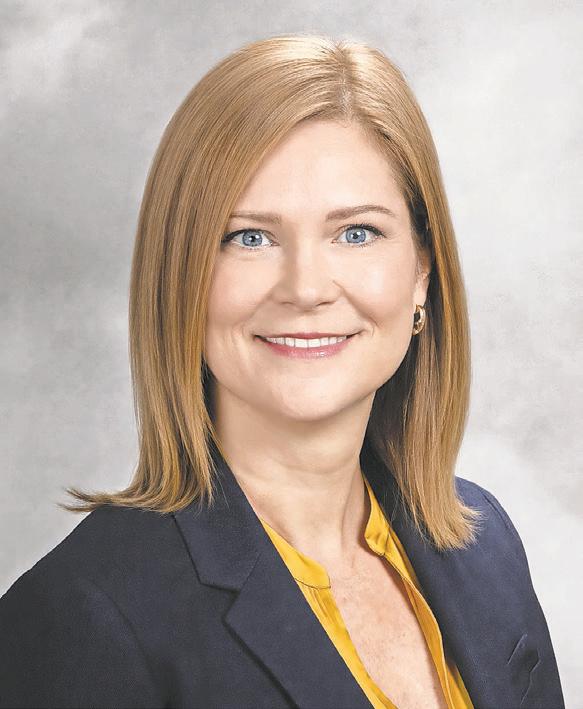
By AMANDA FREE, PRESIDENT
Anthem Blue Cross and Blue Shield in Georgia
It’s a scenario far too familiar: a routine checkup gets postponed, a screening is delayed, or a symptom is ignored. Life is busy. Appointments take time to schedule, and for many, there’s a real concern about whether care will fit into this week’s budget.
In the moment, delaying care can feel like the practical choice. But postponing routine screenings or appointments often leads to the opposite result — higher costs, more complex treatment, and in some cases, worse long-term health outcomes.
This is why prevention matters. It’s about our overall health and our financial well-being.
Preventive care is designed to catch health issues early, when they are easier and less expensive to manage. National research from the Blue Cross and Blue Shield Association shows that complex health issues like cancer, if detected through preventative screenings, are far more likely to be found at the earliest, most treatable stage, significantly reducing the cost of care.
This matters at a time when the rise in healthcare costs is already under strain nationwide. According to the Kaiser Family Foundation (KFF), the average annual premium for employer-sponsored family coverage now totals nearly $27,000 annually, underscoring how delayed care and rising treatment costs affect families, employers, and the healthcare system. 46% and 45% of adults in Georgia skipped recommended follow-up visits and delayed or avoided having procedures done, respectively, according to a 2023 Healthcare

Value Hub survey.
Lower healthcare costs don’t start in the emergency room or at the pharmacy counter; they begin much earlier. Access to preventive services, early intervention, and follow-up support can help manage health issues before small problems become costly crises.
Addressing mental and behavioral health needs before they escalate can also reduce emergency visits and in-patient hospital stays.
Likewise, managing chronic conditions like diabetes or heart disease is a great example of how early prevention can avoid costly complications—particularly as the costs of diagnosed diabetes reached $413 billion in 2022 and are projected to reach $2 trillion for cardiovascular diseases by 2050.
Making prevention easier, not harder
Health plans have a responsibility to remove barriers to preventive care by covering recommended screenings and wellness visits, and by helping people navigate where to go, what services they need, or how much care will cost. When people have clear guidance and support, they’re more likely to act

rather than delay. We support prevention by pairing coverage with practical tools and programs, including:
• Rewarding safer care: Through our Quality-In-Sights: Hospital Incentive Program, hospitals are encouraged to improve patient safety and reduce preventable complications.
• Simplifying access through technology: Our Concierge Care program and digital tools connect members to 24/7 nurse support and guidance, helping reduce avoidable hospital admissions and remissions.
• Turning data into action: Data insights help identify care gaps and guide members to the right care with tools like the Sydney Health app, making it easier to schedule preventative visits, understand benefits, and avoid unnecessary emergency visits and unexpected costs.
By encouraging earlier action, we’re improving both the experience and overall health outcomes.
Prevention doesn’t stop at the doctor’s office—it extends into our communities through partnerships that help remove real-world barriers to care. That’s why we’re working with organizations like Sostento, an innovative partner focused on empowering frontline health workers to connect people
to the care they need. By addressing challenges such as transportation, complex referral systems, and access to behavioral health services, Sostento helps ensure that more individuals—especially those in underserved communities—can access timely, quality care. Through our collaboration with Sostento and local clinic partners, we are expanding access to behavioral healthcare by reducing transportation barriers, increasing screenings, and strengthening connections to follow-up care. These efforts are already making a meaningful difference—705 individuals have been connected to behavioral health or substance use care through this initiative. By investing in solutions that meet people where they are, we’re making it easier to access care earlier—supporting healthier outcomes today and building stronger, more resilient communities for the future.
A smarter path forward
Health insurance isn’t just for emergencies. It’s meant to support individuals and their families so that emergencies never occur. With healthcare costs top of mind for families and businesses, prevention offers a clear path forward. It leads to better health outcomes, lowers costs, and helps ensure that people get the care they need when they need it most. Learn more at anthem.com/ affordabilityingeorgia.
By DONNELL SUGGS
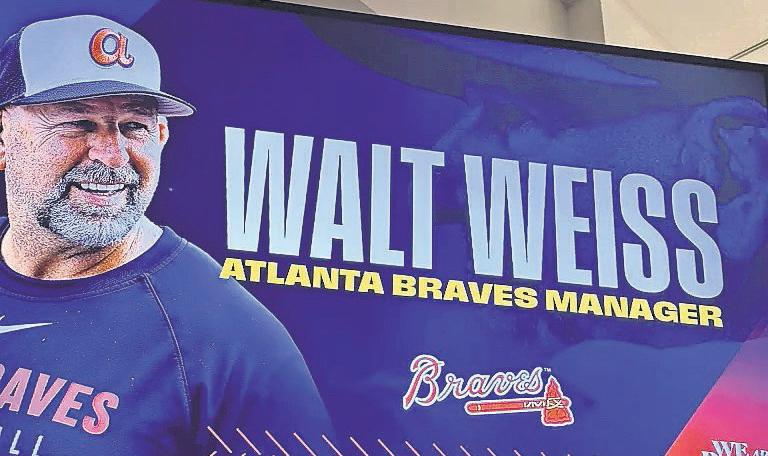
The Atlanta Braves have one of the best overall records in Major League Baseball, along with the usual suspects: The Los Angeles Dodgers and New York Yankees. A large part of Atlanta’s success this season is due to the way the games are being managed by a former player, coach, and baseball lifer.
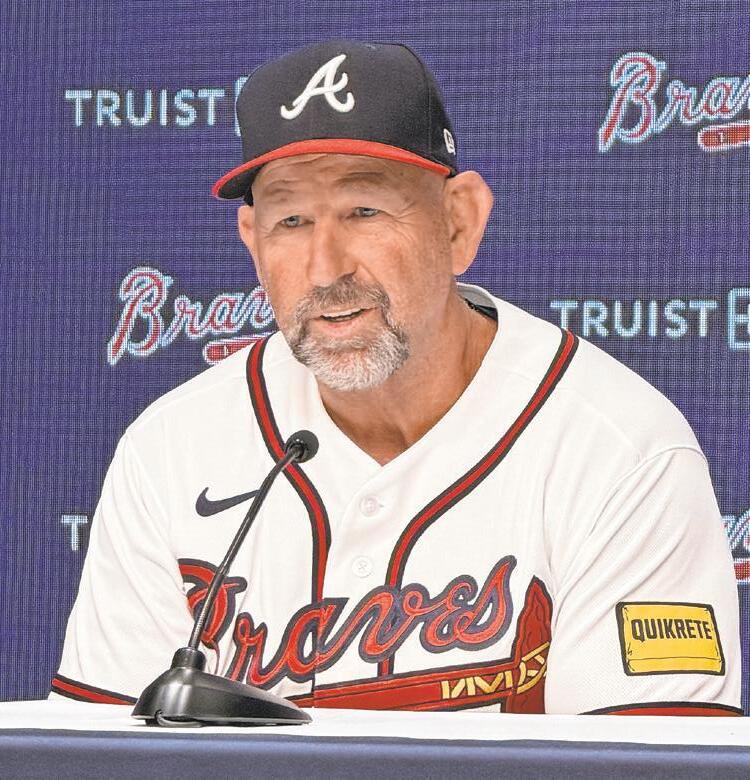
In his first season and through his first 30 games as manager of the Braves, former Major League All-Star shortstop Walt Weiss has been pushing the right buttons and then some. The former manager of the Colorado Rockies (283-365 in four seasons), Weiss, had been in the Braves organization for over seven years before he was hired as the replacement for Brian Snitker following the World Series-winning manager’s retirement at the conclusion of the 2025 season.
The hiring of Weiss was initially seen as a typical Braves move: to stay in the family under the Bobby Cox tree. These days, it’s looking more like the best move.
On Tuesday night at Truist Park, the Braves were hosting the Detroit Tigers in the first of a three-game series before they left home for a nine-game road swing in Colorado, Seattle, and Los Angeles against former Braves star Freddie Freeman and the Dodgers. In the fifth inning, with the Braves ahead 2-0 and the Tigers threatening with two on and two out, Weiss left Braves starter Martin Perez in the game. Given the Braves’ bullpen’s performance this season, it would have made sense to give Perez a spell, but Weiss trusted the veteran.
Then Weiss got youngster Didier Fuentes into the game and was able to give time on the mound with the Braves ahead 2-0. Fuentes pitched two innings without giving up a hit or an earned run before being replaced on the mound by Tyler Kinley for the eighth inning.
After the game, Weiss was complimentary about Fuentes, who he said would remain with the team through this series instead of being sent back down to Gwinnett.
“He did a heck of a job for us,” Weiss said. “He’s been really good for us and helped us win a game tonight.”
The same has gone with the decisions Weiss has made with the lineup this season. The way Weiss has moved Michael Harris II up in the lineup into the fifth slot from the bottom third of the order, and how he has stuck with first-year Braves outfielder Mike Yastrzemski, who had been in a prolonged slump before he got two hits and an RBI on Tuesday.
After several games this season, Weiss told the media that Yastrzemski was playing hard and taking good cuts. Weiss said he would find his way. This season, Yastrzemski has batted in the fifth, sixth, seventh, and eighth spots in the lineup, but Weiss wouldn’t give up on him despite having other alternatives for left field. Yastrzemski batted ninth against the Tigers and had one of his most productive games of the season during the Braves’ 5-2 win.
On sticking with Yastrzemski, Weiss said, “Yaz is a really smart guy, and he understands his swing. He’s going to be alright,”
and “He’s doing the work.”
Weiss is pushing all of the right buttons at the moment, and in true Weiss, he won’t take any credit for the Braves having won three times as many games as they did last year at this time.
Even when Weiss made the move to pinchhit Kyle Farmer for regular DH Dom Smith after one at-bat, it worked out. Farmer, a native Atlantan, got in the scorebook with a single off Tigers pitcher Tyler Holton in the eighth inning. “I don’t typically pinch-hit that early,” Weiss said.
The Braves are winning games in all sorts of ways this season.
“That was a good win,” said Weiss. “We’re playing well. There’s been a good vibe from the beginning.”
Blame it on Weiss.
By DONNELL SUGGS
MARIETTA, GA. - City of Marietta Mayor Steve Tumlin, wearing a seersucker suit and a wide smile, took his place behind a podium inside of what will become Metro Atlanta’s latest sports facility. The National Women’s Soccer League (NWSL) will have a franchise in Atlanta in time for the 2028 season, the year Atlanta and Mercedes-Benz Stadium will host the Super Bowl. The site where Tumlin was standing will be the home for the team’s training facility.
The NWSL franchise in Atlanta doesn’t have the name yet, but it does have a home.
“We look forward to being a part of everything that will make this successful, “ said Tumlin. “This was made to happen.”

training area, an outdoor player amenity area, and an activation plaza. Without having seen the training facilities for the other 17 teams in NWSL, the Atlanta site feels like it will be a standard-setter for future sites.
Berman said AMBSE is no doubt rising the tide in NWSL. “A lot of the growth of the NWSL is due in part to the quality of our ownership,” Berman said. “When I look out on this empty field, I know with the speed and interest from this group, when I blink there will be a beautiful training facility here.”
The site for the NWSL Atlanta franchise is located across the street from the Franklin Gateway Sports Complex and a block away from where Atlanta United trains and holds its press conferences, Children’s Healthcare of Atlanta Training Ground. Having both Atlanta United and the NWSL teams within a few hundred feet of one another creates a soccer corridor a few miles from downtown Atlanta.
Atlanta owner Arthur Blank, and NWSL commissioner Jessica Berman were in attendance to shovel the dirt and take photos.
Along with Tumlin, Atlanta United, Atlanta Falcons, and NWSL
Blank thanked Tumlin and the Marietta City Council for signing off on the land deal for the site, and for being good partners over the years.
The Atlanta United training facility brought new life to the Franklin Gateway. Tumlin was equally as thankful to Blank as 10 acres of the property will be going to the city for a community center.
The 33-acre training facility will house practice fields, goalkeeper
The large lot was once a future home for an IKEA. Now it will be the one of three professional soccer training facilities within 30 miles of downtown Atlanta when the Arthur M. Blank United States National Training Center opens in Fayetteville, Georgia, on Thursday, May 7.
Before he headed to his seat, Tumlin turned to Blank, seated in the front row, and said, “Thanks for letting us unite in this effort.”

Spacious 1-Bedroom Affordable! Rent Based on Annual Income Amenities, Great Location, and Convenient to Marta Please call for detailed information (404) 586-9098

RFP for The Sanctuary located at 265 Washington St SW, Atlanta, GA. BIDS DUE: May 14, 2026, at 2:00 pm
PRE-BID MEETING will be held on site on April 28, 2026, at 10:00 am. PLANS: Hard Copies of plans available upon request and at subcontractor’s expense from A1 BluePrint (www.a1blue.com), Phone: 404-524-8881 OR for a link contact Linda at Lstache@gormanusa.com. Contact Info: Linda Stache, Gorman & Company, Phone: 608-835-5177
CERTIFICATIONS: SBE/MBE/WBE/EBE/DBE/VBE, and a prevailing wage rate project. This project is also NGBS Bronze, Invest Atlanta and DCA project 3...