
By DONNELL SUGGS
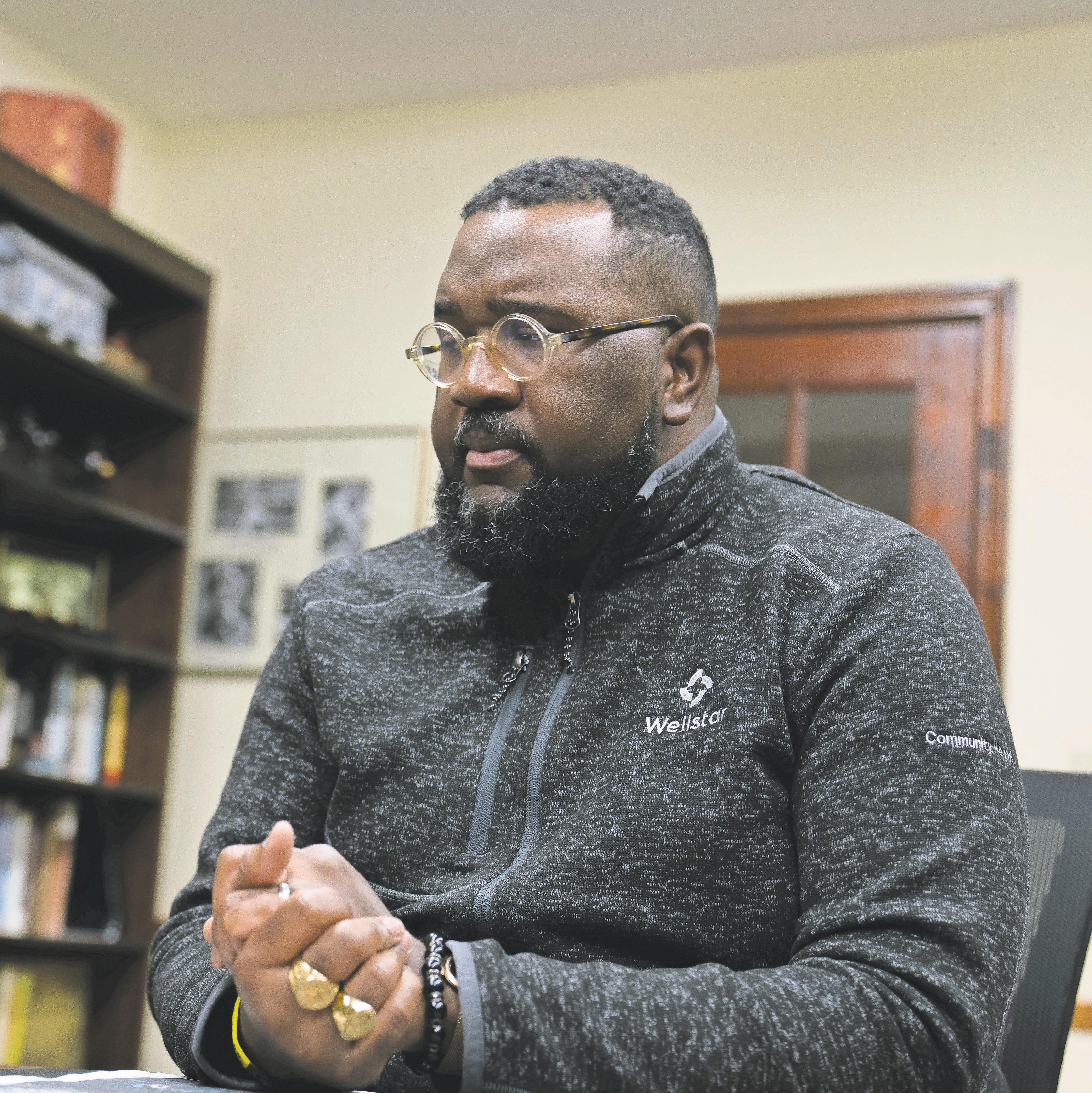
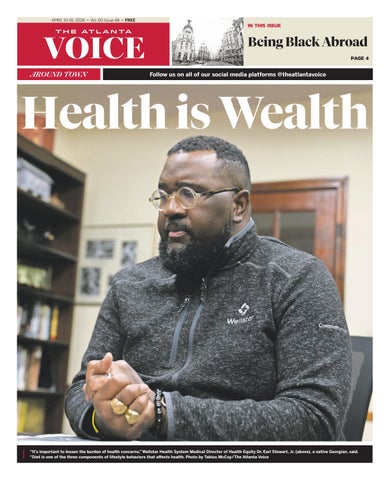
The Latin phrase “mens agitat molem” translates to “the mind drives the body.” In other words, a healthy mind will set the foundation for a healthy person. Wellstar Health System Medical Director of Health Equity, Dr. Earl Stewart, Jr., shared that phrase, one of his favorites, when he was a Latin minor during his pre-med undergrad days at Mercer University in Macon, during an interview at The Atlanta Voice office on Friday, April 3. Stewart, a father and husband, said he likes mens agitat molem because it encompasses what he shares with his Wellstar patients here in Atlanta.
“It’s important to lessen the burden of health concerns,” Stewart, a native Georgian, said. “Diet is one of the three components of lifestyle behaviors that affects health. Diet, exercise is second, and third is stress reduction. Together they represent the foundation of health.”
As a primary care physician, Stewart said the hardest thing is getting adult patients to change their lifestyle behaviors
to improve health outcomes. He used the word “crucial” to emphasize the importance of the mindset over medication. Not to lessen the importance of medication, but to make clear that, along with medicine, the three foundations, diet, exercise, and stress reduction, are non-pharmacological ways to take care of oneself.
“It’s also important to lessen the burden of chronic diseases like diabetes, hypertension, and those types of issues,” Stewart says.
And contrary to popular belief, those diseases do not associate with people of a certain age, according to Stewart. He said that younger patients are also facing similar health challenges, and that preventive measures should be taken by one and all.
“Believe it or not, in that younger population of patients, we may see pre-diabetes, we see high cholesterol. With youth, there’s often a feeling of invincibility, so I always say it’s important for them to engage with their healthcare providers and focus so much on prevention.
Prevention is crucial to keeping the entire population healthy.”
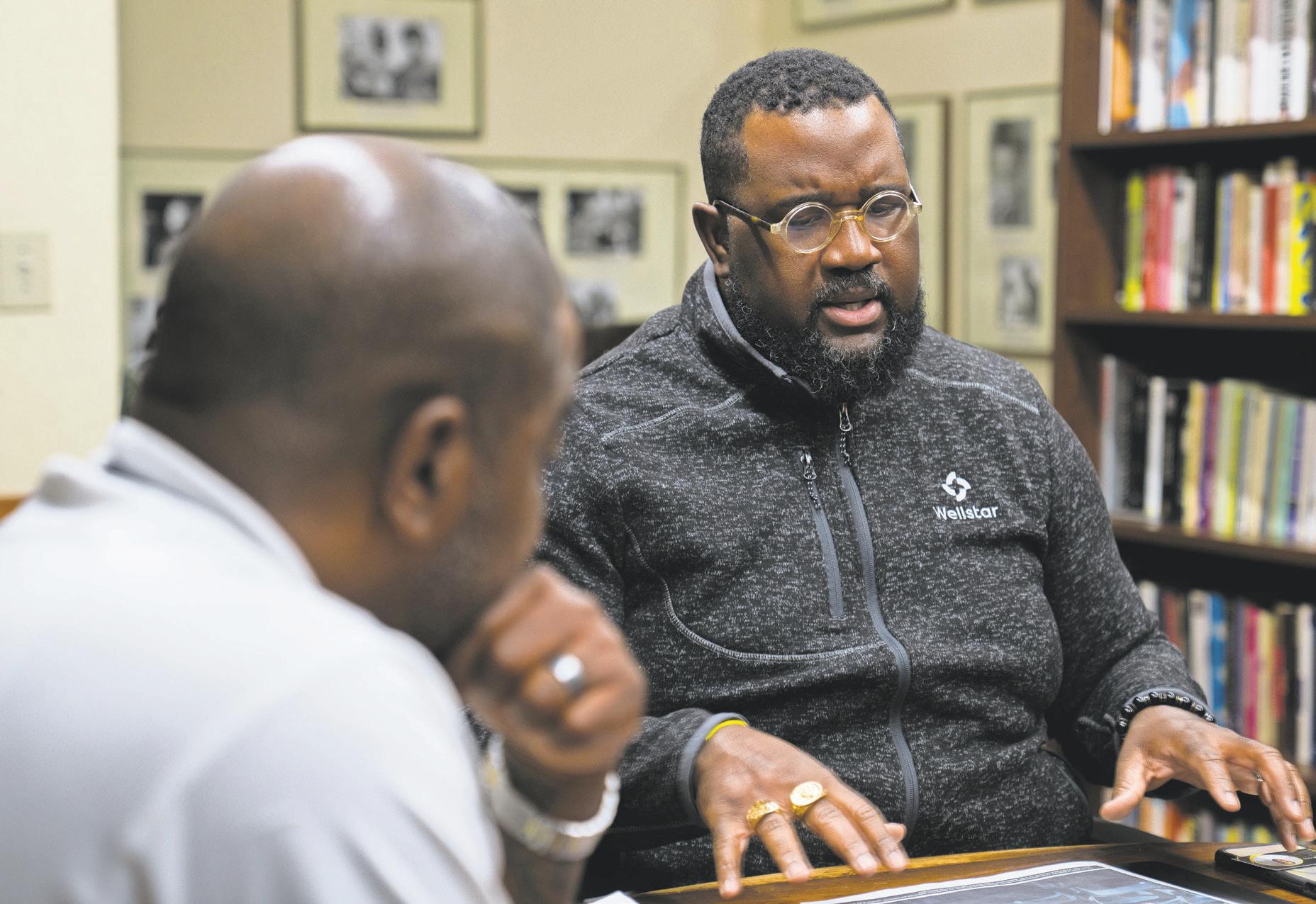
The doctor also recommended making sleep a priority. He says it’s not always easy for adults with
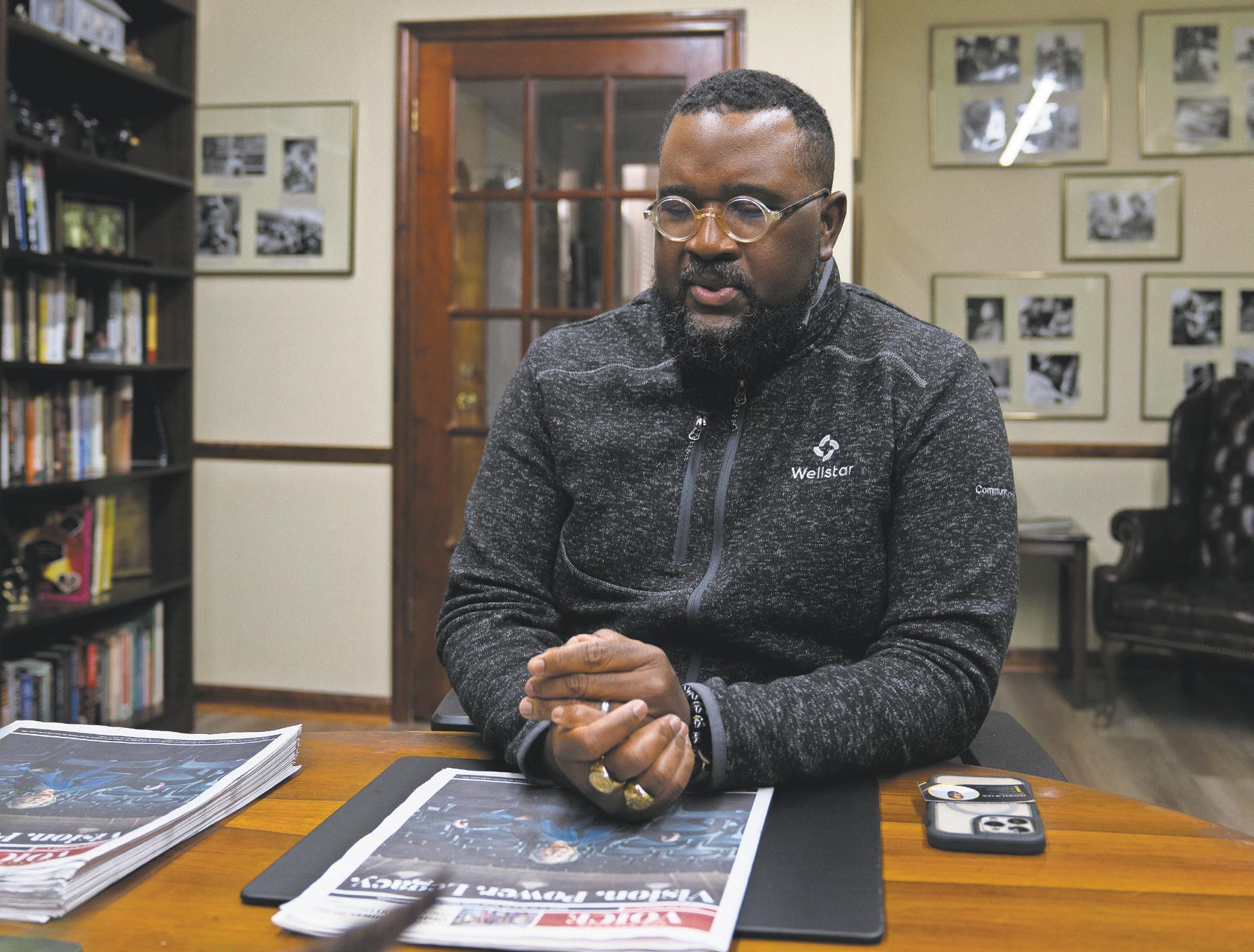
careers, jobs, or multiple responsibilities to prioritize sleep, but that can lead to an unhealthy lifestyle.
“I have these conversations with patients who are 30-somethings, have been married a few years, have small babies, are upwardly mobile within their community, are gainfully employed, so all of that coming together is impacting their ability to get quality sleep at night,” Stewart, who worked in rural communities during his career, explained. “You can’t take care of all of your responsibilities if you’re drained and you’re not feeling good.”
The National Heart, Lung, and Blood Institute (NHLBI) backs up Stewarts’ statements with data and research showing that sleeping well supports the function of vital organs like the heart and lungs, and our immune systems.
There are certainly factors in individual lives that always allow for routine visits to a primary care physician, a safe, quiet place to get some sleep, or a healthy meal.
But there’s one healthy activity we all can certainly do that is both effective and free: walking. Stewaret says walking is a good way to raise the heart rate, reduce blood pressure, and boost mental well-being.
The Mayo Clinic has done research on the benefits of walking.
“Walking is good for overall cardiovascular health,” Stewart said. “We generally recommend getting at least 30 minutes a day or 150 minutes a week. When we walk, not only is it a form of cardiovascular exercise, it’s also important for mental health and relaxation.”
Stewart started a “Walk with a Doc” program while working in Upson County, Georgia. He said a brisk walk is always best.
“To say that walking is important is a tremendous understatement,” says Stewart. “It has multiple benefits. We are a walking family, my wife and I.”
Stewart attended medical school at Meharry Medical College in Nashville, Tennessee. An HBCU, Stewart shared the story of Meharry being the only medical school to accept him, despite being a good student, while he was an undergraduate student at Mercer.
“I was an excellent student, but I was not the best standardized test taker,” he recalled. “Meharry recognizes that we would be excellent physicians if it were not for certain test scores. I really think the HBCU experience was right for me. I really found my nurturing at Meharry.”
By LAURA NWOGU
Georgia gubernatorial candidate
Jason Esteves hosted a community town hall for DeKalb County residents at the Clarkston Community Center on Wednesday evening. The town hall focused on pressing issues in Georgia’s healthcare system and explored ways Esteves and his wife, Ariel Esteves, hope to address them. Community members from across DeKalb attended to hear from the two, ask questions, and express their concerns.
Jason Esteves has stated that one of his top priorities is expanding healthcare access for all Georgians. His website promises that he “will fight to lower the cost of insurance premiums by expanding Medicaid and getting more Georgians insured, lower the cost of prescription drugs, expand our rural hospitals and clinics, and secure much-needed resources for senior care across the state.”
“At the end of the day, healthcare is the most important thing, because I believe that without health, you can’t get wealth, right? Without health, your future becomes a lot harder,” Jason Esteves said. “So, I want to make sure that we’re investing in our healthcare system, starting by expanding access to Medicaid, but also making sure that we’re increasing the number of providers that we have in the state,
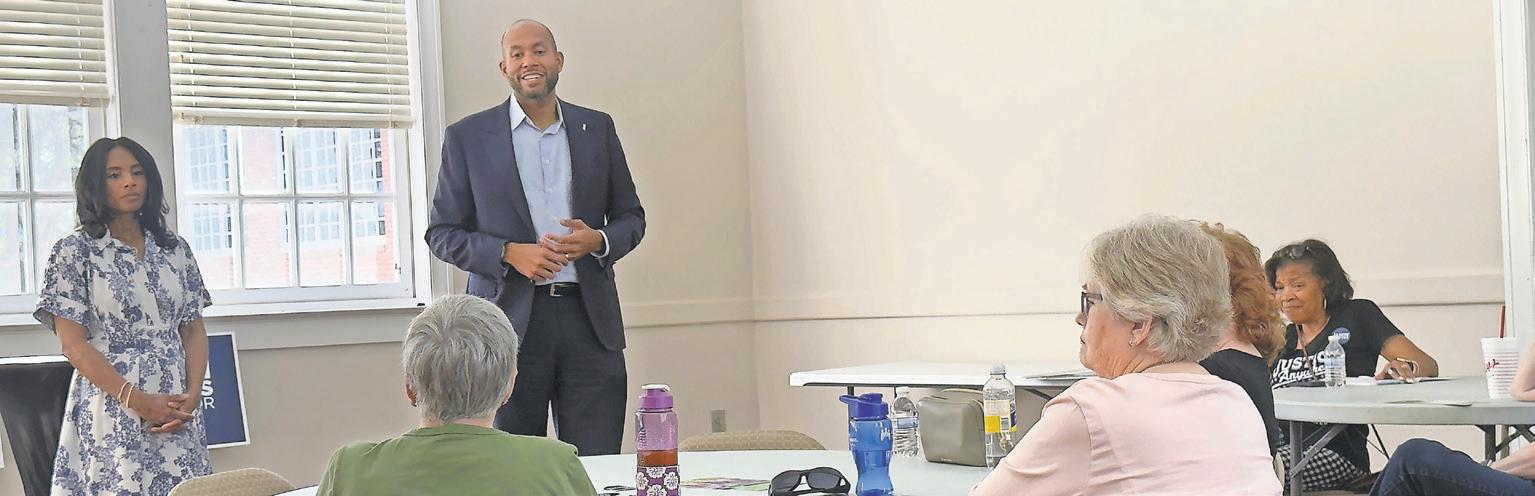
making sure that we’re investing in things like maternal health care, that we’re investing in mental health support, so that ultimately we have a workforce that is healthy and able to participate In our economy and participate in our workforce so they can ultimately empower themselves economically.”
His platform is supported by his wife, a nurse for 20 years and a nurse practitioner for 15. She shared that over the last 10 years, she’s noticed that about 40% of what she does in a primary and urgent care setting centers on mental health and that we are also dealing with a maternal health crisis. She shared that one of the first things she wants Jason to do is reverse the abortion ban.
“We have less rights than we did years ago, so we have to get that back from 2022. When
we think about women’s health issues that we have, there are things that we can do to ensure we’re listening to moms, we’re listening to women, and we’re putting things in place,” Ariel Esteves said. “As I’m looking at other states, there’s a ton of states that have some good programs; we’ll look at that to see if we can incorporate some of those initiatives.”
The two discussed with residents the difficult conversations they’ve also had to have about their health insurance as small business owners and their personal experiences with caring for older parents as they struggle with their health.
Residents brought up issues such as expanding Medicaid for all, hospitals shutting down, nursing and caretaker shortages, maternal mortality rates, and funding
for education. One of those community members was DeKalb County resident Denise Hightower, who has been a Georgia educator since 1976. Her main concern was improving early education and universal childcare.
“Before you get to healthcare, you’ve got to get teachers,” Hightower said. “A squeaky wheel makes the most noise. I’m an advocate for children, and I want a governor who is going to look out for children, because society isn’t looking out for children.”
Esteves said he understood that Georgia can do more to improve healthcare for its residents and that he is laser-focused on investing in healthcare and the education system.
“There’s no reason why people should not receive the health care that they need to be able to provide for themselves. The fact that we are spending so much money on basic Band-Aids rather than investing more time and resources on the front end to avoid the need for Band-Aids in the first place is a problem we not only have in healthcare but also in education. And as governor, I want to make sure that we solve those root causes so that ultimately, we address the issue, but we also make it more efficient.”
“I agree that now is the time to be bold and do what we can to ensure that we’re investing in our communities.”
By NOAH WASHINGTON
Three years after Atlanta
Mayor Andre Dickens created the city’s Office of Technology and Innovation, Atlanta is making its case that it has already arrived.
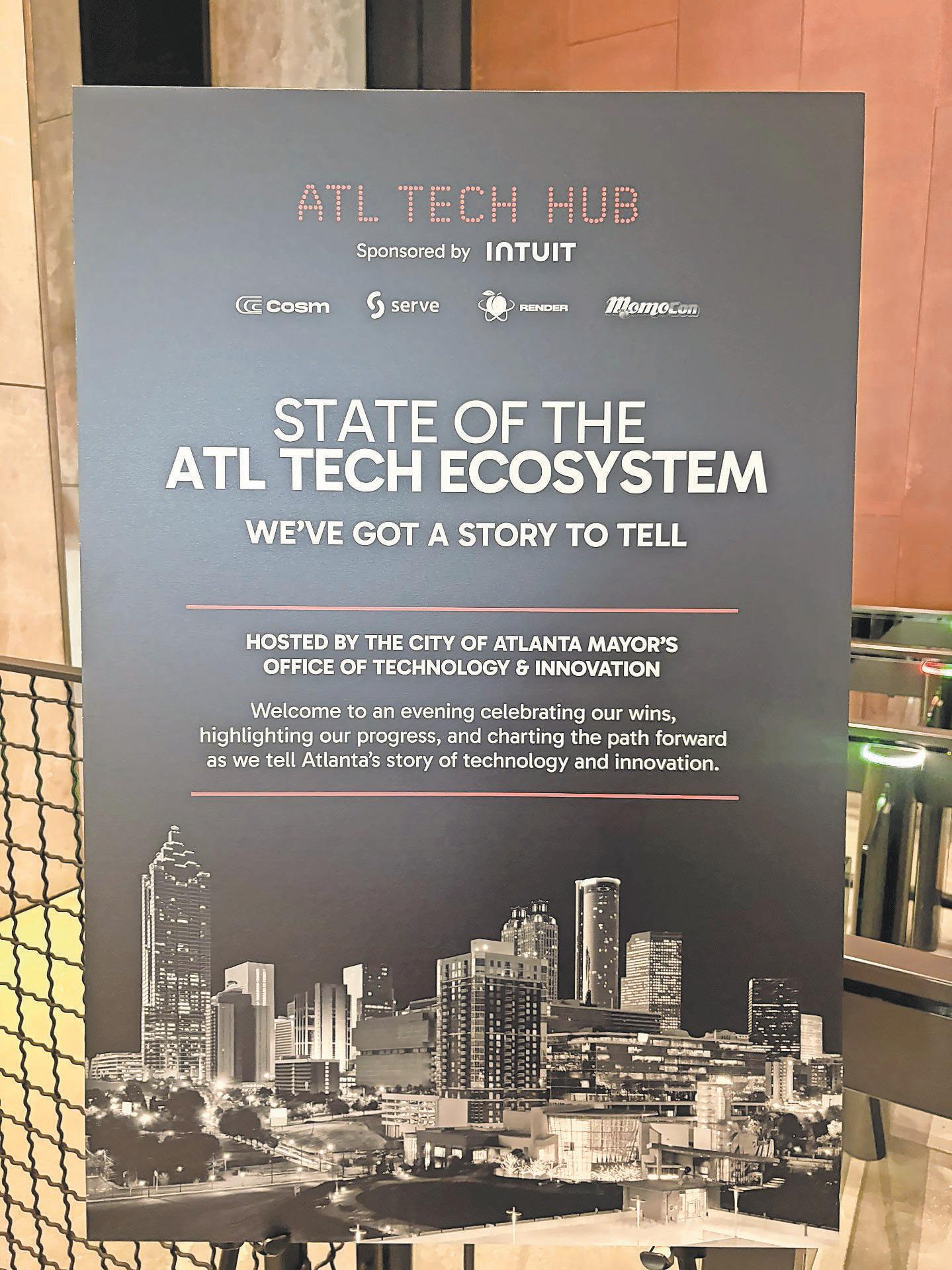
The Atlanta Tech Hub previewed its 2025 Impact Report on Wednesday at Intuit’s Midtown office, laying out a year of milestones: more than $37 million in OTI investments since the office’s inception, 1,155 organic new hires from OTI-supported companies, and $85 million in city pension capital committed to private equity and venture capital, a first for Atlanta.
“We have a stated goal to become a top five tech hub, one of the best places to build a technology company,” said Donnie Beamer, the city’s Senior Technology Advisor and head of OTI, “because it is a great way to change the outcomes for Atlanta residents.”
Beamer noted that technology jobs pay roughly two and a half times the average salary, framing the ecosystem push as an economic equity issue as much as a competitiveness one.
A 30-page study from Georgia Tech’s Office of Commercialization, previewed at the event by researcher Jon Petty,
found that Atlanta ranks in the top tier among 13 peer cities across 16 metrics spanning people, innovation, infrastructure, and place. Atlanta showed distinct advantages in general entrepreneurship and place-based factors, including airport access, commercial real estate costs, and ease of doing business. Only one of the 16 metrics reflected a relative weakness.
But the study also surfaced a significant gap. Over a five-year period, Atlanta attracted roughly $12 billion in venture capital. According to Petty’s model, the city’s ecosystem strength would move closer to $66 billion.
“This is not supposed to be negative,” Petty said. “This is actually putting a number around just how big it is, how much it’s worth for us to come together and tell that story.”
Jennifer Bonnett, who moderated the report panel, pointed to a pair of findings from an OTI founder survey: 90% of companies surveyed said they plan to hire this year, and 78% said they would build their company in Atlanta again if starting over today.
The event also doubled as a call to action on state legislation. Beamer urged attendees to contact their legislators in
support of Senate Bill 23, which would raise the alternative investment cap for Georgia municipal plans from 10% to 15%. The city currently manages $5 billion, and Beamer said movement at the state level, where the pension plan totals $120 billion, would significantly expand capital deployment.
“Every percent at the state level with their $120 billion plan completely changes the landscape,” he said.
Cox Enterprises executive Jack Semrau, whose firm has invested roughly $140 million in Atlanta startups and programs over the past decade, said the next challenge is visibility, not infrastructure.
“Atlanta is the best city in the country to build a growth-stage business,” Semrau said. “But we have quite a bit of work to do to be the best city for the little tech guy.”
Sherrod Davis, CEO of Eco Map and a co-founder of the Connect Georgia initiative, pointed to that platform, a coalition spanning the city, a university, and a network of nonprofits, as evidence of Atlanta’s front-footed approach.
“When I say Atlanta is leading from the front, when I say Atlanta is a top five tech hub, like that’s the evidence that I point to,” Davis said.
By GRACE BARLOW
Nobody warned me that studying abroad would feel like starting over. Not linguistically. I speak Spanish. I had spent years conjugating verbs, learning the cadence of Castilian, preparing to move through Madrid like I belonged. What I did not prepare for was how little any of that would matter the moment a stranger on the metro fixed their eyes on me like I was something to be decoded. Like I was the anomaly in a city that had simply never had to make room for me.
I am a Spelmanite. I say that first because it matters most. I grew as a journalist, and carried everything Spelman poured into me across an ocean to Madrid. I came here as a storyteller. And I came here as a Black woman who had spent three years at an institution that told me, every single day, that my mind was powerful and my presence was necessary. Madrid has been a test of whether I actually believed that.
The test started immediately.
Spain is not a post-racial utopia. It is a country in the middle of a fierce reckoning with race, immigration, and national identity. The far right is louder here than it has been in decades. Debates about who belongs, whose culture deserves protection, and which bodies are welcome play out in parliament and on the street simultaneously. As a Black American woman reporting on this city, I do not get to observe that debate from a distance. I am inside it whether I choose to be or not. My presence is political before I ever pick up a pen. There is a specific kind of exhaustion that comes with being one of the few. It does not announce itself. It accumulates. In the woman on the Calle Gran Vía who pivots to watch me pass. In the shopkeeper who greets every customer before me. My colleague tells me my Spanish is “tan buena para
ser americana,” or “so good for an American”, as though the surprise is the compliment. I smile. I translate the microaggression into something manageable. I move on. But I notice.
Spelman gave me a baseline of belonging that is hard to name until you leave it. On campus I was surrounded by Black women who were brilliant, driven, and unapologetically themselves. I moved through my days without performing my humanity for anyone. Madrid stripped that baseline away, and what grew in its place was something sharper. A clearer sense of who I am when the environment stops confirming it. A fiercer understanding of what it means to carry a Spelman education into a space that was not built to hold it.
And yet I would not trade this semester for anything. Because something else also happened in Madrid. I reported stories that would not have existed without me in the room. I sat with Moroccan families in Lavapiés who opened up to me in ways they might not have to someone who did not understand, in their bones, what it means to be perceived as foreign in your own city. My Blackness was not a barrier to that work. It was the credential. The world does not need fewer Black journalists with international experience. It needs more Spelman women, everywhere, with passports stamped and notebooks full.
Black students are underrepresented in study abroad programs by a wide margin and the gap is not accidental. It reflects a broader architecture of who gets imagined as a global citizen, whose curiosity about the world gets funded and encouraged, whose discomfort abroad gets treated as a footnote instead of a systemic failure. I understand why some of us hesitate. I understand the calculus of choosing rest over being a spectacle in a foreign country. But I also know what

Spelman taught me: that our presence in rooms that were not built for us is never incidental. It is intentional. It is powerful. It is necessary. The stares on the metro did not stop. The microaggressions did not disappear. The political noise did not quiet down. But I kept showing up, kept reporting, kept writing, kept speaking Spanish in rooms where people did not expect me to. Every time I did, I was making an argument with my body that no opinion piece can fully make on the page: that Black women belong in every city, every conversation, every story worth telling.
Spelman told me my presence was necessary. Madrid proved it.

FOUNDED May 11, 1966
FOUNDER/EDITOR
Ed Clayton
Immortalis Memoria
PUBLISHER/EDITOR
J. Lowell Ware
Immortalis Memoria
The Atlanta Voice honors the life of J.
PUBLISHER
Janis Ware
PRESIDENT/
GENERAL MANAGER
James A. Washington 2018-2024
EXECUTIVE ASSISTANT TO PUBLISHER
Chia Suggs csuggs@theatlantavoice.com
EDITOR IN CHIEF Donnell Suggs editor@theatlantavoice.com
GENERAL ASSIGNMENT REPORTERS Isaiah Singleton isingleton@theatlantavoice.com
Laura Nwogu lnwogu@theatlantavoice.com Noah Washington nwashington@theatlantavoice.com
BUSINESS REPORTER
Tabius H. McCoy tmccoy@theatlantavoice.com
EDITOR AT LARGE Stan Washington swashington@theatlantavoice.com
ADVERTISING, SALES & CIRCULATION
ADVERTISING ADMINISTRATOR
Chia Suggs advertising@theatlantavoice.com
SALES
RDW Jackson rdwadman@gmail.com
SUBMISSIONS
editor@theatlantavoice.com
DIRECTOR OF PUBLIC RELATIONS
Martel Sharpe msharpe@theatlantavoice.com
CONTACT INFORMATION
633 Pryor Street, S.W. Atlanta, GA 30312 Office: 404-524-6426 info@theatlantavoice.com

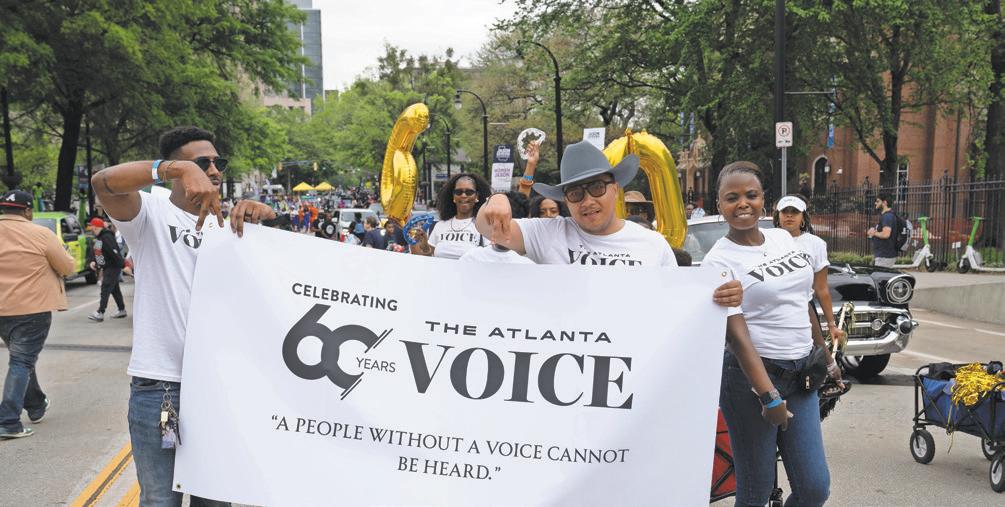
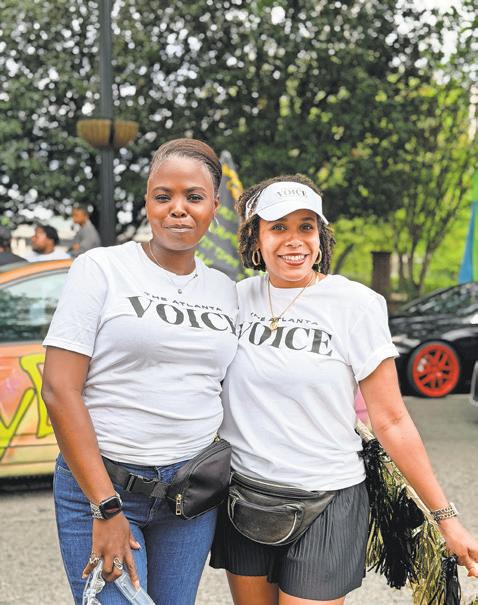
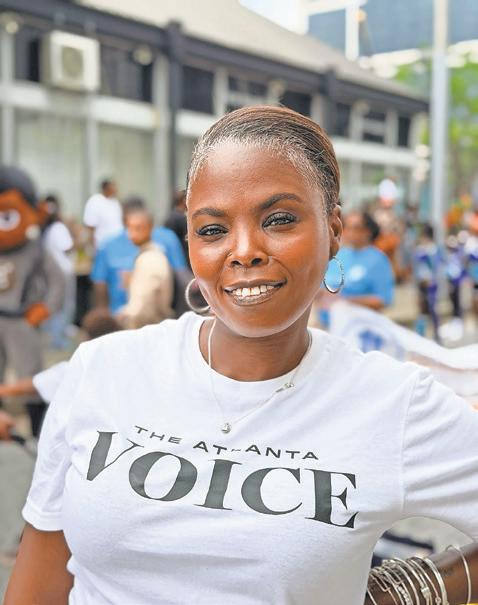
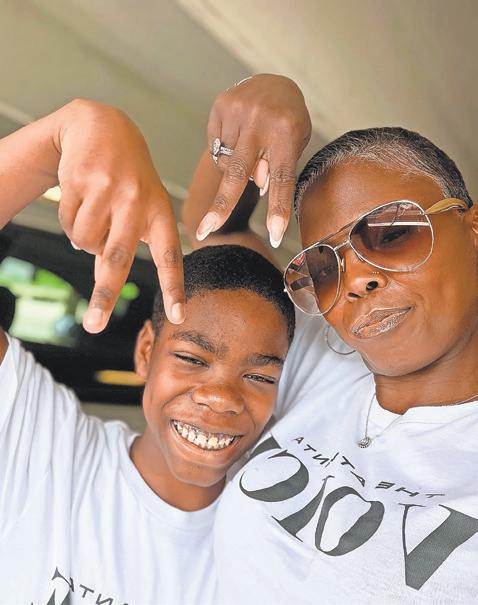
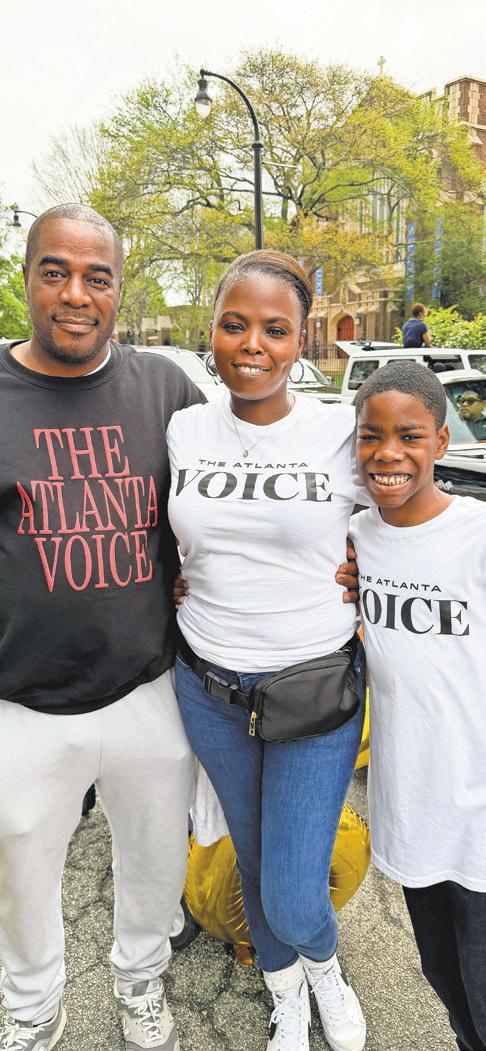
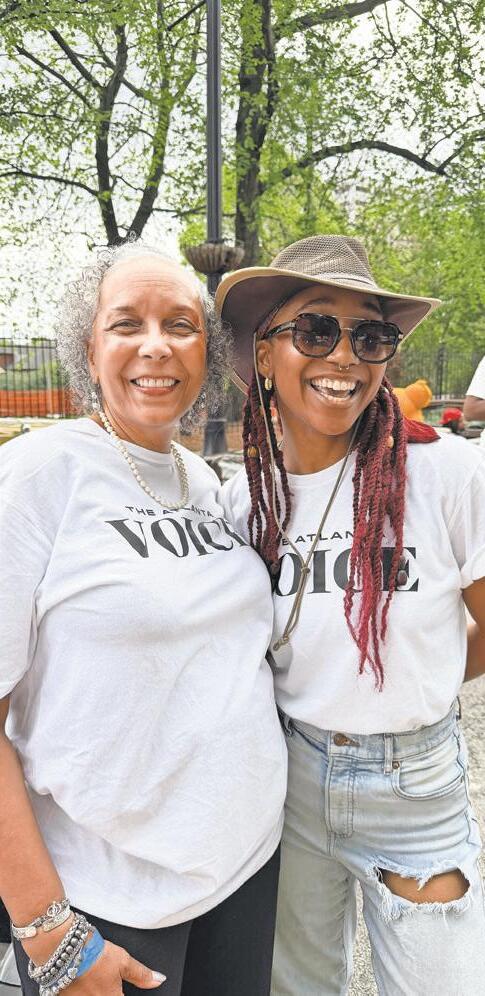
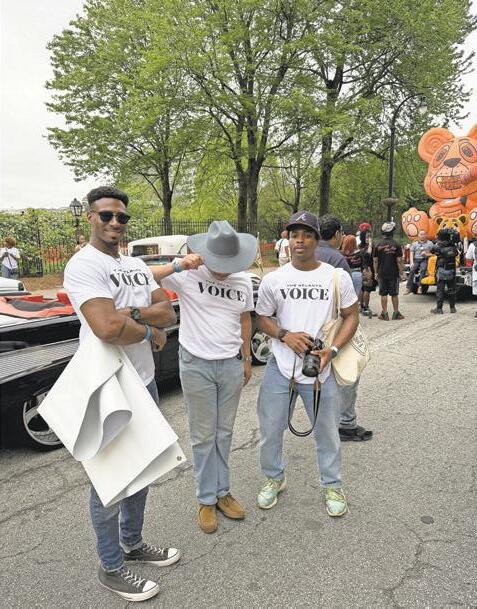
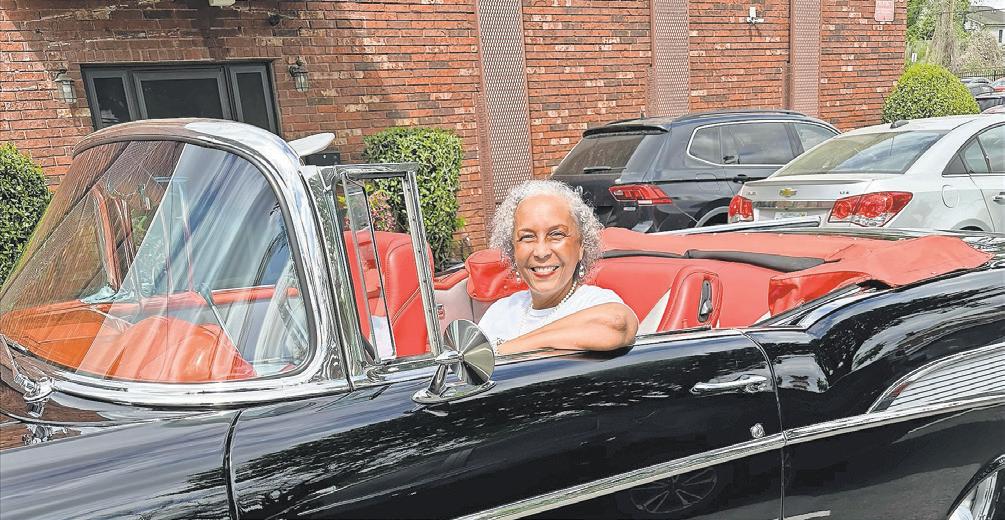
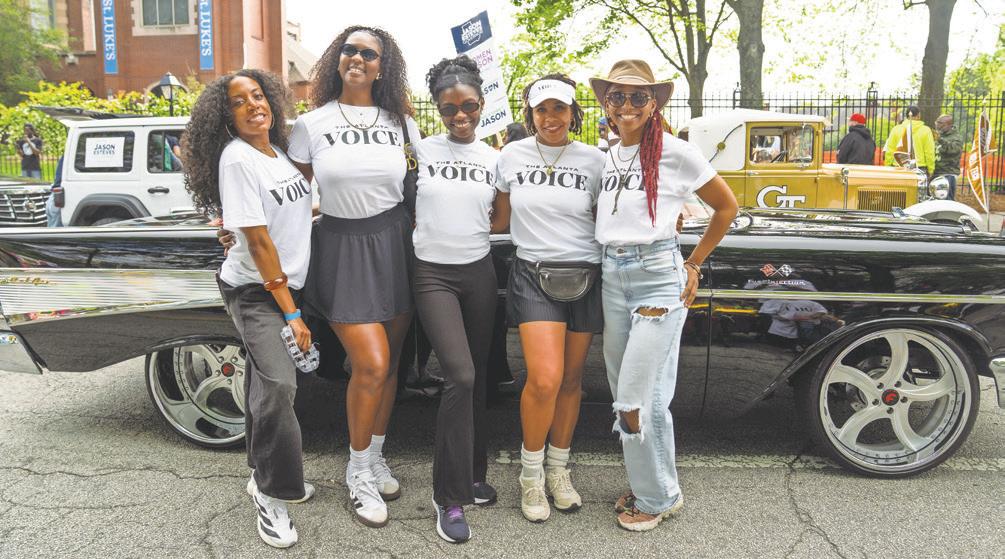
For 60 years, The Atlanta Voice has stood as a trusted voice for our community, committed to telling our stories with integrity, purpose, and pride. We extend our deepest gratitude to the city of Atlanta for its unwavering support and for allowing us to serve as a reflection of its strength, resilience, and culture.
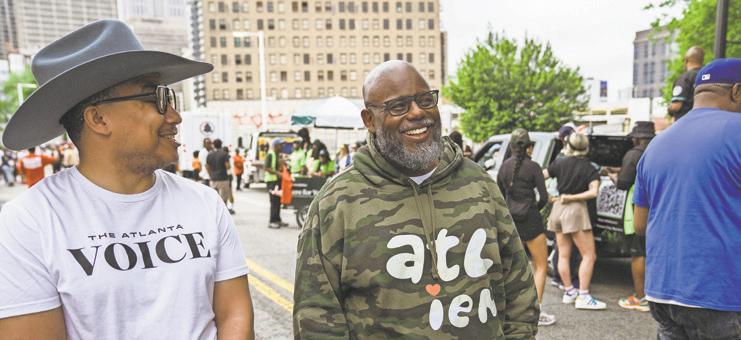
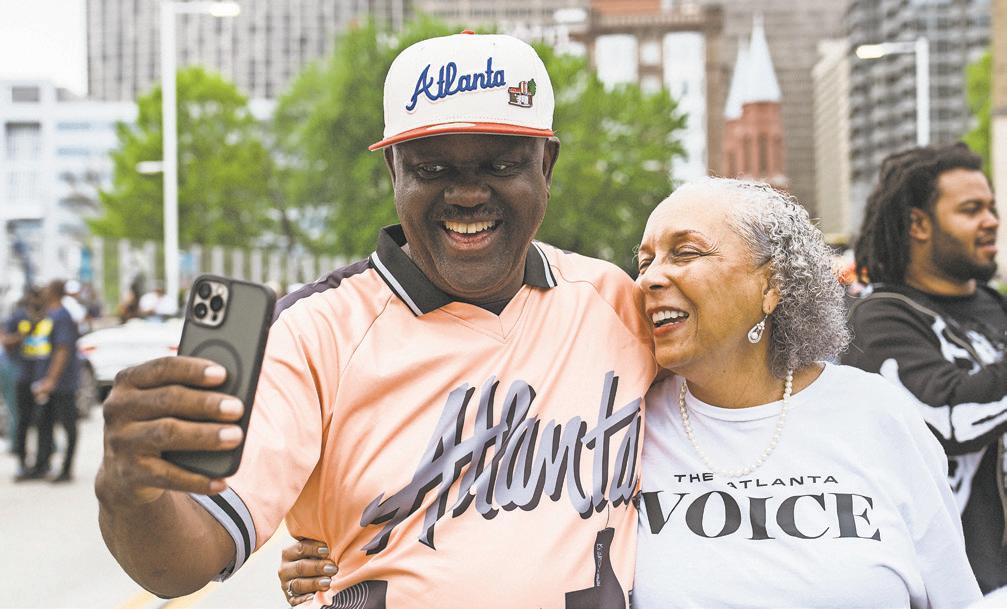
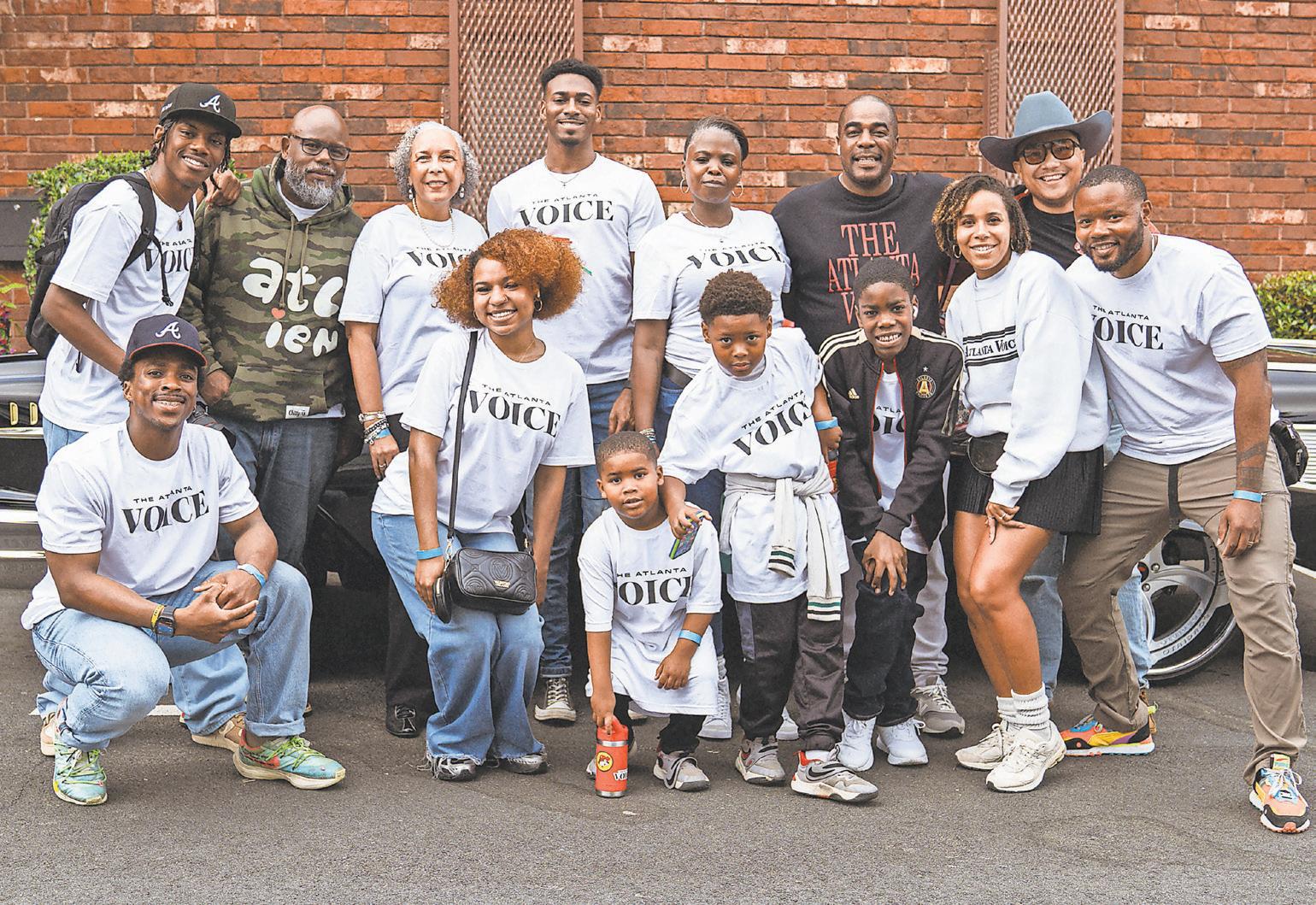
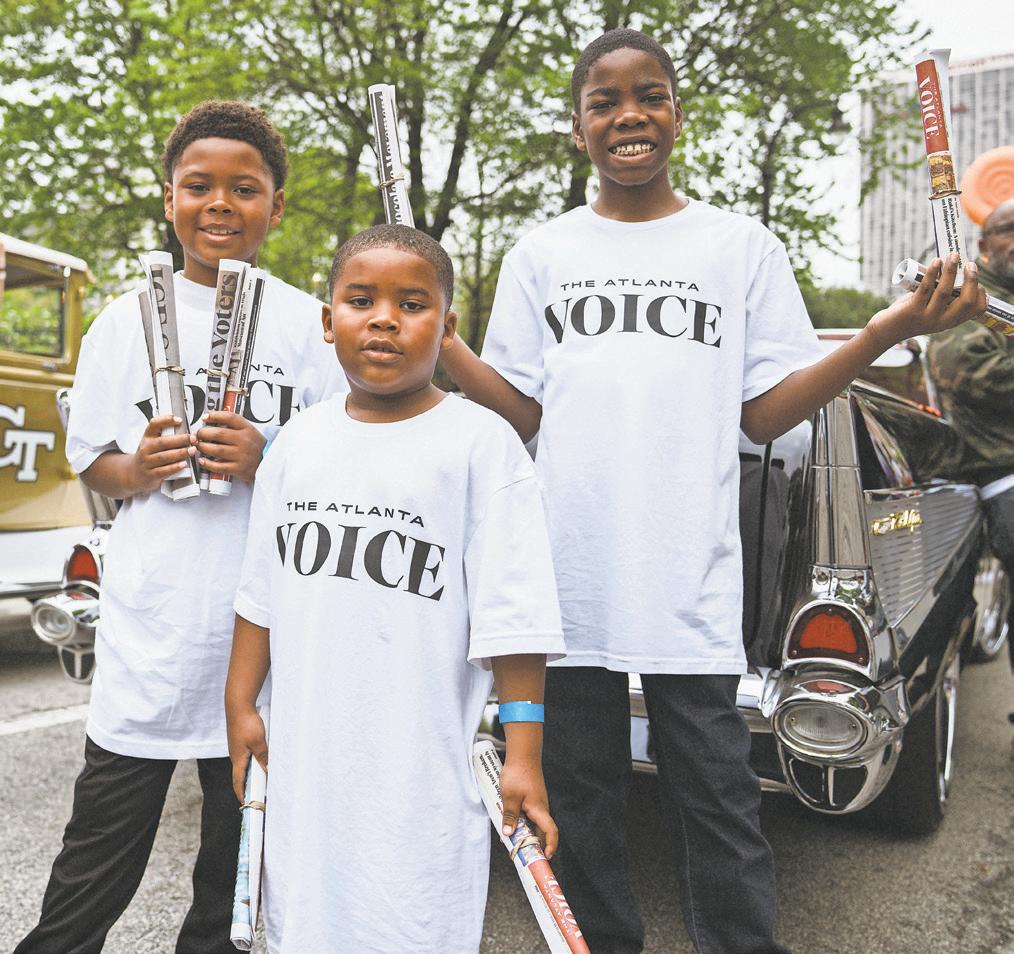
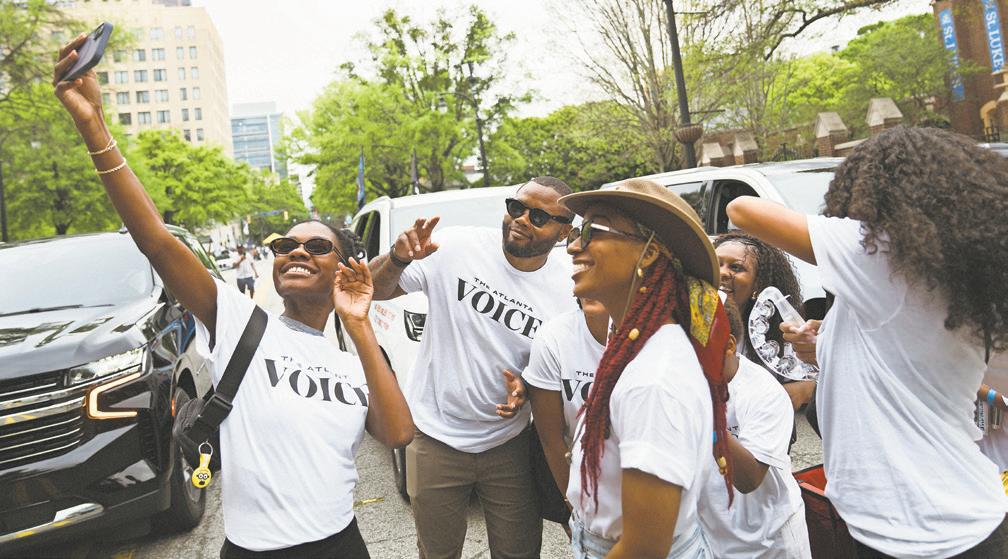
This week, we recognize the dedicated individuals who contribute to our work, including our staff and volunteers who walked alongside us during the 404 Day Parade. Their collective energy and commitment
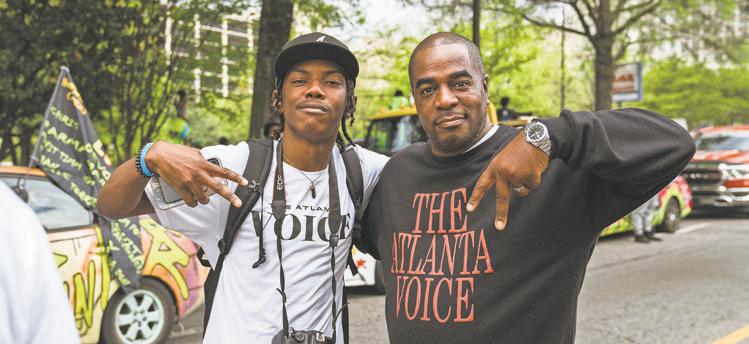

help bring our mission to life.
We were honored to take part in the 404 Day Parade, a celebration that so vividly embodies the spirit of Atlanta. The energy, creativity, and unity on display serve as a powerful reminder of why our work matters.
As we look to the future, we encourage you to remain engaged and support Black-owned media: Subscribe to our weekly print edition, sign up for our newsletters, and follow us on social media @theatlantavoice
Your continued support ensures that The Atlanta Voice remains a vital platform for generations to come.
By NOAH WASHINGTON
When Calida
Rawles was a student at Spelman College in the late 1990s, she watched as the ribbon was cut on a brand-new museum on campus and imagined one day having her work on those walls. Decades later, that moment has arrived.
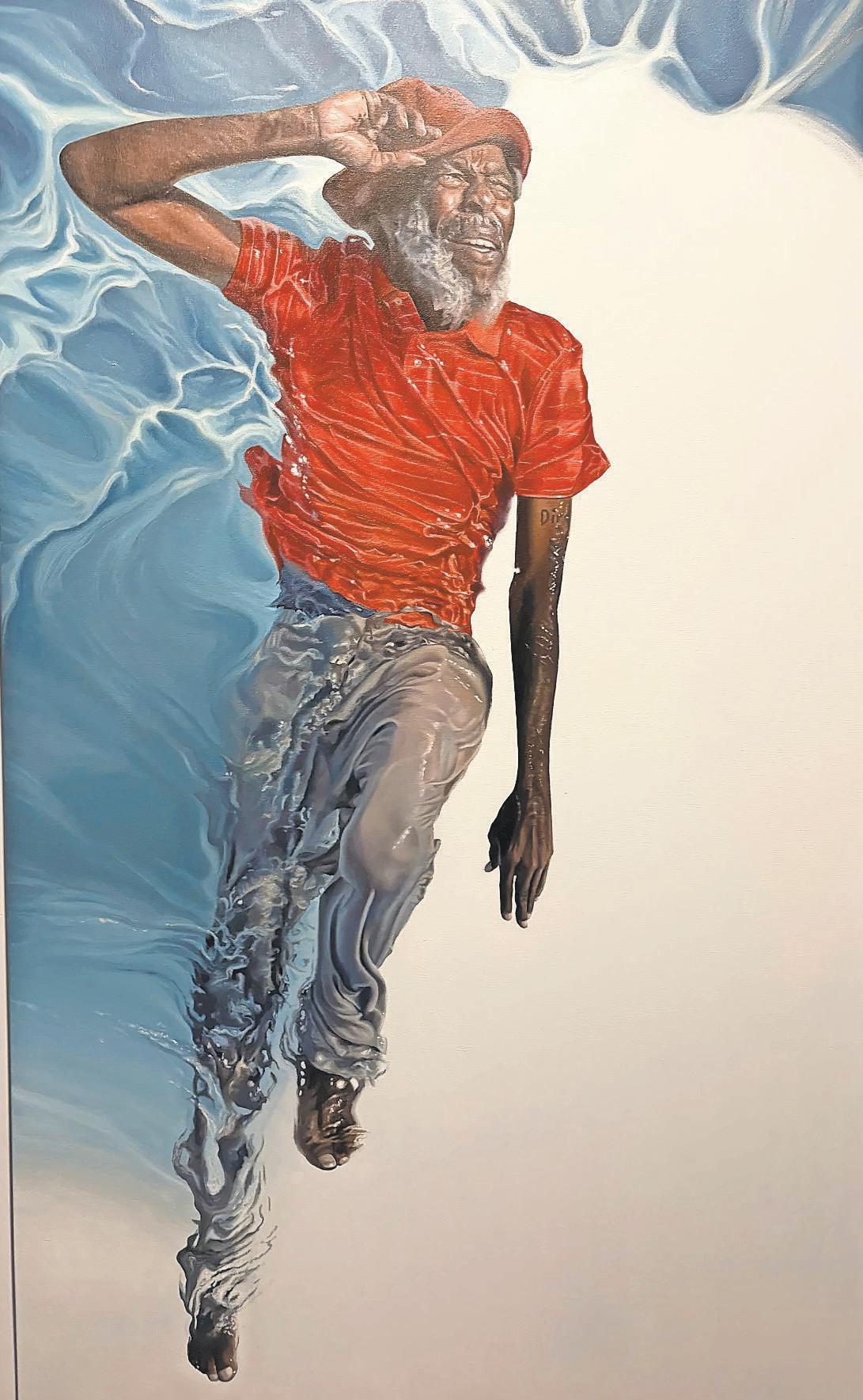
Rawles, a Spelman alumna who graduated in 1998, is the subject of “Calida Rawles: Away with the Tides,” an exhibition now on view at the Spelman College Museum of Fine Art. The show, which opened March 27 and runs through Sept. 5, 2026, features recent acrylic on canvas paintings alongside a large-scale video installation exploring natural environments and the cultural history of Miami’s Overtown neighborhood.
“I remember coming into the place and I thought, as a student, ‘Oh, I can’t wait to show my work here,’” Rawles recalled. “And they were like, ‘No, no, this museum isn’t...’ And my feelings were hurt. But now I get to show.”
The exhibition originated at Pérez Art Museum Miami in May 2024 before traveling to several venues across the country. Spelman serves as the final stop on the national tour, a detail Rawles said carries deep meaning.
Internationally recognized for her hyperrealist style and use of water as both visual subject and historical metaphor, Rawles built the works in this exhibition

through a collaborative process with residents of Overtown, a historically Black Miami community whose cultural and commercial life has been steadily eroded by gentrification and displacement. The project included photoshoots at Virginia Key Beach and the public pool at Theodore Gibson Park, with subjects ranging from a 10-monthold baby to senior citizens.
The works interrogate the Atlantic Ocean’s history as the site of the Transatlantic Slave Trade while also centering water as a space of healing and belonging for Black Americans. Rawles said she hopes the paintings spark a sense of cultural pride in the face of erasure.
“I hope they’re taking pride in their
culture, recognizing that we need to be visible and to speak on topics about our history and not allow us to be erased,” she said of Spelman students encountering the work.
Spelman Museum Executive Director Dr. Liz Andrews said she knew from the moment she saw the exhibition in Miami that it needed to come to Spelman. Andrews noted that Rawles, trained as a painting major at Spelman, is now among the most prominent artists working today, with her work shown in London, Los Angeles, New York and beyond.
“I hope that they see themselves in her, whether they are artists themselves or curatorial studies or even business,” Andrews said, “just seeing that persistence,

honing your talents, doing your research, those things can pay off really beautifully.”
The exhibition also carries a personal dimension for at least one member of the Spelman community. Skye Rawles, the artist’s daughter and a junior art history major and curatorial studies minor at Spelman, who also works at the museum, said seeing her mother’s work displayed on campus is a convergence she did not fully anticipate.
“It’s a whole combining of worlds for me right now,” she said.
Growing up surrounded by her mother’s art, Skye said the decision to attend Spelman, where Calida Rawles graduated in 1998, felt like a natural one. She has been attending Spelman homecomings her whole life, and the school’s art history program, one of the strongest in the country, sealed it.
“I’ve been raised around a lot of art, and that’s always been something I’ve been really interested in and familiar with,” she said. “I love history, and I love art, so it felt like the perfect combination.”
Skye said she plans to encourage her peers to visit the exhibition, even those who do not typically seek out art galleries, because the work speaks to something larger than aesthetics.
“It brings up important history about Black history,” she said. “Even if you were not really familiar with art or go to exhibits very frequently, it’s something worth checking out for so many other reasons.”
The exhibition is accompanied by a catalog featuring curator Maritza M. Lacayo of Pérez Art Museum Miami, alongside collaborators Regina R. Robertson, Christine Y. Kim and Enuma Okoro. The presentation at Spelman is organized by Andrews with support from Dr. Brandy Pettijohn, Curator of Exhibitions, and Ming Washington, Roy Lichtenstein Post-Baccalaureate Fellow.
For Rawles, the exhibition closing out its national tour at her alma mater feels less like an ending and more like a full-circle moment she quietly willed into existence decades ago.
“It feels so good to be home,” she said.
By DONNELL SUGGS
The FIFA World Cup will begin in just over two months. On Saturday, April 4, downtown Atlanta was full of people walking the streets, riding scooters, eating at restaurants, taking part in day parties, enjoying the Atlanta Beltline, and the city’s parks. The traffic, already a major issue on the weekends, seemed a bit worse, if that’s possible. The summer hasn’t officially begun, and dirt bikes, four-wheelers, and old school Chevys crawled down Peachtree Street reminiscent of Old Atlanta. Last weekend, there were several shooting incidents that took place within city limits. The shooting death of a 16-year old girl, Tianah Robinson, resulted in Atlanta Mayor Andre Dickens, Atlanta Police Department (APD) Assistant Chief Carven Tyus, APD Major Peter Malecki, Atlanta City Council President Marci Collier Overstreet updating the public on the incidents that occurred over the Easter weekend. During the press conference the Mayor and assistant chief both addressed the recent violence and the rash of “teen

takeovers” in the Atlanta area. Is Atlanta prepared for a possible teen takeover somewhere downtown during the World Cup?
Starting on June 15, with Spain and Cabo Verde, on eight separate days during the summer, FIFA World Cup matches will take place in Atlanta, and the world will be here to support national teams from across Africa, North America, the West Indies, the Middle East, and Europe. Thousands of fans will be in
Mercedes-Benz Stadium, and thousands more will be in the city just to take part in the festivities.
The 2022 FIFA World Cup in Qatar was one of the best-attended in the tournament’s history. More than three million people attended the 64 matches in 2022. The exact figure of 3,404,252 leaves the Qatar World Cup as a complete success. Now, Atlanta will not have to shoulder the burden of hosting the entire World Cup, not with its North American brethren,
Canada and Mexico, on board. That said, eight matches, including one of the tournament’s semifinal matches, is a heavy load for the City Too Busy To Hate.
Atlanta United’s training grounds were busy during the international break last week as the United States National Team used the facility to prepare for a pair of friendlies against Belgium and Portugal. Those friendlies, both losses, were played in front of capacity crowds last month. If a friendly can bring a capacity crowd downtown during the week, and not just on a weekend (the Portugal match took place on a Wednesday night), what will match days and nights look like when the sport’s most important trophy is on the line?
The match with Belgium drew 66,867 fans, and the Portugal match, as expected, drew even more through the gates: 72,297. Both countries will be participating in the upcoming FIFA World Cup. The question many should be asking is if we are ready for what’s to come. Atlanta United remains extremely popular and has led Major League Soccer in attendance multiple times. The crowds inside Mercedes-Benz have been nearly
twice as large for international matches as for regularly scheduled Atlanta United matches.
For example, the most recent Atlanta United match at Mercedes-Benz Stadium was on 404 Day. The attendance for the game was just over 34,000, half the number of people that attended matches that don’t even count.
A block away from Mercedes-Benz Stadium on Mitchell Street, which dissects the South Downtown neighborhoods in the shadow of the massive stadium, a thick red bus lane has been painted. The lane runs all the way to the State Capitol, makes a right turn and ends right before the entrance to I-75. The lane is new, along with new bus stops, new murals (See: new public art installation at Freedom Park), new restaurants (See: Casi Cielo), and the reduction in the unhoused sleeping on the streets (See: the underpasses near I-75 and I-20, but not in front of the Gateway Center on Pryor Street).
Improvements on the surface (and in this case on surfaces) are being made in anticipation of what should be the most attended World Cup ever. Is Atlanta ready?
By LAURA NWOGU
Black Maternal Health Week is from April 11 to April 17, and Emory Decatur Hospital is hosting its third annual resource fair on April 15 from 11 a.m.-2 p.m. to bring the community together in amplifying Black-led solutions to improve maternal health outcomes. The event will feature 20 Black, female-owned businesses in the maternal health space, including doulas and lactation consultants, mental health professionals, and pilates and yoga instructors. Food demonstrations and samples will also be available, providing high-density, high-protein, and high-fiber options for women who are pregnant and nursing. Emory Decatur will gift a bag of fresh produce to the first 100 registered attendees.
The annual Black Maternal Health Week campaign will celebrate its 10-year milestone in 2026, honoring a decade of building awareness, activism, and community to amplify the voices, perspectives, and lived experiences of Black mothers and birthing people. This year’s theme is “Rooted in Justice and Joy,” and Michelle Kitchens, the director of women and infant services at Emory
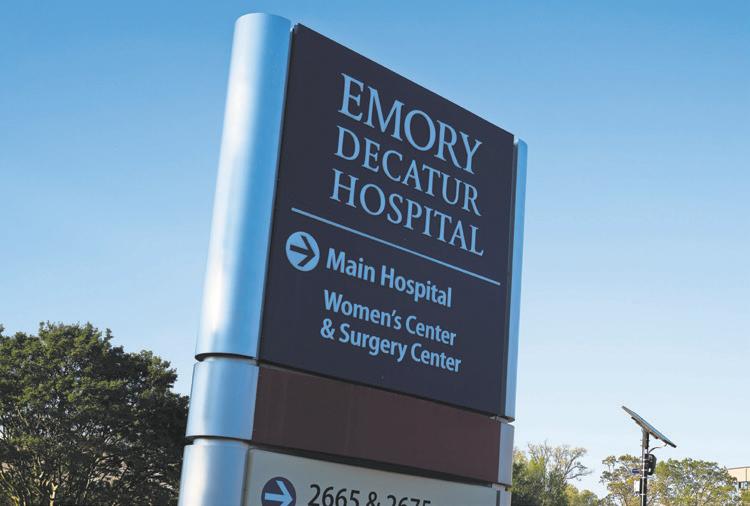
Black Maternal Health Week is from April 11 to April 17, and Emory Decatur Hospital is hosting its third annual resource fair on April 15 from 11 a.m.-2 p.m.
Decatur, said it’s about celebrating the good work happening outside the hospital in the maternal health space.
“We want to celebrate and empower these Black business owners who are doing the work once the patients get home, or before they even get to the hospital, and create partnerships and bonds with these community members,” Kitchens said. “This is our third time doing this vendor
fair, and it has opened up a lot of doors for doulas who know that this is a safe place for them to bring their patients, that it’s not going to be an adversarial relationship when they get here. And for lactation consultants who need referrals, for patients who are going home and might need that support outside the hospital. So, it’s been a winwin for both sides.”
As of 2025, Georgia has the second-highest maternal mortality rate in the U.S., with Black women over three times more likely to die from pregnancy-related causes than white women. According to the U.S. Centers for Disease Control and Prevention, 80% of pregnancy-related deaths in Georgia are preventable. Health and economic disparities, systemic racism, and Georgia’s six-week abortion ban are just some of the issues that have substantially affected the Black maternal health crisis. Kitchens highlighted the importance of Black Maternal Health Week and the Emory Decatur resource fair in educating the communtiy of these glaring disparities.
“It really gives us an opportunity to highlight the role of systemic and institutional racism, bias in health care, and disparities in access. Forty
percent of Black moms experience some kind of maternal mental health condition during or right after their pregnancy, which is nearly twice the rate of the general population. And so we strive to make sure that we have some mental health professionals at this vendor fair that are Black women and have experienced this in their own community, so that they can feel that this is more normalized and not something to just kind of brush under the rug, but seek treatment for.”
Along with campaigns and calls to action such as Black Maternal Health Week, Kitchens noted public policies aimed at improving Black maternal health. The Black Maternal Health Momnibus Act is a package of 13 bills designed to comprehensively address the maternal health crisis in the U.S. through investments in housing and nutrition, expanding the perinatal workforce, improving data collection, and supporting mental health. She also encouraged those looking for more ways to get involved to attend advocacy days at the Georgia State Capitol, as local advocates work to get Georgia douas paid by Medicaid and to ensure patients have access to midwifery care outside of having a doctor.
By ISAIAH SINGLETON
After years of caring for 1,000 patients in the traditional healthcare system, Dr. Lindsey Beauboeuf experienced physician burnout firsthand. Once she had time to heal, she built the practice she wished existed: MOZAÏK Lifestyle Medicine.
MOZAÏK is a boutique Direct Primary Care practice with a lifestyle medicine lens, focused on real-relationship-type services where everyone is welcome.
“I loved working with patients [at my previous job], but because it was a fee-for-service and traditional conventional care, there was not a lot of wiggle room for me to provide the relationship-based, thorough, personalized care that I wanted to offer my patients,” she said.
The goal at her earlier job, she said, was to see as many people as possible in the shortest amount of time to generate revenue, which burned her out. While handling as many patients as possible, she was stretched thin between her family home burning down in Haiti, and then her best friend was diagnosed with cancer, who is now cancer-free.
Once she quit her job, Beauboeuf said she would never practice medicine ever again because she didn’t sign up for profit over people.
“During that time, I felt like it was a big sacrifice because I really love being a doctor,” she said. “I began to question why God would make me go through medical school and all the hazing for me to just stay home and not practice what I love to do.”
So, Beauboeuf decided to embark on a spiritual journey, praying and fasting. No food, just water for three days, and when it was finished, she felt called to open her own practice.
“I did not want to do it because that was never in my plans, and opening a practice means a new business,” she said. “If you know about opening a business, it’s a lot. Entrepreneurship is not for the birds, but if God tells you they got you, you say yes, and you trust.”
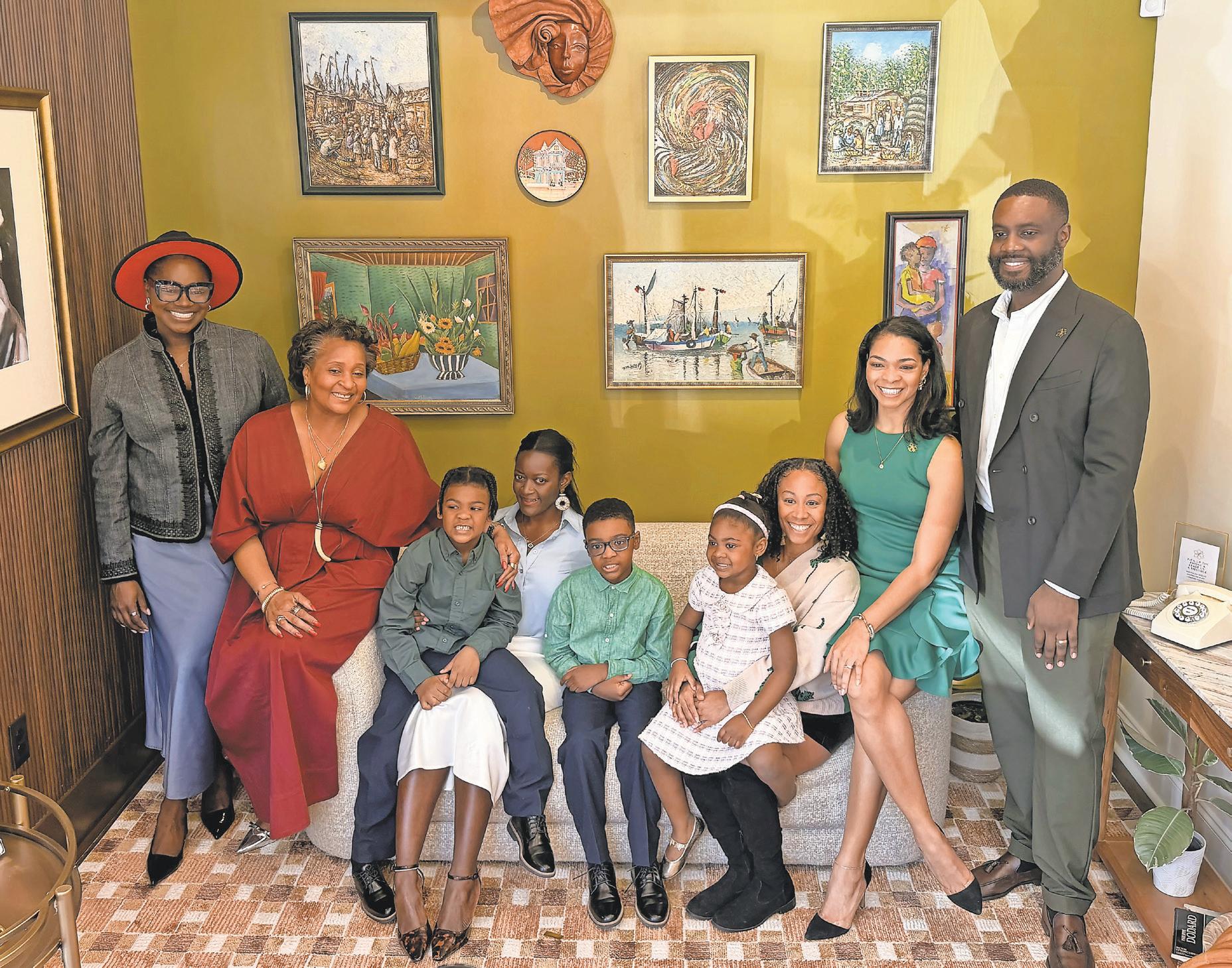
On March 24, Beauboeuf
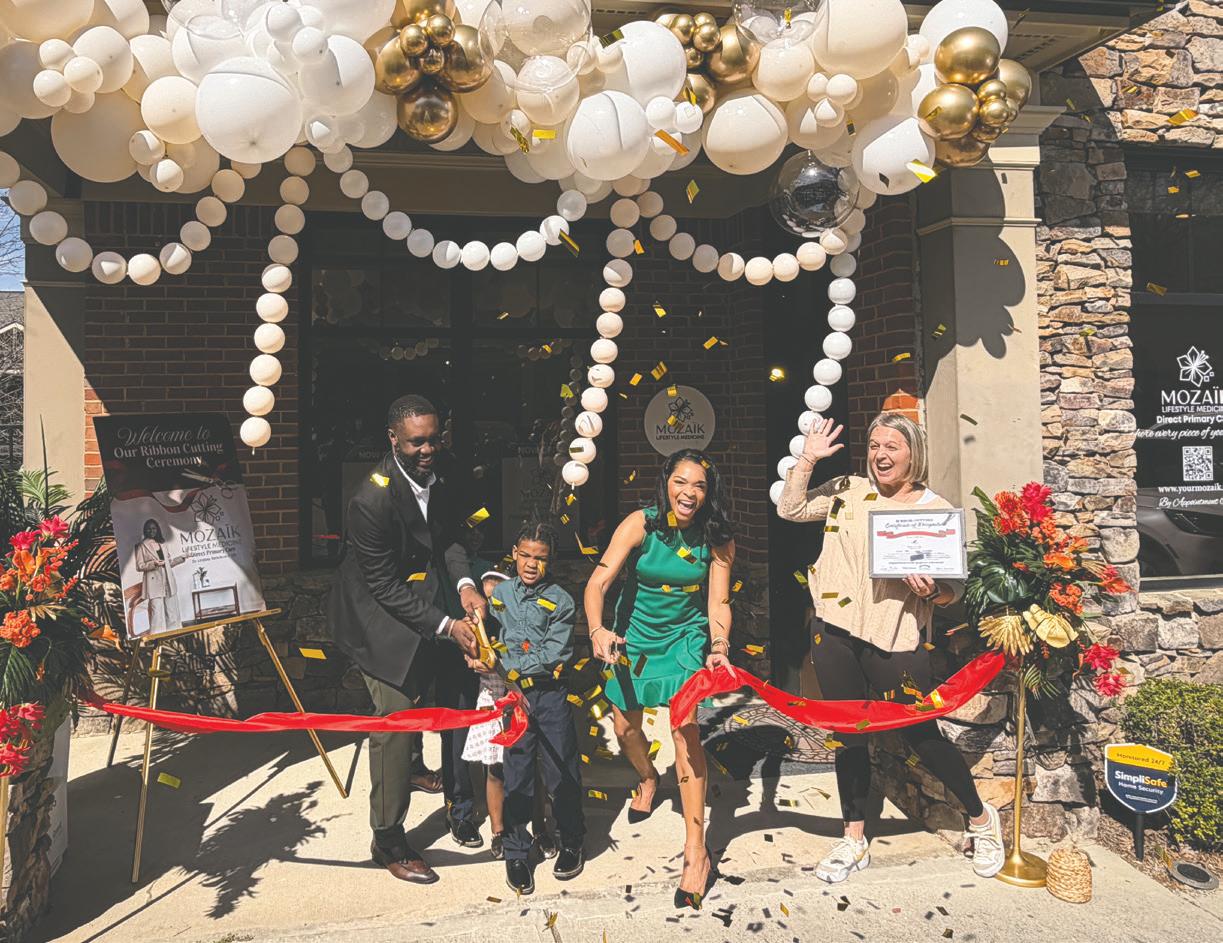
celebrated the official ribbon-cutting of MOZAÏK in Smyrna.
“Reflecting on the ribbon cutting, I felt this deep gratitude mixed with deep joy,” she said. “It’s like receiving a gift you know
you want, but don’t think that it will really happen for you. I’m still in awe seeing my kids cut that ribbon and my baby saying, ‘I want to come to MOZAÏK and make people feel better’”.
Additionally, Beauboeuf says her office may be in Smyrna, but her community is everybody in Georgia who can come to the clinic. The work she is doing at MOZAÏK is important because, as a doctor herself, she felt she had to check her identity at the door, Beauboeuf said.
“I couldn’t be my full Haitian self nor my full Christian self. I couldn’t be my whole black self. When I walked into the exam room, there would be this silent expectation that you needed to conform and adapt and be a certain way,” she said. “I wanted to show you can get great care without having to live a double life. I just want to make sure people know they are welcomed as they are and they will always be cared for without judgment and with love.”
Also, in five years, Beauboeuf says she sees MOZAÏK as a flagship of what it can be nationally and even globally, gearing towards real relationship-based, true primary care.
“I want this to be something that other physicians and other doctors look at and realize this might be a new standard for primary care,” she said. “This might be the way you know care should be given, where primary care is self-care. I want people to look forward to going to their primary care doctor’s appointment and engaging with the health care system and not feel like they are going to be treated like a number.”
With MOZAÏK being her first business venture, Beauboeuf says she’s still figuring out entrepreneurship herself. For advice to aspiring entrepreneurs, she says, even if you’re building a business that already exists, it’s about the way you build it.
“Build it as it has never been done before. My biggest advice is to not feel discouraged when things don’t go the way that you imagine they would go,” she said. I want people to take a risk and take a chance on themselves, and if you fall, it’s not failure. If God put that dream in your heart, it is okay to fail forward; success is a point of view. You will reach that success.”
By LAURA NWOGU
Part of Atlanta’s charm lies in its diverse food scene, from the rich culture to the bold flavors. The saying often goes that “Atlanta isn’t a real place,” and what makes it unique is the bustling dining and drinking spots on every corner of the city’s neighborhoods, built to satisfy every palate. Lucky for locals and tourists alike, there’s never a shortage of places to visit, especially when new businesses are rolling in every month. Here is a roundup of updates on your local favorites and recently opened restaurants.
Brew Dog - 112 Krog St NE, Atlanta, GA 30307
A wave of surprising closures has hit the Atlanta area in the past few weeks, with many restaurants and local favorite shuttering their doors with little notice. Brew Dog on the BeltLine announced that it had served its final beer on March 8, after
a weekend where locals and visitors packed the bar, specializing in the Scottish brewery’s craft beers. The Krog Street bar had been open for four years and announced on Instagram that they were “incredibly grateful to everyone who joined us.”
Mojave - 6450 Powers Ferry Rd NW, Sandy Springs, GA 30339
Mojave in Sandy Springs announced its immediate closure on March 8 after seven years of business. The restaurant was known for its Latin American cuisine, with dishes such as house-made tamales and paella. The owners, Rainer and Lana, wrote on Instagram, “Restaurants come and go, but the memories we make around the table last forever. Thank you for being part of ours. With love.”
Agave - 242 Boulevard SE, Atlanta, GA 30312
After 25 years, Agave closed its doors at the end of January. Known for its Southwestern fare, the family-owned restaurant became a
community favorite for different generations of family and friends. The owners cited the “current economic climate and unsustainable conditions” as the reason for the closure.
In an Instagram post, the owners wrote, “We want to express our deepest gratitude for your unwavering support, laughter-filled dinners, and the privilege of being part of your celebrations and everyday moments for a quarter of a century. You have been more than customers; you have become an extended part of our family, and we will forever cherish the memories made within these walls. Thank you for the honor of serving you at the original and first Agave in the country.”
Recently-opened restaurants
Casi Cielo - 405 N Angier Ave NE suite 120
Oaxacan food is becoming a fixture in Atlanta, and Casi Cielo is the latest restaurant to bring the flavors of Mexico to Atlanta. Casi Cielo celebrated
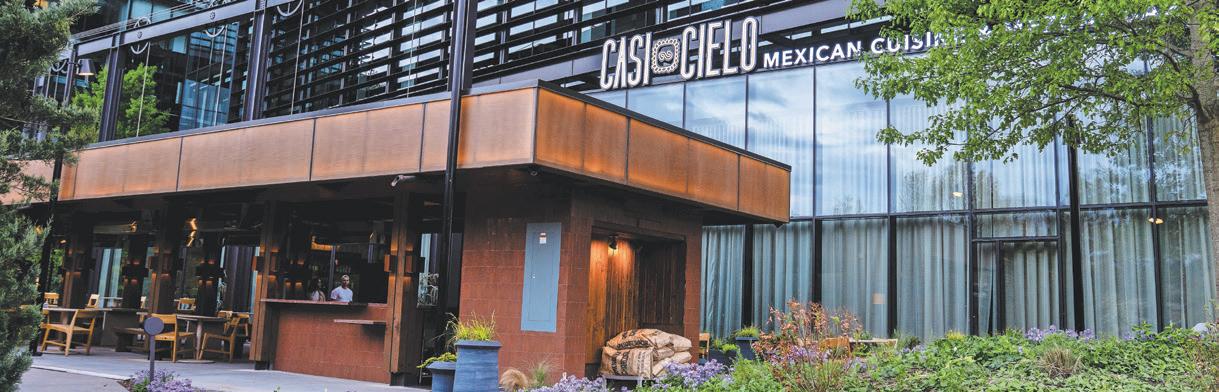
its grand opening on the BeltLine on March 23, marking its second location after its Sandy Springs restaurant. With a gorgeous, open-air layout, it’s combining fine dining with Oaxacan-inspired dishes, with ingredients sourced locally in Atlanta.
Guests can expect a collection of smoky mezcal, one that Casi Cielo calls the “largest Mezcal collection in Atlanta.” They can pair it with featured dishes such as tacos, mixteco poblano, pollo coloradito, and roasted beef bone marrow.
Hours: Monday - Thursday, 11:00 a.m. - 10:00 p.m.; Friday - Saturday, 11:00 a.m. - 11:00 p.m.; Sunday: 11:00 a.m. - 9:00 p.m.
Rosso - 931 Monroe Dr. NE Spring is the perfect season to
enjoy a glass of wine or an Aperol spritz and a plate of pasta on a patio, and Rosso just opened on Monroe Drive to give Atlantans the perfect spot to do just that. The newest Italian spot in the city is serving up a variety of dishes, from spicy lumache alla vodka and clams to eggplant rollatini and cheesy garlic bread. Its intent is to create a warm environment, similar to a lively family table, while guests enjoy plates of whole fish, crudo, handmade pastas, and coastal Italian dishes. The restaurant is celebrating its grand opening week from March 25 to March 29.
Complimentary valet is available.
Hours: Wednesday-Thursday, Sunday, 4-9 p.m.; Friday-Saturday, 4–10 p.m.



By DONNELL SUGGS
The Atlanta Braves are back from the West Coast (Arizona and Los Angeles) and are returning to Truist Park for six games in six days against the Cleveland Guardians and Miami Marlins. The Braves started the 2026 season by playing 13 games in 13 days before getting a well-deserved day off on Thursday, April 8.
During the first two weeks of the season, there have been bright spots and not-so-bright spots. The pitching has been better than expected with Bryce Elder, Grant Holmes, Martin Perez, and Reynaldo Lopez pitching well during their starts, respectively. As expected, Chris Sale, the staff ace, currently 2-1 following a rough third start of the season and a loss in Los Angeles against the Angels on Monday, has remained the star of the rotation.
The offense, however, has been up and down. The same team that scored 17 runs during their first game of the series in Arizona managed to lose the final two games of that series and leave dozens of runners on base in the process. On Monday night, in the first game against the Angels, the Braves only managed to score two runs on solo home runs from Drake Baldwin (5
Braves hosted their annual hill neighborhood on Wednesday afternoon. Dozens of people made their way down Georgia Avenue to enjoy food, buy Braves swag from a merchandise truck, and sign up
bles and wore the free red Braves t-shirts they picked up from a table
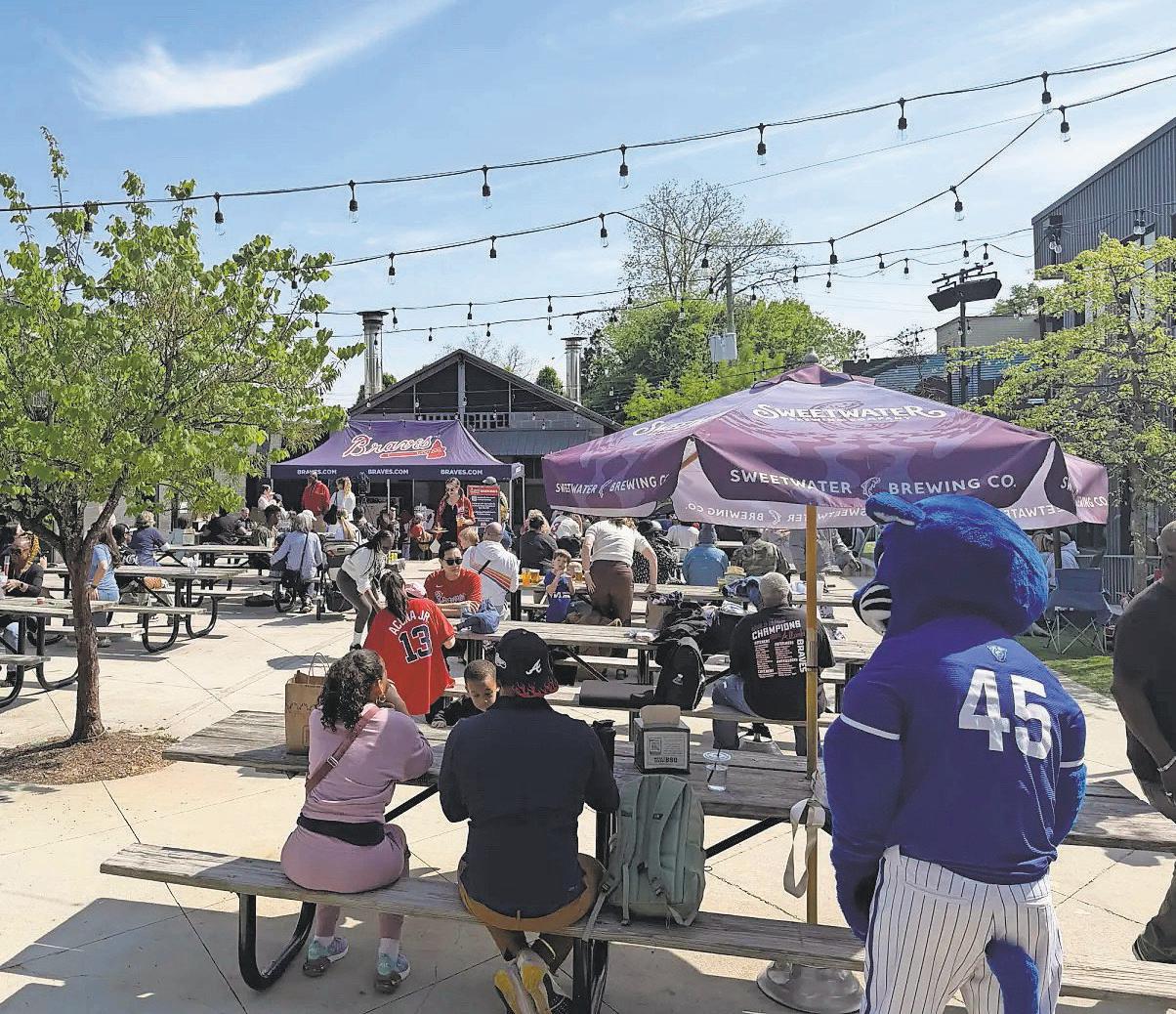
Atlanta Braves fans enjoy the annual block party in Summerhill on Wednesday, April 8, 2026.
loaded. Those runs tied the game at two, before the Braves scored three runs in the third and two in the fifth. The runs in the fifth came off of a double from Dubon that made the score 7-2. Holmes pitched better later in the game, holding the Angels scoreless in the third, fourth, and fifth innings. The Braves won 8-2 while Holmes went 6.2 with six strikeouts, giving up just those two runs and five hits. It was easily his
The block party took place two blocks away from the former home of the Braves, which was once known as Turner Field, and is now home to Georgia State University’s football games, Center Parc Credit Union Stadium. Wednesday was the 52nd anniversary of Hank Aaron’s Major League Baseball record-breaking 715th home run on April 8, 1974. The late Aaron hit that home run in what was then known as Atlanta-Fulton County Stadium.
By DONNELL SUGGS
One of the WNBA’s most popular players is coming to Atlanta. Former LSU star, social media darling, and two-time WNBA all-star forward Angel Reese was traded to the Atlanta Dream on Monday, April 6, 2026. The Dream sent a pair of first-round picks (2027, 2028) to the Chicago Fire for Reese, a polarizing figure in the world of women’s basketball.
For the Atlanta Dream, the addition of one of the league’s best offensive rebounders will have
an immediate impact on the roster. Reese averaged 5.1 offensive rebounds per game last season. Her overall numbers were equally as impressive: 14.7 points, 12 rebounds, 3.7 assists, and 1.5 steals in 31.6 minutes per game for the Sky.
The Dream’s front court gets bigger and more athletic with the 6-3 Reese. The addition of Brittney Griner (5.2 rebounds, 1.2 blocks per game in 39 games last season) before the start of the 2025 season added a veteran center and fan favorite to a team that already had quality players and all-stars like Rhyne Howard, Naz Hillmon, Brionna Jones, and
all-league selection Allisha Gray (18.4 points, 5.3 rebounds, and 3.5 assists per game last season).
The Dream will begin the preseason on Sunday, May 3, against the Washington Mystics at Gateway Center Arena in College Park (3 p.m.). The regular season will begin on a bigger stage when the Las Vegas Aces, the reigning WNBA champions, come to Atlanta for the Dream’s season opener at State Farm Arena on Sunday, May 17 (3 p.m.).
Reese played well against Las Vegas last season, averaging 10.2 points and 15 rebounds per game.

By ISAIAH SINGLETON
Mixing the candid storytelling of George M. Johnson’s All Boys Aren’t Blue with the accessible and intersectional psychology of Dr. Rheeda Walker’s The Unapologetic Guide to Black Mental Health, licensed marriage and family therapist Thomas Lee says he is on a mission to fill a space on the shelf that’s still way too empty: mental health education for the Black community.
With his new upcoming book, The Miseducation of Thomas Lee Crockett: A mental health love letter to the black community, Lee says this is not some abstract psychology textbook written by an old white man a hundred years ago, but instead, this is therapy by, about, and for the Black community of today.
Each chapter, he says, blends mental health terms, cultural references, and lessons learned from Lee’s own life: growing up in Mississippi in a toxic family, losing his mother to a lengthy battle with cancer, working in spaces steeped in white supremacy, wrestling with homophobia and misogyny to be his authentic self, and eventually finding his place in all of it, as a mental health therapist determined to bring love, hope, and wellness to the Black community.
The Atlanta Voice spoke to Lee about his new memoir, the importance of therapy in the black community, advice for Black LGBTQ+
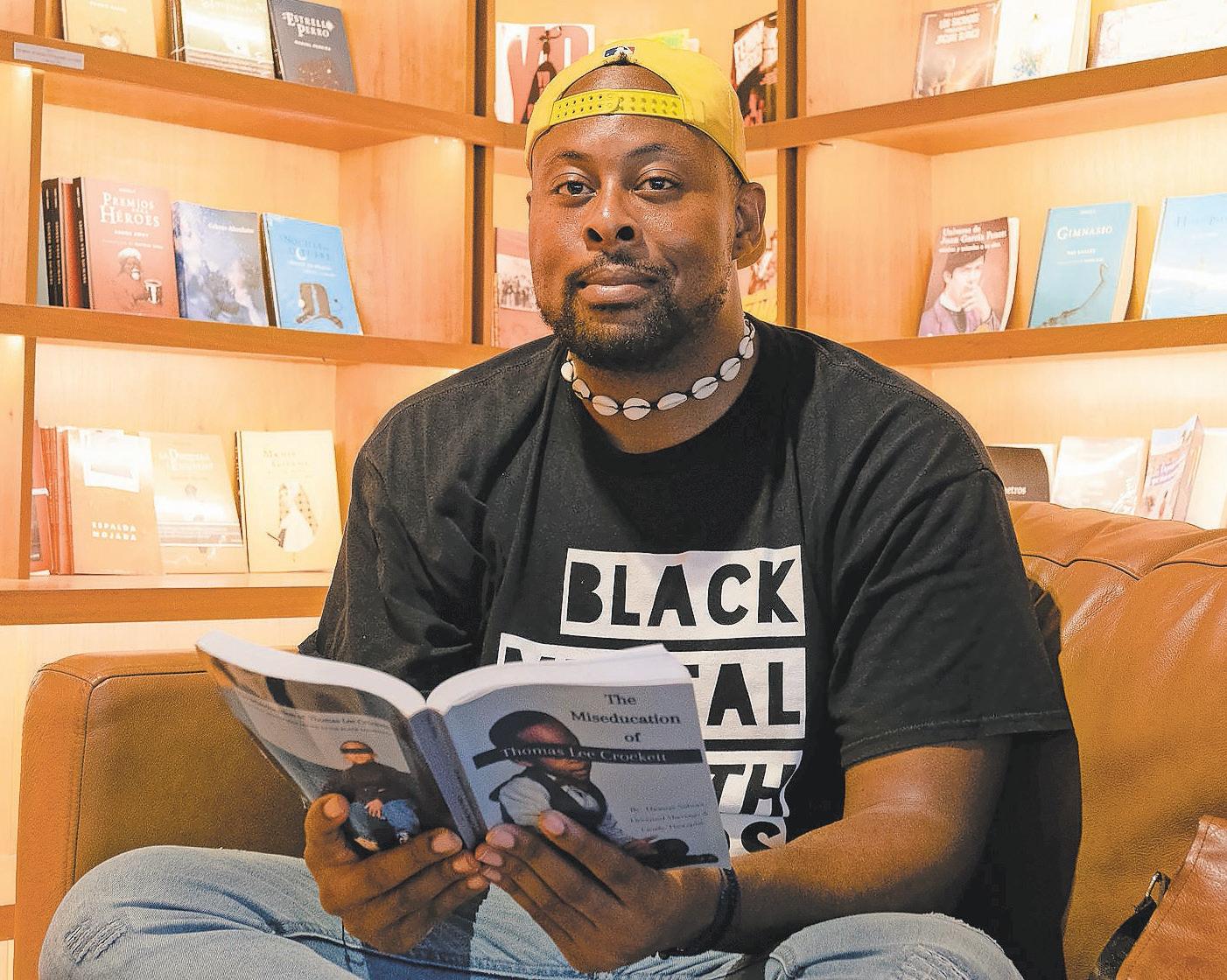
access to, and a lot of it has been due to financial resources, and then also the stigma that comes from going to see a health care professional.
AV: The book touches on your own story; did you find yourself healing from some of those traumatic experiences?
TLC: In the moment as I was writing these things out, it was cathartic in many ways, because it was like I was putting my pain onto the paper, and I was being vulnerable in a way that could help a lot of people. However, when I kind of looked back at what I wrote, I realized there were a lot of things I had to deal with because of situations I was born into, whether it be the family, or being born into a black body, or being gay. The world is still not fully welcoming to Black and gay.
AV: What do you want people to take away from your book?
unique experience. There are two things that are universal: the disdain for black people is universal, no matter where you go, and then, depending upon which culture you go in, some people may be more accepting than others, but for most cultures, they have their own disdain for the queer population. There’s now an extra layer on top of being black to feel like they do not have to respect you. I also want to highlight my black trans brothers and sisters, because they have a whole other level they have to deal with. People don’t understand why it is that you are “transitioning” to this gender. My trans black brothers and sisters, but particularly my black trans sister, who are dying at an alarming rate because people don’t understand them.
people, and more.
The Atlanta Voice: What was the inspiration behind your new guidebook?
Thomas Lee Crockett: I started working on the book during the pandemic, and I remember having this moment where I was in this little state of panic, because I felt like the world was in complete chaos. At that time, I was also providing therapy to clients that look like me and helping them unpack and process while still facing it myself. One night, while I was in my room, I was overwhelmed with everything that was going on, and I started thinking about my own legacy, which turned into this book.
AV: You refer to the book as a love letter to the black community. Why do you think it was important to have this discussion revolved around the black community?
TLC: As a member of the black community, I often do not feel loved by the world. I feel we’re not loved by the world, because it’s so easy for the world to extract from black culture, to commodify it, profit off of it, but yet show zero respect for the people, and for me, I wanted to give us love, because I feel there’s something we’re often not given far as love and respect. When it comes to mental health, this is something that we as black people have not had a lot of
TLC: I want people to see themselves in this because I did not know how pivotal mental health was at first. When I drafted this book, I wanted it to serve as a flashlight or a guide to give people tools to help them become aware a little bit earlier and start taking these steps earlier. I’m hoping this book can serve as a stepping stone and help people start their mental health journey, pointing them in the right direction, and I want people to know they aren’t alone.
AV: What was the importance of also highlighting mental health in the LGBTQ+ community?
TLC: It’s a very nuanced and
AV: What advice do you have for the black community, no matter how they identify?
TLC: I wish somebody had told me I didn’t have anybody in my corner, or helped me see the good within myself, or helped me, or I felt like I would feel safe coming to about the situation. I would tell someone who you are is okay, and you’re always enough. Don’t let society or anyone else make you feel less than. Be yourself and be proud. We’re all different, and different is not necessarily an undesirable thing.
The Miseducation of Thomas Lee Crockett: A Mental Health Love Letter to the Black Community will be available June 30 in paperback and e-book.
APRIL 10-16, 2026 • www.theatlantavoice.com

Spacious 1-Bedroom Affordable! Rent Based on Annual Income Amenities, Great Location, and Convenient to Marta Please call for detailed information (404) 586-9098

MANA Accounting Services, Inc., Atlanta, GA, Customer Contact Specialist: Perform customer support & account services related to bookkeeping, payroll, & financial reporting. Assist clients with account setup, financial document organization, & service coordination. Maintain client records in CRM systems & support internal accounting operations. Requires Bachelor’s degree in Business Administration, Financial Management, Financial Administration, or related, & 12 months of experience in related occupation. Worksite: 3598 Clairmont Rd, Atlanta, GA 30319. Send resumes to: mayra@ manaaccounting.com.
Vision sought by First Advantage Background Services Corp. in Atlanta, GA. Master’s or equiv plus
2 yrs exp. in related
field. Telecommuting Permissible. $110,000/yr. Send resume to:
Denise Smith, Manager, Talent Acquisition Operations, First
Advantage Background Services Corp.,
1 Concourse Parkway NE Suite 200, Atlanta, GA 30328 or denise.smith@fadv.com.



You