

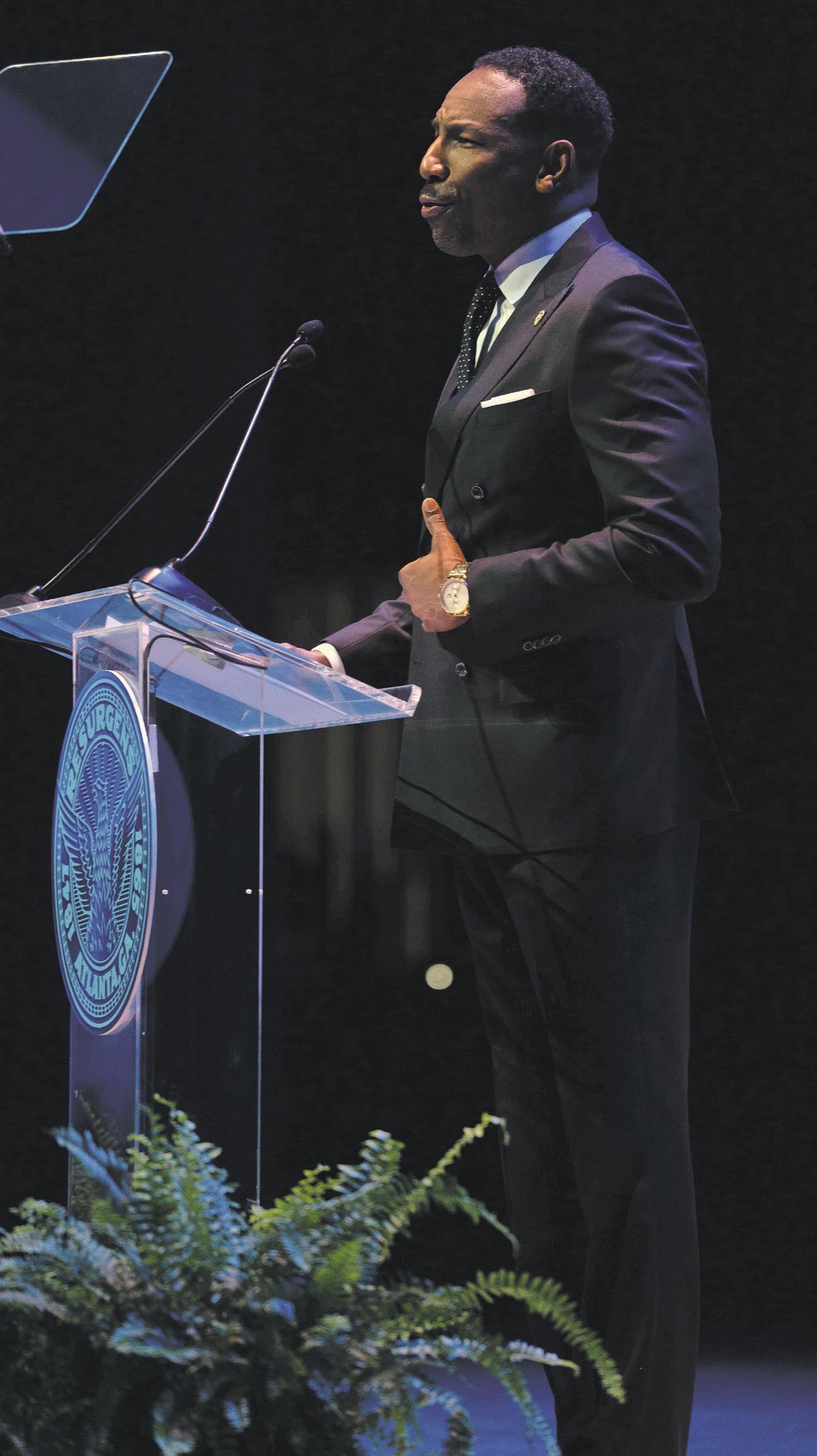
Atlanta Mayor Andre Dickens (above) delivered the 2026 State of the City Business Address at a sold-out Atlanta Symphony Hall, stating that the business climate in Atlanta is strong and only getting stronger. Photo by Tabius McCoy/The Atlanta Voice

By DONNELL SUGGS
The business that is the City of Atlanta has grown by leaps and bounds since the last time the world’s stage took place on its red clay and concrete streets. 30 years ago this summer, the 1996 Summer Olympic Games took place in the heart of the city, and business in Atlanta has never been the same. This summer, a portion of the 2026 FIFA World Cup will take place just blocks away from where the late great Muhammad Ali lit the Olympic torch. You can no longer talk big business in Atlanta without including Atlanta in that conversation.
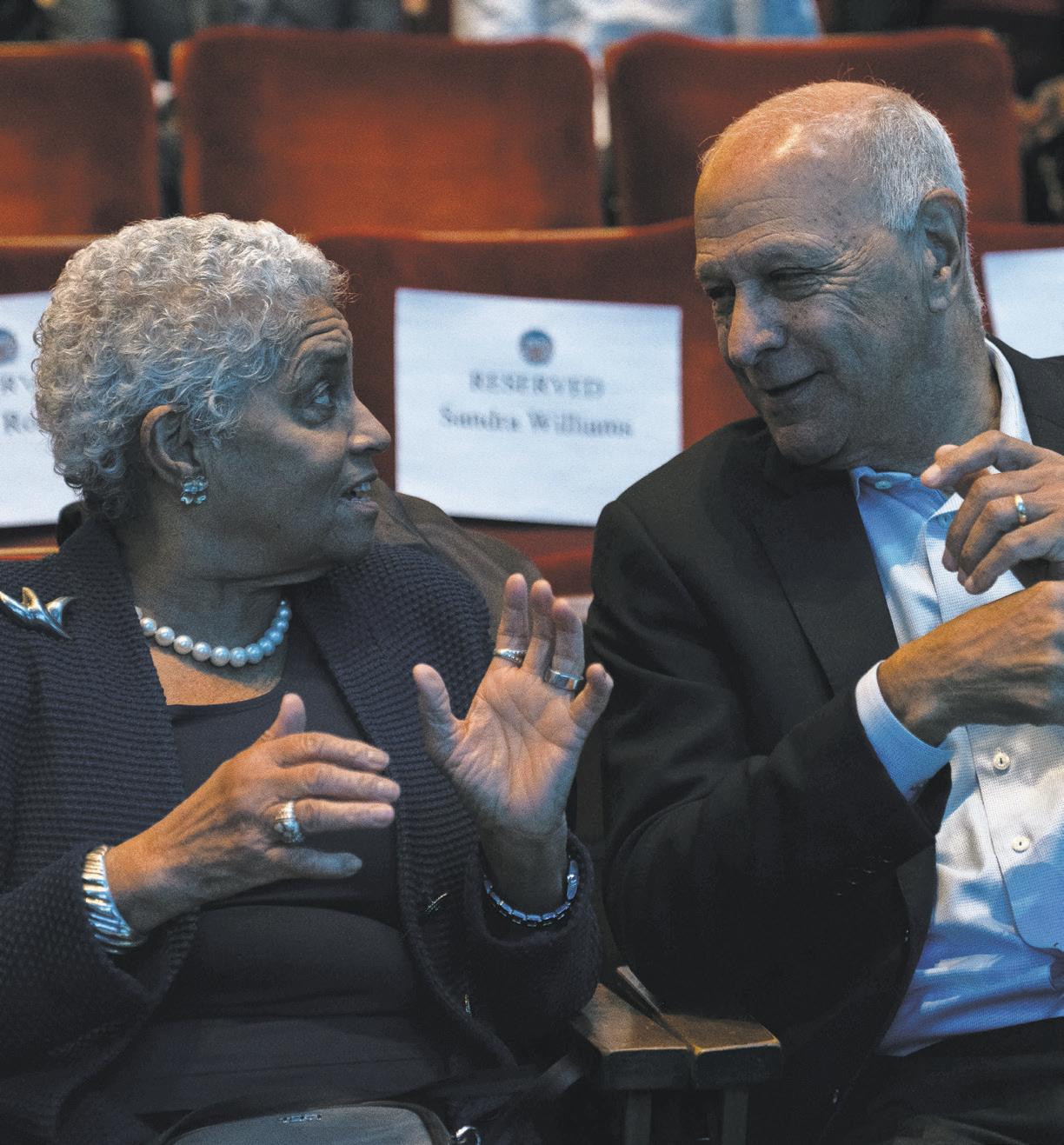
On Wednesday night, inside a sold out Atlanta Symphony Hall, Atlanta Mayor Andre Dickens delivered the 2026 State of the City Business Address. This year’s address should ring familiar to those who heard the 2024 or 2025 addresses: the state of business in Atlanta is strong and only getting stronger.
“For the past four years we have proven what we can do. We have invested in our people and our neighborhoods,” said Dickens who took time to mention the overall crime rate was down in the city and the public school graduation rate was up. “The state of our city is strong and the source of that strength is the Atlanta group project.”
Dickens said other city leaders ask him how the City of Atlanta has improved in so many areas, and his answer has been the same: the Atlanta group project.
The topic of affordable housing and the Dickens administration will forever be linked and on
Wednesday night, the mayor, who recently endorsed Senator Rev. Raphael Warnock’s provision to
ban corporations from mass purchases of single-family homes in Atlanta, spoke about housing and the need to continue building.
Thousands of rapid housing units and affordable housing units have been delivered during the Dickens administration. The Mayor often calls affordable housing his “love language.”
“I know you all have heard about

all of these successes before, but I can’t help but brag in this city,” Dickens said. “We are the economic capital of the South.”
During his speech, the Mayor discussed the lack of Level-1 hospitals in the city south of I-20 and the need to make sure investments don’t just go to districts of the city where the family median income is above the poverty level.
“We wouldn’t be this far without all of us coming together and moving in the same direction,” Dickens said of the progress.
The address included an invocation from Reverend Anthony A.W. Motley of Lindsay Street Baptist Church, a welcome by Woodruff Arts Center President and CEO Hala Moddelmog, and a presentation of the flags and the Pledge of Allegiance by the Atlanta Fire Rescue Department.
“Each year this gathering brings
together the visionaries that shape Atlanta’s future,” Moddelmog said before congratulating Dickens on his re-election and recognizing his cabinet and political contemporaries.
UPS CEO and former Atlanta Committee for Progress President Carol Tome gave remarks regarding the business acumen in the city.
“Atlanta has always been a place where business and the community thrive together,” said Tome, who came on stage to Phil Collins’ “In the Air Tonight.” “This is what collaboration looks like. Progress is something we build together.”
John Murphy, The Coca-Cola Company President and Chief Financial Officer, introduced Dickens. “Together we are building a stronger, more connected Atlanta,” Murphy said.
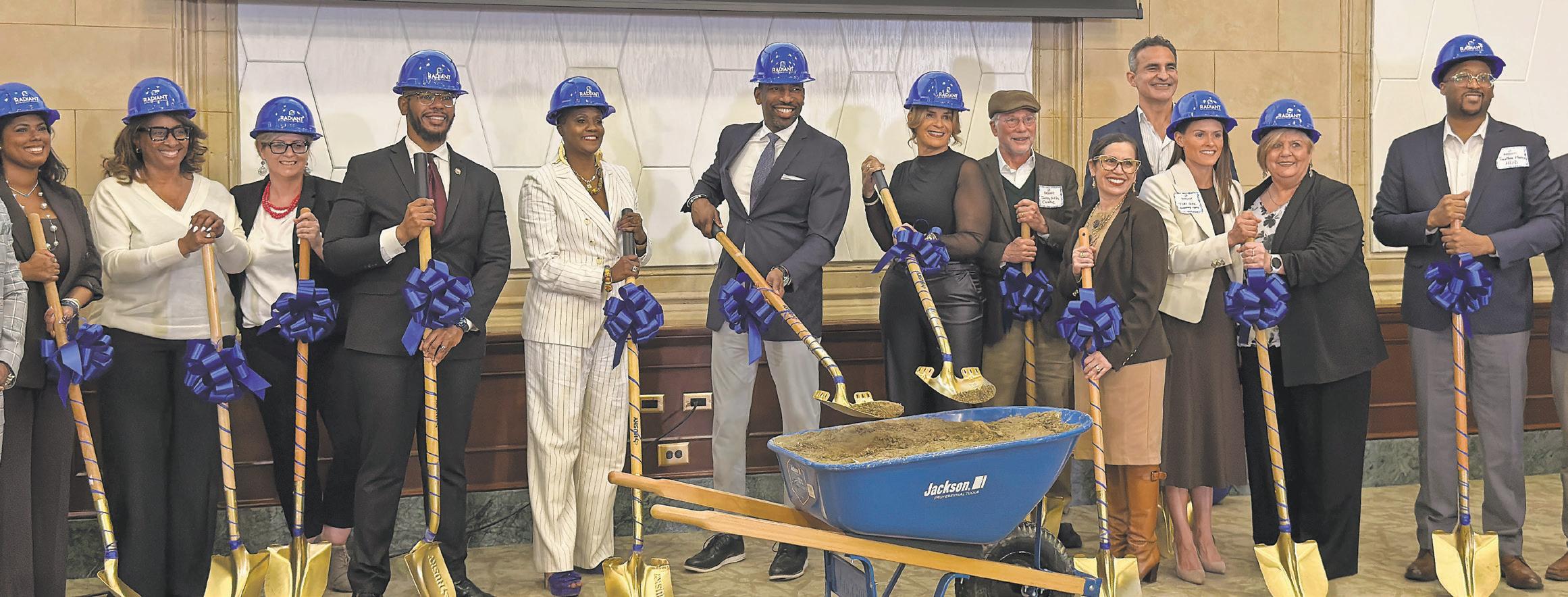
As the rain nourished the soil of what will soon become Trinity Center Flats, Atlanta Mayor Andre Dickens joined Sharon D. Guest, principal of Radiant Development Partners, to celebrate the groundbreaking of the city’s latest housing development on Monday afternoon. Located at 104 Trinity Avenue SW, the mixed-use project is yet another step in the investment of the South Downtown corridor and addressing the shortage of affordable housing for those who want to live close to jobs, services and transit.
Trinity Center Flats sits right across the street from City Hall and, when completed, will deliver 218 apartments. Those apartments will offer a mix of studios and one-bedroom, two-bedroom, and three-bedroom floor plans, with an average rent of $1,350, including utilities and parking. Twenty of the 218 units will be set aside for permanent supportive housing through Partners for Home, and 6,600 square feet on the ground level will be dedicated to small businesses and restaurants.
The project began in 2021, when Invest Atlanta chose Sharon D. Guest and her company, Radiant Development Partners, to spearhead it. In December 2025, they closed on the project and began construction soon after.
“Trinity is a rare opportunity to preserve affordability in the city for the next 99 years.
The city’s vision and collaboration with Invest Atlanta will ensure that generations of Atlantans will have access to quality housing right here in South downtown,” Guest said.
“This deal was an extraordinary test for us all, the hardest test ever. Despite the mounting pressure, we refused to let frustration or doubt get the better of us. Instead, we rallied together, driven by sheer determination in our belief and in our mission. Looking back, I feel immense pride. Overcoming intense challenges has not only strengthened us as a
team but also fueled our confidence and resilience in ways I’ve never imagined possible. And I have to say, it feels especially meaningful to celebrate this moment during Women’s History Month. There are a lot of strong women leading and shaping this deal. And it feels good to see history being made right through our eyes.”
Community planners, financiers and developers filled the audience of the groundbreaking, often being recognized for their hard work in pushing the project to fruition, from allocating tax breaks to handling legal details. “A group project” is what the speakers emphasized as they talked about what went into funding and planning the future of Trinity Center Flats for Atlantans.
“The amount of partners that’s necessary to do a deal now, has become more and more difficult to build housing, and this is on cityowned land,” Dickens said. “We’ve done it
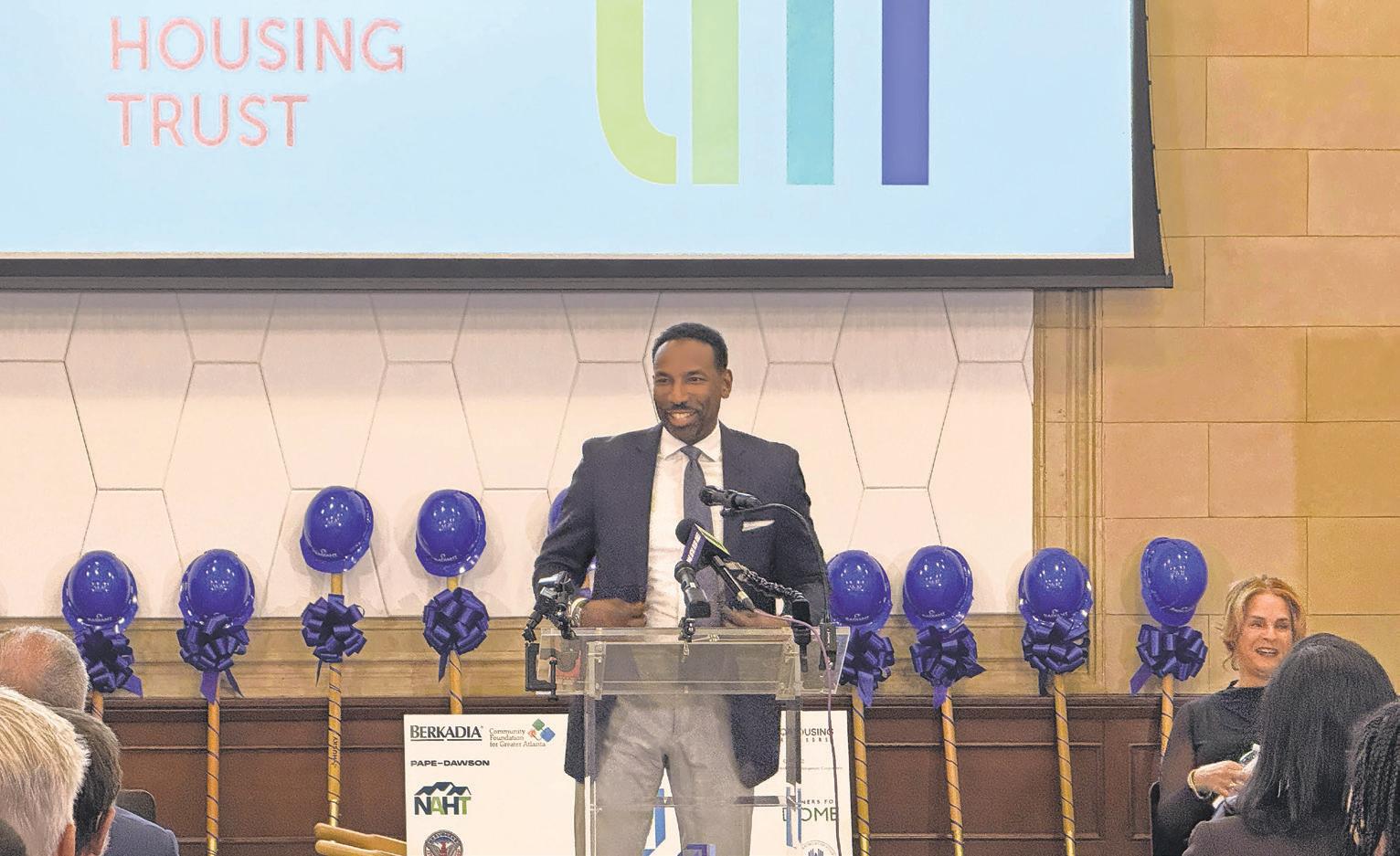
to the tune of 13,000 units so far. This is not easy work, but we’re one of the leaders in the nation, and we’re the only leader that doesn’t have rent control. So, we produce the fastest amount of units in the nation, besides a couple of other cities that have actual rent control at their accessibility. Atlanta is a group project, and this is indicative of it.”
Dickens’ vision for 20,000 affordable housing units continues to move forward with Trinity Center Flats, and Invest Atlanta President and CEO Eloise Klementich said the one
word she would use to describe Downtown Atlanta is “progress.”
“The downtown you see today will not be the same downtown you see in five years. With all the developments, including this one, we expect to see about 4,000 new housing units, all within about a mile and a half of where we’re standing. You have people living here at night and working during the day. That is the type of city we want to help create and support here at Invest Atlanta,” Klementich said.

By ERIC DUNCAN AND SEAN BANKS
Many Americans question if a sustainable future is possible for themselves and their children. The answer remains where it always has — in our classrooms. Each lesson taught, student inspired, and teacher supported is an investment in the nation’s longterm prosperity. Yet the workers preparing the next generation are strained — and, in many minds, under deep skepticism and scrutiny.
To create an education system that fuels national progress, focus on what most impacts student success: strong classroom teachers and school leaders.
Unfortunately, not all students have an opportunity to learn from the strongest teachers and leaders in their classrooms and the data bears that out. Today, 54% of U.S. public school students identify as students of color, according to the most recent national enrollment data, while roughly 80% of teachers are white, based on federal education workforce statistics. This imbalance is not just about representation — it’s about the quality of students’ educational experiences. When students rarely see themselves reflected in those leading their classrooms, it affects their sense of belonging, limits connections, and narrows their pathways to college, career, and civic life.
In a global economy where working across lines of difference is essential, adiverse and well-supported educator workforce is not a luxury; it is an economic necessity.
According to The Hunt Institute’s Across the Aisle data, 68% of Americans — surveyed across political lines — agree that increasing diversity in the education workforce is important. Voters understand what research has long confirmed: students taught by teachers who reflect their backgrounds and identities are more likely to perform better academically, graduate at higher rates, and pursue higher education — the very foundations of economic mobility.
A strong educator workforce is essential public infrastructure: it sustains the economy, strengthens communities, and drives growth. When students graduate ready for college or career, local businesses thrive, poverty cycles end, and regional tax bases grow.
Strong teachers who connect with their students are economic multipliers — they build the skills, confidence, and aspirations that determine lifelong earning potential.
A representative, stable educator workforce gives every student — no matter their race, language, income, or zip code — a shot at upward

mobility. This is more than fairness; it strengthens schools and fuels America’s workforce competitiveness. When students see themselves in their teachers, they envision broader futures.
Schools with representative staff see lower dropout rates, fewer suspensions and expulsions, stronger family engagement, and higher levels of trust. These factors directly boost academic outcomes and community stability. That trust creates a virtuous cycle: more graduates return as teachers and leaders, ensuring local continuity and pride.
Representation is necessary, but more must be done to accomplish it. States and districts must cut entry barriers, expand local training, and invest in mentorship and leadership programs for future educators. These actions diversify the profession and keep local talent, strengthening education and the economy
Across the Aisle data shows equity is common ground. Over 90% of Americans agree: investing in children is not about politics — it is right and smart. When focused on fairness and opportunity, equity unites communities.
Investing in Educators Is Investing in the Future
Building a stronger educator workforce is equity in action and good economics. It ensures every
student has access to high-quality educators who connect learning to real-world success, aligning education policy with workforce development and local growth.
When we invest in teachers and leaders — especially those from and connected to their communities — we build a more skilled, competitive, and unified nation.
The Path Forward Is Clear:
• Recruit locally, retain intentionally. Expand community-based preparation and “growyour-own” programs that recruit directly from the neighborhoods schools serve.
• Strengthen support systems. Provide mentorship, professional development, and mental health supports that increase teacher retention and empower educators to thrive.
• Link education to workforce needs. Align educator pathways with regional labor demands so that schools become engines of economic mobility.
• Invest together. Build partnerships among leaders, philanthropy, and business to keep a strong, diverse educator workforce as key economic strategy.
Shared prosperity starts with strong schools, and strong schools need great teachers. When we invest in educators who reflect and empower communities, we secure America’s ability to grow, compete, and lead in the future.
FOUNDED
May 11, 1966
FOUNDER/EDITOR
Ed Clayton
Immortalis Memoria
PUBLISHER/EDITOR
J. Lowell Ware
Immortalis Memoria
The Atlanta Voice honors the life of J. Lowell Ware.
PUBLISHER
Janis Ware
PRESIDENT/
GENERAL MANAGER
James A. Washington 2018-2024
EXECUTIVE ASSISTANT TO PUBLISHER
Chia Suggs csuggs@theatlantavoice.com
EDITOR IN CHIEF Donnell Suggs editor@theatlantavoice.com
GENERAL ASSIGNMENT REPORTERS
Isaiah Singleton isingleton@theatlantavoice.com
Laura Nwogu lnwogu@theatlantavoice.com
Noah Washington nwashington@theatlantavoice.com
BUSINESS REPORTER
Tabius H. McCoy tmccoy@theatlantavoice.com
EDITOR AT LARGE Stan Washington swashington@theatlantavoice.com
ADVERTISING, SALES & CIRCULATION
ADVERTISING ADMINISTRATOR
Chia Suggs advertising@theatlantavoice.com
SALES
RDW Jackson rdwadman@gmail.com
SUBMISSIONS editor@theatlantavoice.com
DIRECTOR OF PUBLIC RELATIONS
Martel Sharpe msharpe@theatlantavoice.com
CONTACT INFORMATION
633 Pryor Street, S.W. Atlanta, GA 30312
Office: 404-524-6426
info@theatlantavoice.com

By STAFF REPORT
The Atlanta Voice is participating in Onyx Impact’s Information Integrity Lab, part of a national effort to strengthen and sustain Blackowned media organizations.
The initiative is supported through Onyx Impact’s “Invest in Black Media” campaign, which will commit $500,000 in 2026 to support Black journalism, broadcasting, and digital storytelling. The campaign builds on more than $1 million already invested in Black media during the past two years.
The effort is designed to strengthen independent Black media outlets that serve as trusted sources of news and information in Black communities.
“Who tells our stories determines our future,” said Esosa Osa, founder and CEO of Onyx Impact. “The Invest in Black Media campaign is Onyx’s way of putting real money behind that truth.”

Publishers Association to support a yearlong investigative journalism cohort for reporters at Blackowned newspapers.
The campaign will also provide $75,000 to the National Association of Black Owned Broadcasters’ Creators Mastermind Program and $75,000 to Archiving the Black Web, which trains students and media professionals in digital preservation and web archiving.
An additional $150,000 will support the Onyx Information Integrity Lab, which connects Black digital creators with Black-owned newspapers to expand audience reach while helping ensure accurate, fact-checked information reaches communities online.
Osa said Black media has historically played a critical role in informing communities and holding institutions accountable.
initiatives focused on expanding the reach and sustainability of Black media.
The 2026 funding will support several national organizations and
Among the investments are $100,000 for the National

Association of Black Journalists’ Jubilee Fund, which supports the development and advancement of Black journalists, and $100,000 for the National Newspaper
Onyx Impact is also encouraging supporters to donate to NABJ’s Jubilee Fund and subscribe to local Black-owned news outlets.
Community members can visit onyximpact.org to find Blackowned media organizations serving their state.

By DONNELL SUGGS
Black Press Week is being celebrated in-person, online, and virtually across the country. For the past 199 years, American newspapers have been run, edited, written for, and by Black people and provided jobs to them. In Atlanta, The Atlanta Voice has been the Black-owned press’s representative since May 1966. For the next couple of days, we will interview members of the Black Press (by definition, Black-owned and operated newspapers, magazines, websites, radio stations, etc.) who have contributed to telling Black stories in this country.
Stan Washington, Editor At Large, The Atlanta Voice Washington sat down at his desk in the back of the newsroom of The Atlanta Voice and popped a potato chip into his mouth. He looked comfortable in the setting because for decades he had been associated with what is now the city’s only print Black-owned and operated newspaper. The Atlanta Voice is also the only general-interest print newspaper in Atlanta. So having not missed a weekly in nearly six
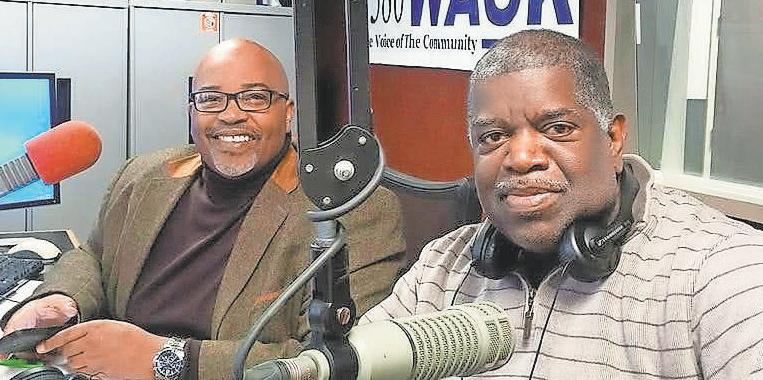
decades had a lot to do with the contributions of Washington, an Atlanta native and Clark College (now Clark Atlanta University) graduate, and many others. Essentially, alongside people like longtime publisher Janis Ware, her late father and one of the paper’s co-founders, J. Lowell Ware, Washington is a voice of Atlanta.
Beginning with a student internship at The Atlanta Inquirer, Washington worked as a student reporter covering the happening at his alma mater, Henry McNeal Turner High School, the current home of KIPP Atlanta Collegiate in 1971. That internship began
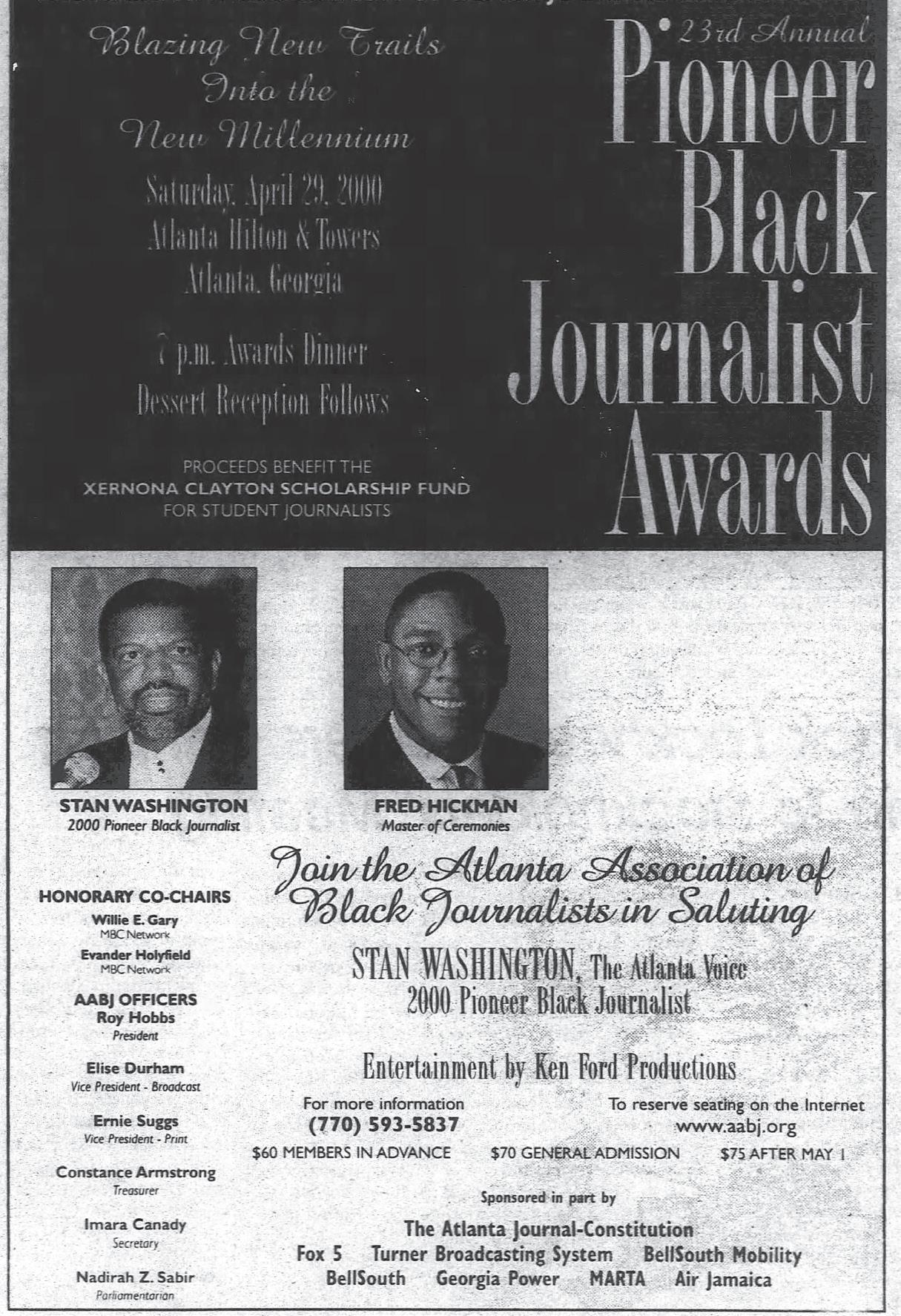
a decades-long career in journalism. Much of which took place in Blackowned publications and stations.
“After I did the school reporter thing, I became the editor of my high school newspaper, The Green Light,” Washington said. “I started off as sports editor, and then I got promoted to editor.”
Washington used that experience to begin working for his college newspaper, The Clark College Panther, as a freshman. He began that tenure as an assistant editor before he would walk into The Atlanta Voice in the following summer before his sophomore year for an internship that would change the trajectory of his life.
His internships didn’t stop there. Washington and two other Clark College students, Ron Jenkins and Marvin Whaley, traveled to Indiana to take part in an internship at WTLC, A Blackowned radio station in Indianapolis.
“That was the summer I knew what it felt like to be one of the Jackson 5,” Washington joked. “Everywhere we went people would be like, ‘Y’all with WTLC?’
Washington, Jenkins, and Whaley would drive around town in the red,black, and green WTLC van and people would take notice. Especially the girls.
“Every time we stopped to get gas, the girls would come up to us, and they wanted to talk and give us their numbers,” he said. “We would get back in the van and couldn’t believe it. That was the power of the radio.”
Following that magical summer in Indianapolis, Washington worked at Jazz 91.9 WCLK in Atlanta, Georgia’s first Black federally licensed educational FM station. The station was and is located on Clark Atlanta University’s campus.
“That radio internship in Indianapolis gave me access to people that you would only see on TV or read about in the paper,” Washington said. “So here I am now, back home in Atlanta, and I can question them.”
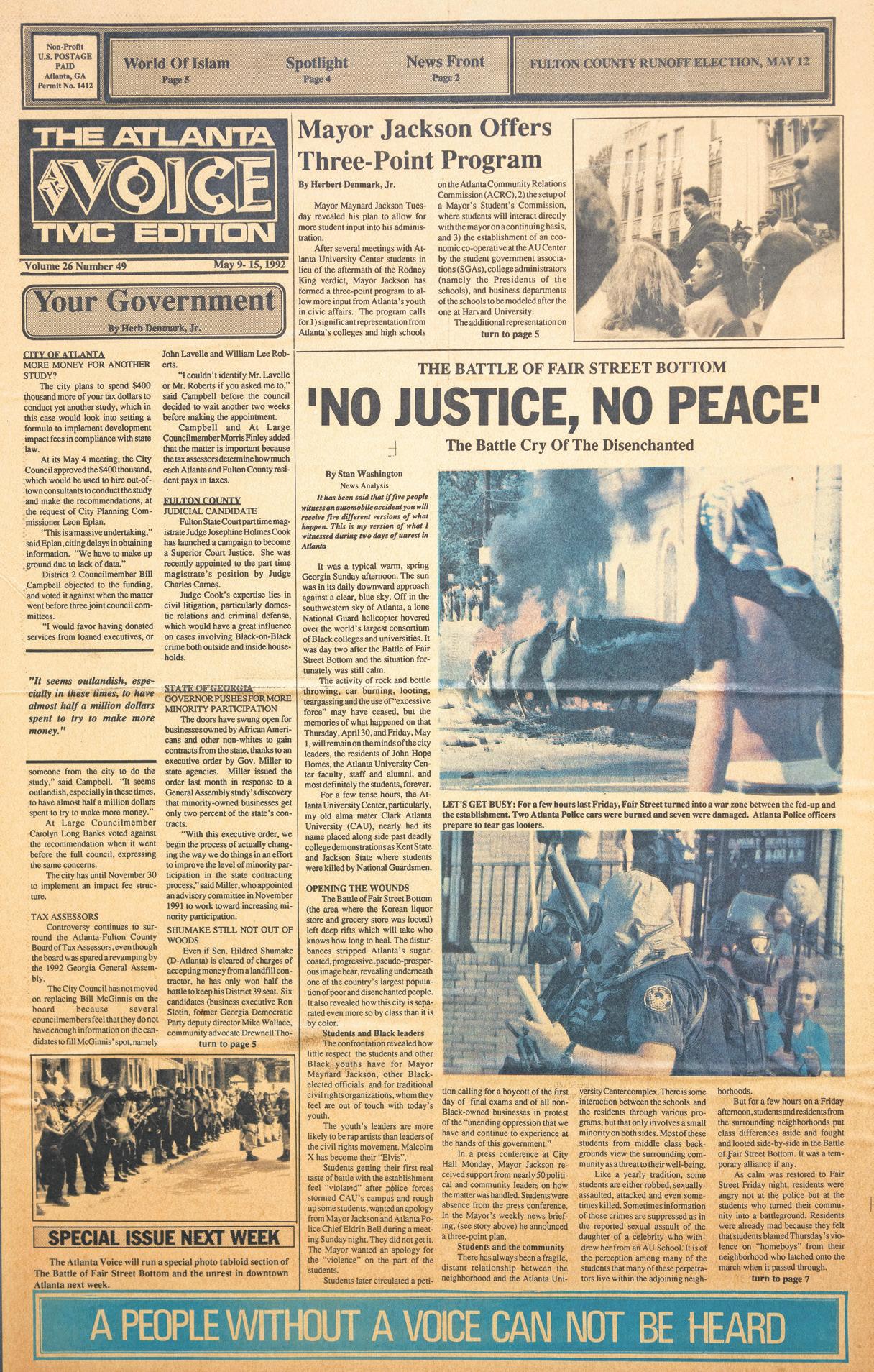
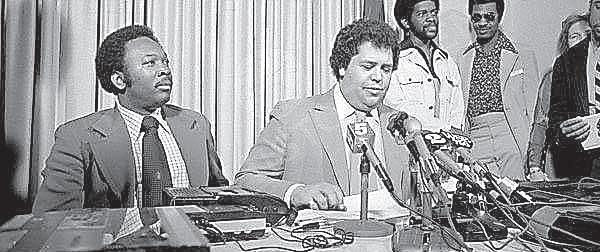
Thereafter, Washington’s professional career included radio and newspapers at WCLK and The Atlanta Voice. He shared a story about having an opportunity to report for a white-owned paper during the 80s, but said, after thinking it over, he had all the access and opportunities he wanted with the Black press, so he decided to remain where he was celebrated, not just tolerated.
“Look at the Black journalists who
have worked for the general population media. Look at Joy Reid and Don Lemon; those are the ones we know about. Asked if we need a Black press in a time of social media, Washington said we do.
“Our perspective is only going to be told in an unfiltered way through the Black press,” he said. “There’s always going to be a need for the Black press. That includes whatever form it will be in.”
By NOAH WASHINGTON
Barry’s, the global boutique fitness brand known for its high-intensity interval training, opened its second Atlanta location in Midtown on Thursday, bringing its signature almost cinematic Red Room workout experience to 1105 West Peachtree St. NW.
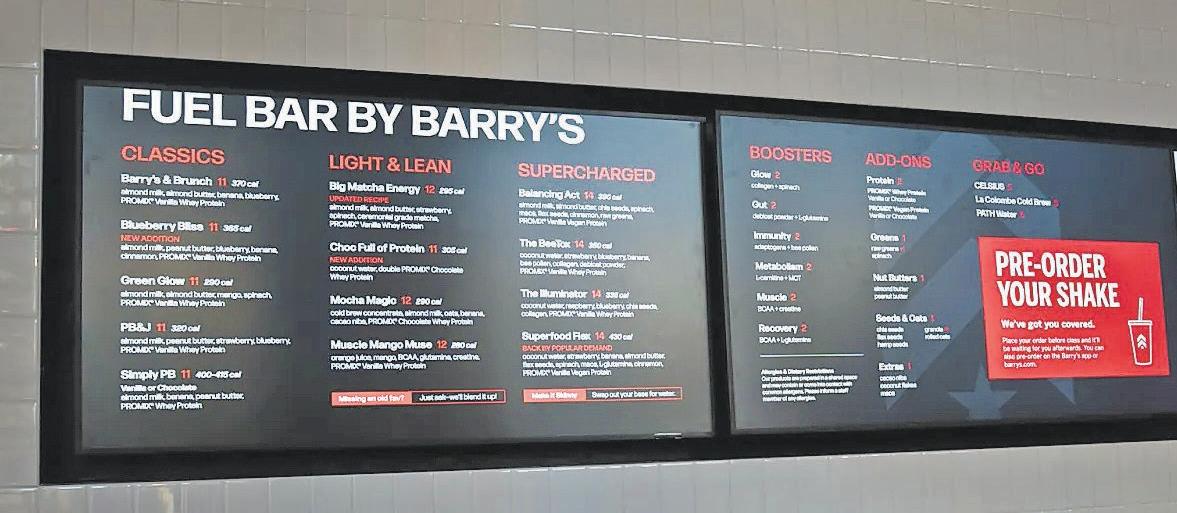
The studio, nestled in a mixeduse development, features Barry’s iconic Red Room, a dedicated LIFT studio, a Fuel Bar, and premium locker rooms outfitted with Dyson hair dryers and OUAI products. The development is also home to Google’s Atlanta office, the Epicurean Atlanta hotel, and several restaurants.
Barry’s was founded in 1998 in West Hollywood, Calif., making it the original pioneer of the boutique fitness movement. The brand has grown to more than 101 studios across 19 countries, with the Midtown location serving as its 101st worldwide, just weeks after opening its 100th on Wall Street. The brand’s Buckhead location, its first in Atlanta, has been a fixture in the city for nearly a decade.

Mo Fitzpatrick, general manager of Barry’s Midtown, said the expansion was a long time coming and reflects the brand’s broader mission.
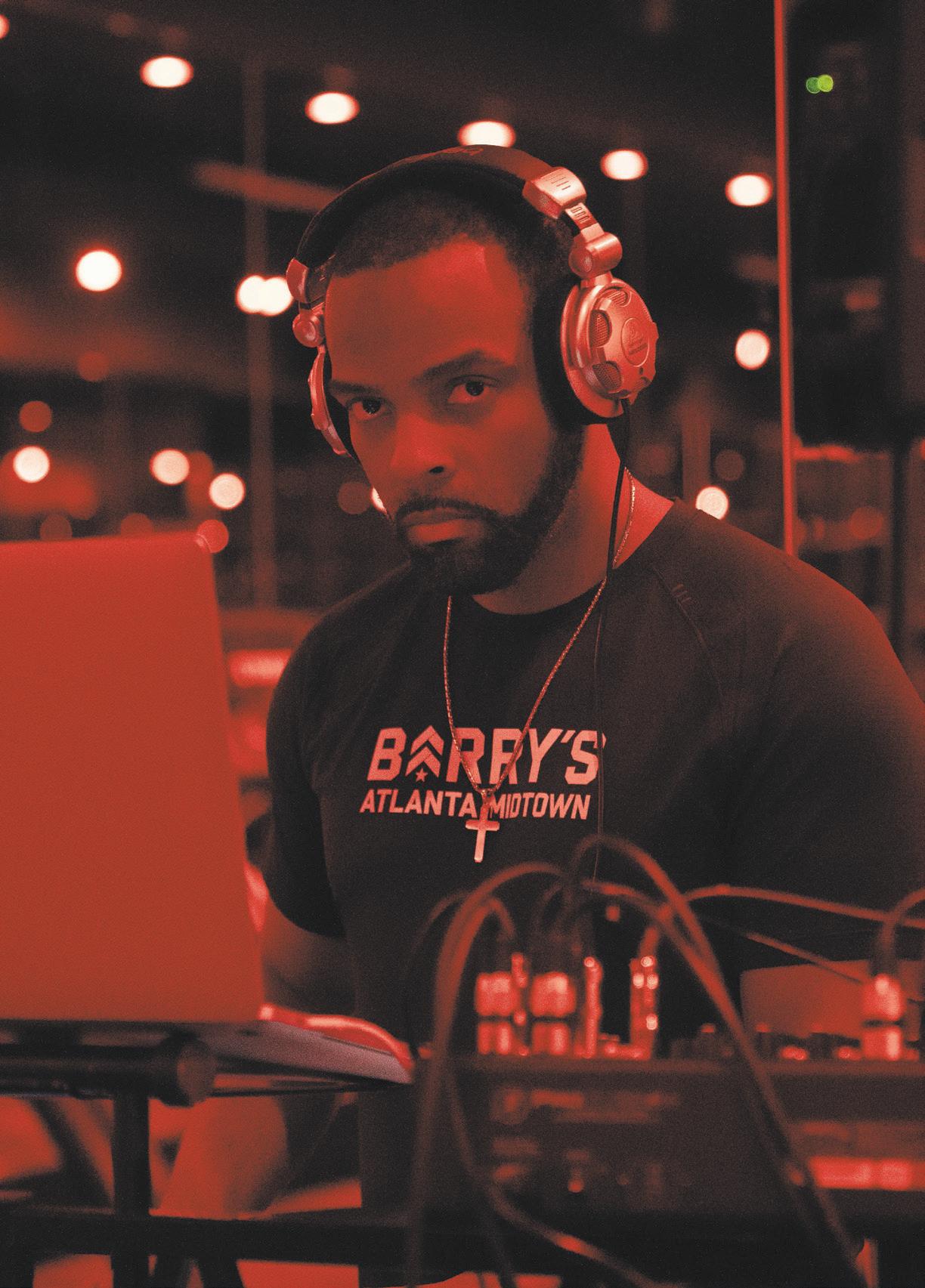
“Our mission is to transform lives worldwide,” Fitzpatrick said. “To be able to just bring that to Midtown is so exciting. It’s something we’ve been anticipating and working on for a very long time.”
The Midtown studio’s RUN x LIFT classes combine treadmill intervals with floor-based strength training, with 45 spots per session. Each class targets a specific muscle group, and participants who prefer to skip the treadmill can opt for a “double floor” option for additional strength work. The dedicated LIFT room holds 18 participants and focuses on controlled movement and progressive strength programming.
Fitzpatrick said the studio’s proximity to Georgia Tech and several
residential towers made Midtown the obvious choice for expansion, describing the area as central to Atlanta’s current growth.
“Atlanta is going through kind of a renaissance,” Fitzpatrick said. “We’re dead center right in the middle of it.”
Richard Turnley, a Midtown resident who attended the grand opening, said he came to see what the new gym had to offer and hoped the intensity would push him to be consistent.
“I’m excited to see Midtown continue to flourish,” Turnley said.
Nellie Collins, a former collegiate volleyball and basketball player preparing to return to school for forensic science, said the group setting
was a major part of the appeal, offering a chance to connect across age groups and backgrounds.
“I’ve been an athlete just about my entire life, so the intensity doesn’t bother me,” Collins said. “I feel like people need to be challenged, if you’re gonna work out, work out.”
Fitzpatrick said Barry’s can feel intimidating to newcomers, but emphasized that the studio is built for all fitness levels.
“Everybody collectively wants to do better with life and do better with themselves,” Collins added. “You’re going to connect with so many different demographics and so many different ages that it’s just like, you can’t help but love coming here.”
SPONSORED CONTENT PROVIDED BY ANTHEM BLUE CROSS AND BLUE SHIELD OF GEORGIA
When families face a cancer diagnosis, mental health crisis, or any unexpected change in their health, the last thing they should worry about is navigating a complicated healthcare system. But for many, that’s exactly what they face. Complex benefits, rising out-of-pocket costs, and uncertainty about where to turn add stress to already difficult moments. In 2024, Georgia ranked as the eighth most expensive state for health insurance and deductible costs. Families are frustrated by rising premiums, copays, and out-of-pocket costs—and they want solutions. At Anthem Blue Cross and Blue Shield of Georgia, we believe health plans have a responsibility to help keep coverage dependable and accessible when people need care, not just explain why costs are rising.
People today expect more from their health plan—they want support that makes healthcare easier to understand, easier to afford, easier to use. And our role is clear: we advocate on behalf of our members, help people navigate care with confidence, and ensure access to high-quality care when it matters most. These are the standards we are committed to delivering in Georgia.
Simplifying the healthcare experience Healthcare has become increasingly complex.
Our job is to simplify it by helping members understand their coverage, what care will cost, and how to find the right provider. Without clarity, these factors often lead to confusion, delays, or unnecessary costs.
Tools like the Sydney Health app bring benefits, in-network providers, cost estimates, and care navigation together in one place. Its ease of use, combined with new AI-powered features, helps members save time, make informed decisions, and find the right care faster. Members who use the app save an average of $185 annually because they can compare care options and avoid unexpected fees.
The United States now spends more than $5 trillion a year on health care, and costs are accelerating. Hospital spending increased by nearly 10% in both 2023 and 2024—the fastest growth in more than three decades, outpacing inflation and wage growth. Prescription drug spending rose nearly 8% in 2024 and now represents roughly one-quarter of what employers spend on health care. It’s important to understand what drives those costs. Premium rates are based on the expected cost of medical and pharmacy care and how often services are used. In that sense, premiums aren’t a prepayment for routine care—they’re protection against large, unexpected medical bills when serious illness or injury occurs. Premiums are tied to the actual cost and amount of care people receive, and by law, 80–85% of every
premium dollar must go directly toward medical care or be returned to consumers.
We’re also shifting care to more affordable settings, such as virtual visits and community-based services, to reduce avoidable emergency room visits and hospitalizations. We work with providers to reward better outcomes rather than more services. These approaches drive long-term improvements in quality care, patient experiences, and lower care costs.
needs are complex
Quality healthcare requires more than coverage; it requires personal care. When someone is managing a chronic condition, juggling multiple appointments, or facing a new health concern, they often need help from someone who understands the system.
Care managers help members understand their benefits, coordinate appointments, and connect with community resources. One member’s experience shows the impact: when a pregnant woman noticed a concerning lump, she contacted her care manager, who helped her understand her coverage, coordinated a biopsy, and connected her with local support for food, diapers, and other essentials. That’s the whole-person support families should expect. In Georgia, our care managers also help members access available resources that support complex care, chronic condition management, prescription drug costs, value-based care models, and more.
BY ISAIAH SINGLETON
Black Americans face the highest colorectal cancer (CRC) incidence and mortality rates of any racial/ethnic group in the US, with 20% higher incidence and 40% higher death rates than white Americans, according to the American Cancer Society.
Over 20,000 new cases occur annually. Disparities include higher rates of early-onset CRC and later-stage diagnoses, causing earlier screening.
Aligned with Colorectal Cancer Awareness Month, Nonprofit Georgia Center for Oncology Research and Education (Georgia CORE) has launched “Weird Looking Stools,” a statewide awareness campaign using unexpected art to normalize and prompt life-saving conversations about colon cancer and increase voluntary check-ups.
CEO and President of Georgia CORE, Lynn Durham, said colorectal cancer is the second leading cancer in Georgia and in the country.
“That alone says we need to make sure people are aware they need to be screened, or if they have symptoms, they need to be checked,” Durham said.
Colorectal cancer is the third-leading cause of cancer-related deaths in men and the fourth leading cause in women, but it’s the second most common cause of cancer deaths when numbers for men and women are combined, according to the American Cancer Society.
It’s expected to cause about 55,230 deaths during 2026. By 2030, colon cancer is projected to become the number one cancer killer for people under 50. The incidence of early-onset cases (diagnosed under age 50) is rising, yet many Georgians remain unaware of key symptoms and the importance of screening.
The stools depict symptoms such as:
• Blood in stools
• Abdominal pain, anemia, or unexplained weight loss
• Narrow or pencil-thin stools
Additionally, Durham says people should be aware of blood in the stool, skinny, tarry stools, and be comfortable looking at their stools to check for signs. She also said to be mindful of constant abdominal pain, excessive thirst, losing weight for no reason, very loose, very watery, and pebble-like stools.
Durham also says if you are under 45, watch for symptoms and act if something feels off. If you are 45 or older, talk to your doctor about getting screened.
“If you’re experiencing these symptoms for about two weeks and no change, act on it. Colon cancer is one of the most preventable cancers if caught early. This campaign is about making people stop, look, and act,” Durham says.
As far as prevention for people, Katrina Davis, senior program manager at Georgia CORE, says, according to the research, “be mindful of our diet.”
“People should make sure they have a well-rounded diet with
We work closely with high-quality care providers to ensure care is coordinated, evidence-based, and focused on better outcomes. Our Community Pharmacy Total Care program, for example, pairs members with more complex health needs with independent pharmacists who take the time to review medications, sync refills, arrange free home delivery, and prepare easy to follow packaging instructions. This hands-on approach makes staying healthy easier and helps members manage medications with confidence.
The path forward
Healthcare will continue to evolve, and health plans must evolve with it. Our commitment is simple:
• Make healthcare easier to understand through clear information and easy-to-use tools that guide decision making.
• Make healthcare more affordable by addressing the drivers of rising costs and supporting lower-cost, high-quality care.
• Make healthcare more personal by offering human support that meets people where they are.
When health plans, providers, and policymakers work together, families can spend less time worrying about costs and more time focusing on their health. Our commitment is to keep coverage dependable, lower cost of care over time, and help people get the care they need—when they need it— across Georgia.
Want to learn more? Visit anthem.com/ affordabilityingeorgia.

fruits and vegetables,” she said. People also should focus on fiber, exercise, water, and being mindful of the symptoms, bowel habits, and if they look irregular after a few weeks, it’s time to see a doctor and get further assessed.
Although there isn’t any solid evidence yet, Durham says processed foods like sausages, bacon, processed meats, red meat, and heavy alcohol consumption could play a significant role in the cause of colorectal cancer.
“I’m not saying take it out of your diet totally, but cut it back to one or two days a week, because all of that processed meat, red meats, processed foods that can absolutely cause issues and make you at higher risk for colon cancer, as well as
alcohol,” she said.
Furthermore, Davis, whose father passed away from colorectal cancer in 2010 in his early 50s, says it encouraged her to get a colonoscopy at 35 years old.
“There was no prior family history of colorectal cancer in my family, but my dad was diagnosed at stage three and passed away several months after being diagnosed,” she said. “I advocated for myself with my primary care doctor to go ahead and get a colonoscopy as a preventative measure to make sure I was fine.”
According to Davis, doctors found a non-cancerous polyp and removed it, but she uses this to encourage people, even if they’re underage, to inquire about their family history because time is of the essence.
By TABIUS H. MCCOy Report for America Corp
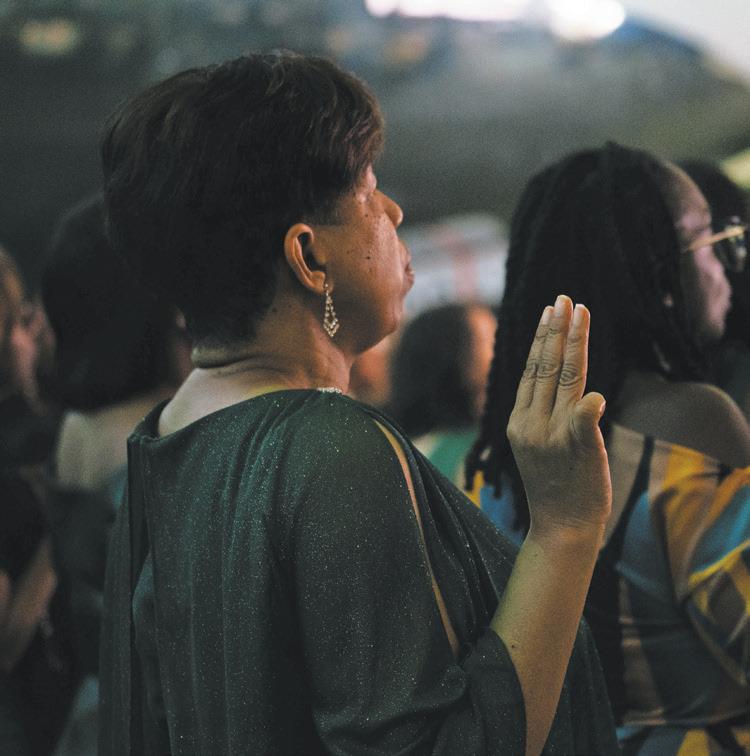
Elegant green dresses matched green ties throughout the crowd as scouts of all ages filled the audience. From Daisy scouts in their blue berets to Ambassador-level members and Gold Award recipients, the room showed the full range of the Girl Scout experience.
Across the room, younger scouts watched as women who once wore the same uniforms stepped forward to accept one of the organization’s top honors.
Girl Scouts of America hosted its second annual Night of a Million Dreams gala on International Women’s Day.
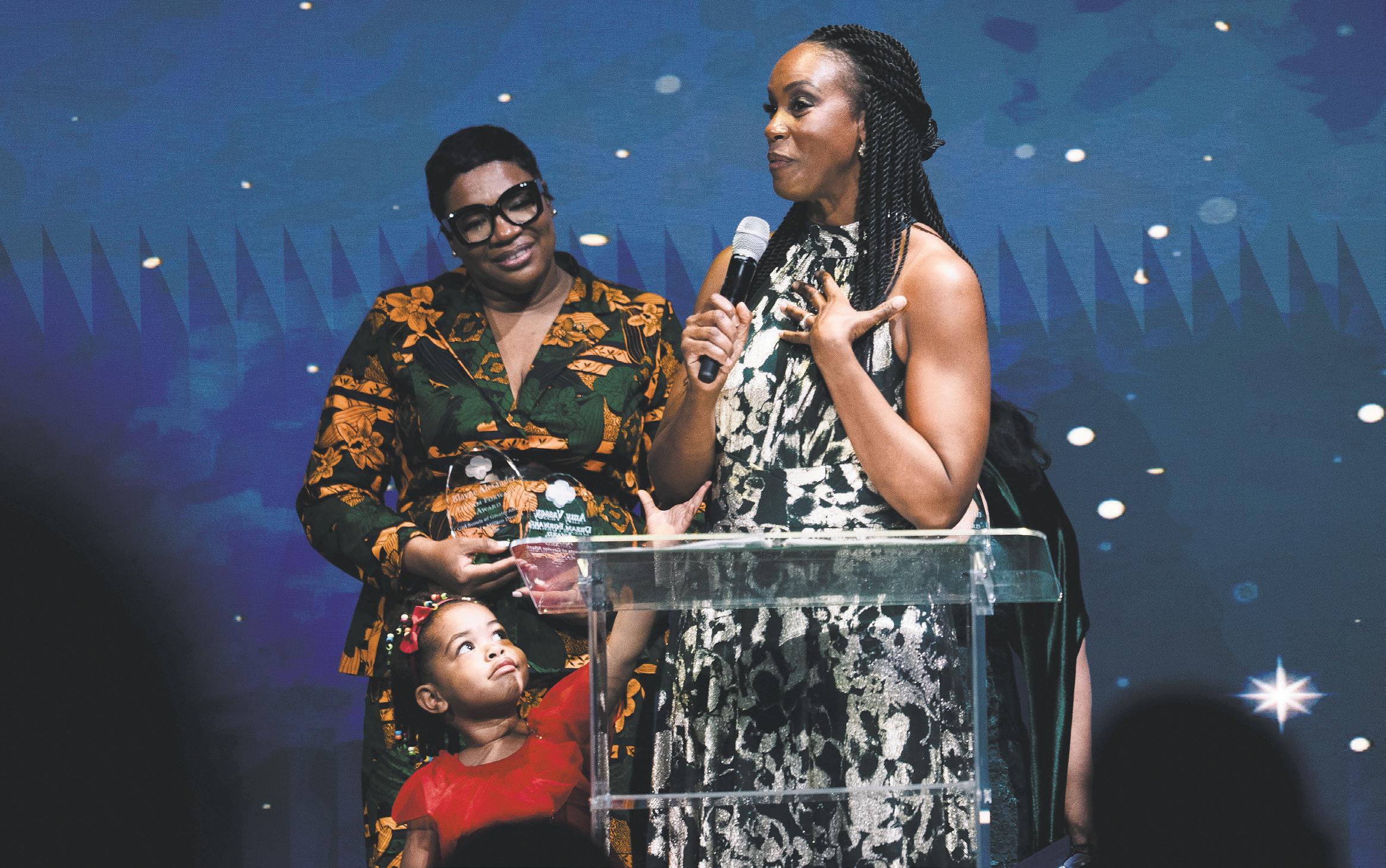
During the evening, Girl Scouts of Greater Atlanta recognized former Atlanta Mayor Shirley Franklin, NBC News correspondent Blayne Alexander, and longtime volunteer leader Amy Vassey as the 2026 Dream Forward Award honorees. The award highlights women whose leadership and service have made an impact in their communities.
The Night of a Million Dreams gala raises funds to support Girl Scouts programs and opportunities for girls across metro Atlanta.
When Alexander took the stage, she brought her daughter with her and introduced her to the audience as “my future Girl Scout.” The moment drew applause from the crowd and reflected the evening’s generational theme.
“I just want to raise good people, strong women, and compassionate women,” Alexander said.
Emmy Award-winning journalist Condace Pressley served as the evening’s emcee and welcomed remarks from Jai Ferrell.
Ferrell, the first Black CEO in the council’s 100-year history, spoke about the leadership she sees developing in today’s Girl Scouts, especially those earning the organization’s highest honor.
“They are not waiting for the future,” Ferrell said of Gold Award recipients. “They are changing the world right now.”
One of those scouts in the room was Lei’Lani Jackson, a junior at Southwest DeKalb High School who recently earned her Gold Award and was also named a Council Young Woman of Distinction by Girl Scouts of Greater Atlanta.
Jackson’s project focuses on menstrual health awareness after she was diagnosed with dysmenorrhea, a condition that causes severe menstrual pain.
“I had never heard of dysmenorrhea before,” Jackson said. “I’d heard of endometriosis and PCOS, but not that. When I started learning more about it, I decided I wanted to raise awareness so other girls would understand what was happening to them.”
Attending the gala was a moment she said she did not expect.
“Tonight I felt like a celebrity,” Jackson said. “It makes me feel like anything is possible if you believe in yourself and keep dreaming big.”
Ferrell also spoke about her own experience as a Girl Scout and how donor support made many of those opportunities possible.
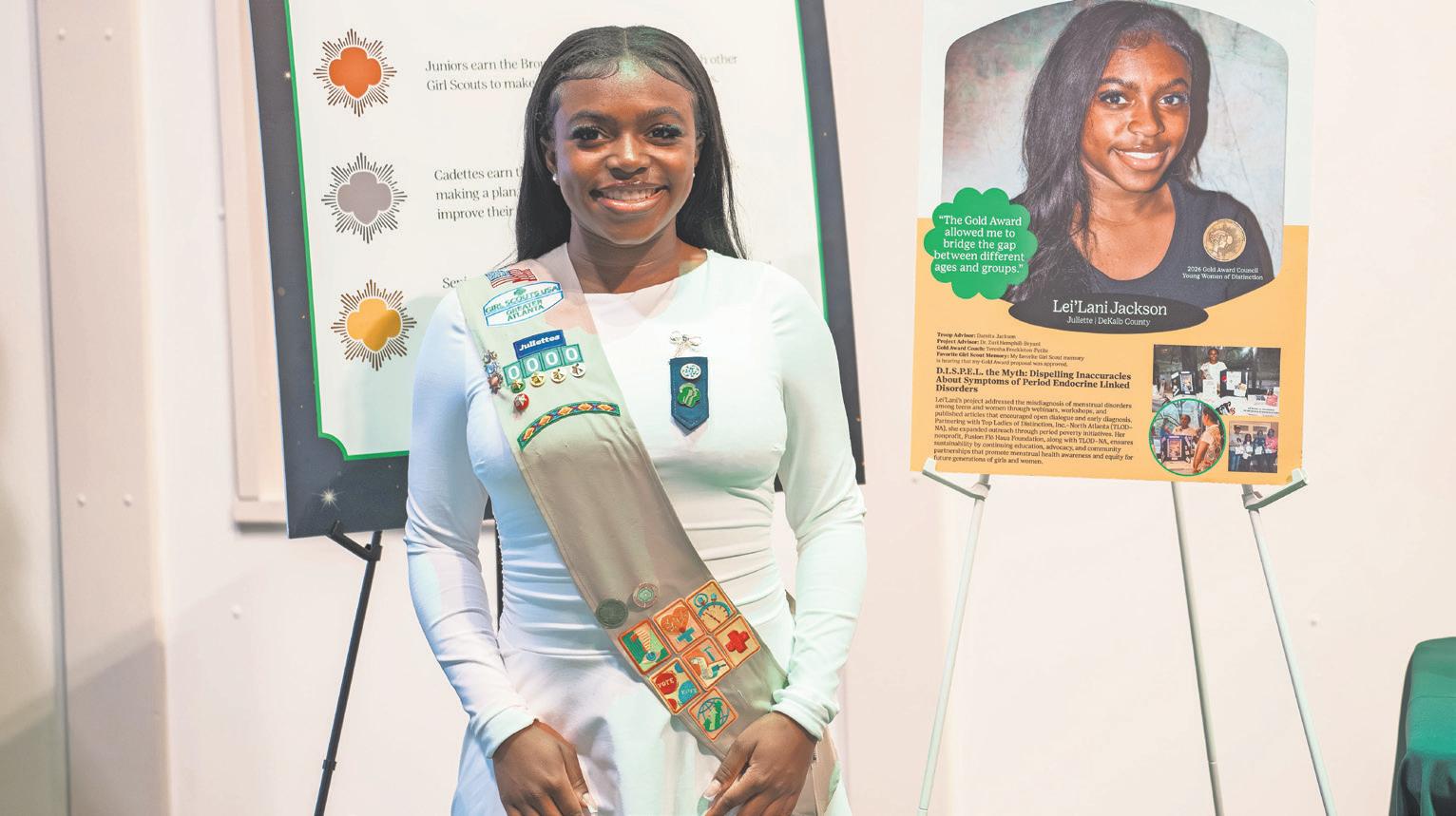
“The reason I was able to go on trips, go camping, and experience Girl Scouts was because of donors I had never even met,” Ferrell said.
“Someone believed girls were worth investing in, and that generosity changed my life.”
Today, that spirit of support continues through programs that expand access to Girl Scouts across the region.
Girl Scouts of Greater Atlanta serves more than 33,000 members across 34 counties and
offers programs focused on leadership, entrepreneurship, outdoor experiences, and community service.
Proceeds from the Night of a Million Dreams gala support the organization’s Dream Fund, which helps ensure girls across metro Atlanta can participate in Girl Scouts regardless of financial circumstances. The fund helps cover costs such as membership fees, uniforms, and programming so girls from all backgrounds can take part.
By DONNELL SUGGS
On Saturday night, the Atlanta United locker room was filled with members of the media, most of whom were waiting for star midfielder Miguel Almiron, coming off a three-assist game and, more importantly, a win, to reemerge from the showers. The team had just throttled the Philadelphia Union 3-1 in Mercedes-Benz Stadium and, for the first time in four games this season, won a game.
New to Atlanta, winger Fafa Picault, a veteran player in Major League Soccer (MLS), sat in his locker looking at all of the fuss taking place. This was only his second time in the locker room after a home game with this being his first season with the team. That fact aside, he has been in locker rooms with players of some note, Leonel Messi being the most prominent. Picault has now played for seven MLS clubs since 2017. Last season he started seven games and scored four goals for Inter Miami alongside Messi and the 2025 MLS Champions.
Sitting and looking around, Picault had a smile on his face when describing the scene and the energy in the stadium on Saturday. He signed a free agency contract with Atlanta United expecting to be a part of one of MLS’ most popular clubs.
“When you think of Atlanta United, especially in the best years, you think of a place that’s hard to play in, a place that was hard to get three points,” Picault said.

Picault said he believes respecting the city’s soccer culture will help get the club back on track. Every game won’t be like the Philly Union game when Emmanuel Latte
Lath scored, Almiron assisted on three goals, and the team led throughout the match, but it can continue to be this much fun before, during, and after the games again.

“I think we went into this game with a lot of motivation,” Picault said about wanting to avoid a team-record 0-4 start. “We know we didn’t start the way we wanted to, but there’s a lot of new things coming into play and just continuing to gel.”
During the postgame press conference, Atlanta United manager Gerardo “Tata” Martino said the goal scored by Tomas Jacob was something he recreated during training that week. Picault doubled down on that premise, saying what the team does in training will go a long way to getting back on track.
“The most important thing is to execute what the coach expresses to us during the week,” he said. “We need to leave our bodies and our hearts on the field.”
The 0-3 start to the season might be one of the reasons the crowd was a bit thin on Saturday, but the level of support by the supporter groups in the stands remained enthusiastic. Picault, who entered the game in the 70th minute, said he noticed and wants to repay them for that effort. He described the club’s level of play as having had “grit, skill” and being “well trained tactically.”
“We want to bring that back to the city,” Picault said. “We want to bring that back because we know there’s a big football culture and a great culture all around. We’re here to fight for the city.”
Saturday’s match against D.C. United (2-02 this season) has a scheduled 7:30 p.m. first kick at Mercedes-Benz Stadium.
By RICK DUNN
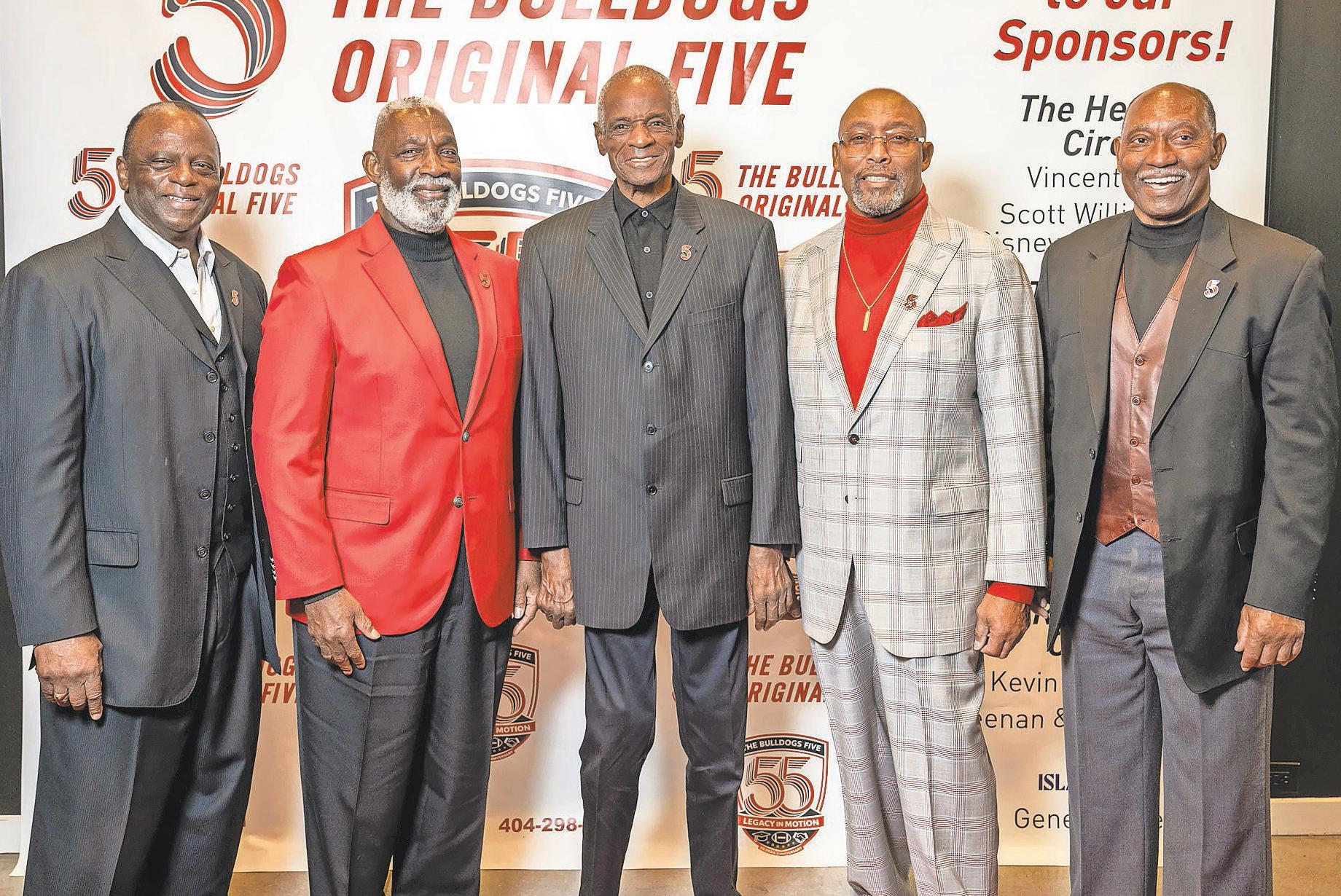
In 1971, the University of Georgia (UGA) signed its first five Black players to football scholarships. When Richard Appleby, Horace King, Chuck Kinnebrew, Clarence Pope, and Larry West inked their letters of intent to play for the Georgia Bulldogs, it made the perennial football power the last member of the Southeastern Conference to integrate.
Now known as “The Bulldogs Original Five”, these young men stepped into an environment that was both racially and culturally void. All of them had played on integrated teams in high school and dealt with some degree of racism. But nothing in their past prepared them for what awaited them at the state’s flagship university.
To start, it had only been 10 years since UGA enrolled its first Black students – Hamilton Holmes and Charlanye Hunter. The university was still in its neonatal stages of accepting Black people in any role other than cooks and custodians.
In that period of time, the Black student population had only reached 200 on a campus of 20,000. Across the street from the admissions building was a frat house flying a huge Confederate flag. White students relished the celebration of Confederate Memorial Day, adorned in antebellum dresses and the uniforms of those who fought to maintain slavery.
There was only one Black professor, and there were department heads who had no problem referring to Black males as “Boy.” Despite meeting all the academic requirements to attend UGA, the mindset existed that Black students were admitted only because of the color of their skin.
During the 1971 football season, the year before “The Five” would be able to play on the varsity squad, the marching band was known as the “Dixie Redcoat Band.” They performed the song “Dixie”, and fans waved Confederate flags with the same vigor as they wave red and black pom-poms today.
Additionally, “The Five” endured the isolation that came with living in the exclusive athletic dormitory, McWhorter Hall. They were subjected to racist comments and white “teammates” donning Ku Klux Klan robes and hoods. To overcome these challenges, Appleby, King, Kinnebrew, Pope, and West turned to three sources.
First was UGA Head Football Coach Vince Dooley. When recruiting the players, Coach

Dooley promised to treat them like his own sons. True to his word, Dooley was infuriated when he learned they were being mistreated. He called a team meeting to address the matter and made it clear Black players were going to be part of BullDawg Nation from then on out.
Second, they turned to each other. “We became a family,” said Pope. “We held each other accountable, gave encouragement, and provided support in times of doubt.”
Third, they had the support of Black students and of the Black Athens community, which was not hard to get since King, Appleby, and Pope grew up in the town. Everyone knew that the success of the Black football players was success for the entire race. And, successful they were.
Pope (linebacker), Kinnebrew (defensive line), and West (defensive back) were cornerstones of a defense which became so famous that, in 1975, soul singer James Brown released a song entitled “Dooley’s Junkyard Dogs.” Appleby (tight end) etched his name into BullDawg football lore with his 80-yard touchdown pass to wide receiver Gene Washington that led to a 10-7 defeat of hated rival the University of Florida, and prevented the Gators from clinching the 1975 SEC football championship.
Running back Horace King may have enjoyed the most success while wearing the red and black. His career numbers were 5 of 10 passing for 144 yards and one touchdown, and 27 receptions for 386 yards and one touchdown. He carried the ball 285 times for 1,287 yards and
19 touchdown. Twelve of those running TD’s came in his final year as a Bulldog, and he lead the team in scoring.
King spent eight years in the NFL all with the Detroit Lions. After football he worked 28 years as an engineer for General Motors. Appleby played with Tampa Bay Buccaneers and in the Canadian Football League. He abandoned the cold of Canada for the warmth of Hawaii where he became an entreperuer.
Kinnebrew, a native of Rome, GA, had no visions of playing pro football, but did want to coach. Dooley made him a grad assist, but an offer to work for DuPont changed his course. He enjoyed a productive career not only with DuPont, but with Home Depot and Floor and Decor where he headed the corporations diversity and inclusion efforts.
West, who hails from Albany, GA, and Pope are both ministers. West is Senior Pastor at Mt. Airy Baptist Church in Washington, D.C. Pope, after retiring from the Athens-Clarke County Fire Department, is Associate Pastor of New Freedom Christian Center in Athens.
Putting their accomplishments as the first five football players into perspective, Pastor West said, “To see the number of African-American men that are on the team, now; that are on the coaching staff, now. And, to see the number of African-American students that are walking on the campus and are part of every school on the UGA spectrum, I’d like to think we had a bit to do with that.”
Fifty-five years later, through “The Bulldogs

Original Five Foundation” they are still contributing to the University of Georgia. The foundation is dedicated to increasing student leadership development and providing financial support. At a recently held coming out event at The Gathering Spot in Atlanta they presented a $1,000 scholarship to Natalina Daniel, a second-year honor student from Tucker, GA. Among the hundreds who attended the event, which included former football players and Black students who attended UGA with “The Five” during those stressful 70’s, was Athens native and Georgia gubernatorial candidate Michael Thurmond. He summed up their past and present contributions by saying, “They didn’t just play the game, they paved the way, and continue to pave it, for every Bulldog who follows.”

Spacious 1-Bedroom Affordable! Rent Based on Annual Income Amenities, Great Location, and Convenient to Marta Please call for detailed information (404) 586-9098

Avistatech, Inc. seeks Automation Engineer in Atlanta, GA. Resp include: collab across depts to id/implmnt RPA solutns; devlp objs using Blue Prism 7.x+, .NET 4.0+, VB.NET, JS, HTML, C#; integ w/ DBs, APIs, legacy apps; use OCR/data scraping; doc PDD/SDD; lead automtn mtgs; trblsht & enhnc workflows. Req: MS in CompSci or rel fld (or foreign equiv) + 24 mos exp as RPA Dev. May work at various unanticipated locations throughout the US. Mail résumés to: Avistatech, Inc., 3423 Piedmont Rd NE, Atlanta, GA 30339.
Sealed Bids for 26ITB030926K-DB Taxiway Geometry Improvement Project for the Department of Public Works will be accepted by the Fulton County Department of Purchasing & Contract Compliance, online via Bidnet Direct, https://www.bidnetdirect. com/georgia/fultoncounty. All Bids must be submitted no later than 11:00 a.m., local (Eastern) time on Wednesday, April 15, 2026 at 11:00 AM on the stated due date.
Bids will be received; the firms name and total amount will be publicly read out loud at 11:05 a.m. See ITB Solicitation for Zoom link: Bid Bond: A 5% Bid Bond is required for this project.
Scope of Work: Fulton County, Georgia “County or Owner”) This project consists of the construction phase for the Taxiway Geometry Improvements to include Grading and Drainage Improvements, Asphalt Paving, Pavement Markings, Erosion Control and Taxiway Edge Lighting. The detailed scope of work and technical specifications are outlined in the Division of Work Section 01 10 00, Project Summary and Scope of Work of this bid document; see attachments in Section 10 & review Solicitation for complete details.
General instructions, specifications and/or plans for this project can be downloaded electronically free of charge athttps://www.bidnetdirect.com/georgia/ fultoncounty.
Bid Bond: A 5% Bid Bond is due with Bid.
Term of Contract: Contractor shall commence the Work within ten calendar days after receipt of Notice to Proceed and shall substantially complete the Work within Fourteen (14) calendar days from issuance of the Notice to Proceed and finally complete the Work within Thirty calendar (30) days of issuance of the Notice to Proceed
Pre-Bid Conference:
A Pre-Bid Conference will be held on site at: Fulton County Executive Airport Attn: Airport Manager’s Conference Room, 3965 AERO Drive, Atlanta, Georgia 30336
Date: Wednesday, March 25, 2026 Time: 11:00 AM
If you have any questions regarding this project please contact Darlene A. Banks, CAPA at (404) 612-7879 or by e-mail at darlene.banks@fultoncountyga.gov Fulton County reserves the right to accept or reject any or all bids and to waive technicalities.


If you want to go big while taking on virtually any terrain in grand fashion, get behind the wheel of the 2026 Nissan Armada Platinum Reserve edition. After a recent makeover to create a more grandiose presence in the large SUV sector, the Armada Platinum Reserve masterfully blends luxury, muscle, and advanced tech into a commanding package that stands out whether it’s at valet lines or heading to the mountains with the fam. Presented in six different trims—SV, SL, Platinum, PRO-4X, NISMO, and Platinum Reserve—I reviewed the latter and it left nothing to be desired. Except for me to have it longer, of course.
Let’s get straight to the engine. The twin-turbocharged 3.5-liter V6 delivered 425 horsepower and 516 lb.-ft of torque, the perfect punch for city streets and highway maneuvering. Paired with a smooth-shifting nine-speed automatic transmission complete with paddle shifters, the driving experience was refined yet still gave the feel of a sports car living in a large SUV frame. Whether helping someone move (ugh!) or towing a boat or up to 8,500 pounds, the Armada has no issue handling whatever duty calls.
Included in this trim is the Intelligent 4WD system, combined with the available adaptive electronic air suspension, making both on-road comfort and off-road versatility worry free. I loved how the suspension could raise the vehicle for extra clearance on rugged terrain or lower it, like I was in a music video for easier entry and improved aerodynamics.
Stepping inside, the Platinum Reserve label is justified. Posh appointments include soft-to-the-touch leather balanced with cutting-edge technology. This trim also assures buyers that every ride makes them feel like royalty, including second-row captain’s chairs with ventilation and heat, while the front gets massages on demand. New this year, Nissan introduces the Klipsch premium audio system enhanced by 12 speakers blessing all ears with crisp high hats and booming bass, something I always look for in premium grades like this.
Want tech? The invisible hood view, front wide view, and the 3d intelligent around view make any obstacle visible, which is ideal for such a large vessel to help keep drives without incident. For long excursions, the highly recommended ProPILOT Assist 2.1 enables hands-off freeway driving for conductors who want to relax a little while still staying attentive behind the wheel.
In summary, the 2026 Nissan Armada Platinum Reserve checks all the boxes when it comes to power, sophistication, safety, and style whether it’s for family or simply demanding more room. I didn’t want to let this one go.
Fuel Economy: 16 city/19 highway, 17 combined Price: The 2026 Nissan Armada Platinum Reserve starts at $80,550 and $89,045 as reviewed including two-tone premium paint (two-tone pearl white and black roof) and ProPILOT Assist 2.1.
For more information, visit Nissanusa.com.