By DONNELL SUGGS
Two days after the Democratic Party of Georgia hosted all seven Democratic gubernatorial candidates for a forum (not to be confused with a debate) in the auditorium at Chamblee High School, another gubernatorial forum took place a couple of miles away in Atlanta.
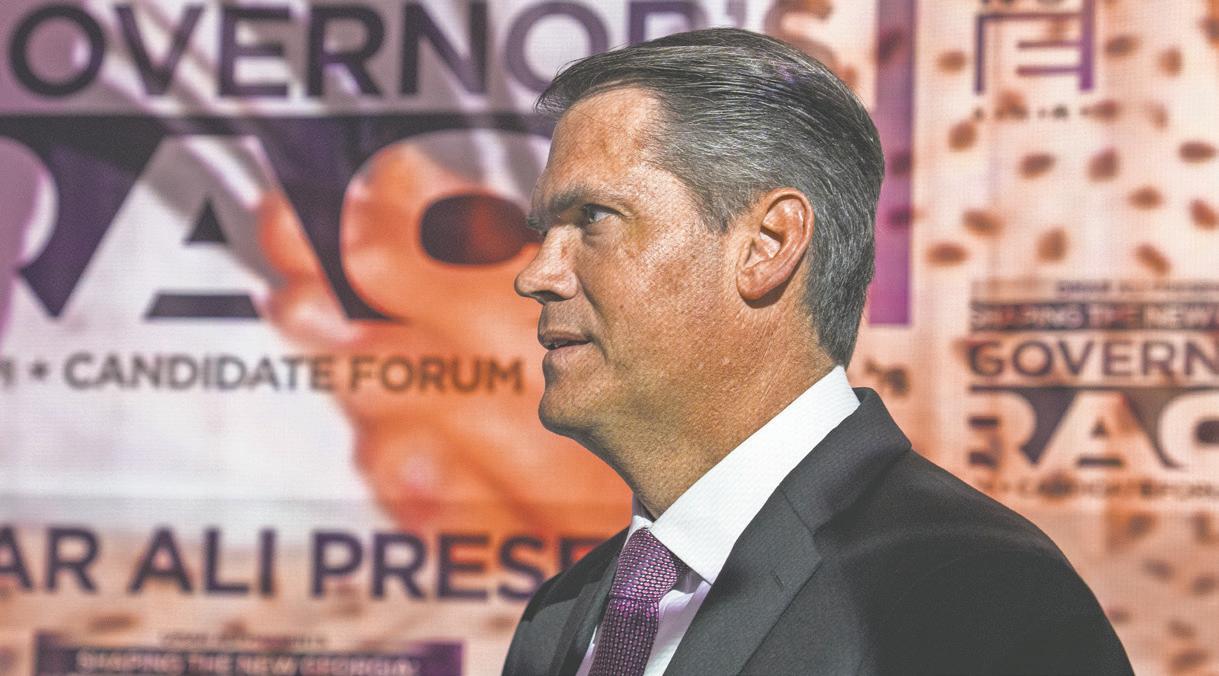
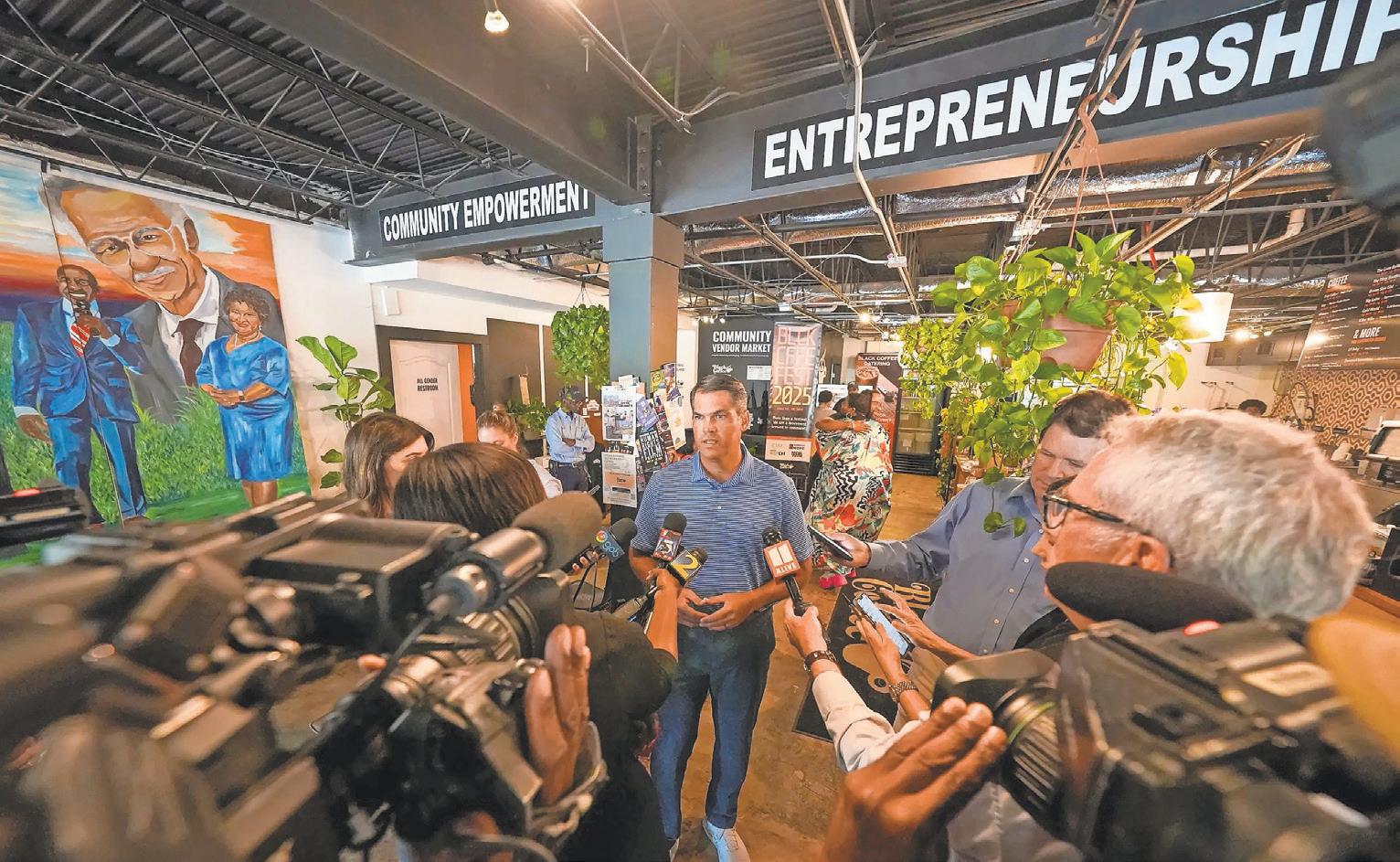
“Shaping the New Georgia: The Governor’s Race” began at noon inside the Ali at Lakewood event space. The bipartisan political event was hosted by the venue’s owner, Omar Ali, a local entrepreneur, and moderated by Ray Cobb, Tamisha Harris, and Ali. Taking place on a Saturday afternoon, the setting of this local political forum couldn’t have been any different from what took place on Thursday in Chamblee. And that’s one of the positives about public forums during a major election season.
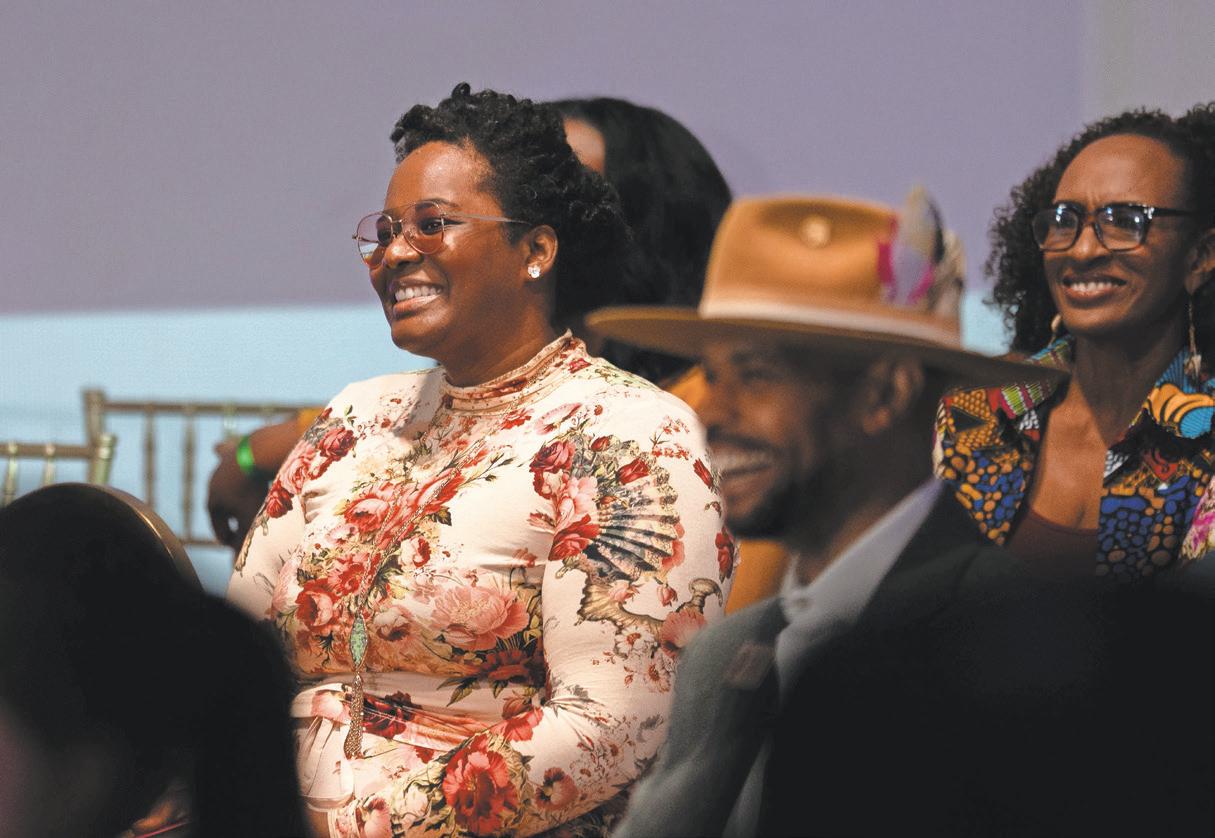
The settings, the attendees, the questions, and the focus are all different and can benefit, and in some cases, hurt a candidate’s campaign.
Harris posed questions to the
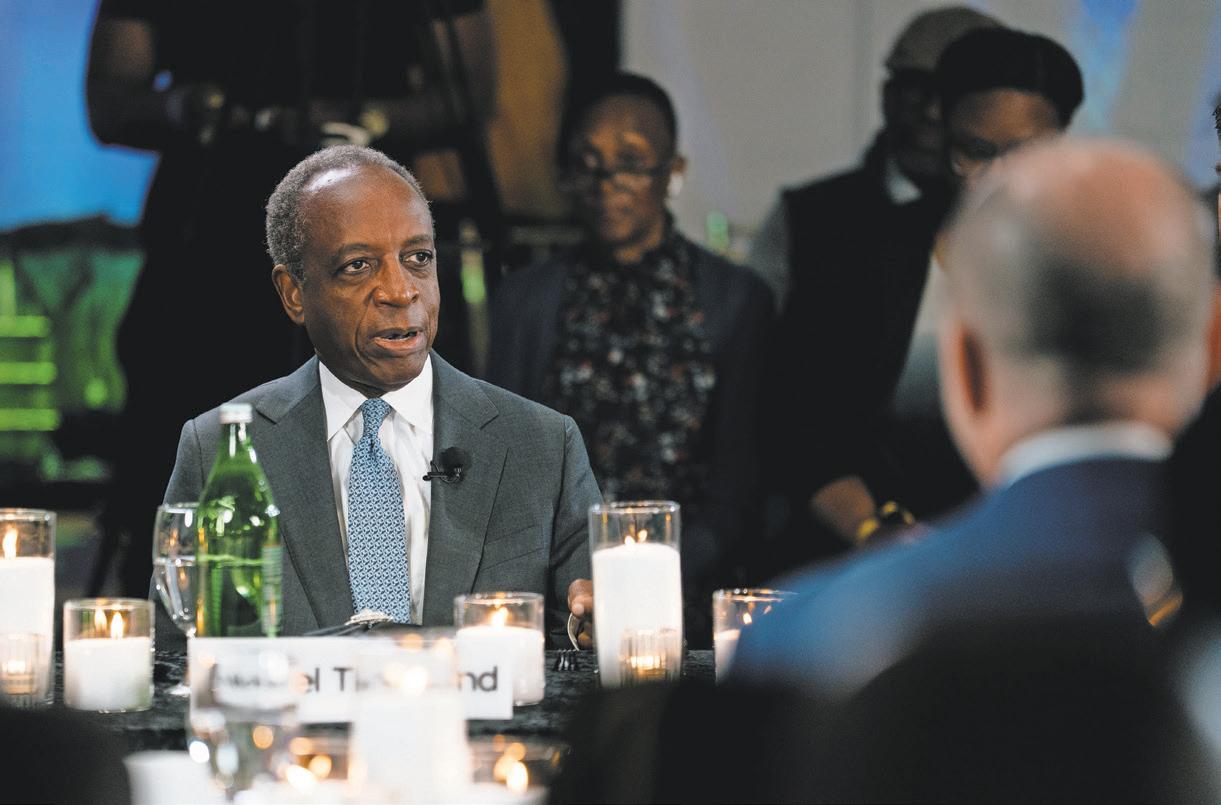
candidates about the affordability crisis, education, small businesses in Georgia, college affordability, skills training, and how they would address increases in property taxes.
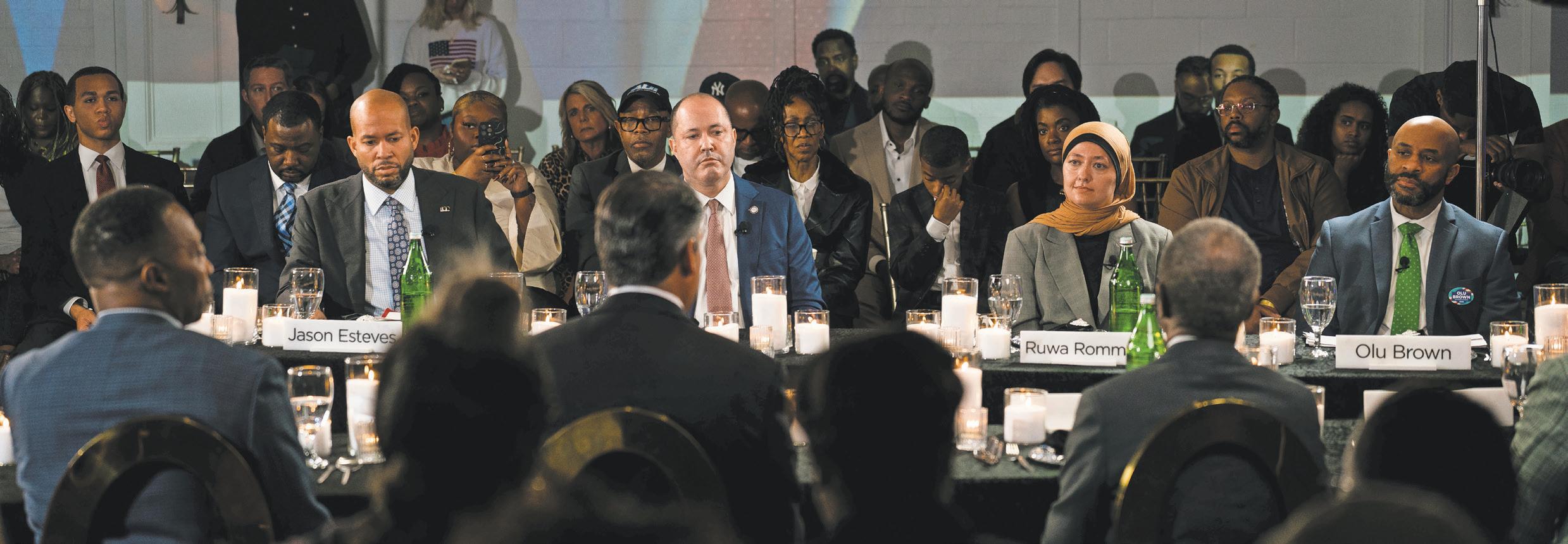
The Democratic candidates who attended on Saturday were Olu Brown, former Georgia Lt. Governor Geoff Duncan, State Rep. Derrick Jackson, former State Senator Jason Esteves, and State Rep. Ruwa Romman. The Republican side of the ticket was represented by Georgia Attorney General Chris Carr and Clark Dean. The absence of former Atlanta Mayor Keisha Lance Bottoms, a Democrat, and Republicans Burt Jones, Rick Jackson, and the current Georgia Secretary of State Brad Raffensperger did not go unnoticed.
“There are three really rich guys trying to buy your vote,” said Carr during one of the moments he got to address the 40-plus people in
attendance. The room was full of people, including Ali at Lakewood staff members dressed in all black, local media, and respective campaign staffers.
Saturday was the first time Carr, who called Jackson, Jones, and Raffensperger “no-shows”, took part in a bipartisan forum in 2026. He said forums like these are important to any candidate’s campaign.
“When you’re running for governor in a state of 11 million people, you represent everyone. I am trying to get everyone I possibly can to hear my message and vote for me on May 19,” Carr said.
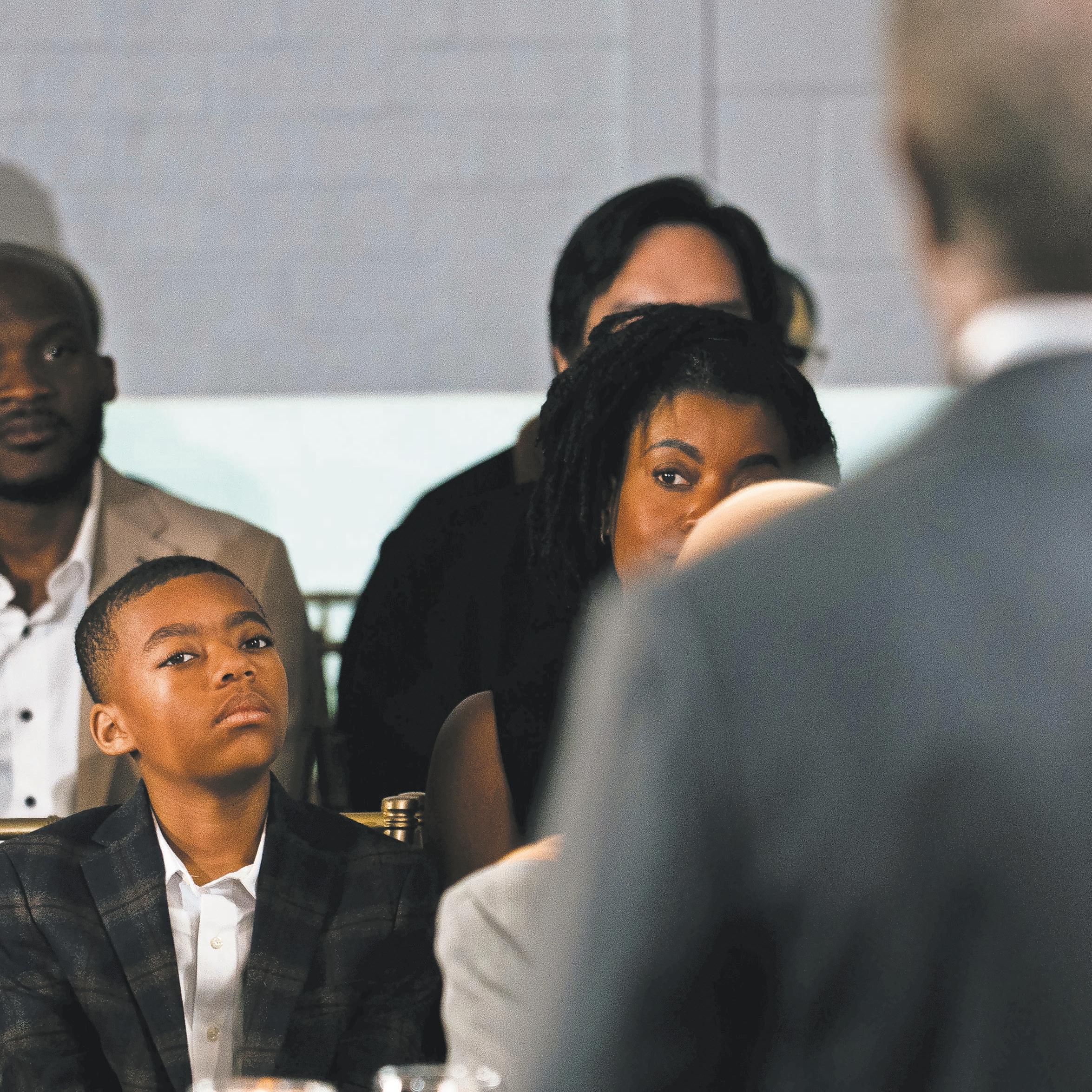
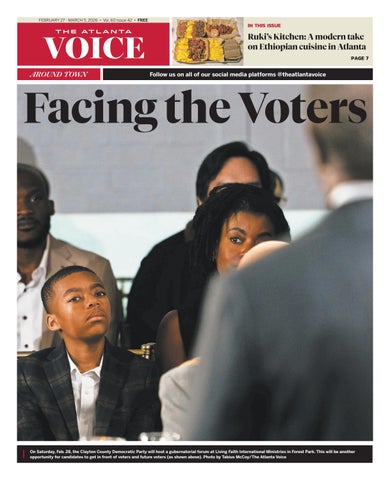
On Saturday, Feb. 28, the Clayton County Democratic Party will host a gubernatorial forum at Living Faith International Ministries in Forest Park. This will be another opportunity for candidates to get in front of voters.
“Voters deserve the opportunity to hear from all the candidates they will pick from to make educated decisions going into the primary,” said Romman, whose campaign has conducted the largest door-knocking grassroots campaign to date. “These forums also provide a space outside of social media and TV to engage with those who might be representing them.”
Duncan called forums like those at Ali at Lakewood, Chamblee High School, and a church in Savannah, for example, opportunities to “share my story.”
“You’re on the hot seat, and you have to answer the questions, and you don’t know what the questions are, so people get to see and hear your heart,” Duncan said. “I think that’s what America, and specifically
Georgia, wants. They want honest and authentic individuals to show up and make decisions.”
Duncan, famously a former Republican, has participated in all forums held since the new year began. He said there’s value in being everywhere the voters are when they are looking to learn more about the people running for the state’s top seat.
“People are tired of politicians lying to them, telling them what they want to hear during the campaign cycles, then showing up on the job as damaged goods,” Duncan said.
Looking around the room, which was decorated with candles, table settings, following the forum, Duncan added, “Rooms like this turn into thousands and thousands of votes. If somebody performed well or answered the questions authentically, or was prepared more so than their opponents, then I think the reach is so much further than in this room.”
Esteves seems to understand the value of forums. He held a Black men’s roundtable at a local business last month, and told The Atlanta Voice he had more of those smaller, more intimate forums planned for the first half of the campaign season.
“I’m not taking a single vote for granted — it’s why I’m traveling across the state to talk about my vision of health, wealth, and opportunity for every Georgian,” said Esteves. “Forums provide a critical
By ISAIAH SINGLETON
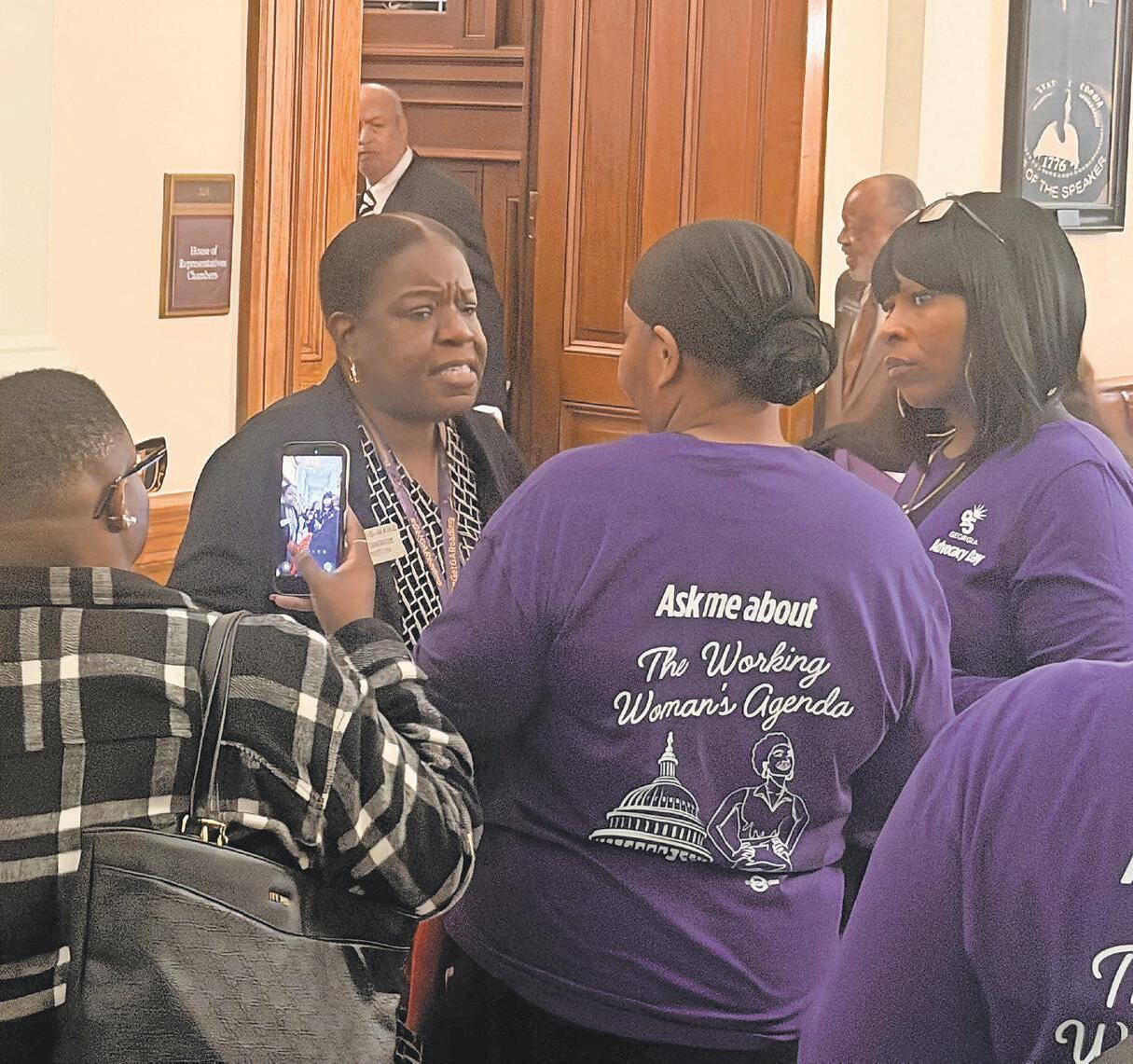
9to5 Georgia hosted an advocacy day at the Georgia State Capitol to support paid leave.
As many Georgia workers do not have access to paid medical and family leave, far too many employees lack reliable, much-needed time off. Through sickness and important life events, they are forced to choose between caring for themselves and their families or risking their jobs.
Lacking paid leave strains their own wellness and personal live,s but also limits their ability to succeed in work.
“Working women shouldn’t have to worry about losing pay just to care for themselves or their loved ones,” said Jasmine Bowles, executive state director of 9to5 Georgia. “Paid leave policies are long overdue in Georgia’s private sector. For Georgia to be the ‘best state for businesses,’ it must also be the best state for working families. Our elected officials and leaders across the state must listen to the people and take immediate action.”
Advocacy Day, she said, is their biggest event of the year, and it means so much to them because for some women, they get to bring them back and update them on things that they have been advocating for a while.
“We’re bringing women and children who have never been to the state capitol before, and for the first time, they’re getting to see not only who their legislators are, but how to speak with them,” she said. “It’s a cool, exciting day.
She also says it’s important for people to pay attention to paid leave for several reasons, one being people may not be aware they are beneficiaries of paid leave in some cases, or even know what paid leave is.
“It’s important we educate people on what leave is and what they are entitled to, either in their workplaces or just as citizens,” she said. “It’s also important for people to learn about and fight for paid leave because paid leave is a healthcare solution. Some of our biggest problems in society come from an inability to care for ourselves or our loved ones the way they should be.”
Bowles said it normally looks like missed doctor’s appointments that leads to more long, enduring health problems, or missed parent-teacher conferences, which might look like manifested behavior in your child, and so many other different things.
Paid leave, Bowles says, is the
ability to care for yourselves, your loved ones, both children and aging elders.
“This is a generation right now where we’ve got people taking care of both their younger children and the aging folks in their community as well,” she said.
During the meeting before the capitol visit, 9to5 discussed the Georgia Coalition for Paid Leave’s efforts to advocate for better leave policies.
In 2021, HB 146 provided three weeks of paid leave to state workers, which was extended to six weeks with HB 1010 in 2024. The coalition, made up of over 35 organizations, aims to expand leave access to more workers.
House Bill 1118, currently under consideration, would offer three additional weeks of leave to birthing mothers.
The coalition emphasizes the need for comprehensive leave policies that cover all workers and urged legislators to fund an actuarial study to explore workable solutions.
One of their outcomes they hope to achieve is letting their legislators know they’re grateful for HB 1118, which was introduced in February 2026 by Rep. Sandy Donatucci and proposes 120 hours (initially 80) of paid maternal birth leave for eligible state and local school employees.
The bill passed the House Public and Community Health Committee in Feb. 10 and moves to the House Rules Committee.
“We have a long list of issues we want better for when it comes to black and brown, working women and their families, but we’re picking
their families or risking their jobs.
Lacking paid leave strains their own wellness and personal lives, but also limits their ability to succeed in work.
“Working women shouldn’t have to worry about losing pay just to care for themselves or their loved ones,” said Jasmine Bowles, executive state director of 9to5 Georgia. “Paid leave policies are long overdue in Georgia’s private sector. For Georgia to be the ‘best state for businesses,’ it must also be the best state for working families. Our elected officials and leaders across the state must listen to the people and take immediate action.”
Advocacy Day, she said, is their biggest event of the year, and it means so much to them because for some women, they get to bring them back and update them on things that they have been advocating for a while.
just one today, and the one issue is to just tell our legislators thank you and to vote yes on HB 1118,” she said.
“Which will add three more weeks of paid time off for birthing women.”
Additionally, Bowles said we are in a state with one of the highest maternal mortality rates and infant mortality rates.
“We all know all women deserves this bill, but especially for Georgia’s women. However, this bill is only for state employees, educators of public-school districts, and only add three more weeks to the six that already wasn’t enough, so we are here to say thank you, but we have more work to do,” she said.
One of the things Bowles said they need to know is what this would look like for every woman in Georgia to have this right and the bill being for birthing mothers adds a little bit to the labor imbalance in a home because this bill only impacts working moms.
“What about that dad, that partner, or working support? So, this bill working moms three extra weeks off and that means they have more time together with their babies, which is a blessing, but we also know that moms can’t do it alone,” she said.
“Having a bill that has partners eligible for it also would help and make sure this same expansion applies to all of Georgia’s women.”
As many Georgia workers lack access to paid medical and family leave, far too many employees lack reliable, much-needed time off. Through sickness and important life events, they are forced to choose between caring for themselves and
In 2021, HB 146 provided three weeks of paid leave to state workers, which was extended to six weeks with HB 1010 in 2024. The coalition, made up of over 35 organizations, aims to expand access to leave for more workers.
House Bill 1118, currently under consideration, would offer three additional weeks of leave to birthing mothers.
The coalition emphasizes the need for comprehensive leave policies that cover all workers and urges legislators to fund an actuarial study to explore workable solutions.
“We’re bringing women and children who have never been to the state capitol before, and for the first time, they’re getting to see not only who their legislators are, but how to speak with them,” she said. “It’s a cool, exciting day.
She also says it’s important for people to pay attention to paid leave for several reasons, including that they may not be aware they are beneficiaries in some cases, or even know what paid leave is.
“It’s important we educate people on what leave is and what they are entitled to, either in their workplaces or just as citizens,” she said. “It’s also important for people to learn about and fight for paid leave because paid leave is a healthcare solution. Some of our biggest problems in society come from an inability to care for ourselves or our loved ones the way they should be.”
Bowles said it normally looks like missed doctor’s appointments that lead to more long-lasting health problems, or missed parent-teacher conferences, which might manifest as behavior in your child, and so many other things.
Paid leave, Bowles says, is the ability to care for yourselves, your loved ones, both children and aging elders.
“This is a generation right now where we’ve got people taking care of both their younger children and the aging folks in their community as well,” she said.
During the meeting before the Capitol visit, 9to5 discussed the Georgia Coalition for Paid Leave’s efforts to advocate for better leave policies.
One of their outcomes they hope to achieve is letting their legislators know they’re grateful for HB 1118, which was introduced in February 2026 by Rep. Sandy Donatucci and proposes 120 hours (initially 80) of paid maternal birth leave for eligible state and local school employees. The bill passed the House Public and Community Health Committee on Feb. 10 and moves to the House Rules Committee.
“We have a long list of issues we want better for when it comes to black and brown, working women and their families, but we’re picking just one today, and the one issue is to just tell our legislators thank you and to vote yes on HB 1118,” she said. “Which will add three more weeks of paid time off for birthing women.”
Additionally, Bowles said we are in a state with one of the highest maternal mortality rates and infant mortality rates.
“We all know all women deserve this bill, but especially for Georgia’s women. However, this bill is only for state employees, educators of public-school districts, and only adds three more weeks to the six that already weren’t enough, so we are here to say thank you, but we have more work to do,” she said.
One of the things Bowles said they need to know is what this would look like for every woman in Georgia to have this right, and the bill being for birthing mothers adds a little bit to the labor imbalance in a home because this bill only impacts working moms.
“What about that dad, that partner, or working support? So, this bill gives working moms three extra weeks off, and that means they have more time together with their babies, which is a blessing, but we also know that moms can’t do it alone,” she said. “Having a bill that has partners eligible for it also would help and make sure this same expansion applies to all of Georgia’s women.”
By DR. FRANCES “TONI” DRAPER
AFRO CEO and Publisher
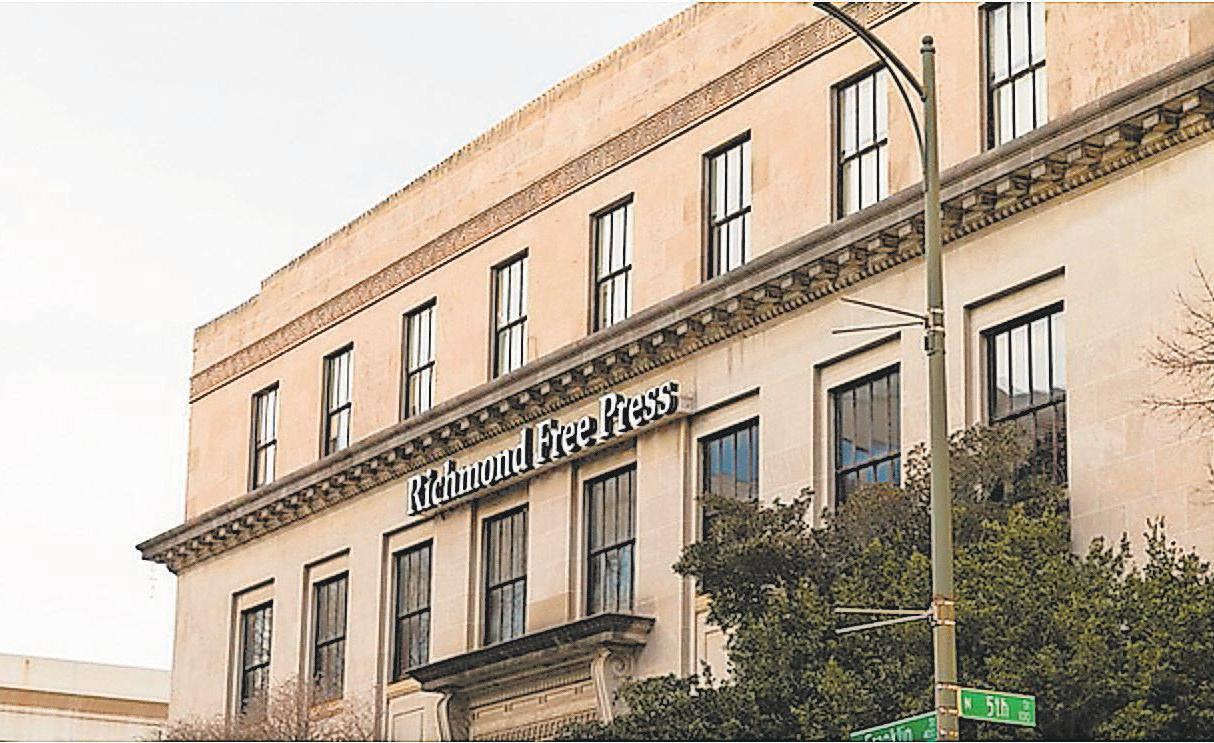
The closing of the Richmond Free Press marks more than the end of a newspaper.
It marks the quieting of a civic institution.
Founded in 1992 by Raymond H. Boone Sr., the Richmond Free Press was created to provide independent, accountable journalism for Black Richmond. Boone brought deep professional grounding to that mission. Before launching the Free Press, he served as editor and vice president of the Baltimore-based Afro-American Newspaper Group and later as a member of its board. He understood standards, governance and the responsibility that accompanies independent ownership.
The Free Press reflected that understanding.
It was disciplined. It was careful. It did not chase spectacle. It practiced journalism.
After Boone’s passing in 2014, leadership continued under his wife, Jean Patterson Boone, who sustained the paper with steadiness and resolve. Their daughter, Regina H. Boone, an accomplished photojournalist, also contributed to the publication’s work. This was not merely a business. It was a family’s commitment to community accountability.
The Free Press closes amid structural pressures reshaping local journalism nationwide — shrinking local advertising revenue, the growth of dominant digital platforms and changing patterns of news consumption. These forces have strained community newsrooms across the country.
But when a Black newspaper closes, the loss is distinct and profound.
Communities lose coverage of church anniversaries and pastoral transitions — the spiritual infrastructure that holds neighborhoods together. They lose the social news documenting graduations, civic honors, small-business openings, fraternity and sorority milestones, neighborhood achievements and community triumphs that rarely appear elsewhere but define local life.
They lose coverage of Black Richmond that exists nowhere else.
They lose journalists who
understand the context beneath the headline — who know the history of a block, the arc of a congregation, the stakes of a zoning decision.
And they lose something even more consequential.
They lose sustained pressure on elected officials to craft, pass and enforce legislation that serves the entire community — not just the well-positioned few.
Black newspapers have long monitored school boards, city councils, housing authorities, development commissions, state legislatures and congressional offices with cultural competence and institutional memory. They have asked the follow-up question. They have returned after the cameras left. They have tracked whether commitments were honored.
When that scrutiny fades, accountability weakens.
When accountability weakens, equity erodes.
This moment arrives at a significant crossroads. In 2027, the Black Press will mark 200 years since the founding of Freedom’s Journal in 1827, the first Blackowned and operated newspaper in the United States. For two centuries, Black newspapers have functioned as record-keepers, critics and civic watchdogs.
The Structural Crisis Facing Black Media
The crisis facing journalism is
broad. Thousands of local newspapers have shuttered over the past two decades. Entire communities now lack consistent local reporting. Significant portions of local advertising have shifted to large digital platforms, reducing revenue available to community newsrooms. At the same time, corporate and philanthropic commitments to diversity, equity and inclusion have faced retrenchment. As DEI budgets contract or are restructured, Black-owned media often feel the impact directly.
Some suggest that in a digitally connected age, specialized media is less necessary. The evidence suggests the opposite. As media ownership consolidates and local reporting shrinks, independently owned Black newspapers remain among the few institutions with both proximity to community and the will to apply sustained pressure on power.
The Black Press is not relevant because it is historic. It is relevant because the conditions that required its founding have not disappeared.
Policy decisions continue to shape housing access, education equity, voting rights, public safety and economic opportunity. Communities still require culturally competent reporting that understands local institutions and lived experience. Elected officials still respond to sustained public scrutiny.
Narrative sovereignty is not ornamental.
It is civic infrastructure.
A Bicentennial Moment — And a Call to Act
If quality alone guaranteed survival, the Richmond Free Press would still be publishing. Its closing signals not irrelevance, but fragility — even for institutions grounded in credibility and trust.
As the bicentennial of the Black Press approaches, this moment calls for clarity and commitment.
Advertisers must treat Black newspapers as essential civic partners.
Readers must subscribe, donate and engage with the understanding that journalism requires sustained investment.
Philanthropy must support operational capacity, not only shortterm initiatives.
Black institutions — churches, fraternities, sororities, civic organizations and nonprofits — must intentionally strengthen the media platforms that document their work.
Publishers must continue adapting for a digital era while preserving editorial independence and mission integrity.
The Black Press has endured for two centuries not because it was sentimental, but because it was necessary.
The conditions that required its founding have not disappeared.
The question is not whether it has a future.
The question is whether we are willing to invest in it.
FOUNDED
May 11, 1966
FOUNDER/EDITOR
Ed Clayton
Immortalis Memoria
PUBLISHER/EDITOR
J. Lowell Ware
Immortalis Memoria
The Atlanta Voice honors the life of J. Lowell Ware.
PUBLISHER
Janis Ware
PRESIDENT/
GENERAL MANAGER
James A. Washington 2018-2024
EXECUTIVE ASSISTANT TO PUBLISHER
Chia Suggs csuggs@theatlantavoice.com
EDITOR IN CHIEF
Donnell Suggs editor@theatlantavoice.com
GENERAL ASSIGNMENT REPORTERS Isaiah Singleton isingleton@theatlantavoice.com
Laura Nwogu lnwogu@theatlantavoice.com
Noah Washington nwashington@theatlantavoice.com
BUSINESS REPORTER
Tabius H. McCoy tmccoy@theatlantavoice.com
EDITOR AT LARGE Stan Washington swashington@theatlantavoice.com
ADVERTISING, SALES & CIRCULATION
ADVERTISING ADMINISTRATOR
Chia Suggs advertising@theatlantavoice.com
SALES
RDW Jackson rdwadman@gmail.com
SUBMISSIONS editor@theatlantavoice.com
DIRECTOR OF PUBLIC RELATIONS
Martel Sharpe msharpe@theatlantavoice.com
CONTACT INFORMATION
633 Pryor Street, S.W. Atlanta, GA 30312 Office: 404-524-6426 info@theatlantavoice.com

Continued from page 2
platform to meet voters where they are and draw contrast with my opponents — Democrats and Republicans — who have continuously failed hardworking Georgians.”
As Georgia’s Attorney General, Carr has the name recognition that may allow him to miss out on smaller forums like the one on Saturday, but he told The Atlanta Voice that he understood why they were as important as the larger political events that will take place in
the months to come.
“Politics should be a game of addition, not subtraction,” said Carr, who said it was “foolish” to skip forums. “If you’re running for governor, you owe people the opportunity to ask you questions and to hear your vision.”
Dean, a dark-horse candidate and an admitted non-politician, said he was happy to address Democratic, Republican, and independent voters on Saturday. This was also his first time participating in a bipartisan forum.
“Public forums like this are important because they give us a chance to meet the clients,” said Dean, who elaborated that the
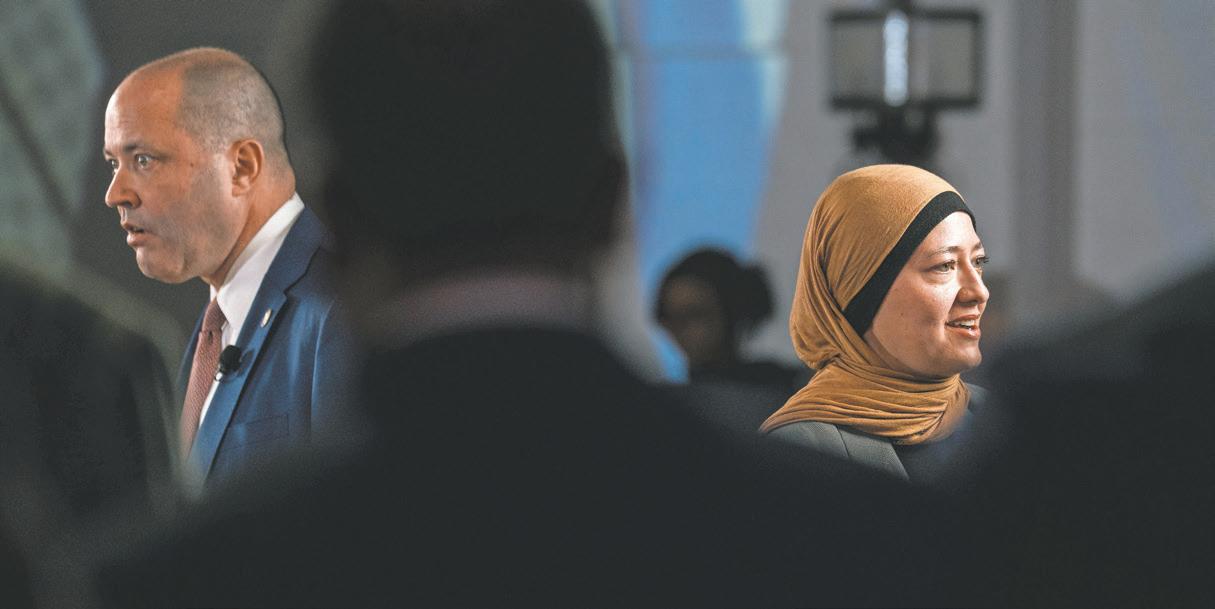
governor has 11 million clients. “How can you serve them if you don’t get to know them? This is what it’s all about: the people.”
Romman, who recently decided to drop out of the race to pursue a State Senator seat, has also been front and center at all forums this year, both big and small, including in Savannah at Jonesville Baptist Church, which took place in early January. That was the first gubernatorial debate of the year, and the first time all seven Democratic candidates shared a stage.
“As a candidate, it’s also been a valuable resource to show voters, not just tell them, why we have the best policies and campaign,” Romman said. “It’s important for elected officials to be in community with the people they represent. These public forums create an opportunity to deepen that community.”
Dominique Davis, a makeup artist and model, stood in the back of the room and took it all in. Saturday at Ali at Lakewood was the first time the 23-year-old Massachusetts native witnessed a political forum in person. She was there to do the makeup of one of the moderators and decided to see what all the fuss was about.
“I think it’s important to be here

because the world is crazy right now, so it’s important to see everything that’s going on,” said Davis, who has lived in Georgia for a short time. “I can learn a lot about Georgia politics like this.”
The former Mayor of Atlanta, Bottoms, is familiar with political forums and meet-and-greets. She attended the forums in Chamblee and Savannah and might attend the Forest Park forum on Saturday. She, too, spoke highly of public forums, speaking to The Atlanta Voice following the Chamblee forum.
“It’s always good for the people to hear directly from us,” Bottoms said
as she was flanked by her security and husband, Derel Bottoms. “So, it’s always a great opportunity to share more about our platforms.
“I always appreciate the opportunity,” Bottoms said.
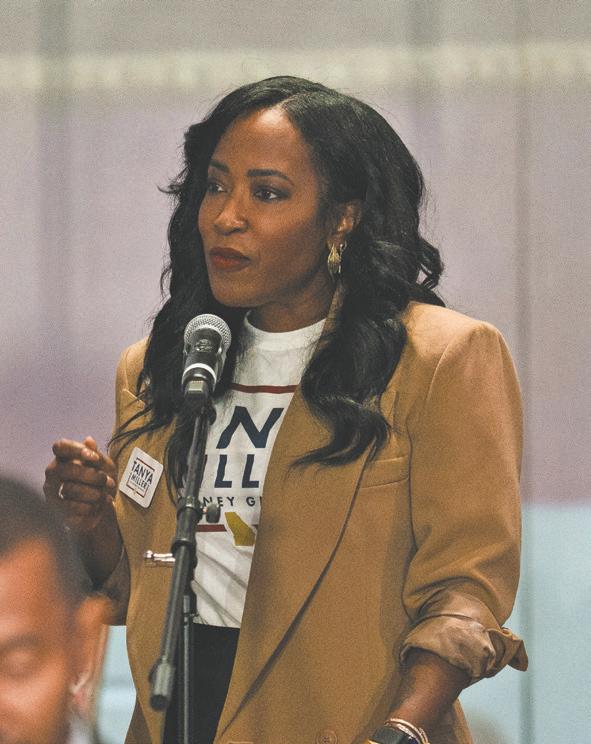
There will be many opportunities for the voting public to hear from her and the other candidates running for political office before the May 19 primary election. That includes State Rep. Tanya Miller, who is running to fill Carr’s seat as Attorney General and spoke to the audience at the start of the forum.
Early voting for the primary election begins on Monday, April 27.

By NOAH WASHINGTON
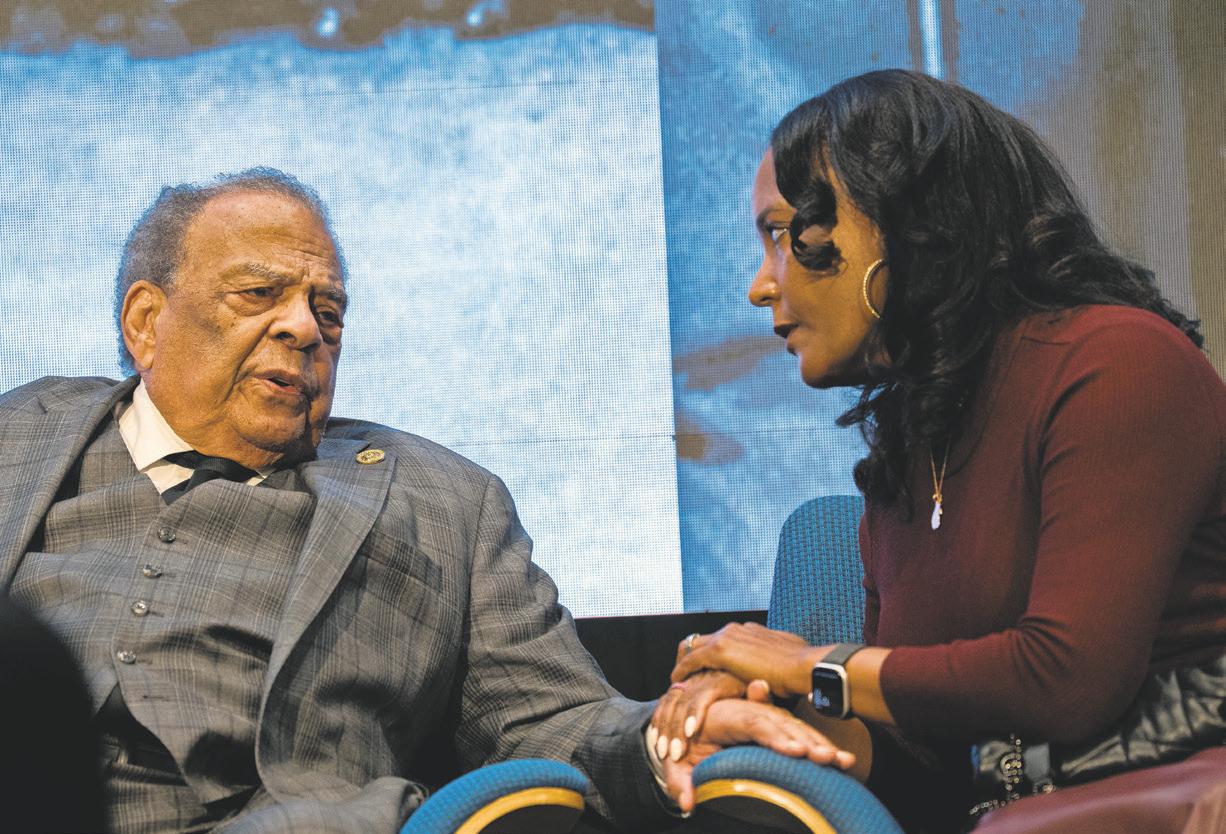
As we celebrate the life and legacy of Rev. Jesse Jackson, who passed away early this morning, we must also honor and celebrate the legends that are still with us. Inside The Gathering Spot at Atlanta’s Northyards district, folks from all over gathered to honor another giant still standing, Ambassador Andrew Young.
On Tuesday, January 17, grief and gratitude shared the same room with Young, who headlined “When HIStory Was Watching”, a fireside conversation centered on the preservation, ownership, and ethical stewardship of civil rights archives. The event, hosted by The Legacy Line in partnership with the Withers Collection Museum and Gallery, brought together legacy families, archivists, and civic leaders to examine how the stories of the movement are protected, and who controls them.
The program opened with a moment of silence led by Atlanta Mayor Andre Dickens, who acknowledged the Rev. Jesse Jackson’s passing earlier that morning.
“We started off this morning with the sad news of the passing of the one and only Reverend Jesse Jackson,” Dickens said, calling him “a real freedom fighter” who stood for “justice, freedom, liberation, and opportunity for everyone.”
Dickens then turned to the significance of sharing space with Young, describing the opportunity as both rare and urgent.
Wilson framed the conversation around urgency, not simply admiration of history but replication of the discipline and sacrifice that shaped it.
Young responded by challenging the audience to see the photographs not as relics, but as reminders.
“This is not a study of the past,” Young said. “This is reminding you of how we got to where we are.”
Looking out at projected images from the Withers collection, he added, “If you look at these photos, and you realize that we’ve been through many dangers, toils and snares, we’ve already come.”
For Young, the photographs are more than art. They are instructions.
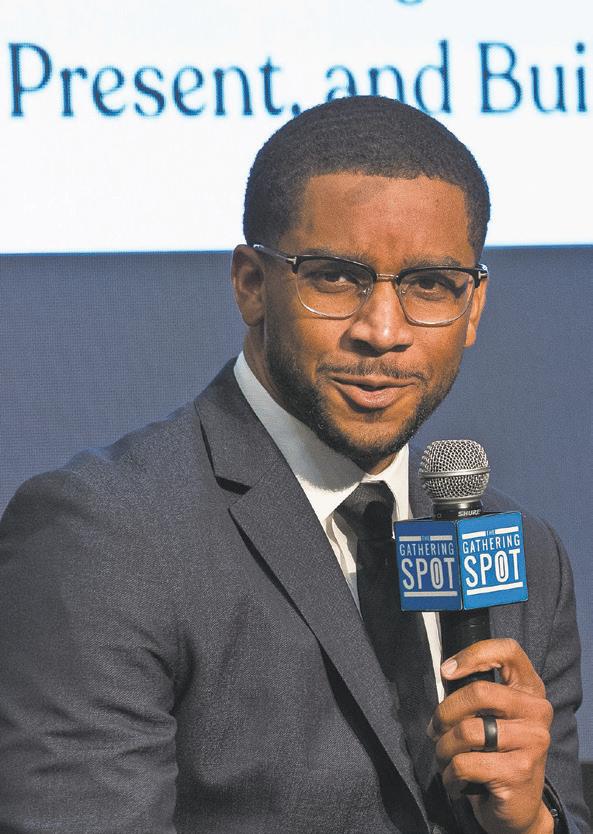
“While we may have tragically lost Jesse Jackson, thank God we still have the one and only Ambassador Andrew Young,” Dickens said, noting the importance of connecting directly with those who “marched, organized and memorialized the movement on film and on paper.”
The event coincided with Black History Month and centered on the archive of civil rights photographer
Ernest C. Withers, whose collection includes more than 1.8 million images documenting the movement, from sanitation workers in Memphis to historic meetings with Dr. Martin Luther King Jr.
Memphis Mayor Paul Young addressed attendees via video, describing the Withers archive as one of the nation’s most significant visual records of the movement.
“His photographs stand amongst
the most significant visual records of movement in our nation,” Young said. “Through his lens, we see courage, we see resolve, we see faith.”
The archive, housed in Memphis on historic Beale Street, represents not just documentation but economic and cultural capital, Young added, emphasizing the importance of “innovation, ownership and the responsible stewardship of cultural archives.”
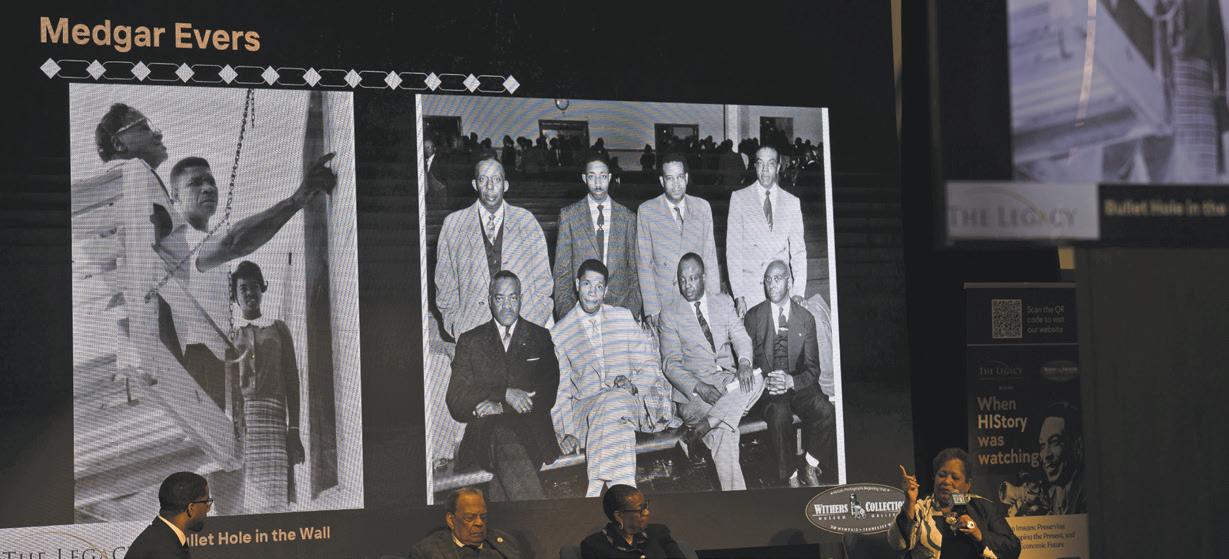
Moderated by Gathering Spot co-founder Ryan Wilson, the first panel featured Young alongside Rosalind Withers, daughter of Ernest Withers, and Reena Evers-Everette, daughter of slain civil rights leader Medgar Evers. Former Atlanta mayors Bill Campbell, Kassim Reed, and Keisha Lance Bottoms were in attendance, as was Deborah Watts, the cousin of Emmett Till.
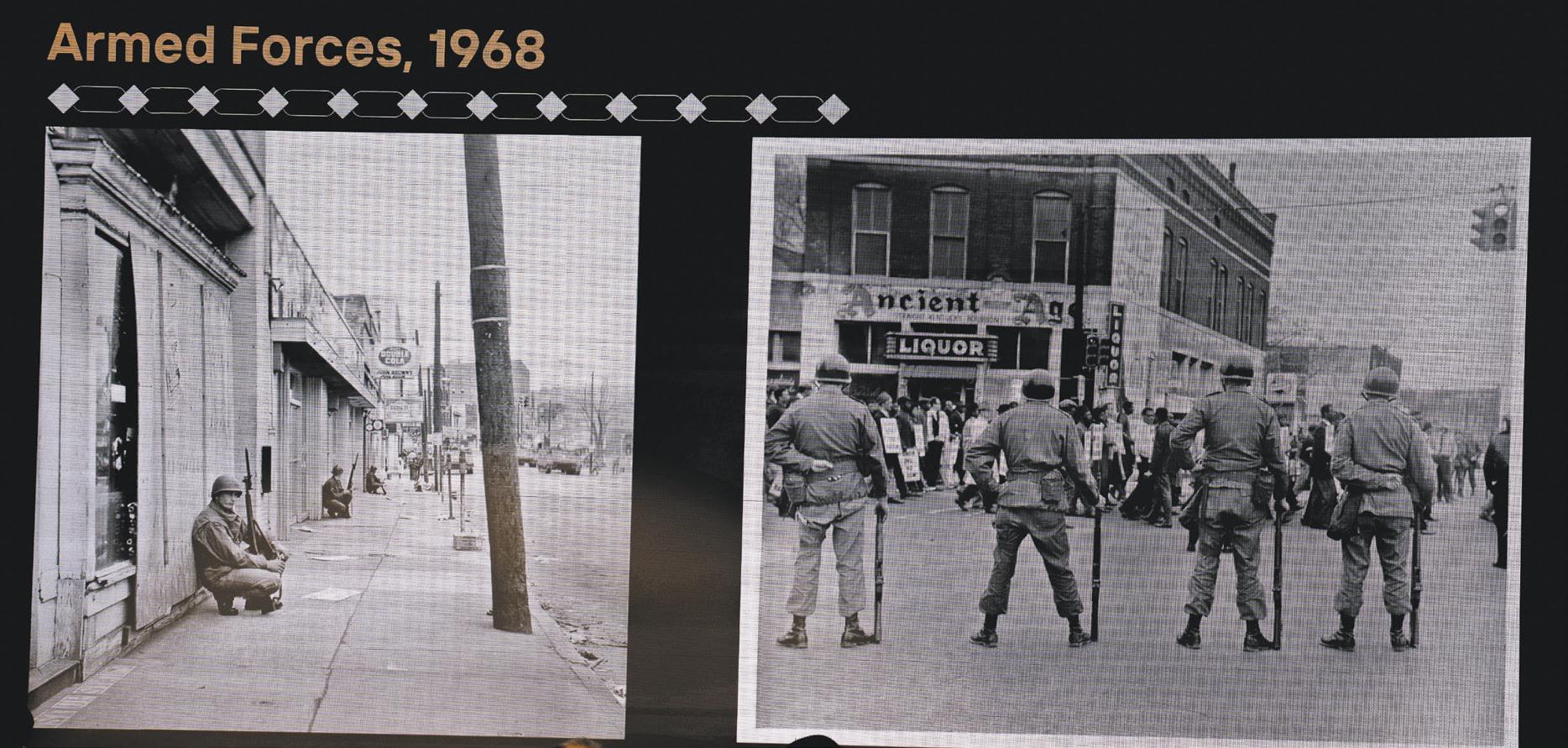
“You don’t have to say a word. You just look at the picture,” he said later in the program, noting that the scenes could just as easily be from Minneapolis, Atlanta, or anywhere people are organizing for freedom. “Freedom is not free. There’s something you have to organize to protect, something you have to vote to implement.”
Rosalind Withers spoke to the intention behind her father’s work, referencing a self-published pamphlet he created following the 1955 Emmett Till trial. The closing paragraph, she read, stated that the photo story was presented “in the hope that this booklet might serve to help our nation dedicate itself to seeing that such an incident need not occur again.”
“My father was 33 years old when this happened,” she said, challenging the audience to consider the foresight and courage required to document such trauma.
Evers-Everette reflected on the personal weight behind public images, reminding attendees that the people captured in photographs were fathers, daughters and families
before they became icons.
“It’s a family affair,” she said. “Freedom is not free, and we need to embrace that and understand that and move forward with the action of making freedom a mainstay.”
Throughout the discussion, speakers emphasized that intellectual property tied to civil rights archives must remain in the hands of legacy families and trusted partners. The Legacy Line, a subsidiary of Memik Inc., works with cultural estates to license and activate historic collections through home décor and augmented reality experiences, transforming archival storytelling into sustainable economic benefit.
As the discussion came to a close, Young returned to the theme of responsibility.
“We’re not starting with nothing,” he said. “We can go even further if we have the same vitality, energy and vision that you see in these photographs.”
By LAURA NWOGU
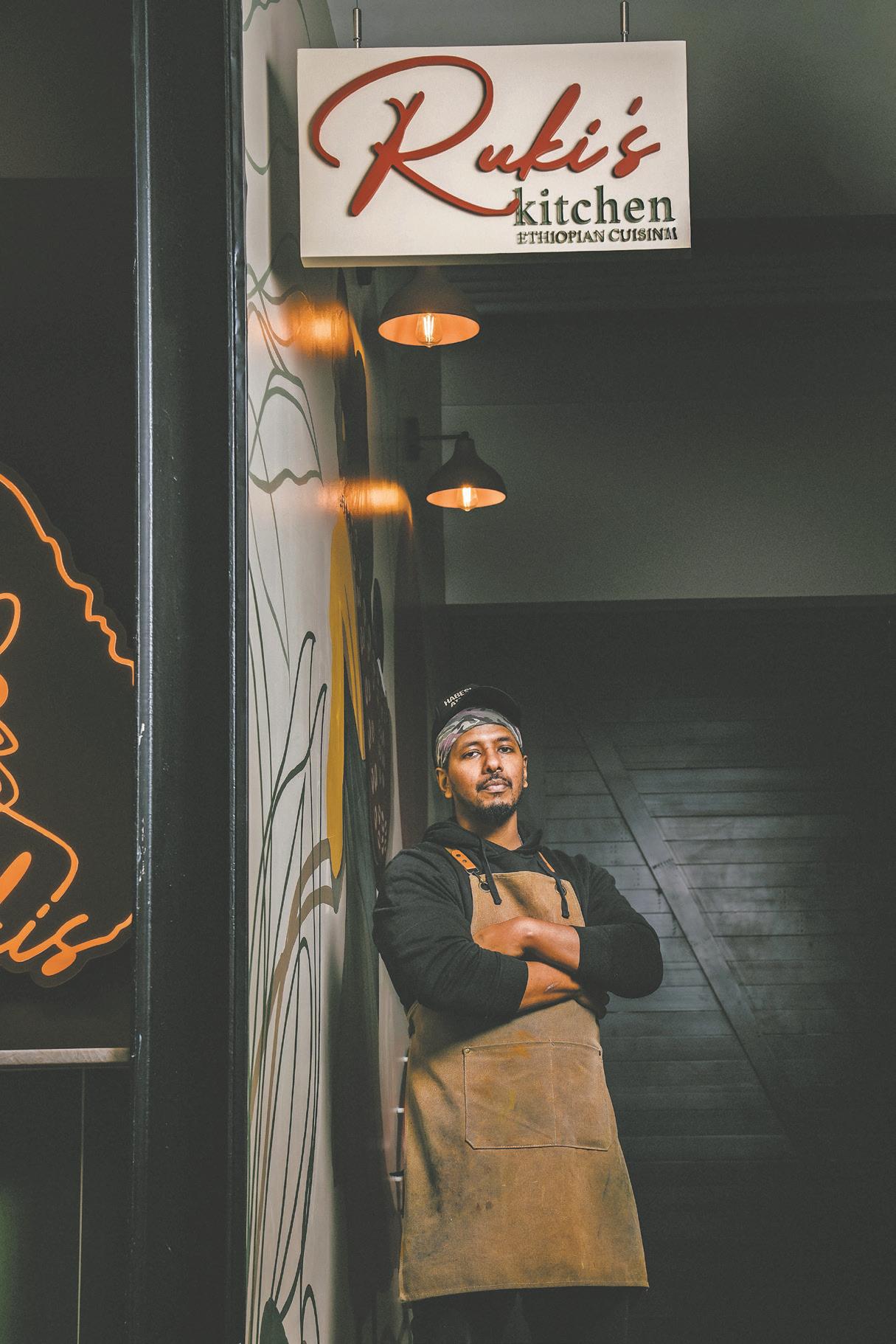
Chef Ali Lemma knows what it’s like to pivot and bet on yourself.
It’s exactly why Ruki’s Kitchen, a popup turned food stall, has made waves in Atlanta’s local food scene. Known for its Ethiopian fare that turns the traditional communal dining experience into a modern fast-casual take on the beloved cuisine, Lemma’s vision is steadfast.
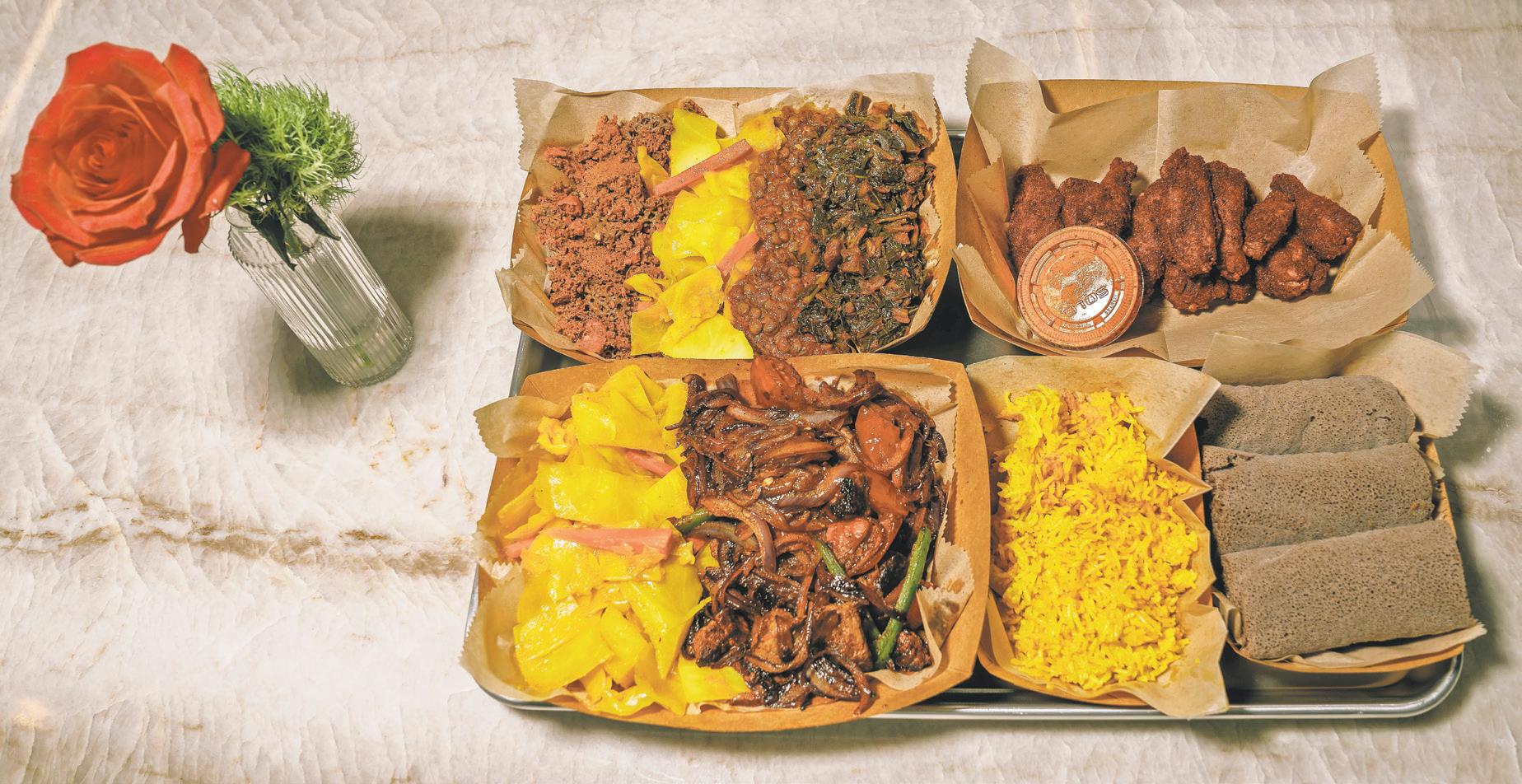
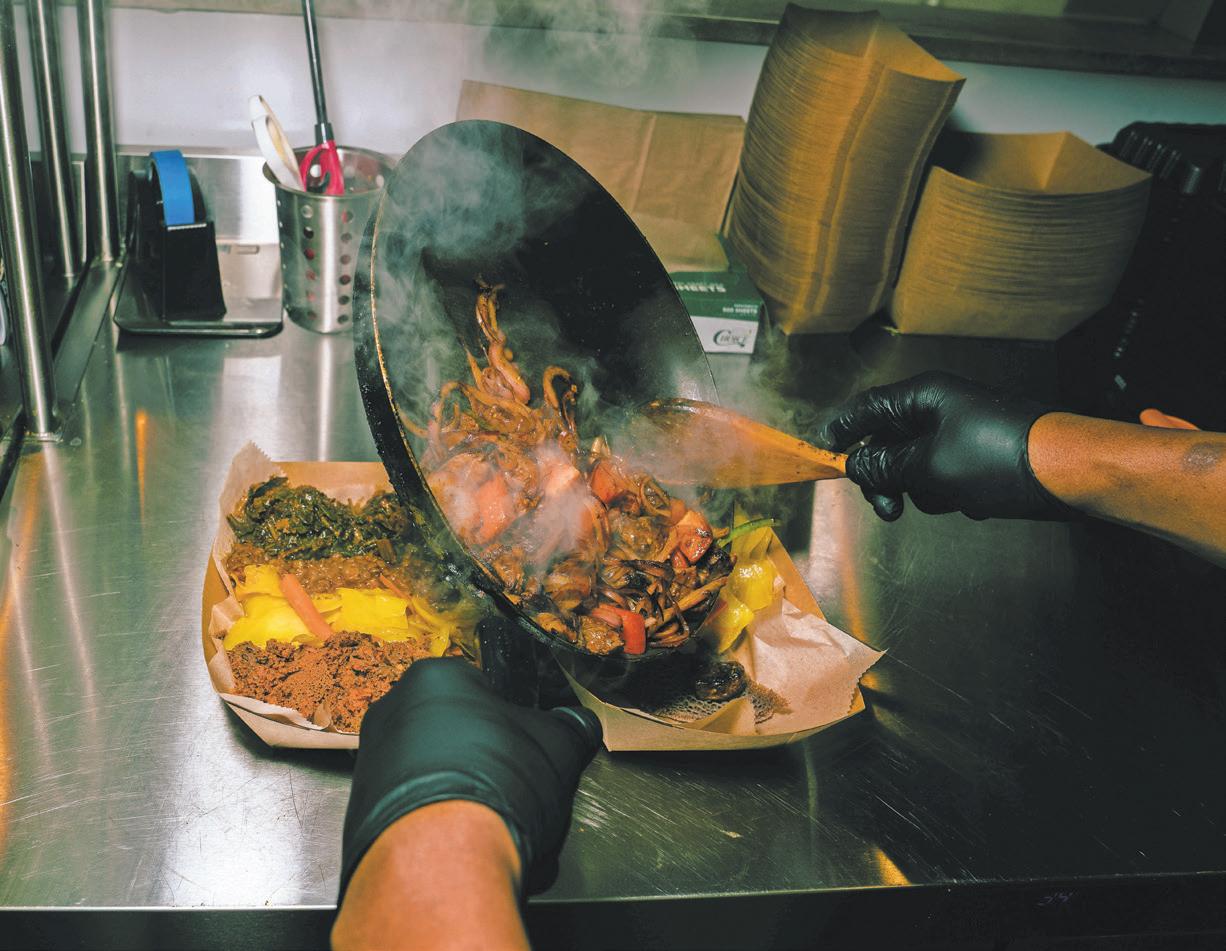
Spicy lentil soup seasoned with berbere, warm injera rolls, and cuts of meat cooked with aromatic seasoning blends are plated on food
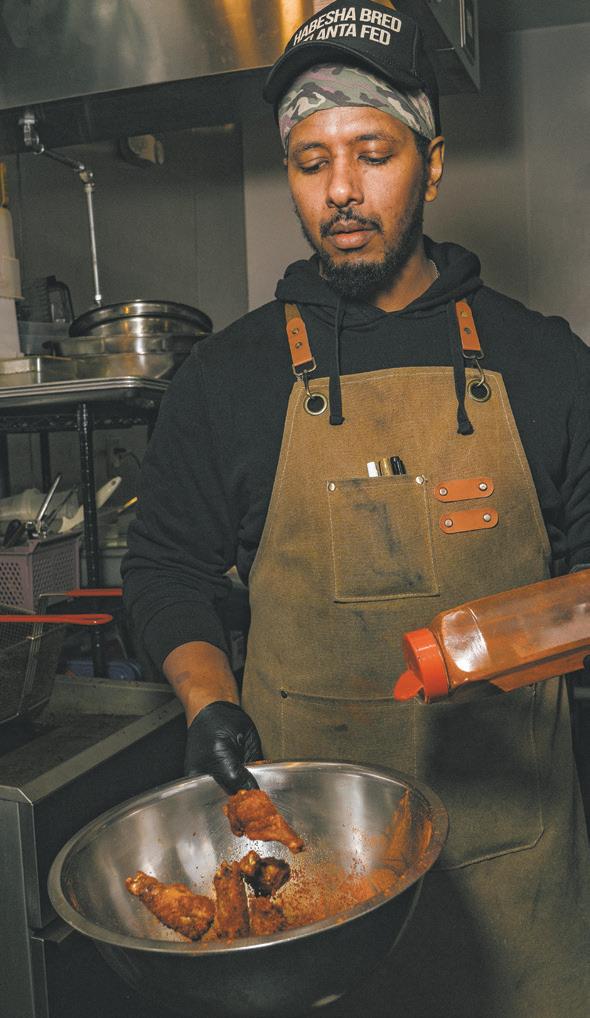
trays, creating a colorful table of dishes. A silhouette of a faceless Ethiopian woman, inspired by the women in his family, greets customers as the logo, and the name Ruki’s Kitchen pays homage to his mother, Rukia. A hat that sits on a surface in the kitchen — lit by natural light that warms the whole space — sums it all up: “Habesha Bred, ATL fed.”
Raised in both Ethiopia and DeKalb County, Lemma has created a space that serves as a love letter to both.
“As I got older and especially getting into this space, I was just like, I need to be this voice for our community and bridge this gap of who we are. A lot of people know where Ethiopia is, and people have an idea of what we do, but this is also a space to just express that.”
Lemma celebrated the grand opening of Ruki’s Kitchen in Terminal South’s Switchman Hall in January 2026, but the journey for the banker-turned-chef began in early 2022 after he decided to leave his lucrative banking job in Atlanta. He’d realized he wasn’t happy with where he was in life, so to regroup, Lemma moved back in with his mom and decided to use his newfound free time to travel. But what was supposed to be a six-week backpacking trip in Guatemala ended up lasting only one week. Lemma didn’t feel like himself and called it “the lowest point in his life.”
“It was four or five months into this departure from my job, and then my mom just kind of looked at me. She was like, ‘All right, you tried to
travel. You tried to take some time off. You’ve got to do something.’ So, I was like, I have this idea. Let me try to start this restaurant.”
But it took another venture into the corporate route before Lemma was finally committed. When he began his first day at his new job, he immediately knew that it wasn’t where his journey was leading him. He closed his laptop and decided then and there that he wanted to give the idea of a restaurant everything he had. From that moment on, the concept of Ruki’s Kitchen began to flourish.
Lemma went from helping small, minority-owned businesses bridge the funding gap in his banking roles to beginning the process of opening his own. He found a pop-up community kitchen in East Atlanta that allowed chefs to try out their concepts, and after the owner took a chance on him with a trial run, Lemma began the work to make his dreams a reality. With no prior restaurant cooking experience and his first pop-up in a month, Lemma said he scoured almost every Ethiopian restaurant in the city before he found a momand-pop that welcomed his efforts to learn Ethiopian cooking and the skills and techniques behind it.
He spent five to eight hours a day, unpaid, learning everything he needed to run his own businesses. Sheets of paper became filled with ideas, from design and branding to operations and curation of the menu.
“Two or three days before the first pop-up was when I told the lady at the Ethiopian restaurant, ‘I really
appreciate you. I will forever remember you. Thank you for taking me under your wing. It’s time for me to fly.
I had my first pop up, and I killed it.”
Lemma hosted a pop-up at the community kitchen every Friday for a month, and each one got bigger and bigger. He went from a onemonth trial to a six-month lease.
“We ran through the six months. The brand just continued to thrive. And she was just like, ‘I want you on a year-to-year lease.”
The foundation was being built. Lemma spent two years at the community kitchen, building his following and a loyal base of customers.
But his rise soon came to a halt when Lemma was unexpectedly evicted from the kitchen after a dispute with the owner. He went from opening Ruki’s Kitchen on Wednesday to having to move everything out the same Wednesday night. He spoke out about the situation on social media where it gained traction, leading to news outlets contacting him and nearly 50 other vendors reaching out to express that the same thing had happened to them.
Lemma soon realized his power as a leader and as a business owner. He now calls it “one of the best things that’s ever happened to me.” Other business owners began reaching out, inviting him to their restaurant to set up shop. And so began his series of residencies and organized pop-ups, making space for Ethiopian cuisine in unlikely places. His pop-ups became known for their lively nature, bringing in a young crowd filled with music, dance, and a clear support for other Black-owned businesses.
“I feel like one thing that especially Ethiopians have more than anything is a sense of pride due to the fact that it’s been a country that’s never been touched or colonized before. I’m not saying this in a very bad way at all, but when a community has something that is so pure, you don’t want to modify it,” Lemma said. “When I created this space, I was like, OK, every Ethiopian restaurant is the same. They’re all very good, but they all feel just very traditional and old. We have a beautiful culture, and I’m not
By DONNELL SUGGS
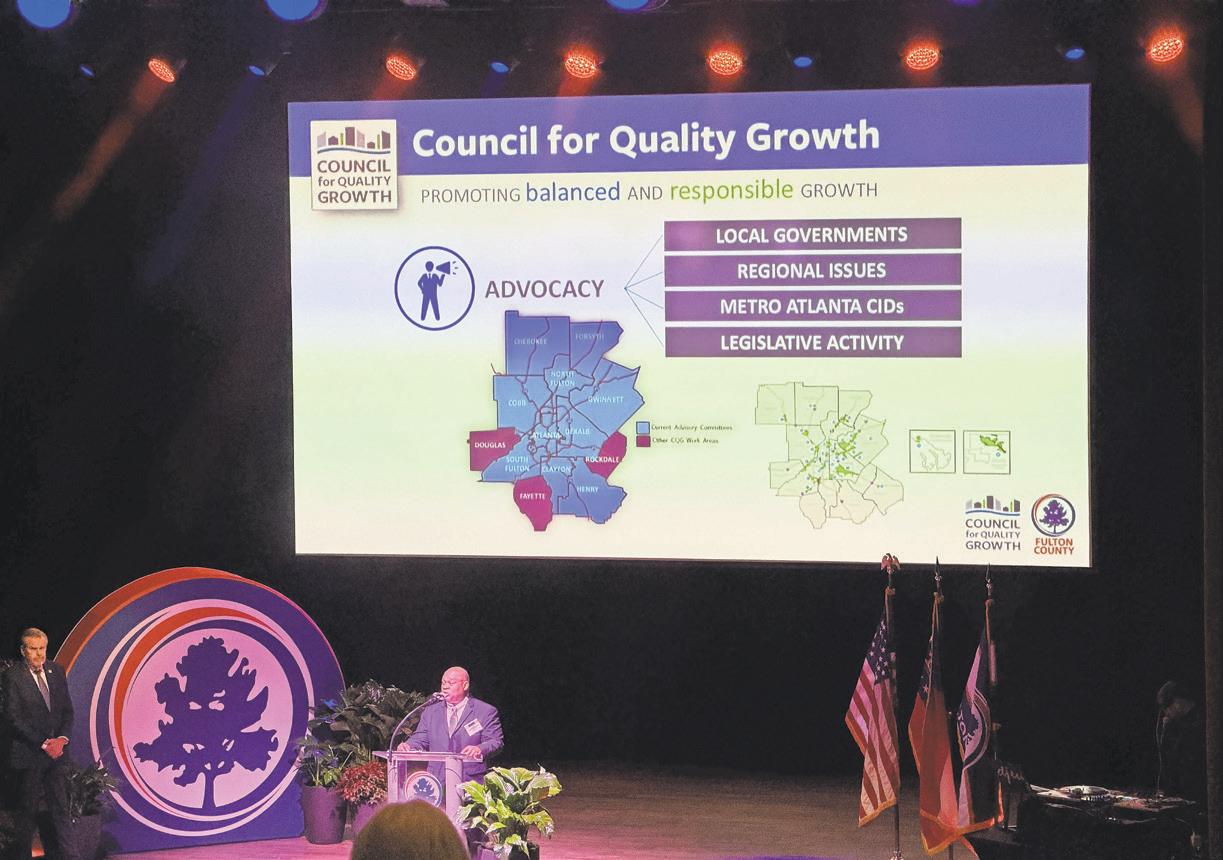
The annual State of Fulton County address took place at The Eastern on Tuesday morning. The event was hosted by Fulton County Government and the Council for Quality Growth, a local nonprofit organization.
The address came weeks after
the Federal Bureau of Investigation conducted a raid on the Fulton County election office in Union City on January 28. 2026. During the raid, 2020 presidential election ballots, voter rolls, and tabulation tapes were seized. Fulton County officials, including Fulton County Chair Robb Pitts, have made several public statements opposing the raid and its rationale.
A mix of Bad Bunny’s music
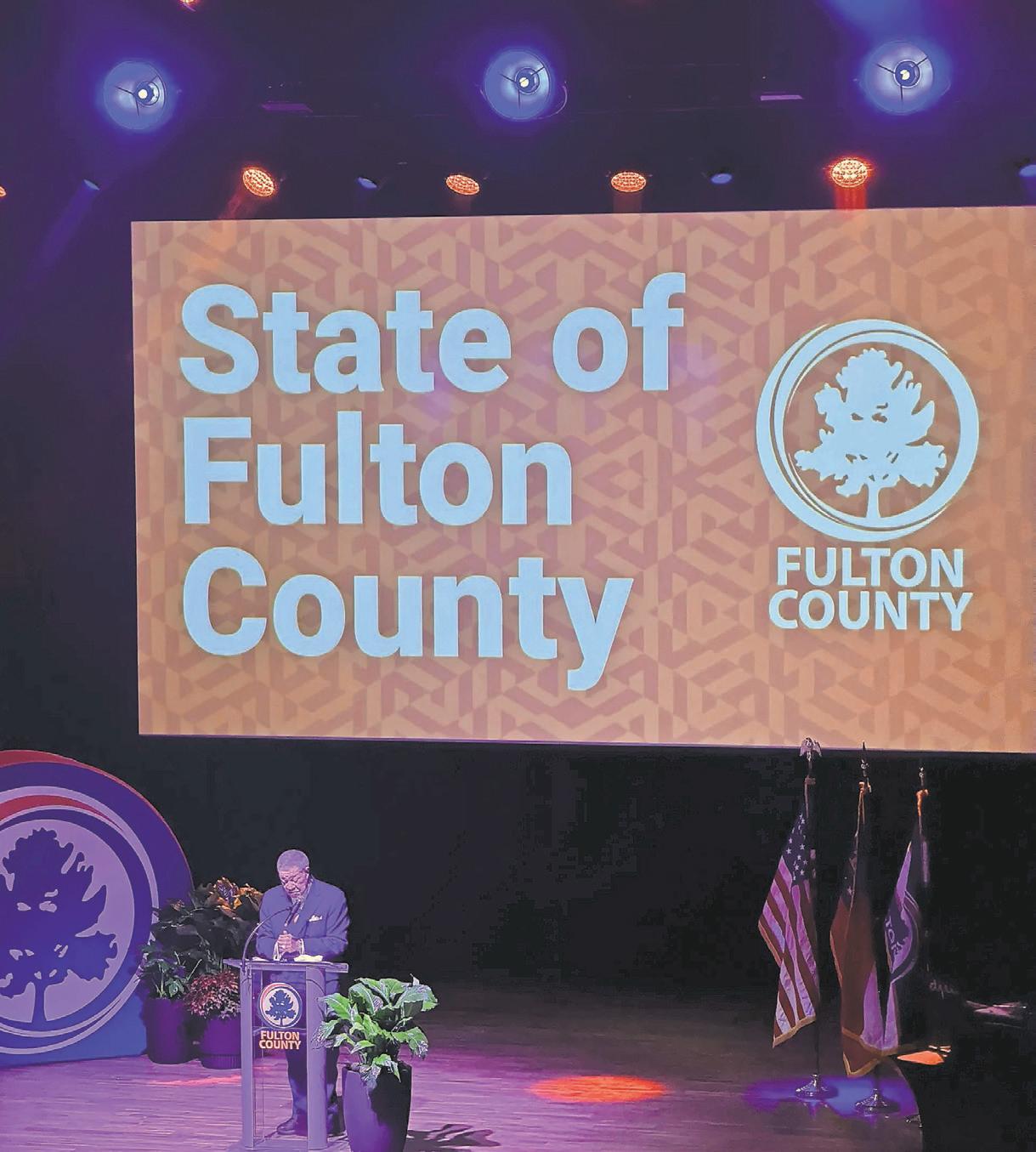
played over the speakers inside The Eastern, a mixed-use event space off Memorial Drive, before the event began. While some people danced to the music, others found their seats to eat breakfast before Pitts, and others spoke.
Fulton County Chair Robb Pitts asked for and received a moment of silence for the late Rev. Jesse Jackson before he began his speech. Pitts spoke about the county’s triple-A credit rating, a favorite talking point of Atlanta Mayor Andre Dickens, and the County’s unemployment rate being below the national average.
“The strength of our workforce and our business community is the envy of counties across the nation,” said Pitts. “We have proven that we can keep our spending in check and provide the services our residents demand and deserve without raising taxes.
We’ve got it all.”
During his speech, Pitts addressed healthcare, human services, and mental health care services. Regarding the latter, Pitts touched on the Fulton County Behavioral Health Crisis Center, which opened last year.
He says in just one year of operation, the crisis center has served over 1,400 people experiencing mental health crises. “No one should ever struggle alone,” he said.
The Fulton County Jail and the host of issues surrounding the institution were also a topic of discussion. Pitts announced a billion-dollar plan to renovate the jail at Rice
By DONNELL SUGGS
Georgia gubernatorial candidate and former Georgia Lieutenant Governor Geoff Duncan has received an endorsement from a former leader of one of the country’s oldest civil rights organizations.
Former Georgia NAACP President James Woodall, Sr., endorsed Duncan for governor this morning in a statement obtained by The Atlanta Voice.
“This race is not about party labels, it is about power- who holds it and how it is used,” said Woodall, Sr., a United States Army veteran
and associate minister at Lindsay Street Baptist Church in Atlanta. “The Alternative is a return to extremism, retaliation politics, and alignment with Donald Trump’s agenda.”
There are several Black candidates running for governor, including former Atlanta Mayor Keisha Lance Bottoms, former DeKalb County CEO Michael Thurmond, and former State Senator Jason Esteves, but Woodall is endorsing Duncan.
“The moment demands strategy, courage, and a candidate who can win in November. Geoff is that candidate,” said Woodall.
Street during his speech. The topic of ICE was also mentioned. Pitts mentioned the implications that what has taken place around the country, especially in Minneapolis, Minnesota, can and will take place here in Atlanta’s largest county, and seemingly put them to rest. At least for now.
“Here in Fulton County, we have an opportunity to get ahead of this,” Pitts said.
He said the County, City of Atlanta, and “Congressional delegation” are working to develop a coordinated response plan in case ICE were to set up shop in Atlanta.
“Public safety and transparency remain our priority,” Pitts said.
Other speakers included Sarah-Elizabeth Langford, the executive
director at the Development Authority of Fulton County, Terreta Rodgers, Amazon’s Atlanta Head of Community Affairs, ATL Airport CIDs Executive Director Gerald McDowell, and Jevon Gibson, the chief executive officer with the Fulton-DeKalb Hospital Authority.
Pitts thanked mayors from metro Atlanta cities such as South Fulton, Union City, Palmetto, Mountain Park, and College Park for attending the event.
Last year’s State of the County address took place at Flourish Atlanta by Legendary Events in Buckhead.
State of the County addresses for Clayton, Gwinnett, and Henry counties are scheduled for early March and the first week of April.
By NOAH WASHINGTON
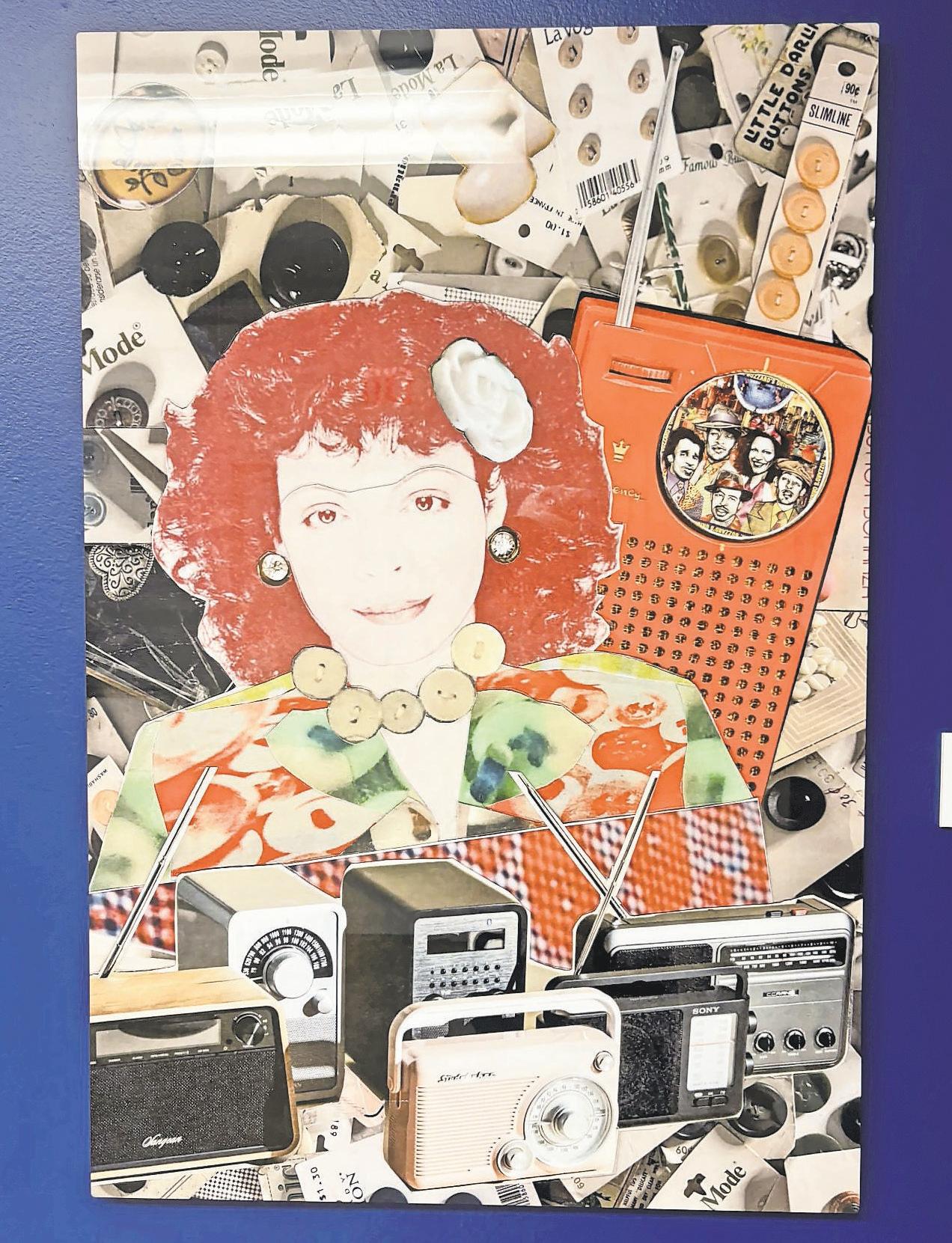
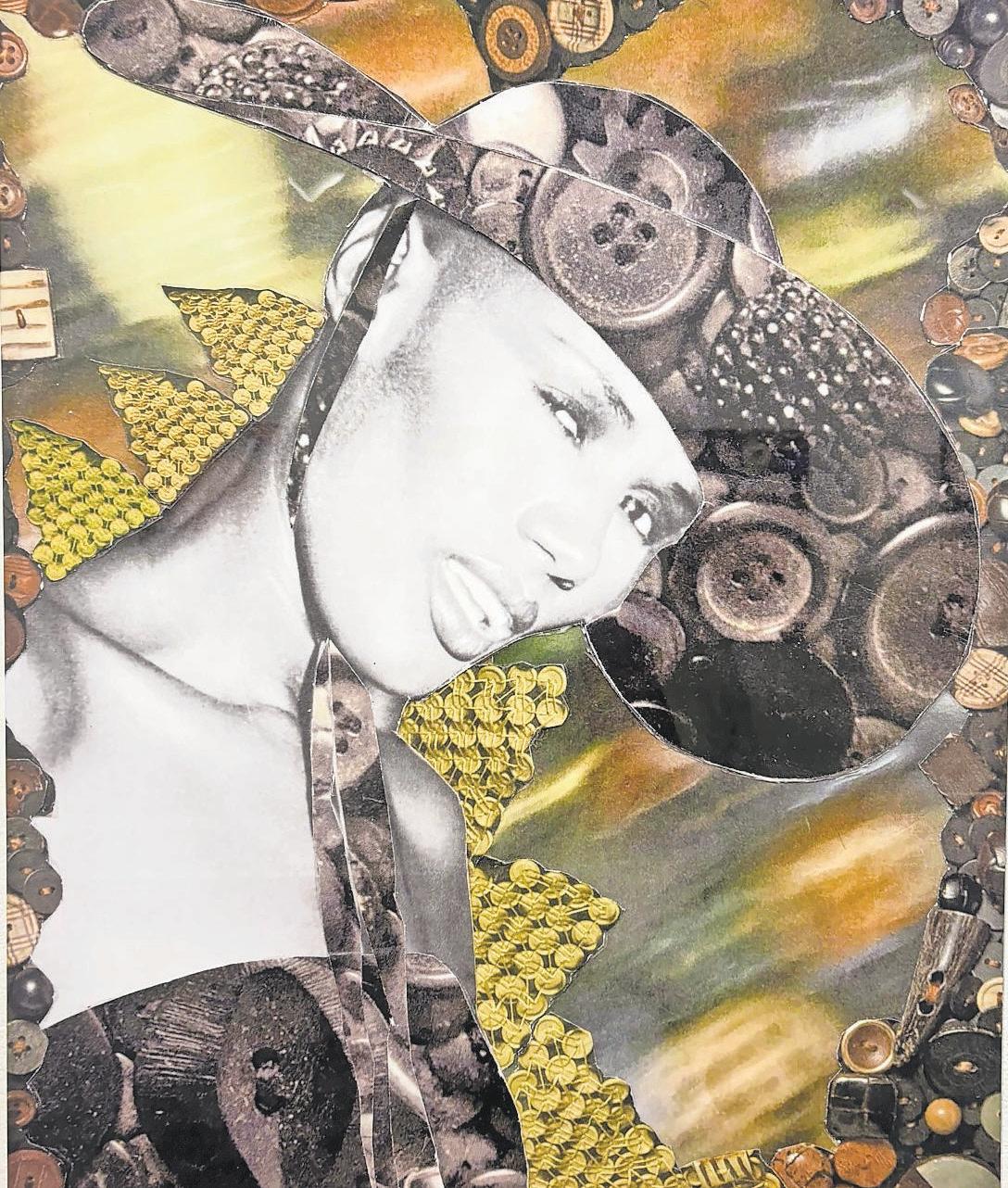
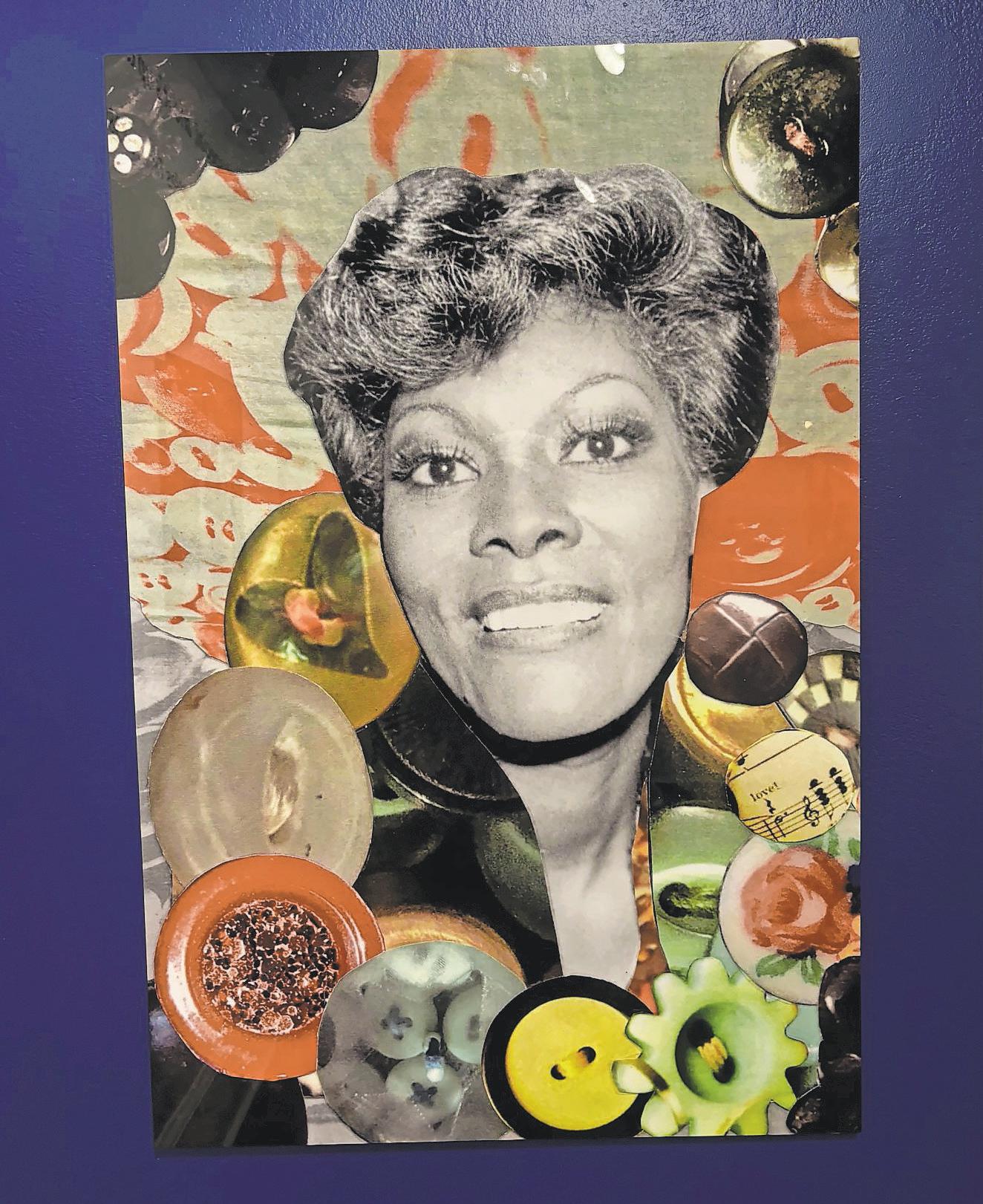
The Hammonds House Museum transformed Friday night from an art gallery into a runway show, reminiscent of the ballroom scenes of the ‘80s and ‘90s New York City, as it opened “Beau McCall: Divas, Blues, and Memories,” an exhibition that channels decades of friendship, loss, and the healing power of music through dazzling button-encrusted collages.
“I walked around and looked at your work, and it made me want to dance,” Fulton County Commissioner for District 4 Mo Ivory said during the opening reception.
McCall, who has worked with buttons for more than 40 years, created the exhibition as a deeply personal tribute to friends lost to AIDS and other social ills during the early days of the LGBTQ movement.
“All my friends passed on,” McCall said during his opening remarks, “I have one of the guys that’s in the exhibition. We used to have this conversation about who was going to be the last one to tell the story,
and I ended up being the last one.”
The exhibition chronicles how McCall and his circle of friends bonded through what he calls “diva worship”, finding solace and community in the music of popular and obscure female performers whose songs reflected their experiences of drama, pain, and happiness during the 1970s through 1990s.
“Music is very important to me in my life,” McCall explained. “I grew up with jazz playing through the house 24/7. When I came out and met like-minded guys in the LGBT community, we started diva worshiping. These songs bonded our friendships together through music.”
Souleo, McCalls’s partner, was the curator for the exhibit and selected pieces that balance celebration with remembrance, incorporating McCall’s collages alongside sculptural wearable art focused on the blues. The curator emphasized the exhibition’s relevance to contemporary struggles facing the LGBTQ community.
“In the 1970s, particularly, when
Bo and his friends were coming of age in the LGBTQ movement, those were the early days,” Souleo said. “We’ve come a significant way in terms of gay marriage, but we see with the government, there’s still a lot of challenges up ahead. This show is a reminder that no matter what the odds are, we can overcome them.”
Halima Taha, artistic director of Hammonds House, noted the exhibition’s universal themes. “What you will see is love of music and verse and memory and motion and spirit,” she told attendees, announcing a panel discussion scheduled for the following day.
David Manuel, representing Fulton County’s FACE program (Fashion, Art, Culture and Education), praised McCall’s innovative use of materials. “His work, his use of fabric, his use of buttons, and the message behind that is outlining what fashion is,” Manuel said. “When you can get people to stand in front of artwork and talk about it days and weeks after, because of the impact and effect, that means we’re doing something good.”
Despite four decades of artistic practice, McCall said recognition has come primarily in the last 15 years, crediting Souleo’s curatorial vision and advocacy. The couple is currently celebrating 16 years together.
“Every generation has a generation before them,” McCall reflected. “I had a generation before me that opened a lot of doors, so I could be comfortable in my journey. Now it’s my turn to open doors so the generation behind me can be comfortable moving through their journey.”
The exhibition employs buttons as a unifying artistic element, which Souleo described as “a way to connect us, to remind us about universality, our common humanity.” The wearable pieces and wall installations demonstrate McCall’s range beyond traditional collage work.
When asked what he hopes visitors take from the exhibition, McCall offered a forward-looking perspective: “I want them to reflect on today, tomorrow, and the possibilities of what the future could bring.”
Souleo distilled the exhibition’s mission even more simply: “Joy and inspiration.”
By DONNELL SUGGS
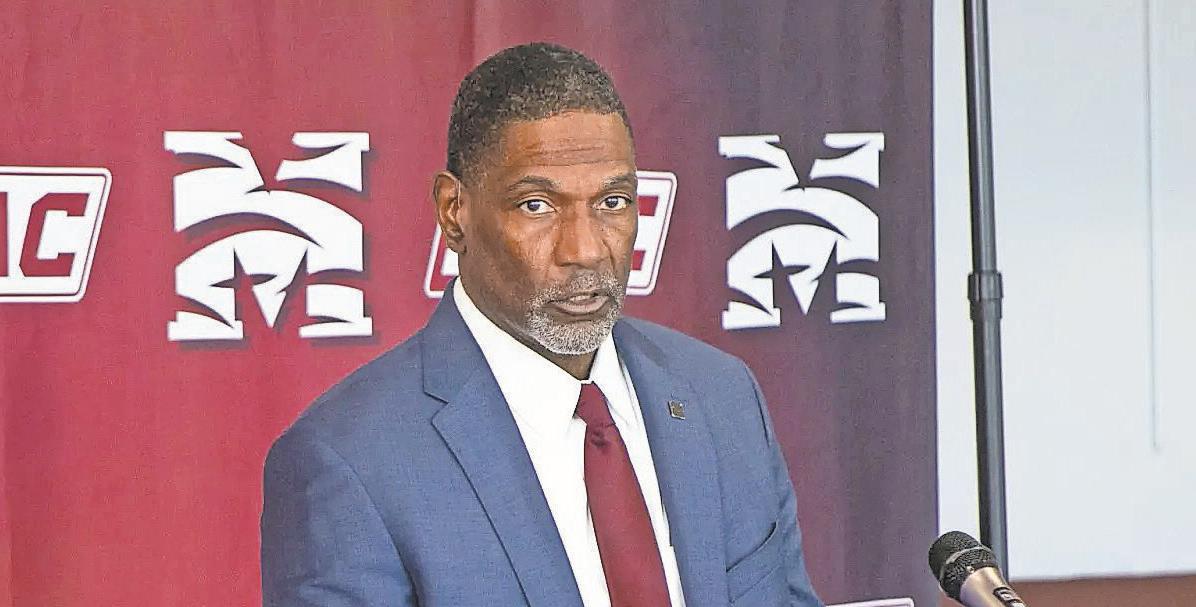
Morehouse College introduced its new head football coach, Brad Sherrod, on Monday morning. The Division II opportunity will be Sherrod’s first time as a head coach on that level.
Sherrod, 56, comes to the SIAC and the Atlanta University Center after two seasons as the head football coach at Texas Wesleyan University, an NAIA program in Fort Worth, Texas.
The press conference took place on campus, in the third-floor conference room of Archer Hall.
“This football program will represent Morehouse with dignity,” said Sherrod, who was accompanied by his wife of 22 years, Monique. “This is an assignment and not just an opportunity.”
During his two seasons at the helm at Texas Wesleyan, Sherrod
led the program to the NAIA playoffs twice. Though the Rams failed to win a playoff game during his tenure, the overall record during those two seasons was 17-6.
At Morehouse College, over the past two seasons, there hasn’t been as much success. The Maroon Tigers, under former head coach and Atlanta Falcons receiver Terance Mathis, were 4-16 overall during that span. The Maroon Tigers finished the 2025 season 3-7 and the 2024 season 1-9.
Morehouse College Athletic Director Harold Ellis opened the press conference by saying the coaching search committee wanted to focus on bringing an experienced coach.
“It’s a good day in Morehouse College football. We are turning the page with a coach who has a ton of experience. I believe that’s key for our young men,” Ellis said.
Sherrod, a native of Monroe, North Carolina, and a former Duke University linebacker, has
coached at 11 schools during his 30-year career. That time included at an HBCU, Tennessee State University, as the safeties coach in 2020. He has also coached linebackers, tight ends, and running backs at programs such as Duke, Wake Forest, and UMASS.
Prior to taking over as head coach in Fort Worth, Sherrod spent three seasons as the linebackers coach at the University of Texas at San Antonio from 2021-2023.
Sherrod listed the five “cultural pillars” of his football program as integrity, enthusiasm, mental and physical toughness, caring and selfishness, and great effort.
“Energy is a choice,” Sherrod said. “I expect to win, I didn’t come here to lose.”
Having spent time at Duke as a player and coach, Sherrod said he understands how important it is to balance academics and athletics.
“The biggest thing is identifying
kids that can be successful here,” Sherrod said. “I found a bunch of them at Duke. They are out there.”
Sherrod said Morehouse football will have to find those kids in order to compete in the SIAC. Asked about whether he understands how serious the rivalry with Clark Atlanta University is, Sherrod said
he did. He’s been in the middle of the Duke/North Carolina rivalry as a player and a coach.
“I know that’s an intense rivalry, but every game is important,” Sherrod said.
The Morehouse football schedule for the 2026 season has not been released.
By MILES PIERRE Intern
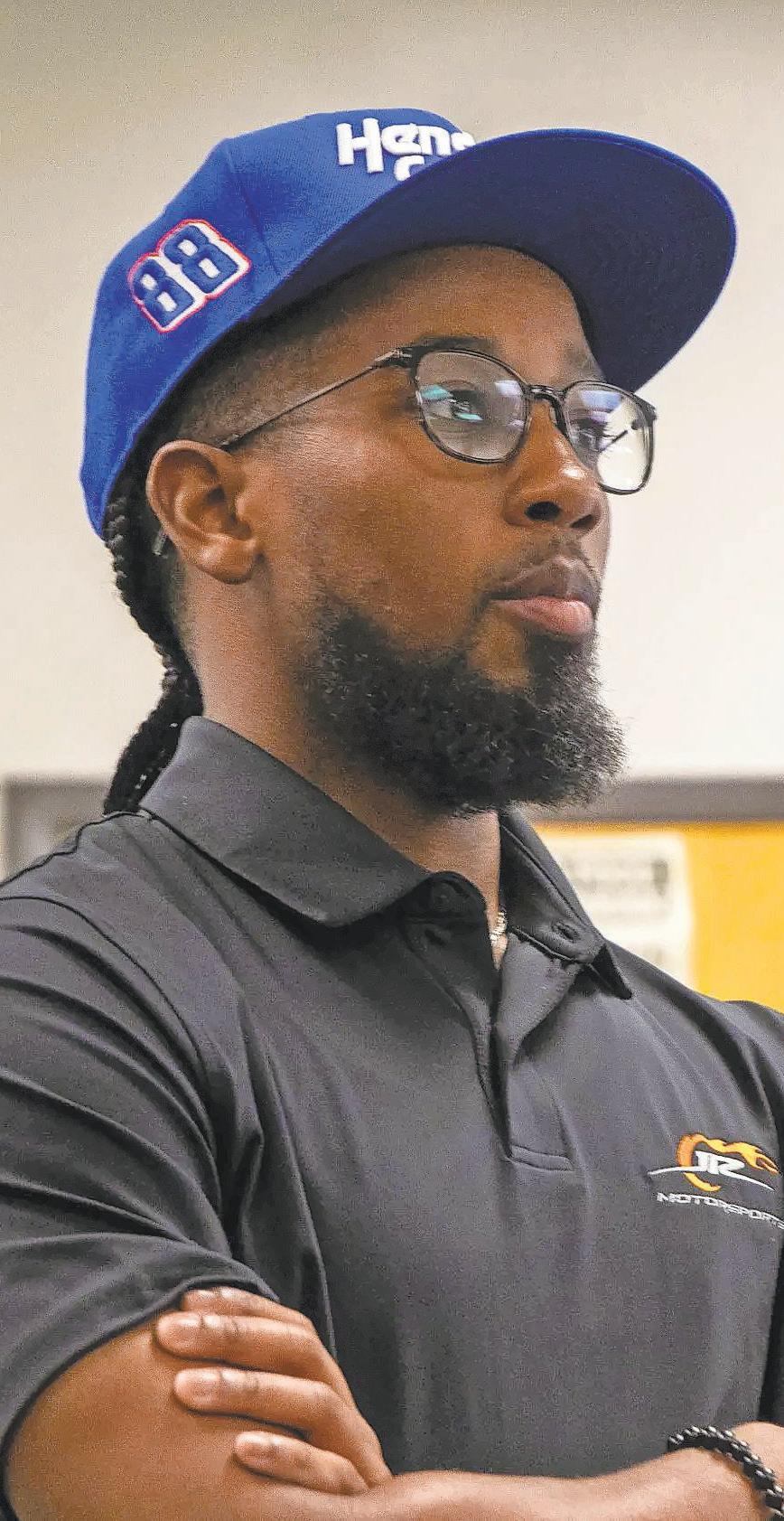
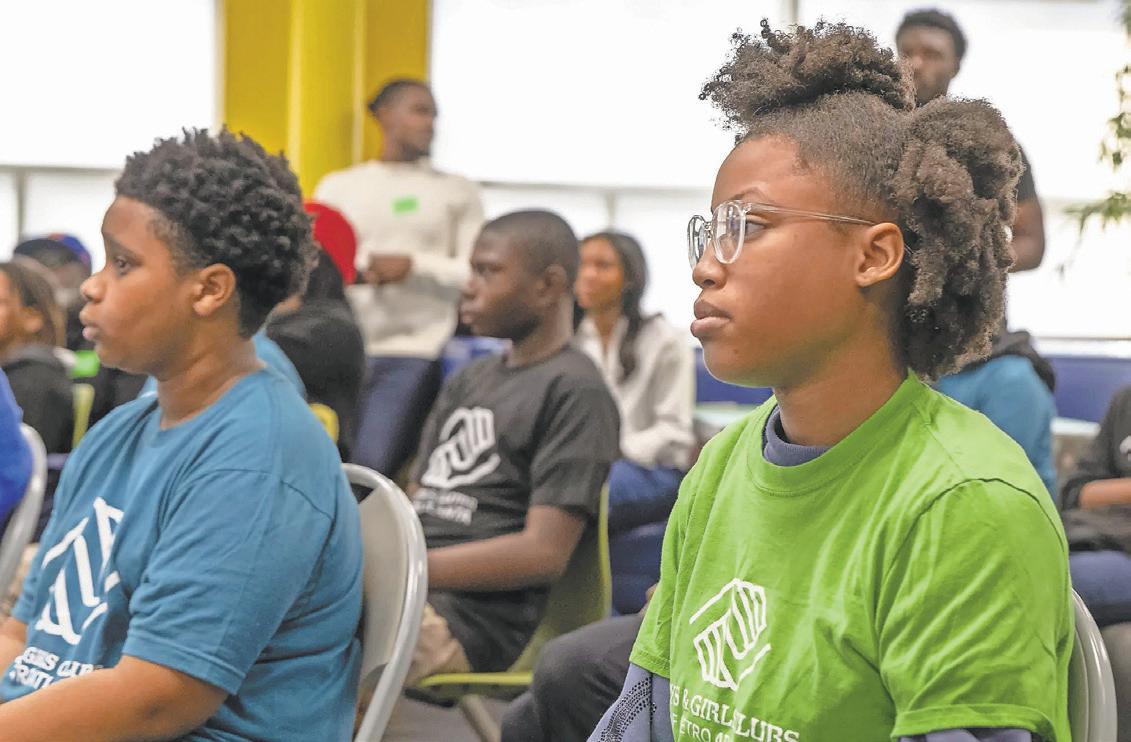
Atlanta-born NASCAR driver Rajah Caruth returned to his roots this week, visiting the Jesse Draper Boys and Girls Club to speak to middle schoolers about his professional journey in motorsports and to inspire them with messages centered on perseverance, resilience, and determination.
Standing before a room of students, the 23-year-old driver started his message by reminding them that his journey began exactly where they are now.
“I was playing video games when I was y’all’s age,” said Caruth. “I played racing games and was a fan of racing, because I hoped it would allow me to drive one day, and it was a passion that I had from a very young age.”
Unlike many drivers who began their racing careers at around
4 or 5 years old, Caruth admitted he got a relatively late start and didn’t start driving until he was 17. Growing up in Washington, D.C., there were no local go-kart or dirt tracks where he could go practice, so he sharpened his skills through driving simulators.
“The only way I really learned how to drive was online,” Caruth
says. “I learned how to drive a stick with a simulator and all these different tracks that I never saw in real life from racing online.”
Ironically, that path is what led him to become one of only three African-Americans to win races at NASCAR’s national level, including victories in the NASCAR Craftsman Truck Series in both
Las Vegas and Nashville. Caruth also emphasizes that racing is far more than just being behind the wheel. He spoke about the realities of sports and highlighted the importance of engineers, pit crew members, strategists, and coaches. He adds that, unlike in other sports, such as basketball, football, or soccer, there are more losses than wins in racing.
“If you’re performing well, you’ll win a lot or finish in first place, or your team will win, whereas in racing, there’s only one winner for a field of anywhere from 20 to 40 people,” said Caruth. “Whenever you do get the chance to get a win, it’s very much of a relief because you’re not doing it by yourself.”
Caruth closes out his message to students on a clear and personal note, “I’m approachable. I’m a normal person with similar interests to you guys, and I was able to chase my dreams by just staying on course.”
By DENNIS MALCOLM ByRON AKA ALE SHARPTON
The Nissan Leaf entered the electric vehicle well received almost two decades ago, and I have seen it consistently improve during its tenure. But the 2026 version?
Whoa! I reviewed the Platinum+ FWD, and it was a stunner when it came to design, spacious interior, and upgrades throughout to reflect the premium trim. Nissan does a successful job of providing us with an energy saving, tech-forward EV vehicle thriving on practicality without looking it like it.
Presented in a premium two-tone gray with a contrasting black roof, this was a highly recommended color combination exuding a sophisticated, modern look. The Leaf’s exterior frame flaunts Nissan’s mission to be the most aerodynamic version of the car’s legacy, including a curvaceous frame, a sloping rear window crowned with a spoiler, and slanting LED lighting complete with signature daytime running lights and 3D holographic taillights. The 19-inch wheels with a design customized for the Platinum + version, black grille, roof rails, and illuminated Nissan badge provided extra flex. The motorized front door handles that protruded upon arrival added even more elegance.
Beneath the floor, the 2026 Leaf is powered by a 214-horsepower electric motor delivering 261 lb.-ft of torque. This combo

made driving through Atlanta smooth, yet responsive for whatever the streets challenged me with. Highway merging was also effortless, and the new 75 kWh liquid-cooled lithium-ion battery pushes the Leaf up to 259 miles of range, so long trips become a lot more worry free. Addressing the actual charging capabilities, the Leaf presents multiple options. flexible than ever. With both a NACS DC fast charging option for all of those Tesla stations and a J1772 AC port, this vehicle can get to 100 percent in about a half an
hour. Addressing the aforementioned practicality, Nissan also adds Vehicle-to-Load (V2L) capabilities, where you can power small appliances, devices, or even camping gear straight from the car.
Inside, the Leaf steps up its game with a more upscale feel compared to previous generations. Everything from the dual 14.3-inch displays lighting up the dash, to the Google Built-in with wireless Apple CarPlay and Android Auto combo stays consistent with today’s tech demands. The Bose Personal Plus
audio system was one of my favorite features, utilizing 10 speakers including placement directly in the front headrests for premium sound. The ambient multicolor lighting and a panoramic roof elevate complete the cabin’s impressive upgrades.
Want more? How about heated front and rear seats; a heated steering wheel; power driver seat with memory; and a motion-activated liftgate? The “Divide-N-Hide” cargo system keeps owners organized, 120V outlets bring more versatility for everyone, and the car unlocks when leaving which kept me even more worry free.
Safety gets some love as always with this automaker, thanks to the Nissan Safety Shield 360, which includes everything from automatic emergency braking with pedestrian detection, to blind spot warning, rear cross traffic alert, lane departure warning, and the HD Intelligent around view monitor. With an MSRP starting around $39K and an estimated 103 MPGe combined, the 2026 Nissan Leaf Platinum+ offers legitimate value paired with a sporty look and an overall goal to provide the best efficiency.
Ultimately, this is one of the most bangfor-your-buck premium EVs on the market.
Price: MSRP $38,990 and $42,365 with as reviewed fully equipped, adding two-tone paint, cargo package, battery heater, and destination charges.
For more information, visit Nissanusa.com
Continued from page 7
knocking it by any means, but I thought, where do the younger people go? Where’s a place that has more of a fresh look and a fresh touch?”
Ruki’s Kitchen became that place. The menu features four offerings of tibs, a traditional dish featuring stir-fried meat cooked with onions, garlic, peppers, and Ethiopian spice
blends. Known for its vegan dishes, the menu also features a variety of vegetables, such as stewed collard greens and cabbage, that you can either order as sides or a platter of its own. It’s all scooped up with injera, a sour fermented flatbread that merges all the flavors together. Guests can sit at the bar or at the booths that line the front of the restaurant.
“Every Ethiopian restaurant is sit-down, take your time, all that, and it’s very intimidating. With
most African or ethnic restaurants, you’re just like, what is all this stuff? When I created this brand in this kitchen, my whole vision was to create a very simple menu that kind of captures most of what our food is. It’s very straightforward.”
Lemma’s focus wasn’t on creating a fusion-style restaurant. He wanted it to fully represent Ethiopian cuisine. However, he began to feature one dish that became a favorite at his pop-ups: Habesha “lemon pepper wet” wings. He recognized that it disrupted his vision of being a traditional restaurant; he’d worked hard to perfect his recipes and knew Atlanta was the wing capital. But he also recognized that the wings could serve as a gateway to the Ethiopian dishes on the menu.
“For people who don’t know Ethiopian food and just want wings, it’s a way to just familiarize them with the flavors and then bring them in. It’s bait. The reason I don’t offer a side like fries is because I want to force people to try our sides.
“After some time of me getting comfortable with it, I kind of thought to myself, you know what? This is actually the dish on my menu that represents me the most. I’m Ethiopian, but I’m Atlanta.
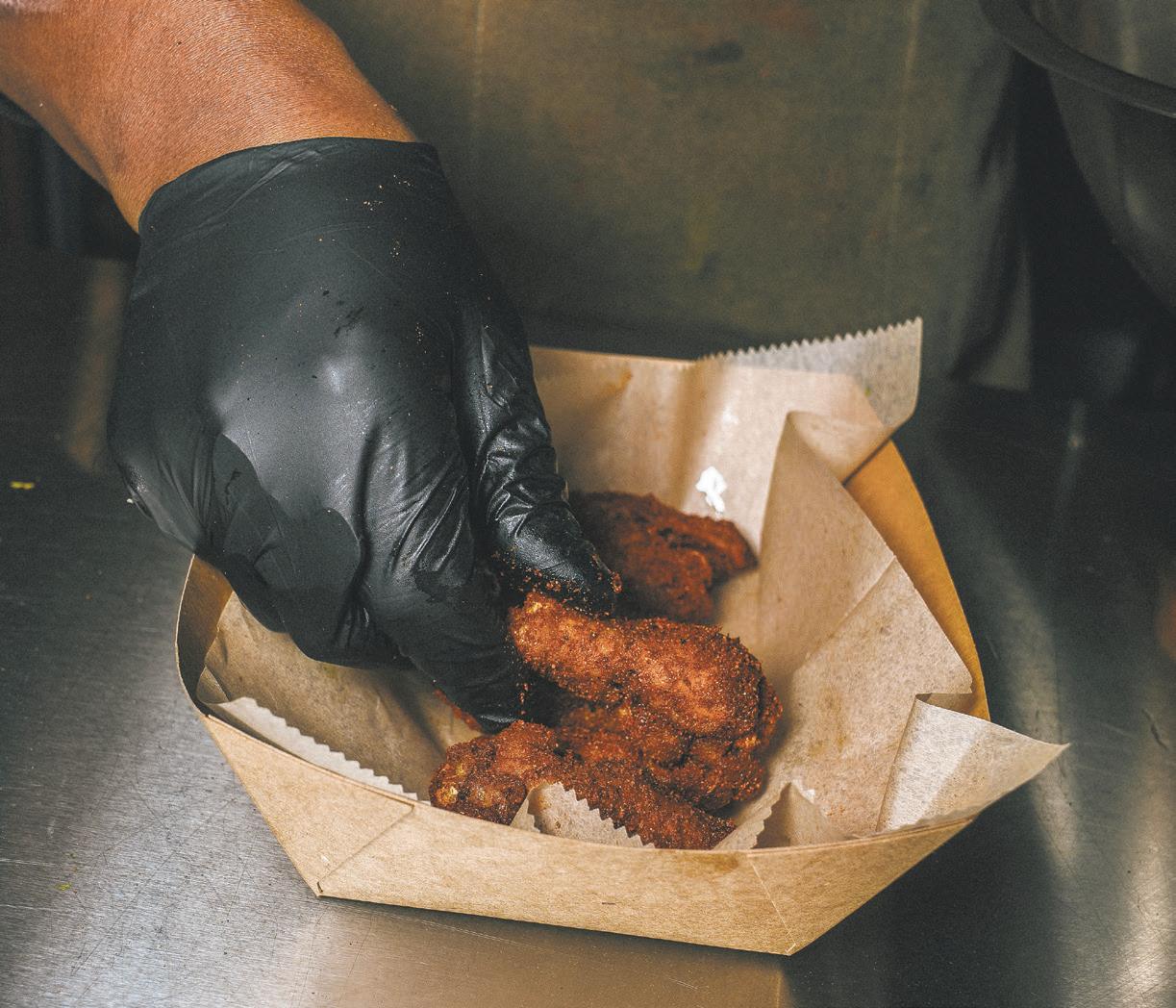
Like, this is Atlanta’s national dish with Ethiopian flavors.”
Ruki’s Kitchen is the example of what it looks like when heritage, culture, and love meet. For Lemma, his focus is on continuing to create good food and intimate, creative experiences for himself and the community.
“I never had this dream to create a restaurant or bridge my cultures,
and a lot of it came as I started to think about it. But I’m really starting to see now, this is probably my calling. This is what I was meant to do. Because now, I feel strong about doing that. I feel strong about representing my culture and bringing my roots to my home.”
Ruki’s Kitchen is open at 1161 Ridge Ave SW from noon to 8 p.m., Wednesday through Saturday.
27 - MARCH 5, 2026 • www.theatlantavoice.com

Spacious 1-Bedroom Affordable! Rent Based on Annual Income Amenities, Great Location, and Convenient to Marta Please call for detailed information (404) 586-9098

Wahoo Fitness, L.L.C. has opening in Atlanta, GA for Head of User Experience. Define & execute the vision for user experience across Wahoo’s software product portfolio, aligning w co’s biz & brand strategy. Bach or equiv + 5yrs exp. Send CVs to Wahoo Fitness L.L.C.,
Attn: Melissa Raines, 90 W Wieuca Rd NE, Ste 110, Atlanta, GA 30342. Must ref job title & code: UX-MI.
Sr. Manager, Technical Accounting & Reporting, Atlanta, GA – Req: Bach/forgn equi deg in Acct’g, Busi, Finance, or a rel fld & 5 yrs’ exp in managing full-cycle acct’g & closings, coordinating external audits, conducting technical acct’g research, & overseeing financial planning, risk mgmt, & intercompany transactions for global mftg companies. Must have kwldg of GAAP/IFRS acct’g sytm. CV: Essex Solutions Inc., 5770 Powers Ferry Rd NW, Ste 400, Atlanta, GA 30327 or palmer.zavodny@essexsolutions.com.


Every time you play the Lottery, you’re helping our kids get one step closer to their dreams. For over 30 years, the Georgia Lottery has contributed more than $30.6 billion to education. On top of that, over 2.3 million HOPE scholars have gone to college, and more than 2.2 million four-year-olds have attended a Lottery-funded Pre-K Program. That’s a lot of students, so we’ll just say, “Thank You, Georgia!” for all of them.

The Housing Authority of the City of Atlanta, GA (AH) will hold a Public Hearing on Thursday, March 5, 6 - 8p at 230 John Wesley Dobbs Ave. NE, Atlanta, GA 30303 to present and receive comments on its Fiscal Year 2027 MTW Annual Plan (Plan). The Plan outlines AH’s vision and describes planned activities that AH will undertake during the fiscal year. A draft of the Plan is available for review at all AH-owned communities and online at https://www.atlantahousing.org/about-us/plans-reports/through Friday, March 11, 2026.
You can comment on the Plan in person at the Public Hearing, by email at strategy@atlantahousing.org, or by US mail: Atlanta Housing, OSPRA MTW Office, 230 John Wesley Dobbs Ave. NE, Atlanta, GA 30303. Comments received before March 13 will be included in the Plan. All interested parties, especially families assisted by AH, are invited to attend the Public Hearing. If you require special assistance or accommodation(s) to review the Plan or to attend the Public Hearing because of (1) a disability or (2) limited English proficiency, please call Haniff Graham at 404.817.7493 or send an email to accessibility@ atlantahousing.org by February 17, 2026 to request reasonable accommodations for your needs.