


By DONNELL SUGGS
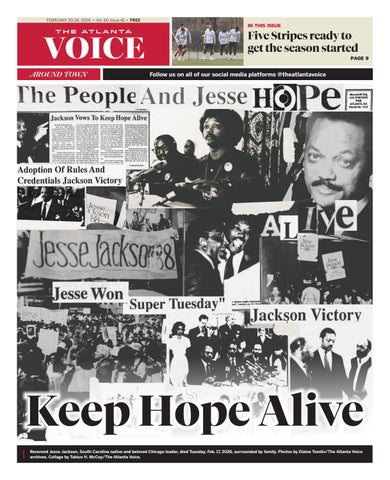
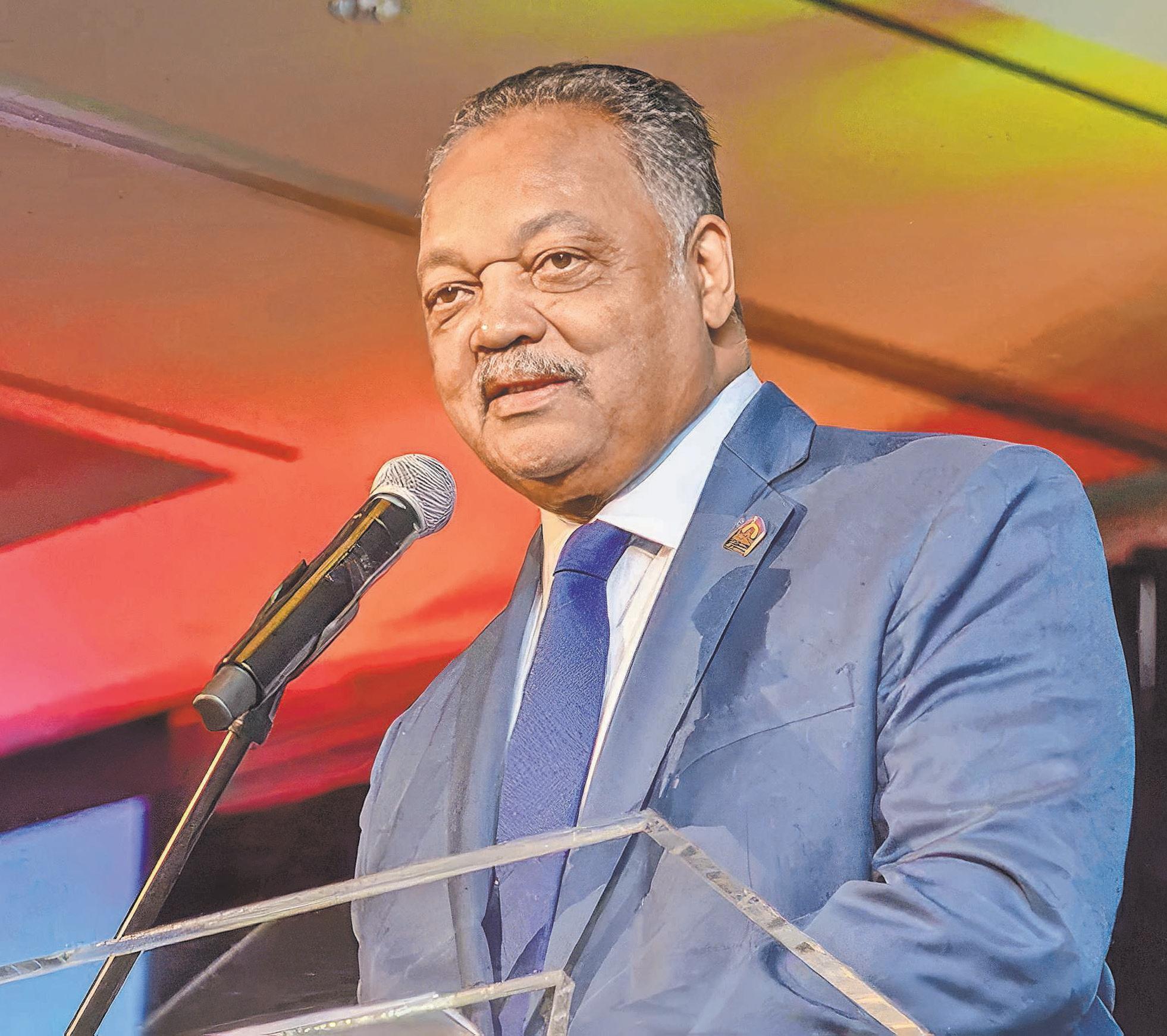
Jesse Jackson, civil rights activist and icon, Baptist minister, presidential candidate, author, organizer, orator, husband, and father, passed away on Tuesday, February 17. He was 84.
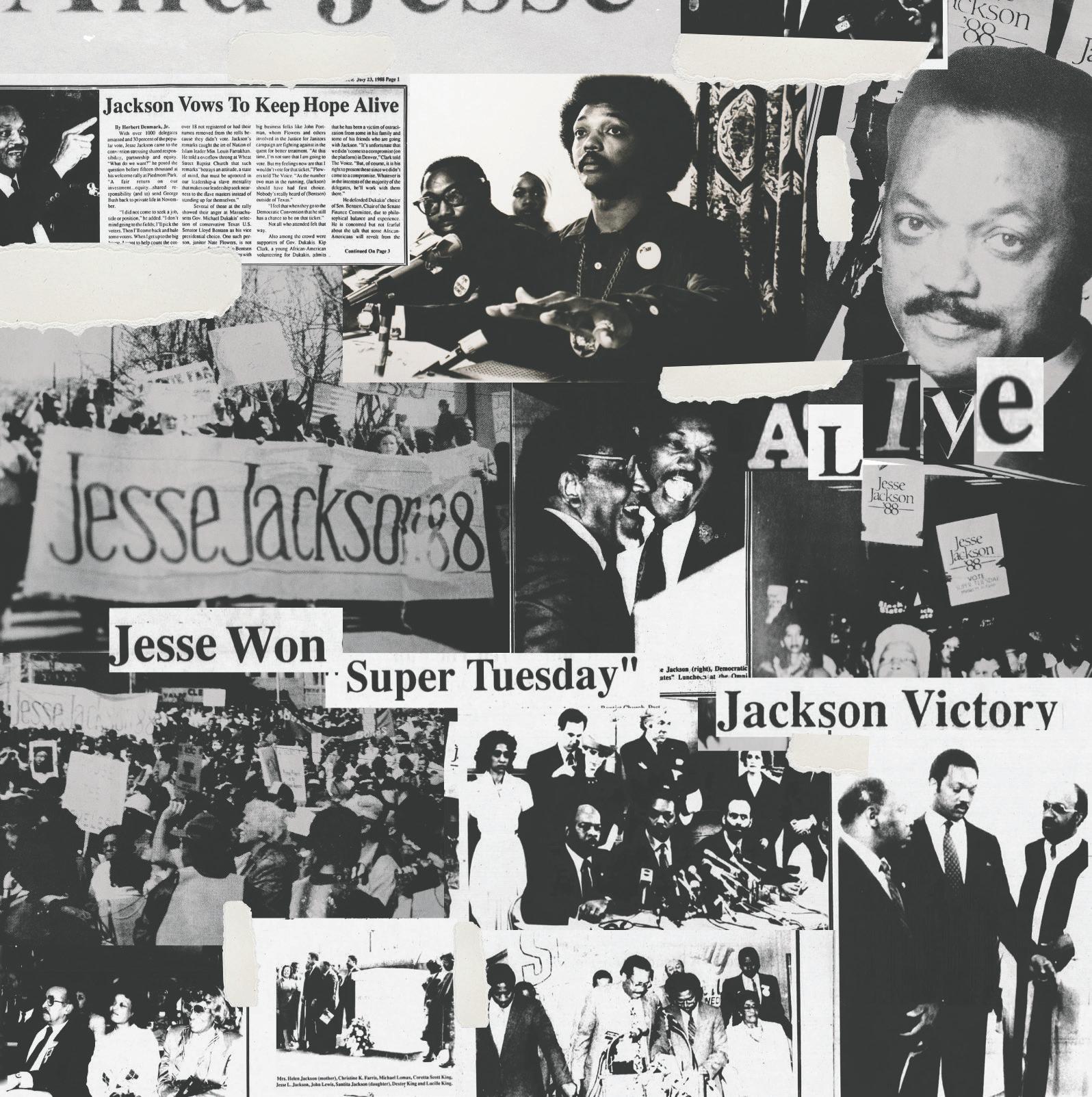
Public observances of Jackson’s legacy and life are expected to take place in his adopted home of Chicago this week and throughout Black History Month. Jackson played a significant role in the Civil Rights Movement as a young organizer working under such luminaries as Dr. Martin Luther King, Jr., Ambassador Andrew Young, Dr. Ralph David Abernathy, and others. He then continued his work as one of the voices of Black pride and excellence throughout his personal and professional life. Along with founding People United to Save Humanity (PUSH) in 1971, Jackson ran for President of the United States in 1984 and 1988.
The 1984 campaign can arguably be considered the blueprint for United States President Barack Obama’s successful initial presidential campaign out of Chicago in 2008. Jackson made waves as a serious Democratic candidate during a time when Ronald Reagan-era politics made the idea of a Black President of the United States seem out of reach. His second run for the White House in 1988 may also have ended in defeat, but Jackson managed to take PUSH and merge it with his National Rainbow Coalition, now Rainbow PUSH Coalition, to further advocate for voting rights, social programs, and civil rights.
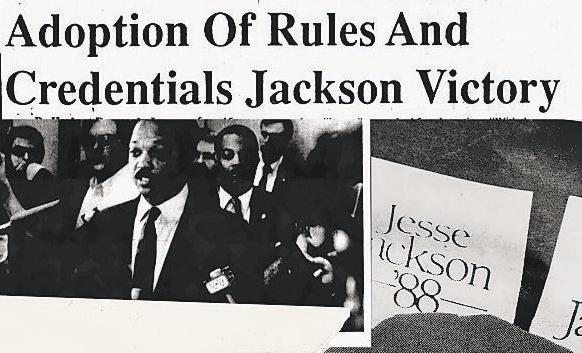
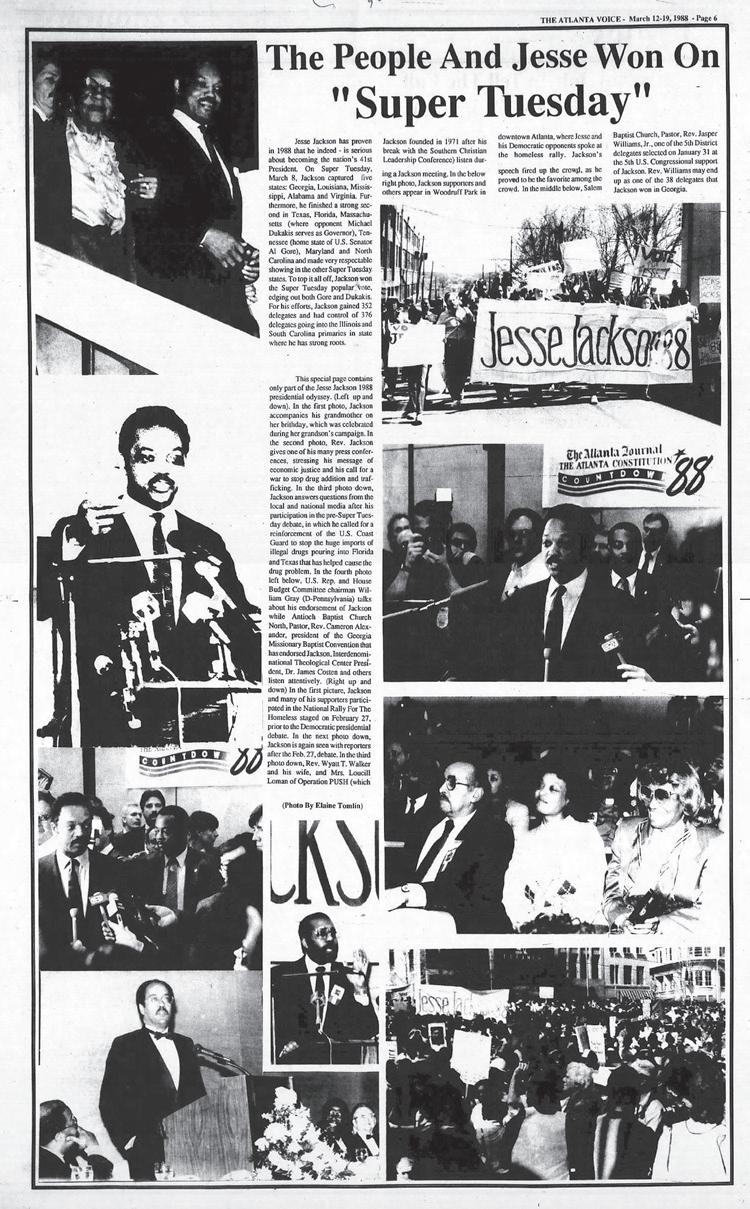
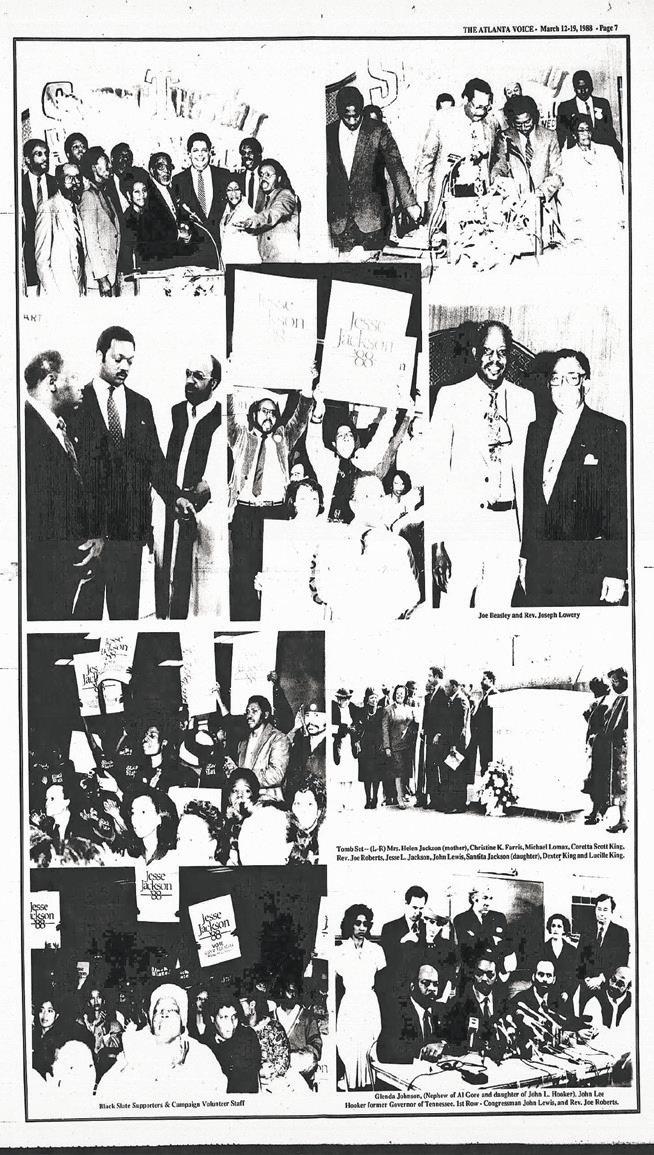
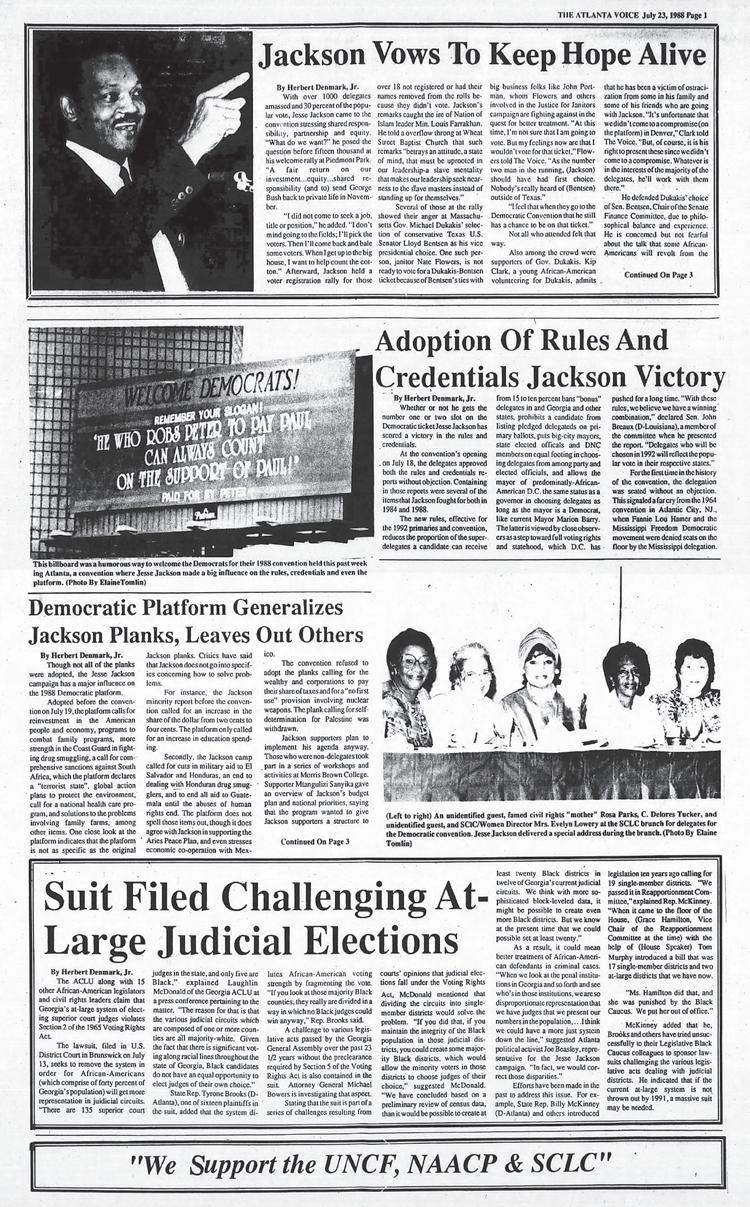
The Atlanta Voice featured Jackson on its front page numerous times during both presidential campaigns, as he made stops in Atlanta and received support from local political and religious leaders, including the late Civil Rights icon and United States Congressman John Lewis.
Jackson was born in Greenville, South Carolina, on October 8, 1941, as Jesse Louis Burns. He changed his surname in honor of his stepfather, Charles Henry Jackson, at the age of 15.
He is survived by his wife of 64 years, Jacqueline Brown, and their five children, Santita, Jesse, Jr., Jonathan, Yusef, and Jacqueline.
The Jackson family has not reported the cause of death, but has said Jackson was surrounded by family and passed peacefully. Jackson announced he was battling Parkinson’s disease in 2017.
Statements from Georgians of all walks of life flooded social media following Jackson’s passing.
Senator Reverend Raphael Warnock said of Jackson’s passing: “America has lost one of its great moral voices. Reverend Jesse Jackson spent his life working to ensure our nation lives up to its highest ideals. As a kid growing up in public housing while watching him run for president, Rev. Jesse Jackson gave me a glimpse of what is possible and taught me to say, ‘I am somebody!’”
New Birth Missionary Baptist Church Senior Pastor Jamal Bryant said of Jackson: “Reverend Jackson was my superhero. While other boys my age wanted to be Michael Jordan, I wanted to be Jesse Jackson. His poise, passion, and purpose were my blueprint.”
By LAURA NWOGU
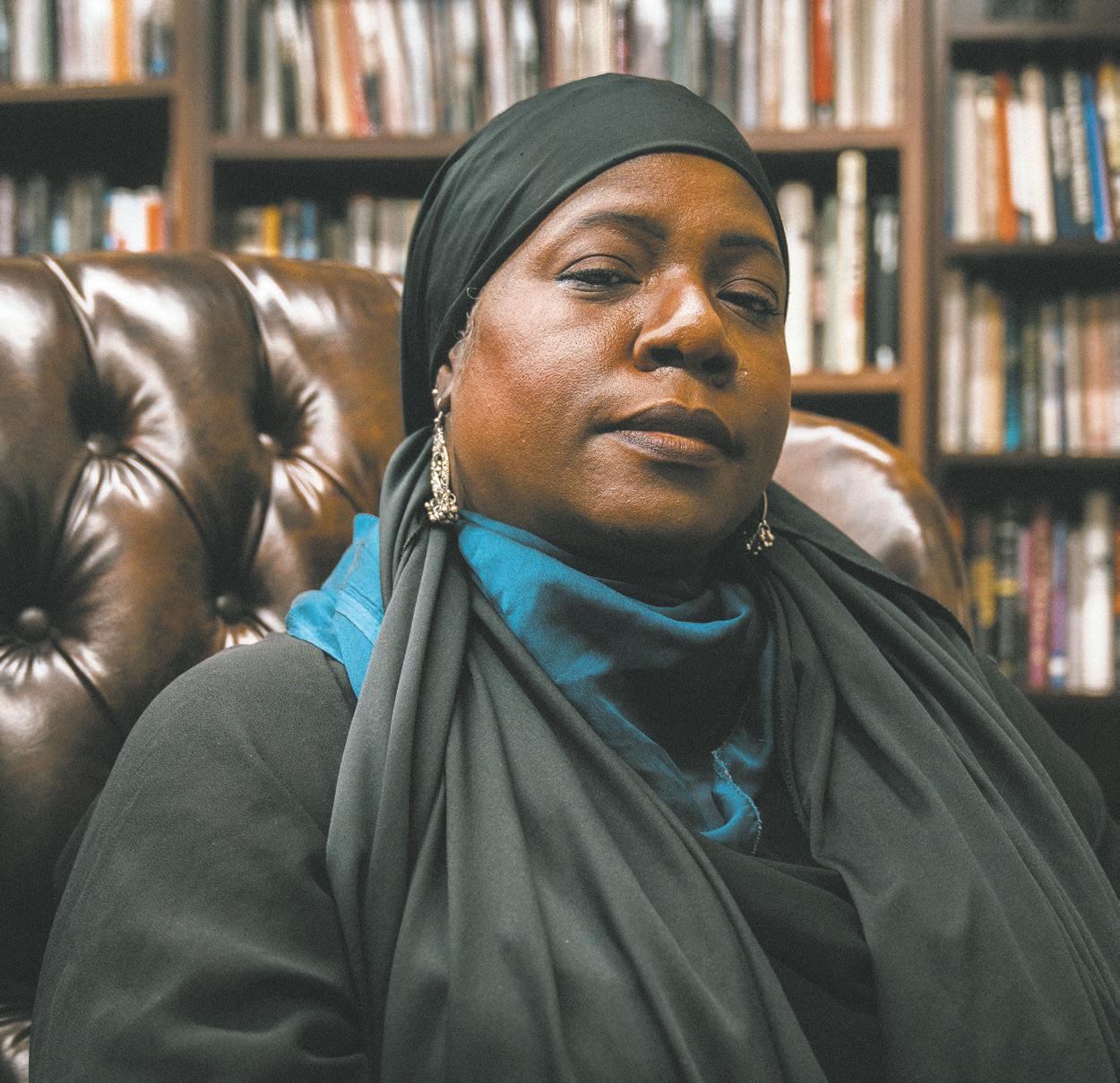
Long-term Gwinnett educator and mental health advocate Astrid Ross is preparing to launch her campaign for Georgia State Senate District Seven. The Atlanta Voice talked with the first-time candidate and Atlanta native about the issues impacting families across one of Georgia’s most diverse districts, including educational funding and mental health resources.
As a mother of five who has built a life in Gwinnett, Ross’s focus is on helping District Seven sustain its status as a good place to raise a family.
The Atlanta Voice: You’re launching your campaign as a first-time candidate for Georgia State Senate District Seven on Saturday. How are you feeling as you begin this campaign?
Astrid Ross: “I’m excited and relieved. It’s time.”
AV: You’re a longtime educator. Can you talk about what inspired
you to go into education?
AR: “There are a number of things that pushed me into that, including that I’m a mother of five children. All my children are adults. My oldest is 35, my youngest is 25. Education is very, very important, and it always has been, generation after generation in our family. It has been a way that we have broken the generational curses of poverty by using education as a way of lifting ourselves out of those spaces.”
AV: You name this a people-powered campaign. What does that mean for you and the people of District Seven?
AR: “As a Black girl from Atlanta, I have always looked at politics as a space that we should not exist in, because it has been encrypted and decoded. And a lot of times, we look at that as a space that we are not supposed to venture into. So, I was nominated a couple of years ago to the Emerge Georgia cohort. We had to do an entrance exam and compete against like 100
people for 25 spaces. I was blessed to get in. And this program is so holistic and comprehensive, it really decoded or demystified the whole field of politics.”
“As far as my intentions to run, what I got was a lot of pushback from everybody. I had to look at the past 30 years. I’m a community activist and advocate, suicide loss survivor — my dad was a Vietnam vet who took his own life. He was a pre-med student and just didn’t get the opportunities, healthcare, and economics in every sphere. I have spent the past 36 years working with food drives.
AV: We talked about your father, and we talked about growing up as a Black girl in Atlanta and navigating this role that historically you wouldn’t be in. How have you been able to navigate the mental health advocacy of it all, especially with the stigmas within the Black community. How do you hope to bring that into your campaign?
See ROSS on page 7
By NOAH WASHINGTON
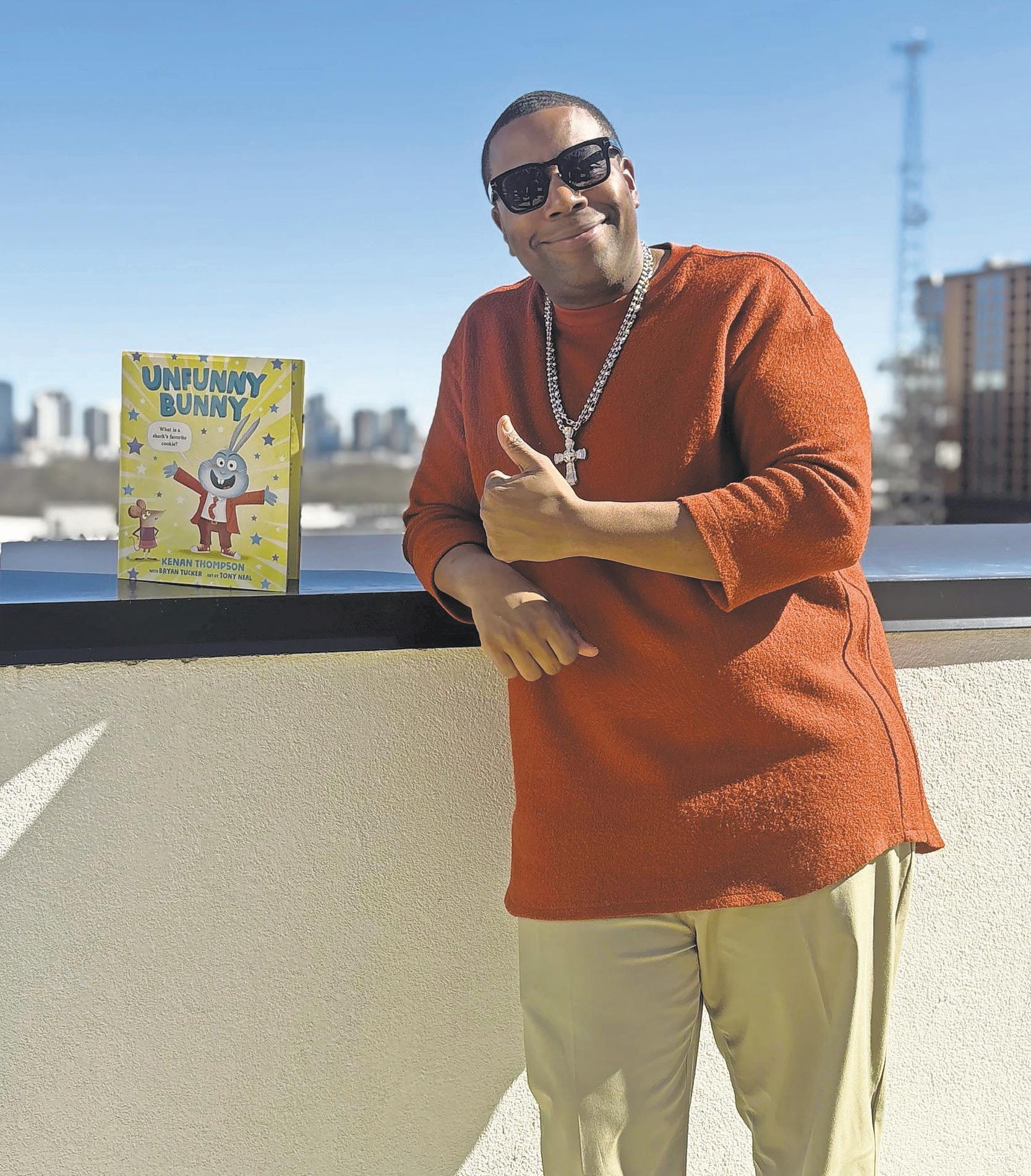
When Kenan Thompson tells you he hasn’t lived in Atlanta since high school, the SNL veteran isn’t downplaying his roots; he’s explaining why Thursday’s homecoming felt so monumental. At Retreat by The Gathering Spot on Howell Mill Road, the longest-tenured cast member in “Saturday Night Live” history received an official proclamation from the City of Atlanta, a reminder to everyone that the city’s “proud son” has been representing all along, even if he’s been doing it from 30 Rock.
The ceremony brought together entertainment executive Shanti Das, Fulton County Commissioner Marvin S. Arrington Jr., City Council Post 3 At-Large member Eshe’ Collins, and other city leaders, including director of the Mayor’s Office of Film & Entertainment Phillana Williams
“It feels monumental, man,” Thompson said when asked what it meant to be honored by the city. “It’s so funny to me that a lot of people don’t know that I’m from
here. I haven’t done anything but represent Atlanta. I just haven’t lived here since high school.”
He added that the proclamation served as a reminder that Atlanta has “a proud son out there and a son that they can be proud of as well,” calling the moment “a beautiful occasion.”
Das, who organized the event, said the idea began months ago as Thompson prepared to release his second book, a children’s title called “The Unfunny Bunny.”
“I feel like a lot of people don’t know that he’s actually from here,” Das said. “With him being at the height of his career and a new book coming out, I wanted Atlanta to celebrate him.”
She said she first floated the idea to Thompson about four or five months ago, then coordinated with his team to add Atlanta to his book tour schedule. She also reached out to Ryan Wilson of The Gathering Spot to co-host the event, along with city officials, to begin the proclamation process.
Wilson said the decision to participate was immediate.
“Shanti is doing amazing work,” Wilson said. “When Shanti calls,
I’m going to do it.” He added that celebrating hometown figures in a way that brings community together aligns with The Gathering Spot’s mission.
Thompson received two proclamations during the ceremony. Arrington Jr. presented one from Fulton County, while Collins delivered a proclamation from the Atlanta City Council officially declaring February 12, 2026 as “Kenan Thompson Day” in the city.
Reading from the proclamation, Collins highlighted Thompson’s Atlanta roots, noting he was raised in College Park in the Cascade community, where his creative talents were nurtured through Atlanta institutions including the Alliance Theater School, the Atlanta Boy Choir, the Freddie Hendricks Youth Ensemble of Atlanta, church productions, and Tri-Cities High School.
“Atlanta is a special place, and one thing we want to continue to foster is our children knowing that they can be who they see in front of them,” Collins said, thanking Thompson for sharing his talents with Atlanta’s children. “So thank you so much for your book.”
By MICHAEL BLAND
One year into his second term, we have seen the same game plan time and again from President Trump’s administration.
It goes like this: take unprecedented, legally questionable action, create chaos and fear, absorb a judicial rebuke, then claim victory to an extreme-right audience while inflicting lasting damage on democratic institutions and norms.
We have seen it in the sweeping immigration crackdowns announced with maximal force and minimal preparation, only to be slowed or blocked by the courts after communities were already thrown into panic. We have seen it again in punitive executive actions, targeting cities, institutions, and even private actors, that were ultimately enjoined but not before their intended message of intimidation was delivered.
The goal is not to achieve a durable policy outcome. The aim is instead to exert power in ways that dispirit and disorient those who stand in the way of Trump’s consolidation of power. This very playbook was deployed recently on the streets of Minneapolis to deadly effect.
The shocking deaths of Renee Good and Alex Pretti also foreshadow another danger to the rule of law: efforts to interfere with free and fair elections in this country.
The significance of what happened in Minneapolis and Chicago prior extends well beyond immigration enforcement. Federal shows of force do not need to be repeated everywhere to have their intended effect. They only need to be visible enough (and unpredictable enough) to signal that no space, including the space around elections, is beyond reach.
Indeed, the Trump administration’s violent immigration crackdown in cities across the country could well be the template for future efforts to disrupt and depress voting in Black, Brown, and heavily Democratic communities in this fall’s midterms, in 2028, and beyond.
President Trump’s insistence that he won the 2020 election, despite repeated court rulings rejecting his claims of widespread fraud, has resulted in yet another call to action from the President that Republicans ‘nationalize’ upcoming elections.
The FBI’s unprecedented search and seizure within a Fulton County, Georgia, election facility, carried out with the participation of Director of National Intelligence Tulsi Gabbard at President Trump’s request, signals the effort may already be afoot.
Courts Can’t Undo Fear at the Polls Across 2025, hundreds of lawsuits challenged

crackdowns and federal shows of force could signal a strategy to intimidate voters before future elections. Photo Credit: iStock.com/wildpixel
Trump’s executive actions, turning federal courts into frequent roadblocks that paused, narrowed, or reversed controversial policies.
From anti-DEI orders that were enjoined in federal court to a punitive order against a major law firm that a judge ruled unconstitutional, the pattern is consistent: aggressive, chaotic moves followed by judicial intervention.
But in the context of an effort to sow fear and erect barriers to the polls during an election, after-the-fact judicial intervention would be terrifyingly inadequate. A show of force by any combination of federal law enforcement, the National Guard, or active-duty military would have an immediate and chilling effect on turnout. And on the election itself. No court action could provide meaningful relief in that scenario. No injunction, issued days or weeks later, could cure such a breach of democratic norms.
Courts can stop a policy. They cannot rerun a subverted moment of democratic participation. That’s why intimidation near the polls is uniquely dangerous: once turnout is depressed, you can’t restore votes that were never cast, and you can’t ‘injunction’ your way back to a legitimate outcome.
In modern swing states, elections aren’t decided by millions of votes; they’re decided by 10,000 here, 12,000 there. In 2020, Arizona was decided by 10,457 votes and Georgia by 11,779.
With majorities in Congress razor-thin and presidential elections hinging on increasingly tight results in a handful of swing states, it would take very little fear, very little disruption, to change the course of American democracy.
Which is why this November, we cannot let political stunts and threats of violence keep us from casting our votes. The most effective defense against voter suppression is preparation. Voters who check their registration, confirm their polling location, and understand local rules before Election Day are far less likely to be deterred by confusion or disruption.
Where possible, vote early or by mail. Plan to vote with your friends, family, and neighbors, because voter suppression thrives when people are isolated. Know your rights: if you are in line when polls close, stay in line. If there is a problem, ask for a provisional ballot and report intimidation.
Taken together, these steps make suppression harder to execute and fear easier to defeat.
The stakes are high, but ultimately, it’s on us to show up to meet the moment.
Michael Bland is executive director of Black Men Vote, a national nonprofit committed to moving Black men from the political margins to the center of American democracy.
FOUNDED
May 11, 1966
FOUNDER/EDITOR
Ed Clayton
Immortalis Memoria
PUBLISHER/EDITOR
J. Lowell Ware
Immortalis Memoria
The Atlanta Voice honors the life of J. Lowell Ware.
PUBLISHER
Janis Ware
PRESIDENT/
GENERAL MANAGER
James A. Washington 2018-2024
EXECUTIVE ASSISTANT TO PUBLISHER
Chia Suggs csuggs@theatlantavoice.com
EDITOR IN CHIEF Donnell Suggs editor@theatlantavoice.com
GENERAL ASSIGNMENT REPORTERS Isaiah Singleton isingleton@theatlantavoice.com
Laura Nwogu lnwogu@theatlantavoice.com
Noah Washington nwashington@theatlantavoice.com
BUSINESS REPORTER
Tabius H. McCoy tmccoy@theatlantavoice.com
EDITOR AT LARGE Stan Washington swashington@theatlantavoice.com
ADVERTISING, SALES & CIRCULATION
ADVERTISING ADMINISTRATOR
Chia Suggs advertising@theatlantavoice.com
SALES
RDW Jackson rdwadman@gmail.com
SUBMISSIONS editor@theatlantavoice.com
DIRECTOR OF PUBLIC RELATIONS
Martel Sharpe msharpe@theatlantavoice.com
CONTACT INFORMATION
633 Pryor Street, S.W. Atlanta, GA 30312 Office: 404-524-6426 info@theatlantavoice.com




By JENNIFER PORTER GORE
Word In Black
Roughly 1 in 3 doctors who are enrolled to treat Medicaid patients didn’t treat a single one between 2019 and 2021, according to new research published Tuesday.
At the opposite end of the spectrum, a third of enrolled health care providers saw more than 150 Medicaid patients each year, a workload experts say may be stretching them too thinly. The doctors’ care load varied widely depending on their specialty and geographical location. A median of Cardiologists saw 81 Medicaid patients each year but primary care physicians treated 51 patients. However, the median for psychiatrists was just three Medicaid patients for the entire year.
The vast disparity between so-called “ghost” doctors with untreated Medicaid patients and doctors who treat far more Medicaid patients than most primary care physicians is more than a statistical mismatch. It means that the millions of predominantly low-income, disabled, and young enrollees’ health care access depend on a relatively small cadre of clinicians who accept Medicaid patients consistently.
And while the system appears robust on paper, covering roughly 96 million Americans, the findings — reported in Health Affairs, an online journal — indicate the healthcare system for
low-income people is far more fragile in practice.
That’s a warning sign for Black Americans, who make up just over 21.4% of adult Medicaid beneficiaries ages 19 to 64. Almost 22% of children covered by Medicaid or the Children’s Health Insurance Program are Black, and Medicaid covers more than half of sickle cell disease patients nationwide.
Dr. Jane Zhu of Oregon Health & Science University, the study’s lead author, says that having a healthcare system that relies on a relatively small number of doctors to provide most of the care creates a problem that needs urgent attention.
“Low physician participation in Medicaid is a commonly cited reason for access gaps and unmet need in Medicaid,” she says. ‘If patients aren’t able to access the care they need, they may delay or forego care altogether, which is not only bad for patient outcomes but also bad for the health system overall.”
Researchers examined the most recent available Medicaid claims data. They analyzed administrative claims and provider enrollment data for primary care doctors and specialists in cardiology, dermatology, ophthalmology, and psychiatry.
The gap was especially pronounced in psychiatry: more than 40% of psychiatrists enrolled in Medicaid during that period didn’t treat any Medicaid patients.
Also, federal data shows doctors have been
less likely to accept new Medicaid patients than new patients covered by Medicare — the government health plan for seniors — or privately insured patients. Separate data show that fewer than half of psychiatrists and dermatologists accepted new Medicaid patients, while just over 60% of internal medicine specialists did.
The situation worsens for low-income patients who need dental work, as only 1 in 3 dentists reported treating Medicaid patients.
Zhu said the lack of access increases the risk of poor health outcomes, which ultimately raises costs and worsens outcomes. Over the long term, she said, delaying or foregoing care can leave people sicker with more complex conditions that ultimately increase costs.
Separate research has found a racial element to the situation: Black beneficiaries were less likely than white adult Medicaid beneficiaries to report having primary care visits and mental health care in the previous 12 months.
To treat Medicaid patients, physicians must enroll in their state’s program, meet licensing and credentialing requirements, and sign participation agreements to bill Medicaid. While the doctors gain access to a large pool of patients and steady reimbursement, they aren’t required to see a minimum number of Medicaid patients — or any at all.
In some cases, Zhu said, providers may be technically enrolled in Medicaid as part of their health system’s contracting or employment requirements. Or they have enrolled despite their clinical schedule being at capacity with patients covered by commercial insurance.
Created as part of President Lyndon B. Johnson’s Great Society program, Medicaid fills critical healthcare gaps for low-income people. For example, it covers more than 40% of births in the U.S., including more than half in Louisiana, Mississippi, New Mexico, and Oklahoma. It also pays out-of-pocket health costs for low-income retired Medicare recipients and provides nursing home and in-home care services for the elderly.
The Trump administration’s “One Big, Beautiful Bill Act” will cut Medicaid expenditures by almost $1 trillion. Experts say the cuts will force roughly 10 million Americans to lose their coverage.
“Maintaining access to care is a really big problem with increasing demand for services and workforce shortages,” Zhu said. “A clearer picture would help policymakers better spend public dollars on levers that meaningfully impact provider participation.”
Either way, she said it’s important for policymakers to assess the actual experience of patients who can’t get access to a health care provider — rather than relying on enrollment figures that may not reflect reality.
By DONNELL. SUGGS
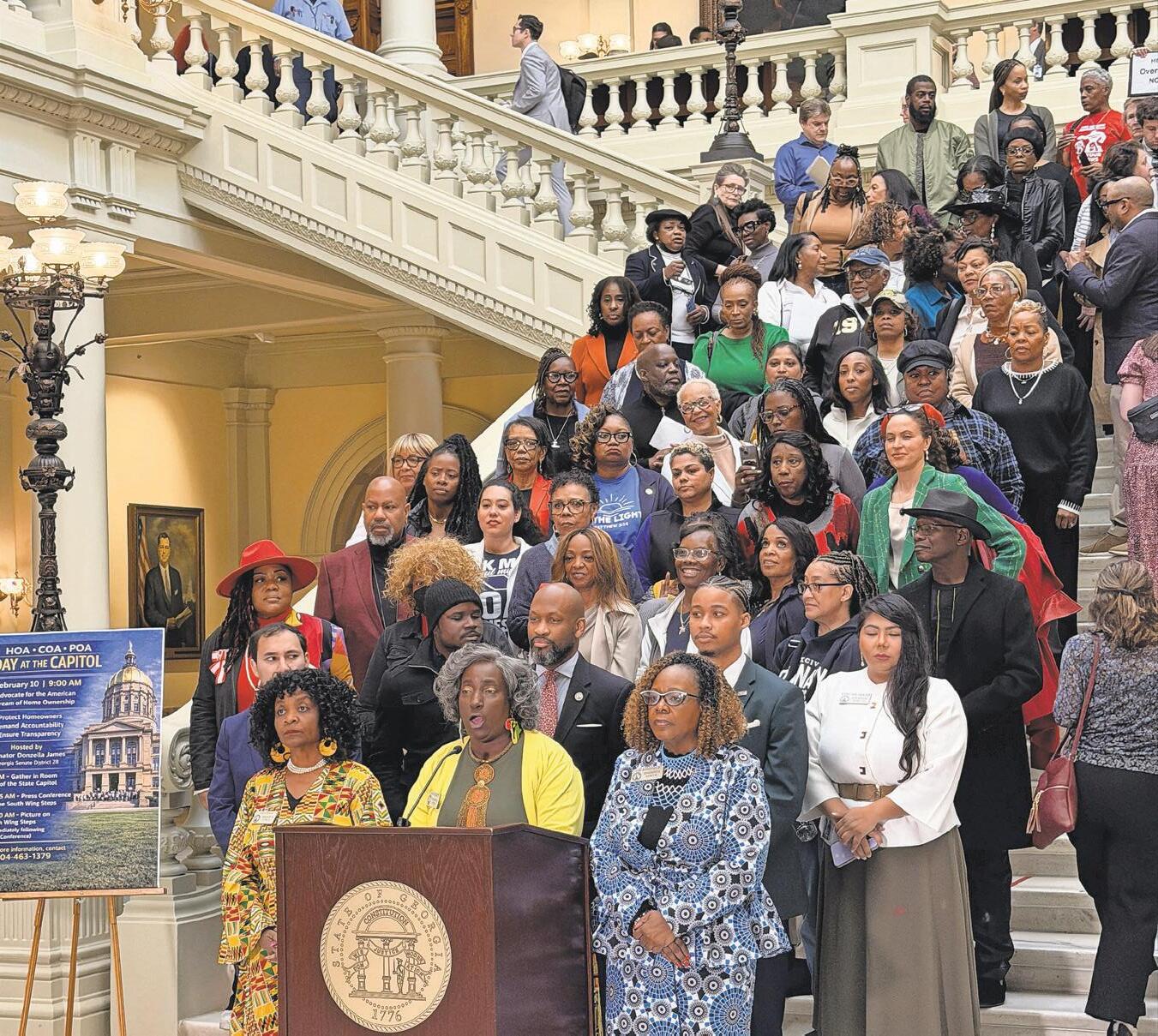
On Tuesday, Feb. 10, members of the Georgia Legislature hosted a press conference on the Capitol’s south steps. The subject was one many Georgians share: home.
State Representative Donzella James (D-35), State Representative Sandra Scott (D-76), Georgia State Representative Viola Davis (D-87) and others spoke in support of three Senate bills that will provide protections to home and condo owners who pay Homeowner Association (HOA), Condo Owner Association (COA), and Property Owners Association (POA) fees. Senate Bills 106, 107, and 106 will provide those protections if they are passed, according to James, who says they are needed in order to help homeowners keep their properties.
“We have to address the problem of predatory HOAs. They don’t have integrity, many of them,” James said. “We are going to pass these bills this year; if not, we are going to appeal to the governor.”
James said all three bills have gotten bipartisan support.
“We are not saying don’t pay your HOA dues,” James added.
Scott, who represents parts of Clayton County, said she often hears from constituents who complain about HOA fees. Nearly 70% of Clayton County’s 300,000 residents are Black.
“We have received countless calls and emails
because of how people are being treated by their HOAs,” Scott said. “No one should lose their home because of fees and assessments. No one should lose their home.”
Scott said that buying a home is part of the “American Dream,” and paying the mortgage and property taxes are the foundation of that dream and goal for many American families. For millions of Americans, buying a home is the largest purchase they will ever make.
One of those homeowners is Michael Shepherd, an HOA accountability advocate with The Watch Project. Shepherd shared his story of battling his HOA and how his case has cost him $3,000 thus far.
Davis (D-87) also spoke about the necessity of the bills. She spoke about a senior constituent who has been to court 20 times to save her home from foreclosure due to accumulated HOA fees.
“These are some of the nightmares we have heard,” Davis said.
According to the United States Census Bureau data, 65% of households in Georgia are owner-occupied. Among those numbers, only 46-47% of Black households are owner-occupied, while 7176% are owner-occupied by white people.
SB 106 is still under consideration by a Senate committee but is getting support, according to James. “Someone asked me why you have so many bills? James said. “Well, we have so many problems with HOAs.”
Continued from page 3
The proclamation recognized Thompson as an Emmy Award-winning actor, comedian, producer, author and cultural icon whose career has brought joy, laughter and representation to audiences for more than three decades. It noted his professional debut in 1994’s “D2: The Mighty Ducks” and his role as an original cast member of Nickelodeon’s “All That,” before co-starring in “Kenan & Kel” and joining “Saturday Night Live” in 2003, where he became both the first cast member born after the show’s debut and the longest-tenured cast member in its history.
Continued from page 3
AR: “I credit NAMI. Nami is the National Alliance on Mental Illness. It is the largest grassroots organization geared towards advocacy resources, collection of data and education in the nation. I joined NAMI in 2020, and it gave me my voice. It wasn’t until we sat down and looked at our own mortality during that time that I actually let the word suicide-loss survivor come out of my mouth. And then that same year, our children were all going into behavioral health fields. We saw all of this movement in healthcare and behavioral health and started a nonprofit in 2020 called the Mental Health Support Network.
AV: On the other side of things, what type of perspective does being a long-term educator award you about the issues that are impacting residents in Gwinnett?
AR: “I come with a unique perspective as
Beyond the ceremony, Thompson used the visit to promote “Unfunny Bunny,” his second book following a memoir. The children’s story centers on a bunny learning how to be funny and is aimed at young readers and families.
“It’s a children’s book called ‘Unfunny Bunny,’” Thompson said. “It’s for little kids. It’s my second book.” He explained that as a parent of two daughters, ages 7 and 11, he understands both the joy and daily effort required in raising children.
Thompson said he has visited multiple schools during his trip, reading to students across the city.
“I’ve visited like four schools in the last
an educator and as a mother of five children, because before my children went to public school, I was a homeschooling mom. I’ve been in private school now for 23 years. I ran a daycare, so I’ve been from pre-K all the way through 12th grade. So in all those spaces, this is what makes me a child advocate. As a legislator, I have to advocate for all the spaces where children learn. I get very frustrated because I’ve put my children through public school, I’ve supported children through a nonprofit private school and I’ve been in homeschool groups. Why are we not supporting all the places that children learn? Because right now in Georgia, we’re about 36 when it comes to education nationwide. So instead of picking and choosing where we’re going to put that funding, fund them all.
AV: If you win this seat, what is your ideal hope and future for Gwinnett County residents?
AR: “As a resident and graduate in Fulton County, I’ve been in Gwinnett County since
two mornings and read to a bunch of beautiful little Black faces,” he said, noting that what matters most is not celebrity recognition but time spent. “What matters is that somebody came to spend time with them.”
The book, he said, is part of a broader desire to inspire young people to dream beyond what they see in front of them.
“I didn’t think when I was growing up that I would write books or be a movie person,” Thompson said, encouraging families to support the next generation.
During a brief discussion about his longevity on “Saturday Night Live,” Thompson credited his support system. The show’s schedule runs roughly eight to nine months
1999. I’m seeing some trends that we’ve seen decades before in some of the other counties. Gwinnett had this appeal to us as business owners. We moved to Gwinnett to raise our kids and to open a business. My husband opened his first barbershop in 1999 in Gwinnett County. We’re seeing downward trends for families in the economy. The diversity, of course, is so beautiful. That’s another reason why I love Gwinnett County, but that diversity itself is now being used against the residents.
“So, you’re seeing a lot of ICE activity, you’re seeing drops in funding in the public schools, you’re seeing the economy drop. Certain areas of Gwinnett County are now changing, just like areas in Fulton County.
AV: As you prepare to launch this campaign, is there anything you want to say directly to the people who want to support you, or the people who are learning more about you?
AR: “No. 1, I’m a mother. I’m a grandmother. I am not a politician. I am a person who has sneakers that will run down because I stay on
each year, from October to May, he said, making it a significant time commitment.
“My family is very supportive of my career,” he said, adding that their encouragement allows him to pursue his work without feeling disconnected from home.
Even as he has become a household name, Thompson said he still values moving through the world with humility and accessibility, preferring genuine connection over celebrity insulation.
For Das, the turnout reflected something bigger than a single proclamation.
“Atlanta shows up for Atlanta,” she said. “That’s what makes this such a special place.”
the streets. I’m the one who can call someone and say, ‘We’ve got ICE and snow coming, I need a couple of people to fill the van. We need to come down and bring food and resources Downtown to some of the homeless before the snow hits. And now, in Gwinnett County, where we first moved here there were no homeless people. And I hate to say that, because of course, there were homeless people, but it wasn’t as visible or as widespread as it is right now. So, that won’t stop me, because for me, this is about public service. My grandmother was a police officer at East Point. Community policing was what she did, which meant that if this family didn’t have diapers or if this family had a dispute, she would go there, and we were literally in the car with her all those times.
“I’m a human. I want to connect with people in that human space, just to let them know I’ve done the work. We know how to do the work. Now, we want to do it at a higher level.”

By DONNELL SUGGS
This year is the fifth anniversary of “Ailey”, a documentary on the life and work of award-winning and trailblazing choreographer Alvin Ailey. Directed by Jamila Wignot, the film was screened at the Art Farm at Serenbe on Saturday, February 7.
The 94-minute film includes early footage of Ailey’s career as a young dancer in New York City, and of his founding, crafting, and leading the Alvin Ailey Dance Theater (AADT) in 1958.

The performance footage in this film is beautiful, and allows the viewer to relive over a dozen onstage performances from the AADT.
The performances in the film take place across the country and the world. Ailey and others, including legendary AADT dancer Judith Jamison, are seen in the film discussing the early days and the early struggles before AADT became one of the world’s most sought-after theater companies.
The film managed to blend art and inspiration. The dance scenes are stunning, the moments when his dancers speak about Ailey as an inspiration brought me to tears, and finally, the chapter in the story about his death from AIDS-related complications in 1989.
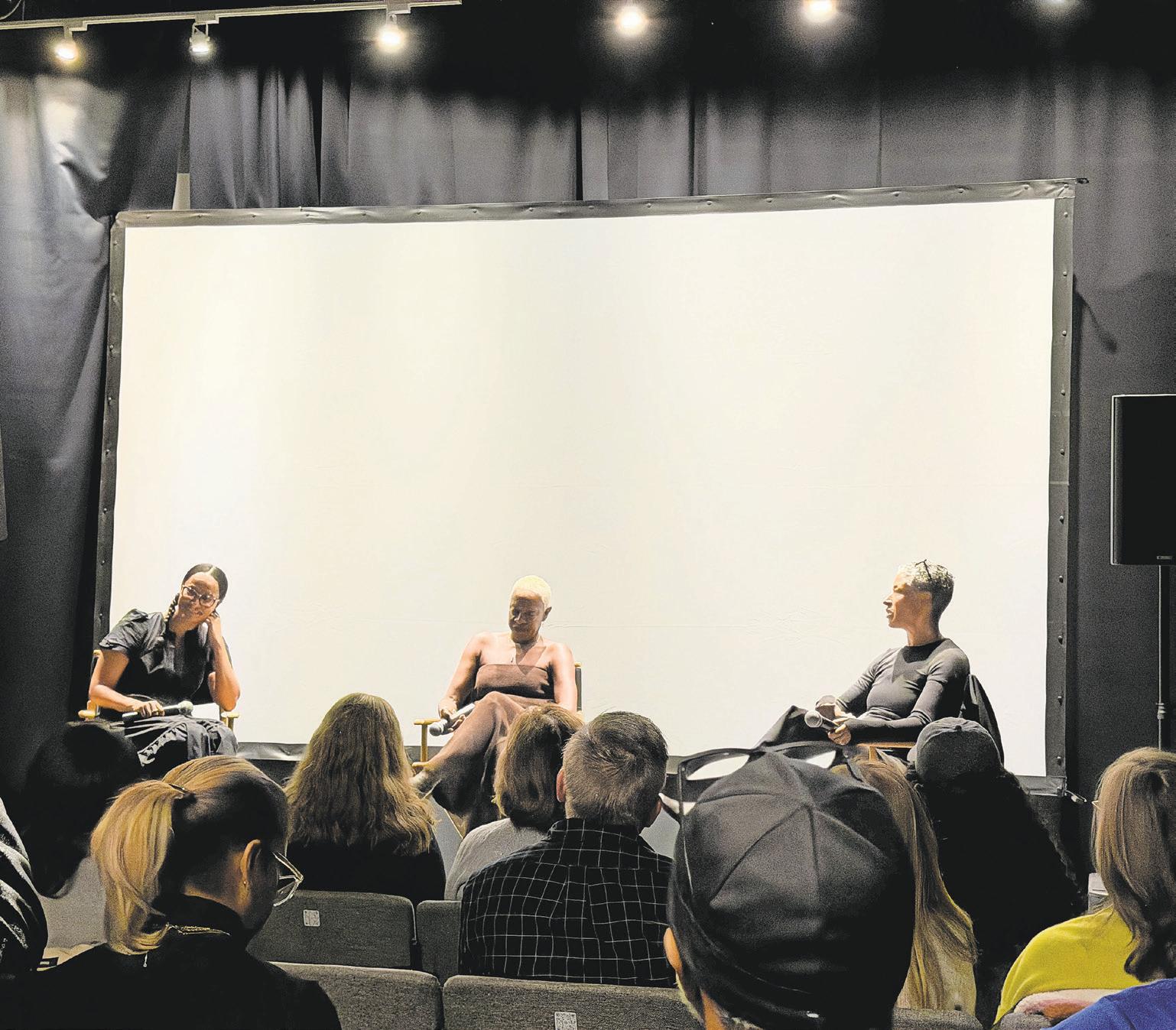
Following the screening, Wignot, Rebecca Walker, the writer and daughter of the legendary author Alice Walker, and former Alvin Ailey dancer Nasha Thomas participated in a short panel discussion on the film.
Watching Thomas perform a solo in “Cry” or perform in Ailey’s classic, “Revelations”, during the film, she was asked how it felt to watch the film again after five years. Thomas credited Ailey, saying, “Mr. Ailey was a visionary. You have to have a vision,” she said.
Wignot said she hadn’t seen the film with other people in three years. “This has been really lovely,” she said. “There’s a choreographic feel to this film.”
By LAURA NWOGU
For months, the BeltLine’s faithful have passed by a sign announcing that PopUp Bagels, New York’s famous bagel shop, is coming soon.
On Friday morning, that wait finally came to an end. PopUp Bagels celebrated the grand opening of its first shop in Georgia, nestled next to Emerald City Bagels at 661 Auburn Ave NE, with giveaways, limited-edition cream cheese schmears, and fresh, hot bagels.
A long line— which began three hours before the shop opened at 8 a.m. — snaked along the BeltLine’s Eastside Trail as locals waited in anticipation to try the social media sensation that has become a unique take on a popular breakfast item. After launching in Westport, Connecticut, in 2020 during the pandemic, the company quickly grew from a pop-up window to storefront success. With over 16 locations, the shop has become “Not Famous but Known” for its unsliced, crispy, and airy bagels, encouraging its customers to “Grip, Rip, and Dip” their bagel into a tub of cream cheese of their choice.
Unlike traditional bagel shops, they don’t slice bagels or make sandwiches, and the order minimum is three bagels.
“Atlanta is a vibrant, fast-growing city with a great food scene and a deep appreciation

for hospitality, which is exactly what we look for at this stage of our growth,” said PopUp Bagels CEO Tory Bartlett. “As an Atlanta resident, I’ve seen firsthand how the community here gathers around food, and the high-energy PopUp Bagels experience is a perfect
addition to the area’s impressive dining repertoire. Our first location on the Beltline also gives us strong visibility and foot traffic, allowing us to establish a meaningful presence in the heart of the city.”
The menu features plain, salt, sesame,
everything, and poppy bagels with classic cream cheese flavors such as scallion, plain, and salted butter. Bi-weekly, Popup Bagels rotates its schmears with limited-edition gourmet flavors. For Atlanta’s grand opening, the restaurant is featuring limited-edition flavors that pay homage to the city, such as smoked peach cream cheese and lemon pepper cream cheese, in collaboration with Wing Stop.
“We’re thrilled that Atlanta is just as excited to meet us as we are to meet them.
The excitement and support from the community have been incredibly energizing,” said Janvi Patel, franchise partner at Power Brands Hospitality Group.
Atlanta’s opening is the next step in the company’s expansion plan, with 300 new franchise locations mapped out for the future. Four more outposts are planned for Georgia, including locations in Dunwoody and Buckhead.
“The hope is that PopUp Bagels brings a new wave of fun and excitement to the Atlanta food scene. Our bi-weekly rotating schmears mean that there’s always something new for our customers to come in and try,” Patel said. “We hope to add a sense of community, a little bit of excitement to mornings, and of course, delicious, hot bagels that keep people coming back for more.”
By DONNELL SUGGS
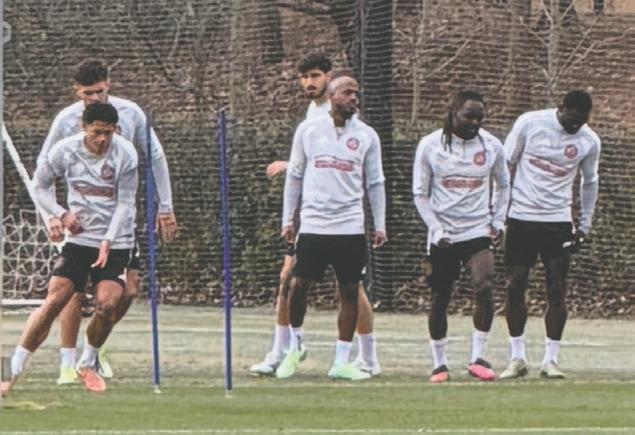
After training on Tuesday afternoon, Steven Alzate and Juan Berrocal took turns talking to the media. Both players arrived in Atlanta for the first time last season, and this year will be the first time they get to start a season from scratch. Neither seemed to worry about having to start that season on the road, though.
Asked if there was any kind of advantage to playing away from home to begin the 2026 campaign, Alzate wondered why that would
be the case. “People may see it that way, but I don’t see it that way. Naturally, people think that when you play at home, there’s an advantage because of the fans. At the end of the day, it’s a game, it’s 11 versus 11 whether you’re at home or away,” Alzate said of the season opener in Cincinnati.
Alzate did acknowledge that the first game of the season is crucial (his words) and that he knows Cincinnati is a good team. “We know that they are a good side, but we’re going into that game believing that we can win.”
The Five Stripes will start the season in
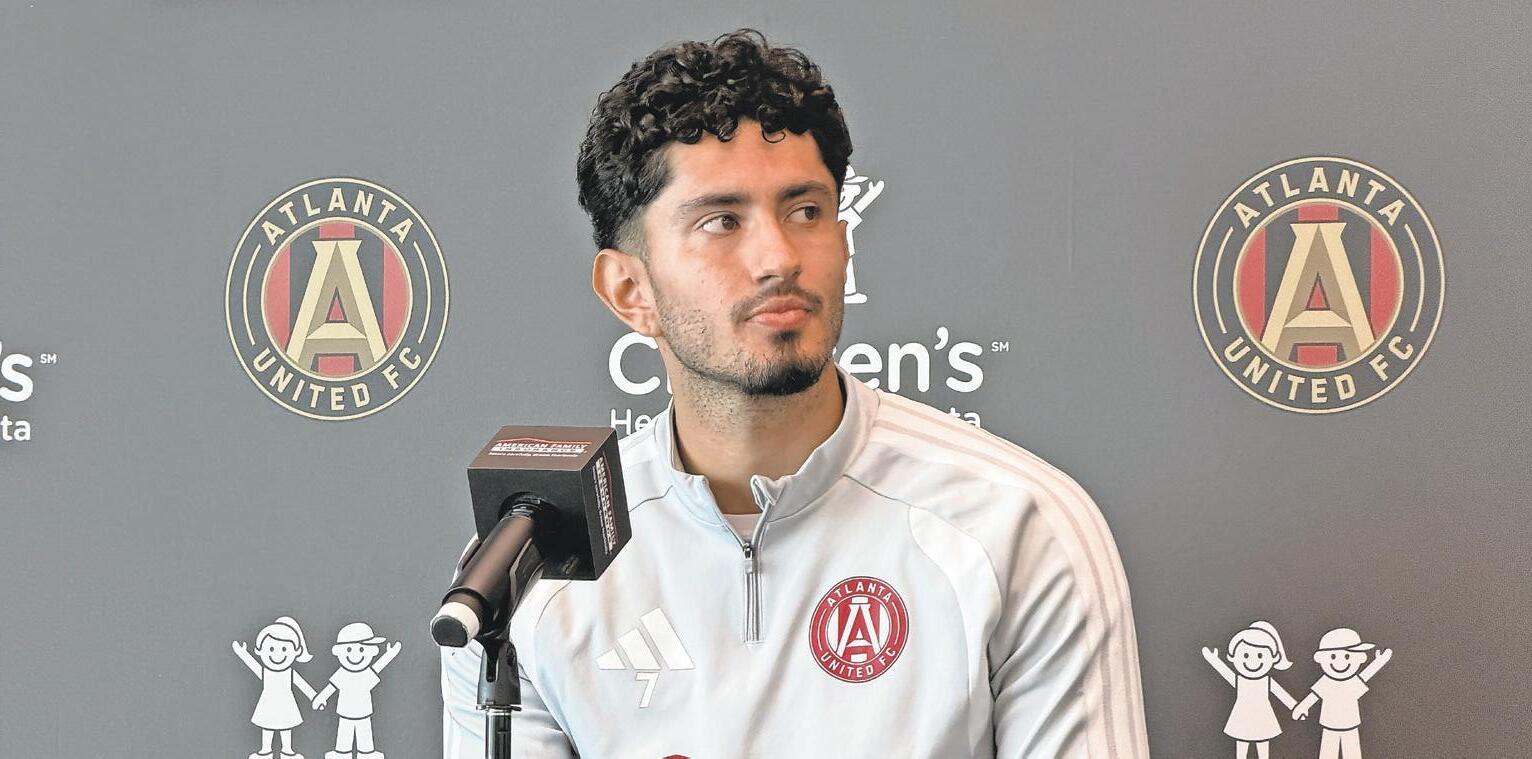
“Naturally, people think that when you play at home, there’s an advantage because of the fans. At the end of the day, it’s a game, it’s 11 versus 11, whether you’re at home or away,”
Atlanta United midfielder Steven Alzate said after training on Tuesday, Feb. 17, 2026. Photo by Donnell Suggs/The Atlanta Voice
Cincinnati, one of the toughest places to play on the road in MLS. That game will take place on Saturday, Feb. 21 (4:45 p.m.). The following Saturday, Atlanta United will make its first West Coast trip, playing at San Jose (7:30 p.m.).
Berrecol’s energy was a bit different when explaining how he felt about playing a game that counts on Saturday. “I am very excited to start the season,” said the defender. “Last year, I arrived here when there were 10 games or less. This year is very important for me because there is a new challenge in my career.”
A back line that includes Berrecol and a healthy Stian Gregersen and Matt Edwards could be one of the best in Major League Soccer.
“We wish to start the league better than last year, and we are going to try to get a few points in Cincinnati,” Berrecol said.
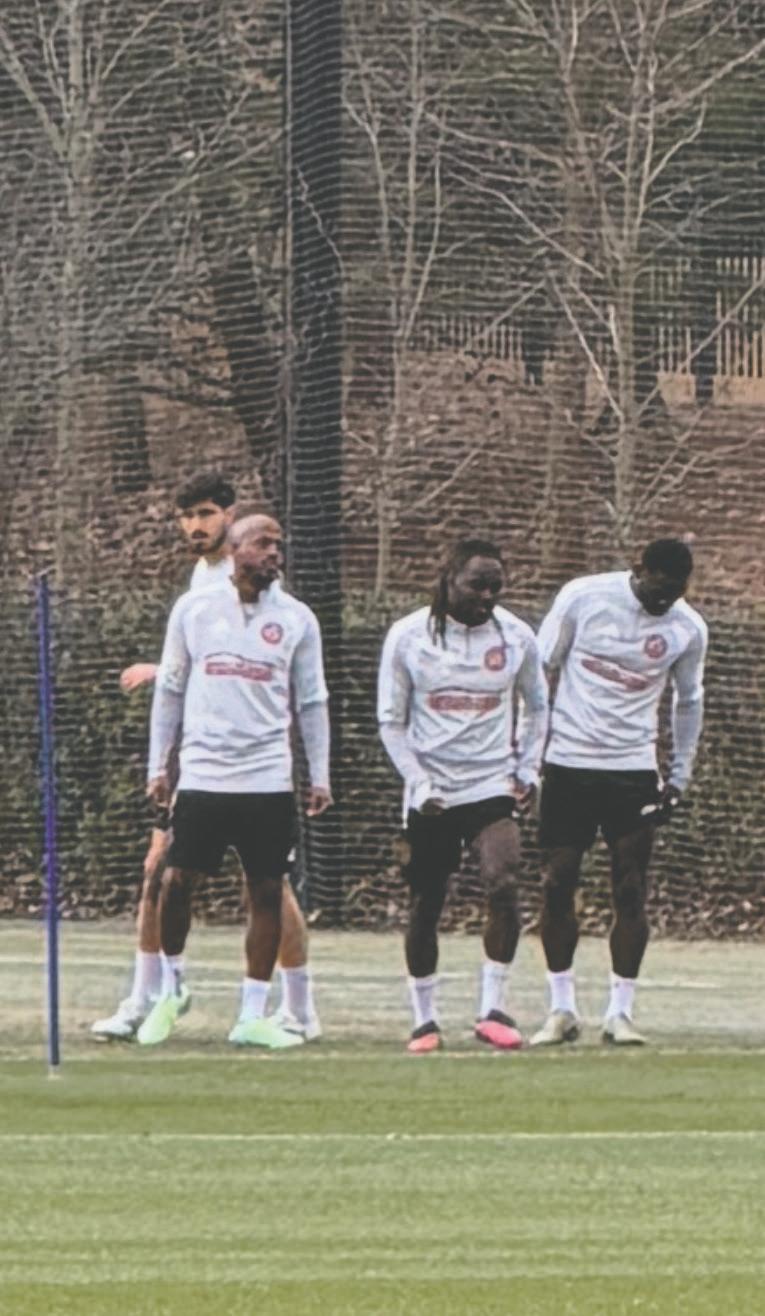
Former Inter Miami winger Fafa Picault can help set the season off on a good note. The native New Yorker and Haitian National Team member was at training on Tuesday after signing with Atlanta United earlier this week.
March Madness:
The month of March will be more favorable to manager Tata Martino and the squad, as all three of their matches will be at home. Atlanta United is scheduled to host Real Salt Lake on Saturday, March 7 (7:30 p.m.), Philadelphia Union on Saturday, March 14 (3:15 p.m.), and D.C. United on Saturday, March 21 (7:30 p.m.). United on Saturday, March (7:30 p.m.).
By NOAH WASHINGTON
The Atlanta Jazz Festival unveiled the lineup for its 49th annual event Tuesday night, announcing a Memorial Day weekend program that pairs Atlanta-based artists with Grammy-winning musicians and internationally recognized performers.
The free festival will return to Piedmont Park, maintaining its status as the largest free jazz festival in the country. Organizers said this year’s lineup reflects both the traditions of jazz and the genre’s continued evolution through hip-hop, R&B, soul, and spoken word.
Adriane V. Jefferson, executive director of the Mayor’s Office of Cultural Affairs, said the 2026 festival was curated with intention, emphasizing Atlanta’s role in shaping artists at every stage of their careers.
“This year represents a true full-circle moment,” Jefferson said. “For nearly five decades, it has brought people together across generations, across neighborhoods and backgrounds, rooted in community, driven by excellence and grounded in a deep respect for artistry.”
Saturday’s lineup includes Buddy Red, Aja Monet, Grammy-winning drummer

Nate Smith, bassist Christian McBride with his Ursa Major project, and saxophonist Kamasi Washington.
Sunday’s performances will feature Cleveland P. Jones, the Myron McKinley Trio, Donnie Johnson of The Colored Section, Esperanza Spalding, and The Roots.
Monday’s closing day will showcase Cody Matlock, Nicole Zuraitis, Destin Conrad, Butcher Brown ( who appeared at the festival in 2024), and PJ Morton, who will close out the weekend.
Atlanta Mayor Andre Dickens said the festival remains one of the city’s most important
cultural institutions, nearly five decades after it was established under former Mayor Maynard Jackson.
“For almost 50 years, this festival has celebrated Atlanta’s cultural diversity and ensured that world-class music remains accessible to everyone,” Dickens said, noting that the event continues to serve as the city’s unofficial kickoff to summer.
In addition to the three-day festival, organizers announced a special concert honoring the centennial of Miles Davis. The Miles Electric Band will perform on May 22 at Atlanta Symphony Hall as a lead-in to the festival weekend.
Sponsors for this year include Design Essentials and Bank of America.
For singer Donnie Johnson, who performs as Donnie, returning to the festival stage reflects the long-term impact of Atlanta’s investment in the arts. He said early opportunities through local festivals and cultural institutions helped lay the foundation for his career.
“If I didn’t come here, I don’t think I would be where I am because of the opportunities,” Johnson said. “I love the South, I love Atlanta, and I’m thankful for the people who believed in me.”
By DENNIS MALCOLM ByRON AKA ALE SHARPTON
Subaru remains one of the most consistent automakers in the industry when it comes to reliability, innovation, practicality, and other innovations to maintain their loyal fanbase globally. Presented in six trims in 2026, I had the pleasure of reviewing the Limited XT of the all-new Outback, which continues to be a standout in the midsize SUV segment. With its refreshed exterior, upgraded interior tech, and more powerful turbocharged engine, this latest edition is a successful balance of comfort and capability.
Visually, the 2026 Outback leans more into the rugged territory and I am feeling it. Presented in a highly recommended “Deep Emerald Green Pearl,” the upright grille, vertically stacked headlights, and overall muscular profile give it an aggressive presence, while the more level roofline and steeper rear glass increase cabin functionality. Riding on 19-inch black alloy wheels, the Limited XT gets a significant hike in cool points.
Speaking of muscular, the Limited XT flexes a
revised 2.4-liter turbocharged Subaru Boxer engine producing 260 horsepower and 277 lb.-ft of torque. Paired with Subaru’s Lineartronic CVT and Symmetrical All-Wheel Drive, the Outback delivers a boost in acceleration and steady traction for whatever Mother Nature brings. The addition of X-MODE with Hill Descent Control reinforces its revered reputation as one of the most all-purpose vehicles in its class.
Inside, Subaru’s steps up their game with a more refined feel. The control center possesses an all-new 12.1-inch Subaru Multimedia System paired with a 12.3-inch full digital gauge cluster, both coming standard. Functionality gets love with wireless Apple CarPlay and Android Auto, while the Harman Kardon sound system—one of my favorite brands—keeps the party going. Need comfort? Leather-trimmed upholstery, heated front seats, a leather-wrapped steering wheel, and dual-zone climate control add to the premium feel.
Safety remains one of Subaru’s highest priorities. The latest generation of “EyeSight Driver Assist” technology introduces upgraded camera and radar systems, along with features like acceleration override assist and front and side alert assist with braking. Combined with

blind-spot warning, rear cross-traffic alert, reverse automatic braking, and the “DriverFocus” monitoring system, the Outback is virtually worry free in any situation.
Fuel economy is above part as well. When it comes to long excursions, the 18-gallon fuel tank and an estimated 24 mpg combined has us covered.
At a total price of $46K as tested, the new
Outback Limited XT should be a strong consideration for particularly families who want the option of street life and exploring the wilderness without blinking an eye.
Price: The 2026 Subaru Outback Limited XT is $44,365 and $46,210 as tested with optional paint, delivery, and destination.
For more information, visit Subaru.com
By LAURA NWOGU
“Serial Killer: The Exhibition” is coming to Atlanta on Feb. 7 at Pullman Yards, bringing the world’s largest collection of original artifacts from serial killers. The stop in Atlanta marks the exhibition’s U.S. debut and its largest edition. What many have only glimpsed and gleaned
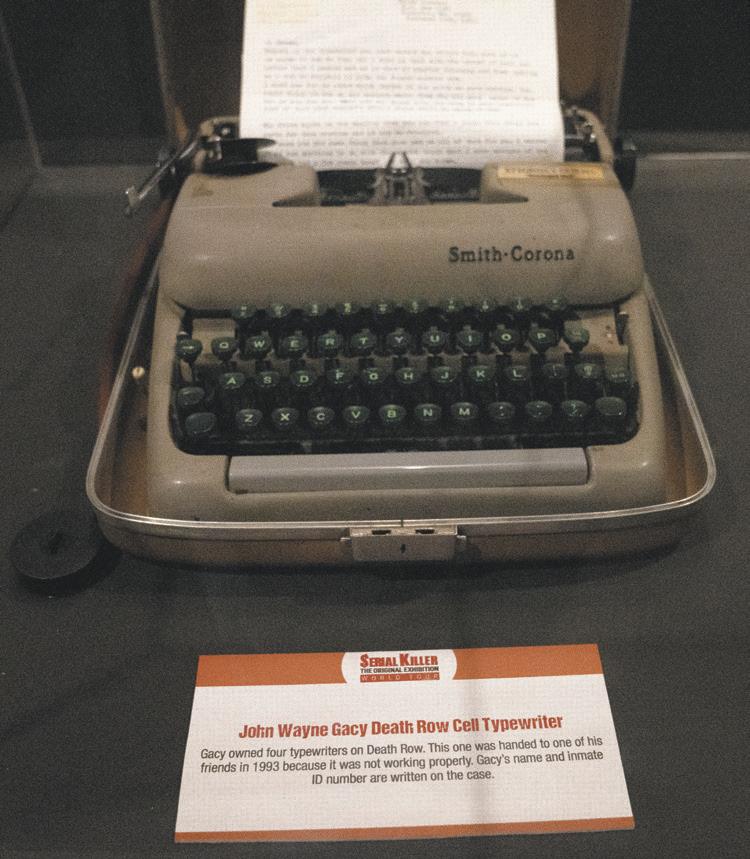
exploring the killers through a scientific, historical, and educational lens without glorifying the individual or their acts.
from true crime documentaries and dramatic miniseries reenactments is now on display, featuring 150 killers from America, Europe, and Russia.
The 27,000-square-foot immersive experience takes guests through the minds of notorious killers such as Ted Bundy and Jeffrey Dahmer to lesser-known killers such as Anthony Sowell, known as “The Cleveland Strangler,” and Atlanta’s Howard Belcher.
Forty-two rooms have been carefully curated to display never-before-seen artifacts from the killers, such as artwork, clothes they wore, and tools they used to commit their crimes. Facts about each individual are listed, detailing a snapshot of their modus operandi, span of crimes, number of victims, and location of their killings. Different rooms delve into the psychological aspects of serial killers and how they shape violent behavior, the role of law enforcement and forensic scientists, and the impact of pop culture. It also examines serial killing as a distinct American phenomenon that reveals how territory and opportunity intersect and how the patterns of violence persist toward marginalized communities.
“You have to study each one individually. They all have different backgrounds. It’s not always abuse. It could be a trauma that they witnessed. So, we’re still learning about these things, and we still don’t know what causes and what makes a serial killer do what they do,” said documentary filmmaker John Borowski.

But what remains a huge part of the exhibit are the victims who were brutalized by these serial killers. In many rooms featuring the most notorious of them, the faces of the victims and their names and ages are displayed. The Atlanta Voice will issue a warning that crime scene photos and the aftermath of the murders are on full display. It’s a gruesome but vivid reminder that although there’s an American fascination with serial killers and their motivations, families and communities are still reeling from the loss and terror of these murders.
Borowski and true crime researcher and author Bill Kimberlin consulted on the exhibition, and said they’re focus is to explore the serial
killers through a scientific, historical, and educational lens without glorifying the individual or their acts.
“Usually when they say glorifying serial killers, we’d have to say, ‘Yeah, they’re great people.’ They’re not doing that. In each room, when they talk about the killer, you’ll see there are victims’ photos on there. Their stories are important,” Borowski said. “It’s definitely not glorifying, not exploitative, or I wouldn’t be a part of it.”
The exhibition will be in Atlanta from Feb. 7 until the end of April, and will open Wednesday-Sunday from 10 a.m.-6 p.m. The recommended age is 14 and up.

Spacious 1-Bedroom Affordable! Rent Based on Annual Income Amenities, Great Location, and Convenient to Marta Please call for detailed information (404) 586-9098

Presbyterian church in Alpharetta, GA seeks associate pastor. Duties are to take charge of Christian worship and education of the KM youth group. 40 hrs/ week. Master’s Degree in Theology req. Must speak Korean. Send resume to Saehan Presbyterian Church, (Address: 3385 Kimball Bridge Road, Alpharetta, GA 30022) Attn: Sangchol SONG, Senior Pastor.
The Housing Authority of the City of Atlanta, GA (AH) will hold a Public Hearing on Thursday, March 5, 6 - 8p at 230 John Wesley Dobbs Ave. NE, Atlanta, GA 30303 to present and receive comments on its Fiscal Year 2027 MTW Annual Plan (Plan). The Plan outlines AH’s vision and describes planned activities that AH will undertake during the fiscal year. A draft of the Plan is available for review at all AH-owned communities and online at https://www.atlantahousing.org/about-us/plans-reports/through Friday, March 11, 2026.
You can comment on the Plan in person at the Public Hearing, by email at strategy@atlantahousing.org, or by US mail: Atlanta Housing, OSPRA MTW Office, 230 John Wesley Dobbs Ave. NE, Atlanta, GA 30303. Comments received before March 13 will be included in the Plan. All interested parties, especially families assisted by AH, are invited to attend the Public Hearing.
If you require special assistance or accommodation(s) to review the Plan or to attend the Public Hearing because of (1) a disability or (2) limited English proficiency, please call Haniff Graham at 404.817.7493 or send an email to accessibility@atlantahousing.org by February 17, 2026 to request reasonable accommodations for your needs.