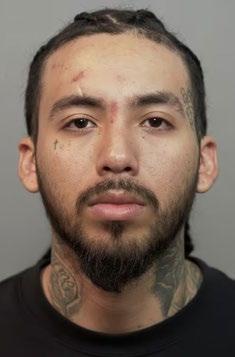
Extortion cases in Surrey slowing down after spiking earlier this year
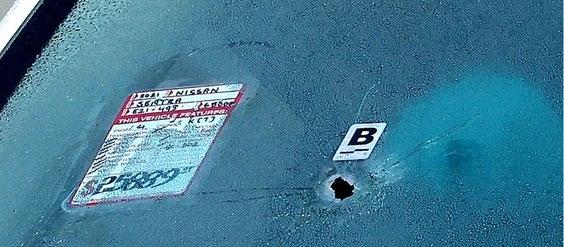
Surrey police say the release of images of extortion suspects could be contributing to a decline in cases in recent weeks. In January, B.C.’s second-most-populous city had 10 extortion-related shootings. In February, there was only one. Continued on Page 10...
www.theasianstar.com
The story behind the deportation of a 'Ruffian'
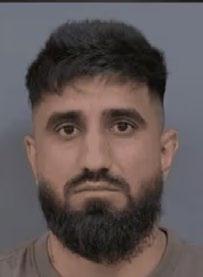
Sukhnaaz Singh Sandhu was flagged by Canadian immigration officials as a member of a violent Surrey-based criminal gang of international students called The Ruffians in 2020. But he wasn't deported until last month. According to documents obtained, police claim the 26-year-old spent the intervening years engaged in a "high-risk lifestyle" involving "firearms, fraud, stolen vehicles, flight from police and drive-by shooting incidents."
He travelled from B.C. to Ontario to Edmonton, wracking up run-ins with police at every stop. Immigration and Refugee Board (IRB) documents link him to suspects in a recent wave of extortions, including a man
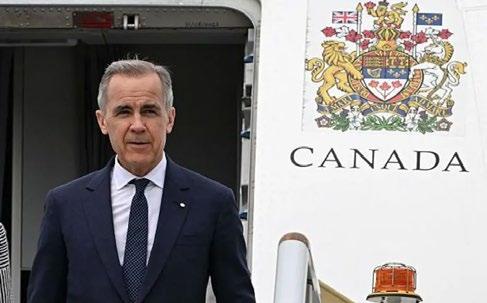
India and Canada agree to boost economic partnership in a move to reset ties
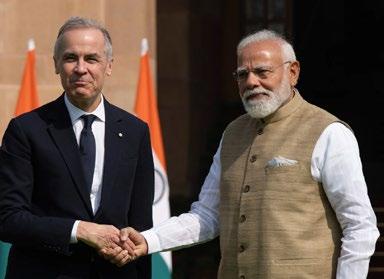
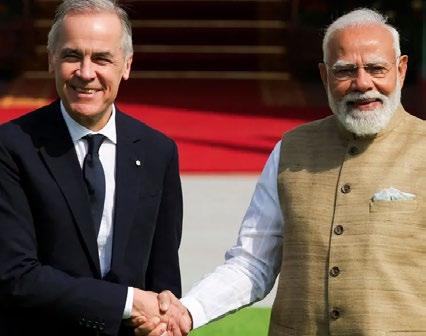
India and Canada on Monday agreed to strengthen their economic partnership, in a move aimed at boosting ties after two years of strained relationship.
Speaking after talks with Canadian Prime Minister Mark Carney, Indian Prime Minister Narendra Modi said the two countries would soon finalize a “comprehensive economic partnership” which is expected to increase bilateral trade to $50 billion by 2030.
India and Canada began advancing negotiations on a long-pending trade agreement last year, as Carney moved to re-engage with New Delhi, restore diplomatic channels and stabilize ties between the two countries.
Carney said the two sides were aiming to conclude the deal by the end of the year. Continued on Page 10...
Canada’s military may help defend Gulf states in Iran conflict, defence chief says
Canada’s defence chief Gen. Jennie Carignan said allies are in talks about possibly helping Persian Gulf states defend themselves against bombing from Iran.
Speaking to reporters at a defence and security conference in Ottawa Thursday, Carignan said a meeting is set for early Friday
morning to discuss such a proposal among allied militaries and the Canadian Armed Forces would present a recommendation to the government.
“The Gulf states must also indicate what they need,” Carignan said in French.
Continued on Page 9...
linked to a series of shootings at a Surrey cafe.
In a memo written last November, a Canada Border Services Agency officer described the catch-and-release cycle that saw Sandhu
move in and out of custody as he awaited the outcome of the long process that ultimately resulted in his deportation to India last month.
Continued on Page 10...
Celebrating Holi - the Hindu festival brings its array of colours to India
of
The
of people are celebrating Holi, the
in
and across the
festival, which celebrates the victory of good over evil, also marks the end of winter. Continued on Page 10...
Millions
festival
colours,
India
world.
spring
'Red flag' gun laws under scrutiny after Tumbler Ridge shooting
"Red flag" orders were billed as a faster, simpler way to keep Canadian communities safe by temporarily removing legal firearms from the hands of those who might do themselves — or others — harm. They were part of a suite of gun control measures introduced in the wake of 2020's Portapique, N.S., mass shooting, the deadliest in the country's history.
But more than two years after the orders finally became federal law, it's unclear if they are working as designed — because no one appears to be keeping track of when, where or how often they are being implemented.
Following the February tragedy in Tumbler Ridge, B.C., where a shooter killed eight victims and then herself, CBC News sought details about
the use of red flag orders across Canada. (The RCMP has said that several firearms were seized from the shooter's family home, but they were later returned after their legal owner went to court.)
The country's 11 provincial and territorial chief firearms officers — in charge of issuing and revoking gun licences — said they have no data on such seizures. So too did the Ontario Provincial Police, Sûreté du Québec and the federal Public Safety ministry. Under the law, anyone can bring concerns about someone with access to firearms to the attention of authorities. A provincial or territorial court judge then determines whether there are grounds to issue an emergency prohibition order, under which guns can be seized for up to 30 days.
As part of that process, the owner's firearms licence is also supposed to be revoked for the duration of the order, preventing them from buying ammunition, parts or additional guns.
In a statement to CBC News, Public Safety Canada said the courts "must inform" the regional chief firearms officer of "any prohibition order that they make, vary or revoke." That information is then supposed to be updated in the Canadian Firearms Information System, which in turn helps businesses verify whether purchasers hold a valid licence.
The CFOs are also supposed to be responsible for issuing official notices of revocation, informing gun owners that they must hand over their firearms and licence to police within 24 hours.
It's unclear if that process isn't being respected, or whether courts and police simply aren't applying the red flag measures. Public Safety Minister Gary Anandasangaree declined an interview request, and his office said it was not in a position to respond to CBC News questions about the data gap.
about how the regime is applied and tracked fall under the operational responsibilities of the CFOs and the RCMP, who maintain the systems and processes involved."
Christian Leuprecht, a political science professor at the Royal Military College, said he suspects government and police officials aren't that interested in finding out the answers.
"Much of what we do on gun policy in this
country has no grounding in evidence and is all about ideology on the one hand, and about electoral payoff and specific ridings on the other," said Leuprecht.
"The safety of Canadians remains the minister’s top priority," said a spokesperson. "Questions
"So we make decisions, then we look for the evidence and if we decide, 'Oh, the evidence might not substantiate the decisions that we made,' then we better not collect it."
North Vancouver mayors ask Eby for inquiry into water treatment project
Two mayors from Vancouver’s North Shore are calling for a public inquiry into the cost of a new wastewater treatment facility, along with a governance review of Metro Vancouver and a mechanism to ensure fairness in cost sharing.
A joint statement from Mayor Linda Buchanan from the City of North Vancouver and Mayor Mike Little from North Vancouver district says they brought those requests to B.C. Premier David Eby during a meeting on Thursday.
They say the projected cost of the North Shore Wastewater Treatment Plant has ballooned to $3.86 billion, up from an estimate of $700 million in 2017, and they’re calling for a “revised equitable approach to distributing those extraordinary costs.”
The mayors say North Shore households face additional annual costs of between $590 and $1,182 for the next 30 years, while some costs, including decommissioning and remediating the site of the existing treatment facility, have not yet been quantified.
The statement issued Thursday says the mayors aren’t disputing Metro Vancouver’s cost-sharing for the original budget for the facility, but the region is treating the formula “like a blank cheque.”
“When Metro Vancouver approved its costsharing formula, municipalities could calculate their own costs from a defined budget and scope,” it says.
“There was no open-ended commitment to absorb whatever cost overruns Metro Vancouver incurs, no matter how far a project drifts.”
Housing Minister Christine Boyle says she and Eby met with Buchanan and Little and they are taking a “serious look” at a letter from the two mayors.
Boyle says they “agree things aren’t working with Metro Vancouver, and that changes need to be made,” adding that’s why the province appointed a representative to the governance committee for the regional district.
No one from Metro Vancouver was immediately available to respond to a request for comment.
The mayors’ letter to Eby, which they shared alongside their statement, says “the disconnect between Metro Vancouver’s spending priorities and the fiscal capacity of member municipalities has reached a breaking point.”
The North Shore mayors say local governments in B.C. must meet strict requirements before taking on significant long-term debt.
But they say Metro Vancouver’s sewerage borrowing operates under a different framework, allowing it to “borrow and assign the debt” to municipalities.
“No direct elector vote is required from the communities that will carry that debt for a generation,” Buchanan and Little say in the statement.
“Our residents bear the financial burden of Metro’s borrowing decisions without the democratic safeguards that provincial law otherwise guarantees.”
The mayors say it amounts to a “fundamental accountability gap.”
Canada's deal with Musqueam doesn’t impact private property in BC, Indigenous affairs minister says
Crown-Indigenous Relations Minister Rebecca Alty is seeking to clarify her department’s recent agreement with the Musqueam First Nation in B.C., saying the deal does not influence the rights of private property owners.
“The recently signed Musqueam agreements do not affect private property,” Alty said in a statement on X. “Suggestions otherwise are false.” Alty’s comments come after her department, Crown-Indigenous Relations and Northern Affairs Canada (CIRNAC), signed a deal with the Musqueam Indian Band that, among other things, recognized the community’s Aboriginal rights within a wide swath of land that includes much of Vancouver.
The deal was first publicized in a Feb. 20 press release, but started to gain public attention following media reports over the weekend. The department’s press release included very few details about the deal, which spread confusion about what the federal government and Musqueam actually agreed to.
Most of all, it raised concerns about whether the agreement could somehow influence private property holders following a potentially precedent-setting B.C. Supreme Court decision last summer. In it, the court ruled in favour of the Cowichan Nation’s title claims over some lands, a landmark decision that effectively gave the Cowichan rights to some 1,800 acres located on B.C.’s Lulu Island.
Wendy Grant-John, the chief negotiator for the Musqueam Indian Band over the last decade, said the February agreement serves as a starting point for future agreements, where the First Nation and Ottawa will set terms around issues like managing fisheries or governing their people within their
traditional territory.
“We are going to work through different areas of land engagement, which may be joint decisionmaking, it may be management, it may be other areas,” she told National Post in an interview. “But the kind of fearmongering that’s going on with regard to Musqueam land is just wrong-minded.”
Broader worries over ownership rights of fee simple lands — of the sort that were referenced in the Cowichan decision, for example — are unfounded she said. In fact, explicit calls to return lands are not part of the Musqueam’s efforts to have their rights recognized in Canada, said Grant-John.
“We’re not trying to override anyone. We’re not trying to take anyone’s rights away. We are trying to put ourselves back to the dignity of who we were.”
Late on Monday, Alty released a statement seeking to douse concerns, clarifying that the department’s deal is only a high-level framework to guide future negotiations.
“Under this agreement, Canada and Musqueam have created a path forward to negotiate Musqueam’s rights and title, rather than pursuing litigation in the courts,” she said.
CIRNAC also shared the full agreement with the media, which clarifies the limits of the deal. In general, the agreement mostly sets the terms of future talks with the Musqueam, including things like how they will resolve disputes.
“This agreement does not constitute a treaty or lands claims agreements within the meaning of sections 25 or 35 of the Constitution Act, 1982,” the document says. At the same time, the agreement’s purpose is to “recognize Musqueam’s rights and title within Musqueam territory,” it said.
Montreal police catch Canada’s most wanted fugitive
Canada’s most wanted fugitive has been arrested on a countrywide warrant in Montreal.
Bryan Fuentes Gramajo was wanted by Toronto police in connection with a July 17, 2025, shooting death in a Yorkdale shopping centre parking lot. He was subsequently named Canada’s most wanted fugitive in October 2025, topping the list of 25 suspects. Gramajo, 24, is from Montreal and was picked up by Montreal police (SPVM) in the Rosemont-La Petite-Patrie borough at around 2:40 a.m. on Thursday.
“The SPVM is pleased to have contributed to the criminal investigation led by our partners at
the Toronto Police Service by arresting Bryan Fuentes Gramajo on our territory,” said SPVM Commander Mélanie Dupont, head of the Major Crimes Section. Another Quebecer, Dylan Denis, remains at large and is also on Canada’s most wanted list. He is being sought for a May 14, 2024, homicide in Ahuntsic-Cartierville. “We are convinced that there are citizens who have information that would be very useful to our criminal investigation aimed at arresting Dylan Denis,” said Dupont. The SPVM arrested a 25-year-old man in Saint-Jérôme, and a 31-year-old man was arrested in Prince George in June 2024.
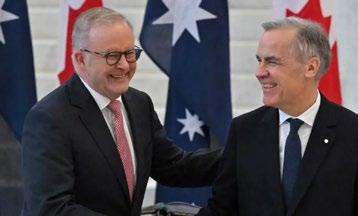
With the post-war "global architecture breaking down from consecutive crises" Australia and Canada should work together as "strategic cousins", Mark Carney has told the Australian parliament. The question for middle powers was whether they would write the new rules that determine security and prosperity or "let the hegemons dictate outcomes", the Canadian prime minister said.
Carney said the two countries should co-operate further to boost sovereign capabilities including in the areas of critical minerals, defence and AI. The speech echoed previous statements, including a speech in Davos in January in which he said the "old order is not coming back" and urged middle powers to band together. Many countries were deciding to increase their sovereign autonomy, Carney said on Thursday, the first time a Canadian prime minister has addressed parliament in Canberra in almost 20 years. "This impulse is understandable when the rules no longer protect you."
He joined his Australian counterpart Anthony Albanese at a press conference afterwards, where the pair announced measures they said would deepen relationships across several areas, including defence, security and between the countries' space agencies.
Australia would also join the G7 Critical Minerals Alliance, which Carney called the "largest grouping
of trusted democratic mineral reserves in the world".
Canada and Australia produce one-third of the world's uranium and lithium and more than 40% of its iron ore.
"Australia and Canada must seek and create new ways to stand with – and for – each other," Albanese said ahead of Carney's address to parliament, noting the two countries were bound together by shared convictions and values.
As the conflict in the Middle East spreads across the region, both leaders, who backed the strikes on Iran, called for a de-escalation.
"The world wants to see a de-escalation and wants to see Iran cease to spread the destinations of its attacks," Albanese said.
"We're seeing Gulf states that have not been involved attacked across the board, including the attacks on civilian and tourist areas as well."
But they said a ceasefire should not occur until Tehran no longer had the capability to produce a nuclear weapon.
"I also want to see a removal of the ongoing threat that has been there for such a long period of time, of Iran endangering peace and security and stability, not just in its own region, but here in Australia," Albanese said, referring to two antisemitic attacks in Australia last year which the government blamed on Iran.
Before arriving in Australia, Carney spent four days in India where he signed deals worth billions in a significant diplomatic breakthrough with Delhi.
The reset comes after years of tensions between the two countries, sparked when Carney's predecessor accused Delhi of a link to the 2023 assassination of a Sikh separatist in Canada.
After Australia, Carney will continue on to Japan where he will meet Prime Minister Sanae Takaichi.
Carney says he supports Iran strikes 'with regret'
Canadian Prime Minister Mark Carney has called for parties involved in the war in Iran to de-escalate hostilities quickly - and said while he supports the strikes, it is a position he takes "with regret".
Carney, speaking to reporters in Sydney, his second stop on an Indo-Pacific tour, said of Iran that Canada "has long supported the imperative of neutralising this grave global threat".
He added: "We do, however, take this position with regret, because the current conflict is another example of the failure of the international order."
The US and Israel began striking Iran on Saturday. Iran responded by firing missiles and drones at Israel and Gulf states allied to the US. While speaking with reporters in Australia, Carney was critical of the US and Israel for acting "without engaging the United Nations or consulting with allies, including Canada".
countries where there have been issues," Carney prime minister said.
"And to raise issues, including at the highest levels, to ensure that the co-operation is there, whether it's extortion or some other form of cross-border criminal activity or security risks."
Carney added that high-ranking Canadian officials have been in contact with top Indian defence and national security officials "from the
The Canadian leader said Iran having a nuclear bomb would be a "massive threat" and described Iran's regime as "the biggest exporter of terror in the world," which had "murdered scores of Canadians".
"Nobody has a civil nuclear programme that's buried a mile beneath the desert," Carney said.
"That is a threat." In Sydney, Carney also faced questions about his conversations with Indian Prime Minister Narendra Modi earlier this week. He described those discussions as "frank".
Prior to the trip, a Canadian official suggested India is no longer linked to violent crimes or threats on Canadian soil.
"I really don't think we'd be taking this trip if we thought these kind of activities were continuing," the official said during a briefing.
Some Canadian Sikhs reject the government assessment, saying they still face threats from India, which Delhi denies.
"To engage, you have to be able to talk to countries,
moment that we re-established a dialogue at the leader level with India".
Under Carney, the two governments are trying to repair ties that were strained when his predecessor, Justin Trudeau, publicly accused Delhi of a link to the 2023 assassination of Sikh separatist and Canadian citizen Hardeep Singh Nijjar in the province of British Columbia (BC).
India vociferously rejected the allegation by Trudeau.
Trade and diplomatic relations almost came to a standstill as both sides expelled each other's diplomats and cancelled visa services. Canada hosts a huge expatriate Indian community.
The case of four men charged over Nijjar's killing is still before the courts in British Columbia.
This week, Canada and India also announced a "landmark" nuclear energy deal, as well as other deals on critical minerals, space, defence and education.
Nearly half of Canadians say they would vote Liberal if an election were called today, giving Prime Minister Mark Carney’s party its largest lead since 2016.
Forty-nine per cent of decided voters would vote for the Liberals, while 35 per cent would vote Conservative, according to the new PostmediaLeger poll that was taken between Feb. 27 to March 2. That’s a two-point jump for the Liberals and a three-point drop for the Conservatives since late January.
Other parties continued to poll low, with support for the Bloc Québécois falling to five per cent in Thursday’s poll, compared to six per cent in January. While support for the New Democratic Party remained stable at five per cent.
The poll also showed 59 per cent of respondents are satisfied with the performance of the Liberal government led by Carney.
“We’re actually a full year in of having prime minister Carney managing the affairs of the government,” said Leger executive vice-president Andrew Enns.
“They’ve done a very good job of keeping government activity, government message, I would say, on track in terms of what Canadians are expecting of their government during these times.”
Enns said the poll is “not good news” for the Conservatives whose support has stayed consistently around 37-38 per cent over the last 18 months.
“Now suddenly they have lost some support,” said Enns. “I think it probably should be concerning to them.”
Enns said this could be attributed to their old messaging falling flat but could also have to do with Carney’s personal approval ratings.
The poll said 61 per cent of respondents approve of Carney’s performance, while 31 per cent disapproved. Notably, western provinces showed high approval ratings for Carney, at 53 per cent for Alberta and 59 per cent for both Manitoba and Saskatchewan.
Enns said it just goes to show what happens when a federal leader doesn’t go out of their way to pick fights with certain regions of the country.
Enns also noted Saskatchewan Premier Scott Moe has taken two international trips with Carney and has come back with results for his constituents, with a rollback of Chinese tariffs on canola exports and more recently, a $2.6-billion deal to supply India with uranium from Saskatchewan-based Cameco.
“He’s coming back to Saskatchewan with some tangible success, and undoubtedly, Premier Moe is having to say good things about the prime minister to Saskatchewan residents,” he said.
Enns said that some conservative-minded voters are liking what they are seeing from Carney.
Over the past few months, speculation that Carney may call an early election to secure a majority government has persisted, as the Liberals have remained strong in the polls.
However, around half of Canadians polled said the next election should be in 2029, as set out in the fixed election date legislation.
“Canadians don’t want an election now, they quite frankly don’t want one this spring,” said Enns. “And when you like what you’re getting, which 60 per cent of Canadians like how the government’s performing, they like how the prime minister is performing, they’re not interested in changing that.”
Nearly 71 per cent of Liberal voters would like an election in 2029.
By
Ph: 604-591-5423
Fax: 604-591-8615
editor@theasianstar.com
Editor: Umendra Singh
Marketing and Sales: Ravi Cheema
604-715-3847
Shamir Doshi
604-649-7827
Harminder Kaur
778-708-0481
Parminder Dhillon
604-902-2858
Pre-Press: Avee Waseer
Production: Ozmo Media
www.theasianstar.com
It’s time to declare the Modi Doctrine throughout the Indian Ocean
Michael Rubin: Prime Minister Narendra Modi is already India’s third longest-serving Prime Minister and is easily the country’s most consequential leader since Jawaharlal Nehru. He has navigated India through myriad challenges and has likely contributed more to India’s infrastructure than all his predecessors combined. While Modi began his first term, India was the world’s 10th largest economy. Today, it is the 4th and could push into the third position soon. As China heads off the demographic precipice, India could even move into the number two position in the decades to come. Of course, China and India’s other adversaries are not going to accept India’s rise quietly. China and Pakistan will seek to constrain India through asymmetric means. Even though New Delhi maintains cordial relations with Tehran, Iranian proxies sometimes use their unofficial status to attack Indian interests, yet give Tehran plausible deniability when they do so. The normal insurance rate for ship-borne cargo, for example, is about 0.3% of the cargo’s value but, when Houthis target Indian, Greek, or Cypriot ships, that insurance rate more than triples, putting Indian commercial interests at a competitive disadvantage to Chinse competitors.
The ouster of Sheikh Hasina’s government in August 2024 coupled with interim leader Muhammad Yunus’ antagonism to India and fealty to Pakistan and China, suggest India barely avoided a far worse crisis in Bangladesh. Rather than relax, New Delhi should recognize that those external intelligence operatives behind Yunus and Jamaat-e-Islami will simply try again, both to attack Bangladesh’s sovereignty and India’s control over the Seven Sisters. In 2022, I visited Cabo Delgado, Mozambique’s northern province, to interview Islamic State prisoners captured by local security forces and their Rwandan partners, as well as to inspect the material they had with them when captured. In many cases, the extremist tracts came straight from Karachi or Lahore via Mombasa or Dar es Salaam. Democratic Republic of Congo church leaders complained that Pakistanis working as UN peacekeepers were inciting extremism by teaching locals more extreme practices and intolerant interpretations of Islam. China, meanwhile, is increasingly influential if not dominant in Sri Lanka, the Maldives, and is willing to compete with India in Mauritius. British Prime Minister Keir
Starmer’s Chagos policy opens the door to potential malign influence in that archipelago. These challenges suggest that, as India rises, Modi must establish a regional doctrine and security doctrine commensurate with India’s economic infrastructure and role in the world. In short, it is time for a Modi Doctrine akin to the U.S. Monroe Doctrine. President James Monroe declared the United States would be the preeminent power in the Western hemisphere and that the United States would not tolerate European militaries and interference in the region. Old school Indian policymakers might interpret the Monroe Doctrine, recently revived by President Donald Trump, as a manifestation of American imperialism but historically at least, the opposite is true. Monroe’s policy was anti-imperialist. He articulated that Washington would interpret any European attempt to interfere in the affairs of independent American countries as a hostile act against the United States. Monroe did not seek to colonize South America; he sought to prevent France, Spain, and Portugal from seeking to
reestablish their empires against the aspirations of newly independent countries. Haiti, Colombia, Chile, Mexico, Venezuela, Paraguay, Argentina, Costa Rica, El Salvador, Guatemala, Honduras, Nicaragua, the Dominican Republic, Panama, and Brazil each won independence from France, Spain, or Portugal prior to Monroe’s declaration. Their former colonial masters each sought to reverse that status and reconstitute empire. Monroe stopped that ambition in its tracks. A Modi doctrine might similarly protect the countries of the Indian Ocean basin from the predatory ambitions of China. A Modi Doctrine would not impede freedom of navigation and lawful commerce. The longer Modi waits, the harder establishing security throughout the Indian Ocean will be. More than 280 crore people living in countries bordering the Indian Ocean will depend on the security India can provide. Chinese ships might pass through its waters, but they should have no base or dual use military facility in the region. Regional security and small state sovereignty and independence require India to be the paramount power.
2 youths charged after high school basketball game stabbing in Vancouver: police
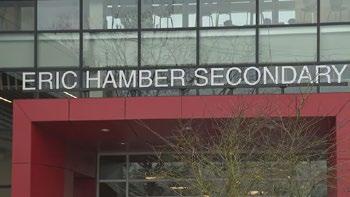
Vancouver police say two youths are now facing charges in connection to a stabbing that happened after a basketball game at Eric Hamber Secondary School last month.
The B.C. Prosecution Service, police said, has approved charges of aggravated assault and possession of a weapon against a 16-year-old, and one count of assault with a weapon against a 15-year-old.
Police said an 18-year-old boy was stabbed in the arm after the basketball game at Eric Hamber
Secondary, somewhere between that school and Killarney Secondary, shortly after 9 p.m. PT on Feb. 2.
Vancouver Police Department (VPD) spokesperson Sgt. Steve Addison previously said there were a number of fights that broke out between spectators at the game, which had playoff implications for both teams.
"It would be premature to say how many people may be responsible for crimes that occurred during a fight like that," Addison said at the time.
Addison said the victim was taken to hospital for treatment, and is a former student of the Vancouver School Board, but did not say which school they attended. Police said a web portal was created for video taken of the fight to be submitted, and witnesses, or anyone with information, are asked to contact the VPD's youth investigative unit.
Both teens facing charges have been released on court-ordered conditions, according to police.
BC teachers ratify new 4-year agreement with 3% annual wage boost
The head of British Columbia's teachers' union says parents will see better supports for their school-aged children after its members ratified a four-year collective agreement with the province.
The B.C. Teachers' Federation said in a statement that those members who cast a ballot voted 91 per cent in favour of ratifying the agreement, which includes a wage increase of three per cent per year for four years.
"That advocacy that we've been doing sees some modest improvements here for kids and for classrooms, and for public education," BCTF president Carole Gordon said in an interview Thursday.
The union, which represents 52,000 educators in the province, said the contract follows a year of negotiations where it raised priorities such as improved classroom conditions, stronger mental health supports for children and plans to recruit and retain teachers.
Gordon said the agreement includes commitments to add counsellors, learningassistance teachers and special education resource teachers in schools across the province.
She said the deal was reached before the tragedy in Tumbler Ridge, which renewed conversations around mental health resources in B.C. schools.
"What we're seeing here is a commitment to better supports for kids. And in particular through counsellors and psychologists and more support for youth mental health," Gordon said.
The deal also includes added preparation time for elementary school teachers and special allowances for psychologists, Indigenous language teachers and for those teaching in rural and
remote schools.
Gordon said that while the union was able to get a modest increase for elementary teacher prep time, it was unable to secure a similar increase for secondary school teachers.
The agreement also does not reduce class sizes, an ask Gordon said hasn't been achieved in more than 25 years.
"We know there's a lot of disappointment that we can't continue to see improvements in that," she said.
In a statement Thursday, the Ministry of Finance said the agreement was based on the government's balanced measures mandate, a negotiating framework meant to support government priorities and strengthen B.C.'s public sector.
The deal "includes some additional funding to recognize commitments that provide supports to classrooms … as well as other measures that address teacher workloads," the statement said.
The ministry said B.C.'s 60 education boards are expected to vote on the agreement on Friday.
Gordon said the union will continue to advocate for better classroom conditions and more time, resources and support for teachers to help their students.
The B.C. Public School Employers’ Association is still in the process of approving ratification among its members and until that is complete the final agreement will not be released publicly, the statement said.
If fully ratified, the contract is retroactive to July 1, 2025, and remains in effect until June 30, 2029.
"Voter turnout among BCTF members was 67 per cent," the statement said.
Most of B.C. to adopt daylight saving time permanently, Eby says
Speaking with reporters Monday, B.C. Premier
David Eby said the province is permanently adopting daylight time, starting Sunday, March 8. This means Sunday will be the last time British Columbians will have to “spring forward,” and the November 1 "fall back" will not occur.
"We are done waiting. British Columbia is going to change our clocks just one more time — and then never again," Eby said at a press conference, adding that B.C.’s new time zone will be called “Pacific Time,” or "PT."
He cited several reasons for switching to permanent daylight time, arguing that time changes cause "all types of problems," from dogs waking up at the wrong time to an increase in car accidents.
“Every parent knows that changing clocks twice a year causes a significant amount of chaos on already busy lives," Premier Eby said in a statement.
“...This decision isn’t just about clocks. It’s about making life easier for families, reducing disruptions for businesses and supporting a stable, thriving economy. I am hopeful that our American neighbours will soon join us in ending disruptive time changes.”
Eby also added that British Columbians "have been clear" they do not favour the seasonal time change, a reference to the 2019 public consultation which found that 93 per cent of respondents support an end to the twice-yearly clock change.
The government cites other benefits to switching to permanent daylight time, including: More consistency to sleep and daily routines. More usable light during winter evenings. Reduced administration loads for small businesses.
The ability to plan transportation and technology services more consistently.
B.C. passed a bill to throw out the time change in 2019, but at the time said it wouldn’t go through with it unless neighbouring states and provinces make the change as well.
Ontario passed a similar time amendment act in 2020, but, as of this writing, has yet to put an end to the time change.
B.C. says people and businesses will have 8 months to prepare for November 1, 2026, when clocks would normally turn back. There are already some small communities in B.C. that observe mountain time year round. Eby told reporters these communities have not experienced any negative impacts from remaining on mountain time year-round and appear to be benefitting from the extra hour of sunlight at the end of the day.
Daylight time is a practice that involves changing the clocks to maximize the use of light available during the summer so that darkness falls at a later time of the clock.
The switch is often associated with farmers wanting more light for harvesting, but it was first introduced to save energy during the First World War.
Daylight time hasn’t been federally mandated since 1987.
Other parts of Canada that do not observe the time change are Saskatchewan, meaning it has the same time as Calgary in the summer but Winnipeg in the winter.
The one exception is the Lloydminster area, which participates in the time change.
The Yukon, eastern Quebec, some regions in Ontario, and most of Nunavut also do not adjust the clocks twice a year.
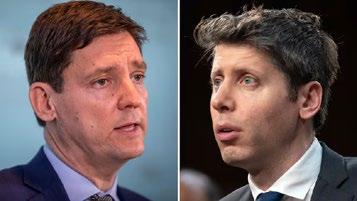
BC premier says OpenAI CEO Sam Altman will apologize to Tumbler Ridge, push for stronger regulations
B.C. Premier David Eby says OpenAI CEO Sam Altman has agreed to apologize to the people of Tumbler Ridge, B.C., after it emerged the AI giant didn't report a mass shooter's account to authorities.
The company behind ChatGPT is facing waves of criticism after it came out that the account of 18-year-old Jesse Van Rootselaar — who police say killed eight people, including six children, in Tumbler Ridge on Feb. 10 — wasn't reported to police despite posts about gun violence.
Eby has previously said that the mass shooting could've been prevented if OpenAI had flagged Van Rootselaar's account in June 2025, the point at which the company has said it internally banned the account. Despite the ban, OpenAI said her posts didn't meet the threshold to notify law enforcement.
The premier met virtually with Altman on Thursday, along with Tumbler Ridge Mayor Darryl Krakowka. Afterwards, Eby told reporters that Altman was prepared to provide an apology to the community. "Everybody on the call recognized that an apology is nowhere near sufficient, but also that it is completely necessary," Eby said.
"And the mayor of Tumbler Ridge is going to work with OpenAI to make sure that any public statements relating to that are done in the way
possible, [and] doesn't retraumatize people in the community."
Eby said that Altman also agreed to work with the B.C. government and present recommendations to the federal government around AI regulation — specifically when it comes to when chatbot companies should notify police.
The premier said that it shouldn't be up to AI companies' internal safety committees to determine when potentially violent posts should be flagged to authorities, and there should be a national threshold and "duty to report" that is enforced.
"The status quo doesn't work, didn't work and and it very much presents the threat that it might fail again. And so change needs to be made quite urgently," Eby said. Altman met with Eby on Thursday, a day after he met with federal AI Minister Evan Solomon, who has faced pressure to more strictly regulate AI companies in the wake of the mass shooting and Van Rootselaar's interactions with ChatGPT.
Solomon told CBC's Power and Politics that Altman had pledged to include Canadian experts in mental health and law within OpenAI's safety office — where the company assesses threats and whether or not to inform police. His office said Altman also agreed to provide a full report outlining the new systems OpenAI is developing to identify high-risk offenders and repeat policy violators, and Solomon also asked Altman to have OpenAI report threats directly to the RCMP.
In adition to the account that was banned in June 2025 — but not reported to police — OpenAI revealed last week that Van Rootselaar had another ChatGPT account.
An OpenAI vice president said in a letter to media that the second account came to light after Van Rootselaar's name was made public, and the
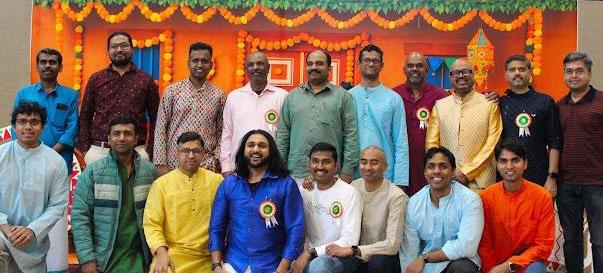
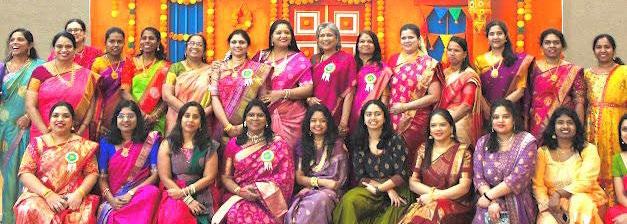
Vetri Tamil School event
Vetri Tamil School is a caring community-focused educational organization passionately committed to preserving and nurturing Tamil language, arts, and culture among over 60 children aged 4 to 14. Grounded in empathy, inclusion, and cultural pride, our school offers a warm, nurturing environment where children not only learn Tamil but also build confidence, leadership, teamwork, and effective communication skills. We strive to create a supportive space where children feel safe to express themselves creatively and develop essential life skills such as confidence, collaboration, public speaking, and strategic thinking. Our vision is to empower every child to grow into a confident, culturally rooted, and compassionate leader who values their heritage, embraces lifelong learning, and makes positive contributions to the community. We are dedicated to fostering a deep love and proficiency in reading, writing, and speaking Tamil—an ancient language rich with history—and to nurturing a sense of pride in Tamil heritage.
- Photos and event coverage by Raja Rajeshwari Jayakumari
City of Surrey unveils citywide plan to support one million residents by 2050
The City of Surrey has released the draft of its new Official Community Plan (OCP), a sweeping blueprint aimed at accommodating and managing growth over the coming decades as the city approaches a population of one million residents by 2050.
Dubbed “Surrey 2050,” the draft Surrey OCP lays out a long-term vision for housing and job space, community amenities and facilities, schools, transportation, infrastructure, and utilities, replacing the current “PlanSurrey 2013” framework approved more than a decade ago.
Surrey City Council is expected to approve the new OCP over the coming months as it is required by the provincial government’s legislation, which requires British Columbia’s municipal governments to update their OCPs every five years to better account for changing housing needs and align with the provincial government’s range of housingrelated legislation adopted in recent years, such as transit-oriented areas and small-scale, multifamily housing. “This is a major milestone in planning for the future of Surrey,” said Surrey Mayor Brenda Locke in a statement today.
City Council is expected to approve the new interim Vancouver Official Development Plan (ODP) — essentially replicating the details of the 2022-approved Vancouver Plan — ahead of the provincial government’s legislated deadline to do so by June 2026, with a permanent ODP required by 2030.
The ODP has greater authority and is more comprehensive than the OCP, with the City of Vancouver able to pursue an ODP under its separate Vancouver Charter, whereas all other cities, such as the City of Surrey, fall under the B.C. Local Government Act.
Both the OCP and ODP documents are legally binding. As well, under provincial legislation, moving forward, municipal governments are unable to hold a public hearing for a rezoning application if a proposal already largely aligns with the OCP or ODP.
Surrey’s municipal government highlights that its new OCP modernizes and simplifies planning rules by reducing the number of City policies from more than 600 to roughly 200 and streamlines land-use designations to limit the need for future bylaw amendments.
Canada’s military may help defend Gulf states in Iran conflict, defence chief says
Continued from Page 1...
“We are in communication with them to get an idea of the needs because it’s clear that if they don’t need us... we won’t look at options to support them.” She did not specify what type of support this might involve but said Canada is not taking part in the U.S. bombing of Iran.
“We are not talking about participating (in) Epic Fury, per se,” she said. “This is not a mission that we are considering. However, our Gulf partners may require defence and support, so, within that context, these would be the types of military options that we could consider.”
The Canadian Press requested comment from the Prime Minister’s Office, but was referred to
National Defence.
Carignan’s comments come as the Conservatives call for a parliamentary debate before any sort of Canadian military deployment in the ongoing war. Prime Minister Mark Carney said in Australia Thursday — Wednesday in Canada — that Canada can’t “categorically” rule out military participation in the escalating conflict in the Middle East.
He added that Canada’s potential future involvement is a “fundamental hypothetical” and that Ottawa will stand by its allies.
The Conservatives are calling for a parliamentary debate before any sort of Canadian military deployment to the ongoing war in Iran.
“Surrey 2050 reflects the dynamic nature of our growing city as it approaches one million residents, supporting more affordable homes, stronger infrastructure, and responsible growth for all. We take pride in putting forward a plan that respects Surrey’s past, acknowledges the realities of the present, and looks to a vibrant and bright future.”
Over the last few months, jurisdictions such as the City of Burnaby and City of Port Moody also passed their new OCPs.
In March 2026, in a public hearing, Vancouver
According to the draft Surrey 2050 plan, Surrey is projected to reach one million residents by 2050 — up from its current estimated population of about 700,000. With its vast land area and densification practices driven by sustained rapid population growth, Surrey could become B.C.’s most populated city sometime over the coming decades, exceeding Vancouver.
The number of homes within Surrey could rise from about 195,000 in 2021 to 333,000 by 2050, and the number of jobs could grow from 212,000 to 381,000 over the same period.
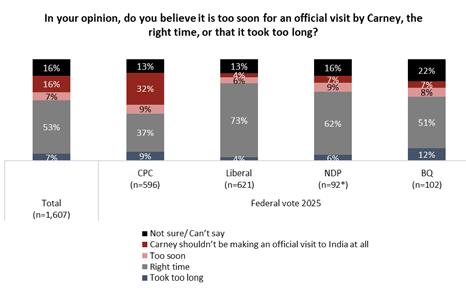
Half in Canada say it's the 'right' time for trade talks; less urgency around concluding trade deal
Favourability towards India unchanged from prior to thawing of diplomatic relations under Carney
Prime Minister Mark Carney’s middle-power outreach tour is in India as he looks to continue patching up a relationship that’s frayed in recent
on Canadian soil.
Now, half (53%) of Canadians say it is the right time for Carney to go on an official visit to India, with a further seven per cent believing the trip is too long in coming.
years while broadening Canada’s economic horizons in the Indo Pacific.
New data from the non-profit Angus Reid Institute in partnership with the Asia Pacific Foundation of Canada finds a majority of Canadians say Carney’s trip to India comes at the ‘right time’ but expressing caution about the pace of trade talks.
Negotiations around the Comprehensive Economic Partnership Alliance (CEPA) between India and Canada come after a diplomatic thaw initiated by Carney shortly after winning a minority government in last year’s election.
Ties between the two countries fizzled in the wake of allegations levelled by Carney’s predecessor of the Indian government’s involvement in the killing of a Khalistani activist
A majority (57%) believe Canada should prioritize trade and investment generally in its relationship with India, while a specific focus on energy (31%) also ranks high on potential cooperation points, above working together on emerging technologies (16%), highskilled immigration to Canada (14%) or security and defence (7%). That said, Canadians are not exactly expressing urgency when it comes to the timeline of finalizing a broader free trade deal, currently under negotiation but not expected to be inked on this current trip. Three-in-five (58%) say Canada should “cautiously re-engage” on a free trade agreement “but let negotiations unfold at their own pace”. Fewer (18%) want a deal to be signed “as soon as possible”.
The above comes as Canadians’ views towards India have not warmed at the same pace as official relations. Three-in-ten (30%) say they have a favourable view of India, a similar number to that seen in March last year, and little improved from the lows seen in December 2024 (26%). More Canadians prefer their government approach India cautiously (38%) than on friendly terms or as a valued partner and ally (32%).
Extortion cases in Surrey slowing down after spiking earlier this year
Continued from Page 1...
Staff Sgt. Lindsey Houghton suggested Tuesday that the tactic of naming and releasing photographs of suspects could be deterring perpetrators.
“We released the photos of the first two individuals from that car with the firearm, and within days, we were receiving tips on those two individuals,” said Houghton, referring to two foreign nationals who were arrested by police after officers patrolling heard gunshots in late January. “So we’ve seen direct investigative success related to that, and it’s sort of validated our investigative reasons for releasing those photos, and that supported our decision to release the photos of the three people subsequent in that other incident down off Crescent Road, so we’ll continue to do that.”
Another three foreign nationals were arrested Feb. 1 after a shots-fired incident and a small fire were reported to police. They’re now facing extortion charges.
Extortion threats and related shootings have been plaguing the city’s Punjabi Canadian business community for years. But what started as a handful of cases in 2023, increased in 2024 and skyrocketed the following year.
The city has recorded 60 extortion threats so far this year. Eleven of those have included shootings and two of them have involved arson, a more recent trend in the extortion cases.
Police have released photos of six extortion suspects so far in 2026. Regionally, Houghton said the release of names and photos of suspects has worked to deter criminals in other jurisdictions and that trend may also be present in Surrey.
In a video uploaded to social media last week, Surrey Police Chief Norm Lipinski said he was encouraged by the recent drop in cases.
Police Chief Norm Lipinski said he was
encouraged by the recent drop in cases.
“It is encouraging to see this decline, but it is critical we keep our foot on the gas to quash this violence in our community,” said Lipinski, who wasn’t made available for an interview.
Lipinski also encouraged local businesses and residents to register their security cameras with the police to help officers with investigations.
While members of the public have been contacting police more with reports or tips, the police say it’s still not enough.
“We haven’t received many tips at all from the public, whether it’s to the reward line that was created last year, or Crime Stoppers, or even just people phoning 911,” Houghton said. “Quite frankly, there haven’t been many tips at all that have led to the identification of suspects or arrests.”
The lack of tips from the public has been very frustrating, he added.
“We’ve heard from the community that people know who are behind these incidents. We want to believe that if people out there know who are not only doing the extortions, but also the shootings — that’s a significant public safety risk for our community,” Houghton said. “We’ve seen innocent people being unfortunately injured, thankfully not killed, as a result of this, and we need people to come forward with information before the worst-case scenario happens.”
The City of Surrey provided a reward fund of $250,000 to the police last year to encourage the public to come forward with information. Portions of the money would be awarded to individuals who provide police crucial info that leads investigators to making arrests and charges being laid. “None of that money has been paid out,” Houghton confirmed Tuesday.
Since last year, police have made 10 arrests of extortion suspects and some of them have been charged. Five of those arrests happened this year.
The
story behind the deportation of a 'Ruffian'
Continued from Page 1...
All the time, Sandhu was under the nominal supervision of immigration authorities, if not the actual control.
“Subject has had over $45,000 in cash and performance bonds forfeited on previous release conditions, many violations while on the (electronic monitoring) program for curfew, battery charging and location violations,” the officer wrote.
“Subject has no regard for the extensive list of conditions he has been on. Therefore there is no alternatives to detention that currently exist that would mitigate the danger to the public.”
'I have not always made positive choices'
A member of the IRB found Sandhu inadmissible to Canada for organized criminality last November in a decision he challenged unsuccessfully in Federal Court.
Records from that appeal after coming across Sandhu's name in transcripts from a separate IRB hearing that saw an extortion suspect, Arshdeep
Singh, removed from Canada nearly four years after he arrived on a student visa. A review of Singh's phone allegedly found links between the two men — including a video taken with Bandhu Maan Singh Sekhon, a suspect accused by police in Delhi of orchestrating shootings last year at a Surrey cafe owned by a Bollywood star.
Sandhu has not been directly accused in any extortion cases, but counsel for the Minister of Citizenship and Immigration cited his past as reason to suggest Singh was part of a larger network under investigation for a vast array of interconnected crimes.
The federal court documents provide a window into the links investigators are probing as they try to solve the extortion crisis plaguing Canadian communities.
They illustrate tensions between the CBSA, tasked with enforcing immigration and refugee matters, and the Immigration and Refugee Board, which decides on proceedings like detention and admissibility hearings and refugee claims.
Celebrating Holi - the Hindu festival brings its array of colours to India and elsewhere
Continued from Page 1...
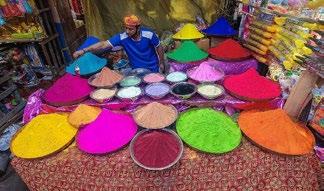
People offer prayers, smear bright colours on family and friends and eat traditional food and sweets to celebrate. They also gather on the streets and throw colours on each other.
flames.
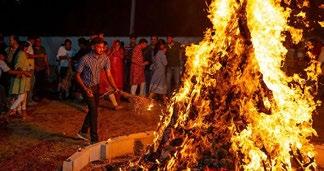
People light bonfires the evening before Holi in the belief this will destroy the bad so that good can triumph.
Holi is based on the Hindu legend of Holika, a female demon, who tries to kill her nephew Prahlad because he worships the Hindu god Vishnu. But Prahlad miraculously survives the burning fire even as Holika is consumed by the
Many devotees also believe the festival honours the divine love of Hindu deities Radha and Krishna. Colourful celebrations are held in the northern Indian cities of Mathura and Vrindavan, which are associated with Krishna's birth and childhood.
Music plays a big role as people dance to traditional and film songs celebrating Holi as they throw colours.
Children use toy pistols and dispensers to squirt coloured water at their friends. A traditional beverage called thandai, a milk-based drink sweetened with dry fruits, is enjoyed on the day. Holi is also celebrated with enthusiasm in Nepal, which has a majority Hindu population.
India and Canada agree to boost economic partnership in a move to reset ties
Continued from Page 1...
“This is not merely the renewal of a relationship. It is the expansion of a valued partnership with new ambition, focus, and foresight,” Carney said.
Ties deteriorated after Canadian authorities alleged that India was involved in the killing of a Canadian Sikh activist near Vancouver in June 2023.
New Delhi vehemently denied the allegations and accused former Canadian Prime Minister Justin Trudeau’s government of harboring Sikh extremists of the Khalistan movement. The movement, which aims to create an independent Sikh homeland, is banned in India.
The fallout saw both sides expel senior diplomats and suspend some visa services.
Relations improved last year in June when Carney invited Modi to the G7 summit in Alberta.
After the talks on Monday, Modi said India and Canada signed a nuclear agreement under which Canada will supply uranium to India. The two countries would also work to strengthen defense industries
and enhance maritime domain awareness, he said. Officials from both sides also exchanged a series of memoranda of understanding spanning areas including critical minerals, energy and cultural cooperation.
Carney is expected to leave for Australia and Japan later Monday, part of his effort to diversify trade away from the United States. He has set a goal for Canada to double its non-U.S. exports in the next decade, saying American tariffs are causing a chill in investment.
BRED Bank clarifies role in High Court ‘unexplained wealth’ case
BRED Bank (Fiji) Pte Limited has issued a statement clarifying its role following recent media reports and High Court proceedings linked to a major drug-related “unexplained wealth” case in which the bank was mentioned.
In its statement, BRED Bank (Fiji) Pte Limited stressed that its involvement is strictly limited to its role as a financial institution holding an account that is subject to lawful court orders.
The High Court ruled that about $400,000 held in a bank account at Bred Bank was to be forfeited to the State. “BRED Bank Fiji wishes to clearly state that the Bank’s involvement is strictly limited to its role as a financial institution holding an account that is subject to orders issued by the competent authorities, including restraint orders made by the High Court,” the bank said.
The bank emphasised that it operates within a comprehensive legal and regulatory framework, particularly in relation to anti-money laundering and countering the financing of terrorism
obligations. “As a licensed financial institution in Fiji, BRED Bank Fiji is subject to a comprehensive legal and regulatory framework, particularly in the areas of anti-money laundering and countering the financing of terrorism,” the statement said.
It added that the bank maintains internal policies, controls and governance systems designed to detect and manage suspicious activity and ensure full compliance with all applicable laws and regulations.
BRED Bank Fiji also confirmed its cooperation with authorities whenever required by law.
“In this context, BRED Bank Fiji cooperates fully and proactively with the relevant authorities, including law-enforcement and regulatory agencies, whenever required to do so under the law,” the bank said. The bank noted that such cooperation forms part of its broader commitment to safeguarding the integrity of Fiji’s financial system and supporting efforts to combat financial crime.
New Counter Narcotics Bureau offers jobs with salaries from $39k to nearly $98k
Government has opened recruitment for the soon to be established Counter Narcotics Bureau (CNB), with a wide range of positions on offer carrying salaries from around $39,000 up to almost $98,000. The vacancies were advertised by the Ministry of Policing and Communications, as part of efforts to operationalise the CNB and strengthen Fiji’s response to drug trafficking, organised crime and transnational threats.
According to the advertisement, roles are available across senior management, intelligence, investigations, operations, finance, human resources, communications and information management. Most positions are based in Suva. Director General of the Counter Narcotics Bureau will carry a salary between $82,000 to $98,000. His or her deputy will be on a scale of $75,000 to $89,000.
“All applicants for employment in the Ministry of Policing and Communications must be of good character, with a background that demonstrates
adherence to the core values of honesty and integrity,” states the advertisement.
“Applicants must also be a Fijian citizen, under the age of 60 years, in sound health, with a clear police record.”
The appointment process for the positions will be in accordance with the Public Service Commission Open Merit Recruitment and Selection Guidelines.
The establishment of the Counter Narcotics Bureau marks a significant step in Fiji’s efforts to enhance law enforcement capability and coordination in tackling the growing threat of illicit drugs and related criminal activity.
The Fiji Police Force has confirmed it is investigating an alleged incident that reportedly occurred at Queen Victoria School.
It is alleged that a senior student was struck by a vehicle within the school premises. The vehicle was reportedly being driven by a teacher who was allegedly learning how to drive at the time, with another teacher said to have been seated in the passenger seat providing instruction.
The incident is alleged to have resulted in severe head injuries to the student, requiring hospitalization. Education Minister Aseri Radrodro referred all questions to his Permanent Secretary. However, pictures posted on social media shows Mr Radrodro meeting the student in hospital.
3000 apply for homes
ABOUT 3000 Fijians applied for just 100 new Housing Authority homes, highlighting the country’s deepening housing shortage and the increasing struggle faced by low–income families seeking secure accommodation.
Housing Authority chief executive officer
Isikeli Navuda confirmed that the first allocation round prioritised households earning below $50,000 a year, with many successful applicants coming from families earning below $30,000. Some recipients earned as little as $18,000 to $20,000, reflecting the authority’s push to target those most in need. Nearly 2900 applicants were unsuccessful, but Mr Navuda assured them that they would remain in the database.
The allocation was carried out using a system–based selection process — described by Mr Navuda as a structured “barrel draw” — to ensure fairness and transparency.
Rajendra Chaudhry guilty of professional misconduct
The Independent Legal Services Commission (ILSC) has found New Zealand-based lawyer Rajendra Chaudhry guilty of professional misconduct by posting comments on Facebook that unfairly denigrated three Fiji Court of Appeal judges.
Justice Daniel Goundar, Commissioner of the ILSC, made the finding in a 29-page ruling in Suva yesterday.
The charges arose from a March 9, 2018, Facebook post in which Mr Chaudhry, the son of Fiji Labour Party leader Mahendra Chaudhry, described the judges as “lackeys of the regime” in connection with a case involving his former partner Anand Singh.
that the post was inflammatory, employing multiple exclamation marks and rhetorical questions designed to ridicule, rather than illuminate, the judiciary.
“The post unfairly denigrated the Fiji Judiciary in attacking the legitimacy of judicial appointments following the 2009 constitutional changes,” Justice Goundar stated. He added that while Mr Chaudhry may have had concerns about judicial independence, these did not justify the personal attacks.
Justice Goundar said the language used crossed the line from permissible criticism into personal attacks, stating that phrases such as “these judges have no clue what they are talking about” were not reasoned legal commentary but intemperate assertions of incompetence. He noted
The ruling affirmed that lawyers must maintain courtesy toward the court at all times, in line with Rule 3.2(i) of the Rules of Professional Conduct and Practice, and that public discourse on judicial matters should occur through reasoned commentary and proper institutional channels — not social media denigration.
The case now moves to the penalties phase, with both parties directed to file submissions on mitigation and sanction within 14 days.
Fiji Embassy urges Fijians in UAE and Gulf to take precautionary measures
The Embassy of the Republic of Fiji in Abu Dhabi has issued a public advisory urging Fijians living and working across the United Arab Emirates and Gulf Cooperation Council (GCC) countries to take precautionary measures amid heightened geopolitical tensions in the Middle East. The advisory follows the war between Israel, the United States and Iran, with the Embassy stressing that the safety and wellbeing of Fijian nationals in the region remains its top priority.
Fijians in the UAE and GCC states — including Saudi Arabia, Oman, Qatar and Kuwait — have been advised to shelter in place where necessary, remain indoors, comply fully with instructions from local authorities and avoid non-essential
travel. In a statement, the Embassy said it is actively coordinating with authorities in the UAE and other accredited countries to monitor the situation closely and respond to any emerging risks.
It added that it is also working in close liaison with Headquarters in Suva and the Fiji Mission in Israel to track regional security developments.
The Embassy has urged members of the Fijian community to remain calm, vigilant and attentive to official updates, noting that the guidance issued at this stage is purely precautionary.
It reassured Fijians that should evacuation or further action become necessary, clear and official instructions will be communicated in a timely manner.
A portion of the homes was also reserved for Public Rental Board tenants and people living with disabilities, aligning with broader government policy to support vulnerable groups.
The overwhelming response, Mr Navuda said, underscored the urgency of addressing housing needs nationwide. Owners to receive homes next monthFirst batch of Housing Authority homes built to withstand Category 5 cyclones will be handed over to new owners next month, marking a major step in the Government’s drive to provide safe and affordable housing.
The homes are part of the Nepani Stage II development, a 40-acre subdivision in Nasinu designed to meet the growing housing demand in the Suva–Nasinu corridor, fuelled by population growth, rural–urban migration, and pressure on rental markets. “These buildings are cyclone–certified up to Category 5.
Police probe student injury at Queen Victoria School
Afghanistan says it thwarted Pakistani airstrike on Bagram Air Base as fighting enters 4th day
Afghanistan thwarted attempted airstrikes on Bagram Air Base, the former U.S. military base north of Kabul, authorities said Sunday, while cross-border fighting between Pakistan and Afghanistan stretched into a fourth day.
The fighting has been the most severe between the neighbors for years, with Pakistan declaring that it’s in “open war” with Afghanistan. The conflict has alarmed the international community, particularly as the area is one where other militant organizations, including al-Qaida and the Islamic State group, still have a presence and have been trying to resurface.
Pakistan accuses Afghanistan’s Taliban government of harboring militant groups that stage attacks against it and also of allying with its archrival India.
Border clashes in October killed dozens of soldiers, civilians and suspected militants until a Qatari-mediated ceasefire ended the intense fighting. But several rounds of peace talks in Turkey in November failed to produce a lasting agreement, and the two sides have occasionally traded fire since then.
On Sunday, the police headquarters of Parwan province, where Bagram is located, said in a statement that several Pakistani military jets had entered Afghan airspace “and attempted to bomb Bagram Air Base” at around 5 a.m. The statement said Afghan forces responded with “anti-aircraft and missile defense systems” and had managed to thwart the attack. There was no immediate response from Pakistan’s military or government regarding Kabul’s claim of attempted airstrikes on Bagram or the ongoing fighting.
Bagram was the United States’ largest military base in Afghanistan. It was taken over by the Taliban as they swept across the country and took control in the wake of the chaotic U.S. withdrawal
from the country in 2021. Last year, U.S. President Donald Trump suggested he wanted to reestablish a U.S. presence at the base.
The current fighting began when Afghanistan launched a broad cross-border attack on Thursday night, saying it was in retaliation for Pakistani airstrikes the previous Sunday.
Pakistan had said its airstrike had targeted the outlawed Pakistani Taliban, also known as Tehreek-e-Taliban Pakistan, or TTP. Afghanistan had said only civilians were killed.
The TTP militant group, which is separate but closely allied with Afghanistan’s ruling Taliban, operates inside Pakistan, where it has been blamed for hundreds of deaths in bombings and other attacks over the years. Pakistan accuses Afghanistan’s Taliban government of providing a safe haven within Afghanistan for the TTP, an accusation that Afghanistan denies.
After Thursday’s Afghan attack, Pakistani Defense Minister Khawaja Mohammad Asif declared that “our patience has now run out. Now it is open war between us.”
In the ongoing fighting, each side claims to have killed hundreds of the other side’s forces — and both governments put their own casualties at drastically lower numbers.
Two Pakistani security officials said that Pakistani ground forces were still in control on Sunday of a key Afghan post and a 32-squarekilometer (12-square-mile) area in the southern Zhob sector near Kandahar province, after having sezied it during fighting Friday. The captured post and surrounding area remain under Pakistani control, they added. The officials spoke on condition of anonymity, because they weren’t authorized to speak publicly.
There was no immediate response to the claims from Pakistani officials.
‘Abki baar, Balen
sarkar’ resounds across Nepal as RSP seeks to oust Nepali Congress
Two words – ‘parivartan’ and ‘vikas’ – are ringing through the air across Nepal. Also loud and clear is the tintinnabulation of the ‘ghanti’ (bell), the symbol of the Rashtriya Swatantra Party (RSP), which is headed for an astonishing victory, sweeping aside traditional parties like the Nepali Congress and CPN UML (Communist Party of Nepal-United Marxist Leninist).
It is election day, an election many thought was not feasible following the GenZ uprising last year, when properties of political parties across the country, especially those in Kathmandu, were burnt to the ground and several politicians barely escaped with their lives. Equally astonishing was the online election of interim PM Sushila Karki that followed — an attempt at diversifying the sources of power.
The mood in the Pokhara/ Gandaki district is both tranquil and festive. I have witnessed several elections in Nepal, but this time around it’s clear that voters, majority women, are determined to punish the old, traditional political parties like the Nepali Congress and United Communist Party. The graffiti near one of the booths along the Chinese built six-lane Pokhara Kathmandu highway reads ‘No to KP, Sher and Prachanda’ (referring to four time-CPNUML PM KP Oli, fivetime NC PM Sher Bahadur Deuba and four-time Maoist PM, Prachanda).
The Army has refused to transport ballot boxes to counting centres tonight as sought by the Election Commission because the old parties feared mischief.
Holi came one day earlier in Nepal, compared to India, which also turned out to be the last day of campaigning. Two candidates for Kaski Constituency No. 2, Nepali Congress’ Madhav Prasad Bastia and RSP’s Uttam Prasad Poudyel were playing Holi in my village. Although the area is a traditional NC stronghold, it was the RSP candidate who was greeted with the sound of bells and thundering applause. Today it seemed as if the tumultuous RSP wave catalysed by two iconic leaders who have joined it – rapper and former Kathmandu Mayor, Balen Shah, the chief crowd puller and RSP’s PM face, and party president Ravi Lamichhane — will bury the Nepali Congress. While RSP election slogan “abki baar Balen sarkar” hits bullseye, NC’s “abki baar sau paar”, according to locals, misses the target.
Outside the booth I asked Puran Gurung whom he voted for. Pat came the reply: “RSP must get a chance”. The Army in camouflage fatigues is patrolling the highway; the police, discredited during the GenZ protests, is guarding booths.
B 5 pm, voting had ended; voter turnout in Kaski 1 declined from 62 per cent in 2022 to 60 per cent this time. Based on trends derived from campaigning programmes, most political commentators have estimated the following seat tallies: RSP: 90 to 110 (21); NC 60 to 65 (89); UML 50 to 55 (78) and NCP (regrouped Maoists) 20 to 25 (32). In Nepal’s mixed electoral system, individuals cast two votes – preferred candidate and preferred party.
Balen Shah, a Madhesi by birth but Newar by education and culture, looks headed to become Prime Minister.
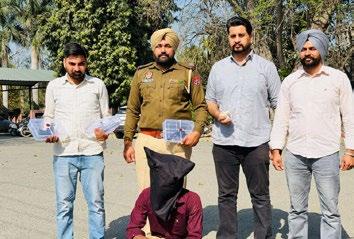
Faridkot police bust drug trafficking module, seize 2 kg heroin
Faridkot police claimed a major breakthrough in the fight against drug trafficking on Wednesday, arresting a high-profile smuggler and seizing 2.064 kilograms of heroin along with Rs 20,000 in drug money. Authorities said the operation effectively dismantled a local drug distribution module.
While patrolling near the Chandbaja village bridge, a police team spotted a suspicious individual carrying a kit bag on a service road. Upon noticing the officers, the suspect attempted to flee on his motorcycle but was quickly intercepted, police said.
A search conducted in the presence of DSP (Sub-Division) led to the recovery of two packets of heroin, weighing 1.058 kg and 1.006 kg respectively, along with the cash. The suspect’s motorcycle was impounded.
The arrested individual has been identified as Akash, a resident of Preet Nagar, living in Kirpa Nagar, Amritsar.
Police revealed that Akash was a habitual offender with a long criminal record, including seven registered cases under the NDPS Act and others.
“Initial interrogation indicates that the seized consignment was intended for further distribution, suggesting the suspect’s links to a larger organized drug syndicate,” said SSP Pragya Jain, adding that the investigation is ongoing.
Punjab Budget session begins today; Opposition to target govt over debt, law & order
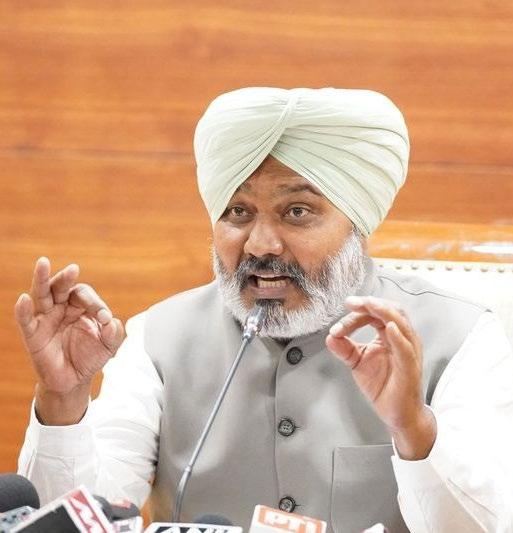
The Punjab Budget session, beginning Friday, is expected to be stormy with the ruling Aam Aadmi Party (AAP) set to highlight its welfare initiatives while the Opposition prepares to attack the government over rising public debt (over Rs 4 lakh crore) and the law and order situation.
The 11-day session will see the AAP government present its fifth and final Budget before the next Assembly elections. Finance Minister Harpal Cheema is expected to present the Budget proposals on International Women’s Day on Sunday.
This will be the first time in the history of Vidhan Sabha that the Budget will be presented on a Sunday. The government is likely to announce a monthly honorarium of Rs 1,000 for women, a key promise made by the party during the Assembly elections. The move is aimed at consolidating support among women voters, who constitute nearly 48 per cent of the electorate in the state.
Sources said the Budget was unlikely to introduce new taxes. During the session, the government is expected to highlight its flagship
programmes, including the recently launched Mukh Mantri Sehat Bima Yojana, initiatives in health and education, promotion of sports through sports nurseries and the Yudh Nashian Virudh campaign.
The Opposition, particularly the Congress, plans to raise the issue of the deteriorating law and order situation.
Leader of Opposition Partap Singh Bajwa said incidents such as daylight robberies, gangster activity and targeted killings had increased in the state.
“When AAP sought votes before the 2022 elections, it promised to reduce the debt burden. Instead, it has added over Rs 1 lakh crore to the state’s debt in four years. We will seek answers on the fiscal health of Punjab during the session,” he said. The session will begin with an address by Governor Gulab Chand Kataria.
Debate on the Governor’s Address and the Budget will take place next week before the session concludes on March 16.
HC seeks Punjab DGP’s affidavit on Gurdaspur 'encounter'; says ‘can’t shut our eyes’ to questions
The Punjab and Haryana High Court on Thursday asked Punjab DGP Gaurav Yadav to file an affidavit by March 17, explaining the circumstances surrounding the alleged encounter of Ranjit Singh in Gurdaspur after he joined the court proceedings through video-conferencing.
“We can’t shut our eyes (to the questions being raised around the encounters),” the bench of Justice Anupinder Singh Grewal and Justice Deepak Manchanda observed after amicus curiae Tanu Bedi referred to reports on alleged encounter killings in Punjab, submitting that the incidents appeared to reflect a discernible pattern.
Appearing for the state, senior advocate Puneet Bali submitted that proper procedure was being followed in accordance with the guidelines issued by National Human Rights Commission (NHRC). Thus, the matter was also being looked into by a magistrate.
Bali also outlined steps being taken by the government to strengthen policing and ensure accountability. He submitted that a new transfer policy for police officers above the rank of Inspector had been finalised and forwarded for Cabinet approval.
During the proceedings, the DGP also told the court that all mandatory procedures and the guidelines issued by NHRC had been scrupulously followed in the case. He added
Punjab’s outstanding public debt has climbed past the Rs 4 lakh crore mark, reaching approximately Rs 4.03 lakh crore after fresh borrowings during the current financial year, official figures indicate.
Between April 2025 and January 2026, the state government raised Rs 20,769.63 crore through loans, adding to its overall debt burden. Projections suggest the total outstanding liability could touch nearly Rs 4.17 lakh crore by the close of the financial year.
As of March 31, 2025, Punjab’s debt stood at Rs 3.83 lakh crore, accounting for over 44% of the state’s Gross State Domestic Product (GSDP). The rising debt trajectory reflects a long-term pattern stretching back decades. When the Aam Aadmi Party (AAP) assumed office, the state’s debt was around Rs 2.82 lakh crore. Earlier, during the Congress government’s tenure beginning in 2017-18, the outstanding amount was Rs 1.82 lakh crore. In 2007-08, Punjab’s debt was recorded at Rs 55,982 crore. Historical data shows that in 1952, the undivided Punjab carried a debt of Rs 78.31 crore, which had risen to Rs 300 crore by 1964.
earlier loans, he added.
The minister also pointed to reduced central support as an added challenge. According to official figures from the first 10 months of the ongoing financial year (April–January), grants from the Centre have declined. During the previous Congress regime, Punjab received Rs 72,340 crore
Financial stress intensified during the militancy years, further expanding the state’s borrowing requirements. Although the Centre provided partial relief by waiving certain liabilities, the measures were limited in scope.
Finance Minister Harpal Cheema said the present government had been compelled to raise fresh loans primarily to service past debt. He stated that nearly 85% of the borrowings undertaken during the current administration have been utilised to repay inherited liabilities. The government has already repaid around 35% of the principal component of
as GST compensation cess, whereas the current government has secured Rs 27,832 crore under the same head.
The state has additionally cleared Rs 8,000 crore in pending dues related to the implementation of the Pay Commission, further adding to financial pressure.
With debt levels rising and revenue streams under strain, fiscal management remains a key concern for the state government in the months ahead.
that the Chief Judicial Magistrate had already taken cognisance and issued directions, while a Special Investigation Team (SIT) had also been constituted to probe the incident. The bench had earlier in the day taken suo motu cognisance of the incident.
The court noted that the material placed before it suggested that the deceased youth was about 19 years old and had no prior criminal record. Issuing notice, the bench made it clear that the state’s stand would be taken into account in the matter before proceeding further. “We will give you time to respond. You have to satisfy us. We will take further course of action only after response from you,” the bench told the DGP.
Expressing concern over similarities in recent encounter incidents reported from the state, the court observed that such developments were raising questions about adherence to the “rule of law”, particularly in a case where the deceased had no criminal antecedents.
“You may catch them, but you cannot take the law totally into your hands. They have to be dealt with in accordance with law,” the bench remarked.
Earlier, Bedi informed the court that media reports suggested several encounters that took place in the recent past and appeared to follow a similar pattern.
BC Helps Parents Boost their Education Savings!
Start saving for your child’s future education in a Registered Education Savings Plan (RESP) and receive up to $8,400 in government grants.1 Open a CST RESP now and you’ll start receiving the Canada Education Savings grant (CESG). The CESG can add up to $7,200 to your child’s RESP When your child turns six, they can receive an additional $1,200 from the B.C. Government.
Jammu and Kashmir defied the odds to take India cricket crown
Jammu and Kashmir's maiden triumph in India's premier domestic championship last week is more than a sporting milestone - it is one of the most stirring stories in the country's cricket.
The Ranji Trophy, one of the oldest first-class competitions in the sport, sits at the heart of the game in the world's most powerful cricketing nation. To win it is to claim a place in the country's cricketing mainstream; for Jammu and Kashmir, it marks a breakthrough that was decades in the making.
Cricket in the disputed region dates back to the colonial era, when the Kashmir willow - prized for its strength and resilience - helped craft bats that powered the sport across India.
For decades, the region was scarred by insurgency, political turmoil and a deep sense of alienation - tensions that culminated in 2019 when Delhi revoked Jammu and Kashmir's autonomy and split the state into two new federallyadministered territories.
high-voltage T20 World Cup, where India are defending champions, it was this unfancied northern side that quietly commanded attention. After defeating seven-time champions Delhi to enter the knockouts, Jammu and Kashmir gathered momentum. Former champions Madhya Pradesh fell in the quarter-finals. Bengal were subdued in the semi-finals. In the final, stood eight-time winners Karnataka, boasting four current internationals - KL Rahul, Mayank Agarwal, Karun Nair and
Yet, even through these upheavals, passion for cricket ran deep. Success, however, proved elusive.
That changed over a remarkable fortnight.
In a season overshadowed by the ongoing
Krishna - and overwhelming experience. Jammu and Kashmir were the underdogs and most expected them to falter. Instead, they produced cricket of composure, skill and steel, outplaying their decorated opponents to claim India's premier first-class title.
India offers condolences over Khamenei's death; Foreign Secretary Misri visits Iran embassy
India on Thursday condoled the death of Iran's Supreme Leader Ayatollah Ali Khamenei with Foreign Secretary Vikram Misri conveying to the Iranian ambassador New Delhi's message of sympathy. Misri visited the Iranian embassy and signed the condolence book on behalf of the government of India.
The Ministry of External Affairs (MEA) also released photograph of the foreign secretary's conversation with Iranian envoy to India
Mohammad Fathali. Khamenei was killed in an Israel-US strike on February 28. Though India called for resolution of the West Asia crisis through dialogue and diplomacy, it chose not to react to Khamenei's killing. Misri's visit to the Iranian embassy and signing of the condolence book assumed significance as several opposition parties had criticised the government for not reacting to Khamenei's death.
Ladakh LG Kavinder Gupta resigns after 9 months in office
Close on the heels of West Bengal Governor CV Ananda Bose's resignation, Ladakh Lieutenant Governor (LG) Kavinder Gupta also resigned from his post on Thursday evening, indicating at the possibility of large scale reshuffles of gubernatorial posts across the country.
The developments also gave rise to speculations regarding the impending Cabinet reshuffle. Gupta has resigned from his post
just about nine months after assuming office as the Lieutenant Governor of Ladakh. He had taken oath on July 18, 2025, becoming the third LG of the Union Territory. His tenure coincided with rising unrest in the region, where civil society groups and organisations such as the Leh Apex Body and Kargil Democratic Alliance have been protesting for statehood, Sixth Schedule protections and job reservations for locals.
Indian Navy had rushed aid to Iranian warship IRIS Dena after torpedo hit
The Indian Navy responded to the sinking of the Iranian warship IRIS Dena, deploying a surveillance plane immediately, and an Indian warship reached the site by 4 pm on Wednesday. A specialised survey vessel is also on its way.
A distress call was received at Maritime Rescue and Coordination Centre in Colombo early on March 4. The Iranian ship was operating 20 nautical miles (38 km) west of Galle when it
was reportedly hit by a torpedo fired from a US submarine in the search and rescue region under Sri Lankan responsibility.
The Indian Navy launched its search and rescue efforts, deploying a long-range maritime patrol aircraft at 10 am on March 4 to support Sri Lanka’s efforts. Another aircraft with air-droppable life rafts was also kept on standby.
INS Tarangini, operating nearby, was deployed to aid rescue efforts and arrived in the search area by 4 pm on March 4. The Sri Lankan Navy and other agencies were already undertaking search and rescue operations.
INS Ikshak, a survey vessel (large) with advanced hydrographic equipment, has sailed from Kochi to support the search. Coordination with Sri Lankan authorities on search and rescue efforts is ongoing.
Prasidh
India and the European Union have agreed to grant each other Most-Favoured-Nation (MFN) treatment for a period of five years from the entry into force of the free trade agreement between them.
This means that the listed sectors, services and service suppliers of each Party will be treated at least as well as those from any other country, with certain limits and conditions.
The MFN treatment excludes provisions related to taxation treaties, recognition of standards or authorisations, and dispute settlement procedures. Parties may also confer advantages in contiguous frontier zones for services that are locally produced and consumed.
This was included in the Trade in Services chapter, a part of the FTA text made public on January 27. A Joint Committee will review in the fourth year, developments concerning the entry and stay of Indian students in the EU, their work rights, and arrangements for the temporary movement of service suppliers.
Based on this review, the Committee will decide whether to continue MFN treatment beyond the initial five-year period.
Parties may also request further review if circumstances adversely affect their interests. Should the Committee decide not to continue the treatment, the obligation to extend MFN treatment will cease, though benefits already granted remain unaffected.
India and the EU reached the long-delayed agreement last month to reduce tariffs and increase trade between them.
India’s economic growth slowed in the OctoberDecember quarter as government spending and private investment eased, but the South Asian nation remained the world’s fastest growing major economy, helped by strong consumption.
The economy grew 7.8% in October-December from a year earlier under a new data series, slowing from 8.4% expansion in the previous quarter.
The Indian government’s projections under the new data series marginally boosted growth for financial year ending March 31. The economy is estimated to grow by 7.6% in 2025/26, the National Statistics Office said on Friday. It had been forecast to grow by 7.4% under the old data series.
The US on Thursday urged India to consider American energy supplies as an alternative to Russian crude amid growing uncertainty in West Asia, with US Deputy Secretary of State Christopher Landau saying there was “no better alternative” than the US for meeting India’s energy needs.
Speaking at Raisina Dialogue 2026 in New Delhi, Landau said Washington hoped India and other partners would work together to stabilise the Middle East and help the region transition towards what he described as a “new normal”.
Responding to a question on India’s continued purchases of discounted Russian oil since the Russia-Ukraine war, Landau suggested that New Delhi should diversify its energy sources.
“I hope you are looking for alternate sources… you can’t have a better alternative than the United States,” he said, pointing to America’s position
In a glimmer of hope for India, Iran has said the Strait of Hormuz is closed exclusively to vessels from the US, Israel, Europe and their allies. The move comes even as India is in talks to secure oil supplies from other sources. Almost 40 per cent of Indian crude oil imports flow through the strait, a narrow 33-km wide waterway between Iran and Oman.
The strait has been closed since March 1, after the US and Israel jointly launched strikes against Iran. Meanwhile, Russia and the US have weighed in on the oil crisis, as more than a fifth of global
India and Canada have announced a host of agreements, including a 10-year nuclear energy deal, after their prime ministers met in Delhi to reset ties that plummeted due to diplomatic tensions.
Narendra Modi and Mark Carney also struck agreement in areas such as technology, critical minerals, space, defence and education.
Carney said they agreed to conclude a free trade deal, years in the making, by the end of 2026. Both countries want to reduce exposure to punitive US trade tariffs.
Under Carney, the two governments are trying to repair ties that were strained when his predecessor accused Delhi of a link to the 2023 assassination of Sikh separatist Hardeep Singh Nijjar on Canadian soil.
India vociferously rejected the allegation by Justin Trudeau.
Trade and diplomatic relations almost came to a standstill as both sides expelled each other's diplomats and cancelled visa services. Canada hosts a huge expatriate Indian community.
But since Carney took office last year, the relationship has been cautiously rebuilt —helped by the fact that his government has said it believes India is not currently linked to violent crimes or threats on Canadian soil.
with Russia, China and Iran.
In a statement on Monday, the Canadian Security Intelligence Service said its "threat assessment of the main perpetrators of foreign interference and espionage against Canada has not changed".
Canada's foreign minister Anita Anand has distanced herself from comments made by a senior Canadian official saying that India had ceased all foreign interference in Canada.
"The words of the senior official are not words that I personally would use," she told reporters in Delhi after Carney's meeting with Modi on Monday.
Some in Canada have countered that claim, however, including a Liberal MP from Carney's own party and members of the Sikh diaspora in Canada, who say they believe they continue to be targeted by India.
Canada's spy agency listed India late last year as one of the countries carrying out espionage and foreign interference in the country, along
But Anand defended Canada's decision to re-engage with India, saying "we need to have these diplomatic conversations in order to make progress".
Carney has not yet spoken to Canadian reporters since his trip began. His office cancelled a planned news conference following the meeting with Modi, citing his tight schedule.
as one of the world’s largest energy producers capable of supplying global markets.
His remarks come at a time when global energy markets are facing renewed uncertainty amid tensions involving Iran, raising concerns about potential disruptions to crude shipments through the Strait of Hormuz — a critical route for global oil supplies and a major lifeline for India’s imports. Landau said Washington was ready to work with India to ensure stable energy supplies in both the short and long term, describing energy cooperation as a key pillar of the expanding strategic partnership between the two countries.
The senior American diplomat also outlined Washington’s broader objectives in the confrontation with Tehran, saying the ultimate goal was a Middle East that no longer posed a threat to global security.
crude and gas supplies pass through the Hormuz.
Russian Ambassador to India Denis Alipov on Thursday said his country “has been open to supplying crude oil to India”.
The sources said India was currently sourcing almost 1 million barrels of crude a day from Russia and more was in the pipeline. They added that India was in a very comfortable position in terms of energy security. The current stock position was comfortable and stocks were being replenished every day. India is looking for alternative markets to buy gas.