Eligible Canadians are set to receive the inaugural quarterly Canada Groceries and Essentials Benefit (CGEB) payment on July 3, marking the first installment of a new government program.
Continued on Page 10...
Massive PoK protests intensify as Leader warns hunger may push people towards India
Drug bust in Surrey leads to arrests and deportations
First Canada grocery benefit payment arrives this week 22-year-old Punjab man held with drugs, loaded firearm in Canada
Massive protest erupts in Pakistan's Rawalkot as crowds chant ‘PoJK is not a part of Pakistan’ and even raise pro-India slogans. The ongoing demonstrations in Rawalakot, Pakistan-occupied Jammu and Kashmir (PoJK), stem from a deepseated dispute between the regional populace and the federal government in Islamabad. The current unrest escalated following a call by the Jammu Kashmir Joint Awami Action Committee (JAAC) to protest the non-implementation of an agreement signed in October 2025.
While the initial grievances focused on economic hardships—specifically inflation, high electricity tariffs, and severe shortages of wheat flour—the core of the current mobilization centers on broader constitutional and political demands. Continued on Page 12...
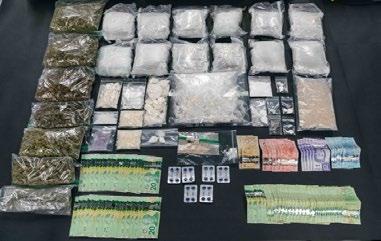
Police in Surrey, B.C., say a trafficking investigation has led to the discovery of large quantities of illicit drugs, charges against a 24-year-old man, and the deportation of two others.
Police say their investigation began in February, setting off the search of a home in May, where the illicit drugs were found. The search uncovered about 16 kilograms of opium, along with quantities of cannabis, cocaine, fentanyl, methamphetamine and heroin.
More than $2,000 in cash was also found, and three people were arrested at the scene before being released pending the investigation.
Police say 24-year-old Gurjot Singh was arrested last Friday and has now been charged with one count of trafficking and five counts of possession for the purpose of trafficking. The two other men who weren't charged were removed from the country by the Canada Border Services Agency.
By Shashi Tharoor
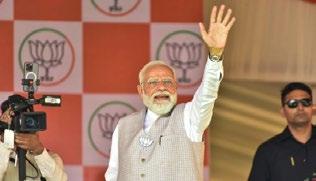
: On June 10, Narendra Modi became the country’s longest continuously serving elected prime minister, overtaking India’s independence-era hero, Jawaharlal Nehru, who served 4,398 days in office following the first general elections. While Nehru led India for five years before those first elections, and Indira Gandhi served longer overall, but not continuously, Modi undoubtedly ranks alongside them as one of India’s three most influential postindependence leaders. Modi’s legacy, like theirs, will define India’s path. Already, Modi has led India’s most profound realignment since 1947, overseeing dizzying progress in economic modernisation and state-capacity development, as well as dismaying setbacks on institutional independence and minority inclusion. Analysing these shifts is not merely an academic exercise.
Continued on Page 14...
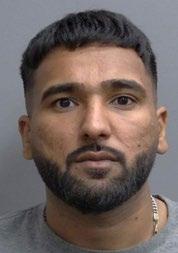
The Extortion Task Force of Canada’s Peel Regional Police has charged a 22-year-old Punjab-origin man in connection with two violent incidents in Brampton linked to the organised crime group “For Brothers”, following his arrest by the Edmonton Police Service (EPS).
According to Peel Regional Police, a business in Brampton was targeted in a shooting around 2.50 am on April 21. The suspect fled in a silver car, and investigators recovered 14 shell casings from the scene.
In a separate incident on May 6 around 8 pm, a man was leaving his residence when he was approached by an unidentified individual. The accused allegedly pointed a firearm at the victim, but the weapon malfunctioned. The victim escaped unhurt, and the suspect fled in a grey car.
On June 23, EPS officers arrested Safaldeep Singh during a traffic stop. Police recovered a quantity of drugs and a loaded illegal firearm from his possession, leading to firearms and drug-related charges.
Continued on Page 7...
Police investigating shooting in B.C. seek vehicle from Alberta
Mounties are searching for a grey vehicle with an Alberta licence plate that investigators believe is connected to a shooting earlier this week in northern British Columbia.
The Prince George RCMP says officers responded to witness reports of a shooting at a trailer park in the 3700 block of Lansdowne Road just before 8 a.m. on June 30.
Police found evidence that shots had been fired and identified a trailer believed to have been targeted, the RCMP said in a statement Thursday.
A grey sedan with an Alberta plate was seen leaving the area and is believed to have been involved in the shooting, police said.
The RCMP released a surveillance image of the vehicle, which appears to have dark tinted windows.
“We are asking for anyone in the area who may have witnessed the event or has dash camera footage or video surveillance showing the incident or movement in the neighbourhood at the time it occurred to please contact our non-emergency line,” Cpl. Jennifer Cooper said in a statement.
ICBC/Personal
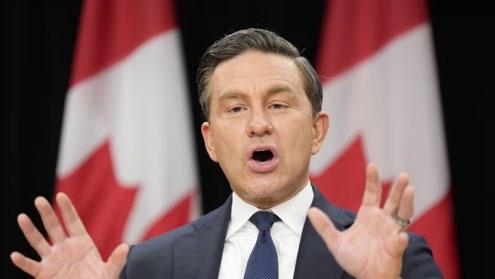
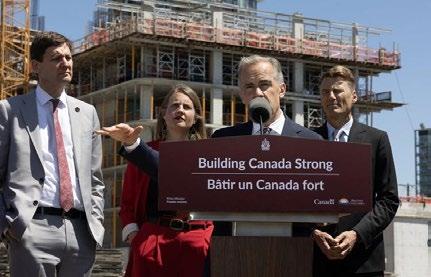
Conservative Leader Pierre Poilievre is calling on Parliament to probe Ottawa’s proposal to convert unsold condominium units in British Columbia into affordable housing.
In a letter to the House ethics committee, Poilievre says a program to possibly help finance the purchase of 2,200 vacant condos amounts to a “condo bailout” for developers, bankers and investors.
“Far from making housing more affordable, the bailout prevents a price correction from taking place, preserving high prices for developers rather than lowering them for buyers,” Poilievre wrote. “Taxpayers are being forced to intervene before developers lower prices.”
A price correction is when the value of inflated financial assets declines to market rates, and would mean cheaper housing in the Vancouver area, and possibly a drop in property values for those who already own their homes.
Prime Minister Mark Carney has faced a torrent of criticism since June 18, when he announced a plan to work with the B.C. government that he said would help homebuyers struggling to save for a down payment.
the project came about, with Carney saying the idea came from the province and B.C. Premier David Eby saying Ottawa wanted the plan announced before all details had been finalized.
Poilievre argues developers are showing up to Liberal fundraisers and says Parliament should probe for any “undue benefit” in the new plan.
Federal Housing Minister Gregor Robertson’s office did not have an immediate comment on the letter.
Parliamentary committees can call for witnesses and documents in order to hold the government to account, though they rarely convene during the summer break unless the topic is an urgent matter.
Poilievre posted the letter online Sunday, though it is dated Friday. It is addressed to his own MP
Carney has since said his government did not explain the program well.
A press release issued by the Prime Minister’s Office on June 18 said Ottawa and the B.C. government plan to “leverage innovative financing tools to convert more than 2,200 vacant condo units in priority growth areas into affordable homes.”
At the time, Carney noted that due to higher interest rates and weaker demand, developers “are stuck” and don’t want to sell at a loss.
This past Thursday, Carney said the federal government would put up 10 per cent of roughly $1.45 billion in total potential spending to convert the units, with the B.C. government footing the rest of the bill.
These vacant units would be offered to Canadians under a rent-to-own framework, Carney said, adding there is no specific transaction on the table yet.
In his letter Sunday, Poilievre said the Liberals are intervening in the market to help developers who built too many condos that didn’t fit demand.
He also argues there are inconsistencies in how
In March 2024, Jawad Mazen Fawwaz drove his car into the ocean near Rocky Point in Port Moody, B.C., during a livestream hosted by internet personality Adin Ross. Roughly two years later, he is back in the courts for an unrelated driving incident.
Fawwaz is now facing a dangerous driving charge in connection to a crash in New Westminster on March 30, 2026.
Around 11 p.m. PT, police say a black Mercedes SUV was travelling at high speed with several occupants in New Westminster before flipping into some hedges and landing on its roof at the intersection of Sixth Avenue and McBride Boulevard.
Police allege 21-year-old Fawwaz was driving the vehicle. "Luck is the only reason we're not talking about fatalities in this investigation," Sgt. Andrew Leaver of the New Westminster Police Department said in an email to CBC News.
Police say no occupants of the SUV or the occupant of a second vehicle damaged in the crash
Brassard, as the Conservatives chair the ethics committee, though the Liberals have the majority of the committee’s vote.
Figures from the Canada Mortgage and Housing Corporation show 5,849 unabsorbed apartments across B.C. in May 2026, with 4,376 unabsorbed apartments in Metro Vancouver, accounting for 75 per cent of all unsold units.
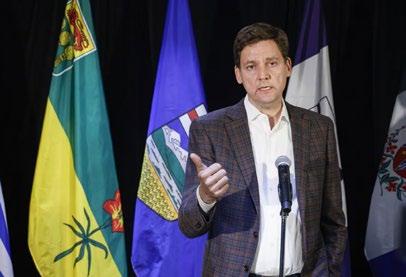
This past Thursday, Eby said the Vancouver condo market and its glut of unsold units would ultimately correct itself and the proposed program won’t assist developers in that city.
He added that bulk purchasing and buying entire buildings in bankruptcy proceedings presented opportunities unavailable to individual buyers. He said his government sees the plan as a chance to purchase units below the cost of new builds and make them available to British Columbians who otherwise couldn’t afford to break into the housing market.
He said that the plan could be shelved, but argued it can be structured to not benefit developers, arguing that cutting taxes for developers is more akin to a bailout.
sustained serious injuries. In November 2024, Fawwaz was granted a conditional discharge, handed a $100 fine and 12 months of probation after pleading guilty to one count of mischief under $5,000 in relation to the Port Moody social media act.
According to police at the time, Fawwaz was promised financial compensation for the stunt. He was also ordered to pay nearly $3,000 in restitution to the City of Port Moody and complete 30 hours of community service.
Fawwaz is scheduled to appear in court on July 8 to set a trial date for the New Westminster case.
John
George Massey Tunnel, mines and LNG: what's in the Ottawa-B.C. MOU
An economic deal between Canada and British Columbia that was unveiled in Vancouver on Thursday describes commitments that Prime Minister Mark Carney says will help unlock more than $200 billion in new investment.
Here are some key points of the Canada-British Columbia Cooperative Prosperity Agreement.
New pipeline
The MOU says the northern oil tanker ban will remain in place and unchanged, meaning that any pipeline proposed by Alberta would have to take a southern route. It acknowledges that "B.C. does not seek this project."
B.C. must get a meaningful share of any economic benefits, including a possible annual royalty.
LNG
The federal government will work to accelerate the permitting, financing, and construction of liquefied natural gas (LNG) projects in British Columbia.
These include the massive second phase of the LNG Canada facility in Kitimat, Ksi Lisims LNG, the Prince Rupert Gas Transmission Project, Cedar LNG, and Woodfibre LNG.
Trans Mountain Pipeline
The deal says B.C. recognizes Canada’s interest in boosting throughput at the Trans Mountain Pipeline that carries Alberta oil to Burnaby, B.C., from 890,000 barrels per day to 1,190,000 barrels per day.
North Coast Transmission Line
Carney says the agreement means $3.5 billion in federal funds for the North Coast Transmission Line to deliver electricity to communities and projects in the region.
The MOU says the power line is "foundational infrastructure" for Canada's critical mineral ambitions.
Red Chris copper mine
The MOU says Canada will contribute to expanding the Red Chris Mine in northwest B.C. and Carney says the federal government will invest $500 million with a goal of boosting national copper production by more than 15 per cent.
Port of Vancouver and Roberts Bank Corridor
The MOU says the transport corridor involving the Port of Vancouver and the Roberts Bank Terminal is essential to connect Canada with the world's fastest growing markets.
Carney says the federal government will contribute to a $10 billion upgrade of the Roberts Bank container terminal to help unlock $100 billion in new trade capacity, while adding about $3 billion to Canada's economy each year.
George Massey Tunnel
Canada is committing to supporting up to onethird of capital costs, up to a maximum of $3 billion, to replace the Massey Tunnel and ensure efficient flow of goods along Highway 99 under the Fraser River.
The contribution could include low-cost financing or credit facilities in addition to direct financial support.
National carbon credit framework
B.C. and Canada will work with other provinces and territories on developing a national carbon credit framework.
This would include use of credits generated through "consumer sustainability choices, such as retrofits and EVs, and nature-based solutions."
Timing
Immediate financial commitments are being made on the Red Chris Mine, the Massey Tunnel replacement and the North Coast Transmission Line. Other agreements kick in by Dec. 1, or June 1 next year.
B.C. nurses are beginning job action after their Thursday 12 p.m. strike deadline passed without movement on a new contract.
While the union doesn’t plan to withdraw workers, the deadline marks the start of overtime restrictions and a ban on non-nursing duties.
"Nurses don't want to be in this position. We want to be caring for patients," the B.C. Nurses' Union said in a social media post announcing the job action.
Less than an hour after the start of job action, the Health Employers Association of B.C. (HEABC) released a statement saying it and the Nurses' Bargaining Association have agreed to return to negotiations next week.
It added that the province has essential service orders in place "to prevent immediate and serious
danger to the health of the public during any job action."
The B.C. Nurses' Union (BCNU) said it welcomes a return to the bargaining table.
"We've been willing to meet at any point all along, including as job action continues," reads an emailed statement. Amid a shortage of health-care workers, nurses frequently carry out duties that don’t require professional nursing certification, Gear said. As part of a legal strike, the nurses can refuse to do that work.
That includes things like transporting patients, running to the blood bank to pick up blood, handing out meal trays, cleaning, emptying laundry, answering phones and taking physician orders verbally, Gear said. She said those duties will now fall on other staff and management.
Ottawa and B.C. agree to maintain tanker ban
British Columbia’s ban on oil large tankers off its northern coast will be “fully maintained” under an agreement between the federal and provincial governments, Prime Minister Mark Carney and B.C. Premier David Eby said at a Thursday press conference.
The two governments announced a multibillion dollar deal on Thursday, which includes a commitment to protect the oil tanker ban, as well as funding for critical infrastructure projects in B.C.
Bill C-48 — the Oil Tanker Moratorium Act — was first introduced by the Liberal government in 2017, and became law two years later after a protracted battle in the House of Commons and Senate and opposition from Alberta and the oil industry.
The legislation bans tankers carrying more than 12,500 metric tonnes of oil from docking in waters off the north of B.C.’s coast. The affected area stretches from the northern tip of Vancouver Island to the Alaska border, and encompasses the archipelago of Haida Gwaii.
The future of the ban came into question after the federal government and Alberta signed a memorandum of understanding in November to lay the foundation of a new oil pipeline. The flagship proposal in the MOU is a bitumen pipeline from Alberta to Canada’s West Coast that would carry an additional 300,000 to 400,000 barrels per day destined for Asian markets.
Alberta and federal Conservatives have long argued the 2019 federal law prevents the building of new pipelines and therefore constrains the oil and gas industry, and have called for the federal government to repeal it.
The B.C. government and Coastal First Nations, however, vowed to do everything in their power to keep the tanker ban in place, citing the “catastrophic” impact a future oil spill could have in the region.
The “Canada-B.C. agreement will maintain the federal North Coast tanker ban in accordance with a proposed route of a new trans-provincial pipeline under the bilateral agreement with Canada and Alberta,” Carney said Thursday.
“We have secured a commitment to keep the northern tanker ban firmly in place, protecting British Columbia’s pristine northern coast and the $2 billion plus economy that relies on it,” Eby said.
The Coastal First Nations Great Bear Initiative welcomed the federal-B.C. agreement.
“British Columbians, Canadians and the First Nations who call this place home want this region to remain protected. There is no technology that can clean up an oil spill at sea, and a single oil spill could destroy our way of life,” Marilyn Slett, president of the Coastal First Nations – Great Bear Initiative and elected Chief of the Heiltsuk Nation, said in a statement. Under Thursday’s agreement, B.C. will also receive new funding for “critical infrastructure, resource projects, [and] clean energy.”
This will include $3 billion on the Fraser River Tunnel Project, “as well as commitments to the Red Chris mine expansion and the North Coast Transmission Line.”
The Fraser River Tunnel Project is being proposed to replace the aging George Massey Tunnel, a critical highway tunnel into Metro Vancouver.
The Red Chris Mine Expansion Project is a copper and gold mine in northern B.C., with the expansion proposal focused on critical minerals development and clean power transmission.
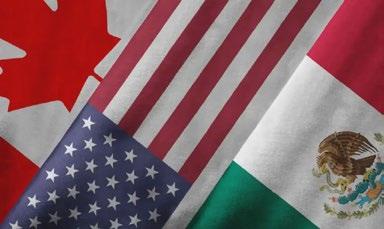
U.S. flags concerns over Canada’s ties to China as it blocks CUSMA renewal
The United States’ top trade official is pointing to Canada’s deepening economic ties with China as one of the reasons Washington is refusing to renew the Canada-U.S.-Mexico Agreement on free trade (CUSMA) in its current form.
Speaking to Global News on Thursday, U.S. Trade Representative Jamieson Greer said the White House is concerned Beijing could use Canada as a back door into the American market.
“What I don’t want is a situation where Canada is bringing in a lot of Chinese investment and Chinese cars and sending them into America,” said Greer in Washington, D.C. “That is actually totally at odds with what we’re trying to do.”
His comments come a day after the Trump administration declined to renew the trilateral pact with Canada and Mexico for a new 16-year term over what the U.S. calls “shortcomings” and “trade deficits.” Mexico and Canada both publicly pushed for a renewal.
The agreement covers roughly $2.5 trillion in trade annually. U.S. President Donald Trump negotiated the deal himself during his first term, calling it one of the fairest and most balanced of its kind at the time.
Wednesday’s decision does not kill CUSMA — rather, it triggers a process of annual reviews until its possible expiration in 2036.
Tariff-free access remains for most Canadian exports, and the pact can still be renewed for 16 years at any time over the next decade. After a virtual meeting Wednesday with Greer and Mexico’s Minister of Economy Marcelo Ebrard, Canada-U.S. Trade Minister Dominic LeBlanc said he “reaffirmed Canada’s unwavering support for the CUSMA and its renewal.”
“At a time of global economic uncertainty, Canada is a stable, reliable and trusted partner,” added LeBlanc in a statement.
Ever since the Trump administration launched its trade war against Canada over a year ago — including punishing tariffs on sectors like autos, steel, aluminum and lumber — Ottawa has tried to diversify markets and reduce reliance on the U.S. As part of that effort, the Carney government has forged closer ties with China, after years of frosty relations. Part of that rapprochement included an agreement for Beijing, signed in
January, to drop tariffs on agricultural goods in exchange for Canada to allow 49,000 Chinesemade electric vehicles into the Canadian market. The first vehicle shipments began arriving in Canada in May.
Last month, Prime Minister Mark Carney was caught on a hot mic at the G7 Summit in France trying to reassure Trump that those vehicles would only account for three per cent of Canada’s auto market.
International trade lawyer John Boscariol says the U.S. is pushing “very hard” on tightening “rules of origin” under CUSMA, particularly as it relates to China. Those rules ensure a certain proportion of North American-made components in goods that are traded within the continent tariff-free. The Canadian Radio-
television and Telecommunications Commission (CRTC) in May tried to triple the share of revenues that U.S. streaming giants like Netflix must spend on Canadian content, from five per cent to 15 per cent.
Less than two weeks later, the federal government directed the CRTC not to go ahead, with Ottawa appearing to back down like it did on the digital services tax last year.
Boscariol says the U.S. will likely continue to push hard against any cultural measures to support Canadian content providers, and Canada’s regulated dairy sector.
Parliament passed a Bloc Quebecois private member’s bill last year confirming supply management would not be renegotiated.
Trade experts have said it’s unlikely the U.S. will use the “nuclear option,” which would allow any country to pull out of CUSMA with six months’ notice.
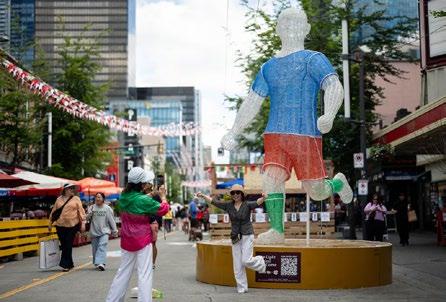
Vancouver to spend $4.75M to keep pedestrianonly zone on Granville Street after World Cup
After a rigorous debate, Vancouver city council has voted to maintain a five-block stretch of Granville Street as a pedestrian only zone until the Labour Day weekend.
Since June 11, the street has been a gathering place for soccer fans from around the globe to gather and celebrate their favourite teams.
“I think just the enthusiasm, the excitement, the extended patios with the additional flexibility from the province has been incredibly helpful as well,” said Kirby-Yung about the success of the street closure so far. “We’ve had the opportunity to see what a pedestrianized Granville Street can really look like.”
The street closure was only intended to last until the final FIFA match on July 19—and the extension comes at a considerable cost to taxpayers.
The $4.75-million total budget for the extension includes $500,000 per week for safety and sanitation alone.
The motion was co-sponsored by Mayor Ken Sim and his ABC colleague Coun. Sarah Kirby-Yung.
Green Party Coun. Pete Fry and Vote Vancouver Coun. Rebecca Bligh, both mayoral candidates, voted against the motion which they say they were only notified of two days prior to the debate. Both cited the cost as major reasons they did not support the extension.
“That’s $5 million of taxpayer funds, in the further context of the zero means zero budget that has decimated funding for organizations and initiatives across our city,” Fry said during the debate. Some of the money is earmarked for Downtown Van so the business association can create activations and programming to draw people to the area when the madness of FIFA is no longer the main attraction.
“We don’t expect the crowds that we have seen during FIFA,” said Downtown Van president and CEO Jane Talbot. “But we know that when we give people reasons to come downtown to Granville Street, they do. And we will provide those reasons.”
Ph: 604-591-5423
Fax: 604-591-8615
editor@theasianstar.com
Editor: Umendra Singh
Marketing and Sales: Ravi Cheema
604-715-3847
Shamir Doshi
604-649-7827
Harminder Kaur
778-708-0481
Parminder Dhillon
604-902-2858
Pre-Press: Avee Waseer
Production: Ozmo Media
www.theasianstar.com
B.C. volleyball coach charged with multiple sex offences against youths
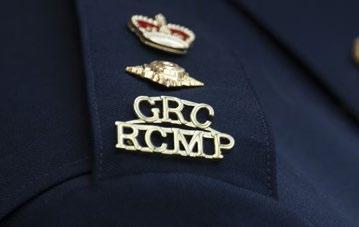
A volleyball coach in North Vancouver, B.C., has been charged with 10 sexual offences, including five counts of sexual assault, following allegations from players spanning nearly a decade.
The RCMP announced Thursday that Iraj Mozaffari of North Vancouver was also charged with three counts of sexual interference of a person under 16 and two counts of touching a young person for a sexual purpose.
The charges stem from complaints dating from January 2016 to December 2024, police said.
In April of last year, the North Vancouver RCMP said a 50-year-old man had been arrested as part of a “complex investigation involving allegations of sexual assaults that occurred over a period of several years.”
court.
If you or someone you know is struggling with sexual assault or trauma, the following resources are available to support people in crisis:
• Call 911 if you are in immediate danger or fear for your safety.
• The Canadian Association of Sexual Assault Centres' website has a comprehensive list of
At the time, the suspect was released on conditions pending charge approval, and investigators appealed for additional victims and witnesses to come forward.
The investigation began after police received “multiple reports” on Dec. 22, 2024, alleging that youths on a volleyball team were sexually assaulted by the coach, police said.
Investigators spoke with several witnesses and complainants before submitting a report to Crown prosecutors recommending charges.
“We understand that this news may be upsetting for members of the community and especially for the victims,” Cpl. Mansoor Sahak said in a statement Thursday.
“We would like to thank those that came forward to provide statements. Without their courage, we would not be in the position we are in today.”
The identities of the complainants are protected by a court-ordered publication ban.
The charges have not been proven or tested in
sexual assault centres in Canada that offer information, advocacy and counselling.
• The Ending Violence Association of Canada‘s website has links to helplines, support services and locations across Canada that offer sexual assault kits.
• Indian Residential School Survivors Society crisis lines: +1 866 925 4419 or +1 800 721 0066 (24/7)
• Toronto Rape Crisis Centre crisis line: +1 416 597 8808 (24/7)
• Canadian Human Trafficking Hotline: +1 833 900 1010 (24/7)
• Trans Lifeline: +1 877 330 6366
• Suicide Crisis Helpline: call or text 988 (24/7)
• Sexual Misconduct Support and Resource Centre for current and former Canadian Armed Forces members: +1 844 750 1648
• Read about your rights as a victim on the Canadian Resource Centre for Victims of Crime website.
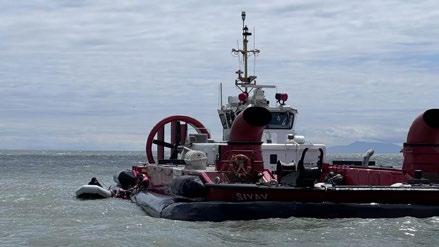
Search for sunken B.C. charter boat hampered by ‘challenging’ conditions: RCMP
The underwater search for a charter boat that sank off the B.C. coast Sunday, leaving six people presumed drowned, has been hampered by “challenging” conditions, according to authorities.
The Richmond RCMP provided an update Thursday, saying the Underwater Recovery Team and West Coast Marine Services are using SONAR to try to locate the sunken vessel.
“Conditions in the water have been challenging,
making the search slower and more difficult,” the detachment said, in a statement.
“This is not a quick process. Even if the vessel is found today, it could take additional days to safely investigate, document, and potentially recover it.”
Ten people were aboard when the boat went under water, prompting a massive search and rescue operation during which four people were found and taken ashore.
After the search was stood down, police said the remaining six people were presumed drowned.
An investigation into the cause of the tragic incident is ongoing.
“We know many people are awaiting updates and we appreciate everyone’s patience and understanding as the search continues,” a spokesperson for the Richmond RCMP said, in the statement.
22-year-old Punjab man held with drugs & loaded firearm
Continued from Page 1...
Working in coordination with Peel Regional Police, EPS transferred Singh to Ontario on June 26. He now faces additional charges of extortion and conspiracy to commit murder. He was denied bail and remains in custody. Deputy Chief Nick Milinovich of Peel Regional Police said, “Organised crime operates without regard for jurisdictional boundaries, and our response must be the same. Extortion has a serious impact on victims and
communities, and we are committed to addressing this harm through targeted enforcement and strong partnerships across the country.”
Staff Sergeant Eric Stewart of the Edmonton Police Service said, “We have been investigating extortion networks and their multi-jurisdictional linkages in Canada for some time now, and we have established a coordinated approach with a focus on effective intelligence collection, sharing, and enforcement action across provinces.”
Why bridge and tunnel politics helped make the
B.C.-Ottawa
pipeline truce happen
In a week that saw a number of trades in the National Hockey League, perhaps it makes sense to analyze Thursday's agreement between the federal government and the province of British Columbia through the lens of what each group secured.
To British Columbia: Billions of dollars for new natural resources projects, a tunnel replacement in Metro Vancouver, guarantees on environmental protections, $630 million for child care and — perhaps most importantly to the government — maintaining the North Coast tanker ban.
To the Alberta government: The understanding that the B.C. government will not put up significant opposition to a proposed pipeline that would terminate around the province's South Coast and "largely" follow the existing route for the Trans Mountain pipeline — confirmed by B.C. Premier David Eby during a press conference with Prime Minister Mark Carney announcing
the Cooperative Prosperity Agreement. "We recognize our constitutional position and we do not have the authority to stop a new pipeline.
We will not be going to court to fight a pipeline project," Eby said. To the federal government: A bit of interprovincial peace.
There's a lot more to it than that, of course.
The reaction could change based on the project specifics, or how the money for British Columbia infrastructure projects is distributed.
But some looked at the deal announced by Carney and Eby, who returned from a trade trip to China ahead of schedule, as efficient political calculus, a summary not disputed by sources familiar with the negotiations.
"I think that is certainly the way this is pointing," said Stewart Prest, a political science lecturer at the University of British Columbia.
"And to be honest, that has seemed like the solution that makes the most sense for some time."
Video shows motorcyclist illegally passing on the right before highway crash
Mounties have released video of a motorcycle crash on the Trans-Canada Highway in Vancouver, saying it shows the perils of illegally passing on the right and driving on the shoulder.
An officer was driving on Highway 1 last month when he was illegally passed by the driver of a black Harley Davidson, according to a statement from the B.C. Highway Patrol.
“When the police officer activated his lights and siren, a blue pickup truck signalled and pulled off to the right as required by law. Instead of doing the same thing, the motorcyclist continued passing on the right, which resulted in running over a road sign and into the rear of the blue pickup,” the statement
from police said, summarizing the incident shown in the video. The motorcycle driver wrecked his bike but was not seriously injured, Mounties said. He was “briefly arrested” for fleeing police, fined $305 and had his Harley impounded for seven days. “Passing on the right enrages other motorists, but that’s not the main reason that it’s illegal,” B.C. Highway Patrol spokesperson Cpl. Michael McLaughlin said, in the statement. McLaughlin said the kind of “dangerous and illegal” driving behaviour shown in the video is common on the busy highway, and warned authorities can and will take enforcement action against people passing on the right.
B.C. RCMP seize tonnes of precursor chemicals from homes and shipping containers
Metro Vancouver Mounties say they seized thousands of kilograms of precursor chemicals used to manufacture illicit drugs, as well as firearms and cash, in a recent operation.
The Burnaby RCMP Gang Enforcement Team’s investigation began last July, when they say a traffic stop led to officers seizing four kilograms of precursor chemicals commonly used to make fentanyl.
Investigation into the driver led to police identifying three additional suspects and “several crime scenes,” according to a Thursday news release.
On April 1, several police units including the heavily armed Emergency Response Team and Clandestine Laboratory Enforcement and Response unit executed search warrants at five sites in Richmond—three homes and two Sea Can
shipping containers.
According to police, officers seized 6,765 kilograms of precursor chemicals and “finished product,” including methamphetamine, fentanyl and oxycodone. The searches also yielded about $30,000 in cash, six guns, ammunition, 2,900 contraband cigarettes and two vehicles.
Police say the investigation continues.
SATURDAY, JULY 4, 2026
Findlay shakes up B.C. Conservative caucus leadership, installs Maahs as interim leader
B.C. Conservative Leader Kerry-Lynne Findlay is shaking up the party’s caucus leadership team, installing loyalists who backed her campaign in several key roles.
Chilliwack North MLA Heather Maahs will lead the Official Opposition on an interim basis, presumably until Findlay can secure a seat through a byelection. This would require a sitting MLA to step down, and while none have stepped forward yet, there are rumours that several have offered their spots.
In the meantime, Maahs said she will still take cues from Findlay. “It’s a temporary thing, and our hope is that Kerry-Lynne will get a seat sooner than later,” Maahs told Black Press Media. “But in the interim, I’m very happy to be able to serve her and the party in this position.”
Findlay could be forced to wait for the rest of the year. Even if another MLA steps down, Premier David Eby can delay a byelection for up to six months.
Prince George-North Cariboo MLA Sheldon Clare — who ran for leadership himself before dropping out and endorsing Findlay — will be the new Conservative house leader, replacing Chilliwack-Cultus Lake MLA Á’a:líya Warbus.
MLA Cariboo-Chilcotin Lorne Doerksen will be the deputy house leader, Macklin McCall the whip, Reann Gaspar the deputy whip, Jody Toor the caucus chair and Bulkley Valley-Stikine MLA Sharon Hartwell the caucus representative to the party board.
More loyalists are being given regional roles. Salmon Arm-Shuswap MLA David Williams will be the Okanagan and Interior lieutenant,
North Island MLA Anna Kindy will be the Vancouver Island lieutenant, and Delta South MLA Ian Paton will be the Lower Mainland lieutenant. Maple Ridge East MLA Lawrence Mok, Richmond-Queensborough MLA Steve Kooner and Surrey South MLA Brent Chapman (Findlay’s husband) will be stakeholder relations lieutenants.
Except for Toor, Gaspar, Paton and Doerkson, all of the new members of the leadership team had publicly backed Findlay in the Conservative leadership contest.
Maahs put this down to values.
“I share the same values as KerryLynne, and that’s why I supported her in the very beginning,” she said.
Maahs has clashed with others within the caucus, most notably former Conservative caucus member Elenore Sturko, who was publicly at odds with her after Maahs invited the Christian lobby organization Association for Reformed Political Action (ARPA) to the legislature, a group known for its opposition to abortion, medical assistance in dying and youth gender transition.
Sturko was later accused of organizing against former party leader John Rustad and kicked out of the party. She has called herself “politically homeless” due to her moderate social views, but fiscal and law-and-order conservatism.
Other moderates still in the party, such as former interim leader Trevor Halford, were left out of the leadership team.
But where some see division and a shift to the right, Maahs sees consistency. She also said Halford did “a fabulous job” as interim leader.
“It’s the same messaging,” she said. “Nothing has changed.”
Popular brand of canned soup recalled
Canadians may want to check their pantries, as a popular canned soup brand is part of a nationwide recall. On Friday, June 26, the Canadian Food Inspection Agency (CFIA) announced the recall of canned soup produced by the company Amy’s Kitchen LLC due to microbial contamination. However, the agency notes that the issue is classified as “non-harmful,” meaning the risk to health is considered low.
“Amy’s brand Organic Lentil Soup (Less Sodium) recalled due to container integrity defects and spoilage,” reads the CFIA statement. The recall applies specifically to the 398-millilitre can with the universal product code 0 42272 90583 6, lot number 60D0924, and a best-before date of April 2027. Consumers who may have purchased the recalled product are advised not to use, sell, serve, or distribute it.
across Canada
consuming the produce may result in undesirable health problems. While class three recalls are not considered urgent from a safety standpoint, as they do not pose a health risk, they are applied to food products that do not meet regulatory standards or quality requirements.
According to the agency’s website, most food recalls in Canada are voluntary, which means that they’re carried out by manufacturers with oversight from the CFIA.
Recent recalls have also included several types of Salem Foods spices as a result of undeclared ingredients, as well as packages of Ola Ola pounded yams, which are being pulled from shelves because they contain undeclared milk. However, some food recalls can be linked to more serious health risks.
Amy’s Kitchen is an American company based in California that produces organic food, as well as gluten-free, vegan, and vegetarian options.
The CFIA has categorized the recall as a class three, which means that there is a low risk that
In 2024, the Public Health Agency of Canada announced an outbreak of listeria infections linked to plant-based refrigerated beverages. The outbreak resulted in three deaths, 20 reported illnesses, and 15 hospitalizations. Eligible Canadians can now file a claim if they were affected.
Ontario man missing since 1988 identified as Toronto motorcycle crash victim
Police say a man who went missing almost four decades ago from a city in southwestern Ontario has been identified.The Ontario Provincial Police force says 19-year-old Bradley Verbeek was reported missing in March 1988 and had been last seen in London in December 1987.They say investigators last year obtained information suggesting Verbeek was involved in a fatal motorcycle crash in Toronto in May 1988.Police say he
was buried at the time as an unknown person, but recent DNA testing confirmed his identity and his family was notified.
Insp. Nathan Parker says, while tragic, the outcome reflects that police are committed to bringing families closure. Verbeek's family, in a statement provided by police, says after years living in limbo they are "profoundly grateful" to finally have answers.
How
the City of
Surrey's
$116.6-million land swap with Wesgroup Properties will secure the Vancouver Giants arena site
The City of Surrey’s planned push to create an entertainment district in its emerging downtown area took a major step forward today, with Surrey Mayor Brenda Locke and the leadership of the Vancouver Giants and the City-owned, for-profit real estate development company of Surrey City Development Corporation (SCDC) jointly announcing an agreement in principle to engage in a partnership to build a new 10,000-seat indoor arena immediately east of Surrey City Hall and SkyTrain’s Surrey Central Station.
This would be achieved as a high-density, mixed-use development, with Surrey City Centre Arena and Cultural Event Centre — the new home
The arena building will be situated within the northwest quadrant of the lot, closest to the public transit hub.
“Wesgroup Properties has agreed to facilitate an exchange of properties with the City of Surrey,” Wesgroup Properties told Daily Hive Urbanized today upon inquiry.
“Through this arrangement, Wesgroup will exchange our Civic District site at 10355 King George Boulevard for three city-owned commercial properties. As required under the Community Charter, the City of Surrey has published a notice of proposed property disposition, and this transaction is subject to the completion of that process.” To support this cashless acquisition deal, a transaction review prepared for the City by consulting firm EY-Parthenon on June 2, 2026 found the proposed land values are in line with the independent appraisals and broker estimates, asserting the municipal government is getting fair market value for the properties involved.
of the Western Hockey League (WHL) team, a relocation from its current home ice of Langley Events Centre — accompanied by a luxury hotel with about 175 guest rooms and conference space, as well as residential uses and 100,000 sq. ft. of office and retail/restaurant space that supports the creation of a vibrant entertainment district.
The land needed for the arena will be secured through a major land exchange between the municipal government and local developer Wesgroup Properties, which is the existing owner of this 5.1-acre site at 10355 King George Blvd. — the former Safeway store (closed in 2021) and surface vehicle parking lot site framed by City Parkway to the west, 104 Avenue to the north, King George Boulevard to the east, and Central Avenue to the south.
Under the planned deal, Surrey would acquire this site from Wesgroup Properties in exchange for three City-owned properties: the two vacant industrial properties of the 14.65-acre site at 2750 194A St. and the 4.3-acre site at 19165 39 Ave. within the Campbell Heights industrial area, and the 3.75-acre site of the Cedar Hills Shopping Centre strip mall at 12820-12842 96 Ave. in Whalley. The strip mall has about 54,000 sq. ft. of leasable retail/restaurant space, and as of May 2026 it was 100 per cent leased.
Combined, the three City-owned properties span about 22.65 acres — worth a combined total of $116.6 million, including $63.5 million for 2750 194A St., $19.9 million for 19165 39 Ave., and $33.2 million for the strip mall.
Moreover, Wesgroup Properties’ former Safeway site in Surrey City Centre is also valued at $116.6 million. That means the land swap transaction is designed so neither side would need to add cash to balance the deal. Witnesses
Kitsilano Beach assault case raises questions about bail as federal reforms near
The release of a man accused in a violent attack at Vancouver’s Kitsilano Beach has raised questions about how bail decisions are made and whether upcoming federal reforms could lead to different outcomes in future cases.
Carlos Caldera Duarte is charged with one count of assault with a weapon following an alleged attack at the beach on the afternoon of June 28 that sent a woman to hospital.
The Vancouver Police Department publicly opposed his release.
“This man committed a very violent act. He is known to us. And therefore releasing him from custody could place the public in further harm,” spokesperson Const. Darren Wong told CTV News.
Wong said police have had numerous interactions with Duarte but declined to provide further details, citing privacy concerns.
However, legal experts say bail decisions are based on a number of factors, including an accused person’s criminal history. Court records show Duarte had no prior convictions for violent crimes. “Anything like a prior criminal record, prior violent offences, any sort of involvement in the community in that sense would be taken into that analysis,” said criminal defence lawyer Silvia Badea.
Badea adds that the Crown must also convince the court that releasing an accused person under conditions would not adequately address any
Authorities are asking witnesses to come forward after a Langley senior was found critically injured on Canada Day.
Langley RCMP said officers responded to a report of a man in distress near Park Avenue and Douglas Crescent around 9:48 p.m., and arrived to find an injured 74-year-old.
After receiving surveillance video from the area, investigators believe the senior’s injuries “may be the result of an assault,” Const. Peter Mann said in a statement Thursday.
“Officers believe there were additional people in the area who may have witnessed the incident, and we are asking those individuals to come forward and speak with investigators,” Mann said.
The victim remained in hospital in critical condition as of Thursday afternoon, the RCMP said.
Anyone who was in the area between 9:30 p.m. and 10:15 p.m. Wednesday—or has dashcam video—is asked to contact the Langley detachment.
public safety concerns.
“If someone should be detained, the Crown needs to establish why there are no conditions that could alleviate them being in custody,” she said.
The B.C. Prosecution Service told CTV News that Crown counsel did not oppose Duarte’s release. Prosecutors did, however, seek several protective conditions.
Those conditions include an area restriction, a no-weapons order, and a requirement that Duarte report to both a bail supervisor and the Forensic Outpatient Clinic. The case has also reignited debate around Canada’s bail laws.
In a statement to CTV News, Vancouver Mayor Ken Sim said the case highlights the need for stronger legislation.
“Vancouver residents deserve to feel safe in their own neighbourhoods. Cases like this reinforce why we’ve been calling for stronger bail laws,” Sim said. Meanwhile, new federal bail reform measures are set to take effect on July 15.
The reforms are intended to place greater emphasis on public safety in certain cases involving violent crime.
In a statement, the B.C. Ministry of Attorney General said: “These reforms focus on making sure bail decisions better reflect the real-world experiences of people, as well as imposing stronger consequences for violent offenders.”
Despite the upcoming changes, police remain frustrated with the outcome in this case.
Continued from Page 1...
Previously known as the HST/GST credit, the CGEB program was announced by Prime Minister Mark Carney on Jan. 26, 2026 in an effort to support Canadians struggling with costs of living, particularly with food expenses. The CGEB payment is separate from the HST/GST top-up payment issued in June. According to the Canadian Revenue Agency (CRA), benefit amounts are recalculated every July based on a family’s income and size from the previous year’s tax return. For example, the information from a 2025 tax return determines the CGEB payable amount for the payment period from July 2026 to June 2027.
Eligible Canadians can receive up to:
• $679 if you are a single individual
• $890 if you are married or have a commonlaw partner
• $234 for each eligible child under the age of 19
The CGEB payment will be 25 per cent higher than the former HST/GST credit with Friday’s payment and through to 2031.
The payments will be made quarterly, with the last payment of the year will be Oct. 5, 2026.
The Alberta government pitched the route and builders for a new pipeline to the British Columbia coast, just hours after Prime Minister Mark Carney announced a deal with B.C. to make it possible.
Speaking to reporters in Calgary on Thursday evening, Carney and Smith said Alberta has formally been submitted a proposed route for pipeline stretching to the major projects office.
“The profits from this pipeline will generate billions in revenues over the coming decades for the provincial and federal governments, and will enrich Indigenous communities that choose to partner with us,” Smith said.
“This is transformational wealth, an opportunity neither Canada nor Alberta can afford to leave unrealized.”
The proposed pipeline would run from Bruderheim, a town northeast of Edmonton, to a terminal in Delta, B.C., which is south of Vancouver.
control.
“But as far as our role, we’re there really as the developer, the project manager and then eventually the operator,” he said.
Pembina said in a statement that its interest position sits at 10 per cent, but that could rise to 20 per cent once the pipeline is operational.
It also said the goal is to sign definitive agreements by September.
It would follow the existing Trans Mountain pipeline, delivering more than one million barrels a day to tankers, which would then ship to Asian markets.
The price tag for the project is between $35.2 billion and $43.7 billion — including contingency fees. The Alberta government says it has already spent $18.3 million planning the project so far.
The province says the goal is to have the pipeline designated as a project of natural interest by the major projects office by Oct. 1.
Smith said the Alberta government is partnering with federally owned Trans Mountain Corporation and Calgary-based Pembina Pipeline for the build.
Alberta’s submission says that the ownership structure has yet to be nailed down. Trans Mountain Corp. said in a statement that the initial partnership has Ottawa and Smith’s government as the majority interest holders.
Mark Maki, the chief executive officer of Trans Mountain, told The Canadian Press he couldn’t say what percentage the Crown corporation would
The environmental group Climate Action Network criticized the project and what Smith calls its initial “public-private partnership.” The group said it “sounds a lot like Canadians will be signing a blank cheque.”
Smith said she thinks it’s a possible a full or greater private sector takeover of the project could occur down the line.
Smith and Carney said the project has opportunities for Indigenous ownership and that details will come. The submission package says the proposed route will go through the traditional territories of as many as 125 Indigenous communities.
It says the province consulted some First Nations before Thursday’s announcement, though it notes many were consulted under the premise that Alberta would be pitching a route to the northern coast rather than the southern one.
Carney said consultations with First Nations on the new route would begin immediately.
British Columbia Premier David Eby says a joint federal-provincial plan to convert unsold condominiums into affordable housing would be like buying something “on liquidation.”
Eby and Prime Minister Mark Carney were in Vancouver Thursday announcing a multibilliondollar agreement on energy, resources and transportation investments, but they also defended their plan to buy empty condos that has been roundly criticized.
The premier says he would like the opportunity to launch the program so people can see the plan
affordable housing for families.
Carney and Eby announced the plan last month to fund the purchase of more than 2,000 unsold condos with the intention of converting them to rentals or affordable housing under a rent-to-buy scheme.
Opponents have described it as a bailout for developers, a description Eby says doesn’t fit.
“You’re hearing directly from developers that this is not what they asked for and it is not from their perspective a bailout,” he says. “When you buy something that’s on liquidation, you don’t say to yourself, ‘I’m supporting a bailout for the store.’
in action, which would address the criticism of a bailout for developers who can’t sell their units.
Eby notes that buying on liquidation from a store isn’t viewed as a bailout and there are no plans to purchase the units in Vancouver because “the numbers just don’t work” to convert them to affordable housing.
Carney says it is taking advantage of distress in some developers for the purposes of securing
“This is an opportunity for us to recognize the reality that people can’t wait for housing. We can buy housing at below our construction cost and make it available affordably, and if we don’t do it, someone else will do it.”
Carney says buying unsold condos under the plan will only take place if it makes sense.
“If those opportunities present themselves — we’ve created the flexibility in order to get affordable housing to people at a cheaper price than could be built — we’ll do it.
“If the market shifts, if the opportunity doesn’t present itself, then it won’t happen.”
The plan on conversion of unsold condos in B.C. was part of $5-billion infrastructure spending announcement the federal and provincial governments announced last month that will be implemented over the next decade.
FNPF declares 9.5% interest, employer levy cut to 8%
Finance Minister Esrom Immanuel has announced a 9.5 per cent interest rate for Fiji National Provident Fund (FNPF) members while unveiling a temporary reduction in employer contribution rates aimed at easing business costs and protecting jobs.
Delivering the 2026-2027 National Budget in Parliament, Mr Immanuel said the FNPF remained one of the country’s most important financial institutions, supporting more than 440,000 members.
“Mr Speaker Sir, the Fiji National Provident Fund plays a critical role in our economy and in supporting the welfare of over 440,000 members.”
He said the Fund delivered another strong financial performance during the 2026 financial year, recording more than $1.2 billion in total investment income, with growth across all major asset classes compared with the previous year.
Based on that performance and following independent actuarial clearance, the FNPF Board has approved a 9.5 per cent interest rate for members.
“I m pleased to announce that the FNPF Board has declared an interest rate of 9.5 percent to members for 2026.”
Mr Immanuel said prudent financial reserves had also been maintained to protect the Fund against future market volatility.
“The 2026 result reaffirms that members’ savings are in safe and capable hands. The Fund remains financially strong, well-governed, and well-positioned to deliver sustainable long-term returns.”
The Finance Minister congratulated the FNPF Board, management and staff for their stewardship of the Fund and thanked members for their continued confidence.
Court restrains Nasese property transfer, freezes $1.3M bank funds
High Court has restrained the transfer of a multimillion-dollar Nasese property and frozen more than $1.3 million held in a BRED Bank account after finding there were reasonable grounds to believe the assets were linked to alleged criminal offending under investigation by the Fiji Independent Commission Against Corruption (FICAC).
In reasons for an ex-tempore ruling, Acting Justice Penijamini Lomaloma granted FICAC’s application for restraining orders under the Proceeds of Crime Act, preventing the Registrar of Titles from registering the transfer of the Domain, Suva property and ordering BRED Bank to freeze an account belonging to the second respondent, Raijieli Naituku Chand.
The proceedings relate to Stephen Shalen Chand, who previously served as Chairman of the Higher Education Commission of Fiji before later being appointed Interim Director.
mortgage was discharged, more than $1.35 million was deposited into Stephen Chand’s BRED Bank account before $1.31 million was transferred to an account held by Raijieli Naituku Chand.
Justice Lomaloma found there was sufficient evidence at this stage to conclude the property was “tainted property” under the Proceeds of Crime Act. “There is strong direct evidence from which inferences can be drawn to charge the First Respondent of the offence of Abuse of Office… There is also strong direct evidence and circumstantial evidence to trace the funds obtained from the offence to the repayment of the mortgage on the Property.”
FICAC alleges he maintained financial relationships connected to a training institution while continuing to participate in official decisions relating to the institution’s registration.
Justice Lomaloma said the investigation concerns alleged offences including abuse of office, with FICAC also considering charges of obtaining a financial advantage and money laundering.
“I find the offences to be serious as defined in section 4 of the Proceeds of Crime Act,” he said in his June 26 ruling.
The court heard that the property, valued at $3.6 million, was sold in May 2026. After the
The judge further ruled that although the property had already been sold, the proceeds could still be traced using equitable legal principles.
“Using the legal remedy of tracing, I am satisfied on reasonable grounds that those funds deposited into the Second Respondent’s Bred Bank Account are proceeds from the sale of the tainted property and the funds are therefore tainted property.”
Justice Lomaloma ordered the Registrar of Titles not to register the transfer of the property or any further dealings until further order of the court.
BRED Bank was also directed to immediately freeze the specified account and provide FICAC with bank statements relating to the account. The restraining orders will remain in force until further orders of the High Court, with leave granted for an appeal to be filed within 21 days of service of the orders.
Police officers convicted
Two police officers have been found guilty of raping a 17-year-old girl in the back of a marked police vehicle while on mobile patrol duty in Savusavu.
Justice Lee James Burney convicted the officers at the High Court in Labasa following the incident, which occurred between April 12 and 13 last year.
Court records show that the victim, an Australian resident, who was visiting family, had been at a local nightclub before the assault.
After fleeing a nearby park out of fear when police officers asked her for identification, she became exhausted and was assisted by a local youth who gave her water.
The two officers subsequently intercepted the pair. They told the victim that her uncle was looking for her and instructed her to get into the
police vehicle. Trusting the officers, she complied, expecting to be driven home.
Instead, the officers drove her to a secluded area past a junction on the Savusavu-Labasa Road, where both men took turns raping her in the back seat.
The officers admitted that sexual intercourse took place but maintained that it was entirely consensual and initiated by the victim.
The defence further suggested that the victim fabricated the allegations to protect herself from her mother’s anger regarding her late return home. Justice Burney, however, rejected the men’s arguments, stating he was sure the victim had provided truthful and reliable evidence, and that she did not consent to the sexual acts.
The men have 30 days to appeal the conviction to the Court of Appeal.
Cane farmers unhappy
Rakiraki businessman and large-scale sugarcane farmer George Shiu Raj says many farmers are deeply disappointed with the allocations made in the 2026-2027 National Budget, labelling it insufficient to support the everyday realities of the nation’s growers.
The Ministry of Agriculture, Waterways and Sugar Industry has been allocated a total funding of $221million, with $96.3m earmarked for interim support for the sugar sector.
The Government announced it would maintain its guaranteed price of $85 per tonne for the 2026 season. With a forecast price of $57 per tonne, $41.6m has been set aside to cater for a top-up payment of approximately $28 per tonne.
An additional $30m is designated for sectoral support, covering fertiliser and weedicide subsidies, cartage subsidies, upgrades to cane access roads, cane planting grants, farm mechanisation, farm incentive programs, and assistance for new farmers. Furthermore, the Government has allocated around $18m to cover the scheduled repayment of a $US32.7m $F73.95m) loan taken by the Fiji Sugar Corporation (FSC) from the EXIM Bank of India in 2005. “Our biggest concern is that they did not increase the guaranteed price from $85 to $110,” Mr Raj said.
“There are auditors, financial controllers, and
finance people sitting in the Government, yet they ignored the clear request from the farmers and the National Farmers Union for a $110 price.”
Mr Raj highlighted the heavy logistical and financial burdens faced by farmers delivering cane from regions across the country, including Sigatoka, Nalawa in Ra, and Seqaqa in Vanua Levu.
“We are quite upset because, at the end of the day, farmers are left with only $15 to $20 in profit.
“With an average of 11,000 farmers producing between 150 to 200 tonnes of cane, that equates to a meager $3000 to $4000 in income to live on for 17 months.” Mr Raj said farmers were the backbone of the industry.
“The submissions from our brothers and sisters from Tavua to Sigatoka seem to have been lost. Any increase in operational costs becomes a direct burden to the farmers, who are just trying to look after their children and put food on the table.”
Police await forensic results in officer’s death at police post
Police are awaiting forensic test results as investigations continue into the death of a police officer who was found deceased while on duty at the Colo-i-Suva Police Post in the weekend.
Police spokesperson Ana Naisoro confirmed that a post-mortem examination has been completed, with investigators now awaiting the outcome of
further forensic analysis.
“The post mortem has been conducted awaiting results of forensic tests on biological samples obtained,” she said.
“This is to assist in determining the circumstances that led to the officer’s death.”
Police said investigations remain ongoing.
SOUTH
Massive PoK protests intensify as leader warns hunger may push people towards India
Continued from Page 1...
A key reason behind the June 9 demonstrations was the demand by the JAAC to abolish the 12 reserved refugee seats in the PoJK Legislative Assembly. Local activists argue that these seats are routinely used by Islamabad to influence local government formation and dilute regional representation. The situation turned critical in early June following a security crackdown and the killing of a senior JAAC member, which led to widespread clashes across the Poonch and Sudhnoti districts. Local leaders, including Sardar Aman Khan, have emphasized that the prolonged blockades on communication
networks and essential food trucks entering the region have created an acute humanitarian crisis.
During a recent rally, local leader Aman Khan addressed the crowd and warned that the prolonged shortage of resources could alter the political sentiment in the region. He stated that if the government continues to block or restrict food supplies, public desperation and anger could lead residents to look toward India for support and relief. In response to the growing unrest, the regional administration has deployed thousands of paramilitary personnel, instituted curfews, and suspended mobile internet services across major urban centers to control information flow.
Pakistan's coveted prize is dialogue with India
That Pakistan has been praised by the international community for its mediation between the United States and Iran is undoubted. That its political and security elite feel that this has placed Pakistan in a better position globally than it has had for many decades is also true. This satisfaction is reflected also by its media.
Yet with all this acclaim and self-congratulation, Pakistan still hankers for what can only be described as the ‘prize’ that it does not have. That ‘prize’ is the opening of a dialogue with India.
The Modi government’s approach since 2016 of not opening a full dialogue process with Pakistan until it gives up its use of terrorism has led to its sentiments swinging between anger, anguish and belligerent ‘we don’t care if you don’t wish to engage us’ attitudes.
And there is deep concern over India’s decision, after the Pahalgam attack of April 2025, to hold the Indus Waters Treaty (IWT) of 1960 in abeyance.
India’s aim in giving Pakistan around 80 per
cent of the waters of the Indus water system in the IWT was to assure it that it had no ill will towards the newly created nation even though the Indian National Congress had initially opposed the partition of India. Implicit in this generosity was a genuine desire to establish good and cooperative neighbourly ties with Pakistan despite its foundational ideology. However, Pakistan did not pay heed to India’s positivity and persisted in its hostile approaches.
It assumed that the IWT had ensured that India would never impede the flow of water into Pakistan and that it would also never seek to violate the treaty. Thus, the IWT is in abeyance, and it should continue to be so. It has not been abrogated by India. A last word. Pakistan’s threat that tinkering with the water flows to Pakistan would be an act of war and pose an existential threat to Pakistan should not deter Indian policymakers from continuing with their present policies. Threats have to be stared down and not pandered to.
The UN has asked Pakistan to reverse the "reconstructions" that "undermined the integrity" of two historical sites in Taxila, a UNESCO World Heritage site, or these would be placed on the agency's "danger list", a media report said on Thursday.
UNESCO, the cultural arm of the UN, in a recent meeting told senior government officials that it would not hesitate to "delist" the historical sites at Mohra Moradu and Sirkap, just like it had "delisted" a World Heritage Site in Germany, due to the recent "unnecessary interventions", the Dawn newspaper reported, quoting sources.
The UN agency warned that it would "delist" Taxila from its World Heritage List if the actions were not reversed.
Taxila, located in the Rawalpindi district of Pakistan's Punjab province, is a vast serial site that includes a Mesolithic cave and the archaeological remains of four early settlement sites, Buddhist monasteries, and a mosque and madrassa.
The ruins of the four settlement sites at Taxila reveal the pattern of urban evolution on the Indian subcontinent through more than five centuries, according to the UNESCO website.
In March, a visitor shared information and pictures with Pakistan's Permanent Delegate to UNESCO in Paris, highlighting reconstruction works by the Punjab archaeology department.
The visitor observed interventions that could "affect the authenticity and integrity of the property, specifically original walls being replaced with new construction or their height being raised", the report said.
Enforced disappearances in Balochistan raise alarm after teenager's custodial killing
A 15-year-old boy from Balochistan's Panjgur district has allegedly been killed after spending nearly three months in enforced disappearance, according to claims by the Baloch Yakjehti Committee (BYC), as reported by The Balochistan Post. According to The Balochistan Post, the rights group identified the victim as the son of Faiz Muhammad and a resident of Chitkan in Panjgur. According to the BYC, the teenager was allegedly taken away during the month of Ramadan and remained missing for around three months before his body was reportedly discovered on Airport Road on June 29.
The committee alleged that he was killed
by what it described as "death squads," a term commonly used by Baloch activists to refer to alleged state-backed armed groups. The BYC strongly condemned the incident, describing it as another case of enforced disappearance followed by an extrajudicial killing.
The organisation questioned why its own leaders continue to face legal proceedings while, according to its allegations, those responsible for such killings are not brought to justice. It urged international human rights organisations and the wider global community to intervene and examine what it described as worsening human rights conditions in Balochistan.
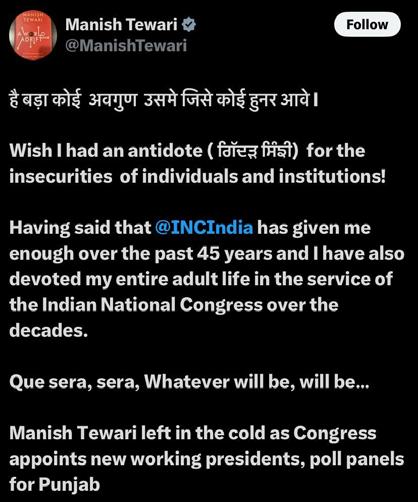
Left out of Punjab Congress revamp, Manish Tewari posts cryptic message
Congress MP Manish Tewari on Thursday shared a cryptic post on social media after being left out of the party's organisational reshuffle in Punjab ahead of the 2027 Assembly elections.
Reacting to a newspaper report on his exclusion from the newly announced state committees, Tewari wrote on X: "Wish I had an antidote for the insecurities of individuals and institutions! Having said that, INCIndia has given me enough
over the past 45 years and I have also devoted my entire adult life in the service of the Indian National Congress over the decades. Que sera, sera. Whatever will be, will be."
The post came a day after the Congress announced a new organisational structure for Punjab, appointing chairpersons for key electionrelated committees and three working presidents, while assigning no organisational responsibility to Tewari. A three-time Lok Sabha MP, Tewari currently represents Chandigarh. He has previously represented the Anandpur Sahib and Ludhiana parliamentary constituencies in Punjab.
According to a statement issued by AICC General Secretary K C Venugopal, Congress president Mallikarjun Kharge approved the appointments with immediate effect.
Under the new structure, Charanjit Singh Channi will head the Campaign Committee, while Vijay Inder Singla will chair the Election Management and Coordination Committee. Sukhjinder Singh Randhawa has been appointed chairperson of the Core Committee and Amar Singh will head the Manifesto Committee.
The party also retained Amarinder Singh Raja Warring as president of the Punjab Pradesh Congress Committee and Pratap Singh Bajwa as Leader of the Congress Legislature Party.
In addition, Sukhwinder Singh Danny, Raj Kumar Verka and Sangat Singh Gilzian have been appointed working presidents of the Punjab Congress.
Punjab Cabinet simplifies norms for regularising illegal colonies
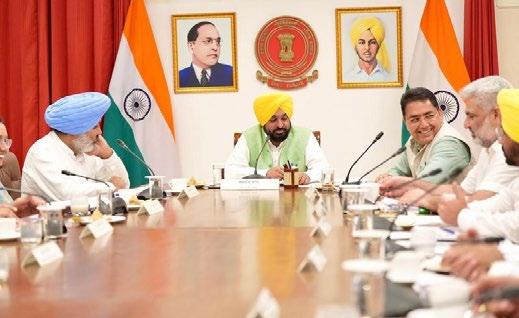
The Punjab Cabinet has approved an amendment to Rule 31 of the Punjab Apartment and Property Regulation (PAPR) Rules to simplify the regularisation of eligible unauthorised colonies across the state, providing relief to thousands of residents.
The decision was taken at a meeting of the Council of Ministers chaired by Chief Minister Bhagwant Singh Mann.
Under the amended rules, unauthorised colonies where at least 25 per cent of the plots have already been developed will be eligible for regularisation. Applications can be submitted either by the colony promoter or the resident welfare association (RWA).
The revised provisions will also apply to eligible colonies located within notified local planning areas and on agricultural land earmarked under master plans, except those falling under the regional plan of GMADA. The last date for submitting applications has been fixed as September 30. Colonies whose applications were rejected under previous regularisation policies will also be eligible to apply. For residential and industrial colonies, a compounding fee equivalent to 5 per cent of the prevailing collector rate on the colony’s gross area will be charged. Commercial colonies will have to pay 10 per cent of the prevailing commercial collector rate.
the prevailing building rules and register their properties. Where applications are submitted by RWAs, the provisions of RERA will not apply. However, the promoter or RWA will be responsible for obtaining all statutory approvals and completing pending development works within the stipulated period.
Finance Minister Harpal Singh Cheema said the amendment would enable more unauthorised colonies to be regularised. He reiterated that September 30 would be the deadline for
applications. The Cabinet also approved the waiver of government fees and facilitation charges for several key citizen services from July 1 to September 30, to facilitate the ongoing Special Intensive Revision (SIR) of electoral rolls.
Finance Minister Harpal Singh Cheema said the waiver would enable citizens to obtain essential documents required for the electoral roll revision without any financial burden.
Customs officials at Sri Guru Ram Dass Jee International Airport (SGRDJI), Amritsar, seized 484 grams of 24-carat gold valued at Rs 70.66 lakh from a passenger who arrived from Melbourne via Kuala Lumpur late on Tuesday night.
According to Customs, the passenger, a male traveller, arrived on Flight MH 118 on the night of July 1. Acting on suspicion, Customs officers intercepted him and conducted a detailed examination, including X-ray screening and a personal search.
During the search, officials recovered 484 grams of 24-carat gold in the form of two bangles and one chain. The seized gold has an estimated value of Rs 70,66,400.
The Customs department said the gold has been confiscated under the provisions of the Customs Act, 1962. The passenger has been arrested, and further investigation is under way to ascertain the source and intended destination of the smuggled gold.
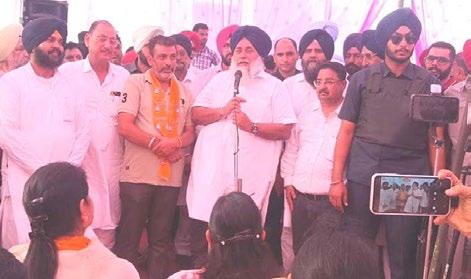
The SAD and the BJP on Thursday opposed the state’s revised land pooling policy, terming it “antifarmer”.
Shiromani Akali Dal (SAD) president Sukhbir Singh Badal vowed to launch a mass agitation against the move.
Addressing a gathering in Jalalabad, he alleged that “a fresh land grab was being planned by the
AAP government” through its revised policy.
Sukhbir claimed that farmers were being offered only an additional 10 yards of developed land compared with the earlier policy.
“With the elections drawing near, Kejriwal and his associates are under immense pressure to reward their political funders,” he alleged while canvassing for the Jalalabad municipal council elections scheduled for July 5. Sukhbir addressed five public gatherings covering all 17 wards.
Meanwhile, Punjab BJP chief Kewal Singh Dhillon termed the policy “anti-farmer”. Dhillon alleged that the state’s AAP government was “being run through remote control from Delhi” and its objective was to grab farmers’ land instead of developing Punjab.
After a provisional regularisation certificate is issued and the prescribed fee is paid, individual plot holders will be eligible to obtain regularisation certificates for their plots, secure approvals under
The fee waiver will cover several services, including the issuance of caste certificates, residence certificates, birth certificates, duplicate Class X and Class XII certificates and other notified services.
India, Japan may take the dollar out of trade payments with yen-rupee settlement plan
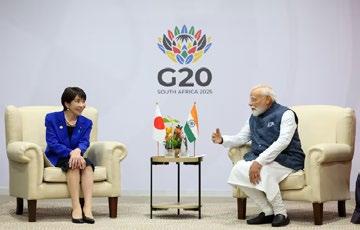
India and Japan may include a yen-rupee trade settlement framework in the Modi-Takaichi summit statement, Nikkei Asia reported.
India and Japan are set to advance plans for a local-currency settlement framework that would allow direct yen-rupee transactions for bilateral trade, according to a Nikkei Asia report, as Prime Minister Narendra Modi prepares to host Japanese Prime Minister Sanae Takaichi in New Delhi this week.
The proposal is expected to be included in the joint statement after Modi and Takaichi meet for the 16th India-Japan Annual Summit, Nikkei reported. If included, it would be the first time currency cooperation is formally incorporated into a leaders’ joint statement between the two countries, according to the report.
Takaichi is scheduled to visit India from July 1 to 3 for the annual summit, her first official visit
to India since taking office in late 2025. India’s Ministry of External Affairs has said the summit will allow both sides to review the full spectrum of bilateral cooperation and exchange views on regional and global issues of mutual interest. Reuters reported that the visit will focus on trade, investment and strategic cooperation.
Under the proposed framework, Japanese entities that are non-residents in India would be allowed to open accounts with Indian banks. This would enable financial institutions in both countries to settle cross-border payments directly in yen and rupees, without routing transactions through the US dollar, Nikkei reported.
The arrangement is intended to reduce foreignexchange conversion costs, lower remittance charges and shorten settlement times by removing the need for correspondent banks in third countries, the report said.
Japan’s Ministry of Finance is targeting the signing of a memorandum of cooperation with the Reserve Bank of India during fiscal 2026 to promote the use of local currencies in bilateral transactions, according to Nikkei. The proposal builds on the Japan-India Joint Vision for the Next Decade adopted in 2025, which referred to payment-system cooperation, including localcurrency transactions. The joint vision was issued
after Modi’s visit to Tokyo for the 15th India-Japan Annual Summit in August 2025.
India has been widening the use of localcurrency settlement in external trade. In July 2022, the RBI allowed invoicing, payment and settlement of international trade in Indian rupees through a special rupee vostro account framework. The Finance Ministry later told Parliament that the arrangement was meant to promote global trade with an emphasis on exports from India and support interest in the rupee.
The RBI’s updated FAQs describe rupee trade settlement as an additional arrangement to the existing system that uses freely convertible currencies, and say it would reduce dependence on hard currency. The central bank has also said exchange rates between the rupee and other foreign currencies under the mechanism would be market determined.
How Modi has remade India
Continued from Page 1...
It is a means of discerning how India will navigate the 21st century.
Modi’s crowning achievement has been the creation of state-of-the-art technological and physical infrastructure, which has fundamentally altered the lives of more than 1.4 billion people. Before Modi became prime minister in 2014, hundreds of millions of Indians were excluded from the formal banking sector. Their dependence on informal alternatives created space for corruption and systemic “leakages” (funds lost to intermediaries).
Building on an initiative begun by his predecessor, Manmohan Singh, Modi oversaw the implementation of a new system that bypassed legacy banking structures, instead linking zerobalance bank accounts (Jan Dhan Yojana), biometric identity cards (Aadhaar), and mobile phone numbers. This “JAM trinity” gave rise to the Unified Payments Interface, a public, realtime payment protocol which enables everyone from roadside vendors to tech giants to process transactions instantly with zero fees.
More important, this approach enabled the expansion of the Direct Benefit Transfer system, under which subsidies and benefits are credited directly to beneficiaries’ bank accounts. Since its introduction in 2013, the DBT, along with other welfare schemes, has helped lift an estimated 250 million people out of multidimensional poverty. Moreover, by eliminating intermediaries, this system has sharply curbed corruption in funds transfers, though it thrives in other areas of the economy. Infrastructure is another positive legacy. For decades, substandard logistics impeded India’s economic growth. Modi’s government brought a wartime-like sense of urgency to the problem, pouring record-breaking investment into highways, airports, and high-speed rail networks. Ports are being modernised and expanded. Rural electrification is largely complete. And clean drinking water has been piped into more than 100 million rural homes that previously relied on community wells.
On foreign policy, Modi has emulated Nehru, asserting India as a formidable and independent actor on the world stage. Rather than take partisan positions in global geopolitical rivalries, he has upheld India’s long-standing commitment to strategic autonomy and pioneered the doctrine of “multi-alignment.”
This has meant strengthening relations with the Gulf monarchies, serving as a voice for the Global South in international fora, and concluding trade deals with the European Union and the United Kingdom. It has also meant upholding ties with Russia—from which India sources critical defense equipment—while maintaining a robust strategic relationship with the United States. India remains a pillar of the US-led Quad security alliance, along with Australia and Japan, though President
Donald Trump’s administration has lately cast doubt on America’s commitment to the Quad and its ambition to rein in the influence of a rising China. Mistakes have been made. For example, India arguably should have positioned itself as a neutral party and potential mediator in the Iran war, rather than giving the impression that it was on the US and Israel’s side. Nonetheless, during Modi’s tenure, India has established itself as an independent pole in the global order.
But Modi’s record also attracts considerable criticism. The foundational philosophy of the Modi government, Hindutva, seeks to anchor India’s cultural identity in the Hindu heritage of 80% of the population. For India’s Muslim and Christian minorities, this effort—and the ideological intolerance of Modi’s Bharatiya Janata Party—has directly contributed to a growing sense of social and political marginalisation.
Critics warning that India’s pluralistic guardrails are being eroded point to the 2019 Citizenship Amendment Act, which introduced religion as a criterion for refugees to receive citizenship, explicitly excluding Muslims. The rising influence of hardline Hindu-nationalist forces, together with aggressive ruling-party messaging that demonises minorities (especially Muslims), have compounded these concerns.
More broadly, the Modi government is criticised for disarming or co-opting vital democratic institutions, ranging from the mainstream media to independent national supervisory bodies like the Election Commission and the Information Commission and even elements of the judiciary. Independent journalists, civil-society organisations, and political opponents regularly face intense legal and financial scrutiny through state investigative agencies.
Global democracy watchdogs have sounded the alarm about the narrowing of India’s civic spaces, describing the country as an “electoral autocracy” or an “illiberal democracy.”
India also faces economic challenges. To be sure, it is the world’s fastest-growing major economy, with rapidly expanding domestic manufacturing and tech startup ecosystems. But that has not translated into enough high-qua lity, formal-sector jobs for the millions of young Indians entering the workforce every year. To some, Modi is the leader who finally shattered the status quo, building an Indian state that is faster, more capable, and more assertive globally than it was a decade ago and rests on an unapologetic newfound civilizational confidence. To others, Modi is the figure who eroded the liberaldemocratic norms and vibrant debate that India long proudly embodied.
India under Modi has been neither an unadulterated economic miracle nor a simple case of democratic decline. It is an ambitious, formidable country charting its own path. The world must meet it on those complicated terms.
India's inclusive growth model draws praise at UN Geneva meet
India's inclusive development initiatives, particularly in healthcare and digital public infrastructure, received significant attention at a side event during the 62nd Session of the United Nations Human Rights Council (UNHRC) in Geneva, where global policymakers, academics and civil society leaders called for stronger SouthSouth cooperation to accelerate the Sustainable Development Goals (SDGs).
The discussion, titled "Development in the Global South", brought together representatives from international organisations, youth groups and development experts, who emphasised that developing nations are emerging as engines of innovation and practical solutions for sustainable development.
A major focus of the event was India's rightsbased approach to development, with speakers presenting flagship initiatives such as Ayushman Bharat as a successful model of Universal Health Coverage aligned with the United Nations' Right to Development framework.
Speaking at the forum, Nidal Salim, Director General of the Global Institute for Water,
Emission
Environment and Health (GIWEH), highlighted India's achievements in digital public infrastructure, universal healthcare, renewable energy, agricultural development and climate resilience.
He said India's experience demonstrates how locally driven innovation and communitybased development can deliver large-scale transformation while addressing the unique needs of developing countries. Representing the youth perspective, Meyssan Soliman of GIWEH and Sorbonne University-Paris described Ayushman Bharat as one of the world's largest publicly funded healthcare programmes, providing financial protection to millions of vulnerable families while expanding access to quality healthcare services.
norms for tractors, farm equipment tightened
The Centre has notified stricter emission standards for agricultural tractors, power tillers, combine harvesters and construction equipment vehicles (CEVs).
Tractor manufacturers and construction equipment companies will now need to upgrade engine technologies to meet the newly prescribed standards.
Buyers of new tractors and heavy machinery, after the implementation dates starting October 1, can expect equipment fitted with advanced emissioncontrol systems designed to reduce harmful exhaust emissions and improve fuel efficiency.
The move has been notified under new Central Motor Vehicles (Eleventh Amendment) Rules, 2026 issued by the Ministry of Road Transport and Highways under Section 110 of the Motor Vehicles Act, 1988.
Stricter emission standards will be implemented
in phases beginning October 1, 2026, with additional milestones in April 2028 and April 2032. The amendment upgrades the emission norms for agricultural machinery to Tractor Emission Norms (TREM) Stage-V and for construction equipment to construction equipment vehicles Stage-V. These standards prescribe significantly lower limits for Carbon Monoxide (CO), Hydrocarbons (HC), Nitrogen Oxides (NOx) and Particulate Matter (PM). For the first time, Particle Number (PN) limits have also been introduced for specified engine categories to control ultra-fine particulate emissions.
Under the new standards, engines in the 56 kW to 130 kW category will be required to limit emissions to 5.0 g/kWh of CO, 0.19 g/kWh of HC, 0.4 g/ kWh of NOx and only 0.015 g/kWh of particulate matter, reducing the PM limit by about 40 per cent compared to the previous Stage-IV standard.
Ram Mandir donation 'theft': Faizabad lawyers file criminal complaint against Champat Rai
The Faizabad Bar Association on Thursday filed a criminal complaint seeking an FIR against Ram Janmabhoomi Teerth Kshetra Trust former general secretary Champat Rai, former member Anil Mishra and administrator Gopal Rao in the alleged embezzlement of the Ayodhya Ram Temple donations.
Rai, who, along with Mishra, was questioned by the special investigation team (SIT) on Thursday
meeting of the Trust in Ayodhya on July 6.
Uttar Pradesh Deputy Chief Minister Keshav Prasad Maurya sought to defend Rai, saying he worked with immense dedication for the Ram Temple construction. Maurya asserted that action would be taken against those found guilty of donation theft.
again, has denied any wrongdoing, claiming that he was the one who exposed the embezzlement.
Rai, who recently resigned as the general secretary of the Trust, reportedly told his associates that he had been betrayed by those he trusted. He said his “service in Ayodhya is complete” and that he would not continue with the “stigma”. A decision on the resignations of Rai and Mishra is likely to be taken by a two-thirds majority at a
I
would never have been CEO in any other country, including India: Indra Nooyi
Former PepsiCo Chairman and CEO Indra Nooyi said she “would never have been” a chief executive of a global company in any other country, including India, asserting that the US’ “meritocratic” system made her rise possible.
doesn’t make any difference. It’s when you commercialise it and make a difference in the world is where the rubber hits the road,” she said.
Meanwhile, AAP convener Arvind Kejriwal questioned Prime Minister Narendra Modi’s silence on the matter, claiming “powerful” persons were being protected. On Monday, the Bar association had resolved not to allow its members to represent the eight accused arrested in the Ram Temple donation embezzlement case and warned that those defying it would face a Rs 5-lakh penalty.
The lawyers had demanded that Rai, Mishra and Rao — associated with the management of the Ram Temple but not named in the FIR — “must leave” Ayodhya within three days, failing which the temple town would be blockaded. The eight accused — Avinash Shukla, Anukalp Mishra, Lav Kush Mishra, Manish Kumar Yadav, Karunesh Pandey, Ram Shankar Mishra, Subhash Srivastava and Ramashankar, alias Tinnu Yadav — associated with counting cash and valuables received as donations at the Ram Temple — were arrested following the registration of an FIR on the submission of a preliminary report by the SIT appointed by the state government.
“I say this to my daughters all the time. I say to them, ‘You have no idea how lucky you are to be born in the greatest country in the world’, and they look at me and say, ‘Tell us how it’s the greatest’,” Nooyi said during a conversation with former US Secretary of State Condoleezza Rice, who is also the Tad and Dianne Taube Director of the Hoover Institution at Stanford University, on Wednesday.
The 70-year-old Indian-origin business executive said she explains to them the differences between life in the US and other parts of the world.
“I’ll start with technology. All the big technological innovations may have happened in other parts of the world, but they were commercialised here. Technology developed
“This is where an immigrant could come in with nothing in her pocket and become the CEO of an iconic American red, white, and blue company,” Nooyi said, highlighting opportunities available to immigrants in the US.
“It can’t happen in any other country in the world. I would never have been CEO in any other country in the world, including in India. So, I look at them, and I say, ‘Look at what I could achieve here—it’s because the system is meritocratic. Mentors don’t care whether you’re male, female, ethnicity, gender, they don’t care, they just want the best brains to rise to the top,’” she said. Urging her daughters to value those opportunities, Nooyi said they should do everything possible to preserve “the spirit of this country”.
Finance Minister Sitharaman invites French businesses to partner in India's 'Viksit Bharat 2047'
Union Finance Minister Nirmala Sitharaman on Thursday invited French businesses and investors to deepen engagement with India, highlighting opportunities in artificial intelligence (AI), clean energy, healthcare, digital infrastructure and financial services during the India-France Business Roundtable in Paris.
In a post on X, the Ministry of Finance said Sitharaman, "setting the context of a rapidly evolving global economy shaped by technological
transformation, supply chain diversification, energy transition and geopolitical developments," highlighted that the India-France Strategic Partnership "is uniquely positioned to drive the next phase of sustainable, resilient and innovation-led growth." The post added that the Finance Minister noted India and France are "trusted partners in shaping the global AI ecosystem," creating new opportunities for collaboration in trusted AI, digital infrastructure and next-generation technologies.