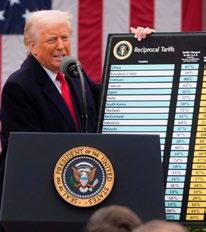
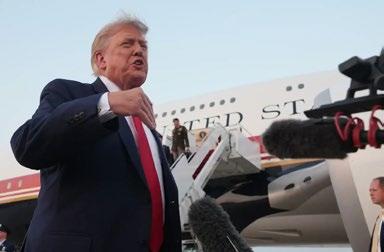
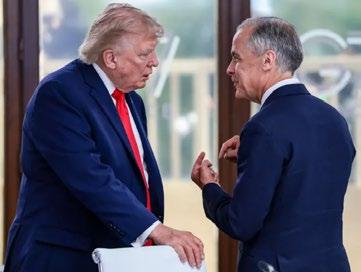
President Donald Trump on Monday imposed 50% tariffs on most Canadian goods, declaring that Canada has unfairly discriminated against American autos, alcohol and dairy products. The move could unleash a new wave of economic chaos, with risks of higher inflation and further fraying of relations between two nations that had been closely woven together before Trump's return to the White House. Continued on Page 9...
India’s cockroach politics is no joke
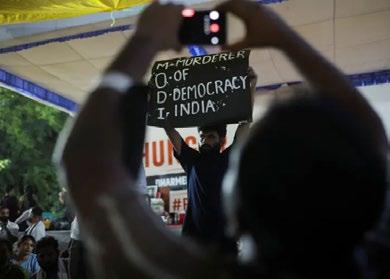
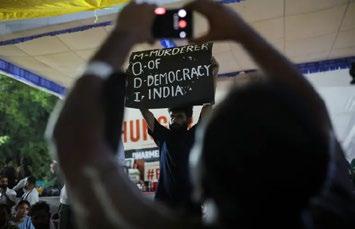
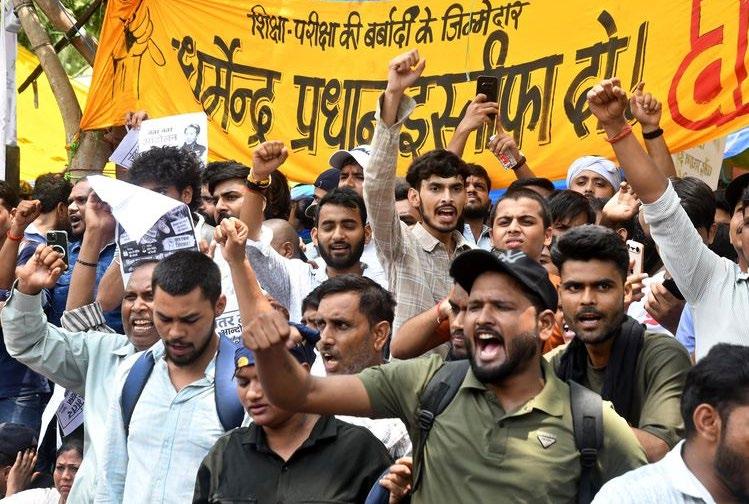
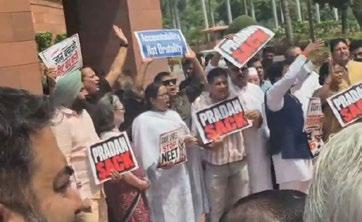
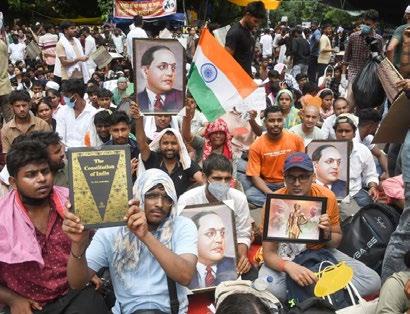
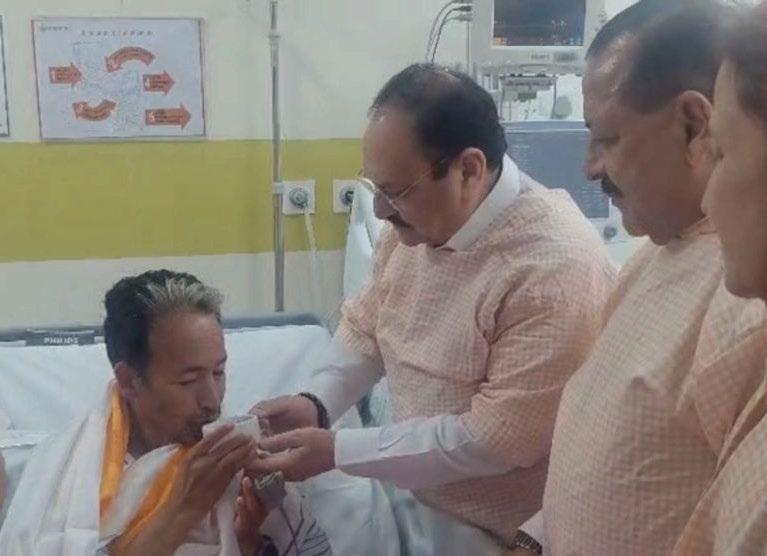
Two months after the Cockroach Janta Party (CJP) went viral in India, its followers have entered dangerous territory. Police forcefully removed educator-activist Sonam
Wangchuk from the CJP’s sit-in at Delhi’s Jantar Mantar observatory, taking him to hospital against his will on the 21st day of his indefinite hunger strike. Protesters rallied at the site while CJP founder Abhijeet Dipke began his own hunger strike. The demonstrators plan to march towards the Indian Parliament on Monday to demand the resignation of Education Minister Dharmendra Pradhan over university entrance exam leaks that caused nationwide outrage and wider failures of accountability in India’s competitive examination system. Continued on Page 10...
2 Brampton MPPs caught up in $121K hotel tab controversy; NDP targets Grewal with ethics complaint India reopens one of
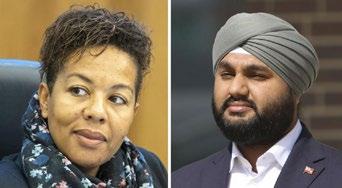
A pair of Brampton MPPs are under fire after expensing tens of thousands of dollars in hotel stays in neighbouring Toronto, with one of them facing a potential ethics probe over an alleged conflict of interest.
Brampton Centre MPP Charmaine Williams and Hardeep Grewal (Brampton East), who both reside in Brampton, are among several GTA Progressive Conservative (PC) MPPs under pressure by the opposition amid the growing scandal.
While hotel expenses are permitted in emergency situations, such as snowstorms, according to a new website launched by the Ontario NDP called RespectForTaxpayers. ca, since 2023, Williams expensed $15,865 for hotels in Toronto, while Grewal expensed $27,275. Continued on Page 10...
He may not have anything on his official itinerary, but it’s a safe bet that Prime Minister Mark Carney and his team will be devoting most, if not all, of their time, energy and political focus to the latest tariff threats to emerge from south of the border, courtesy of yesterday’s late-afternoon reveal that U.S. President Donald Trump has signed off on a fresh executive order that would impose a 50 per cent levy on a wide variety of Canadian products — including, but not limited to “hockey sticks, wine and cement,” as Canadian Press reports. Continued on Page 9...
world's oldest nuclear power plants
When the Tarapur Atomic Power Station opened in 1969, India was a proudly independent nation, keen to make a name on the global stage. The country was developing at a rapid pace and economic self-reliance was front of mind in the wake of massive famines and wars with its neighbours.
And as India restarts those reactors at Tarapur almost six decades later, it is gripped by somewhat similar concerns. It is riding a wave of nationalism led by the Modi government and working to become the next global superpower. The country is still fighting the occasional skirmish with China and Pakistan and doubling down on selfreliance. And the restart of Tarapur this year, now one of the oldest nuclear power plants in the world, tells a story about India's ambition, defence priorities and reliance on countries like Australia. Continued on Page 9...
B.C. wildfires force closure of 2 major highways linking Lower Mainland, Interior
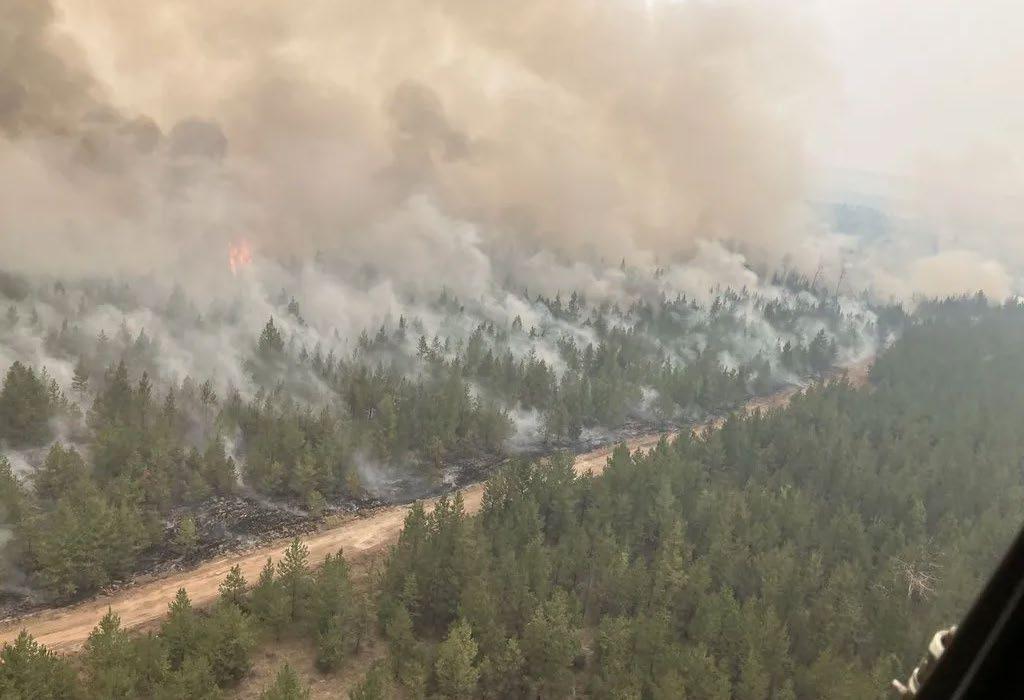
Two major highways in B.C. are closed due to wildfires burning in the province.
A new wildfire sparked on Tuesday night south of Boston Bar, forcing the closure of Highway 1 and prompting a plea from officials for those in the area to leave immediately.
The communities in that area are now surrounded by fire to the south, west and northeast.
The Anderson Creek wildfire, which is an estimated 1,000 hectares in size, is burning south of the community of Hicks.
The Brunswick Creek wildfire, burning north of North Bend, is now an estimated 5,389.6 hectares in size.
The Ainslie Creek wildfire, burning on the east side of the Fraser River, is an estimated 16,499 hectares in size.
Meanwhile, Highway 3 is closed at Manning Park, leaving only Highway 5 as the artery connecting the Lower Mainland with the Interior. In the eastern part of the province, wildfire officials said that more resources are on the way to help battle two wildfires near Kimberley. The Matthew Creek wildfire is an estimated 567 hectares and has placed the entire community of Kimberley on evacuation alert. The nearby Tower Creek 2 wildfire is an estimated 250 hectares. There are currently 88 wildfires burning in B.C., 11 of which started in the last 24 hours.
Aggressive wildfire near Clinton forces expanded evacuation order, alert
An evacuation order and an alert were expanded on Thursday due to an aggressive wildfire near the Village of Clinton.
There are now approximately 193 properties on evacuation order and 104 properties on evacuation alert due to the Fiftynine Creek wildfire in the Thompson Nicola Regional District.
The Village of Clinton issued an evacuation alert for all properties within its boundaries on Wednesday night due to the fire, which was discovered last Friday and is burning northwest of town.
At last update, the wildfire service says it’s more than 10,800 hectares.
The fire has also prompted an expanded evacuation order around the Big Bar Lake and Meadow Lake areas. In addition to Clinton, the city of Kimberley in the East Kootenays remains on evacuation alert because of the Matthew Creek fire. Evacuation orders and alerts have been issued due to a large out-of-control wildfire burning in a rural area northwest of Lillooet. The Bonanza Creek wildfire was sparked on Monday by lightning and is now 4,000 hectares in size.
It’s triggered an evacuation order for areas within the South Chilcotin Mountains Provincial Park.
Big Creek Park is also under evacuation alert.
A wildfire northwest of Quesnel is also
prompting evacuations.
The Bourgeois Creek fire was discovered on Wednesday and last measured 300 hectares. It has led to evacuation orders for rural areas around Batnuni Lake and Comstock Lake.
The BC Wildfire Service says smoke from the fire will be highly visible to surrounding communities. Two major highways connecting the Interior with the Lower Mainland remain closed on Thursday, as out-of-control wildfires continue to burn.
The fast-moving Anderson Creek wildfire had officials urging everyone still in Boston Bar to leave Tuesday.
While the community was already under evacuation order for the Brunswick Creek and Ainslie Creek fires, some residents were not heeding that order.
People fleeing had to go north, as highway one is closed in both directions at Hell’s Gate.
“That new start, the fire behaviour was extreme, seeing like a rank 6, rank 5, rank 6 fire behaviour pretty initially after it ignited, which basically means it is burning so vigorously that it’s fairly unsafe for responders to be fighting it,” Morgan Blois with the BC Wildfire Service said.
Highway 3 is also closed in both directions due to the Norwegian Creek wildfire burning in Manning Park and sized at 900 hectares.
Vancouver daytime mall shooting caught on video
The shooting at a North Vancouver mall on Tuesday afternoon was captured on video by multiple witnesses, with many of those videos circulating online.
They show RCMP officers with their guns drawn, yelling at the suspect to get on the ground.
The man appears to ignore them.
Witnesses told Global News on Tuesday that the suspect was seen holding a knife to a woman’s throat inside a McDonald’s at the Westview Shopping Centre when another man intervened.
“He pulls out a knife and takes one of the employees hostage,” witness Arman Abadi said.
“Most people run out of the restaurant. I wait inside, trying to see what’s going on.” Abadi jumped into action.
“He turns his back to me, I wrestle with him, get the knife away from him, throw it under the table and I start fighting,” he said. North Vancouver RCMP said the suspect got into a vehicle in the parking lot and then crashed into several
parked cars. Witnesses told Global News they even saw the suspect attempting to pour gasoline on himself before getting into an unoccupied RCMP SUV.
RCMP said a taser was deployed and several shots were fired. The suspect, who has not been named, was rushed to the hospital, but later died from his injuries. The Independent Investigations Office is now looking into what happened and asking witnesses to come forward.
“Especially interested in speaking to people who were at the gas station during the incident and who witnessed the interaction between the man and police take place, or who may have recorded it at that point,” Simon Druker, spokesperson for the Independent Investigations Office, said.
Anyone can contact the office toll-free at 1-855-4468477 or via the contact form on the iiobc.ca website.
Trump’s 50 per cent tariffs ‘won’t affect prices here at home,’
Canadian trade expert says
President Donald Trump levied a 50 per cent tariff on Canadian exports through reviving an obscure 1930s act, but trade expert Joseph Steinberg says the measures are expected to affect only a small share of trade between the two countries.
The United States President signed an executive order reviving Section 338 of the Tariff Act of 1930 to impose a 50 per cent tariff on Canadian goods — many that are currently protected under the Canada-U.S.-Mexico Agreement (CUSMA).
Section 338 is a piece of legislation from the Great Depression-era that has never been enforced before. Trump revived the bygone law due to a belief that Canada is discriminating against American products.
The three proclamations Trump signed each cover a different grievance he has against his neighbour up north: dairy, alcohol, and the auto sector. However, the latter is a bit of a misnomer. The products covered under the auto grievance include animal byproducts, flowers, vinyl flooring, jewellery, and more.
Will Canadians pay more?
Although the number may seem economically devastating on paper to the average Canadian, Joseph Steinberg, a professor of economics at the University of Toronto well-versed in tariffs and trade policy, said there’s not much need to worry. By his calculations, only about five per cent of domestic exports to the U.S. will be affected.
“It is important to mention that this slate of tariffs is not going to be hugely economically disruptive on either side of the border,” Steinberg explained.
“This 50 per cent headline number is big, but my calculations indicate that only about five per cent of our exports to the US would be affected. Some specific products are obviously going to get hurt. But in the grand scheme of things, it’s not actually that big of a deal.”
Why now?
While this new slate of tariffs won’t really disrupt regular life for Canadians, the timing is suspect for a few reasons. Firstly, Trump’s global tariffs of 10 per cent, which he implemented under Section 122 of the Trade Act of 1974, is set to expire this Friday, July 24. Steinberg said Trump “does have to find some other ways to reinstate his global tariff agenda.”
Second, Trump has been less than pleased with the raging wildfires in Northwestern Ontario that have caused smoke to drift to U.S. states bordering the Great Lakes. The travelling smoke has triggered air quality warnings states including Michigan, Maryland, New York, and Pennsylvania.
He has suggested Canada should compensate the United States over wildfire smoke drifting across the border, comments that have sparked criticism from Provincial and Federal leaders.
“The wildfires could be part of it in that this is probably the single time in the last year and a half where Canada has had — rightly or wrongly — the least amount of goodwill amongst politicians from border states in the U.S.,” Steinberg explained.
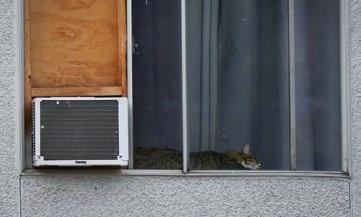
For the second day in a row, hot temperatures across the province have led to a record-breaking demand for electricity.
As people try and get some relief from the heat, BC Hydro says air conditioning use contributed to a new record on Wednesday, breaking the all-time high established on Tuesday.
The utility says customers used the most electricity in the evening between 5 p.m. and 6 p.m.
Demand reached 8,870 megawatts on Wednesday, up from 8,715 megawatts at the same time on Tuesday. The previous record of 8,652 megawatts was set in August 2025.
BC Hydro says their hydroelectric system has performed reliably, but that they will continue to monitor systems closely.
Heat warnings that have blanketed the southern half of the province this week have receded, ending in Metro Vancouver, the Fraser Valley, the Sunshine Coast, portions of Vancouver Island and the North Coast.
But more than 20 heat warnings remain in place, including in the Fraser Canyon, the Okanagan, Kootenay, Shuswap and Cariboo areas.
Trump’s new 50 percent Canada tariffs: What products are affected and why?
United States President Donald Trump has imposed new 50 percent tariffs on a range of Canadian goods, threatening to further strain ties with its second-largest trade partner.
The tariffs, announced on Monday and scheduled to take effect in 30 days, cover a range of items, including wine, hockey sticks and cement, according to a White House fact sheet. The White House claimed “discriminatory treatment” from Ottawa against US alcohol, automobile and dairy products behind the latest tariffs.
Last week, Trump had threatened Canada with increased tariffs over a wave of wildfire smoke that descended on the US. Here’s a breakdown of which products are affected and why.
What goods are affected?
Trump invoked Section 338 of the Tariff Act of 1930, the first recorded use of the law in nearly a century of its existence. The law permits the president to impose punitive tariffs of up to 50 percent against trading partners deemed to have discriminated against US goods.
trade deficit with Canada was $46.4bn in 2025, according to Washington, and Canada’s oil and gas are the main source of the deficit.
The latest duties will not apply to oil, gas, critical minerals, potash, and goods already impacted by sector-specific tariffs, the White House said.
What has the US said?
The Trump administration says the new tariffs would apply regardless of whether the product was included under the existing United States-MexicoCanada Agreement (USMCA), the free trade agreement between Canada, the US and Mexico (known as CUSMA in Canada). Washington already has active tariffs ranging from 15 to 50 percent on Canadian copper, aluminium and steel, alongside a 25 percent tax on non-US parts in cars.
The slapping of import taxes on goods ranges from wine to cement and ice hockey gear. The new tariffs would also apply to dairy products, swimming pools, furniture, fishing rods, seeds, clothing and wigs, among other items.
The US Trade Representative’s office said that the tariffs would apply to nearly $20bn of imports from Canada – about 5.2 percent of the $382bn worth of goods that the US imported from Canada in 2025.
Trump has also cited the trade deficit with Canada behind his sweeping tariffs. The US goods
Announcing the new tariffs, the White House said Canada was the only country, other than China, to retaliate against Trump’s tariffs last year.
“Canada has taken US alcohol products off Canadian shelves, given better market access to dairy products from the European Union, and has put a cap on US vehicle exports to Canada from companies reshoring to the United States,” US Trade Representative Jamieson Greer argued in a statement.
The tariff announcement aims to “hold Canada accountable for its retaliation and discrimination”, he added. The White House further claimed in its fact-sheet: “The United States, under President Trump’s leadership, did not agree to renew the [USMCA] in its current form, because the deal is not sufficiently beneficial for the United States.”
9
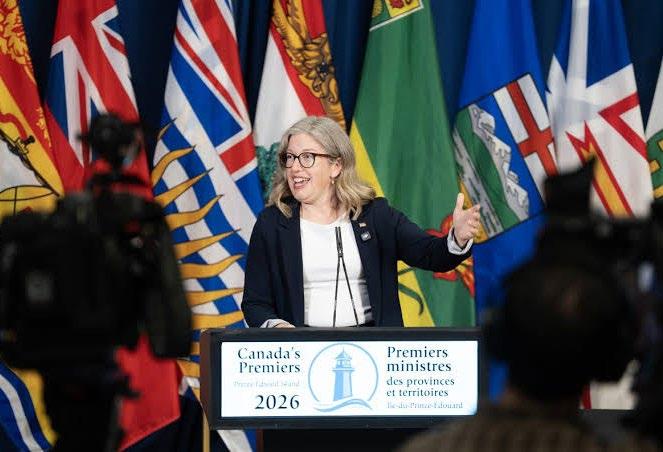
The premiers of nine provinces announced Tuesday that they’re removing major barriers to interprovincial sales of alcohol.
Provincial rules will be changed to allow brewers and distillers to sell alcohol directly to consumers regardless of jurisdiction.
The agreement knocks down a number of trade barriers across the country. Direct-to-consumer sales of beer, wine and spirits manufactured in one province and shipped to consumers in another have been largely governed by itemspecific agreements between provinces or were effectively prohibited.
“Canadians can get the benefits of these products, strengthening internal trade — being our own best customer at a time when it really matters,” New Brunswick Premier Susan Holt told reporters in Charlottetown, where premiers are meeting this week. New Brunswick and Manitoba had already dropped the barriers before Tuesday’s announcement.
Not all provinces signed on. The premiers of Quebec, the Yukon, the Northwest Territories and Nunavut didn’t sign the deal. However, a statement released by those who did sign said Quebec and the Yukon were working to join in the near future.
The new trade system is effective immediately, but British Columbia said it is aiming for next February to get regulations in place.
Tuesday’s deal stems from a
memorandum signed by all the provinces and the Yukon in 2025 to take action on the file.
The new agreement comes after U.S. President Donald Trump announced this week a plan to implement steep tariffs on Canadian beer, wine and spirits.
Ontario Premier Doug Ford and Nova Scotia Premier Tim Houston said those new duties mean it’s more important than ever for governments to build an economy free of interprovincial trade barriers.
“Today’s agreement will open new markets and new choice and convenience for producers and customers in Ontario and across Canada,” Ford said in a statement.
Alberta Premier Danielle Smith said the same new opportunities are now open to producers in her province. She said the next step will be clearing the way for barrier-free retail sales across the country.
Carney says he and Trump will intensify trade negotiations after US imposes 50% tariffs
VANCOUVER, British Columbia (AP) — Canadian Prime Minister Mark Carney said Tuesday that he and Donald Trump have agreed to intensify negotiations on a trade agreement between Canada, the U.S. and Mexico a day after the U.S. president announced 50% tariffs on most Canadian goods.
Carney’s comments came after Trump declared that Canada has unfairly discriminated against American autos, alcohol and dairy products. The new tariffs were scheduled to come into effect 30 days from Monday.
“I spoke this morning with the U.S. president and we agreed to deepen and speed up our negotiations over the next few weeks,” Carney said in Ottawa. “Canada will do all that is necessary to support our jobs, our workers, our farmers and to make Canada stronger, more independent and more resilient.”
The tariffs could unleash a new wave of economic chaos, with risks of higher inflation and further fraying of relations between two nations that previously had warm, close ties before Trump’s return to the White House. The administration official previewing the action Monday said Canada was one of the only nations other than China that retaliated against Trump’s previous tariffs and must be held accountable.
The US did not renew the US-Mexico-Canada Agreement
The new 50% tariffs would exclude energy products, potash, fish and critical minerals, but would include goods previously protected from import taxes by the United States-MexicoCanada Agreement, or USMCA. That 2020 trade pact was not renewed by the U.S., triggering a new set of negotiations that could run until 2036.
Carney said he planned to meet virtually with the country’s premiers later in the day Tuesday.
British Columbia Premier David Eby was blunt in
his criticism of Trump and the proposed tariffs.
“This feels like an increasingly desperate and flailing approach to relationships with our country,” he said in Charlottetown, Prince Edward Island, where premiers and territorial leaders were meeting. “There’s no question it will hurt families in British Columbia.”
Eby said Trump is wrong to think he can “bully us into whatever he wishes.”
“I feel sorry for Americans,” he said. “If you can’t be friends with Canada, then you almost certainly do not have friends anywhere in the world, and that is a very lonely place to be.” Saskatchewan Premier Scott Moe said tariffs hurt both countries.
“When tariffs are applied it increases the cost for families and to do business on both sides of the border,” he said. “These tariffs do nothing for making a more competitive North American economy.”
Premier urges Canada to be more aggressive with Trump
Ontario Premier Doug Ford said Canada should stand up to Trump.
“We always seem to be on our back heels,” he said. “We need to be on the offense. Not constantly on the defense with President Trump. We need to stand up to the bully, and we need to hit him tariff to tariff, all the way across the board.”
Trump on Tuesday told reporters in the Oval Office that he loves the people of Canada but claimed the country needs the United States to survive. “Canada’s been very, very tough on us over the years, for many years, and no other president’s done anything about it,” he said.
Trump added that the new tariffs are separate from his threats to hit Canada with additional levies due to wildfire smoke that affected millions of people in the Great Lakes, Northeast and MidAtlantic regions of the U.S. He repeated his claim that Canada is not managing its forests properly.
Ph: 604-591-5423
Fax: 604-591-8615
editor@theasianstar.com
Editor: Umendra Singh
Marketing and Sales: Ravi Cheema
604-715-3847
Shamir Doshi
604-649-7827
Harminder Kaur
778-708-0481
Parminder Dhillon
604-902-2858
Pre-Press: Avee Waseer
Production: Ozmo Media
www.theasianstar.com
Crime rates dropped across most of the country in 2025: Statistics Canada
Statistics Canada reports that both the rates and severity of crime were down almost across the board in 2025.
The agency said on Wednesday Canada's crime severity index dropped five per cent last year for the second annual decline in a row.
The index — which measures both the number of crimes compared to population and the relative severity of all police-reported crimes — stands at 75.01 after rising to 81.27 over the previous eight years.
Declines in the crime severity index were recorded in every province and territory except New Brunswick and Nunavut, and in most major cities.
The conventional crime rate, which tracks the volume of crimes regardless of their severity, edged down two per cent in 2025.
Most of StatsCan's crime metrics are represented as a share of population. The crime rate stood at 5,585 incidents per 100,000 people last year.
StatsCan said the reduction in the crime severity index was driven by the rate of break-and-enter cases falling for a third year in a row. Last year's 11 per cent decline brought the rate of breaking and entering to 264 incidents per 100,000 people.
There were 125 fewer homicides reported in 2025 than the year before, bringing the national rate to its lowest level since 2014. StatsCan said last year's 16 per cent drop in the homicide rate was the largest annual decrease on record since 1986.
Offsetting 2025's declines in the crime rate was a rise in shoplifting for the fifth year in a row. Police reported 208,941 incidents of shoplifting in 2025, a rate of 502 incidents per 100,000 people, up 11 per cent since 2024.
StatsCan said fraud was down in 2025 but the rate of fraud cases is still 61 per cent higher than in 2015, reflecting a surge in reported cases over the past decade. Extortion — a violent crime often linked to fraud — was down for a second year in a row. But the rate remained three times higher than it was a decade ago.
Motor vehicle theft was down in 2025 for the second consecutive year, after three years of increases. StatsCan said the rate of car theft was nine
per cent below 2015 levels and 64 per cent lower than the peak in 2023.
The rate of child sexual abuse and exploitation materials was down 21 per cent to 36 incidents per 100,000 population in 2025, though StatsCan cautioned these incidents are typically undercounted in official data.
Liberals claim to be the party of law and order now. Inside the party's about-face on crime
The rise of generative artificial intelligence is one factor leading to a surge in cases of child sexual abuse
and exploitation materials that police sometimes lack the resources to tackle, the agency said.
The number of hate crimes fell slightly, from 4,841 incidents in 2024 to 4,708 in 2025. The three per cent drop followed a significant increase from 2018 to 2024, when hate crimes more than doubled.
StatsCan said the decline in 2025 was mostly driven by a drop in hate crimes targeting religion and sexual orientation. It said it tracked an increase in other types of hate crimes, such as those targeting disability, sex or gender and newcomers to Canada.
The Liberal government passed three tough-oncrime bills in June, which introduced new offences to the Criminal Code, made it more difficult to get bail for a variety of crimes and restored mandatory minimum imprisonment penalties.
The bills came after a 2025 federal election campaign which also saw the federal Conservatives — who had long attacked Liberal justice policies as too lenient — pitched policies to crack down on crime.
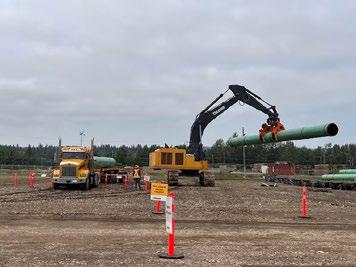
Enbridge is beginning construction on a $4 billion expansion of its West Coast Natural Gas pipeline.
The Sunrise Expansion Program will provide up to 300 million cubic feet per day of additional transportation capacity for natural gas in B.C.
Tim Hodgson, the federal minister of Energy and Natural Resources said the project started at a ceremony in Prince George, when the city's Mayor Simon Yu signed the turquoise pipeline with a marker, alongside Lheidli T'enneh Chief Dolleen Logan and B.C.'s Minister of Jobs and Economic Growth Ravi Kahlon.
"Today we're turning the page from plans to action," said Hodgson, adding that it took just
three months to break ground after receiving federal approval. The expansion will add additional pipeline loops, sections of the pipe added to the existing system to increase its capacity.
Five 42-inch diameter pipeline loops will be installed on the southern portion of the West Coast system, which stretches from southwest of
Chetwynd, B.C., to the Canada-U.S. border in the Fraser Valley.
Hodgson says the project will support B.C.'s industrial and manufacturing sectors and ensure natural gas supplies are available as LNG export facilities, including Woodfibre LNG, begin operation. "That is energy British Columbians can rely on for their homes, their businesses, their schools and their hospitals. It's also the energy that ensures we never compromise domestic energy security or affordability even as we ramp up our LNG exports off the West Coast as part of our mission to double our non-U.S. trade."
He says the it will add over $3 billion to Canada’s GDP as the country expands Canadian natural gas exports to Asian markets. It will also create 2,500 jobs, including for local Indigenous communities, and generate $700 million in tax revenue to fund local roads, hospitals, and schools.
Enbridge says 1,300 of the jobs will remain local and over $2.4 million is expected to be paid in municipal property taxes within the Fraser Fort George Regional District each year over a 35year period. The groundbreaking follows Canfor's recent announcement that it will be permanently closing the Northwood pulp mill, putting roughly 300 people in Prince George out of work.
"This community, the workers that are involved, the unions that are involved, the Indigenous nations that are involved, the governments that are involved and, and supporting this are all making it better for millions of Canadians," said Enbridge CEO Greg Ebel.
The project will also use domestically produced materials, including 100 per cent Canadian melted and poured steel supplied by InterPro Pipe + Steel from Saskatchewan.
Last year, 38 Indigenous communities in British Columbia acquired a 12.5 per cent ownership interest in Enbridge’s Westcoast natural gas pipeline system, supported by the first-ever federal Indigenous Loan Guarantee.
"Sunrise Expansion Project represents far more than new infrastructure. It reflects what is possible when First Nations are involved," said Lheidli T'enneh Chief Dolleen Logan.
"We all bring different perspectives, but we share a common goal, creating lasting benefits while respecting the people and the lands that sustain us," she said.
Ebel says the project will be completed near the end of 2028.
Howe Bridge opening after new tariffs
Canadian government officials will no longer be celebrating the opening of the Gordie Howe International Bridge with American representatives at this week’s ribbon cutting event, Ottawa said Tuesday after U.S. President Donald Trump threatened steep new tariffs on Canada.
“In light of trade action threatened by the United States earlier this week, it would be inappropriate to proceed with a celebratory event between the two countries,” a spokesperson for Infrastructure Minister Gregor Robertson’s office said in an emailed statement.
“What I can tell you is that in terms of the agreement, it appears that there’s no distance between us and the Canadian government,” U.S. Ambassador to Canada Pete Hoekstra told Global News in an interview last week.
“We’ll have a ceremony on July 24. I expect that the people who made that agreement (agree) that it will open on the 27th.” However, Robertson’s office suggested Friday’s ceremony will instead be celebrated separately by the Canadians and the Americans, after Trump on Monday signed executive orders to impose 50 per cent tariffs on several Canadian goods in 30 days’ time.
The bridge is scheduled to open to traffic on July 27 under a new revenue-sharing agreement with the U.S. that was struck after Trump delayed the opening by over a month.
A joint Canada-U.S. ribbon cutting ceremony was set for this Friday ahead of the opening.
Following the new deal, Canadian and American officials have sought to portray the opening of the bridge as a symbol of enduring ties between their nations despite economic and diplomatic tensions with the Trump administration.
Robertson will join other federal officials at the Canada-only ceremony.
“The Gordie Howe International Bridge remains a vital infrastructure project that reflects years of hard work and will be a major economic driver in the region, expanding options for commuters, tourists, businesses, and families,” the Canadian statement said.
“In turn, we remain committed to opening the bridge on July 27, and to celebrating this milestone among Canadians on July 24.” The statement noted the deals struck with the U.S. over the bridge “remain unchanged.”
The 15-year agreement to open the bridge connecting Windsor and Detroit is separate from the deal Ottawa signed in 2012 under the Harper government, which committed Ottawa to shouldering the full $6.4 billion cost of building the bridge while sharing ownership with Michigan.
Under that plan, which was approved by Trump during his first term, the two sides would split toll revenues only once Canada’s construction debt, including interest, was paid off.
Nanaimo ‘stranger homicide’ suspect previously convicted of assaulting teen in alleged abduction attempt
The man accused of killing a Nanaimo grandmother in what RCMP have described as a “stranger homicide” was previously convicted of assaulting a teen in an alleged abduction attempt, and was set to be tried on separate charges Wednesday.
Cameron Alexander Compton, 32, is accused of eight allegations against an intimate partner between April 1, 2025 and mid-November –including assault by choking on Nov. 14 and mischief by damaging a television on Nov. 15. His judge-alone trial in Nanaimo provincial court was adjourned to Aug. 4 to set new dates.
Compton was charged Monday with the seconddegree murder of Sherry Shelley near Lantzville and interfering with human remains in Nanaimo from Nov. 13 to Nov. 14, 2025.
Shelley, 64, vanished from north Nanaimo on the evening of Nov.l 13 and was found dead hours later following a vehicle fire in a wooded area on College Drive near the Highway 19 intersection. Compton also has a judge-alone trial scheduled to start Aug. 25 in Nanaimo on two other allegations involving an intimate partner.
He’s accused of failing to comply with a nocontact order, and wilfully attempting to obstruct, pervert or defeat the course of justice between Nov. 18 and Dec. 3 of 2025.
Court records indicate Compton has been in custody without a bail hearing since Nov. 18 of last year.
Criminal lawyer and former prosecutor Rob Dhanu, K.C., said the serious intimate partner violence charges, the possibility of Crown counsel alleging an outstanding murder probe, and Compton’s criminal record would likely have all been factors in any decision not to seek bail.
India’s expanding maritime power is becoming indispensable to Israel and the West
For decades, global security discussions have focused on who controls the world’s most important maritime chokepoints: the Strait of Hormuz, Bab el-Mandeb, and the Strait of Malacca. These narrow waterways connect the energy resources of the Middle East, the manufacturing centers of Asia, and the consumer markets of Europe and North America. Yet the deciding question of the coming decades may not be who controls these routes, but who can help keep them open.
This is precisely where India’s role is becoming increasingly important.
For Israel, the United States, and the EU, India is not simply a story of economic growth or a rising defense superpower. It is emerging as a strategic partner capable of strengthening the global maritime system at a time when trade routes, energy security, and geopolitical stability are under mounting pressure, particularly in the aftermath of the recent US-IsraelIran war. A glance at the world map makes India’s greatest advantage immediately clear: its geography. Located at the center of the Indian Ocean, India sits between the energy-producing regions of the Middle East, the emerging economies of Africa, and the manufacturing powerhouses of East Asia. Its western coastline faces the maritime routes connecting the Persian Gulf and the Red Sea, while the Andaman and Nicobar Islands (belonging to India) provide strategic access to the Strait of Malacca, which is the gateway between the Indian Ocean and the Pacific.
shipping in the Red Sea by the Houthis have demonstrated this reality. A conflict thousands of kilometers away can rapidly increase shipping costs, disrupt supply chains, and remind countries around the world of their vulnerabilities.
India is increasingly positioning itself as a country capable of addressing these challenges.
Economically, India is already one of the most important energy markets in the world. It is the third-largest oil consumer globally, one of the
largest LNG importers, and a major refining power. India currently has approximately 258 million metric tones per annum of refining capacity, with plans to expand this to around 310 million tones by 2030.
The Gulf states depend on reliable energy markets, and India represents one of the largest and fastestgrowing destinations for their exports. India–Gulf Cooperation Council trade reached approximately $178 billion in 2024-25, demonstrating the depth of economic interdependence between India and the Middle East.
of thousands of seafarers. During the increase in maritime attacks in 2024, India deployed more than 30 naval ships, responded to numerous incidents, rescued hundreds of people regardless of nationality, and escorted commercial vessels carrying billions of dollars of cargo.
Furthermore, India is upgrading military infrastructure in the Nicobar Islands to strengthen its position near the Strait of Malacca and counter China's Indian Ocean ambitions. These operations demonstrate an important reality: India is not simply benefiting from global trade. It is increasingly contributing to protecting it. For Israel, Europe, and the United States, this distinction matters.
The future of security will not only depend on advanced weapons systems or military alliances. It will also depend on robust supply chains, secure energy routes, and the ability of trusted partners to maintain freedom of navigation. The ongoing USIran tensions in the Strait of Hormuz underscore this reality.
Few countries are positioned so naturally to influence the movement of global trade.
This geography matters because the modern economy depends on maritime connectivity. A disruption in the Red Sea affects European shipping. Instability around the Gulf affects global energy prices. Threats in the Indian Ocean affect Asian supply chains. The attacks on commercial
However, what is interesting to note is that India's importance extends beyond being an energy consumer, as it is also becoming a stabilizing force in the maritime domain.
Since beginning sustained anti-piracy operations in the Gulf of Aden in 2008, the Indian Navy has helped secure international shipping routes, protecting thousands of merchant vessels and tens
India is uniquely positioned because it combines several strategic advantages, besides its geographic location. It has a large economy, an expanding navy, a growing industrial base, and relationships across multiple regions. It maintains strong ties with Gulf countries, deepening relations with Israel, a long-term partnership with the United States, and increasing engagement with Africa and Europe. While India's continued trade and diplomatic relations with Iran and Russia may not always align with the preferences of Western partners, this strategic autonomy can also be an asset. India's ability to maintain dialogue with competing powers gives it a degree of diplomatic flexibility that few other major economies possess.
The relationship between India and Israel has evolved far beyond traditional defense cooperation. Israel has become an important technology partner for India, while India provides Israel with industrial scale and manufacturing capacity.
PM Carney, opposition parties and premiers criticize Trump’s latest tariff threats
Continued from Page 1...
“(U.S. Trade Representative Jamieson Greer) said the measure is a response to provincial bans on U.S. liquor, Canada’s supply managed dairy system and quotas on certain U.S. vehicles,” and is set to come into force in 30 days, CP notes.
“A senior White House official, who spoke to reporters on background on condition they not be named, said that, unlike many of Trump’s other tariffs, the new duties will have no exemptions for
goods compliant under the Canada-U.S.-MexicoAgreement on trade, better known as CUSMA, (but) will not apply to energy, potash, fish, critical minerals or other goods already being slammed by Trump’s separate sector-specific tariffs on steel, aluminum, automobiles and cabinetry.”
In a statement issued on Monday evening, Carney described the move as “the latest in a series of unilateral U.S. trade actions that began with the U.S. imposing a series of tariffs in direct violation of the Canada-United States-Mexico Agreement (CUSMA),” while Canada, “as is its right, has merely matched those measures,” he noted.
“More broadly, in response to these measures and threats to Canadian sovereignty, provinces, territories, and Canadians from coast to coast to coast have stood together, taking the necessary actions to support our economy and defend our workers, farmers, businesses, and families.”
In closing, the prime minister reiterated that Canada “has made a series of detailed and comprehensive proposals to resolve this dispute and to modernise CUSMA,” and “stands ready to intensify those discussions in the coming weeks.”
Several premiers also took to social media to share their response to the news, including Ontario Premier Doug Ford, who vowed that he will “never stop fighting to protect Ontario,” adding: “If these tariffs proceed, Canada should respond tariff for tariff, dollar for dollar.”
Saskatchewan Premier Scott Moe called the threats “unjustified,” and “will drive up prices and kill jobs on both sides of the border,” but pointed out that the tariffs “do not take effect for 30 days and the US has backed away from their most severe tariff threats in the past.”
His Alberta counterpart, Danielle Smith, noted that tariffs are “an economically destructive policy and have been proven time and again to hurt the people of the countries that impose them,” and added that the premiers would be meeting with Carney later this week in Charlottetown.
“(I) will reaffirm my position that the path to a positive resolution with our U.S. partners lies in strong, consistent diplomacy and a commitment to working to address shared priorities,” she pledged.
B.C. Premier David Eby was even more succinct, telling reporters: “If you’re picking fights with Canadians, you don’t have a friend in the world.”
He also said he “has also asked staff to contact the U.S. Embassy to have his government’s statement marking the two countries’ friendship removed from the U.S. 250th birthday website,” CBC News reports. For their part, Conservative MPs Shuvaloy Majumdar, Eric Duncan, Stephanie Kusie and Pierre Paul-Hus co-signed a joint response on what they described as the “latest unjustified U.S. tariffs.”
Trump imposes 50% tariffs on Canadian goods
Continued from Page 1...
The administration official previewing the action said that Canada was one of the only nations other than China that retaliated against Trump's previous tariffs and must be held accountable. The official insisted on anonymity on a call with reporters to preview the president's actions and said that Trump signed three proclamations to launch the tariffs under Section 338 of the 1930 Trade Act. Several Democratic lawmakers last year proposed repealing the section because they said Trump could use it to destabilize the economy.
The new 50% tariffs would exclude energy products, potash, fish and critical minerals, but they would include goods that had previously been protected from import taxes by the United States-Mexico-Canada Agreement, or USMCA. That 2020 trade pact was not renewed by the U.S., triggering a new set of negotiations that could run until 2036.
The White House said in a fact sheet that the tariffs would go into effect in 30 days, meaning there is time for negotiations as Trump has not always followed through on his announced tax hikes on imports. Still, the tariffs could escalate into a wider trade war as Canada seeks to defend its economy. The Canadian federal government did not immediately comment on the tariff, but Ontario Premier Doug Ford saw a possible showdown ahead.
"If these tariffs proceed, Canada should respond tariff for tariff, dollar for dollar," Ford posted on social media. The tariffs also pose a threat to other U.S. trading partners, not just Canada, and inject "massive uncertainty" into the global economy, said Scott Lincicome, vice president of general economics at the Cato Institute, a libertarian think tank. "We crossed the Rubicon," Lincicome said. "The invocation of 338 is the nuclear option for
Continued from Page 1...
"As India advances towards a cleaner and more secure energy future, Tarapur continues to stand as a symbol of innovation, resilience and technological excellence," the Nuclear Power Corporation of India said on X. After casting off the shackles of the British Empire, India established an atomic energy commission in 1948.
With fuel from the UK and technology from Canada, it built research reactors in the 1950s but commercial power generation didn't occur until Tarapur opened.
Since then, India has repeatedly set and fallen short of lofty goals to dramatically increase nuclear power. Today, nuclear powers just 3 per cent of the grid, but the government last year announced it would expand that to 10 per cent, or around 100
gigawatts, by 2047. As a share of global generation, nuclear has declined from a peak of 17 per cent in 1996 to 9 per cent in 2024.
"And this is partly because nuclear power plants are very expensive and ultimately just a very complicated way to boil water using a hazardous process," Professor Ramana said.
But the lacklustre rollout of nuclear energy in India isn't just about economics; it's about the politics of nuclear warfare. The reactors at Tarapur had only been running a few years when India made a big decision: it detonated a nuclear bomb.
The underground explosion at the Pokhran testing site in 1974, code-named Operation Smiling Buddha, was ostensibly to advance "peaceful" uses of the bomb, such as mining excavation or canal construction.
Trump tariffs."
The new tariffs carry serious political and economic risks for Trump ahead of the November midterm elections for control of Congress. His "Liberation Day" tariffs last year in April provoked a financial market meltdown over concerns about inflation and a recession, prompting him to walk back the rates for a period of negotiation.
The Supreme Court ruled this February that Trump had lacked the legal authority to impose the tariffs by declaring an economic emergency, causing the administration to find alternative ways to raise import taxes based on a series of legal authorities.
Tariffs are taxes on imports, which companies can then pass along to consumers in the form of higher prices. The president maintains that the costs created by tariffs will cause manufacturing to relocate to the U.S., though there is little evidence of that in the economic data.
The latest import taxes could worsen Trump's weak ratings on the economy. He promised voters when running for the presidency that he would bring prices down, but the annual inflation rate has risen since he became president because the tariffs and the war in Iran are pushing up oil prices.
The Trump administration official said the president had also requested that his aides look into additional tariffs on Canada because its wildfires hurt air quality in the U.S. He had publicly threatened to do so in social media posts.
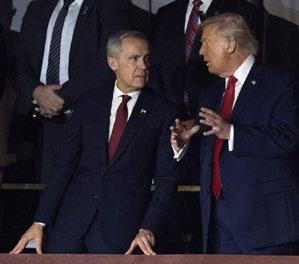
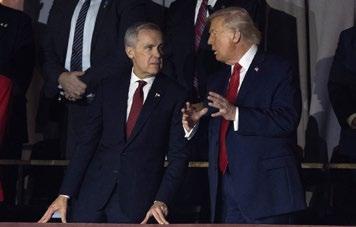
At the World Cup final on Sunday, Trump watched the game with Canadian Prime Minister Mark Carney, who has openly challenged the U.S. president and has sought to expand Canada's trade relations with other nations. The Trump administration official said their time together at the game was not a working visit to discuss trade and tariffs.
CJP calls for nationwide protests on Friday
Shops, offices and restaurants in Connaught Place, a central Delhi locality close to the protest site, have been "strictly advised" to shut down by 6:30 p.m. (1300 GMT) on Thursday in view of a "critical situation."
The urgent advisory was issued by the New Delhi Traders Association, which did not elaborate on the situation it referred to.
Connaught Place is about a kilometer away from Jantar Mantar where hundreds of students and Cockroach Janta Party supporters have been protesting. The Times of India reported that the advisory was issued due to over crowding in and around the area, and that it was a precautionary measure. After an overwhelming response for the march to Parliament on July 20, the Cockroach Janta Party has called for "peaceful" nationwide protests on Friday, July 24. "Every district, one day, one demand," the CJP poster read, with a call to "stand in solidarity with victims of police brutality
across India."
The group directed local students unions and other organisations to collaborate for permissions and logistics. The Cockraoch Janta Party was created as a satire by Abhijeet Dipke, an Indian Student of political communication in the US, after the Chief Justice of India likened the nation's youth to "parasites" and "cockroaches."
It has since gained massive momentum and support from India's youth, gaining over 23 million followers on Instagram — significantly higher that Bharatiya Janata Party's 9.4 million followers.
Despite it's meteoric popularity, the CJP does not have the network of workers and volunteers usually required for a nationwide protest.
That said, the protests in Delhi have already spread to several Indian cities like Mumbai, Bengaluru, Kolkata, Patna, Chennai and Guwahati.
Continued from Page 1...
Both Grewal and Williams, a former Brampton city councillor, were first elected to Queen’s Park in 2022 and won re-election to a second term in 2025. Williams serves as Associate Minister of Women’s Social and Economic Opportunity, while Grewal is Parliamentary Assistant to the Minister of Transportation.
Grewal did not respond to questions and a request for comment from the Brampton Guardian by the time of this article’s publication, but Williams told the Guardian in a onesentence response that, “I will be reimbursing the Legislature in full.”
Mississauga-Streetsville MPP Nina Tangri ($18,976) and Willowdale MPP Stan Cho ($16,203) were also listed among the top four spenders on Toronto hotels.
Cho, who lives just minutes from Queen’s Park, has resigned from his cabinet post as Tourism Minister over the ongoing scandal.
The NDP says 20 PC MPPs who live in the GTA billed a total of $121,409 for overnight stays in Toronto hotels between 2023 and 2026.
The data comes from publicly available legislative expense reports, which can be found here. “People in Brampton, Mississauga, Scarborough and Willowdale don’t get free hotels to go to their jobs. They commute,” said NDP opposition leader Marit Stiles in a July 15 news release. “These MPPs need to come clean about their expenses and the Premier needs to make
sure that every single penny is paid back to the people of Ontario.”
“In 2018, Doug Ford promised the party with the taxpayers’ money was over,” Stiles said. “Turns out, they just moved the party into luxury suites in downtown Toronto hotels. Why are the people of Ontario footing the bill for these MPPs’ lavish lifestyles?” On Friday, during a news conference about ongoing wildfires, Premier Doug Ford called the expenses “unacceptable” and vowed that all the MPPs involved will be required to repay the money in full.
“It’s unacceptable. It’s not how we operate. We have to be prudent fiscal managers,” Ford told reporters. “It’s just unacceptable, and they’re paying back every single penny of it.”
Grewal, who expensed the most on Toronto hotels by a wide margin, is also now facing an integrity commissioner complaint filed by Stiles, alleging he improperly used taxpayer dollars by placing ads in a Brampton-based newspaper owned by his father Jagdish Singh Grewal.
The complaint alleges Grewal used his taxpayerfunded constituency budget to advertise in “The Punjabi Post,” a popular publication among Brampton’s Sikh community.
“MPP Grewal just got caught spending nearly $30,000 on luxury downtown Toronto hotel stays, and now, potentially breaking ethics rules to enrich an immediate family member with tax dollars,” Stiles said in a separate news release on July 20.
India’s cockroach politics is no joke
Continued from Page 1...
There have even been calls for the resignation of Prime Minister Narendra Modi.
The CJP emerged in mid-May after remarks by Chief Justice Surya Kant in which he called unemployed youth “cockroaches”, sparking outrage across the nation. Since then, the “party” has garnered an immense online following among India’s youth and staged massive protests.
Before Saturday’s escalation, the state’s response was neither open accommodation nor an all-out crackdown but calibrated containment: permit protests within narrow limits, police their reach and wait for the coalition to fragment. It now appears that the CJP has unnerved those in power.
It seems it is no longer possible to treat the CJP as another viral storm in India’s crowded and volatile politics, as a satirical youth outfit born on social media, briefly visible on the street and destined to fade as quickly as it appeared. The cockroach has travelled far because it has named a widespread sentiment in society.
To be called a cockroach is to be told that one is dirty, dispensable and best kept out of sight. The cockroach is an ugly, comic, subaltern creature. It is despised, hard to kill and lives in the cracks of polite society. It survives poison, darkness and disgust. It appears when a house is not as clean as its owners claim.
For many young Indians, especially those facing unemployment, exam-paper leaks and rising costs, the insult captured something they already felt. The CJP turned humiliation into visibility. If this is how power sees us, they said, then let us speak in that name. An insult became a badge worn proudly. This is not revolutionary politics. It is tragicomic, even farcical, because the cockroach stands for an India in which vast dreams of upward mobility have come to naught.
“Cockroach politics” emerged at a time when Modi’s Bharatiya Janata Party (BJP) is running a formidable electoral machine with vast resources, ideological discipline and a capacity to convert welfare, Hindu nationalism and opposition fragmentation into votes.
Yet the BJP’s own mandate remains, paradoxically, that of a very large minority. In the
2024 general election, the party won the support of a little more than a third of voters nationally. Put differently, two-thirds of those who voted did not endorse the BJP’s re-election bid, led by Modi. The regime’s power rests not on an empirical majority but on aggregation: regional and caste alliances, opposition defections and splits, and the steady shrinkage of India’s third space between two national parties.
The CJP appeared at a time when electoral politics looks settled from above but untrustworthy from below. The young are angry about a lack of jobs and botched exams. They are also entering politics at a time when the usual democratic channels of expressing public anger – parties, elections, media and independent institutions –look increasingly vulnerable to distortion.
In the aftermath of the COVID-19 pandemic, which sent the Indian economy into recession, more than 800 million Indians depend on food handouts from the government. For the poor majority, food support tackles hunger, keeps households afloat and makes the state visible in everyday life. A welfare floor, however, does not reflect a social compact. It reflects a failure to address structural precarities exposed during the pandemic. At the other end, wealth has concentrated sharply. The richest 1 percent now claims a share of income and wealth not seen in India in the past century. This is no accident. It defines the political economy of the present: welfare below, monopoly above and a tightly squeezed middle, plagued by jobless growth and a sense of blocked aspirations. India has expanded schooling and higher education, but it has not generated enough dignified, stable work for those it has encouraged to aspire.
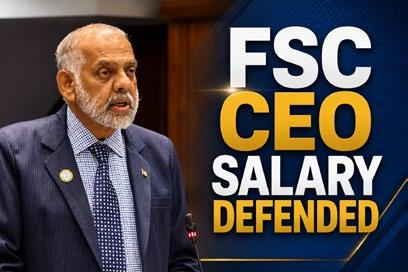
Current FSC CEO paid a fraction of expatriate predecessors – Singh
Employment Minister Agni Deo Singh has defended the remuneration of the Fiji Sugar Corporation’s current chief executive, saying he earns only a fraction of what expatriate CEOs received under the previous administration.
Speaking in Parliament on Tuesday, Singh said criticism directed at FSC workers and management was unfair, stressing that all employees deserved respect regardless of their position.
Responding to comments made by Opposition MP William Pillay, Singh said previous expatriate general managers and chief executive officers were paid significantly higher salaries and benefits.
“When the previous administration had expatriate general managers or CEOs, they were paid around a million-dollar package, three quarters of a million,” Singh said.
about 25 per cent of that,” Singh told Parliament.
Singh said the focus should be on supporting local workers rather than criticising them.
“All workers must be treated with dignity,
“One was staying in Denarau. A $2,000 rent was paid by FSC.” He said the corporation’s current local CEO receives only about a quarter of that remuneration. “The current CEO is probably paid
whether they are senior staff or junior staff,” he said. “Our local workers are all there, and I implore people to respect them, Mr Speaker.”
The minister’s comments came during parliamentary debate on issues affecting the Fiji Sugar Corporation and its workforce.
Human trafficking investigation nears end
POLICE investigation into the alleged human and sex trafficking case of three young women in Nadi is in its final stages.
Allegations by the three women — aged between 16 and 19 — came under the spotlight last month after they sought shelter at the Republic of the Fiji Military Forces Joint Taskforce Command at Black Rock Camp in Nadi, claiming they were sold for
sex by a local business owner.
The trio were taken in by Black Rock Commander Brigadier General Manoa Gadai, who reaffirmed the support of the RFMF in the police investigations.
He said investigations were ongoing with the police and it was expected that all those involved in these alleged acts of human trafficking, sexual exploitation and abuse would be brought before the court of law and held fully accountable.
Police spokesperson Ana Naisoro yesterday said the final stages included transcribing and translation of statements with the file to be compiled and submitted to the Office of the Director of Public Prosecutions for advice.
The three women are currently under the protection of the State.
Grower urges soldiers to be used to harvest sugarcane
A BA cane farmer has called on the Government to deploy Fiji Military Forces personnel to assist with manual sugarcane harvesting, saying a severe labour shortage is delaying the crushing season and contributing to concerns over local sugar supplies.
Yalalevu farmer Arvind Singh said manual harvesting had stalled in many areas because of a lack of workers, despite machine harvesting continuing and some farmers already cutting cane.
“I urge the Minister for Sugar, Tomasi Tunabuna, to please have a discussion with the Minister for Defence, Pio Tikoduadua,” Mr Singh said.
“We have so many army personnel and they can come and help in harvesting so they can make some money too rather than being idle in the army barracks.”
Mr Singh said the military had regularly supported communities following natural disasters and could similarly assist farmers facing labour shortages.
“When the flood happens, the army used to come and help in rebuilding the lives of people, whether it’s their homes, schools and other things,” he said.
“So, this is the time farmers also need them.
“I think the Minister should talk to the Defence Minister if he can arrange some army personnel to come to the sugarcane farms and help farmers. That will be a very big relief for us.”
Mr Singh stressed that farmers were not refusing to harvest their crops.
“Those who have manpower have started harvesting and the machine harvesters have started. It’s only the manual harvesting that is not operating because 90 per cent of the manpower is not there,” he said.
His comments come amid public concern over sugar shortages, with some supermarkets reporting limited supplies in recent weeks.
Former
inmates urged to return to villages
FORMER inmates should be given the opportunity to return to their villages and reunite with their families to help them successfully reintegrate into society, says Tui Nayau Ratu Tevita Uluilakeba.
Speaking at the Bose Vanua ni Yasana o Lau in Suva, Ratu Tevita said traditional village support systems could play a vital role in guiding and nurturing those who had completed their prison sentences. “When they are released and come to stay with us in the village, I believe that, as part of our tradition and the caring nature of Fijians, we must remember that these are our own family members who come from families,” he said. “It will be easy for us to nurture and guide them because they are our own.” Ratu Tevita said former inmates acquired valuable skills while serving their sentences and could use those skills to contribute to their
communities. “They can come and work with us, and they can also teach us what they have learnt while inside.” “That is why I have asked the Fiji Corrections Services to take a look at reopening the Lakeba Correctional facility.”
He said allowing former inmates to return to their villages and families would be the quickest way for them to be accepted back into society.
$650m debt write-off defended
NATIONAL Federation Party leader and Government MP Professor Biman Prasad has defended the Coalition Government’s decision to write off $650million in Tertiary Scholarships and Loans Service (TSLS) debt, saying it relieved thousands of families while replacing an ineffective repayment system with merit-based scholarships.
Speaking during the 20262027 National Budget debate in Parliament yesterday, Prof Prasad responded to criticism from Opposition MP Premila Kumar over the debt write-off. “In the last three years, we’ve done a number of things, and I want to repeat some of those key ones,” he said. “Honourable Kumar talked about how we wrote off $650million
TSLS debt. That helped 53,000 families, who were burdened with an average debt of about $12,000.”
Prof Prasad rejected claims that the Government had forfeited a valuable public asset, arguing that debt recovery under the previous administration had been minimal. “She was saying, ‘No, we’ve lost that $650million. You know what, this is during your time, and out of that $650million debt, on average only about $7 to $8million was collected annually.” He said at that rate, it would have taken decades to recover the outstanding amount. “If you divide that $650million by an average of $8million annually, you would need 80 years to collect all that $650million.”
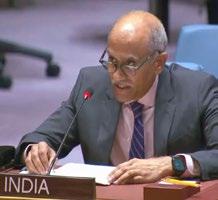
India rebuts Pakistan at UN, links Indus Waters Treaty to cross-border terrorism
India has strongly rejected Pakistan's remarks at the United Nations, asserting that cooperation under the Indus Waters Treaty cannot be expected when "crossborder terrorism" is used as an "instrument of state policy".
India also maintained that Jammu and Kashmir "has always been, is, and will remain" an integral and inalienable part of the country.
The remarks were made on Wednesday by India's Permanent Representative to the United States, Ambassador Parvathaneni Harish, at the High-Level Open Debate of the UN Security Council on Natural
India
Resources Governance: the Foundation of Peace, Security and Prosperity.
Responding to Pakistan, Parvathaneni said India was compelled to reply after Islamabad "misused" the discussion to push a "false narrative".
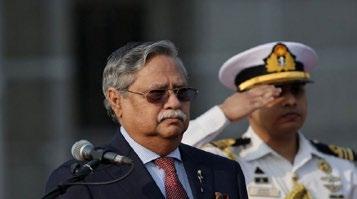
Dhaka [Bangladesh], July 23 (ANI): Bangladesh's President Mohammed Shahabuddin is likely to resign soon, with local media and political sources indicating that he may cite health grounds for his departure.
"Our position on the Indus Water Treaty remains clear and consistent. Cooperation on the basis of mutual trust and goodwill cannot be expected when cross-border terrorism is regularly deployed as an instrument of state policy," Parvathaneni said. Bangladesh's President
approved 6 development LoCs worth Rs 17,550 cr to partner countries in last year: MoS
Kirti Vardhan Singh SOUTH
New Delhi [India], July 23 (ANI): In line with its strategic focus on soft-power diplomacy, capacity building, and strengthening economic ties with partner nations across the Global South, India approved six development Lines of Credit (LoC) totalling approximately ₹17,550 crore over the past year, Minister of State for External Affairs Kirti Vardhan Singh informed the Rajya Sabha on Thursday. Responding to a question in the Rajya Sabha regarding development partnership initiatives, MoS External Affairs Kirti Vardhan Singh stated that the concessional credit lines were extended across critical domains, including
infrastructure and connectivity.
"During the last one year, six Lines of Credit have been approved for around 17,550 crores to partner countries. These Lines of Credit have been extended for financing various development projects in the fields such as infrastructure, connectivity, social housing and mobility, health, agriculture and procurement of essential commodities," the Minister said in a written response.
Extended under the Indian Development and Economic Assistance Scheme (IDEAS) via the Exim Bank of India, these concessional loans empower borrowing nations to build critical domestic infrastructure while creating new avenues for Indian project exports.
Reports in Bangladeshi media and independent disclosures have fueled speculation of an imminent change at Bangabhaban. Cabinet Secretary Nasimul Gani is among those being named as a possible successor to the top post. On Thursday, Jamuna TV reported in a breaking news update that Bangladesh's President Mohammed Shahabuddin is expected to resign on Friday. Bangladesh's leading daily Prothom Alo reported that, according to its sources, President Mohammed Shahabuddin may resign due to health reasons.
More recently, Zulkarnain Saer, a UK-based Bangladeshi journalist, claimed on social media that President Mohammed Shahabuddin could resign, and that the government may name current Cabinet Secretary Nasimul Ghani as the president's successor.
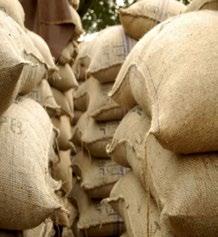
Lahore [Pakistan], July 23: Pakistan's wheat crisis is intensifying due to policy shortcomings, weak planning and administrative lapses, with farmers' representatives warning that wheat and flour prices could rise further if urgent corrective measures are not introduced, The Express Tribune reported.
In a joint statement, Markazi Kisan League (MKL) Chairman Chaudhry Zulfiqar Ali Olakh and President Muhammad Ashfaq Warraich blamed the crisis on the abolition of the wheat support price mechanism under reforms linked to the International Monetary Fund (IMF) and the failure of provincial governments to procure adequate wheat from farmers during the current harvesting season, The Express Tribune reported.
According to the MKL leaders, Punjab procured only about 480,000 tonnes of wheat against its target of three million tonnes, while Sindh purchased nearly 200,000 tonnes. They said the low procurement has significantly reduced national wheat reserves, increasing concerns over domestic food security.
The leaders also highlighted that Pakistan imported nearly 3.5 million tonnes of wheat last year at a cost exceeding USD 1 billion, yet the country still faces an estimated wheat shortfall of around 3.5 million tonnes.
8 convicted in 2021 Jagraon grain market double murder of Punjab cops
In a major verdict in one of Punjab’s most sensational attacks on the police force, a Ludhiana court has convicted eight accused in the 2021 Jagraon grain market double murder case. Two police officials were shot dead during an operation to intercept notorious gangster Jaipal Bhullar and his associates.
Delivering the verdict, the Court of Additional Sessions Judge Saru Mehta Kaushik awarded rigorous life imprisonment to Darshan Singh, a resident of Jodhan village, and Baljinder Singh alias Babbi of Bagga Purana, Moga. The court also imposed a fine of Rs 85,500 each on them for killing ASI Bhagwan Singh and ASI Dalwinderjit Singh.
Two other accused, Jaipal Bhullar and Jassi Kharar, were neutralised in Kolkata in 2021 on inputs provided by the Punjab Police. Coaccused Bharat Kumar was sentenced to 5 years in jail. Co-accused Gurpreet Singh alias Lucky, Satpal Kaur, Gagandeep Singh, Nanak Chand, and Jaspreet Singh were each sentenced to 3 years in jail with a fine of Rs 5,000.
The court directed the state to pay suitable compensation to the families of the deceased cops under the victim compensation scheme, noting that they died while performing official duty. The matter has been referred to the Secretary, District Legal Services Authority (DLSA).
Divulging details, Additional Public Prosecutor RS Chahal stated that the trial had been pending since 2022 and involved extensive documentary and forensic evidence. The prosecution examined 73 witnesses to prove the guilt of the accused. The prosecution alleged that while some accused directly participated in the conspiracy, others provided shelter, logistical support, weapons, forged
documents, and assistance in destroying evidence after the killings.
According to the prosecution, the incident occurred on the evening of May 15, 2021. ASI Bhagwan Singh, ASI Dalwinderjit Singh, and Police Home Guard Rajwinder Singh were travelling in a private vehicle on duty when they noticed suspicious activity involving a white Hyundai i10 car and a canter parked inside the New Grain Market, Jagraon. When the police officials questioned the occupants and asked for their identity cards, ASI Bhagwan Singh recognised one of them as gangster Jaipal Bhullar.
Moments later, Bhullar allegedly ordered his associates to restrain the police officials before opening fire. Bhagwan Singh was shot dead on the spot, while ASI Dalwinderjit Singh sustained gunshot injuries and later succumbed. The attackers fled after snatching the service weapon of one officer and a mobile phone. During the investigation, police said they recovered abandoned vehicles, firearms, ammunition, fake registration certificates, electronic devices, and other incriminating material from different locations. The probe later expanded to include allegations of harbouring assailants, destruction of evidence, criminal conspiracy, and use of forged vehicle documents. Several accused were arrested from Punjab, Madhya Pradesh, and other places during the investigation.
The court also considered voluminous documentary evidence, FSL reports, postmortem reports, recovery memos, CCTV footage, and electronic evidence supported by certificates under Section 65-B of the Evidence Act, along with records collected from various states.
SKM to support CJP-led NEET protest, convenes meet in Ludhiana on Saturday
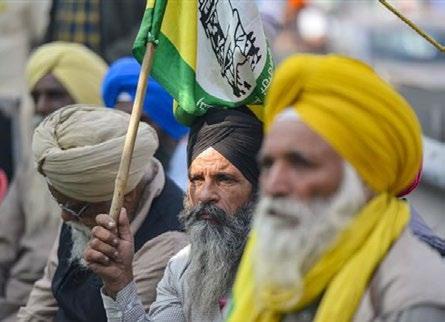
As student protests led by Cockroach Janta Party (CJP) continue in the National Capital and garner support from youth across the country, the Samyukt Kisan Morcha (SKM) — the umbrella body of various farmer unions — has decided to extend its support to the agitation.
A meeting of SKM has been convened in Ludhiana on Saturday to decide on the extent of support and the manner in which it will be extended to the protesting youth. “Representatives of all unions owing allegiance to SKM will participate in the meeting. Apart from challenges facing the agriculture sector, a formal decision on extending support to students will be taken,” SKM senior leader Balbir Singh Rajewal told The Tribune.
a political outfit. All farmer leaders who contested that poll lost. Subsequently, some of these unions regrouped after agreeing not to enter politics.
“Now, SKM is not supporting a political party like CJP, but extending its support to the students’ cause. Everyone in the country, including political parties, is concerned about these youth, and most people support the protesting students, who are only seeking accountability in conducting competitive examinations, which is imperative for their secure future,” SKM leader Rajinder Singh Deepsinghwala told The Tribune.
If SKM extends support to a protest led by a political outfit like CJP, it will mark a departure from the farmers’ body’s earlier stated stand of remaining apolitical. It may be recalled that after some constituent unions contested the 2022 Punjab Vidhan Sabha poll, SKM split, with many unions sticking to their stand of not turning into
Punjab and
Haryana
HC halts construction, land transfers in 16 villages near Chandigarh
Expressing concern over the State of Punjab’s failure to comply with the Supreme Court’s 2014 directions on identification of forest land in the ecologically fragile Shivalik foothills near Chandigarh, the Punjab and Haryana High Court has restrained all construction and development activities in 16 villages and prohibited any further transfer or alienation of land there. The Bench also directed that no further mutation entries would be made for six weeks or till completion of the exercise, and ordered the Punjab Chief Secretary to constitute a team to determine the extent of forest land as it existed on the date of enforcement of the Forest (Conservation) Act, 1980.
The Bench of Acting Chief Justice Ashwani Kumar Mishra and Justice Rohit Kapoor also directed that the entire revenue record of the villages be kept in the safe custody of two senior officers heading the exercise and ordered photocopies of the records to be deposited with the Registrar-General of the High Court within one week. Mohali Deputy Commissioner was also directed to remain personally present with the records on the next date of hearing. The Court warned that violation of its directions prohibiting land transfers would be treated as contempt.
Hearing a bunch of public interest litigations and a writ petition, the Bench at the onset observed that the matters raised “serious concerns regarding the environment and ecology in the vicinity of Chandigarh.”
The Bench was assisted in the matter by senior advocates Anand Chibbar and D. S. Patwalia, along with other counsels, including Gauravjit S. Patwalia and Munish Jolly.
The Bench traced the genesis of the litigation to a January 22, 2004, newspaper report alleging that a club in Karoran village, then in Ropar district (now Mohali), had been established on forest land in violation of law. Taking suo motu cognisance in 2004, the High Court then examined the nature of the land, referred to the provisions of the Punjab Land Preservation Act, 1900 (PLP Act), noted that the entire village land measuring about 3,700 acres was shown in the records as forest land, and directed its preservation as forest land.
The Bench noted that the judgment was subsequently reversed by the Supreme Court in “B.S. Sandhu versus Government of India” case, which held that “the mere inclusion of the area within the limits of the PLP Act, 1900, does not ipso facto lead to the conclusion that the land is ‘forest land’.” The apex court held that the nature of the land as on the date of enforcement of the Forest (Conservation) Act, 1980, had first to be determined and directed the State of Punjab to undertake that exercise.
Referring to the petitions now before the Bench, the court observed grievance raised was “to the effect that, in terms of the directions issued by the Supreme Court, the demarcation of forest land has not been carried out.
The petitioners alleged that while some restaurants had been shut down, “a large number of other commercial activities were allowed to flourish, with massive constructions being permitted in the area.” They further alleged collusion by State officials, contending that many senior officers had secured prime farmland in the area situated close to Chandigarh.
Rajewal said that the youth are the future of the country and feel let down by the ruling political class. “Now they have shown the mirror to the politicians. The truth is that they are not just seeking justice over the NEET paper leak, but also want their demands to be heard and addressed. The protest is also about creating job opportunities for the youth — which the political establishment is not willing to listen to. Everything is going into private hands now. The government is also bowing to US pressure and offering the agriculture sector to the US on a platter. Since the real issues that concern the people are not on any political party’s agenda, SKM only wants to raise its voice with the students to tell the political establishment to have a ‘people-first agenda’ instead of a ‘corporate-first agenda’,” he said.
SKM members will also deliberate on how to take forward the protest against the proposed Indo-US trade deal and on how to pressure the government to give Punjab its share of river waters in accordance with the state’s riparian rights.
To quell CJP protests, Delhi police chief granted detention powers under NSA
As protests over NEET paper leak gather steam in the national capital, the Centre has granted detention powers under the National Security Act (NSA), 1980, to the Delhi Commissioner of Police.
Under the NSA, individuals can be detained without formal charges for a period ranging from 12 days to a maximum of 12 months.
The order authorises the Delhi Commissioner of Police, Anurag Kumar, to exercise powers of preventive detention under the NSA for a period of three months, from July 19 to October 18.
An official notification in this regard was published in the Delhi Gazette (Extraordinary) on Wednesday night. The Tribune has accessed a copy of the same. Notably, the notification is dated July 15, 2026.
It says the Lieutenant Governor of the National Capital Territory of Delhi is satisfied that it is necessary to delegate the detention powers in the interest of public security.
“Exercising powers under Section 3(3) read with Section 2(e) of the NSA, the Delhi L-G has directed that during the specified period, the Commissioner of Police, Delhi, may also exercise the powers of
a detaining authority under Section 3(2) of the Act,” the order says.
The delegation enables the Commissioner of Police to issue preventive detention orders against individuals whose activities are considered prejudicial to national security, public order or the maintenance of essential supplies and services, as provided under the NSA. On September 26, 2025, activist Sonam Wangchuk was detained under the provisions of the NSA pursuant to an order issued by the District Magistrate, Leh, to maintain public order. He was released after 170 days of detention.
The NSA, 1980, provides that the appropriate authority can designate police chiefs and district magistrates as detaining authorities to maintain public order.
'Isteefa do' vs 'Vande Mataram' slogans echo in Parliament as INDIA bloc, NDA MPs face off
MPs of both the ruling NDA and opposition INDIA bloc faced off outside the Parliament today on the issue of paper leak, as tensions around the
ongoing agitation of the CJP escalated.
Both sides raised counter-slogans to slam one another. While the Congress-led bloc called for the resignation of Education Minister Dharmendra Pradhan while raising the slogans "isteefaa do, isteefa do, Modi sarkar sharam karo, sharam karo", the NDA side raised the slogans "Vande Mataram" and "Bharat Mata ki Jai". The Congress side was represented by senior MPs Kumari Selja, Gurjit Aujla, Jyothimani, Jebi Mather, among others.
The opposition MPs were led by the chairperson of Congress Parliamentary Party chairperson Sonia Gandhi and Priyanka Gandhi.
Received a letter from Cockroach Janta Party, ready for talks, says government
Amid the ongoing protests, the government on Thursday said it is ready to hold discussions with Cockroach Janta Party (CJP), with sources within the government indicating that it has received a letter from the movement for holding the next round of discussions. A government source said that on Thursday morning a letter was received from the CJP for holding talks and further details regarding this will be disclosed by evening.
The development comes after CJP founder Abhijeet Dipke had earlier said that if talks are to be held, the government will have to come to them. The government has indicated that it is ready for discussions, with sources saying, “After all, these are not the India-Pakistan talks that a neutral place has to be chosen.”
Earlier on July 20, CJP representatives
had met Union Health Minister JP Nadda twice. However, nothing had come out of the discussions as the students' agitation has been continuing for the past four days.
'Will frame you in drug case': Mumbai cop shunted for threatening CJP protesters; watch viral video
The Mumbai Police have launched an inquiry after a viral video allegedly showed a police driver threatening student protesters with false drug cases if they continued participating in demonstrations linked to the Cockroach Janta Party (CJP).
The video, shared by the Mumbai Congress on X, has sparked fresh controversy over the police's handling of protests that have taken place over the past few days at locations, including Shivaji Park, Chembur and Azad Maidan.
In the video, the policeman is purportedly heard warning a group of students that they would be falsely implicated in narcotics cases and spend the rest of their lives in jail if they returned to the protests.
Taking serious note of the clip,
Mumbai Police on Thursday ordered an inquiry into its authenticity and the circumstances surrounding the incident, reports PTI. A police official said that after a preliminary verification, the driver seen in the video had been removed from his current posting pending completion of the inquiry.
"After verifying the facts, the driver concerned has been removed from his present posting pending completion of the inquiry," the official said. Mumbai has witnessed protests in solidarity with the CJP-led student agitation in New Delhi over the past few days, with students and citizens gathering at several locations across the city. The police inquiry will determine the authenticity of the video and whether disciplinary action is warranted.
India-Romania set target to double bilateral trade in next three years, sign three MoUs during President Droupadi Murmu's visit
Bucharest [Romania], July 24 (ANI): India and Romania on Thursday underlined economic cooperation as key pillar of the bilateral partnership and set a target to double bilateral trade in the next three years while also agreeing to expand cooperation in important sectors such as pharmaceuticals, renewable energy and agriculture.
This comes as President Murmu arrived in Romania on a historic visit--the first in three decades by an Indian President.
President Murmu shared the details in her remarks to the press after the two countries inked Memoranda of Understanding in the fields of
science & technology, sports and culture.
Noting how India and Romania have had a close and lasting friendship based on mutual trust, respect and strong people-to-people relations for more than seven decades. She said that over time, the partnership has continuously strengthened and is now entering a new phase with more ambitious goals, strong cooperation and a shared vision for the future.
"Economic cooperation is an important pillar of our partnership. We will promote trade and investment, strengthen the supply chain and
agreed to encourage close cooperation between the industries of both countries. We have also set a target to double bilateral trade in the next three years," President Murmu said.
She further noted, "We agreed to expand cooperation in areas such as manufacturing, pharmaceuticals, health, renewable energy, green hydrogen, agricultural production and fertilizers, science and technology, digital public infrastructure and AI. This cooperation will move forward taking advantage of the complementary capabilities of both our economies."
President Murmu noted that Defence Cooperation is also an important pillar of the partnership and that the two countries agreed to further strengthen the partnership in this field through regular exchange, training, capacity building and close cooperation between the defense industries of both countries.
She added, "The Government of India has decided to double the training opportunities under the ITEC program for Romania. These will also include courses related to AI. Our foreign service institute has provided training opportunities for Romanian diplomats to participate in the upcoming professional course. These programs will also include special training on AI and Cyber Diplomacy."
President Murmu welcomed the ongoing cooperation between India and Romania under the International Solar Alliance, and welcomed Romania's intention to join the Coalition for Disaster Resilient Infrastructure and the Global Biofuels Alliance.
Murmu informed that when India and Romania complete 80 years of their diplomatic relations in the year 2028, then the two nations have agreed to celebrate this occasion as India-Romania Year of Innovation.
Climate activist and education reformer Sonam Wangchuk on Thursday ended his 27-day hunger strike that began on June 28, at Medanta hospital in the presence of Union Ministers JP Nadda and Jitendra Singh. Breaking his fast, Wangchuk thanked the Centre and supporters, saying that assurances had been given on the key issues raised by him and that he was therefore calling off the strike.
Wangchuk had launched the hunger strike as part of the ongoing agitation led by the Cockroach Janta Party for students, seeking educational overhaul and Dharmendra Pradhan's resignation from post of Union Education Minister. While the Centre has repeatedly maintained that it is open to discussions with representatives of the protest, a conclusion is yet to come for CJP.
The development also comes after Prime Minister Narendra Modi shared a video message on social media, stating that the Centre would introduce the AntiPaper Leak Bill in Parliament on Friday, a move seen by some as addressing one of the broader concerns repeatedly raised by youth groups and protesters across the country.
Earlier, the education secretary was also sacked by the government.
Abhijeet Dipke
welcomes Wangchuk's decision but says peaceful protest at Jantar Mantar will continue till Education minister Dharmendra Pradhan resigns In recent days, Wangchuk had appealed to protesters to maintain peace and not resort to violence amid rising tensions. His appeal came after clashes on July 20, when students and protesters were beaten by the police, triggering widespread outrage and fresh calls for restraint.
Several public figures had urged Wangchuk to end his fast, citing concerns over his health. Veteran social activist Anna Hazare had also expressed solidarity with the movement and condemned the use of force against students on July 20.
With Wangchuk ending his fast, attention is now likely to shift to whether the Centre is considering Pradhan's resignation and compensation for victim's families.
India sends 4.5 tonnes of medical aid to Kenya to boost Ebola preparedness
India has delivered the first tranche of medical assistance to Kenya to strengthen the country's preparedness and response to the Ebola virus and other infectious diseases, according to an official statement.
The first consignment, weighing 4.5 tonnes, was handed over by Indian High Commissioner Adarsh Swaika to Kenya's Cabinet Secretary for Health Aden Duale at the Jomo Kenyatta International Airport in Nairobi on Wednesday, the Indian High Commission said in the statement.
The initiative follows India's supply of more than 45 tonnes of medical assistance to the Africa Centres for Disease Control and Prevention in May and June, to bolster the continent's preparedness against Ebola.
India has been among the first responders during Kenya's public health emergencies. During the COVID-19 pandemic, it supplied 1.12 million doses of made-in-India vaccines to Kenya under the Vaccine Maitri initiative, besides providing medicines and other medical assistance.
Commission said in the statement. A second tranche of assistance will be delivered shortly, it said.
The assistance is aimed at strengthening Kenya's long-term public health preparedness and response capacity by supporting disease surveillance, safe collection and transportation of samples, infection prevention and control, and the protection of frontline healthcare workers, it said.
The two countries have also expanded cooperation in the health sector through grant assistance for medical equipment, including a Bhabhatron radiotherapy machine for Kenyatta
The recent shipment comprises 279 packages of essential medical supplies, including personal protective equipment (PPE) kits, sample transportation kits, infrared thermometers, face shields, heavy-duty protective boots and other infection-prevention materials, the High
National Hospital and diagnostic equipment for the Kenya Navy Hospital in Mombasa.
According to the High Commission, over 10,000 Kenyans travel to India every year for medical treatment, while Indian pharmaceutical products account for more than half of Kenya's pharmaceutical market.