






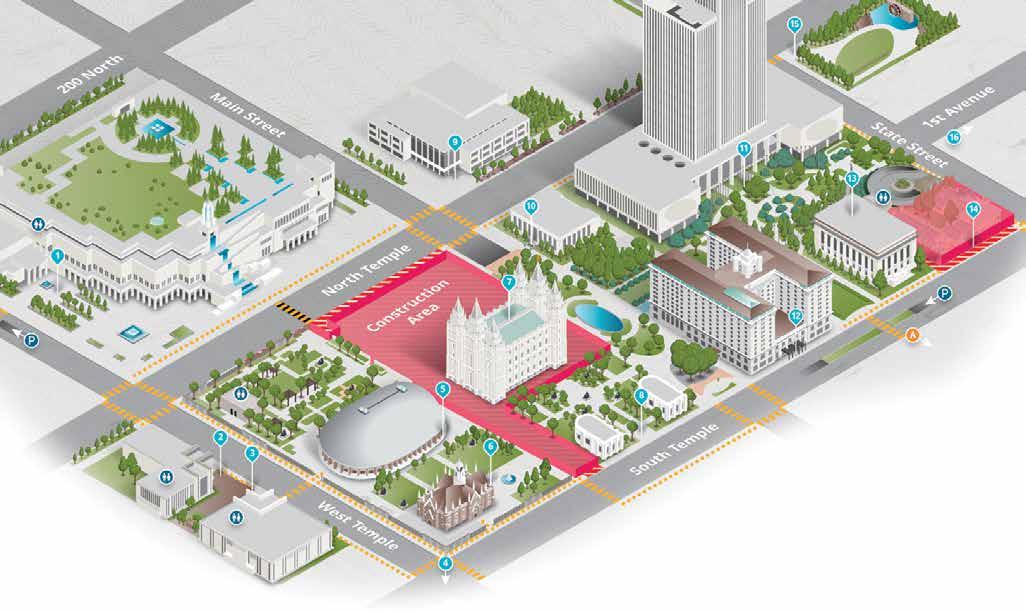
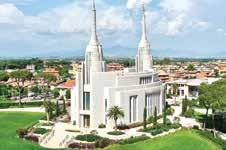
The Church of Jesus Christ of Latter-day Saints opened its new Temple Square Visitors’ Center to media on April 13, 2026, marking a major milestone ahead of the celebration and public open house of the Salt Lake Temple scheduled for April to October 2027.
The new, state-of-the-art visitors’ center will open to the public on May 18, 2026, offering an unprecedented opportunity for people of all faiths and backgrounds to explore and engage with the Christ-centered beliefs of the Church and purpose of temples. All are welcome to come and experience exhibits that explain what temples represent—sacred spaces rooted in faith, family, service, and promises with God.
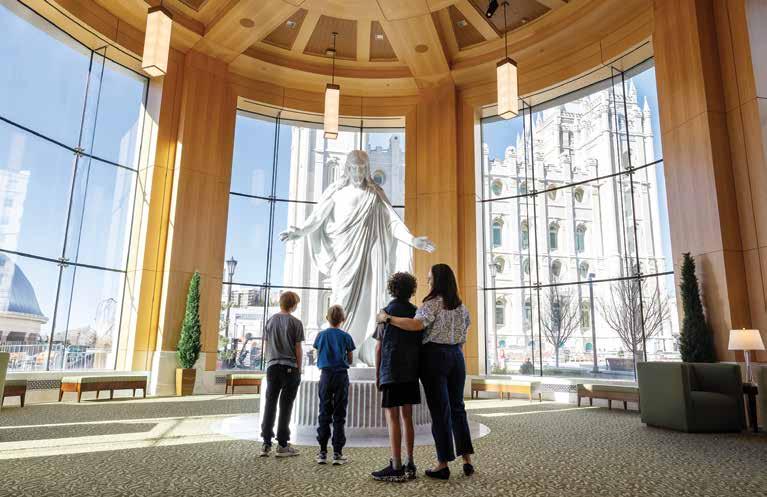
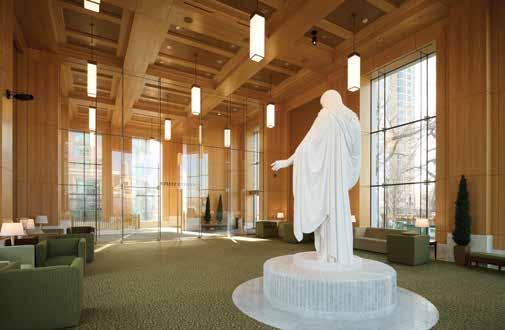
A replica of Thorvaldsen’s Christus stands in the west wing and a scale model of the Salt Lake Temple is featured in the east wing entrance building. Both east and west wings offer
sweeping views of the historic temple and the surrounding grounds. The lower level that connects both wings serves as a focal point for the newly commissioned Come unto Me sculpture by Christian Bolt.
Carved from Carrara marble, the
piece depicts the Savior extending an invitation of peace and compassion. The visitors’ center also features several immersive experiences:
...and whoso shall publish peace, yea, tidings of great joy, how beautiful upon the mountains they shall be! (1Nephi 13:37)
Prophesy claims that in the last days all things, even the whole earth, shall be in commotion (D&C 45:26, 88:91). That certainly seems to be the current condition of the surface of our planet. I’m kinda sick of it, myself. Yet our prophets and leaders exclaim that these are the best times to be on Earth! How can this be?
President Russell M. Nelson noted in April, 2020 that “We live in the day that ‘our forefathers have awaited with anxious expectation.’ We have front-row seats to witness live what the prophet Nephi saw only in vision, that ‘the power of the Lamb of God’ would descend ‘upon the covenant people of the Lord, who were scattered upon all the face of the earth; and they were armed with righteousness and with the power of God in great glory.
“You, my brothers and sisters, are among those men, women, and children whom Nephi saw. Think of that!”
While pondering this mind-blowing thought, I wonder about how we treat one another. Surly with this knowledge humans worldwide must be choosing to deal with their fellow humans just as Christ dealt with us humans! Uhhh, perhaps not. Well, what about how members of the Church treat their fellow humans, in and out of the Church? Surly we members are close to perfect in this department, right?
It occurred to me years ago that General Conference talks are not directed to non-believers. They are shot out directly to members. Talk given about gambling? That’s because members gamble. Talk given about tithing? That’s because members stink at tithing. Talk given about loving our neighbor? Our enemy? You get the point. But about that...
“But who are our enemies? The full meaning of enemies in the sources from which King James’s translators chose the word enemies includes military foes but even extends to any who actively oppose one another. Today we might say that we are commanded to love our adversaries. All mortals are beloved children of God.” This from President Oaks during April 2026 General Conference.
But what about people whose lifestyle is obviously different from ours? People who we “know” will be condemned. They are our adversaries, right? Uhhh, perhaps not. “Each of us can strive to follow our Savior in His teachings about how to relate to one another. This does not mean surrendering our values. The covenants we have made inevitably position us as devoted participants in the eternal contest between truth and error. We balance our various responsibilities.” This also from President Oaks during his April 2026 General Conference talk, talking to you and I.
He continued, “This balancing is not easy. When we seek to keep all the commandments in our personal lives, we are sometimes accused of having no love for those who don’t. When we show personal love and support loving causes, we are sometimes misunderstood as implying support for results that contradict our other religious duties. But as followers of Christ, we should seek to live peaceably and lovingly with other children of God who do not share our values and do not have the covenant obligations we have assumed.”

My take away on this is, whenever I interact with any other human, I will “Remember To Look Up!” Because that is where I’ll find those who’s example I follow, who teach us that “All mortals are beloved children of God.” And all means all...
Thank you for reading...
Michael O’Brien Publisher


The Arizona Beehive, LLC 1225 West Main Street, Suite 101-439 Mesa, Arizona 85201
480.304.5646 | ArizonaBeehiveMagazine.com
PUBLISHER
Michael O’Brien
BeehiveAdvSales@gmail.com
EDITOR
Michael O’Brien
BeehiveAdvSales@gmail.com
ADVERTISING
Jen VerMass
arizonabeehive.jen@gmail.com
GRAPHIC DESIGN
Leslie Thompson - Layout
Candace Khattab - Ad Design
PHOTOGRAPHY
Robin Finlinson
SOCIAL MEDIA
Grace O’Brien
CONTRIBUTING WRITERS
Allison Beckert
Jeanie Davis
Deb Eaton
Hillary Fevrier
Robin Finlinson
Jaylene Garrett
Rauna Mortensen
Grace O’Brien
Katherine Ogden
Mark Randall
Glen & Lynne Tolman
Barbie VanCott
Cindy R. Williams
GUEST WRITERS
A New Leaf
Church Newsroom
Lin Sue Flood
Mesa Alma Stake
DISTRIBUTION
AZ Integrated Media
First Class Media Distribution
PRINTING
Valley Newspapers
DISTRIBUTION LOCATIONS
Click on PICK UP A COPY on the arizonabeehivemagazine.com home page.
SUBSCRIPTIONS
Subscriptions available. $29 annually (6 issues). Call 480.304.5646 or email BeehiveAdvSales@ gmail.com to order.
THE FINE PRINT
The Arizona Beehive Magazine is a free publication printed six times a year, published by The Arizona Beehive, LLC, containing copyrighted work consisting of original material, and is not an official publication of The Church of Jesus Christ of Latter-day Saints. The views expressed in The Arizona Beehive Magazine are solely those of its freelance writers, and are not necessarily endorsed by the publisher and its editor, nor do they necessarily represent the position of The Church of Jesus Christ of Latter-day Saints. Duplication of articles for commercial purposes is prohibited.
• Salt Lake Temple Scale Model: Located in the east wing, the motorized model moves to reveal the interior rooms and layout of the historic Salt Lake Temple.
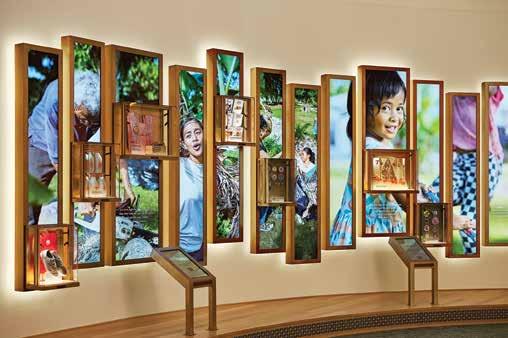
• Temples Around the World: Located on the lower level, a display of 11 built-to-scale temple miniatures represent the global footprint of temples, centered around a temple globe that connects worship with God’s plan for Church members and their families.
• “Inside a Temple” Experience: Also located on the lower level, this guided 30-minute experience leads guests through full-scale replicas of sacred temple rooms, including a baptistry, instruction room, sealing room, and celestial room. Reservations are required for this experience and can be made through the Temple Square app or at TempleSquare.org.
Located at the south entrance of Temple Square, the 39,800-square-foot visitors’ center replaces the former North and South Visitors’ Centers that welcomed visitors for decades before the Salt Lake Temple renovation project began in 2019.
Outside, the experience for visitors continues through landscaped gardens that feature bronze statues depicting Christ’s ministry and sacred historic moments. These gardens and sculptures provide a quiet setting for contemplation and connection.
“The new visitors’ center is a window into our sacred covenants with Christ,” said Dieter F. Uchtdorf, Acting President of the Quorum of the Twelve Apostles of The Church of Jesus Christ of Latter-day Saints. “It helps people of all backgrounds understand the role our temples play and why they matter to our members and to the communities.
Here, guests can discover how temple teachings connect to everyday life and uncover the greater context to the Latter-day Saints beliefs and commitment to family and Christ.”
The Salt Lake Temple is currently undergoing an extensive renovation to expand the temple’s capacity as well as implementing a comprehensive seismic upgrade. The Church will host a sixmonth Salt Lake Temple celebration and open house from April 5 through October 1, 2027.
Visitor Information: The Temple Square Visitors’ Center will be open daily from 9:00 a.m. to 9:00 p.m.
• Tickets: Admission to the center is free. While no ticket is required for entry, a reservation is required
for the 30-minute “Inside a Temple” tour experience. Reservations can be made through the Temple Square app or at TempleSquare.org.
• Parking: Free parking is available at the Conference Center with validation; additional parking is available at City Creek south of Temple Square.
• Public Transit: The Temple Square TRAX station provides direct access.
• Accessibility: The visitors’ center is ADA-compliant and fully accessible to all visitors.
For more information and to book tour reservations, please visit TempleSquare.org/Visitors-Center.

By Allison Beckert
For many of us, family history begins with a name we recognize, and then another we don’t. We search, piece together dates and slowly build a picture of where we come from. But in many parts of the world, those pieces are missing altogether. Records exist, but they are fragile, scattered, or simply out of reach. For one Arizona Latter-day Saint and his local teams, that gap has become a calling: to preserve those names and make them visible again.
greatest.
That search led him to Burundi, a small country in Central Africa, where an idea took root. Working with a local records specialist, Ellsworth helped launch a project to digitize the country’s National Archives. With government approval (and funding) the effort moved quickly. Over the past three years, the team has produced more than 1.8 million digital images. Within these images are preserved names, dates, and records that might otherwise have been
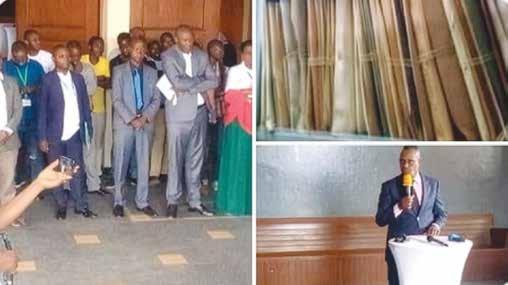
Matt Ellsworth has spent nearly fifty years helping people discover their ancestry. What began as a personal interest grew into something much larger over the course of a long career in the U.S. Foreign Service. Living in different countries and learning new languages, he found himself asking a simple question: What resources do these people have to find their ancestors? The answer, in many places, was very few. “Everyone wants to know their roots,” he explains, “but not all can find them.” After retiring in 2018, Ellsworth chose assignments in Africa deliberately, seeking out places where the need for genealogical resources was

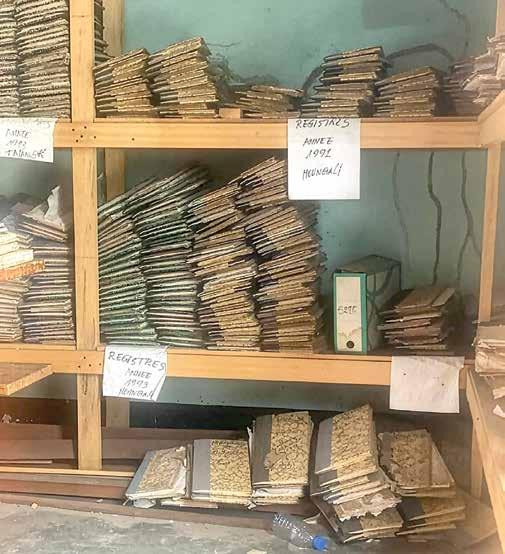
lost to time and damage.
The work is only just getting started. Without indexing and search capabilities, millions of pages remain difficult to use, like a massive book with no table of contents. New advances in artificial intelligence offer a solution, making it possible to organize and search these records in meaningful ways. Yet funding has become a challenge. When financial support ran out, the team in Burundi made a remarkable decision: they chose to continue working without pay, convinced of the project’s importance to their country and its history.
Ellsworth calls the initiative PRE
- Preserving Records Everywhere - or simply, “everything before now.” The goal is not only to safeguard records, but to make them accessible to the people they belong to and to researchers around the world. A newly launched website, Archives.bi, offers a first glimpse of what’s possible, with plans to expand its features and reach.
Burundi is only the beginning. Similar opportunities are emerging across Africa from Tanzania to Liberia, where archivists and institutions are eager to preserve their collections and bring them into the digital age. Many of these records exist already, despite some assumptions by archivists about the area.
Local enthusiasts just need the support to save and share.
At its heart, this work is about more than documents. It reflects a belief that every life matters, and every story deserves to be remembered. Family history work is rooted in connection, linking generations and strengthening identity.
Those who wish to support the project can do so by subscribing, helping sustain the work and expand it into new regions. Even small efforts can make a meaningful difference. Interested parties can also donate to the cause at pre.bi and immediately see what benefit their contribution gives.


By Lin Sue Flood
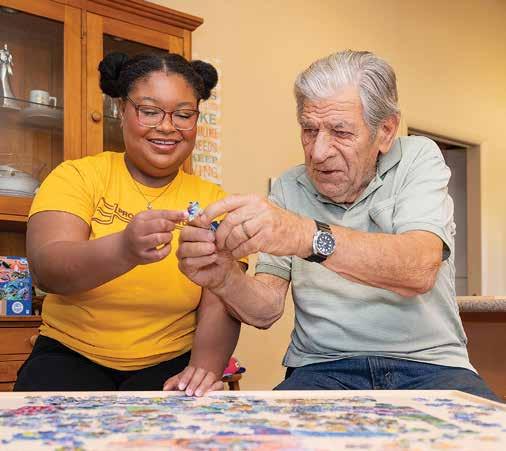
When ASU junior EmilyJane Crawford finishes her classes and homework, she travels to Glendale to visit a very special friend. Bud Addison is 81 years old, and despite his dementia, EmilyJanes visits are the highlight of his week.
When the doorbell rings, he jumps to greet her, laughs his wife, Mary. Their time together is filled with painting, word searches and puzzles. For Bud, its about more than just staying busy. Bud loves the socialization, Emily-Jane explains. People with dementia often only see family members, so this gives him a chance to connect with someone new.
This connection is the heart of RISE (Respite in Student Engagement), a unique partnership between Arizona State University and Hospice of the Valley. The program matches students interested in healthcare careers with families caring for loved ones with dementia. Hospice of the Valleys demen-
tia team provides specialized training that focuses on creating meaningful interactions. Families pay the students $20 per hour to offer this companionship and emotional support.
For Mary, the new program is a lifeline. I was his only caregiver and found myself in complete burnout, she shares. RISE has been a blessing. I finally have someone I can trust with my husband and seeing him so engaged has lifted my spirits.
The benefits go both ways. EmilyJane says the experience has given her a deeper understanding of dementia. Ive learned that it truly is the long goodbye. Day by day, the individual will forget whether its a name or who you are to them. But even if the faces fade, the feelings and emotions for loved ones never do.
Visit riserespite.org to learn more or to apply for the RISE program.
Lin Sue Flood is director of community engagement at Hospice of the Valley.



By Cindy R. Williams
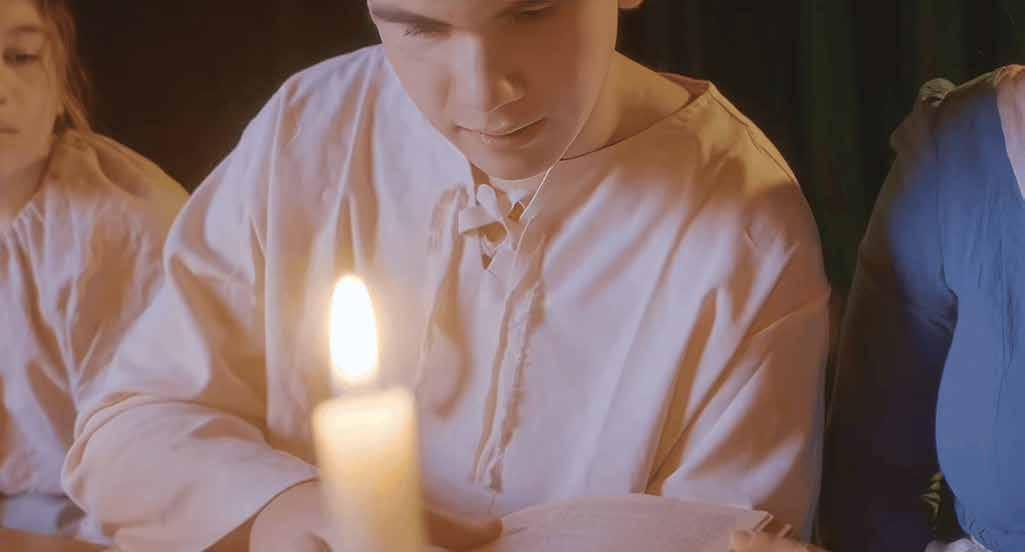
The all-new Manti Temple Pageant will present “Spirit of Freedom,” a production including music about Reverend John Lathrop. Lathrop, who lived in 17th-centrury England, is known for staying true to his conscience during a time when it was against the law to speak out or support any other religion than the Church of England.
Rev. Lathrop believed that men should be free to act—or not act—according to their own conscience. He defied the law and preached in secret to followers of Christ. Preaching led to torture and imprisonment. He was eventually captured and imprisoned.
“The Spirit of Freedom” production is adapted from Exiled by Helene Holt (© 1987, 2002, 2005, 2010), recipient of the National Freedoms Foundation
Award, and incorporates selected scenes from The Pulse of His Soul by Arizona author, Ora Smith (© 2020).
Ned Armstrong, songwriter and creator of “The Spirit of Freedom” says, “Performance dates will be July 22-25, 2026. Times are 8:30 pm – 10:00 pm. Tickets are $15 for 12 and above and Family Packs of four tickets are available for $45. The performances will be outdoors at the Sanpete County Fair Grounds, 64 W 500 N, Manti, Utah.”
Susan Manning, representing Spirit of Freedom says, “It all began at a family Thanksgiving dinner table. Ned Armstrong shared his hopes for reviving Manti’s spiritual strength and its cherished tradition of welcoming strangers with open arms and warm hospitality.”
“Education
is the key to unlock the golden door of freedom.” — George Washington Carver
“Freedom has never been free.” — Medgar Evers
“A nation of sheep will beget a government of wolves.”
— Edward R. Murrow
“True independence and freedom can only exist in doing what’s right.”
— Brigham Young
“A family member made a simple, but powerful suggestion: Why not create a new pageant – one that celebrated the unifying non-denominational theme of freedom rather than focusing solely on Latter-day Saint history. The idea struck a deep chord with Ned (Armstrong). A fire was lit,” says Manning.
Armstrong ran with the idea, organizing a local meeting with enthusiastic volunteers and “The Spirit of Freedom” was born.






—Michael M.


By Robin Finlinson
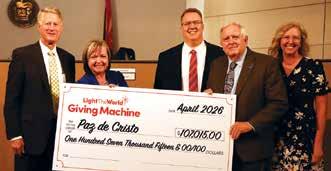
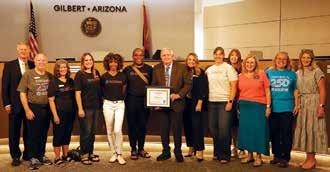
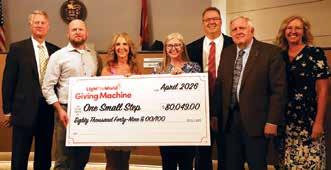
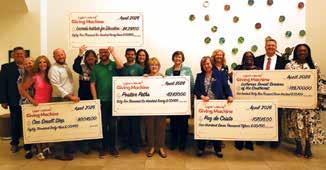
At the April 21st Town Council meeting, Gilbert received an award for officially becoming a “JustServe City”! The nonprofits that participated in the 2025 Light the World Giving Machines also received their big checks from The Church of Jesus Christ of Latter-day Saints, which sponsors the machines.
Let’s look at the impact that money will have, thanks to the generosity of approximately 30,000 donors. Local people in need will receive items such
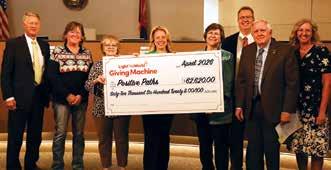
POSITIVE PATHS
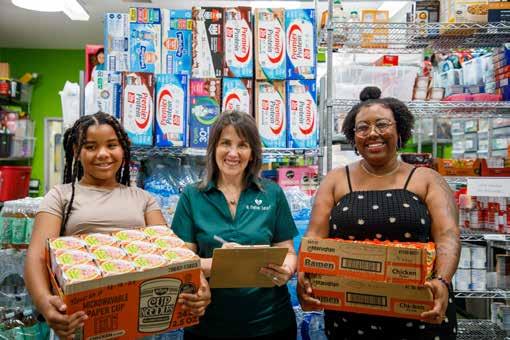
Elder John Lewis of The Church of Jesus Christ of Latter-day Saints; Margaret Travillion of Lauren's Institute for Education (accidentally posed with this group); Kate Hastings, Executive Director, Positive Paths; Julie Garrison, Board of Directors Secretary; Maria Hesse, Board of Directors Vice President; Taylor Anderson, Gilbert Giving Machines City Lead; Scott Anderson, Mayor of Gilbert; Teresa Anderson, Gilbert Giving Machines City Lead.
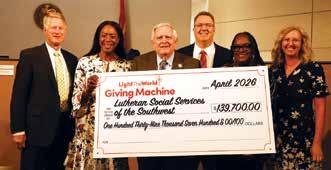
as groceries, coats, socks, diaper bags, bus passes, specialized learning materials for the disabled, etc. Internationally, over 1,600 families will receive a baby goat—not for a meal, but for a business. Training comes with that!
Queen Creek, which became a “JustServe City” last April, also had great success with their Giving Machines. For example, over 160,000 meals have already been packed by community volunteers and given to eight local food banks thanks to the funds raised by about 12,000 donors.
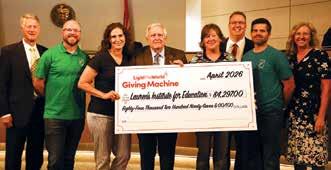
LAUREN'S INSTITUTE FOR EDUCATION
Elder John Lewis; Justin Travillion, CFO/COO, Lauren's Institute for Education; Chelsey Elicio, Administrator; Mayor Scott Anderson; Margaret Travillion, Cofounder & CEO; Taylor Anderson; Richard Elicio, Director of Therapy; Teresa Anderson.


Protect life, strengthen families
Protect constitutional rights of citizens
Support American dream of home ownership
Advance common-sense economic growth
Secure elections, restore trust
Keep communities safe
“After selling my software business, I founded a nonprofit dedicated to empowering families across Arizona to choose life. As a conservative and successful entrepreneur, I believe in limited, accountable government that protects our constitutional rights and puts families
first. That means secure elections, safe communities, parental rights, educational freedom, and real economic opportunity. I’m unapologetically pro-life because every life has inherent dignity and worth. But that belief doesn’t stop at words - it requires action. Strong families are the foundation of a strong nation, and I’m committed to fighting for both.”

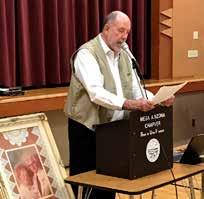
Family and local history focu sed.
Preserve the memory and heritage of the early pioneers.
Monthly presentation gatherings. Treks to historic locales.
LDS pioneer heritage NOT required to participate!
Membership includes a subscription to Pioneer Magazine, and to The Arizona Beehive Magazine
YO U ’ R E I N V I T E D !
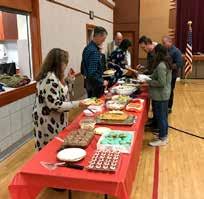
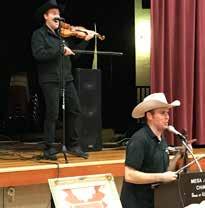
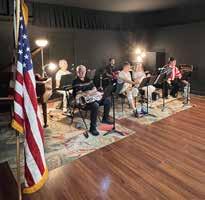
Be a guest of The Sons of Utah Pioneers Mesa A Arizona Chapter. 2nd Thursday of each month at 6:00pm, S September - June. Patriotism. Music. Dinner! Inspirational presentation. Fellowship.


By Jeanie R. Davis
Rachelle Wilkinson was 5’x 5’2” on July 30th, 2007—that is to say, she was five feet around by five feet two inches tall. The following day, she gave birth to quintuplets, breaking the birth-weight record at just over 21 pounds.
One at a time, all five healthy babies (two boys and three girls, named Rustin, Ryder, Kyndall, Kaydence and Kassidy—to go along with their older siblings’ names: Riley and Kaiya) were released from the hospital.
Huge miracle!
Because of her petite frame, Wilkinson’s obstetrician in Austin, Texas had insisted she eliminate three fetuses, threatening dire consequences.
After hours on their knees, Rachelle and husband Jayson knew they’d be keeping all five babies, and finding a new doctor.
Wilkinson researched obstetricians who specialized in multiple births and discovered Doctor John Elliott. He not only had an impressive record, but he also practiced in Phoenix, Arizona, near relatives she could reside with during her pregnancy.
Carrying and delivering five babies was anything but comfortable, but miracles outnumbered the aches and pains. Dozens of local ward members reached out to help, showing up in around-the-clock shifts to tend the babies.
On September 1st, Rachelle and Jayson Wilkinson and their seven children flew home to Austin to
begin their adventure. Where are they now?
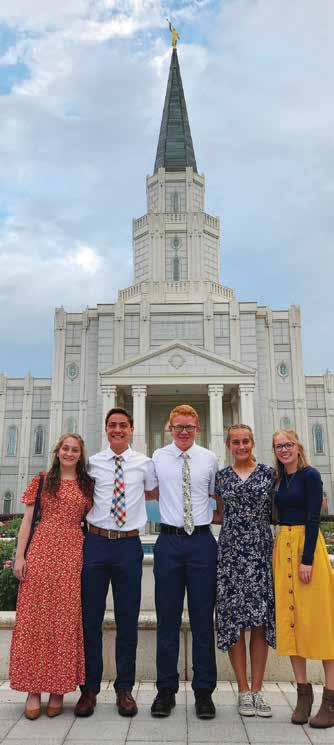
Thousands of diapers, gallons of formula, hundreds of shoes, backpacks, homework assignments, and 18+ years later, the Wilkinsons are still creating miracles! All five chose to serve missions.
Ryder led the pack, assigned to the California San Jose, Spanish speaking mission. Rustin followed, serving in the Cote d’Ivoire Abidjan West mission. Kyndall serves in the Nevada Las Vegas West mission. Kaydence serves in the Korean Seoul mission. And Kassidy serves in the Italy Milan mission.
Here’s the “Why”: Rustin: “I chose to serve a mis-

sion because of how much it would help me grow and build my testimony.”
Ryder: “I knew it was what the Lord wanted me to do… I knew the Book of Mormon was true, and I knew God knew I knew. …God has so much He needs me for, and to be an instrument in His hands, all I had to do was accept the call.”
Kaydence: “My parents’ example of faith brought me the comfort and confidence I needed to be willing to serve wherever the Lord needed me.”
Kyndall: “My sister influenced me. Kaiya was super quiet before her mission, and when she came back, she had this amazing light around her!”
Kassidy: “I decided to serve because of revelation given in my patriarchal blessing. Also, I had the privilege to visit my grandparents serving in Malta. On the same trip, we spent a couple of days in Rome. I had a feeling I was going to be back someday. When I opened my call and it said Italy Milan mission, I was not surprised. Instead, I was filled with an enormous amount of joy, excitement and love.”
So…where are they Now?
Spread across the globe. A small army of big miracles.
By Hillary Fevrier
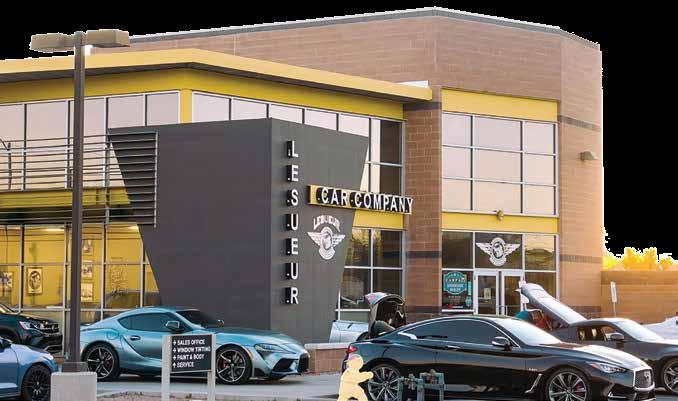
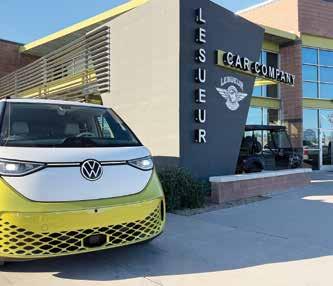
When Warren LeSueur talks about cars, family and faith, the stories come easily. After 50 years in business, he has earned the right to tell a few.
LeSueur’s roots in Arizona run deep. His family was among the founders of Mesa in 1878, arriving by covered wagon. Their legacy is commemorated in a statue across from the Mesa Arizona Temple. That heritage of hard work and entrepreneurship shaped LeSueur long before he opened a dealership of his own.
“I have that entrepreneurial gene,” LeSueur said. He grew up in Phoenix, where his father worked as a high school and college teacher while buying and selling cars on the side to support the
While studying business policy at ASU, he researched both Volkswagen and Raleigh bicycles as possible ventures. Ultimately, Volkswagen won his attention.
“I decided that I wanted a Volkswagen dealership,” he said. “So, I went after Volkswagen.”
In 1975, Warren and his wife launched their business with just $2,000. Newly married and facing layoffs during a recession, they invested everything they had into what would become LeSueur Car Company. LeSueur worked as a carpenter to supplement their income while building the business from the ground up.
They started with only a handful of vehicles.
family. LeSueur watched and learned. His grandfather and great-grandfather were merchants, operating fruit stands and mercantile businesses throughout Arizona and beyond.
But LeSueur’s path to business ownership was anything but straight. As a teenager, he described himself as a “hippie.” He grew his hair long, left school and church—a shock to his father, who was both an educator and a bishop—and eventually moved to Hawaii with just $200. There, he surfed, lived independently and learned lessons that would shape his future.
After returning to Arizona, LeSueur worked in the rock-and-roll concert business with performers such as Janis Joplin, José Feliciano and Grand Funk Railroad. A friend encouraged him to pursue higher education, recognizing his potential. LeSueur took the advice, returned to school and graduated from Arizona State University.
Soon after, LeSueur hired a mechanic, Bernie Waller, whose expertise helped establish the company’s reputation. Over time, the dealership expanded beyond Volkswagens into Japanese and American vehicles and grew into a full-service operation.
Today, LeSueur Car Company offers vehicle sales, mechanical service, paint and body work, detailing and window tinting. The dealership has continued to invest in its property, adding fencing, expanded space for inventory and customer conveniences like golf cart transport across the lot.
For LeSueur, the business has always been more than a car lot—it’s a family enterprise.
He and his wife recently celebrated 51 years of marriage. Together, they have five children and 22 grandchildren. Several of their children now help lead the business: Chris serves as general manager, Steven as sales manager and Jimmy as comptroller. Grandchildren are also involved, working in various

roles across the dealership.
Family and faith remain central to the company’s identity. In the early years, LeSueur worked seven days a week to keep the business afloat. Over time, with encouragement from loved ones, he returned to church, began paying tithing and made the decision to close on Sundays.
“I did better than I had ever done before,” he said. “It doesn’t add up, but it is true.”
That commitment continues to guide him today. LeSueur serves as a missionary and prison mentor, using his experiences to help others overcome difficult circumstances. He has worked closely with individuals seeking change, including mentoring someone who now encourages others from within prison.
“I try to help other people with my experiences,” he said.
After five decades in business, LeSueur credits persistence, kindness and attitude as keys to success. He also points to a personal trait that has helped him navigate challenges.
“My obsessive nature is my superpower,” he said.
Looking ahead, LeSueur is focused on the evolving future of the automotive industry. The dealership is increasing its inventory of electric and hybrid vehicles, helping customers take advantage of available rebates while reducing reliance on traditional fuel sources. He sees this shift not only as good business, but as an opportunity to contribute to cleaner air, a stronger economy and long-term sustainability.
From a $2,000 beginning to a thriving multi-generational dealership, LeSueur Car Company stands as a testament to grit, faith and family legacy. For Warren LeSueur, the cars may be the business, but the real story is the people—the family who built it, the employees who sustain it and the customers who have kept coming back for 50 years.
“We live in a world where we can get just about anything on demand.
Yet, year after year, people are rating themselves less and less happy. Employee satisfaction and retention is at an all-time low. Families are struggling to build strong relationships in the face of hardships. Society in general is becoming more divisive. It seems that the one thing we can’t get on demand is happiness. But we can change that. We can create a different reality. We have everything we need to do it.”
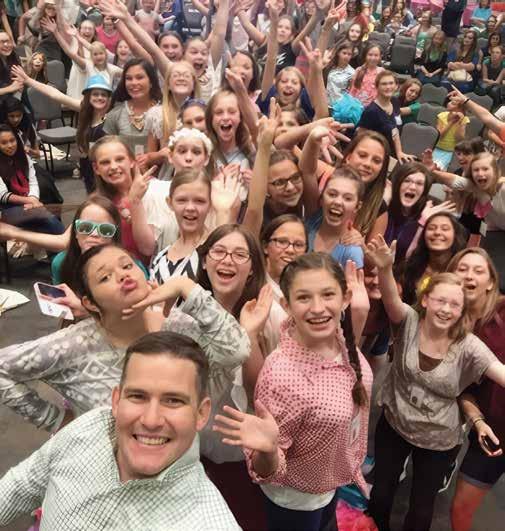
Enter “The Happiness Guy”— Kris Heap—dentist, motivational speaker, author, husband and father. A native of Mesa, Arizona, he and
his wife, Sarah, have four kids between the ages of 12 and 22. As an awardwinning cosmetic dentist in Mesa since 2005 and the owner of Inspire! Dental, he specializes in improving people’s smiles.
His true passion, however, is creating smiles through motivational and inspirational speaking. Known by audiences as “The Happiness Guy,” Kris travels the country to teach people how to start creating happiness for themselves—including storytelling, research, and fun in every presentation he gives.
Where does Kris get this drive? When he was 14, he was asked to give a talk in church about forgiveness. A few weeks later, an older man in the
ward pulled him aside and told him that one of the messages in his talk had helped him to repair a broken relationship with his daughter. It amazed Kris to realize that words from his mouth had positively impacted the life of a man five times his age. “That was the day I realized how powerful words could be, and I wanted to do more of that. I’m passionate about motivating others because I am aware that we all just get one chance at this life. We were sent here to find joy and gratitude, and experience all of the good things the world has to offer. Yet, we all get bogged down by the constant struggles or distractions of the world. I really want to help people find the tools to live their best life, no matter what their circumstances are.”
Kris has written five books, most of which he has given away for free when speaking or coaching teens. His most popular book, Happiness is a Habit, can be downloaded for free at krisheap. com. Three of his other titles are Worth More Than Diamonds, The 3-Week Miracle: A Step-by-Step Guide to a More Successful Life, and The Other Handbook: Powerful Lessons for Your
By Rauna Mortensen

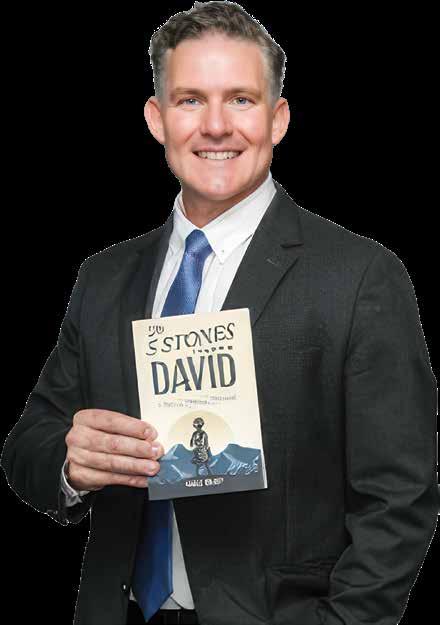
Kris Heap shares some background on his most recent publication, The 5 Stones of David: A Tale for Defeating Life’s Giants: “The storytelling device called The Hero’s Journey has been used over the ages. I thought, ‘Wouldn’t it be cool to use that framework to tell a story from the scriptures?’ In the story of David growing from a timid young shepherd into a confident and faith-filled warrior, I saw opportunities to teach lessons on self-improvement. David’s story before defeating Goliath has a lot of gaps. So, I filled those gaps with experiences that taught David how to become the defeater of giants. The goal of the book is to show the principles David used to find success, and then inspire the reader to use those same principles to defeat the ‘giants’ in their own life.”
Through listening to or reading from Kris Heap, perhaps we can glean life-empowerment tools to apply and then share and pay it forward as Kris has done--thereby increasing the net happiness in our circles.





By The Mesa Alma Stake
The Dobson High School campus was transformed into a sea of moving feet and hopeful hearts on Feb. 7th as the community gathered for the annual “Hope on the Move” 5K & Family Fun Run.
The event’s mission is to end child abuse and strengthen Arizona families. Organized as a volunteer-run initiative, 100% of the race proceeds go to Prevent Child Abuse Arizona, a nonprofit dedicated to providing resources, education and advocacy for the state’s
most vulnerable children.
The morning began with the Family Fun Run, a high-energy event that saw local parents, children, and even a fleet of strollers taking over the course. That was followed by the 5K run, where runners from across the Valley competed for a cause.
“This event is about more than just a morning run,” said Adam James, a local attorney who spends his career advocating for abused children. “It’s about showing Mesa families that they have a community standing behind


them. Every registration fee and every donation stays right here in Arizona to help prevent maltreatment before it starts.”
While the final fundraising totals are still being calculated, event organizers say the turnout was inspiring and larger than last year. Beyond the finish line, the event served as a reminder that child safety is a community-wide responsibility.
“Seeing the sea of runners at Dob-
son High School gives you a real sense of hope,” said Anna Merrill, pausing to catch her breath after completing the 5K and the Family Fun Run with her family. “It’s great to get some exercise, and knowing that the funds are helping children makes it totally worth it.”
Prevent Child Abuse Arizona continues to work year-round to provide crisis intervention training and family








By Jaylene Garrett
“But I fear, lest by any means, as the serpent beguiled Eve through his subtilty, so your minds should be corrupted from the simplicity that is in Christ.” (2 Corinthians 11:3)
I love that understanding. Simplicity in Christ with His simple gospel is truth. The love of Christ is simple. He simply loves us who we are and where we are. His power is simple, done from love and what is best for us. Simple.
In Elder Michael Cziesla’s talk “Simplicity in Christ,” he said, “We sometimes underestimate the strength we receive from simple acts like prayer, fasting, scripture study, daily repentance, partaking of the sacrament weekly, and regular worship in the house of the Lord. Applying the simplicity that is in Christ makes us prioritize people over processes and eternal relationships over short-term behaviors. The Lord reminded us: ‘Wherefore, be not weary in well-doing, for ye are laying the foundation of a great work. And out of small things proceedeth that which is great.” (D & C 64:33)
“And see that all these things are done in wisdom and order; for it is not requisite that a man
should run faster than he has strength. And again, it is expedient that he should be diligent, that thereby he might win the prize; therefore, all things must be done in order.” (Mosiah 4:27)
If we are running out of strength, it is a reminder that we need to take care of our spirit and physical self. Praying to God to help us understand our limits is a blessing. It helps us increase our ability to serve. When we have a good heart and want to have time to be more Christlike help to others, God knows our hearts. He knows we want to do more “good” than we have time. In the past, when my brain started feeling overwhelmed. I would push through. It would mean being extra tired with less ideas. Now I pray and ask, “How can I simplify this and what would Christ do and think about this?”
So where do we start to simplify our lives? In his April 2007 talk “This Day” President Henry B. Eyring counseled, “A morning prayer and an early search in the scriptures to know what we should do for the Lord can set the course of a day. We can know which task, of all those we might choose, matters most to God and therefore to us. I have learned such

a prayer is always answered if we ask and ponder with childlike submission, ready to act without delay to perform even the most humble service.”
By simplifying our lives, we can learn how to be more Christlike in our day to day living, achieve our purpose here on Earth, and help others with Christlike love. As we learn daily what God wants us to do, we are able to focus on the next step, no matter how small.











When working on the family tree with ancestors born before living relatives had personal knowledge about them, we need help from historical records to add accurate information. I will share information that I added to the tree recently about Christiana Affleck (GMG8-2NY) who is my second great grandfather’s aunt on my mother’s side. Christiana was born in England in 1788 and married Solomon Sutherland in 1839. Solomon was previously married and had five children with his first wife. Two sons Robert Sutherland and William lived with Christiana and Solomon after their marriage and are shown on the 1841 census. Solomon died 15 September 1841 not too long after the 1841 census was taken.
The 1851 census lists Christiana as head of household and widowed. Robert is listed as a stepson, unmarried, 31 years old and a newspaper reporter. Since both Robert and William are listed

in the 1841 census, I indicated on FamilySearch that both William and Robert are stepsons to Christiana and therefore became my relatives. William died in 1846. The 1861 census lists Robert as head of household, married, with Christiana as his stepmother. Robert’s profession is still a newspaper reporter. His wife Mary Ann is listed. Mary Ann was born in Yorkshire in 1830. We now look for Mary Ann’s maiden name and her parents and siblings.
I use Ancestry.com to help find more information about Mary Ann. I go to the 1861 census on ancestry. com from Robert’s FamilySearch profile. My technique is to start with Robert’s FamilySearch profile and from the “Search Records” box on the right side of the screen, select Ancestry. This will bring up the 1861 census on Ancestry.com with Robert and his family. I then select Mary Ann and see if Ancestry hints other records about Mary Ann. Ancestry hints a marriage record listing Mary Ann Blyton and Robert Sutherland married in

1855. I now have Mary Ann’s maiden name. Using the 1861 census from Robert’s profile, I added Mary Ann to the tree connecting her to her husband Robert.
From Mary Ann on the 1861 census, the 1851 census is suggested showing Mary Ann Blyton living with her parents. I found her parents John Blyton and Ann Smith already on FamilySearch/ Tree and added her as their child.
I was able to find death information for both Robert and Mary Ann, so their FamilySearch profiles are now complete with birth, marriage and death information. The 1861 and 1871 census records list no children for them.
Robert and William had a younger sister Ann. I did not find any records indicating that Ann lived with her brothers, father Solomon and Christina so she is not my relative. However, I did more research and found children for Ann and her husband John Glass and added them to FamilySearch/Family Tree.
We can all contribute in various ways to help build the world’s family tree on FamilySearch.

By Allison Beckert
Summer in Arizona moves to its own rhythm. Mornings arrive bright and full of possibility, while afternoons hum with heat that sends families retreating indoors. It’s a slower, quieter season than in cooler places and that can feel limiting even for seasoned Arizonans. But there’s a gift hidden in that pace. With a little intention, summer becomes a time to create small, meaningful traditions that children will remember long after the temperatures drop.
Before the heat settles in, Arizona mornings offer a brief window of calm. Choosing one day each week for an early outing can turn those hours into something special. A sunrise walk, a quick park visit, or even a simple donut run becomes an adventure when it’s shared. These moments don’t require much planning, but they often become the memories kids hold onto most. If mornings aren’t your thing, evenings about an hour after sunset have similar relief from the heat.
When afternoons are too hot to spend outside, it helps to have something to gather around indoors. A seasonal family project can transform long stretches
of inside time into something creative and connecting. You might work through a puzzle on the dining table, read a chapter book aloud each day, or set up a small craft corner. Some families even use the time to assemble photo albums or memory books. Over time, kids begin to associate those warm afternoons not with boredom, but with shared creativity.
As summer deepens, the sky begins to change. Monsoon season brings towering clouds, distant lightning, and the long-awaited scent of rain on desert dust. Families might step outside together to watch for these storms, listen for the first rumble of thunder, or sit by a window when the rain finally falls. It’s a uniquely desert experience, and one worth noticing together.
In the middle of a hot week, a simple treat can feel like a celebration. Set aside one evening for something cold and refreshing to give everyone something to look forward to. Homemade popsicles, shaved ice, root beer floats, or even slices of chilled. The consistency matters more than the complexity. Over time, that small ritual becomes something familiar, anticipated, and shared.

As the Sabbath winds down, there’s often a brief moment when the heat softens and the evening feels still. Gathering as a family on the porch, by an open door, or near a window can create a peaceful close to the day. It might be as simple as sharing something you’re grateful for, reading a short scripture, or talking about small acts of kindness from the week. These quiet moments help children connect faith with a sense of calm and togetherness.
Summer traditions don’t need to be elaborate to matter. In a place where the heat naturally slows life down, simple rituals often become the season’s highlights. Choosing even one small tradition this year can shape the weeks ahead. More often than not, it’s these ordinary, repeated moments that children carry with them into the future.

By A New Leaf

After nearly two decades working for a medical imaging company, Pat thought retirement would suit him. It didn’t. He missed having a purpose, something that kept him active and connected to others. Instead of golfing or another leisure activity, he chose to find a local organization to volunteer with.
Today, Pat serves as a dedicated volunteer driver for local charity A New Leaf, helping transport donations
between homeless shelters, community centers, and churches. On any given day, his car might be filled with clothing, food, or other essential items, each delivery helping ensure resources reach individuals and families working toward stability.
Through this role, Pat has become a steady and reliable part of daily operations, supporting the community in ways that often go unseen but are deeply impactful. His willingness to go

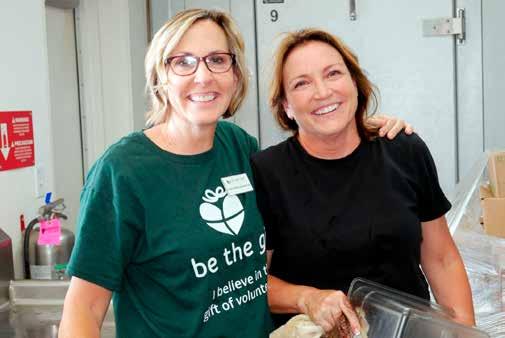
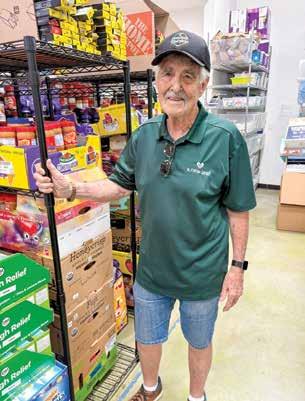
wherever he’s needed reflects both his flexibility and his commitment to service. What keeps him coming back is the people. Pat describes A New Leaf as a place defined by kindness, where staff and volunteers genuinely care about one another and those they serve. It’s an environment that makes the work meaningful.
Motivated by the belief that anyone could face hardship, Pat approaches
his volunteer work with humility and empathy. His story is a reminder that everyday service, performed with compassion and love, can make a lasting difference in the lives of others. Visit https://turnanewleaf.org/ to explore volunteer opportunities.

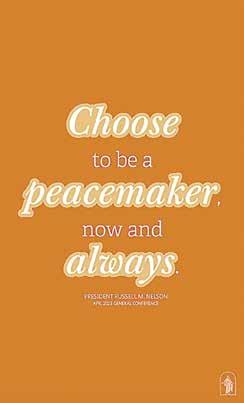
In seeking inspiration for this column, I looked to the April 2026 General Conference and words of our prophet, Dallin H. Oaks, “Let us follow Christ by forgoing contention and by using the language and methods of a peacemaker.”
Forgoing contention is easy enough for me to grasp but I got stuck on the language and methods of a peacemaker. What exactly are the methods of a peacemaker or their language?
I started with the definition. Mirriam Webster Dictionary, “Peacemaker: (noun), a person who helps to prevent or stop an argument, a fight, or a war.” Likewise, the Hebrew translation, in the context of President Oaks’ talk is
(osei shalom), literally “makers/doers of peace.” In looking at both definitions we see peacemaking is not pacificism. To be a peacemaker, we don’t necessarily keep our mouth shut
or walk away from a quarrel or fight. We seek to prevent or stop the conflict.”
In today’s time, it’s easy to see the hostility and contempt toward our adversaries and how those attitudes affect so many different relationships in our lives. Do we remember and show others through our words and actions we are disciples of Jesus Christ?
President Oaks says, “…as followers of Christ, we should seek to live peaceably and lovingly with other children of God who do not share our values and do not have the covenant obligations we have assumed. In a democratic government we should seek fairness for all…suspicions or even hostility gradually gives way to friendship when personal contacts produce mutual respect.”
A few years ago, during the elections, my friend, Marie (not her real
name) was wearing a baseball cap with the name of the candidate she supported. As she entered a grocery store, a younger man with a child on his shoulders nearly collided with her. He was shaken but kept the child balanced on his shoulder. He cursed, upset from the near mishap, read my friend’s cap and started yelling at her, accusing her
By Debra C. Eaton
• AZ Liberty Caucus
• AZ Senator DAVID FARNSWORTH
• AZ House Rep JUSTIN OLSON
• AZ House Rep RALPH HEAP
•AZ House Rep DAVID MARSHALL
• Former AZ House Rep BARBARA PARKER
• Maricopa County Recorder JUSTIN HEAP Recorder
• LD 10 Chairman BRIAN ECKLEY
• Mesa PS Board Member SHARON BENSON
of being anti-American followed by a long stream of curse words and various vulgar combinations of said words. Spittle shot from his mouth as he continued his tirade. Shocked by this encounter, Marie held her hands up in front of her chest to show she meant no harm. The unthinkable happened when the man began shoving her. A security guard jumped between them. Undaunted, the man screamed he hated her and people in her political party. In that moment, Marie saw the frightened child on the man’s shoulders and said, “Sir, I don’t hate you. I don’t know you. I love you and so does Jesus.”
What is the language and methods of a peacemaker? The language is love. The methods are likewise, to love God and serve as our Savior Jesus Christ did and to love one another. Let us choose the right, be kind, forgo contention and hate, and seek to be a peacemaker in our families and our communities.




By Robin Finlinson
One of the Lord’s observable patterns is that when we’ve done everything we can for ourselves, He does what only He can. “[I]t is by grace that we are saved, after all we can do.” (2 Nephi 25:23)
Only after Moses and Aaron attempted several times to persuade Pharaoh to release the children of Israel from slavery, and after the Israelites followed the Lord’s many
instructions, the Red Sea was divided for their escape. (Ex. 5-14)
Under Joshua’s direction, the priests bearing the ark of the Lord walked “to the brink of the water of Jordan,” wetting their feet in the overflowing river before the water upstream “rose up,” creating a dam, and the water downstream flowed away and evaporated. (Joshua 3:8, 15-17)
In the 480th year following the Red Sea miracle, construction of a perma-
This article supports the readings in the manual titled Come, Follow Me—For Home and Church for May-June, 2026, from Numbers 11 through 1 Kings 11.
Specializing in:
• Finding ancestors
• Finding cousins and cousins’ cousins needing temple ordinances
• $30 an hour/or package: $25 an hour for 5 - 10 hours a month for a year.
• Consultations $30 an hour
• Providing contact information for researchers located all over the worldno charge.

nent House of the Lord finally started. (1 Kings 6:1) Skilled hands worked for seven years during King Solomon’s reign to prepare it as much as mortal hands could. Then, God filled it with His Spirit and glory. (1 Kings 8:10-11)
Solomon’s father David gathered stones and presented himself willingly, courageously before Goliath. He made use of the centripetal force of a stone rotating in his sling to give it significantly extra gusto before swiftly releasing it. Then, by the Lord’s omnipotence, the stone prevailed. (1 Sam. 17:45-51)
Only the power of King David’s descendant, Jesus Christ, the “Stone of Israel” (Gen. 49:24), will be mighty enough to rid the earth of darkness and abomination in the last days. Through Him, “Babylon the great” will be “thrown down, and shall be found no more at all.” (Rev. 18:2, 21) Notice the similarity between David’s whirling sling and striking stone anciently and a future method the Lord will employ for toppling His gargantuan enemy. “Wherefore…let the rebellious fear and tremble…for the day of wrath shall come upon them as a whirlwind, and all flesh shall know that I am God.” (D&C 63:6) “Behold, a whirlwind of the Lord is gone forth in fury…it shall fall grievously upon the head of the wicked.” (Jer. 23:19; see also Prov. 10:25; Isa. 66:15; Hosea 8:7; D&C 97:21-28.)
The Lord’s might will also defeat corrupted kingdoms described metaphorically as a “lion” and a “bear.” (Dan. 7; Rev. 13:2) David mentioned protecting his flock of sheep by taking down a lion and a bear. (1 Sam. 17:3437)
The Lord is serious about rescuing
spiritually and physically those who covenant with Him. Before doing so again with mind-blowing public miracles, He still asks that we do what we can for ourselves and to tend His sheep. (John 21:17; 1 Cor. 15:58)
All who engage in the Lord’s immeasurably heavy work of lifting the whole world from sin and despair to unimaginable glory will feel some of its weight—and be tempted to shrink from it entirely. (Num. 11:11, 16-17) We’ll consider going with the easier flow of the adversary’s work that will eventually be stopped and dried up. Since faith in God is required to receive miraculous help, we must build faith!
Only after doing the work of learning of Christ and praying for confirmation that He is “the only living and true God” (D&C 20:19) does the Holy Spirit miraculously, individually grant us the gift of faith in Him.
Only with the work of individual repentance—including putting away any “strange gods” of our family members and cultures (Josh. 24:14; Ruth 1:16; 1 Sam. 7:3)—and the completion of every authorized priesthood ordinance, can Christ’s miraculous Atoning Sacrifice take full effect.
Only by the work of faithful millions getting His name “declared throughout all the earth” will the world know to look to Him for salvation. (Ex. 9:16; 1 Kings 8:43; John 17:18, 20; 2 Nephi 26:27)
When doing our little part, we must remember that it is the Lord’s work, and it is He who saves. (Judges 7:2; 1 Sam. 15:17; Eph. 2:8-10) With our faith in Him, the Stone of Israel will prevail again.

There’s a familiar rhythm to modern life. Phones buzz in our pockets, a television hums (or shouts) in the background, schedules fill from morning to night. Even in moments meant for rest, we often reach for more. When stress builds, we tend to assume the solution is better time management or stronger coping skills. But sometimes the issue isn’t that we’re doing too little, it’s that we’re taking in too much. When the mind is flooded with constant input, the healthiest response may be to simply turn down the volume.
First, it helps to recognize what an overstimulated nervous system actually looks like.
Overstimulation shows up in quiet, everyday ways. You might feel unusually irritable, snapping at small inconveniences. Tasks that should be simple feel hard to focus on or finish. There’s a sense of being mentally “on” all the time, even while your body feels tired. Rest doesn’t feel restful, and downtime fills quickly with more scrolling or background noise. In children, it
By Allison Beckert
can look like whining, meltdowns, or sudden emotional swings. These aren’t personal failures. More often, they’re signals that the brain has taken in more stimulation than it can comfortably process.
Instead of pushing through, sometimes the better answer is reducing the input.
Lowering stimulation doesn’t require a dramatic life change. It can be as simple as creating a quieter environment, turning off unnecessary notifications, letting a room be still instead of filled with constant media, or scheduling intentionally unstructured time. When the flow of input slows, the mind shifts out of a constant state of alertness and into something calmer, steadier. This isn’t withdrawing from life, it’s space for our thoughts to breathe.
One of the biggest sources of stimulation today is the content we consume. News and social media are designed to hold our attention, often by keeping us in a heightened emotional state. Small changes can make a meaningful difference. Setting intentional times to check media, keeping phones away from the dinner table, or making bedrooms a
screen-free space can create natural boundaries. Avoiding intense or upsetting content late in the evening also helps the mind wind down. With less input, many people notice improved patience, steadier moods, and better sleep.
Children especially feel the effects of overstimulation. Their nervous systems are still developing, and too much input can quickly become overwhelming. It often shows up as tantrums, difficulty focusing, or sudden exhaustion. Families can help by building in moments of lower stimulation: quiet reading time, simple outdoor play, device-free evenings, or calm transitions between activities. Just as important, children learn by example. They borrow a sense of calm from the adults around them.
There’s also a spiritual pattern to this principle. Moments of stillness in prayer, scripture study, or the quiet

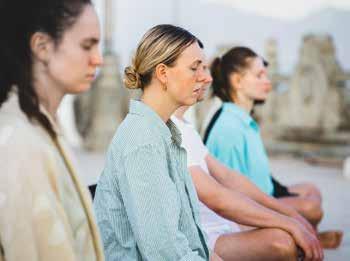
rhythm of the Sabbath, naturally reduce stimulation and invite peace. Guidance and clarity often come in gentle, quiet ways, not in the middle of constant noise. Creating space for stillness allows those moments to be felt.
This week, consider one small way to turn down the volume. Silence a few notifications. Take a quiet walk. Let part of the evening be still. Sometimes improving our mental health isn’t about adding more, it’s about allowing a little less.















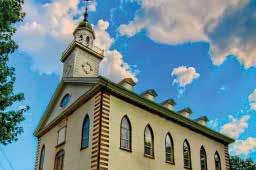
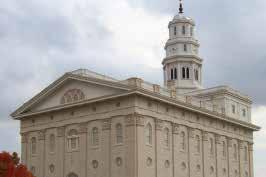
· Tour I - Palmyra to Kirtland
· Tour II - Missouri to Nauvoo to Winter Quarters
· Tour III - Tours I & II combined!
· Kirtland Week
· Sharon to Palmyra to Kirtland
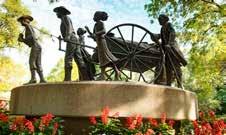
· TREK to ZION: Winter Quarters to Salt Lake
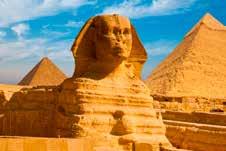
· Wonders of Egypt
· Scotland · England · Wales
· Italy: Art & Faith
· Aloha Oahu








by Katherine Ogden
OCJ Kids is a non-profit organization that was formed in 2005. Its mission is to provide opportunity, create community and fight for justice for foster and at-risk kids.
Gary and Tamara Webb had been serving for 20 years as youth pastors with The Assembly of God church. Gary, while talking to a local foster group home staff member named Andi McDowell, felt prompted by God to ask the question, “Who is helping these kids?” Andi’s response was “They’re the faceless generation, they’re the forgotten ones. No one is helping them on their journey.” Her statement impacted him so much that he knew he had to do something.
Shortly after that, Opportunity, Community and Justice for Kids (OCJ Kids) was formed. Its vision is to connect and create purposeful futures for these same kids, in foster care and group homes. “I want to
change the culture of foster care in Arizona, and create resilient foster kids,” said Gary, who serves as Founder and President.
They receive no government funding, instead running on private and corporate grants, AZ tax credits and other donations. They were included in 2022 Giving Machine project, which raised around $40,000.00 for the organization.
Some of the resources they’ve created for foster kids/Dept. of Children’s Services (DCS) and group homes include:
• Emergency removal/Go kits (DCS)
• Cuddle bags: includes a teddy bear and blanket (DCS)
• Welcome kits (both DCS & group homes)
• InterAct Projects (DCS/group homes): helps with motor skills, life skills and self-esteem.
• Transition Kits/Suitcases (DCS/ group homes): “Many times they leave with all their belongings in black trash bags,” says Tamara. “We want to give them the message that their belongings are not trash.”
• Cell Phones: they’re provided a free cell phone for 6 months, to help with finding a job or attending school.
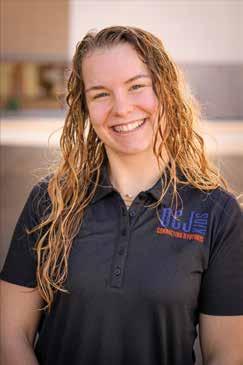
• Baby Kits for teen moms Cambria Baker served an 18-month LDS service mission in 2024-25 in the Phoenix Arizona Mission. When she wasn’t serving at the temple, she was working at OCJ Kids, two days a week. She loved the work so much she became an OCJ Kids employ shortly after she completed her mission. “I’ve loved being part of such a wonderful team and vision,” says Cambria.
OCJ Kids has been continually growing and adding more services. “In
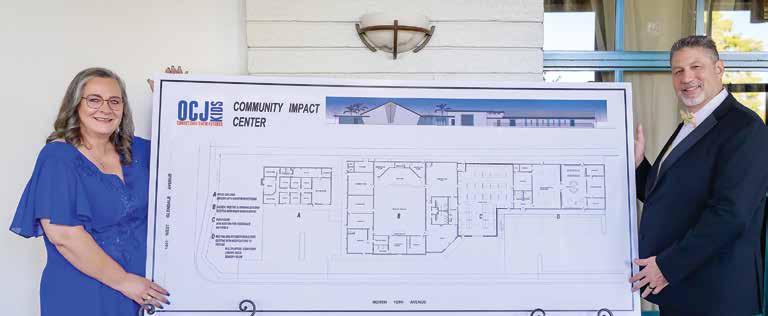
the month of March 2026, we distributed more resources than we ever have before,” said Director of Operations Tammie Webb. They’re in need of more room and will be partnering with an Assembly of God church here in the Valley. “We’re renovating the offices, creating the Restoring Dignity Room, changing the education building into the library and STEM room, creating a sensory room for the kids and a quiet room for DCS and group home employees,” shared Tammy. “We’re also upgrading a room into the team building/training room and adding on a 4,000 square foot warehouse.” They’re currently fundraising to generate the necessary funds to have that completed. Target date for initial move in is mid-2027.
For more information on donating to OCJ Kids, or securing services, please visit their website at https:// ocjkids.org.
Tammie and Gary Webb, with rendering for development of the new building.
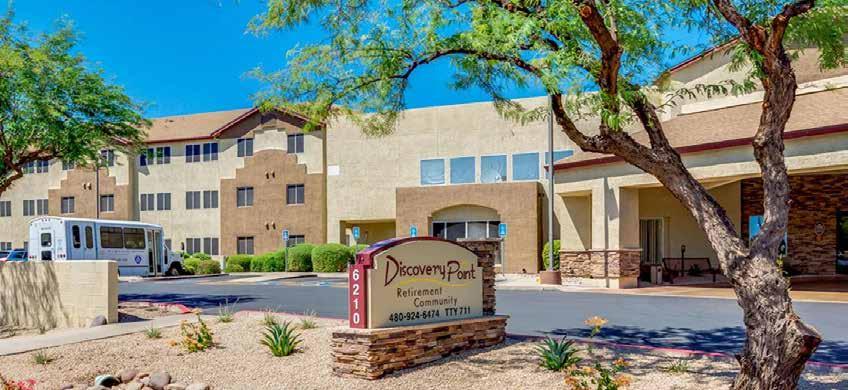



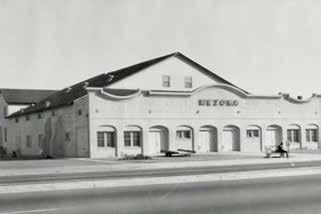
The recent “Remember the Mezona: A Centennial Commemoration” lecture by BYU Church History Professor Fred E. Woods brought a full house! If you visited or frequented the Mezona for recreational activities in post WW II to 1971 (when it closed) please send your reflections to Professor Woods at this email address: Fred_Woods@byu.edu







Because of the Hope on the Move 5K, the $10,007 raised will help provide resources and support to an estimated 22,016 Arizona families. Through prevention education, strategic collaboration, and placebased systems of support, these dollars strengthen a statewide system of family support —helping prevent child abuse and neglect before it starts. Thank you giving children and families hope for the future, and making Arizona a wonderful place to be a child.
Arizona author Valerie Ipson Willcox has published another delightful children’s book titled Marcus and the Magic Spoon. “Marcus finds an odd spoon in the silverware drawer,” explains Ipson, “and wishes it could make his morning oatmeal taste like his favorite dessert – triple chocolate fudge swirl ice cream. And it does! The most fun story follows him through his day as the magic continues with every meal.”
Valerie says many of her children’s stories are inspired by her own children when they were little. “That’s probably why I have a couple of books about kids who aren’t happy about going to bed and this one is about a child who isn’t happy about his breakfast.”

By Cindy R. Williams
always. But along with Marcus, they’ll learn that eating your favorite dessert as much as you want for every single meal will get really old fast.”
Because of the Hope on the Move 5K, the $10,007 raised will help provide resources and support to an estimated 22,016 Arizona families. Through prevention education, strategic collaboration, and placebased systems of support, these dollars strengthen a statewide system of family support —helping prevent child abuse and neglect before it starts. Thank you giving children and families hope for the future, and making Arizona a wonderful place to be a child.
Because of the Hope on the Move 5K, the $10,007 raised will help provide resources and support to an estimated 22,016 Arizona families. Through prevention education, strategic collaboration, and placebased systems of support, these dollars strengthen a statewide system of family support —helping prevent child abuse and neglect before it starts. Thank you giving children and families hope for the future, and making Arizona a wonderful place to be a child.
Because of the Hope on the Move 5K, the $10,007 raised will help provide resources and support to an estimated 22,016 Arizona families. Through prevention education, strategic collaboration, and placebased systems of support, these dollars strengthen a statewide system of family support —helping prevent child abuse and neglect before it starts. Thank you giving children and families hope for the future, and making Arizona a wonderful place to be a child.

Valerie writes everywhere, but mostly in her office. “For the past several months I’ve been the Writer in Residence for Chandler Libraries and with that they have given me a dedicated study room four days a week. That’s been a great distraction-free place to write.”
Because of the Hope on the Move 5K, the $10,007 raised will help provide resources and support to an estimated 22,016 Arizona families. Through prevention education, strategic collaboration, and placebased systems of support, these dollars strengthen a statewide system of family support —helping prevent child abuse and neglect before it starts. Thank you giving children and families hope for the future, and making Arizona a wonderful place to be a child.
The book’s charming illustrations are by Kevin Mura. Valerie says, “He lives in Chile and he’s awesome!”
Because of the Hope on the Move 5K, the $10,007 raised will help provide resources and support to an estimated 22,016 Arizona families. Through prevention education, strategic collaboration, and placebased systems of support, these dollars strengthen a statewide system of family support —helping prevent child abuse and neglect before it starts. Thank you giving children and families hope for the future, and making Arizona a wonderful place to be a child.
Because of the Hope on the Move 5K, the $10,007 raised will help provide resources and support to an estimated 22,016 Arizona families. Through prevention education, strategic collaboration, and placebased systems of support, these dollars strengthen a statewide system of family support —helping prevent child abuse and neglect before it starts. Thank you giving children and families hope for the future, and making Arizona a wonderful place to be a child.
Because of the Hope on the Move 5K, the $10,007 raised will help provide resources and support to an estimated 22,016 Arizona families. Through prevention education, strategic collaboration, and placebased systems of support, these dollars strengthen a statewide system of family support —helping prevent child abuse and neglect before it starts. Thank you giving children and families hope for the future, and making Arizona a wonderful place to be a child.
“My favorite phrase is ‘triple
Continued from pg. 17
support services. With the success of last weekend’s event, the organiza tion says it’s one step closer to ensur ing every child in the state grows up in a safe, nurturing home.
chocolate fudge swirl ice cream.’ That’s Marcus’ favorite dessert. At first, I wrote it just as chocolate because that’s my favorite but then realized I needed to make it something more. It’s a fun phrase to say out loud,” says Valerie.
Valerie says the book has a timely message. “I want kids to enjoy the
Valerie shares that if she snacks when she writes, it’s on “some form of chocolate but I’m doing that whether I’m writing or not!”
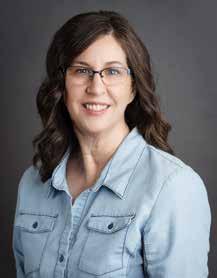
Author Valerie Ipson Willcox.
When asked if she writes in silence or with background noise, like TV or music, Valerie says, “I need quiet.”
The event was sponsored by many community partners and organized by the Mesa Alma Stake of The Church of Jesus Christ of Latter-day Saints.
To see a list of sponsors, visit: hopeonthemove5k.org/partnerssponsors
Valerie says, “I have a new children’s book in the works— it’s a Christmas story set in Bethlehem about a little girl who wants to bring a gift to the Baby Jesus. I’m also working on a funny middle grade novel and my first non-fiction about widowhood. I’m all over the place!” Valerie’s books are available on Amazon.
Because of the Hope on the Move 5K, the $10,007 raised will help provide resources and support to an estimated 22,016 Arizona families. Through prevention education, strategic collaboration, and place-based systems of support, these dollars strengthen a statewide system of family support —helping prevent child abuse and neglect before it starts. Thank you giving children and families hope for the future, and making Arizona a wonderful place to be a child.
small girl in our ward brings a ragged, large stuffed puppy to church. And we both like it when she throws it to me so I can give it a big hug. One Sunday she forgot to bring her puppy, and as the family was leaving church I jokingly said, with a big frown on my face, “I’m so sad to not get a hug from your dog today.” (The children had just been to the Bishop’s office to get a sucker) Her younger brother, trying to cheer me up, pulled his sucker out of his mouth, reached
and unselfishly said, “Here, you can have a lick of my sucker!”
By The Arizona Beehive Magazine
Father’s Day and steak: What a great way to celebrate Dad, with an outdoor dinner right off the grill. Serve up this cayenne spiced steak with a tangy and cooling chimichurri sauce full of herbal flavors and works well the richness and fattiness of a ribeye steak. If the distinct taste and fragrance of cilantro is not your favorite, try it with parsley instead. The fresh citrus juice is an excellent addition in the sauce and will add great flavor to your plate of grilled vegetables and favorite potato or quinoa side dish.
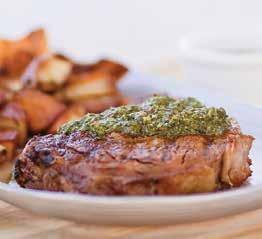
■ 2 cups lightly packed fresh cilantro
■ 4 garlic cloves, coarsely chopped
■ 1 shallot, coarsely chopped
■ 1 T fresh oregano
■ 1 tsp. kosher salt
■ 1 tsp. fresh ground pepper
■ ½ tsp crushed red pepper
■ ¼ cup fresh squeezed lime or lemon juice
■ 2 T red wine vinegar
■ ¾ cup olive oil plus more for brushing grill
■ 2 T kosher salt
■ ½ - 1 tsp. cayenne pepper, depending on
■ heat desired
■ 4 – 8 oz. ribeye steaks, or 2 lbs. skirt steak if a sliced steak variation is desired
Serves 4 to 6. Prep: 15 min; Grill time: 20-25 min
1. In a food processor or blender, combine the cilantro, chopped garlic cloves, shallot, oregano leaves, salt, pepper, crushed red pepper, lime or lemon juice, red wine, and the red wine vinegar. Pulse or blend while drizzling the olive oil in until the mixture is a coarse puree. Taste, adjust seasoning and blend again. Set aside.
2. Mix together the salt and cayenne in a small bowl. Liberally season both sides of each steak.
3. Preheat grill to high (450-500 degrees). Brush grill with olive oil and place the steaks on the hot grill. Close the lid and wait for 3 minutes. Turn the steaks and cook another 3-4 minutes or until desired doneness is reached. Remove the steaks from the grill and cover with foil for 5-10 minutes. Serve with chimichurri sauce on the side or spoon over the top of each steak.
4. If grilling skirt steak, follow above instructions and grill until medium rare, 2-4 minutes per side depending on thickness, being careful not to overcook. Remove the steak from the grill and cover with foil for at least 5 minutes. Slice the skirt steak across the grain with a knife at a 45-degree angle. Arrange on a serving platter and serve with chimichurri sauce spooned over the sliced steak. The extra sauce is served on the side.
By Ready Hive Hannah
Why
Let’s be real for a second. If you are reading this column, you probably have a shelf of wheat berries in your basement. Maybe you even have a bucket of freeze-dried strawberries you are secretly proud of. (Same, girl. Same.)
But here is the hard question I have been asking myself lately: If the lights went out or the monsoon flooded the street, would I actually know who to check on?
We are really good at storing food in this church. We have it down to an art form. But preparedness was never meant to be a solo sport. It was designed to be a ward potluck. It’s about tables, not just shelves.
Remember when we were kids and everyone knew which house had the Popsicles and which house had the strict mom? We need to get back to that energy. You don’t need to be best friends with everyone on your street, but you should know who has a generator, who is a nurse, and who just had surgery last week.
This week, I challenge you to do something that feels a little vulnerable but pays eternal dividends: Go introduce yourself to three neighbors.
If you are in a ward that covers a wide area, focus on your hyper-local bubble—the eight houses closest to you. These are the people you will be doing life with when the roads are cut off or the power is out for three days.
Here is a fun, slightly hip idea for a Relief Society activity or a casual Saturday morning: Host a “Skill Share” in your cul-de-sac or ward boundary.
• Invite the neighbors over for lemonade and ask them to bring a skill instead of a dish.
• Maybe the guy across the street knows how to suture (he’s a vet, but still, close enough?).
• Maybe the young mom two doors down is a whiz at dehydrating vegetables or canning.
• Maybe the retired couple knows how to use a HAM radio.
• When you know who has the skills, you stop being a collection of individual families and start being a community. And isn’t that what Zion looks like? A lot of people, with different gifts, being of one heart and one mind?
This week, put down the laundry for a minute. Take a walk. Wave at the mailman. Text the Relief Society president and ask if there is an elderly sister in the ward who might need someone to check their smoke detector batteries. God prepared a people for the gathering. Let’s make sure we know who is supposed to be in our group. Stay prepared, stay neighborly.


• Appointments for proxy ordinances are encouraged. Patrons without appointments are also welcome, but may be asked to wait for an opportunity to participate. To schedule or modify a proxy appointment, visit your temple’s information at https://www.churchofjesuschrist.org/temples
• Patrons are encouraged to bring their own temple clothing.
• Ordinances for family names must be done in proper sequence—baptism, confirmation, Melchizedek Priesthood ordination (males), initiatory, endowment, and then sealing. Please allow sufficient time to perform all the ordinances you wish to complete during your visit. For additional help and information, please call the temple.
• Please contact the temple for more information or if you have special circumstances or needs.
• Temple websites can be found by searching churchofjesuschrist.org/temples
3301 S. Greenfield Rd, Gilbert, AZ, 85297 (1) 480-822-5000
Services: Clothing rental available. No Cafeteria
Upcoming Closures 2026
Saturday, July 4
By The Church of Jesus Christ of Latter-day Saints Media
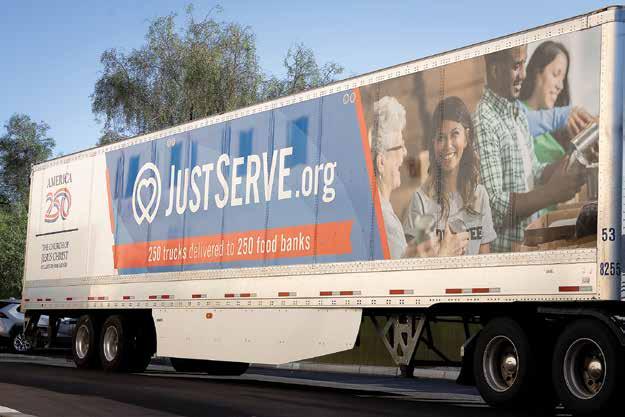
As the United States approaches the 250th anniversary of the signing of the Declaration of Independence, America250, The Church of Jesus Christ of Latter-day Saints, and Midwest Food Bank welcomed a JustServe-branded semi-truck carrying approximately 40,000 pounds of Church-donated food for families in need across Arizona.
The delivery on Tuesday, April 14, 2026 was part of a national collaboration kicked off in November 2025, in which 250 truckloads of food will be donated to communities in all 50 states.
Through America250’s America Gives initiative and the Church’s JustServe platform, volunteers, local leaders, and community organizations
are coming together to put service into action.
A Group of JustServe volunteers will serve at Midwest Foodbank immediately following the truck arrival, repackaging bulk food into individual portions to be distributed.
JustServe is a community service platform sponsored by The Church of Jesus Christ of Latter-day Saints that connects volunteers with local service opportunities. Its purpose is to help individuals and organizations strengthen their communities by serving together.
Merilee Baptiste, Executive Director of the Arizona Division of Midwest Food Bank expressed the impact the donation will have in Arizona. “The need for a simple meal is real, right here in Gilbert and across Arizona.
People are struggling to put food on the table due to the high cost of living. This truckload of donated food will not only provide food but hope to our hungry neighbors.”
The Church is using its established infrastructure, volunteer network, and humanitarian food resources to help bring America250 into neighborhoods like those in Gilbert, turning a national commemoration into local service.
The 250 deliveries will provide approximately 10 million meals to families in need across the United States as part of the America Gives initiative.
Americans are invited to help make 2026 a record-setting year for volunteer service. Join the initiative and find volunteer opportunities at JustServe.org.
Saturday, October 3, 2026
Monday, October 5 - Monday, October 19, 2026
101 S. LeSueur, Mesa, AZ, 852014 (1) 480-833-1211
Services: Clothing rental available. No Cafeteria
Upcoming Closures 2026
Saturday, July 4
Monday, July 27 - Monday, September 7, 2026 Saturday, October 3, 2026
5220 W. Pinnacle Peak Road, Phoenix, AZ 85310 (1) 623-474-9500
Services: No clothing or cafeteria
Upcoming Closures 2026
Saturday, July 4
Monday, August 31 - Monday, November 30, 2026
Mesa 445 E Main Street (480) 969-2170
Gilbert 2894 S San Tan Village Pkwy (480) 9263234
Phoenix 2919 W Agua Fria Fwy (480) 660-6100
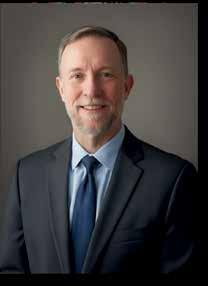
“I’m honored to serve you on the Mesa City Council. Our community is heading in the right direction - we have opened the new Gateway Library, broken ground on new public safety facilities, and completed a significant number of road projects to reduce traffic and connect our neighborhoods. I fight every day to balance economic growth with preserving the character of our neighborhoods that make our community so special. Together, we have accomplished a lot, but there is more work to be done. I would be honored to have your vote.”
Keeping Mesa Affordable
Somers will continue to make Mesa more affordable by prioritizing fiscal responsibility to ensure municipal resources are managed efficiently.
Investing in Public Safety
Somers is blending technical innovation with his frontline experience as a former first responder to keep Mesa ranked among the safest large cities in America.
Promoting Economic Development
Somers is securing southeast Mesa’s future by supporting local entrepreneurs, attracting highwage industries and bringing quality retail and dining to the District.
Protecting Our Quality of Life
Somers is delivering on long-promised amenities for southeast Mesa. His leadership is transforming the region from a fast-growing area into a complete community with the highquality facilities families deserve.