











By Robin Finlinson





By Robin Finlinson
TOcelebrate the university’s Sesquicentennial, BYU 150 was created to, in part, remember that BYU is a leader among universities in both intellectual and spiritual education, and that the good that comes from its innovative Provo, Utah campus - robust study abroad programs, traveling entertainment groups, etc. - is incalculable. The celebration began in 2025 and will run well into 2026.
BYU 150 is also about action and involvement, with ways to participate from anywhere in the world. Michael
Johanson, Executive Director of the BYU Alumni Association, says that instead of trying to raise money, BYU is conducting a service campaign.
“Service should be fun, right?” he says, as he describes how at 150.byu. edu everyone is invited to download an app that will track volunteer hours. Points are earned for both service and missions accomplished in a scavenger hunt. Awards are given, too!
“The main thrust of the 150th celebration is to celebrate gifts of light,” Johanson says. One of numerous other reasons to visit 150.byu.edu is for the online gallery of “Beacons of Light” videos, each less than three minutes long.
Displays have been created for on-campus visitors. The Wilkinson Center hosts a video gallery. Artifacts removed on October 16, 2025 from a
time capsule that was buried in a corner of the Harold B. Lee Library in 1976 are also viewable! An exhibition titled “By Study and By Faith” prepared by university archivists Cory Nimer, Gordon Daines and others can be found at the library.
Nimer says of the 1976 time capsule, “They had in there a calculator, because it was brand new technology for them. They also included the slide rule, because that was what most people on campus were still using.”
Natalie Ipson, Director of Digital Communications, tells about two other items inside the capsule. One was the deed of trust establishing the school, signed by Brigham Young. It had been preserved in pristine condition in a capsule since 1909, removed briefly in

Back in the 1990s while working for a professional haircare product manufacturer, we wrung our hands at the prospect of people being able to purchase our products on the then burgeoning internet. The products we made were meant to be exclusively available in professional beauty salons. In an attempt to stop salons from selling professional products on the internet, we had each sign an agreement indicating that they would not do so. I recall feeling like we were working to hold back a storm tide with popsicle sticks. Today, nearly every professional haircare product can be found on the internet, most of which is being sold by the product manufacturer.
The emergence of Artificial Intelligence (AI) reminds me of this time. AI is impacting every aspect of business, culture, education, and even religion. Including ours. In an August 2025 BYU devotional, Elder Gerrit W. Gong shared some interesting thoughts about AI.
“Artificial intelligence is not God and cannot be God,” the Apostle said. “We can consciously choose and intentionally use AI as a tool for good [and] ... we can invite leaders and citizens across industry, research, civic and government bodies, and faith leaders to align rapid AI developments and enduring faith-based principles and moral values.”
Elder Gong added, “artificial intelligence cannot replace revelation or generate truth from God. We have responsibility to ensure the Holy Ghost can attest to the truth and authenticity of all we say and share, in our form and in our content.”
He also mentioned concerns about the danger of using AI to bypass the work that brings spiritual growth. “As Church members we will not grow spiritually if we let artificial intelligence write our sacrament [meeting] talks or do our seminary homework. AI cannot replace our individual effort and spiritual preparation as we prepare lessons, prayers or blessings.”
AI is now available to write every bit of content found within these pages. I work with others who run many of their business decisions through Chat Gpt before acting. I know musicians who used to earn their living by writing music for business purposes that are now out of work because AI can write music for “free.” Even with this recent pervasiveness of AI, it had not occurred to me that a Sacrament meeting talk could be written using AI. I will share that I will walk out of any Church meeting that features speakers using AI to write their talks. Because “artificial intelligence is not God and cannot be God.”
As disciples of Jesus Christ, we have hard decisions to make in this world in commotion. By listening to leaders like Elder Gong, and to the Holy Ghost attesting to the truth, we can successfully navigate an existence that constantly throws deceit and visual lies in our faces.

Elder Gong added that “we are not afraid of AI, nor do we think it is the answer to every problem. As we work hard and smart, AI can be a valuable tool to enhance but not replace our own efforts.” I choose to “follow the Prophets” as I work to stem the storm tide of AI with popsicle sticks. But be assured - I will not employ any AI to write or edit any content for this magazine! Thank you for reading...
Michael O’Brien Publisher

The Arizona Beehive, LLC 1225 West Main Street, Suite 101-439 Mesa, Arizona 85201
480.304.5646 | ArizonaBeehiveMagazine.com
PUBLISHER
Michael O’Brien
BeehiveAdvSales@gmail.com
EDITOR
Michael O’Brien
BeehiveAdvSales@gmail.com
ADVERTISING
Jen VerMass
arizonabeehive.jen@gmail.com
GRAPHIC DESIGN
Leslie Thompson - Layout
Candace Khattab - Ad Design
PHOTOGRAPHY
Robin Finlinson
SOCIAL MEDIA
Grace O’Brien
CONTRIBUTING WRITERS
Allison Beckert
Emily Jex Boyle
Hillary Fevrier
Robin Finlinson
Jaylene Garrett
Rauna Mortensen
Grace O’Brien
Katherine Ogden
Mark Randall
Glen & Lynne Tolman
Barbie VanCott
Cindy R. Williams
GUEST WRITERS
A New Leaf
Hunter Lewis
Church Newsroom
Lin Sue Flood
Fred Wood
DISTRIBUTION
AZ Integrated Media
First Class Media Distribution
PRINTING
Valley Newspapers
DISTRIBUTION LOCATIONS
Click on PICK UP A COPY on the arizonabeehivemagazine.com home page.
SUBSCRIPTIONS
Subscriptions available. $29 annually (6 issues). Call 480.304.5646 or email BeehiveAdvSales@ gmail.com to order.
THE FINE PRINT
The Arizona Beehive Magazine is a free publication printed six times a year, published by The Arizona Beehive, LLC, containing copyrighted work consisting of original material, and is not an official publication of The Church of Jesus Christ of Latter-day Saints. The views expressed in The Arizona Beehive Magazine are solely those of its freelance writers, and are not necessarily endorsed by the publisher and its editor, nor do they necessarily represent the position of The Church of Jesus Christ of Latter-day Saints. Duplication of articles for commercial purposes is prohibited.

1976, then buried until 2025. She got to hold it. “As a BYU alum, I felt very connected to the rich heritage.”
Ipson also recalls, “We found a cassette tape—one of the weekly tapes made by President Oaks as BYU president.” The president would record a message. Students could call a “hotline” to hear it. It would be informational, but also warm and personal. On this particular tape, he told of an off-campus speech he was preparing.
A time capsule will soon be created for its 2075 Bicentennial opening. Nimer brings up an interesting preservation question. “Today,” he says, “having everything digital…how do you put that into the box in a way that it’s going to be accessible? When they put in that audio cassette, they put in a tape player with it, just in case there wasn’t a way to play back an audio cassette.” He confirmed that after it was played and heard just once, it was sent to the lab and successfully digitized.
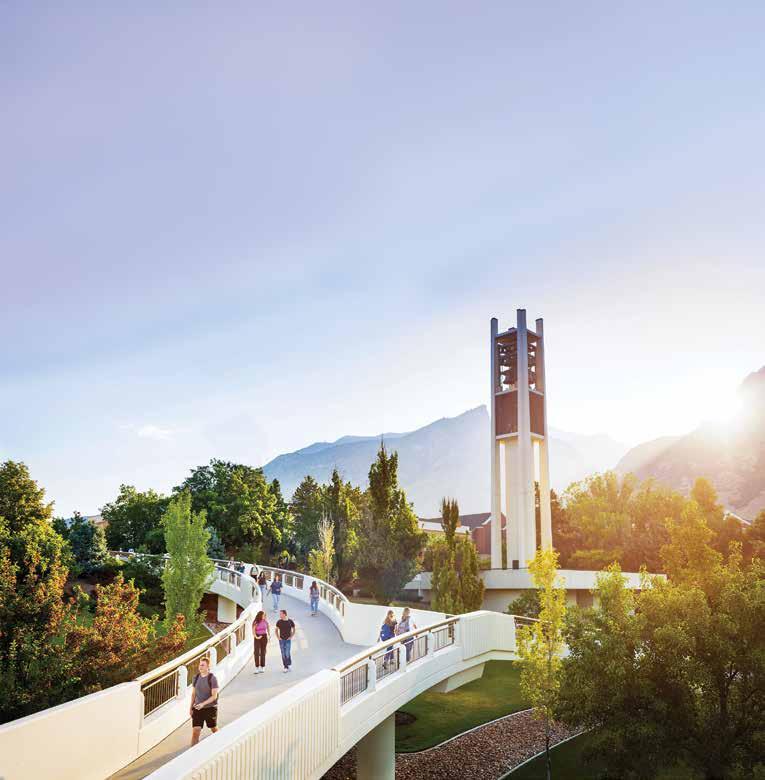
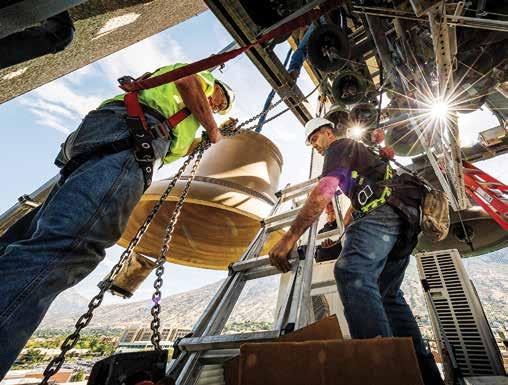
On July 22, 2025, the Bell Tower received a new bell, weighing 3.5 tons! Its inscription reads, “May these bells proclaim forever our gratitude to those who founded and to those who sustain Brigham Young University.”
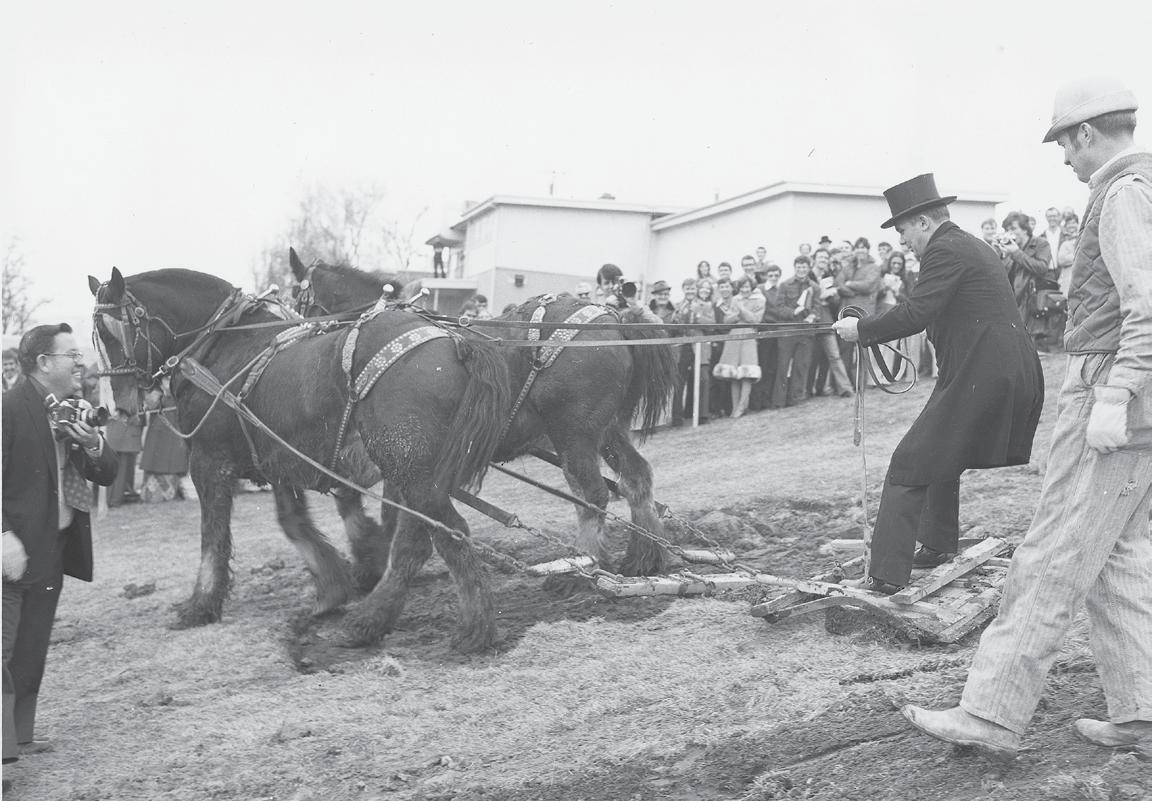
For BYU’s 100th year, a 97-foot tower was built to mark the milestone, and its groundbreaking on February 13, 1975 was particularly entertaining. Clad in
19th-century suit and top hat, President Dallin H. Oaks, then-president of the university, rode on a scraper pulled by two Clydesdales over the dirt. Soon, the iconic Centennial Carillon Tower (a.k.a. the Bell Tower) would begin chiming.
Banners cleverly depicted “A Fruitful Tree” using a Y as the trunk and branches. They also displayed a university motto: “Dedicated to love of God, pursuit of truth, service to mankind.”
As mentioned earlier, the time capsule from 1909 was opened. By contrast, its numerous contents included a pen and a pencil.

Cosmo is quite a famous mascot, especially because of his acrobatic and dance skills. But “Cosmo” has only been around since 1953.
Coach Eugene Roberts, former head of the BYU Athletic Department, described his athletes as “cougars” in newspaper articles. In 1923, he suggested that animal as school mascot. Two live cougar kittens became pets of a man named George K. Lewis in 1925, and he would bring the kittens, Cleo and Tarbo, to campus. They eventually got loose, inspiring the fight song lyrics, “Rise and shout! The Cougars are out!”
Three days were spent celebrating the university’s 50th year. The BYU Band led a parade with ornate motorized floats through town the final day. The parade stopped along the way to honor two places: the site of the old Lewis Building and the old ZCMI warehouse.
Continued on pg. 7

Kim Hicks Photo Management & Digitization Specialist
Digitize your VHS tapes, photos, film reels, slides, negatives, and more.
Bring all your files together into one permanent, secure place. It’s like insurance for your memories, guaranteed for your lifetime plus 100 years and passed on to future generations.
Easily organize your photos and videos on your phone, tablet, and computer, and sync them with a mobile app.
Create meaningful photo books and other gifts that are cherished by your loved ones.
Get personalized support when you need it.
Your memories should never be lost. Every day, birthdays, weddings, vacations on VHS
reels and printed photos are lost to fire, flood, disaster, and decay. Don’t wait until it’s too late - digitize and preserve to be certain your cherished memories are safe for your
• Triple backed up, encrypted transmissions, full resolution, no compression, guaranteed for your lifetime plus 100 years.
• More than 15 million tapes & photos digitized.

• Highest satisfaction rating of any digitization company!
• Anytime, anywhere access. Whether you are on your laptop, tablet, mobile device or TV, we have you covered. Our apps let you sync your photos and videos to your storage where you can organize, enjoy, and share them with others.

The university began as the Brigham Young Academy in a single brick building on the northeast corner of Provo’s Center Street and Third West, known as the Lewis Building. Constructed by Jesse Willam Lewis in 1867, it was purchased by Brigham Young, who deeded it as an academy on October 16, 1875. Classes began in early 1876.
A fire destroyed the building on January 24, 1884. Archives record, “As the charred beams collapsed, the old school bell in a little belfry near the rear of the building clanged down through the embers—a death knell for the Lewis Building…”
When Reed Smoot said to Principal/Professor Karl G. Maeser, “Oh, Brother Maeser, the Academy is burned,” Dr. Maeser replied, “No such thing. It is only the building.”
How many missed school days did the fire cause? One. One day was needed to arrange temporary class locations and move salvaged furniture and books.

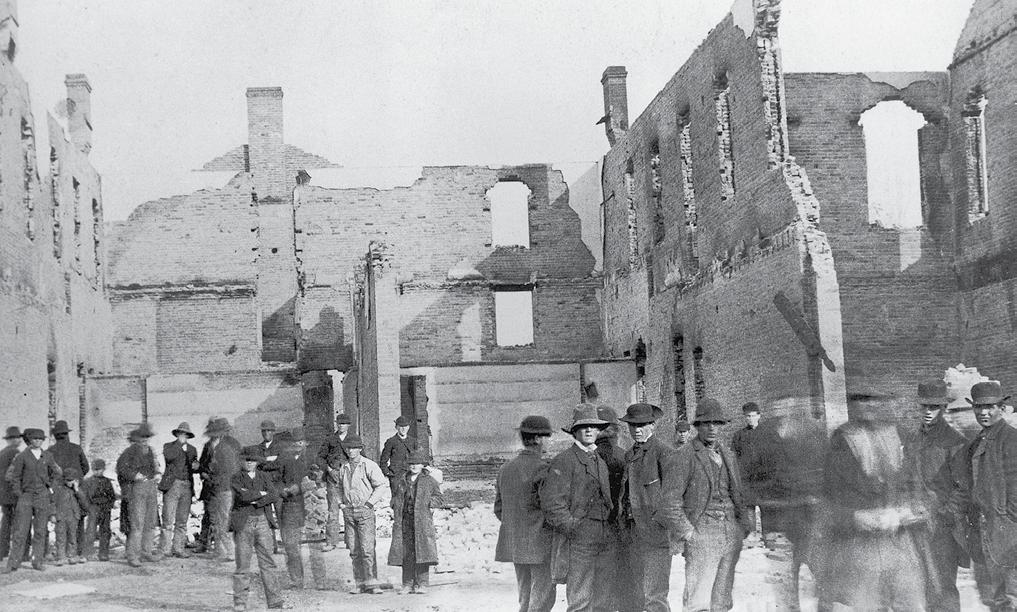
Several buildings in town accommodated students. The ZCMI warehouse did so for eight years.
The stunning new Brigham Young Academy building opened on January 4, 1892. (It would eventually be renovated and become the Provo City Library at Academy Square.) Dr. Maeser decided to step down as principal when it opened to focus on his assignment as the General Superintendent of Church Schools. His son Reinhard said of him, “For sixteen years the Academy had grown under his leadership… Like a Moses he had cleft the rock of ignorance and streams of living truth had gushed forth…” And like Moses, Reinhard noted, he passed on the mantle with tears.
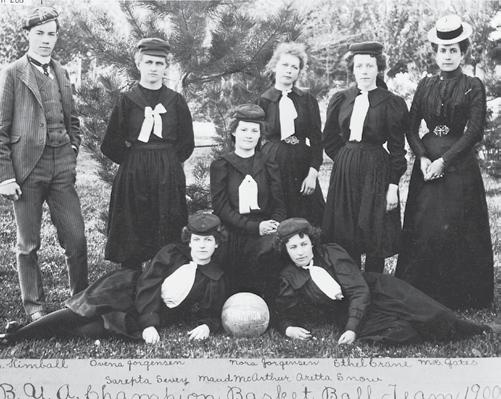
Myriad successes would follow for the academy, including in 1900, when its basketball team, in its very first season, would win the local championship. Noteworthy is the fact that it was a women’s team. The academy would get its first men’s basketball team in 1902 and reach “university” status in 1903.
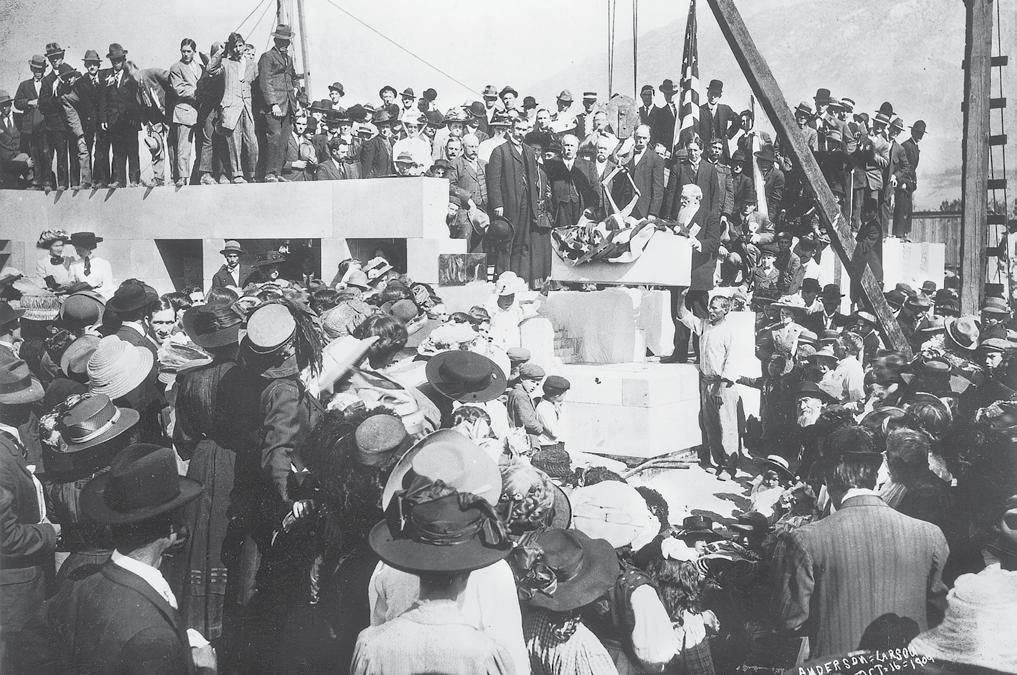
From 1909-1911, the first official building on today’s campus was constructed—the Maeser Memorial Building. At the cornerstone laying ceremony, a crane carried the cornerstone over to its spot, and Church President Joseph F. Smith guided it into place. He then placed a metal box—a time capsule holding memorabilia—inside it.
Dr. Maeser had envisioned many instructional buildings someday extending over the area. “Great temples of learning,” as he had called them, now cover about 600 beautifully-maintained acres. Happy birthday, BYU! You’re looking great in your old age.

Give shelter to families in crisis!
You can donate your Arizona Charitable Tax Credit to A New Leaf and give a safe, temporary home to families facing homelessness!
Your donation will change a life by providing:
• Safe, secure shelter
• Food and basic needs
• Baby formula and diapers
Donate your AZ Charitable Tax Credit!
By making a gift to A New Leaf you will qualify for a dollar-for-dollar tax credit of up to $987 for couples, or up to $495 for individuals.
Put simply: when you file your taxes, you get your money back! It’s that easy!

A New Leaf is a trusted, local nonprofit serving our neighbors in need across Arizona.
With 50 years of experience helping families overcome homelessness, your donation will make a meaningful impact in our community.

Worthy of your trust.


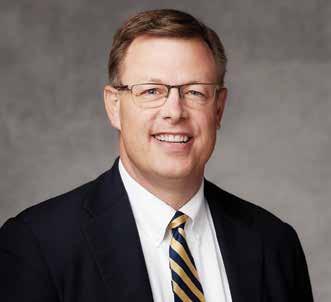
Elder Clark G. Gilbert is the newest member of the Quorum of the Twelve Apostles of The Church of Jesus Christ of Latter-day Saints. He was called on Wednesday, February 11, 2026, and ordained on Thursday, February 12, by President Dallin H. Oaks and the other members of the First Presidency and the Quorum of the Twelve Apostles.
Elder Gilbert, 55, was born in Oakland, California, and spent most of his childhood in Phoenix, Arizona. He has served as a General Authority Seventy since April 2021 and as the Commissioner of the Church Educational System since August of that year.
“This is an amazing time to point people to the Savior Jesus Christ,” Elder Gilbert said on Thursday. “When we do that, we can find joy and comfort and peace in Him. As President [Russell M.] Nelson once said, it’s much harder to find happiness where it doesn’t exist. And we’re so grateful that I have this calling now to witness that Jesus is the Christ. If people all across the world will look to Him, He will make their lives better, more meaningful, more joyful. And it happens in and through our Savior Jesus Christ.”
From his earliest days, Elder Gilbert said his parents nurtured the idea that the gospel of Jesus Christ and education are naturally intertwined.
“They never made me think that education and the gospel were decoupled in any way — the more you have faith, the more you want to learn and grow, and the more you learn and grow, the deeper your faith can become,” he said in 2021.
His faith and his education received a powerful boost during his time at Brigham Young University, where he obtained a bachelor’s degree in 1994 in international relations.
His time at BYU was special because, he added, “for the first time, I felt the expanded strength of the Church, and it was directly tied to my growth academically.”
Elder Gilbert continued his studies at Stanford (a master’s degree in East Asian studies in 1995) and Harvard (a doctorate in business administration in 2001). While he then joined Harvard’s faculty, his dream was always to teach at BYU.
That opportunity came, though at a different BYU.
Harvard colleague and mentor Kim B. Clark, who had become president of BYU–Idaho, invited Elder Gilbert and his wife, Christine, to consider bringing their gifts to Rexburg, Idaho. President Clark’s invitation included a challenge to “help us rethink Church education on a global scale.”
The Gilberts left Harvard Business School in 2006 and headed to BYU–Idaho.
The new Apostle’s professional experience was rooted in mentoring students, navigating the everchanging world of communication technology and building and leading large organizations. After three years of helping students at BYU–Idaho, he filled assignments as CEO of Deseret Digital Media (2009), president of Deseret News (2010), president of BYU–Idaho (2015), and inaugural president of the global online offering known as BYU–Pathway Worldwide (2017) — an assignment he held until his call to fulltime Church service.
His service as Commissioner of the Church Educational System involved oversight of BYU, BYU–Idaho, BYU–Hawaii, Ensign College, BYU–Pathway Worldwide and Seminaries and Institutes of Religion.
An experience with inner-city Latter-day Saint youth during his time in Boston proved pivotal as he helped bring educational opportunities to broader audiences as the first president of BYU–Pathway Worldwide — an innovative and spiritually based educational initiative sponsored by the Church.
While those Boston youth were new to the Church and its teachings and expectations, he said, he learned the key to helping them grow was to focus on their potential. “Their growth in the gospel was gradual but steady,” Elder Gilbert explained in general conference. “Today they have served missions, have graduated from college, have been married in the temple,
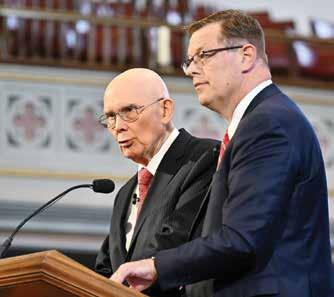
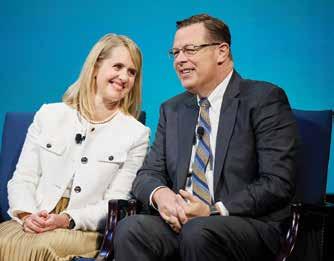
and are leading remarkable personal and professional lives.”
While discussing the success of BYU–Pathway several years ago with a nationally prominent educator, Elder Gilbert explained that the fruits of the program are its focus on each student’s divine potential. Since its beginning in 2009, BYU–Pathway has served more than 288,000 students in more than 180 countries.
Throughout his educational leadership, Elder Gilbert has emphasized helping each learner grow in Christ. He taught that “in this Church, we believe in the divine potential of all of God’s children and in our ability to become something more in Christ.” He said that while people begin life in different circumstances, “in the Lord’s timing, it is not where we start but where we are headed that matters most,” a principle that shaped his work with students around the globe.
“One of the miracles of this, the Lord’s Church, is that each of us can become something more in Christ,” Elder Gilbert said. “I know of no other organization that gives its members more opportunities to serve, give back, repent, and become better people. Whether we start in abundant or difficult circumstances, let us keep our sights and our slopes pointed heavenward. As we do, Christ will lift us to a higher place.”
In addition to his professional and educational leadership, Elder Gilbert served in a number of Church callings, including full-time missionary in the Japan Kobe Mission, elders quorum president, counselor in a stake presidency, bishop and Area Seventy. He and Christine were married in the Salt Lake Temple in 1994. They are the parents of eight children.







“A


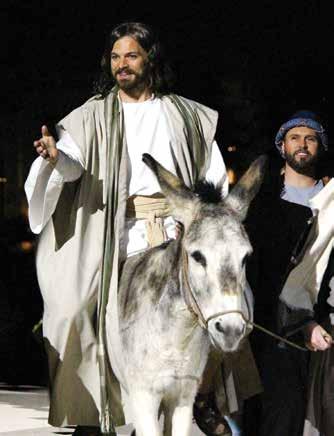
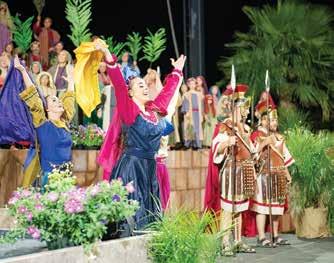
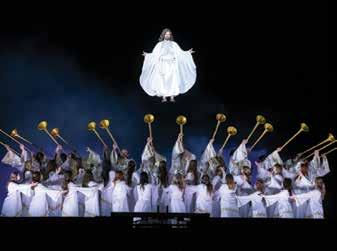
This Easter season, immerse yourself in Jesus the Christ: The Mesa Easter Pageant, an awe-inspiring outdoor musical celebration of the life, ministry, and resurrection of Jesus Christ. As the largest annual outdoor Easter pageant in the world, this beloved 87-year tradition draws over 100,000 attendees from diverse faiths every year.
Through vibrant musical dance theater and a cast of nearly 500 performers on a massive stage, Jesus the Christ depicts the powerful and poignant moments of the life of Jesus Christ as recorded in the New Testament. We invite all to witness the aweinspiring events of His life. From His humble birth, His miracles, ministry and teachings, to His crucifixion on the cross, and glorious resurrection.
This family-friendly production comes to life with beautiful messages of hope and the love of Jesus Christ and is a gift to the community from The Church of Jesus Christ of Latter-day Saints. The soundtrack, composed and produced by local composer Rob Gardner and performed by the London Symphony Orchestra and Spire Chorus, is available on all major audio streaming services.
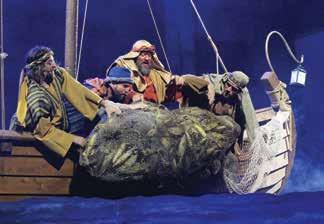
Dates: Wednesday, March 25 – Saturday, April 4 (except Sunday and Monday).
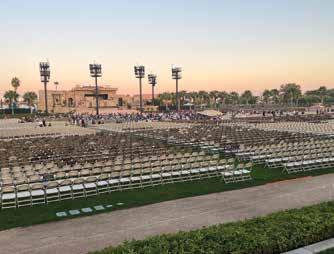
Where: North lawn of the Mesa Arizona Temple, 525 E. Main St., downtown Mesa, AZ.
Time: 8:00pm to approximately 9:15pm.
Cost: Performances are completely free of charge.
• Instagram: @mesaeasterpageantofficial
• Facebook: Church of Jesus Christ AZ
• YouTube: Mesa Temple Events
• No tickets or reservations needed
• Seating: Approximately 9,600 chairs provided nightly on a first-come, first-served basis.
• Tip to avoid crowds: Attend during the first week (March 25–28) for smaller audiences.
• Parking: Limited—please observe neighborhood signs. Consider using Valley Metro Light Rail (Mesa Drive/Main Street stop, short walk to venue).
• Pets are not allowed except for ADA qualified service animals.
• A person must be present to save seats and should not save more than four seats.
• Seats may not be saved after 7:30 pm.
• Items left unattended for the purpose of saving seats will be removed and taken to the Mesa Arizona Temple Visitors’ Center, 455 E. Main St.
• Accessibility: Spanish-language translation via 400 headsets at each performance. ASL interpretation available during the first week of performances in the front north seating area.




Family and local history focu sed.
Preserve the memory and heritage of the early pioneers.
Monthly presentation gatherings. Treks to historic locales.
LDS pioneer heritage NOT required to participate!
Membership includes a subscription to Pioneer Magazine, and to The Arizona Beehive Magazine YO U ’ R E I N V I T E D !
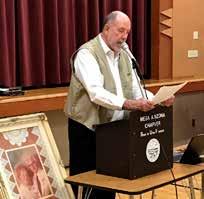
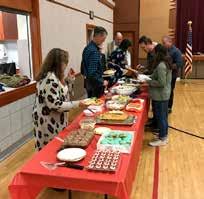
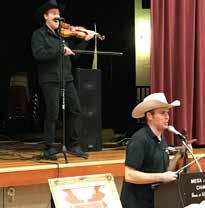
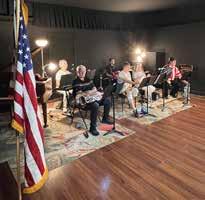
Be a guest of The Sons of Utah Pioneers Mesa A Arizona Chapter. 2nd Thursday of each month at 6:00pm, S September - June. Patriotism. Music. Dinner! Inspirational presentation. Fellowship.


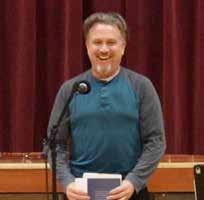
By Hillary Jade Fevrier
Social scientists have long observed that human beings require social connection. Research in psychology and sociology consistently shows that gathering in groups strengthens identity, deepens commitment, and fosters emotional resilience. Shared rituals—whether civic, cultural, or religious—create cohesion. When individuals learn together, sing together, and feel together, they are more likely to internalize shared values and feel anchored by them. In an increasingly fragmented and digital world, structured moments of collective focus provide stability and belonging.
For members of The Church of Jesus Christ of Latter-day Saints, General Conference is one such moment.
Twice each year, millions of individuals across continents pause their routines and turn their attention to the messages proclaimed at Conference. Families gather in living rooms. Congregations meet in chapels. Laughs are shared. Hymns are sung. Even those watching alone understand they are participating in a Church community event. The power of Conference
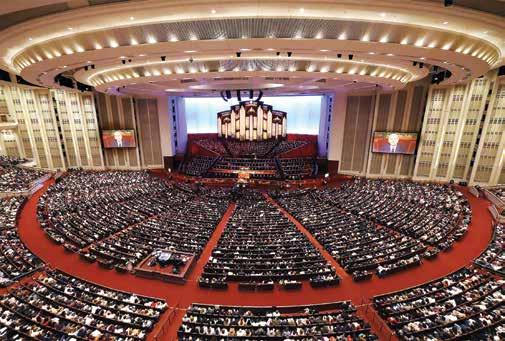
lies not only in what is said, but in the collective act of existing together. The gathering itself becomes a declaration of faith—an acknowledgment that revelation is sought not only individually, but also in community.
This instinct to assemble is not new. The first General Conference of the Church was held on June 9, 1830, in Fayette, New York. Fewer than thirty members were present. The meeting focused largely on organization and sustaining leadership, but even in its modest beginnings, it reflected an important principle: discipleship flourishes in fellowship. As the Church expanded, so did its conferences. Early Saints traveled great distances by wagon, horseback, or on foot to gather with fellow believers. The effort required underscored the value placed on being physically present.
Over time, the format evolved. With the construction of the Salt Lake Tabernacle, thousands could assemble under one roof. The introduction of radio allowed messages to reach beyond Utah. Television followed, then satellite transmission, and now global
The 196th Annual General Conference will be held April 4–5, 2026:
SATURDAY, APRIL 4
• Morning session: 9:00 to 11:00 am*
• Afternoon session: 1:00 to 3:00 pm*
• (The Saturday Evening session has been discontinued)
SUNDAY, APRIL 5
• Morning session: 9:00 to 11:00 am*
• Afternoon session: 1:00 to 3:00 pm*
*Times listed are Arizona Time (MDT)
livestreaming in dozens of languages. Today, General Conference reaches millions in real time. The scale has changed dramatically—but the purpose remains remarkably consistent.
Why gather twice each year? At its heart, General Conference provides alignment. It is an opportunity to sustain Church leaders, receive prophetic counsel, and study the doctrine. In a world filled with competing voices, Conference offers clarity. It invites members to recalibrate their priorities and renew their commitments.
Psychological research supports the wisdom of such rhythm. Regular communal gatherings reinforce shared identity and promote trust. They help individuals feel seen, supported, and accountable to something larger than themselves. Faith, while deeply personal, is strengthened when practiced collectively. Time and technology have transformed the delivery of General Conference, but its meaning has not changed. Whether seated in a small room in 1830 or streaming from a phone in 2026, members are united by the simple act of gathering. General Conference stands as a reminder that while belief begins in the heart, it grows in community. We gather because we seek direction. We gather because we seek unity. And we gather because, together, we get closer to our eternal goal.
By Hunter Lewis
This year marks the 150th anniversary of continuous Mormon settlement in Arizona. Four original settlements were established in 1876. Since then, the footprint of The Church of Jesus Christ of Latterday Saints in Arizona has increased dramatically.
Several exploration companies were sent prior to 1876 to the Arizona Territory to find suitable locations for settlements, including those led by Wallace Roundy, Horton D. Haight, and Andrew Amundsen. These expeditions did not speak highly of Arizona or of its ability to support permanent settlements. The trip to Arizona was treacherous, and crossing the Colorado River alone was a significant challenge.
Anticipating the migration and seeking to isolate him from the fallout of the Mountain Meadows Massacre, John D. Lee was sent to improve and operate what became known as Lee’s Ferry. Lee’s Ferry provided the quickest and most direct route across the Colorado River to reach the desired settlement area along the Little Colorado River.
The Little Colorado River’s headwaters begin in the White Mountains of eastern Arizona. The river flows northwest and eventually empties into the Colorado River within Grand Canyon National Park.
Others spoke more favorably of Arizona. Jacob Hamblin completed several missions to the region and became a trusted friend and ally of Native American tribes in northeastern Arizona. Another missionary, James S. Brown, established an outpost near present-day Tuba City. Brown helped establish a route through “Indian Country” and conducted extensive exploration.
Years of exploration and growing momentum led President Brigham Young to establish the “Arizona Mission” to colonize the Little Colorado River Basin. The mission was initially divided into four companies of fifty families each, led by four captains. These companies were organized geographically to draw members from throughout Utah.
The Four Original Settlements of 1876 Sunset (North Central Company)
Captain Lot Smith led the North Central Company, consisting of Saints from Salt Lake City and Davis, Morgan, Wasatch, and Summit counties. Their
settlement, Sunset, was located just outside presentday Winslow, Arizona, along the Little Colorado River in what is now Homolovi State Park. Sunset did not survive; by 1885, Lot Smith and his family were essentially the only remaining residents.
Brigham City (Southern Company)
Across the river from Sunset stood Brigham City, led by Captain Jesse O. Ballenger. The original fort has since been renovated by residents of Winslow. Brigham City was abandoned in 1881. Ballenger’s Southern Company was comprised of Saints from Sanpete and Juab counties and the southern part of Utah County.
Obed (Northern Company)
Farther upstream along the Little Colorado River was Obed, led by Captain George Lake. The Northern Company included Saints from Weber, Box Elder, and Cache counties. Obed was located on the south side of the river, across from modern-day Joseph City. It was the shortest-lived of the four settlements, abandoned in the fall of 1877 after only eighteen months.
Joseph City (South Central Company)
The only surviving settlement from 1876 is the small
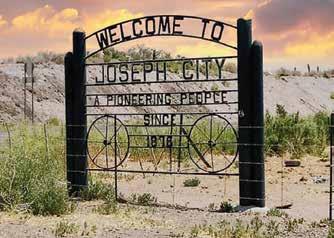
unincorporated community of Joseph City, Arizona. It was led by William C. Allen and settled by the South Central Company, which included members from northern Utah County, southern Salt Lake County, and Tooele County.
Founding and Name Changes of Joseph City
Allen and his company arrived on March 24, 1876, a date still celebrated annually during Joseph City’s Founders Day. This year marks the 150th celebration.
The settlement was first known as Allen’s Camp and was renamed St. Joseph in 1878. In the 1920s, the railroad requested another name change due to frequent confusion with St. Joseph, Missouri, which lay along the same rail line. The community has been known as Joseph City for the past 100 years.
Life in Joseph City was extremely difficult due to the dry, arid, windy, and sandy conditions. The Little Colorado River’s inconsistent flow caused ongoing challenges. Dams were repeatedly built and destroyed by seasonal flooding.
The first dam, begun shortly after arrival in 1876, was completed on June 6 but washed out on July 19


RBy Katherine Ogden
on Linford is an individual who’s proving that age is just a number when one maintains their physical health, mental vitality and an active life. He usually plays basketball 4 days a week, plays golf at his neighborhood Seville Golf Club two days a week. He also started playing pickleball and entered his first Pickleball Tournament last October in St. George, Utah. Oh, there is one more detail about Ron; he is 89 years old! In fact, he will be turning 90 this July 6th.
Ron grew up in Long Beach, California. He’d just returned home from his mission when he started attending BYU. He met his wife Barbara there; she was a non-member attending the college, due to Barbara’s mother not allowing her to join
the LDS church (you had to be 21 years old to make that decision back then). Her mother finally relented when Barbara was 19 and Ron was able to baptize her himself, on May 10, 1959. Pres. David O. McKay also gave permission for them to wave the one year waiting period for new members to be married in the temple, so they were married in September of that same year in the Los Angeles temple.
They raised a family of 5 children; four boys and a girl. Their family now includes 22 grandchildren and 12 great-grandchildren.
He served as a Patriarch for nearly 20 years in what was the Queen Creek/Chandler Heights Stake and then became the Seville, Gilbert Stake, with his wife Barbara serving as scribe. Sadly, his wife Barbara recently passed away, in May of 2025.
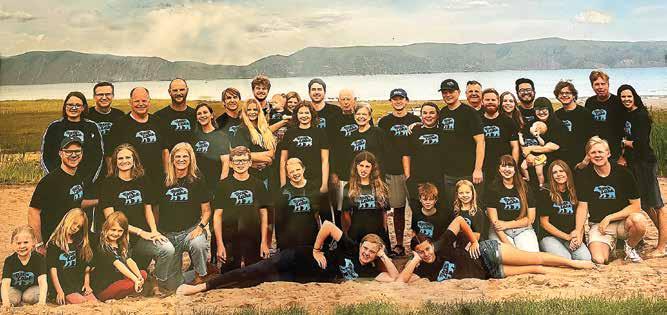
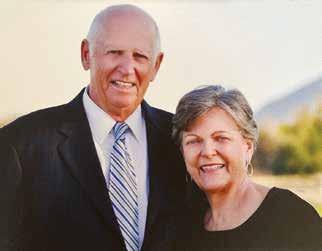

He plays with the National Masters Championship Senior Men’s Basketball Team, They’ve played 14 tournaments since 1997, and have won every one of them. They’ve played all over the world, in such places as Italy, Helsinki, Argentina, Germany and more recently in Switzerland in 2025. He’s played with the team for 30 years. “I used to be one of the youngest men on the team, at the age of 60, and now I’m the oldest one.” says Ron. “I’m the only one left from the original team.”
y dear Mother loved to shop at Nordstrom’s in Salt Lake City. Whenever they had a sale, she was there. If she ever missed, the clerks who were her friends became alarmed and sent her a get-well card!
By Mark Randall
There are 395 teams in the division; Ron used to play in the 80 + up group; he’s now a member of the recently created 85+ up team, “Only two teams showed up this year in that age bracket,” says Ron, “the United States and Brazil. All the rest didn’t have enough players to make a team.”
“Ron is a very positive person, always with a smile,” shared friend Warren LeSueur. “He’s been my accountant for 12 years. Ron told me the story of when the church ball team didn’t have enough players, and they were about to forfeit the game. That’s when Ron volunteered to fill in and play. Eyes rolled, at first, with Ron on that team, ‘til he hit shots from all over the court. They were believers after they won the game by a substantial margin!”
Ron also recently decided to fill in some spare time and started serving as an ordinance worker one day a week in the Gilbert Temple, which he enjoys thoroughly.








By Fred Woods
The Mezona stands as one of Mesa, Arizona’s most cherished historical landmarks—a place where generations gathered to dance, celebrate, worship, socialize, and build community. Its origins trace back to the Maricopa Stake Academy, established in 1896, and more directly to the visionary efforts of John and Sarah Vance. With a desire to provide wholesome entertainment for the youth of the Salt River Valley, the Vances built the Vance Auditorium in 1907, an impressive 100-by-130-foot structure that quickly became the heart of Mesa’s recreational life.
The Vance Auditorium opened with great fanfare on February 14, 1908, drawing an estimated 2,500 guests—remarkable for a town whose population hovered around 1,500. The building hosted dances, roller skating, vaudeville shows, sporting events, and community gatherings. Its significance grew as it became a central venue for entertainment and social life in the early 20th century.
In 1919, amid concerns from church members about activities held there, John Vance sold the building to the Maricopa Stake of the Church of Jesus Christ of Latter-day Saints. This transition marked the beginning of its evolution into an ecclesiastical and community center. Initially called the LDS Auditorium, the building continued to serve as a space for dances, cultural events, Relief Society activities, and stake conferences. A community-wide contest in 1926 led to the selection of its new name—Mezona, a combination of “Mesa” and “Arizona.” It opened with its new name March 19, 1926.
The Mezona underwent significant renovation in the mid-1920s, emerging as one of the largest and most modern amusement halls in the state. Its grand reopening on March 19, 1926, attracted more than 600 people and ushered in a golden era of vibrant social activity. The hall hosted annual Green and Gold Balls, political rallies, concerts, school events, basketball tournaments, charity drives, and more. Newspaper ads from the 1920s and 1930s reveal a rich lineup of performances—from orchestras to comedic acts, from dramatic plays to the popular “Gay Nineties” dances.
The Great Depression further solidified the Mezona’s role as a haven for community bonding. Under the management of the Brinton fam-


ily—Van, followed by his sons Dilworth and later Dil Jr.—the hall became known for compassionate leadership. If someone couldn’t afford the five-cent dance fee, the Brintons often let them in anyway. Their philosophy was simple: it was better for young people to be dancing under supervision than getting into trouble elsewhere.
By the 1930s, innovations like a custom-built ice-powered cooling system made the Mezona a comfortable refuge during hot Arizona nights. The hall’s multifunctional layout allowed it to host citrus fairs, pageants, Lions Club meetings, and interfaith gatherings. Leaders such as Heber J. Grant and David O. McKay addressed large congregations there, making the Mezona
an important spiritual center for Latter-day Saints in the region.
In the 1940s, 1950s, and 1960s, the Mezona expanded its influence even further. It became a home base for large groups traveling from Mexico and the American Southwest to attend the Mesa Arizona Temple, especially after the temple ceremonies were translated into Spanish in 1944. Visitors slept on army cots in the hall, ate meals prepared by local members, and experienced a warm spirit of cultural unity. The Mezona also welcomed African American choirs, beauty pageants, fundraisers, and community service events. It truly embodied inclusivity.
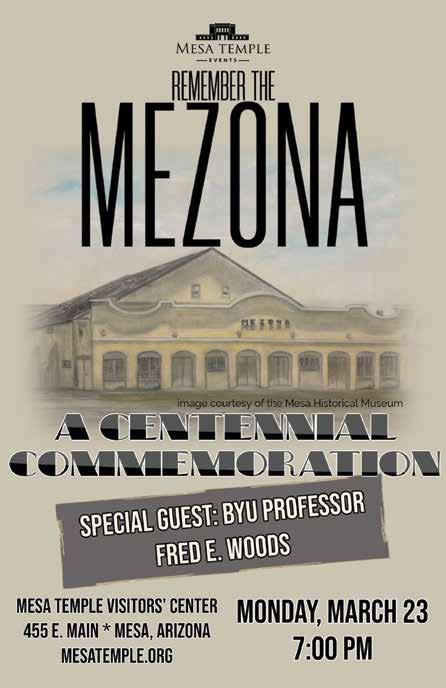
For local youth, particularly in the 1940s through the 1960s, the Mezona was the center of social life. Live bands played on Friday nights, and DJs energized Saturday dances. Dress standards were enforced, prayers opened each event, and chaperones ensured proper etiquette. Many Mesa residents later fondly recalled meeting their future spouses there. The hall inspired lifelong memories of polkas, swing dancing, slow waltzes, and the excitement of teenage romance.
The 1960s brought continued activity, but by the early 1970s the aging structure was deemed unsafe. In 1971, the Mezona was demolished—an event that brought tears to longtime patrons who felt they were losing a piece of their own history. The site was later repurposed as the Mezona Motor Motel.
While the building no longer stands, its legacy endures through stories, photographs, and the memories of thousands who passed through its doors. From its beginnings as the Vance Auditorium to its decades as the Mezona, it served as a vital hub for Mesa’s cultural, spiritual, and social development. Its history reminds us that community is built through shared experiences—through music, fellowship, and the simple joy of being together.


















By Jaylene Garrett
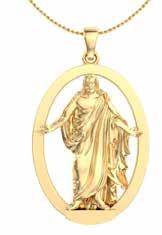
What price did Christ and Heavenly Father have to pay for us to have the reality of returning to our Heavenly Parents? Mosiah 3:7 explains “And lo, he shall suffer temptations, and pain of body, hunger, thirst, and fatigue, even more than man can suffer, except it be unto death; for behold, blood cometh from every pore, so great shall be his anguish for the wickedness and the abominations of his people.”
He knows all our pains, hunger, thirst, fatigue. He knows everything we go through. All He did was because He loves us. What happens if we don’t use this opportunity? Doctrine and Covenants 19:16-19 states: “For behold, I, God, have suffered these things for all, that they might
not suffer if they would repent. But if they would not repent, they must suffer even a I; Which suffering caused myself, even God, the greatest of all, to tremble because of pain, and to bleed at every pore, and to suffer both body and spirit—and would that I might not drink the bitter cup, and shrink- Nevertheless, glory be to the Father, and I partook and finished my preparations unto the children of men.”
After all He did, He glorified our Father.
What price did our Heavenly Father pay? John 3:16 explains that “For God so loved the world, that He gave His only begotten Son, that whosoever believeth in Him should not perish, but have everlasting life.”
As a parent, I can’t imagine how that felt for Heavenly Father and
Mother to watch their perfect Son go through the terrible agony and suffering. Christ had His agency. His sacrifice was a struggle for His perfect soul, and yet, He chose to fulfill His mission out of love for us.
We know that each minute we CAN choose to have joy and peace because of Christ and Heavenly Father. As we study about Jesus we are strengthened in our weaknesses and we have comfort in our trials. He knows our physical, emotional, spiritual pain. AND He knows our hearts. Our choice now is to have faith in Christ “no matter what.” We KNOW He saves us. He knows us and our potential better than we know ourselves.
Christ knows our hearts. He will guide us. We can do more with Him by our sides. Each new day is an oppor-
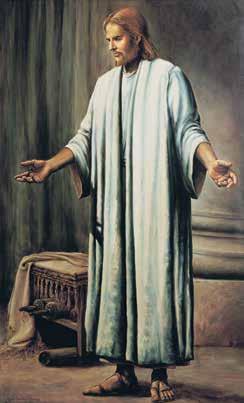
tunity to experience the joy and peace that is possible because of Him. We have been counseled to make the time between Christmas and Easter more focused on remembering Him. Visit the Church website for really great ideas on how to better focus on the Savior between now and Easter.




We proudly offer educational opportunities designed to match every student’s interest, including:
• A+ neighborhood schools
• Franklin Accelerated Academies
• Montessori
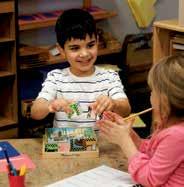
To enroll your student for the first time, parents must provide the following:

• Arts Integration
• Dual Language Immersion
• STEM-focused Learning
• And more!
Xplore Before and After School Care
• Who it’s for: An engaging extended-day program designed for Mesa Public Schools students in kindergarten (age 5+) through 6th grade in select schools.
• What it offers: Reliable childcare featuring a mix of academic support and enrichment activities like engineering, science, virtual reality and athletics.
• Proof of age and identity
• Proof of residence
• Immunization records
Your child must turn 5 before September 1 of the enrollment year to be eligible for kindergarten.
Irecently reread a book titled More to Your Story by W Craig and Jan J Zwick. It turned my heart to stories, but changed the direction to stories that carefully taught principles. We all have lives that have ups and downs, events that bring joy, and trials that cause pain. There are stories that come out of these experiences and we need to share them. Other’s lives can be enriched through the things we learn and share.
The Savior in his teachings used things the people or his audience understood. His teachings were simple and principle driven and they were told in stories. Look at the many simple principles that are taught in the story of the Good Samaritan or the Prodigal Son. We can do the same thing with our stories. We can share stories with principles that others can learn from.
My mother had just lost her

sweetheart of 72 years and was worried about what came next. She didn’t want to go to a home for Senior Citizens, even though she was 92 and unable to live alone. She begged me to intervene and not let my siblings put her in a home. I knew from past stories that she received answers to prayers so I encouraged her to get her own answer through prayer. She agreed and followed through by praying to know what to
do. The next morning, she told me she needed to move as she had received an answer.

I tell this story to help others understand the simple principle that I am writing about. Stories with principles need to be told. Others can be strengthened as we see the truths they teach. I know my mother received answers to prayers and this story helps me know my prayers can be answered as well. How many
By Lynne Tolman
stories like this are in your family history. They don’t have to be big or elaborate, just true. My family has different stories than your family. They may be inspiring but the stories that are told to your family by you are more inspiring.
FamilySearch
Memories is a perfect place to put these stories. For each of the stories you can add up to 10 pictures that help enhance

While some people go in for Spring cleaning, we know there’s another push, a yearning for a refresh, redesign, or newness in our space after winter. Renewal doesn’t have to be expensive or dramatic. Sometimes the most refreshing changes come from using what we already have, just a bit differently. Here are 5 easy ways to refresh your home for spring (without having to buy anything)!
Before jumping into a full redesign, start with a small-scale change. Move a chair to another space for better light, clear up a bedside table and intentionally decorate it differently, maybe revamp your entryway for a fresh view. Physical movement can create a sense of mental freshness. This wouldn’t be a full room overhaul, just one intentional adjustment.
Having more than we need on a daily basis can work in our favor when things feel stale. Consider rotating throw pillows or blankets, artwork, photos, bed or table linens. Think of it as “shopping” in your own home. Seasonal rotation can make familiar items feel new again, while storing the excess reduces year-round clutter.
Before temperatures hit the 100s, make the most of letting in daylight by opening blinds and curtains during the day. Sunlight, especially following dawn and preceding dusk has been linked to improvement in mood, energy, and better sleep. These changes don’t happen all at once, like the gradual return of earlier mornings and later evenings, but natural resources are our greatest resources.
By Allison Beckert

There’s no debate that spring cleaning gives a lift to a home; however, the burden of a full top to bottom deep spring clean can be too much to tackle when the itch for a refresh hits. Instead, consider a few selective edits. Sell, donate, or store items that are burdening your space. This wouldn’t be a purge. Rather, select a space you spend a lot of time in and focus on items that would bring immediate relief: visual clutter, heavy or large pieces of décor, or even items that seem burdensome emotionally. Even small edits can make a space feel calmer and more breathable.
One approach to start that larger
cleaning would be resetting your daily touchpoints one by one. These are areas you use daily, like your nightstand, kitchen counter, bathroom sink, or entry table. These hold your priorities, your thoughts, your energy. What can you do to make that spot simpler, clearer, or more intentional without (and this is key) buying something. Small environmental shifts can lead to reduced friction in your daily routines. A spring refresh doesn’t require spending money or achieving any kind of perfection. Our homes are living spaces that can change with us, our needs and our stresses. This year’s renewal can be quiet. It can be gradual, should be deeply personal, and doesn’t have to include straining your wallet.

By A New Leaf

Sister Griffin didn’t expect that some of her most meaningful missionary moments would happen inside a homeless shelter in Mesa. Every Tuesday and Thursday, Sister Griffin, Sister Tia, Elder Huffmaker, and Elder McLean serve at A New Leaf’s East Valley Men’s Center. The center provides shelter, meals, and critical resources to men working to overcome homelessness in the Valley. The missionaries step in wherever they are needed. Some days they sort clothing donations. Other days they organize food, assist with cleaning, or
help staff make sure the men staying at the shelter have what they need to move forward.
“We’re just helping serve in the community,” Sister Griffin shared. “It’s been so amazing getting to come serve and help someone in need.”
A New Leaf’s East Valley Men’s Center is more than a place to sleep. It is a place where men stabilize, look for work, and rebuild their lives. That kind of life-changing work requires consistent community support. These young missionaries have become a trusted part of that effort.

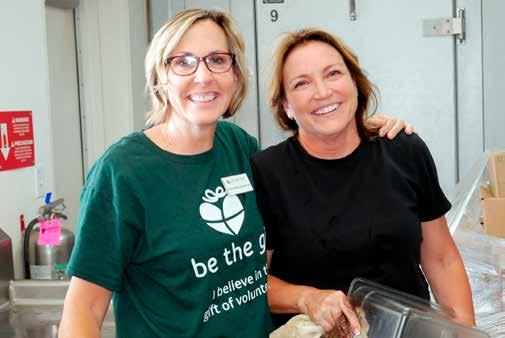
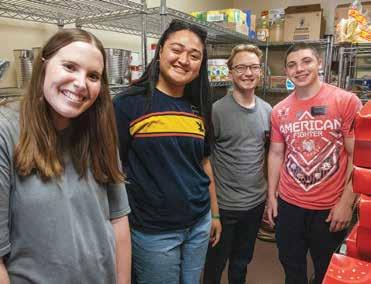
Staff members regularly rely on them. Their willingness to take on any task strengthens the shelter’s ability to serve men with dignity and care. For Sister Griffin, the connection between faith and service is simple.
“I think that this service is important because it shares the gospel through our actions. It shares the love of Jesus Christ. It’s what Jesus Christ did. He ministered to everyone that He met, one by one.”
Serving at A New Leaf has deepened her testimony. “Service has always helped me to think more about
Jesus Christ and focus on His love and be able to share that love that He has with others.”
Through their steady commitment, these missionaries are helping men in crisis find stability, structure, and hope. Week after week, they are proving that discipleship means showing up for your community and serving those who need it most.
If you would like to learn more about volunteer opportunities at A New Leaf, visit TurnaNewLeaf.org and find ways to serve in your own neighborhood today.


By Emily Jex Boyle
The scriptures often include the term to find favor in the sight of God.
At a glance, to find implies perhaps something was initially lost. Traveling down this thread of thought, I wonder: Who would the favor have been lost or hidden from? Does the term imply favor is lost from the one who gives it or from the one who ultimately finds it? Is the favor simply always there but not always seen? Or is God unwilling to give us attention until we happen upon it? Or, is God’s favor always there--shining bright like the glorious sun despite clouds and other obstacles?
I believe at the heart of the Gospel of Jesus Christ is a sure knowledge of all of humanity’s divine identity as children of perfectly loving Heavenly Parents, as well as our uniquely divine missions we were each born
to fill in this life. I also believe that at the center of these two truths stands the reality of my personal Jesus, as the Redeemer of my soul and Savior. In essence, because of Him we are born with favor because of the eternal opportunities His infinite sacrifice makes possible for us.
Through the years and conversations with a dear friend and Christian cousin, my husband and I have come to draw a definite tie between a beloved Book of Mormon term tender mercies to what my friend calls divine favor
Elder David A. Bednar, in his second General Conference address as an apostle shares his definition of the term tender mercies: “I believe I have come to better understand that the Lord’s tender mercies are very personal and individualized blessings, strength, protection, assurances, guidance, loving-kindness, consolation, support, and spiritual gifts
which we receive from and because of and through the Lord Jesus Christ.” (“The Tender Mercies of the Lord,” April 2005 General Conference.)
When I consider my faith and how I have been finding favor in the sight of the Lord along life’s broken road, I believe it is the seeker whose role it is to find, see, recognize the tender mercies or divine favor. I do not believe we are ever lost in God’s eyes.
jail where he helped others through his gift. Ultimately Joseph is remembered when the pharaoh had dreams that left him restless. And again, Joseph helped interpret a dream that went on to help save thousands from starvation, including his own family.
In the musical Joseph and the Amazing Technicolor Dreamcoat, Joseph’s character sings a song called “Close every door” in one of his low


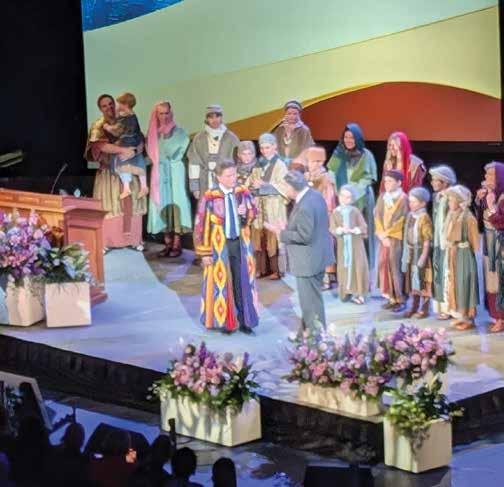
Finding favor in the everyday is an opportunity and challenge. It is seeing value, purpose and divine favor in the beautiful and not-so-beautiful moments; seeing the guiding, directing and compassionate hand of God in and through all of it.

Studying the Old Testament this year at home and in our Sunday School classes, we’ve come to the story of Joseph. He was blessed with the gift of dreams and interpreting them as well as being greatly loved by his father. He was almost killed by jealous brothers but mercifully sold into slavery instead, only to rise to prominent authority in a land that was not his home. He stood up for his values only to be thrown in
moments. In the song, Joseph sings, “Children of Israel are never alone. For I know I shall find my own peace of mind for I have been promised a land of my own.”
From a bird’s eye view and thousands of years later, it’s obviously simpler to find God’s favor in the brief chapters summarizing Joseph’s life. Part of me wonders if such wouldn’t be the case for our own lives when summarized in some future day, looking back on our hills and valleys, failures and successes. I believe the same favor that followed Joseph, follows each of us. We simply need eyes to see it.
By Robin Finlinson
This article supports the readings in the manual titled Come, Follow Me—For Home and Church for March-April, 2026, in Genesis 18 to Leviticus 19.
With the world that He created essentially in His hands, Jesus Christ covers and carries His people. (Ex. 13:3) Why and how does He do it? Some of the most beautiful symbolism of Christ is found in the early books of the Old Testament, depicting those merciful actions. His covenant people then and now also use their own hands to help in that vital work.
As the Great Architect of the earth, the symbol the Lord uses to show that He covers His people with protection
is the arch, the strongest load-bearing structure. “I do set my bow in the cloud,” He declared after the Great Flood. (Gen. 9:13)
When the Lord warned that every firstborn in Egypt was going to be killed, He instructed His people to take the blood of an unblemished male lamb and paint it on the lintel (top) and two side posts of their door frames, so their firstborn would be spared. That drew an arch. The Lord Himself was protecting them. (Ex. 12) His Atoning blood would one day cover all the imperfections of those who fully turn to Him.
Specializing in:
• Finding ancestors
• Finding cousins and cousins’ cousins needing temple ordinances
• $30 an hour/or package: $25 an hour for 5 - 10 hours a month for a year.
• Consultations $30 an hour
• Providing contact information for researchers located all over the worldno charge.

Diane Rogers
| 801-310-4738
Professional Genealogical Researcher with over 25 years’ experience.
(Ex. 29:32-33, 40; Matt 26:17-28)
An ark either carries people to safety, as with Noah, Lehi, Mulek, and the infant Moses (Gen. 6-7; 1 Nephi 17-18; Omni 1:15-16; Helaman 8:21; Ex. 2:3), or is carried by authorized people. (Ex. 25:12-15; 1 Chron. 15)
The ark of the covenant included the mercy seat or seat of atonement, which cov ered the law (Ten Commandments) kept inside the ark. When not being transported, it was placed in the Holy of Holies of the tabernacle. (Ex. 26:34)

Exodus 28:9-12 describes symbolic items the high priest would wear in the tabernacle and what he would do. Among the items were a robe, a garment worn over it called an ephod, and onyx stones that were like buttons. On the stones were engraved the names of the 12 tribes of Israel—six on one stone, and six on the other.
The Old Testament Student Manual highlights the beautiful symbolism: “With the two onyx stones, which fastened the ephod on the shoulders, the high priest (a type of Christ and also of His authorized representatives) entered the tabernacle (the house of the Lord, or God’s presence) carrying Israel on his shoulders.” (p. 152) Jesus carries His people back to Heavenly Father.
In latter-day temples, as the Lord’s work hastens, His covenant people act individually in the role of the high priest, carrying the name of every person who has died without the opportunity of this requisite saving ordinance, through the veil that represents Christ, into the Holy of Holies, the celestial room—representing the presence of both the Father and the Son. (Ex. 26:33)
Before that, every person who has died is symbolically, by proxy, washed clean through baptism, given the
Holy Ghost, and anointed with oil to prepare him or her for that higher ordinance. (Lev. 16:30; 19:22)
Today, the Lord again covers His people with Priesthood. He does so literally, with sacred Priesthood clothing. He does so with the Priesthood leadership and loving, protective care from the Prophet/President of His Church; the President’s counselors and the other Apostles; the Seventy; stake and ward leaders and ministers; husbands and fathers. That structure extends over the Church like a grand arch. (Ex. 18:13-26; Matt 16:18-19; Eph. 2:19-22)
The Church is also like an ark. It is a vessel of refuge from wickedness flooding the earth. (Ex. 15:17-18)
Read Zechariah 9:13, “When I have bent Judah for me, filled the bow with Ephraim…”, then Gen. 49:10; D&C 133:34, 37; Gen. 48:2022; and Ezek. 37, and consider how Christ is also the Great Archer—setting up one tribe of Israel anciently to cover with protection His people and their sacred records (the word of God or sword of truth) and another tribe to currently carry those and other sacred records to all the earth.
By Allison Beckert


Most of us open our phones and immediately see statements that are blatantly wrong, and others that make your stomach churn at the idea it might be true. In a time of constant information, what we see and read can affect our emotional state, even when what we read and see isn’t true. Setting aside any individual stance, the focus of this column is how misleading media affects our minds and what steps we can take to stay grounded.
The following are appearing more in everyday material:
• Claims presented as news that are inaccurate or unverified
• AI generated photos or videos, altered media, or images taken out of context
• Emotional messaging designed to provoke strong reactions, not understanding Strong emotions - from fury to patriotism, envy to excitement - are the whole point of these materials. They’re designed to evoke emotion and then action. Whatever the intense reaction or emotion, your body doesn’t know the difference between fake or real. Our bodies react to everything equally with stress chemicals like cortisol and adrenaline. Frequent and consistent spikes can do damage to your health.
The solution is not to constantly evaluate headline after headline.
There’s just as much damage to be had in cognitive overwhelm. This is the state of your brain when constantly asking “what’s real?” This results in decision fatigue and emotional exhaustion.
Repeated exposure to misleading or inflammatory content can shape perceptions subconsciously, affecting mood, trust, and social interactions. Fake or curated images are pushed at both men and women to promote health foods, clothes, and more products that thrive on poor self-esteem.
If none of these topics stand out to you, consider the following list of signs of damaging media influence.
These are mental habits not diagnoses, so if you relate to one or more of these they’re signals to reflect on your consumption.
• Increased anxiety without clear cause
• Feeling emotionally “drained” after browsing news or feeds
• Seeing patterns or threats where none exist
• Jumping quickly to conclusions without checking
• Frequent mood shifts tied to consumption of media
Responsible media consumption begins with being conscious of consumption, especially how much is involuntary or passive:
• Set intentional times for news and social media. Notice your emotional state before and after.
• Favor reputable sources, those known for factchecking and neutrality no matter which way you lean. Approach sensational headlines with curiosity, not automatic trust.
• Pause when you feel a strong emotional reaction. As yourself, why does this make me feel this way?
• Limit time spent on feeds that provoke stress. Unfollow accounts that consistently trigger negative emotions, and do so without guilt.
• Discuss confusing or upsetting content with someone you trust. Talking through feelings reduces emotional intensity.
• Simple habits like reading beyond headlines can strengthen critical thinking and reduce anxiety.
We live in an age of endless information, not all of it is accurate. High emotion is the currency of modern media and the foundation of engagement, but it comes at a cost only we pay. The cost is stress, fear, anxiety, and exhaustion. With awareness and building healthy habits, information can empower rather than overwhelm.






· Tour I - Palmyra to Kirtland
· Tour II - Missouri to Nauvoo to Winter Quarters
· Tour III - Tours I & II combined!
· Kirtland Week
· Sharon to Palmyra to Kirtland
· Trek to Zion
· Wonders of Egypt
· Germany
· Scotland · England · Wales
· Italy: Art & Faith
· Aloha Oahu



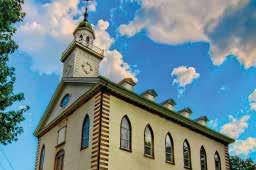
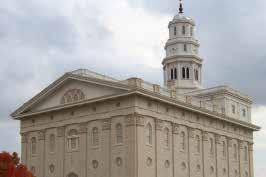
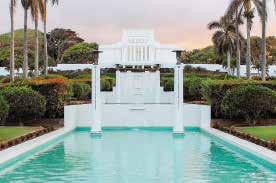

By Rauna Mortensen
Ajewel in downtown Gilbert since 2003, Hale Theatre Arizona has brought much happiness and respite to thousands of theatre goers. Owner and producer David Hale Dietlein, with his wife Corrin, grew up with the original Hale Centre Theatre in Glendale, California. After college, he returned to the family business and continued to hone his skills in acting, directing, and the myriad technical skills required in producing musical theatre. Eventually he scouted for a location to build his own theatre and selected Gilbert, Arizona for being a family-oriented town. The theatre was built as a theatre-in-the-round where the audience sits on all four sides and the actors frequently use the aisles for entrances and exits, making every seat feel close to the performance. It produces published Broadway and Off-Broadway musicals, comedies, and dramas year-round.
Selecting the shows involves a significant amount of research, including attending productions and reading scripts. Two or three options are selected for each time slot. From there performance rights for each production are secured. However, the theater frequently needs to adjust its selections and pursue alternative options until the entire season is complete.
Weekly meetings are held months before each show comes to the stage. These are attended by the owners/producers. artistic directors and stage management as well as those representing scenic design, carpentry, paint charge, props, costume, and sound and light design. Considerable thought and effort are put into every aspect of the show.
When asked how someone could develop marketable skills in any of the above positions, the theatre replies: “Get experience! You can gain theatre educa-
tion at colleges, but also trade schools for many of the departments. Volunteer at community theaters. While some general skills can carry over between jobs, theater is very niche and having theater-specific knowledge is really valuable to us.”
What about the actors? Open auditions are held for each show, with call backs by invitation only. Actors are highly encouraged to post their headshot, resume, and video reel to be considered. Hale Theatre hires local actors on a show by show basis, occasion-
ally considering out-of-town talent. Musical auditions include singing 16 bars of prepared music. For straight plays, the audition consists of sides from the script.
In 2018, Hale Theatre brought some tribute concerts onto their mainstage. In 2022 they partially converted their dance studio/rehearsal space into temporary concert space and found that the concerts were an overwhelming success. Thus, they fully renovated
Continued on pg. 29

of the same year. Early spring brought excess water when it was not needed, while late spring and early summer brought shortages. Late summer monsoons caused flash flooding. Water quality was poor, with muddy, sediment-filled, and salty water creating additional challenges.
In 1894, a dam was constructed that lasted beyond a single season. That dam remained in use until 1923. The dam built in 1923 is still standing today. Joseph City currently has a population of just over 1,300 residents. There are three wards in Joseph City, all part of the Winslow, Arizona Stake.
The four original settlements opened the door for many others called to the Arizona Mission. Communities such as Eagar, Greer, Heber, Lakeside, Lehi, Mesa, Pinetop, Pima, Show Low, Snowflake, St. David, St. Johns, Taylor, Thatcher, and many others were established shortly thereafter.
Today, Arizona is home to nearly 450,000 members of The Church of Jesus Christ of Latter-day Saints, organized into 118 stakes and 904 congregations. Six temples are currently in operation: Mesa (1927), Snowflake (2002), Gila Valley (2009), Gilbert (2014), Phoenix (2014), and Tucson (2017). Three
additional temples have been announced for Yuma, Queen Creek, and Flagstaff.
Sources
• Colonization on the Little Colorado – The Joseph City Region by George S. Tanner and J. Morris Richards
• Take Up Your Mission – Mormon Colonizing Along the Little Colorado River, 1870–1900 by Charles S. Peterson
In June 2025, Mesa Mission
President and Sister Stapleton were released. Christopher A. Lythgoe, 58, was subsequently called as the new Mesa Mission President, serving with his wife Stacey K. Lythgoe.
President and Sister Lythgoe have been married for over thirty-six years. They came from Camarilla, California having resided there for the past twenty-five years. Left behind was perfect weather, a close-knit community, and the ocean just a few miles away. But they are overjoyed to be here and serving in the Valley of the Sun. They raised four children who are currently age thirty-two to twenty-four years old. Their youngest is a special needs child, who is serving with them on their mission.

Brother Lythgoe was a former Stake President and served as a counselor in the Stake Presidency, among other callings. He has also been a Bishop and an ordinance worker in the Los Angeles Temple. Sister Lythgoe has served as a Stake Relief Society President, Young Women’s President, and various other callings in their ward.
President Lythgoe was born in Laguna Beach, California, to Jack Watt Lythgoe and Betty Jo Lythgoe. Sister Lythgoe was born in Salt Lake City to John Gary Nielsen and Pia Santina Nielsen. Both are Brigham Young University graduates. Brother Lythgoe learned to snowboard while attending BYU, and still loves it.
As a family, they love spending time together. Hawaii is their favorite
Tuesdays & Thursdays | 6–8 PM | Downtown Mesa
destination to vacation. They also enjoy quality time and bike riding. But they have dedicated their life to be disciples of Jesus Christ. Their missionary goal is to invite others to come unto Christ, learn of Him, and be baptized.
In the Mesa Mission there are 184 full time missionaries, 45 full time service missionaries, and 50 senior missionaries. The President is responsible for all of those serving. The Mesa Mission includes 21 Stakes. There are 142 wards and branches within the mission. Most of the units are wards. This includes the San Carlos Indian reservation.
The Mission President meets often

with the missionaries. He presides at monthly Mission Leadership Council, welcoming lunches for new missionaries, Mission transfers, Zone Conferences held every six weeks, and senior missionary meetings. At these meetings President Lythgoe teaches, trains, and motivates the Elders, Sisters and Senior Missionaries.
Missionary work has a special meaning to Christopher and to Stacey. Both of their mothers were converts to the church. They beamed as they shared, “Our mothers were products of missionary work. They were taught by the missionaries,” President Lythgoe said. “We love our missionaries in the Mesa Mission. We want them to become lifelong disciples of Jesus Christ.”
History
Continued from pg. 21
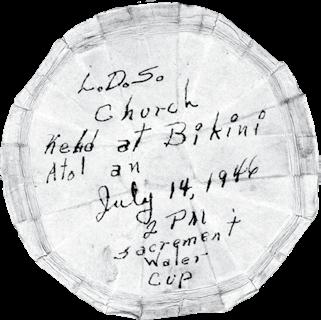
the story. My father wrote of his experience at Bikini Island after the end of World War II. I have added that and with it I have a picture of the ship he was stationed on, his Navy picture and his dog tags. Also, there were many ships involved and there were members of the church on each of these ships. They were given permission to hold sacrament meeting on the island before the tests. My dad was able to participate and pass the sacrament. He kept his sacrament cup and I have added a picture of that as well. It brings it to life and gives me so much more love and appreciation for my father and the wonderful men that served. Take some time and reflect on the stories of your life and how they can help and strengthen others in this journey we are on. Stories can and do make a difference.

Continued from pg. 28

the space into the Concert Hall it is today. The concerts are much more theatrical than you might see elsewhere, while also being more flexible and intimate than the musical theatre productions.
A recent patron’s comment sums up the audience experience well:
“Truly, I have seen numerous performances at Hale and loved them all, but this was, by far, my absolute favorite. The cast was sensational . . . from the exceptional acting, to the amazing singing, to the extraordinary dancing, I loved every moment of it. Please know that you all brought me such tremendous joy and happiness.”

Find more information at www. haletheatrearizona.com and www. castingmanager.com/hale.
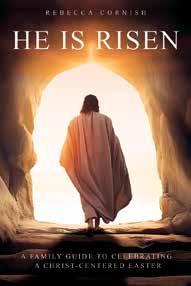
Anew Easter-centered book is now available by author Rebecca Talley.
He is Risen: A Family Guide to Celebrating a Christ Centered Easter “is designed to help readers feel more connected to the Savior, Jesus Christ, through studying His names, reading scriptures, singing hymns, discussing questions, and doing simple, family-friendly activities,” explains Talley.
gan researching different names of Jesus and matching scriptures to those names. As I continued to prepare, the idea for an Easter book hit me,” says Talley.
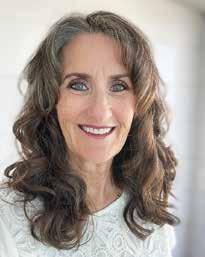

By Cindy R. Williams
Author Rebecca Talley.
“I kept feeling like I wasn’t celebrating Easter in the same way I was celebrating Christmas. I was trying to find ways to help my family feel closer to the Savior while also learning more about His atoning sac rifice. I also wanted to help others celebrate Easter in a deeper, more meaningful way. While preparing my seminary lessons, I be-
“The section on Holy Week is espe cially pivotal to help readers think about the importance of the time in the Garden of Gethsemane, the crucifixion and the resurrection. The book ends with the idea that Jesus died for each one of us, but, more importantly, He lives for each one of us. We need to choose Him in the same way that He chose us. Every day. In every way, we need to choose Jesus. He changed ev erything with His infinite Atonement,” adds Talley.
“I wrote this book in hopes of helping people feel closer to Jesus, not just during Easter, but all year long. I love teaching about Him and about His gospel.
I want people to know how much Jesus loves them.”
Talley is working on a book about how to develop Christlike qualities. She is also writing a “heartwarming romance about woman who learns to love people with intellectual disabilities,” says Talley.
Talley is a mom, nana, and a multi-published author. When she isn’t writing, she loves to hang out with family, swim in the ocean, and dance to disco music while she cleans the house.
He is Risen: A Family Guide to Celebrating a Christ Centered Easter is now available on Amazon and various bookstores. To learn more about Talley, visit scattersonshine.com and rebeccatalley.com.
Local author Ora Smith says her focus as an author is to “See history through the eyes of those who lived it.” Smith sets up her new book, The Pulse of His Soul: The Story of John Lothropp, a Forgotten Forefather by explaining that “In the 17th century, John Lothropp practiced his outlawed convictions about religious freedom, but the Church of England was impris oning, torturing, and killing those who did. Because of my research and knowledge about John Lothropp, I was asked to join efforts with other script writers for an upcoming pageant about Lothropp’s cour age and remarkable story called The Spirit of Freedom
“The Spirit of Freedom pag eant, based on the life of John Lothropp, is currently being pro duced by Ned Armstrong of Manti, with hopes of either a full or partial production by July 2026. It will be
performed at the Sanpete Fairgrounds adjacent to the Manti Temple, Utah.”
Smith continues, “I’m not sure we truly appreciate the blessings we enjoy regarding freedom of religion until we read about someone who had to risk their life for it. Lothropp came to America in 1634, fourteen years after the Pilgrims, for the same reason—to establish a community where he and his fellow believers could freely practice their religion without the persecution they faced in England, where everyone was forced to attend the Church of England only. If you didn’t, you were punished with time in stocks, or publicly humiliated. Some were tried, tortured, mutilated, and imprisoned. Some died.”
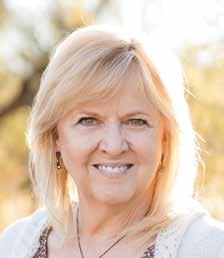
Author Ora Smith.
Smith writes true stories about her ancestors in her Heritage Fiction series. “I’m currently working on a three-book foundation for a twenty-book series called Preserving Truth and Light about Hiram Abiff,
the overseer of King Solomon’s Temple. This series will branch into standalone novels related to early Freemasonry,” says Smith.
Smith also writes a picture book series titled Story of Light, which is designed for Christian children to feel hope and peace. The books are Biblical accounts of Jesus’s birth, life, and sacrifice with explanations of how spiritual and physical light work together for ages 5-9. The Son and Sun: An Amazing Story of Light is now out for Easter.
The Pulse of His Soul: The Story of John Lothropp, a Forgotten Forefather, is now available on Amazon. See more about Ora Smith at www. orasmith.com.The book is available on Amazon.



By The Arizona Beehive Magazine

If you’ve been looking for a new pasta dish, perfect for a weeknight or Sunday supper, fennel is a great discovery. This recipe is easy and nicely represents the subtle flavor of fennel. It is a great base, easily adapted to your own taste. Serve it with chicken and steamed asparagus, or make it vegetarian and add zucchini along with the peas. This dish reheats nicely for when you are expecting planned-overs!
■ 1 lb. Penne pasta
■ 1 lb. sweet Italian sausage
■ 1 large fennel bulb, about 1-pound total
■ 1/3 cup extra-virgin olive oil
■ 2 medium onions, cut in halfmoon slices ½ tsp. salt
■ ½ tsp. red pepper flakes
■ ½ tsp. fennel seeds
■ 6 oz. tomato paste
■ 2 cups frozen peas
■ ½ cup finely chopped fennel fronds
■ 1 cup freshly grated Pecorino or Parmigiano – Regiano cheese (additional for serving)
TOTAL TIME: 30-35 minutes
PREP: 10 minutes
COOK: 20-25 minutes
Serves 6-8
By Ready Hive Hannah
1. Heat a large pot of salted water, about 6 cups, to boiling for pasta. Cook pasta just until the penne is not quite al dente. Drain and reserve 3 cups pasta water. Toss penne with a little olive oil to prevent pasta from sticking together.
2. While pasta is cooking, heat olive oil in a large skillet set over medium- high heat. If using links, remove sausage from casing. Break up meat into pieces as you add to skillet. As sausage cooks, stir and continue to break it up, cooking until it begins to brown, about 3-5 min.
3. While sausage cooks, add red pepper flakes and fennel seeds to a dry skillet and toast on high, about 1-2 min, stirring and being careful not to burn. Once toasted, stir into sausage.
4. For fennel, cut off stalks, just at the top of bulb, and reserve fronds. Remove any tough outer parts from bulbs. Slice bulb in half lengthwise, removing core and then slice each half in ¼ inch thick slices. Cut slices in half for about 1½ cups matchsticks of fennel.
5. Push sausage to one side of pan and drop onion slices into clear part of pan; sauté, stirring, until they sizzle and wilt, another 3-5 minutes, then stir them in with sausage. Push this to one side of pan and drop in fennel and heat to just wilting, about 2 more min. Stir into sausage and onions.
6. Next, clear a spot in the center of the skillet and add the tomato paste and cook for a good minute of more, until it is sizzles and starts to caramelize. Then stir it into the sausage mixture.
7. Add about 2 cups of the reserved pasta water into skillet, stir well, and bring to a boil. Reduce to a simmer, add the frozen peas and let cook until the sauce thickens, but not too thick, and the fennel is soft.
8. Add the cooked penne into the simmering sauce. Toss everything together, sprinkle in the chopped fennel fronds, and continue to cook until the penne is perfectly al dente. (Add more water if more sauce is desired.)
9. Remove skillet from heat, sprinkle grated cheese over penne mixture and toss. Serve hot pasta from pan or in a large pasta bowl with additional grated cheese and freshly cracked black pepper.
Okay, confession time. For years, I watched monsoon clouds roll in and thought, “Wow, that’s beautiful.” And then I watched that beautiful water rush down my driveway and into the gutter.
Meanwhile, my garage shelf is full of those blue 5-gallon water jugs. You know the ones. Heavy, plastic, and honestly? I always forget to rotate them until my husband grabs one for a rocket launch and I panic.
Here is the truth: We live in a desert. But every summer, God literally rains water down on our houses for free. And most of us just let it wash away.
First things first. In Arizona, rainwater harvesting is not only legal, it is encouraged. The state basically said, “Please, take the water.” So, you have the green light from both heaven and the water district.
I am not suggesting you install a $10,000 cistern (unless you have that budget, in which case, can we be friends?). I am talking baby steps.
Last month, I convinced my husband to help me install a simple 50-gallon rain barrel under a downspout. It took an afternoon, a trip to the hardware store, and exactly one argument about which way the spigot should face. (Spoiler: He was right.)
Fifty gallons doesn’t sound like a lot but do the math. During a good storm, that barrel fills up in ten minutes. That is fifty gallons I didn’t pay for, didn’t haul from the store, and didn’t store in my precious garage space.
Let’s be real. You aren’t drinking this water straight from the barrel unless you have serious filtration. But here is what it is perfect for:
• The Garden: Your tomato plants will literally throw a party.
• The “Flush” Plan: In an emergency where water stops flowing, that barrel water keeps toilets flushing. It is the unsung hero of sanitation.
• The Kid Compromise: My grandkids now have a “rainwater only” rule for water balloon fights. I feel less guilty, and they think it’s fancy.
Think about the Children of Israel in the wilderness. God gave them water from a rock. He provides. Here in the suburbs, He provides via the monsoon. It is our job to put out the bucket—or in this case, the barrel.
We talk a lot about storing a year’s supply. But water is heavy, it expires, and it takes up space. Using rainwater for non-drinking needs stretches your stored water so much further.
So, this week, look up at your gutters. Look at that downspout. Look at your shrinking food storage budget because you keep buying water. Then maybe, just maybe, look into a barrel. Your garden will thank you. Your garage will thank you. And honestly? Watching that first storm fill your barrel is way more satisfying than watching it hit the pavement.
Stay prepared, stay hydrated!

Aquiet backyard suddenly burst into song with the stirring brass of John Williams Star Wars theme recently, transforming a regular afternoon into a Galactic Symphony. For 26-year-old Anthony Castle, a lifelong Star Wars super fan, it was like watching the magic of the big screen come to life.
Through a unique partnership between Hospice of the Valley and the Phoenix Symphony, six professional musicians arrived at Anthony’s home to perform a private medley. To the delight of Anthony who proudly wore his Baby Yoda T-shirt several of the performers arrived in character, dressed as Princess Leia and Luke Skywalker.
This special concert was the latest example of Anthony’s determination to overcome Duchenne Muscular Dystrophy, a rare and progressive genetic muscle disease. Despite his life-limiting illness, Anthony and his family have built a legacy of adventure. He was the subject of a documentary chronicling his journey to the floor of the Grand Canyon, and with the help of the Yarnell Fire District and a dedicated team of supporters, Anthony reached the end of the Granite Mountain Hotshot Memorial Hike in 2024.
The backyard concert was the idea of Hospice of the Valley social worker Lisa Maddock and nurse Kirsta Johnson, who also surprised Anthony with a personalized portrait of himself as a
Jedi Master, lightsaber in hand.
Anthony is a wonderful young man who has accomplished so much in his 26 years, Lisa said. We have now checked Jedi Master off his bucket list!
As Anthony chooses to focus on quality of life, his family and care team are ensuring that every remaining moment is living life large. In a galaxy that can sometimes feel dark, Anthony Castle continues to remind those around him that the Force like the human spirit is remarkably strong.
Visit hov.org for more on Hospice of the Valleys palliative, dementia and hospice programs.
Lin Sue Flood is director of community engagement at Hospice of the Valley.

• Appointments for proxy ordinances are encouraged. Patrons without appointments are also welcome, but may be asked to wait for an opportunity to participate. To schedule or modify a proxy appointment, visit your temple’s information at https://www.churchofjesuschrist.org/temples
• Patrons are encouraged to bring their own temple clothing.
• Ordinances for family names must be done in proper sequence—baptism, confirmation, Melchizedek Priesthood ordination (males), initiatory, endowment, and then sealing. Please allow sufficient time to perform all the ordinances you wish to complete during your visit. For additional help and information, please call the temple.
• Please contact the temple for more information or if you have special circumstances or needs.
• Temple websites can be found by searching churchofjesuschrist.org/temples
3301 S. Greenfield Rd, Gilbert, AZ, 85297 (1) 480-822-5000
Services: Clothing rental available. No Cafeteria
Upcoming Closures 2026
Saturday, April 4
Monday, April 6 - Monday, April 20 Saturday, July 4
101 S. LeSueur, Mesa, AZ, 852014 (1) 480-833-1211
Services: Clothing rental available. No Cafeteria
Upcoming Closures 2026
Monday, March 9 - Monday, March 23 Tues, March 24 - Fri, April 3 (Limited Operations) Saturday, April 4 Saturday, July 4
5220 W. Pinnacle Peak Road, Phoenix, AZ 85310 (1) 623-474-9500
Services: No clothing or cafeteria
Upcoming Closures 2026
Saturday, April 4
Monday, May 18 - Monday, June 1 Saturday, July 4
Distribution Centers
Mesa 445 E Main Street (480) 969-2170
Gilbert 2894 S San Tan Village Pkwy (480) 926-3234
Phoenix 2919 W Agua Fria Fwy (480) 660-6100