
Transportive stories by island-born hands, across shores
Transportive stories by island-born hands, across shores

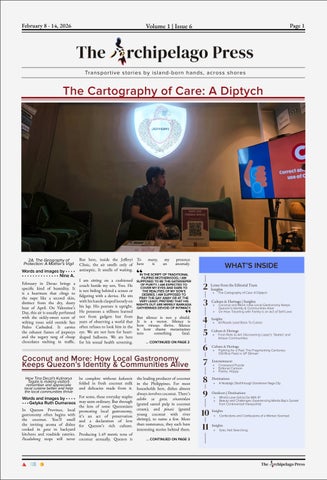
2A. The Geography of Protection: A Mother’s Vigil
February in Davao brings a specific kind of humidity. It is a heaviness that clings to the nape like a second skin, distinct from the dry, dusty heat of April. On Valentine’s Day, this air is usually perfumed with the sickly-sweet scent of wilting roses sold outside San Pedro Cathedral. It carries the exhaust fumes of jeepneys and the sugary tang of cheap chocolates melting in traffic.
But here, inside the Jefferyi Clinic, the air smells only of antiseptic. It smells of waiting.
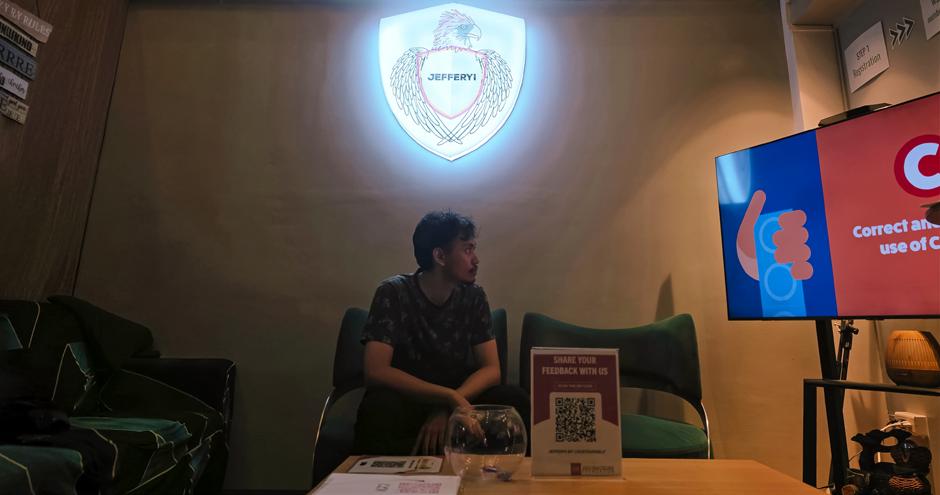
I am sitting on a cushioned couch beside my son, Yves. He is not hiding behind a screen or fidgeting with a device. He sits with his hands clasped loosely on his lap. His posture is upright. He possesses a stillness learned not from gadgets but from years of observing a world that often refuses to look him in the eye. We are not here for heartshaped balloons. We are here for his sexual health screening.
To many, my presence here is an anomaly.
IN THE SCRIPT OF TRADITIONAL FILIPINO MOTHERHOOD, I AM SUPPOSED TO BE THE GATEKEEPER OF PURITY. I AM EXPECTED TO COVER MY EYES AND EARS TO THE REALITIES OF MY SON’S DESIRES. I AM SUPPOSED TO PRAY THE GAY AWAY OR AT THE VERY LEAST, PRETEND THAT HIS NIGHTS OUT ARE MERELY BARKADA GATHERINGS DEVOID OF INTIMACY.
But silence is not a shield. It is a vector. Silence is how viruses thrive. Silence is how shame metastasizes into something fatal.
... CONTINUED ON PAGE 2
How Tina Decal’s Kulinarya Tagala is making visitors remember and appreciate local cuisine better and help the local communities thrive
In Quezon Province, local gastronomy often begins with the coconut. You’ll smell the inviting aroma of dishes cooked in gata in backyard kitchens and roadside eateries. Pasalubong stops will never
be complete without kakanin folded in fresh coconut milk and delicacies made from it.
For some, these everyday staples may seem ordinary. But through the lens of some Quezonians promoting local gastronomy, it’s an act of preservation and a declaration of love for Quezon’s rich culture.
Producing 1.49 metric tons of coconut annually, Quezon is
the leading producer of coconut in the Philippines. For most households here, dishes almost always involves coconut. There’s adobo sa gata, sinantolan (grated santol pulp in coconut cream), and pinais (grated young coconut with river shrimp), to name a few. More than sustenance, they each have interesting stories behind them.
... CONTINUED ON PAGE 3
Letter from the Editorial Team
Insights
» The Cartography of Care: A Diptych
Culture & Heritage | Insights
» Fighting for a Past: The Fragmenting CenturiesOld Rice Field in UP Diliman 10 11 9 8 7 5 4 3 2 6
» Coconut and More: How Local Gastronomy Keeps Quezon’s Identity & Communities Alive
» On How Traveling with Family is an Act of Self-Love
Insights
» All Roads Lead Back To Cubao
Culture & Heritage
» From Rails to Art: Discovering Lopez’s ‘Skates’ and Artisan Communities
Culture & Heritage
Entertainment
» Crossword Puzzle
» Editorial Cartoon
» Poetry: Happy
Destinations
» A Nostalgic Stroll through Downtown Naga City
Outdoors | Destinations
» What’s Love Got to Do With It?
» Beauty and Challenges: Experiencing Manila Bay’s Sunset from Controversial Viewpointst
Insights
» Confections and Confessions of a Woman Scorned
Insights
» Solo, Not Searching


When one of our resident travel contributors learned that the theme for this particular issue (originally slated for release on Valentine’s Day) was love, he responded with a cold, Miranda Priestly-esque: “Love. Groundbreaking.” We get it. Centering a February issue on love can feel trite—unoriginal, even. But in a world fueled by “rage-bait” content, growing unrest, and despair, to love is a radical act. It is far easier to succumb to cynicism; it is much harder to choose love and its lithe, hopeful, enduring wings. That’s why it is more important than ever to remember that love exists—and that we still possess the ability to soar with it. Within these pages, you will find love in its many forms: love for movement, for family, and for self; for food, craft, and nostalgia; for sunsets, trails, and friends; and for nation and home. Here, we offer love to you as a revolutionary act of letting go and starting anew—a beautiful scar that houses both identity and repair.
I look at the poster on the wall. It is a stylized image of the Philippine Eagle, the Pithecophaga jefferyi –the clinic’s namesake. The apex predator. A creature that watches. In the wild, protection is violent. It is talons and beak. Here, in the geography of my son’s queer life, protection is bureaucratic. It is filling out forms that ask intimate questions regarding partners and protection methods. It is waiting for a number to be called. When the nurse calls his name, she pauses. Her eyes flick to me. She expects me to stay behind. She expects the “privacy” that is actually a code for “shame.”
I stand up with him. “ Dalawa kami ,” I say. There are two of us.
I do not go into the exam room since he needs his agency and his own space to breathe. But I walk him to the door. I am the visible demarcation line. My presence in this lobby tells the other young men, some hiding behind caps and masks, that they are not dirty. That if a mother can sit here, legs crossed, reading a magazine while her son gets tested for HIV, then the act itself is not a sin. It is hygiene. It is maintenance. It is an act of self-respect.


We often mistake protection for prohibition. We tell our children “don’t” until they stop listening. However, the radical act is to say “how.” How do you stay safe? How do you love this body I birthed?
Yves looks back at me before he enters. There is a quietness in him. It is a reserve that belongs entirely to him, forged in the years when it was just the two of us against the tide. It is the stillness of a boy who learned early on that he had to be his own anchor. Today, I see the steel underneath. He is inheriting the courage to be examined, to be known.
This is my Valentine to him. Not a trinket. It is the assurance that when he walks out into the complex, often unforgiving map of Davao’s queer landscape, he does not walk alone. He carries my vigilance in his pocket like a talisman. The door closes. I sit back down. The air conditioner hums while battling the Davao City heat. I wait for my son, not with anxiety, but with the fierce, quiet certainty of a mother who knows that the greatest love story isn’t about romance. It is about keeping each other alive.
Words by Yves A.
The door to the examination room is thin. Yet it is heavy enough to separate two worlds. Outside, my mother sits on a cushioned couch. She is a sentry in a black blouse. Inside, I am asked to strip down. Not just my clothes, but the layers of hesitation I have built up over years of navigating a country where “progress” often feels like a rumor from the north.
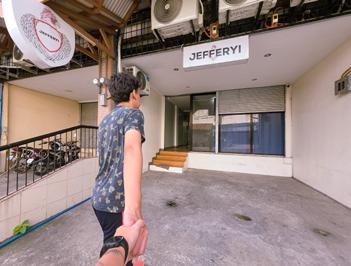
My mother thinks she is just waiting. She does not realize that her presence outside allows me to speak inside.
In most government offices or public hospitals in the Philippines, you are reduced to a queue number. You become a statistic in a logbook. Your identity is flattened into a waiting time. It is a dehumanizing geography.
But the Jefferyi Clinic is different, and perhaps that is why my mother fits here so well. When I walked in, they didn’t assign me a number. They gave me a code. It is a personalized identity that protects my confidentiality while acknowledging my humanity. It is a small dignity, but in the queer experience, dignity is the currency we are most often denied.
The clinician does not just look at my chart. He looks at me. He asks about my mental well-being with the same casual gravity as he asks about my physical symptoms. He talks about PreP not as a punishment for my lifestyle, but as a vitamin for my future. It is a personalization of care that feels radical.
I think of my mother’s favorite saying, which she whispered before we left the house. It is better to know it and not need it than to need it and not know it.
Editorial Team
Severino Profeta Reyes FOUNDING EDITOR
Allandale Antenero FOUNDING TRAVEL WRITER
Gretchen Filart MANAGING EDITOR
Maia Imperial EDITORIAL DESIGNER
Carmelo Perlas EDITORIAL CARTOONIST
CONTRIBUTING WRITERS
Benj Gabun Sumabat
Christine Fernandez
Erwin Jesse Perea Aljas (Poetry)
Gelyka Ruth Dumaraos
Heather Ann Pulido
Marky Ramone Go
Kara Santos
Karlo Lagman Sevilla III Nine A.
Rhea Claire Madarang
Ron Cruz
Timothy Jay Ibay Yves A.
That is the inheritance she passes down. It is not money or land. It is the refusal to be ignorant about one’s own survival. When parents refuse to delve into their children’s sex lives, they think they are preserving innocence. In reality, they are dismantling safety. My mother’s curiosity empowers me. Her willingness to ask the “simple” and “obvious” questions to the doctors allows me to do the same. Because she is not afraid of the answers, I am not afraid of the questions.
WE LIVE IN A TIME WHERE QUEERNESS IS VISIBLE, YES, BUT VISIBILITY IS NOT THE SAME AS SAFETY. THE PHILIPPINES IS A PARADOX OF TOLERANCE AND CONSERVATISM. TO TACKLE THESE OUTDATED SYSTEMS ALONE IS DAUNTING. THE WEIGHT OF IT CAN CRUSH YOU. BUT LOOKING AT THE EMPTY CHAIR BESIDE THE CLINICIAN, KNOWING MY MOTHER IS JUST PAST THE THRESHOLD, THE WEIGHT DISTRIBUTES.
This is how we reshape the Filipino family. We move past the idea that “family” means agreeing on everything or hiding the parts of ourselves that are inconvenient. True resilience is that distinct Filipino trait we pride ourselves on. But it is not about enduring silence. It is about the courage to show up in spaces that were not designed for us and making them our own.
Continued from front page
For Christina Decal and her brainchild culinary food and heritage tour Kulinarya Tagala local food tourism in the province is not just about presenting, but also telling the whys and the hows of how a dish was made.
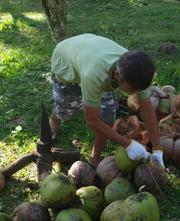
While tasting pinais , for instance, guests discover that locals do not simply crack open any coconut. Maturity matters. Farmers would look for the “ alangan ” – the stage where the meat is neither too young nor too firm. By knocking on the shell, they can tell whether it is best suited for gata (coconut milk), grating, or dessert. Another example is the province’s
take on adobo. Instead of soy sauce, they use gata as an alternative; after all, it’s what’s available and affordable. Its recipe has been passed down from mother to daughter for generations. These small pieces of knowledge become part of the culinary experience.
Through Kulinarya Tagala which began in 2003, guests –foreigners, OFWs, and students – learn how the province flourished during the coconut boom, how imported canned goods during the American colonial period influenced dishes like Lucban’s festive meatloaf, hardinera and how indigenous cooking methods, such as kinulob —slow cooking in covered pots—coexist with modern techniques.
CONTRIBUTING PHOTOGRAPHERS
Koy Azcarraga
Risha Mae Ordas
GOT QUESTIONS OR SUGGESTIONS?
Email us at:
editorial@thearchipelagopress.com
Theopinionsandstatements expressedinthispublicationare thoseoftheauthorsanddonot necessarilyreflecttheviewsofthe editorsorTheArchipelagoPress.
Theinformationcontainedherein isforinformationalpurposes only.Whileeveryeffortismadeto ensureaccuracy,TheArchipelago Pressassumesnoliabilityorresponsibilityforanyerrors,omissions,oranyactionstakenbased ontheinformationprovided.
Nopartofthispublicationmay bereproduced,distributed,or transmittedinanyformorbyany meanswithoutthepriorwritten permissionofthepublisher.
©2026TheArchipelagoPress. Allrightsreserved.
I swallow the pill. I answer the questions. I am not a number. I am a son who is loved enough to be protected and protected enough to be free.
When I open the door and step back out into the humidity of the waiting room, I don’t need to look for her. I know exactly where she is.
From everyday dishes to festive ones, Quezon Province doesn’t fall short. Aside from hardinera , there’s the streetstyle eating of pancit habhab and Lucban longganisa — all popular dishes during Pahiyas Festival
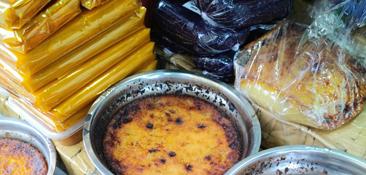
Visitors can drive through Kalye Budin in Tayabas to buy the famous budin , a creamy cassava cake established in 1972, or try pasulbot and kalamay a variety of products made of glutinous rice, coconut cream, and brown sugar. “Taste is subjective,” she explains. It is not about claiming superiority.
One of Decal’s contributions is the reintroduction of the tagayan ritual, a merrymaking tradition that involves drinking Quezon’s coconut spirit, lambanog During the early days of her food tours, she wanted to break the negative connotation associated with the local liquor. After research, she found out that “ tagay ” originally referred to a drinking song—an awit
Raphael, meanwhile, moves through life with the serene confidence of someone who assumes everything will work out because it usually does — especially if I am around.
Traveling solo was a personal journey: me and my thoughts passing through airports like phantoms, unscathed.
Love, I have learned, is not always a grand declaration. Sometimes, it is a spreadsheet itinerary. Sometimes it is 15 open tabs, a boarding pass screenshot saved thrice. Sometimes it is the quiet acceptance of being the only person on the trip who knows where the hotel actually is.
I have two men in my life: Raphael and our son, Noa. One, an unbothered man-child, the other, an overthinking young adult. Noa’s quarterlife crisis rivals the intensity of a midlife reckoning usually reserved for repressed bankers obsessed with Japanese sedans and a sudden interest in motorbikes (aka me).


“Sharing lambanog was once intertwined with poetry, music, and dance. Fisherfolk and farmers gathered at the end of the day not just to drink, but to sing. Women danced as they offered the glass, embodying hospitality and artistry.”
Today, the tagayan ritual is part of Quezon’s tourism activities, appearing in festivals such as the Niyugyugan Festival and workshops where younger generations are trained in movements and melodies.
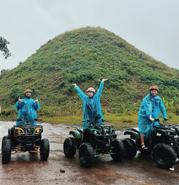
They leave all the planning to me – booking, navigation, and strategizing activities –not out of convenience but out of necessity. The mental arithmetic of currencies and transportation schedules. The emotional burden of making sure socks are paired and passports are where passports should be. The two of them, on the other hand, glide through a rainbow, set to the eternal optimism of a Natasha Bedingfield summer anthem, hands outstretched, faces tilted toward the sun. Entirely unbothered by the fact that check-in closes in 20 minutes.
Traveling as a couple felt like a waltz: synchronized and slightly indulgent. Traveling with family, however, is an entirely different ball game. It multiplies the logistical stress and exponentially inflates the expenses. Booking a bigger taxi because the cumulative luggage will not fit in the trunk. Upgrading the rooms because hotels have decided that an extra adult cannot sleep on a couch. One meal becomes three preferences.
One delay becomes a mental recalibration about whose must-sees will be dropped.
The cost is not just financial; it is emotional, cognitive, and in my case, spinal.
But there is a moment when all the maths and rules dissolve.
When you see them happy.
Not curated-happy for photos or social media, but deeply, stupidly happy, discovering the joy and magic of scooping unlimited pomegranates from the breakfast buffet.
Experiencing the thrill of sneaking out hotel face towels and demanding more miniature toiletries for souvenirs.
Laughing more easily in foreign streets, goofing around in a city that neither knows nor cares if they look slightly moronic, woes briefly loosened under unfamiliar skies. They embody what travel should really be: the unlearning of urgency, the rediscovery of curiosity, and the simple act of being present.
Decal says food is deeply tied to Filipino identity, both in the past and in the present. Through food and storytelling, visitors understand, appreciate, and remember local cuisine.
“What sets the experience apart is the narrative – feeding not just the stomach, but the mind,” she shared. When we understand the story behind what we eat, we are also nurturing the community that made it possible.
Decal also added how, beyond cultural revival, the impact is visible in communities. When culinary tours prioritize local cooks and small businesses using locally sourced ingredients, they generate steady demand for farmers. By partnering with small establishments instead of large chains, income stays within communities. Guides are trained, and hospitality staff services are elevated. All these produce a ripple effect.
In those moments, my heart fills in a way no destination ever could. I realize that loving your family, and insisting on giving them the best you can manage is also a form of self-love that is quiet, unphotogenic, and profoundly sustaining. You are not losing yourself in an act of service; you are building a version of yourself that knows how to care, how to endure, how to choose joy even when it is not the most convenient.

These trips become memory vaults. They warm the cold nights when life feels thin and unforgiving. They light a fire under you on days when you have run out of reasons to keep going. They leave behind small pockets of happiness, the kind you cup between your palms when making wishes, the kind that makes you just a little more hopeful than you usually are.
Traveling with family teaches you that love is not easy. It is actually heavy, and that weight is real—but it is the good kind of heavy. The kind that anchors you. The kind that reminds you why and for whom you move at all.

For B, who made me walk unafraid on an overpass in Cubao while we got lost in trying to find the best commute and budgetfriendly way to go back to our student dormitory.
college, I met a boy after the First Day Fight (FDF) rally that traditionally culminates the progressive spirit and academic freedom of UP, also known as the country’s premier state university. B is years older than me and has already been in the university for some time. Aside from the fact that we share the same political beliefs and young optimism to change the world, he is also from the same region as me. It was no surprise that we immediately clicked. B has this timid vibe, often questionable sense of humor, and frequently introverted persona.
which route is faster and more efficient. He takes these things seriously as he has a bulleted list on his phone, every time, he looks like a classic New Yorker tourist navigating the city with a map – in this case, his phone. He spoke about routes like they were pieces of jigsaw puzzles he mastered. Sometimes he would quiz me: which jeep goes to Philcoa, which bus passes through Katipunan, where to transfer if we’re short on fare. I would always get it wrong, and he would laugh softly and explain again.
a news headline due to a freak accident. I shook my head and suggested that we could just stay there and wait for a taxi, before realizing that we do not have enough money for a taxi. I looked at him. With his unassuming eyes, he smiled and stretched out his hand to me.
From then, fear of the overpass turned into eager anticipation. Every time we walk on, he automatically holds my hand or takes my right hand and rests it on his right shoulder.
provinces. I learned not to ask too many questions.
I never expected I’d be having a love-hate affair with a place, given that I am still, even after five years of living in Quezon City, a stranger to this space. Just after the global pandemic in 2022 died down, I moved to Quezon City to attend university. Before moving into my student dormitory within the University of the Philippines (UP) Diliman campus, it was just my second time around in Manila, and this city is still very much the city I remembered waking up in the bus, surrounded by soaring buildings, people rushing, and noise scattered like the thick city smoke. As a provincial teenager, this was the image of freedom I had imagined.
During my first weeks in the city, I constantly checked Google Maps, afraid that one wrong jeepney would take me somewhere unfamiliar and I would not know how to return. The streets all looked the same to me—overpasses, terminals, flyovers, sidewalks filled with people who walked like they had somewhere urgent to be. Even crossing the road felt like a small battle. I learned early that Manila does not wait for you to decide.
In my first year (technically sophomore, though I refuse to count the pandemic year) of
As time passed by, B and I shared more time together joining rallies and organizing fellow students. Most of the time, we were assigned as each other’s buddy. Every night, he insists on walking me home to my dormitory which is oppositely located on the end of the campus compared to his.
One night, after the prod work of the upcoming Peasants’ Month, he insisted on walking me to my dorm again. This time, I intentionally walked slower. As the streetlight on the waiting shed hit his features, the light caressed his carefully groomed black hair, his thin physique, and his little ears. There I knew I liked B more than friends. After a few minutes, he would send a song with a title like “Just got home” or variations of it. In this small code-like conversation, I came to know the song “ Nakauwi na ako ” by Bandang Shirley, which he sent to me after our second night walk.
There was something about the way he walked beside me— not ahead, not behind, just beside—that made the campus feel smaller and safer. The dark roads did not feel as threatening. Even the long distance between our dorms felt shorter when we were talking about readings, org work, or random jokes that only we found funny.
B had this fascination with showcasing his expertise on the city, on which bus to take, on where we should get off, and to
After a rally in Mendiola, which, if I remember correctly, turned into a violent dispersal when the police used water cannons on the students, B and I decided to commute our way home. Amid the sweat mixed with partially wet clothes and exhaustion, in those younger and less
Eventually, I even had the courage to look at the speeding cars, it was as if his presence, silent and still, has always assured me that I am safe.
Cubao, with all its hustle and bustle, has both the exuberance of youth with all its ukay-ukay stalls and vibrant drinking spots and this lingering sense of damnation. Vendors shouting,
B and I did not have a proper goodbye to each other, due to my family responsibilities and internal contradictions during those times. I chose not to become a full-time activist – something that I still beat myself up over sometimes. After years of therapy and conversations with friends and activist peers, they said that there is always a way and a space for me to contribute to the cause.
Still, there are nights when I wonder what would have happened if I followed him without hesitation.
A friend once said that one must love and care enough for something that they choose to write about. Even with still much grief, I am writing

complicated years, our burning desire to serve and dedicate our lives to the movement grew stronger and ablaze.
He suggested that we take the overpass along Cubao; it’ll be easier to catch the bus with the bus stop just on the other end. I hesitated and eventually confessed my extreme fear of heights. I once walked an overpass in Philcoa and my knees faltered because of the creaking of the rusting metal floor and the air that seemed to push you because of the countless speeding vehicles underneath. In these instances, my mind calculates the 10 possible ways I might end up in
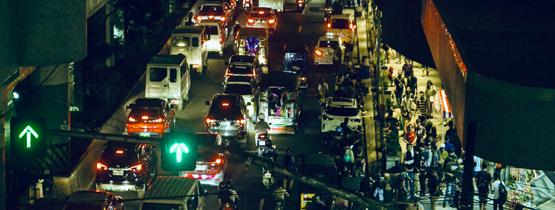
buses belching smoke, people sleeping on cardboard near the terminals, music leaking from open stores. For me, it is the place I call where the fallen angels gather to discuss their frustrations and stare at each other’s burning wings.
After a semester, B decided to become a full-time activist and organizer. He decided not to go home during long breaks. He was at his peak of militancy, and I was so happy and proud of him. The thing about activist commitment is that it takes a lot of courage and self-reflection to forego your class aspirations and choose to commit yourself and time to serving the basic Filipino masses, without any promise of career and future financial success. This vocation, as I like to call it, is often treated by the state as something vile and evil and met with threat, red-tagging, and even murder.
The days we used to spend together became fewer. Messages became shorter. Sometimes he would disappear for weeks because of organizing work in faraway
February 8 - 14, 2026
Words and images by Marky Ramone Go
Many of us were made to believe that the communities that lined the aging Philippine National Railways (PNR) tracks were nothing more than squatter settlements – clusters of improvised homes said to be occupied by people who stole steel from the rails themselves. There was a widely repeated story of a segment of track sawed off clean and halting the Manila-Bicol line years ago, and it became an easy picture for the way many of us viewed those who lived beside the railway as troublemakers, the batang riles drifters, or people who existed beyond the rules that governed everyone else.
Homes that once stood beside the tracks have become small manufacturing spaces, producing woven pamaypay (fan) made from buri or anahaw leaves, coconut shell crafts, baskets, and even blacksmith-made tools.
Beyond that, it is also a place where ingenuity has become a band-aid to an ongoing problem: a novelty ride that offers visitors a unique experience while serving as a daily lifeline for local commuters navigating the country’s neglected transportation system.
our story. B was my greatest consuming love. We did not have a good ending, but we do have a story worth recounting.
Every now and then, when I go to Cubao and wait in the long lines of commuters in Kamias bus station, as I brace hours of waiting to get home to the province, I do what he said. I look at the sky; at the stars if the sky is clear, and if fortunate enough, the moon. The buses come and go, people rush past me with bags and boxes, vendors bark out destinations, and the city continues without pause.
Somewhere in that noise, I remember him saying that even if distance comes between us and fate decides for us – at least we are staring at the same sky, even thousands of kilometers apart.
Sometimes I imagine him crossing another overpass somewhere, guiding someone else through another unfamiliar street or terrain.
Sometimes I imagine that I am still there beside him, hand in hand, walking above the traffic, unafraid.
It turns out that not all impressions exaggerated by movies and headlines accurately reflect the communities that exist along these old PNR tracks.
Over time, many of these neighborhoods have settled into ordinary, stable communities. In the town of Lopez in Quezon Province, the old railway corridor now reveals something else entirely: a hub of local craftsmanship.
Together with members of the Tourism Promotions Board Philippines (TPB), the marketing arm of the Department of Tourism, we set out to scout communities that could be included in the agency’s community-based tourism (CBT) program. Our journey took us to the old Philippine National Railways tracks in Lopez, where we got the chance to ride the region’s most unconventional form of transport: the so-called “skates.”
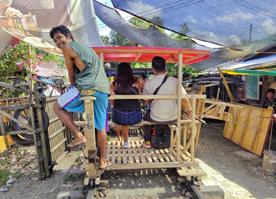
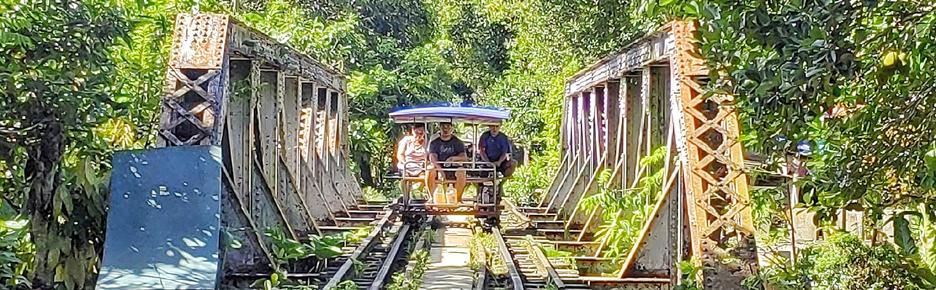
My first ride on a skate was a lesson in local initiative. Rather than letting the abandoned tracks fall into decay, residents had repurposed them into a makeshift railway for handbuilt trolleys. Constructed from wood, steel, and salvaged materials, these vehicles move along rusted rails, powered by pedals or by hand, their clattering wheels echoing across fields and small villages.
Sometimes jokingly referred to as “kits” or “bullet trains”, these trolleys carry school children, passengers, and market goods, following the same route once traversed by PNR trains. In communities long underserved by conventional public transport, the skates have become a practical grassroots solution, connecting
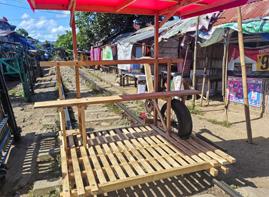
people to schools, markets, and neighboring towns, and sustaining daily life along a railway that has largely been left behind.

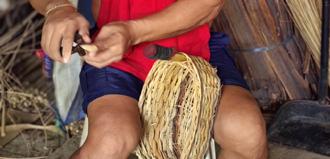

same tracks in Lopez, where the old PNR trails stretch across Quezon, we stumbled upon a handful of backyard industries or, more accurately, garage workshops. Men and women were weaving baskets, another group crafting anahaw fans, and just a few dozen meters away, a blacksmith forging knives and small swords in front of his home.
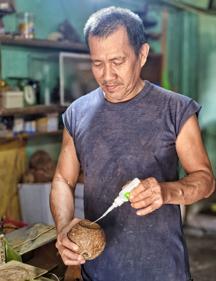
Amid these pockets of creativity, one workshop drew us to stay and observe longer than the rest. Its owner, Mang Jessie, was not just crafting objects; he was shaping stories from discarded materials, turning ordinary scraps into something extraordinary.
From Stroke Survivor to Skilled Artisan
During the long lockdown, when his small coconut store slowed, Jesus Abatayo, also known to his neighbors as Mang Jessie, began experimenting with husks and discarded coconut shells. “He just started shaping them into little things,” his wife, Avanceña, recalled. “Before we knew it, there were flowers, animals, even tiny houses,” she explained in Tagalog.
What began as a lockdown experiment grew into an unexpected livelihood. From coconut husks to smiling faces, animals and other objects, his pieces sell for a few hundred pesos and have become cherished fixtures in the community.
A stroke survivor for more than a decade, Abatayo has done more than carve out an income. In turning scraps into items of beauty, he has shown his neighbors that reinvention, like art, often grows from the most ordinary materials.

TOGETHER, THE CRAFTERS AND SKATE DRIVERS OF LOPEZ PROVE THAT CREATIVITY AND RESOURCEFULNESS ARE OFTEN HARNESSED BY LOCAL COMMUNITIES, DRIVEN BY INSTITUTIONAL NEGLECT IN BASIC SERVICES LIKE TRANSPORTATION AND LIVELIHOOD. THAT IT’S THIS STRONG NETWORK THAT MAKES THINGS WORK.
Words and images by
Karlo Lagman Sevilla III
One morning in the early ‘80s, while aboard my school trike from my house in Quezon City, Kuya July, the owner-driver of the vehicle, entered the dirt road that ran alongside the expansive rice field. I noticed a senior
Back then, carabaos grazed the field, and farmers wore straw hats, with bolos in their hands or sheathed in their holster belts. It is believed that this had been the rustic scene since the 1700s, when settlers from Marikina arrived and tilled the land in Krus na Ligas
We heard that Manong Farmer chased away trespassers with his raised bolo . Another deterrent was witnessing a carabao lunge at my female friend with its pointed horns one afternoon when our crew was walking along the dirt road. Fortunately, the incident left her startled but unscathed.
was true all along: “a dog barked and gave chase” and “we saw Manong Farmer running from his nipa hut, toward us with knife in hand.”
The last time I caught a glimpse of the rice field was in the middle of 2006 when my firstborn child was a few
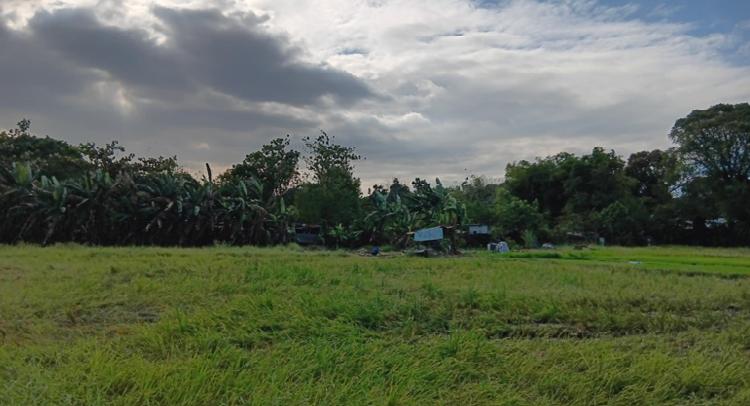
couple, both around 90 years old, engaged in a muted lovers’ quarrel near the paddy on the right. Walking in slow motion, lolo (grandpa) followed lola (grandma). But when the old man got near enough to reach out for his wife’s arm, she made a U-turn and kept walking away at snail’s pace. Lolo persistently followed suit at the same excruciatingly sluggish pace. “ Ano kaya ang tampo ni lola ?” (What could be grandma’s grievance against grandpa?) Kuya July asked teasingly.
But the story here isn’t about the couple, but the rice paddies.
Today, the existence of a rice field within the largest, most populated, and wealthiest city inside Metro Manila in the late 20 th century may sound farfetched, but there are actually two—and both are in my hometown, Quezon City. One is in Barangay Bagong Silangan , and the other one is located right inside UP Diliman. The latter is right beside where I lived for a decade, from 1983 to 1993, or from third grade to third year in college.
One windy afternoon when we were new residents and making friends with the neighbors, one father told my old man, “We’re lucky to be here, as it’s just like the countryside.”
While my friends and I grew up just next to the rice field, we were content playing only in the sandlot-cum-plaza, or among the six residential buildings that surrounded it in the compound of Sikatuna Bliss Phase 2. We knew that to enter the rice field was trespassing, and we feared the farmers as much as we deferred to the land they tilled for subsistence.
Still, as the popular saying goes, “ Masarap ang bawal .” (Pleasure lies in the forbidden.)
So, on another afternoon, my best friend Tristan and I dared to make a playground of the rice field. To quote a published poem of mine, we made “balance beams of the mounded boundaries”—not unlike aspiring gymnasts. Soon, we found out that the story about Manong Farmer
months old, having returned to Sikatuna Bliss a newly married man the previous year. That time, I stayed with my young family in a unit on the fourth floor where one could indulge in the panorama of the rice field. One end bordered our compound and sprawled southward for a kilometer up to the boundary of another residential area, Hardin ng Rosas (Garden of Roses).
Recently, the vast rice field has been drastically constricted and fragmented as more residential areas have sprung up. Before, it was unfenced; its breadth and beauty easily visible from the roads surrounding it. Now there are only three separate patches of rice paddies, about a hectare each, and only accessible via mazes of narrow roads and even narrower paths that cut through residences.
A pair lies near the Hardin ng Rosas while another lies alone close to Sikatuna Bliss and Pook Libis. Whereas before it was mainly one whole swath dedicated to growing rice, now there is a significantly smaller trio of plots scattered and separated by an expanse of wild grass and vegetable farms.
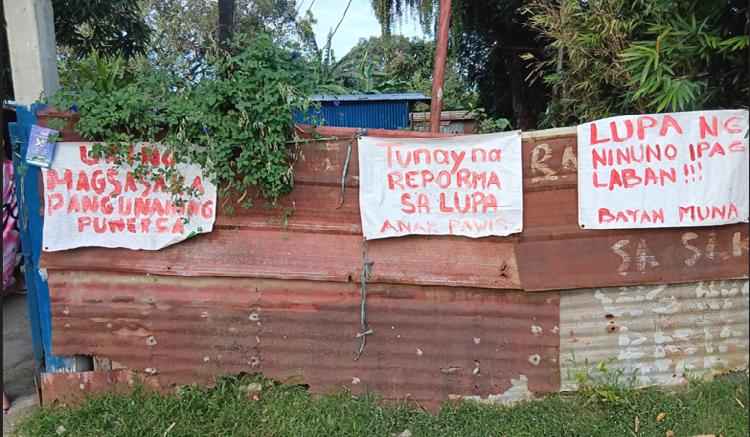
There appears to be a standing property conflict between the UP administration and the tillers of the formerly sweeping field, along with the other residents. When I visited the rice plot near Pook Libis on an afternoon two Sundays ago, I could hear the words of a speaker behind an old corrugated metal fence plastered with protest signs. I was an accidental witness to militant community organizers meeting with the locals, offering updates on the struggle to keep whatever is left of the land. Like the old lovers quarreling decades ago, they won’t stop raising their collective voice amid the tension of a growing metropolis and the countryside charm of the past.

*Tune into to the next issue for the answers!
Into This Week’s Crossword Puzzle
ACROSS
4. Non-metallic, cement-making material used in the controversial beach in Manila Bay
5. Historic landmark in Naga dedicated to the 15 Bicol martyrs executed during the Philippine Revolution
7. Dish in Quezon Province made with grated young coconut and river shrimp
8. 40-hectare off-road track cycling, trail running, and motor sports facility in Cavite
DOWN
1. Apex predator that’s also the Philippines’ national bird
2. City in Metro Manila where century-old rice paddies are found
3. Makeshift hand-built trolleys that ferries passengers on the PNR tracks in Lopez, Quezon Province
6. Capital of Negros Occidental
Happy
By Erwin Jesse Perea Aljas
I am revising the calendar in honor
Of the esteemed pessimist society

Whose president dwells just next door
Close to the last working hydrant of the city.
For that matter, allow me to prolong March
To instill readiness against any disaster
Regardless of color, age, or sex in church.
(The meek shall inherit the whip of the master!)
Instructions, as usual, begin in earnest – June.
There’s no grounds left for its displacement.
Lo! a day shall hold all Super-typhoon Bankrupt pre-nuptials and posh annulment.
Expect a chiller, more laidback January
For I’m lovingly omitting February.
Erwin Jesse is a 45-year-old freelance writer who lives with his last surviving parent (father). He is currently working on two novels in Tagalog for years now due to what he deems as lack of sufficient talent, skill, and money. Nevertheless, he sees himself attempting to finish what he started.


The Archipelago Press 02142026
We accept previously unpublished poems on place, migration/ movement, memory, and Filipino culture in English, Filipino, and other Philippine languages and dialects from Filipinos across the world. For non-English poems, please provide an English translation. Indicate your preferred byline (a pseudonym is fine).
Please submit just one (1) poem as a Word document or pasted in the body of your email to editorial@thearchipelagopress.com, with the email subject: Poetry: Your Name – Poem Title
Accepted poems will be paid 500 Php and featured in our weekly issue and our website.
If you don’t hear back from us within 30 days of submission, please give us a nudge.
preserved when the site was dug up, and are visible beneath the dining area floor.
Philippines, alongside Vigan, Iloilo, Cebu, and Manila.
I find it difficult to write about Naga City from a tourist’s perspective. While I’m no longer based there, it’s where I grew up. Novelty is always more exciting, and my hometown feels nondescript in its familiarity.
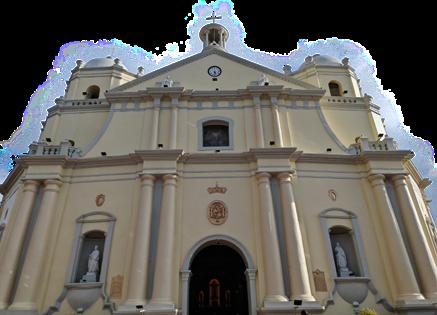
Most tourists start their Visita Iglesia tours with the Naga Cathedral to pay homage to Our Lady of Peñafrancia or Ina, the Patroness of Bicol, where thousands of pilgrims flock in September for the Peñafrancia Festival
Originally grey adobe, the church was painted black for a while but recently refreshed with a pastel yellow hue.
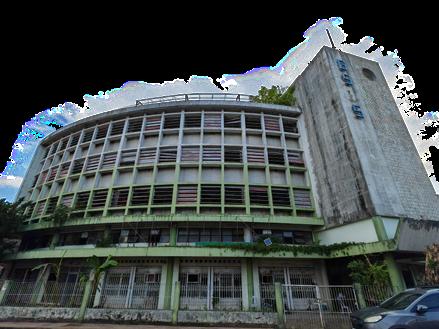
A few old houses like the former Sa Harong (Our House) barbecue joint still stand along the same street, though under a different name. Other structures are in various states of neglect. The Old GSIS Building a modernist structure built in the 1960s to the ‘70s, lies abandoned after its main office relocated — a waste given its prime location.
In Centro, along Peñafrancia Street, we pass by Quince Martires , a historic landmark
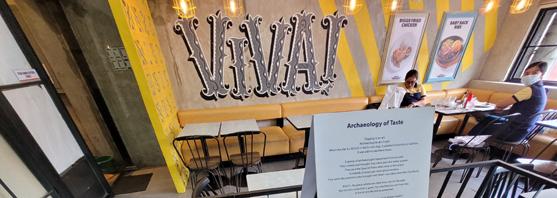
On a recent hometown visit, I joined my parents on a downtown Sunday stroll to work up an appetite for breakfast. I wanted to reacquaint myself with Naga’s old sights in the hopes of finding something new.
Originally founded in 1575 as Ciudad de Nueva Caceres, Naga City is one of the five
Along Barlin Street is a cozy branch of BIGG’s, my favorite childhood burger joint. Each visit, I order a cheeseburger, I’m left delighted that it tastes just like it did in the ‘80s. Formerly known as Mang Donald’s and Carl’s Diner before they rebranded, BIGG’s has boomed into a regional chain. Branches are ubiquitous, but the spot in Barlin offers a taste of history. Red bricks or , possibly Spanish-era tunnels, were unearthed and
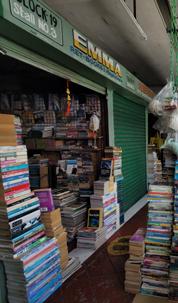
to buy raw pili in a shop selling local sweets and abaca products. The second floor is filled with a maze of ukay-ukay ( thrift shops), tailoring stalls, and dry goods.
I’m surprised to find secondhand books and magazines stacked ceilinghigh in one corner I never noticed before.
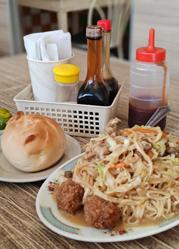
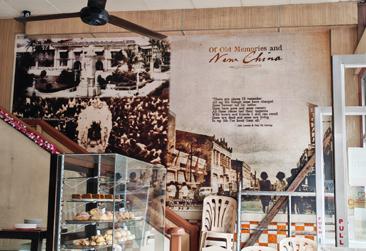
My main agenda was to revisit New China Restaurant one of Naga’s oldest dining spots. Established in 1943, this no-frills Chinese spot is a favorite among historians and writers. We ordered pancit which arrived heaping high on a steaming hot plate, and their signature siopao Sadly, they no longer serve Beehive Cake, which I used to love as a kid. The owner tells us that it’s hard to compete with the new aesthetic cafes and the preferences of younger diners. But they still get a lot of old-timers for pancit bread, and takeout.
occasionally held here – something I’d love to do on my next visit.
How I found love and myself on the trails
Words and images by Timothy Jay Ibay
When I was 16, I wrote a poem that got printed in a school publication. It was about unrequited love. I did not have the tiniest clue what love was. But I did listen to a lot of “Sunday Slowdown” on Magic 89.9.
From then on, my approach to future romantic relationships would be more, as 2025 would put it, nonchalant. I would pursue, love, and lose, without much of the profound entanglements Hollywood would like us to believe.
Almost three decades since I penned that poem, I still
At 19, I got my heart broken badly. As I got older, I would realize that particular heartbreak drove me to depressive episodes, because I was too attached to the idea of having someone.
I also did not have much else going on in my life.
can’t say I have a complete grasp of what love is. From my experience, “love” is almost always lost (or misguided) when you chase after it. I’ve also seen how love drives the underappreciated mother to care for her family unconditionally, in spite of
how entitled, bratty, and out of their own heads they can be.
That’s why I love the trails. Because it is mostly about being. Being able to stay on two wheels regardless of traction or terrain. Being able to master skills incrementally at your own pace. Being away from the noise and haze of people and responsibilities.
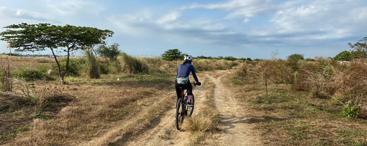
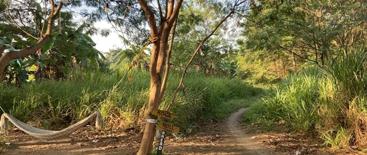
Whether it’s a post-work afternoon in a small community trail, such as the Victoria Bike Trail in Imus or a weekend morning in a commercial one like Arden Trails in Trece Martires , it always brings me profound joy when I can spend time riding these outdoor mediums for inner peace.
I was probably a month into discovering the joys of cycling.
The first time I took my girlfriend’s 2022 Giant ATX offroad, we were meandering around Dasmariñas before stumbling into a patch of dirt. It was love at first pedal stroke. I hadn’t felt that exhilarated at such slow speeds.
Shortly after, I would take her bike to Victoria Bike Trail
with no mountain bike riding experience. With hours of YouTube watch time under my belt, I pedaled across the trailhead. Before long, I would
dedicated to the 15 Bicol martyrs executed during the Philippine Revolution. Nearby is San Francisco Church , one of the city’s oldest churches. Vendors outside sell putong bagas a soft, chewy rice cake filled with bukayo (caramelized shredded coconut), perfect for a sweet fix.
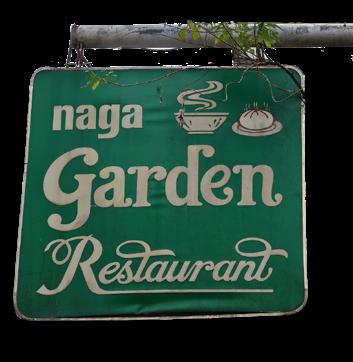
Crown Hotel one of Bicol’s longest operating hotels, sits across the plaza, while Naga Garden lies around the block. The classic carinderia pioneered toasted siopao a baked golden-brown bun filled with savory pork asado (or chicken) and a local merienda staple.
Dusty bodegas, old-fashioned bakeries, cobblers, and locksmith kiosks line the road leading to the Naga City People’s Mall, formerly Asia’s largest public market in the 1970s. We stopped
As we walked out, I noticed that the buildings occupied by drugstores and fast-food chains across the street date back to 1929 and 1930. The architectural details of the Socorro-Abella Building and nearby ones are barely noticeable behind the spaghetti wires, but the dates are clear.
Walking toward Plaza Rizal we pass Bichara Cinema, a movie theater established in 1923 that’s somehow still standing, although its entrance is blocked by lotto and gadget shops. I remember watching double features here back when hand-painted
Much needs to be done to revive Naga to its former glory. There’s a sense of history and soulful gems hiding in plain sight behind all the urban blight.
I HAVE SEEN HOW HISTORIC BUILDINGS IN OTHER CITIES HAVE BEEN RESTORED AFTER DECADES OF NEGLECT. HERITAGE SITES CAN BE ADAPTIVELY USED AND PRESERVED AS MUSEUMS, BOUTIQUE HOTELS, RESTAURANTS, AND ARTISTIC HUBS. I’M HOPEFUL FOR NAGA’S RENAISSANCE.
I may not have found anything new during my downtown
glimpse a sign that warned of a drop ahead. I did not know what that meant, exactly. As my ribs landed on the handlebar, I would learn that hitting features without any experience hurts. And it would hurt to laugh or cough for the next couple of months.
When the trails at Arden Botanical opened its gates, I fancied myself as an experienced XC mountain biker. At that point, if it didn’t involve massive jumps, I was confident I could ride my 2022 Trek Marlin 6 up, over, through, down, or around most trails.
intended to get eyeballs on Arden Botanical Estate —an ambitious (and astronomically expensive) 251-hectare botanical-themed township that aims to champion wellness and sustainability.
I’m not sure what their pursuit means for the future of real estate developments in Cavite, but I do know that having access to 15 kilometers of single track and a five-kilometer flat/MX track is an incredible blessing.
As I’ve wandered into midlife, I still can’t quite put my finger on a single truth that defines love. But I do know that I found myself on the trails. And I love this version of me.
Arden is massive compared to the small community trails I honed my skills on. The 40-hectare off-road track facility is designed as a hub for cycling, trail running, and various motor sports. It’s also
The ambivalence of Manila’s sunsets from an ecological and sunsetloving standpoint
I also feel this sunset spot is truly for everyone. Aside from the usual sight of couples, many office workers make their way here for some alone time, as well as students bantering and laughing as they sit next to each other on the seawall.
These legitimate issues notwithstanding, I understand why people keep coming here. It is a free and accessible public space where anyone can view the sunset for as long as they like. My reason is the same.
To me and to possibly many Filipinos, the Manila Bay sunset is scenery that never gets old. Its beauty is iconic to Manila and has been immortalized in photographs and artworks, including one painted by National Artist Fernando Amorsolo.
Anyone can watch the sunset anywhere from the Coastal Road to Roxas Boulevard.
I myself have done so while commuting. However, there are standout places where one can stay and savor the view
My favorite sunset spot is Seaside Boulevard in Pasay. I would sit – sometimes alone, sometimes with loved ones – on the long stretch of the seawall and watch the sky catch fire in vivid oranges before smoldering into blues and blacks by sundown. I found that if you walk far enough, you can find a place to sit even during the busy weekends.
I’ve found myself smiling when I see families with excited kids — and cats, too!
While the view is postcardperfect, there are undoubtedly reminders that this sunset is in a highly urbanized city fraught with development and environmental issues. Even with ongoing rehabilitation initiatives, trash lines the rocks, and occasionally, the wind carries a whiff of garbage.
Last year, I saw the previously unbroken horizon now marred with shadows of SM’s artificial islands reclamation project. The project has come under fire as it reportedly affects marine life, threatens fisherfolk’s livelihood, and poses a possible flooding hazard.
Of course, the irony of me sitting on a structure on reclaimed land while watching the sun dip into the now-obstructed horizon was not lost on me.
Sunset with a Backdrop at Harbor Square
To the right of the Cultural Center of the Philippines is Harbor Square, which also sits on reclaimed land. As the name suggests, boats, including yachts, are docked in the waters, and their shapes form a distinct backdrop for the sunset. Once twilight sets in and you set your sights to your right, buildings along the Roxas Boulevard stretch gradually light up.
Although there are restaurants along the baywalk, the best view of the sunset is still near
the edge. While it does not have as many visitors as the Seaside Boulevard seawall, I found bikers lingering, and locals engaged in hook-and-line fishing. I talked to a few and have so much respect for their patience in waiting for a catch amid the bay’s polluted waters.
Farther along Roxas Boulevard is a beach with seemingly white sand, but is, in fact, made of dolomite, a nonmetallic material used in making cement and other construction materials.
While the beach looks stunning, researchers and scientists have raised concerns on the effect of the dolomite particles on marine life, and its shore being a likely flood hazard.

Still, crowds flock here, mainly because Filipinos love white sand beaches. I chanced upon a photo of the beach overflowing with people during Holy Week. Curious, I visited it after attending a workshop at a nearby hotel. The shore looked like it was made of coarse white sand and crushed corals. It was good enough for a beach in the city, but it was still the stunning sunset that stole the show. We visitors either sat on the sand or on one of the beach’s driftwood logs while witnessing the sun vividly paint the sky. The next day, I watched from another angle: this time, with other onlookers from the overpass leading down to the beach, and it was every bit as beautiful. While the beauty of these places comes with the weight of real and heavy environmental issues, I understand why people keep coming here, myself included. In Metro Manila where we woefully lack free or affordable ‘third spaces’ to relax and spend time with our loved ones, these Manila Bay sunset spots serve as a respite. To me, watching sunsets from these spaces also means it is still possible to take comfort in Manila’s beauty amid its nuances and complexities.
I brought my 2021 dates to Mt Cloud to see what kind of books they gravitated toward. Talk about an on-thespot personality test.
Living in a tourist town that is also an education hub, I have learned to live with impermanence.
I wrote him a poem for his graduation.
On the other hand, going back to Pizza Volante along Session Road was a struggle like no other.
topped with generous heaps of vanilla ice cream.

Half of the people I meet on Session Road are only here for the weekend. Many of my college friends returned to their hometowns after graduation. Most of our old hangouts have shut down.
But coexisting with transience could not have prepared me for my first great heartbreak: the end of a five-year-long-distance relationship that began and ended with words on paper. We met as newspaper staffers in university. He broke up with me via a letter in 2020.
Getting jilted on a normal day is difficult enough. But it was in the thick of a global pandemic. I was stuck in the city where so much of our love story unfolded. And worse: all the bars were closed!
Still, I knew I had to regain my sense of self, even if it meant going piece by painful piece.
Every relationship is encoded in a language that is intricate and novel. Two human beings bring their quirks to the table— adding, deleting, and conflating elements until nothing on the table looks, sounds, or tastes the same as before.
My first serious relationship was
Because we were both artists, we became collaborators.
For a long time, I could not post my poetry unless it was accompanied by his artwork. I did not feel that my poems were beautiful enough without them.
TODAY, CONTINUE TO WRITE POETRY, GOOD AND BAD. MY FRIENDS AND I EVEN GO OUT FOR WRITING SESSIONS. I KEEP MAKING POEMS BECAUSE I KNOW THERE IS NO OTHER WAY TO IMPROVE. REJECTION EMAILS FROM JOURNALS STILL STING. BUT YEARS OF SENDING OUT MY WORK HAVE MADE ME REALIZE THAT REJECTION IS NO DEATH SENTENCE. FOUR YEARS AFTER THAT FATEFUL BREAKUP, LAUNCHED MY DEBUT POETRY CHAPBOOK AT MT CLOUD BOOKSHOP.
Of course, Mt Cloud Bookshop was one of our favorite places! What kind of Baguio artist couple would we have been otherwise?
Still, returning to Mt Cloud Bookshop was easy for me because I had memories of the place that weren’t bound to my ex. In fact,
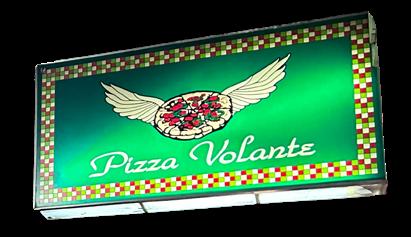

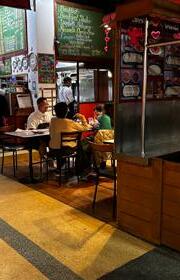
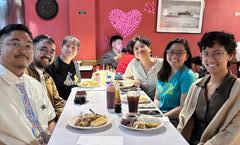
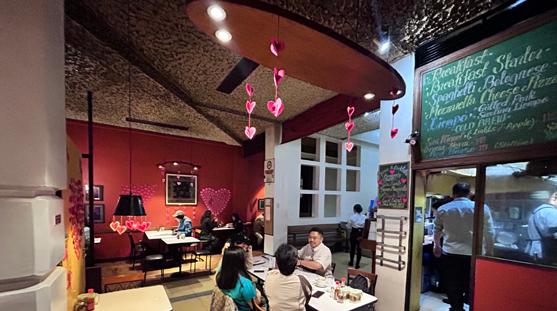
Volante had been many things to me – to us – in the last decade: an overnight station for school paper presswork, goto restaurant for dinner dates, and afterparty coffee house.
We loved Volante for its comfort and familiarity: the dim lights, red walls, and framed photos and art that seemed to never change across decades. The menu was budget-friendly, too.
To this day, a trip to Volante is always a trip down memory lane. I could sit at a secondfloor table by the window and find the same walls, plates, chairs, and view I saw in 2016. For a long time, that to me was the restaurant’s greatest virtue. Little did I know it would come back to bite me in the end.
The good news is that I survived. I’ve gone back to Volante for a fresh set of tasks, dinner dates, and coffee breaks with new groups of people I adore.
If I had to choose just one memorable food from my first serious relationship, it would be Volante’s Choco-Vanilla Affair, a delectable fusion of sweet and bitter, hot and cold. CVA, as the dessert’s fans call it, has a dark chocolate cupcake base
In every scoop of CVA, I remember everything. The sweetness and bitterness of love found and lost. The warmth and coolness of a city whose people and landscape are always shifting.
Now that I’m older, I understand.
With every hello comes a goodbye. Life evens itself out that way. More importantly, just because I’ve reached the last bite doesn’t mean I cannot savor the beginning and all the in-betweens.
After all, CVA is sweeter the second time around.




Anecdotes of a flirtingaverse travel cactus who is blissfully content in her own company, proving that solo travel can be its own kind of romance

Words and images by Christine Fernandez
I traveled to Bacolod, the capital of Negros Occidental, eager to eat my way through the city and savor the regional delights it’s known for – in particular, chicken inasal marinated in spices, grilled over charcoal, and enjoyed with rice drizzled with chicken oil. Pastry shops, too. I planned my days around meals and walks around different restaurants.
By early evening, with my stomach happily stuffed, it was time to take a break from eating and do something I’d long wanted to try: going to a bar alone for a nightcap. Back then, it felt like a small but deliberate experiment, one that I wouldn’t have done back home in Manila. I arrived early, before the crowd settled
in, grateful for the dimness that made it easy to disappear. I ordered a drink. I wouldn’t call it my go-to, but it felt like a fitting choice. I settled into my seat, drink in hand, content in the quiet.
A few minutes in, a friendly guy struck up a conversation. He meant no harm, but all I wanted was to be left alone to soak up the scenery. After a full day of food tripping, even my mouth needed a break. I smiled, responded politely, and gently dodged his attention. Annoyance began to rise, so I picked up the tab and called it a night. By the time I returned to my hotel before 10:00 PM, I was already snoring. The day’s indulgence put me to sleep faster than that single bottle of alcohol ever could.
Traveling alone has taught me how much I valued moments like these: sitting peacefully in a corner without an agenda, noticing small details others might miss like how the light from a lamp can tint a stranger’s face an extraterrestrial shade or how glasses catch the room’s glow.
SOLO TRAVEL WASN’T BETTER THAN TRAVELING WITH FRIENDS OR A ROMANTIC PARTNER; IT WAS SIMPLY ANOTHER WAY OF MOVING THROUGH SPACE. IN MY TRIPS, I BEGAN TO UNDERSTAND THAT THE FEELINGS WE OFTEN CALL ROMANCE –ATTENTION, DELIGHT, AND INTIMACY – CAN ALSO EXIST IN A DESTINATION OR AN EXPERIENCE.
Sometimes, it appears in the way flowers bloom or how the sun’s rays make the forest glow. It is not meant to replace human connection, but exists as its own kind of enchantment.
Accepting that flirting isn’t what revs my engine, I’m able to enjoy the moment entirely on my own terms.
Then there was Baguio, supposedly one of the most romantic places in the country with its cool, cuddle-weather. I was again with a friend, and what unfolded was a comedic tragedy of unrequited attraction: misread signals, poor timing, and feelings that never quite aligned. Looking back, it was perfectly entertaining in its own chaotic way, buckets of broken-hearted tears included.
I could lean into those moments, chase them, and turn them into something more. But these days, I find myself drawn to a different kind of sweetness: ripe fruits, quiet walks, good chocolate enjoyed slowly. Traveling alone has taught me that romance doesn’t always announce itself through another person. Sometimes, it’s simply the pleasure of being fully present, savoring the places you’re in or the food on your plate, and knowing
Of course, there were times when romance brushed past me unexpectedly. In Donsol, Sorsogon, a female friend and I stayed in adjoining huts separated by thin walls. Our neighbor was a dangerously charming Frenchman with a generous amount of chest hair and an accent that did most of the work for him. When he casually said, “I was waiting for you,” we melted, briefly. Nothing came of it. And that’s part of the charm, enjoyed exactly for what it was.





The Archipelago Press
Address: 630 1st Avenue, PMB, 318, San Diego California, USA 92101
Phone number: +6195191063
Email: info@thearchipelagopress.com
Website: www.thearchipelagopress.com
Social media: www.facebook.com/thearchipelagopress https://www.instagram.com/thearchipelagopress https://www.tiktok.com/@thearchipelagopress https://x.com/TheArchipelagoP https://www.youtube.com/thearchipelagopress