
Transportive stories by island-born hands, across shores
Transportive stories by island-born hands, across shores
A closer look at the wagwagan trade in Baguio City, its enduring popularity and recent hitches, as narrated by ukay-ukay suppliers and sellers
Words and images by
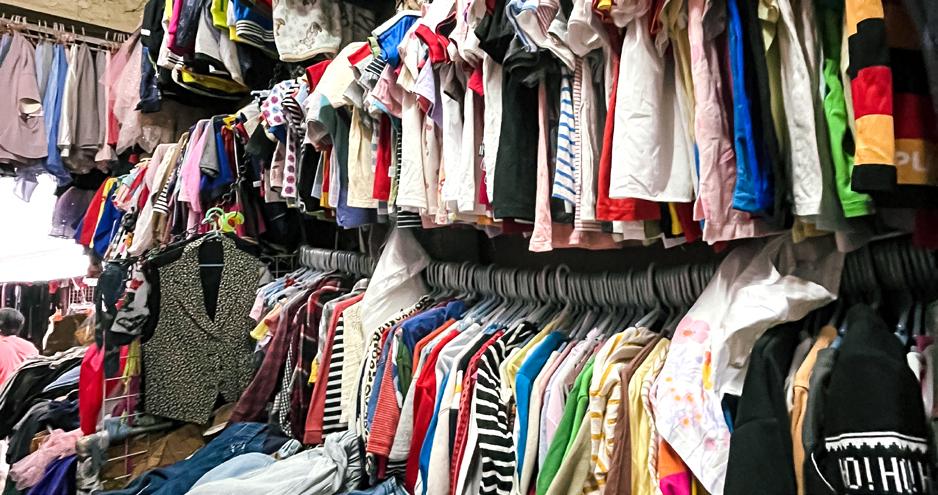
Cordillerans sporting original Levi’s jeans, Merrell shoes, and The North Face backpacks have given rise to the meme “Walking 10k.” Explanations for this trend range from our preference for durable, practical clothing and jokes about big paydays from
“hitting the jackpot” in the mines or vegetable trade.
I found another explanation hiding in plain sight when I visited wagwag (synonymous with “ ukay-ukay ”) suppliers and sellers in Campo Filipino, Kayang Street, and Hilltop: Baguio is a hub for affordable secondhand clothes.
I dare say scoring a “branded” secondhand shirt for cheap at Skyworld or the Night Market is a universal
An exploration of underrated spots in Quezon City neighborhoods
Words and images by Kara
Santos
I enjoy visiting random neighborhoods during solo microadventure rides. Exploring unfamiliar territory and spending time in familiar places can offer the same taste as any form of travel.
Lately, I find myself drawn to hunting down hidden cafes, vintage shops, old restaurants,
and anywhere I can get affordable and tasty eats outside of my neighborhood. I explored the streets surrounding Kamuning and Kamias , old neighborhoods in Quezon City that aren’t places tourists typically go out of their way to visit.
experience—a moment of pure thrill. But where do these great bargains come from?
THE WAGWAG SELLERS I INTERVIEWED GET THEIR BOXES OR BALES FROM HONG KONG, KOREA, AND JAPAN. SOME ALSO OBTAIN SUPPLIES FROM CANADA, THE US, OR AUSTRALIA.
Baguio professor Ma. Rina Locsin-Afable traced the origins of the Baguio wagwag industry to OFWs in Hong Kong sorting and packing assorted items into balikbayan boxes.
... CONTINUED ON PAGE 2
Kamuning Road was named after the fragrant Kamuning tree, also known as orange jasmine or Chinese box tree. Kamias was named after a native tree that bears small, sour, cucumber-like fruits.
... CONTINUED ON PAGE 3

10 11 9 8 7 5 4 3 2 6
Letter from the Editorial Team Culture & Heritage
» “Walking 10K” and Cordilleran Diskarte in the Baguio Wagwagan
Destinations
» Microadventure: Kamuning + Kamias
Outdoors
» Samar’s Ulot River: From Illegal Logging Channel to an Adventure Tourism Site
Destinations
» Traveling from Manila to Bohol: The Hard Way
Insights
» Waiting at Sea: Reflections on Inter-Island Travel in the Philippines
Entertainment
» Crossword Puzzle
» Editorial Cartoon
» Poetry: Matinal Haul
Insights
» The Problem with Domestic Travel Isn’t a Lack of Beauty
Insights
» Traveling Solo, Together
Destinations
» For the Love of Sweets: Negros Occidental’s Sugary Confections and Their Not-So-Sweet History
Events
» The Anatomy of Fish: Pasidayaw Festival in Baler


February 15 - 22, 2026
• (of a person) pull or drag with effort or force. (of a vehicle) pull an attached trailer or load behind it. noun a distance to be traversed
In this issue, we move from the physical act of hauling in the streets of Baguio – where both locals and visitors participate in wagwag to find preloved gems – and Quezon City to explore neighborhood treasure troves; toward shoveling deeper into the emotional, intellectual, and social impacts of existing systems and histories.
The succeeding pages offer the realities of long-haul travels through stories – both personal and with strangers – then take a jab at the chronic, systemic problems plaguing Philippine tourism, before digging into two heartfelt anatomies: the anatomy of friendship, and the anatomy of pasida – to shrink one’s portion to share with others – to show us that to travel is to haul. That we are all intertwined in this act of hauling, for it is, in Filipino communities, all about generosity and care rather than consumption.
Jiaryl and Fatima Mamalacpac’s mother was a packer in Hong Kong in the 1990s before opening her own wagwagan along Harrison Road Seemingly inheriting their mother’s business sense and passion for wagwag the siblings now manage two bodegas of ukay-ukay bales in Baguio.
“ Indakkelan mi ti wagwag
(We grew up with wagwag ),” Fatima shared. She said she remembers wearing preloved clothes as a child. “Ang brand new kasi madaling masira Ang ukay nagtatagal (Brand new clothes get damaged quickly. Ukay clothes last.)”
Kayang Street is lined with Cordilleran-owned shops.
Hailing from Ifugao, Kayang wagwagan owner Auntie
Trinidad (not her real name) also used to be an OFW in Hong Kong but only opened a wagwag stall when she returned to the Philippines for good in 1997. As a single mom to three kids, she tried her luck at wagwag because it was a popular business at the time.
Auntie Trinidad gathers with her fellow stall owners at 3:00 pm to share coffee and bread.
(By sheer luck, the lady who brought them coffee was Auntie Mina, who used to be my mom’s suki for hot water.)
Locsin-Afable’s study identified the public market as the genesis point of the local ukay trade, specifically Kayang, Hilltop, and Hangar.
To me, Kayang Street represents the OG wagwagan boxes filled with clothing, ready to be dug into (hence “ ukay, ” from “ hukay ” or to dig up). My aunts used to
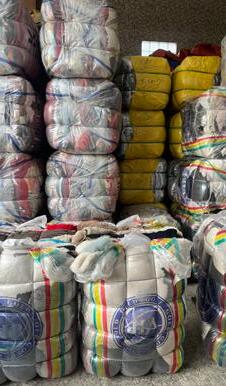
have stalls here. It’s also where my mom used to buy my black shoes for school.
At Block 4 Hilltop , wagwagan owners Geofrey and Rose Molina said they shifted to the dry goods business 15 years ago because the products were non-perishable and sustainable, financially and otherwise. “ Walang tapon, kasi ‘yung hindi nabebentang jacket, bibilhin ng mga gumagawa ng pamunas at rug. (We don’t throw away anything because unsold jackets are bought by makers of wiping rags and rugs.),” Geofrey explained.
Across generations and around the world, secondhand items have gained immense popularity due to their low price and high quality, especially compared to clothes from online stores and malls. Younger ukay lovers also
Editorial Team
Severino Profeta Reyes FOUNDING EDITOR
Allandale Antenero FOUNDING TRAVEL WRITER
Gretchen Filart MANAGING EDITOR
Maia Imperial EDITORIAL DESIGNER
Carmelo Perlas EDITORIAL CARTOONIST


prefer shopping “vintage” over fast fashion brands. Besides, who doesn’t have horror stories of ordering clothes online only to receive items in a different fabric, color, or quality?
In Baguio, locals are still the top ukay customers, but sales have dropped since the advent of online shopping. Geofrey also said they compete with weekly trade fairs, aside from prominent wagwagans in the city center. Meanwhile, Auntie Trinidad lamented that barangays now have their own secondhand stores.
So, what’s next for Baguio’s wagwagans ?
None of the sellers I interviewed are thinking about closing shop soon. As they said, clothing is also a basic necessity. But the wagwagan owners of Block 4 and Kayang would love to have more customers –
tourists and locals alike.
After all, wagwagans are the number one place to get “legit” or “signature” and quality clothing for less.
Geofrey disapproves of the Walking 10K meme because he thinks it should be “Walking 100K” if you add up the Chanel or Louis Vuitton bags. Wagwagan s sell original pieces for 20,000 to 30,000 Php. Once cleaned, these bags are as good as new. He said they’d look no different from bags purchased from the distributor.
What’s more, you can check wagwag pieces for stains and holes before you buy them. You can even try them on. The goods are cheap, but the quality is top-notch.
“ Bibigyan namin ng rason ang customer na bumalik-balik (We’ll give our customers reasons to come back),” Geofrey summed it up.
CONTRIBUTING WRITERS
Benj Gabun Sumabat
Christian Sangoyo
Christine Fernandez
Gelyka Ruth Dumaraos
Heather Ann Pulido
Kara Santos
Marky Ramone Go
Prince Marlo D. Montadas (Poetry)
Rhea Claire Madarang Ron Cruz
CONTRIBUTING PHOTOGRAPHERS
Ramir Cambiado
Provincial Government of Aurora
GOT QUESTIONS OR SUGGESTIONS?
Email us at:
editorial@thearchipelagopress.com
Theopinionsandstatements expressedinthispublicationare thoseoftheauthorsanddonot necessarilyreflecttheviewsofthe editorsorTheArchipelagoPress.
Theinformationcontainedherein isforinformationalpurposes only.Whileeveryeffortismadeto ensureaccuracy,TheArchipelago Pressassumesnoliabilityorresponsibilityforanyerrors,omissions,oranyactionstakenbased ontheinformationprovided.
Nopartofthispublicationmay bereproduced,distributed,or transmittedinanyformorbyany meanswithoutthepriorwritten permissionofthepublisher.
©2026TheArchipelagoPress. Allrightsreserved.
His friendly advice for buyers? If a supposedly “branded” piece of clothing costs peanuts, that’s a red flag. A discerning ukay goer can find gold from a box if they shop with care, experience, and loads of patience. After all, to wagwag (Ilokano) means to dust off by shaking.
Continued from front page
Both were said to be abundant in the area in the 1940s when it was still being developed. Sadly, the urban sprawl and concrete structures are now more prominent than any greenery.
Yet, the residential areas hide many antique shops, a unique market, and notable cafes worth exploring. Here are just a few notable spots to check out.
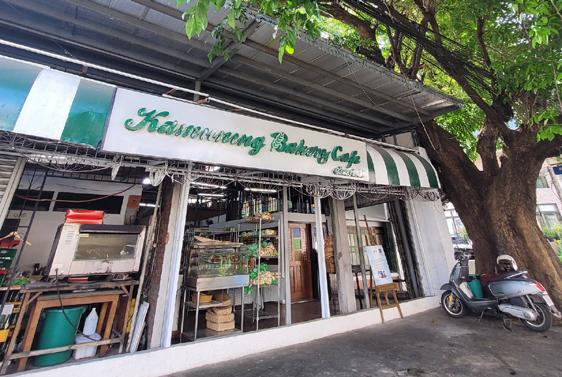
One of the city’s pioneering bakeries, Kamuning Bakery Cafe has survived a war, was razed by a fire, and managed to power through the pandemic, which forced many businesses to close.
The enduring bakery was originally founded in 1939 by Leticia “Letty” Bonifacio Javier upon the invitation of newspaper publisher and QC founder Alejandro Roces in the newly established Quezon City. It was later acquired and revived by writer and entrepreneur Wilson Flores.
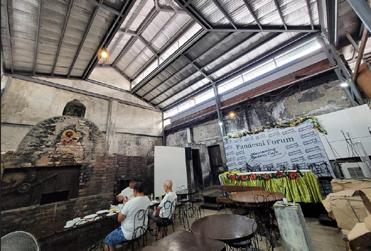
In 2018, a neighboring establishment’s fire damaged much of the bakery cafe except for two pugon brick ovens, the old narra tree, walls, and facade. Still, they continued to bake in a small townhouse nearby and sell bread on the sidewalk outside the ruins. With the resumption of normal operations, the bakery frequently hosts “Pandesal Forums” and press conferences in the al fresco area where fire-damaged pugon ovens can be seen.
Swing by for pan de suelo , pan de regla pandesal, pastries, and cakes, or stop for a meal while reading the daily newspaper. A small dine-in area next to the bakery offers breakfast meals, sandwiches, and short orders. You can’t go wrong with their egg pie (Php 50 per slice) and coffee, or their hefty silog meals starting at Php 165.
The Kamuning Textile Market is a newly opened fourstory building with over a hundred stalls, a showroom,
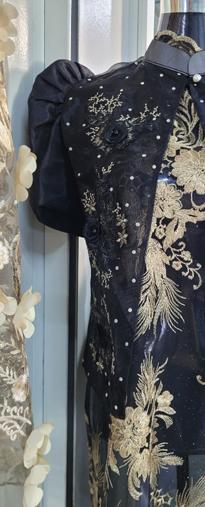
a multi-purpose hall, and modern amenities, including working elevators and wheelchair ramps (unexpected finds in a market!).
Shop for textiles and modern Filipiniana attire for weddings and formal events made at

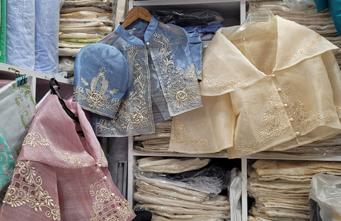
this mall alternative. The whole area offers affordable, custom-made formal wear, including gowns, Filipiniana, suits, and barongs Find a wide variety of fabrics for sale, including barong material and local weaves, alongside custom tailoring, dressmaking, and alteration services.
Note, though, that not all textiles are locally made. Some weaves are possibly printed fabrics from foreign countries, which could impact the livelihood of traditional weavers from indigenous communities. Be sure to ask where they’re sourced before buying!
Ka Muning - Halo Halo
For a sweet fix, head to Ka Muning’s Halo-Halo Cafe & Restaurant a home-turned-cafe that specializes in the popular Pinoy dessert with a twist. They serve regular Halo-Halo Overload (Php 179) and variations topped with avocado, langka (jackfruit), pastillas (milk candy) , and more.
Ka Muning’s also offers other snacks and familystyle Filipino and dishes for lunch or dinner.
Northwest Estate and Collectibles
Loads of shops selling antique furniture, vintage fixtures, and home decor can be found in the area, catering to collectors and fans of all things analog.
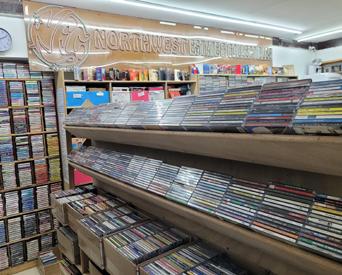
One gem sits on a quiet corner of East Kamias: Northwest Estate and Collectibles (NEC)
This treasure trove for music lovers has a massive selection of vintage vinyl records, CDs, cassettes, toys, comic books, and pop culture memorabilia. Founded by Jose “Jong” Camino, the shop originated from an eBay store (“postalwax”) in 1999. Aside from selling items, they also buy old records, tapes, and CDs for those who want to pass on their collections.

It’s easy to overlook the humble streets of Kamuning and Kamias, but simple explorations can bring a sense of satisfaction and novelty. Sometimes travel doesn’t need to involve grand plans to exotic destinations. You just need the right mindset to discover something new closer to home.
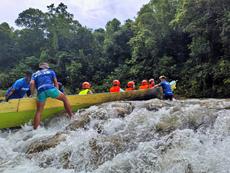
This 10-kilometer TORPEDO ride takes you through rapids surrounded by verdant forests and limestone karsts.
by the TORPEDO team at a new tourism center with briefing and bathing facilities.
After a 15-minute orientation on river safety, we donned helmets and life vests and boarded the torpedo-shaped boats in groups of four.
Cutting through Samar’s mountains from east to west, the 90-kilometer Ulot River the longest in the province, is a sight to behold. Surrounded by verdant forests and limestone karsts, clear cascading waters flow through an area rich in cave systems, including the Langun-Gobingob Cave considered the largest in the Philippines. Once a distribution channel for illegal logging, the Ulot River has now emerged as a thrilling adventure tourism destination.
Though the river passes through several towns, the tourism jump-off point for activities like the TORPEDO (Tenani Boat Operators for River Protection and Environmental Development Organization) ride is in Paranas. From Tacloban, our journey took
A River with a Shadowy Past
In the 1970s, the forests of Samar were prime targets for illegal loggers, and the Ulot River served as a strategic channel for transporting felled trees. The illicit trade persisted until 2003, when the Samar Island Natural Park (SINP)—the Philippines’ largest national park—was established, encompassing the entire river and surrounding forests.
Post-SINP, local stakeholders— including Samar’s LGU, the Department of Environment and Natural Resources (DENR), the Department of

almost two hours along a bumpy highway, but the scenery made the trip worthwhile.
We arrived shortly after 7:00 AM and were welcomed
Tourism (DOT), and NGOs such as ABS-CBN’s LingkodKapamilya—worked to develop sustainable tourism and conservation-based livelihoods.
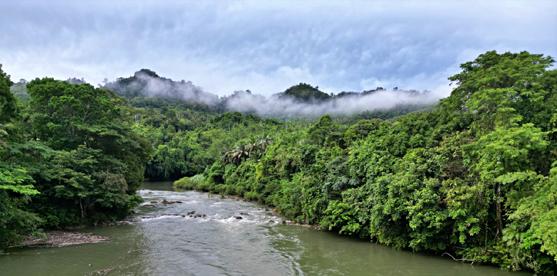

In 2008, TORPEDO began operations, using the same torpedo-shaped boats once employed to transport logs. Built without outriggers, the boats slither past boulders with ease, offering an experience reminiscent of white-water rafting in Cagayan de Oro. Today, a 10-kilometer TORPEDO ride takes an hour downstream and another hour upstream.
Complementing this, the Tenani Association for Women and Development (TAWAD) manages hiking trails, waterfalls, and birding sites in SINP’s 333,000-hectare oldgrowth forest, home to over 210 bird species and a thousand plant and animal species.
A few Decembers ago, just before Christmas, I was told that the Tourism Promotions Board (TPB) gifted TORPEDO members 10 motorboat engines after a community-based tourism workshop. The engines allowed for more rides postpandemic to accommodate growing tourist interest.
Even with previous whitewater rafting experience in Cagayan de Oro and Davao, I felt a thrill boarding our torpedo. Unlike rafting, the boat is engine-powered, letting you fully immerse yourself in the scenery while holding on or snapping photos.
We navigated gentle rapids at first, which grew wilder along the 10-kilometer downstream course. By the halfway point
at Deni’s Point, huge boulders offered cliff-diving thrills. From a 12-foot height, we leaped into the current, drifting 60 meters downstream before climbing a rope to repeat the jump.
The return upstream allowed for a calmer appreciation of the river’s lush banks.
Learning the Ulot River’s transformation—from a logging conduit to a locally managed adventure hub— added depth to the experience.
From overnight caving in Langun-Gobingob Cave to exploring Sohoton Natural Park and countless waterfalls, the TORPEDO ride complements Samar’s growing adventure offerings. Travelers seeking thrilling yet scenic experiences should never overlook this province.

How days unfold pretty quickly during a three-day slow sail to
leisurely roll your luggage on; only narrow, retractable steel stairways. Your massive luggage? You physically carry it up. We had two. Not exactly a fun thing to do.
into four parts—two doubledeck beds installed in each quarter. It is clean but cramped. I can’t even sit on the bed without my head bumping the guest above.
We could have easily gone to the airport, flown on an airplane, and arrived in Bohol in an hour and a half. But no, we had to board a RORO ship and sail for three full days from Manila to Tagbilaran City.
My wife and I have visited Bohol countless times, but
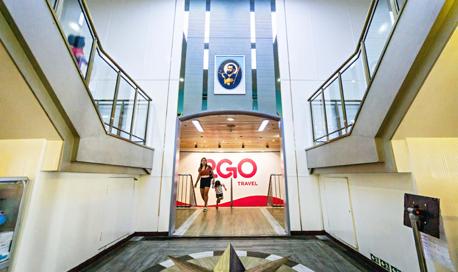
While waiting for our cabin assignment, we explored a bit. The lobby was colorfully decorated with Philippine imagery without being too garish. A wellstocked convenience store sits on the left. Next to it is a Catholic chapel, and a beauty salon to its right.

our toddler has never been. With no booked trips for the summer, we thought: why not take a RORO instead?
Our journey started early in the evening at Manila North Harbor’s Pier 4 in Tondo. We were actually surprised at how modern the passenger terminal was, though it was still lacking a few essential things—like a better queuing system and air conditioning. It was sweltering hot in Manila even during the evening.
An hour later, we were boarding the massive white and pink ship bound for Tagbilaran City, Bohol’s capital. There are no slightly inclined ramps for you to
Further ahead was the ship’s dining hall, featuring a stylish café booth and a cafeteria serving meals for standardclass passengers. Premium passengers had access to a separate dining room. A stage in front hosted nightly performances for everyone.
I have been to a number of RORO and cruise ships before, and this one was actually impressive. It’s not your typical utilitarian RORO boat. It exudes a mini-cruise ship feel sans the grandiosity. After all, it is still smaller than your typical cruise ship.
We were soon herded to our cabin, which was a windowless tourist-class room subdivided
There were no charging stations, and no lockers to secure our belongings in. As we don’t plan to spend three full days inside this cabin, unable to roam around for fear of losing our luggage, we decided on an upgrade and were lucky to have found a vacant stateroom—a hotel-sized cabin.
While it needs a bit of freshening up, the room is nonetheless fitted with two comfortable double beds, a flatscreen TV, a mini-fridge, a closet, a workstation, power outlets, and most importantly—an en suite toilet and bath with a bidet and hot water. It also has a window—which opens to the ship’s bow, giving us a frontand-center view as we sail.
Now, we’re talking.
Soon after depositing our bags, we enjoyed cans of beer with other passengers at the mess hall while a band played favorite Pinoy oldies tunes (think Aegis and Air Supply).
The next day we found ourselves at the exclusive dining room enjoying one of the best tapsilog we’ve had in years - a privilege that came with the room - as we watched the ship dock at the port of Batangas.
The ship began sailing again as we headed to the top deck, watching the massive Mother of All Asia statue recede into the horizon as we departed the waters of Verde Island and pushed toward the heart of the Philippines: Marinduque.

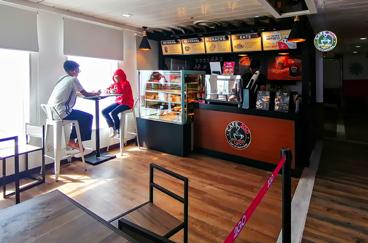
The midday summer sun covered the deck. We took shelter at the mess hall, entertained by guests singing on the videoke jukebox, as Kid A played with his toys on the table. The halls soon filled up with people, and before we knew it, it was time to dine again.
That afternoon, we watched as the ship sailed past Romblon’s islands. We’re again at the top deck, enjoying cans of beer— all readily available at the convenience store—the breeze, and the sunset, and waiting
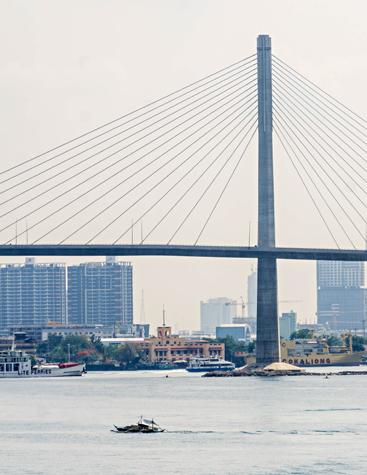
for the twilight to set in. Dinner, sleep, and breakfast came. We’re now in Cebu, with the ship cruising underneath the famed Cordova Bridge. We can’t believe we’re already on the last day of our voyage.
What we first thought would be a tedious threeday sail turned out to be a fun, pleasurable experience. Our third day of traveling came too fast. The islands of Bohol came into view far too soon. And we didn’t want to disembark just yet.
Musings and encounters on sea travel and how it can be a test of survival
Island crossings in this archipelago bring mixed emotions. On one hand, it is romantic and cinematic: the salty wind against your face, the sun setting from a distance, the islands growing and disappearing on the horizon, the strangers sharing the same destination.
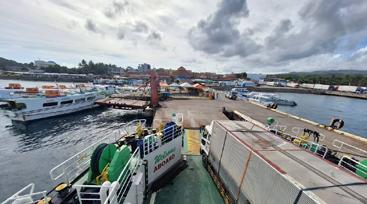
crumpled in one’s pocket, delayed departures with no definite schedules, and hours and hours of waiting under the scorching heat of the sun. The sound of children screaming, bored and hungry, walking alongside senior citizens, and PWDs on tiny metal ramps, next to roaring 10-wheeler trucks. The sight of exhausted cargo and bus drivers, trying to catch some sleep in makeshift hammocks and on carton boxes, or buying overpriced cup noodles and instant coffee from the


Then, there’s the reality: long lines, faulty ticketing systems, and confusing booths; terminals with surprisingly hefty fees, uncomfortable and poorly ventilated waiting areas, and toilets with damaged doors and leaking faucets. Tickets and papers stapled and
ship’s canteen. Passengers all desperate to go home or reach their destination. Ferry staff, albeit tired and exhausted, fulfill their duties night and day in wornout uniforms, with much
patience and understanding for irate passengers.
In the Philippines, you endure all of these before the boat even leaves the shore.
Why does sea travel feel like it’s just in survival mode, stalled and stuck, in a country with over 7,000 islands? In an era of automation and connectivity, why do systems fail and processes remain outdated?
Stories at Sea
If there’s one thing I’ve come to appreciate from all the ferry rides we took, it’s that they have a way of grounding you.
In those hours waiting for the next boarding call, I often found myself reflecting on what I have, simply because there was nothing else to do but wait. I looked at my wornout boots, and it made me reflect on how far they carried me. My handy, crocheted coffee cup held countless cups on the road that saved me from freaking out.
The strangers we meet, too, carry stories, wisdom, kindness, and inspiration that I consider a gift, a privilege to receive.
I saw life from the perspective of fellow passengers. I would see families with little ones in tow, carrying heavy bags as if their lives depended on it. Some would run to the best seats with the most spacious legroom, then bring out their baon rice, adobo and boiled eggs in old ice cream tubs. I’d see individuals video calling their loved ones, assuring them they’d arrive very soon, beside them a box of donuts or a can of biscuits for pasalubong
In Roxas Port in Mindoro, we met a man with a physical
disability, with his own loop on a custom tricycle, headed to Iloilo, telling us no disability can prevent him from conquering the Philippines.
remain patient despite discomfort. How strangers help without hesitation. How everyone works hard, sacrifices, and plays fair. And how journeys become more meaningful than destinations.

A fellow passenger, who’s travelling with a couple of sacks tied on the back of his motorcycle, shared quick insider tips on how to tell if a sack of rice is genuine dinorado or when distributors mix cheap rice to deceive buyers. It was a brief chat that left us with new knowledge we wouldn’t have discovered elsewhere, except for that fleeting moment as the ferry began to roll off.
Onboard a ferry to Allen, Samar, another passenger from General Santos City offered suggestions on where to eat the best tuna dishes (fast forward to our arrival, we followed his suggestion— no regrets!). Asking a stranger in Calapan helped us catch a ferry just in time, saving us hours of waiting.
He’s truly heaven-sent—an angel on the road (or at sea).
Inter-island travel in the Philippines is, at its core, deeply human. Because it is in waiting that we notice things: How people

Still, it can also be sometimes frustrating and exhausting and often inefficient.
Looking through the lens of a regular passenger during our Philippine loop, which included six ferry trips and 12 seaports, we saw this frustration firsthand. It’s a good glimpse of how tough life is for everyday folk. And how much we all deserve better transportation and tourism services.
The indomitable Filipino spirit is never an excuse for inaction. We should all still aspire for a better sea transport system—the kind that Filipino travelers deserve, not the “ pwede na ” band-aid solutions. We deserve efficient schedules. Comfortable terminals. Dignified facilities. We are not aspiring for luxury here; just dignity.
Until then, we wait. And we share our stories.

*Tune into to the next issue for the answers!
Matinal Haul by Prince Marlo D. Montadas

I visited my mother’s place and felt not far from being a foreigner; the leaves of the flame tree still burn up front, like the sun in a dry afternoon near
its imbedding. The panorama of the shore should appear as what is left after the touch of King Midas—aurate A pump boat scrapes the gold leaf sheets, chugging to the shore from fishing; may the fisherman return home with a bountiful catch, I hoped.
The morning came. Soon it occurred to me, like the first light leaking on the horizon.
We welcomed it in contrary fashions; morning to me was the birthing of lights, but to these lovely people, morning was the period of homecoming, where they await the hums of the motherly pump boat,
carrying an abundant haul of fish, mostly milkfish; and everyone heaved the boat, then all the fish began to fly.
Prince Marlo D. Montadas is a Butuanon writer and licensed professional teacher based in Butuan City. His works have appeared in San Anselmo Publications, Voice & Verse Poetry Magazine, Cha: An Asian Literary Journal, and Dagmay Journal. His poetry collection, A Letter from a Prostitute and Other Poems was self-published in January 2026.

Into This Week’s Crossword Puzzle
ACROSS
4. A festival in Baler that means the act of sharing food and to honor and praise
5. Name of an old neighborhood in Quezon City; also a native tree that bears small, sour, cucumber-like fruits
6. Boat ride in Paranas, Samar that takes visitors through 10-kilometer rapids
8. The capital of Bohol
DOWN
1. The Philippines’ largest sugar producer
2. Seasonal migrant workers in haciendas enduring intense manual labor and low wages
3. Also known as ukay-ukay (selling of pre-loved clothing) in Baguio
7. Longest river in Samar at 90 kilometers; used to be an illegal logging route

The Archipelago Press 02212026
We accept previously unpublished poems on place, migration, movement, memory, and Filipino culture in English, Filipino, and other Philippine languages and dialects from Filipinos across the world. For non-English poems, please provide an English translation. Indicate your preferred byline (a pseudonym is fine).
Please submit just one (1) poem as a Word document or pasted in the body of your email to editorial@thearchipelagopress.com, with the email subject: Poetry: Your Name – Poem Title
Accepted poems will be paid 500 Php and featured in our weekly issue and our website.
If you don’t hear back from us within 30 days of submission, please give us a nudge.
cost more than leaving the country entirely, as if a handful of drone shots justify financial ruin. Hotel rates have climbed to aspirational levels, charging five-star prices
for bare-minimum amenities: erratic water pressure, a towel thirsty for fabric conditioner, and protocols that treat inconvenience as cultural nuance.
Value for money is not about being cheap; it’s about feeling respected. And nothing signals disrespect quite like paying premium rates for mediocrity delivered with confidence.
Want the really good ones?
Then prepare to brutalize your platinum credit cards.
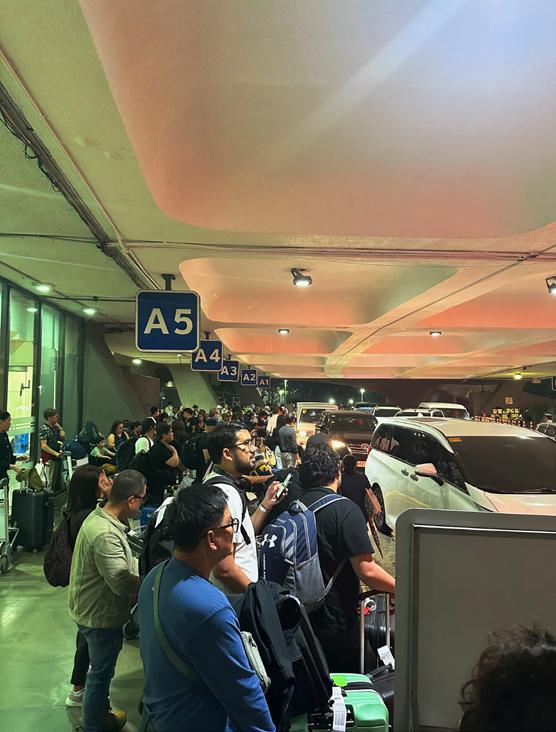
Then there’s infrastructure, our nation’s official exercise in disproportion. Since we are already at it, take Siargao as an example: marketed relentlessly, loved excessively, but serviced reluctantly. For years, the airport has struggled to accommodate
the very demand it helped create. Flights are priced like they’re chartered by oligarchs, because fare regulation is still governed by a law passed in 1995—a year when people still unironically believed fax machines would be forever. The policy is now in its midlife crisis, literally “trentahin na (in its 30s)”
On the evolution of friendship and the importance of personal space
Words and images by Christine
Fernandez
Someone recently said, earnestly, that if securing a Japan visa is challenging, we should simply explore the Philippines instead. As if the country was a consolation prize one receives with forced gratitude. “Didn’t make it to Tokyo? Don’t worry— here’s Batanes. Same ticket price, but realistic. Yay!”
This triggers me. Not because the Philippines lacks beauty—oh no, we are embarrassingly rich in it— but because of how casually we pitch ourselves as Plan B. A rebound destination. The country you date because the one you wanted diplomatically friendzoned you.
The statement was meant to push the envelope on promoting local tourism after dismal figures compared to our Southeast Asian neighbors. Inbound travel continues to lag because foreigners notice what locals already know: the infrastructure limps, policies shortchange, and even the welcome banners feel chargeable upon checkout.
The problem with the numbers isn’t an acute crisis but a chronic syndrome. It runs deep in the system— or rather, the lack of one. So, where did we fall short?
Let’s begin with the basics: accommodation, logistics, and food. The country prices those that are acceptable by global standards like luxury goods, otherwise, they are delivered like outlet surplus.
Yes, cheaper food options exist, in the same way instant noodles exist. They are meant for sustenance. Sensibly priced dining becomes a calorie transaction, not an experience. At some point, you wonder if an intravenous drip might have been more efficient; at least it’s honest about its purpose.
A flight to Siargao can now
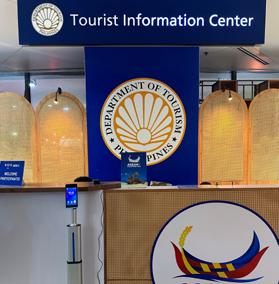

We’ve yet to see a modern, efficient intervention with teeth. Instead, we get policy dossiers at conventions, “inspirational” PDFs during elections, and the hopeful belief that the market will regulate itself out of kindness.
The culture of honest service, meanwhile, remains endangered. Lack of fair wage and opportunity force people to hustle. Informal tipping is no longer a gesture of appreciation but an assumed line item. Some offer it willingly; others are scammed into it. A few generous tourists set the precedent, and suddenly everyone is expected to comply. It becomes less “thank you” and more “you owe me.” Hospitality, in theory, should feel safe. In practice, it often feels like soft extortion with a smile.
The Department of Tourism does have a budget–a sizable one, at that. Calling our tourism strategy mediocre is generous. It promises planning, mechanism, and consistency when what we really get is pricing delusion held together by hashtags and narcissistic keymen.
So, instead of gaslighting Filipinos into believing domestic travel should be endured out of patriotism, why not pursue policies with actual value propositions?
Subsidize tourism-related taxes to lower fares and LGU costs. Offer airport arrival vouchers redeemable with local SMEs. Grant tax relief to businesses that extend genuine discounts to local travelers.
Most importantly, commit political will to building an attractive, invigorated local tourism industry, not merely a fallback plan for failed Japan travel goals.
Because a country this beautiful deserves better than being pitched as a participation trophy for failed ambitions. And Filipinos deserve a tourism framework that treats us not as captive consumers, but as guests worth impressing.
These days, if I have to wait for my schedule to line up perfectly with a friend’s, we won’t be able to travel at all. So, I say yes whenever I can, then work out the rest of the plans later.
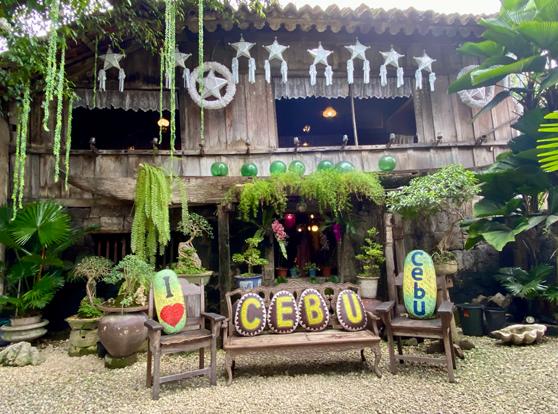
That’s how I found myself walking to one of my favorite cafes in Cebu, feeling more eager than expected. I was meeting Joey, a friend of 20 years, after a trip to Siargao. Neither of us is from Cebu, but after years of living overseas, he sorely missed Philippine beaches. With only two free nights, Cebu was an easy choice: flights from Siargao are quick and relatively affordable, and the sea and great food are never too far away.
Ours has always been a lowmaintenance friendship. We don’t require constant updates – not since graduating from college and getting pulled into the grind of adulthood. Months – sometimes years – would pass without long conversations. Yet, when we meet, we easily slip back into where we left off.
As is often the case, I was already on my first cup of coffee, lips speckled with crumbs from a slice of coconut cake, when he arrived. We hadn’t seen each other in six years, but the distance dissolved quickly. Within minutes, we were laughing the way we used to in college – unrestrained, uvula out and all. Slowly, crowds spilled into the cafe, conversations started building around us, and the smell of coffee settled into the room. Our corner, however, felt untouched by the noise; we were too busy catching up and mapping out the next two days.
Traveling with friends, I’ve learned, doesn’t mean being locked in the same itinerary. I leave room for myself, not out of detachment, but out of necessity. It’s in those small pockets of time that I recharge.
On one road trip to Zambales
with two friends, our conversations - alternating between serious and salacious topics - filled the car as we drove, laughter carrying us through the long journey, while I munched on fried lumpia in the back seat. We shared a room at our stop, unpacked quickly, and did what we had come to do: relax.
But one morning, while they lingered in bed, I slipped out to visit a beachside vegan
restaurant I had read about. The quiet walk through the community, noticing murals on the walls and the chance to move at my own pace, felt energizing. When I arrived at the restaurant, just a few feet from the shore, it was too nice not to share, so I messaged them to check it out. They later joined me and we spent the rest of the day together — swimming, exploring, and talking.

In Iloilo, a friend and I approached things differently. We booked separate flights and hotels, not out of disagreement but just varying preferences. His hotel had reviews claiming one of the rooms was haunted, and I’m the type who’s easily spooked.
To an outsider, it might have looked like a clandestine affair - meeting for meals, exploring the city side by side, then parting ways at night. But there was something freeing about returning to my own room, mindlessly undressing for bed, and waking up on my own schedule before meeting again for the next meal. By dinner, we had little observations to exchange: an artsy cafe discovered, an entertaining encounter with a local, and a popular attraction we should check out together.
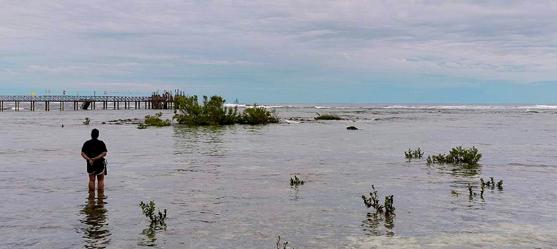
Back in Cebu, Joey and I moved through the city with the same ease. We wandered around downtown, stopping at food stalls for fried snacks on sticks – a rare find in Canada. The next day, we crossed to Mactan Island for his long-anticipated reunion with the sea. The chatter never stopped, even as we floated in the clear waters of Nalusuan Island Occasionally, the current playfully pulled us away from the boat. We just laughed it off, enjoying the waters jostling us. For a few minutes, we drifted into a quiet pause, contently floating in the open water we both loved.
A few days later, he was on his way to Siargao, the very place I had just left, armed with travel tips I had shared. It has been four years since that trip to Cebu, but what lingers is not just the laughter in the cafe or the refreshing feeling of the open water in Mactan. I’ve come to understand that traveling independently does not mean traveling alone. It can simply mean carving out quiet time for oneself. Our schedules may never align perfectly with friends, but saying yes and making space for peaceful moments along the way makes me appreciate friendships even more.
Sweet-toothed Filipinos can be easily enamored by Negros Occidental’s abundance of sugary delights, though its history is not all that sweet.
Words and images by Rhea
Claire E. Madarang
I vividly remember are the warm muscovado melting in my mouth, merging with the crispness of piaya hot off the griddle. Later, the kid in me, who loves variety, was happy to taste a crunchier version of the piaya and other flavors like ube and mango
On my three Bacolod visits so far, I’ve always looked forward to tasting the multi-layered and sugar-glazed napoleones Its texture also reminds me of baklava, only softer. For cakes, my go-to is Calea , which has the widest range of delicious and affordable selections.
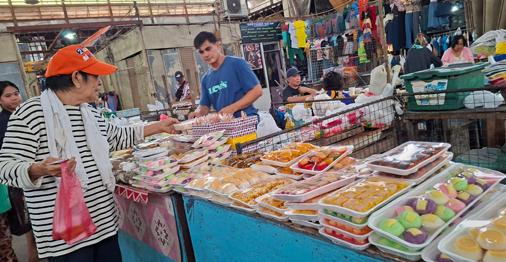
I suspect that many Filipinos find bliss on trips to Negros Occidental , especially in Bacolod and Silay The province, historically the country’s largest sugar producer, has given birth to many confectionery delights. From the iconic and ubiquitous piaya to wellloved family recipes like Emma Lacson’s Delicacies’ paño-paño and pili squares, to popular cake shops like Calea to street and public market stalls selling kakanin and pastries, the province is a veritable land of sweets with an abundance of options for every dessert lover.
Like them, I have the sweetest memories of my Negros visits. Among the tastes and textures
in Iloilo moved to Negros Occidental to set up haciendas of sugarcane plantations.
A local guide during my recent trip quipped that the families played “ paunahan ” (me first) in fencing and laying claim to land.
While Negros experienced economic prosperity, even exporting sugar to other countries, this success was built on the backs of sacadas — seasonal migrant workers


My first trip to Silay years ago felt like being in on a secret, when a local shared with me where I could sample the best homemade treats passed down through generations of families. I was amazed to find out that to taste some of those treats, all I had to do was knock on the gate of an ancestral home that felt like a sugarhouse with its sweets offerings. Most unforgettable to me was the paño-paño — mini-tarts that look like handkerchiefs, hence the name — wrapped around a banana jam-like filling.
The source: Emma Lacson’s Delicacies which has now become wildly popular, thanks to bloggers and vloggers. On my most recent visit this month, I tried the famous pili squares, too, whose many layers and crisp, flaky exterior reminded me of baklava.
During my recent visit, the pecan cheesecake was even half the price of a cheesecake I wanted to try in Manila!
The sweets I mentioned here are only a portion of what the province offers. There are still loads for you to try!
While these Negros sweets bring joy to many, their origins are far from saccharine.
During the 19th century, when a British merchant and diplomat saw the potential for sugar production in Negros and helped equip the area with sugar milling equipment and farming techniques, wealthy families
in the haciendas enduring intense manual labor and low wages. Many were trapped in debt as they borrowed against their future incomes.
Their hardships intensified when worldwide sugar prices plummeted in the 1980s, coupled with the
This led to the Negros famine, which affected up to a million Filipinos, with many children dying from hunger. Workers, students, and other sectors protested, and at least 20 were killed by paramilitary forces in what would be known as the Escalante Massacre
Learning Negros’ bloody sugar history is sobering. It reminded me that the sweetness I and many others enjoy now came at a steep cost.
Nonetheless, despite its grim history, Negros residents’ creativity and success in crafting sweets persist. An example is Marit’s Piaya , the most famous one in Silay. Their production area is a simple kitchen in the city’s inner streets. I had the privilege of observing her staff at work and tasting their freshly cooked piaya which has just the right amount of sweetness and a lovely texture.
I heard Nanay Marit share in an online interview that she and her family were hardup and the business helped. Their recipe came from the grandmother of Nanay Marit’s husband. Their brand is also the first I know of so far with a cacao flavor.
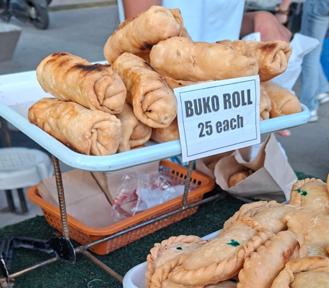
Another welcome creative innovation I saw in my recent trip was the bestselling buko (coconut) roll among the afternoon stalls around Silay’s plaza. With a generous buko filling and crispy lumpia wrapper, to me, it rivaled some of the best buko pies I’ve tasted.
I would like to believe that on my next Negros visit I will see more sweet creations, along with the triumphs

Examining for whom Philippine celebrations are intended for and what it means to negotiate and shrink one’s own portion
During my recent visit to Baler for artistic commitments, the 2026 Pasidayaw Festival unfolded almost incidentally alongside National Arts Month I arrived thinking I would merely witness it; instead, I found myself anatomizing it.
Festivals have a way of seducing the eye — color, rhythm, and choreography — but Pasidayaw invited a slower reading. Its name alone asks to be lingered upon: pasida an Ilokano word for the act of sharing food; dayaw , a Binisaya word to honor, to praise. The pairing feels intimate and domestic. It suggests that praise is not abstract but edible; that honor circulates hand to hand, plate to plate.
To speak of anatomy is to speak of structure beneath the surface. Watching the dancers animate the streets — their movements retell
In recent decades, Baler has consolidated its reputation as a surfing destination, drawing travelers who come in search of waves and a certain coastal ease. With them arrived cafés, hostels, and curated spaces that recalibrate the town’s rhythms. Public space is reshaped by this influx: the plaza becomes a backdrop for photographs; the shore, a marketplace of experiences. Livelihoods shift. Fishing coexists with hospitality; subsistence meets service economy. Pasidayaw emerges within this matrix, not outside it, not untouched by it, but intimately enmeshed within it.
The fish, so central to the festival’s iconography, becomes a compelling metaphor here. Once purely sustenance, it now doubles as a symbol. In choreography, it shimmers as a costume. In floats, it enlarges into a spectacle. The anatomy of fish is a political image that represents the waterness of the livelihood of the community of Baler. It asks how something once caught, cleaned, and cooked in communal intimacy becomes aestheticized for an audience. Yet even in this transformation, something resists erasure. The memory of labor, the early morning departures, the salt-stung skin, the weight of nets, lingers in the gestures of the dance.

the stories of waves and the fishing community — I kept wondering what bones hold this spectacle upright. What sinews of labor make it possible? What circulatory systems of memory pulse beneath the drumbeats?
The festival, at first glance, appears as a tourismforward celebration, a bright invitation to visitors who already know Baler for its surf breaks and long shoreline. But to reduce Pasidayaw to a promotional strategy would be to misrecognize the density of its gestures.
already mediated by global cinema. The festival’s bright pageantry exists alongside that darker, monumental memory. The contrast is not a contradiction but a palimpsest that highlights that colonial trauma never left the shores of Baler, but lingered in the current state of tourism and gentrification of the land. Personally, my
curated not because it is free of politics, but because it is shaped through negotiation.
And negotiation is the festival’s most honest gesture. Tourism is not a neutral presence; it introduces market logic into spaces of memory. Heritage risks becoming a product. Yet the people who participate in Pasidayaw are not passive conduits of commodification.
They interpret, adapt, and sometimes subtly resist. A
schools, attuned to currents larger than themselves.
Pasidayaw feels similar: a collective navigation through shifting waters. Its anatomy is living, adaptive. Bones may be old—traditions, memories, inherited gestures—but the flesh is renewed each year through participation.
In tracing its anatomy, I do not seek to dissect in order to diminish. Rather, I write to dwell within its layered textures. Pasidayaw is an

fear for every coastline in our country — such as La Union, Boracay, Baler, Siargao, and many more — is that it will be corrupted with the eyesore bodies of White tourists that plunder the lives of the ordinary masses.
I find myself drawn to etymology again. Pasida as sharing food suggests reciprocity, a refusal of isolation. Dayaw as praise
dance step may exaggerate the hauling of nets, turning labor into flourish; a float may foreground agricultural motifs alongside marine ones, broadening the narrative beyond what visitors expect. These are small assertions of authorship.
What, then, does it mean to read Pasidayaw as both celebration and critique? It means allowing the festival

There is also the matter of Baler’s layered archive. The coastline carries the memory of being a filming site for Apocalypse Now , directed by Francis Ford Coppola. This cinematic afterlife situated the town within a global imaginary of war, spectacle, and colonial legacy. To stand on that shore is to stand within overlapping narratives: one of imperial critique rendered in epic frames, another of local endurance and livelihood. Pasidayaw does not explicitly invoke this history, yet it unfolds on land
implies acknowledgment. Together, they articulate a social ethic: we honor by feeding, we praise by gathering. In the festival’s enactment, food stalls line the periphery, families cluster under makeshift tents, students rehearse steps they have practiced for weeks. The choreography extends beyond the parade route. It is in the committed labor of sewing costumes, in the municipal planning meetings, in the barangay discussions about themes and symbols. Pasidayaw is community-
to remain ambivalent. Celebration, because it genuinely gathers a community in shared movement and praise. Critique, because it exposes the pressures under which that gathering occurs, the demands of visibility, the gaze of outsiders, and the economics of coastal branding. The festival does not resolve these tensions; it stages them.
As I left the plaza and the music softened into the distance, I thought again of fish, creatures that move in
offering: of food, of praise, of performance. But it is also a question, about who gets to represent a place, about how locality survives the market, about how memory is carried forward without being emptied. In Baler, amid waves that arrive and recede without fail, the festival swims between sustenance and spectacle. Perhaps that is its most faithful gesture: not purity, not resistance alone, but the ongoing, embodied negotiation of what it means to honor one’s own. Through the neighborly gesture of sharing one’s beautiful catch— pasida which finds resonance in the Ilokano practice of padigo the act of shrinking one’s own portion so that a neighbor might partake — Pasidayaw returns us to an ethic of diminution as generosity. To lessen one’s ulam is not to impoverish oneself but to expand the circumference of care. In this deliberate reduction, something larger is made possible: relation, reciprocity, the subtle architecture of trust. And in this, we dayaw —we honor—not grand monuments or official declarations, but the small and intimate gestures of reaching out that have long sustained coastal life. It is through these ordinary offerings, repeated across kitchens and shorelines, that the imagination of a community, and eventually, of a municipality, becomes possible.





Address: 630 1st Avenue, PMB, 318, San Diego California, USA 92101
Phone number: +6195191063
Email: info@thearchipelagopress.com
Website: www.thearchipelagopress.com
www.facebook.com/thearchipelagopress https://www.instagram.com/thearchipelagopress https://www.tiktok.com/@thearchipelagopress https://x.com/TheArchipelagoP https://www.youtube.com/thearchipelagopress