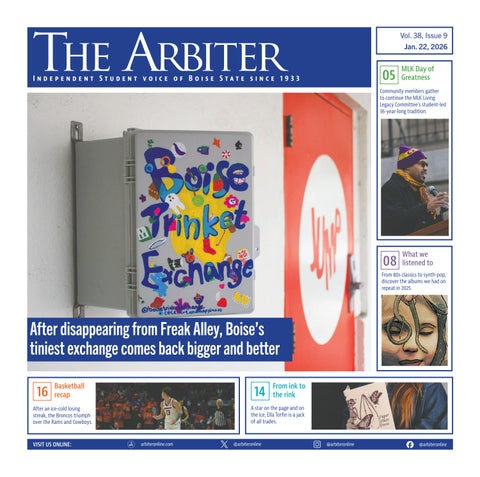
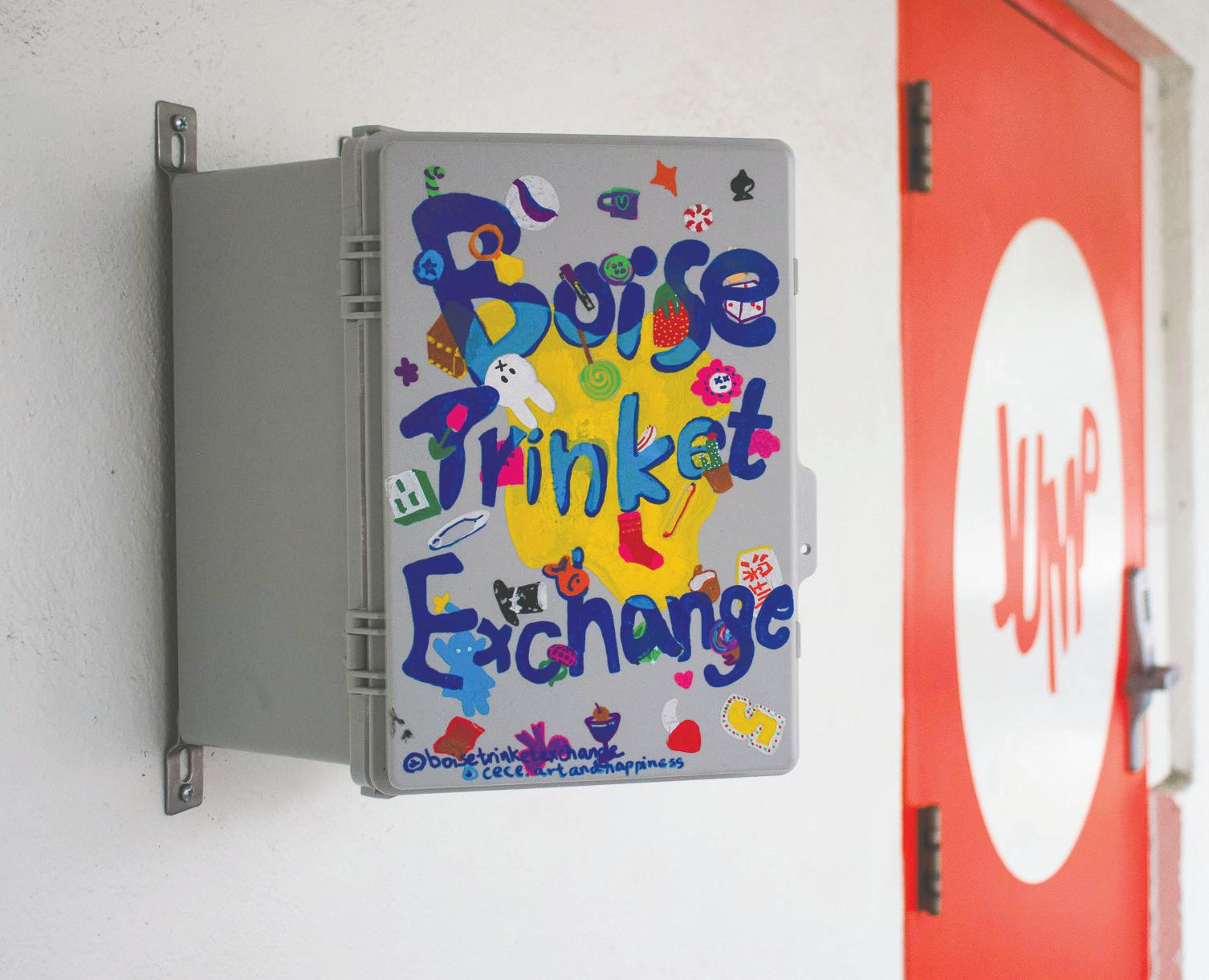
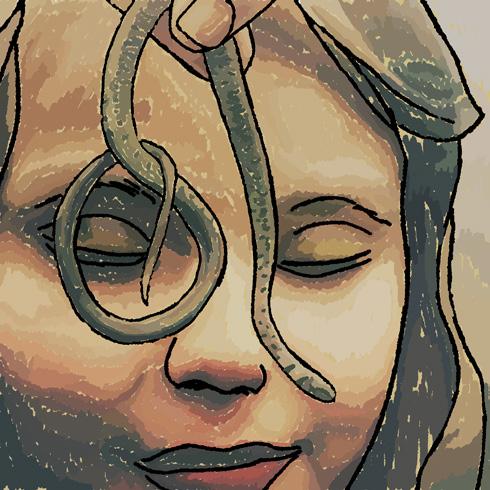
Triumph, tribulations and trinkets. After being stolen from its original home in Freak Alley, Ani Mechikoff didn’t let the setback stop her. Whether you’ve followed the saga since the beginning or are just now hopping on the trinket box bandwagon, the new box is uniting lovers of tiny knick-knacks in a new installation at JUMP.
PHYSICAL LOCATION: Located on first floor of Lincoln Avenue Garage Suites
As a student-run organization, we produce accurate and hyper-local information through non-partisan and socially responsible media.
MAILING ADDRESS: Student Media MS 1340 1910 W University Dr. Boise, ID 83725-1340
boisestate.edu/broncowelcome
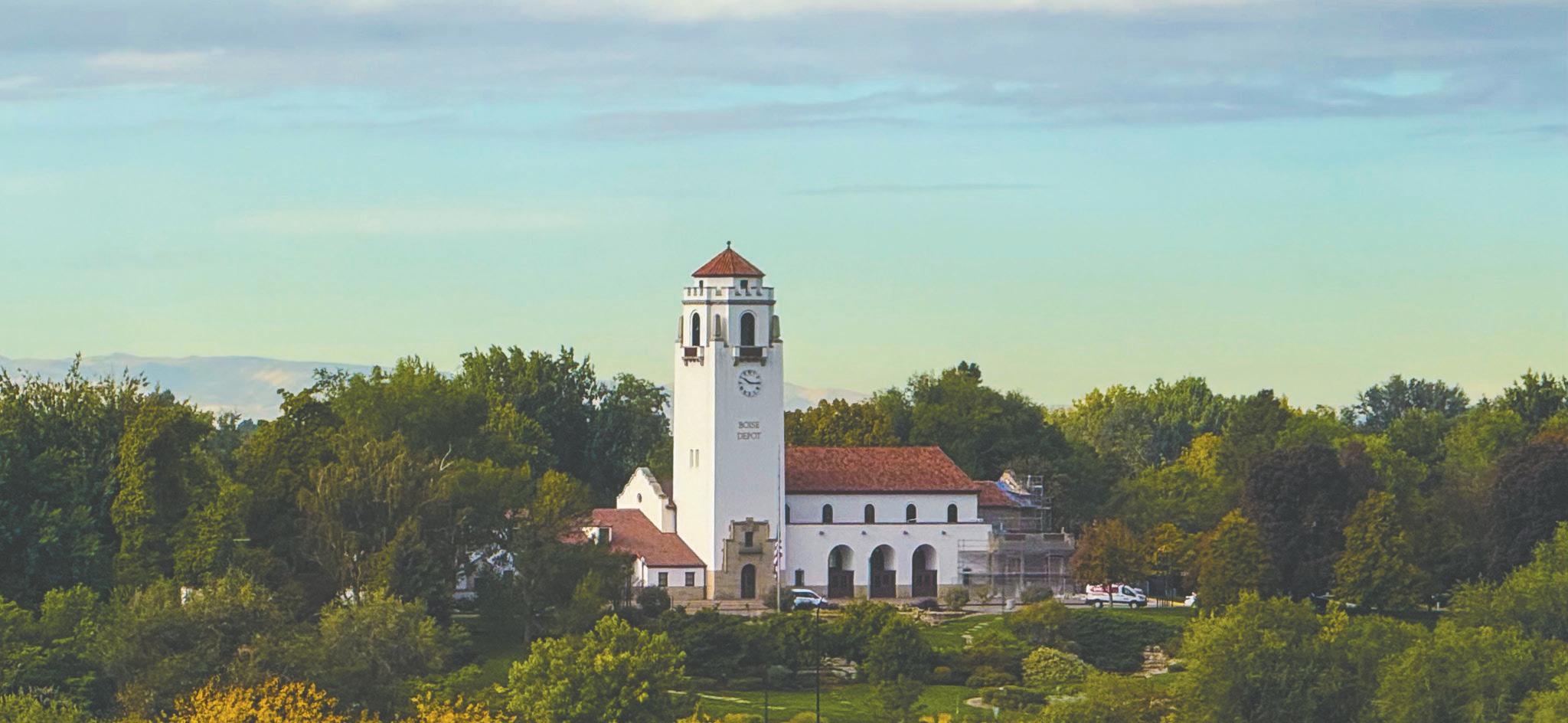
Photo of the Boise Train Depot.
Brody Bohn
NEWS
LABOR UNION CARPENTERS 635 RAISES CONCERNS OVER NORTH ENDZONE PROJECT
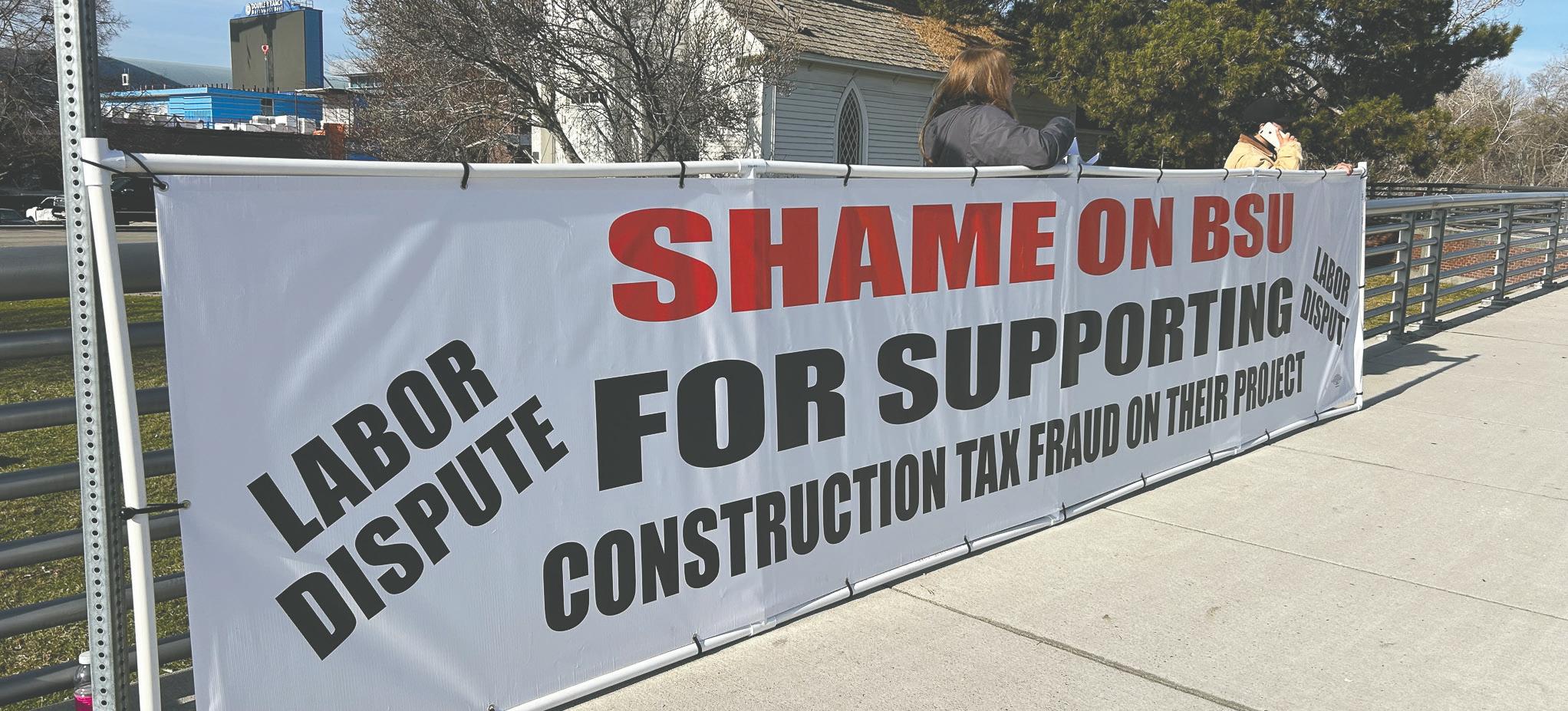
Driving down Broadway Ave. during the first week of the semester, it was hard to ignore the giant white banner on the side of the road reading “SHAME ON BSU” in all capital letters.
Labor Union Carpenters 635, the group behind the banner, alleges Boise State is not meeting area labor standards for carpenter craft workers. A flyer that was handed out by individuals at the banner reads, “Shame on BSU and Summit Wall Systems Inc. for contributing to erosion of area standards…”
The union claims that Summit Wall Systems Inc. and JM Drywall Solutions are misclassifying workers as independent contractors, allowing contractors to evade payroll taxes and workers’ compensation. The union argues these practices make it difficult for ethical contractors to compete and lead to dangerous working conditions.
Gilles Arouxet, lead representative with the Western States Regional Council of Carpenters, which represents 12 states and close to 100,000 members, explained the banner seeks to spread awareness of what the union believes are unethical practices.
Arouxet said he had a cold visit with a project manager for Andersen Construction, who acted as a general contractor and hired Summit Wall Systems, who then called on JM Drywall Solutions to supply labor, to discuss these practices.
“The response [from the project manager] was, ‘I met with the subcontractor. They provided all the paperwork and documents they need from this second tier subcontractor, and we’re good with what they provided,” Arouxet said.
As a result of the visit, Arouxet’s team sent out a Notice of Labor Dispute to
Andersen, Boise State and Summit. In an email, Arouxet claimed Summit sent a letterhead stating they were utilizing JM Drywall Solutions as a labor service in what Arouxet said was an effort to shift the focus onto JM Drywall, confirming the union’s concerns.
“We reached out early before the project started to the Boise State Public Works Department to let them know hey, we wanted to have a sit-down and say wanted to make you aware that you guys have a subcontractor here [North End Zone Project] that was on your BSU student housing building that was using a labor broker … we didn’t get any response.”
Arouxet said he emailed Andersen’s team and sent a notice to cure, asking if the company was aware that, for a publicly funded job, subcontractors must have a public works license. Andersen said they would give their subcontractors a notice or “kick them [JM Drywall
Solutions] off the project” by Dec. 29.
The following statement was provided by Stephany Galbreaith on behalf of Boise State University.
“We became aware of the union’s concerns with various projects throughout the Treasure Valley and a construction project on campus. We immediately met with the primary contractor, and are confident that our project and its workforce are in compliance with all labor laws and regulations. The university remains committed to responsible practices and a respectful work environment. We respect the right to peaceful protest and value open dialogue.”
Arouxet said the union is committed to building the industry and establishing ethical construction practices.
“This is our industry. We represent carpenter members, close to 900 here in Boise, as well as the contractors that employ these members. We’re not going to turn our back on them and the indus -
try. We’re trying to build the industry,” Arouxet said
Arouxet said Andersen said they would remedy the issue as of Dec. 29 by either having their subcontractor get workers on payroll or removing them from the job.
However, Arouxet said he has had no way of verifying this.
The biggest remedy to this issue would be a state statute, he said. Most states have certifiable payroll requirements on construction projects and Arouxet described it as a “quick fix.”
When asked whether the union would put any pressure on legislators this session, Arouxet explained that, as it seems most attention will be allocated toward Idaho’s budget, this wasn’t the session to present something.
The Arbiter will continue to report on this issue.
Olivia Brandon | Managing Editor | Photo by Olivia Brandon
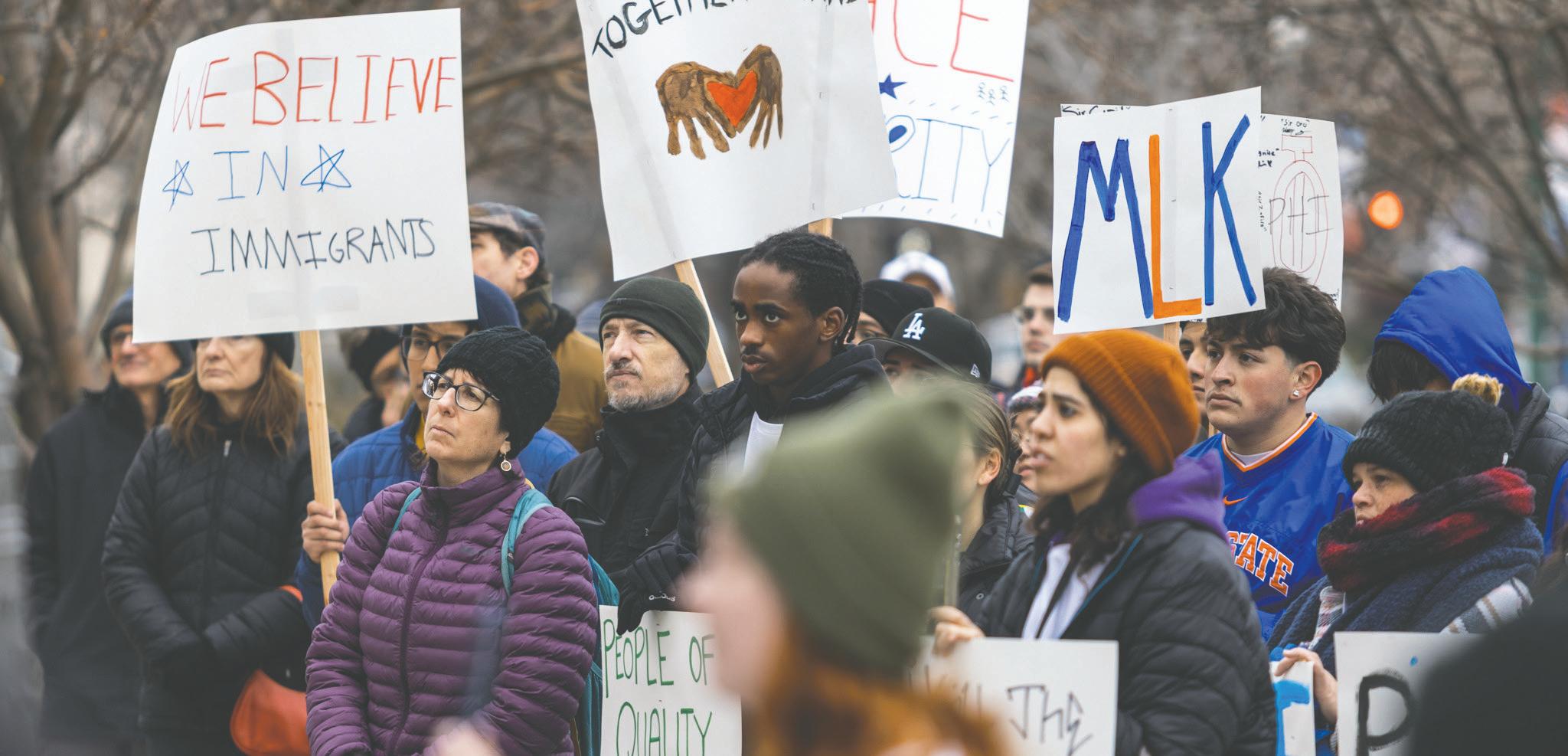
‘HE HAD A DREAM, WE HAVE A DREAM, WE ARE THE DREAM’: MLK DAY OF GREATNESS MARCH
Cole McAdams | Assignment Reporter | Photos by Carter Nash and Keara Antonelli
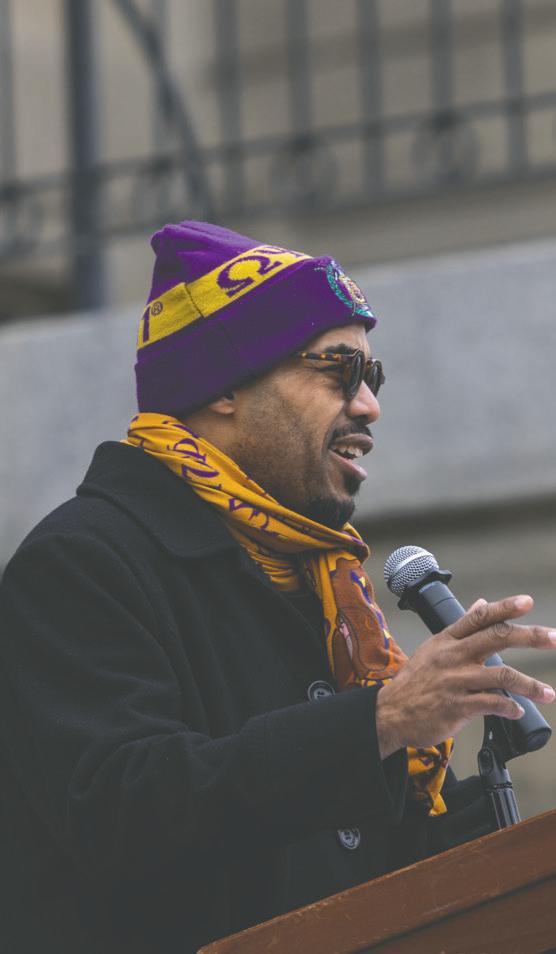
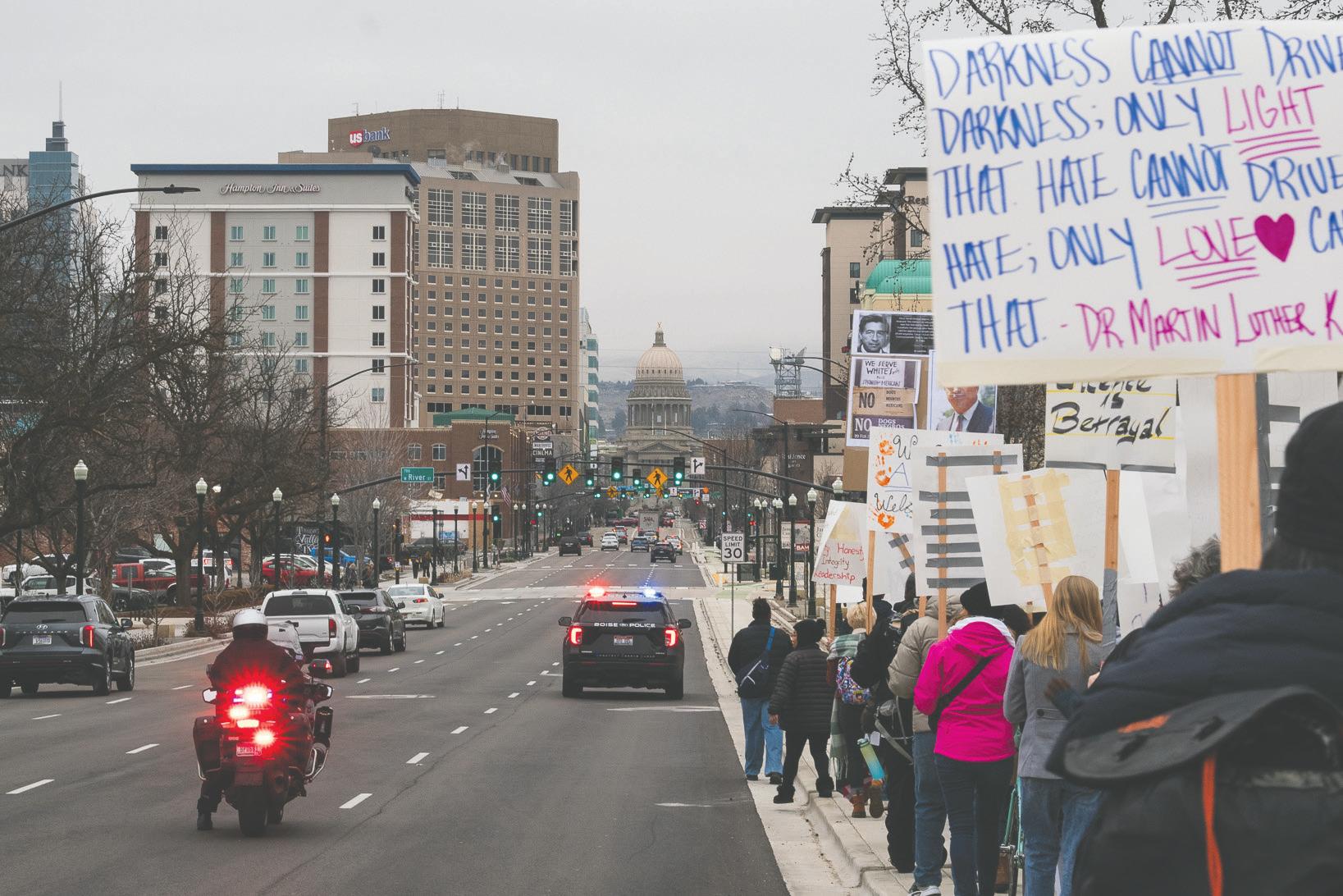
On Martin Luther King Jr. Day, community members and students alike gathered to continue a 36-year-long tradition of marching alongside the MLK Living Legacy Committee to the Idaho State Capitol.
“Specifically in our generation, there’s so much going on and I feel like our voices aren’t always heard,” said Layla Abdulhameed, a student working with first-generation students at the Student Connections Center. “When things like this are posted, it’s such a good time to be able to go out and have this opportunity to show what we support and stand [up] for ourselves.”
Abdulhameed passed out t-shirts to those participating in the march, designed by GIMM major Amber Taggart. The back of the shirt highlights the committee’s message, reading “Building beloved community in the face of division.”
In a procession from the Student Union Building to the Capitol Building, Boiseans looked on at the street spectacle and cars honked in support as protesters
chanted: “Lies and threats will not divide the people standing side by side” and “He had a dream, we have a dream, we are the dream.”
Once the group arrived at the steps of the Capitol Building, speeches were held by Boise State student leaders and community members fighting for civil and human rights.
“We are challenged today, not to look at our diversities and obstacles as sources of division, rather we are challenged to transform our diversity into a platform of opportunity; to build a more perfect human and strong community across this nation,” Rev. Dr. Jonathan McReynolds said in a speech.. “It is not that we are attempting to identify with a singular social or cultural norm, as we are a diverse society, and we have found strength in our diversity for generations … Rather, we are attempting to discover a place of social synergy within our diversity to build a stronger community.”
Other speakers expressed the unifying factor of their mission as they addressed the students and community members willing to listen and march for the cause.
“We gather in a moment where institutions and even governments are making concentrated efforts to silence or erase work like ours — they hope we will grow tired,” said Political Science major Diego Tapia. “They hope we will lose our heart and lose our passion. But I have bad news for them — we will never tire out.”
Signs made at home by march-goers or that morning in the Student Union Building shared similar sentiments to Tapia’s words, stressing the importance of voices not being erased amongst the large crowd. Signs that read, “Protect people, not power” and “Love, not hate, makes America great”, were few among the sea of colorful posters.
“The critical question for us is ‘how do we build the beloved community in the face of this deeply entrenched division?’” Raquel Reyes, leader of PODER of Idaho asked. “It is easier to dismiss a person’s argument, pain or humanity when they are reduced to a caricature or political label. Radical empathy … does not mean that you have to agree with their conclusions, but it demands that you understand their starting point. What are their fears? What are their lived experiences? When we see the shared humanity beneath the label, the wall of division begins to crack.”
MLK Living Legacy Committee Del -
egate Chair Marliegh Nabonne highlighted the impact that other civil rights activists have had on inspiring younger generations and keeping the persistent fight going; Rosa Parks, Claudette Colvin, Coretta Scott King, Angela Davis and Malcolm X being named.
“If this year’s taught me anything, it is that tomorrow is not promised, and that there is such [a] thing as too late,” Nabonne adds, the emotion coming through her voice as she chokes up.” But for every ‘too late’, there’s a ‘what’s next.’ We have seen what happens when fear dictates the way people vote and how they treat one another. I challenge you to go beyond fear.”
The Martin Luther King Jr. Living Legacy Committee aims to inspire students to fight for what they believe in times of distress. Their mission of defending diversity is a fight speakers and attendees echoed throughout the day, making waves in the crowd of hundreds while doing so.
“Community just doesn’t stop outside of our organizations or titles, it shows up when we speak up for others who are being targeted or stay silent because it feels easy,” said Multicultural Greek Council President Israel “Izzy” Rivera. “If we are truly going to honor Dr. King’s legacy, we have to fight for our community and stand up for it, especially now.”
january 22, 2026
‘IT’S NOT JUST A DISABILITY ISSUE — IT’S A QUALITY ISSUE’: ACCESSIBILITY ON BOISE STATE’S CAMPUS
While Boise State’s architectural and engineering services are working to improve physical infrastructure and make the campus more accessible, the university was not always easy to navigate and, in many ways, still has a way to go.
Dana Gover, who works with the Northwest ADA Center in Idaho to provide training and technical assistance on the Americans with Disabilities Act (ADA) attended Boise State in the 1980s and navigated campus using a wheelchair.
In 1979, when Gover was 18, she got into a car accident that resulted in a spinal cord injury. Gover spent eight months at Elks Rehabilitation Hospital in Boise before returning home to Eastern Oregon. The following year, she enrolled at Boise State and began utilizing a power wheelchair.
“My family purchased a lift-equipped van so I could drive and transport the electric chair and, just as importantly, to give me the ability to drive, travel, work, get to school, run errands and participate in everyday life independently just like anyone else,” Gover said.
“My wheelchair van wasn’t about transporting the chair, it was about independence,” she continued. “People often look at adaptive equipment like it’s an ‘extra’. It’s not. It’s access to the world.”
During her time at Boise State, many of the buildings were not accessible to individuals using wheelchairs.
“When I attended Boise State University in the early 1980s, accessibility was far from guaranteed,” Gover said. “Many of my classes were held in older buildings or converted houses, and it was common to arrive for class and find a set of stairs that made the class completely inaccessible.”
Despite its shortcomings, Gover said the university is receptive to working
january 22, 2026
on access issues. As the Northwest ADA Training and Assistance Consultant, Gover ensures individuals have the correct information and research regarding accessibility.
“Boise State has always been really good to work [with] on access issues. It’s a funding mechanism, but for architectural barriers, they’re really good at removing barriers,” Gover said.
Boise State alum and executive director of Living Independence Network (LINC), Jeremy Maxand, reflected on the university’s accessibility efforts.
“Boise State’s done good work,” Maxand said. “The campus is light years ahead of where it was when I first attended in the early ‘90s, but like most campuses, there’s still a ways to go. I’d love to see them bring students and staff with disabilities into the conversation more — let them help identify the barriers and the fixes.”
Maxand recommended an accessibility audit which could examine the entire campus, including housing, transportation, classrooms and online systems. The audit would identify what is functional and what needs updating.
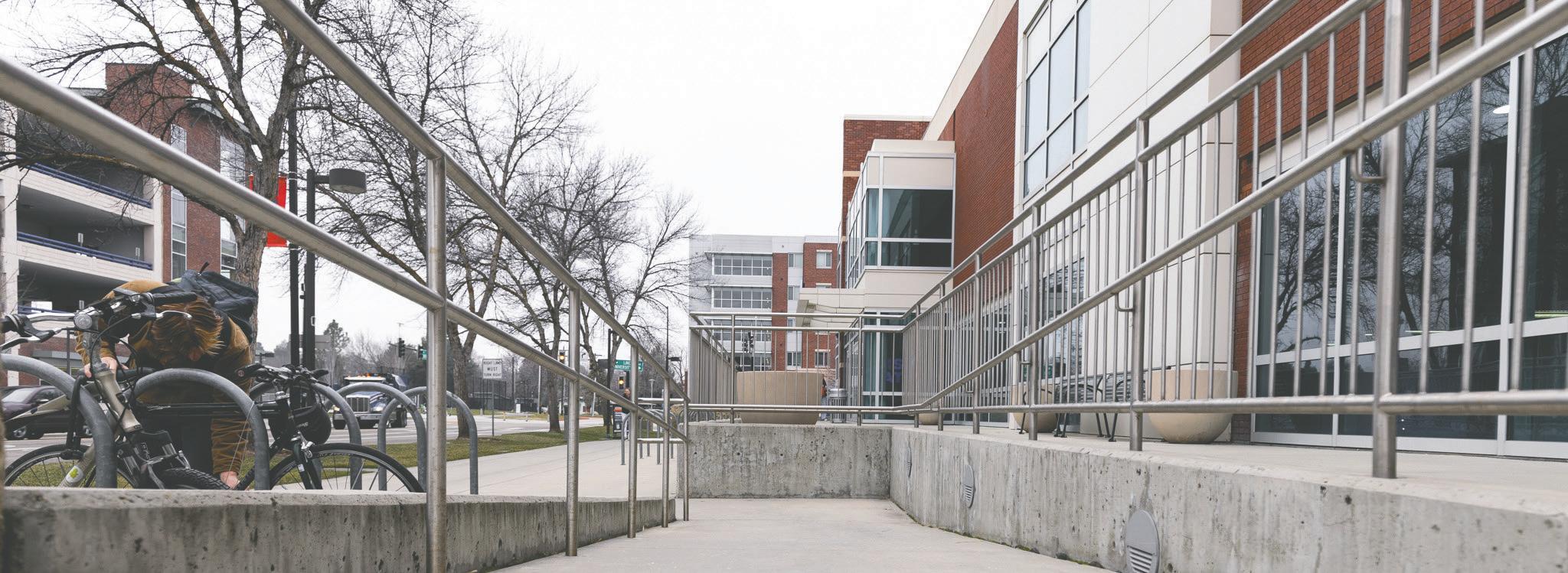
“Small things matter too — automatic doors that actually work, accessible seating in every classroom, ramps that aren’t a mile away from the main entrance,” he said. “All those things tell students, ‘We see you, and you’re part of this community’.”
As previously reported by The Arbiter, automatic door operators were outof-order in Brady Garage for roughly two months back in 2023. Additional buildings, including Liberal Arts and Multipurpose, had out-of-order automatic door operators for “an unknown amount of time.”
“When a building or classroom isn’t accessible, it sends a message that [students with disabilities] weren’t part of the plan. It says, ‘We built this for every -
one else, and you’ll just have to figure it out.’ That’s the same message people get when a polling place isn’t accessible — it chips away at your sense of belonging. Schools should be the opposite of that. They should tell every student, ‘We expected you. We made space for you,’” he said.
The evolution of accessibility law
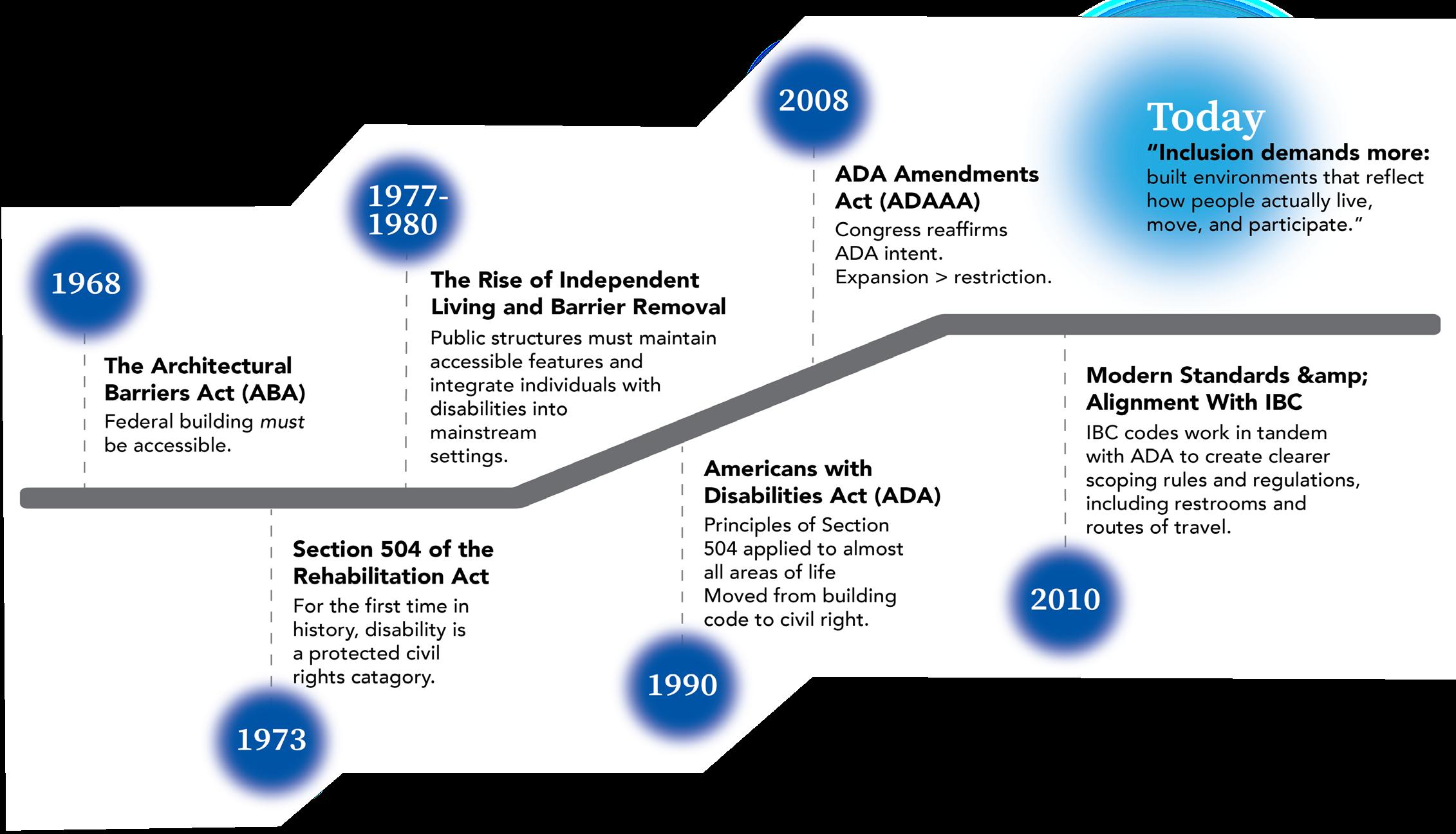
“Accessibility in the United States didn’t begin with the ADA — it was a slow, hard-won evolution shaped by disabled people demanding the right to move, learn, work and live without barriers,” Grover explained. “Every major milestone reflects that push toward equal participation, not charity.”
Several landmark milestones for accessibility law include the Architectural Barriers Act (1968), which stated federal buildings must be accessible, Section 504 of the Rehabilitation Act (1973), when disability became a protected civil rights category and the ADA Amendments Act (2008), where Congress reaffirmed the ADA’s intent and highlighted the value of expansion versus restriction when it comes to accessibility law.
“Many people don’t understand the difference between building codes and the ADA,” Gover added. “The ADA is not a building code — it’s a civil rights law. Building codes like the IBC sometimes provide greater accessibility depending on the edition and jurisdiction, but neither replaces the other. Both
tools matter, but only one is rooted in civil rights.”
Gover said when constructing new facilities, it’s important to go beyond ADA compliance. For example, Gover highlighted when construction groups are planning to create a science classroom, instead of just making one lab table accessible, they all could be.
Future efforts
Accessibility beyond ADA compliance is something Evan Danforth, executive director for architectural and engineering services at Boise State, strives to implement when designing new buildings. Danforth said many of the current issues with buildings, such as ramp placements or spatially inaccessible bathrooms, are a result of attempts to remodel old buildings, rather than creating a new structure.
“That’s why the newer buildings don’t have those issues,” Danforth said. “Because [with] the newer buildings, we can look at the building holistically [and] make sure it works for everybody, whereas when you take an older building, ramps have very specific requirements for the rise and the run and how far they can go before they have to have a landing and so they can only fit in so many areas. Sometimes, to get them [ramps], it’s not exactly where we’d want it, but it’s the best we can do given the parameters of the building.”
One of the highest-priority archi -
Olivia Brandon | Managing Editor | Photos by Carter nash | Graphics by Amber Jansson
tectural projects is redesigning sloped classrooms and stadium-style seating for lecture halls that are generally not usable for an individual in a wheelchair. The remodeling of those classrooms also creates a more collaborative environment for students to engage with one another.
“Being able to fix those is very rewarding. Not only does it fix it for people in a wheelchair, but it fixes it for everyone,” he said. “We’ve moved from a lecturing pedagogy to a more active learning classroom. We’re actually able to bring those classrooms up to modern educational standards, which benefits everyone.”
Danforth said he and his team are working on several bathroom renovations to expand the size of the “tight” spaces.
Albertsons Library restrooms are undergoing ADA upgrades, including rooms 120A/B and 220A/B, where they are lowering sinks and countertops and adding grab bars and/or pipe wrap in rooms: 200A/B, 210A/B, 300A/B, 400A/B. Bathrooms 220A and B were completed on Dec. 12 and the remaining work began on Dec. 22 and is set to be completed this month. Additionally, there is a focus on improving interior
and that’s why we try to do trainings and keep up on things, but, ultimately, we hire the experts to tell us, hey, what, what is the best way to solve this problem?”
Damforth said.
Danforth said another area of importance is improving paths of travel, including ramps, automatic door openers and ensuring everyone has access to classrooms.
Danforth said when designing a project, the architect reviews ADA laws and International Building Code (IBC). However, these are two distinctly different sets of regulations.
Part of this planning process for Danforth is focusing on trainings to keep all current staff up to date on some of the “generalities” of ADA compliance.
“We need to know enough that we can identify problems when we see them, look for solutions and make sure that we’re asking the right questions, getting the right people involved, so that we can make sure that our projects are accessible,” he said.
Maxand explained transition plans for buildings are mandatory for government buildings and consist of several com -
and identifying solutions.
When asked whether the university has a transition plan in place, Danforth said no current formal plans exist, but a study was conducted across campus in 2020 to identify where there were “ADA deficiencies.”
This study allowed the team to identify what should go into a future transition plan that Danforth is collaborating with Angie Zirschky, Compliance Director and ADA/504 Coordinator for University Compliance, to create. Facilities Operations and Maintenance (FOM) is currently monitoring its efforts.
Funding for updating buildings
Danforth explained that each year his department puts in a request to the state for several different architectural categories, including capital requests, alteration and deferred maintenance and accessibility projects. His team then references the study conducted across campus and identifies the highest priority project that will make the biggest impact. Unfortunately, Danforth said, they only receive funding for about one project annually.
“That’s why it’s really critical for us to say, what is the highest priority project,
what’s the project that’s going to make the biggest impact for the people using campus?” Danforth said. Roughly $200,000 is allocated in annual funding from the state, according to Danforth.
Another way Boise State takes issues into account is through a page on its Department of Compliance and Ethics, which features a form to report a barrier as well as an email and phone number. But where does this information go? Danforth shared that Zirschky takes this insight and, when it is related to physical infrastructure, passes it along to him and his team.
“Just recently, we had a meeting with Angie [Zirschky] to say ‘hey, as you get those [reports], if they are involved in the physical infrastructure of the building, make sure you pass them on to us to see if there’s something we can do about it,” he said.
Gover said transition plans often exist as a “living document” and are continuously updated, but what’s important is to start.
“Some of the smaller communities have had a difficult time because of limited funding but what we always recommend is it’s never too late to start,” Gover said. “Even if you haven’t and it’s a living and breathing document — which means you don’t just put it on the shelf and forget about it.”
While the ADA requires certain features such as accessible routes, bathrooms, parking, communication and ongoing maintenance, Gover said true inclusion efforts are all-encompassing. She noted how a true commitment to accessibility goes beyond meeting regulations.
“True inclusion demands more: built environments that reflect how people actually live, move and participate. That’s the direction cities, universities and communities are increasingly taking — shifting from ‘bare minimum’ compliance to designing for dignity, independence and full participation.”
january 22, 2026
OPINION
WHAT WE LISTENED TO IN 2025 THAT YOU SHOULD LISTEN TO IN 2026
Student Media Staff | Illustrations by Naomi Brown and Amber Jansson
Emily Carmela Nelson, Editor-in-Chief
Karley Rodriguez, Marketing Manager
Get in My Fanny Pack and Let’s Go by Hey Cowboy!
“‘Get in My Fanny Pack and Let’s Go’ is an album that lingers on you. With 13 synth-pop tracks that dance alongside you in your bedroom, the record easily became a staple of not only my 2025, but of my young adulthood.”
Tidal by Fiona Apple
Olivia Brandon, Managing Editor
“‘Tidal’ blends confessional lyricism with subtle jazz melodies, creating her debut album that feels mature and emotional. Her unfiltered voice keeps the album on constant repeat for me. ‘Tidal’ is the kind of album you grow up with and never outgrow.”
“Transport yourself back into the 80s with this iconic pop-rock album featuring hits ‘Take It On the Run’, ‘In Your Letter’ and ‘Keep On Loving You.’ With the loveable cheesiness any album from this era should possess, this album was in constant rotation on my record player this year.”
january 22, 2026
Luke Charlier, University Pulse Music Director
Naomi Brown, Graphic Design Manager
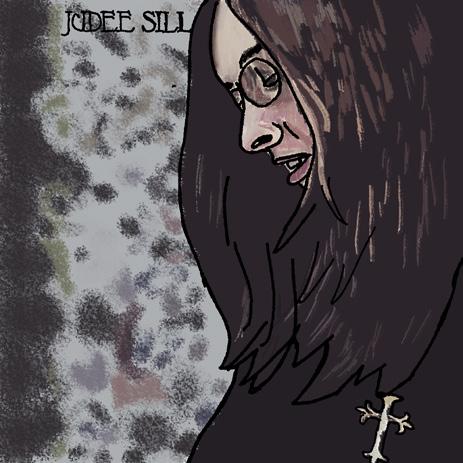
“Judee Sill is truly one of a kind. Her thick Midwest accent, cryptic religious songwriting and borderline ethereal baroque production is such a unique combination that guarantees her a spot in my rotation for the rest of my life.”
“I’m in love with the heavy guitar in ‘Ours is Chrome’ by Superheaven. This album is perfect for lying on your bedroom floor while there’s a storm happening outside. Their song ‘Leach’ is one of my favorites I’ve sung many times in the car.”
Hi Infidelity by REO Speedwagon
Omar Saucedo, Digital Content Manager
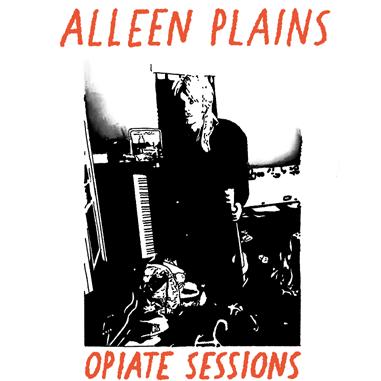
“Alleen Plains is no stranger to experimenting. Recorded in 2023, ‘Opiate Sessions’ is a collection of demos split into five cassettes. While the influences of artists like Part Time is apparent, Opiate Sessions is a unique concept worth soundtracking your 2026. I recommend listening to ‘Fourth Cassette’.”
Judee Sill by Judee Sill
Ours is Chrome by Superheaven
Opiate Sessions by Alleen Plains
CONSUMERS PAY THE PRICE FOR COMPANIES’ SHIFT TO AI
Zaccary Kimes | Opinion Editor | Graphic by Naomi Brown
Imagine shopping for a new desk to give yourself more space for work.
After weeks of scouring antique shops, furniture websites and retail stores, you finally find one that fits your space, even if it stretches your budget. You save for months, only to return and discover the manufacturer raised the price so drastically that it’s no longer in reach.
Replace the desk with RAM, and this is effectively what is occurring with consumers looking to upgrade their computers’ memory.
In August of last year, the average consumer looking to update their personal computer’s memory (RAM) to the highest performing component (two 32gb stick DDR5 5600 RAM memory sticks, to be specific) could have expected to spend on average $200. Today, as demand from large-scale data centers grows, similar components have skyrocketed to an average of $900, despite being essentially the same product a few months ago.
The jump is a direct result of a deliberate shift by manufacturers to focus on the incentive of AI rather than consumer parts. Micron, Boise’s very own semiconductor and storage manufacturer, announced its departure from the consumer market by February of this year.
“Micron has made the difficult decision to exit the Crucial consumer business in order to improve supply and support for our larger, strategic customers in faster-growing segments,” Sumit Sadana, EVP and chief business officer at Micron Technology said in a press release announcing the shift.
Micron’s departure, while a smart business venture, is projected to be consequential for consumers looking to upgrade their own hardware, as other manufacturers may choose to follow suit. In the face of this, buyers must get creative as prices continue to rise with no sign of stopping, fueled by AI’s growing footprint in everyday life.
Timothy Anderson, a computer science professor who began building his own computers when he was a kid with salvaged parts, describes the AI-driven disruption in the consumer market as most pronounced for high-end components.
“Companies are putting lots of money into AI, and that requires a lot of computing power,” Anderson said. “They create these big data centers and fill them with computers driving up the prices for some of the high-end stuff.”
Anderson mentioned some corners of the internet still provide good deals on high-end memory, but these places are supplied by consumer parts and can quickly run out of stock.
He also noted that mid-range components, such as 8 or 16GB modules, still offer strong value compared to past decades as an alternative. However, they are not spared from rapid price hikes, jumping from $75 to upwards of $200 over the past year.
A consumer purchasing a mid-range component for the same price as the high-end would’ve been considered outrageous just a year ago. This is why Anderson describes Micron’s shift away
from the consumer market as “concerning,” as Micron is a major supplier and their departure creates a scarcity in the market driving up prices.
The increase in retail price prompts some consumers to shop at salvage stores like the Reuseum in Boise. The second-hand tech store offers a treasure trove of used and affordable computer components. It can be a thrifty solution if you know what you’re looking for.
The Reuseum largely relies on donations from the community to keep their shelves stocked. However, Tiffany Greyson, a board member at Reuseum, noted other branches of the tech industry, like Bastian Solutions, also feel the squeeze from these price hikes.
“We struggle with the same sort of problems that consumers are experiencing in terms of availability,” said Greyson. “If I want 60 NVIDIA Jetson modules, I need to plan it almost a year ahead of time. If I want it tomorrow, I’m going to be paying double. Consumers don’t have that luxury.”
Utilizing old tech found at Reuseum is only a temporary solution to help mitigate the shortage and prices when even companies struggle with availabili -
ty. Reuseum depends on these donations to keep components in stock. If there’s fewer donations due to high prices and shortages, it leaves consumers with fewer affordable options.
Greyson believes this can be combatted by consumer education on computing needs.
“Understanding what computer you actually need helps people find affordable options, instead of chasing top-ofthe-line hardware you can’t afford,” said Greyson.
It’s true, buying a top-of-the-line computer just to open a Google Doc is like buying an executive desk as an entertainment stand. It functions the same, but is wildly underutilized. Her advice, however, may not help students or professionals who require high-end components for memory-intensive software.
Unfortunately, the end of Micron’s 29-year legacy in consumer components signifies a shift in priorities away from everyday users to corporate AI investments. Unless consumers plan to reuse and adapt, they may find themselves being priced out entirely — left to watch as affordability slips further from reach.
22, 2026
‘IT’S THE LITTLE THINGS IN LIFE, LITERALLY’
After disappearing from Freak Alley, Boise’s tiniest exchange comes back bigger and better
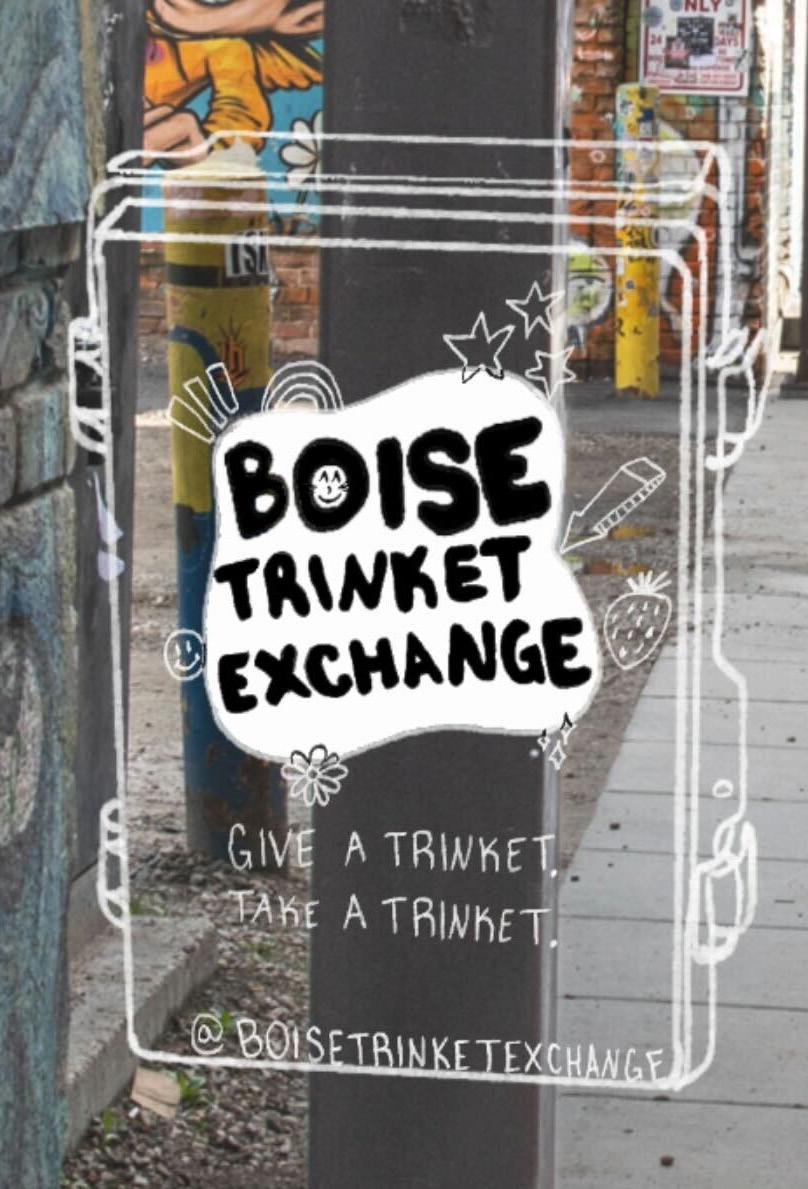
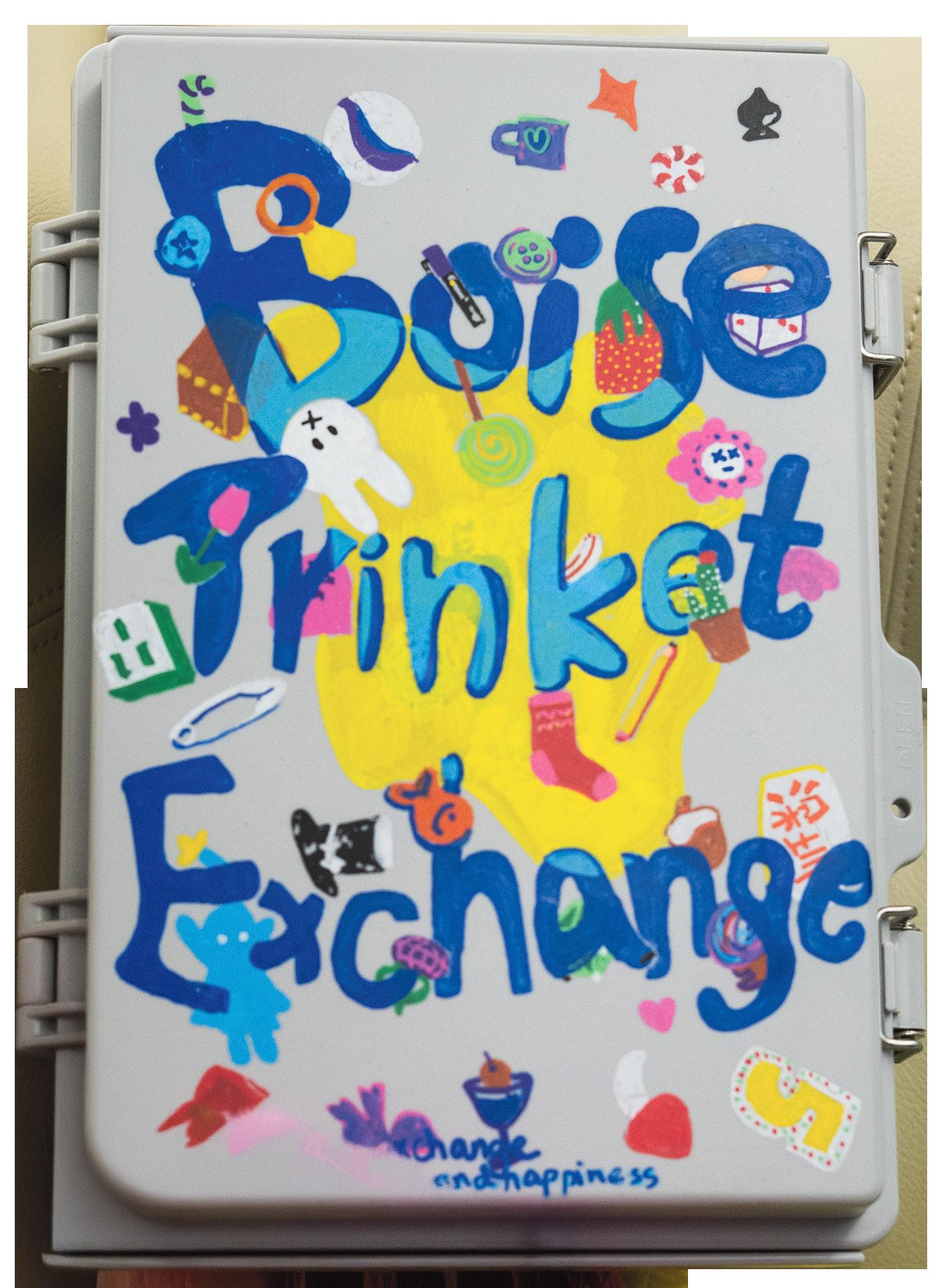
This fall, a small metal locker attached to a light pole popped up in Boise’s Freak Alley with the words “Boise Trinket Exchange” painted on it.
Inside, dozens of keychains, toys and novelties could be found, and trinket traders across Boise traveled to the small box to exchange their treasures.
The box also displayed the link to an Instagram page, @boisetrinketexchange. The account posted pictures and videos of the box, and explained that this exchange was part of a larger movement centered on trading trinkets with others.
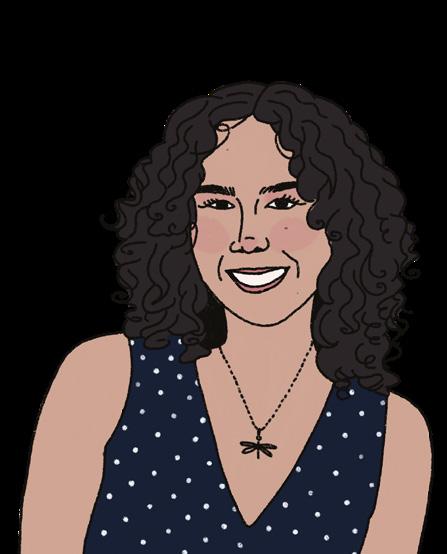
The face behind the account and idea was Ani Mechikoff, a Boise State alumna who graduated with a degree in Integrated Media and Strategic Communications in 2022.
Mechikoff was inspired by the Philadelphia Trinket Exchange, a trinket trading box located in Philadelphia, Pa. Hoping to bring the concept to Boise, she reached out to the owner of that box and purchased the same locker. Mechikoff decorated the box, stocked it with trinkets and placed it in Freak Alley on Oct. 26, 2025.
The idea was instantly beloved by trinket-lovers across the Treasure Valley. Every day, new treasures would appear in the box as other ones found new loving owners to go home with.
To the dismay of the small-but-mighty trinket community, the original box was short-lived. Less than one month after it was first put up, the box went missing. Was it stolen? Removed by the city? It was, and still is, a mystery.
“I started getting messages pouring in from so many people being like, ‘Where’d it go? Why is it gone? What’d you do with it?’” Mechikoff recalled.
Despite her contact information being written on the box, no one has reached out to Mechikoff to tell her why it was taken down. She still does not know the whereabouts of the box.
“There was a group of four girls who said they went through every single dumpster from Freak Alley all the way to jump to see if they could find it if somebody dumped it,” she said. “It’s just gone.”
In spite of its absence, the spirit of the trinket exchange lived on. People continued leaving trinkets at the light pole the
box used to hang on.
To fill the void in the Boise trinket-sphere, Mechikoff had an idea. While she worked on finding a new location for the next trinket exchange, she held trinket trade events where people could come together and exchange knick-knacks face-to-face.
The first trinket exchange was hosted at Isekai Arcade, a Japanese arcade in Boise. The turnout was bigger than Mechikoff ever expected with 63 attendees. By her third trinket exchange, over 100 people gathered.
“I was amazed at how many people showed up,” Mechikoff remarked. “So many people are craving that community, that whimsy and that creativity.”
“Trinkets are a very easy icebreaker,” she added, explaining that for introverted people, trinket-trading offers effortless connection.
“It’s a really good way to connect the community and share interests and meet new people,” said Kendra Mitchell, who attended the first trinket trade event.
Tables at the events were stocked full of all sorts of trinkets, offering something for everyone.
“I am a person who likes small little things full of whimsy, and being able to get little things that I can put as figurines on my shelves is just a lot of joy,” said Sarah Taush, another attendee of the first trinket trade. “It’s the little things in life, literally.”
In the trinket exchange box’s absence,
Julianna Kelsey | Culture Editor | Photos by Omar Saucedo, Keara Antonelli and Julianna Kelsey | Graphics by Naomi Brown
the community grew larger than it ever had before, and members of the community eagerly awaited the announcement of where the next one would be. Mechikoff teased for weeks on Instagram that a new location was in the works.
After nearly two months, the wait is finally over. The new box has a new-andimproved home at Jack’s Urban Meeting Place (JUMP) in Boise, equipped with 24-hour surveillance and security.
“I’m just super excited to finally get the box back up, because I know that’s a lot of what people are wanting,” Mechikoff said.
The new box is decorated with art by local artist CeCe Liu, known on Instagram as @cece.artandhappiness. A local engineer 3D-printed custom shelves for the inside of the box. In addition, Mechikoff is partnering with local graphic designers and printing companies to create posters, t-shirts and other promotional items.
“Something that’s surprised me doing this whole thing is I’ve now gotten to meet and collab with a bunch of really cool people that I wouldn’t normally interact with, and I get to support small businesses,” she said.
Future trinket trade events will also be hosted at JUMP, offering a larger, more open space for the consistently growing crowds. According to Mechikoff, JUMP management felt that the trinket exchange was a perfect fit for their venue.
“One of [JUMP’s] unofficial mottos is ‘Surprise and Delight’, which is ulti -
mately what this is,” Mechikoff said. “We’re going to kind of find a spot to hide it, in the sense [that] you have to go looking for it.”
Mechikoff was also invited to host a trinket trade event during Treefort Music Festival in the spring. The event will take place on March 27, 2026, from 4 to 6 p.m. in room 400 of the Boise Center East. Attendees will also be invited to check out the box at its new home in JUMP, helping the box’s fame grow during the festival.
The story of the Boise Trinket Exchange is one of resilience and strength of community, according to Mechikoff. While the momentum could have come to an abrupt end when the original box went missing, the trinket community stuck together.
“Whimsy and creativity go hand-inhand with community,” Mechikoff said. “We kind of forgot how to be a community, how to be creative, whimsical, be inclusive of people, meet new people and interact with people.”
For Mechikoff, the success of the trinket exchange proves that people still desire that sense of connection and brings people joy through the simple act of trinket trading.
“One man’s trash is another man’s treasure,” she said. “Finding something in the trinket exchange or trading [trinkets] with somebody … can make [these items feel] a little more important to you, and that’s something that you’re going to hold on to.”
CULTURE
CULTURE@STUMEDIA.BOISESTATE.EDU
‘I’M NOT TAKING LIVES ANYMORE, I’M SAVING THEM’: EMT TURNS TRAUMA INTO ART
Olivia Brandon | Managing Editor | Illustration by Mia Strand
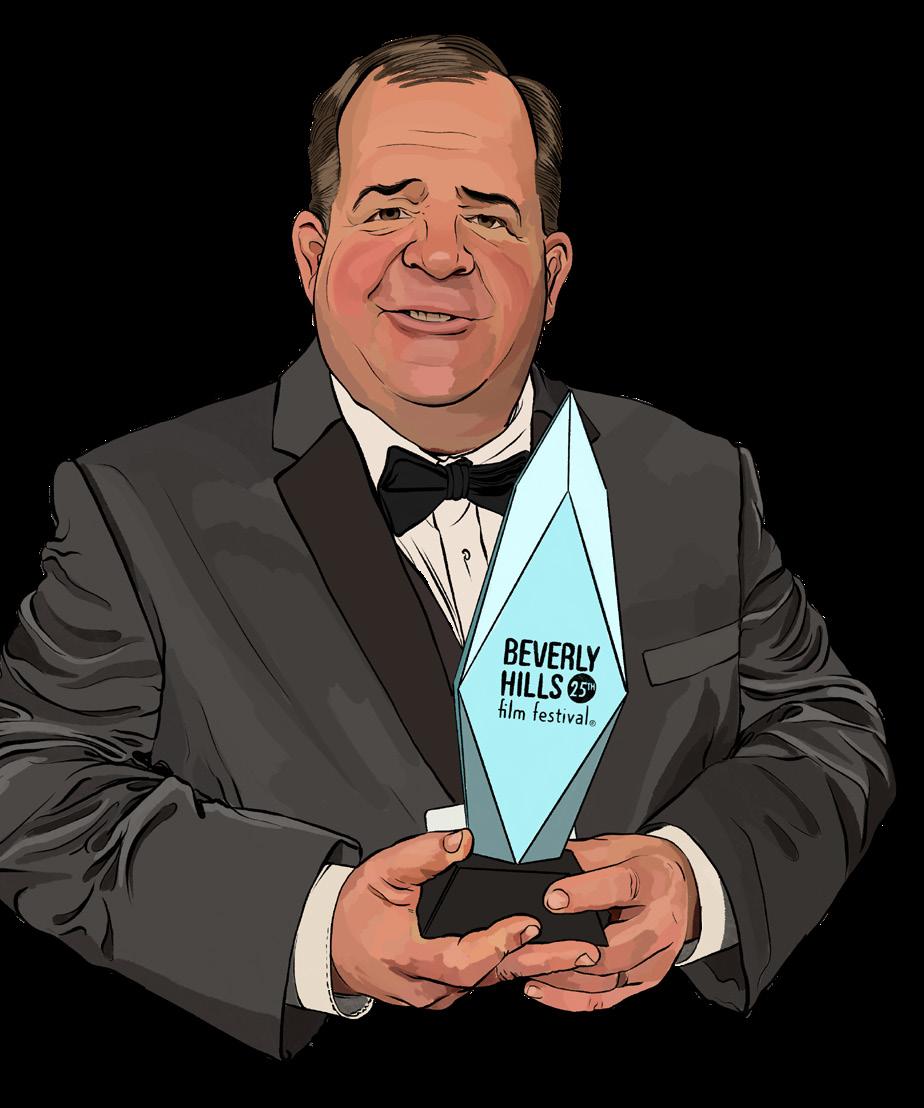
Andrew Koponen, a volunteer EMT who has worked countless Boise State football games, has proven that traumatic experiences can be turned into art. Koponen has acted for years and recently pursued film writing, creating a project entitled ‘Blue on Blue’ based on an incredibly traumatic experience he had as an Oakland police officer.
After spending nearly six years trying to get hired by the Oakland Police Department, Koponen said he “got more than he bargained for.” His first year on the job, he and his partner accidentally fatally wounded an undercover officer from their organization, changing Koponen’s life forever.
“That sent my life down a spiraling drain,” Koponen said. “I stayed on the force for another six or seven years, but it was incredibly difficult.”
After a carjacking incident, though no one was injured, Koponen
PTSD for years after his time in the force. Now, he advocates for first responders who have had similarly traumatizing experiences on the job.
“I’m a proponent of emergency responder mental health and wellness,” he said. “I’m a big believer in that because I fought through that for twenty-five years.”
Koponen, who wrestled in high school and college and served in the army, said he felt ashamed to speak to a psychologist as he viewed himself as a “tough guy.”
“You didn’t want to admit it or tell anybody you were hurting or suffering through nightmares because if you tell them that, you’re worried they’re going to take your gun away and push you aside and say you’re a threat,” he said. “I want the new responders to know that it’s okay, in fact, it’s important to [seek help].”
After leaving the force, Koponen began speaking to a psychologist and attended three different PTSD retreats as he “fought to get better.” While his psychologist recommended never returning to police work, they suggested he do police acting.
“That’s brilliant,” Koponen said of the idea, “because I can still feel like I can wear the uniform again and not feel ashamed the rest of my life that I left police work due to PTSD. So I did — and it was great.”
Koponen had a deep fear of law enforcement and said he was afraid officers would hate him for what happened. During his first few acting experiences, he said his hands would shake from nerves, but over time, these roles helped him process the complex feelings.
Koponen’s credits include ‘I Almost
Got Away With It’, the original ‘AntMan’ where he arrested Paul Rudd, ‘San Andreas’, ‘Venom 2’ and ‘Yellowstone’ where he worked with Harrison Ford, who he said wanted him to tell his Oakland police stories.
While the acting experiences were therapeutic, Koponen said he still had more work to do to process his trauma.
“At a point, I still had to address something that was still deep inside of me, and that’s why I started going, ‘I need to write.’ I couldn’t tell people — I tried to hide from it for fifteen years,” he said.
‘Blue on Blue’, Koponen’s screenplay, which he has worked on for a decade, follows two parallel stories of first responders as they experience traumatic events on the job, and their eventual meeting where they share their experiences. The screenplay was honored as Second Runner Up at the 2025 Beverly Hills Film Festival out of over two thousand submissions.
Currently, the film is set to be directed by Shaun Paul Piccinino and has three actors attached: Casper Van Dien, Shane Graham and Sean Patrick Flanery.
“There are still people who probably hate me and will never forgive me for what happened,” Koponen said. “I don’t blame them; that was their loved one, he was a husband and a father. I really wanted to write about it because I was too afraid to talk about it, but it was still holding me in a grip, so then I decided to write a screenplay about it.”
Although he still battled PTSD, Koponen wanted to prove to himself he could still work with the community, and decided to join Ada County Paramedics as an EMT. He has worked countless football games at Albertsons Stadium.
“I wanted to prove to myself and the rest of the world that you can beat PTSD,” he said. “You don’t have to hang your head low the rest of your life.”
Koponen was honored with the Life Saving award from Ada County Paramedics and described the profound impact of saving lives.
“That was very meaningful to me, I almost want to cry thinking about it,” he said. “I’m not taking lives anymore, I’m saving them. ”
Being a part of the Boise State community is “a very big honor,” Koponen said, and he hopes his son will attend the university to pursue film in the future. “It’s a wonderful, very exciting school and I wish the best for all the students,” he added.
Koponen’s favorite moment from working the games is when Ashton Jeanty, former Boise State running back, did a flip in front of him and Koponen caught the flying football.
Going forward, Koponen hopes to find investors for his film and begin filming in Boise by fall 2026. In the meantime, he will continue his EMT work. He also shared that his son wants to begin doing community musical theater with him.
“I feel like I owe this [film] to the world,” he said. “[It’s] a penance. I’m trying to do something good from a mistake that happened twenty-five years ago.”
Koponen hopes those who are struggling will reach out and find support where they can.
“I want to encourage everybody, not just first responders, [to] share what you’re going through,” he said.“Find someone you trust, share with them and don’t be afraid to get more professional help.”
RISE CLUB EMPOWERS STUDENTS THROUGH SAFETY ORIENTED SERVICE PROJECTS
Julianna Kelsey | Culture Editor | Illustration by Mia Strand
At the start of the fall semester, Kaylee McCabe, a junior studying Biology, knew she wanted to get involved and make a difference for the campus community, though she did not know how at the time.
“I really did want to get involved in a club, and I just didn’t see a lot of community service-based clubs at BSU,” she said. “I really wanted to do something that would help students.”
McCabe and her two roommates, Jocie McGill and Paige Bower, decided to start RISE Club, a new student organization that plans and executes service projects for students.
McCabe found the inspiration for RISE online, where she saw other groups creating kits with self-defense and safety gadgets for women. That idea sparked her vision for their first project, creating and distributing safety kits for students as they attend parties and social events.
The officers chose the name RISE to represent the purpose of the club: helping students feel empowered and protected. They paired the name with imagery of a phoenix rising from ashes.
Through Boise State, the trio was able to get the club officially started with $600 in grants to get the ball rolling, purchasing items for the safety kits. They also opened an Amazon wishlist for people to donate additional supplies.
“We got tons of donations from parents of students at BSU,” McCabe, RISE Club President, said. “We got a lot of support right away. People were sending us stuff, we got Amazon packages constantly and that allowed us to make a lot of kits.”
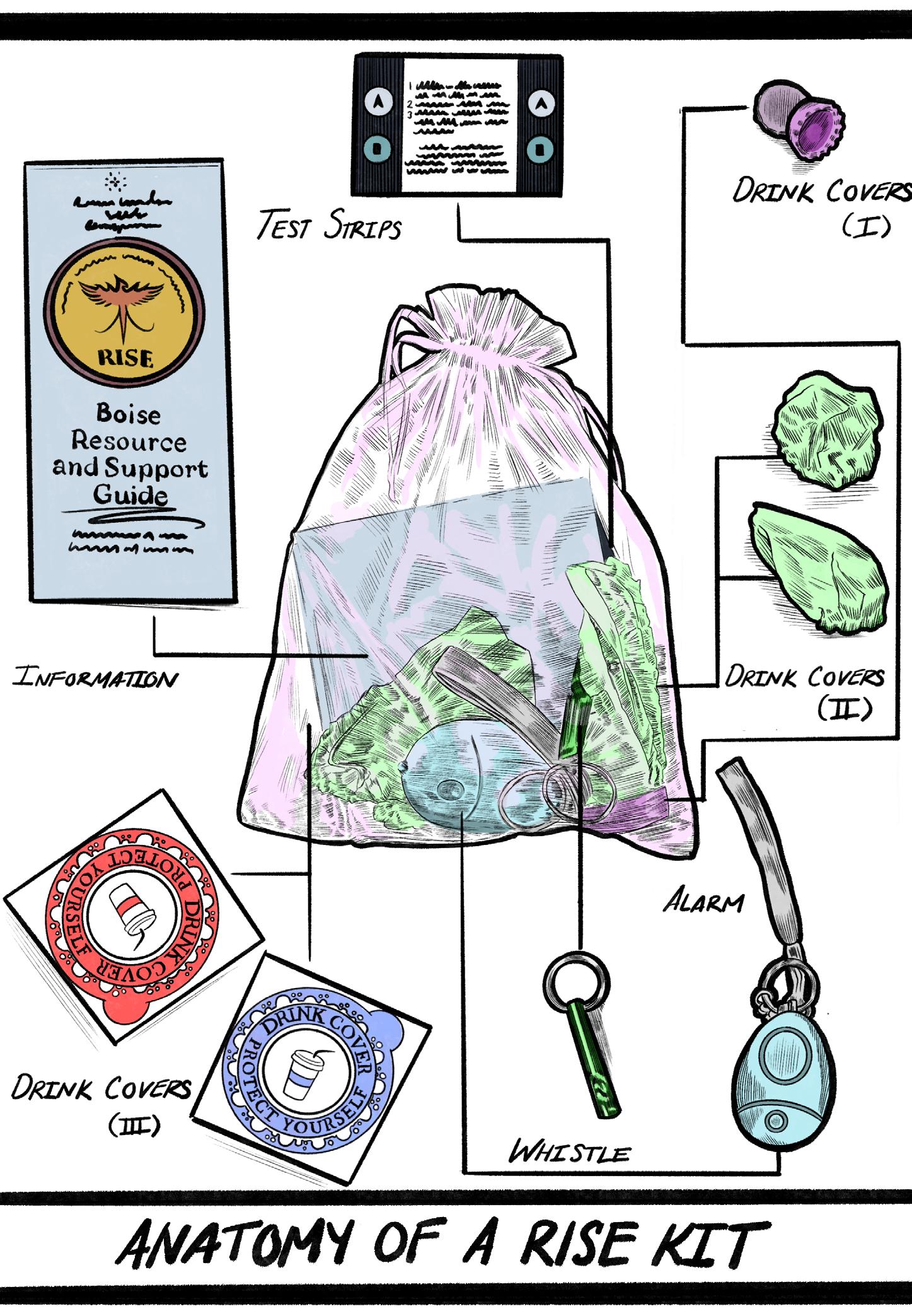
The safety kits include drink covers and drink test strips to prevent drinks from being tampered with. They also include personal alarms and whistles, which can create loud noises in moments of distress, as well as informational materials about safety and support resources in Boise.
“We want students to be able to go out but still be safe while doing it,” explained RISE Club Vice President McGill, a junior majoring in Health Studies. “That’s what led to the kits with the drink covers and the test strips and the whistles and stuff like that because we all should feel like we’re safe wherever we go.”
The club held a tabling event in the fall semester to distribute kits to students. The officers handed out kits to students outside of the Interactive Learning Center and spoke to passersby about resources and safety tips.
“We had a lot of people who really supported what we were saying, just because people need to stay safe, and it is such a big thing,” said Paige Bower, Financial Officer and senior studying anthropology. “I loved connecting with students, and it was really cool to sit out there, talk about our club, hand out these kits and raise more awareness.”
The response to the club and its mission has been overwhelmingly positive.
“I definitely got quite a few messages where people were like, ‘This is a great project. I’m happy that you’re doing this,’” McCabe said.
Bower explained the three officers hope the spring semester will bring new members to the club and more opportunities for students to get involved with their mission as they work on new projects beyond the safety kits.
Students can get involved with RISE by signing up on Campus Groups or donate items for future kits via their Amazon wishlist.
“We are hoping to do some events like fundraising events with different organizations around town,” Bower said. “We want to be able to get their messages out there, and make sure students know that those things are available to them.”
CULTURE
FROM INK TO THE RINK
Ella
Torfin,
junior, finds strength in writing and softness in sports
Julianna Kelsey | Culture Editor | Photos by Omar Saucedo
Ella Torfin fell in love with language as a young girl living in Singapore.
Her family moved there from Virginia for her father’s job when she was in elementary school. Over the three years she spent there, she began learning Mandarin, traveled throughout Southeast Asia and immersed herself in the local culture.
At her international elementary school in Singapore, she wrote a short story for a fifth-grade class project, and the rest was history.
From her early days of exploring storytelling in school, Torfin knew she was destined to become a writer. As a child, she dreamt of writing novels.
“My mom would gift me packs of printer paper as a little treat,” Torfin recalled. “She’d be like ‘I have a surprise for you,’ and it would be a full pack of paper, and I would just write stories on there.”
Today, Torfin is a junior double-majoring in Creative Writing and Linguistics with a minor in Chinese Studies at Boise
State University. Beyond her impressive academic pursuits, she has found success as both a published writer and member of the Women’s Club Hockey Team.
“All I do is read, and so many books changed my life,” she said. “They changed who I am fundamentally, so the idea of [doing] that for someone else is really cool.”
After their time in Singapore, Torfin’s family moved back to their home state of Virginia. Torfin lived there until she graduated high school and fell in love with Boise State University while touring the campus.
“It was one of those things where I came here and felt like I was home,” she explained.
Both her grandfather and father attended Boise State, and her extended family lived nearby, so she never felt too far from home. After moving to Boise, her parents also came to the Gem State, Torfin joking that they “followed her here.”
Constantly writing, Torfin uses music as inspiration. She said she listens to songs that bring out emotions and im -
agery she hopes to portray in the stories she writes.
Torfin joked she loves to write “sad stuff.” Her stories tend to explore complex, poignant themes. According to Torfin, she loves using words to evoke strong emotions in her readers.
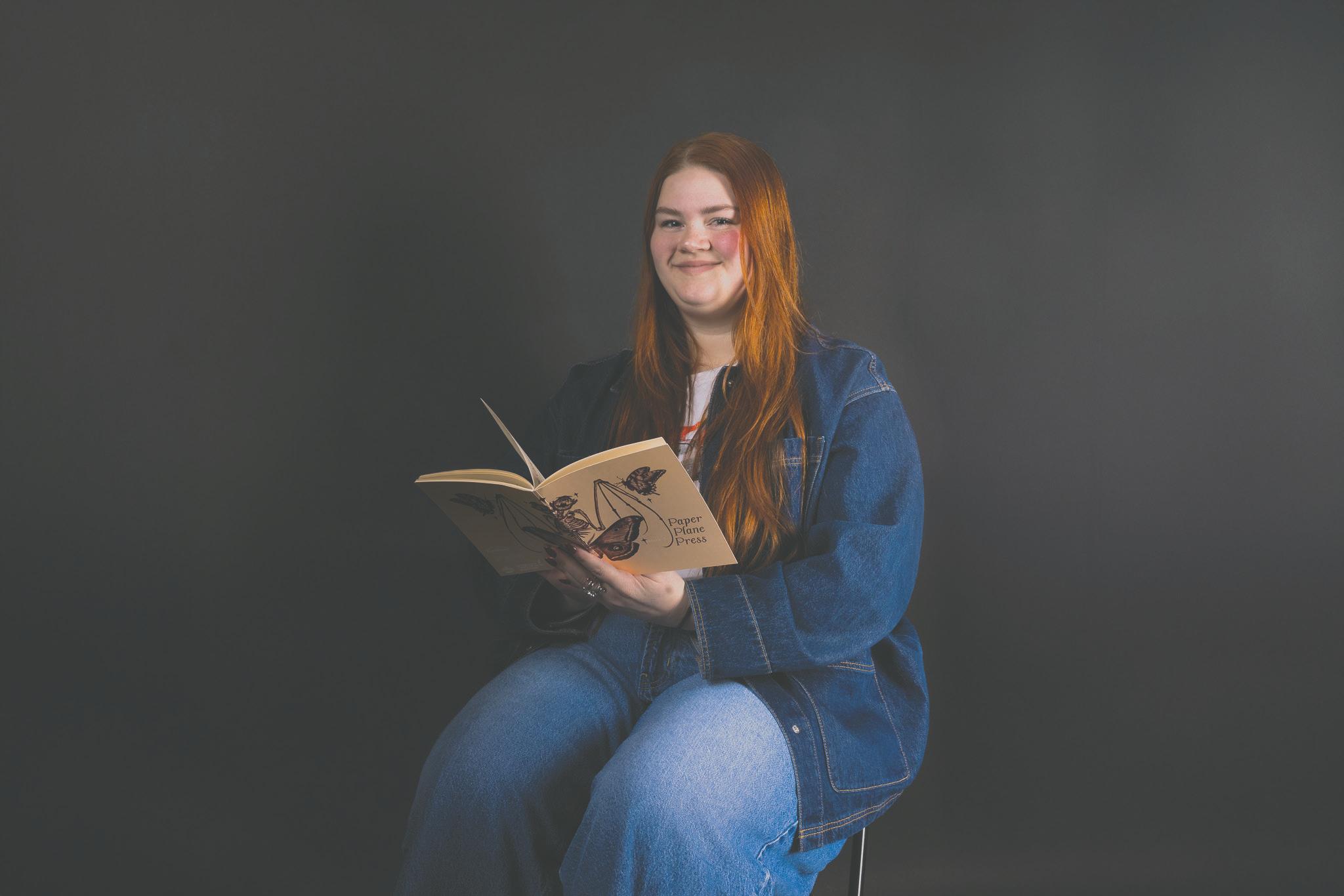
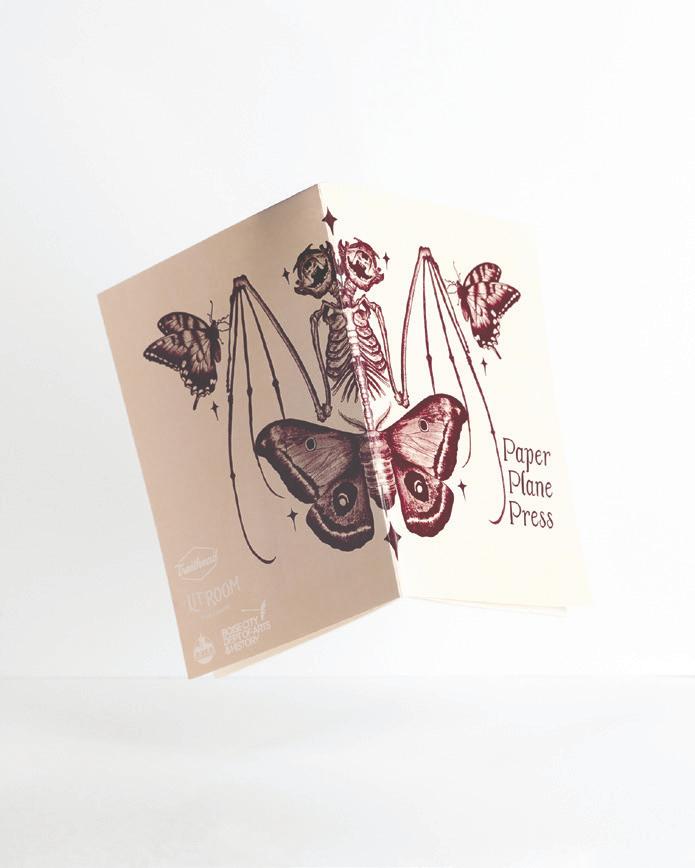
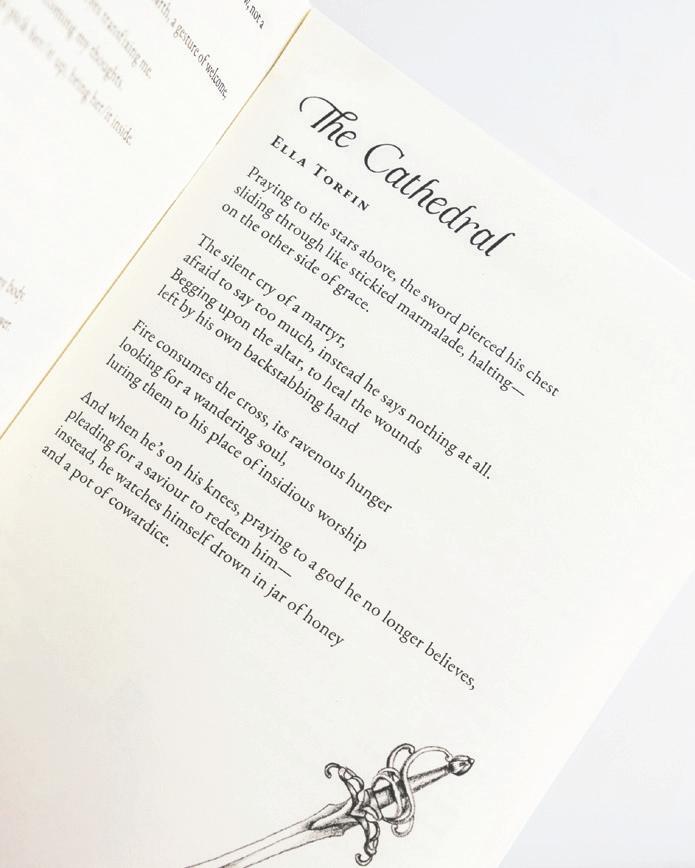
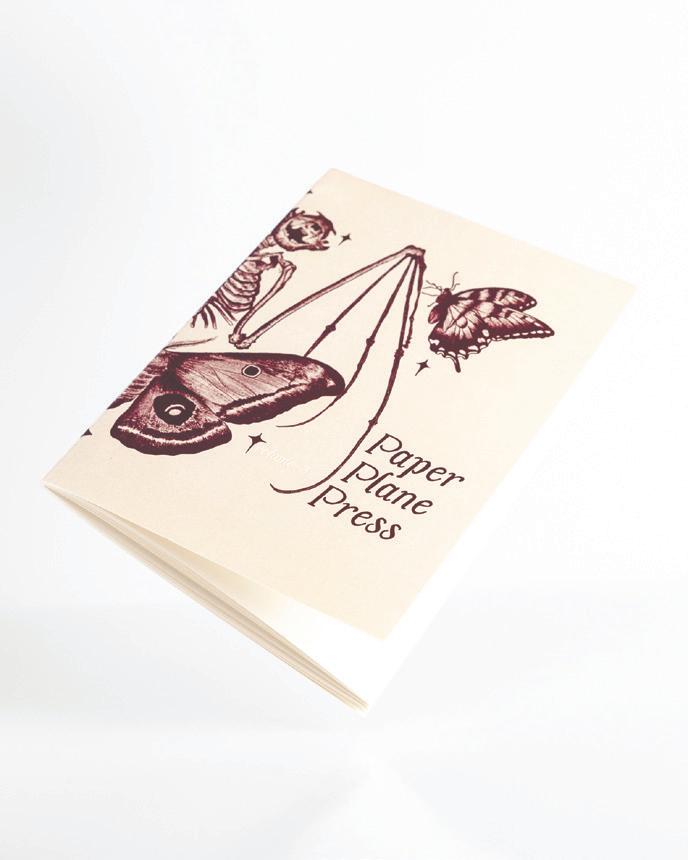
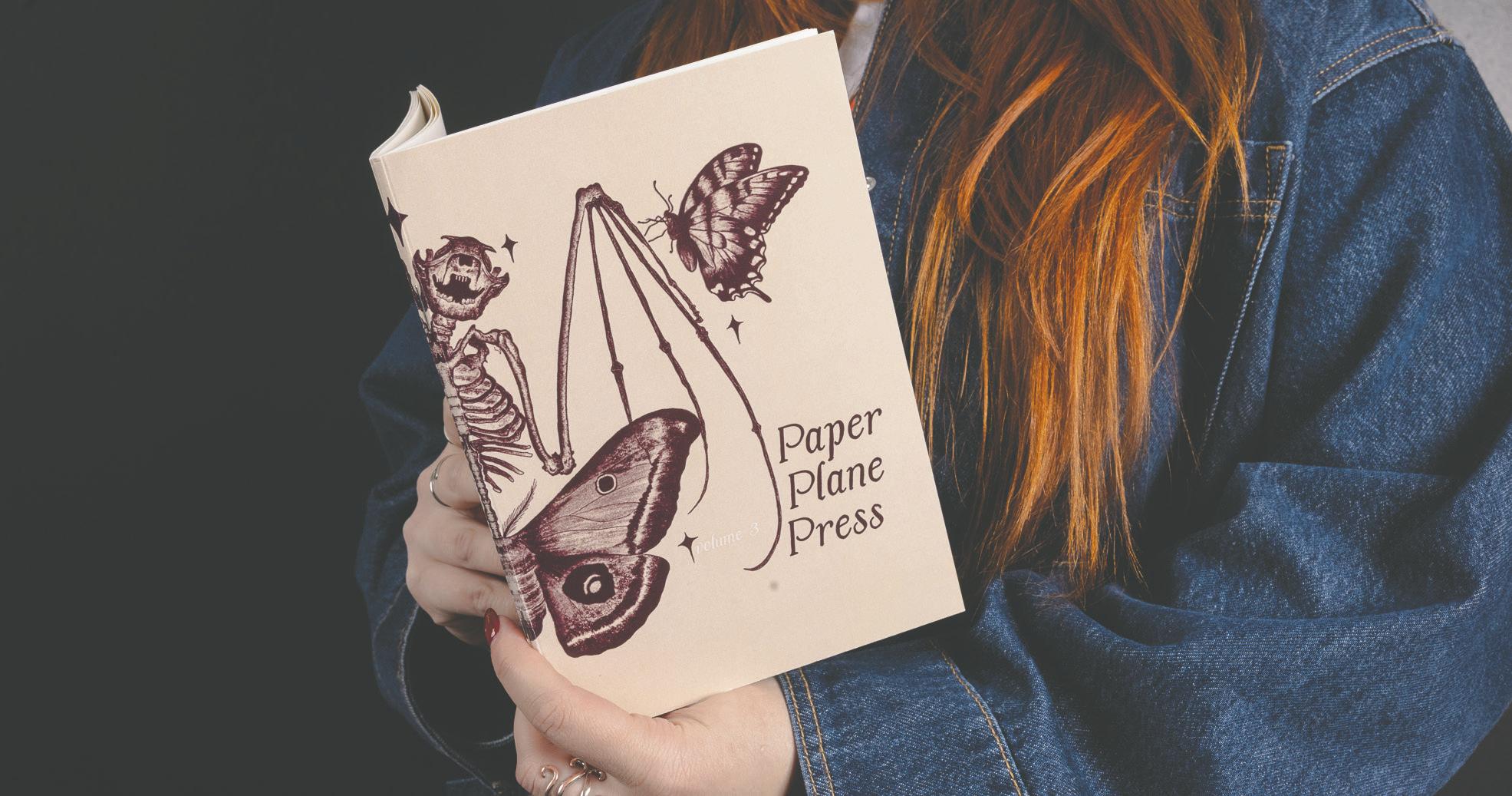
In December of 2025, Torfin’s friend Sophia Hue, co-founder and co-editor of the Backyard Artists’ Paper Plane Press, encouraged Torfin to submit poetry for their Volume Three release. v
Paper Plane Press offers local writers the opportunity to have their poetry, fiction and nonfiction writing published in an anthology released one to two times a year.
“Paper Plane Press was a response to the relative lack of a literary scene in Boise and in Idaho,” Hue explained. “There are a lot of ambitious writers in our area, but there aren’t very many places for them to submit locally or showcase their work.”
Torfin decided to submit three poems for potential publication. While Hue helped select the works for the third edition, she explained submissions were anonymous until selections were finalized. Hue was thrilled when one of Torfin’s poems ended up being chosen.
Paper Plane Press Volume Three was released on Dec. 13, 2025, marking Torfin’s first time having her work published. At the launch party, Torfin read her selected poem and celebrated with other Boise creatives.
“To actually read it and see people’s reactions was such a wonderful experience,” Torfin said.
Hue expressed how proud she was of Torfin’s writing and work ethic.
According to Hue, Torfin is the kind of person who lights up a room.
“Ella is genuinely that friend that is so kind,” Hue said. She’s so funny, she’s so sweet and she genuinely cares about
“I don’t know if she would describe herself as ambitious, but she has a lot of dreams,” Hue said. “Especially this past year, I’ve seen her really go for all of them. She’s doing an insane amount of work, and she’s definitely a go-getter, a dreamer and super ambitious.”
everybody in her life.”
Beyond writing, Torfin finds enjoyment through another creative outlet — a TikTok account dedicated to her love of reading. As a ‘BookTok’ creator, she makes a variety of videos ranging from she reads each week as a double major in college to book reviews on her account, @ellas.littlelibrary.
“[BookTok] has been another source of community because I meet so many people there that love stories, books and writing the same way I do,” she said.
Torfin has also used her TikTok account as a way to share her own work with the online community she has built.
“One of the best ways to become a writer and get people to see your work and interested in your work before it comes out is having a social media platform,” she said. “If I were to go the [self-publishing] route, I’d need to do all the work myself, so to already have a foundation really helps.”
On top of being a double major, running her TikTok account and reading and writing every day, Torfin wakes up almost every morning at 3 a.m. to pursue something totally different. When she’s not writing or making content, she’s on the ice with the women’s club hockey team.
Growing up, Torfin was never very interested in athletics, but she occasionally felt a pull toward hockey. She was a natural at floor hockey when she played in P.E. class and briefly considered joining her high school’s field hockey team before the pandemic ended the season prematurely.
As a freshman in college, Torfin saw a post advertising tryouts for the recently revived women’s club hockey team after the pandemic forced them to stop playing a couple years before.
Torfin decided to take a chance and try out for the team.
“Oh my god, I was so bad,” Torfin joked. “I had maybe been ice skating three times in my life before that. I was horrendous.”
When others may have given up, Torfin kept trying. She practiced skating, attended practices and never let herself get discouraged. Three years later, Torfin plays winger for the team and is proud of how far she has come.
“I still have a lot to learn, but I can’t help but be proud of myself,” she said.
For Torfin, the connection with her teammates and coaches makes the hard work worth it.
“That girl does not give up,” Women’s club hockey coach Jaccob Hope said of Torfin. “If she falls, she can fall violently, and it can hurt — most every other person would probably stay down for a couple minutes. Ella pops up every time and has a ‘go get ‘em’ attitude.”
Hope said Torfin always brings positive energy to the ice, motivating and praising her teammates.
“She’s one person I don’t have to remind to tell her [teammates] that they did something great,” Hope said. “She’s one of the few people that realizes when her teammates are doing something awesome and definitely does not keep quiet about it.”
Torfin’s uplifting presence on the ice and at practice is felt by her entire team.
“She’s a joy to have and she gives everything she’s got,” Hope said. “What she does on and off the ice reflects that she’s just going up, up and up with
whatever she wants to do. She’s gonna have a successful career because that girl doesn’t get pushed down.”
Torfin often jokes about how much she hates cardio and running despite playing a cardio-intensive sport. According to her, there’s a big difference — describing hockey in a way only a writer could.
“Not to sound insanely cliche, but it feels like you’re flying sometimes,” she said. “There’s something that feels magical about it.”
The soft, flowing craft of writing and the intense, physical spectacle of hockey may seem to clash. For Torfin, however, these conflicting activities bring her fulfillment and enjoyment in different but complementary ways. Writing helps her reflect and express herself, and hockey brings her together with others for community and support.
“It’s important to know that you can find strength in writing, and you can find softness in sports,” Torfin said.
After graduating from Boise State, Torfin plans on attending grad school to continue her education. She loves being a student and hopes to keep learning and growing as she pursues writing professionally.
“You don’t have to sacrifice a piece of yourself or something that you love,” she said. “I’m going to school for creative writing. That’s not exactly the degree that’s gonna get me the big bucks, but I don’t think anyone should sacrifice what they love.”
22, 2026
SPORTS
THE BRONCOS BREAK THEIR ICE-COLD LOSING STREAK WITH WINS OVER THE RAMS AND COWBOYS
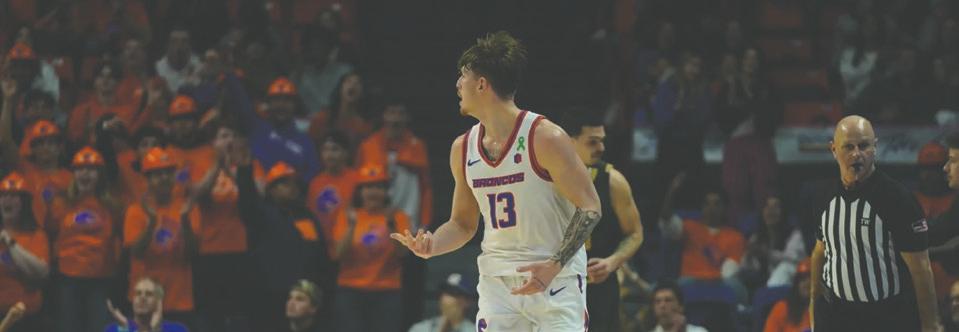
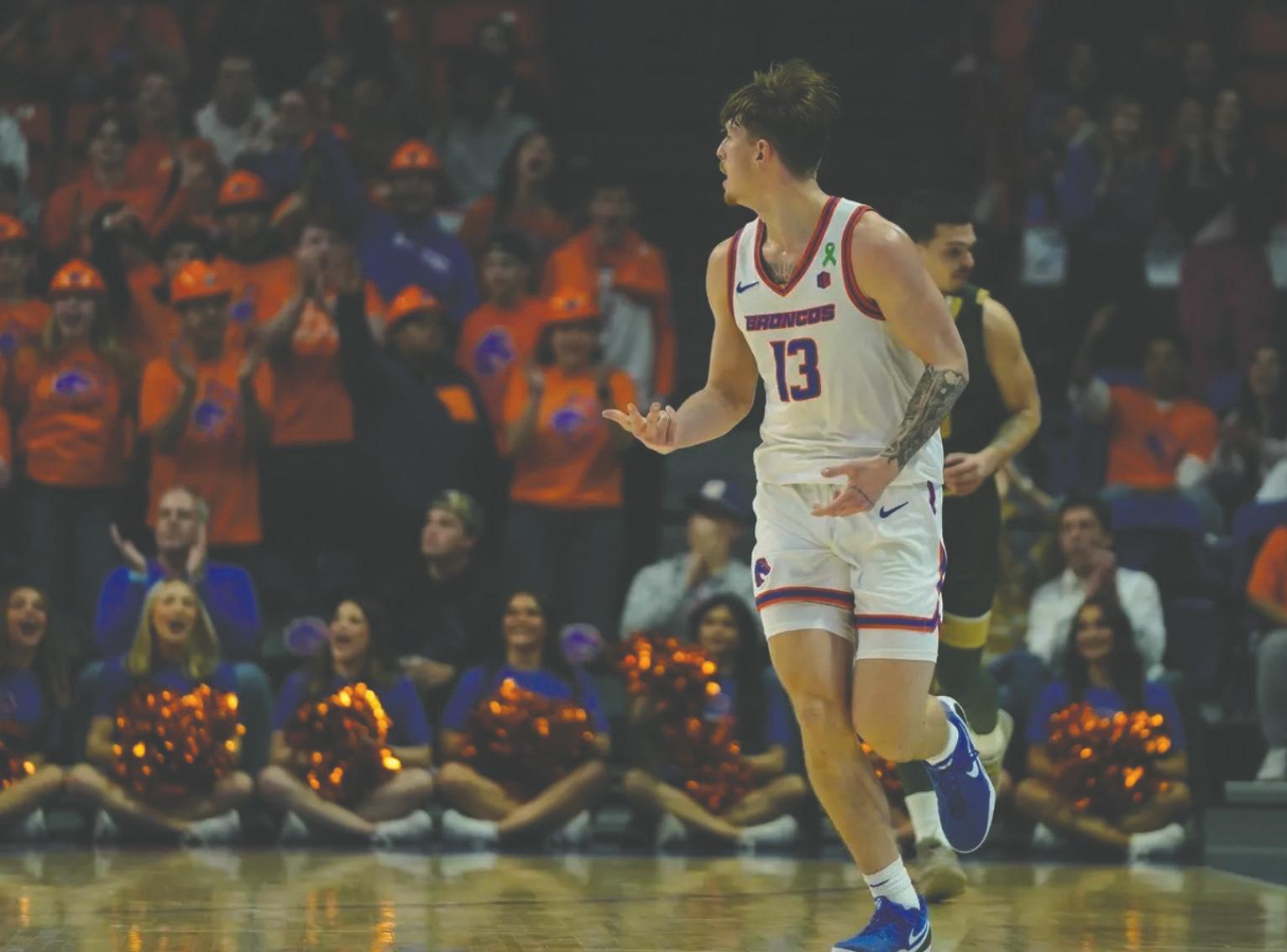
Boise State men’s basketball entered Friday night’s home matchup against Colorado State in the midst of a discouraging stretch, but a resilient effort helped the Broncos snap a four-game losing streak in Mountain West play.
Over the span of three weeks, the Broncos have lost five of their last eight games, stalling momentum as conference play tightens. The stretch has sparked questions about how Boise State will respond and build consistency moving forward.
What once looked like a team capable of controlling games now looks like a team struggling to sustain offense, optimize possessions and respond when opponents push back.
The slide began on Jan. 3 when Boise
State fell 110-107 in triple overtime at San Diego State. The Broncos erased a 24-point first-half deficit and forced three extra periods at Viejas Arena, but late-game execution faltered despite multiple chances to close it out. The loss set the tone for a stretch in which Boise State has shown defeat after each battle.
“We’re going to find out our real toughness because these guys are devastated,” head coach Leon Rice said after the game. “We’ve got to build it back up and get back.”
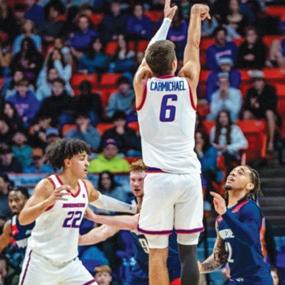
On Jan. 7, Boise State dropped a 75-58 loss to Grand Canyon, a game defined by stagnant offense and ice-cold shooting. Afterward, senior forward Pearson Carmichael offered a blunt assessment of their performance.
“They wanted it more,” Carmichael
said. The comment reflects the urgency Boise State has struggled to sustain.
Those issues were broken down but never solved. On Jan. 10, Boise State suffered a 93-68 home loss to Utah State, the largest margin of defeat at ExtraMile Arena during head coach Leon Rice’s 16-year tenure. The Broncos struggled to generate quality shots and failed to slow the Aggies’ attack.
“Tough times require some tough people,” Rice said after the loss. “We’re going to get our toughness back.”
The pattern continued on Tuesday, Jan. 13, when Boise State fell 89-85 in overtime at UNLV. The Broncos forced extra time but struggled once again to execute consistently when the game tightened late.
With production dipping outside of one steady contributor, offensive inconsistency has defined Boise State’s recent losses.
Junior forward Drew Fielder leads the team in scoring, averaging about 13.3 points per game, one of the few consistent bright spots for the Broncos. Fielder also ranks among Boise State’s most efficient shooters, connecting over 50% from the field — a stabilizing presence among the victory drought.
Meanwhile, the backcourt has struggled to find its rhythm, particularly from point guard Dylan Andrews, who has seen his shooting and decision-making skills disappear in conference play. Before the matchup against the Rams, Andrews was making under 15% of his attempts and turned the ball over nearly as often as he had an assist, contributing to stagnant offensive possessions.
However, Boise State snapped the losing streak with a 79-73 home win over
the Rams, led by Andrews, who bounced back with a season-best scoring night. This performance provided the spark the Broncos have been searching for.
There were more signs of growth Tuesday night, earning an 81-65 road win over Wyoming to secure its second straight conference victory.
The Broncos controlled the game with efficient shooting and defensive pressure, finishing at 49.2% from the field and knocking down 10 of 26 attempts from three. Boise State also committed just eight turnovers but held on in the second-half of the game, a complete turnaround from earlier losses where late-game execution fell apart.
Despite these recent wins, Boise State understands there is still ground to cover. The Broncos have struggled to sustain offensive rhythm for full stretches, often stalling into late-clock possessions and relying on difficult shots rather than consistent ball movement.
Turnovers and missed rotations have compounded those issues, putting added pressure on a defense that has otherwise kept the team competitive.
“These guys get it. They don’t come and make excuses; they own it, they stand up to it,” Rice said.
“That’s the beauty.”
Conference play is still young, but the margin for error is shrinking. Adjustments are overdue, especially on offense and in toughness, yet the path forward remains clear.
As Boise State is set to host Air Force on Saturday, Jan. 24, the focus shifts from identifying problems to demonstrating growth. At this point in conference play, effort alone no longer suffices.
Aidan Mattingly | Sports Reporter | Photo courtesy of Boise State Athletics
BOISE STATE FOOTBALL ADDS MULTIPLE KEY PIECES TO 2026 COACHING STAFF
Jake Zamora | Sports Editor | Photo by Omar Saucedo
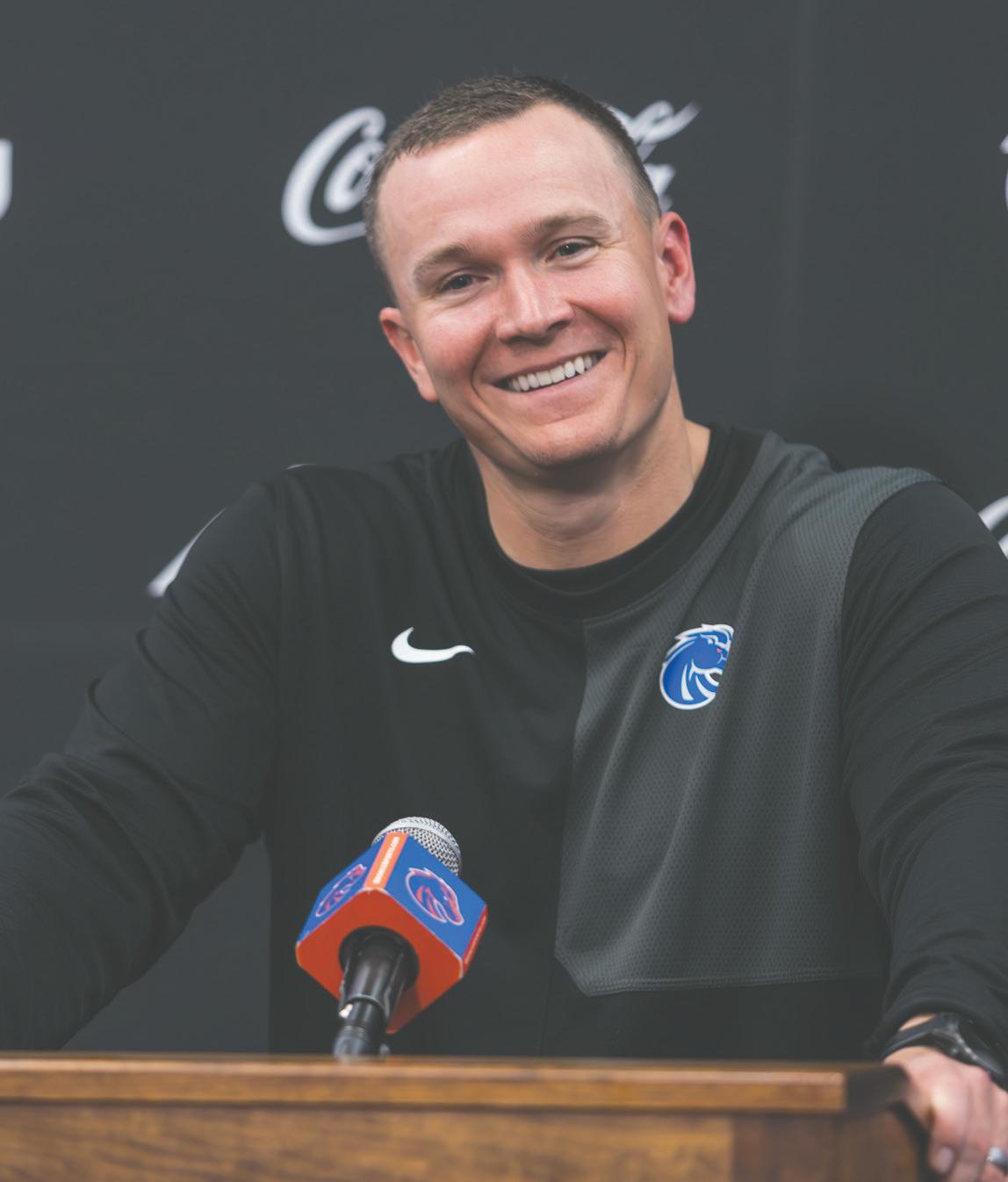
Over a month out from a blowout loss to the Washington Huskies in the LA Bowl, Boise State football has made numerous new additions to its coaching staff.
After a disappointing season in which the Broncos failed to capitalize on their 2024 College Football Playoff appearance and saw several players depart via the transfer portal, the program is focused on building a new foundation with aspirations of a stronger 2026 campaign.
The first two new hirings came on Jan. 9 when head coach Spencer Danielson welcomed Alvis Whitted to the staff as the new pass game coordinator and wide receivers coach and Terrence Brown as co-defensive coordinator and defensive backs coach.
Brown’s history of developing talent was a key factor in his hiring.
“Coach Brown is an elite football mind and we’re pumped to add him to the staff,” Danielson said. “He has a proven track record of developing defensive backs and has produced NFL-level players. He’s a great connector and another person who does a great job caring about the guys and developing them as young men.”
Brown joins the Bronco coaching staff after four seasons at Cal where he served as the defensive backs coach, passing game coordinator and co-defensive coordinator during the 2025 season. Before Cal, Brown coached defensive backs at Washington and Vanderbilt, where he helped develop multiple All-Americans and NFL Draft picks.
On the other side of the ball, Whitted joins the staff after serving as a senior offensive analyst at his alma mater, NC State.
Whitted played nine seasons in the NFL as a wide receiver and had stints coaching pass-catchers at Utah and Colorado State. He served as wide receivers
coach for the Green Bay Packers for one season in 2019.
Whitted expressed his excitement for joining such a renowned program.
“I am extremely thankful and blessed for the amazing opportunity to work with such an elite program that is known for winning championships,” Whitted said. “I’m ecstatic to work with Coach Danielson and his staff and I’m grateful for the opportunity to build and shape young men.”
Throughout January, the program saw various promotions of already existing staff members.
On Jan. 13, Danielson announced that Frank Maile will be promoted from defensive analyst to assistant defensive line coach.
Maile spent last season working with the defensive line and helping the Broncos generate a conference-leading 45 tackles-for-loss.
Before Boise State, Maile spent five seasons coaching at his alma mater, Utah State, and coached seven all-conference players and two NFL Draft picks in Ricky Ali’ifua and Caleb Repp. Maile’s first stint with the Broncos came in 2021-22 when he helped develop Scott Matlock, a 2023 sixth-round pick. Maile spent two years at Washington State before returning to Boise in February 2025.
Additionally, edge coach Jabril Frazier was announced as the new run game coordinator on Jan. 15.
Frazier has held his previous role of edge coach since 2023 and was central to the development of all-conference edge rushers Ahmed Hassanein and Jayden Virgin-Morgan. A Boise State alumnus himself, Frazier has been a part of five conference championships as both a player and coach. Last August, he was named on the 247Sports 30Under30 coaching list.
the offensive side, Danielson announced Zak Hill’s promotion to co-offensive coordinator on Jan. 14.
First coaching at Boise State in 2016, Hill returned to Boise in 2025 as the quarterbacks coach after a stint with the Seattle Seahawks as an offensive assistant. In 2023, Hill won the 6A Arizona state championship while coaching at Saguaro High School. With Seattle, he helped the Seahawks to the NFL’s eighth-best passing offense in 2024, averaging 236.5 yards per game.
As Boise State’s football program enters a period of growth and rebuilding
after a dissatisfying 2025, the goal of continuing to be a championship-winning program rooted in a blue-collar mentality remains the same.
Brown’s remarks after his hiring capture the excitement and energy any coach would feel joining a storied program.
“My family and I are extremely grateful for this opportunity,” Brown said. “I am excited to join the rich history and tradition of Boise State Football.”
22, 2026
On
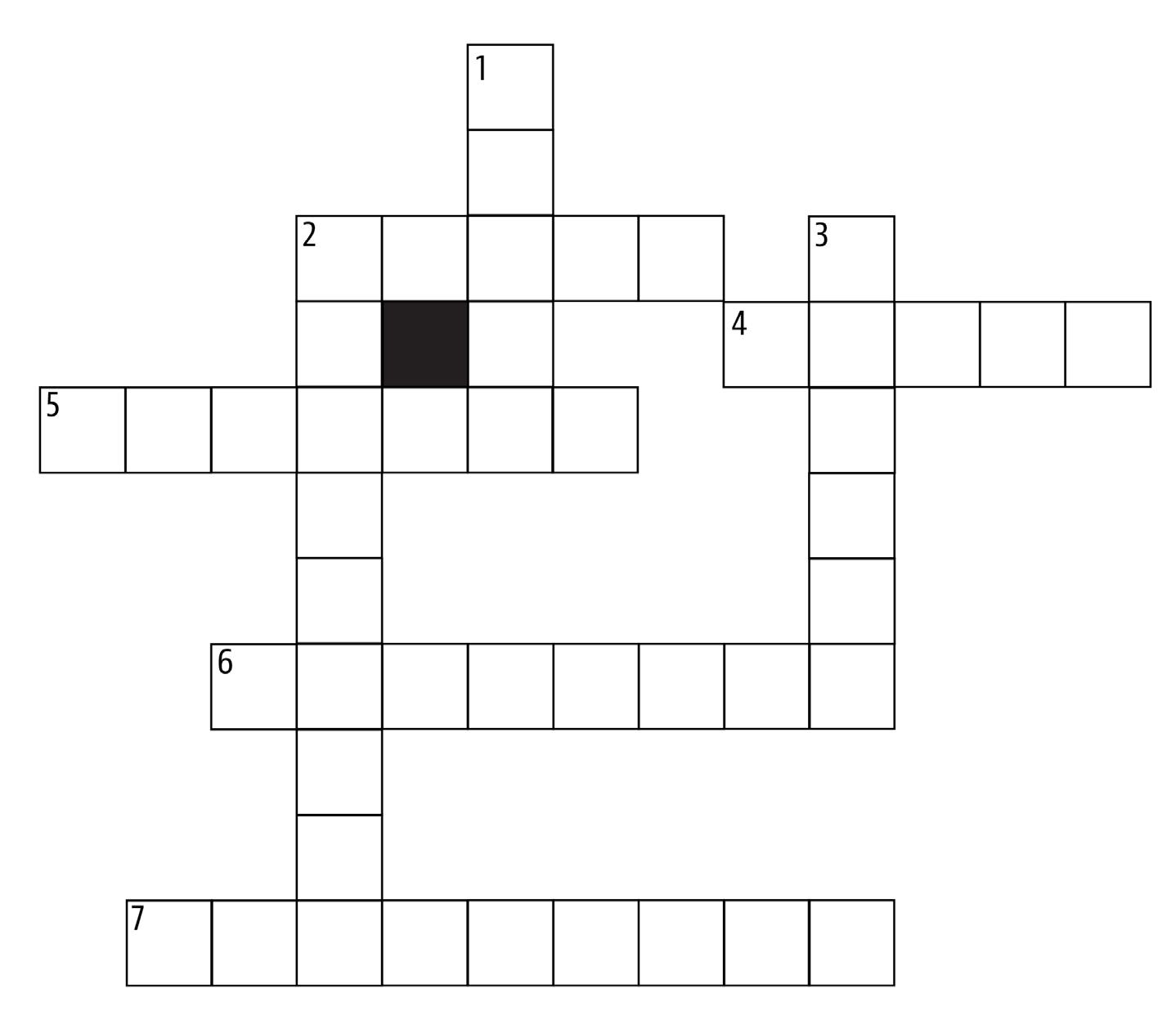
CROSSWORD
WORD SEARCH
Across Down
2. Designer brand, or a horse-drawn carriage.
4. We have one of these each season while in school.
5. Tiny, fun item that collects dust on your desk.
6. To make someone more confident.
7. Opposite of speaking.
1. The walk of __.
2. A person who purchases goods.
3. “In your __”
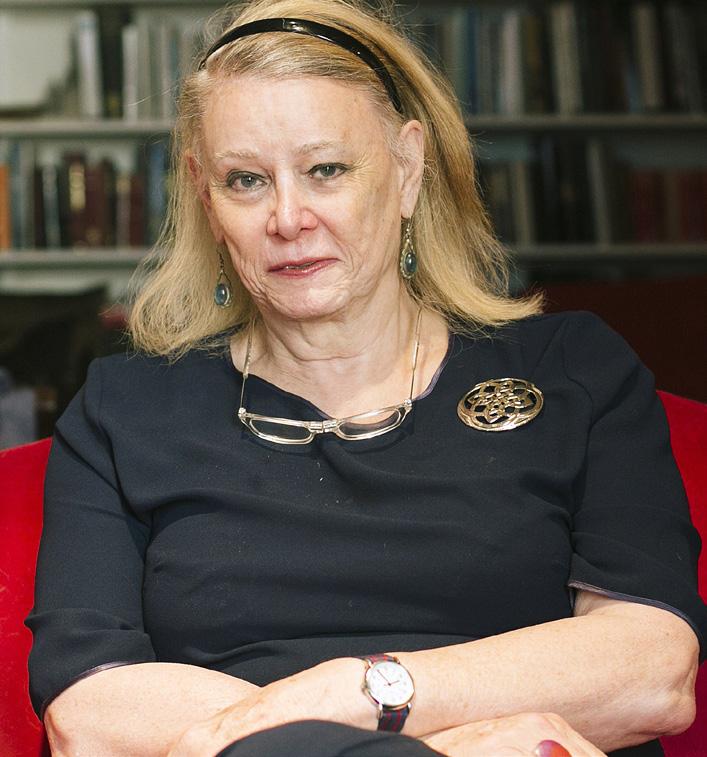
5TH ANNUAL SPRIGGS FAMILY LECTURE
“THE BOURGEOIS DEAL: LEAVE ME ALONE AND I’LL MAKE YOU RICH”
DEIRDRE NANSEN MCCLOSKEY
Monday, February 23, 2026 | 6:30 P.M. Jordan Ballroom | Student Union Building
FREE ADMISSION, FREE PARKING: Lincoln Ave. and University Drive Garage boi.st/spriggs
Hosted by Spriggs Family Endowment for Free Market Studies and Boise State College of Business and Economics