


BY LAILA AZHAR features@theaggie.org
The student behind the pink cat icons spray-painted around Davis was caught and arrested got down. I gave them my hands; I was answering all their questions — which, in retrospect, I shouldn’t have done,” Miranda rights, she had assumed cooperating was in her best interest. e o cers placed her in s and took her to a police station, where she experienced a series
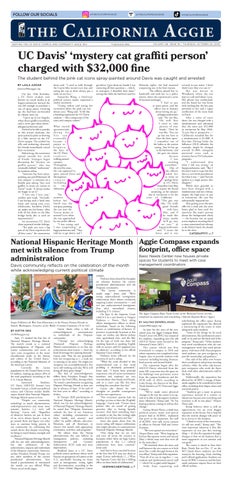
On her 19th birthday, a UC Davis student now known on social media as @ happycatshrooms learned she was old enough to purchase a can of spray paint. Growing up, she had been surrounded by vibrant street art.
“I grew up in Los Angeles, where there’s gra ti everywhere, and it never gets taken down,” @happycatshrooms said.
Excited to be able to partake in this artistic medium, she spray-painted a pink cat drawing in a bike tunnel on the UC Davis campus. e symbol was silly and endearing; charmed, her friends immediately voiced their excitement.
Before long, the excitement spread outside her circle of friends. Strangers began discussing the “mystery cat graffiti person,” who was eventually dubbed “catshrooms” by students online.
“Someone has been spraypainting cats and [Pokemon] all over campus,” a comment on a Reddit post asking “Any cool gra ti or street art scenes in Davis?” reads. “It always makes me happy to see it.”
“I love you I love you,” another post reads. “Seriously. I am having such a hard time lately and seeing your cute, wholesome, harmless [little] art makes me feel better. (Also with all the dicks on the bike bridge lately this is such an improvement).”
An anonymous UC Davis alum expressed similar feelings. e pink cats were a big part of my Davis experience for all four years,” the anonymous
alum said. “I used to walk through the Cuarto bike tunnel every day, and seeing the cats in there always put a

Davis community reflects on the celebration of the month while acknowledging current political climate

BY KATYA OKS city@theaggie.org
Sept. 15 marked the rst day of National Hispanic Heritage Month.
e month stands as a national acknowledgement of Hispanic and Latino communities and serves to “give extra recognition to the many contributions made to the history and culture of the United States,” according to the National Museum of the American Latino.
Currently, the Latino population in the United States is over 65 million, making up almost 20% of the total population according to the U.S. Census Bureau.
Associated Students, UC Davis (ASUCD) Senator Luis Leonardo Garcia, a third-year political science and Chicano studies double major, shared what National Hispanic Heritage Month means to him.
“Despite our community endur[ing] so much discrimination, underrepresentation and many more systemic barriers, [...] we’re still thriving,” Garcia said. “Regardless of whatever barriers are put in front of us, we’ve always found a way to go around them and gure out other ways to continue being present in our community. So, celebrating this month shows that despite everything, we bring so much beauty, strength and excellence.” National Hispanic Heritage Month calls for not only acknowledgement, but also celebration of the achievements, impacts and individuals of the Hispanic community. However, neither President Donald Trump, nor any other members of the current presidential administration, have issued a proclamation or mentioned the month on any o cial White House social media pages.
Garcia shares what a lack of acknowledgement communicates to individuals of the Hispanic community.
“[Trump] not acknowledging [National] Hispanic Heritage Month communicates to us that our achievements don’t matter — that’s the kind of message he’s putting forward,” Garcia said. “But, for me personally, him not recognizing us [...] leads me to wanting to do more. He might not recognize our accomplishment[s], but we’re still working each day. We’re still doing all these great things.” is lack of acknowledgement di$ers from President Trump’s rst term in the Oval O ce, during which “he issued a proclamation recognizing Hispanic Heritage Month at least one day in advance of Sept. 15 for each of his four years in o ce,” according to Forbes.
In Trump’s 2020 proclamation of National Hispanic Heritage Month, which was his last acknowledgement of National Hispanic Heritage Month, he stated that “Hispanic Americans embody the best of our American values, including commitment to faith, family, and country” and called “on public o cials, educators, librarians, and all Americans to observe this month with appropriate ceremonies, activities, and programs.”
e silence from the Trump administration this year follows its immigration policies, including Immigration and Customs Enforcement (ICE) raids and mass deportations.
Bradford Jones is a UC Davis political science professor whose work focuses on perception of Latinos in the U.S., speci cally focusing on issues such as immigration, voting rights and discrimination, according to the UC Davis Global Migration Center
website.
Professor Jones shared his thoughts on relations between the current presidential administration and the Hispanic community.
e Latino community is under siege,” Jones said. “We’re seeing unprecedented immigration enforcement that’s almost exclusively targeting Latino communities — and not just undocumented immigrants, [but also] naturalized citizens, including U.S. citizens.”
On Sept. 8, the Supreme Court ruled 6-3 in a case known as Vasquez Perdomo v. Noem. eir ruling allows immigration o cers to detain individuals “based on the following factors or combination of factors: (i) presence at particular locations as bus stops, car washes, day laborer pickup sites, agricultural sites, and the like; (ii) the type of work one does; (iii) speaking Spanish or speaking English with an accent; and (iv) apparent race or ethnicity,” according to the o cial Supreme Court website.
Professor Jones re%ected on the outcome of such a ruling.
“What the court decided in this unprecedented case is that racial pro ling is absolutely permitted,” Jones said. “I know from personal experience, a lot of Latino [community members and students] are very worried about their family and friends, and so a court case like this does nothing but exacerbate that fear.”
Garcia also shared his own thoughts on possible consequences and his own experiences.
“Not everyone’s parents had the privilege or time to learn the [English] language,” Garcia said. “I know many parents who are scared of getting groceries [due to having Spanish accents]. And that’s something that’s so simple to do, but this [ruling] adds another level of insecurity and fear.”
Jones also spoke about how the recent ruling will impact celebrations that might take place to commemorate National Hispanic Heritage Month.
“One thing that we see over and over, all across the country, in locations where there are large Latino populations, is that [...] cultural celebrations have been canceled,” Jones said.
And they’ve been canceled because of the fear that ICE may use them to target [Latinx individuals.] [...] What the Supreme Court did has a chilling e$ect on these kinds of celebrations.”
“I had to pee at some point, and the cer was so hesitant about letting me go,” @happycatshrooms said. “He was like, ‘Ok, well, first I need to take pictures of your hands.’ Then he was like, ‘You can go but you have to leave the door open.’
I remember one of the ladies at the station saying, ‘Just let her go to the bathroom,’ and she gave me tissues because I was snotting everywhere.”
One of the officers asked her to write an apology letter to UC Davis Chancellor Gary May — a request she found surprising, as her amount due in restitution is for the
“The guy was like, ‘I’m really good friends with Gary May, and if he reads this letter, maybe he’ll go easy on you,’” @ happycatshrooms said. “I wrote the letter, and it was
covered in tear stains. I don’t think Gary May ever saw it.” She was driven to Woodland, where she was kept in a cell until about 2 p.m. Her phone was con scated, and she found her way home with nothing but the bus pass provided to her and a vague recollection of the route back to Davis.
After a series of court dates, she was charged with a misdemeanor and informed that she must pay $32,000 in restitution by May 2026. To put that in perspective — California’s standard ne for a misdemeanor is $1,000. A rst-time Driving Under the In%uence (DUI) o$ender, for example, might be charged around $1,000, alongside potential costs such as attorney fees or DUI education programs.
“I understand that what I did was wrong,” @ happycatshrooms said. “But I also don’t want it to get lost that this is a very harsh punishment for what it was — and I haven’t spoken to a single person who disagrees.”
While she’s grateful to have been charged with a misdemeanor and not a felony, despite the high price to pay in restitution, the case has substantially impacted her.
After getting an on-the-spot o$er for a retail job, she went home glad to have aced the interview. She wasn’t nervous about the background check — the location was an equal access employer, meaning that if a crime committed isn’t relevant to the eld at hand, she should be in the clear.
CATGRAFFITI on 7
Basic Needs Center now houses private spaces for students to meet with case management coordinators

BY AALIYAH ESPAÑOL-RIVAS campus@theaggie.org
In time for the start of the new school year, the Aggie Compass Basic Needs Center (ACBNC) has reopened for students, expanding into the old ASUCD Pantry room located in the Memorial Union (MU).
The center, which was first introduced to campus in 2018 and whose expansion was completed in late August, aims to provide students with resources including housing, nances, food security and mental health.
The expansion began after the ASUCD Pantry relocated from the main MU concourse into the space on the building’s west perimeter, across from the campus bookstore and the ATM wall, in 2024, according to Leslie Kemp, the director of the Basic Needs Initiative at UC Davis and Aggie Compass.
“We’ve made some physical changes in the way the center is set up, and we’re able to help support students more e ciently,” Kemp said. “So I’m hoping students coming in will see that change.”
Lorena Alvarez Flores, a third-year political science major and special project lead at ACBNC, explained that prior to the expansion, the sta$ of ACBNC were split across campus at o ces in Dutton Hall and Lower Freeborn.
“We were spread out everywhere,” Alvarez Flores said. “We’re hoping we feel less like separate teams and instead [like] a whole team now that we’re all in the same place.”
“We knocked down the door and wall between the two centers so it feels more like a walk-through between the two o ces,” Kemp said of the expansion.
“Now all of us can sit together — our students and [professional career] sta$ — which I’m so glad could happen.” Aside from repainting and
refurbishing the o ce space, Kemp explained the expansion has allowed a restructuring of the center to more adequately assist students.
“Some of the things we do need administration, like [professional career] sta$, to sit and run the back end of the program,” Kemp said. “Other students may need coordinators who do case management work that need private spaces. And most of all, these programs need students, our peer navigators, to provide mentorship and guidance.”
One side of the o ce now houses their coordinators and private meeting cubicles, while the other side houses peer navigators who work the front desk, with other administrative sta$ in the back. Additionally, the expansion has allowed for ACBNC’s storage of basic needs supplies to be centralized in their o ce, including their diaper closet and essentials pantry.
“Students get a more in-person experience instead of a remote or distant one because now everything and everyone is all in one place,” Alvarez Flores said.
Kemp believes there is still an opportunity for an even bigger expansion in the future, but is hopeful that the current changes will prove to be in service to the students.
“I think in terms of the renovation, it’s still too small,” Kemp said. “ e most important takeaway is that [the expansion is] not just this exciting thing — it’s that the expansion brought changes to how we do business that is more supportive to our mission and our goals.” e center is slated to host their Basic Needs Fair on Oct. 17 on the MU Quad where students can nd resources for housing, food, clothing and CalFresh applications. Students can locate ACBNC’s resources and the basic needs assistance request form on their o cial website.
The shutdown of the line, which traveled between the two University of California campuses daily, was prompted by low ridership

BY ROBIN FRANKLIN campus@theaggie.org
The Davis-Berkeley shuttle, a popular option for those looking to travel between the UC Davis and UC Berkeley campuses, ended operation on Sept. 2 due to declining ridership. $e decision leaves students at both campuses now looking for other options to travel between the two universities.
An announcement by UC Davis Fleet Services explained that the service was regularly operating below capacity and running at a nancial de cit. $e cost of maintenance and fuel for the buses, combined with a post-pandemic decline in use, were listed as main causes of these conditions.
By the time it ended service, the shuttle ran daily between the two campuses for a $15 one-way fare.
In an email to $e California Aggie, Director of UC Davis Fleet Services Michelle Simmer said that an average of 850 tickets were sold monthly, with the line operating at just 52% capacity overall. She also notes that the fare of a one-way ticket on the shuttle was comparable to the cost of an Amtrak ticket to the Bay Area.
$e service’s end has proved an inconvenience for Berkeley and Davis
students alike, who previously used the service to visit family and friends.
Daphne Boyd, a fourth-year cognitive science major, shared that she and her friends used the shuttle service often.
“I used the shuttle [in] spring quarter [2025] with a few friends to visit some people at UC Berkeley for a night,” Boyd wrote in a text message.
“I only knew to use it because our friend and her boyfriend used to take it every weekend to visit each other. He graduated in the spring but we’re all still disappointed, it was always a fun option to have.”
Remaining alternative public transit options include Greyhound buses and Amtrak mixed train and bus services.
However, as of time of publication, there is no public transit option to travel directly between the two campuses.
Jacob Klein, a fourth-year political science major, also expressed his disappointment about the discontinuation of the shuttle line.
“It’s de nitely unfortunate because, without su cient mass transit options, people are more encouraged to drive,” Klein wrote in an Instagram direct message. “But I’m grateful that we still have Amtrak which does o er student discounts.”
Interfraternity Council board members describe the fraternity recruitment process

BY GRACIELA TIU features@theaggie.org
At the start of the school year, UC Davis Interfraternity Council (IFC) chapters on campus begin their recruitment process, commonly referred to as rush. During rush week, students have the opportunity to get acquainted with each IFC fraternity and learn more about Greek life on campus.
“IFC [...] includes all of the social interest fraternities on campus, not including cultural interest fraternities,” Jonah Ross, the executive vice president of IFC and a fourth-year computer science major, said. “IFC rush is the process of exploring the fraternities that are a part of IFC, trying to nd a group that you connect with as well as giving you the opportunity to meet the guys and attempt to get an o er, or a bid, to join their fraternity. While getting a bid is not guaranteed, we have 12 di erent chapters creating a diverse set of groups where anyone can nd somewhere they connect with.”
Max Wozniak, the vice president of nance at IFC and a third-year aerospace engineering major, described how rush week begins.
“This school year, rush will be happening during week one, starting [...] with IFC kicko , an info event happening in California Hall, followed by tours of the properties of our a liated chapters,” Wozniak said.
Ross further explained the layout of rush, detailing how the days progress throughout the week.
“Monday through Wednesday of the same week is open to the rushee, where they can check out any chapters they want,” Ross said. “$ursday is the last day of rush, which is typically an invite-only night where chapters that are interested in a rushee will reach out and invite them to the last night of rush, which may include alumni speakers or more %eshed out conversations with
guys they are really interested in.” In the fall, IFC holds formal rush, which includes a kicko and is typically mandatory for all chapters. While rush also occurs during the winter and spring, the process is more informal, and each fraternity chooses whether or not they want to recruit.
$is quarter, all of our 12 chapters are participating in recruitment,” Wozniak said. “Event activities and catering are up to the fraternities’ discretion, as long as they comply with IFC and campus-mandated rules, but they usually follow the ‘Football and Wings’ pattern.”
$ough the events at each chapter vary, Ross outlined a shared theme among each chapter’s recruitment activities.
“At the very core of each night, you will be talking to the members of the fraternity, not just for them to get to know you, but more importantly, for you to decide if that’s a place you could see yourself for the next four years,” Ross said. “Some fraternities will serve food, some will have games or sports — but the common factor among all of them is the conversations you will have.”
A common assumption about fraternity rush at any university is that it includes alcohol consumption and hazing. To combat this, the IFC, the O ce of Student Support and Judicial
A airs (OSSJA) and the UC Davis campus have strict rules in place that aim to make recruitment fair and safe for everyone involved.
“$e bylaws of the IFC and the code of conduct on our campus, as well as state and national law, strictly prohibit hazing during recruitment and further on in the fraternity experience,” Wozniak said. “Besides any PNM [potential new member] or fraternity brother being able to report misconduct, we have IFC board members, such as myself, doing ‘drop-ins,’ where we make sure organizations and recruits are following every rule.”
UC Davis students describe the emotional and situational tolls that immigrant communities face

BY GRACIELA TIU features@theaggie.org
In our previous issue on Sept. 25, the article corresponding with the headline “A surge in deportation e orts impacts communities” had the incorrect body text. e article has been adjusted on our digital version of the issue and reprinted for clarity.
“It’s definitely unfortunate because, without sufficient mass transit options, people are more encouraged to drive.”
Jacob Klein fourth-year political science major
Aside from transporting students, the shuttle was used by university departments for mail delivery and book transfers, as well as event tours.
Rayna Prasad, a fourth-year community and regional development major, pointed out the loss of potential career opportunities for students because of the route’s end.
“One of my housemates used it to go back home [and] another friend considered using it to get to her internship,” Prasad said. “I had no idea [of the end of shuttle service]. It’s very unfortunate.”
Under the second Trump administration, the United States has seen a substantial rise in deportation efforts. Through an increase in immigration enforcement budgets, expanded expedited removal, reduced immigrant protections, an in%ux of court rulings on immigration policy and more, the country has seen a higher amount of deportations and, subsequently, a much greater impact on a ected communities.
“Unfortunately, these stories don’t stand out to me anymore; they have become so normalized within our community since I was a child,” a UC Davis student, who wished to remain anonymous, said. “However, I want to put into perspective that this happens every day — children having to learn a complicated system and having to understand that their parents are being taken away simply for trying to give their children a better life. How do you tell a ve-year-old this? How are they able to comprehend that they may never see their mom or their dad again? $is is happening every single day on a large scale; $e separation of families is occurring everywhere.”
These mass deportation efforts have left many people, including UC Davis students, with great worries and emotional distress.
“As a first-generation Chicana student with a mixed-status family, every time I leave home to come study at UC Davis, I hug them as if this were to be my last hug with them,” the student said. “$e uncertainty of whether or not I’m going to see my family again has become [normalized under] the current administration.”
Due to a recent Supreme Court decision, federal agents can now stop and question people based on race, language, location or type of work. For immigrant communities, the usage of these factors, despite being deemed unconstitutional by lower courts, adds yet another layer of stress and anxiety regarding their identities.
“We are creating a social system in which racial pro ling is normative,” the student said.

The division of the Office of Student Support and Judicial Affairs separates plagiarism investigations from support services

BY VINCE BASADA campus@theaggie.org
$e UC Davis O ce of Student Support and Judicial A airs (OSSJA), responsible for administering and writing student conduct policies and reviewing cases of academic and student misconduct, has divided into two new entities to allow better focus on separate aspects of student life.
$e newly formed Student Conduct and Integrity will retain the disciplinary functions of OSSJA, including overseeing policies and procedures relating to student misconduct and alleged artificial intelligence (AI) use and plagiarism. Meanwhile, the Office of Student Support will take on OSSJA’s case management services and work connecting students to resources.
The university said the change was made “to reduce stigma in seeking assistance, clarify roles, ease student access to resources and simplify the referral process,” according to an announcement on the dissolvement of OSSJA.
$e two departments have since launched new websites, separate o ce phones and have more clearly delineated the roles of sta ers.
Stacy Vander Velde, the former head of OSSJA who now serves as the director of both Student Conduct and Integrity and the O ce of Student Support, says the change was also made to move away from the negative connotations of the old title.
“Judicial A airs is a very outdated, antiquated name, and it doesn’t really reflect what we do,” Vander Velde said. “It’s nice moving
forward.”
Discussions began in winter 2025, with student focus groups indicating a desire to have support services be more independent, according to Vander Velde. Some expressed concerns that support advising and disciplinary oversight was being administered by the same o ce.
“I’ve been doing this work for a long time, but it’s exciting to see some change and evolution based on what the community wants,” Vander Velde said.
As of time of publication, both new departments will remain in the space formerly occupied by OSSJA on the third %oor of Dutton Hall, though this may change in the future. Vander Velde also shared that the two organizations will likely go through further structural changes, including the possibility of getting two independent directors in the next year.
ASUCD Student Advocate Inbar Schwartz, a fourth-year international relations and economics double major, leads a team of students who help guide their peers through the disciplinary hearing process. Schwartz says she has not yet been able to meet with the leaders of OSSJA’s successors, but thinks the development will serve in students’ bene t. “I hope this split opens up an opportunity for the former OSSJA to expand its’ student support services and provides more clarity for students,” Schwartz said in an Instagram direct message.
Schwartz also reiterated the continued importance of the Student Advocate O ce continuing to provide their own independent and private
“I’ve been doing this work for a long time, but it’s exciting to see some change and
evolution
based on what the community wants.”
Stacy Vander Velde Former head of OSSJA
conduct case advising throughout this transition.
$e university is required to provide their own advisors for students accused of misconduct, and those services will now be coordinated within the O ce of Student Support. However, they can also provide guidance for students requesting welfare checks or filing referrals.
“When I rst got here, it was mostly faculty and sta referring students who might be distressed about something or need some assistance,” Vander Velde said. “Over the past year and a half or so, we’re seeing more students take initiative to refer to themselves.” More changes to the student conduct process are coming; $e results of a UC-wide conduct review enacted in April by then-UC President Michael Drake are expected to result in a new conduct policy outright. $ose new adjudication frameworks and sanction guidelines will be released soon, according to Vander Velde.

BY ALMA CULVERWELL city@theaggie.org
The Short Term Emergency Action Committee (STEAC) launched its annual Food Packs for Kids Campaign this fall, which ran from Aug. 18 to Sept. 19. The initiative provides healthy, non-perishable food items on weekends, when school meals are unavailable to children in Yolo County who face food insecurity.
STEAC began the program in 2016 in partnership with the Davis Joint Unified School District (DJUSD), initially distributing about 25 food packs per week. Today, the program has expanded dramatically, providing more than 400 packs each week across Yolo County.
According to STEAC Food Program Coordinator Hana King, the need for this type of program remains urgent.
“People may not realize the level of food insecurity that Yolo County residents are facing,” King said. “An extensive report completed by Yolo Food Bank found that around 40% of households in the county with children face food insecurity.”
Each pack is designed with children in mind, filled with shelf-stable and easy-to-eat items such as macaroni and cheese, canned tuna or chicken, oatmeal, granola bars and applesauce. King further explained the thought process that goes into creating the food packs for children.
“The food bags are packed assemblyline style with a group of volunteers,” King said. “They are then delivered by another team of volunteers who drop off the packs to the various receiving sites.
“People may not realize the level of food insecurity that Yolo County residents are facing.”
Hana King
STEAC Food Program Coordinator
We’ve heard from volunteer groups that the packing events are great for team building and engage group members with being invested in their local community.”
For King and the STEAC team, the campaign is not only about providing food, but creating a sense of unity.
“Food brings us together, which is shown through the several stages that lead to a food pack finally coming home with a child in need,” King said. “We are grateful and honored to have the past, present and future support for the Food Packs for Kids Program.”
Local businesses and organizations are also supporting the campaign through sponsorships and donations.
This year’s contributors include Davis Odd Fellows and Davis Rebekah Lodge, Travis Credit Union, Upper Crust Baking, Nugget Markets and UC Davis Health. Additionally, Davis Ace Hardware is hosting STEAC as part of its September Round Up program, inviting customers to round up their purchases at the register to benefit the campaign.
Through these combined efforts, STEAC hopes to continue building a stronger net for children in Yolo County.
Steinberg discussed his career and reflection on public service, leadership and the future of local governance
BY KATYA OKS city@theaggie.org
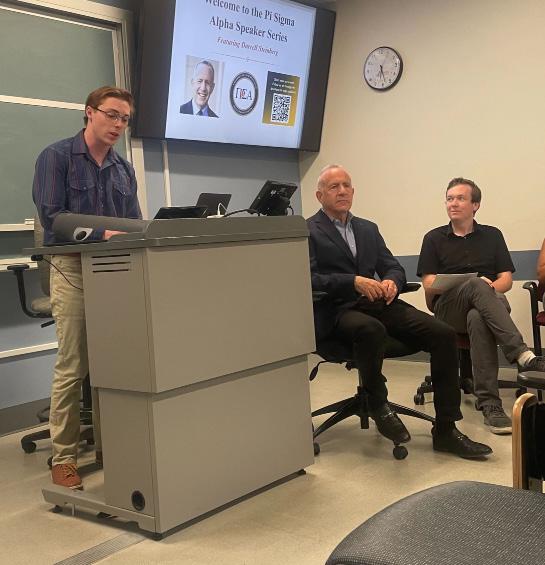
On Sept. 22, Pi Sigma Alpha — the National Political Science Honor Society at UC Davis — hosted a fireside chat with former Sacramento Mayor and State Senate President pro Tempore, Darrell Steinberg. The event was open to all students, faculty and community members.
Throughout his political career, Steinberg passed the Mental Health Services Act which provides $3 billion a year to mental health services in California and worked with state leaders to pull California out of economic crisis, according to the California Department of Corrections and Rehabilitation website He served as Sacramento’s mayor from 2016 to 2024.
The fireside chat with Steinberg was the second installment of the Pi Sigma Alpha speaker series, according to their Instagram page. The first event featured a conversation with the current Davis Mayor Bapu Vaitla, in which Vaitla reflected on his experiences as a mayor and answered questions from the audience.
Pi Sigma Alpha, formally chartered in 1920, has inducted over 300,000 members — with chapters at nearly 850 campuses. The national honor society “feature[s] national, state, and local political leaders including one president, three Supreme Court justices, and dozens of members of Congress,” their official website reads.
The event began with Steinberg’s own personal reflection on his career in public service, sharing personal stories, anecdotes and advice with his audience.
Steinberg first shared the story of how he found his spark for public service during his third year at the UC Davis Law School. During his time there, he met many individuals with physical disabilities.
“The [UC Davis] Law School should be commended for admitting people with very diverse backgrounds, but there was one problem: The[ir] new courtroom was not accessible,” Steinberg said.
Steinberg then explained how he, alongside his peers, asked the Dean of UC Davis School of Law to build a lift so that people with disabilities could also participate in the courtroom. They were met with a lack of enthusiasm; Steinberg recalled being told that a lift would ruin the “aesthetic look of the courtroom.”
Steinberg then shared the law school’s response with various reporters
The fall concert returns to campus on Oct. 4

BY
AALIYAH ESPAÑOL-RIVAS and VINCE BASADA campus@theaggie.org
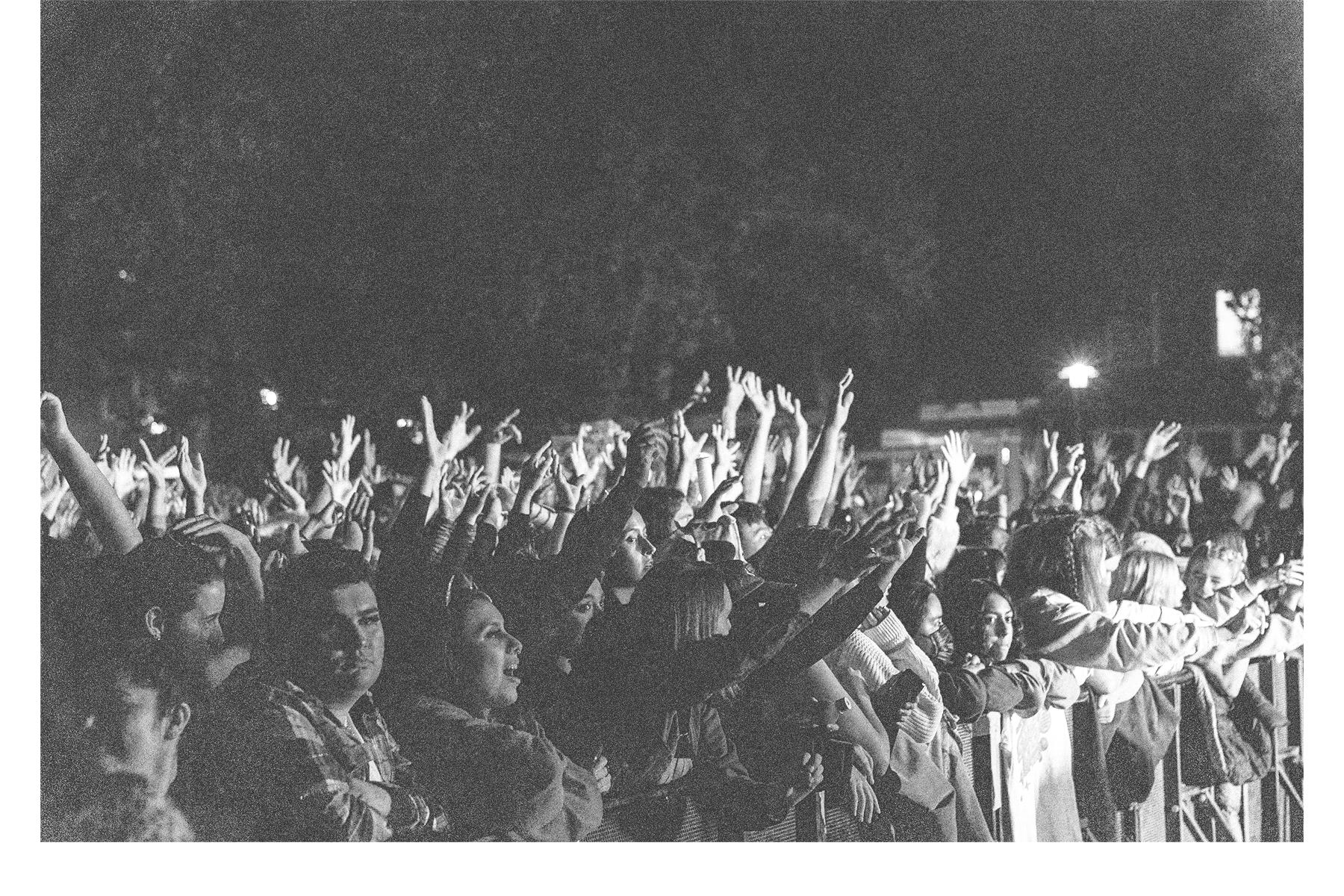
Sunset Fest, the annual free “welcome back” concert, is set to return this Saturday, Oct. 4 to the UC Davis Health Stadium. Hosted by the ASUCD Entertainment Council (EC), a student-run unit that plans concerts and events throughout the year, the 2025 show is set to feature headliner Blxst and supporting artist Lyn Lapid. “Sunset Fest is EC’s way of kicking off Fall Quarter with a free concert that welcomes both new and returning students to campus,” EC Unit Director Eddie Kim, a fourth-year human biology major, told The California Aggie in an emailed statement. “Think of it as a quintessential college experience and an opportunity to connect with friends while enjoying live performances from your favorite artists.”
The artists Blxst, whose real name is Matthew Dean Burdette, is a hip-hop artist from Los Angeles who began releasing music in 2018. After his 2020 extended play (EP) “No Love Lost” garnered popularity, he soon after entered mainstream media with a deluxe version of the album and an accompanying sold out tour. Blxst currently has over 6.2 million monthly listeners on Spotify, with his hit song “Overrated” at nearly 98 million listens as of time of publication.
Andrea Ngo, a second-year human biology major, is a fan of Blxst and is excited for the concert after not being able to buy tickets to one of his shows last November.
“One of my friends sent me the headliner post and I was literally jaw dropped, checked my schedule and was like ‘oh my god, I’m 100% going to
this,’” Ngo said. “I wanted to see Blxst in Sacramento last year, but I wasn’t able to get tickets for financial reasons.
It’s kind of expensive to go see concerts right now. Being a college student and having this event for free, where I get to see my favorite artist, is so exciting!
I genuinely can’t wait.”
Lyn Lapid, a Filipina-American singer from Maryland, started her music career at 17, blowing up on TikTok with her indie-pop original songs, including 2020’s “Producer Man.” She released her first EP, titled “The Outsider,” in 2022. It included the song “In My Mind,” which has 207 million listens on Spotify. She recently released her first album “Buzzkill” in April of this year, with over 20 million listens on the same music platform.
Sarah King, a fourth-year psychology major, is a longtime listener of Lapid and is excited to see her in performance.
“I found her on TikTok after her biggest song, ‘In My Mind,’ so I’ve been listening to her for four years now,” King said. “I like her chill, R&B, slow kind of music. I’m excited to be at a free concert and just sway on the football field to her very nice, calm music.” Additionally, the concert will feature two student openers: Thai T. and DJ Ami. The former, whose real name is Trevor Thai, is a fourth-year global disease biology major from Sacramento who makes West Coast R&B music. Amadeus Alcala, who performs under the stage name DJ Ami, is a third-year environmental engineering major who specializes in electronic dance music (EDM).
What attendees should know Entry is restricted to currently enrolled UC Davis undergraduates, and attendees will be required to show their physical Aggie Card, have completed the pre-registration on Aggie Life and
and newspapers, which created public pressure for the law school to build a lift.
“That was my first taste of seeing the impact of my own power,” Steinberg said. “I didn’t have a title, but my power — my willingness to advocate and make a social change — was tangible. And it actually helped people.”
Steinberg then shared his own political philosophy.
“Most importantly, [the government] needs to be for the people who don’t have a voice,” Steinberg said. “The people who do have a voice, generally, can find their way through the halls of power and influence decisions. But people who are really down and out — whether they’re poor, whether they’re people with severe disabilities, [...] they don’t generally have a voice. So I’ve always believed my job is to fight for those who are deemed lesser.”
Steinberg then discussed some of the people who influenced him — such as Phillip Isenberg, Sacramento’s mayor from 1975 to 1982 — on his political philosophy and goals.
“‘The real key to success is to pick one issue: one issue that is really important to the quality of life of your constituents and the state and that no one else is working on,” Steinberg said.
Steinberg then reflected on the challenges he faced in his role during
the 2009 financial crisis, as he worked with members across parties to help end the state budget crisis.
“People were losing their homes, people lost their jobs, [...] but the state going bankrupt would have made a terrible situation that much worse,” Steinberg said. “I had to [...] convince my colleagues — Democratic colleagues — to cut things that they swore they would never cut, and to convince enough Republicans to vote for taxes so that we could minimize, or at least mitigate, the level of cuts.”
Steinberg told the story of how he, alongside other members of both Republican and Democratic parties, created a plan.
“We had literally four weeks to meet in secret, [...] and we reached an agreement of more cuts than taxes, but enough taxes to mitigate the cuts,” Steinberg said.
Throughout the talk, Steinberg also shared many other stories and various accomplishments, including his mental health work, his mediation between opposing parties and more.
Pi Sigma Alpha is set to host many more events — from speaker series to movie nights — for students interested in political science or public service. More information can be found on their Instagram page.
have received a ticket to the event.
Neither photos of Aggie Cards nor OASIS student account pages will be accepted as valid forms of identification. Doors open at the stadium’s Gate 1 at 6 p.m.; Re-entry will not be allowed.
Water will be provided, though organizers recommend attendees bring empty, non-glass reusable water bottles. Vendors will include food and dessert trucks — which will accept Aggie Cash — though food and non-water drinks are not allowed on the field, where the main stage will be set-up.
Prohibited items include: outside food and drink, bottles, cans, glass, alcohol, poles, sticks, signs, flags, drugs and drug paraphernalia, unmarked and mixed substances, smoking and vaping products, weapons of all kind — including pepper spray and sharp objects — bicycles, skateboards, scooters and other related transportation devices and animals (except service animals). Additionally, bags must be clear and no larger than 8 by 6 inches.
Attendees are recommended to make plans to get home in advance.
Unitrans will be operating extended weekend services on the day of the concert, with the G, K, M, O, P and Q lines operating every 60 minutes from 6 to 10:10 p.m. Additionally, a special line, the V-MU, will run between the Memorial Union Bus Terminal, the UC Davis Health Stadium and West Village every 20 minutes from 4:50 to 10:10 p.m.
A full schedule of the added trips across all bus lines is now available on the Unitrans website.
Full information on Sunset Fest, including frequently asked questions, can be found on the Entertainment Council’s official website and on their Instagram page, @asucdec. Registration is open now on the Aggie Life website.

The more you fear and know, the better you fare and grow
Exploring self-awareness as a critical, underrated form of intelligence
BY VIOLET ZANZOT
vmzanzot@ucdavis.edu
On my ight to London this past Saturday, I watched two movies, slept awkwardly and sat with my headphones on, staring at the ight tracker in an attempt to settle my nerves and ease my anticipation. About halfway through “Eat, Pray, Love,” I realized that Julia Roberts’ character and I are a lot alike: We both appreciate good food, are too pretty for our own good and are on journeys with ourselves which are motivated mainly by exposure therapy.
As a quintessential creature of habit who often nds herself in unknown environments, I have found that the juxtaposition of my comfort zone and lifestyle quali es me to speak on the importance of trying new things. Testing our limits every day is how we learn about ourselves and the world around us. Fears and discomforts, though often common between people, are de ned only by
our individual sentiments and should be explored. To avoid experiences out of fear of failure or embarrassment is to shortchange ourselves of valuable knowledge.
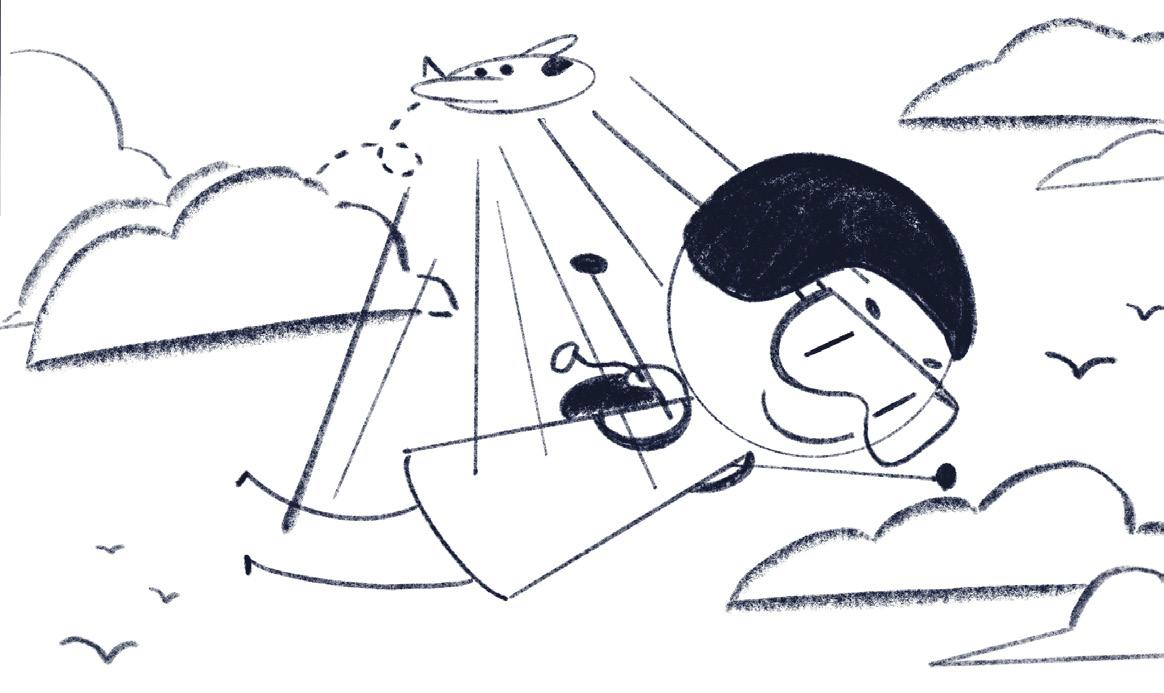
Self-awareness is one of the most underrated forms of intelligence; it is to recognize the nuances, subtleties and complexities of the relationships we have with ourselves. In this way, self-awareness is an ongoing process to understand why we are the way we are, how we operate in response to the world and how we can appreciate that the de nitions and identities of things are ever-changing. In challenging ourselves, we force confrontations — with ourselves.
Choosing to embrace what we learn connects us to a deeper understanding of ourselves. For instance, I had a friend recently tell me she knew some of her feelings were irrational, and thus her boyfriend’s response to an argument was justi able.
PERSONALGROWTH on 7
BY NEVAEH KARRAKER nakarraker@ucdavis.edu
Approximately one in three women globally have experienced some form of sexual assault or abuse in their lifetime (not including sexual harassment), according to the World Health Organization and the United Nations Women. Women make up the majority of the population of domestic violence or rape victims, while men are usually the perpetrators.
For years, the fact that women have been reduced to sexual objects or pro table entities has been glossed over by culture. It’s a luxury for us to feel safe walking alone at night — to be unconcerned for our well-being when choosing a romantic partner and to make platonic male friends with ease.
While it is the 21st century and women have the right to vote, the institutional framework of society has hardly progressed when it comes to earning an education and avoiding being scorned if marriage and childbirth is not our top priority.
e odds seem to always be stacked against women when it comes to clothing, education, relationships and even basic health. isolating standards, like the lack of pockets in women’s clothing — omitted in order to accentuate their silhouettes and simultaneously encourage the purchase of accessories beginning in the 1950s — and the shaving expectations created as a Gillette marketing strategy. In terms of health, examples include the “pink tax” for essential feminine
hygiene products, car safety features based on typical male anatomy, physicians repeatedly ignoring serious symptoms and more research being conducted on male baldness (an inconsequential condition in men) than endometriosis (a highly serious condition in women): ese are just a few of the many shocking instances of this double standard.
A huge contribution to this undermining of feminine issues is the societal emphasis on gender roles, which is imparted on most of

The ‘performative male’ stereotype might mean more than we think
At what point does it stop calling out odd behavior and start reinforcing gender stereotypes?
BY SABRINA FIGUEROA AVILA
sfigueroaavila@ucdavis.edu
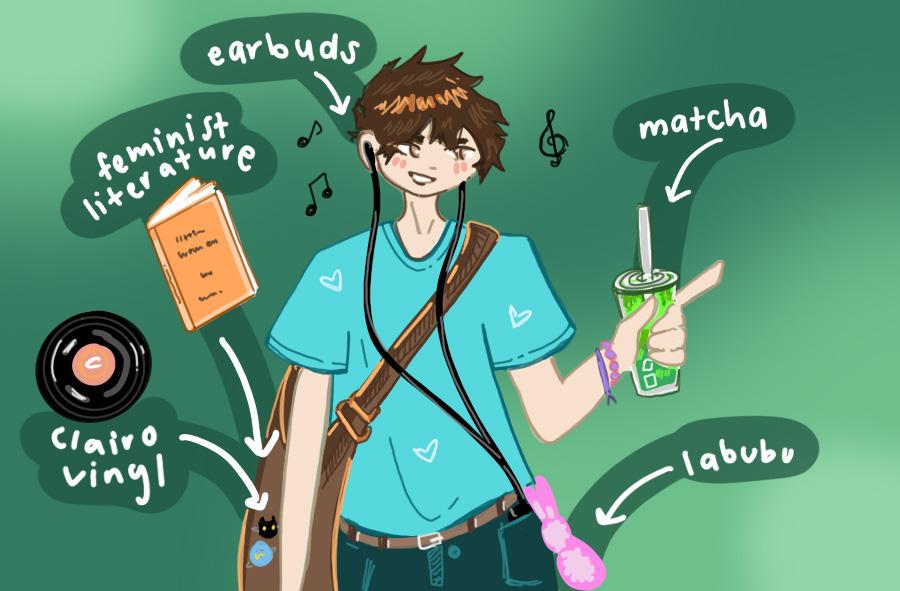
“I’m not going to tell you guys to vote for me because I don’t think men should tell women what to do,” a man in his 20s, holding a Bell Hooks novel and bright-green matcha latte, announced to an audience of women gathered at a “performative male” contest in San Francisco. When I attended this contest back in August, I wasn’t expecting such a strong sense of whimsy and community from men with glued-on mustaches, already loosening from their faces due to sweat. Obviously, I dabble in meme culture. Otherwise I would not have entertained the idea of going to a “performative male” contest in the rst place. But, after attending, it struck me how easily this new trend can be misinterpreted or misconstrued in ways that have a larger e ect than we may realize. After all, our perceptions of reality are framed by the media we consume: no matter how ridiculous or inconsequential it may seem. In focusing on men’s behavior — speci cally their strategic, often deceptive adoption of symbols stereotypically associated with femininity — this archetype inherently involves gender.
In the early days of the meme’s popularity, it focused more on the power disparity between men and women. Women have been exploited by men for years as a consequence of our patriarchal societies, institutions and histories. ough there have been e orts to undo the damage done by this system, (note feminist movements all throughout history) the work is not yet done: Trauma from past generations leaves a scar. In the current political climate, where reproductive and transgender rights are being attacked and the rise of conservatism is
returning to the rhetoric that women should value marriage and having kids more than anything else, it’s di cult for women to know who to trust. e “performative male” trend is an opportunity to analyze and correct harmful and dishonest behavior from straight men that continues the streak of power disparities, both in society at large and in individual heterosexual relationships. Instead of men preaching to the choir that they love women, they should show it with their actions — it’s as simple as that: or it should be.
As a means of communication, memes and trends have unique interpretations. e “performative male” meme has transitioned from holding men accountable to focusing on the aesthetic. at is, when we think of what it means to be a “performative man,” we conjure a speci c image in our heads: a man drinking matcha, reading feminist literature, wearing a tote bag and listening to Clairo.
It’s become less about the inappropriate, deceptive behavior and more about the symbols we use to make up our identities. Combining that with the gender aspect of the trend, we get a new murky archetype in which we could eventually nd ourselves reinforcing the gender stereotypes and roles we have been ghting to dismantle.
For example, the catchphrase, “boy turn that Clairo o and grab you a beer,” has gone viral. And although it’s mainly been used as a joke, I can’t help but wonder if people notice the deeper implications of it. It implies that Clairo’s music (may she be released from the shackles of this meme) is odd for men to be listening to because it’s feminine, and, since beer is typically a symbol associated with masculinity, they should prioritize it instead.
Of course, the messaging behind it is subtle; as most of the media messages we learn our societal norms
and behaviors from are. Although Gen Z wants to see big changes and indeed do the work for it, we sometimes don’t see how our trends, memes, jokes and use of language have power in spreading harmful rhetoric and norms.
In other words, we discredit the power of words, language and media — we should be more careful about our tendency to play subtle things o as “not that deep.”
e messages don’t have to be obvious or overt to create an impact; In fact, the more subtle, the more open we will be to accepting everything as is. is has created problems for us before, and if we allow it to keep happening, we are bound to keep creating them.
We passively put ourselves in boxes while trying to liberate ourselves. e memes, trends, videos and jokes we consume about this “performative male” archetype can simply be one ripple in continually perpetuating regressive gender norms. We like to think we have progressed far in society, but we should really be asking ourselves what our own perceptions of men and women are. Only then will we realize just how far we actually have progressed and how far we are actually willing to go.
e enjoyment of things from food to music to books should be allowed to transcend the boundaries of the social constructs we have made up. With that in mind, however, inappropriate and deceptive behavior from anyone should still be called out and corrected. So long as you are not doing it just to get attention, buy that Labubu, enjoy that matcha latte and listen to Clairo…“whatever that means.”
Disclaimer: e views and opinions expressed by individual columnists belong to the columnists alone and do not necessarily indicate the views and opinions held by e California Aggie.
oftentimes extremes are taken. ere has yet to be a balance for healthy patriarchy and humble femininity, which has resulted in a surge of toxic masculinity, the coddling of violent young men and the normalization of women overly-sexualizing themselves. Femininity is not just about being delicate and pretty, but the personhood bestowed to women. It is believed that Eve was created from Adam’s rib, implying that despite the beautiful distinctions between men and women, they both have equal value, as value is not determined by order of creation. e divine beauty of women points beyond themselves instead of towards themselves; it is not vanity or pride, but an e ortless display of nurturing and powerful
It’s these inherent qualities that make a traditional family ourish.
Choosing such a life is not oppressive; In fact, true feminism is about the freedom to decide whether or not to is design demonstrates a deep harmony between the sexes. Women embody immanence ipping the ordinary with newfound love and passion — while men embody transcendence through ambitious pursuit and is does not mean one sex can’t harbor characteristics of the other — women can also be zealous and men can also be tender — but the neurological components are sacredly complimentary. is is often re ected in the relationships we have with one another — platonic and romantic. ere is one main thing that we desire to ful ll in our lifetimes: connection with others.
on 7
Dear freshman me: please take care of yourself
Learning from hindsight BY
MOLLY THOMPSON mmthompson@ucdavis.edu
As I enter my third year at UC Davis, I can’t help but return to the memories of the early days of my rst year; In fall of 2023, I fell victim to the plight of many young adults living away from home for the rst time and got myself into a pretty deep eating disorder.
While this wasn’t the rst time that I’d found myself in this particular state (I was diagnosed with anorexia nervosa when I was 16 years old and spent my third year of high school in recovery), I started my collegiate career extremely con dent that I was beyond that part of my life and that I was no longer susceptible to the destructive habits of my high school years. Reader, I was quickly humbled.
College can be incredibly stressful: that doesn’t come as a surprise to anyone. Between fastpaced, demanding classes, a new environment, the loss of our support systems and a rapid transition to complete independence from our families, it’s inevitable that we’re all going to need some solid coping mechanisms to deal with the pressure. And, with everything being so new all at once, it’s easy to feel lost and out of control.
Food is something that is really easy to control when everything else is out of your hands. It’s a place you can direct your attention to when your brain is overwhelmed by responsibilities. Manipulating your body and your food feels like a tangible, accessible goal when everything else feels too vast or unattainable. Especially if it’s something you’ve dealt with in the past, eating feels like a familiar, reliable routine that you can rely on in the face of so much uncertainty — unlike everything else, it makes sense.
Anorexia, in particular, is especially enticing because it has the additional symptom of numbing you to the harshness of the world around you and the turmoil inside your head. When you deprive yourself of sustenance, your body shuts down a lot of its nonessential functions. Your metabolism slows down (which has a lot of side e ects of its own), your reproductive system might su er, your mental cognition wanes and your emotions become subdued — you just feel less of everything. is numbness might not be something you’re aware of, but in a time of so much overwhelming anxiety and stimulation, it can feel like relief. Please, under no circumstances, take this as an endorsement of eating disorders. I can con dently say that the deepest points of my eating disorder were the worst times of my life. Even though I was numbing myself from other anxieties, even though I felt a sense of success from manipulating the shape of my body or the number on the scale and
even though it gave me control over a small aspect of my life, it deprived me of far more than I ever gained from it. It took me years to relearn what my body needs and how to take care of it, skills that I was supposed to have mastered in elementary school (I’m still working on it). I permanently messed up my body in ways that I’ll never be able to fully recuperate (my metabolism will never be the same). I broke my parents’ sense of trust in me to a point that I may not be able to heal, though I’ll continue to work on it (I lied a lot). And the worst part is that I wasted so much time (days on end, if you add up all the hours) at doctors’ appointments getting my weight and vitals checked, therapy sessions recounting everything I’d eaten in a day and sitting at home, banned from exercise, while my dance teammates practiced in the studio without me. To this day I have to report my weight to my therapist every month. While it hasn’t completely stopped me from accomplishing things I’m proud of or having incredible experiences, it feels like it’s taken over the past four years of my life. at is my biggest regret. Anorexia plagues some of my best memories; I can look at photos from February of my third year of high school or December of my rst year of college and just see this gaunt, lifeless exhaustion in my eyes. Even if it’s not visible to the people around me, it haunts those pictures (and the memories behind them) to the point where I’m not thinking of all my incredible experiences and adventures, but rather how I let food de ne my entire life.
If I could change anything about my rst-year experience — if I could give myself one piece of advice — I wouldn’t let myself become anorexic again. It was so hard because I felt like I was doing a good job. My therapist would call me and tell me I was still below my healthy weight baseline, and even though I would say, “Oh no, that’s not good, I’ll try harder,” it still felt like a win.
But hindsight is 20/20, and it just wasn’t worth it. at sense of accomplishment was short-lived and inconsequential compared to the consequences (physical health, mental health, time, opportunities).
EATINGDISORDERS on 7

This past Sunday’s church shooting emphasizes our country’s deepening political polarization
WRITTEN BY THE EDITORIAL BOARD
If you follow politics, you are likely aware of one of the most continuously pressing political issues in the United States: the ght for stricter gun laws.
ere have been 324 mass shootings in 2025 thus far, including six that occurred just this past weekend.
One of these events happened on Sunday, Sept. 28, when a gunman opened re at a Church of Jesus Christ of Latter-day Saints in Michigan. During this shooting, four people were killed and eight more were injured. Hundreds of individuals were in the church at the time, and the attack was preceded by the suspect driving his truck directly into the institution and was followed by him lighting it ablaze.
Even though mass shootings are already far too common, they will only continue to increase in prevalence as the country becomes more divided by factors like education, race and religion. Shootings in locations like churches are often political statements driven by opposing viewpoints or extremist ideologies, although oftentimes, the motive is unknown. In the case of the Michigan shooting, it is known that the suspect “hated” those belonging to the Mormon faith, but the suspect’s family and friends did not pick up on any warning signs regarding his behavior leading up to the event.
It’s common in tragic situations, like mass shootings, to want answers, especially regarding why they occurred
and how they can be prevented in the future. It is likely that we will never gain full clarity on all of the factors that led up to this event; motives for shootings are often very complex and multidimensional. is also highlights the need for lessened stigma surrounding mental health issues — which often play a contributing role in these types of incidents — and improved access to mental health services.
It is also notable that the news of this shooting follows the recent killing of Charlie Kirk, who advocated for gun ownership and was shot while holding a university debate. Although these two events are not necessarily connected, both occurrences involve the deaths of individuals who were actively practicing their beliefs. ese violent actions were targeted and meant to instill fear into the public, aiming to silence di erent viewpoints. e church shooting also follows a shooting in August at a Catholic school in Minneapolis, which resulted in the deaths of two children and wounded 17 other people. Churches are meant to be sacred spaces of worship and re ection; individuals shouldn’t have to fear for their safety in places intended for comfort and communal solace.
Religious institutions are not only vulnerable targets because they are easily accessible, but they are also symbolic, hence why these attacks keep occurring. Every shooting that occurs — and the many that will undoubtedly occur in the future —
should warrant immediate attention as to why gun laws need to change. Shootings at religious locations in particular are meant to send political messages, and, as a result, violence in icted upon these sanctuaries deepens the political divide of our country.
Globally, religious attacks have also increased dramatically in recent years. e ongoing genocide in Gaza has led to increases in both antisemitic and Islamophobic attitudes, behaviors and rhetoric. While some take out their anger toward the Zionist movement and Israeli government on the Jewish faith as a whole, others have used these events to target and criminalize Muslim and Middle Eastern communities. As the genocide in Gaza continues, we should be reminding ourselves that religious beliefs — while historically linked to political systems — are not justi cation for hate speech and widespread violence.
On a nationwide level, we have become too familiar with waking up to news headlines informing us of the latest act of gun violence, but prevention can’t happen without reform. We need stricter background checks, mental health screenings and enhanced safety precautions prior to gun purchasing to limit these preventable injuries and deaths. Some view the act of limiting gun use and ownership as a violation of freedom, but when we fear for the safety of our students, friends and families, we are paying for this so-called freedom with the lives of our community members.
Editorial Board
ALYSSA CREVOISERAT Editor-in-Chief
MAYA KORNYEYEVA Managing Editor
VINCE BASADA Campus News Editor
JORDAN POLTORAK City News Editor
MOLLY THOMPSON Opinion Editor
ZOEY MORTAZAVI Features Editor
SAVANNAH ANNO Arts & Culture Editor
MEGAN JOSEPH Sports Editor
KATIE HELLMAN Science & Tech Editor Managing Staf
JENNA LEE Photo Director
NOELLE ESCALANTE Layout Director
SAVANNAH BURGER Design Director
SAM RUIZ New Media Manager
KAYLIE HUANG Social Media Manager
JULIAN MONTANA Website Manager
JULIA CROSSAN Distribution & Outreach Director
YILAN LI Translation Director
CARMEN RODRIGUEZ-ZARATE Translation Director
JENNY DYE Copy Chief
ALYSSA PULIDO Copy Chief
LAURIE PEDERSON Business Development Manager
Enter digits from 1 to 9 into the blank spaces. Every row, column and 3x3 square must contain each digit. Each Sudoku has a unique solution that can be reached logically without guessing.
Answer to previous puzzle 09/25/25


UC Davis Labor and Community Center presents new David Bacon collection
BY SAVANNAH ANNO
arts@theaggie.org
On view from Sept. 13 to Dec. 14, Shields Library will be exhibiting
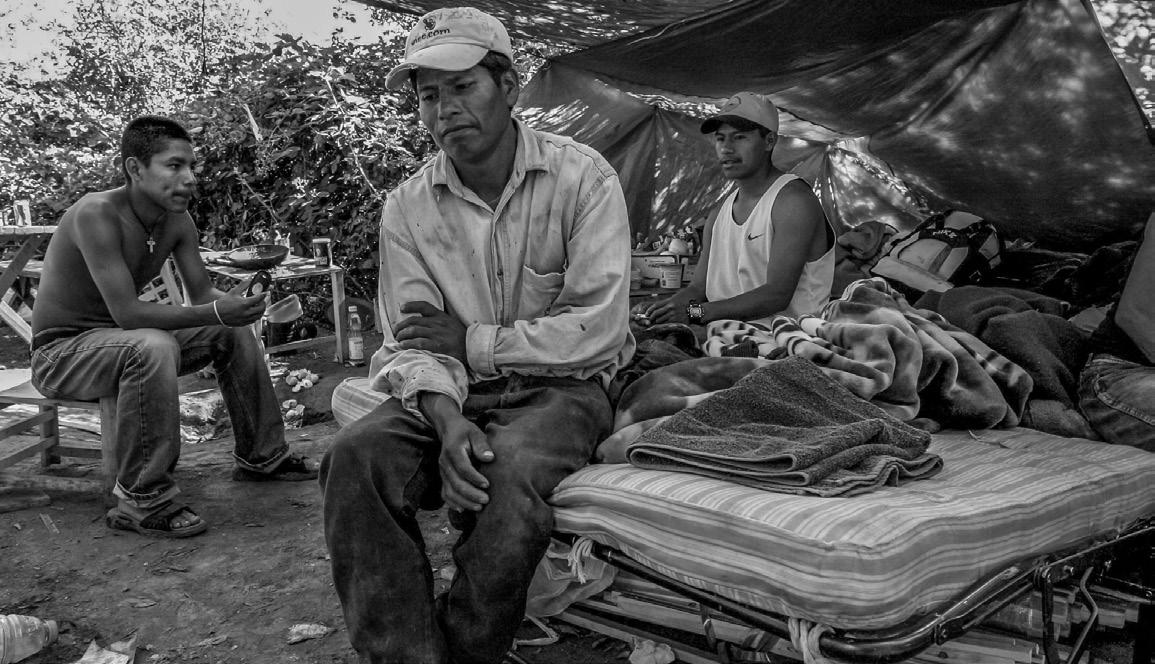
“In Camps, Under Trees and Evicted: Farmworkers Living Close to the Line in Northern California,” a collection of almost 90 photographs taken by union organizer and photojournalist David Bacon.
e exhibition is a product of the UC Davis Labor and Community Center of the Greater Capital Region (UCDLCC), a subgroup of the UC Davis School of Law, co-directed by Professor of Law Leticia Saucedo and Professor Emeritus Robyn Magalit Rodriguez.
“We were established to develop labor-centered, communityengaged, policy-relevant research, education and public programming that serves the labor movement and social justice struggles in Northern California,” Saucedo said. “We were fortunate to be able to collaborate with documentary journalist David Bacon [on this exhibit], who shares our values and mission, and who has been documenting the struggles of farmworkers for over 35 years.”
Raised in Oakland by a mother and father who were labor union organizers themselves, Bacon became familiar with labor struggles and movements at a young age, according to a 2019 interview with People’s World. After nding a job in a printing factory, Bacon began to organize his very rst union — a worker-led group created to self-advocate for better work conditions, fair wages and overall stable treatment from their employers.
Bacon continued this work for over a decade, and it wasn’t until the 1980s that he began to take photographs.
e beginning was utilitarian in a way — to publicize strikes, give prints to people on the picket line to take home to their families,” Bacon said via the People’s World interview. “ en
I began to realize that the photographs themselves had a meaning beyond what I was using them for, in that they were a documentation, especially at that point, of the changing demographics of the workforce.”
Transitioning into more photojournalist work, Bacon was rst tasked with documenting the United Farm Workers (UFW), one of the most well-known labor unions in the country. Founded in the 1960s, UFW continues to work to protect farmers through advocacy, sponsoring labor laws and promoting education.
“In Camps, Under Trees and Evicted: Farmworkers Living Close to the Line in Northern California” works to commemorate not only Bacon’s work as a photojournalist, but the e ort and daily lives of farmworkers across generations. Making its rst stop at Shields Library, the UCDLCC hopes to bring the collection of almost 100 photographs to various locations within the United States. Prior to his exhibition at UC Davis, Bacon’s work has also been featured at other University of California campuses, the Museum of Mexico City, the Oakland Museum of California and even various locations across Europe.
Chronicling stories that span a period of 35 years, Bacon aims to humanize farmworkers, bringing their stories to audiences who he feels may often take them for granted. California alone employees roughly 500,000 to 800,000 farmworkers each year, with over 90% of them identifying as Hispanic.
“It was especially important to highlight the lived experiences of farmworkers on our campus because Davis is located in and around many of the workplaces we see in the photos,” Saucedo said. “We thought the exhibit might be a powerful way to include the voices of workers in our campus conversations, and we hope it exposes UC Davis students to di erent ways to engage with the realities of worker experiences.”
While farmworkers are responsible for growing and harvesting the food we consume every day — not only for Californians, but for our entire national and global populations — Bacon’s photographs show their labor being rewarded with hostile living conditions, low wages and a life on the outskirts of society. Longer descriptions throughout the exhibition feature organizers’ speeches, condemning unfair treatment and socioeconomic disparities while ghting for basic human rights.
Bacon’s work documents farmworkers in various cities and towns, from Sonoma to Healdsburg to Fresno, as they work, rest and organize. Each photograph description includes the subject’s name and hometown, with workers coming from not just Mexico, but Guatemala, India, Pakistan and the Philippines. Honoring the farmworkers’ diversity, each label and description within the exhibition is translated into English, Spanish and Tagalog.
Out of the hundreds of thousands of California farmworkers, over 70% are undocumented immigrants. As a result, much of Bacon’s coverage of UFW and farmworkers’ strikes has overlapped with immigrant rights movements. Along with his photographs, Bacon has authored multiple books and articles surrounding undocumented workers, the impact of the North American Free Trade Agreement (NAFTA) on life along the U.S.-Mexico Border, transnational communities and more.
Bacon aims to plant seeds and ideas with his photographs. If he can shed light on the real people behind these movements and how government policies are impacting them, Bacon believes their stories will be able to inspire tangible change.
“If we’re going to talk about immigration laws or migration or the workplace, let’s look at who’s there,” Bacon said. “What do those situations look like? Let’s listen to the people who are there, and then try and gure out what to do based on that. […] So now what [I’m] trying to do is to draw a picture of the world, or part of it, in an accurate way, in a fair way.”
Today, farmworkers continue to face poverty, mistreatment from employers, ineffective heat-safety laws and Immigration and Customs Enforcement (ICE) raids. Still, as Bacon highlights through his photos, they continue to build communities, support their families, celebrate their culture and organize for a brighter future.
“We’re hoping that the exhibition demonstrates the ongoing nature of farmworker experiences, [along with] their resilience,” Saucedo said. “While the photos span 35 years, they capture not just the past, but the present, lived experiences of some of our neighbors.
FARMERSEXHIBIT on 7
How the media perpetuates our sympathy toward evil when it comes to men
BY BELLA PETERSON arts@theaggie.org
Nothing is more powerful than an attractive face belonging to the wrong person — you may have heard it before: “pretty privilege.” What’s even more dangerous: when you have beauty, charm and all the natural advantages you would need in our society to get away with almost anything, but as a man. Pair that with a killer instinct, and you have yourself most of the leading, psychotic male characters we see in our everyday entertainment.
But it’s just ction, right? What could be so harmful about this kind of portrayal of serial killers? To really answer this question, we must rst travel back to the year 2000, when America was introduced to their very own psycho heartthrob: Patrick Bateman. “American Psycho” was originally a novel published in 1991, written by Bret Easton Ellis. Both a satirical and horror novel, the book confronts the concept of the ideal American man as he navigates leading a double life.
What was originally a piece of ction written to open a discussion about psychology and gender has since devolved into something entirely opposed to that original idea. As the lm ages, it receives a mixed interpretation from audiences — from women being infatuated with Christian Bale, who plays Bateman in the lm, to young men online using the character as a picturesque bar they should all meet despite his very obvious aws.
The film presents Bateman as completely dissimilar to what the audience views him to be. In multiple points of the story, it is revealed that Bateman’s view on reality is skewed — the truth that he is spoon-feeding to the audience is meant to be unreliable. Instead of questioning the character’s narration, the movie spawned a mass following of young males and beloved dedication from women. Despite the questionable reality of Bateman’s actions, murderous or just cruel, the character is posed to
be a monster of sorts. His demeaning views against women and toxic thoughts towards masculinity are a constant state of mind. But, under the shroud of his natural good looks and e ortless charm, how could the audience not fall in love? Once the world had gotten used to Bateman’s face, they were then met with a new handsome devil to be enchanted by: Dexter Morgan. The television show “Dexter” (2006) presented a new idea to the masses: What if a killer had a set of morals? e unique situation was not a hard one to get used to; with Michael C. Hall leading as the main killer himself, it wasn’t exactly an issue to be on his side.
necessarily the same as the kind seen in Patrick Bateman — it doesn’t stem from a place of hatred or malice towards speci c groups of people. In the eyes of fans, the general concept of taking out

In the show, Dexter consistently repeats his values to the audience through constant narration: that he’ll only release his killer urges against other “monsters.” In doing this, he puts himself on a moral highground of sorts — arguing that the audience shouldn’t feel the urge to question him because, afterall, he’s only taking out the bad guys. As the show continues, there is a progression in Dexter’s character as he learns to become more and more human. e humanity in him is a key factor to garnering sympathy from the audience and the “killing thing” can really fade to the background when you see a guy have a soft spot for kids and his wife. e brutality seen in Dexter isn’t
SAVANNAH BURGER / AGGIE
“monsters” is more of a good rather than an evil. e show was a big hit in its prime, lasting eight whole seasons and branching o into multiple spino s with — you guessed it — Dexter Morgan leading the show. One way or another, he keeps nding ways to come back. After the major success of “Dexter,” it should be no shock to anyone

BY JULIE HUANG arts@theaggie.org
Movie: “How to Train Your Dragon” dir. Chris Sanders and Dean DeBlois (2010)


Maybe I was reminded of this movie’s existence from the live-action release over the summer, but a casual listen to the track “Test Drive” from the original score lured me into rewatching the original. It jogged my memory as to why this animated lm was one of my childhood favorites; I am forever in awe of the moment that Hiccup and Toothless soared into the sky, nally in sync, with triumphant music ringing out. While the book series on which the lms are based on — written by British author Cressida Cowell — is much stranger and gets quite dark, the animated movie is always uplifting and the perfect pick for a feel-good movie night.
Song: “Tonight, Tonight” by e Smashing Pumpkins (1994)
When I rst heard it, this song seemed a bit too strong for me. It’s one of those tracks that requires a speci c mood (and perhaps environment), in order to reach its full potential as a good song. However, this doesn’t detract from how amazing it is; When all the right conditions are met, “Tonight, Tonight” is a perfect, dramatic rendition of how it feels to be engulfed in nostalgia and dealing with all the mixed emotions that accompany this complex, slippery feeling. I am looking forward to listening to this as I commute back from class in the atmospheric darkness following a 7 p.m. discussion, reminiscing about cherished past moments, even if they ostensibly have nothing to do with campus sidewalks or bike paths
TV Show: “Gilmore Girls” (2000)


Another fall classic for people who want to indulge in romanticized academia and cozy autumn aesthetics — while also wanting to watch a teen girl (and later, young adult) balance the ordeal of being a top student with a full-time job of making dubious decisions regarding her personal life. Rory Gilmore is one of the classic 2000s teen drama protagonists: her out ts and study habits are aspirational and her love life is de nitely still entertaining — and still highly controversial, as the question of “Team Jess” or “Team Logan” endures. e show isn’t lacking in genuinely-emotional moments either, especially between Rory and her mother Lorelai, and, at times, her grandparents Emily and Richard Gilmore. ey do have their disagreements, and their quirky (sometimes dysfunctional) family dynamics can come o as a bit grating or harsh at times, but the show is called “Gilmore Girls” for a reason.
Book: “ e Idiot” by Elif Batuman (2017) e Idiot” is a bildungsroman — or coming-ofage novel — that also achieves an aesthetic I like to think of as “casual academia.” Being set in the mid90s is crucial to the story’s development, but what the novel really captures is the timeless experience of being a freshly-minted student set loose in a university atmosphere, exposed to so much new knowledge but unable to wield it gracefully or with meaningful purpose. Instead, protagonist Selin Karada% retains an awkward, untempered sense of personhood as she makes choices haphazardly and inexplicably, most of which change her life only slightly. Some of those choices, though, snowball into an entire saga of strange decisions, which sums up the novel’s entire plot. It appears to be as rudderless as a college student who is uncertain of their future and what they want to do with their life, but in that uncertainty, there is meaning for those who are looking for it.
Incoming Assistant Professor at UC Davis, Brenna Mockler, shares insights on her research on supermassive black holes
BY EKATERINA MEDVEDEVA science@theaggie.org
e James Webb Space Telescope (JWST) set out on its cosmic voyage on Dec. 25, 2021. e JWST is the largest and most powerful telescope built to date, featuring enhanced infrared vision that enables us to pierce through clouds of gas and interstellar dust to observe some of the rst stars and galaxies that appeared after the Big Bang. e result is some of the most awe-inspiring and highresolution photographs of the cosmos, including a very famous image of the Carina Nebula released by NASA in July 2022. However, just six months later, astronomers’ interest was piqued by a much subtler, but nevertheless mind-boggling detail that appeared in multiple JWST images of the early universe — little red dots (LRDs). ese very bright and extremely compact objects, which existed mostly during the rst 1.5 billion years after the Big Bang, feature characteristics that put them outside of known categories of celestial bodies; objects like these were never observed by other telescopes at lower redshifts (i.e., closer to our time).
e rst two main theories that emerged attempted to explain their nature via extreme cases of processes that we are familiar with: one identifying LRDs with rapidly starforming galaxies and the other with rapidly growing supermassive black holes (SMBHs).
“Since LRDs appear highly compact for how bright they are, it was rst thought that they could be very, very rapidly star-forming galaxies with a lot of stellar mass in a very small volume,” CTAC Postdoctoral Fellow at Carnegie Observatories, Brenna Mockler said. “One indicator of this that people looked for and thought to have identi ed in some LRDs is
However, the job o er was rescinded. When she spoke to the manager of the store, she con rmed that it was due to the background check failing. While she said she’s aware she shouldn’t have broken the law, she noted that the cats were something that brought her joy during a di cult period of her life.
“I struggle with my mental health a lot,” @happycatshrooms said.
She had been placed on a 5150 hold — an involuntary psychiatric commitment — when she rst began painting the cats.
“ e cats were something I would do while struggling with a drinking problem,” @happycatshrooms said. rough adding a pop of bright pink into students’ daily lives, she was able to nd purpose and take pride in the fact that she was making other students and community members happy.
“ e cats helped other people, and helping other people made me feel good about myself,” @happycatshrooms said. “ ey gave me a reason to keep going.”
While her cats will no longer be found on the walls of UC Davis campus, stickers of the iconic cat symbol and crocheted cats can be purchased through her ko- , happy catshrooms, where the money raised will be put toward helping her pay o the restitution. To stay up to date on new developments for this artist, check out her Instagram account, @happycatshrooms.
Garcia also explained how it is important to still celebrate Hispanic and Latino achievements despite the current political climate.
“Celebration of our accomplishments is active resistance,” Garcia said. “Hispanic Heritage Month isn’t just about celebration, it’s about recognition, resilience and responsibility. It is [important to] just keep pushing for that justice and visibility, long after the month ends or the year ends.”
FROM PAGE 2
the ‘Balmer break’, which is a drop in brightness on the spectrum associated with young stars that happens at the wavelength of around 3600 angstroms.”
Another problem with this theory is that it implies that these galaxies somehow grew extremely fast to very large scales, which is incompatible with what previous theories suggested about the mass budget available for star formation in the early universe. Currently, a majority of astronomers lean towards the theory that LRDs are accreting SMBHs.
In a recent analysis, “about 70% of the targets showed evidence for gas rapidly orbiting 2 million miles per hour (1,000 kilometers per second)
— a sign of an accretion disk around a supermassive black hole,” according to a NASA article on this topic.
However, this theory does have its shortcomings. One of them is that LRDs have not been observed to have intense brightness in the ultraviolet part of the spectrum, which is highly common in accreting black holes. While it may be due to a lack of information about the e ect that extreme amounts of mass piled up on black holes produce, if further observations detect this high-energy emission, or the presence of jets, it could con rm that at least some LRDs are SMBHs. A discovery of gravitationally-lensed LRDs would be very useful, as it would allow observations with higher spatial resolution to put tighter constraints on the size of LRDs.
“We don’t really understand how the black holes that we see today got so large, especially the SMBHs that are at the centers of galaxies [also known as Active Galactic Nuclei (AGNs)],” Mockler said. “Even if you feed a stellar mass black hole formed by a supernova at what we think is its maximum accretion rate over the entire course of the universe, it still
ing goes through a thorough investigation by the O ce of Student Support and Judicial A airs here at UC Davis,” Ross said. “ ere, a decision will be made on the proper course of action to take with the fraternity. We have no place for hazing here at Davis, and it’s something that we are constantly working to eliminate entirely.”
Although fraternities are often associated with various stereotypes, many current members believe that these assumptions do not re%ect their experiences.
“Fraternities aren’t as secretive and exclusive as people may think; anyone is welcome to come out and rush,”
Levente Ryll, a Tau Kappa Epsilon member and second-year international relations major, said. “We come from all di erent backgrounds and majors, but center around the concept of brotherhood to help out each other and the community around us.”
Philanthropy, one of the strongest values of each IFC chapter, plays a central role throughout the entire rush period.
“Fraternities are really good for philanthropy to raise money via fun activities and games to help support certain charities, whether it’s a local community or a broader, more national community,” Ryll said. “We like to play a role in this to help make [things] better for those in need, especially when it comes to spreading awareness and fundraising to help a cause.”
For most IFC members, the most meaningful aspect of rush is not simply choosing a chapter, but discovering the sense of community and connection that comes along with nding the right t.
“I think the most important role fraternities play, on our campus especially, is providing the feeling of belonging [that can be] so rare in college,” Wozniak said. “You can ask anyone involved in Greek life about why they chose their speci c organization, and I can guarantee the word “home” makes an appearance. ere’s a reason for that.”
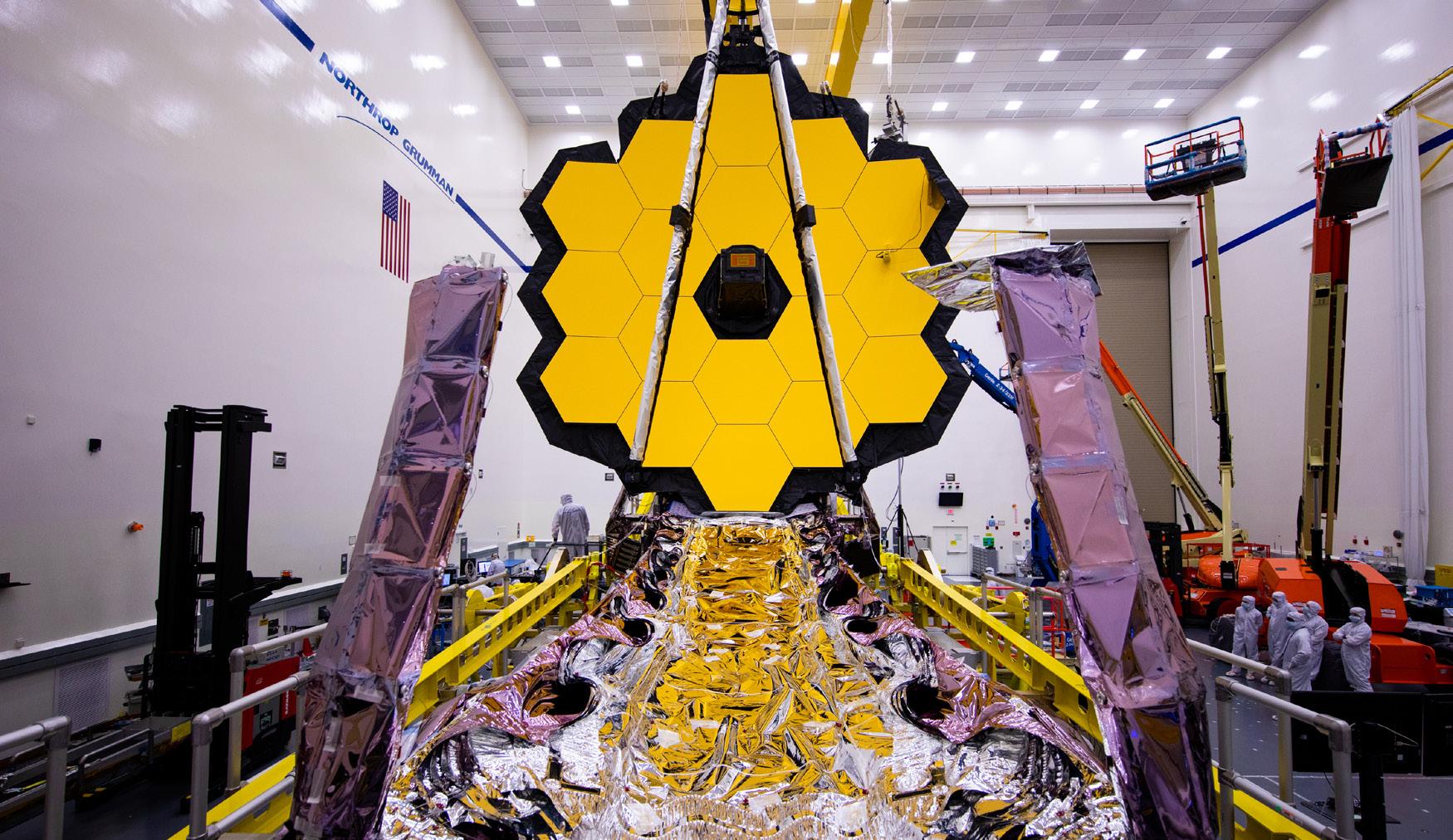
wouldn’t grow to the size of the largest black holes that we see today. One of the things that would help is if there were very rapid accretion episodes in the early universe to start building these black holes up at early times — people are excited about this theory because it has the potential to bridge the gap in black hole evolution.”
Mockler, who is part of the department of physics and astronomy, conducted most of her research on tidal disruption events (TDEs) — processes in which stars get eaten by black holes, producing massive amounts of energy. ese events evolve in the matter of days and months, making them observable on a human timescale unlike many processes in space.
“I developed a model, a while ago now, for connecting the light curve evolution time scale to the black hole mass,” Mockler said. “ e black holes that we notice involved in TDEs generally tend to be ones that didn’t
intentions. Women are a ectionate with one another in a way that men often are not, and men are valiant in a way that women often are not. is diversity should be accepted and praised, as it allows for profound bonds. Overall, even with so much oppression against women, there is something so alluring and special about femininity. We are generous yet self-su cient, delicate yet voracious, graceful yet demanding, passionate yet regulated and the faintest things unspoken — it can only be experienced and described as “girlhood.”
I implore you to fully embrace your masculinity or femininity. It is not something to be ashamed of or concealed, it is certainly not just a re%ection of objecti ed genitals; Rather, it’s a precious quality that should be handled with such care, as it adds to the intricate, colorful mosaic of life.
Disclaimer: e views and opinions expressed by individual columnists belong to the columnists alone and do not necessarily indicate the views and opinions held by e California Aggie.
She went on to explain that her prior life experiences had led her to have a tendency to overreact to things.
As I told her (and now you, with my only credentials being earned through lived experience and a few years studying social science), her awareness of herself not only allowed her to control her response to the situation, but to understand the issue from his perspective. Self-awareness and the power to control one’s own mind provides not only protection from the outside world, but also an ability to empathize and sympathize with others — a trait that is often lost when one can not even understand themselves.
have previously accreting gas around them, so they didn’t emit any light for us to be able to constrain their properties. But, when they do accrete a star, all of a sudden they light up and we can actually learn something about them, [for example] the mass of the system [they are in].”
Recently, Mockler has been involved in work concerning galaxy mergers, which open the possibility for the merging of the black holes in the center of those galaxies and result in gravitational waves that can be detected by the Laser Interferometer Space Antenna (LISA) and later studied to better understand how galaxies evolved.
“Going forward, one of the exciting things about both LRDs and TDEs is if LRDs are accreting black holes, then what we’re seeing is black holes accreting near or above the Eddington limit, which is the point where the radiation pressure from the
like nothing more than a never-ending series of exposure therapy sessions. Only from learning to appreciate the importance of this process did that pain alleviate. To know oneself is to understand the world — to calculate risks, to empathize, to understand one’s own position in a vast world and, of course, to be one’s own dinner date.
Disclaimer: e views and opinions expressed by individual columnists belong to the columnists alone and do not necessarily indicate the views and opinions held by e California Aggie.
Beyond that, focusing on food or body image doesn’t actually relieve any anxieties: it simply replaces them. It’s not an outlet for stress: it’s simply a redirection. It’s not a coping mechanism: it’s just a cover — the same anxiety in masquerade. It doesn’t solve anything.
I know that now. I thought I knew it then, too, but I didn’t. Even though it’s still in my head, I understand now that it’s just not worth it. It’s tempting, sometimes, to go back there. It would be so easy to slip back into those behaviors for the instant grati cation of success and numbness. But I understand now that it does far more harm than good.
College is a proverbial breeding ground for disordered eating. It’s inherently competitive, it’s overwhelming and it’s stressful — a perfect storm for unhealthy coping mechanisms.
But if you take away anything from this, please learn from my mistakes. I promise you that it will cause you far more trouble than it’s worth. It’s a slippery slope — so please be careful.
Disclaimer: e views and opinions expressed by individual columnists belong to the columnists alone and do not necessarily indicate the views and opinions held by e California Aggie.
would be able to accrete,” Mockler said.
“However, if you have jets, for example, so the geometry isn’t fully spherical, you certainly can break it. But how easy it is to break this limit is really important for understanding how quickly black holes are able to grow.
TDEs regularly feed black holes above their Eddington limits. And LRDs, if they’re accreting black holes, are also probably near or above their Eddington limits. So it’s this particularly extreme regime that helps us understand the limits of black hole accretion.”
As new theories on LRDs such as black hole stars emerge, these mysterious celestial objects remain a well of potential knowledge about how our universe came to be.
Bacon agreed to work with us on this inaugural programming because it exempli es the marriage between art and documentation that is necessary to tell enduring stories about workers in our state.”
In the show, we see Goldberg not only embrace the life of a murderer, but the one of a stalker as well. In a way, he is a manifestation of both Bateman and Dexter. Goldberg’s violence stems from a possessive view of women, yet he somehow always manages to redeem himself in the eyes of the audience with his moral code. With his “nice guy” persona, it can be easy to forget just how wrong all his doings are. At rst glance, many might see his acts of violence to be endearing, as they come from a place of defensiveness for whoever his “love interest” (or victim) may be that season. In reality, as the season progresses, he falls into a devolution of sanity where even the woman he claims to love falls into his path of violence.
Villainous tropes have frequently evolved over the years, and there’s nothing wrong with enjoying a good antagonist now and then. But, what happens is that slowly the audience nds themselves more and more willing to forgive the despicable actions that in real life so many would condemn. It isn’t hard for the lines between ction and reality to blur together. e easier it gets for our sympathy to be presented, the easier it gets for killers like the men above to get away with their crimes. During the trial of Ted Bundy, a real man not so di erent from the ones described above, he weaponized his charm in an attempt to gain the trust of the jury. Before his trial, he used many of the same tactics as Joe Goldberg to lure his women to their gruesome ends. e uproar in praise these ctional men have received is not the fault of their creators. e interpretation of these characters is a direct re%ection of the issues at hand in our current society. Dexter Morgan, Patrick Bateman and Joe Goldberg’s false images are all manifestations of everything that is wrong with our current state of media literacy and our romanticization of anything we nd visually appealing. It’s important to remember that not everything is as simple as it seems. We can’t help who we are attracted to or even who we nd sympathy for, but we can remember that in the real world, men like this aren’t just handsome characters. ey are a real evil that should be treated as such — pretty face or not. FRATERNITIES
“Besides any PNM [potential new member] or fraternity brother being able to report misconduct, we have IFC board members, such as myself, doing ‘drop-ins,’ where we make sure organizations and recruits are following every rule.” Ross described how UC Davis addresses concerns of hazing or other violations of university rules.
“Any fraternity that is caught haz-
Women do not need men, but it is a blessing to have a partner and an even greater blessing to have a friend. When you’re young and have a crush, as a girl you would usually speak to your girl friends, as they understand and can give you advice. As you age, it’s important to maintain friendships like that with the same sex so you can continue to guide and support each other. Now, this does not mean men and women are incapable of having healthy friendships. But the needs of each other don’t always overlap outside of intimacy; love is expressed in di erent ways. As a result, the contrasting displays of a ection and the way it’s perceived clashes, leading to unfavorable misunderstandings about
Self-awareness, like many others, is a skill that is built on numerous encounters with cold, hard truths and often troubling realities. We can learn from the team that’s down in a match — the loser has several options: hail mary, play simple, accept defeat or strategize. When the nal whistle blows, they’ll have learned something. When we touch a hot stove, we learn it burns. When we face challenges, we learn how we react to them. We gain this invaluable skill — self-awareness — by consciously working our way through life and letting its challenges be lessons.
Moving to a school so far from home was terribly hard for me. I didn’t see the struggle coming, but apparently it’s not always easy to cope with being so far from everything I’ve ever known. I learned very quickly that the one person you can never escape is yourself. I learned a whole lot of other stu too, but only because I rst realized the most important relationship I needed to foster was the one I had with little old me. We are stuck together. Often, I wondered why my life felt
FROM PAGE 6
ey provide examples for the current atmosphere of uncertainty in immigrant communities throughout the region and the state and worker responses.” While the exhibition is on view, Bacon will also be working in partnership with the UCDLCC to host an upcoming photojournalism workshop on Nov. 12. During the workshop, Bacon will take students through his documentary journalism process and discuss how it’s evolved into his present-day career. e workshop will take place at Shields Library and an upcoming registration link will become available through the UCDLCC’s website in October. e Labor Center’s mission is to disseminate information about the issues that working people face through research, scholarship and programming, but also through art and the documentary process,” Saucedo said. “We’re really fortunate that David

BY THEO KAYSER sports@theaggie.org
On Sept. 20, the UC Davis Aggies football team hosted the Southern Utah University (SUU) underbirds for their third game of the season, hoping to shake o a di cult loss against the University of Washington (UW) two weeks prior. After being held to just 10 points in the game, the Aggies’ o ense exploded, leading them to a 50-34 victory.
e game’s scoring began early when Zach Jones, a third-year undeclared major, scored an 11-yard touchdown run about a third of the way through the game’s inaugural quarter.
On their next drive, the UC Davis o ense kept the pedal to the metal, marching down the eld for another score. is time, tight end Winston Williams, a fourth-year psychology major, caught the scoring pass from the arm of quarterback Caden Pinnick, a second-year international relations major.
However, after a dominant rst three drives, the Aggies faltered through the next 15 minutes of action. First, SUU entered the scoring column with a bang, as a two-play drive saw them drive 50-yards, nished o in style with a 28-yard touchdown reception by SUU’s wide receiver Gabe Nunez. By the halfway mark of the second quarter, the game was knotted at 14.
In response, the Aggies flashed their own explosiveness on o ense, as Carter Vargas, a second-year undeclared major, notched a 50-yard run, followed by a six-yard score by Jordan Fisher, a

third-year managerial economics major.
After retaking the lead, UC Davis Head Coach Tim Plough’s aggressive gameplanning continued as the squad executed a two-point conversion to take their lead to eight. Before the half concluded, SUU scored once more, but after a failed twopoint conversion attempt, remained behind at 22-20.
After two high-octane performances from both sides in the rst half, both teams remained ring on all cylinders in
the second. e Aggies wasted no time before revisiting the scoring column, as during the rst play of the half, Fisher scored a 75-yard touchdown run.
Still, SUU refused to roll over after another devastating blow to their defense. In response, quarterback Will Burns topped o an e cient seven-play, 66-yard drive for the underbirds with a one-yard touchdown, drawing the de cit back to two points. A few minutes later, the Aggies scored yet again, as Pinnick launched




his second touchdown pass of the night.
After this penultimate third-quarter scoring drive, Vargas cashed in one more touchdown to advance the Aggies’ lead to two scores. e nail in the co n came via yet another score by Vargas, this one from 47-yards out. After a successful extra point kick, the score sat at 50-27.
In the game’s closing moments, SUU scored one last time, leading the score to read 50-34 as the clock struck zero.
is explosive o ensive performance from the Aggies featured several stellar individual performances to lead the charge. Headlining the explosion was the UCD rushing attack, which saw big numbers put up by both Fisher and Vargas. e two combined for 18 carries, 308-yards and four touchdowns, staggering with not only raw totals but also e ciency in their statistical pro le. From under center, Pinnick played an e cient, clean game, completing 13 of his 21 attempts for 162-yards, two touchdowns and no interceptions. Pinnick’s choice target in the game was Samuel Gbatu Jr., a fourth-year managerial economics major, whose three receptions for 45-yards led the Aggies’ receiving score in both metrics. In support of the Pinnick-Gbatu connection, Vargas and Stacy Dobbins, a second-year human development major, each had strong performances of their own, tallying a combined four receptions for 67-yards.
On the other side of the ball, standout Aggies were Sam Goligoski, a third-year communication major, Jacob Psyk, a graduate student at the School of Management and Nate Rutchena, also a graduate student. Goligoski and Pysk each recorded two sacks in the game, with Pysk also recording two forced fumbles. Rutchena recorded a key interception in the game in addition to two solo tackles. e Aggies will hope to continue their positive momentum as their schedule hits full swing for the start of the school year. UC Davis is set to travel to San Luis Obispo to face o against the Cal Poly Mustangs on Oct 4.
A recap of all the action from the first few weeks of the NFL
Some teams underperform, while others surprise fans with early success
BY COLINA HARVEY sports@theaggie.org
When summer comes to a close, it means that the National Football League (NFL) season is just gearing up. Football fans prepare to clear their schedule every Sunday so they can catch their favorite team’s game. If you have not been keeping up with the rst few weeks of the season, here’s what you need to know.
Opening night began with an exciting matchup between the reigning champions, the Philadelphia Eagles and the Dallas Cowboys. Although Eagles defensive end Jalen Carter was ejected from the game for spitting on Dallas quarterback (QB) Dak Prescott, that did not stop the Eagles from beating the Cowboys 24-20.
Right before the season began, the Cowboys traded defensive end Micah Parsons to the Green Bay Packers. e blockbuster trade proved to be shocking, as it was the product of a contract extension dispute. As the Green Bay Packers are set to play the Cowboys on Sept. 28, Parsons discussed his perspective on the upcoming game.
“[ ere are] no hard feelings there, at least from me, and I think it’s going
as secure a tight win against Denver. e Bu alo Bills, led by star QB Josh Allen, are also o to a strong start, beginning their season with a thrilling win over the Baltimore Ravens. e Super Bowl contenders can contribute some of this success to their ability to take care of the ball. ey have not turned the ball over in their last eight games, tying the NFL record. The San Francisco’s 49ers are another team to go 3-0 to start the season. While they have managed to win their games so far, they are also su ering from injuries to star players. In their week one matchup against the Seattle Seahawks, QB Brock Purdy su ered a turf toe injury that led to his absence for weeks two and three. Based on his condition, he may return for their next game against the Jacksonville Jaguars. However,
George Kittle also su ered a hamstring injury in his rst e timeline for Kittle’s rmed, but fans can expect him to be out for at least a few more The Cincinnati Bengals are also impacted by injury. Their QB Joe Burrow sustained a turf toe injury in a game against

also
However, in the second half, USC scored 12
against UC Davis’ additional four. The game ended with a
of 9-19 and a loss for the Aggies.
their