
Dr. Megan Duncan Executive Director m.duncan@theaaea.org
Dr. Karla Neathery
Assistant Executive Director k.neathery@theaaea.org
Sarah Jerry
K-12 Elevate Portal Supervisor s.jerry@theaaea.org
Sharon Chuculate
Fiscal Services Coordinator s.chuculate@theaaea.org
Sarah Shamburger Business Manager s.shamburger@theaaea.org
Alyse Mattox Communications & Technology Specialist a.mattox@theaaea.org
Melanie Thrasher Business Analyst m.thrasher@theaaea.org
Lana Webb
Membership & Certification Coordinator l.webb@theaaea.org
Molly Franxman Administrative Assistant m.franxman@theaaea.org
Mike Mertens Consultant m.mertens@theaaea.org
Lenett Thrasher Consultant l.thrasher@theaaea.org
AASBO Conference, February 11-12, 2026
Hot Springs Convention Center
TEL-AR Conference, February 18-19, 2026
Wyndham Riverfront Hotel, North Little Rock
Human Capital Leader Certification: Human Capital 101, February 23, 2026
Little Rock School District
ArkASPA Spring Conference, February 24, 2026
Wyndham Riverfront Hotel, North Little Rock
AACIA Conference, March 3, 2026
Benton Event Center
Women in Leadership Conference, April 15-16, 2026
Robinson Center, Little Rock
Certified Facilities Director Classes, April 21, 2026
OUR Co-op, Harrison
CASBO Classes, April 22-23, 2026
UCA Brewer-Hegeman Conference Center
AACTEA/ACTE Region IV Joint Conference, April 29-May 1, 2026
Embassy Suites, Rogers
AAFC Spring Conference, April 29-May 1, 2026
Hot Springs Convention Center
ASBA/AAEA Joint Conference, May 5, 2026
Wyndham Riverfront Hotel, North Little Rock
AASEA Conference, June 9-10, 2026
Benton Event Center
ASPMA Custodial Conference, June 11, 2026
Searcy High School
Certified Facilities Director Classes, Date TBD Location TBD
AAEA Summer Conference, July 27-29, 2026
Statehouse Convention Center/Marriott Hotel
For more information, visit theaaea.org/events.
Charles Warren AAEA President Chief Financial Officer, Fort Smith
Dr. Debbie Bruick-Jones AASA President Superintendent, Bentonville
Shavon Jackson AAESP President-Elect Principal, Russellville
Melissa Powell ArkASPA President Assistant Superintendent & Director of HR, El Dorado
Justin Robertson AASBO Past President Chief Financial Officer, Russellville
Molly Davis AAMLA President Principal, Rogers
Dr. Megan Duncan AAEA Executive Director
Dr. Jason Reeves AAEA President-Elect and AASSP Past President Superintendent, Mountainburg
Dr. Jeremy Owoh AASA President-Elect Superintendent, Jacksonville/ North Pulaski
Steven Helmick AAESP Past President Principal, Little Rock
Shantele Raper AACTEA President Assistant Superintendent, Rivercrest
Domonique Alexander AASEA President Special Education Supervisor, Fort Smith
Randall Bolinger ASPMA President (until Oct) Maintenance/Facilities Supervisor, Siloam Springs
Dr. Jared Cleveland AAEA Secretary Superintendent, Springdale
Dr. Karen Walters AASA Secretary Superintendent, Bryant
Jason Selig AASSP President Director of Instruction, Lake Hamilton
Lea Metcalf-McDonald AAFC President Executive Director of Curriculum, Texarkana
Dr. Kelli Martin AACIA President DeputyGreenbrierSuperintendent,
Raymond Reynolds ASPMA President (begin Oct) Maintenance/Facilities Supervisor, Searcy
Stacy DeFoor
AAEA Past President Assistant Superintendent, Sheridan
Betsy Laughter AAESP President Principal, Marion
Charles Nelson AASSP President-Elect Principal, Greene County Tech
Pam McCammon AASBO President BusinessGreenbrierManager,
Valerie King AAGEA President Director of Gifted Programs, Siloam Springs
B.J. TEL-ARBurgessPresident Director of GreenbrierTechnology,
Elite
American Fidelity Assurance Co.
Coryell Roofing and Construction
TIPS The Interlocal Purchasing System
Presidential Curriculum Associates
Educational Benefits
NIET - National Institute for Excellence in Teaching Solution Tree
Prestigious
Renaissance Learning
Stephens
Distinguished ABCover Apptegy
Bailey Education Group Bark
Capturing Kids’ Hearts
Colleges of Education & Health
Professions - UofA
Lexia Learning
Distinguished (continued)
Lifetouch National School Studios
Modern Classrooms Project
Nabholz | Entegrity Energy Partners
Diamond
Baldwin & Shell
Conscious Discipline
First Security Beardsley
Imagine Learning
The Kirkland Group
Platinum
AAMSCO
Architecture Plus
C.R. Crawford Construction Goalbook
Hight Jackson Associates PA
HMH | NWEA
Just Right Reader
Legacy Construction Management
Phoenix Contractors
Polk Stanley Wilcox Architects
Powers of Arkansas
Platinum (continued)
Pro Service Builders
Progressive Technologies
SEAS Education
TRANE
Gold
CDI Contractors
Cromwell Architects Engineers
Cynergy Rehab Group
ESS
Kinco Constructors
Middleton Heat and Air
Paragon Architecture
Reach University
Sibme
White River Services and Solutions
Silver
American Bus Sales
French Architects, PA
K12 Tutoring
Staying Home Corporation Strategos Group

Dr. Megan Duncan, AAEA Executive Director
Each school budget tells a story. Behind the numbers are students, educators, many classroom needs, child nutrition programs, bus routes, and after-school programs all seeking to define new methods to do more with less. As we head into the second semester, many of us are deep into budget planning for the upcoming academic year and the weight of that responsibility is tangible for so many educational leaders.
School funding isn’t just about spreadsheets. It’s about children. Are we providing all of our children with the many opportunities they need to thrive? Our children and educators are resilient. Each educator in our state seeks to use resources to extend learning outcomes while reimagining our resources to close learning gaps for children.
Our children face many great challenges and as educators we are charged with seeking creative solutions to ensure they are receiving all necessary services. Some of these services may also include medical needs, family assistance, and other wellness needs. I know each educational community is thankful for each person who helps children in our regions who need support. Whether that means funding for mental health services, additional instructional aides, or investments in learning interventions, we seek to direct resources where they are needed most, to our children. This has never been more important in the history of our state than now. Our rural and urban districts need support with increased educational costs and are constantly seeking solutions for making sure each child has the same quality learning experience.
AAEA continues to advocate for educational funding that reflects the vast needs of our children across Arkansas. Let us remember that how we choose to fund the learning for our children translates to who we are and what we are about as a state. Let us continue to strive for budgets that allow every child in Arkansas the ability to grow and develop through high quality education.

Dr. Karla Neathery, AAEA Assistant Executive Director

We have an employee who plans to take in a foster child in March. Do we grant this employee licensed personnel parental leave?
Yes, only if the infant is under one (1) year of age. In collaboration with the Division of Elementary and Secondary Education, the District provides up to twelve weeks of paid maternity leave for the foster placement of an infant under one (1) year of age according to Act 904 of 2025. The employee must also be a full-time employee for more than one (1) year immediately preceding the request for leave.
If you have questions for Dr. Neathery, email her at k.neathery@theaaea.org .

Submitted by the National Institute for Excellence in Teaching
Arkansas is a leader in investing in teaching leadership to strengthen instruction, and NIET is a lead provider of training for teacher leaders, having certified more than 1,000 educators statewide. Districts are strengthening teacher leadership through roles such as the Lead Professional Educator Designation, which equips educators to mentor new teachers, and the Master Professional Educator Designation, which develops experienced educators into content experts in literacy and math instruction. To support this work, leaders are finding value in resources that build on face-to-face teacher leader coaching and onsite visits.
One resource that supports teacher leaders in their learning across the state is the Educator Effectiveness Preparation and Support System (EE PASS), which provides video models, lesson plans, and applicable resources that are drawn from classroom work and aligned to evidence-based instructional framework models. The video content library of lessons and best practices in EE PASS encourages conversations about specific, observable moments of practice rather than relying on concepts or general scenarios.
When teacher leaders can point to examples and ground conversations in actionable next steps for improvement, it helps educators reflect meaningfully on their own instruction and apply new strategies to strengthen their teaching.
“Teacher leadership is a crucial part of moving the school forward because you can have administrators and instructional coaches, but if it's not led through the teachers on the front lines in the classrooms doing the work, it's only going to go so far,” said Springale Public School’s Southwest Junior High School Assistant Principal Emma Clay, who recently participated in NIET’s Lead Professional Educator Designation Pathway.
As Arkansas districts continue to invest in teacher leadership and strengthen system-wide visions, online resources like EE PASS are a valuable companion tool that support existing instructional systems, reinforcing districtwide priorities for teaching and learning and ensuring that efforts translate into classroom practice. For free EE PASS resources and more information about the platform, visit niet.org/ee-pass/

Charles Warren, AAEA Board President
I’m so old, my first computer was an EtchA-Sketch.
That’s a joke I got from artificial intelligence (AI). Sadly, the remaining oneliners are personal facts and not AI generated jokes.
• I’m so old, for my high school computer class, the programming code was recorded on a cassette tape.
• I’m so old, I got three hours of college credits for learning Microsoft Word and Lotus 1-2-3 (old-timey Excel).
• I’m so old, my first laptop was the size of a present-day carry-on piece of luggage, and it didn’t have wheels.

I’m so old, I started preparing tax returns as a CPA with a pencil and blank Form 1040. As a CPA, I was assigned a high-quality mechanical pencil and a blue leaded pencil. I used the blue pencil to draw a line vertically down the form so that my handwritten digits could be written aligned on the page. The client mailed a copy of the Form 1040 to the IRS because it didn’t show the blue line. I know what you’re thinking and, yes, I do still have both pencils.
Both workspace and classroom technology have had tremendous advancements during my career. I now spend 90% of my workday at my computer. Now I’m an accounting nerd, so I love it. Some of my best days are hunkered down in front of my computer, wading through a complicated spreadsheet to churn out meaningful information. For the record, my other best days are reviewing financial reports with high school students or reading to fifth graders.
Technology in the classroom did not exist when I was growing up. As I recall, my dad, the Elkins Elementary principal, was an early adopter. I can remember that some semesters he would drive to Fayetteville on Wednesday evenings to take computer classes at the University of Arkansas. He wasn’t much younger than I am now when he converted lessons plans and student grades to the computer. He keyed grades for a teacher that would never embrace technology up until the day he retired.
Today, we have 1:1 devices in many, if not most schools. Today, we have school district departments for technology and information systems. In fact, AAEA has a relatively new constituency called the Technology Educational Leaders of Arkansas (TEL-AR). It is the state chapter of The Consortium for School Networking (CoSN).
I recently spoke with Pam McCammon. She’s the current AASBO Board President and the Chief Financial Officer for the Greenbrier School District. She talked about the partnership her office has with the Technology Department. This partnership is built on a foundation of good communication.
Pam introduced me to B.J. Burgess, the Chief Information Officer of Greenbrier. Pam and B.J. really went out of their way to model this partnership of the Business and Technology offices by being Presidents of their respective constituency groups at the same time. You see, B.J. is the current TEL-AR Board President. They carried it a little bit too far when they explained to me that they both graduated from Greenbrier the same year. I mean we get it – it’s a partnership.
TEL-AR is a constituency of AAEA that is still in the early stages of promoting the importance of the technology administrators to the teaching and learning environments of the schools. B.J. highlighted how we now rely on technology in so many aspects of school. Sure, they typically support the technology in the classroom. But more than that, they support the safety and security devices and programs protecting our schools and children. We can’t forget that they also provide technical support for the employees paying the bills, releasing paychecks, and keeping student attendance and grades.
B.J. impressed upon me the importance of making technology leaders part of the district leadership team. To paraphrase him, we need to move from thinking of technology leaders in the “break/fix” mode and insert them into the decision-making team. He’s right. Unless we want our classrooms looking like a scene of Miss Beadle teaching on Little House on the Prairie, we must incorporate technology administrators into the upper echelon of school district leadership.
Until then, as Pam says, communication is the key. She pointed out that some districts are so small, the School Business Official (SBO) is the de-facto technology director. That’s the exception though because the skill sets of an SBO and technology director are expanding beyond the role of one person. In fact, we probably don’t have enough in-house technology support in our school districts right now. Technology offices desperately need more personnel so they can move from the “break/fix” mode to the strategic partner mode. In my opinion, it’s only when we invest in strategic technology staffing that we get ahead of the game in public education.
I didn’t get a chance to visit with Pam or B.J. about cyber-security or the introduction of AI into the publicschool arena. All that conversation would have done is add another layer of urgency to schools and administrators to develop a strong and strategic partnership with the Technology Departments.
Speaking of AI. Before I closed my AI app, I asked this question, “What’s the likely future of technology in Arkansas schools?” Here’s the answer I got.
The future of technology in Arkansas schools will likely focus on an expansion of artificial intelligence (AI) literacy, a continued push for STEM and computer science integration, and stricter regulations of personal devices. While robust broadband infrastructure is in place, challenges remain in equitable implementation and security.
Even though it’s a little self-serving, that’s a pretty good answer for a computer. I don’t think I would have gotten such a complete answer from my Etch-A-Sketch.

Deputy Superintendent, Greenbrier Public Schools

Like many educators, Dr. Kelli McGaha-Martin, Deputy Superintendent for Greenbrier Public Schools, says she views education as a calling rather than simply a profession. Her career in education has been deeply rooted in one community—Greenbrier Public Schools—where she has spent more than 38 years as both a student and an educator. She states, "Serving the community I call home feels like mission work—work that matters deeply. That sense of purpose and opportunity to serve is what first drew me to education and what continues to sustain me
Dr. McGaha-Martin began her education career as a kindergarten teacher and later served as a fourth-grade teacher and inclusion coteacher. Over the years, she served in several leadership roles including elementary assistant principal, elementary principal, middle school principal, Director of Teaching and Learning, Assistant Superintendent for Secondary Education, and now Deputy Superintendent. She says, "Each role has strengthened my understanding of systems, people, and purpose, and together they have shaped how I lead today—with both relationships and results always in mind."
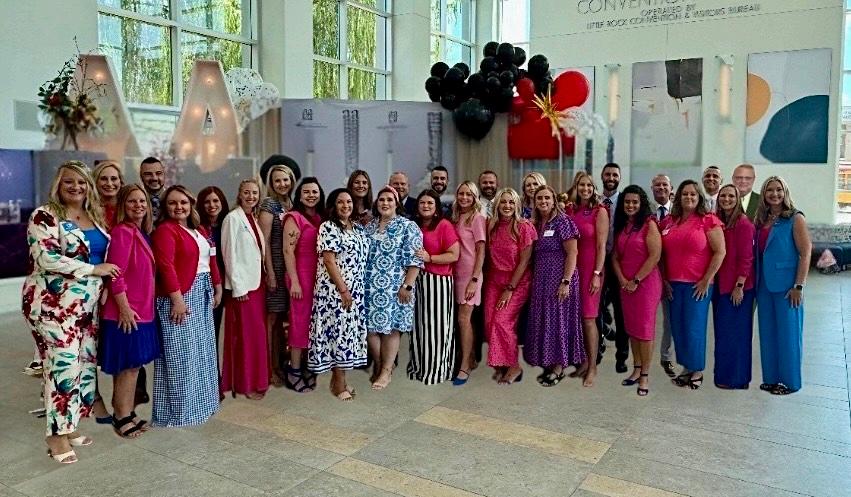
Dr. McGaha-Martin says that her favorite part of her job is that it is “a people business," stating, "One of the greatest joys of my career has been watching educators I poured into reach new heights and then multiply their impact on others. That ripple effect—educators growing, students benefiting, and communities strengthening—is incredibly rewarding. Similarly, I am humbled by the power we have in our hands as educators and how that can be used to help children." The greatest challenge of her position is the significant weight of responsibility she feels. "As Deputy Superintendent, I oversee systems, personnel, federal funding, compliance, and student services and systems Prek-12th grade," she states. "Balancing the complexity of those responsibilities while remaining people-centered and growthfocused is challenging, but it is also where leadership matters most."
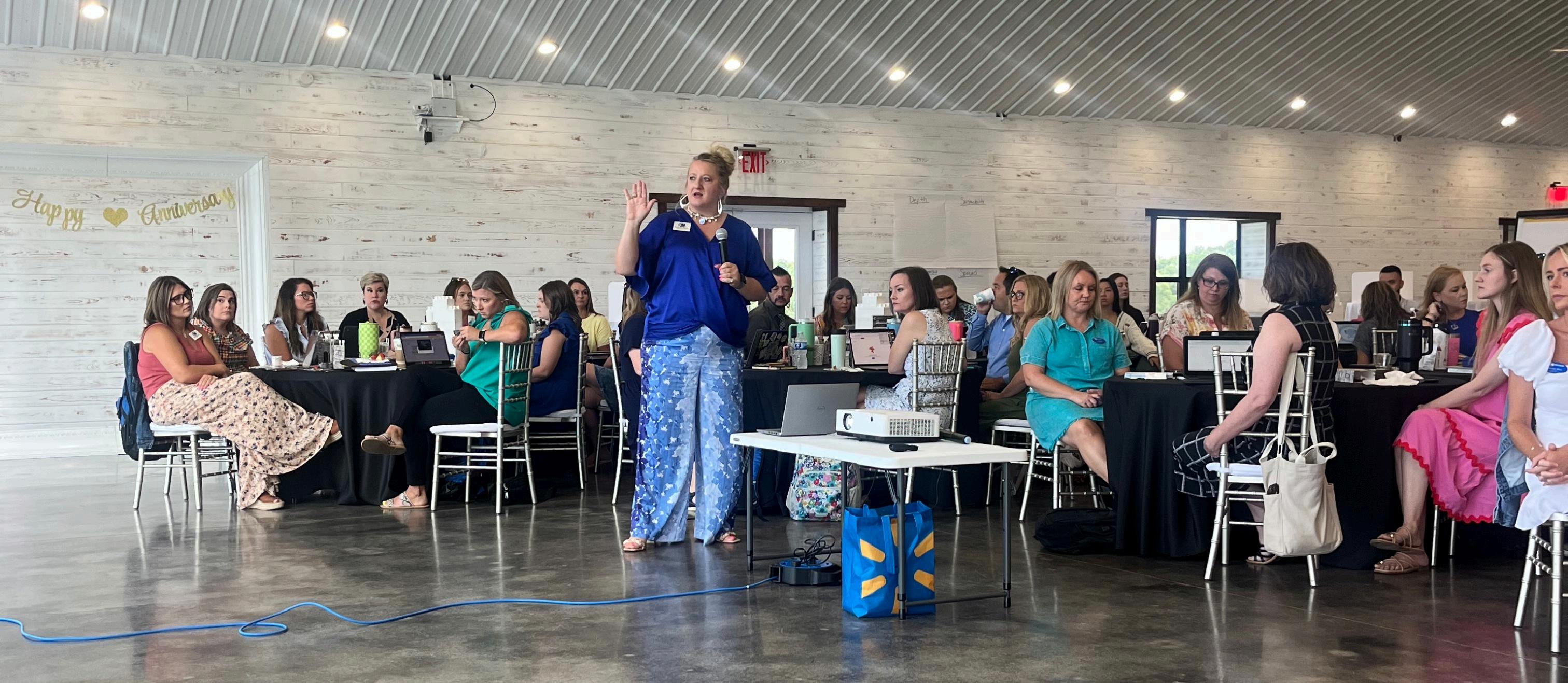
For anyone seeking guidance about moving into leadership, she advises: “you can never be overdressed or overeducated.” She councils others to lead with purpose, invest in relationships, and commit to continuous growth. "Leadership is not about position—it is about influence, service, and example," she states. "If you are exploring educational leadership, be ready to show others at least one way forward, knowing it may not be the only way."
What do you feel is your greatest professional accomplishment?
Developing leaders who go on to impact others may be my greatest accomplishment. Building systems and people that endure beyond any one role or title is the legacy that matters most to me. Seasons of my career such as Master Principal Designation, Middle Level Principal of the Year, Arkansas Diamond Schools to Watch, and even my dissertation, all included other educators and opened doors for me to hopefully build a legacy of leadership.
What do you enjoy doing during your time off?
I enjoy spending time with my husband, Shawn, my daughter, Carlee, and friends who are like family. I could go to flea markets and look for junk (treasures) every spare minute of my time. Over the past year, I have read more for pleasure than ever before, finding new favorite books such as Theo of Golden by Allen Levi. I thoroughly enjoy cooking, and my favorite summer hobby is canning salsa, jams, jellies, and more. I find joy in giving those homemade goodies away as Christmas gifts each year.

If you weren’t in your current position, what would you be doing?
I would still be serving others—mentoring, teaching, or leading in a way that builds capacity and strengthens communities. My dream part time or retirement job is to work, travel, and write for Southern Living magazine!
What are the goals you are still working toward?
Personally, God has called me to write a book. Professionally, a goal is to systemize our “grow your own” leadership development program and continue taking our Career and Technical Education programs to scale. An on-going goal is to facilitate learning and develop others on the national level. I also want to serve as Superintendent.
do you see as the biggest benefit of AAEA membership?
Staying engaged with AAEA has been integral in developing my network with other leaders across the state, and so many of those connections have evolved into strong friendships. Membership is an ideal way to keep growing and keep learning from and with others in very similar roles and with very similar goals: to make an impact on their school communities. If you are called to serve, AAEA membership can also open doors for you to share your strengths and insight on proven strategies and current trends. Your membership will let you join the important work of advancing education across Arkansas.











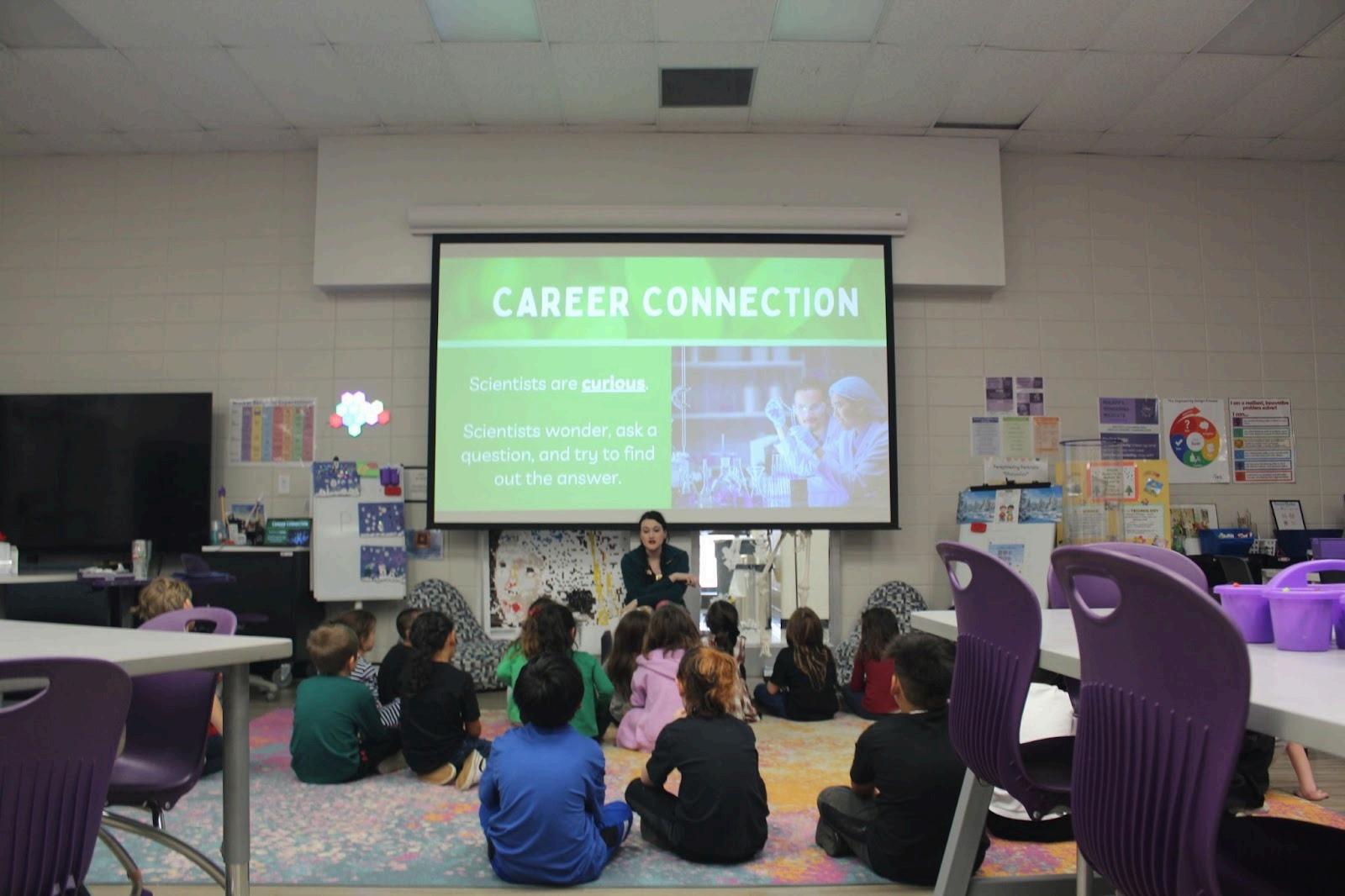
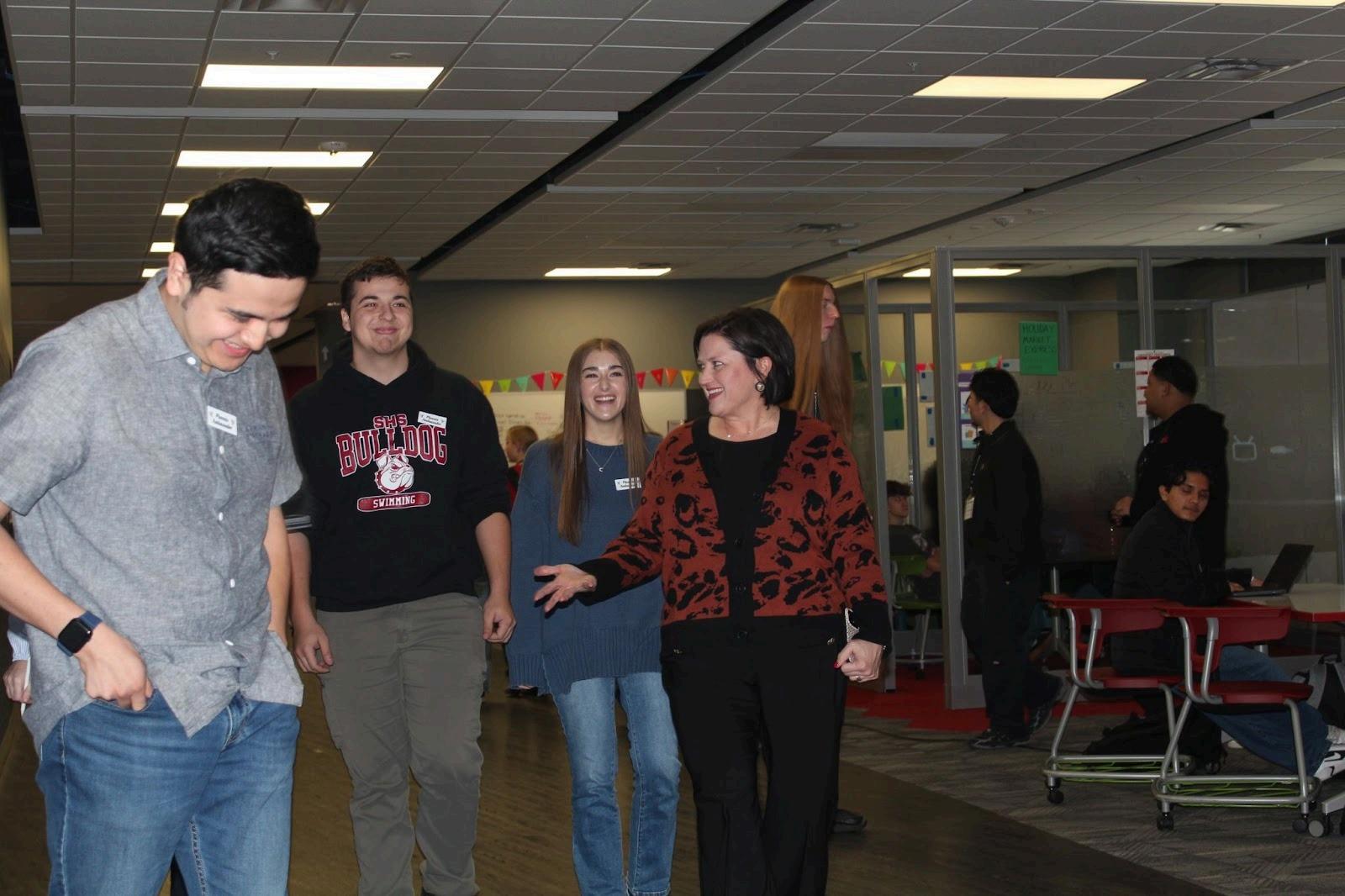
Springdale Public Schools leaders provide clear examples of how children can thrive when the approach is intentionally designed around experiential learning, community, and a shared purpose. Led by Superintendent, Dr. Jared Cleveland, Walker Elementary and the Don Tyson School of Innovation (DTSOI) educators and students consistently describe schools that function as community anchors, places where educators invest in their communities, and communities actively support their children.
Across both campuses, the message was consistent: children are being prepared for academic success and for meaningful participation in their communities
Walker Elementary: Building curiosity, belonging,
At Walker Elementary, learning begins with curiosity and relevance. Ms. Lynn Ryan, principal of Walker Elementary, described a school culture grounded in exploration, collaboration, and real-world application, creating an environment where children are encouraged to ask questions and make sense of their
That approach is evident in the Wonder Lab, a handson, grant-supported learning space designed to extend classroom science instruction through active, inquiry-based experiences. Ms. Bethany Cebuhar, who serves as Walker Elementary’s gifted and talented facilitator and STEAM interventionist, explained that children rotate through the Wonder Lab as part of their learning experience, engaging in activities and stations aligned to what they are learning in their classrooms. Teachers also use the space flexibly, bringing classes to the lab to enhance lessons with hands-on exploration, collaboration, or additional space to apply scientific concepts.
During a first-grade Wonder Lab session, children created drawings to depict what made them curious, sharing interests that ranged from giraffes and sharks to space and fire. One child described curiosity as “something you want to learn more about,” while others connected their drawings to classroom learning by talking about matter and asking why giraffes have what look like horns on top of their heads. In these moments, the Wonder Lab becomes a place where curiosity moves naturally into discussion, problem-solving, and discovery.
Extending learning through enrichment, leadership, and service
Ms. Katie Struebring and Ms. Missy Wright described Walker Elementary’s 21st Century Community Learning Center (21st

CCLC), known locally as the ROAR program, as a camp-like learning experience designed to extend and enrich learning opportunities for children. While ROAR meets after school, the program also includes Saturday and summer sessions, allowing learning and connection to continue beyond the traditional calendar.
Walker educators lead ROAR and intentionally design lessons to complement the school day. Academic support is embedded, with a strong emphasis on hands-on enrichment, movement, collaboration, and relationship-building. Family engagement and community partnerships are a central feature, with monthly meals, game nights, gardening initiatives, and nutrition-focused activities where children can share their experiences. Leadership and service are also embedded within Walker Elementary’s approach to enrichment. One child explained simply that helping others matters because “when you help people, it makes you feel really good,” reflecting the school’s emphasis on service as a meaningful part of learning and belonging.
Authentic, experience-based instruction is a defining feature of learning at Walker Elementary, particularly in Ms. Ashley Schwieso’s English Language Development (ELD) classroom. Ms. Schwieso described intentionally aligning instructional experiences to deepen understanding, build language skills, and connect learning to children’s lives.
Learning was further extended through the arts. As part of a fine arts unit, Ms. Schwieso took a group of ELD learners to the Walton Arts Center to attend a performance aligned to their curriculum. Following the production, the class engaged in a partnership experience with Springdale High School peers, who helped introduce the performance and later spent time interacting with the younger children. The experience provided meaningful opportunities for language development and allowed elementary learners to see older peers as role models, reinforcing the idea that learning and multilingualism are strengths that develop over time.
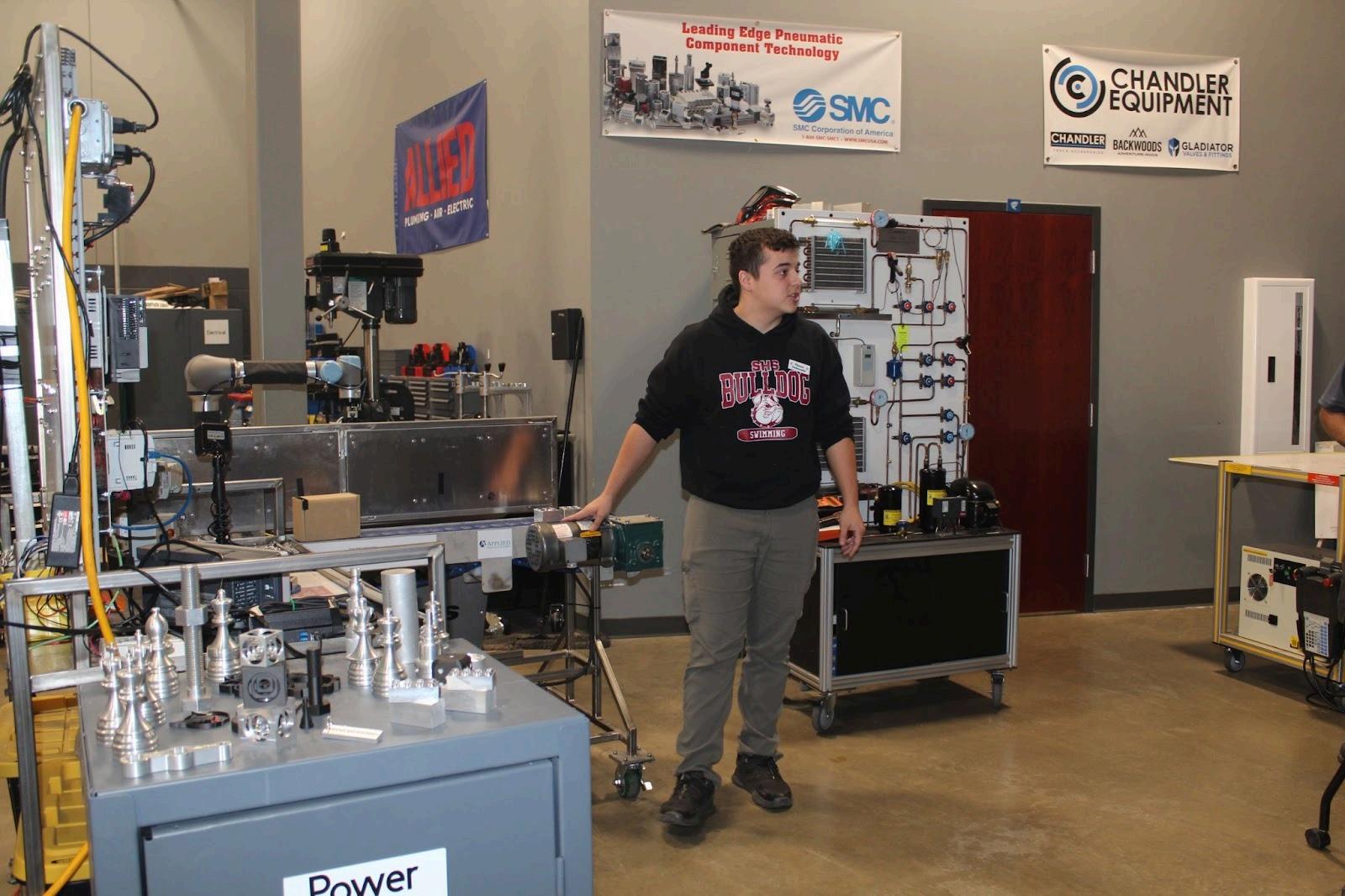
At the secondary level, the Don Tyson School of Innovation (DTSOI) builds on this foundation through personalized learning and a clear focus on postsecondary readiness. The school’s mission is to ensure every graduate leaves with a Diploma Plus, a diploma paired with preparation for college, industry, or career pathways.
That mission was articulated clearly by student ambassadors, who shared about their school experiences, the opportunities available to them, and their plans for the future. The ambassadors described pathways that allow learners to earn college credit, complete associate degrees, or gain industry certifications through handson technical training.
One ambassador shared that participation in a business pathway would allow him to graduate with
nearly all the credits needed for an associate degree and transition to a university as a junior. Another explained that exposure to industrial pathways, including HVAC, electrical systems, and Computer Numerical Control (CNC) machining, “opened me up to a wider view of what I could pursue.”
A defining feature of DTSOI is the emphasis on exploration and flexibility. Students are encouraged to explore different pathways before committing to a specific pathway. Several ambassadors shared that they did not arrive knowing exactly what they wanted to do, and that the school’s structure allowed them to adjust as they learned more about themselves.
Ambassadors consistently pointed to College and Career Readiness (CCR) teachers as key support in this process. CCR teachers serve as advisors and mentors, helping children navigate options, understand pathway requirements, and develop communication and professional skills.
One ambassador shared that in ninth grade, he was shy and uncomfortable with public speaking. He credited his CCR/ Oral Communications teacher with encouraging him, noting that the support he received ultimately led him to become a student ambassador and deliver a TED talk during an innovation rally. “She really pushed me to branch out,” the student explained. “That’s the reason I’m an ambassador today.”
Ms. Amy Harrison, DTSOI principal, emphasized that CCR teachers begin working with children early, helping them understand expectations, explore opportunities, and maintain strong communication with families. She explained, these relationships help children “figure out who they are, what their niche is, and how to move forward with confidence.”
The learning environment at DTSOI reflects a belief in trust, independence, and responsibility. Open learning spaces allow children to work collaboratively, rehearse presentations, create projects, or engage in hands-on technical instruction. Student ambassadors described the environment as one that prepares them for postsecondary settings where independence and self-direction are expected.
Importantly, DTSOI educators affirm multiple definitions of success. College-bound students, those pursuing technical certifications, and those entering the workforce directly are all valued equally. Ms. Harrison summarized this philosophy by explaining that the goal is not only graduation, it is ensuring graduates leave with clarity about their path forward and the confidence to pursue it.
Across Springdale Public Schools, Superintendent Jared Cleveland leads with a shared commitment to children, community, and purposeful learning. Through intentional design, community partnerships, and a focus on the whole child, these schools demonstrate how education can cultivate curiosity, leadership, and readiness for the future. The work happening in Springdale Public Schools reflects what is possible when schools and communities grow together, preparing young people for what comes next and for meaningful lives rooted in contribution, connection, and opportunity.

Submitted by Adam Brooks, Community Partner Manager at Bark, adamb@bark.us
Do you remember the moment you moved from the passenger seat to the driver’s seat in your own life? For many of us, that moment came when we saved up for a car, passed the driver’s test, and experienced the freedom of leaving home on our own for the first time. That taste of independence at 16 was powerful — and it shaped how we learned responsibility, decision-making, and risk.
Today, teens are getting their driver’s licenses later than ever. Why? In many ways, they’re getting that sense of independence much earlier — through their devices. With a phone, a child can text, post, explore, and interact with the world instantly, often without the adults around them even realizing it. And with that freedom comes real responsibility.
Recently I watched an ad that highlighted an important issue: many children don’t have a voice in how they are represented online. Parents, relatives, and friends post their photos, share their stories, and comment on their lives — often without ever asking the child how they feel about it. Long before kids are old enough to manage their own online identity, one has already been created for them.
That’s why one of my personal passions — and a core value at Bark — is helping children gradually step into the driver’s seat in age-appropriate ways. We can empower kids to practice making smart choices online, understand digital consequences, and build healthy habits before they are given unlimited access.
Just like we wouldn’t hand a 12-year-old the keys to a car without training, we shouldn’t hand them the internet without guidance. What kind of “driver's education” do students need in schools to successfully navigate their online world?
Submitted by Dr. Gene Kerns, Chief Academic Officer, Renaissance
The pace of technological change continues to accelerate. Educational technology has experienced a similar pattern of innovation and change, although some developments have been far more impactful than others. A timeline of instructional design shows that long before the COVID-19 pandemic, lofty promises were made about the power of online education and digital tutors. Yet when we leaned heavily into online learning beginning in 2020, the results were far less than transformative. This raises important questions about the integration of AI into K–12 education.

The history of edtech is full of companies and technologies that sprang onto the scene, dominated for a period of time, and then faded away. Classroom response technologies provide one example. Turning Technologies once captured a massive 78 percent market share and was ranked by Entrepreneur and Inc. among the fastest-growing companies in the United States. Yet Turning Technologies barely exists today, and ExamView software reached “end of life” in 2024. This pattern raises two essential questions: To what degree does edtech live up to its promises, and what does it take for a technology or a company to endure?
While many technologies have faded, some have flourished. At Renaissance, we take pride in the long history of our Accelerated Reader program, originally released in 1986 and supported by decades of research demonstrating its efficacy, including a recent book by Professor Keith Topping. Similarly, Star Reading, Star Math, and Star Early Literacy are now the most widely used computer-adaptive assessments in K–12 education, with reliability and validity documented through ratings from the National Center on Intensive Intervention.
Chief among our principles is a pledge to only develop products that represent the best use of technology. We believe teachers should be at the center of the classroom, which is why our mantra is, “Support teachers, don’t supplant them.” Daily life in schools is highly consequential, making ideas like “move fast and break things,” as described in the Harvard Business Review by Hemant Taneja, or “fail hard” and “fail often,” intolerable in educational settings.
As AI enters edtech, these realities matter. While AI can do many things, teachers’ expertise, knowledge of their students, and ability to make learning meaningful continue to matter greatly. Natalie Wexler illustrates this point in her analysis of ChatGPT rewriting the Gettysburg Address, showing how AI can preserve basic meaning while omitting nuance. These examples highlight the importance of keeping a human in the loop.
At Renaissance, we view AI with tremendous optimism, particularly in its ability to help teachers and leaders to make informed decisions quickly to support students. Our focus is responsible AI use in education. Through Renaissance Next for Teachers and Renaissance Next for Leaders, AI-powered features support assessment, instruction, data analysis, and plain-language explanations, while keeping educators at the center of decision making. This same principle guides the AI Lesson Generator in Nearpod, where teachers refine and customize lessons to ensure technology continues to work in the service of teaching and learning.
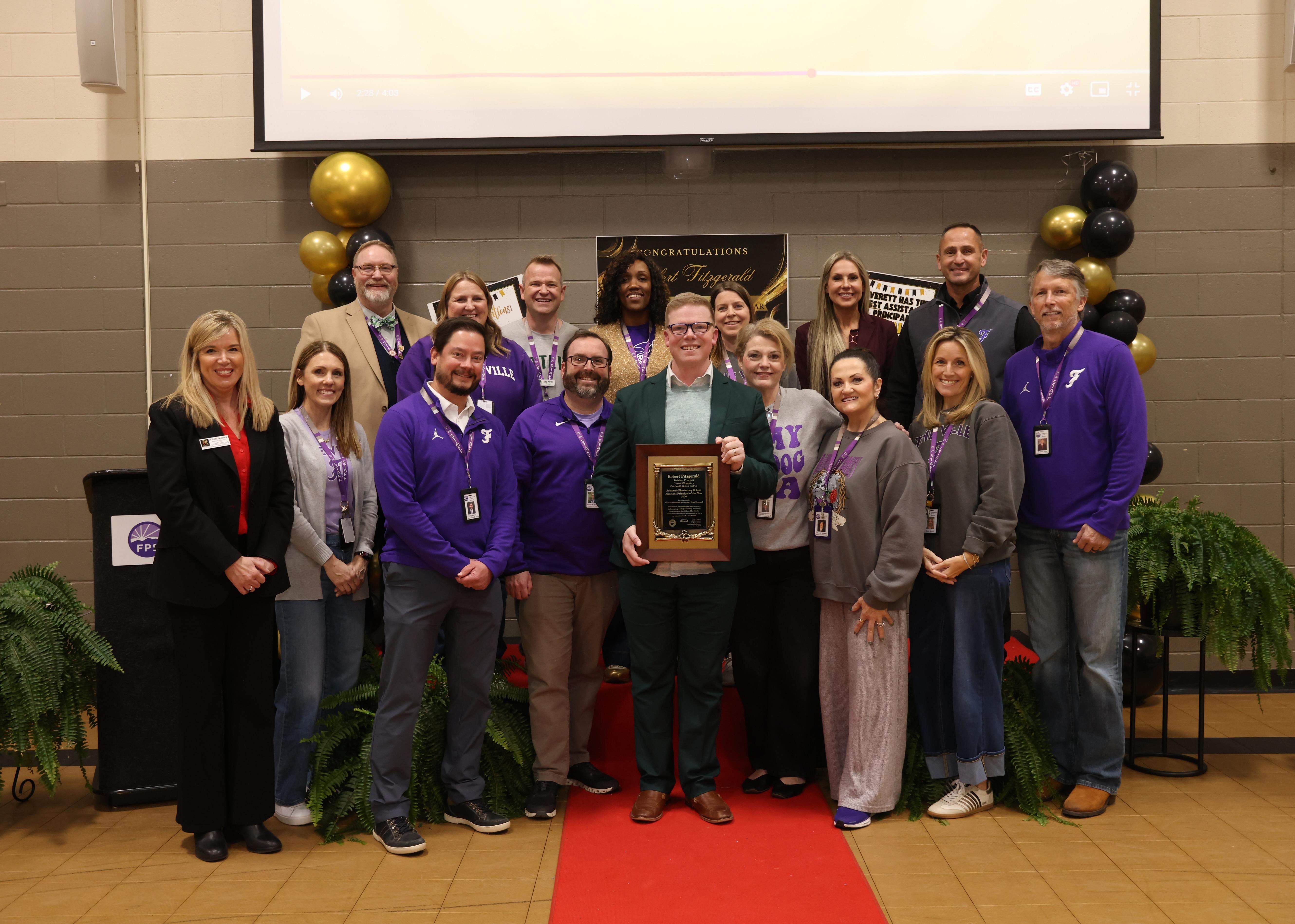
Robert Fitzgerald, Assistant Principal at Leverett Elementary School in the Fayetteville School District, was recently named the 2026 Arkansas Association of Elementary School Principals (AAESP) Assistant Principal of the Year. This award is sponsored by Lifetouch and was presented to Mr. Fitzgerald at his school on January 16, 2026. Congratulations, Robert!
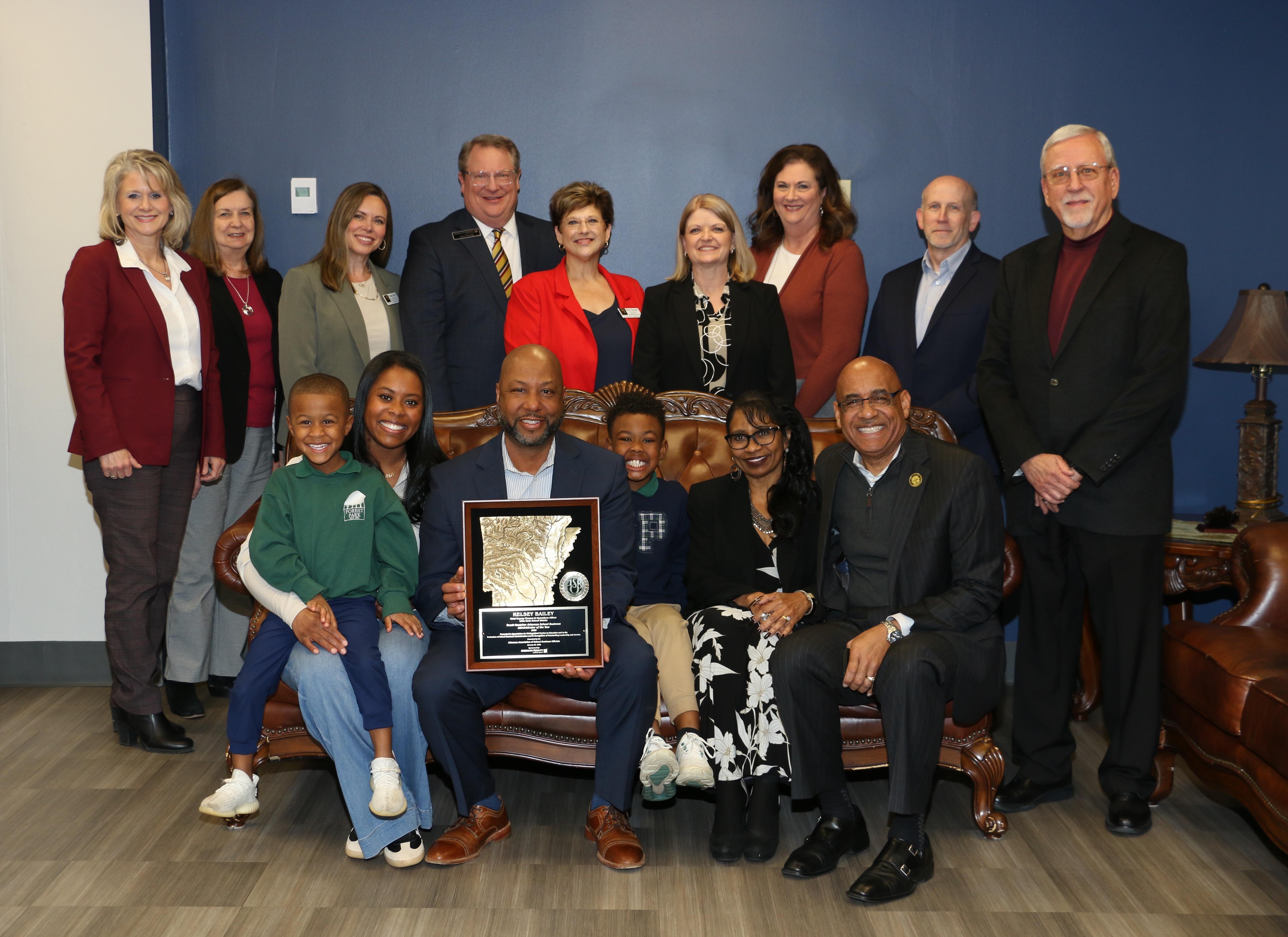
Kelsey Bailey, Chief Deputy Finance & Operations Officer for the Little Rock School District, has been selected as the 2026 Truett Goatcher Arkansas School Business Administrator of the Year by the Arkansas Association of School Business Officials (AASBO). The award was presented during a surprise presentation at the Little Rock School District Board of Directors meeting on Thursday, January 22, 2026. Congratulations, Kelsey!
AAEA and our Constituent Groups are proud every year to offer a number of scholarships to students in Arkansas. Applications are available online at theaaea.org/page/scholarships.



This segment features content from other AAEA publications. School Law Review is a quarterly publication available to subscribing districts. The following excerpt comes from the December 2025 issue.
Defending Educ. v. Olentangy Loc. Sch. Dist., U.S. Court of Appeals for the Sixth Circuit (Nov. 6, 2025)
Olentangy Local School District prohibits students from using biological pronouns for transgender/ nonbinary classmates who prefer different pronouns. The District's legal counsel confirmed that referring to students using gendered language contrary to their identity would violate antiharassment policies. Parents A, B, C, and D have children who believe people are born either male or female and cannot transition. These children want to use pronouns consistent with biological sex based on scientific and religious beliefs. The District presented no evidence that using biological pronouns would disrupt school functions or qualify as harassment.
The Sixth Circuit reversed the district court's denial of a preliminary injunction and remanded for entry of an appropriately tailored preliminary injunction barring the District from punishing students for using biological pronouns. The court found the District's policies regulate speech on a matter of public concern (transgender rights) in a viewpointdiscriminatory manner. The District failed to present evidence that using biological pronouns would cause substantial disruption or violate anyone's legal rights under Tinker. The court distinguished between abusive invective (which schools can ban) and the use of biological pronouns based on sincere beliefs, noting that many states protect the right to use biological pronouns. The Circuit Court’s holding was largely informed the U.S. Supreme Court’s decision in Tinker v. Des Moines (1969): Schools may not restrict personal speech unless it would 'materially and substantially disrupt' school activities or infringe the legal 'rights of others.' West Virginia v. Barnette (1943): Public schools may not 'prescribe
what shall be orthodox in politics, nationalism, religion, or other matters of opinion.'
Fellers v. Kelley, U.S. District Court for the District of New Hampshire (April 14, 2025)
The parents of several students in the district sought a preliminary injunction. Among other things, the parents sought an order preventing the district from enforcing any policies that might pre vent the parents and their children from attending district extracurricular events and nondisruptively expressing disfavored viewpoints on political or social issues, including protesting against allowing biological boys to participate in girls' and women's sports (described by the media as an “antitrans” protest), by silently wearing a pink wristband on the sidelines or displaying a sign in the parking lot.
The court framed the issue as follows: When may public school authorities limit symbolic speech during school athletic contests to protect students from perceived harm? When protected rights clash, as they do here — when opposing sides each have a point, but compromise proves elusive [*2] — courts must strike the balance and explain why, under the particular circumstances presented, the law directs that one right must give way to another. The court decided to deny the request for an injunction, concluding that the district (a) reasonably determined that the parents and students intended to target a specific transgender student on the visiting team (as well as any transgender students present at the game) to demean a core immutable characteristic of their personal identity – that is gender identity; and (b) reasonably concluded that such a message might “poison the educational atmosphere” and cause potentially serious harm to the participating transgender athlete as well as other transgender students. continued
The parents have appealed the decision to the First Circuit Court of Appeals where a decision is pending.
Leroy v. Livingston Manor Sch. Dist., U.S. Court of Appeals for the Second Circuit (Oct. 30, 2025)
The student, a high school senior, posted a photo on a Snapchat parody of George Floyd showing a friend kneeling on his neck with the caption 'Cops got another' during the Derek Chauvin trial. The post was made off-campus, after school hours. The student removed the post after about 7 minutes when he realized it was offensive. Another student took a screenshot and reposted it, causing it to spread. The school received 23 complaint emails. The school held classroom discussions, an assembly, and a student demonstration in response. After the district suspended the student and barred him from extracurricular activities for the remainder of the school year, he filed suit alleging that the district violated his free speech rights under the First Amendment.
The District Court granted the district’s motion to dismiss the case, but the Circuit Court reversed, concluding that the suspension of a student for posting an insensitive photo on Snapchat while off-campus violated the First Amendment when the speech did not constitute a true threat, was created and posted entirely off-campus, and the resulting in-school discussions and assembly did
not constitute sufficient disruption to justify regulation. The court further noted that the level of in-school disruption did not meet Tinker's 'substantial disruption' standard, and while schools may have an interest in protecting students from threatening speech, the record showed the student’s speech was merely offensive, not threatening.
J.A. v. Luna, U.S. District Court for the Southern District of California (Sept. 30, 2024)
A middle school student who was suspended for purportedly wearing blackface in support of a nearby high school’s football team, filed suit alleging that his actions were protected by the First Amendment. The student sought an injunction overturning the suspension.
The District Court rejected the claim, finding that the student had not made a plausible case that wearing eye black on his face was somehow constitutionally protected expressive conduct and rejected his claim that his constitutional rights had been violated. The court also noted that the student had previously been disciplined for making racist comments to a black classmate.


The AAEA Job Board is a calendar-year subscription that assists districts with the ever-increasing challenge of recruiting quality staff. It is a significant resource for educators, both in-state and out-of-state, seeking employment in Arkansas schools.
Over 165 school districts are participating in the program, which has been extremely helpful to schools and educators over the years. The site is used year-round and is accessed extensively during the second semester. It is not unusual to see over 400 jobs posted on the Job Board at one time. With an account, school districts may post unlimited job vacancies throughout the year.
To subscribe (by district) or to post job openings, contact Lana Webb, Administrative Specialist, at l.webb@theaaea.org or at 501-372-1691.
District Name Position
Prairie Grove School District
Prairie Grove School District
Jacksonville North Pulaski School District
Jacksonville North Pulaski School District
Marion School District
Cedar Ridge School District
Sheridan School District
Crossett School District
Crossett School District
Fouke School District
Watson Chapel School District
Watson Chapel School District
Mulberry/Pleasant View BiCounty School
Assistant Principal Junior High
Assistant Superintendent of Operations
Elementary Assistant Principal
Elementary Principal
Elementary Principal
High School Principal
Director of School Support & Leadership
High School Principal
Elementary School Principal
Superintendent
Secondary Principal
Elementary Principal
District Superintendent
AREA
Executive Director