By JORDAN DONEGAN ASST. NEWS EDITOR
In light of what organizers have described as a surge in Immigration and Customs Enforcement (ICE) activity targeting university campuses across the United States, and the immigrant population in general, Fordham University’s Graduate Student Workers Union (FGSW) had launched a petition calling on the university administration to declare Fordham’s campuses a “sanctuary space.”
Addressed to the Fordham University President Tania Tetlow, Vice President for Student Affairs Michelle Burris and Provost Dennis Jacobs, the petition urges Fordham’s highest-ranking officials to take a more transparent stance on the university’s policies related to ICE, and demands that they adopt a total of six measures towards making Fordham a sanctuary space.
These measures include a public declaration of a “sanctuary campus,” refraining from disclosing student and faculty data to the federal government, explicit campus response protocols related to immigration enforcement, fully funding immigration legal services for students and employees, issuing annual public reports on immigrationrelated matters and an overall commitment to protecting its immigrant student community. The petition has received
roughly 290 signatures from faculty, staff, students and other members of the Fordham community, since it was first posted online on Feb. 17.
“The goal of this petition is to protect all community members, like including undergrads, including staff who potentially were not born [in] the United States or have family members who [were] not born in the United States,” said Kyra Dezjot, GSW’s Lincoln Center Chief Steward and third year Ph.D. student in history.
“Sanctuary must be more than an internal guideline or public statement. It must be bargained, funded, and enforceable,” the petition states. “A real sanctuary requires clear non-cooperation, privacy protections, workplace safeguards, and material support written into enforceable agreements.”
Along with Dezjot, the petition was developed by Preston Carter, GSW business agent, and Molly Crawford, Ph.D candidate in theology and Chief Steward in GSW. According to both Carter and Dezjot, the petition emerged as members of the GSW grappled with how to protect international union members from what he described as a “federal assault on their rights that threatens their safety and residency status.”
After a series of email exchanges with the Graduate School of Arts and Sciences asking for a restatement of the university’s position on immigration, they were
ultimately directed to the Fordham Public Safety website, which outlines what public safety’s procedures are in response to the presence of ICE. The petition’s three authors then decided that initiating a petition would be an effective way to urge Fordham to declare the campus a sanctuary space and clarify their existing immigrationrelated policies via a public statement.
“We wanted to have the petition in order to push Fordham to clarify its existing policies. I think the fact that you cannot find a page on the Fordham website that clearly states that they will not cooperate with ICE is a problem,” said Dezjot.
According to Carter, the FGSW petition was also partly inspired by similar initiatives from the State University of New York’s Graduate Student Educators Union. Carter detailed that Stony Brook University Ph.D. candidate in art history and criticism Kaya Turan, who is an official of the Stony Brook graduate union, also played a crucial role in the petition’s development.
The Ram reached out to Burris, Jacobs and Tetlow, requesting their stance on this petition, but was told in an email from the university spokesperson, Jennifer Petra, that the university was not in a position to comment, citing a need for additional time to review the petition’s specific
By SIENNA REINDERS EDITOR-IN-CHIEF
Fordham University President
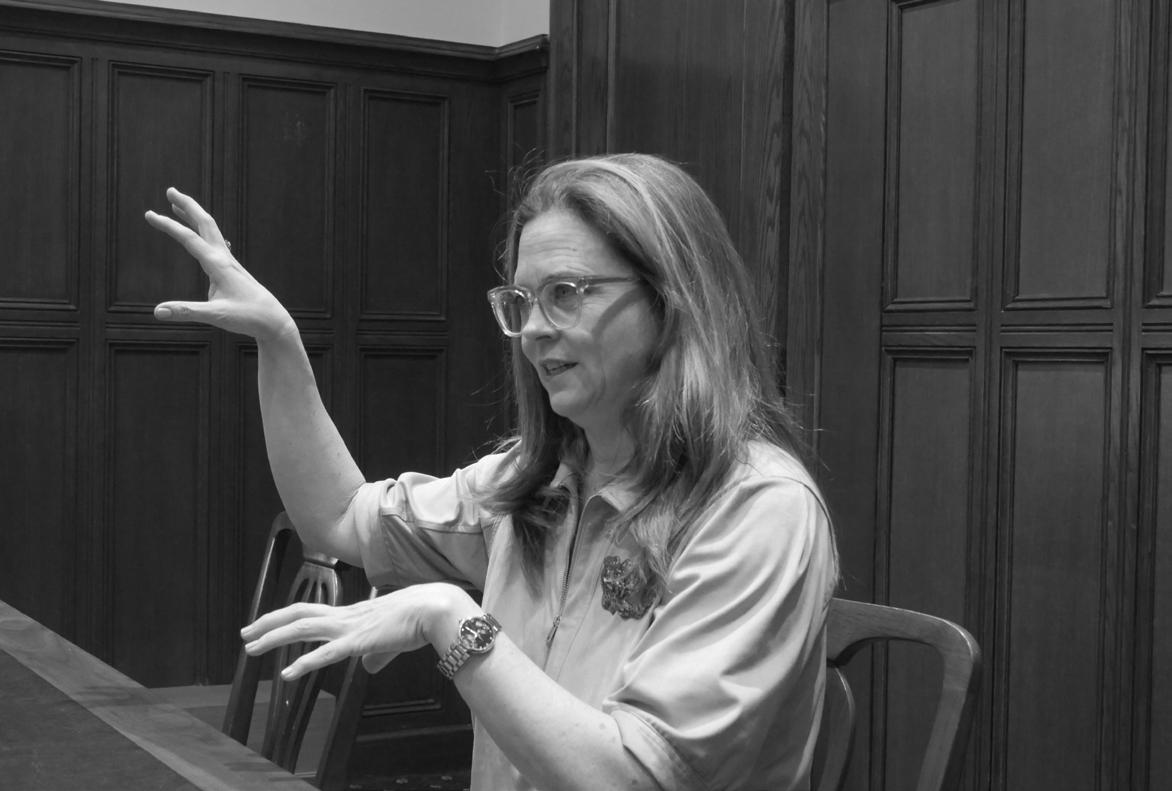
Tania Tetlow met with members of The Ram and The Observer on April 7 to discuss Fordham’s recent admissions cycle, federal impacts on higher education, tuition increases and more.
Admissions Statistics
Tetlow spoke on the success of Fordham’s rebranding initiative in relation to the class of 2030 admissions cycle. This year, Fordham received over 54,000 applications, a 23% increase from last year and admitted 47% of applicants, an 11% decrease in the university’s acceptance rate from last year.
Tetlow said these numbers are especially significant given that higher education institutions are experiencing an enrollment cliff as a result of the 2008 recession, which was shown to have led to decreased birth rates.
“I am extremely excited about the statistics,” Tetlow said. “This was definitely a time when it mattered that we not only invest in what makes Fordham special, but we tell that story better. We don’t ever want to be a best-kept secret anymore.”
Tetlow attributed the success of this year’s admissions cycle to Fordham’s recent rebranding initiative and the market research conducted by the Fordham’s Marketing and Communications division.
“I’m so proud of our marketing communications team,” Tetlow said. “They’ve done brilliant work that’s gotten national news coverage on its own with the quality of the work.”
Core Revision
Regarding Fordham’s ongoing core curriculum revision, Tetlow said she is excited about the work the faculty has done to revise
SEE TETLOW, PAGE 5
By SIENNA REINDERS
EDITOR-IN-CHIEF
Tuition and room and board prices at Fordham University are increasing, according to an email sent to students by Senior Vice President, Chief Financial Officer and Treasurer Tokumbo Shobowale on April 9. Tuition will increase by 4.5% and room and board will increase by 3% for the 2026-27 school year.
Shobowale noted that this increase is already reflected in financial aid packages for the incoming class of 2030.
This is the fourth year in a row that tuition has increased
at Fordham. Last year, tuition, housing and meal plans were increased by 4.65%, 4.3% and 4%, respectively.
In the email to students, Shobowale attributed the increased charges to the rising cost of education, as well as overall inflation. He also said Fordham is working hard to save money, including cutting discretionary spending by 10%, without compromising the quality of education.
“It has become ever harder to bridge the gap between providing academic excellence, SEE TUITION, PAGE 5

Petit Larceny
March 31
5 p.m.
A student reported that on Thursday, March 16, at 12 p.m., they hung a sailing life vest in the stairwell of Salice Hall. When they returned on Monday, March 20, the vest was gone. The supervisor canvassed the area and reviewed the video. An offender was not identified.
Water Leak
April 7
10:15 a.m.
There was a water leak in the second floor restroom of the McShane Campus Center. The supervisor responded. There was no apparent damage. The supervisor contacted Facilities to clean up the water.
On-Campus Flooding
April 10
2:30 p.m.
There was a large water leak in the McShane Campus Center. The supervisor responded. The investigation revealed an air conditioner failed, causing the leak. The supervisor contacted facilities to make repairs and clean the water.
Property Damage
April 11
2:25 p.m.
By SIDNEY BLASCO FEATURES EDITOR
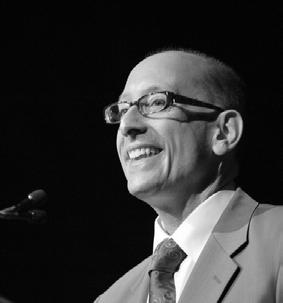
We’re Fordham University’s Voice (WFUV), a National Public Radio (NPR) affiliate station located in the Bronx, will be getting a new manager for the first time in 14 years, following the retirement of the current manager Chuck Singleton after nearly four decades at the station.
Thirty nine years is a long time to spend at any job, let alone at one radio station based at a university. But Singleton, the current general manager of WFUV, has remained at the station because of what he described as a wide variety of new opportunities the job offered him.
“The opportunities kept coming, and even as manager, in the last 15 years at this point, there’s just been so many opportunities for us,”
Singleton said.
WFUV is based in Keating Hall at Fordham University. It serves as “New York’s source for music discovery,” according to their website, featuring adult album alternative music, a genre that includes rock and folk. Although the station is primarily deemed a music radio station, it also has a news department that covers New York City politics, culture and more, along with a sports department that covers collegiate-level and professional sports. With its wide array of coverage, the station draws in roughly 350,0000 weekly listeners, with its primary listener base being from New York, New Jersey and Connecticut.
by the university, is impactful, significant public service which happens in the form of our music discovery programming, primarily,” said Singleton.
In 1989 when the program director of WFUV went on maternity leave, Singleton took over as interim until a new program director stepped in. In 1992, she left on maternity leave as well, and Singleton again stepped in as interim.
“And the second time round, I said I have a lot of ideas in this area, and I think we could really push the station forward and have it be more impactful as a music station,” Singleton said. “So I built the programming, I got the station streaming, I hired the air staff, we really improved our fundraising, we improved what we were doing all around and got the station really on the map and it became a real source for people that people rely on.”
Singleton also noted that one of WFUV’s core missions is its dedication to public service, which is carried out through initiatives like Strike a Chord, a news segment that highlights local music and arts-related non-profits.
Lainey Nguyen, FCRH ’27, started at WFUV during her first year at Fordham and now serves as the news station’s student manager. She has been working with Singleton since her first day at WFUV.
together,” said Pfau.
Follow The Fordham Ram on Instagram, Facebook, Tiktok and X @TheFordhamRam
An employee reported that a baseball struck their car while entering campus through post 5 and caused damage. The supervisor responded and photographed the damage. The investigation revealed the baseball came from Coffee Field during a Fordham vs. Virginia Commonwealth University baseball game. Friday April 17
Thursday April 16
Planter Painting ...
McShane First Floor
12:30 - 1:30 p.m.
Students can decorate their own pot, with seed packets and mini plants to be provided in collaboration with the office of military and vet services. Decoration supplies will be provided.
But the station’s audience has even expanded beyond the tri-state area, with more listeners tuning in via streaming from across the country, according to Singleton. The station is operating on a $7 million budget, around 75% of which comes from listener support.
Singleton began his journey at WFUV in 1987 as the station’s first full-time news director. According to Singleton, when he arrived, the station was undergoing a big expansion, shifting from being entirely student-run to a professional operation with a split mission.
“Our mission, as determined
Additionally, part of what makes the station unique is its pre-professional radio journalism and its use as a training ground for Fordham students through both paid and unpaid employment opportunities. Singleton said the station moved away from a semester or summer-long internship model, instead recruiting students in their first year at Fordham and putting them through workshops in different areas, which Singleton helped implement.
“And then from there, they can move into paid positions and stay for as long as they’re at Fordham, which sometimes can be four years and often five with grad programs as well,” Singleton said. “Overall, we train about as much as 150 students a year by way of our workshops and then their continued involvement with the station.”
Singleton said that the training program is significant to WFUV’s mission as the staff are able to work closely with the students in the program.
“We have a lot of student staff, and Chuck is always very helpful and outgoing with everything that he does and extremely generous when it comes to giving us opportunities to either be in the news or doing the music side of things or video,” Nguyen said.
Nguyen said that both Singleton and WFUV played a paramount role in kicking off her career in journalism.
“I don’t think I would be where I am today in terms of what I know about journalism and the opportunities that I’ve had if it wasn’t for Chuck and FUV,” Nguyen said.
Another student, Alexandra Pfau, FCRH ’26, has been working in the newsroom for three years and reflected on Singleton’s presence at the station.
“I think I’m just going to miss running into him and having conversations with him,” Pfau said. “He always has something interesting to talk about and it’s always fun to have a little talk with him in the middle of your day... He made a joke to me that I’m graduating this year, so it’s kind of like we’re graduating
The first 150 student sign ups get a free t-shirt and free burgers. Sign up on the S.A.F.E. Instagram account to register. Saturday April 18
Woof Wellness Studio 12:15 p.m.
Tabling for puppy yoga that will be held at Woof Wellness Studio, 14 W 23rd St., is Thursday, April 16 at 10 a.m. in the McShane Center. Sign up to do some yoga poses with puppies. Sunday April 19
Woodlawn Cemetery 11 - 1 p.m.
Take a guided tour of the Woodlawn Cemetery with David Herszenson and learn about the American Jewish history preserved there. There are 25 spots total, so register soon!
Singleton doesn’t just work with the news team at WFUV, but contributes to the station’s sports and music sections as well. Sports manager Joseph Henry, FCRH ’26, commented on his impact on the station.
“Chuck’s warmth and genuine interest in students at WFUV helped make the studio a second home,” Henry said.
As for what will come next for Singleton, he said he is looking forward to spending time with his family. The first thing on his list is getting plane tickets to visit his daughter in Tasmania.
“I want to take some time to kind of air out my head and think about what’s next for me,” Singleton said. “I’m not planning to work. I’m planning to have a lot of fun and do things that I love.”
Singleton raised a family throughout the 2000s, and with the rise of smartphones and work becoming a 24/7 job with technology, he said it got harder to take time off.
“So that is one of those life lessons, take on more responsibility, it’s going to be harder to find yourself in all of that,” Singleton said. “So I’d like to find a little more of myself again.”
Singleton will officially depart from his role at WFUV on June 30. A formal announcement on who will be replacing him has yet to be made.
Monday April 20 Copy Editing
McShane B-52 5:30 - 9 p.m.
Learn how to copy edit with the copy team of The Ram! You will learn AP style, get sneak peaks of next week’s articles before they come out, and of course, eat Pugsley’s Pizza.
By MATTHEW DOHERTY CONTRIBUTING WRITER
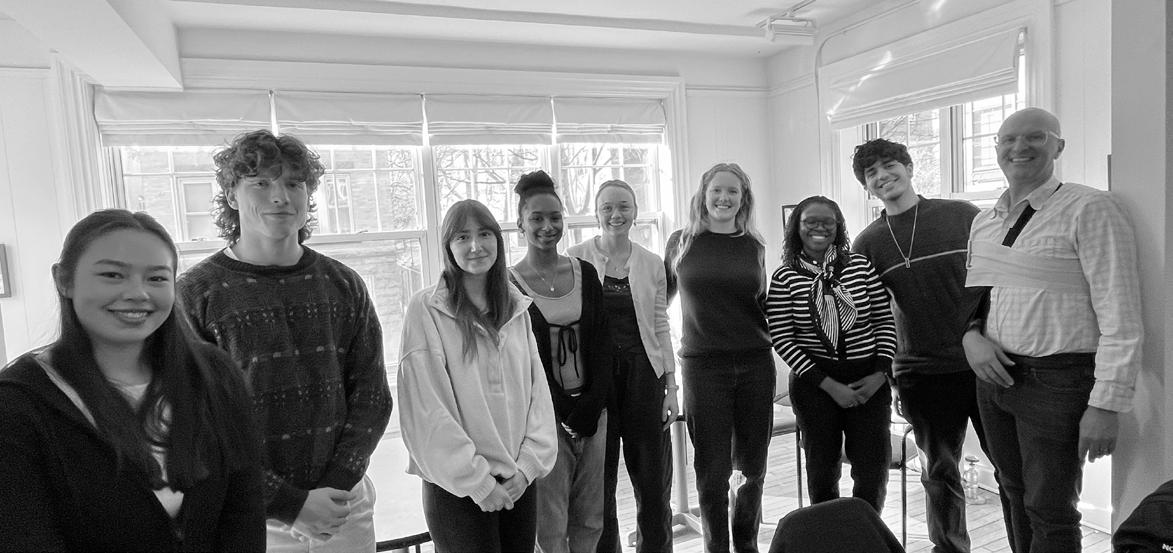
The Fordham University Institute of International Humanitarian Affairs (IIHA) held a talk with Fordham students at Canisius Hall to discuss job opportunities in humanitarian aid on March 25.
Hosted by executive director of Good Shepherd Volunteers (GSV) Thomas Hollywood, and Ruth Mukwana, director of Graduate Studies at IIHA and a Helen Hamlyn Senior Fellow, the event was part of a series known as “Conversations with Humanitarians.”
Hollywood first worked at GSV from 2002 to 2004 after graduating from Stonehill College. GSV is a humanitarian organization founded in 1992 to support women and children affected by poverty or violence and provide volunteer opportunities for people with religious backgrounds. Upon receiving his master’s degree in international peace and development studies from Jaume I University in Spain, he joined Catholic Relief Services (CRS) in 2007, where he worked until March of 2025, when he returned to GSV.
During his senior year at Stonehill College, Hollywood said he went on a spring break trip where he worked at a project site in Lima, Peru. He described how this experience influenced him to
get involved in humanitarian aid.
“That was very transformative for me because I saw the impact, the solidarity [and] communities coming together,” Hollywood said. “Just really interesting work, and it motivated me to consider this for a profession, a career trajectory.”
The goal of the IIHA event was to connect undergraduate students with job opportunities after graduation, according to Hollywood.
“It’s great to know that there are so many different opportunities that if someone wants to do humanitarian aid, wants to get involved in the development sector, that the opportunities are plentiful,” Hollywood said.
The Conversations with Humanitarians event lasted from 4 to 5:30 p.m., and centered mostly on Mukwana and Hollywood’s advice to students interested in entering a humanitarian-related field. Mukwana also highlighted the significance of CRS.
“I don’t think that’s an organization that comes up a lot in conversation, but I felt like with all the things they’re doing, they’re doing really interesting and meaningful work, and more importantly, they offer really great opportunities for students … who have just finished their degrees,” Mukwana said.
Christine Vogel, FCRH
’25, currently works at Good Shepherd International Justice and Peace (GSIJP), which operates under GSV. Vogel explained how the GSIJP engages with Good Shepherd programs around the world, as well as the UN.
“That’s just kind of the event planning side, creating presentations and research and that sort of thing, but then also being engaged in these different commissions and [trying] to learn from that and bring that back to the broader Good Shepherd community,” Vogel said.
Later on in the event, Hollywood and Mukwana disagreed about students’ preparedness to visit dangerous areas of the world after graduation. Hollywood mentioned Darfur, a war-torn region of Sudan that is experiencing an ongoing genocide, as an example. Based on his own experience working in Darfur, Hollywood cautioned against visiting dangerous parts of the world without proper experience.
“Those sites are for those that are a little bit more seasoned experience, those that have had some frontline work when it comes to project management, acute scenarios where you’re dealing with a lot of difficult circumstances such as the aftermath and the recovery efforts at that time from the genocide,” he told the crowd.
For Mukwana, the focus of the talk was on flexibility and the different paths a career in humanitarian aid can take.
“I think anyone can go and work in any context,” Mukwana said. “For me, I feel like people’s careers and journeys are very different and we’ve all channeled and navigated those differently.”
Caroline Donnelly, FCRH ’27, said that the information she learned at the event helped inform her about humanitarian organizations with religious affiliations and how to find opportunities after graduation.
“I learned a lot about how to properly investigate somewhere you wanna work,” Donnelly said. “He pointed me in the right direction with that, which I appreciated a lot.”
Donnelly said she will continue attending these events because of the community that they’ve built.
According to Vogel, some foreign aid workers have been
laid off due to recent spending cuts to the United States Agency for International Development.
“There’s so many great qualified individuals, but no money for them to continue their work,” Vogel said.
Despite the layoffs and budget cuts, Vogel remains optimistic about humanitarian aid.
“I feel like the people on the ground, people doing the work, and people in my sphere of civil society are still very hardworking,” Vogel said. “They know what needs to be done and aren’t going to give up that fight.”
Hollywood encouraged students to remain optimistic about the future in general.
“I wouldn’t give up,” Hollywood said. “I think we need to fight the good fight [and] to stick within the struggle. These sectors have obviously taken a beating, but we need to figure out [how] to become more resilient and continue the necessary goals.”
By SIENNA REINDERS EDITOR-IN-CHIEF
The Fordham University United Student Government (USG) met on March 26 and saw a new club presentation, passed budget requests and discussed the upcoming USG elections.
The meeting started with a presentation for a new proposed club from Natasia Shivers, FCRH ’28, for the Fordham Birdwatching Club. In her presentation, Shivers said that while Fordham has an Outdoors Club and a Plant Club, there is no animal club on campus, representing a “gap in the market.” The Bird Watching Club, she explained, would provide students with education on different types of birds, and on rising concerns regarding their population status, as well as guidance on bird watching for students who are new to the activity.
The club would offer its members excursions to the Bronx Botanical Gardens, Central Park, Prospect Park and other places to view birds. Shivers said the club would also expand beyond its members to do outreach events, such as bird trivia, bird seed making, birdhouse making and more.
USG then moved on to discussing budget requests.
There was a request from Senator Joseph Onorato, FCRH ’26, for the Student Experience Committee to purchase materials to enhance an art exhibit opened on March 29 on the second floor of the McShane Student Center.
Vice President of the Gabelli School of Business Hunter Gholson, GSB ’26, submitted a request to purchase food for the upcoming GSB Year in Review Dinner.
USG’s Vice President of Sustainability Ayden Johnson, FCRH ’27, requested funding for paint for a shell-painting event on April 20 and for prizes for an Earth Week trivia event on April 21.
Vice President of Facilities and Dining Madeline Ando, FCRH ’27, submitted a request for candy and cat stickers for an upcoming community tabling event.
There was also a request from USG Vice President of Fordham College at Rose Hill Mary Hawthorn, FCRH ’26, for a prize wheel for an upcoming community tabling event.
Before USG voted on the budget requests, Senator Regan Healy, FCRH ’28, presented a proposal from the Menstrual Products Commission to provide menstrual products in all residence halls. Healy explained
that Fordham is a predominantly female community and that menstrual products are a health necessity, not a luxury good, that should be available to everyone.
Regarding the specifics, she said the menstrual products would be in residence hall laundry rooms and would be restocked weekly by Campus Operations. Healy said the cost of the first round of products, which would last for the remainder of the 2025-26 school year, would be $3,000 and split between USG, the Residence Hall Association and the Office of Residential Life.
USG then voted on the budget requests, the Fordham Birdwatching club and the Menstrual Product Commission’s proposal. All requests passed unanimously.
During USG updates, Vice President of Diversity and Inclusion Laila Sayegh, FCRH ’27, said that her committee is currently conducting an accessibility audit of oncampus buildings to gauge areas for improvement to accessibility.
Senator Katelyn Martins, FCRH ’27, discussed updates to the Governing Documents Commission review. She explained that they are trying to change the election policy to allow USG members
to individually endorse candidates. She specified that the executive ticket would not be permitted to endorse anyone and executive board members would not be permitted to endorse a candidate for their position.
After deliberation among USG members, they found that there was confusion regarding what constitutes endorsement: some members questioned whether reposts on social media were considered endorsement. Martins said she would clarify the terminology in the document.
Executive President Lucas Hjertberg, FCRH ’26, then discussed the upcoming USG elections. He said there will be four information sessions for prospective candidates before April 10, when signature forms are due. Hjertberg said that Meet the Candidates for the e-board and senate positions will be on April 17. Hjerberg also reminded everyone that The Walk would take place on March 28.
Then they moved on to the e-board report. Vice President of Budget and Finance Peter Grimes, FCRH ’25, announced that they received an additional $17,000 from the Office of Student Involvement the week prior. Executive Vice President Andrew McDonald, FCRH ’26, asked Grimes if
there were any interesting budget requests, to which Grimes said the Mischief Managed club requested $15 for a Tri-Wizard Tournament.
Vice President of Student Life and Experience Luc Angus, FCRH ’26, said the ceremony for the new faculty community award went well and that the family of the late professor Olson Saez — who the award is honoring — spoke at the event.
Gholson announced that Fordham will be piloting a course to train Gabelli seniors on artificial intelligence. He also said that the Outreach Committee’s Spring Market would be happening on April 27.
Johnson said his committee is gearing up for Earth Week and that they will be having events and activities throughout the week of April 19-25.
Sayegh said that her committee is getting ready for Bronx Appreciation Week, which will take place from April 13-18 and will involve events throughout the week.
Senator Henry Carstens, GSB ’29, said that he was happy with the outcome of USG’s State of the Students Town Hall and the support they received for the Contraceptive Policy Commission’s proposal to amend the university’s current policy on contraception.
details and requests.
In an unrelated press conference with The Ram and The Observer, however, Tetlow said that she was “proud” of the Fordham community in regard to its concern for the community, adding that she “shares that deep concern,” but that Fordham already meets many of the petition’s demands.
“The specific requests in the petition almost entirely match what we’re already doing, and you can see that on our website,” said Tetlow. “I think the only area where we would disagree is on declaring ourselves a sanctuary campus. I’m not sure what that means exactly, but I would worry that that would make our community more vulnerable.”
According to its “Updates on Evolving Political Landscape” webpage, unless presented with a judicial warrant legally mandating them to let enforcement officers onto campus, Fordham and Public Safety will not comply with ICE.
“Law enforcement officers must provide judicial orders or lawfully issued subpoenas, which Fordham’s Office of General Counsel will verify before access to campus property will be granted,” the website states.
The page also explains that the university will not disclose any student or employee data unless required under federal law.
Tetlow added that Fordham’s enclosed gates provide a unique form of protection for community members.
“If an ICE agent comes to one of our gates, and we do have walls and gates here, rather than the open campuses most universities have, they would be asked to show a judicial warrant, and that has been true for 20 years,” she said. “Right now, our work is to make sure that the folks who sign on to that petition understand the good news that we’re already doing those things.”
Dezjot explained that she has frequently heard similar responses to the petition that Tetlow raised during the meeting with student journalists, but that what she described as Fordham’s “unclear protocols” has brought about a great amount of angst and uncertainty towards community members, especially international students.
“So I’ve heard this a lot too, like, ‘Oh, Fordham basically practices all of these sanctuary policies.’ But unfortunately, that’s not written down anywhere. And I think until it’s publicly accessible to all of our community members, it’s hard to know exactly what they’re going to do,” she said.
Dezjot argues that, despite potential retaliation from the federal government, such as an increase in ICE presence around campus, that could arise if Fordham initiated the demands laid out in the petition, the university must nonetheless

take an accessible public stance on their position regarding immigration enforcement.
“I just think that is kind of an excuse, and I have heard from international students when you kind of pose that question, like, ‘Okay, so it’s fair to just sacrifice my safety for this? It’s fair to sacrifice like my anxiety, my feelings of safety in my school for this hypothetical,” Dezjot said. “It is a hypothetical — we don’t know that that would happen.”
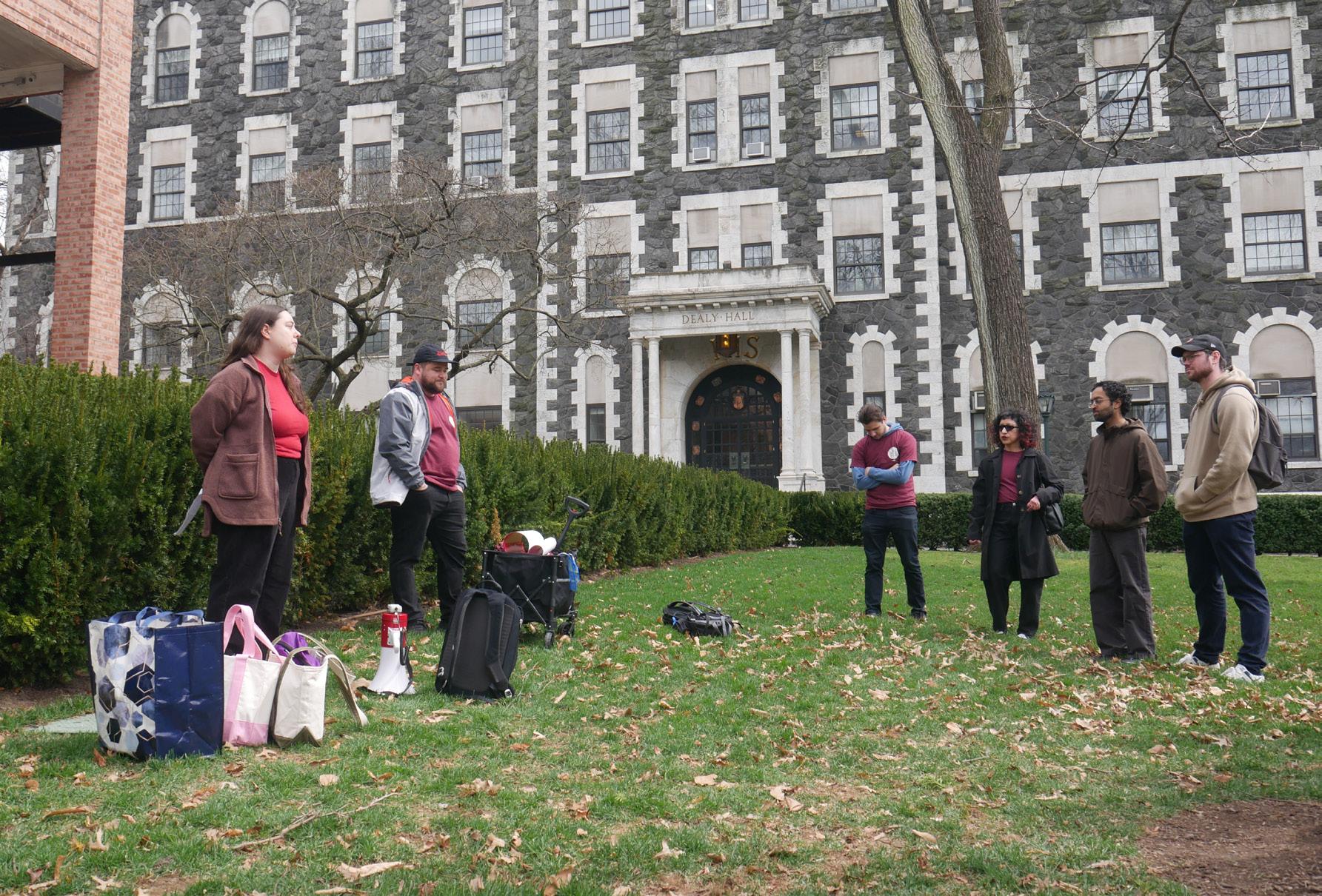
On Friday, March 27, members of the FGSW and other student organizations who had signed the petition gathered outside of Cunniffe Hall to hand-deliver it to the members of Fordham’s administration. Zarirat Ahmed, FCRH ’28, secretary of Rodrigues’s Coffee House, stood in front of the crowd as she detailed her club’s decision to sign the petition.
“We want people to come into this campus and have a feeling of relief and have a little bit more weight off their shoulders,” said Ahmed. “I believe that Tania Tetlow and Fordham University have the moral obligation to ensure the safety of students and graduate student workers, and all others.”
The other organizations that have signed onto the petition are the Fordham Young Democratic Socialists of America (YDSA), Philosophy Society, Caribbean and African Students Association (CASA), Astronomy Club, Society of Physics Students, Students for Environmental Action and Justice (SEAJ), Fordham Palestine Solidarity Network (PSN), Fordham Graduate Students for Justice in Palestine, the Editorial Board of the paper and Lincoln Center Art Club.
One international Fordham Ph.D. student and union member who signed the petition spoke with The Ram anonymously, citing concerns about potential repercussions. Explaining what the petition entails for her as an international student, she said that a declaration of a sanctuary would offer a promise of reassurance.
“My whole life here is dependent on Fordham. I’m not allowed to work outside of Fordham. All of my legal protections are connected to the university,” she said. “And so, just having a sort of very clear statement of the fact that they, as a university, are more invested in protecting their students than protecting the actions of the current administration … that would be just very much appreciated.”
Additionally, there have been information and training sessions on immigration-related matters held on Fordham’s campus. One was detailed in a January 2026 email from Benjamin Mendeiros, Fordham’s Global Outreach Immersion Coordinator, that was sent to the programs’ students.
“Immigration and Customs Enforcement (ICE) has recently abducted numerous people in the vicinity of the RH campus,” the email states. “Members of the Bronx community, including the parish of St. Nicholas of Tolentine, are organizing to protect one another and have asked members of the Fordham community to join these efforts.”
The email asks students not to share that information on social media, but to share the training directly with their peers.
“I was shared the information about the training session by a student,” said Mendeiros in an email to The Ram. “They asked if I could share the information amongst my students in the Global Outreach program, which I was happy to do, seeing that this social justice issue does align with my own personal values.”
The fourth demand listed in the petition is for the university to fully fund legal immigration services for both students and employees, asking that Fordham establish an “emergency” legal defense and support fund. Dezjot explained that she is unable to establish a firm amount she would like the university to invest into this fund, given that the needs would vary based on the year and circumstances, but that the university could use some of its money from its endowment fund to fund the services.
“Fordham has an endowment, and I don’t see a huge reason why it can’t take, for example, $10,000 to put in a potential services fund and then use it if necessary, and if not, it goes back into the endowment,” Dezjot said.
Many petition supporters have said that it would aid members of the Fordham community to feel safe amidst vast uncertainty when it comes to immigration enforcement measures and ICE presence. Lyla Mayorga Gonzalez, a Ph.D. candidate at Fordham who also teaches philosophy and specializes in ethics related to migration and citizenship, outlined her reasoning for agreeing to sign the petition.

“My worry as a professor is to make sure my students will not be taken away from me,” said Mayorga Gonzalez. “They deserve the right to have a safe space, not just in education, but on their whole campus.”
Another student organization to sign on was the editorial board of Fordham’s publication the paper. Co-chair, Jack Lemon, FCRH ’27, noted that every single one of his editors was in favor of signing.
“I think part of what we believe is that the university has a responsibility to be not only just passive in what’s happening, but actively noncompliant,” said Lemon.
Lemon explained that he feels the university can take a stronger stance on defending their community members.
“Obviously, we’re not expecting them to break the law, but we agree with the petition and that there’s more wiggle room for the university to actively disallow any non-mandatory immigration enforcement presence on campus,” he said.
Some of Fordham’s faculty members argue that the responsibility of becoming a sanctuary campus extends beyond being established through administrative action, emphasizing that it must be first established through the campus community itself. Leo Guadardo, associate professor in the Fordham department of theology and Faculty Senate member, is involved with Fordham’s project on Migrants, Migration and Human Dignity. He explained that he believes that simply declaring a campus a sanctuary space must arise as the result of a greater commitment and transformation within Fordham’s community.
“One does not become that community by first declaring oneself that, and certainly not by saying that the administration must declare that we’re going to be that,” he said. “I don’t think it’s the job of the administration to declare itself a sanctuary. It’s the job of the community to become that, and I would say the administration can be invited to support what’s happening at the grassroots.”
The petition’s organizers are continuing to push for a clear iteration of the university’s immigration policies and for the declaration of a sanctuary campus. Carter says he feels the administration can address the petition in various ways, and he hopes they will be able to reach some sort of resolution in the near future.
“A petition like this can be addressed in numerous ways … we’re obviously not asking the university to make a website where they just sort of verbatim like quote the petition or something,” Carter said. “[We hope] we would come to some kind of agreement and compromise about what actually is being put into practice,” he concluded.
the current curriculum.
“I know that the faculty put years of deep thought into what matters most to prepare students for a changing future,” Tetlow said. “What makes this most Jesuit, what really helps students at a time where technology, I believe, has made the humanities more relevant, not less relevant.”
The revised curriculum was passed by the Fordham College Rose Hill Council and Fordham College Lincoln Center Council on March 19. On March 25, the Arts and Sciences Council also voted to pass the new curriculum. The proposal will be voted on by Fordham’s Board of Trustees, including Tetlow, on April 23. University Risk Assessment
Last summer, the university hired an outside law firm to review over 8,000 pages on the university’s website. The “risk assessment” was met with criticism from the Faculty Senate, who felt that faculty members were being forced to change their websites and raised concerns regarding academic freedom, according to an article by The Observer. When asked about the risk assessment, Tetlow said it was done in an effort to uphold academic freedom.
“We wanted to make sure, as we prepare to defend academic freedom that we feel good about, [the website’s] accuracy,” Tetlow said. “We asked … for a handful of faculty to check their web page to see if their description of their research is accurate. Not to push them to change it, but to say, you know, is this something you wrote 30 years ago and haven’t looked at since, or is this what you want us to defend? Because we will defend it.”
Federal Impacts on Higher Education
Tetlow was also asked about recent actions regarding the federal government. President Donald Trump’s preliminary budget for the 2027 fiscal year was recently released and includes a decrease in funding for the Department of Education. While funding for Pell Grants would increase slightly under the proposed budget, funding for the Federal Supplemental Educational Opportunity Grant Program and the Federal Work Study Program would decrease. Tetlow noted that
Fordham is still a long way from a finalized budget, but said that she has been spending more time in Washington, D.C. to advocate for student financial aid.
“I think that we can speak to our own alumni, to our own communities, with more credibility, and remind them of what they care about, and the opportunity they received in college and that they got through federal financial aid,” Tetlow said. “I’m spending more time on Capitol Hill asking of all the members of Congress who represent us — we have other members of Congress who are alums — and really fighting hard to defend financial aid.”
On another topic related to the Trump administration, Tetlow was asked about a March 26 executive order requiring federal institutions, including colleges, to add clauses to their contracts to eliminate diversity, equity and inclusion initiatives and practices by April 25 or risk losing federal funding.
Regarding whether Fordham would add these clauses to its contracts, Tetlow said that they expect the executive order to be reviewed by the courts before they have to take any action.
“Some of the administration’s orders seem to go beyond what is actual statutory law, in ways that create potential constitutional problems, and a lot of those orders are currently the subject of constitutional challenges and litigation,” Tetlow said. “To suddenly tie federal funding to compliance with things that may or may not be legal creates both confusion and real hardship. So, my hope is that this will be resolved in the courts before it comes to that.”
USG Contraception Policy Proposal
When asked, Tetlow also spoke briefly about the United Student Government’s proposal advocating for a change to Fordham’s policy on contraception. She said that she personally disagrees with Catholic doctrine on contraception, but explained that it is part of the church’s teachings and must be upheld.
“Catholic doctrine really straddles the American political divide. In some ways, it’s progressive. In other ways, it’s
more conservative by American standards. But we don’t pick and choose,” Tetlow said. “We are better off than schools in isolated communities, because students can walk outside of our door and quickly purchase their own contraceptives.”
She said she has not yet spoken with USG’s Contraceptive Policy Commission, but that she is always happy to listen to students with an open-minded heart.
New Student Orientation
Tetlow outlined a few goals for next fall’s new student orientation. She said the first thing they will be changing is adding an extra day to orientation. She also said they plan to “intertwine” the academic orientation and student affairs orientation, rather than having them held on separate days. Additionally, they plan to continue the One Fordham initiative by inviting Rose Hill students to the Lincoln Center (LC) campus and Lincoln Center students to the Rose Hill campus.
Tetlow noted that transporting students between campuses was a difficult task at last year’s orientation, but that she thinks uniting the two campuses is important.
“I want [LC] students to feel at home here and to have everything that Rose Hill has to offer, that they come to events on this campus, that they get to appreciate the beauty of this campus and the incredible neighborhood that we’re in, all of that,” Tetlow said. “And I want Rose Hill students to feel like they can go to Lincoln Center, have a home in Manhattan, in that incredible location.”
International Students
Tetlow was also asked about updates regarding international student applications. She said that applications for the Gabelli School of Business’s graduate program are down 15% this year, in part due to a decline in international student applications. She added that they are constantly working to help and support international students, specifically with the visa application process.
“We are working to constantly improve our support of international students, to help them get through the process of applying for the visas this summer,” Tetlow said. “We worked really hard on
that last summer, and it helped us actually improve the rate that visas were granted, compared to the year before, not because the government was granting them at a higher rate, but because we were doing a better job of handholding students through what is a daunting process.”
Graduate Students Petition the Administration Fordham’s Graduate Student Workers Union, along with several other student clubs, recently presented Tetlow with a petition calling upon Fordham to adopt enforceable policies that advocate for the protection of international and undocumented students and to make Fordham a sanctuary community.
When asked about the petition, Tetlow said that she is proud of the students for their concerns about their community, but noted that the requests outlined in the petition reflect what is already being done by Fordham.
“The specific requests in the petition really almost entirely match what we’re already doing,” Tetlow said. “And you can see all that on our website.”
Regarding the petition’s demand to make Fordham a sanctuary community, Tetlow said she feels doing that could pose a risk to the Fordham community.
“I think the only area where we would disagree is to declare ourselves a sanctuary campus,” Tetlow said. “I’m not sure what that means exactly, but I would worry that that would make our community more vulnerable.”
Tetlow also emphasized that there are already policies in place requiring Immigration and
Customs Enforcement agents to present a judicial warrant in order to come onto campus.
Tuition Increase
During the meeting, Tetlow was asked whether tuition would increase for the 2026-27 school year, to which she said that it would. She attributed the increase to the rising cost of providing education and emphasized that these costs are especially expensive in New York City. She acknowledged that the tuition increase may impact some students’ ability to afford to go to Fordham, and said that they are increasing financial aid to mitigate these impacts.
“We literally increase financial aid as tuition goes up,” Tetlow said. “[We’re] really doing our best to put the financial aid budget as accurately as possible towards those who need it most, which is an art more than a science, and to be sure that, especially for returning students, that we make sure not to lose anyone because they can’t afford those last few dollars.”
Contract Extension
To conclude the meeting, Tetlow spoke about her recent decision to extend her contract at Fordham to 2030. She said her decision was influenced by her love of Fordham and her love for the work her and her team are doing.
“I love Fordham so much, and I’m so excited about the projects we’re undertaking and the momentum we’re gaining. I just want to see it all through,” Tetlow said. “I’ve built an extraordinary team here. We’re able to run so much faster now, and I’m really excited about the trajectory of the university,” she concluded.
particularly in an expensive city like New York, at a price families can afford,” Shobowale said in the email.
Shobowale also acknowledged in the email that this change may create challenges for some students to afford tuition. He said Fordham will be increasing financial aid for those with the “greatest need.” He stated that this is on top of the $285 million in financial aid that Fordham already provides to 90% of undergraduates. Shobowale also encouraged students who are concerned about the increase to reach out to Student Financial Services for help.
But still, many students are displeased with the news and have shared concerns about being able to afford tuition going forward. Gabriel Chemodakov, GSB ’28, said he might have to transfer schools.
“I don’t know if I can continue studying at Fordham,”
Chemodakov said in response to a Google Form on The Ram’s Instagram. “I applied to a couple other universities as a transfer and have been accepted to one with a far lower cost already. It’s really making me consider transferring, however I’m torn because I still love Fordham.”
Chemodakov also said that the university should be more
transparent with their students regarding the increased costs that led to tuition being raised.
Thomas McGuire, FCRH ’27, who also filled out the Google Form, shared a similar opinion.
“I think that it’s unacceptable,” McGuire commented. “I think that Fordham struggles to communicate with their student body about why they make these decisions. To me, they just say ‘the economy is bad’ and it comes off as ‘everyone for themselves.’”
In a press conference with The Ram and The Observer, University President Tania Tetlow said that their biggest priority in the university’s budget is financial aid.
“[We’re] really doing our best to put the financial aid budget as accurately as possible towards those who need it most,” Tetlow said. “And to be sure that, especially for returning students, that we make sure not to lose anyone.”
Tetlow also explained that with the rising costs of providing education, they have to weigh cutting costs with providing a quality education.
“The cost of providing education is more expensive, and the first thing that we do is to cut costs, to squeeze our budgets,” Tetlow said. “And we do that not because we’re disinvesting in the quality of anything we’re providing you, but because it is our moral obligation
to be as efficient and frugal as possible, so that every penny that you spend in tuition is spent in a way that is valuable to your education.”
Shobowale also echoed this statement in the announcement email, emphasizing that Fordham is committed to providing a quality education and that the tuition increase allows them to maintain that quality.
“As we look ahead, we remain committed to continuing to find ways to support Fordham’s financial stability and ensure that you receive an education and student experience that sets you up for future success,” Shobowale concluded.
By KAT ROSSI ASST. NEWS EDITOR
Fordham University hosted a TEDx event where speakers, connected to Fordham as faculty or alumni, from various industries gathered to examine some of the most difficult challenges and ideas shaping modern society. The talk, which took place on March 26, covered topics including AI and entrepreneurship.
Commencing the program, entrepreneur Brandon Kim, FCRH ’15, reflected on the realities of building a business from the ground up alongside his brothers. Kim, who is the co-founder of Brevitē, a lifestyle brand, described the emotional and operational challenges that accompany the rapid growth of a business, including moments of acute financial instability and conflict.
“It stops being about one thing and starts being about everything,” Kim said during the talk, recalling a crisis point when his company faced significant debt and was forced to downsize.
Kim introduced the concept
of “the trap,” a framework which describes some of the psychological pitfalls that can hinder success. He identified three primary types: the martyr who glorifies overwork, the ‘magpie’ who is distracted by constant new opportunities and the ‘pressure cooker’ who is overwhelmed by scale and expectations. According to Kim, recognizing and addressing these patterns is essential to maintaining focus and long-term sustainability.
“At any given moment, there are only a handful of real problems to solve,” he said.
Shifting the focus of the talk from entrepreneurship to public health, Chief Executive Officer emeritus of Northwell Health Michael Dowling, MSW, GSS ’74, addressed what he described as the urgent social crisis affecting the younger generations. Highlighting data that positions gun violence as the leading cause of death among children in the United States, he called for collective action and policy reform.
“This is a public health issue,” he said. “The statistics are staggering. This is a health issue and we see it in our
organization, we see it in our mental health facilities, we see it in our emergency apartments, we see it in our family practices.”
Dowling also raised concerns about the psychological effects of social media, particularly among adolescents. Increased rates of anxiety, depression and social isolation, he said, are linked to excessive digital engagement. “Actually, the teens are telling us about it. Teens 13 to 17 are telling us that it affects sleep, it affects their productivity, it affects their mental health, and it enhances social isolation,” Dowling said.
While acknowledging the benefits of technological advancement, he warned of the “nasty underbelly,” of this same advancement, referring to its downside, and called for stronger regulation and public awareness.
“We cannot [leave] the resolution … alone in the hands of the wizards of technology,” Dowling said. Additionally, AI emerged as a central theme throughout the event, featuring faculty expertice in business and machine learning, as well as philosophy. They discussed
how AI is reshaping learning environments and workforce expectations.
“Students should not use AI to replace learning, but to facilitate [it],” said Associate Professor of the Gabelli School of Business Yilu Zhou, Ph.D. Zhou discussed the integration of AI into students’ lives both in and out of the classroom, and prioritized the need for students to develop foundational knowledge in addition to technical fluency.
She also highlighted the importance of adapting currently existing educational systems to integrate AI more effectively, moving beyond traditional exams and more toward experiential learning models which better account for the new capabilities that AI brings to students.
“Along this line, for example, students can acquire verbal knowledge and skill sets, very much like a project manager to manage AI agents,” Zhou said. “This includes evaluating their work to make sure the deliverable doesn’t have any AI hallucination or AI bias, as well as sliding their workflow and also direction.”
Another lecturer at the event was Assistant Professor of Philosophy Sam McGrath, Ph.D., who examined AI from a different angle, describing it as a “mirror” for understanding human cognition.
“How is it that the neural network that we have running between our ears can realize and instantiate this kind of structure?” McGrath said. “That is precisely the kind of question that contemporary AI can help us to answer.”
Drawing on concepts from neuroscience and computer science, McGrath explained that artificial neural networks can model aspects of human reasoning, offering insights into the way language, perception and unconscious processing function in our own brains. At the same time, he noted that differences between AI and human thought may reveal uniquely human capacities, such as creativity or consciousness.
“Artificial intelligence promises to offer a sort of a new vantage point on a whole set of questions that us philosophers have really been knocking our heads against,” said McGrath.
SIENNA REINDERS EDITOR-IN-CHIEF
Fordham University’s United Student Government met on April 9 to vote on the April Club of the Month and pass budget requests.
Executive Vice President Andrew McDonald, FCRH ’26, was absent from the meeting, so Senator Ava Cascella, FCRH ’26, stepped in to perform his role.
The meeting began with an update from the Residence Hall Association (RHA) delegate Hannorah Ragusa, FCRH ’26. She announced that RHA is holding two upcoming events. There will be a pizza truck in front of the McShane Campus Center on April 29 and they will be hosting a petting zoo, although they are still waiting on approval for the latter. Ragusa said the petting zoo would likely consist of a duck and a llama, among other animals.
USG then voted on the April Club of the Month. The nominees included Fordham Mock Trial, Fordham University Model United Nations (FUMUN) and Fordham University Symphony Orchestra. FUMUN won after receiving 12 votes — Mock Trial received eight votes and Orchestra received zero votes. They then moved on to budget requests. Vice President of Diversity and Inclusion Laila Sayegh, FCRH ’27, requested $350 in discretionary funding for the Diversity Action Coalition. She explained that they had $100 left in their
budget, but needed $450 for the remainder of the semester in order to bring in two guest speakers during Bronx Appreciation Week.
Vice President of Gabelli School of Business (GSB) Hunter Gholson, GSB ’26, had a request for funding for an upcoming Spring Fling event, drinks for the Gabelli Year in Review dinner, as well as table cloths and cutlery.
Senator Whitney Egbe, FCRH ’28, asked for funding for popsicles, tubs for ice, sunscreen and Post-Its for their upcoming Summer Day with the 2028 Senate event on April 14.
There was a request from Vice President of the Committee on Sexual Misconduct Aidan Costella, FCRH ’27, for funding for materials for their upcoming Week of Action.
Executive President Lucas Hjertberg, FCRH ’26, requested funding for the upcoming Big Four food truck event during Spring Weekend, which will consist of a Tacos El Poblanito truck and a Rome’n Focaccia I truck.
Vice President of Sustainability Ayden Johnson, FCRH ’27, requested funding for flowers for a Spring Bouquet Making event, prizes for an Earth Week trivia event and stickers to pass out during Earth Week events.
Vice President of Fordham College Rose Hill Mary Hawthorn, FCRH ’26, requested funding for Chipotle for their upcoming Undergraduate Mock Research Symposium.
Vice President of Budget
and Finance Peter Grimes, FCRH ’25, requested funding for Chipotle for budget day.
All budget requests passed unanimously.
The Contraceptive Policy Commission then presented its proposal to amend the university’s policy on contraceptives on campus.
Costella and Senator Domenick Fedele, FCRH ’29, presented and showed some additional information they had included in the proposal, including data from Johns Hopkins University regarding stigma on contraception, testimonies from clubs, students and professors and the final survey results from
their student survey.
They explained that they are waiting to receive data from the Fordham University Health Center on sexually transmitted diseases and infections at Fordham and said they would wait to vote on the proposal until they have received that information.
Cascella and Senator Megan Ruzicka, FCRH ’27, then presented on USG’s proposal to create a Fordham College Rose Hill mentorship program, similar to Gabelli’s FAM Program, which is a mentorship program in GSB. Ruzicka said that they would use a form to match students.
Hjertberg then presented the Executive Report. Regarding the upcoming USG election, he said that all of the info sessions have taken place and that there would be a mandatory candidate meeting on April 10 in Bepler Commons for election-specific information. Then, on April 13, candidates would find out if they had been approved, after which they would be allowed to start their campaigns. Hjertberg said that voting will occur on April 21. He also announced that the upcoming Big Four food truck event will take place on April 26 from 11 a.m. to 1 p.m. on Edwards Parade.


Serving the Fordham University campus and community since 1918
The Fordham Ram is the university journal of record. The mission of The Fordham Ram is to provide a forum for the free and open exchange of ideas in service to the community and to act as a student advocate. The Fordham Ram is published every Wednesday during the academic year to all campuses.
Website
TheFordhamRam.com
Email Address theram@fordham.edu
Editor-in-Chief
Sienna Reinders
Managing Editor
Ian Nelson
Production Editor
Sarah Verrastro
Editorial Director
Molly O’Connor
Multimedia Director
Hannah Sullivan
Business Director
Nishanth Aduma
News Editor
Emma Leonardi
Features Editor
Sidney Blasco
Assistant News Editors
Jordan Donegan
Kat Rossi
Opinion Editor
Loresa Zeqiraj
Assistant Opinion Editors
Erynn Sweeney
Gabriel Capellan
Culture Editors
Lara Ejzak
Makenzie Smith
Assistant Culture Editor
Kelly Buban
Sports Editor
James Nelson
Assistant Sports Editors
Molly Friedman
Ethan Bess
Copy Chief
Indigo Towers
Executive Copy Editors
Emily Mitton
Emma Kelner
Elaina Gibson
Photo/Graphics Editors
Emily McCall
Wilson Speller
Digital Producers
Haniyyah Usmani
Han Le
Marisa House
Advertising Directors
Violet Wallace
Juan-Pablo Valencia
Rishika Lingamdinne
Faculty Advisor
Beth Knobel
Editorial Policy
The Fordham Ram’s editorial reflects the editorial board’s opinions or views.
Opinion Policy
The opinions expressed in this publication are those of the authors. They do not necessarily reflect the opinions or views of The Fordham Ram.
Submission Policy
The Fordham Ram Reserves the right to reject or edit any submission for any reasion, without notice. Submissions become the exclusive property of The Fordham Ram. No part of The Fordham Ram may be reproduced without written consent.
Correction Policy
The Fordham Ram is committed to fair and accurate reporting. If you are aware of an error, please contact us at fordhamramonline@gmail.com
I may have a reputation for being a bad navigator. Growing up dropping and twisting along the rolling roads of Georgia was no help to honing my sense of direction. My vice has been compromised by now and I am shunned to the backseat most of the time when my family needs a reliable source of direction, a feat my older sister usually takes on. If only this realization came earlier to save my siblings and I from fighting over the front seat as kids.
Despite my difficulties, I made the decision to move to a far away land of unknown terrain for college: New York City. Thankfully, I have found myself understanding my left and right better while traversing the grid-like system of the city’s streets on foot than by wandering backroads in a vehicle. What really got everyone worried was when I decided to study abroad in the fall of my junior year. Alone.
With fearful thoughts of me navigating airports and foreign streets by myself, my mom decided to come with me to Florence a few days early to drop me off. Her efforts were in vain, because together we still managed to make a dreadful wrong turn getting back to our hotel. To remedy this mistake, we tucked ourselves in a corner and pulled out a paper map like two explorers. Our slight arguing and comical attempts to imaginatively place ourselves inside the map conjured up a local
asking if we needed help.
Our wrong turn turned into ten minutes of us listening to this man’s story of owning a restaurant across the way and how he has a family with a daughter my age. Acting as our knight-in-shining armor, he offered to close up his restaurant and help us back to our hotel.
Did my mom and I leave after he left, afraid we were going to get kidnapped when he came back to retrieve us? Yes. But that does not take away from the experience of hearing a local’s personal life story (whether it was true or not). The entertainment in the moment and the laughter afterwards made for a good memory.
After my mom left, I quickly learned Florence is notorious for its cobblestone streets swept with an array of colorful local art and wrapped in an aroma of savory cheeses and velvety wine. In other words, it is very easy to get distracted and off track — again, a track I am not very good at staying on to begin with.
To get that study abroad experience, I made it my mission to walk around the city every couple of days. However, I got so caught up in making sure I was going the right way that I missed so much of what was going on around me. I kept my nose stuck in my phone to keep a weather eye on Google Maps rather than on the glistening gold on the Ponte Vecchio or the glowing pink and
green stone of the Duomo.
That was until I made a seemingly dooming mistake and got confident enough in my routes that I put my phone away Florence is the exact opposite of New York City. I thought I could take a turn one block later to get to the same road, but Florence’s streets would pop me out into a completely different area. I was making wrong turns every which way, but that is how I found my favorite cafe, the most beautiful artisanal stores and little pockets of natural beauty.
My favorite part of my weekend getaway trips with friends was purposefully making wrong turns away from our hotel by walking around aimlessly to discover what Google Maps could not point us towards.
Right now, I am sure people are seeing where I am going with this. I am not claiming to have cracked some sort of code. Everyone knows the cheesy saying “not all who
wander are lost,” Miley Cyrus’ song “The Climb” or the poem “The Road Not Taken.” I could emulate these messages, but I simply want people to see the value in making a mistake. Even back home in Georgia, the wrong turn that unexpectedly put me onto the highway for the first time had its advantages. After my screams of terror for an entire exit, I realized how this silly mistake helped me overcome a drivers’ rite of passage. Do I ever go on the highway? No. But at least I have done it and know I will be okay if it ever happens again. I have beaten myself up over mistakes repeatedly and I am sure my fellow Fordham students have done the same. It gets me nowhere every single time. But my habit of turning left instead of right and my hours getting lost en route made me realize wrong turns can be transformed not necessarily into right ones, but at least ones worthwhile.
Fordham University students and families received an email last Thursday, April 9, from Senior Vice President, Chief Financial Officer and Treasurer Tokumbo Shobowale, informing them that the cost of attendance at Fordham will be increasing for the fourth year in a row, with tuition increasing by 4.5% and room and board increasing by 3.0%. Students are unhappy, to say the least, and many families are again finding themselves scrambling for a way to pay these higher prices. Additionally, many students and families are finding it difficult to understand exactly where all of this money is going.
To explain this increase, Shobowale cited U.S. inflation rates, saying that “the cost of everything from technology to paper and utilities to food has gone up,” so Fordham must increase their prices in order to account for that. The Consumer Price Index for all items in the U.S. rose 2.7% in 2025.
Frustrations with Fordham are at an all time high following this email, with rumblings of “Is it really worth it to stay?” throughout the student body. However, it is difficult to find another institution comparable to Fordham that isn’t following these same patterns while already sitting at extremely high prices. If students were
looking for a private education in New York City, they likely would not find themselves in a much better financial position elsewhere. The cost of attendance at New York University currently sits at $100,998 per year, Columbia University similarly at $96,990 per year and Barnard College at $99,874 per year. For alternative Jesuit universities, the cost of attendance is currently $91,792 at Boston College, $94,312 at Georgetown University and $96,492 at the College of the Holy Cross. This past year, the cost of attendance at Fordham was $93,097, comfortably within the range of these other institutions.
Fordham boasts a massive 96% of first-year students who receive financial aid, totaling $281 million in total aid last year, and $15 million in donor-funded scholarships However, according to an employee whom The Ram spoke with at Fordham’s Office of Finance, scholarships do not increase as tuition rises, and financial aid increases are only on a case-by-case basis — they do not automatically increase with these changes. This makes it much more difficult for students to adapt to increased university prices with only enough help to cover the cost of attendance for their
first year, without factoring in the significant yearly increases to their bill.
While the vast majority of college students receive financial aid, that could mean anything from a full ride to a couple hundred dollars. For some students, that hardly makes a dent in their education costs, leaving them to figure out how to pay tens of thousands or even hundreds of thousands of dollars just to get their degree. Families who do not qualify for significant financial aid are not necessarily in the economic standing to pay extremely high tuition prices like Fordham’s.
The option to simply not attend college and find a job without it is also rapidly shrinking in validity, as Georgetown University predicts that 72% of jobs in the U.S. will require postsecondary education and/ or education by 2031, with 95% of jobs in the “managerial and professional economy” requiring at least some form of postsecondary education.
In a study done by Harvard Business School, researchers found that fewer than one in 700 people get hired without a college degree.
Even when students find a way to pay for the rising cost of college, upon graduation, they are being released into the worst entry-level job market
since the pandemic, with the underemployment rate rising to 42.5% in 2025. Additionally, economic recession odds on Wall Street are increasing significantly, with some models predicting over double the risk of “normal” times. Figuring out how to pay off student loans and debts from university years without a steady full-time job in the current economy is a near-impossible task, which can leave students in economic ruin without much to show for it. With much of the country in economic distress, asking students and families to pay prices nearing and sometimes even reaching six figures for a necessary education (especially when they are already deep into their studies) is unethical. While yes, the cost of everything is increasing and this tuition increase is not unique to Fordham, that doesn’t make it any more attainable for students to pay. If prices are going to sit at this obscene height, these institutions need to be far more transparent about where they are directing their funds. College students across the country should be able to get a quality education without setting themselves up for a lifetime of financial stress, especially when there’s no guarantee of a return on their investment in the job market.
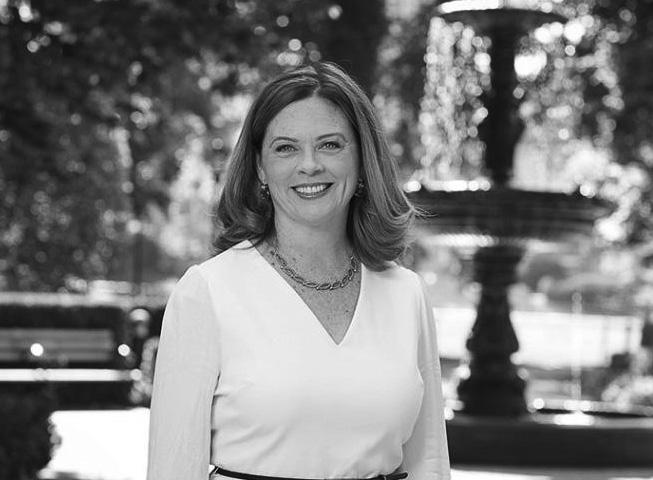
By CAYDENCE JONES CONTRIBUTING WRITER
Fordham University is currently engaged in a difficult balancing act between institutional prestige and student affordability. As current students grapple with an aggressive tuition increase this year, the administration appears to be leaning into a strategy of increased selectivity to justify the rising cost of a Fordham degree. While prospective students are being sold a “more exclusive” and high-value brand as they decide whether to enroll, current
students are left to shoulder the financial burden without seeing the immediate benefits of this rebranding. A lower acceptance rate might look good on a brochure for the class of 2030, but for the thousands of us already here, it feels like a hollow consolation prize for a much higher price tag.
University President Tania Tetlow has been transparent about this shift in focus. In an interview with the Fordham Observer regarding keeping up with Fordham’s ranking, Tetlow stated that the university is focused on “getting the
admission rate down” because “we do know that (selectivity is) something students look to as they’re choosing a school.” While this might be true for high schoolers, it does little for the sophomores and juniors already invested in their degrees. There is a disconnect between the administration’s push for “prestige” and the student body’s need for “value.” For those already enrolled, the prestige of Fordham being “hard to get into” is a retroactive metric; it doesn’t improve the quality of the labs we use today, the availability of housing or the cost of our meal plans.
To be clear, increasing the caliber of our applicant pool and strengthening our admissions standards is a good thing. Every student wants their degree to carry weight. However, it feels contradictory to celebrate these record-low acceptance rates while tuition continues its steady climb. It is difficult to take pride in a more “exclusive” gate when the students already inside are paying more for an institution that is declining in the eyes of students. Celebrating selectivity amid a ranking decline and
a cost-of-living crisis feels out of touch with the reality of the current student experience. This disconnect between cost and value is further evidenced by Fordham’s consistent slide in national prestige. According to historical ranking data, the university’s position has slipped year after year, with U.S. News currently ranking Fordham 91st nationally. Tetlow has argued that this drop reflects a change in “the criteria, rather than a change in the quality” of the school, but for students currently facing an increased tuition bill, this is a distinction without a difference. If the administration’s primary response to a declining rank is to lower the acceptance rate, it suggests that the university is more interested in the optics of exclusivity than the tangible quality of the current student experience. We are being asked to fund a vision for the “Fordham of 2030” while the Fordham of today, the one we are actually attending, is losing ground in the very rankings the university claims to be chasing.
New applicants are being informed of the “new” Fordham, a school that is harder to get
into and more valuable. They can weigh the high tuition against the high selectivity before they sign their enrollment contracts. Current students, however, did not sign up for a tuition-hiking rebranding campaign. We are being asked to fund a rise in prestige that new students won’t fully benefit from until long after we graduate, all while our daily experience remains the same. As we move forward, the administration’s focus on selectivity is a logical response to a competitive higher education market. However, for the students already here, the true measure of Fordham’s value isn’t found in a lower acceptance rate but in a commitment to making the current student experience worth the investment. We should strive to be a university that is not just exclusive in its admissions but exceptional in its support and resources for the students who have already said “yes” to a Fordham education.
By EMMA KELNER EXEC. COPY EDITOR
Way back when I was but a wee lass deciding which university to attend — so about one year ago — I was trying to decide what school would help me figure out what I wanted to do with my life. That’s part of the reason I chose Fordham: The core curriculum ensured that I would be exposed to a variety of disciplines. As such, while I agree that the core curriculum could be trimmed a bit, I don’t think Fordham should eliminate certain critical requirements.
Let me start by stating what exactly would change.
If this new core curriculum passes, students would have to take 12 core courses, a number significantly lower than the previously required 17 plus. The number of required language classes would drop from four — depending on the student’s entry level proficiency — to one, the philosophy and theology requirements would each be halved, the non-STEM major requirement of two science courses would also be halved and the two required advanced disciplinary studies courses (Literature, history and/or social science) would get cut. The courses not mentioned above would, in essence, remain the same.
In addition to changing the courses themselves, the new core proposal also suggests changes to the attribute system. Under the current core curriculum, students must take four Eloquentia Perfecta
(EP) courses, a global studies course and an American pluralism course. If the proposed core is approved, students will instead need to take three EP courses, as well as three justice and ethics courses.
But don’t worry; they haven’t only taken away courses. They’ve added some as well.
First-years would have to take a Fordham Core Seminar, in which students will be encouraged to consider their educational trajectory and what they value in life. Additionally, each student will have to participate in a New York City Experience, which “is meant to initiate a student’s exposure to their local environment and neighborhood in the hope of encouraging ongoing and maturing relationships with the city and its people.” This experience need not be a class; the requirement can be fulfilled through the Center for Community Engaged Learning’s co-curricular programs, Student Life or Campus Ministry.
Overall, reducing the core is a fantastic idea. The core is currently inconvenient and stressful to fit into four years, especially if you need a concentration, decide to double-major or pick up a minor or two. Plus, fewer required courses means undergrads have more options to take courses that actually interest them, which can improve both the student and professor experience. Teaching a subject to students who are not interested can become frustrating and this new core will decrease this.
That said, this new core comes at the expense of
language, arguably the most important thing a student can learn. Learning a new language has been linked to improved problem-solving, creativity and concentration, as well as reducing risk of cognitive decline. But perhaps more importantly to students, learning a second language can help you get a job. 90% of U.S. employers report relying on employees who can speak more than one language. Language isn’t just good for your brain: it’s good for your career.
Language classes also teach you a lot. “I’ve taken two French classes at Fordham,” said Salioudian Barry, FCLC ’29. “I think I’ve learned quite a bit.” I share that sentiment: I took one Russian class at Fordham, and it improved my understanding of the language tenfold.
While one class, or even four classes, might not make a student fluent in a language, it certainly can put a student on the right path. “I would say I’m on the path to hopefully being fluent,” said Barry. Cutting down the language requirement at a time when America is falling behind in language education may have detrimental repercussions for future Fordham students.
Speaking of languages, the decision to cut down the number of required EP courses also seems ill-advised. So far, I’ve only taken two EP courses, but they’ve changed the way I approach reading and writing.
In my EP1 course last semester, I relearned how to write. We learned about the importance of short sentences (an idea I try to but often fail
to implement), starting sentences with subjects and verbs (same sentiment as before) and avoiding too many introductory phrases (and once again). More importantly, I learned I can start a sentence with “and.” In all seriousness, that was the most revolutionary thing I’ve learned in years. And I’m not the only one who thinks this (see what I did there?). Simon Beltran, FCLC ’28, has taken three EP courses so far. “I believe all the EPs I have taken so far have been extremely valuable , ” said Beltran. He also mentioned the value of being able to choose which subjects his EP classes would focus on, as EP courses are generally more rigorous than their non-EP counterparts. “For example, I wanted to learn more about theology, so I wanted that to be my EP1,” he said.
“I think that over time, changing EPs from four to three will hurt future students because it limits their opportunities to take these more rigorous classes,” said Beltran. “[EPs] are just classes where
you know that you’re gonna be pushed past the usual expectations of a normal course… I really think that when it comes to the core curriculum, EPs aren’t something we should be worrying about.” The core curriculum should be reduced, but not at the expense of language. Languages, whether native or foreign, are invaluable, yet Fordham has decided to halve the language requirements. Reducing students’ exposure to language undermines student development and risks placing Fordham graduates at a disadvantage in the job market. My writing, in both English and Russian, shapes who I am and how I think. Future Fordham students should have more opportunities to develop their language(s), not fewer, but this new core might rob them of that choice.
By CATHERINE PAYLEITNER STAFF WRITER
Printing is a mundane task that quickly becomes a real barrier when it’s expensive and unreliable. What should be a simple part of academic life often turns into a small but persistent source of stress. To many students on this campus, printing seems like an errand or a gamble of whether the machine will have paper or be out of order.
At Fordham, printing is managed by Ram Print, a service that allows faculty, staff and students to print, copy or scan materials at any designated device around campus. In theory, it’s a flexible, campus-wide service with printers in classroom buildings,
residence halls and the library, all connected through an online queue. In practice, however, the convenience comes with a cost. Printing costs 25 cents per color page and 5 cents per black-and-white page, and non-athlete students are permitted about $10 per semester. Fordham athletes print for free.
For students who print frequently — either by choice or because they’re required to — these fees add up quickly. Should students have to pay for printing at all? Why do athletes have the privilege of free printing while the rest of the student body doesn’t? And is it more cost-effective to purchase a personal printer or to pay per page? These questions get at
By ANTHONY KOROLOS CONTRIBUTING WRITER
Internet memes have existed since virtually the inception of social media and shortform digital content. However, they have changed in meaning, form and purpose over time. Memes were originally purely humorous. For example, the “What’s 9+10?” meme that originated from Vine had no harmful meaning; it was simply absurd and that’s what people liked about it. Now, memes have taken on greater meaning and some have even been used to address social issues and carry more political weight, while others have been dubbed “brain rot,” like “6-7.”
Some memes’ reproductions in short-form content tend to be problematic when originating from Black creators or when rooted in Black stereotypes. The use of African American Vernacular English (AAVE) has been used in many memes and this has further contributed to memes being considered racist. Many of the memes that have come from AAVE or Black creators weren’t originally intended to hurt the Black community. For example, the word “rizz” — which actually means charisma — is an AAVE slang term, yet it has taken root as a popularized meme for being able to ask someone out or simply as a nonsensical word. Even though this word was originally rooted in a marginalized
a deeper issue: printing isn’t an optional convenience. It’s a part of academic participation, and when the service is costly or unreliable, it becomes a barrier to learning.
For many students, printing isn’t optional, as some professors require hard-copy readings or assignments. If you’re printing 40 pages a week for class, that $10 semester allowance disappears before midterms. After that, you’re forced to pay out of your own pocket. At that point, printing stops feeling like a service provided and starts feeling like another bill. Students shouldn’t have to choose between completing their coursework and saving money.
Fordham isn’t alone in charging for printing; our neighbors at NYU, for instance, charge 10 cents per black-and-white page. But if Fordham is charging for these services, we should expect better access, maintenance and reliability. Instead, it’s often the opposite. In my residence hall, there is a printer, but it is often out of paper, and it’s unclear who to contact to get a refill. I often have to walk to the McShane Campus Center or Walsh Library to find a printer, where there are
lines. It’s not uncommon to find a machine out of paper or toner, or entirely out of order. The burden of maintenance shouldn’t fall on students who already have packed schedules. A system that charges students but doesn’t guarantee basic reliability treats printing as a revenue stream rather than an academic necessity.
Access issues go beyond maintenance, as the fact that athletes print for free adds another layer of inequity. It’s not that athletes don’t deserve support — they juggle even more demanding schedules and represent the university — but it raises a fair question of why free printing is tied to athletic statues rather than academic need. A student who prints multiple times a week for classwork arguably needs printing access just as urgently as someone printing pages for an away game. When one group receives unlimited printing and the rest of the student body is capped, it sends a message about whose needs the university prioritizes. If Fordham can afford to subsidize printing for its athletes, it can afford to subsidize printing for all its students.
This issue is so prevalent
culture and was claimed by popular culture and used in comedy, it doesn’t necessarily mean it was done with harmful intent.
Many African-Americans have critiqued white people’s use of AAVE slang; in my opinion it comes from a place of discomfort or confusion, rather than offense. While some people find these memes to be racist, others don’t and either way, the intent isn’t necessarily an act of hate.
Additionally, meme culture that is rooted in racial stereotypes such as the hot cheeto girl, nonchalant dreadheads or dominicans dancing, has been criticized as generalizing and stereotyping various communities. For as long as comedy has existed, it has used stereotypes; one prominent example is Saturday Night Live, which has been consistently criticized for its use of ethnic stereotypes as punchlines. This type of comedy comes from Black disenfranchisement, where people of color in the U.S. lacked representation or rights. For example, the use of blackface as a form of comedy in the 19th and 20th centuries, which intentionally made fun of people of color, has gone through waves and found new forms of expression. This includes plays to stand-up comedy to modern-day memes such as the ones rooted in racially-coded stereotypes. These have a little more nuance and light-heartedness than the
former and many of the people in these communities play into the meme and participate.
So, although stereotyping as a form of humor is rooted in a racist past, I think that the memes that have manifested from this are light-hearted and don’t make a point to hurt these communities. However, these memes should remain light-hearted. Once they are taken from these communities and used as a generalization, which tends to happen, it is important to recognize them as racist and try to critique the trend as a whole.
Another meme that is purely racist and highlights how memes can easily go from light-hearted to destructive, is the George Floyd challenge. After a case of police brutality killed African-American man George Floyd, racist teens and adults created a trend where users would recreate his death. This case of a meme that is trying to hurt a community can never be defined as light-hearted, as it further hurts the reputation and legacy of someone who faced a brutal death. This meme deviates from the stereotype and is, in fact, racist because it aims to make fun of an innocent man purely for his race and the circumstances he faced.
Many people are now comparing this to the “memification” of Charlie Kirk, a far-right podcaster who was shot and killed and then was
that many students (including me and my roommates) have wondered whether it would be cheaper and less stressful to buy a personal printer. Even then, this isn’t a perfect solution, as ink and maintenance are expensive, dorm rooms are small and not every student can afford the upfront investment.
Fordham doesn’t need to reinvent the whole system, but a more equitable printing service could include a larger semester allotment built into tuition, free black-and-white printing for academic materials, regular maintenance checks and guaranteed paper restocking in residence halls. These are reasonable changes that acknowledge printing is a part of academic life, not a luxury. Printing shouldn’t be a barrier to learning. If Fordham expects students to print, then the university should ensure that printing is accessible, affordable and reliable. Until then, the burden continues to fall unfairly on students who are simply trying to meet their class expectations.
Payleitner, FCRH
is a political science and journalism major
quickly turned into a meme all over TikTok. However, I think this is a case where people are utilizing it as a political meme, opposed to making fun of his death. Charlie Kirk was someone who lived a life preaching hateful rhetoric and actively hurting communities. The “memeification” of Kirk has been an opportunity for many people in the communities he hurt to make a mockery of him, not necessarily his death.
I honestly think this type of “memeification” is acceptable because it is no different from the way people created memes and humor about politicians for years. Though jokes about one’s death are wrong, Charlie Kirk was a key face of the MAGA movement and the memes around him were in response to the movement and used to critique him and make fun of oppressive politics.
Memes will continue to evolve and adapt to modern-day trends; however, they currently exhibit a wide range of messaging and behaviors. From absurd things like 6-7 to harmful memes like the George Floyd challenge, memes can forever be critiqued and questioned. With the history of racism in the U.S., it will take many changes to the way people deal with racism itself for memes to no longer be racist; if systematic racism is confronted and amended, racist memes will be too.
Anthony Korolos, FCRH ’29, is a political science and international political economy double major with a minor in French from Charlotte, North Carolina.
By BRIDGETTE LEAHY STAFF WRITER
We all do it — listen to music during our commutes, with friends, while working out or alone. Even in our busiest moments, music stays with us. It’s something we can’t escape.
Music often enhances our daily experiences when we choose to romanticize them. From my observations on social media, romanticizing life has become the new normal. Whether it’s a school day, doing chores, having coffee or going out with friends, many people add music to their Instagram or TikTok posts
to share everyday moments. I find this beautiful, as it can enhance life’s value and create a sense of upgrading our environment. Studies have shown that music can evoke strong emotional responses, helping people bond and create memorable experiences. Jose Valentino Ruiz, a 37-year-old professor in the School of Music at the University of Florida, emphasizes the strong interaction between the brain’s limbic system and music. Ruiz highlights how songs can bookmark emotional moments in life, making music a powerful tool for emotional expression and connection.

By YULIA UVAROVA CONTRIBUTING WRITER
Applying the phrase “best years of your life” to college is complicated due to its subjectivity. Firstly, what I consider to be my ideal life may be someone’s nightmare, and secondly, everyone’s college years are vastly different. Speaking generally about how college translates to the best years of everyone’s lives is difficult, but I still believe this to be true in one sense: everything becomes what you make of it and college is a great playground for experimentation. Whether this be with new interests, friends, personality traits or goals, college forces you to confront that you finally need to make something of yourself. You are no longer a high school student living under your parents’ roof; you must accept that you are now an individual making a new start for yourself. The inevitable journey of self discovery, paired with the uniqueness of every individual’s experience, is what I believe puts college years up for consideration as “the best years of your life.”
With college comes more intrinsic motivation, incentive that comes from within: “Intrinsic motivation is active in a student who is personally interested in exploring the material at hand because of their own curiosity and desire. Students who are intrinsically motivated
It’s no accident that the music you listen to impacts your mood and actions.
Reflecting on these emotional connections, I find that in a world of the unexpected — that is how I like to define life — music is always there. As Fordham undergrads walk around campus with headphones in, listening to music as we go where the day tells us to next, does music put us in a better mood? Or does music trigger an escape into a different world?
For some, music is an escapegoat for issues and external reality, and I couldn’t agree more.
People tend to overlook how meaningful music is in our lives. Many treat it as mere background noise, when in reality, the music we choose reflects and influences our mood and actions.
For instance, while listening to music on the Ram Van, I like to think about certain points in my life that either have happened, are happening or I wish to happen in the future. It’s almost like the music enhances my reflection on life. My past relationships and the importance of
the people that have influenced me all sing through the music. For that reason, when I am particularly drawn to a song or artist, I realize it is because my life resonates with the song; usually, the artist’s lifestyle or perspective is a major factor I consider when choosing music.
The American poet Henry Wadsworth Longfellow once said, “Music is the universal language of mankind.”
To this day, I find his words significant, as they suggest that people who have difficulty expressing their feelings verbally may feel more comfortable expressing them through music. Singers express themselves through their music, mirroring how they feel. For example, a slow tempo conveys sadness while a faster tempo is associated with high-arousal emotions such as happiness and anger.
On other occasions, I am present, listening to music and just observing my surroundings, appreciating life’s beauty. Often, the music I listen to matches my surroundings and activities, which helps me enjoy it more. If I’m working out, I like to listen to club
assign value to doing the task itself, not to a particular outcome.” This naturally helps students to learn more about themselves, as what they choose to do with what’s given to them is indicative of who they are becoming.
Students in college gain perspectives that they may not have even known existed. I attribute this experience to two components: college classes and meeting new people. I think I learned more about the world through my core curriculum first semester classes than I did in my four years of high school. This is not because I didn’t learn anything in high school but because of the type of information that was taught. College classes enabled discussions about more “stigmatized” material and conversing about uncomfortable topics was encouraged.
I think that I experienced a lot of cognitive dissonance, or contradicting views, in high school, mainly due to the fact that I didn’t know exactly who I was or what I wanted. I was in a constant state of mental clashing and coming to college felt like a slow process of clarity for me.
On whether she felt more confident coming to college as opposed to high school, Ilze Ulyanov, FCRH ‘28 answered, “Yes. I think [college] is allowing me to find who I am and fine tune the better parts of me.” I loved her use of the phrase “fine tune.” It gives the hopeful
notion that you will never stop being able to become a better version of yourself, which is such a sweet sentiment.
College also allows for meeting people from unique backgrounds, offering new perspectives constantly. This meeting of new people helps individuals realize what types of people they genuinely get along with, as the options are vast, allowing for more options in friendships, and therefore self-discovery. College is the perfect time for students to discover these new friendships and perspectives and utilize them in forming their own views about themselves, the world and the people around them.
Some students feel as if they’re “wasting their time” in college. Surprisingly, this is a common stressor. But it’s also nice to know that no one is ever alone in this feeling. “I do worry about [wasting time] a lot, but you only experience college once,” Anna Jansics, GSB ‘28, stated. “Live it up while you can, but also keep your future in the back of your mind. Just make sure to stay on top of schoolwork and actively stay engaged with things that will benefit you in your future — don’t make it your whole life in college.”
Grappling with college is difficult, but the fact that no one is ever alone in what they’re feeling contributes to college being the “best years of your life.” I think that the
music or Latin hits because it gets my body pumped and it gives me the same mentality and adrenaline rush as if I were in a club.
This can be due to the “happy hormone,” also known as the neurotransmitter dopamine, which enforces the positive responses induced by music. These responses are comparable to those generated by food or sex, but unlike those stimuli, music has no known biological significance. This evidence suggests that music could function as a therapeutic mechanism regulating our mood.
Whether it’s shifting a mood or transforming a walk across campus into something more, students are using music to shape their day.
Ultimately, the real impact of music is not just in what plays, but in how it shapes our experiences and perceptions.
The right song can transform any moment, making the ordinary memorable and revealing music’s central place in how we experience life.
circumstance of struggling alone but together is beautiful and only amplifies a sense of community and students’ awareness of this is impressive.
Fordham is great at cultivating well-rounded students.
The average Fordham student has an immense amount of agency, kindness and motivation to strive for the best. Close connections with faculty are also not difficult to achieve given the class sizes, and most professors that I’ve had have been intriguing, intellectual and considerate individuals.
The easy access to community here at Fordham makes students thrive. Various clubs, organizations, sports and even study groups are right at the
fingertips of each student. What the student decides to join is up to them entirely, but there is never a right or wrong way to go.
This goes back to my point about the distinctiveness of every individual’s experience. Everyone being together but on their own journeys is something special. The years in college are like nothing else, almost as if they’re a four year summer camp away from real life. The uniqueness of the “college experience,” no matter what it may be, turns it into “the best years of your life.”
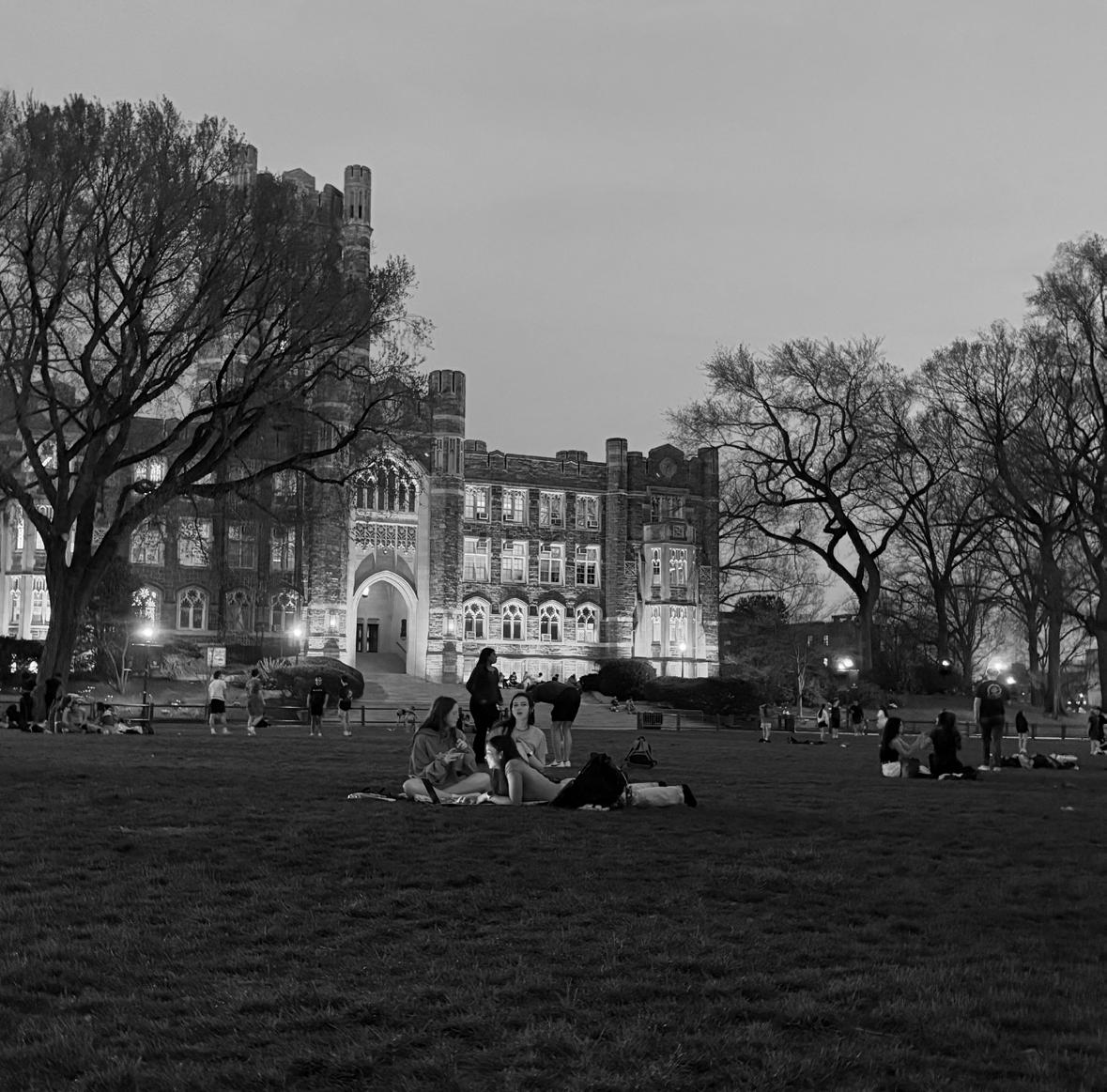
By HAILEY BAKER STAFF WRITER
All too often, I find myself opening Instagram between classes to a headline that makes it seem like the world is ending and then spending the entirety of my next class anxious. News is everywhere. In today’s media-saturated world, it feels nearly impossible to escape. There are clear benefits to this — being able to access information about events across the world within seconds is, in many ways, a privilege. As college students studying the very issues that dominate the news, staying informed feels necessary. But it can also feel like a burden, as constant exposure exacerbates fears about catastrophic events and escalating tensions. Our generation is repeatedly told that staying informed is important, yet we are rarely taught how to do so sustainably. The only way to consume news in a healthy and productive way is intentionally, by balancing awareness with mental health boundaries, seeking out diverse sources and engaging actively rather than passively.
The issue is not just anecdotal; it is backed by research. According to Pew Research Center, over half of U.S. adults
By CATHERINE PAYLEITNER STAFF WRITER
For better or for worse, a surprising amount of college life happens inside our email inboxes. Class announcements, internship opportunities, club logistics, campus events, financial aid reminders, housing updates, the list goes on — if something matters, it’s probably arriving by email. It’s become the quintessential infrastructure of our academic lives. Since so much depends on it, the question of how often we check our email becomes a matter of responsibility, opportunity and identity; it says something about the kind of students we want to be.
Studies suggest that most of us are already constantly checking. Zero Bounce reports that 93% of people check their email every day, and 42% check three to five times daily. Another study from Inbox Zero found that the average professional spends 28% of the workweek reading and responding to emails (about 2.6 hours a day). If that’s the norm in the workplace, it’s no surprise that college students should stay engaged with it.
However, norms don’t answer the real questions: How often should we be checking? What do we owe the people who email us? How do we balance staying informed with staying sane?
I’m proud to admit that I
report getting their news from social media “often” or “sometimes.” While this accessibility keeps us informed, it also contributes to stress and anxiety. The American Psychological Association explains that “though there is no formally recognized disorder or diagnostic criteria, many psychologists are seeing patients suffering from news-related stress and seeking guidance on how to help them.” Media overload is not just overwhelming; it also has real mental health consequences, especially for college students who use social media multiple times a day. Many college students are not consuming news intentionally but passively through social media. When platforms like Instagram, TikTok and X become default entry points, news is often mixed with both entertainment and personal opinion. As a result, students encounter information while scrolling, often only reading headlines or captions instead of full-length articles. News organizations are not naive to this dynamic, and often rely on attention-grabbing or exaggerated headlines to capture clicks. With only a surface-level of information, people are usually left with nothing but incomplete or
misguided interpretations. In addition, algorithms track user engagement and prioritize similar content, reinforcing existing beliefs instead of challenging or expanding them. This creates a false sense of being well-informed, which is built on constant exposure rather than meaningful understanding. In reality, this pattern of passive consumption often leads to increased anxiety, confusion and a shallow understanding of complex news topics.
To combat this pattern, we must begin consuming news more intentionally, beginning with clear mental health boundaries. No one knows better than ourselves about what our mental health needs are and how much news consumption we can handle. Knowing those limits and setting boundaries around them are essential.
At the very least, I think we should limit how often we receive news. I have found that constant notifications usually stress me out, distracting me from more important obligations or even from being in the present moment to have fun with friends. Thus, I have social media and news notifications turned off, so that I can more intentionally choose when I am consuming media.
While I could always be better with it, I try to stay off of my phone as much as possible when I am with my friends. I think it’s important to keep in mind that setting boundaries is essential to productive mental health, and does not make someone more ignorant or less informed than another person who is constantly consuming news. The people who do set boundaries and limit their exposure are often more informed than those who do not, as they tend to intentionally read full-length articles and take time to process content before consuming more. Another major factor of intentionally consuming news is seeking diverse sources and breaking out of echo chambers. Given how algorithms show similar content and reinforce beliefs, it is essential to expand sources. The Cable-Satellite Public Affairs (C-SPAN) is a great news source, as it shows full unedited hearings in the U.S. House of Representatives, U.S. Senate, White House events, campaign coverage, Supreme Court oral arguments and other important political events. Its coverage is also free. When learning about important events, it is critical to examine multiple sources to avoid falling into
check my email multiple times a day, most often first thing in the morning. I have notification alerts set up on my phone and laptop, so I never miss anything important, like a professor’s communication, work or deadlines. But I don’t think this makes me obsessive, as some might say. It makes me organized and functional. In a world where email is the primary mode of communication, ignoring your inbox is like ignoring the packages piling up on your front porch — you can’t climb over it forever.
A reasonable baseline for college students is checking emails at least once a day, but ideally twice: once in the morning to see what’s coming, and once in the evening to make sure nothing urgent slipped by. This rhythm keeps you informed without letting email dominate your day. Despite the dramatic sighs people make when they talk about “catching up on emails,” the task doesn’t have to be painful; most inbox maintenance can be done in under five minutes.
The real challenge is the mindset and crafting a good balance. Check too infrequently, and you risk missing deadlines, opportunities or other time-sensitive messages. It also creates unnecessary stress for yourself when you let unread emails pile up. But check too often, and you may fall into a different trap of a constant
distraction and the feeling that every notification demands your immediate attention. Having a system helps and can be simple, like mine: checking twice a day, starring important information and a rule that if something takes less than a minute to respond to, I do it immediately. There isn’t a need for elaborate folder hierarchies or color-coded labels, just a few habits that keep your inbox from becoming a sense of dread.
But there’s another question that’s becoming increasingly prevalent in our changing society. In the age of AI, what does it mean to communicate responsibly? Is it unethical to use AI to write and/
or respond to emails? It can be unethical. Email is one of the few remaining spaces outside face-to-face conversation where we can communicate directly without AI intervention. If you feel the need to rely on AI to write basic messages, what else are you outsourcing? AI isn’t a cure-all; it can’t read your mind or solve all of your problems. Research has shown that using AI tends to make people less productive overall because they fall into an over-reliance trap. By the time you’ve managed to shape a coherent message from the chatbot, you’ve spent more time than if you’d just written it yourself. If email is part of how we learn to advocate for
partisan-heavy traps and biased information.
There are multiple reputable newsletters like Axios, The Pew Research Center and POLITICO, which provide quick and easy access to information from multiple sources in one email. Gaining exposure to varying viewpoints from across the political spectrum allows for a better understanding of news and the ways in which various demographics perceive them.
As students at a Jesuit university that calls us to be “men and women for others,” it is important to stay engaged with the news so that we can acknowledge those in need and the state of the world. However, in order to effectively care for others, we must first take care of our own minds by being intentional about the information we consume and the ways in which we consume it. Being informed is not about volume and quantity; it is about consuming news in a way that allows for clarity, balance and real understanding. All in all, news should inform and educate, not overwhelm.
Hailey Baker, FCRH ’27, is a political science major from Gaithersburg, Maryland.
ourselves, build connections and otherwise navigate professional life, handing that over to a machine feels like handing over a piece of our agency. Ultimately, checking your email is a small but incredibly meaningful practice of responsibility. It helps you respect other people’s time, stay connected to your community and manage your own stress before it takes over. In our world, communication is constant, and learning to manage your inbox is like learning to manage your life.
Catherine Payleitner, FCRH ’28, is a political science and journalism major from Chicago, Illinois.
To be Awarded to Jason Endaya, IPED ’10 for Excellence in the Service of Faith through the Promotion of International Peace and Development

Thursday, April 16, 2026 • 5:30 pm Open to the Public Keating Hall, First Floor Auditorium Fordham University, Bronx, NY

WELCOME: The Reverend John Cecero, S.J., Vice President, Fordham University
AWARD CONFERRAL: Dr. Dennis Jacobs, Provost, Fordham University
ADDRESS BY: Mr. Jason Endaya, Assessment Specialist for Asia, Catholic Relief Services and Fordham IPED Class of 2010
CLOSING REMARKS: Ms. Michele Gilfillan, Vice President, Catholic Relief Services



By EMILY TONNA EXEC. COPY EDITOR EMERITA
It’s cliché, but I like to think that my life started when I transferred to Fordham. Being surrounded by people so endlessly passionate about their studies started to rub off on me, to the point that I finally started having opinions about what I wanted to do with my life.
It’s not something that I’d really given much thought to before — I was never much for planning ahead. I knew I was good at writing essays and loved telling others’ stories. I knew that I’d get a particular flutter in my chest after publishing an article I was proud of.
But how could I combat the “English majors are future baristas” stereotype? It felt daunting to find meaning in an increasingly hostile world to the humanities. As an English major who dared to dip their toes into journalism and go as far as considering it a dream career, it was even more treacherous. If I had a nickel for every time I heard that I wasn’t going to make any money, or that I would be outsourced to AI, I wouldn’t need a job at all.
I think, at least in student journalism, a lot of the
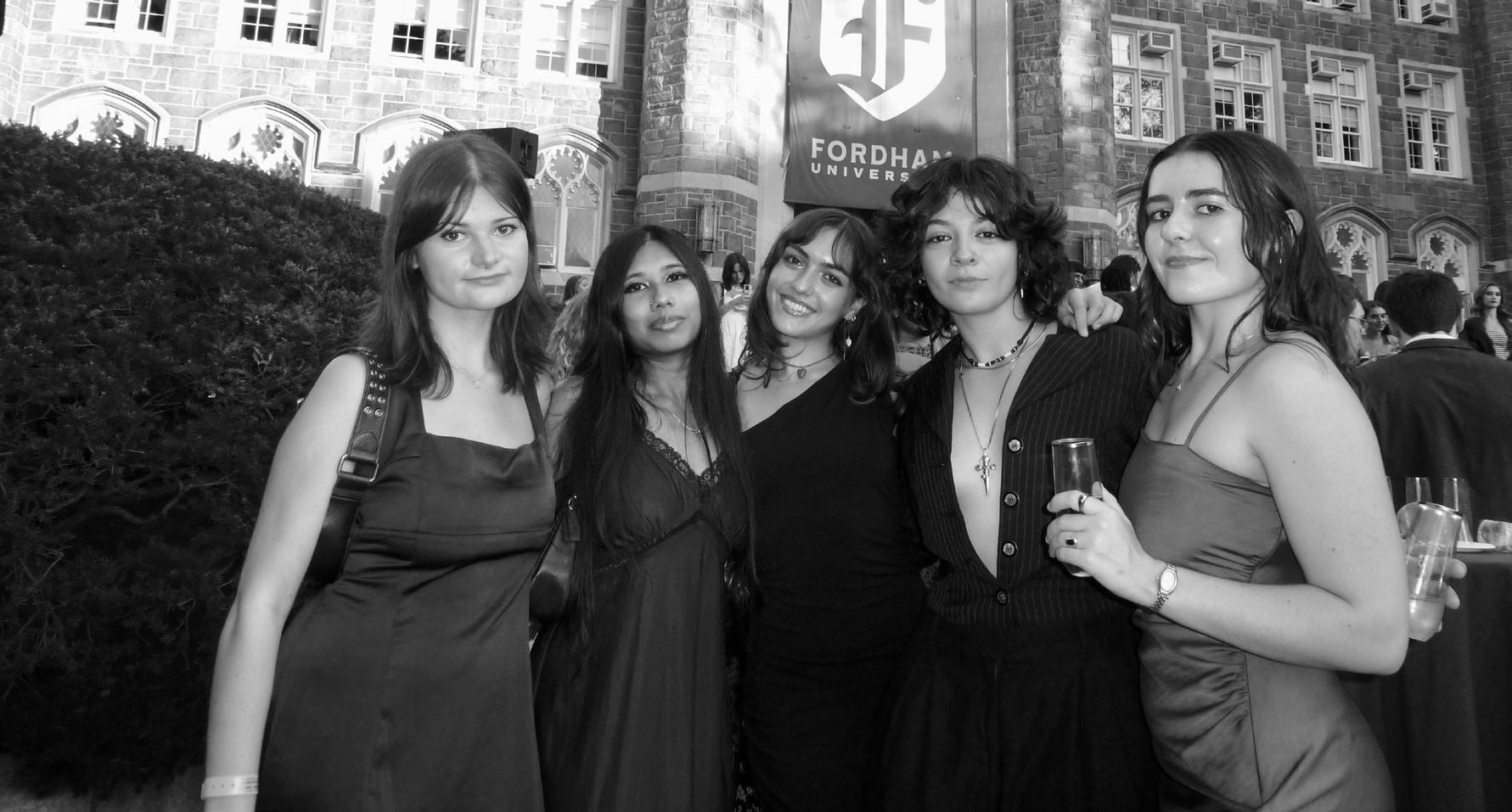
experience hinges on hope.
You hope you captured someone’s sentiments accurately in an interview and that you remember to ask them their name, school and graduating year. You hope you’ve shaken hands with the right people, whether they’re peers or professionals. You hope that maybe you’ll catch lightning in a bottle, getting to work on a story that professional journalists live and breathe for.
There will be moments when you screw up. A missed opportunity, a 60th job rejection or an interview gone wrong. It’s
going to feel like the world’s ending, but it’s not.
I believe these moments are when I feel most connected to the Fordham community, because there’s almost a catharsis in struggling. You may have flunked your finite math midterm, but at least you’ve got plans to hang out on Eddies with friends later. Or you got rejected from an internship you were excited about, but you’ll get to commiserate about it at your favorite club’s meeting tonight. There’s a kind of peace you may only find lying facing the night sky on the steps of
Keating Hall at 2 a.m. with your best friends. There aren’t any stars to gaze at, though, ‘cause of that sweet, sweet NYC light pollution.
Maybe you’ll hear a stray plane landing at LaGuardia Airport, if anything.
I, for one, have had many pensive moments here, where the stress of my academics and lack of career prospects can only be soothed by a stupid joke my friend cracks and a container of soggy fries from Super Best Deli.
I’ve found that these memories of respite among the chaos are the ones I
remember the strongest of my tenure at Fordham, and the ones I’ll miss the most — when I graduate in four weeks, and my future becomes a big question mark. I may be biased, but I do believe that all things work themselves out and that Fordham’s valiant efforts to prepare us for the real world will have counted for something. I won’t pretend to know that for certain, but, as I said, hope is something I’ve become rather accustomed to.
As any senior will tell you, savor every moment you can — especially the tough ones. And for the liberal arts nay-sayers, well, screw ’em.
It’s cool to go here. It’s cool to be well-rounded, involved, in pursuit of cura personalis, being enriched across so many different disciplines. There’s a special satisfaction in being able to say you’re a sociology major who also happens to be proficient in French, or that you’re an economics major who knows the ins and outs of Jacques Derrida.
So, if you’re a first-year, or you just aren’t sure if this place is right for you, I’m here to say: stick around. Show up to things. Invest in your community. It might just pan out for you.
By DOVE AJMANI CONTRIBUTING WRITER
** Spoilers **
“White Boy Scared” is part of the plot in A24’s newest addition to its creative catalog, “The Drama.” Like the studio’s other projects, the film blends convention and controversy in the way A24 has become known for.
The film stars Zendaya and Robert Pattinson play Emma and Charlie, a couple preparing for their wedding. The story takes place during the week leading up to the ceremony, as they are joined by their friends Mike (Mamoudou Athie) and Rachel (Alana Haim) to choose the wine for the celebration. During the evening, following the large amount of wine consumed, the group plays a game in which each person confesses the worst thing they’ve ever done. The game begins after Emma expresses uncertainty about firing their wedding disc jockey for drug use, prompting a debate among the group about what justifies firing someone.
To everyone’s surprise, Emma drunkenly reveals that she has a dark past; she wanted to commit an alarming act at her high school and created a manifesto. The confession leaves everyone disoriented and the room
in uneasy silence.
The rest of the film explores the aftermath of the confession, focusing on Charlie’s anxiety and internal conflict after learning about Emma’s past. Her revelation makes him question his entire reality and perception of his fiancée, as he seeks a path toward forgiveness or even understanding. In doing so, he creates a new set of obstacles that ultimately come crashing down on the two.
The performances alone are worth discussion. Zendaya delivers a phenomenal portrayal of Emma as she navigates the sensitive subject matter. Patterson captures Charlie’s emotional turmoil as he searches for forgiveness or some kind of clarity. Haim’s performance evokes frustration and disbelief, making it impossible not to roll your eyes at her character.
Despite the outstanding performances, the film has sparked controversy. Many viewers, perhaps due to a lack of media literacy, expected a light and enjoyable rom-com. As audiences should have gathered from the trailer and the studio’s reputation, the products of A24 tend to include more contemplative or unsettling plot devices, like “The Materialists” (2025). “The Drama” followed a similar
marketing strategy, framing the movie as a romantic comedy. But the romance storyline turned out to be not much more than a subplot. The film instead centers on the chaos leading up to a wedding following the realization of horrifying information about your partner. However, no one would have guessed that the plot twist in “The Drama” would involve gun violence. For the film’s theatrical element of shock and the wow factor, it skims over a lot of triggering material and, dare I say, sensitive topics.
For A24, taking on the subject of gun violence is daring, especially given the rise in school shootings across the United States. The film is often difficult to watch, with graphic vomit-centered jump scares, and closely following young Emma’s twisted thought process. However, the movie might have benefited from spending more time with present-day Emma, giving audiences a more in depth look at her character beyond Charlie’s memories. Regardless, hopefully the difficult topics will ignite meaningful, empathetic conversation instead of being tiptoed around by audiences. The movie attempts to address taboo topics in a dark, yet satirical way, but
the question remains: Is the world ready for that?
It’s interesting to see how each character deflects responsibility, pointing fingers rather than acknowledging their own faults. The movie doesn’t have a clear-cut villain; instead posing moral and philosophical questions that prompt viewers to assess their own values. It also explores the idea of unconditional love and whether such a thing truly exists, or what can be forgiven or not, especially when in a romantic relationship.
Arguably, Zendaya and Patterson are among the most beautiful people in the world, yet their characters
embody cruel, deeply disturbing traits, forcing viewers to consider what it means to date someone primarily for their looks.
Either way, people are lining up to see this movie with high anticipation, hoping to witness the next best romcom or having their interest piqued by spoilers online. Pulling in larger conversations about dating culture, “The Drama” reflects a world where an obsession with aesthetics and personal branding is on the rise. It prompts questions about how well you actually know your partner and whether you can really trust them, or if obtaining that is even possible?

By LARA EJZAK CULTURE EDITOR
Correlating with the sprouting of green foliage and emergence of flowers in the natural world, Fordham’s a cappella world experienced a resurgence in Keating’s first floor auditorium on March 27. Like the spring winds of March, the a cappella spring teaser swept listeners away on a sonic journey.
Having attended the previous spring teaser concert, I was excited for what lay ahead of me in that bright-lit room. As luck would have it, the energy of this year’s show went above and beyond my expectations.
Hailing from Fordham’s metropolitan other half, the F Sharps took the stage first. Starting strong with Lizzy McAlpine’s “Reckless Driving” and delivering on a riff at the bridge that could drive me crazy, the F Sharps established that I was in for a good night.
The group went on to sing an angelic rendition of “Pure Imagination” that demonstrated expertly executed high notes and crescendos. While it may
have started gently, the tune quickly changed from dreamlike to upbeat, providing a more jazzy, uptempo rendition of the original.
Next to take the stage was Fordham’s all-male group The Ramblers. They captured the audience’s attention from the first iconic note of JMSN’s “Love Me,” showing off their harmonizing prowess. The set resembled their International Championship of Collegiate A Cappella performance set, meaning that the transitions were seamless from one song to another.
After their version of Katy Perry’s “Eye of the Tiger” that engaged every listener in the room, the set progressed to Bruno Mars’ “Grenade” and Gloria Gaynor’s “I Will Survive.”
The soloists’ — Gabe Dy, FCRH ’27, Darian Maldonado, GSB ’26 and Christian Sibel, FCRH ’27 — animation on stage had the whole audience bopping and grooving with them on the stage, pausing only to admire their powerful, resounding voices.
Offering a 180 from the male
group, the Satin Dolls all-female chorus went up next. To kick off their set, the ensemble sang a choral version of Mary J. Blige’s “No More Drama.” The composition was a slow, angsty build that made full use of the group’s members and range while still allowing the soloist, Lila Gagliardi, FCRH ’28, to have her moment and command the audience’s attention, leading the group rather than overpowering it.
The phrase “teamwork makes the dreamwork” has never been more applicable than in the next song performed, “Separate Ways (Worlds Apart)” by Journey. The choice for a duet for this song curated a synergy on stage between the two leads, Toleeya Napolitano, GSB ’26, and Ashley Van Valkenburg, FCRH ’29, if they were in a fight for who was better and both were winning, building upon each other’s voices. The trajectory and evolution of the piece was constructed in such a way that by the end, you just wanted to pump your hands in the air.
The arrangement was simple,
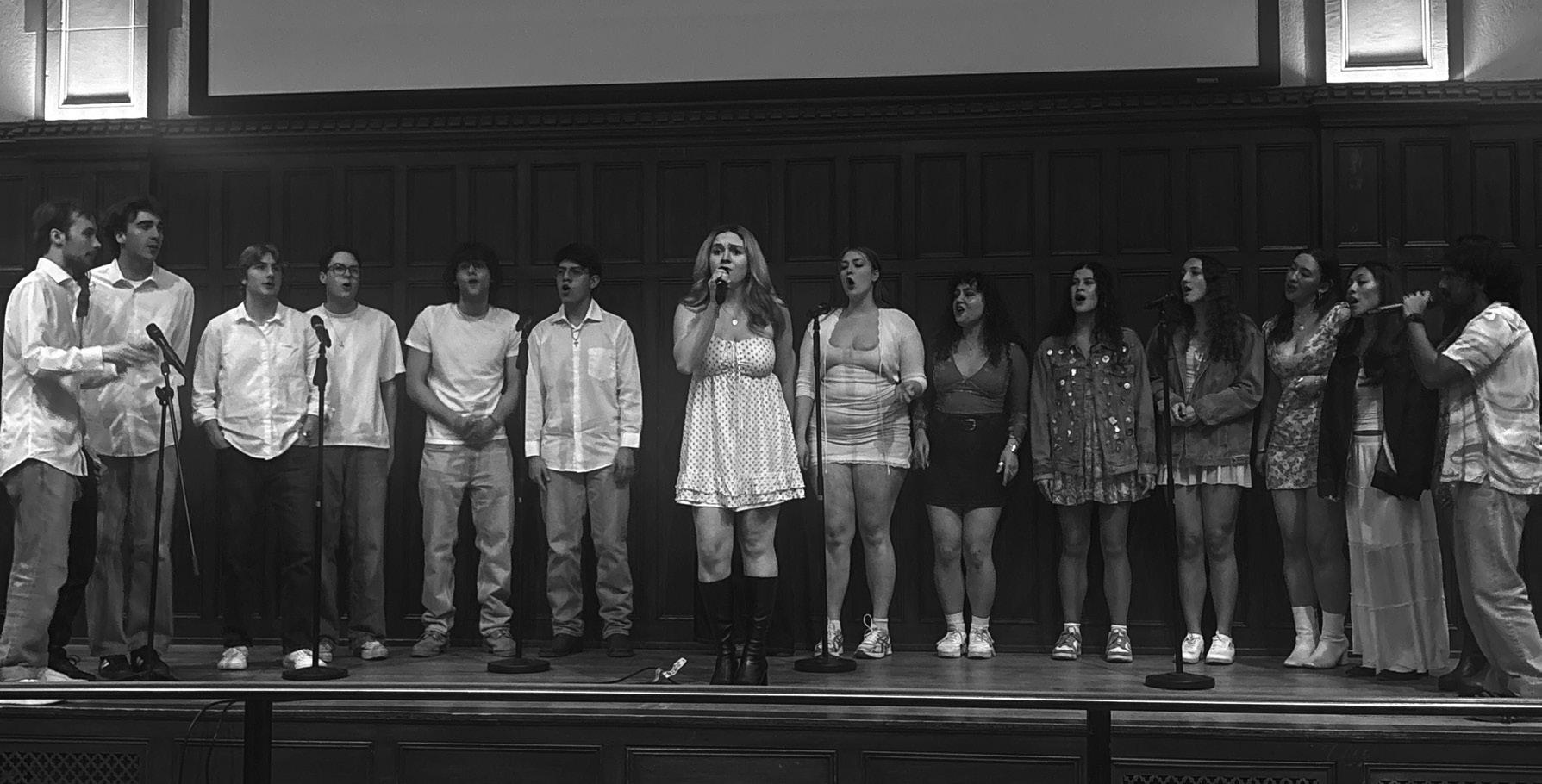
By NORA MALONE EDITOR-IN-CHIEF EMERITA
As a study abroad student, you exist in a weird, liminal space. You are very much a tourist, freshly arrived in your city of choice, still spending weekends doing trips and experiences that locals wave off.
Except for a few days here and there, that changes. Sometimes you’re lucky enough to have a friend drop by your city for a weekend. Suddenly, you are no longer the tourist; you are the tour guide. You are the one answering questions, suggesting restaurants and planning activities.
It makes you realize that you know more than you think. Personally, I don’t try to claim expert knowledge of Dublin. True, I’ve spent large swaths of time exploring its many winding streets, but I’ve only been here for four months and don’t claim to have half the knowledge of a local. But
but by this virtue, it gave each singer an opportunity to hammer home the vocals and collaborative abilities of the group, which anyone can see for themselves on April 18 in Keating First.
Cranking up the heat, the Hot Notes spiced up the room with a rendition of a Motown classic “Nothing Can Change This Love,” accompanied by a mesmerizing presence on the stage from the performers.
The male soloist, Michael Pontecorvo FCRH ’27, elicited a love from the listeners and ended on a high note (pun intended) with a strong falsetto run.
Keeping the energies high, the room saw its first trio performance of “WHERE IS MY HUSBAND!” that was just as entertaining as you may be imagining. The piece felt like a full-out sprint, all gas no brakes. The three lead singers — Naiya Rookwood, FRCH ’26, Lauren Fleissner, FCRH ’28 and Stella Maguire, FCRH ’26 — played off each other in a way that kept the audience interested and hooked from beginning to end. Throughout the whole song I had to try to keep myself from getting up and dancing, and it almost made me want to be wronged by my imagined husband. This spectacle was one that stuck with me well after the show and one you could see for yourself on April 25 at Fordham Prep.
The hosts and closers of this night of musical mashups were the B-Sides who executed a perfect grand finale for the show. They started with the groovy disco hit “Does Your Mother Know” by ABBA, and as a “Mamma Mia” fanatic, I was just about buzzing in my seat
when you’re walking beside someone on their first day, you realize you do know your city.
I know the bus routes in Dublin and the best spots for coffee and scones, which streets have the best thrift stores and how to get from point A to point B. I know how to handle the crazy weather, and I know which pubs play live music every night. I know what I like; in essence, I know my Dublin. Sometimes, study abroad students sell themselves short. They say that they’ve spent so little time in their city in the grand scheme of things, so they can’t claim it as their own. But the gift of studying abroad is finding a new place that is distinctly yours. No, you don’t know it like a local, you know it like yourself. There is a benefit in finding your place in a new city, because it shows you that it is possible. Moving is scary, and for many people, college is the first time they leave their home and
friends behind to go somewhere new. That’s why the first year of college is so scary; it’s not the academics, it’s the culture. Studying abroad gives you another chance to do that, to go someplace entirely different and meet completely new people. You get more practice at change and another shot at establishing yourself. And, just like you show your parents around Arthur Avenue on parents’ weekend, you get to show your friends around when they visit.
My goal when I decided to study abroad was that if I returned to Dublin in 10 years, I would still know my way around. So I try to walk the streets with my head up, taking in my surroundings so I know it, but I couldn’t be sure it had worked until I was showing someone those same streets. Suddenly, my little corners of a new city were someone else’s first experience, the places I had stumbled upon created
listening to the performance. I would be inclined to sing along myself if it weren’t for my desire and dedication to hear the soloist to the fullest.
Hayley Dunn, FCRH ’28, exhibited vocals and a stage presence that could rival the great Christine Baranski herself. “I was nervous before my solo, but then I heard all my friends chanting my name and I was like ‘I can do this,’” said Dunn.
Following Dunn’s stunning serenade, body movement and serving of face, the final song of the night, “Red Wine Supernova,” involved all the singers on stage. The lead, Miranda Joyce, FCRH ’26, held the impressive standard set throughout the night, and during the bridge, the group incorporated a whimsical call and response, reminiscent of Chappell Roan’s original performance of the song. Throughout their set, the B-Sides maintained a cheerful stage presence that conveyed how much they genuinely enjoy what they do.
“We are all doing it because we love music so much,” confirmed Otis Alley, FCRH ’29. “Everyone in the room can just know how much we love what we’re working on and how proud we are of it.”
This sentiment is shared among all the groups that were in Keating First. I highly encourage everyone to go out to support and see for themselves just how talented our Rams are. If you want to cap off the semester of classes with a musical celebration, you can see the B-Sides on April 29 at Fordham Prep. As Dunn tells it, “it will be the best night of your life.” With hype like that, it’s basically irresponsible to let such an experience pass you by!
someone’s perception of Dublin. It’s validating, taking your friend to the coffee shop you frequent and having them enjoy it. It makes you feel like you’re doing a good job of learning your way around and lets you bring your new experiences together with your Fordham friends.
It’s scary, because you have only a day or two to show them
the little life you’ve created for yourself, but in the end, I think you get to know your city just a little bit better. Of course, when I’m out and about in Dublin, I still very much feel like a newbie, but it was nice to spend one weekend as the guiding local, getting to welcome someone to a place I’ve grown to love.

By EMILY GALLAGHER CONTRIBUTING WRITER
“Project Hail Mary” is a heartfelt, passionate film that brings new excitement to the science fiction genre. This film adaptation of the 2021 sci-fi novel by Andy Weir was released in theaters on March 20. Weir is well known for his other bestselling novel, “The Martian,” which received its own film adaptation in 2015.
“Project Hail Mary” was an instant success, having already grossed over $500 million globally. As someone who had read “Project Hail Mary” and devoured it in one sitting due to how compelling Weir’s writing is, I had high expectations for this adaptation that were met completely.
The production opens with schoolteacher and scientist Ryland Grace, played by Ryan Gosling, who is regaining consciousness from a coma while aboard a ship in space. Grace has no recollection of how he got on the ship, what his goal is or even who he is. The audience is just as lost as Grace, as the movie gives no hints. Instead, viewers experience Grace putting together the pieces of his identity alongside him in a nonlinear narrative, as he begins to experience more flashbacks and works to understand his situation.
He quickly discovers the overall purpose of his presence on the ship: finding a cure for the dying sun, which is rapidly cooling down and has the potential to cause the death
By KELLY BUBAN ASST. CULTURE EDITOR
Every year, the return from spring break has always felt a little deceptive to me. Spring break brings the comfort of falling into the warm weather routine of flexible schedules, traveling with friends and family and embracing a muchneeded mental reset. Then, in just a matter of days, you’re back in your dorm room, going to class and feeling a more urgent sense to get all of your work done in the next three and a half weeks. This transition, jarring and abrupt, marks the beginning of what I, and other students, know too well: the semester slump. Spring break serves as a pause, but not always as the clean reset we all wish for. Sleep schedules shift, responsibilities loosen and the mental intensity of academic life fades. Coming back from break means rebuilding those habits from scratch, but now with higher stakes. Finals loom closer and assignments carry more weight, but with the weather warming up, the pull of the outside world grows stronger. It is simply hard to stay inside and focused when
of half the Earth’s population in the next 30 years. Driven by the intense circumstances, Grace is determined to save his planet, despite the vast distance of multiple light-years.
Though his journey begins in solitude, he unexpectedly finds an ally and friend along the way. Rocky is a rock-like alien engineer from the planet Erid, who is also working to save the sun and his home.
When an A-list actor such as Ryan Gosling stars in a film based on a widely successful book, there is going to be a lot of anticipation regarding his performance. Gosling first secured the movie rights back in 2020, after reading an early manuscript of the book. From his passionate championing of the movie as both actor and producer, Gosling delivered an impressive performance across all levels. Gosling not only encapsulates the intelligence and humor of Ryland Grace but also the empathetic, vulnerable and curious aspects of him. His character was so extremely likable, and Gosling’s emotional performance is so profoundly human that you can’t help but root for him at every moment.
Other notable performances in the film come from Sandra Hüller, who plays Eva Stratt, the stern leader in charge of the space mission, and Lionel Boyce — who many would know from his performance in the hit TV show “The Bear” — an ally to Grace before he leaves for space. Boyce adds a lot of humor in his scenes, and although his character Carl was
a new addition to the film, he fits in so well that one would have expected him to appear in the book. With every book-to-movie adaptations, it is a given that certain aspects would have likely needed to be cut, and I was nervous about what parts of the novel would get sacrificed. However, I felt directors Phil Lord and Christopher Miller did an excellent job of preserving the book’s complex themes and inspiring message. While I already knew the plotline, the film was so immersive that I found myself surprised by every twist, while eager to experience what additional information would be uncovered to fully flesh out Grace’s story and character. Emotional whiplash is a guarantee while watching this film, as one anxiety-filled moment passes, very quickly another one builds. However, these moments are paralleled by many humorous moments, balancing out the intensity. Furthermore, it would be a disservice to the movie not to mention the score. Composer Daniel Pemberton’s score ranges from electronic, syncopated sounds that encapsulate the out-of-this-world ambiance of space, to the energetic, bright rhythms that reflect moments of friendship. Each scene’s music sets the tone perfectly, whether it’s the first look at the planet Tau Ceti e, or Grace hard at work in the spaceship. Additionally, cinematography and visuals as a whole were an absolute highlight of the movie. As Grace visited various
planets throughout space, it was impossible not to gape at how intricately beautiful the galaxies were and how realistic they looked. While some massive sci-fi fans feel the film is overall unfitting of the label of the genre due to its heartwarming sincerity and optimistic clichés, I disagree. Science is a major element in “Project Hail Mary,” making it completely deserving of the sci-fi name; it takes the complicated scientific elements of space travel and presents them in a way that is understandable to the audience, without feeling too dumbed down. I don’t believe that a sci-fi film has to have massive layers
of complexity to be considered worthy of the genre title.
“Project Hail Mary,” at its core, is a celebration of both scientific achievements and friendship. It’s a film that reminds us of why we go to the movie theater: to feel completely immersed in a storyline, its characters and its meaning.
There is no shortage of space movies, but I believe “Project Hail Mary” provides a more optimistic take on the typical Earth-threatening dilemma. For all of those who wonder what it would be like if a nonastronaut went to space, this is the film to check out — it might just leave your eyes watering.

the city and campus suddenly feels alive again!
Before break, school feels more manageable -– structured, predictable and with plenty of gas in the tank to get across the finish line. However, after break, there is a dip in motivation, and even simple tasks can feel overwhelming. It’s not just laziness; it’s a mismatch between what students want (freedom, warmth, exploration, rest) and what they need to do (focus, do work, concentrate and be consistent).
So why is it so hard to stay motivated? I believe most of this is psychological. Break reminds students of what life feels like without constant deadlines. Returning to this pressure can feel restrictive, mixed with the level of burnout. Spring break offers relief, but not always recovery. Instead of feeling recharged, many come back aware of how tired they actually are.
Still, the slump doesn’t have to define the rest of the semester. One of the most effective ways to push through it is by blending productivity with the things that made break enjoyable in the first place. Instead of forcing yourself to stay cooped
up in a library or your room, take your work outside. Find a park, a bench, a sunny spot on Eddies or go to the Botanical Gardens! I have found that changing your environment can make schoolwork feel less like a chore.
Something equally important is making time for connection, which can include spending time exploring new parts of the city. A spring bucket list will give you something to look forward to and set a day on your calendar to not think about or look at school work. Whether you go to a new museum, a new bagel shop, a flea market in Brooklyn, Coney Island or, for the truly ambitious, walk all of Manhattan from tip to tip with friends, getting out of your normal habitat can be liberating and rejuvenating for finishing the year. Visiting friends at other schools and getting out of the city for a weekend can recreate the sense of excitement and novelty that break provided. These weekends don’t inherently take away from productive time, as they can actually restore the energy needed to stay on track. Also, being able to walk around a college campus with
your closest friends knowing that others have no idea who you are gives you a false sense of reality and comfort that may bring you some peace for the final stretch of the semester.
Finishing the school year strong isn’t about forcing motivation but redefining it. The goal isn’t to recreate the exact discipline you had before break, but to adapt to where you are now. Break your work into
manageable pieces and give yourself something to look forward to, whether that’s a weekend plan, time outside or even just a good meal with friends.
The semester slump is real, but it’s not permanent. With a little flexibility and intention, it’s possible to hold onto that post-break spark and carry it all the way to the finish line of the school year!
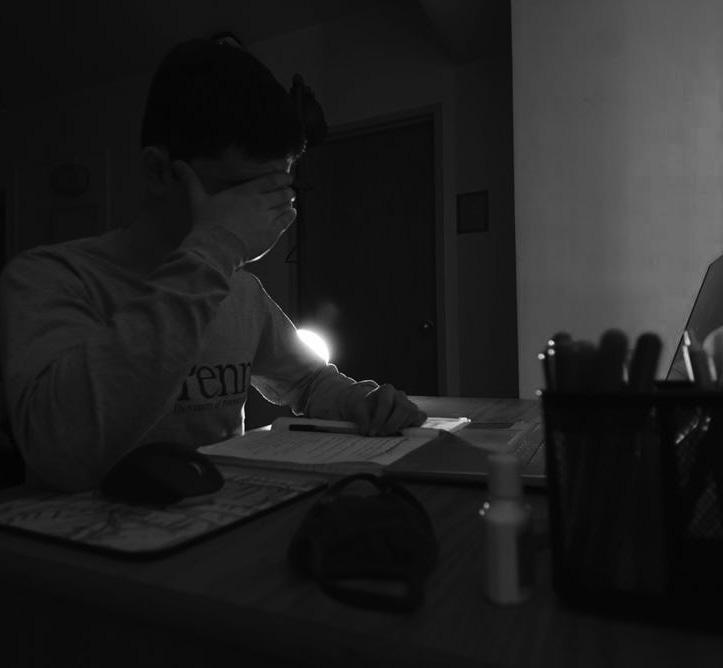
By HANNAH SULLIVAN MULTIMEDIA DIRECTOR
In eighth grade, for our class superlatives, we were asked what we wanted to be when we got older. I, who have never excelled in math or science, said I wanted to be a forensic anthropologist. I was focused on our biology unit in science class and spent free time scrolling through free websites on the basics of forensic anthropology (like how to calculate height using the femur). The 2005 forensic crime show “Bones” had me, the world’s biggest STEM hater, yearning for a professional career in science, all so I could become someone similar to Dr. Temperance Brennan, the world’s most renowned forensic anthropologist.
The show is based on books by Kathy Reichs, a forensic anthropologist whose life inspired the books and, by extension, the show. From what little forensics I do know, the show is remarkably accurate, complete with some of the most gory scenes that made it a show my
family couldn’t watch while we were eating. It follows forensic anthropologist Dr. Temperance Brennan and her partner, Special Agent Seeley Booth, as they solve murders alongside their ragtag group of scientists and a FBI psychologist, all while having one of the most beautifully done romantic slow burns in TV history. Rest assured, even after finally getting together, the two keep plenty of chemistry, and it continues to feel genuine as they face real issues that keep the relationship feeling real and grounded.
While I am now an English major, the show’s impact is not lost on me. For a show produced in the early 2000s, it is remarkably progressive, with some of the most amazing representation and political commentary I have seen, especially compared to other shows at the time. Dr. Brennan was inspired by the show creator’s friend, who had Asperger’s, and many have praised the show for its portrayal of Dr. Brennan and autism over other TV shows, such as “Big Bang Theory,”
for being more accurate and positive.
The show’s entire cast is immensely diverse, with each character given time to explore the intricacies of their own story. One of my personal favorite interns, Arastoo Vaziri, who some may recognize from “Shameless,” is a political refugee from Iran. The show discusses being Muslim in a post9/11 America, contentions that exist in being religious and a scientist, and racial profiling. Dr. Camille Saroyan is another wonderfully diverse character who the show uses to dig deeper into racial profiling and generational trauma, while also being an all-around wonderful and genius character. I also have to mention Angela Montenegro, a multiracial white and Asian woman who is a freespirited artist and is given a whole plotline to explore her bisexuality.
The show not only addresses the previously mentioned topics to more deeply explore the main cast of characters, but also creates commentary through the victims they encounter. There is one episode where the victim is a transgender woman who is also a pastor; it explores sexuality and gender within Catholic doctrine at length, a theme throughout the show, as Brennan often questions FBI agent Seeley Booth’s thoughts on the matter as a Catholic. The episode is, for the most part, tastefully done, while there is a bit of misgendering. However, when compared to “NCIS”’s handling of a transgender
woman plotline, the victim is not belittled for a laugh. Rather, the episode displays the violence that transgender people, especially transgender women, face in romantic relationships. Not to spoil the episode, but it does also show how transgender people are capable and deserving of love. The show handles these issues in a way I find very progressive and respectful, given the time period and other media within it.
I cannot express how much I love this show and how much it means to me. This show has single-handedly changed many of my ideas about life, as it uses its diverse cast to bring together multiple ideas and opinions, such as on the death penalty, so the audience can hear from all perspectives rather than a single narrative about right and wrong. However, I do think what I love most about this show is that all these topics and themes are so beautifully woven into it. While the show is undoubtedly political, and I would say inherently so, it gives an outline for how TV shows can handle this, crime shows especially. The media has taken on the job of being a voice for minority groups, but forcing it into dialogue to create separate plots or “token” diversity characters has led to pushback and complaints. “Bones” is a masterclass in how to address these issues.
A small thing that I love about the show is the treatment of Dr. Brennan as a woman who has a life. The show ran from 2005 to 2017, the actors aging with it. Women in the
media are often treated as less beautiful after a certain age, one thing I was expecting to see with this show. A huge part of Dr. Brennan’s character is how beautiful she is, a trait that often leads to her being underestimated. However, the writers did not stop including these lines about the beauty of the character in later seasons, even after the actress had aged past the brief window that Hollywood tells women they are desirable. The actress who plays Dr. Brennan, Emily Deschanel, also became pregnant in real life during filming, a plot that is included in the show which actually addresses the body dysmorphia of pregnancy. Overall, this small detail of making sure to continue to praise and call Dr. Brennan beautiful — a guaranteed fact because Deschanel is one of the most gorgeous actresses at any age — was such an important thing for me to see at such a young age. Genuinely, few things have had the level of impact that this TV show has had on me. To this day, I am an English major and I still dream of switching to forensic anthropology. I am not afraid to say that this show made me a better person, and I have watched almost every episode in the 12 seasons at least three times. “Bones” is a show that will change your life, beliefs and perception of love. For a young and awkward eighth grader, Dr. Temperance Brennan was the role model I did not even know I needed and this article is a love letter to the show that made me into who I am today.
Raye’s ‘This Music May Contain Hope’ Dazzles, Soars and Moves
By OWEN THEBERGE CONTRIBUTING WRITER
When looking at the world in the state it is in right now, for many, it’s hard for there to be a silver lining, a path forward that leads to a happy ending. There is so much pain, suffering, confusion and aggression everywhere that it’s hard to find the beauty and love that is present, even if buried underneath all the mess and grime. Raye, on her most recent project titled “This Music May Contain Hope” urges us to look for that hidden beauty, giving us a stern reminder to never give up and to continue fighting through hardship and adversity. It’s beautiful, powerful and overwhelming.
Raye’s album is split into four sections: The first four tracks represent autumn, the next four represent winter, the next four spring and the last tracks summer. This progression throughout the album is noticeable and
moving. The autumn tracks, for example, are cinematic and clever, setting the album’s haunting yet clever tone.
I particularly like the track
“The WhatsApp Shakespeare,” as it captures Raye’s quirky imagination with her poignant lyrics about the modern day dating scene and a possible romantic manipulation she felt. She expertly ties myths and analogies into her lyrics to convey messages in not just this song, but throughout the album.
My absolute favorite section of the album is the winter section. Every one of these four tracks is gutting, raw and deeply resonated with me.
“Click Clack Symphony” is one of the best songs I’ve heard in a long time, as it features the infamous film score legend Hans Zimmer who brings soaring strings to a song about overcoming depression and isolation through friendship. The song made me feel as if I were flying, and I wished it would never end.
Then, the song “Life Boat” made me completely fall in love with this album. Raye sings the phrase “I’m not giving up yet” over and over again atop a synth beat that radiates power and strength. Intertwined with Raye’s powerful vocals are voicemails of people proclaiming that they also will not be giving up, and it’s the emotional peak of the album, bringing tears to my eyes on first listen. I cannot thank Raye enough for this powerful anthem.
The spring section is probably my least favorite, and not because any of the songs are bad by any means. It’s just the section where Raye has the most fun. In the storyline of the album, she has just come off the intensity of winter and now lets herself loose during the spring, with tracks like “I Hate the Way I Look Today” and “Skin & Bones.” “Nightingale Lane” is probably the most serious of the songs and is a highlight of the record.
The summer songs are also a lot of fun and bring home Raye’s message of perseverance. The biggest and most popular song on the album “WHERE IS MY HUSBAND!” feels completely out of place on the album, but is a welcome addition regardless, as it’s an infectious, upbeat hit. The summer section does a wonderful job of rounding off
this incredible and ambitious album.
Overall, Raye has created a masterpiece. This concept album speaks so loudly and is completely in its own lane, knowing exactly what it wants to be. I cannot recommend this album enough, and hopefully it can provide others with as much hope as it gives me.
By GRACE KAWECKI CONTRIBUTING WRITER
New York City is hosting the largest Japanese food and culture festival, JAPAN Fes, which runs from March 28 to Oct. 25 this year. The festival features a variety of stands serving authentic Japanese food for New Yorkers to enjoy.
I attended the JAPAN Fes on the first day in the East Village, where I had the pleasure of enjoying Japanese drinks, food and desserts, along with the opportunity to immerse myself in Japanese culture.
Having arrived at the festival, I was thirsty and excited for the JAPAN Fes festivities. My first stop was Matcha n’ More, which stood out amongst the sea of booths with its large, bold banner, reading “Matcha Soft Serve and Ceremonial Grade Matcha Drinks.” Matcha is a highgrade green tea ground into a fine powder that dates back to the Tang Dynasty in China. At the booth, I was able to order right away and waited about 10 minutes for my drink. The matcha was on the pricier side, with the cheapest option being $9, but the iced drink was excellent in quality and perfectly balanced the tea’s sweetness and bitterness. The
color of the matcha was also a vibrant, lovely green.
The next booth I tried was Sama. This stand immediately caught my attention with a banner spanning the entire stand featuring pictures of each tanghulu, as well as the colorful array of tanghulu covering the tables at the booth. For those unfamiliar with tanghulu, it is a Chinese delicacy consisting of fruit skewers coated in hot, melted sugar. Tanghulu originated in the Song Dynasty as a medicinal cure for a concubine’s illness. Today, the dessert has gained popularity as a street dessert and has trended on TikTok. Here, I tried a strawberry skewer, which not only looked delicious with the large, bright red strawberries, shiny from the sugar, but tasted just as divine. The strawberries were sweet and fresh and the sugar coating added a delectable crunch that enhanced the texture of the dessert.
Having started with dessert first, I figured it was time to move on to a savory meal. I chose to eat at Yokote Yakisoba, a booth that sold Yokote-style yakisoba as a meal or sampler. This dish is a Japanese stir-fried noodle dish with an egg on top. The prices were reasonable for the amount of food, with the
sampler being $5 and the full bowl costing $15. The wait for this booth was exceptionally long, as I waited to order and get my food for around 45 minutes. But the wait was worth it for the delicious meal. All the components of the dish went together very nicely, with the sauce being on the sweeter side and the egg cutting that sweetness. The noodles were also cooked well and mostly coated with the sauce, though in a couple of spots, they were clumped together.
Full but thirsty from my previous dish, I headed over to Cozy Tea for a refreshment.
The setup for this booth was very appealing and colorful, with a large menu showcasing the drinks they sell. The line for this stand was also extensive, about 30 minutes, and although the drink was expensive ($11), its large volume made up for it. I ordered the Strawberry Yuzu Lemonade with popping boba. The drink itself was vibrant and fun, with bright red coloring. The taste was sweet and refreshing, and the popping boba was an exciting addition.
The last place I went to was Taiwanese Wheel Cake. Wheel cakes originated in Japan and appeared in Taiwan during Japanese colonial rule. The
dessert was then adapted to appeal to the Taiwanese, and its name, “wheel cake,” comes from its rounded shape. This cake is a popular street food in Taiwan. At this stand, the workers made the cakes fresh by cooking the batter and adding the fillings. I tried the matcha custard chocolate cake for $6.50. The dessert resembles thick pancakes with a surprise
filling of matcha and chocolate custard. Unlike anything I’d had before, the light, pancakelike consistency combined with the pudding-like texture of the matcha and chocolate created a delicious delicacy.
The JAPAN Fes was a wonderful experience full of delicious dishes and I would recommend visiting at some point while in New York City!

By BOBBY SPENCER CONTRIBUTING WRITER
On March 3, Starbucks, the globally recognizable and influential coffee company, debuted their new spring lineup of beverages. Among them include the iced ube coconut macchiato, toasted coconut cream cold brew, iced lavender cream matcha, iced dubai chocolate matcha, iced dubai chocolate mocha, cannon ball drink and pink cannon ball drink.
I personally have had the toasted coconut cream cold brew which offers a nice delicate coffee flavor mixed with coconuts. However, it’s not the first thing that comes to mind when I think of spring. These flavors are much more reminiscent of the tropical flavors associated with islands and southeast Asia.
This shifting trend in our food chains speaks to a more internationally connected world and globalized corporations. Just as the United States has spread through fast food chains like Burger King, McDonalds and Wendy’s, American consumers are now experiencing a reverse flow of cultural influence. Flavors such as ube, matcha and coconut, once considered niche or region-specific, are becoming mainstream through large corporations that have the power to introduce them.
In many ways, this reflects how globalization is no longer a one-directional process where American culture dominates, but rather a dynamic exchange. Corporations like Starbucks act as cultural intermediaries, adapting and remixing flavors from around the world to appeal to a wide audience. The result is a blending of identities, where a “spring drink” in the United States may now draw inspiration from Southeast Asian desserts or Middle Eastern chocolate trends. While this broadens consumer exposure and encourages cultural curiosity, it also brings into question how we interact with other cultures and communities.
For example, when these flavors are incorporated into mass-market products, they are often altered to fit domestic tastes, sometimes losing elements of their original cultural context. What began as a traditional ingredient or dessert in one region may become a simplified version in another. This new line of Starbucks beverages is particularly sweet, savory and rich; however, it is unlike anything we have really seen from ube, dubai chocolate or matcha before.
Beyond simply introducing new flavors, Starbucks’ seasonal menu reflects the company’s long history of adapting to international markets and
incorporating influences from different regions. As Starbucks expanded globally over the past several decades, it encountered a wide variety of local tastes, ingredients and traditions that shaped how the brand approached its products. In countries throughout Asia, for example, flavors such as matcha, red bean and taro have long been integrated into beverages and desserts. These regional preferences often inspire limited releases or experimental drinks that later appear in other markets, including the United States.
As a result, what begins as a localized trend can eventually influence global menus. The presence of ingredients like ube or matcha in an American spring drink lineup reflects this ongoing exchange between regional culinary traditions and international corporations. At the same time, Starbucks strategically introduces these flavors in ways that feel approachable to customers who may be unfamiliar with them. By blending them with familiar elements such as coffee, milk or sweet cream, the company lowers the barrier for experimentation while still presenting something new. In this way, the menu becomes a space where global culinary influences and consumer habits intersect.
Another important aspect of this phenomenon is the
way corporations carefully research and predict consumer trends. Large companies such as Starbucks rely heavily on market analysis, social media engagement and regional sales data to determine what flavors will resonate with customers. In recent years, platforms like TikTok and Instagram have played a major role in popularizing certain ingredients and beverages. For instance, matcha has gained enormous popularity online due to its vibrant green color, perceived health benefits and aesthetic appeal in photos and videos. Similarly, ube’s bright purple color has made it visually striking and easily recognizable across social media platforms. Because these drinks photograph well and generate online attention, companies recognize their potential to attract younger
consumers who often discover new food trends digitally.
As a result, this new Starbucks menu highlights growing trends in the world as a whole. It’s becoming more interconnected with culture and food moving across the globe. Similarly, the world is so trend-focused now with new products, ingredients and ideas being geometrically shared through social media that it led to ube being utilized for coffee, something it has never been associated with during its 10,000 year lifetime. This transformation illustrates how traditional foods can take on new meanings when they enter global markets. What was once a regional ingredient used primarily in desserts is now being incorporated into international beverage menus, reflecting the evolving relationship between culture, commerce and digital influence.

By ETHAN BESS ASST. SPORTS EDITOR
When you’re a child, the world can seem very big and open. The limits we believe we can surpass at that age are actually beyond what we can imagine. Not only do we take these ambitions and use them as fuel for our lives, but also as motivation to teach ourselves new things. These ingredients have been the case
for Anthony Sanchez, FCRH ’29, as a breakout member of the Fordham University swim team this year. His passion for the sport of swimming dates back to his childhood. “I started swimming when I was 10 years old,” Sanchez said. “I set records at my high school and because of that, I decided to swim in college.” In his developing years, Sanchez always knew that he had a passion for swimming. By
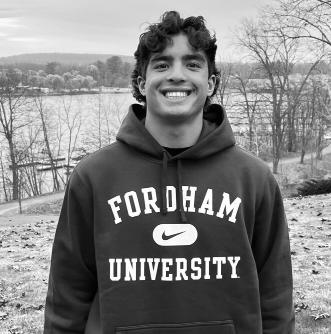
immersing himself in the sport and culture of swimming, he was able to better understand the courage and determination that were required to further his career in the water. As seen throughout his highschool swimming career, he broke records in the 100-yard breaststroke, the 200-medley relay and the 400-freestyle relay, respectively. When Sanchez decided to join the Fordham swim team he was worried about living up to the expectations of the accomplished Head Coach Tom Wilkens. However, Sanchez now credits Wilkens as one of the most caring and welcoming coaches he’s ever swam for, despite all his high school achievements. “He’s one of the most down-to-earth, caring, empathetic, coaches I’ve ever had the privilege to learn and swim under,” Sanchez said. For his first season, Sanchez successfully contributed to the team in many ways. Although the Rams went 3-7 over the season, Sanchez contributed by setting various best times, which was a display of his work ethic and efforts. In his 400-yard individual medley, he posted a time of 4:11 seconds and for his 200-yard breaststroke time, he posted a
time of 2:11 seconds.
One of his major breakout performances this year came during the Rams’ dual meet against The College of New Jersey Athletics, where he recorded an impressive 59.81 seconds in the 100-yard breaststroke and a 2:18.56 seed time in the 200-yard breaststroke. This contributed massively to a 155-139 victory over the Athletics.
As these milestones for Sanchez continued to pile up, he eventually became more well-known around campus and the metropolitan area as a phenomenon in the sport of swimming. However, even with all this success, Sanchez is just taking it one step at a time and enjoying the process.
Despite all his accolades and recognition he received, Sanchez is still undecided about what he wants to do next. He is majoring in international relations on a pre-law track, with future ambitions to apply to law school.
“For me, what I really want right now is to be the best I can be at Fordham and then move on up from there,” he said. “As both an honors and pre-law student, I hope to attend Columbia Law School in the future.”
Success can follow one anywhere in the world, and that same standard of rigor and determination can be the deciding factor in how one maneuvers in a different field. These ambitions are not exclusive to any one person, but Sanchez’s perspective is very unique. Given the fact that his father is a dual citizen of both the United States and the Philippines, Sanchez has given credence to the idea of swimming internationally and representing that country. “My father is from the Philippines and was born and raised in Manila, so a dream I have is that through my dual citizenship, possibly competing for them on a national stage,” he shared. Through a sustained effort and the community at Fordham University, Sanchez has been able to find a comfortable place. Although the Fordham Ram swim team is done for this season, it will be very interesting to see how they and Sanchez perform next season. However, for now, Sanchez is grateful to the people who believed in him and helped propel him to the man and place he is in today. It will be exciting to see where he goes from here and how he continues to contribute to the swim program!
By KATE HERBERT CONTRIBUTING WRITER
In 2006, the impact of the Disney Channel show “Hannah Montana” was fierce. It tore through the media and pop culture, making Miley Cyrus an overnight sensation and Disney star at just 13 years old. After decades of fame, Cyrus has finally embraced “Hannah Montana” again in her 20th “Hanniversary” special airing exclusively on Disney+.
To Cyrus’ fans, this special isn’t just a nostalgic flashback to childhood; it’s an understanding and appreciation of Cyrus’ journey to accept her role as Hannah Montana. The show ended in 2011 as Cyrus began adulthood and, determined to break out of her innocence, rejected the show entirely following its finale.
The 2000s were, in almost every sense, an era of extremes. Even seemingly minor changes, like dramatic haircuts or revealing fashion choices, could’ve resulted in social exile. In the 2010s, Cyrus was a social pariah for shaving her head and releasing a music video where she rode a wrecking ball following her Disney career.
As a way to thank the fans who stuck by her side over the last 20 years, Cyrus chose to create a special for the 20th anniversary as opposed to a concert or event that would be
too exclusive. The special was released on March 24, after a few months of promotion fashioned mainly by Cyrus herself. As she admits at the beginning of her special, “...if you want something to happen, promote it before it exists. Then no one can say no. So I just started promoting a ‘Hannah Montana’ 20th anniversary special that literally did not exist.”
The hour-long special was hosted by podcaster Alex Cooper, known for her podcast “Call Her Daddy,” in which she mainly engages in casual chats with celebrities. In the special, Cyrus calls Cooper “Hannah’s biggest fan,” claiming she probably remembers more about Hannah Montana than Cyrus does herself. However, there was a lot of backlash online from “Hannah Montana” fans about the choice to have Cooper interview on the special. Some fans called Cooper’s questions “shallow” and “underwhelming” as they rarely delved deeper than the surface about the show. Others simply found her annoying and unnecessary.
The special began with a performance of “Best of Both Worlds,” sung by Cyrus in front of a live audience. Shortly following was a recreation of the original intro to the show, then moving into Cooper and Cyrus’ interview in the original living room set. In accordance
with Cooper’s questions, the special shifted into various previously recorded moments on sets, with guests or Cyrus singing. In one moment, Cyrus goes back into the original “Hannah Montana” closet with her mom and recounts iconic moments from the series along with the fashion choices that went into Cyrus’ characters. A couple of special guests made appearances in the special, including Selena Gomez, who played an enemy of Hannah’s on the series, and Chappell Roan, who discussed their shared experiences with fame.
Other than Gomez and Billy Ray Cyrus, no additional original cast members appeared on the special. Many fans speculated the possible reasons why actors like Emily Osment, Mitchel Musso or Jason Earles, who played supporting roles in the show, weren’t present. The original cast quickly dispelled any circulating rumors of drama with public statements on social media, expressing warmth, gratitude and excitement for Cyrus’ special. Almost the entire original cast was present at the premiere supporting Cyrus, giving fans some of the reunion moments they were hoping for.
Whether it is what the fans wanted or not, the special was more about Cyrus’ experience and her
relationship with “Hannah Montana” and less of a reunion with the cast. It’s wonderful to watch someone
accept and appreciate their past self, and the 20th “Hanniversery” special is a celebration of exactly that.

By Estrella Pallarés Medina COLUMNIST
A stew in a bubbling kettle conjures up memories of yesteryear. Stew is comforting and gives you a sense of calmness when you eat it, thanks to its simplicity, while also nourishing yourself.
Regardless of how busy you are at work or if you just need meals prepared for you, you can’t go wrong with making a stew. Think about how easy it is to make a casserole from scratch. Casserole is made with potatoes and meat (ground or shredded) by putting the mixture into a baking dish, then pouring on eggs and baking it; it’s done when you get home from work! The same concept applies to making a stew: letting a cut of meat cook over low heat until it is fork-tender, then cooling it overnight before serving the next day.
This method of cooking is very easy, can be prepared however you like and will meet all of your nutritional needs. If you want to refuel your body for an entire week of classes or just want something good to eat, this is a great option.
Ingredients:
● The Protein: 1.5 lbs of
stew meat (cubed)
● The Base: 2 large carrots, sliced
● 1 medium onion, sliced
● 2 stalks of celery, chopped
● The Flavor Boost: 2 tablespoons tomato paste (or tomato sauce)
● Salt and pepper to taste
● Italian seasoning preferred (dried oregano, basil, rosemary and thyme) The Liquid:
● 1 tablespoon chicken powder
● Water (plus a splash for blending)
Optional Add-ins:
● Cubed potatoes
● Fresh parsley for garnish
● A splash of red wine
Preparation:
1. Cooking the Meat: In a large frying pan or Dutch oven, add enough oil to coat the bottom of the pan, then cook the protein, seasoning it with salt, pepper and any other seasonings you wish to include. Once cooked through and browned, remove from the pan.
2. Sautéing the Vegetables: In another frying pan, drizzle some oil, then add the carrots, onions and celery. Cook until the vegetables are soft and the onions are slightly translucent.
3. Making the Sauce:
Once you have sautéed the vegetables, add the tomato paste. Stir to coat the vegetables with the sauce.
4. Preparation: Blend the paste and sautéed vegetables. Add some liquid to help with blending until smooth and combined.
5. Cooking Meat with Veggies: Add blended veggies to a pan with the meat. Mix in enough chicken broth to cover the meat.
6. Final Phase: Reduce the heat to low. Cover and cook with the lid on until the meat is tender (approximately 1.5 to 2 hours, depending on the cut). When the meat is tender and the sauce is dark brown, remove from the heat.
Serving suggestions:
Serve as-is or enhance your dining experience by pairing this flavorful stew with any of the following suggestions:
● Breads: A warm baguette or piece of sourdough will soak up all of the flavorful broth in your stew, making it even better!
● Potatoes: For an even more indulgent “meat & potato” experience, add a generous portion of creamy mashed potatoes to the stew before serving.
● Salad: A light salad dressed
with a lemon vinaigrette will provide contrast to the stew’s heavier flavors, giving your
palate something that is going to be lighter as a counterpoint to the meal’s density.

8. Boys will be boys... and so will girls.
9. The beignets must have given them a Michelin star
10. Real ginger representation.
12. What do you call a romcom when the 'rom' is Stockholm syndrome?
1. Her story is anti-consent propaganda. 2. Shiny! 4. Narcolepsy
5. Girl, please get a haircut.
7. Her name and her body are tea.
11. Girl, stand up! Oh wait...
By MOLLY FRIEDMAN ASST. SPORTS EDITOR
We are roughly three weeks into the lengthy, rigorous MLB season, and this year has brought the long-awaited Automated Ball-Strike System (ABS). ABS is reshaping the modern game of baseball and reevaluating the importance of the different roles across the field.
ABS is intended to eliminate umpire bias by relying on computer-generated calls for strikes and balls. The system is structured to be used fairly and reasonably throughout a game, while not
fully excluding the umpire’s role. Each team has two ABS challenges, separate from preexisting play challenges. The team retains the challenge if the call is overturned, but loses it if the call stands. Only the batter, pitcher and catcher are allowed to challenge a pitch. The catch is that the player has roughly two seconds after the pitch to decide whether or not to challenge, and they may not consult coaches or teammates. If the player decides to go through with the challenge, they tap the top of their head to indicate a replay review. An automated system then reviews the pitch;
if the ball remotely touches the strike zone, the pitch is considered a strike.
The strike zone varies depending on the player’s height. According to MLB Savant, the Google Cloud Statcast system, “The top of the zone is set at 53.5% of a player’s measured height without cleats. The bottom is set at 27% of the player’s measured height.”
ABS has exposed the human error that umpires bring to the game. It is revolutionizing the game and leveling the playing field. Statistics from MLB Savant have shown that 54% of calls challenged are

By DEREK BEAULIEU CONTRIBUTING WRITER
With the MLB season officially underway, baseball fans once again partake in the decades-old traditions of repeatedly overreacting and watching day-ruining comebacks as their favorite baseball team loses just one game, or 0.6% of the season. However, if you can look beyond your favorite player wearing their first golden sombrero of the season and the bullpen continuously blowing three-run leads after the ace leaves the bump, you will see another issue arise that isn’t fan-based, but player-based: Is the season too long?
There are two ways to tackle this question: a fan’s perspective and a player’s perspective. Starting with the fans, if hardcore couch warriors were asked if they wanted to watch fewer baseball games a season, I’m sure there would be a riot outside of every ballpark, depending on the decrease, of course. On the other hand, newer, less experienced baseball fans likely wouldn’t object to a decrease, and they may actually like it. Fewer games means each game matters more, pushing the best players to not only play more, but to play with more energy and effort. This doesn’t mean less action, but better action: a classic
overturned by the system — that’s 474 incorrect calls just 15 games into the season. We have seen that the majority of challenges have come from batters and catchers, while pitchers have challenged only 19 calls so far. Catchers have shown a good eye for pitches, winning 62% of their challenges. The statistics show that batters are using the system to get themselves out of a jam; the percentage of challenges when the count is full or two strikes skyrockets.
While ABS is bringing a much-needed equalizer to the game, it devalues the role of a good catcher. We are left wondering how relevant framing is to the game anymore. A skilled catcher can convince the umpire that a pitch outside of the strike zone should be called a strike. Now, the catcher not only needs to deceive the umpire but also the batter and the pitcher when framing a pitch.
For the time being, catchers’ strongest contribution to the team is their ability to read a pitch and challenge it if the umpire is wrong. Their role isn’t becoming less demanding; rather, it’s evolving into a new set of skills. You could even argue that the catcher’s role has become increasingly vital, as they are effectively in charge of doling out this finite resource on behalf of the whole
quality-over-quantity situation.
From the player’s perspective, the same split rises. Every player loves the game, so most players would likely hate to see their favorite pastime get limited to a shorter season. However, with the increased level of injuries across all professional sports, the players who believe the battle to get through six or seven grueling months of baseball is the main cause of those injuries may push to shorten the season by quite a few games.
Let’s look at the NBA for help. While the association hasn’t shortened the season as many have advocated for, they have begun to shorten the number of back-to-backs that teams play, which are times where teams may have to travel from arena to arena and play games on back-toback days in different states.
While MLB doesn’t really have this option, with their season spanning from the end of March all the way through October, they could try to limit the amount of traveling coast-to-coast to limit player fatigue that way. Giving East Coast teams longer West Coast road trips (and vice versa) for fewer total trips cross-country would prevent players from constant trips. This wouldn’t shorten the season, giving diehard fans their 162 games and keeping the cash coming in for
the owners (a secret third perspective, how thrilling) while also preventing players from getting tired. Starting the season slightly earlier could also give teams the option for more off days. However, with the season having begun on March 25 this year, that option seems limited already. And don’t even think about November baseball, Derek Jeter fans.
One thing that I have purposefully overlooked so far is the playoffs. Many fans and players alike focus on the slog that is a 162-game regular season, but as that has stayed the same since the 1960s, the playoffs have not. The wild card was introduced during the 1995 season, allowing for more teams to make the playoffs in a one-game, winner-takeall matchup. This was extended to two wild card teams in 2012, and then extended once more to make the games a set of three. Extending the division series to seven games, similar to the championship series and the World Series, is also being discussed.
While I do believe that increasing the wild cards to three games makes sense, as the nature of baseball is dissimilar to football in that baseball teams are best designed to play more games and longer series, extending the division series does not have any increased benefit. Not only would it make teams
team.
With just two challenges per team per game, the system isn’t designed to be maximized by efficient deployment. Many teams have been adamant that they are looking for the best ratio between challenges and calls overturned, not simply the most challenges. Managers and coaching staff are having to reevaluate their coaching styles to fit into the new style of play.
As a fan, this has been a stark change in the MLB’s product in a variety of ways. I have found myself channeling less rage towards the umpire as radical calls are becoming less common. Rather, I am finding myself frustrated with my own team when they waste a scarce challenge on a seemingly clear call. The rhythm of the game has been thrown off by brief interruptions every inning or so to check the integrity of the pitch. While it feels like much of the game is happening behind the scenes, the fairness is bringing a new sense of tranquility to the fan experience.
We are all still getting used to this new style of play, and grace has to be given to all involved. As the season progresses, the application of ABS will become more seamless. Soon, we will forget what baseball was like before the introduction of the system.

play more games, but the increased adrenaline and intensity of the playoffs already push players to their physical and mental limits, and this change would turn that difficulty up past 11. I’m all for more playoff baseball (easily the best playoffs of the Big Four), but the risk of forcing the ace of pitching staffs to throw on short rest in three straight series, if needed, does not sound worth it.
Technological development, sports science and overall more healthy and active players have driven the enjoyment and success of the product that is baseball up miles from just a few decades ago. And that detail is the most important to remember when tinkering with the MLB season; ultimately, baseball is a business, and the thing we see is the product. If the product is good enough for fans to watch it 162 times, and even more
come playoffs, the owners of these incredible baseball teams will continue to produce all 162 times.
While the argument surrounding the length of the season being too long will likely never end, no changes will actually be made until the opinion (and money) of the fans sways too far in the wrong direction for ownership. Either that, or the players force a lockout, which is likely to come anyway with the discussion of a salary floor and/or cap, but that’s an entirely different bucket of worms that I frankly don’t have the time for. For now, you’ll catch me at Yankee Stadium whenever I can force another person to join me in the bleachers to get someone else’s drink spilled on me in the fifth inning. And to those still thinking about my Jeter comment, check who wrote the article you’re reading.
By ELEANOR COHEN CONTRIBUTING WRITER
Figure skating has exploded in popularity over the last couple of months, especially in the wake of Alysa Liu’s gold medal at the Olympics in February. She did the unthinkable: dominating over veteran Kaori Sakamoto, despite Liu herself only coming out of retirement less than two years prior. Ilia Malinin, despite failing to medal, has also started valuable conversations about athlete mental health, rule reform and the future of the sport as he continues to push the boundaries of his technical capabilities.
Pre-Olympic fans of the sport certainly look forward to the World Championships: it is the culmination of the competitive season, after all. But the resurgence of the sport has brought hundreds of thousands of new fans, so for the last week of March, all eyes were on Prague. Three of the reigning Olympic champions withdrew, which was bound to produce some interesting podium results at Worlds.
The World Championships are also exciting because there are more opportunities for skaters to win medals. Typically, skaters are awarded medals based on their total score from the two required programs: one short program (SP) and one long program/ free skate (FS). At Worlds (and other major competitions, but not the Olympics), skaters win “small” medals for placing in the top three in either the short or long program, independent of their final result.
Men’s singles is personally my favorite discipline of

skating despite its reputation as the most unpredictable discipline in the sport. The unexpected 2026 Olympic champion, Mikhail Shaidorov of Kazakhstan, withdrew from the World Championships shortly after winning at the Olympics — a common course of action for champions, who prefer to utilize their time post-win securing sponsorships and federal support rather than training for Worlds.
Unsurprisingly, Ilia Malinin left Prague with his third consecutive World Championship win. His programs are technically unbeatable — his ability to land all six kinds of quadruple jumps, one-footed backflips and his signature “Raspberry Twist” give him an edge over the entire field. As Malinin wrapped up his season with his third Worlds title, most people wondered: Does his third world title make up for losing at the Olympics or will it only cement his drive to continue fighting for Olympic gold in 2030?
The podium was rounded out by Yuma Kagiyama and Shun Sato, both from Japan, and the silver and bronze medalists
Each week, The Fordham Ram’s Sports section honors two athletes for their on-field performances as “Athletes of the Week.”
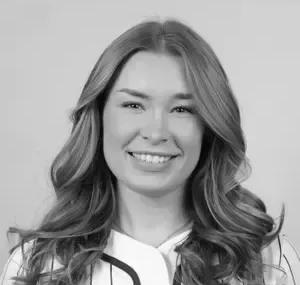

Junior Olivia Simcoe played an essential role in Fordham’s 5-2 victory over Manhattan University. Simcoe pitched 6 innings, allowing one run and walking one batter. She struck out five, totalling 105 pitches.
of the Olympics, respectively. Kagiyama rallied from a devastating mistake in the short program to skate one of the cleanest long programs of his career, adding another silver medal to his collection of 10 senior international silver medals. Sato showcased his commendable consistency, completing a career Bronze Slam to finish his season.
Some notable non-podium programs included Aleksandr Selevko SP, Adam Siao Him Fa SP and Stephen Gogolev SP and FS.
In women’s singles, it was time to say goodbye to a legend. Kaori Sakamoto announced last fall that she would be retiring at the end of this competitive season. Sakamoto, disappointed with her silver medal at the Milano Cortina Olympics, vowed to come to the World Championships looking for a satisfying end to her competitive career. Her short program “Time to Say Goodbye” and free skate “Hymne à l’amour” (“Hymn to Love”) ensured there wasn’t a single dry eye in the stadium, or in fans’ eyes at home. And with Olympic Champion
Alysa Liu absent, Sakamoto faced no major obstacles in her path towards victory.
Mone Chiba of Japan, who narrowly missed the Olympic podium, delivered a masterclass in skating skills and picked up the silver medal. Nina Pinzarrone of Belgium, a surprise bronze medalist, combined two flawless programs to win her first World Championship medal, showcasing that even as we lose the legendary Sakamoto, the future of women’s figure skating burns bright.
Some notable non-podium programs were Amber Glenn SP and Jia Shin FS.
If you’ve ever seen videos of figure skaters doing crazy stunts like throwing a woman 10 feet in the air as she spins three times, launching her across the ice or completing side-byside jumps, you were probably watching the nail-biting discipline of pairs skating.
With the absence of Japanese Olympic champions Riku Miura and Ryuichi Kihara, the remaining Olympic medalists were battling for a spot at the top of the podium. Most viewers thought the gold and silver medal spots were pretty set in stone — it was a toss-up between Germany’s Minerva Fabienne Hase and Nikita Volodin and Georgia’s Anastasiia Metelkina and Luka Berulava — and they were correct in their guess. The bronze spot, therefore, was up for grabs and ultimately clinched by Canadians Lia Pereira and Trent Michaud, who were seeking redemption after their unsatisfying performance at the Olympics.
If you have a moment, go check out a pairs program.
You’re guaranteed to have your mind blown!
The duos of Yuna Nagaoka and Sumitada Moriguchi FS as well as Maria Pavlova and Alexei Sviatchenko SP offered memorable non-podium programs. Finally, ice dance is probably the most controversial, political and misunderstood of the four disciplines. Prague was a refreshing change from that characterization, with one major exception.
Reigning Olympic champions Laurence Fournier Beaudry and Guillaume Cizeron of France were not a team until early 2025. Cizeron is a former Olympic champion ice dancer whose old partner quit the sport due to alleged abuse. Fournier Beaudry was partnerless before Cizeron because her former partner (and current significant other) was suspended for allegations of sexual assault. The team took home a contentious gold medal in Milan over the established American team of Madison Chock and Evan Bates, and won gold again in Prague.
Most fans chose to ignore their performances, scoring and medals in light of all the controversy that surrounds the team. Instead, they chose to focus on the numerous positive performances of the night: Canadians Piper Gilles and Paul Poirier, who took home silver in what is likely to be their final competition, and Americans Emilia Zingas and Vadym Kolesnik who broke onto the scene last year, becoming one of the few ice dance teams in history to medal at their debut World Championships when they won bronze in Prague.
Sophomore Anthony Grabu drove in five of Fordham’s 23 runs in the Ram’s win over Farleigh Dickinson University (FDU). The Rams shortstop went 4-4, hitting for the cycle and hitting a sacrifice fly.
By KURT SIPPEL STAFF WRITER
With the college basketball season having finally come to a close after the National Championship, transfer portal madness will now ensue. As soon as the final buzzer sounded in Indiana, players had the option to enter their names in the portal.
More than half of the 5,607 NCAA men’s college basketball players have put their names in the portal to try to play at a different university. The landscape of college basketball and college sports as a whole has completely changed as a result.
Name, Image and Likeness (NIL) was on its way no matter what happened. Schools were pulling in billions of dollars in revenue and TV rights money through the commercialization of college sports; it was only a matter of time until student-athletes saw some of that money.
This strategy proved successful this season as the University of Illinois’ roster featured five European-born basketball players. This was the first time in over 20 years that Illinois was able to make an appearance in the Final Four.
The increased recruitment of European players should be viewed as a positive; this is a way to grow the game even further. It helps expand the talent pool, create better competition and expand the excitement of college hoops.
But with the benefits that come from the new NIL age, there are always coaches who test the boundaries of recruiting and eligibility. One of these instances is the recruitment of G League players deciding to go back and play college ball after not getting drafted to the NBA.
Thierry Darlan started this trend after playing two years in the G League and then deciding to return to college at Santa Clara University. London Johnson, a player for the
But NIL has created a Wild West in recruiting that has never existed before this. One of the biggest examples of this is the large recruitment of European basketball players to the NCAA. There is now a large incentive for European players to leave their EuroLeague teams and jump ship to U.S. colleges.
University of Louisville and Abdullah Ahmed of Brigham Young University were also players from the G League that decided to go back and get reps in college.
The controversy arises when coaches and players try to test these boundaries. That happened this season when 21-year-old James Nnaji — an NBA draft pick — decided that he wanted to go to school. He was able to go to college and play because he never actually signed an NBA or G League contract.
This ruling frustrated many prominent college coaches as they were afraid of the precedent it might set when it comes to recruiting.
“Let me give you this, real simple: the rules bes the rules. If you put your name in the draft — I don’t care if you’re from Russia — and you stay in the draft, you can’t play college basketball,” said University of Arkansas Head Coach John Calipari in an interview.
The worst fear of the coaches and the NCAA would go on to be confirmed by Charles Bediako, a former Alabama basketball player who signed a
two-way contract with the San Antonio Spurs. He sued the NCAA for denying his request to come back to college and was able to get a temporary restraining order and rejoin the University of Alabama.
Bediako was only able to play five games with the University of Alabama before a judge blocked his request and his college career was over. But this case isn’t about Bediako or Alabama; it is about the precedent it might set for the future.
European players are allowed to sign professional contracts overseas and put their name in the draft and still remain college eligible. But when it comes to the U.S.-born players, there is a double standard.
This is how NCAA basketball becomes less about amateurs and high schoolers hoping to get a chance in the NBA and more about the politics of college sports. Now it is becoming a proxy professional league where teams with the most NIL funds can recruit the best, older talent with the most experience.
“There aren’t going to be any
high school kids. Who other than dumb people like me are going to recruit high school kids?” said Calipari concerning recruitment. “I’m going to keep doing it. But why would anybody else if you can get NBA players, G League players, guys that are 28 years old, guys from Europe?”
If the NCAA wants to keep its integrity, new and consistent regulations must be enforced on the transfer portal. Whether it is age limits or more regulations on playing in college when coming from professional leagues in Europe and the United States, changes need to be made.
No one can debate the value of NIL and how important it is for college athletes to be paid, as well as the good that has come from it. But looking deeper, the age of NIL has been chaotic so far in its implementation when it comes to recruiting. If the NCAA lays out a guide for coaches instead of relying on former precedent and lawsuits, the NIL age wouldn’t be filled with controversy, but rather excitement for how much college basketball has grown.
By GIANNA TETRO STAFF WRITER
In the sunny Bronx weather, there were flashes of late rallies, timely hits and momentous moments. But each time, the Virginia Commonwealth University (VCU) Rams found the bigger swing, longer inning and ultimately the final answer. By Sunday afternoon, a 7-6 loss sealed a three-game sweep over Fordham Rams Baseball at Houlihan Park, though the final score did not tell the full story.
Friday’s opener set the tone for the weekend, with Fordham showing resilience early and battling back to even the score after falling behind. VCU broke the deadlock with a decisive home run in the fifth inning, ultimately handing Fordham a 5-3 defeat. Even at that moment, freshman pitcher Caden Chavez’s pre-series message rang true. The Rams didn’t falter after mistakes; instead, they leaned into their identity. As Chavez explained, “making mistakes or even doing good things, we’re always supporting each other,” stressing that they “stick together through wins, [and] through losses.” Saturday proved more lopsided score-wise, but not for lack of effort. VCU controlled the game from the start, overwhelming Fordham with

a combination of consistent pitching and power hitting. Fordham managed just one run as VCU’s offense exploded for 13, including multiple home runs, turning the game into a blowout. For Fordham, it was a reminder of how quickly momentum can disappear when pitching and offense struggle to work together. Still, Chavez’s earlier framing of team balance, how “we may give up a few runs, but our offense will come back and help us out,” and vice versa, remained key for how the team viewed itself, even when neither side fully clicked.
The final game of the series was the closest Fordham
came to flipping the weekend completely. After three scoreless innings, VCU broke through with a five-run fourth that made Fordham chase. Fordham responded with urgency and persistence. The offense chipped away over the middle innings, slowly narrowing the gap and keeping the game alive, culminating in a dramatic ninth inning. Fordham, trailing by three, strung three base runners, sparked by a key walk, before a home run suddenly made it a one-run game. With the dugout coming alive, the pressure shifted, and for the first time all weekend, the sweep felt briefly uncertain.
Unfortunately, VCU’s bull
plan held firm, recording the final outs before Fordham could complete the comeback, securing a 7-6 win and the sweep of the weekend. It was the kind of moment that validated Chavez’s belief that even when it “may look like we’re weaker in this aspect or whatnot,” internally, “that’s not what it actually is.”
Sunday’s narrow loss indicated that the gap between pitching and offense is not as wide as the results might suggest.
In the aftermath, Fordham’s focus quickly shifted to making improvements. Freshman pitcher Mason Dean explained he would “watch some videos of swings that didn’t
produce results and plan to make corrections tomorrow,” demonstrating a willingness to learn rather than dwell on missed opportunities and mistakes. More importantly, Dean pointed to the team’s ability to reset, noting that as a team they have been “good at flushing losses and moving on to the next game.”
Despite the sweep, sophomore catcher Caden Young solidified the belief inside the locker room that has not wavered, noting that they “know how good [they] are” and believe strongly in their ability to “regroup from this.” That confidence is rooted in chemistry as much as talent, with such a “tight-knit squad” where players consistently have “each other’s back always.” Young also emphasized that the season is far from defined by just one series. “We have a lot of ballgames left and a lot of desire to win,” he said.
On paper, it was a clean VCU sweep, but within those numbers sits a far more complex story: one that showcases late rallies and a team that continues to respond even when the margin is wide. From Friday’s competitive opener, to Saturday’s struggles against VCU, to Sunday’s near comeback, the Rams showed a consistent identity of never folding.
By JOE HENRY ASST. SPORTS EDITOR EMERITUS
Remember what you were doing on March 8? Me neither.
One month and seven days — that’s how long it’s been since Fordham Women’s Tennis last dropped a point in a match.
During that span, they’ve played eight times, won eight times and swept eight times.
In fact, since that March 8 loss to Army West Point, the Rams are a combined 41-0. It’s statistically the most dominant stretch in program history, dating back to records from 2006.
While this marks the third straight season in which the Maroon have mounted a winning streak of exactly eight matches, the extent of the Rams’ 2026 dominance is unparalleled.
Since the 2006 season, Fordham’s longest streak of team points came via consecutive sweep victories was 32, achieved during an impressive program-record 16-match winstreak in 2017 — somehow, still a ways away from 41 and counting.
Within the eight-match streak, dropping a set has been a rare occasion. Across 97 completed sets during the streak, Fordham has won 88.
Part of the team’s success — which comes after a 3-8 start to the non-conference
season — is the sudden sunny conditions beaming down on the Hawthorn/Rooney Tennis Courts at Rose Hill. The team is amid a six-match homestand to close out the season, and celebrated two more sweeps in style over the weekend.
Saturday’s 4-0 domination of Atlantic 10 (A-10) rival Davidson College was Student Appreciation Day; fans were treated to a pregame reception, free pizza and a swift Rams win.
Sunday’s 4-0 finish against Stony Brook University was Senior Day, with a pregame ceremony for soon-to-begraduates Sofie Siem and Nevena Kolarevic — they each capped off the occasion with wins.
Kolarevic, a senior from Belgrade, Serbia, in her second year with Fordham, has established herself as one of the greatest performers in program history. After going 25-3 in singles and winning A-10 Performer of the Year last season, the captain is aiming to lead the Maroon to their second conference title.
Siem, the team’s lone fouryear player, has spent four years at Rose Hill after growing up in Stabekk, Norway. If the Rams do capture that second championship this year, she’d be the only Fordham player to ever win two titles.
On Saturday, it was the underclassmen who kicked things off with doubles wins. Before Kolarevic and junior Julianne Nguyen could finish off their opponents at court No. 1, sophomores Catalina Padilla and Paola Dalmonico took a 6-3 win at No. 3, clinching the doubles point with a 6-2 win from junior Lily Chitambar and freshman Valerija Kargina.
At singles, each Ram held an advantage in their match by the time the team got its three wins needed to clinch a 4-0 finish. Chitambar took care of business the fastest, posting a 6-2, 6-2 win at No. 5.
Kargina carried over the tandems’ doubles success, too, taking a 6-4, 6-1 finish at No. 3. Kolarevic got on the board to earn the Rams the win, taking the No. 1 matchup, 6-2, 6-3.
Kolarevic was load-managed by Head Coach Mike Sowter during the win streak, with the match marking her first appearance at No. 1 singles since March 11.
On Sunday’s Senior Day, Kolarevic and Siem were honored with bouquets of flowers, framed pictures and decorated posters. Michael Nock, the senior co-president of Fordham Club Tennis and the varsity team’s director of operations, was honored as well.
Kolarevic started her Senior Day with a win, breezing to a
6-2 triumph alongside Nguyen at No. 1 doubles. From there, Siem got in on the action.
Teaming up with freshman Isabella Aguiar, Siem clinched the doubles point with a 6-4 win at the third court. After the break, Fordham clinched another 4-0 result by sweeping on the first three courts in singles.
Dalmonico swept the second set at No. 2 to earn the team’s first point after battling to a 7-5 win in set one. Kargina continued her perfect weekend with a hotly contested 6-3, 7-5 victory at No. 3. Kolarevic won the match’s final point for a second straight day, nabbing a 6-4, 6-3 win at No. 1 to extend the team’s streak of sweeps to eight. Fordham serves to benefit not just from its wins but also from its brevity. By clinching so many 4-0 wins, the team hasn’t exhausted itself to the extent of its A-10 competition. With the A-10 Championships posing a test of endurance — the champion has to play three matches in three days — Fordham has a chance to be the best-rested team headed to Orlando, Florida, for the tournament in late April.
The Rams close out the regular season this Saturday at noon on Rose Hill against the 11-9 University of Rhode Island. With a win, Fordham could finish its second consecutive undefeated A-10 regular season.
By KURT SIPPEL STAFF WRITER
After 17 months of deliberation between the Women’s National Basketball Players Association (WNBPA) and the WNBA, an agreement has finally been reached. This new agreement will help players secure contracts that finally reflect the growth of the league and include better revenue splits, helping them earn more money.
This agreement is a massive stepping stone for the WNBA and its players. At one point, a lockout seemed imminent. Now the 30th anniversary of the league will tip off on time without any issue.
Contracts will rise from $120,000 dollars on average to $600,000. The revenue split has jumped from just 9.3% to 20%, allowing for rising contracts.
On top of that, first-year players contracts are going to start reflecting their values. First overall pick Paige Bueckers, who last year was only making $78,831, is now projected to be making just over $500,000 annually.
The agreement has many new provisions, including one that the league has dubbed the “EPIC” (Exceptional Performance on Initial Contract). Players will now be able to renegotiate the fourth year of their deal if they were previously named All-WNBA first team or second team, or the supermax if
they won an MVP award in the past.
As the season starts, there are more than 100 players who will enter unrestricted free agency. The New York Liberty are in for an especially interesting season as they have multiple All-WNBA team members and MVPs who will become free agents.
Sabrina Ionescu, as well as Jonquel Jones and Breanna Stewart, were the cornerstones of the Liberty’s championship squad in 2024. Now they are all eligible for the league’s new max contract, which has increased to $1.4 million. The salary cap will rise alongside it to $7 million.
While contracts are one of the biggest parts of the CBA negotiations, other key issues were addressed as well. The coring rule, which allows teams to designate one unrestricted free agent per season as a “core player,” granting them exclusive negotiating rights to retain talent, was altered. If a player has been in the league for over seven years, they can no longer be cored starting in 2027.
Another major talking point all throughout last year’s season was roster size. Teams are now required to contain 12 players instead of last year’s optioned 11. Teams can also have two developmental players whose salaries won’t count towards the cap. Chartered flights have been officially codified into the league’s CBA after
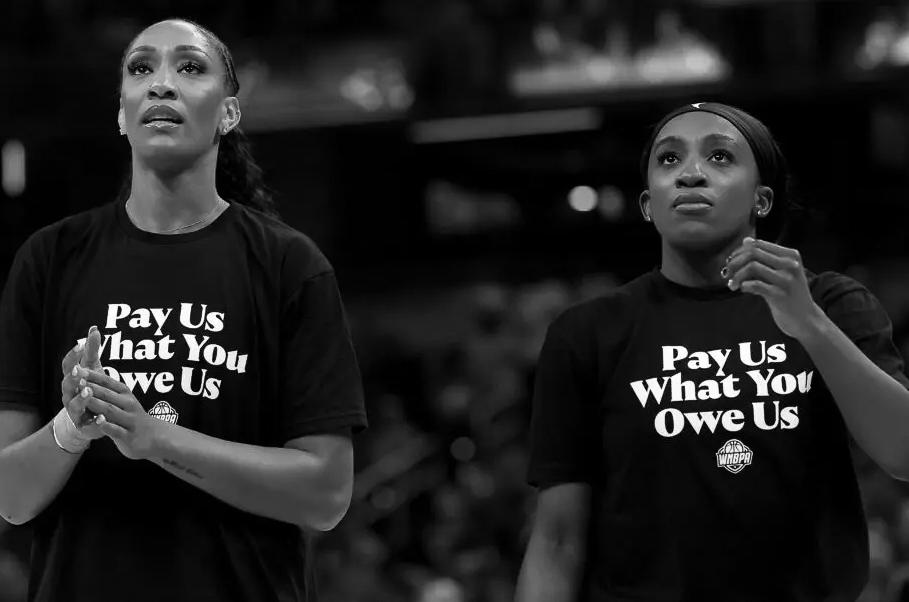
two years of requiring them independently of the CBA. The league will now have to provide housing for players making under $500,000 over the next three seasons.
For fans, there will now be more games to watch starting in 2026. The schedule will expand to 50 games from last season’s 44, and in 2029, it will expand to 52. By then, the league will expand, bringing it to 17 teams.
While the CBA still has to be ratified by the players as well as the Board of Governors, this is a massive step for the league that shows how much influence it has gained as the popularity of women’s sports
continues to grow.
“This Collective Bargaining Agreement represents a defining moment in the WNBA’s 30-year history and all of women’s professional sports,” said WNBA Commissioner Cathy Engelbert. “Since its inception, the WNBA has been shaped by extraordinary athletes who believed in the league’s future. The agreement is a testament to that belief and to the tremendous progress we have achieved together.”
This is only the beginning for the WNBA and its players. Last season, the league had the most viewership in its entire history. The players’
voices are starting to be heard and their concerns taken seriously because without them this league could not succeed. This is not only a win for the WNBA, but a win for other women’s sports. On March 16, the largest deal in women’s soccer history was signed by National Women’s Soccer League star Catarina Macari. Her deal was worth $8 million and all of that money is guaranteed. This highlights the shift in popularity for women’s sports around the country. This CBA agreement is a statement to all that women’s sports are here to stay, and their popularity is only going to keep on growing.
By ETHAN BESS ASST. SPORTS EDITOR
LeBron James is undoubtedly one of the most wellknown athletes and people on the planet; comparable to any great athlete you can think of, be that Michael Jordan, Mike Tyson, Lionel Messi, etc. There has been a lot of discussion about where he ranks among the greatest basketball players of all time. Some have him at the top, while others tend to have him in the top five or three. It depends on who you talk to and how they evaluate the legacies of basketball players. But with this type of greatness, it’s inevitable that the day will eventually come when James hangs up his shoes and calls it a career. James has been playing in the NBA for 23 seasons, having first entered the league in 2003. While he is still performing at a high level, there are conversations surrounding the possibility of his retirement.
James has hinted that he may retire after the 2025-26 NBA season. The 41-year-old’s 2-year $101 million contract, signed at the end of the 2023-24 season, expires after this year. The many theories surrounding James’ retirement are generally assumptions grounded in statements given by the NBA and James’ PR team.
However, it should serve as no surprise that LeBron James’ retirement would have dramatic implications for the NBA and the sports world. He has been the face of the NBA the better part of 20 years. For the NBA to see its main star retire in the midst of stagnant
ratings, the league would be in a state of disarray.
That’s not to say that there aren’t current stars who can handle the load of being the face of the NBA, but they aren’t close to James’ level. While the NBA would not go completely under, it would be forced to pivot into a new era and elevate rising stars such as Anthony Edwards and Shai Gilgeous-Alexander.
While the NBA is a multibillion-dollar organization that can offset losses, it’s likely that another superstar will fill the void left by LeBron James once he retires. This includes Nikola Jokić, Luka Dončić, Cooper Flag, Victor Wembenyama and
others. These young stars have shown great potential, with the exception of Nikola Jokić — not because he’s not a superstar, but rather because he has already established himself as a dominant force within the NBA. As a three-time MVP with an NBA finals victory, we can see he’s a force within the sport. Others, such as Anthony Edwards and Wembanyama, aren’t as accomplished yet and have only been in the NBA for a few years. These types of players must be given the chance to prove themselves before they obtain the “face of the league” moniker. Because of this, there will be a significant battle for the crown once
Let us return now to the possibility of LeBron James retiring. According to Oddschecker, there is a 33% chance that James retires after the 2025-26 NBA season. Although I am not the biggest James fan in the world, I respect the man for what he has done for the game and it would be a hard day for the sport of basketball, and sports in general, if he were to leave the NBA. He’s shown what greatness on the basketball court can look like and is as close to perfection as you can get from an NBA player.
The only thing that has ever caused a stir within his career was “the decision.” This was the
decision in which James decided that he would leave the Cleveland Cavaliers to join the Miami Heat. While some have argued that this formed the concept of modern-day superteams within the NBA, I would disagree, arguing that there have always been superteams of that caliber. Prominent examples include the Boston Celtics with Larry Bird in the ’80s and Michael Jordan’s Chicago Bulls in the ’90s.
It’s very likely that James will retire after this year. With all due respect, I believe that he will. He is still performing at a high level, even at the age of 41, but there’s only so much that your body can handle before you need to step down.