Professor Katrin KogmanAppel, Ph.D., of the University of Münster delivered the first lecture in a multi-part lecture series on Feb. 25, presenting “The Book and the Seder: Medieval Evidence of Passover Rituals.” The threepart Distinguished Lecturer series, which is being held by the Fordham University Center for Jewish Studies, explores the evolution of one of Judaism’s ritual texts.
KerryAnn O’Meara to Replace Provost Jacobs Jewish Studies Hosts Lecture on Haggadot
Kogman-Appel, a leading figure on medieval Hebrew illuminated manuscripts and various early printed books, has spent decades studying Jewish book culture. Much of her scholarship focuses on the Haggadah, the text used during the Passover Seder to recount the biblical Exodus from Egypt. While many Jewish families continue to use the Haggadah today, KogmanAppel’s research reveals that its historical development was far from static.
“The more I get to know this field, the more I realize that there remain numerous questions open,” she said.
The series, which is being led by Kogman-Appel, which covered her nearly-completed research project, examines how the Haggadah emerged as a distinct book type around the 14th century and how its design, imagery and function shifted during the transition from manuscript to print culture.
Aside from its primary topic, this lecture series highlights Fordham’s own resources. In addition to the lectures, Kogman-Appel led a workshop using 17thcentury printed books and some high-quality facsimiles of the medieval manuscripts from the Fordham’s Special Collections.
Passover centers on the ritual meal known as the
SEE HAGGADOT, PAGE 4
By SIDNEY BLASCO FEATURES EDITOR
KerryAnn O’Meara will be assuming the role of provost and senior vice president of Student Affairs for Fordham University, effective in July.
O’Meara will be replacing current Provost and Senior Vice President for Academic Affairs Dennis C. Jacobs, who has been serving as Fordham’s “Chief Academic
Officer” since 2019.
“It is my job [and] responsibility to ensure that Fordham fulfills its mission of offering all the academic programs that it offers, of hiring the deans and the faculty, and ensuring that we deliver on the promise of Fordham education for every undergraduate and graduate student,” Jacobs said.
Jacobs said he was not on the search committee or hiring committee for the
new provost, and that it is University President Tania Tetlow’s decision, which he said is common practice in higher education.
O’Meara graduated from Loyola University Maryland in 1993 with a bachelor’s in English literature. She then received her Master’s in studying higher education administration from Ohio State University, and later,
SEE PROVOST, PAGE 4
A Walk Through of the University Health Center
By SIDNEY BLASCO FEATURES EDITOR
Sour punch straws and lollipops, Vogue magazines and mandatory face masks await students who frequent
the health center. Down the unassuming stairs in O’Hare Hall right before the bookstore entrance, the Rose Hill Health Center is easy to miss for those not familiar with the campus.
The Health Center is run by four nurse practitioners and one registered nurse, with eight additional nurse practitioners on part-time duty, rotating daily. Director of the Health Center Maureen Keown said they try to keep at least four providers on site every day to keep up with the number of patients that walk into their office.
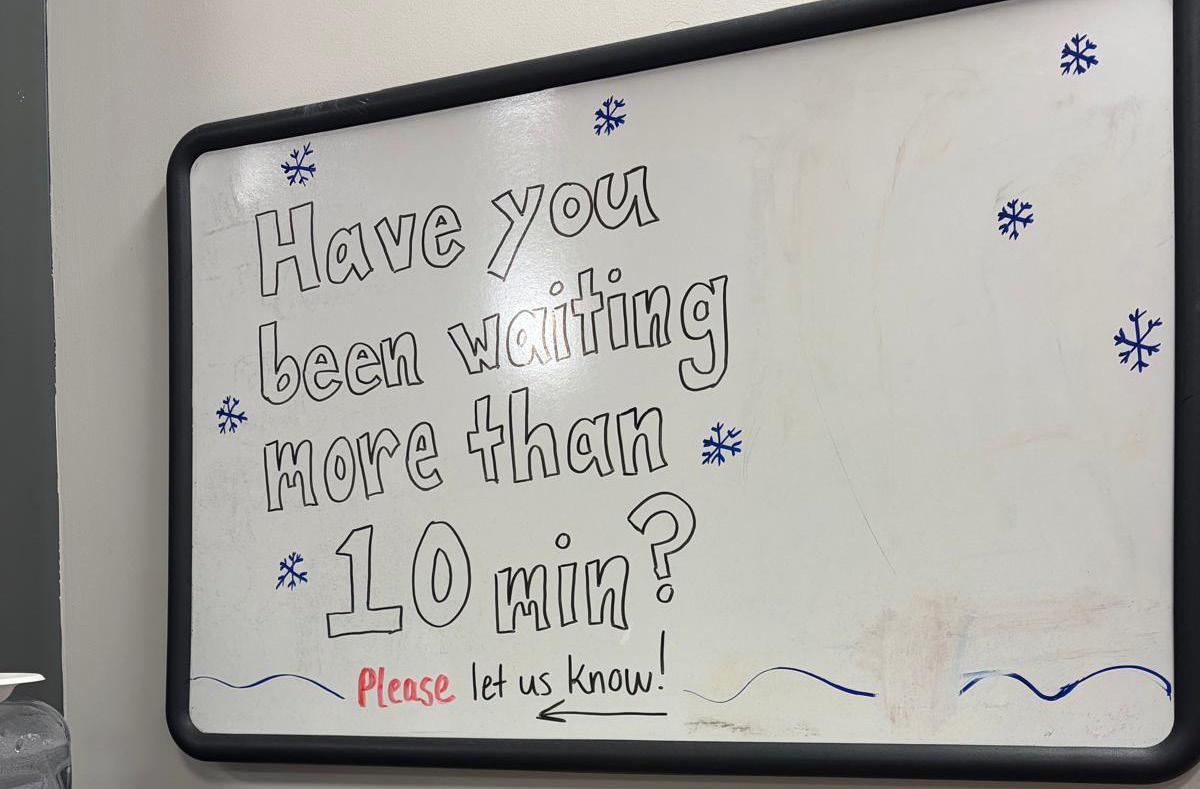
The Health Center sees students who come in for medical reasons. But before they are seen, they must sit in the waiting room for a nurse to be available. Some students say they have had to wait just five minutes to be seen by a staff member, while others say they have had to wait over an hour.
SEE HEALTH, PAGE 5
Massaro
and Bush Discuss
the “View from the Pew”
By EMMA LEONARDI NEWS EDITOR
The Laurence J. McGinley Chair in Religion and Society
Thomas Massaro, S.J., just presented a lecture focused on secularization and the role of religion in society on Feb. 25. The lecture was followed by a brief response by associate professor of sociology and anthropology Evelyn Bush, Ph.D. Massaro began his McGinley lecture by discussing Émile Durkheim’s reductionistic view of religion, Sigmund Freud’s view of religion as an illusion and also Peter Berger’s role of the Protestant Reformation in secularization. Massaro then identified the Protestant Reformation alongside the rise of modern nation states and the scientific revolution as major developments in the process of secularization within society.
Massaro also noted Jose Casanova’s “Public Religions of the Modern World” when countering the secularization theory. He then explored the idea of resurgence of religious influence in global politics, such as Roman Catholicism, Islamic activism, the Hindu nationalism and Evangelical Christianity, and how the desecularization of the world has implications for religious leaders and institutions.
Massaro also then explained the ideas as presented in Charles Taylor’s “A Secular Age” by sharing the focus on its subjective aspects of modernization and the human condition and how this shift from a Godcentered understanding to a humanist one affects the social concept of religion. In terms of the decline of religion, Massaro noted the introduction and increased popularization of “spiritual, but not religious” individuals.
SEE MCGINLEY, PAGE 5
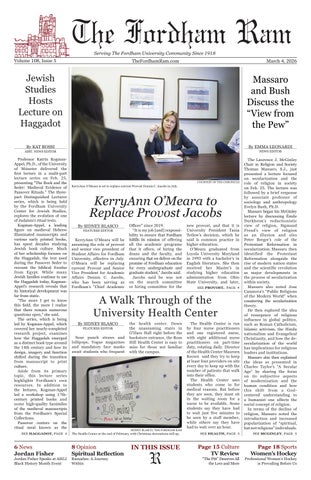
KerryAnn O’Meara is set to replace current Provost Dennis C. Jacobs in July.
The Health Center at the end of February, with Christmas decorations still up.
SIDNEY BLASCO/ THE FORDHAM RAM
COURTESY OF THE CHRONICLE
Off-Campus Feb. 25
1:30 p.m.
On Wednesday, Feb. 25, at 1:30 p.m., a student reported the loss of their cell phone. The supervisor responded and used the student’s Find My application. The phone was located at 191st Street and Bathgate Avenue. The supervisor reviewed the video. The student got out of a rideshare and entered campus. Shortly afterward two snow plows cleared the area. The phone was not located.
Off-Campus Feb. 25
7:10 p.m.
On Wednesday, Feb. 25, at 7:10 p.m., a student reported someone broke the window of their car, which was parked on Southern Boulevard. The supervisor responded. The student said at 11:42 a.m. they parked their car 20 feet south of the Southern Boulevard entrance to the university. When they returned they discovered the window was broken and property was removed. The supervisor called the NYPD to respond and prepare a report. A review of the video did not identify an offender.
John Mulcahy Hall March 2
8 p.m.
On Monday, March 2, at 5:24 p.m., there was a stuck occupied elevator in John Mulcahy Hall. The supervisor responded and contacted the elevator company. An estimated time of arrival could not be provided. The supervisor contacted the New York City Fire Department to respond and free the occupants. A technician responded and inspected the elevator.
Editors’ note:
The Ram Executive Board elected to remove an article published in Issue 4 titled “Fordham Ph.D. Student Takes Over BAAHP” from our website due to the misleading headline and an angle that did not accurately represent the organization.
Follow The Fordham Ram on Instagram, Facebook, Tiktok and X
@TheFordhamRam
This Week at Fordham PUBLIC SAFETY BRIEFS
Wednesday March 4
Black Sheep Poetry Open Mic
Black Box Theatre 7 p.m.
Join Fordham Experimental Theatre in collaboration with Ampersand for a poetry open mic night. Read a poem, sing a song or just hang out!
Students React to University’s Response to Snowstorms
By KAT ROSSI ASST. NEWS EDITOR
As March begins, New York City has experienced two snowstorms, resulting in a total of three days of remote classes for Fordham University students.
The first storm brought over a foot of snow between Jan. 25 and 26, resulting in in-person classes being canceled for Fordham students on Jan. 26. Operations at Fordham’s Rose Hill and Lincoln Center campuses continued through the storm with some modifications to dining hours. However, the Ram Van transportation service was paused for both days.
On Sunday, Feb. 22, and Monday, Feb. 23, in less than 24 hours, a blizzard covered New York City in more than two feet of snow in some areas, eliciting a state of emergency that banned road travel for non-essential workers on the night of Feb. 22.
Fordham’s department of Public Safety sent out an initial campus-wide email on Feb. 21 canceling in-person classes and limiting on-campus operations on that Monday. Another email was sent out on Monday afternoon canceling classes and limiting on-campus
Saturday March 7
Men’ s Basketball Game
Rose Hill Gymnasium 12 p.m.
University of Rhode Island is playing against Fordham this Thursday for the Senior Day game. This is the last game of the 25-26 season. Let’s go Ram’s!
operations for Tuesday, Feb. 24. In the campus-wide email that was sent out, as with the previous storm, the university noted that professors would be allowed to proceed with their classes as they see fit, whether through Zoom, asynchronous work or complete cancellation.
Some students say they believe the university gave sufficient warning about the storm, on how to handle the storm and direction as to what facilities would be open during that time.
“I was at home [that] weekend, and all the snow made it harder for me to return to Fordham since the trains ran on a reduced schedule,” said Sarah Maitland, FCRH ’27, referencing the blizzard. “If classes were not canceled Tuesday, I would have had to skip them since the conditions were scary to drive in.”
However, others felt as though the forewarning of the university was not enough, and that they should have cancelled classes in advance of the coming week.
“I believe the health and safety response email they put out was fine,” said Juni Macmanus, FCRH ’29. “I wish they had more common sense and forward-thinking enough to do stuff like cancel classes and services for the next two
Sunday March 15
Residence Halls Reopen
Rose Hill 10 a.m.
Welcome back to campus! Fordham will reopen on March 15 and students can enter their resident halls beginning at 10 a.m.
days instead of just the one because obviously the storm would last that long.”
Kat McTammany, FCRH ’26, expressed dissatisfaction over the university’s closure due to lost hours at their job at the Ram Van.
“I lost all 12 hours of work this week due to the snowstorms, so my next paycheck is when it’s really going to hit,” said McTammany.
The pivot to remote instruction at the discretion of each individual professor received mixed reactions from students.
Some appreciated the flexibility, believing that virtual lectures minimized lost instructional time and, more importantly, prevented having to make up that lost time later in the semester. But, with that, students were divided as to whether the university ought to have actually canceled classes with no online option. Maitland expressed that the time in class now is preferable to more time in the spring.
“Honestly … I would rather not have to make up classes in the spring if we miss a lot during winter,” Maitland said.
McTammany, though, reported diminished concentration and other difficulties in their online classes.
“I don’t learn well on Zoom,
Monday March 16
The Ram Copy Editing
McShane, B-52 5:30-9 p.m.
Learn how to copy edit articles for The Ram! No experience is needed and Pugley’s pizza is provided. It's great experience and looks good on your resume!
and I don’t know anyone who does … Treating snow like it’s not interrupting everything just because we have ‘digital alternatives’ is [a terrible idea],” McTammany said. “I feel like there’s an unrealistic expectation that a snow day means you have extra time to do your work since you’re trapped inside, but really, nothing demotivates me more than having my routines interrupted and getting stuck at home.”
There were also differences in snow removal. While snow removal on campus prioritized student traffic, snow removal off campus in locations such as Fordham Road and Belmont, focused on ensuring that automotive traffic moves. However, on street corners, there were piles of snow, and to cross the street students had to climb over them.
“I have had to walk through slush and over piles of snow up to my waist at certain intersections on Fordham Road because the crosswalk entrances to the sidewalk were never cleared [or got plowed over],” McTammany said.
No significant amount of snow beyond wintery mixes has been forecasted for the rest of the season.
Tuesday March 17
St. Patrick’s Day Parade
Harvard Club of NYC 9:30 - 3 p.m.
Fordham students are invited to have brunch with President Tetlow and march up 5th Ave in the St. Patty's day parade. Registration required.
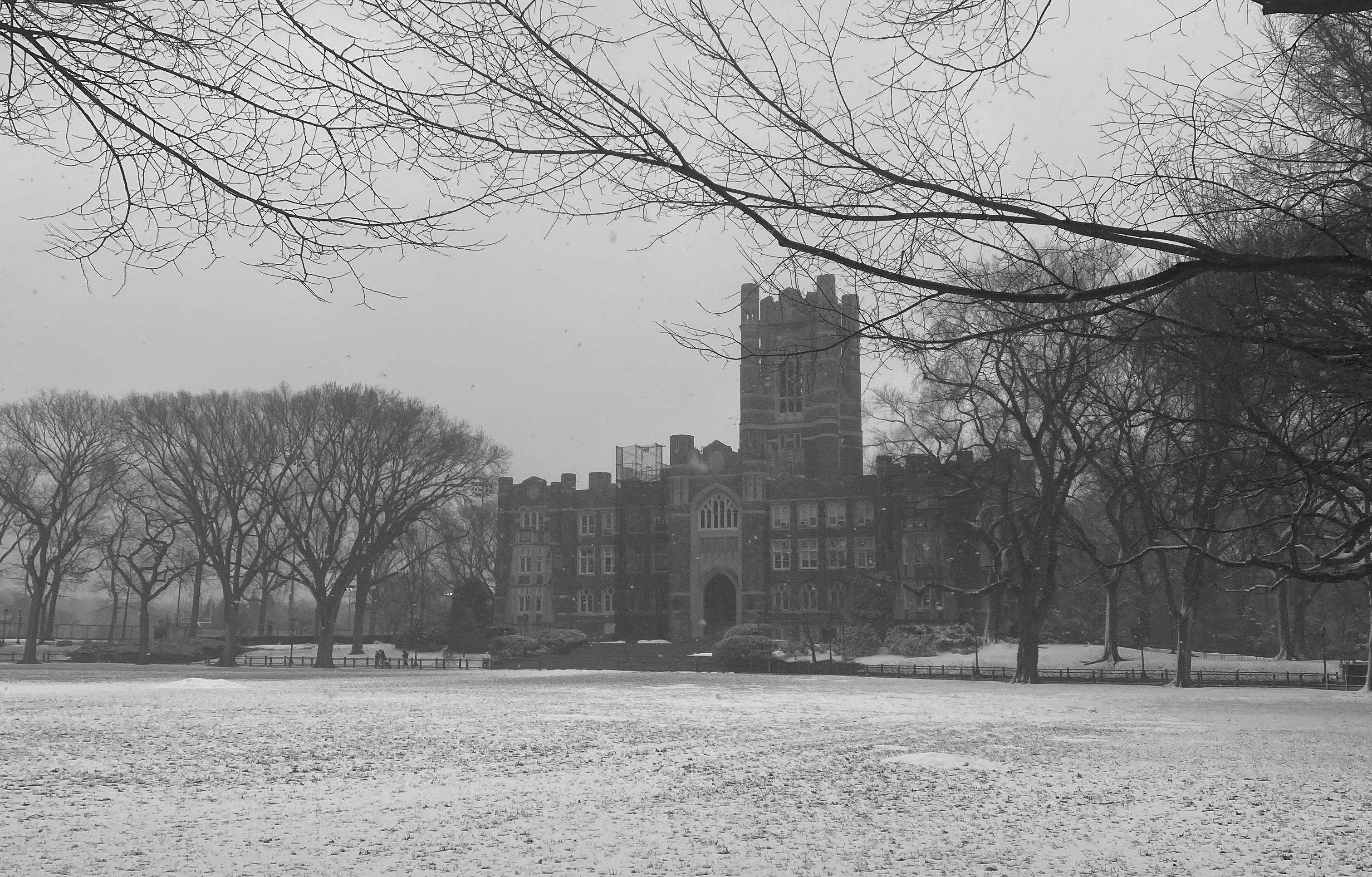
Edwards Parade and Keating Hall had minimal snow before being covered in almost two-feet on Feb. 22 and 23.
KAT ROSSI/THE FORDHAM RAM
Fordham Hires Inaugural AVP of AI
& SIDNEY BLASCO
Chalapathy Neti, Ph.D., was recently named as Fordham University’s new inaugural assistant vice president (AVP) of Enterprise Artificial Intelligence (AI), effective Feb. 9.
In this role, Neti will be responsible for developing a university-wide strategy concerning the use of AI, establishing frameworks regarding AI governance and the implementation of AI-related policies across campus.
“Our goal of designing practical AI applications focuses on optimizing experiences to best serve our community of students, faculty, and staff,” Neti said in an email statement to The Ram. “This strategic approach uses the Jesuit view of cura personalis as a lens to implement AI across the student experience.”
According to Vice President and Chief Information Officer Anand Padmanabhan, this AI strategy will move Fordham toward unified AI strategies.
“Our priorities include establishing a formal governance framework, auditing current projects for scalability, and engaging with campus stakeholders to identify high-impact opportunities that will shape our long-term AI roadmap,” said
Padmanabhan in his email.
Padmanabhan additionally emphasized the importance of preparing students for rapidly evolving emerging technologies.
“We also want to empower students with AI literacy and skills as they enter the workforce after graduation, and leverage AI’s ability to improve workflows while keeping ‘humans in the loop,’”
Padmanabhan said.
Neti has a Bachelor of Science in electrical engineering from the Indian Institute of Technology. He later received a Master’s degree in electrical engineering from Washington State University and then a Ph.D. from Johns Hopkins University.
Neti has 14 years of industry experience at International Business Machines (IBM), where he worked on implementing Watson AI, a data analytics processor, in the healthcare industry. His division ultimately became IBM Watson Health and was sold off in 2022 for over $1 billion.
Neti then helped expand the use of Watson AI in education, where he served as IBM’s director of Education Transformation.
After leaving IBM in 2020, Neti worked at SWIFT, a global interbank messaging company, where he helped outline an AI
innovation strategy through the company’s AI Center of Excellence, focusing on responsible AI use, while simultaneously working on fraud prevention in the company.
Neti said that his past experiences will aid him in his new position at Fordham.
“Having a wide variety of experiences provides a strong foundation for stepping into the complex role of navigating AI in higher education,” Neti said.
He said his experience with AI and technological solutions in various industries has given him a “solution-first” mindset, which he will bring to Fordham.
“I have spent years building solutions that bridge the gap
between complex theory and industry transformation, and will bring this experience to Fordham as we strive to utilize AI to improve all aspects of the student experience,” Neti said.
In addition to appointing Neti to his current position, Fordham has implemented other AI usage programs on campus. In the spring of 2025, the university announced it would join the AI Alliance, an organization focused on furthering responsible innovation in AI that was jointly created by Meta and IBM.
Fordham’s AI Alliance membership allows students and faculty to collaborate with other community members on larger AI-related initiatives.
Fordham alumni have also pledged financial support for AI programs at Fordham. Peter Zangari, FCRH ’89, and Jennifer Zangari recently donated $1 million through the Zangari fund for AI research.
“[The fund] not only will benefit the faculty, but also the students,” Zangari said in a Fordham Now article.
According to the Fordham Now article, “the Zangari Family Faculty Research and Innovation Fund will support faculty AI research projects, some of which will involve students as well.”
Since the rise in AI usage, Fordham has created several AI initiatives, and hiring Neti as the AVP of Enterprise AI was just one of them.
USG Meets to Approve Internal Budget Requests
By EMMA LEONARDI NEWS EDITOR
The Fordham University United Student Government (USG) held their weekly meeting on Feb. 26 to approve budget requests, hear a new club proposal and listen to executive board, committee and senate updates.
The meeting began with several internal budget requests. Vice President of Facilities and Dining Madeleine Ando, FCRH ’27, requested funding for a tabling event. Ando also presented a conjoined request with Vice President of Sustainability Ayden Johnson, FCRH ’27, for cat houses. The pair came up with the idea to buy cat houses for students to paint during an upcoming event that can be placed around the Rose Hill campus to provide stray campus cats shelter during the cold winter months.
Senator Carter Soderberg, FCRH ’27, raised concerns about raccoons and rats using the cat houses. Ando assured him and the senate that there are people who will be in charge of checking in on and maintaining the cat houses. Ando and Johnson also presented a request for funding to get petri dishes and swabbing supplies, as
they will be conducting a survey of RamFit, the Rose Hill fitness center, to see if the wipes currently being used to sanitize the machines are working effectively. The pair also floated the idea of using reusable rags and sprayable sanitizers to clean the machines, but those items were not included in this budget request.
The class of 2029 senate requested funding to buy donuts for their tabling event.
The USG Diversity Action Coalition (DAC) requested funding for an event in collaboration with the Women’s Empowerment club for four cheese pizzas.
Finally, the Committee on Sexual Misconduct (CSM) requested money to buy supplies to donate to the local women’s shelter.
All of the budget requests were approved.
USG also elected the February Club of the Month. There were no online submissions, so each senate class and the executive board nominated clubs for the award. Smart Women’s Security was nominated and received six votes, Asian Cultural Exchange was nominated and received four votes, Mixed Martial Arts was nominated and received three votes and the Black Student Alliance
(ASILI) was nominated and received nine votes. Smart Women’s Security and ASILI had the most votes initially, so they moved on to the final round of voting. ASILI won the award and was elected the February Club of the Month.
The executive board then presented their committee updates.
Vice President of Operations Tina Pathak, FCRH ’28, was unable to attend the meeting, so Senator Elijah George, GSB ’29, shared the operations committee updates to the senate. George noted that the new club form has closed and that the committee aims to wrap up new club presentations by the end of March.
For a brief break in executive board updates, there was a new club presentation. The proposed club, Steeped Stories Cafe (SSC), sent in a video to USG as they weren’t able to make the meeting in person. The purpose of SSC is to provide an inviting space for student connection over various activities, and to take a structured break from external stressors.
The first three club meetings would involve a mission session, where SSC would go over the aim to help students in taking care of their mental health and provide space
for community. The second meeting would be a policy overview, where the club would go over guidelines, such as no phone usage while in session. The third proposed meeting would be an input session, where members would have a chance to add their suggestions to the club.
For proposed events, the club suggested a matcha making meeting, a reading day and a painting day.
In presenting why their club is different, SSC noted that their mission is to take care of mental health by being part of a community, with their policies and the opportunity for members to provide input.
The club proposal was discussed, with many USG senate members wondering if the club would really be different enough from already active clubs on campus. This concern combined with not being able to ask their questions to the proposers in person led the senate to elect to table the proposal.
Continuing with executive board updates, Vice President of Budget and Finance Peter Grimes, FCRH ’26, reported that the general budget is tight on funding, but that USG should be receiving their rollover funding soon. However, since Grimes cannot guarantee this, he
suggested that all clubs submit their budget requests by Wednesday, March 4, so that the committee can do their best to accommodate the request.
Vice President of Fordham College at Rose Hill Mary Hawthorn, FCRH ’26, noted that there have been multiple instances of reported food poisoning, allegedly from the Marketplace dining hall, and that her committee is looking into it.
Senator Megan Ruzicka, FCRH ’27, shared the updates for both CSM and DAC due to their respective committee leads being absent. CSM hosted Title IX training on Feb. 27 in the Campbell Integrated Learning Community room. DAC hosted a Black History Month movie screening in McShane Campus Center 112, also on Feb. 27. On March 3, DAC hosted a collaboration with the Women’s Empowerment club, where guest speaker Alice Wolfson, who works in women’s health advocacy, was asked to come in to speak to attendees. The USG DAC will be collaborating with the Residents Hall Association to host a Paralympics event. It will take place on March 18 in McShane 112.
The next USG meeting will be on March 5.
COURTESY OF ARTEFACT
A new assistant vice president of AI started his role on Feb. 9.
By MATTHEW DOHERTY
KerryAnn O’Meara Prepares for New Role as Provost
her own Ph.D. in education policy from the University of Maryland in 2000.
While at the University of Maryland, O’Meara previous practice and research were continuously supported by grants from the National Science Foundation (NSF), which had included a $3.2 million grant from the NSF to support women in STEM.
After 15 years of working in positions at the University
of Maryland, O’Meara had joined Columbia University’s Teachers College (TC) as vice president for Academic Affairs, provost and dean of the College in July 2023.
During her brief tenure at TC, she worked with staff on the TC Commitments Vision and Action Plan, as well as financial aid reform and also centralizing student advising.
Although O’Meara graduated from a Jesuit university in
1993 and is a current member of its Board of Trustees, the role at Fordham will be O’Meara’s first time working at a religious institution.
O’Meara said her first plan of action when she enters her new position at Fordham is to get to know the students.
“I want to take the Ram Van between campuses with some of them,” O’Meara said in an email to The Ram. “Learn about their Ramily traditions, where the best cup of coffee is and what places are best for studying.”
O’Meara said she will be bringing cura personalis into her position.
“Fordham is first in the opportunities it provides for students to figure out how they can make a difference in the world, and gain the experience and formation to get there,” said O’Meara.
In an email statement to The Ram regarding O’Meara’s hiring, Tetlow had explained O’Meara’s understanding of the provost role.
“She understands the provostship as a role of accompaniment, stewardship, and collaboration,” Tetlow said. “Especially at a time when higher education faces real pressures and competing demands.”
Tetlow also had highlighed that O’Meara’s experience at a large public research university will be beneficial to Fordham in its current ambitions to strengthen its own STEM program.
“Her experience … supporting faculty across the sciences and professional fields will serve Fordham well as we advance our STEM ambitions,” Tetlow said.
Jacobs also noted the work under his tenure that she will be continuing.
“We’ve also worked very hard on advancing the sciences and really trying to build and broaden programming,” said Jacobs. “[Including the] new honors program for science
students at Rose Hill starting this fall.”
O’Meara will be prepared to officially start her position at Fordham in July 2026.
“We’ll have a lot of discussions leading up to her start in the summer to make sure that she has a very successful launch as the new provost,” Jacobs said.
Regarding his retirement, Jacobs said he and his wife are relocating to Chicago where all of his children and his grandchildren live.
Katrin Kogman-Appel Gives Lecture
FROM HAGGADOT PAGE 1
Seder, had intended to inspire identification with the Israelites’ liberation from slavery in Egypt; a Haggadah serves as a guidebook for this retelling. Medieval Haggadot — many of them lavishly illuminated — offer insight into how Jews in Europe understood and performed this ritual centuries ago.
These illustrated manuscripts, as according to KogmanAppel, had frequently contained unexpected visual elements that complicate assumptions about uniformity in practice.
Kogman-Appel’s academic career spanned institutions within Israel, Germany and in the United States. After many years at Ben-Gurion University of the Negev in
Beer-Sheva, she now holds a research professorship at the University of Münster. She has also lived and worked in Pittsburgh and also Princeton, New Jersey, which she said has allowed her to bridge intellectual traditions across Europe, Israel and the U.S. Kogman-Appel’s personal interdisciplinary approach reflects that transnational
experience. As she had been trained in Jewish studies, she said she was drawn to illuminated manuscripts as a student first encountering the field.
“Given that the majority of medieval book art is religious, the path to ask questions about ritual practice was a short one,” she said.
“Book culture is a huge part of our own lives,” KogmanAppel said. “Recognizing that connection can help students see medieval artifacts not as distant relics, but as objects embedded in the social and religious practice.”
The event underscored the broader value of medieval studies within the academy.
“Any kind of history is important,” Kogman-Appel said. “Medieval culture and its religious history is part of who we are today and without understanding it, we won’t be able to properly define our own identities. The same applies to studying other cultures’ past — the more we know about their past, the easier it will be to understand them.”
That message resonates particularly in the context of Jewish life in medieval Europe, which had unfolded
within multi-faith societies governed by Christian and, in parts of Spain and the Middle East, the Muslim authorities. As according to KogmanAppel, investigating Jewish manuscripts from this period can reveal those stories. The Jewish studies department said that studying these sorts of events is important for reminding us of both the possibility and rich precedent of coexistence.
“Inquiries into the Jewish past always will tell stories of interfaith exchanges, dialogues, conflicts, and harmonies [as] models for social co-existence,” the Jewish Studies Department told the Ram.
For students encountering Haggadot for the first time, she said that one can approach the Haggadot from multiple angles. Art history students may be drawn to their aesthetic features and iconography; those studying religion might focus on theological context; students interested in social history can examine ownership, readership and the sociology of texts.
“Book culture can perhaps open up students who encounter this field for the first time to connect to it,” Kogman-Appel had then said.
FROM PROVOST PAGE 1
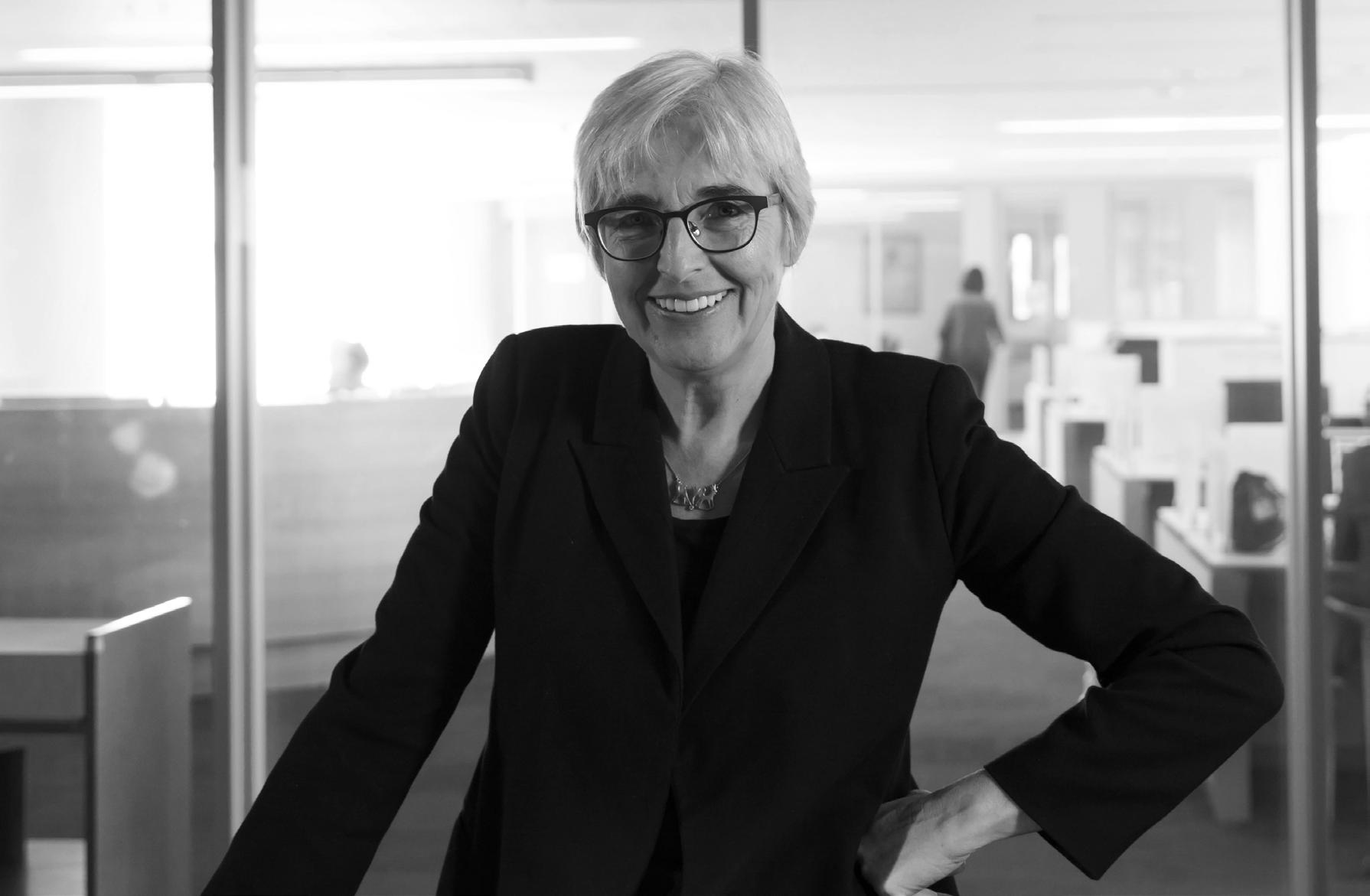
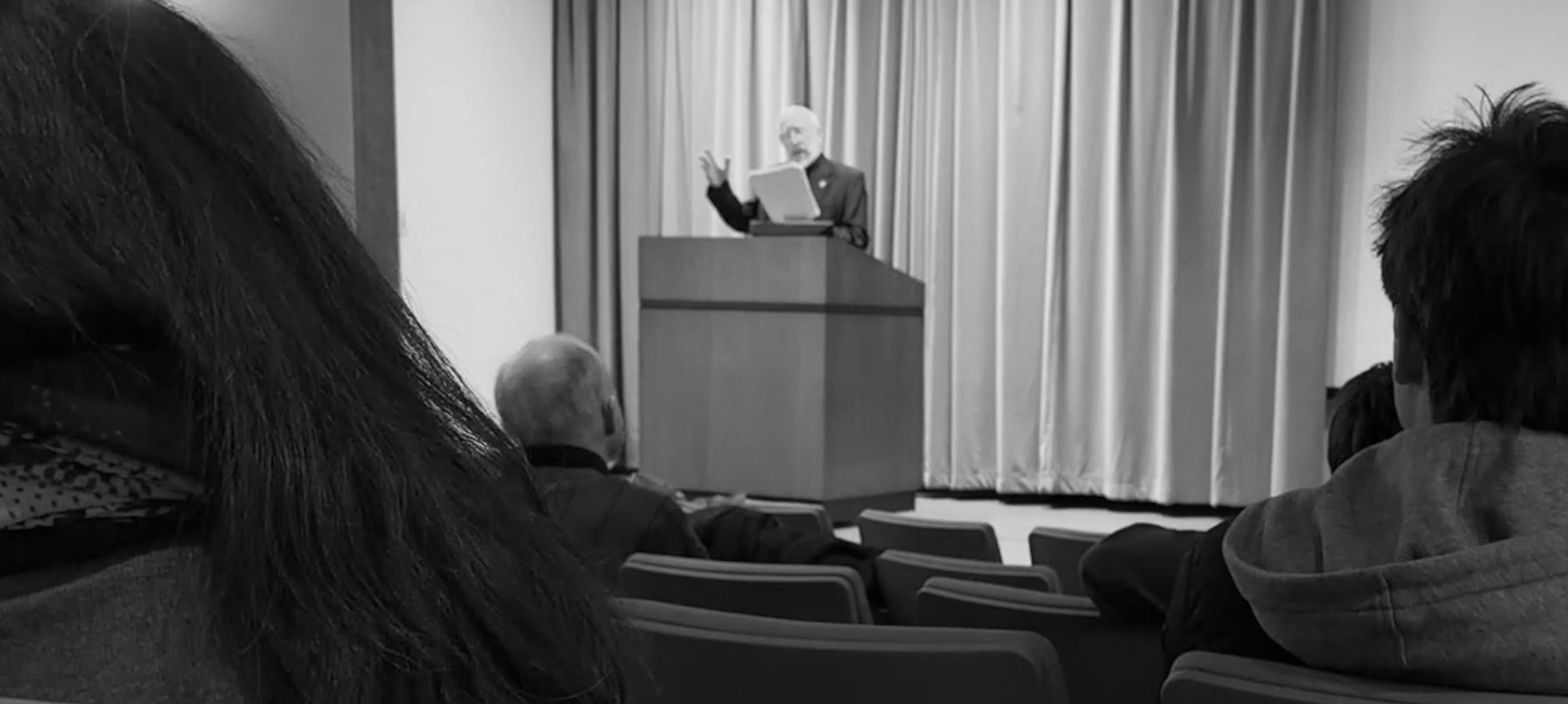
Katrin Kogman-Appel, Ph.D., lectures on the various interpretations of illuminated Haggadot.
COURTESY OF HUMBOLDT FOUNDATION
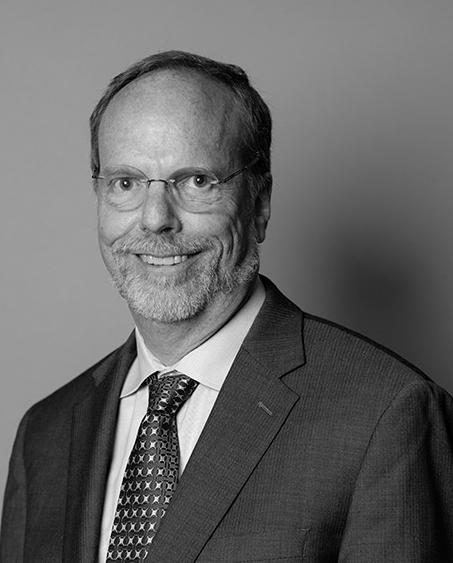
Outgoing Fordham University Provost Dennis C. Jacobs.
COURTESY OF FORDHAM UNIVERSITY
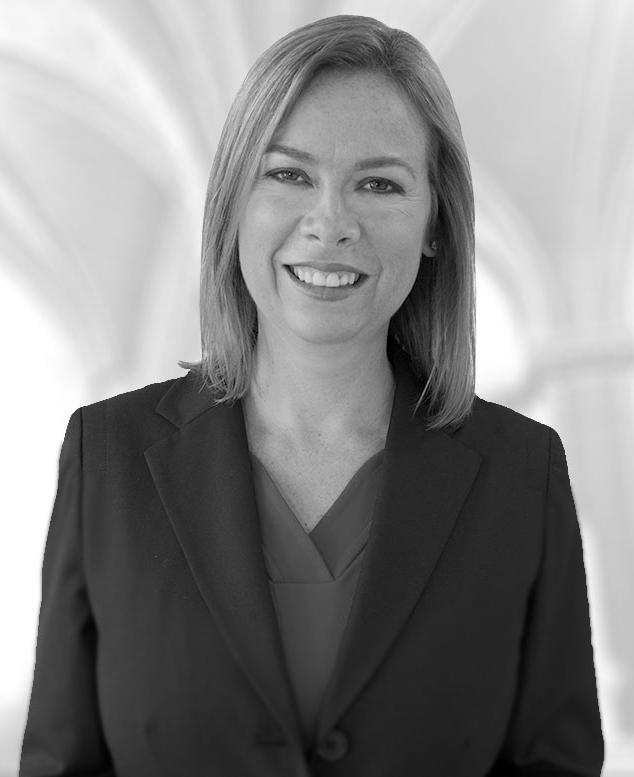
COURTESY OF TEACHERS COLLEGE OF COLUMBIA UNIVERSITY Incoming Fordham University Provost KerryAnn O’Meara.
A View Into The Rose Hill Health Center
“We do see a lot of students at Rose Hill,” Keown said. “We pretty much have a full schedule almost every day.”
In the waiting room, patients are greeted by check-in staff at desks.
To be seen by a nurse practitioner, students have three options: by scheduling an appointment by either calling their number, (718) 817-4160, on their website or emailing their own email address health@fordham.edu.
Students can also walk-in with no appointment.
If a student is going to the Health Center with an appointment scheduled, they can expect to wait 15-20 minutes to be seen. If opting for a “walk-in” without an appointment, it can be around a 25-minute wait, according to Keown.
“I’m sure that there may be days that we are very busy and they may be waiting, especially if they’re on the walk-in list, for over an hour,” Keown said.
Jaylen Dawson, FCRH ’28, went to the Health Center as a “walk-in” and said he wasn’t aware of how long he had been waiting for.
“I don’t even know, probably
45 minutes, an hour,” Dawson said.
Atticus Beasley, GSB ’29, came in with an appointment and said he was not told how long he would be in the waiting room for. He guessed he had been waiting for 10 minutes. He said that the previous time, he was seen within 15 minutes.
As according to Keown, regardless of having an appointment or not, the symptoms of the patient and their presentation can lead to them being bumped up to the top of the waiting list, and seen earlier.
“If somebody comes in [with], let’s say an allergic reaction, they go to the top of the list to be taken in pretty immediately,” Keown said.
Once students are taken from the waiting room, the average appointment can be generally finished within 20 minutes, although there are some fluctuating variables, according to Keown.
“If someone comes in and needs a nebulizer treatment or needs blood work, it could take a little bit longer,” Keown said.
Outside of the university’s Health Center’s duties, the facilities around the Rose
Hill campus play a part in the prevention of illnesses spreading around campus according to Keown.
“If we notice that there is an increase in flu or stomach virus, we will contact facilities to do extra cleaning in bathrooms and shared areas in the dorms, in the gym, in the academic buildings,” Keown said.
While the Health Center is mainly a resource for sick students, its website states that they also focus on maintaining Fordham’s Jesuit values.
“We assist our students in developing moral and ethical values and characteristics that reflect the Jesuit tradition in regard to health promotion and illness prevention,” which
is as its mission statement states.
Students’ satisfaction is tracked with a survey that is done every fall and spring semester. As according to Keown, overall results from produced by their survey in the fall were positive, mostly falling in the upper 90s on a 100-point scale.
Thomas Massaro Presents McGinley Chair Lecture
FROM MCGINLEY PAGE 1
He went on to compare the increased religious nature of Gen Z and the increase in individuals who don’t align with an organized religion.
Massaro had specifically referenced Sheila Larson from the 1985 work, “Habits of the Heart: Individualism and Commitment in American Life” which was written by Robert Bellah alongside Richard Madsen, William Sullivan, as well as Ann Swidler and Steven Tipton. Larson was a young nurse who had a faith she had deemed, “Sheilaism.” Larson was a spiritual, but not religious type who was documented by the authors in their work.
“Her self described personal philosophy of Sheilaism is replicated many millions of times over by people in our highly individualistic era of modernity, in which religious affiliation is no longer part of ordinary social expectations,” Massaro had said. “Still, there is reason for traditional believers to find much encouragement in such accounts as acknowledging this dynamic as a legitimate manifestation of religiosity may constitute the most benevolent possible interpretation of a secularization process.”
Massaro also commented on some noted issues with statistics about the number and the overall amount of
those individuals involved in any religion, specifying that it is difficult to study secularization using surveyed data due to the inaccurate results.
“It’s extraordinarily hard to marshal adequate data to support any particular set of conclusion, whether one’s intention is to document the triumph of secularism, or to debunk the case with a sharp decline of religion,” Massaro said. “But even the researchers who conduct these quantitative studies know well that there are patterns of thought and behavior that lie well outside the realm of data.”
To conclude his lecture, Massaro noted that doubt assists religion instead of harming it.
“We should all recall that insight that doubt is a healthy part of faith, maybe an indispensable part of a faith life that is honest and open to new evidence,” Massaro said. “The most prudent advice is to continually reexamine the judgements that we make about the state of religion today, and be willing to, as they say, trouble the narrative of secularization.”
Bush followed up with her response to Massaro’s lecture by discussing secularization specifically within the 21st
century and focused on the intersection of technology with religion. She brought up the idea of artificial intelligence and how it takes human creation and subjects them to reorganization via rationalization.
After Bush’s brief and concise commentary, there was a Q&A segment.
Massaro asked a question of the audience. He wanted to know about the religious involvement of Gen Z from those in the audience who either knew more or were a part of Gen Z.
David Carvar, FCRH ’27, commented on the polarization in the world in regards to other
aspects of society and related it to the discussion of religion and secularization.
“I think we can all see is becoming increasingly polarized as a large state, kind of in tune with our nation, we’re becoming very polarized in a lot of different aspects,” Carvar said. “A large part of that is political polarity, and a lot of that leads through into religion, I feel like, because we see a lot of politics, part of the platform used is religion as a base for that.”
Massaro said there would likely be another McGinley Chair lecture in the upcoming 2026 fall semester.
A look inside the waiting room of the Fordham University Rose Hill Health Center.
SIDNEY BLASCO/ THE FORDHAM RAM
Thomas Massaro, S.J., discusses secularization and the impact of modernity on religion.
Jordan Fisher Speaks at ASILI Event
By SIENNA REINDERS EDITOR-IN-CHIEF
Jordan Fisher, Broadway and Hollywood actor, singer and dancer who is known for his roles in Disney’s “Liv and Maddie” and “Teen Beach Movie,” as well as his Broadway roles as Evan Hansen in “Dear Evan Hansen” and Orpheus in “Hadestown,” spoke at Fordham University on Feb. 26 about his experience as a Black person in the acting, production and musical theatre industries.
The event was a part of the annual Black History Month keynote event held by Fordham’s Black Student Alliance (ASILI). Each year, ASILI works with various speakers from the organization American Program Bureau to find a candidate based on their desired budget and profession of interest, according to the President of ASILI Maya Persico, FCRH ’26. Past speakers have included notables Monique Coleman, Ilyahsa Shabazz and Kevin Richardson.
The event was held in collaboration with the Campus Activities Board (CAB), with further support from the Office of Student Involvement, Office of Multicultural Affairs and Residence Halls Association. The event was also part of CAB’s American Age Lecture Series, which aims to highlight diverse and impactful voices to engage Fordham students with new perspectives and individuals who have shaped national discourse, according to CAB President of Operations Emma Seber, GSB ’26.
To start the event, the Public Relations Manager of ASILI, Naomi Walters, FCRH ’27, introduced Fisher by highlighting the achievements of his career as well as their significance during Black History Month.
“Jordan Fisher is one of those rare performers who doesn’t simply inhabit a role, he transforms it,” Walters said. “He brings a level of passion and presence that commands attention. In this month, when we celebrate black excellence and the ongoing work of creating equitable spaces in every industry, Jordan’s journey embodies both achievement and advocacy.”
In true musical theater fashion, Fisher walked onto the stage singing “Do You Want to Build a Snowman” from Disney’s Frozen, calling back to a decade-old studio performance of the song which featured several Disney Channel stars, including Fisher.
To start the Q&A, Persico asked Fisher about the Black artists in theater, film and music who inspire him, to which he mentioned Buddy Bolden, Nat King Cole, Luther Vandross, Whitney Houston, Michael Jackson, Sammy
Davis Jr., Donald Glover, Denzel Washington and RuPaul as major influences.
“All Black artists inspire me,” Fisher said. “There are so many wonderful examples of people that kept their head tucked and succeeded in silence, and now we get to celebrate them. And that’s the kind of legacy building, I think, that really is of value to me.”
Persico then asked how Fisher brings his identity and perspective to characters who are not necessarily written with racial identity in mind.
Fisher explained that when it comes to the portrayal of characters in media, they are often assumed to be white, even if their race isn’t explicitly mentioned. He said that he is guilty of these preconceived notions himself, but that through the portrayal of these characters by Black actors, we can eliminate the idea that only white people can assume these roles.
Fisher also explained that regarding characters who are characterized as being white or have historically been played by only white actors, there is often a belief that Black people cannot inhabit that role effectively, because of their racial and ethnic background. He said that by bringing people of color into those roles, people will start to see that stories can still be honored regardless of the background of the actor. Specifically, he referenced his personal experience playing Anthony Hope in “Sweeney Todd” alongside fellow Black actor Nick Christopher, who played Adolfo Pirelli, marking the first time these characters were both played by Black actors.
“The beauty of acting is that you are taking the skin of another character, another thing, and you’re completely submitting to that,” Fisher said. “And hopefully that suspends reality for long enough for people to just be a part of the story, and receive something.”
Fisher added that he believes that when a story is told by a Black person, it adds another layer of impact and importance. He also said that it takes people like him playing these roles to eliminate the barriers that prevent people of color from being represented in storytelling.
“That’s why I speak at colleges,” he said. “To eliminate the smoke in the mirrors [about] whatever preconceived notion we have about us not being able to do something because of what we see in the mirror. It’s not true. It might take you a little bit longer to get there. But it can happen and it will happen.”
Persico also asked Fisher about his recent shift to producing with projects like “Hello, Goodbye, and Everything in Between,” and
in particular how having a Black artist in a producer role impacts the stories that are told.
“There aren’t many of us doing it,” Fisher responded. “There need to be more.”
Fisher said that he got into producing after years of watching known producers like Mark Platt and Adam Siegel. He also said that it was a few specific colleagues in the industry who empowered him to pursue producing. But he explained that the reality of producing, especially as a Black person, is that it is not always easy and you have to be okay with your ideas being shot down, but that you
have to keep speaking up and pursuing new projects.
“Oftentimes it comes with doing projects and feeling like you’re not being valued and feeling like you have things to prove and you’re not getting the opportunity to do it. That’s where I say succeed in silence. That’s where I say work and do the work, and when you have good ideas, speak up,” Fisher said. “If you just observe and you show up and you do the work, you will see some fruit on the other side of that.”
Fisher said that although a year and a half ago he could not have imagined himself producing a theatrical project,
he now has five theater projects in development.
He ended by emphasizing the need for more people of color to speak up and pursue their passions, and that it takes collective action to truly make change.
“I just think that more of us, I’m looking at all the people of color in here specifically, not that I’m not talking to anyone else, but I am, more of us need to speak up,” Fisher said during the talk. “More of us need to be collaborative, more of us need to sit down and dream and scheme, and then take the idea and do things to make it happen.”
ASILI President Maya Persico sits with Jordan Fisher during the Q&A.
Jordan Fisher shows off his dance moves from the Broadway show “Hadestown.”
PHOTOS BY NYAH RODRIGUEZ FOR THE FORDHAM RAM
OPINION
From the Desk | Uma Petzke
RServing the Fordham University campus and community since 1918
The Fordham Ram is the university journal of record. The mission of The Fordham Ram is to provide a forum for the free and open exchange of ideas in service to the community and to act as a student advocate. The Fordham Ram is published every Wednesday during the academic year to all campuses.
Website TheFordhamRam.com
Email Address theram@fordham.edu
Editor-in-Chief
Sienna Reinders
Managing Editor
Ian Nelson
Production Editor
Sarah Verrastro
Editorial Director
Molly O’Connor
Multimedia Director
Hannah Sullivan
Business Director
Nishanth Aduma
News Editor
Emma Leonardi
Features Editor
Sidney Blasco
Assistant News Editors
Jordan Donegan
Kat Rossi
Opinion Editor
Loressa Zeqiraj
Assistant Opinion Editors
Erynn Sweeney
Gabriel Capellan
Culture Editors
Lara Ejzak
Makenzie Smith
Assistant Culture Editor
Paolo Liaci
Sports Editor
James Nelson
Assistant Sports Editors
Molly Friedman
Ethan Bess
Copy Chief
Indigo Towers
Executive Copy Editors
Emily Mitton
Uma Petzke
Emma Kelner
Elaina Gibson
Social Media Director
Haniyyah Usmani
Photo/Graphics Editors
Emily McCall
Wilson Speller
Digital Producers
Han Le
Marisa House
Advertising Directors
Violet Wallace
Juan-Pablo Valencia
Rishika Lingamdinne
Faculty Advisor
Beth Knobel
Editorial Policy
The Fordham Ram’s editorial reflects the editorial board’s opinions or views.
Opinion Policy
The opinions expressed in this publication are those of the authors. They do not necessarily reflect the opinions or views of The Fordham Ram.
Submission Policy
The Fordham Ram Reserves the right to reject or edit any submission for any reasion, without notice. Submissions become the exclusive property of The Fordham Ram. No part of The Fordham Ram may be reproduced without written consent.
Correction Policy
The Fordham Ram is committed to fair and accurate reporting. If you are aware of an error, please contact us at fordhamramonline@gmail.com
Why We Need More Third Spaces
There used to be a place in between where we live and where we work. Not necessarily somewhere special or fancy, but a place you could go to clear your mind.
This place, the one that isn’t home and isn’t an industry, is a third space. Third spaces are locations that provide a venue for informal gatherings and for people to exist without the obligation of productivity. These spaces are the glue of civic life, especially in big cities where people might have fewer opportunities to be outdoors or spend little to no money simply to relax. In my opinion, these spaces have dwindled and are, in many cases, gone.
The erasure of third spaces was slow and went unnoticed, which is why it can be hard to realize we are missing out on so many community areas we could have.
Today’s diners, coffee shops and other boutique cafés are designed for quick turnovers and minimal human interaction. Take Blank Street as an example; although their coffee is good and effective for the working individual, there is very little sense of humanity or personality when you enter one of their shops. You are encouraged to pick up and go on with your day, not to sit, read, journal or chat with other people in the shop.
Public parks remain as one of the main third spaces, but even Central Park can feel like a tourist attraction rather than a space for quiet contemplation or conversation. Additionally, Central Park is not accessible for everyone and
Students of Fordham University, citizens of New York City and beyond, President Donald Trump and his administration, our nation has hit a terrifying point: more divided, more violent and more hopeless than ever before. This is not the “golden age of America,” but one of our darkest eras, in which people fear for their neighbors, their children and themselves. Only 17% of the country has trust in the government, with Democrat trust at an all time low of 9%. This is not an era to be proud of, but an age that must spark significant change.
We live in a time when our government is attacking its own people, sending immigration officers into our cities and towns to kidnap our neighbors regardless of citizenship status, tearing apart families and instilling a deep fear in all of us. When people have exercised their constitutional right to protest these injustices, they have been attacked, arrested or even killed. This is not peace nor progress, this is facism and fearmongering. How can a man claim to be the “President of Peace” when he changed our Department of Defense to the Department of War? Language is powerful, and this name sets the narrative that we prioritize aggression over protection. Trump has proposed a $1.5 trillion increase to the military budget to build his “Dream Military” while simultaneously making cuts to
acts as a hub rather than a neighborhood spot in which you could become a regular. A bookstore filled with armchairs, in which you could sit for hours barely exists anymore because if you aren’t purchasing something, the business is losing money by hosting you. Even malls across America are closing due to the lack of people going to shop in person.
For previous generations, these spaces were critical to communities. I spoke to my parents about how they used to spend their time wandering through bookstores or becoming locals at coffee shops where they would read the newspaper every Saturday. And now screens have mostly replaced this. Third spaces are free or cheap, easily accessible, welcome regulars and foster playful, unstructured conversations, which is very similar to what the internet offers. But the difference is that you are never just “hanging out” online; you are being sold something. The challenge in creating more third spaces is that it is nearly impossible for a low-margin, high-lingering establishment to survive in this economic climate. If a coffee shop were to allow customers to sit and sip on a single latte for hours, they would slowly go out of business. This causes most spaces to charge you for the time you spend there: gyms, therapy offices and co-working spaces are all for rent and have replaced spaces that used to ask you for nothing at all.
Knowing how rare third spaces
are, college campuses become more valuable. A university is one of the few remaining third spaces in American life. Even with tuition, third spaces are created and preserved because students are able to meet people their age, in person and from diverse backgrounds. Third spaces are also created by students, from the sitting area on the grass you find with your friends to the chairs you bring in front of your dorm building. These are the less obvious third spaces that are designed and filled by students, which promotes conversations and bonding. After graduation, most people’s social worlds collapse into the professionally known and the friends carried over from other parts of their lives. On campus, you are constantly in the presence of people who differ from you and it takes no effort to find new people. The loss of third spaces affects more than social lives; there is psychological research that has shown how third spaces improve well-being and relatedness
Editorial | State of the Union
The Ram’s State of the Union
community-focused programs like Preschool Development Grants and Community Services Block Grants. These actions are not for the benefit of the American people, they are intending to take advantage of our tax dollars and use them to harm us.
We are not a celebrated international power, but an international villain. Trump has isolated us from the vast majority of the world, and we are entirely unrespected as a nation and a people. He claims to have ended multiple wars but has simultaneously escalated international tensions in Venezuela, Iran, Palestine and beyond.
The ceasefire he claims so proudly to have brokered between Israel and Hamas has been broken countless times by Israel, the country we spend billions of dollars supporting every year. Claims of self-defense are entirely invalid when the nation of Palestine’s population has been obliterated by the Israeli military. For years they have been living off of tiny amounts of food, not enough to sustain anyone, and living amongst the rubble of their former homes in constant fear of where the next attack will hit. This is not peace, this is genocide. Taking pride in being a part of that is disgusting, and as one of the wealthiest nations in the world we have the duty to help those less fortunate than ourselves, not hurt them more.
Additionally, the invasion of
Iran has been reckless and illegal, and though the nation was not in a good place before, sending missiles across the Middle East is certainly not for the country’s benefit. Civilian deaths from U.S.Israeli bombs have already passed 700, including 176 children. What does bombing a school do to save the Iranian people? Trump’s motivations are selfish, and we will never help other countries while going in with poor intentions.
In our own country, Trump has stripped our land’s protections by erasing any power the government had to fight climate change, one of — if not the most — paramount issues of our time. By rejecting the facts backed up by the vast majority of scientists worldwide, this erasure allows greenhouse gas emissions to be far less regulated in our country, though we are one of the greatest polluting nations in the world. This comes at a time when we are already facing increased environmental stressors from AI data centers, disproportionately affecting Black and brown communities and creating both environmental and health problems.
The economic transformation Trump claims to have initiated has not been one for the better. Housing, groceries, electricity and natural gas have all gotten more expensive in the last year, making the cost of living excruciating for millions of Americans. Job growth
between people. The loneliness epidemic points not just to the absence of close friendships, but to the erosion of casual ties to acquaintances. These relationships are called “weak ties” and are the foundation of third spaces. Those relationships are impossible to curate over Zoom or any social app.
Third spaces are crucial to human connection and America has been slowly demolishing them for decades. College campuses are a special place where they still exist; you can show up and sit without an agenda, without a transaction, without a reason and sit among other people. It is worth noticing the causal, fun spaces we have access to and not taking them for granted. When we become aware of how special it is to have these places we may be able to change the way our world is built outside of college. A collective choice to slow down and build connections with new people through third spaces is the only way the few that are left can be preserved.
has sharply declined from 1.4 million jobs added in 2024 under former President Joe Biden to just 181,000 jobs added in 2025. Praises for “the largest tax cuts in American history” are also false; benefits for this sixth largest tax cut in history mainly go to the wealthy who do not need it. Any small savings for lower class families will be outshined by their loss of benefits, creating a harsher burden as opposed to advantages.
On top of this, Trump has failed to address his own involvement with convicted sex criminal Jeffrey Epstein amongst other governmental figures mentioned in the recently released Epstein files. How are Americans supposed to trust their own government when they know the atrocities their leaders have committed against young women and children?
The state of the union is far from “strong.” This utopia Trump claims we live in is not real, if anything it is the opposite. The government cannot propagandize the facts of our everyday lives.
“The revolution that began in 1776 has not ended.” Our fight against oppressive regimes is not over, and we will not give in to authoritarianism now just as we did not give in back then. Hopelessness is the privileged person’s excuse for choosing not to act, so we will find hope in this dark time and eventually come out victorious.
By MARIAM AHMED CONTRIBUTING WRITER
Ramadan has always been a cherished aspect of Islam religion, and for the whole Muslim community. In this holy month, Muslims lead their daily lives while purifying their intentions with themselves, God and those around them. It’s not only a time for reflection and community but also for gratitude, strength, discipline and focus. As fasting during this month is one of the five pillars of Islam, it embodies a meaning far deeper than simply fasting from sunrise to sunset.
We often forget how strong we are until tested with the things we take for granted and
Ramadan: A Journey Within
I believe that’s where the beauty of Ramadan essentially lies. Although many have a misconception that fasting is dangerous, this action serves as proof that every aspect of our life is a privilege and a reminder that our health is the most prominent factor in it. Fasting is a reset for our body, our mind, our intentions and even our abilities. In Islam, everything is built on intention, sincerity and the importance of trying again. Fasting is so much more than just abstaining from food and water; it’s about clinging to a reality in which one solidifies their intentions and character. This is where Ramadan’s true value lies — in the understanding
that there is always a place for us with God and within our Muslim community.
Although observance of this month is a pillar of Islam, it’s a time our hearts yearn for year-round and mourn once it comes to an end. It’s understood that the concept of fasting all day and then feeling full after a few bites demonstrates that our true fulfillment can only come from God. To further explain, we chase so many things in this lifetime but rarely focus on that which cannot be chased. These things include our manners, character, steadfast faith and a heart that consistently renews intentions. We may think we want something so desperately, only to receive it and conclude that it wasn’t as enticing as we had envisioned, capturing the essence of fasting. We crave various foods all day to realize that a simple date, some water and a light snack was more than fulfilling for us. This compels me to reflect on the reality that most of us possess the comfort of certainty, knowing where our next meal is coming from and how we intend to break our fast. However, for countless individuals across the globe, that
thought is a distant privilege rather than a daily expectation. Through this awareness, fasting instills a sense of exceptional humility and gratitude in me, urging me to cherish every morsel of food, simple or elaborate, along with every sip of water. It’s proof that ultimately, it is that deep, because who are we if we fail to acknowledge the less fortunate and fine-tune our humanity? Personally, I can say that Ramadan always comes at a time when my heart needs it the most. I can say that from beginning to end, there are truly two different versions of myself. It’s heartwarming to see the things we accomplish, balance and demonstrate through our religious and worldly obligations. While fasting, I begin to embody a delusional state of mind that everything will work out and it often does. I’ve come to understand that there is serenity in putting forth your best, allowing your mind to silence the anxiety of daily life and take advantage of genuine prayer and remembrance of God. It’s a time to be cognizant of our actions and words, living in a way that exemplifies our intention to refine our faith
and increase prayer. It’s easy to be irritated and neglectful, but our true test lies in abstaining from that anger and anxiety and in amplifying our gratitude. This mindset alone has allowed me to grasp the concept that God has always taken care of my affairs. In this acknowledgement of what I already have, I often understand that I have been blessed with more than enough. Additionally, fasting for me is a reminder of a different hunger, a hunger to purify myself, to seek more knowledge, to understand my purpose and to cherish my religion. Making the most out of this month looks vastly different for every individual, but it’s beautiful nonetheless, as it emphasizes effort. Optimizing the blessings of this month is always a top priority, and the fruits of it are often seen in daily life. I observe fasting as a testament to my true capabilities and a reminder that frivolous worries ultimately have no power over spiritual devotion.
Avenge The Victims, Scrutinize The Files
By MICHAEL DUKE CONTRIBUTING WRITER
Last summer, I worked at a law firm in San Jose, California, that specializes in representing victims of childhood sexual abuse. While the stories of the clients the firm represents are fully deserving of the highest legal experience and passion that my bosses brought to the table, I cannot help but think of my time at the firm when I think about the released Epstein files. My experience in that office informs my perspective that we need to reshape how we think about the files.
For instance, people immediately think of Bill Gates, Steve Bannon and Bill Clinton, among others. But what we’re forgetting is that we’re also talking about everyday people whose lives have been impacted forever by what happened as a result of Jeffrey Epstein’s sick and twisted acts.
I’m referring to the Epstein survivors.
What bothers me the most is that while people call for unredacted versions of the files, they’re also calling for painful pasts to be unearthed and relived. What outrages me the most is that some officials, like Pam Bondi, intentionally disregard this key aspect of the files, as she purposefully did during a congressional hearing.
To put things in perspective, the issue of the Epstein files is such a force of negative cohesion that Republicans and Democrats, like Thomas
Massie and Ro Khanna, are openly coming together in one of the rarest forms of bipartisanship that we’ve seen in years. What’s even more exceptional is that Massie and Khanna are coming together because they’ve been allowed to view unredacted versions of the files. They are, as a result, doing the Department of Justice’s job and exposing the names of six perpetrators whose names were redacted.
Why those parts of the files were redacted is still something that’s up in the air. However, there’s a bigger concern: What other perpetrators are being protected that shouldn’t be?
While you might be quick to name President Donald Trump in response to my last question, I’m going to encourage you to expand how you’re thinking. After all, there are millions of documents in these files and the vicious fact we must face is that there are countless people we still need to absorb information on, let alone call for action against as a result.
This seems to be what’s going on in the United Kingdom.
Just this past month, Andrew Mountbatten-Windsor was arrested by UK authorities for his connection to Epstein. From what we know, he was arrested for “Misconduct in Public Office.” To be more accurate, what he’s being accused of relates to how he watched a child be tortured by electrocution, in addition to all the other disgraceful and sick
acts he’s done and that are already public.
While we will watch as a disgraced former prince tries to weasel his way out of justice like he’s already done before, we need to recall someone else who’s already been served justice: Ghislaine Maxwell.
In 2022, Maxwell was sentenced to 20 years in prison for her exploitation, trafficking and abuse of the Epstein victims. While Maxwell clings to claims of innocence, she has stated that she will crack the lid on what happened to Congress under the condition that Trump grant her clemency.
In layman’s terms, the situation with Maxwell is the exact same thing as watching someone start a fire, confronting them and then having them beg you not to blame them while they hold the only bucket of water nearby.
While we know a bit about the extent of what Maxwell is responsible for, we need to remember that she’s being allowed to hold cards right now. She is demanding things from the government while she’s wearing a jumpsuit in a Texas prison.
In what world is this okay? How is it even being allowed?
Very soon, we will reach a point where, as it happens in every news cycle, people will get sick and tired of the conversation and move on.
We, the American people, cannot let this happen.
We must recall the moral and ethical obligations owed, given the gravity of the
situation the files present.
What we need is to keep Epstein’s victims close to our hearts.
What is owed is not only obligation but also action — that is, indictments, public rejection and sustained accountability through continuous oversight.
The policy that we need is: If you did it, you’re going to face the consequences.
If you also believe in this, call your senators, members of Congress and other public officials and demand accountability. As students, it’s the least that we can do for now.
But we cannot let this conversation become clouded or distracted by nonsense either.
Feeding into baseless ideas about conspiracy theories will only lead people to become radicalized through outlets like social media, to the point where debates will end up giving people like
Nick Fuentes more support.
We’re already on this path with the Epstein files. If you don’t believe me, look no further than what happened with how Charlie Kirk’s assassination paved the way for Fuentes to become mainstream.
We also need to remember that while we’re dwelling on the brutal issues that the files demonstrate, not every headline is an intended distraction. For better or for worse, the world will keep moving forward, headlines will change and some people will forget and move on. But that doesn’t mean that what’s in those files will change, let alone the harm that the victims have felt. The truth and harm exist, so justice must as well.
Fasting during Ramadan is one of the five pillars of Islam. COURTESY OF BRITANNICA
Mariam Ahmed, FCRH ’26, is a psychology major from Yonkers, New York.
Michael Duke, GSB ’26, is a business administration major from Scottsdale, Arizona.
The Esptein files are being used as evidence to seek justice for victims.
EMILY MCCALL/THE FORDHAM RAM
All Forms of Child Stardom are Dangerous
By ADDISON NEWBLATT CONTRIBUTING WRITER
From blockbuster films to your favorite YouTube channels, child stardom has become more and more normalized as a part of our entertainment mediums today. Yet, the conversation has also become increasingly loud about the controversy of child stardom and what society has allowed these children to endure in exchange for a paycheck. While our favorite names within the media such as Jennette McCurdy and Justin Bieber can attribute their wealth, success and opportunities to their start as child stars, the question remains: at what cost?
The reality of living life as a child star involves becoming immersed into a world where you are expected to act and perform as an adult. No matter how hard a child tries to function as an adult, there will always be things that they are vulnerable to — not because they are ignorant, but because they are children.
One major theme among children in the entertainment spotlight is their adult counterparts — whether that be their parents, bosses or colleagues — taking
By HAILEY BAKER STAFF WRITER
I cannot think of a greater hypocrisy than countering abortion culture with the potential for women to receive the death penalty under the guise of a “pro-life” label. A Tennessee amendment drafted for House Bill 570/Senate Bill 738 would allow prosecutors to charge women who obtain abortions with fetal homicide, including the potential consequences of life imprisonment, life without parole or in some cases, the death penalty.
When will lawmakers learn that we cannot fight fire with fire? While I believe abortion is the intentional ending of a human life and is therefore murder, I also believe that the women seeking them are not murderers. They are the victims of a corporate-headed world lying to us, telling us that we are not strong enough or capable of raising children while sustaining simultaneous careers and education.
After years of discernment and debates, I can proudly say that I am pro-life. But I can only do so confidently insofar as I support the consistent ethics of life, from conception to natural death. A society cannot call itself pro-life while threatening women with death. Last year, I wrote an article for The Ram expressing my support for former Vice President Kamala Harris’ presidential campaign. In it, I talk about my disdain for President Donald Trump and Vice President JD Vance, especially regarding Vance’s pro-life advocacy. I am still
advantage of their vulnerabilities. In 2024, the documentary, “Quiet on Set: The Dark Side of Kids TV,” was released to the public, shedding light on the exploitation of child stars. Drake Bell, most known for his roles on Nickelodeon television shows, revealed the sexual abuse he endured from his dialogue and acting coach, Brian Beck. This is merely a fraction of the sorts of offenses from Nickelodeon. On multiple occasions, Dan Schneider, the creator and producer of many of the network’s most popular shows, has been accused of being controlling and verbally abusive to his actors. His shows, which are intended to entertain children and young teenagers, often include various sexual innuendos and sly ways of sexualizing child actors and the characters they portray.
The parents of these children are also a major part of the issues within the industry today. Although abuse may not be the initial intention, when a family is monetizing their child it becomes a slippery slope that you often can’t recover from. Family vlogging channels have become increasingly popular over the
years, as proven by the fact that engagement increases when children are featured in these vlogs. A Pew Research study revealed that YouTube videos containing children who are under the age of 13 receive more than three times as many views than videos that do not. That alone should send a signal to parents to keep their children off camera to protect them from the dangers of the internet, but when money gets involved, everything becomes more complicated.
A prime example of this abuse is reflected in the YouTube family vlogging channel, 8 Passengers. 8 Passengers was run by Ruby Franke, a mother of six children, and aimed to create a wholesome and family-friendly environment, sharing the experiences of motherhood within a big family. As the years went on, this channel gained approximately 2.5 million subscribers and over 1 billion views, becoming one of the most successful channels within the family vlogging realm. However, in 2023, Ruby Franke was arrested and charged with four counts of aggravated child abuse. The pressures of performing and
making money lead people to do crazy things and when children are involved, they become easy targets due to their innocence.
While on the surface, child stardom is a dream come true — financial success, fame and ample opportunities — the consequences largely outweigh the rewards. The fact that society addresses the negatives of childhood fame only once these stars grow up and share their experiences is truly disgusting. Too much of the entertainment industry is immersed in lies and secrets in order to obtain maximum money and fame. Children in this industry are
extremely vulnerable and are taken advantage of to become a part of these agendas that they do not even know about, which is cruel and inhumane. It is the responsibility of adult figures within the industry to advocate and speak up for children under the spotlight, but unfortunately that seems to be an unrealistic expectation. The fact that children who act like adults suffer the consequences of the adults who choose to act like children is why child stardom goes from being an extraordinary experience to a traumatic one.
Protect Life at Every Stage
very much against the Trump and Vance administration. However, I have since changed my views regarding abortion and acknowledge that I was wrong in some of the comments I made.
When it comes down to it, I am pro-life because I firmly believe that life begins at conception when a new set of unique DNA is made that has never been created before and can never be created again. I strongly believe in the sanctity and dignity of life and that our most basic human right is the right to life. Society deceives women into believing that abortion is the just and moral option, when at its very root it is removing a human’s chance to be born. Who are we to play God and determine whether another human should live or die? Babies and women deserve better than that.
Every life that is taken by another person is heartbreaking and tragic, but we must understand the reasoning and intentions behind why people commit these wrongdoings. If abortion often stems from fear, instability or lack of support, punishment and coercion cannot address its root issues. Criminalizing women for receiving abortions contradicts the compassion God calls us to have for them. According to the World Health Organization, around 73 million abortions are conducted each year worldwide, with around six in 10 women with unintended pregnancies resorting to these terminations.
A consistent ethic of life does not stop at the womb, therefore,
pro-life laws must reflect more than just anti-abortion values. They should work to preserve and protect all life, from conception to natural death and everything in between. These genuine pro-life laws would send aid to the children being raised in Gaza, restrict guns from getting into the hands of mentally unstable people who want to hurt others and ensure equitable treatment of undocumented immigrants instead of the horrendous conditions they are facing now. True pro-life laws would lift up and support mothers from the beginning of their pregnancy through well after birth. They would provide expecting mothers maternity clothes, counseling, formula, diapers, baby clothes and any materials they may need to help themselves and their children thrive. Abortion is both a cultural issue and a legal one. We will never get anywhere as a society until people see abortion for what it is and advocate for pro-life values throughout all stages of life.
While many women are aware of the abundance of Planned Parenthoods, many remain unaware that there are even more pro-life pregnancy centers. According to the Lozier Institute, there are over 2,700 pro-life pregnancy centers throughout the U.S., whereas there are only around 550-600 Planned Parenthood locations. I don’t believe that Planned Parenthood is here to help us. According to their 2022 to 2023 annual report, abortions account for 97.1% of their “pregnancy resolution services.” Planned Parenthood
is a multi-billion dollar industry profiting off of terminating pregnancies.
Pregnancy centers such as Heartbeat International Care Net and National Institute of Family and Life Advocates, however, provide free services like pregnancy tests, ultrasounds and counseling. Nearby Fordham we have several local pregnancy and maternity centers like Siena House which provides housing for 27 pregnant women and mothers with children under the age of two, Prevention Assistance and Temporary Housing Office (PATH) that provides temporary assistance and housing to pregnant women and families with children younger than 21 years old and many more programs with similar missions. The Respect for Life club frequently volunteers at St Phillip Neri Catholic Education and Family Center’s Mommy Storeroom, a resource room in the Bronx for pregnant and parenting mothers. You can find more resources on standingwithyou.org, which
is a pro-life initiative by the Students for Life of America, which supports pregnant and parenting students, as well as women facing unexpected pregnancies by connecting them with local, state and private resources.
Needless to say, Tennessee lawmakers got pro-life ethics wrong. While the amendment has not been voted on yet, it has received several sponsors among Tennessee legislators. We do not need to promote a pro-life culture with fear and threats. As Pope Saint John Paul II explained in his 1995 encyclical Evangelium Vitae, “Where life is involved, the service of charity must be profoundly consistent. It cannot tolerate bias and discrimination, for human life is sacred and inviolable at every stage and in every situation; it is an indivisible good.”
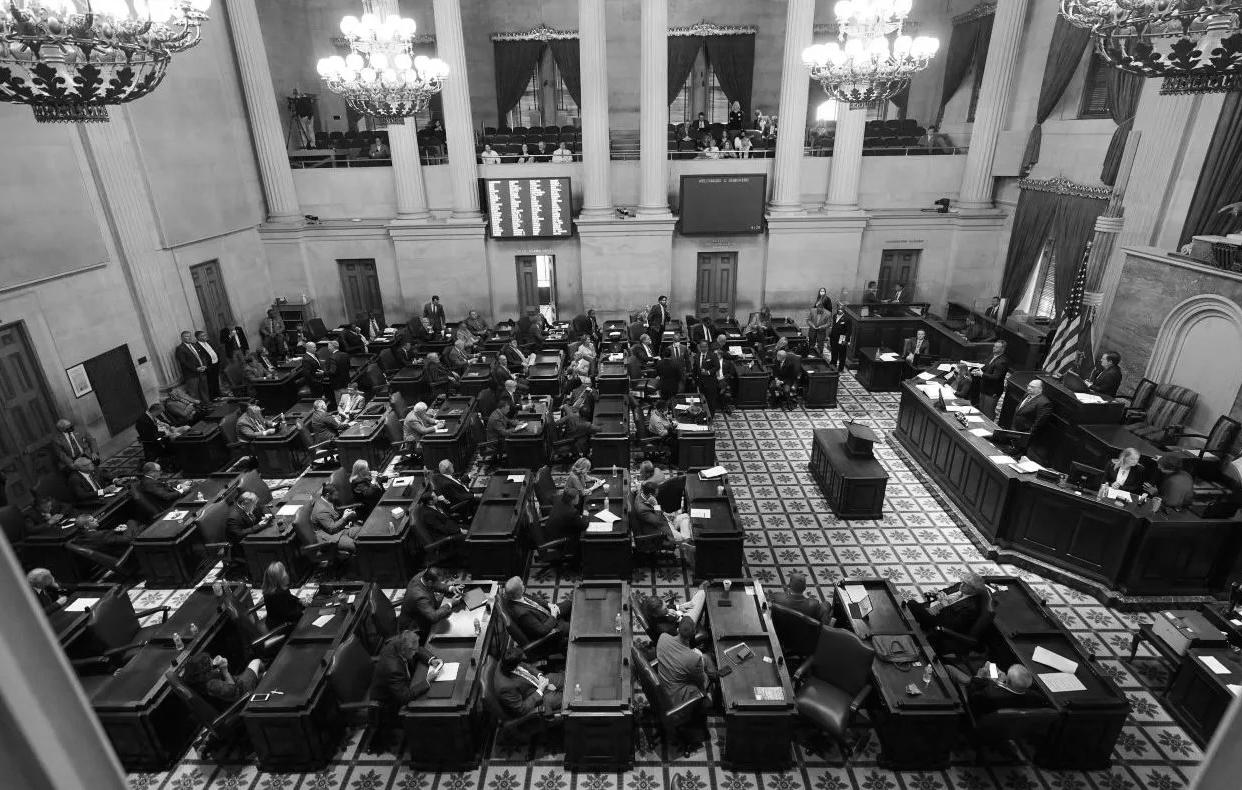
Tennessee lawmakers are against approving an anti-abortion amendment.
COURTESY OF THE HILL
Addison Newblatt, FCRH ’29, is a journalism major from Clarkston, Michigan.
Hailey Baker, FCRH ’27, is a political science major from Gaithersburg, Maryland.
Child stardom has many dangers and is becoming normalized. COURTESY OF JACKSONVILLE.COM
Less Sleep Doesn’t Equal a Better Grade
By KELLY BUBAN CONTRIBUTING WRITER
Sleep deprivation has become so normalized in college that being exhausted is almost expected. It comes up every day in conversations: before exams, after nights out and during early morning classes where someone may sit halfawake, running on caffeine. People compare how little sleep they get like it is something to be proud of. Saying you “only got three hours of sleep” has become a way of proving how hard you are working. This mindset is not harmless. College students are not too busy for sleep. We simply have accepted the idea that sleep is optional, when in reality, it is one of the most important factors in academic success, athletic performance,
mental health and the overall ability to function.
Sleep directly affects how we think, feel and perform, yet it is often the first thing sacrificed when life becomes overwhelming. Adults are recommended to get at least seven hours of sleep each night, while college students average closer to six. Getting less than that (yes, even during midterms) can lead to increased stress, fatigue and overall difficulty concentrating. While the occasional night of little sleep can be okay, falling into the vicious cycle will result in the negative effects adding up. Students who consistently get more sleep tend to perform better academically, while those who are sleep deprived struggle to stay focused
By BRIDGETTE LEAHY STAFF WRITER
Regardless of whether rage bait occurs online or in person, it’s becoming unavoidable in any social setting and creating hostile interactions between people. Rage bait is defined as online content deliberately designed to elicit anger or outrage by being provocative or offensive, usually in a social media setting, according to Oxford English Dictionary. In 2025, rage bait was named Oxford’s word of the year.
Culturally, what does this entail for public discourse? First, it rewards the most illicit motive of human manipulation. People engage in this type of behaviour to increase validation, often to generate views, engagement or attention. The term “rage bait” dates back to over a decade ago, when it was first used in 2002 in a Usenet post to describe the kind of reaction a driver might have to headlights flashed at them by another driver passing by.
The use of rage bait allows little discussion or perspective because someone who is rage baiting their counterpart aims solely to anger them. This is concerning because it is used as a tool of hostility in serious moments. Common platforms for this behavior include TikTok and Instagram, but it can also be observed in dialogue between classmates
and retain information. Personally, I have an Oura Ring that tracks how much I sleep each night. By collecting my data of awake time in the night, amount of rapid eye movement and deep sleep, I am able to understand how well I will be able to function day to day. When I get enough sleep, I feel capable of paying attention in class and am able to participate in discussions. I want to get exercise and my overall mood is better. But when I do not get enough sleep, everything is harder. It is hard for me to concentrate, my energy levels drop and my motivation disappears.
Students are aware of this pattern but still struggle to change their habits. Aeyla SainsburyCarter FCRH ’29 told me, “I know I function better when I sleep more, but if I have too much on my plate, I can’t just email my professor and say I couldn’t finish my essay because I needed sleep.” The need for sleep is something students feel they cannot control, and it just fits into their schedules when they can.
Consistency plays a major role in sleep quality. Going to bed and waking up at the same time each day helps regulate energy levels and improves overall function, but college life rarely encourages this kind of
structure. Students adjust their sleep schedules based on what time they may have class or practices, focusing on the immediate demands rather than their long-term health. There is this predetermined notion that college is supposed to be exhausting, which it very much is, but sometimes people mistake busyness for tiredness when assessing how productive they have been. When you push yourself to stay up to cram for an exam, it can feel like you are doing everything you can to succeed, even if your body and mind are no longer functioning properly. Mia Smith FCRH ’29, said, “I have stayed up all night studying before, and by the time I actually take the test, I feel like my brain isn’t even working.” This experience is common, as students convince themselves that sacrificing sleep will improve their performance, when in reality, it often does the opposite.
Social life also contributes to irregular sleep. College is a rare time when we’re always surrounded by our friends, and there is a nearly constant opportunity for interaction. As someone who went to boarding school prior to college, I have come to understand that while it is fun to stay up late with friends, losing that sleep during the week can be worth it in
When is Rage Bait Too Much?
or coworkers. It’s alarming that rage bait can be used in so many places.
Engagement between viewers and organizations can also resemble rage bait when it triggers toxic emotional responses. In these cases, the online audience is inclined toward rapid emotional responses rather than contextualized statements. MIT Sloan found that false news traveled farther and faster than the truth on X. Most likely, false news is reposted more quickly than accurate news. Often, rage bait is simply news you disagree with. False news leads to rage bait, giving ammunition to disagree in an extreme way, even if one is not necessarily trying to make someone mad.
People are strongly driven by controversial ideas, especially when their core values are being challenged. Social media excels at perpetuating the concept of rage bait. People love attention and new information; that’s why we read the news.
One analysis of social media diffusion found that anger spreads more readily than joy and creates weaker social bonds beyond tight-knit communities. Social media posts can elicit angry responses because strangers share content at a fast rate. We’ve seen this quick spread of anger before with the heated responses to American Eagle’s brand
campaign, “Sydney Sweeney Has Great Jeans,” in which viewers accused American Eagle of relying on provocative wordplay for engagement.
People took the campaign as promoting white supremacy because of Sweeney’s dialogue, which included the phrase “good genes,” even though the dialogue came off as playful. But many people assigned the dialogue a fabricated meaning, creating a discourse online and leading people to argue and make very serious accusations of racism against the company. When speaking to GQ, Sweeney said, “When I have an issue that I want to speak about, people will hear.” This response only led to more individuals getting offended. According to reputation expert Eric Schiffer, she has so far lashed back at criticism by not apologizing. It is clear that Sweeney does not partake in rage bait when she believes she did nothing wrong, and fans are just easily getting offended. Now, the existence of rage bait is giving people ammunition to search for a reason to cancel someone. Rage baiting can become something much more serious.
Josie Whalen, FCRH ’27, was rage baited when she saw celebrities like Sweeney getting attacked online. She said, “people see their success and wanna recreate that, so I think that’s why people do it in person or
the moment but detrimental in the long run.
The normalization of sleep deprivation raises an important question: Is it rational to accept exhaustion as an unavoidable part of college life? While college is demanding, that does not mean sleep should be considered expendable. In fact, sleep is what allows students to handle those demands in the first place. Without enough rest, everything from learning to socializing to emotional stability becomes more difficult. Sleep should not be treated as a luxury, as it is a basic requirement for functioning. Prioritizing sleep does not mean students are lazy or unmotivated. It means you are giving yourself all the necessary tools to perform in the best way possible. College is a time of independence, and part of that independence is learning how to take care of yourself. That includes recognizing the importance of sleep. Exhaustion does not have to define the college experience, even if it is normalized. If students want to function better, feel better, have high GPAs and perform better athletically, sleep cannot remain the first thing that is given up.
Kelly Buban, FCRH ’29, is a journalism major from Middlebury, Connecticut.
online even though it’s not fully accepted.” The act of rage baiting is simply provoking a negative reaction. This creates negative public discourse.
In-person rage bait comes out of this as well, given the amount of online rage bait being projected. Even friends and classmates can rage bait each other in a light-hearted manner, sometimes to the point of making people feel uncomfortable. The actions of others on social media are encouraging people to partake in rage bait.
Online engagement is typically meant to alarm audiences and capture their attention. However, people can go too far and their content can perpetuate harmful narratives. An example of this can be seen today with Andrew Cuomo making islamophobic comments about Mayor Zohran Mamdani during his campaign for mayor, saying that Mamdani would
praise another 9/11. Is this really necessary or appropriate in an adult, political setting? Let’s make one thing clear — referencing one of the most traumatic events in American history to lessen a Muslim candidate isn’t campaigning, it’s islamophobic fear-baiting.
When we see such a strong opinion forecasted online, it’s natural for others to react and feel their space invaded. It’s a normal reaction, because nowadays social media is dominated by influencers who brand their own voices. You either like what you see on your profile page or absolutely cannot stand it. Essentially, opinions spark arguments and rage baiting increases engagement.
Bridgette Leahy, FCRH ’27, is a journalism major from Basking Ridge, New Jersey.
College Students need more sleep in order to do better in their classes.
COURTESY OF PENN STATE
Would You Take a Chance on Astrology?
By BRIDGETTE LEAHY STAFF WRITER
Astrology, a pseudoscience, is something only some of us strongly believe. To preface, astrology is a concept that refers to the position of the stars and celestial bodies in the sky. They contribute to “influences ...on human affairs and terrestrial events” such as predicting future events, identifying key traits in an individual’s personality or predicting a person’s future from their palm.
While some may claim astrology is false, others, like myself, believe it’s real based on its historical background and current-day aspirations. Astrology hasn’t produced any consistent studies on a particular individual to demonstrate predictive validity or empirical evidence that planetary positions directly influence personality or events. However, that doesn’t mean astrology is meaningless. There are plenty of reasons why people like me are drawn to it.
Astrology dates back thousands of years to ancient civilizations such as Mesopotamia, Ancient Egypt and Ancient Greece, where celestial movements were believed to influence earthly events. It later developed through Hellenistic and medieval traditions, blending astronomy, mythology and philosophy. While modern science has separated astronomy
from astrology, it has evolved into a more personality-focused system centered on birth charts, zodiac signs and horoscopes.
Many people are drawn to horoscopes and zodiac signs because they offer a sense of identity, guidance and connection. Astrology can help us understand or identify with personality traits, relationships and life challenges, often serving as a tool for self-reflection or comfort during uncertainty.
A horoscope is a chart of the heavens that shows the positions of the Sun, the Moon, the planets and the ascendant and midheaven signs of the zodiac at a specific moment in time. There are horoscopes to provide information about the present and future events. Zodiac signs are referred to as birth months, as each is correlated with a certain zodiac sign. For instance, January babies are Capricorns, February babies are Aquarius, May and early June babies are Geminis, etc. It is also common for people to calculate human compatibility between zodiac signs, as many studies show.
According to astrology, there are four main elements — fire, water, air and earth — that carry the core of one’s personality. Each element is found in three of the 12 zodiac signs, which form the basic calculations for how well two individuals will get along, how likely they will share a passion and their odds
of a positive or negative union.
Since each zodiac sign has unique characteristics, strengths and challenges, the science behind compatibility explains how individuals will connect or clash with one another. Charts, such as the natal chart, contain information about celestial bodies like the Sun, Moon, Venus and Mars to determine astrological compatibility.
Air signs like Gemini, Libra and Aquarius often make good partners due to their shared elemental traits. These traits generally include intelligence, communication skills, curiosity and social adaptability.
Zodiac love compatibility can help us understand deeper aspects of our relationships, especially romantic ones, including how we relate to each other, how we like to be cared for and general compatibility. This also increases the levels of mutual respect we have for each other.
As someone who believes in astrology, I find these natal charts, horoscopes or zodiac compatibilities are accurate to an extent. I do like to follow my personal horoscope charts to see how my week will go and whether there are certain events I can do on certain days, or vice versa. There could be certain events I should move from a day that might be marked on my horoscope calendar as “unlucky,” for example. In addition, social media plays a vital role
in my astrological beliefs. I often see astrological horoscope readers on TikTok who predict the month for each zodiac sign. As an Aquarius, I can confirm that some of these content creators are accurate, as some past events did correspond to their readings on my horoscope chart. Living in New York City has also been a huge influence on my astrology journey. From psychic buildings around Midtown, the West Village and the East Village, several psychics have approached me, and I have been persuaded by the readings they have given me. In the past, I have gotten two palm and face readings as well as a tarot reading. These psychics did see potential in my future and helped me better understand my environment and way of life. It was truly impressive to see that some of the events they predicted actually happened within 24
hours or three to six months. It’s unbelievable how life works, especially when it comes to beliefs like astrology.
When all is said and done, astrology shouldn’t be taken too seriously or not taken seriously at all; it is all due to individual belief. Just like religion, astrology is something one can believe in or not, and one has the power and choice to do so.
Even though it may not be scientifically accurate, astrology nonetheless has value. It has been around for thousands of years, and it is still considered an important part of practice in some cultures or by individuals. There are more resources available for those who are interested, and you can even become your own professional astrologer if you so desire.
Bridgette Leahy, FCRH ’27, is a journalism major from Basking Ridge, New Jersey.
Astrology is an important practice for many individuals and cultures.
EMILY MCCALL/THE FORDHAM RAM
By CAYDENCE JONES CONTRIBUTING WRITER
On Saturday, Feb. 28, also known as “Super Saturday,” the streets of Chinatown transformed into a living, breathing celebration of the Lunar New Year. From around 10 a.m. to 5 p.m., the neighborhood pulsed with energy as lion dance groups paraded block by block, weaving through crowds, ducking into storefronts and filling the air with sound, smoke and color.
It is never specified where you can find the excitement, but as long as you follow the sound of the drums, you will. These drums thundered so loudly you could feel the
A Lunar New Year Celebration
pounding in your chest and under your feet as you approached. As soon as you think you have hit your sound threshold, hundreds of firecrackers explode five feet from you, and their shells ricochet off into the crowd. The sound was so intense that crowds of people covered their ears, and children wore protective ear gear, yet no one stepped away. This chaotic volume is celebrated each year as part of the ritual, as it is seen to symbolically drive away bad luck and welcome prosperity in the new year.
The smoke leftover from the firecrackers hung in the air, catching the sunlight and glow of the lanterns, making the narrow streets look
By EMILY MCCALL PHOTO EDITOR
Art and fashion have been intertwined with one each other throughout history, influencing the other through new developments and styles. Art like textiles, paintings and sculptures have all played important roles in the evolution of fashion over time. However, even with the interconnectedness of these two forms of expression, fashion and clothing are still left out of the conversations of what is considered “true art” due to the commercial nature of it.
The Fashion Institute of Technology (FIT) has begun the work to change this narrative through its exhibit titled Art x Fashion at The Museum at FIT (MFIT). Open from Feb. 18 to April 19, this limited-time exhibit offers an opportunity to walk through time and immerse oneself in the different art and fashion pieces located throughout.
On a Wednesday afternoon, after finishing up my class, I decided to take a trip on the D and 1 trains all the way to our fellow New York City college, FIT. Upon entering the museum, I was met with an array of smaller exhibits filling
dreamlike. Confetti floated down and stuck to jackets, hair and scarves. By evening, nearly everyone wore bits of bright paper like a badge of participation. Children sat on their parents’ shoulders or stood on wooden boxes and planters, trying to get the best possible view. It felt as though the entire crowd had found a way to rise a few inches off the ground just to see the lions pass.
These lion dancers drew everybody’s attention and stopped traffic as people tried to get a better view. Two performers animated each lion, one controlling the expressive head, blinking its oversized eyes and snapping its mouth, while the other formed the body and tail. The dragons twisted and rippled through the streets, climbing up onto storefront awnings and even reaching toward balconies where families leaned over railings to watch. At one point, a dragon dancer climbed high enough to greet residents face-to-face, tossing confetti from the dragon’s mouth down onto the cheering crowd below.
What made the celebration especially powerful was how it broke the boundary between performer and spectator. The day felt interactive, unlike the average parade you watch from sidewalks. The dragons came into restaurants, weaving between tables. While we were
eating, one dragon batted its long eyelashes at our table and lowered its head close enough for us to pet it. The sheer number of performers made such a theatrical event an intimate celebration.
Beyond the dances, the streets were alive with these small moments that made the day’s celebration meaningful.
A woman stood in the middle of the street teaching anyone willing to try how to twirl two long, red ribbons. She demonstrated the motion and watched as volunteers attempted it, laughing together as they fumbled their way through the traditional practice.
A few steps away, kids ran and ducked through people in silly string battles, spraying the string across the pavement (and on strangers) while running off with laughter. In these less crowded areas, even NYPD officers had fun with sparklers and confetti.
All of these moments were, without a doubt, captured by the hundreds of cameras surrounding the festivities.
Professional photographers crouched on curbs to match the kneeling dragons, crowds of tourists held phones high above their heads and parents captured videos of their children’s confetti pops. It was like everyone understood they were witnessing something worth preserving.
What stood out most amid the excitement was the sense
Art x Fashion at FIT
the lobby, each with only a few pieces and placards explaining the messages behind them. Despite my main destination being the Art x Fashion exhibit located on the basement floor, I found myself wandering around upstairs, reveling in all of the unique and eye-catching pieces. Finally, though, I made my way down the stairs to enter the exhibit.
The pieces displayed ranged from 18th century French dresses to a pair of Crocs. Each article of clothing or outfit was accompanied by a corresponding art piece that showcased just how much each impacted the other. “Famous Chrysler Building Shrouded in Mist” by Stuart Monk alongside a black sequin evening dress, “A Sunday on La Grande Jatte” by Georges Seurat hung behind a blue silk taffeta dress and brightly colored garments next to examples of early 20th century pop art. In each set of examples, the resemblance and relationship were clear.
As a person who obsesses over fashion magazines and museum visits, it was an incredibly interesting exhibition, leaving me thinking about how my own clothing may be connected to art even today. As art and fashion scholar Christopher Richard described, fashion
creates cultural movements and can change dress in ways we have never imagined. He used the hourglass silhouette, popularized in 1947 by Christian Dior, and the punk style emphasized by Vivienne Westwood, as examples of these avant-garde styles that later became the framework for entire movements.
Throughout the exhibit, placards — such as the one featuring Richard — filled the spaces between the pieces, each describing different ways the art and fashion intertwine. One that truly stood out to me was titled “Artists as Designers.”
As I walked through the exhibit I was understanding how fashion designers can also be referred to as artists, but I had not considered the alternative. This short paragraph reads: “Fine artists have long depicted fashion in their work as significant indicators of class and status, culture and period, and the individual characteristics of their subjects.” Fashion is not just a medium form, but also a subject, a message.
Out of the 140 objects I viewed, the piece that stood out to me the most was a 1999 dress made by designer (or artist) Hussein Chalayan that used white Tyvek as its
of collective anticipation and crowd etiquette. Strangers squeezed shoulder to shoulder without frustration, stepping aside for parents lifting children onto their shoulders and making space for elders as they moved through the crowd. When the drums started up again down the street, a ripple of anticipation moved through everyone like a wave. In moments like that, you did not have to search for where to look next. The calm shift of bodies, the tilt of heads and the sudden hush before the drums swelled again naturally pulled everyone in the same direction.
By the time the festivities wound down and the sun began to set, the streets were coated in scattered confetti and colorful paper remnants from firecrackers. Walking away from the festivities, I felt my ears ringing slightly from the drums, and the smell of smoke lingered on my hair and clothes. Still, the strongest impression was not the noise or the smoke, but the feeling of witnessing a heart-warming celebration. It was loud, chaotic and crowded — and that was exactly the point. It was impossible to leave without feeling that you had experienced something alive. New York City’s Chinatown did a remarkable job at not only ringing in the Lunar New Year, but embodying it.
“fabric.” Tyvek is the same material used for packages, the impossible-to-rip packaging that all people have struggled to open up when they receive mail. When I first saw this dress from a distance I felt it resembled the look of a pattern pinned together before adding the fabric. It wasn’t until I got closer and read the description that I realized it was not at all
what I thought.
Fashion, like art, is meant to take you by surprise and to leave you thinking differently which is exactly what this museum does. It is expressive, creative and beautiful — all traits of fine art.
This exhibit is a must-see for anyone who enjoys fashion, history, art or just wants to find a free activity to do in the city.
A Chinese dragon represents power, prosperity and good luck.
CAYDENCE JONES FOR THE FORDHAM RAM
Frederick Loeser & Co. Inc green velvet and lace afternoon dress, 1904.
EMILY MCCALL /THE FORDHAM RAM
CULTURE
America’s Royal Couple Returns: Inside ‘Love Story’
By LILLIAN VERDI CONTRIBUTING WRITER
The 90s aesthetic is back, and it’s all thanks to Ryan Murphy’s “Love Story: John F. Kennedy Jr. & Carolyn Bessette.” Sarah Pidgeon and Paul Anthony Kelly star as Carolyn Bessette and John F. Kennedy Jr., bringing a fresh perspective to America’s royal couple. Based on the biography “Once Upon a Time: The Captivating Life of Carolyn Bessette-Kennedy” by Elizabeth Beller, the mini series centers on Bessette’s relationship with Kennedy, following the pair as they struggle with overbearing paparazzi and long-standing familial expectations.
Each episode is painted in warm lighting, with color grading feeling like a warm embrace amid today’s constant
use of dark, monotone visuals. It truly feels like a love letter to Manhattan in the 90s, and the soundtrack further showcases the care put into each episode. The only thing missing is depth in the script. Pigeon perfectly embodies Bessette, and while Kelly may be lacking in some scenes, the script is more at fault than his performance. The show doesn’t have to do much more than illustrate the ups and downs of their relationship, but adding a layer of social context would’ve elevated it to something lasting.
Across the first five episodes of the Hulu series, the show closely examines the inner lives of Bessette and Kennedy, highlighting the tension between Bessette’s independence and attraction to Kennedy. External pressures from Jackie Onassis Kennedy
(Naomi Watts) and the media’s scrutiny of Kennedy Jr.’s past failures further create a wall between Bessette and Kennedy as their chance encounters turn into an increasingly public relationship. The pressure builds to an explosive argument in episode five, where the couple is forced to talk through their reservations about getting engaged. The Battery Park fight is well known, yet the performances elevate it beyond a mere retelling.
Pidgeon embodies Bessette’s quiet confidence, sharp wit, simple style and meticulously accurate gestures. Similarly, Kelly embodies Kennedy’s easy charm. His style is just as important, inspiring the men of the Lower East Side to wear backward Kangol flat caps, as seen in numerous social media posts. One aspect of both characters that the
Editor’s Pick | Movie
actors succeed in portraying is their emotional depth. Kelly is seen crying over his mother’s impending death, and Pidgeon has no shortage of emotional scenes. Her shining moment is in episode five when Bessette finally accepts Kennedy’s proposal, sobbing when coming to the conclusion that their love matters more than the media’s obsession with their personal lives.
However, a few things stand out against an otherwise cohesive backdrop. The time jumps between scenes or episodes are glaringly unclear. The viewers know time has passed, but without any prior knowledge, it is quite vague. Emotional turning points, such as the arguments and reconciliations, feel rushed, as if the script assumes we understand the characters and their motivations more than we actually do.
To the series’ credit, it successfully portrays the paparazzi as the corrosive, dark cloud that follows the couple throughout their entire relationship. Instead of enjoying moments of happiness and career triumphs, the media intrudes on Bessette and Kennedy’s lives. Still, the script doesn’t allow for more than short-lived bouts of vulnerability from any of the characters. And while that
could be purposeful, showing us that even in a committed relationship, neither Bessette nor Kennedy could fully open up, it feels like superficial relationship drama rather than an intense look at celebrity culture in the 90s. The series touches on the weight of the Kennedy political dynasty and the scrutiny Bessette endured, but never fully examines either. “Love Story” didn’t have to go deeper, but doing so would have made it culturally resonant rather than just nostalgic. Ultimately, “Love Story” succeeds as an aesthetic triumph and a showcase for two rising actors who bring emotional credibility to an already mythologized romance. Pidgeon anchors the series with a performance that feels lived-in rather than imitative, grounding the idyllic visuals in something human. Yet, for all its beauty and sincerity, the show fails to establish itself as something more than an aesthetically pleasing rendition of America’s royal couple. It captures the fantasy of Carolyn Bessette and John F. Kennedy Jr., but rarely interrogates the forces that shaped and strained their reality. What remains is a stylish, absorbing retelling: a warm-toned time capsule of 90s Manhattan that lingers pleasantly, even if it doesn’t quite leave a lasting mark.
‘Midnight in Paris’ and Overcoming Nostalgia
By JAMES NELSON SPORTS EDITOR
For Gen Z, nostalgia is part of everyday life. Traditionally, nostalgia is a sentimental affection one has for a past experience, person or place. However, a different form of nostalgia is common amongst young adults. It often stems from a dissatisfaction with one’s present reality, but the sentimental feelings are directed towards unfulfilled experiences.
Social media, AI, video games and numerous other mediums contribute to the formation of this variation of nostalgia. Living in a technology-centered society leaves young people with a longing for a different reality, one without screens and algorithms. This is evidenced by Gen Z’s infatuation with old clothing, films, cars and music. Even slightly older forms of technology such as record players and Polaroid cameras are romanticized. These objects are not as convenient or advanced as today’s but possess a character or charm that Gen Z feels new technology is lacking.
One possible term for this phenomenon is “golden-age thinking,” a notion that is explored in Woody Allen’s
“Midnight in Paris.” Starring Owen Wilson, this film depicts a troubled screenwriter, Gil Pender, on a trip to Paris with his fiancée. Unfulfilled by his job in the film industry, Gil has aspirations to publish a novel. His unfinished novel follows a protagonist who owns a nostalgia shop. Gil embodies golden-age thinking, constantly romanticizing Paris in the 1920s, describing the art, people, city and time period altogether to be far superior than the current day. Miraculously, Gil discovers a method to travel back in time to the 1920s. Night after night, Gil visits the past, meeting icons such as Ernest Hemingway, F. Scott Fitzgerald, Salvador Dali and Pablo Picasso. Gil is enamored with everything about this past era and starts to become detached from the present. While in the past, Gil meets a costume designer named Adriana. Adriana compliments Gil’s novel, saying that she too romanticizes the distant past. The two instantly form a connection and grow closer over time. Gil falls in love with Adriana, drifting further from his present life. When Gil discovers that Adriana is in love with him, he loses any remaining feeling of obligation to the present.
Unfortunately, Gil and Adriana’s romance is brief. Unexpectedly, the pair travels back in time to Paris in the 1890s in the midst of a period of French history known as La Belle Époque. For Adriana, the 1890s represent what the 1920s represented to Gil: an escape from the present to a supposedly better era. Noticing this, Gil begs Adriana to return to her present. He warns that if she stays in La Belle Époque, she’ll be stuck reminiscing about another time even further in the past. When Adriana refuses to leave the 1890s, Gil returns to the present and never seeks to go back to the 1920s.
Upon returning, Gil decides to separate from his fiancée and stay in Paris to continue working on his novel. Rather than chase happiness in the past, Gil makes changes to his present.
Golden-age thinking and nostalgia are not inherently harmful; however, these feelings can be an indicator of a resentment towards one’s present. Oftentimes technology feeds into this. Social media depicts lives we’re not living, places we’ve never been to and things we’ve never tried. AI and video games allow us to engage in an alternate reality.
Take the recent 2016 trend, for example. People on social media posted photos from a decade ago, reminiscing over what they consider a better time. The trend itself is harmless, but it reflects a dissatisfied thought process that many people share. The present is always somewhat lacking no matter the era, but that notion is dangerously amplified by technology.
Living in the present moment is a difficult task. We are simultaneously burdened by the past and stressed out about the future. All the while, we are occupied by a feeling that we are living in a dull or disappointing era of human history. Gil’s choice to return to the present and face his reality is a reminder that no matter where we are in life, we must make the most of it.
Owen Wilson as Gil walking along the Seine in “Midnight in Paris.”
COURTESY OF IMDB
Sarah Pidgeon as Carolyn Bessette and Paul Anthony Kelly as JFK Jr. (right), JFK Jr. embracing Carolyn Bessette (left).
COURTESY OF GETTY IMAGES
Understanding Christ in a Condemned Novel
By GRIFFIN STRAUSS CONTRIBUTING WRITER
Christianity holds arguably the most profound paradox of any major faith: Christ exists as fully human and fully God. The futile attempt to understand this incomprehensible nature of Christ is a presumably universal Christian experience. No matter how you try to contend Christ’s two complete natures, it is inevitable that one comes up short in their understanding. And yet, Greek writer Nikos Kazantzakis bravely explored this seemingly contradictory belief in his 1952 novel “The Last Temptation of Christ,” a book that was condemned by Christian authorities because of its attempt to understand the man and the God that Jesus is.
The novel portrays Jesus as deeply complex, always engaged in conflict with his divine mission and His human sensibilities: He knows that His mission is to be the Messiah crucified for humanity, but His fear goads him and causes obstacles in the path of salvation. Christ knows He must remain chaste and dedicate His life to God, yet a lust for worldly pleasures tempts Him with the ease of family and community life. By doing this, Kazantzakis portrays a fully fleshed-out Christ; Jesus is not just a God easily traversing the physical world with supernatural composure, nor is He just a man who sins and always falls short of God’s will. Rather, He is fully both, and both are always warring within Him.
The book opens with a preface, explaining that Kazantzakis’ intention is not to bastardize the truth of Christ’s life, but to
By LORESA ZEQIRAJ OPINION EDITOR
“Tell Me Lies” is a dramatic television series created by Meaghan Oppenheimer, based on the novel of the same name by Carola Lovering, published in 2018. The television series was released on Hulu in 2022 and just wrapped up this year with its third and final season. “Tell Me Lies” is a great TV series for young adults, particularly women, between the ages of 18 and 30.
The plot alternates between two main timelines: 2008 at Baird College and 2015 during a wedding. The story begins in 2008 when the main character, Lucy, is a freshman. Lucy and her toxic relationship with another main character, Stephen, become the source of drama during her years at college.
“Tell Me Lies” explores the chaotic journey of navigating accountability, responsibility, newfound independence and relationships. As implied by the name of the series, the characters lie … a lot. Nevertheless, the events that
try to understand and relate to Christ beyond His divine nature, only one part of His whole. Kazantzakis, though not necessarily a devout Christian, was deeply spiritual and loved Christ. In this love, he attempted to know Him as He was, as paradoxical as Christ may seem. Kazantzakis humbly channeled his love into a knowingly imperfect, but honest attempt to know Jesus in His entirety; he knew the weight of writing a novel like this, but its necessity outweighed its imperfections. Still, because of the book’s frank portrayal of Jesus’ struggles with temptations (particularly in scenes regarding temptations of lust), both Catholic and Greek Orthodox Churches banned the novel and condemned Kazantzakis on the grounds that the novel was heretical. In fact, his novel was so scandalous that the Greek Orthodox Church refused Kazantzakis a Christian burial, and he was instead buried on the Martinengo Bastion.
A man tried to understand the most important yet enigmatic figure in Western culture, and he was scorned by the Church for his sincere attempt. This novel is staggeringly sincere, even in the midst of all its fictionalized representation and liberal interpretations. This novel emits a humility so often lost in Christian works. Reading “The Last Temptation of Christ,” I understood the author’s struggle to comprehend Christianity’s mysteries and struggled with him. I understood Christ’s struggle; for the first time, I felt the weight of being the Messiah prophesied to bear the weight of the world’s sins. No priest nor prayer has ever brought me
closer to Jesus in my 18 years of Catholic education. No mass service has conveyed the power of Christ in as tangible a way as Kazantzakis has with his novel. I have never desired more to know Christ in my heart and mind than I do after reading this novel, which is rejected by the Church because it doesn’t adhere directly to its doctrine.
As a Catholic wandering in a proverbial desert, it disheartens me to know that the novel I found spiritual solace in got such aggressive pushback from the Church. Even more upsetting may be the hostility that met the film adaptation of the novel, such as calls for its director, Martin Scorsese, to be excommunicated and another condemnation by the Catholic Church. This occurred in 1988, more than thirty years after the novel was written, and it seemed as if the anger directed at trying to understand Christ only worsened.
Today, at Jesuit institutions like Fordham, students are encouraged to seek all sorts of knowledge, especially spiritual. Offerings of classes on Islam, Judaism and even classes on spirituality without religion coexist with the traditional classes on Christianity. It is this diverse approach to spiritual understanding that “The Last Temptation of Christ” upholds; not a path relegated by dogma and hierarchy, but one paved by an understanding of the soul’s yearning for a relationship with the divine. Not a catechism of rules and mandatory adherence, but understanding. That is what Kazantzakis strives for with his novel, and it helped me to understand Christ.
The Ugly Truth in ‘Tell Me Lies’
take place throughout the show are profoundly realistic and contrary to what many critics of the series might think, the portrayal of college years and all they entail isn’t completely exaggerated. Many triggering topics are presented through relationships and characters such as depression, alcohol and substance abuse, sexual assault, verbal and emotional abuse and grooming.
Most of the main characters face seemingly rare and horrible hardships. Why I believe some think the series is unrealistic and over dramatized is because of this. To us, it may seem unrealistic for everyone in one friend group to be dealing with such awful things, but truthfully, topics like those mentioned burden the lives of people every single day. It might be common knowledge that we forget at times, but “you never know what someone else is going through.”
The series follows the lives of college students as they make mistakes and grow from them, something every human can resonate with. Like the
characters themselves, while watching the show, I judged their decisions and actions. I cringed and judged when Lucy repeatedly got together with her manipulative, narcissistic ex-boyfriend, when she lied about being sexually assaulted, when Pippa cheated on Wrigley, when Bree released the tape of Lucy or when she got involved romantically with a professor. The list goes on and on.
While watching something unravel on a screen, it’s easy to think you would be making different decisions, but one simple act of self-reflection really puts this show into perspective. Reflecting on your own years in college thus far, your own hardships, the horrible decisions you’ve made and regret and the things you wish you could forget — makes you realize this show is more true to the college experience than it’s taken to be.
Pippa cheating on Wrigley was hard to watch because of their friendship but Pippa was also finally embracing her sexuality and coming to terms with the fact that she wasn’t
straight. No, of course she didn’t go about this perfectly, but so many LGBTQ+ people can understand the internal conflict she was facing as well. There is no handbook to life and no one knows how to do the right thing at all times.
Pippa’s storyline is just one example of that.
Lucy is also a very polarizing character because while some women can’t possibly see where she’s coming from, others defend her decisions because they know what it means to be mentally abused to the point of having their sense of judgment completely diminished. While Lucy is simply a complex female character, there are women who have been in abusive relationships who have survived similar or worse treatment in reality. Real coping mechanisms and mental health conditions, like trauma bonding and PTSD, aren’t always considered when watching the show, but they are components of these types of relationships. While not everyone can understand Lucy and while some people may
say her character is chasing drama, it’s true that she represents a life that many women live.
On the podcast “Therapuss with Jake Shane,” Hailey Bieber said, “everyone knows a Stephen in their lives,” and that was really something that struck me. We see this storyline through a very dark lens and whether people want to admit it or not, it’s a very raw representation of life, one that many of the viewers relate to in some capacity. Even though the characters relentlessly lie. Sometimes they lie to protect each other, like when Lucy lied about being sexually assaulted as a way of seeking justice for Pippa. Sometimes they lie in order to survive, like when Diana lied about her LSAT score to escape her relationship with Stephen. Very often, they lie to fit in and to hurt one another, which isn’t socially acceptable, but it’s representative of human nature. The truth in this series is definitely ugly, harsh and difficult to accept, but still all too real.
Kazantzakis’ story provides a unique perspective of Christ.
GRIFFIN STRAUSS FOR THE FORDHAM RAM
CULTURE
‘The Pitt’ Deserves All the Praise and More
By SIENNA REINDERS EDITOR-IN-CHIEF
With over 100 medical drama TV shows available for streaming — at least a dozen of which are still actively airing — one stands out among the rest. Between its 13 Emmy nominations and five Emmy wins in 2025, as well as a ranking among the top three most watched HBO Max series in the platform’s history, “The Pitt” has quickly become a TV sensation since its first season began airing in January 2025. Because of to its filming process, medical accuracy, representation and overall goal to honor healthcare workers, the series is praised by film critics, viewers and healthcare workers alike.
“The Pitt” is set in the emergency department (ED) of a Pittsburgh hospital and follows various doctors at different stages of their residency. Each season of the show covers one 15-hour shift, with each individual episode covering one hour of that shift.
Noah Wyle, who’s an executive producer, co-writer and director on the show and stars as the main character Dr. Michael “Robby” Robinavich, told PBS in an interview that he wanted to “come up with a device that felt intimate and created a sense of tension, analogous to doing kind of a ride-along with a police officer in the
back seat of a cruiser or being embedded with a combat unit as a journalist.”
The short timeframe allows viewers to get an extremely in depth look at how an ED operates and accurately portrays healthcare workers’ experiences, including how demanding and intense their job is and the resulting struggles that they face.
Honoring the reality of these struggles served as the original inspiration for the show. Wyle began pursuing the project during the COVID-19 pandemic with former “ER” co-stars Scott Gemmill and John Wells. In a USA Today op-ed, Wyle said that although the show is fiction, “it’s grounded in real stories — shaped by medical advisers who’ve lived them and delivered with reverence for the professionals we’re honored to represent.”
In order to honor healthcare professionals and accurately represent their experiences, the show’s creators prioritized medical accuracy, involving residency-trained, board-certified emergency physicians in the writing and filming processes. Prior to filming, the show’s actors were also required to partake in a medical boot camp during which they learned the basics of ED medicine, including how to suture, intubate, perform CPR and conduct ultrasounds.
Regarding the actual filming
of the show, Isa Briones, who plays Dr. Trinity Santos, said it resembles a theater rehearsal. They shoot scenes in sequential order, requiring actors to remain on set even when they aren’t in a scene, which aids in the show’s commitment to continuity and realism. In the PBS interview, Wyle said the continuity of filming allows scenes to build on each other, making the show feel like live theater and allowing viewers to become further immersed in the storylines. While filming, they also use trauma choreography to ensure precision with actors’ queues.
Aside from medical accuracy, “The Pitt” also excels in representation of the diversity of healthcare workers. Despite the fact that 4% of nurses in the U.S. are Filipino, they’re not often represented in medical shows. “The Pitt,” however, is bringing increased representation to this community by featuring three Filipino actresses — Amielynn Abellera who plays nurse Perlah Alawi, Kristin Villanueva who plays nurse Princess and Briones. These three actors are even shown speaking Tagalog throughout the show and Briones is portrayed singing a Filipino lullaby to an abandoned infant. The actors as well as real-life Filipino nurses have responded to this representation, saying that Filipinos are finally getting
the recognition they deserve for their hard work and resilience in the medical industry.
The show also features two South Asian actresses, Supriya Ganesh (Dr. Samira Mohan) and Shabana Azeez (Victoria Javadi), Iranian actress Sepideh Moafi (Dr. Baran Al-Hashimi) and Jewish Afro-Latina actress Alexandra Metz (Dr. Yolanda Garcia). Additionally, we see neurodivergent representation with actress Taylor Dearden (Dr. Melissa “Mel” King), who is neurodivergent herself and portrays a character who is often interpreted as being on the autism spectrum.
On the topic of representation, “The Pitt” also aims to bring attention to systemic issues in the healthcare industry including workplace violence, staffing shortages and prejudice in medical care. The show highlights that nurses are the backbone of the healthcare industry, with Garran Howell’s character, Dr. Dennis Whitaker, telling one of his colleagues in season two, episode six, “always listen to the nurses, they run the ER, we just try to stay out of their way.”
In the show, staffing shortage issues are shown when Wyle’s character repeatedly complains to the chief of surgery about needing more nurses in order to accomplish her desire to improve patient satisfaction and reduce patient wait times.
Additionally, the violence that nurses really do face is shown when charge nurse Dana Evans, played by Katherine LaNasa, is punched by an angry patient. Further, in season one, a storyline with a Black woman suffering from sickle cell anemia shows the reality of how people of color are often misdiagnosed and mistreated when it comes to receiving medical care. In season two, Briones’ character struggles to provide medical attention to a deaf patient as she attempts to reach an interpreter. Other storylines show the realities of living without medical insurance and having to refuse medical care as a result.
Especially given that we just saw New York City’s largest nurses strike in history, “The Pitt” is bringing light to reallife issues that need to be talked about. It represents the kind of TV show that we need right now — one that honors an often overlooked industry and often overlooked groups of people and the typically ignored systemic issues they face. There is a reason reallife healthcare professionals are constantly applauding “The Pitt” for its accurate and impactful portrayal of their work.
“The Pitt” is a show that not only entertains but also educates and informs its viewers, and it deserves all the praise it has received and more.
American Girl Doll ‘Glow Up’ or ‘Glow Down?’
By BRIDGETTE LEAHY STAFF WRITER
For the 40th Anniversary of American Girl Dolls, Mattel introduced the Modern Era dolls, redesigning the iconic look and build. The line also features modernized versions of the original dolls. Some say this redesign undermines the franchise’s educational purposes, while others simply dislike the dolls’ appearance. This might be the ultimate glow down of American Girl Doll.
“What?? Nooo, this ruins the whole point of the historical dolls!!” wrote one user on the American Girl Doll’s Instagram post announcing the collection.
“Please don’t do this. The reason we like the historical dolls is that they aren’t from our time! Samantha isn’t an iPad kid, Molly isn’t Taylor Swift!!!” another shared.
Some people are even arguing that the form of the dolls is too skinny. The shift from neutral sizes to more unrealistic body standards amplifies body dysmorphic disorders that so often follow young girls as they mature into women. This is becoming a tremendous issue for young girls.
Jamie Cygielman, the global head of dolls at Mattel, told The New York Times that “the dolls are really meant to celebrate the original historical
characters in a different form.”
She noted that the new dolls are 14.5 inches instead of the original 18 inches and are not intended to look thinner. Cygielman attributes “ease of play” as the reason for the change of size.
Apart from the size of the dolls, other changes include softer face molds, updated eye shapes, varied skin tones and hair textures, contemporary outfits aligned with Gen Alpha trends, expanded disability representation (hearing aids, wheelchairs, diabetes care kits, etc.) and repositioning the “Truly Me” line to emphasize individuality.
One reason for the redesign could be competition with other doll manufacturers. Dolls like Barbie and Bratz have been around for centuries and are facing similar rebrandings.
The question is: Are these changes paying off?
American Girl Dolls was once a cultural powerhouse (especially late 1990s-early 2000s). However, studies have shown that sales declined significantly between 2014 and 2019. The COVID-19 pandemic years were detrimental for the toy industry, and although recent years have shown stability, companies are still struggling to replicate the sales of the early 2000s. The redesign is part of a long effort to modernize
and recapture relevance with today’s kids.
From a cultural lens, the design has strengths and weaknesses. There is strong representation, transparency between children nowadays contemporary storytelling, and less of a “one size fits all.” Some weaknesses include the dolls appearing younger and more cartoonish, along with a more fashion-forward marketing approach rather than a bookcentered storytelling approach. There’s tension between heritage and market survival.
Another major factor in the controversy over American Girl Dolls deals with nostalgia. Millennials and Gen Zers refer to American Girl Dolls as the dolls they grew up with. Think about the thick hardcover books, historical narratives and serious educational tone we used to read and play with. The older ones feel more historical, while the newer ones are more lifestyle-oriented. This mirrors broader branding shifts across media.
However, some buyers are excited about the new release of American Girl Dolls.
American Girl fan Emily Marks told the Times that she was excited for this new collection.
“They still look like kids to me,” said Marks. “I like that it’s an entry of more interest
into the historical dolls.”
The redesign feels like a reflection of a generational transition. I remember owning the Kate and Kit dolls and bringing them with me to an American Girl Doll themed birthday party. Regardless of the doll’s appearance, each girl should feel honored and special because of the doll representing them as a girl. Gen Alpha is growing up with American
Girl Dolls as an affirmation of identity. That’s a subtle, but powerful shift. The question isn’t just “Do we miss the old dolls?” but rather “Do we miss who we were when we had them?” That nostalgia is often projected onto the product. The new American Girl Dolls are now available for preorder and are expected to ship on May 1! Chase your American Girl Doll dreams!
The American Girl Doll rebrand is causing commotion in the doll community.
COURTESY OF PEOPLE
Junior Finds Her Path Beyond Academics
By HANIYYAH USMANI SOCIAL MEDIA DIRECTOR
For many commuter students, finding community can be one of the biggest challenges when entering a college that’s more residence-heavy, since you aren’t able to bond with others in the same way as on-campus residents. It’s easy to feel disconnected and isolated, and the journey to finding your group and feeling comfortable can take longer. For Aylin Cortes, FCRH ’27, this challenge was the turning point in becoming who she is today.
Cortes, now a student leader and active member of the Fordham community, recalls her first-year self as almost the opposite of who she is now. “I was really shy, not as outgoing as I am now,” Cortes said. “I was afraid of being myself but I also was just finding out who I am ... I tried talking to people, but I couldn’t connect to them that much because I was a commuter and all of the people in my orientation group were residents.” Instead, she got the chance to hang out with the two students she had met during the annual Commuter BBQ — Nushana Alam, FCRH ’27, and Joanne Pan, GSB ’27, who would become part of her journey.
Like many first-years, Cortes’ first day of classes involved going to the Club Fair. “I was walking around seeing what clubs Fordham had to offer when I was stopped by three upperclassmen,” she recalled. Those three upperclassmen were former Executive Board members of the Commuting Students Association (CSA): Kellen Zeng, GSB ’25, Crystal Wu, GSB ’25,
and Oscar Zeng, GSB ’25. When expressing that Cortes should consider running for a position on the first-year board, she initially hesitated because of the student government style of the club, as one of the main objectives of CSA is to work toward creating policies to improve the commuter student experience on campus. Encouraged by her new friends, who were also running for CSA positions, Cortes applied for the position of first year vice president. Taking that step is what changed everything. I met her while on the first year board, and noticed immediately the natural way she took charge. Cortes became the first year board president, where she flourished and was able to grow her skills even further.
“As I grew into my role, I started taking my leadership more seriously and it made me think ahead ... I learned that it was okay to ask for help. I wasn’t expected to know everything,” she said.
In a club that demanded constant communication and dedication, Cortes effortlessly acted as a leader, facilitating deeper connections and understanding. She gained skills through leadership, not only learning how to take charge in changing environments and circumstances, but also to maintain empathetic personal relationships. We learned to work well under pressure and stay organized because of her. She would set deadlines earlier than ones set by the executive board for each of us, allowing us to remain flexible and maneuver through last minute changes with ease. “I think it really reinforced our friendship because we were able to stay close
and work together on events and policies that were important to people,” she explained.
Cortes has remained a vital part of CSA since then, serving as sophomore and junior board presidents. For her final year in CSA, Cortes is running for executive programming coordinator, a role she’s sure to thrive in. “Now that I’m hopefully joining e-board, I hope to help everyone in CSA a lot more and keep working on things that make a change,” she said.
As her confidence grew within CSA, it began to show in other areas of her college experience as well. Recently, she branched out and challenged herself by joining Candela Latina, a Latin dancing group on campus. “I never really thought about Latin dancing as something I would want to do at Fordham, but this year has inspired me to try new things,” she said. “I’ve been wanting to join but I’ve been very hesitant because I was just coming out of my shell and I was intimidated because I’m not a professional or anything ... Now I just wish I joined sooner.” Cortes performed for the first time during Candela’s appearance at the Fordham Men’s Basketball halftime show on Feb. 18.
“Although I’m tired everyday, I feel so happy to be able to represent my own and other Latin cultures with other people at school,” she said. “I’ve also found myself to be more confident in myself and just feeling free to express myself through dancing.” She recalled the intimidation she initially felt when thinking about performing and even being part of a dance group, but she explained how the people she met made it easier, namely President of Candela
Victoria Pérez-Huerta, FCRH ’26.
“Being surrounded by people who feel like family makes me feel comfortable and confident enough to dance in front of people, no matter if I look funny or am dancing the wrong way. I’m just being me,” she said.
Regarding what inspires her, Cortes spoke of her parents. “They’ve sacrificed so much for me and my siblings. As the oldest child, it’s tough because everything is so new and you’re supposed to create the path for your siblings, but my parents have been very supportive in my journey and I’m very thankful for that,” she said. “My parents aren’t from here, but they’ve made the most out of every resource they had to give me and my siblings a good life. So I try not to make anything stop me from accomplishing my dreams.”
Cortes’ passion shows up in everything she does, especially in her plans for the future. As a psychology major with a minor in marketing, she envisions herself becoming a forensic psychologist
and/or a therapist helping teenagers and kids. “I feel like my purpose in life is to help others be happy and I follow that to inspire everything I do in my day to day life,” she said.
For Cortes, college has been about picking up new pieces of herself throughout the years, each adding a new dimension to the individual she is becoming; not to change, but to reveal her true self. The once-shy first-year commuter who faced struggles with connecting is now a prominent student leader on campus, striving to be an example for incoming firstyears facing the same challenges. The student who hesitated to put herself out there now performs on a dance team, representing Latin culture in front of a crowd. Through the CSA, Cortes learned that leadership doesn’t mean having all the answers, it means being willing to ask for help while growing alongside board members. And through Candela, she learns that confidence is never about perfection, but about showing up consistently, as herself.
AYLIN CORTES FOR THE FORDHAM RAM Aylin Cortes photographed outside of Cunniffe House at Rose Hill.
Varsity Scores & Stats
Recapping the 2026 MLB Offseason
By JAMES NELSON SPORTS EDITOR
This offseason, a highly competitive American League (AL) saw drastic changes from several contending teams. Meanwhile, the repeat champion Los Angeles Dodgers added key pieces in hopes of winning their third straight Commissioner’s Trophy. The results of the 2026 season have huge implications on whether or not the MLB has a lockout in 2027.
Notably, the Boston Red Sox lost out on elite third baseman Alex Bregman to the Chicago Cubs. Bregman’s signing with Boston last year caused internal conflict, resulting in Boston trading fan-favorite slugger Rafael Devers to the San Francisco Giants. Now Boston has nothing to show for it.
The New York Yankees remained remarkably quiet for most of the offseason. Aside from re-signing lefty veteran Cody Bellinger, New York made few significant offensive acquisitions. On the pitching side, the Yankees grabbed southpaw Ryan Weathers. Whether the front office sees Weathers as a key rotation piece or a placeholder for injured starters is up for debate. The offseason caused frustration for Yankees fans who felt the roster needed dramatic changes.
After a disappointing season,
the New York Mets front office got to work. The Mets let go of several familiar faces including Pete Alonso, Brandon Nimmo, Jeff McNeil and Edwin Diaz. In a trade with the Chicago White Sox, the Mets acquired Cuban outfielder Luis Robert Jr. New York also signed shortstop Bo Bichette to a three-year contract. Bichette will move from his primary position at shortstop to third base. It remains to be seen how he adjusts to the role. Lastly, and perhaps most importantly, the Mets traded for much needed starting pitching, Freddy Peralta, a 29-year-old ace with high velocity and exceptional offspeed pitches.
In this offseason, several Japanese players made the transition to the MLB. Munetaka Murakami, a 26-year-old with serious power, signed with the White Sox. Contact hitter Kazuma Okamoto joined the reigning AL champion Toronto Blue Jays. When asked why he chose Toronto, Okamoto said that of the
30 team logos, the Blue Jays’ emblem was his daughter’s favorite. Renowned pitcher Tatsuya Imai signed with the Houston Astros. Imai made headlines for his quotes about not wanting to join the Dodgers, saying he’d rather beat them.
Several ballclubs took steps towards becoming contenders in their divisions. The Baltimore Orioles added firepower to their offense in the form of Alonso.
After falling short last year, the Detroit Tigers signed Framber Valdez and Justin Verlander, a huge upgrade to their starting rotation. Recovering from their losses, the Red Sox landed veterans Wilson Contreras and Sonny Gray. Three years removed from falling short in the World Series, the Arizona Diamondbacks made noise by trading for future Hall of Fame third baseman Nolan Arenado.
While established powerhouses like the Yankees and Blue Jays made notable moves, there are no guarantees in the
AL. Clubs; the Red Sox and the Tigers could easily emerge as the new favorites to win the pennant. Though fairly inactive this offseason, the Seattle Mariners remain well positioned to replicate their impressive 2025 season given their top-tier starting pitching and relentless lineup. Realistically, there are at least six teams in the AL that are more than capable of earning a trip to the World Series.
On the other hand, the National League (NL) feels more like a foregone conclusion. It’s hard to imagine the Dodgers improving on their roster which features countless MVPs and Cy Youngs. However, they did. Los Angeles signed All-Star closer Edwin Diaz to a three-year deal, bolstering their bullpen. Big talent, Kyle Tucker, inked a deal with the Dodgers, further solidifying their lineup. The few NL teams that could potentially threaten Los Angeles did little to improve their rosters.
Baseball is referred to as a sport where any team can lose on any day, but taking into account the Dodgers’ new additions, they seems inevitable. The Collective Bargaining Agreement, a settlement between players and owners regarding salary caps, luxury taxes and arbitration expires in December of this year. If the Dodgers win it all again, the league may be headed towards a much dreaded lockout.
Fordham’s Hot-Streak Snapped at VCU
By JOE HENRY ASST. SPORTS EDITOR EMERITUS
In the Fordham Men’s Basketball’s 13-year history with Virginia Commonwealth University (VCU), wins have been hard to come by. In fact, Fordham has never won in VCU’s Siegel Center. Despite a compelling second-half fight in last Saturday’s afternoon tilt in Virginia, Fordham fell to 0-8 all-time in their rival Rams’ gymnasium.
The 82-63 loss marked Fordham’s second-worst defensive performance of the Atlantic 10 (A-10) season and snapped a four-game winning streak — the team’s longest in three years. For Head Coach Mike Magpayo, it doesn’t change his message to a team that’s overcome far greater hurdles: “Be ambitious.”
“Hopefully we’re able to learn from this experience,” said the first-year shot-caller. “All that matters — and things can change — is to keep chasing.”
As they have for much of the conference season, the Maroon started slow. For nearly four minutes, VCU held Fordham without a point. Then freshman Roor Akhuar checked in.
On his first touch, Akhuar carved out open space and put in a layup to begin the scoring for the Rams.
“Roor was just all over the place,” said Magpayo postgame. “His energy was tremendous.”
The next possession,
graduate student Dae Dae Reaves — the A-10’s reigning co-player of the week — knifed to the rim for an and-one. Despite a pair of Akhuar offensive rebounds in the ensuing possessions, Fordham again went dormant amid a 12-0 VCU run, with the Black and Gold building an 18-5 advantage at the 10:29 mark.
In 16 minutes, Fordham shot just 17% from the field and 11% from three, with as many free throw makes — four — as field goals.
After junior Rikus Schulte drilled a much-needed triple with 3:58 to go, VCU responded, finishing the period on an 11-6 run and taking a 37-22 lead into the break.
Fordham’s 22 first-half points tied its second-fewest of the season. Reaves’ 10 points and two assists accounted for 72% of the Rams’ output. Junior Akira Jacobs, meanwhile, posted a career-high eight first-half rebounds. It was Reaves, Jacobs and senior guard Chris Henry that gave Fordham a shot in the second, just minutes removed from their worst firsthalf deficit of the year.
Coming out of the break with renewed energy, the trio marshalled a 13-2 run, closing the deficit to 39-35 after a Jacobs three with 17:09 left. Reaves scored or assisted on 11 of those 13 points, while Henry nailed two threes and an and-one layup to pull Fordham back into contention.
After a VCU response, Jacobs cashed in on his second and third triples of the game, bringing the Maroon within just three, 49-46, with 13:13 on the clock.
With the game hanging in the balance, VCU’s overwhelming offensive talent proved too much for the Rams to handle; the Black and Gold closed the game on a fiery 3317 run. While VCU missed its 83-point scoring average — Fordham has now held 12 consecutive opponents under their average — their fast-paced offense proved too much for a Fordham team that thrives in the defensive half-court.
“They got out in transition, which is what they’re really, really good at,” said Magpayo after the game. “Credit to them, they’re super athletic. They came out with a lot of purpose.”
Jacobs finished with 13 points and 13 rebounds in the loss, good for his very first double-double and highest combined point-rebound total in three years of college ball.
“He carried us,” Magpayo stated, calling it one of his favorite games for the Japan native, citing his ability to maintain an aggressive approach after a 0-for-3 start.
Reaves tallied 22 points on 8-for-16 shooting, tacking on seven assists despite being at the epicenter of VCU’s defensive game plan. His streak of double-digit scoring performances extends to 28 — double the length of the next-longest streak in the conference.
“They basically were trapping him every time he came off an action,” Magpayo said.
“He still found a way to really impact the game. He laid it on the line out there.”
In his last 19 games, Reaves has posted 15 or more points 16 times. The Iona University transfer has all but locked up the A-10 scoring title, now posting 17.7 points per game, a full point above second place.
As the calendar flips to March, Fordham looks to lean on Reaves and embrace the madness. The Rams travel west for a 6:30 p.m. tip-off against La Salle University, and cap the season at home against the University of Rhode Island Saturday at 2 p.m. — two teams that Fordham beat earlier in the year.
With one win, the Rams will clinch a first-round bye in the A-10 Championships, which begin Wednesday, March 11, in Pittsburgh. With two wins and some help elsewhere, Fordham could be a No. 6 seed in the tournament, it’s third-highest placement in 20 years.
COURTESY OF FORDHAM ATHLETICS
Senior Christian Henry displaying his stellar moves on the court.
COURTESY OF WWMT
Veteran Justin Verlander returns to his original club, the Detroit Tigers.
Formula One’s Wild 2026 Reset
By ARHANA KARSALIYA CONTRIBUTING WRITER
Formula One in 2026 is not just a regulation change. It’s a full reboot with new engines, new teams, returning drivers, teenage rookies and enough off-track drama to fill a streaming series.
This isn’t one of those quiet rule adjustments where the cars look slightly different and everyone pretends it’s revolutionary. This is the kind of shift that scrambles the grid, resets reputations and gives half the paddock a second life. Let’s get into why 2026 matters.
At the center of everything is the new engine formula agreed upon by the Fédération Internationale de l’Automobile (FIA) and Formula One.
The headline is that roughly 50% of the car’s power will come from electric energy. The complicated MGU-H system is out, fully sustainable fuels are in. Energy deployment becomes a strategic weapon. Drivers will have to think like battery managers while going 200 miles per hour.
This matters for two reasons.
First, it makes the sport more attractive to global car manufacturers who care about electrification and sustainability. Second, it resets competitive order. Every team is guessing. Every engine department is sweating. Every technical director is pretending they’re confident. When regulations change this dramatically, dynasties wobble; that’s when Formula One is at its best.
Then, Audi arrives, Ford returns and Cadillac shows up. Audi joins as a full works team, taking control of Sauber and building its own power unit from scratch. This is not a marketing sticker exercise. Audi is going all in.
Ford Motor Company returns to Formula One through a partnership with Red Bull Racing, lending hybrid expertise as Red Bull builds its own engines. It’s ambitious. It’s risky. And it’s very on brand.
And then there’s the most American plot twist of all. Cadillac has entered the grid backed by General Motors. After months of politics and negotiations involving Liberty Media and the FIA, Cadillac gets its shot. A proper American manufacturer in a sport that has exploded in popularity in the U.S. Cadillac went as far as to reveal their livery during the Super Bowl. What’s more American than that?
Three heavyweight brands entering or returning at the same time is not normal. But new teams also mean new seats.
Then, there’s fan-favorite Scuderia Ferrari. Every regulation reset feels like it could be Ferrari’s year. Every winter testing session brings optimism. But this time, there’s something extra in the air.
Charles Leclerc has reportedly been lighting up timing screens with blistering longrun paces in early development simulations. Fast laps are one thing. Sustained race pace is another. But whispers from Maranello, Italy,
Athletes of the Week
Each week, The Fordham Ram’s Sports section honors two athletes for their on-field performances as their “Athletes of the Week.”
suggest the 2026 package might finally suit his ultra-precise driving style.
And then there’s superstar Lewis Hamilton. Hamilton in Ferrari red already feels like motorsport fan fiction that somehow became real. Seven-time world champion. The most historic team in the sport. A full regulation reset. It’s cinematic before the season even starts.
But now? Now we’ve added Hollywood-level chaos.
Hamilton is rumored to be dating Kylie Jenner, which means Ferrari won’t just be trending on the racing side of X, it’s trending everywhere. The paddock suddenly feels like a crossover episode between Monaco qualifying and the Met Gala. The pit lane might need a glam squad. Ferrari used to dominate headlines because of engine upgrades and tactical disasters. Now they’re competing in two championships: Constructors’ and cultural relevance.
It’s the kind of storyline only modern Formula One could produce. High fashion meets high downforce. And honestly? If Ferrari starts winning while Hamilton walks into the paddock in designer sunglasses with paparazzi trailing behind, the 2026 season might break the internet before it breaks lap records.
In one of the more entertaining twists of the silly season, both Sergio “Checo” Pérez and Valtteri Bottas are back in competitive roles.
Checo returns with something to prove. After being
overshadowed during Red Bull’s peak dominance years, 2026 offers him a clean slate in a brand-new competitive environment. And Checo with a chip on his shoulder is usually a dangerous version of Checo.
Bottas, meanwhile, feels almost inevitable. He’s experienced, technically sharp and somehow both serious and completely unserious at the same time. In a season full of new engines and fresh teams, a veteran who understands development feedback is valuable.
Then we swing from veterans to teenagers.
Rookie Arvid Lindblad represents the other side of the 2026 story: young, aggressive and completely fearless. Lindblad has been moving through the junior ladder at a speed that makes team principals nervous and fans excited. Dropping a rookie into a brand-new regulation era is either brilliant or chaotic. Possibly both.
Historically, rookies benefit when everyone is learning new machinery. If the car characteristics change dramatically, experience gaps shrink. That opens the door for a breakout moment.
The cars themselves are changing in ways that should actually improve racing performance. They’re smaller, lighter, shorter wheelbases and less bulky on tight street circuits.
Active aerodynamics are being introduced in a controlled format. Drivers will switch between high downforce and low drag modes.
Instead of relying only on Drag Reduction System cars will be able to manage airflow more dynamically. Energy deployment becomes tactical. Drivers will decide when to harvest and when to attack. Overtakes might not just come from slipstreaming but from smarter electrical deployment. In theory, this creates more unpredictability.
Every new era is a gamble. In 2014, Mercedes-AMG Petronas Formula One Team nailed the hybrid formula and built a dynasty. In 2022, Red Bull mastered ground effect first. In 2026 there could be another runaway team. Or the field could be compressed in ways we haven’t seen in years.
With Audi building from scratch, Cadillac trying to establish their credibility, Ford backing Red Bull’s engine experiment, Ferrari chasing redemption, veterans returning and a teenage rookie ready to cause chaos, the grid feels unstable in the best possible way.
Formula One didn’t merely tweak the rulebook. It pressed reset. And when the lights go out for the first race of 2026, we won’t just be watching new cars. We’ll be watching reputations on the line, manufacturers proving a point, veterans chasing redemption, rookies chasing glory and maybe a Ferrari driver setting the fastest lap while his teammate trends on social media.
If this era delivers even half of its potential, it won’t just matter. It’ll be unforgettable.
Varsity Calendar
Senior shortstopp Kate McGuire was a key player in the Ram’s 6-5 victory over Harvard University. McGuire collected three hits and a walk, driving in a run and scoring two herself.
Senior George Pomer had several notable runs this past weekened. Pomer scored 5th in the heptathalon with 4,251 points. He finished second in the 1,000 meters, third in the 60-meter hurdles and sixth in the pole vault.
Professional Women’s Hockey is Prevailing Before Us
By MOLLY FRIEDMAN ASST. SPORTS EDITOR
It’s not women’s hockey, it’s the new standard. Since its founding in 2023, the Professional Women’s Hockey League (PWHL) has become a regular topic of conversation in sports. The USA and Canadian women’s teams’ Olympic success has done nothing but bolster the league’s undeniable growth and expand its viewership.
The league currently comprises eight teams scattered across the U.S. and Canada, with the most recent expansion teams being the Seattle Torrent and the Vancouver Goldeneyes in 2025. In 2019, the Canadian Women’s Hockey League collapsed, leading to the creation of the PWHL, a group that advocates for players’ rights and works to create a unified professional league. With support from former professional tennis player Billie Jean King and American businessman Mark Walter, a united hockey league was underway.
The format and gameplay rules do not stray far from the hockey we have come to know. Each team plays 30 regulation games, and the top four advance to the playoffs. The teams compete for the Walter Trophy, named after the league’s financial backer. The league uses a 3-2-1-0 scoring format, where
a team earns three points for a regulation win, two points for an overtime or shootout win, one point for an overtime or shootout loss and zero points for a regulation loss. This varies from the NHL’s 2-1-0 system, which receives a lot of backlash. A notable distinction from past women’s hockey leagues is the legality of body checking. Body checking is permissible in the PWHL when there is a clear intention of playing the puck or gaining possession.
The league has seen much success from the concentrated effort to prioritize viewership of the games across North America. The PWHL recently partnered with the Canadian Broadcasting Corporation, Sports Network and RDS to bring games live to Canadian hockey fans through
a variety of viewership packages.
In the U.S., the PWHL originally brought live games to fans through partnerships with various regional sports networks. Shortly after the inaugural season launched, the league significantly expanded its broadcasting footprint. By partnering with the free, ad-supported Women’s Sports Network, they ensured more reliable access for women’s hockey fans across the country.
An excellent marketing strategy has been implemented as the key to growing fan bases and introducing more people to the wonderful world of professional women’s hockey: the PWHL Takeover Tour. The Takeover Tour consists of 16 regular-season games played in 11 different neutral cities across the U.S. and Canada. The tour is
designed to test the market for new expansion teams and increase interest in the league. It would be an understatement to say this has been widely successful. When traveling to these neutral cities, the tour has broken multiple attendance records for women’s hockey. The tour has gained traction by being more accessible to fans while also piquing interest through partnerships with NHL teams in the cities it visits. For example, the Detroit Red Wings host the PWHL when they come to play in their town. This is crucial for bridging the gap between the two leagues and removing any stigma that may exist.
The PHWL features players from the U.S., Canada, Czechia, Finland, Sweden, Germany, Switzerland, Russia and Italy. In the most recent
Olympics in Milano Cortina, Canada’s 23 person National Team roster was composed entirely of PWHL players, while 16 members of the U.S. National Team was drawn from PWHL rosters. Roughly 61 PWHL players represented their home countries in Italy.
This league is so much more than a unified space for professional women’s hockey players to display their impressive talents and compete passionately. Seeing a women’s league receiving this level of recognition and being treated with formality is a huge step forward for women’s sports. These teams are on par with any men’s professional team and deserve the same level of recognition and support.
Growing up in sports, there was only one women’s team that received significant media attention: the U.S. Women’s National Soccer Team. They mostly made the news for their conversations around the fight for equal pay in sports. Seeing a league of the PWHL’s caliber flourish and gain considerable attention is immeasurably critical for the next generation of female athletes. The PWHL is not simply a women’s league, but a premier professional sports entity that will continue to expand, no matter the protests.
Overtime: Hoops or Droops? NBA Seeding Predictions
By ETHAN BESS ASST. SPORTS EDITOR
The last five months of the NBA season have been filled with ups, downs, surprises and even disappointments. There was of course the Dunk Contest, the New York Knicks winning the NBA cup tournament, Giannis Antetokounmpo’s trade controversy and many other events around the league. However, there is only one more month before the NBA playoffs begin. With that being said, there are many different teams that are in contention for a playoff spot. As the season starts to wind down, there will be a push among many teams to take their spot. It’s necessary to take a closer look at some of those teams.
The top three current seeds in both conferences are the Detroit Pistons, Boston Celtics and Knicks in the east and the Oklahoma City Thunder, San Antonio Spurs and Houston Rockets in the west. Some NBA fans, including myself, think that the Thunder will repeat this year. It’s not unlikely, but the Spurs are sitting right behind them in the western conference. The Spurs also hold the regular season series win against the Thunder as they were 4-1 against them.
There is an argument to be made that the Spurs could possibly upset the Thunder in the NBA playoffs, but that doesn’t always come to fruition. The 2012-13 Knicks are a good example of this. In the 2012-13 NBA season, the Knicks went 54-28 and
beat the Miami Heat in the regular season 3-1, even though the Heat had a 66-16 record and once went on a 27-game winning streak. The Knicks ended up facing the Indiana Pacers in the second round and lost the series 4-2. This proves that regular season success doesn’t always predict the postseason.
Moving to the current playoff picture as it stands.
Seeds 4-10 in the east as already mentioned, the next seven are the Cleveland Cavaliers, Toronto Raptors,
Philadelphia 76ers, Orlando Magic, Atlanta Hawks, Charlotte Hornets and the Heat. The Magic, Heat, Hawks and Hornets currently hold seeds that would require them to compete in the play-in round. In my opinion, the Heat and Hawks are the most probable to get in. The Heat will be the seventh seed and the Magic will be the eighth. While this may come as a shock to some, the Heat statistically have the second best offense in the entire league, av-
eraging 119.8 points and 47 rebounds per game. Tyler Herro and Bam Adebayo are the main catalysts for this roster. I believe they will be able to ride this wave to the postseason.
As for the Magic, they had sparks of energy throughout the season being led by Paolo Banchero, who averaged 21 points and seven rebounds per game. My estimates say that they will be the final two teams to get a playoff spot in the east.
Moving on to the western conference, seeds 4-10 include the
Minnesota Timberwolves, Denver Nuggets, Los Angeles Lakers, Phoenix Suns, Golden State Warriors, Portland Trail Blazers and Los Angeles Clippers. With most arguing that the west has more formidable talent and is considered a tougher conference than the east, the playoff spots are up in the air. However, I believe that the seventh seed will be the Lakers and the eighth will be the Trail Blazers.
Consider the fact that Luka Doncic has been averaging 32.6 points per game this season, along with LeBron James averaging 21 points on 49% field goal shooting. Not to mention the Lakers currently lead the league with a 50% field goal percentage. When it comes to the Trail Blazers, they are considered a wild card team, as they would play the first game of the play-in tournament. If Damian Lillard can get back from injury earlier than anticipated, he has shown routinely that he can continue to show up in clutch moments, evidenced by him recently winning the 3 Point Contest.
In conclusion, I believe that the final playoff picture for each conference will look like this: In the east, I predict 1. Detroit, 2. New York, 3. Boston, 4. Toronto, 5. Cleveland, 6. Philadelphia, 7. Miami and 8. Orlando. For the west, I predict 1. San Antonio, 2. Oklahoma City, 3. Houston, 4. Minnesota, 5. Denver, 6. Golden State, 7. Los Angeles and 8. Portland. I hope I’m right come April 18, but we will see soon enough.
As the playoffs approach, several NBA teams look to secure a spot.
COURTESY OF DETROIT FREE PRESS
COURTESY OF THE NEW YORK TIMES
The PWHL is ushering in new era of women’s hockey.