
By EMMA LEONARDI NEWS EDITOR
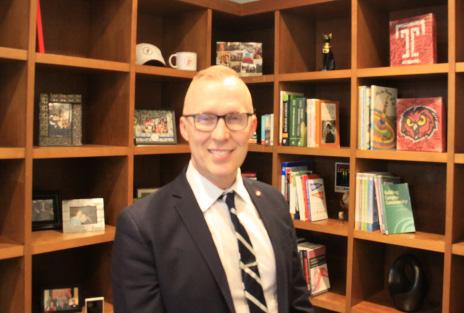
A new Dean of Students was named by Fordham University in November 2025, replacing outgoing Dean Christopher Rodgers, who is now fully transitioned into his new role as associate vice president for Strategy and Operations. Kevin Williams, Ed.D., will be
taking up the mantle. But who is he, and how will he assist in improving Fordham?
Williams began his Fordham journey as a child. He lived on a farm, where he grew up aspiring to be an actor. But his dream quickly switched to politics, then to education and finally to therapy. Throughout his entire childhood, William’s family had taught him the
By KAT ROSSI ASST. NEWS EDITOR
The Fordham University international political economy department (IPED) hosted an event as part of their weekly lectures titled, “Bid for Internationalism: The Dialogue Between Pope Pius XII and President Franklin Roosevelt on Peace and International Order.”
The lecture given was a collaboration between the political science department and the Curran Center for American Catholic Studies. Madalena Meyer Resende, Ph.D., an associate professor at the NOVA University of Lisbon and a scholar of Catholicism and also politics, presented on the topic of her new book, which covers the dialogue between Pope Pius XII and former President Franklin D. Roosevelt.
Resende had begun her presentation with framing the project within broader scholarship on the reformation of the international order, noting that major wars often prompt global frameworks that had been established by those victorious powers and highlighting the 1648 Westphalia System, the 1815 Vienna Congress and the 1918 Versailles system as highly relevant examples.
In the formation of the postwar international order, Resende had emphasized a less apparent “underground dialogue” between Washington, D.C., and the Vatican which had contributed to various emerging ideas that were about sovereignty, human rights and also multilateral institutions.
“The emergence of Nazi
SEE IPED EVENT, PAGE 4
importance of learning about and helping others.
“My parents instilled at a very young age that we needed to help others, be of service to others,” Williams said. “I think that’s why the Jesuit … connection, lifelong learning and being of service to others was really important.”
Williams ended up attending
By JORDAN DONEGAN ASST. NEWS EDITOR
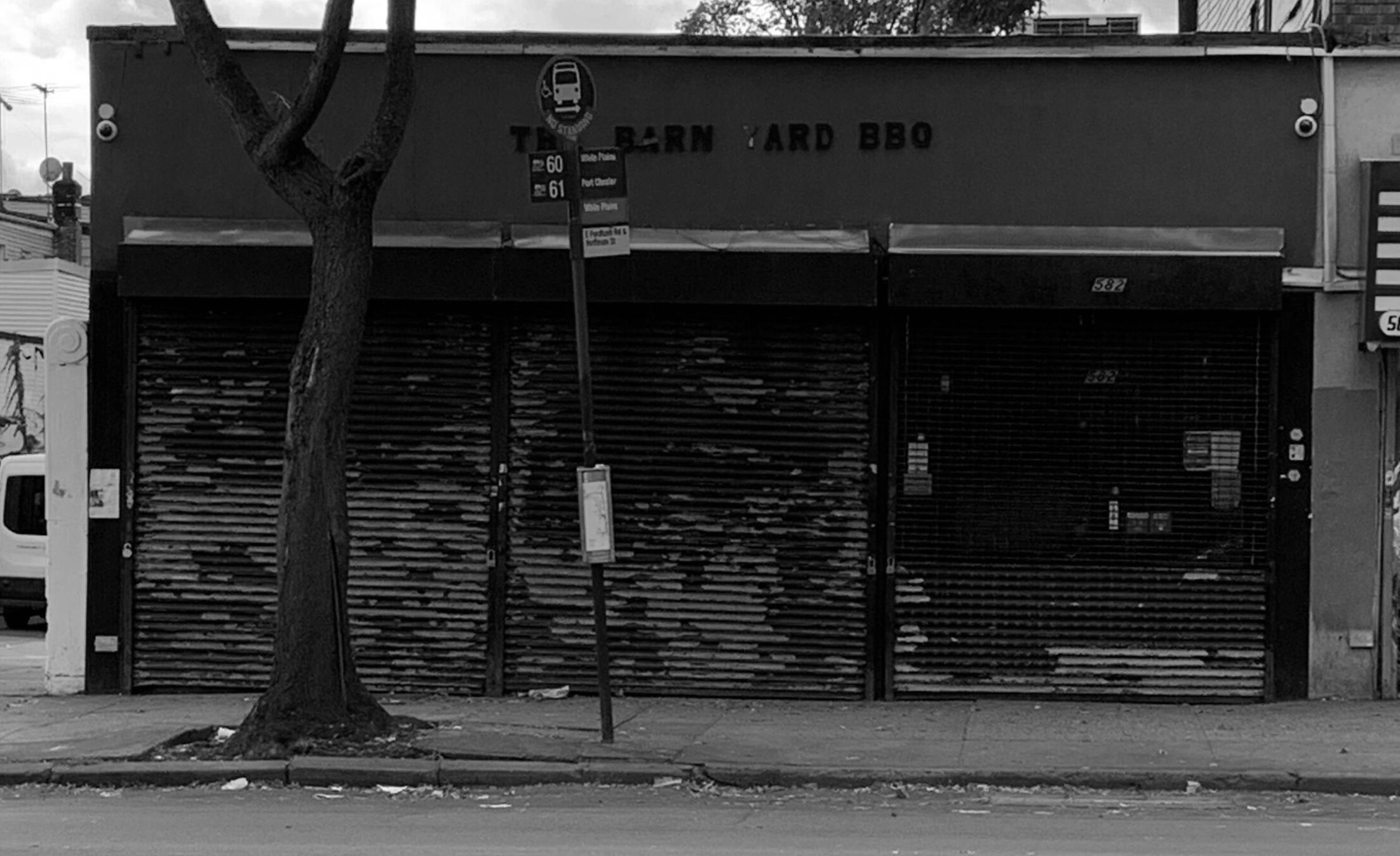
After nearly six years of hosting late-night drinkups and the jam-packed Halloweekends, one of the local bars Barnyard BBQ recently announced they are permanently closing on Feb. 28. This closure comes after months of negotiations with landlords over increasing rent prices, according to Barnyard owner Simon Kajtazi.
Barnyard, which is located on Fordham Road next to Arthur Avenue, is one of the major primary attractions for the Fordham University night life. Many students have expressed formative undergraduate experiences and memories attached to the bar. However, Kajtazi said the rent is simply too high for him to keep up with, forcing him to permanently close the doors to his establishment.
“Barnyard is closing down because our lease is going up and the rent is going up,” Kajtazi said. “The rent is going up; that is the whole case. The lease couldn’t be negotiated,
so we just decided to end it.”
When Kajtazi had made this announcement on the Barnyard official Instagram page, many Fordham students were left wondering whether the closure would actually take place. Kajtazi had previously announced its closure in 2024, only to retract it and remain open for another two years. However, Kajtazi confirmed that he is closing his bar for good this time. He remarked that when he almost closed Barnyard two years ago, Fordham students were the ones who saved his business after he struggled with financial issues and a lack of customers at his bar.
“I made an announcement a couple of years ago, but thank God Fordham came through by supporting us,” he said. “And now, the lease is going up too much, and the rent is getting too high.”
Notably, Barnyard is not the first bar outside of Fordham’s gates shutting down for good within the last couple of years. At the end of the 202425 academic school year,
SEE BARNYARD, PAGE 5
By SIDNEY BLASCO FEATURES EDITOR
Despite walking through the dense 18-inch snow left from the recent snowfall, the silence of the Louis Calder Center is warm and welcoming.
Roughly 30 miles north of the Rose Hill campus and a 45-minute Ram Van journey away from it, the center serves as Fordham University’s own biological field station. It is filled with laboratories, researchers and acres of forest, all fulfilling the purpose of environmental work.
The Calder Center is a 113acre property established in 1967, and was donated to Fordham by philanthropist Louis Calder. The property includes forests, the wetlands and water systems, giving researchers the environment to study ticks, trees and other
Rorganisms living nearby.
The center is separated from Fordham’s two main campuses and, for the last three decades, has generally been run by four staff members, according to Thomas J. Daniels, director of the Calder Center. Originally focused on faculty research, the center now supports undergraduate and graduate students in interdisciplinary environmental studies.
“We take students up here, we expose them to the outdoors … we give them hands-on experience through SEE CALDER PAGE 5

Intimate Photos Threat Off-Campus
Feb. 21
On Saturday, Feb. 21, at 7:40 a.m., a student reported that they received a text from an unrecognized number requesting the student send money or the offender would share intimate photos of the student with the student’s family. The supervisor contacted an Administrative Support person to meet with the student. The supervisor contacted the NYPD to respond and prepare a report.
Stuck Elevator Off-Campus
Feb. 24
On Tuesday, Feb. 24, at 12:05 p.m., there was a stuck occupied elevator in Salice Hall. The supervisor responded and notified the elevator company. A technician responded, freed the occupant and inspected the elevator.
Spiked-Drink Off-Campus Bar
Feb. 24
By EMILY TONNA EXEC. COPY EDITOR EMERITUS
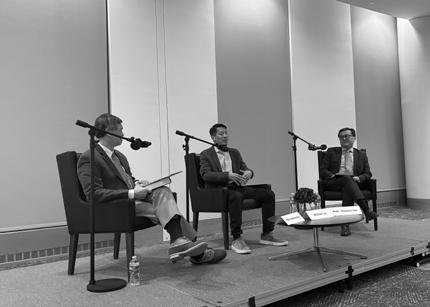
The Fordham Law School’s Center on Asian Americans and the Law hosted Michael Luo, an executive editor of The New Yorker and former investigative journalist for The New York Times, on Feb. 10 to speak about his 2025 novel documenting Chinese and American history, titled “Strangers In The Land: Exclusion, Belonging, and the Epic Story of the Chinese in America.”
The event was moderated by the center’s co-directors, Denny Chin, senior judge of the United States Court of Appeals for the Second Circuit, Lawrence W. Pierce, distinguished jurist in residence, as well as Thomas Lee, Leitner Family professor of international law at Fordham Law, who co-founded the center in 2022.
The center is the first of its kind in the United States according to former Vice President Kamala Harris in her dedication address to Fordham Law. Their website mentions that their curriculum inspired approximately 15 other law schools to begin teaching Asian American legal studies.
The event consisted of Chin and Lee asking Luo questions concerning why he wrote this book, its relevance today as well as how his journalism background has informed his historical narrative.
debates over immigration law.
“There are many issues that are very similar to what we’re seeing today,” Chin said. “Mass deportations, raids, warehousing of folks to deport them and similar things going on. And so the way the government handled these matters, 100 years ago, is still instructive and relevant. And that’s why we wanted to do it.”
all the way to the Supreme Court, and even though they ultimately lost, their tenacity set a precedent for future immigration law — a theme Luo aimed to demonstrate throughout his book.
USG Columnist Needed
The Ram is looking for a columnist to write United Student Government articles. Please contact fordhamramnews@gmail. com if you are interested. We would love to have you!
Follow The Fordham Ram on Instagram, Facebook, TikTok and X @TheFordhamRam
On Tuesday, Feb. 24, at 1 p.m., a student reported that someone spiked their drink at an off-campus bar. The student declined to meet with Public Safety and declined the NYPD as well. Friday Feb. 27
Thursday Feb. 26
Major/Minor Showcase ...
Bepler Commons 12-2 p.m.
Meet faculty and explore majors and minors you’ve recently declared or are considering. Refreshments will be provided.
Luo explained that he began to write the book after he had experienced anti-Asian harassment in New York City, about which he wrote a piece for The Times titled “An Open Letter to the Woman Who Told My Family to go Back to China” in 2016.
Luo described the book — which covers pivotal events in the history of Chinese immigrants in America from the Chinese Exclusion Act to the 1871 Los Angeles Massacre — as a “narrative history.”
“This is not a textbook,”
Luo said. “I should kind of posit that I’m a storyteller by training, and I, as a journalist, I think I bring something different to the telling of history.”
In an interview with The Ram, Chin reflected on the importance of hosting Luo at Fordham Law amid recent
“Strangers In The Land” is particularly relevant from a legal perspective — in fact, the title references the characterization of Chinese immigrants given by Supreme Court Justice Stephen J. Field in his justification for the Chinese Exclusion Act in 1889’s Chae Chan Ping v. United States.
Luo explained that the Chinese entered legal battles in response to a series of anti-immigration legislation, including about 10,000 habeas corpus petitions, to the extent that the federal courts became overwhelmed. The litigation demand forced the federal government to create one of the first iterations of a federal immigration detention agency.
Notably, the 1892 Geary Act required Chinese immigrants to register for “certificates of residence” attested to by a “credible white witness,” or face deportation, according to historical records.
Well-funded Chinese legal teams challenged the ruling
“It’s the story of resilience, it’s [the] resilience of a people, and the Chinese persisted, and you know, we are sitting on this stage today because of it,” said Luo.
Luo touched on the question of assimilation and who gets to be an American as a running theme throughout his book.
“That kind of question is still something that trails Asian Americans,” Luo said. “I say that this is not just the story of Asian Americans, but the story of any number of people and ethnic groups and immigrant groups that have felt like — and are currently being treated — as strangers in the land.”
Sophie Lamb, FLS ’27, and president of the Asian Pacific American Law Students Association who had attended the event also discussed the importance of understanding Asian American legal history, especially as deportations and detentions of immigrants are increasing across the U.S.
“I would say that history repeats itself if you don’t know it,” Lamb said. “So, I think there’s a lot of things that we can take away from the past that we can relate from and apply to today.”
Sunday March 1 Dance Recruitment Clinic
The center’s unique angle of legal scholarship offers a number of opportunities to research, learn and apply legal history to modern contexts.
When speaking with The Ram, co-director Lee discussed the research he has been conducting for the center as a constitutional law scholar, specifically the 1898 United States v. Wong Kim Ark case, in which an American-born child of Chinese parents was denied naturalization.
The ruling invoked the 14th Amendment and solidified birthright citizenship in the United States — a right which President Donald Trump signed an executive order to terminate on Jan. 20, 2025.
“So, that case is obviously still relevant. I think the important thing is, this is history, but these cases are still alive and important,” Lee said.
Luo also expressed his appreciation for Chin, who is an alumnus from Fordham Law, as a “pioneer” in law for Asian Americans and for the ongoing academic inquiry that Fordham Law invests in through the center.
“[Fordham does] these reenactments of famous Asian American legal cases, and I’ve read some of them myself,” Luo told The Ram. “I’ve gone deep on the history, and so, it was a really natural fit to do this event.”
Monday March 2 Music Stipend Auditions
Faculty Memorial Hall 215 5:30 p.m.
By GRACE KAWECKI CONTRIBUTING WRITER
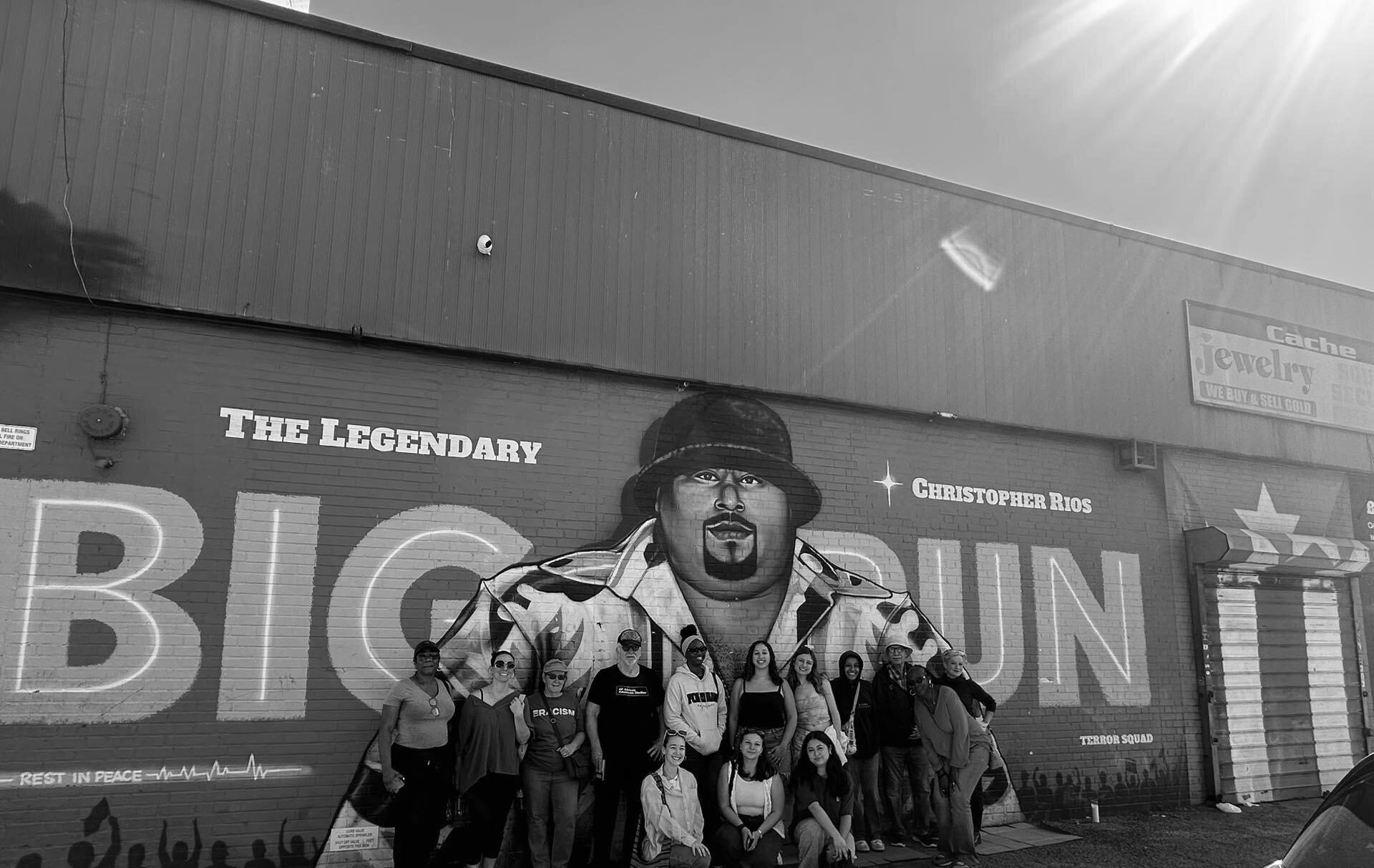
Anthony Abd-al Shafi Rosado, a first-year doctoral candidate in history at Fordham’s Rose Hill campus, has been overseeing the integration of oral histories and essays into the Bronx African American History Project (BAAHP) digital archives since September.
The BAAHP is a “communitybased oral history project” founded in 2003 by Fordham history and African American studies professor Mark Naison, Ph.D., following community leaders’ outreach to Fordham University to seek a platform for the stories and voices of African American history in the Bronx.
These oral histories are transferred to digital archives for preservation and easy access worldwide, according to Stephanie Robinson-Ramirez, a third-year doctoral candidate in history at Fordham’s Rose Hill campus and former BAAHP graduate assistant. Rosado claims that his initiative for the next two years for the digital archives will expand beyond African American history. He explained that he plans to integrate Afro-Latinos, Muslim communities, Muslim immigrants, African Muslim immigrants and queer perspectives into the digital archives.
By SIENNA REINDERS EDITOR-IN-CHIEF
The Fordham University United Student Government (USG) met on Feb. 19 to hear new club presentations and discuss budget requests.
The meeting started with a new club presentation from the proposed Pickleball Club. The two Fordham students presenting said the goal of the club is to create a community of people who can socialize through a shared interest. They said they are still figuring out where they would practice, but noted that they are looking at using public tennis courts in Brooklyn. They requested $1,000 in funding so they can provide club members with pickleball paddles and purchase a JBL speaker to play music during practice.
There was another new club presentation from the Dominican Students Association (DSA). In their presentation, they explained that hispanic students make up 21.2% of Fordham’s population, but Dominicans are one of the only major hispanic groups that don’t have a representative club on campus. They said the goal of their club is to connect Dominican students and highlight Dominican culture
The digital archives contain oral histories and some essays from Bronx residents. The interviews are fully transcribed to make them easier and quicker for viewers to read, thereby increasing interaction with the archives, according to Naison.
Rosado explained that the process of transcribing the interviews is carried out by undergraduate research assistants, who take an interview and create a mixture of summary and analysis, which is edited and then uploaded to the digital archives.
He noted the importance of digital archives rather than relying solely on written documentation.
“I’ll make sure that I’m also including testimony, voices. There is a nuance that I think that you get with oral history,” Rosado said.
The digital archives allow Bronx residents to share their experiences with people throughout the world. They have almost 90,000 views worldwide, averaging 100 per day, with the majority coming from outside the U.S.
The countries with the most views include China, Vietnam, Singapore, France and Brazil, according to Naison. These archives are most important for scholars to access this information and are valuable for preserving oral histories.
Rosado’s roles within the BAAHP include data management, administration and mentor to undergraduate assistants through managing the editing and organization of their work and helping to develop ideas for their projects. Rosado added that the best way to provide mentorship is to understand how feedback will impact the student.
For Rosado, the importance of this initiative immersed with the Black Lives Matter movement in 2013, and pushback from All Lives Matter individuals. This is an example of how people
co-opt movements, taking away their validity and undermining them.
“The house that metaphorically represents the Black community in the United States is burning,” he said.
Rosado also discussed preventions for co-opting within the archives.
“[The] historical archive has tended to dehumanize Black people, the Black body and the Black experience, as well as the Black perspective,” Rosado said.
He noted that it’s important to give people the ability to convey their own stories on a platform for others to view in
and values. They requested $7,000 in funding for two semesters in order to hold cultural showcases, organize community events and purchase food and supplies.
USG then moved on to budget requests, including the requests from Pickleball Club and DSA. The Diversity Action Coalition (DAC) also requested funding to purchase Amazon gift cards and cookies for their upcoming movie screening, which will be on Feb. 27 from 6 to 8 p.m. in the McShane Student Center.
The GSB Deans Council also had a budget request, however Vice President of Gabelli School of Business Hunter Gholson, GSB ’26, was absent at the beginning of the meeting, so Executive Vice President Andrew McDonald, FCRH ’26, decided to table his request. The other three budget requests all passed. Gholson arrived at the meeting later, at which point they voted on his budget request, which passed.
USG Executive President Lucas Hjertberg, FCRH ’26, reminded everyone about the USG retreat on Feb. 21, for which they went to Sky Zone and then got Chipotle, and announced that the theme for the retreat was sports attire. He also reminded USG members about the upcoming
town hall, which he said will include Chick-fil-A catering, and encouraged commissions and senators to table at the event.
Hjertberg and McDonald shared the proposal teams they created based on last meetings’ proposals. They said each proposal team has six people.
Assistant Director for Student Organizations and Programming Mark Less said that there are 87 days until graduation. He also mentioned that club leader training is under way, with the last training occurring on Feb. 24. Additionally, he announced that Spring Weekend training is under way and that the Spring Weekend talent has been booked.
Vice President of Student Life and Experience Luc Angus, FCRH ’26, said that the club suite form has been sent out for clubs who want to request a space.
USG Vice President of Sustainability Ayden Johnson, FCRH ’27, said that the St. Rose’s Garden cleanup would take place on Feb. 21.
Vice President of Diversity and Inclusion Layla Sayegh, FCRH ’27, announced that the Terra Firma National fundraiser on Feb. 18 raised over $200 for immigrant support in the Bronx.
She also announced that her committee would be collaborating with the Residence Hall Association on a Paralympic Highlights event. Her committee has also secured a local Bronx artist to perform at Rodrigue’s Coffee House on the last day of Bronx Appreciation Week and that they will be posting a call for student openers soon.
Vice President of Health and Security Aiden Costella, FCRH ’27, said that he is currently trying to coordinate a Title IX training for his committee’s members with Title IX Coordinator Liz Fanelli, and encouraged other USG members to reach out if they are interested in participating in the training. He also said his committee is planning the Week of Action, which is scheduled for April 20.
Vice President of Facilities and Dining Madeline Ando, FCRH ’27, said that she has an upcoming meeting with the chair of Lincoln Center Dining and Facilities to discuss the “One Fordham” initiative and fund allocation.
USG Vice President of International Integration Jenny Hong, FCRH ’28, said that their Lunar New Year event went well on Feb. 13 and that they had over 200 people in attendance.
order to respect and share the true Black experience. Rosado shared that he converted to Islam in November, and his Muslim community at Fordham Rose Hill has been especially influential in the decisions he has been making with regard to the communities that he iws focusing on in the expansion. Rosado detailed his future plans to implement a Bronx African American Oral History Project Journal he will launch at the end of the semester, which will include both past essays from the archives and new essays written by his own research assistants.
Senator Henry Carstens, GSB ’29, announced that the Contraceptive Policy Commission would be meeting with Counseling and Psychological Services Director Jeffrey Ng and Health Center Director Maureen Keown on Feb. 23. He said they will also be meeting with Assistant Dean for Student Involvement Catharine McGlade this week.
During senate reports, Carstens announced that Fordham will be purchasing a new registration application for class registration. He said USG would need to pick between two products — Ellucian’s Smart Plan and Award programs and Courseleaf. He showed a demo for the Ellucian program, the same company that created Degree Works, and noted that it connects to Degree Works allowing students to see only the courses they can and need to take, rather than the entire course catalog when choosing classes. Carstens said the contract for the product will hopefully be signed in July and implemented the following summer.
During the open floor, Ando announced that Fordham will be hosting their first ever Model United Nations conference next fall.
USG meets next on Feb. 26.
FROM WILLIAMS PAGE 1
Siena Heights University — a private Catholic university in Adrian, Michigan — where he studied social science as a firstgeneration college student.
Despite Williams’ desire to be a theater major, he graduated with a Bachelor’s Degree in social science. Outside of his studies, he was a Resident Assistant (RA) and a part of his university’s Residents’ Halls Association.
Following his undergraduate education, Williams pursued a masters in clinical social work at the University of Michigan (U-M). His studies revolved around the mental health of college students, which he had been inspired into pursuing while serving as an RA at Siena Heights. While at U-M, he worked in the first LGBTQ+ university center in the nation.
After graduating from the U-M, he was hired as the area coordinator at Oberlin College, where he also worked as the assistant dean of Students for Residential Life. After six years, he had transitioned into a role at Temple
University, where he served as the associate director of Student Life. Williams had noted that Temple had living-learning communities similar to the Fordham Integrated Learning Communities. During his time there, he worked on housing, in Information Technologies and in ResLife.
While he was working at Temple, Williams also continued his studies — focusing on urban education — and ultimately received his Doctorate in educational leadership from the university.
Following his time at Temple, in 2018, Williams was hired to work as the assistant vice president and dean of students at the New School in New York City. However, when the COVID-19 pandemic forced schools to transition to remote learning, Williams left the New School and found a hybrid role at Cornell University as their senior associate dean of students.
In 2025, he saw the opening to work at Fordham and the opportunity to be back full time. Williams credits his decision
to apply to the opportunity to be back in-person and his personal alignment with the Fordham Jesuit mission and commitment to cura personalis, or care for the whole person.
“I fell in love with and have been in love with the Jesuit mission,” Williams said. “[I] fell in love with that, that mission of helping students become competent, purposeful and ethical and so that aligned with the Jesuit mission here. That development of that whole student, helping you become lifelong learners.”
Williams shared that each of his past positions assisted in preparing him for his role at Fordham.
“I think with each new job, you learn new skills and you learn how to connect differently with different student populations and different groups who are similar or unlike your own experiences, so that you can gain a wide array of knowledge about how to support a wide array of students,” Williams said. “Each new opportunity
to take on a new task or a new area or meet with different students prepares you for that next journey.”
Williams had also spoke on the goals he has for his new position. To start out, he explained his desire to engage in discourse with Fordham community members in order to inform him on how best to assist in improvements.
“I think the goal is for me, first and foremost, to listen and learn about the culture, about the community, about what’s working and where opportunities for growth are,” Williams said. “I’m one of many in a living, breathing organization and culture, and so first and foremost my mission is to listen and learn, meet with students, meet with faculty, meet with staff and understand the student experience and staff experience here at Fordham and where I can contribute.”
Williams emphasized the importance of supporting and being a resource for students.
“It’s about being visible and available and listening to what our students need,
and making sure that I’m advocating for those while also setting clear expectations and understandings of what we can and can’t do right now,” Williams said. “As well as getting as much face time with students as possible.”
Williams also voiced support for University President Tania Tetlow’s recent “One Fordham” initiative, which is part of the university’s new strategic plan and underscores the desire and need to connect students across Fordham’s various campuses.
“I would say a second priority is continuing to think about how our programs and our services and our systems support the Jesuit mission, One Fordham and overall student success,” Williams said.
As his closing statement on his new role, Williams emphasized his focus on student and staff support.
“My role here is to build or to foster, to cultivate transformative communities, where students and staff can grow and learn, have that sense of belonging and wellbeing,” Williams said.
FROM IPED EVENT PAGE 1
ideology and rapid expansion created within the Vatican the need for a new model,” Resende said. She added that this expansion led to the Vatican’s shift toward acceptance of the nationstates, individual rights and democratic governance.
Resende highlighted parallel developments in American policy that was under Roosevelt. Beginning in the late 1930s, U.S. internationalism moved toward universal principles that would apply globally, despite some strong domestic isolationist sentiment present. The speech given by Roosevelt in 1941, the “Four Freedoms” speech and the 1942 Atlantic Charter were also noted by Resende as milestones in defining individual rights as the foundation of postwar order.
At the same time, Pope Pius XII’s Vatican had been undergoing its own doctrinal transformation. A key turning point came in 1939 with the Pope’s letter “Summi Pontificatus,” which framed nation-states as legitimate actors within a natural rightsbased international order. This statement marked a significant departure from earlier Catholic ambivalence toward the state system.
“It was one of the first doctrines that gave a positive twist on states and national sovereignty,” Resende said.
She noted that, early in the war, the Vatican and the United States shared temporary alignment as the neutral actors seeking to shape peace without direct military engagement. Resende
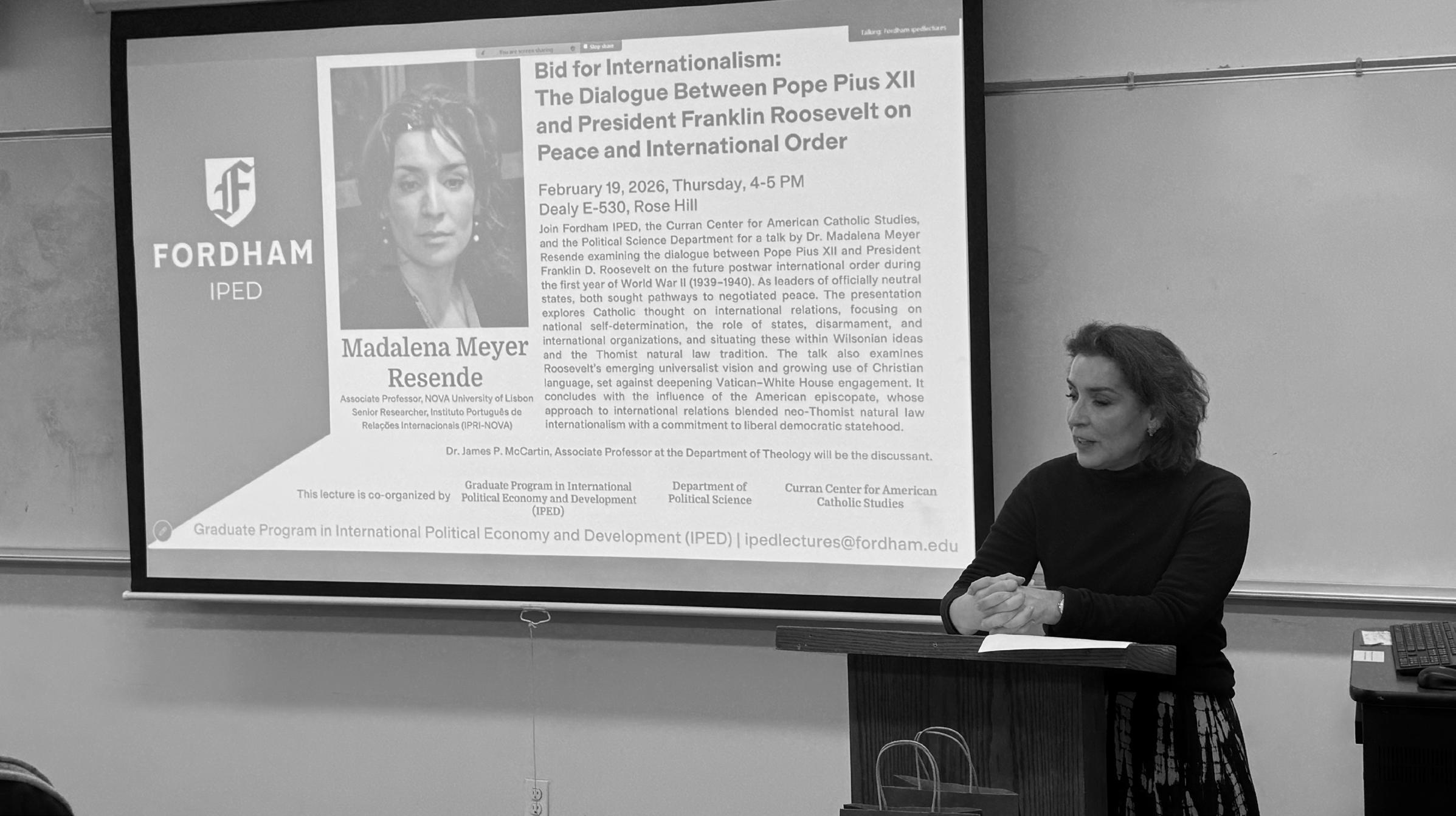
explained how diplomatic cooperation had deepened through unofficial channels, including Roosevelt’s personal envoy Myron Taylor, who traveled repeatedly between Washington, D.C., and Rome. These exchanges addressed issues ranging from military strategy to religious freedom.
Tensions emerged, however, when the Soviet Union had joined the Allied forces in 1941, raising concerns in the Vatican about communism’s expansion into Europe and the presence of an atheistic great power.
Religious liberty became a focal point of negotiations, which ultimately influenced the inclusion of religious freedom language in the 1942
Declaration of the United Nations. Resende said that this language demonstrated how the Vatican concerns shaped broader Allied policy discussions.
One of the more significant historical events Resende had examined was Pope Pius XII’s 1942 Christmas message that had been delivered amid the pressure on the Vatican to condemn Nazi atrocities.
The address had articulated the “Rights of the Human Person” as the foundation of political and international order, that represented what Resende described as a major doctrinal shift in the Vatican’s consideration of the interplay between states and individuals.
“It puts individual rights,
or rights of the human person as it is written at the center of political order of states and international order of states,” Resende said. “It is the most well known Christmas message.”
Later the wartime debates focused on the structure of postwar security institutions, particularly whether global governance should be regional — i.e., dominated by major powers —or universal. The Vatican supported universalist models, partly due to fears that regional arrangements would strengthen atheistic Soviet influence in Europe, and impinge religious liberties, which Resende had explained guided Vatican policy towards the United States.
By the war’s end and the
founding of the United Nations in 1945, Catholic political thought had undergone a very significant transformation. Resende noted that, while the Vatican expressed reservations about aspects of the new system, it had largely aligned itself with American-led liberal internationalism, abandoning earlier ambiguities about democracy and sovereignty. The presentation concluded by emphasizing the role of American Catholic bishops as intermediaries who had then translated ideas between Washington, D.C., and Rome. Their influence, Resende said, helped produce a new synthesis combining Catholic doctrine with elements of the liberal democratic internationalism.
Mugz, a popular cornerstone of Fordham’s nightlife scene, had closed permanently after over 20 years in business, largely due to increase in rent prices. Additionally, another Arthur Avenue nightlife staple Last Call closed last school year, though it temporarily reopened as “The Fish Bar” before closing again.
Kajtazii noted that he thinks his closure will considerably limit nearby locations where Fordham students can gather to enjoy a bar scene.
“Everybody knows that Barnyard is one of the best places — this is not me saying that, it’s from students saying it,” he said. “Once we close down, eventually, I don’t know where most of everybody is going to go … but I bet they are going to miss Barnyard.”
He added that the closure could impact the overall cost of going out for Fordham students, which he had drew from the complaints he had already heard from various students about the expenses
of Fordham nightlife.
Regarding his plans after closing his bar, Kajtazi said there are many ambiguities, but that he has many ideas.
“Who knows? I’ve got a whole bunch of stuff on my mind,” he said. “I have a restaurant already on Williamsbridge Road … but you never know what the future holds. I like doing surprises.”
Fordham students reflected on Barnyard’s closure, citing the changes in the bar scene that they have seen during their time at Fordham. Grace McCarron, FCRH ’27, said she has noticed a profound shift in the bar scene in her two years at Fordham.
“I just think it’s exciting how the going out scene at Fordham has been evolving over the years because we lost Mugz last year and now apparently Barnyard is going too,” McCarron said.
“There’s kind of just Clinton Hall and Howl now … but it’s just interesting to me how these neighborhood spots are disappearing … It’s kind of
sad,” she continued.
Bella Marino, FCRH ’26, cited the bars that she has seen close throughout her time at Fordham and said that she is sad to learn about the bar’s closure.
“I think that the campus bars like Barnyard and also
work,” said Daniels. “Our mission really is to make new scientists.”
Daniels said he has spent over four decades working at the center, focusing on tick research and later, mosquito research.
“Focusing on the population biology, their seasonal activity patterns, how numbers change from one to the next when they reproduce the things they feed on, the pathogens they carry … how to control them,” said Daniels.
Daniels described the work he does as essentially a public health service. Tick research is a major focus of the center, specifically in managing invasive species in the area, collecting data and sampling insect and plant species, according to Daniels.
“We have all this information on ticks, and we’ve been collecting it for 40 years,” said Daniels. “And we use that information to help people understand [that], tick numbers aren’t so bad this time of year, they’re getting worse this time of year, and they’re really bad this time of year.”
One of the center’s other pressing concerns is invasive plant species, according to conservation land manager Phillippe Yahia.
“It does drive home the severity of invasive plants and the damages they can do,” he said.
The current undergraduate student intern, James Laske, FCRH ’26, is working on a longterm forest health survey. He said the work he is doing at the center aligns with his interest in environmental education.


“We
have student interns coming in and helping, either doing their own projects, independent projects, or assisting [with] whatever projects that we have set up,”
Kajtazi noted that he will miss the Fordham community when he closes his bar this weekend.
“We’re just going to miss everybody,” he said. “We hope everybody has fun.”
Mugz are a significant part of the culture that is attached to the university, and through my four years here, I’ve seen now at Last Call, Barnyard and Mugz,” she said. “Honestly, I feel grateful to be a part of the plethora of people that are experiencing it during their college time here, but I also feel sad.”
Another challenge the center is facing is potential research opportunities being hindered by budget constraints, according to Daniels.
“[The budget] continues to get cut because of the financial crisis that the university’s in,” said Daniels. “Additional money comes in from faculty who receive grants … The money isn’t always adequate to do the things that I think would help everybody out, but those are things that are a little bit beyond our ability to manage.”
Despite efforts to increase student research opportunities, the Ram Van schedules, the number of students allowed at the center at a time and other requirements put in place limit the number of students with access to the campus.
“If a student shows up unannounced and then they choose to wander into the forest there is bad cell service and we can’t get to them,” said Chomri.
Researchers and student workers have access to the center’s 12-resident cabin complex, where they can stay overnight while conducting studies. However, it is usually difficult for students to go to the center without planning months in advance, according to Laske.
“If I could change something I would probably change the amount of people that are allowed to come up here,” said Laske. “Usually, it is very hard to get anyone up here without explicit written permission.”
If students are interested in visiting the center or conducting research, they should contact caldercenter@fordham.edu. FROM BARNYARD PAGE
By SIDNEY BLASCO FEATURES EDITOR
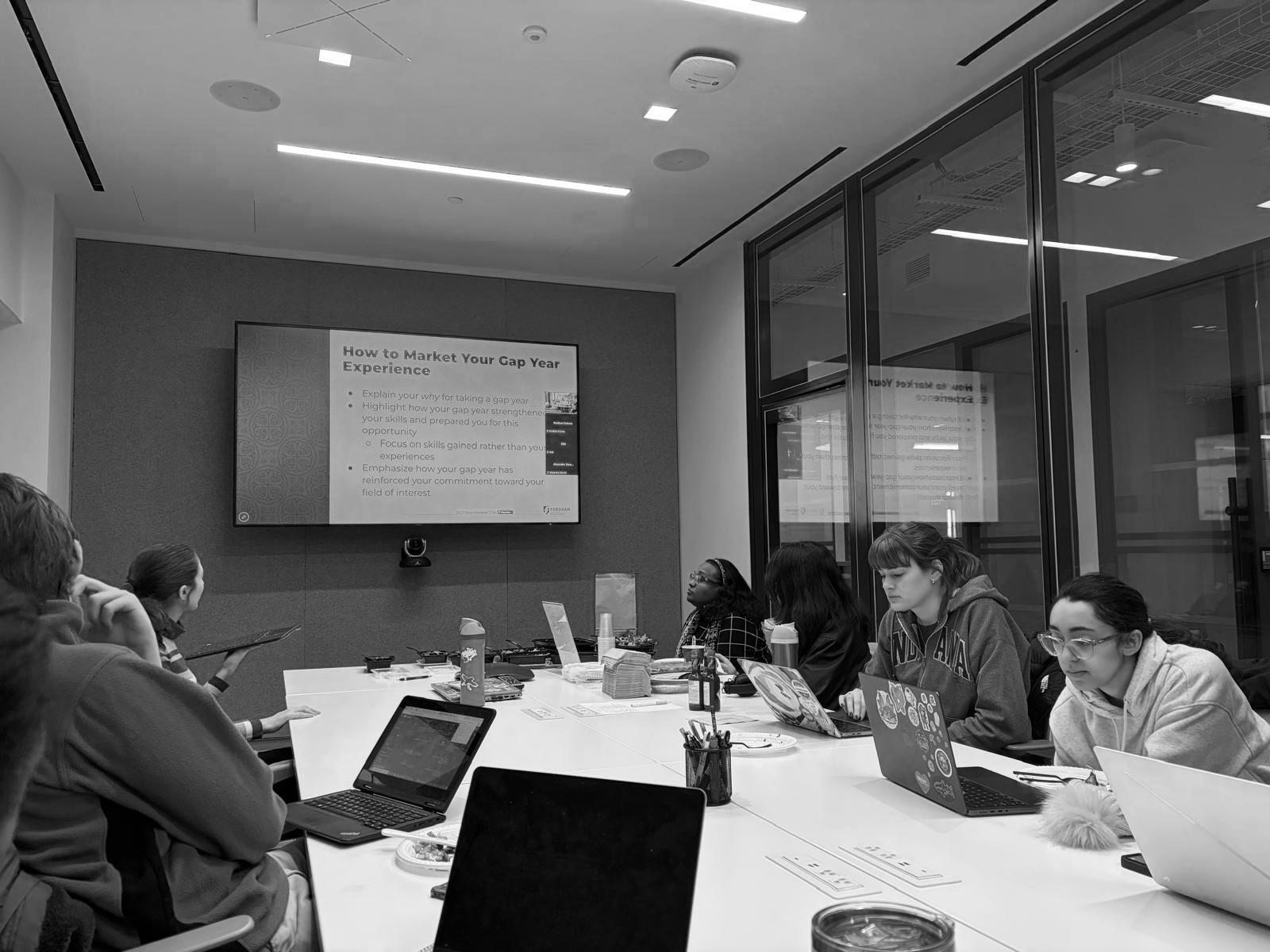
Fordham University’s Career Center and Senior Week Committee co-hosted an event titled “Making the Most of Your Gap Year” on Feb. 12. The workshop series was a part of the Career Center’s annual Supporting Our Seniors spring series, which contains programs which the Career Center considers to be useful for current Fordham seniors.
The presentation, given by Allyson Blatz, FCLC ’20, assistant director of Student Engagement, highlighted the program’s primary focus. “Our first workshop in the series was preparing for the job search, talking about job search strategies relating to how to personalize your application materials, how to build out your professional network approach and interviewing,” Blatz said.
According to Blatz, there are three categories that students considering a gap year fall into: direction, adventure and earning seekers. Blatz said that many students misunderstand what a gap year is.
“A lot of students think that taking a gap year means taking a year off from school,” Blatz said. “Really it’s about taking
a year on and it’s about how do you approach a gap year strategically so that you’re meeting goals.”
If students are not intentional with their gap year, they will not develop new skills post graduation, making them less competitive in the job market, according to Blatz.
“I see a lot of students who unintentionally [do] gap years,” said Blatz. “There will be students who will say, ‘well, I’m going to take the summer off and then hopefully just get a job by September.’ But then they do nothing over the summer except for vacation and lounge around.”
Programs like those hosted by Supporting Our Seniors often lead to increased student engagement with the Career Center’s services, according to Blatz. These programs can assist with being intentional with your gap year.
“We see people who (...) never knew how to schedule a counseling appointment on Handshake or didn’t know about certain resources and then took advantage of those resources,” Blatz said.
The Career Center offers these resources to Fordham students after graduating, according to Cheretta Robson, senior associate director of the
Career Center. One example is a six-month dedicated counsel who can support students after graduating.
“If they are still seeking employment [then] the Career Center matches them with a counselor, and the counselor will reach out to them monthly to help them … with resources,” Robson said.
After six months, they provide a service for life, according to Robson.
Sara Starace, FCRH ’26, the
Senior Nights Coordinator, said she took a lot away from the event.
“I will probably be taking a two-year gap year so I thought it was very interesting and insightful to know, or to actually have a plan, or how to use your gap year to its fullest potential,” Starace said.
She mentioned taking a gap year can be scary for some students, and attending the senior events can make it a little less frightening, in
addition to helping otherwise.
According to Blatz, gap years focus on cura personalis, or care for the whole person, which is why it is becoming increasingly appealing to students.
“[They] also do a volunteer or service opportunity that actually makes a far bigger impact on them than they could have imagined,” Blatz said.
According to Blatz, this gap year program was one of several in this semester’s Supporting Our Seniors series.
By KAT ROSSI ASST. NEWS EDITOR
Fordham University’s Career Center held an event for language majors and minors on the transformation of a language education into careers on Feb. 11. The event featured Fordham alumni working in fields ranging from journalism and international affairs to healthcare and education, and featured a panel discussion followed by small groups for individual questions and networking.
Alumni panelists provided concrete examples of how language skills shape career trajectories. Madeleine Hilf, FCLC ’22, who works in media relations, said that her proficiency in Spanish allowed her to secure coverage with major Spanish-speaking outlets such as Univision and Telemundo, which enhanced her professional profile. She credited her language education and study abroad experience as foundational to her career path.
Joe Kottke, FCLC ’23, currently works as a panelist for NBC at their Western Hemisphere desk. They noted that the language skills they gained are paramount for their work, in terms of both gathering stories from the ground and translating stories from other news outlets.
“I use my Spanish daily … even in coverage of events that aren’t directly related to
a country or a group of people that exclusively speak another language,” Kottke said. “You never know when there’s going to be a critical voice telling a story that you don’t have access to speaking in English.”
Another alumna, Megan Sluzhevsky, FCLC ’21, currently works in research on foreign influence operations at Microsoft. She said during the panel that her knowledge of Russian and Japanese plays a central role in her work in analyzing disinformation campaigns and international media ecosystems. Even when technical skills are the main aspect of a job, she explained, language proficiency enables access to original sources and cultural context that would otherwise remain inaccessible. She also noted that on her team language skills were the primary criteria for hiring.
Allyson Blatz, FCLC ’20, assistant director of Student Engagement, organized the event. She reinforced this idea from the perspective of professional development, and observed that more and more students have been incorporating languages into their education.
“I believe a lot of students are realizing what we strived to highlight throughout the panel, which is that knowing another language or gaining [a] meaningful insight into another culture through language learning gives you a competitive edge in the job
market,” Blatz said.
The event was a part of a broader effort by the Career Center to provide services to humanities students, for whom a career path is less directly embedded in the curriculum, according to Blatz. For the past few years, the Career Center has held a panel event called Humanities Day, the most recent of which occurred on Feb. 18.
Michael Ossorgin, Ph.D., a professor of Russian at Fordham’s Lincoln Center campus, provided faculty input for the request of the Ram. Ossorgin said he had noticed that studying a language allows students to develop skills that they otherwise might not have been able to develop.
“Learning a language like Russian … trains students to tolerate complexity without panic, to find [a sort of] structure beneath apparent chaos and to suspend [their] judgment long enough to understand something[which is] genuinely foreign to their experience,” Ossorgin said in an email to the Ram.
Both speakers and faculty also challenged the perception that advances in translation technology would reduce the importance of language study. Sluzhevsky said that, in this environment, language, as a soft skill, is best paired with a hard skill, as there is much more to a language than simply speech but proper marketing to employers requires other
skills beyond language.
“Just saying that you speak a language is almost like selling yourself too short. You can probably do a lot more with that language than just speak it,” Sluzhevsky said in the panel.
There was agreement on the importance of not only knowing second languages, but the act of studying them as the world becomes increasingly interconnected. Despite this automation, the world’s interconnection and dependence on technology has led to language skills becoming
more important than ever. “We live in an era of algorithmic translation ... which creates the illusion that language barriers have collapsed,” Ossorgin told The Ram. “The students who distinguish themselves are those who understand that real communication [is] the kind that builds trust … I’ve seen students who began simply wanting a language requirement emerge with a fundamentally different relationship [with] precision, ambiguity and meaning, all skills that serve them everywhere.”


Serving the Fordham University campus and community since 1918
The Fordham Ram is the university journal of record. The mission of The Fordham Ram is to provide a forum for the free and open exchange of ideas in service to the community and to act as a student advocate. The Fordham Ram is published every Wednesday during the academic year to all campuses.
Website
TheFordhamRam.com
Email Address theram@fordham.edu
Editor-in-Chief
Sienna Reinders
Managing Editor
Ian Nelson
Production Editor
Sarah Verrastro
Editorial Director
Molly O’Connor
Multimedia Director
Hannah Sullivan
Business Director
Nishanth Aduma
News Editor
Emma Leonardi
Features Editor
Sidney Blasco
Assistant News Editors
Jordan Donegan
Kat Rossi
Opinion Editor
Loressa Zeqiraj
Assistant Opinion Editors
Erynn Sweeney
Gabriel Capellan
Culture Editors
Lara Ejzak
Makenzie Smith
Assistant Culture Editor
Paolo Liaci
Sports Editor
James Nelson
Assistant Sports Editors
Molly Friedman
Ethan Bess
Copy Chief
Indigo Towers
Executive Copy Editors
Emily Mitton
Uma Petzke
Emma Kelner
Elaina Gibson
Social Media Director
Haniyyah Usmani
Photo/Graphics Editors
Emily McCall
Wilson Speller
Digital Producers
Han Le
Marisa House
Advertising Directors
Violet Wallace
Juan-Pablo Valencia
Rishika Lingamdinne
Faculty Advisor
Beth Knobel
Editorial Policy
The Fordham Ram’s editorial reflects the editorial board’s opinions or views.
Opinion Policy
The opinions expressed in this publication are those of the authors. They do not necessarily reflect the opinions or views of The Fordham Ram.
Submission Policy
The Fordham Ram Reserves the right to reject or edit any submission for any reasion, without notice. Submissions become the exclusive property of The Fordham Ram. No part of The Fordham Ram may be reproduced without written consent.
Correction Policy
The Fordham Ram is committed to fair and accurate reporting. If you are aware of an error, please contact us at fordhamramonline@gmail.com
Five years since one fateful move and I still don’t know whether to thank or curse my mother for the challenging and unconventional start to my teenage years. What I do know is that my peripatetic life began when we moved to Spain and that I’ve been immersed in enough new cultures, languages and viewpoints to make my head spin. The flip side to this lifestyle is that at times, I don’t even know where home is.
I lived quite happily in New York City until age 13 when my mom, a lover of all things Iberian, decided to relocate my family to a tiny village in Andalucia so I could attend a local public school and learn Spanish. After six months, we moved to Madrid. Resentful that we didn’t return to the U.S. as promised, I convinced my parents to let me study in France and live with a host family. I was 15, it was my critical junior year of high school and many people questioned whether I could handle it, but I trusted that I would figure it out. I learned French by writing history papers and studying Baudelaire, along with a daily dose of gossip, and I loved it.
The U.S. House of Representatives passed the Safeguard American Voter Eligibility (SAVE) Act on Feb. 11 to address alleged issues of non-citizen voting. While this bill claims to curb voter fraud, its impact could make voting much more difficult for a large number of U.S. citizens including married women , transgender and disabled people, an issue that is especially pertinent as we approach the 2026 midterm elections.
More specifically, the SAVE Act, sponsored by Republican Texas Representative Chip Roy, would require people to “provide documentary proof of U.S. citizenship when registering to vote in federal elections.” This requirement sounds reasonable enough at face value, but it’s what lies between the lines that carries the potential for great harm to millions of voters.
Currently, voter registration documentation requirements are not streamlined throughout the country, as some states require photo identification while others allow other forms of identification. New York state, for example, requires a driver’s license number, non-driver’s ID number or the last four digits of your social security number for voter registration. If those cannot be provided, registrants can also provide a copy of a current and valid photo ID, a current utility bill, a bank statement, a government check or paycheck or a government document that shows their name and address.
Documentary proof of citizenship under the SAVE Act, which would apply to all states, would strictly include a Real ID, a U.S. passport, a military identification card with a record of
I then spent my senior year in Connecticut with my grandma and started college doing a study abroad program in London my first year at Florida State University, adding yet another culture to my nomadic existence. At least my classes were in English! Learning new languages and studying overseas have been defining features of my life, and I suspect it always will be. But I didn’t expect how much these experiences would have formed me and directed my future. As a result of frequent upheaval and parachuting into disorienting situations, I have learned to be flexible and resilient. I think of it like this, and bear with me as this is going to sound a little odd: If I were a camera, I would be equipped with a wide-angle lens, as I can absorb and appreciate a wider landscape than would have been possible had I stayed in my comfy Waldorf school in Brooklyn. For example, I thought I hated the French and their food seeing as my first host family in France resented cooking, served flavorless dinners and ate in silence. I later lived with another family who ate on handmade plates,
started the meal by thanking God and then eagerly dug into delicious food while chattering, yelling and laughing. With the first family, I dreaded supper time. With the second, I looked forward to it. So, are the French solemn or jovial? Is French food unappetizing or yummy? The answer is both; only a wide-angle lens can capture both experiences. This unique upbringing has been compelling and maddening. It’s like I’ve peeked through a keyhole and seen a sliver of what’s out there to experience, but I know there is more that is out of view. I’ve reached the second stage of the Dunning-Kruger effect
service or a government-issued photo ID that shows the applicant’s place of birth as the U.S. Alternatively, individuals could use a different form of government-issued photo ID when accompanied by a birth certificate, Record of Birth from a U.S. hospital, adoption decree, Consular Report of a Birth Abroad of a citizen of the U.S., naturalization certificate or an American Indian Card. No state would be allowed to accept a voter registration application without this documentary proof. In the case of mail-in voter registration, an individual would not be registered to vote in federal elections without bringing this documentation in person to the office of the appropriate election official.
Republican lawmakers are attempting to present this bill as “common-sense logic,” but in doing that they are ignoring the significant obstacles that it creates for several groups in the country. Only about half of Americans have a valid passport, and many people do not have access to their birth certificate or record of birth. In the case that somebody needed to use their birth certificate but had since changed their name so that their ID card didn’t match, they would not be able to register to vote. This is where married women and transgender citizens are faced with issues, as many people with names that have been legally changed will have to ensure they have other accepted documentation in order to register, creating an imbalance in voting access compared to other groups. Additionally, young, disabled, rural and Tribal citizens are often less likely to have access to
the proper documentation for registration due to accessibility barriers, creating further complications when they are trying to vote. Though one can argue that it is still possible for these groups to register, the bill is still not equitable given that certain groups of people will face more obstacles to exercise their constitutional right to vote.
It is important to note that under the Constitution, elections are primarily covered by state law, not federal. This bill would nationalize part of the election process, taking away part of the states’ freedom. Though it is not specifically unconstitutional, it is certainly wavering on the line.
Proponents of the legislation argue that it is straightforward, with the White House calling it “commonsense legislation” to “protect federal elections from fraud and abuse.” President Donald Trump and Republican officials argue that it will help prevent non-citizens from voting, but this is simply a solution to a nonexistent problem. It is already illegal for non-citizens to vote in federal elections, and research shows that only 0.4% of voter verification cases are revealed to be non-citizens.
Even if this miniscule statistic is enough to convince people of an issue, the obstacles for eligible citizens outweigh any potential benefits of fraud reduction. The process for getting a passport can be lengthy and expensive, and it can be extremely difficult to get original copies of the necessary documents to accompany lower forms of identification. If we make it more difficult for people to vote, we are actively discouraging them from voting.
(“conscious ignorance”), yet I’ve found myself at an impasse on what to do next.
All this to say, it’s okay if you don’t have a plan or you don’t want to take the traditional path that you feel expected to adhere to. I tend to intentionally seek out the road less traveled or not traveled at all, I’m not sure why! But my decisions have led me here and I am grateful for it. Be open to new experiences and try to cultivate your own wide-angle view; it will serve you well wherever life takes you. As for me and this next year, Fordham is where I’m widening my lens, and where I’m calling home.
It is no surprise that these groups of voters are potentially being silenced given the Trump administration’s public stances and actions against women and the LGBTQ+ community. Additionally, 86% of LGBTQ+ voters in 2024 were voting Democrat, so it’s unlikely Republican leaders want to encourage this community’s vote. As midterm elections approach this fall, it is possible that this full government Republican majority could be flipped in the House and/or the Senate. With Trump’s approval rating sitting at just 39% after his one-year mark in office, it makes sense that Republicans are getting nervous as opportunities to put Democratic leaders in power draw near.
In a country where voting is a constitutional right and the backbone of the democratic process, we must take any threat to this liberty very seriously. Free and fair elections are absolutely crucial to maintain a healthy democracy, and that includes keeping these elections equally accessible to all voters. Voter turnout is critical to successful governance and representative policymaking, creating increased trust in the government and better communication between elected officials and their constituents. Every eligible citizen in this country should be afforded the right to vote, and if that is taken away, the rest of our democracy will crumble. Call your representatives and talk to people you know to inform them about the risks of this legislation. However you decide to respond, do not let the true impacts of this act go unnoticed.
By CAYDENCE JONES CONTRIBUTING WRITER
The Olympic Games have always stood as a crossroads of sport and global politics. From their modern inception in 1896, the Games have promoted ideals of unity, peace and shared human achievement. But the history of Olympic participation also shows that the International Olympic Committee (IOC) has repeatedly grappled with when, and whether, to exclude nations whose actions on the world stage violate international law or those of the Olympic Charter.
The IOC’s tradition of barring countries from the Games is necessary in principle but inconsistently applied in practice.
The 2026 Winter Olympics in Milan Cortina made this dilemma impossible to ignore with the barring of Russia and Belarus from competing due to their involvement in the ongoing war in
Ukraine while Israel remained in the games, even though they have faced widespread international criticism and allegations of violating international law in their conduct in Gaza and the West Bank. While the IOC has a responsibility to uphold humanitarian values and the Olympic Charter, this year’s participant decisions revealed how difficult and politically fraught that responsibility has become.
Historically, the IOC has not hesitated to exclude nations whose policies directly contradict the values of international sport. Most notably, South Africa was banned from 1964 up until 1992 because of its apartheid regime, which enforced racial segregation and systematically discriminated against the majority of its population. Similarly, Germany and Japan were barred from the 1948 Games following World War II. These decisions demonstrated that the Olympic
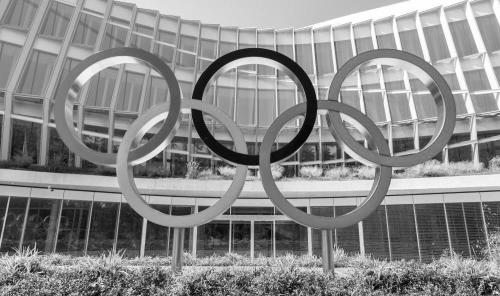
movement is dedicated to upholding a certain set of standards for those allowed to compete.
However, how does the IOC determine when a nation’s actions cross the threshold of expected standards warranting exclusion? The Olympic Charter emphasizes non-discrimination and respect for human dignity, yet it does not provide a clear enforcement mechanism. As a result, decisions often depend on a combination of legal considerations and pressure from member states. This lack of explicitly articulated, consistently applied criteria is what fuels ongoing debate about fairness, consistency and the true meaning of Olympic neutrality.
Currently, Russia and Belarus are permitted to send only a limited number of athletes per event to compete as neutral individuals rather than under their national flags. These athletes must meet strict eligibility requirements and cannot display national symbols, colors or anthems. However, because many international sports federations operate independently, individual events retain the authority to impose additional restrictions. In some cases, certain sports have chosen not to allow Russian or Belarusian athletes to participate at all, effectively barring them from competition in that discipline The athletes who are approved to compete still face intense scrutiny within the IOC. In
addition to heightened anti-doping protocols stemming from Russia’s state-sponsored doping scandal revealed around the 2016 Olympics, athletes are now subject to further vetting regarding public statements, affiliations and any demonstrated support for the war in Ukraine.
On the other hand, Israel’s athletes competed in Milan Cortina under their national flag, without any additional restrictions or coerced neutral affiliations. Unlike Russian and Belarusian competitors, Israeli athletes were not required to renounce national symbols, compete without an anthem or undergo additional political vetting tied to their government’s military actions. This contrast intensified criticism from viewers who perceived an inconsistency in how the IOC applies its standards. If the justification for restricting Russia and Belarus rests on violations of international law and the broader humanitarian consequences of war, similar allegations facing Israel should at least have prompted a comparable review process. Instead, the IOC maintained full participation rights for Israel, highlighting how not all geopolitical conflicts are treated equally under the Olympic framework that supposedly honors “fairness.”
The difference in treatment has led many to question whether decisions are guided more by geopolitical realities and diplomatic pressures than by a universal standard. As a result, the
2026 Winter Olympics did not merely showcase athletic excellence — they also highlighted the growing tension between the Olympic ideal of neutrality and the political realities that shape who is allowed to compete under a national flag.
Now that the Games have concluded, the broader questions raised at the outset deserve a clear answer. I believe the tradition of barring countries from participating in the Olympics is justified in principle. The Games are not just a sporting spectacle; they are a global institution that claims to represent peace and unity. If a nation’s actions fundamentally contradict those values, then the IOC cannot ignore that reality without undermining its own Charter. However, the 2026 decisions revealed how unevenly that principle can be applied. Restricting Russia and Belarus through neutral status signaled condemnation of the war in Ukraine, yet allowing Israel to compete without comparable review despite international criticism regarding Gaza and the West Bank highlights their inconsistency. Whether the IOC considers these situations legally distinct matters less to many viewers than the appearance of selective enforcement. If humanitarian standards are the benchmark, they must be applied consistently.
Caydence Jones, FCRH ’29, is a journalism major from Easton, Pennsylvania.
By CATHERINE PAYLEITNER STAFF WRITER
In an age where every celebrity misstep becomes a trending headline within minutes, it’s harder than ever to consume art without also consuming the artist behind it. Social media, paparazzi culture and the sheer speed of the spread of information online makes it so that fans and critics alike often know more about an artist’s personal life than the artist would ever choose to share. Honestly, we should know less about celebrities because it leads to increased scrutiny that non-celebrities don’t have to face. Whether conscious or not, we carry that knowledge when listening to a song, watching a movie or admiring a painting. So when an artist is “cancelled,” what happens to their art? It is possible to separate art from the artist, but the real question is whether doing so is ethically responsible. Many people separate the two constantly. Sometimes it’s intentional; sometimes it’s simply convenient. When Chris Brown pleaded guilty to assaulting Rihanna in the early 2000s, many listeners stopped supporting him entirely. But others continued to enjoy his music. His 2024 “Breezy Bowl XX” tour sold out arenas, with fans saying they chose to put his past aside. A similar dynamic appears in less extreme cases. Taylor Swift has
faced criticism for her carbon footprint, including reports that she allegedly produced 138 tons of carbon dioxide in just three months while commuting to and from Kansas City, Missouri. Swift’s publicist told BBC News that she purchases carbon offsets to compensate for private jet travel. For some fans, this information changed how they viewed her and her music. For others, it didn’t matter at all. They compartmentalized: The art is one thing, the artist another.
This kind of separation is possible because once art is released into the world, it takes on a life of its own. A song becomes reminiscent of a meaningful movie, a movie becomes part of a family tradition, a painting becomes a symbol of something deeply personal. People often feel that their relationship with the art is independent of the person who created it. But the counterargument is equally compelling, as sometimes the art is the artist. Frida Kahlo’s paintings are inseparable from her physical pain, political beliefs and personal relationships. Understanding her life transforms the meaning of her work. And Pablo Picasso’s treatment of women is deeply intertwined with his artistic evolution. Some viewers find it impossible to appreciate his work without accounting for the harm he caused. In these cases, separating the art from the
artist can feel dishonest, as if it ignores the very experiences that shaped the work.
This tension becomes an ethical dilemma. Just because we can separate art from the artist doesn’t mean we always should. When an artist has caused harm — especially if it is ongoing, unaddressed or tied to their power — consuming their work can feel like complicity. Our streams, ticket purchases and museum visits aren’t neutral; they contribute directly to an artist’s financial success, cultural influence and continued social platform. Even if we disapprove of their actions, our consumption can still support them. It’s worth asking whether our money aligns with our values.
But at the same time, not all “harm” is equal. There’s a difference between disagreeing with an artist’s political views and supporting someone who has committed violence or abuse. The ethical stakes vary depending on the severity of the wrongdoing, the artist’s response to it and the impact of our support.
Some people try to find a middle ground by consuming art in ways that don’t financially benefit the artist, like pirating music or movies. But this raises its own ethical problems. Piracy doesn’t just affect the artist, but also many people involved in producing the work. It also sidesteps the deeper question: If you feel the need to
avoid supporting the artist, why engage with the art at all?
A more honest approach might be to acknowledge the artist’s wrongdoing openly while still engaging with the art critically — especially if the artist has tried to make amends. This doesn’t mean excusing harmful behavior, rather it is recognizing that our relationship with art is complicated, and that being human is, too. We can hold multiple truths at once: Art can be meaningful, and artists can be flawed. In fact, their flaws might be what enables them to make art well enough for people to enjoy.
Ultimately, the question becomes personal. Once you learn something about an artist, it’s nearly impossible to “un-learn” it. And that knowledge shapes your
interpretation of their work. The decision then becomes: Can you enjoy the art without feeling complicit? Does supporting it conflict with your values? Does the art still feel meaningful in light of what you know?
Instead of pretending the separation is clean or universal, we should approach each case with awareness. Our choices as consumers have moral weight, even when the art is beautiful. The goal isn’t to create rigid rules about what we can or cannot enjoy. It’s to recognize that our engagement with art is shaped by the world we live in.
Catherine A. Payleitner, FCRH ’28, is a journalism and political science double major from Chicago, Illinois.
By KELLY BUBAN CONTRIBUTING WRITER
If you want to understand American culture and history in one night, don’t read a textbook — watch the Super Bowl. For a few hours on a Sunday night every February, more than 100 million Americans pause their lives to watch a football game. It’s as close to an American national holiday as you can get, excluding the Fourth of July. Group chats revolve around predictions of who will win the big game, with about $1.76 billion wagered through sports parlays. During the game, Americans consume millions of pounds of chicken wings and even more avocados — this year alone, an estimated 280 million pounds of avocados were used for guacamole.
The Super Bowl isn’t just a domestic ritual; it has gone international, with 60 million international viewers tuning
in. In 2026, the Super Bowl is no longer simply a sporting event. It is a cultural phenomenon.
At its core, football is a reflection of American identity and culture. The sport evolved in the 1800s, when students at elite universities modified the rules of rugby to create something new. Walter Camp of Yale University helped formalize the modern structure of the game, earning him the nickname “father of football.” Since its creation, the sport has been about adaptation and reinvention. In 1922, the National Football League (NFL) was created. The popularity of the game carried into the 1950s with the sport at the collegiate and professional level becoming publicized by television streaming and growing commercial investment. The first Super Bowl in 1967 made professional football a defining American
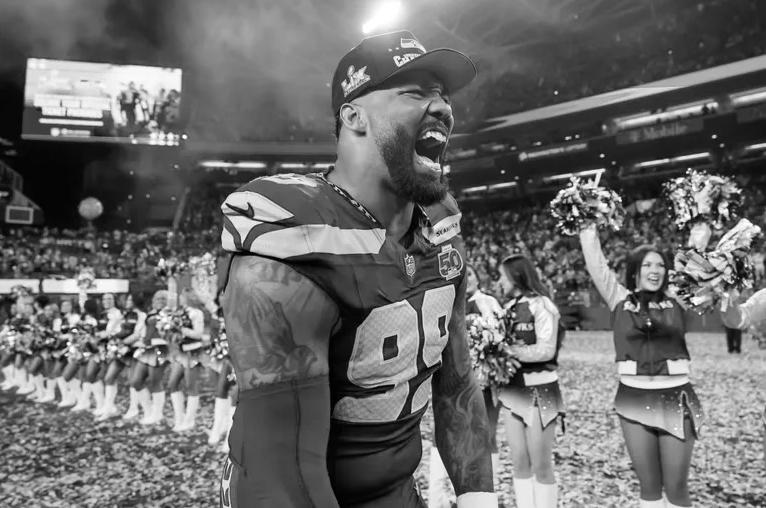
pastime. What had once begun as a college experiment turned into a billion-dollar institution.
Now, the Super Bowl isn’t only about winning the Vince Lombardi Trophy, but also about the magnitude of the game. The halftime show is just as anticipated as the game itself, pulling viewers who put on the game for the sole intention of watching the show. For example, Bad Bunny’s 2026 show averaged 128.2 million viewers and generated 4 billion views within 24 hours of airing.
The commercials are equally as important. Companies like Budweiser spend millions of dollars for a one-minute long commercial in hopes that the ad will attract viewers to buy their product. The event reflects a culture that blends competition with entertainment, tying it all together with a bow of consumerism. Football itself mirrors deeper values, rewarding specialization and strategy. Every player has a defined role, yet no individual can succeed alone. While the sport glorifies a star quarterback, there’s a heavy dependency on coordinated teamwork. This balance between individualism and collective effort reflects the American image: independent, but ultimately reliant on cooperation.
This tension between independence and cooperation is what makes the Super Bowl so very entertaining to watch. Americans are drawn to moments where individual excellence is on display in a way that highlights the
larger system that makes the small moments possible. As one FCRH ’29 fan put it, “as a New England fan, there is something so important about how even though I love Drake Maye, I know it takes the whole team.” We celebrate the individual, but we admire the structure that supports them, which ultimately captures the emotional contradiction that is at the center of the game.
It also explains why so many people tune in even if they have not followed the regular season games. The Super Bowl is not just the final game of a long schedule; it can be viewed as a culmination of a narrative that simplifies months of competition and hard work into one night. There is no redo or drawn out ending. One winner and one moment. One of my friends admitted “I didn’t watch a single game all year, but I’d never miss the Super Bowl.”
Beyond the game itself, the event pulls this attention because it has become culturally unavoidable. You can care about any aspect of the event — the halftime show, the commercials, the betting pools or the food — as much as the score. The Super Bowl has mastered the art of being more than football through entertainment.
The Super Bowl has innovation with layers of tradition through new technology, new halftime productions and new storylines every year, but it’s always able to be framed as the biggest and boldest version of itself.
Americans are connected to an identity focused on originality and self-definition. We admire reinvention. We celebrate extravagance. We gravitate towards how the Super Bowl is a once-a-year event. And, most importantly, in times of political, economic and social uncertainty, the Super Bowl is something reliable. It arrives every February, giving people a shared date on the calendar when, regardless of disagreement or division, we can all sit down to watch the same game. This consistency is what makes it a cultural anchor.
Americans care about how the game reflects how we see ourselves: inventive, independent, ambitious and determined to stand apart. It also reminds us that independence does not mean isolation. For one night, strangers cheer in the same bars, families and friends gather around the same TV screens, and conversations are able to stretch across differences. In a country that struggles with separation, the Super Bowl is a moment of togetherness. The world watches because for one night, all positive American traits are on display and concentrated into a single, uniquely American spectacle that manages to unite while celebrating being one of a kind.
By KAT ROSSI ASST. NEWS EDITOR
It is both well-established and beyond fair to say that President Donald Trump lost the 2020 election, despite his claims and the wildest fantasies of his supporters. This fact has been established in court, after the president’s sycophants announced repeatedly that the voting machines had been tampered with, the election was falsified and stolen and other such claims that, at their strongest, were highly dubious. In the case Dominion Voting Systems v. Fox News Network, Fox News was ordered to pay just upward of $750 million. Following the court’s decision, one can claim with complete confidence that the matter has been settled. The president, of course, seems to think the opposite, and the FBI was utilized in such a manner to ensure that the president’s false word became legal writ. Two things can be true at once, regarding the significance of this: that using the FBI for this is a symbol of the president’s authoritarian tendencies and a symbol of the erosion of that power. By this, I mean
that if the president believed his legitimacy and popularity among the American people to be sufficient, this action would have been, at the very least, unnecessary. It is clear that this administration does not trust its own people in the slightest. In order for there to be secure elections, the executive branch cannot and must not act as a guardian: it is in the state and people’s interest that the elections are unmeddled with, and they have the resources to do so. There is something at play in this administration that affects the actions that it takes. It is absolutely imperative for authoritarians to establish an enemy within the state as a way to cement their own power. To that end, there are two aspects of this practice of scapegoating. If anything can be found suggesting that the election was tampered against the administration, then it will be used as evidence of that enemy within. Secondly and more importantly, however, it presents an image of strength and untouchability: Indeed, who would want to tango with the FBI? Presenting that front serves as a sort of
political pornography for the political base in the same way that superhero movies or war movies can. Maintaining an image of strength is absolutely necessary for a riled up base which is rather boorish in its understanding of nuance. Much of what is done by this administration seems to depend on the calculus of what looks good on TV or Instagram Reels rather than any proper political prudence. One only needs to look at instances such as the Attorney General lashing out in her hearing or the Homeland Secretary’s photo-ops in the El Salvadoran prison to realize why this is the case.
As far as why these actions are a cause for concern, I believe that there are two contradictory ways to look at them that, again, can both be true at the same time. These actions, and many of the actions of this administration, reflect that of a toddler throwing violent tantrums when told “no.”
As a result, independent of whether or not they are authoritarian tendencies, this administration’s temper tantrums can and do hurt enormous amounts of people.
Now, if we view these actions as having both authoritarian tendencies — which do, in fact, cause harm — and being childish, there absolutely is room to worry, both on account of their attempts to manufacture a narrative, as well as bulldoze resistance to that manufacturing.
At the same time, however, I do not believe there is reason for excessive worry.
The president’s actions regarding the voting machines resemble grasping at a rope that is running thin rather than an active cementing of governmental power, with the grasping becoming
increasingly more desperate as the midterm elections and the possibility of a Democratic majority in Congress draw nearer.
All this is to say is that the actions of the current administration are those of a group of authoritarians trying to cling to the shreds of legitimacy and confidence they do have rather than establish anything new. As tends to be with authoritarians, they eat themselves alive by eviscerating their own nervous system.

By EMMA KELNER EXEC. COPY EDITOR
All public bathrooms should require pay for use. Now, now, before you begin hurling obscenities at me and crying out that not only should we have free bathrooms, but we should also have more free bathrooms, let me elaborate.
Paris, 2024. Some of you may think of that year’s Olympic Games, featuring icons like the pommel horse guy and the greatest breakdancer in all of Australia. Not me. I think of public bathrooms.
That summer, I spent about two weeks in Paris, and during my time there, I was struck by a sudden urge — the need, to put it mildly, to see a man about a horse. I was ready to hold it, but my
parents insisted I make use of one of Paris’s 400 public restrooms, one of which happened to be right across the street. It was terrible. The bathroom did not lock, flush or have water coming out of the sink, and it was particularly odoriferous — a fancy word for stinky. Luckily, that experience will soon be brought to theaters near us. The New York City Council voted to create more public bathrooms across the city, with the goal being about 2,100 new restrooms over the next 10 years. This will decrease the ratio of public restrooms per NYC resident from one restroom per 7,820 residents to one restroom per 2,700 residents. Mayor Zohran Mamdani committed $4 million to a Request for Proposals, a

By EMILY MITTON EXEC. COPY EDITOR
Language is a highly volatile aspect of human life, perhaps even the most. It is the direct representation of our minds and cultures, reflected by differences in accents, dialects and diction.
Above all, language performs as the vital gateway to forming human connection. Without the complexities of language, communication would be reduced to solely presence and action. Varying from person to person, language is situational, expressive and captivating. That is exactly why I find it so important to master the art of dictating your own language. Situationally, language is an inescapable way of conveying your image listeners. There is a very large difference in the way that I speak to my professors (mindful of refined politeness and respect) versus the way that I speak to my friends (carefree and absentmindedly). While both of these ways that I dictate my language are true to myself and representative of what I am thinking, the differences are a product of what I have learned will be accepted in each scenario due to societal standards.
formal document requesting bids from external vendors, for modular public restrooms. These restrooms will be built off-site and transported to the designated bathroom location, where they can be easily assembled.
More bathrooms are surely a good thing, but I don’t like this plan at all. Though modular restrooms are cost-effective and easy to build and relocate as needed, we will not see most of these bathrooms until 2035 — a long wait for bathrooms designed to be easy to assemble. And while I understand the value of cost-effective restrooms, I don’t want to see them on the streets. They won’t be cleaned or inspected, and we’ll be left with pungent and disgusting bathrooms. Instead of trying to build as many low-quality bathrooms as possible, New York City’s government should focus on providing more high-quality bathroom experiences to the city. Take, for instance, Bryant Park’s bathroom. In a restroom complete with bathroom attendants, hands-free faucets, self-flushing toilets and a playlist of classical music and flowers, every toilet is a throne fit for a king or queen. But comfort and cleanliness aren’t free: the upkeep of the bathroom can reach up to
$271,000 every year, as toilet paper and flowers must be replaced and bathroom attendants must be paid. Under our current bathroom framework, making more bathrooms like the one in Bryant Park is unrealistic. But we can and should change our policies. In Europe, most public bathrooms are pay-to-use. The amount isn’t much, usually somewhere between 50 cents and a Euro, but it could revolutionize public bathrooms in this city.
The New York Times reported that, in 2016, 3,266 people used the Bryant Park bathroom every day. If you multiply that by every day of the year, you get 1,192,090, a truly astonishing number of bathroom-goers. If each of these bathroom patrons had to pay just 50 cents, that would amount to $596,045 of bathroom revenue in 2016. The bathroom would pay for itself more than twice over — not to mention that paying for bathrooms would give New Yorkers something to do with the change they can’t seem to use anywhere anymore. And just like with fares, people who can’t afford to pay 50 cents for a bathroom should be able to register for a “free use” bathroom pass. Under Fair Fares NYC, New Yorkers ages 18 to 64 with income at or below 145% of
This is an example of situational language. As stated by Craig Thane for Cambridge University, “One friend may say to another ‘Can I have a chat with you later?’ However, if the person making the request wants to talk to their boss who they have a distant relationship with, the request might be something like ‘Would it be all right to have a meeting with you this afternoon?’” I, like many others, have learned how to approach those around me in the most appropriate way depending on what their relationship is to me. By keeping situational language in mind when I speak to others, I am dictating both what to say and how to say it while exchanging said dialogue. Language is equally as important to dictate when it comes to self-expression. Speech is an easy way to express yourself, whether done intentionally or not. Some ways that language can be expressive of the self include written work (i.e. poetry) or spoken accents. Beginning with written work, using my example of poetry, the language chosen for the piece is solely chosen by the writer to express what they are thinking and feeling towards
the subject. As expressed by Briesa Koch through Richmond Public Library, “Poetry is an intimate and creative form of self-expression that allows us to give voice to our most complex emotions and experiences.” Written language can be just as powerful as when it is spoken, allowing us to dictate our language in a different way. In a more subconscious sense, accents are another significant way of dictating our language. Although accents are second nature to our beings, they are representative of our life experiences and cultures. If everybody had the same spoken cadence, there would be no way to tell where others are from or simply appreciate the beauty of somebody speaking in a different way than you do. As stated by Charlotte Guest for Pearson Education, “Accents matter because they are a core part of our identity and how we relate to the world. For language learners, accents can be a source of pride or frustration...Accents add diversity and richness to language and should be embraced.” Accents allow vast differences in the way that we dedicate our own languages, as they are
the Federal Poverty Level (FPL) can receive a 50% discount on subway and bus fares. This same policy can be applied to pay-to-use public bathrooms, except New Yorkers whose income falls at or below 145% the FPL should be able to use public bathrooms for free. And the infrastructure for registering for this pass can be funded by bathroom revenue! Isn’t it amazing when everything comes together so beautifully?
Speaking of fares, didn’t Mayor Mamdani promise us all free bus rides? I would much rather have a free bus ride than a public bathroom, but that’s neither here nor there. That’s a topic for a separate Op-Ed.
Hopefully, you’ve come around to my side. As we look ahead to the New York City of our children, we need to think about what kind of New York we want to pass on to the next generation. Will we settle for the stinky, modular toilets of this administration, or fight for facilities that reflect our city’s cosmopolitan, dynamic spirit? I’ve made my choice. Have you made yours?
unique and represent parts of our lives and cultures often without having to share them explicitly.
Ultimately, dictating our own language goes beyond simply speaking; it is shaping how we speak, how we represent the strength behind our words and what makes the way we talk unique from person to person. Whether it is done through the act of situational language, expressing ourselves through creative or informational writing or the subtle influence we give through our accents, we are
constantly choosing how we present our thoughts to the world.
Language is not a stationary way of life, for it is constantly growing and evolving as time passes to reflect the ways that we develop as a human race. By learning how to dictate your own language to the best of your ability, you will gain the power to communicate who you are with clear intention, clarity and purpose.

By ANTHONY KOROLOS CONTRIBUTING WRITER
Ignoring a celebrity’s history is something many have done with artists ranging from Kanye West to Zach Bryan, who have done questionable things in the past, yet still produce music enjoyed by many. However, for someone like Nicki Minaj, who’s recently become public about her support for President Donald Trump and spoke at Turning Point USA — a conservative youth advocacy program — there has been a sense of betrayal among fans that has turned into a
new movement: “Rip Nicki.” Minaj’s cancellation is not simply another example of an artist making an error or saying something wrong, but rather indicates how artists have used their supporters for fame and wealth, yet take no actual consideration of them. As Minaj’s fans come from diverse backgrounds, her outspoken rhetoric has aligned with the rhetoric of the right that is oppressive to various minority groups. If you’ve ever been at a party or simply listened to top hits from the early 2000s, you have undoubtedly heard some of

Minaj’s music. Why? Her music is all about empowerment, self-expression and being your true self. This is why she was admired by fans of all backgrounds, especially those who felt isolated because of their race, gender or sexuality. She celebrated these differences through her songs like “Fly,” “Feeling Myself,” “Chun-Li” and, probably most recognizable, “Starships.” Each of these songs celebrates self-expression and confidence, allowing fans to feel included and seen by a well-known artist.
However, when fans witnessed Minaj attend such a massive event for conservative thought and opinions and say mantras like “boys, be boys,” it feels antithetical to what her songs preach, seeing as she was a vocal advocate of the LGBTQ+ community. This “boys, be boys” mantra is something spread by many conservatives to establish typical gender norms and ideology, and ultimately hurts the LGBTQ+ community. When fans that identify with this community witness their favorite artist repeating
these sentiments, it damages Minaj’s credibility and likability among fans. They feel antagonized and used simply for Minaj to gain success, because ultimately, her fans from these communities are the reason she became so successful.
Most people on the left of the political spectrum, with good intent, urge celebrities and influencers to speak out about social issues in America (ranging from Black Lives Matter, Palestine and recently, the Immigration and Customs Enforcement raids). However, the results of these celebrities speaking out about these issues usually land flat, feel artificial and don’t do anything but enable cancel culture. However, with Nicki Minaj — someone who’s an expected proponent of minority rights — it is upsetting to fans to see her political support not align with her fan base.
Nicki Minaj is in a bad spot in her career right now due to her outspokenness at the Turning Point event, and we are already seeing people stop listening to her and post with the hashtag “Rip Nicki.” This move by
Minaj to solidify a relationship with Trump feels selfish, as people suspect that her motive was gaining U.S. citizenship and earning a “Trump Gold Card.” These cards are a payto-play mechanism where rich foreign-born people can pay to become a U.S. citizen, another policy of Trump’s that continues to favor the wealthy. Moreover, as America becomes continuously polarized, it will be difficult for her to bounce back, especially because of cancel culture’s strong hold in American social and political culture. For example, Kanye West, who has been unable to come back from his antisemitic remarks and has ultimately not released music since 2022. Minaj’s career could be revived, but she has lost a great deal of trust from her fans, so it will take genuine effort on her part to show she truly supports and advocates for her fans’ rights.
By BRIDGETTE LEAHY STAFF WRITER
Just like how New York City offers numerous opportunities, its dating scene attracts various people, making it challenging to find “the one” to settle down with. Given so many streets to wander, faces to see and places to go, finding “the one” may seem easily serendipitous, and falling in love may seem like a breeze. Yet it is hard to tell if we are going on dates to find the one or if it is just another date to fill one’s schedule.
Dating apps became popular around 2012, with Tinder popularizing the swipe-leftor-right matching feature. It felt like a game for users and allowed people to meet others who were seeking a romantic relationship. It was a game-changer, revolutionizing how people normally met.
However, in 2020, dating apps soared as COVID-19 forced us to meet people in other ways, as the world was digitalizing rapidly. In 2020, while the world increasingly turned digital to accommodate the pandemic, Tinder grossed $1.3 billion, up 17% from 2019. During that time, other dating apps like Hinge and Bumble also increased in popularity, further cementing the dating app era.
Since the pandemic began, users who joined these apps during the lockdown have stayed and new users have joined, especially in populous cities like New York
City. These companies went further to promote their apps, their ads seen more online and even on subway station walls.
However, despite these marketing tactics, Tinder’s revenue has been declining slowly since 2024. Possibly due to factors such as the app’s users being disproportionately male — 75% identify as male and 24% as female — and that statistics show only 12% of lasting relationships are formed on dating apps.
Circling back to my question: Who are we going on dates with, and what is the purpose of the dates we go on?
I’ve noticed a pattern: Most people are easily dissatisfied and regularly go on dates with the same person. As people mature, high school relationships fade and we tend to move on to the next person as soon as a problem arises, rather than staying with one person.
Men fall in love and showcase their love through their actions. According to a psychological study by Bonobology, the key to men falling in love with someone is their consistent effort to build emotional intimacy.
Living in such a large city, dating apps play a significant role in one’s dating life, even with the numerous opportunities to meet people daily. Hinge, Cuffed, Raya and Tinder all play significant roles in the lives of young Gen Z. But which app is the best? I am not entirely sure, as each person’s dating life is unique.
Hinge, for example, appears to be a widely recognized and well-advertised app. As of 2024, 30 million people use Hinge worldwide. The app makes connecting with prospective partners simple. You can talk to about eight people at a time, swipe left or right, have conversations, follow each other on social media and ghost the person or meet up with them; the choice is yours. On the other hand, apps like Cuffed or Raya are more exclusive, requiring you to know someone on the app in order to create an account and build a social network. For some, this is ideal, as you can only talk to one person at a time and decide whether to meet or stop speaking to them. At the end of the day, all of these apps have a platform for reviewing the people you connect with. They tend to ask you after a week or so whether you have met this person, whether you would like to continue seeing them or whether you would like to stop. This helps address issues and improves the dating app’s ability to match users together. Like Tinder, Hinge also has a disproportionate gender makeup, with men making up 64% of users and women making up 36%. This same imbalance can be seen in user interactions on the app. Men receive, on average, one match for every 40 likes. Additionally, 52% of men have fewer than one match a day and 13% have fewer than one match a week. On average, men
like one out of three profiles on their feed. Comparatively, women receive, on average, one match for every two likes — and they like one out of 16 profiles. These statistics suggest that Hinge is designed for a male audience. I support this dating style, but despite the large male population on these apps, many women fail to find a partner who checks all her boxes through this dating method. At both the universal and psychological levels, we are aligned with stereotypes perpetuated by the media we consume. In every rom-com you watch, men, or rather filmmakers, seem to know what we as women want and desire, as movies and TV shows often portray the ideal partner. For instance, in “The Notebook,”
Ryan Gosling’s character confesses, “I wrote you 365 letters. I wrote you every day for a year,” to Rachel McAdams’ character. So why are we still trying to pursue these types of relationships through dating apps with the hope that you will find someone who embodies the characteristics of an ideal partner?
Young dating life can be fun, with or without commitments. We laugh, we cry, we learn from each other and with each date, we discover more of what we do or don’t want in our next relationship. Go out, meet people and spread the love!

By VEDHA GOKUL CONTRIBUTING WRITER
While living in New York City may mean the only horses we see on the regular are those pulling carriages through Central Park, these words carry weight as we welcome the Year of the Fire Horse. On Feb. 17, the Chinese New Year ushered in a fresh beginning, carrying us from the Year of the Snake into the Year of the Horse.
In the Chinese zodiac, the animal signs rotate on a twelve-year cycle, while the five elements — wood, fire, earth, metal and water — cycle every 60 years respectively with each sign. Understanding what the horse symbolizes in Chinese culture can help inform us on what to expect
from the upcoming year and what energy to meet these situations. The last time this overlap occurred was in 1966, a year marked by major global events including the Soviet moon landing, the founding of the Black Panther Party, the escalation of the Vietnam War and the rise of antiwar demonstrations. These upheavals reflect many of the traits traditionally associated with the Fire Horse: defiance, boldness and a refusal to remain still in the face of injustice. The Fire element intensifies the horse’s already headstrong nature, suggesting not just movement, but combustion — not just momentum, but transformation. If the zodiac offers symbolic language for understanding history’s rhythms, art provides

its most enduring visual archive. Across dynasties, artists and craftsmen have given form to the horse’s strength, spirit and moral symbolism, preserving these meanings. It is fitting, then, that the Metropolitan Museum of Art opened its exhibit “Celebrating the Year of the Horse” on Feb. 7, featuring a range of works in woodblock prints, ceramics, glass, jade and metal all of which honor the horse’s presence in Chinese culture.
The most visually striking and largest piece from the collection is an earthenware statue from the Tang Dynasty (618-907), which pays special attention to the strength and grandeur of the horse. The muscles in the horse’s chest and legs are accentuated, and its mouth is slightly open, giving the viewer the impression it is neighing and ready to spring into action.
The figure not only depicts the horse’s impressive physicality but also its spiritual disposition — robust, unyielding and embracing of whatever might lie ahead.
In zodiac symbolism, the horse is frequently associated with traits such as being headstrong and excelling at leading others. This intensity is best put to use through helping others, especially when paired with the horse’s moral uprightness and eloquence. These attributes lead the horse to being well
liked in society, for their ability to straddle being a tenacious, mighty animal, but also one with a virtue for justice. Perhaps this is why many scholars in Chinese society revered the horse as a popular insignia.
Small figures of horses, such as the “Recumbent Horse” previously adorned scholars’ desks, serving as both decorations and paperweights while depicting the animal in a pensive, yet equally proud stance. Oftentimes these smaller statues were crafted out of jade, a gemstone thought to be symbolic of wisdom and spiritual pursuit.
Another sect of society that venerated the horse was the nomadic peoples, specifically of the Han Dynasty (206 BCE–220 CE). “The Horse and Cavalry” rider portrays an earthenware man riding a horse, both of which are embellished with ornamental, painted details, giving them faces and color. It was actually horse riders such as the one depicted in the piece that originally introduced the animal to China and led to the development of the mounted cavalry, a transformation which played a vital role in unifying the dynasty. Over time in Chinese culture, the horse became irrefutably tied to notions of resilience and power in the face of driving social change.
As horses were integrated into Chinese society, especially
for practical means of transportation and warfare, they became important figures of protection. For this reason, many people even sought to bring the horse as an animal companion with them through their journey in the afterlife, explaining the plethora of burial artwork that includes the animal. One sculpture from the exhibit, titled “Horse and Groom,” depicts a man and his saddled horse, meant to be a tomb offering to serve an individual in the afterlife.
In contemplating the Year of the Fire Horse, we are reminded that to view the world through the eyes — or as Churchill might suggest, the ears — of a horse is to embrace both motion and mindfulness. The horse’s presence in Chinese culture, from the battlefield to the scholar’s desk, speaks to a timeless admiration for courage, resilience and the pursuit of virtue. As we enter this year, the Fire Horse urges us to act boldly, yet thoughtfully; to charge forward when necessary, but also to listen deeply to the world, to one another and to our own conscience. In honoring this animal through art and ritual, we are reminded that strength without reflection is incomplete, and that the noblest journeys require using more than brute strength, but our minds as well.
By ADISA BALIC CONTRIBUTING WRITER
“Wuthering Heights” has always carried a notable reputation, one beginning with Emily Brontë’s original novel, known for being dark, emotionally relentless and uneasily interpreted. Emerald Fennell’s 2026 film adaptation of “Wuthering Heights” is not “Wuthering Heights” in the traditional literary sense, the book constrained by side notes and fidelity standards, but rather a completely fresh film adaptation that appropriates Brontë’s language, characters and emotional structure while transforming them into something wholly original.
It was unavoidable to be skeptical going into the movie. Concerns regarding if this adaptation would deviate too much from the original were raised long before it was released due to debates regarding casting decisions, stylistic changes and tonal differences. Readers who were devoted to Brontë’s book, particularly those who were aware of its moral difficulty and psychological depth, feared not just change, but reduction. However, the film is a purposeful reworking that views “Wuthering Heights”
more as a sensation to be transmitted than as a storyline to be maintained.
Rather than using the novel as a script, Fennell’s adaptation uses it as a basis. The moors, the intensity of desire and the volatile relationships are all familiar, but they’re seen through a more intense emotional and visual perspective. Wind, excess, quiet, flesh — this is “Wuthering Heights” reframed as atmosphere. The movie plays on the notion that the story has always been more about extremes — of love, hate, desire and self-destruction — than it has ever been about narrative accuracy.
The adaptation’s knowledge of what it is changing, rather than its fidelity to the original, is what makes it so engaging. The movie welcomes contemporary sensibilities rather than acting as though it is oblivious to them. There are times when the pace, framing and costume design deviate from precise historical accuracy, giving the drama a sense of temporal suspension. Purists would find these decisions deeply unsettling, but they also give the movie a sense of purpose rather than recklessness. As a result, although hinting at a 19th
century beginning, the novel seems emotionally modern.
Fennell’s interpretation is grounded in large part by the performances. The protagonists are depicted with intensity and physicality, prioritizing love above reflection. This makes the interactions feel real and intense, even when it occasionally compromises the novel’s more subdued psychological tensions. Even when the narrative makes changes, the emotional stakes remain evident, enabling viewers who are not familiar with the novel to participate without requiring textual background.
The cinematography of the film is unquestionably stunning. The emotionallycharged, untamed and lonely nature of the surroundings is further supported by the scenery, which is both brutal and lovely in equal measure. Even when the adaptation deviates from the original novel, it does so with assurance and consistency, which serves to explain the film’s deviations. The story’s devastating attraction is reflected in the beauty, which is thematic rather than decorative.
“‘Wuthering Heights’” is an adaptation that encourages
discussion with the book rather than attempting to replace it. It offers an interpretation influenced by contemporary cinema, current discussions and a willingness to take chances, existing alongside Brontë’s text rather than in support of it. Although early suspicion is reasonable, if not justified, the movie
demonstrates that change does not always equate to treachery or betrayal to the original text.
“Wuthering Heights” 2026 is a daring and flawed version that recognizes the original’s strength while daring to change it, producing something that is surprisingly captivating in the process.

By KATE HERBERT CONTRIBUTING WRITER
Amid the chaos across the globe, Italians sought to bring the world together in the Opening Ceremony of the 2026 Winter Olympics in Milan. The theme of the Opening Ceremony was “Armonia” which roughly translates from Italian to “Harmony.” While of course highlighting Italian culture and heritage, global unity and interconnectedness took center stage, woven into the songs and dances of the night.
The Opening Ceremony began with Italian actress Matilda De Angelis walking
onto the stage in the center of the stadium while mascotlike figures of the three most prominent Italian composers (Giacomo Puccini, Gioachino Rossini and Giuseppe Verdi) entered from the other side. Three massive red, yellow and blue paint tubes slowly descended from above and began to spill their respective colors onto the stage. The stage filled with dancers in colorful, rainbow costumes depicting some of Italy’s iconic cultural symbols, like the Colosseum and the Moka Pot. The performance ended with the dancers arranging themselves in rainbow order, representing
unity and symmetry.
Mariah Carey performed her rendition of the song “Nel blu, dipinto di blu” in Italian and her own song “Nothing is Impossible.” Both songs depict flight as a result of bravery and overcoming obstacles, a message that can be linked back to the talent and persistence of the athletes competing. The Italian singer Laura Pausini also performed “Il Canto degli Italiani,” a patriotic Italian song that was originally used to represent the unification of Italy as the Italian flag was flown.
The Olympic rings were revealed during another

dance, one that involved two distinct groups of dancers in different costumes colliding and uniting. One group wore flowy green costumes while the other wore a dark, geometric outfit, offering a display of the tension between nature and the city. The first two rings appeared from opposite sides of the stage and slowly came together, demonstrating a harmony between two seemingly different ideals. That gesture also represented the collaboration between Milan and Cortina, the two host cities of this year’s Games. Once the other three rings slowly united with the first two, the dancers blended together, showing how the Olympics connect the world through the determination of the athletes and the support of their fans.
As for the Games themselves, the athletes competed for about three weeks, finishing Sunday, Feb. 22. It’s no surprise that the top five countries, apart from the United States, were located in Europe, either in Scandinavia or near the Alps. Norway dominated the Games this year, winning the most gold medals and the most medals overall. According to the official Olympics website, of the 93 countries that participated in this winter’s games, only 29 teams won
medals. Norway’s dominance isn’t exactly surprising, except that they had only 80 athletes competing this year compared to Team USA’s 232. Team USA placed second in overall medals won this Olympics, with some of the most exciting wins being the gold medal for the figure skating team event and gold for the women’s ice hockey team. Alysa Liu’s incredible performance in the women’s figure skating singles secured her the gold medal and skater Ilia Malinin landed the first-ever legal backflip in Olympic competition in 50 years. Additionally, for the first time since 1980, the U.S. men’s ice hockey team defeated Canada for gold in overtime. According to ESPN, 63.6% of total team USA medals were won by women, while women made up only 47% of the team. In the future, Milan will pass the torch to Los Angeles, where the Summer Olympics will be held in 2028, and then to France for the Winter Olympics in 2030. Milan’s message of “Armonia” was a call to action for the world to come together; the next Olympics will be a test of whether that unity will continue.
By NORA MALONE EDITOR-IN-CHIEF EMERITUS
I believe that public transit is the greatest invention in the world. If I can’t get around a city on buses and trains, then I don’t like that city.
It’s not just my lifelong battle with carsickness or my experience living in three of the best cities on the planet; it’s a deep-seated belief that public transit provides the kind of accessibility cars could only dream of. This held true as I left NYC to study abroad in Dublin, Ireland.
Whenever I visit a new place, I like to learn about its public transit. Whether it is buses, trains or trams, I love them all. They’re cheap (theoretically), quick (hopefully), and easy (most of the time). This remained true when I visited London last weekend. I’d used the Tube before, and I was excited to experience it again.
However, much to the chagrin of my friends, I was opposed to taking it everywhere we wanted to go. Not from any dislike of it, but from a love of something else: walking.
It’s a symptom of only living in urban areas, but one I have no issue with. I love walking and will happily walk several miles to get somewhere. And when you have limited time in a new place, I have found
it’s the best way to see as much as possible.
Sure, you could take the train from the airport directly to your hostel, then directly to the Tower of London and directly to Big Ben, but you’ll miss out on so much in between. There is nothing wrong with prioritizing the touristy sites — you are there for a reason of course. But if you want to experience more of a city, I suggest you take the time to walk to your destinations.
In the 44 hours I spent in London, I walked 77,800 steps, or just over 30 miles. I wandered over bridges, down side streets, through archways and past dozens of little shops and cafes. I got to see so much of London, and not just the heavy hitters. Sure, going to the British Museum was amazing, but it was made better by the little café we wandered into a few blocks away. The scone I had was a thousand times tastier because of the many hours of walking before it.
Walking places might take a little bit more time, but you’ll find it is absolutely worth it. Whether you’re somewhere for just a weekend or a whole semester, you need to walk. Every few weeks, I take a day to wander around a new neighborhood in Dublin, not for any specific reason, not to go to a shop or museum, but
to explore. To build my mental map, and to really feel like I know the city I’m living in.
In this day and age, it’s so easy to put an address into Google Maps and just walk the most direct route there. But where’s the fun in that? You won’t find your favorite underground spot if you only walk the beaten track. You need to put down your phone and let yourself get lost,
because if you do it enough times, getting lost won’t be an issue anymore. So, whether you’re abroad or at home in New York City, I have a challenge for you. Put on your best walking shoes (if you’re me, your trusty Doc Martens), listen to some music, ignore Google Maps and get lost. You might not find your new favorite café or thrift store, but you’ll be one
step closer to knowing the city you live in.
Plus, if you’re showing people around, it’s not a good look to keep checking a map every five seconds. Be confident in each step you take, even if you’re completely turned around. If you look like you know where you’re going, people will believe you. And once you walk enough, you won’t need to pretend — you’ll just know.

By JORDAN DONEGAN ASST. NEWS EDITOR
For college students, a favorite yet dreaded conversation topic concerns the goal of having a “stacked resume.” We feel the need to take on an absurd amount of extracurricular activities, seek out numerous internship opportunities and step into demanding leadership positions, all in hopes of stacking our resumes to land us a job after graduation. But for Tatianna Waxman, FCRH ’26, her resume and schedule are beyond stacked — her
Google Calendar resembles that of four or five students’ schedules mixed together. Somehow, she has managed to find an equilibrium between her ambitious nature and remaining grounded, prioritizing carving out time to focus on her well-being.
“I really love mindfulness and breathing every morning,” said Waxman. “Breathing really, really helps a lot. It sounds so simple, but the key to life is simplicity.”
Majoring in digital technologies and emerging media with a marketing minor, Waxman is involved with several
By ARHANA KARSALIYA CONTRIBUTING WRITER
Leaving for Spring Recess has different meanings depending on who you ask. For some Fordham University students, it’s passport stamps and beach days. For others, it’s homecooked meals and sleeping past 9 a.m. without guilt. Honestly, both are valid.
With just a few weeks to go, I talked to students at both Rose Hill and Lincoln Center campuses about where they’re headed and what makes a break actually feel worth it. Spoiler: it’s not always about going the farthest.
For Krithi Pala, GSB ’29, spring break is all about going home and slowing down. What’s she most excited about? Seeing her parents and spending time with her grandma, who is visiting for the first time in a while. That alone makes the trip that much more worth it.
When I asked whether a
associations and groups both on campus and throughout New York City. To name a few, she is a member of Fordham’s dance team, the Alpha Sigma Nu Honor Society, the Bronx Collaboration Committee for Fordham Club, the Fashion for Philanthropy outreach team and is currently training to audition for the New York Rockettes this spring. Most notably, she is the co-president of Fordham’s Health and Wellness Club, where she plans events centered around wellness for Fordham students, selfcare and stress relief during the busy bustles of college life.
In her work with Fordham Club, an organization that was relaunched this past academic year, Waxman works with Fordham’s Dean’s Council and chairs the Bronx Collaboration Committee, where she connects Fordham students and faculty with its surrounding Bronx community.
“We work a lot with the Bronx community, and we get a lot of the local residents involved with Fordham,” said Waxman. “We just had an event called ‘Be a Ram For A Day’ at one of the basketball games … and we had 75 plus kids and families come to be a Ram for the day. They got to see the dance team perform, so I took them downstairs and they got to just chat and hangout and just bond with everybody … which is so fun to be a part of.”
Aside from the leadership roles Waxman holds at Fordham, her involvement within her communities extends beyond the confines of Fordham’s gates. This past summer, Waxman took part in Fordham’s Global Outreach program, where she immersed herself within the New York City community
by working with nonprofits across all five boroughs. She specifically works with the Bronx community, collaborating with other Fordham students and spending over 12-hour days volunteering and building relationships across the city.
Waxman reflected that she learned a great deal about the city she has spent her collegiate years in.
Waxman’s unarguably stacked resume has attracted a plethora of professional opportunities, which occupy as much of her schedule as her on-campus commitments. She currently creates content on her social media pages for Bluesky Living NY, one of the off-campus housing options available for Fordham students, in addition to leading many of the events they hold. Along with her work for Bluesky Living NY, Waxman serves as a digital strategist for Posh Pilates, describing herself as “the brain behind the digital side,” and works as a marketing intern with Fordham Athletics.
“I’m kind of doing all three things simultaneously, but I love it,” she said.
Waxman’s relentless work ethic ultimately stems from her desire to make a positive impact into the lives of the people she works with and serves.
“A big part of who I am is that my passions really pour into my professional life,” she said. When asked to describe herself in one word, Waxman said “empathy.”
“I truly love the idea of empathy,” she said. “I think also being here at Fordham, I’ve really been able to embody that, with the idea of your personality and caring for the whole person, thinking about others. That’s really what has
break at home feels restful or busy, she didn’t hesitate: restful.
After the buzz of midterms and nonstop campus life, home feels calm. Though she did admit that it can get a little boring once you’re used to the constant chaos of college. There are only so many late-night snack runs you can do in your childhood kitchen.
Her ideal staycation schedule sounds like a masterclass in doing absolutely nothing: sleep until 3 p.m., go for a run, see friends, binge-watch shows until the early morning and repeat. No alarms. No group projects. Just vibes.
For Pala, resetting doesn’t require a boarding pass. Time alone helps her recharge, and being home gives her space to think about career plans and life without constant noise. If money were no object, though? She’s booking a Japan or Europe tour immediately. The dream includes shopping and staying in fancy hotels.
While some students are powering down, Walker Chabot, FCLC ’29, is turning things up in his hometown Houston, Texas.
The trip is fully booked and planned, with a simple reason: home and the Houston Rodeo. If you’ve never seen thousands of people in cowboy hats in one place, apparently this is your sign to take a trip down South.
For Chabot, Spring Recess is worth it when he gets to see friends, relax and recharge. In his words, it’s about “relaxing while making memories,” which feels like the perfect balance. Yes, you need some rest after the busy beginning of the semester, but you also want to bring back some stories.
His best spring break thus far? Visiting Carmel-by-the-Sea in California. He described driving on the coast in a rented convertible while surrounded by gorgeous scenery as one of the best experiences he’s had. And honestly, that sets a high
inspired what I do and my professional work as well with so many nonprofits that I work with throughout my digital marketing classes and things like that.”
Balancing an abundance of commitments requires extensive organization, according to Waxman.
“I love to-do lists,” she said. “I like to make my to-do lists every night before I go to sleep for the next day because if I am going to sleep and I don’t know what I have to do for the next day I will be all over the place.”
However, organization is not the only tool that Waxman relies on to manage her many commitments. She regularly practices mindfulness exercises, categorizing it as an integral element to remain present in her everyday life. Her passion for being mindful has consequently influenced her leadership within the Health and Wellness Club, where she reminds students of the importance of taking care of themselves and slowing down their pace, especially during the dreaded midterms and finals season.
Waxman’s stacked resume has already opened many doors for her future. After receiving her undergraduate degree this spring, Waxman will continue her education at Fordham through the graduate school program, pursuing a master’s degree in public media with a concentration in strategic communications. Waxman’s ability to be present in the moment and engage in mindfulness activities to tame her stress levels has shaped a vast majority of her many successes and serves as an example for any student wishing to improve their work ethic.
bar. If money wasn’t a factor, he’d take on all of Europe. No hesitation.
For Sohana Verma, FCRH ’28, the destination is Puerto Rico alongside her roommate and friends. The appeal? Searching for Caribbean vibes without needing a passport. It’s easier and more affordable than going abroad, but still feels like an international getaway.
Verma describes herself as a beach person with a little cityexploring mixed in. Her mustdo list includes full beach days and walking around Old San Juan. It’s more low-key and tropical than the typical Miami scene. Less chaos, more island energy. Her pitch basically sells itself: sun, beach and island vibes without leaving the States. Then there’s me traveling to Puerto Vallarta, Mexico. The trip was semi lastminute, planned by my cousins earlier this month. I’ve been to Mexico before, but this specific destination is new,
which makes it all the more exciting. There’s something about a cousin trip that just feels chaotic in the best way. You just know the group chat was active.
After talking to everyone, one thing is clear. There’s no single “right way” to do spring break. For some students, it’s about beaches and warm weather. For others, it’s about family dinners and sleeping in until your body forgets what an 8:30 a.m. class feels like. Some are chasing rodeos, some are chasing quiet. But across the board, the theme is the same: recharge and reconnect. Whether that means reconnecting with family, friends, cousins or just yourself, it’s a chance to relax your mind. So, if you’re staying home, don’t feel like you’re missing out. And if you’re boarding a plane, take pictures and make memories. Spring Recess isn’t about how far you go. It’s about coming back ready to survive the rest of the semester.
By RAIDEN DEA CONTRIBUTING WRITER
Public transportation is at the heart of many Fordham University students’ weekend outings, daily commutes and adventures around New York City. The Metro-North and the Fordham Road subway station are popular among those traversing the boroughs. Yet, looking at the respective prices, safety, commute times and more, there’s debate between which is the preferable ticket to purchase.
“I would never choose the D-train,” said Jada Deine Hebrado, FCRH ’29, who commutes to her classes from Queens each day. While there could be delays extending the already time-consuming ride from the Bronx down to Midtown using the local Fordham Road subway, often referred to as the D-Train, Hebrado explained how taking the Metro-North allows her to get to Grand Central Station and transfer onto another train back home in the shortest amount of time possible.
“It’s safer, it’s comfy and it’s only 20 minutes long to get to Grand Central,” she added, listing the factors most important
to her when deciding how to get back home after a day of classes. The last thing she wants is to leave campus late in the evening and board a packed D-train after a tiring day of classes.
While the convenience and comfort of the Metro-North are enticing to many, Vincent Brandi, FCRH ’27, emphasized the benefit of the subway’s wide array of stops when justifying his preference of the D-train. “The subway gets you anywhere you want,” he reasoned. “I can go from the North Bronx all the way to Brooklyn without ever seeing the light of day.”
Other than the subway’s direct, extensive lines, Brandi also found the unpredictability and culture of the subway an intriguing factor. He described how on past rides he had seen musicians perform in subway cars and watched locals sell products in between stops. “I’ve heard people yell at each other and others propose to each other,” he said. The subway for Brandi is not just a means to get from place to place, but a rollercoaster of emotions.
Both the Metro-North and the subway have their merits and disadvantages. The subway proves much more direct
By MOLLY O’CONNOR EDITORIAL DIRECTOR
If you ever end up in a conversation with me, there’s an extremely high chance that I will ask, “Have you seen ‘Community?’” followed by a defeated sigh when you ultimately say no. “That was a ‘Community’ reference,” I’ll mumble to myself, wishing that everyone could understand the comedic genius that I’m speaking of. There is not enough time, nor enough space in this article, for me to express all of the reasons why I love my favorite show, but I’m going to do my best to give you a taste of it while I have your ear, and perhaps influence you to embark on this glorious journey of a Spanish study group, alternate timelines and plenty of games of paintball assassin.
If you couldn’t tell from the image, the study group in “Community” looks like the multi-cultural, multi-generational friend group in any given community college brochure. From youngest to oldest, we begin with Annie Edison (Alison Brie). Annie is 18 years old when the show begins, an ambitious young woman who is fiercely dedicated to her studies and desperate to be loved by authority figures like Jeff (Joel McHale). Next is Troy Barnes, a 19-year-old played by my favorite rapper Childish Gambino (Donald Glover). Troy is a washed-up
in getting to many parts of New York City like Brooklyn or Fordham’s Lincoln Center campus. Additionally, recent pricing increases enacted in the new year have impacted students’ preferences. As of February 2026, the price of the subway sits at $3, while the fare for the Metro-North from Fordham to Grand Central can reach $7.25 at peak hours of the day. The gap seems small, but these payments add up.
The Metro-North is my go-to for downtown commutes. The quick ride to Manhattan’s many stores, venues and attractions often makes up for the pricey fare. Especially when planning on staying in the city after dark or going on an evening outing with friends, being able to take the Metro-North ensures we all have places to sit and don’t have to worry about a potentially dangerous or long commute back to campus.
With the changing prices, commute times and weather conditions, it is near impossible for any Fordham student to stay exclusively loyal to one train, no matter how committed they may feel to their preferred mode. The Metro-North and the Fordham Road subway make up only a fragment of New York’s public transportation system, and students should feel comfortable enough to take advantage of all of it.

high school football star who yearns for his former glory before he eventually learns to let his guard down and embrace his whimsy and weirdness with his best friend, Abed Nadir (Danny Pudi). Abed is in his early 20s, and the heart and soul of the show. Abed’s ability to see the world through film and television shapes the way the entire show works, but his close observation of all of the people around him can both help and hurt him.
Then we have Jeff Winger, the leader of the group and the show’s technical protagonist.
Jeff is a selfish ex-lawyer in his mid-30s who lost his job at a big-shot law firm when they found out he forged his bachelor’s degree. Though he starts as an egotistical ladies’ man, through his friends, Jeff learns to admit how much he really cares about the people he loves, often bringing the group back together with a classic Winger speech when things go awry. After Jeff, comes Shirley Bennett (Yvette Nicole Brown), a mother of two in her late 30s who will fight for her friends just as much as she will fight against them for her Christian values. Finally we have Pierce Hawthorn, a 12-year student of Greendale Community College in his mid60s played by the infamously problematic Chevy Chase, who pretty much just plays himself. The racist old white man of the group, Pierce frequently causes problems, but he has
some endearing moments that (sometimes) make up for it. Starting as a Spanish study group at Greendale Community College, the group bonds through adventures big and small to become quite a family in the end. Though it’s hard to believe that this group of misfits could find any common interests, the show constantly proves their unbreakable ties by exploring each unique pairing and group dynamic.
The concept of alternate timelines in “Community” is introduced in arguably the greatest, or at least most iconic episode of the series, season four episode three: “Remedial Chaos Theory.” In this episode, Troy and Abed are throwing a housewarming party with the study group, and when Jeff rolls a dice to determine who will go get the pizza from downstairs, chaos ensues. Abed warns Jeff that his system will result in six different timelines, and after Jeff brushes this off, we witness the same scenario seven times, each time different depending on which character leaves to get the pizza. Some of the scenarios were more mundane, like a tiff over burnt pies when Shirley leaves and an unexpected spark between Britta (Gillian Jacobs) and Troy when Pierce leaves. But chaos ensues when Abed leaves and everyone ends up in tense arguments, and much worse when Troy leaves and Pierce is shot in the leg while the apartment goes up in flames
from Britta’s joint. This is the darkest timeline, which we get a glimpse of in the end credits, and we hear this referenced by Abed throughout the rest of the show.
“Community” would be nothing without its almost relentless film, television and celebrity references. In an almost “Gilmore Girls”-adjacent way, I’m sure I’m only catching about 30% of the references they’re throwing at me, but I appreciate them all the same.
From a mafia movie about an underground chicken tender ring to a game of paintball assassin that starts as a Wild West movie and ends as a “Star Wars” tribute, the high-concept episodes are some of the best in the show’s catalog. Even something as simple as a case of a stolen pen can turn into
an intense, self-aware bottle episode in the “Community” universe. Also, I can’t forget about the frequent use of celebrity name puns, like “Whaddya know, Henry David Thoreau,” and “Peachy keen, Avril Lavigne.”
Though I did my best to address some of the greatest parts of this masterpiece of a sitcom, I missed dozens of treasured elements, like the dean’s eclectic costumes, the surprisingly numerous musical and animated episodes, the enigma that is Benjamin Chang (Ken Jeong) and the drama of the gas leak year. I truly believe that “Community” is the greatest show of all time, and I hope the little preview I gave you has inspired you to give it a try. Welcome to Greendale, you’re already accepted.
By EMMA LEONARDI NEWS EDITOR
IMPACT NYWF presented their Valentine’s Day Special runway show on Saturday, Feb. 14. Tickets were available for purchase to attend the event, with prices ranging from $35 to $88. The higher end included VIP ticket passes, which involved being recognized as a donor.
The doors opened at 4 p.m., with the show scheduled to start at 5 p.m. However, the event was delayed, and guest host Eli Levi didn’t take the stage until closer to 6:15 p.m.
When the models and designers were ready, Levi gave an introduction, and they started with their own runway walk to “Stateside” by PinkPantheress and Zara Larson before introducing themselves.
“I’m a vegan, cruelty-free beauty influencer, content creator, model and animal activist focused on highlighting cruelty-free brands and working towards creating a world without animal testing,” Levi said. “I’m so, so honored to present you with a fashion show where 100% of the clothes on this runway are animal free.”
After their speech, in which they also named Unicorn Snot as the makeup sponsor for the event, Levi moved on to highlighting the designers one by one, with breaks in between for Princess Nostalgia, the
invited musical guest, to perform both their own songs and covers.
The first to present their work was Tatiana Alexandra.
Levi gave a short introduction prior to the models taking the runway.
“Tatiana Alexandra blends tailored confidence with joyful chaos to create deeply personal pieces,” Levi said. “Using upcycled men’s garments, thrifted finds and surplus fabric sourced through the NYC garment district, the brand creates clothing that feels intentional, empowering and a little bit magical.”
Alexandra had just three looks to show off, but you don’t need more than that to tell how extraordinarily talented they are. The pieces were just as Levi introduced them: striking, cohesive and definitely magical. Following the three models walking down the runway, the designer came out to a loud applause from the audience to bow and conclude their segment of the show.
The next designer to be introduced was SDN Brooklyn.
“Committed to low impact practices, SDN Brooklyn uses sustainable materials, produces only small batches and works exclusively with fair local and artisanal labor,” Levi said.
“I mean, does it get more Brooklyn than that?”
SDN Brooklyn had quite a few more looks presented
than Alexandra. However, that wasn’t where the differences ended. Their looks were sleek and greyscale, with minimal makeup on the models and most of them wearing the same glasses to cover their eyes. Their most striking piece was a long, white, tunic-style dress with a plaque at the top that read “F*ck Ice.” The simplicity of the dress combined with the impactfulness of the message made the crowd roar with applause.
The next designer was XO Form.
“Dedicated to sustainability, XO Form works exclusively with dead stock, reclaimed and upcycled materials, creating garments that exist between intimacy and otherness,” Levi introduced.
XO Form’s pieces were more outright sustainable; one could see just looking at them the different pieces of previous garments sewn together to create a new masterpiece. Of the looks, two stood out to me; one was a top made entirely of fake nipples, and the other was a dress made out of the waistbands of jeans. Both showed the art in everyday objects.
In the break between XO Form and the next designer, the hosts of the show played a video message from Kerry Bannigan, who is the co-founder of the United Nations Fashion and Lifestyle Network. Bannigan reflected
on the show and its message.
“Advancing sustainability is not a singular effort. It is built through consistent action within our own practices and communities,” Bannigan said. “We are grateful to be here with you, and we look forward to continuing this work together, shaping a fashion lifestyle system that reflects the future we are all working towards.”
Levi then presented the next designer, Paradox Vested Relics (PVR), noting that the designer is attempting to turn castaways into mainstays, aligning themselves with the overall theme of sustainability.
PVR’s looks were varied, with standout pieces including a suit made to have pockets for flowers all over it and a top made of glasses. However, most models were wearing one earring: a price tag. This simple addition brought the pieces together and made the whole show cohesive while still holding wildly different types of looks.
The next designer, Tillium, was awarded the IMPACTful Grant, which signifies recognition in designing with sustainability, inclusivity and creativity.
“Tillium is a slow fashion clothier, rooted in innovation, transformability and gender non-exclusivity,” Levi said.
“Thoughtfully made using environmentally responsible materials, prioritizing longevity,
connection and self expression, Trillium is a true labor of love, using clothing as a tool for gender euphoria and meaningful change.”
Tillium’s looks were bright and bold, bringing significant color and whimsy into the room as each model walked down the runway. It wasn’t hard to see why Tillium was awarded this honor; the pieces were exceptionally creative and versatile.
Before the final designer was presented, Chelsea Maxine Agawa, who works as the education and research lead at Fashion Revolution USA, shared a poem that she wrote for this event. It emphasized a different kind of art of the message of sustainability and inclusivity that the event was organized to celebrate.
The last designer was Lizzy Gee, whose work focuses on female empowerment.
“Through enigmatic, unapologetic individuals, every look is a love letter to our inner, independent spirit. A reminder to embrace ourselves and keep falling in love with life despite life’s obstacles,” Levi said. “With bloom and fight, Lizzy envisions a fashion world where creativity, ethics and empowerment coexist on every runway.”
Gee’s looks were easily my favorite. They were feminine in the most celebratory and beautiful way. It was a great way to end a night of fantastic looks.
Across
1. A Spanish study group goes through romances, alternate timelines and cinematic paintball games.
3. The late great Catherine O'Hara plays an actress fallen from grace who ends up campaigning for a small town's council.
7. This Philadelphia primary school staff gives a peek into the real lives of public school teachers.
9. This show finally answers the question: what happens when we die?
10. A not-so nuclear family takes the audience through eleven seasons of domestic fun.
11. The residents of apartment 4D include Ferguson the cat, a shared towel and lots and lots of yarn.
2. Definitely a very serious workplace docuseries.
3. America Ferrara is the glue of the staff at this Walmart dupe.
4. The legendary Julia Louis-Dreyfus plays the second in command to a faceless president.
5. A group of gals in Northern Ireland navigate the troubles with fantastic accents and better jokes.
6. Pals? Chums? Buddies? Something like that.
8. This precinct engages in a heist each Halloween to determine who is the most "Amazing Human/Genius."
Men’s Tennis
Fordham 2
Butler 5
Fordham 2
Toledo 5
Men’s Basketball
Loyola Chicago 59
Fordham 62
Davidson 59 Fordham 63
Women’s Basketball Fordham 39 Rhode Island 69
Women’s Tennis Fordham 4 UIC 0
Fordham 0 Northwestern 7
-Compiled by Ian Nelson
By MOLLY FRIEDMAN ASST. SPORTS EDITOR
While the Winter Olympics offer a sprawling stage for dozens of disciplines, none capture the world’s collective breath quite like the highstakes dramatics of figure skating. The Milano Cortina Games kept fans deeply invested through a series of dramatic turns across every individual discipline.
The individual ice dance competition quickly preceded the conclusion of the team event. Things kicked off with the rhythm dance, which is a shorter, spunkier routine performed by the ice dancers. After this first day of competition, France’s Laurence Fournier Beaudry and Guillaume Cizeron were in the lead, less than one point ahead of Madison Chock and Evan Bates of the USA. Piper Gilles and Paul Poirier of Canada rounded off the top three. After the free skate, these rankings stayed the same with Fournier Beaudry and Cizeron winning the gold medal by a margin of only 1.43 points over Chock and Bates.
These results were controversial to say the least. France’s Fournier Beaudry and Cizeron have been competing together for less than a year and both appeared at the previous Olympics with
By GIANNA TETRO STAFF WRITER
Escaping the cold weather, the Fordham softball team traveled to play under the California sunshine, setting the stage for a statement week as they battled at the Campbell/Cartier Classic in San Diego. While their record finished at 2-3, the week was defined by resilience, record-breaking performance and a historic moment etched into program history.
Going into the week, sophomore catcher/infielder Sophie Nesturrick provided insight into mentally preparing for far road games, noting that they “are definitely challenging” but “rarely affects us, we don’t let [them].” She especially remarked on the mentality that anchors their team: “Having the mindset of just going out there and giving our all as well as looking to win helps.”
The Rams opened in dramatic fashion, taking down the Oregon State University Beavers (5-2) in extra innings behind a dominant performance in the circle and a milestone at the plate. Senior pitcher Holly Beeman was electric, striking out nine hitters over eight innings while allowing one earned run.
In the eighth inning the Rams exploded for four runs to seize control. Senior Kate McGuire delivered a key RBI single, while
timely hitting throughout the frame and broke the game open. Offensively, senior Neleh Nogay stole the spotlight, going 3-for-4 with three stolen bases. Nogay became Fordham’s all-time career stolen base leader with 87, surpassing Brianna Pinto’s previous mark of 85. It was a historic moment wrapped inside a statement win.
Reflecting on her career achievement, Nogay remarked how “filled with excitement” she was while “looking at my teammates going crazy in the dugout.” She continued by saying, “I was also very relieved. I was extremely happy about finally getting it, but it was an added pressure that I was glad I didn’t have to think about anymore.” It was clear that, regardless of the pressure Nogay felt, she didn’t let it slow her down. On how she makes her decisive decisions about stealing, Nogay simply noted the “green light” she received from her coach Melissa Inouye. Fordham carried this momentum into a tight battle with the University of North Dakota Fighting Hawks, narrowly falling 3-2. Sophomore Morgan Volgraf had three hits, while Nogay continued her strong day at the plate. Sophomore Elizabeth Gaisior delivered six steady innings in the circle, striking out five. Saturday opened against the Baylor University
Bears, where the Rams fell 6-1. Junior Mikayla Swan scored Fordham’s lone run in the fifth inning. Though the result did not fall their way, Fordham didn’t let that stop them.
In one of the week’s most competitive matchups, Fordham squared off against host San Diego State University Aztecs and held a lead early. Senior Nicki Sudall drove in Nogay in the third inning to give the Rams a 1-0 advantage. In the circle, Beeman delivered a strong seven-inning effort, allowing just one run on five hits.
Fordham out-hit the Aztecs 7-6 and left 11 runners on base, demonstrating a truly close game.
Despite the narrow 2-1 loss in extra-innings, the Rams proved they could go toe-to-toe with the host.
Going into their final matchup with losses mounting, Nesturrick and Nogay both pondered how they come back from losses.
Nesturrick noted, “We had a great amount of communication and gritty games,” and Nogay piggybacking that they “give themselves...time to be upset about the result” but “remind [themselves] that [they] can’t change anything” and “reset by remembering what good came out of the loss.”
And that’s exactly what they did, as Sunday was an episode of the Rams’ show.
Junior Olivia Simcoe delivered
one of the most dominant performances in recent program history, tossing a 10-strikeout no-hitter against North Dakota, marking the 19th no-hitter in Fordham history and her first.
From the first pitch, Simcoe was in command, with effective pitches keeping hitters off balance, especially noting that she “tried not to think too much about throwing a no-hitter.” After the game, though, it was a different story, as she “felt really proud of [herself] and so happy that [her] family was there to witness.” The offense backed her in explosive fashion. Senior Eva Koratsis went 2-for-3 with a triple and three RBIs, including a bases-clearing triple that sparked a four-run fourth inning.
It was a complete-team victory with dominant pitching, clutch hitting and airtight defense: the perfect way to close the tournament.
The Rams leave San Diego with more than wins. They leave with a program record broken, a no-hitter etched into history and proof that they can compete with anyone. With the FIU Classic on deck, Fordham carries confidence, depth and momentum into its next challenge. If this weekend showed anything, it’s that this team thrives where the spotlight shines brightest, and it “feels like having 19 best friends who are also family” in the process, highlighted Simcoe.
different partners, but a series of suspicious circumstances involving sexual assault and abuse allegations brought them together. Alternatively, Chock and Bates have been skating together since 2011 and solidified their bond when they got married in 2024. They have been dominant at the International Skating Union (ISU) Grand Prix circuit and at the ISU World Championships. These results left many dedicated followers of the sport in shock and doubting the fairness of the judging.
The events of the men’s individual competition followed ice dance where fans were eagerly awaiting the individual Olympic debut of Ilia Malinin. He dominated the short program, finishing with a five point lead over Japan’s Yuma Kagiyama, with France’s Adam Siao Him Fa rounding out the top three. Going into the free skate, audiences were confident that Malinin would win the gold and become the first person to land the quad axel on Olympic ice. After all, Malinin is the only figure skater to have successfully landed the quad axel in competition, earning himself the title of “Quad God.”
The long program was turbulent to say the least.
Throughout the competition, many of the men were struggling to land their routine jumps. Prior to Malinin’s performance, Kazakhstan’s Mikhail Shaidorov was sitting at the top of the leaderboard, moving up from fifth place after the short program. Malinin took the ice with what appeared to be confidence and ease, but as he attempted the quad axel, he seemed to falter mid-air and did two fewer rotations then planned. He then proceeded to fall twice during the remainder of the program. Defeat radiated from him the moment the music stopped. Malinin had fallen from first to eighth place, losing any shot at a medal. Shaidorov won the competition, an unlikely but nevertheless exciting result from the 21 year old. Japan’s Kagiyama and Shun Sato finished second and third, respectively. In the wake of Malinin’s defeat, the world came together to support him. Athletes from all over the globe and across a multitude of sports recognized and acknowledged that the pressure these top performers face is no joke. Simone Biles, Nathen Chen, Tom Brady and many others reassured him that this performance
does not define his career. He shared in interviews with the media that he has felt tremendous support throughout this hard time.
The pairs event was the next to take place. Japan’s Riku Miura and Ryuichi Kihara were favorites heading into the event as reigning World and Grand Prix Final Champions. Alas, the pair found themselves in fifth place after the short program due to costly mistakes in a lift. Germany’s Minerva Fabienne Hase and Nikita Volodin claimed the top spot. Despite the struggles in the short program, Miura and Kihara had a technically perfect free skate to clinch the gold medal. They finished ten points ahead of the second place pair from Georgia, Anastasiia Metelkina and Luka Berulava. The German pair ended up with the bronze medal.
The last individual event was the women’s single. Japan’s veteran Kaori Sakamoto and 17-year-old Ami Nakai were some of the favorites, as well as Alysa Lui of the USA. Ami Nakai had a dynamic spirited short program featuring a triple axel, putting her in the lead in her Olympic debut, followed by Sakamoto and Lui. American superstar Amber Glenn found herself
in 13th after a popped triple loop, giving her no points. Going into the free skate Glenn was determined to prove herself on Olympic ice. She moved all the way back up to fifth place and had the third-highest free skate score in the competition. With a spirited program, Lui scored a career-best result in the free skate to win the gold medal. Sakamoto came in second in her final Olympics and Ami Nakai got the bronze medal.
Lui’s story of figure skating success is unique. She was a young prodigy and was turning heads in the figure skating world. She competed at the Beijing Olympics in 2022 at just 16 years old, placing sixth. Following the games she announced her abrupt retirement from the sport. Then in 2024 she decided to come back to figure skating on her own terms. She insisted on taking part in choreographing and designing her routines, and she was especially adamant that no one was going to control her or tell her what to eat. Her gold medal proves that you can win on your own terms.
I don’t think that any figure skating aficionado could have come close to predicting these results; nevertheless, the people were entertained.
By JOE HENRY ASST. SPORTS EDITOR EMERITUS
It remains a mystery why the Atlantic 10 (A-10) releases its Women’s Tennis preseason poll a quarter of the way through the spring season — something it does for no other sport — but it also remains an early-season checkpoint in assessing how teams stack up ahead of interconference play.
In the poll released Feb. 12, the Fordham University Rams ranked second of 12 teams in the league, carrying 126 total points and five first-place votes.
Reigning champion Virginia Commonwealth University (VCU), which knocked off Fordham in the semifinals of last year’s tournament, earned six first-place votes and narrowly edged Fordham for the top spot at 132 points.
Three Fordham Rams were named to the Preseason AllConference team: senior and reigning A-10 Performer of the Year Nevena Kolarevic, junior Julianne Nguyen and freshman Valerija Karjina.
While the poll doesn’t quite reflect the Rams’ championship ambitions, past preseason placements haven’t stopped them from proving the conference wrong.
In 2025, Fordham was

placed fourth but finished first with an unblemished 8-0 regular season record. When Fordham won the conference title in 2023, it had been picked fifth.
The Rams carry a 3-7 record into March, though six of their losses have come against top75 teams in the country, according to the Intercollegiate Tennis Association. For reference, not a single A-10 team is in the top 75.
Fordham headed to the Windy City on Saturday, Feb.
14, for its most recent matches, splitting a pair over the weekend.
The Rams earned their first sweep of the new year against the University of Illinois Chicago, cruising to a 4-0 win Saturday.
Leading the way were Karjina and junior Lily Chitambar, who teamed to earn a 6-1 win at #2 doubles. Each took their respective singles matches, too, with Karjina prevailing 6-3, 6-4 at #4 and Chitambar winning 6-1, 6-2 at #6.
The sophomore tandem of Paola Dalmonico and Catalina Padilla clinched the doubles point with a 6-3 finish, while Kolarevic tacked on the Rams’ match-winning point at #1 singles, 6-2, 6-1.
In a rather quick turnaround, Fordham was shut out, 7-0, against Northwestern University (NU) on Sunday. While the Rams were on a back-to-back, the Wildcats came in on a full week’s rest, taking the doubles point, 2-0, and sweeping singles.
At #1 doubles, Kolarevic and Nguyen held a 5-4 lead when the Wildcats clinched wins at #2 and #3. Two Rams forced a third set in singles play, with Dalmonico falling 6-4, 3-6, 2-6 at #3 and Chitambar going 2-6, 7-5, 0-1 at #6.
Northwestern became the first non-top-75 team to take down the Rams, but the Wildcats boast a strong resume nonetheless. NU took points off of #8 Oklahoma State University and #15 University of Virginia a week before their defeat of the Rams.
With A-10 play looming, the always-traveling Rams enjoyed last weekend off — it’ll be their only week without a match all season.
The Maroon return to the courts Sunday, March 1, for a 10 a.m. tilt at the New Jersey Institute of Technology (NJIT), where they’ll seek to avenge what Fordham fans might call the NJIT curse — both Men’s and Women’s Basketball suffered losses to the Highlanders earlier this season.
NJIT sits at 6-2, including two commanding wins over A-10 opponents, making the match a solid litmus test for a Fordham team looking to get hot before the conference season gets underway in late March.
By ROBERT SPENCER CONTRIBUTING WRITER
The NBA All-Star Game is in the same position as it has been for the past decade: a truly disappointing and underwhelming display of the league’s top players in a mediocre and unremarkable two-to-three hour slog of television. The age of serious competitive All-Star Games has long passed for a new age of half-court shooting and highlight play empty of conventional defense or effort.
Kevin Durant’s recent comments against Nikola Jokić and Luka Dončić are particularly interesting given this consistent trend. Durant stated, “If you look at Luka Dončić and Nikola Jokić now, let’s go back and look at what they do in the All-Star Game. Is that competition? So we haven’t questioned what they’ve been doing. But we’re going to question the old heads, and the Americans.” He mainly targets the media, with whom he has had a tense and problematic relationship with for the entirety of his career; however, I feel his shift of blame onto international players is unfair given that the All-Star Game has undergone major changes as a means to revitalize motivations for play.
This has been an ongoing problem, and blaming two
players for a single game’s performance is particularly immature and narrow-minded. It reduces a systemic problem to a single flaw, as if the All-Star Game’s decline could be traced to a few lazy possessions rather than a decade-long cultural shift. The league’s stars, American or international, are responding rationally to a structure that discourages risk and injury.
Given this reality, the NBA All-Star Weekend, more so than the game itself, is entirely outdated and serves more as a historical tradition. The league itself doesn’t need to generate revenue or attention from the event, often relying on players and the spectacle of the game itself for maintaining its image and reputation. This is evident with the current state of the event.
The main attraction, the AllStar Game, has new trouble this year with maintaining its roster with Stephen Curry, the culturally accepted best shooter of all time, Giannis Antetokounmpo, likely a future first-ballot Hall of Famer and Shai Gilgeous-Alexander, last season’s MVP, all sidelined with apparent injuries, leaving newer and less recognizable faces to take the court.
While I enjoy the play of Deni Advija, Alperen Şengün and Brandon Ingram, these players have less marketability
and social impact, highlighting a visible sign of the event’s continuous declining popularity.
Looking at complementary events, the Dunk Contest’s rostered history of Michael Jordan, Julius Erving and Dominique Wilkins has faded for benchwarmers only NBA fanatics can recognize. Averaging roughly four and a half points per game in the regular season, the competition now reflects the league’s difficulty in convincing established stars to participate. Simply put, the players have lost interest in the weekend itself and want to enjoy their scheduled timeoff away from the game.
In this new reality, Damian Lillard’s participation in the three-point contest highlights how the weekend should adapt. The threepoint contest — the most statistical of the events — choosing their participants by their statistics throughout the regular season based on made threes, three point percentage and other factors allowed Lillard to enter based on previous accolades and achievements.
Lillard, one of the best shooters of all time, has won the contest twice; however, he has failed to step on the court this season due to an ACL tear. This shift reveals a growing tension between
authenticity and marketability. On one hand, the contest preserves its prestige by featuring a proven star whose reputation alone lends legitimacy to the event. On the other, it exposes how dependent All-Star Weekend has become on name recognition rather than present competition. Conversely, this trend highlights the current state of the league as a whole. The NBA has entered a new era with Curry, LeBron James, Durant, James Harden, Russell Westbrook and various others entering the final years of their careers with their retirements looming over the league as a whole. These staples of the league have served as the sport’s image for the past two decades and with their subsequent aging the league must
transition and find new faces to fill their place.
Historically, at least, that has been the role of the AllStar Weekend by introducing and creating household names. Unfortunately with the event’s new attempt to create nostalgia with older players prevalent in events, the weekend fails to showcase talent and entertain fans. As it stands, the weekend operates in limbo, neither competitive nor compelling, relying on nostalgia rather than spectacle. Fans are asked to care without stakes and players are asked to perform without purpose. Until those contradictions are resolved, the All-Star Weekend will remain a hollow ritual instead of a true celebration of the league’s present and its future.

By EMMA LEONARDI NEWS EDITOR
Fans woke up bright and early Sunday morning to watch the highly anticipated 2026 Olympic Men’s Hockey gold medal game in Milan, featuring a very heated rivalry between Team USA and Team Canada.
Canada, coming off a major Four Nations victory against the USA and with a record of 12-5-3 when facing the United States in Olympic hockey, was the firm favorite to take home the gold. However, Jack Hughes, Connor Hellebuyck and their teammates had other plans. In order to understand the magnitude of this upset, you have to analyze each team’s performance throughout the 2026 Olympic Games.
Canada swept the preliminary round, with goaltender Jordan Binnington getting a shutout in their first game against Czechia. Logan Thompson took over in the crease against Switzerland in a solid 5-1 win for their second game.
In their third game, the Canadian offense carried the team to a 10-2 victory against France. Coming out of the first round having won each of their three games definitively, Canada was looking like the team to beat.
Team USA had a slightly different experience early. They took the ice right after Canada for their first game, with the final score of 5-1 being only a one goal difference from the face-off right before theirs. Despite tackling Latvia and emerging
victorious, the second game of the tournament began rocky for the Americans. Going into the second period, the U.S. was down by one. However, thanks to Brady Tkachuk’s game-tying goal, they began the climb, winning 6-3 against Denmark.
The next day, Team USA was back on the ice to face Germany. This game resulted in the same outcome as their first, with the only allowed goal flying past Hellebuyck with just under 10 minutes left in the third. While not appearing as strong as Canada, American fans were feeling good going into the knockout stage.
By winning all three of their respective preliminary round games, Canada and the U.S. were solidly in the quarterfinals, giving both teams two days off while the rest went through the knockout stage. However, Feb. 18 came fast, and both teams were back on the ice to continue their fight for gold.
Canada went first, facing off against Czechia at 10:40 a.m. This game was nearly tragic. Canada went into the second period down one goal; to make matters worse, just over five minutes in, captain Sidney Crosby left the game with a lower body injury. Canada tied it back up to go into the third following two periods of heavier competition than they likely expected after shutting out Czechia in the preliminary round.
With just under 10 minutes left, Ondřej Palát scored and Canada was looking at the possibility of not only
Each week, The Fordham Ram’s Sports section honors two athletes for their on-field performances as their “Athletes of the Week.”
Lakresha Edwards Senior Women’s Basketball
Dae Dae Reaves
Graduate Student
Men’s Basketball
missing out on gold, but not going home with any hardware at all. However, Nick Suzuki scored and the game went into overtime. Mitch Marner delivered the game winner 1:22 into extra time and brought Canada back into medal contention.
Team USA hit the ice at 3:10 p.m. and had a very similar experience to Canada.
Following a scoreless first period, Dylan Larkin scored the game’s first goal in the second. Sweden’s Mika Zibanejad tied it up in the third, and the two teams went to extra-time as well. Three minutes into a nail-biting overtime, Quinn Hughes made a beautiful wrist shot that allowed Team USA’s campaign for gold to continue.
Both teams returned Friday following the women’s hockey final, where the U.S. beat Canada 2-1 in overtime. Canada played Finland in the morning, where they narrowly avoided disaster yet again.
On a power play, Mikko Rantanen opened the scoring with an assist from Sebastian Aho in the first. Three minutes into the second, Erik Haula extended Finland’s lead with a shorthanded shot that slid past Binnington. It was not looking good for Canada.
Just under halfway through, Sam Reinhart scored, but the team was still down by one. In the third, Shea Theodore tied the game.
Every Canadian fan was on the edge of their seats. With one minute to go, things were looking set for overtime. However, with 37 seconds left in regulation time, Nathan McKinnon knocked in a power
play goal to send Canada to the gold medal game.
Team USA returned in the afternoon for a much less dramatic performance against Slovakia. The U.S. dominated the first two periods with five goals, two of them made by New Jersey Devils star Jack Hughes. In the third, Slovakia put up some fight with two goals, one by Juraj Slafkovský and the other by Pavol Regenda; the U.S. shut them down with a goal from Brady Tkachuk to make the final score 6-2.
Following these quarterfinal face-offs, Canada and the U.S. were set to repeat history in the gold medal game. Despite Canada being the first seed and the overall favorite with its incredibly stacked roster, their performance in the quarterfinals, when compared to the U.S.’s outcome, made fans unsure of what they would see come Sunday.
The puck dropped at 8:10 a.m. Matt Boldy gave Team USA the early lead six minutes in; however, Cale Makar tied the score late in the second. The teams battled through a scoreless third, with multiple penalties and even a brief segment of 4-on-4 hockey. The U.S. killed their final penalty, and the gold medal was still up for grabs in overtime.
Per Olympic overtime rules, it was a three-on-three contest to determine the final 2026 Olympic rankings. Following a series of line changes, Larkin, Zach Werenski and Jack Hughes found themselves fighting for the puck.
After being on the ice
for under a minute, Jack Hughes, on a pass from Werenski, shot the puck. Everyone watched as it flew past Binnington to nestle itself into the back of the net. The crowd, and American fans around the world, erupted. Team USA flooded the ice and swarmed their very own #86.
This shot marked the third Olympic Men’s Hockey gold for the U.S., and the first one since 1980’s “Miracle On Ice” team. With his own golden goal, Jack Hughes made history; but he wasn’t alone. Hellebuyck saw 42 shots during the game for gold, 14 more than Binnington. He only let one through. For Most Valuable Player, Hellebuyck had a strong case.
The emotion of the finale didn’t just stop at the medal; brothers Brady and Matthew Tkachuk, alongside their teammates, sought to honor the late Johnny Gaudreau.
Before his tragic passing in 2024 due to a car accident, Gaudreau was thought to be a shoo-in for the 2026 Olympic hockey team. Throughout the tournament, the team kept his jersey hung up in the locker room in tribute.
Not only did the Tkachuk brothers bring Gaudreau’s jersey out onto the ice, but Larkin and Werenski carried out his two kids to participate in a team photo following their gold medal ceremony. While Canada might have had the stronger roster on paper, Team USA proved something with this victory. Family and a team of equals can make a win truly golden.
Lakresha Edwards was a bright spot for the Rams in their loss to Duquesne. Edwards racked up 24 points including six three-pointers in 34 minutes of play. It was a new career high in points for the senior guard.
Men’s and Women’s
Graduate student Dae Dae Reaves continued his dominance on the court in his showings against Loyola Chicago and Davidson College. Reaves dropped 20+ points in both outings, helping the Rams extend the longest win streak in the last three years of A-10 basketball.
Women’s Tennis
Men’s Tennis
Women’s Track
By KURT SIPPEL STAFF WRITER
The NBA trade deadline is full of predictions and rumors for veteran Giannis Antetokounmpo. The AllStar’s name has been a part of those rumors for a number of years. This year’s trade deadline was no different. Like in years past, rumors have swirled about where Antetokounmpo might end up by the end of the deadline. When the clock struck three on Feb. 5, nothing happened and Antetokounmpo remained a Milwaukee Buck.
No one would have guessed that the biggest news regarding Antentokoumpo would not be a trade at the deadline. Instead, Antentokoumpo announced on his X account that he will be joining the prediction market Kalshi as a shareholder.
If you have watched sports over the past few years, you have seen plenty of gambling advertisements for different sports books like Fanduel and Draftkings. Kalshi, a prediction market, offers a new twist on sports betting.
A prediction market like Kalshi allows the users to buy and sell contracts tied to the results of probable outcomes of events. These contracts can be
for anything, from the results of the presidential election to how many goals are scored in an NHL game.
While you can trade on almost anything that you want on Kalshi, over 90% of their trade volume is for sports predictions.
There are many differences between the classic sports books and these prediction markets. The age requirement to place a bet on Fanduel is 21. For Kalshi, the minimum age to make a sports prediction is just 18.
In 18 states, sports betting through gambling apps is illegal. Kalshi on the other hand, is regulated by the Commodity Futures Trading Commission (CFTC). It went through the six year process to become an exchange and because of that it is allowed to operate in all 50 states.
Online gambling is still illegal in Wisconsin, where Antetokounmpo plays. A bill is currently in the Wisconsin legislature to legalize online sports betting apps, but as of now, Kalshi is still able to operate in Wisconsin for people that might want to place money on sports. The nature of predictions on Kalshi are easy to be manipulated and are
very difficult to detect as a result of this.
Antetokounmpo’s investment into Kalshi can cause problems. For example, over $23 million was traded on Kalshi about what team Antetokounmpo would play for after the trade deadline.
“A player in massive trade rumors owning part of a prediction market where people can bet on whether he gets traded is a MASSIVE conflict of interest. This is so far beyond players doing sportsbook ads,” said former ESPN writer Joon Lee on X.
Antetokounmpo is now forbidden from trading on the platform, as he’s both a shareholder and a player that has a direct impact on the results of the trades. Still, any changes in his play may cause fans to question if it has to do with his partnership with Kalshi.
This is the last thing that a league like the NBA needs at this time. Multiple players in the NBA in the last few years have been involved in betting scandals that have made fans question the league’s integrity.
NBA Commissioner Adam Silver seemed to feel indifferent towards Antentokoumpo’s investment. “In the case of Giannis, from what I
understand, it’s a minuscule investment, much smaller than 1%,” Silver said. “So that does not violate the rules that have been collectively bargained with the Players Association.”
Silver also added in the press conference, “Obviously, it’s an issue that I’m paying enormous attention to. It’s rapidly evolving. We are currently looking at prediction markets essentially in the same way that we are looking at sports betting.”
Silver’s claim that prediction markets are essentially sports betting brings to light a bigger issue with Antetokounmpo’s investment. One of the league’s biggest stars actively owning shares in a company gives him the ability to directly influence the results of the contracts that are bought.
“It concerns me in the totality of all this betting that we need a better handle, no pun intended, on all the different activity that’s happening out there,” Silver said.
Silver’s concerns are valid, but his statement does not give fans any inclination that the NBA might take steps to address this conflict of interest. Prediction markets are like the Wild West
and leagues are attempting to adapt as the times keep rapidly changing.
Gambling in sports is now everywhere. It is impossible to turn on a game without seeing an advertisement for a sports book. The largest regional sports network that broadcasts NBA games is the FanDuel Sports Network. With active indictments on several NBA players due to gambling incidents, the league, as well as players like Antentokoumpo, have to be very careful. Trust and integrity for the product on the court is built over many years, but with a few missteps, that trust can evaporate quickly.
Antetokounmpo far from the only NBA player cashing checks from companies involving sports betting. Kevin Durant and LeBron James are partnered with Fanduel and DraftKings, respectively. Regulations need to be put in place before sports become less about entertainment and winning and more about whether someone’s parlay is going to hit. When a league’s top stars become sports betting shareholders, it only becomes harder to stop it from happening.
By JAMES NELSON SPORTS EDITOR
As excitement ramps up for the upcoming World Baseball Classic (WBC), a series of roadblocks has eliminated players from the event before the tournament starts. Disputes about insurance have caused several players to withdraw from the event. This has primarily impacted Team Puerto Rico, which is threatening to withdraw from the tournament after nearly 10 of their players were denied insurance. However, infielder Javy Báez was deemed ineligible to play for Team Puerto Rico for a different reason.
Báez tested positive for marijuana use in March of 2023 during the prior WBC; as a consequence, he was suspended from WBC events until April 2026.
“I don’t want to point fingers at anybody because this is all my fault. I’m the one that failed the test … It’s just really frustrating that I won’t be able to be there and able to be part of this,” Báez said in his first interview since the suspension. Despite Báez’s accountability for the suspension, the WBC received heavy backlash from fans who considered the punishment harsh.
While most leagues are becoming more receptive to the drug, marijuana controversies in sports are all too common. Most notably, track star Sha’Carri Richardson was suspended after qualifying to
compete in the 2021 Summer Olympics due to a positive test. Although the suspension ended prior to the games’ beginning, Richardson’s qualifying performance at the trials was annulled, leaving her unable to compete. The suspension sparked similar outrage as the Báez suspension, with fans arguing that banning marijuana isn’t justified.
An infamous marijuanarelated suspension came in 2011 when Ultimate Fighting Championship star Nick Diaz failed a post-fight drug test. Diaz received a five-year suspension by the California State Athletic Commission for being under the influence of banned substances during the competition. Through an appeal, Diaz had his suspension lowered to 18 months; still, the harsh punishment derailed his rising career. Many fans cited that Diaz’s penalty was more severe than that of fighters who had tested positive for performance-enhancing steroids. The controversy is considered a landmark moment in overcoming the stigma of marijuana use in sports due to the Athletic Commission’s admission of their punishment being excessive.
In recent years, several sports leagues have softened their stances on marijuana. The NBA stopped testing for the drug altogether, and the MLB only continues testing to identify potential abuse or addiction. For this reason, Báez will not face con-
sequences from the MLB and will be eligible to play in the upcoming season.
International sports leagues and agencies have been far slower to change their policies compared to the U.S.
The World Anti-Doping Agency (WADA) oversees athlete testing for the Olympics and the FIFA World Cup. WADA’s criteria for banning a substance features three main tenets. First, if the substance has the potential to enhance performance. Second, if it poses a health risk to athletes. Third, if it violates the spirit of sport. Athletes competing in organizations that partner with WADA may only use marijuana with an approved exemption for therapeutic purposes.
WADA’s criteria has been criticized for being outdated and irrational. While it is nearly universally agreed that performance-enhancing substances should be outlawed in sports, there is no evidence that marijuana improves athletic performance. Banning substances on the grounds of health risk is an area of debate and inconsistency for WADA. The health effects of marijuana are still highly disputed. While marijuana is banned, other harmful substances such as alcohol and nicotine are permitted. However, the most questionable of the tenets is the third. Banning a substance on the basis that it violates the spirit of the sport is completely

subjective. The presence of this rule calls into question how WADA evaluates which substances should be prohibited and why. Judging by the constant backlash, fans don’t seem to believe that marijuana goes against the spirit of sports.
As long as limitations on marijuana use are still in place in sports, violations and controversy will continue. With a growing number of states and countries legal-
izing the drug, international sports organizations are lagging behind. With cannabis use at a record high in the U.S. and globally, the next generation of athletes and fans will certainly be opposed to strict regulations. The gap between cultural norms and old organizational rules continues to widen. Despite constant calls for reform, cannabis remains a banned substance under WADA rules.