March 2013

In this issue:
UC announces new housing changes
What happened with convocation?
Last minute fit-tips before spring break
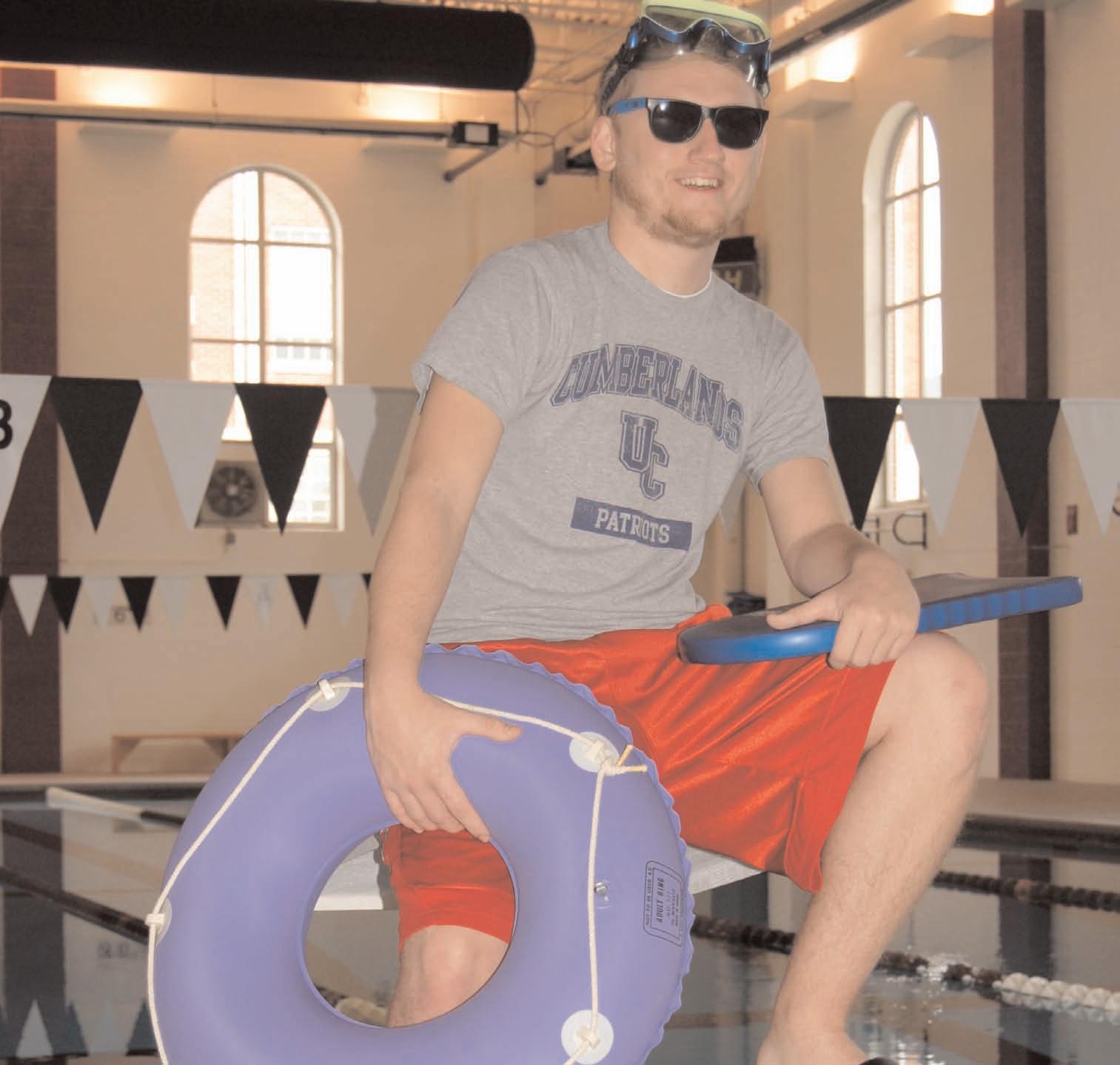
Are you Are you ready for ready for spring spring break? break?
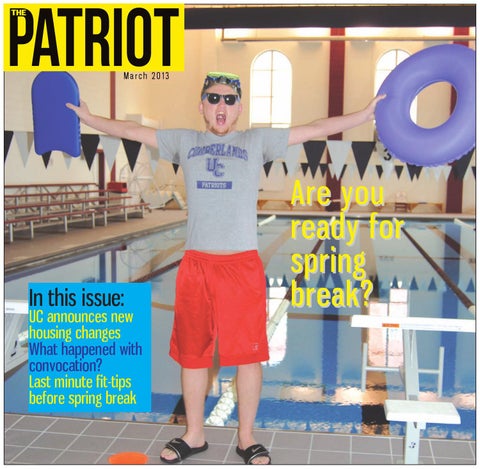
March 2013
In this issue:
UC announces new housing changes
What happened with convocation?
Last minute fit-tips before spring break
Are you Are you ready for ready for spring spring break? break?
BY NATASHA JONES
Assistant Editor
Saturday nights in Williamsburg just got interesting. On February 9, ACommon Ground Coffee Shop, located at 219 South 5th St. in the lower level of Cornerstone Community Church, had its opening night. Many people came out to enjoy live music, good coffee and great conversation.
The new attraction will be open every Saturday night from 5-10 p.m. Tim and Hope Cooper, members of the church who worked on the project along with other members of cornerstone, hope this venue will be a safe enjoyable hangout for members of the Williamsburg community.
Hope Cooper said, “Our team is thrilled that ACommon Ground Coffee Shop already seems to be filling a niche in our community, even just after two weeks of business. We are here for the purpose of creating a safe, wholesome community hub, literally a common ground, and I believe we are seeing just that happen. We praise God for the way he has been providing and look forward to seeing how this vision will continue to grow.”
Hayley Davis, a UC freshman, said, “I don’t really like coffee, but I like people so that’s why I went.” She described it as, “Very busy, every seat was taken; they had cute little couches and chairs. Everyone was having a good time. I had seen people that I had
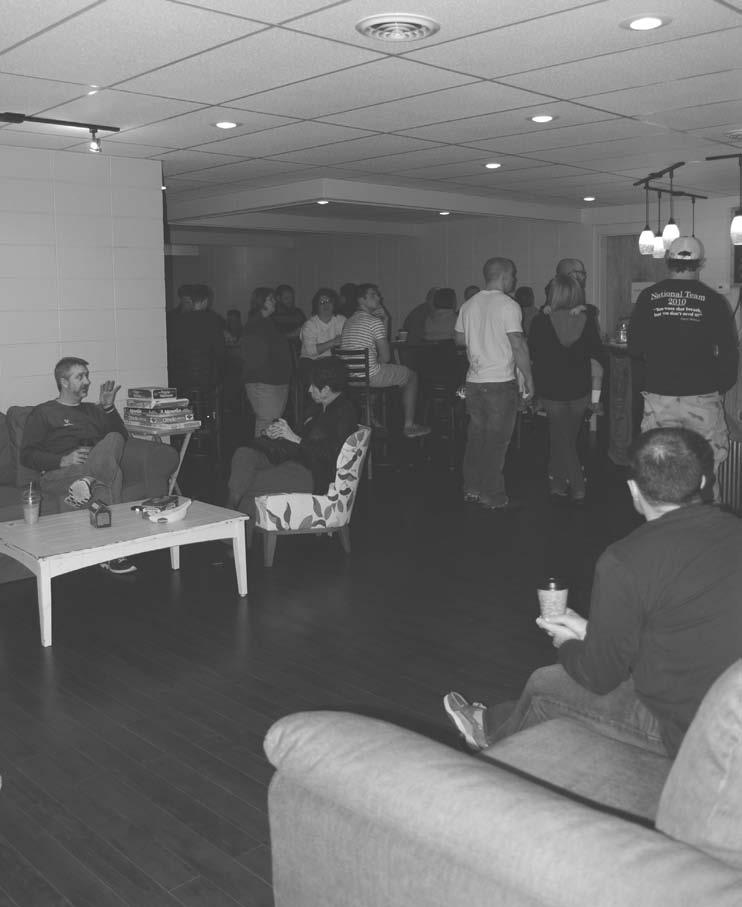
Photo by Haley Davis
passed for months who I hadn’t got a chance to talk to; I got to have a conversation with. We’re all so busy you don’t get opportunities like that. The atmosphere was as warm as the coffee they were brewing.” Everybody who went to opening night has bragged about what an enjoyable and welcoming atmosphere.
ACommon Ground Coffee Shop serves a variety of drinks including hot chocolate, teas, and non-coffee beverages. They also serve light food including homemade desserts, all at various prices.
The coffee house featured two local bands on opening night: OH! Divide and Sowing Season. On the stage with the per-
formers, they had all new equipment set up. One of the lead singers of the Sowing Season is worship leader at Cornerstone. OH! Divide is a local band made up of UC students Solomon Whitaker, Tyler Bird, Jordan Infield, and Erika Dobbsa UC alumni. They classify themselves as a folk/acoustic rock band. Both bands played two sets at two different times. When the bands were not performing, the coffeehouse played different genres of music.
One of the members of the band, OH! Divide, Solomon Whitaker said, “I thought it was great. Good amount of people showed up throughout the night. Good conversations, lots of people enjoying themselves. I don’t like coffee but everybody else said it was good. I tried the Belgium chocolate drink and it was fantastic.”
Cornerstone hopes to keep bringing in local talent,as well as bringing fine art in for customers to enjoy. Groups of friends and families are welcomed and the option of take out is available as well.
You can find and like them on Facebook as well as on Twitter to find news and information to keep informed.
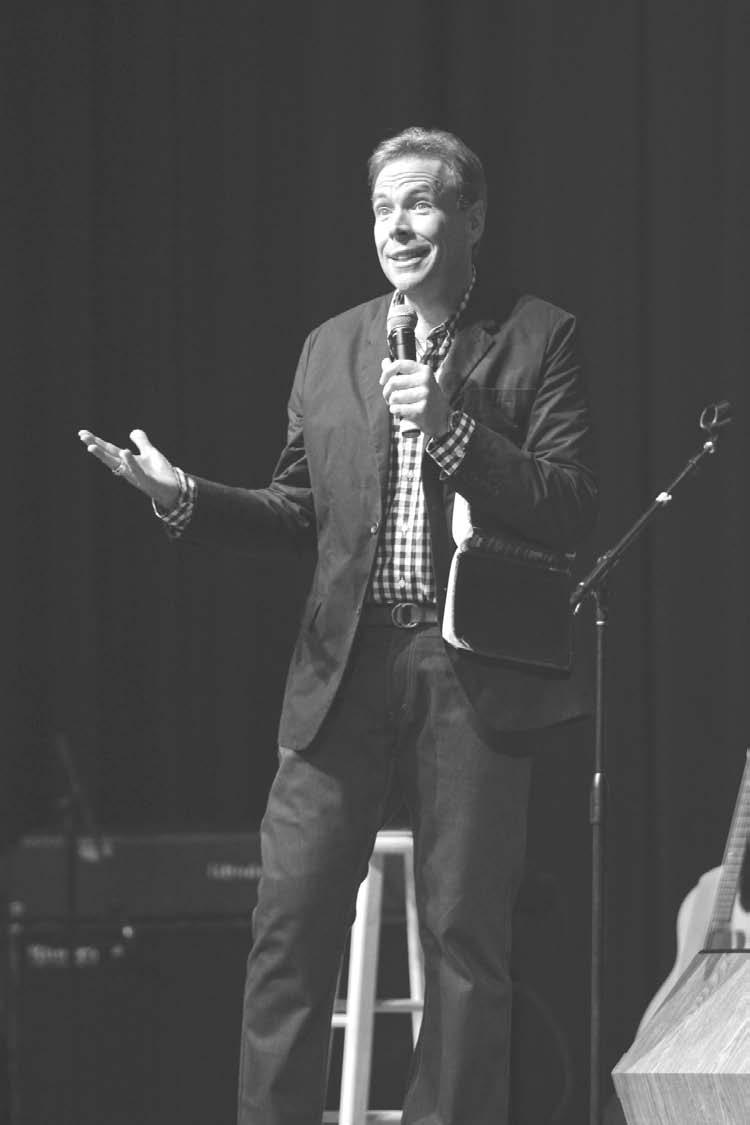
Inspirational speaker David Edwards addressed the audience at the O. Wayne Rollins Center on the University of the Cumberlands campus as a part of this academic year’s opening convocation ceremony. Last year, and many years before, the 10 a.m. hour was set aside on Mondays or Wednesdays for convo events.
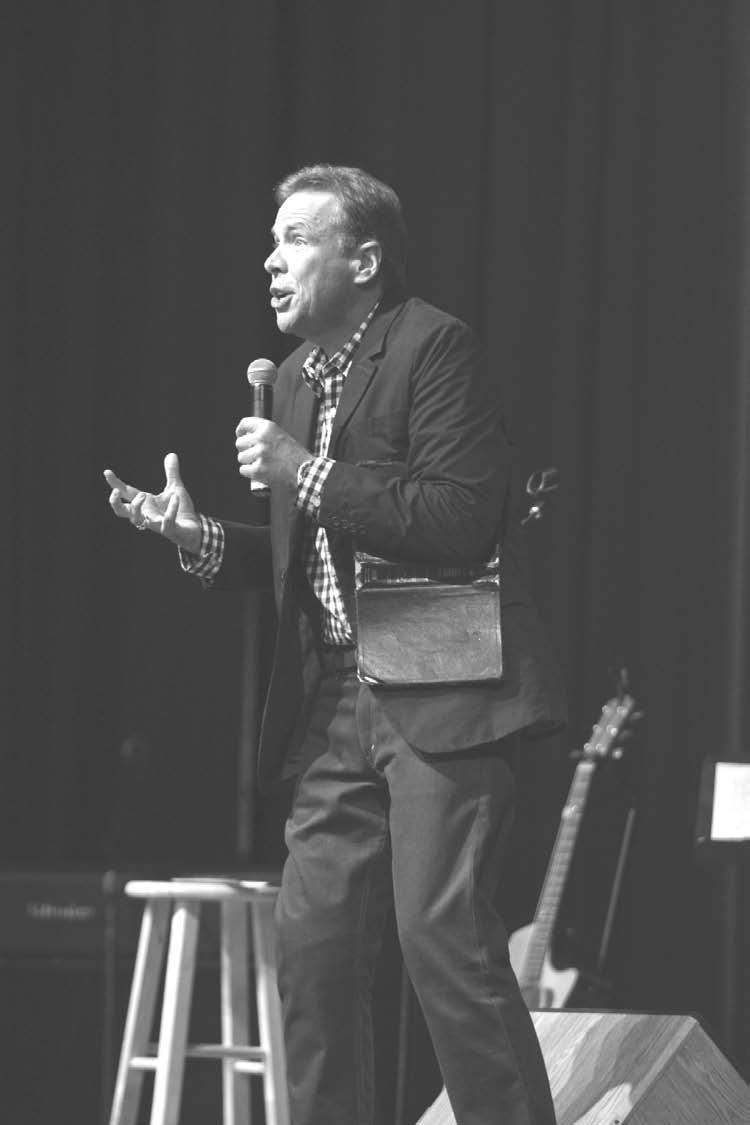
BY TIMOTHY WYATT, Staff Writer, JANNICA BRADY, Staff Writer, AND ALEX WILLIAMS, Staff Writer
Sometimes, change is good, but old habits die hard. For University of the Cumberlands students, that habit was convocation. Last year, and many years before, the 10 a.m. hour was set aside on Mondays or Wednesdays for convo events. There have been numerous changes to that schedule this year, including venturing away from the 10 o’clock hour and moving the bulk of events to the evening, which has been met with much resistance from students.
Linda Carter, the dean of student life, said, “The university staff had been thinking about this change for a while. It is more flexible for students and allows them to take more personal responsibility and gives students more choices.”
The choices that Carter alluded to are part of a category system that was also introduced in an attempt to give students more selection as to what convo events they attend. According to the University webpage, “The purpose of convocation is to promote a wide range of common and shared experiences among UC students in the areas of Faith Development, Academic/Cultural Presentations, and General Interest.” With the new schedule, students are required to attend two events in each of these categories.
Rick Fleenor, the director of convocation, acknowledges that the adjustment isn’t perfect, saying, “We knew when we made the changes to convo that it would be a growing
process. Change is never easy, but we think over time, although there have been bumps in the road, the road is getting smoother.”
But for now, those bumps can seem like potholes, with students finding the new format difficult to maneuver around their schedules, especially those who live off-campus or work. Ashley Partin, a married commuter said, “It makes it hard for commuters to drive back to campus when we have a job. My employer is not too happy that I have had to take eight days off of work. It also means a loss of some income for me and my husband.”
The change isn’t only affecting commuters and employees though; it also inconvenient for those whose major requires them to put in extra time even after classes are over. Theatre arts major Liz Guillermo said, “I like the variety—that there are different things that we can do, but my major requires me to be in the theater a lot, especially during nights because I have rehearsals. So, I miss a lot of convocation opportunities that I can’t make up, which means I end up failing out or having to take it another semester.”
More recently, a new reserved seating system was implemented. Like at a movie theatre, students will be able to pick up a ticket from the Office of Student Services, which reserves them a guaranteed seat for a convocation event. Students with tickets will be able to have a confirmed spot until 10 min-
utes before the event is scheduled to begin. Students without tickets will then be admitted on a first-come, first-served basis if there is room.
The process, overall, has left a number of students struggling to meet the new requirements. Ezra Anderson, a UC junior, said, “Last year, I felt like it was more accessible considering there was a certain time everyone had to be there. You had no choice. So, to miss it was your fault completely. But. now they have convos and main events that they put caps on, so they have limited the amount of students who can actually pass convo..”
This reserved seating system came into place because of problems that arose during the University Recognition Program—a “Major Convocation”—on Feb. 11. The event was held in the Gatliff Chapel and quickly reached maximum capacity. This meant that many students were turned away from attending the program.
Fleenor states that the student’s opinions truly matter, saying, “I’d be ticked too if I tried to get off work, stood in line and couldn’t get in. What we tried to do is look at how to fix this problem. It made sense to put in place a reserved seating approach. I am the father of a college student. Although I think I understand students well, I don’t want to make all the decisions based on what I think alone.”
According to Fleenor, the Feb. 11 pro-
gram was decided to be held in the Gatliff Chapel because a similar program was held last fall semester, but only 240 students showed up, making capacity a main concern now when planning events. Too many people in one building is a fire hazard; not enough people in a building for such an event reflects poorly on the university.
The reason that most convocation programs aren’t held in the O. Wayne Rollins Center is because the center has a lot of time reserved for sporting events, particularly in the spring semester.
As of now, there is only one “Major Convocation” event scheduled for the rest of the spring semester—the Forcht Series Leadership Convocation set for April 9, 2013.
Fleenor said, “I share the concern with the students; the frustration and aggravation. I understand what it would be like—which is why I immediately sent out an email to students to say, 'If you have issues with your attendance, please contact me.' I'd be glad to work with you to see what we can work out in your situation.”
If students have questions about convocation or about their attendance, Fleenor is located in the Cordell House located near the Boswell Campus Center parking lot. Students can also email him at rick.fleenor@ucumberlands.edu.
BY CHRISTIN MILLER
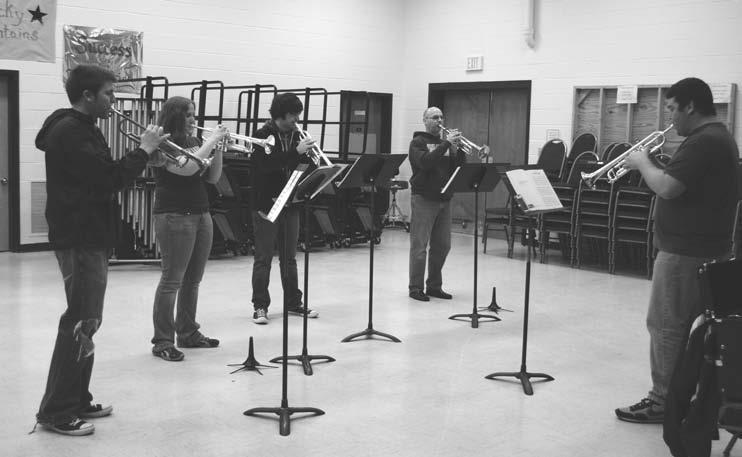
The UC Trumpet Ensemble has set two lofty goals for 2013 and is determined to achieve them. First, they want to bring Joe Burgstaller to eastern Kentucky, second, they want to go to Michigan.
The UC Trumpet Ensemble will bring Joe Burgstaller to UC on April 15, 2013. Burgstaller is an internationally acclaimed trumpeter and one of the longest standing members of the Canadian Brass, The UC Trumpet Ensemble is working with the Madison Community Band in Richmond, KY to raise the $3,000 it costs to bring Burgstaller to eastern Kentucky. Burgstaller will perform with the Madison Community Band on April 14 and then travel to UC on April 15 to offer master classes and lessons during the day and present a concert at 7:30 p.m. in the Nell Moore Recital Hall that evening.
“As far as Joe Burgstaller coming, I think it’s a huge asset for us to be able to have someone like that on campus. For us to be
able to work one on one with him and give us any insight he can to help us in our future and during our study. I really can’t wait” said
Nicki Howard, junior and UC Trumpet Ensemble member.
“I’m doing this to make myself a better trumpet player and to gain knowledge from Burgstaller on different techniques,” added UC senior and ensemble member David Harris,.
The trumpet ensemble members have also decided to attend the 2013 International Trumpet Guild Conference in Allendale, Michigan from June 10 through June 15.
The International Trumpet Guild is an organization filled with over 5,000 members that range from students, teachers, professionals and trumpet enthusiasts alike that represent over 50 countries.
The director of The UC Trumpet Ensemble, Justin Byrd, is a senior music major with an emphasis in trumpet. He said, “I personally want to attend the conference
for the professional development. It’s not every day a musician has the opportunity to mingle with the masters of the trade. The benefits and knowledge gained through this experience would be irreplaceable.”
Since the location of the conference isn’t that far away, for the first time, The UC Trumpet Ensemble has the chance to go. However, in order to go, the ensemble needs to raise $3,500-$4,000.
“I think it would be an amazing opportunity to go to Michigan because I personally don’t think I’ll ever get a chance to go on this kind of trip again. It would be an amazing experience for all of us to get to go to something that big and phenomenal…I mean, this is going into my profession so it will be a big asset to me in the future,” said Howard.
How do they plan on raising enough money for these two events? First, they are working on having a “School Spirit Coffee” sale, which is a company that sells coffee to organizations in order for them to re-sell and
make a profit. The coffee sale will consist of a booth set up in the mid-BCC and will last through March 6. Second, they are looking for churches and special events to play for in exchange for a love offering. Third, they will be participating in the Brass Studio Fundraiser concert that will be held on March 5 at 7:30 p.m. in the Nell Moore Recital Hall. If you are interested in helping the UC Trumpet Ensemble members reach these goals, come to the Brass Studio Fundraiser concert and enjoy some great music, or help by buying coffee. Also, if you would enjoy having The UC Trumpet Ensemble perform at your church, for your special occasion or to find out more information, contact the faculty advisor for The UC Trumpet Ensemble, Dr. Patrick Tuck, at patrick.tuck@ucumberlands.edu or 606-539-4332 or the ensemble director, Justin Byrd at jbyrd7896@ucumberlands.edu.
BY: RYAN POYNTER, Staff Writer
TIMOTHY WYATT, Staff Writer AND SHELBY MUFF, Staff Writer
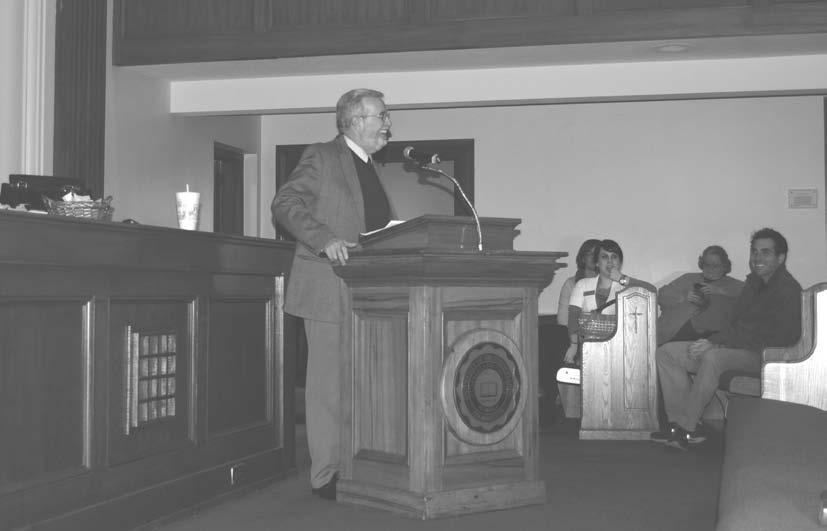
The University of the Cumberlands held an optional housing meeting in the Gatliff Chapel on Monday, Feb. 25 to announce two of the biggest changes to men’s and women’s on-campus housing in recent years. Beginning in the fall of 2013, Moss Hall— which currently houses men—will become a women’s residence hall, and Hutton Hall— which currently houses women—will become a men’s residence hall.
The University of the Cumberlands’ housing staff hopes that this change will help to alleviate some of the pressure they felt this fall when trying to find places for all of the men registered to live on campus. This change will take approximately 60 unused spaces for students in women’s housing and give them to men’s housing.
“I think the change is a really good
thing,” said James McKnight, current resident hall director of Moss Hall. “It’s interesting for me because I’ll be switching dorms, so I get a new building and more residents and a bigger staff. I’m excited about that. Plus, the guys [on campus] really do need that extra space.”
Though the response to the announcement was generally positive, not everyone was pleased with the change. “I saw a few girls and guys who looked like they were bummed out by the news,” said Kenny Newton, a senior religion major at University of the Cumberlands. “Some people have been living in those dorms for three or four years by now. It’s become kind of like home to them. The change is totally necessary, but I can see how some people might be sad because of it.”
In addition to the change in housing, a few less controversial announcements were made. After spring break, a semester-long hiatus will end as soft drinks and other beverages will again be included in the meal plan at the Patriot Steakhouse. This has been a highly requested change since those drinks were removed from the meal exchange plan in fall of 2012.
Acoffee shop will also be opening in The Grill around the same time. It will operate between 10 p.m. and 12 a.m.—after The Grill typically stops offering meals—and serve coffee, soft drinks and many snack foods. Nothing will operate on meal exchange at all; instead, all items from the coffee shop can be purchased using cash or credit card. This will gives students living on campus—or even commuters—a central place to meet up to
study or hang out during hours that they weren’t previously offered.
Those with questions or comments about any of these announcements can contact Linda Carter, dean of student life, directly in Student Services, or by email at linda.carter@ucumberlands.edu

Previously in The Experimental War: Ashaan, the leader of the human colony on Planet 20, was leading a "hunting" party when they started doing battle with an alien
species they call Lizards. Shinzar, the leader of the aliens, was leading his troops in defense against the humans when he saw there were only ten of his troop left, so he
ordered a retreat. Although some disagreed, Ashaan ordered the humans to not follow when he had a startling memory of his own interrogation, for he could not remember
The official student publication of the University of the Cumberlands
anything a week before waking up on Planet 20, and he learned that both species had been brainwashed to act as warring pawns in a horrific plot of genocide.
Two days later. Light slowly started to seep into Ashaan’s eyes as he rolled over and woke up. He was in his house, a small hut made out of tree limbs; sun light came through the cracks in between. The bed under him felt comfortable, the only thing in his life that felt like this beside his family. There was whispering outside the door, but he had great hearing. "He isn't sick, I've checked him for every sign," came from the voice of his wife, Dreka.
Bachee replied in condemnation, “He’s mind sick, that's the reason why there are no physical symptoms. All the time we carried him back here he kept ranting about a plot of genocide of the Lizards on another planet, being forced into doing something, and realizing the Lizards are innocent creatures who don't deserve this. Tell me how that isn't being mind sick. Your just defending him because your his pet wife and would rather stand beside him than face the truth!"
Anger ran through Ashaan's mind at hearing these words, he wanted to run out and punch him right in the face, but decided against it. After a few more minutes Dreka came into the hut, acting as if the conversation outside hadn't taken place. She saw that Ashaan was awake and came beside him, kneeling down. Looking deeply into her eyes, Ashaan brought his head up and they exchanged a passionate kiss.
"Am I really mind sick, Dreka?" Dreka stared at him in complete shock. He could tell she was stumbling for words.
"Um, of course not. I was only agreeing with him as to not attract suspicion."
"You don't have to lie to me Dreka, I'm sure I seemed out of my mind. Has Bachee taken over for me in my absence?" Ashaan sat up, rubbing his head and eyes.
"Yes, he has. More men have joined the hunting party. They took out an entire Lizard
patrol, except for their leader, he always seems to escape." Ashaan held back how much it hurt him to hear that. He knew the purpose of this war and it scared him to death. He walked outside and the sunlight hit his eyes with an onslaught. Everyone was moving around in the course of daily duties. He found his men reloading their laser rifles and preparing for another hunt. As he made his way toward them Bachee got into his path.
“Ashaan, where do you think you’re going?” As he stared into the eyes of his second-in-command, Ashaan saw the potential for betrayal in them.
“You’re right Bachee, I just wanted to get back out there. I can’t rest easy knowing they’re out there you know.” He couldn’t believe he was having to lie like this.
“I understand Ashaan, but the men worry about you. They think your mind sick, can’t say I blame them. The white coats also heard what you were saying and said that you needed to take a couple of days to get refocused.”
The white coats, in the rush of everything Ashaan had forgotten about them. They had been here since everyone had woken up a week and two days ago. No one questioned what the white coats said; they were considered the leaders of the humans. There were two metal buildings for the white coats, one they stayed in all day and one they stayed in at night. Ashaan had never questioned their existence here before, but now a suspicion of them had grown in his mind ever since that memory had flooded through his head.
“That’s probably true, come to think of it, I think I could use some more rest. First though, I’m going to check in with them.” Bachee gave him a death stare, but Ashaan just walked past him and up to the door of the first metal building. As he knocked, Ashaan heard footsteps on the floor and then the door opened. The man in front of him had a clean
shaven face and wore a white shirt, black pants, and a white lab coat. “Just wanted to let you know that I'm all refocused and will be joining the hunting party tomorrow.” The man slightly chuckled under his breath.
“We’ll see.” They knew he knew what was going on. Ashaan walked away from the building and back to his home. His two sons were playing behind the hut, joy on their faces as they played in the dirt. As soon as he entered through the door, Dreka was there to welcome him back.
“How did it go?” He could tell that she hoped he had gotten everything worked out. “It went good.” That’s all he could get out and afterwards he laid down in his bed. The white coats were involved with the genocide plan; he felt it in his gut. What they were doing though, that was the question. He would have to watch them closely.
When Ashaan awoke, he raised up, rubbing the sleep out of his eyes. Dreka came to him and handed him apiece of paper.
"I found this under the door." Ashaan opened the folded piece of paper. He read what was written and he discovered that the white coats had constructed a bio bomb; they were planning on exterminating the Lizards tomorrow. He did not know where this information came from, but he did know that he had to break into the building where the white coats worked.
Adrenaline coursed through Ashaan’s veins as he made his way to the metal building, a laser pistol in his left hand. In a quick motion the gun was pointed at the lock on the door and fired. The sound was not very loud and the lock fell off, melted. Ashaan opened the door quickly and closed it just as quick. Inside it was dark except for the light coming from a square machine on a table. The memory of seeing one of these machines and how to operate it flashed in his mind. He found the button labeled “recent designs” and pushed it.
The schematics for a bomb that would kill the Lizards without harming humans came up. He had to find the weakness in this bomb or in its formula.
“I knew it would be you.” Turning around, Ashaan saw the clean-cut man with a couple of men behind him. “Put him in the restraints on the back wall.” The men came towards him, so he raised the laser pistol to fire. Ablast hit him in the shoulder of the arm with that held the laser pistol and the gun dropped; a man with a laser rifle had stayed outside the building and quickly reacted to the situation. The guards drug him to the wall and clamped his arms in the restraints. The clean-shaven man motioned for the other men to leave. He walked over beside Ashaan, pushed a button on the wall, and the section around them started moving downwards. The platform came to a stop in a lower room. The clean-shaven man in the white coat walked off the platform, grabbed a chair, set it in front of Ashaan, and sat down in it. "Do you remember me?" Aflashback ran through Ashaan's mind of the man in front of him giving him a shot.
"Dr. Kingard?" Ashaan thought the name must have surfaced from the memory. The clean-shaven man gave a slight smirk.
“So, you are remembering. We knew you would be trouble. The way you fought against this, it was a stupid kind of heroic. I have to admit though; I didn’t expect you to break through the mind wipe. Now here you are, chained up in a hut, left to die. The bio bomb will be released tomorrow and thus will start our plan. I am going to leave you here to think of your failed plan to stop us, major.”
Dr. Kingard got up, walked across the room and exited through a door that lead back to the upper room. Ashaan looked up in shock and horror as the door closed. To be concluded
BY KRISTINA SMITH Staff Writer
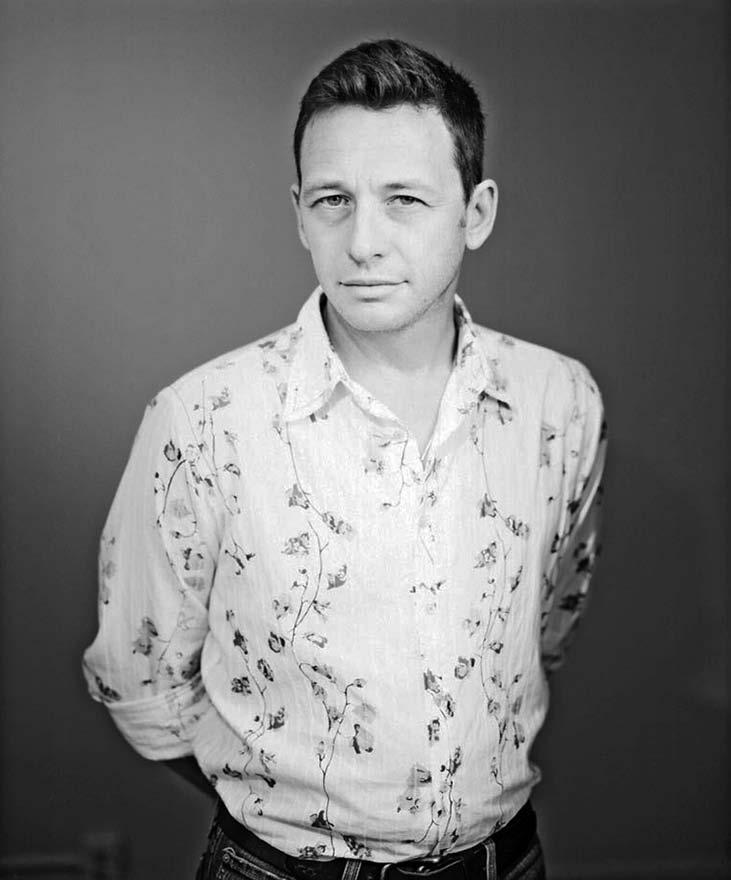
Growing up in the small town of Lily, Ky., Silas House emerged from the backwoods of Appalachia to become a New York Times best-selling author. Writer of five novels, four plays, countless music articles, and environmental columns, House pursued a writing career from early on in his life.
With a bachelor’s degree in English from Eastern Kentucky University, House continued on to Spaulding University to receive a master’s degree in creative writing.
Then, at age 29, House published his first novel “Clay’s Quilt” which launched him into stardom. This small-town man turned celebrity took a moment to speak with me about his love-hate relationship with Appalachia, his work as a novelist and drawing from his own life experiences to create his masterpieces.
Q: Most everyone knows you as an Appalachian writer; tell me a little bit about living in the area.
House: I have such complex feelings about this place. I love it, but I hate it, too. I love its mountains and creeks and so many things about its people: their strength, determination, wit, etc. But I also hate how small-minded and backward Appalachia can be.
I hate the way that we let the coal companies convince us that they are good for us when they are actually doing us more harm than good, the way that we fear anyone who is different, the way we fear education.
Q: So, if there are so many things conflicting
feelings for you about the area, why do so many of your novels cling to this setting? Do you ever consider branching out?
House: I have the most to say about this part of the world. My novels are more interesting because of these mixed feelings I have. Everything I have written has been set in the region except for my fourth novel, “Eli the Good,” which is set in a sort of unnamed region of the United States because I wanted it to be Anywhere, USAinstead of being so centralized in Appalachia. I
t's a very American story, so I wanted to make sure that I didn't get too much Appalachian sense of place in there. And my new novel, “Little Fire,” is set in Key West, Florida but the three main characters are all from the rural South, and one is Appalachian.
Even if I stray from Appalachia I think my novels will always have to feature a rural protagonist because that's simply the world I identify with the best, and the world that I am most interested in writing about.
Q: Where do you draw most of your ideas for writing from?
House: My first three novels were heavily fictionalized retellings of my own family's story of living in Appalachia over the course of the 20th century. My fourth novel was inspired by my childhood as the son of a Vietnam vet and my own feelings about the divisions caused by political parties in our country. My fifth novel was inspired by my love for letter-writing and the pen pal I had as
a young boy.
My new novel was inspired by my thoughts on parenthood, especially the way fathers aren't treated as seriously as parents as mothers are, and by my feelings about inequality in modern America and how we are all part of the problem if we are not sticking up for equality.
Q: What advice would you give to any aspiring writers out there?
House: The hardest part of the job is finding fresh ideas. Anovelist hardly ever has a set way of getting an idea for a novel. Ideas come to us in many different and unexpected ways. Be patient. Ideas will come.
BY RYAN POYNTER Staff Writer
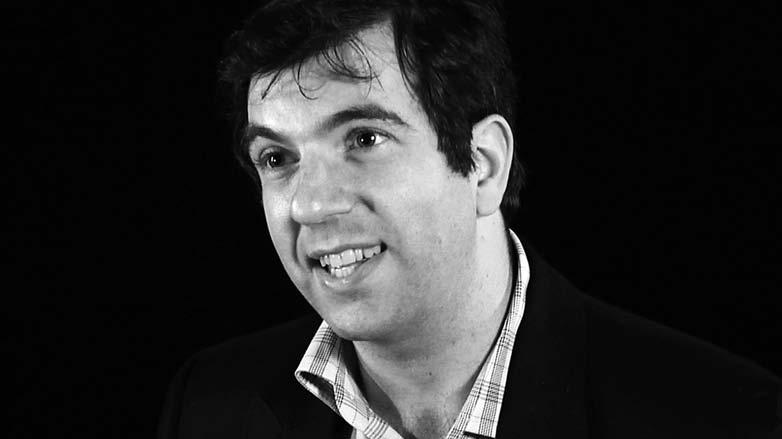
The world is filled with people everywhere looking for a place to fit into. An experience we all share is the sometimes fruitless search to find an identity. As the author of “The Year of Living Biblically,” “The Guinea Pig Diaries,” ‘Drop Dead Healthy” and “The Know-It-All” – all New York Times best-sellers – A.J. Jacobs has found several. He’s best known to his readers as the guy who spent a year following the Bible completely literally, or as the guy who outsourced his entire life to India (including arguments with his wife and reading bedtime stories to his children), or as the only guy who experienced online dating as a woman and actively chose to tell people about it, but he is known by his family mostly as A.J., the husband and father. I had the opportunity to talk with him about how his family feels about his work, how he finds the time to write, and how he’s embraced the role as “the experiments guy.” Ryan Poynter: You’ve made a name for yourself as an author and really helped to popularize the field of immersion journalism by conducting these experiments on your life
and then writing about them. How do you decide what experiments you’d like to try? How big of an impact does your family have on these decisions?
A.J. Jacobs: I try to do experiments that fascinate me. Like religion fascinated me, so I did “The Year of Living Biblically.” My wife has veto power, so she often puts the kibosh on my ideas. I wanted to communicate solely by social media for a month, but she said no way. I need to do less traveling now that I have my kids. So, many of my experiment ideas (living in Antarctica, etc.) just won’t work anymore.
RP: Have any of the experiments you’ve written about so far had any lasting effects on you and your lifestyle choices? Have they had any lasting effects on your relationships with friends or family? Which experiment, overall, has affected your life the most?
A.J.: Absolutely, lots of lasting effects. I still have extreme gratitude I learned from living Biblically. I still practice the Sabbath. Now I go to a synagogue. I write on my treadmill from the health experiment. And I am radical-
ly positively honest, saying how much I appreciate people. The one about the Bible [affected me most], because it gave me a new view of the world. I like to see the world as a series of responsibilities, not a series of rights.
RP: You’ve been experimenting almost constantly for the past several years. Have you found a comfortable balance between being the A.J. in an experiment and being the A.J. you are at work, or with your family? Doing all of that at once, how do you find the time to write?
A.J.: There’s no clear distinction between my off-work self and on-work self. But my family is very tolerant. And though my wife complains, I think she finds it interesting at some level. But it’s hard. And I think I’m getting less productive over the years. My first book I wrote with a full-time job. Now I could never do that.
RP: In “The Year of Living Biblically,” you manage to find a comfortable balance between being transparent in your experiences and opinions and being respectful of
those men and women of faith. This has been true of all the experiments in which you dive into other cultures or lifestyles. Are you completely conscious of this? Is it a major priority?
A.J.: It’s easy to make fun of people different from yourself. I think it’s a more interesting challenge to try to find the good in people, even if you disagree with them.
RP: Because of the success you’ve seen from your books, do you ever feel typecast as an author now? Have you become “the experiments guy”? Do you still have opportunities to write more traditionally?
A.J.: I do turn down a lot of experiments from other magazines now. There’s only so much time. But I like writing profiles.
RP: Last question. Do you think you’ll ever feel any pressure to continue experimenting?
Do you worry that the market for these experimental books will fade or you will run out of ideas?
A.J.: I like ideas of all kinds, so I have book ideas in different genres. I plan to write those books… Someday.
Photos by Abbey Cherry
The official student publication of the University of the Cumberlands


BY RYAN POYNTER Staff Writer
For most of us, the University of the Cumberlands is not a permanent home. Jared Coleman, a first-year graduate student at Florida State University and recent graduate of the University of the Cumberlands, knows this as well as anyone. He left Cumberlands in May of 2012 and, since then, he's come to realize just how much he misses being here. Here are his top five things he wishes he had known before leaving the Cumberlands.
2.I wish I knew how convenient the Cumberlands is. Seriously. I never thought about how awesome it was that I never had to cook, clean, or drive. Yes, the cafeteria food wasn’t always the greatest, but it was convenient, and – more importantly – consistent. Yeah, I had to keep my room clean (kind of), but I never had to clean a toilet, or do my dishes. I could literally walk to everything I needed. That's not something I can do anymore.
3.I wish I knew how much the professors really care about their students. I always knew they did, of course, but until I came to
1.I wish I knew how much there is to “do” in Williamsburg. Acommon complaint I often heard (and made) during my time in at the Cumberlands was that there was nothing to do. But I know now that that is false. I now live in a city with around 100,000 college students and there is still nothing for me to do. Sure, there are more places to go, but they’re not anything like the fun things to do around the Cumberlands. I miss UC sporting events, and my professors, and the mountains.

FSU and saw things from the other side, I never knew how awesome it was that I could walk into any of my professor’s offices at any time and they would stop and talk to me. The small class sizes and available professors made such a difference for me, and I took advantage of that.
4.I wish I knew how great of a community there is at the Cumberlands. During my last year at Cumberland, I spent a lot of time alone. It was just a difficult period of life, a lot of transitions going on, and many things I was working on that were not in the area. I often forgot to cherish the community that is at the Cumberlands. It is full of great people who truly care about one another. I wish I had known how much I would miss that and that I had appreciated it more before I left.
BY TIMOTHY WYATT Staff Writer
In case you weren’t aware, it is the age of the internet. Anything and everything you could ever imagine to find is virtually at your fingertips. One of the most popular, and largely growing, online trends is publishing. Almost all newspapers and magazines now have online versions to accompany their daily or monthly issues.
Hundreds of thousands of blogs are circulating the web every day by known and unknown writers alike. If one were to get technical, every time you post a witty Tweet or Facebook status, you’re publishing. But let’s narrow that scope down a little and focus on the prior—official online publications.
Associate Professor of Communication and Journalism Marianne Worthington has Been writing for numerous online publica-
tions the better part of 10 years now. Something she is a little newer to is editing for those publications. Worthington is cofounder and poetry editor of stilljournal.net, a site devoted to offering “the finest in contemporary literary writing of Central Appalachia,” for a little over three years.
While she may be well adept at her craft now, at one time she was a rookie too. Here are five things Worthington wished she had known, or known more about, when stepping into the world of online publishing:
1. I wish I’d had more design experience. Online publications are all different and I didn’t have any design experience. So, that’s obvious, right?
2. I wish I’d had more html/online posting experience.
5.I wish I had found out before what the inside of President Taylor’s house looks like. This may sound dumb, but one of my biggest regrets is that I never took one of the opportunities (like after the Hanging of the Green) to go inside the Taylor’s house, I always had something else to do. I guess this speaks to a bigger thing I wish I had known before leaving the Cumberlands. It feels like you have been there forever, but the time you have is seriously fleeting, and it will be gone before you know it. Don’t put off things that you want to accomplish until another day, because one day that will involve you packing your bags and checking out of the dorm for the last time.
I didn’t necessarily need to know how to do code, but I needed to know how to make things look inviting and I didn’t know how to do that. I still don’t really know how to do that.
3. I wish I’d done more research in using “free” websites.
We used a “free” website because we didn’t have any money. We still don’t have any money and we are still using a “free” website. First off, it’s not really free. It’s not a lot, but it’s not really free. And then you’re limited in how much you can and can’t do. So, our design and our scope and our ability to do certain things were limited because we were using a “free” website.
4. I wish I’d known some writers still have
prejudice against online (versus traditional/print) publishing.
I don’t think this is as true as when online magazines first started, you know, making the rounds, but in literary terms, if you were going to be a published poet or published fiction or non-fiction writer, you had to be in traditional print journals. An online journal was less prestigious. I think a lot of that has changed…mostly due to journals like the “The Cortland Review, which was one of the first literary journals to go completely online. 5. I wish I’d had more meetings with my co-editors.
I have two other co-editors, and we all teach and work, so it is difficult to have face time together to make planning decisions for each issue.
BY JANNICA BRADY Staff Writer
Emily Scott, a sophomore at the University of the Cumberlands, attends Town and Village School of Dance in her hometown of Paris, Kentucky. Scott has been tap dancing for a few years now and really enjoys spending her spare time learning her routines and dance moves.
1.Shoes are expensive.
You have to make sure you get a good
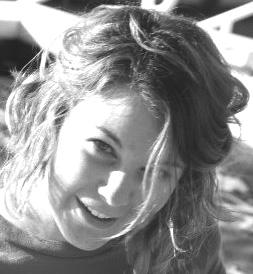
brand of tap shoes. The better the brand, the more expensive the shoes. It all really depends on what your teacher requires from you.
2.Be flexible.
Some moves require you to stand on your tiptoes. In order to do this without hurting yourself, you will need to stretch and increase your flexibility. Just remember you will not
be able to do the difficult stuff in the beginning, but if you practice you will have it down in no time.
3.Feel the rhythm.
Tap dancing is all about feeling the beat of the song. Every move you make must go along with the music.
4.It’s all in the ankle NOTthe foot.
The ankle is the key. The movement of
your ankles is the key factor in tap dancing.
5.Wearproperclothing.
Jeans and a t-shirt is not going to cut it.
Most instructors require you to wear a unitard, tights and shorts. Also, remember to put your hair in a ponytail to keep it out of your way.
BY BRANDY NORMAN Staff Writer
1. I wish I would have known not to be so nervous.
You can certainly (and should, of course) plan for an interview, but it's hard to anticipate what the other person will say in any situation. Come prepared, yes, but let the interview go where it wants to go. Musician's can be awkward or rude...but most of them are
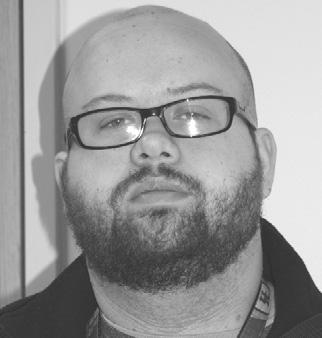
pretty cool and eager to talk about their work.
2. I wish I would have known that my opinion has a sense of authority.
Critics have a power of influence and you can say what you really think. Don't be afraid to exercise that power.
3. I wish I would have known not to take on so much work all at once.
Take it slow. Enjoy writing the pieces.
4. I wish I would have known that writing is lonely.
When you’re sitting by yourself, listening to a bunch of albums, it doesn't give you much time for a social life. Writing takes time and dedication.
5. I wish I would have known that you
don't always get to write what you want to write.
Sometimes you get the leftovers (and trust me, not all music is easy to write about), but try to have fun with it anyway. Stick with it.
BY ALEX WILLIAMS Staff Writer
This is Durbin’s fifth year on UC’s award-winning Speech and Debate team where he serves as co-captain. He has won 5th place in the novice communication analysis at The National Christian College of Forensic Invitational, Superior speaker at Pi Kappa Delta National Tournament in 2009, was former vice-president of The Kentucky Forensic Association, and much more.
1) Do the extra research.
Any additional sources you can put in will definitely help bolster your argument. When I started, I would just do the minimum work but going the extra mile helps.
2) Be prepared.
Don’t just read through it a couple of times and think you got it because you have a notecard with you. Be able to do it, even if
that means you’ve got to practice.
3) Don’t be afraid to collaborate with others.
If you are spit-balling on a topic you’re having before you present it, you might want to run it by a couple of people to get new ideas, perspectives or realize that there’s an area of your speech you need more work on.
4) Take notes and organize.
Knowing your notes is one thing, but know where you’re going with it.
5) Everyone has to do it.
Don’t sweat it. Everyone has been where you are now and most people have to give a presentation eventually.
BY TIMOTHY WYATT Staff Writer
Relationships are a funny thing. Whether we realize it or not, we all have relationships with every individual we ever encounter. What makes that relationship important though, is the weight we attribute to it.
It isn’t something we think about often, but we use this sort of system for everything…and always have. The only reason anything has a meaning is because we say that it does.
At some point, all of our friends were strangers. That awkward kid that sits in the back of every class could very well be your best friend, but you haven’t attempted to give that relationship any sort of meaning. So, for

now, he stays that awkward kid in the back of class.
“
Go one step further and think of your significant other. Our boyfriends, girlfriends, husbands, or wives, most likely, were once just our friends. And before that they were what? Are you catching on?
field with one another. Some are more important than others. You may love both of your parents equally, but you probably have a favorite.
we all hold the ability to be something more... ”
Each relationship has different levels or tiers, too. Not all your friends are on a level
Some people, like me, have a parent or parents that we may look at as strangers. In my case, it was my dad. Biologically, he may be my father, but that is almost the extent of it. He didn’t care enough about the relation-
ship to invest any meaning in it, and at some point, I followed suit.
My point is that we all hold the ability to be something more to the person next to us and vice-versa. Thank that person who holds the door for you. Help that person who dropped all their books in the hallway. Acknowledge that awkward kid who sits in the back of class. Invest in other people. Invest in people you don’t know. It will make your life better.
BY KASEY MALONE Staff Writer AND
BY NATASHA JONES
Assistant Editor
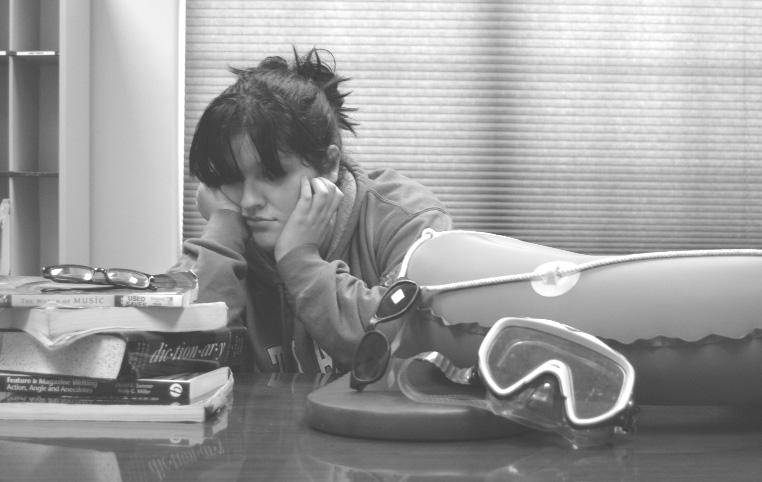
There are a few weeks every school year that are especially challenging to College students. Two of them would be the week of finals during Spring and Fall Semester. The other one would be the first few weeks back to school after Spring Break
All students have trouble getting back into their routine after a week of relaxation and rest. We want to give you some helpful study tips and words of motivation to help you finish the school year strong and avoid finding yourself in a funk after returning back to campus.
Take Advantage of what’s there foryou. Remember what you’re here for. In case you have to ask, it’s to get an education.
Typically teachers, educational advisors and any other members of campus have probably given you study tips, a syllabus, or even possibly extra credit to help you succeed. Use this to your advantage and take the help that is being offered to you.
Keep the confidence High, there is still a chance.
The school year is not over. Classes are not finished. You probably still have homework assignments you need to do, papers to write, and tests to take which means there is still a chance for success. Remain confident that you can finish that class with a high grade.
Take time to yourself orstudy together.
One of the most difficult aspects of the last few weeks is that burning desire to spend as much time as you can even fathom with your friends; this is in no way bad, but can be harmful to your academics. Don’t sacrifice study time to just “hang out.” Make the choice to study or work on homework. And even if you are just dying to be with those people close to you, make it a study group and help each other improve while spending that quality time.
Don’t quit yet.
Just because finals are around the corner and you may have missed some assignments or didn’t do so well on some tests or papers,
there are still things to be taken care of. Do not give up until the final has been taken. Finish those few things left on the to-do list and don’t count yourself out until the grade is posted.
You’ve done everything you can. Hopefully, you have achieved the grades, finished the projects, and received the credits that are leading you to graduation and/or to the summer. Remember, you’re hitting the pause button not the stop. Don’t quit at spring break. Giving it your all will only give you a more satisfying summer break.
Spring break is right around the corner. Here are a few tips to help you look your best.
BY CHRISTIN MILLER
Editor in cheif
•Drink up.
Drinking plenty of water is a must. Not only does it help you stay hydrated when you’re working out or going through your day, it also helps your skin look its best and helps you shine wherever your spring break takes you. Drinking plenty of water also helps flush out any toxins that are in your body. Add a little lemon juice for flavor and it serves as a natural diuretic.
•Salad, please.
Trade-in your pizza or pasta for a salad. This may not be the most appealing option, but there are plenty of things you can do to flavor it up. Try and mix-it-up when it comes to ingredients, by adding raisins. Raisins are filled with natural sources of energy, vitamins, electrolytes, and minerals that will help you get through your day. Instead of a more fatty dressing like ranch or bleu cheese, use French or Italian – they have a lesser amount of fat content. Top off your salad with some sunflower seeds. Sunflower seeds are filled with essential fatty acids as well as vitamins and minerals that your body needs.
•Take the long route. When you have time, take the longer route to class. Afew extra steps can add up to extra calories burned.

•Take the stairs.
When you’re in a building with elevators or stairs, choose the stairs. The extra energy spent climbing the stairs and raise in your heart rate will burn extra calories and give you a quick energy boost.
•Keep a food journal.
Keeping a list of your calorie intake will help you keep track of your calorie intake and will also help you see where you can cut back and pass on unneeded calories. MyPyramid.org is a free and easy way to find out how many calories you should have each day based on your age, activity level and gender. The website also offers information on how to eat healthier.
•Watch yourportions.
This is probably the easiest tip of all. By simply not overeating, you save yourself from having to take the long route or stairs to burn off unneeded calories. To help keep you from over eating, try using a smaller plate.
While the task of losing a few pounds or simply trying to not gain any may seem daunting, keep these easy tips in mind and you’ll have no problem at all.
New Products to Watch out for:
1.)Samsung Galaxy S4: Rumored to possess a full-HD screen with a pixel density nearly 50percenthigher than the iPhone5, this is definitely the next big phone to look for. Expected release: April or May 2013.
2.)Asus Transformer Book: Basically, it’s an ultrabook which has a detachable screen that functions as a high-powered Windows 8 tablet. Expected release: Unknown, but most likely within four to six months.
Apple iPhone 5s/iPhone 6: Less than a few weeks after the release of the iPhone 5, news was already surfacing of its successor. Apple may be pursuing a more aggressive release
schedule due to heavy competition from Samsung and LG recently. Expect a larger, more detailed screen and probably a new trick or two from Apple. Expected release: Expected June 2013.
Ask TechTalk
Have any questions related to technology? Shoot an email to caleb.vander.ark@gmail.com. Your question may be featured in the next edition of The Patriot!

“I’m babysitting, observing students, and doing lots of sleeping,” said freshman history major Alaina Jackson.
“I might be going on a mission trip to Colorado or traveling around Kentucky,” said senior missions and ministry major Kenny Newton.

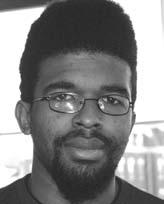
“Possibly leading a BCM mission trip to Panama City called Beach Reach,” said 5th year senior human services major Casey Hamm.
“Going back home to Louisville to chill with my friends,” said freshman fitness and sports management Craig Trotter.
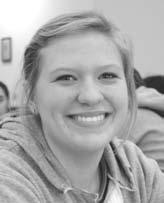
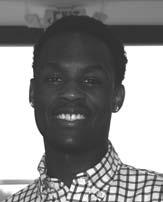
“I’m doing field experience for my education basic concepts class,” said freshman education major Samantha Stuckwisch.
“I’m going home to Washington State,” said freshman and criminal justice major Jasmine Minke.
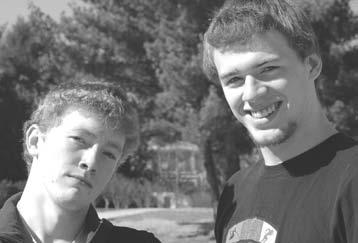
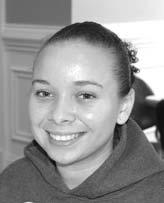
“We’re thinking of going to Florida,” said freshman business major Kevin Baker and freshman undeclared major Cameron Smoak.

BY TIMOTHY WYATT Staff Writer

“ Is it possible he really didn’t know? ”
You may not be a sports fan, but chances are you’ve heard of this year’s Heisman Trophy runner-up and Notre Dame stand-out Manti Te’o… and his girlfriend (or the lack thereof). If not, here is a refresher:
1.) Te’o had a long-distance relationship with a “girl” he had never met named Lennay Kekua.
2.) Kekua had leukemia.
3.) In September of 2012, Kekua “died.”
4.) In December of 2012, Kekua called Te’o.
5.) Kekua was actually a guy named Ronaiah Tuiasosopo, who had elaborated this giant hoax because, as he told Dr. Phil, he “was in love with Te’o.”
Sound crazy? That’s because it is. The real question: who is crazier?
Mental disorders are a serious thing, and I’m not here to debate whether or not either of these guys are suffering from one. That is a topic all on its own. Regardless, it is clear that this whole situation was a bit off the wall. Again: who is crazier? I would have to say it’s Tuiasosopo. The guy created a false identity, threw his voice in phone conversations and lifted photos off of a woman’s Facebook account to use as Kekua. Anyone that would go through so much trouble just to form a fake relationship with someone has to have some sort of issues, right?
Te’o has vehemently denied his involvement in the hoax, but answers he gave in past interviews about Kekua didn’t match-up with answers he gave after the story broke in January. He even did a series of interviews with news outlets such as ESPN between the time he had received the call from supposed-
ly-deceased-Kekua and January, yet he continued to play along with the story. Te’o has since said to multiple sources that he fabricated some details during that time as an attempt to not come of looking like a crazy person that falls in love with people he has never met.
Is it possible he really didn’t know she was a fake person until that December phone call? Yeah, sure. Honestly, I’d say there is a better chance that he is just a sucker than an accomplice. I mean, if I were to fall for some random woman online that I didn’t personally know, A.) my wife would kill me, and B.)
I wouldn’t tell anyone either. And if I found out that woman was actually a guy? Forget about it; ain’t nobody hearing that story.
Don’t let that last paragraph fool you into thinking I’m in Te’o’s corner. He just has the most relatable angle in this debacle. I believe
he should have known better to start with. Long-distance relationships have very poor statistics and those with people you don’t even know have to be worse.
And it seems that our great nation doesn’t cut you any slack for being duped. Arecent poll by Nielson and E-Poll found Te’o in second place for “the most disliked athlete in America,” behind only Lance Armstrong which is a little ridiculous when you think about it. Te’o is now lumped together with Armstrong—who cheated, lied, ruined people’s careers, lives and basically robbed them out of tons of money—yet, all Te’o did was have a fake, hyped-out-of-proportion, Internet “girlfriend” that died, came back to life and, unfortunately, turned out to be a guy.

BY MATTHEW WILLIAMS Staff Writer
It’s taken four years for Radiohead’s Thom Yorke to unveil an album from his much talked about side project Atoms For Peace. Originating as a live band in support of his solo album The Eraser, the electro-rock band features Yorke, famed Radiohead producer Nigel Godrich, Beck and R.E.M. drummer Joey Waronker, percussionist Mauro Refosco, and most notably, Red Hot Chili Peppers’bassist Flea.
Yorke and company have played a lot of shows and several festivals over the last couple of years, billed at the events with monikers such as “ThomYorke??” and the ominous and characteristically confusing “??????.” It wasn’t until 2010 that Yorke announced over Twitter that his new band would be called Atoms For Peace, named after a song on his debut solo album.
But does the much-anticipated album live up to everything that fans thought it would be? Is it truly the answer to the equation “Radiohead + the Red Hot Chili Peppers = musical perfection?” With as long as Yorke has made his devoted fans wait, expectations were high. Unfortunately, Atoms For Peace’s debut Amok falls a little short of everything Yorke has built up to this point.
The album opener “Before Your Very Eyes…” starts off strong, with Radioheadlike treble guitar and an engaging bass riff that could only be played by Flea. Yorke’s vocals echo through the track, enveloping you in the track, as he surrounds you, in a singing performance reminiscent of Radiohead’s “Reckoner.” Electronic influences are obvious, with a steady, manufactured drumbeat that repeats throughout the entirety of the track and heavy synthesizers that increase the overall bass of the song.
The first single “Default” follows, featur-
ing popping synth-beats, Yorke’s falsetto singing, and the lack of a traditional pop-song format, i.e., no identifiable chorus. “Default” suffers, though, in the same sense that Radiohead’s King of Limbs went wrong, as it seems the track is on repeat, as after the song gets going, it doesn’t really change, besides a few synth-strings fading in. “Default,” like a lot of the album, is Thom Yorke’s inner DJ coming out, as he simply wants a beat to dance to while holding one end of a pair of headphones up to his ear and swaying his body back and forth, in typical Thom Yorke fashion.
One element the album lacks is it doesn’t take advantage of their incredibly talented bass player. On most of the songs, the synthesizers smother the true bass, making it more of a background noise to be on the lookout for. In fact, one of Flea’s best performances with the band was left off the album, and left to defend itself as a lonely B-side called
“What the Eyeballs Did.”
In no way is Amok a bad album, and in many ways, it’s a great album. But, Thom Yorke has focused too heavily on wanting to make an electro-pop dance album like his buddies from Modeselektor. Debuts are sometimes a tricky thing to get right. Just look at Radiohead or the Red Hot Chili Peppers. Neither of their first albums are regarded as being masterpieces, but both bands went on to create some of the most recognizable alt-rock records of all time. And maybe, just maybe, Atoms For Peace will fall into that same category.
Notable Tracks: “Default” - “Judge, Jury, and Executioner” - “Dropped”
BY TIMOTHY WYATT Staff Writer
If you aren’t familiar with Coheed and Cambria—or CoCa for short—then it may be easy for you to not give this band the chance they deserve. Many will be turned off by lead vocalist Claudio Sanchez’s signature falsetto or maybe even his giant mane of long, curly hair…also signature. Some may not like that the band itself is based on a concept. Each album acts as its own chapter in the science-fiction story of “The Amory Wars,” set in the fictional galaxy of Heaven’s Fence. In case you aren’t familiar, think: “Star Wars.”
Their latest album, “The Afterman: Descension,” delves back to the very beginning of the concept, focusing on the name-
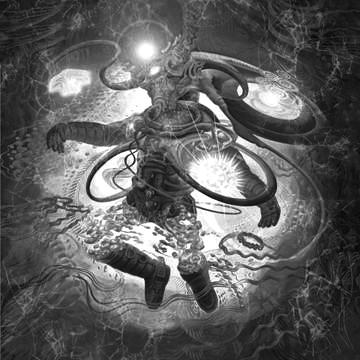
sake for the entire series, Sirius Amory. The story is intricately woven and carefully thought-out, but so is the music.
Tracks like “The Hard Sell,” “Away We Go” and “2’s My Favorite 1” displays Coheed’s classic sound—a pop-rock mixture that boasts nice grooves and lyrics so catchy that they get stuck in your head for days— while “Sentry the Defiant” is more raw, primal and heavier. This definitely is the “anthem” song of the album.
There is a softer side to this record though. “Iron Fist” and “Dark Side of Me” play to the vulnerabilities of their songwriter, vulnerabilities that everyone can relate to— namely, regrets.
“Number City” is hands-down the most interesting piece off “Descension.” There are so many elements to this track that aren’t normally familiar to CoCa, aside from the driving bass line. The main guitar riff is fun, bouncy and almost jazzy. Oh, there are also horns. And who doesn’t love a little brass in their music?
“Descension” gives proof to CoCa’s growth and progression as musicians. It also showcases Sanchez’s increasingly improved ability to draw from real-life experiences to form and shape the band’s concept through lyrics.
Nothing on this record sounds like anything they have ever produced before, yet it’s
no challenge to pinpoint all the little nuances that are trademark to Coheed and Cambria. Even though there are one or two forgettable tracks, they have created an album that they should be proud of.