Letter From the Managing Editor
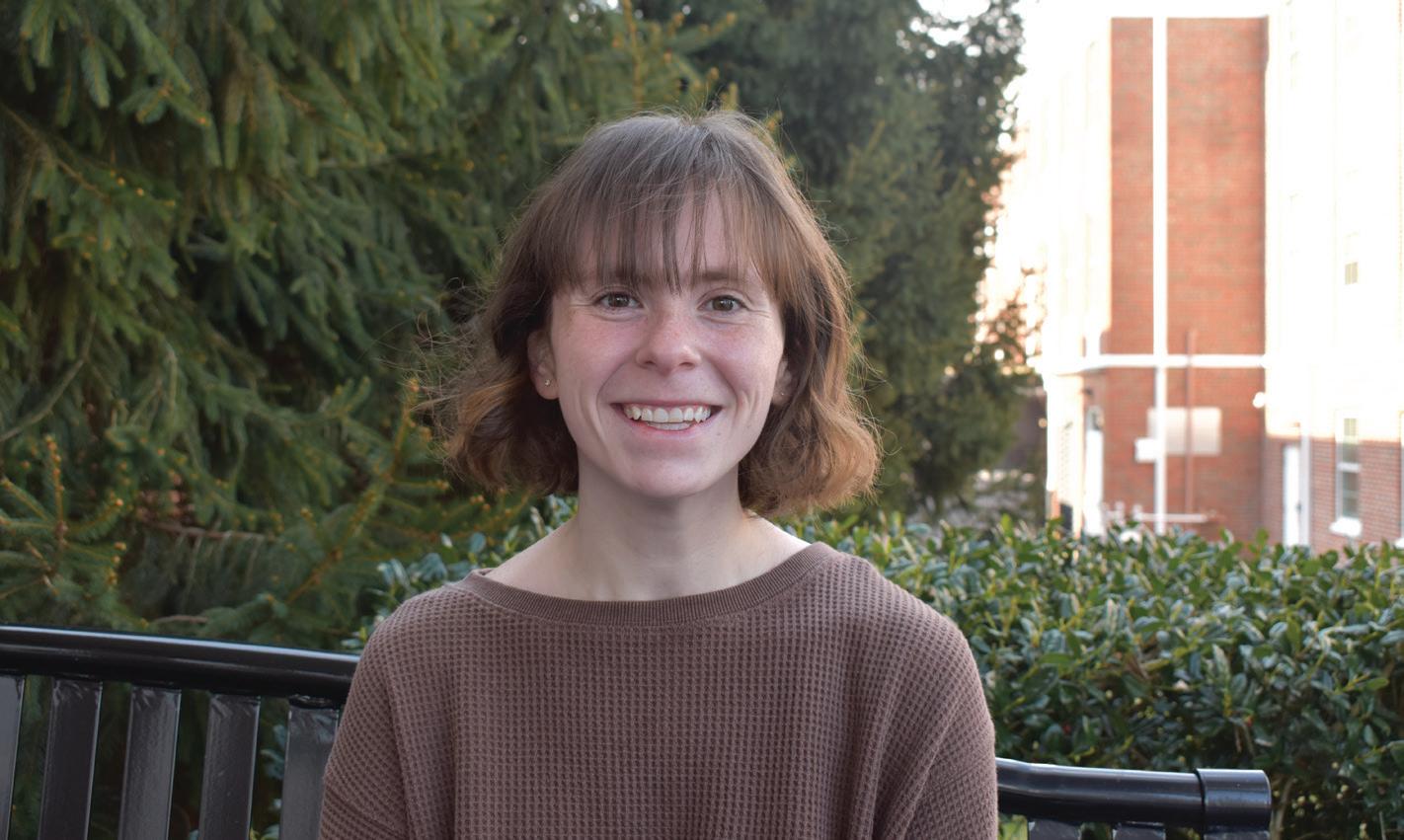
Hey, Patriots!
After what seemed like a lifetime, February is finally here. As we dive deeper into the semester, life on campus can start to feel overwhelming. Classes are in full swing, midterms have come and gone, and the weather seems to change its mind every week. Between academics, work, sports and everyday responsibilities, it is easy to feel stretched thin during this time of year.
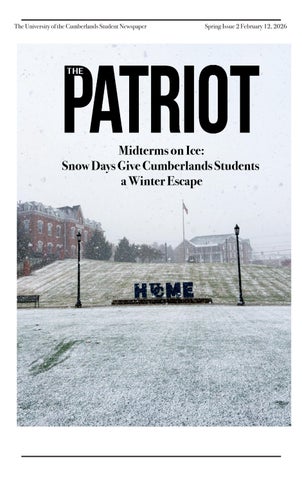
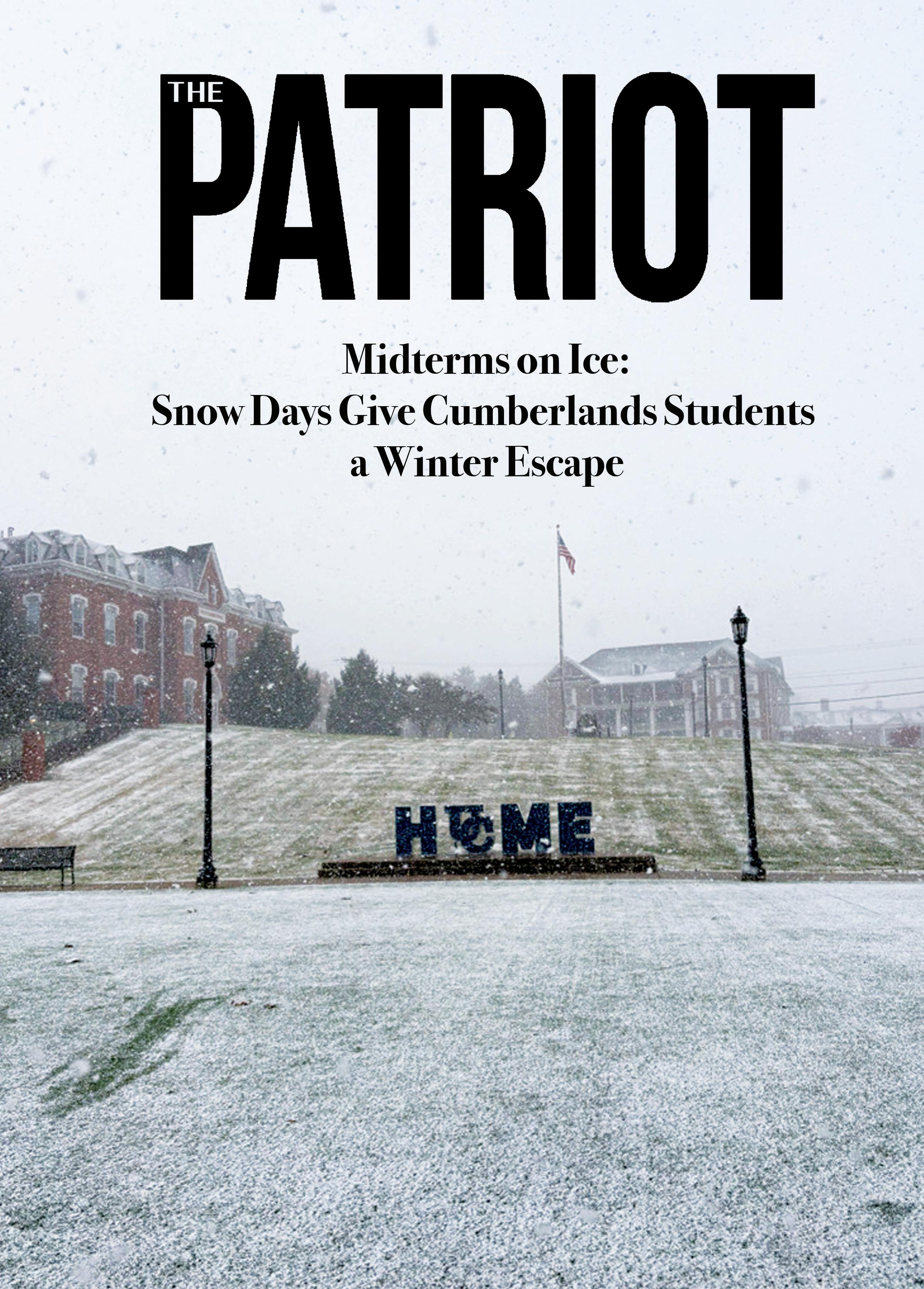
This issue of The Patriot reflects the same sense of chaos that many of us are experiencing. In the following pages, you will find coverage of events that have impacted both our campus and our surrounding community. We take a closer look at the tragic fire downtown and its effects, reminding us of how connected we are. We also explore students’ reactions to the giant snowstorm, which disrupted routines and forced students and faculty to adapt to remote learning.
Along with these heavier stories, we highlight moments of tradition and innovation. From Groundhog Day and its lighthearted, sometimes silly belief systems to the impressive work of two Cumberlands students who created an app designed to help students buy and sell items on campus, this issue captures a wide range of experiences happening around us. Together, these stories work together to show us how busy and unpredictable this time of year can be.
As the semester progresses, it is important to take time to check in with yourself and prioritize where your energy goes. Although this season may be filled with stress, it can also be filled with joy and exciting opportunities. Regardless of what you are feeling in this busy time, you are not alone. Many of the stories in this issue highlight how students and the community continue to adapt and create despite how busy and chaotic life can get. Even during difficult moments, there is still room for optimism and community connection,
As always, The Patriot is here to showcase student voices. If you are interested in volunteering with the newspaper, we would love to hear from you. You can find us on Instagram at @ucthepatriot or can reach out by email at thepatriot@ucumberlands.edu. We are always looking for students interested in writing, photography, layout and design and social media. Thank you for continuing to support us and our student journalism here at The Patriot.
Staff
Editor- in- Chief Filippa Malmström
Managing Editor
Ally Kennedy
Staff Writers
Katrina Campbell
Jillian Cross
Sydney Dingus
Eli Dunn
Lily Fabela
Ximena Melendez Hernandez
Taylor Moren
Kasey Padgett
Alicja Sedlak
Sydney Taylor
Zak Willis
Emily Zecchini
Staff Photographers
Faith Baker
Alex Evans
Kurstyn Ison
Abigail McKamey
Faculty Advisor
Jeremiah Massengale
Until next time, Ally
Kennedy
PHOTO BY KURSTYN ISON
University of the Cumberlands Launches Online AI Degrees
University of the Cumberlands is now accepting students for a fuly online Bachelor of Science in Artificial Intelligence and a Ph.D. in Artificial Intelligence, expanding its academic offerings and positioning the university as a leader in AI education in Kentucky. The bachelor’s program is the first of its kind in the state, while the doctoral program is designed to prepare professionals for leadership roles in artificial intelligence, cybersecurity and emerging technologies. With these additions, Cumberlands offers a complete AI education pathway from undergraduate study through the doctoral level, building on its master’s degree program launched in 2022. University leaders say the programs emphasize ethical AI, innovation and workforce readiness, as demand for artificial intelligence skills continues to grow nationwide.
Upcoming Events on Campus
Campus Local
• Bingo – Feb. 17, 8 p.m., Gatliff Chapel
• Worry-Free Wednesday: Painting –Feb. 18, 1–3 p.m., Mid-BCC
• SGA Meeting – Feb. 18, 7–8 p.m., Gatliff Chapel
• International Food Night: Desserts –Feb. 19, 7–9 p.m., Mid-BCC
• Study Break: Specialty Meal in the Café – Feb. 22, 4–8 p.m., T.J. Roberts Dining Hall
• Spotlight – Feb. 24, 8–10 p.m., Gatliff Chapel
• Opening Worship – Feb. 25, 8–10 p.m., Gatliff Chapel
Graduation Countdown Begins
The countdown to graduation has officially begun, and seniors are encouraged to start preparing now. With commencement less than three months away, graduating students should check their university email accounts to select their preferred ceremony time and complete all required steps. Seniors are also reminded to order their graduation regalia in advance to ensure everything arrives on time. As the final weeks of the semester approach, the milestone marks a celebration of hard work, achievements and the exciting opportunities that lie ahead for the Class of 2026.
Cumberlands Swimming Sweeps MSC Championships With Record-Setting Performances
The University of the Cumberlands women’s swimming team set a new Mid-South Conference record with 969 points to claim its 14th consecutive MSC Swimming & Diving Championship title Saturday, Feb. 7, while also earning three major conference honors. Sarah Zoellner was named MSC Swimmer of the Year after winning all three of her individual events, and Bella Hoare earned MSC Freshman of the Year honors with three individual victories. Assistant coach DD Blankenship was named MSC Assistant Coach of the Year. On the men’s side, the Patriots continued their dominance by breaking the conference championship record for the second straight year with 978 points to secure their eighth consecutive team title. Alexander Poulsen was named MSC Swimmer of the Year following three individual wins, while Titouan Bernot earned MSC Freshman of the Year honors after capturing two conference titles.
UC Athletes Collect Multiple Weekly Awards
UC Patriots recognized several student-athletes for outstanding performances during the week of Feb. 9–15. In track and field, Heather Durrant earned Mid-South Conference Track Athlete of the Week honors after achieving an NAIA A standard and winning the 3,000-meter racewalk at the Camel City Sprints. Tavon Davis also claimed MSC Track Athlete of the Week following a pair of NAIA A standards, a school record, and two top-two finishes. In baseball, Johnboy Rittenhouse was named MSC Player of the Week after a strong showing at the plate during the season opener.
Tennis standout Darius Kuster earned MSC Player of the Week honors after leading the Patriots to victories over Tusculum and Carson-Newman at the LMU Indoor Tennis Facility. Women’s lacrosse swept the Appalachian Athletic Conference weekly awards, with Ashlee Baker earning Offensive Player of the Week for a career performance and Lenora DeVries receiving Defensive Player of the Week following an impressive debut. Swimmers Sarah Zoellner and Alexander Poulsen were recognized as Pepsi Athletes of the Week for their performances at the Mid-South Conference.
Construction and Detours Affect I-75
Travel on Feb. 9
LONDON, Ky. Motorists traveling on Interstate 75 near London and Corbin experienced lane closures and detours this week as the Kentucky Transportation Cabinet continued work on the I-75 widening project. Left lanes in both northbound and southbound directions near mile point 47 were closed Tuesday and Thursday from 8 a.m. to 5:30 p.m. for road and median repairs. In addition, bridge demolition on KY 1259 over I-75 in Whitley County required full interstate closures: southbound I-75 was closed Monday, Feb. 9, from 8 p.m. to 6 a.m., and northbound I-75 closed Tuesday, Feb. 10, during the same hours. Traffic was detoured via Exits 25 and 29, with law enforcement assisting motorists. The KY 1259 bridge was removed to meet current design standards and accommodate the widened interstate. Officials advised drivers to plan ahead, follow detours, and remain alert for signage, road crews, and other vehicles.
WILLIAMSBURG, Ky. The Mint Gaming Hall will host a live music performance on Feb. 14. The Hollow Party, a band with roots in Nashville, Tennessee, is scheduled to perform from 8 p.m. to midnight at the Williamsburg venue. The Hollow Party is known for blending pop and rock influences and will perform a mix of original songs throughout the evening. The performance is one of several live entertainment events planned at The Mint this month.
Live music will continue at the venue the following weekend. On Feb. 21, Tidalwave Road will take the stage beginning at 8 p.m., bringing an energetic bluegrass sound to Williamsburg. The band’s performance offers a different musical style for audiences and adds to a growing lineup of regional acts appearing at The Mint.
Corbin’s Cards are on the Table
CORBIN, Ky. From rare finds to simple trades, The Corbin Card Show will have it all. If you have any sports cards sitting around or that you would like to show off, come to the Corbin Civic Center on Feb. 21, from 8 a.m. to 2 p.m. This event has free admission and encourages collectors to come together to buy, sell, and trade sports carda and Trading Card Game items. Evem if you don’t have a wide collection or any collection at all, it is encouraged to come and view the vendors and maybe meet new people.
Local When Flames Took Main Street
Williamsburg Faces the Aftermath of a Downtown Fire
BY: JILLIAN CROSS STAFF WRITER
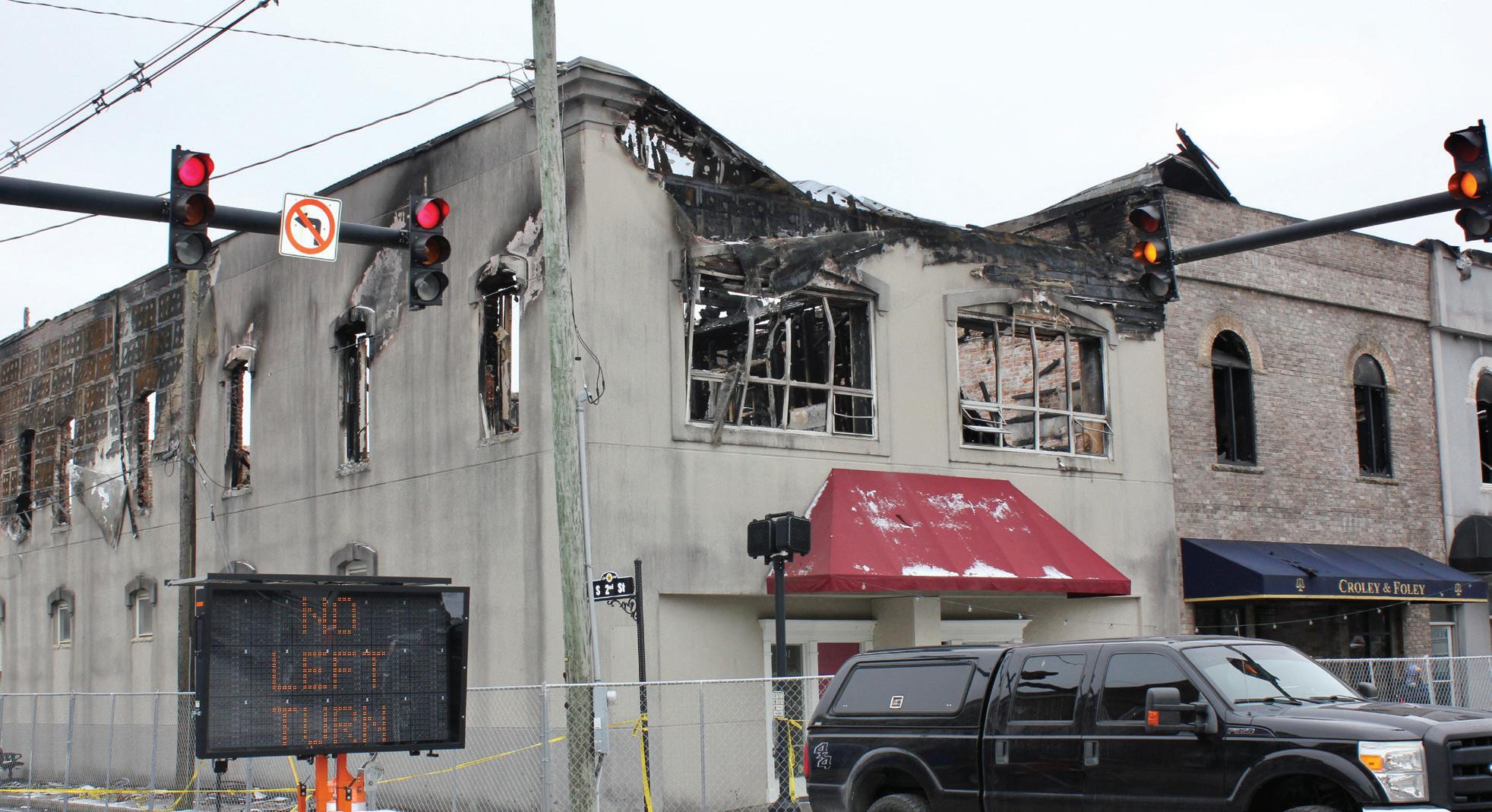
Flames lit up the night sky in downtown Williamsburg late on Jan. 20 as a fire tore through downtown, quickly spreading to multiple businesses and apartments, forcing residents to flee their homes. What began as a late-night emergency escalated into a massive, multiagency response as thick smoke and falling debris filled the historic downtown.
The fire originated at the Law Offices of Croley & Foley on Main Street and spread rapidly to surrounding structures, historic buildings that have slowly become a fire waiting to happen. With the old building and dried up wood, any small flame was sure to be a disaster. More than 10 fire departments and over 100 firefighters responded to the blaze, working for nearly a full day to bring it under control. Firefighters faced hazardous conditions as smoke reduced visibility and portions of buildings collapsed during the response.
Fire officials confirmed there were no fatalities, though two injuries were reported. Several dogs lives were lost after becoming trapped inside one of the apartment buildings as the fire spread. Residents were evacuated late at night with little time to gather belongings, leaving many displaced in the days that followed.
Multiple businesses and apartments were damaged or destroyed, including Associates in Eye Care and Ngoc Kitchen. Business owners affected by the fire declined to comment publicly. The impact, however, has been felt throughout the downtown community, particularly among employees whose workplaces were destroyed. Since the fire, part time employees have faced financial uncertainty as they wait for a new location to be secured, with paychecks placed on hold during the transition.
Beyond the immediate damage, the fire also resulted in the loss of historic buildings that held significant local history. The structures were a
defining part of downtown Williamsburg’s identity, and much of that history was lost in the blaze. The burned buildings will now leave a visible gap along Main Street, serving as a reminder of the fire’s lasting impact.
Among those displaced was Paige Kulisek, a senior at the University of the Cumberlands majoring in criminal justice, who lived in one of the apartments destroyed by the fire.
“The clearest memory I have from the fire was watching the flames spread across the buildings and just being in disbelief, praying that it wouldn’t reach my apartment,” Kulisek said.
Following the fire, Kulisek said she and her fiancé have been staying with family members while trying to adjust to sudden displacement.
“I am currently staying at my parents, and my fiancés parent’s houses, we’re traveling back and forth,” Kulisek said. “The transition is definitely very difficult, especially since I have lived on my Moving back home with her parents has been difficult, Kulisek said, especially after losing her home three years ago. She said the emotional toll has been one of the hardest parts of the experience.
“The hardest part of losing my home that people don’t see is the emotional exhaustion,” Kulisek said. “To watch everyone else living their normal lives while I had to readjust to mine without any warning. My whole life was turned upside down. It was exhausting having to accept things for what they were and knowing they would never be the same.”
Despite the loss, Kulisek said she is grateful for the support she has received from her family and community. She emphasized that many displaced residents do not have the same level of support. “I am very grateful that we get to spend more time with our family now and help them with their needs around their homes and lives,” Kulisek said. “I would like the community to know that displaced residents are struggling badly after the tragedy, and some aren’t as fortunate as I was to have family to support them.”
In the weeks leading up to the Williamsburg fire, a separate blaze at Cunningham and Cunningham Law Offices in nearby London, Kentucky, resulted in an arrest on arson charges. That incident, along with reports of other recent fires in the region, has sparked public speculation about the cause of the Williamsburg fire. Officials have not confirmed any connection between the incidents.
Federal investigators responded to Williamsburg to assist local officials in determining the origin of the fire. The Bureau of Alcohol, Tobacco, Firearms, and Explosives deployed its National Response Team to the 200 block of Main Street. The team is composed of veteran special agents with specialized expertise in fire origin-andcause investigations.
As of press time, officials had not released the cause of the fire, and the investigation remains ongoing. While the investigation continues, the impact of the fire remains visible throughout downtown Williamsburg and in the lives of those displaced. Residents, business owners and employees continue to adjust in the aftermath, relying on family, community support and local resources as they begin the recovery process. Those affected by the fire who may be struggling emotionally or financially are encouraged to reach out for help. Community members and students impacted by the incident are reminded that support is available, and no one is expected to navigate the aftermath alone.
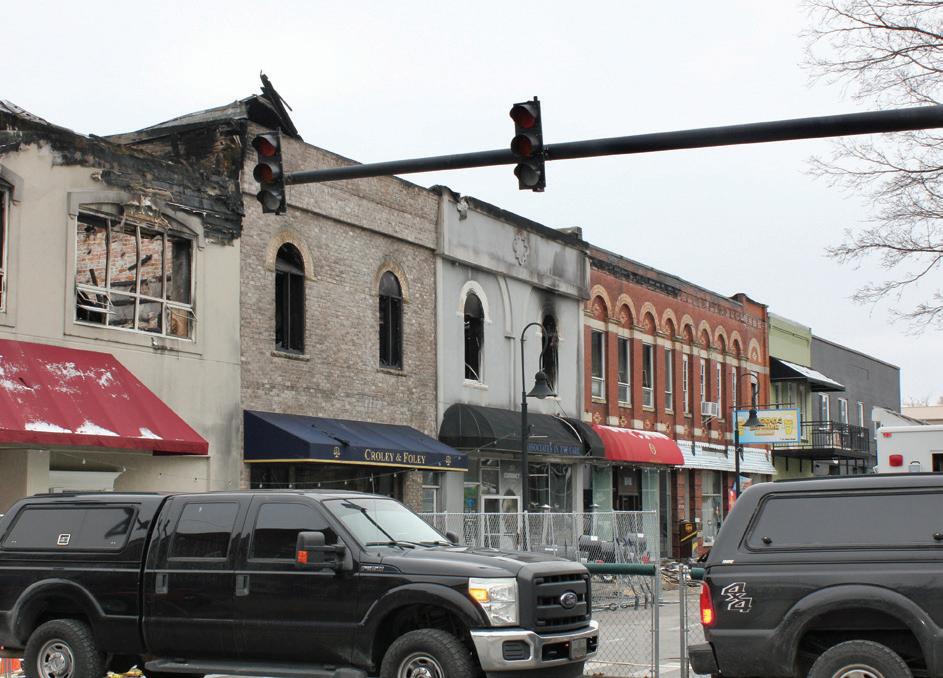
PHOTO BY EMILY ZECCHINI
PHOTO BY EMILY ZECCHINI
A New App for You and Me Student Life
University of the Cumberlands Students Launch Marketplace App
BY: SYDNEY DINGUS STAFF WRITER
When sophomore and international student, Bryndis Rósa Nuevo, first arrived at the Cumberlands, she did not bring all the things she wanted to make her dorm as nice as possible. Flying from Iceland, Rósa Nuevo, only packed the essentials necessary for school. “For example,” she says, “I’m not going to bring a lamp if I want to have a lamp.”
As an international student, Ruthiik Satti had a similar experience to Rósa Nuevo’s. Satti is a senior at the Cumberlands who also recognized a need for university students, especially those far from home, to be able to shop somewhere cheap and convenient.
Rósa Nuevo described the everyday struggles many at college face to get the things they want or need. She said, “Because we are students, we don’t have a huge amount of money, as of right now, without asking our parents. So, if we want to make our room cozy, or if we want new clothes we always have to go to Walmart and buy something new.”
Meanwhile, other university students have a surplus of things they bring from home that often end up in the trash because they do not want to bother with the process of selling their items online and driving to meet with buyers.
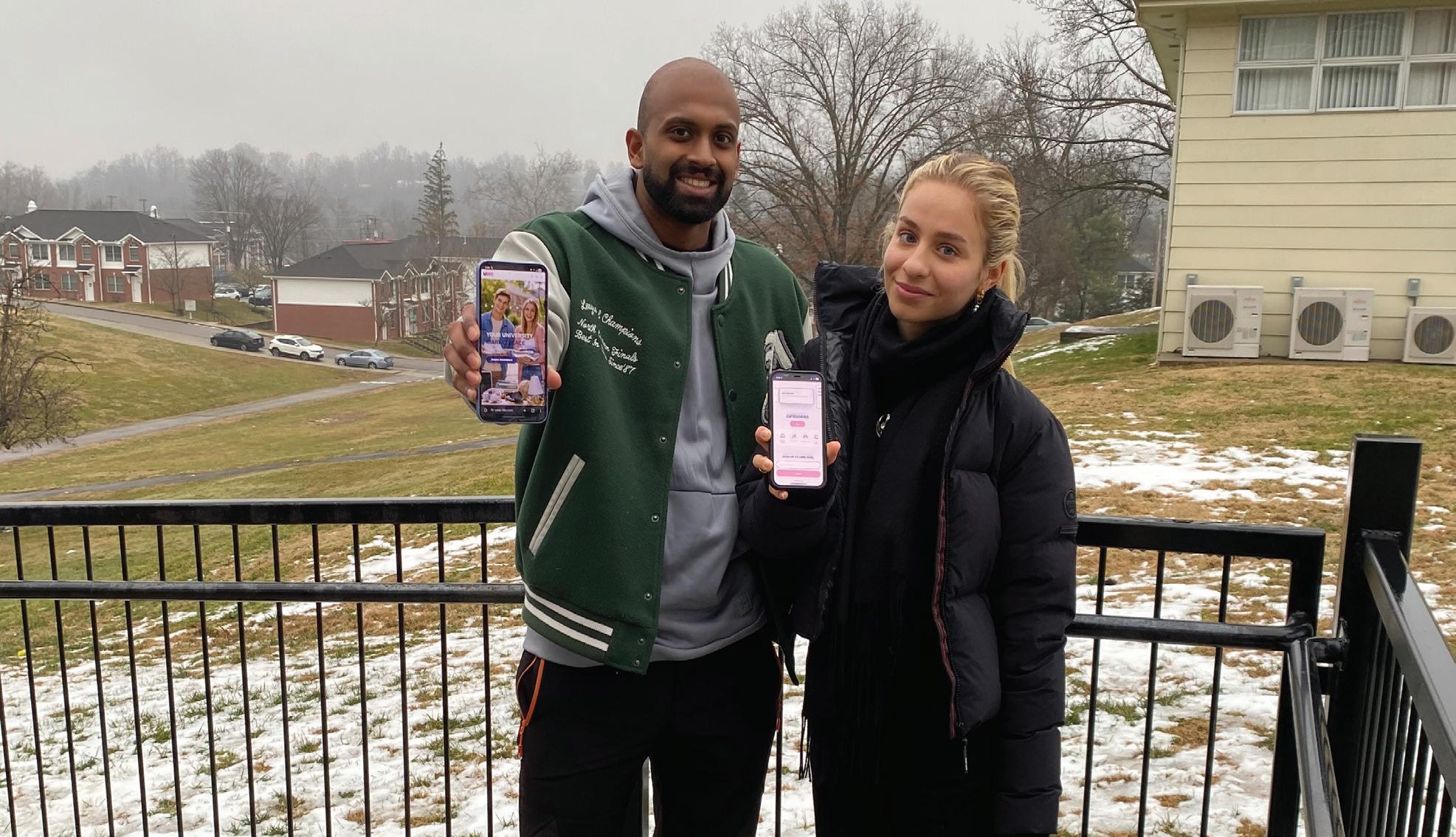
It wasn’t until last fall that this issue was met with the possibility of an idea. Satti and Rósa Nuevo came up with a straight-forward solution to benefit every university student. Satti is studying Information Technology, Business Administration and Marketing while Rósa Nuevo is majoring in Computer Science and Business Administration. Both students aspire to build their own businesses eventually. They began working together in an entrepreneurship class where the idea for University Market Exchange was born.
University Market Exchange or UME is a specialized online marketplace created for student convenience and safety. International university students in the U.S. depend on various marketplace apps like Amazon, eBay, Facebook Marketplace, and Poshmark to safely buy and sell the things they need. These online exchanges come with risk factors and difficulties like getting scammed or not having a car to pick up bought items.
Satti said that “There’s a lot of times where you look in certain marketplace apps and everything, and you don’t know if they’re real. You don’t know if the users are scamming you or anything like that.” He and Rósa Nuevo built their website so that only people with “edu” emails, people who work or study at universities can use this app. This verification is just one example of the safety provided by UME.
Satti and Rósa Nuevo’s app also benefits students without vehicles or who simply desire the convenience of not going far to pick up bought items. Students who share campuses can meet easily and the app also connects students to the post offices of other campuses. Sutti said, “We don’t have cars and we don’t want to get a ride all the way to Knoxville just to get a random thing. Because of this, students can just ship it from UT to the Cumberlands post office.”
Their user-friendly site can be found at UME-life.com. Satti and Rósa Nuevo named the app University Market Exchange, Rósa Nuevo pointed out that the Abbreviation UME “sounds like ‘you and me.’” She and Satti emphasized that their desire for the app is to connect users and benefit students in need.
The Director of Graduate Business Programs, Dr. Daniel Kanyam assisted Satti and Rósa Nuevo throughout the process as they built the app. Rósa Nuevo said that in her business classes, she has learned a lot but had not had much hands-on experience to see how theories work
in the real world until this project. Satti said, “I personally learned a lot building this app. I didn’t use 90% of the stuff I learned in IT classes while building this,” he said, “It was completely different and new to me. And now I know all the workflows, the complete layouts and everything.”
Satti encourages students who don’t trust Facebook Marketplace or eBay to “Come to our app because it’s trustworthy.” Rósa Nuevo said “It’s going to be a journey for us as well. So, if you have a problem with the app, contact us because it really helps us to improve the app a lot more.” She added “Also definitely post some products that you want to sell so that you can make money off it.”
Currently, the app is in a testing period to see how students at UC respond to it, Sutti and Rósa Nuevo hope for their marketplace to be on campuses all over America in the future.
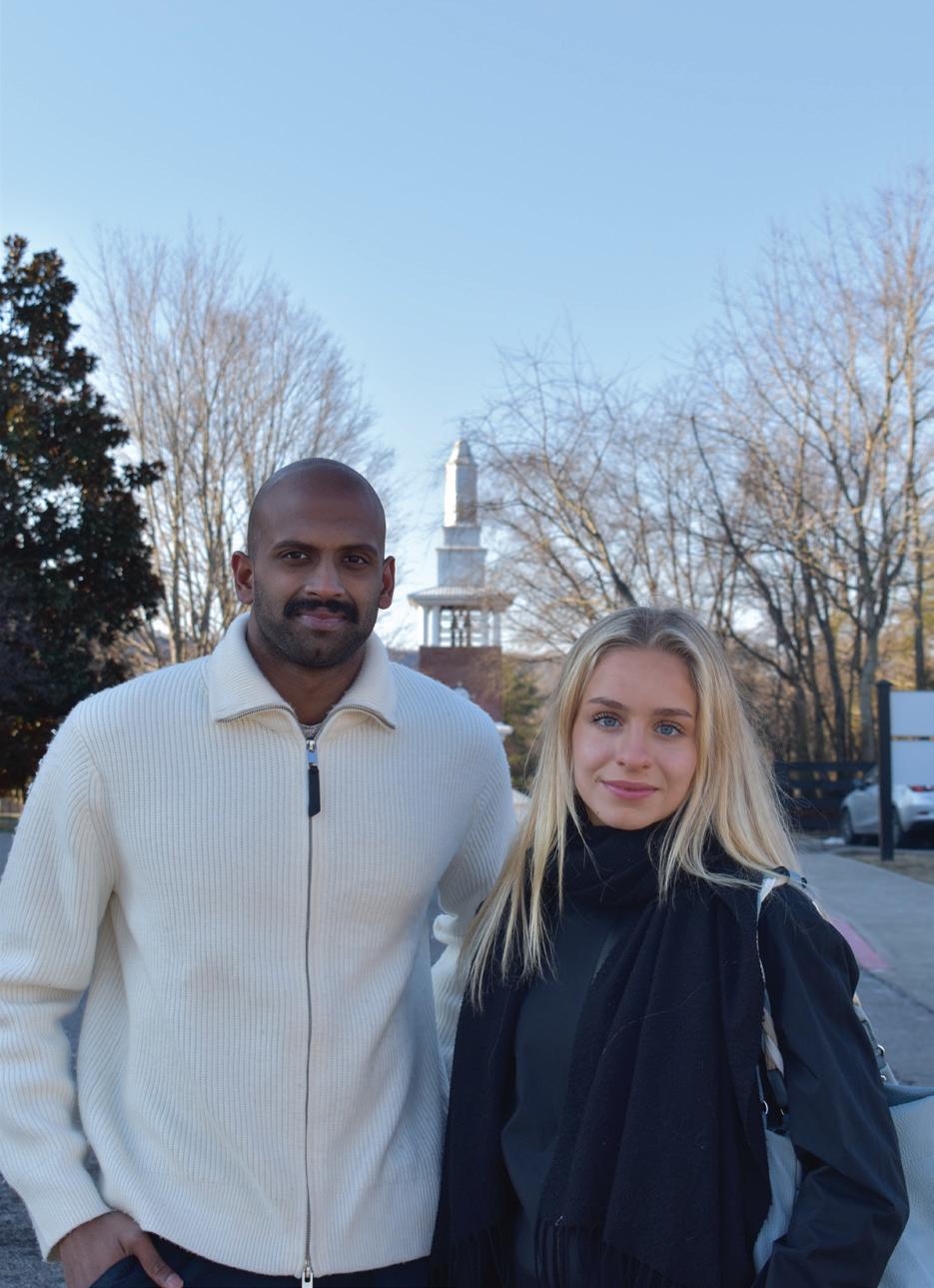
PHOTO BY SYDNEY DINGUS
PHOTO BY KURSTYN ISON
Campus Life
Winter Weather Disturbs Classes
Students and Faculty Adjust to Snow Storm
BY:KASEY PADGETT STAFF WRITER
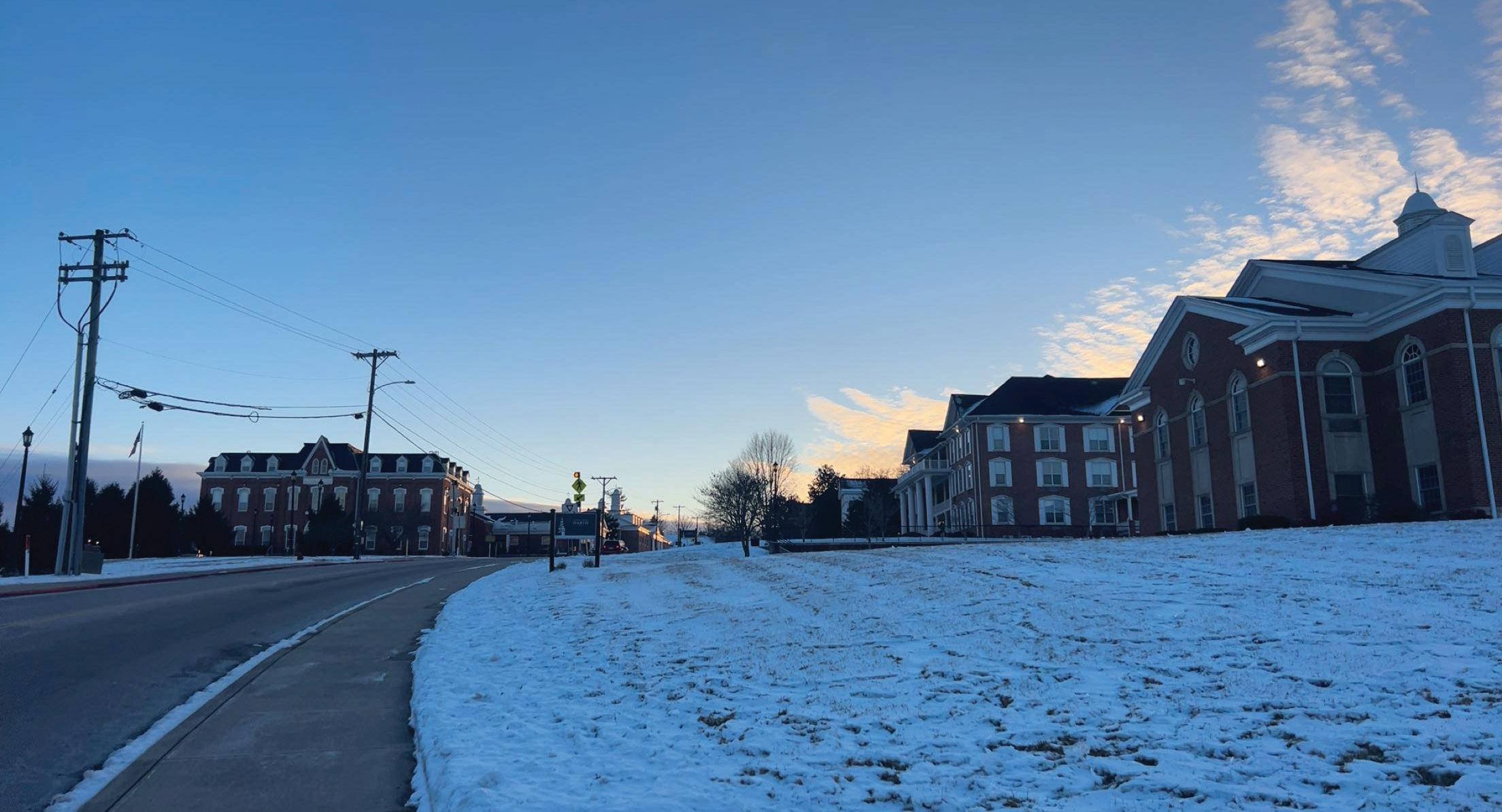
As week three of classes at the University of the Cumberlands came to a close, early signs of winter weather began to appear across the region. By the start of week four, those predictions became reality. Cumberlands Communications sent out an email to all students on both the main campus and the Northern Kentucky University campus announcing that classes would be canceled on Monday and Tuesday due to incoming snow and ice.
While this announcement was not entirely unexpected, many students and faculty were underprepared for the extent of the disruption. Most professors initially anticipated only a one-day delay and began making minor adjustments to their schedules. However, the situation escalated when the university later announced that classes would be canceled for the rest of the week.
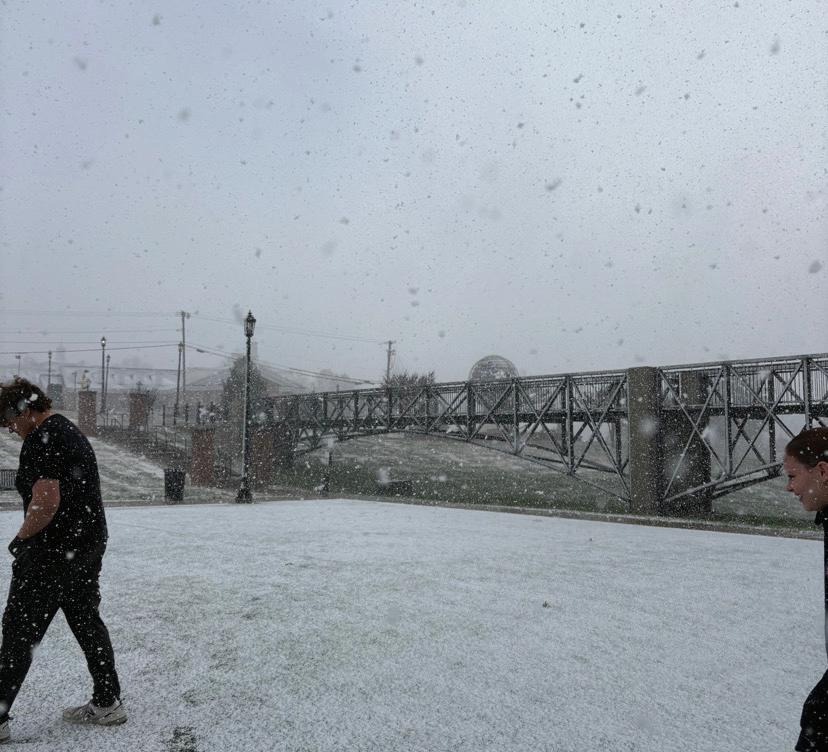
The extended closure proved especially challenging because week four coincided with mid-term exams. In-person exams were either postponed or moved online, forcing students and faculty to rearrange schedules with little notice. Some courses shifted assessments to later dates, while others relied on virtual testing formats, creating additional pressure as the semester
progressed.
With week five approaching, professors faced difficult decisions about how to balance missed material with new content. Several instructors adjusted deadlines or reconstructed coursework to keep students on track. For many students, the academic disruption added stress to what was initially perceived as a welcome break.
Student reactions to the snow days were mixed. At first, many expressed excitement over the unexpected time off, hoping to enjoy winter activities such as sledding or simply catching up on rest. However, the storm quickly intensified, bringing heavy snow and ice that surprised even longtime Kentucky residents accustomed to unpredictable weather.
Students who had traveled home for the weekend found themselves unexpectedly off for an entire week, giving them time to relax away from campus responsibilities. Meanwhile, students who remained on campus took advantage of sleeping in, spending time with friends and participating in limited winter activities when conditions allowed.
International students at the University of the Cumberlands experienced the winter storm in different ways, shaped largely by where they are from. Some students who grew up in colder climates were unfazed by the snowfall, while others saw snow for the first time. Victoria Niska, an international student from northern Sweden, said the storm felt minor compared to winters at home. Niska said she has never experienced school being canceled because of snow. “For me, it is unusual to see school being canceled for this little snow, but I also understand why school gets canceled for student safety,” Niska said.
Xiemna Melendez Hernandez, a student from Mexico, said her feelings about the snowstorm changed as the week went on. “At the beginning I thought it was funny and exciting because I could go sliding with my friends,” Melendez Hernandez said. “But then it became really tiring walking through the snow to practice, and since I come from a warmer place, snow makes me feel more sad.” While she has traveled to snowy places
before, she said she would not consider herself used to it. “In Mexico it is a really warm place,” she said. “These past two years we have gotten snow in the tallest parts of the country, but it is still warmer than here.”
Despite the challenges, Melendez Hernandez said she was pleased with the decision to cancel classes. “I liked it because I had more time to enjoy the snow and we were also safer,” she said, noting that many students who live off campus were able to stay home. “Yes, I preferred to stay inside, and I liked that we could go to the caf whenever.” She added that weather-related cancellations are rare in her home country. “It is not normal from where I’m from because we don’t experience this type of stuff usually,” she said. “We could get classes canceled for other types of things, but not for snow.”
As the week continued, enthusiasm began to fade. Many students reported feeling “stir crazy,” longing for a change of scenery as they felt confined to campus. Several campus facilities, including the library and other common gathering spaces, were closed due to weather concerns, further reducing opportunities for social interaction and study.
While many students appreciated the unexpected break, the winter weather also created challenges, including transportation issues and mobility concerns, that dampened the overall experience. As the university adjusts in the aftermath of the storm, students are eager to get back on track.
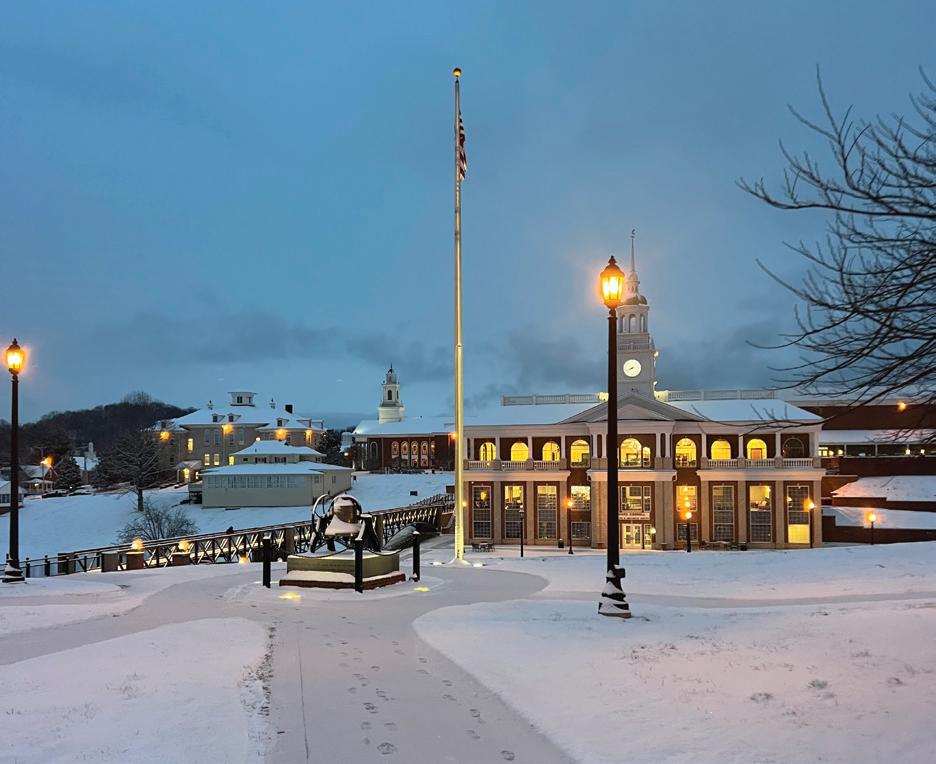
PHOTO BY FAITH BAKER
PHOTO BY FAITH BAKER
PHOTO BY FILIPPA MALMSTROM
Chemistry in the Cold
Exploring Salt, Science and Student Perspectives
BY:ALICJA SEDLAK & ZAK WILLIS STAFF WRITER
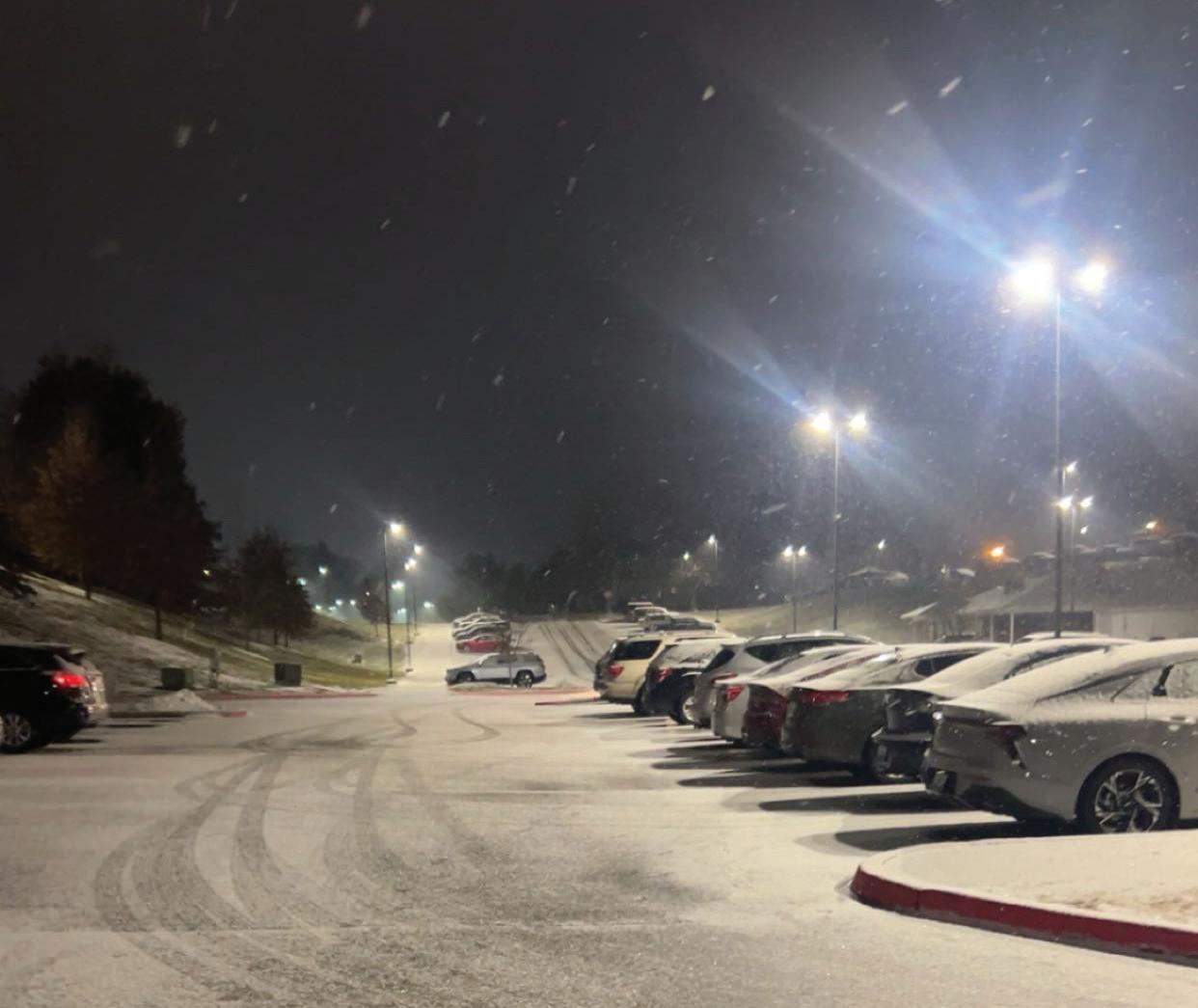
Each winter, we see salt on all the roads and sidewalks, but it may not be obvious why. The most common salt used for roads and walkways is a sodium chloride (NaCl). This is the same type of salt that is used at the dinner table. The main function of this salt is to decrease the temperature at which water freezes also called the freezing point. Frozen water, commonly called ice, is a hazard for both cars and pedestrians. This is why salt is used to keep roads ice-free.
Although this use of salt during periods of severe winter weather helps save lives, this does not come without some unintended effects. Some negative effects of heavy salt use include contaminated ground water, corrosion of exposed metals, including cars and health impacts on animals.
Chemistry students at the University of the Cumberlands discussed the use of salt on campus roads and walkways. Student Connor Ross was asked if he felt safe walking on salted sidewalks. “In my experience, I would rather walk on salted sidewalks than ones that could be covered in
ice,” Ross said. “Even though the salt is inconvenient, ice can be hard to spot in many situations, and I would happily take the known annoyances of salt over the unknown dangers of an unsalted sidewalk.”
His comments reflect a broader consensus among students: It is better to be inconvenienced and safe than risk slipping and falling on the way to class.
Salt may seem like a good solution, but it can also make people’s lives harder. Kaelynn Marion said that she noticed salt damaging her personal items. “Throughout my experience, the salt that is spread throughout campus is notorious for collecting on the bottom of my shoes, getting on my jackets and even collecting on the bottom of car which can lead to rusting or other serious damages. I understand that the most traveled sidewalks on campus must be salted accordingly to prevent accidents, but it caused many inconveniences as a result.” These are well-known problems with salt usage, and it shows that there are real trade-offs to having a safe campus during the winter.
Given these very real problems with salt, UC students are discussing whether its use be limited. “I don’t think the use of salt should be limited because the benefits outweigh the risks,” Watson said. “It keeps people who must be on the roads safe.” This is an important consideration. Removing salt from the roads may cause preventable accidents and injuries.
If limiting the use of salt is not reasonable, another option could be switching to a more environmentally friendly alternative. Reed Richardson shared his insight on the issue. “You can use sand and salt which can help with people slipping. We can also start like some parts of Kentucky to use beet juice. Just trust me.” Upon further investigation, beet juice is an unlikely but perfectly viable
Sudoku
solution to icing.
Chemistry professor Jeffrey Schwarz said understanding the science behind road salt helps students see how chemistry applies to everyday life.
“Scientific concepts are meaningful when students can see their relevance beyond the classroom,” Schwarz said. “Here at UC, we offer an online course called ‘Chemistry of Everyday Life’ that is open to all students. Real-world applications are emphasized in courses across the science curriculum. For example, our General Chemistry II students perform an experiment illustrating how adding salt lowers the freezing point of water, a principle used to treat icy roads. This concept was particularly relevant given our recent winter weather. Our physical plant team did an excellent job keeping roads and sidewalks safe. When students recognize chemistry in their own lives, it becomes more engaging, accessible and impactful.”
Chemistry may be complex, but it plays a vital role in everyday life. Its principles not only explain practices such as salting icy roads but also help researchers discover new and more effective solutions.
These conversations suggest that when it comes to public safety, the community must sometimes sacrifice comfort. The crunch of wet salt underfoot may be a nuisance, but the alternative is a campus that is inaccessible and dangerous during winter weather.
Innovation, however, remains possible, and new methods such as beet juice may offer a practical solution to icing without the common drawbacks. More research and testing would be required before implementing a major change such as replacing salt. Still, the safety of the community remains at the forefront of these decisions.

Fill in the puzzle so that every row across, every column down and every 9 by 9 box contains the numbers 1 to 9.
PHOTO BY FAITH BAKER
Entertainment
Six More Weeks or an Early Spring?
Why Groundhog Day Still Brings Hope in the Heart of Winter
BY: ELI DUNN STAFF WRITER
Every year on Feb. 2, Americans turn their eyes to Pennsylvania to see how much longer winter may last. Groundhog Day, a holiday rooted in European folklore, centers on the belief that a groundhog can predict the arrival of spring by seeing its shadow. According to tradition, if the groundhog sees its shadow on a sunny day, winter will continue for six more weeks. If it does not, an early spring is expected. While there is no scientific basis to confirm this idea, the ritual has become a widely recognized part of American culture and is observed in parts of Canada as well.
The most famous groundhog associated with the holiday is Punxsutawney Phil, who lives in Punxsutawney, Pennsylvania. Phil’s annual forecast takes place at Gobbler’s Knob, where members of the Punxsutawney Groundhog Club gather before sunrise to reveal his verdict to a cheering crowd. The event draws thousands of visitors each year and is broadcast nationwide. Groundhog Day traces its origins to ancient European weather lore, particularly the Christian holiday of Candlemas, which marked the
midpoint between winter and spring. German settlers brought these traditions to the United States in the 18th and 19th centuries, originally using animals such as hedgehogs to forecast the weather.
For some students, Groundhog Day is more symbolic than predictive. Isaac Bush, a student here at the University of the Cumberlands, said he views the holiday as entertaining. “I would think I take it just as fun,” Bush said. “It’s a complete hypothetical; the accuracy isn’t really there, you know? Historically, that’s a lot deeper of a question. People for ages, I guess, had counted on this thing to help them.”
There is some validity to Bush’s point. The first recorded Groundhog Day celebration in Punxsutawney took place in 1887, making it one of the nation’s longest-running folk traditions in the country. Over time, the event shifted from a small local custom to a national spectacle that blends folklore, humor and community pride. The holiday’s cultural significance was further popularized in 1993 when the film “Groundhog Day” was released, which introduced the tradition to new audiences.
Lauren Gray, another student at the University of the Cumberlands, said she is familiar
with the holiday but does not take its predictions seriously. “I know of the holiday; most people around here do,” Gray said. “I wouldn’t say I really believe it’s accurate. I think it’s fun, though, and it’s always nice to see people come together to complain about more weeks of winter than they’d like.”
Despite Phil’s inconsistent accuracy and varying results from other groundhogs, Groundhog Day remains less about meteorology and more about shared tradition. For many people, it provides a lighthearted break from winter and a hopeful reminder that spring is on its way.
Beyond Punxsutawney, this holiday is recognized in many communities. Some schools use Groundhog Day as an opportunity to teach students about folklore, history and cultural traditions. Even though society has developed more accurate system for predicting the weather, the appeal of a simple, charming ritual endures. Groundhog Day serves as a reminder that even in the depths of winter, people continue to look for signs of hope and a reason to believe that spring is not far away.
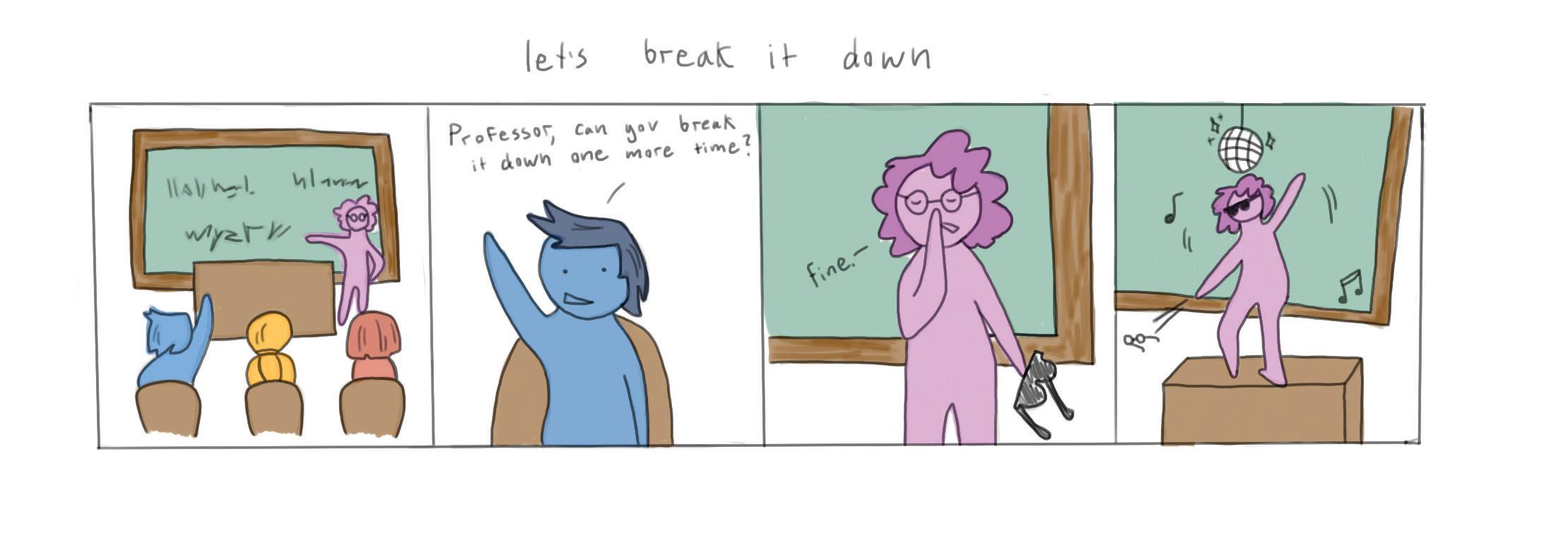
BY: ANNA MEEGAN
PHOTO BY EMILY ZECCHINI