
3,200/page

Circulation & Readership Profile
The publisher reserves the right to edit, revise or reject any advertisement deemed unsuitable or inappropriate. •
This one-time-only special rate o er is for new advertisers.
Space availability is subject to booking on a first-come-first-served basis.
Clients will provide ready-to-print artwork in PDF format with 300dpi.
Full page: 210mm x 297mm, 3mm extra bleed sizes for 4-sided.
Advertising space must be utilised before 30 June 2026.
*Please note that the above rate will be subjected to 8% SST. For overseas advertisers, an additional 25% will be charged.
Rate shown above excludes 15% advertising agency commission.
Payment term: Full advance payment.
Artwork submission deadline is on (or before) the 1st week of the prior month of publication.
After the material deadline, no cancellation or alteration to the advertisement will be entertained.
Any cancellation after signing the advertising order will result in a 50% penalty charge.
JURUTERA has an estimated readership of 200,000 professionals. Our esteemed readership consists of certified engineers, decision making corporate leaders, CEOs, government officials, project directors, entrepreneurs, project consultants, engineering consulting firms and companies involved with engineering products and services.
Publica�on month/s:
Company’s Stamp & Authorised Signature
Date














































Annual Reports • Booklets • Brochures • Buntings • Business Cards
CD / DVD Replications • Calendars • Cards & Invitations • Certificates
Custom Printings • Envelopes • Folders • NCR Bill Books • Notepads
Leaflets • Letterheads • Paper Bags • Posters • Stickers • Others



This month, we focus on two areas shaping not only Malaysia’s future but also the global engineering agenda. Energy Storage Revolution: Battery Technology & Grid-Scale Solutions, explores the role of energy storage in enabling a cleaner and more resilient energy ecosystem. As the adoption of renewable energy grows, the challenge is not just generation but also reliability and stability. Advances in battery technologies and largescale storage systems are redefining how we manage energy supply, balance grids, and future-proof our infrastructure. This article examines both the technological breakthroughs and the practical deployment considerations relevant to Malaysia and the region.
Our second feature is Data Centres & Cloud Infrastructure: Powering Malaysia’s Digital Economy. The surge in digital demand places data centres at the heart of economic growth. However, this comes with significant challenges, particularly in power consumption, cooling efficiency, and sustainability. The article delves into how Malaysia is positioning itself as a regional hub, while addressing the innovations required to support this sector.


















IEM Registered on 1 May 1959
President: Ir. Yau Chau Fong
Deputy President: Ir. Chen Harn Shean
Vice Presidents:
Ir. Prof. Dr. Tan Chee Fai, Ir. Prof. Dr. Lau Hieng Ho, Ir. Yeong Chin Chow, Simon, Ir. Abdul Razak Yakob, Ir. Prof. Dr. David Chuah Joon Huang, Ir. Dr. Lee Yun Fook, Ir. Hj. Abrizan Abdul Kadir
Honorary Secretary: Ir. Alex Looi Tink Huey
Honorary Treasurer: Ir. Prof. Dr. Wong Yew Hoong
Immediate Past President: Ir. Prof. Dr. Jeffrey Chiang Choong Luin
Past Presidents:
Academician Tan Sri Dato’ Seri Ir. Prof. Em. Dr. Chuah Hean Teik, Dato’ Ir. Dr. Lim Chow Hock, Ir. Dr. Tan Yean Chin, Ir. Ong Ching Loon, Dato’ Ir. Prof. Dr. Norlida Buniyamin
Civil Representative: Ir. Chong Boon Hui
Mechanical Representative: Ir. Cheng Yew Leong
Electrical Representative: Ir. Kwok Yew Hoe
Structural Representative: Ir. Lim Su Hian
Chemical Representative: Ir. Kim Kek Seong
Other Disciplines Representative: Ir. Dr. Dhakshyani Ratnadurai
Multimedia Representative: Ir. Dr. Siti Aisyah Anas
Women Engineers Representative: Ir. Prof. Dr. Zuhaina Zakaria
Young Engineers Section Representatives: Mr. Lim Yiren, Mr. Darshan Balasubramaniam, Ms. Ong Ye Shian, Mr. Chuah Pei Lim, Mr. Teoh Chi Yang
Council Members:
Ir. Dr. Angelia Liew San Chuin, Ir. Prof. Dr. Zuhaina Zakaria, Ir. Begum Irdawati Dowlad Rahuman, Ir. Chong Chee Yen, Ir. Khoo Chee Min, Ir. Ahmad Rafidi Mohayiddin, Ir. Dr. Chan Swee Huat, Ir. Alex Looi Tink Huey, Ir. Sukhairul Nizam Abdul Razak, Dato’ Ir. Ting Chek Choon, Ir. Dr. Norashikin binti M Thamrin, Ir. Lee Cheng Pay, Datuk Ir. Chin Tet Fu @Willy, Ir. Gs. Br. Dr. Zarabizan Zakaria, Ir. Choo Lay Guat, Ir. Dr. Siow Chun Lim, Ir. Assoc. Prof. Dr. Leong Kah Hon, Ir. Dr. Sara Lee Kit Yee, Ir. Chan Wah Cheong, Ir. Dr. Marianah Masrie, Ir. Stephanie Sim Hui Kheng, Ir. Dr. Tan Inn Shi, Ir. Tajul Ariffin Mohamed Nori, Ir. Ng Sing Min, Ir. Ooi Mong Lee, Wendy, Ir. Rusnida Talib, Ir. Harris Abd Rahman Sabri Council Member by Invitation: Datuk Ir. Ho Hon Sang, Dato’ Ir. Dr. Ahmad Sabirin Arshad, Ir. Dr. Sanjayan K.V. Velautham
Branch Chairman
1. Penang : Ir. Dr. Lee Choo Yong
2. Southern : Ir. Dr. Telford Kong Weng Keong
3. Perak : Ir. Dr. Tiah Oon Han
4. Pahang : Ir. Harzah Mazni Ramli
5. Kedah-Perlis : Ir. Jamaluddin Abdullah
6. Negeri Sembilan : Ir. Richard Khoo Nee Keong
7. Kelantan : Ir. Che Sufian Che Hussin
8. Terengganu : Ir. Zakaria Abdullah
9. Melaka : Ir. Sh. Ja’afar Sh. Ismail
10. Sarawak : Ir. Dr. Angelia Liew San Chuin
11. Miri : Ir. Chan Yen San, Stephanie
12. Sabah : Ir. Tan Kok Jyh
Chairman, InfoPub & Chief Editor: Ir. Prof. Dr. Lau Hieng Ho
Vice Chairman & Principal Bulletin Editor: Ir. Stephanie Sim Hui Kheng
Chairman, Sub Committee on Resource Centre: Ir. Wan Rizaluddin Abdullah Wan Ali
Committee Members:
Ir. Wan Rizaluddin Abdullah Wan Ali, Ir. Assoc. Prof. Dr. Hum Yan Chai, Ir. Dr. Hong Kai Sze, Ir. Prof. Dr. Teo Fang Yenn, Ir. Dr. Hasril Hasini, Ir. Dr. Tan Kim Seah, Ir. Lau Tai Onn, Ir. Yee Thien Seng, Ms. Michelle Lau Chui Chui, Ir. Begum Irdawati Dowlad Rahuman, Ir. Wong Chee Fui, Ir. Dr. Lau Chee Yong, Ir. Dr. Bhuvendhraa Rudrusamy, Ir. Razmahwata Razalli, Ir. Lee Chang Quan, Ir. Assoc. Prof. Dr. Moey Lip Kean, Ir. Tajul Ariffin Mohamed Nori, Ir. Ahmad Rafidi Mohayiddin
Chief Editor: Ir. Prof. Dr. Lau Hieng Ho
Principal Bulletin Editor: Ir. Stephanie Sim Hui Kheng
Committee Members:
Ir. Dr. Tan Kim Seah, Ir. Razmahwata Mohd Razalli, Ir. Prof. Dr. Teo Fang Yenn, Ir. Lau Tai Onn, Ir. Yee Thien Seng, Ms. Michelle Lau Chui Chui, Ir. Ahmad Rafidi Mohayiddin, Ir. Lee Chang Quan, Ir. Begum Irdawati Dowlad Rahuman, Ir. Dr. Lau Chee Yong
THE INSTITUTION OF ENGINEERS, MALAYSIA Registration No.: 1356 (Selangor)
Bangunan Ingenieur, Lots 60/62, Jalan 52/4, P.O. Box 223, (Jalan Sultan), 46720 Petaling Jaya, Selangor Darul Ehsan. Tel: 603-7890 0130 Fax: 603-7957 7678 E-mail: sec@iem.org.my Homepage: http://www.myiem.org.my IEM

Ir. Kwok Yew Hoe Chairman, EETD 2025/2026
Technical standards are the unseen backbone of a strong economy. It drives safe and robust standards of national infrastructure as well as the utilisation of systems and assets. These technical benchmarks are foundational to national progress.
Standards ensure interoperability, allowing industries to scale and innovate without reinventing the wheel. Importantly, the harmonisation of standards contributes to a more level playing field and, in some cases, enables local industries to compete regionally and globally. Embracing standards builds trust.
As engineers, we have the opportunity and responsibility to play our role in contributing to the development of the right standards for adoption. We recognise having robust standards as a pillar of a strong development ecosystem and we shall lead and contribute to the continuous development of technical standards.
DIMENSION PUBLISHING SDN. BHD. [ 199701034233 (449732-T) ]
Level 18-01, PJX-HM Shah Tower, No. 16A, Persiaran Barat, 46050 Petaling Jaya, Selangor Darul Ehsan, Malaysia.
Tel: +(603) 7493 1049
E-mail: info@dimensionpublishing.com Fax: +(603) 7493 1047 Website: www.dimensionpublishing.com
Chairman Robert Mebruer
CEO/Publisher Shirley Tham shirley@dimensionpublishing.com
Head of Marketing & Business Development
Joseph How joseph@dimensionpublishing.com
Production Editor Tan Bee Hong bee@dimensionpublishing.com
Contributing Writers Putri Zanina putri@dimensionpublishing.com
Hanna Sheikh Mokhtar hanna@dimensionpublishing.com
Senior Graphic Designer Sofia Hanis Mohd Uzir sofia@dimensionpublishing.com
Graphic Designer Nicole Theng nicole@dimensionpublishing.com
Advertising Consultants Tham Choon Kit ckit@dimensionpublishing.com
Accounts Cum Admin Executive Yong Yen Yin yenyin@dimensionpublishing.com
For advertisement placements and subscriptions, please contact:
DIMENSION PUBLISHING SDN. BHD. [ 199701034233 (449732-T) ] Tel: +(603) 7493 1049 Fax: +(603) 7493 1047
E-mail: info@dimensionpublishing.com Website: www.dimensionpublishing.com
Subscription Department E-mail: info@dimensionpublishing.com
JURUTERA MONTHLY CIRCULATION: OVER 40,000 COPIES
Submission or placement of articles in JURUTERA could be made to the: Chief Editor THE INSTITUTION OF ENGINEERS, MALAYSIA (IEM) Bangunan Ingenieur, Lots 60/62, Jalan 52/4, P.O. Box 223 (Jalan Sultan), 46720 Petaling Jaya, Selangor, Malaysia. Tel: +(603) 7890 0130 Fax: +(603) 7957 7678 E-mail: pub@iem.org.my Website: http://www.myiem.org.my
Published by: The Institution of Engineers, Malaysia (IEM) Publishing Consultant: Dimension Publishing Sdn. Bhd. Printed by: Thunder Print Sdn. Bhd. (Licence No: 048515)
PUBLICATION DISCLAIMER The publication has been compiled by both IEM and Dimension with great care and they disclaim any duty to investigate any products, process, services, designs and the like which may be described in this publication. The appearance of any information in this publication does not necessarily constitute endorsement by IEM and Dimension. There is no guarantee that the information in this publication is free from errors. IEM and Dimension do not necessarily agree with the statement or the opinion expresssed in this publication.
COPYRIGHT JURUTERA Bulletin of IEM is the official magazine of The Institution of Engineers, Malaysia (IEM) and is published by Dimension Publishing Sdn. Bhd. The Institution and the Publisher retain the copyright over all materials published in the magazine. No part of this magazine may be reproduced and transmitted in any form or stored in any retrieval system of any nature without the prior written permission of IEM and the Publisher.
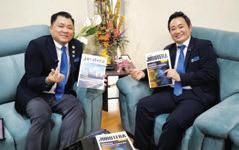
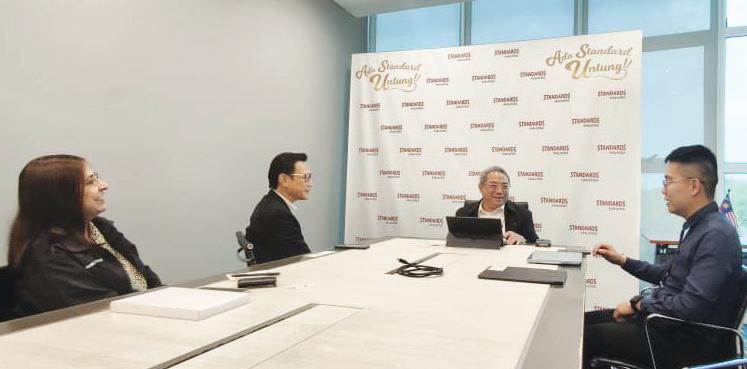
Interview session with Mr. See Chee Kong Director General Jabatan Standards Malaysia (JSM)
In an era of rapid technological change, standards have never been more important. They underpin the safety of our bridges, the trustworthiness of our digital systems, and the competitiveness of Malaysian goods and services on the global stage. Yet for many engineers, especially those early in their careers, the world of standardisation remains largely unfamiliar terrain.
The Institution of Engineers, Malaysia (IEM) recently sat down with Mr. See Chee Kong, the Director General of the Jabatan Standards Malaysia (JSM), for a wide-ranging conversation on innovation, international collaboration, digital transformation, and the vital role that engineers play in shaping the standards that define our nation. What emerged was an inspiring vision of standards not as bureaucratic paperwork, but as powerful tools for national development and global competitiveness.





How is JSM driving innovation in standardisation to keep pace with emerging technologies like AI, IoT, and Industry 4.0?
Mr. See’s answer is both strategic and forward-looking. Malaysia, he explains, is no longer content to simply adopt standards developed elsewhere. Through active participation in key international committees — notably ISO/IEC JTC1/ SC27 on cybersecurity and SC42 on artificial intelligence — Malaysia now has a seat at the table where global standards are shaped.
“Our participation in these entities provides Malaysia with the opportunity to shape standards directly instead of just adopting them,” Mr. See notes. This is a significant shift in posture, from passive recipient to active contributor.
At national level, JSM recently launched the AI Standards Hub in collaboration with the national AI office, and other relevant ministries. This initiative positions Malaysia to develop AI standards which are contextually relevant rather than wholesale copies of international
documents. The hub also reflects JSM’s commitment to being agile: Working with industry, academia, and professional bodies to develop standards which are practical, timely, and fit-for-purpose.
Complementing this is the JSM iSolution programme — a digital-first approach to developing standards which replace the traditional cycle of paper drafts and physical meetings with collaborative, real-time digital workflows. Mr. See is enthusiastic about these changes, seeing them as essential to keeping Malaysian standards relevant in a world that moves faster than ever.

What has JSM done to make standards more accessible and implementable for Malaysian engineers and industries?
Accessibility, Mr. See acknowledges, is a challenge that JSM takes seriously. The launch of the MyISO platform — a digital portal where users can discover and access Malaysian standards — represents a significant step forward. While full documents require a purchase, the platform provides excerpts and overviews that allow engineers and businesses to quickly determine whether a particular standard is relevant to their work.
But Mr. See is quick to point out that accessibility goes beyond technology. It is equally about awareness and community. He says JSM currently maintains a portfolio of 4,652 active standards and that far more effort needs to go into promoting these standards among potential users.
One area where awareness is critically lacking is among young engineers and students. As one of the IEM interviewers notes, many students graduate without ever having been properly introduced to Malaysian standards in their curriculum. Mr. See acknowledges this gap and sees it as an opportunity for JSM, IEM, and academia to work together.


He also shares a practical incentive that many engineers may not be aware of: Companies which obtain certification under recognised standards — such as ISO 9001 for Quality Management or MS 3701 for Anti-Bribery Management — are eligible for double tax deductions on certification costs. This is a tangible, financial reason for engineering firms to engage with standardisation, and Mr. See expresses a desire to work with IEM to communicate this benefit more widely.
Can you share examples where Malaysian standards have catalysed breakthrough outcomes for industries?
Few examples illustrate the power of standards as eloquently as Malaysia’s Halal certification ecosystem. Mr. See uses this as his centrepiece illustration, and it is a compelling one.
“If you do not have Halal certification, your market is probably about 40%,” he explains. “But once you get the Halal certification, your market access will be close to 100% — because everybody has no problem consuming your product.”

Interviewee's Profile
Mr. See Chee Kong is the 6th Director General of the Jabatan Standards Malaysia (JSM), a position he assumed on 3 September 2025. He was previously the Senior Director of the Services Sector Development Division at the Ministry of Investment, Trade & Industry (MITI) and served as Minister (Economic Affairs) at the Malaysian Embassy in Beijing, China, where he played a key role in promoting Malaysia’s economic interests and strengthening MalaysiaChina trade and investment ties. With an extensive public service experience in trade and industry, he leads JSM’s national standardisation and accreditation agenda.
The Halal standard (MS 1500) was developed through JSM’s national consultative process, bringing together JAKIM and relevant government agencies. A company which achieves certification against this standard, gains access to not only the domestic Muslim consumer base but also to the global OIC market, a community of over 1.8 billion consumers. Certification is voluntary, yet the industry has enthusiastically adopted it because the commercial logic is irrefutable.
This example resonates strongly for engineering firms. For those developing products, devices or solutions, meeting a recognised standard is not a compliance burden — rather, it is a passport to greater market access, enhanced brand trust, and long-term competitive positioning. As Mr. See puts it: “Standards work very quietly. But if you are able to meet those standards, it is actually a very powerful initiative. It is a very strong foundation. You can position yourself in a very competitive situation. You can reshape markets if you are strong enough.”
What role does IEM and the engineering profession play in developing Malaysian standards? Mr. See is effusive in his praise for IEM contributions. Reviewing the Final Draft Malaysian Standards (FDMS) which pass across his desk, he consistently notes the presence of IEM representatives — a testament to the institution’s active engagement in the standards development process.
But he challenges IEM members to go further. Participation in standards committees is valuable, but it is only the beginning. Mr. See’s vision is for IEM to become ambassadors of the standards they help to create — actively promoting them within the wider engineering community and crucially, encouraging members to apply them in their professional practice. “Those who have participated in the development of standards should be the ones to champion the standards,”
he says with conviction. “If you don’t, who will?"
This call to action is particularly timely as JSM celebrates its 30th anniversary in 2026. Throughout the year, a series of events and promotional activities will spotlight the breadth and impact of Malaysian standards — and Mr. See is eager for IEM to be a visible and active copartner in these celebrations.
How is Malaysia collaborating with ASEAN and international partners to harmonise standards and facilitate trade?
One of the most tangible benefits of standards harmonisation is the facilitation of cross-border trade. Within ASEAN, JSM participates in a dedicated working group which addresses standards and conformity assessment issues — covering both goods and professional services. Mr. See explains that Malaysia also engages with standards through the framework of Free Trade Agreements (FTAs), where chapters on technical barriers to trade and conformity assessment create formal mechanisms for recognising each other’s standards.
The concept of Mutual Recognition Arrangements (MRAs) is central to this effort. When two countries agree to recognise each other’s conformity assessment results, a manufacturer only needs to test a product once to gain access to both markets. This dramatically reduces the cost and complexity of exporting, particularly for smaller Malaysian companies.
For engineering service providers — a key constituency of IEM — this is a significant opportunity. Mr. See draws on his experience at MITI to note that Malaysia has, in recent years, moved from a services trade deficit to a surplus, with professional services exports playing a meaningful role in this turnaround. Standards certification, he suggests, can further strengthen our credentials as an exporter of high-quality engineering services.
How is JSM addressing standards needs in rapidly evolving technology sectors?
The conversation turns to some of the most exciting frontiers in engineering standardisation. Battery energy storage systems, both at the EV level and the utility scale, emerged as a live area of work, with IEM members already engaged in the technical committees developing these standards. Mr. See notes that JSM recently launched Malaysia’s first EV battery passport standard, focusing on traceability and life-cycle tracking.
Data centres represent another frontier. Drawing on his prior experience at MITI, Mr. See highlights the importance of efficiency standards — for power usage effectiveness (PUE) and water usage — as Malaysia continues to attract significant data centre investment. As AI workloads intensify energy demands globally, having robust efficiency standards becomes not
just an environmental necessity, but an economic one.
Mr. See is candid about the challenge of standards keeping pace with technology. “If you come out with a standard today, in the next one or two weeks, it may be outdated already,” he acknowledges. The solution lies in developing more agile standards frameworks — leaner documents that establish principles and benchmarks, with mechanisms for rapid revision as technology evolves. JSM is actively exploring ways to shorten development timelines to address this reality.
What is your vision for the impact of standards in Malaysia’s journey towards becoming a high-income, developed nation?
Towards the end of the interview, Mr. See articulates a vision that is both ambitious and grounded. Standards, he emphasises, are not ends in themselves; they are enablers. They enable industries to grow by setting quality benchmarks. They enable consumers to trust the products
they buy. They enable Malaysian businesses to compete in global markets. They enable the nation to demonstrate, through internationally recognised certifications, that it meets the highest standards of quality, safety, and integrity.
The high-impact work, he stresses, is ultimately done by those on the ground — the engineers, the academics, the industry practitioners — who participate in standards committees, apply standards in their projects, and advocate for their adoption among peers. JSM can create the frameworks but the engineering community must animate them.
“I cannot stress how important this partnership is — with IEM and all others,” Mr. See says. “There is a lot that IEM can do jointly with us.” His message is clear: The future of Malaysian standards is a shared endeavour and engineers are at the heart of it.
Mr. See came to JSM with a distinguished career that spanned trade policy, industrial development, and strategic planning at MITI — including years as the Malaysian representative in China. That breadth of experience is evident in how he speaks about standards, not as technical minutiae, but as instruments of national strategy.
As JSM marks its 30th anniversary, there is a sense of both pride and purpose in his leadership. Thirty years of building Malaysia’s standards infrastructure has created a solid foundation. The next chapter — defined by AI, green energy, digital trade, and global competitiveness — demands that engineers step up as standards champions.
For IEM members reading this: Your expertise is needed. Whether through joining a standards committee, pursuing your firm’s ISO or MS certification or simply spreading awareness among colleagues and students — you have a meaningful role to play. Standards shape the world that engineers build. It is only fitting that engineers shape the standards.
































Ir. Yau Chau Fong
Saturday, 18th April 2026, Wisma IEM, Petaling Jaya, Selangor
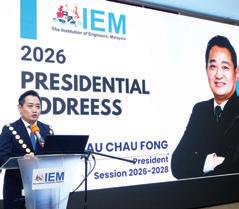
Immediate Past President, Ir. Prof. Dr. Jeffrey Chiang Choong Luin, Deputy President, Ir. Chen Harn Shean, Vice Presidents, Ir. Prof. Dr. Tan Chee Fai, Ir. Prof. Dr. Lau Hieng Ho, Ir. Simon Yeong Chin Chow, Ir. Abdul Razak bin Yakob, Ir. Prof. Dr. David Chuah Joon Huang, Ir. Dr. Lee Yun Fook, Ir. Hj. Abrizan bin Abdul Kadir, Distinguished Past Presidents, Members of the Outgoing and Incoming Excomm and Council, Datuk-datuk, Datin-datin, Tuantuan dan Puan-puan, Fellows, Members of the Institution, distinguished guests, partners, and friends of the engineering fraternity.
A very good morning to you all. It is my profound pleasure to welcome you to the Annual General Meeting (AGM) of The Institution of Engineers, Malaysia (IEM) on this historic day, 18 April 2026. The AGM stands as one of the most vital occasions in our professional calendar, representing the very principles that underpin an organisation of our stature: Accountability, transparency, and collective stewardship. This gathering is not merely a procedural necessity; it is a moment for us to reflect on our trajectory, review our progress, and
reaffirm our shared commitment to the advancement of the engineering profession.
Today’s meeting marks a significant transition for our Institution as we embark on a new session for 2026/2027 and 2027/2028. At the outset, I wish to express my deepest gratitude to our outgoing President, the Members of the Council, and the countless volunteers who have served across our Standing Committees, Technical Divisions, Branches, and Sections. The strength and prestige that IEM enjoys today are built upon
the unwavering dedication and commitment of these individuals. Their tireless contributions have ensured that IEM remains a relevant, active, and respected pillar within the global engineering community. On behalf of the entire membership, I record our sincere gratitude for their exemplary service.
For me personally, assuming the Presidency of this esteemed Institution is both a tremendous honour and a significant responsibility. My journey with IEM began approximately twenty-five years ago when I first joined the IEM Graduate and Student Section as a co-opted member. At that time, like many of our younger members today, my primary motivations were simple: to learn, to build professional networks, and to gain exposure to the vast world of engineering.
Over the following two decades, my involvement with the Institution grew in depth and breadth. I was privileged to contribute through the Electrical Engineering Technical Division and later served within the Excomm and the Council. These
years also provided opportunities to participate in vital initiatives such as the ASEAN Engineering Register and industry platforms like ENGINEER and MARVEX. These experiences were transformative, allowing me to view IEM through various lenses — as a young engineer seeking a mentor, as a volunteer executing activities, and eventually as a leader helping to shape the Institution's future.
Through this long-standing involvement, I have come to a singular realisation: IEM is a community. It is far more than a platform for technical lectures or administrative activities; it is a professional home. Today, with a membership exceeding 40,000 engineers, IEM stands as one of the largest and most influential professional engineering bodies in the region. Our members are the heartbeat of the nation, serving in every facet of the engineering ecosystem, from consulting and heavy industry to academia, government, and the frontier sectors of emerging technology. It is through your collective work that we shape our nation’s infrastructure, drive technological advancement, and fuel economic progress.
As we look toward the 2026-2028 sessions, it is timely to reflect on how the role of the engineer is evolving. Recently, the global
engineering fraternity celebrated World Engineering Day for Sustainable Development, led by the World Federation of Engineering Organisations and UNESCO. This year’s theme, “Smart Engineering for a Sustainable Future through Innovation and Digitalisation,” perfectly encapsulates the challenges and opportunities of our era.
We are currently witnessing a rapid transformation in engineering practice. The integration of artificial intelligence, digital engineering platforms, advanced materials, and sustainable energy systems is fundamentally changing how engineering solutions are conceived, designed, and implemented. Simultaneously, engineers are being called upon to lead the response to society’s most urgent crises, including climate change, energy transition, urban sustainability, and technological disruption.
In this complex environment, the modern engineer must be more than a technical specialist. We must evolve into innovators, integrators, and leaders who can navigate interconnected global challenges. Our mission aligns seamlessly with Malaysia’s national strategic frameworks, including the MADANI Economy framework, the New Industrial Master Plan 2030 (NIMP 2030), and the National Energy Transition Roadmap (NETR).
Professional institutions like IEM have a sacred responsibility to support our members through these transitions, ensuring that engineering expertise remains the cornerstone of national development.
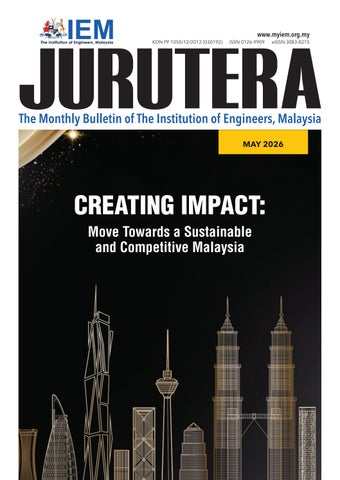
Presidential Theme: “IEM Creating IMPACT”
To guide my term as your President, I have chosen a theme that is both a vision and a call to action: “IEM Creating IMPACT”. This theme reflects my firm belief that IEM must move beyond being solely a platform for networking and activities. While those elements are important, we must strive for more.
We must create meaningful and measurable impact for our members, for the engineering profession, and for the nation at large. This means:
• Creating impact by strengthening professional standards and upholding the highest levels of ethical conduct.
• Creating impact by shaping national conversations on the critical roles of engineering and technology in society.
• Creating impact by supporting engineers throughout their entire professional journey, from the classroom to the boardroom.
• Creating impact by positioning Malaysian engineers to contribute with confidence in an increasingly complex and interconnected global market.
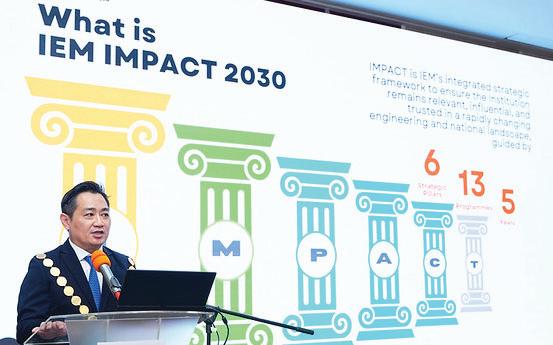
To translate this vision into reality, the leadership of IEM has developed an integrated strategic framework known as IEM IMPACT 2030. This framework is designed to ensure that our Institution remains relevant, influential, and trusted in a rapidly shifting landscape. It aligns our people, our programmes, and our processes toward a common destination, enabling us to lead the profession with confidence.
The IEM IMPACT 2030 framework is built upon six strategic pillars that will define our focus for the coming sessions:
The first pillar recognises that engineering practice is increasingly defined by emerging technologies. To stay ahead, engineers must be lifelong learners who can anticipate change. Under this pillar, IEM will enhance its role as a premier platform for technological insight. We are introducing initiatives such as “Engineering Outlook” and “Innovation Intelligence,” which will
provide our members with curated insights into global trends and technological breakthroughs.
Furthermore, we are committed to the realisation of a Digital-First IEM. By strengthening our digital infrastructure, we will ensure that every member can access professional resources, engagement opportunities, and information more effectively and seamlessly than ever before. We aim to be a forwardlooking institution that proactively prepares our engineers for the future.
2.
Membership is the foundation of IEM, and we must ensure that the Institution provides tangible value at every stage of an engineer’s career. Central to this is our “End-to-End Membership Journey,” which creates a smooth professional pathway within the Institution, guiding our members from their days as students to becoming Graduate Engineers, Professional Engineers, and ultimately, Fellows of the Institution.
To ensure the future of our leadership, we are also launching the IEM Protégé Programme. This
initiative is designed to identify and nurture the most promising young engineering talent. Selected protégés will gain direct exposure to the leadership of the Institution, participate in high-level initiatives, and contribute their unique perspectives to the issues affecting our profession. By cultivating the next generation today, we strengthen the long-term vitality of IEM.
Engineering is a profession rooted in competence, integrity, and the public trust. While regulatory bodies handle registration and compliance, IEM must serve as the ethical compass of the profession. We are tasked with guiding the values and professional conduct that define what it means to be an engineer.
Under this pillar, we will focus on Engineering Standards Development. By taking an active role in developing technical guidelines and best practices, we will support both the profession and the wider industry. These efforts reinforce IEM’s authority as a trusted source of professional excellence and guidance.


Our expertise is critical to national policy, yet the voice of the engineer is not always heard clearly in the halls of power. To bridge this gap, we will focus on the development of Subject Matter Experts within our ranks.
These experts will serve as the bridge between the technical world and the public sphere, engaging with policymakers and industry stakeholders on issues ranging from sustainable infrastructure to technological ethics. Through robust advocacy, we will ensure that engineering knowledge contributes meaningfully to the decisions that shape our nation's future.
5. Collaboration
Today’s engineering challenges are too complex to be solved in isolation. They require collaboration across disciplines, industries, and national borders. We will actively strengthen our partnerships with universities, government agencies, and international engineering bodies. Through regional partnerships and our foreign IEM chapters, we will expand the horizons for Malaysian engineers. By participating in international engineering events, we will not only learn from the best but also strengthen IEM’s presence as a leader in the global engineering community.
6. Transformation
Finally, for IEM to deliver impact externally, we must transform internally. We will focus on strengthening the IEM Secretariat as a Strategic Enabler, enhancing its capacity to execute our strategies and engage with stakeholders effectively.
We will also work to revitalise the IEM Branding, ensuring that we are recognised by all as the definitive professional voice of engineers in Malaysia. At the same time, we need to ensure strategic direction and key initiatives are sustained across presidencies and not reset every term. By ensuring long-term institutional continuity, we will remain resilient and forward-looking, capable of weathering future challenges.
While strategies and frameworks are important, the true strength of IEM lies in the dedication and contributions of its members. In particular, I would like to acknowledge the important roles played by our IEM Branches, Technical Divisions, Sections and volunteer leaders across the country.
Our Branches serve as the front line of engagement with members at the regional level. Through technical activities, professional development programmes and outreach initiatives, our branches ensure that IEM remains accessible and relevant to engineers throughout Malaysia.
Similarly, our Technical Divisions play a crucial role in advancing engineering knowledge and professional excellence. Through seminars, conferences, position papers and professional discussions, they provide platforms for engineers to share expertise, discuss emerging technologies and contribute to the development of engineering practices. These divisions represent the technical backbone of the Institution and are instrumental in supporting initiatives such as engineering standards development, knowledge sharing and subject matter expertise, which are key components of the IEM IMPACT 2030 strategy.
I would also like to highlight the important contributions of the Women Engineers Section, which continues to play a vital role in promoting diversity, inclusiveness and professional development within the engineering community.
The Women Engineers Section has been instrumental in encouraging greater participation of women in engineering, providing mentorship and support networks, and inspiring the next generation of engineers. Their efforts contribute significantly to strengthening the engineering profession and ensuring that it reflects the diversity and talent of our society.
As we move forward with the implementation of IEM IMPACT 2030, the success of this strategic
framework will depend greatly on the active participation of our Branches, Technical Divisions, Sections and volunteers. Together, they form the collective strength of the Institution and will play a key role in translating strategy into meaningful action.
We cannot ignore that we live in a world of increasing uncertainty. Geopolitical tensions and global conflicts have immediate impacts on our local economies, resulting in volatile material costs and disrupted supply chains. In such times, the role of a professional institution becomes even more critical.
IEM must be a source of continuity and resilience. Through knowledge sharing and professional engagement, we will help our members navigate these emerging hurdles. Most importantly, I want to assure every member here today that IEM stands with you. We are a community that supports our own, and together, we will turn these challenges into opportunities for growth.
In closing, I am reminded of the theme from our IEM Annual Dinner this year: “Connecting Engineering Practitioners”. That spirit of connection is what makes our Institution great. Whether we are 1,700 people at a gala dinner or 40,000 engineers serving across the nation, our strength lies in our unity.
Engineers have always been the builders and movers of the future, even in the most uncertain of times. With the collective spirit of this Institution and the professional excellence of our members, I am confident that we will achieve our goal of IEM Creating IMPACT.
I look forward to serving you for the next two years as we work together to shape a better, more sustainable, and more prosperous Malaysia.
Thank you.


Annual Reports • Booklets • Brochures • Buntings • Business Cards
CD / DVD Replications • Calendars • Cards & Invitations • Certificates
Custom Printings • Envelopes • Folders • NCR Bill Books • Notepads Leaflets • Letterheads • Paper Bags • Posters • Stickers • Others

Sustainability continues to be an increasingly important strategic priority for the Institution of Engineers, Malaysia (IEM), reflecting the growing expectations placed on the engineering profession to contribute meaningfully to sustainable development. As global industries accelerate their transition towards environmentally responsible and socially inclusive practices, engineers play a critical role in delivering innovative solutions that balance economic growth with environmental stewardship and social well-being. Recognising this responsibility, IEM has progressively integrated sustainability into our institutional priorities and long-term strategic planning, positioning IEM as a key advocate for sustainable engineering practices within Malaysia. A significant milestone in this journey was the launch of the IEM Guideline on Simplified ESG Disclosure for the Built Environment in 2024, which represented an important step in supporting engineering professionals and organisations in adopting Environmental, Social and Governance (ESG) practices. Developed to address the increasing demand for sustainability reporting and ESG transparency, the guideline provides a practical and structured framework that simplifies ESG disclosure for engineers, particularly those operating within the built environment sector. By translating complex sustainability principles into actionable guidance, the framework enables engineering professionals to incorporate ESG considerations into project planning, design, construction, and operational management, while also aligning with emerging regulatory expectations and global sustainability trends.
Engineers remain at the forefront of addressing some of the world’s most pressing challenges, including climate change mitigation, resource efficiency, infrastructure resilience, and sustainable urban development. Through their technical expertise and problem-solving capabilities, engineers contribute significantly to the development of sustainable solutions that protect the environment

by: Ir. Dr. Leong Kah Hon
while supporting economic progress and societal well-being. In this regard, IEM recognises our responsibility not only to represent the engineering profession but also to guide and empower engineers to integrate sustainability principles into their professional practices. To further advance these initiatives, IEM established the ESG Sub-Committee under the Standing Committee on Professional Practice, which serves as a dedicated platform to promote ESG awareness, professional development, and knowledge sharing within the engineering community. The sub-committee plays a key role in supporting the implementation of ESG-related initiatives and facilitating engagement between engineers, industry stakeholders, and policymakers on sustainability-related matters.
Throughout the year, the ESG Sub-Committee has organised a series of webinars and capacity-building workshops aimed at equipping engineers with a deeper understanding of ESG concepts, sustainability reporting frameworks, and responsible engineering practices. These programmes are designed to strengthen the profession’s readiness to respond to evolving sustainability expectations, while also fostering
greater awareness of the role engineers play in delivering sustainable and resilient infrastructure. In addition to supporting professional development, these initiatives also reflect IEM’s broader commitment to promoting a culture of sustainability within the engineering ecosystem. By encouraging knowledge exchange and collaboration across industry, academia, and professional institutions, IEM aims to strengthen the capacity of engineers to contribute effectively to national and global sustainability agendas.
In line with our commitment to transparency, accountability, and responsible governance, IEM is proud to present our first Sustainability Report 2025, marking an important milestone in documenting the Institution’s sustainability journey. The publication of this report demonstrates IEM’s dedication to enhancing transparency in our governance and operations while reinforcing our role as a professional body that actively promotes responsible practices within the engineering community.
The Sustainability Report outlines IEM’s key sustainability initiatives, governance structures, and engagement efforts undertaken to support the advancement of ESG principles within the engineering profession. It also reflects IEM commitment to continuous improvement in aligning our programmes and activities with broader sustainability goals. Looking ahead, IEM remains committed to strengthening our leadership in advancing sustainability across the engineering profession. Through continued collaboration, knowledge sharing, and professional capacity building, IEM aims to empower engineers to play an active role in shaping a more sustainable and resilient future. By championing ESG principles and responsible engineering practices, IEM will continue to support the profession in delivering innovative solutions that contribute to environmental protection, social progress, and long-term economic sustainability.
ELECTED OFFICE BEARERS OF THE INSTITUTION OF ENGINEERS, MALAYSIA
2026/2027
The Institution of Engineers, Malaysia (IEM) Melaka Branch had its 39th Annual General Meeting on 7th March 2026 and we are pleased to introduce the new office bearers for session 2026/2027:
IEM (Melaka Branch) Office Bearers 2026/2027
Chairman
Vice Chairman
Honorary Secretary
Honorary Treasurer
Immediate Past Chairman
Committee Member
Internal Auditor
Advisor
Ir. Sh. Ja’afar Sh. Ismail
Ir. William Ho Choon Kwang
Ir. Teh Choon Pek
Ir. Sures Kumar Ganesan
Ir. Lim Su Hian
Ir. Lam Choon Kay
Ir. Ng Hsin Loon
Ir. Hj. Abdul Rahman Mohd Said
Ir. Ooi Kah Huat
Ir. Lam Ah Hang
Ir. Harmidi Ali
Ir. Ong Yee Pinn
Ir. Goh Kok Hong
2026/2027
The Institution of Engineers, Malaysia (IEM) Southern Branch had its 53rd Annual General Meeting on 14th March 2026 and we are pleased to introduce the new office bearers for session 2026/2027:
Chairman
Vice Chairman
Honorary Secretary
Honorary Treasurer
Immediate Past Chairman
Committee Member
Young Engineers Section Representative
Ir. Dr. Kong Weng Keong
Ir. Jason Lim Wuh Terng
Ir. Assoc. Prof. Dr. Noor Nabilah Sarbini
Ir. Bong Beng Siong
Ir. David Puen Ming Shen
Ir. Dr. Lee Man Djun
Ir. Lau Yun Zi
Dr. Yip Bao Fang
Ir. Juraimi Masood
Ir. Dr. Lee Siong Wee
Ir. Haszeme Abu Kasim
We want IEM to create impact — not only for today, but also for the future.
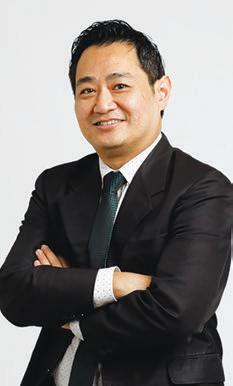
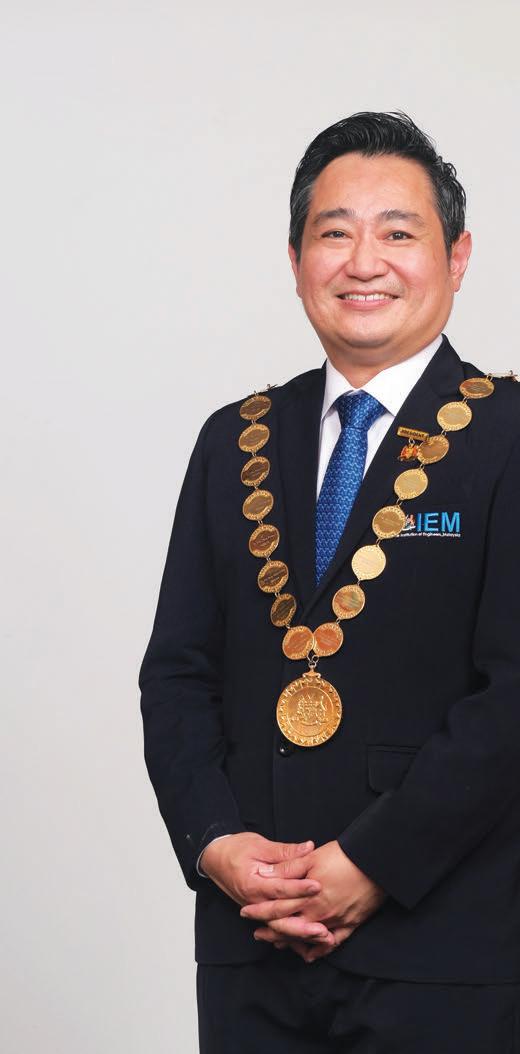
As the Institution of Engineers, Malaysia (IEM) ushers in a new leadership term, its newly elected President, Ir. Yau Chau Fong, sets a clear and ambitious direction, one that’s anchored in impact, innovation, and internationalisation. Drawing on more than two decades of service within IEM and the engineering profession, he outlines a forward-looking agenda to strengthen the Institution’s relevance, empower its members, and position Malaysian engineers on the global stage.
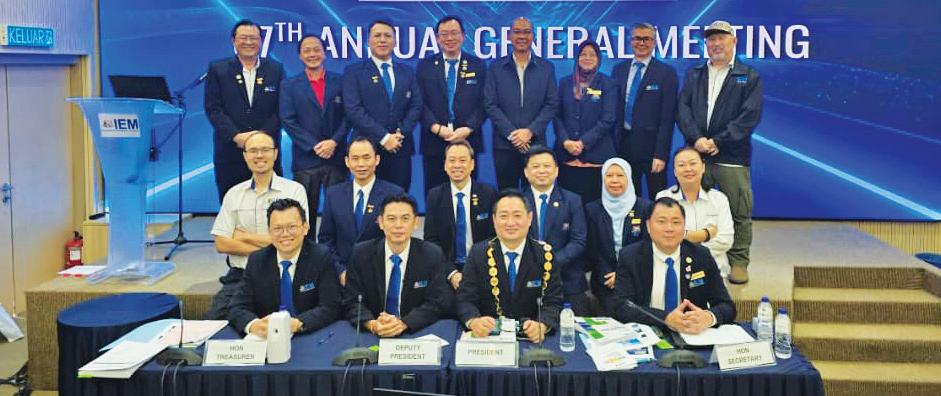
The 67th Annual General Meeting of the Institution of Engineers, Malaysia (IEM) on 18 April 2026 marked not just a leadership transition but the continuation of a long and deeply rooted journey within the Institution. The AGM was the key platform to welcome its newly elected President for 2026-2028, Ir. Yau Chau Fong.
For Ir. Yau, IEM is not merely a professional body that plays a vital role in shaping the engineering profession in Malaysia but also a platform that has helped shaped his career. Now, he seeks to transform it for future generations.
A professional electrical engineer with over 24 years of experience in consultancy and data centre design and build, Ir. Yau brings with him both technical depth and institutional knowledge. A graduate of the University of Malaya and an Uptime Institute Accredited Tier Designer (ATD), he was involved in certifying Malaysia’s first Tier III Data Centre. His leadership footprint extends beyond national borders, with active roles in the ASEAN Federation of Engineering Organisations (AFEO) and the International Electrotechnical Commission (IEC), where he was bestowed the prestigious IEC 1906 Award in 2024.
“I believe I was conferred this award because of my efforts in bringing IEC standards and promoting them not only in Malaysia but also across the ASEAN region. Recently I was honoured as the recipient of the Vietnam Friendship Award. Vietnam is a member of ASEAN,” he says. Ir. Yau is also winner of IEM Young Engineer Award. Yet, it is his longstanding involvement in IEM, which spans two decades, that forms the foundation of his presidency.
From Young Engineer to President
Ir. Yau’s journey with IEM began in 2001, when he joined as a young engineer through what was then known as the Graduate & Student (G&S) Section.
“I have been involved in IEM since 2001… I started as a co-opted member in the G&S Section,” he recalls. “From there, I progressed and became G&S chairman in 2006.”
One of his early contributions was the rebranding of G&S into the now well-established Young Engineers Section (YES) to reflect a broader and more dynamic engagement with early-career professionals. “In 2007, I changed and rebranded G&S as the Young Engineers Section of IEM,” he recalls.
Over the years, Ir. Yau steadily took on greater responsibilities — serving in technical divisions, contributing to the IEM Council, and eventually rising through the ranks to Vice-President and Deputy President before assuming the presidency.
“My overall journey in IEM is about 20-25 years,” he notes. “These last few years have been the most significant.”
This long trajectory, shaped by volunteerism and sustained engagement, informs his belief in leadership as a collective effort. “My leadership style is to lead together,” he explains. “We have ideas, we see whether they are feasible, and we work together. As a leader, I lead — but we achieve as a team.”
“We want IEM to create impact not only on its members and society, but also on the nation.”
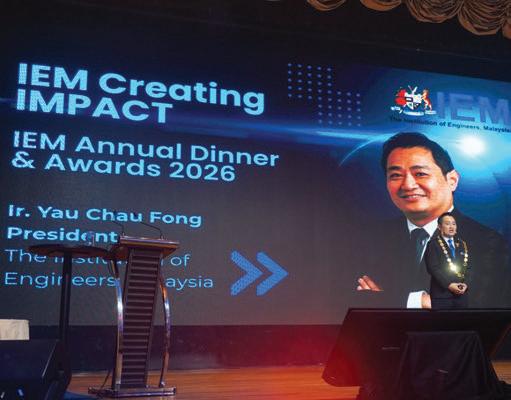
At the core of Ir. Yau’s presidency is a unifying theme: IEM Creating IMPACT. More than a slogan, IMPACT is a structured framework guiding IEM’s strategic direction.
“Why IMPACT? Because we must look at where we want to be in the next 5-10 years,” he says. “We must admit where we were not strong in the past and, from there, move forward with purpose.”
Each letter in IMPACT represents a key pillar:
• I – Innovation
• M – Membership
• P – Professionalism
• A – Advocacy
• C – Collaboration
• T – Transformation
“This is not just about making impact in a general sense,” Ir. Yau explains. “Each pillar drives specific programmes and objectives. Everyone in IEM must move in the same direction.”
The emphasis on IMPACT reflects a shift towards measurable outcomes — whether in advancing the profession, influencing policy, or delivering tangible value to members.
In an era defined by rapid technological change, sustainability imperatives, and evolving industry demands, Ir. Yau is clear that engineers, and IEM itself, must adopt a forward-looking mindset.
“As engineers, we should not only think about what we are today but also anticipate the future,” he says. “It is about sustainability, new technologies, and the environment.”
To support this, he proposes the development of an annual Engineering Outlook Report, a forward-looking publication that draws on insights from the IEM council, technical divisions, committees, and industry stakeholders.
“Throughout the year, we must conduct research and gather input to anticipate what will happen in the next 5-10 years,” he explains. “What are the emerging technologies? What are the job opportunities? What projects will shape Malaysia’s future?”
Such an initiative, he believes, will position IEM as a thought leader while equipping members with the knowledge needed to stay relevant in a changing landscape.
We must not be just Malaysian engineers; we must also brand ourselves to the world.
Another central pillar of Ir. Yau’s vision is connectivity or bringing together the diverse stakeholders within the engineering ecosystem.
“The theme of our AGM was Connecting Engineering Practitioners,” he says. “We have students, graduates, academics, consultants, industry players, and government agencies. IEM should be the connecting point.”
Through networking platforms, industry engagements, and international collaborations, IEM aims to strengthen these linkages.
On a global level, Ir. Yau emphasises the importance of continued engagement with organisations such as the World Federation of Engineering Organisations (WFEO) and AFEO.
“We should continue our journey to internationalise Malaysian engineers,” he says. “Use these platforms to showcase our capabilities and to share our knowledge.”
His advocacy for “ASEANising” engineers — facilitating mobility and collaboration across the region — remains a key priority.
For IEM to remain relevant, Ir. Yau underscores the need to deliver clear and tangible value to its members at every stage of their careers.
“It is important for IEM to create value for all categories of membership,” he says. “We must support them from the day they
join as students until they become Fellows.”
This includes reviewing and enhancing professional development pathways, streamlining processes, and ensuring that members are supported in achieving professional recognition.
“We want a clear pathway — from student member to graduate to professional engineer and ultimately to Fellow within, say 30 years,” he explains.
Such structured progression, coupled with targeted programmes, aims to strengthen engagement and retention within the Institution.
Internally, Ir. Yau is focused on ensuring that IEM remains financially sustainable while expanding its offerings.
“In the last two years, we have achieved good financial results,” he notes. “Now we must look at new income-generation avenues, including recurring income to sustain IEM well into the future.”
A key area of focus is the enhancement of IEM’s training academy, which he sees as vital to the professional development of engineers, including strengthening their capabilities, developing and enhancing skills, acquiring new knowledge and providing the pathway to grow in the profession.
Despite its strengths, IEM faces challenges, both internally and externally.
“External factors such as economic conditions can impact our members,” Ir. Yau observes. “IEM must be ready to support them.”
Internally, one of the biggest challenges lies in aligning the Institution’s many branches, divisions, and committees. While they have performed well in the past and can conduct activities independently, Ir. Yau feels that more can still be done. “The biggest task is to bring everyone together to achieve our strategic objectives,” he says.
Yet, he views this diversity within IEM – both in its headquarters and various branches – as a strength rather than a weakness.
“IEM has strong resilience built over 67 years,” he says. “We have a large pool of volunteers, subject matter experts, and active branches. We must leverage this strength.”
There is still a lot of room for improvement. We must strengthen our role in training engineers for the future.
IEM is a place where young engineers can grow — and become the leaders of tomorrow.
A significant part of Ir. Yau’s vision is centred on developing future leaders within the engineering profession. “We want to move young engineers up in the organisation,” he says. “Through initiatives such as a protégé programme, we hope they will become future leaders.”
Drawing from his own journey, he encourages young engineers to actively engage with IEM. “I grew from the YES to become the President,” he says. “The path is there.” His advice is straightforward yet grounded in experience: “Be humble, learn from seniors, and take advantage of the platform that IEM provides.”
As Ir. Yau embarks on his two-year term, his aspirations are both ambitious and grounded in purpose. “My legacy is to create IMPACT — on members, society, and internationally,” he says. This tri-fold focus encapsulates his broader vision: An IEM that is not only relevant and responsive to its members but also influential in shaping national development and recognised on the global stage.
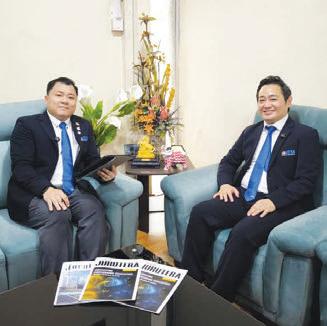
Ir. Yau’s presidency signals a decisive shift towards a more outward-looking, impact-driven IEM. Anchored in the IMPACT framework, his agenda balances continuity with transformation, leveraging IEM’s strong foundations while positioning it for future challenges. By emphasising innovation, strengthening membership value, fostering collaboration, and advancing international engagement, he aims to elevate both IEM and the engineering profession, with engineers taking on greater roles to make an impact both nationally and internationally.
Ultimately, his vision is clear: To ensure IEM remains not just a professional body but one that will also be a dynamic force shaping engineers, influencing society, and contributing meaningfully to the nation’s progress.
NEWLY ELECTED OFFICE BEARERS OF THE INSTITUTION OF ENGINEERS, MALAYSIA (IEM), KELANTAN BRANCH SESSION 2026/2027
The Institution of Engineers, Malaysia (IEM) Kelantan Branch had its 14th Annual General Meeting on 11th April 2026 and we are pleased to introduce the new office bearers for session 2026/2027:
Chairman Ir. Che Sufian Che Hussin
Vice Chairman Ir. Mohd Nor Ismail Ir. Dr. Mustafa Salleh
Honorary Secretary Ir. Gs. Wan Muhammad Faisyal Mohd Noor
Honorary Treasurer Ir. Hj. Mohd Anuar Musardar Hj. Yusoff
Immediate Past
Chairman Ir. Hj. Nik Burhanuddin Nik Yusoff
Committee Member Ir. Khairul Nizam Berahim @ Ibrahim
Ir. Abu Hanifah Yusof
Ir. Gs. Dr. Mohd Amiruddin Fikri Yaakob
Ir. Dr. Hjh. Wan Noorul Hafilah Wan Ariffin
Ir. Nohaimi Ismail
Ir. Hj. Nik Ab. Hadi Nik Hassan
Ir. Fung Chai
Ir. Normazuki Yaacob
Advisor Ir. Hj. Abrizan Abdul Kadir
Young Engineers Section Representative
Muhammad Hazamuddin Wan Hassan
by:


Ir. EUR ING Dr. Lau Chee Yong Ir. Alex Looi Tink Huey Assistant Professor
at Asia
Pacific
University of Technology & Innovation (APU) committee member of Electrical Engineering Technical Division (EETD), IEM.
Consultant at Malim Consulting Engineers Sdn. Bhd., a Registered Engineering Consultancy Practice (ECP) with the Board of Engineers Malaysia (BEM).
Battery energy storage systems (BESS) are reshaping the global energy landscape and lithium-ion technologies are leading with dramatic cost reductions and rapid capacity expansion. This article examines current battery technologies (lithium-ion, sodium-ion, and solid-state) and their roles in grid-scale applications, drawing on developments in China, the United States, Europe, and Malaysia. It argues that while lithium-ion dominates today, diversification toward alternative chemistries and robust policy frameworks are essential for long-term energy security and equitable access to clean energy storage.
The transition to renewable energy (RE) is one of the defining challenges of the 21st century. Solar and wind power have achieved remarkable cost reductions, but their intermittent nature introduces supply-demand mismatches which threaten grid stability and limit the displacement of fossil fuels without complementary storage infrastructure. BESS has emerged as the critical enabling technology for addressing this intermittency challenge. The global grid-scale battery storage market (estimated at US$10.69 billion in 2024) is projected to reach US$43.97 billion by 2030, growing at a CAGR of 27.0%1
In 2024, renewables reached a record 47% share of net electricity generation in the European Union. Yet this achievement was accompanied by an all-time high in the occurrence of negative electricity prices, highlighting the urgent need for storage to smooth supply fluctuations2 This article examines the current state and future trajectory of battery technologies for grid-scale energy storage, with particular attention to the implications for Malaysia and other developing economies.
Lithium-ion batteries have established overwhelming market leadership in grid-scale storage, accounting for 85% of the market in 20241. This dominance was built on a foundation of relentless cost reduction and performance improvement. Globally, costs of fully installed battery storage projects declined by a staggering 93% between 2010 and 2024, from US$2,571 per kilowatt-hour to US$192 per kilowatt-hour3. In 2024 alone, battery storage
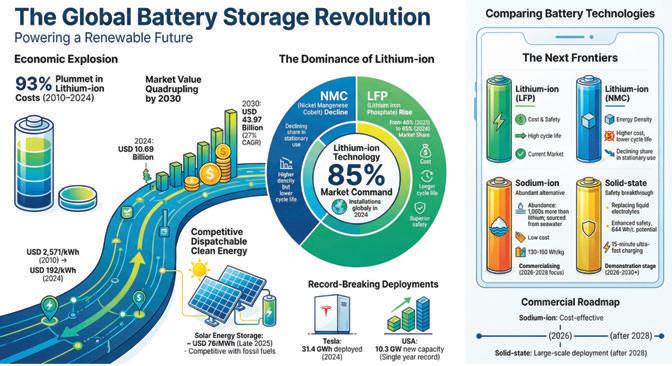
costs decreased by 38% for two-hour systems and 32% for four-hour systems compared to the previous year.
The implications are profound. According to Ember, the cost of storing electricity with utility-scale batteries fell to US$65 per megawatt-hour by late 20254. When half of daytime solar generation is shifted to evening hours via storage, the resulting dispatchable clean electricity costs approximately US$76 per megawatt-hour — competitive with many conventional sources, transforming solar into anytime dispatchable electricity.
Within the lithium-ion sector, a significant shift toward lithium iron phosphate (LFP) chemistries has occurred. LFP market share grew from 48% in 2021 to 85% by 20243 and better safety profiles compared to nickel-manganese-cobalt (NMC) alternatives, reflecting a pragmatic prioritisation of longevity over energy density for stationary applications.
The deployment numbers reflect this transformation. The United States added 10.3GW of new battery storage in 2024, with 18.2GW expected in 20255. BloombergNEF projected global energy storage growth to peak at 35% in 2025, followed by a 14.7% CAGR through 2035 installations, commissioning projects including Gurun (1GW/4GWh) and Xinjiang Hami (2GW/8GWh) as part of a national strategy deploying over 70GW in 2024 alone — enabled by CATL, BYD, and SUNGROW’s vertically integrated supply chains driving per-unit costs to new lows.
Despite the dominance of lithium-ion, supply chain concentration has motivated investment in alternatives. Sodium-ion batteries are the most commercially advanced. Sodium is ~1,000 times more abundant than lithium and commercial-grade cells have achieved 130-160Wh/kg, approaching LFP performance7. CATL and HiNa Battery have launched commercial products, with the world’s largest sodium-ion facility (100MWh) already operational7. The global market was valued at US$270.1 million in 2024, growing at 26.1% CAGR through 20348. While sodium-ion currently offers lower energy density and shorter cycle life, it serves as a complementary technology for stationary grid storage where weight is less critical9

Solid-state batteries represent a more fundamental leap, replacing liquid electrolytes with solid alternatives to promise enhanced safety, higher energy density, and faster charging. QuantumScape’s prototype achieved 844Wh/L7 and Toyota targets commercialisation by 2027-2028 for EVs. Manufacturing challenges remain substantial, though sulfide-based argyrodite electrolytes have emerged as the most studied system in 2024 due to superior ionic conductivity10
Solid-state batteries will likely remain in the demonstration stage before 2028–203011. Cost remains a barrier — estimates suggest US$129 per kilowatt-hour vs US$110 for current lithium-ion9 — and the value proposition for grid-scale storage, where energy density constraints are less severe, is less compelling than for electric vehicles. However, superior thermal stability of solid-state electrolytes could eventually reduce cooling infrastructure costs, a long-term advantage worth monitoring. The practical roadmap suggests sodium-ion will become cost-effective for stationary storage from 2026-2028, while solid-state primarily targets high-performance applications.
Grid-scale battery storage has evolved from simple peak-shaving to sophisticated grid management. Since 2018, energy shifting has become the primary use case, accounting for 67% of total capacity additions in 20243 — storing cheap RE and releasing it during peak demand, generating arbitrage opportunities that have drawn traders and investment firms to short-term power markets2


enquiry@nehemiah-grp.com
Europe has emerged as a laboratory for innovation. Germany’s Grid Booster projects use large-scale batteries as virtual transmission lines — TenneT deploys paired 100MW installations at distinct substations, providing automated redispatch without operator intervention during outages4. Italy’s MACSE mechanism awarded approximately 10GWh of new BESS in September 2025 at competitive prices4
An emerging frontier is the integration of battery storage with data centres, particularly relevant for Malaysia given its dual ambitions in both sectors. Jefferies estimates hyperscalers represent a 20GW opportunity for BESS through 203512, with companies like Crusoe
Energy already testing second-life EV batteries to power AI workloads in offgrid data centres12
Energy Storage Landscape & Opportunities
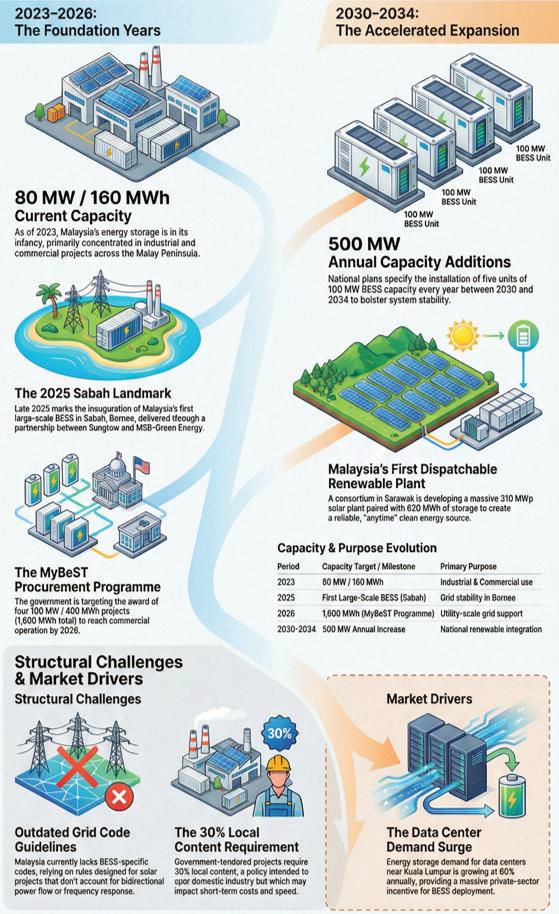
Malaysia’s energy storage market is at a nascent but rapidly evolving stage. In 2023, the country’s energy storage installed capacity was approximately 80MW or 160MWh, concentrated mainly in industrial and commercial projects in the peninsula13. The government recognises BESS as vital for system stability and plans to install five units of 100MW BESS capacity annually from 2030 to 203414. Through the MyBeST national BESS procurement programme, four 100MW and 400MWh BESS projects totaling 1,600MWh are expected to be awarded, targeting commercial operation in 202615
A landmark milestone was achieved in late 2025 with the inauguration of the first large-scale utility BESS in Sabah, championed by Dato’ Yaakob Hussin, CEO of Sabah Electricity Sdn. Bhd. (SESB) and IEM Council Member. Delivered by Sungrow through a contract with MSR-Green Energy, the 10MW/21.5MWh system at the Sulaman substation in Kota Kinabalu uses Sungrow’s liquid-cooled PowerTitan 2.0 to provide frequency regulation, voltage support, and peak shaving for Sabah’s isolated grid, where BESS serves a “lifesupport” function, unlike peninsula deployments driven by arbitrage economics. Commissioned on 4 December 2025, it validates utility BESS viability in the Eastern region and serves as a replicable blueprint for Sabah and Labuan.
However, there are structural challenges. Dedicated market participation rules for BESS remain nascent — the regulatory framework needs tailored provisions recognising BESS’s bidirectional nature, enabling participation in ancillary services such as frequency regulation, spinning reserve, and voltage support beyond contracted capacity payments.
On the supply side, the 30% local content requirement for government-tendered projects nurtures the domestic energy industry. Since BESS “manufacturing” in Malaysia today centres on system integration rather than cell production (which remains concentrated in China), this requirement constructively creates opportunities for local
system integrators, civil contractors, and electrical engineering firms to build competitive expertise as the regional BESS market grows.
Malaysia’s data centre boom intersects powerfully with energy storage needs. With energy storage demand for data centres in and around Kuala Lumpur reportedly growing at 60% annually13, integrating BESS with on-site renewables addresses both grid stability and sustainability commitments. Existing incentives, including the Green Investment Tax Allowance (GITA) and Corporate Renewable Energy Supply Scheme (CRESS), provide a foundation, though clearer regulatory pathways will be necessary to fully realise this potential.
The energy storage revolution is a present reality. Cost reductions in lithiumion batteries, the commercial emergence of sodium-ion alternatives, and advancing solid-state technology signal that the barriers to widespread RE integration are rapidly diminishing and that dispatchable clean electricity at competitive prices is achievable today.
Realising this potential requires deliberate action. Supply chain diversification must reduce dependence on concentrated mineral sources, while policy frameworks evolve to accommodate battery storage’s unique bidirectional role.
For Malaysia specifically, the convergence of data centre growth and energy storage deployment is a distinctive strategic opportunity. By advancing market participation rules for BESS, accelerating renewables, and building local industry capacity, we can position ourselves as not merely a host for global digital infrastructure but also as a leader in sustainable digital economy development.
[1] Grand View Research, "Grid-Scale Battery Storage Market Size | Industry Report 2030," 2025. [Online]. Available: https://www.grandviewresearch.com/
[2] CFA Institute, "What's driving the boom in grid-scale batteries?" Aug. 2025. [Online]. Available: https://www.cfainstitute.org/
[3] IRENA, "Battery Energy Storage Systems: Key to Renewable Power Supply-Demand Gaps," Aug. 2025. [Online]. Available: https://www.irena.org/
[4] POWER Magazine, "Battery Storage Comes of Age: From Grid Accessory to Essential Infrastructure," Feb. 2026. [Online]. Available: https://www.powermag.com/
[5] U.S. Energy Information Administration, "Solar, battery storage to lead new U.S. generating capacity additions in 2025," 2025. [Online]. Available: https://www.eia.gov/
[6] Straits Research, "Battery Energy Storage System Market Size, Trends & Regional Analysis by 2034," 2025. [Online]. Available: https://straitsresearch.com/
[7] SodiumBatteryHub, "Solid-State vs Sodium-Ion: The Future of Energy Storage," Apr. 2025. [Online]. Available: https://sodiumbatteryhub.com/
[8] MDPI, "Beyond Lithium: Evaluating Sodium-Ion Batteries for the Next Generation of Electric Vehicles," Eng. Proc., vol. 113, no. 1, Nov. 2025.
[9] Battery Power Online, "Highlights from 2025 Solid-State & Sodium-Ion Battery Summit," Sep. 2025. [Online]. Available: https://www.batterypoweronline.com/
[10] CAS, "How solid-state battery technology is changing energy storage," Feb. 2026. [Online]. Available: https://www.cas.org/
[11] XNJTG, "Battery Trends 2025–2030: Sodium-ion, Solid-State & BMS," 2025. [Online]. Available: https://www.xnjtg.com/
[12] Latitude Media, "The unexpected clean energy winner of 2025: Energy storage," Jan. 2026. [Online]. Available: https://www.latitudemedia.com/
[13] CESC Expo, "Southeast Asia's Policy Dividends: Malaysia's Energy Storage Market Access Guide," 2025. [Online]. Available: https://www.cescexpo.com/
[14] N. A. Baharuddin et al., "Accelerating energy transition through battery energy storage systems deployment: A review on current status, potential and challenges in Malaysia," Energy Strategy Reviews, vol. 52, Mar. 2024, Art. no. 101316.
[15] Energy-Storage.News, "Malaysia's first large-scale battery storage system inaugurated in Sabah, Borneo," Dec. 2025. [Online]. Available: https://www.energy-storage.news/
enquiry@nehemiah-grp.com
by:

Ir. EUR ING Dr. Lau Chee Yong Ir. Mohan Albert Assistant
Professor at Asia Pacific University of Technology & Innovation (APU) committee member of Electrical Engineering Technical Division (EETD), IEM.
Chief Technology Officer for Group Asia at ZTE Corporation, Kuala Lumpur, and a seasoned telecommunications and ICT professional.
The global digital economy is increasingly being underpinned by physical infrastructure, and data centres sit at the heart of this architecture. As businesses, governments, and individuals generate and consume unprecedented volumes of data, the demand for robust cloud computing and hosting services has surged worldwide.
The International Energy Agency (IEA) reported that global data centre electricity consumption reached approximately 415 terawatt-hours (TWh) in 20241, a figure that underscores the sheer scale of this industry. For developing nations, attracting data centre investments represents a strategic pathway to economic modernisation, job creation, and integration into global digital supply chains.
Malaysia has positioned itself at the forefront of this movement. Between 2021 and 2025, it secured RM278 billion in digital investments, with RM184.7 billion directed specifically towards data centre-related projects2. The country’s data centre market, valued at US$4.04 billion in 2024, is projected to reach US$13.57 billion by 2030, growing at a compound annual growth rate (CAGR) of 22.38%3. This trajectory positions Malaysia as not merely a regional overflow destination but as a primary strategic hub in the global data centre landscape. This article examines the forces driving this transformation and the challenges that must be addressed to sustain it.
Several converging factors explain Malaysia’s rise as a data centre destination. First, our geographic proximity to Singapore has been perhaps the most consequential advantage. Singapore’s moratorium on new data
centre projects between 2019 and 2022 redirected hyperscaler expansion plans across the causeway, transforming Johor into a magnet for foreign investment4. The state’s live data centre supply expanded at a remarkable average of 145% annual growth from 2019 to 2024. By 2030, Johor is expected to account for 60% of Malaysia’s total data centre capacity, with 42 approved projects worth RM164.45 billion already in the pipeline2
Second, cost competitiveness is compelling. Construction cost is among the lowest in South-East Asia, electricity tariffs average US$0.10 per kilowatt-hour4, and Malaysia offers over 450 times more land area than Singapore. The latter enables large-scale developments which are impossible in the citystate. This combination attracts hyperscalers prioritising both scalability and cost efficiency.
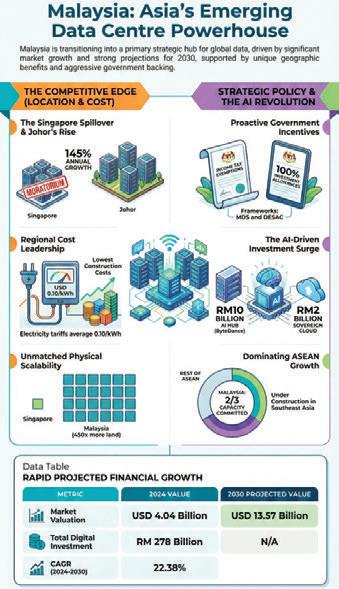
Malaysia’s data centre ecosystem, illustrating the interplay between government incentives (Malaysia Digital Status, DESAC,
hyperscaler demand drivers, and the dual strategic tracks of general-purpose and AI data centre development
Third, the government has implemented a comprehensive suite of incentives. Companies granted Malaysia Digital Status (MDS) through the Malaysia Digital Economy Corporation (MDEC) may access income tax exemptions, investment allowances, and import duty relief4. The Digital Ecosystem Acceleration Scheme (DESAC) provides investment tax allowances of up to 100% on qualifying capital expenditure. Furthermore, the establishment of the Johor-Singapore Special Economic Zone (SEZ) has streamlined cross-border trade and investment, positioning Johor as a fully scalable, investment-ready hub.
Fourth, the artificial intelligence revolution has created entirely new categories of demand which are fundamentally different from conventional data centre operations. A standard data centre, designed for enterprise IT, cloud storage, and web hosting, typically operates at a power density of 5-10 kilowatts per rack and draws between 10-50 Megawatts (MW) of total facility power. An AI data centre, by contrast, is created around Graphics Processing Units (GPU) and Tensor Processing Units (TPU) clusters for model training and inferencing, with rack densities ranging from 40->100 kilowatts and total facility loads frequently exceeding 100-500MW.
Cooling systems must be entirely redesigned, with liquid cooling and direct chip cooling replacing conventional air-based approaches. Energy consumption per unit of compute is orders of magnitude higher: Generative AI workloads require seven to eight times more energy than traditional data processing tasks1
This distinction carries important policy implications. The Malaysian government has consciously differentiated between the two: While general data centre investments are welcomed as broad economic multipliers under MDEC’s Malaysia Digital Status framework, AI data centres are treated as a distinct strategic priority under the national AI agenda, with dedicated incentives and oversight to ensure AI infrastructure delivers deeper technological spillovers. ByteDance’s RM10b investment to transform Malaysia into an AI hub exemplifies this trend2. Microsoft’s launch of its first Malaysian cloud region, featuring three availability zones, further demonstrates the confidence global technology firms place in our digital infrastructure5. Prime Minister Anwar Ibrahim’s allocation of RM2b towards building a sovereign AI cloud in the 2026 budget signals that the government views AI infrastructure as central to national economic strategy, distinct from and complementary to the broader commercial data centre market6
The ASEAN data centre market is projected to surge from 1,677MW in early 2024 to 7,589MW by 2028. Malaysia stands out with a CAGR of 32% to 56% between 2023 and 2028, far exceeding Singapore’s 8% CAGR7, with over two-thirds of capacity under construction in South-East Asia’s five main economies committed to Malaysia6.
Globally, Amazon, Microsoft, Google, and Meta collectively spent over US$200b on capital expenditures in 2024, a 62% year-over-year increase, with Amazon alone committing US$85.8b8. Each is projected to spend even more in 2025, directly benefiting Malaysia as these hyperscalers seek costeffective locations for expanding infrastructure.
However, a critical question arises over whether hosting data centres translates into genuine technological advancement. The Asia Society has noted that many existing commitments in Malaysia target inference (model deployment) rather than model training, which requires more computational power6. Data centres, while economically valuable, rarely generate the technological spillovers of semiconductor fabrication or advanced manufacturing.
Malaysia must ensure its data centre boom catalyses industrial upgrading rather than merely commodity hosting. A parallel driver is digital sovereignty — governments across Asia, Europe, and the Middle East are mandating
enquiry@nehemiah-grp.com
sovereign data centres which store national data within domestic borders, insulated from extraterritorial legislation such as the US CLOUD Act. Malaysia’s PDPA reform increasingly points toward data localisation in regulated sectors, and its investment in a sovereign AI cloud reflects this imperative: Sovereign data centres are instruments of national policy, ensuring the country retains control over its most strategically sensitive digital assets.
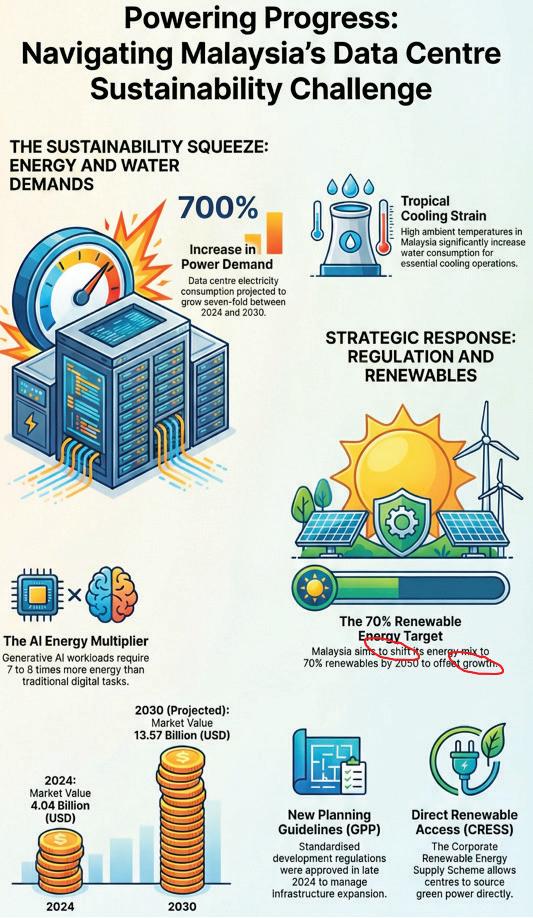
The IEA projects global data centre electricity consumption may more than double to 945TWh by 2030, roughly that of Japan’s total annual consumption9. AI workloads intensify this: Generative AI requires seven to eight times more energy than traditional workloads and training a single large model like ChatGPT has been estimated to generate 552 tonnes of carbon dioxide1
The US offers cautionary lessons. In Virginia’s Loudoun County, data centres accounted for 21% of total power consumption in 2023, surpassing household consumption by 18%1, prompting Dominion Energy’s first base-rate increase since 19928. A 2024 study found that US data centres emitted 105 million metric tons of carbon, a 300% increase from 201810
Such experiences carry direct relevance for Malaysia. With data centre power consumption projected to increase seven-fold between 2024 and 2030, the strain on the national grid can be substantial11. Total installed generation capacity exceeds 27GW, yet renewable energy accounts for only 20.2% of generation12, a gap policymakers must confront head-on.
Water consumption is another concern, given particularly Malaysia’s tropical cooling demands. The forthcoming Sustainable Data Centre Framework, expected to provide guidance on environmental certification and development standards, will be a critical policy instrument in addressing these challenges4
Malaysia’s policy response has been proactive. The Data Centre Planning Guidelines (GPP), approved in October 2024, standardise development3, while a Digital Investment Office streamlines approvals. The Corporate Renewable Energy Supply Scheme (CRESS) provides a pathway for data centres to source renewable electricity through the national grid13
Still, gaps remain. The National Energy Transition Roadmap targets a 70% renewable energy mix by 2050; yet current renewable capacity stands at only ~13.3%14. Ember projects Malaysia’s power consumption may increase seven-fold between 2024 and 2030, driven largely by data centres15, so renewable deployment must accelerate far beyond current trajectories to prevent this boom from locking in fossil fuel dependence.
Workforce development is another critical challenge. The Malaysian AI industry is projected to create 30,900 jobs annually till 20306, requiring coordinated investment in education and industry partnerships. Universities must adapt curricula to include cloud computing, AI engineering, and sustainability management to ensure economic benefits flow to Malaysian workers.
Malaysia’s emergence as a premier data centre destination is one of the most significant economic opportunities in recent history. Geographic advantage, cost competitiveness, government incentives, and AI-driven demand have created powerful momentum, attracting billions in foreign investment. The government rightly differentiates between general-purpose and AI data centres as distinct strategic categories, while sovereign data infrastructure positions these investments as instruments of national data protection and digital self-determination.
However, realising this opportunity requires the active management of environmental sustainability, deepening economic value beyond commodity hosting, and preparing the workforce for digital transformation. If Malaysia navigates these challenges successfully, it will not only host the world’s data but will also actively shape the digital future of South-East Asia.
[1] World Economic Forum, "How data centres can avoid doubling their energy use by 2030," Dec. 2025. [Online]. Available: https://www.weforum.org/stories/2025/12/data-centres-andenergy-demand/
[2] Market Research Malaysia, "Malaysia Data Centre Investments See Surge in Data Centre Projects," Sep. 2025. [Online]. Available: https://marketresearchmalaysia.com/
[3] Research and Markets, "Malaysia Data Centre Market Analysis 2025-2030," Jan. 2025. [Online]. Available: https://www.globenewswire.com/
[4] White & Case LLP, "What is propelling Malaysia’s data centre boom?" 2025. [Online]. Available: https://www.whitecase.com/
[5] Microsoft, "Why Malaysia needs datacentres for an AI-powered future," Source Asia, Mar. 2025. [Online]. Available: https://news.microsoft.com/
[6] Asia Society Policy Institute, "Malaysia’s Gamble: Turning Data Centres Into Industrial Power," Jan. 2026. [Online]. Available: https://asiasociety.org/

[7] FanRuan, "Data Centre Malaysia Investments: Key Trends for 2025," 2025. [Online]. Available: https://www.fanruan.com/
[8] Harvard Kennedy School Belfer Centre, "AI, Data Centres, and the U.S. Electric Grid: A Watershed Moment," Feb. 2025. [Online]. Available: https://www.belfercentre.org/
[9] Carbon Brief, "AI: Five charts that put data-centre energy use and emissions into context," Sep. 2025. [Online]. Available: https://www.carbonbrief.org/
[10] Environmental and Energy Study Institute (EESI), "Data Centre Energy Needs Could Upend Power Grids and Threaten the Climate," 2025. [Online]. Available: https://www.eesi.org/
[11] Datacentre & Cloud Infrastructure Expo 2026, "DCCI Malaysia," 2025. [Online]. Available: https://malaysia.dccisummit.com/
[12] Global Legal Insights, "Energy Laws and Regulations 2026: Malaysia," Dec. 2025. [Online]. Available: https://www.globallegalinsights.com/
[13] Malaysia Cloud & Datacentre Convention 2025, Nov. 2025. [Online]. Available: https:// clouddatacentre.events/
[14] Energy Tracker Asia, "Malaysia Nears Its 40% Renewable Energy Target by 2035," Aug. 2024. [Online]. Available: https://energytracker.asia/
[15] BCG, "Powering the digital future: Malaysia’s data centre opportunity," Jun. 2025. [Online]. Available: https://web-assets.bcg.com/





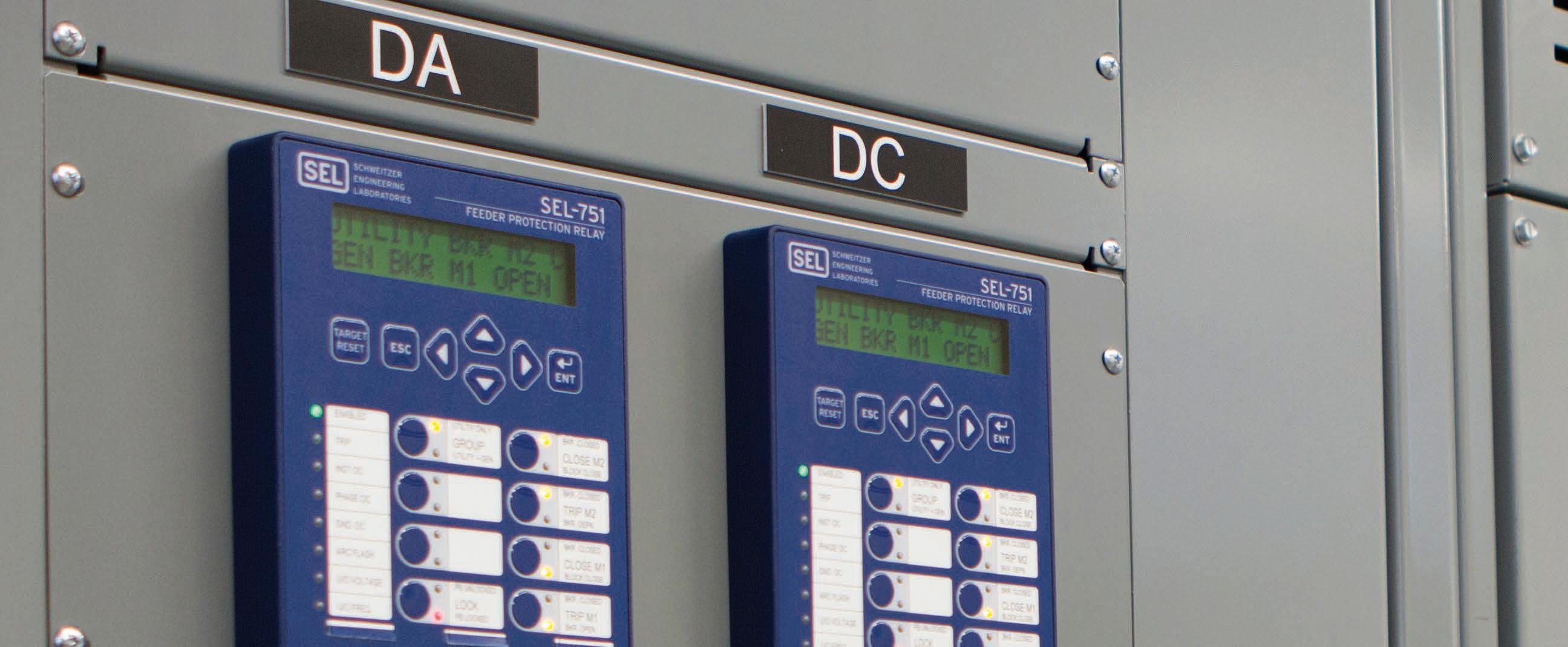

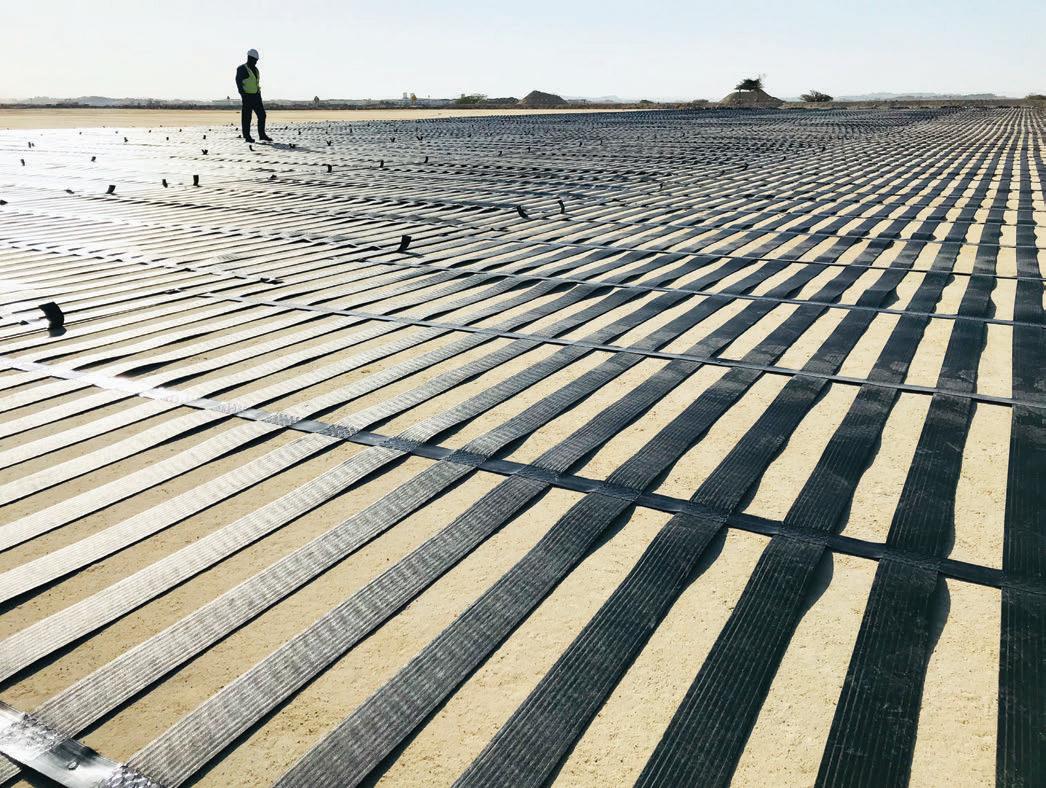

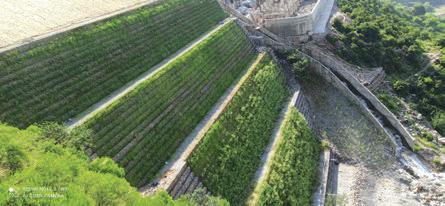



The Electrical Engineering Technical Division (EETD) of IEM organised the 14th Tan Sri Ir. Zainal Lecture on Saturday, 22 November 2025 from 9.00 a.m. to 11.00 a.m. at the Chin Fung Kee Auditorium, Wisma IEM.
The invited speaker was Ir. Dr. Sanjayan Velautham who has over 35 years’ experience in industry, government, international organisations, and academia. The Chief Operating Officer of Suruhanjaya Tenaga (Energy Commission), he is also an advisory board member of the Asia Pacific Energy Research Centre (APERC), Japan.
The event started with opening remarks from EETD Chairman, Ir. Kwok Yew Hoe. Then Ir. Yau Chau Fong, IEM Deputy President, shared the history and objectives of conducting the lectures.
Engineering plays a pivotal role in shaping national development, technological advancement, and societal well-being. The presentation, Engineering the Future: Leading with Purpose, Passion & Progress, highlighted the evolving responsibilities
of engineers, the challenges faced by the profession, and the opportunities ahead, particularly within the Malaysian context.
Malaysia currently faces a significant shortage of engineers. There are only about 200,000 registered engineers against the ideal ratio of one engineer per 100 citizens. This shortfall underscores the urgent need to attract, develop, and retain engineering talent, supported by initiatives such as Technical and Vocational Education and Training (TVET) programmes and national platforms such as the National Engineering Convention.
The motivation to become an engineer often stems from curiosity about how systems work, a passion for problem-solving, and the joy of building tangible solutions. Beyond technical fascination, many engineers are also driven by the desire to make a positive impact on society. These intrinsic motivations form the foundation of a meaningful and sustainable engineering career.

by:
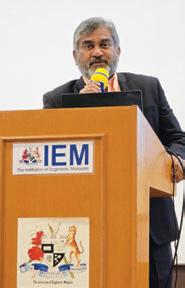
A peek into Ir. Dr. Sanjayan’s 35-year professional journey illustrates how an engineering career can evolve across diverse sectors. Beginning with strong fundamentals in the energy sector and progressing through innovation and research at academic and international institutions to later contributing
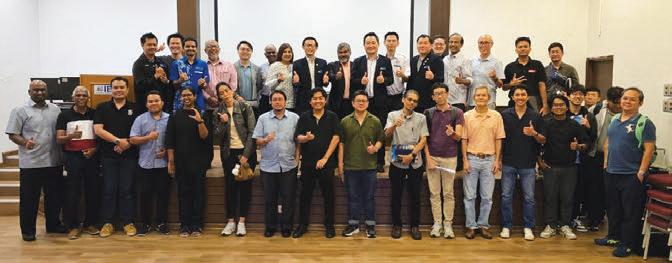
to industrial performance, clean energy policy, and national energy strategies, his journey reflects the breadth of opportunities available to engineers. Such experiences demonstrate that engineering careers are not linear but dynamic, shaped by continuous learning and adaptability.
Several key lessons emerge from this career trajectory. Staying curious is essential in a rapidly evolving technological landscape. Integrity remains a core professional value, serving as an engineer’s most enduring credential. More importantly, engineers are encouraged to think beyond job titles, focusing instead on solving real-world problems creatively and ethically.
The profession itself has evolved through four distinct generations. Early engineers focused on nationbuilding through civil, mechanical, and electrical works. This expanded into industrial specialisation, followed by technology integration involving computing and automation. Today, engineering is firmly rooted in a smart, sustainable, and digital future which encompasses artificial intelligence, renewable energy, and green technologies. These changes are driven by technological advancements, economic diversification, climate imperatives, energy transition, and global competitiveness.
As engineers progress in their careers, their roles often shift from technical execution to management and leadership. This transition requires balancing technical expertise with business realities, strategic thinking, and the ability to lead change and shape organisational culture. In the later stages of their careers, many engineers give back to the profession through mentorship, professional engagement, and knowledge sharing, strengthening the engineering ecosystem for future generations.
The contrast between traditional and modern engineering roles further illustrates this evolution. While traditional roles emphasised manual design and construction, modern engineering relies heavily on digital tools, computational modelling, interdisciplinary collaboration, and data-driven decision-making. In the 21st century, engineers face global challenges such as climate change and digital transformation, which also present unprecedented opportunities for innovation and sustainable development.
Malaysia’s power sector provides a clear example of these challenges and opportunities. National targets include achieving 70% renewable energy installed capacity by 2050, increasing renewable energy share to 35% by 2030, enhancing grid interconnections, and exploring nuclear power as part of a low-carbon transition. Engineers are central to realising these ambitions, particularly in managing energy demand, integrating renewables, and ensuring system reliability.
In conclusion, the future belongs to engineers who are multidisciplinary, strategic, adaptive, and globally collaborative. Beyond striving for personal success, engineers are called on to create value for society. By leading with purpose, passion, and progress, engineers can continue to shape a sustainable and inclusive future for generations to come.






The IEM Women Engineers Section (IEM WE) organised the International Women’s Day Artwork Design Competition in conjunction with International Women’s Day (IWD) to reflect its ongoing commitment to fostering creativity, inclusivity, and empowerment within the engineering community.
Held from February to 31 March 2026, it invited participants to create artistic submissions which embodied the spirit of this year’s IWD theme, Give To Gain.
The competition, led by Ir. Ts. Irene Lock Sow Mei, encouraged participants from all backgrounds to explore the transformative power of giving. Whether through acts of kindness, the sharing of knowledge, or expressing innovative ideas, participants demonstrated how meaningful contributions enriched both the giver and the community.
Supported and sponsored generously by HSS Engineering Sdn. Bhd., the competition awarded RM300 to the First Prize Winner, RM200 to the First Runner-Up, and RM100 to the Second RunnerUp. In addition, certificates of participation were presented to all participants in recognition of their effort, talent, and commitment to the competition. This generous sponsorship underscored the importance of encouraging innovation and supporting platforms which celebrated talent within the engineering and wider professional community.

insight, highlighting the varied interpretations of the theme and the unique perspectives of the participants. Judges evaluated the entries based on creativity, execution, and alignment with the theme. After much deliberation, Maisyurah Yusuf was named First Prize Winner; her submission powerfully illustrated the contributions of women across various fields.
Dr. Siti Hasanah Osman secured the Second Prize with a compelling submission that illustrated the impactful role of women in driving innovation in green hydrogen.
Third Prize went to Lum Mei Yan with her striking artwork that portrayed women as superheroes, boldly breaking barriers and redefining possibilities.
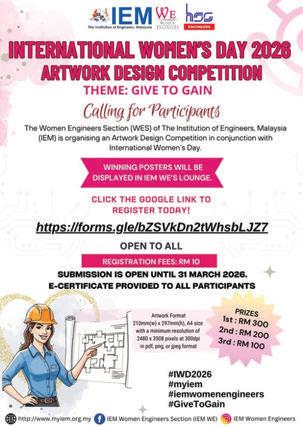
There were 23 submissions from a diverse pool of talented participants, both male and female, as well as contributions from overseas, exemplifying IEM WE’s commitment to inclusivity. All submissions demonstrated exceptional creativity, originality, and conceptual
The award ceremony, held at the IEM WE Hari Raya Get Together on 4 March 2025 at D’Place, Wisma IEM, not only honoured the winners but also the spirit of giving as demonstrated by all participants. The prizes were presented by Ir. Prof. Dr. Zuhaina Zakaria, Chair of IEM WE. The ceremony was graced by the presence of Ir. Prof. Dr. Jeffrey Chiang, President of IEM.
The event brought to life the essence of Give To Gain, where creativity, encouragement, and shared experiences emerged as meaningful contributions that enriched both individuals and the broader community.
At its core, this initiative reflects a deeper belief, that when we give space to women, they give their talents and perspectives. Through this, we collectively gain a more inclusive, progressive, and enriched environment. This is the true embodiment of Give To Gain. Through platforms such as IEM WE, giving is not merely encouraged but amplified, creating a cycle of empowerment, growth, and shared success. As beautifully expressed, “To give is to plant a seed of possibility that blooms in countless ways”.













Creative Artwork by the First Prize Winner, Maisyurah Yusuf
“This design is inspired by the journey of women breaking barriers in engineering fields traditionally dominated by men. Each element represents different disciplines, showing how women contribute with both creativity and technical expertise. The message emphasises how women engineers contribute to society and help create a better future through their passion, knowledge, and dedication in shaping the world.” – Maisyurah Yusuf


Creative Artwork by 1st Runner-Up, Dr. Siti Hasanah Osman





“My design is inspired by Malaysia’s Hydrogen Economy & Technology Roadmap (HETR), positioning women at the forefront of a sector projected to contribute RM61 billion to the GDP by 2030. The integration of green hydrogen reflects the nation’s goal of reaching Net Zero 2050. While the soft pink palette honours International Women’s Day, the futuristic cityscape emphasises that progress is built on inclusive engineering. It celebrates the talent driving Malaysia’s transition into a premier regional clean energy hub.” – Dr. Siti Hasanah Osman

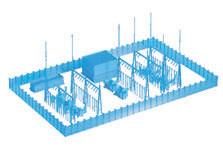
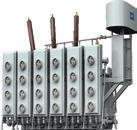





Creative Artwork by 2nd Runner-up, Lum Mei Yan
“This poster design is inspired by the resilience of women engineers, and it visualises the act of giving strength, courage, and innovation to society. The woman breaking through walls symbolises the dismantling of limits and stereotypes, while her advanced mechanical arms represent knowledge shared and skills applied for collective progress. The futuristic city reflects the gains which society receives from her contributions. Ultimately, it shows that when women give their expertise, leadership, and vision, they gain empowerment, recognition, and a transformed world for future generations everywhere”. – Lum Mei Yan









It stands watch quietly over Dataran Merdeka, Kuala Lumpur, its copper domes catching the morning light and its clock tower marking the hours as it has done for over a century. Most of us have seen it from a car window, photographed it on National Day or used it as a landmark to navigate the city. But how many of us had stepped inside, looked up at its vaulted ceilings, and asked: “Who built this, how, and what did it take to bring it back to its former glory?”.
On 11 April 2026, members of the Institution of Engineers, Malaysia’s Women Engineers Section (IEM WE) did
exactly that. Hosted by Ir. Mohamad Jamal from Neuformation Architects, we spent two and a half hours inside Bangunan Sultan Abdul Samad, not as tourists, but as engineers. What we discovered challenged assumptions, sparked curiosity, and offered a masterclass in what it truly means to restore a national treasure.
Bangunan Sultan Abdul Samad was designed and constructed between 1894 and 1897, at a time when Kuala Lumpur was emerging as the administrative centre of British Malaya.
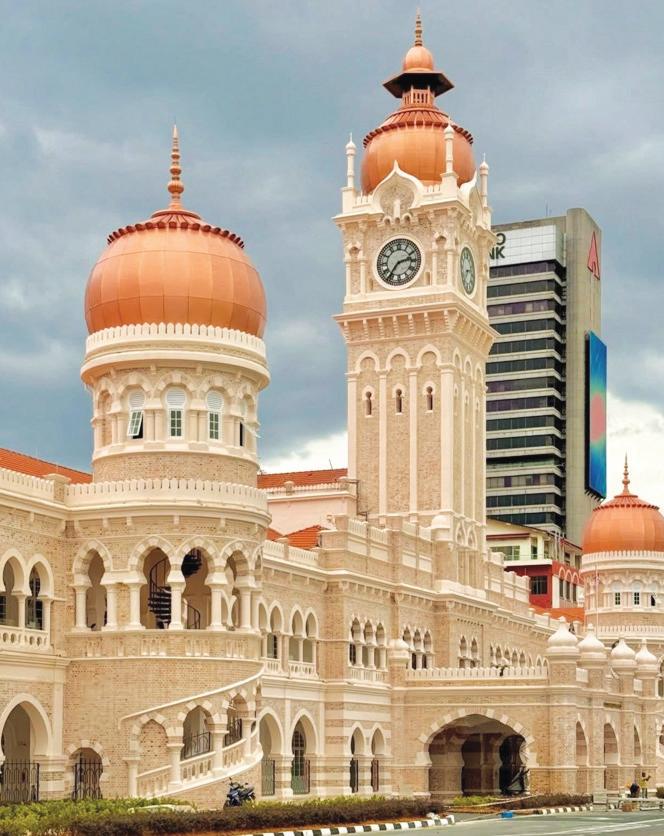

by:
Designed by the Selangor Public Works Department team comprising A.C. Norman, R.A.J. Bidwell and A.B. Hubback, it stood as a distinctive interpretation of British Raj architecture, combining Mughal, Moorish and Gothic influences. Few buildings in the country carried such layered significance.
From 1978, it housed the nation’s superior courts, including the Federal Court and the High Court, cementing its role as the heart of Malaysia’s constitutional and judicial history. For decades, however, it remained largely inaccessible and was admired from afar but truly experienced only by a privileged few.
The visit started with a 90-minute presentation by Ir. Mohamad, who walked members through the full scope of the restoration with commendable clarity. Having led the architectural works on the project, he offered a rare insider’s account of what it meant to work on a Category 1 National Heritage site while balancing authenticity against the demands of modern safety and accessibility.
The revelations were both technical and delightful. The building was constructed using brick, lime plaster, a timber roof structure, copper dome cladding, and cast-iron columns – materials which the restoration team worked hard to faithfully preserve and replicate. Its original bricks were made in Brickfields and transported to site by bullock-cart or kereta lembu,
a detail that drew both smiles and quiet admiration from the group. The building’s pastel facade, documented in historical archives, was formally known as “biscuit colour” and this gave it a warmth that was subtle yet unmistakable.
One fact that particularly captivated members was that the clock tower still housed its original timepiece which was manufactured in Croydon, United Kingdom. This mechanical marvel, which must be wound daily following a strict routine, had kept faithful time for over a century. The group also learnt that the building originally housed a tin mining office, lending meaningful context to the Royal Selangor Gallery found within its walls today.
The Restoration: Precision at Scale
The building underwent a major conservation programme under the Warisan KL initiative, with Phase 1 completed after approximately 11 months and Block 1 reopening to the public on 2 February 2026. Works were guided by the building’s Category 1 National Heritage status, carefully designed to safeguard its architectural character while improving safety, accessibility and visitor experience.
Ir. Mohamad emphasised that the defining philosophy was fidelity to the original which included sourcing and preserving authentic materials wherever possible, ensuring the restoration recreated rather than merely referenced the building’s historical character. The project was undertaken by Khazanah Nasional Berhad through Dana Warisan, under the Warisan KL initiative as part of Budget 2023: Building Malaysia MADANI.
Following the presentation, we spent an hour walking through arched corridors, tiled passages, and highceilinged halls. We experienced the generous natural light, the grandeur of proportion, and the quiet intimacy of spaces that had witnessed over
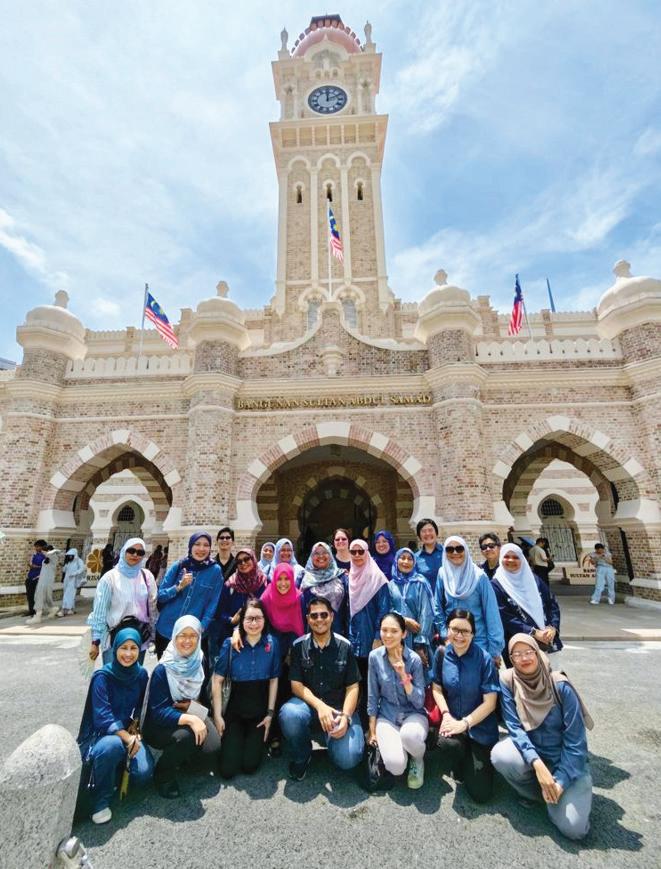
a century of national life. Visitors can now walk through galleries and exhibition spaces which tell the story of Kuala Lumpur’s growth, from its early beginnings to the modern city that it is today.
For the Women Engineers Section, this was far more than a heritage tour. It was a timely reminder that conservation demanded meticulous documentation, material science, structural sensitivity, and the profound responsibility of safeguarding a building of national
significance. Ir. Mohamad’s candid insights made the experience all the much richer.
As engineers, we are trained to build forward. Visits like this remind us that building backward faithfully, honestly, and with deep respect for what came before, demands an equally rigorous and noble set of skills. Our heartfelt appreciation goes to Ir. Mohamad and the team at Neuformation Architects for opening a window into one of Malaysia’s most beloved landmarks.
To all Members,
Date: 22 April 2026
LIST OF CANDIDATES ELIGIBLE TO SIT FOR THE PROFESSIONAL INTERVIEW FOR THE YEAR 2026
The following is a list of candidates who are eligible to sit for the Professional Interview for the year 2026.
According to the IEM Bylaws, Section 3.8, the names listed below are published as eligible candidates to become Insitution Members, provided that they pass the Professional Interview in 2026.
If there are any Corporate Members who have objections against any candidate deemed unsuitable to sit for the Professional Interview, a letter of objection can be submitted to the Honorary Secretary, IEM. A letter of objection must be submitted within one month from the date of publication.
Ir. Chen Harn Shean IEM Honorary Secretary
NEW APPLICATION NAME QUALIFICATION
CIVIL ENGINEERING
TAN KAK SENG BE HONS (THE UNI. OF MELBOURNE) (ENGINEERING, 1998)
APPLICATION FOR CORPORATE MEMBER NAME QUALIFICATION
MECHANICAL ENGINEERING
EINTHIRAN A/L RAJALINGAM BE HONS (UTP) (MECHANICAL, 2019)
TENG YEUNG HAO BE HONS (MMU) (MECHANICAL, 2017)
MEMBER TRANSFER
M'SHIP NO. NAME QUALIFICATION
CIVIL ENGINEERING
94123 CHING JENN HUA BE HONS (CURTIN) (CIVIL & CONSTRUCTION, 2015)
61135 ONG MING WEI BE HONS (UNIMAS) (CIVIL, 2012)
CHEMICAL ENGINEERING
131045 HONG SEOW YUEN BE HONS (UPM) (CHEMICAL, 2007)
ELECTRICAL ENGINEERING
109059 LOONG KUN WEI BE HONS (UCSI) (ELECTRICAL & ELECTRONICS, 2023)
87076 CHENG KWONG WEI BE HONS (UTM) (ELECTRICAL, 2005)
30923 MOHD IFFAT BIN JAMAL ABD NASIR BE HONS (UTHM) (ELECTRICAL, 2008)
49720 MOHD ABDUL TALIB BIN MAT YUSOH BE HONS (UTHM) (ELECTRICAL, 2012) ME (UTHM) (ELECTRICAL, 2014) PhD (UiTM) (ELECTRICAL, 2019)
115932 CHIM KENG WEI BE HONS (UKM) (ELECTRICAL & ELECTRONIC, 2020)
MECHANICAL ENGINEERING
65068 CORNELIA AHAT BE HONS (UTHM) (MECHANICAL, 2014)
37497 MOHD ARIEF FIRDAUS BIN MOHD YUSOF BE HONS (UKM) (MECHANICAL, 2019)
87275 TEOH CHIA WENG BE HONS (MONASH) (MECHANICAL, 2019) MSc (THE UNI. OF MANCHESTER) (MECHANICAL, 2020) TRANSFER TO CORPORATE MEMBER
M'SHIP NO. NAME QUALIFICATION
CIVIL ENGINEERING
77885 FELICITY UMANG JANANG BE HONS (UNIMAS) (CIVIL, 2018)
61509 HO KWAN LUN BE HONS (UTHM) (CIVIL, 2014)
69767 INTAN NURFAUZIRAH SHAFIQAH BINTI HAMZANI BE HONS (UNIMAS) (CIVIL, 2017) ME (UTM) (TRANSPORTATION, 2019)
27084 LEE SZE HOWE, ALVIN BE HONS (USM) (CIVIL, 2008)
ELECTRICAL ENGINEERING
101949 MIHRJEEV SINGH BE HONS (UM) (ELECTRICAL, 2021)
MECHANICAL ENGINEERING
80569 CHEE HON CHEONG, ALEXANDER BE HONS (UTHM) (MECHANICAL, 2003) ME (UPM) (INNOVATION & DESIGN, 2011) PhD (UM) (2021)
111774 BONG PEI CHIEN BE HONS (SWINBURNE UNI. OF TECHNOLOGY) (MECHANICAL, 2020)
80968 TAN YI JIE BE HONS (MONASH) (MECHANICAL, 2019)

The institution expresses its gratitude to all who have contributed to the Wisma IEM Building Fund. IEM members and readers who wish to make a donation may do so by downloading the form from the IEM website at http://myiem.org.my or by contacting the secretariat at +603-7890 0130 / 136 for further information. The list of contributors for March 2026 is as shown in the table below: