In this pivotal edition of JURUTERA, we confront the defining challenge of our generation: Shifting the engineering paradigm toward absolute sustainability. For modern engineers, managing our carbon footprint is no longer a matter of policy compliance or corporate social responsibility. It is a baseline ethical imperative. Every blueprint we sign, every material we specify, and every infrastructure project we execute represents a long-term climate commitment. We are the architects of the future and our decisions today will dictate the environmental reality of tomorrow.
Achieving a net-zero reality demands bold, disruptive leadership. Engineers must aggressively champion low-carbon innovations, pioneer circular economy frameworks, and transition from traditional resource consumption to resilient, regenerative engineering practices. This issue compiles powerful, actionable insights and cutting-edge case studies from visionary peers who are actively rewriting the rules of industrial and civil development.
As the backbone of the nation’s technical progress, we must embed deep decarbonisation into our professional DNA and secure the future of our planet while elevating the relevance, prestige, and institutional impact of IEM itself.
Ir. Stephanie Sim Hui Kheng Principal Bulletin Editor
IEM Registered on 1 May 1959
IEM COUNCIL SESSION 2026/2027
President: Ir. Yau Chau Fong
Deputy President: Ir. Chen Harn Shean
Vice Presidents:
Ir. Prof. Dr. Tan Chee Fai, Ir. Prof. Dr. Lau Hieng Ho, Ir. Yeong Chin Chow, Simon, Ir. Abdul Razak Yakob, Ir. Prof. Dr. David Chuah Joon Huang, Ir. Dr. Lee Yun Fook, Ir. Hj. Abrizan Abdul Kadir
Honorary Secretary: Ir. Alex Looi Tink Huey
Honorary Treasurer: Ir. Prof. Dr. Wong Yew Hoong
Immediate Past President: Ir. Prof. Dr. Jeffrey Chiang Choong Luin
Past Presidents:
Academician Tan Sri Dato’ Seri Ir. Prof. Em. Dr. Chuah Hean Teik, Dato’ Ir. Dr. Lim Chow Hock, Ir. Dr. Tan Yean Chin, Ir. Ong Ching Loon, Dato’ Ir. Prof. Dr. Norlida Buniyamin
Civil Representative: Ir. Chong Boon Hui
Mechanical Representative: Ir. Cheng Yew Leong
Electrical Representative: Ir. Kwok Yew Hoe
Structural Representative: Ir. Lim Su Hian
Chemical Representative: Ir. Kim Kek Seong
Other Disciplines Representative: Ir. Dr. Dhakshyani Ratnadurai
Multimedia Representative: Ir. Dr. Siti Aisyah Anas
Women Engineers Representative: Ir. Prof. Dr. Zuhaina Zakaria
Young Engineers Section Representatives: Mr. Lim Yiren, Mr. Darshan Balasubramaniam, Ms. Ong Ye Shian, Mr. Chuah Pei Lim, Mr. Teoh Chi Yang
Council Members:
Ir. Dr. Angelia Liew San Chuin, Ir. Prof. Dr. Zuhaina Zakaria, Ir. Begum Irdawati Dowlad Rahuman, Ir. Chong Chee Yen, Ir. Khoo Chee Min, Ir. Ahmad Rafidi Mohayiddin, Ir. Dr. Chan Swee Huat, Ir. Alex Looi Tink Huey, Ir. Sukhairul Nizam Abdul Razak, Dato’ Ir. Ting Chek Choon, Ir. Dr. Norashikin M Thamrin, Ir. Lee
Cheng Pay, Datuk Ir. Chin Tet Fu @Willy, Ir. Gs. Br. Dr. Zarabizan Zakaria, Ir. Choo Lay Guat, Ir. Dr. Siow Chun Lim, Ir. Assoc. Prof. Dr. Leong Kah Hon, Ir. Dr. Sara Lee Kit Yee, Ir. Chan Wah Cheong, Ir. Dr. Marianah Masrie, Ir. Stephanie Sim Hui Kheng, Ir. Dr. Tan Inn Shi, Ir. Tajul Ariffin Mohamed Nori, Ir. Ng Sing Min, Ir. Ooi Mong Lee, Wendy, Ir. Rusnida Talib, Ir. Harris Abd Rahman Sabri
Council Member by Invitation:
Datuk Ir. Ho Hon Sang, Dato’ Ir. Dr. Ahmad Sabirin Arshad, Ir. Dr. Sanjayan K.V. Velautham
Branch Chairman
1. Penang : Ir. Dr. Lee Choo Yong
2. Southern : Ir. Dr. Kong Weng Keong
3. Perak : Ir. Dr. Tiah Oon Han
4. Pahang : Ir. Harzah Mazni Ramli
5. Kedah-Perlis : Ir. Jamaluddin Abdullah
6. Negeri Sembilan : Ir. Richard Khoo Nee Keong
7. Kelantan : Ir. Che Sufian Che Hussin
8. Terengganu : Ir. Zakaria Abdullah
9. Melaka : Ir. Sh. Ja’afar Sh. Ismail
10. Sarawak : Ir. Dr. Angelia Liew San Chuin
11. Miri : Ir. Chan Yen San, Stephanie
12. Sabah : Ir. Tan Kok Jyh
Chairman, InfoPub & Chief Editor: Ir. Prof. Dr. Lau Hieng Ho
Chairman and Project Leader Jurutera-i: Ir. Alex Loo Tink Huey
Principal Journal Editor: Ir. Dr. Bhuvendhra Rudrusamy Chairperson IEM Webportal: Ir. Dr. Tan Inn Shi
Chairman, Sub Committee on Resource Centre: Ir. Wan Rizaluddin Abdullah Wan Ali Infopub Past Chairman by Invitation: Ir. Abdul Razak Yaakob
Committee Members:
Ir. Begum Irdawati Dowlad Rahuman, Ir. Tajul Ariffin Mohamed Nori, Ir. Dr. Hong Kai Sze, Ir. Prof. Dr. Teo Fang Yenn, Ir. Dr. Hasril Hasini, Ir. Dr. Tan Kim Seah, Ir. Lau Tai Onn, Ir. Yee Thien Seng, Ir. Wong Chee Fui, Ir. Dr. Lau Chee Yong, Ir. Razmahwata Mohd Razalli, Ir. Lee Chang Quan, Ir. Assoc. Prof. Dr. Moey Lip Kean, Ir. Ahmad Rafidi Mohayiddin, Ir. Tay Siang Hui, Ir. Kho Tuck Sing, Ir. Anizahyati Alisibramulisi, Ir. Dr. Aidil Chee Tahir, Dr. Tee Boon Tuan, Ms. Michelle Lau Chui Chui, Ms. Loo Suk Sin, Mr. Darshan Balasubramaniam, Mr. Chin Zehong
Chief Editor: Ir. Prof. Dr. Lau Hieng Ho
Principal Bulletin Editor: Ir. Stephanie Sim Hui Kheng
Secretary: Ms. Michelle Lau Chui Chui
Committee Members:
Ir. Begum Irdawati Dowlad Rahuman, Ir. Tajul Ariffin Mohamed Nori, Ir. Dr. Tan Kim Seah, Ir. Razmahwata Mohd Razalli, Ir. Prof. Dr. Teo Fang Yenn, Ir. Lau Tai Onn, Ir. Yee Thien Seng, Ir. Ahmad Rafidi Mohayiddin, Ir. Dr. Lee Choo Yong, Ir. Lee Chang Quan, Ir. Dr. Lau Chee Yong
Dimension by Invitation: Ms. Shirley Tham, Ms. Sofia Hanis Mohd Uzir
THE INSTITUTION OF ENGINEERS, MALAYSIA
Registration No.: 1356 (Selangor)
Bangunan Ingenieur, Lots 60/62, Jalan 52/4, P.O. Box 223, (Jalan Sultan), 46720 Petaling Jaya, Selangor Darul Ehsan. Tel: 603-7890 0130 Fax: 603-7957 7678
Chairman, Chemical Engineering Technical Division (CETD)
Strategic Imperative for Sustainable Industry
Chemical engineers are standing at the nexus of scientific innovation, industrial growth, and environmental stewardship. The global climate challenge, particularly the rising concentration of carbon dioxide (CO2) in the atmosphere, demands that we apply the full breadth of our technical expertise, ingenuity, and ethical responsibility to solutions that are scalable, sustainable, and equitable.
Among the suite of climate mitigation strategies, Carbon Capture & Storage (CCS) has emerged as not merely a technological option, but also as a strategic imperative. CCS is essential for reducing industrial CO2 emissions, decarbonising hard-to-abate sectors, and aligning global energy systems with net-zero goals.
CCS deployment is not solely a technical challenge; it is also deeply interwoven with policy frameworks, financing mechanisms, and cross-sector collaboration. Global cooperation, sharing of best practices, and knowledge transfer will accelerate deployment, particularly in emerging economies where industrial growth presents both development opportunities and climate risks. CCS is not a silver bullet; it is an indispensable component of a holistic climate strategy. Let us embrace this challenge with the creativity, resilience, and commitment that define our profession.
Subscription Department E-mail: info@dimensionpublishing.com
JURUTERA MONTHLY CIRCULATION: OVER 40,000 COPIES
Submission or placement of articles in JURUTERA could be made to the: Chief Editor THE INSTITUTION OF ENGINEERS, MALAYSIA (IEM) Bangunan Ingenieur, Lots 60/62, Jalan 52/4, P.O. Box 223 (Jalan Sultan), 46720 Petaling Jaya, Selangor, Malaysia. Tel: +(603) 7890 0130 Fax: +(603) 7957 7678 E-mail: pub@iem.org.my Website: http://www.myiem.org.my
Closing the Loop through CCS: A Key Enabler Towards Net Zero Emissions
As Malaysia advances toward net zero carbon emission, Carbon Capture and Storage (CCS) is emerging as a strategic enabler — not only for decarbonising hard-to-abate sectors but also for sustaining industrial competitiveness, energy security, and regional collaboration. PETRONAS, through its dedicated subsidiary, PETRONAS CCS Ventures Sdn. Bhd. (PCCSV) is positioning Malaysia as a regional CO₂ storage hub while balancing commercial viability, regulatory discipline, and long-term environmental responsibility.
The global energy landscape is undergoing structural transformation, shaped by the competing pressures of energy security, affordability and sustainability. Climate science, multilateral agreements such as the Paris Agreement, evolving regulatory frameworks, and rapid technological advancement are accelerating the shift toward a lower-carbon economy.
For energy producers, the transition is not optional — it is systemic. Managing carbon has become integral to long-term competitiveness, investment resilience, and the licence to operate. As energy demand continues to grow, countries must reduce emissions while ensuring energy security and affordability.
Against this backdrop, PETRONAS became SouthEast Asia’s first oil and gas company to declare its
aspiration of achieving Net Zero Carbon Emissions (NZCE) by 2050. The commitment is embedded within its Energy Transition Strategy and anchored in its Statement of Purpose: “A progressive energy and solutions partner, enriching lives for a sustainable future”.
The strategy is twofold: Reduce emissions from core operations while building new lower-carbon growth engines.
“We recognise that delivering energy responsibly today must go hand in hand with preparing for a lower-carbon tomorrow,” says Ms. Nor A’in Md Salleh, Chief Executive Officer of PETRONAS CCS Solutions Sdn. Bhd. “Our pathway is about managing operational emissions while simultaneously investing in new energy solutions and value chains.”
Our pathway is about managing operational emissions while simultaneously investing in new energy solutions and value chains.
“We recognise that delivering energy responsibly today must go hand in hand with preparing for a lower-carbon tomorrow,”
says Ms. Nor A’in Md Salleh, Chief Executive Officer of PCCSS
To translate ambition into execution, PETRONAS established a centralised Carbon Management Division (CMD) in 2022 within its Upstream operations. CMD serves as the specialised unit leading decarbonisation efforts, focusing on physical decarbonisation initiatives and CCS, thus helping the Government to position Malaysia as a regional carbon storage hub.
CMD’s mandate extends beyond internal emissions management. It is tasked with developing CCS solutions not only for PETRONAS’ operations but also as a service offering to other industries including those in sectors where emissions are difficult to abate — effectively laying the foundation for a broader low-carbon economy.
“CCS is not just about managing our own emissions,” Nor A’in explains. “It is about creating an integrated carbon management ecosystem — one that enables industries across the value chain to decarbonise responsibly.”
The division plays a pivotal role in ensuring PETRONAS meets its nearterm and long-term targets, including:
• Capping operational emissions in Malaysia at 49.5 million tonnes of CO2 equivalent (CO2e).
• Achieving 25% absolute emissions reduction group-wide by 2030, based on 2019 levels.
• Reaching Net Zero Carbon Emissions by 2050.
Between 2022 and 2026, PETRONAS allocated 20% of its total capital expenditure toward operational decarbonisation, renewables, and other clean energy solutions.
“This allocation signals seriousness,” Nor A’in says. “We are scaling decarbonisation as a core business priority — not as a peripheral initiative.”
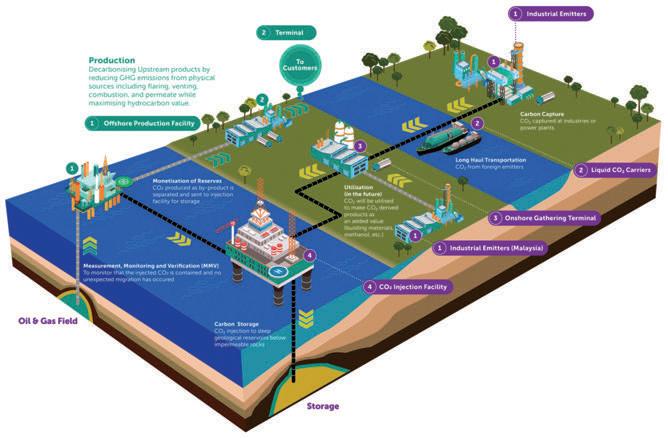
CCS as Infrastructure for Transition It is a crucial decarbonisation strategy to capture CO2 from industrial sources, transport it, and permanently store it deep underground in geological formations, helping Malaysia achieve its net zero carbon emission goals and positioning the nation as a regional CCS hub.
PETRONAS manages this through its dedicated subsidiary, PCCSV, developing projects such as the Duyong storage site, including areas with depleted and non-producing reservoirs, as well as partnering with international firms to build the entire CCS value chain.
Nor A’in says CCS is neither an optional experiment nor a symbolic gesture. “CCS is part of the overall equation towards decarbonisation,” she says. “It complements solar or other renewables. It plays a role in the energy transition.”
In sectors such as cement, steel, refining, and petrochemicals — where emissions are process-based and difficult to eliminate — CCS
offers one of the few technically viable solutions at scale. Rather than replacing hydrocarbons overnight, it enables emissions management while broader energy systems evolve. The objective is not simply carbon storage. It is to “close the loop” across the energy value chain.
Storage Readiness: Building the Geological Foundation
A central question in any CCS strategy is storage sufficiency. Can Malaysia accommodate the volumes required for both domestic emissions and potential regional demand?
Malaysia’s theoretical storage potential has been estimated at approximately 13.3 billion tonnes, based on hydrocarbon basin assessments. However, validated and due-diligence backed storage currently stands at approximately 2.4 billion tonnes, comprising a combination of depleted reservoirs and early-stage saline aquifer studies.
“The 2.4 billion tonnes is already sufficient to cater to Malaysia’s domestic requirements,” Nor A’in explains. “And this number can grow as more saline aquifers are validated.”
Depleted reservoirs provide proven containment structures but carry operational limitations. “A depleted reservoir can only be converted into a storage site once production has ceased,” she notes. “If you inject CO2 into a producing field, it interferes with production.”
This time dependency has driven parallel evaluation of deep saline aquifers — geological formations without hydrocarbons but with substantial pore space. “Saline aquifers are attractive because they do not contain hydrocarbons,” she says. “They offer significant void space where CO2 can be injected and gradually dissolve into formation water.”
Further assessments are underway to expand capacity in support of accelerated injection targets.
Operational Model: Petroleum & Industrial CCS
PETRONAS has designed its CCS operations around two complementary models:
1. Petroleum Operations:
Addressing emissions from high CO2 gas fields as part of PETRONAS’ commitment to lower carbon upstream development. In the Carbon Commitment Guideline introduced in 2018, CCS was incorporated
as a key requirement for new high CO2 field developments, forming part of project approval considerations.
2. CCS Business for Other Industries: Offering storage solutions for domestic and regional emitters across light manufacturing, power generation, cement, chemical, and steel sectors. This model encompasses the full CCS value chain: Capture, gathering, transportation, and storage, with infrastructure developed to international standards and designed for operational efficiency.
“Post-2019, PETRONAS aligned itself with a public pledge under net zero,” Nor A’in says. “All high CO2 gas developments are required to undergo a CO2 management pathway evaluation, of which CCS is one of the key solutions. This ensures that upstream emissions are responsibly managed.”
The business segment is emerging as a commercial CCS platform, allowing PETRONAS to
engage regional industrial emitters. Countries with limited domestic storage capacity, such as Japan, Korea, and Singapore, are potential participants. Cross-border CCS is possible within the constraints of the London Protocol and bilateral agreements, which mandates permanent storage rather than Enhanced Oil Recovery (EOR).
Scaling to 8-10 Million Tonnes per Annum
With momentum building across regional participation, PETRONAS is studying how to accelerate firstphase development to 8-10 million tonnes per annum (mtpa).
“We are seeing stronger momentum, so we are looking at accelerating development in the first phase, subject to regulatory frameworks, commercial viability and cross-border alignment” Nor A’in says. Existing storage sites alone will not sustain that volume. Additional formations, including fields such as Limar are under evaluation to mature storage capacity.
The ambition is clear: Move from pilot-scale validation to industrialscale deployment, paving the way for PETRONAS to contribute meaningfully to Malaysia’s National Energy Transition Roadmap (NETR) and National Industry Master Plan (NIMP) decarbonisation targets.
Cross-Border Dynamics & Regional Ambitions
Malaysia’s CCS ambitions extend beyond domestic emitters. Several regional industrial economies are further advanced in capture readiness. “They are more prepared as some of them have already included capture in their plans.” Nor A'in observes.
This readiness may influence Malaysia’s early volumes. For 2030 targets, she says: “Early volumes may include more participation from regional emitters, particularly from countries with limited domestic storage capacity.”
International transport, however, is governed by the London Protocol, which permits cross-border CO2 shipment only for permanent geological storage, not Enhanced Oil Recovery (EOR). “CO2 must be permanently stored if transported internationally,” she clarifies. “EOR is excluded from cross-border transport.”
Regional participation also delivers economic advantages. Larger injection volumes help level infrastructure investment and reduce unit costs.
“If we accept regional ambition, their policy frameworks and financial structures support overall development,” she explains. “These volumes can support the scaling of infrastructure and improve overall project viability.”
Cost Discipline & Infrastructure Standardisation
While some jurisdiction such as Europe provides extensive state subsidies for CCS infrastructure, Malaysia’s approach emphasises cost competitiveness, supported by evolving fiscal incentives and regulatory frameworks.
"We must ensure that our CCS cost structure is optimised and competitive," Nor A'in acknowledges.
Strategies include:
• Standardisation of infrastructure design to achieve economies of scale
• Adoption of international codes and standards for fit-for-purpose design
• Strategic partnerships with infrastructure specialists
• Optimised Operating Expenditure (OPEX) philosophy including maintenance and spare parts
“We are looking at standardisation to achieve economies of scale,” she explains. “That includes design philosophy, maintenance planning, and long-term operating expenditure.”
This approach requires a mindset shift from traditional hydrocarbon development.
“Our thinking has always been hydrocarbon-focused,” she says. “For CCS, we need to adopt international codes and standards for fit-for-purpose design and collaborate more broadly.”
Policy support includes tax incentives from the Ministry of Finance, but implementation remains critical to accelerating deployment.
MRV: Ensuring Permanence & Compliance
Technical credibility rests on storage permanence assurance. Monitoring, Reporting, and Verification (MRV) systems are central to maintaining environmental integrity.
“This is where MRV becomes very important,” Nor A’in emphasises.
Due diligence begins at storage validation. Geological modelling, containment analysis, and legal assessments are conducted prior to site development. “We follow ISO standards to assess suitability and containment of the storage site,” she explains.
Structured risk methodologies extend beyond the formation itself, including legacy wells, fault zones, and leakage pathways.
“Layered validation — modelling, injection testing, and longterm monitoring — safeguards containment integrity over decades,” she says.
For engineers, MRV is not administrative compliance; it is technical assurance.
Beyond CCS: Mixed Decarbonisation Portfolio
Despite its central role, CCS is not treated as a universal solution. The capital-intensive nature of CCS and variable field conditions necessitate complementary decarbonisation approaches. “You cannot just say CCS will solve everything,” Nor A’in says. “No single solution can do that.”
PETRONAS’ upstream division has established a physical decarbonisation department to explore alternative strategies:
• Equipment efficiency upgrades.
• Future facility design optimisation.
• Greener energy source integration.
• Operational emission reduction strategies.
“We are studying future designs to not only lower emissions, but also to increase efficiency,” she says.
Examples include turbines and systems designed to convert gas streams into electricity and reduce equipment emissions. “It is not CCS,” she clarifies. “But it is part of the broader solution.”
The strategy is portfolio-based: Reduce emissions at source, capture residual emissions, and store securely.
Education, Capability & Ecosystem Development
Long-term CCS deployment requires technical capability development. Universiti Teknologi PETRONAS (UTP) is integrating CCS modules into its petroleum geoscience and engineering curricula.
“It becomes our responsibility to ensure capability is developed early,” Nor A’in says. “With 2030 and 2050 targets, we cannot wait until every skillset is fully formed before we move.”
Technical expertise spans subsurface reservoir engineering, capture technology, CO2 transport logistics, and storage monitoring.
“Globally, everyone is learning; even the most advanced operators develop capability in parallel with operations,” she notes.
Policy, finance, and technical readiness form an interconnected ecosystem: Incentives enable capital, capital enables infrastructure, and infrastructure enables emissions reduction.
Energy Security & the Monetisation Reality
Malaysia’s transition must also preserve energy security and economic viability. Some power plants and gas assets are recent investments. “We have to live with these assets,” Nor A’in says.
Hydrocarbon monetisation continues to underpin national growth. “At minimum, until 2050, we will still be monetising, with the hope that technology will mature, become more affordable, and greener energy will scale,” she says.
Remote or marginal fields present additional economic challenges. For assets located hundreds of kilometres from storage hubs, pipeline construction may not be viable. “If the field is too far away, it may not make sense to build a pipeline,” she explains.
The company adopts a pragmatic stance toward emerging
technologies. “We do not necessarily want to be the first mover on unproven technology,” she says. “If others demonstrate that it works and it adds value, we can adopt it.”
Energy security, affordability, and decarbonisation must move in parallel — not in opposition.
PETRONAS CCS Hubs: Regional Collaboration
PETRONAS is planning a CCS mega hub (the Southern CCS Hub located in Kuantan, Pahang) by 2030. By 2050, storage capacity could scale to 40-80 million tonnes per annum, accommodating both domestic and regional industrial clients.
The cluster storage sites for the mega hub includes among others: Duyong storage cluster (depleted and non-producing reservoirs) and Limar storage cluster (saline aquifer).
The mega hub positions Malaysia as a strategic CO2 storage destination, benefitting from geological stability, cost efficiency to industrial emitters within the Asia Pacific region.
CCS as a Strategic Platform
CCS in Malaysia is not positioned as a standalone environmental project. It is a strategic platform enabling:
• Continued industrial growth
• Hard-to-abate sector decarbonisation.
• Regional storage partnerships.
• Cost-competitive infrastructure scaling.
• Long-term emissions accountability through robust MRV.
Balancing foreign ambition with domestic responsibility, monetisation with mitigation, and innovation with prudence is inherently complex. Yet the direction is clear. “We are playing our part,” Nor A’in says.
CCS becomes more than a storage solution – its part of a broader approach to managing emissions while sustaining energy supply. It is the mechanism through which Malaysia closes the carbon loop across its business value chain, sustaining energy security while advancing toward net-zero carbon emission.
Nor A’in is the General Manager for PETRONAS Carbon Capture & Storage (CCS) in the Carbon Management Division (CMD) and CEO of PETRONAS CCS Solutions Sdn. Bhd. She is Chairman of the Board for Jules Nautica Sdn. Bhd., an incorporated JV to undertake the development of liquified CO2 (LCO2) ships for transboundary CCS. She graduated with a Bachelor of Mechanical Engineering from Rensselaer Polytechnic Institute (RPI) in Troy, New York, USA in 2001. In 2016, Nor A’in obtained Project Management Professional (PMP) certification from the Project Management Institute.
Nor A’in began her career in oil and gas field development before transitioning into corporate roles, shaping PETRONAS’ energy transition portfolio. Since 2021, she has been at the forefront of advancing CCS as a critical decarbonisation solution for regional industries. She is recognised as a Sustainability Thought Leader following her completion of the Leadership Programme on Sustainability in 2022, a joint programme delivered by the World Business Council for Sustainable Development (WBCSD), Yale University, and IMD.
Nor A'in Md Salleh with Wan Ahmad Zahran Arieff Wan Zulkifli, Executive, PETRONAS CCS Operations (Offshore) (extreme left), and Anwar Abit, Manager, PETRONAS CCS Operations (Offshore) (extreme right).
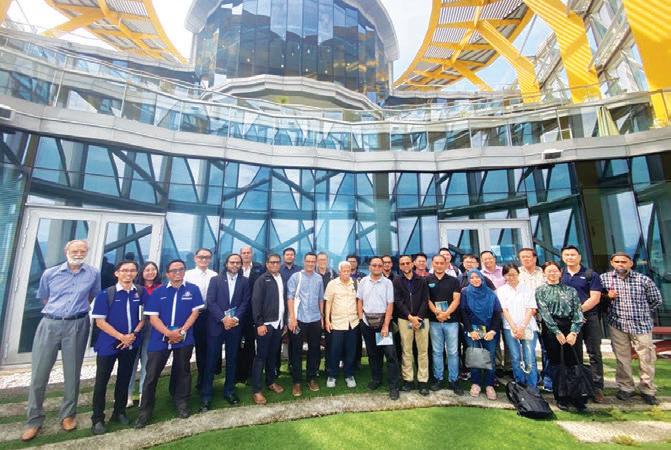
IEM Team from left: Ir. Thayananthan Balakrishnan (CETD Committee), Ir. Prof. Dr. Dominic Foo Chwan Yee (CETD Committee) & Ir. Mohamad Anwar Ahmad (CETD, Chairman)
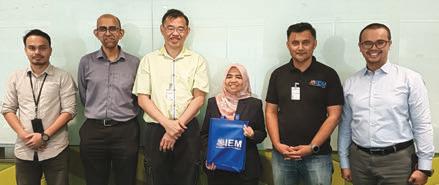
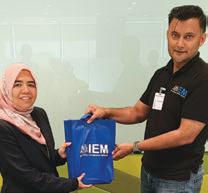
Nor A’in receiving an IEM memento from Ir. Anwar Ahmad, Chairman of Chemical Engineering Technical Division of IEM
Introductory Rate for New Advertisers
3,200/page
Circulation & Readership Profile
The publisher reserves the right to edit, revise or reject any advertisement deemed unsuitable or inappropriate. •
This one-time-only special rate o er is for new advertisers.
Space availability is subject to booking on a first-come-first-served basis.
Clients will provide ready-to-print artwork in PDF format with 300dpi.
Full page: 210mm x 297mm, 3mm extra bleed sizes for 4-sided.
Advertising space must be utilised before 30 June 2026.
*Please note that the above rate will be subjected to 8% SST. For overseas advertisers, an additional 25% will be charged.
Artwork submission deadline is on (or before) the 1st week of the prior month of publication.
After the material deadline, no cancellation or alteration to the advertisement will be entertained.
Any cancellation after signing the advertising order will result in a 50% penalty charge.
JURUTERA has an estimated readership of 200,000 professionals. Our esteemed readership consists of certified engineers, decision making corporate leaders, CEOs, government officials, project directors, entrepreneurs, project consultants, engineering consulting firms and companies involved with engineering products and services.
Publica�on month/s:
Company’s Stamp & Authorised Signature
Date
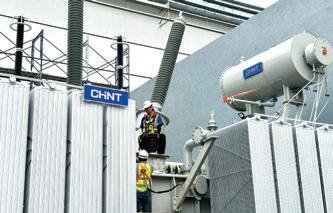
CHINT Global (Malaysia) Powers Malaysia’s Energy Future
and with a
30-Year Legacy New Identity
Shah Alam, Malaysia – CHINT Global (Malaysia) Sdn. Bhd., formerly known as Alpha Automation (Selangor) Sdn. Bhd., celebrates 30 years of continuous contribution to Malaysia’s electrical and energy industries, marking a major milestone with its official rebranding and renewed strategic direction.
Established in 1996 as a local provider of low-voltage electrical solutions, the company has evolved over three decades into a trusted partner within Malaysia’s energy ecosystem. Its growth has been built on long-standing collaboration with electrical contractors, switchboard manufacturers, distributors, consultants, developers and industrial clients nationwide.
“This 30-year journey reflects more than business growth, it represents the trust and relationships we have built with our partners across Malaysia,” said Chief Executive Officer Mr. Tey Siang Leng. “From a local solutions provider, we have grown into a company that is now part of a global energy network, ready to support Malaysia’s transition toward smarter and more sustainable infrastructure.”
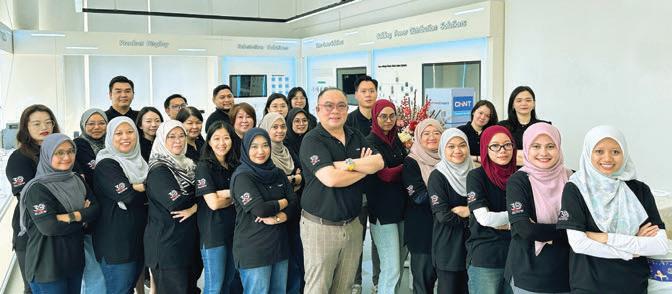
Today, the company officially operates as CHINT Global (Malaysia) Sdn. Bhd., allowing the company to align its local expertise with the global scale of CHINT Group. As a world leader in smart electrical equipment and energy systems, CHINT Group brings a legacy of reliability and innovation to Malaysia. This transition integrates 30 years of local market experience excellence with CHINT’s advanced manufacturing capabilities, global R&D resources and digital energy technologies, further enhancing the company’s ability to support Malaysia’s evolving energy landscape.
The rebrand reflects the company’s commitment to supporting Malaysia’s growing demand for reliable, efficient and sustainable energy solutions.
“Malaysia is entering a new phase of industrial growth and energy transformation, driven by sectors such as data centres, renewable energy, advanced manufacturing and infrastructure development,” said Chief Operating Officer Mr. Jason Su. “By combining CHINT’s global manufacturing capabilities, regional supply chain strength and our deep understanding of the Malaysian market, we are strengthening our ability to deliver integrated and future-ready electrical solutions across the country.”
Launch of 30th Anniversary ‘Power Up’ Rewards Campaign
In celebration of its 30th anniversary, CHINT Global (Malaysia) is proud to launch ‘Power Up’, a year-long rewards campaign exclusively for the Malaysian market to honour the continuous support from loyal business partners while welcoming new partners into the growing CHINT ecosystem. The celebration kicks off with the ‘Power Builder’ Rewards Program, running from now until 31 July 2026. Specially designed for switchboard and panel builders this program marks the first in a series of dedicated engagements with contractors and distributors. This long-term engagement initiative reaffirms CHINT’s commitment to driving mutual business growth and celebrating a 30-year legacy of excellence alongside its valued partners nationwide.
Tey Siang Leng ChiefExecutiveOfficer(CEO)
Jason Su ChiefOperatingOfficer(COO)
“The transition to CHINT Global (Malaysia) reflects a closer alignment with CHINT’s global strategy and reinforces our long-term commitment to the Malaysian market. Moving forward, we will continue enhancing our local operations, technical capabilities and customer support network, while leveraging CHINT’s global resources to support Malaysia’s industrial development, digitalisation and energy transition.”
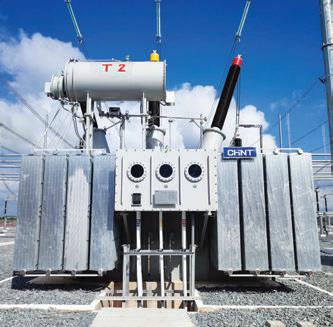
Looking ahead CHINT Global (Malaysia) will continue to deliver a comprehensive portfolio spanning low-voltage systems, power transmission and distribution, switchgear, metering technologies, renewable energy solutions and EV charging infrastructure. Its solutions support key sectors, including manufacturing, commercial buildings, infrastructure, rail transport, solar projects and data centres.
Backed by an extensive nationwide distributor network and strategic support from CHINT’s Asia-Pacific headquarters in Singapore, the company is well positioned to accelerate Malaysia’s digitalisation and green energy goals while expanding its presence across Southeast Asia.
Net Zero Operation Energy for Residential Terrace House
by:
Ar. Michael Ching Director of CH&I Architecture Sdn. Bhd. and BGreen Design Sdn. Bhd. With over 25 years of experience, he is well recognised in the field of sustainability with many national and internation awards.
The building sector is one of the largest consumers of energy and a major contributor to national greenhouse gas (GHG) emissions with 39% of carbon emissions across the globe; 71.8% of this occurs during the operation phase1.
Energy demand from residential buildings is expected to grow steadily, with residential buildings making up 53% of energy use, followed by commercial buildings at 14%2 This places further strain on power generation capacity and national decarbonisation efforts.
Malaysia has committed to achieving net zero GHG emissions by 20503, aligning with global climate goals and Net Zero Operation Energy Buildings (NZOEB) has emerged as a critical strategy to reduce operational energy use, lower carbon emissions, and enhance energy resilience.
This article examines NZOEBs for residential terrace houses in the Malaysian context, focusing on climateresponsive design, enabling technologies, energy performance metrics, and local case studies that demonstrate the feasibility of NZOEBs in a tropical environment.
Defining NZOEB
NZOEB is defined as a building which achieves a balance between energy consumption and renewable energy (RE) generation over a one-year period. While energy from TNB is imported from the grid, this is offset by exporting surplus RE produced on-site, resulting in a net annual energy balance of zero. The framework of NZOEB specifically shifts its emphasis towards energy used in the operation of the building alone, enhancing feasibility of widespread implementation in the local setting.
While definitions may vary, most interpretations of NZOEB in Malaysia share the following core elements:
• NZOEB requires high energy efficiency, achieved through optimised building design and incorporating specialised systems.
• NZOEB requires on-site RE generation, most commonly by utilising photovoltaic systems for electricity supply.
• NZOEB focuses on the annual energy balance, rather than instantaneous self-sufficiency of RE to cover consumption needs immediately.
• NZOEB calculates its efficiency via measured and verified performance, based on its actual operational energy used.
It is important to distinguish NZOEBs from related concepts such as zero carbon buildings, (zero or negative carbon emissions by generating its energy needs through renewable sources), or energy-positive buildings (RE generated on surplus energy consumption).
While these concepts overlap, NZOEBs specifically focus on the balance between energy consumption and RE production, rather than solely on carbon emissions or total environmental impact.
For residential terrace houses, NZOEBs also differ from green-certified buildings, going beyond conventional green buildings by focusing on measured energy performance rather than prescriptive design features alone. A building certified “green” can still consume large amounts of energy, whereas an NZOEB must demonstrate actual net zero energy performance through annual measurements and monitoring.
Malaysia’s Energy Contest & Climatic Response: Challenges & Opportunities
The country’s sustainability and energy transition efforts are guided by several national frameworks, which includes the National Energy Transition Roadmap (NETR), the 12th Malaysia Plan (12MP), and our commitments under the Paris Agreement. These frameworks emphasise energy efficiency, RE deployment, and carbon reduction across all sectors. NZOEBs align strongly by addressing both energy demand and supply within the building sector.
From another perspective, our tropical equatorial climate, characterised by high temperatures (23°C-33°C) and high humidity (75%-95%), presents significant challenges for NZOEB development. In residential terrace houses, air-conditioning accounts for 50%-65% of electricity consumption4, driven by high cooling demands. This is largely attributed to climate related factors such as solar heat gain through roof and façades, high cooling loads, along with difficulty in moisture control and maintaining indoor air quality. Conversely, the climate also offers strong advantages, including high solar irradiance, which is ideal for PV generation, in addition to consistent daylight availability, with minimal seasonal variation.
Effective NZOEB designs for residential terrace houses in Malaysia therefore optimises these conditions by prioritising solar control, cooling load reduction with efficient mechanical systems, as well as capitalising on solar energy potential and daylight harnessing.
Core Principles of NZOEBs in Malaysia
Achieving net zero operation energy performance requires an integrated approach based on several fundamental principles.
Roof U-value
Optimised building orientation to minimise solar exposure.
OTTV
Reduced window-to-wall ratios on east and west façades.
High-performance roof insulation. High-performance glazing and wall with low solar coefficient (SC).
Reflective or cool roof coatings. Reflective external wall coating.
Double roof.
Green roof systems and/or rooftop water features (for flat RC roofs).
Deep overhangs horizontal and/or vertical external shading devices.
External Sunscreen and/or Vertical Green Wall.
Courtyards for natural cross and stack ventilation to naturally cool down the building. Courtyards also harness daylight.
1. Energy Efficiency Priority: Reducing energy demand is fundamental to NZOEB. In Malaysia, this primarily involves reducing heat gain and minimising cooling loads. Lowering the baseline energy consumption reduces the size and the cost of RE systems required to achieve net zero.
2. Passive Designs: Passive design strategies in NZOEB prioritise maximising residential comfort while minimising energy consumption. Roof U-value is critical, as the roofs can account for up to 70% of total solar heat gain5, while Overall Thermal Transfer Value (OTTV) represents heat gain through the building envelope, particularly via walls and windows. Reducing both Roof U-value and OTTV helps minimise solar heat gain into interior spaces. The strategies are listed in Table 1.
3. High-Efficiency Active Systems: High-efficiency active systems refer to mechanical, electrical or technological solutions integrated into buildings to minimise energy consumption and to optimise performance without compromising on indoor comfort. These systems are essential for reducing the high energy demand for space conditioning, which can contribute 50%65% of electricity consumption in residential terrace houses in tropical climates4. Key examples of high-efficiency active systems include:
a. Advanced HVAC Technologies
• Variable Refrigerant Flow (VRF/VRV). These systems are highly efficient because they vary the refrigerant flow to indoor units based on exact, individual demand. Heat recovery VRF systems can simultaneously heat and cool different areas, transferring heat from one room to another for maximum energy savings.
• Variable Speed Motors and Inverter Technology. Unlike on/ off single-stage systems, variable speed blowers and inverter drives adjust operation to meet precise loads, preventing energy waste.
• Dedicated Outdoor Air Systems (DOAS). These decouple ventilation from cooling to manage humidity and air quality more efficiently.
b. High-Efficiency Lighting and Controls
• LED Lighting: Utilising high-luminous efficacy LED lighting reduces energy usage while providing better light quality.
• Lux Sensors: Automatic systems turn off lighting daylit areas to reduce wasteful consumption.
• Smart Controls and Occupancy Sensors: Automatic systems which turn off lighting and HVAC in unoccupied areas will significantly reduce wasteful consumption.
c. Solar Hot Water
• Utilise solar energy to heat water with zero emissions. These systems are highly durable, often lasting 10-25 years and offer high efficiency for residential hot water systems.
Nehemiah Prestress
Nehemiah-OVM provides the following products and services:
- Post-tensioning solution provider
- Carpark Flat Slab
- Transfer Plate
- Beams, Box Girders
- Alternative design solutions
- Cable systems (stay cable main cable hanger)
- Bridge bearing and expansion joint
- Construction solutions (heavy lifting, ILM, etc)
- Monitoring, repairing and strengthening for structures
The Strand, Kota Damansara 47810 Petaling Jaya
Selangor Darul Ehsan
Tel : 603-61426638
Fax : 603-61426693
Email : enquiry-pt@nehemiah-grp.com
Table 1: Strategies to minimise the energy consumption through passive design
Nehemiah A member of the Nehemiah Group
No. 45-3, Jalan PJU 5/20
Nehemiah Prestress Sdn Bhd (1140945-A)
d. Integrated Building Controls
• These systems manage HVAC, lighting, and other services to maintain optimal comfort while minimising energy consumption through intelligent, automated control algorithms.
4. Renewable Energy Integration: Solar photovoltaic (PV) systems form the backbone of NZOEB and RE generation in Malaysia. PV installations include rooftop-mounted and building-integrated photovoltaic (BIPV). Grid connection combined with Net Energy Metering (NEM), allows surplus electricity to be exported, improving financial feasibility.
Energy Performance Metrics
Energy performance metrics are essential for NZOEB evaluation. In Malaysia, several key indicators commonly used are:
1. Building Energy Intensity (BEI). Defined as total annual energy consumption (kWh) per Gross Floor Area (m²), BEI is widely used energy performance metrics. For residential terrace houses in Malaysia, typical BEI is generally approximately 55 kWh/m²/year6. In contrast, the NZOEB targets significantly lower BEI, with a range of 20-25 kWh/m²/ year. These levels will reduce the RE capacity required to achieve netzero performance.
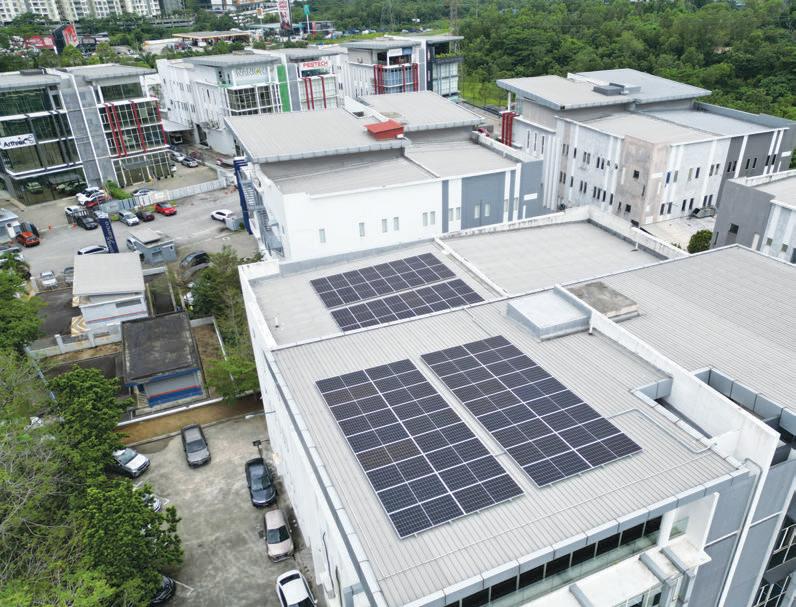
2. RE Generation Ratio. The RE Generation Ratio is defined as the ratio of RE generated to total energy consumption. For NZOEBs, this ratio must be ≥ 1.0 on an annual basis, meaning RE generated is equal to or greater than the total energy consumption. For example, a residential house with 12 solar panels generates approximately 5,500-6,000 kWh/ year, while the total energy consumption is 6,000 kWh/year. This results in energy offset. Smart meters and Solar PV Apps enable accurate tracking of total daily solar generated and energy usage.
3. Peak Demand Reduction. Peak Demand Reduction is particularly important due to grid constraints. It is calculated by subtracting peak demand after implementing reduction measures from baseline peak demand. NZOEB strategies include:
• Load shifting (timing one’s energy usage to align with off-peak hours, effectively reducing the grid strain).
• Battery energy storage.
Lower peak demand improves grid stability and reduces AC costs during peak load.
4. Carbon Metrics and Target. Carbon Metrics are also used to evaluate building performance. Commonly used carbon metrics include kg CO2/ m²/yr and total operational carbon emissions.
To convert energy consumption from Building Energy Intensity kWh/m²/yr to CO2 emissions in kg CO2e/m²/yr in Malaysia, the BEI must be multiplied by the grid emission factor (carbon intensity of electricity).
Based on data from the Energy Commission of Malaysia, the grid emission factor for Malaysia (Provisional 2024) typically used is7:
• Peninsular Malaysia : 0.740 kg CO2e/kWh
• Sarawak: 0.199 kg CO2e/kWh
• Sabah: 0.539 kg CO2e/kWh
Policies and Frameworks Supporting NZOEBs
Malaysia has enacted several interrelated guidelines to support the Malaysia NZOEB landscape.
• The NETR is a comprehensive framework that aims for net-zero emissions by 2050 through a shift from fossil fuels to a sustainable, high-value green economy. It focuses on 6 levers – energy efficiency, renewables, hydrogen, bioenergy, green mobility, and CCUS.
• Energy Efficiency and Conservation Act (EECA) (applicable for industrial and commercial sector only) establishes a mandatory legal framework
to regulate energy consumption across the industrial and commercial sectors to help the nation achieve net-zero emissions by 2050.
• MS 1525 and MS 2680 Code of Practice for Energy efficiency and Use of Renewable Energy provide guidance on energy efficiency and RE use in non-residential and residential buildings. Although not mandatory nationwide, it has influenced the designs of many energy-efficient and low-energy buildings.
• Net Energy Metering (NEM) scheme for solar PV allows building owners to offset electricity consumption by exporting excess solar PV generation to the grid. This mechanism plays a critical role in enabling NZEBs by improving the economics of on-site RE systems.
• Green Building rating tool encourages energy-efficient design and RE integration. While NZOEB performance goes beyond typical rating requirements, these tools help create market awareness and capability.
Although Malaysia has yet to mandate NZOEB standards, these frameworks provide a strong foundation for voluntary adoption and future regulation.
Case Study of Net Zero Operation Energy
Residential Terrace House
Danau Villa: A 3-storey residential terrace house in Taman Danau Desa, Kuala Lumpur, serves as a private residence with 3-4 occupants. It has been selected to represent Malaysia at the ASEAN Energy Award 2026 (AEA 2026).
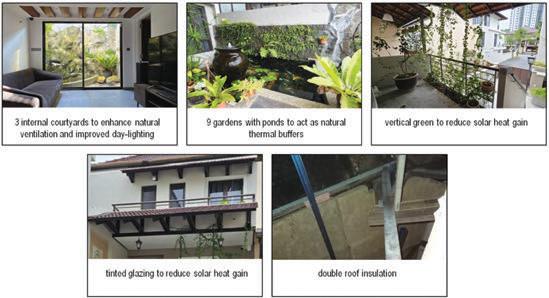
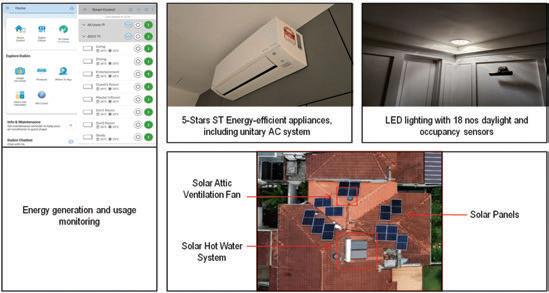
Originally built in 2011, the house was renovated in 2024 to improve overall energy efficiency and to enhance occupant comfort. To achieve this, both passive and active design strategies were implemented, along with the integration of RE systems. Passive and active design strategies are shown in Figures 1 and 2.
Figure 1: Passive designs incorporated into Danau Villa
Figure 2: Active designs incorporated into Danau Villa
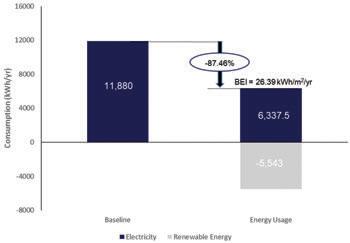
RE measures included the installation of 12 solar PVs (6.69kWp), generating 5,542.50 kWh/yr, replacing 87.46% of the Grid connect energy. Based on this energy offset, Danau Villa is near to achieving Net Zero
Benefits of NZOEB for Malaysia
NZOEBs contribute directly to reducing GHG emissions by lowering electricity demand and increasing RE generation. Widespread adoption of NZOEBs can significantly reduce the carbon
Occupants of NZOEBs benefit from lower energy bills, reduced exposure to electricity tariff increases, enhanced asset value and marketability, in addition to lower operating and maintenance costs. These benefits align well with long-term investment and ESG
Social and Occupant Benefits. NZOEBs typically offer better indoor environmental quality, improved thermal comfort, natural lighting, and air quality. Studies show that such environments can enhance occupant productivity and well-being.
Energy Security and Resilience. By generating electricity on site, NZOEBs reduce dependency on centralised power generation and enhance resilience against grid disruptions, particularly when combined with energy storage systems.
Challenges Faced in Adoption of NZOEB in Malaysia
The energy trilemma, a framework from the World Energy Council, highlights the delicate balance between three core dimensions: Energy equity (affordability), energy security (reliability) and environmental sustainability8 The central challenge lies in optimising all three elements simultaneously, while managing other concerns. In the context of NZOEB in Malaysia, the key challenges are:
1. Higher Initial Capital Costs. The initial capital cost of high-performance building envelopes, advanced M&E systems, and solar PV installations can be higher than conventional buildings. However, life-cycle cost analysis often demonstrates mid-term savings. Average Return of Investment (ROI) for a typical terrace house is around 5 years.
2. Skills and Knowledge Gaps. NZOEBs require integrated design and specialised expertise. There is a need for greater capacity-building among building owners, architects, engineers, green consultants, and facility managers.
Figure 3: Energy performance metric for Danau Villa
*The baseline data is under the assumption that no solar panels are installed in the house
3. Performance Gap. Differences between predicted and actual energy performance can arise due to occupant behaviour, poor commissioning or inadequate maintenance. Continuous monitoring and user engagement are essential.
4. Regulatory for Residential and Market Limitations. While supportive policies exist, Malaysia currently lacks a mandatory NZOEB standard for residential properties. Incentives and performance benchmarks can accelerate adoption.
Future Outlook
To advance NZOEB implementation in Malaysia, recommended measure include:
• Strengthening policy incentives and financing mechanisms.
• Developing clear national NZOEB definitions for residential and performance targets.
• Encouraging integration with smart grids and energy storage.
As technology costs continue to decline and awareness increases, NZOEBs are expected to transition from niche projects to mainstream practices.
Conclusion
Net Zero Operation Energy Buildings represent a powerful opportunity for Malaysia to transform its built environment in line with national sustainability and climate goals. By combining energy efficiency, climate-responsive design and RE integration with smart building management, NZOEBs offer a practical and achievable pathway toward low-carbon development. With continued policy support, industry collaboration, and capacity building, NZOEBs can play a central role in shaping a resilient, sustainable, and energy-secure future for the country.
REFERENCES
[1] World Green Building Council (2019). Bringing Embodied Carbon Upfront. https://worldgbc.org/climate-action/embodied-carbon/
[2] Shaban RS Aldhshan, Khairul Nizam Abdul Maulud, Wan Shafrina Wan Mohd Jaafar, Othman A. Karim and Biswajeet Pradhan (18 Aug 2021). Energy Consumption and Spatial Assessment of Renewable Energy Penetration and Building Energy Efficiency in Malaysia.
[5] Adi Ainurzaman Jamaludin, Nila Inangda, Ati Rosemary Mohd Ariffin and Hazreena Hussein (9 Dec 2021) Energy Performance of Three Residential College Building in University of Malaya Campus, Kuala Lumpur. https://eprints.um.edu.my/11481/1/JDBE_Adi.pdf
[6] Karam M Al-Obadi, Mazran Ismail and Abdul Malek Abdul Rahman (September 2014) Design and performance of a novel innovative roofing system for tropical landed houses. https://www.sciencedirect. com/science/article/abs/pii/S0196890414005202#:~:text=The%20 roofing%20system%20is%20the,most%20roof%20tiles%20 were%20dark.
[7] Guideline on National Energy Award (NEA) for Green & Energy Efficient Building (1 Oct 2019)
IEM IMPACT 2030: Five-Year Roadmap to Strengthen Engineering Profession
The Institution of Engineers, Malaysia (IEM) entered a new phase of institutional renewal with the launch of IMPACT 2030 at the IEM Annual Dinner. The launch by President Ir. Yau Chau Fong signalled more than the introduction of another strategic document. It represented a collective commitment to sharpen IEM’s relevance, strengthen its public voice, and prepare the engineering profession for the coming years which will be shaped by digital transformation, sustainability, artificial intelligence, energy transition, infrastructure renewal, and changing expectations from members and society.
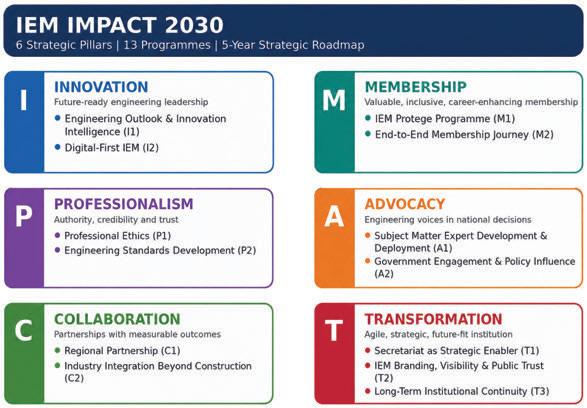
IMPACT 2030 is framed as an integrated fiveyear strategic roadmap built around six pillars and 13 programmes. The acronym, IMPACT, captures the direction clearly: Innovation, Membership, Professionalism, Advocacy, Collaboration, and Transformation. Together,
by:
these pillars align IEM members, programmes, and internal processes so that it can serve members better, influence national development more effectively, and remain a trusted reference point for engineering judgement.
Under Innovation, IEM seeks to become a future-ready and insight-driven institution. The Engineering Outlook & Innovation Intelligence programme will position IEM as a thought leader by producing forward-looking insights on emerging technologies, risks, opportunities, and industry innovation trends. The Digital-First IEM programme complements this by improving member services, CPD management, governance processes, communications, data dashboards, and AI-enabled engagement. The intended outcome is a smarter, faster, and more personalised member experience, supported by evidencebased leadership decisions.
Ir. Dr. Siow Chun Lim
IMPACT 2030 Coordinator
Membership focuses on converting IEM from a transactional affiliation into a lifelong professional home. The IEM Protégé Programme will expose selected young engineers to the President, leadership teams, and major institutional initiatives with the aim to help build the next generation of leaders. The End-to-End Membership Journey programme will make the progression from student to graduate engineer, professional member and fellow, clearer, smoother, and more engaging. This includes structured onboarding, stronger transition support, and a more inclusive professional identity that encourages members to see IEM as part of their long-term career journey.
Professionalism reinforces IEM’s authority and credibility. Through the Professional Ethics programme, IEM can provide ethical guidance in areas such as artificial intelligence, data, ESG, conflicts of interest, and public-interest decision-making. This is important because regulation alone is not enough as society expects professions to demonstrate integrity, independence, and accountability. The Engineering Standards Development programme will strengthen IEM’s role as a source of practical standards, guidelines, handbooks, journals, and technical references, including collaboration with relevant national standard-setting bodies where appropriate.
Advocacy positions IEM as a trusted, non-political engineering partner to government and public institutions. The Subject Matter Expert Development & Deployment programme will identify, prepare, and mobilise credible experts for policy, public, and media engagement. The Government Engagement & Policy Influence programme aims to secure earlier engineering input into policies, legislation, and national priorities in areas such as infrastructure, ESG, energy, artificial intelligence, and emerging technologies. The goal is crystal clear. Engineering judgement should shape decisions before they are finalised and not merely comment after the fact.
Collaboration extends IEM’s reach through purposeful partnerships. Regional Partnership will strengthen foreign chapters, support regional and international events, promote engineering mobility, and enhance IEM’s ASEAN and global visibility. Industry Integration Beyond Construction will deepen engagement with manufacturing, services, technology, and other sectors which are critical to Malaysia’s future economy. By doing so, IEM can become more relevant to engineers working outside traditional construction-led environments.
Transformation addresses how IEM operates and sustains impact. Secretariat (to be branded as Executives) as Strategic Enabler will upgrade the Secretariat from an administrative function into a professional execution engine with stronger capacity in programme delivery, stakeholder engagement, and performance tracking.
IEM Branding, Visibility & Public Trust will improve public communications, media engagement, and recognition of engineers’ contribution to society. Long-Term Institutional Continuity will ensure key initiatives are carried across presidencies through proper planning, budgeting, handover, and progress review.
Ultimately, IMPACT 2030 is a call for collective ownership. Its success will depend on task forces, standing committees, branches, young engineers, senior members, and the Secretariat working with clear timelines, measurable accountability, and regular reporting. The plan can strengthen IEM’s professional excellence, widen its influence, and enhance the value it delivers to its members and the nation. IMPACT 2030 is not only a roadmap for IEM but is also a platform for engineers to shape a more visible, trusted, and future-ready profession in Malaysia.
Declaration on Use of Artificial Intelligence
This article was prepared with the assistance of Artificial Intelligence (AI) tools to support drafting, structuring, editing, and refinement of the content. The final article was reviewed, verified, and approved by the author to ensure accuracy, relevance, and alignment with the intended message.
Role of CCUS as a Key Platform in Enabling Net-Zero
Transformation
by:
Chong Siang Yaw, Wen Cai Ng, Su Chern Foo, Fang Sheng Lim, Wen-Shan Tan, Chien Wei Ooi, Dayanath W.M.S., Saman Ilankoon and Meng Nan Chong
As businesses accelerate toward net-zero commitments, the challenge is no longer confined to reducing emissions at individual facilities. The central issue is how to close the loop across the entire value chain by closely examining how carbon is generated, measured, managed, transformed, stored, verified, and, where possible, turned into circularvalue products.
Energy efficiency, electrification, and renewable energy (RE) deployment remain essential pillars of decarbonisation, but they cannot eliminate all emissions in heavy industry. Residual emissions persist in hard-to-abate sectors such as cement, iron and steel production, where CO2 is produced as part of the core chemistry and not solely from fuel use.
In this context, Carbon Capture, Utilisation & Storage (CCUS) should be viewed less as an end-of-pipe add-on and more as a key platform. A platform approach recognises that CCUS is not simply equipment. It is a managed carbon system that links physical infrastructure, such as capture, compression, conditioning, transport, utilisation, and storage, with enabling elements such as measurement and verification, economics, and markets.
When designed as a platform, CO2 becomes a governed material flow. It is captured from a source, conditioned to meet specifications, directed to utilisation or storage pathways, and tracked with evidence that supports credible reporting and informed decision-making.
This framing matters for engineers because it changes what good design looks like. It is no longer enough to optimise a capture unit in isolation. Net-zero transformation requires value-chain or whole-of-system design. This includes integration with utilities and heat, minimising the total energy penalty, managing water and consumables, selecting utilisation routes
that align with real product demand, and ensuring that the claimed carbon outcome is verifiable. A platform view also encourages staged implementation. Organisations can begin with “lowhanging fruit” opportunities while building competence in operations and verification, and then scale toward more complex integrations and shared infrastructure.
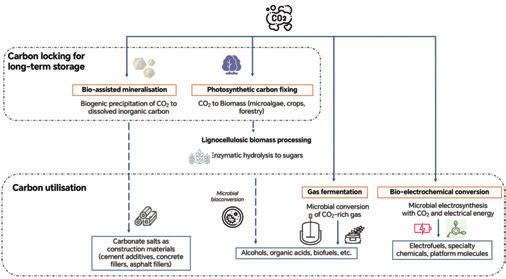
At the Monash Future Centre for Net-Zero Technology (CNZT), we advance CCUS through this system’s lens, with a strong emphasis on bio-integrated routes. Bio-based and bio-integrated CCUS pathways operate under mild conditions, offer pathways to circular products, and complement conventional capture and geological storage. They also broaden the CCUS toolkit: Capture can be coupled with conversion and utilisation can be coupled with durable sequestration.
In a net-zero business value chain, this flexibility is critical because different sectors face different design and physical constraints, including energy intensity, site footprint, by-product streams, water availability, product markets, and access to storage, all of which shape and inform on the most appropriate pathway to be adopted.
Bio-Integrated CCUS: From Capture to Conversion & Durable Storage
Bio-integrated carbon management begins with a simple analogue familiar to all engineers, photosynthesis. Plants and microorganisms assimilate CO2 and store it as biogenic carbon in biomass. Nature-based solutions such as reforestation follow this principle, while engineered pathways such as Bioenergy with Carbon Capture & Storage (BECCS) extend it by capturing and permanently storing biogenic CO2. This offers the potential for carbon negative outcomes when biomass supply chains and storage integrity are robust.
Beyond BECCS, bio-integrated CCUS approaches actively enhance capture kinetics and steer carbon into conversion or stabilisation routes. Enzyme-enabled capture using carbonic anhydrase is a key example. By catalysing the reversible hydration of CO2 to bicarbonate, carbonic anhydrase accelerates absorption under mild conditions.
From an engineering perspective, faster kinetics can reduce equipment footprint and contact time, while potentially lowering regeneration energy compared with some conventional solvent systems. These advantages are particularly relevant where waste heat is limited or modular systems are preferred.
Biological systems also support durable sequestration through bio-mineralisation. By increasing local bicarbonate and carbonate availability, enzymes and microbes accelerate the formation of stable carbonate minerals. When coupled with alkaline industrial residues (steel slag, fly ash, or cement kiln dust), bio-mineralisation closes two loops simultaneously. It immobilises CO2 into stable solids while valorising industrial wastes into carbon storing materials which can offset disposal and raw material costs.
Microbial conversion further expands the CCUS platform. Gas fermentation enables acetogenic microbes to upgrade CO-and-CO2-rich industrial off gases into chemical feedstocks, while hydrogenotrophic pathways combine captured CO2 with green hydrogen to produce non-fossil methane under mild aqueous conditions. Emerging approaches such as microbial electrosynthesis integrate electrical energy with biological catalysis, creating hybrid systems that link renewable electricity directly to carbon utilisation.
A critical point often overlooked is that bio-based does not automatically mean low impact. The sustainability and value of bio CCUS platforms depend on thoughtful process integration, resource management, and credible accounting. Researchers at CNZT therefore treat biology and engineering as a coupled system and evaluate performance across the full value chain rather than at individual unit operations.
Industrial Decarbonisation Pathways & Bio-Refinery Integration, Deployment Logic for the Real World
CCUS remains central to net zero pathways because many industrial emissions are process locked. Cement production releases CO2 from limestone calcination, steelmaking relies on carbon-based reduction chemistry, and chemical value chains depend on carbon feedstocks as fundamental building blocks. In such cases, deep emissions reductions cannot be achieved through power decarbonisation alone. CCUS becomes a practical lever to address residual emissions while maintaining production and safeguarding essential materials which underpin infrastructure and manufacturing.
Deployment, however, is not a single engineering decision but a pathway choice. It involves how CCUS fits among other abatement levers and how it aligns with
plant constraints and investment cycles. Early projects often prioritise higher purity or higher concentration CO2 streams, where capture costs are lower and verification is simpler. As experience grows, organisations can expand toward more diffuse sources, deeper integration, and shared infrastructure.
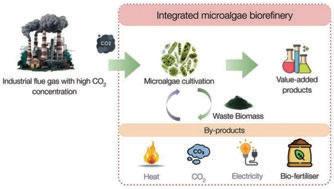
Bio-refinery integration complements this staged deployment. Bio-integrated CCUS can be co-located with industrial operations to manage emissions while creating value. Captured CO2 can be routed to biological utilisation platforms such as microalgae cultivation, microbial conversion, or bio-mineralisation, generating circular economy products aligned with local markets. Conversely, biomass residues, nutrient-rich wastewater, and industrial by-products can be integrated into bio-refineries which upgrade low-value streams into higher-value outputs, improving overall resource efficiency.
Integrated microalgae bio-refinery concept for industrial decarbonisation
Many industrial sites already possess assets that strengthen the business case for bio CCUS, including low grade waste heat, alkaline residues, or wastewater nutrients. When integrated intentionally, CCUS shifts from a compliance obligation toward a value creation strategy. Importantly, this does not require monolithic projects. Modular implementation, starting with capture and data systems and then adding conversion or storage modules, allows learning, risk reduction, and alignment with market demand.
Microalgae Enabled CCUS, Closing the Loop by Turning Carbon into Products
Among bio-integrated pathways, microalgae-enabled CCUS is particularly attractive because it couples carbon capture with a bio-product value chain. Microalgae assimilate CO2 through photosynthesis and convert it into biomass rich in lipids, pigments, proteins, and other bioactive compounds. Compared with terrestrial plants, microalgae offer high growth rates, flexible cultivation configurations, and the ability to utilise concentrated industrial CO2 streams, enabling close coupling between emission sources and utilisation systems where land availability is limited.
In a net zero business value chain, microalgae provide more than carbon uptake. Through a bio-refinery approach, captured carbon can be embedded into marketable products. Lipids can be upgraded into fuels or
oleochemicals, pigments and carotenoids can support nutraceutical and functional food markets, and residual biomass can be valorised as feed or converted to energy. This diversity allows microalgae platforms to be tailored to regional demand while balancing environmental performance and commercial viability.
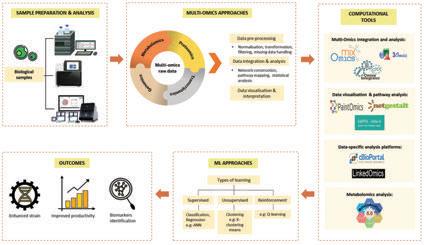
Achieving reliable performance at scale requires understanding biological responses to CO2 dynamics and process conditions. Elevated CO2 can enhance productivity but can also alter metabolic allocation and stress responses, influencing growth and product quality. CNZT addresses this through multi omics approaches that integrate genomic, transcriptomic, proteomic, and metabolomic insights. These tools provide a systems level view of carbon fixation and biosynthesis pathways, guiding strain selection, cultivation strategies, and operating conditions suited to real industrial environments.
Equally important is engineering design. CO2 delivery, mixing, light distribution, temperature control, and gas liquid mass transfer can constrain productivity and dominate operating costs. Improvements in these areas directly influence productivity per unit area and the cost per tonne of CO2 avoided. Microalgae-enabled CCUS becomes credible when biology and engineering are designed together and downstream processing is aligned with product requirements.
Life-Cycle and Cost Thinking, Carbon Auditing & Markets Making the Platform Credible & Investable
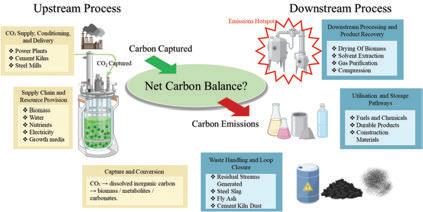
A recurring pitfall in CCUS discussions is treating capture rate as the primary indicator of success. Capture rate matters, but it does not answer the question that net zero decision makers must ask. What is the net climate benefit across the whole system, and what does it cost over the asset lifetime? This is why Life-Cycle Assessment (LCA) and Life-Cycle Costing (LCC) are essential components of a closed loop CCUS platform, especially for bio integrated routes where upstream inputs and downstream processing can dominate environmental and economic performance.
From an environmental standpoint, LCA evaluates CCUS beyond the point of capture. For bio CCUS systems, upstream inputs such as nutrients, water, cultivation media, and electricity for mixing and harvesting can be significant. Downstream processing, drying, extraction, upgrading, mineral processing, product distribution, and end-of-life treatment, can further shape the footprint. LCA identifies hotspots and trade-offs, helping to avoid carbon shifting where emissions are reduced at a stack but increased elsewhere in the value chain. It also supports fair comparisons between alternative pathways, clarifying where bio CCUS provides genuine advantages and where conventional capture plus storage may be more appropriate.
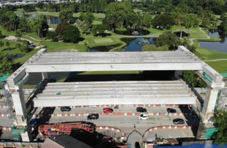
The BH Girder is an innovative and enhanced version of PSC Girder that utilizes the Bulb-T shape integrated with Half Slab which enables it to be applied over a span of longer than 60m. By adopting the latest cutting-edge technologies and innovati on, the BH Gir der has been designed to achieve the ultimate goals of “ Cost Effectiveness ”, “ Rapid Construction”, “Aesthetics” and “Safety”.
ADVANTAGES
ciency
● Maximization of prestressing efficiency
● Minimization of prestressing friction loss
● Reduction of substructure cost
● Reduction of slab cost by half slab girder
● Omission of deck slab form work and s hori ng work by half slab girder
● Shorter construction period
PROFESSIONAL SERVICES
● Design computations and analysis
● Construction drawings
● Material and c onstruction specifications
● Cost estimates
● Technical advice and c onstruction assistance
NEHEMIAH TOWOONG BRIDGETECH SDN BHD. No. 45-3, Jalan PJU 5/20, The Strand, Kota Damansara 47810 Petaling Jaya, Selangor Darul Ehsan.
partnership of (Free of charge)
Tel : 012-2880918 (Mr. Jason Khor) 012-2186693 (Ir. Tan CC)
Tel : 603-61426638
Fax : 603-61426693
Email : jasonklc@nehemiah-grp.com
Email : tancc@nehemiah-grp.com
Email : enquiry@nehemiah-grp.com
Website : www.nehemiah-grp.com/towoong
BH GIRDER
Life-cycle-driven process-flow framework for bio-integrated CCUS, emphasising system-level net carbon balance over capture efficiency
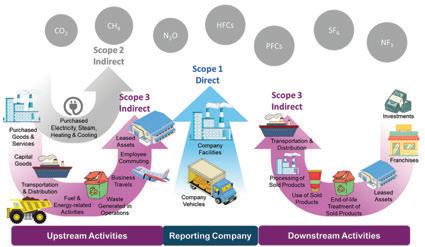
overview of greenhouse gas (GHG) emissions across Scopes 1, 2, and 3 as defined by the GHG Protocol covered by our Carbon Accounting & Management Platform
From an economic standpoint, LCC complements this by evaluating total cost of ownership, not just upfront capital expenditure. For many CCUS systems, energy use becomes a dominant operating cost driver (compression, pumping, mixing, regeneration, harvesting, or drying). LCC helps quantify which design choices reduce lifetime cost per tonne of CO2 avoided, not merely captured. This distinction matters because avoided aligns with net zero outcomes and is sensitive to electricity carbon intensity and system integration. A pathway that captures CO2 but consumes carbon intensive electricity may look attractive on capture performance, yet delivers weak avoidance when assessed across the full chain.
This technical economic foundation must connect to the governance layer which enables deployment at scale, carbon auditing, measurement reporting verification (MRV), credits, and trading. Robust carbon auditing frameworks identify abatement opportunities and define the residual emissions that CCUS should target. Accurate MRV across Scope 1, 2, and 3 provides the transparency needed to deploy CCUS strategically in hard to abate sectors. International standards such as the GHG Protocol and ISO 14064 enable organisations to quantify and report emissions consistently, while digital carbon management platforms increasingly integrate operational data to support higher frequency tracking and decision making. When CCUS is aligned with high quality MRV, it strengthens the credibility of corporate climate reporting by converting residual emissions into verifiable carbon flows. Beyond compliance, verified capture and
Schematic
permanent storage can generate high integrity carbon credits if they meet criteria such as additionality, permanence, and leakage prevention.
These credits may be used internally to manage residual emissions or traded in voluntary markets. Their durability and measurability can make them attractive for organisations seeking stronger assurance than short duration offset options. Regulated emissions trading schemes and carbon pricing instruments also provide the economic signals that can unlock investment in shared infrastructure and scale up.
These developments reshape the engineer’s role. Engineers are no longer responsible only for unit design. They are increasingly system integrators who connect capture, conversion, storage, life-cycle performance, MRV, and market outcomes. In this environment, LCA and LCC become not only optimisation tools but also evidence bases for MRV readiness and investment confidence. A closed loop CCUS platform succeeds when technical performance, environmental credibility, and market mechanisms reinforce one another.
Policy & Regulatory Enablers, De-Risking CCUS Deployment in Malaysia
While bio-integrated CCUS platforms provide the technical means to close the carbon loop, their realworld deployment depends critically on policy certainty and regulatory readiness. For decades, the primary barrier to CCUS adoption was not technical feasibility, but the absence of clear legal frameworks governing carbon ownership, long term liability, and post closure stewardship. Without regulatory clarity, high capital CCUS projects remained difficult to finance, insure, and scale.
In Malaysia, that barrier is now being addressed through the Carbon Capture, Utilisation & Storage Act 2025 (CCUS Act 2025, Act 870), which provides a national level legal framework governing the capture, transportation, and permanent storage of carbon dioxide. The Act sets out clearer permitting and licensing pathways across the CCUS value chain, from capture at industrial sources to transport and long-term geological storage, giving engineers and project developers a more defined set of rules to move from feasibility studies to investment decisions.
Of particular interest to professional engineers is the establishment of a Post Closure Stewardship Fund, supported by mechanisms such as an injection levy, to finance long term stewardship activities after site closure. By clarifying the pathway for post closure responsibilities and long-term monitoring, and by setting out how obligations may eventually be transferred subject to conditions, the framework addresses one of the most significant bankability concerns in CCUS, namely indefinite operator liability. In parallel, Malaysia has also established a dedicated CCUS agency to support implementation, including responsibilities linked to permitting, oversight, and administration of funding mechanisms.
National transition strategies further reinforce this regulatory foundation. Malaysia’s National Energy Transition Roadmap (NETR) and New Industrial Master Plan (NIMP) 2030 explicitly recognise CCUS as a critical enabler for decarbonising hard to abate sectors such as cement, steel, chemicals, and refining. These frameworks acknowledge that electrification and renewable energy alone cannot eliminate process related emissions and that CCUS must operate alongside other abatement levers as part of an integrated industrial transition pathway.
Policy alignment also strengthens the connection between CCUS and carbon markets. As carbon pricing instruments, emissions trading mechanisms, and voluntary carbon markets mature, regulatory recognition of verified carbon capture and permanent storage enables CCUS outcomes to be translated into auditable carbon assets. This linkage is essential for ensuring that captured carbon contributes meaningfully to corporate net zero claims and is compatible with emerging MRV requirements.
For the engineering community, these developments fundamentally reshape professional responsibilities. Engineers are no longer designing systems solely for technical performance. They are designing systems that
Ultimately, policy coherence transforms CCUS from an experimental option into a deployable industrial platform. With regulatory risk reduced and market signals strengthened, engineers are positioned to focus on what they do best – designing integrated, scalable systems that close the carbon loop while supporting economic growth and industrial resilience.
Closing Perspective
Closing the loop through CCUS is not simply a technology challenge. It is a platform challenge. It requires integrated solutions which connect biology, engineering, economics, data, and governance. Bio-integrated CCUS brings unique strengths to this platform, mild operating conditions, pathways to circular products, and options for durable storage through bio-mineralisation and geological sequestration. When combined with life-cycle and cost thinking, and anchored by robust MRV and carbon market frameworks, CCUS shifts from a cost centre to a strategic capability that supports both decarbonisation and competitiveness.
For Malaysia and the wider ASEAN region, this integrated approach offers a pragmatic route, decarbonise
13th IEM Chemical Engineering Design Competition
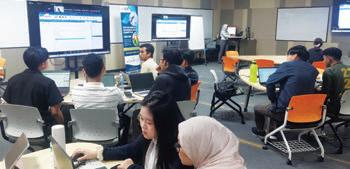
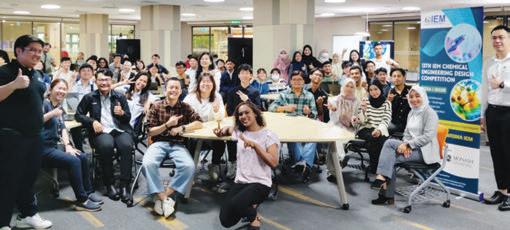
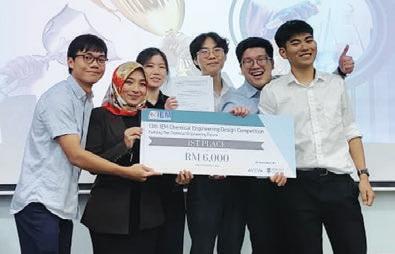
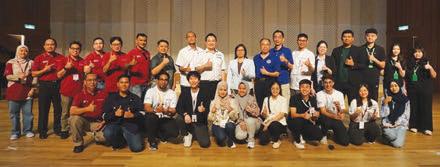
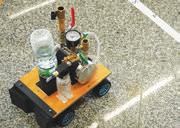
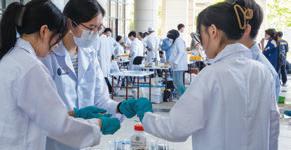
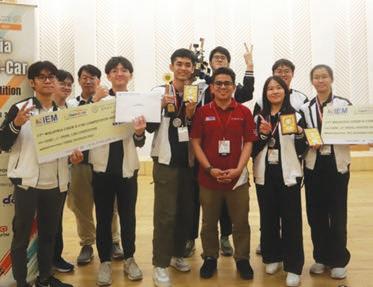
The Institution of Engineers, Malaysia (IEM) Chemical Engineering Design Competition has been recognised as one of the most impactful student-centred initiatives under the Chemical Engineering Technical Division (CETD). Now in its 13th edition, the 2024/2025 competition continued this strong legacy by providing undergraduate chemical engineering students with a structured, industry-relevant platform to integrate theoretical knowledge with teamwork and professional communication.
by:
textbook solutions and to apply engineering concepts while developing professional judgement as part of their soft skills development.
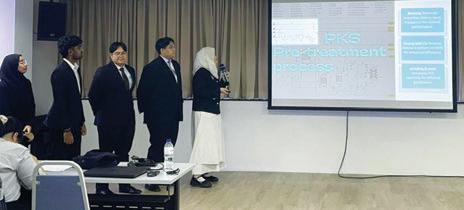
Through continuous engagement with design tasks, technical discussions and presentations, students gain confidence in decision-making. These experiential elements significantly strengthen the students’ readiness to transition from academic environments to the chemical and process industries.
More than a conventional academic exercise, the competition serves as a powerful experiential learning environment that prepares students for the realities of professional engineering practice.
Experiential learning lies at the heart of the IEM Chemical Engineering Design Competition. Unlike traditional classroom-based learning where problems are narrowed and solutions are prescribed, this competition challenges participants to think and act like practising engineers. Students are required to address openended design problems while incorporating considerations such as process design flow, process safety, sustainability, economic feasibility, environmental impact, and regulatory compliance as described in the competition guidelines. This holistic approach encourages students to move beyond
For the 2024/2025 term, the competition was chaired by Ir. Dr. Hazlina Husin, with advisory support from Ir. Vincent Khaw and driven by a dedicated organising committee from CETD. The chosen design title, Methylcyclohexane-Toluene-Hydrogen (MTH) System for Hydrogen Production, reflected a forward-looking theme aligned with global energy transition efforts and the emerging hydrogen economy. By engaging with this topic, students were exposed to contemporary challenges faced by the energy and chemical sectors, reinforcing the relevance of their academic training in real-world applications.
Ir. Dr. Hazlina Husin
Virtual design briefing
Hybrid AVEVA software training
As a national-level event, the annual competition was opened to undergraduate chemical engineering students from public and private universities in Malaysia and neighbouring countries. Participating teams, typically comprising 3-5 students, were mentored by academic advisors who would enhance experiential learning by encouraging reflective thinking, iterative design improvement and professional accountability.
To start off the competition officially, a briefing session was held on 9 January 2025, led by the Chairwoman, Ir. Dr. Hazlina Husin. Representatives from 26 participating teams attended the session, during which the competition objectives, rules and evaluation criteria were clearly outlined. This initial engagement was instrumental in aligning expectations and ensuring that the students understood the technical depth, documentation quality and professional standards required in the competition.
One highlight of the 2024/2025 edition was the AVEVA Software Training held on 11 January 2025 and conducted in hybrid format. There were 60 participants who attended physically while over 70 participants joined in online, reflecting strong engagement and enthusiasm from the students.
The full-day training offered invaluable exposure to industry-grade engineering software, enabling participants to enhance their skills in process simulation. Such exposure represents a critical experiential learning component, bridging the gap between academic concepts and tools commonly used in professional engineering practice.
The organising committee extends its sincere appreciation to AVEVA for sponsoring the software and supporting student development, as well as to Ms. Maamira Mior, Academic Success Manager at AVEVA, for delivering an informative and engaging training session. Special thanks are also extended to Monash University Malaysia for sponsoring the venue and contributing to the successful execution of this programme.
Participating institutions included Universiti Putra Malaysia, Xiamen University Malaysia, Nanyang Technological University, International Islamic University Malaysia, Heriot-Watt University Malaysia, University
of Nottingham Malaysia, SEGi University, Universiti Teknologi Malaysia, Universiti Kebangsaan Malaysia, Universiti Malaysia Pahang Al-Sultan Abdullah and Universiti Malaysia Sabah.
The competition finale was held at Wisma IEM on 12 July 2025, where the teams presented their final design solutions to a panel of experienced judges from both academia and industry. Based on the final evaluation, the following teams were recognised for their outstanding performance:
• 1st Place: University of Nottingham Malaysia
• 2nd Place: Universiti Kebangsaan Malaysia
• 3rd Place: Universiti Kebangsaan Malaysia
• 4th Place: Universiti Teknologi Malaysia
• 5th Place: Universiti Malaysia Pahang Al-Sultan Abdullah
• 6th Place: Universiti Kebangsaan Malaysia
The awards recognised not only technical excellence, but also clarity of communication, depth of engineering analysis, teamwork and professional maturity demonstrated by the teams throughout the competition.
In conclusion, the IEM Chemical Engineering Design Competition 2024/2025 once again demonstrated its effectiveness as a high-impact experiential learning platform for undergraduate development. As the competition continues to evolve, sustained collaboration between IEM, universities and industry partners will remain key to enhancing its relevance and long-term impact.
Final presentation by one of the finalist teams
Winner of the 13th IEM Chemical Engineering Design Competition
Winners of 8th IEM-CETD Research Paper Contest in APCChE 2025 Conference
The Chemical Engineering Technical Division (CETD) organised a research paper contest in conjunction with the 21st Asian Pacific Confederation of Chemical Engineering Congress (APCChE), held on 14-18 July 2025 in Beijing, China. The congress brings together chemical engineers from across the Asia-Pacific region to exchange knowledge, share innovations, and discuss emerging challenges and solutions in the field.
by:
Attending APCChE 2025 was truly an enriching and eye-opening experience for the duo. The conference provided valuable exposure to the latest trends and innovations in chemical engineering, as well as opportunities to engage in meaningful discussions with researchers and industry professionals from around the world. The insights gained from diverse perspectives and real-world industrial applications which broadened their understanding, sparked new research ideas and inspired them to further enhance the impact of their work.
The IEM-CETD Research Paper Contest was opened to postgraduate students pursuing chemical engineering or related field in public and private universities in Malaysia. The winners were sponsored by IEM-APCChE to participate in the conference.
The winners were Lim Seen Ye from UCSI University and Mohamad Akmal Mohamad Zaki from Heriot-Watt University Malaysia. Their winning papers, Multi-Criteria Optimisation for the Sustainable Recovery of Palm Process Residue with Safety, Health, Environment & Economic Considerations and Multi-Period Investment into Industry 4.0 & Industry 5.0 Technologies in the Oil Palm Plantation, respectively, demonstrated strong technical merit and relevance to current industrial and sustainability challenges.
The opportunity not only enabled the winners to present their research on an international platform but also contributed significantly to their professional development and academic growth. The support received was a strong source of motivation, encouraging them to continue pursuing impactful research and to contribute meaningfully to the advancement of chemical engineering in addressing global challenges.
Ir. Assoc. Prof. Dr. Lee Tin Sin
Research Paper Competition 2025 Winner, Ms. Lee Seen Ye
Research Paper Competition 2025 Winner, Mohamad Akmal Mohamad Zaki
Visit to Menara Kerja Raya: GBI Platinum Benchmark in Sustainable Public Infrastructure
by:
The Public Sector Engineers Special Interest Group (PSESIG) organised a technical visit to Menara Kerja Raya, the headquarters of Jabatan Kerja Raya Malaysia (JKR), on 12 February 2026. Taking part were 40 engineers and technical professionals from both the public and private sectors.
The visit provided a first-hand exposure to a Green Building Index (GBI) Platinum-certified high-rise office building. The emphasis was on how energy efficiency and sustainability strategies were implemented and sustained under real operating conditions. Beyond theoretical design principles, participants gained practical insights through a structured technical briefing and guided walk-through of the key facilities, which strengthened their understanding of operational performance management.
The visit commenced with a comprehensive briefing by Ir. Hj. Che Hasim Awang, Senior Superintendent Mechanical Engineer at JKR. The presentation covered the building’s overarching design philosophy, façade
performance strategy, energy optimisation measures, water efficiency systems, and the operational framework which supported its sustained high performance.
Menara Kerja Raya, built in 2015, stands at 175m. It is one of only two non-residential buildings in Malaysia which has achieved Green Building Index (GBI) Platinum Final Certification. This recognition requires stringent compliance across multiple sustainability criteria, including energy efficiency, water management, indoor environmental quality, materials selection, and site planning. The building integrates a comprehensive suite of features aimed at reducing energy consumption, enhancing occupant comfort, minimising environmental impact, and reducing reliance on treated potable water.
Ir. Fareed Raduwan Ir. Bhupinder Singh Brar
Central to its sustainability strategy is a high-performance building envelope. The façade incorporates triple-pane lowemissivity (low-E) glazing, significantly reducing solar heat gain while maintaining high visible light transmittance, an essential consideration in our tropical climate. Optimised daylighting strategies further enhance natural illumination within office spaces, reducing dependence on artificial lighting and improving occupant comfort.
The internal lighting system operates at a power density of approximately 8 W/m² and is integrated with intelligent controls, including occupancy sensors and daylight-responsive dimming. These measures align lighting energy consumption with actual occupancy patterns, minimising wastage while maintaining appropriate illumination standards.
The heating, ventilation, and air-conditioning (HVAC) system is another cornerstone of the building’s energy performance. Engineered for efficiency under part-load conditions, it incorporates optimised fan configurations and advanced control strategies capable of reducing fan power consumption by over 50% during periods of reduced demand. Through careful design, commissioning, and continuous performance monitoring, the building has achieved a Building Energy Index (BEI) of approximately 90 kWh/m²/year, or 60% lower than the baseline established under MS 1525, Malaysia’s standard for energy efficiency in non-residential buildings.
Beyond energy performance, Menara Kerja Raya features an integrated water management system. Greywater from wash basins, floor traps, and ablution areas is collected, treated, and reused for non-potable applications such as toilet flushing and landscape irrigation. This system is complemented by a 400 cubic metre underground rainwater harvesting tank, which captures and stores stormwater for similar uses.
Collectively, these integrated strategies yield substantial operational benefits, including estimated annual electricity cost savings of approximately RM2.5 million. More importantly, the building exemplifies how life-cycle considerations and long-term operational performance can be systematically embedded in the planning, design, and delivery of public infrastructure.
The visit concluded with a guided walk-through of selected building systems, including office spaces, greywater treatment facilities, and electrical control rooms. This on-site exposure provided valuable insights into system integration, commissioning, and ongoing facility management of a GBI Platinum-rated building.
Overall, the programme served as a meaningful platform for professional learning and technical exchange. Menara Kerja Raya stands as a benchmark for sustainable government office developments in the country and as a compelling case study for engineers committed to advancing environmentally responsible and performancedriven practices within the built environment.
NEWLY ELECTED OFFICE BEARERS OF THE INSTITUTION OF ENGINEERS, MALAYSIA (IEM), NEGERI SEMBILAN BRANCH SESSION 2026/2027
The Institution of Engineers, Malaysia (IEM) Negeri Sembilan Branch had its 33rd Annual General Meeting on 23rd May 2026 and we are pleased to introduce the new office bearers for session 2026/2027:
Briefing by Ir. Hj. Che Hasim Awang, Senior Superintendent Mechanical Engineer from the Building Facility Maintenance Branch, JKR Malaysia
The visitors listening to technical briefings related to mechanical and electrical systems
Tham
by:
Saving Lives on Malaysian Roads with Solar-Powered Road Studs
Malaysia has one of the highest per capita road accident fatalities globally. Fatalities and serious injuries cost the country approximately US$16 billion in 2021, equivalent to roughly 4% of Malaysia's GDP. Malaysia continues to face significant road safety challenges, particularly on high-speed corridors, rural highways and mountainous routes where visibility is often compromised at night.
While enforcement and education remain critical components of road safety strategy, infrastructurebased engineering interventions also plays a decisive role. In response to these challenges, several engineering advances have been developed in recent years, aimed at improving road visibility and driver awareness, particularly under low-light conditions. These include active solar-powered road studs, which provide illuminated delineation to enhance lane guidance and to improve road visibility at night.
available data is insufficient for a full independent safety benefit analysis. More broadly, research has also found that active road studs can improve driver confidence, route readability and perceived safety under night-time conditions1,2
To assess the effectiveness of this technology under local conditions, a trial was deployed at an accident blackspot on the North-South Expressway (NSE). The trial (proof-of-concept) was carried out along a 600m stretch of the south-bound section near Rawang. During the same month in the year preceding the trial, nine serious accidents were recorded along this stretch. During the nine-month proof-of-concept period, this was reduced to four serious accidents. The data included both daytime and night-time incidents, with approximately half occurring during hours of darkness.
International experience has also indicated potential safety benefits from active road studs. For example, a South African case study on the R66 in KwaZulu-Natal reported a 70% reduction in night-time accidents within 12 months of installation, according to the provincial transport department. However, published evidence remains limited, and some reviews have noted that the
These trials coincided with experimentation in Malaysia involving “glow-in-the-dark” road marking paint. While innovative in concept, the phosphorescent paint approach faced practical challenges. The markings were found to be less effective under direct headlight illumination and concerns were raised regarding durability under local tropical conditions, including prolonged sun exposure and heavy rainfall. Cost considerations further limited its scalability.
According to Andy Jackson, the CEO of Safe Road Systems Sdn. Bhd., solar-powered road studs may provide a more robust alternative for certain applications. “Routes such as the road to Genting Highlands and many state roads feature tight horizontal curves, steep gradients and limited lighting. Solar road studs provide active illumination and maintain visibility even when painted markings deteriorate. Traditional thermoplastic road markings degrade relatively quickly under Malaysia’s climate, so active road studs can provide lasting safety improvements.”
Mr. Gandhi Suppiah Mr. Mark Omar Mohsen
Amber SOLARLITE road stud embedded on the fast lane side of the NSE
Red SOLARLITE road stud embedded along the slow lane side of the NSE
Conceptual relationship between road safety risks, delineation measures, and resulting safety benefits
With an operational lifespan of up to eight years or more, solar road studs can function as an enhancement to conventional road markings rather than as a replacement. By providing active delineation, they introduce redundancy into the visual guidance system, an important safety principle in high-risk environments.
Beyond immediate safety benefits, infrastructure adaptability is also becoming increasingly important. As vehicle technologies advance, including the gradual integration of driver assistance systems and autonomous vehicle platforms, road infrastructure must evolve accordingly. Systems utilising LIDAR, camera-based detection and lane recognition rely heavily on clear and consistent delineation. Enhancing the visibility and reliability of road markers supports not only human drivers but also emerging mobility technologies.
Malaysia’s abundant sunny weather is an additional advantage. Solar-powered delineation systems operate independently of hard-wired electrical infrastructure, reducing installation complexity and long-term energy costs. In addition to highways, such systems can be
applied to cycle lanes, pedestrian pathways and railway platforms, where enhanced visibility is required without extensive electrical works.
Given the continually high rate of road fatality in the country, engineering-led solutions which are cost-effective, durable, and sustainable, warrant serious consideration. Solar-powered road studs represent one such intervention, combining renewable energy utilisation with measurable safety outcomes. While no single measure can eliminate road accidents entirely, strategic deployment of enhanced delineation systems may contribute meaningfully toward safer and more resilient Malaysian roads.
REFERENCES
[1] Ng, K.H., et al. (2020). Enhancing driver safety perception using active road studs. Sustainability, 12(22), 9648. Available at: https:// www.mdpi.com/2071-1050/12/22/9648
[2] Clearview Intelligence Ltd. (2021). Active Road Studs Brochure. Available at: https://www.clearview-intelligence.com/wp-content/ uploads/2021/04/Active-Road-Studs-Brochure.pdf
17th Malaysia Chem-E-Car Competition
The 17th Malaysia Chem-E-Car Competition was held on 25-26 April 2026 at Xiamen University Malaysia (XMUM). It attracted 40 teams of engineering students from across the region, comprising 11 international teams and 29 local teams.
The competition challenged participants to design and construct a small-scale vehicle powered and controlled exclusively by chemical reactions. On the final day, the teams were required to transport a specific water payload over a target distance disclosed just before the race, necessitating rapid and precise calculations to calibrate the chemical reaction for power and stopping mechanisms.
Apart from the track event, the teams were also evaluated on their chemical reaction systems, design creativity, environmental and safety features as well as economic viability.
The participants demonstrated a high level of technical skills, with 25% of the teams achieving remarkable accuracy with an error margin of less than 1%. To maintain safety standards
by:
throughout the two-day event, all teams were required to submit their prototype proposals before the event and had to pass rigorous technical inspections on Day 1.
In the Performance Category, the title of Champion was awarded to No Explosion Today from Universiti Malaya, followed by Dyonix Pocalunar Universitas Diponegoro in 2nd place and EPSILON Universiti Malaysia Perlis in 3rd place. In the Poster Competition, GKnight from Universiti Putra Malaysia took 1st Prize, while No Explosion Today from UM and SPEKTRONICS 32 secured 2nd and 3rd place respectively.
The event, organised by the Chemical Engineering Technical Division (CETD) of the Institution of Engineers, Malaysia (IEM), offered a practical platform for students to apply their theoretical knowledge of thermodynamics and reaction kinetics in a complex engineering environment. Lending to the success of the competition were the generous official sponsors and the hospitality of the host university. This event continues to serve as a vital benchmark for engineering excellence and innovation among the next generation of chemical engineers.
Mr. Mohd Fauzi Zanil
Group photo of the organising committee, participants and representatives of Xiamen University Malaysia
The Champion Team from UM celebrating their victory
The Chemical Powered Model Car created by the team from UM
Steam Locomotive C60 1 at Nishi Park, Sendai, Japan
The city of Sendai is located 370km north of Tokyo. In the city centre is Nishi Park. I went for a morning jog at the park in October 2025, when I was in the city as a keynote speaker for the 7th International Symposium on Innovative Material & Processes in Energy Systems, held at the Sendai International Centre.
In the middle of Nishi Park is an old locomotive, known as C60 1. It is the only one left from among 47 units of Class C60 locomotives that were operating between 1940s and 1960s. These steam locomotives were originally built to pull passenger trains in the areas of Kobe and Hiroshima in south-west Japan.
After it was converted to Class C60, the locomotive went into service in Sendai and Tohoku in north-east Japan.
Following the electrification of Tohoku line, the locomotive was decommissioned at the end of 1968. According to the specification sheet, the locomotive weighed 139.8 tonnes and could travel up to a top speed of 100km per hour. The 3.98m tall locomotive was 21.36m long and 2.936m wide. There is an interesting story behind locomotive C60 1. A primary school student was dismayed when she realised there would be no more steam locomotives in the city after rail electrification was completed. So she wrote a letter to the Japanese National Railways which took the request seriously. This resulted a lending contract between the Japanese National Railways and the Sendai city mayor in May 1969. And now, locomotive C60 1 is on display at Nishi Park.
Ir. Prof. Dr. Dominic Foo Chwan Yee
Photography by:
To all Members,
Date: 22 May 2026
LIST OF CANDIDATES ELIGIBLE TO SIT FOR THE PROFESSIONAL INTERVIEW FOR THE YEAR 2026
The following is a list of candidates who are eligible to sit for the Professional Interview for the year 2026.
According to the IEM Bylaws, Section 3.8, the names listed below are published as eligible candidates to become Insitution Members, provided that they pass the Professional Interview in 2026.
If there are any Corporate Members who have objections against any candidate deemed unsuitable to sit for the Professional Interview, a letter of objection can be submitted to the Honorary Secretary, IEM. A letter of objection must be submitted within one month from the date of publication.
ABD RAHMAN BIN OTHMAN BE HONS (UTM) (CIVIL - CONSTRUCTION MANAGEMENT, 2007)
ELECTRICAL ENGINEERING
CHENG TONE VEI BSc (SOUTH DACOTA STATE UN.) (ELECTRICAL, 1990)
APPLICATION FOR CORPORATE MEMBER
NAME QUALIFICATION
CIVIL ENGINEERING
GOH ENN SHIENG, HILLARY BE HONS (SWINBURNE UNI. OF TECHNOLOGY) (CIVIL, 2018)
MOHAMAD FAIZAL BIN NURDDIN BE HONS (UKM) (CIVIL & STRUCTURAL, 2007) MSc (UiTM) (CIVIL - CONSTRUCTION, 2015)
AQMAROL BIN RUSLI BE HONS (UTM) (CIVIL, 2008)
ZULHELMI BIN ANUAR BE HONS (UiTM) (CIVIL, 2019)
ELECTRONIC ENGINEERING
MUGUNTHAN A/L VADIVELOO BE HONS (UTM) (ELECTRICAL - INSTRUMENTATION & CONTROL, 2002) MBA (UUM) (2012)
MECHANICAL ENGINEERING
OOI CHIN WAI BE (UM) (MECHANICAL, 2010)
ROHANI BINTI HAJI MOHAMED NOOR BE HONS (UTHM) (MECHANICAL, 2010)
MEMBER TRANSFER
M'SHIP NO. NAME QUALIFICATION
CIVIL ENGINEERING
134529 SII HEE YEW BE HONS (UNIMAS) (CIVIL, 2008) ME (UNIMAS) (ENGINEERING, 2012)
121640 MUHAMAD HAFIZI BIN MOHAMED ZIN BE HONS (UiTM) (CIVIL, 2021)
ELECTRICAL ENGINEERING
114706 HIU FU SHUN BE HONS (UMS) (ELECTRICAL & ELECTRONICS, 2016)
85292 MOHAMMAD ZYZERULL BIN SAAD BE HONS (UTeM) (CONTROL, INSTRUMENTATION & AUTOMATION, 2016)
119709 MOHD HAFIZUL BIN MOHAMED@ABU BAKAR BE HONS (UTeM) (ELECTRONICS - INDISTRIAL ELECTRONICS, 2007)
TRANSFER TO CORPORATE MEMBER
M'SHIP NO. NAME QUALIFICATION
CIVIL ENGINEERING
94680 NUR SALEEHAH RAEZA BINTI MOHD NIZAM BE HONS (UNITEN) (CIVIL, 2012)
121399 SHIAK CHEE HAN ME HONS (THE UNI. OF LEEDS) (CIVIL & STRUCTURAL, 2022)
28097 SIOW SEE LEONG BE HONS (USM) (CIVIL, 2007) ME (USM) (STRUCTURAL, 2008)
72918 TEY JIT MING BE HONS (UKM) (CIVIL & ENVIRONMENTAL, 2016)
CHEMICAL ENGINEERING
48567 MUHD AMIN BIN MOHAMAD BE HONS (CURTIN UNI. OF TECHNOLOGY) (CHEMICAL, 2012) ME (UKM) (ENVIRONMENTAL, 2025)
LIST OF DONORS TO THE WISMA IEM BUILDING FUND
The institution expresses its gratitude to all who have contributed to the Wisma IEM Building Fund. IEM members and readers who wish to make a donation may do so by downloading the form from the IEM website at http://myiem.org.my or by contacting the secretariat at +603-7890 0130 / 136 for further information. The list of contributors for April 2026 is as shown in the table below: