3,200/page

Circulation & Readership Profile
The publisher reserves the right to edit, revise or reject any advertisement deemed unsuitable or inappropriate. •
This one-time-only special rate o er is for new advertisers.
Space availability is subject to booking on a first-come-first-served basis.
Clients will provide ready-to-print artwork in PDF format with 300dpi.
Full page: 210mm x 297mm, 3mm extra bleed sizes for 4-sided.
Advertising space must be utilised before 30 June 2026.
*Please note that the above rate will be subjected to 8% SST. For overseas advertisers, an additional 25% will be charged.
Rate shown above excludes 15% advertising agency commission.
Payment term: Full advance payment.
Artwork submission deadline is on (or before) the 1st week of the prior month of publication.
After the material deadline, no cancellation or alteration to the advertisement will be entertained.
Any cancellation after signing the advertising order will result in a 50% penalty charge.
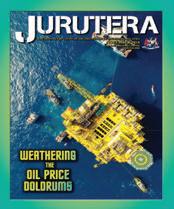
JURUTERA has an estimated readership of 200,000 professionals. Our esteemed readership consists of certified engineers, decision making corporate leaders, CEOs, government officials, project directors, entrepreneurs, project consultants, engineering consulting firms and companies involved with engineering products and services.
Publica�on month/s:
Company’s Stamp & Authorised Signature
Date

















As we enter 2026, engineering remains fundamentally an expression of optimism, rooted in the belief that knowledge, discipline, and collaboration enable meaningful progress for society. The profession continues to face both familiar and emerging challenges, as rapid technological advancement, climate imperatives, energy transition, digitalisation, and talent development reshape the engineering landscape. The Institution of Engineers, Malaysia (IEM) remains steadfast in its commitment to support members through continuous professional development, advocacy, and knowledge-sharing initiatives, while upholding the highest standards of professionalism.
Looking ahead, close collaboration among industry, academia, regulators, and professional bodies will be critical in delivering solutions that are technically robust and socially responsible. Members, particularly young engineers, are encouraged to approach 2026 with purpose, professionalism, and a continued commitment to engineering excellence.














President: Ir. Prof. Dr. Jeffrey Chiang Choong Luin
Deputy President: Ir. Yau Chau Fong
Vice Presidents:
Ir. Prof. Dr. David Chuah Joon Huang, Dato’ Ir. Wan Nazari Wan Jusoh,
Ir. Dr. Bernard Lim Kee Weng, Ir. Prof. Dr. Tan Chee Fai, Ir. Prof. Dr. Lau Hieng Ho, Ir. Yeong Chin Chow, Simon, Ir. Abdul Razak Yakob
Honorary Secretary: Ir. Chen Harn Shean
Honorary Treasurer: Ir. Prof. Dr. Wong Yew Hoong
Immediate Past President: Ir. Prof. Dr. Norlida Buniyamin
Past Presidents:
Datuk Ir. Prof. Ow Chee Sheng, Academician Tan Sri Dato’ Ir. Prof. Em. Dr. Chuah
Hean Teik, Dato’ Ir. Dr. Lim Chow Hock, Ir. Dr. Tan Yean Chin, Ir. Ong Ching Loon
Civil Representative: Ir. Tu Yong Eng
Mechanical Representative: Ir. Ng Yong Kong
Electrical Representative: Ir. Mohd. Aman Hj. Idris
Structural Representative: Ir. Dr. Tan Kuang Leong
Chemical Representative: Ir. Kim Kek Seong
Other Disciplines Representative: Ir. Dr. Dhakshyani Ratnadurai
Multimedia Representative: Ir. Assoc. Prof. Dr. Lai Khin Wee
Women Engineers Representative: Ir. Dr. Syuhaida Ismail
Young Engineers Section Representatives: Mr. Lim Yiren, Mr. Darshan a/l Balasubramaniam, Ms. Ong Ye Shian, Mr. Chuah Pei Lim, Mr. Teoh Chi Yang
Council Members:
Ir. Sharifah Azlina Raja Kamal Pasmah, Ir. Ts. Dr. Wan Syakirah Wan Abdullah, Ir. Dr. Mui Kai Yin, Ir. Shamil Abu Hassan, Ir. Ts. Wan Rizaluddin Abdullah Wan Ali, Ir. Dr. Aidil Chee Tahir, Ir. Dr. Angelia Liew San Chuin, Ir. Prof. Dr. Zuhaina Zakaria, Ir. Begum Irdawati Dowlad Rahuman, Ir. Chong Chee Yen, Ir. Khoo Chee Min, Ir. Ahmad Rafidi Mohayiddin (casual vacancy for Ir. Abdul Razak Yakob), Ir. Dr. Chan Swee Huat, Ir. Alex Looi Tink Huey, Ir. Sukhairul Nizam Abdul Razak, Dato’ Ir. Ting Chek Choon, Ir. Dr. Norashikin M Thamrin, Ir. Lee Cheng Pay, Datuk Ir. Chin Tet Fu @Willy, Ir. Ts. Gs. Br. Dr. Zarabizan Zakaria, Ir. Choo Lay Guat, Ir. Dr. Siow Chun Lim, Ir. Assoc. Prof. Dr. Leong Kah Hon, Ir. Ts. Dr. Sara Lee Kit Yee, Ir. Chan Wah Cheong, Ir. Dr. Marianah Masrie
Council Members by Invitation:
Datuk Ir. Ho Hon Sang, Dato’ Ir. Ahmad Sabirin Arshad, Ir. Dr. Sanjayan K.V. Velautham
Branch Chairman
1. Penang : Ir. Dr. Lee Choo Yong
2. Southern : Ir. David Puen Ming Shen
3. Perak : Ir. Dr. Tiah Oon Han
4. Pahang : Ir. Harzah Mazni Ramli
5. Kedah-Perlis : Ir. Jamaluddin Abdullah
6. Negeri Sembilan : Ir. Richard Khoo Nee Keong
7. Kelantan : Ir. Hj. Nik Burhanuddin Nik Yusoff
8. Terengganu : Ir. Zakaria Abdullah
9. Melaka : Ir. Lim Su Hian
10. Sarawak : Ir. Dr. Angelia Liew San Chuin
11. Miri : Ir. Meheron Selowara Joo
12. Sabah : Datuk Ir. Ts. Mohd Yaakob Hj. Jaafar
Chairman, InfoPub & Chief Editor: Ir. Prof. Dr. Lau Hieng Ho
Vice Chairman & Principal Bulletin Editor: Ir. Ts. Wan Rizaluddin Abdullah Wan Ali
Secretary: Ir. Ts. Assoc. Prof. Dr. Hum Yan Chai
Chairman, Sub Committee on Resource Centre: Ir. Tay Siang Hui
Journal Editor-in-Chief: Ir. Ts. Prof. Dr. Teo Fang Yenn
Chairman, Sub Committee on Web Portal: Ir. Dr. Hasril Hasini
Project Leader for Jurutera-i: Ir. Alex Looi Tink Huey
Committee
Members:
Ir. Ts. Dr. Tan Kim Seah, Ir. Lau Tai Onn, Ir. Yee Thien Seng, Ms. Michelle Lau Chui Chui, Ir. Begum Irdawati Dowlad Rahuman, Ir. Dr. Nor Ilia Anisa Aris, Ir. Ts. Wong Chee Fui, Ir. Dr. Marianah Masrie, Ir. Dr. Lau Chee Yong, Ir. Dr. Bhuvendhraa Rudrusamy, Ir. Razmahwata Razalli, Ir. Lee Chang Quan, Ir. Assoc. Prof. Dr. Moey Lip Kean, Ir. Tan Kok Jyh, Ms. Chai Jing Xuan, Mr. Chin Zehong, Ir. Ts. Dr. Lau Chee Yong
Chief Editor: Ir. Prof. Dr. Lau Hieng Ho
Principal Bulletin Editor: Ir. Wan Rizaluddin Abdullah Wan Ali
Committee Members:
Ir. Alex Looi Tink Huey, Ir. Dr. Tan Kim Seah, Ir. Razmahwata Mohd Razalli, Ir. Prof. Dr. Teo Fang Yenn, Ir. Lau Tai Onn, Ir. Yee Thien Seng, Ms. Michelle Lau Chui Chui, Ir. Ahmad Rafidi Mohayiddin, Ir. Lee Chang Quan, Dr. Sudharshan N. Raman, Ir. Begum Irdawati Dowlad Rahuman, Ir. Ts. Dr. Lau Chee Yong
THE INSTITUTION OF ENGINEERS, MALAYSIA
Bangunan Ingenieur, Lots 60 & 62, Jalan 52/4, P.O. Box 223, (Jalan Sultan), 46720 Petaling Jaya, Selangor Darul Ehsan. Tel: 603-7890 0130 Fax: 603-7957 7678
E-mail: sec@iem.org.my Homepage: http://www.myiem.org.my

Ir. Frankie Cheah Peng Leong Chairman, TUSTD
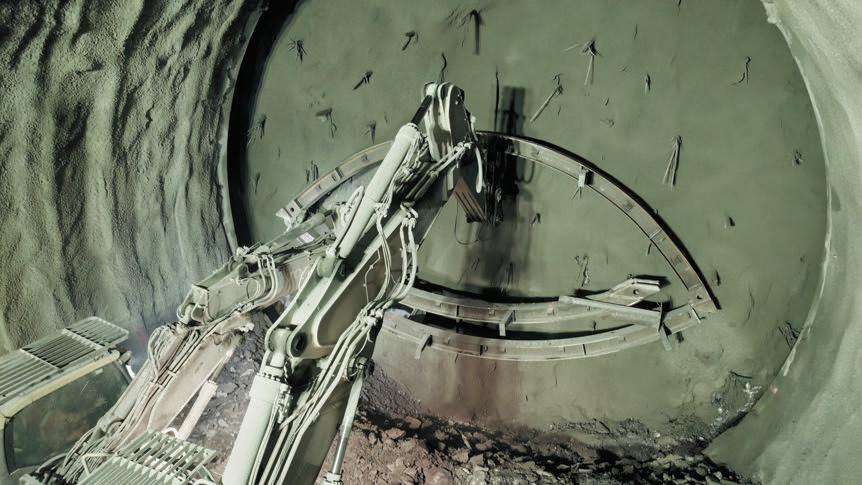
This term has been both challenging and rewarding for TUSTD, marking it as a truly memorable chapter. We proudly secured the Presidential Award for Excellence 2024, successfully delivered the Asian Conference on Tunnelling & Trenchless Technology (ACTT), and honoured the legacy of our late founder, Dr. Ooi Teik Aun.
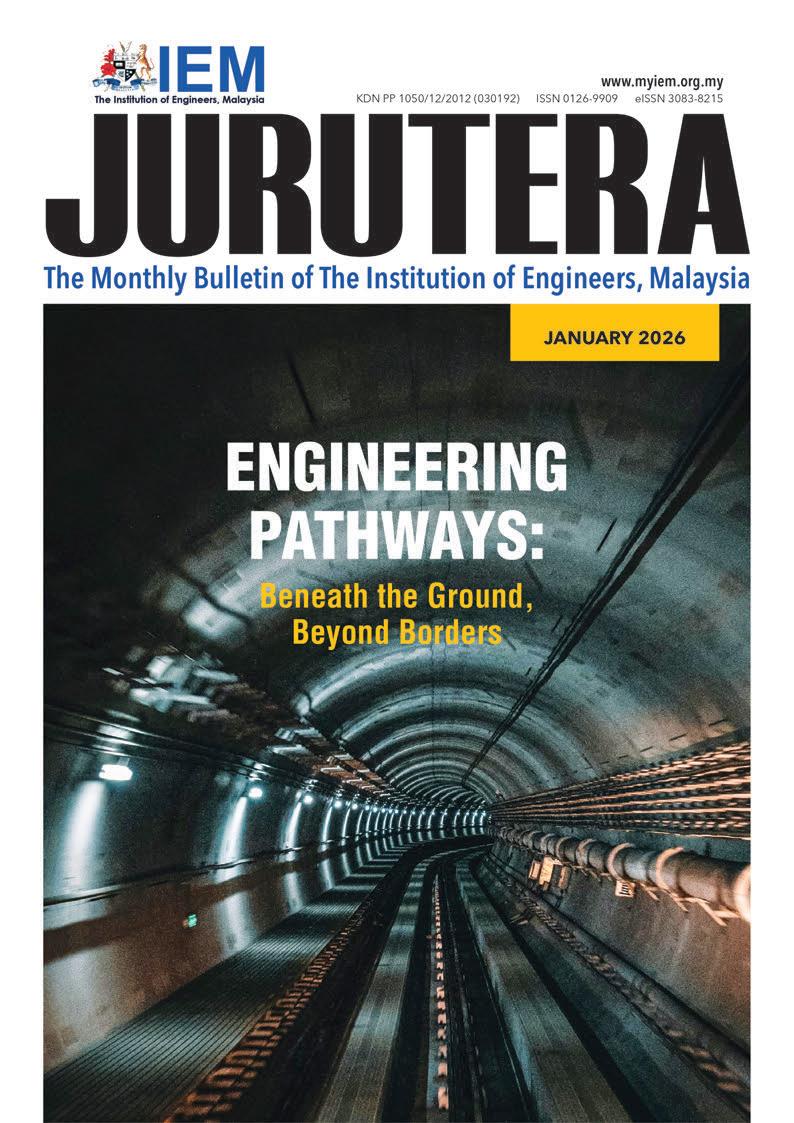
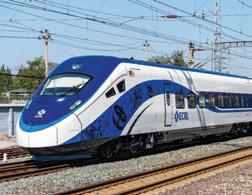
The theme, Engineering Pathways Beneath & Beyond Borders, underscores our mission to advance tunnelling excellence while sustaining his vision. In this issue, we feature an exclusive interview with the CEO of MRL on transformative role of ECRL in national railway development within the context of tunneling.
Additional articles showcase global tunnelling innovations and essential skills for ensuring sustainability in Malaysia’s tunnelling industry, thus continuing our journey to engineer the future.
DIMENSION PUBLISHING SDN. BHD. [ 199701034233 (449732-T) ]
Level 18-01, PJX-HM Shah Tower, No. 16A, Persiaran Barat, 46050 Petaling Jaya, Selangor Darul Ehsan, Malaysia.
Tel: +(603) 7493 1049
E-mail: info@dimensionpublishing.com Fax: +(603) 7493 1047 Website: www.dimensionpublishing.com
Chairman Robert Mebruer
CEO/Publisher Shirley Tham shirley@dimensionpublishing.com
Head of Marketing & Business Development Joseph How joseph@dimensionpublishing.com
Production Editor Tan Bee Hong bee@dimensionpublishing.com
Contributing Writers Putri Zanina putri@dimensionpublishing.com
Hanna Sheikh Mokhtar hanna@dimensionpublishing.com
Senior Graphic Designer
Sofia Hanis Mohd Uzir sofia@dimensionpublishing.com
Graphic Designer Nicole Theng nicole@dimensionpublishing.com
Advertising Consultants
Tham Choon Kit ckit@dimensionpublishing.com
Accounts Cum Admin Executive Yong Yen Yin yenyin@dimensionpublishing.com
For advertisement placements and subscriptions, please contact: DIMENSION PUBLISHING SDN. BHD. [ 199701034233 (449732-T) ]
Tel: +(603) 7493 1049
Fax: +(603) 7493 1047
E-mail: info@dimensionpublishing.com Website: www.dimensionpublishing.com
Subscription Department
E-mail: info@dimensionpublishing.com
JURUTERA MONTHLY CIRCULATION: OVER 50,000 MEMBERS
Submission or placement of articles in JURUTERA could be made to the:
Chief Editor THE INSTITUTION OF ENGINEERS, MALAYSIA (IEM) Bangunan Ingenieur, Lots 60 & 62, Jalan 52/4, P.O. Box 223 (Jalan Sultan), 46720 Petaling Jaya, Selangor.
Tel: +(603) 7890 0130
Fax: +(603) 7957 7678
E-mail: pub@iem.org.my Website: http://www.myiem.org.my
JURUTERA is published and printed monthly by Dimension Publishing Sdn. Bhd.
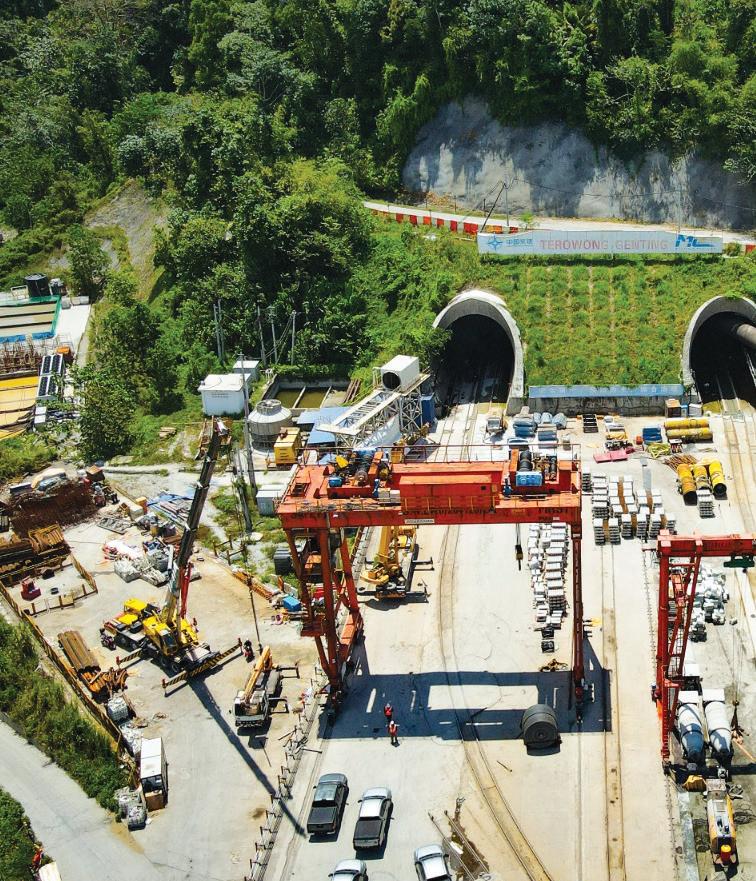
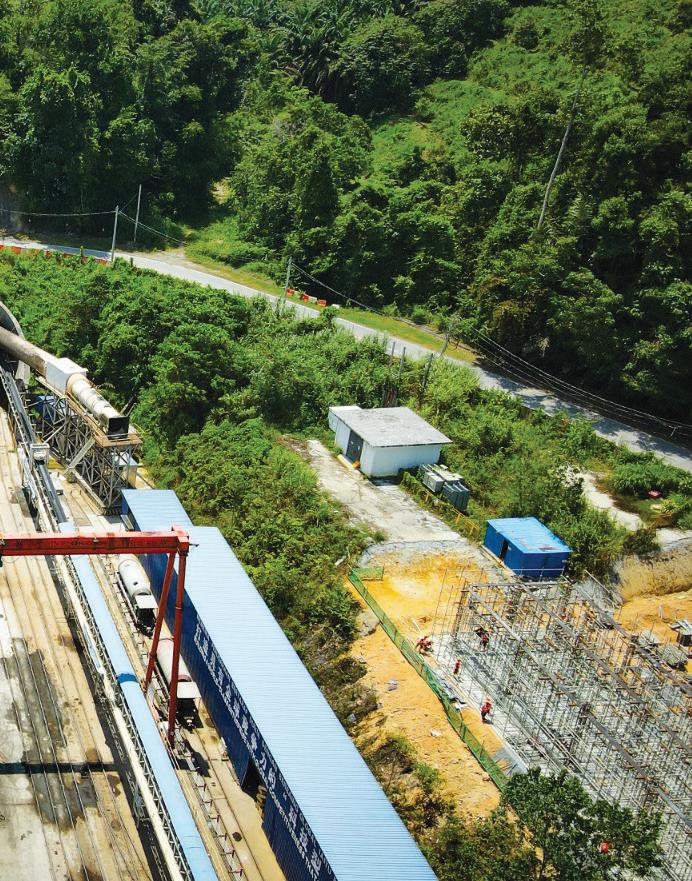
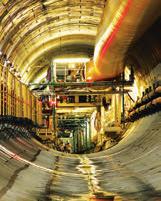
The highlight of our underground works is undoubtedly the Genting Tunnel, a 16.39km twin-bore tunnel that cuts through the granite spine of the Titiwangsa Range. This is the longest rail tunnel in South-East Asia...
In this cover story, Engineering the Future: The ECRL’s Role in National Transformation, we speak with Dato’ Sri Darwis Abdul Razak , Chief Executive Officer of Malaysia Rail Link (MRL), to explore how the East Coast Rail Link is redefining the nation’s economic, engineering, and environmental landscape. Far beyond a transportation project, the ECRL emerges as a catalyst for connectivity, innovation, and inclusive growth, bridging long-standing regional divides while advancing Malaysia’s capabilities in underground engineering, digital construction, and sustainable infrastructure. From recordbreaking tunnelling works and cross-border collaboration to talent development and environmental stewardship, this interview offers a compelling insight into how the ECRL is shaping a future-ready rail network and positioning Malaysia as a competitive, resilient player in the regional transport corridor.
The ECRL is often described as a game-changer in Malaysia’s transportation landscape. What are the strategic priorities that MRL is focusing on to ensure the project delivers long-term economic and social benefits?
The ECRL is not merely a railway project but it is also a national economic catalyst that reshapes Malaysia’s logistics, mobility, and regional development landscape. From the management perspective, our strategic priorities centre on a trifecta of goals: Connectivity, inclusivity, and competitiveness.
Bridging the connectivity gap. Our primary operational goal is to close the long-standing connectivity gap between the East Coast and the Klang Valley. Historically, the economic disparity between the West Coast and the East Coast had been exacerbated by logistical friction. The Titiwangsa Range has always been a formidable barrier, making road travel long and unpredictable. The ECRL changes this equation fundamentally.
Fostering economic clustering. We emphasise economic clustering by integrating industrial parks, ports, and population centres along the alignment. This is what we call the Landbridge Concept — linking Kuantan Port (South China Sea) directly to Port Klang (Straits of Malacca). This allows cargo to bypass the longer maritime route around Singapore. To realise this, we have launched the Economic Accelerator Projects (EAP). For instance, we recently signed a Memorandum of Understanding (MoU) with the Terengganu state government to develop
Transit-Oriented Developments (TODs) around ECRL stations in Terengganu. These hubs will generate vibrant micro-economies, ensuring the rail line has a high utilisation rate from day one.
Driving socio-economic impact. We prioritise long-term socio-economic impact by creating jobs, supporting local supply chains, and stimulating investments in lessdeveloped regions. To date, more
than RM19 billion in contracts have been awarded to approximately 3,400 local companies for ECRL Project. Ultimately, the ECRL strengthens Malaysia’s position within the regional transport corridor, ensuring that the benefits of development are shared widely rather than concentrated solely in the Klang Valley.
The ECRL project involves extensive tunnelling across diverse terrains. From your perspective, how does this project redefine Malaysia’s approach to underground connectivity and regional integration?
The ECRL’s extensive tunnelling works, particularly through challenging geological formations, represent a milestone in Malaysia’s engineering capability.
Redefining Engineering Capability. This project redefines our national approach by demonstrating that underground connectivity can be delivered safely, efficiently,
We are designing a system which will reduce the travel time from Kota Baru to the Gombak Integrated Terminal to just 4 hours;
the journey typically takes 7-12 hours by road. With operations for Phase 1 (Kota Baru to Gombak) scheduled to commence in January 2027, and Phase 2 (to Port Klang) by January 2028, we are effectively compressing space and time.
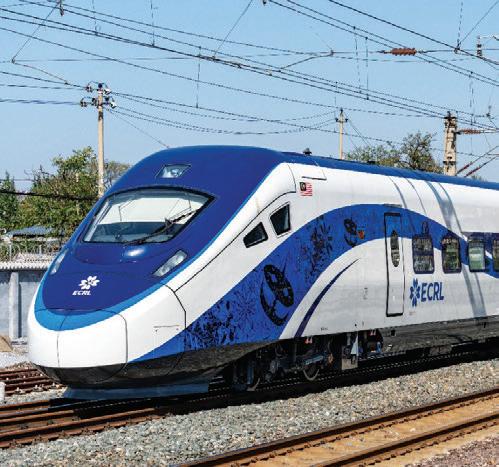
and at scale. The highlight of our underground works is undoubtedly the Genting Tunnel, a 16.39km twin-bore tunnel that cuts through the granite spine of the Titiwangsa Range. This is the longest rail tunnel in South-East Asia, and we have managed to complete it within 42 months. To achieve this, we utilised high-technology Tunnel Boring Machines (TBMs), which are massive factories-on-wheels capable of excavating hard rock while simultaneously installing pre-cast concrete tunnel linings. This method reduces the risks associated with ground settlement and allows for rapid progress even in deep-cover conditions.
Environmental Preservation via Engineering. More importantly, the tunnels enhance environmental preservation by reducing surface disruptions while enabling more direct and efficient alignments. By going underground, we avoid fragmenting surface forests and disrupting water catchment areas. It allows us to maintain ecological continuity
which is critical for biodiversity. The engineering decision to tunnel is as much an environmental decision as it is a logistical one.
Foundation for the Future. Through this project, we are laying the foundation for future underground infrastructure, whether rail, utilities or integrated transport systems as Malaysia prepares for urban densification and transitoriented developments.
The theme of this edition emphasises Beyond Borders. How does MRL envision fostering cross-border engineering collaboration and knowledge exchange through projects like ECRL?
Beyond Borders reflects our belief that large infrastructure projects thrive through shared expertise. The ECRL Project is a product of a robus Government-to-Government framework between Malaysia and China, but the collaboration extends far deeper than diplomatic handshakes.
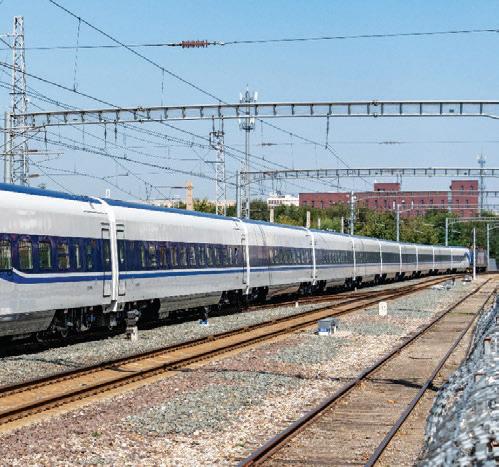
Knowledge Transfer and Innovation. MRL collaborates closely with international engineering teams, academia, and technology partners to foster knowledge exchange, design innovation, and skill transfer. Our partnership with China Communications Construction Company (CCCC) has brought world-class railway technology to our shores. Through structured programmes including joint design reviews, expert workshops, and local contractor upskilling, we ensure that our local professionals benefit from global best practices. For example, the use of the track-laying machine CCPG-500A has allowed us to lay track at a speed and precision previously unattainable here.
Reciprocal Contribution. At the same time, Malaysia contributes valuable regional experience in tropical engineering, environmental management, and community engagement. Engineering in a tropical climate presents unique challenges such as high rainfall and specific soil mechanics which require localised solutions. This mutual exchange strengthens not only the delivery of ECRL but also Malaysia’s broader engineering ecosystem.
Regional Integration. On a macro scale, the Government is actively discussing the potential extension of the ECRL to Rantau Panjang at the Malaysia-Thailand border. This connection would physically link our rail infrastructure with the State Railway of Thailand’s network, facilitating seamless crossborder trade and tourism.
Large-scale infrastructure projects increasingly rely on innovation. How is MRL leveraging technology and modern practices to enhance efficiency, safety, and sustainability in delivering ECRL?
The ECRL is built on a foundation of modern engineering innovations. We are moving away from labourintensive traditional methods towards a technology-driven construction and operational model.


Annual Reports • Booklets • Brochures • Buntings • Business Cards
CD / DVD Replications • Calendars • Cards & Invitations • Certificates
Custom Printings • Envelopes • Folders • NCR Bill Books • Notepads
Leaflets • Letterheads • Paper Bags • Posters • Stickers • Others


Digital Construction and BIM. MRL leverages technologies such as Building Information Modelling (BIM), advanced geotechnical monitoring systems, and automated construction techniques to enhance precision and safety. BIM has been instrumental in managing the complex interfaces of this 665km alignment. It allows us to simulate construction sequences and identify clashes before they occur on site. Other examples include:
• TBM tunnelling for the Genting Tunnel which exemplifies technology-led risk management, improving precision, safety, and efficiency.
• Elevated viaducts in flood-prone areas, selected despite higher costs, reflect smart, resilience-
focused design decisions informed by long-term risk modelling.
Data-Driven Operations. Digital solutions are central to our operations, whether in predictive maintenance planning, real-time environmental monitoring, or optimising construction productivity. As we transition to the operational phase, we are currently looking into AI-driven systems to monitor track geometry and rolling stock health. This “predictive maintenance” approach ensures high reliability and safety.
Future-Ready Systems. By adopting global standards and emerging technologies, we ensure that ECRL is not only delivered efficiently but is also future-ready as a next-generation rail system. We are
Tunnelling and rail development often intersect with environmental concerns. How does MRL balance engineering ambition with sustainability and environmental responsibility?
Environmental responsibility is one of our core commitments. We recognise that we are building through one of the world’s oldest rainforests, and we have taken extraordinary measures to minimise the ecological footprint.
Engineering for Conservation. MRL works closely with environmental agencies and conservation experts to ensure that every engineering decision balances progress with preservation. By collaborating with environmental consultants, we have
implementing electrification systems that support electric locomotives (e-Locos). These are essential for freight transport along the rail line and can operate at a maximum speed of 80 km/h. There are 12 e-Locos for the ECRL project with the units being installed at the Kuantan Port City depot as part of technology transfer initiative.
Sustainability. On the sustainability front, the e-Locos utilise regenerative braking, which improves energy efficiency and reduces our operational carbon footprint. We also embraced innovation-driven material selection: Recycled steel, prefabricated beams, and low-carbon concrete which reduce embodied emissions by up to 30%.
managed to optimise the alignment to achieve 90% less forest loss compared to original proposals –from over 2,000 hectares to just 270 hectares. On another note, the ECRL’s electrified system is projected to avoid nearly 929,000 tonnes of CO2 annually or the equivalent of removing almost 200,000 cars from the road.
We implement stringent measures such as controlled blasting, sedimentation management, and reforestation. The goal is clear: To deliver worldclass infrastructure while protecting Malaysia’s natural heritage for generations to come.
A standout initiative is the construction of 28 wildlife crossings at strategic locations identified
by the Department of Wildlife & National Parks (Perhilitan). These are not merely functional engineering structures but are also ecological bridges designed to ensure that the Malayan tiger, tapirs, and elephants can roam freely. Furthermore, we have installed elephant barrier fencing in areas like the Kemasul Forest Reserve to prevent humanwildlife conflict. This initiative has earned MRL national recognition by being listed in the Malaysia Book of Records for the Most Wildlife Box Culvert Crossings in a Single Railway Project. This reflects MRL’s strong commitment to environmental stewardship and our proactive approach in mitigating humanwildlife conflict through thoughtful engineering design.
Further, independent committees such as Environmental Performance Monitoring Committee (EPMC) and Environmental Regulatory Compliance Monitoring Committee (ERCMC) which conduct monthly and annual compliance checks respectively under the Environmental Quality Act Framework.
Major projects such as ECRL create opportunities for local engineers and contractors. What initiatives have MRL undertaken to nurture talent and strengthen Malaysia’s engineering capabilities for future underground projects?
ECRL is a platform for building Malaysia’s next generation engineers and contractors. Through structured training programmes, technical apprenticeships, and joint-development initiatives with universities, we are cultivating local talent capable of leading future underground and large-scale infrastructure projects.
Structured
Programmes. Our next generation engineers already have hands-on exposure to mega tunnelling, rail construction, systems integration, and environmental management through collaborations with local universities such as UTM, UMT, UMPSA, UTHM and others. Such collaborations strengthen knowledge transfer, research collaboration, and industrial placement opportunities for Malaysian students.
Through structured training programmes and joint-development initiatives with universities, we are cultivating local talent capable of leading future underground and large-scale infrastructure projects. Our flagship initiative is the ECRL Industrial Skills Training Programme (PLKI-ECRL). In May 2025, we sent a cohort of 210 Malaysian trainees to Liuzhou, China for an intensive oneyear training in railway technology to prepare a local workforce for the railway’s operations and maintenance phase. Sponsored by the CCCC, the
programme includes both technical and non-technical disciplines, and trainees are guaranteed employment upon completion of the training. Additionally, we recently celebrated 30 young Malaysians who switched careers to become assistant locomotive drivers. This proves that we are upskilling our local youth to handle high-value technical roles. They have since returned to Malaysia for practical, hands-on training.
Empowering Local Industry. We also work closely with local contractors to enhance their technical capabilities, safety culture, and project management skills. Over 3,400 Malaysian companies are involved in the supply chain, receiving more than RM19 billion in contracts, far surpassing initial targets. More than 16,000 workers are engaged across the project, supported by training and apprenticeship programmes developed with CCCC. This ensures that the benefits of ECRL extend beyond the project itself, strengthening Malaysia’s engineering industry and preparing our professionals for international opportunities.
Looking ahead, what is your vision for Malaysia’s rail infrastructure beyond ECRL? How do you see underground and cross-border connectivity shaping the nation’s economic and social landscape in the next decade?
Looking ahead, rail will play a transformative role in Malaysia’s economic and social landscape. My vision is for a Malaysia where rail is the primary backbone of logistics and inter-city travel.
Seamless National Network. Beyond ECRL, we envision a seamlessly connected national rail network that integrates the East Coast, West Coast, and regional corridors. The completion of Phase 2 in January 2028 will be the tipping point. It will operationalise the Landbridge, making rail the preferred mode for moving goods across the peninsula.
Urban and Regional Transformation. Underground and cross-border connectivity will increasingly shape Malaysia’s urban development, logistics efficiency, and sustainability goals.
In the next decade, we expect rail to support greener mobility, reduce highway congestion, enhance regional trade routes, and unlock new economic zones. ECRL is the foundation; what comes next is a more connected, competitive, and resilient Malaysia.
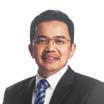
Dato’ Sri Darwis Abdul Razak is Chief Executive Officer, Malaysia Rail Link Sdn. Bhd. (MRL). He has led MRL since 2016, overseeing the 665km East Coast Rail Link (ECRL) connecting Port Klang and Kota Bharu. He played a pivotal role in the Malaysia-China G2G renegotiation in 2019, reducing project cost from RM66 bil to RM44 bil and securing financing through China Exim Bank (75%) and a RM34.94bil Sukuk programme. Previously, he was CFO of the Second Penang Bridge project (2010-2016), where he raised RM5 bil domestically, arranged US$330 mil from China Exim Bank, and launched a RM4.6 bil Sukuk programme. The project won the 2015 ICE (UK) Brunel Medal.
With over 25 years’ experience in infrastructure, project financing, and banking, including roles with Government Investment Companies, he blends technical, financial, and strategic expertise. He holds an MBA (Finance) from IIUM and a bachelor’s degree from UTM. He is also a Certified Credit Professional and ASEAN Senior Management Development Programme graduate. Honours include S.S.A.P (2017), D.P.S.K (2022), and B.C.N (2015). He continues to champion modern, sustainable, and ESG-aligned national rail infrastructure.

























by:


Ir. Assoc. Prof. Dr. Rini Asnida Abdullah
Ir. Ts. Azrul Md Din Deputy Chairman of TUSTD, IEM and Project Leader of TuLIS, from Universiti Teknologi Malaysia.
Head of Unit Structure, Maintenance & Asset Management PLUS Berhad, is industrial technical advisor for TuLIS.
The safety, reliability, and long-term performance of tunnels depend heavily on effective inspection and maintenance practices. Conventional inspection methods, while valuable, are often constrained by manual data collection, limited precision, and challenges in integrating multi-source information. In response to these limitations, the Tunnel Lining Inspection System (TuLIS) was developed as Malaysia’s first digital platform dedicated to tunnel lining inspection and structural health monitoring. It integrates conventional visual inspection with advanced sensing technologies including Close-Range Photogrammetry (CRP), Terrestrial Laser Scanning (TLS), thermography, and accelerometer-based monitoring to deliver precise, data-driven assessments.
This article presents the conceptual framework, field implementation, technological integration, and future potential of TuLIS as part of a broader movement toward smart infrastructure management. The system not only enhances inspection accuracy and efficiency but also lays the foundation for predictive maintenance and digital twin applications, positioning Malaysia as a regional leader in intelligent tunnel asset management.
Tunnels play a vital role in sustaining Malaysia’s transportation network, particularly in regions where hilly terrain or urban density makes above-ground routes impractical. As critical infrastructure, their safe and reliable operation is a matter of public safety and national economic stability. Tunnel inspection is, therefore, a cornerstone of asset management, providing the diagnostic insights needed to prevent failures and extend structural life. Table 1 summarises recent tunnels in operation for highway, railway and other infrastructure in Malaysia.
Traditional inspection approaches involve routine visual observation supported by selected non-destructive testing (NDT) techniques. These methods, though widely practised, often depend on manual data collection with extensive paperwork, subjective interpretation, and physical recordkeeping. Such approaches can be time-consuming, prone to inconsistencies, and limited in their ability to support strategic maintenance planning.
As we move toward more data-driven infrastructure management, there is a clear need to modernise tunnel inspection systems for improved precision, efficiency, and integration. TuLIS was conceived to address these challenges by combining the strengths of conventional engineering practices with modern digital technologies. It introduces a structured inspection workflow which integrates sensing technologies, advanced data processing, and cloudbased reporting, enabling more accurate, accessible, and actionable insights for tunnel operators.
TuLIS is Malaysia’s first integrated digital platform developed to support tunnel lining inspection and structural health monitoring. This also highlighted the industry-academia-consortium of PLUS (M) Sdn. Bhd., Universiti Teknologi Malaysia (UTM), Universiti Kebangsaan Malaysia (UKM) and Universiti Teknologi MARA (UiTM), which worked together to solve industry problems through research and innovation.
The pilot implementation at the North-South Highway highlighted its potential to replace manual, paper-based inspection forms with a centralised digital system. By doing so, it overcomes common operational limitations as mentioned earlier.
The system is designed around a continuous workflow that connects field inspection directly to data management and analysis (Figure 1). Instead of treating inspection as a stand-alone activity, TuLIS embeds it within a larger asset management cycle where data acquisition, interpretation, decision-making, and maintenance planning can be interconnected. This is particularly critical for long linear infrastructure like tunnels, where localised defects can have broader structural implications over time.
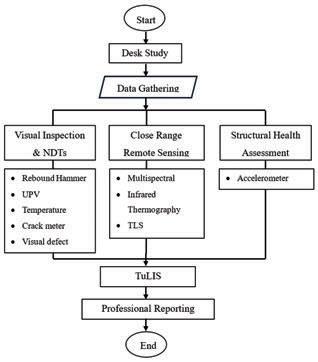

The TuLIS methodology integrates engineering fundamentals with advanced digital technologies to ensure thorough and repeatable inspections. It begins with preparatory desk study, during which design records, historical inspection reports, geological data, and operational information are analysed to establish a baseline understanding of the condition of the tunnel. This is followed by structured field inspections using both conventional and advanced methods.
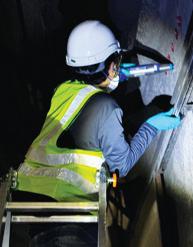
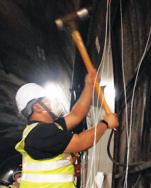
Conventional techniques include visual observation, rebound hammer testing, ultrasonic pulse velocity (UPV) measurements, temperature monitoring, and crack meter readings. These provide essential preliminary information. TuLIS enhances this with close-range remote sensing technologies such as CRP, infrared thermography, TLS, and accelerometerbased monitoring. These tools capture high-resolution spatial and temporal data, allowing the detection of both visible and subtle structural anomalies.

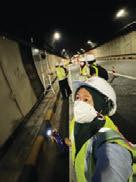
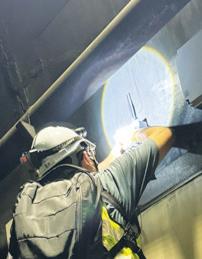
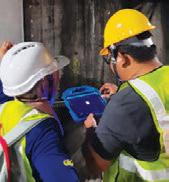
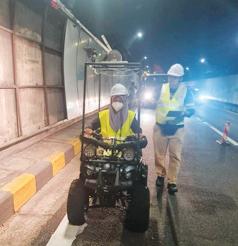
The data collected is stored on a web-based platform which standardises reporting and facilitates multi-user access. This integrated approach ensures that data flows seamlessly from the field to the decision-making level, supporting evidence-based asset management strategies.
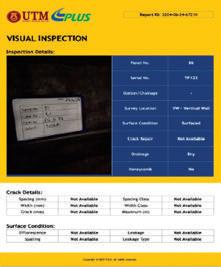
CRP is a cornerstone of TuLIS technology. It involves capturing overlapping high-resolution photographs from close proximity to the tunnel lining and processing them into accurate threedimensional models and orthoimages. This allows for precise measurement of crack geometry, surface irregularities, and material degradation, providing a level of quantitative detail that conventional visual inspections cannot match. Two complementary approaches are applied within TuLIS. In the first, trained inspectors manually annotate defects on the 3D models to provide expert-verified references. In the second, a deep learning algorithm is used to automatically detect and map defects based on previously trained patterns. The combination of human expertise and semi-automated analysis enhances both accuracy and processing efficiency. Over time and as it is exposed to more inspection data, the machine learning component improves, making TuLIS progressively smarter.
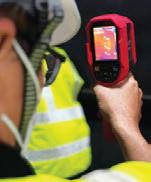
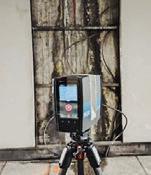
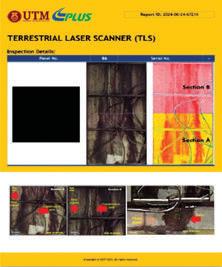
For a more complete picture of tunnel behaviour, CRP data is integrated with other sensing technologies. TLS provides millimeter-level accuracy over large tunnel sections, enabling engineers to detect structural deformation and displacement over time. This broader spatial context complements the fine detail provided by CRP.
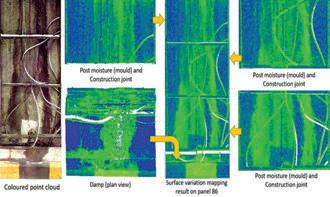
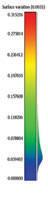
3: Geometric features analysis on surface variation – 3D mapping of defection areas on lining (local neighbourhood radius value of 0.0035m)
Thermography offers the ability to detect moisture on the linings, based on the density of the point cloud, while accelerometerbased monitoring captures vibration signatures which may indicate the developing of anomalies. The water defect was successfully identified through point cloud analysis (Figure 3). However, the defect severity is minimal, and prompt rectification work is expected
to restore the structural integrity of the tunnel lining. By integrating these multiple data sources, TuLIS produces a multi-dimensional structural health profile. This combination enhances the reliability of assessments and supports more effective intervention planning.
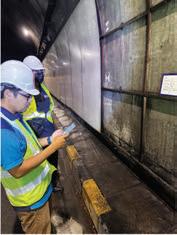

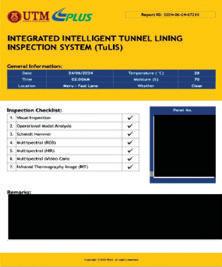
One of the key strengths of TuLIS is its web-based inspection and reporting platform. Inspectors can securely log in through mobile devices and input inspection data directly from the field (Figure 4). Photographs, defect assessment and NDTs data are uploaded in real time, eliminating transcription delays. The data is immediately accessible to asset owners, engineers, and regulators through a centralised dashboard.
The platform design focuses on usability. It simplifies navigation, supports structured data entry, and provides visualisation tools which allow stakeholders to interpret inspection findings intuitively. Past records can be retrieved, compared, and analysed over time, enabling the identification of progressive deterioration trends and supporting predictive maintenance planning (Figure 5).
The development of TuLIS involved overcoming several practical challenges. Managing large CRP and TLS datasets required robust cloud computing infrastructure and optimised data workflows. Training the deep learning model for automated defect detection demanded carefully curated image datasets and iterative refinement.
Environmental conditions inside tunnels such as low lighting, humidity, and limited space, posed additional difficulties for image acquisition. These were addressed through standardised protocols and specialised equipment. Transitioning inspection teams from manual to digital systems required capacity building, training, and operational adjustments. These experiences provided valuable lessons which now guide the ongoing refinement and scaling of the system.
TuLIS represents a milestone in our journey toward modern, data-driven infrastructure management. By integrating advanced imaging and sensing technologies with intelligent analytics and digital platforms, it overcomes the limitations of traditional inspection practices. The system delivers enhanced accuracy, faster reporting, improved safety, and long-term value through predictive maintenance and digital twin applications.
As Malaysia continues to expand its network of tunnels and underground facilities, TuLIS stands as a national innovation with both local and international relevance. Its success demonstrates the power of integrating engineering knowledge with technological innovation to create safer, smarter, and more sustainable infrastructure systems.
The authors also would like to acknowledge the team members from UTM (Prof. Sr. Dr. Zulkepli Majid, Assoc. Prof. Dr. Izni Shahrizal Ibrahim, Ts. Dr. Mohd Nur Asmawisham Alel, Sr. Dr. Abd Wahid Rasib & Dr. Muhamad Irfan Shahrin), Ir. Dr. Goh Thian Lai from UKM and Sr. Dr. Khairulazhar Zainuddin from UiTM, and Ir. Azizul Faiz Abd Aziz, Dr. Norbazlan Mohd Yusuf, Mr. Mohd Nizan Basir and Mr. Yacob Sapingi from PLUS (M) Sdn. Bhd.. Special thanks to PLUS (M) Sdn. Bhd. and Universiti Teknologi Malaysia for the financial funding (R.J130000.7622.4C772).










by:


Head (Asset (Planning & Operation)) Operations Department, Distribution Network

Pulau Tenaga Hijau (PTH), also known as Smart Green Island, is an island electrification project initiated by the Ministry of Energy Transition & Water Transformation (PETRA) and approved by the Malaysian government in August 2022. Led by the Energy Commission (Suruhanjaya Tenaga) and implemented by Tenaga Nasional Berhad (TNB), the initiative will provide 100% supply availability through cleaner sources of energy, supported by smart grid technologies, starting from 2028 in Pulau Perhentian and Pulau Redang, Terengganu.
The project is part of Malaysia’s broader national development agenda and commitment towards achieving net-zero emissions.
The goal of the PTH project is to attain self-sustainable energy via 100% renewable energy (RE) resources and green technology by 2040 through phased adoption, aligned with increasingly sophisticated systems. The project is charted on a technological roadmap, progressing
Note:
from fundamental solar panels to more advanced and clean technologies such as the utilisation of liquefied natural gas (LNG) as a transitional fuel, enabled via flexibility management.
This is further supported by smart grid facilities which integrate automated control systems and energy storage solutions to stabilise, smoothen and balance the electricity supply and demand.
The acceleration of RE and clean energy penetration in PTH project will ultimately support the following strategies:
• Achieve RE generating capacity of 70% by 2050 as per National Energy Transition Roadmap (NETR).
• Develop Energy Transition Network as per Reimagining Tenaga 2.0 Framework.
• Strengthen Sustainable Development Goals (SDGs) of fostering environmental protection and improved quality of life.
Currently, the assets on PTH consist of conventional diesel generators alongside smart technology features such as smart meters and energy-efficient LEDs, deployed across both islands. Geographic Information System (GIS) capabilities are fully integrated into all the assets. A total of 110 kWac at Pulau Perhentian, 285 kWac at Pulau Redang and 1,176 kWac at Pulau Tioman of RE has been installed, leading to reduced carbon emissions and operational expenditure (OPEX) savings. This latest initiative will comprehensively integrate the existing ecosystem to accelerate RE penetration through phased implementation by 2028, 2030, 2035 and 2040.
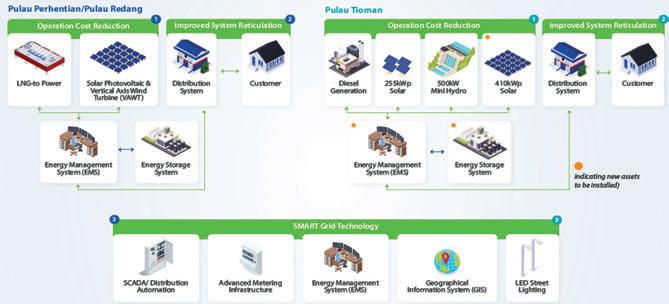
The project is built on three primary pillars: Operation Cost Reduction, Improved System Reticulation, and Smart Grid Technology. The PTH initiative focuses on implementing green and efficient energy solutions in Pulau Perhentian, Pulau Redang and Pulau Tioman. Figure 1 illustrates the conceptual design based on three pillars which adopts tailored strategies for each island.
For Pulau Perhentian and Pulau Redang, key strategies include reducing operational costs through LNG-to-power systems and integrating solar photovoltaics (PV) with verticalaxis wind turbines (VAWT). System reticulation improvements connect customers to optimised distribution systems. Additionally, energy management systems (EMS) and energy storage systems enhance sustainability.
For Pulau Tioman, operational cost reductions leverage diesel generation alongside solar energy (255kWp and 410kWp installations) and a 500kWp mini-hydro system. Smart grid technologies such as SCADA/distribution automation, advanced metering infrastructure, geographical information systems (GIS), and LED street lighting, further optimise energy distribution and infrastructure across all islands, promoting a cleaner and more efficient energy ecosystem across all islands.
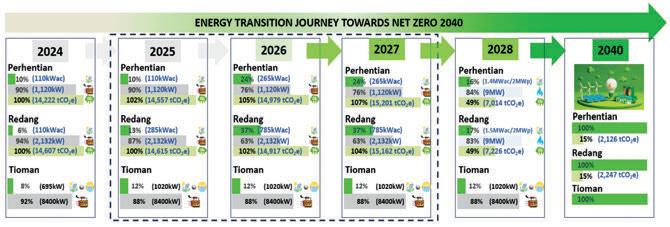
The Energy Transition Journey Towards Net Zero 2040 outlines the phased shift to renewable and cleaner energy sources for Pulau Perhentian, Pulau Redang and Pulau Tioman, progressively replacing conventional energy with sustainable alternatives.
In 2022, all three islands relied heavily on conventional energy, with Pulau Tioman integrating a modest 9% cleaner energy sources of renewables. By 2023, renewable and cleaner energy adoption increased slightly, with Pulau Perhentian achieving 9% cleaner energy and Pulau Redang reaching 5%. Pulau Tioman maintained its 9% cleaner energy contribution.
The transition has gained momentum in 20242026. Pulau Perhentian plans to integrate 24% cleaner energy, Pulau Redang to achieve 37% and Pulau Tioman to reach 12%. The remainder of the energy needs is still through conventional sources. By 2028, all
three islands should demonstrate substantial progress, with cleaner energy accounting for 16% to 17% of their supply, while conventional energy remains at 83% to 84% accordingly.
The journey culminates in 2040, when all three islands achieve 100% reliance on cleaner energy, including renewable sources, fulfilling the vision of Net Zero 2040. This phased timeline as illustrated in Figure 2: Energy Transition Journey Towards Net Zero 2040, underscores the commitment to a sustainable energy transition, balancing cleaner and renewable energy technologies while reducing dependency on conventional sources.
The renewable energy installations implemented so far, primarily through solar photovoltaics, have led to significant diesel savings amounting to RM392,138.65. This achievement reflects 16-28% reduction in diesel consumption, highlighting the substantial impact of integrating solar energy into the energy mix.
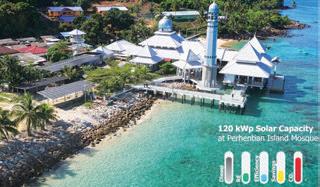
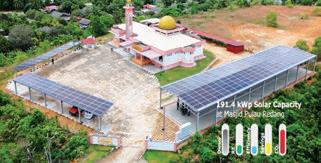
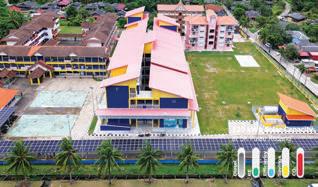
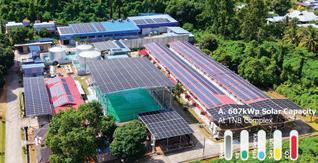
As the project progressively reduces dependency on diesel generators with upcoming solar projects in 2026, and in tandem with battery energy storage systems and Energy Management Systems (EMS), the team aims to achieve an additional diesel reduction of 20-30%. This will further result in a reduction in greenhouse gas (GHG) emissions of approximately 15-30% from the current level, underscoring the team’s dedication to achieving cleaner, more efficient, and sustainable energy solutions while contributing to environmental preservation. Figure 3 shows commissioned Building-Integrated Photovoltaic System (BIPV) installed in Pulau Perhentian, Pulau Redang and Pulau Tioman.
Conclusion
The PTH project represents a bold and transformative effort to transition the islands of Perhentian, Redang, and Tioman towards a future of clean and renewable energy. By integrating advanced green technologies, including solar photovoltaics, LNG-to-power systems, energy management systems (EMS), and smart grid solutions, the project demonstrates a clear commitment to sustainability and innovation.
The phased roadmap to 100% cleaner energy, culminating in Net Zero emissions by 2040, showcases a progressive approach that balances immediate operational benefits, such as significant reductions in diesel and GHG, with long-term environmental goals. Early successes, including diesel savings of approximately RM392,138.65 and a 16-28% reduction in consumption, underscore the potential of these initiatives to revolutionise energy use in the islands.
As PTH accelerates RE penetration with upcoming solar projects and battery energy storage systems in 2026, the islands are poised to achieve a projected further reduction of 20-30% in diesel usage and 15-30% in GHG emissions. This not only advances Malaysia’s sustainability agenda but also aligns with global Sustainable Development Goals (SDGs) of fostering environmental protection, enhancing energy security, and improving the quality of life for island communities. PTH stands as a model for self-sustainable, eco-friendly energy transitions for Malaysia.
[1] Tenaga Nasional Berhad, https://www.tnb.com.my/
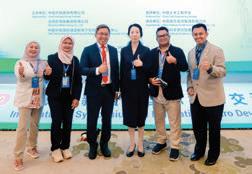
The International Symposium on Innovative Metro Development (CITURC 2025, 17-19 October) in Shenzhen, China, was organised by the CREC International Tunnelling & Underground Space Research Centre (CITURC) and China Railway Engineering Equipment Group Co., Ltd.
It was supported by the Institution of Engineers Malaysia (IEM), the Hong Kong Institution of Engineers (HKIE), the Tunnelling & Underground Construction Society Singapore (TUCSS), and the Japan Tunnelling Association. There were also participants from China, Georgia, Bangladesh, Singapore, Indonesia, and Thailand.
On the first day was the young engineers’ training programme, designed to strengthen technical competencies in operation, maintenance, and underground space development. From Shenzhen Metro Group Co., Ltd. Sun Xinxian presented on its network operations and intelligent maintenance and Ge Tiejun on new models of the major overhaul in Shenzhen Metro. The event continued with an in-depth discussion on proactive operation and maintenance technologies for urban rail transit, presented by He Zhixin of Guangzhou Metro Group Co., Ltd.
by:

Ts. Dr. Mohd Khairul Afzan Mohd Lazi

Dr. Afikah Rahim
In the afternoon, Ruan Ying from Guangzhou Metro Group Co., Ltd. shared insights on integrated and innovative rail development in the Guangdong-Hong Kong-Macao Greater Bay Area, while He Jian of Guangzhou Metro Design Institute spoke on integrated design approaches for urban underground space and rail transit. Liu Zhiqiang and Yang Yan from the China Railway Academy Group Co., Ltd., presented on current developments in smart engineering maintenance, monitoring technologies, and structural defect treatment in metro engineering.
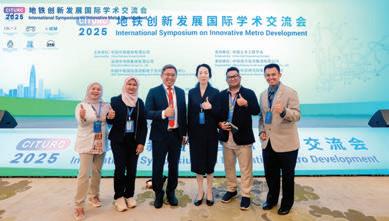
ASEAN representatives
From left: Dr. Afikah and Ir. Assoc. Prof. Dr. Rini (Malaysia), Er. David Ng (Singapore), Prof. Jenny (China), Dr. Khairul Afzan (Malaysia) and Mr. Jevons Quiambao Penaflor (Brunei)
The second day began with welcoming remarks by Helen Roth, Executive Director of the International Tunnelling & Underground Space Association (ITA), followed by speeches by Ir. Prof. Dr. Jeffrey Chiang Choong Luin, President of IEM, Rupert Leung, Vice President of HKIE, Kong Dun, Vice President and Chief Engineer of China Railway Group Limited, and Shang Chunming, Vice President of the China Civil Engineering Society. Keynote presentations were made by Shenzhen Metro Group, China Railway Design Corporation, Institute of Engineers Singapore, Thai Intelligent Transport Systems Association, MRT Jakarta, Dhaka Mass Transit Company, Belgrade Metro & Train Authority, and Asian Infrastructure Investment Bank. Technical presentations addressed advanced tunnelling practices, prefabricated station design, digital geological monitoring, and the role of automation and big
data in modern metro systems. The discussions aligned closely with the core theme of CITURC 2025, which emphasised digitalisation, automation, and integrated metro systems as key enablers for sustainable and smart urban mobility. Shenzhen stands as testament to this vision, currently operating 18 metro lines spanning 591.5 km, with 17 additional lines under construction.
On the final day, there were technical site visits to major metro project locations, starting with Shenzhen Metro Line 14, a 50.3km line with 18 underground stations, and the longest project under Shenzhen Metro’s Phase IV blueprint. Notably, 99% of its tunnels were constructed using mechanised excavation, with up to 51 tunnel boring machines operating simultaneously. It incorporates advanced digital tunnelling management platforms, multi-mode TBM technology, and innovative structural solutions, such as the large-span column-free atrium at Gangxiabei Station and the V-shaped column system at Huangmugang Station. Next was the construction site of Shenzhen Metro Line 22, a 34.8km project under the Phase V plan. The complex Line 22 crosses dense urban corridors, intersects five railway lines and 21 metro lines, and navigates hard rock and mixed ground conditions through various tunnelling and construction methods, including cut-and-cover, TBM excavation, pipe jacking, and mining. Seven of its stations are being constructed using prefabrication to improve efficiency and minimise urban disturbance.
The delegates also visited Wuhe Integrated Transport Hub, an underground interchange that will serve Shenzhen Metro Lines 5 and 10, along with three major intercity railway connections. Spanning 955m in length and comprising 4-8 underground levels, it has a total floor area of approximately 227,100 sq m. The final focus was on Shenzhen Metro’s intelligent maintenance system which had AI-based fault prediction, digital twin asset management, smart station technologies, and a centralised command system powered by big data and cloud computing. These innovations exemplify Shenzhen Metro’s holistic approach to full life-cycle maintenance, sustainability, and network resilience.
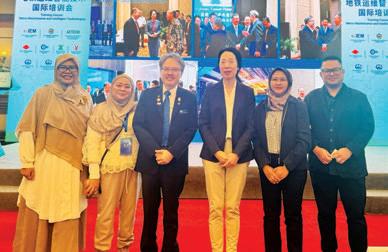
Led by IEM President Dr. Jeffrey Chiang and Ir. Assoc. Prof. Dr. Rini Asnida Abdullah, Deputy Chairman of the Tunnelling & Underground Space Technical Division, the Malaysian delegation included Dr. Afikah Rahim and Ts. Dr. Mohd Khairul Afzan Mohd Lazi from Universiti Teknologi Malaysia (UTM).



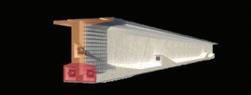
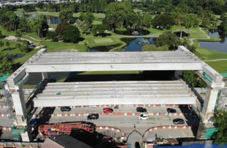
The BH Girder is an innovative and enhanced version of PSC Girder that utilizes the Bulb-T shape integrated with Half Slab which enables it to be applied over a span of longer than 60m. By adopting the latest cutting-edge technologies and innovati on, the BH Gir der has been designed to achieve the ultimate goals of “ Cost Effectiveness ”, “ Rapid Construction”, “Aesthetics” and “Safety”.

ciency


● Maximization of prestressing efficiency
● Minimization of prestressing friction loss
● Reduction of substructure cost
● Reduction of slab cost by half slab girder
● Omission of deck slab form work and s hori ng work by half slab girder
● Shorter construction period
PROFESSIONAL SERVICES

● Design computations and analysis
● Construction drawings
● Material and c onstruction specifications
● Cost estimates
● Technical advice and c onstruction assistance
NEHEMIAH TOWOONG BRIDGETECH SDN BHD. No. 45-3, Jalan PJU 5/20, The Strand, Kota Damansara 47810 Petaling Jaya, Selangor Darul Ehsan.


A partnership of (Free of charge)
Tel : 012-2880918 (Mr. Jason Khor) 012-2186693 (Ir. Tan CC)
Tel : 603-61426638
Fax : 603-61426693
Email : jasonklc@nehemiah-grp.com
Email : tancc@nehemiah-grp.com
Email : enquiry@nehemiah-grp.com
Website : www.nehemiah-grp.com/towoong



Annual Reports • Booklets • Brochures • Buntings • Business Cards
CD / DVD Replications • Calendars • Cards & Invitations • Certificates
Custom Printings • Envelopes • Folders • NCR Bill Books • Notepads Leaflets • Letterheads • Paper Bags • Posters • Stickers • Others
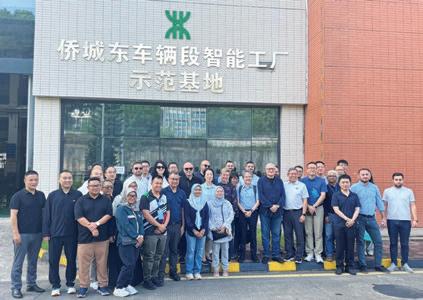
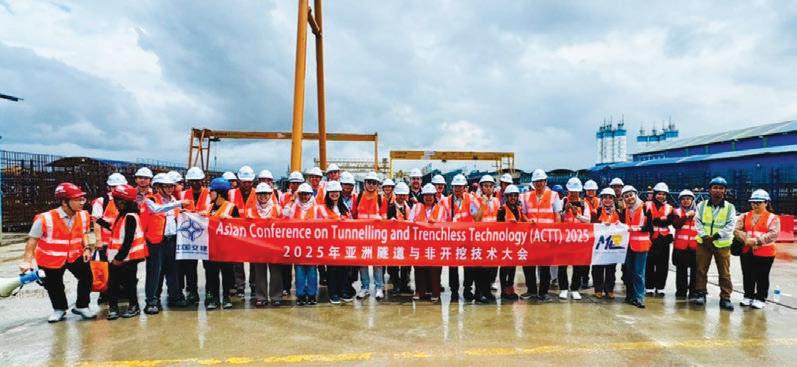
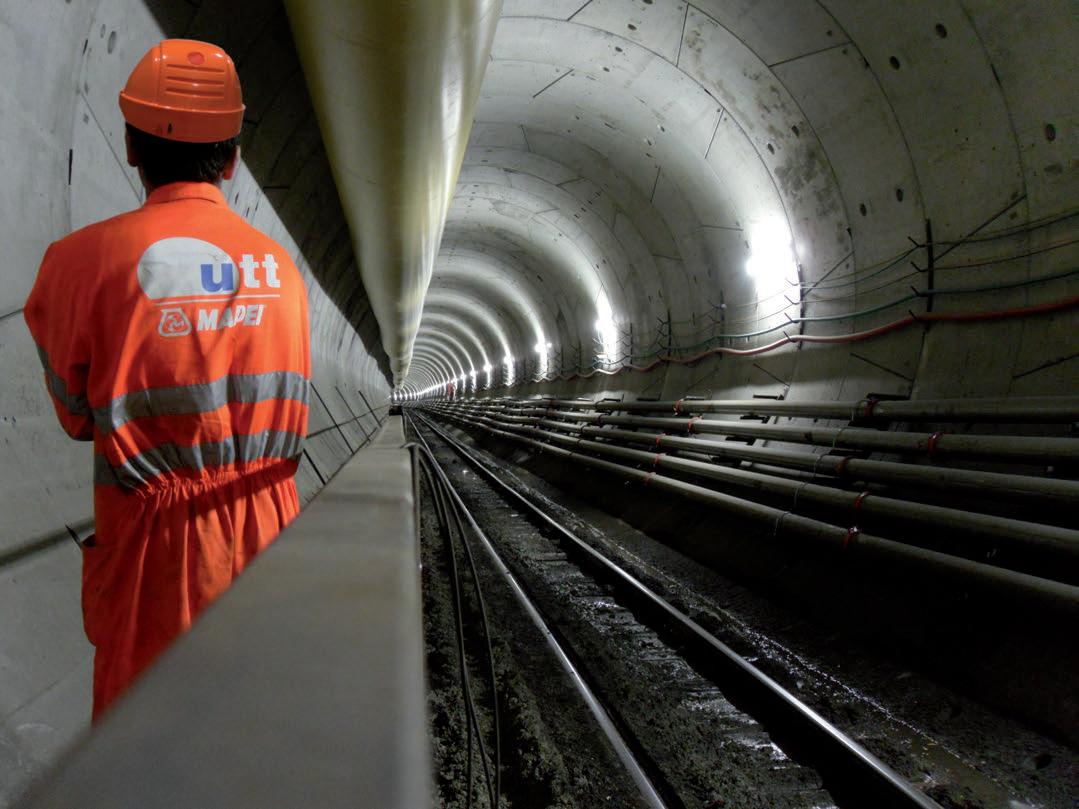
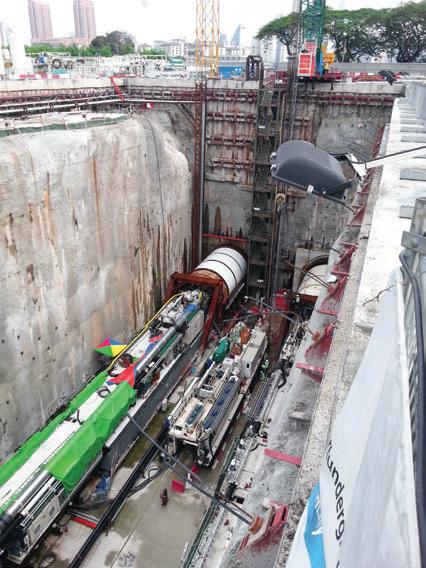
On the third day of the Asian Conference on Tunnelling & Trenchless Technology (ACTT) 2025, held from 10-12 September, was a technical visit to the East Coast Rail Link (ECRL) – China Communications Construction Company (CCCC) Section 9 Fabrication Yard in Klang, Selangor. The 37 participants were exposed to the practical aspects of large-scale infrastructure projects. The aim was to bridge theoretical knowledge with industrial practice, providing insights into the fabrication processes, safety management, and engineering practices implemented by the CCCC for the ECRL project.
Developed by Malaysia Rail Link (MRL) in collaboration with CCCC, ECRL is one of the country’s most significant transportation infrastructure developments. The CCCC Fabrication Yard Section 9 plays a crucial role in producing and assembling structural components essential to the railway construction, ensuring quality, efficiency, and safety in every stage of fabrication. The T-Beam fabrication process follows a systematic workflow, integrating both conventional and high-level automation.
by:

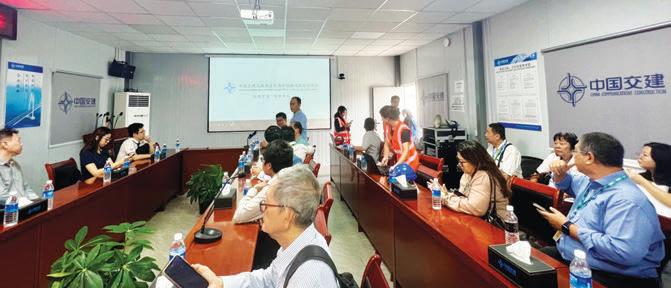
The participants assembled at Kuala Lumpur City Centre (KLCC) entrance at 8.00 a.m. to board the coach. Upon arrival, they were welcomed by the ECRL-CCCC Section 9 Deputy Project Manager, Mr. Zhou Zheng Wei, who presented a detailed technical presentation on the ECRL project scope, design parameters, fabrication yard layout, and quality assurance protocols.
Then the project engineer, Mr. Frederic Goh Jia Zhe, conducted a comprehensive housekeeping and safety briefing. The session covered site hazards, emergency procedures, and the mandatory use of personal protective equipment (PPE). Participants gained an overview of the advanced fabrication techniques and modular assembly strategies used in the construction of railway components.
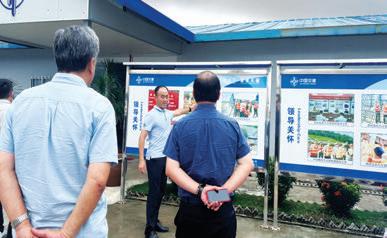
Participants were guided around the fabrication yard, where they observed the steel component assembly and welding stations, material handling systems and heavy machinery operations, and quality control checkpoints. The visit provided a realistic perspective on managing large-scale fabrication and logistics under stringent safety and timeline constraints.
During the Q&A session, participants engaged actively with the engineers and project managers. Topics discussed included challenges in coordinating multiple fabrication activities, integration of digital monitoring and quality control systems, environmental, and safety compliance for large-scale construction.
The visit ended with the presentation of a token of appreciation by Ir. Assoc. Prof. Dr. Rini Asnida Abdullah, Deputy Chairman of IEM’s Tunnelling & Underground Spaces Technical Division (TUSTD) to the ECRL-CCCC representative and a photography session before the delegation departed to KLCC at 1.00 p.m.
The technical visit provided valuable insights into the operational and technical aspects of a major infrastructure project. Participants gained a deeper understanding of fabrication technology, safety management, and quality assurance practices.



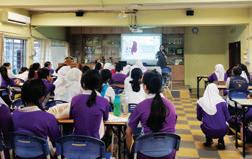
The spirit of curiosity and ambition filled the air at Sekolah Menengah Kebangsaan (P) Sri Aman, Petaling Jaya, as dozens of bright, young women gathered on 8 July 2025 for Program Explorasi Kerjaya 2025.
The career exploration programme was designed to inspire and empower the students to explore diverse professions and to plan their future pathways with purpose and confidence.
One highlight of the event was a career talk delivered by Ir. Ts. Irene Lock Sow Mei, Senior Process Engineer at PETRONAS Group Technical Solutions. Titled Inspiring the Next Generation of Engineers, the session was organised especially for female students. It was aimed at sparking an interest in engineering and showcasing the many opportunities available for women in Science, Technology, Engineering, and Mathematics (STEM).
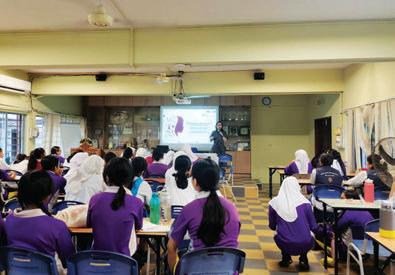
Irene blended technical insights with human stories, making the talk both relatable and inspiring. She shared how her early curiosity in chemistry led her to pursue a degree in chemical engineering at Universiti Teknologi PETRONAS and how she eventually joined PETRONAS, where she contributed to sustainability-driven projects and technology development. Her journey illustrated that, with perseverance, learning, and a strong sense of purpose, women will not only excel but will also lead in technical fields which were once considered male domains.
by:

Irene also emphasised that engineering went beyond equations and blueprints. It was a profession that touched lives, empowered communities, and drove sustainable progress. She reminded students that behind every technological advancement was a team of engineers who envisioned solutions for real-world problems. From clean water systems and renewable energy to digital transformation and green hydrogen technologies, women were increasingly at the forefront of innovation, redefining the landscape of modern engineering.
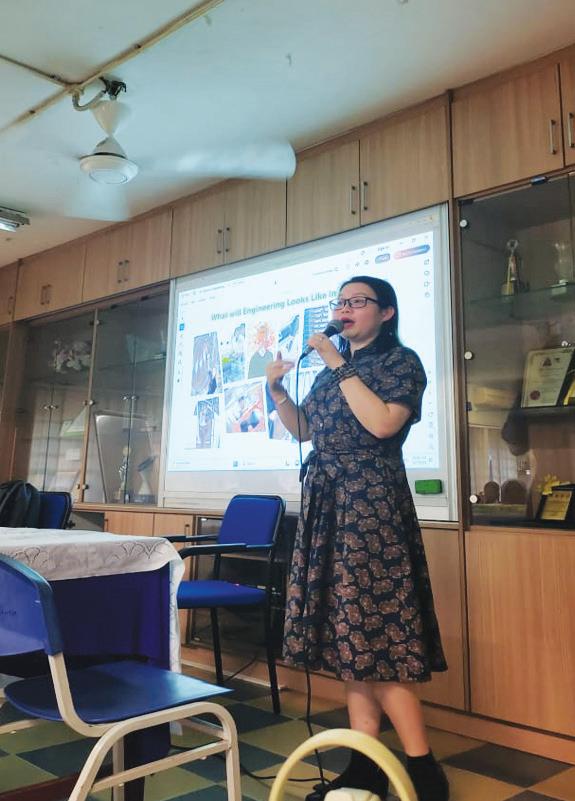
The presence of women engineers in leadership and technical roles had proven instrumental in shaping a more inclusive and resilient industry. Irene highlighted that diversity in engineering fostered creativity, enhanced decision-making, and led to more holistic solutions. She shared examples of how women professionals in PETRONAS and within the Institution of Engineers Malaysia (IEM) were driving change. These contributions not only strengthened the engineering ecosystem but also challenged stereotypes and inspired the next generation of female talents.
The interactive session concluded with an engaging question-and-answer segment where students eagerly asked about topics ranging from choosing an engineering discipline to balancing personal life and career growth. Their curiosity and confidence reflected a growing awareness among the young women that engineering was not just a profession, but a platform to lead change and to create meaningful impact.
Many students said they felt inspired after hearing Irene’s stories of resilience, innovation, and purpose. Several shared their aspirations to become chemical, civil, or environmental engineers, recognising that the path might be challenging but would be deeply rewarding. Teachers observed how the session ignited newfound enthusiasm among the students, reinforcing the importance of early exposure to role models and mentorship.
Irene’s participation in Program Explorasi Kerjaya 2025 aligns closely with the mission of IEM Women Engineers (IEM WE), which is dedicated to promoting inclusion, empowering young women to pursue STEM careers, and creating supportive platforms to nurture leadership potential in women engineers. The initiative also reflects IEM WE’s broader vision, which is to build a community where women engineers can thrive, collaborate, and contribute meaningfully to national and global progress.
In Malaysia, female participation in engineering has grown steadily over the past decade, yet the representation in senior technical and leadership positions remains limited.
IEM WE is continuing to advocate for greater gender equity through outreach programmes, professional networking, and mentorship initiatives. By engaging with schools and universities, the section aims to dismantle misconceptions that engineering is “too difficult” or “unsuitable” for women, proving instead that women possess the same intellect, creativity, and determination to excel in complex and technical fields.
Events like Program Explorasi Kerjaya 2025 serve as powerful reminders that the future of engineering depends on how well we inspire and prepare the next generation.
For the students of SMK (P) Sri Aman, the session was more than just a career talk. It was a moment of discovery, courage, and empowerment. It reminded them that every great engineer begins with a spark of curiosity, a thirst for knowledge, and the courage to dream beyond limits. As they embark on their own journeys, they carry with them these inspiring words: “Curiosity lights the path, courage carries the steps, and imagination shapes the world”.





by:
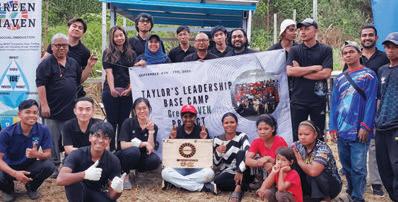
The Empowered Women Engineers Society Club of Taylor’s University (EWE-TU), led by students in engineering and technology, organised the Artificial Intelligence (AI) F.R.I.E.N.D. Competition 2025, with the final stage held at the 3rd IEM Women Engineers Conference (WE-C) at MRANTI Technology Park, Bukit Jalil, on 8 November 2025.
This marks the first collaborative competition between the IEM Women Engineers Section (IEM-WE) and EWETU, creating a significant platform for student-driven innovation. The competition, themed Artificial Intelligence for Recycling: Inspiring Environmental Nurturing Daily for a Sustainable Future, was to empower students in institutions of higher learning to apply AI and innovation toward environmental sustainability. The aims were to encourage students to integrate AI with recycling and focused solutions, to strengthen STEM education while promoting inclusivity, to innovate for a sustainable future, and to nurture the next generation of innovators.

This 1st collaboration between IEM-WE and EWE-TU supports Malaysia’s ambition to emerge as an AI hub for ASEAN while nurturing young talents capable of driving sustainability and technology advancement toward a greener future.
The competition was in two key-stages. The first stage involved proposal writing, where students were required to submit a comprehensive proposal outlining their AIdriven environmental solution. Nine teams brought their prototype for showcase and delivered project pitching during the WE-C as part of the final stage for evaluation.
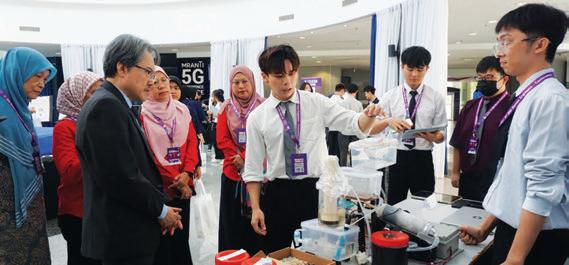
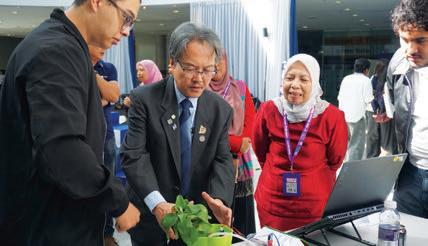
This helped provide a good framework for students to innovate, strengthen critical thinking, provide problem-solving skills as well as hone their ability to deliver and communicate their projects effectively.
The final stage evaluation was conducted by an experienced panel representing academia and industry, whose combined expertise ensured a thorough and professional assessment of each team’s innovation, feasibility, and sustainability impact. The judges were:
• Ir. Ts. Dr. Salmaliza (IEM-WE)
• Mr. Lee Kok Wai (Fullcryo)
• Ms. Edelyn Seah (Dell)
• Ms. Nadia Najihah (Astro)
A total of 30 students participated and attended the final stage, reflecting strong interest and commitment from various universities. Taylor’s University led with three team entries, followed by UCSI University and Universiti Teknologi MARA with two teams each. Universiti Putra Malaysia and University of Wollongong Malaysia had one team each.
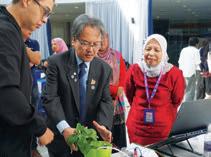
IEM President Ir. Prof. Dr. Jeffrey Chiang Choong Luin and WE-C keynote speaker Emeritus Prof. Dato’ Dr. Halimah Badioze Zaman visited the competition booths, offering encouragement and constructive feedback to help students further refine and excel in their innovations. Taylor’s University sponsored attractive prizes.
The winners were:
1st Place (RM1,500)
Aurora Engineering Club, UCSI University
2nd Place (RM1,000)
Team UOW, University of Wollongong (UOW) Malaysia
3rd Place (RM500)
GKnight, Universiti Putra Malaysia (UPM)
Consolation (RM200)
CoreCycle Global, Universiti Teknologi MARA (UiTM)
SolarVerse, Taylor’s University
The AI F.R.I.E.N.D. Competition marked a significant milestone in IEM-WE’s mission to bridge engineering, technology, environmental stewardship, and digital transformation by empowering students to innovate with purpose. The competition fosters a next generation of engineers equipped with strong environmental awareness and technological fluency. This initiative reinforces IEM-WE’s commitment to making STEM education engaging for young girls and young women. At the same time, the competition welcomes all students regardless of gender, reflecting IEM-WE’s commitment to inclusivity, empowerment, and equal access to quality education. It provides an avenue for students to explore impactful engineering solutions and contribute to national sustainability goals.
Encouraged by the success of this year’s edition, there are plans to make it an annual flagship event for EWE-TU in support of Malaysia’s aspiration to thrive as an AI and digital innovation hub and fostering student-driven solutions for a sustainable future. IEM-WE and EWE-TU extend their sincere appreciation to all partners, judges, lecturers, and participants for their invaluable contributions in making the event a success.






































by:

The Kuala Lumpur Engineering Science Fair (KLESF) 2025 once again served as a dynamic platform for young learners to explore the fields of Science, Technology, Engineering and Mathematics (STEM). Held from 14-16 November 2025, the fair was transformed into a vibrant hub of discovery, where primary and secondary school students engaged in hands-on activities designed to spark curiosity and inspire creative problemsolving. The event encouraged participants to connect classroom concepts with realworld applications while interacting with professionals and peers who share a passion for STEM.
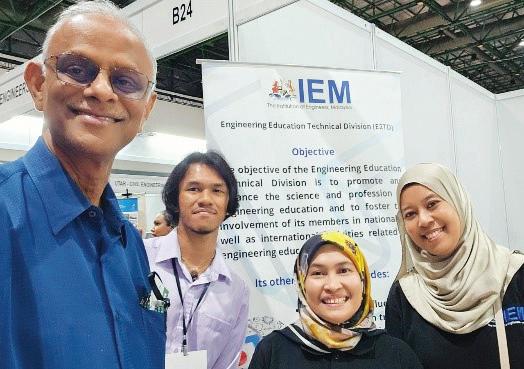
This year, E2TD, in collaboration with the Institution of Engineers, Malaysia (IEM), actively contributed by hosting a specialised STEM booth on 14 and 15 November 2025. The booth was coordinated by Ir. Rajasegaran Thevaraj, Ir. Ainon Shakila and Ir. Zainon Sharmila, with support from four dedicated student volunteers.
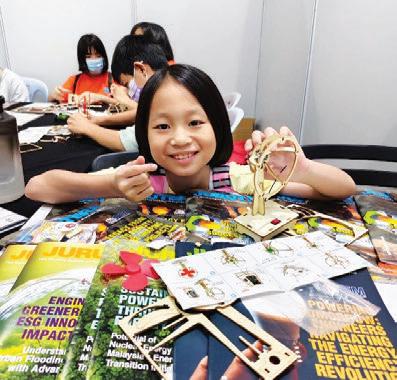
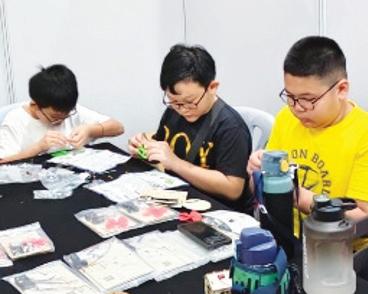
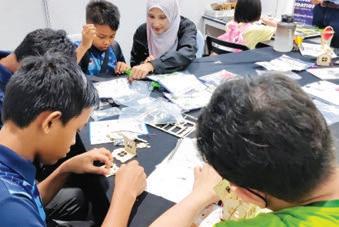
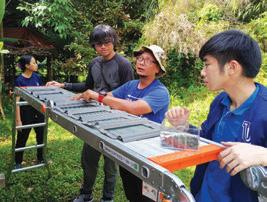
At the booth, the team showcased a series of interactive STEM demonstrations featuring various educational kits, including LED-lit miniature houses, portable fans, solarpowered vehicles, and simple robot cars. These activities provided students with exciting opportunities to experiment, build, and understand core engineering principles in a fun and accessible manner.
Students were guided to observe how each component functions within a system. E2TD facilitators explained key concepts such as power flow, circuitry, aerodynamics, and basic mechanics using clear, student-friendly language. This hands-on approach allowed participants to connect theoretical ideas with the models they were constructing, reinforcing deeper understanding and practical appreciation for engineering principles.
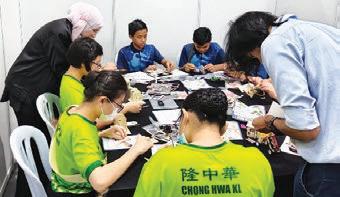
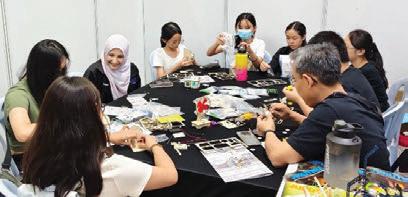
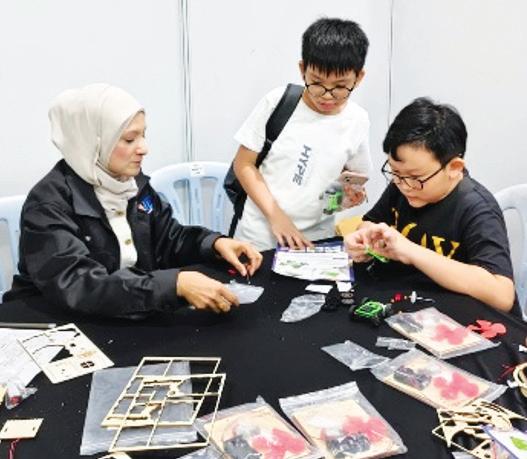
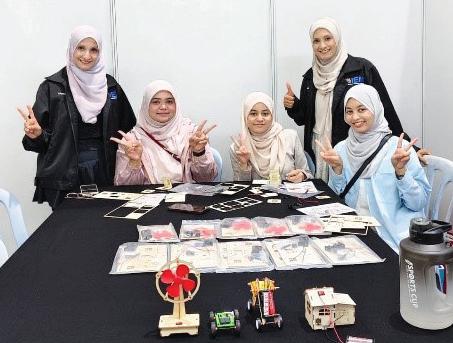
The interactive environment encouraged students to ask questions, troubleshoot, and collaborate with their peers. Many expressed excitements as they watched their creations come to life solar cars racing forward, LEDs illuminating miniature homes, and robot cars navigating designated paths. These experiences successfully nurtured curiosity, creativity, and problemsolving skills among the participants.
The event attracted a diverse group of students from both primary and secondary schools. Activities were intentionally designed to be engaging and educational, promoting active participation and hands-on exploration. Students who successfully completed their model kits were delighted to bring them home, adding a sense of achievement and motivating further interest in STEM.
The booth concluded its activities at 6.00 p.m. on both days, marking another successful year of E2TD’s contribution to inspiring the next generation of young engineers.





Whenever the opportunity arises to attend CAFEO, I will allocate time to explore the host city as well. This year, CAFEO 43 was held in Clark, Pampanga in The Philippines. The best route from Kuala Lumpur was to fly into Manila and then travel by bus to Clark.
In Manila, I decided to travel solo to Intramuros, an old town that’s also known as the Walled City. Located on the southern bank of the Pasig River, Intramuros was strategically built as a military fort to protect Manila from foreign invaders. It once served as the centre of government administration during the Spanish colonial period, from 1571 to 1865.
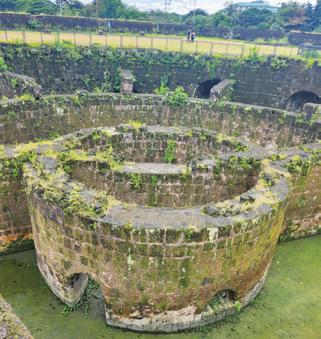
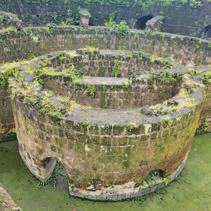
The Baluarte de San Diego, a circular stone bastion as part of the wall defence system
The area housed government residences, religious institutions, and educational centres. Fort Santiago and its dungeons, San Agustin Church, and Baluarte de San Diego, a circular tower located within the walls, were constructed primarily from adobe, molave timber, and coral stone. This surrounding wall stretched for 2.5km and reached up to 8m in height.
by: Ir. Ts. Nur Azhani

The Vice Chair II for IEM-WE Section has a passion for Reliability & Asset Management, Instrumentation & Control, and Telecommunication Systems.
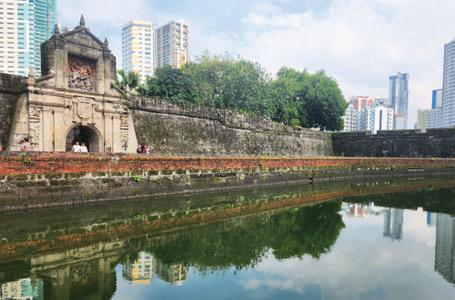
And no, it’s not adobo, the famous Filipino dish! Adobe is a building material made from consolidated local volcanic tuff and ash, a byproduct of explosive volcanic eruptions which was mixed with sand and other minerals easily available near Manila. This material was not only abundant but also proved remarkably resilient against tropical humidity and earthquakes, making it an example of early engineering materials well-suited to local conditions.
Over the centuries, Intramuros endured numerous natural and human-made disasters which put this naturally found material to the test. These included major earthquakes in 1645 and 1863 which destroyed much of its infrastructure and, during the Battle of Manila (1945) in World War II, almost the entire district was reduced to rubble. Yet the walls remained standing.
With the support of the Manila city government, reconstruction efforts on the National Historical Monument and National Cultural Treasure began under the Intramuros Administration. The restoration was a massive undertaking to balance structural safety with historical authenticity. Modern engineering techniques were used to preserve ancient structures while improving accessibility, drainage, and utilities.
Sustainability was also an important part of the reconstruction. The integration of eco-friendly materials and green technologies supports both conservation and modernisation.
Intramuros is more than just a restored city. It is a living symbol of identity, resilience, and heritage in a rapidly urbanising world. Through thoughtful engineering, Intramuros continues to stand strong today, not against invaders but against the passage of time itself.
To all Members,
Date: 22 December 2025
LIST OF CANDIDATES ELIGIBLE TO SIT FOR THE PROFESSIONAL INTERVIEW FOR THE YEAR 2025
The following is a list of candidates who are eligible to sit for the Professional Interview for the year 2025.
According to the IEM Bylaws, Section 3.8, the names listed below are published as eligible candidates to become Insitution Members, provided that they pass the Professional Interview in 2025.
If there are any Corporate Members who have objections against any candidate deemed unsuitable to sit for the Professional Interview, a letter of objection can be submitted to the Honorary Secretary, IEM. A letter of objection must be submitted within one month from the date of publication.
Ir. Chen Harn Shean IEM Honorary Secretary
NEW APPLICATION
NAME QUALIFICATION
CIVIL ENGINEERING
KU REE NEE BE HONS (UTHM) (CIVIL, 2007)
CHEMICAL ENGINEERING
HARI KUMAR A/L VIJAYA KUMAR BE HONS (THE UNI. OF MELBOURNE) (CHEMICAL, 2012) MBA (HERIOT-WATT) (BUSINESS ADMINISTRATION, 2017)
ELECTRICAL ENGINEERING
AMIR ASYRAF BIN ZARAAN BE HONS (UiTM) (ELECTRICAL, 2019)
MOHD FIRDAUS BIN BASRI BE HONS (UTM) (ELECTRICAL, 2015)
MUHAMMAD SHAHIR BIN NORAZMAN ME HONS (UNI. OF SOUTHAMPTON) (ELECTRICAL, 2018)
NUR HANI AMELIA BINTI MOHD AZHAM BE HONS (UNITEN) (ELECTRICAL POWER, 2020)
MECHANICAL ENGINEERING
ADLI BIN BAHARI BE HONS (UTM) (MECHANICAL, 2000) ME (UTM) (MECHANICAL, 2010)
APPLICATION FOR CORPORATE MEMBER NAME QUALIFICATION
MATERIAL ENGINEERING
NANI WAHAYU BINTI YUSOFF BE HONS (UM) (MATERIALS, 2008)
MEMBER TRANSFER
M'SHIP NO. NAME QUALIFICATION
CIVIL ENGINEERING
86380 KAH REN WEI BE HONS (CURTIN UNI. OF TECH) (CIVIL & CONSTRUCTION, 2013)
124746 LIM ENG HO BE HONS (THE UNI. OF LEEDS) (CIVIL & STRUCTURAL, 2017) MSc HONS (THE UNI. OF LEEDS) (STRUCTURAL, 2018)
115894 NGO SIEW TING BE HONS (USM) (CIVIL, 2019)
60756 NUR AIFA FARIHAH BINTI MAD NOR BE HONS (UTP) (CIVIL, 2015) ME (UTM) (CONSTRUCTION MANAGEMENT, 2020)
101007 TAN HUI HOCK BE HONS (UTM) (CIVIL, 1996)
45557 YAP VOON CHUAN BE HONS (USM) (CIVIL, 2014)
CHEMICAL ENGINEERING
130919 LIAW SHEAN YIK, IVAN BE HONS (UTP) (CHEMICAL, 2017)
ELECTRICAL ENGINEERING
73457 KHAIRUL FAIZEE BIN KORSIN BE HONS (UiTM) (ELECTRICAL, 2017)
96388 TIONG CHIONG SHENG BE HONS (UMS) (ELECTRICAL & ELECTRONICS, 2016)
MECHANICAL ENGINEERING
127188 BAGINDA USAMAH BIN BAGINDA BAKHTIAR AFFENDY ME (UNI. OF PORTSMOUTH) (MECHANICAL, 2017)
60044 MOHAMAD AFFIQ BIN JOHARI BE HONS (UPNM) (MECHANICAL, 2012)
75301 TAM ZHI YANG BE HONS (UTAR) (MECHANICAL, 2015)
117057 RESTU PUTRA BIN MD RAZALI BE HONS (UPNM) (MECHANICAL, 2017)
METALLURGY ENGINEERING
128359 NUR FARHANA BINTI HAYAZI BE HONS (UNIMAP) (METALLURGICAL, 2007) PhD (UNSW) (MATERIALS SCIENCE, 2013)
17751 MOHD ROSLI BIN ISHAK BE HONS (UiTM) (CIVIL, 2000)
130942 NG CHEW WOEI BE HONS (UTHM) (CIVIL, 2002)
27079 NOR SALISA BINTI MOHD ZULKAFELY BE HONS (UiTM) (CIVIL, 2007) ME (UiTM) (CIVIL - STRUCTURAL, 2011)
128376 PARAMANATHAN A/L SANDRAN BE HONS (UTM) (CIVIL, 2000) PhD (THE UNI. OF SHEFFIELD) (2018)
ELECTRICAL ENGINEERING
117171 LIM KOK LEONG BE HONS (UMS) (ELECTRICAL & ELECTRONICS, 2010)
MECHANICAL ENGINEERING
124132 KHAIZURAN IZZAT BIN KHAIRUDDIN BE HONS (UTP) (MECHANICAL, 2019)
130247 MAK WHYE JIN BE HONS (MONASH) (MECHANICAL, 2019)
63399 MUHAMMAD SYAFIQ BIN RUSLAN BE HONS (UTeM) (MECHANICAL - PLANT & MAINTENANCE, 2016)
90052 YAP KOON EU BE HONS (SEGI) (MECHANICAL, 2016)
The institution expresses its gratitude to all who have contributed to the Wisma IEM Building Fund. IEM members and readers who wish to make a donation may do so by downloading the form from the IEM website at http://myiem.org.my or by contacting the secretariat at +603-7890 0130 / 136 for further information. The list of contributors for November 2025 is as shown in the table below: