dimEnsion pUblishing sdn. bhd. (449732-T) Suite 29, 3A floor, IoI Business Park, 1 Persiaran Puchong Jaya Selatan, Bandar Puchong Jaya, 47170 Puchong, Selangor Darul Ehsan, Malaysia. Tel: +(603) 8070 9949 fax: +(603) 8070 0047
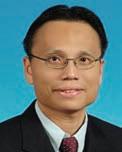
Accounts cum Admin Assistant ho hWEE yEE accs@dimensionpublishing.com
for advertisement placements and subscriptions, please contact: di M e nsion publishing sdn. bhd. (449732-T) at +(603) 8070 9949, or E-mail: info@dimensionpublishing.com
Subscription Department E-mail: subscription@dimensionpublishing.com
Printed by
hoffset printing sdn. bhd. (667106-V) no. 1, Jalan TPK 1/6, Taman Perindustrian Kinrara, 47180 Puchong, Selangor Darul Ehsan, Malaysia. Tel: +(603) 8075 7222 fax: +(603) 8075 7333
Jurutera Monthly Cir C u lation: 25,000 C o pies
Submission or placement of articles in JURUTERA could be made to the:Chief Editor
ThE InSTITUTIon of EngInEERS, MAlAySIA, Bangunan Ingenieur, lots 60 & 62, Jalan 52/4, P.o. Box 223 (Jalan Sultan), 46720 Petaling Jaya, Selangor. Tel: +(603) 7968 4001/4002 fax: +(603) 7957 7678
E-mail: pub@iem.org.my or sec@iem.org.my IEM Website: http://www.myiem.org.my
The publication has been compiled by both IEM and Dimension with great care and they disclaim any duty to investigate any products, process, services, designs and the like which may be described in this publication. The appearance of any information in this publication does not necessarily constitute endorsement by IEM and Dimension. There is no guarantee that the information in this publication is free from errors. IEM and Dimension do not necessarily agree with the statement or the opinion expresssed in this publication. C
be reproduced and transmitted in any form or stored in any retrieval system of any nature without the prior written permission of IEM and the Publisher.
JURUTERA
Number 1, January 2012 IEM Registered on 1 May 1959
Majlis Bagi s e si 2011/2012 (i e M Coun C i l s e ssion 2011/2012)
Yang Dipertua / p r esi D e nt:
Ir. Chen Kim Kieong, Vincent
t i mbalan Yang Dipertua / Deput Y p r esi D e nt:
Ir. Choo Kok Beng
n a ib Yang Dipertua / Vice p r esi D e nts:
Ir. Prof. Dr Ruslan bin Hassan, Y.Bhg. Dato' Ir. Hj. Abdul Rashid bin Maidin, Ir. Lee Weng Onn,
Ir. P.E. Chong, Y.Bhg. Dato' Ir. Lim Chow Hock, Ir. Prof. Dr Wan Mahmood bin Wan Abdul Majid, Ir. Yim Hon Wa
s e tiausaha Kehormat / h o norarY s ecretarY:
Ir. Prof. Dr Lee Teang Shui
b e n Da hari Kehormat / h o norarY t r easurer:
Ir. Prof. Dr Chiang Choong Luin, Jeffrey
Wa K i l aWa m / c i V i l r e presentati V e:
Ir. Gunasagaran a/l Kristnan
Wa K i l m e K a ni K a l / m echanical r e presentati V e: Y.Bhg. Dato' Lt. Gen. (R) Ir. Ismail bin Samion
Wa K i l e l e K t ri K / e l ectrical r e presentati V e:
Ir. Mohd. Aman bin Hj. Idris
Wa K i l s t ru K t ur / s t ructural r e presentati V e:
Ir. Yam Teong Sian
Wa K i l Kimia Dan Disiplin l a in / c h emical a n D ot hers r e presentati V e:
Ir. Razmahwata bin Mohamad Razalli
Wakil lain-lain displin / Rep R esentative to othe R disciplines:
Ir. Assoc. Prof. Dr Cheong Kuan Yee
Wa K i l m u ltime D i a / m u ltime D i a r e presentati V e:
Ir. Noor Iziddin Abdullah bin Hj. Ghazali ahli majlis / c o uncil m e mbers:
Ir. Prof. Dr Lee Sze Wei, Ir. Tuan Hj. Mohd. Ali bin Yusoff, Ir. Yee Yew Weng, Ir. Mah Soo, Ir. Dr Ahmad Anuar bin Othman, Ir. Kok Yen Kwan, Ir. Yau Chau Fong, Ir. Wong Chee Fui, Ir. Mohd. Khir bin Muhammad, Y.Bhg. Dato' Ir. Hj. Mohd. Isa bin Hj. Sarman, Ir. Assoc. Prof. Dr Marlinda binti Abd. Malek, Ir. Zainuddin bin Mohammad, Ir. Lai Kong Phooi, David, Y.Bhg. Dato' Ir. John Chee Shi Tong, Ir. Gopal
Narian Kutty, Ir. Tan Yean Chin, Y.Bhg. Dato' Ir. Ahmad Murad bin Hj. Omar, Ir. Ng Shiu Yuen, David, Ir. Kim Kek Seong, Ir. Chong Chew Fan, Ir. Dr Tan Kuang Leong, Ir. Lau Yuk Ma, June, Ir. Dr Norlida binti Buniyamin, Ir. Ishak bin Abdul Rahman, Ir. Hoo Choon Sean, Y. Bhg. Dato Ir. Samsuddin bin Ismail ahli majlis / co uncil m e mbe Rs (by a p pointment):
Y.Bhg. Dato' Ir. Hj. Mohamad bin Hj. Husin, Ir. Abdul Ghani bin Hashim, Ir. Abdullah bin Isnin
b e K a s Yang Dipertua t e ra K h ir / i m me D i ate pa st p r esi D e nt:
Y.Bhg. Academician Dato' Ir. Prof. Dr Chuah Hean Teik
be K a s Ya ng D i pertua / pa st p r esi D e nt s:
Y.Bhg. Dato' Ir. Pang Leong Hoon, Y.Bhg. Academician Dato' Ir. (Dr) Hj. Ahmad Zaidee bin Laidin, Ir. Dr Gue
See Sew, Y.Bhg. Datuk Ir. Prof. Dr Ow Chee Sheng, Y.Bhg. Dato' Paduka Ir. Prof. (Dr) Keizrul bin Abdullah pengerusi caWa ngan / branch chairman:
1. Pulau Pinang – Ir. Ng Sin Chie
2. Selatan – Ir. Mohd. Khir bin Muhammad
3. Perak – Ir. Chan Hoong Mun
4. Kedah-Perlis – Ir. Hor Tek Lip
5. Negeri Sembilan – Ir. Mohammed Noor bin Abu Hassan
6. Kelantan – Ir. Hj. Roslan bin Abdul Azis
7. Terengganu – Ir. Mohd. Azmi bin Ali
8. Melaka – Ir. Mohd. Khalid bin Nasir
9. Sarawak – Ir. Tan Khiok Chun, Alan
10. Sabah – Ir. Lo Chong Chiun
11. Miri – Ir. Goh Soon Boon
12. Pahang – Vacant
ahli jaWatan Kuasa i n F o rmasi Da n p enerbitan / s tan D i ng c ommittee o n i n F o rmation a n D p ublications 2011/2012: Pengerusi/Chairman: Y. Bhg. Dato' Ir. Hj. Abdul Rashid bin Maidin Naib Pengerusi/Vice Chairman: Ir. Prof. Dr Lee Sze Wei Setiausaha/Secretary: Ir. Lau Tai Onn Ketua Pengarang/Chief Editor: Ir. Prof. Dr Lee Sze Wei Pengarang Buletin/Bulletin Editor: Ir. Ong Guan Hock Pengarang Prinsipal Jurnal/Principal Journal Editor: Ir. Assoc. Prof. Dr Marlinda binti Abdul Malek Pengerusi Perpustakaan/Library Chairman: Ir. CMM Aboobucker Ahli-Ahli/Committee Members: Ir. Yee Thien Seng, Ir. Tan Yean Chin, Ir. Chin Mee Poon, Dato’ Ir. Prof. Dr Mohd. Saleh bin Jaafar, Ir. Hj. Look Keman bin Sahari, Ir. Mohd. Khir bin Muhammad, Y. Bhg. Datuk Ir. Prof. Dr Ow Chee Sheng, Ir. Cheong Loong Kwong, Allen, Ir. Tey Choo Yew, Calvin, Engr. Abi Sofian bin Abdul Hamid, Engr. Shuhairy bin Norhisham, Engr. Abul Aswal bin Abdul Latiff
IEM Secretariat: Nor Aziah Budin, Nurul Aida Mustafa
the institution of engineers, M a laysia Bangunan Ingenieur, Lots 60 & 62, Jalan 52/4, P.O.Box 223, (Jalan Sultan), 46720 Petaling Jaya, Selangor Darul Ehsan. Tel: 603-7968 4001/4002 Fax: 603-7957 7678
IEM today has a total membership of about 23,310 spread across the various states of Peninsular Malaysia, Sabah and Sarawak, with a handful in overseas countries. Of this total, about 11,367 or 43.8% of its members reside within Kuala Lumpur and Selangor, and are deemed to be within a short travelling distance away from IEM’s headquarters in Petaling Jaya. The remaining 11,942 or 56.2% of its members have to contend with the reality that, for most of the time, the services offered or events organised at IEM’s headquarters are either out of reach for them or are available only remotely through the post or using the telephone, computers or hand-held devices.
As a first step, IEM has launched its new web portal early last year which provides users with a comprehensive range of online services through an interactive platform. Although the use of the electronic media and the latest telecommunication tools will help IEM bridge the gap in the level of services that it is able to provide to its members regardless of location, it remains debatable whether the latest technological advances today will ever be able to provide a satisfactory substitute for face-to-face contact and personal interaction between members.
It is therefore important for IEM to further leverage on the presence of its local branches to reach out to its members residing in other states; to increase the scope and spread of its branch activities to meet members’ expectations and to enable them to accrue sufficient benefits or value from the membership subscriptions paid.
IEM has altogether twelve branches outside Kuala Lumpur and Selangor, the two largest being the Southern Branch serving 1,948 members in Johor and Singapore, and the Sarawak Branch with 1,613 members. The other branches are KedahPerlis, Pulau Pinang, Perak, Kelantan, Pahang, Terengganu, Miri (including Brunei), Melaka, Negeri Sembilan and Sabah. Each branch is provided with an annual subsidy to cover basic administrative costs, but apart from this, most of the activities are organised to be self-financing from the outset.
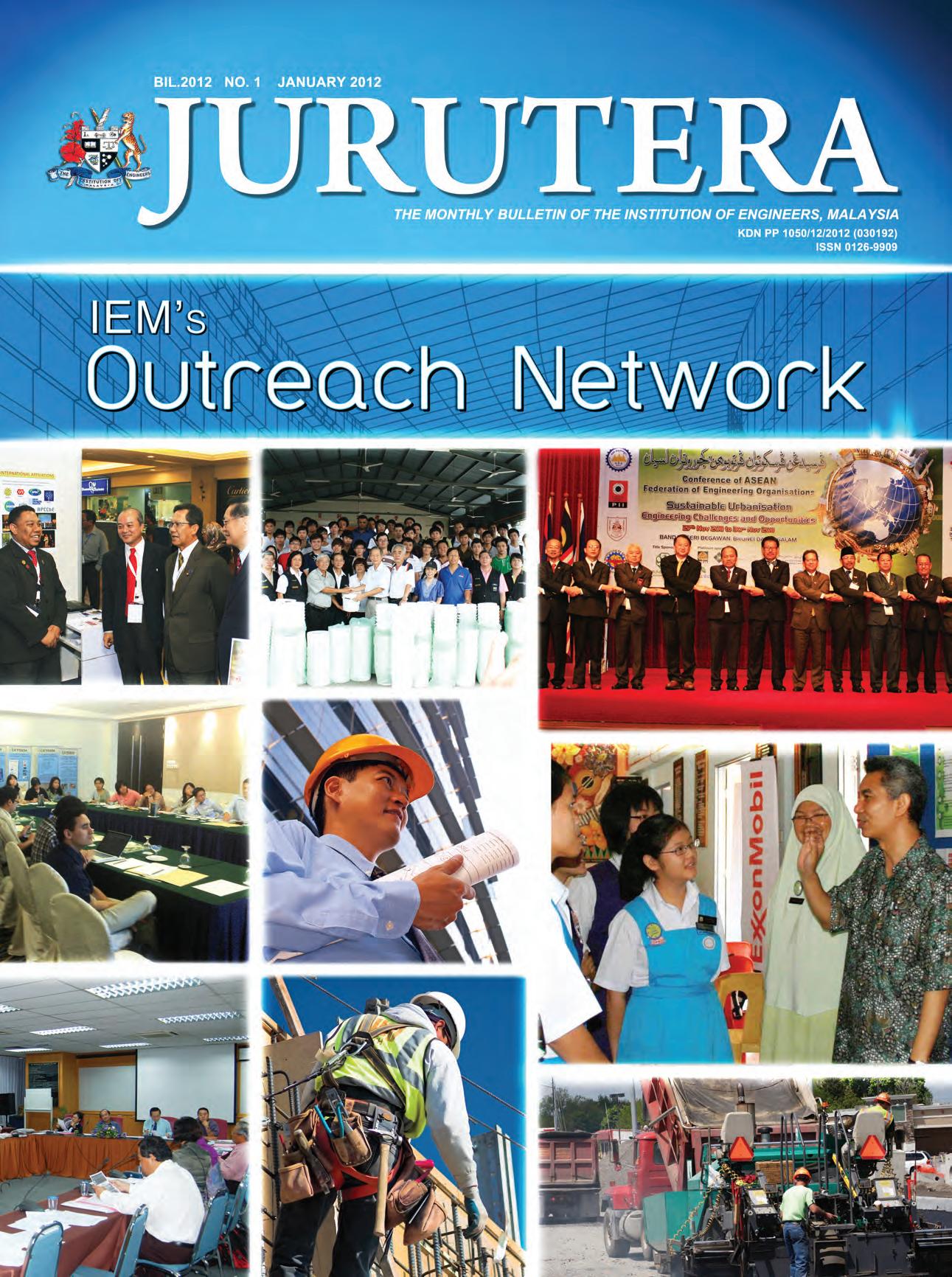
The theme of this month’s issue is on IEM’s Outreach Network and it is hoped that the articles published will provide members with an insight of some of the activities that are being conducted by IEM’s branches and encourage members subsequently to take advantage of and participate in these local events that are closest to their respective geographical locations
ANNOUNCEMENT
All IEM members are required to register for talks, visits, seminars and courses by producing their membership cards for scanning purpose. The CPD points would then be automatically updated. Thus, IEM members with old membership cards are required to change their cards to the new ones with the printed bar code. Your co-operation is appreciated.
IEM’s Outreach Network
IEM members around the country have often turned to the IEM branch in their respective states for support and the organisation of activities. With 12 branches established in various states, the organisation has made a tremendous effort to support its members regardless of where they are located. Recently, JURUTERA contacted the representatives of several IEM branches to find out the types of activities that the branches have organised for their members in the past year.
According to Ir. Mohd. Khir bin Muhammad, Chairman of the IEM Southern Branch, the latter is currently the largest branch in terms of membership and consists of members residing in the state of Johor as well as neighbouring Singapore. He pointed out that the branch’s activities are not only limited to formal programmes such as technical talks and seminars for members.
He said, “In recent years, we also had social and sporting activities such as bowling sessions and golf tournaments, while the Young Engineers Section (YES) has organised challenging activities such as paintball games.” He added that YES also held professional networking sessions with other professionals, which included games and social activities with Young Lawyer groups as well as Toastmasters clubs.
In the past year, the IEM Southern Branch has organised gatherings among its members during the festive seasons where guests from local technical agencies and other professional bodies were invited; a public awareness
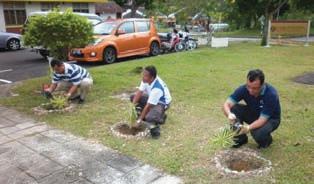
campaign on dengue prevention together with the Rotary Club of Johor Bahru and Jabatan Kesihatan; and charitable and fundraising activities such as visits and gotong-royong and cleaning works at orphanages, old folks’ homes and schools for disabled children.
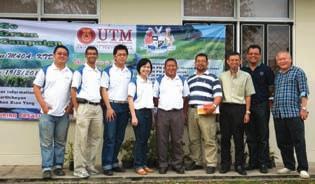
Ir. Mohd. Khir said, “We also have two active student sections, based at Universiti Teknologi Malaysia Skudai and Universiti Tun Hussein Onn Malaysia (UTHM) Batu Pahat, which have organised several social and community services. I am happy to say that we have managed to get good support from the Vice-Chancellors and the management of these universities for all the activities of our student sections.”
He added, “There is also the branch’s annual dinner which has always been a grand gathering of our members, their families and invited guests. We are especially proud that the Sultan of Johor, the royal family, the Chief Minister, the state secretary and speaker of the state assembly have attended our dinner for the past two years.”
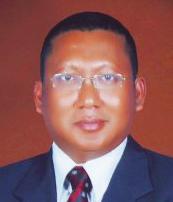
Ir. Mohd. Khir bin Muhammad Chairman of the IEM Southern Branch
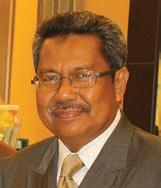
Ir. Hj. Badiuzzaman bin Harun Honorary Secretary of the IEM Negeri Sembilan Branch
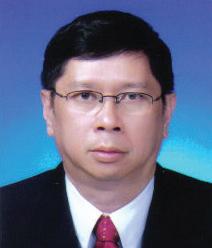
Ir. Hor Tek Lip Chairman of the IEM Kedah-Perlis Branch
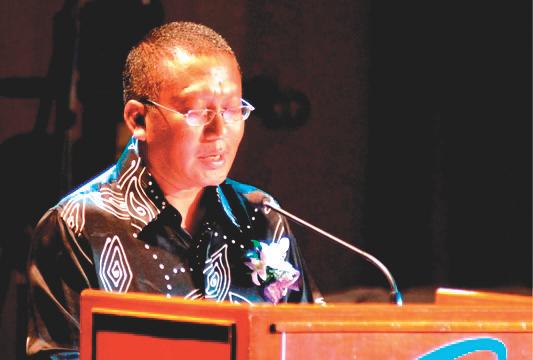
Chairman, Ir. Mohd. Khir delivering the welcome speech at the 40th Anniversary Dinner of The Institution of Engineers, Malaysia (Southern Branch)
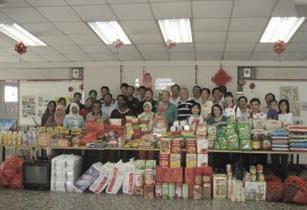
Charity visit and gotong-royong (spring cleaning) at Johor’s Chesire Home
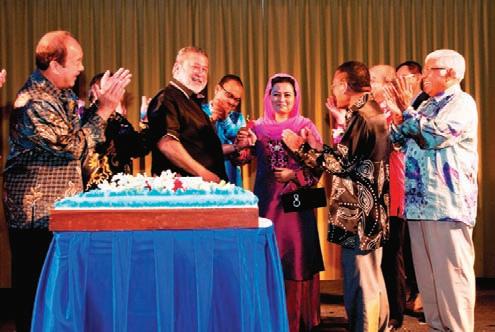
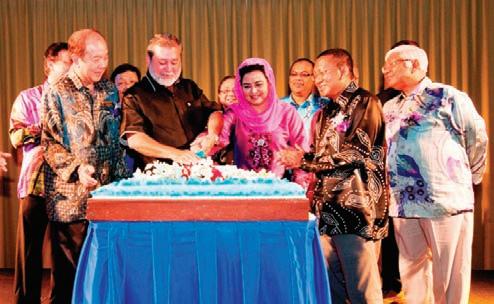
DYMM Sultan of Johor and Raja Zarith Sofiah cutting the anniversary cake with Deputy President and Branch Chairman at the 40th Anniversary Dinner of The Institution of Engineers, Malaysia (Southern Branch)
The IEM Southern Branch Chairman stated that the activities organised are not only for its members to gain knowledge on new technologies and earn CPD hours. There are also get-together sessions that allow its members to interact among themselves as well as with others in the community.
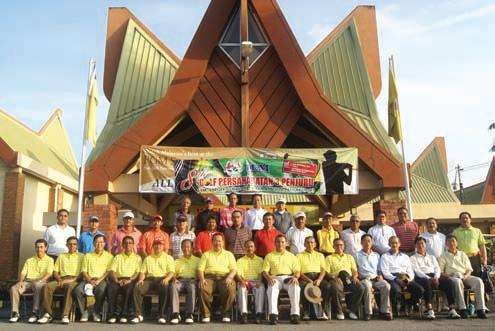
The IEM Negeri Sembilan Branch (IEMNS), on the other hand, has organised three PI workshops and a membership drive at Politeknik Port Dickson, Inti College Nilai and Indah Water Konsortium, Seremban, in the past year. Ir. Hj. Badiuzzaman bin Harun, IEMNS’ Honorary Secretary, said, “In addition, we held a career talk for the students of Politeknik Port Dickson, hosted ‘Pertandingan Golf 3 Penjuru’, participated by IEM Southern, Melaka and Negeri Sembilan branches and organised a Hari Raya gathering which was attended by our members, friends and heads of government departments.”
He added, “The workshops and membership drive help create awareness among our members on the route to be a PE, while for non-member engineers, they get to know the benefits of becoming members of IEM. The technical talk and visits help to update our members’ knowledge on the latest technologies or products, as well as help them earn CPDs. The social gatherings and activities are to enable our members to interact with others.”
CHALLENgEs FACEd By IEM BRANCHEs
According to Ir. Mohd. Khir, the activities of the IEM Southern Branch are generally conducted in Johor Bahru or the neighbouring areas as most of its members are located in Johor Bahru and Singapore. However, he pointed out that as Johor is a relatively large state, its members from other major towns such as Batu Pahat, Segamat, Muar and Kluang have at times found it difficult to participate in the branch’s programmes due to the distances involved.
He said, “Recently, the Vice-Chancellor of UTHM Batu Pahat had offered a place within its campus to be the centre for IEM to conduct its activities. Thus, we hope that some of our activities can be based at the campus to cater for our members from outside of Johor Bahru as Batu Pahat is more centralised and is only about an hour’s drive from the state capital.”
Ir. Hj. Badiuzzaman admitted that the IEMNS also faces a problem in getting its members to participate in some of these programmes. He said, “This is probably because of our close proximity to Kuala Lumpur where most trainings or activities take place. In addition, quite a few of our members also work in Kuala Lumpur.”
He added, “To solve this problem, we try to organise activities that we believe will interest them most. We are also opening our activities to the relevant government departments and private sectors. We will also make full use of our collaboration with Politeknik Port Dickson as they have agreed for us to use their facilities.”
PROgRAMMEs ANd ACTIvITIEs FOR 2012
For 2012, the IEM Southern Branch plans to reach out to more secondary schools as part of its awareness education and promotion of the engineering profession to schoolchildren. There are also plans to adopt several schools and introduce engineering clubs where IEM members will be the advisors.
Ir. Mohd. Khir pointed out that there are also a large number of young graduate engineers, especially those who are not in consultancy practices or the construction related industry, such as manufacturing and oil and gas, who have yet to become members of IEM.
‘Pertandingan Golf 3 Penjuru’ hosted by the IEMNS Branch on 19 November 2011 and participated by IEM Southern, IEM Melaka and IEM Negeri Sembilan
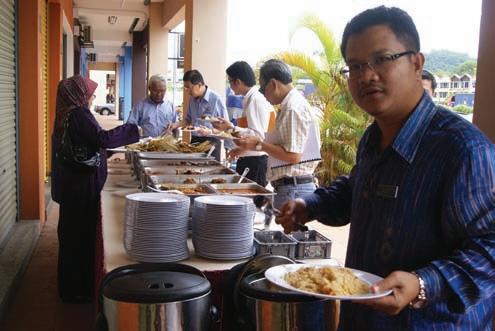
Hari Raya gathering hosted by the IEMNS Branch
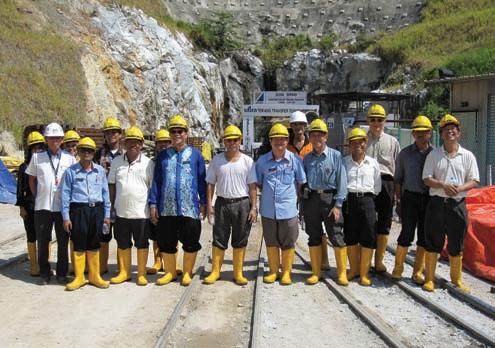
Technical visit to raw water transfer Pahang-Selangor
He said, “We want to reach out to these engineers to encourage them to become members of IEM as they are part of the engineering society in this country. Our programmes will be geared toward achieving this objective and we hope to increase the membership in IEM especially among young engineers.”
In addition, the IEM Southern Branch hopes to organise more social activities that will focus on helping its members better appreciate nature and the environment. He said, “We will be working with the Malaysian Nature Society of Johor to organise programmes such as nature walks, photography, bird watching, etc, as Johor has so many interesting places where one can explore and appreciate nature.”
Ir. Mohd. Khir said, “We want to also look into promoting sustainable and healthy living pastimes such as cycling. We plan to co-organise cycling competitions and activities in Johor with the state government and our engineering colleagues from Singapore, and get cycling teams from the local authorities, state agencies and universities to participate. Through such programmes, we hope to enhance our relationship and networking with engineer colleagues in Singapore and elsewhere.”
IEMNS’ plans for the coming year will include the continuation of its membership drive, PI workshops, career talks at schools and for college students, technical talks and technical visits. Ir. Hj. Badiuzzaman said, “We will also be having our bi-annual dinner, Hari Raya gathering and games with government departments in Negeri Sembilan. Several community services, e.g. beach cleaning and visit to old folks home, have also been planned. We have also formed our Young Engineers Section (YES) which will be organising several activities.”
From these programmes, he added, IEMNS hopes to recruit more members, update its members on the latest technologies and products, promote engineering as a career, enable its members to visit projects that they would not otherwise have the opportunity to get to know about, as well as create awareness of the branch’s contribution to society.
For this year, the IEM Kedah-Perlis Branch aims to organise at least one lecture, talk or site visit per month. Its Chairman Ir. Hor Tek Lip said, “We plan to increase the number of evening or tea talk sessions so that it becomes a regular monthly feature to cater to those who are unable to attend the whole day or half day of activity. In addition, we also hope to invite visiting experts to the area who are willing to share their knowledge as guest speakers at these talks”.
He added, “The primary objective of these talks is to allow our members to share their experiences with other members as we believe everybody has some sort of expertise that is worth sharing. This would help foster a better relationship among the engineers here and also provide us with a database of local expertise. In addition, these activities will also serve as a get-together session for our members after work.”
Ir. Hor pointed out that, “These activities would help encourage participation by its members and an opportunity for our busy members to accumulate CPD as we hope that our members could do so without having to travel outside the region. We also plan to increase the membership of our branch by encouraging more lecturers at the local higher institutions to participate.”
Tree planting session for Young Engineers Section at the IEM-UTM Secretariat Office, Southern Branch
MyIEM: The Enabler for IEM to Reach Out to All in the Digital Era
by Ir. Prof. Dr Lee Sze Wei
hOw IT sTARTED
In 2009, IEM applied to the Malaysian Investment Development Authority (MIDA) for a grant to develop a completely new web portal for it to reach out better to the professional community and public. IEM, being the largest engineering professional body in Malaysia with a membership of more than 20,000, has a lot of responsibilities, roles and services to provide its members as well as the public.
The expectations of members and the public have increased significantly in terms of level and coverage, especially in recent years when our society has become much more connected than before. Therefore, it was strongly felt that IEM must move on by setting up a completely new web portal system that can address the needs and expectations of the stakeholders in a much more effective and efficient way. A grant of RM1 million was approved for the project by MIDA.
MyIEM wEb pORTAl DEvElOpMEnT
An IT taskforce was formed in IEM to oversee the development and progress of the project soon after the grant’s approval. The taskforce set an overall objective of transforming IEM’s presence on the Internet from passive webpages disseminating information of the organisation, to a comprehensive web portal with multiple, integrated functionalities which will enable IEM to provide various online services to its members and the public.
The development of the MyIEM portal started in early 2009 and was completed before the end of 2010. During its development, thorough user and stakeholder consultations were held to ensure the needs and expectations of all parties would be met. The new portal, named MyIEM, was officially launched in early 2011.
MyIEM: KEy fUncTIOnAlITIEs AnD ROlEs fOR OUTREAch
Generally, MyIEM plays the following major roles:
Effective Information Exchange and Communication
The portal serves as a platform for IEM to disseminate information in a more speedy and timely manner, especially its views on various current issues. It provides a possibility for the information to be presented in various formats and media – text and document, audio and video. Information archiving and easy online access by users have also been made possible.
Besides that, online survey and polling that enable more efficient information gathering have also been set up; this will greatly assist IEM in better understanding and serving all the stakeholders. The portal also provides simple and fast information posting by users for quick dissemination and sharing with others, e.g. event announcements, etc.
Membership Management
A full-fledged online membership management system has been set up. Visitors can enquire and apply for membership online. Among others, members can login to update their personal details, check membership status, renew their membership, register for events, search the database for other members’ contact details (with prior consent), check library loan status, access information, publications, reports and CPD management.
The portal system significantly reduces the workload on membership management by the IEM administrative staff while making the process more efficient. For members and the public, membership services can be accessed with much more convenience and speed.
Networking and Sourcing
The portal, with its database of detailed member information, can serve as a platform for users to survey and find out more about IEM members. An online membership directory has been made available. The search on members may include aspects such as areas of expertise, past experiences, contacts, etc. (with prior consent).
This will enable the portal to serve as an avenue for members to reach out to more potential collaborators. An online job gallery has also been created to enable employers to connect to potential job seekers in a much more targeted way than other job matching platforms. With online advertisement support, the portal also provides opportunity for members and users to widen their reach for potential customers.
International Networking
The portal provides possibilities for IEM to be linked more closely with other organisations both nationally and internationally. Information sharing and members’ access arrangement with partnering and affiliated organisations can be done easily on the portal. Thus, the current links to APEC, ASEAN Engineer and FEIAP can be further enhanced and extended to other organisations in the future.
Other Services
There are a number of other service categories on the portal. Events organised by IEM can now be better communicated to members and the public. Registration and payment can be done online. CPD points are automatically recorded online for members after the participation of relevant events. Library records have also been digitised and the loan status can now be checked and managed online. IEM publications have also been enhanced. Online submission of papers for the IEM Journal is possible now. Electronic versions of the IEM Bulletin and IEM Journal are also available online.
fUTURE OUTlOOK
In an increasingly connected world today, information and services have to flow and be provided in an instantaneous and convenient way. An organisation with a large number of members and stakeholders such as IEM must take full advantage of IT, the Internet and online social networks to better reach out to all so that it can continue to be effective and relevant to its members and the public. MyIEM is just the beginning of IEM’s journey towards that direction
MyIEM pORTAl
IEM is pleased to announce that members will now be able to perform various payment transactions through the IEM online payment system by credit card or by using Maybank2U or RHBNow. Various transactions such as renewal of annual subscriptions, payment of registration fee for events, etc, can be performed online. You will need to activate your first time login in order to be able to access these functions.
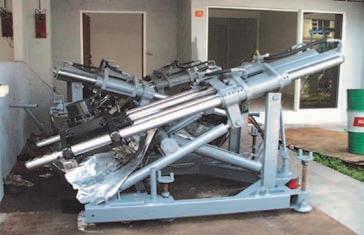
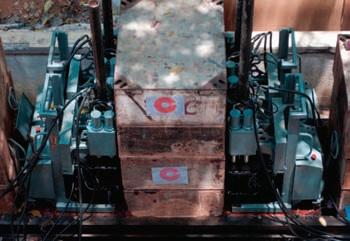
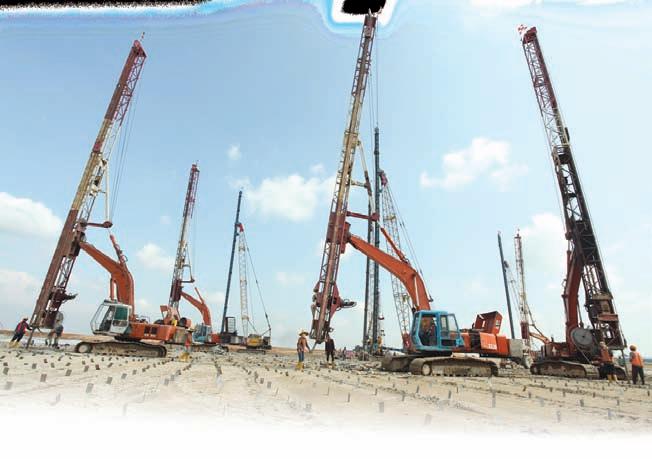
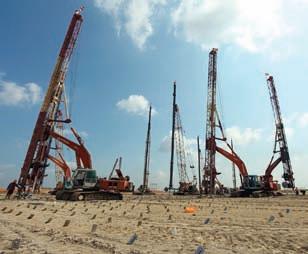
Pile Injection System
• Patented Push and Pull Piling method.
• Able to drive a group of slanted Piles's at minimum piles spacing.
• Unique Piles clamping • Small Machine footprint, high injection force from 350 tons upwards.
• Fast , clean and silent.
ADvERTIsEMEnTs On IEM pORTAl
The IEM Web portal now accepts image or banner advertising and announcements of events. Details of charges are as follows:
1) Image/banner Advertisements
A fee of RM350 per month for IEM members and RM500 per month for nonmembers is applicable for a six-month promotional period. The Committee will review the charges after the six-month period.
2) Notification of Events
A fee of RM100 per month for IEM members and RM200 per month for nonmembers is applicable for a standard event announcement which would include the title, venue, date and time.
For more information, kindly login into IEM Web portal www.myiem.org.my or email to mizi@iem.org.my for booking arrangement. Payment should be made to “The Institution of Engineers, Malaysia” account.
cOnGRATUlATIOns
The IEM Council wishes to congratulate:
Dato’ Ir. prof. Dr Mohd. saleh bin Jaafar for being conferred the Darjah Kebesaran DYMM Sultan Sharafuddin Idris Shah (DSIS) and
Dato’ Ir. prof. Dr Radin Umar bin Radin sohadi for being conferred the Darjah Kebesaran Dato’ Paduka Mahkota Selangor (DPMS) by His Royal Highness Sultan Sharafuddin Idris Shah Al-Haj Ibni Al-marhum Sultan Salahuddin Abdul Aziz Shah Al-Haj, in conjunction with the Sultan of Selangor’s 66th birthday on 11 December 2011.
Role of Biosurfactants in Enhancing Bioremediation of Soils Contaminated by NAPLs
CoNTAmiNATioN of soils by non-aqueous phase liquids (NAPLs) has created serious problems in the past few years in many developed and developing nations. NAPL contaminated sites contain pollutants such as halogenated solvents, polychlorinated biphenyls (PCBs), pesticides, chlorinated benzenes, phenols and polycyclic aromatic hydrocarbon (PAHs). While current bioremediation technologies are seen as an affordable and effective tool for treating sites contaminated with NAPLs, these technologies are often not preferred due to the slow degradation process of NAPLs.
The effectiveness of the bioremediation process is typically governed by three important factors, namely, the presence of the degraders, the availability of the contaminants to the degraders and a favourable environment for the degradation to occur. Therefore, the intensity of biodegradation is highly dependent on microbial activity to degrade these contaminants and their rate limiting kinetics. Although very few microbes have been recognised as hydrocarbon degraders, the persistent characteristics possessed by NAPLs such as low aqueous solubility and recalcitrant response towards degradation makes it unavailable for microorganisms.
These conditions can substantially affect the microbial growth and biodegradation capabilities. This phenomenon is referred to as limited bioavailability. Limited bioavailability is often defined when the uptake rate by organisms is limited by physicochemical barrier between pollutant and the organism (Volkering et al., 1997). Hence, the performance of the bioremediation can be improved by increasing the bioavailability of NAPLs.
Several technologies such as biostimulation and bioaugmentation are utilised in addressing problems on bioavailability to speed up the degradation rate of NAPLs. Biostimulation refers to the additional nutrients to stimulate the population of indigenous population microorganisms. Another approach is bioaugmentation which involves the addition of a specific strain that is capable of degrading NAPLs by increasing the bioavailability. However, these bioremediation enhancement strategies can incur high maintenance costs.
For that reason, the application of surface-active agents or surfactants has been considered as an alternative to improve the bioavailability of NAPLs. Yet, the knowledge
on the interactions of surfactants and its capability in enhancing the bioremediation of NAPLs is relatively recent particularly on green surfactants or biosurfactants. Even though biosurfactants’ potential in promoting the bioremediation process has been widely considered in many parts of the world, it is imperative that the mechanism of these emerging green surfactants should be grasped conceptually as measures to facilitate the remediation of contaminated lands.
SURfACTANTS ANd BioSURfACTANTS
Surfactants, of both biological and chemical origin, are amphipathic molecules that accumulate at interfaces, decrease interfacial tensions, and form aggregate structures that allow hydrocarbon solubilisation. Due to these properties, surfactants modify interfacial behaviour and impact the way other molecules behave at interfaces and in solutions.
In general, surfactants can be classified into two types, namely, chemically synthesised surfactants and biologically derived surfactants. Most common chemically synthesised types of surfactants are ethoxylates, ethylene, sorbitan esters, ester sulfonates, fatty acids and quaternary ammonium salts.
Chemical surfactants have been discovered to possess properties suitable for a vast variety of industrial applications. Their abilities in lowering the surface tension and increasing solubility have been applied to an important product in the oil industry to enhance oil removal and recovery. Nevertheless, the level of surfactant toxicity that could harm the environment and costly production are among the major drawbacks in their application.
Another group of surfactant is from biosurfactantproducing microorganisms of the genus Pseudomonas, Candida and Bacillus that is known to produce rhamnolipids, glycolipids and lipopeptide surfactants (Rahman and Gakpe, 2008). From the current perspective of moving towards green chemistry and the environment, biological surfactants or biosurfactants have exhibited in several studies similar emulsification properties and high surface activity characteristics compared to chemically synthesised surfactants (Banat, 1995). Table 1 illustrates some of the common biosurfactants with their producing microorganisms.
by Ms. Caroline Marajan and Prof. Sr. Ir. Dr Suhaimi bin Abdul Talib
BiosurfactantsOrganisms
Sources
References
Rhamnolipids Pseudomonas aeruginosa Petrochemical wastewater, soap stock (Whang et al., 2009) (Wei et al., 2005)
Lipopeptide Brevibacilisbrevis Oil field (Haddad et al., 2008)
Lipopeptide Azobacterchroococcum Water sample (Thavasi et al., 2009)
Lipopeptide Nocardiopsis alba
Marine actinomycetes (Gandhimathi et al., 2009)
Rhamnolipids Pseudoxanthomonas sp. PNK-04 Coal field (Nayak et al., 2009)
Surfactin Bacillus subtilis ATCC
Mannosylerythritol lipids Candida Antarctica
Bioemulsan Gordoniaspp BS29
Petroleum sludge, waste soybean oil (Lee et al., 2008; Pornsunthorntawee et al., 2008)
Vegetable oil (Kim et al., 2002)
Diesel contaminated soil (Franzetti et al., 2009)
Compared to synthetic surfactants, biosurfactants have the advantages of being less toxic, biodegradable and inexpensive as it can be produced using cheaper substrates. These advantages have triggered interests in the possible usage of biosurfactant technology to enhance the biodegradation performance in NAPL contaminated soil. Thus, its interactions with microorganisms and NAPLs would provide a better insight into the biological response on the addition of surfactant to enhance the degradation of NAPLs.
SURfACTANTS mEChANiSm
In order to facilitate the bioavailability of NAPLs, the use of surfactants is commonly applied through three main mechanisms, namely, emulsification, solubilisation and mobilisation. The emulsification of NAPLs can reduce the surface tension and interfacial tension between an aqueous and non-aqueous phase. The dissolution of NAPLs is initiated when a surfactant monomer increases the contact between the soil and NAPLs, which promotes the separation of NAPLs entrapped in the soil media. The concentration of surfactants, surface tension and its relation to critical micelle concentration (CMC) is elucidated in Figure 1.
CMC is described as a measurement for the efficiency of surfactant. In reducing the surface and interfacial tension, surfactant monomer exists below the CMC. Low CMC indicates that less surfactant is needed to saturate interfaces and form micelles. The solubilisation of NAPLs will commence once the formation of micelles takes place at higher CMC. The presence of surfactant micelles will promote the partitioning of NAPLs from soil into the micelle hydrophobic core. Consequently, solubilisation NAPLs leads in mobilising the pollutant, which in turn improves their bioavailability.
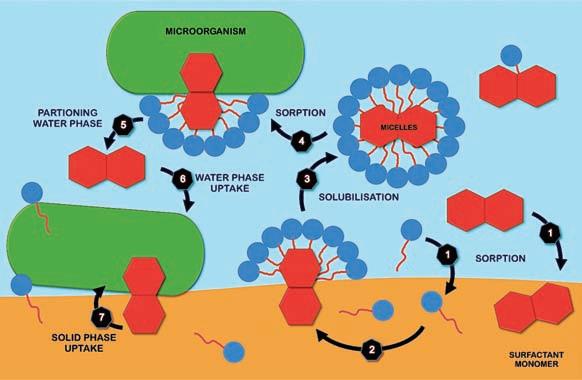
The interaction between microorganisms, pollutant, soil and surfactants can be further described in Figure 2. NAPLs entrapped in the soil matrix can be dispersed by the sorption of surfactant molecules onto soil (1). Surfactant monomers are capable of mobilising the NAPLs into the water phase leading towards a micelle formation where NAPLs are solubilised into the hydrophobic core (2,3). As for the microorganisms, once the NAPLs are available, it can be utilised directly by the sorption of micelle onto microorganism (4), partitioning of NAPLs between the water phase and micelles (5), directly from the water phase (6) or directly from the solid phase (7).
Table 1: Common biosurfactants with their producing microorganisms
Figure 2: Mechanism of biosurfactants interaction between microorganism, soil and pollutant (Adapted from Volkering, 1997)
Figure 1: Effect of surface tension and concentration of surfactant on the formation of surfactant micelle
On the other hand, these relative interactions are strongly influenced by the physical state of the pollutant; i.e. whether it is adsorbed, absorbed or trapped in the soil. Although surfactants play an important role in promoting biodegradation, it is necessary to understand that the effectiveness of surfactant aided bioremediation depends on the selection of the surfactant and its most conducive working environment.
BioSURfACTANT PoTENTiAL iN BioREmEdiATioN APPLiCATioN
The emerging technology in applying biosurfactant to enhance the bioremediation of hydrocarbon contaminated soil has shown much success. Biosurfactants have considerable potential for remediation application because biosurfactants have better biocompatibility, lower toxicity and higher degradability compared to synthetic surfactants (Ron and Rosenberg, 2002; Volkering et al., 1997). The ability of biosurfactant in solubilising NAPLs has been widely reported.
Biosurfactant (lipopeptides, rhamnolipids and surfactin) producing bacteria such as those belonging to the genus Pseudomonas, Brevibacillus and Bacillus have been reported to enhance phenanthrene and anthracene availability (Das et al., 2008; Reddy et al., 2010; Tecon and Van der Meer, 2010). In addition, some synthetic surfactants such as Triton X-100 and Tween 80 have been reported to accelerate the initial degradation of phenanthrene and fluoranthene (Avramova et al., 2008; Hickey et al., 2007).
On the other hand, there have been claims whereby the presence of rhamnolipid and Brij 80 resulted in slight phenanthrene degradation and exhibited an inhibitory effect (Lee et al., 2007; Shin et al., 2004; Volkering et al., 1997). Findings by various researchers indicated that most of the surfactant helps in degrading insoluble pollutants while others reported that the presence of surfactant has inhibited the degradation process. Nevertheless, the potential of biosurfactants in many cases proved to be more effective than chemical surfactants and have the added benefit of being biodegradable.
CoNCLUSioN ANd fUTURE ChALLENgES
Bioremediation is not widely practiced in most developing countries although there has been some significant success where bioremediation is employed. As technology is gradually being applied, there are many uncertainties in predicting the field performance. With a better understanding of the theoretical mechanism of biosurfactant, its use as a practical solution for the bioremediation of hydrophobic contaminants can be further explored for implementation. Future challenges in improving and developing biosurfactant technology to enhance the degradation of NAPLs must be extensively investigated and will require interdisciplinary efforts before it can be adopted as a viable green surfactant in bioremediation
Note: The authors are currently based in the Institute for Infrastructure Engineering and Sustainable Management, Faculty of Civil Engineering, Universiti Teknologi MARA (UiTM) and may be contacted at carolinemarajan@yahoo.com or ecsuhaimi@salam.uitm.edu.my
REfERENCES
[1] Volkering F., Breure A.M. and Rulkens W.H. (1997) Microbiological aspects of surfactant use for biological soil remediation. Biodegradation 8:401-417.
[2] Rahman K.S.M. and Gakpe E. (2008) Production, Characterisation and Applications of Biosurfactant – Review. Biotechnology 7:360-370.
[3] Banat I.M. (1995) Biosurfactants production and possible uses in microbial enhanced oil recovery and oil pollution remediation: A review. Bioresource Technology 51:1-12.
[4] Wei Q.F., Mather R.R. and Fotheringham A.F. (2005) Oil removal from used sorbents using a biosurfactant. Bioresource Technology 96:331-334.
[5] Whang L.-M., Liu P.-W.G., Ma C.-C. and Cheng S.-S. (2009) Application of rhamnolipid and surfactin for enhanced diesel biodegradation – Effects of pH and ammonium addition. Journal of Hazardous Materials 164:1045-1050.
[6] Haddad N., Wang J. and Mu B. (2008) Isolation and characterization of a biosurfactant producing strain, Brevibacilis brevis HOB1. Journal of Industrial Microbiology and Biotechnology 35:1597-1604.
[7] Thavasi R., Subramanyam Nambaru V., Jayalakshmi S., Balasubramanian T. and Banat I. (2009) Biosurfactant Production by Azotobacter chroococcum Isolated from the Marine Environment. Marine Biotechnology 11:551-556.
[8] Gandhimathi R., Seghal Kiran G., Hema T., Selvin J., Rajeetha Raviji T. and Shanmughapriya S. (2009) Production and characterization of lipopeptide biosurfactant by a sponge-associated marine actinomycetes Nocardiopsis alba MSA10. Bioprocess and Biosystems Engineering 32:825-835.
[9] Nayak A.S., Vijaykumar M.H. and Karegoudar T.B. (2009) Characterization of biosurfactant produced by Pseudoxanthomonas sp. PNK-04 and its application in bioremediation. International Biodeterioration and Biodegradation 63:73-79.
[10] Lee S.C., Lee S.J., Kim S.H., Park I.H., Lee Y.S., Chung S.Y. and Choi Y.L. (2008) Characterization of new biosurfactant produced by Klebsiella sp. Y6-1 isolated from waste soybean oil. Bioresource Technology 99:2288-2292.
[11] Pornsunthorntawee O., Arttaweeporn N., Paisanjit S., Somboonthanate P., Abe M., Rujiravanit R. and Chavadej S. (2008) Isolation and comparison of biosurfactants produced by Bacillus subtilis PT2 and Pseudomonas aeruginosa SP4 for microbial surfactant-enhanced oil recovery. Biochemical Engineering Journal 42:172-179.
[12] Kim H.-S., Jeon J.-W., Kim S.-B., Oh H.-M., Kwon T.-J. and Yoon B.-D. (2002) Surface and physico-chemical properties of a glycolipid biosurfactant, mannosylerythritol lipid, from Candidaantarctica. Biotechnology Letters 24:1637-1641.
[13] Franzetti A., Caredda P., La Colla P., Pintus M., Tamburini E., Papacchini M. and Bestetti G. (2009) Cultural factors affecting biosurfactant production by Gordonia sp. BS29. International Biodeterioration and Biodegradation 63:943-947.
[14] Ron E.Z. and Rosenberg E. (2002) Biosurfactants and oil bioremediation. Current Opinion in Biotechnology 13:249-252.
[15] Das P., Mukherjee S. and Sen R. (2008) Improved bioavailability and biodegradation of a model polyaromatic hydrocarbon by a biosurfactant producing bacterium of marine origin. Chemosphere 72:1229-1234. DOI: 10.1016/j.chemosphere.2008.05.015.
[16] Reddy M.S., Naresh B., Leela T., Prashanthi M., Madhusudhan N.C., Dhanasri G. and Devi P. (2010) Biodegradation of phenanthrene with biosurfactant production by a new strain of Brevibacillus sp. Bioresource Technology 101:7980-7983.
[17] Tecon R. and Van der Meer J. (2010) Effect of two types of biosurfactants on phenanthrene availability to the bacterial bioreporter Burkholderia satisoli strain RP037. Applied Microbiology and Biotechnology 85:1131-1139. DOI: 10.1007/s00253-0092216-0.
[18] Avramova T., Sotirova A., Galabova D. and Karpenko E. (2008) Effect of Triton X-100 and rhamnolipid PS-17 on the mineralization of phenanthrene by Pseudomonas sp. cells. International Biodeterioration and Biodegradation 62:415-420.
[19] Hickey A.M., Gordon L., Dobson A.D.W., Kelly C.T. and Doyle E.M. (2007) Effect of surfactants on fluoranthene degradation by Pseudomonas alcaligenes PA-10. Applied Microbiology and Biotechnology 74:851-856. DOI: 10.1007/s00253-006-0719-5.
[20] Lee H.J., Lee M.W., Lee D.S., Woo S.H. and Park J.M. (2007) Estimation of directcontact fraction for phenanthrene in surfactant solutions by toxicity measurement. Journal of Biotechnology 131:448-457.
[21] Shin K.H., Kim K.W. and Seagren E.A. (2004) Combined effects of pH and biosurfactant addition on solubilization and biodegradation of phenanthrene. Applied Microbiology and Biotechnology 65:336-343.
ANNoUNCEmENT
Attention to All iEm members,
Please be reminded that ALL PARTICIPANTS attending courses/seminars/visits organised by IEM MUST SETTLE their registration fees prior to the date of the event. Participants using Government Local Orders will need to ensure that payment is made not later than one month after the event. Your co-operation on this matter is much appreciated.
Applying Green Technology in the Palm Oil Industry
by
ThE palm oil industry has abundant biomass resources that can play a prominent role in the generation and application of green technology in this country. The successful utilisation of biomass for power generation will reduce the use of energy from fossil sources and diversify the sources of energy. At the same time, it can contribute towards mitigating greenhouse gas (GHG) emissions.
Palm oil millers in Malaysia may want to consider investing in downstream processing activities to take advantage of the available renewable energy from biomass at palm oil mills. The efficiency of heat and electrical energy generation at these mills can be significantly increased by investing in more efficient power plants, boilers and steam turbine generators.
Biomass from palm oil mills and biogas (from the anaerobic treatment of palm oil mill effluent or POME) will enable the establishment of standalone clusters of biomass power plants. Within each cluster, the biomass power plant can supply the electricity and gas requirements for domestic uses as well as for downstream industrial activities such as crude palm oil refinery, kernel crushing plants and other related industries.
1.0
InTROdUcTIOn
In Malaysia, electricity is generated using natural gas (70%), diesel oil (1%), fuel oil (7%), hydro (12%) and coal (10%). Electricity is also generated for use within the palm oil industry. Under the National Energy Policy, renewable energy was emphasised as the fifth fuel after gas, oil, coal and hydro. The medium target of renewable energy is a 5% share in electricity generation. In 2001, the Malaysian government launched the Small Renewable Energy Power (SREP) programme that aimed at encouraging the private sector to undertake small power generation projects using renewable resources including biomass, biogas, municipal waste, solar, mini-hydro and wind energy. However, various implementation problems were encountered which included: a) the uncertainty of long term fuel supplies, b) long negotiation of the Renewable Energy Power Purchase Agreement (REPPA), c) difficulty in securing loans to finance the projects.
In 2005, TSH Bio-Energy Sdn Bhd started operating on the first grid that connected biomass-based power plants in Malaysia. Its plant in Sabah had an installed capacity of 14MW, of which 10MW was for the grid connection.
The palm oil industry, which has abundant biomass resources, is expected to play a prominent role in the generation and use of renewable energy in the country. The successful utilisation of biomass from the palm oil industry will reduce the use of energy from fossil sources and diversify the sources of energy and, at the same time, contribute towards the global effort of mitigating greenhouse gases (GHG) emissions.
Following a Cabinet reshuffle in 2009, the Ministry of Energy, Green Technology and Water was formed. Among other things, the new ministry’s focus will be to ensure a healthy balance of energy generation sources for Malaysia.
An ideal ratio of energy source from fossil fuel, hydro power, solar power, wind power, coal, wave power and biodiesel will be determined so that Malaysia will not be overly dependent on only a few sources of fuel.
The strategies outlined by the Ministry include:
• Effective implementation and promotion of green technology in all sectors.
• Creation of opportunities for new green business development, including the manufacturing of “green products”.
• Reorientation of existing industries to adopt green practices.
• Development of R&D strategies in green technologies toward commercialisation for the local environment, and enhancement of human capacity development on green technologies.
• Establishment of strategic alliances with various key and relevant local and international stakeholders.
• Creation of a green technology fund (e.g. under a “polluter pays” concept).
• Creation of the National Green Technology Advisory Council (to monitor the progress and implementation of green technology).
• Creation of an effective green technology implementation agency (with one of its functions being to keep an inventory of new green technologies and horizon scanning).
On the implementation level, the government is promoting the use of alternative power sources such as solar panels, biomass and hybrid engines that will reduce the dependence on fossil fuel (or other sources) that contribute to higher carbon emissions. (Continued
Ir. Ooi Ho Seng
Doctor of Philosophy in Civil Engineering (By Research)
KP/JPS(KA9781)7/14
Master in Civil Engineering (By Research)
KP/JPS(KA7604)6/12
Master in Electronics Engineering (By Research)
KP/JPS(KA9659)7/14
Bachelor of Civil Engineering (Hons)
KP/JPS(KR9926)3/14
Bachelor of Electronics Engineering (Hons)
KP/JPS(KA7544)2/12
Bachelor of Technology (Hons) in Applied Automotive
KP/JPS(KA8381)1/13
Bachelor of Technology (Hons) in Construction Management
KP/JPS(KA6035)2/14
Bachelor of Technology (Hons) in Water and Wastewater
KP/JPS(KA9046)9/13
Diploma in Civil Engineering
KP/JPS(KR9925)4/14
Diploma in Mechanical Engineering
KP/JPS(KR5270)2/15
Diploma in Automotive Engineering
KP/JPS(KR9331)8/13
Diploma in Electrical and Electronics Engineering
KP/JPS(KR10870)11/19
Diploma in Electronics and Communication Engineering
KP/JPS(KR11483)5/15
1.1 Definition of Green Technology
According to the Ministry of Energy, Green Technology and Water (MEGTW, 2011), green technology is the development and application of products, equipment and systems used to conserve the natural environment and resources, while minimising and reducing the negative impact of human activities. Green technology refers to products, equipment or systems that satisfy the following criteria:
• It minimises the degradation of the environment;
• It has zero or low GHG emission. It is safe for use and promotes a healthy and improved environment for all forms of life;
• It conserves the use of energy and natural resources; and
• It promotes the use of renewable resources.
1.2 Four Pillars of Green Technology Policy
• Energy – Seek to attain energy independence and promote efficient utilisation;
• Environment – Conserve and minimise the impact on the environment;
• Economy – Enhance the national economic development through the use of technology; and
• Social – Improve the quality of life for all.
2.0 BIOMASS RESOURcES In ThE PALM OIL IndUSTRY
The Ministry of Energy, Green Technology and Water has identified palm oil biomass as the largest agricultural resource material in Malaysia for the production of renewable energy. The sources of biomass that are available from oil palm plantations include:
a) Felled palm trunks (replanted after 30 years) of 74.48 kg/ha in dry weight.
b) Palm fronds (cut during replanting) of 14.47 kg/ha in dry weight.
c) Palm fronds (pruned annually) of 10.40 kg/ha in dry weight.
A large amount of biomass (solid wastes) and liquid wastes are produced at palm oil mills during the processing of fresh fruit bunches (FFB) as shown in Table 1.
Empty Fruit Bunches (EFB) that are not utilised need to be disposed of. The conventional methods of disposing palm oil mill wastes are as follows:
• EFB: mulching and composting (outdoor method)
• Decanter solids: dumping in the fields
• POME: pond system, polishing, land discharge, water course discharge
• Boiler ash: dumping in the fields
2.1 Empty Fruit Bunches
Previously, these were incinerated in EFB incinerators to produce bunch ash (0.5% FFB). However, this is no longer allowed by the Department of Environment. The current practice is mulching in the estates. Research at local universities has shown that they can be used for producing mats, fibreboard, etc. Ongoing studies include the evaluation and development of potential methods of extracting the high-value waxes and chemical compounds that are present in EFB. Technologies are available to extract ethanol from EFB, but this is not widely practised.
2.2 Kernel Shell
Palm nuts are miniature replica of coconuts. The nuts are cracked by machines, while the kernels and shells are separated by winnowing columns and hydro-cyclone or clay bath. The kernels are crushed to recover kernel oil (50%) by weight. Kernel shells are partly used as fuel in mill boilers, while most of it is traded as it is a much sought after raw material in other industries.
2.3 Mesocarp Fibre
The press cake consists of fibre and nuts that are almost equal in weight. The fibre portion constitutes about 13% by weight to FFB. Almost all the fibres are used as fuel by mill boilers to generate steam that drives the turbo-generators. The exhaust steam (at 3 bar) is used for process heating. The mill is self sufficient in electricity generation. The moisture content of the fibre varies from 40% to 60%. The calorific value of the fibres varies from 8,000 KJ/kg (at 50% moisture) to 10,000 KJ/kg (at 40% moisture) as shown in Table 2. The fibre contains some oil, which can boost the calorific value by about 1,000 KJ/kg.
Table 1: Biomass and liquid wastes produced at palm oil mills (Source: MPOB, 2005)
3.0 REnEWABLE EnERGY FROM PALM OIL MILL BIOMASS
To produce energy, biomass is combusted in the furnace of boilers to produce steam. The steam is passed through the steam turbine to generate electricity and the exhaust steam is used for all the heating needs in the mill. The technology used in the combustion of biomass for heat and power generation has remained stagnant over the years in this country. This is because palm oil mills are able to meet all their energy requirements using low-cost low-efficient steam boilers and steam turbines. Therefore, they see no reason to improve the technology.
Most of the existing biomass combustion systems in Malaysia utilise low efficiency low-pressure boilers. The average conversion efficiencies in process steam and electricity generation are 35% and 3% respectively, while the efficiency in cogeneration is around 38%.
Commercially proven technologies are available in the international market for the efficient production of power and heat from biomass resources. Modern technologies that utilise efficient high-pressure boilers are capable of dual fuel burning, utilising either liquid (e.g. diesel oil) or gas (e.g. natural gas) fuel as a supplementary energy source.
Dual-fired boilers can be used in palm oil waste-fired boilers to facilitate the use of POME-derived biogas as supplementary fuel. On the down side, the latest equipment for biomass-based power generation and combined heat and power (CHP) are not manufactured locally and have to be imported. The capital costs incurred to modernise a mill can be quite high.
3.1 Utilising Biomass at the Palm Oil Mill
There are more than 400 palm oil mills in the country and the processing capacities of these palm oil mills can vary from less than 15t/h (tonnes per hour) to more than 90t/h of FFB. The strategies to be adopted for the generation and utilisation of renewable energy from oil palm mill solid wastes (or biomass) at the mill may include: i. Minimising the production of wastes by upgrading and improving the design of the processing machinery that are used in palm oil mills.
Table 2: Calorific values of palm wastes (Source: MPOB, 2005)
ii. Aim towards zero discharge of the wastes by using up all the biomass (solid wastes) and liquid wastes that are produced at the mill.
iii. Improve the biomass combustion efficiency through improvement in the design of the boiler burner (furnace) and in the preparation of the biomass fuel.
iv. Replace machines in palm oil mills that use fossil fuel (diesel or gasoline) with steam driven or electrically driven ones.
v. Search for a more efficient and cost effective technology to increase the efficiency of the steam boiler and steam turbine.
vi. Eliminate all sources of GHG emission in the system, e.g. methane emission from anaerobic ponds, from EFB dumpsites, etc.
vii. Reduce heat and energy losses to improve the efficiency of energy utilisation in the mill by using insulators, waste-heat exchangers, etc.
4.0 REnEWABLE EnERGY (BIOGAS) FROM PALM OIL MILL EFFLUEnT
About 150,000mt of POME (liquid waste) is produced by a conventional 45mt per hour palm oil mill a year. The liquid wastes are treated by conventional effluent treatment system, and a large amount of biogas (methane plus carbon dioxide gases) is emitted from the anaerobic ponds during the process. This biogas, if collected, can become an additional source of energy for palm oil mills. However, at present, most of the POME-derived biogas is not recovered and is just allowed to dissipate freely into the atmosphere. The biogas systems that have been investigated include: a) digester tanks and b) covered lagoon digesters.
Various techniques have been used for treating the wastewater by anaerobic digestion and these include the continuous stirred-tank reactor (CSTR), the up-flow anaerobic sludge blanket/bed (UASB), the advanced expanded granular sludge bed (EGSB), the up-flow solids reactor (USR) and others (Lian, 2011). Prior to pumping the POME to the digester tank, pre-treatment is done to break down the big molecules of sludge into smaller ones for easy biodegradation by microorganisms in the digester tank, thus stirring is not required.
4.1 Utilising Biogas at the Palm Oil Mill
A typical biogas system comprises four components, namely, the anaerobic digester (AD), the gas holder or storage, the flare stack, and the CHP plant. Biogas is produced at the AD, while the gas holder acts as the biogas buffer or storage tank. The flare stack will burn up excess biogas, while the CHP plant generates electricity from the biogas source (Dickinson, 2011).
A typical piping system design and installation (including safety and controls) in fuel gas reticulation systems can be used to pipe the biogas from the anaerobic digestion tanks or
covered lagoon bio-digester. The collected biogas can also be stored in a central storage tank and then treated to remove the hydrogen sulphide. Even though burning or flaring the biogas will release carbon dioxide into the atmosphere, this method is being encouraged because methane as a GHG is 21 times more potent than carbon dioxide.
The conventional effluent treatment plant is a low-cost system, and has no provision to prevent methane gas from being released into the atmosphere. Biogas projects that are based on POME are generally limited in size because the POME produced by a 90tph mill can only generate enough biogas for a 150kW micro-turbine.
5.0 BEnEFITS FROM APPLYInG GREEn TEchnOLOGY AT ThE MILLS
The benefits of applying green technology at oil palm mills are in line with the Four Pillars of the Green Technology Policy listed in Section 1.2. The sustainability of the environment may be promoted as described in the following.
• Congestion around the mill due to the heaps of solid wastes (EFB) and the degradation of the mill environment are reduced. The emissions of GHG from EFB heaps and POME treatment ponds are reduced.
• Machines within the mill that run on fossil fuel can be replaced with machines that are steam-driven or electrically-driven.
At the same time, the sustainability of this energy source may be promoted as described:
• Savings in energy costs for the handling and disposal of mill wastes.
• Supply of mill wastes (biomass energy source) is assured.
• Dependence on fossil fuels is reduced.
• Fuel sources at the mill are now diversified.
• Supply of biomass and biogas is right at the mill and no delivery cost is incurred.
6.0 dIScUSSIOn
The present design and operation of palm oil mills are extremely inefficient from an energy usage point of view. A large amount of solid and liquid waste are produced by a palm oil mill, and only some of the biomass is used as fuel to generate steam and electricity for use by the mill itself. Excess biomass is considered as having no marketable value. This situation has contributed to very inefficient energy usage at the mills where energy is considered to be virtually free. The measures that can improve energy usage at a mill include:
i. Use of more energy efficient boilers, steam turbines, process design and operation, efficient electrical motors, variable speed drives and automation. Mill personnel may be trained to maintain and operate the machines efficiently.
ii. Palm oil mills that are located in remote locations may consider setting up factories within its cluster for related
(Continued on page 24)
downstream processes to use the excess energy to produce value-added products such cellulose fibres, bio-plastics, bio-chemicals, health products, biomass fuel pellets/briquettes, etc.
iii. The government can provide incentives to millers to capture the biogas (methane gas and carbon dioxide) that is emitted from their POME anaerobic effluent pond.
iv. The solid biomass, namely, mesocarp fibre, kernel shell and EFB, and biogas (65% methane gas generated by mill effluent) will allow for the establishment of standalone clusters of biomass power plants that provide a domestic supply of electricity and gas within each cluster exclusively to power downstream activities (crude palm oil refinery and kernel crushing plants) and all other related industries such as the production of cellulose fibres, bio-plastics, bio-chemicals, health products, biomass fuel pellets and briquettes.
The treatment of POME to produce biogas has been listed by the Malaysian government as one of the 12 National Key Economic Areas (NKEA) together with tourism industries, business services, wholesale and retail, etc (Lim, 2011). The NKEAs will receive focused government attention and support by the government and its implementing agencies. The government has introduced the Entry Point Projects (EPPs), under the NKEA of the palm oil sector to encourage all palm oil millers to install a biogas system by 2020. According to the Malaysian Palm Oil Board (MPOB), 38 biogas projects have been completed, 34 biogas projects are under construction, and 47 biogas projects are currently in the planning stage.
The Malaysian government has also introduced the Green Technology Financial Scheme (GTFS) in which it will bear 2% of the total interest or profit rate of the companies involved in this sector (Mahfuzah, 2011). It will also provide a guarantee of 60% on the financial amount via Credit Guarantee Corporation Malaysia Bhd (CGC) while the remaining 40% financing risk will be borne by the participating financial institutions (PFIs). The types of financing provided under the GTFS include term loan, overdraft/revolving credit, bank guarantee, working capital, trade lines, etc (Liew, 2011).
7.0 cOncLUSIOn
The utilisation of biomass from palm oil mills, namely, mesocarp fibre, kernel shell and EFB, and biogas (from the anaerobic treatment of POME) will enable the establishment of standalone clusters of biomass power plants. Within each cluster, a biomass power plant can provide the domestic supply of electricity and gas, as well as power the downstream industrial activities and other related industries
REFEREncES
[1] UNDP (2007) Malaysia Generating Renewable Energy from Palm Oil Wastes. United Nations Development Programme (UNDP), Malaysia
[2] UNDP (2001) Malaysia: Biomass-based Power Generation and Cogeneration in the Palm Oil Industry, United Nations Development Programme (UNDP), Malaysia
[3] MEGTW (2011). Ministry of Energy, Green Technology and Water. Malaysia http://www.kettha.gov.my/en
[4] MPOB (2005) Country Report on Renewable Energy from Biomass. Malaysian Palm Oil Board (MPOB), Malaysia
[5] Lian D. (2011) Biogas Capture and Utilization- BEE Experience at Tee Teh Palm Oil Mill. Biogas Environmental Engineering (BEE) Sdn Bhd Paper presented at the National Seminar on Biogas and Palm Oil Mill Effluent Treatment (Biogas-POMET) held on 6-7 June 2011 at Sutera Harbour Resort, Kota Kinabalu, Sabah
[6] Dickinson M (2011) Utilization of Biogas through Anaerobic Digester Tanks: Experience and References. (BIODOME Asia Sdn. Bhd. Paper presented at the National Seminar on Biogas and Palm Oil Mill Effluent Treatment (Biogas-POMET) held on 6-7 June 2011 at Sutera Harbour Resort, Kota Kinabalu, Sabah
[7] Lim W.S. (2011) Biogas Capture and Utilization under the National Key Economic Areas (NKEA): MPOB. Paper presented at the National Seminar on Biogas and Palm Oil Mill Effluent Treatment (Biogas-POMET) held on 6-7 June 2011 at Sutera Harbour Resort, Kota Kinabalu, Sabah
[8] Mahfuzah B.(2011) Government Incentives for Biogas Projects. Ministry of Finance Paper presented at the National Seminar on Biogas and Palm Oil Mill Effluent Treatment (Biogas-POMET) held on 6-7 June 2011 at Sutera Harbour Resort, Kota Kinabalu, Sabah
[9] Liew S. S. (2011) Issues and Challenges of Bankability of the Biogas Projects Am Investment Bank Berhad. Paper presented at the National Seminar on Biogas and Palm Oil Mill Effluent Treatment (Biogas-POMET) held on 6-7 June 2011 at Sutera Harbour Resort, Kota Kinabalu, Sabah
AnnOUncEMEnT
Standing Committee on Corporate Affairs, IEM
Join the IEM Toastmasters at their twice monthly meetings to learn how to overcome nervousness and cultivate confidence in speaking in public
Date : 2nd, 4th and 5th Thursday of the month
Time : 7.30 p.m.
Venue : Bangunan Ingenieur, Petaling Jaya, Selangor Website : http://iemtm.org
IEM Sarawak Branch
Join the IEM Sarawak Toastmasters at their twice monthly meetings
Date : 2nd and 4th Thursday of the month
Time : 7.30 p.m.
Venue : Ultimate Professional Centre, Kuching, Sarawak Website : http://iemsarawaktoastmasters.blogspot.com/
Airod Building MRO Facility in China’s Kunming Airport
Airod Sdn Bhd is setting up a maintenance, repair, and overhaul (MRO) facility at the new Kunming International Airport, China’s fourth largest airport in Kunming, together with Malaysian Aerospace Engineering Sdn Bhd (MAE). The MRO facility providing services for airframes of commercial aircraft will be Airod’s first facility overseas, and has been targeted to begin its operations in 2013. Its chief executive officer Datuk Kamil Aziz said that the new airport will be able to handle 1,000 aircraft landings daily, and there will be a huge demand for MRO services as it has been estimated that there will be about 8,000 aircraft operating in China by 2030. He added that Airod has signed a technical consultancy services agreement that enables MAE to provide the latter with consultancy services for three years in developing the MRO cluster at the new airport.
(Sourced from The Star)
Sarawak Seeking Engineers, Scientists to Resolve Local Issues
Engineers have been asked to study Sarawak’s peat soil structure and how to reduce the costs of developing projects on it. According to Housing Minister Datuk Amar Abang Johari Tun Openg, this was necessary because part of the Sarawak Corridor of Renewable Energy (SCORE) area was covered with peat soil. Johari said one solution, which he had observed in Australia, was to build large retention ponds to drain the water from peat soil making it more compact and stronger. He also called on engineers to look at robotic operations for use in oil palm plantations and agriculture as a way of addressing the labour shortage in the sector. In addition, he suggested that Sarawak could be a regional data centre for international companies due to the state’s rich energy resources.
(Sourced from The Star)
CIDB’s Measurement Standards Lauded by Industry Players
Industry players believe that project delivery will be improved with the introduction of the Malaysian Civil Engineering Standard Method of Measurement by the Construction Industry Development Board (CIDB). According to quantity surveyor MCM Value Sdn Bhd president Mohd. Mazlan Che Mat, the document would guide the construction industry to be more prudent in planning and cost management. He said that the new document was prepared on the same concept and philosophy as the Malaysian Standard Method of Measurement for Civil Engineering Work, introduced in 2003, but contained thorough details of items and technicalities. He also added that industry players should adapt to the new measurement standards quickly in order to face the industry liberalisation in 2015. Meanwhile, Royal Institution of Surveyors, Malaysia, Quantity Surveyor Division
Chairman, Eddie Wong Weng Hong said the nature of the new measurement standards would raise local construction companies’ operating standards if they fully comply with the requirements. By fully applying the standard measurement, he pointed out that this would provide sufficient feedback to CIDB to further improve on the standards to bring it to regional level.
(Sourced from BERNAMA)
KKB in Joint Collaboration with Brooke Dockyard
KKB Engineering Bhd (KKB) and Brooke Dockyard & Engineering Works Corp are planning joint collaborations to undertake jacket and other structural steel fabrication activities for the offshore oil and gas industry as well as the marine sector. KKB’s core business is in steel fabrication and manufacture of steel pipes while Brooke Dockyard is a leading marine engineering entity involved in the oil and gas, shipbuilding and repairs, bridge infrastructure as well as onshore manufacturing activities. The two companies have signed a memorandum of understanding for proposed strategic alliance and joint venture activities which is valid for six months. During the period, both parties would formulate the framework for the proposed strategic alliance. The joint collaboration would also include the lease of land in Muara Tebas, Kuching, by KKB to Brooke Dockyard for its oil and gas substructure and other works, with the exclusive rights given to KKB to carry out such works.
(Sourced from The Star)
NCIA Leads Initiative to Produce Wafer Fabrication Technology Graduate Trainees
The Northern Corridor Implementation Authority (NCIA) is collaborating with Silterra Malaysia Sdn Bhd and Universiti Malaysia Perlis (UniMAP) to produce a pool of wafer fabrication technology graduate trainees to fulfill the immediate industry need. NCIA is contributing RM2.17 million to the smart-partnership programme known as SNUCoE (short for Silterra, NCIA, UniMAP Centre of Excellence). According to NCIA chief executive Datuk Redza Rafiq, the short-term objective was to train and produce 25 graduate trainees in wafer fabrication technology, while the long-term objective was to bridge the knowledge gap and understanding in wafer fabrication technology between industry and higher learning at undergraduate level and for capacity building at UniMAP to feed existing and future industry needs. He said the trainees would undergo a 12-month training programme at UniMAP and Silterra, adding that the programme was necessary as it would serve the function of talent pipeline creation for high-end wafer fabrication.
(Sourced from BERNAMA)
ONLINE REGISTRATION FOR PARTICIPATION IN EVENTS
Please note that payment MUST be made BEFORE the event closing date. If payment is not received and verified by IEM before the closing date, your registration fee will be reverted to the normal registration rate. Standing Committee on Activities
Safety Management Review
WElcoME back to a brand new 2012!
As we begin the new year, this is a good time to conduct a safety management review. The review is conducted to find out if the system is working properly. There is no fixed time to conduct a management review.
The scope and frequency will depend on the complexity of your business. At the very least, it should be done annually. Usually, the annual review is conducted to coincide with the business planning cycle for the coming year. That way, we can capture the requirements in the business calendar and budget.
SAfETy MAnAgEMEnT REviEW
Safety management reviews typically look at:
1. The safety performance of the previous year
2. The status of the plan in relation to the long term roadmap.
3. The setting of the objective and targets for the coming year.
4. The EHS Policy and its relevance.
5. The organisation structure and how it supports the system.
6. The resources to make the plan happen.
7. The changes in the business.
8. The stakeholder inputs, corrective actions and assessment recommendations.
9. The impact of regulatory changes.
10. The effectiveness of the performance measurement system.
STAkEholdERS
Who should be part of the safety management review?
We need to ensure the key stakeholders are included in the review. Here are some probable stakeholders for the review at holding company level:
1. The Managing Director/Business Head needs to be included at least once a year in the review process. In large organisations, there is usually a delegate at the board level to oversee Safety and Health matters.
2. The Safety and Health Officer (or Manager) will act as the main advisor and guide the review process.
3. The Safety and Health Committee has a role to review the safety management system. This is provided for under Section 31 of the Occupational Safety and Health Act 1994 (Act 514). I will discuss more on Safety and Health Committees next month. This committee represents the view of the employer and employees.
4. Operating unit business leaders will give their insights on the impact to their business.
5. The Chief Financial Officer for matters pertaining to strategic investments in EHS.
6. The Legal Counsel on the finer points of the law
7. The affected head of a unit where specific safety initiatives will be deployed in that year.
The safety management review team needs to be selected carefully to ensure that there is sufficient buy-in, and different views are taken into account in formulating the company direction. Key decisionmakers should be involved. The review might also involve a series of pre-meetings before the final board level deliberation.
In a large business settings, smaller management reviews will also take place at the various operating units or by country affiliates. The process could be quite complex. Some organisations are very top down and will implement the corporate requirements without consultation with the operating units. In other companies, there is a continual feedback loop thus creating an easier buy-in. This is a better engagement process.
This review requires active management commitment and involvement. It is not easy to obtain and time is needed to build up this process. Some safety practitioners use the certification method to enforce this process. The best way is to start the engagement with your senior management and to plan ahead. Please send your reviews to pub@iem.org.my
Wishing our readers a safe, healthy and prosperous Lunar New Year with their loved ones! Engaging your family on the importance of safety is a good way to start!
by Ir. Shum Keng Yan
The Building Information Modeling software family
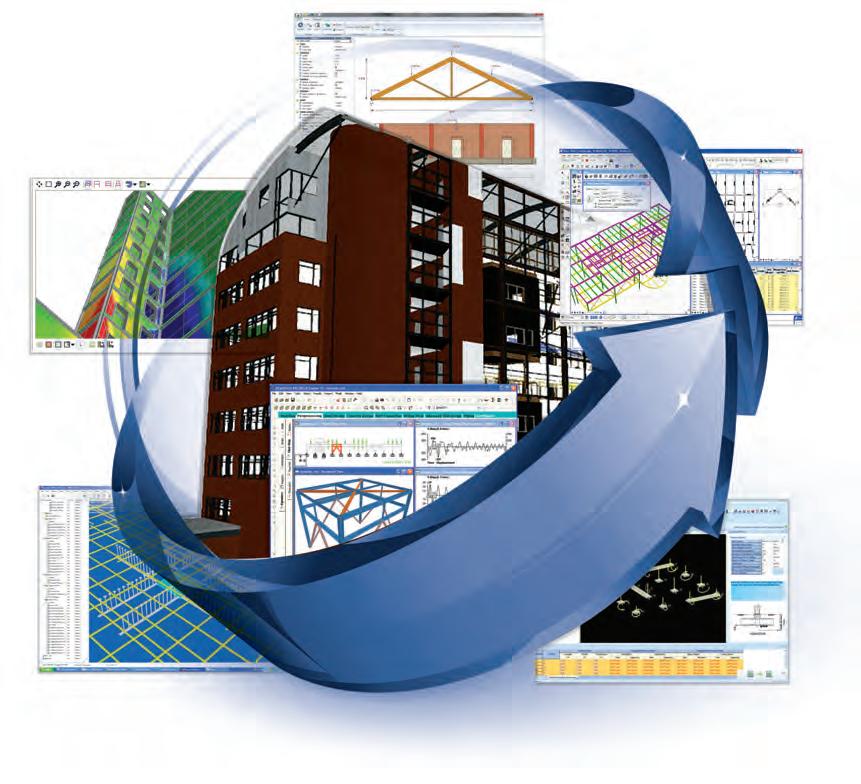
pi-SUITE
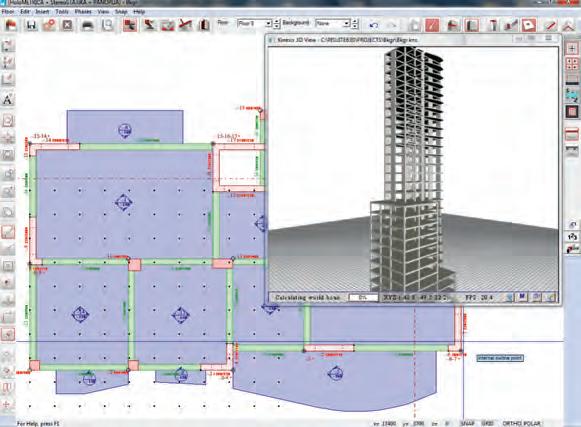
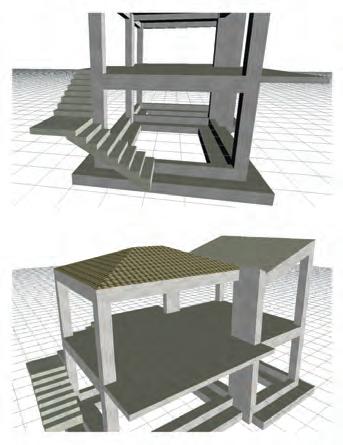
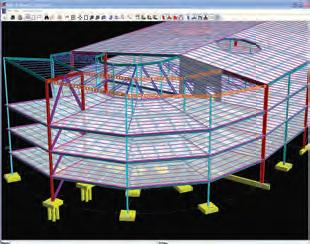
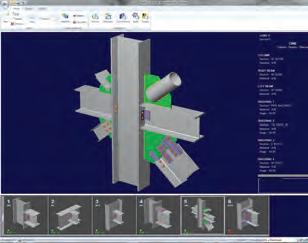
pi-SUITE is a family of very powerful software applications for buildings that was designed to cover every need of the modern structural engineer from the planning phase to the construction phase.
StereoSTATIKA
SeismicAnalysis - Design - Drawings
Import and Export for ETABS and Staad Pro
Exchange Geometry data and/or calculation and reinforcement design results
Ÿ
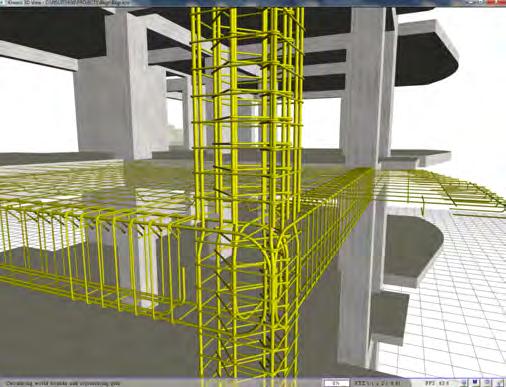
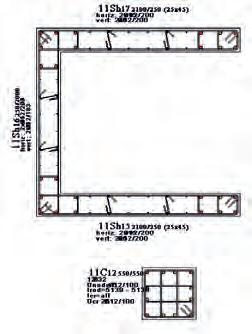
3D visualization of the actual reinforcement placement inside the structural elements.
Ÿ
Build your models faster and easier using PiSUITE > refined architectural tracing > instantly generating the 2D plan and realistic 3D Views of the STRUCTURE.
Ÿ
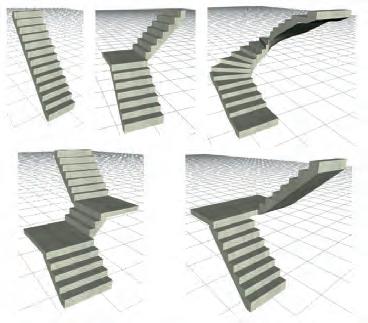
Supports most types of columns, beams, slabs, foundation, walls, openings, stairs, roofs, railings, coatings etc.
Ÿ
Supports various International design codes including EC-2, EC-3, EC-8, and Indian codes. MalaysiaAnnex of Eurocode coming soon.
Ÿ
Generates seismic loads automatically and supports seismic detailing as per EC-8.
Ÿ
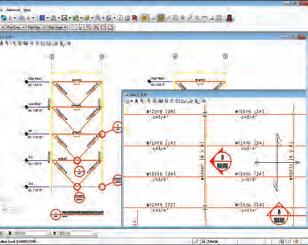
Generate all construction drawings/shop drawings and quantity surveying lists automatically.
Ÿ
Production of all drawings and quantity surveying reports for materials (concrete, reinforcements, formwork, insulation, masonry, openings, railings, plaster, floorings).
Ÿ
Dynamic update of production drawings whenever a change is made in the structural frame.
VR CAM Technologies Sdn Bhd
No: 79-1A, OG Business Park, JalanTamanTanYew Lai, 58200, Kuala Lumpur, Malaysia.Tel: +60(3)7782 3898/7785 8898/7782 8898 Web: http://www.vrctech.com For more information contact Mr. S. Nerandra 013-347-7317
pi-SYSTEMS international S.A. Fokianou 4, kallimarmaro, 116 35,ATHENS, GREECE
Tel: +30.210.7569600, e-mail :info@pi.gr Web: http://www.pi gr
Honouring Two Great Engineers
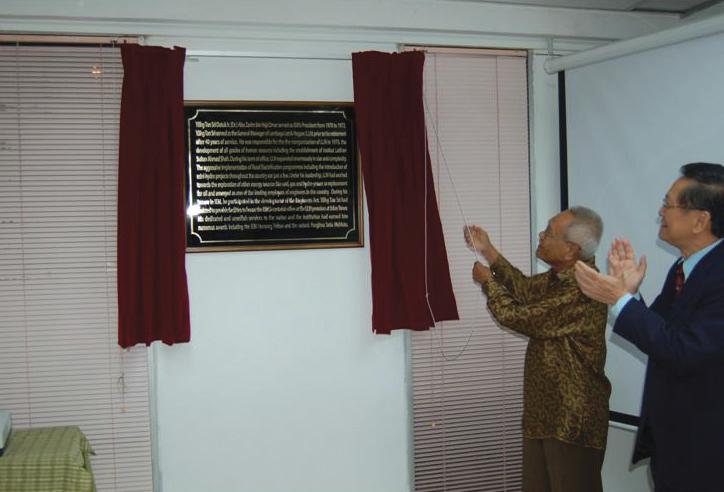
A historic event was held at Wisma IEM on 19 September 2011 where IEM named two rooms in honour of Y.Bhg. Tan Sri Dato’ (Dr) Ir. Hj. Abu Zarim bin Hj. Omar (IEM President from 1970 to 1972 and former LLN General Manager) and Y.Bhg. Academician Dato’ Ir. Lee Yee Cheong (IEM President from 1988 to 1990).
The naming of the rooms was also an acknowledgement of the support and contribution of Tenaga Nasional Berhad (TNB) and Academician Dato’ Ir. Lee towards the Wisma IEM Building Fund. TNB had contributed RM100,000 while Academician Dato’ Ir. Lee had contributed RM150,000.
TNB, previously known as the Central Electricity Board (CEB) and thereafter the National Electricity Board (LLN), had always had a special relationship with IEM from the early days of its inception way back in 1959. Several notable personalities from LLN had helmed IEM as Past Presidents, starting with the Late Ir. Raja Tan Sri Zainal bin Raja Suleiman, the Late Ir. Chan Khee Pok and the Late Ir. Wong Kin Hong. Each of them in their own way had left an indelible mark on the Institution and shaped its destiny.
Throughout the years, TNB has on many occasions worked very closely with IEM’s technical divisions to coorganise seminars and talks. It is IEM’s hope that such collaborative efforts will continue for the benefit of IEM members in particular and the engineering fraternity in general.
IEM is extremely privileged to have the presence of two of LLN’s great luminaries and IEM Past Presidents, Tan Sri Datuk Ir. Abu Zarim and Academician Dato’ Ir. Lee, to officiate the naming of the two rooms in their honour. These two past leaders of IEM are known for their great achievements and contributions in shaping the Institution.
by Ir. Choo Kok Beng
Tan Sri Datuk Ir. Abu Zarim, during and even after his tenure as IEM’s seventh President, took a very keen interest in the affairs of the Institution. In fact, before the IEM Secretariat Office moved to its permanent location upon the completion of Bangunan Ingenieur in 1979, Tan Sri Datuk Ir. Abu Zarim had arranged for the IEM Secretariat Office to be temporarily located at LLN’s premises in Jalan Timur, Petaling Jaya.
As IEM’s acknowledgement and appreciation of the contributions of TNB and Tan Sri Datuk Ir. Abu Zarim, the boardroom at the ground floor of Wisma IEM was named the Tan Sri Datuk Ir. Abu Zarim Hj Omar Boardroom.
Academician Dato’ Ir. Lee is no stranger to the IEM. During his tenure as the IEM President, Dato’ Ir. Lee was instrumental in bringing IEM to the world stage through the Institution’s active involvement in the Federation of Engineering Institutions in Southeast Asia and the Pacific (FEISEAP), the Commonwealth Engineers Council (CEC) and the World Federation of Engineering Organisations (WFEO). IEM has since been at the forefront of AFEO and FEIAP (formerly known as FEISEAP) and is one of the founder signatories of the Engineers Mobility Forum (EMF) due to the recognition accorded to the IEM in the international arena.
With his role as an academician and his vast contribution to the growth and development of science, technology and innovation, it is only apt and fitting for the Wisma IEM Resource Centre to be named the Academician Dato’ Ir. Lee Yee Cheong Resource Centre.
IEM is extremely grateful to TNB and Academician Dato’ Ir. Lee for their kind contributions. It is hoped that many more will come forward to assist IEM in realising its commitment towards nation building for future generations
sTAndinG commiTTEE on finAncE
40th Anniversary Dinner of The Institution of Engineers, Malaysia (Southern Branch)
ThE Institution of Engineers, Malaysia (IEM) Southern Branch recently held its Anniversary Dinner and Academic Presentation Night 2011 at the Persada Johor International Convention Centre, Johor Bahru, Johor. About 500 engineers, members and guests attended the dinner in conjunction with the 40th anniversary of the branch’s formation back in 1971.
The dinner was graced by His Majesty the Sultan of Johor, Sultan Ibrahim ibni Sultan Iskandar and Her Majesty Raja Zarith Sofiah binti Sultan Idris Shah. Also present were the Tunku Mahkota Johor, Tunku Ismail ibni Sultan Ibrahim; Tunku Temenggong, Tunku Idris ibni Sultan Ibrahim and the rest of the royal family.
The Johor state’s dignitaries who attended the dinner were the Chief Minister, Datuk Abdul Ghani Othman and his wife, Prof. Datin Paduka Dr Jamilah Ariffin; the Speaker of the Johor State Assembly, Dato’ Haji Mohamad Ali bin Hassan; and the State Secretary, Haji Obet bin Tawil.
Other distinguished guests include the Deputy President of IEM, Ir. Choo Kok Beng, who represented the IEM President, the Past President of the Institution of Engineers Singapore, Er. Dr Lock Kai Sang, heads of departments, technical agencies, local authorities and representatives of professional bodies in Johor.
Ir. Mohd. Khir bin Muhammad, Chairman of the IEM Southern branch, in his welcome speech said that IEM was honoured by the presence of His Majesty the Sultan of Johor, Her Majesty Raja Zarith Sofiah and the rest of the royal family. Pointing out that IEM has played an important role in the economic growth and development of the country since its inception in 1971, he said, “Our members have contributed significantly in the engineering, manpower and physical infrastructure development of the country including in Johor.”
The royal guests-of-honour and other guests were then entertained by an orchestra combining musicians and singers from Universiti Teknologi Malaysia (UTM) and Universiti Tun Hussein Onn Malaysia (UTHM).
A traditional Chinese fan dance was also performed by a group of UTM students for the royal audience. The group had earlier won a national level competition among local universities. Another interesting performance was the playing of the guzheng, a traditional Chinese string musical instrument, by the Oriental String Group.
As in previous years, IEM presented awards to the children of IEM members who had achieved excellence in their academic results and co-curriculum activities. Her Majesty Raja Zarith Sofiah gave away awards to 20 winners who had achieved excellent results in the Ujian Penilaian Sekolah Rendah (UPSR), Penilaian Menengah Rendah (PMR), Sijil Pelajaran Malaysia (SPM) and Sijil Tinggi Persekolahan Malaysia (STPM).
The highlight of the evening was the multimedia presentation of the 40-year history of the IEM Southern Branch. The presentation paid tribute to all the 20 past chairmen of the branch for their selfless contribution and voluntary services rendered to the branch and to the society at large.
It was then followed by a cake cutting ceremony by His Majesty Sultan Ibrahim and Her Majesty Raja Zarith Sofiah, together with Ir. Mohd. Khir, Ir. Choo and all the past chairmen of the branch who attended the event.
In appreciation to His Majesty the Sultan of Johor, the IEM Southern branch presented an electric bicycle (e-bike) to symbolise the institution’s support of the government’s effort to promote sustainable living and a healthy lifestyle. The dinner event was certainly well appreciated by the engineers as everybody lined up to meet and shake hands with the Sultan and the royal family towards the end of the function.
As the popular saying goes, life begins at 40. With the branch being 40 years “young”, it will continue to play a pivotal role in promoting the advancement of science and engineering, and contribute towards the betterment of the engineering profession particularly in the state of Johor
Group photo of DYMM Sultan of Johor and DYMM Raja Zarith Sofiah with the Deputy President, Chairman and Past Chairmen of the IEM Southern Branch
Cake cutting ceremony by His Majesty Sultan of Johor
IEM SoUThERn BRAnch
by Ir. Mohd. Khir bin Muhammad
28th conference of ASEAn Federation of Engineering organisations
ThE 28th Conference of ASEAN Federation of Engineering Organisations (CAFEO) was held at Melia Hotel in Hanoi, Vietnam, from 30 November to 2 December 2010. About 1000 engineers from the 10 ASEAN member countries attended the conference along with several observers from the World Federation Engineering Organization (WFEO), ASEAN Academy Of Engineering and Technology (AAET), engineering organisations from the United States, Japan, the Republic of Korea, China, India and other countries, as well as representatives from various institutions and businesses.
The tone of the gathering was well chosen as the theme was “Engineering and Technology for a Better Quality of Life in Response to Climate Change Challenges”, which aimed to identify engineering solutions on the use of Mother Earth’s resources and supporting technology advancement to bring prosperity and the comforts of life.
by Engr. Lee Cheng Pay and Engr. Shuhairy Norhisham
CAFEO has been held annually since 1982. The hosting has been rotated among its members with AFEO comprising the whole of ASEAN. Singapore was the latest to be admitted, thus the 27th CAFEO had been organised by the Institution of Engineers Singapore.
Hanoi is located on the right bank of the Red River, located 1,760km (1,090mi) north of Ho Chi Minh City. In October 2010, Hanoi officially marked 1000 years since the establishment of the city. On this particular occasion, Hanoi was named by Frommer’s travel guide as one of the world’s “Top Destinations for 2010”.
On the first day, the opening exhibits and paper presentation of the 28th CAFEO was officiated by the Deputy Prime Minister of Vietnam, Pham Gia Khiem, and was followed by country reports by the member organisations. Next, there was the AFEO Governing Board and AER Commission meeting in the afternoon.
28th CAFEO’s opening ceremony
One of the cultural performances during the welcoming dinner
Malaysian delegates at the 28th CAFEO at Hanoi, Vietnam
Dato Ir. Prof. Dr Chuah presenting the country report
yoUng EngInEERS SEcTIon, IEM
A total of 43 young engineers were accepted in the AER meeting as Associate ASEAN Engineers (AAE). Most of them were committee members of the Young Engineers chapters in their respective countries.
In the meantime, the Young Engineers of Asean Federation of Engineering Organisations (YEAFEO) gathering was held at another meeting room.
The technical sessions were held the following day and were separated into five main topics in line with the CAFEO 25 theme. These were:
1. Engineering and Technology for the Construction of Buildings and Infrastructures
2. Environmental Engineering and Technology
3. Energy, Mechanical, Electrical Engineering and Information Technology
4. Education and Training of Engineers
5. Engineering and Technology for Health, Safety and Management
AwARDS
The closing ceremony was held in the main ballroom of Melia Hotel on the third day. As in previous CAFEOs, delegates from each country, including observers, performed songs and dances. Several awards were given to the Malaysian delegates, namely:
Honorary Fellow
• Ir. Tan Yean Chin
• Ir. Yim Hon Wa
• Dato’ Ir. Rosaline Ganendra
• Dato’ Ir. Prof. Dr Zaini bin Ujang
Honorary Member
• Dato’ Hafsah binti Hashim ASEAN Outstanding Achievement Award (individual)
• Ir. Choo Kok Beng
The 28th CAFEO in Hanoi provided a valuable platform for the exchange of ideas and further deliberation on strategic plans and innovative engineering solutions to cope with climate change challenges. Delegates of the conference would be able to leverage on the wealth of information presented and develop appropriate action plans and solutions to meet local needs and situations in their respective countries.
Ir. Choo Kok Beng receiving the ASEAN Outstanding Achievement Award
Essential Project Management course
by Ir. Lee Boon Chong
ThE Project Management Technical Division (PMTD) of IEM, in collaboration with the IEM Sarawak Branch, organised a two-day course entitled “Essential Project Management” on 24 and 25 May 2011 at the IEM Sarawak Branch, Ultimate Professional Centre, in Kuching. A total of 28 participants attended the course. They comprised both IEM members and non-IEM members from various industries. The course was conducted by Ir. Lee Boon Chong, the current chairman of PMTD.
The course contents were closely referenced to PMBOK Guide, 4th edition, of the Project Management Institute (PMI), in addition to other important relevant topics. The course first covered the fundamental concepts and framework as well as project business linkages before moving to the five project management process groups, namely, initiation, planning, execution, monitoring and controlling, and closing.
Under the five project management process groups are the 42 project management processes juxtaposed into the nine knowledge areas, namely, project integration management, project scope management, project time management, project cost management, project quality management, project human resource management, project communications management, project risk management, and project procurement management. Important concepts, inputs, outputs, tools and techniques pertaining to each and every process were explained. This was supplemented with working examples, useful exercises, real-life case studies, and hands-on applications.
The course was intensive, but practical and interactive. The participants took an active part in the entire learning process, showing keen interest in various subject areas. They also gained by sharing their respective experiences and expertise. Feedback from the participants was positive. They learned the structured and integrated approaches, processes, tools and techniques applicable to managing each phase of the project lifecycle
PRoJEcT MAnAgEMEnT TEchnIcAl DIvISIon
Two-Day Energy Series Course (Part 2): REEM – An Overview of Electrical Energy Equipment Management and Application
by Ir. Mah Soo
I R Lam Sing Yew, Deputy Chairman of IEM EETD conducted Part 2 of the three-part course at the TUS Lecture Room, Wisma IEM, Petaling Jaya, on 25 to 26 May 2011. The course was attended by a total of 34 participants. This course, entitled “An Overview of Electrical Energy Equipment Management and Application”, was for Registered Electrical Energy Manager (REEM). He adapted the course structure to briefly cover the fundamental principles, equipment audit checklist guidelines and assessment approach, and applying the concept on plant equipment
The two-day program covered 12 different topics:
DAy 1:
1. Recap of REEM as an Energy Facilitator
2. Revisit of the electrical energy fundamental and design principles
3. Electrical equipment in Demand Management
4. Power Factor theory and application
5. High Efficiency Motors (HEMs)
6. Variable Speed Drives (VSDs)
DAy 2:
1. Energy Optimisation of Fans and Blower Systems
2. Energy Optimisation of Compressor System
3. Energy Optimisation of Cooling Tower System
4. Energy Optimisation of Air-Condition Mechanical Ventilation (ACVM) Systems
5. Electrical Energy Monitoring Equipment
6. Overview of Operational Performances Equipment Efficiency (OPEE)
During the course, Ir. Lam shared his knowledge on the strategy of associating load curves with the maximum electricity demand and electricity billing mechanism with the view of reducing electricity consumption and cost.
An audit checklist on Power Factor Correction was also introduced to monitor power factor in a typical electrical network, together with the penalty on non-compliance to the TNB Power Factor limit.
He then explained the concept of motor load and speed characteristics. Also discussed were the contribution to motor losses and what makes motors efficient. Using the Energy Audit Checklist, the trainer highlighted examples of energy improvement opportunities present with the application of HEMs. He went on to discuss briefly the speed control and maintenance aspects of induction motors.
With regards to VSD concept and application, he discussed the typical drive system configurations as well as the pros and cons of such applications. Sample case studies were also deliberated and discussed.
For a better understanding on an efficient fan and blower operation, the peak efficiency or Best Efficiency Point (BEP) and methodology for the calculation of fan efficiency were explained. Also presented was a systematic approach in choosing the right fan and the options for air flow control.
Ir. Lam also covered the topic on the optimisation of various electrical equipment systems such as compressors, cooling towers and Air-condition Mechanical Ventilation (ACVM) Systems.
Simple compressor capacity assessment and leak quantification methods were introduced. Discussions centred on the electrical energy compressor system audit field activities. One of the participants, Ir. Mohamad Sobri Ismail who is a REEM registrant, shared with the participants his experiences in one of his compressor energy optimisation projects. The session was very engaging and fruitful.
The final part of the course provided an overview of the ‘Operational Performance Equipment Efficiency’ (OPEE) in the effectiveness of monitoring and improving the manufacturing process. This part touched on the definitions of ‘Performance Factor’, ‘Availability Factor’ and ‘Quality Factor’ and their roles in the OPEE equation.
In his concluding remarks, Ir. Lam advised participants to “Let the energy Subject Matter Expert (SME) lead the easy way out!” He also reminded the participants on the upcoming Part 3 of the series which would focus on “Thermal Energy-Equipment Efficiency Management”.
The participants were actively engaged during the Q&A sessions. Maximum demand and power factor were among the hottest topics. The presenter responded well to the questions with clear explanations on how to manage the situation. He also highlighted that this represented the first line of activity in the electrical energy audit exercise
Evening Talk on “Managing Knowledge in an EngineeringBased Organisation – Awareness and A Perspective Overview”
A talk on the above subject, organised by the Chemical Engineering Technical Division, had the objective of creating awareness on knowledge management (KM) through an understanding of its conceptual principles and key implementation parameters
The event presented and described the conceptual principles and implementation parameters in the perspective of KM being defined as “a set of professional practices which improve the capabilities of an organisation’s human resources and enhances their ability to share what they know for the purpose of achieving the organisation’s objectives and business results”.
The speaker was Encik Agil Atan who had over 30 years of working experience, including at senior positions in the planning, design, engineering, procurement, inspection, construction, project management, and engineering maintenance in KM at Petronas.
Conceptually, KM practices involved the lateral convergence of processes (approaches and methods), technology (tools), and people (behaviour) aimed at capturing and delivering the right knowledge content to the right people, at the right time, and in the right context – all toward enabling them to make the best valued decision, exploit business opportunities and promote innovative ideas.
Such lateral convergence required the understanding of rudimentary concepts that included, among others, the distinctive meaning and value between data, information, knowledge, and wisdom (Knowledge Hierarchy), knowledge assets and their tacit and explicit nature (Types of Knowledge), and henceforth, the cycle of creating, storing, seeking, acquiring, using and learning knowledge (Life Cycle of Knowledge). The practices would enable the three groups of key parameters essential in implementing KM, namely, Knowledge Asset, Strategy/Governance, and Change Management.
As an executive operational tool, KM helped make available increased knowledge content in the development and provision of products and services, leverage the expertise of people across the organisation, solve intractable problems, manage intellectual capital and intellectual assets (e.g. engineering expertise and knowhow) in the workforce, facilitate and manage innovation and organisational learning, increase network connectivity between people, and manage business environments and allow employees to obtain relevant insights and ideas.
by Ir. Juares Rizal bin Abd Hamid
Past experiences by several established organisations had shown, generally, the bottom line benefits of pursuing KM – savings in business operating costs, reduction in research and development costs, facilitation in problemsolving and decision-making, improvement of executive processes, and reduction in technical mistakes.
In strategic planning, KM strategies had been used as the basis for building competitive strength and sustainable growth as part of the overall business strategy. In the short term, KM would contribute to improved exploitation of information and knowledge resources available to the company; in the long term, it would build a new foundation towards improved business advantage and strengthen capabilities for a sustainable future.
Implementing KM would thus require top management’s steering and commitment; it would additionally require – from all its members and at all functional levels – an appreciation and acceptance of the strategic value of data/ information/knowledge, capability and willingness to change and engage in KM team processes, a driving passion for improvement, and an acceptance of the openness for sharing data/information/knowledge.
In reflection and overview, KM in an engineering-based organisation would be about continually and effectively equipping its staff with pertinent knowledge and knowhow to strategically achieve and sustain best value performance in delivering business results. Knowledge and knowhow need to be harnessed and up kept toward establishing, improving, and/or accelerating staff and organisational capability, to achieve the targets of the organisational goals such as optimum assets performance, leadership development, capability building, and mindset and behaviour change.
Indicators of achievement would be, among others, such evident organisational characteristics as a management steered KM efforts, footed knowledge sharing and continual learning culture, creation of a knowledge-sharing environment, delivery of knowledge-based services, and maximising the value of intellectual capital
COngRATUlATiOns
The IEM Council would like to congratulate the Vice President of IEM, Ir. Choo Kok Beng, for being appointed as an Advisor to ISTIC by the Chairman, Y.Bhg. Academician Dato’ Ir. Lee Yee Cheong.
ThE 6th Chem-e-Car competition was jointly held by IEM and Universiti Teknologi PETRONAS (UTP) on 17 March 2011 at UTP’s campus in Tronoh, Perak. The competition marked another achievement by the Chemical Engineering Technical Division (CETD) of IEM as the participation by 31 teams was at a record high since the competition was introduced in 2005
With 31 competing teams representing 15 Institutions of Higher Learning (IHL) this year, the Chem-e-Car competition has become the competition for Chemical Engineering undergraduates. Aimed at providing a stage for undergraduates from universities and colleges to showcase their engineering ability, the competition also stresses on the participants’ creativity on the performance of a model car powered by self-built chemical cell or fuel cell as its propulsion system. The power required to drive the model car must be generated or converted from chemical energy.
The Chem-e-Car competition focuses on the concept of present engineering education which emphasises on hands-on, creativity, active and continuous concepts. In addition, the competition does not focus on speed, but rather on the ability of the model car to transverse a specified distance whilst carrying a specific load of water (100ml to 500ml).
The load and distance are only revealed about one hour prior to the start of the competition. The model car that comes to a stop nearest to the designated line/distance would be declared the winner. It was therefore a test on accuracy and the participants’ ability to calibrate their model cars on the spot, which inculcates flexibility and adaptability in the students.
This year, the rules were further improvised as both the distance and load were different during the first and second attempt, thereby requiring the participants to be quick on their feet to recalculate the formulas and recalibrate the model cars. A two-minute time limit for the model car to complete the distance was also implemented to ensure that the competition was tighter, which meant that the students had to be diligent in their calibration.
Out of the 31 teams, there was one international team from Institut Teknologi Sepuluh Nopember from Indonesia who participated for the first time in the competition. The participation of international teams started since 2010. The Institut Teknologi Sepuluh Nopember team, Spe-K-Tronics, performed very well by placing second in the poster competition. The poster competition was duly won by Blue Synergy from Universiti Malaysia Pahang.
ChEMiCAl EnginEERing TEChniCAl DivisiOn
All teams were intensely competitive and gave their best effort including those who participated for the first time. SEGi University College placed third in their first attempt at the competition. UiTM’s Boys Over Flowers put up a great show to win the second spot, the first time they have ever been on the winners’ platform. Universiti Kebangsaan Malaysia, via their team Thousand Sunny, worked hard to recapture the title which they last won during the inaugural competition in 2005. The winner received a cash prize of US$1,000, while the second and third place winners received cash prizes worth US$750 and US$500 respectively.
The result of the 2011 car competition is presented in Table 1. Real-time announcement of the results made electronically was also introduced for the first time which added to the intensity of the competition.
Table 1: Competition Results 2011
The poster competition, held after the model car competition, was aimed at encouraging the undergraduates in public speaking and to polish their presentation skills. Participants were given 10 minutes to present their model cars and describe the propulsion system, as well as the innovative and creative ideas they have made in areas such as propulsion system, safety, environmental issues, efficiency, etc.
This year, the poster competition was made more structured with specific percentages allocated to the various criteria:
• Description of the chemical reaction/power source/ stopping mechanism (20%)
• Design creativity and unique features of the vehicle (20%)
• Environmental and safety features (20%)
• Economic aspects (20%)
• Quality of the poster and team member presentations (20%)
Besides the competition itself, UTP also played host to a pre-competition dinner held on 16 March 2011. Engineering students from UTP had put up a superb performance of songs, dance and martial art skills to awe the audience. The performance clearly put an end to the “stereotype” image of engineering students as being dull and boring.
The IEM Immediate Past President, Y.Bhg. Dato’ Ir. Prof. Dr Chuah Hean Teik, officiated the opening ceremony accompanied by the Rector and Chief Executive Officer of UTP, Datuk Dr Zainal Abidin bin Haji Kasim. IEM Vice President, Ir. Yim Hon Wa closed the ceremony and presented the prizes together with Dr Hilmi Mukhtar, UTP’s Director of Transformation Office.
The Organising Committee would like to thank and congratulate UTP for a great show, its warm hospitality as well as being a very good host. The former also wishes to express its gratitude to the judges, the IEM Secretariat and others for making the event a success.
The CETD is proud to acknowledge that the competition had created tremendous interest in the IHLs, with a number of them stepping forward to indicate their interest to host the next competition. After evaluating the proposals from the various IHLs, the CETD has awarded Universiti Malaysia Sabah as the next host for the upcoming 7th Malaysian Chem-e-Car competition scheduled in April 2012
Solution for 1Sudoku published on page 12 of this issue.
Intelligent Structural Design
Model, Analyse,
Design, Document
and Deliver… in an Integrated Workflow
Having all the applications you need for the tasks at hand, along with the ability to easily synchronise your work with the rest of the project information, helps you get your job done right, fast and profitably. And when the structural project workflow can be integrated, the whole team benefits.
In addition, Bentley’s Passport Subscriptions for structural engineers provide access to this wide range of structural software as an affordable alternative to traditional licensing, and include the software, upgrades, and information most projects require.
With RAM™, STAAD®, Prostructures and AutoPIPe®, Bentley offers:
l Multi codes – eurocodes, UK, US…
l Steel / composite design
l Concrete design – RC & PT
l Integrated foundation design
l Integrated connection design
l Integrated timber design
l Integrated pipe stress analysis design
l Integrated structural drawings and details
l Integrated steel and concrete detailing
… all easily coordinated with the Architect and other team members and their design applications – such as AutoCAD, Revit, MicroStation® and more.
A Pictorial Presentation of Activities and Events
Excomm mEETing on 14 novEmBER 2011
BAli villAgE commUniTy PosTing PRoJEcT on 29 dEcEmBER 2011
Bagan nakhoda omar, sabak Bernam, selangor
Bangunan ingenieur, Petaling Jaya
cAfEo 29 on 30 novEmBER 2011
Bandar seri Begawan, Brunei darussalam
slope Remediation and Protection challenge 2011
civil engineering team ‘CI 08’ from Universiti Tunku Abdul Rahman (UTAR) has emerged as champions in the Nehemiah Design Competition 2011. The team, comprising Ng Kim Yeong, Ang Lip Hong, Bernard Wong King Hieng, Huan Han Cheong, Hew Yi Wen, Ngio Hua Jian, Ooi Zhong Yi, Sim Jiun Leong, Sim Teong Piao and Tan Soon Haw, walked away a cash prize of RM5,000 and a plaque, at the annual event jointly organised by Nehemiah Reinforced Soil and the Department of Civil Engineering, Faculty of Engineering, Universiti Malaya.
Prize Winners
1st Prize:
RM5,000 cash and a plaque
2nd Prize:
RM3,000 cash a plaque
3rd Prize:
RM2,000 cash a plaque
Winner: ‘CI 08’ from UTAR
Winner: ‘One Six Seven’ from Universiti Malaya
Winner: ‘AAVA’ from Lagenda Education Group
The event, which was held at the Dewan Tunku Cancelor, Universiti Malaya, had attracted both public and private institutions of higher learning from as far as Kedah in the north and Johor in the south.
The first runner-up, which won a cash prize of RM3,000 and a plaque, went to the host university’s team, ‘One Six Seven’, while team ‘AAVA’ from Lagenda Education Group took home a cash prize of RM2,000 and a plaque for being the second runner-up.
According to the Organising Chairman, Senior General Manager of Nehemiah Reinforced Soil Sdn Bhd, Ir. Tan Cheng Chong, Universiti Malaya was picked as the venue this year because it is the alma mater of founder and managing director of Nehemiah Reinforced Soil, Ir. Dr Nehemiah Lee Chee Hai.
“This year, the competition has attracted a good deal of response,” he said. “We have selected a total of 12 teams from both private and public institutions of higher learning to enter this competition as finalists. The judging was a difficult task and the winners deserved the prizes. However, those who had participated but did not win should congratulate themselves because they were willing to work hard and do their best.”
The objective of the competition was to encourage civil engineering students to look for creative solutions when dealing with challenging engineering problems. The challenge, Tan added, was based on a real-life scenario in which the participants had to imagine themselves as designers working with the JKR Slope Division. “The students were tasked with the challenge of solving the problem of major erosion and landslides that are destructive to both lives and properties in a particular location,” he said.
Their task was to propose a solution that would be practical in view of logistics and accessibility constraints with emphasis on time and cost savings. In view of the impending monsoon season, their task became extremely pressing in order to avoid another disaster. Students had to work in teams to look for creative and innovative solutions that would be both structurally sound and aesthetically pleasing by incorporating ‘green technology’ features.
Judges for the competition were Dato Ir. Dr Ashaari bin Mohamad from Road Engineering Association Malaysia, Ir. Liew Shaw Shong from IEM, Ir. Kok Chan Wah from Master Builders Association of Malaysia, and Mohammed Ridzuan bin Jahidin from the Institute of Highway and Transportation
More information about the Nehemiah Design Competition can be obtained from www.nehemiahwalls.com
congRATUlATions
The IEM Council wishes to congratulate Ir. Lim Kok Khong (M09011) on the conferment of AFEO Honorary Fellow and Syarikat Mengurus Air Banjir dan Terowong Sdn Bhd and Department of Irrigation and Drainage on receiving the ASEAN Outstanding Engineering Achievement Award for Construction and Design of the Stormwater Management and Road Tunnel (SMART) Project on 30 November 2011 at CAFEO 29, Bandar Seri Begawan, Brunei Darussalam.
From left to right: Ir. Prof. Prak Min (AFEO Vice Chairman), Dato Paduka Haji Idris bin Abas (AFEO Chairman), Ir. Lim Kok Khong and Academician Dato’ Paduka Ir. Prof. Dr Keizrul bin Abdullah (AFEO Secretary General)
From left to right: Ir. Prof. Prak Min (AFEO Vice Chairman), Dato Paduka Haji Idris bin Abas (AFEO Chairman), Academician Dato’ Paduka Ir. Prof. Dr Keizrul bin Abdullah (AFEO Secretary General), Dato’ Ir. Lim Chow Hock, Ir. Abdullah bin Isnin and Ir. Mohd. Noh bin Sarip
Trekking in the Swiss Alps
My wife and I had spent 10 days trekking in the Swiss Alps. There were six others in our group. We gathered at Chamonix, a small French town near the border of Italy and Switzerland, and started trekking from there.
Chamonix is situated in a river valley near the base of Mont Blanc which, at 4807m, is the highest peak in the Alps. The first Winter Olympics was held here in 1923. Some of us came to Chamonix a couple of days before the commencement of the trek, and we spent one day taking a cable car ride from Chamonix at 1035m up to Aiguille du Midi at 3842m. Completed in 1955, this cable car had the distinction of being the highest cable car in the world for almost two decades. It still retains the distinction of having the greatest rise of 2807m.
We thoroughly enjoyed the time spent at the observation deck on Aiguille du Midi, being spell-bound by the spectacular views of lofty snowy mountains and deep valleys around us. It was a beautiful sunny morning and many people had taken the ride to Aiguille du Midi to enjoy the views. We could see groups of mountaineers, both professionals and amateurs, testing their skills on the glaciers and ice field below and beside us. Rock climbers were there too scaling sheer bare rocks and then abseiling down from the peaks.
From Aiguille du Midi, we took another cable car ride across the ice field to Punta Helbronner on the FrenchItalian border. A third cable car took us down to the Italian village of La Palud in the valley. From there, we took a bus to Courmayeur to have lunch before returning to Chamonix by bus.
Our trek actually started from a little village known as Le Tour located about 15km from Chamonix. Le Tour is in France but is very close to Switzerland. In fact, on the first day of trekking, led by a female Swiss guide, we took less than 2½ hours to reach Col du Balme, the first mountain pass on our trek, before standing astride the international boundary between France and Switzerland. From there, it was a steady descent over varying terrain to the village of Trient in the next valley where we put up the night.
A Swiss woman from Geneva joined our group right from the beginning. Unlike trekking in Nepal, we had no porters to carry our main luggage from one village to the next. Instead, our main luggage was transferred by van as all the villages on our trekking route are connected by road. Only on Days 3 and 4, when we had to put up the night in high mountain huts instead of village lodges, did it become necessary for us to carry more weight on our daypacks.
by
Our typical daily routine ran something like this: commencement of trekking after breakfast, spending the rest of the morning struggling against gravity to reach the mountain pass, and then descending all the way to the next village, making several stops on the way for rest and lunch. The scenery varied from place to place and from day to day though.
We had some friction with our lady guide. She commented that we were the slowest group she had ever led in her career as a mountain guide. I told her that we had come to enjoy the walk and the views, not to challenge one another or to prove anything. My wife and another member of our group were “advised” not to trek for several days because they were slow. She even told my wife, who had some problem with her knee and therefore could not go downhill fast, that she should have gone kayaking instead. She also stopped me from trekking for 2½ days just because I always lagged behind to take pictures!
Our trek ended in Zermatt at the foot of Matterhorn. Despite the hiccups, my friends and I had a good time in the Alps and we thoroughly enjoyed the trek
Ir. Chin Mee Poon
Date: 19 December 2011
To All Members,
CANDIDATES APPROVED TO SIT FOR YEAR 2012 PROFESSIONAL INTERVIEW
The following candidates have been approved to sit for the Professional Interview for 2012.
In accordance with Bylaws 3.9, the undermentioned names are published as having applied for membership of the Institution, subject to passing the year 2012 Professional Interview.
If any Corporate Member of the Institution has any reason as to why any of the candidates is not a fit and proper person for election, he should communicate in writing to the Hon. Secretary. Such communication should be lodged a month from the date of publication.
Ir. Prof. Dr Lee Teang Shui Honorary Secretary,
The Institution of Engineers, Malaysia
NEW APPLICANTS
Name Qualifications
CIVIL ENGINEERING
AHMAD SHAHRIL AZLI
BIN IDRIS BE HONS (UiTM) (CIVIL, 2004)
JAFIRUSNY BIN
JAMALUDIN BE HONS (USM) (CIVIL, 2001)
JONG KIAN KIAW BE HONS (UPM) (CIVIL, 2002)
LAW SIE DING BE (CURTIN) (CIVILCONSTRUCTION, 2006)
LEE KAR GUAN BE HONS (UTTHO) (CIVIL, 2006)
MOHAMAD FADLY BIN ROSLI BE HONS (UITM) (CIVIL, 2006)
TAN CHOO YONG @ BRIANBE HONS (PORTSMOUTH) (CIVIL, 2001)
ELECTRICAL ENGINEERING
FAIRIZAT BIN ABU HASANBE HONS (UM) (ELECTRICAL, 2004)
MOHAMED SYAIFUL EZHAM
B MOHAMED ZINI BE HONS (SOUTHAMPTON) ELECTRICAL, 2002)
MOHD FAROUK BIN MOHD YUSOF BE HONS (SOUTHAMPTON) (ELECTRICAL, 1997)
MOHD ZAMZAM BIN AMIRBE HONS (UTM) (ELECTRICAL, 2002)
WONG JIAN CHOONBE HONS (UMS) (ELECTRICAL & ELECTRONICS, 2005)
MECHANICAL ENGINEERING
NAWAL ASWAN BIN ABDUL JALIL BE HONS (SOUTHAMPTON) (MECHANICAL, 2001)
22714WONG YEW CHINGBE HONS (PORTSMOUTH) (CIVIL, 2001)
29252YONG HONG LEEBE HONS (UTM) (CIVIL, 2004)
ELECTRICAL ENGINEERING
44565ASHWIN
THURAIRAJAH ME HONS (IMPERIAL) (ELECTRICAL, 2006)
24096KHAIRIL NAZHAR BIN AMRAN BE HONS (UITM) (ELECTRICAL, 2004)
Kindly note that the scheduled events below are subject to change. Please visit the IEM website at www.myiem.org.my for more information on the upcoming events.
Graduates and Student – The Young Engineers Section, IEM
3 March 2012 (Saturday)
Talk on Business Ethics and Corporate Governance – What Is It and Why Does It Matter to Engineers
Time : 9.30am – 12.00nn
Venue : Auditorium Tan Sri Prof. Chin Fung Kee, 3rd Floor, Wisma IEM, Petaling Jaya
Speaker : Tan Sri Dato’ Seri Hj. Megat
Najmuddin bin Datuk Seri Dr Hj. Megat Khas (MICG) (Walk-in registration)
Graduates and Student – The Young Engineers Section, IEM
24 March 2012 (Saturday)
Talk on The Leadership Journey –My Experience
Time : 9.30am – 12.00nn
Venue : C&S and TUS Lecture Room, 2nd Floor, Wisma IEM, Petaling Jaya
Speaker : Datuk Dr Zainal Abidin bin Hj. Kasim (VP of UTP) (Walk-in registration)
TRANSFER APPLICANTS
M’ship No. Name Qualifications
33963KHOO JUN CHIEHBE HONS (UNITEN) (ELECTRICAL, 2007)
21076LEE CHING HINBE HONS (UM) (ELECTRICAL, 2002)
37881LEONG CHOONG YEOW BE HONS (UNITEN) (ELECTRICAL, 2008)
41155MOHAMAD PAUZI BIN MOHAMED KASSIM BE HONS (UTM) (ELECTRICAL, 2007)
28009NOR AZAM AZIZ BIN BOGAL BE HONS (UTM) (ELECTRICAL, 2001)
49274AL-NAZMI BIN ABDULLAH M.E.HONS.(BRISTOL) (MECHANICAL,09)
49621LEONG YEW HONM.E.HONS.(NOTTINGHAM) (MECHANICAL,09)
ERRATA
The following candidate’s approval for the Professional Interview should be in the Instrumentation and Control Engineering discipline and not Electrical as stated in the December issue.
NEW APPLICANT
INSTRUMENTATION AND CONTROL ENGINEERING
MOHD ZURIX BIN MOHAMEDBE HONS (UTP) (ELECTRICAL & ELECTRONICS, 2004)
ADMISSION TO THE GRADE OF GRADUATE M’ship No. Name Qualifications
49632RAJESHPARAN A/L RANGARAJ B.TECH.HONS.(USM) (QUALITY CONTROL & INSTRUMENTATION,01)
ADMISSION TO THE GRADE AS AFFILIATE MEMbER
M’ship No. Name Qualifications
CIVIL ENGINEERING
49307JAMES ALAN VANDERWAAL B.SC.HONS.(MONTANA) (FORESTRY, 1978) M.SC.(OREGON) (1983) M.BA.(HERIOT-WATT) (2001)
DONATION LIST TO THE WISMA IEM bUILDING FUND
43rd Announcement
The Institution would like to thank all contributors for donating towards the Wisma IEM Building Fund. Members and readers who wish to donate can do so by downloading the form from the IEM website at http://www.myiem.org.my or contact the IEM Secretariat at +603-7968 4001/5518 for more information. The list of the contributors as at 30 November 2011 are shown as in table below.
CONTRIbUTIONS TO WISMA IEM bUILDING FUND
RM1,784,893.70 from ieM Members and Committees RM571,502.00 from Private organisations
total RM2,356,395.70 (aNotheR RM9,793,604.30 is Needed)
The Institution would like to thank all contributors for donating generously towards the IEM Building Fund HELP US TO PROVIDE BETTER SERVICES TO YOU AND TO THE FUTURE GENERATION (The donation list to the Wisma IEM Building Fund is published on page 47)
Powerful Features of EWO3D :
1. Build-in new 3D engine for better visualization.
2. Read Spot Level & Points (with / without Z value), including problematic 2 entities spot level.
3. Build-in Contour Converter (to spot level).
4. Auto Slope—Berm enhancement.
4. Auto-Balance and auto-propose new level.
6. Result can be traced and interpolated easily.
1. Branch & Loop system.
2. Support 1,000 nodes / pipes & above.
3. Design & Detailing with Valve & Pump
4. Multiple case :Average Flow , Fire Flow and more
5. Auto Water Demand Calculator
1. Auto-Drop Manhole.
2. Fix gradient / size of Pipe.
3. Report required by IWK 4. Open channel and box culvert
5. MSMA build in for Main Drain Design
6. Report required by JPS.
1. Pond Design to MSMA Guideline (Rational ,Time Area ,Temporal Pattern ) 2. OSD Above / Below Ground.