3,200/page

Circulation & Readership Profile
The publisher reserves the right to edit, revise or reject any advertisement deemed unsuitable or inappropriate. •
This one-time-only special rate o er is for new advertisers.
Space availability is subject to booking on a first-come-first-served basis.
Clients will provide ready-to-print artwork in PDF format with 300dpi.
Full page: 210mm x 297mm, 3mm extra bleed sizes for 4-sided.
Advertising space must be utilised before 30 June 2026.
*Please note that the above rate will be subjected to 8% SST. For overseas advertisers, an additional 25% will be charged.
Rate shown above excludes 15% advertising agency commission.
Payment term: Full advance payment.
Artwork submission deadline is on (or before) the 1st week of the prior month of publication.
After the material deadline, no cancellation or alteration to the advertisement will be entertained.
Any cancellation after signing the advertising order will result in a 50% penalty charge.
JURUTERA has an estimated readership of 200,000 professionals. Our esteemed readership consists of certified engineers, decision making corporate leaders, CEOs, government officials, project directors, entrepreneurs, project consultants, engineering consulting firms and companies involved with engineering products and services.
Publica�on month/s:
Company’s Stamp & Authorised Signature
Date

















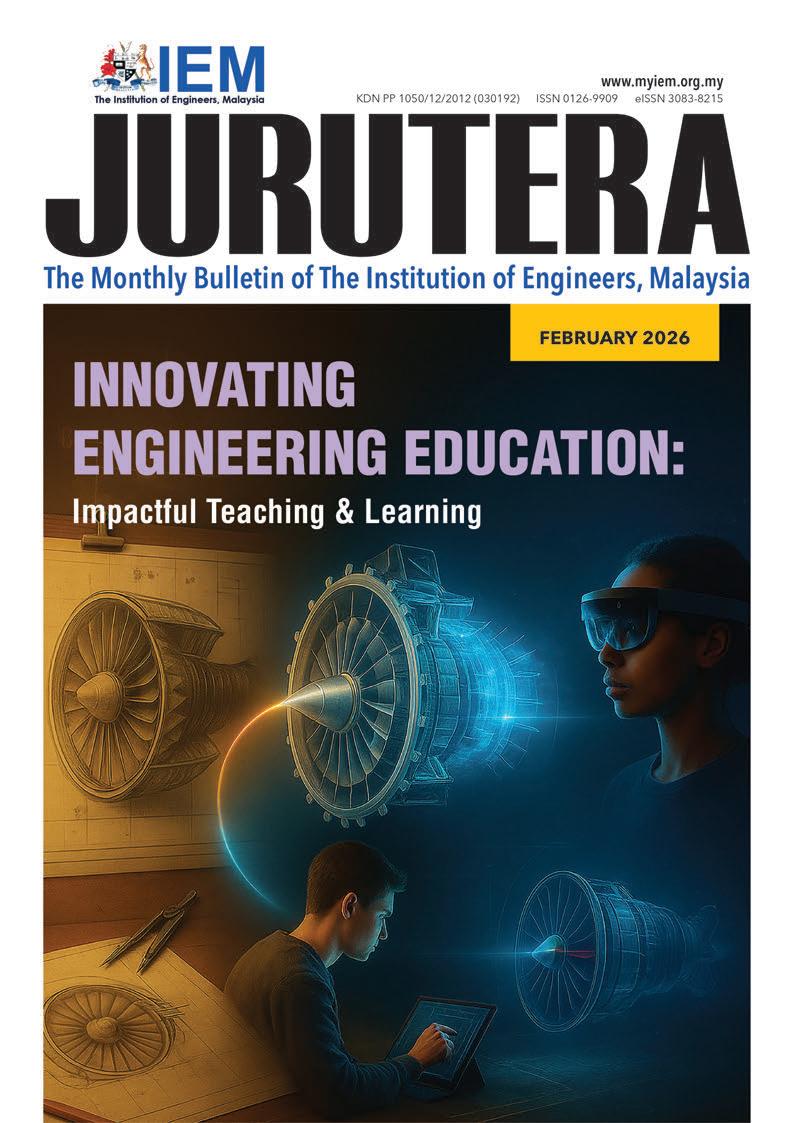
Engineering education is at a pivotal moment. Rapid technological advancement, the rise of digital tools, and evolving industry expectations are reshaping how engineers are being trained for the future. In this February 2026 issue of JURUTERA , the Engineering Education Technical Division is proud to present the theme, Transforming Engineering Education: The Impact of Innovative Teaching and Learning Approaches. We will explore how forward-looking pedagogies, from outcome-based education, experiential and project-based learning to the integration of digital platforms, AI-enabled tools, and industry-linked curricula, are redefining the learning experience and better preparing graduates for an increasingly complex engineering landscape.
As we usher in this edition, we also take the opportunity to extend Chinese New Year greetings to all our readers, contributors, and members. May the Year of the Horse bring you good health, prosperity, wisdom, and renewed energy to pursue excellence in engineering and lifelong learning. The Institution of Engineers, Malaysia looks forward to continued engagement with our community as we collectively advance the transformation of engineering education for the benefit of society and the profession. Happy Chinese New Year and Gong Xi Fa Cai!







President: Ir. Prof. Dr. Jeffrey Chiang Choong Luin
Deputy President: Ir. Yau Chau Fong
Vice Presidents:
Ir. Prof. Dr. David Chuah Joon Huang, Dato’ Ir. Wan Nazari Wan Jusoh,
Ir. Dr. Bernard Lim Kee Weng, Ir. Prof. Dr. Tan Chee Fai, Ir. Prof. Dr. Lau Hieng Ho, Ir. Yeong Chin Chow, Simon, Ir. Abdul Razak Yakob
Honorary Secretary: Ir. Chen Harn Shean
Honorary Treasurer: Ir. Prof. Dr. Wong Yew Hoong
Immediate Past President: Ir. Prof. Dr. Norlida Buniyamin
Past Presidents:
Datuk Ir. Prof. Ow Chee Sheng, Academician Tan Sri Dato’ Ir. Prof. Em. Dr. Chuah
Hean Teik, Dato’ Ir. Dr. Lim Chow Hock, Ir. Dr. Tan Yean Chin, Ir. Ong Ching Loon
Civil Representative: Ir. Tu Yong Eng
Mechanical Representative: Ir. Ng Yong Kong
Electrical Representative: Ir. Mohd. Aman Hj. Idris
Structural Representative: Ir. Dr. Tan Kuang Leong
Chemical Representative: Ir. Kim Kek Seong
Other Disciplines Representative: Ir. Dr. Dhakshyani Ratnadurai
Multimedia Representative: Ir. Assoc. Prof. Dr. Lai Khin Wee
Women Engineers Representative: Ir. Dr. Syuhaida Ismail
Young Engineers Section Representatives: Mr. Lim Yiren, Mr. Darshan a/l Balasubramaniam, Ms. Ong Ye Shian, Mr. Chuah Pei Lim, Mr. Teoh Chi Yang
Council Members:
Ir. Sharifah Azlina Raja Kamal Pasmah, Ir. Ts. Dr. Wan Syakirah Wan Abdullah, Ir. Dr. Mui Kai Yin, Ir. Shamil Abu Hassan, Ir. Ts. Wan Rizaluddin Abdullah Wan Ali, Ir. Dr. Aidil Chee Tahir, Ir. Dr. Angelia Liew San Chuin, Ir. Prof. Dr. Zuhaina Zakaria, Ir. Begum Irdawati Dowlad Rahuman, Ir. Chong Chee Yen, Ir. Khoo Chee Min, Ir. Ahmad Rafidi Mohayiddin (casual vacancy for Ir. Abdul Razak Yakob), Ir. Dr. Chan Swee Huat, Ir. Alex Looi Tink Huey, Ir. Sukhairul Nizam Abdul Razak, Dato’ Ir. Ting Chek Choon, Ir. Dr. Norashikin M Thamrin, Ir. Lee Cheng Pay, Datuk Ir. Chin Tet Fu @Willy, Ir. Ts. Gs. Br. Dr. Zarabizan Zakaria, Ir. Choo Lay Guat, Ir. Dr. Siow Chun Lim, Ir. Assoc. Prof. Dr. Leong Kah Hon, Ir. Ts. Dr. Sara Lee Kit Yee, Ir. Chan Wah Cheong, Ir. Dr. Marianah Masrie
Council Members by Invitation:
Datuk Ir. Ho Hon Sang, Dato’ Ir. Ahmad Sabirin Arshad, Ir. Dr. Sanjayan K.V. Velautham
Branch Chairman
1. Penang : Ir. Dr. Lee Choo Yong
2. Southern : Ir. David Puen Ming Shen
3. Perak : Ir. Dr. Tiah Oon Han
4. Pahang : Ir. Harzah Mazni Ramli
5. Kedah-Perlis : Ir. Jamaluddin Abdullah
6. Negeri Sembilan : Ir. Richard Khoo Nee Keong
7. Kelantan : Ir. Hj. Nik Burhanuddin Nik Yusoff
8. Terengganu : Ir. Zakaria Abdullah
9. Melaka : Ir. Lim Su Hian
10. Sarawak : Ir. Dr. Angelia Liew San Chuin
11. Miri : Ir. Meheron Selowara Joo
12. Sabah : Datuk Ir. Ts. Mohd Yaakob Hj. Jaafar
Chairman, InfoPub & Chief Editor: Ir. Prof. Dr. Lau Hieng Ho
Vice Chairman & Principal Bulletin Editor: Ir. Ts. Wan Rizaluddin Abdullah Wan Ali
Secretary: Ir. Ts. Assoc. Prof. Dr. Hum Yan Chai
Chairman, Sub Committee on Resource Centre: Ir. Tay Siang Hui
Journal Editor-in-Chief: Ir. Ts. Prof. Dr. Teo Fang Yenn
Chairman, Sub Committee on Web Portal: Ir. Dr. Hasril Hasini
Project Leader for Jurutera-i: Ir. Alex Looi Tink Huey
Committee
Members:
Ir. Ts. Dr. Tan Kim Seah, Ir. Lau Tai Onn, Ir. Yee Thien Seng, Ms. Michelle Lau Chui Chui, Ir. Begum Irdawati Dowlad Rahuman, Ir. Dr. Nor Ilia Anisa Aris, Ir. Ts. Wong Chee Fui, Ir. Dr. Marianah Masrie, Ir. Dr. Lau Chee Yong, Ir. Dr. Bhuvendhraa Rudrusamy, Ir. Razmahwata Razalli, Ir. Lee Chang Quan, Ir. Assoc. Prof. Dr. Moey Lip Kean, Ir. Tan Kok Jyh, Ms. Chai Jing Xuan, Mr. Chin Zehong, Ir. Ts. Dr. Lau Chee Yong
Chief Editor: Ir. Prof. Dr. Lau Hieng Ho
Principal Bulletin Editor: Ir. Wan Rizaluddin Abdullah Wan Ali Committee Members:
Ir. Alex Looi Tink Huey, Ir. Dr. Tan Kim Seah, Ir. Razmahwata Mohd Razalli, Ir. Prof. Dr. Teo Fang Yenn, Ir. Lau Tai Onn, Ir. Yee Thien Seng, Ms. Michelle Lau Chui Chui, Ir. Ahmad Rafidi Mohayiddin, Ir. Lee Chang Quan, Dr. Sudharshan N. Raman, Ir. Begum Irdawati Dowlad Rahuman, Ir. Ts. Dr. Lau Chee Yong
THE INSTITUTION OF ENGINEERS, MALAYSIA
Bangunan Ingenieur, Lots 60 & 62, Jalan 52/4, P.O. Box 223, (Jalan Sultan), 46720 Petaling Jaya, Selangor Darul Ehsan. Tel: 603-7890 0130 Fax: 603-7957 7678
E-mail: sec@iem.org.my Homepage: http://www.myiem.org.my

Ir. Ts. Dr. Dhakshyani Ratnadurai Chairman, E2TD
For this issue of JURUTERA Bulletin, IEM’s Engineering Education Technical Division (E2TD) presents Transforming Engineering Education: The Impact of Innovative Teaching & Learning Approaches. As the engineering field continues to advance, our educational philosophies, curricula, and learning environments must evolve to equip future engineers with the competencies needed to address emerging global challenges. This transformation requires a re-examination of existing pedagogical models and the incorporation of innovative, student-centred approaches such as blended learning, project-based experiences, virtual and remote laboratories, industryintegrated learning, and digital learning ecosystems. These are essential for cultivating higher-order thinking, creativity, teamwork, communication, and lifelong learning.
Through lecture series, webinars, physical talks, technical visits and STEM activities, E2TD aims to inspire educators to share innovative practices, evaluate their effectiveness, and chart new directions for educational improvement.
DIMENSION PUBLISHING SDN. BHD. [ 199701034233 (449732-T) ]
Level 18-01, PJX-HM Shah Tower, No. 16A, Persiaran Barat, 46050 Petaling Jaya, Selangor Darul Ehsan, Malaysia. Tel: +(603) 7493 1049 E-mail: info@dimensionpublishing.com Fax: +(603) 7493 1047 Website: www.dimensionpublishing.com
Chairman Robert Mebruer
CEO/Publisher Shirley Tham shirley@dimensionpublishing.com
Head of Marketing & Business Development
Joseph How joseph@dimensionpublishing.com
Production Editor Tan Bee Hong bee@dimensionpublishing.com
Contributing Writers Putri Zanina putri@dimensionpublishing.com
Hanna Sheikh Mokhtar hanna@dimensionpublishing.com
Senior Graphic Designer Sofia Hanis Mohd Uzir sofia@dimensionpublishing.com
Graphic Designer Nicole Theng nicole@dimensionpublishing.com
Advertising Consultants Tham Choon Kit ckit@dimensionpublishing.com
Accounts Cum Admin Executive Yong Yen Yin yenyin@dimensionpublishing.com
For advertisement placements and subscriptions, please contact:
DIMENSION PUBLISHING SDN. BHD. [ 199701034233 (449732-T) ]
Tel: +(603) 7493 1049
Fax: +(603) 7493 1047
E-mail: info@dimensionpublishing.com Website: www.dimensionpublishing.com
Subscription Department E-mail: info@dimensionpublishing.com
JURUTERA MONTHLY CIRCULATION: OVER 50,000 MEMBERS
Submission or placement of articles in JURUTERA could be made to the:
Chief Editor THE INSTITUTION OF ENGINEERS, MALAYSIA (IEM) Bangunan Ingenieur, Lots 60 & 62, Jalan 52/4, P.O. Box 223 (Jalan Sultan), 46720 Petaling Jaya, Selangor. Tel: +(603) 7890 0130
Fax: +(603) 7957 7678
E-mail: pub@iem.org.my Website: http://www.myiem.org.my
Published by: The Institution of Engineers, Malaysia (IEM) Publishing Consultant: Dimension Publishing Sdn. Bhd. Printed by: Thunder Print Sdn. Bhd.
PUBLICATION DISCLAIMER The publication has been compiled by both IEM and Dimension with great care and they disclaim any duty to investigate any products, process, services, designs and the like which may be described in this publication. The appearance of any information in this publication does not necessarily constitute endorsement by IEM and Dimension. There is no guarantee that the information in this publication is free from errors. IEM and Dimension do not necessarily agree with the statement or the opinion expresssed in this publication.
COPYRIGHT JURUTERA Bulletin of IEM is the official magazine of The Institution of Engineers, Malaysia (IEM) and is published by Dimension Publishing Sdn. Bhd. The Institution and the Publisher retain the copyright over all materials published in the magazine. No part of this magazine may be reproduced and transmitted in any form or stored in any retrieval system of any nature without the prior written permission of IEM and the Publisher.
Interview session with Dr. Thian Lok Boon

As the engineering landscape evolves amid sustainability challenges, digital transformation, and shifting expectations from both learners and the workplace, Dr. Thian Lok Boon believes that engineering education must go beyond technical mastery. It must nurture purpose, empathy, and innovation, addressing not only the mind and the hand, but also the heart. In this interview, she shares insights on how universities can reimagine engineering education to develop purposeful, future-ready engineers.
Engineering education must evolve from training people to build machines and structures, to inspiring them to build a better world.
What are some examples of innovative teaching approaches used in engineering education?
Many universities are rethinking engineering education around three key ideas: Broad-based personalised learning, multidisciplinary collaboration, and purpose-led, impact-driven education.
A broad-based and personalised curriculum allows engineering students to co-curate their learning journeys through free electives, minors, second majors, microcredentials, or a semester abroad, aligning learning with their passions, career aspirations, and interests.
Multidisciplinary education brings together students from engineering, computing, business, design, social sciences and other disciplines to address complex, real-world problems that no single discipline alone can solve.
Purpose-led and impact-driven education, meanwhile, connects engineering knowledge with human and societal needs. Imagine students applying their technical expertise to co-create sustainable ventilation systems, renewable energy solutions, or technologies which enhance community wellbeing, while partnering with industry or communities and aligning their work with the UN Sustainable Development Goals (SDGs).
An ideal learning journey may begin with exposure to the SDGs and life purpose crafting, helping firstyear students explore what concerns them most. They then apply design thinking or similar methodologies to co-create potential solutions with affected stakeholders. In later years, they may select electives or minors to complement their engineering studies, work with peers from other disciplines, and even explore ways to transform their solutions into viable ventures.
Throughout their studies, students engage in multiple projectbased experiences, designing, implementing, and refining solutions that create tangible impact for industry
or communities. Along the way, they reflect on what deeply moves them, developing a stronger sense of purpose. In doing so, they will come to understand that engineering is not just about efficiency or function, but also about impact, meaning, and human progress.
How do these innovative teaching methods impact student engagement and motivation?
When learning becomes personalised and purposeful, motivation becomes intrinsic. Students are most engaged when they understand why their learning matters and how it connects to their values and communities. Purpose-led learning shifts engagement from mere compliance to genuine commitment.
Engineering students who, for example, have designed AI workshops for underprivileged children or developed communitybased rainwater harvesting systems often describe the experience as “lifechanging.” Surveys consistently show significant increases in student selfawareness, empathy, and confidence to create change. Educators also observe that such students are more proactive, reflective, and invested in making a difference, not just in achieving grades.
When students work on projects that matter to them, they persist through challenges, take ownership of their learning, and develop agency alongside technical skills. Purposeled learning has repeatedly shown to transform engagement into passion.
In what ways do new learning approaches affect the development of engineering skills and competence?
These new approaches broaden engineering competence beyond technical mastery. Real-world, multidisciplinary projects cultivate systems thinking, communication, and collaboration – the same capabilities essential in today’s workplaces.
Teaching is not merely about transmitting knowledge but about transforming lives through learning
- Dr. Thian Lok Boon
Industry feedback frequently confirms that graduates who have experienced such project-based and cross-disciplinary learning demonstrate stronger problemsolving, adaptability, and leadership skills. Employers note that these teams deliver higher-quality outcomes and are more adept at managing complex systems which require both technical precision and human understanding. In essence, these approaches produce engineers who are not only competent but are also collaborative, creative, and conscious of their broader impact.
How can technology be integrated effectively into teaching and learning in engineering education?
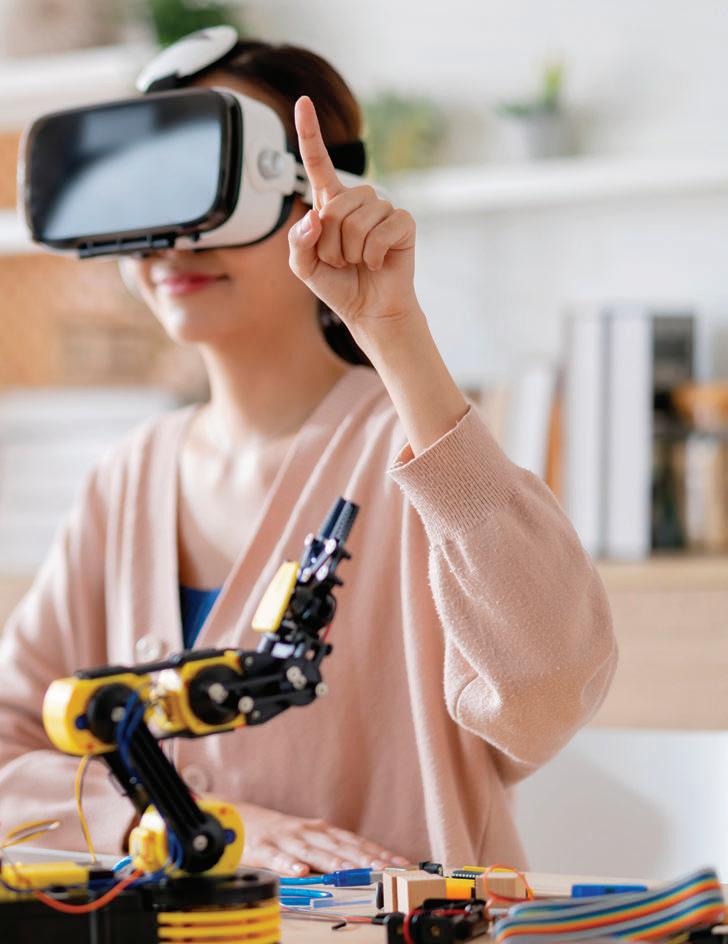
Technology should augment human learning, not replace it. Increasingly, universities are leveraging AI-driven learning analytics and virtual tutors for personalised support at scale, extended reality (VR and AR) for immersive simulation environments, and digital collaboration platforms to connect students across borders and disciplines.
For example, learning analytics helps students identify their growth areas and reflect on their progress, while immersive simulations allow them to visualise and test engineering systems before physical prototyping.




Annual Reports • Booklets • Brochures • Buntings • Business Cards
CD / DVD Replications • Calendars • Cards & Invitations • Certificates
Custom Printings • Envelopes • Folders • NCR Bill Books • Notepads
Leaflets • Letterheads • Paper Bags • Posters • Stickers • Others


With the rise of generative AI, the challenge for educators is to guide students in using technology mindfully, not mindlessly, as a tool to strengthen critical and creative thinking rather than diminish it. When students apply AI to tackle real-world engineering challenges, they learn to integrate human judgment with computational power, a crucial skill for the future.
Ultimately, technology integration is most powerful when it reinforces curiosity, experimentation, and meaningful connection, making learning active, adaptive, and impactful.
What challenges do educators face when implementing innovative teaching strategies?
The greatest challenge is a mindset shift. Many educators were trained to teach within disciplinary boundaries and traditional lecture models. Today, they are expected to facilitate crossdisciplinary collaboration, co-create solutions with external partners, and help students connect learning to personal and societal purpose. This transformation requires time, professional development, and institutional support. Educators need safe spaces and communities of practice to experiment, share insights, and learn from both successes and failures.
Aligning innovation with accreditation standards and industry expectations can be complex. Meanwhile, student readiness varies. Transitioning from passive absorption to active experimentation demands trust, relevance, and scaffolding. Partnerships with employers to reinforce the value of purpose-driven learning can further motivate students.
Navigating these challenges requires open dialogue and a shared vision that academic excellence and purposeful impact are not competing goals, but rather complementary ones.
Our recently published book, titled Purpose-led Education: Education for Sustainable Development,
published by Taylor’s Press, serves as a how-to guide for academics seeking to reorient their teaching and learning to become purposeled, supporting Education for Sustainable Development. This book features 10 chapters that present diverse educational framings and interventions, nurturing the sustainability competencies of students and their commitment to acting for a sustainable future.
How does transforming teaching methods influence academic performance?
Research consistently shows that when students connect learning to their personal purpose or life goals, their performance improves across multiple dimensions. One study reported a 22% increase in academic achievement among students who could articulate their life purpose1
Beyond grades, the benefits extend to emotional well-being, a critical concern today. The National Health & Morbidity Survey 2022 revealed that one in four Malaysian adolescents reported feeling depressed, and one in 10 had attempted suicide2. Supporting students’ emotional resilience is thus not optional; it is essential.
Engineering students who understand the human or environmental significance of their
work are typically more motivated, resilient, and persistent. They evolve into reflective, self-directed learners driven by a desire for mastery and contribution, rather than by mere assessment outcomes.
What role does active learning play in transforming engineering education?
Active learning is the heartbeat of transformation. It turns classrooms into creative laboratories where students design, build, and test ideas through iteration, experimentation, and reflection.
For instance, engineering students may be challenged to design low-cost solar power systems for indigenous communities. Through such projects, they transition from theory to practice, developing empathy and resilience. Active learning connects the head, hand, and heart, cultivating not only competence but also confidence, curiosity, and compassion.
How do innovative teaching approaches prepare students for real-world industry challenges?
The engineering profession is evolving in response to automation, sustainability imperatives, and global complexity. Employers increasingly seek engineers who can combine technical expertise with human understanding, think systemically, collaborate across disciplines, and act ethically.
1Schippers, M. C., Morisano, D., Locke, E. A., Scheepers, A. W., Latham, G. P., & de Jong, E. M. (2020). Writing about personal goals and plans regardless of goal type boosts academic performance. Contemporary Educational Psychology, 60, 101823. Doi: 10.1016/j. cedpsych.2019.101823
2 https://iku.gov.my/images/nhms-2022/ Report_Malaysia_nhms_ahs_2022.pdf
When students engage with real stakeholders or face societal issues during their studies, they learn to design solutions which are not only functional but also meaningful and impactful. They then develop empathy, communication, and a sense of responsibility. These qualities are essential for leading in uncertain times and shaping a more sustainable and inclusive future.
What assessment methods best measure the impact of new learning approaches?
To capture the actual impact of learning, assessment must evolve beyond traditional exams. Many institutions are adopting outcomebased and impact-oriented assessments, such as reflective portfolios, peer and industry evaluations, and community feedback mechanisms.
For example, project assessments may measure both technical outcomes and social or environmental impact. Such assessments evaluate not only what students know but also how they apply knowledge, and what difference their work makes. This shift from measurement to meaning transforms assessment into a tool for growth.
How can institutions support faculty in sustaining innovative teaching practices?
Innovation thrives in a culture that fosters support and trust. Institutions must encourage experimentation, reward innovation, and recognise that meaningful change often involves risk and iteration.
Faculty benefits from a community of practice where it can exchange ideas, co-create curriculum innovations, and celebrate impactful teaching. Recognition systems should value educational innovation on par with research excellence, ensuring that those who transform learning are duly acknowledged.
Ultimately, sustainable change happens when leaders and educators share a common belief – that teaching is not merely about transmitting knowledge but about transforming lives through learning.
Conclusion
As Dr. Thian reflects, “Engineering education must evolve from training people to build machines and structures, to inspiring them to build a better world”.
The future engineer will require both precision and purpose — equipped not only with technical expertise, but also with empathy, courage, and imagination to design solutions that serve humanity. The world needs engineers who see their profession not just as a career, but also as a calling.

Interviewee's Profile
Dr. Thian Lok Boon is the former Pro Vice-Chancellor, Learning & Teaching, Centre for Future Learning, Taylor’s University, Malaysia. Trained in Electrical and Electronic Engineering, she served as an engineer for eight years before devoting herself to serving higher education.
She led and institutionalised various learning innovations and curriculum transformations, including Taylor’s Curriculum Framework, Taylor’s Multidisciplinary Education, and Taylor’s Purpose-led Education through Impact Labs. The initiatives won multiple awards, including the prestigious Overall Education Winner and a Gold Award in the Sustainability Education category at the QS Reimagine Education Awards in 2023. Her work has been published in top-ranked journals and in her book, Purposeled Education: Education for Sustainable Development. She is the Founder of Impact Catalysts, a social enterprise that empowers every young person to look at the challenges our community faces and say, “We will solve this”.





























by:

Ir. Ts. Dr. Nagentrau
Senior
Lecturer
at School of Engineering (SOE), Faculty of Innovation & Technology (FIT) and Deputy Director of Clean Technology Impact Lab, Taylor’s University Malaysia.
Engineering education is undergoing a rapid redesign. Pressure from Industry 4.0 and the emerging Industry 5.0 agenda, accelerating technological change, global sustainability challenges, and changing student expectations are forcing universities to rethink what it means to “educate an engineer”.
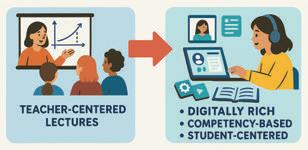
Recent work on Education 4.0 shows that engineering programmes around the world are moving away from teacher centred lectures to digitally-rich, competency based and student centred environments (Figure 1). These new environments blend online and face to face teaching, virtual laboratories, and Industry 4.0 technologies such as artificial intelligence (AI), the Internet of Things (IoT) and extended reality and they place stronger emphasis on skills such as critical thinking, collaboration and creativity [1]. This shift is not simply about adding technology to lecture courses but it is also about redesigning curricula so that students can work with complexity, ambiguity and socio technical problems rather than simply reproducing formulae.
Between 2020 and 2025, reviews of engineering education consistently highlight that innovative teaching and learning approaches, especially active learning, project based learning (PBL), problem based learning and technology enhanced instruction have
moved from optional “extras” to central mechanisms for building the skills expected of contemporary engineers [2,3]. At the same time, AI has shifted from a niche research topic to an everyday tool in classrooms and students’ study routines, changing both what and how engineering students should be learning.
Several families of approaches now form the backbone of this transformation. One of the most prominent is PBL. A systematic review of PBL in engineering education shows that it has evolved from isolated term projects into a holistic pedagogical model that spans technology integration, sustainability, internationalisation, multidisciplinary teamwork, simulation and authentic professional environments [3]. It indicates that well designed PBL immerses students in realistic, open ended problems where they must integrate theory, design and evaluate solutions and collaborate across roles which closely mirror the realities of engineering practice.
Complementary work reviewing four decades of PBL implementation in engineering identifies why PBL has become so widely adopted; it simultaneously develops disciplinary knowledge and transferable skills such as communication and project management. However, it also demands substantial shifts in assessment practices, staff roles and institutional culture [4]. Thus, PBL represents both opportunity and challenge where it can be the structural principle around which entire programmes are organised, but only if universities support the necessary organisational changes.
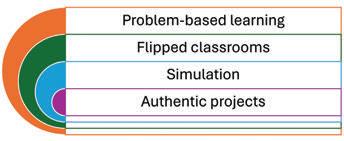
Beyond PBL, engineering programmes are weaving in broader active and experiential methods. Figure 2 shows a recent review of innovative teaching in engineering concludes that active approaches of PBL, problem based learning, flipped classrooms, simulation supported activities and authentic projects are consistently enhancing student engagement, critical thinking and problem solving skills, especially when combined with digital tools and online platforms [2]
Education 4.0 studies reinforce this pattern, identifying the convergence of Industry 4.0 technologies (AI, virtual labs, IoT) with active methodologies such as gamification, blended learning and collaborative projects as a central trend in engineering education reform [1]. More recently, the
Experiential, Paired, Inquiry-based & Collective learning (EPIC) for Industry 5.0 skills has been proposed as a universal teaching framework for engineering. Case studies show that the EPIC principles can be mapped across multiple years of an engineering curriculum, deliberately cultivating analytical thinking, creativity, communication and collaboration alongside technical competence [5]. EPIC exemplifies how innovative approaches are moving from single course experiments to programme level designs that link specific pedagogies to targeted skill clusters.
The case for these approaches is backed by a growing body of quantitative and qualitative evidence. A 2023 meta analysis synthesising 38 studies of active learning interventions with Asian students in STEM subjects, including engineering, reports a mean effect size of about 0.66 standard deviations in favour of active learning over traditional methods [6]. In practical terms, this means that students in active learning environments typically perform substantially better on assessments than those in lecture based courses. The interventions examined cover a wide range of methods such as collaborative, experiential, discovery based and problem based learning, suggesting that the key factor is the broader shift from passive reception to active construction of knowledge.
In engineering specific contexts, a recent PBL review of 54 studies finds that PBL systematically supports the development of “real world skills” across seven pillars: Technology use, integrated curricula, international and multidisciplinary collaboration, sustainability, simulation and authentic professional settings [3]. The studies report gains in teamwork, communication, systems thinking and ethical awareness alongside traditional technical capacities. Students often report higher motivation when working on projects with visible social or environmental impact, and many projects result in implemented solutions or entrepreneurial ventures. Evidence around active learning in STEM also highlights deeper cognitive benefits. A 2022 study focusing on STEM education shows that inquiry oriented active strategies significantly strengthen inquiry skills, including question formulation, experimental design, data analysis and evidence based reasoning [7]. In engineering, where graduates increasingly confront complex, ill structured problems, such inquiry capabilities are as crucial as mastering specific software tools or mathematical techniques. The emerging picture from 2020–2025 is therefore that innovative methods are not just more engaging, but materially more effective at producing graduates who are adaptable, collaborative, reflective and ethically aware. This is precisely the profile sought by accreditation bodies, employers and society.
While these pedagogical shifts were already underway, AI has added a powerful and sometimes disruptive new layer. Before the generative AI boom, AI in higher education appeared mainly as predictive analytics, recommendation engines, automated assessment and intelligent tutoring systems embedded in online platforms. A recent systematic review of AI in online higher education finds that AI applications most commonly predict student performance or satisfaction, recommend learning resources, automate
assessment and support personalised feedback, and that these uses generally improve academic performance and engagement when well implemented [8]
A state-of-the-field review of AI in higher education shows how quickly this area has expanded, with publication volumes growing sharply in 2021 and 2022 [9] The review identifies assessment and evaluation, prediction, AI assistants, intelligent tutoring systems and learning management as the major clusters of AI use, with engineering and language learning among the most heavily represented disciplines. It also notes two significant gaps: Many AI in education studies lack a strong theoretical grounding, and comparatively only a few address issues of ethics, agency and power.
Generative AI chatbots such as ChatGPT have reshaped the landscape again. The latest review of generative AI chatbots in higher education synthesises empirical studies published in the first year of the technology’s widespread availability. It shows that chatbots are being used for feedback, explanation, brainstorming, writing support and coding assistance and that research is characterised by both utopian narratives (AI as a personal tutor) and dystopian ones (AI as a threat to skills and integrity) [10] Concerns arise about accuracy, academic misconduct and the erosion of critical and social capabilities.
For engineering education, this dual character of AI is especially salient. The same tools that can scaffold design thinking or debugging can also short circuit learning if they are treated as answer machines rather than partners in reasoning. The ongoing transformation of engineering education therefore depends not only on which pedagogies are adopted, but also on how AI is integrated into them.
The first wave of empirical studies provides a more granular view of AI’s concrete impact on engineering learning. A recent qualitative study in electronic and mechatronic engineering courses identifies five main ways that students use AI chatbots which are listed as activating and organising prior knowledge, boosting motivation, supporting self directed learning, providing
practice and feedback and responding to learner diversity [11]. Students report that conversational AI helps them clarify concepts, explore alternative explanations and receive immediate feedback outside class hours, effectively extending the reach of human teaching.
The same study, however, also surfaces problems. Some students describe a tendency to accept AI responses uncritically and instructors express concern about the opacity of chatbot reasoning and the risk that students may bypass key analytical steps. The authors argue that learning designs should explicitly position AI as a tool for exploration and reflection rather than solution delivery and they recommend teaching students to critique and verify AI outputs as part of professional formation [11]
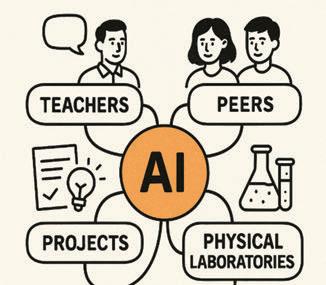
A recent case study in a mechanical engineering master’s course on scientific computing reaches similar mixed conclusions. Students used ChatGPT extensively for debugging code, generating and optimising solutions, explaining code fragments and tackling mathematical subproblems, and many perceived improvements in understanding and efficiency. At the same time, the course instructor observed declining code quality, signs of over reliance on chatbot generated solutions and a weakening of pair-programming collaboration, as students increasingly turned to the chatbot instead of negotiating solutions with peers [12]. Viewed alongside the broader review of generative AI chatbots in higher education, which notes limited but growing evidence for long term learning gains [10] , these studies suggest that engineering programmes should treat AI not as a proven instructional solution, but as a powerful, still experimental component within a larger ecosystem of human teachers, peers, projects and physical laboratories (Figure 3).
If innovative pedagogies and AI are reshaping engineering education, the key challenge is designing programmes that exploit both, without undermining the human skills emphasised by Industry 5.0. Here, recent work points toward models that explicitly combine experiential learning with the development of AI literacy and ethical judgement.
The EPIC framework offers one such model. Experiential learning anchors students in real projects and laboratories, paired learning encourages dialogue and peer explanation, inquiry based learning centres questioning, investigation and reflection and collective learning foregrounds collaboration, communication and community [5]
Within EPIC style courses, AI can be positioned as just one resource among many. For example, students might use chatbots to generate initial design alternatives, critique AI produced code in pairs, or collectively evaluate AI generated sustainability scenarios, while assessment focuses on reasoning, justification and teamwork rather than the raw artefact produced. Education 4.0 research indicates that such designs are most powerful when they target competencies such as critical thinking, creativity, collaboration and digital literacy, and when digital technologies including AI, virtual labs and simulation are integrated into coherent learning systems rather than added piecemeal [1] .
Reviews of innovative teaching in engineering also stress the importance of institutional support. Staff members need time and training to redesign courses, interpret AI generated analytics, and manage assessments that emphasise process and reflection over rote output [2]. At the same time, the AI in higher education literature warns that integration without theory can slide into hype. The state of the field review underlines the need for clearer theoretical framing of how AI mediates learning and power, noting that many studies focus on technical capabilities rather than on how AI reshapes roles and agency in classrooms [9]. For engineering educators, this means articulating which forms of thinking must remain irreducibly human such as ethical reasoning, socio technical judgement and negotiation of stakeholder values and designing AI supported activities that strengthen, rather than substitute for, those forms of thinking.





































Engineering education has moved decisively towards more innovative, learner centred and technology rich practices. Project based, problem based, inquiry driven and experiential pedagogies are no longer experimental fringes but they are also increasingly central to curricula. Evidence from systematic reviews and meta analyses shows that these approaches improve performance, deepen inquiry skills and build the teamwork, communication and ethical awareness required in contemporary engineering work [3,6,7]. AI, especially generative AI, adds both opportunity and urgency to this transformation. It can act as a powerful co pilot, providing explanation, feedback and creative prompts that extend learning beyond the classroom, but it can also short circuit key learning processes and amplify integrity concerns if adoption is driven by convenience rather than pedagogy [10-12]
The most promising vision emerging from recent work is neither a high tech return to passive learning nor a wholesale outsourcing of cognition to machines. It is human centered, AI aware engineering education in which frameworks such as PBL, inquiry based learning and EPIC provide the structural backbone, while AI tools are woven in as objects of critique, partners in exploration and catalysts for higher order thinking. In such programmes, engineering graduates not only know how to use advanced tools, but also how to question, design and govern the skills that are likely to define the profession in the decades ahead.
[1] A. S. C. de Souza and L. Debs, “Concepts, innovative technologies, learning approaches and trend topics in Education 4.0: A scoping literature review,” Social Sciences & Humanities Open, vol. 9, p. 100902, 2024.
[2] K. B. V. S. R. Subrahmanyam, M. A. Kumar, N. V. Rao, A. R. Murthy, and B. V. S. Varma, “Innovative teaching and learning methods in engineering education: A review,” Library Progress (International), vol. 44, no. 3, 2024.
[3] S. Lavado Anguera, P. J. Velasco Quintana, and M. J. Terrón López, “Project based learning (PBL) as an experiential pedagogical methodology in engineering education: A review of the literature,” Education Sciences, vol. 14, no. 6, p. 617, 2024.
[4] J. Chen, A. Kolmos, and X. Du, “Forms of implementation and challenges of PBL in engineering education: A review of literature,” European Journal of Engineering Education, vol. 46, pp. 90–115, 2021.
[5] H. Q. Ang and B. Domingo, “An innovative and universal teaching model in engineering education to foster Industry 5.0 skills—EPIC principles,” Education Sciences, vol. 15, no. 9, p. 1096, 2025.
[6] F. S. T. Ting et al., “A meta analysis of studies on the effects of active learning on Asian students’ performance in science, technology, engineering and mathematics (STEM) subjects,” Asia Pacific Education Researcher, vol. 32, no. 3, pp. 379–400, 2023.
[7] Z. Ješková, S. Lukáč, Ľ. Šnajder, J. Guniš, D. Klein, and M. Kireš, “Active learning in STEM education with regard to the development of inquiry skills,” Education Sciences, vol. 12, no. 10, p. 686, 2022.
[8] F. Ouyang, L. Zheng, and P. Jiao, “Artificial intelligence in online higher education: A systematic review of empirical research from 2011 to 2020,” Education and Information Technologies, vol. 27, pp. 7893–7925, 2022.
[9] H. Crompton and D. Burke, “Artificial intelligence in higher education: The state of the field,” International Journal of Educational Technology in Higher Education, vol. 20, no. 22, 2023.
[10] C. McGrath, A. Farazouli, and T. Cerratto Pargman, “Generative AI chatbots in higher education: A review of an emerging research area,” Higher Education, vol. 89, pp. 1533–1549, 2024 (2025 volume).
[11] F. A. Bravo and J. M. Cruz Bohorquez, “Engineering education in the age of AI: Analysis of the impact of chatbots on learning in engineering,” Education Sciences, vol. 14, no. 5, p. 484, 2024.
[12] S. Groothuijsen, A. van den Beemt, J. C. Remmers, and L. W. van Meeuwen, “AI chatbots in programming education: Students’ use in a scientific computing course and consequences for learning,” Computers and Education: Artificial Intelligence, vol. 7, p. 100290, 2024.



by:

Dr. Praveena Nair Sivasankaran
TEDx Speaker, HRDC-accredited trainer and Deputy Director at Impact Lab Clean Technology.
Engineering education is undergoing a profound shift as global priorities evolve. Future engineers can no longer rely solely on traditional lecture-based instruction or narrow technical training. With the rising demands of Industry 4.0, sustainability challenges, digital transformation, and societal expectations, engineering programmes worldwide are rethinking the way engineers are taught and what graduates must be capable of.
A new landscape is emerging, one that emphasises adaptability, creativity, ethical responsibility, and interdisciplinary problem-solving as core competencies. These priorities are reshaping engineering education into a more dynamic, engaged, and humancentred field.
Project-Based & Experiential Learning: Building Real-World Competence
Project-Based Learning (PBL) and experiential approaches have become foundational to modern engineering education. Research consistently shows that when students learn through hands-on, authentic projects, they develop stronger technical integration and deeper problem-solving capacity. A recent systematic review found that PBL significantly enhances communication, teamwork, and the ability to apply engineering principles across contexts (Pantzos.P, 2025).
Experiential learning rooted in the cycle of experience, reflection, and application narrows the gap between theory and practice. A South-East Asian study indicated that experiential methods improved student engagement and retention, especially in courses traditionally perceived as difficult or abstract (Sundman et. al, 2025).
These models reflect real engineering environments where challenges seldom come with predefined answers. They allow students to experiment, iterate, and make decisions in conditions that mirror professional practice.
A growing body of evidence shows that active learning environments consistently outperform lecture-driven instruction. Flipped classroom models, where students explore foundational material independently and use class time for analysis and collaboration, have demonstrated significant improvements in conceptual understanding (Morales et al., 2025).
Gamified versions of the flipped classroom show even greater impact. A 2024 study reported that gamification reduced misconceptions in engineering coursework and increased intrinsic motivation across diverse learning styles (Zainuddin et al., 2024).
Active learning strategies, peer instruction, design sprints, and real-time problem solving are particularly effective in engineering because they replicate the collaborative, highstakes nature of technical decision-making. Research in Europe has shown that these methods improve long-term retention and conceptual mastery (Saad A.F, 2021).
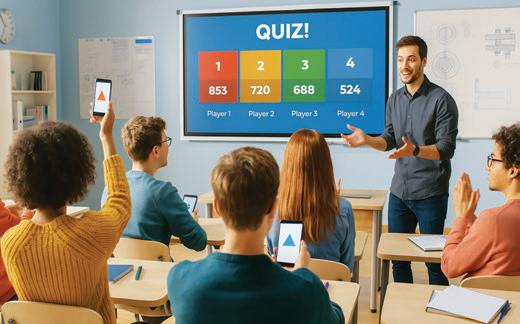
In a profession that increasingly values communication, adaptability, and innovation, active learning strengthens the transferable skills needed for future engineering roles.
Developing Broader Competencies for Complex Engineering World Engineering graduates today are expected to navigate challenges that extend beyond technical expertise. Issues such as sustainability, ethical decision-making, community impact, and systems thinking are becoming fundamental to professional practice.
Challenge-Based Learning (CBL), an emerging pedagogical model, enables students to engage with multi-layered societal issues by developing solutions that consider ecological, social, and economic contexts. CBL helps learners understand how engineering decisions shape and are shaped by larger systems.
Longitudinal studies further indicate that students exposed to sustained experiential and active learning develop greater leadership capacity, adaptability, and ethical judgment during their early careers (Hui et al., 2021). These competencies align with global trends in engineering employment, where employers increasingly prioritise holistic problem-solving and interdisciplinary collaboration.
Cultivating the Engineering Mindset: The Individual as the Foundation of Impact
While educational models such as PBL, CBL, and flipped learning strengthen technical and collaborative skills, engineering education also depends on the development of inner competencies which shape how future engineers think, respond, and act. Increasingly, global research points to the importance of cognitive clarity, emotional regulation, ethical grounding, and reflective decision-making in engineering practice.
Frameworks that examine how thoughts influence behaviour, sometimes described as a personal “mindprint”, offer a useful lens for understanding this connection. A mindprint reflects the cognitive and emotional patterns which guide an engineer’s problem-solving style, resilience under uncertainty, and capacity to interpret complex systems. Research on engineering mindset and professional identity shows that these inner schemas directly influence how engineers integrate knowledge, assess risk, and engage ethically with societal needs (Beldad et al., 2025; Han et al., 2022).
When cultivated intentionally, a strong mindprint supports the development of engineers who can balance analytical reasoning with empathy, purpose, and responsible judgment. Engineers who can regulate cognitive load, remain centred during high-stakes tasks, evaluate information objectively, and incorporate multiple perspectives tend to excel in creative design, interdisciplinary teamwork, and ethical decision-making. As Malaysia builds its next generation of engineering leaders, nurturing these psychological competencies becomes as important as strengthening pedagogical approaches.
Malaysia is well positioned to strengthen its engineering talent pipeline by integrating these innovative learning models more widely. To achieve this, the following considerations are essential:
1.
Modern engineering training relies on more than just classrooms and whiteboards. It requires ecosystems which mirror actual engineering practice collaborative studios where students can sketch concepts together, digital labs equipped with simulation software, rapidprototyping spaces with 3D printers, and interdisciplinary “maker zones” where students from different faculties can build, test, and iterate.
These environments play a crucial role in cultivating confidence and competence. When learners can move fluidly between theory and fabrication, they begin to think like engineers and problem solvers who test assumptions, challenge constraints, and design with the end user in mind. As universities in Asia modernise their facilities, Malaysia has the unique opportunity to lead with spaces that reflect a future-ready engineering ecosystem.
2. Professional Development for Educators.
The success of educational transformation depends heavily on the educators who guide it. Traditional lecture delivery is no longer sufficient for the complexity of today’s engineering challenges. Lecturers must be empowered with the skills to facilitate active learning, design studio-based assessments, and mentor students through ambiguity and iteration.
Studies continue to emphasise the importance of structured professional development in pedagogy, curriculum design, and digital integration (Adams et al., 2023). By investing in lecturer training, institutions enable more meaningful learning experiences where students are challenged, supported, and inspired to take ownership of their intellectual growth. When educators are confident in these methods, the entire culture of engineering education shifts.
3. Rethinking Assessment.
Our engineering programmes have long relied on highstakes examinations as the main indicator of student performance. However, complex competencies such as teamwork, creativity, ethical reasoning, sustainability thinking, and systems decision-making require a richer palette of assessment tools.
Performance-based tasks such as prototype demonstrations, design portfolios, reflective journals, and community-based engineering challenges allow students to showcase their ability to plan, execute, collaborate, and communicate. These assessments simulate realworld engineering demands far more accurately than traditional tests. When students are evaluated through multifaceted, authentic tasks, they develop professional habits that remain with them well into their careers.





provides the following products and services:
- Post-tensioning solution provider
- Carpark Flat Slab
- Transfer Plate
- Beams, Box Girders
- Alternative design solutions
- Cable systems (stay cable main cable hanger)
- Bridge bearing and expansion joint
- Construction solutions (heavy lifting, ILM, etc)
- Monitoring, repairing and strengthening for structures


4. Strengthening Industry and Government Partnerships.
Deeper collaborations can support capstone projects, field-based challenges, and policy-linked assignments, offering students a realistic sense of the engineering responsibilities which accompany nation-building. These shifts align with Malaysia’s goals for sustainable development, digital transformation, and future-ready human capital.
The transformation of engineering education reflects a broader evolution in the engineering profession itself. As global challenges grow more interconnected, the next generation of engineers must be equipped with not only strong technical skills but also with the ability to think critically, collaborate across disciplines, and make decisions that balance innovation with societal responsibility.
Project-based learning, active pedagogies, flipped classrooms, and challenge-based models are not simply trends; they are necessary tools for preparing engineers who can navigate complexity with clarity, purpose, and resilience.
By embracing these approaches, engineering institutions can help shape graduates who are capable of contributing meaningfully to national progress and global sustainability, ensuring that engineering remains a discipline that not only solves problems but also builds a better future.
Globally, engineering is undergoing a profound redefinition. It is no longer sufficient for graduates to excel solely in technical problem solving. Tomorrow’s engineers must think critically in uncertain conditions, collaborate across cultures and disciplines, respond to environmental changes, and design with empathy and responsibility.


The Strand, Kota Damansara 47810 Petaling Jaya Selangor Darul Ehsan
Tel : 603-61426638
Fax : 603-61426693

Email : enquiry-pt@nehemiah-grp.com














The integration of project-based learning, flipped classrooms, challengebased tasks, and active pedagogies, reflects this shift. These approaches are not fads; they are powerful educational tools that develop adaptability, systems thinking, and resilience.
By embracing these models, Malaysia can nurture engineers who are not only capable contributors to industry but also thoughtful leaders capable of shaping sustainable progress. With the right learning environments, educator development, assessment frameworks, and industry linkages, engineering education can become a catalyst for national transformation, empowering a generation to design solutions that are technically sound, socially conscious, and environmentally regenerative.
[1] Pantzos, P. (2025). Students’ motivation in Challenge-Based Learning in Higher Engineering Education: A scoping review. International Journal of Engineering Pedagogy, (6).







[2] Saad, A. F. (2021). An Exploratory Study Regarding the Use of Blogs in a Project Management Approach in Teaching and Learning for the Case of" Students at Risk". Online Submission.
[3] Hui, T., Lau, S. S., & Yuen, M. (2021). Active learning as a beyond-the-classroom strategy to improve university students’ career adaptability. Sustainability, 13(11), 6246.
[4] Sundman, J., Feng, X., Shrestha, A., Johri, A., Varis, O., & Taka, M. (2025). Experiential learning for sustainability: a systematic review and research agenda for engineering education. European Journal of Engineering Education, 1-31.
[5] Morales, V., Rodas Silva, J., & Vidal Silva, C. (2025). Teaching programming in higher education: Analyzing trends, technologies, and pedagogical approaches through a bibliometric lens.
[6] Zainuddin, Z., Chu, S. K. W., & Perera, C. J. (2024). Gamification in the flipped classroom. In Gamification in a Flipped Classroom: Pedagogical Methods and Best Practices (pp. 115165). Singapore: Springer Nature Singapore.
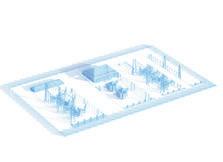




[7] Beldad, A. D., & Miedema, H. A. T. (2025). Introducing a framework for designing an interdisciplinary engineering curriculum: educating new engineers for complex sociotechnical challenges. European Journal of Engineering Education, 1-18.
[8] Han, Y. L., Turns, J., Cook, K. E., Mason, G. S., & Shuman, T. R. (2022). Students’ Experience of an Integrated Electrical Engineering and Data Acquisition Course in an Undergraduate Mechanical Engineering Curriculum. IEEE Transactions on Education, 65(3), 331-343.
[9] Adams, B., Thomas, L., Moens, M., & Valcke, M. (2023). University teachers as versatile masters: Evaluating the effectiveness of a professional development programme on studentcentred teaching competencies. Studies in Educational Evaluation, 77, 101260.




www.iemjournal.com.my




Annual Reports • Booklets • Brochures • Buntings • Business Cards
CD / DVD Replications • Calendars • Cards & Invitations • Certificates
Custom Printings • Envelopes • Folders • NCR Bill Books • Notepads Leaflets • Letterheads • Paper Bags • Posters • Stickers • Others
by:
The IDEAS (Innovation, Design & Engineering for Advanced Sustainability) Competition 2025, was organised under the banner of Engineering Education Technical Division (E2TD) of The Institution of Engineers, Malaysia (IEM). The fully online national event was aimed at cultivating creative thinking, technical innovation, and sustainable engineering solutions among tertiary-level students.
Participants were required to submit a five-minute video presentation showcasing original ideas within the scope of renewable energy, green technologies, smart systems, and other STEM-related themes. The competition provided an excellent platform to promote STEM engagement as well as connected academia with real-world engineering challenges.
This year’s event attracted strong participation from universities and colleges in the country. Submissions were evaluated in two main categories: Individual and Group. The judging process was conducted by a panel of professional engineers from E2TD, and industry experts. The focus was on innovation, feasibility, sustainability, presentation effectiveness, and video quality.
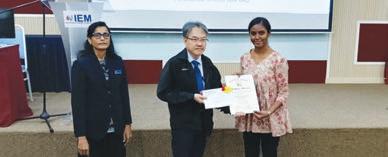
In the Individual Category, the first prize was awarded to Ms. Nur Syammimi Abdul Manan from Universiti Teknologi Petronas. The second prize went to Ms. Subaashini Mohanasundaram from University Selangor, and the third prize was won by Mr. Azri Shahir Rozman from Universiti Putra Malaysia.

Ir. Assoc. Prof. Dr. Baljit Singh Bhathal Singh
In the Group Category, the winning team was Team Techpulse from Asia Pacific University of Technology & Innovation (APU). Team Anticons, also from APU, secured second place, while Team Chem5ive from Universiti Putra Malaysia won the third prize.
The winners received cash prizes and certificates of achievement while digital certificates of participation were awarded to all participants.
The IDEAS 2025 competition met its intended objectives by showcasing the potential of Malaysia’s future engineers to address sustainability challenges through innovative thinking and applied engineering principles. The variety and quality of submissions reflected the students’ growing interest in engineering design, digital innovation, and environmental responsibility.
The event also reaffirmed E2TD’s role in promoting youth-led innovation and provided students with meaningful exposure to professional standards in engineering practice and presentation.
E2TD would like to extend sincere appreciation to the organising committee, supporting institutions, and all panel judges for their contributions. The success of IDEAS 2025 reinforces the importance of continuous engagement with students and young engineers in driving Malaysia’s sustainable development agenda.





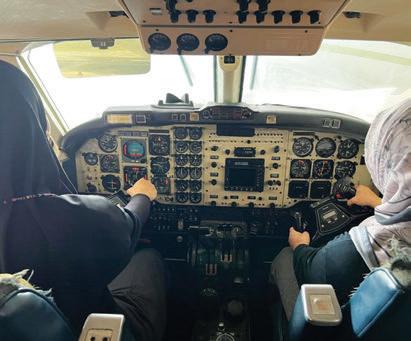
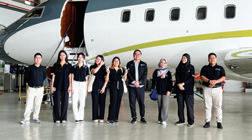
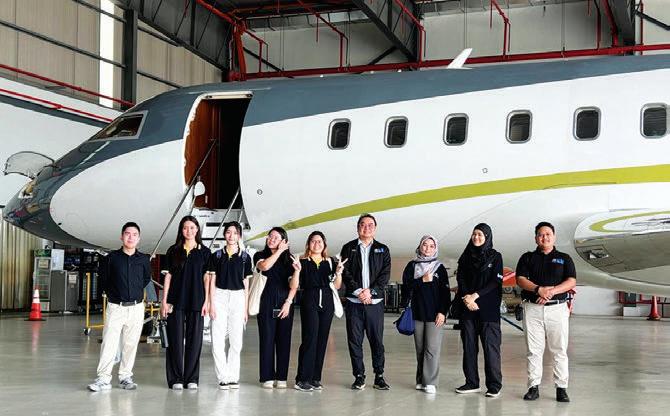
The technical visit to the Maintenance, Repair & Operations (MRO) Subang Hangar on 27 November 2025, was an important professional learning platform for the participants who came from diverse engineering backgrounds. Organised by the Project Management Technical Division of The Institution of Engineers, Malaysia (IEM), the visit aimed to enhance their understanding of MRO practices in the Malaysian aviation sector. Through a structured briefing and guided tour, the technical visit successfully provided a comprehensive overview of aircraft maintenance protocols, operational management processes, and industry challenges.
by:


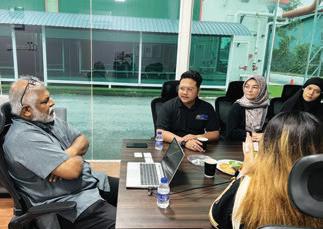
The session commenced with a formal welcome by the Subang MRO management team, followed by a detailed technical briefing by Mr. Kandiah, the Managing Director of Subang MRO. The presentation was a valuable insight into the strategic, operational, and regulatory dimensions of MRO activities. Mr. Kandiah highlighted the crucial role of MRO services in ensuring aviation safety, reliability, and compliance elements which formed the backbone of global air transport systems. His explanation provided clarity on how MRO organisations operated within a highly regulated industry governed by national authorities and international aviation standards.
A significant portion of the briefing focused on the importance of operational visibility within MRO environments. Mr. Kandiah emphasised that effective visibility achieved through systematic monitoring, data integration, and transparent workflow documentation was vital for maintaining efficiency and minimising operational risks.
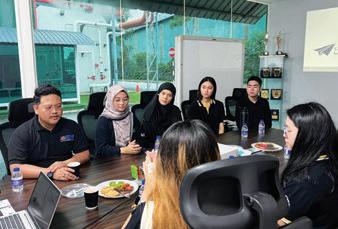
Modern MRO facilities relied increasingly on digital platforms, predictive maintenance technologies, and data-driven decision-making tools. These innovations helped reduce aircraft downtime, optimised manpower allocation, and improved the accuracy of maintenance planning. This discussion was particularly beneficial for participants, as it connected engineering and project management principles with contemporary technological advancements in the aviation sector.
In addition to technical operations, Mr. Kandiah also addressed strategic issues related to business development and industry expansion. He outlined Subang MRO’s long-term vision to broaden its maintenance capabilities in response to evolving aircraft technologies and increasing regional demand. The expansion strategy included upgrading tools and equipment, investing in new training programmes for technical staff, and exploring partnerships with international aviation stakeholders. His insights addressed the dynamic nature of the industry, where continuous improvement and adaptation were essential for maintaining competitiveness. The briefing also touched on human capital development, an area identified as project management fundamental to organisational excellence.
Mr. Kandiah stressed that the success of any MRO facility depended heavily on the expertise, discipline, and commitment of its technical personnel. Continuous training, certification updates, and adherence to safety protocols were essential responsibilities within the profession.
After the briefing, participants went on a comprehensive tour of the hangar facilities. The walk-through provided direct exposure to aircraft undergoing various stages of maintenance, including structural inspections, mechanical repairs, avionics testing, and component replacements. Observing these activities allowed participants to appreciate the complexity, precision, and interdisciplinary coordination required in MRO operations. Each task involved systematic procedures, standard operating protocols, and stringent quality assurance measures, all of which contributed to ensuring aircraft airworthiness and regulatory compliance.
The tour also highlighted the interplay between different engineering disciplines within the MRO environment. Participants observed how mechanical, electrical, electronic, and structural engineering converge in the maintenance process. Throughout the visit, the professionalism and hospitality of the Subang MRO management and staff significantly enhanced the learning experience. Their willingness to engage with delegates, to respond to technical inquiries, and to explain procedures in detail contributed to a meaningful and intellectually enriching session. It also reflected their commitment to knowledge exchange.
In conclusion, the technical visit provided valuable professional insight into the operation and project management of the Malaysian aviation maintenance sector. Exposure to real-world MRO environments enabled the participants to deepen their understanding of engineering practices, operational and project management, and industry challenges.
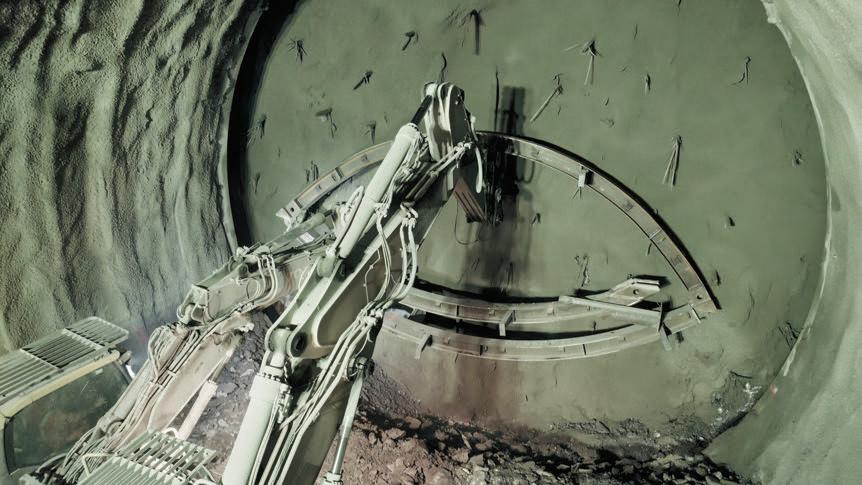



In Seoul, we combined technical insight with cultural perspective through engagements at the Korea Institute of Science & Technology (KIST) and Gwanghwamun Square. Together, these experiences highlighted how science, innovation, history and culture intersected to shape collaboration and shared progress.
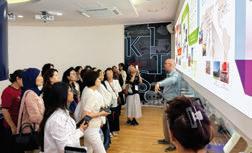
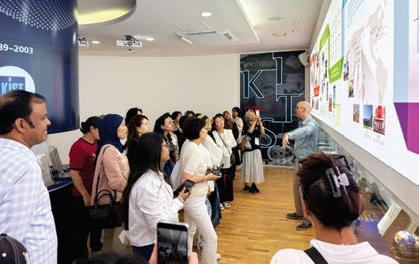
At KIST, we were given a warm welcome by the organisers. We watched an introductory video which explained the history, mission and future direction of KIST, one of South Korea’s leading research centres, focusing on areas such as energy, robotics, biotechnology and materials science.
We also listened to a short presentation on the role of KIST in shaping South Korea’s scientific growth and its partnerships with the rest of the world. For many delegates, this was the first time learning about KIST in detail and it was an eye-opener to see how one institution could have such a strong impact on national and global progress.
The session ended with a group photo, capturing a moment when delegates from across the Asia Pacific gathered under one roof, connected by science and engineering.
by:

After the introduction, the delegates were split into two groups to explore different parts of the campus. One group went to the museum, while the other took part in outdoor activities around the lawn plaza.
During the museum tour, we had a closer look at South Korea’s progress in research and development. Exhibits showed how the country had moved from early stages of industrialisation to become a strong leader in high-tech industries. The displays also highlighted important projects in renewable energy, medical technology and advanced materials. It was inspiring to see how much dedication and planning had gone into these achievements.
The outdoor session gave the other group a chance to experience the KIST campus environment. The mix of modern buildings, open spaces and green lawns created a welcoming atmosphere. Many took the opportunity to capture photos and enjoy conversations in a more relaxed setting. Later, the groups switched so that everyone could enjoy both the museum and the plaza. This arrangement ensured fairness and balance, allowing all delegates to gain knowledge from the exhibits while enjoying their surroundings.
In the afternoon, the programme shifted from science to culture as we travelled to Gwanghwamun Square, one of the most famous landmarks in Seoul. The square is surrounded by historic and cultural sites, including the grand Gyeongbokgung Palace and statues of important figures in South Korean history.
We were given time to explore leisurely at our own pace. Some chose to walk around the palace gates and others stopped to take photos of the statues while many simply enjoyed the lively atmosphere of central Seoul. The free and easy schedule allowed us to discover things that interested us most.
This part of the day gave balance to the scientific focus earlier. It also reminded us that while research and technology were vital, they were always connected to history, identity, and culture. By experiencing both sides in one day, delegates gained a deeper understanding of South Korea as a country.
The tour ended with everyone regrouping for departure. The events of the day had gone smoothly, thanks to clear guidance and support from the tour leaders. Delegates appreciated how every detail, from transport to activities, was well thought out as this made the experience enjoyable and meaningful.
The visit to KIST during BIEN 2025 will be remembered as one of the highlights of the conference. It showed us that science and culture were not separate but that they worked together to shape the future. Delegates left KIST with new knowledge about South Korea’s research strengths and with stronger connections built through group activities, shared learning and cultural discovery.
The visit reminded everyone of the main spirit of BIEN: Collaboration, inclusivity, and building a better future through engineering and science.
We left Seoul that evening, carrying with us not just photos and souvenirs, but also new ideas, friendships and a stronger belief in the power of working together. The visit served as a reminder that a conference was not just about presentations and meetings but that it was also about experiences which inspired and connected people on a meaningful level.
The visit showed how exposure to science, culture, and history can spark new ways of thinking. It encouraged delegates to reflect on how institutions like KIST could inspire similar efforts back home. By the end of the day, there was a clear sense that the visit had deepened the meaning of BIEN 2025, not only as a conference but also as a shared journey of growth and discovery.



That was the theme for the Kuala Lumpur Engineering Science Fair (KLESF) held on 14-16 November 2025.
It was organised by the ASEAN Academy of Engineering & Technology (AAET), The Institution of Engineers, Malaysia (IEM), Malaysian Industry-Government Group for High Technology (MIGHT), Malaysian Invention & Design Society (MINDS), and Tunku Abdul Rahman University University of Management & Technology (TAR UMT). The primary aim was to foster interest in Science, Technology, Engineering & Mathematics (STEM) in students of all levels and to encourage the participation of industry players in raising awareness and promoting learning and career developments in STEM-related areas.
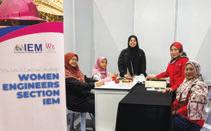
IEM hosted a total of 4 booths, each offering unique experiences to cater to different age groups. On 15 November, Ir. Ts. Nur Azhani set up the IEM Women Engineers Section’s booth which featured colourful building blocks with moving joints. These were suitable for participants above the age of 3. The blocks helped spark their interest and curiosity in the art of turning ideas into reality, which was the basis of engineering. The building blocks also fitted the theme of infinite possibilities as the sky was the limit with regards to what one could create with these blocks.
Dr. Norashikin M. Thamrin and Ir. Zainab Kayat joined in the fun and guided the young and the young at heart in either following the given template or creating whatever came to their minds. This also provided an
by:

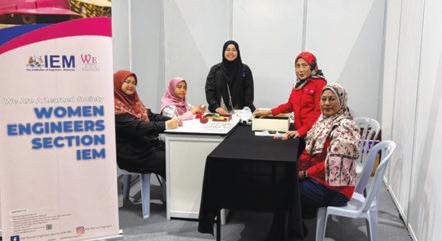
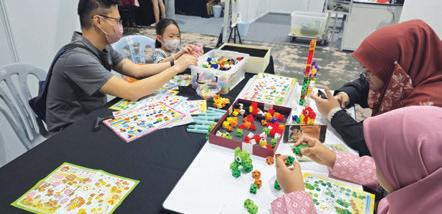
opportunity for the participants to see where their imagination could lead them and what they could achieve when they put actions to their thoughts.
At the end of every session, there were colourful vehicles, animals, plants, structures and even unknown characters displayed on the tables. Apart from testing their patience, the process of building and creating also honed the participants’ observations and problem-solving skills which were crucial for them to be successful in STEM-related industries. The participants were also exposed to basic structure stability concepts to
ensure that their creations did not topple over easily.
In another booth, IEM encouraged participants to build small wooden models powered by motor and electric circuits. Participants learnt about mechanics and electricity as well as practised logical thinking skills as they assembled wooden vehicles equipped with motors. Completing an item successfully and seeing their creations move gave participants a sense of accomplishment and they proudly held their creations in their hands as they went on to explore other booths.
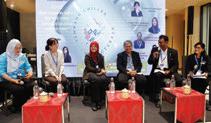
It was an engaging one-hour session between professional engineers and participants on the morning of 12 September 2025, from 11.00 a.m. at the Kuala Lumpur Convention Centre.
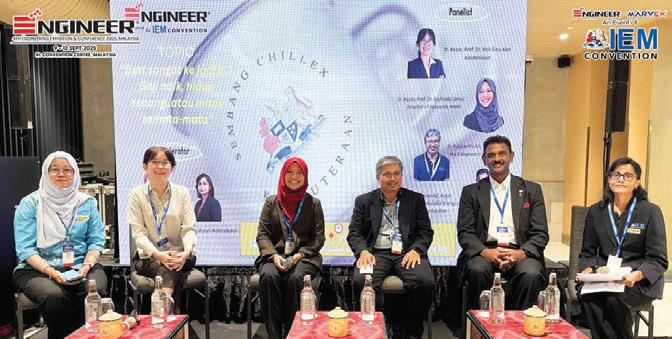
The Sembang Chillex session explored the topics of “Is it really that great to be an Ir.? Salary increments? An easy life… or is it all a myth?”. These are career defining questions which be ignored by engineers as they remain central in shaping engineering career paths in Malaysia.
The panellists were Ir. Associate Professor Dr. Mah Siew Kien, Ir. Associate Professor Dr. Syuhaida Ismail, representing Academia, while Ir. Pukalenthi Subramaniam and Ir. Prabakaran Thiagarajah represented Consulting Engineering firms. The moderators were Ir. Ts. Dr. Dhakshyani Ratnadurai and Ir. Rusnida Talib.
First, there were introductions by each panellist, followed by a focused discussion on the engineering profession, including career opportunities, salary prospects, local/
international recognition, and the challenging journey towards the Ir. title, which included examinations and several years of structures training. The moderators posed questions to each panellist on how earning the Ir. title had influenced their professional journey:
• “The Ir. prefix increased my confidence; it feels good and gives me great inner satisfaction,” said Dr. Mah.
• “It may not be compulsory, but your career options are limited without an Ir.,” advised Dr. Syuhaida.
• “The Ir. process didn’t just make me an engineer but it also made me a better leader who’s more confident and more capable,” recalled Ir. Pukalenthi.
• “Go for it if you can as there are many benefits to obtaining an Ir.,” encouraged Ir. Prabakaran.
Just as a law graduate must pass the Bar exam to practice and a medical graduate must be registered with the Medical Council, an engineering graduate must also register with the engineering board. While an engineering degree typically requires four years of study, the Ir. prefix is a professional title bestowed only after years of supervised experience, assessments, and endorsement by the Board of Engineers Malaysia (BEM). The title not only grants an engineer the authority to lead and sign off on projects, supervise peers, and mentor graduate engineers but it also serves as a gateway to leadership opportunities.
In essence, the Ir. title is not merely a mark of prestige but it is also a strategic necessity for an engineer’s career as it unlocks specific authorities, expands opportunities, and gains wider recognition.






by:

Dr. Taram Satiraksa Wan Abdullah
Independent consultant, trainer, and lecturer specialising in capacity-based safety, human performance, and organisational resilience.
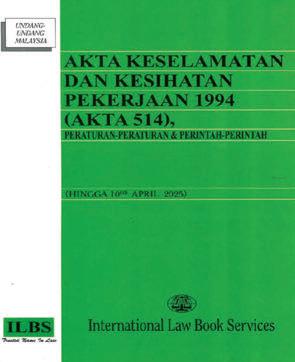
Malaysia’s occupational safety and health (OSH) landscape had evolved significantly since the introduction of the Occupational Safety & Health Act 1994 (Act 514). The original Act marked a major shift from prescriptive, hazard-focused legislation toward a self-regulatory model, placing primary responsibility for workplace safety on employers through internal OSH management systems and risk controls. Over time, self-regulation became embedded in organisational practice, fostering safer behaviours across industries and representing a clear advancement over the earlier Factory & Machinery Act 1967, which had limited scope and industry coverage.
However, as our economy diversified and new forms of work emerged, spanning oil and gas, healthcare, logistics, construction, services, and even home-based and digital work, the limitations of the earlier framework became increasingly evident. Coverage gaps, fragmented enforcement powers, and unclear accountability across principal contractor relationships exposed weaknesses in managing modern, complex work systems. Past incidents, such as the Bright Sparklers fire and explosion, further underscored the inadequacy of a
purely hazard-based approach and accelerated the need for legislative reform.
The Occupational Safety & Health (Amendment) Act 2022 responded to these challenges by closing regulatory gaps and establishing a more unified, comprehensive national OSH framework. The amendment significantly broadened coverage to include nearly all workplaces and industry sectors, with only limited exceptions specified in the First Schedule. It strengthened accountability by extending legal duties to principals, directors, and contractor networks, and reinforced competency through mandatory risk assessments, enhanced training provider standards, and certified inspections. More importantly, the amendment also embedded

preparedness, learning, and adaptability into legal obligations as the key elements of organisational resilience.
From a safety engineering perspective, the amendment represented a decisive shift from a compliance-driven, hazard-control mindset toward a capacity-based approach. While maintaining the principle of self-regulation, it raised penalties to reflect contemporary risk realities and placed greater emphasis on building the ability of organisations to anticipate, respond to, and recover from disruptions. Safety was reframed as not the absence of accidents, but as the presence of sufficient capacity for human, organisational, and technical resilience in managing variability and failure.
Several key amendments explained how new amendment of Act 514 supported capacitybased safety and modern safety engineering. Provisions under Sections 27A–27F strengthened plant safety by formalising the certification life-cycle, from notification of occupation to certificates of fitness and enhanced periodic inspections. This reinforced system integrity assurance throughout the asset life-cycle, ensuring that engineered systems remained reliable and safe in operation.
Section 18B mandated structured hazard identification and risk assessment conducted by trained persons, embedding safety engineering risk analysis into routine operations. This moved risk management beyond informal judgment towards consistent, competency-based assessment. Sections 7A–7D expanded the role of licenced persons and third-party verification, enhancing reliability and assurance while enabling competent professionals to act as an extended enforcement mechanism under regulatory oversight. This supported a transition from viewing safety as “no accidents” to recognising safety as resilient capacity.
The amendment also elevated the importance of data and evidence through Section 60A, which strengthened requirements for records, measurements, inspection findings, and test results. These were recognised as legitimate safety engineering evidence, supporting learning, traceability, and continuous improvement rather than reactive blame.
Emergency preparedness was explicitly reinforced under Sections 15 and 16, requiring employers to embed emergency response into OSH policy. This acknowledged that failure and disruption were inevitable and that true safety was in the ability to respond effectively. Emergency systems must therefore be designed, tested, and implemented based on identified risks, reflecting a realistic and adaptive safety mindset.
Section 18A extended legal accountability to principals across contractor and subcontractor chains, addressing one of the most persistent challenges in modern workplaces. Clear duty holder accountability across organisational boundaries strengthened systemic resilience and ensured that safety responsibilities did not fragment at interfaces.
Complementing this, Section 26A empowered workers with the right to refuse dangerous work, reinforcing the human element of resilience by encouraging timely speaking-up and adaptive action in the face of imminent danger.
Finally, Section 29A introduced the requirement for an OSH coordinator in workplaces with more than five workers. This raised coordination and safety capacity in smaller organisations, ensuring that resilience and well-being were not privileges limited to large enterprises.
In conclusion, the OSHA 1994 (Amendment 2022) was more than an administrative update. It reflected a deliberate policy shift from hazardbased control toward a mature, capacity-based safety framework, while preserving the core principle of self-regulation. By integrating people, processes, engineered systems, and emergency response into a coherent whole, the Act redefined safety engineering as a living discipline, one that combined technical assurance, organisational learning, and human capacity. Act 514 marked a pivotal step in Malaysia’s journey toward a resilient, adaptive, and future-ready safety culture where safety was understood as the presence of capacity, not merely the absence of incidents

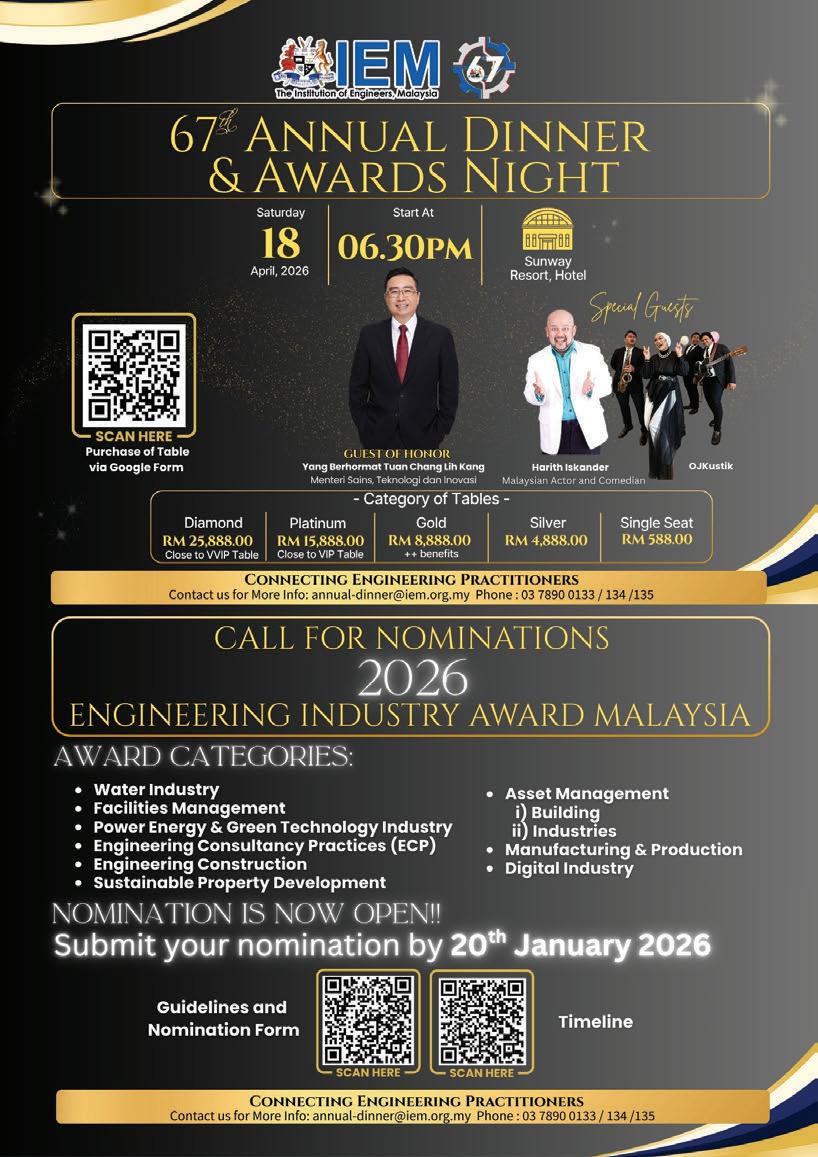
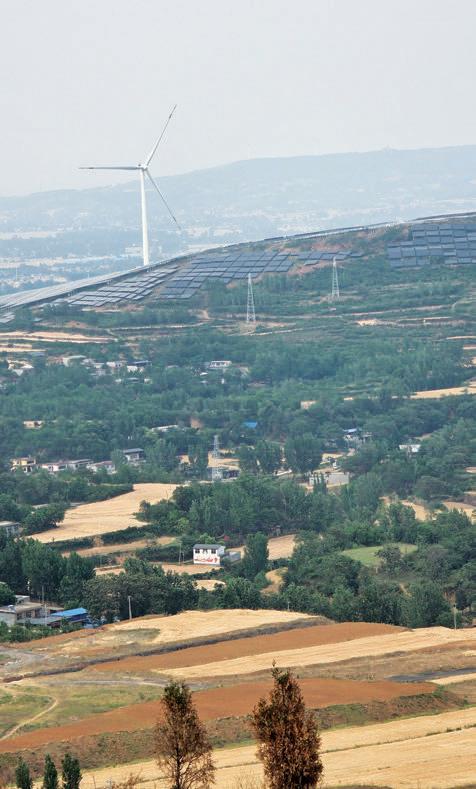

In China, I had the opportunity to experience an inspiring transition toward low-carbon energy, nestled in the rolling landscapes of Pingdingshan in Henan Province. Set against vast inland landscapes, the region hosts an impressive hybrid renewable ecosystem where wind and solar resources coexist naturally.
The Henan Pingdingshan Yexian Xindian Wind Farm, with a total installed capacity of 48 MW, stands gracefully across the plains, its turbines rotating steadily along with the winter winds. Not far away, the Pingdingshan Baofeng County Solar Farm spans the horizon, contributing a remarkable 100 MW of clean power through rows of shimmering photovoltaic panels.
Walking along the access route, I was struck by how these engineering structures blended into the surrounding terrain, symbolising a shift from Pingdingshan’s historic coal-based identity toward a cleaner and more resilient energy future. The hybrid synergy allows wind and solar power generation to complement each other, with stronger wind output during colder seasons and consistent solar yield throughout the year. This balance ensures a stable and efficient supply to the provincial grid.
For an engineer like myself, it was a meaningful reminder of how design, data intelligence and environmental responsibility can converge to shape a sustainable energy landscape. As the sun dipped behind the wind turbines, the horizon reflected more than a power system; it reflected aspiration.
Pingdingshan’s hybrid renewable corridor stands as a quiet but powerful example of how engineering continues to illuminate a path toward a greener tomorrow.
To all Members,
Date: 22 January 2026
LIST OF CANDIDATES ELIGIBLE TO SIT FOR THE PROFESSIONAL INTERVIEW FOR THE YEAR 2026
The following is a list of candidates who are eligible to sit for the Professional Interview for the year 2026.
According to the IEM Bylaws, Section 3.8, the names listed below are published as eligible candidates to become Insitution Members, provided that they pass the Professional Interview in 2026.
If there are any Corporate Members who have objections against any candidate deemed unsuitable to sit for the Professional Interview, a letter of objection can be submitted to the Honorary Secretary, IEM. A letter of objection must be submitted within one month from the date of publication.
Ir. Chen Harn Shean IEM Honorary Secretary
NEW APPLICATION NAME QUALIFICATION
CONSTRUCTION ENGINEERING
HAMBALI BIN HUSAIN BE HONS (UNI. OF STRATHCLYDE) (CIVIL, 1988)
ELECTRICAL ENGINEERING
MUHAMAD SYAFIQ BIN CHE JOHARI BE HONS (UTM) (ELECTRICAL, 2016)
EDSHAR BIN MOHAMAD BE HONS (UTM) (ELECTRICAL, 1998)
MECHANICAL ENGINEERING
TAN KIEN KEAN BE HONS (UNITEN) (MECHANICAL, 2013)
APPLICATION FOR CORPORATE MEMBER NAME QUALIFICATION
CIVIL ENGINEERING
ASNINDA ES BINTI ABDUL WAHAB BE HONS (UTM) (CIVIL, 2009) MSc (UNIMAS) (MANAGEMENT, 2024)
SOH CHONG HARN ME HONS (IMPERIAL COLLEGE LONDON) (CIVIL, 2019)
MECHANICAL ENGINEERING
ABDUL HAFIZ BIN JASMIN BE HONS (UNISEL) (MECHANICAL, 2011)
MEMBER TRANSFER
M'SHIP NO. NAME QUALIFICATION
CIVIL ENGINEERING
112631 LIM BUN VEE BE HONS (UKM) (CIVIL & STRUCTURAL, 2007)
31192 ENG ZI XUN BE HONS (UM) (CIVIL, 2009) PhD (NATIONAL UNI. OF SINGAPORE) (2016)
66176 DHARSHENI A/P MARTHAI VEERAN BE HONS (IUKL) (CIVIL, 2017)
CHEMICAL ENGINEERING
85384 PUVANISWARAN A/L KRISHNA MOORTHI BE HONS (MIU) (CHEMICAL, 2017) ME (UTM) (BIOPROCESS, 2021)
ELECTRONIC ENGINEERING
102996 SHARMAN A/L SUNDARAJOO BE HONS (UNITEN) (ELECTRICAL & ELECTRONICS, 2018) ME (UTHM) (ELECTRICAL, 2020) PhD (UTHM) (ELECTRICAL, 2025)
114806 NOR HALIZA BT. MD YUSOF BE (THE UNI. OF QUEENSLAND) (ELECTRICAL & ELECTRONIC, 1998)
116620 KESAVAN A/L PANJAVARNAM BE HONS (MMU) (ELECTRONIC IN ROBOTICS & AUTOMATION, 2017) MSc (UTP) (MECHANICAL, 2022)
ELECTRICAL ENGINEERING
130948 LIAU JIA KEAT BE HONS (AIMST UNI.) (ELECTRICAL & ELECTRONIC, 2020)
113113 MUHAMMAD SYAZWAN BIN ZAWAWI BE HONS (UNITEN ) (ELECTRICAL POWER, 2020)
MECHANICAL ENGINEERING
40654 MUHAMMAD FIRDAUS BIN OTHMAN ZAKI BE HONS (UTM) (MECHANICAL - INDUSTRIAL, 2013)
MARINE ENGINEERING
121218 MUHAMMAD AIZAT BIN KHAIRUL AZMAN COC MARINE CLASS 1 (AKADEMI LAUT MALAYSIA) (2022)
TRANSFER TO CORPORATE MEMBER
M'SHIP NO. NAME QUALIFICATION
AGRICULTURAL ENGINEERING
79024 SANG YEW NGIN BE HONS (UPM) (AGRICULTURAL, 1997) ME (UPM) (ENVIRONMENTAL, 1998) PhD (UNITEN) (BUSINESS MANAGEMENT, 2017)
CIVIL ENGINEERING
35925 TAN PEAY SIEN BE HONS (UTM) (CIVIL, 2011)
78470 AGILARAJAN A/L SELVARAJAH BE HONS (UTHM) (CIVIL, 2011) ME (UPM) (HIGHWAY & TRANSPORTATION, 2015) PhD (UNIMAS) (BUSINESS ADMINISTRATION, 2024)
61479 CHAN KAR CHUN BE HONS (UTHM) (CIVIL, 2014)
104482 GOH SHING YI BE HONS (UTHM) (CIVIL, 2019)
107635 KHOO SHENG HSUAN BE HONS (UTAR) (CIVIL, 2018)
74098 LEING CHUEN KEIT ME HONS (THE UNI. OF NOTTINGHAM) (CIVIL, 2014) 47328 MUHAMMAD ZULHUSNI BIN ZAINI BE HONS (UTP) (CIVIL, 2014)
79347 NU’MAN BIN HILMY MUJAHID BE HONS (UTP) (CIVIL, 2011) ME (UTM) (PHILOSOPHY, 2024)
ELECTRICAL ENGINEERING
117406 ABDUL HALIM IKRAM BIN MOHAMED BE HONS (UNITEN) (ELECTRICAL POWER, 2013) MSc (IIUM) (ELECTRONICS, 2022)
70598 HAU LEE CHEUN BE HONS (UTAR) (ELECTRICAL & ELECTRONIC, 2014) MSc (UTAR) (ENGINEERING, 2017)
72384 PUTRA AHMAD KHALIFA BIN MOHAMED SALLEH BE HONS (UTP) (ELECTRICAL & ELECTRONICS, 2017) MSc (UTP) (ELECTRICAL & ELECTRONICS, 2024)
MECHANICAL ENGINEERING
116891 MUHAMMAD IKMALNOR BIN MUSTAFA KAMAL BE HONS (UiTM) (MECHANICAL, 2018)
114694 LIM KOK THONG BE HONS (UTeM) (MECHANICAL - STRUCTURE & MATERIAL, 2016)
101921 MUHAMMAD AIMAN BIN BAHTIAR BE HONS (UTP) (MECHANICAL, 2016)
132007 MUHAMMAD ASYRAF BIN SUDAR BE HONS (UNITEN) (MECHANICAL, 2015)
The institution expresses its gratitude to all who have contributed to the Wisma IEM Building Fund. IEM members and readers who wish to make a donation may do so by downloading the form from the IEM website at http://myiem.org.my or by contacting the secretariat at +603-7890 0130 / 136 for further information. The list of contributors for December 2025 is as shown in the table below:
M'ship No. Name 19275 Ir. Yah Kem Chui 18288 Mr. Mohd. Halimi Abdullah 24947 Mr. Yee Siew Huat 23169 Mr. Lim Yee Chard 58014 Mr. Goh Wai Khuen 19969 Ir. Mohana Murali A/L Kuppusamy 33980 Mr. Arleeneansham @ Lee Kim Seng 36838 Ir. Te Choon Chiam 14955 Ir. Tengku Hazian Tengku Ab. Hamid 17978 Ir. Cheah Chee Fong 132812 Mr. Muhammad Asyraf Abdullah 13655 Ir. Ngu Piew Choo 15346 Ir. Ramaya A/L Raman 116152 Mr. Muhammad Danial Mohd Khazaie 23666 Ir. Sivam A/L Kandiah 31733 Mr. Mohd Azmi Jusoh 15446 Ir. Ooi Cheang Seng 6689 Ir. Hong Yih Lin, Lawrence 57548 Ms. Nurul Azwani Mahbob 05018 Ir. Tan Gim Foo 13420 Ir. Teong Choo Cheing 41246 Mr. Ramesh Kumar A/L Ponnaiah 87386 Nur Syazwani Ishak 103085 Mr. Dzainul Khalid 31522 Mr. Heang Chee Tong 18156 Ir. Baharin Hashim 12626 Ir. Leong Mun Yean 10911 Ir. Boon Kuat Khin @ Voon Kuat Khin 20916 Ir. Zulkifli Abdul Shukor 25557 Ms. Hong Wai Chin 17352 Ir. Ng Chng Boon 94301 Mr. Wong Aik Chee 115201 Mr. Chia Chin Kuan 45817 Mr. Rohan Ahmat
66681 Mr. Raveen Kumar A/L Ramalingam 22916 Mr. Chan Chee Kit
23785 Mr. Tan See Wei
50708 Mr. Mohammad Hafiz Zakaria
94282 Mr. Muhamad Uzair Shamsul
34413 Dr. How You Chuan
32679 Mr. Abdol Kalary Busuni
127540 Mrs. Nur Ainna Shakinah Abas
76158 Mr. Ahmad Za'imul Umam Mustafa Kamal
13295 Ir. Teh Han Heng
37038 Mr. Chan Yew Fah
13400 Mr. Seet Jen Ping
9654 Ir. Rajasegaran S/O Palanisamy
24553 Ms. Foo Mei Lee
49275 Mr. Rajakumar B Subramaniam 15831 Mr. Tan Kai Boon
24891 Mr. Roshan A/L Thamarakshan 19278 Ir. Jauhar Mohamed 56948 Ms. Rumizi Mohd Nasir
M'ship No. Name
104209 Mr. Poruman Andurong
103086 Mr. Ahmad Zawawi Abdullah 23672 Mr. Lourdes Raj A/L Dhomnic 94704 Mr. Ringo Lim 44107 Mr. Ahmad Afzainizam Mokhtar 21175 Mr. Toh Chin Kok
46863 Mr. Ang Hian Peng
16926 Ir. Teng Yien Chen
27992 Mr. Patrick Tuin
26497 Mr. Chew Ooi Teck
43154 Dr. Mohamad Minhat
16805 Ms. Norazlina Abdullah
21349 Mr. Ooi Su Loong
132889 Mr. Lee Chen Yen
59930 Ir. Mohd Firdaus Mohd Fauzi
132969 Mr. Mohd Farid Ikram Abu Samad
99434 Mr. Ahmad Dzuhri Jaafar
37300 Mr. Teo Wei Kher
37300 Mr. Sam Wing Hong
79221 Ir. Toh Zing Hui, Vincent
56668 Mr. Mohamed 'Azam Isam Isa
87227 Mr. Muhammad Amirulhafiz Bolhassan
14472 Mr. Parthiban A/L Chandrasakaran
33897 Ir. Anuar Bero
15707 Ir. Sathu Pillay A/L Govindasamy
49313 Mr. Yuzrian Efren Yunus
19186 Mr. Adrian Norbert Lee
119147 Sdr. Hoh Shi Heng, Jerell
23757 Mr. Noor Azam Samsudin
17049 Ir. Noor Azam Md Saad
53626 Mr. Teoh Shi Sheng
107999 Ms. Leong Ching Yi
94747 Ir. Ho Choon Lam
132970 Mr. Mohd Izuan Zairuh
132963 Mr. Lee Kah Soon
118739 Mr. Ng Chon Khoon
58069 Mr. Mohd Taufik Arshad
42604 Mr. Nahrowi Sulaiman
25252 Mr. Foo Yew Chin
27138 Mr. Rosmadi Zamri
132967 Ir. Clarence Reuben A/L Thomas
36924 Ir. Feroz Hanif Mohamed Ahmad
09988 Mr. Koshy Nainan A/L T. K. Nainan
15104 Ir. Fong Wing Hong
43597 Ir. Nor Hamidi Bidin
86300 Mr. Sip Ming Fei
42039 Ir. Henryson Magan
95869 Mr. Lim Yew Xing
84781 Mr. Chan Al Vin
53910 Ir. Vigneswara Rao A/L Ramachandran
117155 Ir. Amani Syafiqah Mohd Razif
70411 Ng Chin Zheng