


3,200/page

Circulation & Readership Profile
The publisher reserves the right to edit, revise or reject any advertisement deemed unsuitable or inappropriate. •
This one-time-only special rate o er is for new advertisers.
Space availability is subject to booking on a first-come-first-served basis.
Clients will provide ready-to-print artwork in PDF format with 300dpi.
Full page: 210mm x 297mm, 3mm extra bleed sizes for 4-sided.
Advertising space must be utilised before 30 June 2026.
*Please note that the above rate will be subjected to 8% SST. For overseas advertisers, an additional 25% will be charged.
Rate shown above excludes 15% advertising agency commission.
Payment term: Full advance payment.
Artwork submission deadline is on (or before) the 1st week of the prior month of publication.
After the material deadline, no cancellation or alteration to the advertisement will be entertained.
Any cancellation after signing the advertising order will result in a 50% penalty charge.
JURUTERA has an estimated readership of 200,000 professionals. Our esteemed readership consists of certified engineers, decision making corporate leaders, CEOs, government officials, project directors, entrepreneurs, project consultants, engineering consulting firms and companies involved with engineering products and services.
Publica�on month/s:
Company’s Stamp & Authorised Signature
Date






















































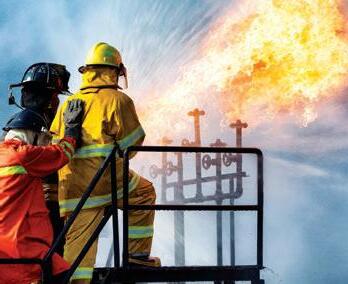
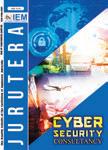

In this edition of JURUTERA , as we focus on Safety in Engineering, we are reminded that safety is not merely a checklist or a regulation. Instead, it is a culture, a mindset, and a shared responsibility across all disciplines of engineering. From the design table to the construction site and from operations to maintenance, every decision we make affects lives and livelihoods.
This issue brings together insights and practical experiences from engineers and safety professionals dedicated to advancing safer practices, innovative technologies, and resilient systems. We hope the articles within will inspire greater awareness, reflection, and commitment to fostering a strong safety culture in every engineering endeavour.
As we mark this season of reflection and renewal, The Institution of Engineers, Malaysia extends our warmest wishes to all readers celebrating Hari Raya Aidilfitri. Selamat Hari Raya Aidilfitri, Maaf Zahir dan Batin. May the festive season bring peace, joy, and renewed strength to continue our collective mission to make engineering safer for all.

















President: Ir. Prof. Dr. Jeffrey Chiang Choong Luin
Deputy President: Ir. Yau Chau Fong
Vice Presidents:
Ir. Prof. Dr. David Chuah Joon Huang, Dato’ Ir. Wan Nazari Wan Jusoh,
Ir. Dr. Bernard Lim Kee Weng, Ir. Prof. Dr. Tan Chee Fai, Ir. Prof. Dr. Lau Hieng Ho, Ir. Yeong Chin Chow, Simon, Ir. Abdul Razak Yakob
Honorary Secretary: Ir. Chen Harn Shean
Honorary Treasurer: Ir. Prof. Dr. Wong Yew Hoong
Immediate Past President: Dato’ Ir. Prof. Dr. Norlida Buniyamin
Past Presidents:
Datuk Ir. Prof. Ow Chee Sheng, Academician Tan Sri Dato’ Seri Ir. Prof. Em. Dr. Chuah Hean Teik, Dato’ Ir. Dr. Lim Chow Hock, Ir. Dr. Tan Yean Chin, Ir. Ong Ching Loon
Civil Representative: Ir. Tu Yong Eng
Mechanical Representative: Ir. Ng Yong Kong
Electrical Representative: Ir. Mohd. Aman Hj. Idris
Structural Representative: Ir. Dr. Tan Kuang Leong
Chemical Representative: Ir. Kim Kek Seong
Other Disciplines Representative: Ir. Dr. Dhakshyani Ratnadurai
Multimedia Representative: Ir. Assoc. Prof. Dr. Lai Khin Wee
Women Engineers Representative: Ir. Dr. Syuhaida Ismail
Young Engineers Section Representatives: Mr. Lim Yiren, Mr. Darshan a/l Balasubramaniam, Ms. Ong Ye Shian, Mr. Chuah Pei Lim, Mr. Teoh Chi Yang
Council Members:
Ir. Sharifah Azlina Raja Kamal Pasmah, Ir. Dr. Wan Syakirah Wan Abdullah, Ir. Dr. Mui Kai Yin, Ir. Shamil Abu Hassan, Ir. Wan Rizaluddin Abdullah Wan Ali, Ir. Dr. Aidil Chee Tahir, Ir. Dr. Angelia Liew San Chuin, Ir. Prof. Dr. Zuhaina Zakaria, Ir. Begum Irdawati Dowlad Rahuman, Ir. Chong Chee Yen, Ir. Khoo Chee Min, Ir. Ahmad Rafidi Mohayiddin (casual vacancy for Ir. Abdul Razak Yakob), Ir. Dr. Chan Swee Huat, Ir. Alex Looi Tink Huey, Ir. Sukhairul Nizam
Abdul Razak, Dato’ Ir. Ting Chek Choon, Ir. Dr. Norashikin M Thamrin, Ir. Lee Cheng Pay, Datuk Ir. Chin Tet Fu @Willy, Ir. Gs. Br. Dr. Zarabizan Zakaria, Ir. Choo Lay Guat, Ir. Dr. Siow Chun Lim, Ir. Assoc. Prof. Dr. Leong Kah Hon, Ir. Dr. Sara Lee Kit Yee, Ir. Chan Wah Cheong, Ir. Dr. Marianah Masrie
Council Members by Invitation:
Datuk Ir. Ho Hon Sang, Dato’ Ir. Ahmad Sabirin Arshad, Ir. Dr. Sanjayan
K.V. Velautham
Branch Chairman
1. Penang : Ir. Dr. Lee Choo Yong
2. Southern : Ir. Dr. Kong Weng Keong
3. Perak : Ir. Dr. Tiah Oon Han
4. Pahang : Ir. Harzah Mazni Ramli
5. Kedah-Perlis : Ir. Jamaluddin Abdullah
6. Negeri Sembilan : Ir. Richard Khoo Nee Keong
7. Kelantan : Ir. Hj. Nik Burhanuddin Nik Yusoff
8. Terengganu : Ir. Zakaria Abdullah
9. Melaka : Ir. Sh. Ja’afar Sh. Ismail
10. Sarawak : Ir. Dr. Angelia Liew San Chuin
11. Miri : Ir. Prof. Dr. Stephanie Chan Yen San
12. Sabah : Datuk Ir. Mohd Yaakob Hj. Jaafar
Chairman, InfoPub & Chief Editor: Ir. Prof. Dr. Lau Hieng Ho
Vice Chairman & Principal Bulletin Editor: Ir. Wan Rizaluddin Abdullah Wan Ali
Secretary: Ir. Assoc. Prof. Dr. Hum Yan Chai
Chairman, Sub Committee on Resource Centre: Ir. Tay Siang Hui
Journal Editor-in-Chief: Ir. Prof. Dr. Teo Fang Yenn
Chairman, Sub Committee on Web Portal: Ir. Dr. Hasril Hasini
Project Leader for Jurutera-i: Ir. Alex Looi Tink Huey
Members:
Committee
Ir. Dr. Tan Kim Seah, Ir. Lau Tai Onn, Ir. Yee Thien Seng, Ms. Michelle Lau Chui Chui, Ir. Begum Irdawati Dowlad Rahuman, Ir. Dr. Nor Ilia Anisa Aris, Ir. Wong Chee Fui, Ir. Dr. Marianah Masrie, Ir. Dr. Lau Chee Yong, Ir. Dr. Bhuvendhraa Rudrusamy, Ir. Razmahwata Razalli, Ir. Lee Chang Quan, Ir. Assoc. Prof. Dr. Moey Lip Kean, Ir. Tan Kok Jyh, Ms. Chai Jing Xuan, Mr. Chin Zehong, Ir. Dr. Lau Chee Yong
Chief Editor: Ir. Prof. Dr. Lau Hieng Ho
Principal Bulletin Editor: Ir. Wan Rizaluddin Abdullah Wan Ali
Committee Members:
Ir. Alex Looi Tink Huey, Ir. Dr. Tan Kim Seah, Ir. Razmahwata Mohd Razalli, Ir. Prof. Dr. Teo Fang Yenn, Ir. Lau Tai Onn, Ir. Yee Thien Seng, Ms. Michelle Lau Chui Chui, Ir. Ahmad Rafidi Mohayiddin, Ir. Lee Chang Quan, Dr. Sudharshan N. Raman, Ir. Begum Irdawati Dowlad Rahuman, Ir. Dr. Lau Chee Yong
THE INSTITUTION OF ENGINEERS, MALAYSIA
Bangunan Ingenieur, Lots 60 & 62, Jalan 52/4, P.O. Box 223, (Jalan Sultan), 46720 Petaling Jaya, Selangor Darul Ehsan. Tel: 603-7890 0130 Fax: 603-7957 7678
E-mail: sec@iem.org.my Homepage: http://www.myiem.org.my

Ir. Dr. Wong Chee Fui Chairman, SESIG
Safety
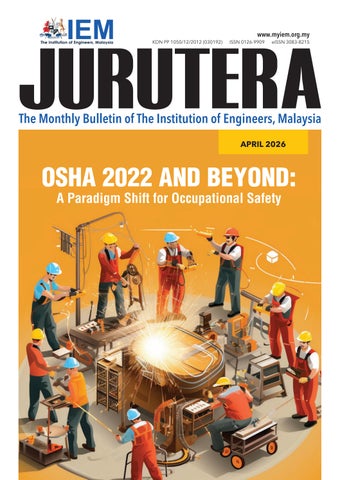
IEM’s Safety in Engineering Special Interest Group (SESIG) is pleased to champion the April Bulletin with the theme, OSHA 2022 and Beyond: A Paradigm Shift for Occupational Safety. We will provide an insight into and an understanding of the Occupational Safety & Health Act (Amendment 2022) and the Occupation Safety & Health (Construction Work) (Design Management Regulations) 2024.
Retired DOSH Director General YBrs. Ir. Haji Mohd Hatta Zakaria, shares with us the department’s achievements in safety awareness, implementation, and enforcement as well as the new provision and implementation of the latest OSHA Act 2022.
I would also like to thank the SESIG Committee and writers who have contributed articles in this issue to showcase the new paradigm shift in the occupational safety and health for the country’s construction industry.
DIMENSION PUBLISHING SDN. BHD. [ 199701034233 (449732-T) ]
Level 18-01, PJX-HM Shah Tower, No. 16A, Persiaran Barat, 46050 Petaling Jaya, Selangor Darul Ehsan, Malaysia. Tel: +(603) 7493 1049
E-mail: info@dimensionpublishing.com Fax: +(603) 7493 1047 Website: www.dimensionpublishing.com
Chairman Robert Mebruer
CEO/Publisher Shirley Tham shirley@dimensionpublishing.com
Head of Marketing & Business Development Joseph How joseph@dimensionpublishing.com
Production Editor Tan Bee Hong bee@dimensionpublishing.com
Contributing Writers Putri Zanina putri@dimensionpublishing.com Hanna Sheikh Mokhtar hanna@dimensionpublishing.com
Senior Graphic Designer Sofia Hanis Mohd Uzir sofia@dimensionpublishing.com
Graphic Designer Nicole Theng nicole@dimensionpublishing.com
Advertising Consultants Tham Choon Kit ckit@dimensionpublishing.com
Accounts Cum Admin Executive Yong Yen Yin yenyin@dimensionpublishing.com
PUBLICATION DISCLAIMER
For advertisement placements and subscriptions, please contact:
DIMENSION PUBLISHING SDN. BHD. [ 199701034233 (449732-T) ]
Tel: +(603) 7493 1049
Fax: +(603) 7493 1047
E-mail: info@dimensionpublishing.com Website: www.dimensionpublishing.com
Subscription Department E-mail: info@dimensionpublishing.com
JURUTERA MONTHLY CIRCULATION: OVER 50,000 MEMBERS
Submission or placement of articles in JURUTERA could be made to the:
Chief Editor THE INSTITUTION OF ENGINEERS, MALAYSIA (IEM) Bangunan Ingenieur, Lots 60 & 62, Jalan 52/4, P.O. Box 223 (Jalan Sultan), 46720 Petaling Jaya, Selangor.
Tel: +(603) 7890 0130
Fax: +(603) 7957 7678
E-mail: pub@iem.org.my
Website: http://www.myiem.org.my
Published by: The Institution of Engineers, Malaysia (IEM) Publishing Consultant: Dimension Publishing Sdn. Bhd. Printed by: Thunder Print Sdn. Bhd.
The publication has been compiled by both IEM and Dimension with great care and they disclaim any duty to investigate any products, process, services, designs and the like which may be described in this publication. The appearance of any information in this publication does not necessarily constitute endorsement by IEM and Dimension. There is no guarantee that the information in this publication is free from errors. IEM and Dimension do not necessarily agree with the statement or the opinion expresssed in this publication.
COPYRIGHT JURUTERA Bulletin of IEM is the official magazine of The Institution of Engineers, Malaysia (IEM) and is published by Dimension Publishing Sdn. Bhd. The Institution and the Publisher retain the copyright over all materials published in the magazine. No part of this magazine may be reproduced and transmitted in any form or stored in any retrieval system of any nature without the prior written permission of IEM and the Publisher.
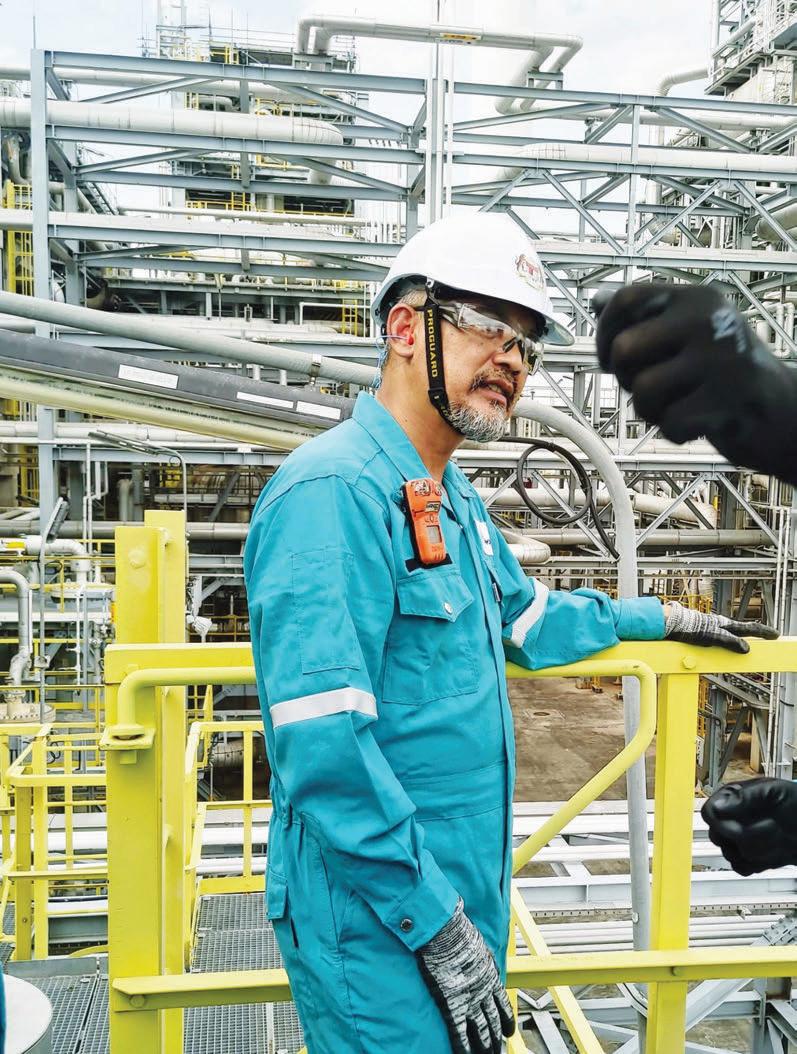
All workers should go to work safely and in good health, work in a safe and healthy environment, and return home safely and in good health to their families.
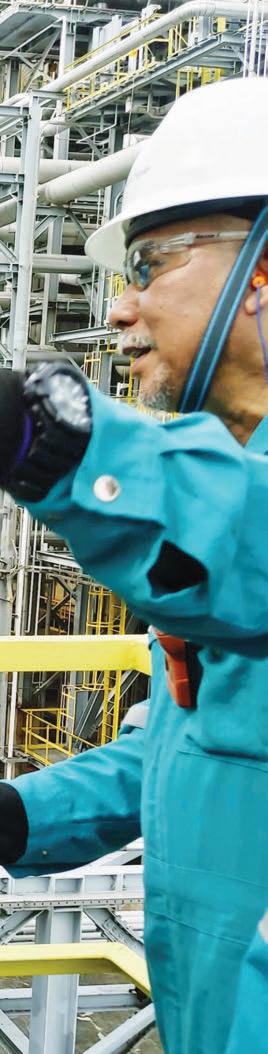
Interview session with Ir. Haji Mohd Hatta Zakaria
Strengthening occupational safety and health in Malaysia requires more than enforcement alone; it also demands leadership, foresight and a systematic focus on prevention. During the tenure of the previous Director General of the Department of Occupational Safety & Health (DOSH), YBrs. Ir. Haji Mohd Hatta Zakaria, significant progress was made in advancing safety awareness, implementation and enforcement through a decisive shift towards risk-based regulation and prevention-through-design.
Central to these achievements was the enactment of the Occupational Safety & Health (Amendment) Act 2022, which expanded duty of care, strengthened accountability across the supply chain and embedded hazard identification and risk control at the earliest stages of work and design. Supported by targeted guidelines, industry engagement and enhanced enforcement strategies, DOSH moved the national OSH framework from reactive compliance to sustainable, engineering-led prevention.
This article highlights Ir. Haji Mohd Hatta’s key contributions to institutionalising preventive safety practices, strengthening governance and competency, and fostering a more mature safety culture that delivers lasting improvements in workplace safety, health, and organisational resilience across Malaysia’s high-risk and critical industries.
Disclaimer: Please be informed that YBrs. Ir. Haji Mohd Hatta Zakaria has retired from government service, effective 13 February 2026. Accordingly, after this date, any reference to, use of his name, signature, official statements, or representation associating him with the office of the Director General of DOSH is no longer valid. All official matters should now be referred to the current leadership of DOSH.
During your tenure as Director General, what is the most significant achievement in the strengthening of Malaysia’s occupational safety and health (OSH) ecosystem, particularly from the standpoint of prevention-through-design and safety engineering?
Ir. Haji Mohd Hatta: During my tenure, the most significant achievement in strengthening Malaysia’s OSH ecosystem was the institutionalisation of prevention-through-design principles through both regulatory reform and industry practice.
The Occupational Safety & Health Act (Amendment) 2022 marked a major milestone by expanding duties beyond traditional workplaces, reinforcing the responsibilities of designers, manufacturers and suppliers as well as embedding risk assessment and control at design and planning stages. This has strengthened the role of safety engineering and ensured that hazards are systematically eliminated or reduced at source before work begins.
Equally important is the shift towards a proactive, risk-based and engineering-driven approach to implementation and enforcement aligned with the amended Act. By emphasising higher accountability of duty holders, stronger governance,
and competency development, DOSH has promoted the adoption of engineering controls, datadriven inspections, and early risk management. This approach has moved Malaysia’s OSH framework from reactive compliance to sustainable prevention.
How has DOSH contributed to shifting the industry mindset from regulatory compliance towards a proactive and sustainable safety culture, especially in high-risk engineering sectors such as construction, manufacturing, and energy?
Ir. Haji Mohd Hatta: We have contributed to this shift by moving beyond prescriptive enforcement towards a risk-based and preventive regulatory approach which emphasises leadership accountability and early hazard management. Through the OSHA (Amendment) 2022, clearer duties were placed on employers, designers, and principals to manage risks proactively, particularly in high-risk sectors such as construction, manufacturing, and energy.
This was reinforced through targeted guidelines, industry engagement, and technical dialogues which highlight safety engineering, prevention-through-design, and the integration of OSH into core business and project planning decisions.
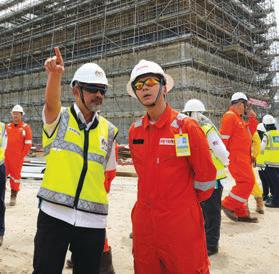
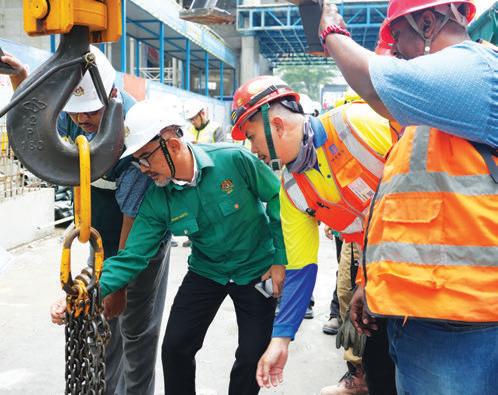
At the same time, DOSH strengthened capacity building and enforcement strategies to support sustainable cultural change. This included data-driven inspections, sector-specific programmes, and competency development initiatives which encourage the adoption of engineering controls, safe technologies, and systematic risk assessment.
By combining firm governance with education and collaboration, DOSH helped industry view OSH as not merely a compliance obligation, but as a critical enabler of productivity, resilience, and long-term sustainability.
How has the adoption of engineering controls and systematic risk assessments improved workplace safety outcomes over the years, and what role has DOSH played in driving this change?
Ir. Haji Mohd Hatta: From my observations, the increased adoption of engineering controls and systematic risk assessments has
led to more tangible and sustainable improvements in workplace safety outcomes, particularly in high-risk industries.
By prioritising hazard elimination, safer design and automation, organisations have reduced reliance on human behaviour alone, resulting in lower accident rates, fewer catastrophic incidents, and more resilient operations. Systematic risk assessments have also improved decision-making by enabling hazards to be identified and controlled early, especially during design, planning, and modification stages.
How does DOSH balance enforcement with industry capability development, particularly in supporting organisations and engineers to comply with increasingly complex safety requirements?
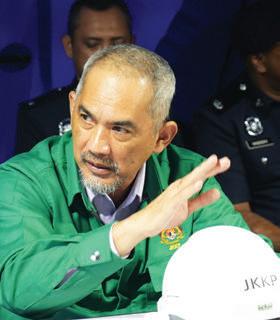
Ir. Haji Mohd Hatta: DOSH balances enforcement with industry capability development by adopting a risk-based and facilitative regulatory approach that combines firm governance with practical support.

While enforcement remains essential to ensure accountability and to protect workers, DOSH has placed strong emphasis on guidance, engagement, and early intervention, particularly for organisations facing complex safety and engineering requirements. This includes issuing technical guidelines, conducting advisory visits, and engaging directly with industry players.
By developing the technical capability of duty holders and DOSH officers alike, as well as encouraging prevention-through-design and systematic risk management, DOSH is helping organisations move beyond minimum compliance. This balanced approach supports sustainable safety performance while maintaining the integrity and credibility of enforcement.
Beyond accident statistics, what indicators does DOSH use to assess the effectiveness of safety awareness programmes and enforcement strategies at the national level?
Ir. Haji Mohd Hatta: Beyond accident statistics, DOSH assesses effectiveness through a range of leading and systemic indicators which reflect how well prevention has been embedded in workplaces.
These include the quality and maturity of risk assessments, the extent of engineering and preventive controls adopted, compliance trends identified through inspections, and improvements in safety management systems across sectors.
DOSH also monitors participation in safety programmes, competency development outcomes, and the level of engagement by employers, workers and OSH practitioners in OSH initiatives. At national level, DOSH further evaluates behavioural and cultural indicators such as management commitment, reporting of near misses, responsiveness to corrective actions, and industry feedback.
Data from targeted inspections and enforcement are analysed to identify patterns and emerging risks, enabling DOSH to refine enforcement and awareness strategies. Together, these indicators provide a more holistic view of safety performance and long-term cultural change beyond lagging accident data.
Can you highlight the key achievements and tangible outcomes of the OSH Master Plan 2021-2025 in strengthening Malaysia’s OSH landscape, particularly in terms of prevention, compliance, and industry capability?
Ir. Haji Mohd Hatta: Under OSHMP25, one key achievement is the strengthened national focus on prevention and risk management as the foundation of workplace safety and health. The plan supports the implementation of the OSH Act (Amendment) 2022, broadens coverage to include more workplaces and reinforces duty holder accountability.
Tangible outcomes include the greater adoption of systematic risk assessments, the wider application of prevention-through-design principles, and improved integration of OSH considerations into project planning across high-risk sectors.
In terms of compliance and industry capability, the Master Plan has enabled a shift towards risk-based enforcement and capacity building. DOSH enhanced technical guidelines, sector-specific programmes, and competency development initiatives to support employers, employees and OSH practitioners in meeting increasingly complex requirements. These efforts have improved compliance quality, strengthened safety management systems, and fostered a more mature safety culture, positioning OSH as a key enabler of productivity, sustainability and national development.
With the conclusion of OSHMP 2021-2025, is DOSH planning a new or a continuation of the OSH Master Plan? What key priorities or strategic directions does DOSH want to introduce to further advance safety engineering and workplace safety?
Ir. Haji Mohd Hatta: DOSH, in collaboration with the Ministry of Human Resources and key stakeholders, has already commenced planning for the next national strategy, the Occupational Safety & Health Master Plan 20262030 (OSHMP30).
This next phase is designed to build on gains achieved under OSHMP25, including improved safety culture, greater awareness, employer-employee engagement, OSH system strengthening, and addressing future challenges that may emerge in the workplace. OSHMP30 will emphasise the following key strategic thrusts:
• Addressing New & Emerging Risks. In recognition of rapid industrial transformation, especially the adoption of Industry 4.0 technologies and digitalisation, OSHMP30 will prioritise safety and health issues related to advanced technologies, automation, AI and other modern work paradigms. This includes
preparedness for technological risks and psychosocial hazards associated with new work models.
• Strengthening Resilience & Economic Sustainability. The plan is aimed at strengthening not only workplace safety but also economic resilience, supporting Malaysia’s competitiveness in a globalised economy by embedding OSH as a driver of productivity, sustainability, and workforce well-being.
• Inclusive Partnerships & Collaboration. A prominent theme for OSHMP30 will be fostering closer collaboration between government agencies, industry, academia, and civil society to build a cohesive and inclusive ecosystem where OSH principles are internalised at all levels of business and society.
• Digitalisation & Innovation in OSH Systems. Leveraging digital tools and data systems to enhance OSH compliance, reporting, monitoring, and capacity building will be a significant focus that’s in line with national digital economy goals.
• Focus on Vulnerable Sectors & Future Jobs. In addition to traditional sectors, OSHMP30 will look to strengthen protections in informal, SME, gig-economy, and future job sectors.
Ir. Haji Mohd Hatta Zakaria was the Director General of the Department of Occupational Safety and Health (DOSH) Malaysia. With over 30 years of experience in both industry and public service, he has held key leadership roles at state and federal levels, including Director of DOSH in several states and Deputy Director General (Occupational Health) before assuming his current post in 2023.
He holds a Master’s degree in Process Safety and Loss Prevention from the University of Sheffield and a Mechanical Engineering degree from the University of Evansville. Actively involved in national and regional professional bodies, he continues to advance occupational safety, health standards, and engineering professionalism in Malaysia and across ASEAN.
The OSHA (Amendment) Act 2022 marked a significant shift in Malaysia’s occupational safety and health landscape, moving from a largely prescriptive, compliance-based approach to a broader, risk-based duty of care that spanned the entire life-cycle of work activities. The amendment expanded legal responsibilities beyond employers to include designers, manufacturers, suppliers, and those in control of workplaces, placing greater emphasis on proactive risk management and prevention-through-design.
For engineers and engineering managers, this represented a fundamental change in professional expectations, where safety and
The OSHA (Amendment) Act 2022 has introduced a broader duty of care across workplaces. How does this shift impact the role and responsibilities of engineers in designing, operating, and maintaining safer systems?
Ir. Haji Mohd Hatta: The broader duty of care introduced under the OSHA (Amendment) Act 2022 has significantly elevated the role of engineers, as safety and health considerations are now explicitly required to be integrated across all stages of work activities.
Engineers are no longer solely focused on technical performance or regulatory compliance but are also expected to apply preventionthrough-design principles by identifying hazards, assessing risks, and incorporating inherent safety features at the design stage of plant, machinery, processes,
health considerations must be embedded from concept and design stages through operation, maintenance and eventual modification or decommissioning. Coupled with stronger governance requirements, higher penalties and enhanced enforcement by DOSH, the amended Act reinforced accountability and elevated the role of engineering judgment in protecting workers and the public.
This article outlines the key new provisions of the OSHA (Amendment) Act 2022, examines their implementation, and explores the implications for engineers, organisations and the future of safety engineering practice in Malaysia.
and systems. This shift reinforces engineers’ accountability in ensuring that foreseeable risks are eliminated or reduced as far as it is reasonably practicable.
In terms of operation and maintenance, the amendment strengthens expectations for engineers to ensure systems remain safe throughout their life-cycle. This includes establishing safe operating limits, maintenance strategies, modification controls, and clear documentation and communication of residual risks.
Engineers are also expected to work more closely with employers, safety practitioners and workers to support risk assessments, incident prevention and continuous improvement. Overall, the Act positions engineers as key enablers of workplace safety, bridging technical expertise with legal and ethical responsibility for protecting workers and others affected by engineering activities.
What are the key new requirements under the amended Act that engineers, engineering managers, and organisations should be most aware of in ensuring compliance and effective implementation?
Ir. Haji Mohd Hatta: Under the OSHA (Amendment) Act 2022, one of the most important new requirements is the expanded duty of care, which now applies more broadly to employers, designers, manufacturers, suppliers as well as those in control of workplaces.
For engineers and engineering managers, this means a clearer legal obligation to ensure that the plant, substances, systems of work and engineering designs are safe and without risks to health throughout their life-cycle.
The amendment also strengthens expectations for risk assessment, hazard elimination at source, and prevention-through-design, making proactive safety planning a core compliance requirement rather than a reactive measure.
At organisational level, the amended Act places stronger emphasis on OSH governance, accountability and competency. Key requirements include enhanced penalties for non-compliance and the need for competent persons, improved consultation with workers on safety matters, and more systematic OSH management practices.
What were the main challenges that DOSH faced in implementing the amended Act and how did DOSH support industry players, particularly SMEs, to adapt effectively?
Ir. Haji Mohd Hatta: One of the main challenges DOSH faced in implementing the amended OSHA was the varying levels of awareness, readiness and competency across industries, particularly in small and medium enterprises (SMEs).
Many organisations are still transitioning from a compliance-driven mindset to one that fully understands the amended Act’s broader duty of care, risk-based approach and stronger accountability. Limited resources, lack of in-house OSH expertise, and difficulty in interpreting legal and technical requirements into practical actions have also posed implementation challenges.
To support industry players, DOSH has focused on guidance, capacity building and engagement rather than enforcement alone, especially for SMEs. This includes issuing guidelines and codes of practice, conducting outreach programmes, talks and briefings, and strengthening collaboration with industry associations, professional bodies, and training providers.
DOSH is also leveraging digital platforms such as website and social media and advisory initiatives to improve access to information and support gradual, practical compliance, while continuing targeted enforcement to ensure the amended Act is implemented effectively and sustainably.
How does DOSH plan to strengthen enforcement of the amended Act while encouraging voluntary compliance and continuous improvement in safety engineering practices?
Ir. Haji Mohd Hatta: DOSH plans to strengthen enforcement of the amended Act through a more riskbased, intelligence-driven, and consistent enforcement approach, focusing on higher-risk sectors, repeat offenders, and activities with significant potential for serious harm.
Enhanced inspector competency, clearer enforcement protocols and the use of data and digital reporting systems will support more effective inspections, investigations and follow-up actions. At the same time, the higher penalties and clearer duties in the amended Act will provide a strong deterrent against serious non-compliance.
Looking ahead, how do you see the amended OSHA Act shaping the future of safety engineering, professional practice, and national productivity in Malaysia?
Ir. Haji Mohd Hatta: The amended OSHA Act is expected to significantly elevate the role of safety engineering as a core professional discipline rather than as a secondary compliance function.
By embedding a broader duty of care and a life-cycle, risk-based approach, the Act encourages engineers to integrate preventionthrough-design, human factors, and system safety principles into everyday professional practice. This will strengthen professional accountability, raise competency standards, and drive greater collaboration between engineers, OSH practitioners, and management in delivering safer and more resilient workplaces.
At national level, the amended Act positions OSH as a strategic enabler of productivity and sustainability. Safer systems reduce accidents, downtime, and long-term health costs, while supporting workforce well-being, skills retention, and business continuity.
Over time, this shift is expected to enhance the country’s competitiveness by promoting higher-quality engineering, more reliable operations, and a stronger safety culture that supports













































by:

Ir. Ts. Shum Keng Yan Specialist in Environmental Health & Safety, mentor in IEM Engineering Competency Development and a Professional
Interviewer (Chemical Engineering).
The thought of establishing a Global Safety Assurance framework may appear daunting initially, particularly given the diversity of industries, regulatory environments, operational contexts, and cultural expectations across different regions. The scale and ambition of aligning safety principles at a global level can easily feel overwhelming. However, like many complex undertakings, the challenge becomes far more manageable when broken down into familiar foundations drawn from traditional safety and management models. By revisiting these core principles, we can better understand that global assurance is not an entirely new concept, but rather an expansion and integration of well-established safety fundamentals. What follows, therefore, is a simplified overview, an introduction to stimulate thinking and discussion. In truth, the subject is extensive enough to fill a dedicated book or, at the very least, to spark a rich and thoughtful conversation over an afternoon safety tea session. Let us start at the core of a management system where we have Safety Organisation and Arrangements.
The size and structure of the Safety Organisation largely depend on the size of the operating unit, geographical spread, complexity and number of divisions (business units).
For simplicity, Operating Unit is the local company which is actually carrying out the business activity. Operating Units can be collectively managed as a Region, e.g. Asia Pacific, EMEA, etc. All Operating Units of a similar business will roll up to a Division (or Business Unit). All Divisions will roll up to the Group (sometimes called Corporate/HQ). See Figure 1.
We start by identifying Operating Units which require a certified safety professional. This is usually defined in the local law. The law will provide the minimal requirement for that Operating Unit. In a matured organisation, Safety can be successfully integrated into the Head of the Operating Unit. However, in the new world norm, most organisations change the Head very often, so this is usually not possible. A standalone Safety Head may be required.
The key is that the higher the maturity of an organisation, the more the ownership can be taken on by the leadership and only a Safety Officer is sufficient to be the conscience of safety. This needs careful consideration and particular attention must be paid to senior leadership behaviour.
In the last 30 years, I have only seen one multinational organisation that successfully integrated Safety accountability to each Operating Unit Head. This organisation had a very stable management team worldwide and a very matured safety culture. However, it also fell into the trap of musical chairs for the Operating Unit Heads. Today the organisation is also employing standalone Safety Heads. Perhaps, this is also to ensure there is a stronger focus on safety.
Complexity is a factor that many organisations miss out on. A full End-to-End Operating Unit will have all activities, including sourcing of raw materials, manufacturing, subcontracting, commercial and sales service, logistics and warehousing as well as administration and shared services. Thus, the more complex the Operating Unit, the more resources are required and sometimes specialists are needed for the part of the Supply Chain that is being covered.
Getting the Safety Organisation right at this level is crucial as this is the foundation.
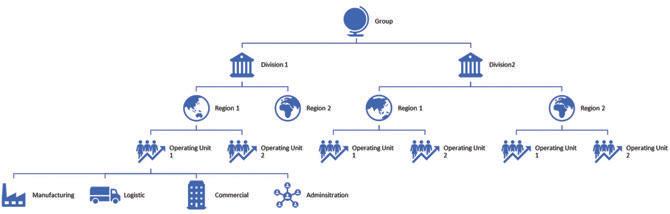
B. Organisational Options for Region
When we mention regions, it is convenient to divide the world into Asia Pacific, Europe, Middle East, Africa, North America, and Latin/South America. This makes a convenient time zone spread.
However certain regions may have a lot of Business Units and thus combinations do occur (e.g. EMEA, Americas, China and Rest of Asia, the Pacific, etc.). Again, the consideration is complexity, size of business unit, number of employees (safety is more correlated to employees than EBIT), politics of the regional head’s influence and capability of the Safety Regional Head (do you have a person capable of doing the job?). A Regional Head is required for ease of coordination and for ensuring an aligned execution. In smaller geographies, a double hat is sufficient.
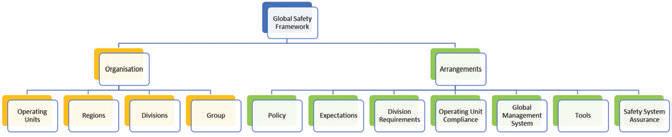
(a) Global Policy.
(b) Global Expectations.
(c) Division Requirements.
(d) Operating Unit compliance to their legal register.
(e) The Case for Global Management System Certification.
(f) Tools to enable the Management System.
(g) Safety System Assurance.
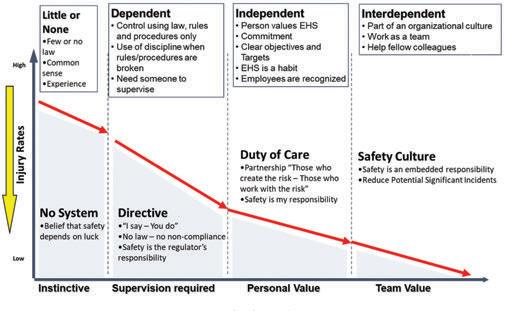
C. Organisational Options for Division and Group
At Group level, consideration will be given to how Divisions (Business Units) are managed. In a large Division, a specific Global Safety Head will be appointed. In smaller Divisions, the most competent Safety Head of an Operating Unit can assume this role. Do note that it should be the most competent rather than the Safety Head of the largest facility. There is no correlation between the competency of the safety professional and size of facility. Look back at your organisation and evaluate each Division’s Safety Maturity (Figure 2) and the competency match. Are there any gaps to address? People Deliver Results. Period!
In the traditional safety model, Arrangements will refer to the Safety Management System and the tools which enable the Management System to function, driven by the leadership and advice of the Safety Organisation. Let us begin by looking at a few key building blocks.
The Safety Policy is usually just a piece of document flashed on the intranet or hanging on the wall for the auditor and Safety Head to demonstrate commitment during visits. But it is far more than that and not many realise the significance of it. As in all behavioural managing tools, the policy is to drive a way of working in the company and the commitment that comes with it. The document is debated to death with wordsmithing worthy of any Queen’s council debate in a court of law. Since it needs to be signed off at the highest level (delegated sign offs are a cop-out), it demonstrates, in writing, a commitment to what the organisation holds as sacred in driving the safety culture and complying with the law. Pretty simple but a very loaded document. FAQ: Should each Operating Unit put up its own local Safety Policy? Short answer is yes, especially if required by law. The Safety Policy is the most basic demonstration of the leader’s commitment.
But all good documents should not be left hanging on the wall to gather dust. We need to review and update some requirements once a while to keep the auditors happy. This applies to all other documents.
There can be only one single truth on what is required in Safety and that is Global Expectation. Many organisations still refer to the Global Expectation document as Global Standards. In reality, we are not in the business to write standards as this is usually done by the National Standard Organisation or other international organisations. There are also industry standards which are adopted.
So what is the Global Expectations? It is the desired Performance to mitigate a business risk. The Expectations document aims to calibrate the understanding and execution of Safety. In simple terms: What risk does it address? What is the local legal requirement? What are the Control Measures expected? What are the reference standards to drive performance?




Annual Reports • Booklets • Brochures • Buntings • Business Cards
CD / DVD Replications • Calendars • Cards & Invitations • Certificates
Custom Printings • Envelopes • Folders • NCR Bill Books • Notepads
Leaflets • Letterheads • Paper Bags • Posters • Stickers • Others
We run a business managing safety risks by carefully selecting and adopting Standards, Guidelines, Codes of Conduct, etc. as the Expectations. So which takes precedence? Global Expectations or Local Legal Requirements? The simple rule is whichever is more strict! Anyone pretending not to know is probably trying to evade responsibility as this has been the norm since my first mentor started his career (over 70 years ago!).
Copying Expectations and writing it as a Performance Goal for the Year is a “No No”. It is part of the Safety Professional’s job.
C. Division Requirements
This is the quirky part of managing multiple Divisions as each has its own differences. Divisions are encouraged to add their own Division Requirements to supplement the Global Expectations. It is important to sit down with Division Business Leaders and the Division Safety Head to ensure there is no overlap and that risks are being managed.
D. Operating Unit Compliance to the Legal Register
Operating Units are scattered across different legal jurisdictions. As such, managing compliance across the world will not be adequate with just Global Expectations. As regulations change over time, Global Expectations will need to evolve to ensure it meets local regulations.
One of the key tools is the Legal Register. Again, in simple terms, it is a list of each APPLICABLE law (regulations, guidelines, codes of practice, notices, instructions etc.) where the Operating Unit is based. Take these and list down the actions required under the law. Does the Operating Unit comply with it? What is the timeline for compliance? Who is the Person-inCharge? What is the Dateline?
E. Case for Global Management System Certification
Getting certified is not so straightforward. Certification does not just mean that an organisation is compliant with the law. The consideration should be: Does it drive a value? Does the customer view it as an important label? Does it help drive a neutral view of how Safety is driven in the ESG (CSR) report?
The next question, if the answers are YES, is whether it should be local certification or global certification?
Some companies have moved from certification to attestation (to attest that an organisation follows a certain certification requirement but is NOT certified). The driving force? To tell the world they have an internal management system that meets global certification but they do not want to be certified.
In summary, certification is a sticker. Some stickers have higher values for some parties. In the end it is a consideration of the value to the safety culture and the business. It is not that since “others are certified, we should also certify”. There are a lot of work hours required in certification and maintaining the certification and this needs to be considered.
F. Tools to Enable Management System
We use Excel and Teams! I gasped! Large organisation saves money by using massive complicated Excels with links which defy coding logic to drive a Safety Management System. I am sure you have been there and seen this. Well, the alternatives are expensive built management system, document control libraries and a news subscription by stringers around the world disguised as a Safety Compliance application plus an Excel to bind them all. There is a low cost and low maintenance alternative. It is almost FREE (actually already paid for) but with all FREEware you need to do some work. This can be easily done by anyone with software agility, anyone fresh out of college or university. I am talking about SharePoint and Power Automate being under-utilised. It does not take much effort for those willing to learn. There is a built-in version control, security settings, workflows and, with a bit of tweaking, a simple management system can be built PLUS the Excel that binds them all. There are companies which help organisations build




Nehemiah-OVM provides the following products and services:
- Post-tensioning solution provider
- Carpark Flat Slab
- Transfer Plate
- Beams, Box Girders
- Alternative design solutions
- Cable systems (stay cable main cable hanger)
- Bridge bearing and expansion joint
- Construction solutions (heavy lifting, ILM, etc)
- Monitoring, repairing and strengthening for structures



The Strand, Kota Damansara 47810 Petaling Jaya Selangor Darul Ehsan
Tel : 603-61426638
Fax : 603-61426693

Email : enquiry-pt@nehemiah-grp.com


such systems using SharePoint and Power Automate. The cost is significantly lower than traditional models, you keep all the data and there is almost no on-going annual subscription! One requirement is that the organisation NEEDS to work on the cloud online – no more emails here and there. Did I hear no more emails? Cool! Shhh, don’t tell anyone…
We need to ensure that Arrangements that are supposed to be in place are supposed to be implemented. This brings us to Safety System Assurance. This can be viewed from a Management System and Compliance Safety enveloped by Safety Maturity.
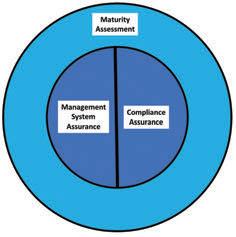
Management System assurance is usually done by the Management System certification or attestation framework. Compliance Safety assurance may require specialist audits to ensure that legal and technical requirements are met.
To envelope the Safety Assurance programme, Maturity Assessments are useful to identify where the Business Unit sits on the Safety Maturity Model (Figure 3). This can be done through a cultural survey either internally or by using an external platform. In a matured organisation, the Operating Unit Head will send a Letter of Assurance on the overall risk management of the Operating Unit.
Organisations adopt Group Safety Audits or Cross Audits (audits between different Business Divisions or Operating Units) which has elements of Management System, Compliance and Maturity Model all rolled into an audit protocol. Cross Audits are extremely valuable in driving faster cross learning and actually identifying transferable good practices. It is also a source of motivation for younger Safety Professionals.
It is important to have proper risk mapping of an Organisation’s Supply Chain to ensure there are proper Arrangements driven by a competent Organisation to manage the risks. Figure 4 is a summary of the discussion. The ownership and accountability of business leaders need to be built into the management system. In the end, it is all about how we drive the maturity of the organisation’s safety culture.






by:

Ir. Dr. Taram Satiraksa Wan Abdullah
Independent
consultant, trainer, and lecturer specialising
in capacity-based safety, human performance, and organisational resilience.
Malaysia’s occupational safety and health (OSH) legislation has evolved progressively in response to the growing complexity of modern work systems and a more sophisticated understanding of how accidents and failures occur in the workplace. The earlier Factory & Machinery Act 1967 embodied a hazard-based and highly prescriptive approach to safety regulation. During this period, safety was primarily associated with the identification and control of physical hazards linked to machinery, equipment, and factory operations. Regulatory compliance focused heavily on meeting specific technical standards, engineering safeguards, and statutory inspection requirements.
Under this framework, the prevailing assumption was that if hazards could be eliminated, isolated, or adequately guarded, risks would be effectively controlled. The emphasis was therefore placed on tangible and visible dangers, with less consideration given to broader systemic influences.
While this approach was appropriate and effective for the industrial context at that time, it provided limited flexibility in addressing emerging risks. Moreover, it paid relatively little attention to organisational culture, management systems, human factors, and the variable, often unpredictable conditions under which real work is actually carried out.
The introduction of the Occupational Safety & Health Act 1994 (OSHA 1994) marked a significant shift toward self-regulation, transferring primary responsibility for safety from regulators to employers. Organisations were expected to manage risks through safety management systems, risk assessments, and clearly defined duty holders. This expanded coverage beyond factories and allowed greater flexibility in managing diverse risks. However, over time, the limitations of self-regulation became apparent, particularly where organisations lacked capability, leadership commitment, or system maturity.
OSHA Amendment 2022 represents the next stage in this evolution by embedding resilience and capacity into legal expectations. Safety is no longer judged solely by the absence of incidents, but rather by an organisation’s
ability to anticipate challenges, respond effectively to disruption, and recover without escalation. This shift reflects a modern understanding of safety as a dynamic capability, requiring robust systems which can adapt to variability and failure rather than merely comply with rules.
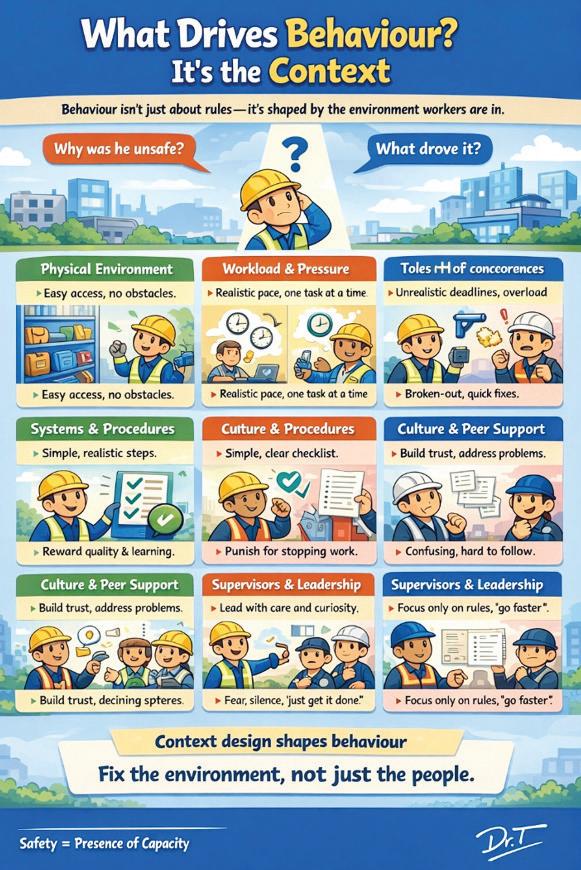
OSH does not exist in isolation from the systems, pressures, and environments in which work is performed. People do not simply choose to behave safely or unsafely; their actions are shaped by the context, the combination of legislation, organisational structures, leadership decisions, and work design area which surrounds them. Here, context refers to the broader environment and circumstances which influence how individuals behave at work. Similarly, the law is not merely a set of rules to be followed, but a powerful mechanism for shaping behaviour across industries and professions. Mandatory safety training under new legislation reduced workplace accidents in multiple industries.
For instance, the introduction of mandatory safety training under regulatory frameworks has been associated with measurable reductions in workplace accidents across multiple industries. An evaluation of Ontario’s compulsory working-at-heights training showed a reduction of approximately 19% in fall-related lost-time injuries, with hundreds of serious injuries and multiple fatalities avoided following the introduction of the legislative requirement (Institute for Work & Health [IWH], 2023; Robson et al., 2024). These findings demonstrate that when training is standardised, mandatory, and delivered by competent providers, it can meaningfully influence how work is planned and executed.
Evidence from broader OSH research supports this conclusion. Systematic reviews indicate that effective safety training improves safety knowledge, safer work behaviours, and positive safety outcomes, particularly when training is embedded within structured safety management systems rather than treated as a one-off compliance activity (Burke et al., 2006; Robson et al., 2012).
The International Labour Organisation (2010) further emphasises that training is most effective when aligned with organisational systems, leadership commitment, and worker participation. From a capacity-based safety perspective, mandatory training strengthens organisational capability by equipping workers and supervisors to recognise risk, adapt to changing conditions, and to respond effectively to deviations. This how an illustration of legislations and regulation can reshape context and drive safer behaviour.
The OSHA Amendment 2022 represents the latest and most significant shift in this journey. It moves beyond hazard control and procedural compliance to establish a new context in which safety is defined by capacity, resilience, and adaptability. By strengthening accountability, competency, preparedness, and system assurance, the amendment reshapes how leaders design
organisations and how people behave at work. Safety is no longer measured only by the absence of incidents, but by an organisation’s ability to anticipate disruption, respond effectively, and recover without escalation. In doing so, OSHA 2022 sets the conditions that will drive future OSH behaviour by placing context at the centre of how safety is understood, engineered, and practised in Malaysia.
OSHA Amendment 2022 is making some improvements with safety engineering perspective. It represents a systemic redesign of how organisations manage risk, resilience, and accountability. Through a capacity-based approach, the law pushes organisations to strengthen their internal capabilities such as capacity of the people, capacity of the processes, and an inherent technology to build organisation capacity to anticipate, prevent, and respond to any hazard/failure as linked to resilience engineering.
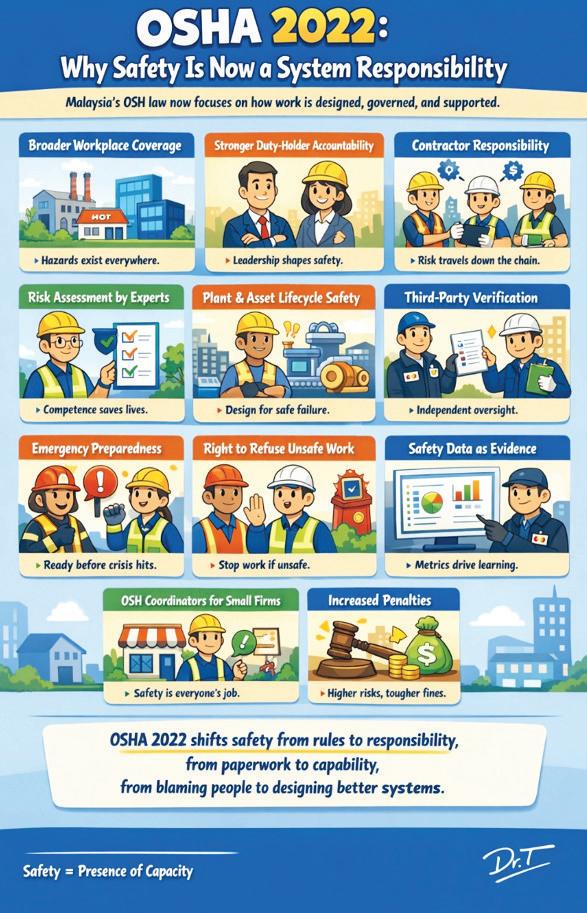
1. Coverage has been broadened to include nearly all workplaces, with the exception of the Armed Forces, individuals working on marine vessels (as specified under the Merchant Shipping Ordinance 1952), and domestic servants (as defined in the Employment Act 1955). These exclusions are outlined in Schedule 1 of the Act.
Malaysia acknowledges that workplace hazards exist throughout the economy, and even small enterprises are required to establish a fundamental level of safety management, such as maintaining risk registers and implementing training related modules.
2. The stronger accountability for duty holders emphasises embedding responsibility within system design. Leaders are recognised as essential elements of the safety system, with boards and directors required to enhance governance capacity through measures such as safety assurance exercises, key performance indicators (KPIs), and robust oversight mechanisms.
3. Principal responsibility in contractor chain system integration involves managing risks which may extend throughout contractor networks. Principals should develop strong coordination mechanisms to ensure subcontractors implement consistent safety practices through collaborative assessments and unified standards.
4. Risk assessments must be conducted by trained personnel (Section 18B), incorporating hazard identification and the implementation of appropriate control measures. Competent professionals are
responsible for systematically analysing risks, and organisations are required to invest in developing staff competency through certification or the engagement of external experts.
5. To enhance plant and asset life-cycle management (Section 27A-27F) by prioritising reliability and safety in the design phase and by integrating inspection and maintenance within asset management systems. This approach is addressing and aligning with offshore selfregulation management system requirements, with an emphasis on controlling major hazards throughout design, operations, and maintenance stage.
6. Licensed personnel and third-party verification (Sections 7A–7D) provide necessary redundancy and independent validation. Independent assessments help minimise oversight risks. Organisations should enhance the verification processes by allocating a budget for external reviews and systematically incorporating recommendations into continuous improvement initiatives.
7. Emergency preparedness is a legal requirement, as outlined in Sections 15 and 16, necessitating for a fail-safe system design. Systems are expected to anticipate potential failure modes. In terms of capacity, organisations are required to develop response capabilities through regular drills, comprehensive contingency planning, and the establishment of recovery protocols.
8. The right to refuse work in hazardous environments (Section 26A) is strongly associated with human factors and employee empowerment. Workers are integral to the safety system, and organisations must cultivate a culture that encourages reporting and supports refusal without fear of retaliation.
9. The acceptance of safety data as legal evidence (Section 60A) fosters a culture of data-driven improvement. Such evidence serves to inform both design and operational practices. Organisations are
required to develop analytical capabilities, leveraging inspection and incident data to enhance and refine their processes.
10. Assigning OSH coordinators within small workplaces (Section 29A) reflects a distributed approach to safety management. Even modest organisations require dedicated supervision to ensure effective oversight. Small firms should strengthen organisational capacity by formally appointing coordinators responsible for implementing safety practices throughout operations.
11. Increased penalties are being implemented to reflect contemporary risk exposures and to ensure that consequences are proportionate to the level of risk. Heightened risks necessitate more robust deterrents. Organisations should enhance their governance frameworks to mitigate potential penalties by integrating safety considerations into strategic risk management.
Prior to OSHA 2022 –Compliance-Oriented, a mid-sized construction company would adhere to minimum legal safety requirements by conducting periodic safety briefings and maintaining essential risk assessment documentation. Safety training was approached primarily as an administrative obligation and frequently expedited to satisfy audit criteria.
Site supervisors prioritised productivity goals, while contractor safety duties were dispersed among various subcontractors. Employees were reluctant to halt operations in the presence of unsafe conditions due to concerns over project delays and potential repercussions. Despite existing procedures, workplace incidents persisted, particularly relating to falls from height and hazardous lifting activities.
Regulatory Shift. The recent OSHA Amendment 2022 instituted mandatory risk assessments (Section 18B), strengthened principal accountability (Section 18A), and established the right to refuse unsafe work (Section 26A). It also introduces more stringent requirements for training and certification. Safety training is now a statutory requirement that must be methodically organised, conducted by qualified professionals, and its effectiveness clearly demonstrated. Furthermore, legal responsibilities concerning emergency preparedness and contractor oversight are now explicitly defined, superseding previous discretionary managerial practices.
In response, the organisation realigned its safety system structure, supervisors participated in extensive training focused on risk assessment and human factors. Contractors were included in a comprehensive safety planning process overseen by the principal contractor. Employees were both encouraged and were legally supported to cease work if conditions deviated from established plans.
As a result, unsafe practices previously overlooked due to production pressures were systematically addressed. There was an increase in near-miss reporting, improvements in controls for working at height, and a notable reduction in fall-related incidents within one year. This improvement did not occur because workers “tried harder,” but because the system now had greater capacity, clear accountability, competent decision-makers, enforced boundaries, and empowered workers.
OSHA 2022 changed the context, and the behaviour followed. This illustrates the core message of OSHA Amendment 2022: Safety performance improves when organisations build capacity and not when they simply demand compliance. By reshaping legal expectations, OSHA 2022 creates conditions where safer behaviour becomes the natural outcome of better-designed systems fully aligned with Capacity-Based Safety, ISO 45001, and one of 5 Human Performance Improvement (HPI) principles where context drives behaviour.
OSHA Amendment 2022 has introduced significant changes by directing organisations to prioritise sustainable capabilities, including governance, skills development, coordination, data analysis, and organisational culture, rather than solely adhering to compliance mindset.
The evolving regulatory environment prompts leaders to move beyond minimum requirements, integrating capability and resilience into their operational structures. Instead of focusing exclusively on compliance metrics, leaders are now shifting their focus by maintaining robust systems under stress, preparing personnel to respond effectively to unforeseen incidents, and minimising reliance on flawless human performance. Here are questions for leaders to ask in building the desired capacity and culture for their organisations:
• Are processes designed to support safe work under challenging conditions?
• Are staff members trained and empowered to manage unforeseen situations?
• Have systems been designed to reduce the risk of human error leading to harm?
Effective OSH leadership now means creating environments where safety is sustained through organisational capability, not just procedural adherence. The OSHA Amendment 2022 marks a decisive transition in Malaysia’s occupational safety landscape from technical hazard control and through self-regulation to a modern, capacity-based driven framework. For leaders and professionals, the challenge is clear: Safety is not about proving compliance after incidents, but rather, it’s



about designing organisations capable of coping, adapting, and recovering in the face of complexity.
In this new era, safety is not defined by the absence of harm, but rather by the presence of organisational capacity and resilience. The future of OSH in Malaysia relies on leaders who foster working environments where safety is embedded in capability, adaptability, and responsible oversight in ensuring that robust systems protect people, no matter the challenges that arise.
[1] Institute for Work & Health. (2023). Evaluating the effectiveness of Ontario’s mandatory working-at-heights training standard. https:// www.iwh.on.ca/impact-case-studies/iwh-evaluation-of-effectivenessof-ontario-working-at-heights-training-standard
[2] Robson, L. S., Landsman, V., Smith, P. M., & Mustard, C. A. (2024). Evaluation of the effectiveness of Ontario’s mandatory working-atheights training requirement in construction. American Journal of Public Health, 114(2), 236–244. https://doi.org/10.2105/AJPH.2023.307481
[3] Robson, L. S., Clarke, J. A., Cullen, K., Bielecky, A., Severin, C., Bigelow, P. L., Irvin, E., Culyer, A., & Mahood, Q. (2012). The effectiveness of occupational health and safety training: A systematic review. Scandinavian Journal of Work, Environment & Health, 38(3), 193–208. https://doi.org/10.5271/sjweh.3259








by:
The Occupational Safety & Health (Construction Work, Design & Management) Regulations 2024 (CDM Regulation 2024) was enforced as a subsidiary regulation under the Occupational Safety & Health Act (Amendment) 2022 (OSHA) with effect 1 June 2024. CDM Regulation 2024 is based on the concept of Prevention through Design (PtD) principles, the general principles of prevention, as well as references to Guidelines on Occupational Safety & Health in Construction Industry (Management) 2017 or OSHCIM.

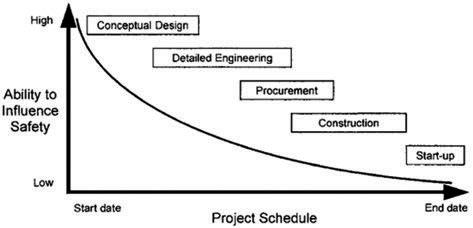
other terms of similar concepts such as Design for Safety (DfS), Construction Hazard Prevention through Design (CHPtD), and Construction Design Management (CDM). PtD concepts emphasise that the designer shall take into consideration Occupational Safety & Health of construction and maintenance workers into account during the design stage to control and minimise the risks and hazards during project implementation. PtD concept is paramount as the ability to influence safety exponentially in the project life-cycle from design stage to construction stage (Figure 1).
The PtD concept addresses potential hazards and risks during the design phase of facilities, equipment or processes. It incorporates safety and health considerations into design with the aim to eliminate or minimise workplace hazards. Managing occupational safety and health risks at the planning and design stage is often more effective, more sustainable, and cheaper than making changes later when potential hazards become real risks.
The OSHA philosophy is selfregulation, which places the responsibility for safety and health in the workplace on those who create the risks (employers) and those who work with the risks (employees). The concept of PtD has been synonymously used with
CDM Regulation 11 and 12 mandate the Principal Construction Work Designer (PCWD) and Construction Work Designer (CWD) to take into consideration the “general principles of prevention” and any pre-construction information to eliminate, so far as is practicable, any foreseeable risk to the safety or health of a person carrying out or is liable to be affected by any construction work, maintaining or cleaning a structure or using a structure designed as a place of work other than a construction site.
The Principal Construction Work Contractor (PCWC) and Construction Work Contractor (CWC) must take into account the “general principle of prevention” and, in particular, when deciding on the design, technical and organisational aspects in order to plan the various items or stages of work which are to take place simultaneously or in succession and deciding on the estimation of period of time required to complete the work or work stages.
The First Schedule of the CDM Regulations sets out the general principles of prevention, including avoiding risks, evaluating unavoidable risks, controlling risks at source, adapting work to individuals (particularly in workplace design, plant selection, and work methods to reduce monotonous tasks and health effects), keeping pace with technical progress, replacing dangerous elements with safer alternatives, developing a comprehensive prevention policy (covering technology, organisation, working conditions, social factors, and the work environment), prioritising collective protective measures over individual ones, and providing appropriate instructions to employees.
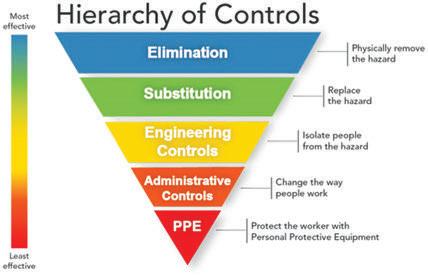
The Hierarchy of Control complements these principles by outlining control measures from most to least effective to protect workers from injuries, illnesses, and fatalities (Figure 2).

The CDM Regulation 2024 details Client duties as allocating sufficient time, funds, and resources as well as ensuring construction work is carried out as far as is practicable without any risk to safety and health. The Client needs to ensure that all necessary facilities are provided.
CDM Regulation 7 requires the Client to appoint the PCWD and PCWC as early as practicable before the construction phase begins. Regulation 5 mandates the Client to provide Pre-Construction Information (PCI) to stakeholders. Before construction starts, the PCWD must prepare a Safety & Health File (SHF) containing relevant project safety information and the Client must ensure the PCWC develops the Construction Phase Plan (CSP).
The PtD concept must be understood and be adopted by all stakeholders to eliminate or reduce hazards, where reasonably practicable, by addressing safety and health at the design stage. PtD is embedded in OSHA and CDM Regulations 2024, making workplace safety requirements mandatory to improve occupational safety and health in Malaysia’s construction industry.





Annual Reports • Booklets • Brochures • Buntings • Business Cards
CD / DVD Replications • Calendars • Cards & Invitations • Certificates
Custom Printings • Envelopes • Folders • NCR Bill Books • Notepads Leaflets • Letterheads • Paper Bags • Posters • Stickers • Others
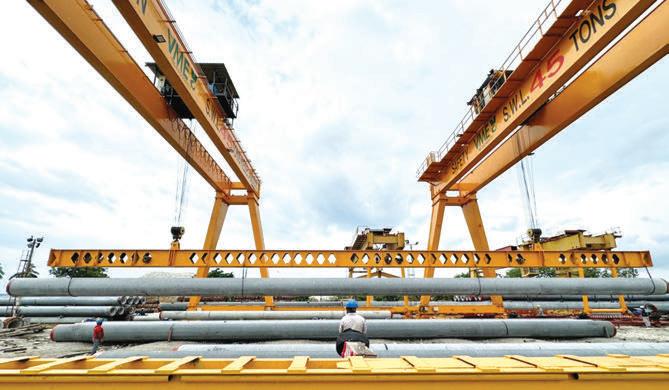
Overhead cranes are essential equipment in many Malaysian industries, including manufacturing, steel fabrication, shipyards, power plants, and logistics facilities. They enable efficient material handling and support highproductivity operations. However, the same machines that improve efficiency also present significant safety risks when not properly designed, operated, and maintained.
In Malaysia, overhead crane safety is not merely a best practice but it is also a legal obligation. Compliance with safety regulations is mandatory and failure to comply can lead to severe consequences for both workers and organisations.
Overhead crane operations involve lifting and moving heavy loads, often at heights above humans, equipment, and critical infrastructure. Any crane failure – whether mechanical, structural or human mishandling – can result in catastrophic accidents such as falling loads, collisions, and crane collapse.
These incidents may cause serious injuries or death, operational downtime, property damage, and long-term reputational harm. As such, overhead crane safety must be treated as a core component of workplace safety management.

In Malaysia, the Factories & Machinery Act 1967, which used to govern machinery registration and certification alongside OSHA 1994, was repealed following the OSHA (Amendment) Act 2022, with its machinery provisions consolidated into OSHA 1994, effective 1 June 2024.
Under this consolidated Act, lifting machines, including overhead cranes, must be properly designed, registered, inspected, and maintained to ensure safe operation. The Department of Occupational Safety & Health (DOSH) is the authority responsible for enforcement.
One of the key requirements is the registration of overhead cranes with DOSH and the issuance of a Certificate of Fitness (CF) which confirms that the crane has been inspected by a competent person and is safe for use. Operating an overhead crane without a valid CF is a violation of the law and exposes employers to enforcement action.
Despite the clear legal requirements, overhead crane incidents continue to occur. Common hazards include falling loads due to improper rigging or overloading, mechanical failures caused by poor maintenance, and












structural issues involving crane girders or runway beams. Electrical hazards, such as poor grounding or insulated conductor, faulty pendant controls, and exposed wiring also pose critical risks.
Human factor is another major contributor to crane accidents. Mishandling, inadequate training, poor communication between operators and signalmen, fatigue, and unsafe operations can all undermine safety. In facilities with multiple cranes operating in the same bay, collision risks further increase if proper controls are not in place.
To meet legal and safety obligations, employers must ensure several critical compliance elements are in place. First, all overhead cranes must be properly registered with DOSH and operated only with a valid Certificate of Fitness. Employers must monitor CF expiry dates and arrange timely inspections for renewal to avoid lapses.







Second, inspection and maintenance are essential. Overhead cranes require daily pre-use checks, routine inspections, and periodic thorough examinations by competent persons. Maintenance activities must be planned, documented, and carried out in accordance with manufacturer recommendations and regulatory expectations. Proper records are not only a legal requirement but are also vital evidence during audits or investigations.
Third, safe operating procedures (SOPs) must be established and communicated. These include lifting plans for non-routine or critical lifts, clear identification of safe working loads (SWL), and emergency procedures for equipment failure or load instability. SOPs must be reviewed regularly and updated when changes in operations occur.
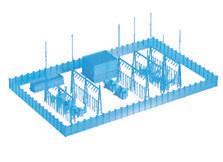
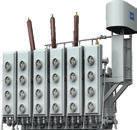



Compliance is not limited to equipment alone. It also includes the people operating the equipment. Malaysian law requires that overhead cranes be operated only by trained and competent operators. Signalmen and riggers must also be competent and must clearly understand their roles during lifting operations.
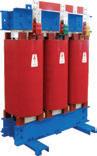




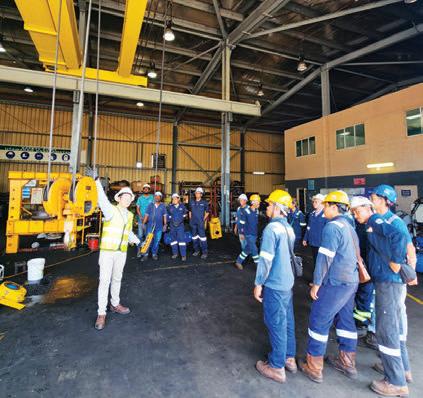
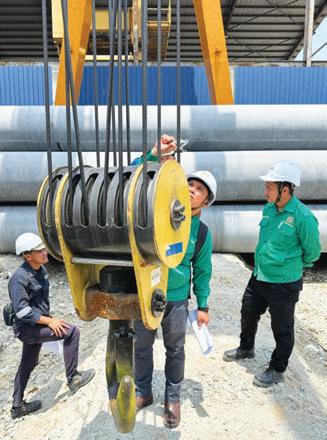
Effective supervision is critical, especially during complex or high-risk lifts. Employers must also manage contractor and subcontractor activities carefully, ensuring that external workers meet the same competency and safety standards as permanent staff. Without proper training and supervision, even well-maintained cranes can become a danger.
Engineering controls play a vital role in reducing cranerelated risks. These include limit switches, overload protection devices, end stops, and anti-collision systems where applicable. The structural integrity of crane supporting structures, such as runways and columns, must also be verified and maintained.
Administrative controls complement engineering measures. Permit-to-work systems, exclusion zones beneath suspended loads, clear signage, and effective communication protocols all help reduce exposure to hazards. Personal protective equipment (PPE), while not a primary control, provides an additional layer of protection when properly selected and used.
The consequences of failing to comply with overhead crane safety requirements can be severe. Accidents may result in injuries or death, leading to legal action, compensation claims, and emotional trauma. DOSH has the authority to issue stop-work orders, prosecute offenders, and impose fines or other penalties under OSHA.




by:
The enactment of the Occupational Safety & Health Act (OSHA) 2022 in Malaysia represents a significant paradigm shift in the national approach to occupational safety and health (OSH). OSHA 2022 places stronger emphasis on employer responsibility, risk-based management, and proactive prevention. Artificial intelligence (AI) can be deployed to support the transition from reactive safety practices to predictive and preventive occupational safety systems.
OSHA 2022 expands the scope of occupational safety obligations to cover all workplaces, reinforcing the duty of employers to identify hazards, assess risks, and implement effective control measures. The Act reflects a global shift toward anticipatory risk management, where prevention is prioritised over post-incident response.
Traditional safety approaches are largely dependent on periodic inspections and manual reporting. These methods are increasingly proving inadequate in highrisk work environments. AI technologies offer practical solutions by providing continuous monitoring, early hazard detection, and data-driven decision-making.

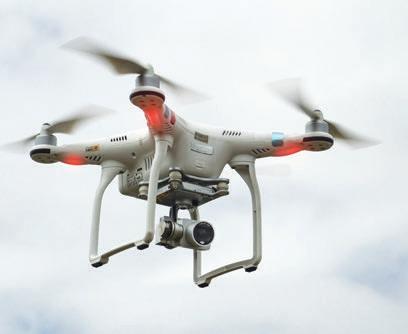
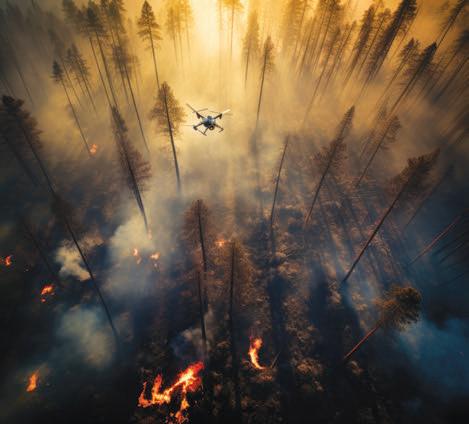
In Malaysia, early adoption of AI-related technologies in occupational safety is evident, particularly within enforcement agencies and high-risk industries. The Department of Occupational Safety & Health (DOSH) has incorporated digital tools such as drones and remote inspection technologies to enhance surveillance and accident investigations. These allow inspectors to identify hazards in confined spaces, elevated structures, and hazardous environments without direct exposure, aligning with OSHA 2022’s emphasis on risk reduction and safe systems of work.
Data analytics platforms are also being explored to manage workplace accident and incident records more effectively. By analysing historical data, AI-driven systems can identify recurring risk patterns, highrisk sectors, and non-compliance trends. This supports a risk-based enforcement approach, consistent with the regulatory philosophy underpinning OSHA 2022.

The construction sector demonstrates further alignment with this paradigm shift. AI-enabled computer vision systems linked to site cameras are being piloted to detect unsafe behaviours such as non-compliance with personal protective equipment requirements. Wearable sensors capable of monitoring worker fatigue, heat stress, and physical strain are also being tested. These technologies support real-time hazard identification, allowing corrective action before accidents occur, thereby reinforcing preventive safety management.
AI is also used in occupational safety training through virtual reality (VR) and augmented reality (AR) simulations. These tools allow workers to experience hazardous scenarios in a controlled environment, improving risk awareness and competency without physical danger. Such immersive training methods support OSHA 2022’s emphasis on competency development and continuous safety education.
Despite these advancements, significant challenges remain. Many local organisations, particularly small and medium enterprises, lack the financial resources, technical expertise, and digital infrastructure to adopt AI-based safety systems. Data fragmentation and inconsistent reporting practices limit the effectiveness of predictive analytics. Furthermore, ethical concerns related to worker surveillance, data privacy, and algorithmic bias pose governance challenges in AIdriven safety monitoring.
Another key limitation is workforce readiness. Safety professionals and workers may lack the necessary skills to interpret AI-generated insights and so be unable to integrate them into daily safety practices. Without adequate training and trust-building, AI risks being perceived as a compliance burden rather than a safety enabler.
To fully realise the paradigm shift envisioned by OSHA 2022, several strategic actions have been recommended. Firstly, Malaysia should develop a national framework for AI in occupational safety, aligned with OSHA 2022 principles. This framework should establish standards for ethical AI use, data governance, system validation, and human oversight.
Secondly, capacity building must be prioritised. AI literacy should be incorporated into OSH training, certification programmes, and professional development pathways. Government-led incentives and technical support can help SMEs adopt scalable AI-enabled safety solutions.
Thirdly, AI deployment should focus on high-risk industries, including construction, manufacturing, logistics, and mining. Predictive maintenance, smart sensors, and real-time hazard detection systems can significantly reduce accidents and occupational diseases, supporting the preventive intent of OSHA 2022.
Finally, collaborative innovation should be strengthened. Partnerships among government agencies, universities, industry players, and technology providers can facilitate the development of AI tools tailored to Malaysian workplace contexts. Shared learning platforms and pilot projects will accelerate safe and responsible adoption.
OSHA 2022 marks a decisive shift in Malaysia’s occupational safety landscape, from compliance-driven enforcement to proactive risk management. AI has the potential to be a cornerstone of this transformation by enabling predictive safety, continuous monitoring, and informed decision-making. With appropriate governance, capacity building, and ethical safeguards, AI can play a vital role in shaping the future of occupational safety in Malaysia beyond OSHA 2022.





The IEM Women Engineers Conference 2025, held on 8 November 2025 at MRANTI, Technology Park Malaysia, Bukit Jalil, brought together engineers, industry leaders, academics, policymakers, and students.
The conference, with the theme, Women Engineers 5.0: Innovating & Bridging ASEAN, highlighted the evolving role of women engineers in the era of Industry 5.0 where advanced technologies such as artificial intelligence must be guided by human values, inclusivity, and purposeful leadership.
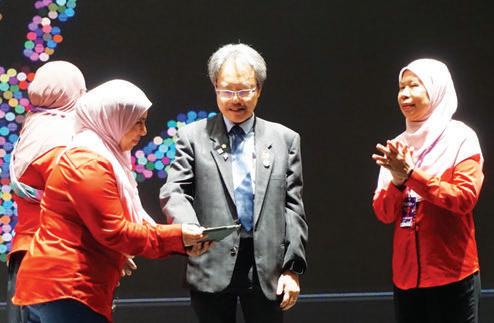
The event started with the singing of the national anthem, followed by welcoming remarks by the Organising Chair. Officiating at the event was Ir. Prof. Dr. Jeffrey Chiang Choong Luin, President of The Institution of Engineers, Malaysia (IEM), who also delivered the opening remarks. In his address, he emphasised the importance of empowering women engineers, fostering cross-sector collaboration, and strengthening ASEAN connectivity through engineering leadership. The opening ceremony was marked by a symbolic officiation gimmick to signifying the formal commencement of the IEM Women Engineers Conference 2025.

innovation ecosystems, and the role of women engineers in influencing technology policy, industrial development, and regional collaboration across ASEAN.
The morning programme featured two keynote addresses that set a strong intellectual and strategic foundation for the conference.
The first was delivered by Emeritus Professor Dato’ Dr. Halimah Badioze Zaman, FASc, titled Leadership & Capacity Building: Empowering Women Engineers 5.0. She underscored the importance of leadership, capacity development, and national-level initiatives in shaping future-ready women engineers. Drawing from decades of experience in academia, policy advisory, and digital transformation, she highlighted the need for women engineers to lead with vision, resilience, and purpose.
This was followed by the second keynote address by Ms. Nurezmy A. Majid, Chief of Staff at MIMOS Berhad. Titled The Leadership Role of Women Engineers in Shaping ASEAN, it focused on strategic leadership,
The AI F.R.I.E.N.D. Competition 2025, titled Artificial Intelligence for Recycling: Inspiring Environmental Nurturing Daily for a Sustainable Future, was held in conjunction with the conference, reinforcing IEM-WE’s commitment to nurturing future engineering talent. Organised by the Empowered Women Engineers (EWE) Society Club from Taylor’s University, it highlighted student creativity and innovation in applying AI solutions to sustainability challenges. The prizegiving ceremony was held during the lunch session.
Moderated by Ir. Ts. Dr. Salmaliza Salleh, the first forum brought together a diverse panel comprising Ir. Mazliza Zahari, Ir. Sharifah Azlina Raja Kamal Pasmah, Ms. Khoo Choon Chew, and Dr. Fairoza Amira Hamzah.
The discussion challenged conventional narratives by highlighting how women engineers balance technical excellence with empathy, creativity, and leadership. Conversations explored inclusivity, cross-border collaboration, and the role of AI as a tool for empowerment rather than exclusion.
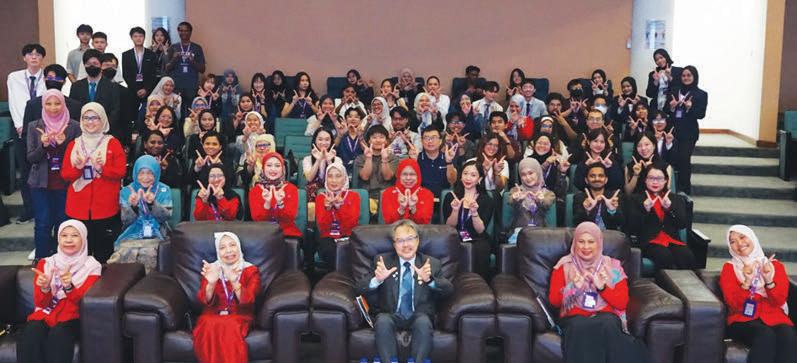
The session demonstrated that engineering leadership today extended well beyond technical competence and that it required vision, adaptability, and human-centred thinking.
The second forum was moderated by Ir. Ts. Sakinah Ab. Halim, with Ir. Noorfakhriah Yaakub, Professor Ts. Dr. Mohd Naz’ri Mahrin, Datin Ts. Habsah Nordin, and Ir. Simon Yeong Chin Chow as panellists.
The session focused on what it truly meant to be future-ready. Discussions ranged from STEM education and skills mobility to data governance, AI, and infrastructure development. Panellists shared practical insights on preparing ASEAN’s engineering workforce for emerging challenges while ensuring sustainability, inclusivity, and strong governance.
The conference concluded with closing remarks by the Chair of the IEM Women Engineers Section. Women Engineers 5.0 reaffirmed that the future of engineering leadership would be shaped by not just technology but also by the people who had chosen to use it with purpose.
The conversations that began during the conference extended beyond that single day, pointing towards continued collaboration, stronger networks, and a more connected ASEAN engineering community.
The WE-C 2025 digital content at the following link: https://anyflip.com/canjl/susc/
by:


The Project Management Technical Division (PMTD) of The Institution of Engineers, Malaysia (IEM) carried out a Humanitarian Engineering Outreach Programme on 27-28 February 2026 at Surau Nurul Hidayah, Tanjung Karang, in conjunction with Ramadan.
It also involved engineers, academics, students, and volunteers from IEEE, Universiti Teknologi Malaysia, UCSI University, Politeknik Sultan Idris Shah, industry collaborators, and the local community. PMTD was represented by Ir. Assoc. Prof. Dr. Syuhaida Ismail (Chair), Ir. Dr. Harris Abd. Rahman Sabri (Advisor) and Dr. Khairul Zahreen Mohd Arof (Committee Member).
After Asar prayers, the team distributed food and essential supplies to various households, performed prayers at the surau, shared iftar with asnaf families and local residents, continued with solat tarawih, and concluded the evening with moreh. It was deeply meaningful to see engineers stand shoulder to shoulder with the community, not only in service delivery but also in ibadah.
From the planning stage, the organisers had clear objectives, identified
resources and coordinated multiple stakeholders to ensure efficient delivery. Although the initial target was 35 families, with effective planning and on-site decision-making, this was increased to 55 families.
One key factor was strong collaboration among IEM members, IEEE members, academic partners from Universiti Teknologi Malaysia and UCSI University, representatives from Politeknik Sultan Idris Shah, industry volunteers and community leaders.
The villagers helped streamline operations. Working with the community rather than for the community strengthened relationships and reflected PMTD’s emphasis on participatory engagement.
The programme was also supported by industry collaborators who not only prepared and distributed aid packages but also organised iftar arrangements and took care of elderly recipients.
The discipline observed during Ramadan resonated with the discipline required in planning and execution. Engineering, in this context, extended beyond calculations and technical design to become a vehicle for amanah, compassion and leadership.
Engineers are uniquely positioned to contribute not only technical expertise but also organisational clarity and problem-solving capabilities to address societal needs. When structured through sound project management, the contributions of engineers become impactful and sustainable and PMTD continues to translate professional competencies into tangible community value.
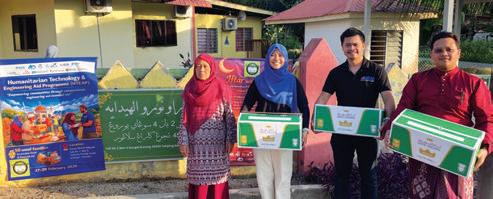
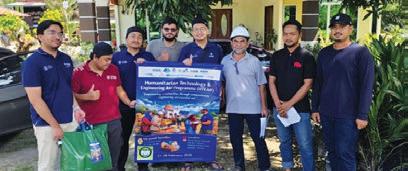





Encore Melaka is a compact engineering melting pot where architecture, technology, and art converge seamlessly. Celebrated with multiple awards for architectural excellence and innovative theatre design, the building is far more than a performance venue, as it showcases advanced engineering in action.
Structurally, the theatre features a striking 100m suspended beam and a fully rotating 360o auditorium, enabling dynamic transitions across four distinct stages. Each stage delivers a unique experience: A water and mist stage where performers appear to dance on water, hydraulic lifting and multi-storey stages that heighten choreography and visual drama, and fixed stages with props inspired by Melaka’s cultural heritage.
Behind the spectacle lies sophisticated acoustic engineering and advanced lighting systems, together creating a powerful fusion of creativity and engineering precision. Encore Melaka reminds us that a world-class theatre is not only about the show on stage but also about the collaboration of design, technology, and engineering working in quiet harmony.


Ts. Michelle Lau
To all Members,
Date: 22 March 2026
LIST OF CANDIDATES ELIGIBLE TO SIT FOR THE PROFESSIONAL INTERVIEW FOR THE YEAR 2026
The following is a list of candidates who are eligible to sit for the Professional Interview for the year 2026.
According to the IEM Bylaws, Section 3.8, the names listed below are published as eligible candidates to become Insitution Members, provided that they pass the Professional Interview in 2026.
If there are any Corporate Members who have objections against any candidate deemed unsuitable to sit for the Professional Interview, a letter of objection can be submitted to the Honorary Secretary, IEM. A letter of objection must be submitted within one month from the date of publication.
Ir. Chen Harn Shean IEM Honorary Secretary
NEW APPLICATION
NAME QUALIFICATION
CHEMICAL ENGINEERING
MOHAMAD NAZRIN BIN MOHAMAD NASIR BE HONS (UTM) (CHEMICAL - GAS, 2015)
ELECTRICAL ENGINEERING
MOHD AL HAFIZ BIN ISAHAR BE HONS (UNITEN) (ELECTRICAL POWER, 2010)
MUHAMAD SYUKRI BIN MD NOH BE (UTM) (ELECTRICAL, 2014)
MUHAMMAD KHAIRUL NAIM BIN SAAEY BE HONS (UKM) (ELECTRICAL & ELECTRONIC, 2021)
MECHATRONICS ENGINEERING
MUHAMMAD AIZAT BIN ABU BAKAR BE HONS (UNIMAP) (MECHATRONIC, 2014)
APPLICATION FOR CORPORATE MEMBER NAME QUALIFICATION
MECHANICAL ENGINEERING
MUHAMMAD HAFIZZUDDIN BIN BAHARIN BE HONS (UM) (MECHANICAL, 2010)
MAIZAN AZA BIN MOHAMED YUSOP BE HONS (UNITEN) (MECHANICAL, 2001)
MEMBER TRANSFER M'SHIP NO. NAME QUALIFICATION
CIVIL ENGINEERING
06204 KU CHIAU PIN BSc HONS (SUNDERLAND POLYTECHNIC) (CIVIL, 1980)
121409 ONG CHEN CHIET BE HONS (BRUNEL UNI. LONDON) (CIVIL, 2017)
128475 WONG YUN TZEN BE HONS (SWINBURNE UNI. OF TECHNOLOGY) (CIVIL, 2020)
CHEMICAL ENGINEERING
124710 AIDIL MOKHTARUDDIN BIN MOHD TARMIZI BE HONS (MASSEY UNI) (CHEMICAL - BIOPROCESS, 2019)
ELECTRICAL ENGINEERING
111271 PUTERI NUR SYAHIRAH BINTI MOHAMED MUSTAFA BE HONS (UiTM) (ELECTRICAL & ELECTRONIC, 2021) MSc (UiTM) (ELECTRICAL & ELECTRONIC, 2024)
MECHANICAL ENGINEERING
39282 MUHAMAD AFFAN BIN ISMAIL BE HONS (UiTM) (MECHANICAL, 2012)
114815 MOHD EZLAMY BIN ZULKIFLI BE HONS (UTM) (MECHANICAL - AUTOMOTIVE, 2009)
TRANSFER TO CORPORATE MEMBER
M'SHIP NO. NAME QUALIFICATION
CIVIL ENGINEERING
61938 MOHAMMAD FIRDAUS BIN PASRO RADZI BE HONS (UTM) (CIVIL, 2011)
95909 PETROCELLI BIN JOSEPH BE HONS (UKM) (CIVIL & STRUCTURAL, 1999)
CHEMICAL ENGINEERING
93846 MOHD AIMAN BIN MOHD NOOR BE HONS (UTP) (CHEMICAL, 2011)
ELECTRICAL ENGINEERING
96459 LIEW WAN SHENG BE HONS (UTeM) (ELECTRICAL, 2020)
77469 TING FANG YUAN, ROBIN BE HONS (UTAR) (ELECTRICAL & ELECTRONIC, 2013)
ELECTRONIC ENGINEERING
66710 AHMAD YAZID BIN ABDUL RAHMAN BE HONS (IIUM) (COMMUNICATION, 2013)
MECHANICAL ENGINEERING
23376 LOK TUCK KONG BE HONS (UTM) (MECHANICAL, 2003) MPhil (UTM) (CHEMICAL, 2025)
112833 MOHAMMAD HAJIB BIN ALI BSc (THE PENNSYLVANIA STATE UNI) (MECHANICAL, 2019)
PROCESS ENGINEERING
49678 GAN KOK YONG BE
The institution expresses its gratitude to all who have contributed to the Wisma IEM Building Fund. IEM members and readers who wish to make a donation may do so by downloading the form from the IEM website at http://myiem.org.my or by contacting the secretariat at +603-7890 0130 / 136 for further information. The list of contributors for February 2026 is as shown in the table below:




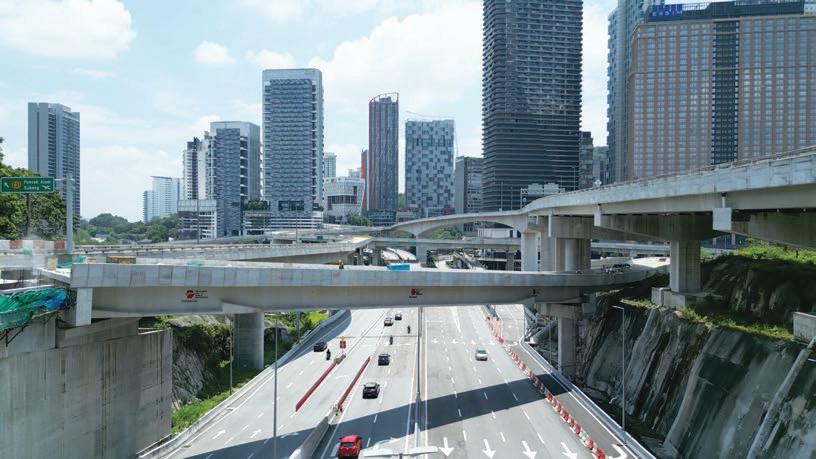

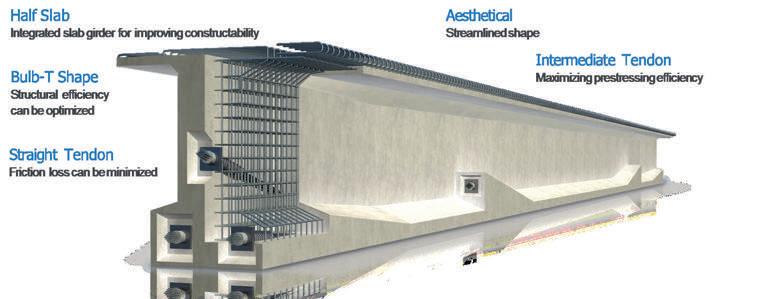
No. 45-3, Jalan PJU 5/20, The Strand, Kota Damansara, 47810 Petaling Jaya, Selangor Darul Ehsan. 603-61426638
jasonklc@nehemiah-grp.com / tancc@nehemiah-grp.com enquiry@nehemiah-grp.com 603-61426693


012-2880918 (Mr. Jason Khor) / 012-2186693 (Ir. Tan CC) www.nehemiah-grp.com/towoong