MUSIC Rosalía's 'LUX' is excellent in all 13 languages, says Juan Almanza (CAS '29). B2
FILM Tanvi Gorripati (CAS '27) says 'Now You See Me: Now You Don't' is a half-baked trick. B4
FILM 'The Mastermind' is an understated ode to the ordinary, says Eliana Kut (CAS '29). B6
November 14, 2025
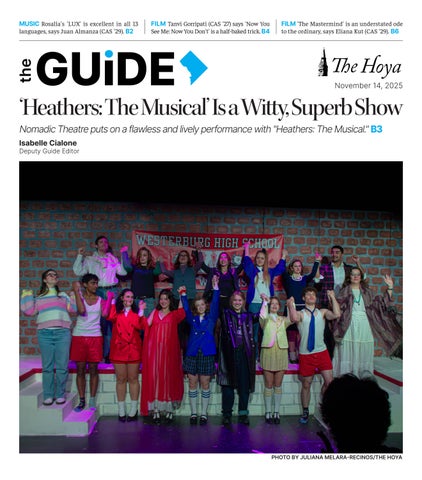
‘Heathers: The Musical’ Is a Witty, Superb Show
Nomadic Theatre puts on a flawless and lively performance with "Heathers: The Musical." B3
Deputy Guide Editor
Isabelle Cialone
PHOTO BY JULIANA MELARA-RECINOS/THE HOYA
On Multilingual Album ‘LUX,’ Rosalía De es Genres With a Spiritual Masterpiece
Juan P. Almanza Hoya Staff Writer
Rosalía’s “LUX” opens with “Sexo, Violencia y Llantas” (Sex, Violence and Tires), which instantly hits listeners with somber piano tunes layered over one another, creating a cascading symphony of emotion. It’s already a sharp left turn from the neoperreo and Latin pop sounds of Rosalía’s previous album, “MOTOMAMI.” Her vocals are a lot more pronounced, reminiscent of her famenco roots displayed in her 2018 album “El Mal Querer,” which translates to “The Bad Loving.”
The sound of “Sexo, Violencia y Llantas” is almost spiritual, as heavenly strings join her while she sings, “En el primero, sexo, violencia y llantas / En el segundo, destellos, palomas y santas,” (“In the frst, sex, violence and tires / in the second, fashes, doves and saints”). While the album’s lyrics focus on exploring the relationship between the material world and the spiritual, the album’s composition and arrangements are nothing short of heavenly.
Where “MOTOMAMI” was chaotic and sporadic, Rosalía said “LUX” is a tightly knit, intentional project.
“This album doesn’t have loops and it’s very intentional that it doesn’t have loops. That was kind of a rule,” Rosalía said in an interview with Zane Lowe.
To fully appreciate the depth of “LUX,” listeners must dive beyond its sonic beauty into the work’s writing, which features lyrics in 13 diferent languages. It might seem like a gimmick at frst, but Rosalía’s dedication to global theology and the inspiration she drew from female saints and religious fgures is anything but gimmicky.
The fourth track, “Porcelana” (Porcelain), feels ritualistic, featuring a reverberating timpani drum and deep bass drum hits, and shows Rosalía’s dedication to her concept. She sings lyrics in Japanese that roughly translate to “I’ll throw away my beauty; before you have the chance to ruin it.” In her interview with Zane Lowe, Rosalía states she’s referencing the story of the Japanese monk Ryōnen Gensō. In the story, Gensō, hoping to study under Buddhist monk Haku-ō, burned and scarred her face when Haku-ō said her womanly face would be a distraction to the other pupils. It’s this devotion to faith, and the lengths to which
these women go to embrace said faith, that seems to fuel this desire to push the boundaries of music on “LUX.” She quotes John 8:12 in Latin as well, saying “Ego sum lux mundi,” (“I am the light of the world”).
The lead single of the album, “Berghain,” featuring Björk and Yves Tumor, barges in with a dramatic violin solo and the booming voices of a Catalan choir in Rosalía’s fullest display of her classical training to date. Her vocals are operatic, and she joins the choir in a German chant that runs through the track, chanting “Seine Liebe ist meine Liebe / Sein Blut ist mein Blut,” (His love is my love / His blood is my blood). When talking to Zane Lowe, she described “Berghain” as the culmination of the orchestral elements of her album, a way of showing her fans a departure from “MOTOMANI.” It’s bold, brash and all-consuming, with Björk’s stirring vocals and Tumor’s horrifying repetitions adding an undeniable art pop sound and gothic fair to the ending.
Rosalía’s classical training in other genres also comes into full force, and on “La Rumba del Perdón” (The Rumba of Forgiveness), famenco takes center stage. Featuring prominent famenco artists Estrella
@ROSALIA.VT/INSTAGRAM
Bold and ambitious, Rosalía returns with an experimental turn, Juan Almanza (CAS ’29) says.
Morente and Sílvia Pérez Cruz, “Rumba” is a beautiful fusion of Rosalía’s signature famenco style seen on “El Mal Querer” — Rosalía’s baccalaureate project at the Catalonia College of Music — and the grandiose classical on the rest of “LUX.” It was written six years ago and reimagined for the album, but it melds perfectly with the rest of the album. The choruses sound as though they are worshipping as Rosalía sings “Toíto te lo perdono,” to say that she’ll forgive the person in question for all they’ve done. Morente and Pérez Cruz’s performances are nothing short of beautiful, and their voices meld with Rosalía’s perfectly.
“LUX” is the result of Rosalía’s self-imposed isolation. In her interview with Zane Lowe, she said her biggest motivation for this album was to make a work that was truly maximalist. To say she achieved her goal would be an understatement. Every song on here is its own work, standing proudly on its own feet. Varying from overjoyed celebration to reverent worship to deep dismay over the state of the world, a spectrum of emotion shines through brightly. “LUX” itself means light, and the radiance of said light emanates from the album cover as well, which features Rosalía dressed in all white, with her veil laid back to reveal her glowing face and her golden lips. Her body itself is restricted within the garment, her hands only outlined under the stretching fabric. It looks almost like a trust exercise or a declaration of faith, which is a theme that shows up in “LUX” time and time again.
“LUX” is the fullest display of Rosalía’s devotion to both her spirituality and her music. What results is the most boundary-pushing, gorgeous and radiant album of the year — a true testament to faith.
‘Heathers: The Musical’ Is a Perfectly Polished Hit
Isabelle Cialone Deputy Guide Editor
Nomadic Theatre’s rendition of the cult-classic “Heathers: The Musical” is an invitation to relive the drama of high-school clique culture to the deadliest degree. Based on the 1988 flm, the show follows nerdy Veronica Sawyer (Makenna Faddis, CAS ’29) as she climbs to the top of her high school’s cutthroat social scene by befriending the dangerously popular Heathers. But nothing good can last forever — when sleazy indie heartthrob Jason Dean, referred to as J.D. (Marre Gafigan, CAS ’26), waltzes into Veronica’s life, it devolves into teenage angst and bloodthirsty schemes.
The second I stepped into Village C Theatre, I was transported back to the halls of high school, complete with foreboding brick walls and rows of metal lockers. Not a single detail — not even the program designed to resemble Veronica’s diary — was overlooked by the production crew. This attention to detail was evident throughout
the entire show: Every costume piece, down to the earrings worn by the ensemble members, screamed ’80s fashion. During fullcast numbers, the on-stage blocking felt purposeful and polished.
Faddis’ powerful and expressive voice commanded my attention, and she particularly impressed me with her unwavering belt in “Dead Girl Walking.” Beyond her beautiful voice, Faddis evokes subtle emotion, rendering Sawyer a three-dimensional character and delivering an overall awe-inspiring performance.
Gafigan is an excellent counterpart to Faddis, deftly navigating the complex emotions of J.D.’s trauma and the eager young romance that blooms between the couple. Their duets are powerful, making up the musical’s deeply emotional heart.
Though Sawyer and J.D. ‘s all-consuming love threatens to remove them entirely from the world of foolish high-school drama, it remains grounded in the relentless social competition dominated by the three Heathers’ merciless popularity. As soon
as the trio frst enters, menacingly lit and cleverly positioned on the higher of two levels of the stage, their evil is incontestable.
Headed by Heather Chandler (Maddie McGill, CAS ’29), the posse reeks of cruelty and inhumane scheming.
Their undeniably intimidating presence is nonetheless wildly entertaining, a duality that is embodied in “Candy Store.” Accompanied by impeccable choreography and roaring with powerful harmony, the song establishes the Heathers’ deviousness, both to their social inferiors and amongst their own ranks. The tense altercations between Chandler and Heather Duke (Chiara Volpi, SFS ’28) are perfectly balanced by the sweetly sycophantic Heather McNamara (Margie Conner, SON ’28).
McGill, Volpi and Conner frst operate fawlessly as a unit, bouncing of of one another’s snide insults and dancing synchronously. As the musical develops, so do their individual characters and, with that, each actor’s voice shines through. As Chandler comes to Sawyer in nightmares and visions,
JULIANA MELARA-RECINOS/THE HOYA
Honey, what you waitin’ for?
Isabelle Cialone (CAS ’27) is all for Nomadic Theatre’s production of “Heathers: The Musical.”
McGill takes on an eerily ephemeral character, her strong voice piercing the veil between illusion and reality. When Duke steps into power, Volpi is meanness incarnate with her resonating voice and precise, confdent dancing. As the more hidden Heather, Conner’s strong voice shines with vulnerability in McNamara’s single, “Lifeboat.”
Perhaps the most surprising star came in Sawyer’s childhood best friend, Martha Dunnstock (Delaney Devlin, SFS ’26). A shy social outcast, victim of much of the Heathers’ bullying, Dunnstock has a massive crush on football linebacker Ram Sweeney (Massimo D’Onofrio, CAS ’28). Devlin embodies this shyness so aptly that, when she suddenly belts in an unwavering voice wrought with emotion during her single, “Kindergarten Boyfriend,” I was completely astonished.
Despite the show’s tragic and dark elements, it also ofers plenty of comic relief, primarily through Sweeney and his knuckle-headed teammate Kurt Kelley (Rishi Bharadwaj, CAS ’27). The actors have great chemistry, delivering perfectly-timed quick quips, meandering about in the goofest of manners and drawing laughter out of even the shyest audience member.
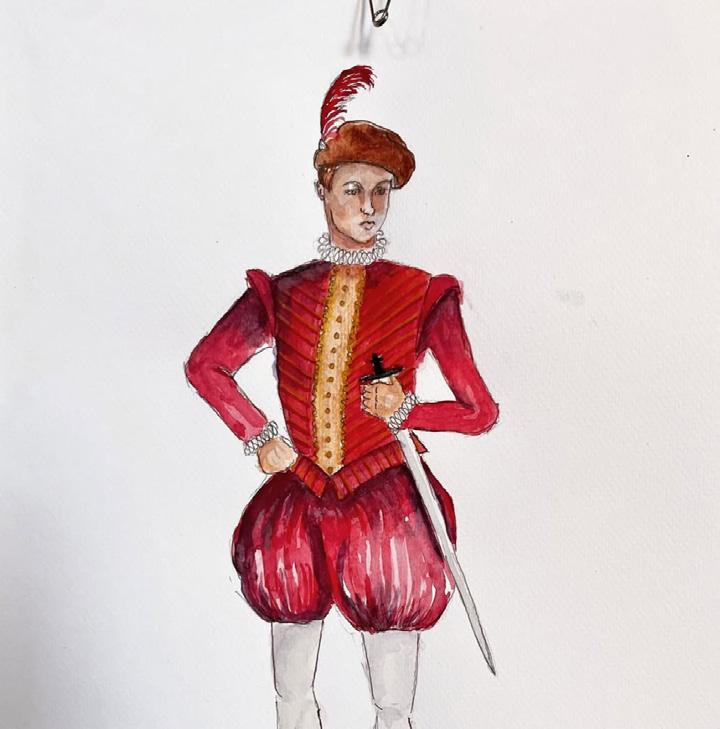
Under the direction of Daniel Tomas (SFS ’26), Nomadic Theatre delivers another overall excellent show in “Heathers: The Musical” — the actors’ powerful voices and deeply emotional performances are supported by impeccable live music, fawlessly detailed costuming and makeup and perfectly polished choreography. The sold-out tickets are a testament to Nomadic Theatre’s consistent production quality, but I strongly urge students to join the ticket waitlists or, at the very least, catch “Miscast 2026” or “A Streetcar Named Desire” later in the season.
‘Now You See Me: Now You Don’t’ Is a Flashy,
Fun Spectacle Yet Lacks Clear Direction
Tanvi Gorripati
Senior Guide Editor
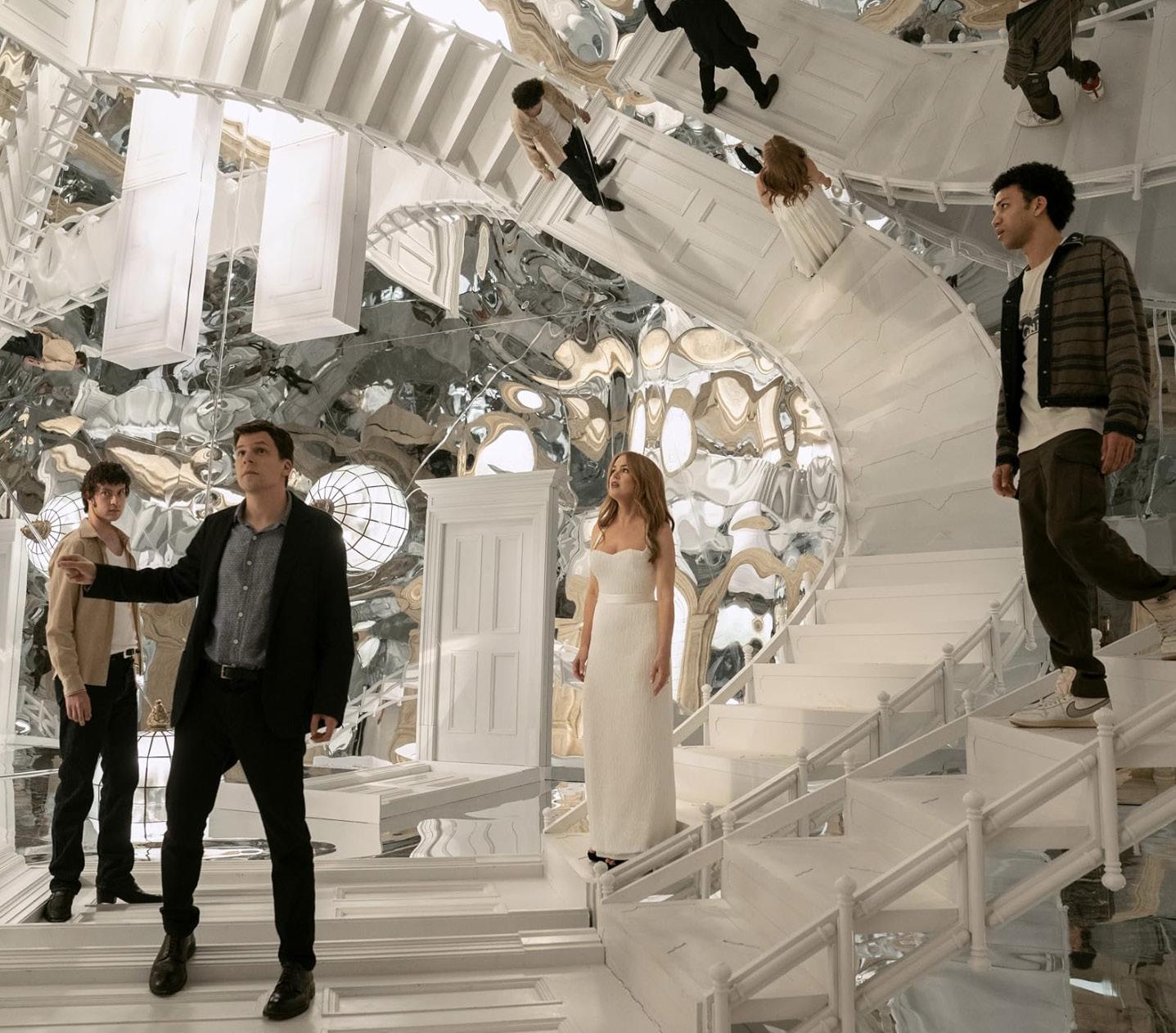
The third flm in the “Now You See Me” franchise, released almost a full decade after its predecessors, follows three newcomers to magic — June (Ariana Greenblatt), Bosco (Dominic Sessa) and Charlie (Justice Smith) — as they are thrown into a grand illusion forcing them to team up with the original Four Horsemen: Atlas (Jesse Eisenberg), Merritt (Woody Harrelson), Henley (Isla Fisher) and Jack (Dave Franco). Together, the magicians attempt to take down Veronika Vanderberg (Rosamund Pike), a ruthless generational diamond dealer whose empire is built on crime and manipulations. Quite honestly, “Now You See Me: Now You Don’t” feels more like fan service than an actual attempt to craft an engaging flm. It seems to
exist more to remind viewers of how much they loved the original rather than to ofer anything new. At times, there were simply too many characters on the screen. While I understand the reasoning behind structuring the flm this way, the Now You See Me franchise strays away from focusing heavily on one character, juggling such a large ensemble in a tight screentime, which leaves the flm feeling unfocused. There is not enough time to explore any single character before the flm jumps to the next. The biggest example of this fan service issue is the inclusion of Morgan Freeman as Thaddeus Bradley. He is undeniably an iconic presence, but here, he serves almost no purpose. For an actor of his caliber, it is disappointing to see such a limited and inconsequential role, especially when his absence would not have afected the plot. It is hard to see his appearance as anything other than purely pandering to longtime fans.
That being said, the flm still manages to deliver some moments that reminded me why the franchise became such a hit in the frst place. The fnal trick is a pure spectacle, with the whole audience gasping in awe at the reveal, and for that brief moment, it felt like the magic of the series was back. Unfortunately, this feeling does not last for long, as the big twist that follows is painfully predictable. In fact, it is so obvious it can be guessed twenty minutes into the flm. Plot frustrations aside, the close-up magic sequences are genuinely fantastic and easily the flm’s strongest elements. The commitment to practical magic, with actors learning real sleight of hand techniques rather than leaning on visual efects, gives the movie an authenticity rare to big-budget flms. There is one particularly striking sequence done in one continuous take, and it is a mesmerizing fuid display of choreography and camera work that
IMDB
Magic tricks aren’t enough to cover the triviality of “Now You See Me: Now You Don’t,” Tanvi Gorripati (CAS ’27) says.
captures the franchise’s spark. For a sequel in a series that singlehandedly made stage magic cool for a couple of years, “Now You See Me: Now You Don’t” nails the visual fair.
The flm’s humor was another pleasant surprise. As with any story that brings together old favorites and a new generation of characters, there was a plethora of generation jokes and internet humor. However, unlike most others that attempt this style of comedy, the jokes in “Now You See Me: Now You Don’t” actually land. The banter feels sharp, natural and occasionally even laugh-out-loud hilarious. Even the more serious scenes are laced with wit, and that tone only works because of the cast’s palpable chemistry. They are clearly having fun and that energy translates onto the screen. That chemistry extends to the cast’s newcomers, who inject a fresh energy into the film. Adding three new characters to an already packed ensemble is risky, but in this case, it mostly pays off. Each new magician has a distinct personality and style, and the trio’s dynamic feels believable and heartfelt. Their repeated insistence that they are “family” is not just empty dialogue; their actions actually back it up. They truly come across as three kids who have had to look out for each other, grounding the movie’s more absurd moments.
Pike’s portrayal of Vanderberg, a caricature of a capitalist, who helps countless criminals launder money, is another standout, at least at first glance. She is chilling, poised and menacing — at least until she opens her mouth. Her accent, somewhere between Anna Delvey and cartoonish European, is so distractingly bad that it pulls focus from the rest of the film. It is hard to understand the creative logic here, especially because little would have changed by simply making her character British, other than making it easier to listen to Pike speak.
Visually, the film absolutely delivers. The cinematography is stunning. The production design features elaborate sets, akin to funhouse rooms, which make for visually intriguing scenes and create an element of physical comedy. These are more than just backgrounds; they are integral to the choreography of the magic itself. The set design is one of the film’s greatest strengths, imaginative and perfectly in tune with the film’s energy.
Where the movie ultimately struggles is in its message. The moral takeaway is shallow and safe; it doesn’t seem to say much other than advocating for the rich to give their money to charity. While this message may have worked in 2013, it doesn’t quite land now. Thematically, it is an echo of the first film in the series, and while the nostalgic mirroring has its charm, it mostly had me wanting more.
In the end, “Now You See Me: Now You Don’t” dazzles in all the ways you’d expect: It’s slick, funny and visually stunning, but it never quite captures the ingenuity that made the previous two flms special. It is a show flled with impressive tricks, but the real magic of the franchise feels like it vanished up its sleeve.
‘Springsteen: Deliver Me From Nowhere’ Delivers Nothing
Isabelle Cialone Guide Deputy Editor
Given the success of “A Complete Unknown” and the wider recent resurgence of biopics, it comes as no surprise that the most recent installment in this genre follows the life of the heartland rock pioneer himself, Bruce Springsteen (Jeremy Allen White). What does come as a surprise, though, is how uninspired “Springsteen: Deliver Me from Nowhere” is. Though the flm aims to push the boundaries of emotional depth within the biopic genre by anchoring itself on Springsteen’s mental health, this attempt ultimately falls fat, resulting in a hollow and often formulaic biopic.
The flm, which opens as Springsteen closes out his wildly successful 1981 “The River” tour, alternates between the year following that tour and his childhood in Freehold, Neb., unnecessarily portrayed in black and white, as though the presence of a young Springsteen (Matthew Anthony Pellicano Jr.) isn’t indication enough of the fashback. With his label demanding
a follow-up album, Springsteen fails as he reckons with the ghosts of his past. He careens into laborious attempts at selfdiscovery as he stumbles upon Terrence Malick’s “Badlands” on television, seeing himself in the fctionalized Nebraska spree killer Charles Starkweather.
As Springsteen’s research on Starkweather and his songwriting uncover traumatic memories of Springsteen’s alcoholic, abusive father (Stephen Graham) and violent fghts with his mother (Gaby Hofmann), we see the breakdown of a man realizing he is a stranger to himself. His budding romance with Faye (Odessa Young), the sister of a former classmate, provides Springsteen with deceivingly hopeful respite from himself.
Unfortunately, in exploring Springsteen’s emotional experience as he writes the songs that will make up his hauntingly personal 1982 album “Nebraska,” the plot constricts itself to an intangible mental subject. The result is painfully on-the-nose transitions between Springsteen’s writing and childhood fashbacks, dialogue in which Springsteen’s agent Jon Landau (Jeremy Strong) explicitly tells his wife — and by extension, the audience — what to make of Springsteen’s emotionally proving lyrics and numerous close-ups of
ON YOUR RADAR
‘LIZZIE THE MUSICAL’
The highly-anticipated punk rock show on the axe murderer Lizzie Borden will be playing at Keegan Theatre this month, running until Nov. 30. Even though its Halloween ticktes have passed, run to get tickets.
Springsteen’s notebook entries. Entries include his exaggerated “Why???” in reaction to Starkweather’s crimes and a moment of introspective realization where he changes the pronouns in his original draft of “Nebraska” from “him,” in reference to Starkweather, to “I.”
These scenes, alongside endlessly repetitive songwriting and recording, lead to the dragging of this nearly two-hour movie, which ultimately feels as though it accomplishes very little despite its overwhelming length.
Though some shots are quite stunning, like the overhead views of Springsteen driving along rural Nebraska’s eerily empty forested roads, the tense bustling crowds and busy establishments of Los Angeles’ Chinatown, the flm’s overall cinematography is nothing special.
However, the flm is saved by the allaround stellar performances. White delves even deeper into the traumatized fragility he embodied with his character Carmy in “The Bear,” ofering a palpable portrayal of painful vulnerability with which audiences can’t help but feel a connection. Furthermore, most of the singing is done by White himself, with only occasional inclusions of Bruce Springsteen’s original recordings, a truly impressive feat that White accomplishes splendidly.
By Anandita Agarwal
‘OUT OF MANY: REFRAMING AN AMERICAN ART COLLECTION’
The esteemed Phillips Collection is hosting a dynamic and multifaceted exploration of American art in all its mediums. Opening Nov. 8, the exhibition combines influential historical and contemporary artists to celebrate 250 years of U.S. art. The exhibition is limited, so stop by before February.
‘ORLANDO’ BY SARAH RUHL
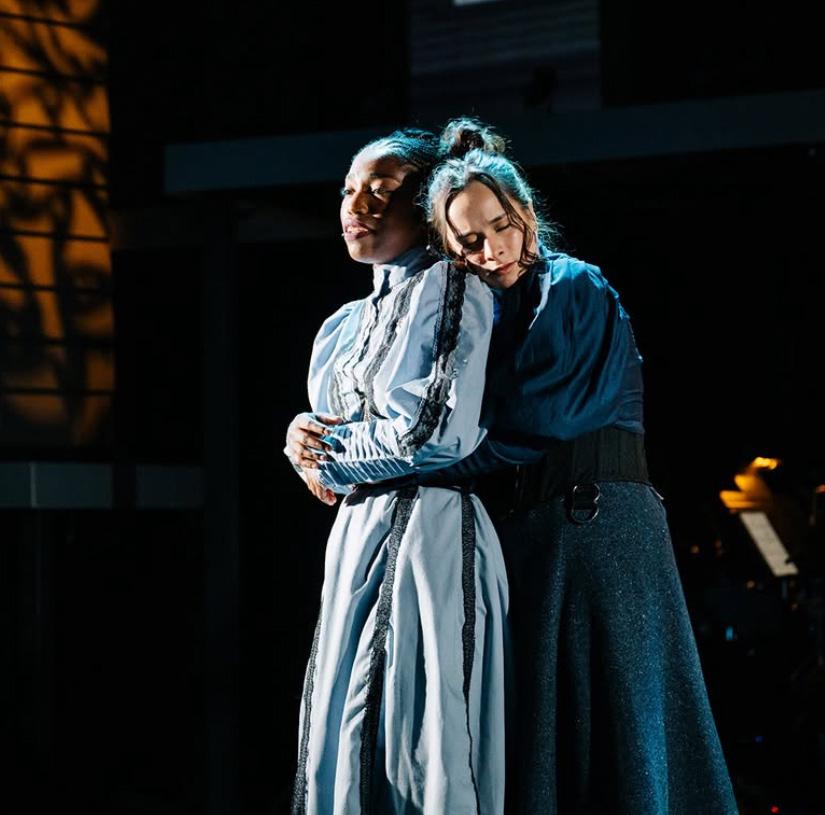
The reputed poet and playwright Sarah Ruhl will visit Georgetown’s very own Gonda Theatre at the David Performing Arts Center to deliver a surrealist interpretation of Virginia Woolf’s classic novel “Orlando.” Exploring love, identity and the existential, this artistic endeavor will be playing Nov. 13 at 8 p.m.
Strong delivers another powerhouse performance as Springsteen’s agent and friend, emanating love and concern that is mirrored in Paul Walter Hauser’s sweet depiction of Mike Batlan, another of Springsteen’s friends. Graham deftly captures the complexities of the erroneous and damaged paternal fgure, infusing the flm with even greater emotional depth. Young’s portrayal of the self-assured single mother and romantic interest Faye ofers a nice counterpart to Springsteen’s brooding and grim demeanor, successfully raising the stakes of Springsteen’s self-discovery.
A welcome attempt at broadening the emotional resonance of the typically formulaic biopic genre, “Springsteen: Deliver Me from Nowhere” ultimately delivers an unsatisfyingly standard and self-constraining plot and relies far too heavily on its star presence to render it worthwhile. Though White’s impressive depiction of Springsteen and the emotional intimacy driving the plot are sure to please Springsteen fans, the flm accomplishes little else, thereby establishing itself as no more than a mediocre flm — one that doesn’t merit a ticket purchase but may be worth streaming.
D.C. HOLIDAY MARKET
The much-loved D.C. Holiday Market at Dupont Circle is back, starting this Friday, Nov. 14. Explore the best of Washington, D.C.’s local wintertime treats, trinkets and treasures in the shops and stalls that pop up at Dupont every November and December. Open on both weekdays and weekends, the market is a must-do this winter.
IMDB
Eliana Kut (CAS ’29) finds complexity in the mundane in Kelly Reichardt’s latest “The Mastermind.”
e Mastermind’ Is a Study of Human Connection, Simplicity
Among a series of wild and chaotic new box ofice releases, such as “One Battle After Another” and “Bugonia,” “The Mastermind” stands out as a quiet, contemplative feature. Though viewers may perceive its anti-climactic nature as boring, the flm is an excellent study in character and the simplicity of life. Following her previous work, Director Kelly Reichardt once again delivers a simple but powerful flm. The story centers on J.B. Mooney (Josh O’Connor) as he plans a heist to steal four Arthur Dove paintings from a local museum in Massachusetts. Although the heist is successful, the police later arrest one of his accomplices, Ronnie (Javion Allen), who names J.B. as the mastermind of the plan. With the police on his tail, J.B. faces multiple obstacles — including his former colleagues Fred (John Magaro) and Maude (Gaby Hofmann) and his disappointed wife Terri (Alana Haim) — as he tries not to get caught.
As the credits roll through the beginning of the film, we see J.B. and his family at their local art museum. The jazzy film score sets a vintage tone and ambiance, effectively placing the audience in 1970. Gorgeous shots filled with autumn hues complete the vintage aesthetic. The film’s attention to detail shines as it focuses on J.B.’s slow examination of several paintings and his theft of a small figurine. While focused on the mundane, the flm refuses to romanticize everyday life. Reichardt highlights every moment, showing scenes of daily occurrences that unfold over extended periods. Reichardt’s use of minimalist realism is efective in displaying the undignifed truth of J.B.’s actions. The flm’s heist would be better deemed an anti-heist; it takes place within a matter of minutes and the robbers get away easily, hardly disturbing the peace in the museum.
Reichardt’s simplistic direction stood out most in a scene depicting J.B.’s attempt to hide the art pieces in a loft. The scene is an almost entirely continuous shot that lasts
nearly ten minutes where the audience watches J.B. attempt to climb up to the loft and stow the pieces, chronicling his dificulties going up the ladder and bringing them up one by one. By showing everyday life and by making J.B. a relatively plain character, it is clear that Reichardt intends for the flm’s realism to connect with its audience.
While it may seem as if the flm is simply a visual feast without a true dramatic plot, the flm shines when it’s viewed as a social commentary on human connection.
“Mastermind” never fully reveals J.B.’s story, ambitions or character. While I assumed he felt a connection to art as a creative form, leading to his decision to steal paintings rather than any other object, there was a distinct lack of connection between J.B., his family, his friends and his situation.
J.B. appears to have little connection to either his wife or children, as evidenced by his brief interactions with them throughout the film — his wife and children even leave him behind when he stops to tie his shoelace. In turn, J.B. leaves his children in
the center of town throughout the day. The only emotional encounter he has with his wife is when he begs her for money to escape to Toronto. He puts all of his trust into his own plans, placing his inventiveness over realistic outcomes. This disregard of others’ actions leads him to underestimate the FBI’s ability to track him down and to naively place trust in Ronnie’s character. This disconnect is beautifully portrayed at the film’s ironic end when J.B. is taken away, alone, in a police van. Despite being named the “mastermind,” he isn’t even arrested for the crime he had committed — he’s taken away as an anti-Vietnam protester from the protest he ends up stumbling into during his escape.
As a visually stunning flm with a quiet but profound message, “The Mastermind” stands out as an ode to the ordinary. It could be easily overlooked and dismissed as boring, but on closer inspection, it highlights human disconnection within its warm, golden-hued world, presenting a complex tension that refects the flm’s themes of isolation.
Eliana Kut
Hoya Staff Writer
Desi Stand-Up Runs Today’s Comedy, but Is it a Good Thing?
Anandita Agarwal Guide Columnist
Comedy and tragedy are intrinsically tied together: Comedy disarms tragedy and tragedy informs comedy, something that has been thoroughly documented by leading comedic scholars. The comedy scene in the United States — and the rest of the world — is dominated by communities translating their pain into puns. But with the advent of the internet and increased globalization, comedy from peoples’ homelands is transforming the comedy of the diaspora in the United States. And the country leading this charge is none other than India.
Last year, one of the most watched comedians was neither a “Saturday Night Live” star nor a “Daily Show” graduate. It was Vir Das, an Indian comedian who performs for both Desis at home and the diasporas abroad. Though some of the statistics are padded by the huge numbers India brings as the most populated country in the world, Das’ 2023 Emmys win solidifed the notion that he holds cultural capital. And it isn’t just limited to him: Zakir Khan just headlined a sold-out show at Madison Square Garden that was completely in Hindi. This exchange goes both ways: The diaspora from the United States is resonating with the Indian market in unfathomable ways.
But is this cultural shift necessarily a good thing?
THE EAT SPEAK
Indian comedy has historically been built on the ideals of liberal progressivism and subversive dialogue which has shaped much of art generally: Scathing cartoons were used to fght British colonialism, Manto’s critical satire shaped the memories of Partition, and in the ensuing communitarianism and civic discourse in India immediately post-1947, comedy was used to critique corruption, jingoism and wealth inequality. In India’s history, and history overall, art has always been a way to self-refect and comment on society in a way that pushes society forward.
When YouTube was invented in 2005, stand-up became global. It came to India, and South Asian comedy was never the same.
From All India Bakchod (AIB) to Aisi Taisi Democracy to East India Comedy, the digital world sent India into a comedy frenzy — an India that was rapidly liberalizing into a global economy with dime to spend. As audiences were introduced to this novel form, stand-up became the hottest cultural commodity. And beyond just being new, Indian stand-up became cool. It was selfcritical and self-aware, advocating for a better India with every laugh. It became an ecosystem and an industry, and it started bringing in the big bucks. But somewhere in the twenty years between then and now, the comedy market became more saturated and competitive.
As India’s crackdown on free speech and increased censorship has pushed
Indian stand-up out of its safe bubble of liberalism, Indian comedy has begun to undergo a second, more morally ambiguous transformation. From AIB’s #MeToo downfall to the misogyny of Zakir Khan, Indian standup has become a lot more nuanced than just the edgy kids fghting for civic equality.
No longer are comedians punching up and deconstructing patriarchy or religious extremism — instead they are perpetuating it. With the recent Riyadh Comedy Festival — which functioned as an overt propaganda tool for a regime marred by human rights abuses — being dominated by Indian and Indian American comedians, Indian standup must reckon with the question: Was the Indian comedy revolution a good thing?
As someone who spent years watching (and loving!) stand-up in India and then again in the United States, I was determined to fnd an answer. My quest led me to Hasan Minhaj’s latest comedy tour, featuring fellow Asian American “Daily Show” alum Ronny Chieng, titled “Hasan Hates Ronny | Ronny Hates Hasan.”
Now, don’t get me wrong — I love Minhaj, I really do. I’ve got a bootleg copy of the Netfix-removed Patriot Act episode about Saudi Arabia to prove it. But there was something about the show’s jokes that felt lazy. Instead of the brilliant, intelligent satire I’d come to expect from comedians of Chieng and Minhaj’s caliber, I was blasted with racial stereotype joke after racial
stereotype joke. The “East Asian women love white men” bit got boring after the ffth time. By the time we got to the end, I’d moved on from being uncomfortable (and not in the good way) to bored.
The show itself is a scripted debate between Chieng, representing Asians (but really just East Asia — presumably poking fun at the fact that many people think East Asians are the only kind of Asians), and Minhaj, representing the proud South Asians. It’s moderated by an artifcial intelligence device that is a caricature of Siri satirizing the tech bros of the Silicon Valley that, unfortunately, all kinds of Asians are all too familiar with. This is a questionable premise in and of itself and can veer into blatant racism. But I’d (foolishly) trusted Minhaj and Chieng to steer us into the territory of cleverness rather than craziness.
Unfortunately, I found no answer to my dilemma on Indian comedy beyond anything I wouldn’t fnd in a secondgrader’s “yo mama” joke. It left me feeling disheartened. It left me feeling aimless. It left me feeling like the state of Indian stand-up today.
Yes, there is some great satire coming out of the South Asian subcontinent from the likes of Kunal Kamra and Manjeet Sarkar. But the truth of the matter is this: The time of Indian comedy has arrived. But while we were busy laughing, have we been left behind?
Who here in Georgetown isn’t craving scallion pancakes once a week? Is it just me? Every month, I go to restaurants in and around Georgetown — each month’s choices centered around a specifc cuisine — and provide readers with a list of my favorite spots. I rate restaurants on three criteria, each evaluated on a fve-point scale. The frst is how good the food tastes. The second is cost relative to the content, quality and amount of food. The third is accessibility, based on the distance from campus, seating availability and wait time. Enjoy this month’s list of Georgetown’s Chinese food!
Yu Noodles
1515 Wilson Blvd Unit 102, Arlington, Va. 22209
Yu Noodles is a cozy shop close to Key Bridge that feels like a mom-and-pop restaurant. Though it wasn’t very busy while I was there, there were students studying in a corner while slurping on noodles. The menu was large, but I knew what I was there for: noodles.
I ordered scallion pancakes, pork soup dumplings, Sichuan beef noodle soup, sesame paste with minced pork noodles and sesame balls with red bean paste, which came out to around $50. The scallion
pancakes were very crispy and not overly oily. The pork soup dumplings were also good, but lacked some favor compared to the other dishes. The Sichuan beef noodle soup was amazing; the broth was hearty and smooth, and the noodles had a great bite to them. The sesame paste with minced pork noodles was also great, and the star of the dish was, once again, the noodles. The noodles, combined with the minced pork, edamame and carrots had a wonderful texture and made for a comforting meal. Though the sesame balls with red bean paste were smaller than those you might fnd at other restaurants, there were more of them, so they were easier to split. It was a great dessert to fnish of the meal.
Yu Noodles is a delicious place to go for noodles, though their other food is also great. However, the noodle dishes alone were incredibly flling, so I don’t recommend getting as much food as I did.
Taste: 4.3 | Cost: 4.2 | Accessibility: 4.0
Han Palace
1728 Wisconsin Ave NW, Washington, D.C. 20007
Han Palace is a short walk away from the Hilltop Campus and is located on Wisconsin Avenue. The restaurant has a cozy atmosphere, its walls decorated with clouds and National Geographic playing on a television in the
corner. The menu is expansive and ofers a huge variety — noodle- and rice-based dishes with tofu, several meats and lots of seafood. I ordered scallion pancakes, miso soup, the salt and pepper fried fish and mapo tofu, which added up to around $60. The scallion pancakes were delicious — crispy and fresh — the best I had all month. The miso soup also hit the spot. The mapo tofu had a great texture and good overall flavor, but it wasn’t as spicy as I’d like it to be.
Similarly, the fish had a great fried texture which contrasted nicely with the white rice, but the flavor was slightly bland. I also ordered the brown sugar boba, which was delicious and came with a axolotl sticker.
Han Palace is a solid spot if you’re looking for Chinese food around Georgetown. There was no wait and the food came out quickly once I’d ordered. The portion sizes were large, and I ended up with more food than I could eat. Though some dishes were better than others, Han Palace is a tasty (and close) option for Georgetown students.
Taste: 3.9 | Cost: 4.1 | Accessibility: 4.0
Little Tiger Dumplings
1700 N Moore St, Arlington, Va. 22209
Little Tiger Dumplings is inside a cute food mall in Arlington called Upside on Moore, approximately a 25-minute walk
from campus. The ambiance is great, and the restaurant ofers a view of the city from every seat. The menu is small and full of interesting favor combinations.
Of course, I ordered scallion pancakes, and I also got dandan noodles, two types of dumplings and brown sugar boba, all of which cost me around $50. The scallion pancakes and dandan noodles were both good, but they didn’t stand out, especially compared to the other restaurants. As for dumplings, I got the Tiger Signature dumplings and the chicken shiitake dumplings. The Signature dumplings were a bit bland for my taste, but the wrapper and flling had good consistencies. The chicken shiitake dumplings were much more favorful and also had a good texture. The brown sugar boba was great and it came in a reusable boba cup with an alien on it. Overall, Little Tiger Dumplings at Upside on Moore is a nice spot if you’re especially craving dumplings. However, one order of dumplings isn’t very filling, so I would say that it’s a more expensive option than many students are looking for. However, the food court in general is a great place to go if you’re looking to sit down in a nice (but not too fancy) environment and have lots of food options.
Taste: 3.4 | Cost: 3.0 | Accessibility: 4.0
October Releases Shift Standings in Race for the Oscars
Brad Derfner
With the fall season’s festival circuit now in the rearview mirror, wide releases are beginning to defne this year’s awards season. As audiences get their hands on new releases, October is a crucial infection point for the best picture race. Early frontrunners, like “One Battle After Another,” “Hamnet” and “Sinners,” are holding onto spots in the upper tier of predictions, but some flms further down the rankings are shifting. In this tier, “Bugonia,” “Frankenstein” and “Springsteen: Deliver Me from Nowhere” appear with three vastly diferent trajectories: one uncertain, one climbing quickly and one slipping behind.
Yorgos Lanthimos’ highly anticipated dark comedy, “Bugonia,” arrived at the end of October under the weight of heavy expectations. After the outsized critical and fnancial success of “Poor Things” just two years ago, the director’s follow-up has been the subject of awards discussion since its announcement. Unfortunately, the sci-f and satire hybrid has proven elusive. The critical response has been largely mixed, earning a score of 72 on Metacritic; audience enthusiasm, however, suggests word-of-mouth through mediums like Letterboxd could be an asset.
The early box ofice numbers have been tepid, especially considering its estimated $55 million budget. However, “Bugonia”’s blend of surreal humor and commentary has already found defenders who note the performances as some of the year’s best. The acting from Jesse Plemons and Emma Stone has become a central point of discussion and is propping up best picture hopes. Plemons, who currently lies just outside the top fve consensus best actor fore-
casts, is quietly gaining traction, primarily due to the fading popularity of Dwayne “The Rock” Johnson (“The Smashing Machine”) and Daniel Day-Lewis (“Anemone”). Stone, meanwhile, still fares well in her race for a nomination, currently within the second tier of best actress contenders, alongside Amanda Seyfried (“The Testament of Ann Lee”), Chase Infniti (“One Battle After Another”) and Rose Byrne (“If I Had Legs I’d Kick You”). Stone is clearly an Academy favorite, having won two of the four Academy Awards for which she’s been nominated.
The flm’s strongest hope may actually lie in the best adapted screenplay category.
Based on “Save the Green Planet!” — a 2003 Korean cult classic — the script for “Bugonia” has drawn praise even among critics who are not sold on the overall flm. With a fairly barren feld within the category this year, “Bugonia” could feasibly survive here. For now, with three other prospective nominations, “Bugonia” remains a wild card for best picture but could surge forward if a section of the Academy proves receptive to its oddball nature.
Moving along, Guillermo del Toro’s “Frankenstein” has undergone one of the more striking changes in reception in recent memory. Following mixed reviews at its Venice premiere, the flm’s theatrical release in late October and recent Netfix release have reframed its narrative entirely. Audiences have embraced the flm, earning it a 95% audience score on Rotten Tomatoes and a 3.9/5 on Letterboxd. Critical reception, meanwhile, has shifted in kind, resting at a 78 on Metacritic and 86% on Rotten Tomatoes.
This movement refects both the strength of del Toro’s devoted fanbase and the flm’s technical excellence. A three-time Oscar winner, del Toro has long been one of the Acade-
CROSSWORD
By Tanvi Gorripati
my’s most trusted craftspeople. “Frankenstein” looks as though it will continue this trend, featuring a sweeping score from Alexandre Desplat and rich production design, which positions the flm as a technical powerhouse. Nominations and possible wins are expected across several Oscar categories, including cinematography, production design, costume design, makeup and hairstyling and score.
Jacob Elordi’s portrayal of the Creature has also emerged as a notable talking point. Many have declared the “Euphoria” actor to be an emotional anchor despite early claims that his role was a gimmick. Elordi’s tender yet terrifying performance is his frst major awards play as he hovers at around the ffth slot for supporting actor, competing closely with another Netfix actor, Adam Sandler for “Jay Kelly.” While it’s far from a certainty, this breakout narrative could resonate with voters, especially if Netfix’s heavy campaign, including a drone show over Los Angeles, manages to keep the flm relevant through nomination season.
With del Toro once again fnding a way to unite audiences and critical support with technical prowess, “Frankenstein” could be following in the path that both “The Shape of Water” and “Nightmare Alley” took when they found best picture nominations. For now, at least, it feels like the biggest winner of the month.
If “Frankenstein” was October’s biggest winner, “Springsteen: Deliver Me from Nowhere” represents its biggest loser. Just weeks after its theatrical debut, the Searchlight-distributed musical biopic has seen its campaign lose steam at an alarming pace. Once widely predicted as a top 10 best picture contender, the flm’s poor box ofice performance and negative audience reception have sharply curbed enthusiasm.
The flm, which premiered at the Telluride Film Festival, covers the conception and creation of Bruce Springsteen’s sixth album, “Nebraska,” a minimalist, acoustic record that lacks mainstream familiarity and appeal. With only a couple of concert sequences, “Deliver Me from Nowhere” trades in the epic scale of other musician biopics like “Elvis” for a more introspective character study.
For now, Jeremy Allen White’s portrayal of Springsteen remains the flm’s best shot at an Oscar nomination, as his quiet, subdued performance and authentic eforts in concert scenes have drawn near-universal praise. However, without broader momentum or other pushes, this probably isn’t enough to carry the flm on its own. Jeremy Strong, once considered a solid contender for supporting actor, looks to have dropped entirely out of contention, and even best sound is now in doubt. While other biopics thrived on mass appeal, “Springsteen” has struggled to even recoup its budget, and a possible hit has now shifted to damage control, with Searchlight even picking up “The Testament of Ann Lee” as another option heading into awards season.
Together, these three movies encapsulate the unpredictable nature of flm in 2025. As we continue to march toward December and the arrival of major precursors, “Frankenstein” seems best positioned to secure tangible nominations. Depending on how the campaign for “Bugonia” goes, it could still fnd support in acting races and adapted screenplay in a bid for best picture. “Springsteen,” though, seems like it could be nearing the end of its run. If this October has shown anything, it’s that the path to the Oscars rarely moves in a straight line.
This Week’s Theme: Sweet Treats
ACROSS
ACROSS
1. Over grill, burns
6. Downstairs station at Leo’s
7. French farewell
8. Group, like in “The Godfather”
9. To get ready, extensively
DOWN
1. Winner!
2. The first lord of Dor-lómin in “The Lord of the Rings”