BOOK Rabih Alameddine reflects on his relationship with art with Isabelle Cialone (CAS ’27). B2
FILM Sophie Erlinger (CAS ’29) finds “Marc by Sofia” repetitive but aesthetically nice. B4
THEATRE “Streetcar Named Desire” excels in acting and direction, says Juan Almanza (CAS ’29). B6
MARCH 27, 2026
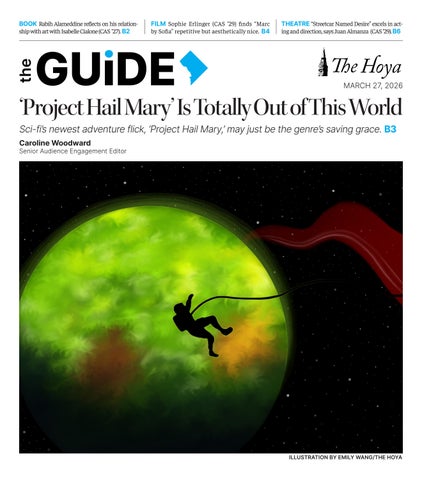
‘Project Hail Mary’ Is Totally Out of This World
Sci-fi’s newest adventure flick, ‘Project Hail Mary,’ may just be the genre’s saving grace. B3
Caroline Woodward
Senior Audience Engagement Editor
CAMPUS CREATIVES
GU Professor, Author Rabih Alameddine On Belonging, Intimacy, Obsession in Art
Isabelle Cialone
Senior Guide Editor
In November 2025, Georgetown University’s visiting professor Rabih Alameddine was awarded the 2025 National Book Award for Fiction for his most recent novel, “The True True Story of Raja the Gullible (and His Mother).” After finishing the book — a deviously funny, heartening and devastating read that I strongly urge everyone to pick up — I sat down with Alameddine for a conversation on the role art and artists play in the world, his writing and cats.
Expanding on a previous interview with The Hoya, in which he mentioned that many of his works focus on “dislocation,” Alameddine said he has a fascination with the idea of fitting in.
“It’s this sort of constant tension of fitting and belonging that I’m interested in,” Alameddine told The Hoya. “I like people who live on the margins, whatever those margins are.”
Alameddine said his interest in people “on the margins” isn’t limited to those ousted from society but also includes those who simply choose not to subscribe to traditional and societal expectations, a principal idea he explores in his latest novel.
MADELEINE OTT/THE HOYA Isabelle Cialone (CAS ’27) discusses artists’ role in society, friendship and fitting in with author Rabih Alameddine.
“You know, I also was interested in the nontraditional way of being. This book was a lot about exploring,” he said. “Particularly in this culture, a lot of life is prescriptive. It’s like you have to live this way.”
Alameddine’s most recent novel revolves around Raja, a gay 63-year-old philosophy teacher living in Lebanon with his mother and their cats. Spanning six decades of his lifetime, during which Lebanon faces war, economic collapse and a pandemic, the novel delves into Raja’s numerous attempts at self-isolation, which are thwarted by his overbearing mother who tries relentlessly to force relationships and human interactions upon him, though only out of a place of love.
Foregrounding a similar “marginal” character, Alameddine’s 2014 novel “An Unnecessary Woman” centers around another character on the outskirts of society, a reclusive 72-year-old widow in Beirut named Aaliya.
Beyond his interest in the notion of belonging, Alameddine said he is obsessed with understanding intimate relationships, adding that his interest in intimacy over superficiality has woven its way into the hinges of his works.
“We all need multiple intimacies. You know, the intimacy of love or the intimacy of sex. The
intimacy of friendships, the intimacy of family. And how we define these things, I’m very interested in,” Alameddine said. “As a rule, I find out that most of my characters reflect in me one simple thing, which is, I would rather have great connections than stupid ones.”
Alameddine’s kind of infatuation with pursuing an understanding of intimacy is chief to his writing process; he said only obsession can push him to transform an unpolished idea into a completed novel.
“What takes it from an idea, one of the things that is important — again, I can’t say it’s for everybody — is I have to find something that obsesses me, and something that will obsess me for a while,” Alameddine said. “It has to be something that is sort of a core obsession.”
Once a book is completed, Alameddine said it can either be good or it can be great: A good book will transport you, but a great one will fundamentally change you.
“A good book dazzles you, and they can take you places,” Alameddine said. “A great book shows you yourself in a completely new way. It’s like you learn about yourself by reading a great book.”
Despite the power a great book possesses, Alameddine said he does not see a clear duty
of social engagement for writers, citing Portuguese poet Fernando Pessoa’s perspective on disengaging oneself from a world where to act is to be complicit in that world’s evil.
“He believes that the ideal man does nothing, you know, does not involve themselves in this awful world. And I tend to agree with that,” Alameddine said. “It’s like if we participate in a culture that is oppressive and is criminal, and, even if we are participating and thinking that we’re on the side, we’re actually propping up this regime.”
Still, Alameddine said he hangs on to the power of art as a force of resistance against evil.
“I do understand putting one’s hands off, but, at the same time, there’s this little romantic part of me that still thinks I can stop this evil, you know, that art can conquer everything, that beauty is the answer,” Alameddine said.
Perhaps the secret to a good life, then, is to emulate that of a cat. Alameddine said he learned to admire the lifestyle of cats having grown up with them.
“What have I learned? I always feel that my cats don’t care what anybody thinks of them. They sleep when they want. They don’t care about being productive,” Alameddine said. “Yeah, I would come back as a cat.”
Sci-Fi? More Like So Fun: ‘Project Hail Mary’ Ascends to Cosmic Cinematic Heights
Caroline Woodward
Senior Audience Engagement Editor
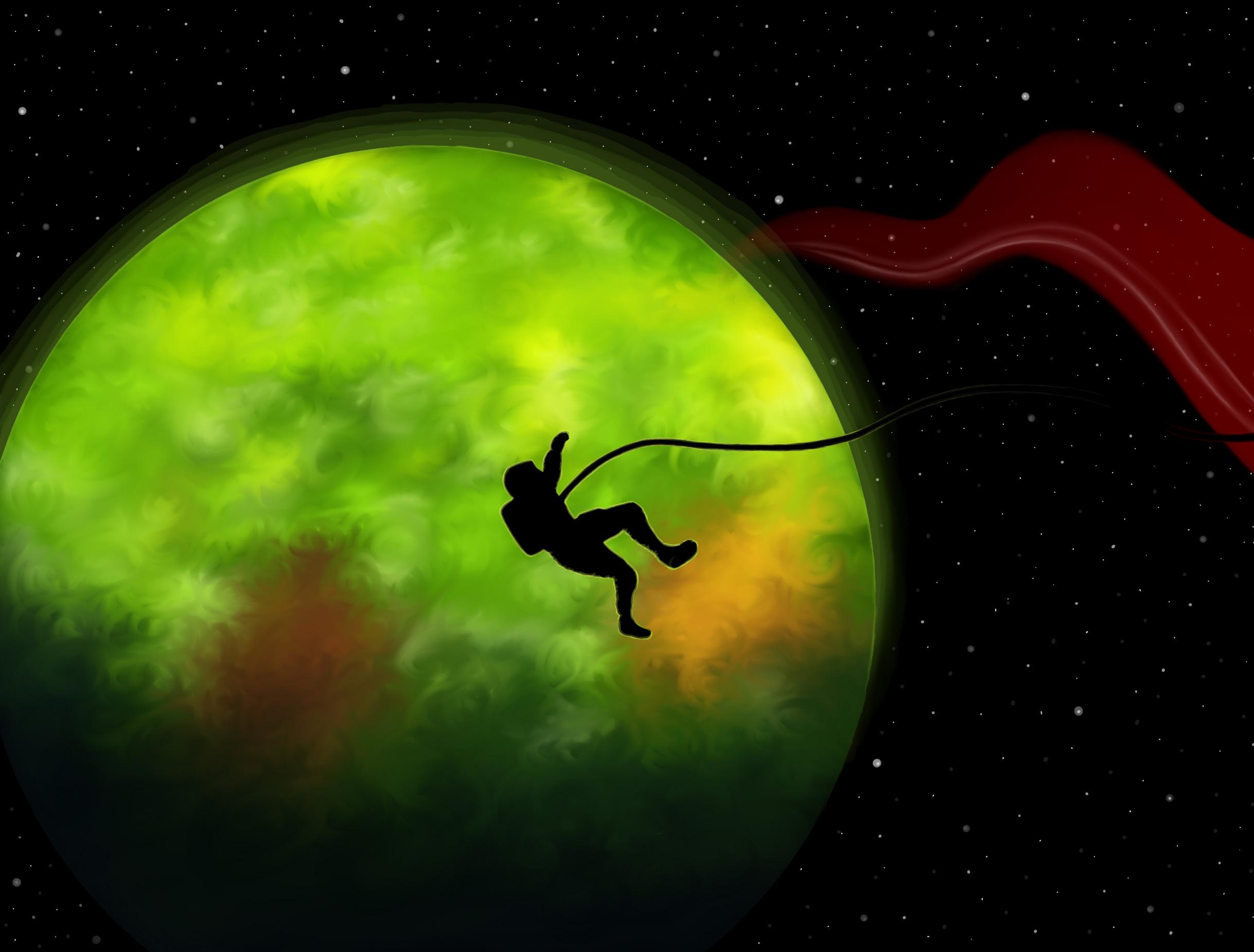
What could be fun about world-ending catastrophes, an amnesiac astronaut and the ever-expanding, deadly, unknowable void that is space? As “Project Hail Mary,” the newest big-budget blockbuster by directors Phil Lord and Christopher Miller, manages to prove, a lot.
“Project Hail Mary,” based on the book of the same name by Andy Weir, follows Ryland Grace (Ryan Gosling), a disgraced microbiologist turned wholesome middle school science teacher, as he becomes increasingly but reluctantly involved with preventing the end of the world. The novel and film begin with a bang, as Ryland wakes up from an induced coma aboard the ship Hail Mary 11.9 light-years away from home, utterly alone and unsure of how he got there. Through a series of flashbacks, Grace and the audience realize his mission — to save Earth’s sun from a heat-eating microbe known as an astrophage that is rapidly causing the star to dim. Still, a mystery remains: How did an average teacher become humanity’s last hope?
Gosling stars as Grace with his typical but undeniable charm and charisma. His acting is silly, sarcastic, quirky and, perhaps most
importantly, deeply complex. He manages to emphasize his character’s tendency toward cowardice and self-preservation, traits that are not exactly compatible with life-or-death situations. Gosling maintains not only this careful balance, but the balance of the film as a whole as the only character on screen for much of the movie. The only human character, that is.
To address the elephant in the room: There’s an alien (voiced and puppeteered by James Ortiz). This is not a spoiler, it’s in the trailers and he — Rocky, the alien — has been heavily used in marketing material. Rocky’s introduction about a quarter of the way through the runtime completely changes the tone of the film. What begins as a somewhat grounded sci-fi doomsday flick with notes of existential horror becomes a full-on buddy comedy with a bit of scientific jargon. This is not to say this tone shift doesn’t succeed. In my opinion, it absolutely does.
With the inclusion of Rocky, “Project Hail Mary” transforms from your average endof-world thriller or heady sci-fi piece into a truly fun, out-of-this-world time. Rocky and Grace’s relationship serves as the emotional core, creating an air of much-needed lightness throughout, as well as some laugh-out-loud
funny moments. However, “Project Hail Mary” still struggles particularly in its attempts to, for lack of a better word, humanize Rocky. It is objectively difficult to become emotionally attached to what is essentially a faceless, foreign, voiceless, sentient pile of rocks. However, the film makes a valiant effort. Gosling’s teary bright blue eyes, brimming with endless love for the little space rock, can’t help but inspire some sort of emotion, but I still feel the movie misses the mark.
Many moments are manufactured throughout the story with the seeming hope of inspiring emotion — music swells, lights flash, Gosling’s aforementioned gaze shine through darkness, the rock (probably) stares back. And yet, I feel these moments did not possess the true emotional punch needed to send them over the edge and be truly devastating, inspiring or moving. A tendency towards jokes and jabs also made “Project Hail Mary” a mostly fun time, lacking the seriousness that was perhaps needed to successfully handle these contrasting comedic and dramatic tones.
Still, the movie managed to suspend my disbelief; while I wasn’t as attached to Rocky as perhaps I needed to have been for the emo-
IMDB
“Project Hail Mary” succeeds in adapting a complex story to the big screen in astronomically great form, says Caroline Woodward (CAS ‘27).
tional weight to land, I still fully bought into what I was seeing. This was not just a silly CGI creation or half-cobbled-together practical effect, but a truly complete character, essential to the plot and real within the world of the story. This speaks to what are perhaps the film’s biggest strengths: Its true dedication to the source material and the overwhelming quality of its filmmaking, from sound to set to, in particular, cinematography. Adapting source material that is practically infinite in scale, spanning the far reaches of space and meticulous in detail, with a plot that relies on somewhat confusing pseudo-science, is a tall order. Yet, “Project Hail Mary” does a nearly perfect job, both clarifying some of the more difficult details to imagine and seamlessly translating aspects that would seem confined to the original novel. For example, narration and exposition, which in the novel takes place entirely in Grace’s head, are not ham-fisted but naturally incorporated through flashbacks and organic-sounding dialogue. This intentionality and attention to detail make for not just a well-done movie, but a well-done adaptation.
Finally, “Project Hail Mary” succeeds as a filmmaking feat by capturing the limits of the spectacle that is cinema. From a stellar soundtrack with wonderfully picked popular tunes (like Sandra Hüller’s cover of “Sign of the Times”), to a clearly practical set that adds much-needed internal logic, to one visually stunning scene that literally made me sit up in my seat (it’s a true “moment,” as Ryland Grace says), the film seems invested in utilizing its full potential as a cosmic epic. Although a little long, with a runtime of just over two and a half hours, I cannot help but recommend this to almost anyone. “Project Hail Mary” is a refreshing reminder of what fun, exciting and beautiful storytelling can look like when fully and joyously brought to life.
‘Marc By Sofia’ Stylishly Stumbles Down the Catwalk
Sophie Erlinger Hoya Staff Writer
Marc Jacobs is the icon we all want to be. With his blunt bob, silver chrome nails and a witty tongue, Jacobs’ appearance in the documentary “Marc by Sofia” makes it clear from the get-go why he has become one of the most well-respected and influential names in fashion.
The film, which premiered at the 82nd Venice International Film Festival in September 2025 and is now on a limited run, includes an exclusive conversation between director Sofia Coppola and Marc Jacobs, concept sketches of Jacobs’ most iconic designs and scenes from his artistic influences. Simultaneously, the documentary follows him and his team as they prepare for the 2024 Spring collection runway show.
The documentary shines in its combination of Coppola’s aesthetic mastery with a multimedia presentation of Jacobs’ innovative contributions to the fashion world. Their individual visions manifest coherently into what I can only describe as a Pinterest board in video form. The editing provides a constant sensory experience, from the grungy soundtrack, which features Sonic Youth, Blondie and The Strokes, to the clips of Bob Fosse’s choreographed dance numbers, including “Maybe This Time” from “Cabaret” (1972) and “Big Spender” from “Sweet Charity” (1969), to overlapping sketches of past designs. The growth and purpose behind Jacobs’ style is heavily on display throughout the film.
MUSIC
The editing is by far the strongest part of the movie, seamlessly combining the different forms of media in a way that weaves together both past and present storylines. That being said, my biggest critique is that the rapid cuts between clips led to a jarring, ever-changing aspect ratio. In narrative movies where the ratio changes with a large plot point or plottwist revelation, this stylistic choice can be really successful. In “Marc by Sofia,” which lacks a plot to drive the documentary, this decision was an annoying distraction from the otherwise cohesive aesthetic.
In a relatively short 87-minute run time, “Marc by Sofia” manages to pack in a substantial amount of content from the team’s 12 weeks of work. However, I found the included footage to be quite repetitive. Jacobs picks a fabric, picks a color, picks a silhouette, picks a nail polish and so on, again and again. It was clear how much thought goes into putting together a runway show, but I was waiting for there to be something more. Instead, I was left wondering how he and his team might deal with lastminute changes, what his routine on show day looked like and how he prevented mistakes from repeating themselves, among numerous other questions. Unfortunately, the film provided little supplementary information, leaving my questions unanswered.
Though described on A24’s website as “an intimate, unconventional portrait,” the audience really only learns more about this one show and Jacobs’ general creative process
as opposed to receiving an in-depth view of his life. The most personal information Jacobs discusses, such as the death of his father, living with his grandmother and his education at Parsons School of Design in New York City, can all be found with even the quickest glance at his Wikipedia page.
Despite being such close friends, Coppola does not actually manage to unlock any vulnerable responses from Jacobs. In fact, the most personal moments occur when fashion students have the opportunity to ask him questions at a pop-up. While Coppola is undoubtedly talented in her field, it is clear that she has a novice understanding of fashion. I imagine that the included information would have been more in-depth
had the two collaborated with a director more directly involved in the design space. As someone whose interest in the film came from a love for Coppola and not necessarily a thirst for new knowledge about the fashion industry, I actually learned a lot about the art’s technical aspect and the importance of cultural influences. But had I been a fan of Jacobs looking to get exclusive or new insight, I would probably have found it underwhelming. Because of this, I struggled to identify the target audience. Unless you frequently watch movies just for vibes or are looking for a creative way to learn introductory information about fashion, you should skip out on the documentary’s limited run.
underscores’ Dancepop Masterpiece Is Made Just for ‘U’
Juan Almanza Deputy Guide Editor
April Harper Grey, better known as “underscores,” loves music, if that wasn’t already obvious from her headphone-dyed hair. Her 2023 concept album “Wallsocket” made waves for its unique fusion of hyperpop and indietronica, all while juggling Midwest emo influences in its aesthetics and storyline. At the time, I thought such an achievement would make for an impossibly high bar to beat. “U,” however, has me happily eating my words, as underscores delivers on all fronts with compact and dense layers of electropop that range from club bangers to synthesized symphonies. The opener, “Tell Me (U Want It),” swells with glitchy vocals and a drum line made with computer tones before switching to a mellow, synthesized bass verse. However, this lull is temporary, as the chorus returns to a full EDM progression, reminiscent of early Skrillex songs. It’s hard to describe how well every single piece of this song fits together; it has the smoothness and richness of a pop track while maintaining the hard-hitting pulses and energy of an EDM hit. As the track collapses in a fashion reminiscent of a computer shutting down, the vibe shifts straight to the EDM banger “Music.”
Immediately bombarding you with a sixteenthnote flurry of bass notes, “Music” is what can only be described as disorderly order. The nonstop energy comes together in swirling crescendos as underscores sings “Music,” resulting in refreshing beats cutting through the chaos. underscores wears her influences on her sleeve, saying on “The Travis Mills Show” that electropop sensation Britney Spears’ viral track “Circus” was booming in her ears while she made “Music.” She produced it alongside fellow hyperpop artist Porter Robinson and the electricity that flows is undeniable.
Above all, however, “U” is an unabashedly romantic album. Whether it is the feelings her lover gives her body as described on “Bodyfeeling” or only ever smoking when her lover smokes on “The Peace” (which features reflectively romantic swells of strings), underscores is enamored. However, this love of hers is marked with a bitter edge, best shown in the cathartic release that is “Lovefield.” A song about unrequited love, it features a loop that builds on itself through the song, eventually exploding with a full and rich drum track. Background harmonies further accent Grey’s glitchy autotuned voice as she cries, “What’s it cost to make it better, better? / I’ll pay whatever, but I can’t, I can’t / You’re just outside the Lovefield.”
On the other hand, the album’s second single, “Do It,” is a stellar dance pop cut and an absolute earworm, with choreography to match. The highlight of this album, though, is “Hollywood Forever.” It wasn’t an easy pick, but it ticked every single box on my personal checklist for “Things That Make Pop Songs Amazing” (which, among other things, includes banger synths and infinite danceability.) The pulsing bass ebbs and flows throughout the song alongside floating computer tones and Grey’s vocals, with that perfect amount of a robot-like autotune. The chorus does a wonderful job at elevating the song, as Grey hits some high vocal ranges to complement the rising tension. However, the icing on the cake is when all that tension finally breaks in one of the best beat drops I’ve heard in, frankly, all my life. The bass hits like a truck, with the synths joining together to form a full harmony alongside a bouncy boom-clap rhythm. Grey samples her own vocals and makes them into chops, placing the cherry on top of an already deliciously amazing cake. underscores’ romantic energy extends beyond her in-narrative lover, though. A keen observer will notice that even though “U” isn’t as conceptual as its predecessor, that does not mean it lacks a connecting thread. “Lovefield”
refers to the name of the Dallas airport, “Hollywood Forever” refers to the Los Angeles cemetery of the same name and even the album cover is a drawn interpretation (courtesy of artist Ochiai Shohei) of the Stonestown Galleria Mall in San Francisco. The entire aesthetic of “U” stems from a romanticization of spaces Grey felt drawn toward in her youth, translating the clean-cut hyperconsumerist atmospheres into their hyperpop equivalents. What results is a concise project, clocking in at just 34 minutes (a far cry from her preceding album’s deluxe edition being an hour and 12 minutes), where not a single second is wasted. Each track is intimately made and produced, and each beat invites you to get up and dance. Considering Grey’s Galleria Tour for the album will feature interactive light sticks (likely borrowed from the K-Pop tradition, of which Grey is a big fan), a big part of the appeal of “U” is the raw light-heartedness that emanates from each track, inviting the listener to be a part of it. April Harper Grey’s latest project as “underscores” is bound to go down as a dance pop classic, with every song hitting harder than the last. If you want to experience true “U4ya,” then “U” is a must-listen album that deserves — no, demands — your attention.
IMDB
“Marc By Sofia” rarely digs below the surface, says Sophie Erlinger (CAS ’29).
The Clash of Culture in BTS’ Latest Project, ‘Arirang’
Grace Ko Guide Columnist
If any band can be said to have lost its roots, BTS is the first that comes to mind.
As one of the biggest Korean pop (K-pop) groups to date, BTS is often credited for the currently huge and growing presence of K-pop in the United States. Their big Western break came in 2016 with the virality of “Blood Sweat & Tears,” which spawned a massive career in the United States and beyond, one that is only growing bigger each year. In 2022, the group went on a hiatus to fulfill the mandatory Korean military conscription. Now, four years have passed, and BTS is finally back.
The seven-member group returned with their fifth studio album, “Arirang,” named after the Korean folk song of the same name. Supposedly an album that returned to BTS’ origins, “Arirang” feels far from the Korean roots it claims to have.
Since their rapid rise to fame, BTS has seemed to struggle to balance K-pop with Western pop. Compared to the often muted tones of Western pop music, K-pop seems characterized by a grand, almost caricaturized performance of the idea of pop, which is particularly evident in the wave of K-pop that emerged in the 2000s and 2010s. Popular third-generation boy group EXO were literally
introduced as mythical superhero beings from the planet EXO upon debut.
Even if K-pop often leans toward ridiculous, the sheer level of commitment it has to its chaos makes it all the more unique as a genre. In contrast, BTS’ releases, particularly those from right before their hiatus, seem to completely reject this chaotic, ever-shifting aesthetic of Korean pop music.
Nothing is more evident of this than the band’s uninspired single “Dynamite” off of the 2020 album “BE.” Even at its worst, it is a catchy tune, but it is ultimately plainly boring. However, the biggest crime it commits is a fundamental betrayal of K-pop: The song is entirely in English.
While it is a logical choice that I can understand, as BTS was likely trying to break further into a market that seems to reject difference, what made the band special, even if at times contrived or flawed, was gone. It was in that choice to rely entirely on English lyrics that, for me, the group’s identity fractured.
Against this background, “Arirang” felt like an interesting declaration by BTS. It seemed to be a promise that they would be returning to the basics, particularly their roots as Korean artists. This adoption of a Korean title with important cultural history lost all weight immediately when the album’s lead single, “SWIM,” was released. A mellow pop tune,
ON YOUR RADAR
“AS YOU LIKE IT”
Shakespeare’s “As You Like It” is running at Washington, D.C.’s Folger Theatre. The infamous comedy follows Rosalind and Celia as they leave court life behind, navigating love, identity and transformation in a free, woodland world. Both playful and reflective, the production offers a fresh take on a familiar classic. Running March 10 through April 19, tickets start at $20.
BLOSSOM KITE FESTIVAL
By Eliza Doty
minimalist in both its production and vocal delivery, the song was once again completely in English. Additionally, the accompanying music video took place on a very traditionally Western ship with Lili Reinhart starring as its central character. It was certainly a different sound compared to their previous English singles, such as “Dynamite” and “Butter,” but so inoffensive that it feels as if general palatability took priority over genuine artistic expression.
The rest of “Arirang” is much the same. The production is sleek and was clearly made with longstanding industry professionals, as the recognizable names of the album’s producers — including Diplo and One Republic’s Ryan Tedder — displays. However, the spirit of K-pop and any sort of celebration or reflection are sorely missing. Even the album’s most interesting song, “Body to Body,” which samples the folk tune “Arirang” itself, falls short when immediately followed by the experimental, but misplaced, “Hooligan.” For an album named after such a recognizable pillar of Korean culture, it is both disappointing and disheartening to see the album so lost, caught between K-pop and Western pop.
“Arirang” is a Korean folk song telling the story of someone yearning over a love lost to the pursuit of more. It is a story that reflects much of Korea’s history, as well as the personal
histories of the many Korean immigrants in the United States who left their homes in hope of finding something bigger and better in the unknown Western world.
Right as I was turning 12, on the verge of losing my mother tongue, my Korean school lessons long forgotten and living so far from the country that my parents once called home, BTS was my connection to Korea. Back then, I probably only really cared about the simpler things, like the performance and the music, but now, what makes those memories so precious is that BTS connected me to a past I thought I had no claim over.
BTS is likely as much of a cultural bridge for other listeners as they were for me, but in their pursuit of that something bigger, they seem to have lost a central piece of the musical identity that made them so meaningful. “Arirang” is an attempt to reinterpret their roots and celebrate their background amid their growth, yet the intent is blurred in the minimalistic and overly pristine songs on the album.
I am no longer that 12-year-old girl, but I sometimes wonder if I would have felt that same connection, that same sort of overwhelming sense of finding a hidden part of myself, if I had been shown the BTS of today and the polished yet empty “Arirang” that they sing.
THIS WEEK’S THEME: Madness, Monuments in Spring
Celebrate the arrival of spring at the Blossom Kite Festival, one of the National Cherry Blossom Festival traditions. Set on the grounds of the Washington Monument, the festival features colorful kites while hosting competitions, demonstrations and live performances throughout the day. Attendees can participate and bring their own kites. The festival takes place Saturday, March 28 from 10 a.m. to 4 p.m. Admission is free.
“MIRÓ AND THE UNITED STATES”
Now on view at The Phillips Collection, “Miró and the United States” explores the connection between Spanish artist Joan Miró and the American art scene. The exhibition pairs Miró’s work alongside pieces by American artists, tracing how ideas moved across the Atlantic during the 20th century. The exhibition is open until July 5. Tickets are $10 for students or pay-what-you-wish after 4 p.m.
CAPITALS VS FLYERS HOCKEY GAME
The Washington Capitals return to Capital One Arena to face the Philadelphia Flyers in a late-season game. With both teams competing in the Metropolitan Division, the matchup will be tense. Whether a longtime hockey fan or just looking for a high-energy atmosphere, anyone can make their way downtown to catch the game March 31 at 7 p.m. Tickets start at $63.
HAAN JUN (RYAN) LEE/THE HOYA
THEATRE
AMBER CHEN/THE HOYA Juan Almanza (CAS ’29) praises actors’ stellar handling of tough topics in Nomadic Theatre and Black Theatre Ensemble’s “A Streetcar Named Desire.”
cumstances, plastering her face with an artificial smile. Again, the heavy themes would not have been as impactful if not for the cast and the lighting’s coordination and teamwork.
Nomadic Theatre, Black Theatre Ensemble’s ‘A
Streetcar Named Desire’ Is an Emotional
Ride
Juan Almanza
Deputy Guide Editor
As a streetcar prattles down the line called “Desire,” Blanche DuBois (Marre Gaffigan, CAS ’26) arrives in New Orleans to live with her sister, Stella Kowalski (Elle Marinello, CAS ’28). From the moment they stepped on stage, Gaffigan captured the spotlight, their blonde hair and green belt making them gracefully stand out against the background. As nice as Blanche might look, her true colors are revealed when she sees her sister and immediately starts picking her apart. Blanche is played with an immersive and particular duality that transported me from the Village C Theater to New Orleans.
Blanche DuBois wouldn’t have been so engaging if not for Gaffigan’s stellar performance. They expressed how exceptional the role of Blanche was, and the appreciation they had for making her come alive.
“I’m never going to get the opportunity to play Blanche DuBois again, so it’s been really special getting to develop her as a character,” Gaffigan told The Hoya.
The production quality of “A Streetcar Named Desire” was particularly stellar. The costume design and makeup were wonderful and detailed, with Stella’s finger-wave hairstyle marking my favorite of the bunch. Each of the men’s outfits conveyed their personalities, with the well-kept and gentlemanly Mitch’s (Shehryar Chaudhry, CAS ’29) perfectly-tucked shirt matching his straight-edge self, while Stella’s rough-and-tumble husband, Stanley (Maxwell Dubin, CAS ’27), constantly lounges around in his unbuttoned shirt and tank top. The variety of costumes donned were truly on par with the quality of a high-budget film.
The plot of “Streetcar” is dense, following the story of Blanche DuBois’s life with her sister and brother-in-law after she loses the estate on which the sisters had grown up. Blanche’s motivations for moving to New Orleans are muddied from the start, and the subtle slips in Blanche’s character are something Gaffigan nails. Grady McDonough (MSB ’26) — who plays Pablo Gonzales, one of Stanley’s friends — absolutely nailed his accent in his short lines. In fact, I couldn’t name a single time any actor broke their accents.
“A Streetcar Named Desire” is a tough watch; its themes require expert but careful handling of subject matters like sexual assault, physical abuse and emotional abuse. The cast rocked it, especially Dubin, whose representation of Stanley, Stella’s husband and abuser, was positively horrifying. No punches were pulled, and the result was a stunningly real representation of the themes explored in “Streetcar.” Without spoiling too much (as I encourage you to see the production for yourself), I will say that the cries let out by Blanche and the screams wrought by Stella made me jump in my seat. It is almost eerie how the plot in “Streetcar” builds an environment so dual in nature. The dreamy-eyed Blanche and her ideal view of how things should be (“magical,” as she describes it) contrast the jaded realities Stella, Stanley and their other friends have to live with. Neither is explicitly correct — Blanche’s idealism is shown to be something not even she lives up to. The culture fostered by everyone else only works to cover up the horrors wrought by the environment and the abuse watered down within it. Even Stella expresses a scary duality, one of immense fear of her husband, yet dreary acceptance of her cir-
The magic of this production, however, lay in the subtle notes. Even as characters like Blanche captured the spotlight in their pivotal moments, the supporting actors didn’t miss a beat, their facial expressions convincingly varying through wide ranges of emotion. The soft laughs as clothes were tossed about from Blanche’s luggage felt wholly genuine.
Admittedly, I’d never attended a full theater production before this show. The most I can recall is seeing “Disney On Ice” when I was 12. Perhaps the magic of theater is glossing my perspective, but I couldn’t take my eyes off the stage. As the lights dimmed and the blue glow of the lights illuminated the stage, Stella shone alongside them.
First-time director Evelyn Christina Wiredu (SFS ’26) did a wonderful job of putting the production together. She said she was appreciative of the detail-oriented work the entire crew accomplished.
“Everyone behind the scenes has worked so hard,” Wiredu told The Hoya. “Appreciate the small details.”
Gaffigan, who has been with Nomadic Theatre since their freshman year, said they were filled with gratitude for everyone involved.
“I’m forever grateful to Evelyn for casting me and to our cast and crew,” Gaffigan told The Hoya. “It’s just really special what we do.”
Nomadic Theatre and Black Theatre Ensemble’s production of “A Streetcar Named Desire” brings New Orleans to Georgetown in a show you cannot miss, with a rich cast and impressive production quality to boot.
‘My Father’s Shadow’ Reconstructs a Parent From Memory
Brad Derfner Guide Columnist
Akinola Davies Jr.’s debut feature film, “My Father’s Shadow,” is a reflective story that opens with a quiet simplicity but slowly reveals itself to be something much more elusive. Premiering at the 2025 Cannes Film Festival, the film earned a special mention for the Caméra d’Or prize, but it took nearly a year for the film’s wide release.
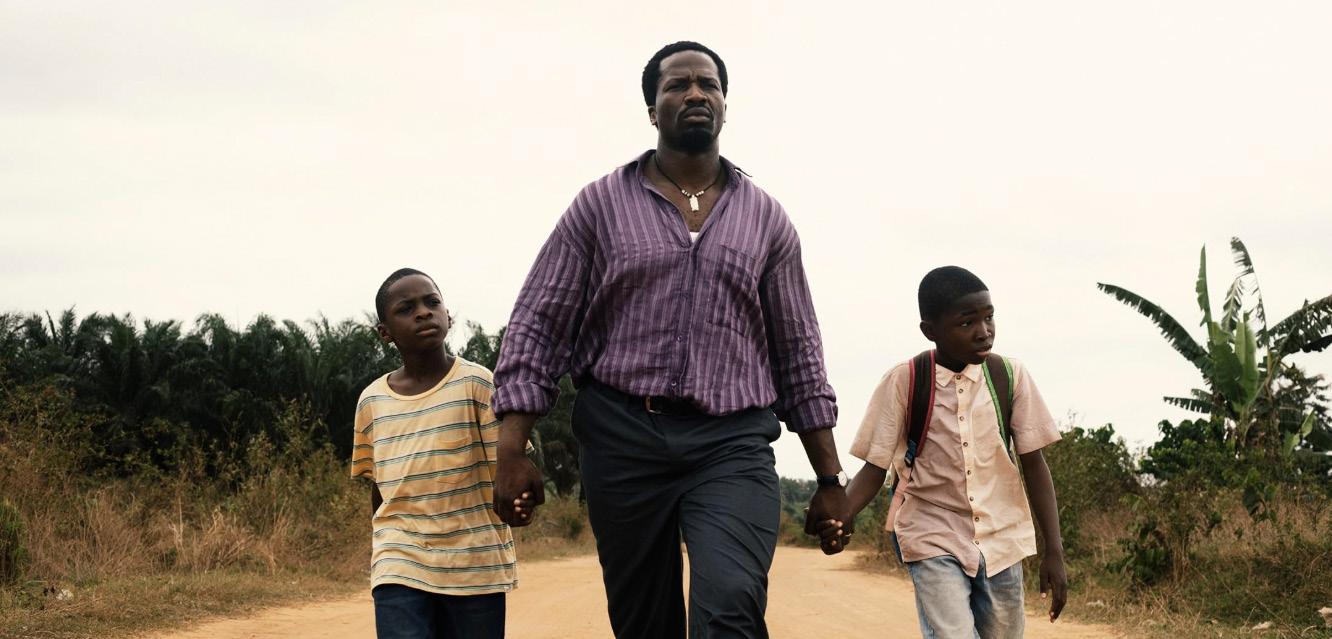
The movie, which takes place over a single day, is partially autobiographical, and Davies Jr. uses his childhood memories to reconstruct this day from an adult perspective. As such, the film is shaped both by what Davies Jr. can remember and by what he never fully understood. Set against the backdrop of Nigeria’s controversial 1993 presidential election, the film follows two brothers, Akinola (Godwin Egbo) and Olaremi (Chibuike Marvellous Egbo), travelling alongside their father, Folarin (Ṣọpẹ́ Dìrísù), to Lagos on what seems like an ordinary day.
The boys, who grew up in a village outside Lagos, move through the city with a curiosity and wonder that contrasts with their father’s familiarity, as he grew up there. As the trio continues with their day, visiting an amusement park and navigating the crowded streets, political unrest simmers just beneath the surface. Still, the nation’s sociopolitical tensions are visible across the full runtime, seen in petrol shortages, increased military presence in the streets and sparse political discussion about the potential election of popular candidate M.K.O. Abiola. Clearly, Davies Jr. and his co-writer and brother Wale Davies refrain from turning the film into a political statement,
instead allowing the country’s instability to seep into the edges of the story. However, these tensions contextualize Folarin’s behavior, revealing just some of the pressures that shape his actions. In the end, Folarin is a character defined by contradiction. It is revealed that Folarin only made the trip to Lagos in an effort to petition the supervisor at his factory job to release some of the backpay he is owed, which he has been waiting on for six months. His frequent absences for work frustrate the boys, especially Akinola, but Folarin explains to Olaremi that it is his job that requires him to traverse frequently into the city, often forcing him to leave them behind. The majority of Folarin’s screentime proves how much he loves his children, but that love is expressed in a way that his sons seldom appreciate. At the same time, Folarin is often harsh when disciplining his boys, though he is never outright abusive. Davies never attempts to resolve these tensions; instead, he simply encourages the viewer to understand Folarin as an imperfect man who tries to give his children a future within the confines of a life shaped by forces outside of his control. As the day continues to unfold, Folarin’s motivations become clearer, but the boys, particularly Akinola, never fully understand him. This balance is one of the film’s greatest strengths, as “My Father’s Shadow” grounds the audience in the boys’ experiences and frustration with their father. The title reveals with more nuance the relationship between Folarin and his sons: the “shadow” does not just refer to Folarin’s absence as a father or to the hazy memories Akinola has of him, but also hints at his legacy and the way he continues to shape
his children long after he is gone. Davies Jr. captures this idea with remarkable precision, mirroring this thematic angle with deliberate, controlled technical choices.
The film’s cinematography is sun-soaked, creating a world that feels lived-in and fully captures Lagos with an immediacy that grounds the film even during more dreamlike sequences. The camera is pinned to the children, and shots often look up from their point of view, making the world around them feel expansive and unknowable as it is seen through the eyes of an eight-year-old. The pacing is also measured, with scenes that are long and frequently without cuts, leaving the actors to converse naturally. Another strength is Duval Timothy and CJ Mirra’s score, which particularly stands
out in the film’s closing moments, featuring mournful vocals from Okikioluwa Adewale. What Davies Jr. ultimately crafts here is a meditation on how we remember our parents and the ways that one seemingly mundane day can expand in meaning much later in life. Throughout “My Father’s Shadow,” Davies Jr. proves that he knows love is not always visible and that absence does not necessarily signal lack of care. For now, it stands alone as my favorite film of 2026 and my first of the year to receive the high praise of a five-star ranking.
“My Father’s Shadow” is a deeply personal work that still manages to feel fairly universal in its ability to capture the complicated, often unspoken bonds between fathers and sons and the shadows that are left behind.
‘Hoppers’ Exhibits Pixar’s Return to Its Former Glory
Francis Rienzo Hoya Staff Writer
Taking everyday items and characters and placing them in human situations is what first made Pixar so popular: a deeper look at toys in a child’s bedroom, an exploration of what would happen if cars could talk or if rats could cook. “Hoppers” brings this style back in full form in the shape of a fun, emotional and poignant animated film about friendship and crossing political boundaries.
Mabel Tanaka (Piper Curda) is a rambunctious, animal-loving child who spends time with her grandmother (Karen Huie) in a forest glade with many different animals, primarily enjoying the company of a group of beavers. Mabel learns to control her feelings, especially her rage, by being in nature. Consequently, she develops a love for the environment. In an emotional gut punch akin to the opening sequence of Pixar’s “Up,” Mabel’s grandmother dies within the first 15 minutes. The rest of the film follows a grownup Mabel fighting the mayor of Beaverton, Jerry Generazzo (Jon Hamm), as he attempts
to construct a highway through this glade that meant so much to her.
The selling point of the film is the technology, called “hopping,” used by Mabel to switch bodies with a robotic beaver. She becomes fully integrated into the animal world as she begins to understand what they are saying and how their society is structured. She uses her beaver persona to try to save the glade, as luring a beaver back to the environment would draw back the other animals to ultimately save the ecosystem.
This is where the comedy and heart of the film are found, as Mabel befriends King George (Bobby Moynihan), the unwaveringly optimistic beaver anointed leader of the pond. He acts as a foil to Mabel’s character, trying to combat her political, resentful emotions by teaching her that everyone has some good within them. The relationship between Mabel and King George develops the moral and emotional core of the film as they teach each other essential lessons about friendship and human identity.
To prevent the highway from destroying the glade, Mabel goes to the Animal Council. The council is made up of a band of hilarious characters, including the Insect Queen (Meryl
Streep) and monarchs representing fish, amphibians, birds and reptiles. However, she accidentally incites them to try to assassinate (or “squish,” as the film calls it) Mayor Jerry.
This is where the ethical dilemma of the movie arises as Mabel doesn’t want a horde of animals trying to kill Jerry despite her hatred for him.
Comedically, Mabel, George and their pack of rebel animals use text-to-speech on cell phones to try to communicate with Jerry, while the Animal Council simultaneously recruits a massive great white shark named Diane (Vanessa Bayer) to try to stop Jerry. Despite the comedy, the poignant moments also hit very hard, as Mabel returns to her real body, leaving George sad and confused that his beaver friend is no longer around.
Some of the movie’s jokes fit the children’s film aesthetic, but not in a bad way. My theater had a lot of college students and adults, and I did not feel out of place watching the film. One of my biggest personal criticisms of recent Pixar films has been how painfully obvious it is that the intended audience is children, while earlier Pixar classics like “Finding Nemo” (2003) contain emotional depth and jokes suitable for both adults and kids alike. “Hoppers” brought back this excellent formula.
The climax of the movie comes when Titus (Dave Franco), an evil power-hungry caterpillar trying to kill Jerry, sets off a wildfire, threatening the lives of the whole city. Mabel and Jerry have to work together, alongside the animals, to stop it. This climactic moment, akin to the incinerator scene in “Toy Story 3” (2010), left me on the edge of my seat.
Every character felt well developed, with even minor presences like Loaf (Eduardo Franco) and Tom Lizard (Tom Law) serving great comedic purposes. By studying the relationship between animals and humans, particularly through Mabel and George’s friendship, Pixar returns to the excellent emotional blow that was once the standard for their films. The political elements of the film were also relevant and impactful, showing that, like Mabel and Jerry, even if you disagree, you can always find the good inside of an opponent for the good of a greater cause.
I walked out of “Hoppers” in a great mood, as it made me emotional but left me with a positive sense of hope. As a massive Pixar fan, I was thrilled to see the studio return to its former glory.
IMDB
Brad Derfner (CAS ’26) finds “My Father’s Shadow” a poignant look at parenthood.