FEATURE Brad Derfner (CAS ’27) runs through the quality of Sundance’s online releases. B2
COMEDY Funniest Human had diverse, uproarious sets, Thejas Kumar (MSB, SFS ’28) says. B4
CONCERT Juan Almanza (CAS ’29) raves about fun and friendship at Joey Valence & Brae’s show. B6
FEBRUARY 27, 2026
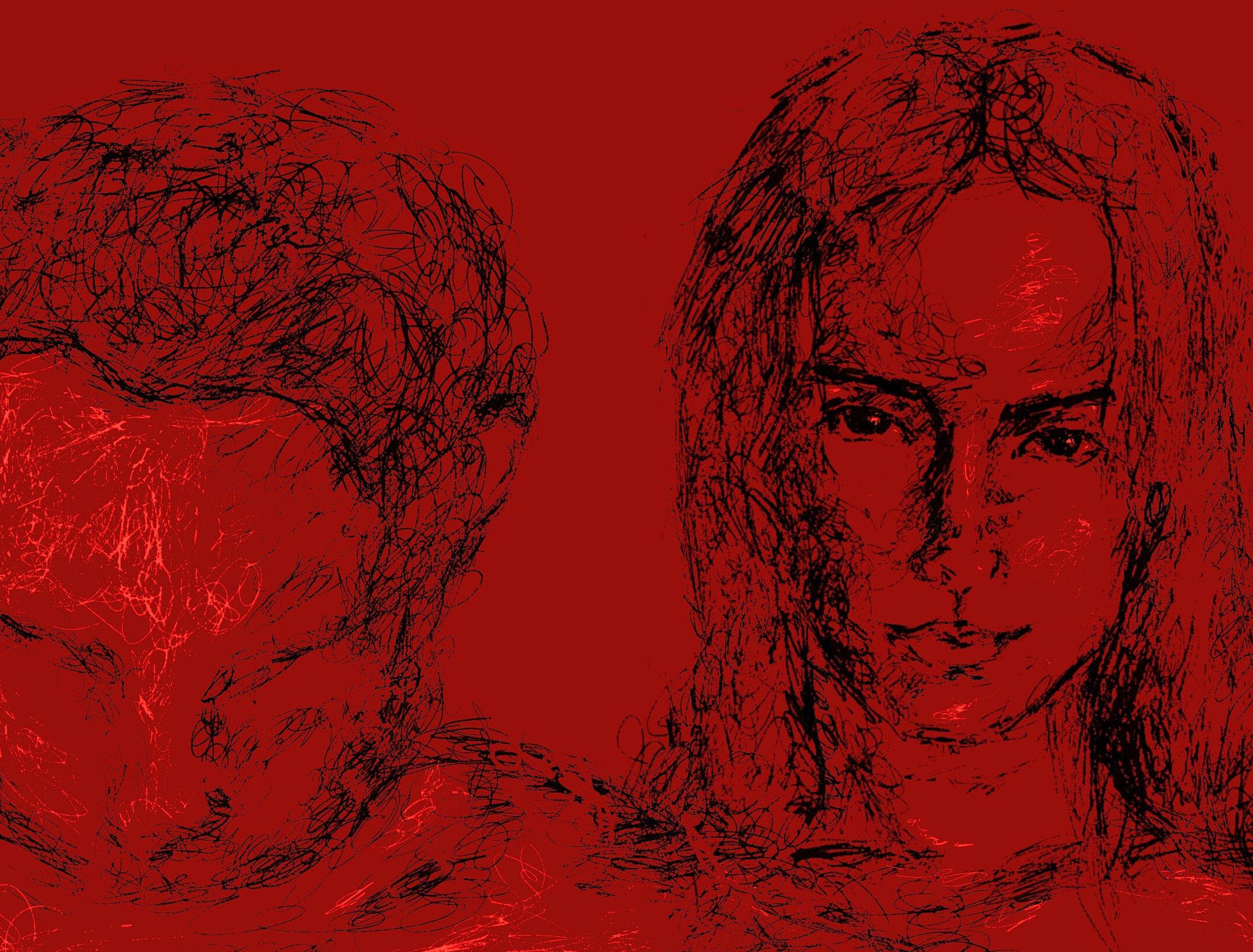
‘Tell Me Lies’ Reveals Relatable Human Truths
The final season of ‘Tell Me Lies’ is a rollercoaster of bad decisions that feel all too familiar. B3
Nora Toscano Executive Editor
Off the Slopes: Sampling Sundance’s Online Slate
Brad Derfner Guide Columnist
Far before virtual premieres became an inevitability in the industry, the Sundance Film Festival had already begun to think about how digital access could expand the reach of independent films beyond Park City, Utah. In 2001, Sundance launched its first-ever online slate of films, featuring 18 shorts. Over 20 years later, the festival’s online selection has fully evolved, allowing those of us unable to fly to Utah to still catch some smaller, usually more adventurous projects. This year, I was lucky enough to watch seven online premieres, including three that, despite inconsistencies, felt emblematic of the greater flexibility offered by the digital platform.
Run Amok
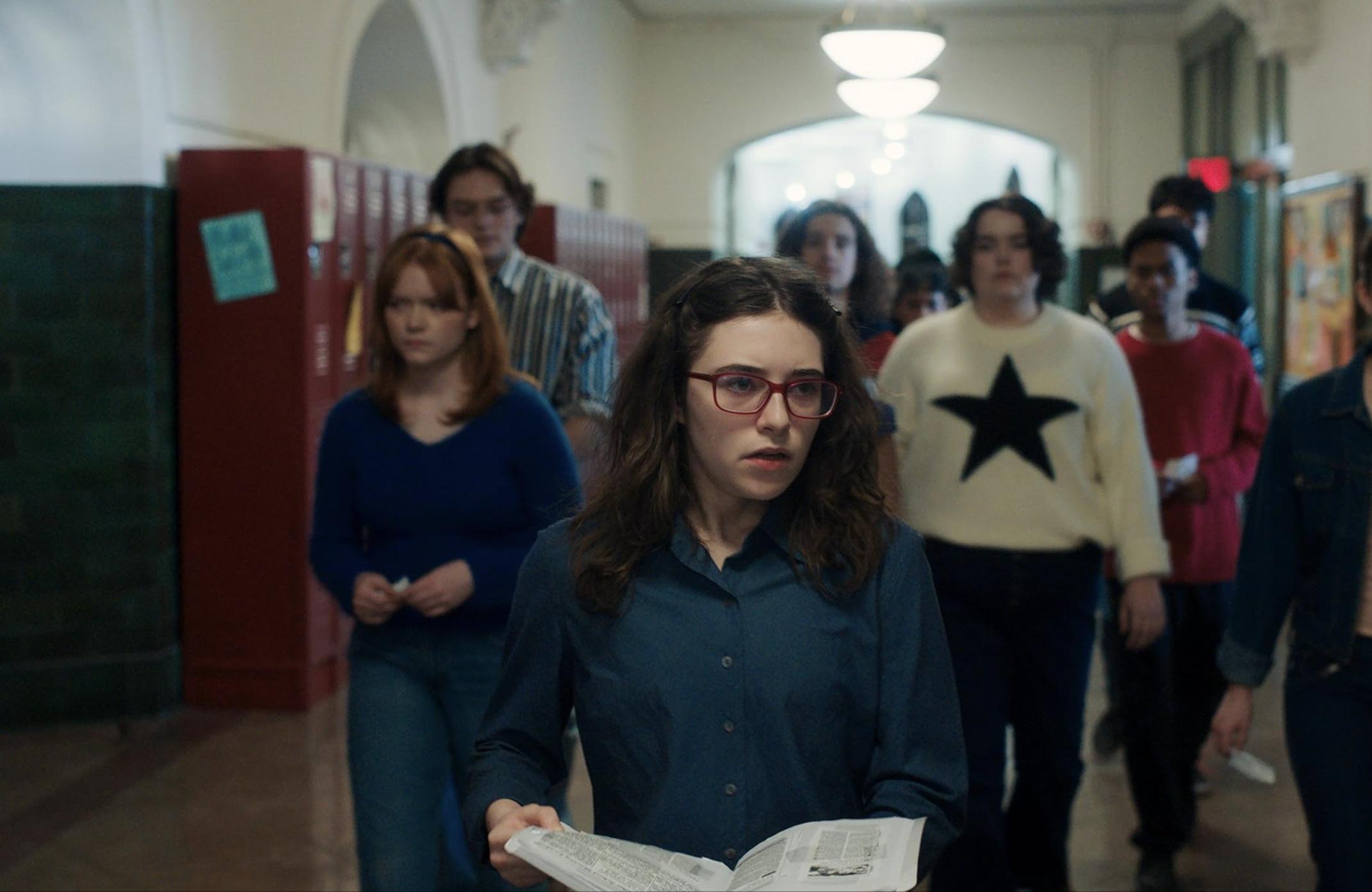
Premiering as a part of the U.S. Dramatic Competition, “Run Amok,” directed by NB Mager, is a highly issue-driven movie. The film follows Meg (Alyssa Marvin), a high school freshman living through the aftermath of a school shooting that occurred exactly a decade earlier. Meg’s personal connection to the tragedy leaves her affected to this day and she attempts to help her community process their grief by staging a musical reenactment of the tragedy. On paper, the plot might seem odd or overly intense, but I was drawn to the way the film focused on how teenagers struggle to cope with school shootings, a danger that targets them uniquely. However, in practice, Mager’s debut feature struggles to keep a consistent tonal footing, aimlessly bouncing between coming-of-age drama and weak satire in a nearly incoherent manner. The unevenness is clearly seen in the film’s approach to dark comedy, wherein Mager seems in-
tent on critiquing the bureaucratic, overbearing nature of the adults surrounding Meg, especially as they attempt to limit her creative vision for the musical. Administrators and teachers alike frequently feel like caricatures, embodying generic responses that prioritize “safety” in art over meaningful emotional engagement. In these scenes, though, I was left feeling like Meg did not truly understand how painful the shooting was for the entire school community, especially as many of the teachers, including her advisor, Mr. Shelby (Patrick Wilson), were present at the time. While this approach does connect with the film’s larger critiques of performative grief, the execution is simply too blunt to be meaningful.
Even so, Mager does still stumble into shockingly strong moments. In one scene, when Meg runs a rehearsal for the part of the musical that depicts the shooting itself, she guides the cast through the site of the incident, slowly assigning her classmates to their roles. The slow, deliberate pace reminded me of the anxiety of active shooter drills, and Marvin delivers a truly powerful performance here. “Run Amok” proves most effective in its quieter stretches, where Marvin is allowed to shine, especially when contrasted against the awkward and panicked demeanor that usually defines her character.
Ha-Chan, Shake Your Booty!
Despite its title, which makes you expect a much more optimistic film, “Ha-Chan, Shake Your Booty!” also focuses on grief, but from a markedly different angle. Writer and director Josef Kubota Wladyka has crafted an absolutely unique experience in which we watch Haru (Rinko Kikuchi), a competitive ballroom dancer from Tokyo, withdraw from both the
studio and her loved ones following a sudden personal tragedy. Instead of looking at grief through reenactment, “Ha-Chan, Shake Your Booty!” takes a highly comedic angle, which includes a possible love triangle with fellow dancer Fedir (Alberto Guerra).
Wladyka’s script is unusual, but well thought out and the film’s dreamlike musical interludes are consistently strong. These scenes are reminiscent of those from “La La Land,” or, if you want to get a bit niche, “The Young Girls of Rochefort,” with larger-than-life choreography that helps externalize Haru’s pain without resorting to simple expositional dialogue. Touches of magical realism, including the repeated presence of a giant crow, double down on this approach, though occasionally, the film’s highly realistic romantic subplot clashes with its more surreal elements. As the film reaches its third act, “Ha-Chan, Shake Your Booty!” morphs into a more conventional love-triangle film, which encounters some shortcomings as it dilutes some of its novelty overall, though Kikuchi’s nuanced performance adequately compensates for these difficulties.
Zi
If “Run Amok” and “Ha-Chan, Shake Your Booty!” respectively explore grief through performance and love, Kogonada’s experimental drama “Zi” instead looks at what it’s like to lose one’s sense of self. Shot over only three weeks and with a tiny, bare-bones crew, the film follows Zi (Michelle Mao), a young violinist, who experiences visions of her future self after learning that she might have a brain tumor. Taking place entirely in one day, we follow Zi as she wanders around Hong Kong, forming an unlikely bond with
IMDB
Brad Derfner (CAS ’27) reflects on how three films from Sundance Film Festival’s online premiere tackle questions of trauma and coping.
Elle (Haley Lu Richardson), who is navigating her own recently upended world.
Narratively, “Zi” is incredibly slender, albeit deliberately so. Kogonada’s filming process was notably improvisational, as several interviews with the cast and crew, including one with Richardson, reveal how he would add or remove from the story at a moment’s notice. The film is at its best when it serves as a glimpse of Hong Kong’s energy. Shots are often confined to the characters and defined by the city’s lights. The sound design and score are both particularly notable, emphasizing compositions from the late Ryuichi Sakamoto. In one sequence, underscored by “andata” from Sakamoto’s “Async,” the interplay between image and music perfectly reaches a powerful crescendo.
Predictably, the film is at its weakest when attempting conventional character development and storytelling, with uninspiring dialogue and a story that is at times both generic and incomprehensible. Mao’s performance as Zi is probably best described as confused, which is certainly effective as she stumbles through alleyways, but admittedly less successful when hearing her stumble through banter with Elle. Richardson fares a bit better in this respect, attempting to anchor these traditional scenes. At its core, the love triangle, which includes Zi, Elle and Min (Jin Ha) — a man from Elle’s past — is broadly uninteresting. In the end, I was equally frustrated and charmed by “Zi,” and its moments of genuine brilliance left me encouraging everybody to give it a chance.
Overall, these three films are shockingly similar, each approaching the same idea from a different angle: Trauma is rarely processed immediately. Whether it be through staging a musical, waltzing through a ballroom or aimlessly wandering through a city in search of connection, each of these three films resists any sort of neat closure. As Sundance continues to fight to maintain cultural relevance in an increasingly competitive film festival circuit, the online slate offers a reminder that the best films of the year may very well be those that take you off the beaten path.
‘Tell Me Lies’ Season 3 Succeeds in Having Emotional Predictable Unpredictability
Nora Toscano Executive Editor
The third and final season of “Tell Me Lies” ended the series exactly how its viewers might have expected: with its characters making horrendously bad decisions, a stacked soundtrack and a quick-moving plot that strayed far from the first season’s premise.
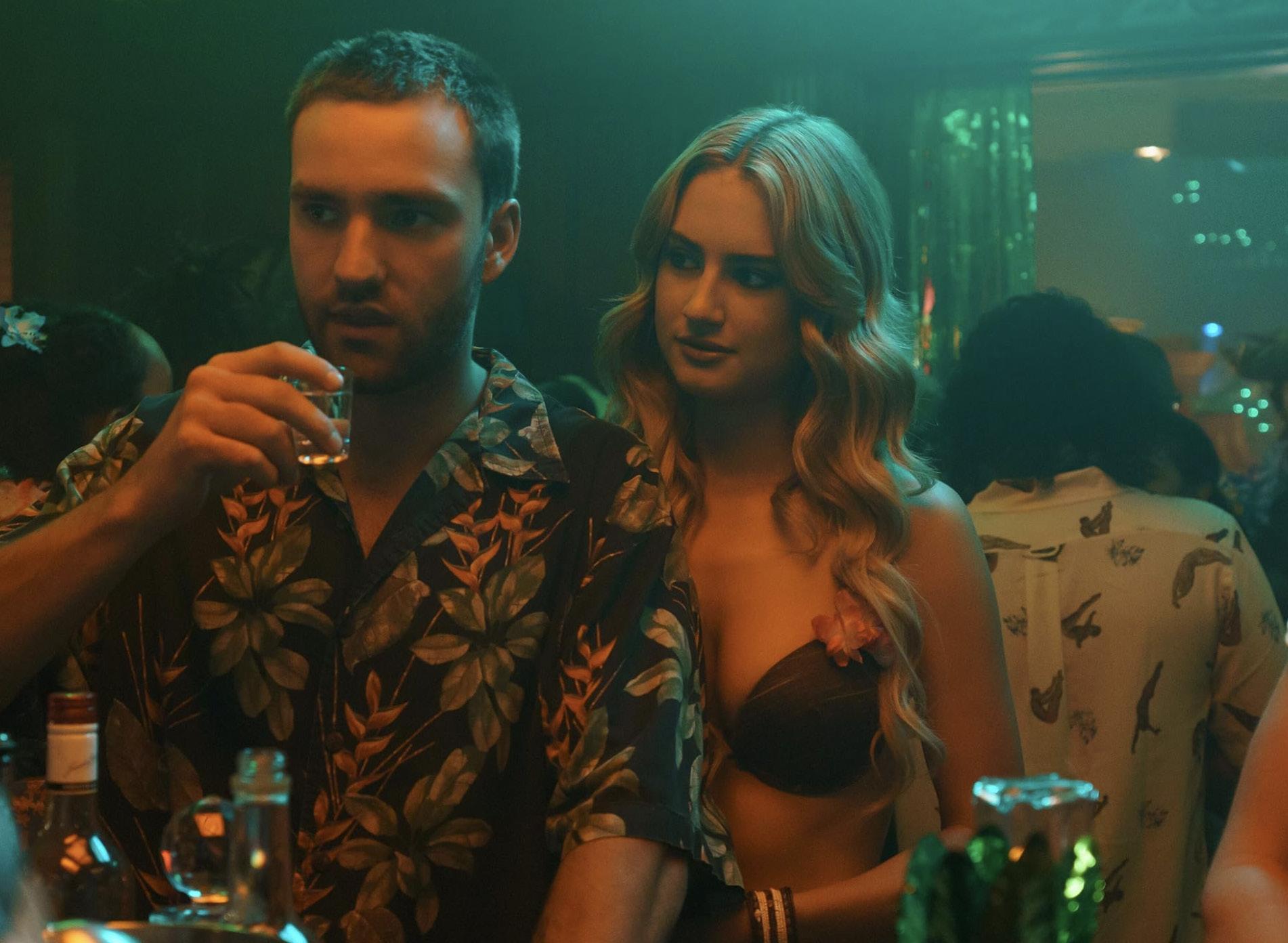
The show follows the ever-tumultuous college relationship between Lucy Albright (Grace Van Patten) and Stephen DeMarco (Jackson White) and the impact their questionable actions have on their incestuous friend group. The show jumps between two timelines: one beginning in 2007, when Lucy begins her first year at the fictional Baird University, and one in 2015, when their friends Bree (Catherine Missal) and Evan (Branden Cook) get married. Over the course of the series, the characters repeatedly betray and exploit one another to protect themselves, ultimately destroying their relationships.
The third season’s plot revolves around Stephen blackmailing Lucy by forcing her to record a tape in which she confesses to a damning lie she told in the previous season. Simultaneously, Evan tries to win Bree back after cheating on her, while Wrigley (Spencer House) begins to harbor feelings for
Bree despite being in a relationship with Bree’s best friend and roommate, Pippa (Sonia Mena), who is secretly cheating on him with Stephen’s ex-girlfriend Diana (Alicia Crowder). If it sounds messy, that’s because it is. Bree is also coming off of an affair with a married professor and Wrigley’s brother has just died by accidental overdose. The friend group is not doing well, to say the very least.
Missal and House’s performances are particularly strong this season as Bree and Wrigley slowly develop feelings for each other while already in other relationships. Missal expertly portrays Bree’s unraveling as the one character who’s retained a moral high ground throughout the series loses her integrity. House, meanwhile, beautifully plays Wrigley’s gentleness, kindness and forgiving nature, solidifying that Wrigley is ultimately the show’s only redeemable character. In the finale’s closing minutes, as the friend group’s secrets are finally made public, Bree and Wrigley softly smile at one another while their friends scream and argue. House and Missal’s quiet chemistry is at the heart of this season, and it adds emotional depth to a show whose intrigue is largely rooted in toxic relationships and betrayal.
Van Patten also excels this season, convincingly portraying Lucy’s complete breakdown. From Lucy’s repeated confusion to fights with Stephen
that bring her to hysterics, Van Patten artfully captures a young woman falling into delusion. When Lucy is informed of her expulsion from Baird, for example, Van Patten’s performance soars as Lucy doesn’t seem to understand that she will no longer be an enrolled student. The show has long hinged on Lucy’s terrible decision-making, but making her so traumatized by Stephen that she becomes genuinely disoriented works well because of Van Patten’s strong performance.
“Tell Me Lies” has also consistently succeeded in its soundtrack. Notables from this season include “Love Lost” by Temper Trap and “Fade Into You” by Mazzy Star, along with 2000s classics “Paper Planes” by M.I.A., “Rehab” by Amy Winehouse and “Bulletproof” by La Roux that work well to anchor the show and characters in the early 2000s. The choice to play Britney Spears’ “Toxic” as Stephen grabs the microphone at the wedding and reveals each character’s secrets is a masterful one, effectively bringing together each lie’s intertwining storyline. Furthermore, “Such Great Heights” by The Postal Service makes the final scene — where Lucy, stranded, realizes Stephen has left her once again — even more powerful.
Despite these strengths, the finale of “Tell Me Lies” left me unsatisfied on several fronts. Lucy’s memory loss during the third season was never
IMDB
“Tell Me Lies” ends with somewhat satisfyingly predictable surprises and uncomfortable relatability, Nora Toscano (CAS ’27) says.
resolved or explained, which made the plotline fall flat. Showrunner Maggie Oppenheimer slowly built tension surrounding whatever was causing Lucy’s disorientation this season, and while I don’t think every plotline in the show needed to be fully resolved, it didn’t feel like there was any purpose for the memory loss at all. The finale also strayed far from the first season’s premise, giving little closure to Macy’s death other than Diana’s admission to Lucy that she knows Stephen was responsible. I actually liked the believability of Stephen getting away with his involvement in Macy’s death, but I wish there were a bit more reference to the first and second season’s plotlines. “Tell Me Lies” is not a life-altering watch. I’ve long been an easy crier, and not once has the show brought me to tears, which is a pretty low bar (I once cried during the final performance in “Pitch Perfect”). But even at its most chaotic, “Tell Me Lies” is a poignant reminder that our actions have consequences and yet sometimes the worst people we know are never punished. We don’t all know a Stephen DeMarco, but I’m willing to bet a lot of us know someone pretty close. I know I do. And maybe even worse, I think we all have a bit of Lucy in us. Lucy’s ending is one of the harshest to watch; after years of desperately willing Stephen to love her, she never learns her lesson. She once again gives up everything for a boy who has only ever treated her atrociously, and he abandons her yet again, quite literally leaving her on the side of the road in the middle of nowhere. The finale ends with her laughing at the situation as she realizes what the audience has always known to be true: that she is completely pathetic. But also, her ordeal with Stephen is finally over, and there’s freedom for her in that, even if she looks as weak as ever. As much as we may try to convince ourselves that we aren’t Lucy, I think her willingness to forgive the unforgivable if it means feeling loved is all too relatable. There’s something about her ending that reminds us of our worst instincts and insecurities, that makes us want to forget the people we forgave, even when we knew they didn’t deserve it. “Tell Me Lies” succeeds in its predictable unpredictability — the worst thing that can happen always does. Lucy always goes back to Stephen. Stephen always disappoints her. And above all, the show succeeds in reminding us that we are lying to ourselves if we think we’re good people.
In Annual Comedy Show, Cronin Crowned Funniest Human
Thejas Kumar Contributing Editor
On Feb. 20, a packed crowd — which eventually became standing room only — filed into Gaston Hall for Funniest Human, the Georgetown Program Board’s (GPB) annual student standup comedy show. The field this year saw eight contestants, including five seniors, pitted against each other in a winner-takes-all competition to crown, well, Georgetown’s funniest human.
The always-on-point Sophie Maretz (CAS ’26) — Georgetown’s Funniest Human in 2024 — returned to emcee the show this year and continued to showcase her first-class wit, albeit in a more limited role. Her brief set to warm up the crowd began with her describing peaking as a sophomore and analyzing the shoes in her dorm to discover that a roommate had brought over a “bigfooted lesbian,” before talking about her hope of her dogs ironically Pavlov-ing her to move out of her house in New Jersey and get a job.
The first competitor was Owen Simon (CAS ’26), who opened up about his fear of becoming infamous, revealing that it stems from a song he sang at summer camp about a lady who starts the Great Chicago Fire. He then launched into a colorful rendition, and punctuated it with three shouts of “fire” in the crowded theater, which was alright for some reason. He also talked about universities going too far with expansion — shoutout New York University (NYU) Tulsa — and doubtlessly attracted his biggest laughs of the night when he compared ChatGPT to Grok, which he likened to a caveman.
Next was Lowell Lawrence (CAS ’28), who set the tone for his act by awkwardly pacing the floor throughout his set and at one point turning around to read jokes from a crumpled paper in his pocket. Lawrence generated consistent laughs with a Mitch Hedberg-style
rapid-fire routine that spanned all manner of absurd topics, from accidentally sitting on an old man’s penis on the subway to being spanked in Chipotle. The sophomore likely led the group when it comes to a pure laughsper-minute metric, and it was surprising when he wasn’t voted a finalist.
Kumar Varma (CAS ’26) opted for a more story-based routine, in which he drew on his experience trying out for the Marine Corps. Walking us through each step in the process, Varma described academic requirements, a drug test — which was conducted in public — and finally a physical, which included a cavity search. Varma’s act culminated in a minute-long nonverbal segment where he performed a oneman skit re-enacting the public drug test, during which he seemed to eye up other candidates and even agreed to meet up with one of them later.
Following him was Anna Dewey (CAS ’26), who talked about trying new foods, discovering she was more like her dad than she thought, puberty and an unfortunate date. Dewey’s nervous style of comedy lent itself well to discussing potentially embarrassing topics, including having to keep a granola bar in the bathroom after repeatedly fainting in the shower and going out with someone who wore swim trunks to their dryland date.
The next act featured Simon Maxwell (CAS ’29), the only freshman of the group. Despite stumbling through parts of his routine, which covered an error-ridden visit to the student health center, complaints about Leo’s and the fact that his father had been a sperm donor, Maxwell found moments to excel. Most notably, he attracted laughs when talking about the contrast between his ancestor, who volunteered to fight in the Civil War at 16, and himself at 16, busy earning McDonald’s points.
Shana Struski’s (SFS ’27) set focused on struggles with being catcalled by old men on the Washington Metro and failing the Spanish
proficiency exam. The routine hinged on absurdity, with a discussion of the time her pediatrician called her a “fucking loser bitch,” recounting how she played Minesweeper on full volume during a Zoom group grief counseling session and recurrent mentions of School of Foreign Service professor William Schlickenmaier.
Second to last was Tommy Cronin (CAS ’26), whose act centered on the various jobs he has worked. First was mowing the lawn of a local priest — which wavered between being an innuendo and a normal job every other sentence — then working at a school where the staff was made up of him and 40 Chilean women, earning him the pet name “Shrek” from the kids. Cronin next moved to his time working at a special education school with a student whose name and vocabulary consisted of “Zeke” and who took off all his clothes if he got as much of drop of water on
him, before closing by talking about his most recent job as a Tombs doorman during the implementation of their cover charge.
Stephen Purdum (CAS ’26) ended the night by talking about various identity crises, a high school therapist who was big on “men’s issues” and struggles with the TSA. Purdum’s finest moments came on one-off lines when talking through each of his various stories, including him being bisexual “mostly for clout” and the TSA agent during his patdown giving him “60% of a handjob.”
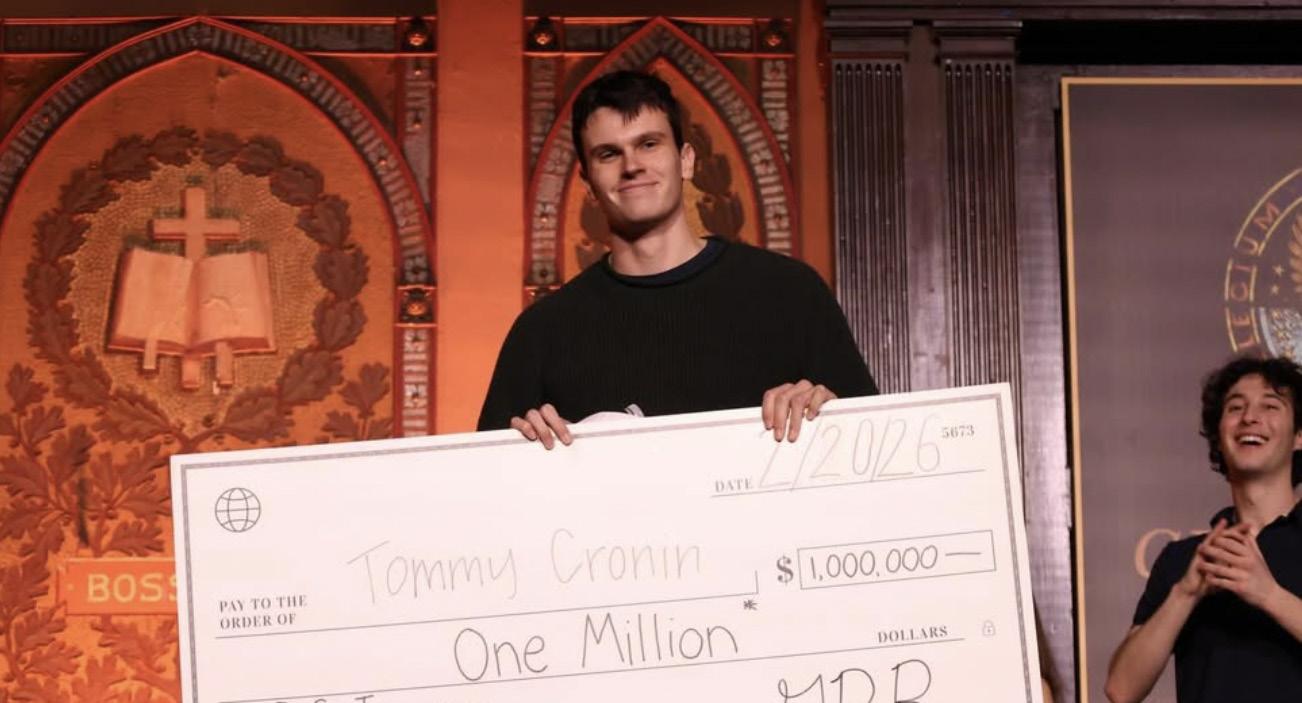
After their performances, the audience first voted for four finalists, which ended up being Tommy Cronin, Stephen Purdum, Owen Simon and Kumar Varma. After a second round of voting, Tommy Cronin was crowned Georgetown’s Funniest Human and was presented with a comically large check for tickets to Georgetown Improv.
@GTOWNPB/INSTAGRAM
Thejas Kumar (MSB, SFS ’28) recaps the humor of 2026 Funniest Human contestants.
‘Man on the Run’: A Magical Monkberry Moon Delight
Mauro Mazzariello Hoya Staff Writer
One of my favorite questions to ask someone I’ve just met is who their favorite Beatle is. I find that it’s a totally objective yet highly entertaining litmus test for how a person operates. A George fan loves guitar solos and quiet reflection, John lovers are oddballs, Ringo is always the right answer (if you say otherwise you’re Wrongo) and, of course, the most whimsical of them all choose Sir Paul McCartney.
While I will forever defend Ringo as my favorite Beatle (“Octopus’s Garden,” “Yellow Submarine,” “Act Naturally” and the drum solo in “The End” are favorites of mine), McCartney has always retained a special place in my heart. His songs are lighthearted and fun, the kind of entertainment that I imagine a clown would have produced were it not for the inherent creepiness involved with being a clown. Look
no further than his 1971 album “RAM” for some zany gems, including the truly out of this realm “Monkberry Moon Delight” and cartoonishly fun “Uncle Albert/Admiral Halsey.” Enter Morgan Neville’s “Man on the Run” from stage right: a visually enticing documentary that, while not bringing anything groundbreaking to the table, still delivers a satisfying magical mystery ride through McCartney’s solo career. It’s the end of the ’60s, the counterculture movement is coming to a grinding halt (Don’t believe me? Check out the documentary “Gimme Shelter” about the Rolling Stones’ disastrous free concert at Altamont and get back to me) and musical giants are falling like dominoes. Amid the changes that marked the transition into the ’70s, the breakup of The Beatles was among the most shocking and unprecedented. The Beatles were revolutionary from start to finish (and to all the people who might think I’m biased: I am, but this is a cold, hard fact — they really were THAT good). From their mop tops and
love songs to their psychedelic trips through the realm of studio editing, they were going where no man had gone before (take that, John Glenn). So when the Fab Four decided to call it quits, the question became, “What now?”
Well, just like how Symbolab seemed to hold all the answers to my math-related questions during 11th-grade pre-calculus, “Man on the Run” holds the answers to the musical vacuum that followed The Beatles’ breakup. Having split up with his closest friends, who together had been the biggest act in the world, McCartney was now left to his own devices (plus a beautiful Scottish farm and millions of dollars). The documentary follows McCartney from his initial dealings with the band’s fallout and drama to his desire to start a new band with his wife, Linda. Of course, that new band would turn into Wings, the pop-rock giant that churned out some of my personal favorites (“Silly Love Songs,” “Let ‘Em In,” “Hi Hi Hi” and “Band on the Run”).
As someone who had an intense case of Beatlemania in eighth grade (I did get an A on
my singer-songwriter project for English class, though, so it must have paid off), the story that unfolds throughout the documentary is not entirely new; it is one that’s been rehashed. So, if you’re a true fanatic like me, don’t expect any never-before-seen interviews or recordings (“Becoming Led Zeppelin” already did that for rock fans). If you’re a newcomer to the realm of Beatlemania, then you’ll find a well-told story that will have you feeling the pain every Beatles fan felt in 1969. Despite my gripes with the narrative itself, the documentary shines through with its visual elements. Traditional sit-down interviews are replaced with countless pictures and videos (mainly shot by Paul and Linda) as everyone from Mick Jagger to Sean Lennon gets a turn at a soundbite. The soundtrack is naturally a hit, a wonderful ride through McCartney’s discography from “RAM” to “McCartney II.” Unfolding in true Sgt. Pepper’s/Magical Mystery Tour style, the documentary will have you tripping the light fantastic.
The Fractured Identity of Korean Rap, ‘Show Me the Money’
Grace Ko Guide Columnist
There’s nothing quite as intriguing or baffling as “Show Me the Money.”
I first encountered the show during my first year of high school. Fresh off K-pop, I stumbled upon the show’s seventh season, aptly titled “Show Me the Money 777.” It was the first time I had ever seen Korean rappers in such huge numbers, and I was immediately hooked.
At the most basic level, “Show Me the Money” serves as the connection between the underground Korean rap scene and the mainstream public. In its most recognizable form, the judging panel consists of four teams, each composed of two well-known figures in Korean hip-hop. Through multiple rounds of challenges, including live stage trials, the show attempts to spotlight Korean rap.
In its peak years, most arguably from its fourth to sixth seasons, the show spurred multiple hits, and Korean hip-hop became more prominent in the public eye. However, due to its inherently commercial nature as a reality show backed by a prominent production company, being on “Show Me
the Money” became synonymous with selling out.
The production team at Music Network, commonly known as Mnet, edited the show in a way that did not help curb this reputation at all. Known for what is best translated as “evil editing,” the show can be understood as stringing together clips loosely and achronologically to preserve as much drama as possible among its contestants. This smash cut editing style often makes it a fight to get through any sort of reality competition produced by the company, and “Show Me the Money” is no different.
The show’s quality has also declined over the years. While this is a common phenomenon among multi-season shows, the show took an especially considerable nosedive. Its eighth season was no short of a complete mess, complete with accusations of what is best translated as “nepotism hip-hop,” where already well-connected rappers continued advancing despite poor performances, and the season featured some remarkably questionable performances by other contestants. In fact, there’s a performance that was so iconically catastrophic that if you search any Korean curse word, or even just an insult that implies “that stage” is damned, it pops up.
ON YOUR RADAR
By Eliza Doty
BLOOD ORANGE
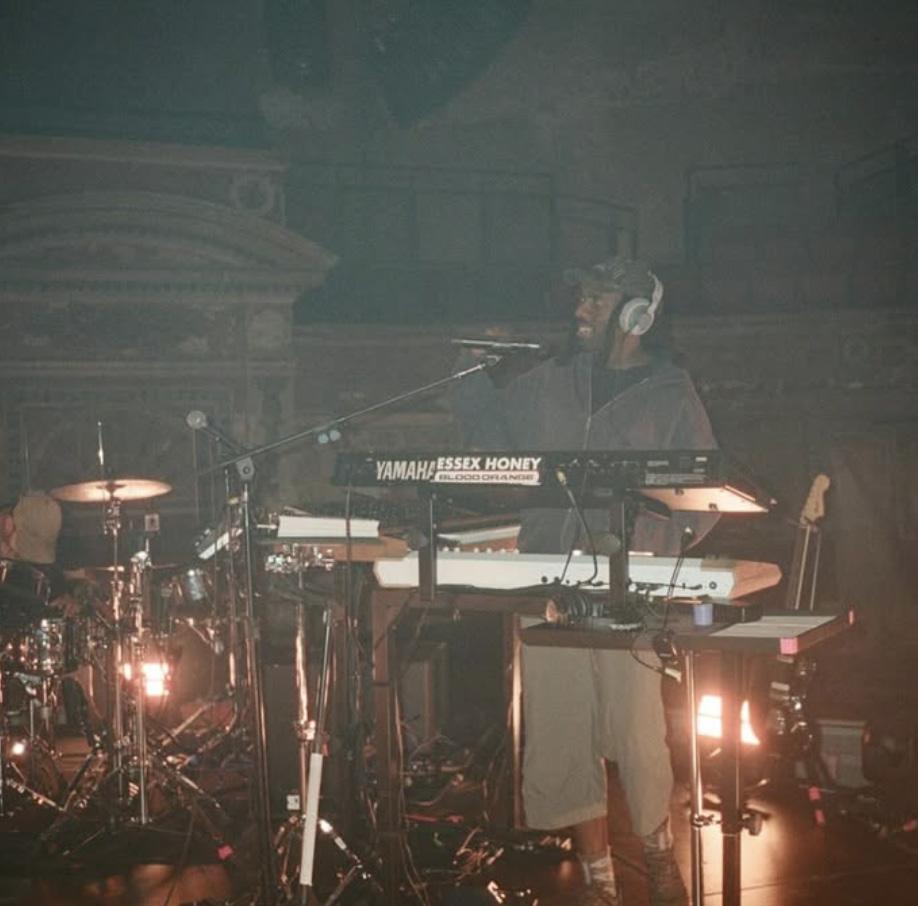
On tour for his “Essex Honey Tour,” Blood Orange will be performing in Washington, D.C., at The Anthem on Tuesday, March 3 at 8 p.m. Devonté Hynes, the creative force behind the band, blends R&B, electronic and indie pop into his songs. Known for his immersive performances, see Hynes in concert with tickets beginning at $103.
THE WORLD TO COME
See the world premiere of “The World to Come” performed by the Woolly Mammoth Theatre Company. Set in a retirement home, the play follows a group of elderly residents navigating friendships, love and survival as the outside world descends into chaos. Equal parts absurd and deeply human, the play has been described as moving, apocalyptic and comedic by critics. Performing on their home stage, this production shows varying times between 3 p.m. and 8 p.m. until March 1.
Now, after a lackluster 11th season and a four-year hiatus, “Show Me the Money” returned in January 2026 for its 12th season. While there is much to explore about the show and its role within the Korean rap scene, the return of “Show Me the Money” mostly brought back my own questions on what exactly Korean hip-hop is.
Like much of Korean music, Korean hiphop and rap draws from Western music, particularly from Black hip-hop culture. The beginnings of Korean hip-hop can be traced to American military bases that remained in Korea after the Korean War and carried over hip-hop from the United States in the 1980s. This resulted in a patchwork scene consisting of an incredibly wide variety of genres whose only connection was often the language in which the lyrics were written.
Listening to the contestants of “Show Me the Money 12” and the latest offerings from the Korean rap scene, you see a new, growing prominence of Western influence on the content which is, for lack of a better word, interesting, as it includes guns and drugs, both of which are illegal in Korea. From this observation, there’s a sense that Korean rap is building a hip-hop culture that’s drowning in its Western influence.
Korean hip-hop’s greatest strength, though, is its tendency to experiment and its ability to straddle various genres and blur the lines between them all while respecting the tones, characteristics and history of the Black hiphop genre they have taken influence from. Alongside K-pop and its own tendency to reach across various genres, fusion has become a key part of modern Korean music. When it doesn’t completely succumb to the generalizations and stereotypes of its influences, this fusion is a wondrous combination of sounds, sentiments and perspective.
In this manner, Korean rap has always felt to me like it is made up of fragments. It is a genre that can effectively twist and combine other genres and influences from across the art form, leading to the creation of genuinely interesting projects. It’s this fragmented coherence that has personally pulled me into the scene, its character reflective of my own scrapbooked identity as an Asian American, forever caught between America and Korea. Yes, there is a need for Korean hip-hop to find its own identity apart from the Black artists that it is influenced by, but there is still genuine respect and beautiful experimentation in Korean hiphop that is worth watching, even in the messy expanse that is “Show Me the Money.”
WEEK’S THEME: Spring Into the Month of March
‘EVERYTHING IS WONDERFUL’
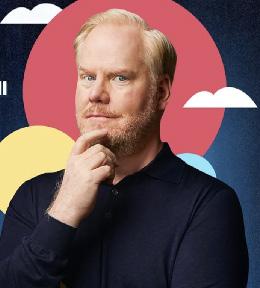
Georgetown graduate Jim Gaffigan (MSB ’88) is offering three nights of stand-up comedy at The Anthem. Hear Gaffigan present new material about his usual topics, including parenting, food and general observations. The “Everything Is Wonderful” tour visits Washington, D.C., Feb. 26-28. Tickets start at $62.
BACK AND FORTH: ROZEAL., TITIAN, CEZANNE
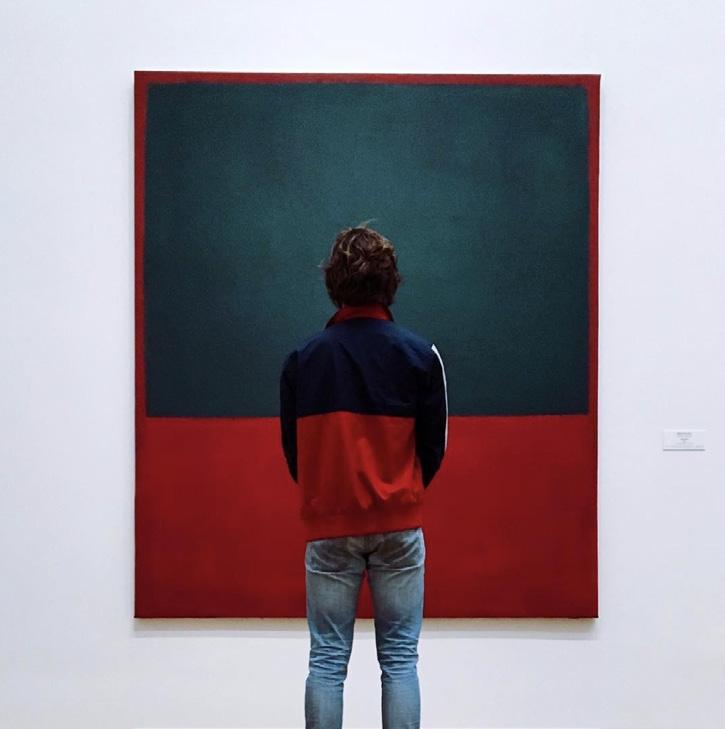
The National Gallery of Art’s Back and Forth exhibition places contemporary artist Rozeal.’s work in discussion with paintings from two of the greats: Titian and Cézanne. Showing until April 26, exhibition explores how these artists from different periods approach similar questions of representation, style and influence. Rozeal.’s work draws on a range of references. Admission is free.
Joey Valence & Brae Are Here to Party Hard
Juan Almanza Deputy Guide Editor
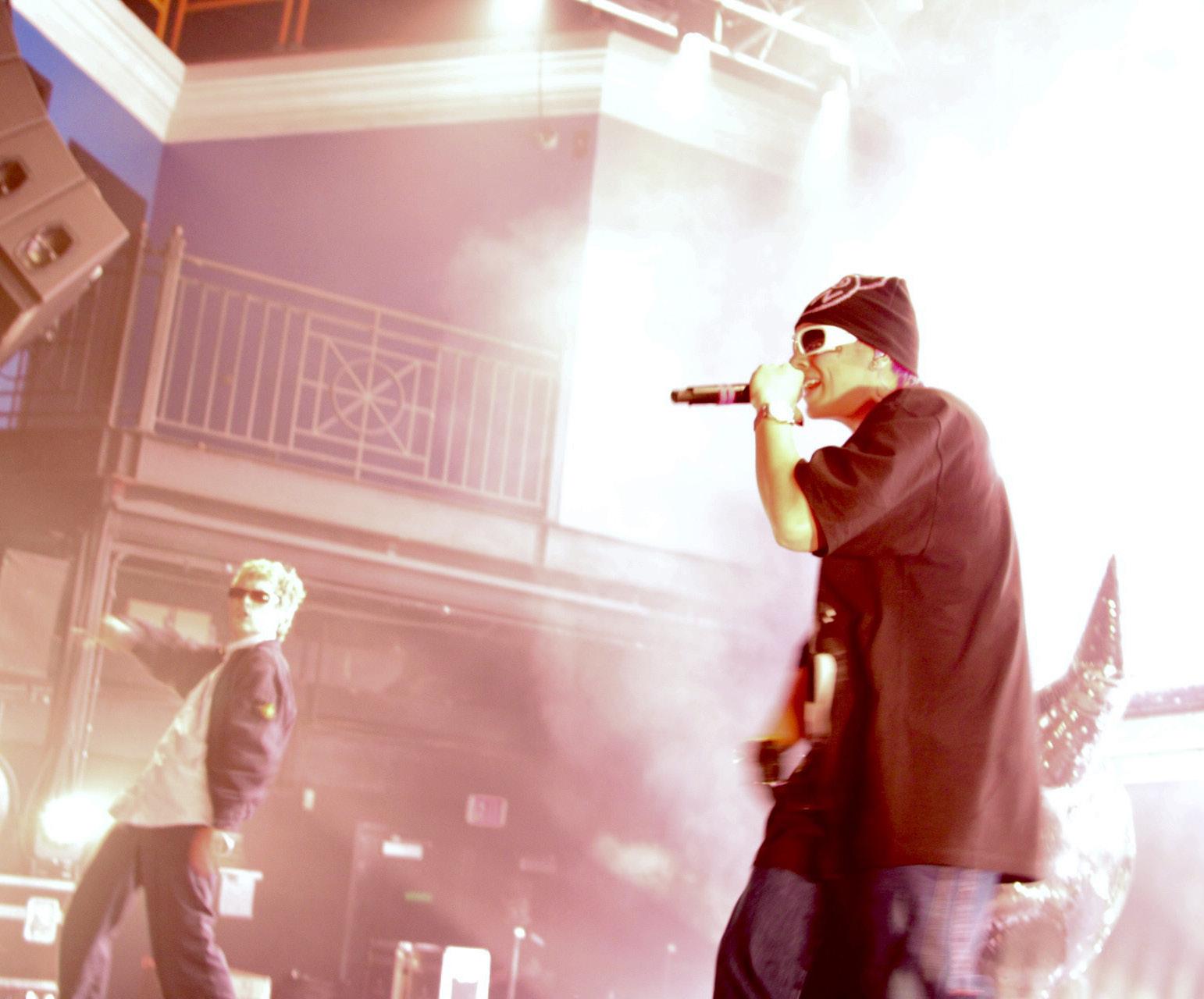
From the first concert I ever went to when I was 12 years old to those I attend now, the hallmark of a good show for me has always been its ability to provide an almost transformative experience. A good concert melds everything together, from the venue to the lighting and the music itself, into one cohesive and memorable experience. Better said, it makes one forget that they are even in a venue in the first place. On Feb. 21, Joey Valence & Brae achieved just that when they transformed the 9:30 Club into a cacophony of energy and dancing with the musical equivalent of five Monster Energy drinks. The energy was high from the second the opener, Joshua Raw, stepped on stage. Dressed in a flowy, threaded outfit, his bassheavy beats and hook-filled lyrics had the crowd stomping in unison. His set mostly featured cuts from his newest EP, “SASQUATCH,” and was infused with a level of danceability through the rhythm and vitality in his flows. His aura on stage had me
yearning for a longer set, a rare thought when it comes to an opener.
Once his set was over, the crowd was brimming with anticipation for Joey Valence & Brae (JVB). The duo first made a name for themselves with their breakout album “PUNK TACTICS,” released in 2023, with the titular song garnering over 180 million streams on Spotify since its release. Their bombastic East Coast hip-hop sound unashamedly wears its influences on its sleeve, with the duo being compared to past acts like the Beastie Boys. However, on their latest album, “HYPERYOUTH,” 2010s-inspired dance melodies and youthful energy permeate every track on the album, with the loud production grabbing your attention and the quieter cuts seeing them reflect on their own youth.
After a short set from their DJ, JVB exploded onto stage, lights flashing as they performed their opening song “HYPERYOUTH” with an energetic and infectious fervor. At center stage was a giant horned disco ball, reflecting light through the entire venue, as the duo rapped, “Yes I came
to dance / Yes I came to dance.” The lyrics were especially fitting given the tour rules the duo posted on Instagram, the first being “DANCING IS MANDATORY.”
JVB’s music and their shows are wildly fun, if the giant disco ball as their centerpiece hadn’t already revealed that. Between songs, they gave instructions to the crowd, but instead of telling them to move (I mean, the crowd was already doing a great job with that), they were simple requests to foster a true sense of community. “Who’s here tonight with their best friend?” they asked, with the crowd cheering in response. “If not, turn around and make a friend!” they shouted. If you’re not having fun at a JVB show, you’re doing it wrong.
The night continued with the duo reaching back into their “deep” cuts (if 2023 can even be considered deep), with songs like “STARTAFIGHT” leading to a mosh pit opening up in the crowd. Even wearing earplugs, I could feel the floor trembling with the sheer depth of the bass. The night was electric, both due to the strobing lights and JVB’s hard-to-miss stage presence. Joey
JUAN ALMANZA/THE HOYA Hip-hop duo Joey Valence & Brae’s concert represented the youthful goal of their tour’s name, Juan Almanza (CAS ’29) says.
Valence would headbang so hard that it seemed as though his head was touching the ground. It was hard to even focus on one of them with how much they were both dancing around the stage. The crowd was jumping in turn, mirroring the energy JVB put onto the stage.
“HYPERYOUTH” is not merely the name of the tour either, but it actually represents the philosophy of the show as a whole. Principled on dance music, self-expression and making friends at a show, the concert encouraged living in the moment and embracing one’s youth.
As the end of the show approached, the closer, “DISCO TOMORROW,” slowed things down, and both Joey and Brae rapped some very genuine bars — Brae saying, “Growing up, I never thought I’d make a mark / Then I met Joey and I finally found my spark,” and Joey then saying, “Yeah this a good track, I don’t want it to end / Nah, I don’t really care, I’ma dance ‘til I’m dead.” They recognize how the fun of their youth cannot last forever, but at the same time, they share their bouncy, hard-hitting music to encourage everyone to live in the moment with them.
Joey Valence & Brae made the entire venue feel like a group of friends, all dancing the night away to upbeat, fun hip-hop, and embracing the freedom that comes with being young. To quote their tour rules, when at a JVB concert, “LEAVE IT ALL ON THE FLOOR” and lose yourself in the music.
Megan Moroney Fails to Reach Intended Heights for ‘Cloud 9’
Catherine Dodd Hoya Staff Writer
Country-pop music darling Megan Moroney initially rose to prominence with her 2021 single “Wonder” — a hit that quickly established her as a girly, relatable Generation Z star. Her 2023 debut album “Lucky” cemented this status and her sophomore album “Am I Okay?” found broader mainstream success, peaking at No. 9 on the Billboard Hot 100 and officially taking Moroney from a promising rising star to a star in her own right, one well on her way to perfecting the storytelling prowess she is known for.
Despite what the title track of her latest effort might suggest, in Moroney’s latest album, she is rarely on “Cloud 9.” Moroney spends the majority of the 15-track record moping, which is a far cry from the bright, lighthearted tone of lead single “6 Months Later.” When Moroney does try to be upbeat, though, her songwriting suffers.
“Stupid,” a track in which she laments being ghosted, stands out as particularly, well, stupid. Its chorus revolves around one-dimensional, underdeveloped lyrics chiding a man for being “a lotta bit pretty and a little dumb.”
This style of songwriting, blending internetinflected language with commentary on modern dating, is the crux of her appeal for many fans who revel in her relatability as a Gen Z pop star. To those outside her immediate fanbase, the songwriting
will simply induce eye-rolling, as it lends itself to Moroney’s tendency to digitize romance, with the heartbreak she sings of often stemming from a digital disagreement between herself and a lover. The overemphasis on Moroney’s digital world throughout her music sands down any possibility of vulnerable emotional depth, rendering her work as far from timeless or emotionally relatable as possible. True relatability in any artist comes from their willingness to bear their soul to the audience so that listeners can see themselves within it, not from ironically recounting a relatable situation.
Moroney clears this hurdle, though, when she shifts her subject matter to revolve around more personal — and arguably less marketable — topics. In “Liars & Tigers & Bears,” Moroney examines the state of the music industry through the lens of a naive, starry-eyed musician, reciting demands she’s felt the weight of over the course of her career, such as the command to “Love everybody, aren’t you all friends? / Even the ones that we’ve pit you against?” This track is reminiscent of “Hell of a Show” off of “Am I Okay?”, arguably Moroney’s most vulnerable song to date. “Hell of a Show” is a self-soothing lullaby she sings to herself before having to be “on stage in twenty,” a repetitious melody reminding her to keep it together for her fans despite a toxic relationship seeping into and dulling all aspects of her life. Tracks such as “Liars & Tigers & Bears” and “Hell of a Show” are less marketable to the general audience, as probably not many of Megan Moroney’s fans can relate to the trials of popstar
life, but it’s in these songs where she truly shines. There is no attempt to be overly witty or down-toearth, but instead, she simply lets her walls down, which is a catalyst for a true sense of relatability.
The ballads on “Cloud 9” are frequent and largely repetitive, but the two duets on the album are standouts. “I Only Miss You” with Ed Sheeran grounds Moroney’s twangy, airy voice by providing contrast and balancing her out while highlighting some of the strongest lyricism on the album. Still, even here, the heartbreak feels contrived and restricted by the lyrics’ excessive simplicity and lack of concrete detail.
“Bells & Whistles” with Kacey Musgraves, while largely forgettable musically, serves as an inadvertent reminder of Musgraves’ supremacy in Moroney’s field. While “Golden Hour,” Musgraves’ 2018 album that won the 2019 Grammy Album
of the Year, blends country instrumentation and pop production seamlessly, inventively layering banjo riffs and reverb on the same tracks, Moroney tends to simply layer pop production over fully realized country songs. This production style makes the attempted genre-bending feel commercially polished rather than a facet of artistic expression.
Musgraves sets an extremely high bar for lyrical complexity, innovative production and emotional nuance and her presence on the album only highlights where “Cloud 9” fell short. While Moroney is undeniably a talented musician, she struggles to balance contemporary charm and appeal to a younger audience with the depth required for her music to withstand the test of time. In the words of Musgraves’ “Butterflies,” “cloud nine was always out of reach.” Moroney seems, for now, to be the one still reaching for it.
Amusing as a Journey Through Time, ‘Nirvanna the Band the Show the Movie’ Is Outrageously Hilarious
Eliana Kut Hoya Staff Writer
I had no prior expectations of “Nirvanna the Band the Show the Movie” when I entered the movie theater; I had seen its trailer during previews for another film and thought it looked fun enough to see in person. I left the movie stunned at its running gags, comedic timing and heartfelt messages. I loved every minute of it and could not recommend it enough to everyone.
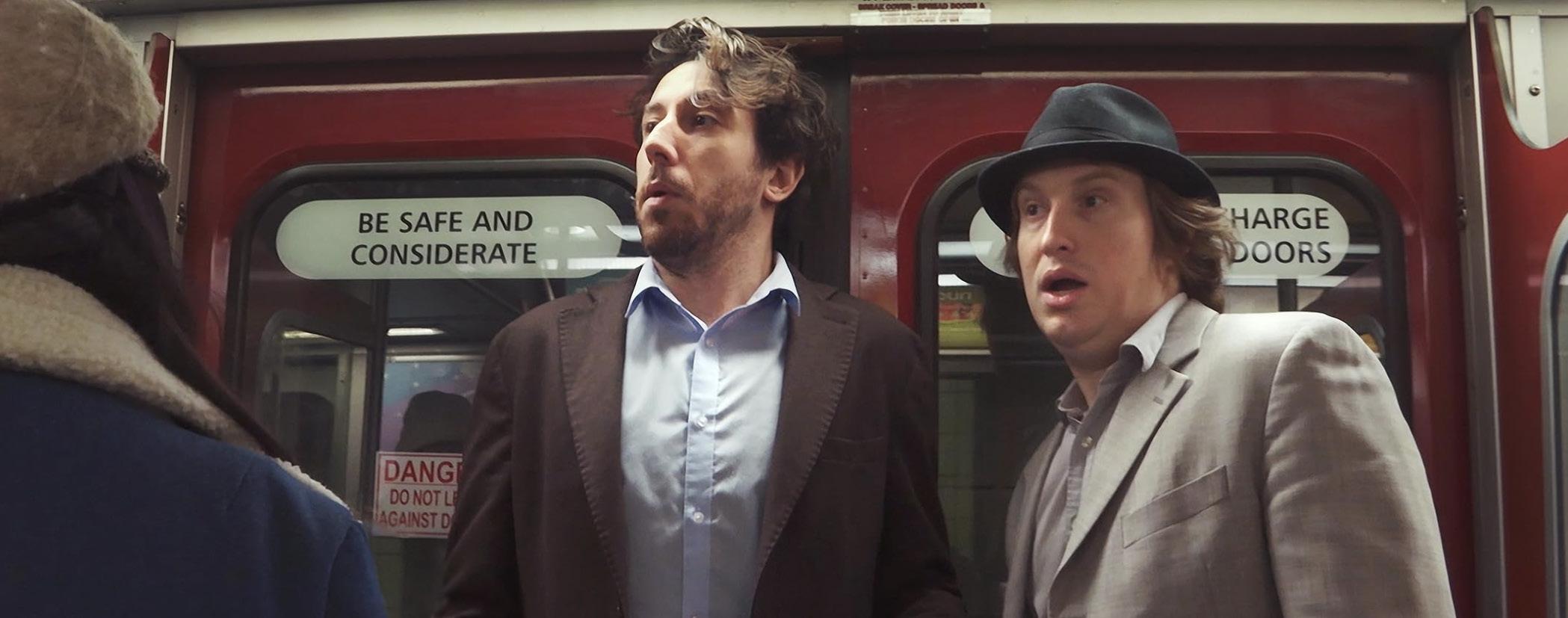
The mockumentary follows fictionalized versions of real-life best friends Matt Johnson and Jay McCarrol as they attempt to book their band at Toronto’s Rivoli bar. The film’s concept was originally a web series and a show before the duo decided to create the film. In the movie, which takes place in 2025, the fictionalized Johnson and McCarrol try many hilarious schemes in an attempt to get a booking, with Johnson accidentally creating a time machine that takes them and their cameraman (Jared Raab) to 2008. As they realize where they are, the duo tries to travel back to the present day while navigating obstacles in their friendship.
One of the most outstanding components of the film is how it parodies and references “Back to the Future” without copyright infringement.
Additionally, the movie was filmed on the streets of Toronto, many times using a hidden-camera style to film, capturing the authentic reactions and behaviors of various individuals the duo interacted with without a permit. The unscripted spontaneity and real-world interactions lead to a refreshing sense of originality in the film.
The film’s hilarious gags, including the duo’s attempt to illegally skydive off the CN Tower into a football stadium, kept the whole theater laughing nonstop. I have never seen a movie that united the entire audience watching it so well. Not a single person left the theater disappointed. I did not just enjoy the film for its comedic value, but also for its underlying message about the meaning of friendship. While the main plotline involves the duo attempting to timetravel, many of their decisions change as they realize what their friendship means to each other. Ultimately, their changing friendship is what fuels the climax of the movie. The exploration of friendship as opposed to codependency and delusion adds depth to a seemingly light comedy. Though observing the duo’s ridiculous plans and capers is enjoyable, there is an inherent sadness in the realization that plans may not work out and friendships may end. The film explores these complexities with surprising nuance and depth.
The film’s overall chaotic tone blurs the line between what is real and what is not. Due to its semi-improvisational structure, absurd comedy and frequent fourth wall breaks, “Nirvanna the Band the Show the Movie” stands out as a unique comedic effort that is difficult to fully categorize. Many aspects that films usually rely on, such as cinematography and scoring, are less emphasized in favor of realism in the mockumentary. Most of the soundtrack consists of original songs by McCarrol, which aren’t meant to be cinematic and mostly serve to accompany the plot. The
cinematography is also simple, as expected, as the film was shot on various handheld cameras that documented the duo’s adventures.
“Nirvanna the Band the Show the Movie” offers a hilarious, enjoyable time for anyone watching, thanks to its remarkable structure and creative vision. Johnson and McCarrol’s documented adventures through time proved to be the most fun I’ve had in a theater in a while. The film is a true testament to the power of friendship and mockumentary-style media. At the very least, it inspired me to start using my digital camera more.
“Nirvanna the Band the Show the Movie” inspires, says Eliana Kut (CAS ’29).
I Love Your Elizabeth Taylor Necklace, Scandinavian Scarf!
Anandita Agarwal
On Feb. 8, Bad Bunny took the stage at the Super Bowl halftime show decked out head to toe in a custom cream-colored ensemble. Fashioned to look like a football jersey incorporated into a collared shirt and tie with matching chinos underneath, the outfit drew praise for its simple yet symbolically significant design.
Paired with Bad Bunny’s then-unreleased Adidas BadBo 1.0 sneakers, the outfit was striking and memorable. But the story behind this outfit could have been written differently.
In the halftime show’s aftermath, many fashion critics praised Bad Bunny’s choice to wear a more “accessible” brand like Zara on a stage as big as the Super Bowl. The Guardian wrote that it “signified a power shift.” Even Bad Bunny’s own fashion stylists touted Zara as the “real MVPs” of the night on Instagram. However, it feels disingenuous to portray Zara as an underdog when the brand has historically been the face of fast fashion, facing allegations of slave-like working conditions in factories from Brazil to Myanmar in 2015 and 2023 respectively. The brand has also been accused of normalizing racism and glorifying unhealthy beauty standards. But more importantly, Bad Bunny had another available choice that his fashion team completely overlooked: the Pakistani-American label FOUND. Two days after Bad Bunny’s performance, FOUND founder Faraz Zaidi shared in a heartfelt Instagram post to the FOUND account that the
hand-made custom sets the brand had prepared for Bad Bunny on extremely short notice. A press release had been written up and the boxes had been express shipped from Lahore to Santa Clara. Zaidi stated in the caption that he would have viewed this collaboration, had it been executed, as a significant cultural moment connecting Hispanic and South Asian fashion. However, despite these preparations and intentions, the bidding war to style Bad Bunny was won by Zara at the last minute. “Zara were fast, faster than most,” wrote Zaidi.
At the Los Angeles premiere for “Wuthering Heights” last month, Margot Robbie stepped out in a stunning custom Schiaparelli gown, paired with an eye-catching necklace. In interviews on the carpet about the pendant, Margot Robbie called the jewel the “Elizabeth Taylor necklace” in reference to how the Hollywood starlet was gifted the necklace by Richard Burton. While semi-accurate, the comment and consequent media coverage, which disregarded the way the necklace was stolen by Western colonialists from Mughal India, drew backlash across social media.
Both Bad Bunny’s choice to use Zara over FOUND and Robbie’s rebranding of a crucial part of pre-colonial South Asian history can be written off as simply isolated ignorance. However, when considered in the broader contemporary fashion landscape and the historical context of colonialism, a disingenuous and concerning pattern emerges, one that points to a trend of South Asia being overlooked and discredited so that its culture can be made more appealing and palatable to the Western world.
CROSSWORD
By Opal Kendall
In the last few years, South Asian fashion has risen as a major influence in the global spotlight, but this influence is often blatantly plagiarized and rebranded. From Prada’s kolhapuri slippers to Bipty’s “Scandinavian scarves” to Reformation’s lehenga-inspired silhouettes to Gucci’s “Indy Full Turbans,” South Asian fashion epitomizes the controversy between appreciation and appropriation, between subconscious inspiration and purposeful ignorance. From kurta salwars reimagined as “long strappy tops” and sarees renamed to “gowns,” South Asian fashion is everywhere, but without being credited.
In Edward Said’s 1978 book “Orientalism,” Said argues that the Western imagination loves to pick and choose the parts of “the Oriental” that it deems “fashionable” while removing the deep-rooted cultural significance behind them, so that it can successfully sell these parts to the West. Similarly, in “Orientalism: Visions of the East in Western Dress,” Harold Koda and Richard Martin document how, since the early 13th century, Asian and African textile, design and construction has shaped Western culture.
Indeed, this rings true not just from a contemporary lens but also from a historical one: Elsa Schiaparelli was compelled to create “gowns” after seeing the sarees of Maharanis in 1930s Paris. The so-called “hippie trail” of the 1960s was influenced by Indian textiles. Tom Ford’s 1999 Spring collection’s tops was “inspired” by (but never credited to) Indian Kachchh cholis.
Even earlier, in 1880, George Birdwood, the founder of the Victoria & Albert museum in
Bombay, wrote that Indian cotton was singularly the most distinguished and simple cloth for the ballroom, with its exquisitely ornamented silk borders. By the 19th century, as British and French colonialism pillaged Indian craftspeople and artists and systematically destroyed the South Asian textile trade, Indian fabrics such as the Madras check, kalamkari and Kashmiri buta were respectively “transformed” into Ralph Lauren’s preppy polo squares, the upper-class chintz and “Scottish” paisley, and reproduced and sold as cheap imitations by businesses and factories across the European continent.
In this context, the constant ignorance of actual South Asian fashion designers that give credit where credit is due — especially economically and culturally — such as Manish Malhotra, FOUND or Gaurav Gupta, is concerning. Fashion often openly acknowledges European or even East Asian fashion influences, yet noticeably overlooks that of South Asia. More importantly, placed within the rampant rise of South Asian hate online that deems South Asian culture as “dirty,” “smelly” or “poverty-stricken,” the constant and unmissable plagiarism by Western fashion brands continues to allow Edward Said’s words to come true. Through this lens, Bad Bunny and Robbie’s missteps turn from disconnected events into the latest in a long, long history of South Asian cultural appropriation.
So, the next time you see a wonderful Scandinavian scarf, I urge you to consider whether and where you’ve seen it before. And maybe to question what that means about “Scandinavian” scarves.
ACROSS
1. What you might pull someone for in the Love Island villa
6. My lord, for a serf
7. Raj, from Katseye
8. More than extremely urgent 9. Romantic evenings out
DOWN
1. Pacino and Yankovic, for two 2. Microscopic hair-like cell organelles