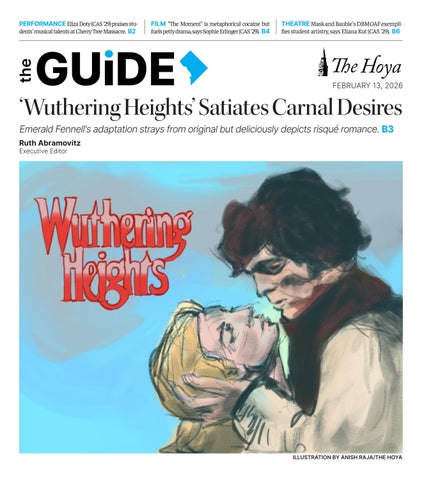
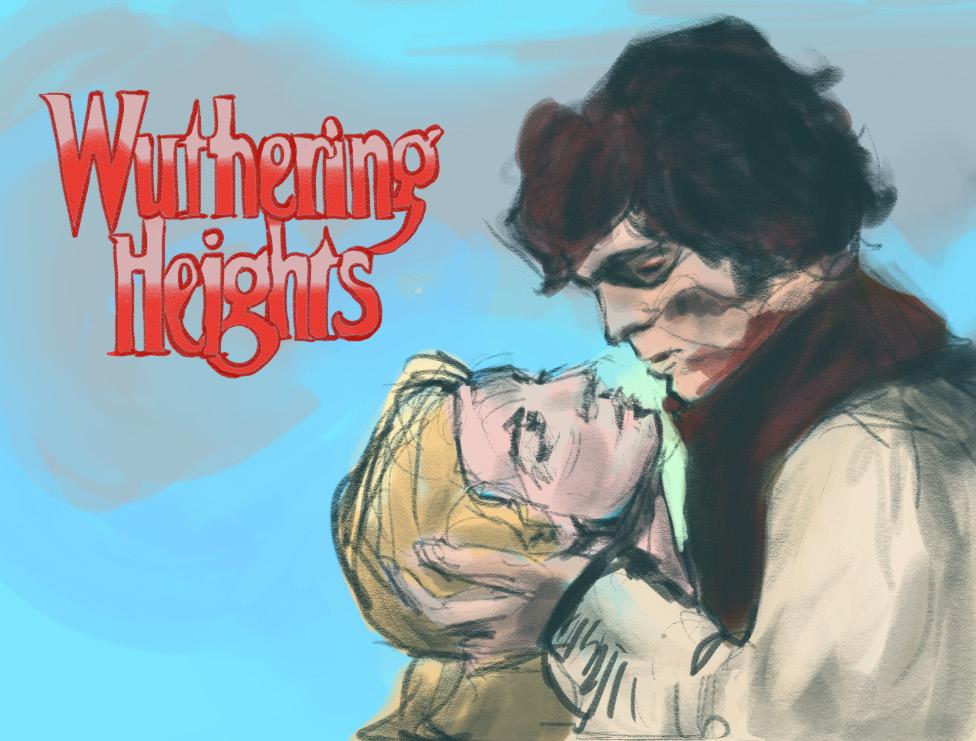
Emerald Fennell's adaptation strays from original but deliciously depicts risqué romance. B3
Ruth Abramovitz Executive Editor
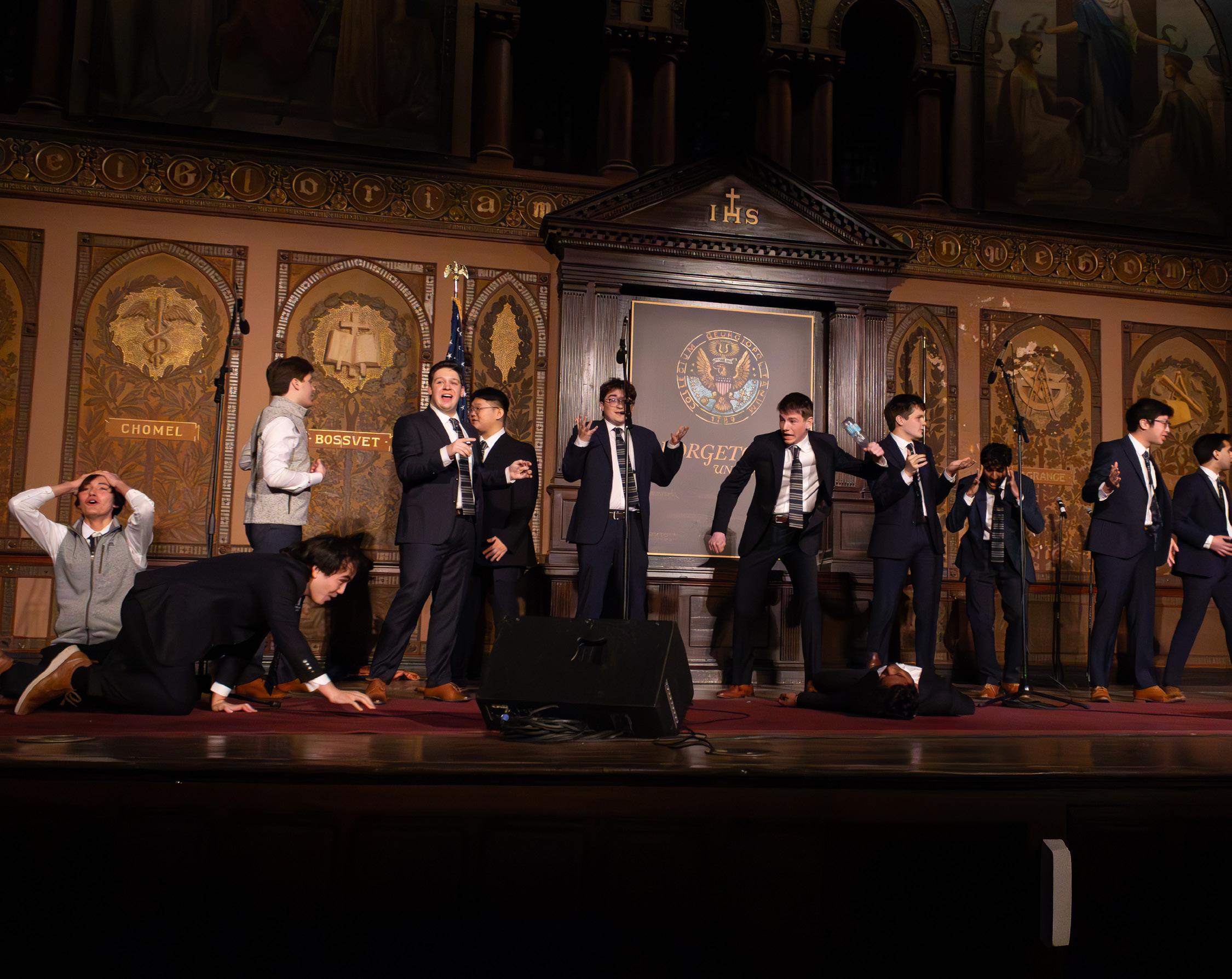
MATTHEW GASSOSO/THE HOYA The Georgetown Chimes’ Cherry Tree Massacre was an evening of artistic talent and Hoya pride, Eliza Doty (CAS ’29) says.
A ‘Pitch Perfect’ Level Performance at Cherry Tree Massacre
Eliza Doty Deputy Guide Editor
Georgetown University celebrated its 53rd annual Cherry Tree Massacre in Gaston Hall on Feb. 6. The long-standing tradition is cordially hosted each year by the talented Georgetown Chimes, who opened and closed the show. The show completed its first showing last weekend, featuring an array of a cappella groups from Georgetown as well as other universities, including American University and the University of Virginia. The next and last showing is scheduled for Feb. 21.
The evening’s tone was quickly set by the Chimes’ energetic opening, with each singer sporting their classic attire of suits and striped ties. Their opening routine showcased the group’s historical barbershop roots, transporting the audience to another time. Their stage presence was expressive and engaging, never tripping over lulls or awkward transitions. The performance’s overall cohesiveness was pulled together with their range in sound and the addition of percussive elements, such as snapping. With 80 years of experience, they set a difficult act to follow, which may have been why the next group seemed to need a little more practice.
The American University all-female a cappella group, founded in 2004, was the first non-Georgetown group to perform. Though they were visually organized, wearing all black outfits with pink heels, the group lacked unity in their vocals, particularly in their cover of Natasha Bedingfield’s “Unwritten,” which oftentimes felt strained.
Shifting the show’s tone, next on stage was Georgetown Superfood. They chose three songs, each one featuring a different lead singer who excelled in their execution. The group clearly trusted one another, permitting their talent to reach its full potential. The group’s finale was “Ribs” by Lorde, and it felt like a testament to the singers’ dedication and commitment to the performance. A particular standout was their beatboxer, who anchored the song. The performers’ authentic collaboration only made their performance all the more meaningful and enjoyable.
The Georgetown GraceNotes offered incomparable entertainment. Clad in navy blue, the all-female ensemble showcased particularly elegant vocal blending and stage presence. Ruby Gilmore’s (SFS ’26) lead performance singing “So Easy (To Fall in Love)” by Olivia Dean stood out for its incredible poise and vocal control. The group’s subse-
quent songs were no less enjoyable, maintaining both cohesion and warmth of tone.
The highlight of the night was undoubtedly when the GraceNotes and the Chimes performed together. Their performance was introduced in a comedic encore sequence, culminating in a collaborative performance with a retro, call-andresponse dynamic. Their historical relationship and mutual respect were demonstrated in their cover of The White Stripes’ “Hello Operator” with playful competitiveness. Full of controlled tension, both a cappella groups stood their ground without overtaking the other, sharing the stage cleverly with an overall entertaining four minutes before concluding to intermission.
Returning after the show’s intermission, the Chimes reset the room’s energy with humor, honoring their tradition of singing “If I Were Not a Georgetown Chime” before yielding the stage to the Georgetown Phantoms. Performing in perfect coordination, the Phantoms were neither lacking in energy nor talent. Their second song choice, “Bleeding Love” by Leona Lewis, was performed with consistent strength and stability, ending their time on stage with a satisfying finale.
Traveling two hours to perform, the Virginia Belles from the University of Virginia held their
own among the Georgetown groups. Among the songs they performed that displayed their pop-centered vocals, the all-female a cappella group masterfully covered Madonna’s “Material Girl.” They were solid and prepared, delivering an overall successful performance.
The Chimes claimed the stage for the final time with an even stronger presence. Before their last performances, the Georgetown Chimes’ four seniors were honored by their fellow a cappella brothers. The group sang a mashup of Katy Perry’s “The One That Got Away” and “Stick Season” by Noah Kahan, which was a highly memorable part of the night with their unified mastery of a complex feat.
One of the last songs the Chimes sang was a choral song titled “Oh Love That Will Not Let Me Go.” The shift from contemporary to classical revealed why the group has such a recognizable name on campus: their incredible talent and mastery across nearly every genre. Their heartfelt closing ceremony brought together not just the core group but the entire Chimes ensemble onstage. Singing the Georgetown chant, the night ended with Hoya pride and a newfound appreciation for a cappella in the air.
Everything Appears Romantic in ‘Wuthering Heights,’ Even the Grotesque, Animalistic
Ruth Abramovitz
Executive Editor
Emerald Fennell’s “Wuthering Heights” takes a shovel to Emily Brontë’s novel of the same name, excavating the novel from its 18th-century roots. The film draws out the toxic byproducts that lie latent in the original manuscript: lewdness and depravity, the macabre and the grotesque and lots and lots of fluid.
Fennell keeps “Wuthering Heights” in quotation marks, editing the book down to the tragedy of Heathcliff (Jacob Elordi) and Catherine Earnshaw (Margot Robbie) and infusing the story with an explicitly carnal, sexual overtone that 18th century audiences — already flustered by the book’s amorality — couldn’t have swallowed. It works delectably.
Following the original plot, the film traces the fate of two families on the Yorkshire moors, the Lintons and the Earnshaws. During the ambiguous but discernible late 18th century, Earnshaw (Martin Clunes) brings Heathcliff, a grimy abandoned child, into his gothic and infernal Wuthering Heights estate. Heathcliff is to be a “pet” for Earnshaw’s daughter, Catherine, and they grow up in mutual moral depravity and physical filth, becoming inseparable complements. As they reach adulthood,
the garishly wealthy Linton family settles nearby, erecting a palatial estate just across the moors.
Edgar Linton (Shazad Latif) grows quickly infatuated with Catherine, as his sister Isabella (Alison Oliver) becomes equally engrossed by the scintillating Earnshaw daughter, her obvious foil. Catherine rashly accepts Edgar’s marriage proposal, despite being invariably and secretly in love with Heathcliff, prompting him to flee Yorkshire. He returns some years later a clean-shaven gentleman and the new owner of the Wuthering Heights estate, drained of his physical, but not moral, filth. He and the uncomfortably-married Catherine, now settled at the Lintons’ Thrushcross Grange estate, begin an impassioned affair, which they sustain through games of violent, jealousy-filled brinksmanship.
“Wuthering Heights” makes a series of structural amendments to Brontë’s world. Aside from condensing Mr. Earnshaw and his son, Hindley Earnshaw, into one, the movie also changes the point of view of the narrator. In Brontë’s novel, Heathcliff and Catherine’s love epic is told retrospectively, by Catherine’s lady servant, Nelly. Fennell tells the story directly, giving the film an objective frame that feels more intimate and immediate than the book.
Fennell also willfully ignores that the original Heathcliff is not white. In casting Elordi in the role,
she loses the racial complexities that would inflect both Heathcliff’s domestication, identification as a “pet” and the impossibility of him marrying Catherine. This leaves the film with less conceptual dimension and more predictability.
Despite these consequential shifts, Fennell redeems herself through the conviction and vigor of her world. The film, and I mean this quite literally, is disgusting. Base. Vile.
Fennell’s gothic Yorkshire is rife with imagery of distorted ragdolls, rooms littered with rotten food, sweating, flushed skin, splattered blood, sebaceous egg yolks and suffocating reds everywhere.
The camerawork alters between sweeping shots of the hazy moors, brooding images of the vampiric and dilapidated Earnshaw estate and tight, wet close-ups of Elordi’s scarred back or Robbie’s tightening corset strings. The textural richness is delightful, and masterfully complemented by a swooning and evocative sound design.
Even as we leave the grime of Wuthering Heights and follow Catherine to Thrushcross Grange, we find nothing pretty. Scenes from the Lintons’ near-absurdist estate feature flesh-toned, veiny walls, blood-red marble floors and a towering mantelpiece made of chalk-white human hand replicas. Catherine feels trapped in a violent-
IMDB
Emerald Fennell’s “Wuthering Heights” is a lewd, salacious delight, but isn’t for everyone, Ruth Abramovitz (CAS ’27) says.
ly colorful fever dream. We are stuck with her in this sickening lollipop world, left yearning alongside her for the derelict Heights.
The massive scale and totality of this world completely justify the musical accompaniment of pop phenom Charli XCX. Hers is a colossal sound that melds heartbreak with tempestuous rage, jealousy, insecurity and eternal love. Her lead singles from the eponymous soundtrack album are as alarming, gratifying and earsplitting as the film itself. Within the screenplay, a mix of strings and isolated synths dutifully complement the plot as it moves from tender to violent and back again.
Fennell’s most interesting choice was her command of animalistic motifs. At both estates, we are spoon-fed close-cut images of dead and bleeding livestock, slithering leeches and slugs, broken egg remains and jellied fish. In one scene, after Heathcliff has revenge-married Isabella Linton, we see her chained to the fireplace in Wuthering Heights, yelping and crawling as Heathcliff’s dog. This repeated choice both works to show the dehumanizing effects of the Heights and adds carnal, corporeal textures to its already rich textural lexicon. It also drives the thesis of the film’s aesthetic styling: Even the grossest, basest and most violent human creations can somehow transcend into passion and pleasure.
I anticipated the two leads, acclaimed for moderns like “Saltburn” and “I, Tonya,” to conflict with the setting and sensitivities of Brontë’s story. In Fennell’s adaptation, though, they fit right in. Though Elordi’s performance was impressive, it felt commonplace for him as a tall, beautiful man and alumnus of twisted cinema. Robbie, however, again proved her versatility. She played Catherine’s lifelong tempestuousness, melodrama and capacity for cruelty exceptionally well. Her Catherine was animated with a larger-thanlife hyperbole that still felt genuine.
Overall, the film was a touch too swollen. A favorite moment in this film was Heathcliff reminiscing on his childhood with Catherine, a last act of pleading as he clings to her dead body. The movie sadly overshadows these tender moments by giving the audience too many motifs and horrific images to leech onto. Fennell tells us that the lovers’ souls are just as intertwined as their bodies, but her busy film doesn’t allow her to prove it to us. This crowding-out effect causes the film to feel monotone, stuck more on hot, rushed passion than deeply felt yearning. Even so, that passion is insatiable.
“Wuthering Heights,” quotation marks emphasized, will not please everyone. The Brontë purists, the casual watchers looking for an Austenian lightness and the easily disturbed will find this lewd movie off-putting. But for those of us who are ravenous, wildly bored with the mundane and thoroughly incensed by aesthetic grandeur, a transcendent world of pleasure, horror and tragedy awaits.
Bad Bunny Preaches Love at Super Bowl Halftime Show
Tanvi Gorripati Senior Guide Editor
From the moment Bad Bunny was announced as the Super Bowl halftime show performer, the discourse was unavoidable. The political undertones surrounding the show were impossible to ignore as critics questioned why a Spanish-speaking artist was given one of the most “American” stages in entertainment. The choice was framed as a cultural statement rather than what it really was: a business decision made by a league set on global expansion, plain and simple.
Benito Antonio Martínez Ocasio, known as Bad Bunny, used the halftime stage to celebrate not only Puerto Rican culture but the broader richness of the Americas. The central message of the performance was unmistakable: love over hate. Throughout the show, a billboard displayed the phrase “The only thing more powerful than hate is love.” Bad Bunny showcased many forms of love: the love of communities, neighborhoods, family and romantic relationships. In one striking moment, a couple was married during the live performance. What made parts of the sequence even more powerful was that the people on stage were neither professional dancers nor celebrities, but ordinary individuals. By placing regular people at the center of the spectacle, he shifted focus from fame and celebrity to humanity and community.
The guest appearances added another layer of meaning to the performance. Lady Gaga’s inclusion felt a bit symbolic, like a subtle response to critics who wanted someone white and “truly American.” While the attempt to infuse a Latin twist into “Die With A Smile” was appreciated, the moment felt disjointed from the rest of the show’s energy. Rather than blending seamlessly, it interrupted the cohesive cultural narrative that Bad Bunny had built.
Ricky Martin’s appearance, on the other hand, was electric. Performing a verse of “LO QUE LE PASÓ A HAWAii” while seated on a plastic chair, physically recreating the cover of “DeBÍ TiRAR MáS FOToS,” he delivered a short but deeply passionate performance. His presence symbolized how far Latin music has come. Bad Bunny is not the first Latino artist to perform at the Super Bowl, nor was this even his first appearance, as he previously joined Jennifer Lopez and Shakira during their set in 2020. However, this halftime show was distinct because the majority of the songs were performed entirely in Spanish. It was a powerful reminder that foreign-language artists no longer feel as compelled to “sanitize” themselves or release English-language albums to earn respect in the United States.
Ricky Martin himself was central to the Latin pop boom in the 1990s, but his success on the Billboard charts only started peaking
after he began recording his music in English. In contrast, Bad Bunny has achieved global stardom without abandoning Spanish. Choosing Bad Bunny was simply a logical move, as he is one of the most globally streamed artists in the world. His reach extends far beyond language barriers, and his streaming numbers prove it. However, the show itself became more than just a commercial success, it was a cultural moment.
Bad Bunny’s tribute to Puerto Rico was multidimensional and utterly international. The set featured sugar cane plants as an homage to the industry that has long shaped the island’s economy. The hyperrealistic street scene, complete with a market, drink stand and neighborhood activities, mirrored everyday Puerto Rican life. A house party filled with Latino celebrities, including Pedro Pascal, Jessica Alba, Karol G and Cardi B, added to the celebratory atmosphere.
He also confronted the island’s ongoing struggles. Climbing on top of a recreation of an electrical tower to perform “El Apagón,” he called attention to Puerto Rico’s persistent power outages and electrical infrastructure crisis. It was a protest through performance, a powerful way of using art to spotlight political issues.
Midway through the show, Bad Bunny paused to speak about belief. He reflected
that he reached the Super Bowl because he believed in himself, encouraging viewers to do the same. In a symbolic gesture, he handed a Grammy to a young boy, perhaps representing his younger self or perhaps symbolizing the next generation inheriting his success. The message extended outward as well. In a moment that tied together his theme of love over division, he said “God bless America,” then proceeded to name countries across North, Central and South America, reminding viewers that “America” is not one nation, but a diverse group of countries. He ended his performance with “DtMF,” joined by the entire stadium singing along. It felt less like a concert and more like a communal gathering.
Bad Bunny’s message resonates beyond the stadium. In places throughout the nation, where conversations about identity, immigration and belonging continue to surface, it is easy to let division dominate the narrative. Bad Bunny offers another way forward, one that involves love for your neighbors, regardless of where they are from, support for communities different from your own and a recognition that diversity is not a threat but a strength. The halftime show lasted only minutes, but the work of loving our neighbors persists. If there is one message to take from the Super Bowl stage, it is that love is stronger than hate, and it may be the only thing capable of holding a diverse country together.
In ‘The Moment,’ Brat Summer Proves More Than a Moment
Sophie Erlinger
Special to The Hoya
“The Moment” is a mockumentary that follows a fictionalized version of Charli XCX (portrayed by herself) as she attempts to make Brat summer last forever. The film, which premiered at the Sundance Film Festival on Jan. 23, is Aidan Zamiri’s feature film directorial debut, co-written by him and Bertie Brandes. As a huge Charli fan, this movie exceeded my expectations, but even the comedy couldn’t cover up the large oversights in concept.
The movie begins in September 2024, as the phenomenon of Brat summer starts to fade. We follow Charli XCX and her team as they are pressured by Atlantic Records to make the album last forever. Tammy Pitman (Rosanna Arquette), an Atlantic executive, sends in director Johannes Godwin (Alexander Skarsgård) to make a concert film for Charli. Slowly but surely, Johannes starts overruling Charli’s friend and creative director, Celeste Moreau Collins (Hailey Benton Gates), going so far as to change the iconic green color and font of the “Brat” album cover. Ultimately, “Brat” becomes an uninspired, overdone and cringey version of itself.
While Johannes and Celeste butt heads over a concept for the tour, Charli also launches a Brat credit card collaboration targeted at her queer Gen Z fan base, attends a rager and goes on a trip to Ibiza. None of these escapades goes well, as the
card crashes the stock market and consequently the bank. Charli confronts Rachel Sennott (also playing herself) about a legal battle while doing cocaine in the club bathroom and is told she has too much “ugly energy” to receive a spa treatment at a Spanish resort. The self-aware humor of these side plots made the film for me.
Though she is not an actress, Charli plays this fictional, exaggerated version of herself with intention and effort. As someone who has watched her interviews and music videos, I could see Charli’s tone, actions and mannerisms shifting as she began to give in to Tammy and Johannes. Moreover, the ensemble makes her shine and emphasizes the vision while still maintaining a perfect pace and hitting punchlines. Skarsgård in particular takes a very absurdist approach to his character, making Johannes still have purpose despite being the villain in Charli’s story. Even Kylie Jenner (ALSO playing herself), whose cameo I was highly skeptical of, had the whole theater laughing out loud.
The editing was also super creative. The first five minutes are like a music video, with flashing lights, bass-boosted background music and a moody montage. Sometimes, the mockumentary style can get repetitive, with the same angles and the same “natural” shake throughout the entire film. However, Zamiri adds something new to the genre, transforming the real world into Charli’s world even as she loses her grasp on it.
Throughout the film, we see Charli struggling to accurately express her creative vision, be proud of her work and come to terms with the momentary (no pun intended) nature of fame and the commercial demands of success. As she revealed in the post-screening Q&A, the music industry has turned the artistic process into a harmful business transaction.
“When you make art, it becomes a product to become sold, but you are still a person,” Charli said.
Underlying all of this is her anguish of being a woman in the entertainment industry, where she has to be “on” all the time, even as she struggles with impostor syndrome and constant comparison to other artists.
For most of the movie, I thought these themes were expressed well. Charli’s humor was selfdeprecating, fitting the absurd and satirical plot, and was supplemented by the editing that got increasingly hectic to showcase the decline of her sanity. However, that last ten percent not only fell flat, but spat in the face of what the rest was trying to accomplish.
Charli ultimately gives in to Johannes’ vision, the final scene being what she views as an uninspired, cringe and basic concert film trailer. As an avid follower of the main pop girlies, all I saw was essentially a shot-by-shot of the trailer for Taylor Swift’s “The Eras Tour.”
The conflict between Charli and Swift is nothing new. In 2019, Charli told Pitchfork that
opening for Swift at the Reputation Tour was like performing for a crowd of “five-year-olds.” This tension was then amplified in 2022 and 2023, when Charli and Swift each had relationships with “The 1975” band members George Daniel and Matty Healy, respectively. In the “Brat” track “Sympathy is a Knife,” Charli writes “Don’t wanna see her backstage at my boyfriend’s show / Fingers crossed behind my back, I hope they break up quick.” Swift then responded with “Absolutely Romantic,” singing “I heard you call me ‘Boring Barbie’ when the coke’s got you brave,” an obvious response to Charli’s song.
Charli and her team made the perfect set-up for a movie that represents her true self and starts a conversation about the creative process. Yet, she decided to let her personal feud bleed into her vision, mocking Swift and shifting the focus somewhere else entirely. I understand where Charli is coming from, especially for a feud driven by the pressures of fame. Yet, it feels hypocritical to spend an hour and a half emphasizing how artists should be authentic and how damaging it is to compare women just to mock one of the most successful female artists of our time. At the end of the day, Charli approaches the film with the same attitude she approaches everything. As she sings on “Brat” single “360,” “I don’t fucking care what you think.” But perhaps it would feel more like that if she fully used “The Moment” to highlight her vision rather than feeding external drama.
‘K-Pop Demon Hunters’ Marks Start Of New Hallyu Wave
Grace Ko Guide Columnist
South Korea is having its moment in worldwide entertainment.
From BTS to “Parasite” and now the ongoing popularity of “K-Pop Demon Hunters,” which has won both the Critics’ Choice Award and the Golden Globe for Best Animated Feature, South Korea has inserted itself into the international conversation through its broad offering of music, films and television shows. However, this is far from a new phenomenon. In the early 2000s, South Korean media entered its first popularity surge through its over-the-top, yet undoubtedly iconic, drama staples such as “Autumn in my Heart” and “Winter Sonata” — a show that I physically recoiled from multiple times while watching, yet has also birthed some of my favorite clips. The rabid popularity of these shows, largely confined to Asia, was dubbed the “hallyu” wave. This wave was sustained throughout the 2000s, but as with any trend, South Korean dramas slowly lost their popularity, becoming a mere afterthought rather than a driving forefront of media in the 2010s. However, today, South Korea is returning to the spotlight, and nothing is more representative
of this comeback than the explosive popularity of “K-Pop Demon Hunters.”
Distributed by Netflix (a major proponent of Korean entertainment in the Western mediascape), “K-Pop Demon Hunters” is an animated film that focuses on the girl group HUNTR/X, composed of musical artists by day and demon hunters by night. The film broke records, in both the musical and streaming worlds, becoming Netflix’s most viewed film and the first South Korean pop music group to be nominated for a Grammy. Since its initial release in June, it has attained a globally iconic cultural status that is generally quite rare to witness in media.
This popularity is interesting because of the film’s massive popular appeal, as well as what it means for this new hallyu wave. Though it draws from Korean culture (its demon designs are a particularly interesting application of Korean folktales), “K-Pop Demon Hunters” is clearly a Western production. Its characters rarely speak in Korean, and its music is largely in English, though it does also feature Korean lyrics, showcasing the mixture of English and Korean language common to K-Pop. There’s a dissonance between its celebration of Korean culture and the fact that its vision of Korea is essentially one of a solely English-speaking nation defined by the craze of Korean music.
ON YOUR RADAR
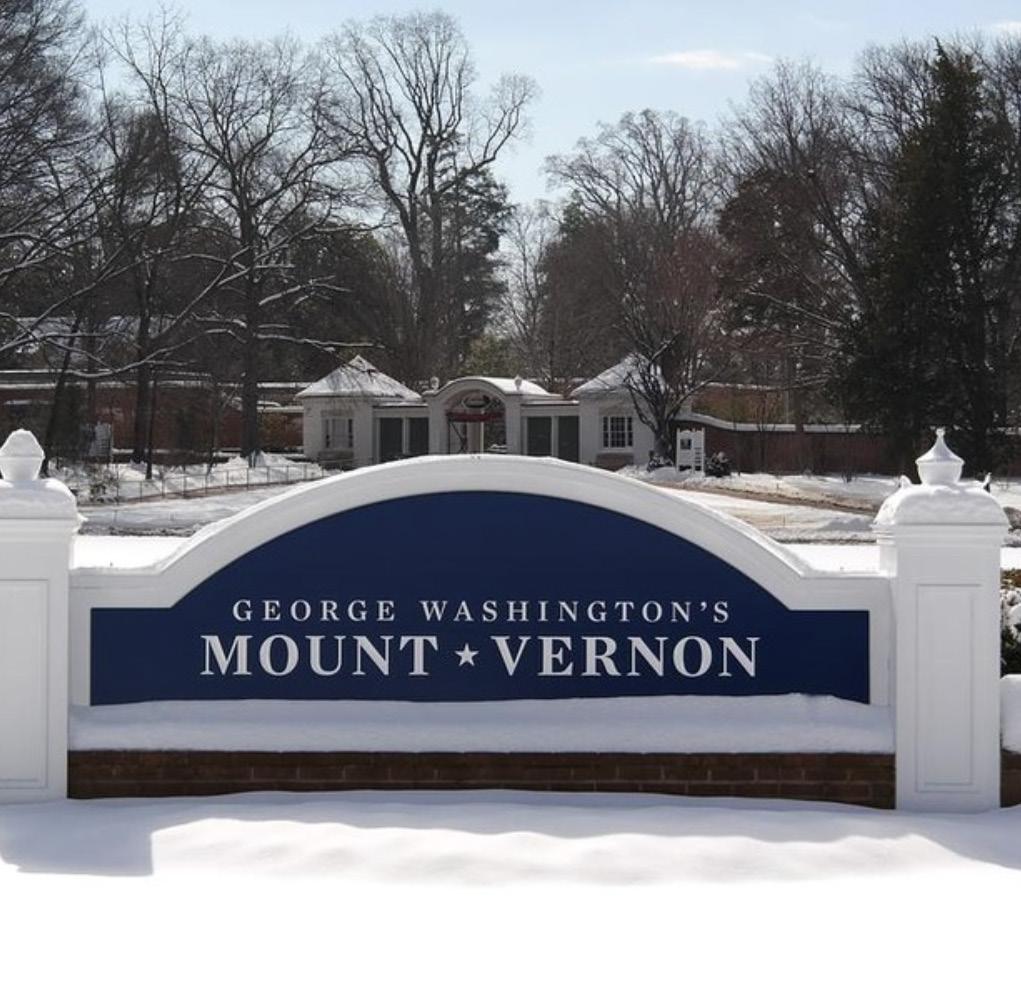
PRESIDENTS’ DAY AT WASHINGTON’S MOUNT VERNON ESTATE
Celebrate Presidents’ Day at George Washington’s former estate this Feb. 16. The estate is offering free admission to experience a presidential wreath-laying ceremony at Washington’s tomb, military and historical performances, a mansion tour, musical performances and more. There will also be food and beverage vendors, including the estate’s resident bakery, Half Crown Bakehouse.
Indeed, due to the rise in fame of particular South Korean media like the television series “Squid Game” or the musical genre K-Pop, images of Korea among Westerners have been narrowed to these specific depictions. Idols, flashy musical concepts, cheesy dramas, kimbap, “Gangnam Style” — there’s a narrowed lens of Korea that is common in Western society, one that aligns with the Western tendency to homogenize foreign cultures rather than make the effort to differentiate. It often seems that, within the spotlight of Korean culture, media representations of the same culture have been confined to Western standards so much so that the culture becomes caricatured rather than authentically represented.
But this is not to say that the new hallyu wave is a ruinous occurrence; at the center of the new hallyu wave is the uplifting of a non-Western country in a Westerndominated landscape, introducing new styles of storytelling in addition to different perspectives. Storytelling is a powerful way for people to understand cultures and to acknowledge the beauty of cultural differences without having to do straight-up research.
Sure, South Korean pop singers (often called idols) may release more English-
By Penelope Snoep
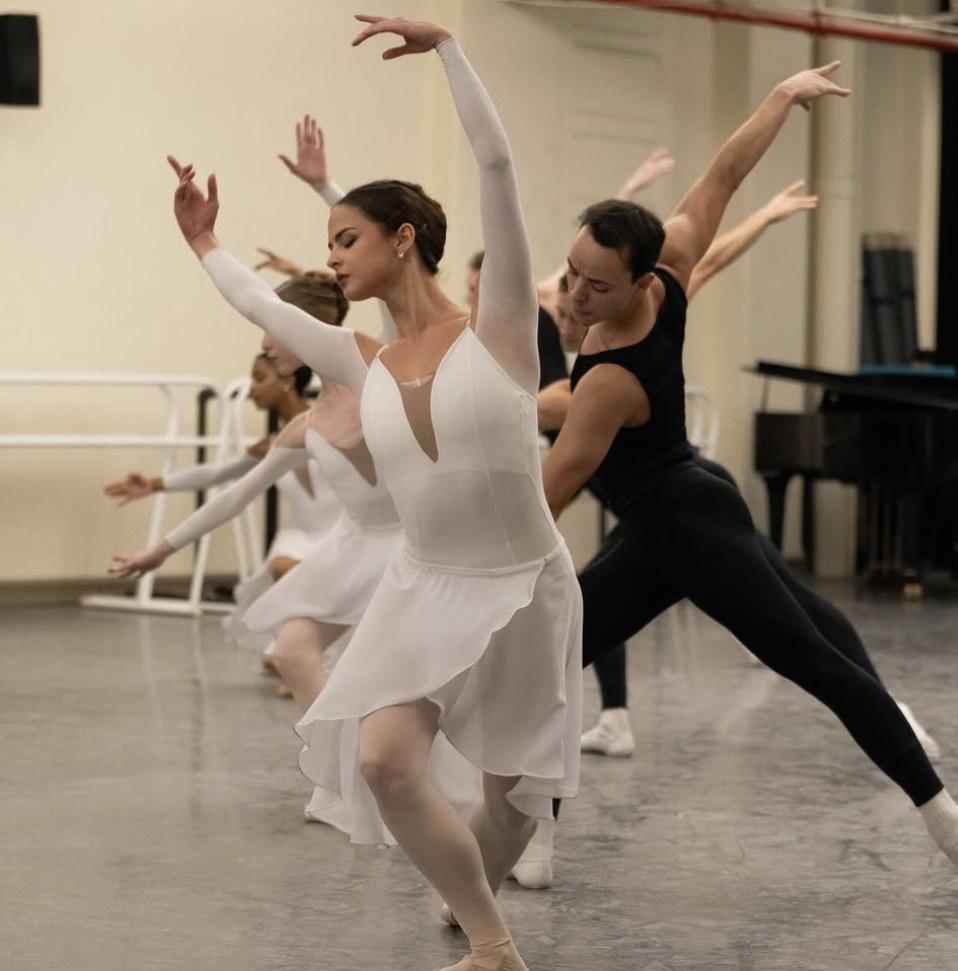
AMERICAN BALLET THEATRE’S ‘THE WINTER’S TALE’
The American Ballet Theatre returns to the John F. Kennedy Center for the Performing Arts with “The Winter’s Tale,” a fulllength ballet adaptation of Shakespeare’s classic romantic drama choreographed by Tony-winner Christopher Wheeldon. This emotional production explores jealousy, redemption and hope through choreography and moving music. The ballet will run Feb. 11-15, and tickets are sold online.
LUNAR NEW YEAR FESTIVAL
Celebrate the Lunar New Year and the Year of the Horse at The National Museum of Asian Art’s Lunar New Year Festival. Taking place at the Smithsonian Arts and Industries Building (AIB) on Feb. 21 from 12 p.m. to 6 p.m., there will be lion dances, educational displays, dance and musical performances, food and crafting vendors and gallery tours with cultural talks. Admission is free, but attendees must reserve a free pass to enter.
language songs than songs in Korean, but there are still overseas crowds who take the time to learn and sing in Korean back to them on stage. Yes, the Oscars are limited in their celebration and acknowledgement of foreign stories, but they facilitate a first encounter that can lead people to venture deeper into the wide world of foreign film, overcoming the “one-inch tall barrier of subtitles” to discover the full wonder of storytelling, as director Bong Joon-Ho so aptly put it.
While the representation of Korea in “K-Pop Demon Hunters” may be flawed, it’s a film that shows how the door for diverse stories has opened. Beyond South Korean entertainment, foreign films such as “It Was Just an Accident” and “The Secret Agent” are being spotlighted and honored in ways today that would have been incredibly rare years ago.
In this way, the new hallyu wave not only showcases a desire and growing love for Korean films, shows and music — it also reveals a desire for storytellers of different cultures and countries to share their own beautifully unique art in a world that’s often too scared to look past what is common and familiar. It’s the desire to search, to share and to truly connect through the universal art of storytelling.
LOVE, GEORGETOWN: VALENTINE’S DAY PROMOTIONS
Celebrate Valentine’s Day, whether with a date or with your pals, in Georgetown by participating in the various promotions from local restaurants around the neighborhood. The LOVE, GEORGETOWN promotion running until Feb. 14 hosts more than 35 participating businesses, ranging from bakeries to restaurants offering $14 featured items and other special deals.
Mask and Bauble’s Annual One-Act Play Festival Illustrates Beautiful Creativity, Ingenuity
Eliana Kut
Hoya Staff Writer
The Donn B. Murphy One Acts Festival (DBMOAF) is a yearly showcase presented by Georgetown University’s Mask and Bauble Dramatic Society that features one-act plays written, directed, produced and performed by Georgetown University students. This year’s festival is taking place from Feb. 12-15 and showcases three exciting and impactful plays: “No Fly Zone,” “Saint Skye” and “The Heir.”
DBMOAF’s first play, titled “No Fly Zone,” was written by Eileen Miller (SFS ’26) and directed by Elle Marinello (CAS ’28). It takes place in a futuristic world where flying is becoming the primary mode of transportation as some humans have even evolved to fly independently. The play centers on Carson, played by Charles White (SFS ’29), a human who has not yet unlocked the ability to fly. His girlfriend Ava (Claire Cable, CAS ’27), however, is able to fly, and their separate abilities lead to divergence in their interests and relationship.
The play is structured as a drama and explores the duality between what is perceived as right and wrong as tensions escalate between those who can fly and those who cannot. Its setting is a dystopian future, with frightening elements and ideas about what might be possible in our own futures. Both leads portrayed a difficult, nuanced relationship, while the minimalist set evoked a stark, simple dystopian future. The play left off on a cliffhanger as to the characters’ and the world’s final fate, an ending that perfectly encapsulated the play’s feeling and themes.
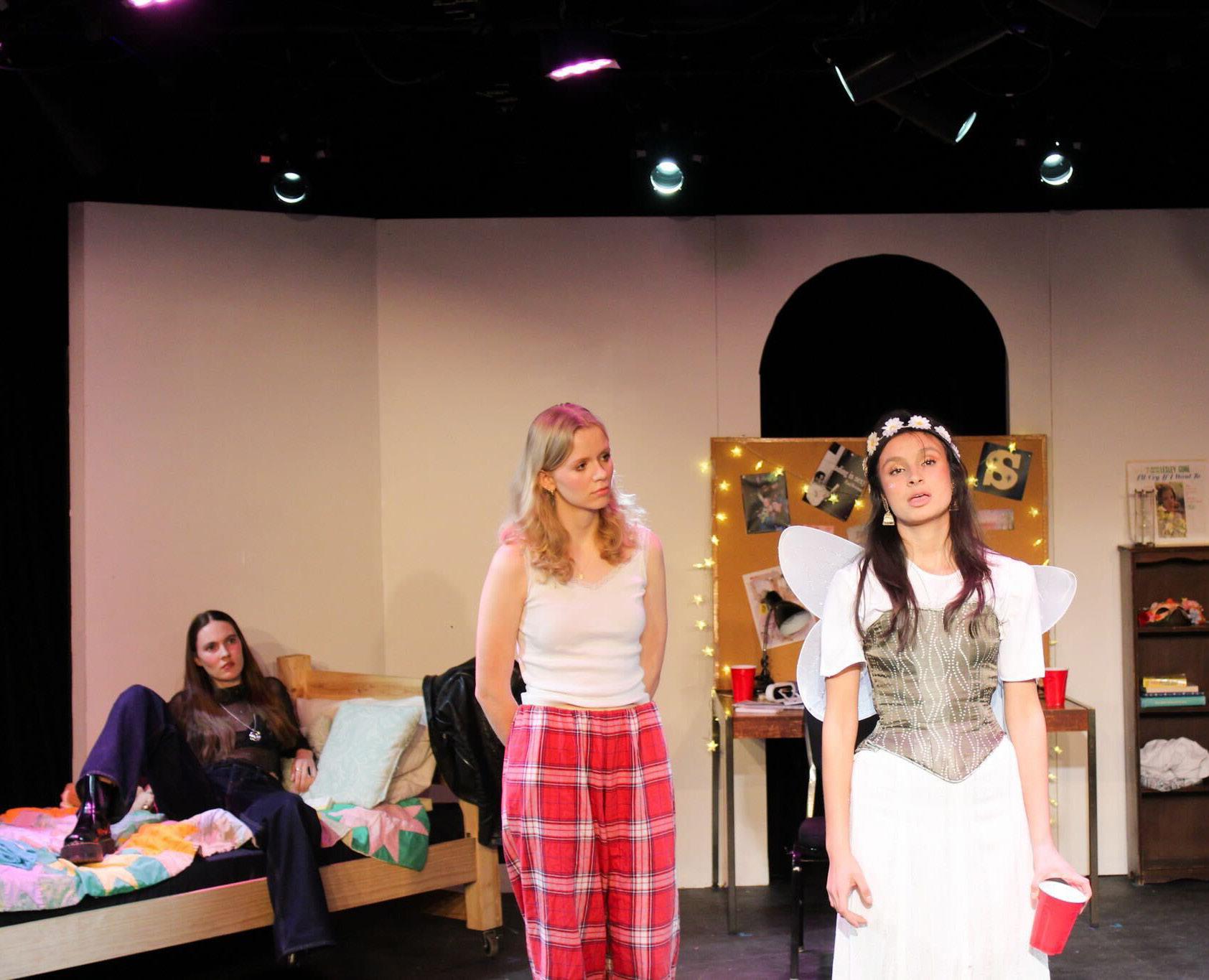
The next play, “Saint Skye,” both written and directed by Anastasia Kelly (CAS ’26), is an emotional journey that takes place entirely in one room over one night. The main character, Skye, played by Ruby Gilmore (SFS ’26), is a sweet and caring girl forced to grapple with leaving her friends behind on her journey to medical school. Her best friend Lucie, portrayed by Maya Dow (CAS ’26), must also let go of her tough persona to deal with her feelings for Skye and her imminent departure.
The play is set in Skye’s room as Lucie’s birthday party takes place downstairs, and various characters enter and leave the room. As the characters converse, a beautiful and emotional story unfolds. The play’s expert use of dialogue and character development demonstrates that a story does not need more than one setting or flashy technical elements to truly immerse the audience. While “Saint Skye” utilizes various comedic elements, the complex relationship between Skye and Lucie is expertly explored by Gilmore and Dow. As the play ended, I hoped for an extended version that would follow the characters and their stories as they continued their lives.
The last play, “The Heir,” proved to be extremely different from the first two acts, but stood out as a wonderfully satirical and witty, irreverent comedy. Written by a Georgetown graduate under the pseudonym Lucas Kirkland and directed by Marre Gaffigan (CAS ’26), the play takes place in Tudor, England, but contains influences from other time periods. It follows the politically-charged conversations between the Lord
CONNER EMMERT/THE HOYA
Eliana Kut (CAS ’29) praises Georgetown students’ ingenuity and creative talent displayed in the three one act plays in Mask and Bauble’s DBMOAF.
Chancellor, played by Grady McDonough (MSB ’26), the Lord Treasurer, played by Catherine Dodd (CAS ’29), and the Lord Vicar, played by Patrick Clapsaddle (SFS ’26).
Full disclosure: Patrick Clapsaddle serves as Chair of the Board of The Hoya and formerly served as Executive Editor.
Their discussions center around the fact that King Henricius IV, played by Sophie Maretz (CAS ’26), has recently died and the characters must find an heir for the throne. As they discuss their options, they encounter several comical and ridiculous scenarios. The play is hilarious and does not take itself seriously, often featuring dramatic, unrealistic situations. The costume and makeup design were impressive, evoking the dramatic, over-the-top styles of the period. The lighting and sound effects heightened the hilarity of the often impossible scenarios. Its witty script and style were reminiscent of the show “The Great,” with its crude humor and modern references. Personally, I would certainly not object to a full-length production of “The Heir.”
Each play stood out as a unique demonstration of the remarkable abilities of the students involved in creating the pieces. Expertly written and produced, “No Fly Zone,” “Saint Skye” and “The Heir” are outstanding examples of creativity and talent. Every play left me surprised and inspired, and I hope everyone who has a chance to attend DBMOAF will.
Jonah Kagen On Tour: A Concert Or A Comedy Show?
Katherine Hart Guide Columnist
It may be more apt to review Jonah Kagen’s recent performance at The Atlantis as a comedy show rather than a concert. Luckily for the sold-out crowd, it was both.
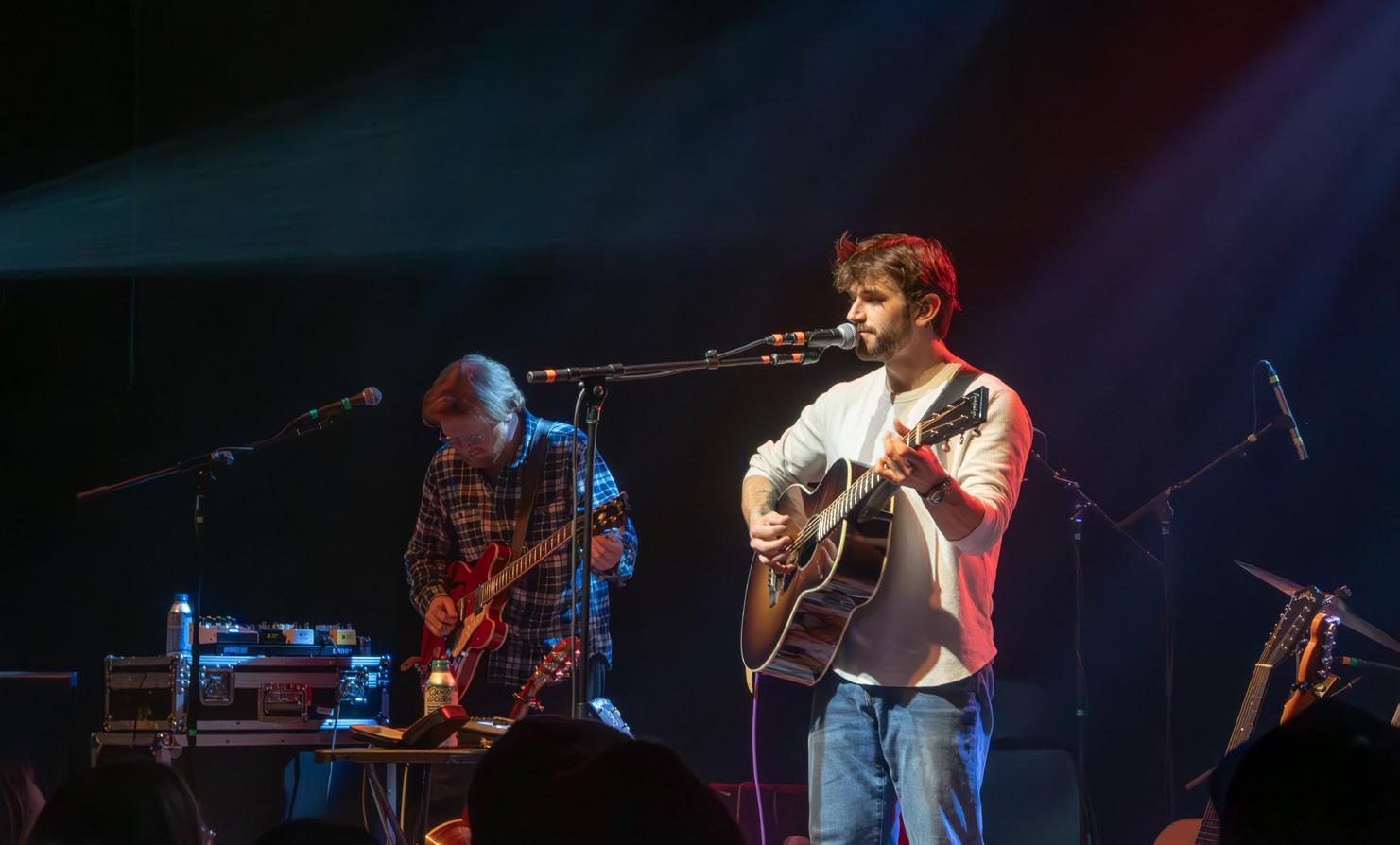
Accompanied by Sam Johnston on guitar, Dalton Thomas on drums and Jefferson Rinck on bass and guitar, Kagen moved effortlessly between instruments throughout the night, swapping electric guitar for an acoustic guitar and a banjo. The multitalented singersongwriter shot into wider recognition in May 2025 when his song “God Needs the Devil” topped the Billboard Alternative Airplay Chart. Later that year, he released the album “Sunflowers and Leather,” and he began touring in January 2026 — a tour that feels creative and unfiltered, much like Kagen himself.
Though The Atlantis is an intimate venue, it was packed to the brim — a fact that seemingly stunned Kagen. At one point, he admitted that his imposter syndrome was “through the roof.”
If Kagen doubted himself, his audience certainly did not, meeting his comment with laughter and cheers. Throughout the night, he volleyed jokes with fans (which as he pointed out, included an impressive number of moms), blurring the line between concert and stand-up comedy set.
Unlike larger arena productions that rely on spectacle, Kagen’s stage design was dialed down, featuring minimal graphics, simple lighting and no elaborate choreography. The simplicity worked in his favor. With little distraction, his gravelly vocals and emotional intensity took center stage. The casualness of the performance occasionally led to awkward transitions and
minor coordination hiccups, but those moments felt more endearing than amateur. Watching Kagen and his bandmates grin and laugh at one another mid-song made it clear this was less about perfection and more about presence.
Kagen opened with “Simon,” a bass-forward track that steadily grew in intensity, wooing the crowd into a steady sway. The momentum carried through the early part of the set, as recognizable, soulful songs kept the audience fully engrossed. By the fifth song, “Matches,” Kagen launched into an extended jam session with his bandmates, showcasing not just his raspy vocal strength but also his technical skill as a musician.
Kagen then sat on a chair in the middle of the stage, claiming he needed to sit so he could yell. The logic was questionable; the delivery was not. His performance of “Black Lung” that followed was explosive despite its restraint.
Midway through the set, Kagen traded his guitar for a banjo and shifted into an acoustic stretch. He began with “Anvil,” joined briefly by two bandmates on backup vocals. As his bandmates left the stage, he joked around about his next songs, saying “I always forget how stuff goes.”Acoustic solo moments can make or break a performance, proving whether or not an artist’s vocals can stand on their own. Without the cushion of bass or drums, Kagen’s natural talent was impossible to ignore.
Before the band rejoined him, Kagen debuted “Grief and Lonely Evenings,” an unreleased track played live for the first time. The song recounts two separate conversations in which older men tell him that “grief and lonely evenings taught me everything I know.” The track was beautifully melancholic, contemplative rather than explosive and angry. While it lacked the intense
passion that defines some of Kagen’s most beloved songs, it revealed a quieter maturity.
When the band returned, so did the intensity. The audience was clearly ready for the return of the bass-driven, full-bodied sound that has become Kagen’s signature. The final stretch of the concert leaned into impressive vocals and crowd-favorite choruses. During “Save My Soul,” the audience sang the refrain back to Kagen at full volume.
After closing with “God Needs the Devil,” Kagen exited the stage to the audience’s chants of “encore, encore!” He obliged, returning for two final songs before calling it a night with thunderous applause.
What made the performance memorable wasn’t elaborate production or flawless choreography. It was the palpable joy Kagen shared with his bandmates and the ease with which he invited the audience to share that joy. His humor made the night feel intimate; his vocals made it unforgettable. If Kagen ever tires of touring, he could likely pivot to stand-up without missing a beat. But with a voice that raw and a stage presence that magnetic, comedy will probably remain just a side gig. If this show is any indication, Kagen’s imposter syndrome may only grow — but so will his audience.
J. Cole’s ‘The Fall-Off’ Is Fitting for His Career’s Conclusion
Thejas Kumar Contributing Editor
At age 41, the J. Cole of “The Fall-Off” is a far cry from the young rapper who arrogantly proclaimed “You’re listening to the future” on his second mixtape, “The Warm Up.” Instead, his latest album showcases a more mature and introspective artist coming to grips with the nature of fame and returning home, even though a few songs continue to flaunt his signature flashy and braggadocious style.
Cole first teased “The Fall-Off” in 2018, eventually revealing that it would be his final album with a title that thematically closes a career that began with the 2007 mixtape “The Come Up.” The new release is divided into two discs, each with 12 songs. The first disc, titled “29,” is told from the perspective of a 29-year-old Cole visiting home a decade after first moving away. The second, “39,” describes Cole on a similar trip 10 years later.
There is little doubt that the sprawling, 24-track double-album should be shorter. Still, what it lacks in concision, the album makes up for in substance. Over a runtime of 101 minutes,
“The Fall-Off” explores the lessons Cole has learned from fame and his continued reckoning with his relationship to his hometown of Fayetteville, N.C., which he affectionately terms “the Ville.”
The album opens with a restrained and calming sample of James Taylor’s 1968 “Carolina in My Mind,” before gunshots interrupt and bring the singing to an abrupt halt. Taken as a metaphor for the violence that continues to pervade the Ville, these gunshots seem to haunt Cole and reverberate throughout the album.
From the outset of the project, Cole charts his path to fame as that of a moth drawn to a flame, feeling burnt by the goal he has sought his whole life. On “Lonely at the Top,” he reminisces about growing up with his idols’ posters on his walls, only to come up in the rap game and see those same idols having lost love for their craft. Rather than resisting his own decline, he resigns himself to the same inevitable fall: “And I ain’t hatin’, just more so thinkin’ about complacence and the realization that one day that’s what my fate is.”
Beyond the effect of his commercial and critical success on his music, Cole grapples with
its impact on his relationships and ability to move effortlessly through his hometown like he once did. On a four-track stretch at the end of “29,” he describes going to a club to meet a girl he used to know. While there, Cole is warned about some people trying to rob him and is forced to run to his car at the sound of gunshots. Meanwhile, in “SAFETY,” he reminisces over lost friends and relationships becoming strained by a new social divide. Cole references a friend’s voicemail when describing how the success forces him to grieve differently, saying, “I know fame make that shit hella awkward to be at wakes / But I bet it mean a lot to his family to see your face.”
This disillusionment with fame has a further corollary as Cole realizes that no amount of personal success can help put an end to the cycle of violence in the Ville. Most directly, on “Run a Train,” he buries his childhood dreams of healing his hometown through song: “Big dreams to change the world back when I ride a ten-speed / Youthful delusion thinkin’ through music I could end grief.” In the more tragic “Man Up Above” and “The Villest,” he sings about friends killed too soon.
Regardless of the topic, Cole is at his best when he is storytelling and conceptual, such as in “The Fall-Off Is Inevitable” where he pens verses about his life in reverse. Similarly, Cole excels in “What If” where he raps from the perspectives of Biggie and 2Pac as they hypothetically deescalate their rivalry, using his lyricism to craft compelling narratives rather than relying on surface-level rhymes.
The album does come with weaknesses, most notably in length. With many songs on similar subjects, at times Cole sounds a bit like a broken record, causing portions of the album’s nearly two-hour runtime to blend into a repetitive sameness. This excess hampers the project, burying stronger songs amid an overstuffed tracklist. Additionally, the few love songs on the record, while heartfelt, are not Cole’s forte and feel strange within the larger narrative context of the album. Overall, Cole’s magnum opus manages to shine despite its imperfections. The album may sprawl and retread at times, but its ambition, honesty and introspection are worth a listen. If this truly is the end of Cole’s career, “The FallOff” is a fitting, reflective farewell.
CAMERON LAU/THE HOYA
Katherine Hart (SFS ’27) lauds Kagen’s concert for musical and comedic genius.
Ironically, Sam Raimi’s ‘Send Help’ Needs Help, Lacks Direction
Catherine Dodd Special to The Hoya
Director Sam Raimi’s newest film, “Send Help,” is more than just another stranded-on-a-tropical-island story, critics say, as the film has over a 90% score on Rotten Tomatoes and no shortage of praise citing masterful genre-bending, and I would agree. “Send Help” is not comparable to other survival movies, such as “Cast Away” or “Lord of the Flies” — it is much, much worse.
“Send Help,” which made its theatrical debut Jan. 30, is an R-rated comedy-thriller directed by Sam Raimi (of “The Evil Dead” and Tobey Maguire’s “Spider-Man” fame, that is).
Linda Liddle (Rachel McAdams), the film’s main character, is passed over for a well-deserved promotion, so, to cease her protests, her new boss, Bradley Preston (Dylan O’Brien), brings her along on a business trip to Bangkok to restore her sense of importance in the workplace. Their plane predictably crashes, leaving the two to fight for survival on an island in the Gulf of Thailand. However, Bradley injures his leg in the crash, so Linda, an avid “Survivor”
fan, must use her reality TV knowledge to care for them both while Bradley’s leg heals. The remainder of the film explores the relationship between Linda and Bradley, including how far Linda will go to protect Bradley, herself and their new life on the island.
The strongest part of the film lies in its performances, with McAdams doing seemingly all she can with such a disjointed script. Linda’s demeanor often flips in between scenes, oscillating between almost motherly affection and unbridled anger toward Bradley, leaving the audience and Bradley completely unsure of where the two stand. This technique may have been an attempt to build tension and suspense, but ultimately, it is disorienting and comes across as lazy writing. With a 113-minute runtime and so little actually happening, it is disconcerting that any character building would be happening off-screen. Linda’s character is meant to be a frumpy, awkward businesswoman who becomes a force to be reckoned with while adjusting to life on the island, but the script neither fully commits to this makeover cliche nor to a subversion of it, as Linda continues
CROSSWORD
By Tanvi Gorripati
to make pathetic, self-deprecating decisions and comments once she grows accustomed to island life. In the more violent scenes, though, McAdams is convincingly bloodthirsty and breathes whatever life she can into such a confusingly written, incongruent character. Another glaring issue with the film is its lack of inherent visual beauty, from its unconvincing CGI to excessive and unnecessary gore. The shots depicting the supposedly scenic island are unmoving because the overuse of unsightly CGI undermines any possible sense of immersion. With so much of the setting requiring viewers to suspend their disbelief, it becomes a large ask to require that regarding the plot as well. The film’s gore, although a feature of most horror films and a Sam Raimi staple, quickly becomes the crutch that the film’s categorization as a horror movie rests upon. Gore for the sake of gore may be enjoyable for some movie-goers, but it plays no part in creating a thrilling, suspenseful movie-going experience. It only succeeds in grossing out the audience, which certainly adds to its shock value but does nothing to improve the overall quality of the movie.
I find the movie’s faults to be especially disappointing considering the raw potential of the premise and everything it had going for it: star power, a legendary director and a $40 million budget to execute it. Linda Liddle, an overlooked, rightfully angry cog in the corporate machine, is given her perfect chance at revenge. Instead of executing it interestingly or even squandering the opportunity in the name of human goodness (despite her resentment toward the exploitative nature of capitalist society), she does neither and sits on the fence for the entire painfully long movie. Any interesting social commentary the movie could have made is wasted by its inability to commit to sending any message at all. With so many options of interesting storylines to explore and avenues for the plot to take, “Send Help” loses itself in its indecision, instead offering a movie with no clear theme or satisfying climax. What could have been a sharp take on power in corporate America and its futility in the face of life and death instead quickly becomes a frustrating exercise in unrealized potential.
This Week’s Theme: Love is in the Air
ACROSS
1. What you might pull someone for in the Love Island villa