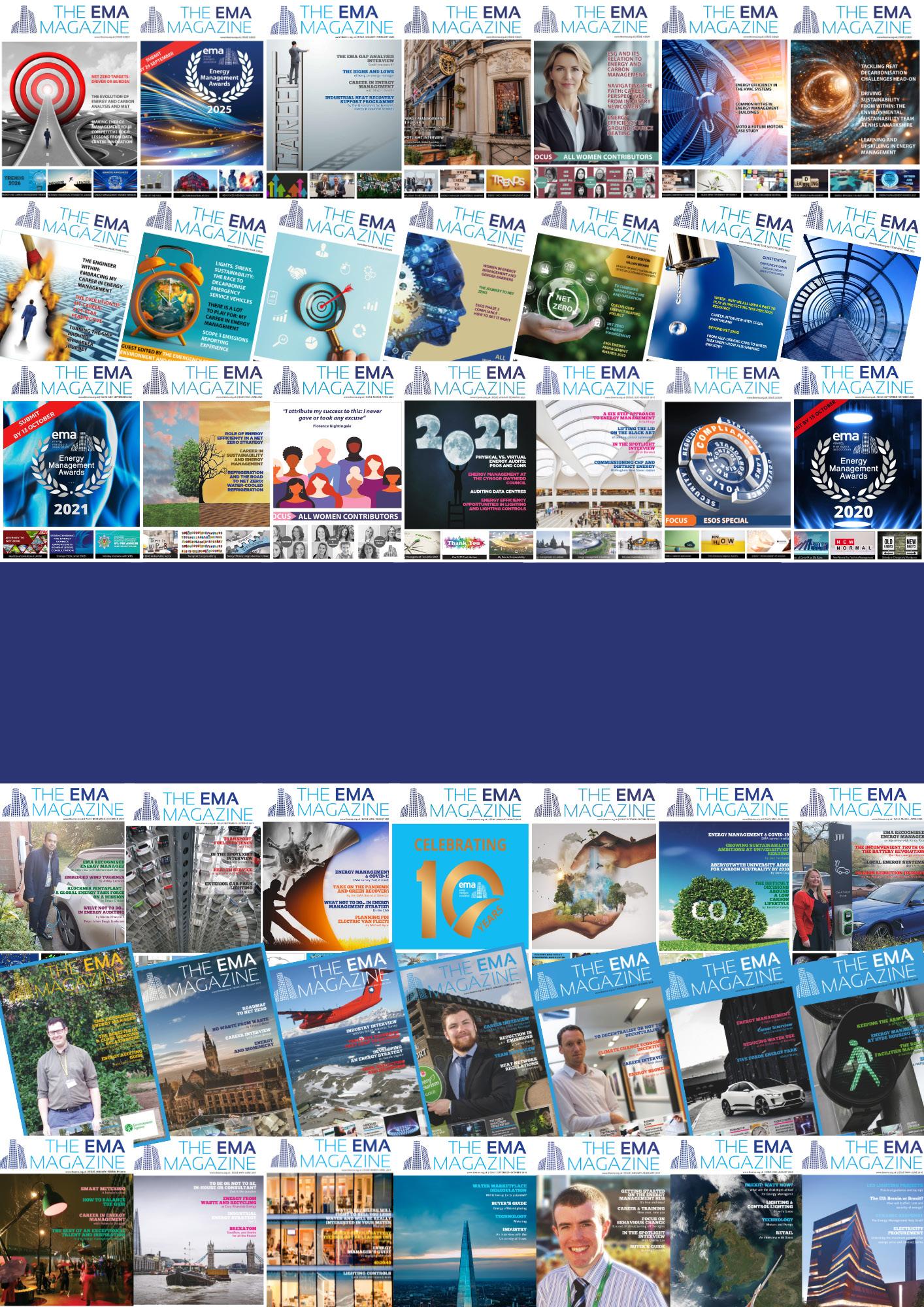
Energy management may seldom feature in the daily headlines or dominate social media, yet for the past decade it has been supported by its own dedicated professional magazine - written by energy managers, for energy managers.
From the outset, our ambition has never been simply to collect statistics or report figures. Instead, we have sought to give a voice to the practitioners. Their experiences, challenges and insights have shaped these pages. The result is a portrayal of energy management not as a routine obligation, but as a dynamic and valuable discipline that matters deeply to the organisations it serves.
As you read this 50th celebratory edition, you will find features, interviews and portraits that look both backwards and forwards. This edition captures the spirit of our early contributors while reflecting on how far the profession has evolved. The landscape of energy management has shifted significantly. What was once largely centred on energy spend and consumption now encompasses the far broader and more complex challenges of decarbonisation and net zero strategies. Projects have become more intricate, involving more stakeholders and demanding ever greater collaboration.
What has not changed, however, is the dedication and passion of those working in the field. Perhaps it is this combination of resilience and curiosity that defines the profession: an authentic and intellectually stimulating career in which no two days are ever quite the same.
Energy managers are, by nature, forward thinkers. It is therefore fitting that one of the defining characteristics of The EMA Magazine is its emphasis on the people behind the role. We ask contributors probing questions about their organisations, operational realities, stakeholder relationships and day-to-day challenges. In doing so, we offer readers a glimpse behind the scenes and a deeper understanding of what energy management truly entails.
We hope this special edition feels timeless - a magazine that remains relevant not only today but something you might return to in years to come.
Here’s to the next 50 issues!
Warmest wishes,
Jana Skodlova CEO, Energy Managers Association
PUBLISHER
The EMA Magazine is published quarterly by the Energy Managers Association (EMA).
EDITORIAL
The Energy Managers Association www.theema.org.uk Tel: 0203 916 5516
CONTACT
Edita Krupova; Editorial Enquiries & EMA Membership Services Manager edita.krupova@theema.org.uk
CONTRIBUTORS:
Mohammad Rafique, Richard Frost, Sophie Mason, Dan Fernbank, Roederer Rose Lyne, Mark Foden, Kit Oung, Neil Bradley, Sam Arje, Peter Lindersen, Leigh Hitchens, Vassia Paloumbi, Kiro Tamer, Russell Fleetwood, Jude Pattemore and James Tierman
The EMA would like to thank to the above contributors for their time and effort in providing the content and making this issue possible. Their willingness to share experience and knowledge is exemplary and inspiring, and we hope it will encourage others to come forward and contribute in the future.
ADVERTISING SALES
The EMA Team Tel: 0203 916 5516 enquiries@theema.org.uk
ABOUT EMA
The Energy Managers Association (EMA) was set up in February 2012 and represents Energy Managers across all industries. Our priority is to improve the position of energy management experts and their profession and act as their united voice. We aim to develop the skills, knowledge and experience of professionals through our training, high-quality peer to peer guidance and best practice exchange.
@2026 Energy Managers Association, Registered in England and Wales, Company No 07943728, VAT No 151339624, Registered Address: Suite 77, 95 Mortimer Street, London, W1W 7GB.
No part of this publication may be reproduced, stored in, or introduced into a retrieval system, or transmitted in any form or by any means (electronic, mechanical, photocopying, recording, or otherwise) without prior written permission. Any information or material sent by advertisers and contributors, including advice, opinions, drawings and photographs, is the view and the responsibility of those advertisers and contributors, and does not necessarily represent the view of the EMA.
READ ONLINE
CAREER INTERVIEWS PAST ARTICLES INDUSTRY INTERVIEWS
The Power of Shared Insight in Energy and Carbon Management
In the drive to improve energy efficiency and reduce carbon emissions, organisations often face similar challenges, from navigating complex regulations to implementing new technologies and driving behavioural change. While there is no one-size-fits-all solution, there may also be no need to 'reinvent the wheel' every time. Sharing lessons learned, insights and practical experiences across the sector is not only valuable, it saves time, effort and a fair bit of frustration.
At the EMA, we firmly believe everyone has something to offer, whether they are new to the industry or carrying 10, 20 or another truly impressive number of years of experience under their belt. This belief has been the driving force behind this publication since its inception and continues to guide this 50th edition.
To mark this milestone and highlight the impact and importance of knowledge sharing, we invited some of our past contributors to reflect on their experiences of sharing insight and expertise in energy and carbon management. Their responses celebrate how collaboration can break down barriers, scale successful initiatives, spark innovation and drive continuous improvement across the sector.
MOTIVATION TO SHARE
When asked what motivates them to share their experiences, our contributors emphasised a mix of responsibility, mutual benefit and sector-wide progress.
Mohammad Rafique, Head of Sustainability, Crown Prosecution Service
My motivation is rooted in my early career and international background. I began my professional life in industry overseas, where I saw first-hand how environmental impacts were often driven by limited awareness and access to shared knowledge. When I later moved into sustainability roles in the UK, I benefited enormously from learning openly from others. That experience shaped my belief that sharing practical insights - especially real-world lessons, can empower people to act with confidence and purpose.
Richard Frost, Building Services & Commissioning Manager at Queen Mary University of London
My motivation for sharing experience stems from repeatedly seeing organisations across the sector encounter the same challenges. These range from tangible issues, such as ageing plant, incomplete metering and control limitations, to less visible pressures created by value-engineering decisions, deskilling and gaps in the professional team’s knowledge. Together, these factors perpetuate the strain of delivering decarbonisation objectives alongside the day-to-day operational demands of large, complex estates.
Sophie Mason, Energy & Sustainability Lead at Coventry Building Society
Over the past 15 years, I’ve seen energy management roles develop from being focused on cost savings ‘every £ saved in energy, is a £ saved in the bottom line’, compliance driven reporting and ‘top hat graphs’. Of course, this is still very important; however, the role has now evolved into a strategic discipline and it requires the ability to influence decisions across the entire business. Today, it shapes capital investment, risk management, procurement strategies and product development, all in service of reaching Net Zero. I enjoy the collaboration we have within our industry, as sharing experiences helps to shorten the learning curve and accelerates our progress towards our common goal. I’m motivated to build internal alignment and capability, so energy and carbon considerations become part of everyday decisions rather than an afterthought.
Dan Fernbank, Energy & Sustainability Director at University of Reading
The best ideas are usually somebody else’s!! So, when I do think we’ve done
something well, I’m keen to share that experience – and of course, boost the University’s reputation (and my own!).
Roederer Rose Lyne, Net Zero & Emissions Manager, University of Aberdeen
There is no one size fits all solution to issues like net zero, each organisation will need a unique solution and team to meet its commitments and ambitions. So, by sharing my successes, challenges and lessons learned insights, I am potentially helping a colleague complete their puzzle quicker.
Mark Foden, Associate Director of Sustainability, Manchester University NHS Foundation Trust
Many of us are facing similar challenges in delivering decarbonisation, such as aging estates, tight capital,
valuable learning to be shared without compromising commercial or reputational concerns. Another emerging challenge is the diminishing number of specialist Energy Managers. Many roles are being diluted or replaced by more generalist sustainability positions which, while vital, may not always have the depth of operational expertise required. This makes effective knowledge sharing even more critical.
Mohammad Rafique, Head of Sustainability, Crown Prosecution Service
Barriers often include time pressures, organisational sensitivities and differing levels of technical understanding. I have learned that trust and clarity are key. By focusing on principles and transferable learning, rather than only raw data, and by communicating in plain language, these barriers can be overcome.
reduced revenue budgets and evolving stakeholder considerations. That’s a big part of why I’m motivated to share learning. I’ve benefitted hugely from hearing how others have navigated similar barriers, particularly around funding routes, business cases, and sequencing work when capital is limited. Those insights have helped avoid reinventing the wheel and made it easier to adapt approaches that already work in NHS settings.
BARRIERS TO SHARING
Sharing insights isn’t always straightforward. Concerns about commercial sensitivity or exposing failures often arise.
Richard Frost, Building Services & Commissioning Manager at Queen Mary University of London
Barriers do exist. Commercial sensitivities can limit the level of detail that can be shared, while cultural challenges are equally significant. Acknowledging mistakes can feel risky in organisations that are less forgiving. These barriers can be mitigated by anonymising examples and focusing on core engineering principles, enabling
Dan Fernbank, Energy & Sustainability Director at University of Reading
It’s always a challenge to justify the time to share my experience, and it’s a case of learning from each experience whether it was a good use of time, whether I pitched well to the audience, and whether I would present differently, or indeed at all, next time.
Sophie Mason, Energy & Sustainability Lead at Coventry Building Society
A common barrier is concern of commercial sensitivity or fear of exposing failures (I’ve had plenty). I’ve found that reframing discussions around principles, approaches and outcomes, rather than proprietary detail allows meaningful knowledge sharing without risk. But the most important element to build with others, is trust and this is built through long term industry relationships over time - I wouldn’t be where I am now without my trusted counsellors!
Mark Foden, Associate Director of Sustainability, Manchester University NHS Foundation Trust
There can be hesitancy about sharing challenges, especially where schemes have stalled or not progressed as originally planned. In my experience, focussing on lessons rather than outcomes and being honest about constraints is far more useful. Shared learning doesn’t just help delivery, it helps inform the planning and the assumptions around payback, risk and affordability, which often shapes what is considered possible in the first place.
Roederer Rose Lyne, Net Zero & Emissions Manager, University of Aberdeen
A lot of the barriers comes from getting to talk to the right people. As organisations are complex and each have their own unique corporate organigram, key staff can often be spread out or in unexpected teams. I typically get around this by providing a brief primer ahead of a presentation or meeting, explaining who I feel would benefit most from the session.
LEARNING FROM SHARED SUCCESSES AND FAILURES
When asked how shared experiences have influenced their own approaches, our contributors reported that learning from successes and mistakes of others has been transformative.
Roederer Rose Lyne, Net Zero & Emissions Manager, University of Aberdeen
It has reinforced that these topics are iterative, as we are not going to land on the perfect solution each time. It has helped me be bolder in putting forward solutions as I know that we will be constantly monitoring progress and will be as adaptable as required. ‘Rome wasn’t built in a day’, very much applies to energy and carbon management.
organisation, these are all experiences for the Energy Manager to learn from.
Dan Fernbank, Energy & Sustainability Director at University of Reading
When something goes wrong, I’m always keen to help others learn from our experience, so I value the opportunity to learn from others too. This boosts our chances of success, and creates good networks and relationships for future knowledge sharing.
Sophie Mason, Energy & Sustainability Lead at Coventry Building Society
I’ve had plenty of successes over the years, but just as many failures and arguably I’ve learnt more from the latter. Some initiatives delivered strong technical
Mohammad Rafique, Head of Sustainability, Crown Prosecution Service
Hearing others’ successes and failures, especially from trials, has made my approach evidence based and people -focused. These shared lessons help me anticipate risks, strengthen programme design and scale effective solutions confidently.
Richard Frost, Building Services & Commissioning Manager at Queen Mary University of London Both successes and failures continue to shape my approach. Strong outcomes reinforce the value of ensuring the foundations of good energy management persist, such as good design, comprehensive metering, robust control strategies and effective commissioning. While more difficult projects tease out and expose hidden assumptions and systemic weaknesses in the
outcomes but failed to land because the wider business wasn’t engaged properly or the commercial case wasn’t clearly linked to strategic priorities. Sharing those experiences has helped others avoid making the same mistakes, whether that’s been underestimating change management, overcomplicating data or moving too quickly with solutions without business buy in. Learning from both, my own experience and those of others, has reinforced the importance of collaboration, simplicity and timing. It has shaped an approach that focuses as much on people and decision making just as much as technology or targets.
THE POWER OF OPENNESS AND COLLABORATION
Finally, our contributors were asked about the broader impact of greater openness in the sector. The consensus was clear: openness and collaboration don’t just benefit individual organisations, they can transform the sector as a whole.
Roederer Rose Lyne, Net Zero & Emissions Manager, University of Aberdeen
It allows the sector to move beyond the fear of poor investment and rapidly progress towards better operations and net zero. Each generation of trailblazers communicating the problems and pitfalls allows the next to take up the standard and push forward.
Mohammad Rafique, Head of Sustainability, Crown Prosecution Service
Greater openness would build collective confidence, reduce duplication of effort and enable more credible progress towards Net Zero emissions and wider sustainability goals.
Sophie Mason, Energy & Sustainability Lead at Coventry Building Society
Greater openness and collaboration is essential if the sector is to move at the pace required. As I’ve stated already, it enables faster learning, avoids repeating mistakes and builds stronger business alignment. Collaboration allows us to share common challenges, such as data quality, investment priorities and balancing short term pressures with long term net zero goals. This being tackled collectively rather than in isolation also helps to create more consistent message for our supply chains, investors and policymakers, if we all come together ensuring we are a shared voice, enabling energy resilience and industry wide decarbonisation.
Richard Frost, Building Services & Commissioning Manager at Queen Mary University of London
Sharing lessons learned, particularly practical, experience-based insights, helps others avoid common pitfalls and replicate approaches that are proven to work. There is also an urgent need to capture the knowledge held by experienced practitioners before they leave the sector, a group that increasingly includes myself, with less than a decade of my working career remaining. In conclusion, greater openness and collaboration have consistently proven to deliver more effective solutions, reduce duplicated effort and strengthen our profession.
Dan
Fernbank, Energy & Sustainability Director at
University of Reading
It would be naïve and counterproductive to think I had the best answers, or always get things right. For example, hearing recently about the benefits of solar farms which are not solely south facing, to flatten generation curves is insightful and in turn, I now share this insight regularly. Carbon management is increasingly about major investment projects which an organisation may only deliver once, so greater collaboration will be key to our collective success.
Mark Foden, Associate Director of Sustainability, Manchester University NHS Foundation Trust
Shared successes build confidence with senior leaders, while shared challenges encourage more realistic planning and collaboration. In my experience, it is this openness that is accelerating delivery, improving value for money while supporting more consistent progress on energy and carbon reduction.
In conclusion, through the exchange of lessons, learning from both successes and failures, and stronger collaboration, those in energy, carbon and sustainability roles, now so central to strategic decision-making, can scale initiatives, improve decision-making and accelerate the energy transition.
In a sector where multidisciplinary skills are essential to operate effectively, openness isn’t optional - it’s essential. And the good news? It’s also easy and achievable.
Everyone has something insightful and valuable to share. Let 2026 be the year you give back - to yourself, your colleagues and the industry. Reach out, share your experiences and inspire others. Whether you have two hours or a full day, there are countless opportunities to contribute. The EMA is ready to help you get involved.
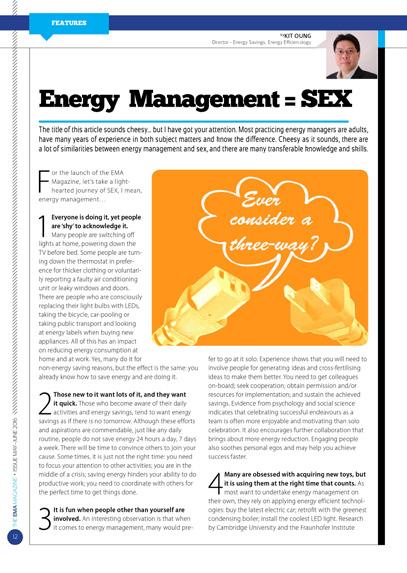
The first edition of The EMA Magazine, published in May 2016, featured a standout article by Kit Oung titled 'Energy Management = SEX'
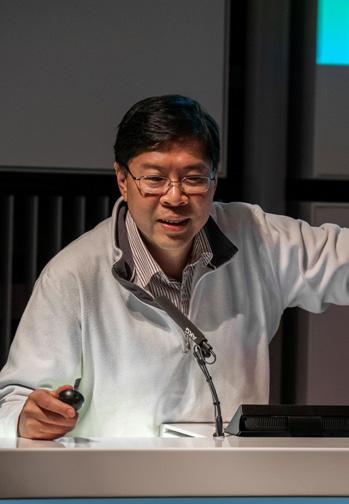
Now, as we mark our milestone 50th edition, we’re pleased to welcome Kit back with a fresh, equally captivating contribution.
Kit Oung, Principal Consultant at OurWorld Solutions
Ocean’s Kilowatts: The Energy Heist
Decades of experience, be it in energy management or even in a cinematic spectacle, have taught us how to find the sweet spots, boost momentum when the timing is right, and cool things down before waste creeps in. And really - what doesn’t shine brighter with a sprinkle of Hollywood magic?
So, in honour of The EMA Magazine’s big 5-0 issue, let’s take a light-hearted stroll through some of the best heist films and series, and use their strategies to inspire your own perfect “energy job”.
Part 1: Meet the Crew
Mastermind –Blueprint Architect
Hacker –Data Infiltrator
Safecracker –Technical Specialist
Getaway Driver –Timekeeper
Inside Leader –The Authoriser
Social Engineer –Behaviour Strategist
Lookout – Risk and Rebound Manager
Danny Ocean (Ocean’s Eleven), The Professor (Money Heist)
Seth Green (The Italian Job), Rio (Money Heist)
Basher Tarr (Ocean’s Eleven), Berlin (Money Heist)
Handsome Rob (The Italian Job), Denver (Money Heist)
Picture it: a corporate HQ in the city. Moonlight glints off glass walls and pristine branding. Inside, millions of kilowatt-hours are vanishing into thin air. Computers idle, cooling units fight winter air, corridor lights burn on in empty spaces. To some, that’s “business as usual”. To us - energy managers, it’s a vault full of cash waiting to be recovered. The treasure isn’t gold bars or casino chips - it’s pure energy cost savings and a lower carbon footprint. And just like a cinematic heist, it takes the right crew to reclaim it.
Let the theme tune begin…
Energy Auditor
IoT / Data Analyst
Engineer / Retrofit Specialist
Project Manager
Leadership
HR / Behavioural Economics Specialist
Risk Manager
Full audit report, mapping inefficiencies and saving potential
Identification of phantom loads and irregular energy use
System optimisation, equipment replacements and efficiency gains
Timely rollouts, budget adherence and schedule synchronisation
Funding secured, organisational buy-in
Cultural shift and compliance with efficiency measures
Monitoring rebound effects, contingency planning
Part 2: The Job Planning
Like a war room in Money Heist, the crew assembles. Energy use graphs glow red on the screens.
1. Mastermind:
Conducts a complete energy audit, revealing “the vault” - £1.2M in annual waste.
2. Hacker:
Analyses IoT and metered data, identifying top hotspots: lighting, HVAC, phantom loads.
3. Safecracker:
Specifies how to implement the energy projects and further fine-tunes it to unlock efficiency.
4. Getaway Driver: Keeps timelines tight, fast-tracking lighting deliveries ahead of a supplier strike.
5. Inside Leader: Signs off on funding and removes organisational obstacles for implementation.
Part 3: Execution – The Heist
6. Social Engineer: Launches the Lights Out for Savings staff challenge, aligning behaviour with goals.
7. Lookout:
Prepares a contingency plan to watch for rebound effects and shifting tariffs.
For many organisations, a crew working in sync can recover 20–35% of energy waste in the first year, often delivering ROI in less than 24-36 months.
Plans rarely run perfectly. In Money Heist, every disruption triggered a counterplan. Energy projects demand the same resilience.
• Plan Alpha: Optimise current systems without hardware replacements.
• Plan Beta: Upgrade with targeted retrofits.
• Plan Gamma: Implement peak-demand load shedding.
• Plan Delta: Introduce renewable generation and
Even “negotiation scenes” have their energy equivalent: securing stakeholder approval for operational changes, scheduling heavy machinery downtime or shifting loads away from hightariff periods without hurting productivity, to name a few.
Part 4: The Payoff
Fade to black - but not because the HQ has shut it down! Lights now dim automatically, cooling runs in step with occupancy and staff are proud to be part of the Energy Crew.
The results? 18% energy reduction, equivalent to £780,000 or 1,250 tonnes of CO2e - a decent box office triumph.
The perfect job wasn’t about stealing - it was stealing back from waste and reinvesting those gains into innovation, staff development and future-proof infrastructure.
Think you can do it solo?
That’s like tackling a cinematic vault with no Hacker, no Safecracker, no Getaway Driver - and expecting a clean getaway.
No Lookout?
Rebound effect wipes out first-year gains.
No Leadership?
Funding evaporates halfway.
"Saving energy and decarbonising energy consumption is a team sport."
Assemble your crew - and pull off the perfect energy job. You might just swap your hard hat for a tux - Brits can be modest, but a little red carpet never hurt anyone. Energy Oscars or BAFTAs … here we come.
Author’s profile:
Kit is widely regarded as one of the world’s leading voices in energy, climate governance and sustainable business transformation. He turns bold Net Zero promises into double - digit energy savings, award-winning governance frameworks and compliance strategies built to endure. With 27 years shaping policy, chairing global standards and training leaders in 48 countries, Kit bridges national priorities to boardroom vision and realised benefits.
11TH 16TH 19TH 30TH
Reaching Net Zero course
Energy Champion course
Essential HVAC Control and Optimisation course
SECR Compliance course 15TH 22ND 24TH
Understanding and Delivering Behavioural Change course (In-person/London)
Turning Data into Energy Savings course (Inperson/Glasgow)
Become an ESOS Lead Assessor course
12TH 15TH 19TH 20TH
Business Case Development in Energy Management course
Energy Procurement course
Energy Project Implementation and Management course
Energy Monitoring, Targeting and Validation course
The
EMA Magazine | February 2021
FEATURE
Looking Back
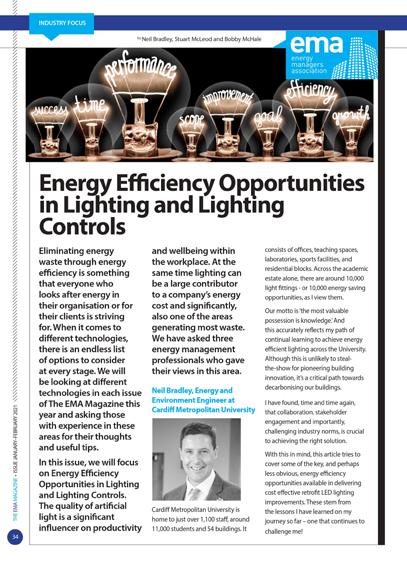
In 2021, we explored energy efficiency opportunities in lighting and controls, highlighting how lighting quality affects productivity and wellbeing while also representing a major area of energy consumption and waste. Four years on, Neil Bradley revisits the insights to see which strategies have stood the test of time, which have evolved and how the practical experiences have shaped current approaches.
Bradley, Sustainability and Energy Manager at University of South Wales
Energy Efficiency Opportunities in Lighting and Lighting Controls – Four Years On
THE MOST SURPRISING ENERGY EFFICIENCY OPPORTUNITY
2021 Advice: Don’t always follow the guidelines to the letter. Lighting design software is a useful starting point, but following guidelines too rigidly can result in over-illumination, wasted energy, unnecessary cost and poor visual quality. High illuminance and uniformity targets often fail to reflect how modern spaces are actually used, particularly where many tasks are selfilluminated by screens. By considering how a space is used, including daylight, existing lighting, surface reflectance and desired ambience, you can create more dynamic lighting schemes that reduce energy demand while lowering capital, installation and maintenance costs.
Four Years On: Stand firm. I have completed many lighting
installations and the most successful projects have always started with a lighting design that evolves into a solution that works for a particular type of space. And this can only be achieved by reviewing the space in detail, considering ambient lighting (if there is any), how the space is used, wall colours, ceiling heights, types of ceilings (grids, concrete), any exposed equipment on the ceilings that may impact the lighting scheme, such as AHUs, HRUs, AC, etc., the types of LED lamps proposed, controls and the desired illuminance for that area.
THE NO COST ENERGY EFFICIENCY
OPPORTUNITY
2021Advice: Engage with your stakeholders. Although not always essential in many lighting upgrades, this particularly applies in buildings with multi-use areas where lighting
requires a flexibility of control to achieve the correct illuminance for specific activities (e.g. sports halls, bars, hospitality areas etc).
Four Years On: Stand firm. Speaking with stakeholders is absolutely key to ensuring an outcome that is not only successful from a lighting upgrade and cost perspective but also meets the expectations of the people that use the space day after day. Their user experiences will provide you with invaluable information that can help shape the lighting design and equally they also feel a sense of belonging and are more likely to buy into the scheme once its complete. Although this process can result in mixed opinions and views, and it’s often impossible to please everyone (particularly in transient areas such as teaching spaces), in my experience it helps to develop a consistent approach to
Neil
lighting and ultimately a blueprint that can be replicated elsewhere. This also means that users become familiar with how to use lighting in different areas.
THE LOW COST ENERGY EFFICIENCY OPPORTUNITY
2021Advice: Join the dots.
I used an example of lighting retrofits which all required upgrading integrated emergency fittings, which was costly, space-constrained and had limited testing flexibility. I mentioned that we switched to standalone DOT LED emergency downlights, which were smaller, more energy-efficient, cheaper to install and easier to test during the day without disrupting normal lighting. This approach simplified replacements, reduced labour and capital costs, and made specification, installation and snagging easier, particularly in spaces with mixed luminaires.
located at distribution boards, usually in cupboards or risers. Where spaces are used frequently and/or daily it’s not always easy to arrange an emergency lighting test procedure, so this needs some
thought and planning at design stage to ensure the solution installed can deliver, and the emergency lighting is adequately maintained.
THE MOST COMMON ENERGY EFFICIENCY OPPORTUNITY
Four Years On: Stand firm. I would like to think that DOT LEDs have become consistently adopted in modern lighting schemes as a more cost effective and simpler way to integrate emergency lighting into upgrade projects. Accepted, like many things it’s not a one size fits all and there are still some instances in which integrated fittings may still provide a better solution.
Recently, I have found a lack of clarity around how emergency lighting is tested, whether via integrated test switches on room switch plates (using fish keys), automated emergency lighting, which raise questions over responsibility for reviewing results, or via combined test switches often
2021 Advice: Audit, sleep, repeat. Conducting an initial audit of existing lighting schemes is essential for developing a strong business case, prioritising work, preparing tender information and understanding current systems. It also supports funding applications and ensures accurate planning. Revisiting each installation helps identify lighting types, controls, wiring and components, preventing surprises during upgrades, and maximising energy, cost and carbon savings.
Four Years On: Stand firm. Very little remains unchanged in a vibrant Higher Education environment and we find our buildings and spaces are often modified, extended or adapted to meet existing or new course requirements. This means that often the existing lighting scheme will no longer be fit for purpose. Therefore, this advice applies to both upgrading old
inefficient lighting to LED and also modifying existing LED schemes to better suit newly constructed teaching or working environments. Although this might sound obvious, it’s also worth noting that an audit should not simply involve a review of the lighting requirements but also a thorough understanding of the existing wiring, dimming drivers (if present), switches, test switches and PIRs to ensure any new LED fittings or features are compatible with existing wiring systems.
THE MOST OVERLOOKED ENERGY EFFICIENCY OPPORTUNITY
2021 Advice: You can’t rely on people switching the lights off. Developing and adhering to a lighting controls specification is essential for energy savings, flexibility, and prolonging luminaire life. Modern plug-and-play systems simplify installation and adaptation, allowing easy adjustment of sensors, dimming, and daylight integration without costly networks. These systems are particularly valuable in university spaces where layouts and usage frequently change.
Four Years On: Stand firm. As much as I would like to rethink this tip, unfortunately it still stands that people generally don’t switch lights off when they leave rooms (with some exceptions!). This is more prevalent in multi-use spaces where individual staff don’t have ownership and students are moving between these areas frequently, but it’s also common in some larger open plan offices, lecture halls and in particular corridors, bathrooms and lobbies. The integration of PIR controlled lighting or a combination
of PIR and switch controlled lighting should be integral to every installation. This not only saves energy but prolongs the life of the fittings and also provides finer control options such as daylight dimming, where ambient light levels are high, a more natural ‘daylight’ feel to spaces which people enjoy and the assurance that the lights will switch off after a predetermined time when occupants leave. In my experience, upgrading the LED fittings is often the priority but controls can be overlooked and it does add additional expense, but the savings generated usually result in reasonable paybacks.
TOP TIP
2021Advice: Don’t be afraid to ask for help.
Even with advanced automation and IoT, an energy-efficient lighting system is only as effective as its installation allows. Focusing solely on theoretical efficiency can overlook practical limitations. Building strong relationships with project managers, electricians, wholesalers and staff provides critical insight, cost-effective solutions and collective ownership.
Asking for help and listening to others fosters collaboration, helping overcome unforeseen challenges and leveraging practical experience to achieve the best energy-efficient outcomes.
Four Years On: Stand firm (with a small caveat). Lighting technology, like many other electrical and mechanical services continues to evolve very quickly with more efficient and ever impressive technologies available. It’s important to understand where the industry is heading and not lose sight of new opportunities that may deliver significant savings. Collaboration with external and internal stakeholders can definitely help foster this.
But, don’t lose sight of the end goal and, in particular, the expectations of the users you are dealing with. This is a little old school but I still stand by the mantra of ‘if it’s not broken don’t fix it’ as we are creatures of habit. Consultants and lighting engineers will be at the cutting edge of new lighting developments and will no doubt be keen to sell you the newest,
most impressive solution but this is not always the most practical. You have to consider the ongoing maintenance of lighting systems, the availability of replacement LED fittings and parts, and the management of the controls system ideally without external input. Lighting doesn’t need to be complicated and more often than not, in my experience, staff don’t have the time or inclination to learn about complicated lighting controls within their busy day to day lives. They are more than happy with a simple solution that just works.
Author’s profile:
Neil is a Sustainability and Energy Manager with over 14 years’ experience in higher education and the public sector. He specialises in lighting design, BMS upgrades, carbon footprinting and project management, and is experienced in developing and implementing sustainability strategies that reduce environmental impact, promoting social responsibility, and driving positive change through strong stakeholder engagement.
The EMA Magazine | June 2021
Looking Back
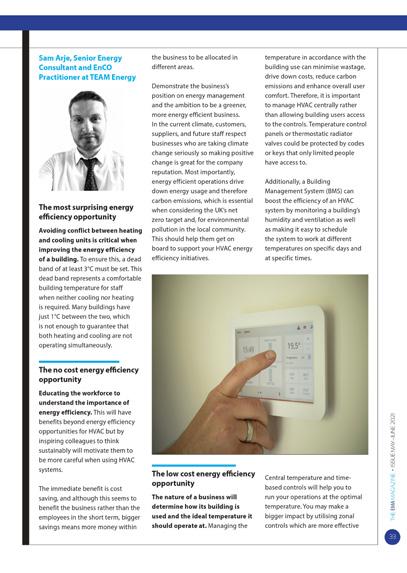
In 2021, we examined how improving HVAC energy efficiency can unlock significant savings, often through simple, low-cost changes. Sam Arje now revisits his original guidance to reflect on which recommendations have stood the test of time, and to share insights gained from four years of hands-on experience in making buildings smarter, greener and more energy efficient.
Sam Arje, Senior Energy Consultant at TEAM Energy
Energy Efficiency Opportunities in HVAC – Four Years On
THE MOST SURPRISING ENERGY EFFICIENCY OPPORTUNITY
2021Advice: Avoiding conflict between heating and cooling units is critical when improving the energy efficiency of a building. To ensure this, a dead band of at least 3°C must be set. This dead band represents a comfortable building temperature for staff when neither cooling nor heating is required. Many buildings have just 1°C between the two, which is not enough to guarantee that both heating and cooling are not operating simultaneously.
Four Years On: Establishing an adequate deadband is still essential for preventing heating and cooling systems from competing with one another. A minimum 3°C separation continues to be a practical and effective way to ensure that neither system activates unnecessarily, protecting both energy performance and occupant comfort.
If anything, experience over the past four years has reinforced how important a proper deadband is for avoiding short cycling. When the gap between heating and cooling setpoints is too narrow, equipment can switch on and off in rapid succession, running for only a few minutes at a time. This prevents the system from completing a full heating or cooling cycle, increases wear on components and wastes energy without delivering meaningful temperature control.
THE NO COST ENERGY EFFICIENCY OPPORTUNITY
2021Advice: Educating the workforce to understand the importance of energy efficiency. Beyond improving HVAC energy efficiency, this encourages colleagues to think more sustainably and use systems more carefully. While the immediate benefit is cost savings for the business, these savings can be reinvested elsewhere. It
also demonstrates the company’s commitment to energy management and sustainability, enhancing its reputation with customers, suppliers and future employees. Most importantly, reducing energy use lowers carbon emissions, supporting the organisational and national Net Zero targets and improving local environmental outcomes.
Four Years On: Educating the workforce about energy efficiency is still one of the most powerful tools an organisation has. If anything, the importance of this has only grown. A well-informed workforce doesn’t just support HVAC efficiency; it contributes to a broader cultural shift toward sustainable thinking, which influences everyday behaviours and long-term decision-making. While the immediate gains often show up as cost savings for the business, those savings ultimately create more flexibility and resilience across the organisation.
What has changed over the past four years is the external pressure. A company’s reputation around energy management and carbon reduction is now more critical than ever. Many potential clients will no longer work with organisations that cannot demonstrate credible environmental commitments. With the increasing focus on Scope 3 emissions, businesses are being pushed to scrutinise their entire supply chain, meaning they can only meet their own carbon goals by partnering with suppliers who are on a similar path toward reduction.
If I were giving this advice today, I would place far greater emphasis on using data to drive engagement and accountability. Modern systems provide a wealth of information that can highlight outliers, inefficiencies and behavioural patterns. Sharing this insight with teams encourages questions, sparks curiosity and helps people understand the real-world impact of their actions.
can further improve efficiency by monitoring humidity and ventilation and enabling time- and day-based scheduling. Zonal controls can increase impact in buildings with varied uses, while placebo controls can maintain user satisfaction without affecting optimal HVAC settings.
Four Years On: Looking back at the original advice, the core message still stands strong: centralised control of HVAC systems remains one of the most effective ways to reduce energy waste, cut costs and maintain consistent comfort levels across a building. The principles
mode. In many cases, this was done to address a temporary issue, perhaps a repair, a fault or a one off operational need, but the system was never returned to Auto afterwards. As a result, the BMS’s intelligence, scheduling and optimisation capabilities were completely unused, leaving the building running inefficiently despite having the right technology in place. Ensuring your BMS system is set up correctly and working in the way it is intended it to is vital.
THE MOST COMMON ENERGY EFFICIENCY OPPORTUNITY
THE LOW COST ENERGY EFFICIENCY OPPORTUNITY
2021 Advice: The nature of a business will determine how its building is used and the ideal temperature it should operate at. Managing temperature based on building use reduces waste, costs, carbon emissions and improves comfort. Centralised HVAC control is therefore more effective than user-controlled systems, with access limited via codes or keys. A Building Management System (BMS)
of zoning, restricting user access to controls, and using a BMS to optimise temperature, humidity and ventilation are just as relevant today - if not more so, given rising energy prices and increasing pressure to reduce carbon emissions.
However, experience over the past four years has highlighted an important nuance that I would emphasise much more strongly today. During several audits, I’ve encountered buildings equipped with sophisticated, often expensive, BMS systems that were effectively bypassed because the controls had been switched to a manual
2021 Advice: A physical inspection of areas around the building will help you understand whether your HVAC system is operating in the best circumstances. Whatever type of building you have, conditioned air is precious so take measures to ensure that roof, wall and floor insulation is up to standard. Pipes, ducts and outlets are also usual suspects for energy loss that can get overlooked. Gaps in windows and doors need to be repaired to improve HVAC efficiency and ensure that external doors are not left open. Where doors are operated by motion sensors, adjust the settings to limit the time they are open for. And, most obvious of all, encourage staff to not be tempted to open windows when the heating is on.
Four Years On: Conducting regular physical inspections remains a fundamental part of ensuring an HVAC system can operate efficiently. The basics still matter, protecting conditioned air by maintaining good insulation, checking pipework
and ducting for losses, repairing gaps around windows and doors, and managing how long automated doors remain open all continue to have a direct impact on performance.
If anything, the past four years have reinforced how easily these simple issues can be overlooked. Even the most advanced HVAC system will struggle to deliver efficiency if the building envelope is compromised or if staff habits work against it. Encouraging people not to open windows when heating is running may seem obvious, but it remains one of the most common sources of unnecessary energy loss.
THE MOST OVERLOOKED ENERGY EFFICIENCY OPPORTUNITY
2021 Advice: It is easy to forget the thermostatic settings that run in the background.
Check that they are still suitable for the building’s operating hours and occupation levels. These are changes that have affected most organisations in the current climate. If there is a control panel, use it as it is meant to be used; adjust time bands, ensure the settings are adapting for seasonality, building use and UK time zone changes. Also check that the dates and times are correct on all control panels. Additionally, check the building’s temperature sensors, establish that they are calibrated and operating correctly so that the internal heating system switches on and off to suit your organisation’s operating hours. Also check that the sensors are located appropriately, particularly if there have been any changes to the building layouts.
Four Years On: Regularly reviewing thermostatic settings is still essential, and in many cases, it has become even more important. Over
the past four years, shifts in working patterns, fluctuating occupancy levels and changes to building use have made it clear that background settings cannot simply be left untouched. When schedules, time bands or seasonal adjustments are not updated, HVAC systems often run unnecessarily, wasting energy and increasing costs.
What I would emphasise more strongly today is the need for routine verification rather than occasional checks. Ensuring that control panels are set to the correct date, time and time zone, and that they reflect actual operating hours, is a simple step that continues to be overlooked. Likewise, temperature sensors must be calibrated, functioned correctly and positioned appropriately, especially if layouts, partitions or usage patterns have changed.
TOP TIP
2021 Advice: Engaging and influencing staff to form sustainable and efficient habits can make a big impact on your building’s overall energy consumption.
It is impossible to keep everyone perfectly comfortable, and individual adjustments reduce overall comfort and efficiency. Encouraging behaviour change, flexible dress codes and layered clothing can support the energy strategy. Investing in training to raise energy awareness and influence habits will also help reduce wasted energy.
Four Years On: Encouraging staff to adopt sustainable habits is still one of the most effective ways to reduce unnecessary energy use, particularly when it comes to HVAC systems. The challenge of keeping every individual perfectly comfortable hasn’t changed and allowing
everyone to adjust settings to suit their personal preferences still leads to inefficiency and discomfort for the wider group.
What has evolved over the past four years is the recognition that behavioural change is not just helpful, it is essential. With rising energy costs, increased scrutiny of organisational sustainability and a stronger focus on carbon reduction, staff engagement now plays a central role in meeting environmental goals. Encouraging appropriate dress, promoting the use of layers and helping people understand how their actions affect the building’s performance remain practical and effective strategies.
If anything, I would place even greater emphasis on structured training and ongoing communication. People approach energy use differently, and without clear guidance, many simply don’t realise the impact of their choices. Regular awareness sessions, visible reminders, and data- driven feedback can help colleagues understand why certain controls are restricted and how their behaviour contributes to the organisation’s wider energy strategy.
Author’s profile:
Sam is a Senior Energy Consultant and Approved EnCO Practitioner at TEAM Energy. He is an experienced energy project manager with a passion for sustainability, driving down energy consumption and reducing carbon emissions. Sam’s primary responsibility is to support TEAM’s customers with energy analysis, energy surveys, energy efficiency training, complying with the Energy Savings Opportunity Scheme (ESOS) and identification and implementation support.
Looking Back
Through the ‘What Not to Do’ feature series, the EMA has, over the years, explored the core disciplines that underpin effective energy management, drawing on the practical experience of industry professionals. Past features have examined lessons learned in energy procurement, waste management, energy management strategy, behaviour change and energy auditing.
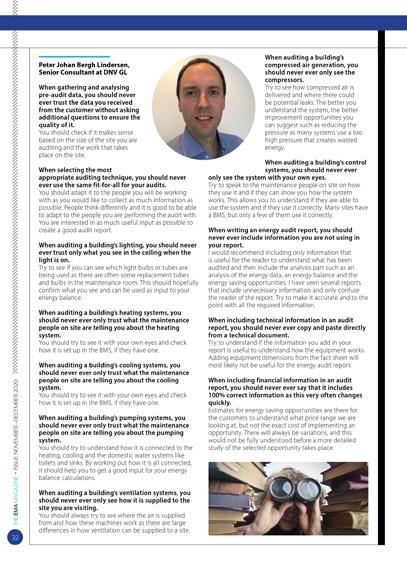
In this updated feature, we return to the topic of energy auditing, first published in 2020, with one of our original contributors – Peter Lindersen who revisits his original points and considers what, if anything, has changed.
Peter Lindersen, Associate - EMEA Sustainability Consulting at JLL
What Not to Do in Energy Auditing – Five Years On
Q: When gathering and analysing pre-audit data, what should you never do?
2020 advice: Don’t accept customer data without scrutiny.
2026 reflection: That advice remains critical, but what's changed is the volume and complexity of data available. The stakes are now higher, with energy costs fluctuating rapidly and decarbonisation targets becoming more aggressive, inaccurate baseline data can lead to costly miscalculations.
The fundamental principle remains the same: always sense-check data against benchmarks and verify it further where needed.
KEY TAKEAWAY: Always scrutinise and sense-check customerprovided data before using it.
Q: When selecting the most appropriate auditing technique, what should you never do?
2020 advice: Avoid a one-size-fits-
all approach to auditing. Engage site teams to help unlock valuable insights and gather the most useful information to produce a robust audit report.
2026 reflection: The challenge today is building rapport with different stakeholders quickly and drawing out their insights efficiently when conversations now happen under greater time pressure as site teams juggle multiple priorities. Adapting your approach to suit different stakeholders remains essential to capturing meaningful input and delivering a high-quality audit.
KEY TAKEAWAY: Relationship building remains crucial but must happen faster in today's highpressure environment.
Q: When auditing a building's lighting, what should you never do?
2020 advice: Never rely solely on
what you see when the lights are switched on.
2026 reflection: The complexity of lighting systems is evolving. Modern buildings increasingly feature smart lighting with automated controls and occupancy sensors that weren't as widespread in 2020.
Today's auditors may navigate LED retrofits that may not match original specifications, integrated lighting controls that interact with HVAC systems, and hybrid lighting strategies combining natural and artificial light. Always talk to the maintenance team or office personnel when they show you around as they may have knowledge of specifications, replacements or operating practices, which can add valuable context that complements what you can observe on site.
KEY TAKEAWAY: Verify observations with on-site checks and engage staff to confirm
equipment and operation.
Q: When auditing a building's heating systems, what should you never do?
2020 advice: Never rely solely on what the onsite maintenance team tells you. Verify information first-hand by inspecting the equipment yourself and review how it is configured within the Building Management System (BMS), where available.
2026 reflection: Heating systems are becoming more sophisticated, with more heat pumps, hybrid systems and smart thermostats in operation but the original advice still stands. With more information now digitised, name plates, user manuals and asset databases that were harder to access in 2020 may now be more readily available. Online resources for equipment specifications have also expanded, helping to build a more complete and accurate picture of system performance.
KEY TAKEAWAY: Inspect equipment and review supporting documentation to fully understand system setup and operation.
Q: When auditing a building's cooling systems, what should you never do?
2020 advice: Don’t just work with information provided by onsite teams. Verify cooling systems for yourself by inspecting the equipment and reviewing its setup in the BMS, if available.
2026 reflection: Auditors must still gather as much on-site information as possible, including taking photos of equipment. These can be shared with colleagues for discussion when you encounter unfamiliar components or configurations,
helping to ensure a thorough and accurate audit.
Smarter buildings may now integrate cooling systems with broader building energy management platforms. This interconnectedness means auditors must think holistically about cooling performance within the entire building ecosystem.
KEY TAKEAWAY: Combine on-site observation with documentation and photos to understand system performance.
maintenance sensors can provide real-time performance data that wasn't available in 2020.
However, this technological advancement has created a new trap – over-relying on system diagnostics without understanding the physical reality of pump operation and system hydraulics. If drawings exist, they can provide valuable context and should be used alongside a detailed onsite examination, with observations documented through photographs for reference when preparing the report.
Q: When auditing a building's pumping systems, what should you never do?
2020 advice: Don’t assume all information you’re given is correct. Map connections between the pumping systems and heating, cooling and domestic water systems, such as toilets and sinks to provide accurate input for energy balance calculations.
2026 reflection: As buildings get smarter, pumping systems are becoming increasingly intelligent. Variable speed drives are becoming standard and predictive
KEY TAKEAWAY: Map connections and use drawings or photos to accurately inform energy balance calculations.
Q: When auditing a building's ventilation systems, what should you never do?
2020 advice: Don’t just focus on how air is supplied to the site –you should always understand where airflow comes from and how the ventilation equipment operates.
2026 reflection: If the site has a BMS, it will show how airflow
operates. However, findings should always be confirmed with a walkaround; mismatches between the BMS and what you see in reality can happen. As smarter buildings adopt demandcontrolled ventilation and air quality monitoring, this verification becomes more critical as systems adapt to air quality requirements and integrate with broader building controls.
KEY TAKEAWAY: Cross-check BMS layouts with physical walkthroughs to ensure accurate understanding.
Q: When auditing a building's compressed air generation, what should you never do?
2020 advice: Don’t focus solely on compressors. Instead, trace how compressed air is distributed throughout the site and look for potential leaks.
2026 reflection: Today, two key factors remain central to optimising energy consumption of a compressed air system: setting the system to the required pressure and understanding how the compressor(s) operate, combined with identifying leaks through a thorough survey. Only by
understanding the system, can you optimise it.
KEY TAKEWAY: Understand system operation, pressure requirements and leaks to optimise energy use.
Q: When auditing a building's control systems, what should you never do?
2020 advice: Don’t just observe the system without seeing how it’s being used by onsite maintenance teams. This helps assess whether the system is being used correctly, as many sites have a BMS but only a few are operated effectively.
2026 reflection: A proper BMS analysis often reveals significant energy savings, especially when systems were installed but never fully optimised for the building’s operations. The auditor's role has evolved from simply identifying manual operational improvements to understanding whether sophisticated automated systems are delivering their potential value.
KEY TAKEWAY: Engage with staff and analyse the BMS to spot operational errors and missed optimisation opportunities.
Q: When writing an energy audit report, what should you
never do?
2020 advice: Focus on only providing information that’s useful for the reader and enables them to understand the audit, including analysis such as energy data, energy balances and identified energy-saving opportunities.
2026 reflection: Today, keeping reports concise and focused has become even more critical. Decision-makers are now dealing with multiple competing priorities around energy, carbon, compliance and cost management. They need clear, actionable recommendations more than ever.
The audience for audit reports has also changed. Five years ago, energy audits were often reviewed primarily by facilities teams. Now, they're increasingly scrutinised by senior management, sustainability teams and financial decision-makers who may have less technical background but need to make rapid decisions. The challenge is crafting reports that serve multiple stakeholders while remaining focused and actionable by explicitly connecting technical findings to business outcomes.
KEY TAKEAWAY: Audit reports
should be concise, actionable and clearly linked to business outcomes for a broader decisionmaking audience.
Q: When including technical information in an audit report, what should you never do?
2020 advice: Never copy and paste directly from technical documents. Details such as equipment dimensions from a datasheet are rarely relevant for an energy audit report.
2026 reflection: Too often, reports are overloaded with technical information that serves no practical purpose, which can distract from the analysis and recommendations. You need to understand what the technical information tells you and include only what is necessary and relevant for your report.
KEY TAKEWAY: Include only technical details that are necessary and relevant to the audit.
Q: When including financial information in an audit report, what should you never do?
2020 advice: Never claim that financial information is 100% accurate, as costs can change rapidly. Estimates for energysaving opportunities should give clients a general sense of potential investment, not the exact cost. Precise figures can only be confirmed through a detailed follow-up study.
2026 reflection: Financial information should always be included with additional context, so clients can understand how you arrived at the numbers given. Providing this transparency allows reviewers to interpret the estimates correctly and check or adjust them as part of their own analysis, if something seems unusual.
KEY TAKEWAY: Provide estimates with context and avoid claiming absolute accuracy.
Energy Auditing in 2026
Looking across all these areas, the fundamental skills and principles of energy auditing haven't changed. Systematic auditing practices
combined with effective communication produce the best outcomes. What has evolved is the context in which these skills are applied. Energy auditing has shifted from being primarily a costreduction exercise to part of broader organisational strategies around decarbonisation, compliance, and resilience. Today's energy auditors are operating in a higher-stakes, faster-moving environment where the consequences of both action and inaction are more significant. This elevates the importance of getting it right while adding pressure to deliver results quickly.
Author’s profile:
Having originally trained as a chemical engineer, Peter has spent the last decade working as a consultant in the energy sector, performing energy audits and assurance of ESG KPIs. Peter has extensive knowledge of ESOS and the EU Energy Efficiency Directive - Article 8 (now 11), and has carried out numerous energy audits across the UK and Europe.
FEATURE Looking Back
Through the ‘What Not to Do’ feature series, the EMA has, over the years, explored the core disciplines that underpin effective energy management, drawing on the practical experience of industry professionals. Past features have examined lessons learned in energy management strategy, energy procurement, waste management, behaviour change and energy auditing.
In this updated feature, we return to the topic of energy management strategy, first published in 2020, with one of our original contributors – Leigh Hitchens who revisits his original points and considers what, if anything, has changed.
Leigh Hitchens, Director at Coral Energy
What Not to Do in Energy Management StrategyFive Years On
Q: When securing a commitment for an energy management strategy from senior management, what should you never do?
2020 advice: Over-estimate potential savings or shorten payback periods. Be realistic with what you are trying to achieve and back up proposals with scientific facts and figures, for example life-cycle cost analysis for new equipment installations. Five years on: I would stand firm on this point. If anything, I would stand even stronger because there is ever more focus on energy management/ reduction/legislation, and therefore it is important to be realistic.
Q: When setting energy management goals, what should you never do?
2020 advice: Overstretch targets. These should be honest and realistic, challenging but achievable otherwise expectations for delivery will likely be greater than can be achieved.
Five years on: I stand firm on this point. The points above are as relevant today as they were 5 years ago.
Q: When identifying consumption patterns, what should you never do?
2020 advice: Always understand why the ‘shape’ is as it is. It is particularly important to understand why the patterns are showing what they are. For example, an increase in night consumption could be due to a malfunctioning piece of
equipment, incorrect control settings or perhaps a new night shift introduction. It is key to understanding operational processes in detail.
Five years on: I stand firm on this point. In fact, I believe it is even more critical today. With demandside management becoming increasingly significant and growing requirements around ESOS, SECR and emissions reporting, access to accurate, high-quality data is essential.
Q: When setting ‘smart’ targets, what should you never do?
2020 advice: Rely solely on one methodology to achieve your goals. SMART goals should be specific and measurable so evaluation can be objective. However, if applying the same
criteria to measure success or failure, it can motivate people in the wrong way, which can be problematic. Have back up target methodologies.
Five years on: I would probably re-think this in light of the need to have accurate data. Whilst SMART absolutely still applies, because so much starts from the need to have accurate data, perhaps having smart meter readings/half-hourly data/ sub-metering data will allow SMART targets to be even better or more informed.
Q: When developing a business case, what should you never do?
2020 advice: Over-commit. A business case must be tailored specifically to the business and personnel that will be evaluating your proposals, likely to be senior or board level members. Do not seek the perfect ROI, ignore internal personnel costs, or believe you have finished when the case has been submitted.
Q: When structuring an energy management strategy, what should you never do?
2020 advice: Assume you know all the answers. Organisations should begin by appointing a dedicated energy manager or an outsourced energy management specialist to lead and support the strategy. From there, it is essential to fully understand the challenges at hand and identify practical solutions. A structured, project-based approach should be adopted to plan and organise delivery, with a clear strategy that is regularly reviewed against defined milestones.
Five years on: I stand firm. My
and time-bound.
• Benchmarking: Comparing against industry standards and published data.
• Capital expenditure review: Understanding investment requirements.
• Monitoring and targeting: Using smart meters, sub-metering and analytics.
• Technology assessment: Evaluating innovations, such as renewable generation, IoT, green hydrogen, etc.
• Behavioural change: Engaging all employees to align with energy objectives.
• Continuous review: Regularly assessing progress and refining the strategy.
The business case should be an on-going roadmap or long-term plan for success requiring continual review and analysis to keep on track.
Five years on: I stand by this completely, However, with increasing scrutiny in this area and that focus only set to grow, there is a need to continually reassess the approach. Be absolutely clear on the business case, base it on the most accurate data available and never overcommit. Be ambitious, but realistic.
experience is that the area of ‘sustainability’ is growing, which encompasses energy. Therefore, with more focus, it is crucial that you do not assume you know all the answers but obtain as much information as possible to inform and shape a well-founded strategy.
Even small actions, accurate metering, correct thermostat settings, regular maintenance and energy-efficient equipment are critical for success. Organisations frequently stumble by:
1) Ignoring or failing to understand energy data: Not undertaking regular reviews of consumption and patterns will lead to energy wastage and inaccurate reporting. Regularly not assessing consumption patterns leads to increased energy or at the very least not reducing it.
2) Not undertaking regular energy audits and not acting where possible on recommendations will continually result in higher energy consumption and cost. Audits are often undertaken via third parties either for a desire to want to reduce
energy or as a legal requirement but then do nothing with the outputs.
3) Relying solely on estimated invoices without accurate consumption records leads to inaccurate assessments and poor decision-making.
4) Failing to regularly maintain equipment leads to energy wastage and excessive energy costs. Further, keeping with old, obsolete, poor efficiency equipment inevitably increases consumption. If a building energy management system (BEMS) is in situ, never ignore this technology.
5) Short and medium term thinking can lead to poor decision making as consideration is not
given to operational processes and investment. Focussing on quick wins can lead to wastage and excessive energy spend.
6) Behaviour change (or lack of training/engagement) is an ever increasing aspect to energy management. Employees need to understand their role and where they fit in as a collective approach to reducing energy. If staff do not understand their role, this can lead to conflict and poor decision making. ‘People’ should always be considered in energy making decisions.
7) Procurement – many organisations focus on their buying of electricity and combustible fuels, however there are two things every organisation should consider –obtaining the optimum energy rates and contracts but also whatever
they can do to reduce consumption. Procurement is important but so is reducing energy.
8) Not thinking about business implications. Legislation, supplier/ trading relationships are becoming increasingly led by energy and sustainability credentials. Organisations need to consider that whilst reducing energy is important, how are they also perceived by customers, suppliers and people…
Following these guidelines helps organisations avoid costly mistakes and ensures their EMS delivers measurable results. Maintaining an EMS may be challenging, but it is essential. Small steps, starting somewhere, measuring accurately, maintaining equipment and involving employees form the foundation. In today’s climate, a forward-looking EMS is not just best practice, it is vital for controlling costs, reducing emissions and protecting organisational reputation.
Author’s profile:
Leigh recognised that the industry’s future focus lies not just in energy purchasing but in reducing consumption, cost and emissions. In 2016, he founded Coral Energy Limited to address this. He is qualified across several areas of energy and building management, including an ESOS Lead Assessor, EPCs, Air Conditioning Inspector and an ENCo-certified Behavioural Change consultant.
The EMA Magazine | May 2016
Looking Back
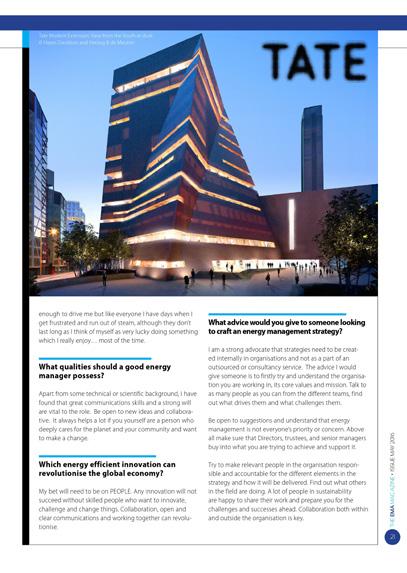
In 2016, in the very first edition of The EMA Magazine, we ran a feature with Vassia Paloumbi, then Energy and Environment Manager at Tate, where she shared her journey into energy management, the realities of working in a reactive role and the belief that people - not technology alone - would drive meaningful change. A decade on, energy management sits at the centre of organisational strategy, climate commitments have intensified and organisations face increasing pressure to reduce carbon emissions while continuing to meet operational and regulatory requirements. We revisit that original conversation to reflect on what has changed, what has endured, and the lessons learned over the past decade.
Vassia Paloumbi, Partner at Lantern Environmental Consulting
Revisiting the Conversation: Energy Management a Decade Later
Q: Since your 2016 interview, how has your role evolved?
At the time of my 2016 interview, I was working in an in-house role, where I was largely responsible for the day-to-day management of energy, including monitoring, reporting and compliance within a fairly structured organisational environment. This followed a two-year spell working at the Bank of England. Since 2018, I’ve been working primarily as an independent consultant, supporting a wide range of organisations across different sectors, helping them address sustainability-related priorities and challenges.
As a result, my role has broadened significantly. While energy and carbon remain important areas of focus, they are no longer treated purely as technical or operational
issues. Instead, they increasingly sit at the heart of organisations, intersecting with areas such as risk, reputation, compliance, governance and organisational culture. My work now focuses on helping organisations understand these connections and translate them into realistic, deliverable strategies and action plans.
Alongside this, I now also work on sustainability policy implementation at a European level, and contribute as a technical expert to the development and review of international standards on carbon neutrality and net zero. I am also a trainer for the EMA.
Q: Back in 2016, you spoke about combining an engineering background with an understanding of the people and organisational challenges of sustainability. Over
the past decade, which has proved harder to change: systems or behaviours?
I would say that behaviours have consistently proved harder to change than systems. Systems can be redesigned, upgraded or replaced with sufficient investment, time and technical expertise. Behavioural change, however, involves people and that makes it far more complex, slower and often unpredictable.
Throughout my career, particularly in my earlier in-house roles, I saw that even the best technical solutions can fail if they are not supported by organisational culture as the people are expected to use them. In the energy field, we often say that no matter how well a building is designed, its performance changes completely
once people start occupying it. This illustrates the profound impact of human behaviour on how systems actually function in practice.
Behavioural change doesn’t happen overnight. It requires trust, shared understanding and credibility, as well as clarity about why change matters and how it connects to people’s roles and priorities. While good data, tools and systems can support this, they cannot drive change on their own.
This is also where my move from inhouse roles to consultancy has been particularly valuable. Understanding internal organisational pressures allows me to approach behaviour change collaboratively, working as an extension of the organisation and addressing behavioural and technical dimensions together.
Q: What challenges today did not exist in 2016 and how have your skills needed to adapt?
In 2016, one of the main challenges was making the case for action.
Sustainability and energy management issues often needed justification, and much of the effort was focused on demonstrating
why they mattered in the first place. Today, that challenge has shifted significantly. Organisations are now dealing with multiple, overlapping pressures all at once: climate change, energy security, cost volatility, rapidly evolving regulation, and much greater public and stakeholder scrutiny. The issue is no longer whether to act, but how to navigate the sheer volume and complexity of these challenges simultaneously, and how to determine what matters most for a specific organisation at a given time.
As a result, while technical skills remain essential, the way I apply them has changed. Increasingly, my role involves engagement, coordination and 'translation'. I work with colleagues across many different functions and disciplines, bringing people together and helping them understand how external developments affect their particular areas of responsibility and where to focus their efforts. That might mean 'translating' sustainability issues differently when speaking to procurement teams, energy specialists or senior executives.
Over the past decade, my skills have therefore evolved to place much greater emphasis on communication, strategic thinking, governance and organisational engagement. These ‘softer’ skills are now just as important as understanding the technical detail - whether that’s how a building management system operates or the specifics of energy efficiency technologies. Successfully addressing today’s challenges requires both technical expertise and the ability to connect it meaningfully to organisational strategy and decision-making.
Q: In 2016, you were deeply involved in the opening of the Tate Modern’s Blavatnik Building and experiencing a major building project from design through to operation for the first time. Are there any lessons learned from that project that still shape how you approach energy management today?
One of the most enduring lessons from the Blavatnik Building is how different design intent and operational reality can be. No matter how advanced or well-designed
a building is on paper, its actual performance depends heavily on the people who operate it, how well they understand the systems and how the building is ultimately used.
In a public building, like Tate Modern, this is amplified. Once you open the doors and introduce large numbers of visitors with different behaviours, expectations and priorities, the way the building performs inevitably changes. You have to be prepared to adapt, rather than assume that everything will work exactly as predicted.
That experience reinforced for me the importance of involving operational teams early, not just at handover but during the planning and design stages. It
manage every aspect of public behaviour.
Q: Bureaucracy and wasted paper were among your biggest frustrations a decade ago. Have those challenges diminished or simply evolved into new forms? They have evolved rather than disappeared. Paper use itself has reduced significantly, largely due to digitalisation and shifts in working practices during COVID. Organisations were effectively forced to move away from paperbased processes and that change has largely remained. In that respect, some of the original frustration has eased.
However, bureaucracy has not gone away - it has simply changed shape.
" Successfully addressing today’s challenges requires both technical expertise and the ability to connect it meaningfully to organisational strategy and decision-making. "
also highlighted the need to allow buildings time to settle. Issues will emerge after opening and you shouldn’t expect a ‘finished’ or optimised building immediately. Achieving good performance requires patience, ongoing adjustment, and a willingness to respond to how the building and its users actually behave.
Working in a public building also taught me limits around control. For example, with issues like waste and recycling, you can put good systems in place, but you can’t fully control how the public behaves. In those cases, the focus needs to be on what the organisation can realistically influence, such as back of house operations, rather than trying to
As more processes have moved online, there are now far more reports, dashboards, frameworks and data visualisations than there were a decade ago. While access to data is valuable, it can also become a distraction from real progress. In some cases, the production of strategies, policies and public-facing materials replaces delivery rather than supporting it. Organisations can appear busy and engaged, yet struggle to demonstrate tangible impact.
A decade on, the key frustration is inaction. Despite strategies, policies, frameworks and reports in place, many organisations lack clarity on how these elements connect and translate into decisions and change.
The tools and formats have become more sophisticated, sometimes even automated, but the risk is that they create a false sense of progress. What matters most is not how comprehensive or attractive the documentation looks, but whether it leads to decisions, accountability and real change on the ground.
Q: You described energy management as a largely ‘reactive role’, where daily plans can change quickly. In your opinion, is the role any less reactive than it was in 2016?
Only slightly. Energy management still has a strong reactive element, but there is now a greater need and expectation to plan further ahead than there was in 2016. The emergence of net zero pathways, long-term targets, capital investment programmes and dedicated funding has made forward planning more important and, in some cases, unavoidable.
That said, the role continues to sit at the intersection of day-to-day operations and external influences. Energy management is still heavily shaped by factors outside an organisation’s direct control, such as policy changes, market volatility and wider geopolitical or regulatory events. Because of this, it remains inherently difficult to plan in a linear or fixed way and the need to respond quickly to change has not gone away.
What has improved is our ability to anticipate rather than simply react. Better data, forecasting tools and scenario planning mean organisations are increasingly able to prepare for likely developments and adapt more effectively when conditions change. While energy management may never be fully predictable, it has evolved from
being purely reactive to being more adaptive and forward-looking than it was a decade ago.
Q: In 2016, you said that what drove you was: “a love of working in the energy management field and sense of being able to make the world just a little bit better”. After a decade, what continues to motivate you and what helps when frustration sets in?
I think my years working in-house have been critical in shaping the way I work as a consultant. Having experienced the internal pressures, constraints and decisionmaking processes within large and complicated organisations, I understand the practical challenges they face. That insight allows me to offer advice that is grounded in reality rather than purely theoretical, and it has strongly influenced both my career path and my effectiveness as a consultant.
What continues to motivate me is still very much the same: the sense that I’m doing something meaningful and seeing real change happen. I’m very driven by action. As a consultant, I can now see shifts not only in individual behaviours but also in how organisations think and respond. Over time, people start to engage differently, understand the issues more clearly and respond more constructively to what we’re trying to achieve.
moments is when that shift happens. At the start, conversations can feel difficult and sometimes there’s a lack of engagement or understanding. But as you work with people, there’s often a point where something clicks and they suddenly see the relevance and the value. Those moments, when understanding turns into ownership are what keeps me going.
When frustration sets in, patience is essential. Progress isn’t linear and change rarely moves in a straight
and concentrate on the areas where change will deliver the most meaningful benefits, whether in terms of emissions reduction, cost savings or organisational resilience. That perspective helps me to manage frustration and to ensure effort is directed where it really matters.
Q: You said that the innovation most likely to revolutionise the global economy was ‘people’. Looking back now, do you still stand by that?
Yes, absolutely. While technology has advanced rapidly, including developments such as AI, it is still people who decide how those technologies are used, how they are funded and what is prioritised. Technology on its own doesn’t deliver change; human choices, leadership and accountability determine whether it is applied effectively.
One of the most motivating
upward trajectory. I’ve learned to accept that and to focus on taking things one step at a time, rather than trying to solve everything at once or fighting every battle. It’s also about focusing energy where it can have the greatest impact. Some issues are very visible and tangible, which can make them tempting to prioritise, even if they represent a relatively small part of the overall picture. Over time, I’ve learned to step back, look at the bigger picture
We already have many of the tools needed to address the climate crisis and drive sustainability improvements. What continues to matter most is whether people are willing to take responsibility, make decisions and work together to implement them.
People can, of course, act as a constraint. Resistance to change, competing priorities and short-term thinking can slow progress. But at the same time, people represent the greatest opportunity. When
individuals and organisations are engaged, motivated and aligned, they have enormous potential to drive meaningful change.
Collaboration is a key part of this. Progress in our sector depends on people working together across disciplines, organisations and boundaries. Without openness and collaboration, it’s very difficult to move forward. For me, that reinforces why people remain central, not just as a challenge to manage, but as the most powerful force for change we have.
Q: You stressed collaboration, open communication and shared accountability as key to success. Have these become easier or harder to achieve over time?
Collaboration, open communication and shared accountability are as important as back in 2016, but in many ways, they’ve become harder to achieve today. The principles remain the same, but pressures on professionals and organisations have increased. People face more responsibilities, tighter deadlines and faster decision-making cycles. Collaboration takes time and effort, and with these added pressures, it can be difficult to invest in it.
Professional networks, forums and other opportunities for engagement - like those offered by the EMAcan play a vital role. Through such networks, we can connect with others facing similar challenges, share experiences and find practical ways to work together. Even in training sessions or workshops, these interactions provide opportunities to collaborate, exchange ideas and build trust across organisations.
Ultimately, achieving collaboration still requires intention and effort, but by leveraging opportunities presented to us by the industry, it becomes far more feasible, even in today’s fast-paced, high-pressure environment.
Q: What advice would you now give your younger self?
I would tell myself to be patient and pragmatic. Early on, I often felt frustrated because I wanted to achieve a lot quickly and felt time was running out. Looking back now, many of the same challenges are still with us and change takes far longer than you expect. You can’t win every battle and trying to do too much at once can be counterproductive.
I would also remind myself that meaningful progress often happens gradually. It’s important to focus your energy and pick the battles that will make the biggest difference. Technical skill and ambition matter, but equally important is knowing when to push, when to adapt and when to concentrate on what will deliver real impact.
Q: How do you see energy management changing in the future?
Energy management today is less about optimisation alone and more about resilience. It now sits alongside broader priorities such as climate risk adaptation, sustainability and strategic decisionmaking. The role is increasingly shifting from a reactive, operational function to something more central within organisations, and I think this will continue. I would like to see energy managers even more involved in governance, investment decisions and organisational leadership.
That said, I think the fundamentals will remain the same. You will still need to understand the systems you’re working with, know the people involved, exercise patience and persist in the important battles.
The EMA Magazine | September 2016 INTERVIEW
Looking Back
In 2016, The EMA Magazine profiled emerging talents in energy management, including Kiro Tamer, then newly appointed Group Environmental & Sustainability Engineer at Wabtec Group. Having transitioned from motorsport engineering, Kiro was motivated by a growing awareness of our reliance on fossil fuels and the opportunity to drive meaningful change through energy efficiency. Back then, he spoke about his placement at Wabtec, the importance of understanding energy use and the career potential for young engineers in a sector rich with practical, ground-level impact.
A decade later, the landscape has shifted and so has Kiro’s career. With new responsibilities, expanded influence and a profession undergoing rapid transformation, it’s the perfect moment to revisit his journey and explore what the last 10 years have brought.
Kiro Tamer, Director at KEES
An Engineer’s Path Through a Decade of Change
Q: What were the turning points that shaped your journey since your early days at Wabtec?
Three moments fundamentally changed how I approach energy management.
The first was moving from a single site role to a group wide role. At one site, you know every process and every person. However, managing multiple sites taught me to see energy consumed in a new way: energy in, business process, product or service out. A 160-year-old manufacturing plant and a modern distribution centre may look nothing alike, yet both can consume energy inefficiently and generate unnecessary waste. This lesson became one of my foundations. Today, whether I'm working with a hospital or a leisure centre through KEES, I see the same truth - the
specifics differ, but the approach to identifying opportunities remains the same.
The second milestone, though it seemed like a detour, proved essential: moving into operations. As a continuous improvement coach and later a supervisor, I experienced the production pressures firsthand. I learned that energy used inefficiently is often simply part of running a business to meet clients’ needs. More importantly, I learned how to translate technical efficiency into operational language. The most elegant energy solution dies if you can't explain why it matters to someone trying to hit their shift targets. This taught me to bridge two worlds: the technical precision of energy management and the often messy reality of daily operations.
The third milestone was recognising that these experiences had wider application. Establishing my own company wasn't a departure - it was the inevitable next step. I'd developed a methodology that works because it's grounded, practical and delivers results. KEES exists to provide engineering-led techniques and solutions to improve the sustainability performance of both public and private sector organisations.
Q: What challenges today didn’t exist 10 years ago, and how have you adapted to them?
Ten years ago, the carbon agenda was not so widespread as it is today. While it has had a very meaningful and positive impact, I feel that it has also played a role in distracting the energy management and efficiency roles.
Scope 1, 2 and 3 categorisation has helped to create clear picture of where emissions originate. However, if we break it down, a large majority of emissions stem from energy intensive processes, be it mining, manufacturing, transportation or waste processing. In other words, energy use is the primary driver of emissions.
I have adapted to this by not losing focus of how you can influence bringing emissions down. This includes both Scope 1 and 2 from our own processes, as well as Scope 3 emissions from suppliers. By making these processes as efficient as possible, we not only reduce energy demand but also lower overall emissions across the entire value chain.
Q: In 2016, you said society lacked appreciation for where energy comes from. Do you think this awareness has improved?
In short, yes. However, this has been largely driven by increase in energy costs rather than a deeper appreciation of energy generation itself. Reflecting on that original statement, it’s understandable why society lacks awareness of where energy comes from. Unless you studied or have an interest in the subject, there is little reason to really appreciate that either by boiling water or using the wind, most energy generation comes from spinning a motor which in return generates electricity.
However, the overall increased cost of energy and policy changes, such as the removal of the red diesel rebate, has elevated the importance applied to energy consumption across the industry and society.
Very importantly, it has also had a positive impact on the adoption of
new technologies and processes. Solutions that were previously not economically viable when energy prices were lower are now more attractive, as they can reduce the overall energy demand, but they do come with an additional hire or purchase costs. Examples include battery systems or spinning flywheels used to reduce the overall capacity of diesel generators.
Q: What advice would you share with your younger self as you were starting out in the industry? Without sounding too cliché, I would say: “trust yourself sooner”.
I have gained a lot of confidence from the most difficult challenges, either through going into state of the art production facilities and still identifying ways to make signification improvements, or through managing a large workforce with the task of driving change.
Early on, I often began on the back foot without much confidence and only gained it as I delivered the results.
What’s also been fascinating to see along the journey, is that although I have always held a technical role, I have seen how important the softer, human skills are to achieving real change.
Another advice would be to stay curious. Always ask the basic questions to ensure you understand the necessary detail of a process and believe in your capabilities to
drive technical change through a well thought out, collaborative and considered approach.
Remember that behind most energy using processes there is a person, whether a nurse, a steel worker or a leisure centre supervisor, and their primary role is to carry out the task they are employed to do, not save energy. Successful change comes from recognising and working with that reality.
Q: Looking ahead, where do you see your career and the profession heading in the next decade?
Since contributing to the article in 2016, I have founded KEES and over the next decade my focus will be on establishing KEES, and working with as many stakeholders as possible to reduce overall emissions, while also supporting the policies and mechanisms necessary to systematically improve the industry.
More broadly, I see the profession and the industry accepting that sustainability cannot be seen as a separate agenda. We need to reduce overall emissions and this can be achieved through technical specifications and designing processes, products and services in the most efficient way in the first place.
Technologies such as IoT and AI can and will play an increasingly important role by reducing human error and providing end users with high-quality data and insights into how efficiently energy is used. However, data alone is not enough. The real value comes when end users have the skills, understanding and confidence to act on the insights and implement the necessary operational or design changes required to deliver lasting improvement.
The EMA Magazine | July 2016
INTERVIEW Looking Back
In July 2016, The EMA Magazine interviewed Russell Fleetwood, then the Generation Manager at London Underground, about his work at the strategically critical Greenwich Generating Station. Russell spoke about increasing commercial generation, improving efficiency, driving major cost savings and shaping new procedures to embed energy-saving technologies into the design stage of projects. Ten years on, we asked Russell to reflect on the changes to the energy landscape and the role of on-site generation.
Russell Fleetwood, Senior Power Generation Manager at London Underground
Generation in a Shifting Landscape
Q: Since your 2016 interview, how has your role evolved?
My role is substantially the same, being responsible for the operation, maintenance and commercial operation of Greenwich Power Station. However, the most significant changes over the past 3 years are from a commercial generation perspective, which has become more challenging following Ofgem's Targeted Charging Review (TCR).
The TCR review removed the benefit for large businesses who were able to reduce their energy consumption during the three peak half-hourly periods during November and February, known as Triad Avoidance, which significantly reduced the Transmission Network Use of System (TNUoS) charges as part of their energy bills. As a result, since April 2023, energy costs have increased as a result.
However, alongside participation in the Capacity Market and Short-Term Operating Reserve (STOR) services with National Grid, I am exploring additional commercial generation opportunities in the Wholesale Electricity Market to increase revenue. All while proactively reducing CO² emissions as part of Transport for London’s (TfL) drive to achieve net zero.
Q: You spoke then about improving efficiency and reducing peak demand. What have been your most significant achievements or breakthroughs since?
Despite the changing energy landscape, we have still been able to benefit from commercial generation opportunities, whilst achieving a reduction in CO² emissions by 45% on 2022 levels. This has been achieved through a combination of reduced operational running hours and efficiency measures, such as replacing
old fluorescent lighting with modern LED lighting and installing DC softstarters for the gas turbines.
Other measures in consideration as part of achieving net zero include electric charging facilities for proposed electric Thames Clipper River services.
Q: What challenges today did not exist in 2016, and how have your skills needed to adapt?
Tackling climate change with increased summer temperatures affecting electronic equipment and battery life, resulting in having to invest into installing additional cooling and ventilation measures to prevent failures and extend the life of the assets.
To further learning and education on this growing risk and to form part of operational business planning, TfL has participated in Carbon Literacy Training for all of its managers, with
a carbon commitment as part of the training to proactively identify and implement real carbon savings as part of operational activities.
Q: In 2016, you said a good energy manager needs strong technical and commercial skills to spot cost-saving opportunities. Does that still hold true?
Yes, but I would also add - to be Carbon Literate and consider energy efficiency measures as part of commercial opportunities, exploring newer technologies which can both improve efficiency thus cutting energy consumption whilst reducing CO² at the same time.
still have about on-site generation?
I think organisations are still not fully aware of the commercial benefit of being able to participate in demand side energy reduction opportunities, either through demand downturn or on-site generation, if available.
Q: What emerging technologies excite you most today and which do you believe will shape the next decade for infrastructure like London Underground?
I think AI is going to play a big part for all companies, not just London Underground. AI will help streamline both operations and maintenance activities of asset management, and will enable smart energy control and efficiency measures to reduce energy demand, cost and reduction in CO².
Q: From your perspective, what is the biggest misconception people
This should be a consideration and influence the choices of equipment and technology with the ability to reduce demand (downturn) at peak times to either reduce energy costs or under contract with National Grid.
However, the negative side of this is that AI is energy intensive, so consideration may be for data centres to be smaller scale and business specific, forming part of the infrastructure and utilising sustainable energy resources.
INDUSTRY
INTERVIEW
In 2019, The EMA Magazine explored energy management across organisations, with contributions from professionals working at the forefront of the discipline. Among them was Jude Hughes, then Environment and Energy Manager at the National Institute of Biological Standards and Control (NIBSC). Now Energy Manager at the Natural History Museum, Jude returns for our 50th edition to revisit the theme in a markedly different setting.
Few workplaces are as distinctive. Surrounded by dinosaurs, world-leading scientists and a shared mission to protect the planet, the Natural History Museum is where preserving the past and safeguarding the future converge. In this article, Jude reflects on the realities of managing energy in one of the world’s most iconic buildings, balancing the demands of heritage conservation with the urgency of climate action.
Jude Pattemore (nee Hughes), Energy Manager at Natural History Museum
Energy Management at the Natural History Museum
Few institutions combine scientific ambition, global cultural reach and architectural grandeur like the Natural History Museum (NHM). As both a world leading science centre and one of Europe’s most visited museums, NHM holds more than 80 million specimens spanning billions of years: from meteorites and microfossils to whales, plants and minerals. Its purpose is both timeless and urgent: to understand the natural world, to share that knowledge widely and to mobilise people everywhere to act for the planet.
Its South Kensington estate in London reflects this dual identity. The historic building, designed by Alfred Waterhouse and often described as the “cathedral to
nature”, stands alongside newer laboratory and collection spaces, chilled and conditioned storage, and the Museum’s critical energy infrastructure. Behind the public galleries lies an intricate engineered landscape: conservation labs, molecular biology suites, cold rooms, specimen preparation studios, digitisation facilities and the newly upgraded South Kensington Energy Centre. Each space has its own environmental requirements, temperature, humidity, air quality and lighting. All depending on robust building services.
I work within the Estates Operations Team, a great team to be part of, responsible for keeping the entire environment running smoothly, safely and resiliently.
The team’s remit spans statutory compliance, the management of outsourced specialist contracts, and the operation of both primary side energy systems (generation, distribution, central plant, utilities) and secondary side services (heating ventilation air conditioning [HVAC] equipment, controls, local systems), across the South Kensington, Tring and Wandsworth sites. This work enables everything the Museum does: scientific discovery, public programmes, major exhibitions, digital production and the safeguarding of one of the world’s most important scientific collections.
My key focus is on energy management, to reduce energy consumption, carbon emissions and The EMA Magazine | October 2019
operational costs across the NHM’s multi site estate. I am responsible for undertaking and delivering the Heat Decarbonisation Plans (HDP) for sites at South Kensington and Tring, optimising the Energy Centres at South Kensington, Tring and Wandsworth, and embedding efficiency practices across all sites. The mission is to ensure that the energy systems underpinning NHM’s buildings protect the collections, support science and help the Museum achieve its goal of Net Zero by 2035. Our buildings are as much a part of the collection as our specimens; without stable, engineered environments, nothing else can function.
Q: What does energy management mean at NHM?
Energy management at NHM is a relatively new but strategically essential role created to unite environmental ambition with the realities of running a complex scientific and cultural estate. The Museum’s energy use is significant; for instance, in 2025 electricity consumption was 15,289 MWh and gas consumption was 42,678 MWh, due to our current onsite generation
of electricity from the CHP. This powers HVAC systems for collection care, labs, visitor spaces and digital infrastructure, and its carbon footprint is a major environmental consideration.
NHM’s commitment is clear: the UK Government aims for national Net Zero by 2050, NHM aims to reach Net Zero by 2035. This means drastically reducing reliance on fossil fuels, decarbonising heating systems, improving energy efficiency and transforming how the Museum procures and consumes energy. My role was introduced to coordinate this effort, support investment decisions and ensure energy considerations are built into projects to implement the heat decarbonisation plans. This role also connects directly with NHM’s public mission. Its new immersive cinematic experience, “Our Story with David Attenborough”, is a clear example. Visitors travel through billions of years of Earth’s history, witnessing the rise of humanity and its impact, culminating in a powerful sense of shared responsibility. As Sir David’s narration reminds us:
“The future of the natural world - on which we all dependis in our hands.”
It’s an amazing experience which helps inform the public to recognise the urgency of acting on climate change, and to understand humanity’s power to reverse harm. The Museum seeks not only to reduce its own environmental footprint but to inspire its five million annual visitors to do the same.
Q: Have the NHM strategies been adapted to include focus on Net Zero policy?
NHM was the first Museum in the world to set a science based carbon reduction target aligned with the Paris Agreement’s 1.5°C trajectory.
In 2024, I implemented work on the South Kensington HDP, which was funded through a £100k Salix grant, and assessed the entire heating and cooling infrastructure of the estate. It identified opportunities to replace
Hope Whale Hintze Hall
inefficient plant, integrate heat pumps, improve control strategies and reduce greenhouse gas emissions. It set out how NHM can phase out fossil fuel reliance while maintaining the extremely stable environmental conditions required for scientific collections.
These commitments are incorporated into the corporate governance, with progress reported to senior managers and the Director, aligning the NHM Strategy and informing corporate objectives for departmental planning and investment.
Q: How does NHM deal with energy management?
The appointment of a dedicated Energy Manager formalised this work, providing a central lead for elements, such as infrastructure review and improvements, energy production and procurement, decarbonisation and energy reduction.
A core principle is that the collection environments come first. The Museum cares for over 80 million specimens; these include items stored in alcohol, cryogenic samples, palaeontology archives, herbarium sheets, entomology drawers and mineral collections. Many require strict conditions to prevent deterioration, and even small fluctuations can create irreversible damage.
This means that saving energy must always be balanced with environmental risk. Energy management at NHM is therefore integrated into conservation science, preventive care and building services engineering.
We often face challenging conditions such as maintaining stable temperature and relative
humidity in museum spaces that were never designed for controlled environments, while also managing essential building fabric improvements like roof renovations and the installation of secondary glazing. These works make it difficult to keep conditions consistent, so much of the challenge that our NHM Project Team face lies in maintaining control and carefully planning how best to protect the collection, while the building is being upgraded.
In support of this, the Museum has already implemented improvements:
• The recently launched Urban Nature Project, which is transforming the gardens at South Kensington to enhance biodiversity
and promote nature, includes new buildings designed to enhance energy efficiency and incorporate heat pump technology.
• Significant refurbishment of the Ornithology Building at Tring, which houses one of the largest and most comprehensive bird collections in the world, includes fabric improvements, a new roof, and building cladding and glazing.
• Installation of renewable technology, although difficult on historic building, we have a 87 kWp Solar PV roof installation powering the building at Tring, and a 63 kWp array providing power to our Palaeontology Building at South Kensington.
• Essential upgrades to the Building
Fern Diplodocus Urban Nature Project
Management System (BMS) have been rolled out to our sites; enabling improved controls, enhancing system reliability and providing smarter, more energy efficient building control.
• Replacing thousands of old, inefficient lights in the Museum’s galleries with modern, energyefficient LED versions, reducing energy use and offering lighting uniformity and temperature consistency; thereby improving visitor experience.
Q: What areas of everyday business at NHM are most challenging in terms of energy management?
Energy management at NHM faces several inherent challenges:
Listed Buildings and Heritage Constraints
Working within Grade I listed structures and historic buildings
limits what can be adapted. Wall insulation, secondary glazing, airflow routes and plant access must all be designed around strict conservation rules. For example, as part of our HDP work at Tring, in Hertfordshire, we’re currently planning for secondary glazing in the Rothchild Museum, which was built in 1889. When developing these plans, in a listed building, in the heart of a conservation area, we needed to ensure the work preserves the building’s historic character, uses reversible and visually discreet methods, and complies with any heritage consent requirements.
Replacing Inefficient Equipment in Historic Spaces
Behind the scenes at the Museum, the hundreds of plantrooms are compact, labyrinthine-like and historically constrained. Installing new equipment, such as chillers, fans or air handling equipment requires meticulous sequencing and engineering ingenuity.
into manageable sections, each piece winched through a narrow access route, and then rebuild in-situ; almost like assembling industrial scale flat pack furniture inside a listed space. Similarly, installing large energy efficiency fans on the Darwin Centre roof requires detailed planning around safe lifting methods and restricted access. These projects highlight the constant problem solving needed when modern energy solutions meet old, inflexible architecture, something many energy managers will recognise.
Our historic buildings have been adapted repeatedly over time; often housing collections or research labs in buildings not originally designed for such purposes. Achieving stable environmental conditions and optimising energy requirements in such spaces requires deep integration between conservation, engineering and operations.
Data Collection, Accuracy and Reporting
The challenge of integrating new technology into historic buildings, where nothing is ever as straightforward as the drawings suggest. For example, when installing the new CHP engine, it was deconstructed
Reliable, granular data is the benchmark for effective energy management, but it is challenging to achieve across a complex estate with mixed-age meters, sensors and controls. Fragmented metering can make it difficult to pinpoint inefficiencies, so we’ve trialled a new metering platform ideal for historic buildings. The new system will give us simple, reliable data using a long-range, low-power approach that can be used in places traditional systems can’t reach.
Q: How is energy management viewed by the organisation's stakeholders?
Across the Museum’s many stakeholders, such as Estates Operations, Project Managers, Contractors, Sustainability, Curators,
Conservators, Scientists and Leadership, the management of our energy and infrastructure is viewed as a collaborative mission.
What’s important to me is to foster a strong culture of collaboration. Key contracts are aligned behind shared goals: environmental stability, carbon reduction, operational resilience and efficient delivery. We regularly review with our stakeholder’s building performance for key environmental parameters, for maintaining our collection environments, such as relative humidity and temperature control of our heating and cooling systems. These cross departmental reviews discuss conservation needs, and joint planning for upgrades and outages.
Working with our key suppliers, I see them approach the work not merely as a contract but as a professional contribution to safeguarding our heritage buildings and historic infrastructure. They say working at the NHM isn’t like working anywhere else, it’s a unique privilege to support such an institution.
Everyone understands why the details matter and how energy management integrates with this.
As such, the management of our energy is a team effort, every department, every contractor, every engineer plays a part in making this Museum greener and more resilient.
absorption chiller, which makes efficient use of the excess heat produced from our CHP.
Q: Can you describe an energy management project that reflects the organisation's principles when it comes to energy management and environment?
The aptly named “Project Chrysalis” was the Museum’s most transformative energy infrastructure project, which comprised of a £14m investment, that was completed in June 2024. I manage, the now operational and modernised Energy Centre, which delivers a fully integrated tri-generation scheme that provides our South Kensington site with power, heat and cooling.
"The appointment of a dedicated Energy Manager provides a central lead for elements, such as infrastructure reviews and improvements, energy production and procurement, decarbonisation and energy reduction."
The scheme incorporates upgrades to some of the existing equipment that supports our continuous heat demand and provides a reliable source to maintain our collections. Equipment replacements include:
• A new 2.0 MW Combined Heat and Power (CHP) engine, producing electricity for the whole South Kensington site.
• A new second 750 kW
But we’ve taken the opportunity to install new technologies as well and we’re working to transition over to more efficient equipment such as:
• A new 1 MW electric chiller, where we were on the edge of maintaining our important collection spaces, particularly in peak summer months. The addition of this electric chiller gives us greater resilience and control over our environments.
• Heat pump technology was installed as part of the project; with one air source heat pump on our roof space and three water source heat pumps installed in our Energy Centre. The heat pumps provide a low carbon, energy efficient way to deliver heating and cooling, and for us to start reducing fossil fuel use, it supports our objectives of long term decarbonisation of the estate.
• We’ve improved the controls, safety, monitoring and automation with the addition of a SCADA system specifically for the Energy Centre. It operates to a cascade system with strategies in place to meet electrical output and thermal demand. It is designed to minimise electricity imported from the grid and maximise the heat generated by the CHP.
CHP Engine Energy Centre
All these components work in synergy to provide a highly efficient solution for our energy needs; this combination significantly increases efficiency and starts to reduce our reliance on external electricity and high carbon heat sources. It gives time for new emerging technologies to develop and for the NHM to plan a longer term transition away from fossil fuels, including the development of decarbonisation plans.
Q: What is in the pipeline for the future?
We’re developing business cases for energy proposals, including those investigated as part of our HDPs, to help shape a pipeline of energy projects that advance decarbonisation and implement energy efficient equipment, such as:
1. Demand Reduction & Efficiency Upgrades
These upgrades span across our South Kensington and Tring sites, ensuring estate wide benefits.
• Energy efficient fan replacements to reduce energy and improve control
• Pipework insulation upgrades to reduce thermal losses in our plantrooms
• BMS improvements for smarter scheduling, tighter controls and better environmental stability
• Secondary glazing in approved areas to improve building performance
• Pump and valve replacements to enable lower temperature, variable flow heating systems
2. Heat Pump Expansion
We’re exploring the next phases of integrating heat pump technology. Heat pumps offer us a highly efficient, simplified infrastructure, with improved
controls. As well as providing a low carbon alternative to the more traditional gas boilers we currently have in place on our sites. This technology will help to reduce our fossil fuel use and significantly cut emissions. For our historic buildings, their stable output supports precise environmental conditions, particularly valuable for sensitive collections and reducing maintenance requirements.
3. Long Term Transformation at Thames Valley Science Park (TVSP)
The Museum is building a state of the art collections, research and digitisation centre at Thames Valley. This purpose built facility will house 28 million specimens. This will relieve pressure on South Kensington and enable the development of new public spaces and galleries there. The new site will include:
• High performance environmental storage
• Molecular biology labs
• Digitisation suites
• Conservation facilities
• Cryogenic storage capacity
TVSP will allow the Museum to consolidate complex environmental loads into a more efficient, purpose built building, reducing long term energy intensity and
improving resilience. It’s an exciting step forward for the Natural History Museum and the development of our estate.
Our energy work protects more than buildings; it protects the world’s natural archive. When we stabilise environments, we safeguard millions of irreplaceable specimens, preserving what we’ve inherited while transforming how we operate.
Author’s profile:
Dedicated and globally minded, Jude brings expertise and environmental commitment to her work at one of the world’s most cherished museums. Achieving Chartered Energy Manager status during lockdown marked a key milestone. Her six years of world travel shaped her global perspective and inspired her focus on reducing environmental harm, further strengthened through support of a leading primate charity.
Jude Pattemore - Hintze Hall
The EMA Magazine | November 2016 INDUSTRY INTERVIEW Looking Back
In 2016, James Tierman, then Group Energy and Environment Manager at Unite Students, offered a glimpse into how the organisation approached energy management. That same year, as Unite Students marked its 25th anniversary, it sharpened its mission around giving every resident a 'home for success', a statement that evolved into a structured sustainability journey, from early electricity savings and ESOS integration to student engagement initiatives, and ultimately a coordinated master plan.
This follow up interview explores how those milestones shaped Unite Students’ dual focus on sustainable behaviour and sustainable buildings. It examines lessons learned from early pilots, the evolution of technology trials and the ongoing challenge of balancing efficiency with student experience across a diverse estate.
James Tiernan, Head of Sustainability at Unite Students
Energy Management at Unite Students: It’s Up To uS…10 Years On
FROM STRATEGY TO IMPACT: WHAT HAS CHANGED SINCE?
Q: How has the ‘Up to uS’ strategy evolved since its launch and what lessons from those early years remain most relevant today?
Building on the ambition set out in 2016, in 2022 we published our Net Zero Carbon Pathway, setting out our ambition and approach to transitioning to net zero carbon. This included ambitious carbon, energy efficiency and renewable energy targets. Given the impact of the Covid19 pandemic and the acquisition of a major competitor, Liberty Living, 2019 was set as our base year, and that’s the point against which we now track progress.
By the end of 2024, we’d achieved
almost 10% reduction in overall energy consumption compared to 2019, as of the end of last year this has risen to a 15% reduction. Carbon emissions have also fallen significantly, both on a market-basis due to purchase of renewable energy certificates and use of corporate power purchase agreements, and on a location-basis reflecting the energy reduction achieved, ongoing electrification of gas sites and grid decarbonisation.
Q: Which initiatives have exceeded expectations and which have underperformed?
The majority of our estate uses direct electric space and hot water heating, and so an obvious opportunity is improving control. We’ve worked with building controls
since the 1990s, and over the last few years have been replacing first and second generation runtimer thermostats with new smart, networked controllers. These have delivered significant reductions in heating energy use, but also provide a wealth of other benefits including environmental and behavioural data to help understand energy use, water leak detection and water hygiene monitoring.
While heat pumps remain key to our strategy for moving away from gas use, with our first installation completed in 2016, rollout has been slower than we originally envisaged due to technical and supply chain challenges – it’s also more challenging commercially compared to other energy reduction measures
that offer significant operational cost savings like LED and heating controls.
Q: What do you know now, that you didn’t then?
The biggest change is probably around data and monitoring, with the rise of IOT technology and smart monitoring driving down cost and increasing granularity when it comes to getting a picture of where, how and when energy is used in our buildings to help prioritise and plan interventions, improve ownership among our building management teams, and to monitor and verify the savings actually achieved vs expectations.
SUSTAINABLE
BEHAVIOUR: WHAT HAS CHANGED IN PRACTICE?
In 2016, you wrote about how Unite Students is embedding sustainability into student life through engagement, technology and volunteer support, with the ultimate long-term ambition to instil lasting sustainable living habits that endure beyond university, creating a legacy of responsible alumni behaviour and extending impact beyond Unite Students’ direct operations.
educate and prepare students on how to keep warm and comfortable in an energy and carbon efficient manner, especially those who may not be used to the UK climate, is a constant challenge. Particularly when that message is jostling for attention alongside a range of other business communications and all the distractions of modern student life. Culturally, it can also be hard to balance a customer-first service model with the need to educate and sometimes challenge residents on sustainable living habits. There is no simple answer to this, and so we work with colleagues in Brand and Marketing, Operations, Resident Experience and Communications to weave sustainability related themes, messages and info into existing channels to cut through and have a meaningful impact.
messages and notifications than ever, and trying to stand out in the noise or compete against big tech’s efforts to grab people’s attention is really hard. This is another reason for combining sustainability messaging with our routine student communications and engagement, letting our in-house experts work out how and when to get those messages across rather than create sustainability-specific channels.
Q: What role do peer-to-peer and student volunteers play versus topdown messaging?
Q: How effective are dashboards, pledges and gamification in reducing energy use?
Q: What have been the biggest operational or cultural barriers to delivery?
Our student residents are the ultimate end users of energy in our buildings and while Gen Z and Gen A are very aware of climate change, its only human nature that their actual behaviour doesn’t always reflect what they know they should and shouldn’t do. Helping to
Given the wide range of factors that influence a building’s energy consumption, it’s almost impossible to directly link engagement activity to any observable change in consumption. While technological developments since 2016 theoretically give us more options than ever to communicate and engage with students, they are also bombarded with more alerts,
A few years ago we combined all of our student volunteer champion roles into a paid Resident Ambassador programme. These Resident Ambassadors work closely with our operations teams to run events and activity for residents in our properties, including a number of sustainability themed events every year. For the 25/26 academic year, we appointed 108 Resident Ambassadors, across 94% of our eligible properties – this is the most we’ve ever employed, so we hope to achieve an even greater impact this year. Just like the integration of sustainability within routine communications, this approach aims to normalise sustainability, strength engagement as it’s peer-led and ensures messages are delivered consistently and get the right level of focus.
SUSTAINABLE BUILDINGS: WHAT HAS CHANGED IN PRACTICE?
In 2016, you wrote that cutting energy and carbon was not
simply about lowering heating or lighting, since student comfort had to remain central. The estate’s diversity, with most sites using local electric heating and emersion systems, meant no single solution worked everywhere. At the time, ESOS compliance was being combined with EPC updates to build a core dataset and detailed site surveys were being delivered to create Building Water and Energy Efficiency Plans (BWEEPs). These informed a master plan to prioritise investments and meet carbon targets. Alongside this, a number of pilots were run to explore synergies with renewables, demand management and storage.
Q: What insights proved most valuable in shaping the BWEEP programme?
Data from the BWEEPS around the type of energy efficiency opportunities that were relevant to each site, as well as the likely cost and benefits, provided an essential foundation for the development of our 2022 Net Zero Carbon Pathway. It gave us confidence that the levels of energy and carbon reduction we were aiming for were achievable, albeit still very ambitious! As we move into 2026, we’re working towards publishing a new Climate Transition Plan with updated targets beyond 2030, and again asset level data will be key to prioritising and planning capital investment, operational management and portfolio strategy. This time we’ll be working with supply chain partners - collecting, collating and modelling the data to inform our long term plans, but the principle is the same.
Q: What lessons did pilots teach you, and how did they influence
subsequent technology adoption?
I think the biggest lesson was the importance of really understanding our buildings, and the specific opportunities that are most relevant to each. The variation and sometimes seemingly small differences between one site and another often had a significant impact on how different technologies perform, and so selecting pilot locations and taking
account of any particular aspects of that site is really important before making assumptions about how that technology may perform on another site.
Q: What has worked well and why?
Space heating is our biggest single energy load, and is also critical to our resident experience, so it’s all about balance – meeting residents expectations in the most efficient way possible. There are now a growing number of IOT based heating controls systems. In addition to optimising heating controls, these systems provide a retrofittable building energy management solution that is well suited to the
decentralised building services often found in student accommodation. It brings a host of other business benefits including hot water control and temperature monitoring, in-room data like noise, humidity, occupancy and light levels, water leak detection and energy consumption monitoring. I think ultimately that’s the key to success – ensuring that energy efficiency interventions do more than just save kWh’s and bring tangible wider business benefit.
Q: What would Unite Students do differently if starting today?
Probably the biggest step forward in the last few years has been in working more closely with colleagues in our Estates and Facilities teams and helping them to take more responsibility for day-today energy efficiency in our buildings. Their primary focus is looking after our student residents and buildings – but the energy crisis has brought the opportunity to be more collaborative into sharper focus. Over the last few years we’ve seen more engagement than ever with these teams. It would have been great if we could have achieved this earlier in our journey, but sometimes the timing just needs to be right!
Author’s profile:
James Tiernan joined Unite Students with a background as a sustainability consultant in the construction and real estate sectors, having previously served in the Corps of Royal Engineer. James has developed and leads Unite’s focus on energy and environmental management since 2012 and was central in developing Unite’s wider sustainability strategy and net zero carbon ambition.
By Dr Dave Allen, Senior Carbon & Energy Consultant at Envantage Ltd
Envantage Unlocking Long-Term Value Through ESOS
For many organisations, ESOS is something to “get through” every four years. But what if it could do more than that? Early action is critical and collaboration can turn a regulatory requirement into longterm business value. Dr Dave Allen, Senior Carbon & Energy Consultant at Envantage Ltd explores a practical, site-led approach to ESOS compliance, drawing on extensive experience in energy and carbon management within energy intensive environments.
How has your career in energy and carbon management shaped your approach to ESOS compliance?
My approach to ESOS has been shaped by my career from the very beginning. I joined Envantage around eight years ago, straight after finishing my postgraduate studies. Early on, I spent a lot of time on site, seeing how production and manufacturing work. That experience helped me understand why systems operate the way they do, not just what the data shows.
It quickly became clear that meaningful ESOS outcomes depend on understanding each site’s specifics. A desk-based audit with generic recommendations doesn’t deliver value. ESOS should be about getting something genuinely useful out of the process, not just ticking a compliance box. Being on site, talking to people and understanding how systems operate allow for realistic conversations about what changes could truly work.
Collaboration is central to this. ESOS is data-driven, but that data comes from the organisation. Working closely with clients to understand their data, their drivers and their objectives ensure outcomes support both operations and compliance.
My PhD taught me how to think critically, solve complex problems and manage long-term projects. Energy and carbon work is similar - progress happens in stages. ESOS works best when it’s used as a framework for ongoing improvement rather than a one-off exercise.
When should organisations start preparing for ESOS Phase 4, and why does early action matter?
Honestly … start preparing now. Even if audits might not be planned in some businesses until 2027, which I disagree with, data collection needs to begin early, and it must include the 31st of December 2026. That takes time to assemble. Starting late often reveals data gaps or misunderstandings about requirements, creating unnecessary pressure.
Early audits also give organisations time to consider and act on recommendations. Energy efficiency measures rarely happen instantly, and in manufacturing environments, production always comes first, so changes must be carefully planned. There’s also a capacity issue. As the Phase 4 deadline approaches, Lead Assessors will be in short supply.
Starting early gives organisations more choice and allows for a more collaborative approach.
Ultimately, early action is the difference between ESOS being a compliance burden and a valueadding process that supports energy efficiency, carbon reduction and business improvement.
How do you support organisations through ESOS, and why should it go beyond a tick-box exercise?
Most organisations we work with are energy intensive manufacturing sites, where a tick-box ESOS approach doesn’t work. They want to understand and manage their energy use better, not just comply.
We spend time on site, working alongside people who know the site inside out. Rather than telling teams how things “should” be done, we focus on understanding why their systems operate as they do. That context is essential for identifying changes that are realistic and acceptable.
Support also goes beyond identifying opportunities. Facilities teams often recognise good ideas immediately, but senior buy-in can be a challenge. We work with technical partners to strengthen the
data behind recommendations so organisations can present robust, credible business cases. This leads to stronger, implementation-ready action plans and far greater value from ESOS.
What opportunities do organisations commonly overlook, and how can technology partners help unlock savings?
What we tend to see organisations overlook most are the areas that are seen as “off limits,” particularly production and the services that support it, such as compressed air, steam, chilled water and utilities. These areas are often left untouched, yet they often hold the biggest savings.
Many systems run as they always have, even if business needs have changed. Questioning historic design decisions can unlock significant efficiency gains.
Technology partners help by working directly with site teams to develop solutions that make sense in context,
turning ideas into practical options. Operations and maintenance teams often already know where energy is being wasted. ESOS creates the space for those conversations and helps recognise changes that have delivered savings but were never captured. Over time, ESOS becomes part of how energy is managed day to day.
What are the common pitfalls in energy management strategies, and how can ESOS fit into an effective approach?
A major pitfall is not having a strategy at all, or trying to do too much too quickly. Effective energy management starts small: collecting data, understanding usage and reviewing performance regularly. Behaviour matters as much as technology, and strategies work best when they reflect how sites actually operate.
Overly complex structures can also stall progress. A small, committed group with clear ownership and executive support is far more effective. ESOS provides an opportunity to
identify priorities and embed energy awareness over time, it’s a stepping stone towards an effective energy management approach that fits each customer’s business.
What role does knowledge sharing play in longterm energy and carbon improvements?
You can’t manage what you don’t understand. Sharing information internally and with external partners ensures recommendations are realistic and well targeted. Knowledge sharing is essential.
Energy efficiency is ultimately about change management. People need to understand why changes are happening and how they contribute. When knowledge is shared effectively, organisations build momentum, gain buy-in and achieve lasting energy and carbon savings.
Sharing best practice also plays a big role. Whether it’s learning from other sites within the organisation or from what partners and auditors have seen elsewhere, that exchange of experience helps organisations find solutions they’re genuinely willing to implement. Some of the most rewarding moments are going back to a site years later and seeing a recommendation in place, that only happens when knowledge has been shared and turned into action.
To learn more about Envantage’s services or to arrange an initial consultation, visit https://www.envantage.co.uk/, email to hello@envantage.co.uk or contact the team directly at 0161 448 7722.