Quagga mussels threaten the health of Wisconsin’s lakes and spark new conservation efforts.
+ SCIENCE, PAGE 4
Thursday, September 26, 2024 l
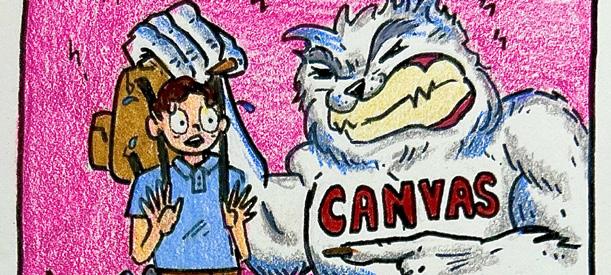
Canvas knows no bounds
Digital learning softwares changed higher education, but that’s come at a price.
+ OPINION, PAGE 6
Proposed county budget cuts spending
By Marin Rosen CITY NEWS EDITOR
Interim Dane County Executive
Jamie Kuhn unveiled her 2025 county budget proposal on Sept.18 totaling $903 million, a nearly 7% decrease from 2024.
The Dane County budget differs from the Madison city budget, which faces a $22 million deficit for 2025. While the city is asking residents to vote to pass a referendum to raise property taxes in hopes of closing the budget gap, Dane County is planning on spending less than it did last year. The decrease in spending comes as pandemic-era federal aid is set to expire.
Kuhn’s budget proposal includes an $813 million operating budget, over
$23 million less than last year. The proposed capital plan is $90 million, a 49.54% decrease from the $179 million approved in 2024.
The proposed tax rate is $2.57 per $1,000 of equalized value, the lowest it has been since 2010.
The budget proposal focuses on Dane County families and includes additional funds to the Dane County Joining Forces for Families to “increase capacity to provide housing connections in the northwest region of Dane County,” according to a Sept. 18 press release.
The proposal also includes additional staff support in the Dane County Veterans Service Office and funding to establish a new Dementia Care Unit in
Adult Protective Services.
“As we see changes in the economy, our goal in this budget is to prioritize community needs by identifying and funding gaps in services and ensuring we are being good stewards of taxpayer dollars,” Kuhn said in a statement.
Highlights of Kuhn’s 2025 budget proposal include:
• $10 million to the Affordable Housing Fund
• $10 million to the Dane County Conservation Fund
• $16.6 million invested in highway projects
• Maintaining core services across departments
• Funding to improve the Alliant Energy Center
The 2025 budget proposal will move to the County Board of Supervisors for consideration. The finalized budget is scheduled to be released in late October, according to the press release.
The County Board plans to hold public hearings Oct. 9.
The Dane County Executive election, on Nov. 5, between Sen. Melissa Agard, D-Madison and former District 13 Dane County Supervisor Dana Pellebon will determine the next county executive. The winner of the election will have the power to approve or veto the budgets once in office.
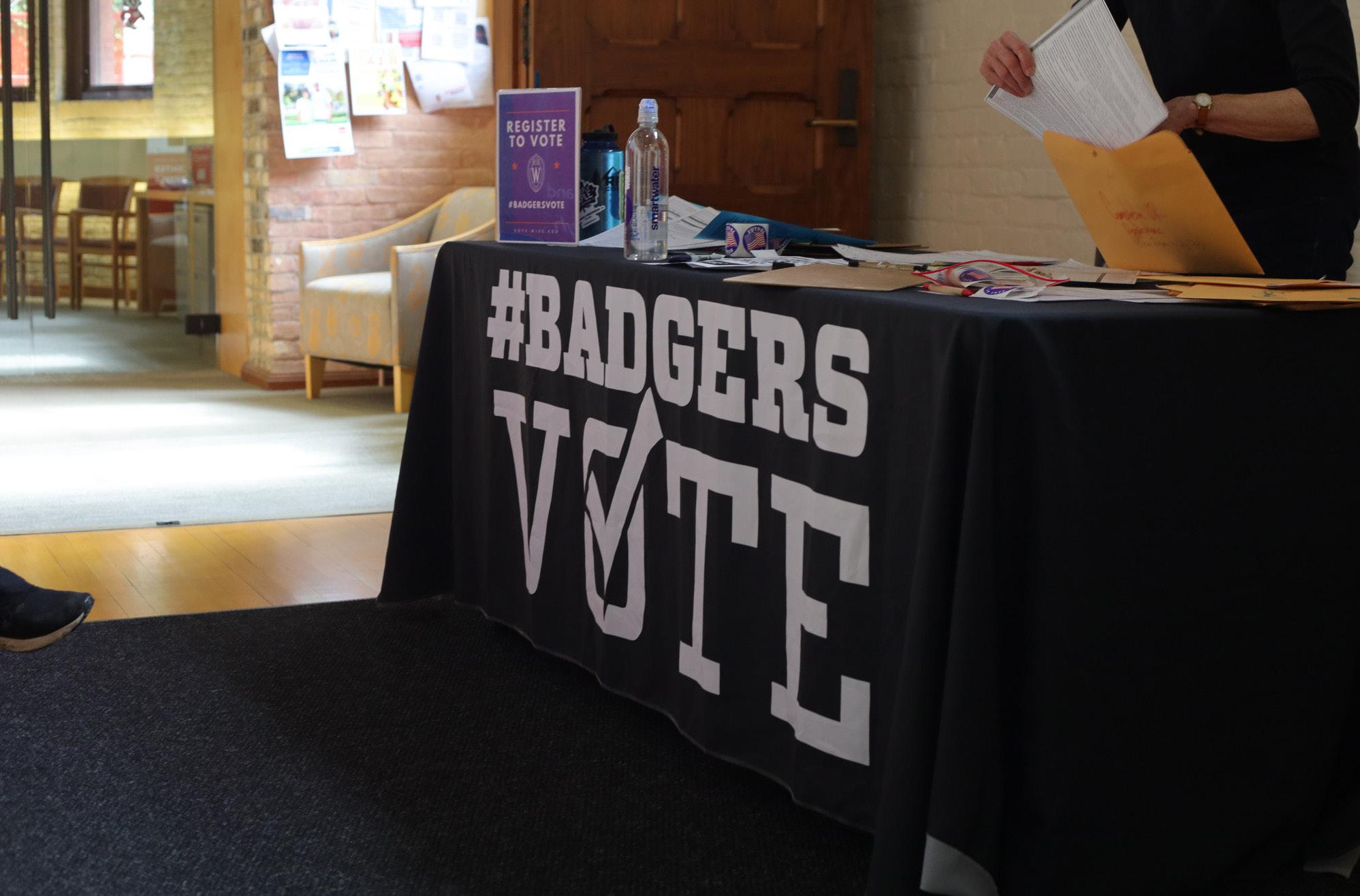
Stricter ID laws make voting hard for some. In Wisconsin, that can make a difference
By Nick Bumgardner
SENIOR STAFF WRITER
In 2011, Wisconsin shifted from one of the most accessible states for voting to enacting stricter rules that ignited a lasting debate over voter access. The law, signed by former Gov. Scott Walker, requires voters to present photo ID at the polls, a measure that Republicans argue strengthens ballot security.
Nearly a decade of legal challenges followed over its effect on voter access, with advocates pointing to its disproportionate impact on marginalized groups. Black and Hispanic voters may be twice as likely to lack photo ID accepted for voting in Wisconsin compared to white voters, according to the ACLU, who filed a suit against the law in 2011. A federal judge ruled the law unconstitutional in 2014, a decision overturned later in the year by a federal appeals court.
The 2016 race, the first since the law came into effect, saw the lowest turnout for a presidential election in the state since 2000 at only 69.4%.
Disproportionate impacts on turnout can swing outcomes in a battleground state like Wisconsin, where elections have a history of razor-thin margins. Since 2000, four of the last six presidential elections in Wisconsin have been decided by less than 1% of the vote. And out of more than 2.9 million ballots cast in the state in 2020, former President Donald Trump won over Hillary Clinton by only 22,748 votes — less than UW-Madison’s undergraduate enrollment alone.
Decades-old research shows that stricter voter ID laws disproportionately disenfranchise racial minorities and lower-income individuals, while a 2017 study from the University of WisconsinMilwaukee found that Black and Hispanic adults in Wisconsin were as much as 30% less likely
than White adults to possess valid driver’s licenses under the new law despite being otherwise eligible to vote.
A study following the 2016 election by University of WisconsinMadison political scientists found a drop in accessibility through the early 2010’s as Republicans took control of the state government and the voter ID law was established.
As many as 8,000 to 17,000 voters in Dane and Milwaukee — the two counties with the most Democratic and Black voters — were deterred from voting in 2016 explicitly due to the ID law. Of those, about 8 in 10 voted in the previous election.
Voter ID laws deter voters who are more sensitive to convenience or believe they lack proper ID, therefore causing systematic disenfranchisement. These disproportionate side effects may come with little return in election security.
Voter ID law limits voter turnout, expert says
Some experts are wary to claim the 2016 study which shows the new law made a significant difference in the election outcome. Barry Burden, director of the Elections Research Center and political science professor at UW-Madison, told the Cardinal a decline in overall 2016 voter turnout “is probably the result of multiple factors, including the voter ID law.”
But the authors of the study, retired UW-Madison political scientist Dr. Kenneth R. Mayer and Ph.D. student Michael G. DeCrescenzo, stressed that the law still deterred many eligible Wisconsin residents from casting ballots. Most of the people who said they did not vote because they lacked ID actually possessed qualifying ID.
The study is also a lower bound on the true number of excluded voters as
it does not account for those who were prevented from registering in the first place, they said.
“While the total number affected in Milwaukee and Dane Counties is smaller than the margin of victory in the 2016 presidential election, that is the wrong measure,” Mayer said in a press release of his study. “An eligible voter who cannot vote because of the ID law is disenfranchised, and that in itself is a serious harm to the integrity of the electoral process.”
Proponents of the law downplayed the confusion portrayed by opponents of the law and argued it provides necessary voting security. Republican lawmakers who championed the rule believed confusion surrounding the law to be hyperbole, citing the ubiquity of photo ID requirements.
“There was no evidence from media reports or court records of significant voter fraud before the
voter ID law went into effect, and there is no evidence that voter crimes decreased or public confidence in elections improved as a result of the law,” Burden said, adding that the rare cases of true voter fraud “are generally not trying to impersonate other voters, which is the only fraudulent act that a voter ID requirement addresses.”
How the law impacts UW students, what is required to vote
UW-Madison has a robust history of student civic engagement. About 85% of eligible students were registered to vote in the 2020 election, and 72.8% voted. In 2022, the university saw the highest voter turnout in the Big Ten.
But more than one in four eligible students are still left out of the democratic process, many of whom did not vote due to convenience issues.
Under the photo ID rule, Wisconsin student IDs are only accepted if they include a name, signature, photo and an issue and expiration date within two years. This means that Wiscards are not sufficient photo ID, though other universities like UW-Eau Claire have made their student IDs compliant. Driver’s licenses are also only accepted if they are from Wisconsin.
All U.S. citizens who will be 18 years of age on or before Election Day and have resided in Wisconsin for at least 28 consecutive days before Election Day are eligible to vote if they are able to give photo ID along with proof of residency such as a utility bill, apartment lease or university proof of enrollment.
UW students who do not have access to compliant ID can request a free card from the university.
Continue reading @dailycardinal.com
“…the great state University of Wisconsin should ever encourage that continual and fearless sifting and winnowing by which alone the truth can be found.”
JONATHAN MINTZ/THE DAILY CARDINAL
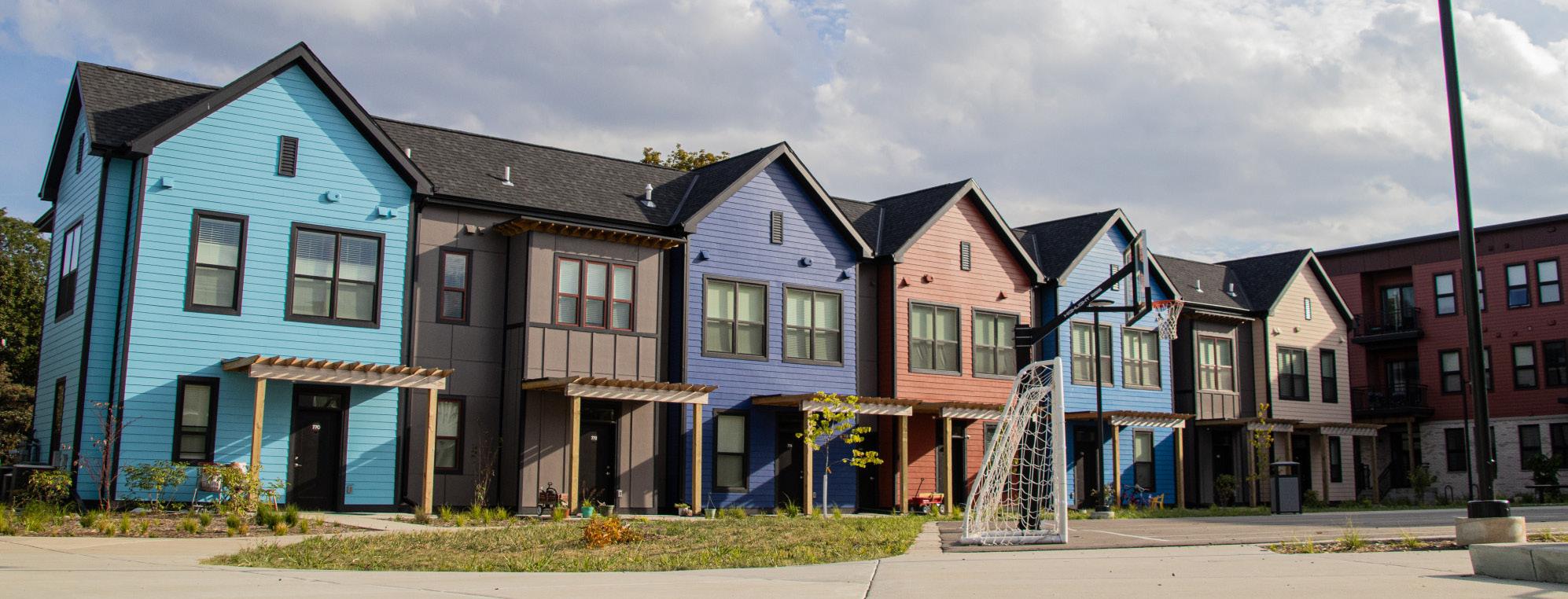
Bayview builds community from history of marginalization
By Jenasea Hameister STAFF WRITER
Nestled in the Greenbush
Neighborhood at the heart of downtown Madison sits Bayview, a small community whose history juxtaposed collective progress and challenging barriers but has always served as a sanctuary for people of color, immigrants and refugees.
The land on which Bayview rests is home to communities that trace back to the Oneota and Ho-Chunk peoples. These tribal communities occupied the land for hundreds of years before being forcibly removed in the early 1800s.
From 1910 to 1962, Jewish, Italian and Black communities inhabited the land until the desire for urban renewal removed and displaced the residents. These decisions, made without the consent of the former residents and centered around contentious
issues such as affordable housing and racism, sparked community activism that created The Bayview Foundation in 1966.
Now, Bayview is a nonprofit organization that provides supportive services and affordable housing to low-income residents. Bayview has “86 two- and three-bedroom townhomes and apartment units and a community center located in the middle of the housing development,” according to its website.
After years of planning, Bayview began its redevelopment project to upgrade its housing units and community center. With a history so rooted in displacement, Bayview wanted to ensure its redevelopment would not displace its residents.
To achieve this goal, Bayview chose to redevelop in a phased approach, with all of the improvements being guided by the people that live in Bayview townhomes. By
the end of redevelopment, projected to complete in 2025, Bayview will go from housing about 300 residents to more than 500 residents and open a community center about twice the size of its current design.
Bayview and its residents also pride themselves on the artistic approach they’ve taken while redeveloping.
“By the time this whole redevelopment is done, we’re gonna have 20 public art pieces inside and around the campus,” Bayview Development Director Katherine Davey told The Daily Cardinal. “It’s almost going to be like a public art garden.”
The creation of one artistic piece visible while driving past Bayview a mural called “Hope Finds a Home” showcased on the side of a housing unit that faces Regent Street, involved heavy community input, Davey said.
“That mural came from hours of
meetings with residents to choose the theme, to develop the concepts and then there were three community artists who worked with people to actually paint the segments,” Davey said.
The nonprofit also provides community members a plethora of services, Bayview Program Director Nate Schorr told the Cardinal.
“So much of what we do from a programming side, from just a community center in general, is to attract people here with different services,” Schorr said. “We have a community meal every day, and it’s just so people can bump into each other and know their neighbors, know their community and know people who are different from them.”
Interactions between people at Bayview are less transactional because of how people at the community center and in the townhomes constantly contribute back to the community, Schorr said.
Schorr believes Bayview’s true sense of community building is what sets it apart from other nonprofit organizations and community centers in Madison.
“There is an underlying ethos to the work that we do here, which is being a place that people feel accepted and comfortable, where they can get the services they need and where they can come for not necessarily a prescribed purpose, yet still feel connected to other people,” Schorr said. “Bayview is a place that is open to the whole community.”
Mecha attributes disaffiliation to ‘hostile’ disciplinary investigation, records show
By Mary Bosch PHOTO EDITOR
Mecha de Teejop, formerly Mecha de UW-Madison, cited their June 17 disaffiliation as a result of “hostile” university investigation tactics, including a “pattern of harassment and intentional intimidation of our already vulnerable Latine, Chicane and Indigenous members” in a statement announcing their independence from the university.
The University of WisconsinMadison Committee on Student Organizations (CSO) later found Mecha not responsible after investigation for antisemitic chalkings found at the Dane County Farmers’ Market.
Documents obtained by The Daily Cardinal show Mecha members criticized the UW-Madison Office of Student Conduct and Community Standards and Student Affairs staff members for engaging in intimidation tactics, hostility and “McCarthyism.”
UW-Madison Dean of Students Christina Olstad initially suspended Mecha on May 6 during an OSCCS investigation into the chalkings.
Records show UW-Madison Hillel President Greg Steinberger and other students, parents and alumni alleged members of Mecha and Anticolonial Sciences — another now disaffiliated student organization — co-hosted a chalk-
ing event that resulted in chalkings that endorsed violence, supported terrorist organizations and contained antisemitic comments.
The investigation originated from the Cardinal’s initial coverage of the chalkings and focused mainly on a shared Instagram post from Mecha, Anticolonial Sciences, Madison for Palestine and other groups advertising the chalking event.
Mecha members told Assistant Dean of Students Tonya Schmidt they were not present at the chalking event but could not speak for other Mecha members and said they did not directly coordinate the chalking.
Mecha students said, “no one who created those graphics was from Mecha, it was only shared by us,” in a meeting with principal investigator Schmidt and Mecha advisor Ketzhally Lopez.
Some Mecha members said they believe“they [were] being targeted by someone saying their group chalked something that wasn’t chalked to get their group in trouble” in a meeting regarding the investigation May 22.
After their suspension, Mecha was barred from their space in the Red Gym. Members said they were locked out of their space before being notified of the suspension according to obtained documents. This comes after university officials temporarily relocated Mecha to the Red Gym due to Levy Hall
construction disruptions.
“For her to change the locks on the door of our space before the letter was sent sends a message of hostility,” Mecha members said. It symbolized that “[Olstad] thinks we’re guilty.”
Student Affairs requested the lock to Mecha’s office in the Red Gym be changed the day that the organization received its interim suspension notice on May 6, according to Student Affairs Communications Director Jenny Bernhardt.
In addition, they voiced concerns about the Cardinal report that formed the basis of their investigation, including accusing the Cardinal of using language that, “more quickly admonishes certain groups like Chabad who bragged about killing babies,” and makes groups like Mecha de UW-Madison feel alienated by their coverage of the chalking event.
Following the May 22 meeting, Schmidt sent an email with additional questions about the chalking Instagram post on May 24, followed up on May 29 and emailed June 7 inquiring which students have access to the Mecha Instagram account.
Schmidt gave a response deadline of June 12 and after not receiving a response, Schmidt sent an additional investigatory letter charging Mecha with “Possessing or Providing False and Misleading Information” by “withholding related information.”
Following a second investigation for withholding information from Schmidt, CSO advisor Aaron Vieth also began communicating with Mecha and sent emails to the RSO’s entire mailing list after not receiving a response. He said if he did not receive a response by June 18 he would open an investigation into Mecha for withholding information and require interviews with every student in the organization. Refusal to participate in an interview could result in an individual being charged with failure to comply with a reasonable request under UWS 17.09(11), according to emails sent from Vieth to Mecha members.
Ketzhally followed up about possible outcomes of the investigation for students and the organization on June 17 before sending the notice of disaffiliation later that day.
“It’s clear that your escalation and disposition from the May 22 meeting is an intimidation tactic,” Katzhally said in an email.
In Mecha’s disaffilation letter they accused Student Affairs of being “more concerned with thought-terminating accusations of antisemitism and compliance with international waves of McCarthyism than with taking a stance on the genocide of Palestinians happening in real-time.”
JOHNATHAN DYE/THE DAILY CARDINAL
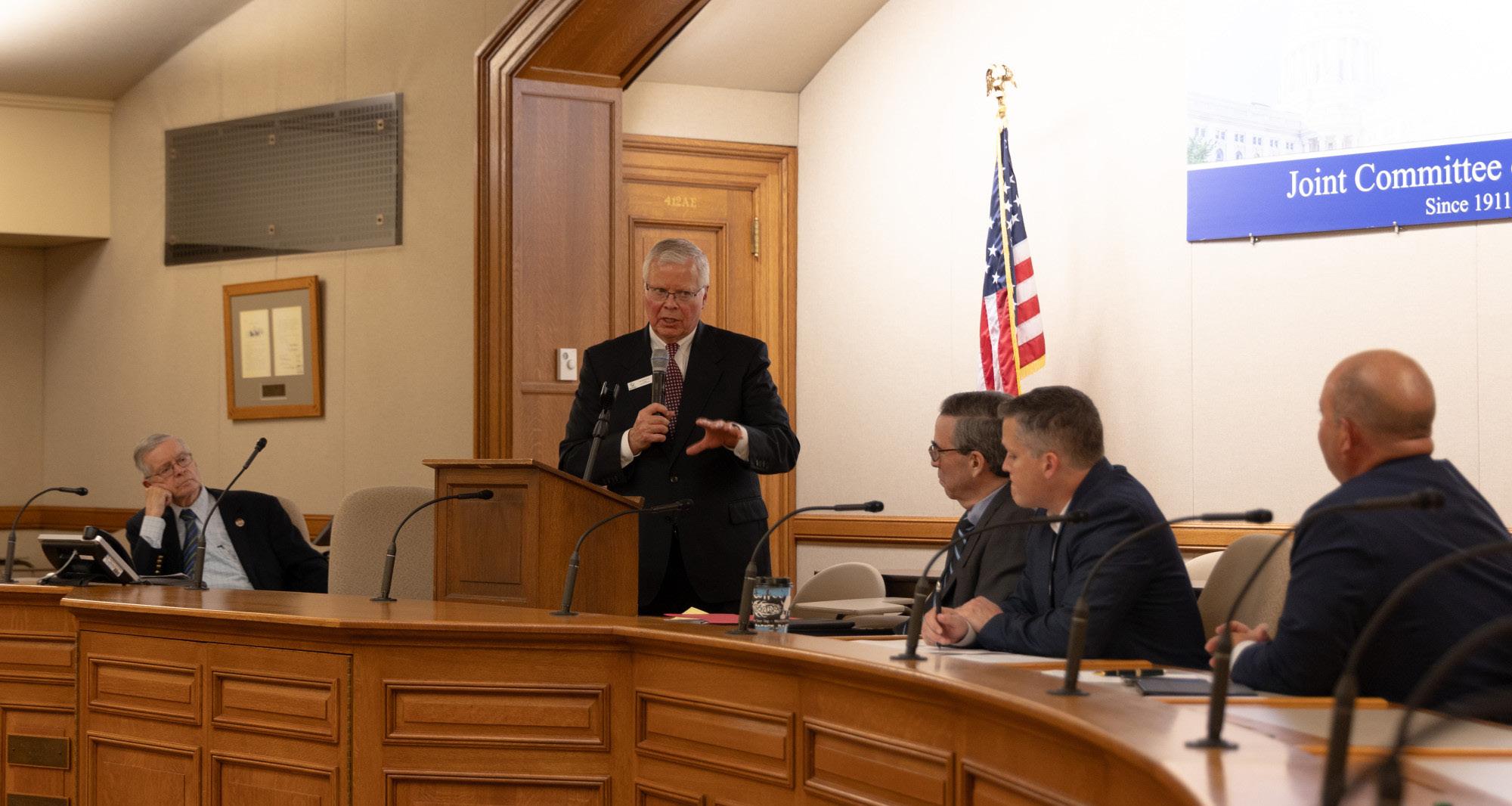
Rothman defends free speech policies to conservative groups
By Bryna
President Jay
defended recent campus policies restricting expressive activity and UW leadership statements during a keynote address Friday.
Rothman focused on restoring a “quality of dialogue” and boosting free speech across the UW System at the Capitol during an event hosted by Free Speech for Campus, Wisconsin Association of Scholars (WAS) and Wisconsin Institute for Citizenship and Civic Dialogue (WICCD). WAS is a conservative-leaning group founded in 1987 to preserve “Western intellectual heritage.”
In his speech and subsequent panel discussions, Rothman focused on boosting primarily conservative speech through past and current UW System initiatives such as WICCD, a UW System-led initiative that promotes “civil dialogue in a robust marketplace of ideas,” according to their website.
“We didn’t get to this point overnight,” Rothman said, asserting a free speech crisis across the UW system.
Expressive activity and institutional neutrality
Rothman addressed two UW policies: expressive activity and institutional neutrality that have made waves in recent weeks.
The Expressive Activity Policy restricts certain “expressive activities” within 25 feet of university facility entrances and imposes size limitations for signs in buildings, specific sounds and restrictions on protest activity during select times on campus areas.
A constitutional law expert and ACLU of Wisconsin lawyer told The Daily Cardinal the policy may be unconstitutional since it is vaguely defined and could infringe on “perfectly constitutional First Amendment conduct.”
The University of WisconsinMadison also adopted a policy of institutional neutrality, where the university and their representatives will “generally refrain” from making statements on controversial topics on behalf of the university.
Rothman said these policies were in line with UW System’s adherence
“Our adherence to the First Amendment requires that these policies be applied equally, without consideration of the viewpoint,” Rothman said. “Indeed, the First Amendment protects a broad range of speech, including speech that many may find disturbing, offensive, even reprehensible.”
Rothman voiced his hope that these policies will allow students with differing viewpoints to share their opinion, noting the 2022-2023 UW System free speech survey, which found that students feared ostracization from peers when speaking about controversial topics such as abortion
Rothman’s perspective
Rothman also outlined the factors he believes is leading to a decrease in the “quality of dialogue” across campuses: political polarization, cancel culture, social media, echo chambers, irritability and lack of listening to other perspectives.
Citing the free speech survey, Rothman said one third of students believe administrators should not invite or disinvite controversial speakers or visitors if their message is offensive.
Rothman called many of these issues “systemic,” and said it would take the UW System a long time to address them, but hailed initiatives like deliberation dinners — where students read and discuss multiple sides of controversial topics — and the new free expression training module required for freshmen – as steps in the right direction for UW-Madison.
Speakers tackle “mistreatment” of conservative students
With a focus on freedom of expression, discussion quickly turned to the dominance of liberal viewpoints on college campuses.
Former UW-Madison political science professor Ryan Owens said conservative students are “mistreated” on campus and supported a broadening of the political spectrum on campuses. Owens addressed alleged systemic issues that lead to a lack of political diversity of speech, comparing university approaches to racial and gender differences.
Ben & Jerry’s is bringing free Harris-inspired ice cream to Madison
By Kayla Dembiec STAFF WRITER
Ben & Jerry’s is partnering with advocacy group MoveOn to bring free ice cream to Madison on Oct. 5 as part of their “Scoop the Vote” movement, which aims to connect with voters ahead of the upcoming presidential election.
MoveOn’s “Scoop the Vote” tour will stop in more than 20 cities within battleground states, and rallies celebrating Vice President Kamala Harris and Gov. Tim Walz will be held in conjunction with an ice cream truck in Ann Arbor, Madison, Phoenix and Las Vegas.
MoveOn, a progressive public policy advocacy group and political action organization, supports causes such as health care reform, climate change action, social justice and electoral reform.
Owens referenced the Foundation for Individual Rights in Education (FIRE) survey, which found conservative students feel their viewpoints are dominated by liberal arguments across campus.
“We would not tolerate the kind of imbalance that we see in universities today, if we were talking about race or sex, if we were to say, well, this is a one professor at a time dynamic,” Owens said. “It has to be a much more engaged, energetic and active approach to address that remedy.”
Protests and free speech
Protests stemming from Israel’s ongoing war in Gaza also became a focus of speakers, many of whom defended the police raid last May on the pro-Palestine encampment at UW-Madison.
“Generally, protests are only good at generating headlines,” said Michael Moscicke, a policy director for State Senator Rachael Cabral-GuevaraI. “I think if we focus too much on them, if we give them more attention, they’re just going to generate more headlines and become more successful.”
Rothman also said lawful protest wasn’t the issue and praised UW-Madison Chancellor Jennifer Mnookin for sending in the police to dismantle the protests.
“Students that are protesting lawfully, God bless and go for it, even if I absolutely disagree, go for it,” Rothman said. “But while we must uphold the First Amendment, we must also uphold the law where organizations and students are engaged in conduct that violates student organization codes just plain illegal.”
Looking forward
When asked for immediate efforts for improving free speech on campus, Rothman said it would take time, but he is optimistic students are moving in the right direction.
He elaborated on WICCD’s request for $2.5 million from the state Legislature, where he said a portion of that money would “certainly” go to WICCD and the rest would go to campuses.
Rothman said he would like WICCD to have a national director to encourage free speech on campuses outside of Wisconsin.
end of the day, all you’ve got is some drips down your shirt. Go big. Scoop the vote,” Cohen said on MoveOn’s website.
Special edition pints of “Kamala’s Coconut Jubilee,” a coconut-flavored ice cream layered with caramel and topped with patriotic star sprinkles, will be raffled online.
The University of Wisconsin-Madison has been nationally recognized for its student voter turnout, and MoveOn hopes to continue encouraging students to vote with their tour. Voter turnout among UW-Madison students reached 55.8% in 2022, compared to the national voting rate of 30.6%.
Co-founders Ben Cohen and Jerry Greenfield created an ice cream truck for MoveOn to take on tour through key battleground states as part of a push to register voters while raffling off their limited-edition Kamala Harris-inspired ice cream flavor.
Additionally, the tour will feature elected officials, activists and other special guests. At each stop, MoveOn will help attendees make a plan to vote by Nov. 5 and show them how they can assist friends and family with voting.
Ben & Jerry’s will serve a variety of election-themed ice cream flavors, such as “Unburdened by What has Vanilla Bean,” “Inauguration Celebration Birthday Cake,” “Fight For Our Rights Sorbet” and “MoveOn Mobilizer Milk Chocolate.”
“You can lick and say you care all you want, but if you’re not going for the big scoop — to get registered and vote — at the
“For some students, the 2024 general election may be one of the first elections they may be voting in or their first time voting away from home, so we are creating space to spark conversation and civic community over a sweet treat,” Britt Jacovich, a spokesperson for MoveOn, told The Daily Cardinal. “We are reaching beyond traditional methods of voter outreach to find creative ways to connect with communities through common experiences like getting ice cream with a friend.”
It’s no coincidence MoveOn’s visit to Madison will fall on the same day of the Wisconsin Badgers football game against the Purdue Boilermakers.
“We’re coming to Madison on game day since we know Badger fans will be out and about and ready to celebrate,” Jacovich said. “Ice cream is as beloved as an institution as college football is in Madison, and it aligns with our goal to meet voters where they are.”
The event in Madison will be held at noon on Oct. 5, with the location to be announced.
Goeking & Ellie Huber
ARTS EDITOR & STAFF WRITER
University of Wisconsin System
Rothman
to the First Amendment.
ELLIE HUBER/THE DAILY CARDINAL
ELLIE HUBER/THE DAILY CARDINAL
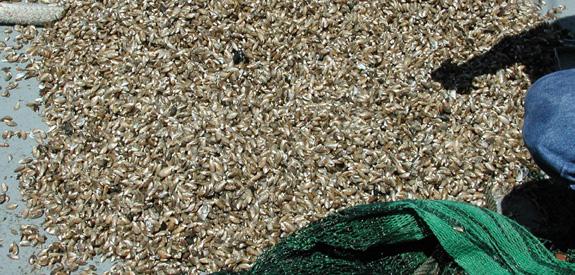
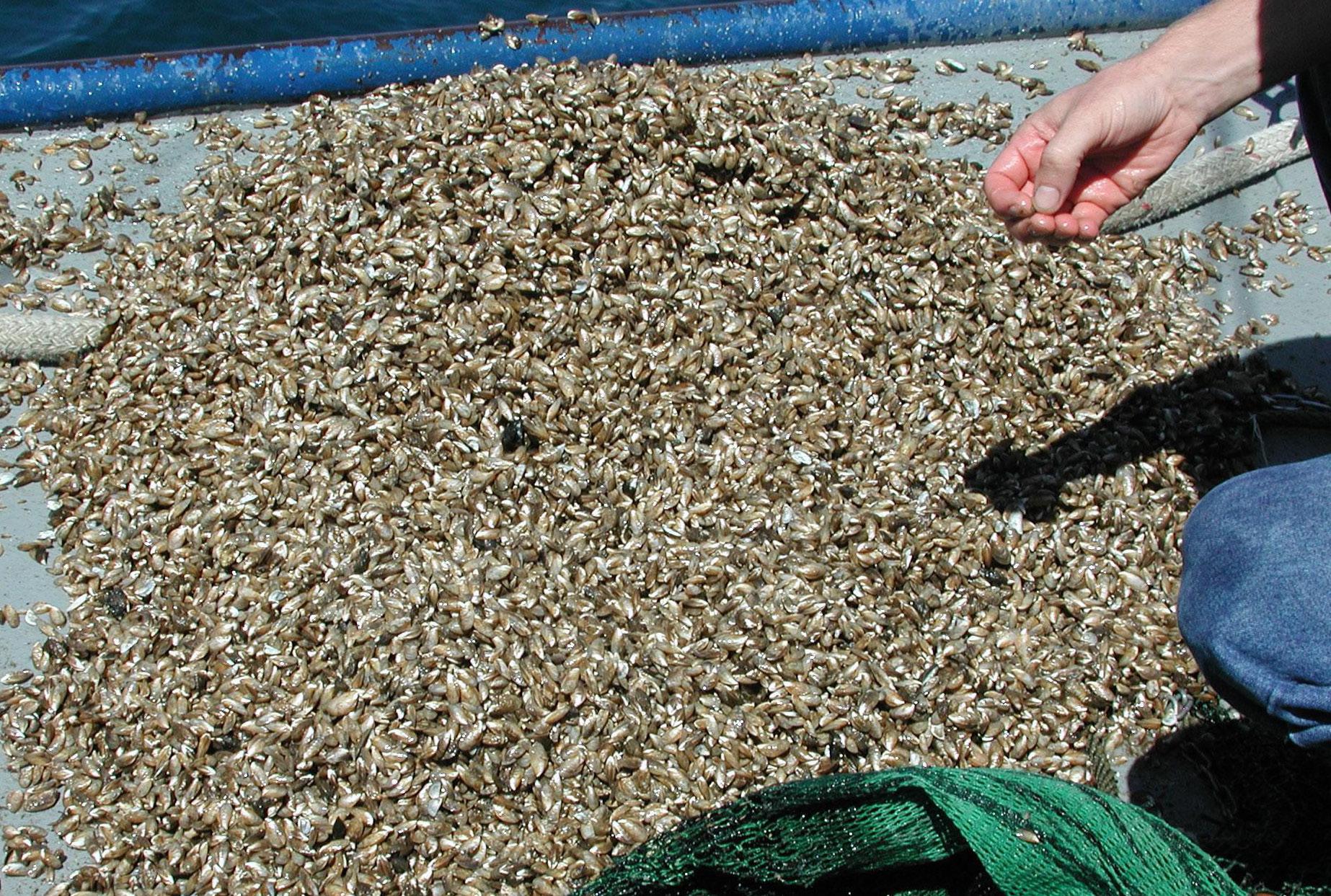
Invasive mussels in Lake Geneva deepen Wisconsin’s water crisis science
Quagga mussels, an invasive species first discovered in Lake Geneva, threaten the ecological balance of Wisconsin’s lakes and motivate new conservation efforts.
By Elaina Russell STAFF WRITER
I
n a concerning development for Wisconsin’s cherished lakes, local and state officials discovered invasive quagga mussels in Geneva Lake last month, marking the first recorded presence of this species in an inland lake in the state.
The find, confirmed by the Geneva Lake Environmental Agency (GLEA) after routine monitoring, raised significant environmental concerns among advocates and local communities alike.
What are quagga mussels?
Quagga mussels (Dreissena rostriformis bugensis), native to the Dnieper River in Ukraine, were first introduced to the Great Lakes in 1989, likely through ballast water from international shipping. They have spread rapidly across North America since then, outcompeting native species and disrupting local ecosystems.
Unlike zebra mussels, another invasive species that poses a threat to freshwater environments, quagga mussels have demonstrated a greater capacity for adaptation and resilience. They thrive in colder, deeper waters, allowing them to inhabit a broader range of ecosystems.
“Knowing what we know about quaggas and their ability to live on soft bottoms, it will be very important to monitor how they do in inland lakes,” said Jake Vander Zanden, professor and director of the Center of Limnology at the University of Wisconsin-Madison.
Quagga mussels can also filter vast amounts of water, leading to increased clarity but ultimately reducing the population of phytoplankton that are crucial for the food web. As these mussels proliferate, they can alter nutrient cycles and affect the growth of aquatic plants and animals, potentially leading to significant ecological imbalances.
Quagga mussels disrupt local ecosystems
The introduction of quagga mussels into Geneva Lake raised alarms about the potential ecological repercussions not just for the lake itself, but for Wisconsin’s waterways as a whole, including Lake Mendota. As the largest lake in the Madison area, Lake Mendota is home to a diverse array of fish and other aquatic organisms.
The interconnectedness of Wisconsin’s waterways means that an invasive species in one lake can easily spread to another through boat traffic, fishing gear or natural water movements.
Lake Mendota faces its own set of challenges from invasive species, such as zebra mussels and the spiny water flea, which have already disrupted local ecosystems. The introduction of quagga mussels could exacerbate these issues, further threatening the lake’s biodiversity and the recreational activities that depend on it. Anglers, boaters and nature enthusiasts who frequent these waters may find their experiences diminished as invasive species take hold.
Olson is joined by his paralegal, Kelsie Kufhal, who plays a crucial role in supporting this initiative.
The discovery of quagga mussels in Geneva Lake galvanized local communities and environmental advocates to take action. James Olson, a Wisconsin resident and attorney at LawtonCates, is spearheading an essential environmental initiative focused on addressing the critical issue of aquatic invasive species in the state’s lakes.
This initiative centers around the “home lake” rule and targets wake boats, which can unintentionally transport invasive species between water bodies.
The initiative highlights the urgent need for preventive measures in response to the recent discovery of quagga mussels in Geneva Lake. Olson encourages community members to participate in monitoring efforts and practices for preventing the spread of invasive species.
Collaboration among local agencies, environmental organizations and state officials will be crucial in developing effective management strategies. The Wisconsin Department of Natural Resources is expected to play a significant role in these efforts.
Dairyland Power Cooperative awarded $579 million to accelerate clean energy transition
By Rusal Ferus STAFF WRITER
Dairyland Power Cooperative, one of western Wisconsin’s largest energy providers, received $579 million from the Biden administration Sept. 5 to enhance wind and solar energy in rural Wisconsin.
This funding is part of the new Empowering Rural America (ERA) grant, which will provide around $9.7 billion to major rural electrification groups throughout the United States. The award will enable the production
of 1,020 megawatts of renewable energy and reduce pollution by approximately 3.3 million metric tons annually through eight total solar and wind projects across the four states the cooperative serves.
The ERA program is part of the 2022 Inflation Reduction Act and is a large initiative from the Biden-Harris administration’s plan to improve rural economies through the construction of clean energy and climate infrastructure. It’s the largest investment in rural electrification since President Franklin Delano Roosevelt signed the Rural
Electrification Act into law in 1936.
New ERA will drive substantial carbon reduction across the Dairyland system, facilitate new economic growth and job creation, promote environmental stewardship and lower energy costs for rural and agricultural communities,” Dairyland Power Cooperative President and CEO Brent Ridge said in a statement. With this transition, Dairyland’s customers will see their electricity bills decrease by an estimated 42% over the next decade.
Dairyland Power Cooperative, headquartered in LaCrosse, Wisconsin, is made up of 24 distribution cooperatives and 27 municipal utilities across Wisconsin, Iowa, Illinois and Minnesota. The cooperative aims to diversify its energy sources — including wind, solar, natural gas, coal, hydro and biogas — to provide reliable energy to their customers.
The Dairyland Power Cooperative has already cut its coal production by 579 megawatts since 2014 and will continue to cut down their coal investments with this funding, according to a press release.
These projects aim to lower pollution and improve health for vulnerable populations, including children and people ages 65 and older, who are at high risk of respiratory and cardiovascular illnesses. Moving away from fossil fuel energy also aids in mitigating climate change stressors, like extreme weather and heat.
The Clean Energy Community Initiative, a collaboration with the University of Wisconsin-Madison College of Engineering, Department of Life Science Communication and the Nelson Institute for Environmental Studies, assisted Dairyland through the grant proposal process, focusing on community engagement, energy justice and job development. The initiative champions community engagement to accelerate the clean energy transition in Wisconsin.
“We have created a partner network to support such large-scale cleanenergy projects to aid in an equitable execution along community priorities and needs, and to leverage the projects for sustainable community benefits through career perspectives and the advantages of technology innovation,” Oliver Schmitz, director of the Grainger Institute for Engineering at UW-Madison, said in a statement.
The Clean Energy Community Initiative will continue supporting Dairyland through establishing a farmer benefit and union engagement plan to facilitate engagement between the community and different stakeholders.
“Renewable energy is the path forward. It immediately improves lives through cleaner air and more affordable bills, bringing prosperity and better health to rural Wisconsinites,” Abby Novinska-Lois, the executive director of Healthy Climate Wisconsin, said in a statement.
Discovery sparks community conservation efforts
COURTESY OF GREG MARKS VIA NOAA GREAT LAKES ENVIRONMENTAL RESEARCH LABORATORY
COURTESY OF DOMINION RESOURCES GREENTECH INCUBATOR VIA FLICKR
Black Pumas hypnotize the Sylvee with psychedelic soul arts
By Rebekah Irby ARTS EDITOR
Neo-soul band Black Pumas brought down the house with psychedelic R&B beats at The Sylvee Sept. 13 — Friday the 13th — continuing their “Chronicles of a Diamond” tour.
The crowd — an eclectic group of a youthful indie crowd mixed with old-school soul music lovers — immediately was on their feet when opening act Chicago artist Ric Wilson took to the stage. Playing “We Love Us,” Wilson started the show with his funk-infused rap, chalk with throbbing drums
and saxophone solos. Wilson electrically break-danced across the stage, encouraging the crowd to dance and chant along as Wilson called “power to the people.”
When the Pumas opened their set with “Fire,” flashing red lights filled the stage, sending the crowd screaming at the familiar pounding rhythms laced with sharp notes from the electric guitar.
Eric Burton’s glorious vocals rang through the theater, reminding attendees that soul is not an entirely dying genre. Mixing new-aged rhythms
with classic blues and jazz, the Pumas created a unique sound that calls back to their Southern roots while simultaneously celebrating the origins of funk and soul. Along with Burton, guitarist and producer Adrian Quesada crafted a sound that manages to be both classic and nuanced.
Continuing the set, the Pumas played hits like “Know You Better,” “Black Moon Rising” and “Stay Gold.” During “More than a Love Song,” lead singer Burton jumped past security to join the crowd. Swarming Burton, the crowd sang along as Burton sang beloved lyrics “fly together.”
But in true Pumas fashion, the performance was both sultry and vivid, ending on a high note as the Pumas performed their Grammynominated hit “Colors.” The crowd erupted as Burton sang the famous lyrics “My sisters and my brothers, see em’ like no other. All my favorite colors,” as rainbow lights flashed across the stage.
Exiting the stage, the crowd cheered for Burton and the Pumas crew to come back on. For their encore, Burton reentered the stage to solo perform a reverb rendition of Tracy Chapman’s “Fast Car.” Starkly different from the fast pace of the previous tracks, the song showed a vulnerable Burton lamenting on his path to fame. For their grand finale, the Pumas finished with “Rock and Roll,” a song that perfectly displays the Puma’s blend of funk, rock and soul. Lights raved across the stage in deranged directions as Burton claimed “Who am I? Who are we? Rock and Roll” in epic chaos. At The Sylvee on Friday the 13th, the Black Pumas certainly proved they are rock and roll’s new face.
MSO pulls out all the stops for
99th Season Opening
By Isaiah Trice STAFF WRITER
As Madison Symphony Orchestra’s music director John DeMain stepped onstage for the 99th season opening Friday night, concertgoers thundered with applause for the longtime leader of the ensemble.
After Maestro DeMain conducted the Star-Spangled Banner, he quickly turned to a contemporary work by composer Valarie Coleman titled “Umoja: Anthem of Unity.” Umoja means “unity” in Swahili and represents the first principle in the African diaspora holiday Kwanzaa.
The undertones of that definition were present in the composition’s three-part structure throughout the 12-minute piece. The culturally-inspired piece ended with a grand spectacle from the ensemble, complete with a xylophone and beating crash cymbal signifying a triumphant sense of harmonic unity from its final chord.
Next, the organ was pushed on the stage, and the crowd watched on with curiosity as it was electronically powered on. But the famous backdrop façade of the large pipes in the 20-year-old Overture Hall remained still as statues, not giving any indication that its depths would soon bellow with Belgian Composer Joseph Jongen’s Symphonie Concertante Op.81.
Principal organist Greg Zelek entered the stage with Maestro DeMain to generous applause honoring the organ’s 20th year in service, and soon enough, Zelek started gliding effortlessly across the keys, producing a rich and commanding tone.
Over four distinct movements, Zelek and DeMain balanced the two parts of organ and symphony diligently, maintaining the ability for the organ to be the primary solo instrument while the rest of
the ensemble could still be heard over the bellicose machine.
As the 30-minute piece finished, the hall shook with the low pedal notes from the organ, and the symphony’s brass section filled in the treble registers to create a majestic sound rarely heard throughout concert halls in America. The standing ovation affirmed the idea of a wonderfully executed celebratory performance of the anniversary of the organ’s installation.
After the intermission, concertgoers settled back in their seats and were immediately entranced by the performance of Tchaikovsky’s Variations on a Rococo Theme, Op.33. Solo cellist Tommy Mesa and his 1770’s Italian instrument provided crowds with a calming yet precise execution of the piece. Throughout the eight variations and coda, Mesa gallanty played with expression and nobility, capturing the audience with his impeccable virtuosity.
Maestro DeMain conducted the final piece by Manuel de Falla: the excerpted “Suite No.2” from the famous ballet “The Three-Cornered Hat.” The piece was a comedic one, and the crowd exuberantly laughed at points during the performance. The large ensemble produced a consistent sound even with the chaotic nature of the composition, with the percussion section rounding off the piece with rattling castanets.
The piece included three distinct dances, each varying in their emotion and genre. The first dance was upbeat and lively, the second was calmer and more relaxed, and the third was the longest, showcasing a wide range of styles from the orchestra.
Maestro DeMain and the Orchestra certainly left the audience excited and prepared for a wonderful 99th season, and the two soloists amazed the crowd with their incredible performances.
Local artists prepare for second annual art walk
By Lauren Eno STAFF WRITER
This Saturday, the streets of Emerson East and Eken Park will be flooded with hundreds of art-hungry visitors as local artists open their homes for the second annual Emerson Eken Art Walk.
For Susan Kaye, local ceramic artist and co-organizer, the event is not just about selling pieces, but also building ties within the local art community and the greater Madison area.
Kaye has worked tirelessly with designer and event planner Sara Hinkel, graphic designer Charlotte Easterling and organizer Jen Zoom to manage the website, permits and finances since July 2022. Supported by a larger team of artists and volunteers, they’ve spent countless hours setting up artist signs and folding 600 maps that will guide visitors through the more than 40 featured locations.
“I wanted to have an art walk because I’m an artist. It’s much easier to have an art walk at your own house than to lug your stuff to art fairs,” Kaye said.
The walk is about more than just art — it’s about accessibility. The organizing team doesn’t profit off the event, charging a modest $20 participation fee that is waived for any artist unable to pay. This policy ensures that artists can be showcased in ways that traditional galleries or distant art fairs might not allow, Kaye continued.
Kaye takes pride in this open-door policy.
“We don’t jury anybody,” she said, explaining the only requirement is that all work must be original. This inclusivity has drawn a wide range of participants, from professionals to kids who simply
love to create.
Drawing on advice from nationwide art walk organizers, the local artists invite guest artists to set up at their homes. This strategy keeps the event fresh while fostering a growing network to strengthen the creative scene. Kaye herself is hosting two guests at her home — a hat maker and a fused glass artist — both of whom bring a fresh energy and perspective to entice visitors.
Beyond art itself, the walk is a space for people to discover shared passions. Kaye recalled admiring a beautiful vase at a friend’s house, only to discover it was purchased from her own neighbor during last year’s walk. It’s moments like these that capture the connective power and glory of local art walks.
“What was memorable was just how happy people were — visitors were just thrilled,” Kaye said.
The event draws crowds from the larger Madison area, many venturing to these East Side neighborhoods for the first time. This year, the event will remain open to all through a grant from the neighborhood association and support from Lauer Realty and Dexter’s Pub.
For art lovers, curious neighbors and anyone looking to expand their community, this year’s Art Walk promises to be a celebration of creativity and connection. Come for the art, stay for the community and leave with a newfound wonder for the talent and spirit that make these neighborhoods unique.
CAMERON SCHNEIDER/THE DAILY CARDINAL
CAMERON SCHNEIDER/THE DAILY CARDINAL
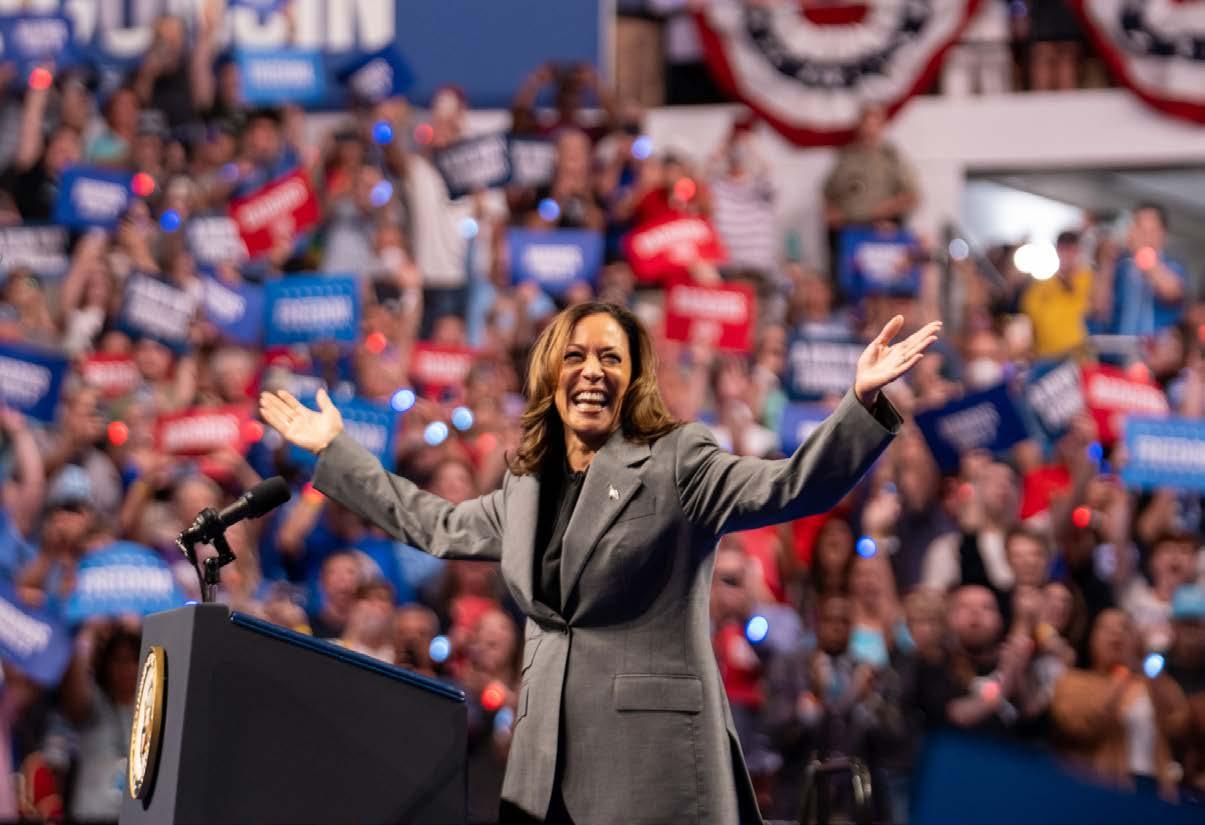
Presidential rallies won’t educate you. That’s your job opinion
By Surya Sethi STAFF WRITER
A campaign rally or a Wisconsin football game?
The atmosphere in the Alliant Energy Center on Friday merged both. Vice President Harris’ team knew what they were doing. They got everyone up hours before Harris even stepped on stage by playing the one song that will get any Wisconsin student on their feet: Jump Around. Shortly thereafter, campaign staff handed out signs reading “Badgers for Harris-Walz” that attendees excitedly waved around.
Much like after a football game, there was a sense of solidarity. Even though it’s a good feeling, it’s not in your best interest to vote based on a feeling.
Local politicians and community leaders spoke fervently of both Wisconsin and national politics to energize the crowd. Speakers, such as Sen. Tammy Baldwin, U.S. Rep. Mark Pocan and Gov. Tony Evers took the podium to share their support for Harris and remind
attendees of the importance of their vote in November.
Then, Harris stepped out. She took her time walking out to “Freedom” by Beyoncé, turning around repeatedly as she made her way to the podium to make sure everyone in the audience could see her clap, wave, point and smile.
Even though I planned on keeping her platform at the forefront of my mind, the energy in the room got the best of me.
For the next 30 minutes, she held everyone in a trance. When she spoke of leading with joy, you could see smiles across the stands. When she spoke about the state of abortion rights, I could feel her conviction and thinly veiled anger. By the time she was done, the stadium was so loud, you could hardly hear the person next to you rushing you to leave before traffic started.
I’ll be honest, it worked on me. I resonated with her frustrations as a woman of color, and I so badly wanted to share her optimistic view
for the future. But as I walked out of the stadium, I contemplated if I truly agreed with her political views any more than I did when I arrived, or if I was caught up in the excitement of seeing, potentially, the next president.
That’s the point of events like these, for you to associate a feeling with a candidate instead of facts and issues. After all, it’s easier to cast a vote when you feel like you know the person than when you’re stuck reading about them online. Coming from a campaign standpoint, it’s a smart move.
But it’s not one we should fall victim to.
Despite her team’s concerted effort to curate a very specific atmosphere, we should remember to remain critical and keep her platform in mind. I was personally reminded of this when I started walking home and saw pro-Palestine demonstrators gathered outside the arena.
There’s a reason why during her debate with former
President Trump, she supported Israel regarding the war in Gaza, yet there was no mention of her support for Israel during her rally. And who’s to blame her? She knows it’s a divisive subject that’s fracturing her Democratic base. This excitement isn’t unique to Harris supporters. No matter the candidate, it’s exciting to see who you’re going to vote for. It’s an opportunity everyone should abso-
lutely take advantage of. But going to a rally and hearing from the candidate themself doesn’t absolve you of your civic responsibility to independently inform yourself of their stances and actions.
Surya Sethi is a sophomore studying political science and international studies. Do you agree that you shouldn’t let a rally determine your vote? Send all comments to opinion@dailycardinal.com.
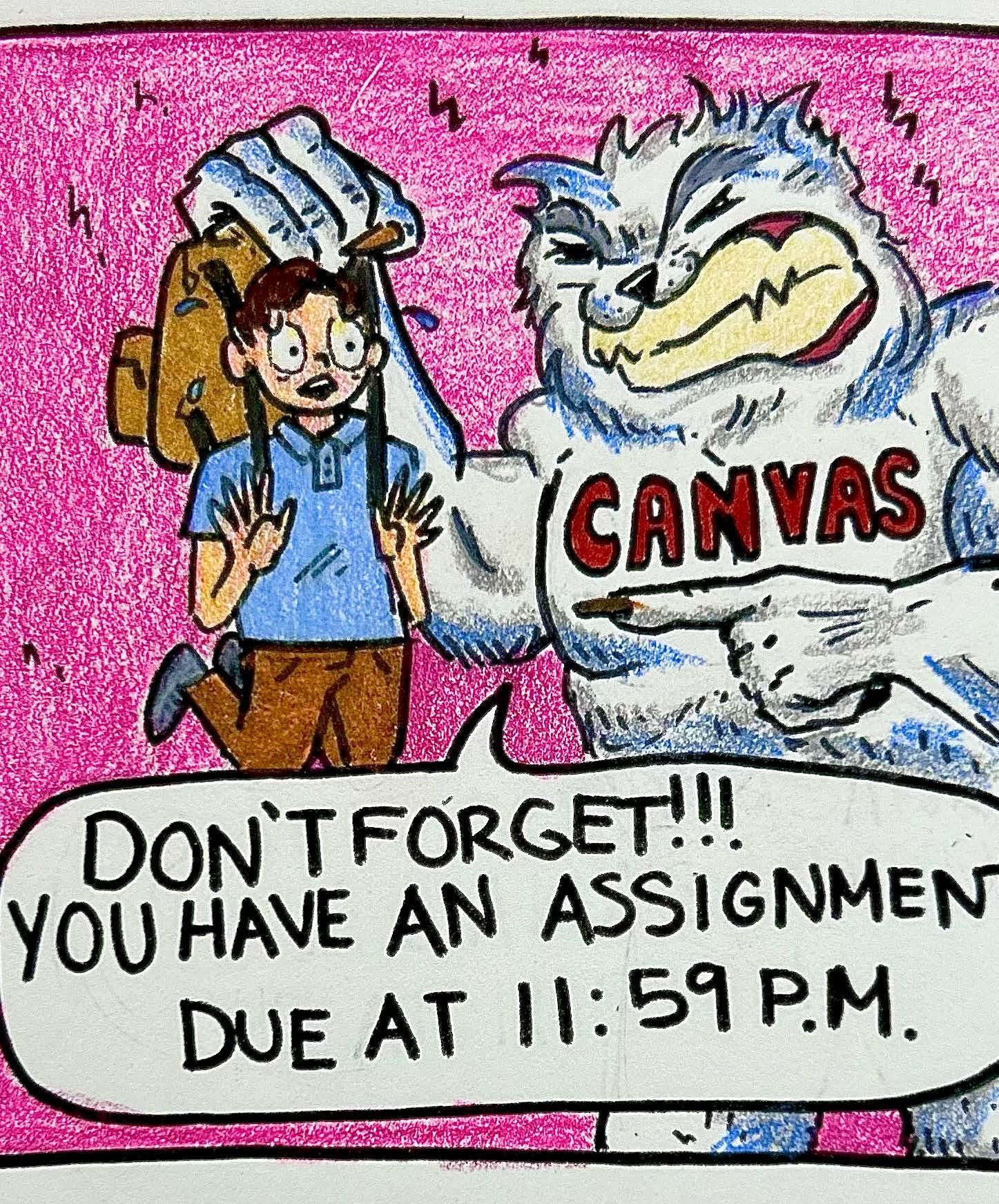
Students have a right to leave the classroom. Canvas isn’t helping
By Blake Martin
OPINION EDITIOR
Nine years ago, the University of Wisconsin-Madison began using Canvas, and it’s difficult for students to imagine a world without it.
If you went to a university in a time before the implementation of Learning Management Systems like Canvas, these softwares allow students to digitally access course materials, review grades, submit assignments and even take exams outside of class. Since 2015, around 99% of universities rely on LMS systems to facilitate their curriculum.
It’s without question that softwares like Canvas have changed higher education forever, connecting students to the classroom at any time and anywhere with internet access. But that doesn’t mean we’re better off.
Students deserve the “right to disconnect” from their learning environments, and for instructors, softwares like Canvas have made that too easy to forget.
For the most part, the right to disconnect is a new concept. This “right” is primarily used in the context of labor protections against wrongful termination, barring employers from firing employees for a failure to respond to work messages outside of contracted hours. The French were the first to expand labor protections securing “the right to disconnect” back in 2017, and since then, federal protections have been adopted in 18 countries spanning five continents.
While the U.S. is not among the list of countries with federal protections, California’s Legislature proposed a bill to protect the right to disconnect earlier this year.
Though these discussions have been focused on protecting those in the workplace, students also deserve a voice in this conversation. The reality is that the recent popularity of “the right to disconnect” reflects growing concerns about changing standards of pro-
ductivity and availability in the digital age — expectations that expand beyond professional spaces.
As advancements in technologies like Canvas and other LMS softwares “have crumbled every barrier that existed in traditional classroom learning,” expectations of what students are responsible for on their own time have changed.
With Canvas, activities that were once restricted to a classroom setting, like the collection of assignments and facilitation of exams, can now take place remotely. Instructors aren’t required to use instructional time on student assessments, and with the ability to set midnight due dates, students can spend more time preparing assignments.
In concept, these sound like positive changes. But in practice, they encroach on students’ ability to separate the classroom from their personal time and spaces.
If you’ve ever had an assignment — or worse, an exam — due on a Friday at 11:59 p.m., you know what I’m talking about.
As a result of pushing deadlines later into the night and weekends, students are forced to make the difficult choice of whether or not to maximize the time they spend preparing assignments. Think about it: if you have more time to study, to edit and revise, why wouldn’t you take it? Consequently, late-night deadlines pressure even high-achieving students with proper time management skills to wait until the last minute to submit. Virtually proctored exams force students to make the same choice but with even higher stakes.
The reality is Canvas isn’t the problem, but there is an issue with how it’s changed our expectations of students in higher education. With the ability for students to access course materials anywhere at any time has come a not-sosubtle expectation for students to keep an open door to the classroom everywhere, no matter the time.
Luckily, the solution here is simple. To protect students’ right to close the classroom door — the educational “right to disconnect” — instructors need to set deadlines during regular work hours. Work can still be submitted virtually, just at the start of lecture. Exams can still happen online, but only if they happen in the classroom, and students can leave them behind as they walk out the door.
Blake Martin is a senior studying English & Political Science. Do you agree that instructors use of learning managementsoftwares--likeCanvas-have stopped students from closing the classroom door? Send all comments to opinion@dailycardinal.com
MAGGIE SPINNEY/THE DAILY CARDINAL
HAILEY JOHNSON/THE DAILY CARDINAL
Season preview: Badgers women’s hockey’s path to revenge sports
By Abigail Bures STAFF WRITER
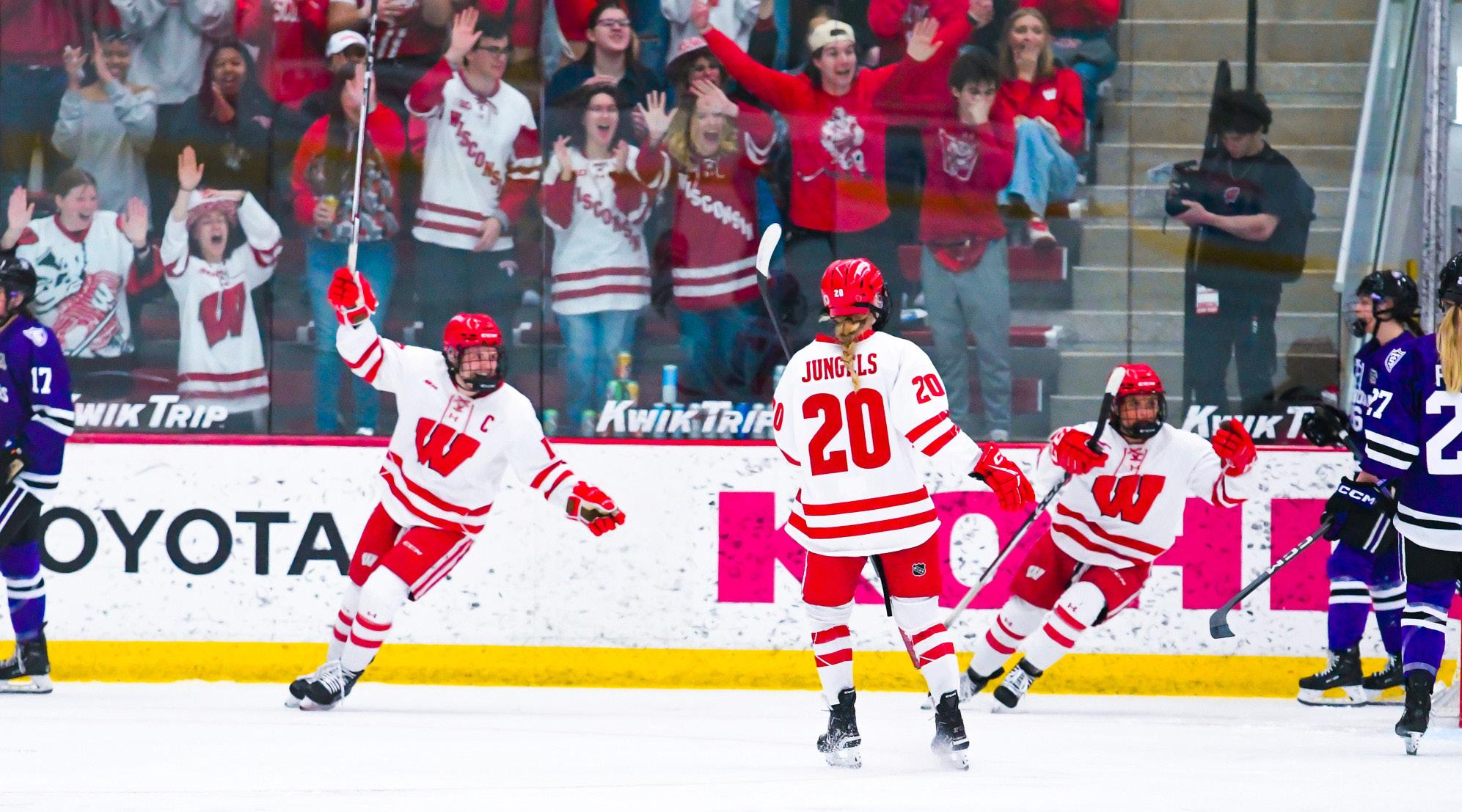
The Wisconsin women’s hockey team will start its season on Sept. 27 with a full-steam-ahead attitude. Following a devastating loss in the championship game last season, new and returning Badgers are anticipating an exciting season and the opportunity to compete for the national title once again.
The team officially announced their team captains for the 2024-25 season this past Wednesday.
Junior defender Caroline Harvey and fifth-year forward Casey O’Brien will lead the team as co-captains, the first duo to do so since the 2020-21 season. This group of players have the experience, leadership abilities and appreciation for the program he and the team look for in captains, head coach Mark Johnson told The Daily Cardinal.
“Everybody gets to participate in that selection…They have an appreciation for what we have and the resources,” Johnson said.
As a forward, O’Brien led the Badgers with 50 assists last season, breaking program history books.
“It’s an honor to be named captain of this university’s program,” O’Brien told the Cardinal, adding that Wisconsin has “one of the best opportunities in women’s hockey.”
Harvey’s defensive abilities landed her the role of co-captain as a junior, the first since Carla MacLeod’s 2003-04 season with the Badgers. Harvey has already
competed in the Olympic games and is looking ahead to the next Team USA opportunity, Johnson said. Harvey also noted she is looking to provide support for her teammates and coaches as a captain.
Serving as alternate captains are forwards Lacy Eden and Laila Edwards. Both had career-high points in the 2023-24 season.
On leading the team as a group, Eden told the Cardinal we all bring something different to the table, and we’ve all worked together in the past.”
During the 2023-24 season, these four captains were in the top six for the most assists on the team.
In the offseason, the Badgers honed in on personal develop-
ment. Edwards attended a leadership program this summer and said she is excited to implement what she learned to push the Badgers’ postseason play.
Edwards told new freshmen to “be confident and learn from the older players.”
“Ask as many questions as you need to. Don’t be afraid to make mistakes, you’re going to make mistakes,” she said.
With newcomers out of the transfer portal, the Badgers’ roster welcomed two more upperclassmen with the addition of goaltender Quinn Kuntz and forward Mckayla Zilisch. Kuntz spent the last five years with the Ohio State Buckeyes, while Zilisch spent the last two years at Bemidji State.
These transfers, along with
four new freshmen, have been working hard to give their best to the team. While the process of figuring out how new players fit into the group is challenging, the captains and Johnson stressed that these new Badgers acclimated quickly and brought a lot to the team.
When he discussed how to create a winning team, Johnson said the final piece of the puzzle is the understanding that everyone makes the team successful as a whole.
It’s “the willingness to play for the person that’s sitting next to you in the locker room, the ability to be selfless,” he said.
Coming off of the 1-0 loss to Ohio State in the national championship game last season, the team
put a lot of work into this summer in the hopes of gaining better results this season.
“One of the most impactful lessons came from leadership development programs two of his players participated in,” Johnson told the Cardinal.
Harvey and Edwards also learned in leadership seminars that providing support starts in the locker room.
“That experience was critical,” Edwards said. “If we have a healthy environment in the locker room, that’s going to show up in games.”
The incoming captains showed their excitement for the upcoming Wrigley Field game in January. Wisconsin will face off against returning national champions Ohio State. The Badgers men’s hockey team will also travel to play Michigan State at Wrigley that same day.
This will mark the second time in their history that the women’s team will play an outdoor game, the first in a baseball stadium.
Ahead of their season opener, the Badgers have already garnered accolades, including a No. 1 ranking in the WCHA Coaches’ Poll. Junior forward Kirsten Simms was named WCHA Preseason Player of the Year, marking the second year in a row the Badgers have earned this title after Harvey received the award for the 2023-24 season.
The Badgers’ season opens on Friday, Sept. 27 at the LaBahn Arena, where they will compete against Lindenwood.
Sarah Franklin continues her dominance this season
By Eliana Mann STAFF WRITER
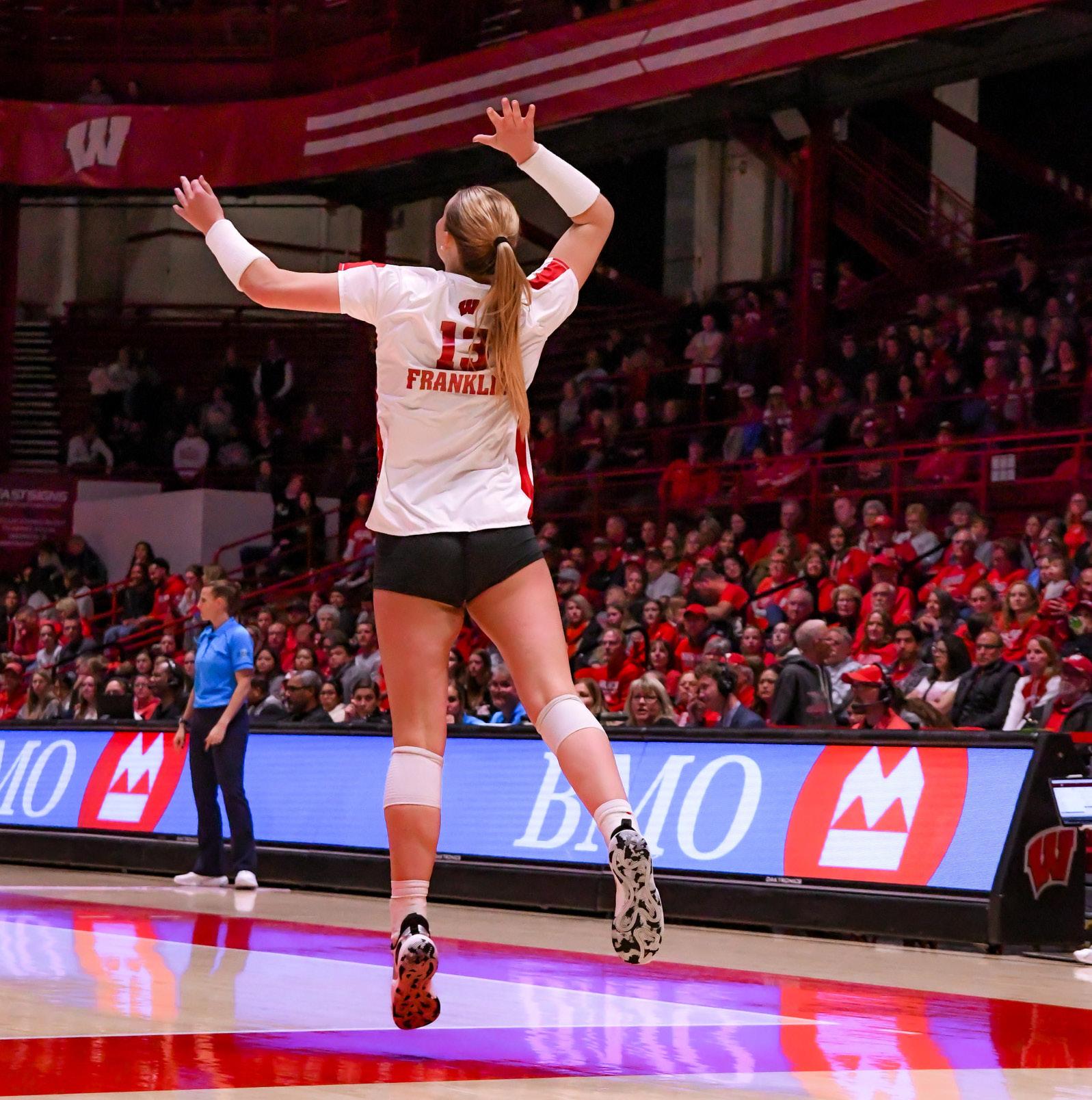
University of Wisconsin-Madison volleyball star Sarah Franklin was named American Volleyball Coaches Association National Player of the Year, First Team All-American and Big Ten Player of the Year all in just one season.
These are pretty serious accolades. The fifth-year outside hitter is known for her breakout performance last year, but how did she work her way up to becoming so successful on the volleyball court?
Franklin hails from Lake Worth, Florida and began playing volleyball at age 11. In high school, she won the state championship with the Lake Worth Christian varsity team and the national championship with her club team at Palm Beach Juniors. Franklin’s collegiate career started at Michigan State University, where she played in 2020 and 2021. Franklin transferred to Wisconsin after two seasons in Michigan.
“I chose the University of Wisconsin because of the high drive of the team culture to be the best we can be everyday,” Franklin said in her official team biography.
Under the guidance of renowned head coach Kelly Sheffield, Franklin has flourished as a Wisconsin Badger. She led the Badgers in kills per set in both 2022 and 2023, with 3.51 and 4.15 kills
per set, respectively.
She achieved career-highs in kills (28) and points (31.5) against Purdue on Nov. 17, 2023. Franklin also played a crucial role in Wisconsin’s Big Ten Championship win in 2022 as well as NCAA National Tournament runs to the Elite Eight in 2022 and Final Four in 2023.
But Franklin is no stranger to obstacles. In the summer of 2023, she was diagnosed with Quadrilateral Space Syndrome and had to have blood clots surgically removed from her forearm. There was a risk she wouldn’t be able to play after surgery, but Franklin was able to move past her health scare and get back on the court.
Since the 2024 season began, Franklin has continued to be a dominant force for Wisconsin volleyball, showcasing her hard-working attitude and grit as one of the team’s top players. Franklin is a team captain this year and has already racked up 162 kills, 88 digs and 16 blocks in the first ten games. She is on pace to hit 2,000 career kills as a Badger sometime in the next few games.
Franklin’s dominant court presence, energy and effort on the volleyball court is thrilling to watch. In her final season, Franklin will look to lead the Badgers to another national championship this year.
MEGHAN SPIRITO/THE DAILY CARDINAL
MEGHAN SPIRITO/THE DAILY CARDINAL
As the school year begins, I would like to take this special moment to welcome you back to campus.
It feels like yesterday that I was a student at Howard University. I found forever friends, people who shaped me and supported me. I found my beloved Alpha Kappa Alpha sisters. Like many, college is when I started to become politically engaged. Together, we learned that progress happens in our country when young people fight for it.
Throughout my travels as Vice President, I love talking to young leaders. I am continually amazed by your grit, your perseverance, your intellect, and your deep passion for making our world better.
It is because of the record turnout among college students in 2020 that I am Vice President today. And to win this election, I need your support.
This November, so many of our fundamental freedoms are at stake. The freedom to vote. The freedom to live safe from gun violence. The freedom to love who you love, openly and with pride. The freedom to breathe clean air and drink clean water. And the freedom to make decisions about your own body.
Later this semester, you will have the opportunity to vote in an election that will decide the future of our country. You will have the power to shape our future. To continue to build the country you want to live in—one where your fundamental rights are protected—by taking to the ballot box and making your voice heard.
Your vote has never mattered more. When young people fight for progress, it changes the course of our nation. I believe in you. I am inspired by you. And I am rooting for your success.