
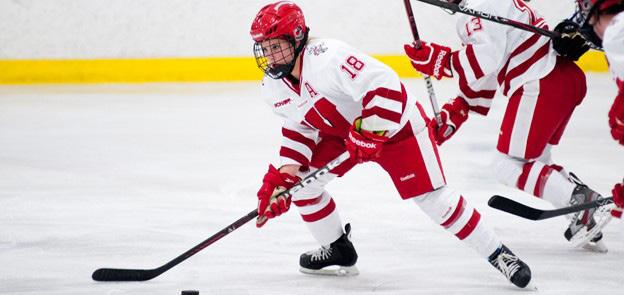
National Champion and Wisconsinite Brianna Decker enters Hockey Hall of Fame.

Invasive spongy moths strip trees, harm native species.
SCIENCE, PAGE 5

National Champion and Wisconsinite Brianna Decker enters Hockey Hall of Fame.
Invasive spongy moths strip trees, harm native species.
SCIENCE, PAGE 5
By Marin Rosen CITY NEWS EDITOR
The Madison Common Council
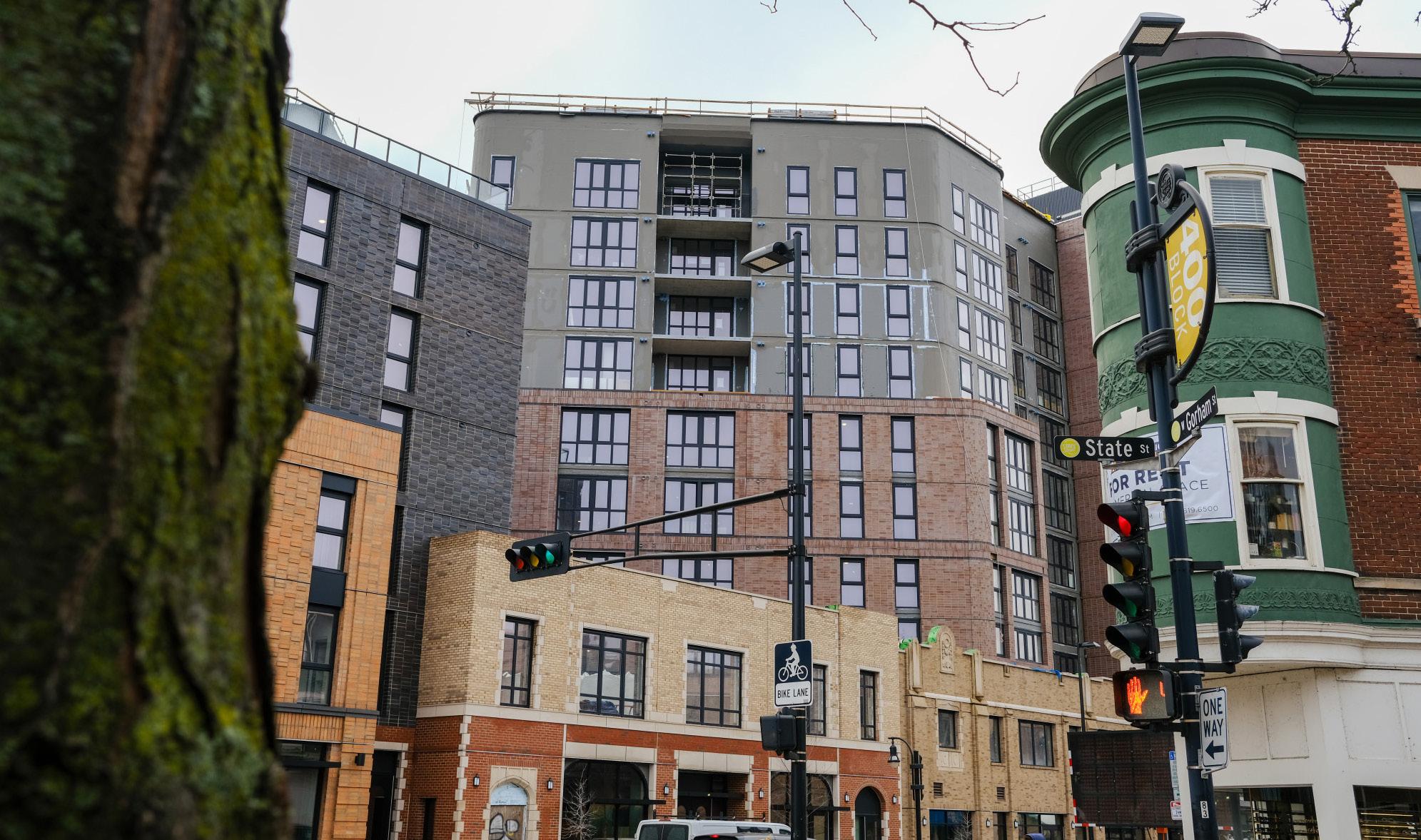
approved a change to the city’s zoning code Tuesday night to incentivize more affordable housing or college students.
Students who apply for financial aid through the University of Wisconsin-Madison will be eligible for more affordable units. The city, developers and the university will partner together to ensure students who need affordable units the most are the ones getting the opportunity, according to a Sept. 11 city of Madison press release.
Students eligible for the pro-
gram will be able to rent a bed or bedroom alongside other students who are paying market rate for another bed or bedroom in the same apartment unit.
District 8 Ald. MGR
Govindarajan told The Daily Cardinal the students who are eligible for lower rent prices “maintain their privacy.”
Affordable housing is defined as “anything between 30% to 80% of the area median income (AMI),” according to Govindarajan.
“But for students, that’s never really been a great indicator of affordability,” Govindarajan said. “Students don’t usually
have an income, we don’t have a full time job. We’re not making a full time salary, and that’s what AMI really considers.”
The change in zoning code comes after the Common Council adopted the original downtown affordable housing height incentive last year, which incentivized developers downtown to exceed the maximum number of stories allowed in the downtown area in exchange for an agreement with the city to guarantee a portion of the extra units would be affordable.
The average UW-Madison student pays approximately $1,723 per
month for housing, but “affordable” student rent was defined at around $980 per month, according to a study commissioned by the university and city of Madison.
The authors of the study recommended that the city continue to implement density bonuses and tax incentives, like the new housing program, to encourage the development of more affordable units.
Govindarajan said the new zoning change will “greatly benefit students” and in newer developments, such as the Oliv, qualified students will be able to enjoy the amenities while paying rent at
a cheaper rate.
“It really does make a difference,” Govindarajan said. “[Students] are now able to apply for this program or apply for the housing automatically, and they will just have to pay a little bit less. Students can still live with their friends, even if it’s not something they necessarily would have been able to afford before this program.”
Because of the zoning code now in place, the university and the city of Madison will work together to support the creation of more affordable off-campus housing, the release said.
By Gavin Escott and Noe Goldhaber CAMPUS NEWS EDITOR AND COLLEGE NEWS EDITOR
They laughed when Donald Trump was factchecked, cheered when Kamala Harris landed a line of attack and snapped in solidarity when she delivered a searing rebuke of Trump’s fitness and candidacy for president.
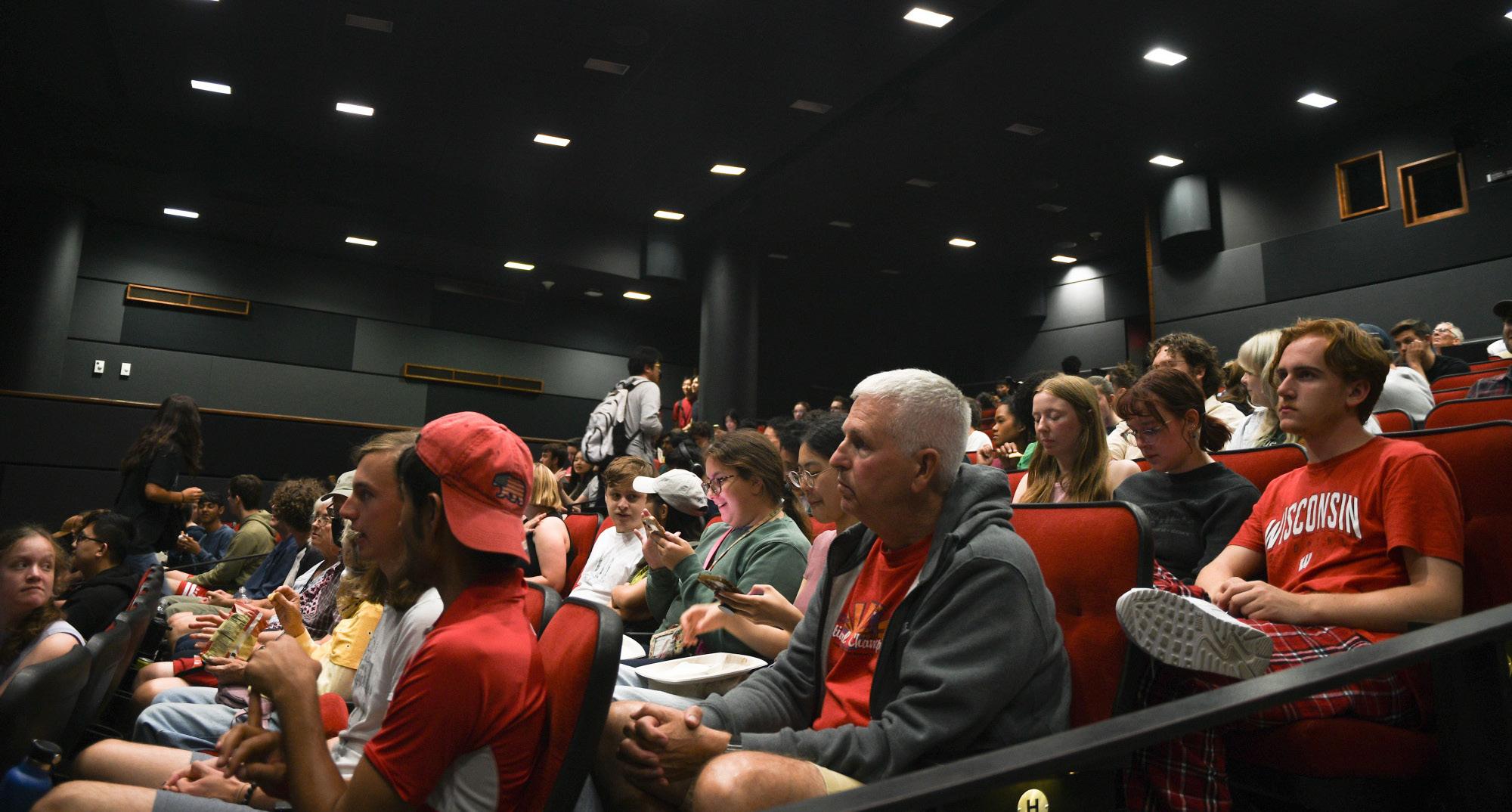
The more than 300 University of WisconsinMadison students that packed the Union South Marquee theater to capacity Tuesday night displayed strong enthusiasm for Harris during a presidential debate watch party hosted by the Elections Research Center and the Tommy Thompson Center.
The crowd remained animated throughout the two-hour event, repeatedly producing loud denunciations whenever Trump floated unsubstantiated claims, particularly around abortion and immigration.
Over half a dozen students told The Daily Cardinal the debate didn’t change the way they planned to vote or the direction of the race in Wisconsin but overall felt that Harris did a much better job articulating her policies and vision.
“[Trump] didn’t really do a good job handling the arguments or answering questions at all during the debate,” UW-Madison freshman Owen Brockett told the Cardinal. “It kind of affirmed that Donald Trump is the same candidate. Kamala Harris is still the same candidate. There’s no real big shifts in the Democratic or Republican campaign.”
Brockett said the debate didn’t change the way he had been planning to vote and doubted it would significantly alter the “already pretty liberal” UW-Madison campus vote.
For some students who didn’t know much about Harris’s policies before the debate — the “Kamala curious,” in the words of Communication Arts Professor Allison Prasch — seeing Harris’s debate performance appealed to them.
“I was gonna vote for Kamala because I didn’t want Trump to be president, but I did not feel strongly about her at all,” UW-Madison Junior Jack Mincheff told the Cardinal. “After this, that has significantly changed — [I’m planning on voting for her] much more.”

Mincheff said he initially thought Harris would employ a “laid-back [and] weave-thepunches” approach to the debate but came away with a strong impression of her capabilities.
“She was really in control the entire time, and her skills as a DA really came out,” Mincheff said.
But some students found Harris’s performance on the debate stage to be lacking in policy, particularly in her approach to Israel’s war in Gaza.
Mac, a UW-Madison freshman from the Middle East, said he had been “on the fence” on whether to vote for Harris before the debate but hearing her speak Tuesday night did little to endear her to him.
“I think if anything, this has made it even harder to decide whether or not I should be voting for her, because it really does feel like the best of two evils,” Mac told the Cardinal. “It does not seem like she will be changing her stance [on Palestine], and I can’t see a benefit to voting for her over Trump, so I might just not vote for either.”
Mac acknowledged Harris had called for a ceasefire during the debate but underlined her involvement in the negotiations over the past 10
months has not resulted in a ceasefire.
Brockett added that Harris’ policy on Palestine was “pretty decisively against young people’s general thoughts about Palestine.”
Members of the UW-Madison College Republicans were also in attendance during the debate, and representatives were visibly exasperated when Trump returned to unfounded claims, including his debunked assertions that he won the 2020 election and that Haitian immigrants were eating pets in Springfield, Ohio.
Benjamin Rothove, a UW-Madison sophomore and member of the College Republicans, said these comments were “not very helpful” and questioned whether Trump even prepared for the debate.
“Republicans deserve a leader who takes the job seriously,” Rothgove told the Cardinal after the debate, adding that “Trump failed to articulate the danger [Harris] poses” and his debate performance makes the job of campaigning on his behalf more difficult. However, he said he wouldn’t change his vote.
“I went into the debate planning to vote for Trump, and I left the debate planning to vote for Trump,” Rothove said, adding he would do
everything in his power to ensure a Trump victory. Rothgove acknowledged this was a minority opinion in the “liberal” Union South theater.
Students ask what comes next in post-debate Q&A
In the past two presidential elections, the results in Wisconsin, a key battleground state, and one that both campaigns have been eying closely, have come down to razor-thin victories by both Trump in 2016 and President Joe Biden in 2020.
Over 24,500 Badgers voted in the 2020 presidential election that elected the Biden-Harris administration, though warning signs flashed for Democrats when UW-Madison student wards voted ‘uninstructed’ at 4x the statewide rate to protest Biden’s Middle East policy during the Democratic primary.
During a post-debate Q&A with three UW-Madison professors, students questioned whether Harris would need to change her stance to win over students.
Political science professor Barry Burden said she wouldn’t need to and identified Harris as slightly to the left of Biden on her Israel policy.
“If you have more sympathy with the Gaza side than she’s expressing, you’re not going to go to Trump because he’s even more favorable to Israel.” Burden said. “I think the threat of voters not sticking with her has sort of been tamped down by her replacing Biden and her having rhetoric that’s just a little more balanced or friendly towards Gaza.”
Other students asked about the potential for a second debate —likely not happening, according to Burden — and Harris’s chances for victory in November.
Outside the theater, over 40 students registered to vote on paper, and several others were assisted with online registration, according to Kayley Bell, UW-Madison student and the city of Madison’s chief election inspector. Kayley noted voter registration will continue at the Red Gym Tuesdays until Oct. 15 and at a variety of pop-up locations around campus on Thursdays.
Students also watched the debate at Memorial Union.
“…the great state University of Wisconsin should ever encourage that continual and fearless sifting and winnowing by which alone the truth can be found.”
By Olivia Ruetten STAFF WRITER
Prospective students hear about fabled Wisconsin winters, where snow blows from every direction, ice coats the sidewalks of Bascom Hall and Lake Mendota has frozen over. Once the lake has frozen, people from all over the community come together for Lily’s Classic.
The event, informally known as “Lily’s,” is an ice hockey tournament hosted yearly on the lake by the Sigma Alpha Epsilon (SAE) fraternity and has long been a tradition at the University of Wisconsin-Madison. The event is held to fundraise for Lily’s Fund for Epilepsy Research.
But because of the changing climate, SAE canceled last year’s event scheduled for Feb. 19.
The ice was not thick enough to support the weight of the hockey tournament and its audience, normally drawing upwards of a thousand students, residents and donors, according to the Wisconsin Union.
This is one of many changes in historical weather patterns spurred by climate change. Summer 2023 saw a drought, and this past summer excessive rainfall was recorded.
Climate experts have been monitoring the weather, collecting phenological data that help explain these changes and predict what may come next.

Since 1950, Madison has seen more rainfall on average than previously recorded. The summer of 2023 did not follow this trend because of El Niño, a cyclical climate trend occurring when the ocean surface is warmer than usual. This affects winter in Wisconsin, making it warmer, wetter and decreasing snowpack — explaining why Lake Mendota didn’t freeze over last winter
With El Niño ending, La Niña, its counterpart, will begin. La Niña occurs when the ocean surface temperature cools. During El Niño, winter in North America is typically drier, as seen last year, while during La Niña, the opposite is true. The National Oceanic
and Atmospheric Association’s Climate Prediction Center expects more precipitation than average this winter.
The increase in rainfall is just one aspect of Wisconsin’s new weather patterns that Dr. Michael Notaro, director for the Nelson Institute for Environmental Studies at UW-Madison, predicts it will occur over the next few years. Notaro told the Cardinal rainfall is expected to be more severe, while snowfall is expected to lessen. Temperatures are increasing in severity as well — winters are predicted to be colder and summers hotter.
“We are not expecting an El
Niño event during the winter of 2024-2025, so that somewhat reduces the odds of an excessively low ice cover winter and may be good news for the Lily’s Classic,” Notaro told The Daily Cardinal. “Of course, the longterm climate change signal for Lake Mendota has been a shrinking ice season, so canceled winter events are going to become increasingly more likely with each passing year.”
According to Dr. Notaro, it is likely Lily’s is canceled again even without the help of El Niño, because global warming is affecting the climate in Madison more than ever.
By The Daily Cardinal
A lot has been on University of Wisconsin-Madison Chancellor Jennifer Mnookin’s plate since the spring.
Between a 12-day pro-Palestine encampment and juggling the university budget process, she’s had to carefully tread an upcoming election with a student body that has divided perspectives. Mnookin and Vice Chancellor for Student Affairs Lori Reesor sat down with campus media Tuesday to discuss free speech efforts, the affordable housing shortage and protest culture.
In her third fall roundtable conversation with campus news organizations since assuming her role as chancellor in August 2022, Mnookin touted new student programs, research initiatives and the addition of 142 faculty members.
UW-Madison received more than 70,000 applications for the 2024-25 academic year, the most it has received in its history, Mnookin said. The university’s four-year graduation rate also rose to 75.5%.
During the discussion, Mnookin repeatedly promoted “pluralism” for a growing student body.
“Our fundamental goal is to bring people from all backgrounds and all points of view
together and create the conditions for them to do amazing things, both in terms of learning, in terms of research and in terms of innovating for the public good,” Mnookin said.
Take college surveys with a ‘grain of salt,’ Mnookin says
In a 2025 college speech climate ranking from the Foundation for Individual Rights and Expression and College Pulse (FIRE), UW-Madison ranks 227th out of 254 schools surveyed, a considerable drop from 60th in the 2024 ranking.
The FIRE ranking consolidates a number of metrics through survey data including student perception of administrative support for free speech, self-censorship and openness to difficult conversations on campus.
When asked about the ranking drop and what improvements the university would make to free speech, Mnookin told The Daily Cardinal she doesn’t think the survey accurately captures the university’s commitment to free expression.
“All these rankings need to be taken with a pretty big grain of salt, and I’ve said that even when we do really well,” Mnookin said. “There are sometimes tensions between our commitment to free speech and
our hope for a culture of respect and a culture of life, and I grant those tensions… I actually think we have to be robustly supportive of the First Amendment and free speech.”
Mnookin has defended the university’s free speech efforts before, telling media organizations in the fall 2022 roundtable the “First Amendment actually protects most hate speech,” and that “one person’s hate speech is another person’s idea,” in response to a campus event hosted by right-wing commentator Matt Walsh and chalkings targeting Jewish students.
The College Pulse survey was fielded from Jan. 25 through June 17, 2024, with the data coming from a sample of 58,807 undergraduates enrolled full-time in four-year degree programs at one of a list of 258 colleges and universities in the United States, including 529 from UW-Madison.
Mnookin mentioned the university will continue to use FIRE produces as a piece of their new First Amendment module that all first-year students are required to take.
“Whether it’s AI in the classroom or gun control, right things that people are likely to have divergent opinions. How can we have constructive conversations, learn from each
other, where we sharpen our own beliefs?” Mnookin said.
New residence hall a priority for UW-Madison amid housing crunch, Mnookin says
One of UW-Madison’s priorities in the next few years is to build a new residence hall to accommodate a growing student population, and the university included this initiative in its 2025-27 biennial budget request to the UW System, Mnookin told the Cardinal.
UW-Madison’s 20 residence halls are designed to house just over 7,700 students. In recent years, the university turned double rooms into triple rooms, converted lounges into housing and used campus buildings such as the Lowell Center to house larger numbers of students.
Mnookin said her goal is to “build enough housing to comfortably house all of the freshmen who want to live in the dorms.”
“We’re not a campus where most people want to be on campus for years and years,” she said. “We’re not trying to change that, but we’d like to have a little bit more breathing room.”
Continue reading @daily-cardinal.com
By John Ernst STAFF WRITER
For many tenants in Madison and the greater Dane County area, renting and leasing a property serves as a complicated and confusing process that can leave them feeling helpless. Whether it be a lengthy and wordy lease agreement or vague instructions on how to maintain the property, tenants may find themselves unsure how to proceed through a rental.
In order to aid tenants, an abundance of resources are available to Madison residents, both on and off campus. One of these organizations is the Tenant Resource Center, a nonprofit that advocates for housing justice and provides education to empower individuals to make fully informed decisions, according to their mission statement.
The TRC provides a variety of services to both tenants and landlords. They work on mediating disputes between the two groups, aiding in eviction prevention and familiarizing tenants with their rights.
With the end of the 202324 renting cycle in August, many may find themselves with questions about the end of their tenancy, including the retrieval of their security deposit. The Daily Cardinal spoke with TRC Executive Director Hannah Renfro about how tenants can get their security deposits back and how to navigate a rental period.
This interview has been edited for clarity and brevity.
When signing the lease agreement, what should tenants be looking for when it comes to security deposits?
The tenant should always complete a check in form, and they should take pictures at the same time. So going through the unit, and marking if the bedroom window has a crack in it and taking a picture of that. If there’s a dent in the refrigerator, taking a picture of that. Filling out that check in form, giving it to the landlord and then also keeping a copy for themselves.
Taking it just chronologically, also at the beginning of the lease period, making sure that there’s an understanding of what can be deducted from the security deposit. Under the statutes, the landlord can deduct if there’s unpaid rent, unpaid fees, damage that was caused by the tenant.
The landlord can also charge for other things, but only if it is included in what’s called a non standard rental provision. That non standard rental provision has certain requirements and if those
things are listed, then the landlord can also deduct those from a security deposit.
However, a big exception is that the landlord cannot deduct from a security deposit, whether they write it in a non standard rental provision or in the lease agreement itself, for normal wear and tear. Now, if there is a stain on the carpet when the tenant moves in, and they don’t take a picture of it, if the landlord comes in at the end of the lease and didn’t notice it after the last tenant moved out and they say, ‘now we have to replace this carpet,’ they’re going to charge the tenant for it.
What does the end of the rental period look like? What sort of laws are landlords following when it comes to deducting from or taking money from your security deposit?
If the lease runs its normal course and ends on Aug. 14, the landlord has 21 days from that date to return the security deposit and include a withholding statement if they are withholding any amount. They are required to send that to the last known address of the tenant, so it’s really important for tenants to provide their forwarding address. The landlord is not required to
investigate where the person has moved to or to even make a phone call about it.
If a tenant gets that withholding statement, ‘We deducted $500 to replace the carpet because there’s a stain,’ that’s when they can respond again in writing to the landlord. ‘I have pictures. The stains on the carpet were there when I moved in. That $500 needs to be returned to me immediately.’
What if a landlord doesn’t comply with the tenants’ response?
If the landlord doesn’t comply, the tenant can file a complaint with the Department of Agriculture, Trade and Consumer Protection. They have a landlord tenant complaint line. Tenants can also file a lawsuit against the landlord in small claims [court]. They might be able to receive double damages. If the landlord withheld $500 unlawfully, then the tenant may be able to receive $1,000 of double damages for any amounts that were unlawfully withheld. Nobody wants to go through that process. It’s painful, it’s long, but there are remedies available if a tenant can say, ‘I have pictures. I didn’t make those stains. I showed those to the landlord. I told the landlord that I didn’t do this, and
they just ignored me.’
Is the TRC able to help with any of the small claims processes? Where could one find resources?
There are a couple places. The TRC can talk through the statute and some of the steps that tenants can take.
There’s also a really great group of attorneys who volunteer at the courthouse, the Small Claims Assistance Program. They are volunteer attorneys who work with folks coming in, and they don’t represent them at court, but they can tell them, ‘When you go to court, this is the kind of thing you want to say.’
Does the TRC help tenants navigate their relationship with their landlord?
We absolutely work with a lot of folks on how to kind of navigate that relationship with their landlord. That’s the goal, [being] able to support long term housing stability, and that really relies on really positive relationships between the landlord and tenant. The best way for that to happen is for both sides to be able to work through something together.
We also have mediation services that are available where
we can, in a more formal setting if a landlord and a tenant are interested, mediate a dispute between the landlord and the tenant.
What kind of tips would you give tenants about the renting process, from searching for a place, signing a lease, moving out and trying to get your security deposit back?
First is making sure they read the lease agreement. I know some of them are really long and really boring, but it is really important to have an understanding of the policies. Having an understanding that is just really important from the get go, this is a contract. Whether it’s a week, six months or a year, you’re signing and there might be really serious financial consequences to walking away.
Come talk to the TRC or the other places if you’ve talked to your landlord six times about this issue, and they haven’t gotten back to you. There are things that you can do to try to address that.
The TRC is located at 2510 Winnebago St., Madison, WI 53704, with additional offices in east Madison and Sun Prairie, as well as on the UW-Madison campus. You can find more information about their services on their website.
By Jake Piper STAFF WRITER
Students for Justice in Palestine and a local chapter of the Young Democratic Socialists of America organized a pro-Palestine encampment on April 29 calling for the University of Wisconsin-Madison’s “financial and social” divestment from Israel.
Lasting a total of 12 days, the encampment came to an end on May 10 after UW-Madison administrators reached an agreement with protest organizers.
This local protest took center stage in state politics, with lawmakers divided on whether the encampment was a justified use of expression and protest, or whether the university and state at large should take action to dismantle it.
Hong says encampment ‘fostered democracy,’ others say it broke law
Rep. Francesca Hong, D-Madison, saw UW-Madison’s pro-Palestine encampment as a space for civic engagement and community building during “a time of immense despair.”
To Hong, the encampment represented a separate sector of democracy beyond voting — it was a “fostered democracy.”
“We can’t think of democracy as just voting,” Hong told The Daily Cardinal. “Democracy is about fostering conversation and honoring different identities and viewpoints.”
While Rep. Lisa Subeck, D-Madison, told the Cardinal she acknowledges protest is a tool for change, law and regulations remain an important principle for protesters to follow.
“You can certainly exercise your right to free speech and right to
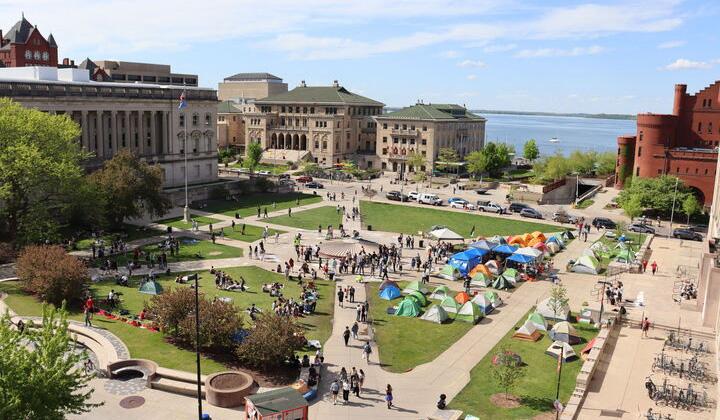
assemble without tents in a camp… there is protest and then there’s civil disobedience,” Subeck said. “Actions have consequences, so whatever it is the protest is about when they choose to set up an encampment such as these students did, there are consequences that can come with that.”
Still, Hong said state lawmakers do not do enough to embrace their constituents’ concerns, as she says she was one of few elected officials to visit the encampment.
“I wish more elected officials could have experienced what the student encampments were about and had more nuanced conversations about what they represent,” Hong said.
A lack of engagement with constituents can lead to a disconnect between elected officials’ views and the needs of voters, Hong also noted.
Since Hong is the only one who directly represents voters within
UW-Madison’s borders, Subeck noted in August that Hong is in a unique position compared to a majority of other representatives in the Legislature.
“My first responsibility is to the people in my district, but I recognize that every decision that we make is made in a broader context that includes our city and county,” Subeck said.
When asked whether she had the opportunity to visit the encampment, Subeck said she did, but felt that it wasn’t in the best interest of her “safety or security” to visit the encampment.
“The setting of the encampment was not a comfortable setting for me as a Jewish woman,” Subeck said. “There was enough clear antisemitism in and or around the encampment that I did not feel it was in the best interest of my safety or security to go to the encampment.”
However, Hong thinks the
encampment was a place where hard conversations between those with conflicting viewpoints about the ongoing war in Israel and Palestine could be discussed in a civilized and nourishing manner.
“What I can now say about my experience with the encampment is, I know that it’s possible for these conversations to be nourished. And we have to have nourishing conversations in order to show that we can make a difference in this world,” Hong said.
Some lawmakers say police raid was acceptable, Hong disagrees
On May 1, the third day of the encampment, UW-Madison Chancellor Jennifer Mnookin authorized police to remove the encampment from university property.
Hong referred to police activity on May 1 as “state-sanctioned violence.”
The police raid disappointed her
By Elijah Pines STAFF WRITER
The University of Wisconsin-Madison StudentPrint laid off all 23 employees and transitioned into a self-service shop called the Registered Student Organization (RSO) Print and Resource Center on Sept. 1 after 25 years of student-run printing services.
StudentPrint, a nonprofit formerly owned by the Associated Students of Madison, gave students the opportunity to run a business while servicing nearly all of campus printing needs, including RSO merchandise, the Student Organization Fair map and the semesterly bus pass.
But StudentPrint suffered during the COVID-19 pandemic, according to former employees. After nearly closing its doors, the Wisconsin Union Directorate bought StudentPrint in 2021.
Three years after the Union buyout, workers received an email from the Union on July 2 informing them that StudentPrint was closing. Several former employees told The Daily Cardinal the decision to close was surprising and upsetting.
Corey Holl, former StudentPrint student manager, joined StudentPrint in 2020 before the Union buyout and
because it “created more chaos, and less order.”
Once Hong realized police were called, she feared immediately for the community, with her primary concern being the mental and physical safety of those gathered at the encampment.
Protesters were given 15 minutes to remove all tents and equipment before law enforcement pushed their way into the group of demonstrators, who had linked together to form a human wall around the encampment.
In the aftermath of the police raid, four protesters were booked at the county jail, two UW-Madison professors were injured — with one having to report to the hospital — and eight police officers sustained injuries related to the incident.
Now, in August, Hong looked back at the police raid as a turning point in the protest and a mistake on the part of the university.
“It further escalated tensions between the different perspectives on the genocide, and we saw that it only fueled more fear and hate,” Hong said.
Subeck and Rep. David Murphy, R-Greenville, argued in May the use of police to dismantle the encampment was wholly justified and expressed disappointment with how quickly the encampment returned.
Subeck further said the protesters who were arrested “basically played victim,” in the aftermath of their indictments.
“To say ‘I’m willing to be arrested, I’m willing to face those consequences for this cause,’ that is a decision that an individual makes, but afterward, you’re not a victim. You chose to make the statement for your cause,” Subeck said.
Continue reading @dailycardinal.com
expressed feeling “betrayed” by the Union’s decision to lay off employees.
“Everyone was in complete shock,” Holl said. “I was on the transition team where they were talking about how this was going to be a safe haven for StudentPrint, and then they backtracked on it all in one email.”
Michael Hepfinger, another former StudentPrint worker, said there were no warning signs that StudentPrint would close and said the decision to lay off student employees was “not only cruel but incompetent.”
In the July 2 email, the Union said the shop would close on Aug. 1 but postponed the shutdown until Sept. 1, explaining to workers the shutdown happened because of “academic trends, consumer behavior changes, duplication of services on campus, and StudentPrint financial performance.”
“In a digital age, campus’, students’ and RSOs’ printing needs have changed significantly,” Madeleine Carr, communications coordinator for the Wisconsin Union, said in an email to the Cardinal.
“With this evolution, the Wisconsin Union made the decision to transition StudentPrint to a self-service print shop and resource center to better meet the
needs of the community.”
StudentPrint finances
Holl told the Cardinal StudentPrint has not made a profit since the pandemic but said there was never any conversation about reducing expenses.
“We kept making more money than we expected,” Holl said.
Holl also said StudentPrint was recently in the middle of a hiring cycle and buying new equipment, which he said the Union was in support of.
The Union never asked StudentPrint to reduce staff, according to Holl and Hepfinger.
The Union did not comment when asked if there was an internal timeline or plan to get StudentPrint back to profitability.
Reduction in services
Both Hepfinger and Holl said they were left confused by what a self-service model looked like. StudentPrint handles advanced print jobs including bulk orders, stickers and t-shirts.
“The whole transition process has been vague, very little direction,” Hepfinger said. “People are really just flying by the seat of their pants.”
Carr told the Cardinal the self-service print shop will offer “black and white printing, color printing, large format printing, postcard printing, button-making and document lamination” — a reduction in the current services offered.
With StudentPrint closed, RSOs must look elsewhere to print their merchandise. Hepfinger said many customers are struggling to find comparable services.
Although StudentPrint employees have been promised jobs within the Wisconsin Union, Holl said StudentPrint was unique in that it allowed students to manage every level of operations from finances, marketing, printing, inventory and sales. Carr said there are 95 open positions for StudentPrint employees to transition to including internships, custodial work and food service.
Hepfinger agreed that StudentPrint was different from the typical student job and afforded opportunities he would not otherwise have in other Union positions.
“Being able to work together to run a student-run business and run something that supports the campus community and students, I think is definitely different from your average job,” Hepfinger said.
By Lindsay Pfeiffer SCIENCE EDITOR
Invasive spongy moths are defoliating aspen trees and making their leaves regrow with high levels of toxins, harming a native insect, according to recent research from the University of Wisconsin-Madison.
In 2021, Rick Lindroth, UW-Madison entomology professor emeritus, began noticing this effect. After his research group originally planted aspen trees in 2010 to conduct other experiments on the trees at the Arlington Agricultural Research Station, a spongy moth outbreak occurred following their absence during COVID-19 in 2020.
The research team — made up of Lindroth, visiting scientist Patricia Fernandez, former graduate student Clay Morrow and post-doctorate Mark Zierden — had to take a different route according to Lindroth.
“When we walked into the aspen stand in spring 2021, we realized there were thousands of egg masses — each egg mass contains 400 to 600 larva — and we were not anticipating that. I knew right then that we were doomed to have a major defoliating outbreak of spongy moths,” Lindroth told The Daily Cardinal.
Spongy moths, which arrived in North America from Europe in 1869, only entered Wisconsin in the early 2000s, according to Lindroth. They feed on more than 300 species of trees and can defoliate trees for miles, which can harm entire forests, he said.
When the outbreak occurred on aspen trees at the Arlington Agricultural Research Station, the researchers instead decided to study the consequences of spongy moth defoliation on the native
polyphemus silk moth, the second-largest moth in North America.
“What we were looking at is the legacy effect of the defoliation that carried on in terms of food quality for the native polyphemus moth,” Lindroth said.
Although these two species don’t directly interact, both moths feed on aspen trees at different times of the year.
“Spongy moths feed early in the season and then they’re done. Polyphemus moths feed midto late summer so anything the spongy moths do to alter food quality will impact the polyphemus moth,” Lindroth said.
Aspen trees produce salicylate-like compounds, which can be highly toxic at high levels, according to Lindroth. The compounds are similar to aspirin as they are made up of a salicin derivative and are known as salicinoids, he noted.
“A spongy moth caterpillar feeding on a tree with normal levels of these salicinoids would consume, in human terms, 5-7 pounds of aspirin in a day. Imagine what that would do to your gut,” Lindroth said.
When the spongy moth eats aspen leaves in the spring, the aspen trees respond by reflushing a new set of leaves. But these leaves have eight times the levels of salicinoid defenses that they previously had, according to Lindroth.
And although spongy moths and polyphemus moths have both adapted to eat these toxins at normal levels, when aspen trees increase their defenses following the spongy moth’s feeding season, it overwhelms polyphemus caterpillars’ ability to detoxify them, Lindroth said. This can result in lesions in the gut, septicemia, hemorrhaging and death, he said.
Spongy moth outbreaks don’t only negatively affect the polyphemus moth. They also degrade aspen trees.
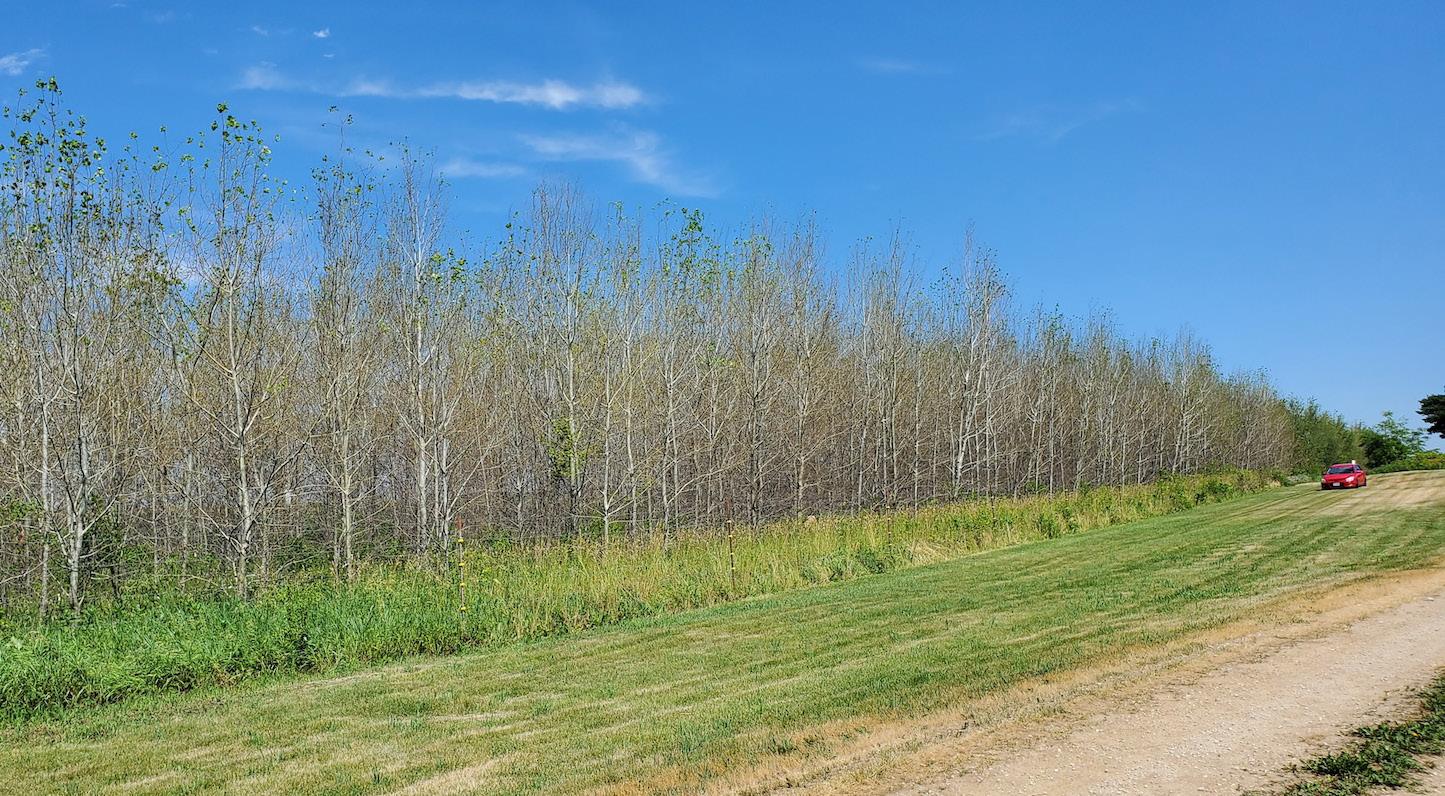
Aspen trees that have lost their leaves even once have a dramatic reduction in growth for the year, according to Lindroth. At the Arlington plot, he said their aspen trees were more susceptible to disease and drought years later, causing some to die.
Additionally, Lindroth told the Cardinal aspens are the most widely distributed tree species in North America and therefore aid a great deal in carbon sequestration, the process of capturing carbon dioxide from the air, which helps combat climate change.
Other research done by Lindroth has shown that when trees photosynthesize, they can use the energy produced to either grow or make defense compounds. Growth creates carbon sequestration, he said.
“I think we can make the argument that invasive species like spongy moths can negatively affect the capacity of aspen forest to sequester carbon by removing leaves so the trees aren’t photosynthesizing, and when
the leaves reflush, they’re busy making defense compounds rather than growing,” Lindroth said. Lindroth underscored that there is currently no experimental evidence for this, but it has potential to be a serious implication for the spongy moth outbreaks.
To combat this, the Wisconsin Department of Agriculture, Trade and Consumer Protection is part of a federal “Slow the Spread” program that aims to prevent spongy moths from traveling westward and to aid in treatment of isolated outbreaks. Treatments include aerially spraying a bacterial insecticide or spraying wax droplets containing pheromone to stop male spongy moths from finding females.
Although some insecticide sprays ma y be able to treat larger outbreaks, Lindroth said that once they’ve been established in an area, there’s not much that can be done to contain the outbreak completely.
By Sonia Bendre STAFF WRITER
University of Wisconsin-Madison math professor Jordan Ellenberg eats pizza weekly with other Discovery Fellows and department professors, stimulating discussion about new topics in science.
Most recently, Ellenberg has taken an interest in artificial intelligence and spent time working on a project with Google Deepmind to brainstorm different uses for the tool in the mathematical discipline.
“They had a very wonderful idea of using a large language model to generate chunks of code that are supposed to sort of help you with a certain mathematical problem,” Ellenberg told The Daily Cardinal. “It’s pretty fun to read codes in a machine mode and try to learn stuff.”
After graduating with a Ph.D. in math from Harvard University in 1998, Ellenberg took a position as a postdoctoral student at the Simon Laufer Mathematical Sciences Institute. He taught at Princeton University for eight years before becoming an Assistant Professor at UW-Madison, where he remains a professor today.
Ellenberg’s research background in number theory, geometry
Ellenberg primarily studies number theory and algebraic geometry, both areas within the greater field of pure mathematics.
He now holds the positions of John D. MacArthur Professor and Vilas Distinguished Achievement Professor at the UW-Madison, as well as of a Cornell A.D. White Professor at Large. The John D. MacArthur professorship recognizes distinguished scholars in research, the Vilas Distinguished Achievement Professorship
recognizes exceptional scholarship as well as teaching and service and the Cornell A.D. White Professorship is considered one of the most prestigious distinctions in an academic’s career.
“A lot of my research is in very traditional, very classical areas of number theory… It’s sort of saying, here’s an equation. Does it have solutions? Can you find whole numbers that solve it?” Ellenberg said. “That’s a very, very old kind of question. We still basically don’t know anything about it. I mean, we had a few thousand years to work on it, and we’re making some progress.”
For Ellenberg, teaching is a way to tell stories about math.
“Every single thing we use was invented by some person, for some reason, for some problem they were trying to do. I find it really useful to bring that into the classroom,” Ellenberg said.
Ellenberg has also published three books, including a novel called “The Grasshopper King.” His books “How Not to Be Wrong” and “Shape” combine statistical data and mathematics with storytelling techniques. Ellenberg also writes a blog, called Quomodocumque.
“I have a long-term goal of trying to figure out how to teach and how to talk about this process of writing about science, writing about math. A lot of people do it, and there’s clearly a demand, but hardly anyone’s trained in it. There’s no process to writing about data,” Ellenberg said.
Among other classes, Ellenberg teaches a first-year interest group called “Writing and Data,” which focuses on teaching students to synthesize data into news and scientific writing. By the end of the first-year interest group, students are expected to create a magazine-style piece. His goal: talk to and support non-scientists.
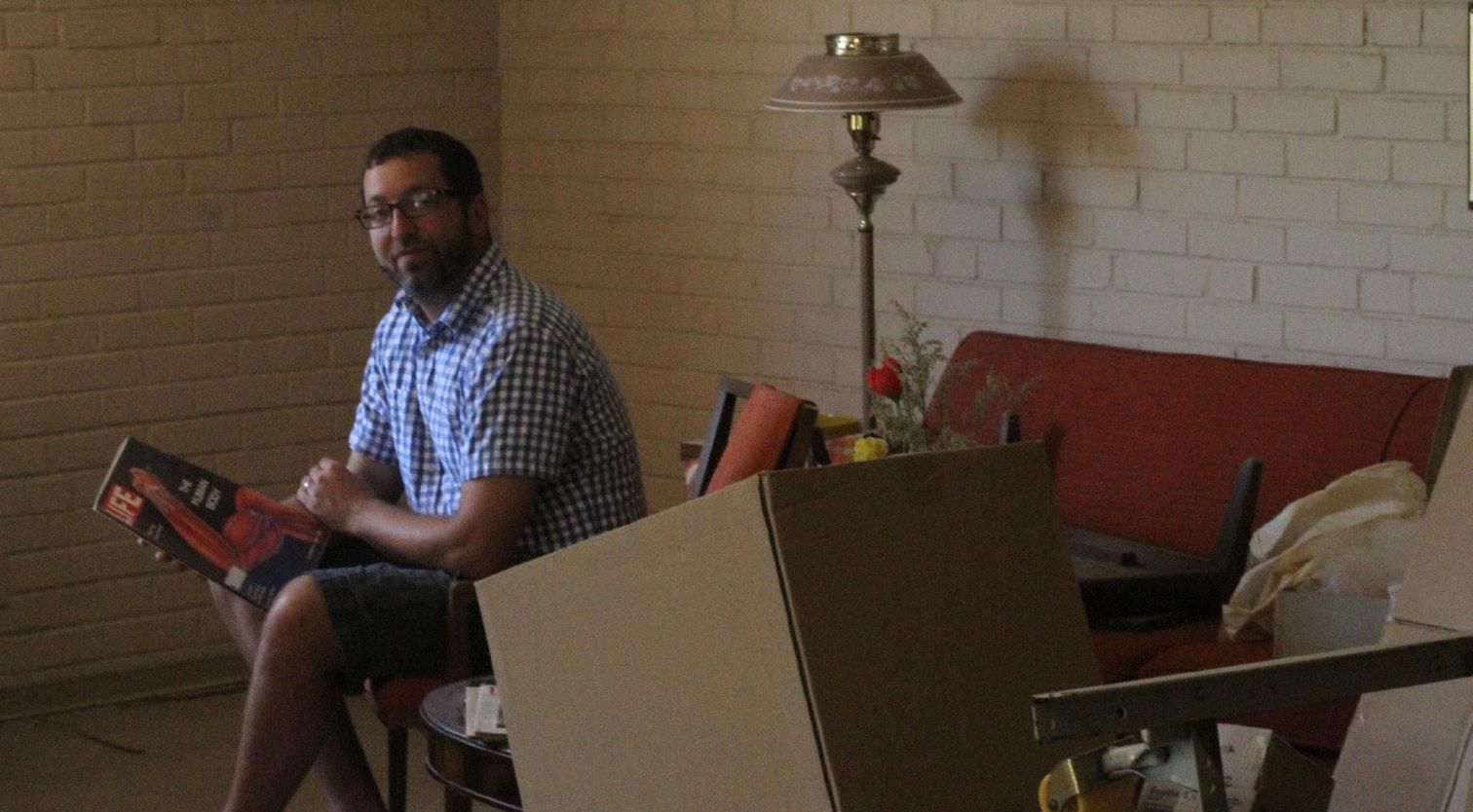
“There’s a way that you learn in high school to write an academic paper, and, in your classes here, when you write, there’s a certain academic style…but that’s not really the way we explain stuff to the general public. And for scientists who are working, there’s a way to write a journal article, but it’s also its own separate style,” he said.
‘The students here are really eager to learn’ Ellenberg shared his thoughts on one of the more controversial areas of math curriculum education: the Common Core, a set of standards for English and mathematics education for kindergarten through high school students. Ellenberg, an advocate of the curriculum, has written extensively on the Common Core and K-12 education in periodicals like The New York Times and The Washington Post.
“I basically think it’s like a very solid set of goals. It’s pretty ambitious, and it sets pretty high standards,” Ellenberg said. “One thing that it really centers, and I think is very right, is that the
ability to do arithmetic manipulations and then form algebraic manipulations is absolutely critical, and kids have to not just sort of know how to do those things, but really master those things.”
Ellenberg also shared his opinion on online mathematics education — a format that had many downsides, but some surprising innovations, he said. While the general format led to a lack of student attention, he said, the chat sidebar allowed for more student participation throughout lectures, letting students offer input without interrupting the teacher or the flow of the classroom.
Ellenberg looks forward to beginning the new semester, where he will be teaching “Writing and Data,” a seminar in number theory, and a section of a course called “Reading and Research.”
“This is a really fun place to teach. The students here are really eager to learn, and it’s just always a fun classroom,” Ellenberg said.
By Sophia Ross SENIOR STAFF WRITER
While the majority of Badgers spent their summer enjoying some leisure time back home or perhaps working a part-time job, University of Wisconsin-Madison soccer player Hailey Baumann was doing what she does best — exemplifying the skills that solidified her as one of the women’s soccer team’s most valuable assets.
At just 18 years old, the South Lyon, Michigan native and sophomore defender for the Badgers was called up to the U.S. Women’s Under19 National Team for training camp and two exhibition matches against Spain.
Alongside 23 other players dawning from colleges across the country, the Wisconsin defender traveled to Palm Beach, Florida for an initial training camp on April 21, the Wisconsin Athletics page reported. Baumann was later placed upon a 20-man roster to play the host nation, Spain, in Alicante, Spain.
Baumann called the experience an “incredible” one that taught the Wisconsin defender the significance of stressing the small things.
“Playing with the U19
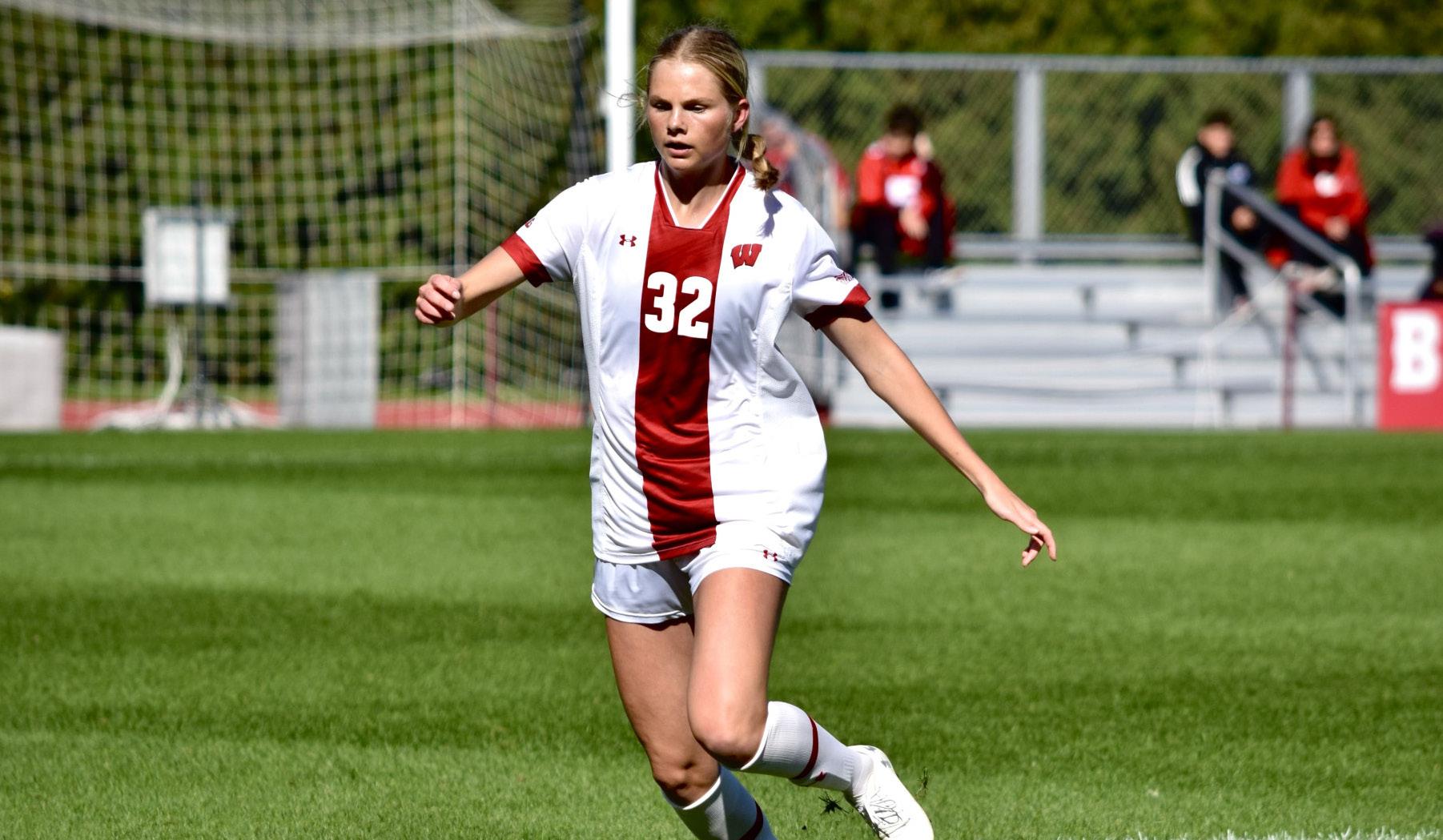
national team this summer really showed me the importance of communication and attention to detail,” Baumann told The Daily Cardinal. “At the national level, there is constant communication between every player on the field. The details make all the difference when you play at a high level.”
Despite falling to Spain in a 3-0 loss the first game and the second match ending in a 3-3 draw, Baumann was grate-
ful for the leadership she consistently saw throughout the U-19 camps and games.
“The girls I’ve played with at the national level are always very encouraging, but they will also demand better from people around them when the intensity isn’t where it needs to be,” Baumann said. “I want to step up as a leader myself this college season, helping to make the players around me better and raise the level of our environment.”
who witnessed
can attest to the high level of play she brought to the field.
In just her first season, Baumann was named to the AllBig Ten Freshman Team and the All-Big Ten Third Team by the Big Ten Conference. She was also ranked No. 21 in the Top Drawer Soccer Postseason Top100 Freshman list, according to Wisconsin Soccer. This collegiate season,
Baumann hopes to make an impact on both sides of the ball and contribute to the team’s success.
“I want to be one of the best defenders in the Big Ten,” Baumann said. “For our team, the goal is definitely to win the Big Ten regular season and tournament and make a deep run in the NCAA Tournament.”
Baumann also found excitement in the newfound recognition defenders are beginning to receive, the U.S. Women’s National Team’s Naomi Girma being one of them.
“I always say that defense wins championships. What we do as defenders doesn’t always show up on the stat sheet, but it’s just as important as scoring goals in my opinion,” Baumann said. “It’s exciting to see more people appreciating the importance of our position.”
For now, Baumann will continue to focus on the upcoming collegiate season while also acknowledging the opportunities she had on the U-19 national team over the past few months.
“It’s the biggest honor and best feeling to be able to represent my country and wear the crest,” Baumann said. “At the college level, I love the bonds that I share with my teammates. It’s like a family.”
By Abigail Bures STAFF WRITER
Former Badger women’s hockey player Brianna Decker will join the 2024 U.S. Hockey Hall of Fame class, USA Hockey announced Thursday.
As the first women’s hockey player from the University of WisconsinMadison to be inducted into the Hall of Fame, Decker, unsurprisingly, has an impressive resume.
Decker played with the U.S. Women’s National Team for over 15 years and received two USA Hockey Bob Allen Women’s Player of the Year awards. Decker also totalled 170 points in the 147 games on the team.
At Wisconsin, Decker led the team for two years, first as an alternate captain her junior year and then as captain her senior year. In 2011, the Badgers won the National Championship and Decker proved her skill in the games leading up to the final. She scored her 100th career point with a goal against North Dakota and assisted the game-winning goal against Boston College in the semifinal.
Decker always knew she would consider Wisconsin for hockey and academics because she grew up not far from Madison. Born in Dousman, Wisconsin, Decker lived an hour’s drive away from the city where she’d later play college hockey.
“I told myself in fourth grade that I wanted to be a Badger one day,” Decker told Bally Sports Wisconsin.
Decker mentioned her experience growing up with three hockey-loving brothers and spoke fondly in an interview of the time spent practicing on streets and ponds. Decker said there was a lot to consider when choosing a school, but,
ultimately, “Wisconsin had my heart.”
Even before she became a Badger, Decker played for the U.S. Women’s National Hockey Team. During those two seasons, Decker put up 16 points, but she stepped it up after getting into college play. In the 2010-11 and 2011-12 seasons, Decker totalled 21 total points for Team USA. Decker’s most notable moments on the national team were three Olympic games. The team won two silver medals — in 2014 and 2022 — and one gold in 2018.
Now, Decker spends her time coaching where she went to prep school at Shattuck Saint Mary’s in Minnesota.
“I’d say that Shattuck St. Mary’s was the pivotal moment in my hockey career,” Decker told Bally Sports Wisconsin. Decker spent four seasons with Shattuck Prep and helped the team win three USA Hockey Under-19 National Championships.
Decker has always sought to give back to the women’s hockey community, finding coaching experiences as early as 2012, when she graduated from UW-Madison. Decker served at multiple development camps for USA Hockey and stuck close to home as an assistant coach with the Madison Capitals.
She’s currently on the Premier Hockey Federation board, which aims to create a hockey league for women, drawing inspiration from the WNBA.
Brianna Decker has proved herself a deserving recipient of the U.S. Hockey Hall of Fame. The work she has done forthe hockey community and women in hockey allows her to pave the way for other Wisconsin women looking for this achievement.
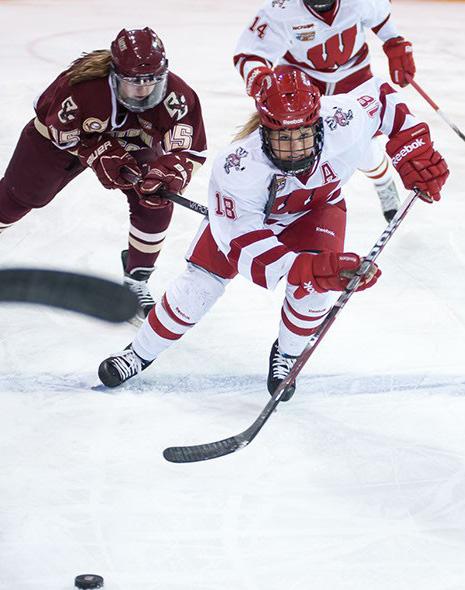
Katie Gavin gives fans a taste of her upcoming solo record with her debut single “Aftertaste,” released on July 23.
By Lily Spanbauer STAFF WRITER
Just when you thought the summer of 2024 had hit the limit of the feminine pop excellence, Muna’s Katie Gavin swooped in with a catchy new sapphic single to prove that the limit does not exist.
Gavin’s debut single “Aftertaste,” released on July 23, gives fans a taste of Gavin’s eclectic folk inspired upcoming album “What a Relief.”
Gavin first hit the scene as the frontman of Muna, an indie band formed in 2013, best known for their queer pop anthems like “Silk Chiffon” and the semi-erotic interactions that grace the stages of their live performances.
Gavin’s “Aftertaste,” is a song that, along with being the ultimate earworm, captures themes of queer love derivative of a classic Muna song, while channeling an acoustic folk sound that sets Gavin’s solo work apart from the band.
Written by Gavin and pro-
duced by Tony Berg —longtime collaborator of Grammy -winning singer-songwriter Phoebe Bridgers — the song describes the overwhelming emotions that come with a crush so intense it has the power to bring you out to parties and concerts just for the chance that you might see them there.
In tandem with the single, Gavin put out the “Aftertaste” music video, in which she took the lyrics to a very literal level. Gavin plays the role of the nude model for an art class, a direct reference to the song’s chorus.
“I feel naked when you look my way,” Gavin sings.
The video served to further strengthen her vision and voice as a solo artist, exciting fans with this preview of the unique and provocative perspective that we can expect throughout the rest of the record.
Along with “Aftertaste,” Gavin announced her upcoming LP titled “What a Relief,” slated to release Oct. 25 under

Bridgers’ record label, Saddest Factory Records.
“What a Relief” will have 12 songs, including a feature with indie singer Mitski on track five titled “As Good As It Gets.” Gavin collaborated with
more than just Mitski while making the record. During an episode of Gayotic, Muna’s weekly podcast, Gavin revealed that Amber Bain of the Japanese House lent a hand in the album’s production.
And for those Muna fans worried about losing their beloved trio, you need not fret.
“We’re still a band. We’re still coming for your ass,” Gavin clarified on a recent episode of Gayotic.
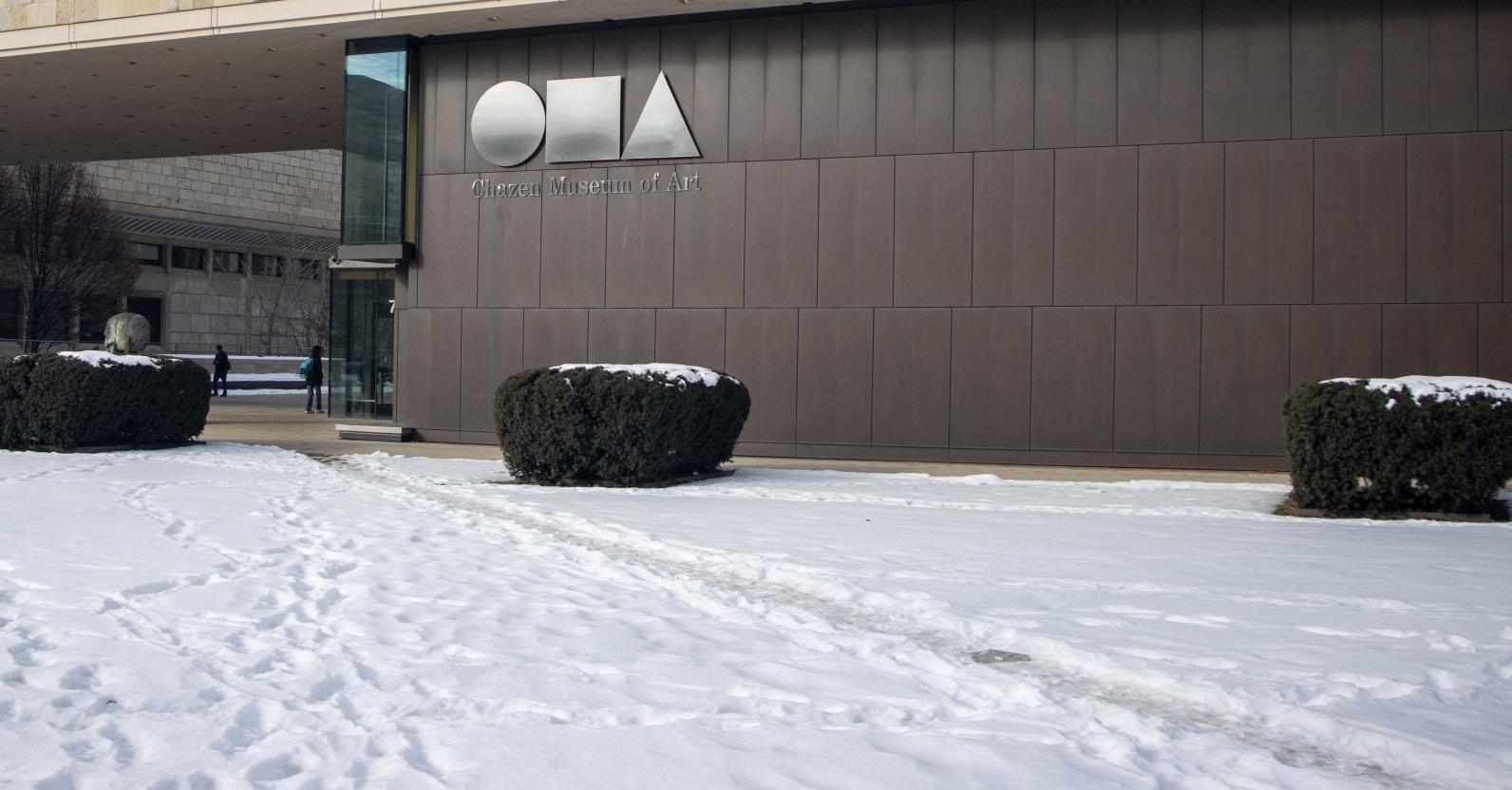
A new initiative funded by the Wisconsin Department of Tourism highlights the Chazen as a part of the Midwest art collective.

By Bryna Goeking
ARTS EDITOR
Thousands of students pass the Chazen each day on their commute to their classes, and more may pay the gallery a visit thanks to a new grant from the Wisconsin Department of Tourism.
Wisconsin Art Destinations launched a list of 16 museums around the state for art lovers to visit. The southern itinerary boasts two Madison-based art galleries, the Madison Museum of Contemporary
Art and the Chazen Museum of Art on the University of Wisconsin-Madison campus.
Wisconsin Art Destinations seeks to raise awareness of Wisconsin as a destination for visual arts — from Tudor-style buildings, Old World creations or modern artwork — according to their website.
The network of museums will strengthen the connection between each gallery. Instead of art lovers needing to search for galleries independently, the Wisconsin Art
Destinations website serves to consolidate otherwise isolated art institutions.
The website highlights stops across the state, not just in metro areas, through three weekend itineraries (southern, central and eastern). Each itinerary divvies up different portions of the state, outlining a short route to visit art galleries in each region. The new campaign will be promoted across Wisconsin and in the Chicago area.
Wisconsin tourism reve -
nue reached an all-time high, generating $25 billion in 2023, according to Gov. Tony Evers.
Chazen director Amy Gilman spoke to The Daily Cardinal about what this website means for an art gallery nestled within a university campus while compressing information across the state.
“From my own perspective, it shines a light on some amazing museums and collections that don’t get as much attention as those of us who are associated with a giant university,” Gilman told the Cardinal. “It’s great to be a part of it, and it also raises the profile of some of these other museums, who are terrific.”
The Chazen typically displays around 1,500 items in addition to the 23,500 items
held in storage. Currently, the Chazen is displaying sculptures, studio glass and more. “ Nordic Utopia? African Americans in the 20th Century” assembled drawings, paintings, photographs, textiles, film, music and dance for African-American arts, on display until Nov. 10.
Around 180,000 visitors stop by the Chazen annually for free, according to a report from Day of the Badger. The Madison Museum of Contemporary Art also provides free admission for many exhibitions and collections.
Other highlighted art destinations include the Paine Arts Center and Gardens in Oshkosh, Wisconsin, the Milwaukee Art Museum and Villa Terrace in Milwaukee.
l By Zoey Elwood STAFF WRITER
Voting is one of the most important rights that we have, but it is often taken for granted. From age 18, American citizens can help decide the fate of their country through their vote. It is one of the most significant impacts an American can have on their rights and the future of their country.
Even with the high stakes of elections and the endless resources and information at our fingertips, people still manage to find reasons not to vote. Some claim that the outcome will have no effect on them. Others reason that they are simply not educated on the candidates.
In this day and age, the stakes of voting are too high, and the excuses just won’t cut it anymore.
The internet has increased our exposure to news. Young people should have no excuse for being uneducated on political topics when we have all of the necessary information in the palms of our hands.
Our generation grew up with the internet, and since we make up a large percentage of its users, this makes us the most popular audience for online election news and advertisements. News consumption pertaining to elections is unavoidable. It is even more likely that those seeking a higher education have been exposed to election informa-
tion from the diverse environment of college campuses.
I see advertisements for the upcoming election daily across various social media platforms. Admittedly, with media consumption comes the inevitable issues of misinformation and misleading stories. These sources can corrupt the minds of those searching for information and can lead to individuals believing and spreading falsities. You can avoid this by making sure a story’s sources are trustworthy and by reading multiple articles on the topic so you can form your own opinion.
UW-Madison is home to thousands of people with diverse opinions and backgrounds, all of whom will be affected by the outcome of this presidential election in different ways. This should be reason enough to vote at the upcoming election. Even if you believe the outcome of an election won’t impact you, which is unlikely, you’re interacting first-hand with people who could and will be affected.
Disinterest in some political subject matter is understandable, but state and national elections are important for the future of this country. No one is asking for excessive research, but I can say from personal experience that college students encounter enough news coverage to form an opinion on the candidates. If a student is having an
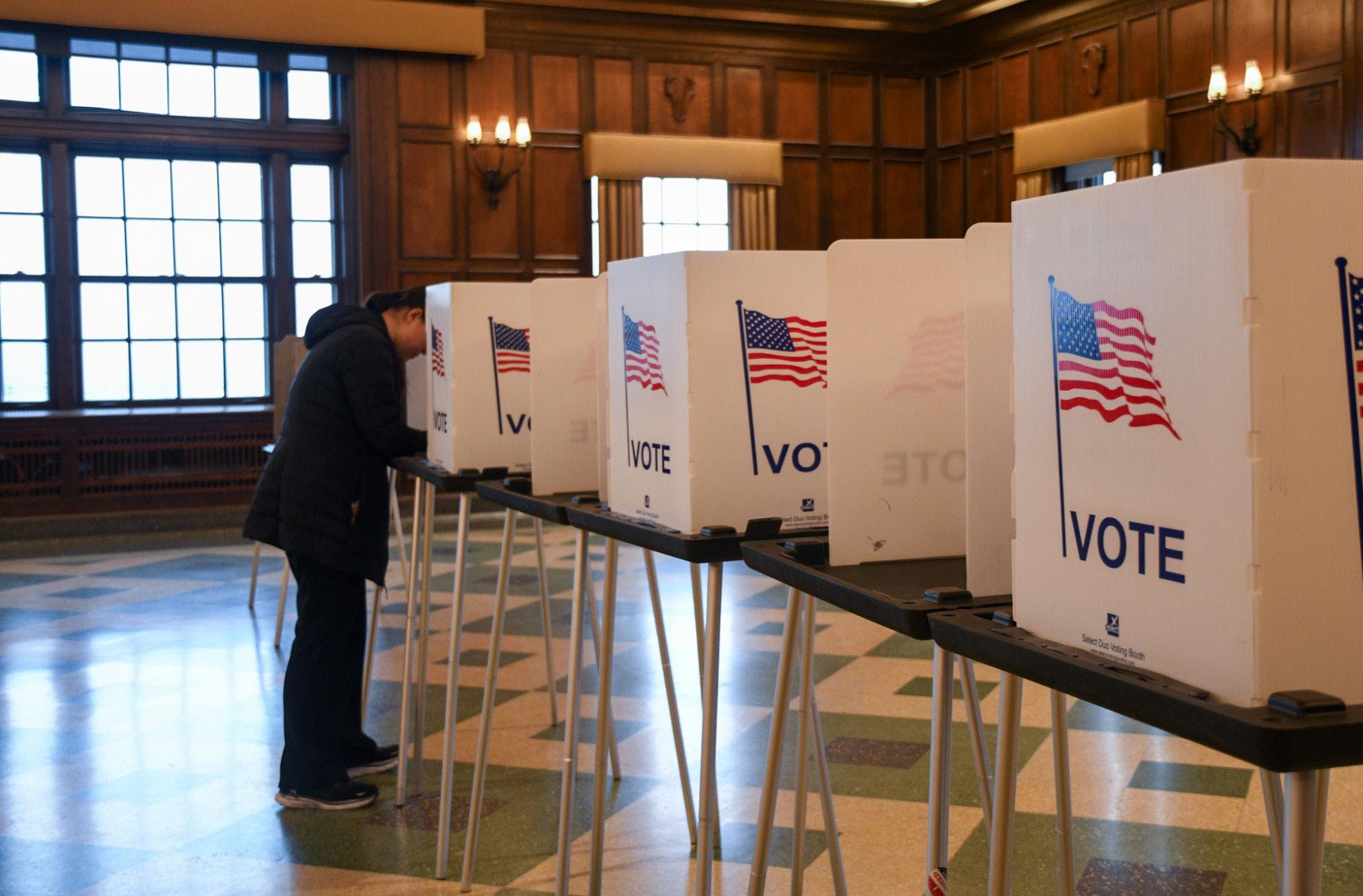
issue with the voting registration process, they can seek out the resources across college campuses that assist students with registration.
The U.S. government is led by adults who come from older generations. They are in charge of what becomes law and how courts rule. But our nation’s most important decision is held in the hands of the public, and the upcoming presidential election is the perfect opportunity for young adults’ voices to be heard.
The culture, traditions and
makeup of the United States are constantly evolving. With these changes comes an evolution in peoples’ ideals.
According to a report by the Pew Research Center, “From immigration and race to foreign policy and the scope of government, two younger generations, Millennials and Gen Xers, stand apart from the two older cohorts, Baby Boomers and Silents. And on many issues, Millennials continue to have a distinct – and increasingly liberal – outlook.”
Given the contrasting views
between age groups, there should be more diverse ages representing our country. This change begins with young voters who can help lead to a difference in our government. Take initiative in what you believe the future of this country should be. Take advantage of the right you have, as you never know when it could be taken away.
Zoey is a staff writer studying Journalism and Political Science. Do you agree that there’s no reason not to vote? Send all comments to opinion@dailycardinal.com
By Michael Dougherty STAFF WRITER
Between the upcoming presidential election, recent mass shootings and increasing international tension, the pressure to be well-informed is higher now than ever.
From breaking news stories every day to an infinite supply of TikToks and Instagram Reels, there’s no shortage of information to consume. Additionally, debates with friends, families and strangers — and maybe even Charlie Kirk — add to the stress of keeping up with the news.
While social media might make staying up to date a simple task, it’s time to reconsider the extent of our obligation to stay informed.
As college students, we are expected to stay informed about political affairs. It’s our responsibility to learn about the world we’re entering so that we can create the change we want to see.
In order to do this, it’s important that we spend time consuming media. Sometimes, though, this responsibility can cross our boundaries and begin to affect our mental health. In the past, the overconsumption of media has left me feeling hopeless and directionless, putting my mental health at risk.
Even though it is important and easy to stay well-informed, it’s even more important to preserve your mental health. The negative effects the media can have on mental health make it important to take a step back and
consider taking a break from mass consumption of the media.
Last year as a freshman at the University of Wisconsin-Madison, I put pressure on myself to stay upto-date with the news. I spent hours on social media and news outlets researching global conflicts, learning about presidential candidates and studying the history of social issues in the United States. I went in-depth on Israel’s occupation , the history of capitalism in the United States and the struggles of third-world countries globally. While I started to feel better about my level of political knowledge, I started to feel worse.
As I dove deeper into the world of politics, I continued to find more issues I was dissatisfied with. I did my best to participate on campus and voice my opinion to friends, family and social media, but despite my efforts, I had little influence on the things that I deeply cared about — I was devastated. I felt trapped on the internet, cursed to learn about things that I wanted to change with little power to do so.
I was at a dead end, left with the anxiety of the world’s issues and no outlet. But as I reached out to friends and did more research, I learned that I wasn’t alone.
In 2022, the American Psychology Association published an article covering ways to cope with overconsumption of the media.
In the article, psychologist Dr. Don
Grant shared his observations on the effects of media overload on teenagers. Because of social media, competition for attention is at an all-time high. This has led news sources to use more negative headlines to get more clicks. As young adults are exposed to increasing amounts of negativity, their emotional distress also rises.
This might sound discouraging — and a little ironic — but there is an answer to dealing with the pressure of media overconsumption. Take a break.
At first you might feel guilty to step away. Being well-informed comes with a sense of pride and accomplishment. There is a feeling that you are helping yourself and others by being knowledgeable. While this might be true, the most important thing you can do is make sure that you are taken care of.
While it is honorable to empathize deeply with the world’s problems, you have a right to live a happy life. If that means stepping away from the media and taking a break from being informed, that is perfectly acceptable, and probably the right decision.
No one’s saying you should completely remove yourself from the world of politics. Have opinions, keep up with current events and vote in November. But the next time you find your mental health suffering in an attempt to be well-informed, take a break, and focus on your happiness: you deserve it. Michael Dougherty is a Sophomore studyinghistoryandjournalism.Doyou agree that “taking a break” from being informed is acceptable in pursuit of preservingourmentalhealth?Sendallcommentstoopinion@dailycardinal.com.