University of Wisconsin-Madison

University of Wisconsin-Madison
Men’s wellness content has turned into a breeding ground for conservative resentment and misinformation.
+ OPINION, PAGE 6

By Lauren Eno STAFF WRITER
The University of Wisconsin-Madison entered “Peace Corps Week” Sunday, maintaining its status as one of the nation’s top producers of volunteers.
Peace Corps Week, which runs from Feb. 23 to March 1, commemorates the founding of the Peace Corps in 1961. UW-Madison ranks as the second highest university producer of volunteers, with the university holding the 1st or 2nd spot more than 15 times. In 2024, the Peace Corps announced UW-Madison had produced 2,766 volunteers since the organization’s creation.
However, President Donald Trump’s recent executive orders, such as the Order on Reevaluating and Realigning United States Foreign Aid that imposed a 90-day pause for review on all foreign assistance, cast the future of such programs into doubt.
The Peace Corps is funded through the
Small Project Assistance (SPA), a partnership with USAID, and continues to operate equity and inclusion (DEI) programs, though they are impacted by new orders impacting hiring and diversity. UW-Madison Peace Corps recruiters referred comment on the situation to university communications, who said the university does not have additional information or an institutional reaction.
While the Peace Corps is a separate entity from the U.S. State Department and not included on a list of 2,600 agencies that the Trump administration targeted for scrutiny in January, Trump attempted to slash Peace Corps funding during his first term, and current volunteers have voiced apprehension as to their future.
By promoting agriculture, community economic development, health and more in over 60 countries, UW-Madison said the Peace Corps embodies the Wisconsin Idea, a university principle that education should influence people’s
Thursday, February 27, 2025
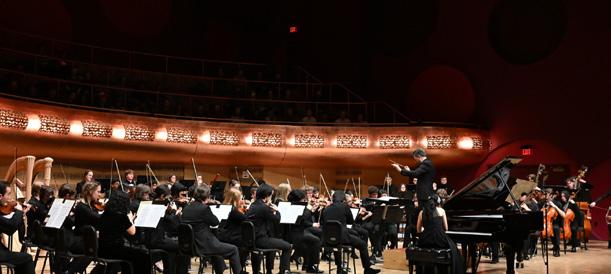
The UW Orchestra’s performance of “Rite of Spring” and “Piano Concerto No. 3” rewarded concertgoers.
+ ARTS, PAGE 8
lives beyond the classroom and signifies the university’s commitment to public service and knowledge at a global level.
“These volunteers build ties with the communities they serve, creating lasting relationships that strengthen global connections for years to come,” former UW-Madison
Chancellor Rebecca Blank said.
USAID spending was less than 1% of the 2023 federal budget, comprising roughly $38.1 billion. Since 2000, over $58 million in USAID funds have enabled the SPA program to support the Peace Corps, an annual average of roughly $14.5 million, which goes to grant projects, training activities, and field-level program support.
Since 1983, SPA funding has allowed the Peace Corps to reach more than 30 million local community members in 115 countries. USAID funding through SPA grant projects generated an additional $36 million in local community and third-party contributions.

By Zoey Elwood COPY CHIEF
University of Wisconsin System
President Jay Rothman and UW-Madison Chancellor Jennifer Mnookin spoke at the Wisconsin Counties Association (WCA) Legislative Conference Tuesday, discussing Gov. Tony Evers’ budget proposal, in-state employment opportunities and mental health.
University funding
Rothman acknowledged that Wisconsin ranks 43rd out of 50 states in public funding for higher education. He pointed to Evers’ budget proposal, which aligns with the UW System Board of Regents’ request to bring funding to the national median.
“Forty-third out of 50 is not the Wisconsin I know,” Rothman said. “I don’t think 43rd out of 50 is sustainable for us as a state if we want to be as economically vibrant and viable as we should be.”
If the budget request is approved, Rothman said, it would provide enough
funding to reimagine branch campuses without closing any that are not already slated for closure. He also said he would not recommend a tuition increase for the next two years of the biennium as some cost-saving measures have already been taken, such as layoffs and reducing programs to maximize efficiency.
“It’s incumbent on the state to make the investment in the Universities of Wisconsin that will allow our state to continue to have a constellation of 13 universities, something all of us can be proud of, and something that the rest of the nation looks at with envy,” he said.
Mnookin noted concerns about potential reductions in federal funding, including National Institutes of Health (NIH) grants that support research at UW-Madison.
“Are there ways that we need to be more efficient and do things better, and to look at what we haven’t been doing well and try to make improvements?” Mnookin said. “Those are all very fair questions, but we don’t if we take what’s on the table and just toss it all out. I think that the people of Wisconsin and
the people of our nation will be paying for that for a long time.”
Without additional funding from the state, UW-Madison would need to increase tuition to cover the potential annual $65 million loss if federal research funding cuts are implemented.
Mnookin said this reduction of funding would impact the university’s research work on cancer, Alzheimer’s, natural resources and more.
Assembly Speaker Robin Vos, R-Rochester, told The Daily Cardinal on Feb. 12 that “it would be impossible for the state [of Wisconsin] to replace federal funding,” citing the need to maintain a balanced budget.
The Wisconsin Idea in action
Both speakers highlighted the Wisconsin Idea, which ensures that the benefits of the university system — graduates who contribute to Wisconsin’s economy and society — extend beyond campus borders to serve the entire state.
+ Continue reading on page 2
Attempts to dismantle USAID by Trump and the Department of Government E ciency remain under review due to a lawsuit filed by two foreign service unions. U.S. District Judge Carl Nichols issued a temporary restraining order preventing the Trump administration from putting USAID employees on administrative leave, reinstatement of some 500 USAID workers from administrative leave and ordering that no USAID employees should be evacuated from their host countries before Feb. 14 at 11:59 p.m.
Amid these decisions and UW-Madison’s long history of Peace Corps involvement, any cuts could impact alumni and the global communities they serve. The long-term fate of USAID funding remains uncertain, and e ects will be felt not just in Washington and Madison, but worldwide, where thousands rely on initiatives for development and humanitarian support.
By Sreejita Patra SENIOR STAFF WRITER
Meriter Hospital nurses and health care workers at UW Health and Group Health Cooperative (GHC) called for safer staing ratios, security measures and wage increases at Madison hospitals in a press conference Thursday.
The nurses represented by Services Employees International Union (SEIU) Wisconsin said they have been in contract negotiations for roughly one month and are currently fighting for protections from physical assault, gun violence and more. They also highlighted the need for improved communications with frontline nurses during violent situations such as the Abundant Life school shooting in December.
“When a facility is in secure status after these events, we want to make sure there’s communication happening so that everyone is aware of what to do,” SEIU Chief of Sta Crystal Martzall told The Daily Cardinal. SEIU Executive Director Louis Davis also told the Cardinal that most health care workers who reach out to SEIU for unionizing purposes mention gun safety as a top concern in negotiations. Carol Lemke, who has worked as a nurse at Meriter for 24 years, said health care workers are facing an increased threat of violence that could in part be solved by metal detectors, updated emergency protocols and safer staffing. She said she is “concerned that Meriter is focusing on the money it could save instead of the patients’ lives nurses hold in [their] hands” in their negotiations with workers.
“This is the year that nurses will be heard. We know what we need to deliver the highest quality care and we are demanding a voice at the table,” Lemke said.
Continuereading@dailycardinal.com

Continued from page 1
Rothman called Wisconsin’s public universities “a great talent magnet” and expressed pride in keeping that talent in Wisconsin. Nearly 90% of in-state UW graduates remain in Wisconsin five years after earning their degrees.
“The Wisconsin Idea is the notion that as the state’s flagship, we have a responsibility and the opportunity to connect in meaningful ways to make people’s lives better,” Mnookin added, speaking from UW-Madison’s perspective.
Rothman said the UW System serves over 300,000 people annually and pointed to initiatives like the Freshwater Collaborative and the Dairy Innovation Hub as examples of the Wisconsin Idea in action.
The importance of a four-year education
While acknowledging that a fouryear degree is not the right path for everyone, Rothman emphasized the economic and personal benefits of higher education. He cited research from the Wisconsin Policy Forum showing that half of Wisconsin jobs paying $50,000 per year require a four-year degree, a figure that jumps to 90% for jobs paying $75,000 or more in the future.
“We want to make sure that peo-
ple have that opportunity,” Rothman said. “Over the course of a career, if you compare that four-year degree versus a high school degree, the net present value is about a million dollars. That not only benefits the individual, but it benefits the economy and the region.”
Mnookin noted that higher education is also linked to job satisfaction, health benefits and overall well-being. Beyond financial and career benefits, she further stressed that a university education promotes adaptability.
“If life throws some pivots at you, and you need to retool, reimagine and rethink what you’re going to do, you’ve already had some experience doing that — and I think that has a lot of value,” she said.
With the rapid rise of artificial intelligence and technological advancements, Rothman noted the challenge of preparing students for jobs that don’t yet exist.
“One of the benefits of a university education and the discipline that it develops is you teach critical thought and the ability to discern fact from fiction,” he said
What makes Wisconsin di erent?
Rothman said the a ordability of UW System schools compared to other public universities in the Midwest gives Wisconsin an advantage.
“We are the most a ordable public university system in the Midwest and beyond,” he said. “Yes, it’s not inexpensive, but relatively speaking, we are an incredible value.”
Rothman credited generations of Wisconsinites for investing in higher education, technical colleges and K-12 systems, which have shaped the state’s economy and workforce.
“When you think about the teachers that influenced your lives, the nurses that have provided health care, the engineers that have done work to develop and build Wisconsin and the great research that occurs outside of the universities in the private sector — how we’re all being touched by that, and I hope we remember that, because one of the things I think about often is, what would our state look like without the Universities of Wisconsin?” Rothman asked.
Mnookin highlighted UW-Madison’s top-ranked programs in education, engineering, agriculture, law and medicine. She also referenced a Forbes article ranking UW-Madison in their list of “Public Ivies.”
“A set of decisions made over time created one of the world’s great universities right here in Wisconsin, and we should nurture and protect that legacy,” she said.
COVID-19 pandemic’s lasting impact on UW
During a brief discussion of the COVID-19 pandemic’s e ects on the universities, both leaders underscored concerns over increased mental health challenges among students.
Nearly 10% of students across the UW System sought out university counseling and mental health services last year, according to Rothman. He attributed some of these challenges to social media and the polarization of society, noting that students often hesitate to engage in di cult discussions, which negatively impacts their conflict resolution and relationship building skills.
Mnookin said she has also seen a rise in mental health challenges but said that UW-Madison has significantly expanded its mental health professionals and student support services.
“We have seen greater isolation,” Mnookin added. “But we’ve also seen some really encouraging signs recently.”
Mnookin also emphasized UW-Madison programs started with the student a airs team to bolster in-person engagement and to better help students find community events.
“We’re trying to be intentional and conscious about helping our students develop and redevelop those skills of engaging with each other in real life,” she said.
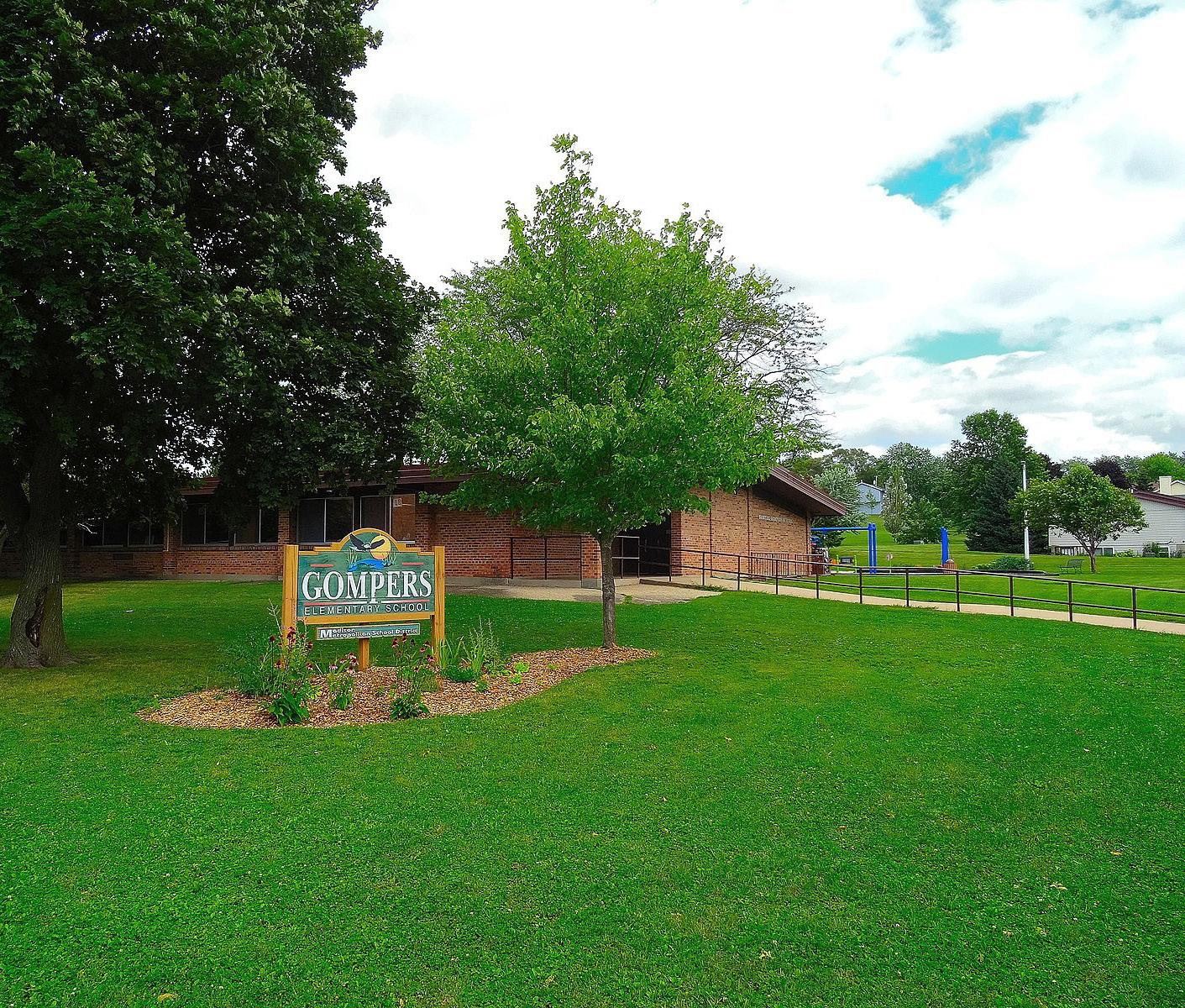
The board unanimously voted to name Southside Elementary after Lori Mann Carey, a former MMSD graduate and education advocate.
By Vanessa Gavilan CITY NEWS EDITOR
Madison school district board members voted on Monday to name the newly constructed school on Madison’s South Side after Lori Mann Carey, who was an active community member and former student of the district before passing away in 2020.
The elementary school had used the temporary name of “Southside Elementary” since it opened in 2023, but an ad hoc committee assigned to choosing potential names for the school had been operating since then.
Going into Monday’s board meeting, the committee had ranked the top four choices for names based on community and student input: Southside Community, Ada Deer, Lori Mann Carey and Nine Springs. Based on these recommendations, the board members decided to move forward with naming the school after Mann Carey because of the strong message the name sent about the value of educators.
“I think the story we’ve been told about the person behind this name and their meaning to this community is deeply compelling, and it is a rare and unique opportunity that we get to uplift educators and the people who work in the interests of our young people,” board member Ali Muldrow said during the meeting.
Board of Education President Nichelle Nichols also spoke in favor of Mann Carey, explaining the value of naming a school after everyday people who advocate for change.
“I think there is something really powerful about elevating the work of folks who have dedicated many, many hours and talent to our district, and that doesn’t always show up as being the accomplished doctor or the first EOC officer,” she said. “Those folks are notable and incredible in their own right, and you can
have other ways that folks are making incredible contributions to our district.”
Ultimately, the motion to name the school after Mann Carey passed 6-0.
Mann Carey’s life, educational legacy
Mann Carey was raised on the south side of Madison and attended Memorial High School during her early years.
As a mother, Mann Carey continued her involvement in the school district by
working with the board on new initiatives and programs for the district, such as the 4.0, which worked to raise the GPA of student-athletes.
Her biggest project was the co-creation of the Mann Educational Opportunity Fund, which provides mentoring and educational tools for primarily Black students in the district. She also served on the Black Chamber of Commerce and the African American/Black Business Association for many years in Madison.
By Sonia Bendre STAFF WRITER
While teaching his Introduction to International Relations class this semester, University of WisconsinMadison professor Mark Copelovitch joked he often wonders “in those 75 minutes when I’m not on my phone, which international institution might we have withdrawn from?”
Copelovitch’s new “whirlwind” of worries arrived, he said, with the onset of President Donald Trump’s second administration.
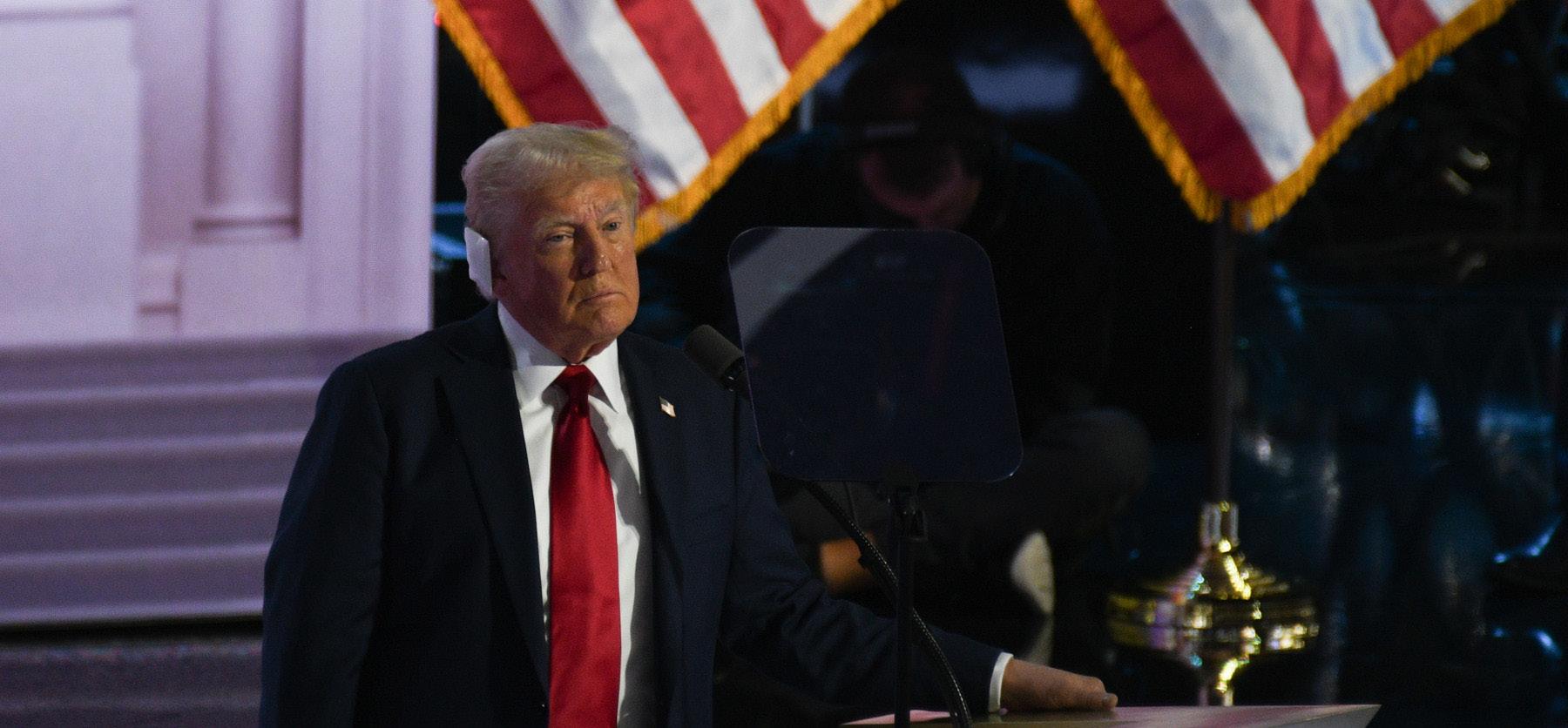
During an hour-long event hosted by WUD Society and Politics at Memorial Union on Monday evening, Copelovitch presented to a packed room about the state of American democracy, as well as domestic and foreign policy. He shared his predictions for the first 100 days of Trump’s presidential term, including a budget crisis, tari wars, research funding and the future of the North Atlantic Treaty Organization (NATO).
Copelovitch teaches in the political science department and the La Folette School of Public A airs, and is also the Director of European Studies and the Jean Monnet Chair, a post requiring specialization in European Studies. He typically researches international relations and politics of the global economy, particularly Transatlantic cooperation and cooperation within the European Union.
Mike Johnson, John Thune ‘violated their oath of o ce’ by allowing Trump to usurp congressional authority, Copelovitch says
Copelovitch echoed concerns from other political scientists
about the Trump administration’s threat to American democracy.
Copelovitch highlighted a quote from Elon Musk in a recent interview with Fox News’ Sean Hannity, where Musk claimed the will of the president is the will of the people.
Musk’s quote resembled a similar quote from Ernst Rudolf Huber, a legislative architect behind the Nazi regime, Copelovitch said.
Copelovitch also commented on Trump’s firing of the Joint Chiefs of Sta , breaking a precedent that has lasted since 1951, and Trump’s “clearing out large portions of the Justice Department.”
“We’re in a situation right now where the constitution is not really operating the way it’s supposed to be, and the norms are not operating the way they are supposed to be,”
Copelovitch said.
Copelovitch raised concerns about the Republican majority in Congress, asserting they have done little to combat Trump’s usurpation of the legislative branch’s financial authority. In the past month, Trump, Musk and other members of the executive branch have cut government spending, laid o federal employees and refused to spend funds previously appropriated by Congress, all of which are within the scope of legislative authority rather than executive authority, as outlined in Article I of the U.S. Constitution.
“One of the things I think the founders of the U.S. Constitution could not possibly imagine is politicians that would let other politicians, in other areas of government, e ectively steal their power and not do anything about it, but that’s e ectively what’s happening
right now,” Copelovitch. “You can certainly understand politically why [Senate Majority Leader John] Thune and [House Speaker Mike] Johnson may like those outcomes, but that is a violation of their oath of o ce, in that sense.”
Although Trump’s influence in American society seems omnipotent, Copelovitch said, his popularity has declined precipitously since the start of his presidency, indicating that Republicans are likely to perform poorly in the 2026 midterm elections.
“Maybe we have something that’s kind of Schrodinger’s Trump: simultaneously we’re in extraordinary times with a possible authoritarian leader, yet everything is operating the way it normally does in American politics,” Copelovitch said. “[Trump’s] polling is underwater more than any president since World War II after one month, and most of the things that he is doing policy-wise are wildly unpopular with the electorate.”
Budget cuts and layo s ‘huge shock to the system’
Around a quarter of national GDP has historically gone toward funding governmental programs, but both Trump and Musk have stated their ambitions to drastically reduce government spending. Although their concept is popular in theory, it will be less so in practice, according to Copelovitch.
“If you start unplugging large pieces of 25% of the economy… people are worried they’re not going to get their Social Security benefits, farmers are worried that the farm subsidies are not going to come through and the checks are not going to show up on
time,” Copelovitch said.
Roughly a quarter of UW-Madison’s funding is federally based, making federal funding the university’s largest source of funding. Significant cuts to National Science Foundation (NSF) grants and National Institutes of Health (NIH) funding pose major problems for UW-Madison, as well as for other research-based universities across the country.
“The staff at the European Study Center are all paid on federal grants,” Copelovitch said. “If those grants go away, there’s no money from the state or anybody else. If the University of Wisconsin-Madison suddenly doesn’t have 25% of its budget, that’s a big deal.”
Congress must also vote to raise the debt ceiling next month to avoid a government shutdown if they plan to implement Trump’s heavy tax cuts, which is estimated to be a $2 trillion loss for the federal government over the next 10 years. With a significant number of Republicans and Democrats alike in opposition to either or both of Trump’s proposed budget and tax cuts, Johnson will likely need to rely on Democratic votes if he hopes to raise the debt ceiling, said Copelovitch.
US international policy reversals are ‘stunning,’ ‘dangerous’
Some of Trump’s first actions as president included renaming the Gulf of Mexico to the Gulf of America, threatening to make Canada the 51st state and trying to buy both Greenland and the Panama Canal.
“Nobody really thought that NATO countries were going to come together to deter the United States from taking their own territory,” Copelovitch said. “That’s a dangerous thing given the state of the world right now.”
Trump’s administration also upset the balance of international relations overseas. This past week, U.S. representatives met with Russia to discuss the RussiaUkraine war without Ukraine representatives present. Following the meeting, Trump referred to Ukrainian president Volodymyr Zelenskyy as a “dictator” because Ukrainian elections had been postponed during the period of martial law, and blamed Zelenskyy for starting the war.
Continue reading @dailycardinal. com
By Wesley Hoy STAFF WRITER
Ad wars in the high-stakes race for the control of the Wisconsin Supreme Court are in full force as candidates race toward the April 1 election.
While Wisconsin Supreme Court races are o cially nonpartisan, the race has become increasingly polarized in recent years as the two major political parties continue to back their preferred candidate. And with the election a little over a month away, both campaigns have seen large donations poured into their campaigns as the fight for a seat on Wisconsin’s highest court heats up.
Republican-backed candidate Brad Schimel, a Waukesha County judge, will face o against Dane County Circuit Judge Susan Crawford, who seeks to maintain the court’s narrow liberal majority.
Crawford raised $4.47 million from individual donors so far in 2025 compared to Schimel’s $2.7 million, recent campaign finance reports showed. The most recent round of campaign finance reports showed that Crawford received $2 million in funding from the Democratic Party of Wisconsin, while Schimel received $1.66 million from the Republican Party of Wisconsin.
Crawford campaign alleges AI nondisclosure
early February, Crawford campaign
Commission (WEC) after her image was digitally altered in a recent TV attack ad.
The five-page complaint alleged that Schimel’s campaign did not disclose the use of artificial intelligence, potentially violating a new Wisconsin law requiring the disclosure of the use of AI. Schimel’s team has said the photo was “edited” but not using AI.
“Schimel will try to manipulate images and the facts because he’s desperate to hide his own record of failure,” campaign spokesman Derrick Honeyman told The Daily Cardinal in an email statement.
While the body of the complaint incorrectly references the statute which Schimel’s ad allegedly violates, the Crawford campaign’s deputy press secretary Maddie Moher told the Cardinal in an email statement the WEC noticed the “clerical error” but still deemed the complaint “good to move forward.”
“We do not believe this minor clerical error will a ect the outcome of the complaint, as the context and substance of the filing make the intended citation clear, and the Ethics Commission is still investigating,” Moher said.
Schimel’s campaign did not respond to a request for comment, but campaign spokesman Jacob Fischer dismissed the complaint in a statement to the Milwaukee Journal Sentinel.
“It’s not an AI-generated image,” Fischer said. “This is a desperate attempt to distract from Susan Crawford’s record of releasing
pedophiles and violent criminals.”
The 30-second ad alleged that Crawford “didn’t bother filing the appeal in time” to keep an alleged rapist behind bars in 2001, with the alleged victim calling Crawford’s conduct in the case “utter[ly] disgust[ing].”
However, it was the miscalculation of the lead secretary of the state’s Department of Justice (DOJ), Glenda Taplic, which led to the appeal being filed one day late, according to the Journal Sentinel. While Crawford at the time headed the DOJ’s criminal appeals o ce, she was not responsible for setting the deadline in the case.
The state Court of Appeals ordered a new trial and overturned the defendant’s original conviction and sentence after they determined that the defendant’s trial attorney was ine ective. The complainant of the case reacted to the missed deadline with “utter disgust” but did not direct her anger at Crawford in her statement, according to the Journal Sentinel.
Group backed by Elon Musk pours money into race as donors, PACs spend big
The race has also garnered national attention with Building America’s Future, a conservative nonprofit tied to Elon Musk, having spent about $1.6 million on TV attack ads backing Schimel’s campaign, according to the Associated Press. The ads started airing Thursday and will run for two weeks in Wisconsin’s five largest media markets.
A week after booking the seven-figure TV ad buy, an ad by the Musk-backed nonprofit attacking Crawford featured a photo of a di erent Susan Crawford, former Harvard Law School Professor Susan P. Crawford. The ad ran for four days on Facebook and cost about $3,000.
Honeyman called the attack ads “shameful” and a “fraud from start to finish” in a statement Monday.
“Schimel’s campaign has already been caught using AI to manipulate an image of Judge Crawford, and now Musk’s ad uses a photo of a completely di erent person to bolster his false attacks… Wisconsinites shouldn’t trust a single thing from these guys,” Honeyman said.
Additionally, Musk’s America PAC has begun a new $1 million canvassing campaign backing Schimel, according to WisPolitics. On behalf of the Crawford campaign, A Better Wisconsin Together has spent $1 million on digital and television ads. In 2023, the group spent more than $6 million on behalf of liberal-leaning Justice Janet Protasiewicz, who flipped the court to a liberal majority for the first time in 15 years.
Schimel and groups backing him have an advantage of more than $7 million in future advertising reservations, with about $7.7 million in reservations supporting Schimel and about $572,000 in reservations supporting Crawford, according to AdImpact Politics.
StateNewsEditorAnnaKleibercontributedreportingtothisarticle.

By John Ernst SENIOR STAFF WRITER
Milwaukee Public Schools (MPS) and the Milwaukee Health Department (MHD) alerted families at Golda Meir School to a lead poisoning case on Jan. 13. Kristen Payne, whose third-grader started at Golda Meir this year was one of the parents on the receiving end of a troubling email explaining how the case was traced back to the school’s lower campus.
“Immediately, I was suspicious because there hadn’t been a full assessment of the school yet,” Payne told The Daily Cardinal. “We had a parent meeting on Jan. 14 the following day with folks from MPS’s facilities and maintenance department. I was able to pose some of my questions like, ‘how do we know that it’s not in the water [or] in other areas in the school?’”
At both Golda Meir and Kagel Elementary School, deteriorating walls with lead paint have caused a buildup of lead dust on window sills and floors, creating an increased risk for students. At Golda Meir, samples from MHD’s January lead risk assessment found deteriorated lead-based paint and lead dust hazards on all floors of the school.
Pressure from Payne and other parents led to a more complete response from MHD, who performed a full lead-risk assessment at the school. They found hazards all over the building.
Golda Meir and Kagel aren’t the only schools affected. Two additional students have tested positive for lead poisoning at Maryland Avenue Montessori School and Trowbridge Street School of Great Lakes Studies, according to city health officials.
Payne has continued the push for lead testing in schools and transparency from MPS, starting a petition on Change. org to demand more lead-risk assessments and a detailed plan for communication with families. Lead Safe Schools MKE, a group of concerned
parents, has also provided resources and information to other MPS parents.
Transparency has emerged as a main concern for Payne, as she and others have demanded answers from the school district and MPS administration.
“On a school level, the communication is great. In fact, [the schools] were getting the information at the same time we were,” Payne said. “There’s not as much transparency at [the upper administration] level, and we’re pushing to change that. We want to be included in that conversation and that just hasn’t been happening.”
Schools built before 1978, when lead-based paint was banned, are assumed to have lead paint and may be at increased risk, according to MHS. Payne said these schools would be addressed and tested first, but water filtration and testing methods were being pushed for, regardless of building construction date.
Henry Anderson, an environmental and occupational disease and public health professor at University of WisconsinMadison and former chief medical o cer of Environmental and Occupational Medicine with Wisconsin DHS, explained children were at increased risk for lead exposure.
“When kids are very young, they crawl around on the floor, put their fingers in their mouths, and lead particles from the paint will gradually come o , especially in window wells,” Anderson said.
Even if lead paint is painted over, it could still pose a risk if it deteriorates, Anderson said. The health risks, especially if children are poisoned, are severe and long-term. Neurological and brain development problems are common, and lead poisoning can cause underperformance in schools, according to the CDC. Anderson said some studies show even more permanent e ects, like tying childhood lead poisoning to higher rates of incarceration.
“There’s a historical record of kids with elevated blood lead [get-
Gov.TonyEvers’ budgetproposal includesabutter-themedlicenseplate
By Alaina Walsh SENIOR STAFF WRITER
Gov. Tony Evers introduced a proposal in the state budget Feb. 18 to create new butter-themed plates for Wisconsin motorists. The butter-themed plate would feature a yellow background to resemble butter, celebrating the state’s rich dairy heritage.
Evers also proposed a blackout plate which would have a black background with white lettering, a design that has gained popularity in neighboring states like Minnesota and Iowa.
ting] older [and having] behavioral problems that get them involved with a law and ending up in prison,” Anderson said.
While MHS and city o cials have explored halting classes and closing schools to allow for lead clean-up e orts, many solutions are directed toward improved maintenance. Anderson said it could even be an issue that could be controlled.
“I think the key is having a program in place that maintains the paint and the walls and the testing, inspected on a regular basis,” Anderson said. “When they need to do repairs or renovations, that’s a time to remove the lead paint.”
Funding for these e orts, which Anderson noted has been limited for schools in the past, could be provided by Gov. Tony Evers’ 2025-2027 state budget proposal, which he released Feb. 18.
Evers’ budget calls for $300 million to remove lead from a variety of community water networks, from service lines to schools and child care centers.
Evers also announced a $250,000 investment in public schools and independent charter schools to replace water fountains with filtration systems, according to a press release. Payne said demands have already been made to provide filtration to every faucet in MPS, regardless of function.
On Saturday Payne and Lead Safe Schools MKE will hold a community assembly at the Washington Park Library. The event will give concerned parents and community members an opportunity to learn about the issue and ask questions during a more accommodating time, as opposed to an MHS press conference during the workday.
While Payne and other parents have had some of their demands met, she said their work is far from over.
“We are coming to the table with important information, and until or unless we’re included, we’re going to be out there trying to get our voices heard,” Payne said.
“There are currently several ways for Wisconsinites to customize and personalize their license plates to show their Wisconsin style, and this provision would add a couple more,” Evers’ team told The Daily Cardinal in an email.
The Wisconsin Department of Transportation (WisDOT) currently offers approximately 60 specialty license plates, from promoting endangered species to honoring veterans and supporting Wisconsin sports. Each plate carries an annual $25 fee, generating mil-
lions of dollars for the state’s transportation fund.
“These specialty plates will generate revenue for the state down the road while celebrating our proud history as ‘America’s Dairyland,’ so you butter believe that’s a win-win-win for the state and for our budget.”
Evers additionally proposed allocating $14.8 million to replace aging license plates.
Nearly one million vehicles in Wisconsin are operating with plates that are 20 years old, according to DOT estimates from 2023. The investment aims to ensure compliance with a law requiring automatic replacement of plates older than 10 years by 2032.
The state Legislature is expected to review and debate the proposal in the coming weeks along with the rest of the 2025-27 budget proposal.


By Josh Murphy STAFF WRITER
The 2022-23 Wisconsin Badgers men’s basketball team averaged 65.3 points per game on offense, the second-lowest in the Big Ten. The Badgers were ranked No. 14 in the country at the start of the new year before dropping 12 out of their last 18 games and missing the NCAA Tournament entirely.
This collapse marked the start of a new era of offense for Wisconsin basketball.
The 2023-24 team was a stepping stone, averaging 74.7 points per game and making a run to the finals of the Big Ten Tournament. Despite an early exit in the first round of March Madness, the signs of improvement on offense were clear. Standout freshman guard John Blackwell proved to be a new hope for Wisconsin, and he was primed to earn more playing time in 2024 after the departures of AJ Storr and Chucky Hepburn in the offseason.
This season, this pack of Badgers is cruising. The electrifying offense averages 81.9 points per game, the fourthmost in the Big Ten. Senior guard John Tonje might be the best transfer acquisition in the country, and he’s been the engine for the Badgers offense all season long. Tonje leads the team in points per game with 19.5 and recently posted 30-plus points back-to-back games, becoming the first to do so since Michael Finley in 1994.
Blackwell has also stepped up for the Badgers. The sophomore guard already has a leadership position on the team and averages the second-most points per

game behind Tonje. The “fire and ice” duo has been vital to the Badgers’ success, and it has even gained recognition from broadcasting legend Ian Eagle.
While Tonje and Blackwell have been the leaders on offense, the entire unit deserves recognition for this stellar season.
Forwards Nolan Winter and Steven Crowl lead the team in rebounds and have been excellent shooters this season. Crowl recently had a 20-point performance against Illinois where he shot 100% from three and picked up seven rebounds.
Guard Max Klesmit seems to have finally found his footing after a rocky start to the season. The senior currently leads the team in steals and assists per game and has shot 43.3% from the field over his last five games. If Klesmit
can get hot down the stretch, it’ll take some of the o ensive load o of Tonje and Blackwell and give the Badgers another dangerous shooter on the floor.
Another player that deserves a mention is Kamari McGee, a scrappy guard and one of the leaders in the locker room. McGee is an underrated asset on the offense, is efficient with his opportunities and has a noticeable presence on the court. He was ejected for a flagranttwo foul during the first half of last weekend’s game against Purdue, but his teammates rallied behind him and played with some extra motivation in the second half.
“We are gonna get this win for you,” Tonje told McGee at halftime.
The Badgers did just that. They outscored Purdue 58-47 in
the second period, shooting 72% with zero turnovers. The camaraderie in this locker room is special, and it’s a group of players head coach Greg Gard should be extremely proud of.
Gard took over head coaching duties after longtime coach Bo Ryan retired midway through the 2015-16 season. Wisconsin hasn’t made it past the first weekend of March Madness since 2017, but it looks like Gard has finally assembled a squad capable of making a deep run in the tournament.
Gard’s philosophical shift on how to run the offense is one of the main reasons.
Historically, Wisconsin’s offense has been successful with its slow-tempo offense. Coach Bo Ryan’s 2014-15 team that made it to the National Championship was ranked 345th in tempo, but
they still played with remarkable efficiency.
Wisconsin’s offense has since evolved into a modern scheme with a faster pace-of-play and more 3-point shots. The Badgers currently rank 190th in tempo and are 31st in the nation in 3-point attempts per game. They’ve also switched to a more balanced, fluid approach with lots of player movement to create more open looks. Wisconsin’s switch to the contemporary offensive style has proven to be incredibly successful.
Successful might be underselling it — this Badgers o ense is a well-oiled machine. They rank seventh in the country in o ensive e ciency, according to KenPom. They ranked 17th in this category last season, a huge improvement from 140th in 2023. In just two seasons, Wisconsin’s o ense has transformed from a bottom-dweller in their conference to one of the nation’s elite.
Gard deserves a ton of credit. Many coaches are stingy and stick with their personal philosophy, even if it grows stale and predictable. Gard recognized the issue and completely revamped the o ensive playstyle of his team, and now he and the Badgers are reaping the rewards.
Wisconsin basketball has been overlooked as a title contender for years due to its slow o ense. Not anymore. Gard’s squad is firing on all cylinders, and the Badgers have a chance to take home the Big Ten crown. With the season winding to a close, they’ll need to finish strong and carry their momentum into the NCAA Tournament.
And if they keep playing like this, they’ll be a team no one wants to face in March.
By Eliana Mann STAFF WRITER
The Wisconsin Badgers softball team began its season on Feb. 7 and currently boasts a solid 8-4 record. Since last season, they have signed eight new freshmen and two transfer athletes. Who are these new faces, and what do they bring to the team?
Commenting on the eight players in the class of 2024, Badger softball head coach Yvette Healy said, “We’ve added speed, power and lots of pitching to the program with this class.”
“This is a hard-working group that loves to compete,” Healy said.
The class of 2024 features four pitchers. Mattie Beliveau hails from Riverside, California, and has earned First Team All-League three times. Gabby Fakes is a native of Beaver Dam, Wisconsin, where she was named First Team All-District three times. Jordan Felci comes to the Badgers from Staten Island, New York, with a First Team All-State honor under her belt. Kendra Lewis is a pitcher and infielder from Milan, Illinois, who was named the 2022 MaxPreps Illinois Softball Player
of the Year and is a three-time 2A Illinois State Champion pitcher.
Beyond their talented roster of pitchers, the Badgers welcome four other freshmen this season. Hannah Conger, from Gurnee, Illinois, plays shortstop and second base. Conger is a three-time All-Conference honoree, and her father played basketball at UW-Madison. Emma King is an outfielder from League City, Texas, who earned a First Team All-State award. Jackie Showalter is a native of Hartland, Wisconsin, and she plays both first base and serves as a utility player. She is a two-time state home run leader in Wisconsin. Kaylie Whidden from Monument, Colorado, plays second base and shortstop. She was named to the 5A Je co All-Conference First Team four times.
These freshmen are already making an impact on their team. In January, Softball America named three Wisconsin freshmen — Lewis, Showalter and Conger — to their 2025 Freshman Watchlist. Lewis has been a top performer so far, leading the Badgers with a .455 batting average this season. She has also contributed six RBIs.
Transfers
The Badgers have also welcomed two transfers to their program this spring.
Right-handed pitcher Molly Jacobson played at Virginia Tech before signing with the Badgers. Jacobson is an experienced player with one year of eligibility remaining. Infielder Makenzie Foster also joins the team after playing one season at Syracuse. She started in
the majority of games last season and earned a .294 batting average, the thirdhighest on the team.
With many games still to be played, Badgers fans can look forward to watching these new athletes grow into their roles on the Wisconsin softball team.
By Blake Martin OPINION EDITOR
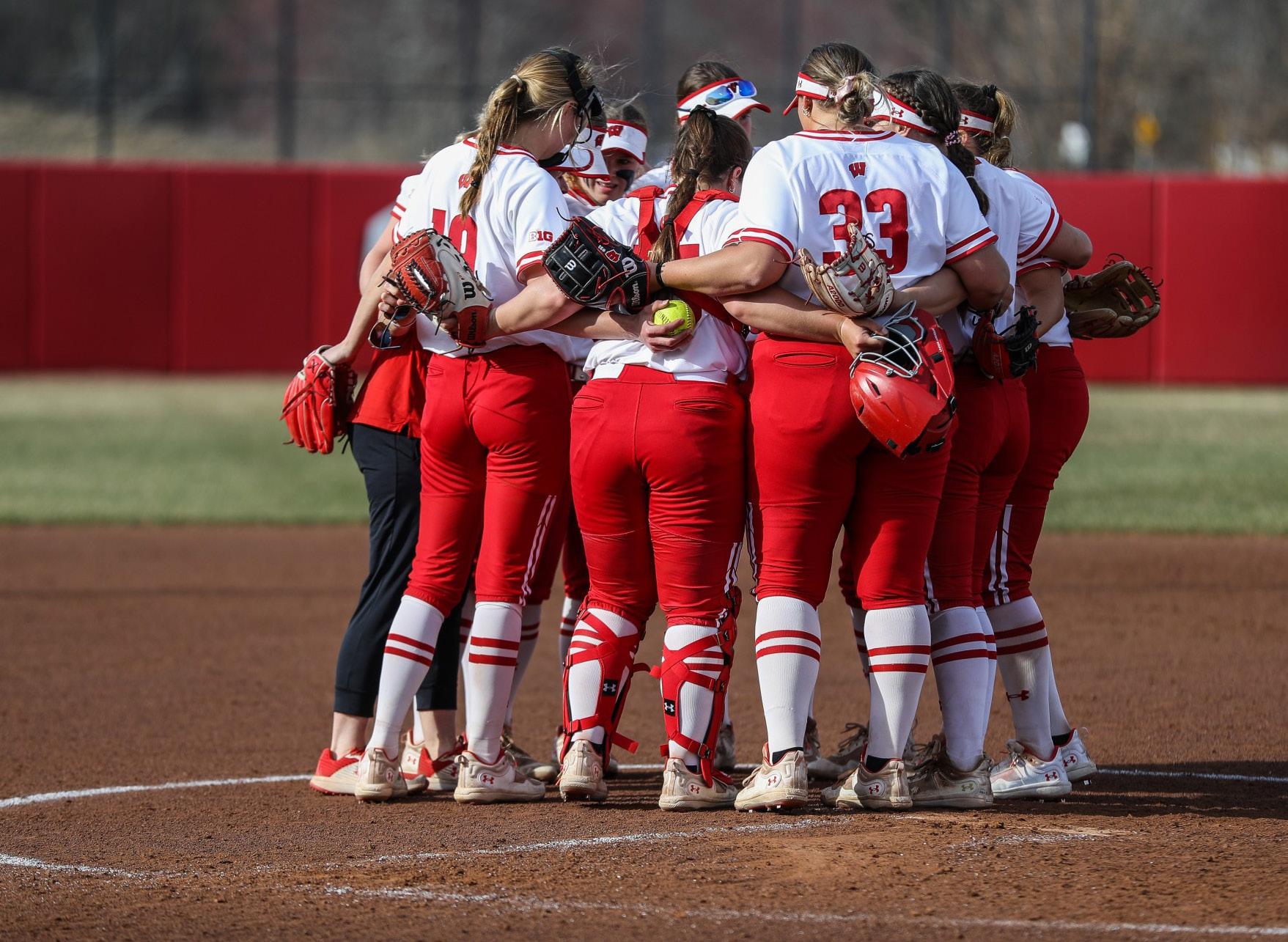
How far would you go to be a “real” man? It sounds strange, but new-age conservative influencers are set on finding the answer and exploiting it.
In recent years, charismatic and hyper-masculine “gurus” like Joe Rogan or the self-proclaimed “Liver King” have taken to the internet to peddle advice on all things men’s wellness. But beneath the surface of run-ofthe-mill workout routines and high-protein, low-calorie recipes lies the bizarre carnivore diets consisting almost exclusively of “beef, butter, bacon and eggs,” alarmist warning about the seed oils “slowly killing us” and downright dangerous antivaccine sentiments.
If this is your first time hearing about the “Liver King” or “carnivore diets,” it can be tempting to laugh, to blame those falling victim to these new-age snake oil salesmen. But think twice before you do. The influencers responsible for shaping men’s digital wellness culture have the power to change what it means to be a “real man” in the eyes of those looking up to them. With that kind of power comes influence that shouldn’t be ignored.
The landscape of men’s health and wellness has greatly changed since the 1990s. Gone are the days where Men’s Health magazine and P90-X reigned supreme — today belongs to the influenc-
er. With the development of social media platforms, wellness content creators have reached wider audiences more directly than their predecessors once limited to magazine subscriptions and home workout DVD sets. To no one’s surprise, COVID-19 shutdowns played no small role in boosting the popularity of men’s wellness influencers.
But, who are these “influencers,” and what makes them so appealing to young men?
At the very bottom of the pyramid of influence are individual TikTok and YouTube users with a few thousand followers, and at the very top is the former host of Fear Factor, Joe Rogan. Rogan’s podcast, “The Joe Rogan Experience,” has amassed 14.5 million followers on Spotify, making him the most successful podcaster on the platform. If you’ve never seen an episode, I’ll catch you up to speed — Rogan brings a celebrity guest into the studio, and they talk nearly unfiltered for a few hours. That’s it.
For many users, these newly popular unfiltered podcasts have brought with them a breath of fresh air and a greater sense of trust, especially among conservative listeners. Nearly half of right-leaning individuals reported they trust news consumed from podcasts “more than news they get from other sources,” according to a 2023
Pew Research survey. For the most part, this makes sense. Rogan’s success relies on a carefully constructed atmosphere of candor, positioning his podcast as something separate from the edits and polish of mainstream media, where powerful people get the rare opportunity to tell it how it is.
But if you’ve tuned into more than a few episodes, you’ll begin to notice his guests often have something in common.
In its 15-year history, around 89% of Rogan’s guests have been men — including names like President Donald Trump, Elon Musk, Vice President JD Vance, Mark Zuckerberg and the Department of Health and Human Services Secretary Robert F. Kennedy Jr. While men’s wellness isn’t always at center stage, masculinity very nearly is. To the men that make up 81% of Rogan’s audience, over half of which are between the ages of 18-34, Rogan and his guests alike serve as de facto role models for modern masculinity — manly, wealthy, unfiltered, ideologically conservative and powerful.
But with this digital-age manhood has come political pandering and misinformation. During the COVID-19 pandemic, a guest on Rogan’s podcast landed amid controversy after claiming “getting vaccinated puts people who already have had COVID-19 at higher risk.” Vance, in a con-

versation with Rogan, once claimed “Democrats all want us to be poor health and overweight” and asked if Rogan had “seen all these studies that basically connect testosterone levels in young men with conservative politics.” Rogan is only part of the problem. Before the 2024 election, Trump appeared on a slew of podcasts with primarily young male audiences with two goals in mind: securing votes by capturing the trust of young men and making masculinity conservative again. Looking back on the results of his election, this
strategy proved successful for Trump. In 2020, young white male voters favored Biden by 6 points, but four years later they “voted for Trump by a 28-point margin.”
As influencers continue to dominate the airwaves of young male listeners, we are left with a generation of men who distrust mainstream media and believe a real man is a conservative one. If the left wants to win back the hearts and minds of young men moving forward, they should take this problem seriously and meet young men where they’re at: on the internet.
By Owen Pucket
OPINION EDITOR
In the swirl of Washington politics, the release of a federal budget proposal can feel like a dull procedural a air — just another policy document churned out in the corridors of power.
Yet the Republicans’ latest budget blueprint is anything but dull. It o ers a stark moral and economic statement about whose interests will be prioritized if their vision becomes reality. The message is clear: America’s wealthiest individuals and billionaires will enjoy increasingly cushy tax breaks, while our nation’s poorest citizens bear the brunt of funding cuts that threaten to fray the safety net to the breaking point.
At the center of the Republican plan is a suite of tax cuts that stand to further enrich the top 1%. While Republicans argue that lowering taxes for the wealthy spurs economic growth — a regurgitation of the age old, discredited “trickle-down” theory — the main consequence is that we continue to pile more wealth into the hands of those who need it least. It’s almost a cliché to say that the wealthiest Americans and corporations have armies of lobbyists and accountants to shave their tax burdens down.
But with these new proposals, Washington is e ectively handing them the biggest shovel yet. The plan proposes extending or further lowering marginal rates for top earners, as well as easing certain capital gains taxes, moves that are likely to intensify the already staggering wealth inequality in this country.
It might be one thing if the budget simply missed an opportunity to close loopholes for the mega-rich. But Republicans have also laid out severe cuts to programs that are critical in the lives of low-income Americans: food assistance, health care and housing support. In the name of “balancing the budget,” the proposal slashes billions of dollars from the Supplemental Nutrition Assistance Program (SNAP). This vital program has kept tens of millions of families from going hungry. Yet under the GOP’s plan, many of these families — mostly working families, by the way — are set to lose crucial benefits.
Beyond nutrition assistance, the cuts spill over into housing and health care. Reduced funding for Section 8 Housing Vouchers not only heightens the threat of homelessness, it also disrupts basic mobility for families who desperately need more stable living conditions to find and hold onto work. Cuts to Medicaid and the Children’s Health Insurance Program imperil access to medical care for children, people with disabilities and seniors, groups who can ill a ord to patch over their coverage gaps. Ironically, the burden of these health care cuts will eventually spill into emergency rooms, raising costs for local communities and state governments.
And then there is the oft-floated call to further increase work requirements for federal aid recipients. On paper, it might sound rational: if you receive government benefits, you should at least seek employment. But such requirements often fail to
account for the realities of the labor market or for those who struggle with health issues, caregiving responsibilities or the lack of accessible jobs. By attaching stricter work requirements to anti-poverty programs, lawmakers risk throwing vulnerable recipients o vital benefits, even when they’re already working one, two or three jobs. The result is that children go hungry, parents forgo medical treatment and families are cast adrift.
Proponents of the plan will inevitably label it “fiscally responsible.” The trouble is, by doubling down on lavish tax breaks for the wealthy and powerful, any “savings” gleaned from cutting social programs don’t address the core drivers of our debt. Let’s be clear: the largest beneficiaries of the new round of tax cuts will not be the small business owners or middle-class families that Republicans so often invoke in speeches. Rather, the winners will be corporate executives, hedge-fund managers and billionaire heirs. American billionaires’ net worths have already soared over the past decade, especially during the pandemic. It is these ultra-wealthy individuals and corporations that can most easily absorb any tax burden, yet the GOP plan places them at the very back of the line or o the hook altogether.
What’s even more distressing is the backwards economic logic. Decades of research and real-world experience show us that when low- and moderateincome Americans have more disposable income via living wages, subsidized
health care and robust nutritional support, they spend it immediately in their communities, driving growth from the bottom up. By contrast, tax cuts for the wealthy do not “trickle down” so much as they trickle into stock buybacks, luxury asset purchases or o shore investments that yield minimal benefit for the average American.
We find ourselves at a crossroads. As a nation, we must decide whether the fruits of American prosperity should continue flowing upward to a tiny slice of the population or whether we will nourish a broad middle class and strive to lift up those who are most vulnerable. This Republican budget is more than just a spreadsheet; it is a vision of who matters, and who doesn’t, in our country.
We can do better. The pandemic taught us that, in moments of crisis, government support can keep families afloat and preserve local economies. Yet the current proposal would actively strip away that safety net. If we truly want to balance the budget in a way that is fair and sustainable, we should start by asking the wealthiest among us to pay their fair share. We should defend the programs that help millions of Americans stave o hunger, stay healthy and keep roofs over their heads. Any budget is, at its core, an expression of collective moral values, and this one leaves our poorest neighbors behind. It is time to demand a more equitable path, one that invests in all Americans, not just those already thriving at the top.
By John Ernst SENIOR STAFF WRITER
Just over 30 years ago, Edgar Spalding was hired as a professor in the botany department at the University of Wisconsin-Madison.
He was trained as a plant physiologist, having just finished a postdoctoral experience at Yale University. During his graduate research, he became interested in studying plant cells and their internal interactions with the environment, forming questions that would inspire his career.
“How does a little seedling, when it’s come up through the soil, realize that it’s reached the light and now it’s time to photosynthesi[ze]?” Spalding told The Daily Cardinal.
In 2025, as Spalding finishes up his research projects a year after retiring, he’s getting his answers.
Spalding, along with doctoral student Julian Bustamante and data scientist Nathan Miller, published a study on Jan. 6 in the academic journal “Current Biology,” where they discovered new locations in plant stems that detect light and trigger photosynthesis.
Studying Arabidopsis, a plant commonly used as a model system in plant biology, where
researchers can test and manipulate genes, Spalding and his team investigated a mutant version of the plant in which the hypocotyl (seedling stem) grew four times higher than a wild stem.
They discovered the mutant was lacking cryptochrome-1 (referred to as cry1), a photoreceptor that stores reserves for the sprout and stunts growth once the hypocotyl emerges. The researchers used three plants to prove that the cry1 photoreceptor was saving energy in case the plant’s growth was interrupted — normal plants, plants missing cry1 and plants missing cry1 that have had cry1 inserted back in.
By using machine-learning-based image analysis to take photos of the plants sprouting every five minutes, Spalding and his team could track when cry1 kicked in and stopped elongation.
“When you turn the light on, the hot colors turn cool because all those cells have ceased elongating,” Spalding said. “Then you do that experiment with the cry1 mutant, which we know after four days is really tall. It doesn’t [stop] somewhere along the line, that inhibition doesn’t happen.”
This discovery allowed the researchers to piece together
that photoreceptors were acting in different parts of the hypocotyl, enabling mutant plants to grow to new heights when not inhibited by cry1. Without cry1, the growing region at the top of the stem was able to expand, a new realization for Spalding and his team.
“We’re proposing that cry1s job is to sense light and shut down those small cells at the top and keep them in an inhibited state and only release them to expand if the plant is darkened again by some environmental circumstance,” Spalding said. “That would increase its odds of getting up into the light for survival.”
Spalding said biotechnologists may use this information to better engineer a seedling more resistant at this stage of development, whether it be finding a way to trigger the photoreceptors reserves or overriding the cry1 control if they wanted a taller stem.
Although Spalding said this research may not impact Wisconsin’s biggest crop, corn, it may have implications for other dicot crops that have similar genetic makeup to Arabidopsis, such as soybeans or alfalfa.
“If something happens [and

the plant] doesn’t see the light, we understand better now what the plant does to adapt or to react
to that situation,” Spalding said. “For me, it’s a nice bookend to my career.”
By Owen Appel STAFF WRITER
After more than three years of investigation, researchers at the University of Wisconsin-Madison have created an improved approach to acoustic imaging.
In a project headed by electrical and computer engineering professor Chu Ma and Ph.D. student Jinuan Lin, the team combined research into improved hardware with research into improved software to better this imaging at greater distances into a medium, such as the human body.
One of the key pieces of hardware in acoustic imaging, according to Ma, is the transducer, which converts electrical signals into sound waves and then converts them back into an electrical signal that creates the image. Because of this, many labs attempt to increase the capabilities of these transducers. Other labs focus solely on the software producing the images.
“Our uniqueness is that we do it in both,” Ma said. “We took both approaches and combined them to show that it is better than just one of them.”
Ultrasound images lack detail once the waves from the transducers travel too far into the body. The “tradeo ” between resolution and penetration was previously very di cult to overcome.
“If people want to have high resolution, then they want to use high frequency because high frequencies have small wavelengths, and the wavelength usually constrains the resolution of the imaging system,” Ma said. “But high frequency waves cannot propagate long distances in human tissue, in water or in whatever medium.”
These acoustic imaging techniques work because of particles called “blind labels.” As Ma and Lin both described,
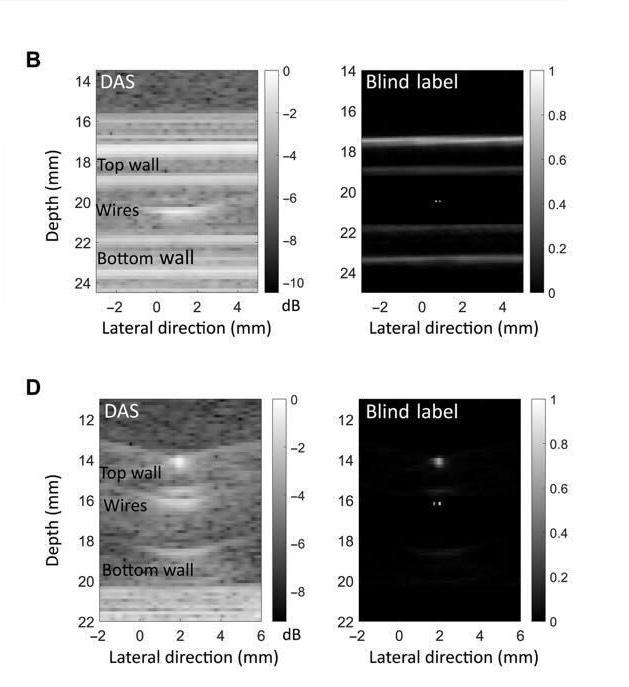
blind labels are randomly scattered particles smaller than the wavelengths entering the system and placed around the object of interest so that the imaging systems have motion to pick up.
Improving the capabilities of these blind labels was a key breakthrough
in Ma and Lin’s work.
“The blind labels, because they distribute it around the objects, will provide the spatial mixing to the object,” Lin said. “And that is the key reason they can enable the subwavelength imaging.”
Random particles like these were
already used in acoustic imaging. When looking underwater, Ma said, even schools of fish can be used as randomly scattered particles because they can send signals back to the transducer so an image can be produced. What was critical to this research project, in part, was increasing the use of artificial labels.
“Because acoustic imaging is not just for biomedical imaging, it can also be used for non-destructive testing, for example, inspecting pipes,” Ma said. “Then we can flow the particles through the pipes or underwater.”
Going in, it was unclear whether this type of development would even be possible, according to Lin. But after testing out various aspects of the work in other mediums like air, the team became more confident their findings would be applicable to several important areas.
“This kind of blind label imaging framework works in air, and we publish that journal paper in ‘Physical Review Applied’,” Lin said. “Then we want to expand application scenarios, so naturally thinking, ‘what if we did it underwater or in the human body?’”
The use of this research outside of the lab is not immediate. Lin said even after the majority of the research was completed it still took about a year to finish revising, which was longer than it typically takes for the prior research she has done. Before this blind label technique can be applied in fields like biomedical imaging, the researchers will have to demonstrate its effectiveness to those who would use it.
“Yes, we have this technology now,” Ma said. “It’s currently a prototype, but we will work together with those clinicians and the people in hospitals and also other areas, specifically in nondestructive testing or underwater sonar.”
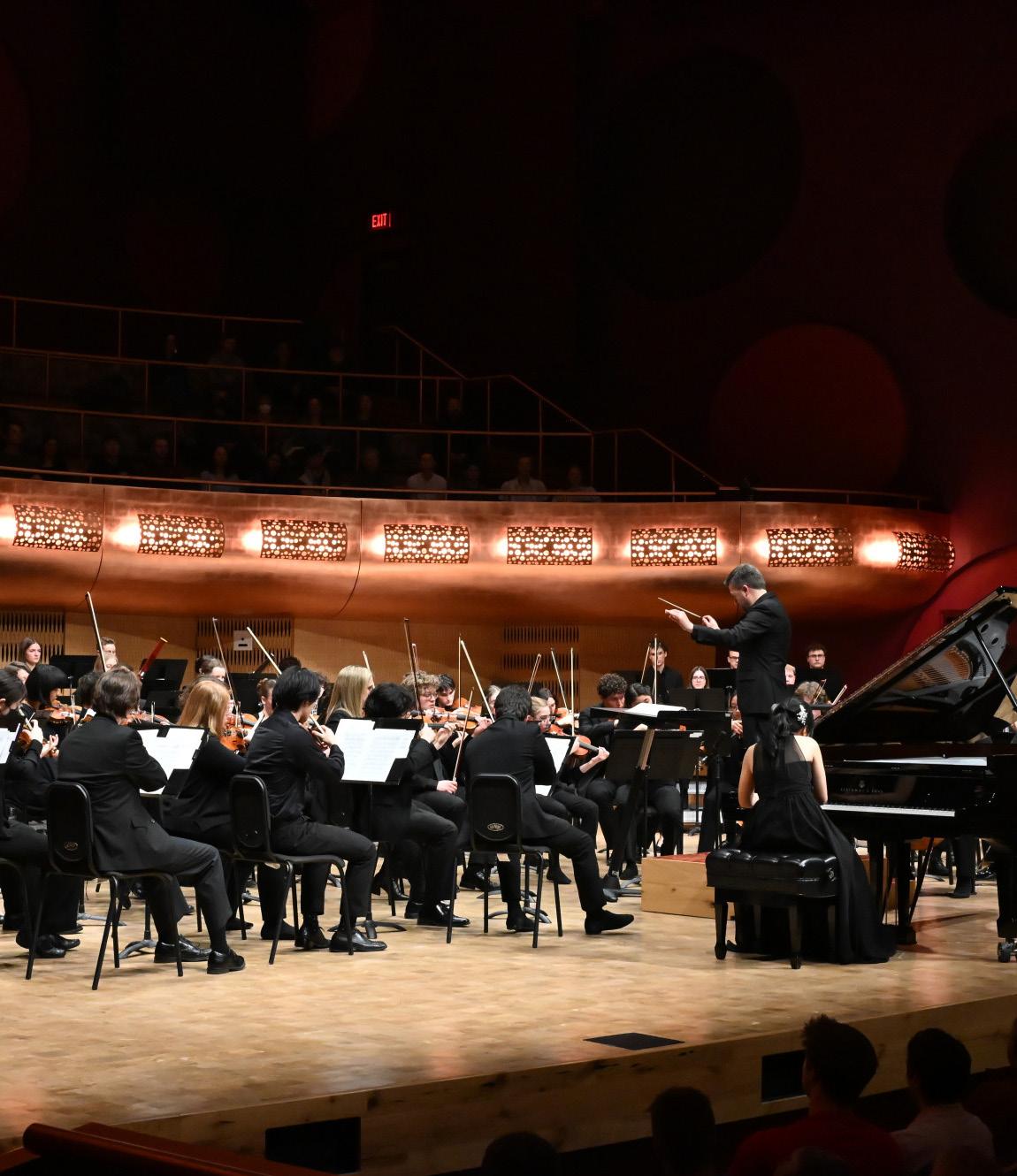
The UW Symphony Orchestra’s performance of “Rite of Spring” and “Piano Concerto No. 3” provided challenge and rewards.
By Isaiah Trice STAFF WRITER
As the University of Wisconsin-Madison Symphony Orchestra tuned their instruments at the start of Friday’s concert, the packed audience was tense with anticipation, ready for a complex and powerful program.
The first piece was Erik Satie’s “Gymnopedie,” orchestrated by Debussy. It was a wise choice to start the concert program with a light and delicate piece, because what was to come would certainly be on the contrary. Conducting student Joe Mahin led the piece, guiding the ensemble with an incredibly subtle approach that allowed for the impressionistic elements of the piece to be heard quite clearly.
After the piece concluded, a beautiful ebony Steinway D piano was rolled on stage in preparation for master’s student Minha Jeon’s performance of Prokofiev’s “Piano Concerto No. 3.” During a previous rehearsal of the concert, Jeon told The Daily Cardinal she felt “nervous but very excited.”
Jeon said the performance
inspired her to become a piano professor because “the experience of playing with an orchestra is not something that many pianists are able to do regularly.”
Her performance was nothing short of spectacular. Jeon executed the piece with precision and character, always keeping the attention of the hall waiting for her next move. Backed by the skillful conducting of maestro and professor Oriol Sans, every intended climax and release that Prokofiev had written was dutifully rendered.
When speaking on the benefit that such programming provides to students, Sans told the Cardinal “the goal is to have a good orchestral experience, and it makes students happy to be able to play this piece while delivering an artistic experience for audience members.”
Sans gave an introduction to the next piece, “The Rite of Spring,” with orchestral excerpts, so the audience could better understand the work and its initial reception in 1913 — it reportedly caused a riot due to its incred-
By Lillian Mihelich STAFF WRITER
The “Afterlives: Material
Stories from the Helen Louise Allen Textile Collection” gallery opened on Feb. 5 at the University of WisconsinMadison’s Nancy Nicholas Hall, personifying the tales and processes of materials that concoct the fabric of our lives as humans, students and artists alike.
Walking into the gallery is like witnessing a fleet of butterflies take their course.
Insect decals surface the blue walls that clothing and objects pop out from. Optimism, creativity, color and innovation invite the viewer through the glass doors of the Lynn Mecklenburg Textile Gallery.
The collection shares the sagas of what happens to materials in their lifespan at the University of WisconsinMadison and beyond. It’s a fun reminder that even objects can have fruitful lives for us to study, from their formation to current purpose.
Dr. Sara Anne Carter, executive director of the Center for Design and Material Culture (CDMC), told The Daily Cardinal employees at the Center in the School of Human Ecology get to witness daily how the 14,000 textile materials influence, inspire and weave their way into student curricula. This exhibit delivers a visible rendition of that idea.
It’s like unraveling the fabric of a department’s collection, thread by thread, in various ways, she said.
ible violence and dissonance. This approach was quite compelling, allowing for a better understanding of the work and its complexity.
Sans said he chose the “The Rite of Spring” because “it’s a great piece of music, but also a piece that we all learn a lot from working on.”
Percussionist Dylan Chapman echoed this sentiment.
“‘The Rite of Spring’ is a lot of fun because it’s a good excuse for us to play loud,” Chapman said. The piece began incredibly, thanks to the woodwinds. As Stravinsky developed and twisted his themes to express that of medieval Russia, the audience was mesmerized by the quality of sound that was produced. During all 30 minutes of the performance, attention never wavered, and throughout the changing meters and atonal dissonance, a clear artistic view was produced in the minds of all in attendance.
“If the symphony hadn’t played with the violence that they did, I might have thrown a riot outside the hall myself,” concertgoer Milo Ascher told the Cardinal.
patterns, such as on an eclectic, pink and blue hostess dress from the 1950s. A 20th-century Miaou Chinese Maker’s robe in a deep, indigo-blue is a mesmerizing example of cultural tradition and patterning. A Child’s Dress made of feed sack from the early 20th century reminds viewers of the wonderful way materials are repurposed. There’s even butterfly structures courtesy of the Insect Research Collection.
Stepping deeper into the collection, viewers move from cheery confines into a bright open space divided into three main categories: vital textiles, items that inspired student work and objects and teaching.
Vital textiles are classified as creations that are complex, incredibly detailed and sometimes incomprehensible. This could mean embroidery so detailed you may need a magnifying glass to see all of its thread.
Student works include innovations inspired by hoop skirts, such as an incredible “Hooded Corset and Tube Pants” ensemble that explores the sensory of fashion by Eden Meidl and a giant geometric “Hoop Garment” by Gracie Harshaw, two student recipients of the Chipstone-CDMC Summer Undergraduate Research Fellowship. The teaching portion includes an extraordinary wreath made of human hair, woven into dainty flowers and configurations. There’s even a pair of Chicago artist Yohance Joseph Lacour’s incredible leather Bespoke shoes.
“We might accept something into our collection because it’s an important example of something from 2,000 years ago, but in our collection, those objects become something else too, they become research, they become teaching, they become storytelling possibilities,” Carter said.
The first part of the gallery focuses on the idea of metamorphosis.
The symbol of the butterfly finds itself on clothing and in
Whether interested in history, science, textiles or art in general, there’s robust material for students and guests to explore.
“Curatorial work is collaborative,” Carter said. As a curator and the CDMC’s director, she pays close attention, listening to visitors, taking note of her colleagues’ fixations with objects they point to recurrently whe teaching and also thinking about the minds and creations of students.
“Afterlives” remains on display until May 5, 2025.