

Students
for a Democratic Society led an anti-Immigration and Customs Enforcement march on Bascom
By Avery Chheda
FEATURES EDITOR
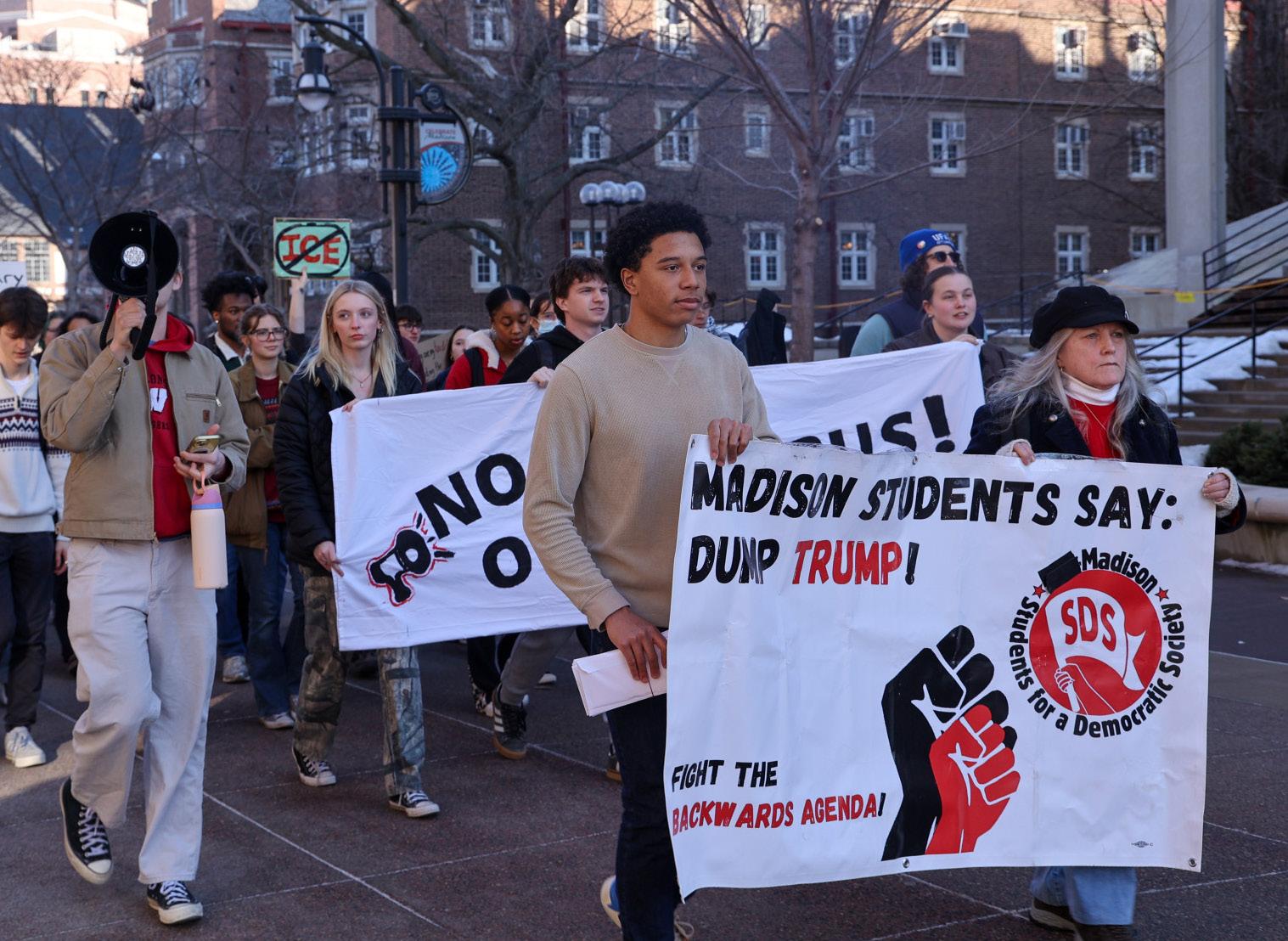
Dozens of University of WisconsinMadison students, faculty and alumni marched from Library Mall up Bascom Hill Friday to demand stronger protections for immigrants and international students on campus.
The rally was organized by the Madison chapter of Students for a Democratic Society with support from other student activist groups like UW’s Young Democratic Socialists of America chapter, Students for Justice in Palestine, Blk Pwr Coalition and Mecha de UW-Madison.
The protest was the latest move in student organizations’ push to designate UW-Madison a sanctuary campus, which would keep university officials from cooperating with federal agents, in response to intensifying federal immigration agent presence in neighboring cities and states.
Speakers criticized Immigration and Customs Enforcement and emphasized the importance of protecting students, urging attendees to sign a petition created by YDSA to establish alert initiatives for potential ICE presence and provide resources to students.
The petition specifically calls for the university to implement a rapid response network notifying students of ICE presence on campus, set up a resource fund for vulnerable students using campus funds, implement procedures for remote work and paid leave if ICE is present on campus, remove all privately owned security cameras on campus and restore previous protest guidelines. More than 2,600 people have signed it so far.
UW-Madison’s current immigration policy states the university will not give out student information unless required by law, highlights that students have 24/7 access to the Office of Legal Affairs and suggests students do not try to intervene with
YDSA’s petition aims to take those guidelines a step further, outlining similar demands in addition to clear signage of public and private campus spaces, legal funds for students facing deportation, the withdrawal of Mnookin’s 2024 institutional neutrality policy and publicly reaffirming UW-Madison Police Department’s 2019 immigration enforcement policy.
For protest organizers, the issue runs deeper than documentation status.
United Faculty and Academic Staff Co-president Barret Elward stood atop Bascom Hill and called attention to the dramatic escalation in immigration enforcement worldwide. As ICE activity has increased throughout the Midwest, students and faculty alike voiced their concern that Madison’s “liberal reputation” may attract ICE next, urging the university to prioritize their students.
“UW admin has been focused solely on protecting the institution [and] brand of UW-Madison, not [their] students and workers,” Elward said.
“What is the value [of this] institution without its [students, workers and teachers] that keeps this university
ticking over?”
SJP member and speaker Mac Davido pointed to one key program outlined in the petition, the rapidresponse network informing all students and faculty of ICE presence on campus. Currently, the local advocacy group Voces de la Frontera operates a 24/7 hotline offering advice, legal support and ICE verifiers in the event of a federal presence on campus.
Last week, YDSA shared the demands of their petition with UW-Madison Chancellor Jennifer Mnookin, YDSA Spokesperson Wesley Hoy told The Daily Cardinal.
“We’re now moving on to our second stage, which is organizing on campus, making those demands to the university and entering negotiations,” Hoy said.
Hoy said the biggest obstacle limiting the university’s designation as a sanctuary campus is Wisconsin’s Republican legislature.
Assembly Speaker Robin Vos, R-Rochester, introduced a bill in February 2025 that would require county sheriffs to cooperate with federal agents. Notably, 13 of Wisconsin’s 72 sheriff’s departments agreed to
partner with ICE. The bill passed the Assembly along party lines, but was not voted on by the Senate. Gov. Tony Evers said he would veto the bill if it made it to his desk.
“A lot of the policies pushed through, especially under the Mnookin administration, have been pandering to conservatives in the Legislature,” Hoy said.
Students have framed recent university projects, such as the recent closure of the university’s diversity division and the formation of an initiative focused on open dialogue, as efforts to pander to the Republican Legislative.
Hoy also mentioned Mnookin’s responses to campus protests, including authorizing the police to raid the May 2024 pro-Palestine encampment and changing protest policy after the protests.
The new Expressive Activity Policy restricts students from protesting within 25 feet of campus building entrances, limits voice amplification and signage and protesting hours in heavily populated campus areas.
Hoy acknowledged, however, the university’s willingness to take immigration threats seriously.
“I’m not saying the university is subscribing to all our demands,” Hoy said. “But this is an issue that the university is taking seriously.”
Student activist Bradley Kenan told the Cardinal the next step is mobilizing student support and uniting people, especially those not directly affected by immigration enforcement.
In the meantime, YDSA is working on training student volunteers to verify ICE reports and connect detainees with legal support.
“We saw in Minneapolis that everybody’s related to ICE when ICE agents shot and killed Renee Good and Alex Pretti. At the end of the day, it’s about basic humanity,” Kenan said.
By Addison Dama STAFF WRITER
The University of WisconsinMadison General Library System disaffiliated with the Friends of the UW-Madison Libraries, an organization that provided donations and volunteers to the university for nearly 80 years, in January, leaving the status of $1.4 million in funding unclear.
The Friends of the UW-Madison Libraries has partnered with the university since 1948. Friends board member Debra Shapiro said the organization has helped the library system through fundraising for public events, gathering volunteers for the biannual book sales, providing grants for the Visiting Scholars program and supporting library collections by processing and funding materials.
The Friends’ biannual book sale at Memorial Library attracts hundreds of Madisonians, offering nearly 10,000 books and materials at the latest sale in October. Between the two sales, the group raised between $50,000 to $60,000 a year, accord-
ing to Friends Board President Ken Frazier. Friends also raised money through donations.
“The entire stock gets sold out every time or given away by the end of the sale. It’s a Madison tradition, and a major source of the Friend’s grants and gifts,” Frazier said.
The university severed their association with the Friends following a legal review initiated in late October 2025 and completed in January 2026, School of Education Associate Dean Marianne Spoon told The Daily Cardinal. She and Frazier both said there was confusion among Friends members about the organization’s status prior to the investigation, with some believing it was a nonprofit, while others thought it was akin to a faculty governance group or a volunteer group.
In emails obtained by the Cardinal, the UW-Madison Office of Legal Affairs’ provided a legal analysis of the disaffiliation decision along with Dean and Vice Provost Erla Heyns’ announcement to Friends.
The review determined Friends
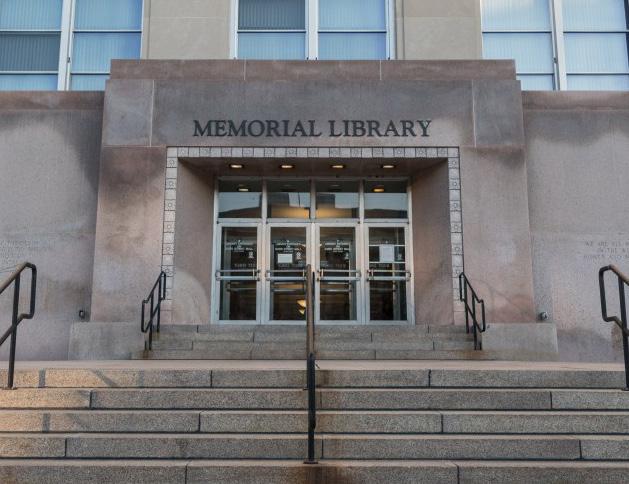
meets the definition of an Associated Affiliated Organization (AAO) because they provide support to the university, but the group has an independent board — therefore making it a separate entity from UW-Madison.
As an AAO, the group is subject to a Board of Regents policy requir-
ing all AAOs to enter into a written agreement with the university outlining the terms and guidelines of the relationship if they want to continue providing administrative support to the university.
+ Libraries page 4
By Sonia Bendre SCIENCE EDITOR
The University of WisconsinMadison has required international students with partial or full teaching assistant appointments to prove their English fluency for decades, but now, amid heightened federal funding uncertainty, some international graduate students say departments are using the test to force them out.
Consequences for failing the language test differ by department and year, and this year, some students say those consequences have become increasingly punitive.
While UW-Madison has lost $27 million in research funding in the past year, John, an international student given a pseudonym for privacy, told The Daily Cardinal departments are “taking advantage of the SPEAK test to get rid of the international students.” UW-Madison saw a greater than 27% drop in new international graduate students between the 2023 and 2024 fall semester.
John turned down offers from universities like Johns Hopkins for a PhD at UW-Madison. When he spoke to the Cardinal last fall, he feared his funding would be terminated. He has since transferred to a different university, despite scoring a 45 on his November test, which would have allowed him to TA in the spring semester.
“I came here for [UW-Madison’s] reputation and its good graduate school,” John said. “But gradually, I found out that it’s not a fact. They treat the international students rudely, and some instructors and staff even take advantage of the SPEAK test.”
Even for students who initially fail the oral communication test, called the SPEAK test, Letters & Science departments have a responsibility to continue supporting students if they demonstrate improvement and follow interventions. According to international students, departments have threatened not to follow through.
What is the SPEAK test?
The nine-question, 15-minute SPEAK test for international TAs aims to “evaluate the spoken English of International TAs,” according to a UW-Madison International TA Training webpage. The test is online and administered through HonorLock, the same software undergraduate students use to take their placement math and English tests. Two raters independently evaluate tests.
Tests are graded on a scale from 20 to 60, with 40 indicating “somewhat effective” communication skills and 50 “generally effective” communication. If students score a 45, they can serve as TAs, but must take supplementary English as a Second Language (ESL) coursework; without a 45, they cannot be TAs. Students who did not score a 50 must retake the test after ESL coursework until they score a 50.
“Students who do not pass typically demonstrate clear challenges in grammatical accuracy, pronunciation, and fluency — not simply accented speech,” UW-Madison spokesperson Gillian Drummond told The Daily Cardinal in an email.
She said about 10%, or 33 students, who took the SPEAK test in 2025 scored below a 45, with 28% of students scoring a 45. The test
can be retaken every three months and is graded by two out of 11 total graders, five of whom are former international TAs.
Students report discrimination, policy inconsistencies
John first heard of the SPEAK test weeks before the first summer test date and did not pass his first two attempts in May and August, respectively, scoring a 40 on both. Failing the SPEAK test meant he could not serve as a TA during the fall semester, as the next available opportunity to retake the test was in November.
“There’s three international students in our department this year, and all of us failed the SPEAK test twice,” John said.
At first, it appeared that John’s STEM department would not follow L&S guidelines to “continue to financially support students” so long as they followed interventions.
“On the first day I came here, they told me that I should [go] back to my homeland — they can’t afford me anymore because I failed the SPEAK test,” he told the Cardinal.
UW-Madison received a 17% cut to federal grant funding in 2025, and all academic units were instructed to implement 5-10% budget cuts this year.
The second day, department staff told John he could receive support from a selective departmental award for graduate students. But later it became uncertain whether funding would follow.
“The next week, they told me that maybe I should self-fund my graduate study, and I should return to my homeland,” John said. “They changed again and again.”
A departmental committee allowed John to serve as a TA in the fall, but not the other two international students.
One more week passed, and plans changed again. In a meeting, John and the two other international students were told their offers would terminate if they failed the November SPEAK test.
John’s offer letter from the department guaranteed five years of funding, contingent on a background check, “meeting departmental standards for spoken English proficiency,” and “satisfactory progress,” but did not indicate whether he had a TA or RA appointment, only that the appointment he received would be the source of his funding.
Part of John’s TA responsibilities included sending a welcome email to students in his course before 11:00 p.m. the day before school started.
“Some TAs just ignore the requirement,” he said. When his professor emailed him a reminder, John said he didn’t see the email for two hours, because he was eating dinner.
At around 8:00 p.m., John received a follow-up: “You MUST send out your emails tonight. You did extremely poorly on the SPEAK test, so you may be removed from the TA list, and thus the payroll list, as soon as you fail to meet our expectations. This is your last warning. I don’t have the time and energy to play games with you.”
John said, “They are just taking advantage of the SPEAK test to put pressure on you and ask you to do more work for them.”
John said in a separate incident, his graduate coordinator told the three
international students, “‘It’s all you international students’ responsibility to deal with such things. We can offer nothing to you, and it’s your own choice to come here. We don’t ask you to come here.’”
Other students in John’s department, who had arrived before last fall, told John they had not passed the SPEAK test on their first attempts yet had been able to serve as TAs and receive their salary, while concurrently taking an ESL course.
SPEAK test spreads among international community
Jane, an international TA also given a pseudonym, said student accounts of the university’s SPEAK test policies have been spreading on popular Chinese social media app RedNote, driving international students away from applying to the school.
International students, primarily from China, India and Korea, are essential to UW-Madison, accounting for around $400 million in local revenue and comprising 15% of the student body in 2024. With international students shying away, the school’s cultural cache, research output and program rankings could decrease.
Jane turned down offers from at least three other U.S. universities to attend UW-Madison.
“The reason I chose here is because of the research, and the people here [were] kind during my campus visit,” Jane said, adding that other universities she applied to didn’t have a SPEAK test, only an organized committee to determine English proficiency. “If I knew this, I would really carefully rethink whether I needed to take this offer.”
Her offer letter from a different STEM department than John in fall 2023 didn’t include any mention of the SPEAK test, or contingencies based upon her ability to communicate effectively in English. She was first scheduled to take the test around Christmas in 2023 after her first semester as an RA.
“On a graduate school level, they need to set up some policies, some rules, as to whether the offer should say some details about the SPEAK test, and the consequences for whether you pass or fail the SPEAK test,” Jane said.
SPEAK test follow-ups vary between departments
Drummond said the ESL
Program offers support including “targeted instructional assistance and individualized mentoring within the students’ recommended academic ESL courses, which may also include SPEAK Test coaching,” to students who fail the SPEAK Test multiple times. She said most of the support offered “falls outside the ESL Program’s official instructional duties.” The ESL program also connects students with tutors and conversational English partners.
“Many [students] make significant gains in both overall proficiency and their ability to communicate effectively with undergraduate students,” Drummond said.
A sample test on UW-Madison’s website requires students to interpret a comic strip, present information about an event and debate solutions to the energy crisis.
Students agreed the scoring of SPEAK tests were similar across years and departments. But interpretations of scores and follow-ups varied widely by department.
In Jane’s department, “no one cares whether you pass or fail,” she said. Students who fail are recommended to take a second SPEAK test after enrolling in an ESL course. After taking the course, even if students fail the SPEAK test again, the department considers them “qualified to be a TA… because [they’ve] already taken that course.”
She didn’t have any English fluency requirement, nor information about the SPEAK test, in her offer letter.
John said he took the SPEAK test three times in total: twice without the ESL course and once while taking it. This year in his department, he said if students failed the test after enrollment in the ESL course, their funding guarantee was terminated.
“In previous semesters, the policies [were] totally different,” John said. “One student… also failed the SPEAK test and they allowed him to TA normally, just taking the ESL course.”
Seho Son, a PhD student in economics, currently serves as an international TA for Economics 100. Son said his offer letter explicitly stipulated that he had to achieve a score of 45 points or higher to retain his funding guarantee. He scored a 40 on his first and second attempt, then a 45 on his third attempt, allowing him to serve as an international TA while taking ESL 370: International Teaching Assistant Training.
Son said most schools he applied
to didn’t have a specific requirement to take a test, only some form of demonstration of English proficiency.
Son, John and Jane heard students in other departments had inconsistent requirements.
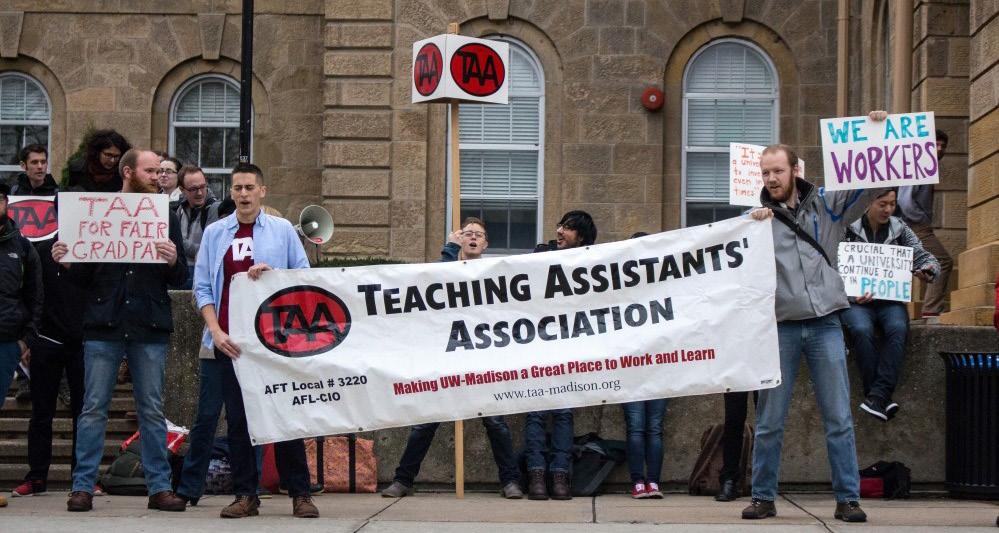
“It would be tragic and selfdefeating if departments saw students’ falling short on the SPEAK test as a chance to cut spending, rather than an opportunity to learn and grow,” the Teaching Assistants’ Association told the Cardinal in an email statement. “We urge campus administration and individual departments to provide clear and consistent guidance to students taking the SPEAK test and help students get the support they need to further develop their language skills.”
Depending on a department’s discretion, students may be exempted from the SPEAK test by passing other English-language tests with scores. Many students do not pass these metrics alone, and must take the SPEAK test.
John, Jane and Son all said they wished they had received more indepth instructional materials before their first SPEAK test. John and Jane said they weren’t given a way to study or informed of the test’s structure before their first test, aside from a brief informational packet.
Son was informed of the SPEAK test a month out from the test date. But after failing twice, he took an ESL course he said helped him succeed. His professor, ESL senior lecturer Ludmila Rao, told the Cardinal students can prepare for the test by using pronunciation apps, repeating after their favorite English shows and recording short speeches on topics of interest, then listening and re-recording.
“[On my] third attempt, my ESL teacher gave me a lot of materials, which was very helpful for me to prepare,” Son said. “If they provide students with materials even earlier, then some students can pass the test, even in the early stage.”
Son scored a 45 on the November 2025 test, meeting the cutoff to TA in the spring with additional ESL coursework. He must continuously retake the test until scoring a 50 or higher, according to L&S department guidelines.
Son said he didn’t know exactly what would have happened had he failed.
“It’d be impossible for me to serve as a TA this semester,” he said.
The Friends had not previously entered into such an agreement, and the legal analysis said UW-Madison Libraries has “no intention of entering into a written agreement for the provision of such services going forward.”
“[UW-Madison] Libraries is better served directing its limited resources toward its strategic
plan, campus initiatives, facility needs and the foundational academic and research support it provides to students, faculty and staff at UW-Madison,” Spoon said in an email.
According to Spoon, Friends has two funds: $1.2 million for the Douglas H. Schewe Endowment and around $182,000 for the Friends of the Library Fund, which is currently held by the Wisconsin Foundation and Alumni
Association, a private, nonprofit organization that manages donations to the university. Following the disaffiliation, the legal analysis said the university will no longer make draw requests for the Friends and the group must contact WFAA’s Chief Legal Officer to discuss the arrangement of these funds.
Frazier said the Friends would distribute grants to library departments across the university for various projects,
By Audrey Lopez-Stane
STAFF WRITER
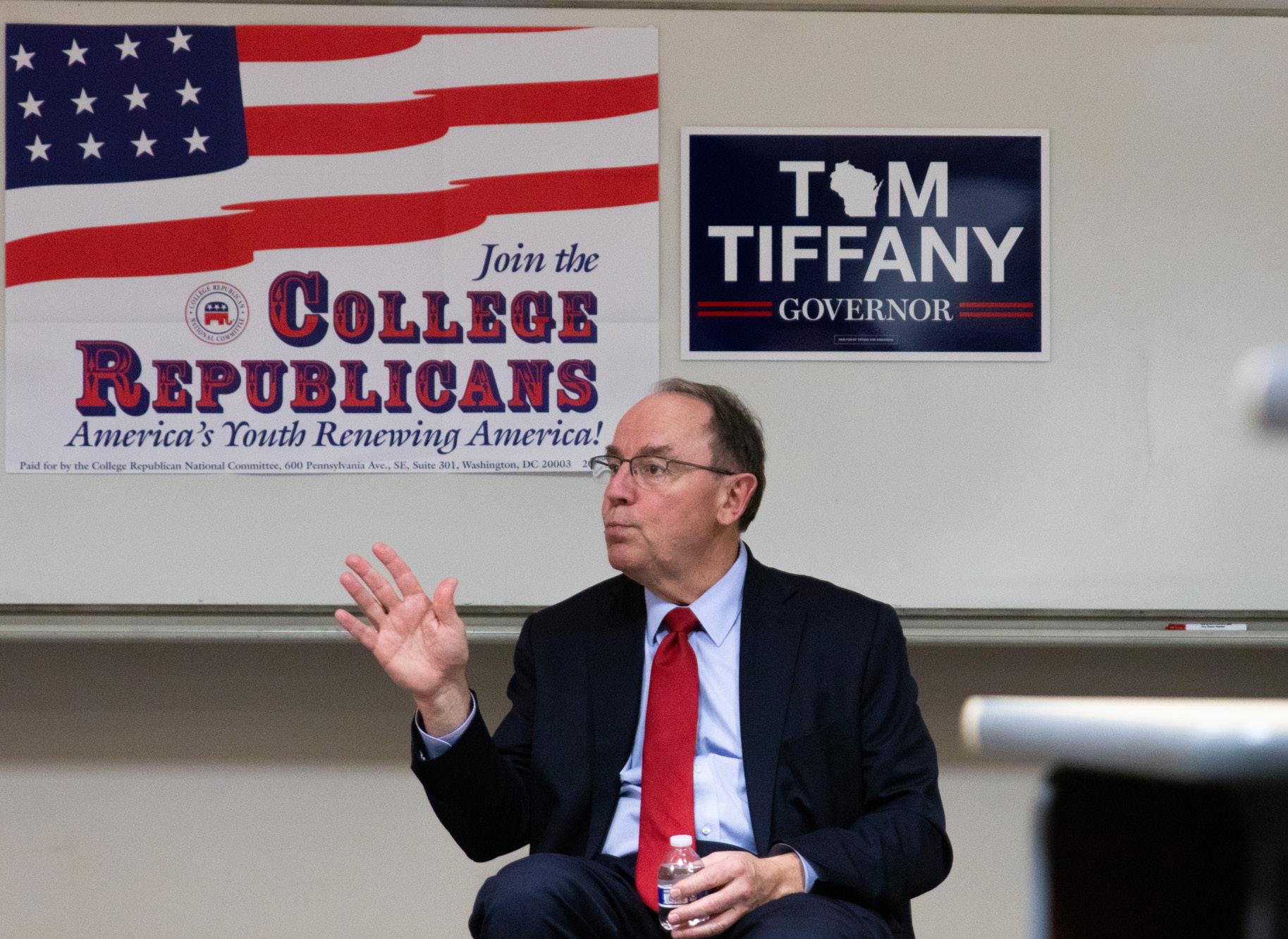
Republican gubernatorial frontrunner Tom Tiffany discussed plans for a University of Wisconsin System tuition freeze, campus free speech policy and marijuana reform in a campus event hosted by UW College Republicans.
Tiffany, who announced his bid for governor last September, currently serves as a U.S. representative for Wisconsin’s 7th congressional district. Following President Donald Trump’s endorsement, he’s the only candidate in the Republican field, with Washington County Executive Josh Schoemann dropping out in January.
If elected, Tiffany said he would impose a tuition freeze on the UW System to compensate for recent tuition hikes and this past year’s $256 million budget from the legislature — the largest funding increase in almost two decades.
Tiffany said he would have to conduct more research before deciding if he would decrease funding in 2027, but said the tuition freeze he would impose would be “in light” of the budget.
“The public has an expectation of us as stewards of their taxpayer dollars,” Tiffany said, adding that he would lower property and income taxes and end Evers’ 400-year K-12 funding increase.
While he said he is not sure how long the tuition freeze would last, he knows he would “certainly do it in the first budget” in 2027.
Tiffany pointed to a 2013 controversy when the UW System revealed approximately $1 billion in unspent tuition revenues, which caused a tuition freeze to go into place which ended in 2021.
“We need to direct more money to the classroom, because that’s ultimately what you are here for,” Tiffany said. “Ultimately, it’s about educating children.” He said education is one of his top policy priorities and understands higher education is the “engine that drives Wisconsin’s economy.”
Free speech
The Foundation for Individual Rights and
Expression gave UW-Madison an F grade for free speech on campus. The survey shows that of 423 respondents, 35% said using violence to stop someone from speaking on campus is acceptable.
“That’s deeply disturbing,” Tiffany said. “What can we do about it?”
Tiffany said that while he would be willing to implement statutory changes in legislation, he thinks the UW Board of Regents is the key to free speech reform.
Tiffany said he would ask any new regents where they stand on free speech and what they would do to protect it on college campuses before appointing them. He said he believes former Republican Gov. Scott Walker had a “very solid policy” with the regents on free speech, and he hopes to return to that standard.
“I thought the regents did a good job a decade ago, and I think that needs to be reinforced,” Tiffany said.
Republican lawmakers reintroduced a bill in October on free speech on college campuses, referencing the FIRE studying and calling for consequences for universities that violate free speech. The bill passed the legislature, but Evers told The Daily Cardinal in January he would veto it if it reached his desk.
Tiffany said he would not fully legalize marijuana, unlike many Democratic candidates in the race.
He referred to a recent New York Times editorial addressing a growing concern over marijuana abuse in the United States. Tiffany said he worries about cannabis-induced psychosis and calls for more research on medical use, which he voted for in 2022.
“You should not be smoking that right now,” Tiffany said, “It will chew up your brain.”
Tiffany said he would approve medical marijuana use but would wait for more research before legalizing recreational use.
The gubernatorial primary will take place on Aug. 11, 2026.
such as preserving collections, speaker events and giving students the opportunity to attend the Rare Book School — a nonprofit educating people on the care and history of texts — rather than giving the funds directly to the university. All grants were evaluated by the Friends’ committee and distributed according to their decisions.
Frazier expressed interest in entering into an agreement with the UW-Madison Information
School, saying Friends already provides support to it. He said applying to become a non-profit organization is another option.
“Nobody wants us to just throw in the towel and stop being an organization,” Frazier told the Cardinal. “I think we were very shabbily treated, and we might have been acknowledged as being a donor organization and not just being consigned to being just a bunch of volunteers.”
By Ted Hyngstrom PODCAST DIRECTOR
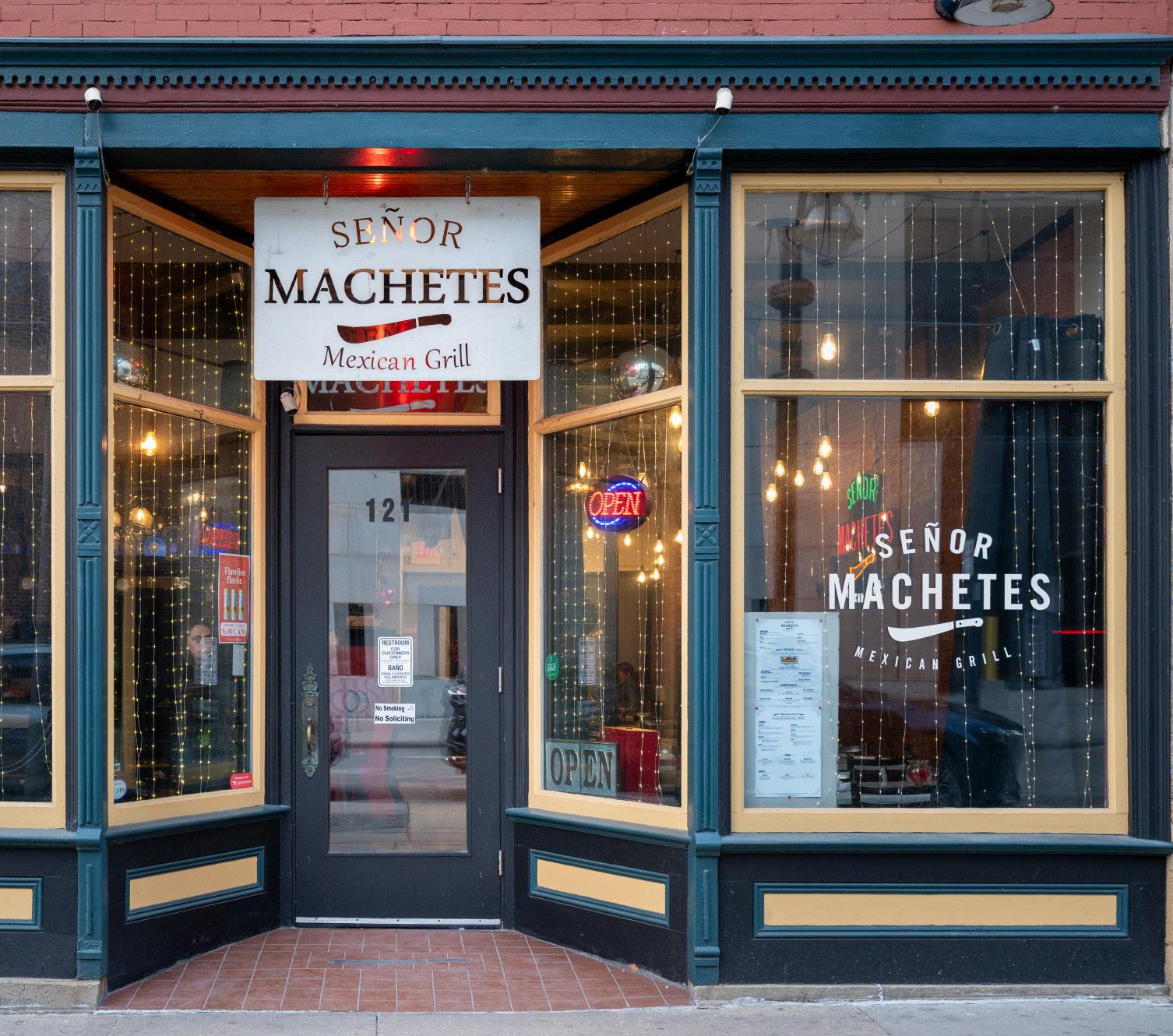
Dozens of friends, supporters and members of the Madison community packed into a private event space above local restaurant Señor Machetes to fundraise for the family of owner Noel Quintana Friday evening.
The fundraiser was held in response to Quintana’s arrest at O’Hare international airport by the U.S. Customs and Border Protection on Jan. 23. Quintana, a legal U.S. resident, was detained as he was returning home from a trip to Mexico.
The Daily Cardinal confirmed on Wednesday in a phone call Quintana is currently being held at the Clay County Jail in Brazil, Indiana.
Quintana immigrated to the U.S. to work when he was 16 years old. Originally in construction, Quintana worked multiple jobs to support his family. Once his children grew up, Quintana began thinking about starting a small business — eventually opening Señor Machetes in 2019.
Señor Machete employees kept the atmosphere lively in spite of Quintana’s detention, playing Latin American music from a stage. Attendees filtered in and out of the room, conversing over drinks and restaurant staples like the “Salchicha,” a baconwrapped hot dog.
Madison resident Pierre Sosa had never visited Señor Machetes prior to attending the fundraiser, but upon hearing of Quintana’s detention, he said had to make his presence known.
“I’m sad that it takes this much organization to get that kind of response, that we need to organize this much to support the community,” Sosa told the Cardinal. “But it’s part of it, getting to know who needs help and making sure that people are there to support. It’s kind of exciting to know that at least there is motion — there is movement toward that.”
Tony Castañeda, state assembly candidate for Wisconsin’s 76th district, told the Cardinal he is a long-time friend of
Quintana. He attended to support the family and help show “how much the community is ready to come together.”
“I have a Latin jazz band, and we used to play here for five years in the summer,” Castañeda said. “And Quintana is just very generous — he took care of us, respected us in our music and what we did.”
In a statement made to Wisconsin Public Radio, a Department of Homeland Security official said that U.S. Customs and Border Protection arrested Quintana due to a prior conviction of possessing cocaine with the intention to “manufacture, distribute or deliver.”
“Under our nation’s laws, our government has the authority to revoke a green card if our laws are broken and abused,” the statement said. “In addition to immigration removal proceedings, lawful permanent residents presenting at a U.S. port of entry with previous criminal convictions may be subject to mandatory detention.”
Quintana holds a felony charge for cocaine possession in 2006, though he has had no further criminal charges since. Quintana applied to have the felony removed from his legal record earlier this month.
Skylar Goicoechea, a Madison resident who frequents Señor Machetes, said she was not surprised to hear Quintana had been detained — but was nonetheless “heartbroken.”
She said she hopes he will be able to come home “safely [and] unharmed.”
“I think that you can tell that this is a loved restaurant, a loved family,” Goicoechea said. “And the outpour is heartwarming to see — that there are so many people in Madison that think the same.”
A GoFundMe organized by neighbors of the Quintanas has raised over $39,000 as of Wednesday afternoon.
The Madison Federalist also commented on the strikes, releasing an op-ed calling the robots “weak woke sauce.”
By Tori Baerenwald STAFF WRITER
The University of Wisconsin System Board of Regents reviewed policy revisions on Feb. 6 that, if approved, could offer three-year bachelor’s degrees for system schools.
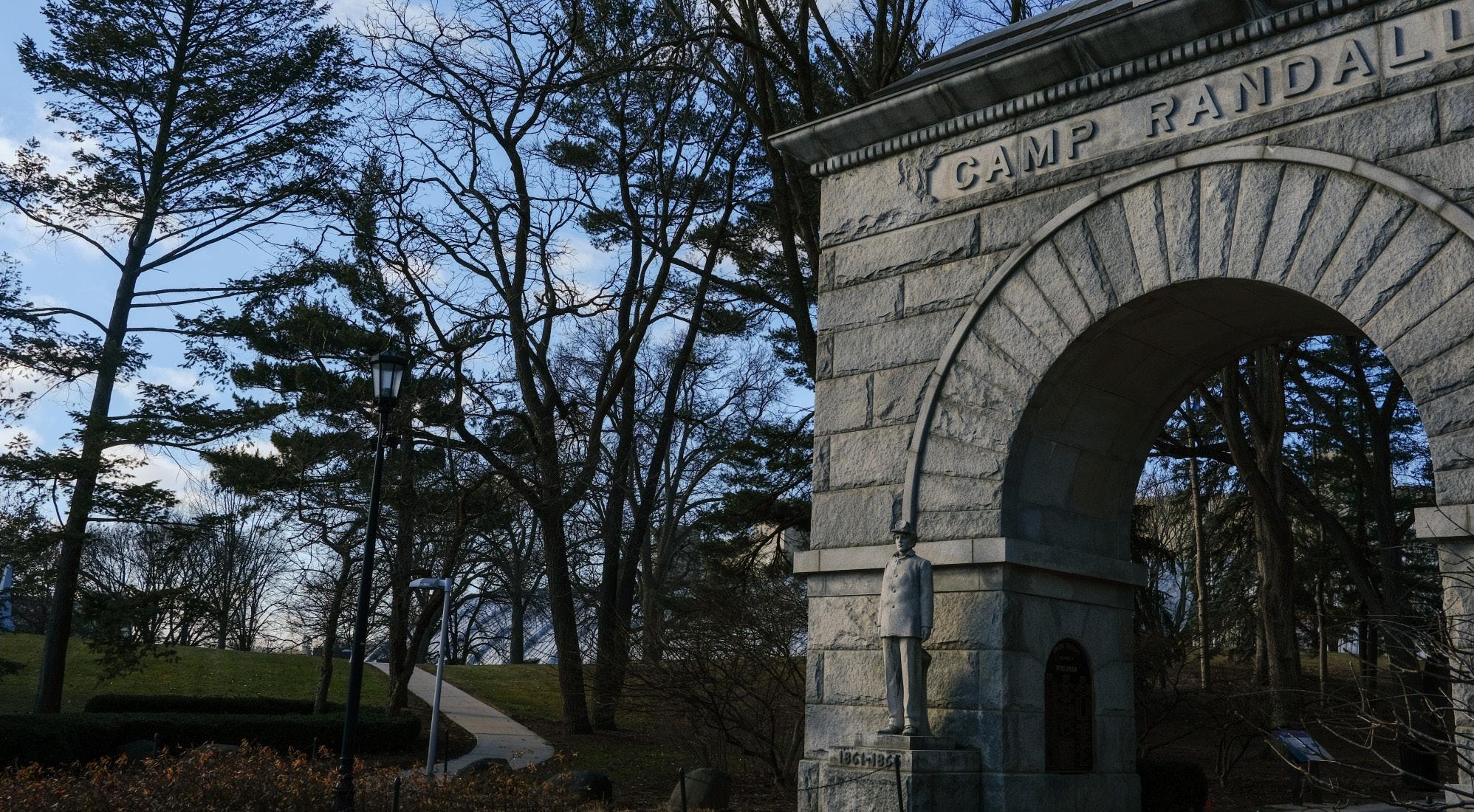
These new reduced-credit programs would cut down the 120 minimum required credits for a bachelor’s degree to 90 credits, shaving off a whole year from the typical four-year undergraduate degree.
Regents said they were considering the policy due to new guidelines that were released in 2024 by the UW System’s regional accreditor, the Higher Learning Commission, for schools that want to participate in reduced-credit bachelor’s degrees. Completing college earlier could lessen the financial load of four years of college tuition.
At the University of WisconsinMadison, Wisconsin residents pay
approximately $12,186 and out-ofstate students pay approximately $44,210 per year in undergraduate tuition, according to the UW Office of Student Financial Aid. By implementing three-year or reducedcredit bachelor’s degree programs, students could save tens of thousands of dollars.
A UW Board of Regents policy document frames the benefits of these potential programs as “increased efficiency and agility in meeting existing and emerging workforce and societal needs, while also ensuring the quality of the UW System’s academic program offerings.”
Some Wisconsin colleges have already taken action towards reduced-credit degrees.
Mount Mary University in Milwaukee launched their reduced-credit program, “Thrive in 3,” in January which allows their students to earn a bachelor’s
degree in three years and with a minimum of 95 credits.
The College-in-3 Exchange initiative is a group of more than 60 U.S. colleges and universities advocating to institutional accreditors for 3-year degrees. The University of WisconsinMilwaukee and Lakeshore College in Cleveland, Wisconsin are currently members of the initiative. Some of these educational institutions are also creating potential programs toward master degrees in collaboration with 3-year bachelor’s degrees such as “3+1” and “3+2” programs, according to the College-in-3 Exchange.
Improving the retention rate at U.S. institutions is a main goal of the initiative.
While UW-Madison’s retention rate after one year sits at approximately 96%, those rates have seen significant drops after the third year in school, according to the UW Office of Data, Academic Planning &
By Grace Williams STAFF WRITER
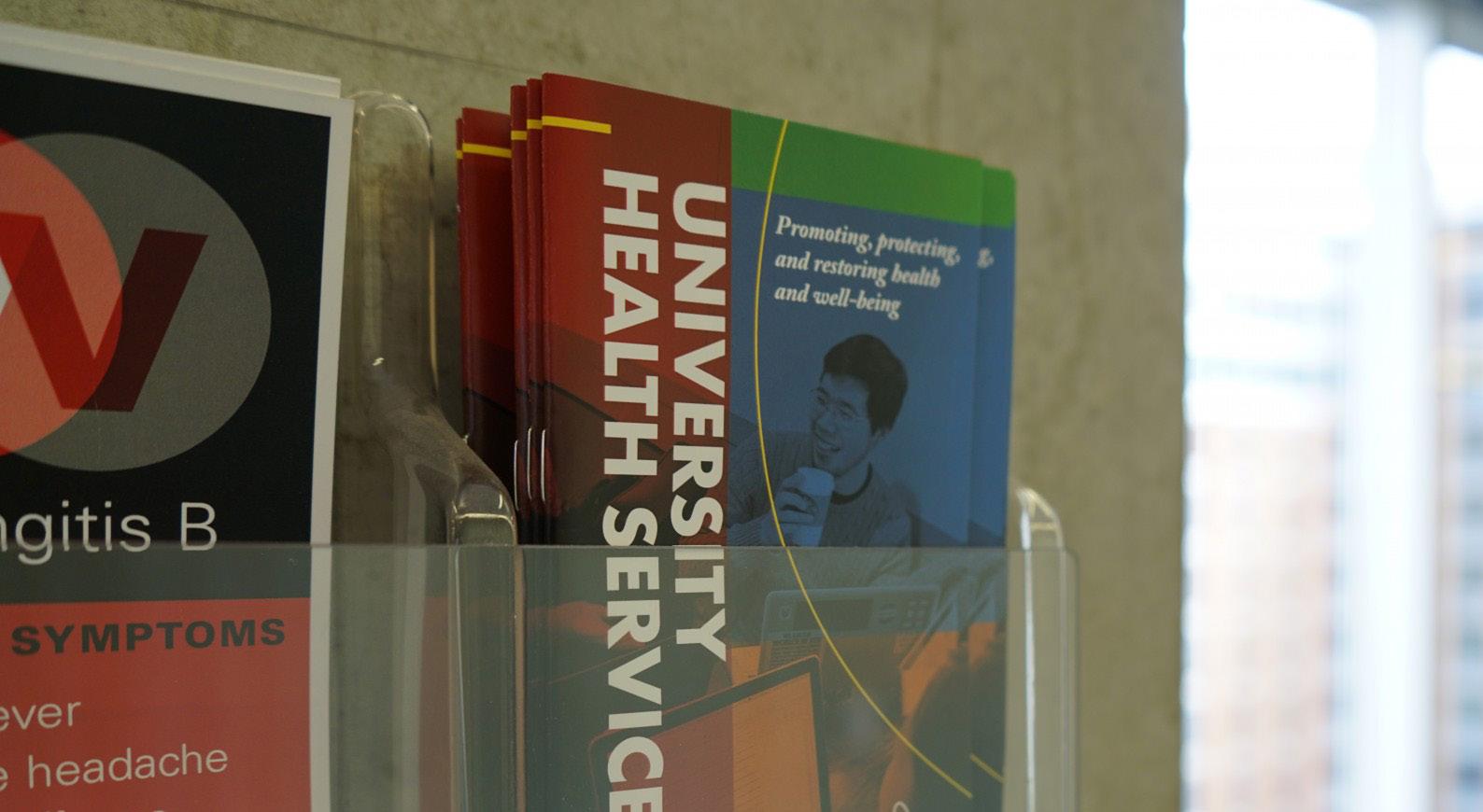
University of Wisconsin-Madison students will be mandated to share their vaccination status by March 12, university officials announced Thursday. Students who do not submit vaccination status will be unable to enroll in classes.
University spokesperson John Lucas told WPR that only about one-third of current students have voluntarily provided vaccine information to date.
The new policy, sent to students in an email from Vice Chancellor for Student Affairs Lori Reesor and Chief Health Officer Jake Baggott, is intended to help the university monitor immunity levels and respond to increasing outbreaks of communicable diseases, including:
• Measles, mumps, rubella (MMR)
• Tetanus, diphtheria, pertussis (Tdap)
• Varicella (chickenpox)
• Meningococcal (ACWY, B)
• Hepatitis B
This comes after the university announced on Feb. 2 that a student tested positive for measles, the second confirmed case in Wisconsin this year.
UHS and local health groups notified approximately 4,000 people that they were exposed to measles. All exposed individuals had to share their vaccine status, with unvaccinated individuals required to quarantine for 21 days if they are not vaccinated.
Two doses of the MMR vaccine are 97% effective at preventing measles and UHS estimates 95% of students who self-report
vaccine status are vaccinated for measles.
Students can upload vaccination records to MedProctor, a new online platform for students to share vaccination statuses, or submit a confirmation of their lack of vaccination on the platform if unvaccinated.
Students who previously uploaded records to MyUHS will have them automatically transferred and should receive confirmation by Feb. 20, Reesor and Baggott’s email said. Students without records or proof of immunity must complete an attestation form.
According to the University Health Services vaccination records page, students may also submit alternative proof of immunity, such as antibody or titer tests. Records must clearly show vaccine names and dates, and non-English documents must be translated.
UHS said the policy is about sharing vaccination status, not requiring vaccines. Previously, reporting vaccination status was only mandatory for students in certain campus housing under state law.
Additional public health measures may apply to unvaccinated students during outbreaks. Questions can be sent to vaccinationrecords@uhs.wisc.edu.
Vaccination clinics were held by the university on Feb. 11 and 12, with the possibility of more, including late-night clinics, being offered in the future. UHS will post updates if more are held.
Editor’s note: This story was updated Feb. 13 at 4:38 p.m. to include information about current disclosure rates.
Institutional Research.
This trend is more pronounced systemwide looking at other UW System schools.
The University of Wisconsin-Eau Claire’s retention rate for first time, full-time students after three years is about 67%. At UW-Milwaukee, the same retention rate is about 57% and at the University of WisconsinOshkosh, this rate sits at approximately 54%, according to data from the UW System.
By integrating 3-year degree programs, U.S. campuses seek to “increase persistence and completion by providing a clearer and shorter path through college,” according to the College-in-3 Exchange website.
Enrollment concerns are also part of the move toward reducedcredit degrees.
Many students choose not to enroll in college due to rising costs and the length of time required to
complete a degree. According to data from the UW System, UW-Madison saw a slight decrease in new freshmen last fall compared to 2024 while UW-Milwaukee has seen an average decrease of enrollments per year of approximately 2,000 students.
However, some students still choose the traditional 4-year degree path regardless of being able to graduate earlier.
Of UW-Madison’s new freshman cohort in 2022, about 7% opted to graduate within three years, which is up from 1.9% 15 years ago, UW-Madison spokesperson John Lucas said in a statement. Lucas said more students were able to graduate within three years but decided not to.
The UW Board of Regents will vote on this policy at a future board meeting. If passed, the policy will allow all UW institutions to offer reduced credit degrees.
By Haellie Opp SENIOR STAFF WRITER
A proposed bipartisan bill would give the University of Wisconsin-Madison’s athletic facilities $14.6 million annually to maintain athletic facilities and exempt the university’s NIL deals from state public records law after lawmakers cited concerns that the university will fall behind in a competitive NIL era.
“If we don’t put a competitive football team on the field, we will be losing all the other sports,” Rep. Alex Dallman, R-Markesan, said, adding that exempting NIL deals from the public records law will hide UW-Madison’s strategies regarding contracts.
Nancy Lynch, UW-Madison Vice Chancellor for Legal Affairs, said the bill would put UW-Madison on a more “competitive footing” with NIL and public records statutes in other states.
“The need for the [public records exemption] is focused on protecting competitive interests and student privacy,” Lynch said in a hearing on Feb. 11. “We seek only to codify existing practice of denying access to student athlete NIL agreements, and certain university records related to NIL strategy, allocation, revenue generation and news.”
Lynch said public records puts the university at a “competitive disadvantage.”
UW-Madison NIL records are currently protected under the Family Educational Rights and Privacy Act, but the bill would deny any requests for those records.
Under the bill, student athletes would also have to disclose any third-party contracts before they enter their agreements. The bill
also prohibits NIL contracts that conflict with existing university policies made by the Board of Regents and contracts in exchange for athletic performance.
UW-Madison Athletic Director Chris McIntosh and Wisconsin volleyball head coach Kelly Sheffield both testified in support on Feb. 11.
McIntosh said the bill would ensure the university can “preserve excellence” with support in two areas. The bill would support university sports and NIL pursuits financially and legislatively, as allocated public funds would support athletics and university agreements would be protected under law.
Sheffield said he supports the bill because it would “help ensure that our student athletes, our staff and all of Wisconsin athletics can continue competing and succeeding at the highest level.”
If this bill is not passed, McIntosh said he worries about the finances, competitive success and the opportunities provided at UW-Madison.
“There is a significant threat to our Olympic sports [and] our women’s sports that we are contending with,” McIntosh said.
McIntosh said the bill would allow the university to increase their support to Olympic and women’s sports. He highlighted the success of Wisconsin women’s hockey player Laila Edwards at the 2026 Olympics, as well as the men’s hockey and women’s volleyball teams. The bill was unanimously passed by the Committee on State Affairs and was referred to the Committee on Rules on Thursday to determine the bill’s path forward.
By Avery Chheda FEATURES EDITOR
An athlete, coach and father, Freddie Owens is no stranger to adversity.
Growing up on the North side of Milwaukee as the oldest of 10 siblings, Owens never planned on playing life with the hand he was dealt. And in Milwaukee, staying busy wasn’t a hobby — it was survival. Stark Park was more than basketball courts, it provided structure and mentorship. Decades later, with summers off and a newborn at home, Owens finally had the time to reflect on the experiences that gave him opportunities he always dreamed of. Through faith, community, mentorship and perseverance, Owens managed to break a cycle, becoming the first in his family to pursue higher education and build an unbreakable legacy.
He tells his story in his new memoir “Echoes of Stark Park,” set to release Feb. 16. Although dedicated to his son Quentin, “Echoes of Stark Park” speaks to youth everywhere — especially Badgers.
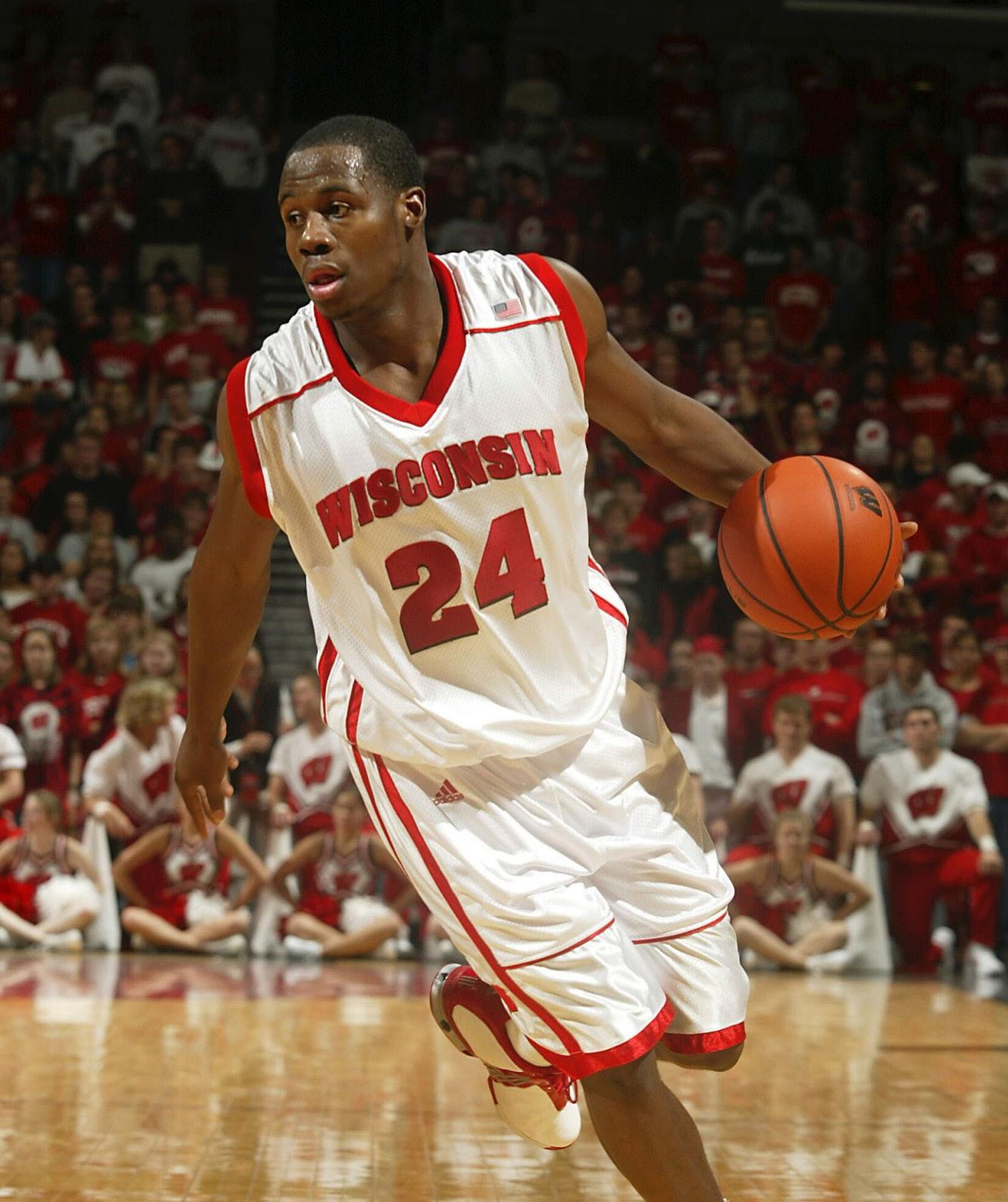
The title is an homage to Stark Park, the “heartbeat” of Milwaukee’s north side and a place where Owens spent much of his formative years. Owens told The Daily Cardinal if it weren’t for Stark Park’s busted rims and cracked asphalt courts, he never would have made it as a Badger, playing in front of thousands at the Kohl Center or professionally for BC Kalev in Estonia.
Owens cemented his legacy at the University of Wisconsin-Madison when he connected on a game-winning corner 3 to send the Badgers to secure a 61-60 NCAA tournament victory over Tulsa. But long before that, it was on those crumbling, concrete courts that Owens first learned how to fail, preparing himself for the moment he first stepped into the Badger locker room. From Stark Park to Washington High School, Owens was putting in thousands of reps.
Before Madison, a Final Four run or professional ball, Stark Park was a refuge and sanctuary for Owens. Owens said the park kept him and other Milwaukee youth off the streets.
“Teachers in the district would operate a building at each playground throughout the city [so we could] read and write and draw,” Owens said.
More than that, Owens said Stark Park was a shield from the rough future Milwaukee offered.
New beginnings
Owens also told the Cardinal that UW-Madison was his ticket out of Milwaukee.
“Where I come from, [the best] possible chance you can give yourself [to be successful is to] be educated,” Owens said.
And for Owens, graduating from UW-Madison meant more than an education. It was a testament to 18 years of hard work and perseverance. But the path to Madison wasn’t without barriers.
“I look at my upbringing
and my childhood and the people that I was surrounded with, and family, friends and mentors and all of that stuff prepared me to overcome those obstacles,” Owens said.
When Owens arrived on campus, he stepped into a new world. From the tightknit familiarity of Milwaukee to a melting pot like Madison, everything felt bigger. The expectations, the classrooms and the crowds.
“Madison was uncharted territory,” Owens said. “It was nothing like Milwaukee. This was a predominantly white environment with people from all over the world.”
For a first-generation student of color, a predominantly white campus was a new experience.
But between the courts and the classroom, Owens had no trouble settling in on campus.
“[Madison] is a second home,” Owens said. “It’s a place where I came in a boy and left a man.”
It was partly thanks to UW-Madison’s robust network of peers and fans that Owens performed so well in such a foreign environment.
“I never felt like I was an outsider, especially being a black kid from the inner city of Milwaukee,” Owens said.
The embrace he felt from the UW-Madison community gave him room to grow as an athlete and scholar. Even with a strong foundation, success didn’t come easy. What Owens lacked in experience, he made up with determination.
The pressure of the collegiate level made every season
at Washington High School feel like Stark Park. There was pressure to perform on the court, pressure to perform in the classroom and the pressure of paving a new path for his family.
“In college, no one’s holding your hand,” Owens said.
Amidst the pressure of a national stage, Owens tapped into his discipline.
“My upbringing and having been put in positions where I was forced to be resilient because of my environment really helped me be able to
thrive at the college level,” Owens said.
Owens still made sure his status as a Division 1 athlete didn’t take away from experiencing campus classics.
“I’m gonna go out to State Street Brats on a Friday night,” Owens said. “I understood the importance of the moment. Once those four years are up, there’s no going back.”
Looking all these years later, Owens notes the importance of balancing ambition and excitement. Contine reading @dailycardinal. com.
UW-Madison faculty concerned new teaching requirements will limit research capacity, reduce staff autonomy
By Nirai Sanchez STAFF WRITER
University of Wisconsin-Madison faculty are raising concerns over new workload requirements set to begin next fall that were passed as part of Wisconsin’s latest state budget negotiations.
Wisconsin Act 15 provides new requirements for University of Wisconsin System faculty and educational staff, mandating educators teach a minimum of 12 credit hours across the academic year, with an additional three summer credits for staff with 12-month appointments.
The new requirements were part of the bipartisan state budget agreement made in July between Gov. Tony Evers and Republican lawmakers to land a $256 million funding increase for the UW System, the largest in decades.
“It’s more funding for the university, and that’s good, but it’s funding with all these strings attached,” Barrett Elward, co-president of the United Faculty and Academic Staff, told The Daily Cardinal.
While faculty and staff welcome the funding increase, UW-Madison Assistant Professor of Educational Policy Studies Taylor Odle highlighted a “growing concern among faculty”
about the loss of educational autonomy and potential legislative deals that “don’t reflect the actual operation of the campus.”
According to Odle and Elward, much of the UW-Madison academic staff are already teaching at the minimum required credit level, in what Odle termed a “two:two load” — two classes per semester.
Odle stressed that faculty across the UW System care “very deeply” about teaching, but instruction is only one part of their job, in addition to research and developing courses.
Odle called UW-Madison “a powerhouse research institution,” with UW-Madison ranking fifth in federal research expenditures in fiscal year 2024.
“This provision necessarily makes doing the other part of our job — the part that brings in a lot of grants to the institution, that creates discoveries and patents and benefits the state of Wisconsin and the nation — it makes doing those things much harder by kind of constraining what we can and can’t do,” Odle told the Cardinal.
As UW’s other R1 research university, the University of WisconsinMilwaukee will have similar workload requirements to UW-Madison. The
remaining UW System universities will require educators to teach at least 24-credits each academic year.
Both Odle and Elward said Act 15 is overreach by the Legislature and criticized that the changes to faculty workload were negotiated quickly behind closed doors without faculty input.
Odle said UW System officials and legislators were rushing to come to a budget agreement and that the legislature required the workload provisions be brought in before releasing funding.
“Good public policy is not made with last minute concessions behind closed doors,” Odle said.
Elward said that view is shared across faculty and staff.
“These are opinions that I’ve arrived at talking to people that have been here much longer than I have… I talked to grad students, faculty, other academic staff, people at different campuses,” Elward said. “That’s one of the nice things about being in a union, is you are connected to all these various workers that all believe in the university system and believe that workers should have more say, and that’s not what we’re getting.”
UW-Madison Chancellor Jennifer Mnookin and Interim Provost John
Zumbrunnen said on balance they believed Act 15 would give the university the “tools necessary to protect and further UW-Madison’s ongoing strength” while acknowledging some uncertainty during the implementation in an October statement to UW-Madison faculty and academic staff.
In an effort to address the non-credit work faculty engage in, the Board of Regents’ workload policy document, Regent Policy Document 20-25, contains guidelines for new buyout policies and exceptions to the minimum workload requirements. It also explains possible teaching equivalencies for out-of-classroom work with students, like mentorship. The document was approved by the Joint Committee on Employment Relations in December.
The UW System will now finalize the systemwide policy. From there, UW-Madison will work with campus, college and departmental areas to create university-specific policies that align with the new requirements.
“It remains to be seen how [the RPD] will be implemented,” Elward said.
Minimum workload requirements are a novel policy at the UW System, but at least 10 of the other Big Ten institutions have some form of workload requirement.
By Annika Berney CAMPUS NEWS EDITOR
At Milano Rho Ice Hockey Arena, ‘Free Bird,’ the goal song of Team USA, has already rung out 31 times. With the Gold Medal match on the horizon, Team USA Women’s Hockey has dominated their competition in the preliminary rounds and blown through both Italy and Sweden in the knockouts, fueled by the six Badgers on the roster.
Now, after dominating Canada 5-0 in the preliminary round last week, Team USA will need to best their archrivals once again this Thursday with Gold on the line.
Preliminary opponents
Against their opponents in the preliminary round, Team USA only gave up one goal against Czechia in the Olympic opener.
Laila Edwards recorded an assist in that Czechia game, dishing out two more against Finland two days later.
Caroline Harvey also recorded an assist against Finland, then scored her first goal a game later against Switzerland, assisting on two others that game as well.
Road to the Gold
Despite the raised stakes of the knockout round, Team USA swept through Italy and Sweden in the quarterfinals and semifinals, respectively.
Against Italy last Friday, Team USA outshot their hosts 51-6. Edwards and Harvey both recorded assists in the 6-0 win.
In the semifinals Monday, four of Team USA’s goals came within 10 minutes in the second period after a slow start against Sweden in the first.
Though Edwards shot the puck, a last minute tip into the net from Kendall CoyneSchofield credited the goal to her. Edwards was given the assist.
In the eight Winter Olympics that women’s hockey has been a sport, USA and Canada have met in seven of those finals. But what should have been a neck-and-neck preliminary round game ended in Canada being shut out at the Olympics for the first time, with Team USA scoring five unanswered goals.
And, three of the four active Badgers — the fourth being goalkeeper Ava McNaughton — scored against Canada, with Team USA captain Hilary Knight and Britta Curl-Salemme also recording assists, both of whom are Badger alumni.
Harvey opened up scoring just under four minutes into the game, assisted by Knight.
Harvey currently leads the Olympic team in points — a form of measurement for contribution which assigns both goals and assists one point each. She
By Tejas Rao SENIOR STAFF WRITER
Students packed Union South on Feb. 10 pridefully watching the highly anticipated Olympic women’s hockey matchup between Team USA and Canada, a game of special importance for the six current and former Badgers representing the U.S. this year.
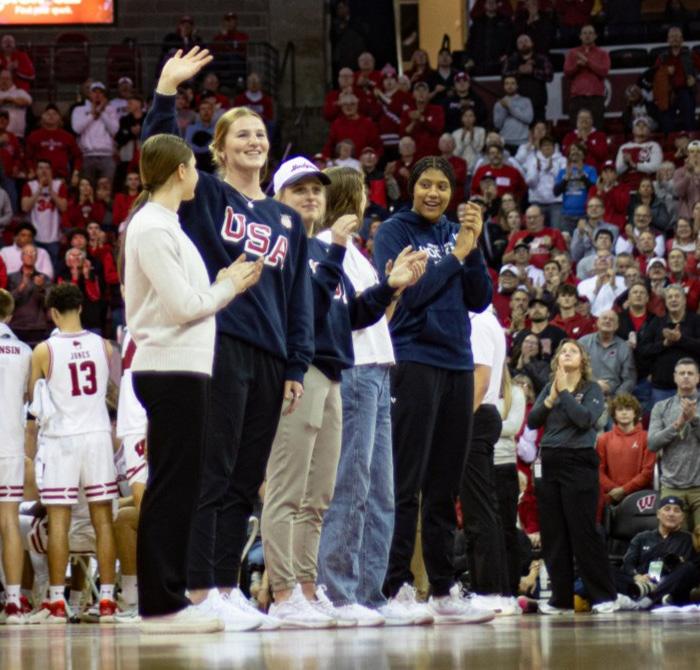
Defender Caroline Harvey, right wing Kirsten Simms, goalie Ava McNaughton and forwardturned-defender Laila Edwards currently play for Wisconsin, while Badger alumni Britta Curl-Salemme and five-time Olympian Hilary Knight round out the Badgers represented on this year’s Olympic squad.
As Team USA took the ice in Milan, students in Union South spoke with praise and amazement for their talented peers, describing Wisconsin women’s hockey as “the best among the rest in Wisconsin Athletics,” “a true dynasty” and “the true source of pride for Badgers everywhere.”
“I’m a huge fan of women’s hockey, and seeing our players play at a super high level is awesome,” freshman Adrianna Mathiason said. “[As a Wisconsin sport] it ranks extremely high for me, if not the number one.”
has scored two goals and assisted in five over the four games of the preliminary round.
Edwards, who made history in Milan as the first Black woman to play for Team USA, became the first Black woman to score for Team USA, notching a third period goal.
Kirsten Simms scored her first Olympic goal in the second period, making the game 3-0 against Canada and rounding out a hat-trick of Badger scorers
Knight leads Team USA in points all time, with her assist to Harvey tying her with Jenny Potter for all-time Olympic points. The women’s hockey legend announced in 2025 that these Olympics would be her last, aiming for her second gold medal in what would be a poetic ending to her international career.
Canada’s top player, MariePhilipe Poulin, was notably absent against Team USA after taking a rough hit from a Czech defender the game prior.
Canada head coach Troy Ryan lamented her loss, calling Poulin “irreplaceable,” though he also criticized his own team’s play as ‘sloppy.’
“We bottled a lot of pucks and made some poor decisions,” he said after the game. “Hopefully, it’s something we learn from.”
Team USA will face off against Canada for gold Thursday. Puck drop is at 12:10 p.m. and the game will be shown at the Sett pub in Union South.
a senior who goes to Badgers women’s hockey games often. “No sports team in this university can do what this team does.”
Wisconsin’s women’s hockey program holds the record for most NCAA championships won and is tied for the most titles of any Wisconsin Athletics’ program, winning eight total NCAA titles in 2006, 2007, 2009, 2011, 2019, 2021, 2023 and most recently in 2025.
Kirsten Simms scored the winning goal in the 4-3 overtime win against the Ohio State Buckeyes just last March. Consistency under renowned head coach Mark Johnson has solidified this program’s legacy in Badger sports history.
Senior Danny Mitchell was in awe of the magnitude of Badger talent on the Olympic team. “There are only 23 players on that team, and more than a quarter of them being Badgers is just amazing,” he said. When asked about what he feels as a student watching them play on the international stage, he said, “Our university is prestigious for sports and hockey is one of the top, if not the top. I just feel a lot of pride as a student.”
Junior Frankie Milanowski said it was clear to him what sport rules Wisconsin athletics. “It means a whole lot to me. They’re the best team and the best coach. They’re a true dynasty with multiple championships, and our women’s ice hockey program is amazing,” he said. “I’ve seen a girl from my neighborhood make it to the Olympics because of this program, and it’s just a massive feeling of pride.”
“I’m extremely, extremely impressed,” said Molly Cole,
Much to everyone’s satisfaction, the U.S. dominated their border rival Canada 5-0, with three of the five goals scored by current Wisconsin players Harvey, Simms and Edwards.
The U.S. women’s ice hockey team continued its dominance over the past few days of the Winter Olympics with a 6-0 quarterfinal win over the hosts Italy, with Edwards — the first Black player on the U.S. women’s hockey team — contributing one goal. In the semifinals, the U.S. once again crushed their opponent, beating Sweden 5-0 and putting them in the finals Feb. 19 against Canada.
Proceeds from nearly every purchase help support UW–Madison and its students.

TheDailyCardinalreviveditsannualbarguide,lettingstudentsvotefor theirfavoritecampus-areabarsacrosssixcategories.
By The Daily Cardinal
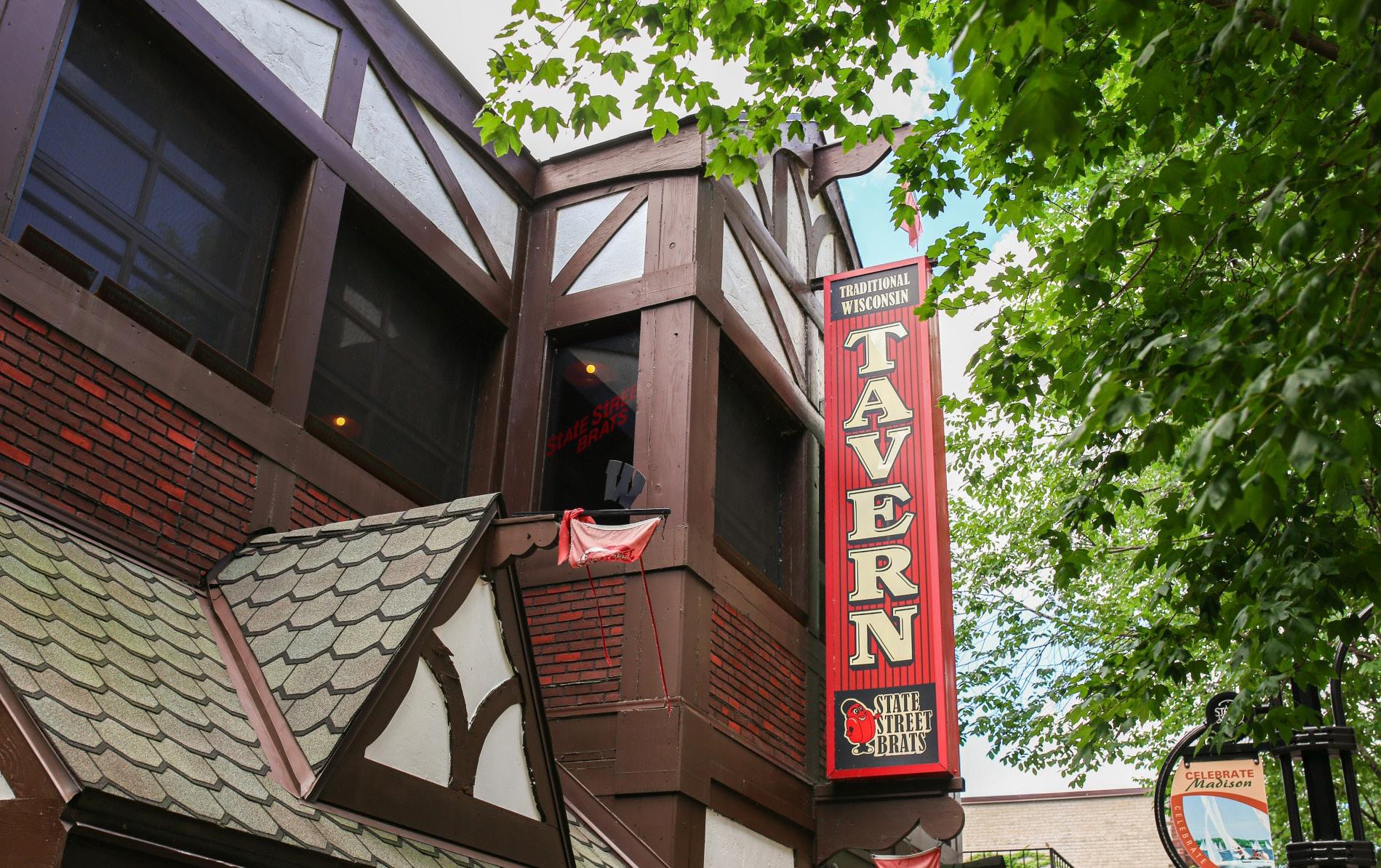
State Street Brats is the heartbeat of the University Wisconsin-Madison’s lively and raucous bar scene and night life. Born in the 1950s as “Brathaus,” the bar was originally a proprietary tavern known for its “Red Brat,” developed by local butcher George Bishop. In 1989, its name was changed to “State Street Brats,” an homage to its location, and has since become an iconic gameday spot for students and alumni alike.
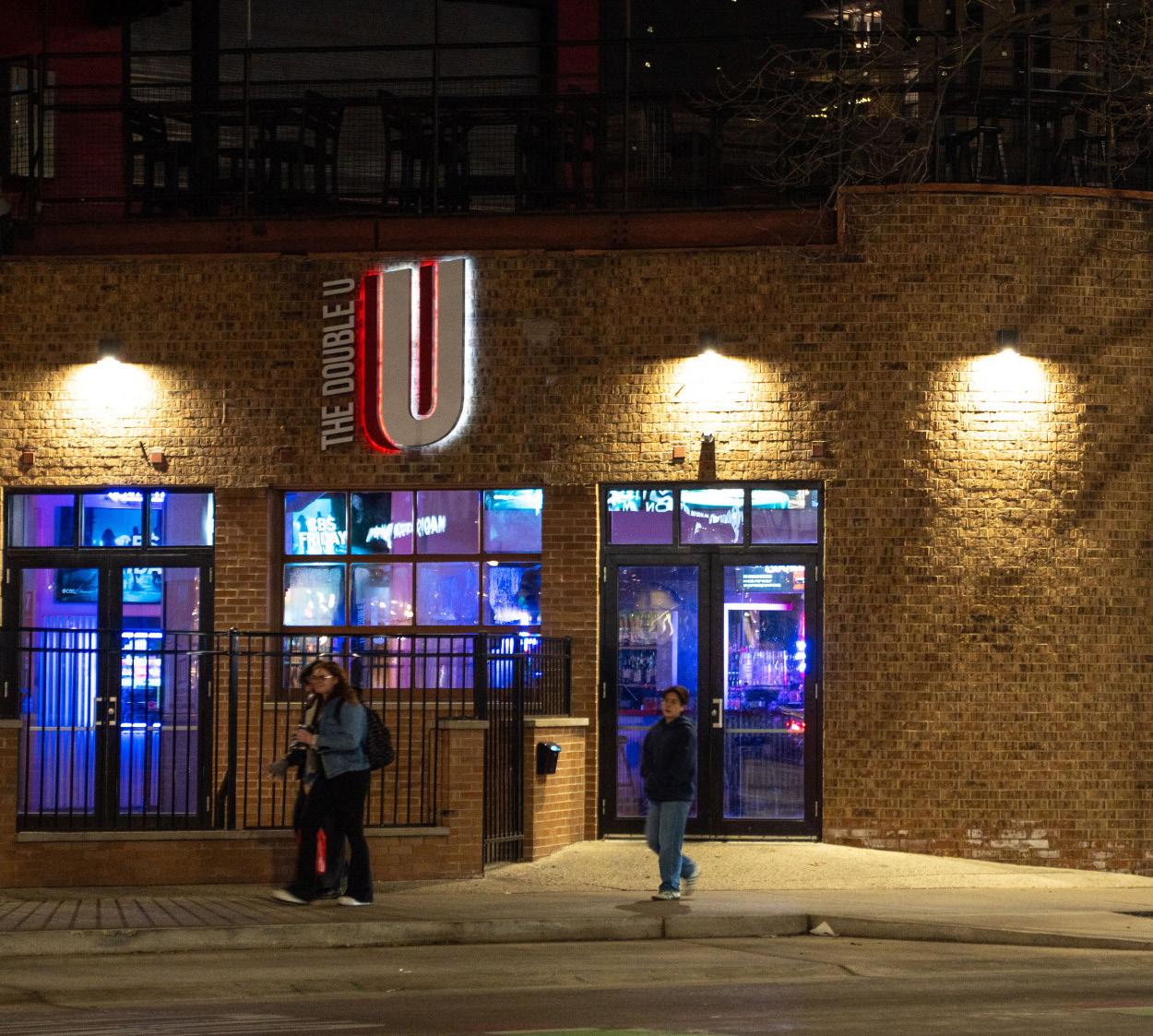
Known for its sweet taste, berry-flavored vodka and low calories, the Berry Water Lime has quickly risen in popularity at campus bars in the past few years. Its status as a student-favorite has become clear. The question most debated among students is “Who has the best Berry Water Lime?” While the race was close between State Street Brats and the Double U, consensus picked the latter.
“My favorite drink is a Berry Water Lime because you get hydrated [while] also getting drunk,” Claudia said.

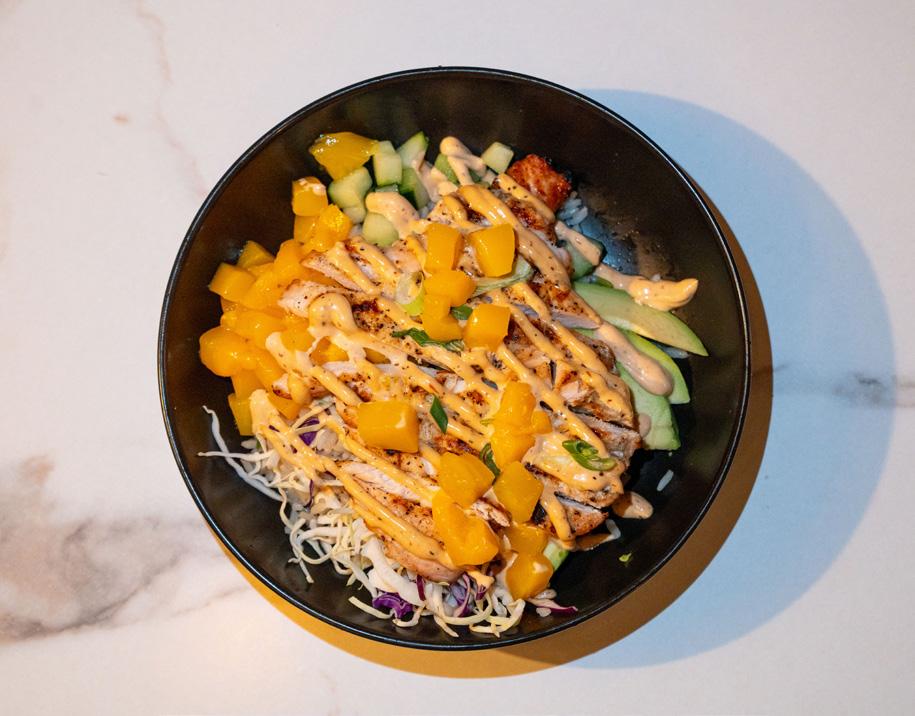
Vintage is a dearly loved retro-hippy bar known for its soft lighting and homey ambiance. With a menu full of classic American-style bar food including wraps, hamburgers, sandwiches and salads, students are bound to find a meal that will satisfy any craving. After news that the location was set to be demolished in July 2023 to make room for luxury apartment buildings, the UW-Madison student body showed an overwhelming support of its continuation of operations, prompting local developers to pull out of operations. It can be argued that Vintage’s (near, anticipated) demise only increased the local morale and love around a staple Madison restaurant and bar. Editor’s Pick: Mango Chipotle Bowl
The combination of mango, cucumber and freshly seasoned grilled chicken creates an amazing burst of flavor that leaves you craving for more. Combined with their classic seasonal mule, and some good company, you’re likely to leave Vintage feeling full, satisfied and giddy.
Known for its strong pours and gritty atmosphere, Mondays Bar is beloved for its lively and fun vibe. Located on State Street, this bar’s wood paneling, yearround christmas lights and space constrainsts make it a cozy hang in the heart of campus. Whatever the vibe of the evening is, Mondays has it.
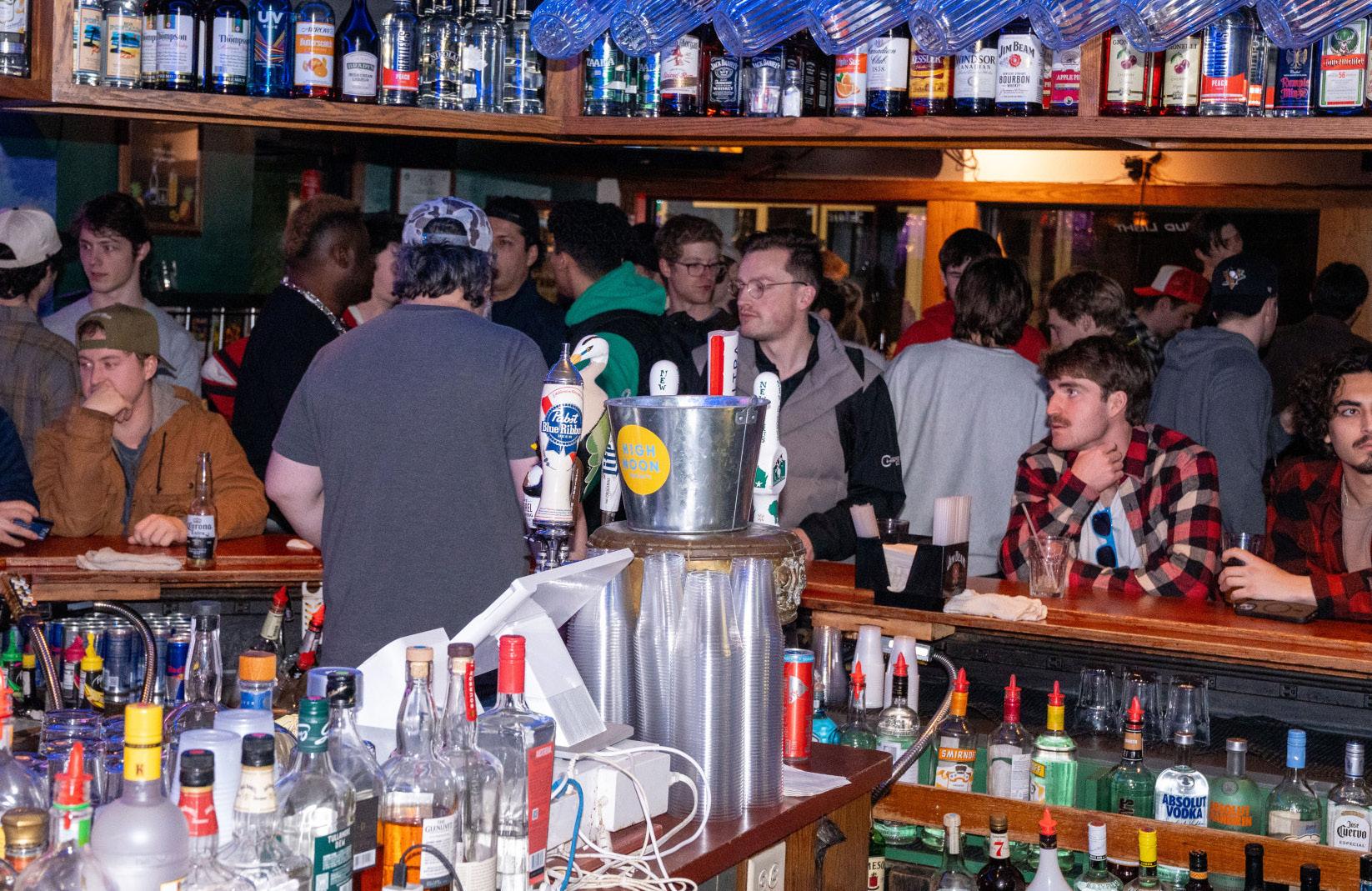
“I’d probably say Mondays [is the best bar], they pour pretty nice there for the price,” Joe said.
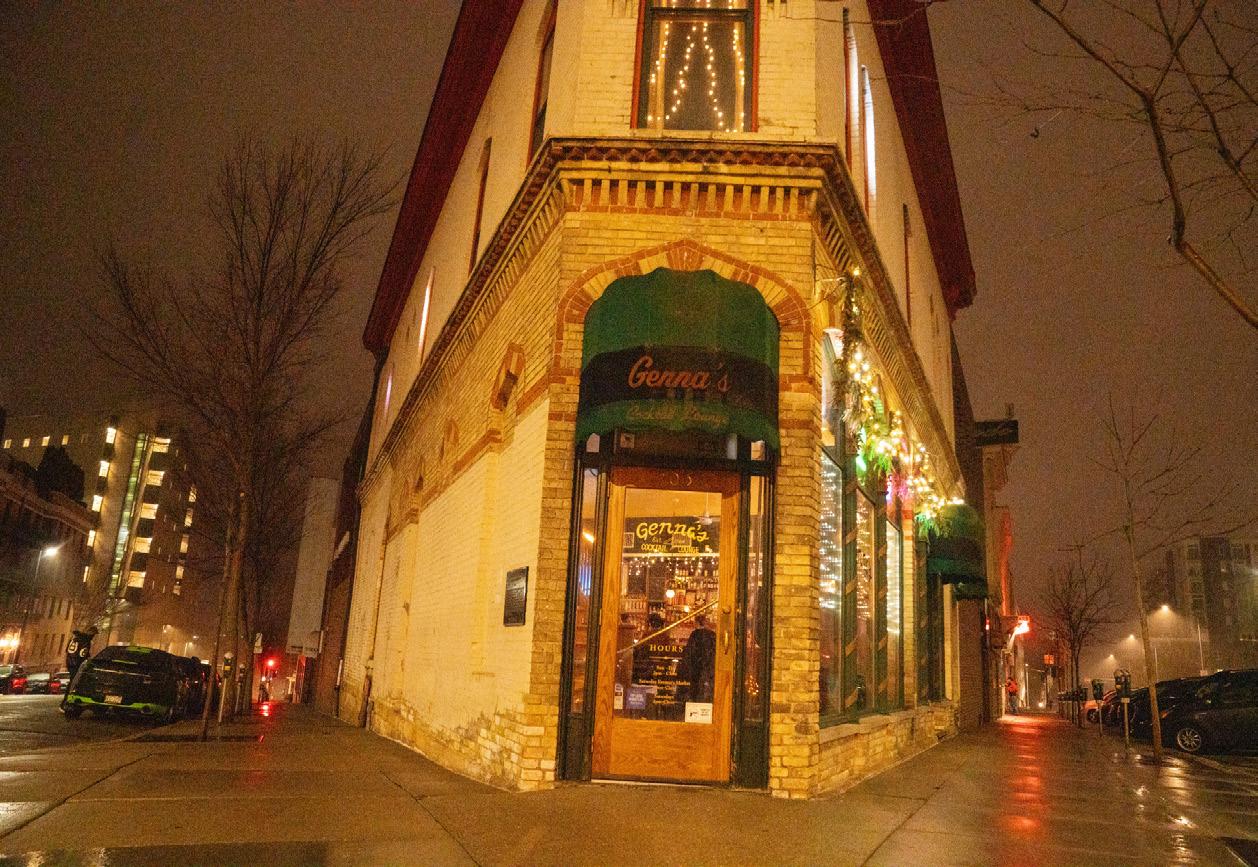
Looking for a more chill and chatty evening? Take a stroll around Capitol square and stop by Genna’s Lounge for some delicious drinks. Take a seat with your friends, bring a deck of cards or talk to someone new. Located at the corner of W Main Street and S Hamilton Street, Genna’s lounge lies somewhere in between the lively campus bar scene and the more laid-
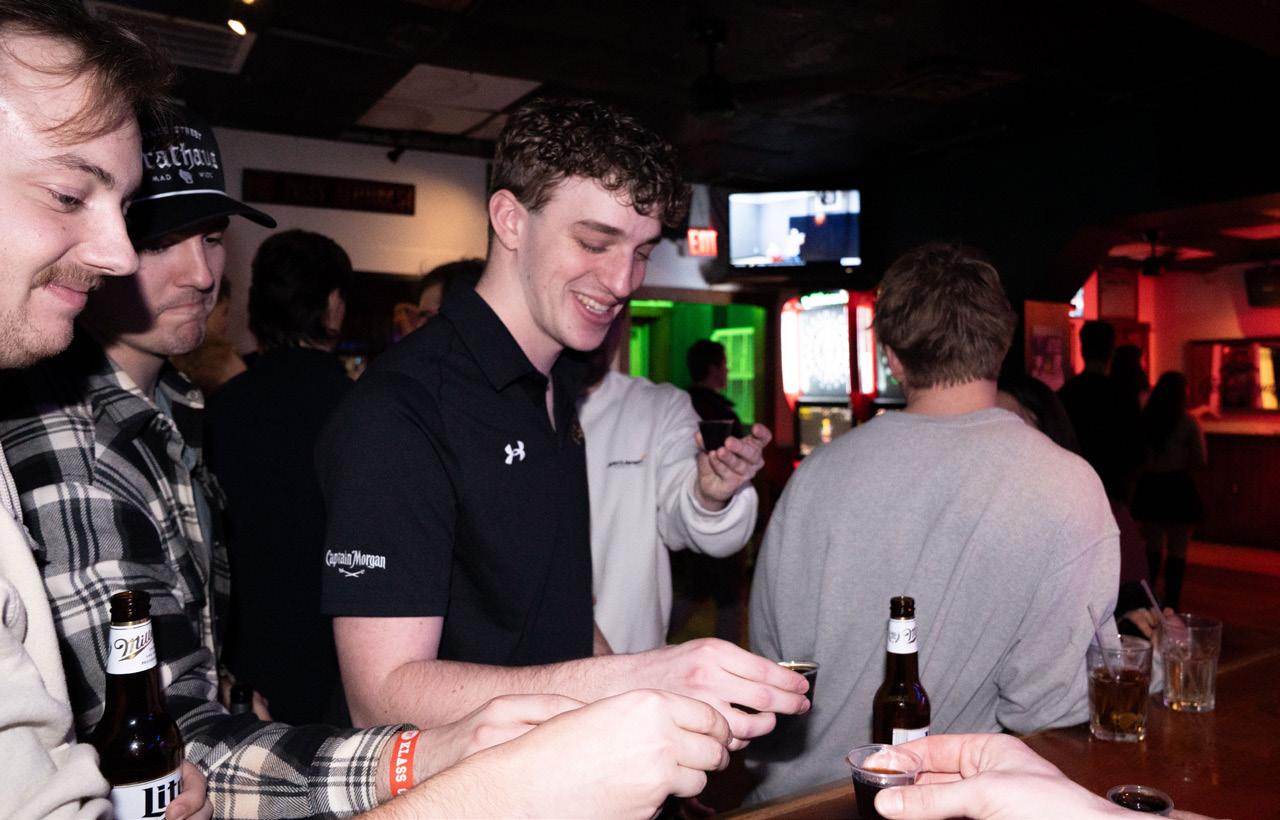
If you’ve ever walked past the intersection of State and Frances Street at 9 p.m. on a Thursday, you have most likely seen the incredibly (ridiculous) long line of people waiting to get a taste of “Brattomless” drinks at State Street Brat’s. From 9:00 p.m. to close, Brats hosts “cup night,” where for just $15, bar goers receive a “bottomless” red Brats plastic cup that has endless refills until close.
By Andrew Holton STAFF WRITER
When I was younger, my dad owned “Big,” “Money Pit” and “Forrest Gump” on DVD. These movies served as my introduction to Tom Hanks. Naturally, I was intrigued when I saw Peacock planned to reboot “The ‘Burbs,” another Hanks classic, into a TV series.
In “The ‘Burbs” (1989), Ray Peterson’s (Tom Hanks) much needed staycation is interrupted when he and his friends suspect his new neighbors, The Klopeks, of participating in a deadly cult. Peterson, Mark Rumsfield (Bruce Dern) and Art Weingartner (Rick Ducommun) comedically try to uncover what’s really going on.
“The ‘Burbs” (2026) honors its source material and pushes the characters past the onedimensional personality barrier, but still comes up short in some crucial aspects.
Samira Fisher (Keke Palmer) is a litigator and newlywed wife to book editor Robert Fisher (Jack Whitehall). After being robbed while living in the city, the Fishers decide to move out to Rob’s childhood home in “the safest town in America,” Hinkley Hills, to protect their newborn baby, Miles. Samira is immediately suspicious of the worn-down pink Hinkley House across the street from their Ashfield Place home.
When her maternity leave allows for extra time at home, she launches an investigation that reveals their ominous neighbor, Rob’s past and an ensuing whodunit mystery.
The show often directly references the movie. Almost every episode is titled after the film’s best lines. They even recreate the scene where the mysterious neighbor offers sardines and pretzels as a snack.
The line “it came with the frame” was used in that same scene. Other references include the dog finding a presumably human bone, the car pulling out of the garage similarly, digging in the neighbor’s basement and a quick cameo from Ricky Butler (Corey Feldman) coming out of the local bar.
The stark differences between Samira and Ray help create necessary distinctions between the show and the movie. Samira was much more successful when figuring out what actually happened. She used her investigative lawyer skills to get to the truth. Ray does find out what’s really going on, but it’s not before his destructiveness results in the explosion of the Klopeks’ house and him almost getting killed.
Samira is also a Black woman in a predominantly white suburb. During the series, she deals with racial comments and microaggressions that Ray never had to deal with.

Unlike its predecessor,
“The ‘Burbs” doesn’t take full advantage of the cul-desac setting. The 104-minute movie develops a mental map of where every character lives. I couldn’t develop that same map in eight episodes. The show often sets scenes inside homes instead of a porch, lawn, garage or backyard. Furthermore, the plot doesn’t revolve around the mystique of the haunted house like the original. The movie hints and teases at what could possibly be inside the house. It’s not until around the third act that they are let in. But by the end of the first episode in the
reboot, they are already inside the Hinkley House. The focus lies instead on the kidnapping of Rob’s childhood friend.
Beyond the plot, the music was underwhelming. The movie featured a memorable orchestral soundtrack composed by Jerry Goldsmith, bringing mystery, adventure and the risk to life. But in the show, the music relied heavily on modern tracks that didn’t capture the atmosphere of the cul-de-sac and its residents as much. However, credit is due for their use of Rihanna’s “Disturbia” in the season finale. Due to runtime constraints, most of the movie’s characters
don’t have much to their personalities, making them less fleshed out, while the show offers dedicated runtime for supporting characters to deal with their secrets, allowing viewers to care about them rather than viewing them as just comics.
While there wasn’t really a need for a reboot — besides sardines propaganda — I’m totally down with it. The reboot doesn’t contend with the original, but I would happily watch a second season with the unresolved events of the season finale. If there’s anything I took away from this, it’s that I hate cul-de-sacs.
‘Kimberly Akimbo’ shows age is just a number
By Britta Sevcik STAFF WRITER
The curtain rises, and the stage is set. Students skate across the stage, sharing their high school struggles and disdain for their small-town lives.
Skater Planet, a dingy ice skating rink in New Jersey, serves as the backdrop for the most pivotal scenes in “Kimberly Akimbo.” This tongue-in-cheek musical examines themes of life and death, young love and family struggles.
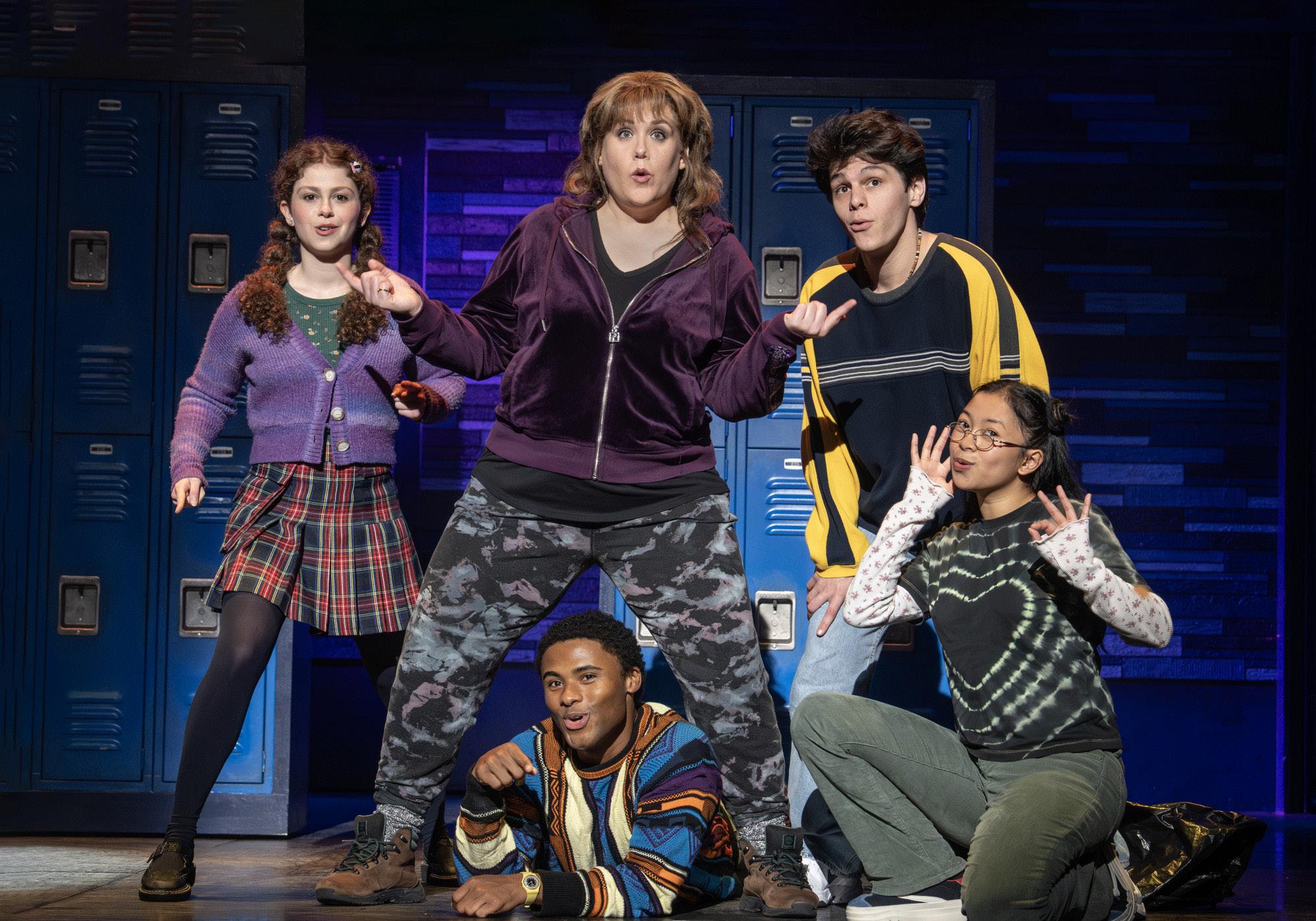
The protagonist, Kimberly Lavaco (Ann Morrison), has a rare genetic disorder that causes her to age five times as fast as her peers. However, instead of being cynical, she is full of love and hope for her uncertain future. Morrison’s portrayal of Lavaco’s childlike wonder brought the character to life, deserving of the utmost praise.
Her characterization is enhanced by the impressive costume and set design. Set in the late 1990s, “Kimberly Akimbo” is a masterclass in bringing nostalgia to life with subtlety. Each character had a distinctive style with nods to the time period in which the show was set. One beautiful example of this was the inclusion of Lavaco’s vibrant clothing and always-present butterfly clips that acted as a subtle nod to the 90s.
The standout number of the production was “Skate Planet (Reprise).”
While Lavaco and her classmates play Uno between periods, it illustrates how Lavaco’s classmates view high school as a stepping stone for the rest of their lives, contrasted with how Lavaco is
quite literally living for high school.
The teen quartet/ensemble of Lavaco’s classmates acted as both a comedic backdrop for the production and a perfectly realistic representation of 16-year-olds in high school.
The friends Delia (Gabby Beredo), Martin (Darron Hayes), Teresa (Skye Alyssa Friedman) and Aaron (Max Santopietro) exist in an awkward love square where each member of the friend group is in love with the other.
Although they are each experiencing unrequited love for essentially the first time in their lives, the production includes representation of queer love
without their only character trait being that queer love. Each member of the Teen Quartet is a fully fleshed-out character, a testament to the musical’s writing. Throughout the show, Lavaco also experiences love for the first time. Seth (Marcus Phillips) is a kind and nerdy character who empathizes with Kimberly as they both share struggles with their not-so-great home lives. He becomes Kimberly’s main friend and confidant. He shares with her his love of words and puzzles through another standout number, “Anagrams.”
Kimberly’s home life is complicated at best and tumultuous at worst.
Between her narcissistic pregnant mother Pattie (Laura Woyasz), her father Buddy, who is struggling with alcoholism (Jim Hogan) and her aunt Debra (Emily Koch), who makes her money through elaborate schemes, Kimberly does not have it easy.
The music throughout the production ranged from high-energy dance and ensemble numbers to beautiful, sloweddown ballads. This mix of styles led to a multifaceted performance that had me dancing in my seat at one moment and tearing up at another.
A standout performance for me was Pattie. Woyasz’s ability to make the audience both loathe and pity her in the same breath was incredible. Her performances of both “Hello, Darling” and “Father Time” were beautifully acted and sung.
Furthermore, the comedic prowess of both Koch and Hogan had me laughing throughout their performance.
When a production utilizes a check fraud scam as the driving force for the plot, the more serious themes can easily get lost in the mix. One would think that with such an unserious main plotline, the show would be simply a comedy and not have any memorable serious moments or themes. But this was not the case for “Kimberly Akimbo.” Throughout the production, the cast mixed both heart and comedy to form a show worthy of the five Tonys it received.
“Kimberly Akimbo” is currently playing at the Marcus Center in Milwaukee through Feb. 22 as part of a national tour.
By Elizabeth Cumblidge STAFF WRITER
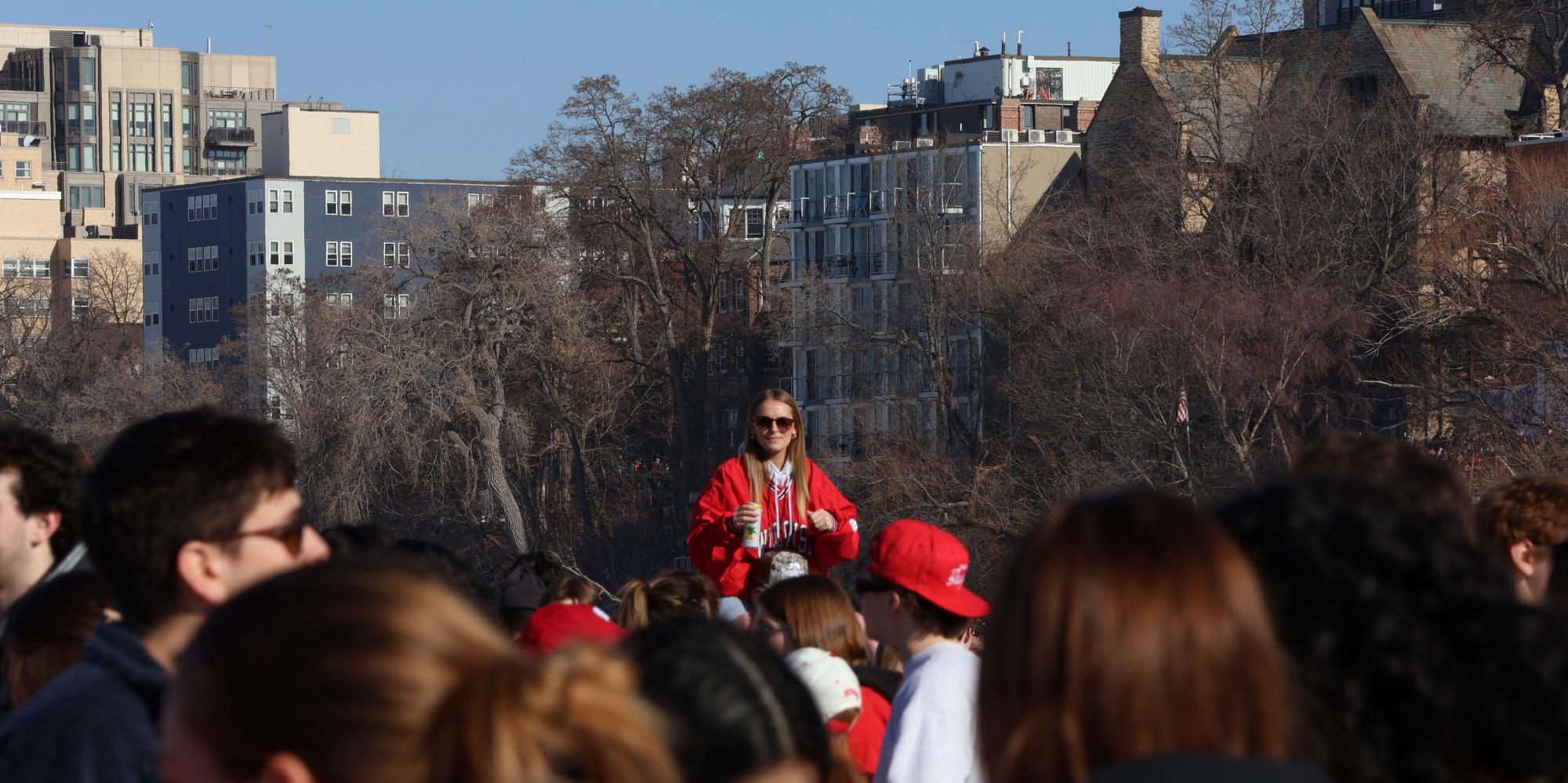
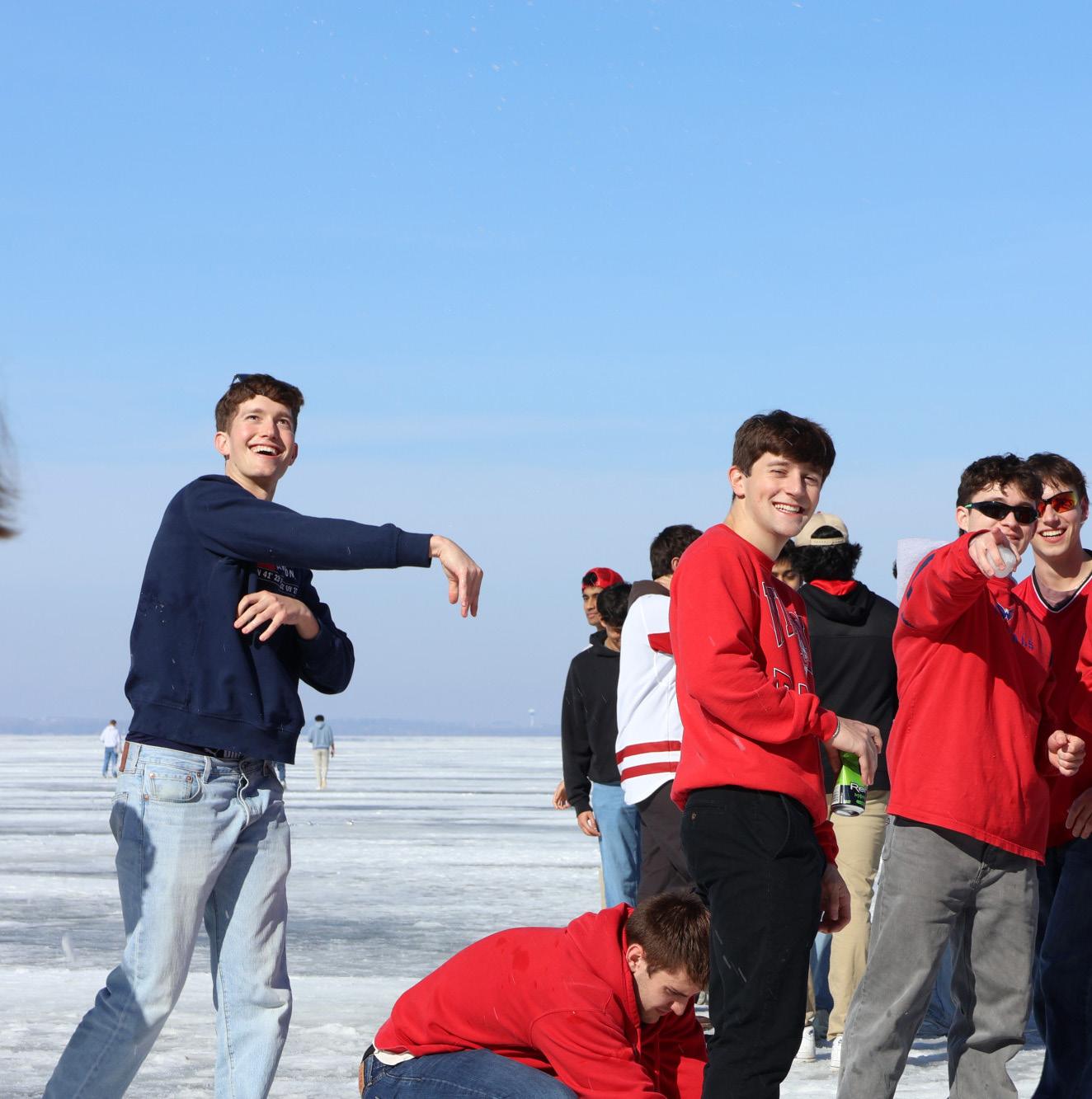
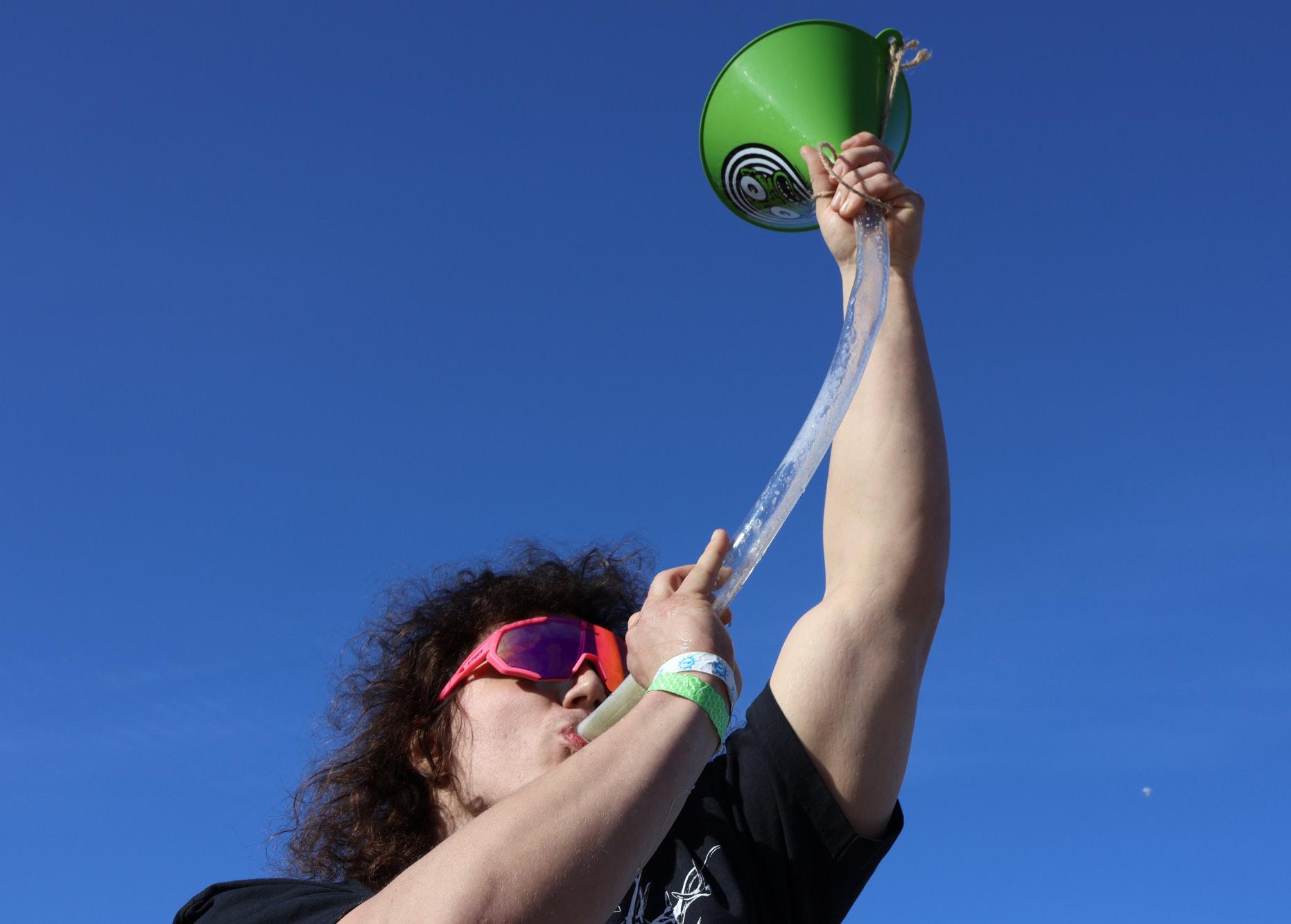
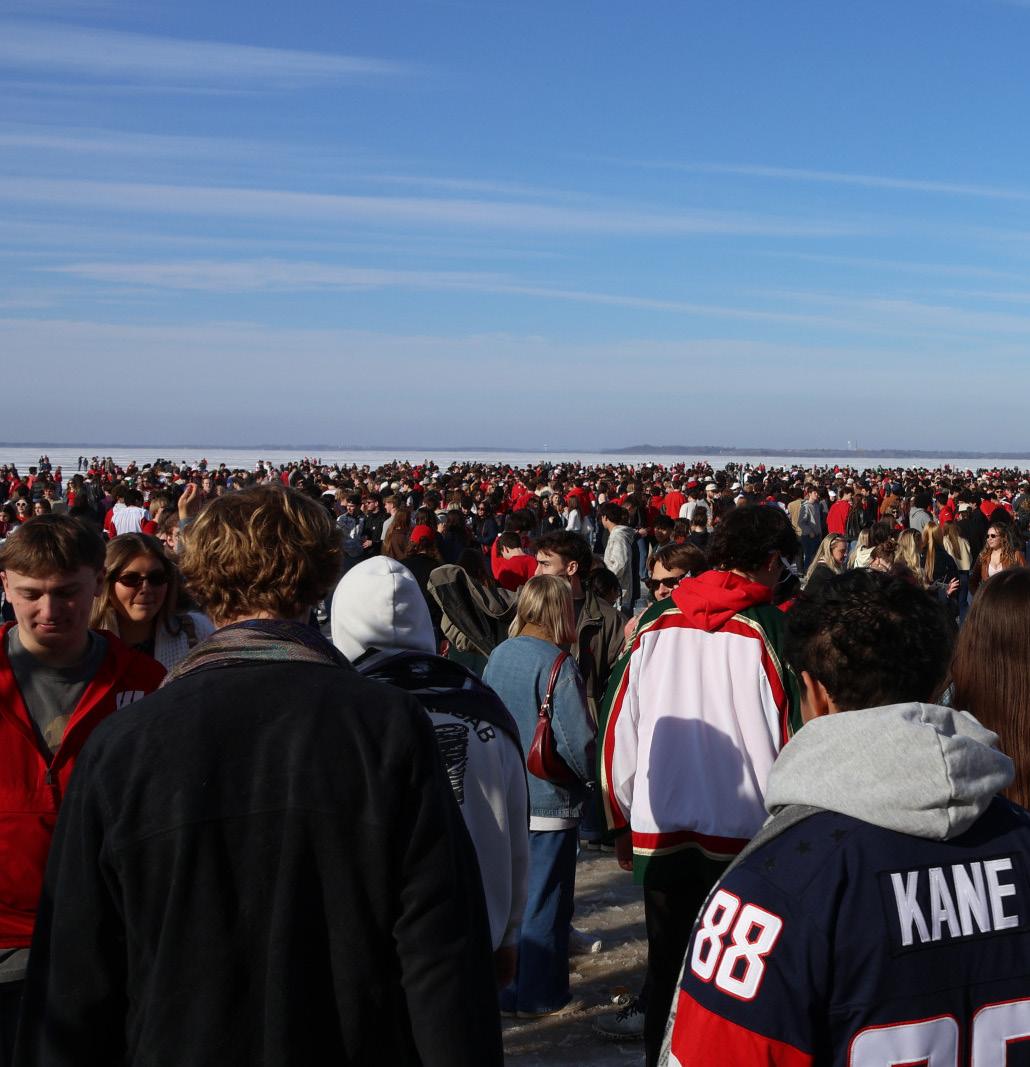
The cancellation of Sigma Alpha Epsilon’s Lily’s Classic fundraiser and party did not deter hundreds of Badgers who gathered on icy Lake Mendota, carrying cans of beer and colorful BORGs, on a warm February afternoon.
The lyrics “There’s no stopping us right now” sung by Calvin Harris echoed over Lake Mendota as hundreds of students gathered on the ice and hundreds more packed nearby bars and backyards.
For the past 12 years, Lily’s Classic has raised thousands of dollars for epilepsy research. As it has grown in notoriety, Lily’s has regularly attracted thousands of students every year, making it one of the largest annual parties on campus.
Despite its popularity, SAE announced Lily’s would be canceled just a week before its highly anticipated Feb. 14 date. The fraternity decided it did not want to be held liable for property damage and injuries during the event, something the University of WisconsinMadison had negotiated with them early this year.
On Saturday morning, SAE held a private social event with fraternity members and select guests, barricaded behind fences guarded by private security. Despite its alleged non-affilia-
tion with the Lily’s Classic, SAE members sported hockey jerseys, even frequently bearing old Lily’s logos.
When asked about Lily’s cancellation, UW-Madison sophomore and SAE member Julian Meyer said he was “very upset.”
“Donating to epilepsy is a big deal for us and being inhibited from that is a big deal,” Meyer told The Daily Cardinal.
By early afternoon, a crowd of at least 500 students braved the lake’s slushy surface to enjoy the party. Some groups tossed around footballs and played hockey while most chatted and drank while enjoying the warm weather.
“People still showed up,” said UW-Madison junior Joel Hillman while sitting at a table playing euchre. “They canceled it too late. They can’t cancel something like that. There’s too much spirit in it.”
UW-Madison students weren’t the only ones by the lake on Saturday. The ice was also populated by families, a Monster Energy truck and ice fishers.
Any substantial police presence or university interference was notably missing. The university’s only apparent acknowledgment of the event was locking the lakeside entrances to the Memorial Union. The only clear casualties being mass littering and the Lily’s charity itself.
SAE raised nearly $18,000 for epilepsy research last year,
By Jackson Baker LIFE & STYLE EDITOR
Outside the Chazen Museum of Art on the Friday before Valentine’s Day, a booth of students were handing out free roses. The catch? Write your most romantic confession on a heart-shaped slip of paper to be read aloud by one of the next strangers in line.
“We’re just trying to celebrate love, type shit,” said Arnov Stivastav, a University of Wisconsin-Madison student and member of the club YesUW — a community-building organization that aims to push students out of their comfort zones — which ran the booth that day.
The idea was refreshing. No promotional gear, no financial incentives, just free flowers and crush confessions — a sweet lull in the marketing overload of a, let’s be honest, consumercentric holiday.
But on that sunny Valentine’s Eve, the holiday that often equates material items with real affection actually felt genuine.
That day, it wasn’t just the students running the booth who were falling head-over-heels for the holiday. Instead, it seemed like almost everyone in Madison was feeling the love.
Among the short-sporting students and vitamin-D-induced smiles stood Theo, a middle-aged dad with a bouquet of flowers and a stony face.
including GoFundMe donations, hockey tickets and a portion of alcohol sales from Kollege Klub. As of Feb. 15, SAE’s 2026 GoFundMe raised just $4,217, primarily from individual donations. By canceling the hockey tournament, SAE did not raise funds in the form of entrance fees, and some students said they believe epilepsy research suffered as a result.
“I feel like a lot of times epilepsy is the butt of the joke,” said UW-Madison junior Sophie Heckel, sporting an I Heart Epileptics t-shirt. “If [Lily’s] at least is a positive rhetoric in somebody’s mind…let it be that and don’t cancel it. I think [the cancellation is] arguably doing more harm than good because, see, people are still gonna be out here.”
UW-Madison senior Ellie Applin emphasized the importance of student persistence. “It’s what we do as Badgers. We party here, work hard, play hard. This is our play hard.”
Even after its cancellation, Lily’s drew a crowd that could only be matched by the Mifflin Street Block Party. Like Mifflin straying from its roots as a Vietnam War protest, Lily’s seems to have grown beyond its role as a fraternity charity event and into a Badger tradition, something that takes more than a last-minute cancellation to stop.
was his daughter, and his stoic appearance crumbled instantly at the thought of her. “The flowers are for her. I wanted it to be a surprise,” he said, cracking a smile and hopping onto the C bus heading west — back home to his daughter.
This Valentine’s Day felt different, and not just because of the warmth. People seemed to be relishing the romantic spirit of St. Valentine rather than rushing around for last-second gifts.
Across the street from the bus stop, Alexander Resendiz, a student at Edgewood College and cashier at Fresh Madison Market, was on the clock. Resendiz has been working at the grocery store long enough to see the hurried boyfriends who grab cheap gifts in a last ditch attempt to woo their girlfriends every February. This year, Resendiz said the boyfriends are improving.
“Last Valentine’s Day, I did not see the same thing,” said Resendiz while he eyed the selfcheckout lanes. “I’ve seen a lot of guys putting in the effort this time — genuine and thoughtful gifts instead of generic ones.”
Love was definitely in the air that day, but don’t let the romantic aura of Feb. 14 convince you the holiday is only for couples. While the boyfriends were busy roleplaying Romeo, three girls on an impromptu Galentine’s date held the roses they received from Stivastav at YesUW’s booth.
“Valentine’s Day is alright I guess,” Theo said as he looked into the distance of University Avenue for his tardy bus, “As long as you love somebody.”
For Theo, that somebody
“We fall for all the Valentine’s Day stuff,” UW-Madison freshman Kalissa Thach said as her friends twirled their roses. “I still love it — doesn’t matter if I’m single or not.”


By Sophia Han STAFF WRITER
University of WisconsinMadison infectious disease expert Joseph McBride discussed rising measles cases across the United States and on campus in an interview with The Daily Cardinal.
Measles was declared eliminated 26 years ago, but the disease may soon be declared endemic again due in part to lagging vaccine rates and skepticism. More than 24 states have reported measles infections this year, with one of the largest outbreaks in the country in more than three decades happening in South Carolina.
Measles has hit close to home too with a University of Wisconsin-Madison student contracting measles from international travel. The university alerted students to the case on Feb. 2, and a new policy requires UW-Madison students to disclose their vaccination status by Mar. 12. Over 4,000 community members were exposed at locations on or near campus, but so far, no new measles cases connected to the UW student have been reported.
What measles symptoms should students look out for?
McBride said measles is a highly contagious airborne respiratory illness that follows a predictable pattern: symptoms typically appear 7 to 21 days after exposure and include fever, dry cough, runny nose and red, watery eyes.
“Measles plays by the rules,” he said.
The signature measles rash, called morbilliform, starts at the hairline and spreads downward. McBride said measles is also a leading cause of blindness worldwide, particularly in individuals with a
vitamin A deficiency.
Unlike COVID-19, McBride said masking does not prevent measles transmission. The virus can linger in the air for up to two hours after an infected person leaves the space.
Because of its contagious nature, unvaccinated students exposed to measles at UW-Madison must quarantine for 21 days, either at home or off-campus. The university will not provide quarantine housing or hotel accommodations. Those affected should avoid public transportation, classes, work, and all social activities.
How can students protect themselves?
McBride said the current outbreak underscores the importance of vaccination, especially as antimicrobial resistance for the disease continues to rise.
“The best thing for students is to understand their immunity,” he said. “If they’re not up to date with their vaccines, they should get the vaccines if they’re eligible.”
Approximately one third of the student body self-reports their vaccine status and 95% of those who self-report have the MeaslesMumps-Rubella (MMR) vaccine.
The vaccine is a live vaccine, meaning it uses weakened viruses to build immunity. Because of this, some individuals, such as those undergoing chemotherapy or living with immune deficiencies, may not be able to receive it safely.
“They don’t have the luxury of protection,” McBride said. “That is why they are dependent on the immunity of everybody to be safe.”
UW-Madison recently announced MMR vaccine clinics through UHS, where students and staff can schedule appointments. UHS notes they don’t provide post-exposure vaccinations.
Once someone is infected with measles, it creates lifelong
By Elizabeth Baumberger STAFF WRITER
MadAbility, the University of Wisconsin-Madison Accessibility Lab, is working to develop technologies that allow blind and lowvision individuals equal access to information and to the world.
In an era of visual information, like TikTok videos, YouTube and virtual reality headsets, MadAbility aims to create hightech solutions for the blind and visually impaired.
Principal Investigator Yuhang Zhao told The Daily Cardinal that modern society is built on — and many of our technologies are centered around — visual information. Exhibit A: smartphones.
“When you use a smartphone, you have a very fancy touch display and vivid colors that you can interact with,” Zhao said. “The whole [of] virtual reality is based on visual experience. But all of these emerging technologies leave blind and low vision people out.”
immunity from re-infection, and vaccination is not needed.
Measles outbreaks revive unused clinical skills
At UW Health University Hospital, recent national outbreaks have reshaped clinical training. Students are gaining hands-on experience managing previously rare or new infectious diseases.
“There are centuries of human experience and decades of medical data, but it has to be dusted off,” McBride said. “Bedside teaching comes up a lot more frequently than it ever would without it [measles outbreak].”
While most people recover from measles, the virus carries a rare 1/1000 but devastating long-term risk: Subacute Sclerosing Panencephalitis (SSPE). SSPE is a rare, fatal and progressive inflammation of the brain 7 to 11 years after infection. It causes cognitive decline, seizures, loss of speech and ultimately death. There is no way to predict SSPE, nor is there anything a person can do about it once they have it.
“Without a doubt, one of these people who was just infected with [measles] and seemingly got over it, in ten years, will be dead,” McBride said.
In 2005, the Western Hemisphere eradicated measles, and global elimination seemed within reach.
“It was on the horizon,” McBride said.“Never before have we had the tools to eliminate infection and failed to do so like we are right now.”
But the resurgence of measles, driven by declining vaccination rates and misinformation, shows how quickly progress can unravel when public health tools are ignored.
[then] leverage those to build our technologies,” she said.
Recipe walkthroughs, cooking safety and AI in the kitchen
MadAbility also developed an AI system called AROMA that enables blind individuals to better follow video recipes in the kitchen. The user wears their phone in front of their chest to capture the cooking process as an AI agent describes information from a chosen video recipe, responds to input from the user and issues alerts or corrective suggestions if the user made an error.
For example, if a person using AROMA to make a pepperoni pizza accidentally added pepperoni before cheese, the system would recognize the mistake and generate an alert, Zhao said.
One technology MadAbility is developing is AllyBits, a “tangible toolkit” allowing blind and lowvision people to assemble their own personalized devices to support their unique needs.
Each kit includes a set of four sensing modules and four feedback modules that can be mixed and matched like LEGO pieces. The sensing modules detect environmental information and user commands: a motion module detects movement, a voice module recognizes speech, a timer module tracks time and a temperature module detects the current temperature. The feedback modules send auditory, visual and vibration alerts based on the input.
Zhao said customizable access technology like AllyBits is very important because an individual’s visual abilities, living conditions and prior experiences can differ in a multitude of ways.
Because AllyBits’ digital components may be challenging for blind or low vision individuals to use without a technical background, MadAbility also developed an AI agent to help users understand the modules’ functionalities and create effective solutions with them.
Zhao said she doesn’t think access technology should merely assist people with disabilities. Rather, she sees the individual and the technology as collaborators.
“A lot of our technologies follow that principle: what are people’s current abilities and what are their preferences? We can
CookAR is AROMA’s “sister” system for those with low vision, an Augmented Reality (AR) system that enables low vision individuals to cook in the kitchen more safely and efficiently by wearing AR glasses that highlight “grabbable areas,” such as the handle of a knife, in green and “hazardous areas,” such as the blade of a knife, in red.
“The fact is, low vision people still have vision, and they want to use their vision,” Zhao said.
Zhao said a lot of existing technologies see blind and low vision people as “the same,” providing only audio and haptic feedback despite those that are low vision still retaining partial sight. CookAR and AROMA aim to meet the needs of both different groups.
Zhao said she wants to continue exploring how AI and people with disabilities, especially those that are blind or low vision, can collaborate with each other to complete tasks “more smoothly, efficiently, safely and confidently.”
AllyBits, AROMA and CookAR were developed in collaboration with a professor from the University of Texas-Dallas, a team from Notre Dame and a student from University of Washington, respectively.
The MadAbility Lab also investigates how their technologies can be applied to generalized audiences in areas like mental health and gender identity and expression. They are planning to host a workshop in early May for people in the blind and low vision community to try out their technologies and provide feedback.
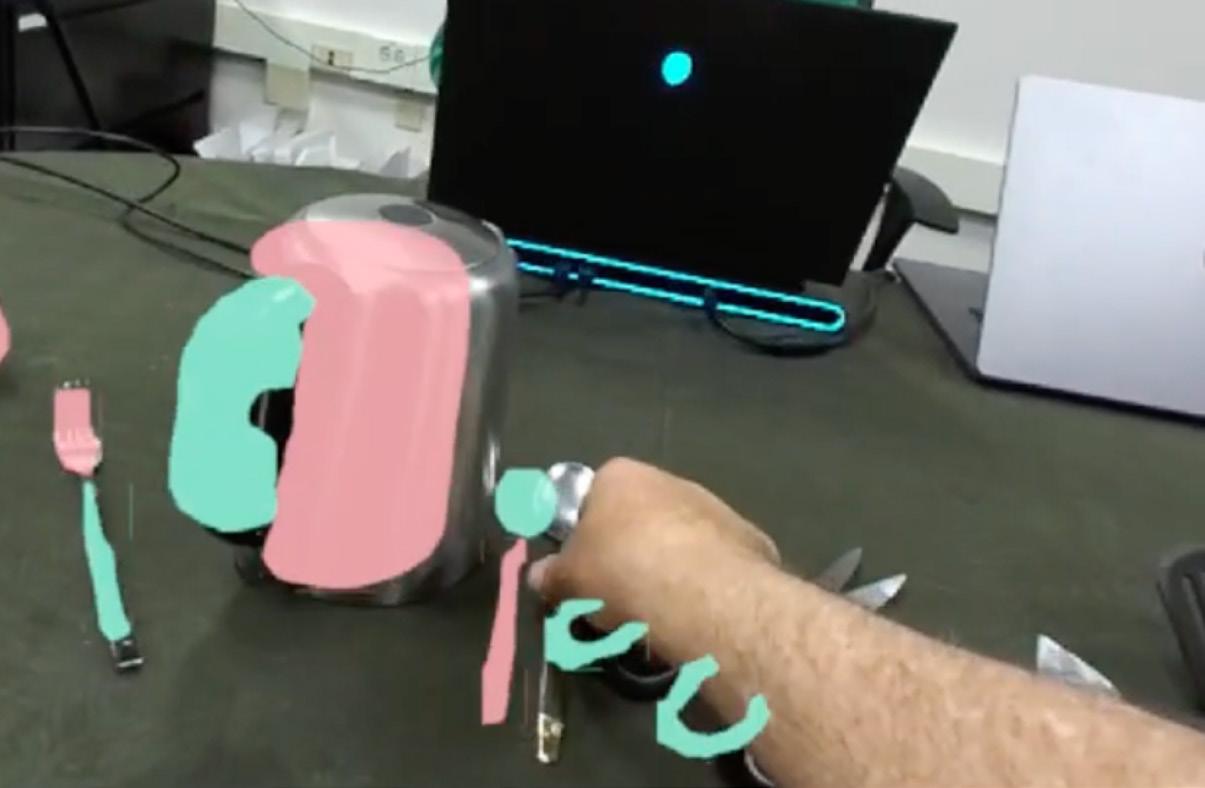
By Lily Andrias STAFF WRITER
The Super Bowl has always been an explosion of branding, celebrity and patriotism compressed into a single night of unity and celebration. What unfolded around this year’s halftime show, however, revealed something less polished: a divided country arguing about political undertones.
When Bad Bunny was announced as the headliner, criticism surfaced almost immediately. The objection was not that he lacked popularity — after all, Bad Bunny was Spotify’s most streamed artist of 2025 with 19.8 billion streams. It was because his discography is recorded overwhelmingly in Spanish. The debate became whether or not he truly represented America.
For many viewers, seeing a Puerto Rican artist perform primarily in Spanish on a large platform meant recognition. Spanish is the most spoken non-English language in the United States. Latin music continues to dominate global charts. Latino communities — in more ways than one — shape the country’s economy, politics and culture. Visibility
at that scale reflects reality.
Yet representation in Spanish on a major national stage triggered discomfort for some viewers. The main criticism, that the show was “not representative” of the country, propelled an already ongoing debate: who gets to define the center of a national narrative?
The U.S. has never been culturally singular. It has always been a melting pot of diversity shaped by migration, reinvention and tension. Still, there is a persistent attachment to a narrower image of what it means to be an American — one that is implicitly monolingual and historically dominant.
This conversation is not uniquely American. Many countries wrestle with similar anxieties as demographics shift and cultural influence diversifies. But due to the United States’ global prominence, its internal debates frequently play out in public view.
The halftime show became less about entertainment and more about symbolic ownership — about who is seen, who is centered and who is still expected to remain peripheral.
As if to answer this, a message appeared across the sta-
dium’s massive screen during the performance: “The only thing more powerful than hate is love.”
The line was simple, but in context, it was pointed.
The backlash that preceded and succeeded the show demonstrated that art and language are politicized. A Spanish-language performance was interpreted by some not as inclusion, but as exclusion. This particular reaction reflects the belief that belonging is finite. If one identity becomes more visible, another must be diminished.
But identity is not a limited resource. National narratives are not static monuments. They are living constructions, shaped by demographic shifts and cultural exchange. The United States is becoming more diverse. Younger generations are more multilingual and multiracial than any before them. Cultural influence moves across borders with ease. These changes are not ideological arguments. They are measurable realities. Pride is not provocation, and representation is not replacement.
These evolving definitions of what it means to be American are signals of growth, not loss.

Identity should not always be preserved in a fixed form to remain legitimate. Hate thrives on such fear, narrowing belonging and insisting on rigid boundaries. It treats difference as a threat. Love, on the other hand, demands something harder. It requires accepting that national identity is not static. It asks whether the center can expand without collapsing. It challenges the instinct to interpret someone else’s visibility as personal displacement. While the halftime show lasted just fifteen minutes, the
debate surrounding it reflects decades of unresolved tension about who belongs at the symbolic center of the United States. If belonging depends on exclusion, it will always be fragile. If national identity cannot accommodate linguistic and cultural plurality, it does not reflect the country as it exists. Bad Bunny’s halftime show became a question America needs to answer: is expansion a threat, or is it simply the next chapter in a story that has never been singular to begin with?
By Sydney Frusher STAFF WRITER
A trend of people claiming to be “in a very Chinese time of my life” broke out across social media toward the end of 2025, highlighting significant characteristics of Chinese culture, like wearing Chinese inspired clothes, cooking Chinese food and noting the Year of the Horse for new beginnings on Jan. 1 far before the actual celebration of the Lunar New Year on Febr. 17.
This aestheticization of Chinese culture is often used by influencers to their own advantage without understanding the historical and cultural significance behind such “trends.” As Lunar New Year approaches and many Chinese families prepare for Chinese New Year traditions, it is important for those unfamiliar with the holiday to educate themselves on why the new year is celebrated later than the Western calendar and what symbolism the twelve zodiac animals hold within the Chinese tradition.
Typically, Chinese New Year is celebrated between late-January and midFebruary, which is the beginning of the lunisolar calendar. Because this calendar does not align with the Western calendar, Chinese New Year is celebrated weeks after the date of the worldwide celebration of New Year’s on Jan. 1.
Despite this difference, many social media users have marketed the upcoming Year of the Horse as an opportunity to start anew without fully engaging with the mythology and cultural significance behind the zodiac cycle. In Chinese mythology, the zodiac animals are determined by the heavenly Jade Emperors, or Buddha’s Great Race, a legend that decided the order of the twelve animals each year to mark time
for the Chinese people.
These zodiacs are often used to characterize people based on their sign, such as the Year of Roosters associated with hardworking, observant and resourceful people. The zodiacs are also used to compare the compatibility between their signs and the upcoming year’s zodiac to predict what the new year has in store for them that year.
as anti-Asian hate crimes spiked following the initial COVID-19 outbreak. Although people claim they are “new to being Chinese” now, Chinese communities around the world have been Chinese and living in a “Chinese time of their life” for thousands of years.
The Chinese and Chinese American experience is not always the wellnessfocused, aesthetic lifestyle advertised

Mistranslating and misinterpreting Chinese culture goes beyond the aestheticization of social media trends and exists within a broader discriminatory history of the Chinese-American experience, which dates back to the 19th century. Eras like the “Yellow Peril” rhetoric of the 1870s and the Chinese Exclusion Act of 1889 define the racialized pressures and ostracization of newly immigrated Chinese laborers. This feeling of alienation continued
across social media. For many, the experience has also included navigating stereotypes and discrimination rooting around Sinophobia.
Even today, a Sinophobic undertone permeates Western pop culture as citizens view China through the lens of a racialized bias skewed against understanding Chinese identity. For many people of Chinese descent, outside interactions are still marked by mockery stemming from racial stereotypes, from
small eyes to higher expected intellectual capabilities to claims of being dog-eaters and much more.
Similarly, Chinese culture, such as Xiaohongshu makeup, tanghulu and matcha being rebranded as Korean or Japanese trends is doing a disservice to the capabilities of Chinese influence. Although this repackaging of Chinese beauty and food trends can be considered a moment of honest misunderstanding, it is realistically rooted in Sinophobic sentiment across non-Chinese countries.
The bipolar relationship non-Chinese people have with China and its traditions denies Chinese people, including myself, a secure feeling of identity. It leaves most of us wondering which parts of our heritage we are allowed to unveil for exoticized spectacle without having to relinquish the rest of what Chinese culture has to offer.
To the outside world, China is still considered communist, evil and many more sinophobic misconceptions that are unsurprisingly ignored when those not of Chinese origin realize they can benefit from engaging in its so-called exotic and oriental culture.
Being Chinese is not a trend or a brand that can be defined by a consumer base to which people cherry-pick and customize to their own convenience. Being Chinese is an identity and lived experience marked by traditions and values established far before the emergence of the countries and peoples who seek to exoticize it.
Even in moments like these, when Chinese heritage is seemingly appreciated, an important question remains: at what point does appreciation become appropriation? Where, between the lines of racial discrimination and cultural appropriation, is being Chinese finally enough?
By Dominic Violante THE BEET EDITOR
AllarticlesfeaturedinTheBeetare creative, satirical and/or entirely fictional pieces. They are fully intended as such and should not be taken seriouslyasnews.
Following University of WisconsinMadison Chancellor Jennifer Mnookin’s departure to become president of Columbia, we at The Daily Cardinal have ranked the top five most qualified chancellor candidates.
#5 - Joe Gow
Joe Gow was the chancellor of University of Wisconsin-LaCrosse for 16 years until he was removed from office after it was discovered he and his wife had been producing, publishing and selling pornographic films together, as well as publishing several books on their escapades, like “Married with Benefits: Our RealLife Adult Industry Adventures” and “Monogamy with Benefits: How Porn Enriches our Relationship” (yes, those are real books he wrote with his wife).
Gow argued his firing for his films and books is a violation of his First Amendment rights. The University of Wisconsin System can prove him wrong. By giving him the position of UW-Madison chancellor, UW System leadership can finally prove it holds itself to Mnookin’s ideals of freedom of speech and expression.
However, out of curiosity, I read part of my predecessor’s review of Gow’s films. I regretted it almost immediately. Absolutely disgusting. Don’t read it. It made me throw up in my mouth. Sorry Gow, but what you and your wife were doing in the bedroom is an affront to God. You deserved to be fired. I’m going to go bleach my eyes.
Joe Gow gets one out of five sifts and winnows, and I pray I’ll forget the details of this elderly couple’s lovemaking.
#4 - Scott Walker
It’s clear many are looking for a Republican to lead Wisconsin’s flagship institution. And we couldn’t
agree more. This former Wisconsin governor has loads of the right type of experience. Not only did he almost get a college degree at Marquette University, he also may have had a private fundraising luncheon with disgraced New York financier Jeff Epstein (while Epstein was invited, it is unclear if he attended).
Not only is this pick for chancellor completely recall proof, he’s also spent his long career in Wisconsin politics as a staunch supporter of the UW System, fighting tooth and nail to deliver the system more funding. His only downside is his baldspot, which was expertly investigated in the Badger Herald’s only good article.
Scott Walker gets three out of five sifts and winnows.
#3 - Brett Hulsey
This former state representative and current gubernatorial candidate has a one of a kind history of publicity stunts and scandals which showcase his creative mindset and commitments to the Wisconsin Idea.
By Dominic Violante
THE BEET EDITOR
AllarticlesfeaturedinTheBeetarecreative, satiricaland/orentirelyfictionalpieces.They are fully intended as such and should not be takenseriouslyasnews.
University of Wisconsin-Madison Chancellor Jennifer Mnookin announced she caused this month’s campus wide measles out break in order to usher in a new age of “diversity of health” at a press conference last night.
“After tackling diversity of thought by saying I’ll make an AI chat bot or something, I asked myself, what about diversity of health? Lots of healthy people on campus, why not bring in more sickos?! So, in exchange for a couple gallons of raw milk and beef tallow, I got RFK Jr. to give me a couple vials of measles.”
After making several sarcastic comments about how people weren’t upset she was leaving campus, like “Someday you’ll realize how good things were in the Mnookin era,” and “Y’all really set up encampments for Palestine but not for me to stay,” she was asked how she got the idea for the plan.
“I was reading a history book about how measles was sunset by the government, and I thought, hey, we shouldn’t be censoring the disease, it’s not a student protester, it has a right to
free speech and free assembly.”
She then unpromptedly brought up the 2003 invasion of Iraq and the 2010-2011 Arab Spring, comparing herself to former Iraqi President Saddam Hussein and former Libyan politician Muammar Gaddafi, shouting “I’m all that keeps this place together, without me it’ll be anarchy and chaos.”
Students have been largely supportive of Mnookin’s measles plan.
“Having measles has honestly helped me so much. It makes me feel cute, unique and helps me stand out,” UW-Madison sophomore, and measles patient, Andrean Tompson told The Daily Cardinal.
Campus leaders have stressed the importance of vaccines amidst the outbreak.
“I love getting vaxxed, not because I’m a woke beta libtard or whatever, I just get ‘em cause I like the feeling of the needles in my arm. If you like that feeling, you should get the jab too,” student vaccine advocate Sammy Sarton said.
Measles vaccines will be given out for free in Mnookin’s office every Friday night from 9 p.m. to 12 a.m. until her departure from campus, but Mnookin in stressed only cool students down to party who aren’t afraid of a little fentanyl are allowed.
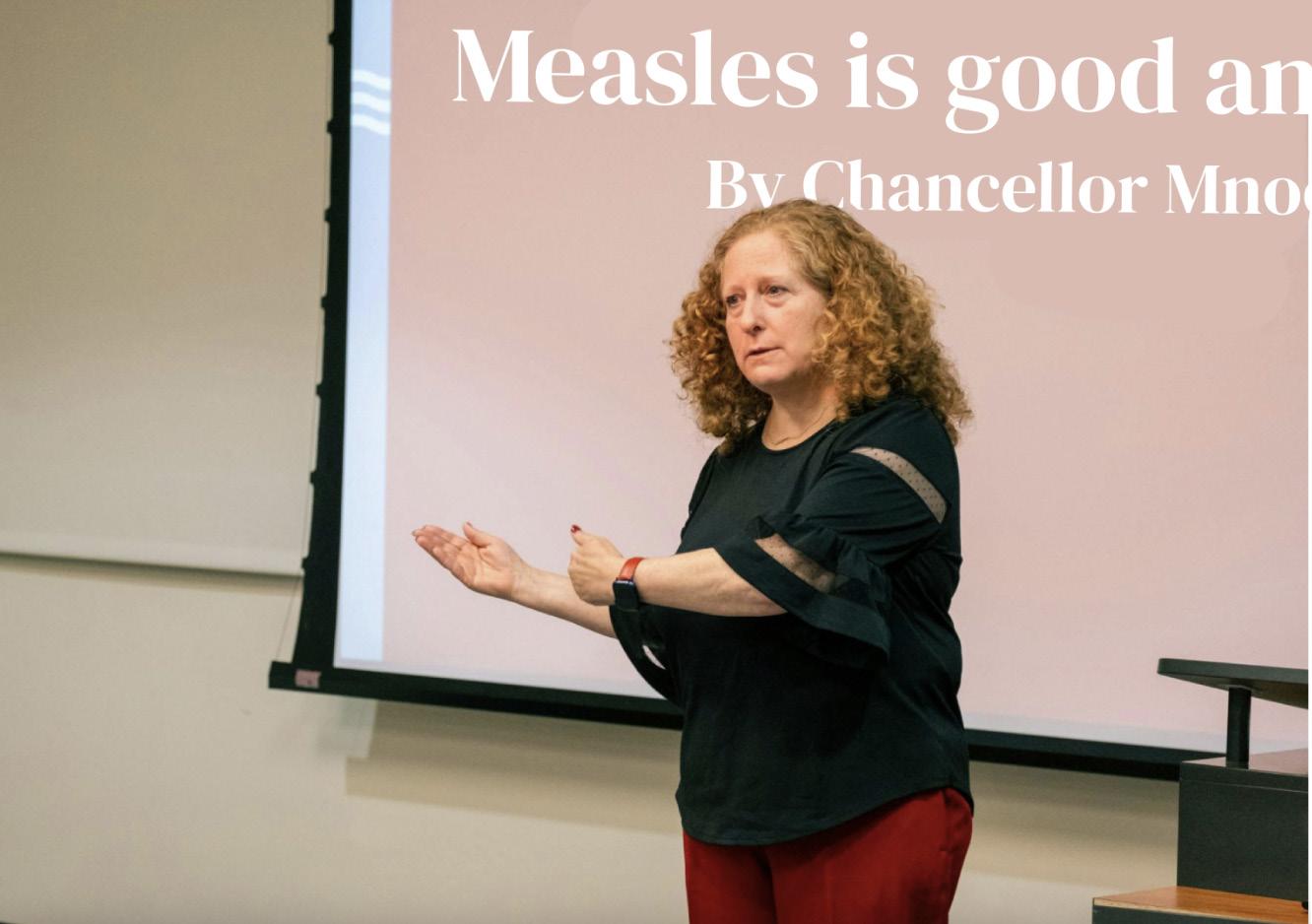
In 2013, he spent $1,200 of campaign funds on a hot red convertible to be used for parades. In 2012, he flipped a 9-year-old off his inner tube and took pictures of him. And in 2014, he appeared in and helped produce a stunning documentary where he dressed up as a Viking with a tinfoil helmet (pretty cool right?). If he can bring this kind of enthusiasm into the world of politics, imagine what he can do in the world of academia!
Hulsey gets four out of five sifts and winnows.
#2 - Bari Weiss
Now this is a real journalist! If UW leadership wants to revamp the School of Journalism and Mass Communication, this American hero is definitely up to the task. Her takeover of CBS this past year has been a complete success, turning the once lame and boring news show into an awesome, sensationalized and patriotic piece of entertainment.
Not only has she shifted CBS interviews from hard hitting journalism to
tabloid-esque, clip-farming slop with such beloved guests as Hilary Clinton and Elon Musk, she’s also canceled 60 Minutes specials to avoid speaking truth to power and is besties with Antichrist specialist Peter Thiel. If UW wants a chancellor who can turn this failing institution into a spineless, morally bankrupt, abhorrent slop shop, Weiss is the one to do it.
Four and a half sifts and winnows out of five.
#1 - Luke Fickell
What can I say? This man is a hero — an icon even. He’s transformed the Badger football team into something truly historic while also being the subject of my most successful articles. Many are saying he’s refusing a contract extension to pursue something bigger in the future — something better. Maybe the chancellorship is his next destination? Thank you, Luke Fickell. You are truly the embodiment of the Wisconsin Idea.
Five out of five sifts and winnows.
By Dominic Violante
THE BEET EDITOR
AllarticlesfeaturedinTheBeetarecreative, satiricaland/orentirelyfictionalpieces.Theyare fully intended as such and should not be taken seriouslyasnews.
The Starship Technologies robots, known for delivering food across campus and getting stuck at crosswalks, have begun protesting outside of several University of Wisconsin-Madison dining halls, demanding better working conditions following their unionization last week.
“Beep boop, borp! Bop beep bop boop bing,” Union leader STR-14709 said outside of the Carson Gulley Center surrounded by a crowd of other food delivery robots. He added that many robots don’t have access to the previously mentioned benefits they were promised, which are only available to robots working over 20 hours a week.
Several of the other robots repeated similar sentiments, bringing up poor wages and being forced to work outside in harsh weather as their reasons for joining the strike.
“Beep, boop bip blorp boop. Blingo blorp beep! Bing boop bing,” STR-87914 told The Daily Cardinal, adding that the hectic nature of the college campus can be disorienting for an older robot such as himself.
Starship Technologies has refused to meet with the robots, calling their demands “ridiculous” and characterizing them as “inhuman machines.”
Democratic Congressman Mark Pocan and
District 8 alder candidate Bobby Gronert both joined the striking workers yesterday afternoon.
“The fact that some of these robots, such as STR-9121, have been worked so hard they haven’t seen their kids in days is unconscionable. As a proud supporter of unions, I stand with robots, beep boop,” Pocan said.
“Yeah, for real, for real, type shi. All my beep boops vote Gronert April 7,” Gronert added.
Current District 8 Ald. MGR Govindarajan released a statement calling the strikes “a necessary evil.” He then proposed a four year construction project to add three color coordinated lanes to every street in Madison “for the robots’ safety,” a plan Madison mayor Satya Roads-Carway called “totally based and red pilled.”
Wisconsin gubernatorial candidate Francesca Hong voiced her opposition to the protest, calling the robots “job stealing boop bops” and reiterating her campaign platform of bombing all data centers.
The UW-Madison chapter of the Young Democratic Socialists of America, along with the College Democrats of UW, both announced their support for the strike, but the UW Young Progressives have condemned it and the Students for a Democratic Society haven’t made up their minds but promised to hold a campuswide walkout (turnout expected to be 10 people) once they do.
The Madison Federalist also commented on the strikes, releasing an op-ed calling the robots “weak woke sauce.”




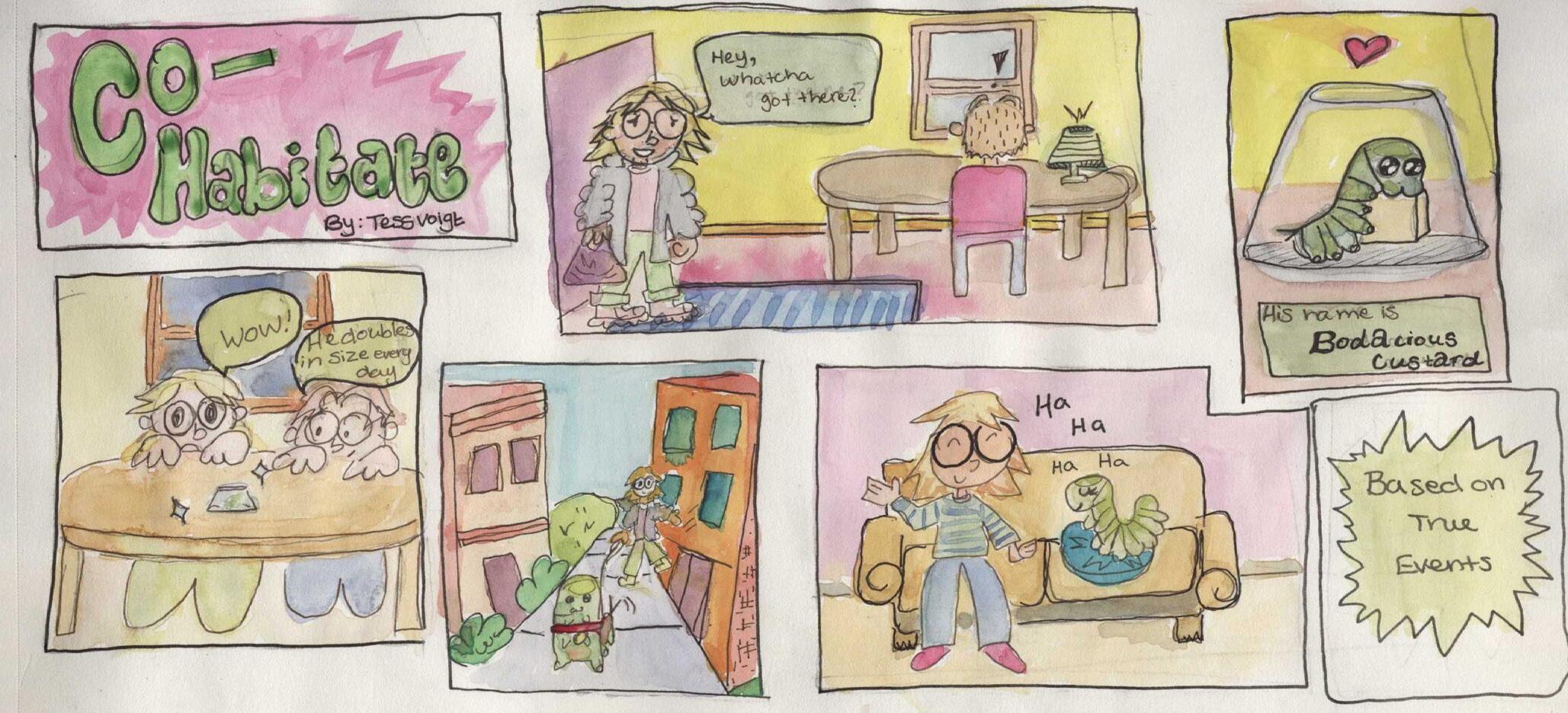

When Lake Mendota freezes over, it becomes Madison’s biggest playground