
The Madison Shakespeare Company highlights eight of Shakespeare’s most beloved love scenes.


Madison’s beloved Paul’s Bookstore is closing its doors after 70 years.
+ OPINION, PAGE 6 + ARTS, PAGE 8

The Madison Shakespeare Company highlights eight of Shakespeare’s most beloved love scenes.
Madison’s beloved Paul’s Bookstore is closing its doors after 70 years.
+ OPINION, PAGE 6 + ARTS, PAGE 8
By Gavin Escott CAMPUS NEWS EDITOR
A federal judge temporarily blocked a National Institutes of Health (NIH) decision stripping billions of dollars from universities, including $65 million from the University of Wisconsin-Madison hours after it took effect.
The lawsuit, which blocks the move in the 22 states, including Wisconsin that filed, sued President Donald Trump’s administration for making an “arbitrary and capricious” change to agreed-on funding, warning the decision would devastate research and grind “cutting edge work” to a halt.
At the center of the conflict are indirect costs, also known as Facilities and Administrative (F&A) costs, which fund everything from shared scientific equipment to lab and facility maintenance and construction.
NIH announced Friday it would cap indirect cost rates to 15% for all new and current grants — a sharp reduction from the current average rate between 27% and 28%.
Many major research institutions, including UW-Madison, whose rate ranges from 26% to 55.5%, have a higher percentage, and the university said the cap would “significantly disrupt” its ongoing and future research.
“[The] proposed cut in F&A costs would be disastrous for science and universities,” Wisconsin Institute for Discovery Director Jo Handelsman told The Daily Cardinal. “One thing that the people at [The Department of
Government Efficiency] who dictated this change don’t seem to understand is that F&A are REAL RESEARCH COSTS [sic].”
Since re-assuming office three weeks ago, Trump has slashed budgets and laid off employees, criticizing perceived “wasteful spending.” NIH said their decision was intended to ensure “as many funds as possible go towards direct scientific research costs rather than administrative overhead,” though researchers pushed back, highlighting the necessity of these expenses to their work.
“The entire scientific research enterprise is dependent on indirect costs,” Madeline Topf, a microbiology Ph.D student and co-president of the UW-Madison Teaching Assistant Association (TAA), told the Cardinal. “[It funds] the essential environment to do cutting-edge research safely — facilities with proper ventilation and autoclaves to sterilize beakers and tools, support staff salaries who make sure we properly dispose of harmful waste and fix broken equipment — [these costs] keep the lights on at UW-Madison.”
In a statement Monday morning, UW-Madison leaders underlined these indirect costs are not optional but instead an “absolutely fundamental part of innovative science.”
NIH funding is UW-Madison’s largest source of federal support, and a reduction in UW-Madison’s indirect cost rate would eliminate $65 million in funding for 2025,
with a comparable amount for each following year, according to the lawsuit.
UW-Madison Chancellor Jennifer Mnookin told the Board of Regents on Friday the university spends $18.8 million in federal research expenditures weekly.
UW-Madison is the United States’ sixth largest spender on research — spending $1.7 billion in 2023 — and funds a vast umbrella of projects and research, which Mnookin underlined is central to the university’s purpose of “innovating for the public good.”
In the release, UW-Madison touted past innovations funded by NIH grants and pointed to current work being done, such as cell therapies to treat cancer and heart attacks and a NIH-funded project seeking to develop treatments and a cure for Alzheimers.
The loss of NIH funds would “immediately impact” the university’s ability to conduct this research, UW-Madison said, adding that the NIH cap would imperil its ability to train the next generation of scientists and healthcare professionals and could delay or prevent the discovery of life saving treatments and cures.
“NIH’s proposed change would pose tremendous harm to our educational institutions and, even more critically, to the public who benefit from our research” UW-Madison said, noting they provided information to the lawsuit.
NIH Funding is irreplaceable, leaders say
The lawsuit notes indirect cost rates — which vary between universities — are carefully negotiated with the federal government based on each institution’s unique needs, and the NIH lacks the authority to unilaterally deviate from negotiated rates.
In several appropriations bills, including one from 2024, Congress specifically prohibited NIH from changing how indirect costs are determined. Trump had previously attempted to reduce the indirect cost rate for research institutions to a categorical 10% in 2017.
Handelsman said the cap is “illegal,” though she said Congress could change the rules on indirect cost rates in the next budget.
Indirect costs are currently not taken out of grants, which is forbidden by federal law. These costs — building maintenance, security, and electricity — are typically paid for with the indirect cost rate, which is in addition to the grants.
“Universities don’t have the resources to pay these costs, so they will have to start refusing federal funding for research if the 15% cap on F&A goes into effect,” Handelsman said. She said no other source exists to fill in the costs.
UW-Madison did not respond to a request for comment on how they planned to respond if the cap is implemented.
By Ella Gorodetzky SENIOR STAFF WRITER
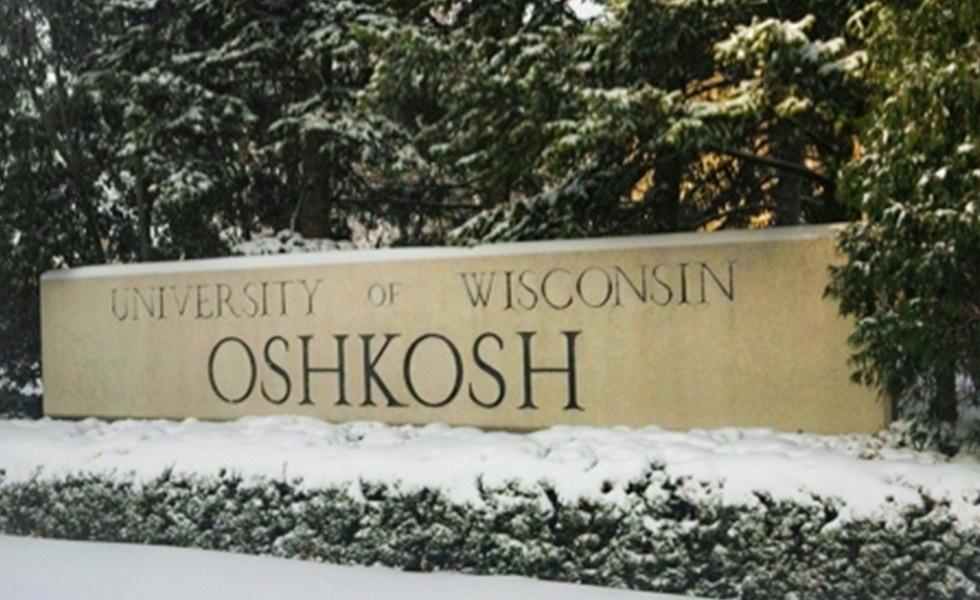
The University of WisconsinOshkosh Campus Center for Equity and Diversity building is on the market to be sold as of late Jan. following budget issues at UW-Oshkosh and in the UW System, as well as Assembly Speaker Robin Vos, R-Rochester, cracking down on diversity, equity and inclusion (DEI).
The Center for Student Success and Belonging staff are set to move to the Reeve Memorial Union, which is closer to central campus and would bring more students in based on location, according to UW-Oshkosh Chief of Staff Alex Hummel.
Originally constructed in 1968 as the Newman Center by the Catholic Diocese of Green Bay, the UW-Oshkosh Foundation purchased the building in 2004, and the university purchased it two years later. Most recently, the building housed the Campus Center for Equity and Diversity.
The move accompanies UW-Oshkosh’s recent financial restructuring.
“There’s been a pretty significant budget urgency for the last few years, so we have been downsizing our footprint and trying to focus on more properties closer to the river, kind of the central area of campus,”
UW-Oshkosh public administration professor Michael Ford told The Daily Cardinal.
The rebrand of the program also reflects the 2023 Wisconsin Legislature’s decision to restructure DEI in the UW System, which encouraged universities to cut back on DEI positions. However, according to Ford, the Center for Student Success and Belonging is more than just a rebranding.
The UW System Board of Regents also made a deal with the Legislature in which UW-Madison agreed to restructure and freeze hiring on DEI positions in exchange for money for employee pay raises and a new engineering building in December 2023.
The UW System has seen declining enrollment over the past few years, and, in combination with the undergraduate tuition freeze in effect since 2013, UW-Oshkosh has had to make strategic financial decisions. This has coincided with a rise in admissions selectivity, which can often crowd out lowincome students without access to resources that make them appealing to admissions officers.
“I do think we’re just in a difficult transition period where we have a university infrastructure that’s built to serve a model that might have worked 20 or 30 years
ago but doesn’t seem to be the direction we’re going,” Ford added.
The Board of Regents is focusing new efforts with the awareness that the UW System is a major proponent of Wisconsin’s economy. They created several new majors at multiple universities, including an AI major at UW-Eau Claire and a dual-university program between UW-Lacrosse and UW-Platteville which will allow students to receive degrees in physics and engineering.
These decisions are in effort to respond to Wisconsin’s workforce needs and to give UW System students a competitive advantage.
Several regents referenced the UW System’s “current [financial] situation” at a meeting Feb. 6 in regard to making sure the Education Committee is working to limit costs in order to preserve the “financial viability” of UW System.
The university’s financial reorganization also allowed space for the Center for Student Success and Belonging to move into its new location in the Union, according to Byron Adams, executive director of the Center for Student Success and Belonging and university diversity officer.
“The space inside the Student Union opened up based on some
reorganization that we’ve done more broadly across the university, and we saw that as an opportunity to literally and figuratively centralize these services,” Adams said.
The old building, located at 717 West Irving Ave., is far from the university’s campus center. The move to the Union was designed to bring more students into the Center for Student Success and Belonging, Hummel said.
“[The old location] was not a part of student traffic patterns, and just generally speaking, had a sense and feeling that it was a little bit off to the side,” Hummel said. “That made it harder for our teams and our staff to engage with the students that they were serving to ensure their success.”
As a part of the student union, Adams hopes the new location will bring more students in.
“It’s really location, location, location,” Adams said. “Having space in that facility specifically allows us to just do a wide variety of activities and events and outreach efforts that we weren’t able to do prior to being in the Student Union.”
The property listing states that UW-Oshkosh is focusing future investments more toward the river, at the center of campus, and the building “does not meet the needs of the university.”
Continue reading at dailycardinal.com

By Shriya Samanta STAFF WRITER
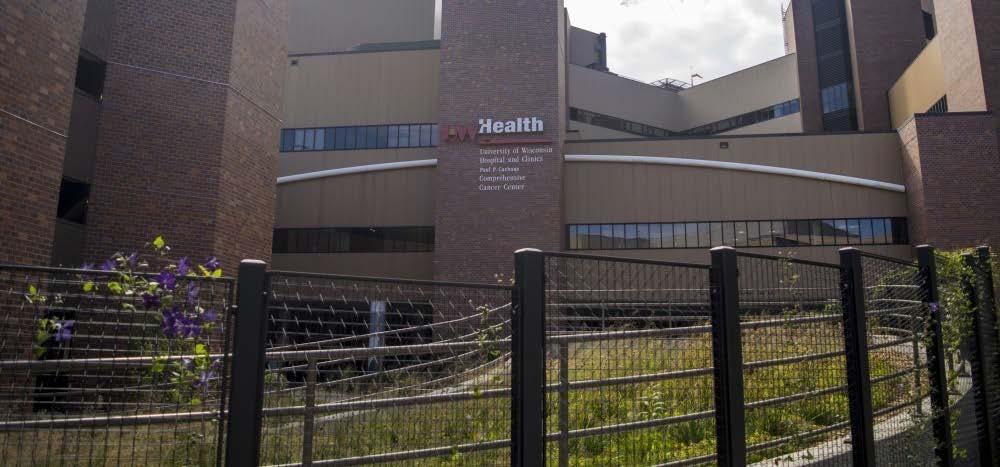
Wniversity of Wisconsin Health reported the highest rate of hospitalizations for influenza in the past three years last week, with 48 admissions as of Tuesday.
Approximately 40% of patients tested for influenza by UW Health were positive last week, up from 33% on Jan. 25, Emily Greendonner, UW Health’s press secretary, told The Daily Cardinal in an email.
“UW Health has the capacity for this increase in hospitalizations, but it is important for the community to be aware of these trends,” Dr. Daniel Shirley, UW Health’s medical director of infection prevention, said in a press release.
The Wisconsin Department of Health reported that statewide respiratory illness activity remains very high. As of Tuesday, COVID-19 activity appeared to be moderate but decreasing, influenza activity was very high and increasing and RSV activity was high and stable.
All three viruses display symptoms such as fatigue, fever
and coughing. Shirley emphasized the importance of vaccinations against the viruses and said it was not too late to get vaccinated for RSV, influenza and COVID-19. It takes a few weeks to build up immunity, but getting the vaccine now will still grant protection, Shirley said. He also noted that over-the-counter tests are available for flu and COVID-19.
This winter, University Health
Services (UHS) has seen a slightly higher rate (1.8%) of respiratory illness in its primary care clinic than this time last year, UHS Director of Medical Services Andrew O’Donnell told the Cardinal in an email. He emphasized that antibiotics do not treat the flu or other viral illnesses.
Influenza and Covid-19 will not spread as fast in a highly immunized population, according to UHS.
Visit vaccines.gov to find a nearby vaccination location.
UHS encourages those experiencing the following symptoms to call 608-265-5600 for further guidance. Fever higher than 101 degrees Fahrenheit or 38.3 degrees Celsius. Cough that is painful, getting worse or lasts longer than two weeks.
Sore throat lasting longer than three days or making it difficult to swallow.
By Kayla Northway STAFF WRITER
Visiting Assistant Professor (VAP) of Korean Studies at the University of Wisconsin-Madison Grace Jung led a talk Tuesday explaining how American product placement in Korean television is a major contributor to K-dramas’ popularity in the United States. During the event, sponsored
by UW-Madison’s Center for East Asian Studies, Jung discussed how product placements from well-known American brands, including Subway and Baskin’ Robbins are near-ubiquitous in K-drama advertisements.
“Anywhere there is an American fast food franchise, there will also be a K-drama advertisement that goes with it,” Jung
said. “It just is a really ideal kind of partnership showcasing Korea’s globalization and how down they are with American corporations.”
In recent years, K-dramas have exploded in popularity, reaching audiences around the world. Last December, the dystopian thriller series “Squid Game” debuted its second season on Netflix and broke the record for most views for a show in its premiere week with 68 million views. While “Squid Game” season two is undoubtedly a Netflix hit, brands like Puma and Vans, which are featured on the character’s iconic teal tracksuits, have also seen great success from the show’s product placements.
Viewers will likely take notice of product placements without knowing the reason behind it, Jung said.
Jung cited the K-drama “Guardian: The Lonely and Great God” as a prime example of product placement advertising, as many scenes were set in a Subway sandwich shop featuring the foot-long sandwiches. For American franchises like Subway and Baskin’ Robbins, advertising in K-dramas is highly effective, because it isn’t just seen by South Korean viewers, but people all over the world. Korean and American advertising are tied in other ways, too, Jung said. South Korea’s broadcasting history began with American television and military presence in the country, and they adapted product placement advertising seen in early American television programs like “I Love Lucy.”
Production companies within South Korea also have a stake in K-dramas’ food product placements, because their television
industry was built on food conglomerates like CJ, Lotte and Orion that started manufacturing and distributing foods alongside the entertainment industry.
Today, CJ Entertainment owns Studio Dragon, which produces shows like “Crash Landing on You” and “It’s Okay to Not Be Okay,” while Lotte Entertainment produced the show “Thirty-Nine” and Orion owns the film production company Showbox.
“The common throughline is that they all sell food, so that’s where product placement comes in. It becomes like an ecosystem that maintains their own production culture,” Jung said.
Coffee franchises are also huge corporate sponsors for K-dramas, leading to many scenes taking place in coffee houses, but it wasn’t always this way.
Starbucks was the first major coffee franchise in South Korea, opening its first store in 1999. It initially faced strong backlash from consumers who viewed the brand as a cultural threat to Korean culture and consumer spending. Now, buying coffee at large coffee franchises like Starbucks is equated with luxurious living and South Korea’s developed status, Jung said.
“South Korea now has an infinity of Korean coffee houses throughout the nation, and these coffee franchises are huge corporate sponsors for K-dramas that are globally pursued, and dominate Korean and global airways and streaming platforms,” Jung said.
Jung’s talk was drawn from her book, “K-Drama School: A Pop Culture Inquiry into Why We Love Korean Television.”
By Olivia Ruetten STAFF WRITER
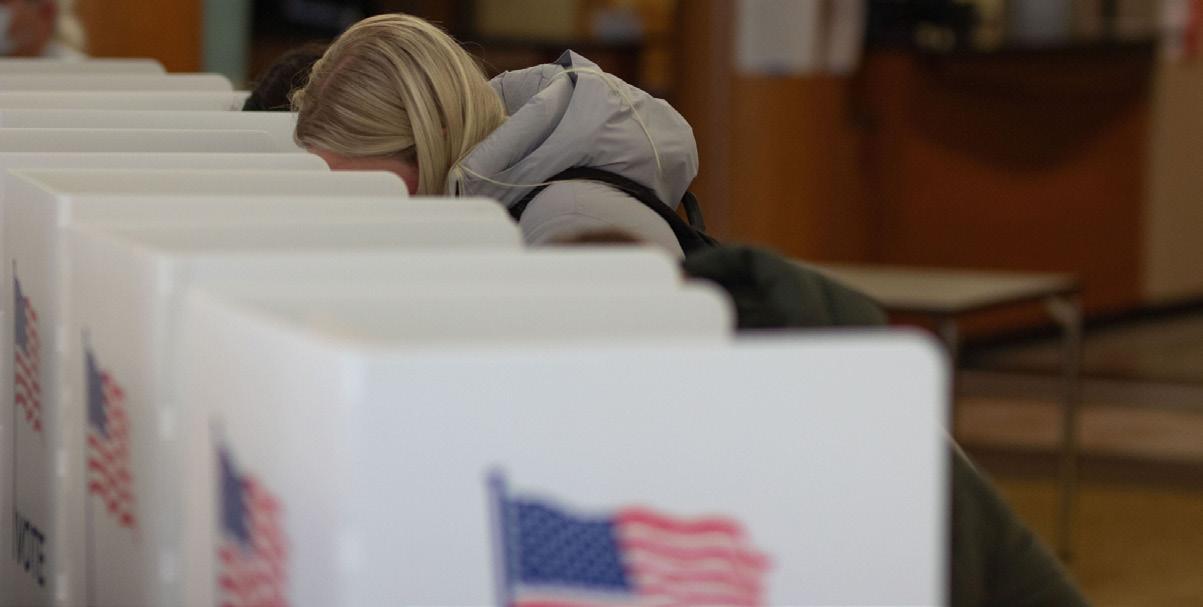
Wisconsinites will head to the polls Tuesday, Feb. 18, to vote in the state superintendent primary alongside other local and county elections.
The incumbent, Jill Underly, will face off against education consultant Brittany Kinser and Superintendent of Sauk Prairie schools Jeff Wright. The two candidates with the most votes will move on to the spring general election on April 1.
With education funding, school choice and student performance at the forefront of debates, the outcome of this election will have significant implications for Wisconsin’s schools.
The state superintendent is responsible for setting education standards, overseeing the Department of Public Instruction (DPI) and influencing state education policy.
Who is Brittany Kinser?
Kinser, an education consultant with a background in special education, has positioned herself as a candidate focused on reforming the state’s educational approach. She plans to reform the benchmark standard system recently changed by Underly.
“We know that 95% of students can read well enough to go to college and get a career. However, right now in Wisconsin, it’s only three out of 10 according to our nation’s report card,” Kinser told The Daily Cardinal at a pro-school choice rally earlier this month.
Kinser is the only candidate that has publicly backed school choice programs.
Despite reports highlighting that she does not currently hold an active Wisconsin educational license, Kinser defended her qualifications by
citing her 25-year career in education, including roles as a principal and consultant.
Kinser described the current state of Wisconsin’s low reading levels as a “crisis” and has called for renewed focus on student learning outcomes from literacy programs. She argues that discussions about licensure are distractions from the pressing issues affecting students and their families.
Kinser received endorsements from her own City Forward Collective Action Fund and Scarlett Johnson, the leader of the conservative Moms for Liberty-Ozaukee County.
Who is Jill Underly?
Underly has held the state superintendent position since 2021. Her reelection campaign has emphasized the need to address long-standing underfunding issues in public schools.
“Our state has been underfunding schools for a long time, and we need to make the necessary investments to ensure every child has access to quality education,” Underly said in a statement in November 2024.
Underly’s tenure has been marked by efforts to promote educational equity and enhance resources for public schools across the state, citing her experience working in the public school system as reason to continue its funding.
Her campaign has highlighted achievements in expanding access to early childhood education and implementing programs aimed at closing achievement gaps among students from disadvantaged backgrounds.
Underly said she prides herself on advocating for students by securing federal grants to invest in mental health programs in schools, supporting Career and Technical Education programs and passing
a bipartisan literacy bill that hires reading coaches to keep kids on track with state benchmarks.
She also has advocated for teachers by supporting retention and development efforts, better pay and benefits and investments in special education programs.
Lawmakers, such as Gov. Tony Evers and Assembly Speakers Robin Vos, R-Rochester, criticized Underly and the DPI for a semantic change in state educational benchmarks that changed the wording of students’ progress.
Evers said that discussion of the changes to educational benchmarks “could have been handled better,” while Vos said the standards have been “dumbed down,” making Wisconsin kids seem like they are doing better in school when the new standards have higher benchmarks than the old.
But Underly argued that the decision to change the benchmarks was misunderstood.
Underly received endorsements from the Democratic Party of Wisconsin, the American Federation of Teachers-Wisconsin and numerous politicians, including Sen. Kelda Roys, D-Madison, and Rep Francesca Hong, D-Madison.
The Wisconsin Education Association Council, which works with local teachers’ unions, has opted to refrain from recommending a candidate in the 2025 state superintendent primary race.
Who is Jeff Wright?
Wright is the current superintendent of the Sauk Prairie School District.
Wright has advocated for inclusive educational practices and emphasizes the importance of community engagement in schools. He has been recognized for his work in promoting
equity and supporting diverse student populations.
“Our communities are stronger when our schools are strong,” he told the Capital Times on Feb. 6. “That’s the type of leadership that I’ve tried to bring to the Sauk Prairie School District over the last 13 years by intentionally bringing people from all political ideologies, from the clergy to our business community, all to the table to figure out what we can do to make our schools stronger.”
Wright’s platform includes initiatives to strengthen support for teachers, enhance mental health resources for students and foster partnerships between schools and local communities. He said collaborative efforts are essential to address the challenges facing Wisconsin’s education system.
Wright received endorsements from the Wisconsin Education Association Council Political Action Committee, the Association of Wisconsin School Administrators and Blue Sky Waukesha, among other endorsements from educators and administrators across Wisconsin.
Wright unsuccessfully ran for Wisconsin Assembly in 2018. He also won Administrator of the Year from the Wisconsin Rural Schools Alliance.
Why is this race important?
Kinser’s lack of an active teaching license has been a focal point, with Underly’s campaign labeling it a “glaring lack of qualifications.” Kinser, however, maintained that her diverse experience equips her to address the challenges within Wisconsin’s education system.
Funding for public schools remains a central issue for all campaigns. Underly has advocated for increased investments to rectify years of underfunding, while Wright emphasized the need for equitable resource distribution that holds voucher schools accountable. Kinser has called for a reevaluation of current educational strategies to better serve students’ needs.
Where and when should I vote?
People who have lived in Wisconsin for over 28 days are legally able to vote in Wisconsin. To register to vote, visit myvote.wi.gov.
In-person absentee voting runs from Feb. 4 through Feb. 16 at local polling locations across the state. Hours may vary by location.
Early in-person voting on campus runs from Feb. 10 through Feb. 14 from 11 a.m.-5 p.m. at Union South and 11 a.m.-5:30 p.m. at Memorial Union.
The spring election primary is Feb. 18.
By Mackenzie Belletini
STAFF WRITER
The League of Women Voters of Dane County hosted an expert panel Thursday to discuss what voters should look for in the Wisconsin Supreme Court race ahead of the April 1 spring election.
The “Choosing a WI Supreme Court Justice” event invited three local experts to discuss the race: University of Wisconsin Law School professor and expert on state courts Robert Yablon, retired Wisconsin Judge Paul Higginbotham and lawyer Jeff Mandell. Experts addressed the basic purpose and procedures of the Wisconsin Supreme Court and answered several prompts regarding how to choose a candidate, the role of campaign finance and what voters can expect in this election.
How to evaluate a candidate
While it is a basic requirement outlined in the Wisconsin Constitution that all candidates be a licensed lawyer in the state of Wisconsin for at least five years prior to the election, Yablon said voters should look for the experience a candidate has had with particularly “complicated and legally complex cases,” noting the intense nature of the state Supreme Court and the
extensive experience of many current judges.
When assessing a candidate, Yablon said to consider their experience and how it might compare to the high intensity of being a justice on the state’s high court.
Yablon also said voters should look for several basic aspects of character including humility, integrity and open-mindedness. A Supreme Court justice needs to be able to set aside their predisposed inclinations and act in the favor of what is right, meaning listening respectfully to colleagues and knowing how to say no “to more than just their adversaries,” Yablon said.
Yablon ended his section with a reminder that an important role of the court is “steadying our system of government and checking overreach by the other branches,” and that choosing a candidate should include assessing their ability to do that.
The role of campaign finance in the Supreme Court race
Higginbotham, who retired in 2017 after a long career serving the Wisconsin Court of Appeals and Dane County Circuit Court, discussed the role of money, specifically dark money, in Supreme Court elections.
Dark money refers to funding for cam-
paigns or to influence public policy whose source is not disclosed.
Higginbotham emphasized the importance of understanding how dark money might be impacting a candidate’s campaign trail.
“Money is speech,” he said.
Funding campaigns can be “highly effective” in influencing how a candidate may participate in controversial cases, Higginbotham said, noting that voters might want to consider what entities and organizations could be contributing to a candidate’s campaign and exactly how that might affect their term on the Supreme Court.
The most recent round of campaign finance reports showed that Wisconsin Supreme Court candidate Susan Crawford received $2 million in funding from the Democratic Party of Wisconsin, while opponent Brad Schimel received $1.7 million from the Republican Party of Wisconsin.
Crawford raised $4.5 million from individual donors since entering the race compared to Schimel’s $2.7 million, February campaign finance reports show. The two candidates in this year’s race have raised more money so far than at the same point in the 2023 judicial race, which broke the national record for most money spent on a court race.
Higginbotham said the influence of dark
money and the increased level of campaign funding might suggest the idea that “a candidate’s vote can be bought” and told voters to consider that when assessing candidates.
How the race affects citizens
Mandell, a general counsel at Law Forward, a law firm dedicated to “protecting democracy and working to ensure fair elections,” finished the discussion with a conversation on what is at stake in this election.
The Wisconsin Supreme Court is the superintending and administrative authority as well as appellate jurisdiction over all of the state’s courts. It oversees crucial cases, such as those related to voting rights, who gets to vote and absentee ballot procedures.
The court gets the final say in these cases, and understanding each candidate’s ability to navigate controversial and complex topics is important in this election, Mandell said.
“I think that all of those could very well affect people’s lives and help illustrate the stakes not only for individual voters, but also help illustrate why there is so much money pouring into these elections,” Mandell said.
The 2025 spring general election will take place on April 1.
By Sabriel Murphy STAFF WRITER
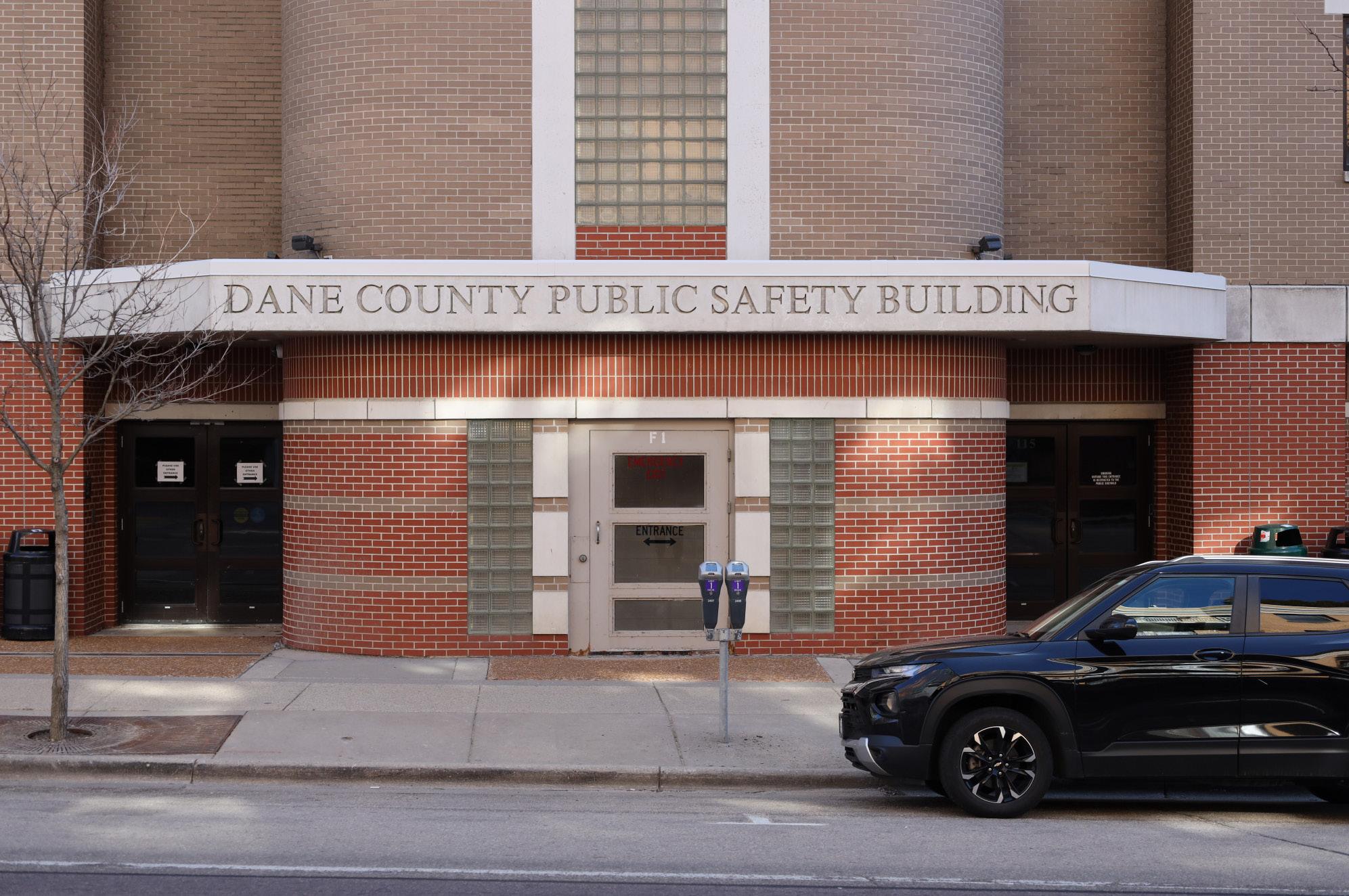
Wisconsin Republicans introduced a bill Feb. 4 that would require sheriff’s offices in Wisconsin to provide names of incarcerated individuals to U.S. Immigration and Customs Enforcement (ICE) or risk losing funding.
Under this bill, incarcerated people would have to provide proof of residency. If they are unable to provide documentation, sheriffs would be required to report them to the U.S. Department of Homeland Security.The bill also makes sheriff’s offices responsible for verifying residency and holding people in jail facilities for ICE.
If the proposed bill were to pass, the sheriff’s office could lose up to 15% of state aid if they don’t cooperate.
This bill comes after a statement from the Dane County Sheriff’s Office in January saying they would no longer participate in the State Criminal Alien Assistance Program (SCAAP), citing a desire to honor community values.
“If this bill were to pass, it would put a significant strain on sheriff’s offices and their budgets,” Dane County Sheriff Kalvin Barrett told The Daily Cardinal.
The Dane County Sheriff’s Office was listed as non-cooperative with ICE in June 2024, defined as not notifying ICE of undocumented incarcerated people prior to release or holding prisoners until ICE can assume custody.
SCAAP provides funding to agencies that give names of individuals who have spent at least four consecutive days incarcerated and have committed at least one felony or two misdemeanor convictions to ICE.
January’s decision was applauded by the American Civil Liberties Union of Wisconsin, who said in a statement on Jan. 30 that participation in the program made law enforcement “unnecessarily complicit in fear mongering and tearing apart families.”
sheriff’s departments’ funding even more.
SCAAP previously provided about $90,000 yearly to Dane County, though the funds were not directly given to the sheriff’s office. The proposed bill would cut
Barrett cited the importance of the separation of powers between law enforcement and legislation and stated that a sheriff’s freedom to decide policies for their own communities is necessary for effective law enforcement.
“[This bill] “would mandate that sheriffs … follow the political land-
scape on the federal and state level,” he told the Cardinal.
Gov. Tony Evers has promised to veto the bill should it reach his desk. Barrett said the sheriff’s office “is not going to put any more time or effort towards it” but will “continue to advocate … to eliminate any future versions of this bill.”
‘We need to be more humble’: Former UW Regent reflects on service, urges regents, state government to work together
By Nick Bumgardner
FEATURES EDITOR
Bob Atwell has seen a lot in his time on the University of Wisconsin System Board of Regents.
In 2017, Republican Gov. Scott Walker appointed him to a seven-year term. When Atwell joined, then-State Superintendent Tony Evers was the only Democrat on the board.
Over the next seven years, Atwell found himself at the center of campus closures, a controversial UW-Madison
funding compromise with the state Legislature and a controversy of his own in May 2024 when he, at the advice of Speaker Robin Vos, R-Rochester, declined to step down at the end of his term. By the time Atwell resigned in June 2024, he was one of just two Walker appointees left, and Evers, his former colleague, was now a two-term Governor.
The board presented Atwell with a resolution of appreciation at its meeting Friday in recognition of his service. There he addressed his former

colleagues, expressing his gratitude and offering advice for the future.
“I’m well into the fourth quarter of my game clock, and it’s a great season to reflect on things that I once firmly believed and now no longer believe,” Atwell said.
This kind of reflective attitude doesn’t just apply to himself, though. Atwell said it’s something he wants to see from all regents.
“We need to be more humble, more self-reflective, more generous and more willing to admit our screw-ups and correct course,” Atwell said.
He took aim at the public’s perception of the board as a “ceremonial body” of “fading, semi-dignitaries,” urging regents to “insist” the UW System “live its critical function to seek truth and build unity” given the challenges of the current moment.
“These are painfully tumultuous times in the U.S., and our state is at the epicenter of the social, political, demographic and economic battles that swirl around us and within us,” Atwell said.
Atwell also addressed UW System’s faculty and staff, thanking them for their “passion” and “affection” and swearing to continue fighting for better pay.
“I’ve seen your work in the light of our students’ eyes, and in the light of my own childrens’ lives. You do change lives,” Atwell said. “I am truly sorry that you remain chronically underpaid, and I’m sorry that we’ve been so ineffective in changing that. I will keep trying.”
He called UW-Madison a “global powerhouse” but said there’s still “a lot you can do better.”
“The rap on Madison is that it’s a lovable, loony, lefty place. I think you should own the reality that your culture is stiflingly leftist,” Atwell said. “Take your critics seriously, you’re tough enough to do that. And even when our critics are off the mark, we can still find value in listening.”
The solution, he said, is not a “conservative safe space” on campus, but instead a “genuinely open, tolerant and self-reflective culture.”
Atwell also warned against “intellectual excellence” leading to arrogance. UW-Madison should serve the state and lead Wisconsin to a “place of mutual respect and affection,” he said, but it won’t happen “if your culture effectively despises half the people.”
He also questioned the board’s approach to the COVID-19 pandemic, calling UW System’s vaccine mandate for employees “manifestly unjust, unnecessary and unscientific.”
To the state government, Atwell called for more listening and compromise. He urged Republican leadership, specifically Vos, to meet with regents, and called on Evers to be a “unifier.”
“I didn’t vote for you, but I respect you as our governor, as my governor,” Atwell said. “I also have to admit that I kind of like you.”
There are too many people and too much money “seeking to reinforce divisions” in Wisconsin, Atwell said, and Evers and Vos have to work together for the future of higher education.
“For the love of the state, university, and the god that most of us believe in, get together and communicate,” Atwell said.
By Lydia Picotte STAFF WRITER
‘Tis the season of love. Chocolate-lined shelves and heart-shaped everything certainly won’t let anyone forget it. Now more than ever, it’s easy to feel left behind if you’re not in a romantic relationship or actively dating. However, it’s important to remember that there is more to life (and love) than just romance.
One of the easiest ways to decenter relationships in your life is to find other outlets for connection. One of the perks of being on a college campus like the University of WisconsinMadison is the sheer number of things to do.
There are hundreds of clubs and active Greek life chapters on campus, intramural sports teams, weightlifters and workout instructors who fill the gyms at the Nicholas and Bakke Recreation centers, and seasonal events like the Winter Carnival are a year-round occurrence.
Self-confidence can also be key to making this shift. Your need for romantic affirmation will likely decrease if you can provide positive feedback for yourself. Plus, in the long run, no amount of outside validation is ever going to be enough if you’re not comfortable with yourself. All of your relationships, romantic or otherwise, are improved when you’re not relying on the external approval they provide.
Of course, building self-confidence is easier said than done, but it’s a key part of success and totally worth the effort.
Finding a hobby can help with this. Confidence builds when you’re setting goals and accomplishing them, which only happens when you engage more with the world. Fill your life with your own joys and

accomplishments, and you will begin to appreciate your own company more.
Another step to improving self confidence can be to limit comparison. As obvious as it is, it’s easy to forget that social media is fake. Snapchat and Instagram aren’t telling anyone’s whole life story, and constant comparison only exacerbates feelings of FOMO (fear of missing out) and loneliness. Putting an end to mindless scrolling will make it easier to focus on what you do have and not what you don’t.
Finally, and perhaps most importantly, don’t forget about the other love in your life. Your friends and family often provide the most essential support. Go out with them, make art with them, make plans with them or talk to them. Expressing genuine affection and curiosity to everyone in your life can deepen these relationships, which are often more fulfilling than any romantic pursuits.
If the friends in your life aren’t people you want to invest in, this might be a good
time to stop and ask why. Do you need a boyfriend or just someone to talk to? Make new friends! Sit next to someone new in class, rush or join a new club! Whatever it is, your people are out there. Prioritize them. Now more than ever, it’s easy to feel like resolving your romantic woes ought to be your biggest priority. No one is alone in feeling that way. But restructuring our mindsets away from romance is vital to having more fun, becoming happier, and hopefully, discovering more about yourself.
By Gabriella Hartlaub
SOCIAL MEDIA MANAGER
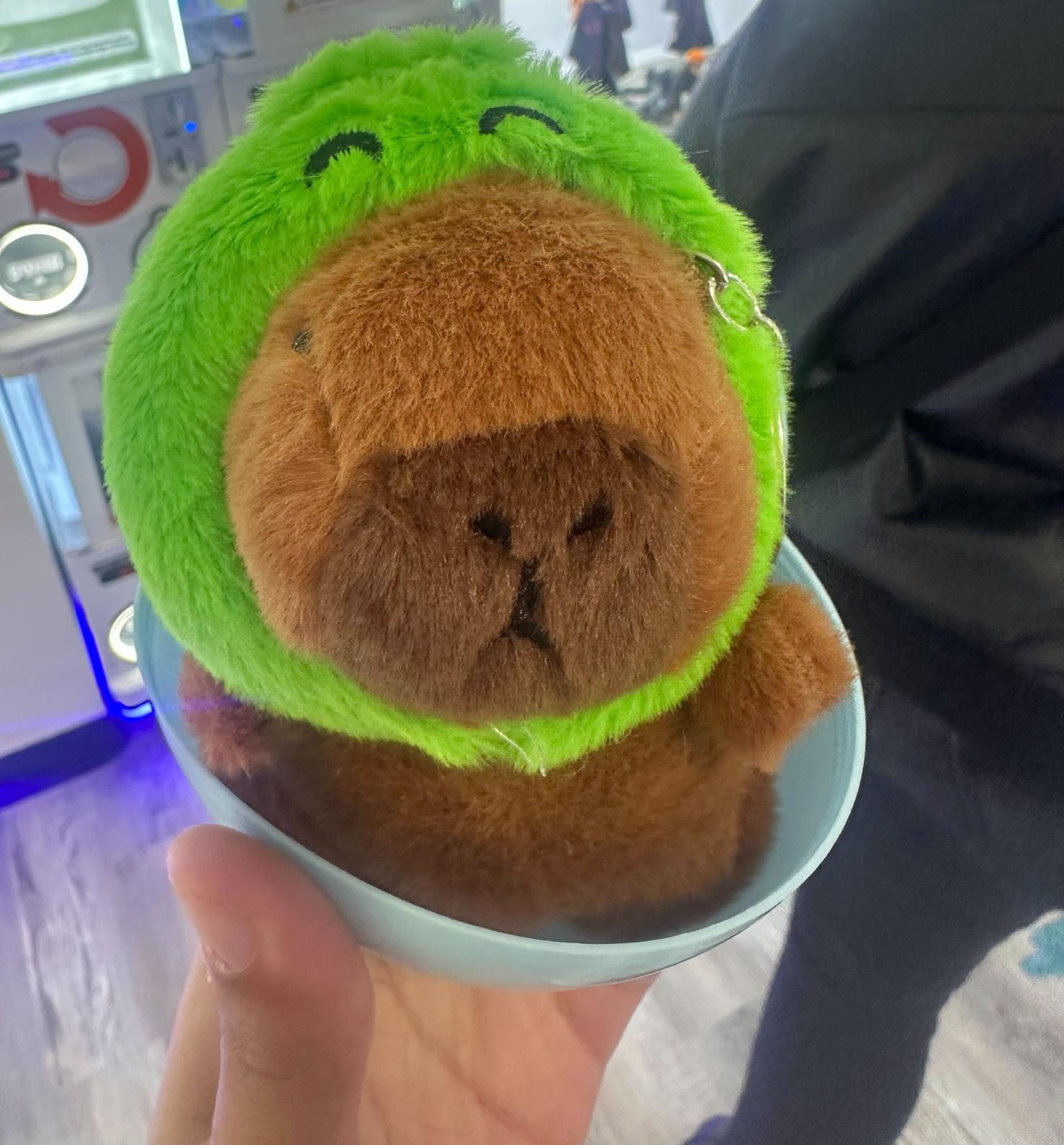
Inside one of State Street’s newest stores, GaInside one of State Street’s newest stores, Gacha Madison, you’ll find rows of capsule toy machines filled with everything from anime figures to capybara keychains.
Unlike the capsule toy machines of your childhood, these machines are full of collectibles related to your favorite anime, video games or cute animals. Machines contain stickers, figures,
stuffed animals, keychains and more. While all possible options are printed on the outside of the machines, it’s still a mystery as to what you’ll get when you turn the dial and pick your prize.
Gacha comes from the word “gachapon,” which in Japan refers to both the machines and the collectibles inside of them. “Gacha” references the sound the machine makes as you turn the dial, and “pon” is the clink of the toy falling into the opening.
While these stores are most com-

monly found in Japan, they have made their debut overseas in recent years, and Gacha Madison is one of two gachapon stores in Wisconsin.
How it works is simple: head to the coin kiosk near the front of the store or to the cashier’s table and buy tokens. The amount of tokens you’ll need for each machine ranges from two to six, and tokens can be purchased in multiples of five.
Once you have your tokens, insert them into one of the machines and turn
the dial until a ball releases, grab it, pop it open and you have your prize.
Gacha Madison adds new toy options almost every week, according to their Facebook account, keeping the variety of items fresh for customers. Current options include figures from anime like “Attack on Titan,” “Spy x Family” and video games like “Street Fighter” and “Kirby.”
Gacha Madison is located on 224 State St.and is open Monday through Thursday from 12 p.m. to 8:30 p.m. and Friday through Sunday from 12 p.m. to 9 p.m.
Madison’sbelovedbookstoreisclosingitsdoorsafter 70years.Initsfinaldays,takethechancetoexperience themagicofbrowsingitsoverstuffedshelves.

By Owen Puckett
OPINION EDITOR
Madison is losing something special. Paul’s Book Store — the quiet, unassuming gem on State Street that has served readers, students and curious wanderers for over 70 years — is closing its doors. If you’ve walked past its faded red awning a hundred times on your way to campus but never stopped to duck inside, you have one last chance.
And you should take it.
Paul’s is closing because the economic pressures that have been squeezing independent bookstores for decades have only intensified. The rent is high. The foot traffic on State Street isn’t what it used to be. Fewer students buy physical books for their courses, and fewer still browse used bookstores for fun. There’s a broader trend at play here, one that favors convenience over experience, speed over serendipity. And while there’s no easy way to reverse that trend, there is one thing you can do before Paul’s is gone for good: go buy a book.
The loss of Paul’s is the end of a particular kind of bookstore experience that is vanishing across the country: one that isn’t about aesthetics or Instagrammable displays, but about discovery. Unlike the sleek, curated chains or algorithm-driven online retailers, Paul’s is messy in the best way — stacks of well-loved books teetering in every direction, shelves packed tight with titles from decades past, the occasional rare find tucked in the corner waiting for the right person to come along. It’s a bookstore that rewards patience, curiosity and the willingness to spend an hour running your fingers along old spines just to see what you might find.
This kind of place doesn’t get replaced. It disappears. And with it goes something intangible — an atmosphere, a character, a presence
that simply can’t be replicated by a Barnes & Noble or a one-click purchase on Amazon.
You might find an old edition of a novel you love, one with a note scrawled in the margins by a stranger from decades past. You might stumble across a book on a subject you never knew you were interested in, just because it happened to be sitting at eye level on an overstuffed shelf. You might, for an afternoon, remember what it’s like to browse without an algorithm telling you what you should want without a search bar narrowing your possibilities before you’ve even started looking.
Paul’s was never about maximizing efficiency. It was never about being the trendiest shop on State Street. It was about books, in the purest, most chaotic, most wonderful sense. Books that lived, books that carried history, books that waited for the right person to pick them up and take them home.
Soon, those books will be gone. The shelves will empty, the doors will shut, and Madison will be a little less interesting for it. So before that happens, before it’s too late — go. Step inside. Wander a little. Pick up something you didn’t expect to. Take home a piece of Madison’s literary history while you still can.
Not just for the sake of nostalgia, though that’s part of it. Not just to support a local business in its final days, though that’s important, too. But because, in doing so, you might give yourself the kind of experience that bookstores like Paul’s were always meant to offer — a moment of genuine, unexpected discovery.
Once places like Paul’s are gone, they don’t come back.
Owen Puckett is an Opinion Editor and a member of the Editorial Board. He is a senior studyingpoliticalscience.Doyouagreestudents shouldstopintoPaul’sbeforeitcloses?Sendall commentstoopinion@dailycardinal.com
By Safa Razvi STAFF WRITER
In 2017, Adele accepted the Grammy Award for Album of the Year for her album, “25.” While accepting the award, facing an audience of the biggest names in the music industry, and millions of viewers at home, she declared, “My artist of my life is Beyoncé [...] This album (Lemonade) was so monumental.” In the years since, the shoutout has practically become an internet meme.
But, beneath the surface, this touching pop culture moment highlights a deeper issue — the Grammys are facing a credibility crisis.
For the past couple of years, the Recording Academy has been subject to criticism, scrutinized for snubbing deserving artists and failing to recognize talent in diverse musicians. The Grammys claim to celebrate the best in the music industry, honoring artists in over 94 categories for their creativity and immense talent. For this reason, many have begun to question their integrity and whether they’re a fair medium to dictate musical excellence or an antiquated one motivated by cultural bias and power dynamics. The choices the committee has made don’t reflect the depth of creativity being produced.
Time and time again, the academy has overlooked Black artists, especially in major categories such as Artist of the Year, reinforcing the idea that they are only meant for genre-specific categories. The Weeknd’s 2021 shutout was particularly shocking, despite “After Hours” being one of the most significant albums of the year, reigniting debates over the validity of the award show selection process.
Many artists have criticized the Academy’s debatable decision-making, including Frank Ocean, Tyler the Creator and Nicki Minaj, pointing to a long history of out-of-touch selections and genre misclassifications. For years, groundbreaking artists like Kendrick Lamar and Eminem were overlooked in favor of other artists with less cultural impact — being deemed good enough for R&B or Rap Album of the Year
but not Album of the Year.
This problem runs deeper than just individual rebuffs; it’s systemic.
In 2021, only 26.7% of Grammy nominees were Black artists, even though 38% were dominating the Billboard charts, exposing the Grammy’s failure to accurately reflect the landscape of the music industry. Countless artists have been confined to “urban” categories, as if their impact doesn’t extend beyond them.
Though the name has changed to Progressive R&B, the mindset behind the nominations hasn’t.
A prime example is Kanye West’s “My Beautiful Dark Twisted Fantasy,” largely considered one of the greatest albums of our time. It was not nominated for Album of the Year and instead was chosen for Rap Album of the Year. Ranking top album of the 2010s out of 100 by Rolling Stone, this oversight was one of the most baffling in Grammys history. This pattern of downplaying culturally significant albums has occurred before with Beyoncé and “Lemonade,” which wasn’t just an album but a political statement and culturally adored collection of music. Finally, Kendrick Lamar’s “To Pimp a Butterfly” was widely criticized for losing as it was a masterful blend of jazz and spoken poetry regarding race, identity and systematic oppression.
If an artist can dominate the charts and album sales yet receive zero nominations, what does it mean for the Grammys’ credibility?
If the Grammys truly aim to honor the best in music, they need to start recognizing the artists responsible for shaping the industry and leaving a cultural impact for generations to come, genre aside. While their credibility remains up for debate, the Recording Academy has continued to prove that they are out of touch. Until they acknowledge all of the artists shaping the industry, fans and musicians should boycott and put less emphasis on the show until they implement more diversity and inclusion.
SafaRazviisafreshmanstudyingjournalismandeconomics.Do you agree that the Grammy’s are inthemidstofacredibilitycrisis? Send all comments to opinion@ dailycardinal.com.

By Gabriella Hartlaub SOCIAL MEDIA MANAGER

By Brendan Wolf STAFF WRITER
Reaching No. 16 in the latest AP Poll, it’s safe to say the Wisconsin men’s basketball team’s season has been successful.
With a 19-5 record, the Badgers are well on their way to achieving their fourth straight 20-win season. While the team has not struggled on defense, the key to their winning ways this season is in their prolific offense.
In particular, the emergence of Wisconsin’s two lead guards, John Tonje and John Blackwell, have driven the offensive success.
Tonje has been extremely effective behind the 3-point arc and at the free-throw line. After the most recent matchup against Iowa, Tonje’s 3-point percentage stands at 40.2%. His free throw percentage is 91.7%, good enough for second in the Big Ten and eighth in the entire country.
Tonje also leads the team in scoring with 18.6 points per game. This puts him at seventh in scoring in the Big Ten, and just inside the top 50 nationally, at 49th in Division I. Blackwell has taken a leap from his freshman to sophomore year, with his points per game nearly doubling, rising from 8.0 last season to 15.3 this season. His 3-point percentage has dipped, but his overall efficiency from his freshman campaign has increased, showing that Blackwell can get it done from anywhere on the court. His free throw percentage sits at 81.2%, which places him 12th in the Big Ten.
But two players cannot win games all on their own, so where has the rest of the production been coming from? Wisconsin’s bench has been stellar throughout the year, especially with the breakout of Kamari McGee and the development of Carter Gilmore.
The improvement in McGee’s play was unexpected this season, as he had been a low-minute bench player in his first two years in Madison. McGee shot 27.3% from
3-point range last season and 18.5% from three in his first year with the Badgers.
Yet this season, McGee is shooting 55.4% from long distance. That number makes him the Big Ten leader in 3-point-percentage and would be the Division I leader if qualified. McGee is also a reliable ball handler and ranks seventh in the Big Ten in assistto-turnover ratio.
Gilmore may not be putting up massive totals, but he has stepped up as of late. During the win at Northwestern, Gilmore went 3-for5 from deep, and 5-for-7 overall, in a game with a seven-point differential. His 15 points scored set a new career high.
On the season, Gilmore has knocked down 16 of his 36 attempts from 3-point range, which puts him at 44.4%. Just like McGee, Gilmore was not known for his shooting ability prior to this year, with his former season-best percentage being 25.0% in the 2023-24 campaign.
Clearly, the Badgers have several capable 3-point shooters to space the floor, with three rotational players shooting above 40% from three — and Nolan Winter coming in at 39% from three — and two others who have proven their shooting ability in the past in Blackwell and Max Klesmit.
The Badgers are first in the Big Ten in 3-pointers made per game and 21st in the country, with the team hitting 10.2 per contest. The high volume of 3s has kept Wisconsin in games when they might be struggling to score, as shown by their +2.6 differential in 3-pointers made.
The other massive part of the Badgers’ offensive success is their efficiency at the free-throw line. The team is on pace to set the NCAA record for free throw percentage, and they currently are shooting 84.1% from the stripe.
All players who see meaningful minutes help make a difference at the line, with Tonje shooting
the best percentage of the team at 91.7%, and five others shooting above 79.0%. All six players attempt at least a free throw per game, so the sample size is there — and has been — all season.
Tonje is first in the conference in free throws made and sixth in the nation in that category. He also is fifth in free throw percentage in the Big Ten, showing that with a large quantity of attempts his ability to drain them has not been affected.
Free throw shooting has been the other main component in winning the Badgers games when they may not be playing well. They own a +11.2% free throw percentage differential to their opponents, fourth in Division I basketball. They make 4.7 more free throws during a game to their opponents, ranking 18th in the country. The numbers might seem small, but they add up when it matters.
As a whole, the offense has clicked all season. Wisconsin is ninth nationally in offensive efficiency in the KenPom ratings, and is putting up 81.0 points per game, good for 36th in the country.
Many of their wins come in dominating fashion, as they are 32nd in Division I in point differential with a +11.0 margin. The nonconference schedule might slightly inflate this number, but Wisconsin has continued to blow teams out even in Big Ten play.
The team has put up over 100 points twice during the season, in wins over No. 9 Arizona and against Iowa, scoring a Kohl Center record 116 points and setting a program record with 21 3s made in the latter. They have finished with a point total in the 60s only twice this year.
If someone is having an off night, the scheme and talent across the roster are enough to overcome an individual’s poor performance. As the regular season comes to an end, this should make the Badgers a scary matchup come March Madness.
With one minute left in the first half of Super Bowl LIX, it was safe to say the game had already gone differently than anyone expected.
The defending champions, the Kansas City Chiefs, went scoreless against a Philadelphia Eagles team that had 17 points on the board. Then something even more unexpected happened: Chiefs quarterback Patrick Mahomes threw an interception right into the hands of former Wisconsin linebacker and current Eagles player Zack Baun.
While Baun gained zero yards on the interception, the possession ended two plays with a touchdown for Eagles wide receiver AJ Brown, leaving Philadelphia up 22 to zero by the time the first half ended.
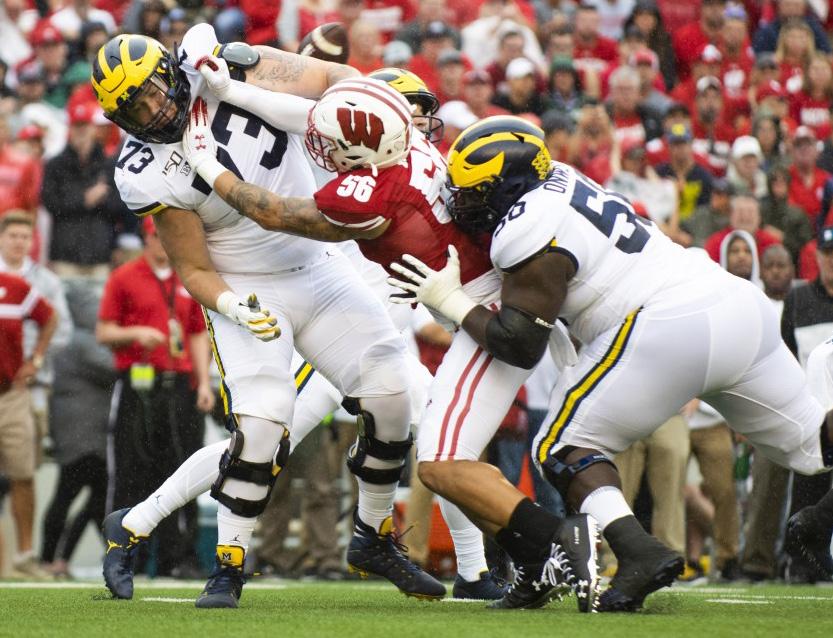
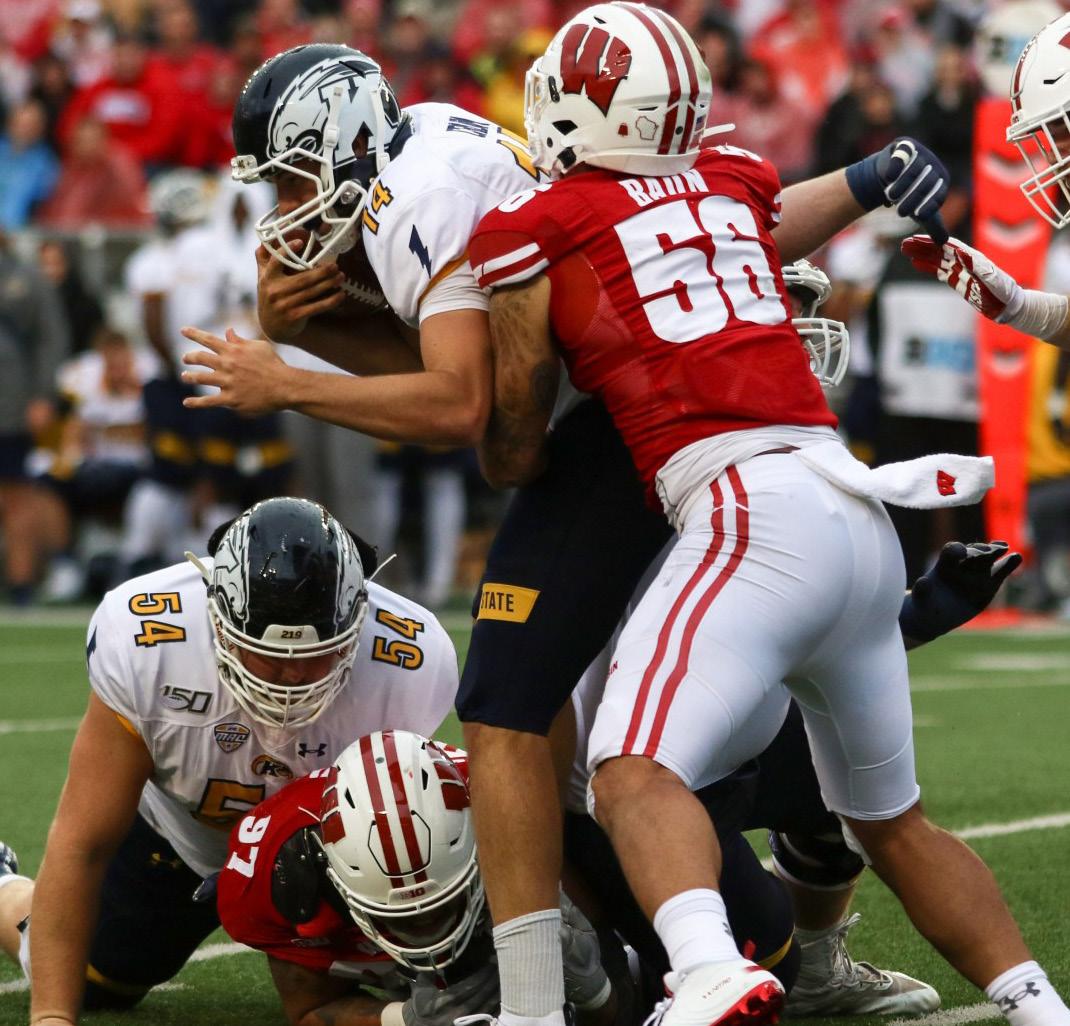
Baun has experience catching interceptions dating back to his time as an outside linebacker for the Badgers. Baun played for Wisconsin from 2015 to 2019, spending the 2018 and 2019 seasons as a starter. The Wisconsin native caught one interception in the 2018 season and another in 2019, which he returned for a 34-yard touchdown.
Baun was drafted in the second round of the 2020 NFL Draft by the New Orleans
Saints. Baun spent four mostly quiet seasons with the Saints before signing a one year deal with the Eagles ahead of the 2024 season. A change in position with the Eagles allowed Baun to shine throughout the regular and postseason.
While playing for the Badgers and the Saints, Baun played outside linebacker but has transitioned to inside linebacker after joining the Eagles’ roster. This position, sometimes called the “quarterback of defense” due to the linebacker’s ability to call and change plays for the defense, allowed Baun to take a bigger role with the team.
In the first game of the regular season against the Green Bay Packers, Baun recorded 15 tackles and two sacks in what was the first multi-sack game of his career. He also logged a regular season interception when the Eagles played the Jacksonville Jaguars in the regular season. Baun currently has the fifth-highest number of solo tackles in the NFL this season.
“Defense wins championships,” Eagles quarterback Jalen Hurts said after the Eagles’ 40-22 win.
Baun, who had the most solo tackles for the Eagles’ defense in the game, played an integral part in the defense and the eventual win.
By Lydia Picotte STAFF WRITER
This winter, in a joint effort to highlight Puerto Rican history, University of WisconsinMadison assistant professor Jorell Meléndez-Badillo partnered with rapper Bad Bunny to educate through music.
The fruits of this collaboration are 17 videos, a visual for each song on Bad Bunny’s latest album “DeBÍ TiRAR MáS FOToS,” released Jan. 5. Each video discusses a different piece of Puerto Rican history.
The project, which began as an Instagram DM from a member of Bad Bunny’s team, was born out of the rapper’s goal to teach more people — in Puerto Rico and around the world — about the island’s rich history. Benito Antonio Martínez Ocasio, better known as Bad Bunny, is Puerto Rican himself.
The vision, Meléndez-Badillo told The Daily Cardinal, was to release a digestible and general history because right now, “not even Puerto Ricans know their own history.”
The first drafts, which were 74 pages of handwritten notes, drew on research he’d done while writing his third book, “Puerto Rican National History.” Some of the more niche topics touched on include the history of surveillance in Puerto Rico, the origins of Afro-Caribbean beats in the country and an entry on Sapo Concho, an endangered toad native to Puerto Rico.
Together, the videos have more than 300 million views on YouTube, and the impacts are already being felt internationally.
“I’ve gotten so many emails from schools and kids,” MeléndezBadillo told Cardinal. “Teachers in Puerto Rico are using this in the classroom to teach Puerto Rican history… I’ve gotten to be in spaces that academics, particularly historians, are never invited to. To talk about first, Bad Bunny, but then really, we’re talking about our history, our peoples and our culture,” he said.
For him, this also marks the achievement of a personal goal that’s been a long time coming.
Not only is he a Bad Bunny fan but, as he noted, projects like this are the reason he entered the field of history.
“I wanted to take the knowledge that we produce within academia outside of the ivory tower,” he said. “I come from a working class background. I’m the first in my family to be a Ph.D. student, I was the first to go to college. So for me democratizing knowledge is very important.”
This ethic was shared by Bad Bunny, Meléndez-Badillo said.
“One thing that [Bad Bunny] has done throughout his career is that he [speaks to Puerto Ricans] first and foremost but he has this global platform, so that everyone else gets educated along the way. So for me this was a dream come true,” he said. “I entered this profession because I wanted to share this knowledge widely.”
Meléndez-Badillo has returned to more traditional academic work since completing this project. He is currently on research leave and writing his fourth book titled “A Counter Republic of
By Lydia Picotte STAFF WRITER
The Madison Shakespeare Company (MSC) is celebrating this year’s day of love through a collection of eight of the bard’s most iconic love scenes alongside the works of Thomas Middleton, John Fletcher and Thomas Dekker in “A Valentines Affair 2025,” directed by Annie Jay.
The show will be rounded off with “Sonnets from a Hat,” an improvisational break where cast members perform randomly selected sonnets as directed by suggestions from the audience.
The full production is just 90 minutes, the perfect addition to your gal-entine or Valentine’s celebration. Performances are 7:30 p.m. on Feb. 13 to 14 and 5 p.m. on Feb. 15 at the Bartell Theatre.
Jay will be celebrating her fifth performance with MSC.
“Telling a compelling story is my number one priority. Early in the process of every project, I need to be able to answer why we are doing it,” Jay told The Daily Cardinal “And what is more compelling and universal than love and relationships? Good, bad, complex, new, seasoned.”
As a director, Jay said she works to choose the best roles for every performer while also pushing them outside their comfort zone. MSC chooses their scenes for the affair based on their performers. This year, the cast comes from various backgrounds with ages ranging over 20 years.
“The possibilities are literally limitless,” Jay said.
Sometimes, this commitment to helping her performers be their best leads Jay to take a hands-on approach.
“Some of my [male identifying] actors get the wiggles. To help them take ownership of their space onstage and crank up the confidence their characters need, I am not above sitting on the floor and holding down their feet,” she said.
This year’s Affair includes Antony and Cleopatra, Antipholus and Luciana, Hostess Quickly and Pistol and Palamon and the Jailer’s Daughter. University of WisconsinMadison alumni Malcolm McCanles and Megan Tennessen, as well as performer Josh Gibbons, will make their MSC debuts. They will be accompanied by veteran performers Paige Abbatacola, Deanna Martinez, Laura Kochanowski, Mitch Taylor and Jason Compton.
“One highlight this year is a two-part arc from ‘Two Noble Kinsmen’ that highlights all eight of our performers and displays the phenomenal range of recent UW grad and new cast member Tennessen, as her character descends into madness,” Jay said. “We also stitched together two scenes from a nontraditional approach to ‘love’ in ‘Measure for Measure,’ in which the epically layered recent UW graduate McCanles gets to dive into the depths of evil and manipulation.”
For its seventh season, A Valentine’s Affair is set to perform at 7:30 p.m. on Feb. 13 to 14 and 5 p.m. on Feb. 15 at the Bartell Theater.


Letters: A Friendship Revolution and Anarchist History Making.”
Meléndez-Badillo described himself as a scholar of working class history and said that
despite the musical detour, this has long been his primary focus. He’s also working on a personal chronicle focusing on his lived experiences.
‘Emilia Pérez’ is the 2025 Oscars season’s villain
By Cameron Schneider PHOTO EDITOR
“Emilia Pérez” leads the nominations ahead of the 2025 Oscars with 13 nominations, the most Academy Awards ever for a non-English film, although the controversial film left audiences baffled.
The film already received three awards at the Cannes Film Festival and four Golden Globes.
The latest from French director Jacques Audiard, “Emilia Pérez” is a musical that follows lawyer Rita Mora Castro (Zoe Saldaña), as she is called to coordinate the gender transition of a fictional Mexican cartel boss (Karla Sofía Gascón), who becomes Emilia Pérez.
The movie explores themes of gender expression, the role of women in society and violent crimes committed by cartel syndicates in Mexico. It fails to capitalize on any one of them.
The film starts out as a gender dysphoria narrative that is quickly resolved after a stilted song between Rita and a prospective surgeon. A plotline about Emilia’s attempt to right the wrongs of her past as a criminal begins, ended by a small romantic subplot. The climax lacks any earned catharsis for the viewer.
In an attempt to underscore these themes, the film has 43 original musical songs. Every time a conversation between characters became interesting, “talk-singing” would start to abruptly transition from dialogue to song. The only indication of a song beginning comes from the closed captioning, which halted the pacing of scenes.
For the majority of the musical numbers, the choreography amounts to characters sitting across from each other at a table, which begs the question of why a song was added in those moments at all.
Apart from narrative blemishes and appalling music, other elements of the film are sound. The actors deliver even with little substance they are given. The cinematography and lighting is interesting, barring the lack of movement during certain songs. It is hard to go into “Emilia Pérez” blind.
Not only do audience reviews pan the movie online, but so do controversies surrounding the production and lead actress.
“Emilia Pérez” currently has a 73% critics score and 18% audience score on Rotten Tomatoes. On Letterboxd, an average of two-and-a-half out of five starts with over 350,000 ratings. Finally, on IMDb, it sits at 7.5/10. There is a major gap between the opinion of critics and general audiences.
Among being criticized for being a “step backward for trans representation,” the movie has also been mocked for its Mexican representation. The cast consists of only one Mexican actor in a supporting role. What’s more is the movie was filmed and submitted under France for the 97th Academy Awards.
The movie includes elements of Mexico’s drug war and the hundreds of thousands of people who have gone missing. A mother of one of those victims, Artemisa Belmonte, told the Associated Press the movie felt insensitive. “
You can’t talk about the subject as if it were something to make a musical about,” Belmonte said.
Karla Sofía Gascón plays the titular supporting role. She came under fire for an interview where she suggested that people associated with fellow best actress nominee Fernanda Torres (“I’m Still Here”) were behind attacks on Gascón. Past Tweets by Gascón also have been scrutinized for how she speaks of Black Americans and Muslims. Some online have called for her disqualification at the Oscars and has recently been removed from the film’s press tour.
It is hard to ignore the discourse around “Emilia Pérez,” but the movie has difficulty standing on its own when it’s separated from behind-thescenes drama.
The film is a patchwork of famous storytelling mediums and narratives. While influential figures have praised “Emilia Pérez,” it misses the mark on providing a compelling narrative as well as representing Mexican and transgender voices.