Students at the University of Wisconsin-Madison protested
President Joe Biden’s support for Israel by voting “uninstructed delegation” in the April 2 Democratic presidential primary.
Roughly 32% of voters chose the uninstructed option in 20 wards on or near the UW-Madison campus, compared to 14.6% in Dane County and 8.4% statewide, per unofficial results.
Madison Ward 46, which surrounds James Madison park and the Capitol and is highly populated with students, saw 48% of voters support the uninstructed option.
Despite statewide numbers failing to reach the 15% threshold needed to send uninstructed delegates to the Democratic National Convention in August, high support in campus-area wards signals student dissatisfaction with the Biden administration’s policies toward the Israel-Hamas war and humanitarian efforts in Gaza.
That’s a warning sign for Biden and Democrats, who in part relied on student turnout to defeat Trump by a razor-thin 20,000 votes in 2020. Tuesday’s statewide total of more than 48,000 votes for the Democratic uninstructed option more than doubled Biden’s 2020 margin of victory.
UW-Madison Students for Justice in Palestine (SJP) and Wisconsin Young Democratic Socialists of America (YDSA) campaigned for the uninstructed vote leading up to Tuesday’s vote, according to Dahlia
Saba, a member of Students for Justice in Palestine.
“Over the past six months, our government has supported the Israeli military as they commit horrific atrocities against the people of Gaza,” Saba said.
Following a similar uncommitted movement led by Michigan student activists, SJP “decided to do the same thing here in Wisconsin to make our voices heard and to fight for an end to U.S. military aid that’s supporting this ongoing genocide.”
Saba said SJP’s goal is to force Biden to change current policy toward the war by calling for an immediate and permanent ceasefire, halting aid sent to Israel and reinstating humanitarian aid to The United Nations Palestinian Refugee Agency. Congressional lawmakers in March suspended funding for the global aid program as part of a $1.2 trillion budget deal.
“We’re SJP. That means fighting for the rights of Palestinian people to live [with] basic human rights and with dignity and autonomy,” Saba said. “What we’ve seen in Gaza over the last six months is horrific and shows a huge violation of the rights of the people of Gaza, but also a lack of respect for those human rights from our government here in the U.S.”
Ben Wikler, Democratic Party of Wisconsin chairman, told MSNBC late Tuesday the primary results were a message that voters, like “most Americans,” want an “enduring and just peace” in Gaza.
Wikler said the Biden administration has an opportunity to make its
values clear and demonstrate a contrast between Democratic policies and the Trump administration’s approach, which he suggested would be one of “total disregard for the lives of Palestininas civilians, for the hostages, for just about anyone else.”
“This is a protest vote. It’s a great American tradition of speaking your mind at the ballot box, and it’s civic engagement,” Wikler said. “I think we have the chance to earn all of these for the Biden campaign in November.”
SJP and other student organizations backing the uninstructed campaign, including the Muslim Student Association, shared messages on social media, passed out flyers around campus and organized statewide phone banks and rallies to support the cause, according to Saba.
Statewide organization Listen to Wisconsin partnered with student organizations at UW-Madison, UW-Milwaukee and Marquette University to support the uninstructed vote. Their efforts were focused mainly in Madison and Milwaukee, districts with the highest uninstructed turnout in the state.
Approximately 15% of Dane County voters and 12% of Milwaukee County voters supported the uninstructed delegation option in the Democratic presidential primary, rates higher than any other county statewide, according to unofficial results from the Associated Press.
UW-Madison sophomore Sydney Tannen said she heard about the uninstructed vote through YDSA

social media and in conversation with friends. “I feel like the message is getting heard somewhat,” she said.
Other students were unaware what the uninstructed vote meant before they cast their ballots.
“I’ve heard of it before, but I feel like I need more information,” said Josephine Hunter, a UW-Madison sophomore. After learning the political significance of the vote, she said she would have supported it.
“I feel like there’s no one trying to put it out there,” Hunter said. She said more active campaigning in busy areas of campus could have informed her.
Saba said the majority of people student activists talked to were “overwhelmingly supportive” of the cause. With the growing presence of the war in the media during the last few
months, “people have gotten more engaged in the issue,” Saba added.
“You get people from a variety of backgrounds. Some have heard about it, some are just learning about it and some have known about it for a long, long time,” Saba said. “Both groups of people are very passionate.”
Students who voted uninstructed said they were steadfast in their support of Biden changing his Israel policy.
“I voted uninstructed,” Tannen said. “I hope it sends a message.”
College news editor Noe Goldhaber contributed research and data analysis to this story.
Editor’sNote:thisstorywasupdated at 12:14 p.m. to include information from Ben Wikler, Democratic Party of Wisconsin chairman.
With the University of Wisconsin Board of Regents set to vote on a tuition increase Thursday, some UW-Madison students said they hope the increase will increase academic support, though they worried it could exacerbate wider affordability concerns and deter enrollment.
The 3.75% systemwide increase mirrors inflation, UW System President Jay Rothman said on March 28. It would increase UW-Madison’s tuition for in-state students from $11,216 to $11,604 and would be the second straight year of increased tuition.
The potential increase comes alongside cost of living concerns in an increasingly constrained Madison housing market. Nationally, gaps between college affordability and a 66% student loan debt increase over the past decade play heavily into families’ decisions on where to send their children to college. Statistics from the nonpartisan Institute for Higher Education Policy show eco-
nomic concerns are elevated for nonwhite students.
Some UW-Madison students supported the tuition increase, saying they believe it will benefit students by maintaining the school’s academic quality and funding new buildings.
“I think it’s fair if it’s necessary to keep up the quality of education students are getting and opportunities students are getting,” said UW-Madison junior April Krumpos. She added greater opportunities for scholarships should come alongside the increase.
Mekhi Ott also supported the tuition increase. He believed UW-Madison could use the money in valuable ways, like building a new engineering building. The engineering building project is currently funded by a mix of state money and private donations.
But some students were more critical, saying the tuition increase could hurt affordability or hamper enrollment.
“I’m not a fan of the idea,” UW-Madison sophomore Laura Bush said. “I think affordable tuition
is important, and I don’t want my tuition to increase.”
Students also had questions about how the money would be spent.
“While yes, it may be to cover inflation, is that extra money going to make sure we get a quality education, or is it going elsewhere?” asked UW-Madison sophomore Jordan Gross.
Another UW-Madison sophomore, Lauryn Wimmer, worried the increase might discourage some students from attending.
“I’m not in favor because I think it’ll deter students, especially firstgeneration students, from getting a college degree,” Wimmer said.
Ott, who supported the tuition increase, had similar concerns regarding other UW System schools, saying increasing tuition could lead to students pursuing different career paths.
Low-income students represented 15.1% of UW-Madison’s student body in the 2022-23 academic year, compared to 22.4% across the UW System.
Though Krumpos said she understands why the tuition increase has
been proposed, she maintained that UW-Madison’s current tuition is already unaffordable for many.
“I know many students that decided not to go here, not because of what it has to offer, but because of its cost,” Krumpos said.
Bush echoed this sentiment, saying that programs such as Bucky’s Tuition Promise and Bucky’s Pell Pathway — which fully covers the cost of attendance for eligible undergraduates — help make tuition affordable, but said many in-state students don’t have the scholarship and struggle to pay tuition.
A 2022 review found UW System schools were the most affordable in the Midwest, according to the press release. Rothman said the preemptive announcement was made to give students and parents time to plan and encouraged students to fill out a Free Application for Federal Student Aid (FAFSA) form.
If approved Thursday, the tuition increase will take effect at the start of the Fall 2024 semester.
“…the great state University of Wisconsin should ever encourage that continual and fearless sifting and winnowing by which alone the truth can be found.”
Wisconsin voters approved two constitutional amendments and voted in partisan primaries for 2024 presidential candidates during Tuesday’s spring elections.
The state’s two largest counties, Milwaukee and Dane, both saw a voter turnout of 34%, according to preliminary data. Dane County’s turnout was lower than the 64% percent turnout in 2023’s spring election and 54% in 2020’s presidential preference election, both of which featured a state Supreme Court race.
Wisconsin has proven to be a crucial state for presidential candidates in previous elections. President Joe Biden won the battleground state by a thin margin of around 20,000 votes in 2020, while former President Donald Trump secured the state by around 23,000 votes in 2016.
Voters will now see a rematch between these two candidates in the November presidential election.
Here’s what you need to know about results from the April 2
Wisconsin primary election:
Two statewide referendums on elections rules passed
Voters on Tuesday approved two referendum questions that altered Wisconsin’s constitution and made changes to state elections rules.
The first question, which asked voters to prevent use of private funds for administering state level elections, passed with 54.4% of the statewide vote. The second question, which asked voters to limit who is involved in the voting process, passed with a slightly higher 57.9% of the statewide vote. Both questions were placed on the ballot by Republican lawmakers
The questions, which supporters say aim to protect the Wisconsin elec-
tion integrity from outside influences, will immediately go into effect for future elections, including the partisan primary election this August and the presidential election this November.
For question two, the major concentrations of “no” votes came from the counties of Eau Claire with 50%, Milwaukee with 50% and Dane with 69%. These are also areas home to large college student populations with the University of WisconsinEau Claire, UW-Milwaukee and UW-Madison. Rural counties, such as Taylor and Rusk in northwestern Wisconsin, voted overwhelmingly yes with 71% and 72%.
The first referendum question follows a 2020 controversy over election grants provided to some Wisconsin cities from the Center for Tech and Civic Life, a nonprofit funded by Facebook founder Mark Zuckerberg and his wife. The group donated $6.8 million in grant money to Wisconsin’s five largest cities to help facilitate 2020 presidential election operations amid the COVID-19 pandemic.
Republicans in the state Legislature said these dollars, which some referred to as “Zuckerbucks,” went to “left-leaning cities” and illegally benefited Biden, though rulings from state courts and the Wisconsin Elections Commission later determined the grants were accepted legally.
A bill passed the Legislature in 2021 preventing cities from taking grants from private organizations but was vetoed by Democratic Gov. Tony Evers, leading to the questions appearing on the ballot.
Proponents of the measures included Sen. Eric Wimberger, R-Green Bay, and Rep. Tyler August, R-Lake Geneva. Other conservative organizations including Election Integrity for Wisconsin, law firm Wisconsin Institute for
Law & Liberty and Wisconsin Voter Alliance also encouraged voters to support the measures.
State Democrats along with the American Civil Liberties Union of Wisconsin (ACLU), Wisconsin Democracy Campaign and All Voting is Local Action Wisconsin opposed the measures and encouraged voters to vote no.
Biden, Trump declared primary winners, but ‘uninstructed’ lingers behind
Biden and Trump were declared the winners of their respective primaries.
With nearly all votes counted as of 12:57 p.m. Wednesday, Biden received 510,447 votes to Trump’s 475,363.
Former United Nations Ambassador Nikki Haley garnered 12.8% of the Republican vote, and Florida Gov. Ron DeSantis trailed with 3.3%, despite both previously dropping out of the race.
The “uninstructed” vote trailed Biden in the Democratic primary as part of a recent movement to protest against Biden’s handling of the IsraelHamas war.
Over 48,000 Wisconsin voters,
or 8.3%, chose the “uninstructed delegate” option as of 12:57 p.m. Wednesday, more than double the 20,682-vote margin Biden won Wisconsin by in 2020. However, no uninstructed delegates will be sent to the Democratic National Convention because Wisconsin requires uninstructed delegations earn at least 15% of the statewide vote to receive delegates.
On the Republican ballot, there were comparatively 12,900 uninstructed votes.
In Dane County, Biden secured roughly 83% of the Democratic vote while the “uninstructed delegation” received 14.5%.
The “uninstructed delegation” vote reached 12% in Milwaukee and Vernon counties.
In Racine County, 20% of the total vote went to former Minnesota Congressman Dean Phillips, who ended his campaign in March.
Both presidential candidates scheduled visits to Wisconsin within a week of the presidential primary. Trump visited Green Bay on Tuesday to endorse Republican U.S. Senate candidate Eric Hovde, and Biden will stop in Madison on Monday to tout lowering inflation.
The University of Wisconsin System will begin offering six weeks of paid parental leave to its employees following more than a decade of research, debate and pressure from UW System employees and unions.
“We are proud to say our voices were heard,” Madeline Topf, a UW-Madison graduate student worker and Teaching Assistants’ Association co-president, said in a statement Tuesday. “Labor unions representing graduate students, faculty and staff demanded paid leave for all UW employees; our power is undeniable when we work together.”
The proposal allows employees up to six weeks of paid time off following the birth or adoption of a child. It covers all full-time employees in the UW System who have been employed for at least six consecutive months.
At UW-Madison, lecturers, research interns and graduate students in teaching, research and project assistant roles will also be covered.
The proposal will go before the UW Board of Regents for review
Thursday before taking effect on July 1. It’s estimated to impact 1,525 system employees per year, including 875 at UW-Madison. It will cost the system approximately $458,500 annually, according to Board of Regents meeting materials.
“Providing this benefit has been a major commitment of Chancellor Mnookin and shared governance, and brings UW-Madison and the other Universities of Wisconsin campuses closer in line with peer institutions,” UW-Madison spokesperson John Lucas said in an email to The Daily Cardinal.
The move follows more than a decade of research at UW-Madison.
In 2022, an ad-hoc working group commissioned in 2016 recommended the university adopt a six-week paid leave plan. The group’s report also found that 90% of universities similar to UW-Madison offer faculty an average of eight weeks of paid leave and 80% offer graduate students an average of five weeks.
Pressure started to pick up again last spring. Drawing inspira-
tion from Gov. Tony Evers’ state budget proposal, the TAA, United Faculty and Academic Staff and other campus labor organizations wrote a letter to Chancellor Mnookin requesting 12 weeks of paid family and medical leave for all UW employees. The letter collected over 700 signatures.
On Valentine’s Day, organizers presented Mnookin with the letter as well as a set of valentines featuring written testimonials from graduate students. That same morning, Democratic state lawmakers introduced a paid leave bill that would cover up to 14 weeks of paid family and medical leave for Wisconsin workers.
More than 40 department chairs and program directors issued a letter of their own last month calling for paid leave and endorsing the unions’ campaign. Sixty percent of department chairs in the College of Letters & Sciences, 87% in the College of Engineering and 50% in the College of Agricultural and Life Sciences signed on, according to UFAS.
Meanwhile, the Faculty Senate
and UW administration worked behind the scenes to develop a policy.
“We sent a clear message to the chancellor that paid leave can’t be kicked down the road again,” said Robert Hawkins, UFAS Organizing Committee chair.
In a statement Tuesday morning, UFAS applauded the proposal, calling it a “major step in the right direction.”
PROFS, the advocacy wing of UW-Madison’s Faculty Senate, echoed the same sentiment in an email to the Cardinal commending UW officials while still pressing them to go further.
“We believe this needs to be a first step, not the final step. More needs to be done to ensure faculty and staff, along with other workers in the state, have strong paid family leave, not just parental leave. Employing the expertise of the UW-Madison faculty on this topic, we will continue to make this case at the state and federal levels,” PROFS wrote.
The TAA and UFAS vowed to continue pushing for a 12-week policy that includes medical leave.
Incumbent Jay Brower defeated challenger Travis Austin late Tuesday evening for the District 13 Dane County Supervisor seat in a general election.
Brower won by a margin of 460 votes, receiving 62.8% of the vote compared to Austin’s 36.2%.
Brower announced his re-election campaign in January after being appointed to the board in September to fill the campus-area seat vacated by former Supervisor Olivia Xistris-Songpantra. District 13 represents much of Madison’s Regent Neighborhood and southern portions of the University of WisconsinMadison campus, including dorms and off-campus student housing.
Brower campaigned on food accessibility, affordable housing and climate action. According to his website, Brower plans to “continue [his] dedicated efforts in support of working families, uplifting our neighbors who rely on high-quality county services and to champion common-sense solutions to address the climate crisis.”
Austin, a Town of Berry Board Supervisor who unsuccessfully challenged Brower for the seat last fall, campaigned on water quality, job opportunities and affordable housing, highlighting the importance of young citizens having a voice in government.
Austin sent a concession letter to The Daily Cardinal on Wednesday, thanking those who supported his campaign and extending congratulations to Brower for his win.
“While I am disappointed that we came up short, I am proud of the campaign we ran. We knocked on
almost every door within the district and engaged student voters about the importance of local government,”
Austin told the Cardinal. “While I worked to earn the support of those voters as well, I came up short.”
Austin said he plans to continue to advocate for the issues he passionate about, “especially HIV policy in our state, standing against attacks on the LGBTQ+ community and fighting for the right of everyone to cast their vote without hindrance by the government.”
Brower and Austin beat UW-Madison freshman Ronan Rataj in the primary election on Feb. 20.
Madison District 8 Ald. and UW-Madison student MGR Govindarajan publicly endorsed Brower on Feb. 15, citing what he said was Brower’s willingness to “work with the city to push similar policies at the county level and prioritize students.”
Other contested races
The Board of Supervisors is a legislative body that oversees the policy-making in Dane County. Each of the 37 supervisors serve a two-year term.
According to the Dane County Clerk’s Office, 375,452 registered voters cast 130,941 ballots for the primaries with a 34.9% turnout percentage.
Ten districts were contested by two candidates each.
In District 4, which encompasses north Fitchburg and parts of the near west side of Madison, incumbent Matt Veldran defeated challenger Richard V. Brown Sr. by 516, a margin of 60.9% to 38.5%.
Veldran has served on the board since 2006. Brown Sr., a retired accountant, previously served two
terms on the Dane County Board of Supervisors from 2000-06.
In District 9, which is far west past West Towne Mall, incumbent Steven Peters defeated challenger John Wollaeger, a retired associate clinical professor at the University of Wisconsin-Madison and chief of orthopedics at the Veterans Hospital.
Peters defeated Wollaeger by 988 votes, 68.3% to 31.3%.
In District 12, east of Dane County Regional Airport, two newcomers battled for a supervisor seat.
Tommy Rylander, a former political organizer and legislative aide in the Wisconsin State Capitol, defeated Sean Burke, a self-employed independent, by 429 votes, 60.1% to 39%.
In District 20, which covers the towns of Bristol and York as well as the villages of Marshall and Windsor, incumbent Jeff Weigand defeated challenger Andrea Andrews, director of logistics and trade compliance at Madison Air and a former Village of Marshall Trustee.
Weigand defeated Andrews by 146 votes, 52.5% to 47.3%.
In District 22, which encompasses the villages of Windsor and DeForest, incumbent Maureen McCarville defeated challenger Rebecca Witherspoon, a DeForest trustee and small business owner.
McCarville defeated Witherspoon by 316 votes, 56.4% to 43.5%.
Two newcomers ran to represent District 25, which includes the village of Waunakee.
David Boetcher, a U.S Army veteran, the assistant business manager of the International Brotherhood of Electrical Workers Local 159 and a former Waunakee
School Board member, defeated Mark Foster, a sales director at Future Foam by 853 votes, 62.1% to 37.7%.
In District 28, which lies at the northwest edge of the county and contains the villages of Cross Plains and Mazomanie as well as the towns of Berry, Black Earth and Mazomanie, incumbent Michelle Doolan defeated challenger Bill Brosius, a manager at health software company DeliverHealth.
Doolan defeated Brosius for the second time since 2022 by 626 votes, 58.2% to 41.4%.
In District 34, which encompasses the towns of Dunn and Blooming Grove and the village of McFarland, incumbent Patrick Miles defeated Ed Wreh, a senior consultant at technology consulting firm Nordic. Miles defeated Wreh by 498 votes, 54.7% to 44.9%.
Two newcomers in District 36, which encompasses Cottage Grove and surrounding areas east of Madison, ran to replace retiring
incumbent Melissa Ratcliff, who is now in the state Assembly.
David Peterson, a Cottage Grove County Board member, defeated Monona Grove School Board President Loreen Y. Gage by a razor-thin six votes. A recount is likely in the race.
Ten incumbents decided not to run for reelection, leaving their seats open in Districts 5, 12, 17, 21, 25, 26, 29, 33, 36 and 37.
Twenty incumbents ran unopposed and appeared on the ballots alone in Districts 1, 2, 3, 6, 7, 8, 9, 11, 14, 15, 16, 17, 18, 19, 21, 23, 25, 26, 27, 29, 33 and 37.
Additionally, seven new candidates ran unopposed in Districts 5, 17, 21, 26, 29, 33 and 37.
Visit the Dane County website to find your district’s supervisor, and view full unofficial election results here.
Editor’s note: Daily Cardinal staff writer Ella Hanley contributed to this story.
developer JD McCormick Properties is proposing three options to revitalize the 100 block of State Street.
Currently home to a collection of vacant buildings, the property company is looking to transform the area from 122-132 State St. into a space with 65 residential units configured as apartments and condominiums.
“We are considering various designs to make the most out of the space,” said Colin Smith, director of business development for JD McCormick. “One option is a 12-story structure with a mix of commercial spaces on the lower floors and apartments and condominiums above.”
“If we proceed with the 12-story option, it’s important to note that the area is currently zoned for six stories,” he added. “However, prior approvals for a nine-story hotel fell through due to financing issues. By aiming for a slightly higher structure, we intend to remain within the Capitol height limit.”

plan, a demolition strategy and a comprehensive development plan to navigate the complexities of construction without blocking State Street.”
Smith said the proposed development aims to address the need for housing in that area by offering all units at “market-rate.”
Looking ahead, the earliest anticipated start for breaking ground and demolition is next spring or summer. The overall timeline for the 100 block redevelopment varies, spanning anywhere from a 10-month project for rehabilitation and new construction to a possible 12 months.
Smith said that if they choose the 12-story option, it is crucial to recognize that the current zoning only allows for six stories. By opting for a slightly taller structure, they would aim to stay within the height limit allowed by regulations. However, achieving the 12-story height would require rezoning of the area to permit greater building heights.
building featuring a commercial space on the ground floor, with subsequent levels designated for residential apartments.
The proposed building’s upper levels are strategically set back from the street to mitigate any potential obstruction to State Street, Smith said. A second option is a 12-story
JD McCormick has taken steps to gauge the city’s reaction to its proposals while in the early stages of planning, Smith said.
“We’ve submitted a preliminary proposal to the city to gauge their initial perspective as this is more of a radical plan.”
The group engaged in a neighborhood meeting where all three design ideas were presented to the local community with “pretty good reception,” he added.
But the road to approval for what Smith said is their most formidable endeavor yet isn’t without challenges.
“This project has unique challenges primarily due to its constrained site,” Smith said. “We must craft a traffic engineering
“We understand that this will be a difficult project to get approved, but it’s a project that is necessary for this block. The current block is in pretty bad shape with the building being virtually vacant for the past decade.”
In addition to the proposed project, Smith said JD McCormick is also exploring renovation of 122 State Street, a six-story building. Current drafts propose constructing a four-story building connected to the existing six-story structure while demolishing from 132 State Street through 122 State Street.
The U.S. Senate is considering a bill that could lead to a nationwide ban against TikTok after it was met with overwhelming bipartisan support by the House of Representatives on March 13.
The legislation focuses on national security concerns posed by Beijing’s control of ByteDance, TikTok’s parent company. Although senators have attended a classified intelligence briefing on the threat, it is still uncertain what their votes will look like. If approved by the Senate and signed into law, the bill will give TikTok less than six months to sell to a U.S.-based company or face a nationwide ban.
Meanwhile, users have raised concerns against the legislation, and TikTok has launched a widespread lobbying campaign urging people to call their senators to voice their opposition to the ban.
Wisconsin TikTokers, too, are preparing for the worst. Nikki Johnson, also known as The Tacky Tourist, is a content creator on TikTok who encourages her followers to explore new places in Wisconsin.
“I’m taking things day-by-day and hoping the app isn’t banned,” Johnson said. “I do want to encourage folks to check out my other socials so I don’t completely lose everyone if the app is closed.”
Expert details risks involved in TikTok ban
Dave Schroeder, a national security research strategist at the University of Wisconsin-Madison, said ByteDance is unlikely to sell TikTok if the bill becomes law.
“ByteDance has already signaled that it does not want to sell TikTok, and it may be hard to find a buyer even if a sale was mandated because TikTok is still not a commercially profitable platform,” Schroeder said.
Although ByteDance recorded a $28 billion net profit in 2023, TikTok remains unprofitable because of its heavy investment in global expansion, according to the Financial Times. Most of the group’s revenue comes from Douyin, a platform exclusively

available in China, where TikTok is banned. This leads to questions about ByteDance’s underlying interests in the app’s global expansion.
“Think about this. TikTok is not profitable, and it’s banned in China,” Schroeder said. “Ask yourself what the Chinese government’s interest is in maintaining access to hundreds of millions of users in the U.S., Europe and the rest of the world. It is a powerful tool for shaping the views of an entire generation in ways that benefit Beijing.”
Schroeder said the Chinese government can leverage the app as a window into the lives of over 170 million monthly American users and attempt to shape their thinking.
“One risk is data privacy, which gets into detailed information on your behavior both when using TikTok,” Schroeder said. “But also information about your search and web browsing habits, location information, contacts and volumes of other personal information shared with TikTok. This detailed personal information is ultimately available to be mined and analyzed by the Chinese government.”
TikTok may also promote and demote specific topics on TikTok based on Beijing’s preferences, according to a 2023 report from the Network
Contagion Research Institute, an independent group of researchers at Rutgers University.
“The larger risk is what you see on the platform and why — what content you are shown versus what is suppressed or demoted,” Schroeder said. “What comes back first when you search on the platform versus what you don’t see, what content goes viral versus what doesn’t. This is the real power of TikTok.”
If the legislation were to pass, ByteDance would likely challenge the decision in U.S. courts before it considers selling its operations, CBS News reported. “The courts may have a dimmer view of blocking a platform, regardless of risks or foreign ownership,” Schroeder said.
The security risks associated with the platform do not diminish the complexity of the decision senators must make. TikTok’s American audience represents almost half the country’s population, making it difficult to untangle the platform from the fabric of American society without triggering dire blowback from public opinion, both CNN and NBC News reported.
“During a general election year, anything perceived as an effort to ban a platform many younger Americans
Dane County will begin construction on a new jail building later this month to replace the current CityCounty Building Jail.
According to a March 13 press release from Dane County Public Information Officer Elise Schaffer, the new facility will “provide appropriate medical and mental health space” for inmates while “significantly reducing solitary confinement.”
The $207 million building will be the most expensive project in county history and comes after delays and years of advocacy from Dane County Sheriff Kalvin Barrett.
Individuals who suffer from mental illness are currently overrepresented in solitary confinement, despite the punishment increasing
the chances of death after release, according to the National Alliance on Mental Illness (NAMI).
NAMI has also reported that psychiatrists have observed that being in solitary confinement can exacerbate pre-existing mental illness or cause it in inmates without a prior history.
“The newer facility will be a big upgrade from the 1950s-style jail in the [City-County Building] that it will be replacing,” Schaffer told The Daily Cardinal. “The new facility will include medical and mental health beds, something that we don’t have now.”
According to Human Rights Watch, an international non-governmental organization, a lack of mental health treatment in American prisons has led to prisoners suffering
love is going to be unpopular, and you will see politicians react to that reality,” Schroeder said. “We have already seen Trump shift his position on TikTok away from a ban, though he was the one who initially proposed it during his presidency.”
TikTok is especially popular among young people
TikTok appeals considerably to Gen Z, given 62% of 18- to 29-yearold Americans used the social platform in 2023, according to Pew Research Center.
Ava McNarney, a junior at UW-Madison, said she uses the app for travel and book recommendations, to keep up with trends and to explore new local places.
“I am worried about this legislation because TikTok is so popular as a source of entertainment in the U.S.,” McNarney said.
Like McNarney, Johnson, the “Tacky Tourist” creator, said she finds the app to be a powerful tool for giving and receiving advice within a community.
“Instead of Google, I’ve actually used TikTok as a way to find new places,” Johnson said. “If I’m in a new area and looking for a place to eat, I use TikTok. The videos give me so much more than a Google search. I get a vibe of the atmosphere, I see the food and hear from both the creator and the comments what people like and the best thing to get on the menu.”
Since February 2020, Johnson has shared her adventures across Wisconsin, using TikTok as a bridge between the digital world and her followers’ reality.
“My goals are to inspire people to go out and see things they may not know exist and to especially encourage them to see things in their own backyard,” Johnson said. “People tend to take these places for granted and not visit them.”
‘A creative outlet to express myself’
Shelby Lenae, a lifestyle TikTok creator since 2019 and UW-Madison alumna, explained how content creation has helped her grow in different
areas of her life.
“Although I haven’t made a substantial amount of money through content creation, it has greatly assisted in the improvement of my life satisfaction by consistently providing me with a creative outlet to express myself,” Lenae said.
For these creators and other users, TikTok is a place to come together, share passions and interests, and build something meaningful. It has kept some engaged in politics, helped others feel more positively about their bodies, helped small businesses grow and informed many about mental health or queer identity.
Johnson said she finds it challenging to face a possible platform shutdown and remains uncertain about what the future holds.
However, Johnson and Lenae said they have faith in users’ resilience and believe in the power of social media to bring people together no matter what.
“The ban will certainly cause a major ripple in the social media community if passed, but those with true determination and desire to find other ways to connect with their already-built audiences will persevere,” Lenae said.
Lenae said the continuation of short-form video content after the demise of the now-defunct social media platform Vine points to creators’ ability to navigate a rapidly changing social media landscape. Many creators who first gained traction on Vine were able to harness their popularity on other platforms and continue to grow their audience.
At a time when algorithms and geopolitics seem to control social media platforms more than their users, Lenae said creators must garner a record of their audience and take charge of their careers as content creators.
“Although shutting down the platform would have severe implications on the marketing industry and the way a lot of current creators make their income and connect online, the most successful creators over the years find ways to consistently pivot as the social space continues to evolve,” Lenae said.
from mental illness not being able to address their issues, harming the overall health of the community after they are released.
Rehabilitation is a large focus of the design of the new facility, according to Dane County Executive Joe Parisi, who emphasized the importance of having a “safe and secure jail facility that provides opportunities for rehabilitation for incarcerated individuals.”
“When complete, this facility will end solitary confinement for people experiencing a mental health crisis and help close the much outdated and unsafe City-County Building jail location,” Parisi said at the facility’s groundbreaking ceremony.
The construction is part of the Jail Consolidation Project, which seeks to reform Dane County’s pris-
on system to be more in line with the direct supervision philosophy, placing deputies in the same housing units as inmates.
In addition to implementing this philosophy, Schaffer touted an “increase in programming space” as a feature of the new building.
The Dane County Jail’s substance abuse recovery program was recently credited with aiding
thousands of inmates in 2023.
“Our ability to provide treatment and programming for incarcerated individuals will undoubtedly have a positive impact on our criminal justice system and our community as a whole,” Barrett said at the groundbreaking ceremony.
The Dane County Sheriff’s Office anticipates construction will be completed in 2026.
Reinstating
students back. It’s time to moveBy Riddhi Devarhubli STAFF WRITER
Students around the country are sharpening their pencils and getting ready for another round of testing as colleges are reinstating the SATs.
In the United States, students spend more than five hours annually taking standardized tests and more than 80 hours preparing. The incredible amount of time and resources students put into these tests begs a question: are we actually measuring what matters?
The SAT has outgrown its usefulness. It should not be the main indicator of college preparedness.
Before the COVID-19 pandemic, SAT scores were an essential component of every college application, according to Higher Ed Dive.
However, many colleges transitioned to a more comprehensive admissions approach during the pandemic and gave other academic achievements and extracurriculars priority over test results.
This approach was more lenient and more equitable. It allowed students the opportunity to explore their interests and talents beyond the confines of standardized testing. It encouraged them to engage in extracurricular activities and pursue subjects of personal interest.
Now, a few Ivies and other well-known colleges such as University of Texas are reinstating standardized tests. While UW-Madison is still test-optional for the upcoming fall and spring applicants, the shift back toward standardized testing may indicate a returning to pre-pandemic standards.
Reinstatement poses new problems for applicants. When only a handful of top universities reinstate the SATs, it adds unnecessary complexity to the college admissions process. Students are left feeling confused and anxious because they are left with little choice
By Sammi Desch STAFF WRITER
but to make a confusing decision about whether or not to take the test, according to Fox. Additionally, reinstating standardized testing means students would have to prioritize tests above their extracurricular interests, which would lead to a restricted educational experience that wouldn’t support their passions and holistic growth.
Advocates of standardized testing argue test scores offer colleges an objective measurement of student achievement during the admission process. In theory, if all students take the same test, it is possible to compare every applicant’s academic performance. The test also facilitates student learning through measurable objectives and explicit expectations such as specific score targets to get into top-tier colleges.
But in practice, it’s not that simple.
Standardized tests are not truly objective because they fail to consider diversity and opportunity, according to The New York Times. Certain student groups, such as those who are non-native English speakers, may unintentionally be at a disadvantage as a result
of these assessments.
Such kind of test-taking techniques cannot be given precedence over critical thinking ability and originality in standardized assessments. Depending only on test-taking techniques ignores critical forms of intelligence that are necessary for success in the real world, such as creativity, emotional intelligence, and practical skills. A student who performs well on standardized math tests could still find it difficult to apply these skills in situations where they need to come up with original solutions.
Low-income students are also disadvantaged by standardized testing. Numerous obstacles stand in their way, including restricted access to resources, tutoring and unaffordable textbooks.
According to CNBC, there’s a positive correlation between wealth and higher test scores; wealthier students can afford to pay for repeated attempts at standardized tests until they receive the score they want.
It’s clear these tests create a restricted and inequitable evaluation of students’ skills.
Additionally, teachers who prioritize test
preparation over meaningful learning experiences may adopt “teaching to the test” approaches as a result of the pressure to have their students score well, according to the English Plus Podcast. This takes away from students’ opportunities for real-world learning and critical thinking in favor of rote memorization and exam-taking techniques.
There are other ways to measure a student’s college preparedness. One clear example of a comprehensive measure of a student’s intellectual skills is the change in education policy from the No Child Left Behind Act (NCLB) to the Every Student Succeeds Act (ESSA). The ESSA gives states greater freedom to create their own educational systems while enhancing student results overall. This change encourages states to create their own accountability frameworks and use metrics other than test results to assess student competency, like graduation rates, student growth and school atmosphere.
U.S. Secretary of Education Miguel Cardona wrote in a November letter to chief state school officers that states should abandon traditional fill-in-the-bubble and short response tests and instead focus on developing innovative assessments. He encouraged states to create more comprehensive and meaningful evaluations of student learning.
“Our collective approach to assessment has not always met that mark,” Cardona wrote.
We can build a fair educational system and an inclusive learning environment that considers factors such as economic disparity, diversity and different learning styles. This is not the system built by relying on standardized testing.
Examining substitute techniques such as performance-based evaluations would result in a more thorough and fair assessment of student performance. It’s time to guarantee every student an equal chance at success by leveling the playing field.
Content warning: This article discusses at length sensitive topics including rape and sexual assault, which may be distressing or triggering for individuals with experiences related to these issues.
As many college students can attest, debriefs about the previous night’s escapades and sexual encounters have become a Sunday morning ritual. But many mornings as I excitedly sit on a friend’s bed to hear about her night, I watch her face uncomfortably twist as she recounts a sexual experience it seems she’d rather forget.
Inside the belly of our modern-day hookup culture lies a masked rape culture. Hookup culture’s promotion of inebriated sexual encounters desensitizes unwanted sexual contact and delegitimizes rape accusations, normalizing various dangerous consequences of rape culture.
Hookup culture, a primary sexual script on college campuses, is often framed as a movement for female sexual liberation. Our generation’s sexual subculture, where casual sex is encouraged and celebrated, encourages impulsive decisions and dangerous avenues of sexual interaction.
Parties, clubs and bars on college campuses nationwide are the typical spots for socialization, and intense alcohol consumption is often seen as common practice on campuses, impairing students’ judgment as they spend time in these spaces.
Because the party scene is the main space on college campuses where sexual interaction is instigated, sexual encounters are filtered through rosé-colored
glasses, which can cause unwanted or unmemorable sexual experiences and regrettable hookups. A study by sexologist Timothy Reling found college students tend to attribute unwanted sexual contact to contexts where hookup behavior is more common and alcohol is present — places like dorms, off-campus apartments and fraternity houses.
Hookup culture’s encouragement of casual sex despite questionable circumstances or a lack of consent sets the stage for rape myths to be accepted. Rape myths are false beliefs and stereotypes about rape survivors and offenders, often prevalent in hookup culture, which can undermine the credibility of rape accusations. Examples include labeling sexually active women as “unrapeable” and portraying heavily intoxicated women as promiscuous.
When these myths gain widespread acceptance, they trivialize accusations of rape and sexual assault: this is rape myth acceptance. Rape myths thrive in environments where the assumption that “any sex is wanted sex” runs strong. As rape myths gain validation in hookup culture, they perpetuate stereotypes about sexual assault, resulting in diminished seriousness toward accusations and an increasing social acceptance of sexual assault.
Hookup culture, which often reinforces traditional gender roles with men as aggressors, creates unequal power dynamics that can lead to non consensual scenarios. This normalization of male-driven sexual behavior further exacerbates the issue of encouraging men to pursue women without regard for consent.
Hookup culture also has negative impacts on men and those who do not identify with the gender binary. In the
sexual narrative set by hookup culture, men are characterized as constantly wanting sex and can face ridicule for not engaging in constant sexual contact. Additionally, the heteronormativity which looms over the primary places of sexual contact on college campuses such as parties, bars and clubs excludes queer and gender-nonconforming people. It is important to acknowledge women are not the only victims hookup culture claims, but the literature researched for this story primarily focused on women.
Isn’t hookup culture what college students want?
Although hookup culture is often considered essential to “coming of age” and sexual education, several studies find college students around the United States are unhappy with current dating culture.
A 2019 study from Occidental College researcher Lisa Wade found 75% percent of surveyed college students reported they would prefer a hookup model that supports romantic relationships and concentrates less on the “casualness” of sexual relationships. Surveyed students did not feel satisfied with the hookup culture on their campus, yet they continued to partake in casual hookups due to a “fear of veering from social norms.”
To delve into the ways hookup culture has manifested in Madison, I spoke with students at the University of WisconsinMadison about their experiences. All students asked for their identities to be cloaked due to personal reasons.
Sitting late at night on the cracking ice of Lake Mendota, a frat boy shared pensively: “I went hard into hookup culture because it’s what everyone tells you to do and pushes you into, but I ended
lots of nights in someone else’s bed, feeling uncomfortable and, at times, used.”
“I never felt really happy with just casually sleeping with someone I met that night, but my friends always encourage me to pursue the next exciting option,” a Sophomore boy added.
Over several hungover visits to Raising Cane’s after Badger football game days, I have listened to friends recount tales of falling into casual hookups simply because it was easier to say nothing than to say no. While shoveling fries in her face a female friend confided: “For sure, I have felt that pressure to just go with things or let a guy make out with me at a party even if I didn’t want to because it’s a party, and that’s what you’re supposed to do.”
Running a manicured hand through her hair, nonchalantly, the blonde girl sitting next to her chimed in, “I learned pretty quickly to stop reacting when a guy grabs me at a bar. I just accept it as the price of putting on a low-cut top and going out.”
Unwanted sexual contact has seeped into every crevice of the party scene. It’s become accepted as the tax one must stomach for going out. But we do not owe anyone unwanted contact in exchange for simply wanting to go out on a Friday night, looking and feeling our best.
So… what can we do?
Hookup culture is deeply ingrained in contemporary college sexual culture, and that is not going to change. Although the casual nature of hookup culture has many downsides, it can also encourage sexual liberation for women and experimentation in judgment-free spaces.

Where to find eclipse glasses in Madison, why this astronomical event is unique and more.By Clara Zimban STAFF WRITER
This Monday, April 8, from 12:51-3:19 p.m., people in Madison will have a chance to observe a partial solar eclipse. At 2:06 p.m., the eclipse will reach a maximum depth point of about 89%, and only a narrow crescent of the sun will remain visible.
A total eclipse will be visible along a curved line across the United States from Texas to Maine, including cities like Dallas, Indianapolis and Buffalo. Estimates from eclipse cartographer Michael Zeiler indicate more than 32 million people will experience complete darkness in the middle of the day.
According to Dr. James Lattis, an astronomer at the University of Wisconsin-Madison and director of UW Space Place, the astronomy department’s public education center, a solar eclipse occurs when part of the moon’s shadow reaches the Earth’s surface, blocking some or all of the sun’s surface.
“The most recent North American total solar eclipse occurred in August 2017. We had an annular solar eclipse cross the U.S. last October. The next total solar eclipse to touch the contiguous United States will occur in 2044, though it will not be a very good one. However, a very good one occurs for the U.S. in 2045,” Lattis said.
However, he warned that our eyes can be seriously damaged by exposure to unfiltered sunlight, meaning viewers will need protective goggles to view the eclipse.
“During every moment of a partial eclipse, some portion of the sun’s surface remains vis-
Many Midwesteners are buzzing about what some call “cicada-geddon” — a biological event where the cycles of two noisy cicada broods align — that’s expected to impact parts of the United States this summer.
Brood XIX, or the Great Southern Brood, typically appears every 13 years. Meanwhile, Brood XIII, the Northern Illinois Brood, follows a 17-year timeline. In 2024, both periodical broods will be emerging from the ground to lay eggs in a scientific spectacle.
Although this double emergence has some imagining a cicada-filled sky, this likely won’t be reality in Wisconsin. Here’s why.
So, what’s all the buzz about?
will provide plenty of food to ecosystems across the United States. Many species predate cicadas, from birds to fish. However, the insects’ large numbers ensure population survival, and they benefit the environment even in death by nourishing soil.
The ecological benefits of this mass event outweigh the miniscule harm cicadas cause other species, like using twigs as egg habitats, according to a blog post from Barrett Klein, an etymologist at the University of Wisconsin-La Crosse. Additionally, the bugs pose no threat to humans.
These insects actually sound pretty cool. How can I see them in Wisconsin?
be noticeable near the Wisconsin River in the Prairie Du Chien area, near the Mississippi River across the border in Dubuque, Iowa, near Beloit and Janesville, and in Lake Geneva,” Liesch told Wisconsin Public Radio.
Why do they make so much noise?
The token cicada sound, which may be an annoyance to some humans, is actually enticing to other insects. Male cicadas use their tymbals, or structures on their abdomen, to vibrate and attract a female mate.
Female cicadas also join in racket, but they use their wings to produce a sound similar to clicking instead.
ible, so eye protection or projection techniques are required at all times to examine the sun,” Lattis said.
Eyewear retailer Warby Parker, located at 401 State St. in Madison, will hand out free pairs of ISO-certified solar eclipse glasses leading up to eclipse day so viewers can safely watch this rare astronomical occurrence. Group Health Cooperative of South Central Wisconsin (GHCSCW) will also be providing free glasses at their primary care clinic locations.
The path of totality — where people can observe a total solar eclipse — will stretch from North Mexico to Montreal and will be much larger than it was in 2017, making it a highly anticipated event for millions of Americans, according to USA Today.
Within this path, the eclipse will likely be far more impressive than last October’s annular eclipse because a ring of solar surface remained visible then.
The next total solar eclipse to cross over the U.S. won’t happen for another two decades and will not be visible in as many states as this year’s.
While Wisconsin is on the partial eclipse trajectory, Madison may not be the best location to observe the upcoming eclipse as there is a 50% chance of cloudy skies on the day of the event. This could obscure the partial eclipse view even further.
If you’re looking to get a full experience of the total solar eclipse, you will need to be within the path of totality. The closest destinations for Wisconsinites will be Indiana or South Illinois, which are about a five-hour drive from Madison.
Scientists emphasize that Brood XIX and Brood XIII largely occupy different ranges, meaning the chances of geographical overlap are low. The broods may overlap in a few small patches of Illinois woods, but the intermixing will be mostly indistinguishable.
While the two populations won’t be converging to cover land and interbreed, the fact they’re occuring at the same time is still pretty rare. This is the first co-emergence of these particular broods since the 1800s, according to the University of Connecticut. This abundance of insects
Cicadas aren’t an unusual sight in hot Wisconsin summers. However, these cyclical insects will vary in appearance and be distinguished by a smaller size and orange wing veins.
Although there will be millions of cicadas flying about the Midwest from late May to early June, they aren’t very concentrated in Wisconsin. Estimates from The Washington Post expect most insects to be observed in Illinois.
Still, some parts of southern Wisconsin may be affected, according to Patrick “PJ” Liesch, a University of WisconsinMadison entomologist. “In Wisconsin, they’ll
Are they edible?
As some anticipate swarms of cicadas on their sidewalks and local parks, a question arises: can I eat them? As long as you aren’t allergic to shellfish or monitoring your intake of elements in these insects, like mercury, they make a great snack.
It’s best to gather cicadas that have recently molded in a paper bag and freeze them before cooking, according to the Cleveland Clinic.
Cooks can get creative with cicada cuisine: NBC News shares a recipe for cicada cookies, IndyStar suggests putting them in salad, and the Washington post even turns them into popcorn.

 By Marit Erickson STAFF WRITER
Sometimes I think to myself: “Is Timothee Chalamet really talented, or do I just find him attractive?”
Denis Villeneuve’s “Dune: Part Two” finally answered this question for me.
“Dune: Part Two” is the sequel to 2021’s “Dune.” The plot follows Paul Atreides (Timothee Chalamet), a young aristocrat looking to bring power back to his decimated family.
The long-awaited film stars Chalamet, Zendaya, Austin Butler, Florence Pugh and several other successful, bigname actors.
Most of the “Dune” series takes place on the planet Arrakis, an arid wasteland home to the indigenous Fremen. The Fremen bring in Paul and his mother, Lady Jessica (Rebecca Ferguson), after the cataclysmic events that ended the former film.
Fremen like Chani (Zendaya)
teach Paul how to thrive on the dangerous desert planet. Paul struggles with haunting visions of the future as he works to bring down those who wronged him, primarily the evil House Harkonnen, which now dominates Arrakis.
To preface, I have never read the original book series by Frank Herbert, and thus will not be basing my review on its faithfulness to the source material.
I have to acknowledge Greig Fraser’s jaw-dropping cinematography. Watching this in IMAX was a religious experience. Every scene had a new gorgeous shot for me to marvel over.
“Dune: Part Two” uses color in such an inventive way. My favorite example of this was the orange sand Fremen use in battle to obscure themselves from enemies. The thick orange haze looks stunning while also creating suspense in tense combat scenes.
When Butler’s character
Feyd-Rautha Harkonnen is introduced, the film goes completely black and white. We are treated to huge, bird’s-eye panning shots of a riotous stadium, packed with bald freaks thirsty for blood sport. The color shift perfectly intensifies the outlandish feeling of the Harkonnen clan. Making out-of-the-box choices like these makes me excited for where cinema is headed.
The performances in “Dune: Part Two” were also phenomenal. Rebecca Ferguson immediately stands out — her portrayal of Lady Jessica was gripping throughout the nearly three-hour runtime.
Most mother figures in these types of stories are either warm and nurturing or dead, but Lady Jessica is nothing of the sort. She is striking, intimidating, violent and powerful. It’s so refreshing to see a female character like her in science fiction.
Spoilers ahead!
Super Mario Bros. Wonder is a reimagining of the hit game that made Nintendo a household name, and it’s a delight. From a distance, the game is built around the same game and premise that made the previous games so successful. The main thing added is “wonder” — the game is brimming with color, personality, energy, new powers and characters.
At the same time, the game brings to life your recurring cast models more than ever — Mario and Luigi’s facial expressions have never looked
better, and Laiku and all your favorite troublemakers look great, too.
The worlds are new and exciting, and just like the rest of this game, they’re incredibly dynamic and visual masterpieces.
Nothing encapsulates the tone of this game better than the elephant fruit. It’s hard to get tired of seeing Elephant Toadette, Daisy, Mario or any other playable characters bumble through a stage after eating an Elephant Fruit.
As you’d expect, Bowser is back, and, like the rest of the game, he’s more colorful and epic than ever. He appears as a floating head and arms, making
you dance to excellent sound design to take him down.
You’ll love this game if you tolerate any previous Mario 2D installations. Even if you didn’t, give Wonder a chance. There’s multiplayer, different ways to play, and more fluid and dynamic than ever before.
If you don’t like 2D or platformer-style games — or Mario or his friends — this still may not be for you.
Overall, I think Super Mario Bros. Wonder is one of the easiest-to-play dives into the genre that is so much fun and full of features that anyone who’ll consider playing video games can enjoy.
Chalamet is seriously great in this. My Oscar campaign starts now. Overacting is a big pet peeve of mine, and I never think he crosses that line. His performance is both subtle and moving. He can yell, but the scenes in which he is reserved and contemplative seem just as important.
I also want to give a Dave Bautista shoutout. That man was just a WWE wrestler, and now he’s doing stuff like this. I locked in every time his character, Glossu Rabban, came on screen.
There’s no way I could give credit to every performance in “Dune: Part Two” because the cast is so huge and talented. Zendaya is great. Butler was an evil freaky weirdo in the best way possible. I want to give Josh Brolin a big hug. Javier Bardem made me laugh on multiple occasions.
A nd lest I forget Hans Zimmer’s score. Every time Loire Cotler belted out her
battle cry, I got goosebumps. Her vocals are unreal. Zimmer’s score perfectly grounds viewers in the mood of the movie. It’s foreign yet familiar, old and futuristic — exactly like “Dune.”
A friend of mine described “Dune: Part Two” as sci-fi “Game of Thrones,” which I think perfectly encapsulates why I loved it so much. It’s just epic. There’s no other way to describe something this long and intense as well as emotional, thrilling and rewarding. I feel like the first person to read The Odyssey or watch “Star Wars.”
I see this series as a testament to human imagination. How wonderful is it that we can escape into a world so immersive and detailed?
I still can’t believe this film exists. We are so blessed to be living in the age of CGI. Please go watch “Dune: Part Two” and marvel over how big those sandworms look.

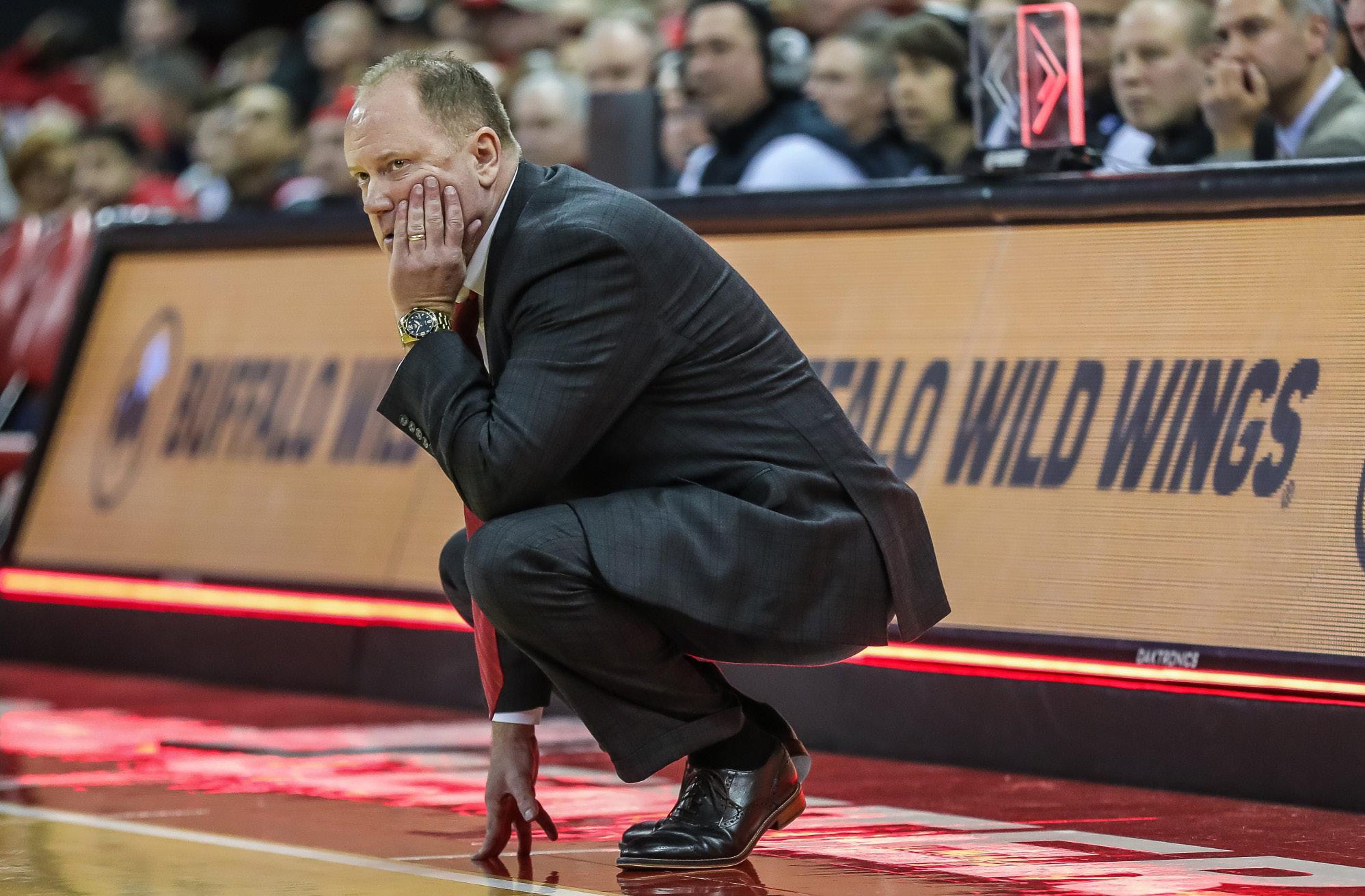
And with that, the 2023-24 Wisconsin men’s basketball season comes to an end. The final score from Brooklyn: James Madison Dukes 72, Wisconsin Badgers 61.
Just weeks after being in contention for a No. 1 seed in the NCAA tournament, a seventhstraight season without a Sweet Sixteen berth is a massive disappointment. It’s also Wisconsin’s longest drought since 2003. By half a decade.
And yet, nothing changes.
Wisconsin Athletic Director Chris McIntosh told BadgerExtra that head coach Greg Gard will remain at the head of the table come the opening tip of 2024.
“I think Greg puts us in the best position to be successful in the future,” McIntosh said.
McIntosh extended Gard’s contract in June 2022. The contract makes Gard the fifth highest-paid coach in the Big Ten and the 22nd highest-paid coach in the country. Gard would be owed a cool $12 million in “liquidated damages” if fired without cause.
So, Gard will stay. Here’s why McIntosh made a mistake.
Tournament failures
2014 was a glorious year to be a Badgers fan.
Frank Kaminsky put up a player of the year performance, Sam Dekker dropped daggers, and the team made the national championship game.
The 2015 season saw Bo Ryan retire 12 games in and hand the reins to Gard, who guided the team to a Sweet Sixteen appearance. Aided by a roster mostly put together by Ryan, Gard made the second weekend of the tournament again in 2016.
But following the graduation of four key Ryan recruits — including Bronson Koenig and Nigel Hayes — the team missed the
tournament completely.
Since then, the team has made the tournament during four of the last five full seasons (the 2020 NCAA Tournament was canceled due to the COVID-19 pandemic) under Gard. They have underperformed their seeding in three.
This year, the Badgers entered Pinnacle Bank Arena in Lincoln, Nebraska ranked No. 6 in the country, riding high after an 8-1 start to the Big Ten schedule.
They lost.
Wisconsin proceeded to make it a four-game losing streak and dropped eight of their last 11 games to finish the Big Ten season 11-9. The Badgers completely fell out of the AP rankings and lost all hope for a tournament matchup close to home.
This is not a new trend. Last year, the Badgers opened the new year with a 3-0 Big Ten start and a No. 14 ranking. They finished the season 6-12 in the conference and
missed the tournament entirely.
In 2021, Wisconsin was riding high on the back of Johnny Davis, who led the team to a Big Ten regular-season championship and a No. 10 ranking. By now, the sequence should be familiar. The team lost their final regular season against a bad Nebraska team, lost in their first Big Ten tournament game and lost in the second round of the NCAA tournament to Iowa State.
This trend seems to follow Gard across his head coaching tenure. A 12-3 record and No. 10 ranking in 2020 turned into 18-13 and a secondround exit. A 21-3 record and No. 7 ranking turned into 22-8 and nearly out of the rankings in 2016.
Such is life under Gard.
If you want to be the best, you have to recruit the best. Gard has consistently struggled to do that.
Wisconsin is by no means the most talented state when it comes to homegrown basketball
talent, and that means you can’t just stare at the stars through a telescope. You have to jump on a spaceship and go get them.
Gard even misses in-state talent when it’s available. Since 2018, Wisconsin has produced nine top-50 national recruits, according to 247sports. Gard secured commitments from none of them.
His top commit is arguably transfer AJ Storr, who was a fourstar prospect upon entering the transfer portal in 2023. Daniel Freitag — who is expected to debut for the Badgers in 2024 — will be his highest-ranked recruit (104th nationally) since Nate Reuvers in 2017, according to 247sports.
Gone are the days of five-star recruits like Sam Dekker. The standard is now three.
Solid replacements
Fire Gard.
“But who will you replace him with?” you ask.
Not everyone has an elite
coach sitting on the street waiting for them, but that doesn’t mean the Badgers wouldn’t have options.
Highly regarded former Florida Atlantic coach Dusty May signed on at Michigan for the same salary as Gard, just a year removed from leading his then-Conference USA Owls to a Final Four appearance as a No. 9 seed.
Fast-riser Danny Sprinkle led Utah State to an NCAA tournament victory in year one as head coach, immediately removed from back-to-back tournament appearances as the leader of Montana State. His new deal with Washington is slightly less lucrative than Gard’s.
Pat Kelsey was signed by Louisville for significantly less than Gard, as was new West Virginia coach Darian DeVries.
And wouldn’t it have been so fitting if the coach that knocked him out of the tournament this year — Mark Byington — was hired as a replacement before he shipped off to Vanderbilt?
So many options. Maybe the Badgers are playing the waiting game with Kentucky and John Calipari.
Accepting reality
With all the money talk, it would be remiss to mention that Gard is the second highest-paid public employee in the state of Wisconsin — right behind Luke Fickell.
So yes, Gard will stay. But perhaps it is time to start assessing our sports coaches like politicians.
Gard will make almost 25 times the salary of Gov. Tony Evers in 2024. However, unlike Evers, his job security does not come down to a vote by Wisconsinites.
Instead, on we roll into a 202425 season with Greg Gard but without Storr and Tyler Wahl.
As Gard himself said about the team’s performance after the loss to JMU: “That’s pretty futile.”
The Wisconsin Badgers men’s hockey team season ended after a 3-2 heartbreak overtime loss to the Quinnipiac Bobcats.
Wisconsin played their first NCAA tournament regional semifinal game since 2021, drawing a tough opponent in the defending national champion Quinnipiac Bobcats. They traveled to Providence, Rhode Island, much closer to the Bobcats’ home turf in Connecticut.
The Badgers came within mere inches of a continued postseason run.
William Whitelaw’s breakaway in overtime finished with the puck in the crease, inches away from crossing goal line after a desperate stick save from Quinnipac’s Vinny Duplessis. The stick knocked the trickling puck out of the crease and
danger. That marked the Badgers’ last promising chance of the season.
Ten minutes later, on a Badger change, Quinnipiac’s Victor Czerneckianair found the overtime winner, sealing the Badgers’ season with a 3-2 defeat in the first round of the NCAA tournament.
The Badgers gave it their all leading up in regulation, but Quinnipiac did just enough to take the game to overtime.
Christophe Fillion put Quinnipiac on the board early as the Bobcats took a 1-0 lead just 2:12 into the first period. The Badgers rallied in the second period, and Quinn Finley showed off his skills to score an unassisted goal on Duplessis. Joe Palodichuk came up clutch soon after, giving the Badgers a fragile 2-1 lead.
The lead ended up being far too fragile as the Bobcats scored
to tie it up with 1:32 to play in the second period.
Despite considerable efforts, neither team found the net in the third period, and the game went into 5-on-5 overtime, where Quinnipiac found the goal to advance to the next round against Boston College.
The Badgers worked hard in the regular season to get themselves into a good position in the NCAA tournament and postseason as a whole.
They had about two weeks off to prepare for the tournament game after dropping out of the first round of the Big Ten tournament with a loss to the Ohio State Buckeyes.
The first-round exit in the NCAA tournament marks a simultaneous-
ly disappointing yet positive finish to the Badgers postseason. Few people expected the Badgers to make the postseason under firstyear head coach Mike Hastings. Yet, Hastings beat out all expectations and proved he has what it takes to turn this program around.
The regular season featured many highlights and runs as the Badgers broke decades-old team records and had a ninegame win streak at one point. At one point, they even ranked No. 1 nationwide. Some mixed performances in 2024 meant the Badgers just missed out on the Big Ten regular season championship and then failed to make anything of the postseason.
Despite that, the season is a net positive for the team. They finished 26-12-2, a fast turnaround from a 13-23-0 season the year prior under
former head coach Tony Granato.
The Badgers have a lot to look forward to next season as Hastings gets his first chance to bring in recruits of his own.