
Fruit Peels, Plastic, and Plates, Oh My!
by RILEY HUDDLESTON
Lapolla, Flik and Facilities Express Opinions on Trash at Menlo
Menlo has a trash problem. “It’s something I watch every day […] it happens too many times,” Dean of Students Tony Lapolla said. Sophomore Kami Israelski recalls seeing trash on the quad. “I often see banana peels, orange peels, half-eaten things,” Israelski said.
Operations Service Coordinator Jeff Healey, who has worked at Menlo for 15 years, believes there has been progress on the students’ part. “Over recent years, I believe
there has been great improvement in students’ attitude toward trash,” Healey said. “ I walked the campus this morning, and I am pleased to see how little trash was laying around.” However, Healey does notice more of a problem with students’ property being left out. “A couple of issues I do see as challenging are the amounts of clothing, pens [and] pencils,” Healey said.
Flik Executive Chef Shawn Hunt notices messes on a bigger scale in the cafeteria. “We experience dishes and trash left behind every day,” Hunt said in an email to The Coat of Arms. “We see plates, bowls, silverware, cups, napkins, general trash [and] condiments smeared on tables, [as well as] salt and pepper shakers misused on purpose.”
Student Council also

An Introduction to Some of the Flik Staff
by TESSA FRANTZ
Although we see them every day, how many of us really know the people behind the counter? Here is a quick introduction to some members of the Flik cafeteria staff.
Shawn Hunt, from Norwalk, Conn., serves as the executive chef at Menlo’s cafeteria. His position
entails being in charge of the full production, planning and execution of meals. He also plans and executes catering for any special events or holiday activities. Hunt is in charge of managing the entire
implemented advocacy cleanup, where every advocacy is assigned two or three days of the year to clean up the cafeteria after lunch. Not only was it intended to take the responsibility of cleaning up off of the Flik cafeteria staff, but also to help students experience the problem firsthand. “The point would hopefully be to have [students] say, [...] ‘Let me be the upstander, we don’t do that, pick up,’” Lapolla said.
Hunt acknowledges that advocacy cleanup groups are helpful to the Flik staff, but he knows the messes still affect Flik staff. “Overall, it does cause more work for the food service staff, more time lost and excessive waste,” Hunt said. “I wish students and staff would be more considerate, aware and mature in this matter.”
Lapolla thinks the issue reflects badly on the Menlo community.
“It speaks to, ‘I don’t care,’ or that ‘Someone else will do it,’” Lapolla said. After observing students leaving out dishes or trash for years, Lapolla and Student
Trash, page 2

Taco Truck Breaks Atherton Municipal Code by Serving Menlo Students
by SAMMIE DOSTART-MEERS
Over the past school year, Menlo students have started to eat lunch at the taco truck, called Mendoza Catering, located at the construction site of the new theater. But recently, Menlo security has begun to deter students from eating there because the taco truck is not complying with Atherton Municipal Code.
Rafael Mendoza has been serving 10-20 Menlo students per day from his taco truck since August 2019. However, according to Mendoza, in the last three to four weeks, the number of students at the truck has decreased.
Security Supervisor Mustapha Moutri explained that the taco truck has been unknowingly breaking an Atherton Municipal Code by selling food to students. The legislation in question is Atherton Municipal Code 12.18.050, which prohibits food trucks and other similar vendors from selling food on school property to students without the school’s permission.
Because of this code, Moutri has stationed a security guard in the area of the truck from 11:30 a.m. to 12:30 p.m. to deter students from buying food. “It’s a 100% safety issue. Food safety is important, and we have to be careful because we haven’t seen [the truck’s] health permit,” Moutri said.
Dean of Students Tony Lapolla highlights that by allowing the taco truck to serve students on the Menlo campus, Menlo is indirectly providing students with that food. “If we allow you to go there, we can’t always be assured of what you’re getting,” Lapolla said.
According to Lapolla, although the taco truck formerly served students, it has now stopped and is cooperating with Menlo. However, on Tuesday, March 3, members of The Coat of Arms staff saw students coming out of the CADC with food from the taco truck.
According to Lapolla, deterring students from buying food from the taco truck is similar to Menlo’s policy with food delivery
services like DoorDash. “By allowing the taco truck, we create different environments with some people who can afford it and some people that can’t,” Lapolla said. “I think if we allow it, we’re saying that that’s something we believe in, and we don’t want that.”
The location of the taco truck inside the construction zone of the Spieker Center for Performing Arts also raises some concerns
by CARLY McADAM
A sophomore boy was expelled from Menlo following incidents in which the student used racial slurs and offensive gestures towards an African American student. The decision was made Sunday, March 1 and was effective immediately. On Monday, March 2, the sophomore class attended an emergency class meeting where Dean of Students Tony Lapolla explained the situation.
Lapolla described the student’s actions as a violation of Menlo’s values. “He used the N-word, he used gestures that indicated that the student was a monkey and sounds coordinating with that,” Lapolla said in the meeting.
Chief of Institutional Equity, Diversity and Inclusion Keith Wheeler also spoke to the sophomore class. “None of us should be under the pressure or under the expectation to come to school where you’re supposed to be able to lean in intellectually and be emotion-
The student used a racial slur and offensive gestures towards an African-American student.
ally and physically safe but have to worry about someone who’s going to signal or make sounds as if you’re a primate,” he said.
According to Lapolla, the student went through Menlo’s
Expelled, page 2
about student safety and insurance liability. According to Lapolla, students being within the construction zone could cause either the construction company, DevCon, or Menlo to be liable.
“There is a gate and a sign that says this is a construction zone and that you must wear a hardhat and safety goggles to get in,” Moutri said. “So that’s a safety issue."
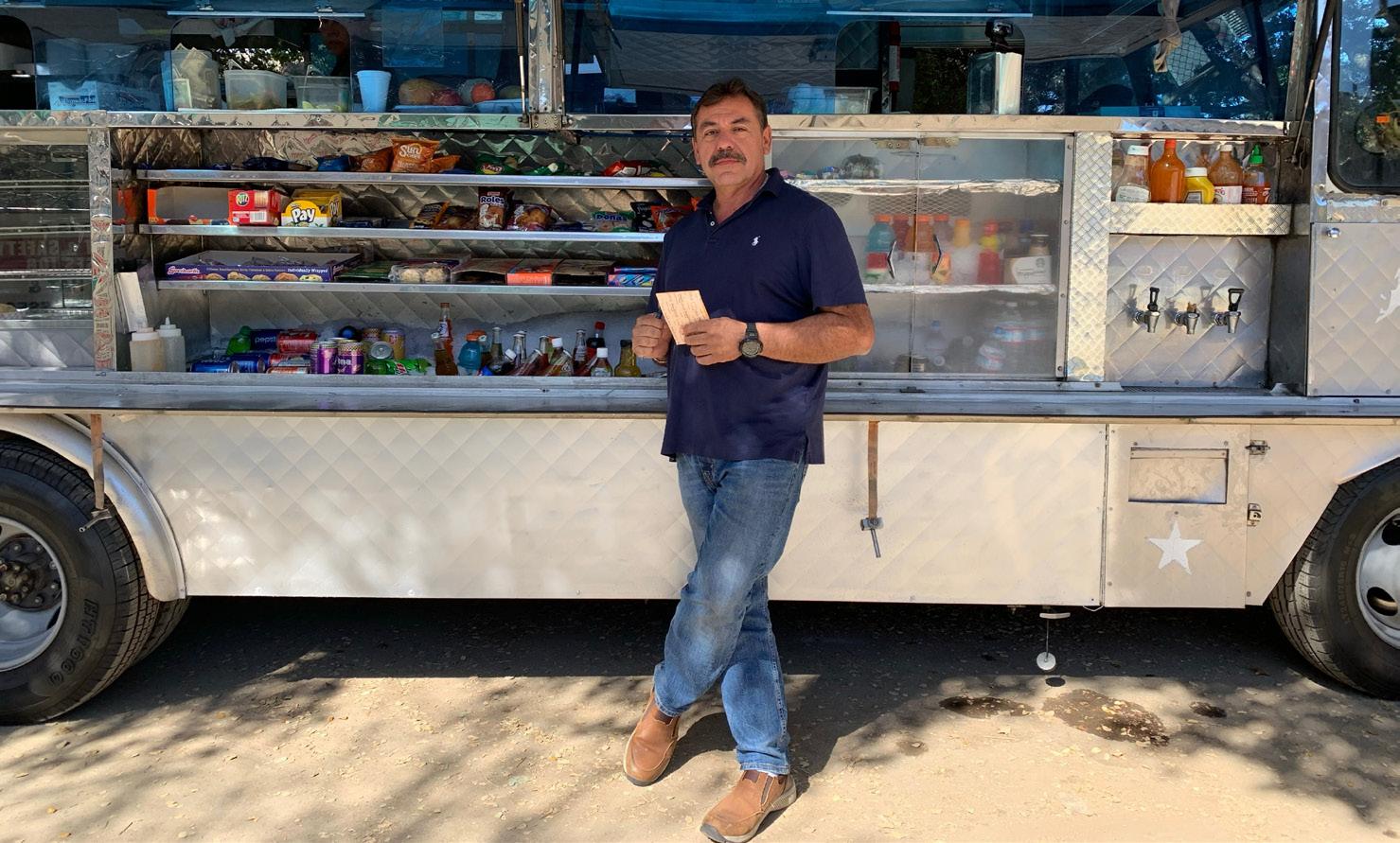
Mendoza stands in front of his catering truck. Staff photo by Sammie Dostart-Meers.
Executive Chef Shawn Hunt is a big hockey fan. Staff photo by Sadie Stinson.
Flik, page 3
Illustration by Malilka Tatavarti
Expelled, cont.
discipline process. “It was a very difficult decision that was made by our Disciplinary Committee that is made up of four [students] and four adults,” Lapolla said. “It’s something we take very seriously,”
Lapolla said that the Disciplinary Committee took into account not only the student’s actions, but also the values of the school. “If this isn’t [crossing] the line, then I don’t know what the line is,” said one of the committee members, according to Lapolla.
Lapolla acknowledged the effect that expelling a student can have on
“If this isn’t [crossing] the line, then I don’t know what the line is.”
- Disciplinary Committee Member
the student and their family. “He created an environment for this other person that made it hard for [the targeted person] to be on this campus, and we have to think about that also,” Lapolla said. “We do not take this lightly.”
According to Lapolla, all of the members of the committee agreed with the decision to dismiss the student, and Head of Upper School Than Healy accepted the recommendation. “We were all in agreement that this is where we had to go,” Lapolla said.
According to Wheeler, “There’s no easy answer for any of this, but I stand by the school’s decision.”
Lapolla also stressed the importance of students being upstanders. “I ask you to watch out for each other,” he said to the sophomore class. “When something is said that you feel is not right, tell someone so we can take appropriate action.”
Student-Run Menlo Hacks Hosts Hackathon For Fifth Year
by ASHLEY GRADY
Editor’s note: The MenloHacks Team has postponed the hackathon to an undecided date due to the outbreak of coronavirus. The event will no longer take place March 14 through 15.
March 14 and 15 will mark the fifth year of Menlo’s annual student-run, 24-hour hackathon.
According to the Menlo Hacks website, in this context, a “hackathon” is “an event where people come together for 24 hours to make something using the wonders of technology.” The Menlo Hacks team emphasizes that the event is open to anyone who wants to participate, regardless of prior experience in coding.
This year’s hackathon has a theme of “Global Issues,” which includes medicine, education and climate change. The Menlo Hacks team selected this theme to encourage participants to find real-world solutions to issues that they are enthusiastic about through coding.
Senior Sonya Lebedeva, one of the main directors of this year’s event, explained, “This year, we are hoping to encourage people to create a fashion app or something with climate change and make something they are passionate
about, instead of just creating a really complex coding thing to show that you are super proficient and skilled.”
The projects generated during the Menlo Hackathon vary significantly based on coding ability. The point of the event is not to generate perfectly polished products from every participant; instead, the main purpose of the hackathon is to both introduce people to technology and to get everyone more excited about it. “[Participants] don’t have to create a winning project. they can just learn a new skill or create a solution for something they love,”
Lebedeva said. The projects range from simple websites to voice and object recognition to highly complex analytical apps.
“The word ‘hackathon’ makes it seem scary, but the event is really low pressure, and you can just go to learn and have fun with computer science. It is a cool experience to meet some of the judges, such as the CEO of Yahoo and the CEO of YouTube [in] previous years,” said sophomore Alexandre Acra, another hackathon organizer.
Lebedeva herself is an example of how Menlo Hacks can bring someone into the world of technology who might not otherwise try it. She did not enjoy computer science at her prior school and never envisioned herself as someone who would be involved with the subject.
Lebedeva hopes that those who wouldn’t normally see themselves at the hackathon will sign up and would love to see a more diverse group of people. “Someone who is different will create the best solution because they will be able to come up with new ideas, and that is usually where the best projects
Hacks, page 3
Trash, cont.
Council have worked to implement solutions, such as making videos and signs talking about how students are responsible for their own messes.
Besides making a mess, Lapolla is bothered by the student mentality towards responsibility that comes across when trash is left out. “It’s what it represents,” Lapolla said. “That [...] it’s the facility department’s or it’s Flik’s responsibility, and that’s not really right.” Hunt doesn’t believe trash being left out in the cafeteria is a major sign of disrespect to the school’s staff, but rather more disregard to the cafeteria space. “This is an area of food service and nutrition and
“I often see banana peels, orange peels, half-eaten things.”
- Kami Israelski
needs to be kept sanitary for everyone. It tells me that the student body is unaware of their actions and their impact on the Flik staff and the environment.”
Like Hunt, Healy doesn’t think trash on the quad is a big
Lapolla is bothered by the student mentality towards responsibility that comes across when trash is left out.
enough problem to come across as disrespectful to the grounds staff. “Overall, I believe the majority of students are respectful of the campus and the facilities crew,” Healy said.
Menlo Mock Trial Wins County, Prepares for State Championship
by SYLVIE VENUTO
Editor’s Note: Due to the coronavirus outbreak, Menlo’s Mock Trial team will no longer be able to attend the state tournament on March 20 through 22.
Coming off of a state championship title win last year and a county win this year, Menlo’s Mock Trial team is gearing up for the state tournament with a positive outlook on their chances at winning the title.
The Mock Trial team went un-
defeated in San Mateo County this year, continuing their county streak of 100 wins and 0 losses that dates back 10 years, according to Mock Trial Advisor Dan Devitt, who has led the Menlo Mock Trial team for 17 years. “We have a lot of really talented people this year, people with a lot of experience on the team, but I’d also [credit the Mock Trial Team’s success] to our coaches,” junior Mack Ford said, mentioning not only Devitt but also
volunteer coaches.
Devitt echoed Ford’s praise of the volunteer coaching staff, specifically former coach Thom Scher, who was a 20-year-old Stanford senior unaffiliated with Menlo prior to joining the coaching staff in 2008, and current head coach Tracy Tefertiller, mother of Menlo freshman Penelope Stinson and junior Sadie Stinson.
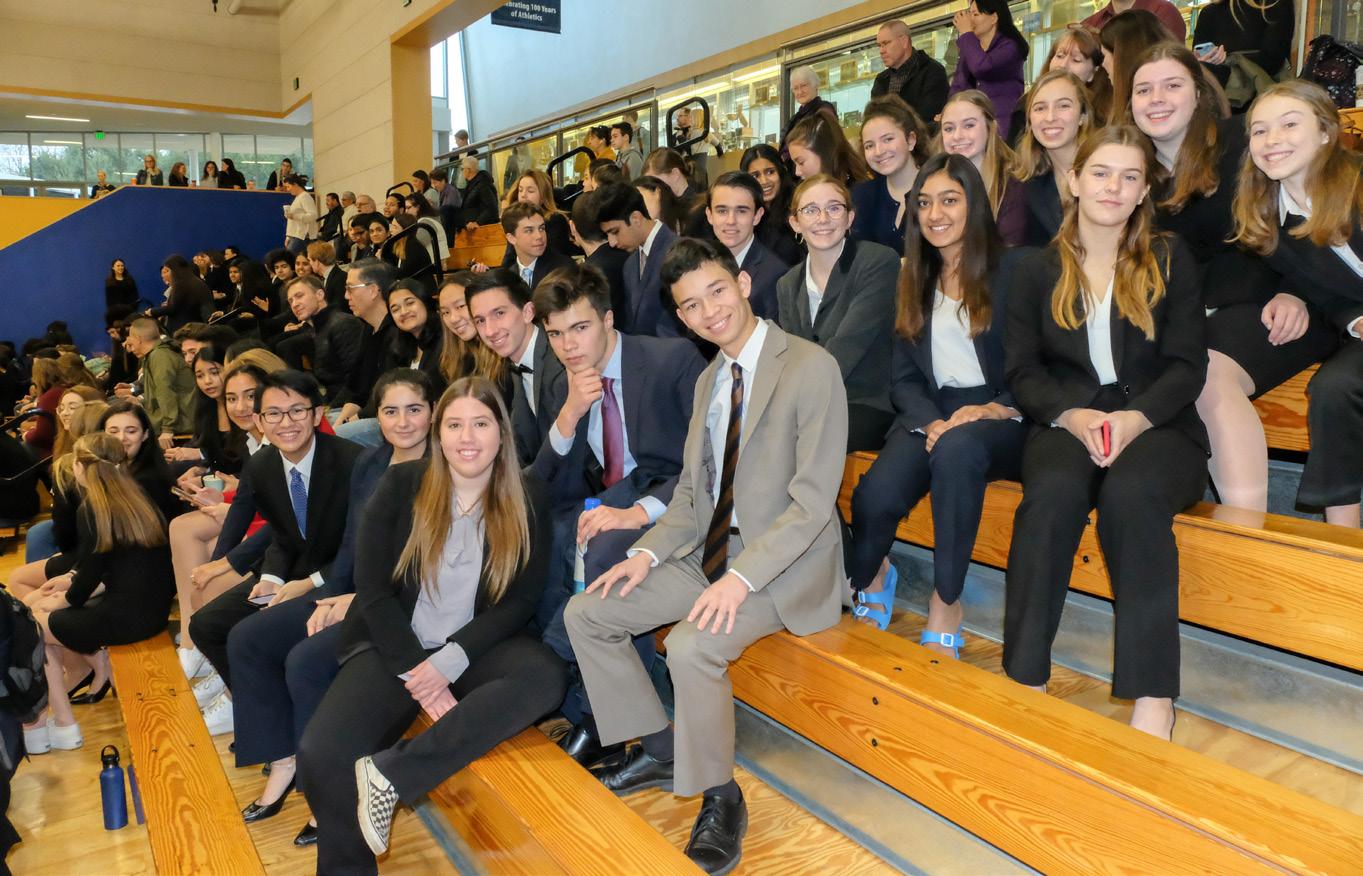
“Through it all, every volunteer has given their time and passion to make [Menlo Mock Trial] what it is today: a safe place for students who like to compete academically and hone their debate skills as well as being a part of a team that accepts students from all walks of life and background,” Devitt wrote in an email.
The team’s general outlook for the state tournament taking place on March 20 through 22 is optimistic. “Honestly, I’m feeling pretty confident. We’ve put a boatload of work into
it, so no matter what happens, I’m pretty excited,” Ford said. Devitt brought up concerns of the coronavirus potentially causing the state tournament to be canceled, but he stated that he felt confident going into the tournament because of the team’s hard work, despite potential challenges that come with being the reigning state champion. “We have a target on our back as defending state champions. That means a lot of teams will be extra aggressive against us or trying their best to knock us out of contention,” Devitt said. Senior Meredith Fenyo interprets the pressure of being reigning state champions as motivation for this year. “Our win last year serves as a great reminder that this distant goal we have all season isn’t so distant after all,” Fenyo said.
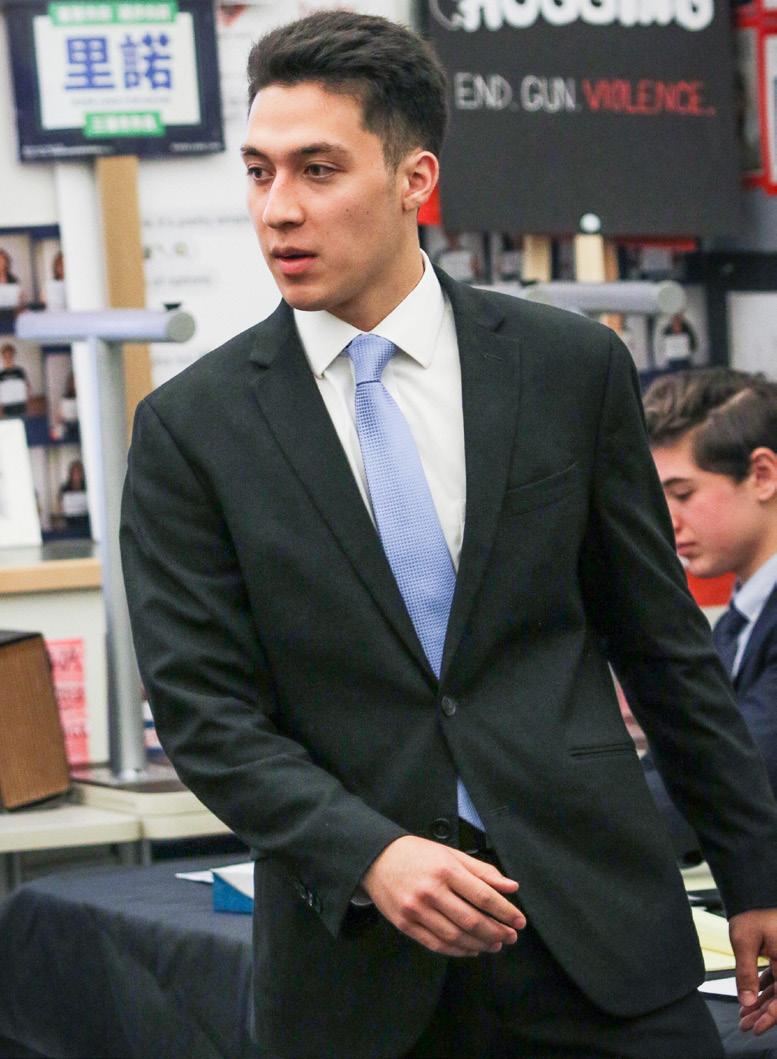
“Winning the state title is entirely possible and in reach if we want it to be, and I think that that serves as our daily motivation to give our one-month prep period everything we’ve got so that we can go into States as confident, prepared and up for the challenge as possible,” Fenyo said.
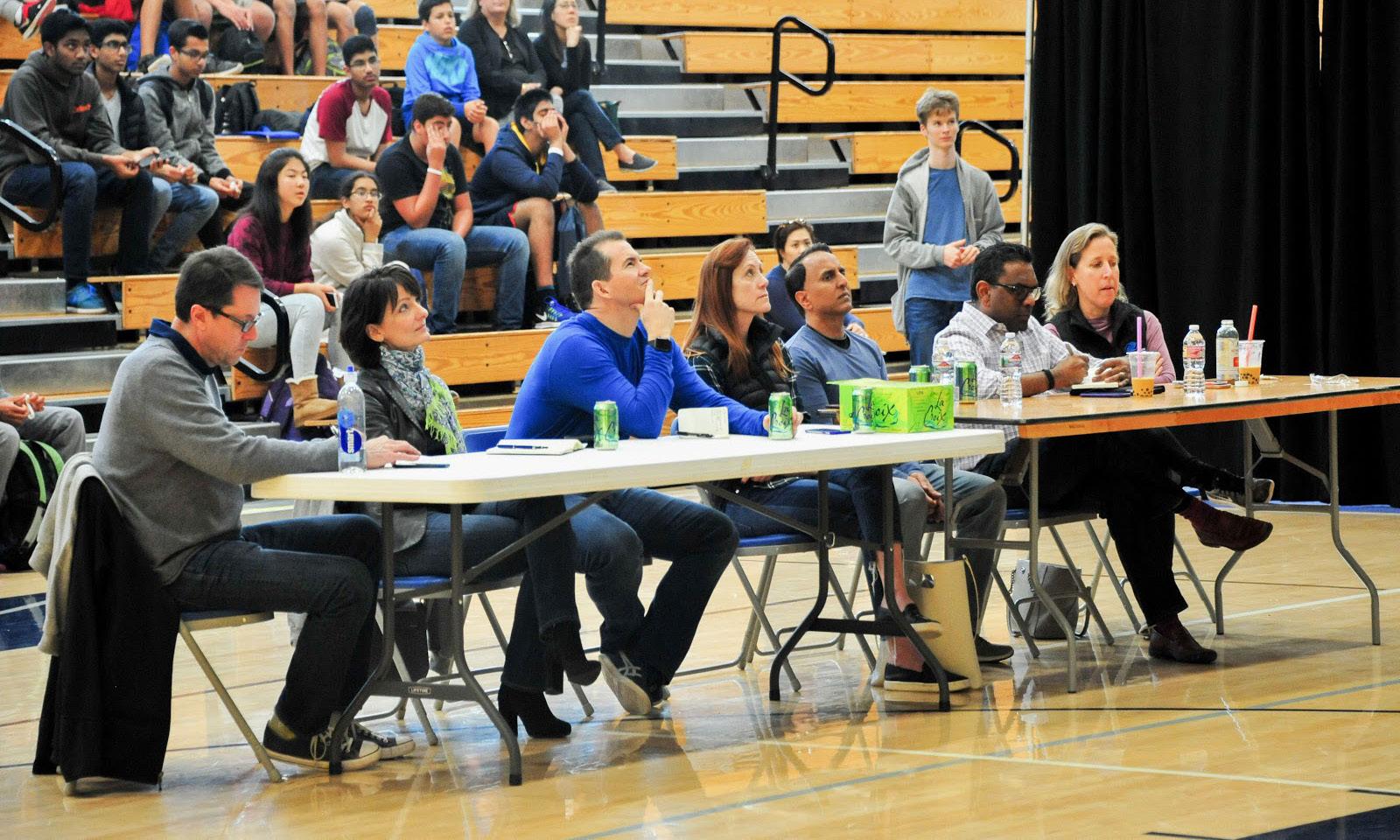
The panel of judges watch presentations at the end of the 24-hour hackathon. Photo courtesy of Menlo Hacks website.
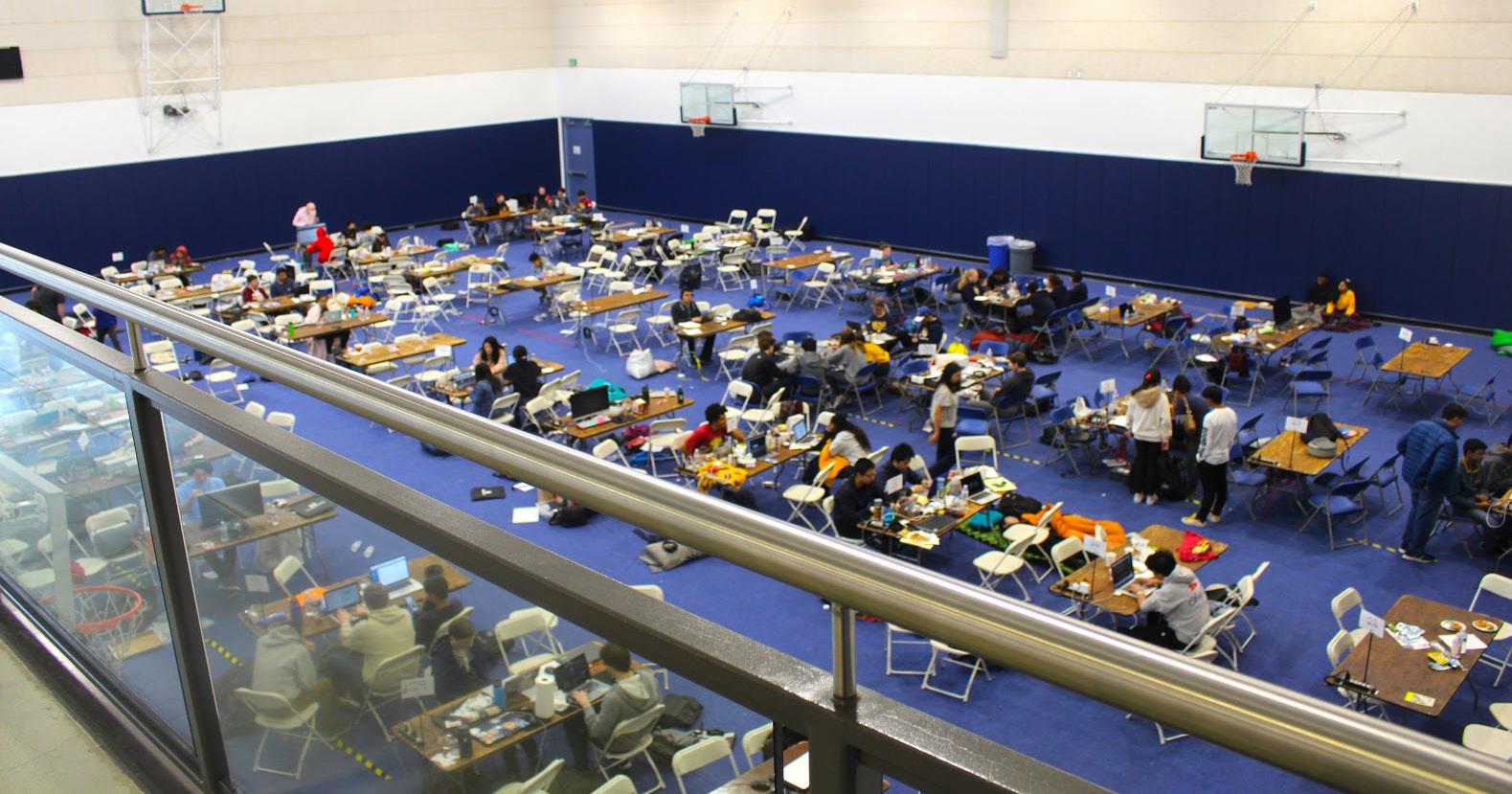
This is the fifth year of the Hackathon. Photo courtesy of Menlo Hacks website.
Varsity won first place in the NorCal invitational tournament as well as the county finals, and JV placed 12th at NorCal and second at county. Photo courtesy of Pete Zivkov.
Senior Caleb Julian-Kwong delivers a closing statement for the prosecution during the NorCal tournament. Photo courtesy of Pete Zivkov.
Hacks, cont.
come from,” Lebedeva said.
The hackathon was originally launched in 2016 by Menlo alumni John Reinstra (‘16) and Jason Scharff (‘17). At that time, the student organizers were able to use the Menlo gym as a venue, provided they organized the entire event themselves, including providing funds, supplies, judges, chaperones, mentors and participants, according to Lebedeva.
This year’s event benefits from an experienced leadership team. Lebedeva helped plan last year’s event and has been planning this year’s hackathon since September. The other hackathon leaders, sophomores Mitsuka Kiyohara and Acra, have participated
The top three projects receive cash prizes of $500, $200, and $100; other top projects receive subscriptions or non-monetary prizes.
in the hackathon since its start in 2016, when they were sixth graders at the Menlo Middle School. “I really enjoyed what Menlo Hacks is about and the spirit and nature of it; I did it [every year] during middle school, and freshman year I was asked by a senior to be part of the leadership team, and [...] I became Vice Director,” said Kiyohara, whose involvement in planning and leadership has continued on through this year. For his part,
Acra is working on the sponsorship outreach team this year after his years of participation and seeing his projects receive top placings for the past two years.
This year, the sponsorship team raised more money than in any previous years. The recipe for their success is persistence. “The main thing [when recruiting sponsors] is honestly just emailing them, like, every three days,” Acra said. Lebedeva further explained that Menlo presents sponsorship as a “winwin” — it’s an opportunity for the sponsor companies to get greater visibility with
This year’s hackathon has a theme of “Global Issues,” including medicine, education and climate change.
hackathon participants and observers who are likely to be interested in the companies’ products or services. The main sponsor for the 2020 hackathon is the KLA Foundation, which is a grants program with an emphasis on STEM. Other sponsors include a variety of Menlo parents, iD Tech, YouTube and numerous other organizations and individuals. At the end of the 24-hour hackathon event, students can present what they have created to a panel of esteemed judges. The top three projects receive cash prizes of $500, $200 and $100; other top projects receive subscriptions or non-monetary prizes.
Flik, cont.
kitchen staff. Before working at Menlo, Hunt worked as the executive chef in a senior living community living center. He wishes students knew how much effort the cafeteria staff puts into their jobs. When asked what his favorite part about working at Menlo is, Hunt explained that, “As a chef, [when] working in a restaurant, you don’t really get to spend much time at home, so I think the best part of working in [in the Menlo cafeteria] is the hours that come with working at a school.”
Isaiah Frazier, from Fresno, Calif., is the designated pizza maker in the Menlo cafeteria. Frazier starts cooking pizzas around 8 a.m. and continues working until well after lunch finishes. Before coming to Menlo, Frazier was working at a restaurant called Timber and Salt as a chef for a year and a half. Frazier’s favorite part of working at Menlo is interacting with the students. Outside of Menlo, Frazier loves to play football. In fact, Frazier used to play semi pro football.
Jesus Marin, from San Jose, Calif., has been working in various kitchens for the past seven years, including the kitchen at Nueva School. At Menlo, Marin works breakfast every morning and then works with the soups before and during lunch. Marin’s fun fact is that he has two dogs, canaries and parakeets. His favorite part of working in the cafeteria is learning different jobs that come with working in the kitchen, and he likes to learn how to cook new things.
Robert Hultman, from Walnut Creek, Calif., serves as the sous chef and assistant manager in the kitchen. His job entails assisting with managing all the employees, making sure that the lunch service comes out on time and helping with day-to-day operations. Before coming to Menlo, Hultman worked with Hunt in the same senior community living center in San Francisco. Hultman’s favorite part of working in the cafeteria is being able to put out a really nice meal for the students and being able to feed 1,000 people within an hour. He wishes that students would appreciate this and understand how much time and effort the staff puts into making lunch for the school every day.
Lin Porres, from Mexico, is a main cook in the cafeteria. She manages and makes the salad and sandwich bars, along with putting together the cut fruit every day. Before Menlo, Porres worked in Fresno, Calif. as a chef in a restaurant. Porres’s fun fact is that she enjoys playing soccer. She does not have anything she specifically wants students to understand as she thinks that, generally, students are respectful. Porres’ favorite part of working in the cafeteria is actually serving the food and interacting with the students.
Thien Hoang, from San Diego, Calif., manages the day to day operations of the cafeteria. This includes setting up, serving and putting everything away after lunch. Before Menlo, Hoang worked at Stanford as the director of residential dining, and she’s been working in the restaurant business since she was eight. Hoang wishes students knew how fresh the meals actually are. Her favorite part of working at Menlo is just seeing everybody happy with their food.
Super Tuesday Whittles Down Democrats' Playing Field
by ALEX LEVITT
At long last, the Democratic primary field has been chiseled down to two major candidates: Joe Biden and Bernie Sanders. This dramatic twist in the race is largely due to the results on Super Tuesday, which took place on March 3, when 14 states, including California and Texas, voted for their nominee of choice. Biden won 10 states, while Sanders won four states, including California.
CNN exit polls found that a majority of black voters in America voted for Biden, propelling him to
a clean sweep of southern states, likely due to his service as Barack Obama’s vice president. But his support among African American voters stretched beyond just the south, as this extra boost propelled him to wins in states across the country that his campaign hadn’t even targeted, such as Minnesota and Massachusetts.
Sanders, on the other hand, had the most support among Latino voters and voters under the age of 30. While this support was encouraging, the Sanders campaign acknowledges that voter turnout among young people was lower than expected, thus harming Sanders across the nation. Still, Sanders won the states of Colorado, Utah, California and his home state of Vermont.

This shocking night capped off the remarkable four-day comeback of Biden’s campaign. On Saturday, Feb. 29, Biden won a resounding victory in South Carolina, causing his campaign to regain momentum and Pete Buttigieg, Amy Klobuchar, and Tom Steyer to suspend their campaigns. Buttigieg and Klobuchar endorsed
Biden, and it is now apparent that their supporters have heeded their instructions and voted for Biden. According to FiveThirtyEight’s statistical models, Biden had about a 30% chance of winning the most national delegates before South Carolina, but after the results in South Carolina and the subsequent exits of Buttigieg, Klobuchar, and Steyer, his odds jumped to 65%.
The Super Tuesday results have also caused Mike Bloomberg and Elizabeth Warren, the other two
On Super Tuesday,
Biden won 10 states, while Sanders won four states, including California.
prominent candidates, to drop out of the race. Bloomberg endorsed Biden, while Warren has not yet made an endorsement as of March 6. “Defeating Donald Trump starts with uniting behind the candidate with the best shot to do it. It’s clear that is my friend and a great American, Joe Biden,” Bloomberg wrote in a statement after suspending his campaign.

This announcement marks the end of Bloomberg’s historic campaign, in which he spent over $500 million of his own fortune on television advertisements. He was originally hailed as a unifying figure that could win over moderate Republican voters, but his campaign began unraveling after poor debate performances.
With these debates and Biden’s dominating performance in the South Carolina primary before Super Tuesday, the moderate wing of the party had essentially chosen Biden as their only hope of defeating Sanders who they see as someone with very low chances of defeating Donald Trump. Nearly all polls simulating an election between Trump and either Biden and Sanders show Biden performing better than Sanders, a testament to Biden’s expression that he would “beat Trump like a drum.” Still, many of these polls have Sanders defeating Trump.
The next step in this ace is a rapid series of primaries coming every week for the next couple months. On March 17, a huge amount of delegates

The moderate wing of the party has chosen Biden as their only hope.
will be up for grabs as Florida, Ohio, Illinois and Arizona will hold primaries. But for the first time this election cycle, a once-diverse field of candidates has been thinned down to just two men vying for additional delegates.

FloMo-ving On… Members of the Performing Arts Community Remember What They Loved (and Didn’t Love) About FloMo
by EMILY HAN
The Florence Moore auditorium, nicknamed FloMo and located on the Menlo College campus, has housed Menlo drama and dance performances for decades. With construction of the Spieker Center for the Performing Arts set to be completed this August, the upcoming Dance Concert will be the last Menlo performance in FloMo. While there is plenty to complain about in terms of FloMo’s facilities, students and teachers who have built a unique community inside its walls are appreciative for all that the space has offered.
“When I think about leaving [after graduating], FloMo is like my home,” senior Emma Dressel said. “That’s where I grew a lot with everybody else from the drama department.” Dressel has performed in numerous Menlo drama productions and recently played Sally Bowles in “Cabaret,” which she says challenged her to learn about developing her onstage character.
To Middle School Dance teacher Angela Curotto-Pierson, the end of the opening song of “Cabaret” stands out. “The moment at the end of [the song] ‘Willkommen,’ with all the little lights projecting and everything — I think, closing [night], I cried because it was so powerful.” Curotto-Pierson and Dressel both remember “The Old Man and the Old Moon,” a production from last year, as also being particularly memorable.
FloMo seats only 220 audience members, and many people familiar with the space describe it as an intimate theater. “It put the audience and the actors really close to one another, and I’m going to miss that,” Upper School Director of Creative Arts Steven Minning said. This aspect of FloMo has also allowed performers to build a close-knit community within its walls.
“Our sweet stage has seen countless hours of grit and hard work that has resulted in pure magic,” Upper School Drama teacher Evanne Barcenas said in an email to The Coat of Arms. Barcenas is a Menlo alum (‘00) and performed in FloMo when she

of Alison Leupold.
was a student.
Having been home to so many productions, FloMo is a place of constant learning and a safe space for many students; however, it certainly is not perfect. According to Upper School Dance teacher Jan Chandler, a family of rats has lived in the building for many years. “I think there’s ghosts in there too, but I’ve never seen them,” she joked. In addition to hosting these unwanted guests, Chandler remembers that the building flooded during a storm in the mid-2000s, with water rising up to the first row of seats.
Minning has also experienced problems with rain during some rehearsals. “Suddenly, it would be raining onstage,” he said. “There’d be a hole in the ceiling, and we’d have to put a bucket [there].”
“The power has gone off a couple times when I’ve been in there,” said sophomore Tucker Gold, who has performed in FloMo for the past two years. “I don’t think the space is 100% designed for certain sets, and with the new theater, we’ll be able to really go all out.”
“I just remember the temperature never being right,” Curotto-Pierson said. She is also a Menlo alum and fondly views FloMo as having its quirks but also having given so much to the school’s performing arts
community.
FloMo’s intimacy can both be a blessing and a curse: its ceiling is only 11 feet high, and creating sets for shows is difficult.
“I won’t miss the dust, lack of wing space, the tangle of cables everywhere, the short ceiling and the difficult tight spaces to work with,” set designer Andy Hayes said in an email to The Coat of Arms.
For Dressel, one of the trickiest aspects of FloMo is its many surprises. “Sometimes you’ll be walking, and you won’t realize, but there’s just a block coming out of the wall, and you’ll hit your head on it.” She has a scar on her arm from a similar incident.
“FloMo was not normal,” Minning summarizes.
Chandler sees a positive side to FloMo’s various oddities. “You have to get creative [in FloMo], which has been fun,” she said. Despite nostalgia for the building, Chandler is thrilled about the upcoming Spieker
Center. “I can’t say that I’m going to miss FloMo,” she said.
Barcenas echoes this sentiment. “FloMo has been good to us. It’s helped create so much,” she said. “But I think we are ready to move forward.”
“It’s like going from having an antique car to buying a brand new car. It’s everything,” Minning said. He anticipates that the new, state-of-the-art theater will allow future shows to incorporate aspects and technologies that he hasn’t had access to before, such as better lighting, sound, seating, and heating.
Curotto-Pierson looks forward to these new features too, but she also expects that moving to the new theater will present its own difficulties. “It’s definitely going to be new and exciting, but everything new and exciting comes with different challenges,” she said.
The Spieker Center will undoubtedly become another beloved space for the performing arts at Menlo, but FloMo’s memory will persist among students and faculty members. “It’s not the most glamorous theater, but it’s the most homey that you’re going to find,” Dressel said.

Behind the Counter: Chef Shawn’s Recipe to the Cafeteria's Success
by LAUREN LAWSON
From chicken tenders to Impossible Burgers™, the Menlo cafeteria is loaded with A-Z options for every student. At 11:45 a.m. sharp, a line that belongs in Disneyland is stacked with Upper School students await-
"Forming a plate is very tedious and requires extreme
attention to detail.”
- Shawn Hunt
ing the main course of the day. The lunch rush may only last fifteen minutes, but it takes hours of preparation for Flik, Menlo’s food service company, to piece together a menu for everyone’s enjoyment.
A week before, Head Chef Shawn Hunt plans out the meals for the upcoming week. The cafeteria works on a six-week cycle, which means that the menu starts back at ground zero every six weeks. His goal is to make as much variety as possible so that the cycle is unrecognizable throughout the year. Even with this schedule at play, Menlo’s menu is never set in stone. Working for a school, he is aware that trial and error, as he says is the motto in the kitchen, stirs the most success. “It’s the years of experimenting and understanding the food I serve that give me the knowledge to know what is and is not successful,” Hunt said. In the previous years
before cooking in California, he has lived in North Africa, the Caribbean and Germany. From cruise ships to big hotels to fine dining, his experience ranges to the extent that his attention to detail in the kitchen is unmatched.
In a cafeteria specifically, preparing a mass amount of food for a specific thirty minutes in a day requires maximum precision and awareness of every component going into the meal. “The amount that we offer and the amount that we serve is like tying together two different demanding worlds,” Hunt said. The food is continuously cooking in the cafeteria thanks to heat lamps on the bottom and top of the food. With this component at play, the food is cooked in batches so it stays fresh.
Additionally, a deeper understanding of what is physically happening in the food
“The amount that we offer and the amount that we serve is like tying together two different demanding worlds.”
- Hunt
requires an even higher level of skill. Appearance is a huge factor in preparation, so knowing what is going to turn from green to brown, perky to wilted and even swelled to shrunken is a thought going through
every chef’s head. There’s more chemistry involved than one might think, as food reacts to certain substances the same in the kitchen as in science class.
Menlo’s wide variety of food has been successful in providing a nutritious meal to every student dining in the cafeteria. The school’s location has been a huge help, as California’s access to fresh fruits and vegetables means quicker, cheaper and cleaner shipping. At the same time, the foods that tend to be fried or greasy are most popular. There’s no denying that burger and chicken tenders day have the most attention; mean-
while, the kitchen works to have healthy options as sides on these specific days. “With textures, colors and cooking techniques, it’s really easy to make a plate that doesn’t make sense. Forming a plate is very tedious and requires extreme attention to detail,” Hunt said. Next time you get served at the counter, make sure to thank the staff behind the glass. And the next time you get up after eating lunch, make sure you pick up your plate. It is undeniable that we are so fortunate to be dining in such a prestigious kitchen and school where the staff cares so deeply about the health and happiness of each one of us.
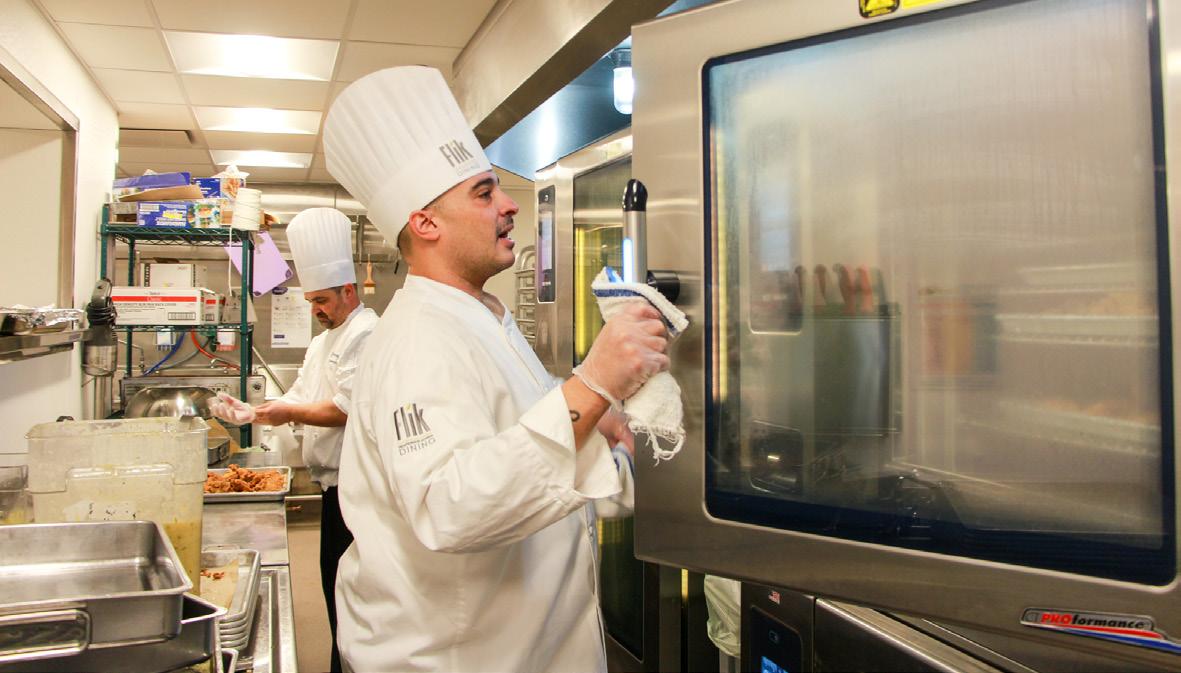
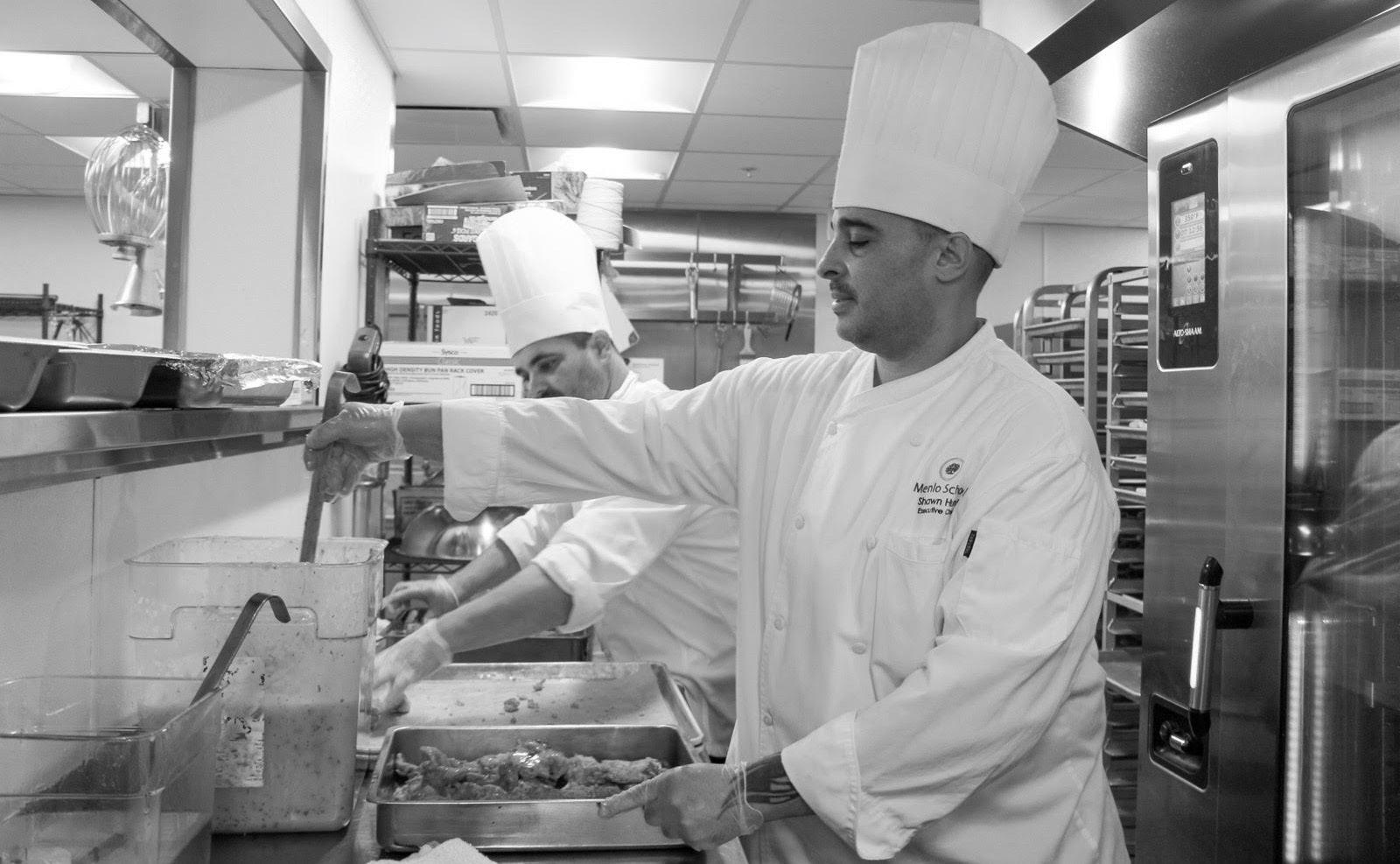
Head Chef Shawn Hunt makes chicken piccata for lunch. Staff photo: Sadie Stinson.
Seniors Ryan McKee and Elizabeth Vaynblat and junior Allie Lev perform in Menlo's 2020 production of "Tartuffe." Photo courtesy
The Emcee, played by senior Declan Stanton, and the Kit Kat Girls dance in the fall 2019 performance of "Cabaret." Staff photo: Bella Guel.
Menlo's “Theater Under the Stars” Tradition Comes to an End on the Loop
by ELLA HARTMANIS
In 1995, Shakespeare’s “Much Ado About Nothing” became Menlo’s first outdoor production. Since then, it has become a tradition of “a theater under the stars,” according to Director of Communications Alex Perez. The 2020 production of “Pippin” will be the final annual outdoor musical due to the construction of the new theater, known as the Spieker Center for the Performing Arts (SCPA).
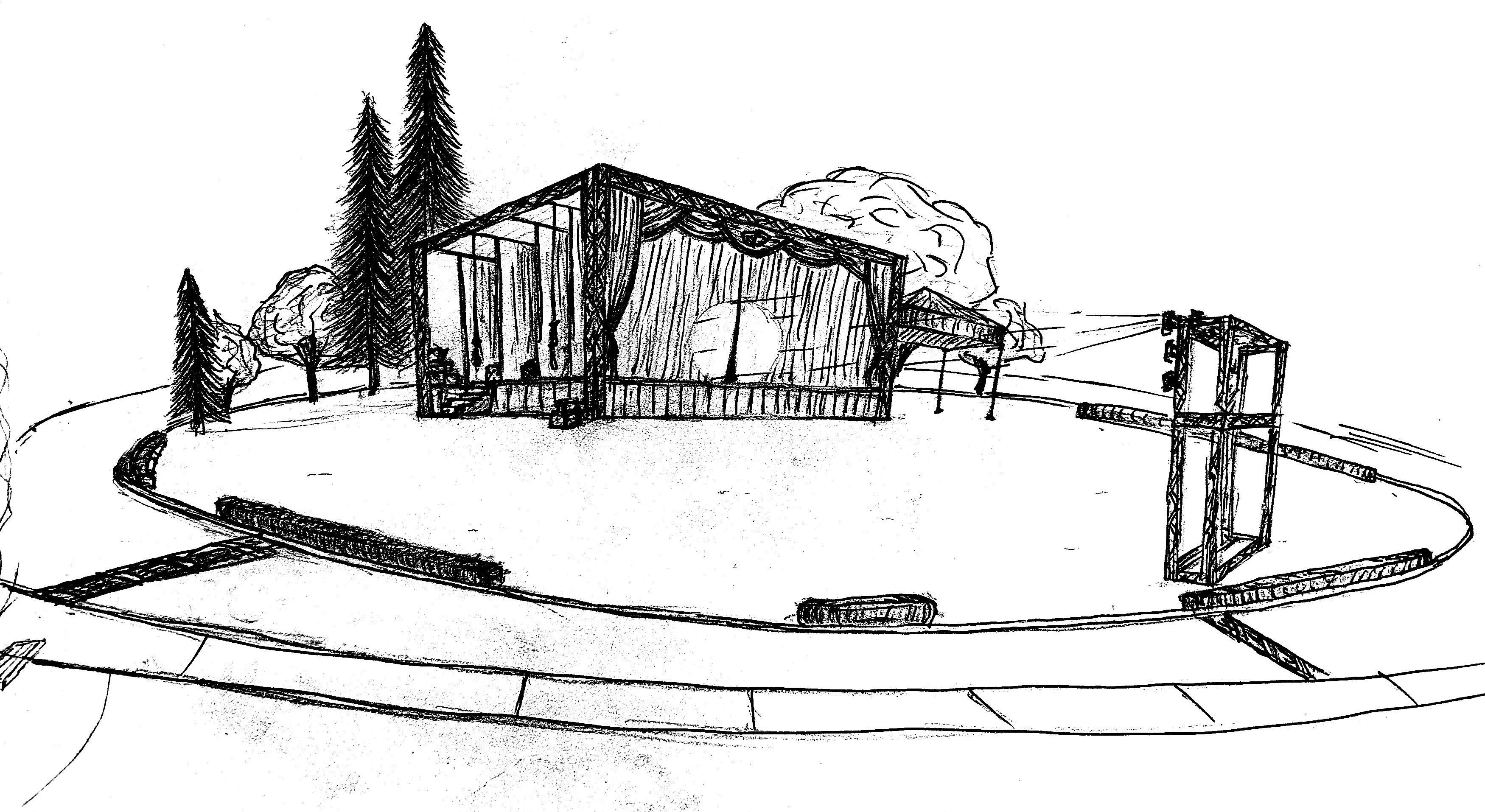
For Menlo’s final outdoor show, "Pippin," the production will be held on the Menlo loop. “I wanted to set it apart and make it special,” Director of Creative Arts Steven Minning explained. Up until 2007, the productions were either in front of Stent Hall or inside the loop; however, “Pip pin” will be inside the loop. “It’s kind of going back to the roots of where it started, so I thought we would bring it back to the front of the school,” Minning said.
“I think having the show on the loop is a great way to end the tradition of out door shows. It makes the show more welcoming and a bigger deal,” senior James Leupold said.
Each year, friends, family and classmates bring blankets and set up early to get a good spot to watch. “It’s a very community-driven event. People bring their blankets and food, and it’s sort of like a picnic,” Minning said.
“It attracts more crowds than the productions in [Florence Moore Auditorium], so it’s nice that a lot of people show up to see the shows,” sophomore Uma Misha said. Misha was a member of last year’s outdoor musical, “Bye Bye Birdie.”
Each year, Minning and his colleagues choose fall, winter and spring productions. The fall show tends to have a big social message, while the winter show is typically a play; finally, the spring musical is generally more lighthearted and has a larger ensemble, accord ing to Minning. “What
and the playfulness,” Minning said.
“I was in ‘Bye Bye Birdie’ last year which was super fun, but a production like ‘Cabaret’ wouldn’t be as entertaining outside, which is why I think you can’t just do any production outside,” junior Annabelle Marenghi said.
Although the outdoor musicals are an engaging experience for both the crowd and the actors, they are also the most expensive productions. For the musical, equipment is rented and the entire set is constructed from scratch which costs nearly twice the indoor
225 audience members, the SCPA will be able to seat up to 384 people. The SCPA will include new additions including an orchestra pit and a scene shop for set building. “I’m most excited about the possibilities. FloMo is very limited with what we could do there, and the outside is limited in its own way, so the new theater will provide us with more of a realistic theater setting, and we hopefully have a lot more options to work with,” Minning said.
“This will be the first outdoor musical that I’ve been in, but I have gone to them for the past couple of years and I think that they always do a great job with the set and transforming the quad. I’m sad that it will be the last annual outdoor production, but I’m also really glad that I get to be a part of it,” sophomore Cassidy Hurwitz said.
Misha believes that the new performing arts center highlights Menlo’s commitment to the arts. “It’s sad that the outdoor productions are ending, but I think there are a lot of benefits from having a new theater, and I think it also shows that Menlo is taking the arts program seriously,” Misha said.
Although this will be Menlo’s final annual outdoor production Minning hopes that Menlo could possibly do an outdoor production every seven years; however, nothing is set in stone.
Dystopian Novels Prove Popular Among Menlo Library Goers
by LAURA ARTANDI
Since its opening in 1915, Menlo School’s library has remained a prominent part in Menlo student life. Whether it be tutorial, lunch, a free period or after school, the library is almost always populated. The library is not only a primary hangout spot on campus, but it is also home to about 18,000 books.
According to Head Librarian Cathy Rettberg, the most checked out books in the Menlo library on record, which dates back to 2008, are the books from the “Hunger Games” trilogy by Suzanne Collins. The
following two most checked out books are “The Maze Runner” by James Dashner and “Divergent” by Veronica Ross. These three books are all similar in the sense that they are young adult fiction, dystopian, adventure novels.
However, Rettberg also said that the most checked out items in the library are the power adaptors for computers.
Rettberg also shared records of the most checked out books of the 2018-2019 school year. The most popular book was “The Testaments,” Margaret Atwood’s sequel to “The Handmaid’s Tale.” The second most popular book was “P.S. I Still Love You” by Jenny Han. This is the sequel to the book “To All the Boys I’ve Loved Before” and is likely very frequently checked out because the movie, was announced in August 2019.

The third most popular book of the 2018-2019 school year was “On Earth We’re Briefly Gorgeous” by Ocean Vuong. Rather than being a dystopian fiction novel, it is an epistolary novel, full of letters from a Vietnamese-American man to his illiterate mother.
The number of books checked out annually in the last decade is on the rise. In the 2008-2009 school year, 4,157 books were checked out by the students. Last school year, 4,763 books were checked out.
“I like to think that [the reason the number of books checked out has risen] maybe has to do with the fact that I inherited an old, out of date library that didn’t have a lot of fiction. I’ve worked hard in the ensuing years to get rid of the old


irrelevant books, buy new materials and have a lot more fiction that people want to read,” Rettberg said.
In the 2018-2019 school year, current sophomore Peter Hanson was the student who checked out the most books in the Menlo library. Hanson believes that the reason for the increase in checked out books is due to students' growing interest in reading and also the need for independent reading books for English class.
The librarians often update a poster on one of the shelves of the library that has photos of overdue books. Currently, the longest overdue books that are still out are “Epic” by Conor Kostick and “Dragon Ball Z: Vol. 2” by Akira Toriyama. They were both checked out on Dec. 8, 2015.
However, students do not receive their caps and gowns until they return all checked out library books. “What we do is if they still have books out, [we have] Student Life hold their caps and gowns. Then, everyone’s in a panic, and so we have those last five kids running up [to the library] with checks in their hands,” Rettberg said.
The oldest book currently in the library dates back to before Menlo’s founding. Written in 1866, “Narrative of an Expedition to the Zambesi and its Tributaries: and of the Discovery of the Lakes Shirwa and Nyassa, 1858-1864” by David and Charles Livingston is worth about $500. According to Rettberg, the book hasn’t been checked out recently, but she’s sure it was at some point, given the age of the Menlo library.
"Divergent" and "The Maze Runner" are the second and third most checked out books in the Menlo library. Photo courtesy of Creative Commons.
Sketch of an outdoor musical set on the Menlo loop. Staff Illustration: Olivia Velten-Lomelin
"The Hunger Games" trilogy books are most commonly checked out of the Menlo library. Photo courtesy of Creative Commons.
Facilities Administrator Jose Toscano Shines on Worldwide Stages
by GEORGIA PAYE
Artists can be found everywhere on the Menlo School campus, from students to teachers and even in the facilities office.
Administrative Assistant Jose Toscano, the office manager for Facilities, is known by his stage name, Xavier Toscano, combines his love of EDM, rap, rock, reggae and R&B to record his own unique blend of pop music. Toscano describes his music as “enthusiastic, energetic, and dance-urban pop” and, according to his website, he is mainly influenced by the Top 40 radio charts. He writes all of his own lyrics and melodies.
In addition to being musically talented, he has a talent for dancing, acting and performing on stage. Toscano describes himself as being energetic and having a strong stage presence, which results in an electric and engaging show, according to his website.
Toscano’s career has been a constant hustle since 2007, when he first started recording music. “My career has been about being tenacious. I have been signed three times, and it just doesn’t go anywhere. I have had five managers, and it just fizzles out,” Toscano said. He doesn’t consider himself to be famous or believe that music is paying his bills, but he has had many opportunities and successes.
His latest release is an album called “Feels So Good,” which was released in 2018 and includes 11 songs. Five songs from his latest album were featured on the hit reality TV series “Keeping Up With the Kardashians,” according to Toscano’s website. His music has also been played at 24 Hour Fitness gyms across the United States, in Footlocker stores and on MTV.
Last year, he appeared on the cover of Sacramento's Source for Local GLBT News-
magazine, Outword. “It’s not a huge magazine, but it was something that I was proud of because I worked so hard,” Toscano said. In addition, he has received two California Music Video Awards: one for Special Effects in his music video of "Runaway" and another for Best EDM and Dance Video for "Never Wanna Leave," according to Toscano’s website and the California Music Awards website.
Although his career has taken him across the United States and Europe, right now, he continues to entertain locally. “I am constantly pursuing opportunities. I am constantly looking for places to perform and make new videos,” Toscano said. Toscano believes that individualism is important to anyone who wants to pursue a career in the arts. “Don’t compare yourself to others because everybody's at a different level,” he said.
Through his career, Toscano has learned that things do not come easily. “If you stick to it, and you are tenacious, opportunities will come your way,” Toscano said.

Chandler Reminisces on Past Dance Concerts and Reveals Plans for 2020 Show

by ALEXA FRIESEL
Editor’s Note: Due to the coronavirus outbreak, the 2020 dance concert has been postponed to an undecided date. The event will no longer take place March 26 through 29.
For the past 32 years, Menlo has held a dance concert in the spring with performances ranging from classical Indian dance to ballet to tap to hip hop. Throughout its existence, the concert has always changed from year to year.
In the early years of the show up until 1997, it was not just Menlo students and faculty performing. “The concert used to have other groups in it, like Crystal Springs, Carlmont and the Burgess Rec,” Upper School dance teacher Jan Chandler said.
According to Chandler, the concert’s set list varies from year to year, and over the years, it has included nearly every genre from cultural numbers to jazz to dances featuring only certain parts of the students, such as the faculty and seniors. “The teacher number is usually a big hit,” Chandler said. “Same with both the senior dances.”
In previous years, the dance concert has been popular among members of the student body for a variety of reasons. “My favorite part of last year’s dance concert was watching my friends perform,” sophomore Isabel Schmidtke said.
“I really liked watching all of the different dances because there were so many different kinds,” sophomore Elenoa Fifita added.
The 2020 dance concert is set to follow in the footsteps of the previous performanc-
Selected Student Profile: Junior Emily Boal
by KATE HAMMOND & KYRA GESCHKE
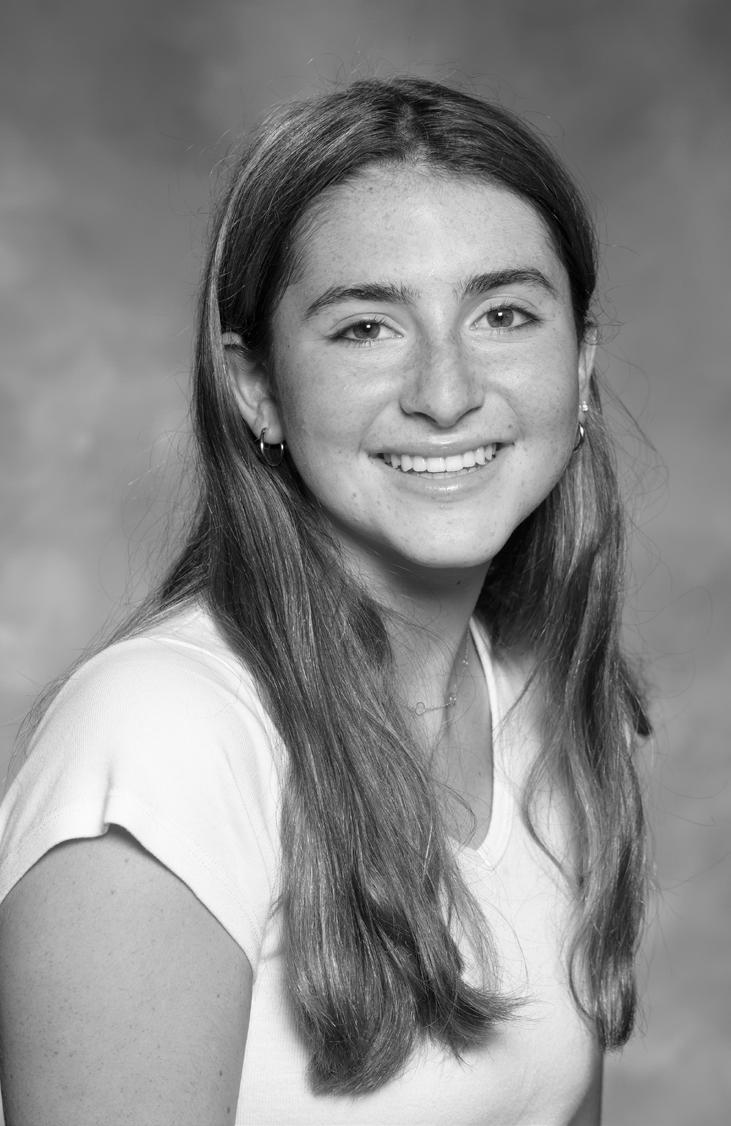
CoA: What is the most horrible thing about you?
Emily: I have a twin brother.
CoA: If you could pick a day to repeat every
day for the rest of your life, what day would it be?
Emily: The day I was born.
CoA: Why?
Emily: Because I want to see my parents’ reactions.
CoA: What are your rules when making a sandwich?
Emily: I don’t make sandwiches.
CoA: If you were an ice cream flavor, what flavor would you be?
Emily: Mint chocolate chip.
CoA: Why?
Emily: I like minty things.
CoA: What is the best part of your day?
Emily: Seeing my dogs.
CoA: What is the funniest word you can think of off the top of your head?
Emily: Chicken wings.
CoA: What is the most unbelievable fact you know?
Emily: A group of ravens is called a murder.
CoA: What is the largest animal you think you could knock out with one punch?
Emily: Can I say a person?
CoA: Yeah.
Emily: Lindsey Ball.
CoA: What's the least important thing to the world that's very important to you personally?
Emily: Theater.
CoA: If you were suddenly 5 years old again, what would you be doing right now?
Emily: Sleeping.
CoA: What superpower would you not want to have?
Emily: Invisibility.
CoA: Why?
Emily: People would do weird things in front of me.
CoA: What could you talk about all day if given the chance?
Emily: Myself.
CoA: Would you rather have fingers for toes or toes for fingers?
Emily: Toes for fingers.
CoA: Why?
Emily: Some people have those nubbylooking fingers.
es, but with its own twist. “Every year I plan the concert with the same formula, but with unique dances,” Chandler said. “This year, we are including a musical theater number in the set list again."
In some shows before 2000, Chandler has choreographed all the numbers herself, but this year, she is not the only one hard at work preparing for the concert. Students enrolled in dance classes also have a large role in the process and spend four weeks preparing a dance. “We choose music and choreograph the dance based on technique and our own personalities during class,” freshman Tori Chou said.
For the dancers not enrolled in one of Chandler’s classes, the process is a little different. “Last year the members of the Tongan dance would meet on weekends to practice,” said Fifita, who participated in the Tongan dance. “I’d also practice in my free time.”
This year’s concert will be performed on March 26 through 29 and will feature a few solo, duo and group numbers, and both the senior boys and girls dances. The four dance classes, the Upper School’s Knight and MidKnight Dancers and the hip hop group Knight Life will be showcased, in addition to students from the Middle School’s dance classes and Knight Lights dance club. Chandler also hopes to include the popular teacher number and a dance based on the dance group STOMP, who use household objects as percussion instruments in their routine, on this years’ set list.
CoA: If you could intervene in any historic event, what would it be?
Emily: The 2016 election.
CoA: When playing Mario Kart, what character do you pick every time?
Emily: The big monkey.
CoA: Donkey Kong?
Emily: Yeah.
CoA: What is the best piece of advice you have ever gotten?
Emily: I don't get advice.
CoA: How would you spend a million dollars?
Emily: I would buy a bunch of dogs — and then a house, so they can live in it.
CoA: If you were given an elephant and could not get rid of it, what would you do with it?
Emily: I would keep it as a pet.
CoA: If you were shipwrecked on a desert island but all of your human needs such as food and water were taken care of, what two items would you want to have with you?
Emily: Lindsey Ball and a tree.
CoA: Why a tree?
Emily: So I could grow vegetables.
Photo courtesy of Menlo School.
Senior boys participate in the 2019 annual senior boys dance. Photo courtesy of Pete Zivkov.
Jose Toscano, stage name Xavier Toscano, released his most recent album, "Feels So Good," in 2018. Photo courtesy of Jose Toscano.
It Helps to Have Money: Testing Accommodations Favor the Affluent
by ELISABETH WESTERMANN
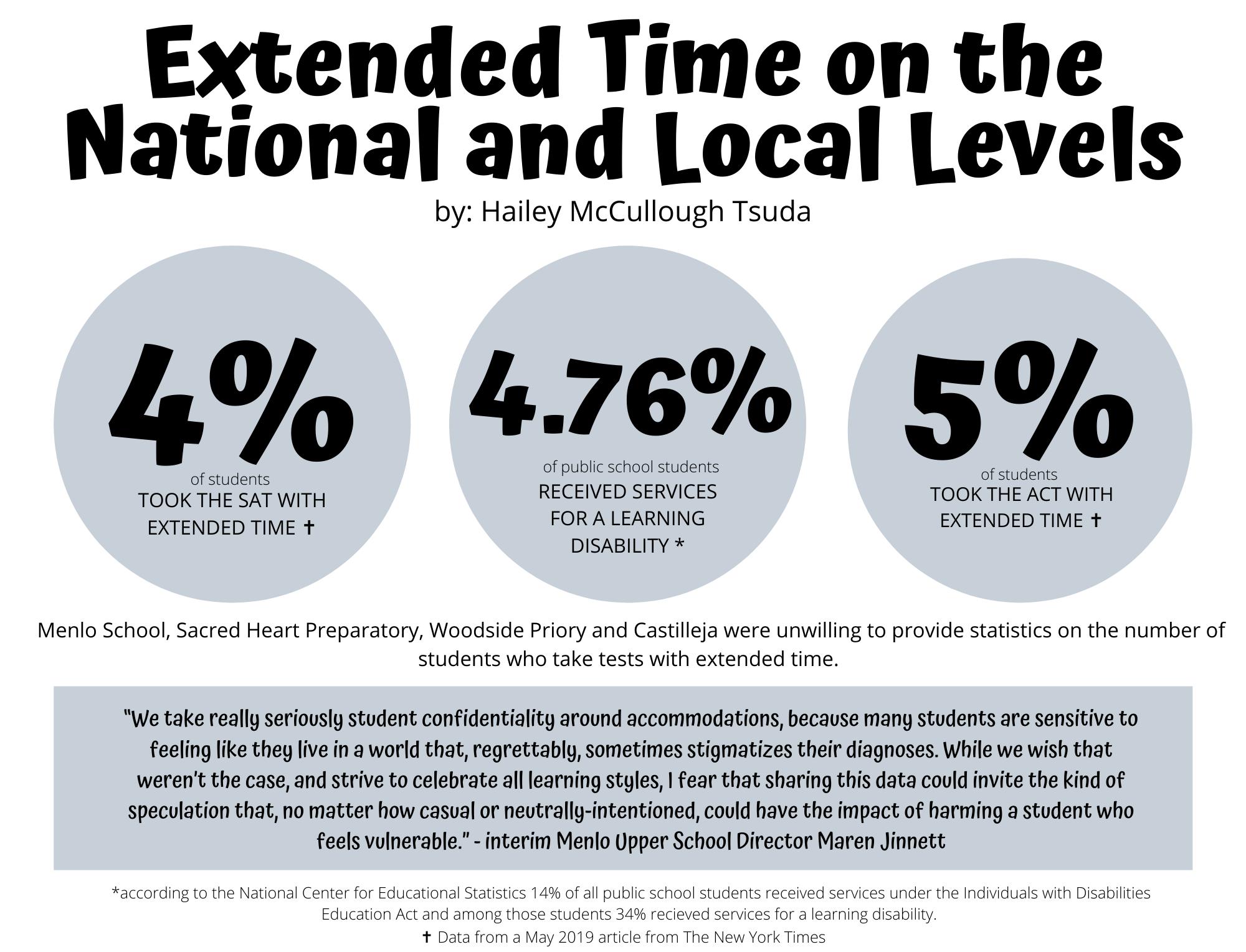
In recent years, there has been a surge in the number of students receiving accommodations, such as extra time, on school and college entrance exams. The number of students receiving testing accommodations at public schools more than tripled between 2000 and 2016, according to federal data cited in The Wall Street Journal. Despite the general increase in students receiving accommodations, a disparity exists between students in wealthy areas and those from less affluent backgrounds. According to the Department of Education and Census Bureau, 5.8% of students in the wealthiest 1% of districts receive testing accommodations, nearly four times the number of students who get accomodations in the poorest 1% of school districts (where 1.5% of students do). Nationally, 2.7% of students have accommodations in public schools. In some of the nation’s wealthiest enclaves, it’s even more extreme. At a public high school in an affluent area near Boston, over 30% of students receive accommodations, according to The
Wall Street Journal. A local psychologist, John Brentar, estimated that between 25% to 30% of students attending private Bay Area high schools receive accommodations.
The disparity raises the question of whether students in poorer areas are simply not receiving the accommodations they need, or whether some students in affluent areas are granted unnecessary accommodations. Many psychologists and educators link the recent spike in students gaining accommodations to wanting to get an edge in the competitive college admissions process, according to a 2019 New York Times article. But the same article notes that, “Experts say that known cases of outright fraud are rare, and that most disability diagnoses are obtained legitimately.”
In addition, the process for getting accommodations can be expensive — anywhere between 3,000 and 10,000 dollars, according to The New York Times — and time-consuming, making it much more burdensome or unattainable for lower-income families.
At public schools, students who don’t require special
education must be granted what is called a 504 Plan in order to receive testing accommodations. For a student to obtain a plan, they must be deemed by the school to have an “‘impairment’ that ‘substantially’ reduces or lessens their ability to access learning in the educational setting,” according to the nonprofit GreatSchools. Examples of impairments include learning disabilities such as ADHD and dyslexia. To make a decision, the school looks at a student’s grades, scores on state tests, reports from teachers, attendance, health records and any other information a parent wishes to provide, such as the results of neuropsychological tests administered by licensed professionals. Although formal testing is not required for a student to be granted a plan, it often is an important piece of a school’s decision. Public schools will sometimes pay for a student to be tested if a teacher or parent requests it, but testing is expensive and logistically difficult, so it is not uncommon for schools to deny students testing, according to a Jan. 3, 2016 article in The Atlantic. Parents may opt to test
their children privately, but testing can costs thousands of dollars and is often either not covered or only partially covered by insurance, creating a barrier for the majority of students. In addition, it is common in less affluent communities for parents to not know that obtaining a 504 Plan for their child is an option, according to The Wall Street Journal.
Since most private schools are not subject to Section 504 of the Rehabilitation Act of 1973, they can come up with their own policies for how to administer testing accommodations. At Menlo, if a student needs to be tested for a learning disability, parents are required to pay the cost; however, Menlo can provide financial assistance for students receiving financial aid for tuition, according to Academic Support Coordinator Ryan Dean.
“While Menlo sometimes requires families to update testing, the school typically honors evaluations by any number of licensed providers that occurs before a student joins the Menlo community,” Dean said.
Extra Time Accommodations Can Create Friction Among Students
by VIONNA ESHGHI
While extra time accommodations are used widely among the Menlo student community, there are many who suspect accommodations are taken advantage of, which frustrates those with and without extra time.
Senior Zach Saito has extra time accommodations due to his dyslexia and has utilized his accommodations since the start of high school. “My parents knew that I had dyslexia through middle school but didn’t think I needed [to use] extra time at the time,” Saito said. “They wanted to see if I [could] go through school without [accomodations], [but] I started getting extra time in the beginning of high school.”
When Saito recalls what test taking was like before receiving accommodations, he remembers constantly being the last to finish tests and typically reading through them at a slow pace. However, he feels as though his accommodations have allowed him to improve on this.
Senior Gianna Inguagiato also recalled her difficulties prior to extra time accommodations, explaining that it was difficult to focus and pay attention during tests. “I went to get tested to see if I had ADHD, and then the extra time was kind of a byproduct of that, and it kind of clicked, and it was like, ‘Oh, now it makes sense that I don’t finish my tests,’” she said.
“I think a lot of people are like, ‘Oh, I wish I could have taken more time, so I’m just going to get tested and hopefully something pops up.’ [...] There are definitely some people I see working in class, or finishing tests at the same time as regular time people, and I’m kind of frustrated that they have extra time as well because it
seems like they don’t need it,” Inguagiato said.
Saito feels similarly and believes it is unfair for people to receive accommodations when it isn’t necessary. “It’s a very big advantage, especially with standardized tests, and in the real world and in [people’s] jobs you’re not going to have extra time to complete an assignment just because you have a certain learning difference. But I get extra time and I use it, so I could see how other people think it [makes testing] easier,” Saito said.
Junior Mia Hamilton does not receive extra time accommodations, but feels she is somewhat uneducated on the topic as a whole. “I don’t really know much about it,but I have heard people who have it complain and say, ‘A lot of people have it who don’t need it,’” Hamilton said. “Obviously there are people who [actual-
ly] need it, and you don’t want to be disrespectful of that, but I feel like there’s always going to be someone [who takes] advantage of it, and I don’t think that’s fair.”
Hamilton believes that if one uses accommodations without needing them, they are only harming themselves. “For some, [such as with timed writing] part of the learning is being comfortable in the amount of time you have to write a essay, so to take advantage of that, I think, is really only harming yourself.”
Junior Daniel Tan, who also does not receive extra time accommodations, recognizes the support that extra time can bring many students. “I think [accommodations are] great because it is really going to benefit people who need it, whether [it’s] for focus issues or [people who are] generally stressed out by time constraints,” Tan said. “In terms of whether everyone who has it needs it is a different question.”


Though Tan believes it is problematic for students to use accommodations when it isn’t necessary, he does not believe there is much that students or the administration can do about it. “There’s a big conflict between people that have it and need it and people that have it to just have it, and they both feel pretty negatively towards the other,” Tan said. “I get that people who use extra time out of necessity might feel pretty negatively towards those that exploit it, but it’s not my role to judge, and I’m happy giving people the benefit of the doubt because it could be really helping them.”
Applying for Extra Time for Exams is a Comprehensive and Tiring Process
by EMILY HAN
For a Menlo student to receive learning accommodations, there is a thorough process involving a variety of tests and other evaluation methods that can take several months to complete. While any trained evaluator can administer these tests, an educational center called Morrissey-Compton works with most Menlo students throughout this process.
Morrissey-Compton is a nonprofit organization based in Redwood City that works with Menlo to provide evaluations and recommendations for students’ learning differences. To apply for a learning accommodation, a Menlo student must first contact Upper School Academic Support Coordinator, Ryan Dean.
“If [Dean] feels there is evidence for the need for an evaluation, a referral is made to Morrissey-Compton or another professional for the evaluation,” Morrissey-Compton Executive Director Dr. John Brentar said in an email to The Coat of Arms. “Parents will then meet with a clinician to go over history and concerns. This allows us to determine if an evaluation is appropriate.”
To determine which of these accommodations will best suit a student, they must undergo
many forms of educational testing.
“I went in for [a total of five] hours of testing with [Morrissey-Compton], which included both math/reading tests and also timed abstract puzzle activities,” senior Charlotte Tomkinson said in an email to The Coat of Arms. Tomkinson applied for extra time at the end of her sophomore year, and the evaluation process lasted throughout the summer.
In addition to these tests, a student’s teachers are surveyed, and an evaluator interviews their family. The evaluator ultimately creates a report based on this entire process, which typically includes dozens of pages detailing the results from the educational tests, a diagnosis and recommendations of particular accommodations, Dean said.
“Menlo then submits the evaluator’s report to the College Board, which makes its own determination about the necessity of extra time on the SAT and AP exams,” Dean said. “Menlo honors that same accommodation on campus.”
Because Menlo follows the College Board’s recommendations and because the ACT grants extra time more conservatively, most students who have extra time take the SAT.
“I was only able to get accommodations from the College Board [by the time I scheduled my junior year standardized testing],” Tomkinson said.
According to Dr. Brentar, most students take around seven hours to complete their educational testing. However, a significant amount
of the testing evaluates a student’s ability to process information. For students like Tomkinson, who are older and have already developed better processing skills, only around five hours of testing is necessary in order to receive College Board accommodations. Dr. Brentar says that this amount of testing usually costs a family around $5,000 if they don’t receive financial support from Morrissey-Compton.
For Tomkinson, going through the process of applying for extra time was exhausting, especially the testing. “It was really long chunks of time doing what felt like very tedious tests, and I remember leaving feeling really stupid,” she said.
Despite this frustration, she feels that the process was effective. “I feel like [the amount of extra time I have is] perfect for me and has really helped me finish assessments that I wouldn’t otherwise be able to,” Tomkinson said. She receives 50% extra time on assessments both at school and on standardized tests.
“From our experience with Menlo, we feel they are very supportive of providing the support a student needs,” Dr. Brentar said. According to Dr. Brentar, Morrissey-Compton has worked with Menlo students for nearly 30 years.
To Tomkinson, the extra time she received through this process was essential. “I have extra time because my brain just takes longer to process information,” she said. “It’s not just a ‘cheat’ to be able to do better.”
Post-College Admissions Scandal, College Board Increases Oversight of Testing Policies
by ZAK TAUBE
Cheating is one of the fastest ways to get kicked out of college; however, for the clients of William Singer, it was also the fastest and easiest way in. Singer was the leader of the largest college admission cheating and bribery scandal ever, and he pled guilty to charges of racketeering, money laundering and fraud among other charges. These crimes he committed affect students with accomodations at high schools all across the country.
Singer tricked the system and found ways, mostly through conniving with proctors, to fudge scores on the SAT and the ACT. The aftermath of this crime has affected the ways students receive accommodations and will continue to affect the process for years to come. “In wake of the college admissions scandal, the College Board
and ACT were under scrutiny to make changes, and they did,” Menlo Director of College Counseling Matt Mettille said.
The College Board, which administers the SAT, made some changes that trend in the right direction. “That includes producing more test content, banning and collecting cell phones [in test rooms], employing lock boxes, increasing regular, random audits of test centers, conducting data-driven analyses of test taker behaviors and enhancing security measures at test centers. We’re doing more today than ever to ensure the test scores we report to colleges are accurate and valid,” the College Board website explains.
Mettille has seen the effect of the new changes. “We had a student that
was traveling and took the SAT outside of California, and the College Board contacted me to make sure it was legitimate, which had never been done in the past,” Mettille said.
However, the College Board is also cracking down on which students receive extra time. “It can be frustrating,” Mettille said. “Some students who really need their extra time are starting to worry about getting exactly what they need.” Due to the scrutiny following the scandal, the College Board is willing to make the process of getting accommodations more difficult to avoid people taking advantage of the system, according to Mettille’s explanation.
The College Board has reason to be wary of students taking advantage of extra time. The College board declines to release numbers of how many students ask for extra time, but “data from 2017 shows that requests for special accommodations, including extra time, quiet rooms and breaks, doubled between 2010 and 2016,” according to a 2019 New York Times article. This number matches with the anecdotal estimate that Mettille gave: “When I first started at Menlo four years ago, it seems less students requested accommodations,” Mettille said.
The hope is that the College Board strikes a balance between extra oversight in their approval of accommodations while continuing to provide accommodations for those who may need them, as Mettille noted. Currently, students requesting accommodations should know they are more difficult to achieve.

Why Are We All Competing in a Menlo Sleep Olympics?
by CHASE HURWITZ
As I approach the end of my second year at Menlo, I’m starting to appreciate all the things this school has taught me: I can analyze Shakespeare, talk about electronegativity in chemistry and write a DBQ in under an hour. But one of the biggest lessons that Menlo continues to teach me every single day on the quad, in the classroom and in the gym is that virtually none of its students are getting enough sleep.
Before I continue, I recognize that there are some outliers at Menlo who miraculously go to bed at nine and manage to get 10 hours of sleep every night. I think it’s fair to say that most students, myself included, are seriously jealous of these people’s sleep schedules, but for a lot of students, going to bed early simply feels impossible. Especially for students who play a sport or who have other extracurricular activities after school, thoroughly completing homework, eating dinner and getting ready for bed by 9 p.m. can be overambitious, to say the least. That isn’t to say that people who do get a good amount of sleep aren’t doing anything after school — they are probably just better at managing their time, unlike most teenagers similar to myself, for whom effectively regulating work without distraction is wishful thinking at best.
What’s interesting is that the kids who get the least amount of sleep seem to talk
about it more than the kids who have a good sleep schedule. It’s become trendy for students to brag about how little sleep they’re getting. I’m guilty of this too: if someone says they went to bed at midnight and I went to bed later than them, it’s almost instinctive for me to blurt out my bedtime

We Should All Learn How to Use Public Transportation
by BELLA GUEL
When you think of Venice, Italy, what comes to mind? For me, it’s colorful buildings, gondolas, arched bridges and iridescent water. Unless you have experienced it firsthand, I would guess that Venice’s car policy doesn’t come to mind. While it may seem strange to us on the West Coast of the U.S., Venice prohibits the use of any motorized vehicles within the city. That’s right, a city with no cars — and they aren’t the only ones! Fes ElBali in Morocco, Paqueta in Brazil, and even Mackinac Island in Michigan all forbid cars. This prohibition forces locals and tourists to utilize alternative means of transportation when visiting. Whether that is in the form of a bus or a horse-drawn carriage doesn’t matter. What does matter is that it isn’t a car.
We Californians tend to justify driving by calling it essential, when we really mean that it’s more convenient. Greyhound, Metro, SamTrans, Amtrak, Caltrain, BART. Sound familiar? There are 13 different public transit systems throughout California, and this excludes the various ferries. As someone who has been raised using public transit, I fully understand why someone would avoid using any of these bus or train systems when they have access to a car. Public transit can be loud, late, dirty,
seen a bunch of times where someone will try to brag about getting less sleep than the other person. Getting less sleep gets turned into a competition,” sophomore Max Peña said. Especially around busy times of the year like finals season, it’s common to hear people comparing how late they’re staying up.
I think the issue is that we’ve started associating staying up late with being dedicated and hardworking. The assumption is, if someone stays up late doing homework, they’re taking hard classes and must be smart and devoted to their schoolwork.
This mentality just sucks for everyone at Menlo; it creates the idea that one has to stay up late in order to do well on their work because other smart people are going to bed late. Additionally, it grounds the notion that if someone does get a good night’s sleep, they must be
Let’s
methods of transportation is as crucial as learning how to drive, if not more. It may not seem obvious at first, but as we enter our young adult lives, having alternate means of transportation can be crucial.
When you need a designated driver, the train system can provide a safe commute home. If your phone is dead and Uber is suddenly unavailable, the bus system can be a comforting backup plan. When your paycheck is too thin to afford gas prices or you are living in a city where just owning a car can be pricey and inconvenient, having the tools to still get around becomes crucial. Even as a minor, knowing how to navigate local train and bus systems can give kids confidence and independence with getting around before they are even able to drive. You don’t need to be halfway around the world for knowing how to read a train map or purchase a bus ticket to become vital information.

As we pursue our careers, we can find ourselves in new parts of the world with new norms. Rather than attempting to superimpose our own comfort levels in a given environment, we must feel comfortable adapting to the social standards of where we are. So yes, I am suggesting that you try taking Caltrain to Great America, BART to San Francisco and SamTrans around your hometown. Maybe it isn’t going to be necessary now. Maybe you have a car, or your parents can transport you with ease, but in a couple of years when you are living on your own and can’t just call an Uber, you might wish you had learned how to understand how to navigate your local public transit system when the stakes were lower.
taking easy classes or they don’t care about their schoolwork.
But I think this problem extends further than just Menlo. The same mentality can be found in other schools and professional workplaces. If one isn’t working while others are, it’s natural to feel like time has been wasted or that they’re slacking off.
The culture around sleep at Menlo and the world at large is backwards. “It’s weird. If someone stays up late, my initial reaction is like, ‘Wow, that’s impressive,’ but then I think, ‘Why?’ That’s not really something to admire: it actually just kind of sucks for them,” sophomore Meera Rajagopal said.
I could complain about how students have too much on their plates and how kids are overwhelmed these days, but there’s really no point. Everyone knows that already, and I’m willing to bet there’s been a Coat of Arms article written about it somewhere. Complaining about how little sleep most students get isn’t going to change the fact.
Instead, I hope we can change how we talk about sleep in the future. If you go to bed late, it’s natural to complain about how tired you are. I do it too. But don’t tell someone how tired you are or lie about when you went to bed in order to try and impress them. Most importantly, if you hear someone talking like this, don’t turn it into a competition, because it sets the wrong standard and is unnecessary.
Talk About the 2020 Election
by LUCY PIKE
As the 2020 election heats up, the topic of the election is relevant, as the presidential candidate who wins will impact every United States citizen’s life. Whether Menlo students take classes that discuss the election, participate in Community Engagement opportunities relating to the election or discuss the election with their friends in their free time at school, there are ample opportunities to learn about the election. In our modern political climate, one should appreciate the privilege of these opportunities, and I hope that Menlo students will start to take more interest in the election.
Given that Menlo students are students either nearing or already of voting age, we should have a strong interest in the election, as it will directly impact us. The younger population’s voting power has the potential to be more significant than it was in the past, according to the United States Census Bureau. Voter turnout among 18to 29-year-olds in the midterm elections went from 20% in 2014 to 36% in 2018, the largest percentage point increase for any age group — a 79% jump (United States Census Bureau). Therefore, the youth’s ability to impact elections should be another factor in increasing Menlo students taking stake in candidates and the election.
According to a Stanford study, based on letters from teens to presidential candidates prior to the 2016 elections, the top four political issues on teens’ minds were immigration, guns, education, and school costs. These four major issues affect the Menlo community as well. Menlo students may come from families of immigrants, be immigrants themselves, be affected by gun violence and certainly understand the
value of education and its hefty price tag. If the Menlo community continues to talk — in class, on the quad and at class meetings and assemblies — about these prevalent issues and dive deeper into what a qualified president looks like to each member of the school, I believe people can diversify their knowledge and develop new opinions surrounding presidential candidates.
One hesitation for Menlo students younger than voting age to become involved with discussing the election might be the question: why care about something we are not able to vote on yet? But teenagers may pre-register to vote starting at age 16 and can become involved with the election in other ways, even while their age deprives them of voting eligibility. For example, students under 18 may volunteer for candidates’ campaigns that they believe in, become involved with political nonprofits and organizations, and write to political leaders with suggestions or praise.
Students currently 18 or older have the opportunity to register to vote and be involved with the election process. I believe that students this age, have the privilege to vote, should play leadership roles in getting the school community more involved with the election process. Menlo as a community should continue caring about and discussing the election as Nov. 3, 2020 approaches because of the impact they can have on the election and the impact the election will have on them.

Illustration by Kate Richardson
Democratic Candidate Joe Biden speaks at a rally in Norfolk, Va. on March 1. Creative Commons Photo: MultCloud on Flickr.
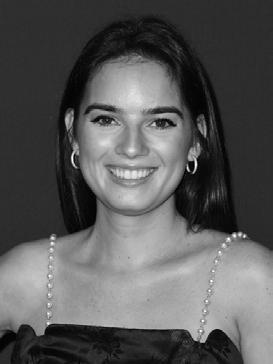
On the Quad: Who is your celebrity crush?

“I would probably say Patrick Dempsey because he plays Derek Shepherd in ‘Grey’s Anatomy’ and was definitely my [original] celebrity crush.”
- Ella Marks ‘21

“Natalie from David Dobrik’s vlogs because she’s cute and she’s funny.”
- Trey McNaire ‘23

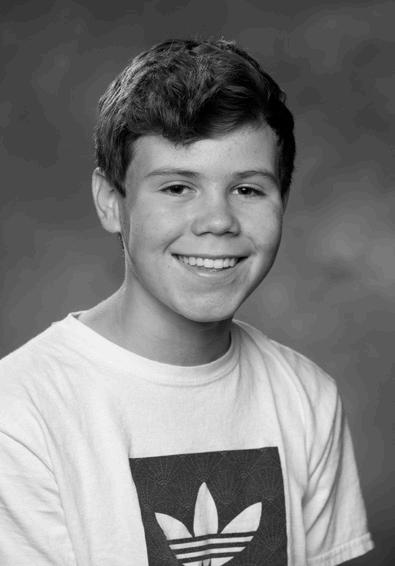

“Selena Gomez — she just seems a bit more real than most celebrities.”
- Oliver Barlow ‘22

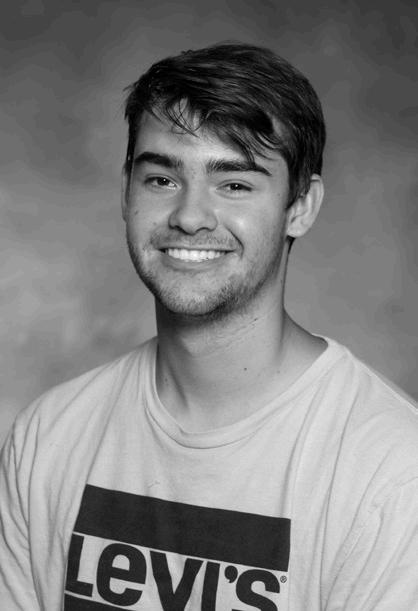
“Madison Beer because she is inspiring. I think we are very alike: both attractive and hardworking, so I definitely look up to her.”
- Alec Jabal ‘23
“Graham Phillips. He played the son on the show ‘The Good Wife’ and is very good looking in my opinion. Brunette and blue eyes type of thing.”
- Lily Loftis ‘20

There is Room for Flik to Easily Improve Our Meatless Mondays
by ADLEY VOGEL
Not very many people walk into the cafeteria on Mondays enthused. More often than not, most people see what’s being served and skip the entrée entirely, choosing to swarm the sandwich bar — where meat is always offered — instead. But it doesn’t have to be this way. Meatless Monday has the potential to become something we look forward to. It can become a celebrated example of Menlo’s commitment to environmental sustainability
menu tweaks, Flik can introduce new entrées that students want and will choose to eat without even considering that they’re meatless.
In its current state, Meatless Monday is torn between the desires of students who note the lack of significant protein in Monday’s entrées and students who recognize the harmful environmental impact of using cheese and dairy products in Meatless Monday entrées. In February, two of the four Meatless Monday offerings
with some dairy product (cheese on the baked ziti, alfredo sauce with the fettucini). There was also an eggplant parmesan (cheese without additional protein), a mushroom lo mein (no cheese, but also lacking protein) and a meatless burger, which fulfills both categories but is generally uninspiring to the student body. This seems like an unsolvable problem, but it’s not. And the answer is more exciting than eggplant parmesan (sorry to people who like that).

The Coat of Arms
Editor in Chief.............................................Samantha Stevens
Copy Editor...................................Parina Patel, Carly McAdam
Social Media Director........................................Vionna Eshghi
Video Editor.............................................................Emily Han
Photo Editor..............................................................Bella Guel
Assistant News Editor.........................................Sylvie Venuto
Assistant Arts & Lifestyle Editor............. .........Sophia Artandi
Assistant Spread Editor............................. ............Tessa Frantz
Assistant Opinions Editor..................................Chase Hurwitz
Staff Photographer...............................................Sadie Stinson
Staff................................................... Laura Artandi, Sammie
Dostart-Meers, Lexi Friesel, Ashley Grady, Ellie Gruber, Ella Hartmanis, Riley Huddleston, Lauren Lawson, Alex Levitt, Jake Lieberman, Madison Liu, Georgia Paye, Lucy Pike, Valentina Ross, Shefali Sahai, Laynie Sheehan, Aidan Skinner, Louisa Sonsini, Penelope Stinson, Zak Taube, Hailey Tusda, Grace Wilson
Adviser................................................................Tripp Robbins
Imagine something like falafel with hummus and pita bread — a significant source of meatless protein that tastes good and contains no dairy. Or more of the rice, bean and cheese burritos that were served on Monday, March 2. Yes, they contain dairy, but they’re still a significant source of meatless protein. A ramen or udon bar with tofu, vegetable dumplings and other toppings. Samosas, a savory pastry, are often filled with potatoes, onion and lentils. Ancient grains, such as quinoa and farro, are high in protein and dietary fiber. There’s a massive variety of foods that are simple, inherently meatless and don’t involve trying to replace meat, like the vegetable “burgers” and eggplant parmesan. By leaning on these simple dishes, Meatless Monday can expand students’ culinary horizons to dishes from
If you are interested in writing a guest opinion piece or a letter to the editor , reach out to the editor at: samantha.stevens@menloschool.org
Coat of Arms 50 Valparaiso Avenue Atherton, California 94027 (650) 330-2001 or to
around the world while being exciting and becoming even more sustainable than it currently is.
Meatless Monday is torn between the desires of students who note the lack of significant protein in Monday’s entrées and students who recognize the environmental impact of using cheese and dairy products.
Despite what our complaints as a student body would suggest, there is no reason Meatless Monday should be a “sacrifice.” The environmental impact of 1,000 people giving up meat for a single meal is significant and not worth tossing away. But it’s possible to make these changes and evolve Meatless Mondays into something students look forward to, inspiring individuals to expand their impact beyond one meal a week.
Our Mission:
The mission of The Coat of Arms is to report accurately and thoroughly on news that is significant to the greater Menlo School community. We will chronicle in context the different events and perspectives within the school, while ensuring unbiased coverage. We welcome feedback and aspire to create an open dialogue with our audience by being accessible on multiple platforms and by striving to remain neutral in all circumstances.
Staff Illustration by Lauren Lawson
Creative Commons Photo: Wikimedia
Creative Commons Photo: Wikimedia
Creative Commons Photo: Wikimedia
Creative Commons Photo: Getty Images
Creative Commons Photo: Wikipedia
We Should be Worried About Data Collection and Our Privacy Online
by ELISABETH WESTERMANN
Have you ever been scrolling through your Instagram feed when an ad pops up for the same item you just added to your Amazon cart? Traveled somewhere and immediately had your “For You” page on TikTok overwhelmed with videos relating to that place? Although such experiences can be temporarily unsettling, most of us simply shrug them off and resume scrolling. We need to be aware, however, that our online behaviors are being tracked and analyzed in ways we should all be concerned about.
Tech companies such as Facebook and Google essentially turn their consumers’ time and information into a commodity from which they
can profit.
Tech companies such as Facebook (which owns Instagram) and Google (which owns YouTube) essentially turn their consumers’ time and information into a commodity from which they can profit. Facebook and Google have advanced algorithms that glean information from everything users do on their platforms — searches, posts and what individuals view and like — to determine users’ interests, beliefs and even illnesses. They then use this information to effectively target content, such as Instagram posts in the “Explore” section, “up next” YouTube videos, and advertisements, according to an Aug. 21, 2018 article in CNN Business. Viewing that curated content causes users’ brains to release dopamine, a chemical that triggers feelings of pleasure and reward, encouraging users to spend as much time as
possible on social media platforms. The more time users spend on a platform, the more advertisements they view and the more profits the company generates. According to a Nov. 9, 2017 Axios article, former Facebook President Sean Parker said, “The thought process that went into building these applications, Facebook being the first of them, […] was all about: ‘How do we consume as much of your time and conscious attention as possible?’ And that means that we need to sort of give you a little dopamine hit every once in a while.” Facebook, Instagram and YouTube users think they are making an active choice to devote precious time to the platforms, when in reality, Facebook and Google have used their private information to manipulate them into using their sites.
The amount of information companies
know about users is alarming. In 2017, The Australian obtained a leaked document written by Facebook executives. It revealed that “by monitoring posts, pictures, interactions and internet activity in real time, Facebook can work out when young people feel ‘stressed,’ ‘defeated,’ ‘overwhelmed,’ ‘anxious,’ ‘nervous,’ ‘stupid,’ ‘silly,’ ‘useless’ and a ‘failure.’” Shoshana Zuboff, a Harvard Business School professor who specializes in privacy issues, wrote in the New York Times that “this depth of information [...] allows Facebook to pinpoint the time frame during which a young person [...] is most vulnerable to a specific configuration of subliminal cues and triggers. The data are then used to match each emotional phase with appropriate ad messaging for the maximum probability of guaranteed sales.”

Lauren Lawson
But it isn’t only social media platforms that are collecting and using data in concerning ways. For example, many colleges and universities now track the internet behavior of potential applicants. According to a Jan. 26, 2019 Wall Street Journal article, “enrollment officers [at colleges including Seton Hall and Quinnipiac Universities] know down to the second when prospective students opened an email from the school, how long they spent reading it and whether they clicked through to any links.” Based on the information collected, the universities gave applicants a score reflecting their estimated interest in the school. The higher the score, the higher the likelihood of admission. These universities collected information about applicants and made decisions about their futures based on it, all without the applicants’ knowledge. The increasingly widespread use of intelligent home speakers, facial recognition technology, personal fitness monitors and other devices that track users’ preferences actions and locations provides companies with greater power to collect and use personal data manipulate and control the lives of users.
It will ultimately take government regulation to curb these companies’ massive data-collecting power. California has made a solid first step. On Jan. 1, 2020, the California Consumer Privacy Act went into effect. The law forces businesses to disclose what information they collect, what purposes they use it for and the third parties they share it with. In addition, users can submit requests to delete the data collected about them and can opt out of their data being sold. It will be impossible to gauge the impact of the law until it begins to be enforced on July 1. Companies, though, already seem to be doing their best to work around it by convoluting the process for users to request access to their data and opt out of it being sold, according to a Feb. 8 TechCrunch article. Hopefully California’s strides can inspire even more stringent federal legislation so that control over personal information can be put back in the hands of all Americans. The nonexistence of our online privacy is not an issue to be taken lightly. Control over our actions and futures are on the line.
The Electoral College is an Outdated Voting System That Needs Fixing
by PENELOPE STINSON
Your vote in the 2020 election might not matter.
The American voting system, or the Electoral College, is fundamentally broken. The fact of the matter is that the candidate with the most votes in the whole country — the one who wins the popular vote — should win the presidency, but that is not always the case with our current voting system.
The Electoral College distributes a certain number of electoral votes to each state, equal to the amount of state representatives plus two for each state’s senators. When a candidate wins the majority of ballots in a state, they are awarded all of the electoral votes for that state. The candidate with the most electoral votes wins nationally. But giving all of a states’ electoral votes to the candidate who wins the popular vote can create an array of problems.
A primary obstacle with the winnertake-all system for electoral votes is displayed with the popular vote. Two of
The candidate with the most votes in the whole country — the one who wins with the popular vote — should win the presidency, but that isn’t always the case.
the three last U.S. presidents were elected without winning the popular vote, Donald Trump and George W. Bush. In fact, in the 2016 election, Donald Trump actually lost the popular vote by almost 3 million votes.
One of the main reasons why Hilary Clinton was able to gain the popular vote and Donald Trump lost it was due to California. Clinton won California, the most populous state, by a very large margin; however, it made little difference as she still received the same number of electoral votes as if she had won by a lesser margin. Similarly, Clinton lost many of the battleground states by a small margin, but the large number of votes she received in those states were irrelevant because Trump still won by enough to pick up the electoral votes. This resulted in her winning the popular vote but not the election itself.
A further difficulty with this winnertake-all system occurs when states are dominated by one political party, such as New York or Idaho. In these states, candidates don’t put as much effort into campaigning or winning over voters with specific state-oriented promises. According to a March 28, 2019 New York Times article, in 2016, neither Hilary Clinton nor Donald Trump made any of their combined 400 campaign stops in 17 states, states that were dominated by one end of the political spectrum. In those “predictable” states, candidates feel as if they either can’t win or can’t lose, which results in discouraged voters who feel as if their vote doesn’t matter and produces low voter turnout. According to a Nov. 2016 NPR article, in the 15 states they labeled as “battleground states,” or states where the alignment of the voters is unpredictable, 12 had voter turnout rates above the national rate.
Another complication with the Electoral College, besides the winner-take-all system,
All
of these problems with the Electoral College mean that not all ballots cast are weighted equally towards deciding the president-elect.
is how many electoral votes each state gets. Because each state gets one electoral vote per representative plus two for each of their senators, it gives small states more power than is proportional. For example, Wyoming, a state with a population of about 570,000 people, has three electoral votes, one for their state congresswoman and two for their senators. California has a population of about 39.6 million people, and if the electoral votes were done proportionally to Wyoming’s electoral votes per their population — then California would have about 208 electoral votes — but California only has 55 electoral votes. All of these problems with the Electoral College mean that not all ballots cast are weighted equally towards deciding the president-elect. This results in situations such as the 2016 election, where the president won the election but not the popular vote, meaning the candidate Americans truly wanted to elect wasn’t elected. The Electoral College was created
during a time when the Founding Fathers were desperate to assemble together a voting system and were unable to agree on anything else, according to a July 15, 2019 History.com article. It was created as a compromise between Congress and voters on who decides the president-elect. But it’s an issue that can be solved simply. If the Electoral College just distributed votes to candidates based on the percentage of votes they got in each state instead of giving them all to the winner, it would solve both low voter turnout and president-elects not winning the popular vote.
With political tensions and partisanship between voting parties rising, the outdated Electoral College is an issue that needs to be fixed in order to accurately represent the legitimate votes of the American people.
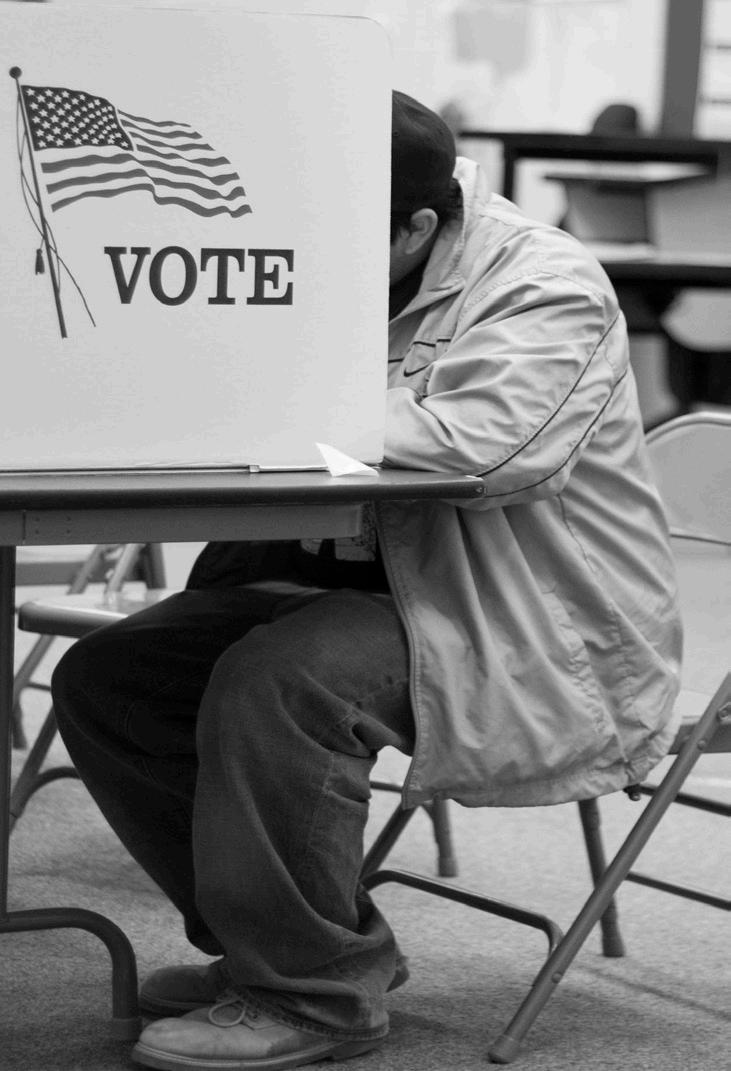
Staff Illustration by
Creative Commons Photo: Wyofile on Flickr.
Committed Corner Committed Corner
Max Chou, University of Chicago
by SARAH NORUM
Senior Max Chou committed to play Division III baseball at the University of Chicago in early December 2018. Chou has been on Menlo’s varsity team since his sophomore year, but he started playing baseball when he was just five years old. Currently, he is an outfielder and pitcher and plans to continue playing those positions in college.
Chou has loved playing baseball at Menlo due to the supportive team culture and growth mindset of his peers. “The best part about baseball is just going out with your friends and being able to develop your skills together throughout the year,” Chou said. “You get to see yourself and the team as a whole improve over time.”
After his sophomore year at Menlo, Chou decided to take a gap year in the Dominican Republic and Argentina. “I initially did a gap year just to have a new experience and practice my Spanish skills,” he said. “But I found the opportunity to play baseball with a local club team [in the Dominican Republic].” He found that there was a stark contrast between the locals there and here in the Bay Area. “In America, we go to school and then sports practices for like two hours,” Chou said. “But a lot of the kids [abroad] stop going to school after third grade to just focus on baseball because it is their only hope to possibly make money in the future. They want to use it to move out of the country because they have a pretty hard life there.”
Because Chou has lived in California his whole life, he is eager to explore a new part of the country. “I’ve never lived anywhere else, so I thought it’d be cool to go to a different area like Chicago,” Chou said. “I
know the weather will be [very] different, as it’ll be really cold there, but I’m excited to go to a new place and investigate.”
He is also ecstatic to meet his new teammates and coaches. “I know [UChicago’s] team has been doing really well recently,” Chou said. “I got to talk to some of the players, including Chandler Yu, who graduated [from Menlo] in 2017, and he loves it.”
The University of Chicago stood out to him in the recruitment process because they have strong academic programs that will allow him to follow his diverse interests. “I think it is a great fit academically,” Chou said. “I know they have a really good economics program, and I’m thinking about majoring in [economics] and computer science. I also liked it a lot when I visited.”

Jaden Richardson, Tufts University
by CARLY MCADAM
Jaden Richardson, who has been a two- or three-sport athlete for all four years of high school, will attend Tufts University in Massachusetts next year. He will play Division III football at Tufts, which competes in the New England Small College Athletic Conference. Richardson started playing tackle football in high school, and he plays wide receiver and free safety. Before high school, he ran track and played flag football, soccer and basketball.
Richardson has been a prominent player on Menlo’s football team throughout his high school career. He was an especially integral part of the Menlo team in his last season. He had 1,221 all-purpose yards, including 11 touchdowns and two interceptions. He had several notable touchdown receptions, including a 51-yard touchdown reception and 26- and 18-yard ones. He received both a WBAL First Team AllLeague recognition and WBAL Wide Receiver of the Year award this past season.
In addition to being a star player on the team, Richardson has personally had a great experience playing football at Menlo. “Menlo was kind of the best of both worlds,” he said. “You can play sports, and it’s a good school, so it’s a great balance.” The team dynamic was also an important part of Richardson’s high school football experience. “I loved it because those are some of my best friends,” he said. “Some of the relationships I’ll probably take with me forever.”
Brendan Murphy, Franklin & Marshall
by SOPHIA ARTANDI
After trying out many sports in elementary school, including soccer and baseball, senior Brendan Murphy started to focus on lacrosse in sixth grade. Now, he’s committed to play Division III lacrosse at Franklin & Marshall College.
Murphy plays midfield and also does face offs. The two main aspects of lacrosse that Murphy appreciates the most are the physicality and the brotherhood. “Going to practice and having to do all the off-season workouts and conditioning creates a bond that’s pretty hard to break,” he said. After going for his first official visit three weeks ago, Murphy said he sees a similar dynamic on the Franklin & Marshall team, sensing that there’s no social hierarchy and that the coaches are accommodating.
Murphy saw what he wanted outside of sports at Franklin & Marshall as well. “After I toured a bunch of different schools, I found what I wanted at [Franklin & Marshall], which is a smaller school with a tight-knit community and strong academics,” he said.
Though he’s excited to play for Franklin & Marshall, Murphy said that he’s going to miss high school sports, specifically the friends and memories he’s made in the past four years. One moment that was particularly special for Murphy was when the Menlo lacrosse team beat Bellarmine in overtime when he was a sophomore. “It really displayed the camaraderie we had on the team and how we could push through anything as long as we did it together,” he said.
In addition, Murphy said that Menlo’s
coaches have helped shape him into the player and person he is today. “They have placed an importance on hard work and character, and that if you have those two things, you can accomplish anything you want,” he said.
Murphy is looking forward to playing in college. “[Since I’ve started playing lacrosse,] I knew [playing in college] was something I wanted to pursue,” he said. To aspiring collegiate athletes, Murphy emphasizes the importance of hard work. “Keep your head down and work as hard as you can, [and] don’t worry about what other people say about you. As long as you try your hardest to be the best athlete and person you can be, everything will work out for you even better than you expect it to,” he said.
Brandon Aprill, Carnegie Mellon
by GRACE WILSON
In his freshman year, he played football and basketball and ran track. In his sophomore and junior years, Richardson continued to play football and run track at Menlo. He is thinking about continuing basketball in addition to football next year at Tufts. “I might walk on to the basketball team [at Tufts],” Richardson said. “We’ll see.”
As his high school athletic career comes to a close, Richardson is looking forward to a change next year. “[I’m looking forward to] a change of scenery,” he said. “[I’m] also [looking forward to] moving up and playing with different teams, since I’ve been playing in the same place with the same team for four years.”
Last August, senior Brandon Aprill committed to play Division III tennis and further his academic career at Carnegie Mellon University. After learning the sport at age nine and beginning to play competitively at age 10, Aprill has played tennis for a significant amount of his life. Despite being a member of the Menlo varsity boys tennis team for the past three seasons, Aprill has spent the majority of his tennis career traveling solo at tournaments. The individualistic nature of the sport is what keeps Aprill compelled to continue playing. “I like the independence of it,” Aprill said. “Problem-solving in real time [is] fun. Everything is on you — winning and losing.”
Tournaments, however, have been demanding for Aprill, challenging his athletic capabilities. “In the spring of 2019, I was getting recruited by schools. However, I got in a dark space mentally and was not getting the results I needed,” Aprill said. “Only having two tournaments left in the summer to showcase my game to coaches, I trained hard the whole summer and was able to perform very strongly at [both the Menlo] team nationals and my national championships in Tennessee and Michigan. Not only did I perform well in front of my top choices, but [I] got looks from a lot of other schools, which was awesome.”
From being ranked in the top 100 players in the country for seven consecutive years to becoming a five-star player for four years, Aprill’s accolades are sub-
stantial. Through his commitment to the sport, Aprill has contributed significantly to Menlo tennis. “Being a part of the Menlo tennis team has been a great experience [for] learning how to work with a team in a sport I have played by myself my whole life,” Aprill said. “It has given me perspective and friendships that will last a long time.”
Aprill is eager to begin his collegiate tennis career and is excited by the extensive opportunities that will follow. Aside from tennis, Aprill chose Carnegie Mellon primarily for its academics, and he hopes to major in business.

In his year abroad, Max Chou was able to further explore his passion for baseball in the Dominican Republic, where the sport is central to the culture. Photo courtesy of Max Chou.
While Murphy will miss Menlo lacrosse and the relationships he has been able to make with his teamates and coaches, he looks forward to his future at Franklin & Marshall. Photo courtesy of Brendan Murphy.
Though recruited to Tufts for football, as a longtime multi-sport athete, Richardson might walk on to the basketball team as well. Photo courtesy of Pam Tso McKenney.
While Aprill greatly values the individuality of tennis, he has also enjoyed playing in a team environment at Menlo. Photo courtesy of Brandon Aprill.
With March, The Madness Begins
by ASHLEY GRADY
With spring around the corner, a few things are certain: warmer days, spring break and March Madness. For those who avoid the sometimes unrelenting press about college basketball, March Madness refers to the time period from mid-March to early April during which the annual NCAA mens and womens basketball tournaments take place.
The highly anticipated tournament starts every year on “Selection Sunday,” when the game schedule and bracket of the 64 teams are released. This year, Selection Sunday occurs on March 15. The first four games of March Madness will be played on March 17 and 18, with the final on April 6. The teams are seeded and split into four regions with 16 teams each.
Despite the low odds of winning, March Madness brings out the gambler in millions of fans. The chance of creating a perfect bracket (accurately guessing the results of all 63 games) is one in 9.2 quintillion if you guess randomly and one in 120.2 billion if you are somewhat educated about basketball, according to the NCAA. Nevertheless, every year, millions of fans create their own brackets.

During its peak, March Madness takes over the lives of some members of the Menlo community who have created brackets. Participants frantically check their phones between classes, hoping their predictions are correct, and rioting when a so-called “Cinderella” team does unexpectedly well and beats a higher-seeded team.
Upper School math teacher Henry Klee runs a faculty tournament that usually
draws 20 to 30 faculty members each year. He totals up the points after each game and emails the participants with rankings. Although he is not usually an avid college basketball supporter, when March Madness approaches, Klee starts to study the teams to try to divine who is having a good year and who is not.
“I find the whole tournament idea cool — seeing how it unfolds and how the kids get excited about it. So sometimes when I finish my lectures in math, I’ll let the kids watch a little bit or sometimes we broadcast it up on my Apple TV if we can,” Klee said. There is not a prize nor penalty for the faculty league. According to Klee, participants simply enjoy the camaraderie and excitement that comes along with competing and following the 63 games.
“March Madness is fun because it unites the boys,” sophomore Griffin Perks said. Similar to Klee, friendship and camaraderie is an important part of the league for him and his friends. But unlike the faculty league, the stakes are higher than mere bragging rights or embarrassment. As the commissioner of one student league, sophomore Daniel Solomon oversees the brackets, the prize money and the forfeits. The league he participates in typically attracts approximately 20 student participants, each of whom antes up $20, making the prize for the winner upwards of $400. Solomon is also the commissioner for his fantasy football league but says that March Madness is more “low-key” and just for fun.
There is, however, usually a forfeit, or penalty, for whoever’s bracket totals the lowest number of points. Sophomore Ryan Schaefer lost in his league in seventh grade. As a penalty, he had to drink a smoothie that was a combination of foods selected by the other participants. The concoction included hot sauce, orange peels, wasabi and sour cream. He also lost last year and was supposed to wear a pizza box as a backpack for a week.
Even though the stakes are different for faculty and student brackets, both groups of March Madness followers enjoy the annual light-hearted competition.
Students Take Interest To Alternative Sports
by SYLVIE VENUTO
As sports leagues across the world come under scrutiny for cheating or harming players’ health, new, alternative sports leagues such as the XFL and futsal have sprung up.
The XFL, which started on Feb. 8, 2020, is a professional football league with rules modified from those of the NFL.
The XFL’s new rules for football include shocking changes, such as removing the extra-point kick after a team scores a touchdown and replacing it with the option to run a play from the two-, five- or 10-yard line for a chance to score one, two or three points respectively, reducing the play clock to 25 seconds and allowing double-forward passes. With the new rule changes broken up into three categories (“5 Gameplay Innovations,” “5 Timing Changes” and “5 Common Sense Rules”) the XFL aims to “feature exciting gameplay innovations that deliver what football fans have told [the XFL] they want — a faster pace of play and more action,” according to the XFL’s website.
game is what makes the XFL so wonderfully different from the NFL,” Kline said.
Menlo alumnus Jack Heneghan (‘14) was drafted to the Arizona Hotshots, a team in the Alliance of American Football (AAF) league, a collapsed alternative football league that ran for one season from February to April of 2019.
Menlo junior Brady Kline follows the XFL and credits his interest in the XFL to his “love of football.” Kline, an avid NFL fan, says that the XFL capitalizes on the football high that NFL viewers are coming off of after a month of high-stakes NFL postseason games. “They are capitalizing on the football market when it’s at its highest — right after playoff football and the Super Bowl,” Kline said.
In addition to the timing of the XFL, Kline emphasized the attractiveness of fan-favorite players in the league, such as Cardale Jones and Shawn Oakman and possibly even Heisman Trophy Winner Johnny “Football” Manziel, who were promising players in college yet were unable to succeed in the NFL. “I think fun players, combined with new exciting rule changes and a different perspective on the
Another alternative to mainstream sports that Menlo students are involved in is futsal, an indoor sport that resembles soccer and is played by athletes of all ages and degrees of professionalism. Futsal, often labeled “indoor soccer,” is played with a 25-inch ball instead of soccer’s typical 28-inch ball, and only five players are on the court at the time, which is less than half of the 11 players required for soccer. While specific courts are available that are designed purposefully for futsal, local leagues often play on indoor basketball courts.
Menlo junior Claire Pickering played futsal when she was in middle school as a form of off-season training for her club soccer team. “Because the court is smaller and the ball is smaller, a lot more skill is required to play, especially when keeping the ball close,” Pickering said.
Three-Sport Student-Athlete Adam Kasser Has No Off-Season
by CHASE HURWITZ
“I feel like everyone likes being comfortable, but that’s not how life is or should be. I like the stress of knowing you have morning lift at seven, then school all day, practice for soccer and then lift after. You’re gonna get home at eight, and you need to get your work done or else you’re screwed. Just having that healthy pressure pushes you to strive to make sure you’re on top of your school work,” senior Adam Kasser said.
Besides being sidelined his entire freshman football season due to a stress fracture in his back, Kasser has played three sports during each of his four years at Menlo. The varsity soccer, baseball and football leader has done what many student-athletes at Menlo feel is simply too time-consuming and overwhelming. For Kasser, the answer to managing this complicated balance between athletics and school is simple: “Time management and communication. I’ll come in before school and do homework, and during the football season, we have an hour after school before we start practice. If you spend your tutorial efficiently, that’s another 45 minutes, and if you have to, you can get 30 minutes out of lunch,” he said. “So you really have three hours before you even go home to do homework if you have to.” Kasser also believes in the importance of direct communication with his teachers.
“You need to go to your teachers and look them in the eye and say, ‘Hey, I’m gonna miss this class for a game, when can I come in?’ You can’t sit back and expect everything to work out.”
For Kasser, the healthy competition and being surrounded by his friends are why he loves sports and what he believes are the most memorable experiences during his high school experience. “My best friends I’ve made at Menlo were on these teams,” he said.
Kasser likes how each season brings a new oppor tunity to bond with a different group of teammates, but in ad dition, he appreciates the mentorship he receives from being surrounded by new coaches each sea son. “Guys like [varsity football coach] Todd
Smith and [varsity soccer coach] Marc Kerrest have been some of the biggest father figures in my life — next to my actual father. That’s something that’s hard to get if you don’t play sports.”

Reflecting on his Menlo sports experience makes Kasser wistful. “I started thinking back about earlier seasons, and it’s sad because it’s almost over. Looking back, there are so many great memories,” Kasser said. “Homecoming [senior year] was unreal. [Being the] first game under the lights at home and with the headphones, there was a lot of pressure because all the fans wanted to see us win, and we managed to pull it out. Junior year, we played a 14-inning baseball game where Charlie Giesler (‘19) walked it off on Senior Day to win the league title, so that is a really
In addition to many amazing games, special moments have also happened off the field. “Every year, the soccer team goes down to Santa Cruz, which is always really fun. Just hanging out with the team, going to dinner, playing poker, it’s a great tradition. Coloma, for the football retreat, was awesome too.”
As he approaches this upcoming baseball season –– Kasser’s last Menlo sport –– he re-
flects on all the great seasons he’s played and is hoping for a final CCS championship. “As a freshman and sophomore and even junior, it feels like, ‘This is so much fun, there’s no way this could end,’ and once it hits, it’s over just like that. It only makes me appreciate the really short amount of time left I have in high school and as a high school ballplayer. My brother was part of the 2017 baseball team that won CCS, and there hasn’t been a team since that year that has gotten that done, so that’s in the forefront of everyone’s mind as we are getting preseason going.”
Kasser undeniably feeds off of competition. “It’s always fun to beat teams 130, but playoff games where you really just battle it out with another team are always a different kind of adrenaline.” Kasser has these words of advice for someone on the fence about playing a high school sport. “Just do it,” he said. There’s so many reasons to say no, but there are a million reasons to say yes. It doesn’t matter if you are a starter or don’t see the field — everyone has an important role on a team, in sports and in life. I could go on about why you should do it –– the coaches, the friends, it’s great for your body, it’s a great break from school –– but if you are looking for lifelong bonds and memories, then you should.”
Photo Courtesy of Pam McKenney
Kline cheers on the Washington D.C. Defenders XFL team during their March 1 loss to the Tampa Bay Vipers. Kline is drawn to the XFL because of its “different perspective” on football. Photo courtesy of Brady Kline.
UVA won the 2019 NCAA tournament. Photo courtesy of Wikimedia Commons.
Winter Sports Teams: Season Recaps
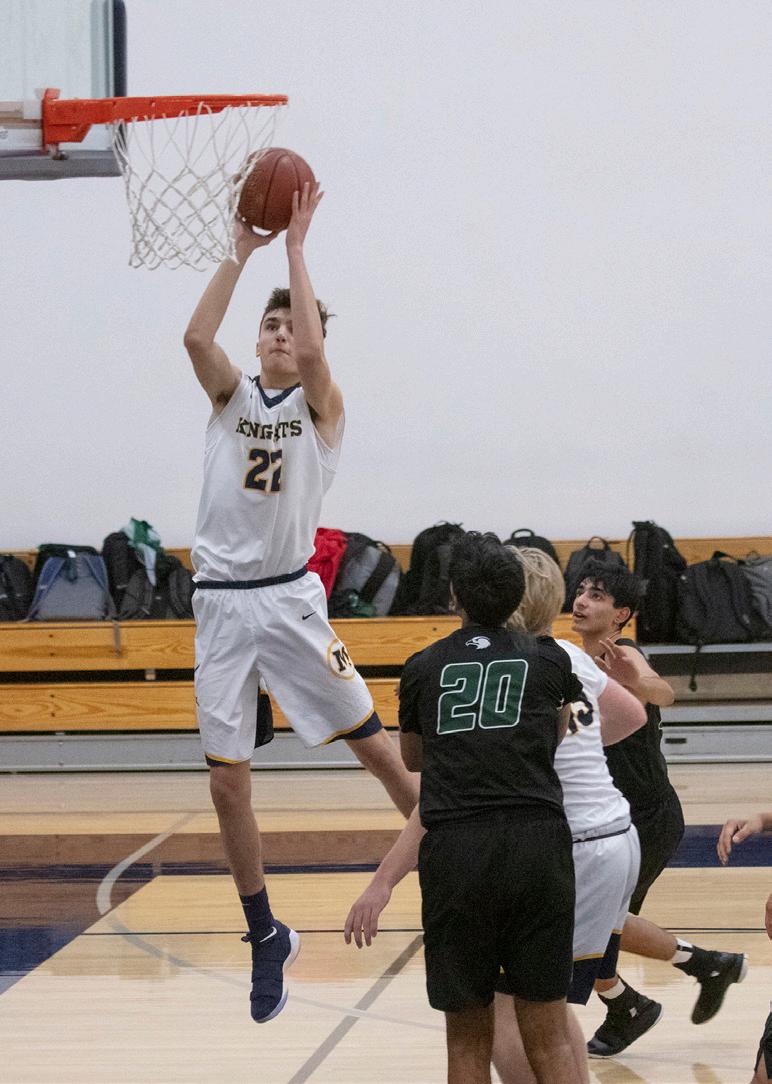
Varsity boys basketball closed their season 20-6 overall and 13-1 in the WBAL. The Knights destroyed Crystal Springs 73-28 in their last league game. The team qualified for the CCS Open Division as the eighth seed, facing number-one seeded Mitty in the quarterfinals. The boys fell 63-35 in the tough match-up, proceeding to play Serra in a consolation game. The game was competitive on both ends; however, the Knights ultimately fell short with a final score of 59-55. In their final game of the season, the boys faced Oakland Tech on the road for NorCals. Senior Cole Kastner and junior Davis Mead lead the team in points, with 16 and 9 respectively. The game went to overtime, ending in a disappointing 56-48 loss for Menlo.
Photos courtesy of Doug Peck.
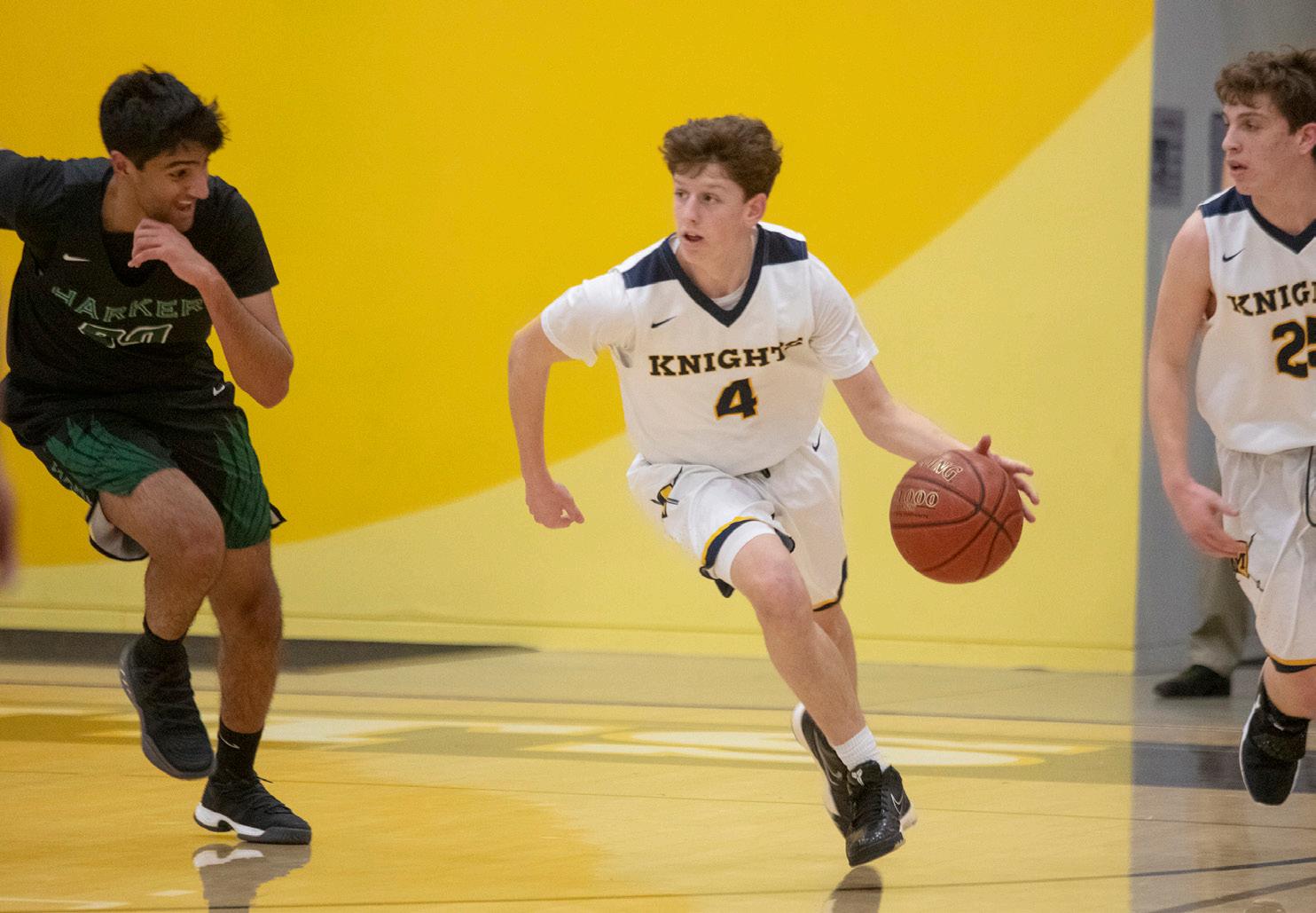
Varsity boys soccer had an overall record of 15-3-4 and 9-2-1 in the WBAL. The Knights ranked second in league after SHP, who went undefeated. They dominated on Senior Day, defeating Eastside 13-0 with goals from each senior. After a 10-0 victory against Crystal Springs in their last league game, the Menlo boys secured a spot in CCS. In this blowout, the senior Morgan twins had impressive showings, Aaron with three goals and Alex with two. The Knights proceeded to prevail over Pajaro Valley in the CCS Division III quarter finals with a score of 4-0, but fell to St. Francis 3-1 in the semifinals.

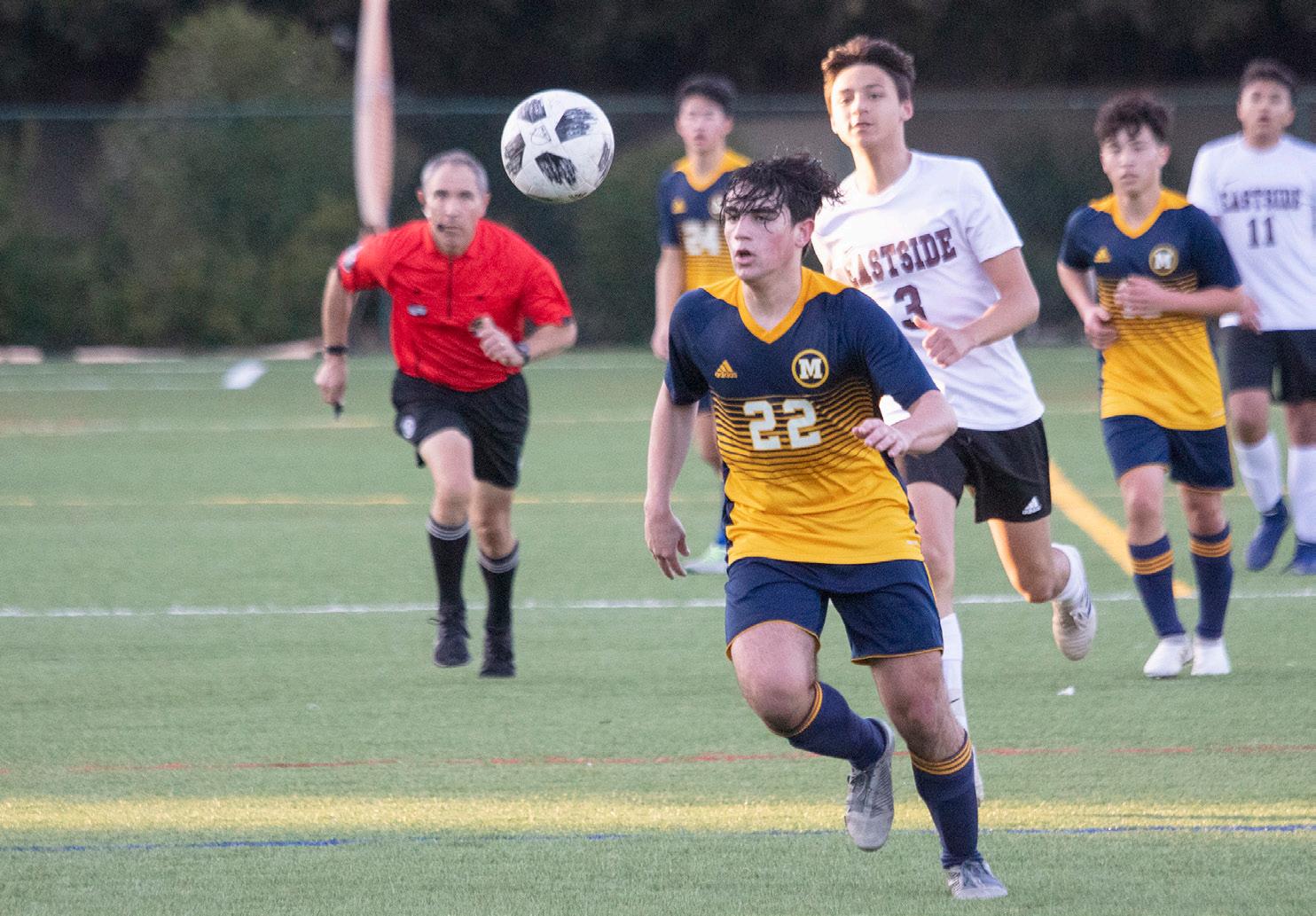


The varsity girls soccer team finished their season 11-4-7 overall and 6-1-3 in the WBAL, securing second place in league. Their final game of the season was Senior Day against Notre Dame Belmont. The Knights tied the league champions 2-2, with two goals from sophomore Carolina Espinosa, qualifying for CCS. In the CCS Division III quarter finals, the Knights defeated Gilroy with a 3-0 shutout, sending them to the semifinals against Paly, where they prevailed 1-0. Energy was high in the championship game against Burlingame. As neither team scored, the game came down to penalty kicks. The Panthers ultimately won the PKs 4-2.
Photos courtesy of Pam McKenney.
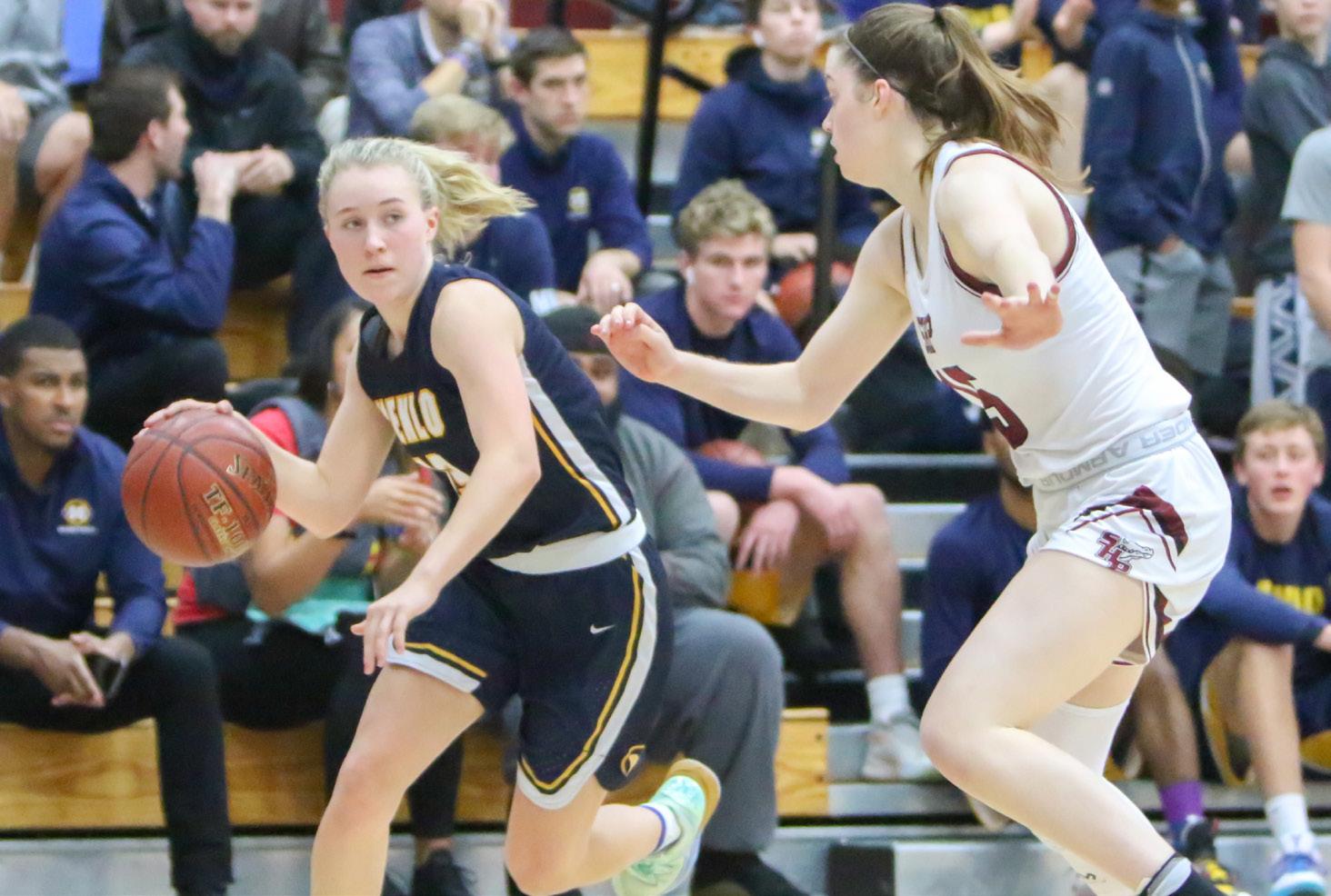
The varsity girls basketball team finished their season with an overall record of 20-6, standing 7-3 in the WBAL. In their final league game, the Knights defeated Notre Dame Belmont 47-27. They faced Sacred Heart Cathedral in the CCS Open Division quarterfinals, securing a tight 59-56 victory. Junior Coco Layton tallied the most points of the night with 18, sinking six three-pointers. The girls proceeded to play Gunn in the Open semifinals, losing 58-33, but they still qualified for NorCals. The Knights were meant to play in the Division I NorCal quarterfinals, however the game was unfotunately cancelled, thus Bishop O’Dowd will continue to the semifinals.
Photos courtesy of Pam McKenney.
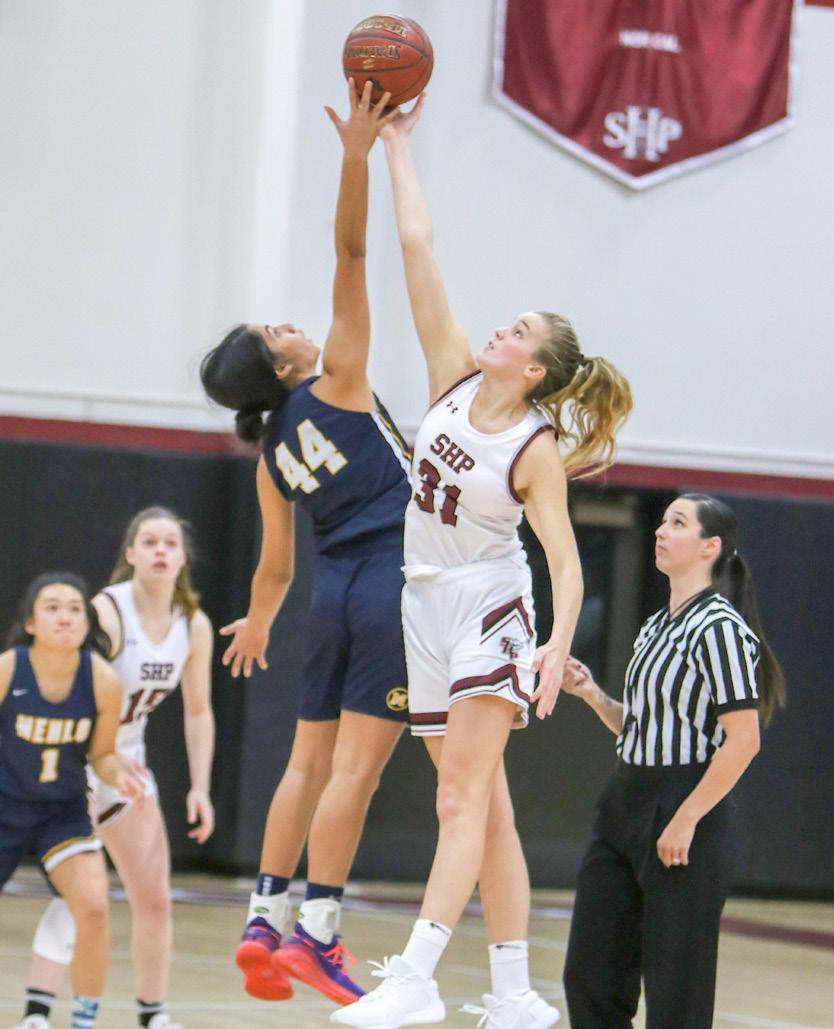
Photo (right) courtesy of Cyrus Lowe photo (below) courtesy of Doug Peck.