
Impossible “Meat” Trialed During Menlo’s EcoAct Week
While Impossible Burgers Weren’t Served, Impossible

by CARLY McADAM
The creation of the Climate Coalition at Menlo this year has sparked conversations about Menlo’s efforts to be more sustainable. One way that they are aiming to do this is by working with Flik Dining to make Menlo’s food more sustainable.
Senior Declan Stanton is one of the leaders of the food
branch of the Climate Coalition and one of the people spearheading the movement towards sustainable eating at Menlo. “The more I learned about the meat industry and how bad it was, the more I realized that I do not want to be supporting the meat industry,” Stanton said. Stanton and the rest of the Climate Coalition think that Impossible™
GoMenlo Offers New Way to Earn CE Credits
Some Students Question New Program’s Viability
by SARAH NORUM
With the impending threat of having to reduce the number of students enrolled at Menlo next year, multiple committees have joined forces to enact a new program to reduce the number of cars that come to campus daily.
The Climate Coalition, Student Council, Director of Sustainability Kevin Conner and Director of Community Engagement Chris Young decided to implement a plan to incentivize students to commute sustainably by granting community engagement credits. “In order to earn one community engagement credit, you have to use alternative transportation, including biking, walking, carpooling or taking the bus or train, 25 times,” Conner said. “After 25, you get one credit, and you can earn a maximum of three throughout the year.”
In order to track who is taking advantage of these means of transportation, students have to get an individual card stamped every morning. “We can keep track of how many rides they take through a punch card,” Young said. “Students who were involved in creating this program stand in front of school every morning with stamps.”
The program’s main goal is to reduce the number of cars coming to Menlo on
a daily basis so the town of Atherton will not force Menlo to cut its enrollment. “The primary reason this will be implemented is to reduce [car] traffic, as that is the priority for this year,” Conner said.
The Climate Coalition got involved when they realized that this solution to the enrollment problem could also be a tangible way to reduce students’ carbon output. “I think the impetus was reducing the number of cars that enter school, but we quickly realized that it connects with the environmental efforts that people want to make here to be more conscientious of our carbon footprint,” Young said. “I think that’s where it started to become a collaboration between students in the Climate Coalition, Mr. Conner and myself.”
Conner sent out a survey before winter break to determine whether distributing community engagement credits would be incentivizing for students, and he received mixed responses. “When we sent out the survey for the program to the students the responses were split,” Conner said. “Some
Credits, page 4
“meat,” created by Impossible Foods, could be a realistic alternative to meat at Menlo.
“Obviously [meat] tastes good,” Stanton said. “But the Impossible™ [meat] is an awesome way to get people who love meat to do something more sustainable, and I think it’s one of the best ways to shift our meat industry to be more plant-based.”
Impossible™ Foods was founded in 2011 but has become increasingly popular in the past few years as awareness about sustainable eating and climate change increases. They develop plant-based substitutes for meat products, including beef and pork.
The Climate Coalition has been working with Flik on incorporating the Impossible™ “meat” into Menlo’s lunches. One goal of the Climate Coalition’s EcoAct Week was eating more sustainably at lunch. Flik incorporated the Impossible™ “meat” into their lunches during this past week. Some students have expressed concern about Flik using the Impossible™ “meat” during EcoAct Week. A petition titled “Stop Menlo From Forcing Us to Eat Impossible Burgers” was created by an anonymous Menlo student on iPetitions. Although the petition doesn’t seem to have any weight or be serious, students do have concerns about the ingredients in the Impossible™ “meat,” including high fat content and other processed ingredients.
Some students, especially boys, are concerned about
Impossible, page 4
Recent Homophobic Incidents Spark Conversation
by ADLEY VOGEL
On Jan. 6, a homophobic, politically-charged message was written in dirt on the window of a Menlo student’s car, the most recent of two homophobic incidents at Menlo in the past three months.
Senior Mara Lebovitz, a member of the LGBTQ+ community and a supporter of Democratic presidential candidate Bernie Sanders, discovered the message “Bernie is a fag” written on her car while leaving the Menlo parking lot.
“When I was driving out of the lot, I looked over to the passenger side and noticed something outlined. And when I got
home, I looked at it, and it said, ‘Bernie is a fag,’” Lebovitz said. Lebovitz has a Bernie Sanders sticker on her car. “I wasn’t surprised. I was just really angry,” Lebovitz said, “I understand that people have different political views than me, that’s not what I’m angry about. I’m not saying you’re not allowed to disagree with me. It’s the homophobic part of it that really gets to me. I’m not sure if it was targeted
Incidents, page 3


Members of the Climate Coalition tried the Impossible Burger back in December of 2019. This week, students were served the Impossible “meat” in a bolognese sauce. Photo courtesy of Janina Troper.
Staff Illustration: Sulwen Ma
1 Billion Animals Killed, 42,000 Square Miles Burned in Australian Wildfires
by SHEFALI SAHAI
There were many days during the California wildfires in 2019 when the smoke coming from the north covered the Bay Area. The fires in Australia are already at least 12 times bigger than both the 2018 and 2019 California wildfires combined. While the California fires were tragic and burned almost 3,500 square miles of land over the two years, Australia’s fires have already burned 42,000 square miles, according to Newsweek. The damages and economic losses in Australia are expected to cost Australia at least $68 billion, according to The New York Times.
Australia has lost much more land than California, but there were more deaths and buildings destroyed in the California fires. In 2018 and 2019 combined, there were a total of about 100 deaths and 25,000 buildings destroyed or damaged due to the California fires, according to Cal Fire. In Australia, as of Jan. 31, there have been 33 deaths and almost 5,900 buildings burned, according to the BBC and UN Environment Programme. The fewer amount of deaths and buildings burned in Australia is due to the fact that California is much more densely populated and developed, whereas the population in Australia is more scattered.
However, Australia is more rich in wildlife than California, and an estimated 1 billion animals have already been killed in the fires, according to ecology professor Christopher Dickman at the University of Sydney. Several species are expected to go extinct, such as dunnarts and many insects that are extremely important to the balance of the ecosystems. Tens of thousands of koalas and kangaroos have been killed as
well, according to The Washington Post. The combination of increasing temperatures and 2019 being one of the hottest years in Australia and the decrease in rainfall during this period of drought has made the wildfires almost inevitable. This situation is similar to what happened in California when there were shorter and drier rainy seasons, and unusually hot months
between spring and fall.
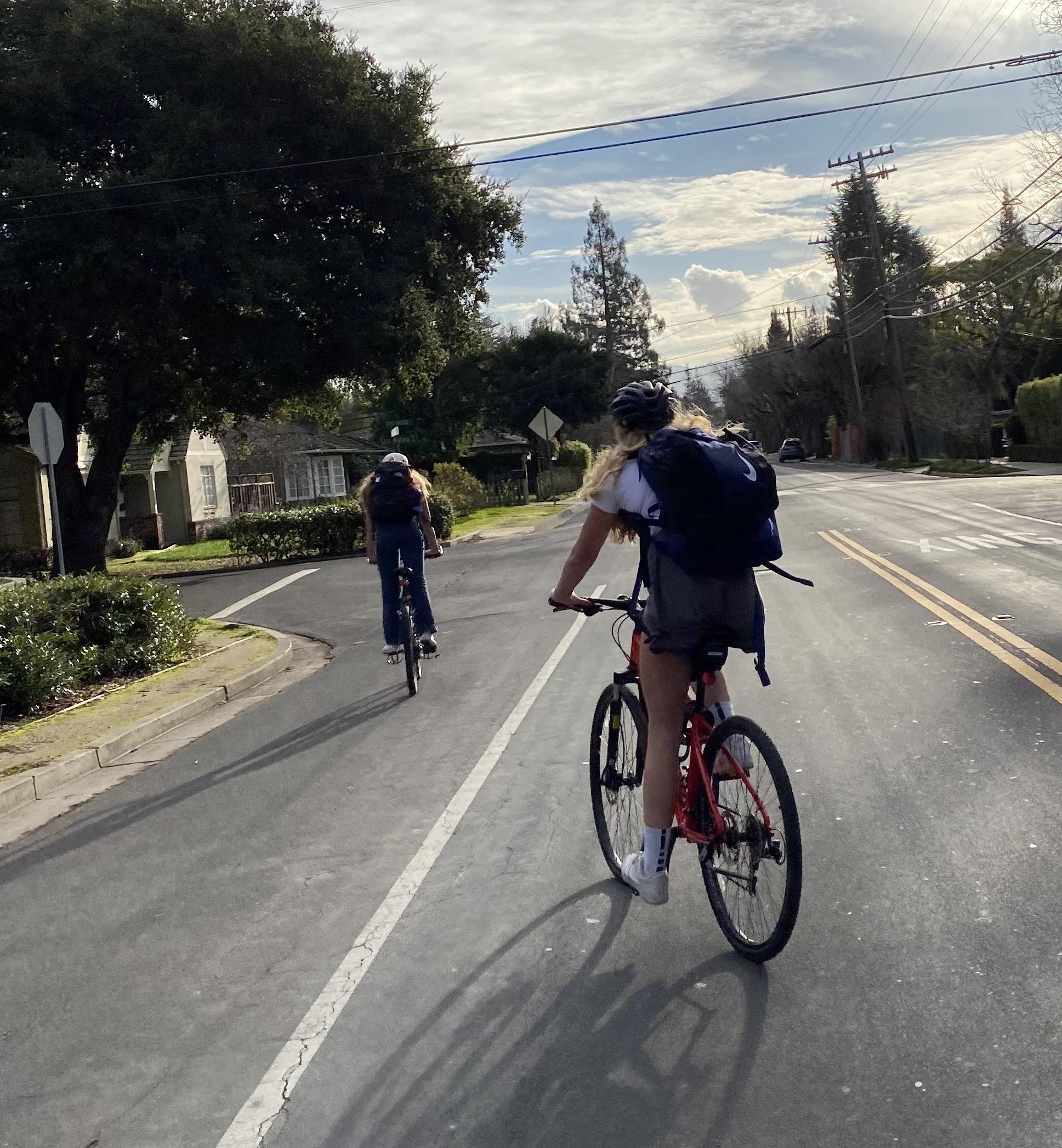
Many Menlo students have helped raise money for the Australian wildfires by participating in a Bike-a-thon, organized by Menlo’s Climate Coalition club. Around 15 people participated in this fundraiser, raising over $13,000, according to club leader Janina Troper.

How Menlo Picks and Pays For Speakers
by ALEX LEVITT
Menlo students are familiar with the upperschools weekly assemblies, but they may not know that there is hard work put into the planning of assemblies to ensure that a diversity of engaging information is shared. Each year, the administration looks into a myriad of possible speakers, but in the end only invites a handful, due to the desires of the students, the message of the speaker and the expenses of hosting that person at an assembly.
Even though many subjects discussed at assemblies may seem contentious, Menlo believes that it is critical to bring in speakers on a wide range of subjects in order to increase student consciousness. “We don’t have the intention of only bringing in unilateral viewpoints, we try to bring in a diversity of thought, a diversity of new information to give to the students,” Assemblies Coordinator and senior Jackson Randal said.
Randal works closely with Dean of Student Life Programs Eve Kulbeida, in order to plan meaningful assemblies throughout the year. “At the very beginning of the year, [Randal and I] set the assembly schedule,” Kulbeida said. “Some assemblies are dictated by external forces, like there’s an alum in town, but otherwise we know that there are certain groups on campus and certain topics on campus that we want to have covered.”
One recent example of this was the Body Positivity Assembly. Jake Fauver, one of the Upper School counselors, was a main
Speakers, page 3
Academic Coordinator Leaves, Ryan Dean Takes Her Place
by SYLVIE VENUTO
Former Academic Support Coordinator Kathryn Gray left Menlo on Jan. 10, with former Upper School History Department Chair and AP U.S. History teacher Ryan Dean taking over some facets of her position.
On Dec. 19, the last day before winter break, Gray gave the Menlo Administration notice that she would leave the school on Jan. 10 in order to take a new position at the Charles Schwab Learning Center at Stanford, according to Dean of Teaching and Learning Bridgett Longust.
While Menlo plans to hire a full-time replacement for Gray sometime this summer, Dean has been brought on for a part-time position — which he started Jan. 27 — to assume Gray’s responsibilities that do not require experience and formal training in special education, Longust wrote in an email to The Coat of Arms. Under the title of Upper School Academic Support Coordinator, Dean will coordinate the specifics of extra time testing for the ACT, SAT and AP exams in the spring and will be the liaison between Menlo and College Board and ACT, Longust said.
Dean worked at Menlo for eight years as the Upper School History Department Chair and AP U.S. History teacher prior to leaving at the end of the 2018-2019 school year.
Despite “loving” Menlo, Dean expressed his desire to explore working outside of a teaching environment. “Just because the school doesn’t have an official time off or time away policy, it doesn’t mean that teachers should stay on when they’re too tired to keep giving their best. So that’s why I stepped away,” Dean said.
While Dean was not at Menlo, he worked on research projects about American education and genealogy studies about his family, did consulting and part-time work for different groups such as the technology startup BloomBoard (a platform for enabling educator advancement), as well as coaching his son’s kindergarten soccer team.
Longust noted Dean’s knowledge of Menlo’s Upper School culture, curriculum, community and systems as
well as his ability to manage and track details while communicating with students and families as reasons why he was hired for the new position. “He’s [...] personable, hardworking and excited to be connected to the Menlo campus again,” Longust wrote in an email.
Dean does not have the degrees necessary to be qualified as a learning specialist, meaning that while he can coordinate with College Board and coach students in academic habits, he is unable to diagnose students with a learning disorder, Longust said. Because of this, Menlo has partnered with Morrissey Compton, a diagnostic, intervention and treatment service for children and adults with learning disabilities, which is located in Redwood City, according to Longust.
Any questions or tasks that the Menlo administration might have given Gray, like requesting to give a student assistance in making an appeal if the student is denied extra time with College Board, will now be directed to Morrissey Compton, which will act as a consultant for the school, Longust said. Any consulting advice from Morrissey Compton will be free of charge for Menlo families, but if a student needs to be tested for a learning disability, they will be charged as normal.
position is solidified, a search committee will be formed to hire someone to fill the position in the spring, with the new person starting work sometime around July this summer.
“We have a plan,” Longust said. “Mr. Dean is eminently capable, and there’s a bunch of people here who are going to pick up extra pieces of [Gray’s] work, so a little bit is being owned by everybody: the student support team and
Menlo families who worked with Gray in the past were notified that Gray was leaving and have been directed to Acting Upper School Director Maren Jinnett to ask any questions that they might have.
For the permanent position, the Menlo Administration is discussing how to structure the position as to best fit the Menlo community, Longust said. Once the role of the
the student life team and advocates and [Dean of Students Tony] Lapolla and [...] Jinnet.”
Because the position is temporary, Dean is undecided about what he will do once his temporary position is filled by a permanent employee. “I haven’t made up my mind [about what I am going to do once the school year ends]. I will say this: I do like Menlo an awful lot, and maybe there’ll be a reason for me to come back,” Dean said.
Illustration by Kate Richardson
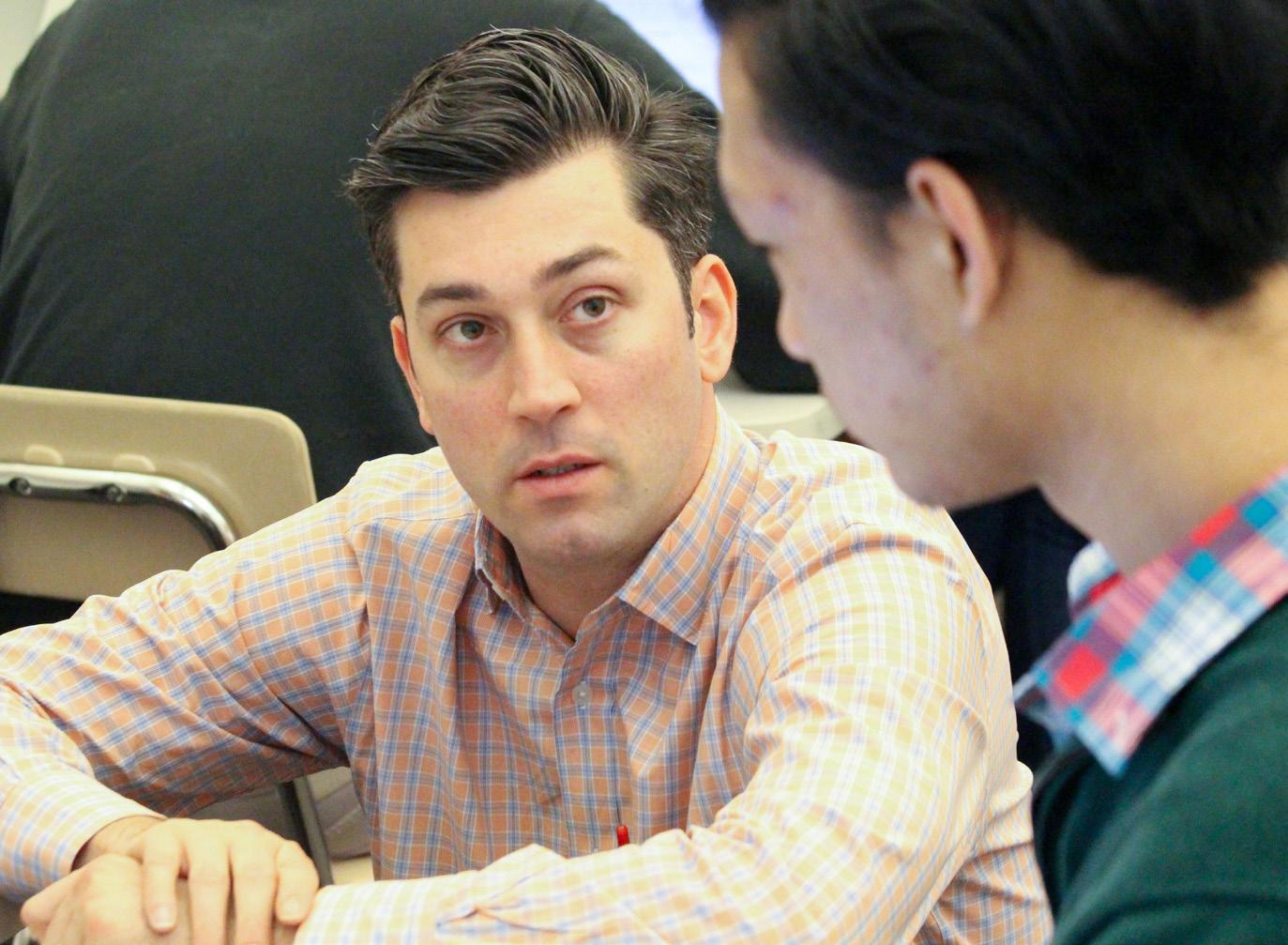
Dean left Menlo at the end of last year but is temporarily back as the school’s Academic Support Coordinator. Photo courtesy of Pete Zivkov.
From 2010 to 2020: Menlo Then and Now
by ELISABETH WESTERMANN
If you were a Menlo student at the beginning of 2010, you would likely arrive on campus around 7:50 a.m. and commence a busy day of five or six classes. It would take you several minutes to walk to lunch each day at the Menlo College cafeteria, and you would attend assemblies at the Menlo College gym. Snapchat and Instagram don’t exist yet, and odds are you would have an active Facebook and possibly even MySpace account.
According to teachers who have been
at Menlo over the decade, the core of the school — its excellent faculty and dedicated students — has remained constant.
“One of the great things about working at Menlo is the colleagues who you work with. […] The policy that [the admissions team] is looking for kids who are good citizens has not changed,” Upper School science teacher David Spence said.
But from shifts in the schedule to the introduction of new buildings, the school has changed in many important ways.
The most noticeable changes to the school have been the changes in the buildings on campus. The Athletic Center, Creative Arts and Design Center (CADC), Whitaker Lab, cafeteria, remodeled library and student center were all built during the 2010s. The Athletic Center was finished in 2010, the CADC and the Whitaker Lab in 2014, and the cafeteria, library and student center in 2017.
Another important shift has been the greater variety in course offerings. Many

Speakers, cont.
organizer of this assembly, where Sacred Heart and USC alumnus Victoria Garrick spoke. The plan for the assembly was initiated by students, with Fauver acting as a liaison between these students and Garrick.
“A few students came up to me and said we’re noticing we’re not talking about body image, we’re not talking about eating disorders,” Fauver said. “Over the summer or the beginning of the fall, we ran into this
Incidents, cont.
at me because I am gay, but in general, that word isn’t okay to use.”
While speaking to the senior class regarding this incident, Dean of Students Tony Lapolla called the incident “a blatant violation of the fundamental values we stand for,” and commented that if a culprit
unbelievable speaker we thought would be great. That just so happened to be Victoria Garrick.”
Luckily, Garrick was in the price range that Menlo could pay, but that’s not the case with all speakers, as many speakers that may be desired cost too much for Menlo to manage. “We have access to a lot of really influential and excellent resources to bring in for assembly speakers. In saying
that, some really amazing speakers charge $40,000, and that’s not something that Menlo is really in line with,” Kulbeida said.
The administration declined to comment on the annual budget for assemblies or how much past speakers have been paid.
promptly removed from Menlo’s campus.
“Command Security Services [CSS] fully embraces diversity and opposes any discrimination based on race, ethnicity, gender, creed, sexual orientation, or any other characteristic. We demonstrate, with our diverse workforce, our promotion of equal

is found and brought to the disciplinary committee, “ [the disciplinary committee] would have to strongly consider whether this person should remain at this school or whether they should be expelled.”
This incident occurred a month after Upper School language teacher Dr. Edwige Gamache reported to campus security that rainbow stickers she had put on her classroom door had been repeatedly ripped off. The stickers were given out by Spectrum Club on National Coming Out Day.
It was eventually determined that the culprit was a member of the Command Security Services team. The employee was

opportunity for everyone. CSS has zero tolerance for discriminatory actions by any member of our team,” Command Security Services COO Allan Bedwell said in an email to The Coat of Arms. Bedwell was unable to comment regarding any disciplinary action taken against the employee once removed from campus. “CSS continues to be committed to the safety and security of everyone at the school and community,” Bedwell said.
At a time where gender and sexuality are being so openly discussed, these occurrences are rare, especially in the liberal Bay Area, but some LGBTQ+ students and
teachers pinpoint the opening of the Whitaker Lab as being a turning point. “I feel like we attract many more students who are interested in math and science, and I think that is partially because of [the] Whitaker Lab. [With the] Whitaker Lab, we’ve been able to add to our academic program STEM-based electives which offer students unique, hands-on learning experiences,” math teacher Danielle Jensen said.
The school has made strides to maintain a balance between STEM and humanities offerings, and starting in 2018, the history department added a wide selection of electives for juniors and seniors. In addition, Menlo now enables students to have access to dozens of online classes through Global Online Academy, and through the Menlo Interdisciplinary and Personalized Scholars Program (Menlo IP), students can dive deep into a topic of interest. A consequence, however, of the wider variety of academic classes available has been less participation in arts electives. “The arts were really full for the longest time, and then […] you suddenly had a bigger buffet table of electives to choose from,” dance teacher Jan Chandler said.
Teachers have also identified increas-
Decade, page 4
faculty members aren’t shocked. College counselor Matt Mettille, an LGBTQ+ member of the faculty who previously worked at a progressive independent school in Washington D.C., said that he feels like the school is more traditional than many people realize. “I don’t know if I would say it’s common, but over my time [at Menlo], you definitely overhear homophobic-ish things that don’t necessarily impact me perse, but I worry it would make a student feel that this isn’t an inclusive environment,” Mettille said. “I wouldn’t think that stuff like [the two homophobic incidents] would happen here, but I guess given the things that I’ve heard and the general attitude here, I guess it doesn’t feel surprising.”
Upper School history teacher Matthew Nelson, also a member of the LGBTQ+ community, also says he isn’t entirely surprised by the incidents, but for a different reason. “I do understand that teenagers, not being fully formed humans, are still learning and still maturing. There are things that are said or behavior that manifests that is not becoming of the values of Menlo School,” Nelson said. “So it’s not a surprise to me that, periodically, we’re going to see incidents like these.” Nelson also said that as an LGBTQ+ member of the faculty, he feels entirely affirmed and included in every way, and recognizes that LGBTQ+ students may have different ex-
periences than his.
Several LGBTQ+ students who were interviewed by COA explained that while they have never directly received criticism related to their sexuality, they hear homophobic slurs or comments while at school. “It was the same day I came out [about my sexuality] at an all school assembly. I went to water polo practice, and in the locker room, one of the guys was bantering, and another guy said, ‘Shut up, you guys are such a bunch of dumb queers,’ then looked over at me and goes, ‘Hey Griffin,’” senior Griffin Thomas said.
It’s still unknown who wrote the homophobic message on Lebovitz’s car.

The school celebrates the opening of the Athletic Center back in August 2010. Photo courtesy of Pete Zivkov.
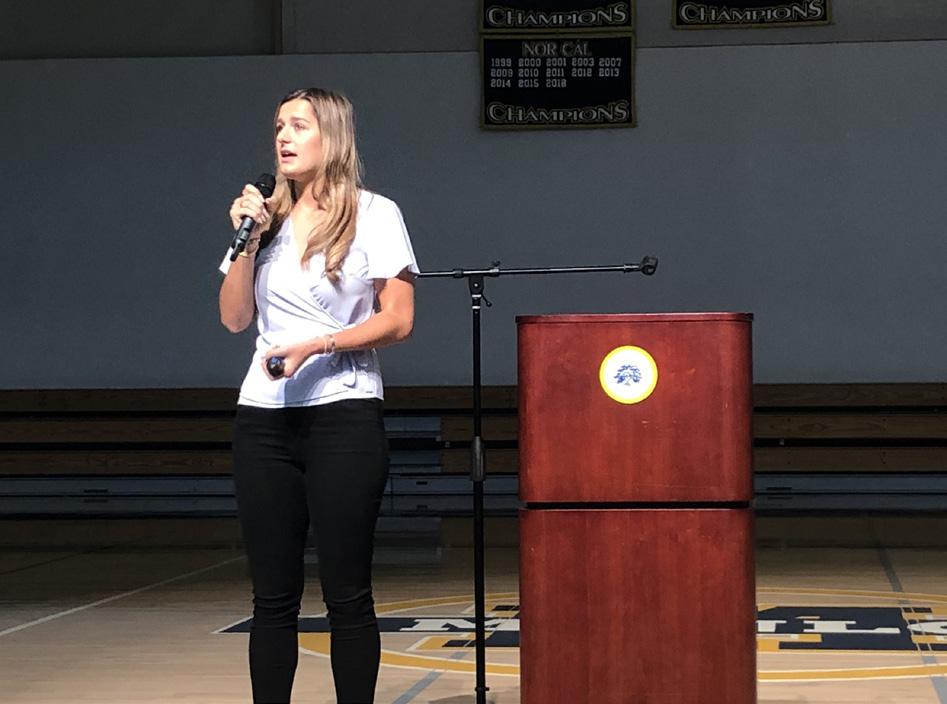
Mental health advocate Victoria Garrick speaks to the Upper School during a 2019 assembly. Photo courtesy of Pete Zivkov.
Staff Illustration: Sulwen Ma
Decade, cont.
ingly competitive college admissions as a major source of change at Menlo. Student stress has increased as students feel pressure to take on more in their coursework and extracurriculars. The school has had to adapt to these student needs. “There’s been a big push for social-emotional learning. [...] There’s been a ton of emphasis on mental health and balance and teaching the whole child,” Jensen said.
Student stress was a major factor in the transition to the block schedule in 2016
kids to get a good grade.’ […] I think that has had a little bit of an impact on the relationship between students and teachers and definitely teachers and parents. It feels like a business where I used to feel as though it was a community,” Spence said.
One of Menlo’s greatest improvements over the decade, has been an increase in an effort to improve inclusivity on campus.
“Diversity and inclusion was a value of the school, at least on paper, when I got here, but the school has done a lot more about

that implemented a later start time, more tutorial time and fewer classes each day, a decision that has decreased the content each course can cover. The change has been a particular burden on math and language teachers, whose students need frequent practice to retain material. “If they believe that it reduces stress, then it’s a good bargain. [However,] in our field, we want to reinforce whatever we did yesterday, and when you have five days between classes, it makes it hard,” math teacher Michael Thibodeaux said.
Increased stress regarding college admissions has altered relationships between parents and teachers.
Teachers also note that increased stress regarding college admissions has altered relationships between parents and teachers, affecting the overall sense of community at the school. “Because of the price of tuition and because of the anxiety around college, it feels a lot more transactional, […] like, ‘I’m paying a lot of money. I expect my
Impossible, cont.
the estrogen content in Impossible™ “meat.” Estrogen is a hormone that promotes the growth of female characteristics of the body. Various anonymous comments on the online petition state things such as “I don’t want to grow boobs from the estrogen” and “[Impossible™ Burgers] have estrogen in them, and I kinda don’t want boobs.”
However, according to New York University nutrition professor Marion Nestle in a Washington Post article, there is no evidence that eating Impossible™ “meat” will make men grow breasts. Unless men are eating the Impossible™ “meat” every day as their main source of calories, there should be no cause for concern, according to Nestle.
According to Harvard Medical School, it
If you were a Menlo student at the beginning of 2010, you would likely arrive on campus around 7:50 a.m. and commence a busy day of five or six classes.
it in the last 10 years. We’ve been shifting the effort from merely getting more people, especially students, but also teachers, of diverse backgrounds to the school, to making this a place where everybody feels as at home as everybody else, and that’s the harder thing,” Upper School history teacher Andy Kitt said. He explained that more time has been set aside for the faculty to focus on diversity and inclusion practices, which has resulted in more teachers being “more aware of their practices and their curriculum and their choices.”
Menlo continues to face many pressing challenges, with the rising cost of living for teachers, student stress and diversity and inclusion among them. But given the school’s willingness to tackle changes over the last ten years, it seems prepped to do its best to adapt in the new decade.
has not been proven that the Impossible™ Burger is healthier than a regular beef burger. However, Flik is not concerned about the ingredients in the Impossible™ “meat.” “It’s all natural stuff, and it’s not anything that’s processed,” Hunt said. “But [the ingredient list] might sound a little
There is no evidence that eating Impossible™ “meat” will make men grow breasts.
foreign to someone who’s reading it.” Of course Flik will not be forcing students to eat the Impossible™ “meat”; there will be other food offered on the days when Impossible™ “meat” is used. Flik is also not planning on serving Impossible™ “meat”
Credits, cont.
of the students thought it was a really awesome idea whereas the other half said they have been taking alternative transportation for years and that it should not qualify as community engagement.”
Young believes that it should count for community engagement even though it is not the typical service that many students would normally associate with credits. “I call it ‘light’ community engagement, just like running tours for an open house. These don’t really challenge you to get out of your comfort zone, but the commitment to these greener habits is just as important,” Young said. “It’s also an opportunity for students to reflect more carefully about the choices they make and the results those have environmentally. That, to me, is a form of engagement.”
Although the program has already been put into action, doubts about its efficacy have been raised by the student body, including some from students who help run the stamp-card system. Junior senator on Student Council Egan Lai is unsure whether or not it will actually make students change their habits. “Most people that are commuting sustainably do so because they have always done so or because they live far away and have to get to school through
some means of public transportation,” Lai said. “I do not think anyone is suddenly converting to sustainable commuting because they can get credits.”
“It’s also an opportunity for students to reflect more carefully about the choices they make and the results those have environmentally.”
- Chris Young
Junior Alix Borton, the head of the Transportation Branch of the Climate Coalition, is in agreement. “There are definitely more efficient ways to reinforce the system,” Borton said. “I think the incentive is there for people who have taken public transport in the past and have an easy transition, but not those who have to start fresh to get around cleanly,” Borton said. Additionally, Lai believes that not enough students are aware of the issue at hand.
“The next step is just to get people to care,” Lai said. “I don’t think the idea of cutting class sizes really matters to current students yet.”
every day during EcoAct week and is only planning on serving it once a month at the most going forward, according to Hunt.
According to an assessment done by Impossible™ Foods and published by CNBC, the Impossible™ Burger uses 96% less land, 87% less water and 89% less greenhouse gas emissions than a beef burger. In addition, when Menlo does a lunch without meat, it can have a big impact. According to Hunt, “It’s anywhere between 200 and 300 pounds of [animal] protein that we don’t have to purchase, which is a positive impact on the environment.” Using plantbased protein is more sustainable than animal-based protein because it takes less natural resources to process.
Although Impossible™ “meat” isn’t going to be on the regular lunch menu after EcoAct Week, Hunt still wants to incorpo-
rate it into Menlo’s food service. “We plan to incorporate it more,” he said. “We want to see how it goes. [...] We are anticipating that it’s going to be positive because it’s a really good item.” Hunt wants to incorporate it into regular lunch at least once a month by the end of school, but it will also be featured on Flik’s catering menu. The catering menu is the menu that is used for various Menlo events that are catered by Flik, such as open houses and parent nights. “We’re going to put it on the catering menu because at least it is still accessible for students, faculty and parents,” Hunt said. “I think it’s a great product. I’m really happy we have access to it.”
A ribbon-cutting ceremony officially opens the Athletic Center in 2010. Photo courtesy of Pete Zivkov.
Seniors Kendall Weingart and Janina Troper bike to school from their homes in Los Altos during the Bike-A-Thon held the week of Jan. 20. Photo courtesy of Janina Troper.
Buxton Sustains Lifelong Violin Talent
by SARAH NORUM
Upper School science teacher Tanya Buxton has carried music with her throughout her whole life, playing the viola for symphonic and classical music and the violin for Irish and Scottish fiddling.
When she was in fourth grade, Buxton chose to play the violin through her school music program. “Soon after that, my family was able to give me private lessons,” she said. “I played all throughout high school in a very good orchestra, which is actually still around, called the Palo Alto Chamber Orchestra.” Buxton traveled with this award-winning youth orchestra as a violinist, but halfway through high school, there was a need for violas, so she temporarily switched over.
Buxton was able to sustain her passion for music after high school. “In college and graduate school, I played in the symphonies at my schools, and that was an amazing experience,” she said. “I got to travel all over Eastern Europe and Asia with several different orchestras.”
Since then, she has been a part of a local orchestra along with various other current and past Menlo teachers such as Upper School english teacher Rebecca Gertmenian and former Upper School computer science teacher Richard Steinberg. “I’m in the Redwood Symphony, which is an adult community orchestra with fairly good players; some of them are actually semi-professionals,” she said. “I play in that group every week on Wednesday nights, and we have about six concerts a year.” Buxton also plays with the San Francisco Scottish Fiddlers, and they have concerts in the spring. “It’s a whole different ball game, and I play the violin there, but my family and I enjoy it.”
Buxton has loved sharing her passion for music with her kids and family and believes it is important to get children playing

instruments early on. “I’ve really enjoyed helping my own children grow up with music, as we have a very musical family, so that’s a really neat bond to have,” she said.
Her kids, Will Buxton (‘19) and Maddy Buxton (‘16), both went to Menlo and played with the school orchestra, giving her the opportunity to occasionally join in for practices or performances. “The highlight for me last year was being able to solo with [my son],” she said. “We did a concerto with the orchestra, and it was a really culminating experience, as it was his last year at Menlo.”
Since then, Buxton has consistently contributed to the Menlo music program through plays, performances and assemblies. “Sometimes I play with [Upper School Orchestra and Jazz Band teacher Leo Kitajima Geefay] but I also played in the holiday concert, which I definitely want to do again,” she said. “I have also played in the recent outdoor spring musicals ‘Bye Bye Birdie’ and ‘Oliver’ here at [Menlo].”
Buxton has continued to play the violin and viola throughout her life because of her love of music and the constant challenge it provides. “Music just feeds my soul, and I enjoy it so much,” she said. “It is a technical challenge, too, which gives you something to work on and to improve on.”
Blick’s Hidden Talent: Choral Singing
by ELISABETH WESTERMANN
Upper School math and computer science teacher Zachary Blickensderfer has been singing since before he could speak. “For me, singing is like my first language,” he said. Growing up, Blickensderfer’s family was heavily involved in the arts; his mom was an actress and director, his dad worked on the technical side of the theater and his sister is a violinist. “It’s part of the heritage. [...] It wouldn’t be in keeping with my family if I wasn’t a musician in some way,” he said.
Blickensderfer has taken his singing a long way since then. Blickensderfer sang in school choirs through middle and high school but began taking singing more seriously in college. When he was an undergraduate student at Yale University, he participated in three singing groups and took a year of classical training through the Yale School of Music.
In addition, he took a year off between his junior and senior years to be one of only 14 members of the “Whiffenpoofs,” a Yale a cappella group which, according to their website, performs in over 200 concerts all over the world annually. While living in Chicago after graduating from Yale, Blickensderfer remained a committed singer and sang with distinguished groups the “Chicago Chorale” and the “Wicker Park Choral Singers.”
Blickensderfer’s favorite part of his collegiate singing experience was his ability to travel with the groups he was a member of. One of his favorite memories came from a month-long European tour he planned as a senior for the group the “Alley Cats.” After arriving in Ireland after 36 hours of travel, the group was taken to a pub by local singers with whom they were staying. “[We] had a night of singing and generosity and craziness with this
super warm community. We were singing with these people we barely knew and we were dead tired but also just having the time of our lives,” Blickensderfer said. Currently, Blickensderfer is not part of any singing groups, but he says that “it won’t be long” before he either starts or joins one. In the meantime, he has been singing for fun with other Menlo teachers. He also runs an improv club for students at Menlo that is actively recruiting members and meets Tuesdays during lunch. His goal is to eventually start his own chorus group that combines the intimacy of the groups he participated in during college and the mission to serve the community that he found with the Wicker Park Choral Singers in Chicago. “If I can find a few singers to rehearse weekly and perform a few times a year, that’s the dream,” he said. Overall, Blickensderfer thinks it’s important for students to feel like the arts are worth pursuing, even for those not planning to have an arts-related career. He said, “My life is better every single day because I’m a singer. [...] [Singing] helps me to stay grounded and in touch with myself and what’s really important to me. I’m a better person because I sing.”
Students Wear Blue Light Glasses: Helpful or Just Hype?
by KATE HAMMOND
Blue light glasses, which are glasses that filter out blue light from computers and other electronic devices, are becoming increasingly popular on campus. Blue light is thought by some to be linked to digital eye strain, sleep disruption and even macular degeneration, a condition that causes people to lose a portion or all of their vision. Yet, there is no concrete evidence that blue light causes eye strain or eye diseases.
At Menlo, many students decided to start wearing these glasses due to headaches from spending time on their com puters. “I got them for first semester be cause I was making a documentary and staring at my screen for five hours at a time, late at night, and would get head aches. I wouldn’t be able to fall asleep,” senior Brooke Hodge said. Although Hodge states that the glasses have helped her sleep cycle, she said “it could definitely be a placebo effect of ‘I think that they do.’”
Much of the popularity of these glasses connects to sleep. Research shows that exposure to blue light delays the release of melatonin, which is the main sleep-promoting hormone. Blue light can also increase alertness and push back the body’s internal sleep schedule to a later time. A 2017 study from the University of Houston found that participants wearing blue light glasses showed a 58% in
crease in their nighttime melatonin levels.
Senior Sydney Bianchi also wears blue light glasses to prevent headaches, as she used to have to wear ice packs around her head to prevent them from occurring while using her computer. “I started wearing them a couple years ago. One, because they’re just kind of a fun little thing to wear, but honestly because I get really bad headaches from my computer, and I would have to take walks and breaks. I got them first to try it out, and I thought it’d be fun, but they actually really helped me,” she said. Junior Emily Boal also agrees that
headaches caused by staring at a computer. “When I was studying for my biology exam, I had them on the entire time, and I didn’t get a headache when I usually do,” Boal said. Yet, several studies have found that blue light glasses do not prevent eye strain or eye diseases. According to the American Academy of Ophthalmology, an organization of doctors who focus on eye disorders, blue light from digital devices does not even cause eye strain. The organization states in an article that the problems that people complain about are coming from the increase of time spent on digital devic-

on digital devices rather than investing in special eyewear. There is evidence that different kinds of light exposure can cause eye damage, such as too much exposure to ultraviolet light from the sun. Yet, the amount of radiation coming from a computer has not been found to cause any eye disease. A study from the National Library of Medicine found that there is no measurable UVA or UVB radiation from computer monitors. Many hours spent staring at a computer screen can cause eye strain, but that is associated with how people use their screens, rather than anything coming from the screens.
Much of the attraction to blue light glasses is the look of them. Sophomore Gus McGaraghan started to wear blue light glasses three months ago because his sister had them, and he liked how they looked. “I think people just like the look of them and can’t get real glasses,” McGaraghan said. Bianchi agreed with his statement. “People think glasses are cute,” she said. Boal also concurred with the appeal of glasses. “I think people just want to wear glasses,” she said.
A recent study from Market Study Report found that the global market for blue light eyewear will increase from $18 million in 2019 to $27 million in 2024. Many companies that sell eyewear – Warby Parker, Lenscrafters and even Amazon – now offer options for blue light glasses.
Buxton plays the violin in the 2014 Holiday Assembly. Photo courtesy of Pete Zivkov.
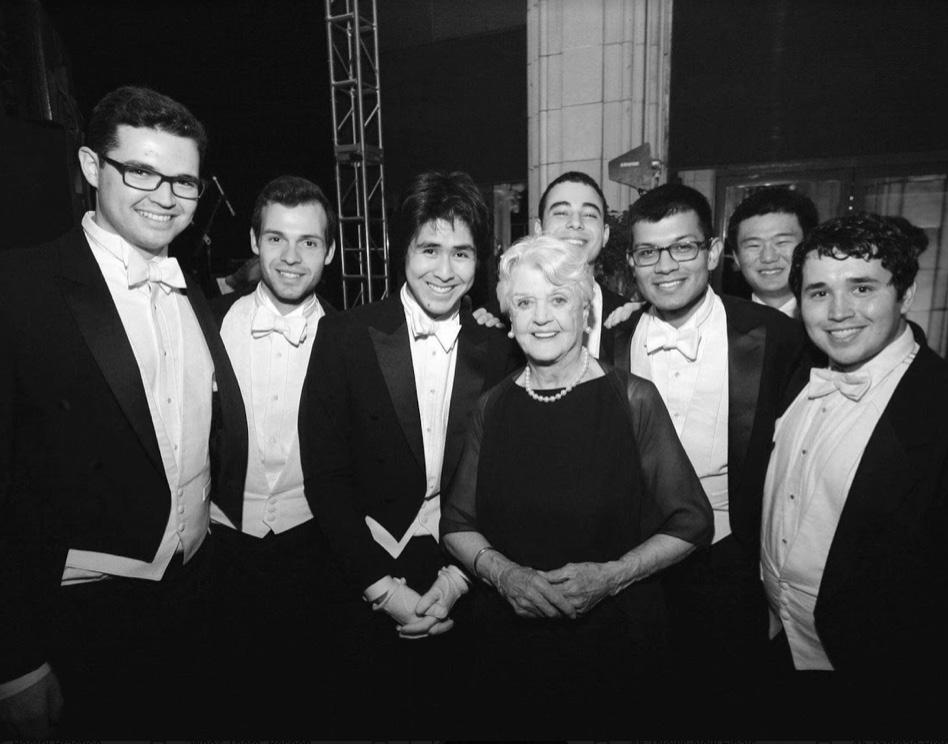
Mr. Blick singing with the Whiffenpoofs at actress Angela Lansbury’s birthday party in 2016. Photo courtesy of Blickensderfer.
Staff illustration: Bella Guel
Fast Fashion: ‘An Environmental and Social Emergency’
by SOPHIA ARTANDI
The fashion industry is not what it used to be. From bi-annual fashion seasons to companies releasing new collections multiple times per week, fast fashion has transformed the way people shop and reinvented the 2.4 trillion-dollar industry.
The buzzword “fast fashion” refers to the mass production of clothing in order to keep up with the latest trends; Howev er, it has darker connotations due to in vestigations of the worker and resource exploitation that enables consumers to buy affordable, fashionable clothing.
The Industrial Revolution brought the invention of the sewing machine in 1847, which caused clothing manufacturing to in crease tremendously, driving prices down. For around a century after, most clothes were still being made in small work shops or at home. It wasn’t until the 1960s when people started embracing cheaply made clothing to keep up with the trends.
Since the 1960s, popular fast-fashion en terprises such as H&M, Forever 21, Zara, Topshop and Urban Outfitters have been on the rise. According to The Good Trade, a resource that advocates for sustainabili ty, Forever 21 and Zara release clothing in daily shipments, and Topshop adds over 400 new styles on its website every week.
Is it consumerism pressuring com panies to release more clothing, or companies manipulating the consum er to believe that they are constantly be hind trends in order to make a profit?
Either way, the fast-fashion frenzy is destroying the environment. The United Nations Economic Commission for Eu rope described the state of the industry as
Students
an “environmental and social emergency.”
In a 2018 press release, the United Nations said that nearly 20% of the world’s water waste comes from the fashion industry. The textile industry has also put plastic in the ocean and polluted rivers and streams. According to Business Insider, fashion production is responsible for

10% of the world’s carbon emissions. Leaders of fast-fashion companies argue that their brands offer fair work to low-wage laborers compared to the other options in developing countries. In the documentary “The True Cost,” which explores the social and environmental repercussions of mass clothing production, former sourcing manager Kate Ball-Young of Joe Fresh, a Canadian retailer and a notable fast-fashion company, responded to the question, “Does it bother you that people are in a factory making clothes for Americans and Europeans?” “No. They’re doing a job. There’s a lot worse things that they could be doing,” she said. However, environmental activists argue that the conditions workers have to endure are a violation of human rights. According to KQED News, 95% of the clothes Americans bought in 1960 were made in the United States. Today, that number has dropped
to 2%, and the other 98% is outsourced to developing countries, where some work for one or two dollars a day. This globalized production allows companies to choose the cheapest labor available, and if the workers form unions and demand better pay or safer working conditions, the brand can simply find workers who will do it elsewhere.
Needing money, factory workers ultimately start to cut corners concerning safety which creates disasters. In April 2013, the Rana Plaza, a garment factory in Bangladesh collapsed and killed over 1,100 people. According to “The True Cost,” workers had warned management about cracks in the wall but were ignored. Joe Fresh was one of the companies that had workers making their clothes in that building, and after its collapse, they continued to outsource to similar places in Bangladesh. This was the first of many garment factory fires and collapses in Bangladesh.
To combat the immorality of fast fashion, some companies are trying to be more ethical and sustainable. Though clothing production will always have a negative impact on the environment, some brands are trying to make a difference. Existing companies that are making an effort include Levi’s, EverLane, Eileen Fisher, Reformation, Amour Vert, Patagonia and Athleta. Examples of how they’re doing this include finding ways to use less water to make jeans, calculating their own carbon footprint, showing the public what their factories are like, using good quality materials to ensure longer-lasting clothes and being Fair Trade certified, which is a designation that ensures the workers for the brand or collection work in safe conditions and get paid fair wages.
Perform Tartuffe, the Last Show in Flo-Mo, This Weekend
“Tartuffe,” this year’s winter play, opens on Friday, Feb. 7, and will run until Sunday, Feb. 9. The two-act comedy by Molière is going to be the last show in Florence Moore Auditorium (Flo Mo), as the new performing arts center is set to be done by next summer and the spring musical will be staged outdoors.

Steven Minning describes Menlo’s theater program no longer performing in Flo Mo as bittersweet.
“I won’t miss the lack of technical aspect that [Flo Mo] holds, or the draftiness. But I think the audience will miss being in such close proximity to the actors,” Minning said.



According to senior Nils Forstall, who will be playing the role of Tartuffe, the show will be the most provocative play Menlo has done so far. He said that his character is a mystery that he’s enjoyed exploring. “Developing and distinguishing the layers of deception and deceit has been the hardest challenge I have ever faced as an actor,” Forstall said.


Director of Creative Arts and Upper School Drama
Staff Illustration: Lauren Lawson
Staff photos: Bella Guel
by SOPHIA ARTANDI
West Triggers Worldwide Controversy
by MADISON LIU
Kanye West: singer-songwriter, producer, fashion designer, pop culture icon and self-proclaimed “creative genius.” West is known not only for his unique music, but also his brazen honesty, unafraid to voice his opinion no matter how unpopular. His controversial and, at times, outright offensive statements have divided both his fans and critics as they try to decipher the motive and meaning behind West’s declarations.
West’s music career first took off in 2004 with the release of his debut album, “The College Dropout,” which immediately jumped onto the Billboard Top 100. He’s earned numerous Grammys and a reputation as one of the most influential rappers of the era, according to Spotify, Genius Media, and several music industry experts, such as Billboard senior editor Alex Gale. On Spotify, he is now the 47th most streamed artist in the world and has more than 31 million listeners a month, including several Menlo students.
“He’s an essential figure in hip-hop today,” English teacher Margaret Ramsey, who teaches “Lyric and Lifeline,” Menlo’s hip-hop-oriented English class said. “What he’s been able to do and some of the creativity of his early albums absolutely changed the game. He thinks about the business of hip hop in a really fascinating way.” According to Vox Media, his tracks reinvented traditional hip hop as he remixed gospel choirs and string arrangements.
However, West’s years of success have been accompanied by incidents of controversy. In 2005, West was a featured speaker on an NBC interview, but went off-script and said, “George Bush doesn’t care about black people.” President Bush would later call it one of the most “disgusting moments” of his presidency.
In 2009 at the MTV Video Music Award show, West interrupted Taylor Swift’s “Best Female Video” acceptance speech by grabbing the microphone and proclaiming that Beyoncé should have won. Some speculated that his volatile ac-
tions were because of his mother’s death. West has gone on record in interviews and on Twitter to state his extreme opinions. In 2018, he said in an interview on TMZ, “When you hear about slavery for 400 years … for 400 years? That sounds like a choice,” triggering

severe criticism. West posts pictures on his Twitter of “Make America Great Again” hats and praises President Donald Trump, whom he met in an event.
To some, West’s outspokenness is admirable. “I respect how willing he is to say stuff that might cause controversy and say what’s on his mind, even if it’s not the popular opinion,” sophomore Marshall Seligson said. However, West’s questionable opinions unsettle others. “I do think that he’s saying provocative things without totally understanding what he’s doing,” Ramsey said. “Is Kanye doing everything on purpose, or is he having a real mental health crisis?”
The media speculates that West’s erratic behavior is a result of his mental health, especially after his announcement that he has bipolar disorder. West has been unclear about his diagnosis, stating that he wishes to become a mental health advocate, but he also told President Trump that he was actually suffering from sleep deprivation and had been misdiagnosed in a quote confirmed by NBC. However, West has also revealed that he declines to take medication for bipolar disorder, claiming that it interferes with his ability to make music.
2020 Oscars Spark Conversation About Racial and Gender Equality
by RILEY HUDDLESTON
The release of the 92nd Academy Awards nominations, although met with criticism over gender and racial diversity, still brought in plenty of winner predictions and wishes. The Awards will be held on Sunday, Feb. 9.
The Oscars are held by the Academy of Motion Picture Arts and Sciences, an institution made up of 8,000 film artists. According to the Oscars website, members of the Academy generally vote for both the nominees and the final winner of the category of award that responds to their branch.
Although viewership of the Oscars is on average the most of any awards show, according to Variety magazine, the Oscars have also received criticism for their lack of gender equality and racial diversity among the nominees. According to a 2017 article in Bustle magazine, the Oscars have had only five women ever nominated for Best Director, and only one woman, Kathryn Bigelow for “The Hurt Locker,” has won. No women were nominated for Best Director this year, and women such as screenwriter Jessica Knoll and Buzzfeed producer Julia Moser have expressed thoughts to boycott the Oscars, according to a Jan. 14 Vogue article.
Similarly, an article published by The New York Times reported that since 2010, only 7.5% of nominees in any category have been non-white, and the 2017 and 2018 Oscars had only white nominees. This year, 19 out of the 20 actors nominated for awards are white. This year’s Academy is 28% women and 13% minorities.
Despite the backlash, magazines, blogs and newspapers are still quick to predict the winners for the bigger awards, such as Best Picture, Director, Actor, Actress and Score, as soon as the nominations are announced.
The Best Picture Award has many highly praised nominees, such as “Once Upon a Time in Hollywood,” an homage to 1950s Hollywood directed by Quentin
Tarantino. The film is likely to win because it has garnered support due to rumors that it is Tarantino’s penultimate film.
Three of the Best Director nominees, Todd Phillips for “Joker,” Sam Mendes for “1917” and Tarantino for “Once Upon a Time in Hollywood” are in a tight race among critics. Mendes’ Best Director win at the 2020 Golden Globes suggests another win at the Oscars, according to Screen Rant, an entertainment news website.
“Joker,” directed by Todd Phillips and starring Joaquin Phoenix, has received the most Oscar nominations of any film. Phoenix, who was previously nominated for the Best Actor award when he starred as Johnny Cash in the 2005 film “Walk the Line,” won the 2020 Golden Globe and Critics Choice Award for Best Actor and is favored to win the Oscar as well.
Slant Magazine, an online movie and TV review magazine, noted the Academy’s love for movies about Hollywood and the film industry. As “Judy,” a film about Hollywood icon Judy Garland, is just this, it is expected to win actress Renée Zellweger the Leading Actress award.
Although the Original Score award has many highly applauded nominees, composer John Williams’ ninth original score for the Star Wars saga since 1977 is favored to win. Tech Radar, a tech and entertainment review website, “wouldn’t be surprised if it turned into a lifetime achievement award.”

Alan Light.
YouTubers: Modern Celebrities or Talentless Influencers?
by GEORGIA PAYE
There is a new path to stardom, separate from your typical actors, actresses, musicians and models. YouTube, with two billion users worldwide, according to Business Insider, is now a platform where people are achieving fame. People of many different ages post videos about whatever they want, ranging from video games to comedy to lifestyle and beauty. YouTube personalities attract many teenagers as a source of entertainment. Some YouTubers have also gained millions of followers across other social platforms such as Instagram and Twitter. With millions of followers and subscribers, YouTubers have lots of influence and are very likable, which opens up brand deals and other job opportunities. For in stance, some YouTubers have starred in movies or television shows. Others, appear on the cov er of magazines, such as Emma Chamberlain, who, with 8.61 mil lion subscribers on YouTube, was featured in Cosmopolitan, a fash ion and entertainment magazine. They also make money simply off of the advertisements seen at the beginning or during their videos. While some consider YouTubers to be celebrities due to their popu larity and influence, others disagree
because most YouTubers do not have an obvious talent compared to actors and musicians. “I feel like celebrities are people who are in the public spotlight, and YouTubers are exactly that, so I would classify them as celebrities,” junior Luke Yuen said.
Others think it depends on whether the YouTubers have other jobs outside
of their YouTube channel. “If they star in TV shows and movies and stuff like that, they could be seen as celebrities,” junior Langley Ward said. Similar to Ward, junior Danielle McNair thinks that just sitting in front of a camera does not make you a celebrity. “You have to go out into the world and interact with people and hold events. Then, you are a celebrity,” McNair said. Some students believe that celebrity status is based on how much influence you have. “Big YouTubers like

David Dobrik have so much influence right now in everything that is happening in our culture. He dominates Instagram and various other social media platforms,” junior Claire Ehrig said. She considers YouTubers with as much influence as Dobrik, who has 15.6 million subscribers, to be celebrities. Other students consider YouTubers to be celebrities based on how many subscribers they have. “I wouldn’t say that small YouTubers are celebrities, but YouTubers with millions and millions of consistent followers are definitely celebrities,” junior Brooke Weinstock said. Weinstock considers YouTubers like Dobrik to be celebrities. Similarly, sophomore Eric Young said “[I] do consider some YouTubers to be celebrities, such as Sidemen and generally any YouTubers with a few million subscribers.” Sophomore Rusha Bhat also considers YouTubers with big fan bases such as Dobrik, Chamberlain and Shane Dawson to be celebrities. On the other hand, freshman Riley Jensen doesn’t consider YouTubers to be celebrities at all. “I wouldn’t necessarily consider YouTubers celebrities, more just influencers who have a fan base and make money,” Jensen said.
The entrance to the 1998 Oscars. Creative Commons photo:
West interrupts Swift’s award acceptance in 2009. Creative Commons photo: David Shankbone.
From Cowboy Garb to Velvet Suits: Fashion at the 2020 Award Shows
by GEORGIA PAYE
Celebrities have been strutting the red carpet at multiple award shows this season, from the Grammys to the Screen Actors Guild Awards (SAG Awards) to the Golden Globes to the Oscars. Puffy sleeves, velvet suits, hot pink and tulle are among some of the various trends seen on the 2020 red carpets.
Voluminous sleeves have been making a statement across all award shows. The trend appeared after Beyonce wore a Schiaparelli Couture black, slim fitting dress with giant, gold puffy sleeves at the Golden Globes, according to Harper’s Bazaar. The trend was also seen on actress Dakota Fanning at the Golden Globes, who, according to Elle, wore a flowy, lilac, floor length Dior dress with exaggerated shoulders, which was one of junior Danika Biscevic’s favorites. “I think puffy sleeves could have been done either really well or badly,” Biscevic said.
Biscevic was not a fan of actress Olivia Colman’s raspberry dress with big pillow sleeves by Emilia Wickstead at the Golden Globes. Senior Angel More felt similarly, saying, “Puffy sleeves can be good, but only if it is done right. I have seen good examples and bad examples. Mostly bad examples.” Speaking on the sleeves, junior Luke Yuen said,“It looks like the designer didn’t put [in] too much effort and kind of just threw it on.”
Another trend that has been all over the carpet is bold suits on both men and women. Biscevic liked actor Ansel Elgort’s Tom Ford navy velvet suit at the Golden Globes, as well as actor Chris Evans’ Golden Globes maroon velvet suit.
“I love velvet suits,” More said. More
considers velvet suits one of her favorite trends seen on the carpet. One of More’s favorite looks was musician Lil Nas X’s Grammy outfit. “Lil Nas X’s pink suit was dope and Barbie-like, almost,” More said. Lil Nas X wore a Versace all-pink
geles Times. Women have also been seen in various bedazzled suits such as the Céline-designed navy suit worn by comedian Ellen DeGeneres, according to Yahoo News. “I think it gives a very empowering look,” Yuen said. “It’s gor-

Staff illustration: Lauren Lawson
been everywhere across red carpets. Actress Sophie Turner wore a Louis Vuitton hot pink strapless gown to the SAG Awards, according to Vogue. Model and actress Molly Sims also wore a floor length hot bubblegum pink Rasario dress to the SAG Awards, according to People, which Biscevic considers to be one of her least favorite looks. On the other hand, Weinstock said, “It’s definitely not my favorite trend.” More was also not the biggest fan of hot pink as seen on musician Yola in Christian Siriano at the Grammys, according to the Los Angeles Times. “I do not like fringe or the hot pink,” More said. Tulle has become a popular fabric choice on the award show red carpet. “Since Kendall Jenner’s iconic Giambattista Valli x H&M dress at the amFAR gala in Cannes earlier this year, I’ve definitely witnessed a resurgence of tulle as a popular fabric of choice on the red carpet for better and for worse,” senior Ayinde Olukotun said.
Ariana Grande hit the Grammys red carpet in a gray Giambattisa Valli tulle gown, according to Elle. “I really liked Ariana Grande’s huge tulle dress, but definitely not the best for the environment,” More said. Others were disappointed by Grande’s look. “It was too matronly, too banal and too grey, literally and figuratively. [...] We’re not even going to acknowledge the Schiparelli skirt Ariana later changed into,” Olukotun said. Gwyneth Paltrow wore a Fendi layered, sheer brown tulle gown to the Golden Globes, according to Harper’s Bazaar. “The brown tulle gown’s transparency was tacky, its color was heinous, the ruffles were poorly executed, and technical details so essential to a successful tulle gown, like draping, were glaringly sloppy,” Olukotun said.
Selected Student Profile: Sophomore Reese Grosso
by KYRA GESCHKE & KATE HAMMOND
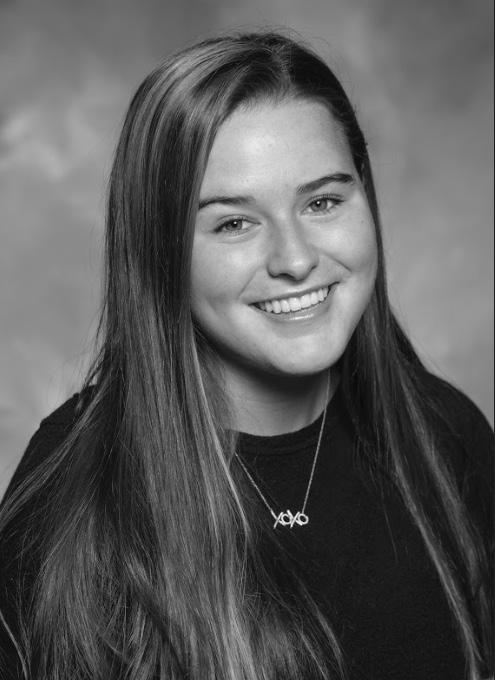
CoA: If you could disinvent one thing, what would it be?
R: I would disinvent tomatoes because I hate the texture.
CoA: What is your least favorite color?
R: My least favorite colors [are] brown, black and yellow. Yeah, bad vibes from [those colors].
CoA: If you could only use one word, what would it be?
R: I say “TF” a lot. I say “dude” and “bruh” a lot.
CoA: What is the stupidest way you have ever hurt yourself?
R: I fell out of a car once and cracked my head. I also broke my thumb in girls flag football in eighth grade.
CoA: How many times have you been injured?
R: Not that many.
CoA: How long did it take you to recover from your car injury?
R: I was a baby. I still have a scar, a little bald spot and I had to get stitches. I think that is pretty stupid.
CoA: What is the worst food you have ever tried?
R: I am really picky, so I don’t try a lot of crazy foods. I don’t know… escargot?
CoA: When did you try escargot?
R: Like a year or two ago.
CoA: What did it taste like?
R: Slimy and gross. It’s so funny. We were in this nice restaurant in Paris, and my younger sister and I were so picky. And everyone was trying to be respectful, but she was literally gagging in the middle of the restaurant.
CoA: Do you recycle?
R: Yeah, I do. I drink a lot of La Croix, like four times a day, so I definitely contribute to recycling.
CoA: How many times do you look at your phone a day?
R: Oh, god. A lot. Any time I hear a buzz, I always look at my phone. Probably like 100 [times a day].
CoA: What is your biggest pet peeve?
R: I have a lot of pet peeves.
CoA: Ok. Top five.
R: I don’t like when people chew really loudly. That bugs me. [I don’t like it when] people make excessive noises, like squeaking of shoes. [I don’t like] when people drink my water [or] eat my food. I am a germaphobe.
CoA: Describe your life in one word. R: Boring. Chaotic. I don’t know.
CoA: What do you think about clowns?
R: They are okay. Not a big fan of them. There are a lot of them at our school.
CoA: Dogs or cats?
R: Dogs. I have a one-year-old puppy, and she is the love of my life.
CoA: What is her name?
R: Zola. It has a lot of meaning. It is from “Grey’s Anatomy.” The daughter of Derek and Meredith is named Zola. Also, “Zoloft” is an antidepressant, so she is like our own little antidepressant.
CoA: What is your favorite sound?
R: I really like the sound of rain. It’s super calming.
CoA: Would you rather be a hero or a villain for a day?
R: I feel like I should say hero, but being a villain would be kind of fun.
CoA: What would you do as a villain?
R: I don’t know. I feel like [I would] pull pranks on people. Kind of a stupid answer.
CoA: How many pancakes can you eat in one sitting?
R: I don’t really like pancakes that much.
CoA: What is your favorite breakfast food?
R: I don’t really like breakfast food. Like, if I eat breakfast, I would say fruit.
CoA: What is your favorite meal?
R: I like dinner. I love tacos.
CoA: What is your favorite day of the week?
R: Fridays. I hate Sundays.
CoA: Are you better at pool or foosball?
R: Foosball.
CoA: Can you somersault?
R: Yes, I can.
CoA: Can you backward somersault?
R: Yes. Not very well though.
CoA: Can you do any other acrobatic tricks?
R: I can do the splits and I can do a cartwheel.
CoA: What is your favorite girl scout cookie?
R: I love Samoas. And this is kind of an unpopular opinion, but I kind of like the little lemon ones.
CoA: Do you pick X’s or O’s in tic tac toe?
R: X’s.
CoA: Why?
R: They are easier to draw.
CoA: What is your favorite type of frosting?
R: I like the vanilla frosting that comes in the Pillsbury tub.
CoA: What is the best movie snack besides popcorn?
R: M&M’s.
CoA: If you could change your name, what would you change it to?
R: I have not thought about this. I kind of like my name. Not many people have it.
CoA: What is your favorite Tik Tok?
R: My favorite Tik Tok? I have a lot. Tik Tokers? Like a person?
CoA: What is your favorite Tik Tok dance or song?
R: I don’t know, but I love Tik Tok. I have spent so much time on it. I don’t really like the dances because I can’t dance. I like the comedy ones. I think they are so funny.
CoA: Where do you see yourself in 10 years?
R: I will be 25. Probably on the East Coast because I like it a lot better than here. Graduated from college. That’s all I have.
Photo courtesy of Menlo School.
FAITH AT MENLO:
How Does Faith Fit in at a Secular School?
All statistics are according to a survey conducted by The Coat of Arms. The survey was administered on Jan. 17 and 24 to 130 students of all grade levels. Our margin of error is 8% with a 95% confidence level. To see full results of the survey, visit www.menlocoa.org.
What faith do you affiliate with?
*note: the percentages do not add to 100 due to rounding
Illustrations by Angel More






Despite 2017 Removal of World Religions Curriculum, 85% of Students Express Interest in Optional Religion Classes
by PARINA PATEL
Up until three years ago, Menlo’s freshman curriculum included a mandatory World Religions class that covered how religion has shaped the world, “The World Religions curriculum became this lovely opportunity to onboard freshmen into our history department, teach them historical research skills […] and help students build that skill set to be successful historians and writers of history,” Upper School history teacher Matthew Nelson said. Nelson taught World Religions when he joined Menlo and continued teaching this course for two years until it was taken out of the curriculum.
While Menlo is a secular school, World Religions doesn’t contradict with Menlo’s val-
ues because it explores the role that religion plays in people’s lives in history rather than promoting one specific religion. The course included studies of many different religions, including Hinduism, Buddhism, Judaism, Christianity, Islam and Taoism. According to former World Religions teacher Andy Kitt, the class was taken out of the curriculum so that Menlo could line up with most schools in California. Those schools typ-

ically have two required years of history classes for freshmen and sophomores: Modern World History and U.S. History. When World Religions was a requirement, Menlo students had three required years of history, limiting juniors and seniors from history electives. In addition, without World Religions, sophomores have the opportunity to take AP U.S. History.
Although it was imagined that World Religions would be an elective option, it never panned out. There could be a return for World Religions or a class of the sort as many students have expressed interest in an option of a religious class. According to a survey done by the Coat of Arms, 85% of students would like an optional religion class, 4% don’t want an option and 11% preferred not to answer.
Sophomore Gus McGaraghan is one of the many Menlo students who would like to have an optional religion class. One of his main concerns
for having one is the orientation of the class promoting one religion. “If there was a religion class, it shouldn’t be teaching about spirituality and stuff like that, but more so teaching about continuing about the history of [religion] and influence on modern politics,” McGaraghan said. Bringing back World Religions as an elective would be a very long and extensive process, as would adding any other class, but Nelson is considering attempting to do so. Nelson imagines World Religions to be transformed into a slightly different class, which would be similar to what he formerly taught at Woodside Priory School. “I would want to make [the class] about religious experience, so I would want to bring in a host of religious leaders into the classroom and have students interact with them,” Nelson said.
While there is no elective class concentrating on religion, Upper School history teacher Peter Brown has proposed an Eastern religions class focusing on Southern and Eastern religions for the 2020-2021 school year, according to Kitt.

Like Menlo, Local Schools Lack Student-Led Religious Affinity Groups
by SAMANTHA STEVENS by SYLVIE
From beekeeping to aviation to rap, there seems to be a club for every interest at Menlo, no matter how niche. Yet among the seemingly endless club topics offered, there’s a major topic missing: religion. Out of all 56 official clubs at Menlo, only one pertains to faith: the Fellowship of Christian Athletes, which was formed last school year.
Considering that Menlo prides themselves in student leadership and self-advocacy, why is there only one religious affinity club? It appears to come down to a lack of student-driven interest.
Melanie Rossi, co-advisor of Student Council and head of clubs, believes that Menlo’s framework has a place for faith-driven clubs, but there is simply a lack of desire from the student body. “[Club creation] is all student driven, and I don’t think that there’s not a place for [religious clubs] here; I just think no one has wanted to make it official,” Rossi said.
Rossi also notes the copious amounts of activities that students already participate in as a potential explanation for Menlo’s lack of religious clubs. “We have so much choice here as to what [students] can do. And I just think that if you’re really active and devoted to your religious community outside [of Menlo], you might want to experience something else here,” Rossi said, “I mean, there’s so many clubs. If you’re getting your ‘fill’ [of religion] on the weekends, you might want to check something else out.”
As the head of Fellowship of Christian Athletes, junior Alex McCusker feels that the club is wrongly labeled as being close-minded. “Right now, [Fellowship of Chrisitian Athletes] is predominantly Christians, but people don’t need to be Christian to come here. You don’t have to be Christian to feel like you need a space to talk about your religion or the adversity that you’re facing,” McCusker said.
She also feels that it is the club’s responsibility to carry out a conversation about religion even beyond Christianity because the topic of religion is not frequently addressed during school hours. “Yes, it’s founded from Christians [...], but I do realize that there’s not any other [religious] clubs on campus, so we want people of other religions to come [...] because I think outside of our club, peo-
ple don’t really like talking about their religion, so I think it could be really cool to have different [religious] identities come to the club.”
The presence of religious affinity groups at other local high schools varies with most having, at a minimum, a club devoted to Christianity. At Menlo-Atherton High School, according to their official clubs list on the school’s website, there are two religious clubs: the Fellowship of Christian Athletes, which is another chapter of the nationwide organization here at Menlo, and “Jew Crew, a space in which both Jews and non-Jews can learn about Jewish culture and values in a relaxed environment.”
Similarly, Castilleja School has two religious affinity groups on campus: The Christian Affinity Group and the Jewish Student Association, according to their official clubs document. Sequoia High School has one religious club within their list of active clubs, called Empowered Youth for Christ.
Meanwhile, Crystal Springs Uplands School does not have any official religious groups on campus. Woodside Priory and Sacred Heart Preparatory, both Catholic institutions, also lack student-led religious clubs, according to their respective websites. Alternatively, these schools emphasize faith through required classes and student life programs.
Out of the seven local schools examined, it appears that Woodside High School is most diverse in their religious clubs, with three clubs devoted to three different religions. At Woodside, the “He is Greater Than I” club focuses on “teaching and discussing the basics of Christianity and its history.” Similarly, the Star of David club educates both Jewish and non-Jewish students on Judaism. Lastly, unlike Menlo or any other school previously mentioned, Woodside has a club devoted to Islam, called the Muslim Student Union. The club’s goal is to “provide a space for students from all backgrounds to communicate and develop an educated community that is proud to learn about what it means to be a Muslim in the U.S.”
Menlo appears to be within the norm of other local schools by having merely one club devoted to religion. And as with all clubs at Menlo, creation relies on interest and initiative.
While the religious school Admissions Religious on the and school, are the On Prep’s entitled, sion,” the hinting even er directly only sions the Middle the dle school “framed Christian values.”

their cool var-to clubs: nationand Jews Jewish environtwo The Jewish their High EmpowUplands Woodside Preparatory, according to Alternatively, throughHigh religious three on of Similarly, Juother Woodside the goal from and is to norm mereas relies
Director of Admissions States Policy Regarding Religious Diversity
by SYLVIE VENUTO
While religion is not a strong factor in the Menlo School admissions process, religious diversity is something that the school values, according to Director of Admissions Beth Bishop.
Religious affiliation is not present on the application for the Menlo Middle and Upper School. Menlo is a secular school, so people of certain religions are not actively favored over others in the Menlo applicant pool, Bishop said.
On Catholic School Sacred Heart Prep’s admissions website, on the page entitled, “From the Director of Admission,” the importance of strengthening the students’ “spirit” is emphasized, hinting at the school’s religious roots, even though the word “religion” is never directly mentioned on the page. The only page on the Sacred Heart admissions website that explicitly addresses the school’s religious affiliations is the Middle School page, which describes the Sacred Heart middle school as being “framed through Christian values.”
Other non-sectarian schools in the Bay Area, such as Pinewood School, have similar admissions policies to that of Menlo. Pinewood’s admissions booklet states that “Pinewood School admits students of any race, religion, color, national and ethnic origin, sexual orientation, or disability to all the rights, privileges, programs, and activities generally accorded or made available to students at the school. It does not discriminate on the basis of sex, religion, race, color, national, or ethnic origin, sexual orientation, or disability in the administration of its educational policies, admissions policies, scholarships, and other school-administered programs.”
In addition to not considering an applicant’s religion during the admissions process, Menlo does not actively recruit potential students within the realm of religion, such as doing admissions presentations in a Sikh temple or a Jewish synagogue, according to Bishop. “I hope that we encourage people [to apply and go to school at Menlo] just by having people know that we are a welcoming and inclusive place of all faiths and that we are interested and curious about other faiths, but we do not have any sort of [active recruiting],” Bishop said.
Even so, the topic of religion is sometimes brought up in conversation during an admissions interview or when a potential student is visiting Menlo, according to Bishop. “I would say we are interested in having a diversity of religious faiths and backgrounds represented, but it does not play a particularly strong role other than that we would like to have kids from different backgrounds, just in every way that is defined,” Bishop said.
Menlo Students Describe What It Means to Be Religious at a Secular School
by KYRA GESCHKE
As Menlo is a secular school, there is no religion that is affiliated with the school. With a range of students coming from a variety of religious and non-religious backgrounds, the experience of religious students has varied drastically, with some feeling their religion as accepted or unacknowledged, while others have felt judged or disrespected based on their religious affiliations.
Sophomore C.C. Golub, who is Jewish, has had an extremely positive experience at Menlo with her religious affiliation and has felt accepted throughout her time at Menlo. “[I have not felt discriminated due to my religion] because this community has instilled zero tolerance towards discrimation, and pretty much all the students at Menlo are very social[ly] aware and are able to decide if what they are saying is appropriate or not,” said Golub in an email to The Coat of Arms.
For some students, religion has had a neutral effect on their experience at Menlo. “I do not think that people treat me differently because I do not think that [religion] is something that people think about too much,” sophomore Noah Kornfeld said. Kornfeld is Jewish and feels as though the only effect that being religious has had on his experience at Menlo is that it has bonded him with the group of students who identify as Jewish.
Kornfeld’s experience is similar to that of seniors Katie Aufricht and Emily Doll, though they do not identify with the same religion. Aufricht, who is Methodist, feels as though she has not noticed her religion imposing on her Menlo experience; however, she does consider the religious part of her life to be seperate from her life at Menlo. “I don’t hide [my religion]. It is just not something I talk about at school [because] I feel like it is not something many people identify with, but I do not feel judged or anything. It is just not part of my school life,” Aufricht said.
Doll, who is Catholic, shared a similar sentiment, yet she feels as though her connection to religion has changed ever since coming to Menlo. “After I left [Saint Matthew’s Episopal Day School], where we had religion [class] every day and we went to chapel four times a week, I feel like [after I came to Menlo], I sort of lost touch with my religion just because at Menlo not many people are religious, and it is hard to uphold that part of your life if no one else is.”
On the other hand, juniors
Lindsey Ball and Marisa Castagna, who both are Mormon, have felt as though, while the vast majority of students are accepting of their religion, there have been assumptions or situations that have led to discomfort surrounding misconceptions about their religion. “When I go to social events where there is [alcohol], my friends are super supportive [of that part of my religion as drinking is not allowed], but it is always hard subconsciously knowing that I am so different and my high school experience is so different from [other people’s] experiences, and I am not doing a lot of the things that people are normally doing,” Ball said. Similarly, Castagna feels that although her experience with religion at Menlo has been generally accepting, there have been instances where her religion has caused people to treat her differently than her peers. “Yes, [I think that] people do treat me differently based on my religion, but it is something I have dealt with. Everyone has their own opinions about different religions, so it is just something I have learned [and] grown up with,” she said.

nothing too major or outrageously terrible relative to what I have heard other Muslim kids at Menlo and other schools go through. At least, not to my face,” Hilaly said in an email to The Coat of Arms.

While Castagna does not feel discriminated against based on her religion, she shared the sentiment that people often don’t understand her religion and jump to conclusions. “I would say if you do not know much about [Mormonism], don’t assume things or follow the stereotypes. Either learn more about it before making any comments, or just don’t say anything about it,” Castagna said. On the other hand, some students have felt as though their religion has caused their peers to see them in an altered light. Senior Imaan Hilaly, who is Muslim, feels as though most of her peers do not define her by her religion, and she has found that most teachers and students do not care much about her religious identity. However, there have been rare instances where she feels as though she has noticed other students at Menlo treating her differently. “Like any Muslim kid going to school in a post-9/11 America, I have experienced my fair shared of harassment and bullying, but honestly
Junior Zayd Mahmoud, who is also Muslim, feels similarly that there are instances where his religion is mishandled by his peers. “It is not too uncommon for me to hear terrorist jokes and things like that. I feel like being Muslim has definitely put a different lens on my experience at Menlo,” Mahmoud said. “Even if the jokes are not directly aimed at me, they are definitely not uncommon. I think that to some degree things of this nature are just a part of the culture.” Similarly, senior Talia Grossman is from both Muslim and Jewish heritage and ethnically and culturally identifies with both; however, she would not descibe herself as religious. Although she does not consider herself to be religious, she has heard disrespectful jokes at Menlo pertaining to religion. “I have experienced a variety of things at Menlo that I would describe as religiously-focused microaggressions. On multiple occasions, people have said derogatory things about Jews or Muslims in front of me without realizing that I was part of these groups,” Grossman said.
While jokes are common among the student body, both Mahmoud and Hilaly feel as though teachers have a higher respect for boundaries when it comes to religion. “Only when sensitive topics surrounding politics come up in class do I see a few teachers tense and broach the topic with a careful sensitivity while constantly glancing at me. If the topic is on Islam, then they will sometimes even look at me as if to check that they are not getting anything wrong,” Hilaly said in an email. Similarly, Mahmoud has had a similar experience at Menlo. “[Teachers] definitely take care to step around boundaries. I feel like I have never really had a teacher that I felt really treated me differently just because of my religion,” Mahmoud said.
On the other hand, senior Lily Loftis, who is Presbyterian, expressed that she has not always had a positive experience being a religious student at Menlo. “I have had a lot of people question my beliefs, and I have had a lot of people not really respect the fact that I’m religious,” Loftis said.
In personal perience. to different to a certain groups ni and Menlo by by TESSA
Less ruled moment munity. Center, all-time of allowing In has become tive religious accept in early tion LGBTQ+ churches For Spectrum nior churches to be times. is for gious ties. “hurtful their but it’s believe ple and not believe For of the munity, both LGBTQ+ fully to imagine. that
Menlo Alum Eliza Crowder and Senior Megan Miller Recall Experiences on Mission Trips
relkids at least, The Muslim, wherebeing on me, that just Talia Jewish identidescibe not heard thingsthingsgroups,” stuas “Only tense sensitivity topic is look getting Simexperience to never treated me Mahwho not lot of had a I’m
In several faiths, missionary trips are a personal journey to enrich one’s religious experience. A missionary trip includes traveling to different communities and devoting service to a certain faith. At Menlo, although religious groups aren’t prevalent, there are many alumni and current students who feel impacted by
their missionary trips.
Menlo alum Eliza Crowder (‘17) went on a missionary trip for a year and a half to Portugal, where she served full-time for a mission for the Church of Jesus Christ of Latter-Day Saints. While serving in Portugal, Crowder focused mainly on teaching others about her faith through church readings, baptisms and prayer. She also completed community service and met with other missionaries to discuss how to better promote her religion.
Her experience on her missionary trip greatly impacted her life. “My mission helped me discover who I am because I was able to spend all of my time getting to know and serving other people,” Crowder said. “I learned Portuguese and have been able to use the language to communicate with many people and discover a new culture. The mission helped me become much more independent, sure of who I am and what my priorities should be in life.”
Within the current Menlo community,
missionary trips are also applicable to other religious students like Crowder. Senior Megan Miller has gone on several missionary trips over the past few years. Miller identifies as Presbytarian and has gone to communities in Mexico with her church. Miller has travelled to Mexicali and the surrounding villages, conducting service work with her church. Like Crowder, Miller’s missionary trips have had an impact on her life, and inspired her to do more service-related work. “I’ve loved [the trips]. I think I do a lot of services in general, so obviously that aspect of the trips has been super valuable,” she said.
Miller also appreciates the personal connections she made during her time in Mexicali. “I don’t think the mission trip that I’ve been on is as intense as a lot of people would expect. Obviously you go to services that the church puts on around once a day, but I think the majority of it is focused on building relationships with the people and helping them,” she said.
Whether in high school communities or among alumni, missionary trips allow religious students to further their understanding of their religion.
Menlo Church Clarifies Stance on LGBTQ+ Relationships
LAYNIE
Less than 5 years ago, the Supreme Court ruled that gay marriage was legal, a crucial moment for members of the LGBTQ+ community. Today, according to Pew Research Center, acceptance of homosexuality is at an all-time high, with 61% of Americans in favor of allowing same-sex marriage.
In recent years, the LGBTQ+ community has become widely welcomed, but conservative religious groups have yet to completely accept gay members. In a report released in early 2018 by Church Clarity, an organization that evaluates churches based on their LGBTQ+ policies, none of the 100 largest churches in America are LGBTQ+ affirming.
For some members of Menlo’s Spectrum Club, especially senior Mara Lebovitz, non-LGBTQ+ churches are outdated and need to be modernized for current times. Lebovitz’s main concern is for members of both religious and LGBTQ+ communities. For Lebovitz, it’s not only “hurtful that people try to use their religion to spread hate,” but it’s also damaging “to believe in a group of people and have the people not believe in you.”
For some members of the LGBTQ+ community, a future where both religion and the LGBTQ+ community can fully coexist is difficult to imagine. However, that doesn’t necessar-
ily mean the two should stay separate. Some members of Spectrum Club, like sophomore Kate Richardson, go to church. Richardson’s church, Los Altos Methodist Church, has a youth choir with members of the LGBTQ+ community and even a lesbian pastor.
Menlo Church is another popular church for Menlo students. Originally founded in 1837, Menlo Church was rebuilt in 2015 to reflect the beliefs of the membership to the ECO denomination, a Covenant Order of Evangelical Presbyterians. Identifying as a Presbyterian church for over 150 years, Menlo Church “believe[s] all human beings have dignity and the Church is a community where all people can flourish,” according to their website. With churches in San Mateo, Mountain View, Saratoga, South
San Francisco and more, the institution strives to lead generations into building a strong relationship with Jesus and the community, according to their website.
Menlo Church welcomes everyone regarding faith, spiritual tradition, ethnicity and culture or marital status, including members of the LGBTQ+ community. But according to an email from Heather Holliday, Senior Director of Marketing and Communications at Menlo Church, “We don’t officiate gay weddings at our church, but we recognize and respect the legality of gay marriage in California and we welcome gay married couples to be part of our congregation and community.”

“My upbringing through Menlo Church has called me to love everyone,” said freshman John Chung, a Menlo Church member, over text to The Coat of Arms. “I believe that Jesus would show nothing but love towards members of the LGBTQ+ community. I also believe that all Christians are called to love and serve all members of their community.”
Menlo Church has directed Chung to believe that everyone should be welcomed into their community regardless of sexuality. “The Bible is known to be homophobic and against same-sex marriage — it leaves a bad representation on our Christian religion and what being a gay Christian is,” said freshman Charlie Knoll, a member of the Menlo Church, over text to The Coat of Arms. The principal message from Knoll and Chung appears to be that “if you support and love Jesus Christ, he will love you back,” Knoll said.
by
SHEEHAN & PENELOPE STINSON
by TESSA FRANTZ
An Iranian-American’s Perspective on the U.S.-Iran Conflicts
by VIONNA ESHGHI
I was at the airport coming back from a trip over Christmas break when the news broke about the killing of Iranian general Qasem Soleimani, and quite frankly, it really scared me. I was traveling with my family and two of our close family friends who, like me, are Iranian-American, and we were all shocked.
To be an Iranian-American and hear about the U.S. killing the second-most powerful man in Iran makes your mind wander in many directions. The first thing we began thinking was, “What will this mean for us Iranians living in America? What will this lead to?” After we heard the news, we immediately thought that the U.S. would go to war with Iran, which was a frightening thought. War is always scary for everyone, but when it’s with the country of your origin that already doesn’t have the best reputation in the U.S, you imagine the worst.
General Soleimani was the leader of nearly every significant operation by Iranian intelligence and military forces over the past two decades. The strike was not only a shock to Iran, but also a great surge in President Trump’s growing confrontation with Iran, most recently ramped up with the killing of an American contractor in Iraq last December. Soleimani’s death resulted in a vengeful statement from Iran’s supreme leader, Ayatollah
Ali Khamenei, who said, “[Soleimani’s] departure to God does not end his path or his mission, but a forceful revenge awaits the criminals who have his blood and the blood of the other martyrs last night on their hands.”
This led to the U.S. bracing for possible retaliations, like cyber or terrorist attacks on America and our allies. Iran’s first act of revenge was firing missiles at two U.S. military bases in Iraq on Tuesday, Jan. 7. Fortunately, the U.S. was able to track the launches with radar, which gave them time to take cover and ultimately led to no American or Iraqi deaths, though 30 Americans suffered from severe brain trauma. While this action was Iran taking vengeance, Trump seemed rather unbothered by what happened, which he expressed in a tweet several hours after the attack saying, “All is well!”
While no deaths occured, the conflict with Iran hasn’t necessarily made life easy for Iranian-Americans. Even as federal officials are denying the reports, increasing numbers of Iranian-Americans have come forward saying they’ve been detained or held for questioning at the U.S.- Canada border, coming home from Canada the weekend after the attack on Soleimani. To hear this as a U.S. citizen myself, with family members who also travel frequently, is scary. Shortly after all the conflicts began, I felt grateful that my great-aunt
Diversity Shouldn’t Be an Afterthought at Awards Shows
The new year has arrived and with it comes the start of another award show season. The recent 2020 Grammy Awards reminded many of the exhilaration that comes with award ceremonies. The excitement of watching a favorite film win its category or seeing celebrities showcase an elaborate outfit on the red carpet all contribute to society’s eagerness to watch these productions. It is crucial, however, that we allow ourselves to see past the glamour and recognize the lack of diversity in both the nominees and winners.
The Golden Globes, Oscars and Grammys, among others, have historically been scrutinized for the lack of diversity amongst both their nominees and winners. An undercurrent of fury and discontent has been felt by an overwhelming amount of artists and viewers, and has been brought to public attention in recent years. Some artists that have spoken out include Will Smith, Danny DeVito and Reese Witherspoon.
Ricky Gervais, a comedian and the host of the 2020 Golden Globes, comedically critiqued the discriminatory nature inherent to the Globes. “Many talented people of color were snubbed in major categories. Unfortunately, there’s nothing we can do about that. Hollywood Foreign Press are all very racist,” Gervais said in his opening speech. The Hollywood Foreign Press Association (HFPA) is composed of a committee that recognizes achievement within the entertainment industry and hosts the annual Golden Globe Awards.
Gervais’ scrutiny is not anomalous; in 2015, April Reign, a woman of color, sparked the #OscarsSoWhite movement in response to the award shows’ lack of for black representation amongst the nominees. The movement was defined by the hashtag’s surge in popularity on social media outlets, especially Twitter. The social media trend ultimately sparked an Oscar’s boycott, with numerous celebrities stating their opposition to supporting a ceremony that lacks diversity.
In a 2018 interview with CNN, Reign expressed her concern that organizations
was able to make it here safely all the way from Tehran, Iran. While her green card application process was delayed by two years due to her country of origin, she eventually did receive her green card, which allows her to live in the U.S. on a permanent basis.
Even as the conflict is dying down, it is still concerning to see how Iranian-Americans were treated as a result of the dispute with Iran. The fact that federal officials didn’t trust American families simply traveling and crossing over the border to return home is concerning. Shortly after the attack on Soleimani, an Iranian-American woman named Negah Hekmati and her family were crossing the U.S.-Canada
border to return home to Washington, D.C. when they were stopped after immigration officers determined that she and her husband were born in Iran. They told the family to park their car and bring their children into a room where others with Iranian heritage were also being held. Hekmati is a 38-year-old interior designer, and her husband is a Microsoft engineer. They were subjected to intensive questioning during a five-hour overnight ordeal, while the children were afraid to go to sleep in case their parents were taken away. Hekmati spoke publicly on the situation for her children’s sake, saying, “They shouldn’t experience such things; they are U.S. citizens.”

are not doing enough to hold themselves accountable to ensure that diversity is celebrated. “It [...] depends on Hollywood filmmakers and those who have the ability to green-light films to step out of their comfort zone and allow more people from marginalized communities to tell their stories,” said Reign, inciting a call to action. “What we see in film all too often is that there are stereotypical tropes that people of color and people of marginalized communities are expected to play. So, for example, how many more slave movies do we need? You know, we’ve had ‘12 Years a Slave,’ ‘Django’ and ‘Birth of a Nation,’ and ‘Roots’ and so many oth ers, but there’s so much more to the black experience than what happened in the 1700s and 1800s.” Award show exclusivity does not stop at racial minorities— it affects women too. The HFPA received criticism for snubbing women from major categories in this year’s Golden Globes. Gervais referenced this while introducing the Best Director - Motion Picture category. “[There is] a lot of controversy over our next category: no female directors were nominated,” Gervais said. Nominations included Quentin Tarantino for “Once Upon a Time in Hollywood,” Bong Joon Ho for “Parasite,” Todd Phillips for “Joker,” Martin Scorsese for “The Irishman,” and Sam Mendes for “1917.” Despite being nominated for five additional Academy Awards, Greta Gerwig’s “Little Women,” was excluded from this category’s nominations. While these awards ceremonies are not the sole place where artists can receive public recognition, receiving an award — or even a nomination — can serve as the pinnacle of one’s career, and minority groups should not be overlooked.
We Should Pay Attention to What Celebrities Have to Say at the Oscars
Oscars night — one of the biggest events of the year for Hollywood — allows celebrities to leverage their A-list status to display their fashion taste and political stances. Should the Menlo community care about the three-and-a-half-hour extravaganza of the Oscars?

The answer is yes! Although celebrities can be perceived as hypocritical or undeserving of their platform, they in fact, set powerful examples of transcending societal norms, being comfortable in new styles, expressing political leanings and being unwilling to accept the unequal gender balance in Hollywood.
All eyes are on the red carpet at the beginning of the event, and the pieces that the celebrities are sponsored to wear are a representation of art and self. The outfits these celebrities choose to wear can break down social and gender norms. Whether it be Diane Keaton wearing a legendary suit at the Oscars in 1978 while accepting her Best Actress Award for her acting in “Annie Hall” or Sharon Stone combining her husband’s white button-down Gap shirt with a Vera Wang skirt or Billy Porter in a tuxedo gown at his first-ever Oscars in 2019, the red carpet is all about challenging the status quo of fashion through
personal representation.
Stars can also take time to display their cultural heritage through their outfits. For example, in 2018, Tiffany Haddish paid respect to her father’s African heritage through the traditional dress she wore. The rest of the world can look to celebrities for an example of transcending traditional style to express personal style and familial and gender values.
Another important aspect of the night is the awards speeches and how celebrities utilize the powerful platform they have. The most controversial topics that come up in award speeches typically revolve around politics, as Hollywood is infamous for being politically engaged and left-leaning. There has been progress made in the Oscar’s realistic representation of the industry, though. In 2017, The New Yorker reported on the event, saying, “They congratulated one another for being inspiring, brave, and progressive, despite the poor example set by their industry. The A.C.L.U., whose blue ribbons many celebrities wore on the red carpet, has been investigating studio discrimination against female directors, who helmed only nine percent of the top-grossing movies last year.”
This uneven power dynamic changed when the prominent message from celebrities’ political presence at the Oscars in 2018 was addressing the #MeToo movement and not avoiding the inherent sexist and unjust practices of Hollywood. According to NBC News, Ashley Judd, an accuser of Harvey Weinstein’s sexual assault, spoke to the Oscar audience, which totaled to about one billion people, about the movement and how to enact change.
The Oscar’s platform for celebrities to share their thoughts can be frowned upon as some disagree with them having the power to share. I believe it is deserving as they live in the public eye and should, in turn, receive an opportunity to share what matters to them whether it be exposing sexism, representing one’s culture or presenting personality through fashion.
by GRACE WILSON
Staff Illustration: Nic Garcia
Eshghi’s great-aunt, second from the right, at the party celebrating her arrival to the U.S. Photo courtesy of Vionna Eshghi.
by LUCY PIKE
On the Quad: What’s a movie everyone should see and why?


“I think everyone should watch “Superbad” because you’re guaranteed a good laugh!”
- Alix Borton ‘21

“I think “Knives Out” is a great choice. It’s really engaging without being stressful and has a little bit of everything genre-wise.”
-Faiz Hilaly ‘22
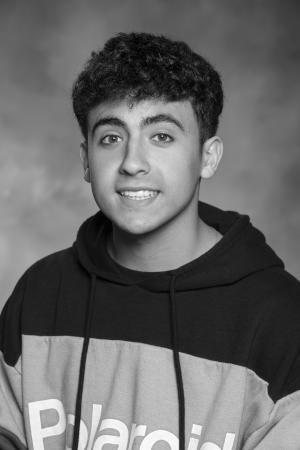
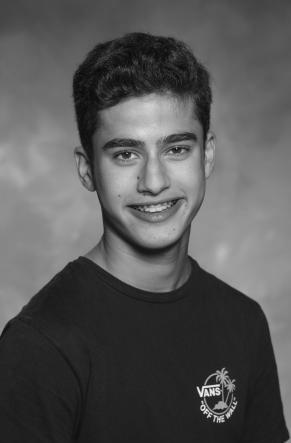
“‘The Prestige’ because it shows the effects of unhealthy obsessions.”
- Birdo Gonzalez Zaragoza ‘20
“‘Parasite.’ It’s a Korean film that critiques capitalism. It’s very difficult to have these conversations when everyone has grown up with pro-capitalist ideals. It’s also just very well-made and entertaining.”
- Montse Contreras ‘23
“‘Wall-E’ because it tells a powerful story about empathy — between ourselves, within our institutions, with the planet — almost entirely without dialogue.”
- Aaron Morgan ‘20
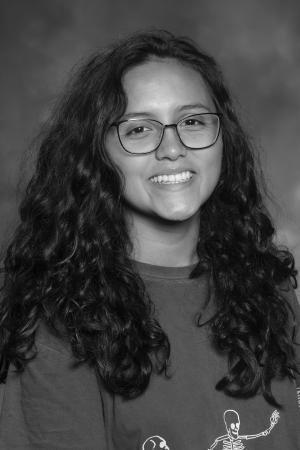
Is it Possible — or Ethical — to Separate Art from the Artist?
by TESSA FRANTZ
In the media, we’re constantly hearing stories of how seemingly virtuous celebrities have seriously mistreated others. Some of the most beloved music stars across the world have been accused of terrible crimes, tainting both their reputations and the perception of their art. Starting in the 1980s and continuing on throughout the 2000s, Michael Jackson faced several sexual assault allegations involving young boys. Many were taken to trial and recently re-publicized by HBO’s documentary, “Leaving Neverland.” In 2009, the Chris Brown assault scandal brought attention to his streak of domestic violence against women. And in recent years, as a result of the #MeToo movement, dozens of wellknown actors and other celebrities were ousted on the grounds of sexual assault.
There’s no doubt that these celebrities deserve a certain measure of punishment, but should a denouncing of their art be included as punishment? Where do we draw the line between supporting a public figure and supporting their works of art, which are deserving of positive recognition? It’s necessary to separate an artist’s work from the artist themself, at least to a certain extent. I think there’s a way that one can celebrate an artist’s art and accomplishments without supporting their personal lifestyle and morals. However, it depends on how you choose to endorse and support art.
Realistically, it’s hard to completely block out an artist. Listening to their music can happen unintentionally, whether it’s being played on the quad, on
The Coat of Arms
a playlist or in a restaurant. It’s difficult to completely avoid an artist. I think it’s acceptable to still enjoy their art and even endorse it while still being conscious of the artist’s personal background. Rather than just simply ignoring the crimes a celebrity committed, I think there is a personal way to stop endorsing them: stop helping them financially. That can be through boycotting concerts, avoiding purchasing an album or cutting off any other form of financial support. Directly paying them money allows them to essentially get away with their behavior. Although you can’t directly control what happens to these artists, you can stop personally endorsing them. For example, after Chris Brown’s domestic abuse scandal, his album sales dropped 3%, according to Business Insider. With such a public
outcry against his actions, it was clear that people were personally making an effort to boycott Brown’s music.
In addition to boycotting art financially, collaborators with these artists should cancel all current projects. As potential sources of income, I think cancelling all current projects would serve as a proper punishment for an artist’s crimes. However, it’s important to acknowledge the circumstances of the crime, which can determine the severity of the punishment. For example, well known and celebrated actor Kevin Spacey was fired from Netflix’s House of Cards after several sexual assault allegations came out against him. According to CNN, there were even sexual assault allegations coming from production employees of the show. I believe that if not prosecuted, punishment

Editor in Chief.............................................Samantha Stevens
Print Editor..............................................................Crystal Bai
Online Editor....................................................Kate Hammond
News Editor...........................................................Adley Vogel
Arts & Lifestyle Editor.........................................Sarah Norum
Spread Editor.......................................................Kyra Geschke
Opinions Editor......................................Elisabeth Westermann
Sports Editor....................................................Page Wolfenden
Copy Editor...................................Parina Patel, Carly McAdam
Social Media Director........................................Vionna Eshghi
Video Editor.............................................................Emily Han
Photo Editor..............................................................Bella Guel
Assistant News Editor.........................................Sylvie Venuto
Assistant Arts & Lifestyle Editor............. .........Sophia Artandi
Assistant Spread Editor............................. ............Tessa Frantz
Assistant Opinions Editor..................................Chase Hurwitz
Staff Photographer...............................................Sadie Stinson
Staff................................................... Laura Artandi, Sammie
Dostart-Meers, Lexi Friesel, Ashley Grady, Ellie Gruber, Ella Hartmanis, Riley Huddleston, Lauren Lawson, Alex Levitt, Jake Lieberman, Madison Liu, Georgia Paye, Lucy Pike, Valentina Ross, Shefali Sahai, Laynie Sheehan, Aidan Skinner, Louisa Sonsini, Penelope Stinson, Zak Taube, Hailey Tusda, Grace Wilson
Adviser................................................................Tripp Robbins
or to If you are interested in writing a guest opinion piece or a letter to the editor , reach out to the editor at: samantha.stevens@menloschool.org
is necessary to show what we consider moral and immoral. We must draw the line of punishment somewhere, and I think depending on the severity of the crime, it’s appropriate to cancel projects.
Whether we like it or not, art has had a significant impact on American culture. As J. Edward Keyes wrote in Rolling Stone magazine, Michael Jackson left an “indelible pop legacy” on the world and the music industry in general. As an extremely influential artist, whose music made a significant impact on American culture, his sexual abuse scandals sparked controversy among fans. With his music being so influential among so many people, it’s difficult to disregard the successes he held in the music industry. Despite personal background, art is art, and although we can be conscientious of an artist’s crimes, there comes a point where art has so much impact, it’s vital to separate the art from an artist. It’s important to consider if the impact of an artist’s work when serving a punishment for said artist. Specifically, if their art has had an immense positive impact on society, it should be a factor when sanctioning.
Art is affected by outside influences, whether political, social or personal. While separating an artist from their art completely is insensitive to the criminal background of set artist, completely rejecting all art from prosecuted artists is conscientious of effects that art has had on people’s lives. It’s important to find the right balance between celebrating art and rejecting it.
Our Mission:
The mission of The Coat of Arms is to report accurately and thoroughly on news that is significant to the greater Menlo School community. We will chronicle in context the different events and perspectives within the school, while ensuring unbiased coverage. We welcome feedback and aspire to create an open dialogue with our audience by being accessible on multiple platforms and by striving to remain neutral in all circumstances.
Chris Brown performing live in Sydney at Supafest 2012. Creative Commons photo: Eva Rinaldi on Flickr.
For True Equality, Women Should Have to Register for the Draft
by HAILEY TSUDA
In December 2019 and early January 2020, tensions between the U.S. and Iran increased following a series of military conflicts, sparking a conversation about World War III and a possible draft: more specifically, how a draft would affect women.
Currently, men between the ages of 18 and 25 are required to register with the Selective Service, but women are not. The goal of the Selective Service is to easily identify eligible soldiers in case there ever is a need for a draft. Originally, the decision to only include men was made because women were not allowed to hold all the same positions as men in the military, but, in 2015, the Pentagon opened all combat roles to women. Additionally, in 2019, a judge ruled that it is unconstitutional to require men to register with the Selective Service but not women. Despite
that ruling, the judge did not require the United States government to begin requiring women to register. Given all of these changes, on a legal level, if there was a World War III, it seems as though women ought to be drafted. Beyond just legality, it also seems as though women should believe they should be drafted.
Many women and girls, especially at
Menlo, are self-proclaimed feminists. If the goal of feminism is to achieve equality of the sexes, women should advocate to be included in the draft. It seems unrealistic and hypocritical for women to believe in equal pay and equal rights but not have to take on the same burdens and responsibilities associated with a draft. I am not saying that women should want to be drafted, but equality of the sexes has to stretch beyond just the positives because there are burdens that unequally affect men.
On the other hand, many have argued, and will continue to argue that the physical differences between men and women make it so that women are unfit to serve and this argument has been put to the test by science: in 2015, the Marine Corps released data

showing that “Marine teams with female members performed at lower overall levels, completed tasks more slowly and fired weapons with less accuracy than their all-male counterparts,” making it obvious that there are possible downsides to women holding combat positions. Additionally, the study revealed that, in these positions, women are injured more often than men. While this study presents strong evidence for why not all women should hold combat positions, these facts do not mean women should not be included in any future drafts. Those in combat positions only make up a very small percentage of the military and there are more than enough positions where women can contribute without their physical disadvantages harming themselves or the greater mission. Again, the law has already determined that only requiring men to register with the Selective Service is illegal, so theoretically, if there was a draft, women should be included. That being said, I believe that those who are advocating for gender equality are obligated to add the drafting of women to their list of criteria for equality.
“Just Mercy” is an Important Film for Today’s Justice-Oriented Teens
by EMILY HAN
In 1865, the 13th Amendment decisively put an end to slavery… with a gaping exception. Slavery was still permitted as a “punishment for crime whereof the party shall have been duly convicted”; Southern states, bitter and vengeful after their defeat in the Civil War, exploited this loophole by passing discriminatory laws known as the Black Codes. Thus, an African American person could be arrested for swearing, appearing homeless, quitting their job without permission from their boss and countless other new “crimes” that state governments devised. By arresting African Americans for violating any of these prejudiced laws and forcing them back into involuntary labor while they served their sentences, states could restore the essence of slavery and perpetuate the systemic racism from the antebellum era. Today, remnants of this scheme are still visible, especially in the infamous war on drugs; according to the American Civil Liberties Union, African Americans account for 74% of those imprisoned for drug possession.
Based on the autobiography by Bryan Stevenson, the film “Just Mercy” chronicles Stevenson’s struggle as a young attorney fighting racial injustice in Alabama’s
I walked out of the theater both enraged by the magnitude of the discrimination in criminal justice and inspired by Stevenson’s dedication to the issue.
criminal law system during the late 20th century. In the movie, Stevenson (Michael B. Jordan) defends death row inmate Walter McMillian (Jamie Foxx) because he’s convinced that McMillian was convicted under unfair circumstances and is not guilty of allegedly murdering an 18-yearold girl. In addition to McMillian, Stevenson gets to know and works for various other death row inmates. While some cases result in success, his job proves to be an endless battle that inevitably leads to several failures as well.
When I watched “Just Mercy” in early January, its story and cinematography left me beyond speech — I walked out of the theater both enraged at the magnitude of the discrimination in criminal justice and inspired by Stevenson’s dedication to the issue. Most audiences would agree; the movie has an 84% rating on Rotten Tomatoes and an A+ on CinemaScore.
Although “Just Mercy” is rated PG-13, I would not have been ready to watch it at a younger age. Many parts of the movie — including a scene involving the preparation of an inmate for his execution by electric chair — are jarring and disturbing. Yet the upsetting aspects of the movie are the most important ones. The truth is rarely comfortable, but progress cannot happen unless we acknowledge the truth and understand the complexity of an issue.
For today’s politically active and justice-minded teens, “Just Mercy” will undoubtedly provide a valuable understanding of racial bias to the point of corruption — one issue, among many, associated with criminal justice systems throughout the United States. Stevenson’s determination sets an example for the rising generation of social advocates. While most teenagers do not lack the spirit of justice, only a small number of those who
sense social injustice end up taking action on issues. Stevenson’s action-oriented approach to inequity through the Equal Justice Initiative, the non-profit he founded in 1989, demonstrates how one can turn frustration into effective change.
Some critics argue that by following a more traditional courtroom drama plot, the movie fails to harness the full impact of Stevenson’s story. I believe the contrary; besides the factually accurate narrative “Just Mercy” presents, the engaging performance by Jordan, Foxx, Brie Larson, Rob Morgan and the rest of the cast captures the personal and emotional side of the story. Furthermore, while some reviews criticize the movie for taking too long to build up toward its (ultimately thrilling) conclusion, this aspect is necessary to display the slow-moving and agonizing nature of court trials and prison life.
“Just Mercy” is an important film for teens and adults who hope to learn about and improve the United States’ criminal justice systems. Reading Stevenson’s book two years ago was my first exposure to criminal law’s injustices — it inspired me to work on projects and take classes related to this topic — but seeing the story in a visual format was perhaps even more powerful. Criminal justice systems across the world, but especially in the United States, are in urgent need of reform. In addition to the deeply-rooted racial bias in these systems, the merciless way in which our country treats the accused, the convicted and the incarcerated leads to an absolute loss of spirit and humanity, which in turn creates astronomical recidivism rates and an overall inefficacy in reducing crime and in fostering a healthier community.

Staff Illustration by Olivia Velten-Lomelin
Bryan Stevenson author of “Just Mercy,” the book that inspired the film, gives a Ted Talk on racial discrimination in the criminal justice system. Creative Commons photo: Steve Jurvetson on Flickr.
Toxic TikToks: Gen Zers Don’t Know What We’re Laughing At
by LAUREN LAWSON
Don’t get me wrong, I laughed at them too.
Not only are the excessive amount of World War III memes on social media an undeniable source of entertainment to many, they are also inescapable. TikTok, the app that took the social media world by storm, is full of fifteen second vid eos poking fun at the dark topic of war. WWIII memes are just one example of the way our generation uses humor to ad dress serious topics like failing classes, eating disorders, mental health and death. But we are setting a dangerous precedent for younger generations that normalizes these life-changing moments by adding a comedic twist to them.
After the US-Iran conflict began, World War III memes began to surface. A flood of content made jokes such as “dying with your homies on the battlefield” or “accidentally getting shot because you mistakenly did the ‘renegade’ dance on the frontline rather than launching a grenade.” This dark category of comedy can be humorous at surface level to the teenage demographic, but it can also be completely offensive, especially to those who have suffered through tragedies of war. Accidentally doing a dance move due to mishearing an order that determines life or death is completely unrealistic and contains extreme sarcastic irony. Putting the spotlight on the important jobs soldiers have but with an ignorant undertone not only undermines their positions, but is beginning to redefine the military in a way that is nowhere as serious and respectable
as it deserves to be. As we approach an era where there is no first-hand experience of a world war, Generation Z is not at fault for having so much uncertainty and confusion as to what is going on. Our generation is at fault for lacking the knowledge and education needed since we find it so
ty as social media likes and followers, and continue to support Tik Tokers who promote dark memes by giving them likes and follows, we are idolizing the wrong heroes. Our heroes are the people who put their lives at stake for our safety, fight for the freedom of our country and protect nities and
a way to “blow up” on social media. This corresponds with our inability to express both our true emotions and self-deprecating thoughts, along with our apathy towards generations other than our own.

lives are glued to the internet. Searching for jobs and background-checking employees has become increasingly easier for employers. With the click of a button, a manager can google your name and every Tik Tok, Instagram post, tweet and so on will be right at their fingertips. A person who is insensitive to a topic such as war is a giant red flag no matter where you are searching for a job. We need to acknowledge our futures and the dangers of small mistakes we make today, as they aren’t going to disappear when they become viral online.
If we continue to define populari-

jokes about these underappreciated individuals fuels our selfishness as a generation, which started with memes and will end in a society with no empathy for people of all ages, and eventually ourselves. I would like to acknowledge that comedy can be a way to cope with depressing issues, but the emotional cost of the memes for people who are deeply offended by them outweighs the comic enjoyment by the people who overlook their meaning. Our generation has resorted to seeing a pressing issue whose outcome could affect the course of our futures as merely
“Ok boomer,” another insensitive trend on the rise where kids override the opinions of adults with two words, symbolizes the lack of respect we have for our elders. We are displacing the social hierarchy by attempting to become equals with our elders, while we lack the experience and wisdom that they have. Just because we think we are more involved in the news at a younger age, does not give us the right to offend an older generation and undermine them. “Ok boomer” is creating an even deeper divide between children and adults because it is establishing the fact that we don’t understand adults, and we aren’t even going to try. The saying emerged because kids were tired of not being heard, and the saying finally sparked some controversy.
That being said, having a conversation rather than refusing to compromise creates productivity rather than an awkward silence. If we want to change, no matter what the subject, rebuilding our relationships with generations above us will aid us in that goal. Although, joking about the trauma they survived through the internet is not the conversation we need to be having, and definitely does not pass the vibe check.

Staff Illustration: Lauren Lawson
Samson Axe, Trinity College Committed Corner Committed Corner
by CRYSTAL BAI
Senior Samson Axe is a rare breed of committed student-athlete — next fall, he will play Division III lacrosse and football at Connecticut’s Trinity College.
A lacrosse player for the past 10 years, Axe knew from seventh grade that he would continue the sport in college. “I played a lot of travel lacrosse in the summer and just loved the sport so much that I never wanted to stop playing it, which led me to want to play college lacrosse,” Axe said.
For Axe, lacrosse is particularly special because of “how different it is from any other sport,” he said. “It is one of the only sports where you have to rely on a stick to play, and not your own hands.”
On the other hand, football entered Axe’s life later on in his freshman year, but he’s continued to play throughout high school. “My favorite part about [football] is the team bond and how no one player can carry an entire football team,” he said. “It really builds a team identity instead of an individual one.”
Axe’s recruiting circumstances were unusual, as most college athletes specialize in only one sport. While lacrosse was the first sport Axe was recruited for, he chose Trinity primarily due to the coach’s offer for him to also play football in college. He says that the recruiting process “was a long one and ended later than a lot of other players.”
Axe cites his coaches in both sports as some of his biggest inspirations. “The
people who inspire me for football are the Menlo coaches, such as [varsity boys football head coach Todd Smith], [varsity boys football assistant coach Jason Ward] and all of my teammates,” he said. “The person who inspires me in lacrosse is [varsity boys lacrosse head coach Blake Kim]. He coached me at a very young age, and his love for the game just pours over you when you talk to him.”
As a multi-sport athlete at Trinity, Axe has big plans. “My goals for the future are to win an NCAA title in football, and hopefully do the same for lacrosse,” he said.

Kyra Pretre, Yale University
by CARLY MCADAM
Senior Kyra Pretre started running in middle school and continued to run track and cross country throughout highschool. She runs with Menlo during the fall and spring seasons and runs in the off-season with a club team that is led by the Menlo cross country and track coach, Jorge Chen. After being an integral part of both the cross country and track teams at Menlo, Pretre will continue her cross country and track careers next year at Yale University.
Pretre had an especially phenomenal cross country season this past fall. She helped lead the team to CCS by taking silver at the WBAL championships and later to the CIF State Championship meet by placing fifth at CCS championships. This was Menlo’s first time competing in the CIF State Championship meet for cross country. Pretre was Menlo’s top finisher, placing 13th with a time of 18:27.2 on the 5,000 meter course.
On the track team, Pretre specializes in the 800 and 1600 meter events. Menlo’s girls track team has won the league championships all three years Pretre has been on the team and won the CCS Championships last year. Pretre won the 1600 at CCS with a time of 5:01.58 and took second in the 800. She was also on the 4x400 meter relay that took second. Menlo is the smallest school to ever win the CCS title for track and field.
The Menlo teams have been an important part of Pretre’s running experience. “It’s been super fun. [...] The team here is really, really unique,” she said. “It’s a great
group of people and they’ve definitely had a big part in shaping me into the athlete I am [...] I’ve just had a really great experience.” In addition, Pretre feels that her coach, Chen, has been another important part of her development. “He has played a huge role in my high school running career,” Pretre said. “He’s been amazing and a great support system, so I’m really grateful for him and my team.”
Pretre is looking forward to attending Yale University in New Haven, Conn. next year. “I’m just looking forward to having a new experience and being in a new place,” she said. “I’ve lived here my whole life, so it’ll be cool to be somewhere else.” She’s also excited for the running team at Yale. “The entire vibe of the team and the coach are super, super positive, so I’m just excited for that.”


Michelle Louie, Middlebury College Kiefer Lord, Carleton College
by ASHLEY GRADY
In October of 2019, senior Michelle Louie committed to Middlebury College in Vermont, continuing her track career by competing for the school’s NCAA Division III team in the New England Small College Athletic Conference.
Louie’s competitive track career started when she joined the Menlo track team during her freshman year. She took to it immediately, falling in love with the team aspect of running track. She credits her coaches for helping her excel. “The coaches, Jorge [Chen], Tricia [Lord] and Dono[son Fitzgerald] were all super supportive and pushed me to reach my goals,” Louie said.
Up until her junior year, track was just a fun activity and a way to work out for Louie. However, over time, with the competition level increasing and her growing success in various events, including the 100 meter and the team 4x400 meter races, she started to see running in college as an option for her. “Because I knew I had loved it so much in high school, I wanted to continue having the same athletic and social experience of being part of a team throughout college,” Louie said.
Louie started the recruiting process by considering a variety of Division I and Division III schools, before deciding on Middlebury. She seriously considered several colleges, but visiting the Middlebury campus and meeting the track team sealed the deal. Louie fell in love with Middlebury and felt the decision was clear. “The [Middlebury] team was so positive and
supportive and reminded me of my team at Menlo,” Louie said. In addition to the track program, Louie is attracted to Middlebury’s engagement with the outdoors and its excellent academics.
This coming spring season, Louie hopes that the Menlo varsity girls track team will continue its winning streak, repeating the program’s first-ever CCS championship last year. With her history as a fierce and successful competitor, she has a high degree of confidence that her team will rise to the top in 2020 as well.


by PAGE WOLFENDEN
“You can spend years and years trying to get it perfect, but you’re always going to have room to improve.” Senior Kiefer Lord embraces this constant ability for growth in baseball as he looks forward to continuing his own personal improvement at the collegiate level. In early October, 2019 Lord committed to play Division III baseball at Carleton College.
Baseball has long been a part of Lord’s life, starting with Little League at the age of 8. Just a couple years later, he decided to join a travel team. Though a versatile player, filling multiple positions such as second base, third base and pitcher in his baseball career, Lord will advance to Carleton as a pitcher.
With spring in the near future, he approaches his final season with the Menlo varsity team. Lord regards the people and relationships to be the greatest aspect of his time playing high school baseball. “That’s what makes it fun for me. That’s the reason why I look forward to practice every day: just getting to go out play and play baseball with my friends,” Lord said.
Playing college baseball was not always in Lord’s sights. It was not until his junior year when the reality of his desire and ability to play collegiately set in, mostly due to his physical growth. “If I’d continued at the same level where I was freshman and sophomore year, I probably wouldn’t have been able to play. But since I did hit my growth spurt, it became a possibility. That’s when I kind of knew I wanted to play in college,” Lord said.
In finding the right fit for a school, Lord prioritized academics and lifestyle over baseball itself. “The quality of the baseball program that I was going to go play [for] wasn’t really a big factor. It was more about the school itself,” Lord said. “Carleton has everything that I want in a school. It’s liberal arts, they have a good computer science program and the people are cool.”


While Axe was initially recruited by Trinity for lacrosse, he also secured a spot on the football team there. Photo courtesy of Samson Axe.
Pretre has been an integral part of the Menlo track and cross country teams all four years of her high school career. Photo courtesy of Allison Virsik.
Although collegiate baseball was not always Lord’s plan, junior year, following a growth spurt, he realized his desire to continue at the next level.
Photo courtesy of Kiefer Lord.
Louie helped the Menlo varsity girls track team secure the CCS championship title for the first time in program history in 2019. She looks forward to continuing her running career with the Middlebury team, a similar environment to the Menlo team. Photo courtesy of Michelle Louie.
The Warriors Suck – But Fans Shouldn’t Give Up Hope Just Yet
by CHASE HURWITZ
For a Golden State Warriors fan, this season has been a nightmare. The team, as of Feb. 5, has a losing record of 12-39, the worst in the NBA. The starting line-up that used to be made up of five all-star players, has now been reduced to two all-stars - Draymond Green and D’Angelo Russel – with three unrecognizable novice players. This sudden change has left many fans asking, how did the most dominant team in the league for the past five years suddenly become the latest laughing stock of the NBA? What may seem like an end to the Warriors’ dominant legacy may only be a minor set back: here’s why.
The 2019-2020 nightmare started last season during Game 5 of the NBA Finals, when all-star Klay Thompson tore his ACL. At the very earliest, he will return mid-February of 2020.
The bad news continued when super-star Kevin Durant announced during the July off-season that he would be leaving the Warriors to join the Brooklyn Nets.
The loss to the Phoenix Suns on Oct. 30 – one of the opening games of the 20192020 season – solidified the Warriors’ recent streak of bad luck. In the third quarter, Warriors sharp-shooter and star player Stephen Curry came down hard on his left hand and broke it; he will return early
spring of 2020 at the earliest.
These three major losses – Curry, Durant, and Thompson – have left the Warriors’ starting five virtually unrecognizable from last year. The only returning starter from the 2018-2019 season is all-star Draymond Green.
It was obvious since last year, due to the loss of Durant and Thompson, that this season was not going to be as strong as the previous, but it didn’t seem entirely hopeless. It looked like the two veterans – Curry and Green – would have to carry the team of rookies until Curry got injured.
Stephen Curry is only 31 years old, meaning he still has a lot left in the tank as far as the rest of his career is concerned. Had he played this whole season without the help of Durant or Thompson, the wear and tear he would endure physically and mentally by being the only deadly three-point shoot-

er on the team would limit the rest of his career. In some ways, this broken hand is a blessing in disguise to Curry and the Warriors. He is predicted to make a full recovery, and the fracture was on his left hand – his nondominant hand – meaning it will not affect his notoriously accurate shot in the future. In addition, his injury allows him to rest, regain strength, and come back mentally stronger than before.
Thompson and Curry are meant to make a come back at roughly the same time, meaning they’ll have each other to play off. In early spring when Thompson and Curry are meant to return, instead of double-teaming Curry and leaving novice players unguarded, opposing teams will have to split up to guard the duo, which means a lot less physical strain and risk of injury for both of them.
With most of the Warriors’ star players
Head Football Coach Replaced by Todd Smith
by EMILY HAN
The Menlo athletic department has decided to replace former varsity head football coach Josh Bowie with former varsity defensive coordinator Todd Smith, as of Dec. 6, 2019.
According to Upper School Athletics Director Earl Koberlein, the department did not renew Bowie’s contract. “We think [Smith] is a better fit for this role and will be a great coach for us,” Koberlein said. Bowie started as head coach in March 2018 and led the varsity football team for two seasons, during which the team went 4-6 and 3-7. “He was a great guy, but at the end of the day, we’re trying to win some games,” co-captain and senior Adam Kasser said. According to Kasser, Smith has been an outstanding defensive coordinator for the team.
Co-captain and senior Jaden Richardson added on to Kasser’s sentiment. “The athletic department made their decision to try and put us in the best position to do that,” he said. “It’s unfortunate how it worked out for Coach Bowie, but it was not in our control.”
“I talked to [Bowie] afterwards — there were no hard feelings, and that relationship isn’t going to change anytime soon,” Richardson said.
Kasser believes that Smith will be able to find a good balance between caring for the players off the field and pushing them on the field. “I think there were a lot of games that we were outmatched in terms of physicality. We were getting pushed around and one of the best things about [Smith] is he understands that there’s a place for nurturing in life and there’s a place for physicality,” Kasser said.
Koberlein anticipates that Smith will prove to be an excellent head coach. “He has an unbelievable way of building relationships with the players and caring about the players,” Koberlein said. “So not only is he a great coach, but he’s a great motivator and leader.”
“I am always a touch nervous as a coach in whatever role I assume. I think this is
healthy,” Smith wrote in an email to the Coat of Arms. He hopes to be a positive influence on his student-athletes as head coach and looks forward to playing a bigger role in developing their character as athletes.
“I can think of nothing that has been more gratifying or joyful as an educator than to be part of our student athletes’ development at a young age,” Smith wrote. Smith has been coaching for the Menlo football program for the past seven years and has also previously been an assistant coach in the Upper School soccer and lacrosse programs.
Koberlein is optimistic about Smith’s capability in serving as head coach. “I look forward to his leadership in the program. The guys are really excited, which is really nice to see,” he said.
Richardson and Kasser trust that the athletic department made this decision with the best interest of the student-athletes in mind. “I think [the athletic department is] going to do what they think is best for us,” Richardson said.
“I think the coach has one of the biggest jobs in building [team] culture and I think Smith’s going to do a great job of that,” he said.
Although Kasser and Richardson are graduating this year and will not personally play football under Smith’s head coaching, they are confident that the team is in good hands. “I can’t think of anybody more deserving to have this job,” Kasser said.
injured, young players have the opportunity to gain more playing time. Not only will they gain more experience and knowledge, but when they play more minutes, these young players also boost their own stats and look more attractive to other teams. This means the Warriors should be able to make effective trades in the off-season to find players who will compliment the core of their team.
For example, D’Angelo Russel scored a career-high 52 points this past November without the help of Curry or Thomson. Without these super stars on the court, players like Russel get the ball more, which translates to more opportunities to make big plays.
Finally, the most obvious upside to a terrible 2019-2020 season is the future draft picks. The worse an NBA team performs in a season, the higher the draft pick they get. So at this rate, they’ll get first dibs out of a talented pool of young players in the 2020 NBA draft.
Is the 2019-2020 season a complete throwaway for the organization? Definitely. Are Warriors fans going to want to forget this entire season ever happened? Probably. Is it time for fans to start panicking and jumping ship? Not at all. The Warriors still show signs of life, and with the right trades and managing, the next few seasons look promising.
Sandhu Sticks With Field Hockey For 12 Years
by VALENTINA ROSS
You might remember junior Sareena Sandhu from her inspiring HAND foundation presentation on Sikh immigrants making parmesan cheese in Italy. However, this avid cheese lover is also a competitive field hockey star.
Sandhu has been playing field hockey since she was 4 years old, when her cousin introduced her to the sport. She has always played with Lightning Field Hockey and has watched the club grow tremendously, as there were only 15 girls when Sandhu first started, and now the club has seven different age group teams. Sandhu plays left or center fullback, a defensive position, depending on the tournament.
Sandhu used to play basketball, but since she started high school, she has not played any other sports besides field hockey.
One of the things Sandhu enjoys most about field hockey is the community. In the Bay Area, the field hockey community is very connected, primarily because the sport is not as prevalent on the West Coast as it is on the East Coast and the rest of the world. “You tend to play a lot of the same teams and go to clinics at Stanford or Cal with the same coaches and players you see at tournaments,” Sandhu said. Sandhu also enjoys how the game is fast-paced, as the rules have been changed over time to increase the pace of the game. “I love the skills involved with being able to dribble the ball down the field through players,” Sandhu said.
Sandhu plays tournaments on the weekends, starting from the beginning of February all the way until May. The season ends at an international tournament in Los Angeles called California Cup. Although field hockey is more prevalent on the East Coast, Sandhu’s team hasn’t competed in any tournaments there; rather, they have gone to an international camp called World Camp USA. Her team is planning on traveling to Germany for some camps during the summer, since field hockey is incredi-
bly popular in Europe. Sandhu wishes she could play a sport at Menlo. “The team dynamics here seem like a really great thing to be a part of, and I especially wish Menlo had a field hockey team,” Sandhu said. According to Sandhu, Palo Alto High School started a field hockey team last spring, and a friend of Sandhu’s started a team at Gunn. “Hopefully in the future Menlo will be able to start at least a non-competitive team where kids can just try it out,” Sandhu said.
The playing experience of girls and boys field hockey is very different. This is because field hockey is primarily a women’s sport in the U.S., so colleges don’t recruit boys. “That means that all of the Stanford practices I used to go to when I was younger are now off-limits for me at my age because the coaching and relationships I have with the Stanford coaches could possibly give me an unfair advantage in the recruiting process, even though I am not trying to get recruited,” Sandhu said. However, there is still a program for boys called NorCal Sharks, where boys in the Bay Area work with Stanford field hockey coaches who prepare them to try out for the men’s junior national team.
Although Sandhu is not looking to get recruited for field hockey, she is still interested in playing on club teams or on the same team with her friends during college.

Coach Smith gives advice to senior Justin Sellers in between plays in the homecoming game against Carlmont. Photo courtesy of Talia Grossman.
Although Menlo does not have a field hockey team, Sandhu has found her passion for the sport in Club. Photo courtesy of Sareena Sandhu.
Graphic by Bella Guel
Winter Sports Teams: Season Updates
Varsity boys basketball is currently undefeated in their eight West Bay Athletic League (WBAL) games thus far, standing 15-3 overall. After falling short to Carmel in the CCS quarterfinals in 2019, the team is eager to pursue a CCS title this year. One triumph of the season was defeating rival SHP 61-52, overcoming an 11 point deficit. In the game at Prep, Senior Cole Kastner achieved his 1,000th point in his four years on the varsity team.
Staff Photo (left): Sadie Stinson Photo (below) courtesy of Doug Peck
Varsity boys soccer has a record of 6-2-0 in the WBAL and 11-2-3 overall. The team has been a force in the league, despite their two losses to rival SHP. In their most recent win, the boys triumphed over The King’s Academy 6-0, marking four shutout victories in a row. Each of the six goals were scored by a different player, including juniors Luke Appel, Ilan Listgarten, Tor Micaelian and Alex Konas, and seniors Alex and Aaron Morgan. The Knights are out for redemption this season after falling to Mitty in the CCS Division II finals in 2019.


The varsity girls soccer team is 8-4-4 overall and 5-1-0 in the WBAL. Following their first league loss against Notre Dame Belmont, the Knights came out strong against The King’s Academy at home on Jan. 31, securing a 5-0 victory. A variety of players tallied goals for the Knights: senior Carly Retterer scored two, while freshman Colby Wilson, sophomore Carolina Espinosa and junior Gabby Kogler each added one. The team faces rival SHP on Feb. 7.
Photos (left and above) courtesy of Doug Peck.

The varsity girls basketball team currently stands 16-3 overall and 4-2 in the WBAL. A memorable moment for the girls thus far has been breaking powerhouse Pinewood’s 66-game winning streak in the WBAL, their first victory against the Panthers since the 2011-2012 season. In the game, sophomore Sharon Nejad contributed the most points of the team, 18. More recently, the Knights dominated in their game against Eastside, posting a final score of 69-18. Senior Maeia Makoni and junior Valentina Ross both had impressive performances, each tallying 13 points.

Staff Photo (below): Sadie Stinson Photo (right) courtesy of Doug Peck.
Staff Photo (right): Sadie Stinson Photo (above) courtesy of Doug Peck.