In the past decade, the emergence of electronic cigarettes has made way for a new method of smoking. The rising phenomenon of vaping has especially gained popularity amongst younger generations through the use of the e-cigarette “Juul.” Although the health effects of vaping have long been unclear, recent events have led to new discoveries that reveal the dangers are even greater than previously thought, according to the Center for Disease Control (CDC).
Aug. 23, 2019 marked the first ever death associated with e-cigarette use. Since then, there have been six additional vaping-related deaths, and 530 cases are likely of the same lung illness, according to the CDC. Central to the deaths and illnesses is a prevailing lung disease that is causing irreversible lung damage, according to the American Lung Association.
serving Menlo's Upper School since
1973
Students Discuss Why They Vape in Light of First Vape-Related Deaths
The imperative to ban flavored e-cigarettes comes from the rise in nicotine usage in teenagers, as the percent of high school students that reported using e-cigarettes in the past 30 days has increased from 1.5% of students in 2011 to 20.8% of students in 2018, according to a report conducted and published by the CDC. This behavior is problematic due to the undeveloped nature of the teenage brain.
At Menlo, vaping is not un-
common, especially within the party scene. The Menlo students we spoke to all share similar sentiments: that e-cigarette usage varies from none to occasional to consistent. They also expressed that the brand Juul is predominantly used. Due to the legal implications associated with underage e-cigarette use, students who gave statements that are included in this article have chosen to
remain anonymous. Their names have been changed to protect their anonymity.
Some students choose to abstain completely from participating in vaping, even when given the option in social situations.
“No, [I do not vape]. I am an athlete, and I do not want to screw up my lungs,” Heather said. For Heather and many other students, vaping is an activity that poses health threats they do not want to risk.
While many students choose to stay away from vaping complete-
ly, many agree that a common reason for e-cigarette use is the social appeal. “I like to think of [vaping] as more of a social thing. I sort of just keep [my Juul] to bring to parties or concerts or different events like that. I don’t hit it routinely or anything,” Susan said.
Other students agreed with Susan, saying that Juuls are a con-
Whitaker Expansion Plan Awaiting Approval and Funding
by SARAH NORUM
With the growing popularity of STEM electives, Head of School Than Healy, along with other administrative members, began planning the expansion for the Whitaker Lab. The idea of an expansion stemmed from the chaos of the space, as almost all of the Applied Science and Engineering classes are held in the Whitaker Lab. This extension would not only decrease the clutter of the room but would also welcome clubs, Middle School classes and more into the lab.
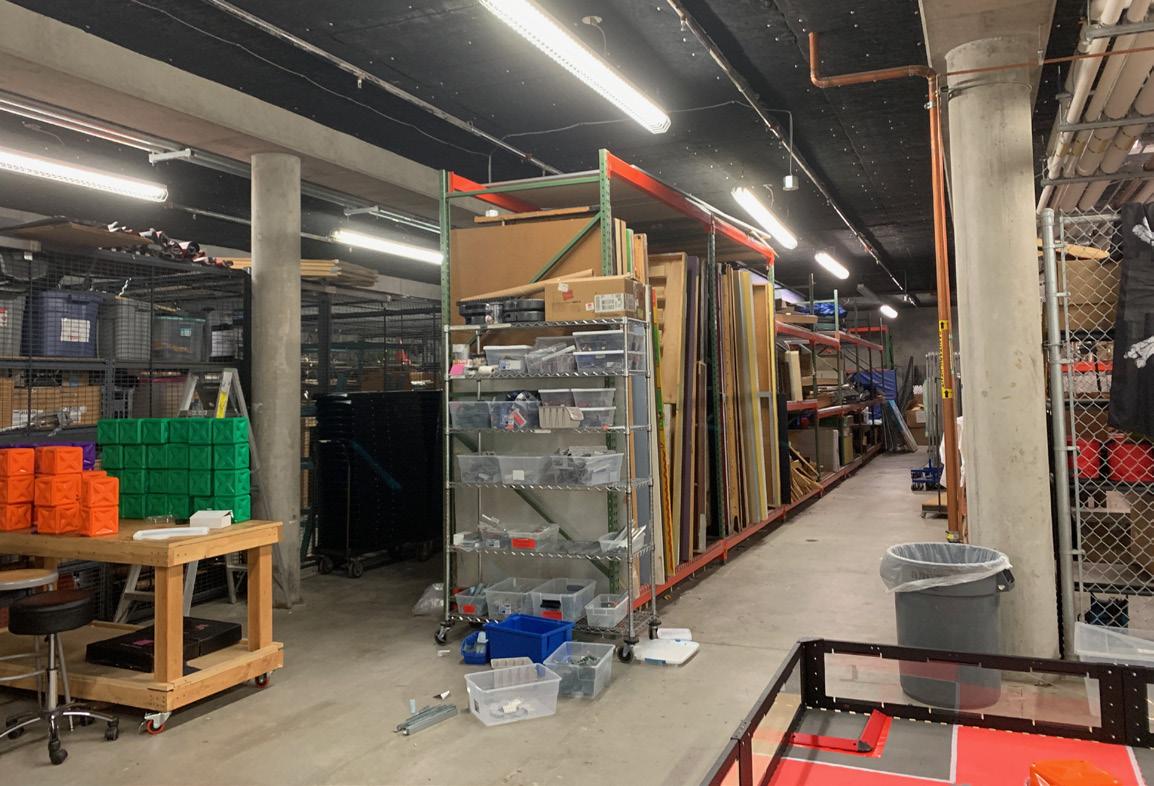
This renovation would not take as long as some expected because no additional building would need to be done. “We didn’t use the entire basement when we originally built this space, so there is currently more room available,” Upper School science teacher Marc Allard said. “The plan is to convert that final remaining storage space into additional classroom space.”
With this in mind, teachers and administration would want to use this opportunity to spread out the current classes and add
a multi-use space for various other classes, clubs and groups. “We want to have a lot of flexibility because the needs change depending on which classes we offer and what is going on, so it will be a large open space where we are able to move tables around and whatnot,” Allard said.
“We wanted to include a space for robotics, M-BEST, freshman rotation, and also the Middle School so they can fully join us,” Upper School science teacher James Dann said.
“We really want [Whitaker] to be accessible to people who have ideas.”
This expansion would also allow the Applied Science teachers to split up equipment in order to keep everyone safe. “One major thing we want to do is to separate, what we call, hard tools from soft tools, or the dangerous tools from the non-dangerous tools,” Dann said. “There is no reason to keep the screwdrivers, laser cutters and 3D printer locked up, as they can’t hurt anyone. We would keep tools like the table saw in the tool shop, which we do lock up and monitor closely.”
The lab would be opened up to any other students, teachers or clubs that want to create something. “We also want to welcome any
other departments that have a design they want to carry out,” Dann said. “We really want it to be accessible to people who have ideas.”
The renovation plan is not set in stone, as it still needs to be approved by the administration, and the funding has to be set up. “Architects have drawn up sketches of what it might look like, and we have received a very preliminary cost estimate,”
by PARINA PATEL
versation starter or a social ice-breaker. “I think that [Juuls] are a social mechanism for fitting in,” Scarlett said in reference to Juuls being used amongst high schoolers.
For some, Juuls are solely meant for group settings. “I don’t understand Juuling in a non social way because it does mess up your body. But in a social way... I don’t know… people find it fun, and people get a buzz from it,” Astrid said.
Jessica, like Astrid, understands the appeal of e-cigarette usage in a group setting. “When it comes to vaping at home by yourself, I don’t think that it is a smart or productive thing to do. I don’t understand what you get out of it without the social [setting],” Jessica said.
In respect to appeal, some believe that it is more common for people vape for acceptance or recognition, rather than for pleasure. “I think people might [vape] for the high or rush, but I definitely know more of it is about attention or the ‘clout’ you get from doing it,” Steve said. Another student, Jeff, agrees with this idea of social credit by Juuling. “[I think] people do it because of peer pressure, to make yourself
Vaping, page 3
Staff illustration: Crystal Bai
Allard said. “Once that is finalized in the next few weeks, the administration will decide if we can get sufficient funding to actually do this.” If it gets approved, the goal would be to do the construction next summer and have it ready for the next school year.
Teachers are enthusiastic about the possible outcome of the project and the future of Applied Science classes at Menlo. “We
page 3
The proposed expansion plan would see some of Whitaker’s storage space converted into classroom space. Staff photo: Sarah Norum
Whitaker,
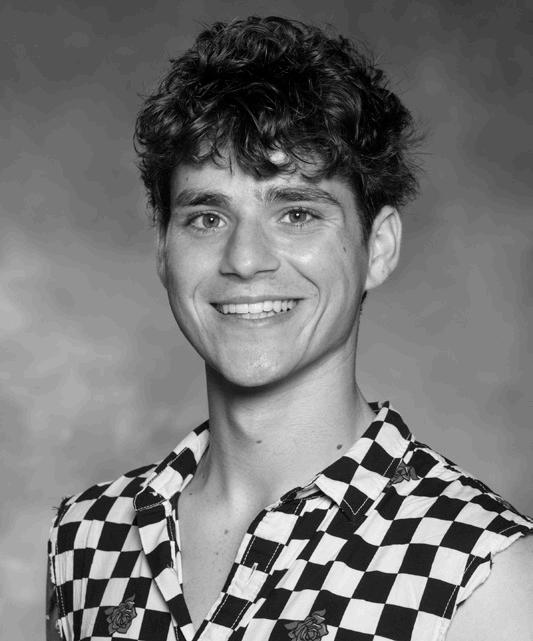
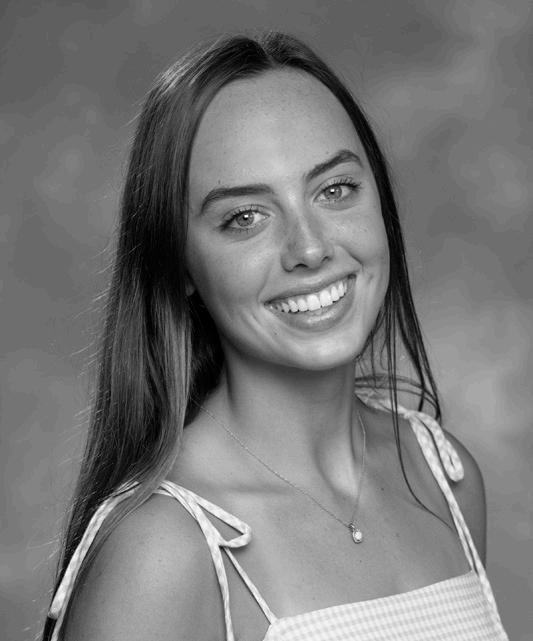
Staff photos: Bella Guel & Sadie Stinson
San Mateo High School Goes Phone Free
by ADLEY VOGEL
At the beginning of the 2019-2020 school year, San Mateo High School students marched into class with their backpacks, books, laptops and a significant new addition to their school supplies: a magnetically-sealing pouch called Yondr. It marked the beginning of a phone-free year, where students would be unable to
use their phones from the moment they arrived at school to the moment they left, facilitated by the Yondr pouch.
The high school is the largest in the country to implement such a policy, which has students placing their phones in the pouches at the beginning of the day, then re-gaining use of them at the end of the day when they unlock the pouches using a
College Board Evolves Adversity Score
by GRACE WILSON
On Tuesday, Aug. 27, the College Board announced its decision to abandon the proposed Environmental Context Dashboard, more commonly known as the “adversity score” or “adversity index,” a plan that would take into account lifestyle factors to generate an altered SAT score.
According to The New York Times, “the adversity score was to be made up of the average of two ratings between one and 100 — one for the student’s school environment and the other for the student’s neighborhood environment — that indicate the obstacles a student might have overcome, like crime and poverty.” The colleges, in theory, would receive both a student’s SAT score along with an “environmental context” score determined by the College Board.
“There is talent and potential waiting to be discovered in every community — the children of poor rural families, kids navigating the challenges of life in the inner city and military dependents who face the daily difficulties of low income and frequent deployments as part of their family’s service to our country,” College Board CEO David Coleman said. “No single test score should ever be examined without paying attention to this critical context.”
While the adversity score idea was proposed in late May 2019, the implementation of the plan was suspended for three months due to harsh backlash. One common critique of the adversity score is its inherent disregard for the complexity of privilege, and a single score’s inability to distill the
magnetic device.
“This may be the most powerful social, emotional health thing that we do as a district, is to get kids off their phones,” San Mateo Union High School District Superintendent Dr. Kevin Skelly said in an interview with ABC 7. The school was responding to teachers’ perceptions that students were spending too much time on their phones both in class and outside of the classroom, especially at lunch and during bathroom breaks. “The average bathroom break is probably two to three minutes, whereas last year it could have been twenty, thirty [minutes], and we just had students wandering the halls,” Assistant Principal Adam Gelb said during an ABC 7 TV segment. Teachers report more socialization and activity amongst students as well as a more engaged classroom experience.
But an entirely phone-free policy is extreme, and despite San Mateo’s success, Menlo is in no rush to adopt it. “I’d rather students here be empowered to make decisions in their best interest than force them to make those same decisions,” Head of School Than Healy said. “I do not see that [phone usage] is an issue we have to work on at Menlo right now.”
Healy explained that the question of whether to not allow phone usage on campus is analogous to a hypothetical ban of single-use plastic water bottles on campus. “We could, as a school, make a decision to ban plastic single-use bottles from campus which would effectively enforce a choice which is good for the planet and is therefore good for our students who are in the process of inheriting that planet,” he said. “Or, we could work to educate students and engage them in thinking about this and other ethical issues in the hopes that, when
faced with a choice off-campus about whether to purchase a single-use plastic water bottle, they make the ethical choice themselves.”
“I do not see that [phone usage] is an issue we have to work on at Menlo right now.”
- Head of School Than Healy
Many teachers at Menlo, such as Upper School science teacher Todd Hardie, already make the individual decision to require students to turn in their phones at the beginning of class. Hardie has been requiring students to turn in their phones at the start of every biology class for two years, and he thinks it works. “I honestly feel it has been for the better. Students are less distracted and more engaged with each other,” he said.
However, Hardie does not require his Anatomy and Physiology students to hand their phones in at all. “The course is designed so that students take responsibility for learning the material at a pace that is comfortable for them. If they choose to be distracted by their phone during class, it means they will have to find time elsewhere to complete the list of tasks I have assigned,” he said.
Hardie also mentioned that he sees growth in the productivity of his students as the year goes on, with students learning how to use class time more productively.
“I don’t think it’s a good idea for students to have access to their phones during class time, but I don’t believe we should be an institution that doesn’t let students use their phones during their free time,” Hardie said.
entirety of a student’s hardships into one number.
In response to the criticism, Coleman prescribed the implementation of an alternate resource, changing the Environmental Context Dashboard to “Landscape.”
Rather than producing a single score assigned to each student, Landscape will provide college admission officers with a holistic, comprehensive description of each applicant’s background. According to the College Board website, this includes “basic high school statistics, high school and neighborhood indicators that are aggregated based on where students live and learn and how an applicant’s test score compares to others who attend the same high school.”
High school statistics may include locale, senior class size, percent of students eligible for free and reduced-price lunch, average SAT scores and AP participation. Neighborhood factors may include education levels, crime rates and median family incomes. It’s important to note that no student-level information will be provided via Landscape; rather, it provides general information applicable to multiple students from a specific high school or neighborhood.
Despite the adaptations that have been made to alter the original adversity score,
criticism remains in regards to the College Board’s decision. To some, Landscape’s disregard of race is one of its most critical drawbacks.
Others like Richard Kahlenberg, an author on educational issues, believe that understanding the income and education level “is the single
most important factor of a student’s disadvantage.”
Some, including senior Vikki Xu, regard the implementation of Landscape as a “step towards telling a fuller story.” Furthermore, the gravity of a student’s achievements can depend on their environment. “I think giving admissions officers more context about someone’s life is always a good idea because then you get to know more about what kind of person they are, and what their accomplishments mean,” Xu said.
While there has been much debate over the effectiveness of implementing Landscape, college counselor Beatriz Hodavdekar believes that it will have no sig-
nificant impact on the admission process, as many colleges and universities already view applications holistically.
“Ultimately, colleges want students who will be good fits for their programs, and part of being a good fit means that the student and the college has the resources that students need to succeed,” Hodavdekar said. “For that reason, admission officers always take context into account when reading applications to make sure the student has the tools to succeed, and the college has the resources the student might utilize during their undergraduate years.”
Menlo Hires New Security Contractor
by SYLVIE VENUTO
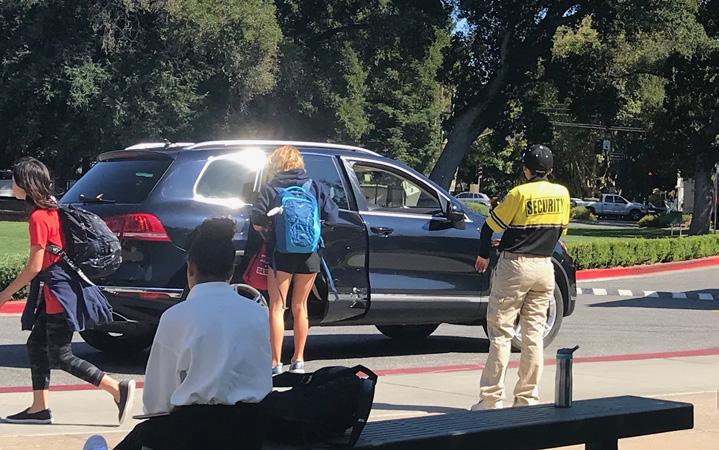
Over the summer, Menlo switched security companies from Allied Universal Security Services to Command Security Services.
“I think that the new [Command] Security Services provides us [with] enhanced security services that Allied did not,” Upper School Dean of Students Tony Lapolla said. “Their training program is more enhanced, the guards that were provided are a better fit for our community, and that will make security a more natural fit for the community.”
Since the switch to Command Security Services, positive changes have been made in Menlo’s security, with the goal of having as little of a noticeable difference in the everyday lives of people on campus.
“We want to provide security and safety to students in a way that supports your academic and social experience but doesn’t get in the way of it unless you need somebody to respond to a security incident,” Command Security Services Chief Operating Officer Allan Bedwell said.
“I would hope you don’t see any change. Security should be a service that is here and is doing their job without intruding on the normal flow of the normal process of the day,” Lapolla said.
More security guards are on campus at all times, and the new security team is qualified to quickly deal with a wide range of calls, according to Security Supervisor Mustapha Moutri.
“If you see something, say something,” Bedwell said, emphasizing the importance of students reporting any suspicious or abnormal activity to a security officer, teach-
er or faculty member.
In addition to Command Security Service’s usual mandated training, Moutri and Lapolla worked with Command Security Services to develop a training curriculum for the officers that was customized for the school.
“I’ve been very impressed with the school’s commitment to security and the school’s sophistication in its approach to security,” Bedwell said.
There is a security presence on Menlo’s campus at all times — two officers whenever students are present and one after students leave at 3 p.m. — every day of the
year, according to Lapolla.
Now that Menlo works with Command Security Services, the new security team will be a part of fire drills, earthquake drills and lockdown drills.
Another security-related change at Menlo is that former Director of Security Tom Hitchcock retired at the end of last school year.
If a student has an emergency, they should contact security at (650) 799-4993 and inform the security officer of their location, their name and the type of emergency that they are facing.
Spieker Center Construction Underway
by ELLA HARTMANIS
This past spring, Menlo began construction on the Spieker Center for the Performing Arts, which is expected to be finished by the beginning of the 2020-2021 school year.
The demolition of the old dance room and portables began last spring break, and construction started at the beginning of summer vacation. Over the summer, all of the major excavation work was completed, and the new dance room was built in the Creative Arts and Design Center (CADC).
Whitaker, cont.
are super excited that we have so much success here in the sense that kids are enjoying the courses that we are offering, and they want to be down here,” Allard said. “There seems to be a lot of interest for students in this educational model and this way of learning, so this would give space to existing curiosities,” Dann said.
Students are also eager to see if this plan goes through, but some seniors wish
Vaping, cont.
look cool,” Jeff said.
Not only does the party scene contribute to the desire to vape, but it also allows for other substances to be involved, including alcohol. One student attributes her occasional vaping to when she is under the influence of alcohol. “I don’t really think about its negative effects, and it doesn’t taste as bad as usual [when I have consumed alcohol],” Norah said.
Aside from social use, some use vaping as a mode of appetite suppression. “Some people Juul ‘cause it [suppresses] their appetite, and they use it as a way to eat less,” Norah said. A symptom that has been proven to be linked to vaping is significant weight loss, according to the CDC Investigation Report.
According to a study conducted from April to July 2018 by ScienceDirect for the Addictive Behavior journal, out of the 394 e-cigarette users surveyed, one in 22 who vape are using or have used e-cigarettes as a method for weight control.
Even though people believe that vaping is helping them lose weight, Psychology Today stated in an article published on May 8, 2019 that vaping is neither a healthy nor practical solution to weight loss and only poses dangers by bringing a potentially harmful drug into one’s body.
that it happened sooner. “I am a little disappointed that I will graduate before we get to see the new Whitaker space, especially because I have been in Robotics since freshman year, and we have always wanted to have our own space, but I’m really excited to see what the space is going to be used for,” senior Vikki Xu said.
“I think it’s really cool that future classes will have access to all of that and more with the new developments coming,” senior Ryan McKee said.
about the health risks associated with vaping. “I definitely [worry about the dangers of Juuling], and that’s why I’ve tried to be super careful not to make it too much of a routine because I know that you can get addicted. I’ve seen it happen,” Susan said.
In light of the current vaping-related deaths and illnesses, Susan has made efforts to alter her tendencies, as she is currently on a break from using her or other people’s Juuls. However, for her, it would require personal ramifications rather than medical studies to give up vaping permanently.
“It would have to be like a personal thing. Like, if I felt myself getting addicted to the point where I was hitting it constantly, and I was actually having cravings or urges for it, that’s the point where I would start to realize it’s more serious, and that’s when I would quit,” Susan said.
Molly admits that she was addicted to Juuling. She started to Juul her freshman year when an older peer urged her to try their Juul for fun. Since then, Molly has been routinely Juuling.
“At first it was a social thing, and I guess it was considered cool to do it,” Molly said. “You [also] get a head rush when you do it, so that’s why I think I became addicted—because I was looking for that head rush.”
For the past few weeks, construction workers have been pouring concrete for the foundation. The next step will be to put in the steel frame, which is one of the noisiest aspects of the construction, according to Head of Communications Alex Perez.
The new theater will be able to seat up to 384 people, a noticeable upgrade to the old theater, Florence Moore Auditorium, which only seated 225 people. Some new additions include a green room, an orchestra pit, a recording studio and a scene shop for set building.
While some students solely use e-cigarettes for designated situations or intentions, others have admitted to being previously or occasionally addicted due to the buzz one gets after hitting a Juul.
For Susan, though, she usually sees vaping as a social tool, she has gone through phases that mimic what it is like to be addicted. “I do go through random phases. For example, when I bought my disposable [e-cigarette], I was hitting that every day for a bit,” Susan said.
Though Susan has never felt herself being entirely addicted, she still worries
However, due to recent news, Molly has decided to change her habits. “I definitely want and am trying to stop [Juuling now]. I was pretty addicted. I used to do it every day, and now I don’t. I [also] got rid of my Juul,” Molly said.
The CDC has officially voiced their caution against vaping due to the number of hospitalizations and deaths linked to vaping. For Menlo students, this news could potentially have the power to change the social scene and student’s habits surrounding Juuls and other e-cigarettes.
Command Security Services responds to 20-30 calls a day. Staff photo: Sylvie Venuto
Small Orchestra Brings Benefits and Challenges
by SOPHIA ARTANDI & EMILY HAN
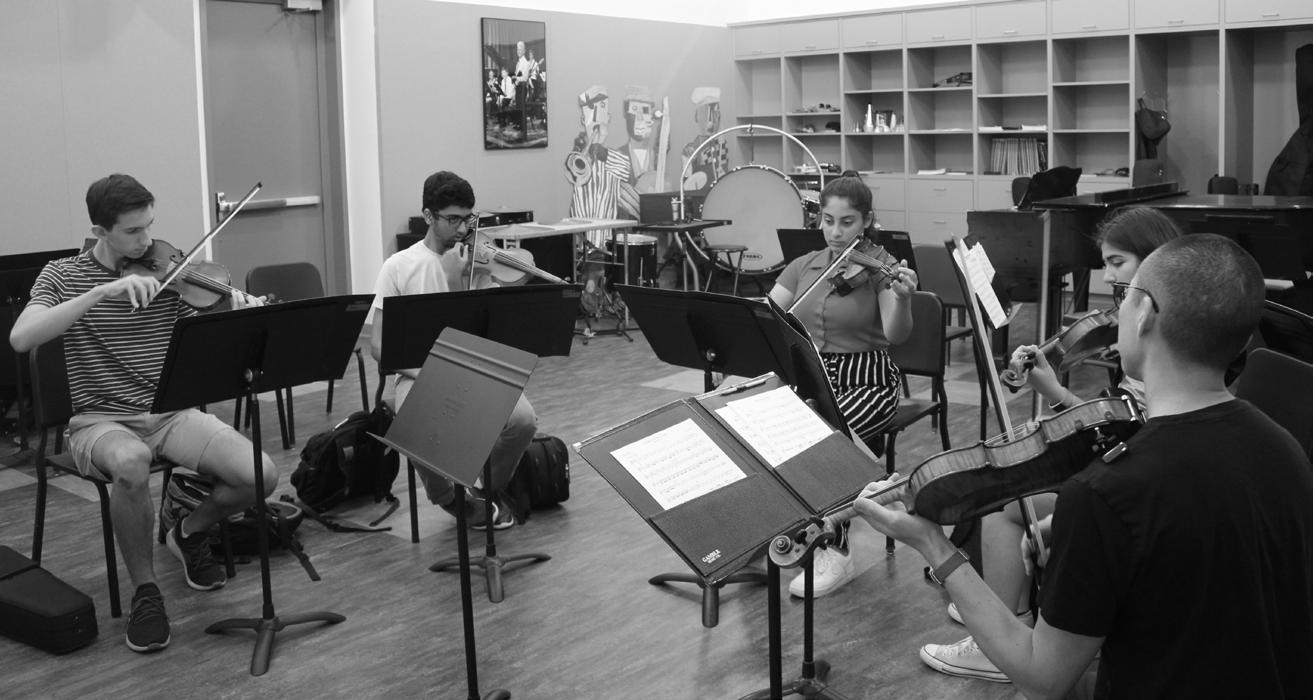
This year’s Upper School orchestra consists of only five members, all of whom play the same instrument: the violin. Last year’s senior class included seven students who were in the orchestra, and because only one freshman joined this year, the group has further diminished.
This small size has prompted Upper School orchestra teacher Leo Kitajima Geefay to consider new ways of organizing the small group to play music. Kitajima Geefay explained that the new dynamic creates more of a quartet setting than a large orchestra. Therefore, they will be unable to play symphonies that involve a wide range of instruments, but choosing music and switching songs will be less complicated because of the flexibility of the small group.
Junior Vivek Veluvali joined the orchestra program his freshman year and enjoyed it so much that he has continued with it throughout high school. His only concern lies in regards to the orchestra’s all-violin aspect. “The biggest issue for me [this year] is the lack of variety in our instrumentation,” Veluvali said.
However, Veluvali also supports Kitajima Geefay’s direction with the limited instrumentation. “I like playing older music, like classical, baroque and romantic music,” Veluvali said. “But I also really like how [Kitajima Geefay] adapts more classical contemporary and modern music to the instrumentation we have, and usually
it sounds pretty good.”
Kitajima Geefay believes that music should ultimately represent culture, and he tries to ensure that all the music he chooses has personal relevance to the musicians in the orchestra. While some Menlo community members who are accustomed to a traditional orchestral set-up disagree with his decision to incorporate more modern styles of music into the repertoire, Kitajima Geefay explains that he strives to create a balance between classical and contemporary music styles. “I don’t promote one genre over the other,” Kitajima Geefay said. “Traditionally, there’s this tendency for traditional music to have a type of elitism. I don’t think that’s healthy at all.”
The orchestra has started to practice the “Miniature First Quartet” by David Stone, Vivaldi’s “Concerto for Four Violins,” Pentatonix’s version of “Carol of the Bells” and the opening number from “The Greatest Showman.” They have even discussed doing an adaptation of “Bad Guy” by Billie Eilish, released this year.
Having a small orchestra spurs the question of what really defines an ensemble. “It’s like a philosophical question. An ensemble is a group of musicians making music — what type of music we play [is] up to us,” Kitajima Geefay said.
Freshman Sofia Muñoz-Pacheco believes that the smaller ensemble has not hindered her overall orchestra experience and instead finds it helpful. “[Kitajima Geefay] is correcting me on techniques that I’ve been doing wrong for the past four years,” Muñoz-Pacheco said. “If it had been a bigger orchestra, he wouldn’t have been able to do that.” In addition, the smaller orchestra means that Kitajima Geefay can arrange the music so that all of the violin parts are individually represented. Furthermore, individual musicians’ levels of playing can be taken into account so that the music is not too challenging for the ensemble.
Sophomore Randeep Nandal was a part of the orchestra during his freshman year, but decided to drop the class this year. Nandal’s primary reason for leaving was to take another elective, despite having enjoyed being part of the orchestra last year.
“I had heard pretty good things [from my middle school orchestra teacher] about the orchestra program [at Menlo], so I decided to try it out, and I really liked it,” Nandal said. Nandal also felt a lack of motivation to continue with the
Selected Student Profile: Senior Ethan Yan
by KYRA GESCHKE & KATE HAMMOND
CoA: What is your favorite color?
Ethan: Yellow.
CoA: Why is that your favorite color?
E: I think it is very bright. I like the energy and vibrancy.
CoA: Do you have any siblings?
E: No.
CoA: Did you play on swings or slides on the playground?
E: Probably swings more. There’s a park right across the street from [my] home that has a swing, so I think I like that. I also used to like jumping off the swing and seeing how far I could go without hurting myself.
CoA: Did you ever hurt yourself?
E: I don’t remember. I don’t think so. I’m rather risk averse, so I don’t think I put myself out there in a situation where I could hurt myself.
CoA: How do you feel about everyone wanting you to become the President of the United States?
E: I think if people thought about it more, I don’t think they would want me to be President of the United States.
CoA: Where do you see yourself when you are 50?
E: I would like to live on the East Coast, I think. I’m not sure. Hopefully, I’ll be teaching at a university or working for the federal government or something like that.
CoA: What’s your favorite amendment from the Constitution?
E: Favorite? Good question. I like the Third Amendment because nobody ever talks about it, and there’s never been a Supreme Court case about it. So I guess I like the quirkiness of it. [The amendment says] you cannot force people to house soldiers.
CoA: Who is your favorite member of Congress?
E: Member of Congress? That’s a good question. Well, right now, I really like Michael Bennet. He’s a senator from Colorado, and he’s running for president.
CoA: What is something that no one knows about you?
E: My middle name, Yuet-Hong, is in Chinese, and it means happy and healthy.
CoA: Can you cook?
E: I can cook instant noodles, I can boil eggs and I can steam leftover dishes. That’s about the extent of my cooking skills.
CoA: Is democracy effective?
E: Yes.
CoA: If you could pick a new first name, what would it be?
E: Kenneth?
CoA: Why Kenneth?
E: I think that it has a sort of regal, distinguished quality. There’s also a British politician, Kenneth Clarke, who I very much admire. But I’m happy with my name.
CoA: Who is your favorite Kardashian?
E: I don’t really have enough data to distinguish between them. I know that Kim Kardashian has been doing a lot of work
violin after recently discovering a bigger passion for the guitar. He wishes the best for the future of the Menlo orchestra. “It was a really great experience. I can’t stress that enough,” Nandal said.
Kitajima Geefay is extremely optimistic about everything that is to come, as next year’s rising freshman class has nearly 20 potential musicians for the orchestra. “Whenever there’s a change in a program or a different leader with a vision, it just takes time for that to become the norm,” Kitajima Geefay said.
around criminal justice reform, so I guess I’ll pick her.
CoA: If you could only bring three things to a deserted island, what would you bring?
E: Well see, I don’t want to single out people and have the entire school or 99% of the school yelling at me for not taking them. [So besides people], I would bring a radio so I know what’s going on and so I can communicate with the outside world.
Maybe a violin to play with, if I’m bored, and maybe a ball for recreational activity?
CoA: Is the S or the C silent in scent?
E: I didn’t know this is a very contentious issue, but the C is silent.
CoA: What is the weirdest smell you have ever smelled?
E: I don’t know if this is the weirdest, but I’ve been to the La Brea Tar Pits in Southern California. I think they preserve fossils there, and the tar has a very strong smell. I guess that’s a unique smell that I remember.
CoA: What are three words to characterize
CoA: Who is your favorite Kardashian?
E: I don’t really have enough data to distinguish between them. I know that Kim Kardashian has been doing a lot of work around criminal justice reform, so I guess I’ll pick her.
our generation?
E: Our generation? Connected. Busy. And I don’t think this is one word, but I think we have a lot of potential to shape the future of our society.
CoA: What is your favorite word?
E: Defenestrate. It means to throw some-
thing out a window.
CoA: If you ran for office in any way, what would be your slogan?
E: I’m not very deft with slogans. I will
CoA: Can you cook?
E: I can cook instant noodles, I can boil eggs and I can steam leftover dishes. That’s about the extent of my cooking skills.
probably hire someone to figure that out, someone like [senior] Meredith Fenyo, who has graciously offered to share her wisdom.
CoA: What is your favorite candy?
E: I really like the Coca Cola candy, but it has to be the fizzy one. I think it has like a coat of sugar or something on top, not like the smooth textured one.
CoA: Who is your favorite Disney character?
E: (long pause) Mickey Mouse?
CoA: Have you ever been to Disneyland?
E: I have. It was a long time ago. I actually really liked the “Zootopia” movie. I think it’s probably one of my favorite Disney movies.
CoA: What is your favorite movie in general?
E: My favorite movie in general? Uh, maybe “National Treasure.”
CoA: West Coast or East Coast?
E: East Coast. But I think part of this is because I haven’t lived there for a long time. So maybe once I live there, I’ll switch back. I really like the small town feel, you know, people living a simple life, the beauty of the countryside. And I think that that’s something that you get on the East Coast. I think there’s a different type of culture there.
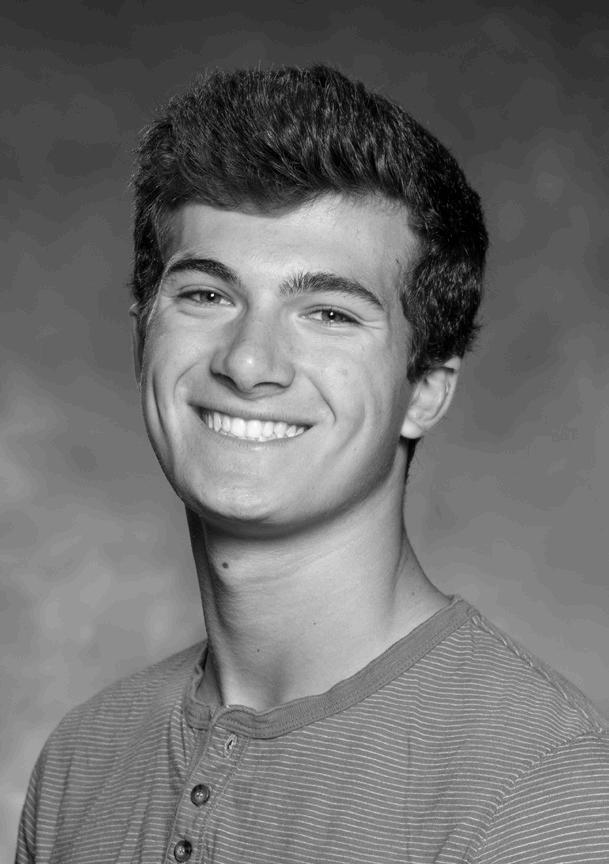
Yan ‘s Knightbook portrait. Photo courtesy of Menlo School
This year’s orchestra class, which consists of five violinists, practices with teacher Leo Kitajima Geefay. Staff photo: Samantha Stevens.
Bay Area Students and Teachers March in Sept. 20 Global Climate Strike
On Friday, Sept. 20, dozens of Menlo students and teachers marched in San Francisco to stike against climate change alongside millions worldwide, making it one of the largest
Are Music Festivals Safe for Students?
by ELLA HARTMANIS
In recent years, music festivals have gained popularity amongst teenagers due to their highly energetic environments and an array of artists who perform at these events. However, there is one multifaceted concern that prevents many Menlo students from attending concerts and festivals: safety.
One of the most popular festivals in the Bay Area is Rolling Loud, which is an annual rap festival in Oakland. Junior Emily Boal attended the festival last year and had a bad experience. “I got separated from my friends and couldn’t find them for a really long time because there was bad cell service and a ton of people,” Boal said.
Despite many Menlo students’ enthusiasm to attend Rolling Loud, parents have voiced concerns about the open-air, latenight concert located in an Oakland parking lot with a crowd of strangers and no parental supervision.
Sophomore Tyler Flynn wanted to go to Rolling Loud this year; however, his parents shared similar concerns as other parents about the type of people in the crowd. “Rap music tends to push the edge of angry stuff and sketchy content, and the genre of music affects the crowd,” Flynn’s mother Pam said. Some rap music uses a lot of provocative language which, combined with drugs and alcohol, can really get people riled up and potentially create an uncontrolled environment, according to Pam Flynn.
Parents are also concerned with the prevalence of drugs at festivals. Common festival drugs include marijuana, MDMA, LSD and other hallucinogens according to
recovery.org. These, as well as other drugs, are illegally sold or handed-out at such events. One of the most dangerous aspects of any drug is its actual content. When people buy drugs at festivals, they may not know the origin of the drugs nor their contents. Anyone who considers using illegal drugs must be aware of their potential health danger. To avoid unwanted drugs, reject beverages, or anything for that matter, from strangers since the contents may be uncertain.
Moshing often comes to mind when people think of Rolling Loud. Moshing is when people jump around in a large, packed group and collide with each other, making the possibility of injury possible. Sometimes the explosive energy becomes dangerous; several sporadic fights broke out last year as a result of the mosh pits, according to Boal. Last year, Playboi Carti was forced to stop his set multiple times to ask the crowd to break up the mosh; however, the people did not listen, forcing him to end his set early, according to East Bay Express. Since moshing is potentially dangerous and many festival-goers do not participate in it, it can be easily avoided.
Menlo Teachers Share Interests Through Unusual Classes
by HAILEY TSUDA
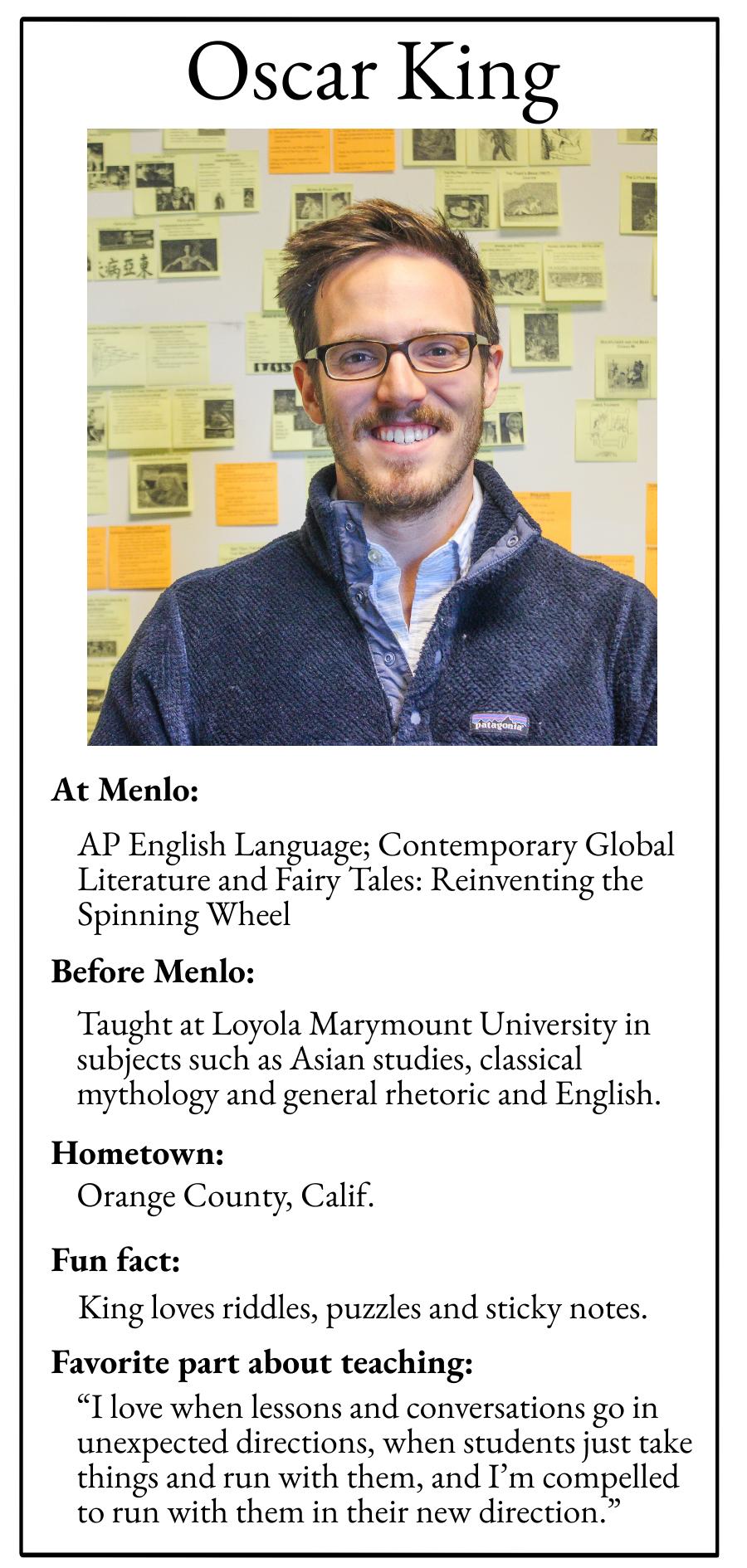
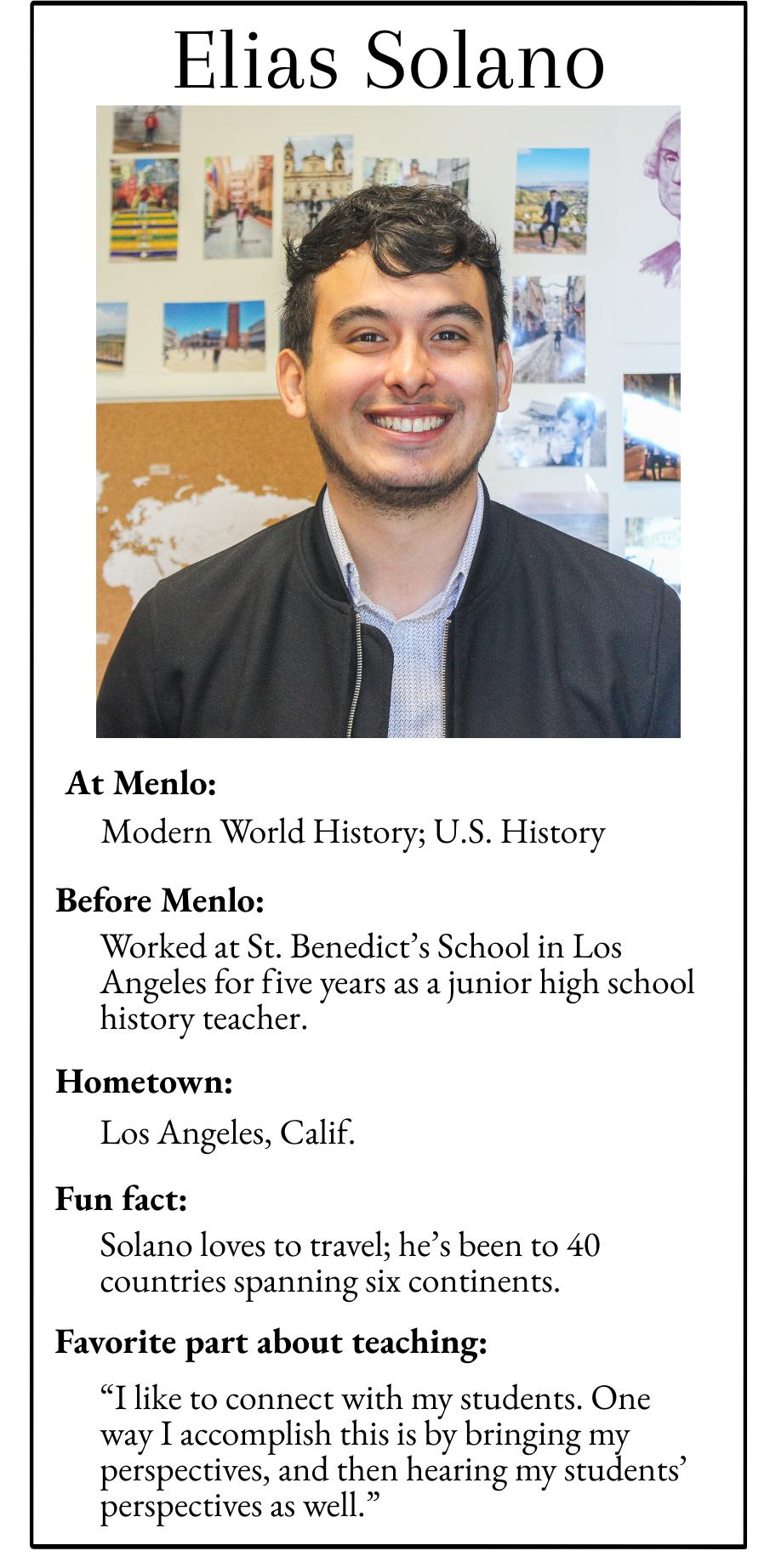
Menlo has an abundance of interesting classes, many of which are born out of a teacher’s personal passion for a particular topic, such as Upper School science teacher Marc Allard’s Design and Architecture class or Upper School English teacher Margaret Ramsey’s Lyric and Lifeline English class. “[At Menlo], there’s a nice atmosphere of people consistently finding and being interested in new things that they
“There’s a nice atmosphere of people consistently being interested in new things that they want to talk about, that they want to learn and that they want to share.”
want to talk about, that they want to learn and that they want to share,” Upper School English teacher Oscar King said. Similarly, “What drives courses is [...] teachers and their passions, like what are they interested in doing,” Allard said. However, not every topic that a teacher wants to teach has a place in the curriculum.
Upper School English teacher Whitney Newton believes that teaching a mini class on how to make a proper presentation would be a valuable asset to Menlo students. “You’re using [presentations] in school, you’re using them in college, [...] you’re using them in the workplace, and that’s a skill that we don’t actually sepa-
rately teach,” Newton said. “We ask students to do it all the time. [...] But we don’t tell them how to make it beautiful, how to make it powerful.”
Menlo School Head Librarian Cathy Rettberg expressed her interest in teaching a few classes that help students “understand where [their] news is coming from.”
This is a topic that Rettberg is personally interested in, and she would model her course off a class currently taught at the University of Washington. “They make all their materials available, and I actually have written back and forth with the guy that teaches that class,” Rettberg said. “It’s a tremendously popular class at [the] University of Washington, and they know what they’re doing.”
In another academic department, Upper School science teacher James Dann believes that in the past, there has been interest from within the science department to alter how the core sciences are taught at Menlo. “Instead of teaching [science concepts] by topic in units like we do now, we’d teach them as a story,” Dann said. This idea came up five years ago at the science department retreat, but nothing really came of it once they got back to campus. Dann believes that teaching the core sciences in this way could be much more relevant and interesting because students could learn about the different parts of science that are involved in current or historical events. “In physics [...] you could talk about the atomic bomb, [the] Manhattan Project or climate change, [which] involves mostly chemistry, but also physics and biology,” Dann said.
Many teachers at Menlo have a “dream” class they want to teach, but in the end a lot of it “mainly comes down to a staffing thing,” Allard said. “We have to teach our core course, so if [the school] is willing to [...] have more teachers help out with that,
then I can do other things.”
In some cases, teachers do get the opportunity to teach a class about a topic they are interested in. In the spring semester, King is teaching a Fairy Tales senior En-
“What drives courses are teachers and their passions, and what are they interested in doing.”
glish elective that deals with the classic fairy tales and the oral traditions that surround them. He also wants to bring it back to contemporary issues. “We’re seeing how [fairy tales] relate to current social justice issues, current modes of resistance in culture, and then trying to retell them in our own ways in our own creative writing about that one,” King said.
Upper School history teacher and Mock
Trial Coach Dan Devitt expressed his appreciation that there is now a place in the core curriculum for more history electives. “One of the nice legacies of [former Upper School History Department Chair] Ryan Dean and continuation under [Upper School History Department Chair Carmen] Borbon’s leadership is that they allowed all these electives to sprout up,” Devitt said. This year, Devitt is teaching an Intro to Law course for the second time. “I’ve always thought it’s important, especially for high school students, to know their rights [and have] the ability to speak out about them,” Devitt said. The Intro to Law class allows Devitt to teach this curriculum that other core history classes, such as United States History or AP United States Government and Politics, do not provide.
“There’s a huge acceptance [for new course ideas] and the departments [take] those ideas and [find] a way to integrate them with the [existing] curriculum,” King said.
The crowd at Rolling Loud 2018. Photo courtesy of Emily Boal
Dann helping a student test her solar system in his Sustainable Earth Engineering class. Photo courtesy of Pete Zivkov
youth-led demonstrations in history. Staff photos: Grace Wilson
Approximately 40,000 people showed up to the San Francisco march.
Many chanted for the Green New Deal and against large corporations that harm the environment.
The protesters marched 1.1 miles from the San Francisco Federal Building to the Ferry Building.
Organizers hoped the message would impact decisions made at the United Nations Climate Action Summit held on Sept. 23.
On The Quad: How engaged
are you in the 2020
Presidential Election?
“I read the news and chat with my friends about different candidates. I will definitely vote, but I will likely be registered as Independent. None of the candidates have me fired up enough to do a ton yet. I’m hoping to be more engaged as the election draws closer.”
- James Leupold ‘20
“I’m moderately engaged. I watch the debates and subscribe to newsletters.”
- Mattias Yotopoulos ‘21
“I watch all the debates, I follow the news, and I intend to volunteer for the Democratic National Convention.”
- Ishani Sood ‘21
“I am fairly engaged. I watch YouTube videos about the different candidates and their policies.”
- Declan Stanton ‘20
“I watch debate highlights and follow candidates on Instagram.”
- Izzy Hinshaw ‘21
Yang Combines Pragmatism with Creativity McGaraghan Never Fails to Shine on Stage
by CRYSTAL BAI
Senior Seiji Yang had never taken an art class before high school. “I’ve always doodled random stuff like cartoon chickens and cartoon penguins my whole life, but I didn’t start drawing ‘seriously’ until high school,” he said.
But after taking the art section of freshman rotation, Yang began to regularly pick up his pencil, channeling his creative perspective onto the drawing pad. “I’ve never been the smartest or the most organized, never the most eloquent or the most
“Approaching STEM from the point of view of humanities or art allows me to be different in the way I see things in general.”
shrewd,” he said. “But I think I’ve always been pretty creative. Whether in the context of problem solving or art, I think I’ve always had the ability to see things from a different perspective.”
In school, Yang typically gravitates towards STEM subjects. However, he believes that art has helped him become a more well-rounded and resourceful student. “Approaching STEM from the point of view of humanities or art allows me to be different in the way I see things in general,” he said.
“I think innovation happens when a diversity of perspectives all intersect into some unifying idea,” Yang said. “I want my artistic creativity to improve the way
people live. It could just be the life of one person or two, or a dozen. And to do that, I want to keep learning art and humanities alongside STEM and cultivate such a weird perspective that will help me be even more creative.”
Despite his creative persona, Yang also takes a very pragmatic approach to his art.
“At the end of the day, art is just translating a thought or feeling into a tangible piece of paper or canvas, like how architecture is translating someone’s personality into their living space,” he said. “Similarly, innovation is just channeling creativity into something useful.” As for mediums, “I really only use pencils,” he said.
While Yang doesn’t quite know what his future will look like, one thing is for sure: “No matter what field or subject I pursue, I know that art will always be relevant to me,” he said.
by VIONNA ESHGHI
Senior Emma McGaraghan has been chosen for this issue’s female Artist of the Issue due to the outstanding talent she brings to the musical theater stage.
As a child, McGaraghan did not begin with musical theater but instead with ballet.
“I started with ballet as soon as I could walk, and I was more of a serious ballerina [than an actress],” McGaraghan said. “I did musical theater camps over the summers and was always singing and did my first show when I was six or seven.”
However, McGaraghan did not begin consistently participating in shows until sixth grade. “I really made the shift to theater instead of dance in middle school. I’ve been on stage literally my whole life — there’s just a pull, I guess,” McGaraghan said.
“I kind of grew out of ballet, moved abroad and back, and [when I came] back to my studio, it didn’t feel like the right fit,” McGaraghan said. As a result, she began looking for another artistic outlet and an opportunity to get on stage. “Theater
ended up being the perfect avenue for that and ended up being a greater love and passion than dance ever was,” she said. McGaraghan loves everything about acting, but the most incredible moments for her occur during rehearsal. “One of my favorite parts of the rehearsal is the sitzprobe, which is the first time that the whole cast sings [with] the band [...] during tech week,” McGaraghan said. “Everyone is exhausted and everyone is slugging through, but then the band comes in and everyone sings together. Singing the opening
or the finale [brings] everyone’s spirits through the roof and [it is] the feeling of all your hard work coming together and really being able to see what you’ve done.”
“Singing the opening or the finale [brings] everyone’s spirits through the roof and [it is] the feeling of all your hard work coming together.”
This is a special moment for McGaraghan, as it is when she really feels the art and how special the performance is. “That is what truly excites me about theater. [While] I think straight-up acting is very admirable, it is not my style [in comparison to musical theater],” McGaraghan said. “I think it’s hard for me to imagine my life without theater in it.”
McGaraghan performs on stage as Nancy in Menlo’s production of “Oliver!” Photo courtesy of Blair Sanford.
One of Yang’s pencil drawings titled “Childhood: Our Unappreciated Act of Heroism.” Photo courtesy of Seiji Yang.
posts
On Good Morning America’s Aug. 22, 2019 episode, co-anchor Lara Spencer made insensitive comments regarding Prince George of Cambridge’s taking ballet classes. She stated, “Prince William says Prince George absolutely loves ballet. I have news for you, Prince William: We’ll see how long that lasts.” Everyone in the audience joined her in laughing at his love for dance. The video of Spencer went viral on Instagram and sparked the hashtag #BoysDanceToo.
Along with the outcry of videos from the dance community, male dancers Travis Wall, Robbie Fairchild and Fabrice Calmels protested by hosting a ballet class outside of Good Morning America in an effort to end the sexist stereotypes that Spencer validated. Spencer apologized via Instagram and on air. She met with Wall, Fairchild and Calmels after the protest to apologize and learn more about the stigma they faced.
#BlueforSudan
51,067 posts
In June 2019, many Instagram users changed their profile photo to a solid blue image and posted blue-themed photos to express solidarity with protesters during a ruthless government crackdown that killed dozens in Sudan. The blue profile pictures and the #BlueforSudan hashtag started to circle around the media after the death of Mohamed Mattar, whose Instagram profile photo at the time was blue. Mattar was shot by security forces on June 3 during a crackdown sparked by protesters, according to CNN. The protests started on April 6 in objection to Sudan’s leader, Bashar al Assad. Since then, the country’s military rulers reduced internet access, which led to a near-total shutdown on June 10.
social movements of
#YouKnowMe
89,299 posts
Follow
On May 16, 2019, Alabama Governor Kay Ivey signed the most restrictive abortion legislation in the United States. In response, many people pushed back by expressing their own stories of abortion using the hashtag #YouKnowMe. A number of celebrities posted in order to display their opposition to this bill and spread awareness of the effect it will have on the entire country. Ava Duvernay, a filmmaker, posted on Twitter: “Don’t move forward after reading this like everything is normal. Don’t shake your head at Alabama and then keep going about your day. Realize that this is a warning. It’s Alabama and abortion today. It’s you and your rights tomorrow. Your silence will not save you. So speak up.”
#SavetheAmazon
168,388 posts
by KATE HAMMOND
#MarchForOurLives
575,688 posts
Follow
Since the Parkland shooting in February 2018, the number of social media posts about the March For Our Lives has reached 11.6 million, according to Brand Watch. Social media was the home of the March For Our Lives movement; Instagram pages notified users when protests occurred and how everyone could get involved. Videos of student speakers from the marches went viral, specifically a speech by Emma González, a survivor of the Parkland shooting at Marjory Stoneman Douglas High School and co-founder of gun control advocacy group Never Again MSD. On the day of the March For Our Lives protest in March 2018, many celebrities posted about their attendance and support for the movement.
Follow
Since late August 2019, many Instagram users have posted photos of the Amazon rainforest burning to bring light to the issue and solutions that one can take. According to Brazil’s National Institute of Space Research, the number of fires in the Amazon recognized by satellite images in August was the highest since 2010. Celebrities, politicians and many others expressed their concerns with the damage in the region. Through all this posting, there have been many misleading portrayals of what actually is occuring. Some celebrities have used dated images or false facts. For example, actor Leonardo DiCaprio and French President Emmanuel Macron posted a photo that is over 20 years old on social media. Similarly, there have been many fake accounts tricking users to donate money, but the money is going to scam accounts who use the money for their own gain without the intention of donating to causes helping the Amazon.
AGE OF ACTIVISM
Social Media Movements Can Raise Both Awareness and Confusion
by EMILY HAN
The age of social media has given rise to countless online movements through which ordinary people hope to make a difference — or hope to gain attention. Before platforms such as Instagram changed the landscape of social justice movements, trying to unite people with the same views across countries and continents was much more difficult and inefficient. Now, with these networking platforms connecting people across the globe, it is much simpler for anyone to spread awareness about both pressing issues and possible hoaxes. A stellar example of this recent change in information-sharing is the Me Too Movement. “Me Too” is a phrase that was first used in 2006 by Tarana Burke, a sexual assault survivor. Years later, in 2017, actress Ashley Judd accused her former boss, Harvey Weinstein, of assaulting her. Soon after, actress Alyssa Milano revived the phrase by tweeting out #MeToo, encouraging other survivors to use the hashtag to share their own stories. Joan Williams, a Hastings College professor of women in the workplace who was interviewed by the New York Times in Oct. 2018, described #MeToo as the inspiration for a “norms cascade,” which happens when social norms suddenly shift.
After #MeToo gained momentum, the National Sexual Assault Hotline gained a 30% increase in the calls they received, according to the same article. On Instagram, users have used the hashtag on over two million posts. And in terms of systemic change, the movement prompted numerous organizations to launch investigations into and even fire formerly “invincible” bosses. A 2017 article written by The Guardian describes #MeToo as a
“rallying cry” for women who have been sexually assaulted, proving that this particular social justice movement did help empower the silenced and create real change.
In a similar effort that began in 2013, George Zimmerman’s acquittal after killing Trayvon Martin, an African-American teenager, prompted the hashtag #BlackLivesMatter. Through social media, the campaign allowed the average user to express their disgust toward systemic racial discrimination. The account for the organization that started the movement gained 282,000 followers on Instagram. Although it may not have directly caused tangible change, #BlackLivesMatter did inspire protests and backlash, and these responses ultimately forced authorities to acknowledge and care about the issue.
In fact, 69% of Americans believe that social media plays an important role in “getting politicians to pay attention to issues,” according to a 2018 study by the Pew Research Center. Moreover, as a 2016 article by The Medium states:
“Social media does not cause revolutions. But it can help citizens who feel a sense of injustice to realize, perhaps for the first time, that they are not alone.”
Another instance in which social media users created awareness around an issue they cared about is the Blue for Sudan movement. After 26-year-old Mohamed Hashim Mattar was killed in a massacre of over 100 peaceful protesters in Khartoum, Sudan, Instagram users started changing their profile pictures to blue, his favorite color, to honor Mattar and all the other victims of the violence in Sudan. #BlueforSudan, which is tagged on
over 50,000 Instagram posts, has unified people across the platform and has certainly increased the general public awareness around the crisis in Sudan.
However, while public consciousness is an important step to making real, substantial progress, some users take advantage of this well-intended activism. An Instagram account called the Sudan Meal Project claimed it would send a meal to a child in Sudan each time their post was shared on someone’s story. The account’s popularity subsequently skyrocketed, gaining around 400,000 followers and countless reposts before it was discovered to be fake.
In the days following this finding, many users expressed frustration that the Sudan Meal Project had exploited a real humanitarian crisis, while others were simply exhausted of the activism that inundated their Instagram stories.
After surveying people on this topic in 2018, the Pew Research Center found that 71% of Americans think “social media makes people believe they’re making a difference when they really aren’t.”
Taking all perspectives and research into consideration, it is reasonable to conclude that Instagram activism is not completely useless, as it can spark bigger movements that lead to important social changes. On the other hand, it may not be the most trustworthy platform in terms of education and news. For those who rely on Instagram to learn about current events, it is generally better to instead read articles from more reliable news sources.
Social Media Tends to Promote Clickbait and Fake News
by ASHLEY GRADY
There are 2.1 billion social media users across the world, according to Forbes. Of those people, a whopping 64.5% access breaking news from Facebook, Twitter, YouTube, Snapchat or Instagram, rather than from traditional news sources. In today’s social media-driven culture, it makes sense. There is a lot of appeal to consuming news via social media. It is quick, easy and accessible. However, what many news consumers do not know is the danger of relying on the articles that they see on their social media timelines, for those sources may not always be credible, unbiased sources. In the age of fake news, social media platforms make it easy to spread fallacies. Media outlets will use “clickbait” or exaggerate headlines to make their articles more viewed, liked and shared. Companies such as Buzzfeed and Daily Mail, both of which have a strong presence on social media, have mastered the art of using a shocking headline and an attention-grabbing picture to get more clicks.
The tendency of online clickbait spreading misconceptions would be less of a problem if users actually read the entirety of these articles. However, the average visitor of a webpage reads an article for 15 seconds or less and watches a video for an even shorter 10 seconds, according to Forbes. Looking at a misleading headline or just the first few lines of an article will leave the reader ignorant and uninformed about the topic in question.
Clickbait and misleading titles aren’t even the most dangerous effects social media has on the news we consume. Social media allows for the intentional spread of fake news for any sort of social or political gain. With politics being so polarized today, almost every media outlet slants one way or another in their beliefs. Even the most re-
liable of news sources such as The Wall Street Journal or The New York Times are known to lean more conservative or liberal, respectively. This bias can be much more apparent and malicious on social media.
Researcher Renée DiResta describes the power and danger of social media, noting that “any wayward tweet […] can be elevated to an opinion worth paying attention to. If you make it trend, you make it true.” Professors Phil Howard and Sam Woolley of the University of Oxford coined the term computational propaganda to describe this phenomenon. They define computational propaganda as “the use of algorithms, automation and human curation to purposefully distribute misleading information over social media networks.” Even worse, topics trending on Twitter can be misconstrued as particularly important or reliable. For example, in August 2019, shortly after the controversial suicide of disgraced financier and convicted sex offender Jeffrey Epstein, trending hashtags such as #ClintonBodyCount, #ClintonCrimeFamily and #TrumpBodyCount emerged. The opposing hashtags each spread accusations of who was responsible for Epstein’s death. President Trump himself joined the fray, retweeting a message linking the Clinton family to the death of Epstein. The FBI has even gone so far as to classify fringe conspiracy theories as a domestic terrorist threat, further proving that online toxicity goes far beyond the computer screen. Getting news solely from what you see on your social media platforms often leave you uninformed or even worse, lead you to believe twisted facts or outright lies. To avoid falling victim to social media’s propensity for spreading fake news, take the extra time to read the full article, read from multiple sources that are known to be reliable and be even more careful taking the author or news group’s bias into account before forming your own opinions.
Celebrities Use Social Media for Change
Emma Watson
52m Followers
by SYLVIE VENUTO
Follow
Actress Emma Watson uses her social media influence to lead her #HeForShe campaign, which she launched in 2014. The #HeForShe campaign focuses on trying to end gender inequality, specifically through encouraging men to be advocates for gender equality.
Watson’s post with “recommendations for action from the gender equality advisory council” reached beyond her 29.2 million Twitter followers and 52 million Instagram followers (as of Sept. 21), with several world leaders and influencers acknowledging and supporting the campaign through reposting messages about it to spread additional awareness, according to UN Women.
Watson’s Twitter home page has “Time’s Up” emblazoned on the top, and her recent Instagram posts include calls to action for the G7 Gender Equality Advisory Council.
Alicia Keys
16.7m Followers
Follow
Singer Alicia Keys works to fight against HIV and AIDS through the her organization Keep a Child Alive, which she co-founded with Keep a Child Alive President Leigh Blake. Keys also promotes equality through her We Are Here Movement. In 2014, Keys released a song entitled “We Are Here,” which focused on the global and domestic crises of the time and stated that everyone across the world was standing in solidarity with victims of violence no matter where they were, according to The Washington Post.
Along with the song, Keys started the hashtag #WeAreHere, where she asked her fans to use the hashtag to promote a cause that they felt personally connected to. While celebrities such as Watson and DiCaprio focused solely on one cause to champion, Keys used her influence to bring to light the sheer number of issues in the world, prompting conversation and change, according to The Washington Post.
Leonardo DiCaprio
35.1m Followers
Follow
Actor Leonardo DiCaprio’s social media focus is on climate change. His work to spread awareness about climate change is headed by his Leonardo DiCaprio Foundation, founded in 1998 with the mission to protect the remaining wildlife and threatened ecosystems in the world. With over 50 million followers on Instagram and Twitter, DiCaprio uses social media not only to raise awareness about climate change but also to prompt his followers and fans to take action on environmental issues, according to the Leonardo DiCaprio Foundation website.
Contrary to what one might expect from a celebrity, DiCaprio’s Instagram page is void of publicity for his upcoming projects or films. Instead, it is full of images and facts that depict the horrors of climate change and environmental destruction while offering ways for his followers to take action.
John Legend
11.1m Followers
Follow
Singer John Legend, like Keys, works with an organization called Project Red to combat HIV and AIDS. As of Sept. 21, Legend has 11.1 million followers on Instagram, a platform that he uses to spread the hashtag #CantJustPreach, which focuses on inviting his followers to stand up for causes that they believe in.
“We have a platform where we engage a lot of people from different backgrounds and when we bring those people together, we have the power to inspire conversation. If we use that power effectively, it can be really meaningful,” Legend said to Time.
While Legend has received criticism for using his popularity as a singer to promote different social issues, he has remained stagnant on the issues he supports. “Of course they’ve told me to shut up and sing,” Legend said to CNBC in an interview.
How Social Media Can Manipulate Social Movements
by TESSA FRANTZ
In today’s culture, social media is a crucial part of society. It allows anyone to post any kind of content they want, including opinions on political and social causes. However, posting about political issues has its benefits and downsides.
On one hand, posting about political issues can help spread awareness about the topic. Trending topics can help inform others about the problem and can even lead to donations to the cause at hand.
But as people keep reposting, the topic becomes repetitive and less impactful. Social media then becomes a cycle of awareness, without any action actually being done.
“We have power with our
voices, and it’s important to spread awareness without getting redundant. I think that generally, kids recognize how much influence we have with our usage of social media,” sophomore Louisa Moyer said.
Posting about social or political issues can also be manipulated for personal gain. Although some post because of a passion for the topic, there are others who purposefully post content relating to their identity. This allows for self-victimization, where posters seem like the sufferer in the issue, which is not true in most cases.
“I think some people resort to identity politics. A lot of people will post stuff on
their social media that only have something to do with their identity, making them seem like a victim,” senior Charlotte Acra said. Unlike passion, victimization is just another way to attract attention to yourself, and not to the cause at hand.
Another drawback of posting about political issues is that fake news can be easily spread. Instagram users who haven’t thoroughly researched a topic can potentially post about a trending issue, spreading unreliable content.
“I would encourage people who do post on social media to make sure that the facts that they’re posting are factually accurate,” Acra said. In
such a public outlet as social media, fake news is very easily spread, affecting both the users and the cause itself.
Although posting about political matters happen frequently, some students believe that there’s still a general disapproval regarding politics in the atmosphere of social media. “Social media is an outlet where people are able to express their opinions, but I think there’s still a social taboo over politics, which says you’re not supposed to talk about it,” senior Lily Loftis said.
Social media is a multi-faceted platform, conducive for good but, at the same time, has the potential for easy abuse by its users.
Presence, Purpose and Pexistential Pangst: An Alternative Look at Purpose
by AARON MORGAN, Guest Writer
“Purpose” seems to have become a hot-button topic at Menlo. If you’ll indulge me, I’d like to argue that the generally accepted concept of purpose — advertised at recent assemblies and on an excessive number of free wristbands — is misleading.
The problem is that Menlo has conflated the concept of purpose with the concept of function. Let’s digest the two words and their differences.
Purpose is, by nature, predetermined. A hammer’s purpose is to pound and remove nails. A hammer is designed very specifically to reflect this purpose: its head the right size and weight to perfectly strike small nail-like objects and its handle the right size and shape to be grasped easily by human hands.
Function, however, is not predetermined. Rather, function is simply a measure of something’s effect when used. Though it has one specific purpose, a hammer can (for better or for worse) have a variety of functions: to break windows, open bottles or bash in someone’s head.
Outside of religious contexts (in which a god or gods created a divine purpose for
the people they created), ascribing any intentional, predetermined purpose to human beings would be a silly task. Humans just aren’t designed for any specific purpose, we evolve to fit our environment. And to me, those who say that we can determine our own purpose have not truly addressed the meaning of the word. Even if one could “find” their own purpose, it still implies that there is a purpose out there and you’re running around lost without it — which is exactly what causes the existential stress that the “PPP” framework of values was stated as trying to relieve in the first place. Instead of rejecting one universal purpose for individual, unique, more elusive purposes, just reject the concept altogether. Instead of talking about purpose and finding your purpose and how you don’t need to have found a purpose at this stage of your life, just talk about function because it is a measure of how you affect others around you. Talking about purpose, while intended to allow people more freedom and existential autonomy, is really handing them a blank map and inaugurating a lifelong search for the pot of gold hidden at an unmarked X, a wild goose chase after a goose that doesn’t need to exist in the first place. A goose (risking being too abstract
Senior Transfer Student Perspectives on Returning to Menlo
by LUCY PIKE
Seniors Joe Crisci, James Kinder and I are the three senior transfer students at Menlo this year, who have also coincidentally attended Menlo previously. To provide some background, I attended Menlo as a freshman in the Class of 2019 three years ago and enjoyed it, but I wanted to go to boarding school because of the independence it would provide. I attended
“I have had a variety of high school experiences, but coming back to Menlo has allowed me to understand why I missed this incredible school so much.”
two boarding schools due to family circumstances changing: The Thacher School in Ojai, Calif. and St. George’s School in Middletown, R.I. For the spring of my junior year, I had the opportunity to attend The Island School, a junior year semester program in the Bahamas focused on environmental sustainability and marine ecology. I have had a variety of high school experiences, but coming back to Menlo has allowed me to better understand why I missed this incredible school so much.
here) named Your Purpose. There’s no catchy slogan or alliteration that comes along with function, unfortunately. It’s not a sexy word. However, the truly freeing aspect of this line of thought is that your function can be whatever you want it to be, and there’s no worrying that you haven’t found it yet. The history books don’t remember “purposes.” They remem-
ber functions. We should appreciate positive actions for their inherent value rather than their importance in the narrative arc of our lives. The key, in that way, to living fulfillingly — the end to which we are arguing over the means — is simply finding a function that balances the value it gives to you and the value it provides for others.
Soccer Player Carli Lloyd Deserves Consideration as a NFL Kicker
Crisci attended Menlo for his freshman and sophomore years but left for a year to attend St. Mark’s School, a boarding school in Southborough, Mass. and has returned for his senior year. “It wasn’t too hard transitioning back,” Crisci said.
Kinder attended Menlo for his freshman, sophomore and junior years before leaving to attend Episcopal High School, a boarding school in Alexandria, Va. This is his first time being a student at Menlo in the Class of 2020 as he reclassified at boarding school.
One aspect of Menlo I value is how much the faculty cares about their students. The teachers are invested in their students’ success and genuinely care about developing relationships with their students. “I still have good relationships with my Menlo teachers,” Crisci said. I similarly have reconnected with old teachers and enjoy how Menlo’s environment allows students to get to know their teachers so well.
Although I am in a different class of students (Kinder’s and my original grade
“The teachers are invested in their student’s success and genuinely care about developing relationships with their students.”
graduated last year), everyone has been very welcoming and gracious. “It is really good to be back. [...] [Director of Admissions Beth] Bishop was really helpful [in regards to making my transition as seamless as possible],” Kinder said. Crisci had a similar experience with the Menlo administration. “They’re definitely really welcoming,” he said.
The start of my senior year at Menlo has similarly been representative of how community-oriented this place is. Menlo’s school spirit is unsurpassed, and the pride Menlo students have for the school is contagious. It is great to be in an environment where students can pursue their passions.
by ASHLEY GRADY
“What did you expect? She’s a World Champion,” the Philadelphia Eagles football team captioned their two tweets of Olympic gold medalist and FIFA Women’s World Cup champion Carli Lloyd nailing an impressive 55-yard field goal. The two videos have gone viral with over 2.2 million combined views as of Sept. 21, resulting in professional football teams offering Lloyd a spot on their rosters as a kicker and sparking debates over whether or not Lloyd — as well as other women — are physically capable of kicking in the NFL.
Lloyd stepped onto the field Tuesday, Aug. 20, to observe the joint Eagles and Baltimore Ravens practice as a fan. As a New Jersey native, Lloyd has been a longtime Eagles supporter.
Both critics and supporters have emerged with their own takes on the clip. Very different viewpoints led to debates in the tweet’s replies. Twitter trolls argue that she lacks the skills of male kickers and would be better off with “a position in their cheer team.”
Other NFL players were supportive of Lloyd. Buffalo Bills kicker Stephen Hauschka, who made the transition from playing soccer to football in 2008, told ESPN’s Marcel Louis-Jacques that he would welcome Lloyd into the league. “I do think it’s possible to kick well in this league as a female. It’s a very mental position, it’s physical, it’s technical and I think it could be done eventually,” Hauschka said. New England Patriots Quarterback Tom Brady commented on The Greg Hill Show that he sees no issue with Lloyd joining the NFL if team managers believe that she will help them win games.
Some fans debated the legitimacy of Lloyd’s kick, as she was not under any defensive pressure and had a particularly long run-up. However, these arguments fail to invalidate that even in the casual setting of an NFL practice, and with significantly less practice than the pros, Lloyd was able to successfully kick from a distance that even professional kickers with years of experience fail to do.
Although there are other factors to consider in a real-game scenario, such as the possibility of the kick being blocked or a bad snap, both of which instances the team might need her to make a tackle, Lloyd is
confident in her abilities. It’s also noteworthy that even male kickers in the league are often not the most reliable tacklers.
A veteran in high-pressure situations who plays soccer matches with hundreds of thousands of spectators, Lloyd is unfazed by the psychological aspect of kicking. “For the past 15 years, I have been placed in pressure situations, and that is what I enjoy the most. Mentally, I have worked on my mindset and know that what I have gone through would prepare me to kick a field goal in a pressure situation,” Lloyd said to The New York Post.
After the viral video was posted, several NFL teams approached Lloyd about giving her a spot on their roster. One even asked her to play in their last preseason game the following week. Lloyd’s current commitment to the United States Women’s National Soccer Team still takes priority at the moment, and the possibility of her joining the NFL will realistically have to wait until at least the 2020 season. She needs time to fine-tune her technique and practice kicking in pads and under pressure, according to Lloyd and her trainer James Galanis. Lloyd deserves a fair tryout to be a kicker, and, in my understanding, if she sets her sights on it, with time and practice, she will be invited into and thrive in the league. This would be a pioneering moment for women in sports and female equality in general.
Senior Lucy Pike rides a horse at The Thacher School in Ojai, Calif. Staff photo: Lucy Pike
Carli Lloyd playing in San Jose, Calif. for the U.S. Women’s National Team in 2015. Creative Commons photo: Noah Salzman
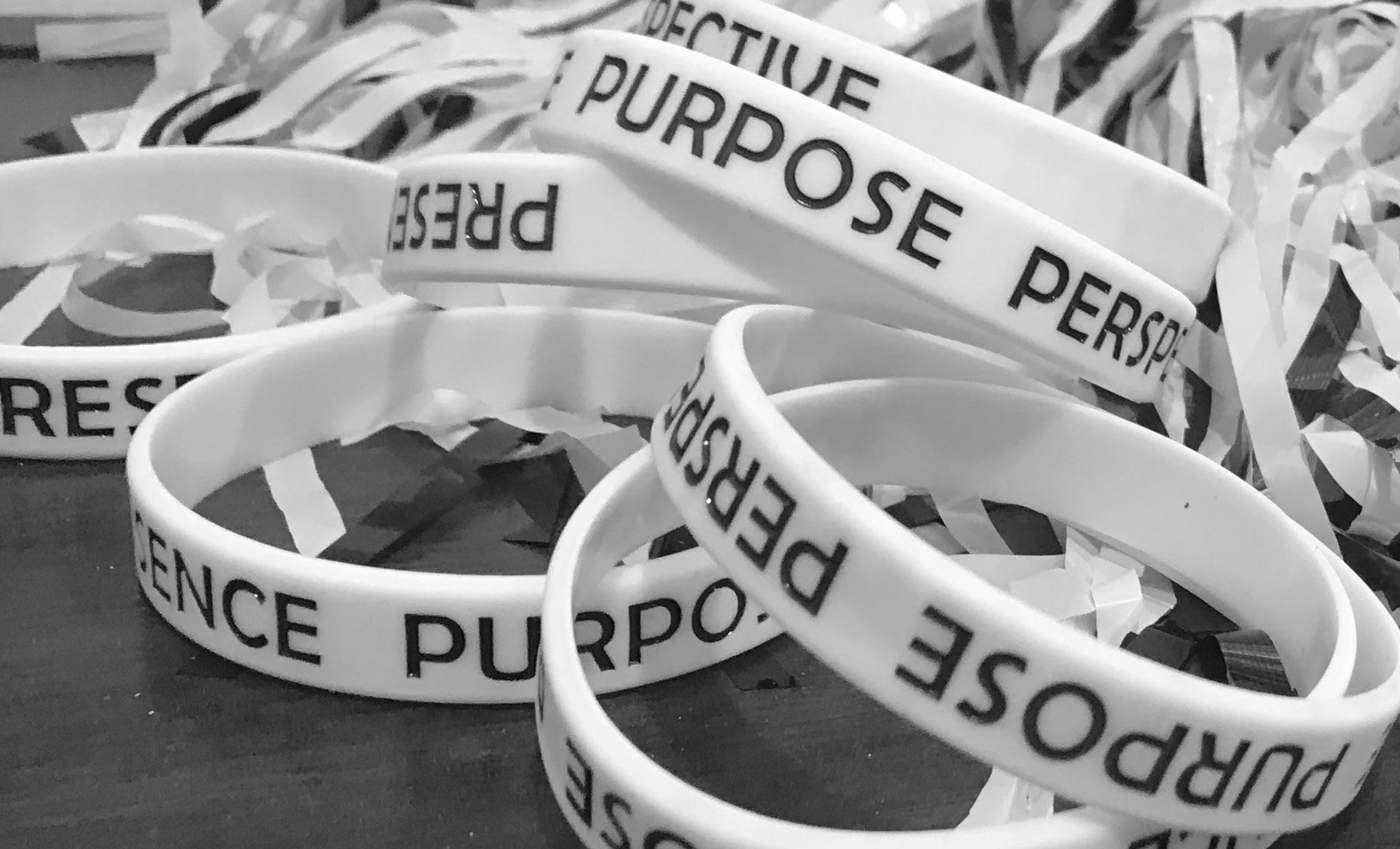
The “presence, purpose, perspective” wristbands handed out at the first day of school assembly. Staff photo: Chase Hurwitz
Moscow City Council Elections Were a Turning Point for Russian Democracy
by SONYA LEBEDEVA, Guest Writer
When 13 candidates were banned from participating in the Sept. 8 election to the Moscow City Duma (the Moscow City Council), thousands of people took to the streets of Moscow. The candidates were barred from running because they had not collected the required number of signatures in order to be considered as candidates. Many believed this to be a strategic move by the government to limit opposition within the Moscow City Council, as most of the 13 individuals banned were part of the opposition to Russian President Vladimir Putin. Despite the Moscow government denying this accusation, the protesters continue to dispute the corruption, which allegedly happened behind the scenes.
Regardless of the basis on which the candidates were excluded, I believe that these protests were crucial for Moscow’s politi-
cal climate. The fact that such a local election stirred almost 20,000 people to protest shows the extent of public discomfort. Putin has been in control of the country for nearly 20 years and has systematically limited the number of “opposition” politicians who could run against him in both state and local elections. The public has grown weary of his rule, as shown through the rise of protests. The people of Russia want change, they want more democracy in state affairs and more people from parties other than United Russia (Putin’s party) to have the ability to run for office.
Western media outlets seemed to almost universally agree that candidates in the most recent election were unjustly excluded from the city election. Many media sources painted the opposition leaders as heroes fighting for free speech and democracy. For example, Vox stated that “opposition leaders followed the onerous rules to get on Moscow’s city council ballot” but
“election officials still denied them the chance to run.” Furthermore, CNN stated that “the [Russian] authorities are using administrative measures to block true political competition.”
This seems to be an exaggerated depiction of events. The head of Russia’s election commission, Ella Pamfilova, contradicted this Western take on the protests. Pamfilova, who has been known to defend the Kremlin opposition, said that the candidates had made a number of clerical errors during the registration process which were more severe than incorrectly collected signatures.
In an interview with the Associated Press, she said that “[despite wanting to] allow the widest competition possible [so that] everyone gets registered,” she was not able to follow through with her desire. When officials started looking at the signatures, they “highlighted a number of serious concerns that [we] did not even speak about before,” Pamfilova said. This statement indicates that it wasn’t only the signatures that were collected incorrectly. Pamfilova also added that a number of candidates had been reinstated upon appeal, as the clerical mistakes had been made by lower-level election officials and were later corrected by higher-level officials. She stressed that those who had been kept off the ballot had “remaining mistakes” that were “still serious enough to justify disqualification under Russian law,” according to the Associated Press. The errors pointed out by Pamfilova show that there may have been more basis for the disqualification of the candidates than had been portrayed by Western news sources.
The election turned out to be less of an example of corruption, as depicted by Western media, and more of a moment of great progress for democracy in Russia. Surprisingly, despite the exclusion of a number of candidates in the recent Moscow Duma elections, such as Alexei Navalny and Lyubov Sobol, the United Party number of seats dropped from 38 out of 45 to 25 out of 45. This dramatic change can be in no small part attributed to the protests which were sparked after the exclusion of
“The election turned out to be less of an example of corruption, as depicted by Western media, and more of a moment of great progress for democracy in Russia.”
the 13 candidates.
These elections can be regarded as pivotal, as this is the first time the Moscow City Duma has been composed of such a wide array of parties. The increase in diversity on the council can potentially lead to more opposition to similar laws that Putin had previously passed without an ounce of protest. Though this election was a success, the next step is to achieve more fair elections in the more rural regions.
Regardless, this is a very exciting moment in Russian politics, as it is the first time in a long time that demonstrations have led to concrete changes in the electoral composition of the city council.
Teens and Phone Addiction: Do We Really Have a Problem?
by SHEFALI SAHAI
Most of us teenagers like to use our phones. But do we like them too much? Many adults seem to think so, and often get irritated when we are immersed in them. Much of this annoyance is justified, but I think that sometimes they overreact. For example, some teachers make students put their phones in bins as they walk into the classroom, even though most of us would follow a simple rule to not use our phones in class. Even outside of school, parents and other adults will often tell us to put our phones away because they believe it negatively affects our growth and development.
A recent study by the Oxford Internet Institute that tested 300,000 teenagers and parents in the United Kingdom and United States found that at most only 0.4% of adolescent wellbeing is related to screen use. This is only slightly more than the negative effect of regularly eating potatoes. In general, phones are not as detrimental as people make them out to be, and I feel
The Coat of Arms
that much of the anxiety and disapproval around phone use is unnecessary.
Compared to our parents’ generation, a lot of our social interaction happens online rather than in person. When face to face social interaction is not possible, our phones can feel like a blessing because they allow us to connect with our siblings in college or with friends and cousins who live around the world. We can call or text them to catch up with each other or FaceTime them to make it feel like we are together. In these situations, phones are something to appreciate and utilize because they are our primary form of communication with those who are far away.
However, just because we can be on our phones every second of the day does not mean that we should, which is the point that many adults try to make. For example, using our phones may not be the best way to avoid social interactions. It may be better to talk to the person waiting behind you in line or sitting next to you at the doctor’s
office instead of trying to avoid the potentially awkward situation by mindlessly going through Instagram. Maybe it is not about dismissing our phones entirely but, rather, calling instead of texting. Call the pizza delivery guy instead of ordering online or call parents and friends instead of texting them. Calling can actually be more efficient, and it is nice to hear a person’s
“We should not feel that we are stereotypical teenagers or bad people because we like to use our phones.”
voice rather than guessing their emotions through text.
But I also think that we shouldn’t be ashamed to use our phones for the purpose of entertainment. It’s okay to go on Instagram every once in a while and comment
If you are interested in writing a guest opinion piece, reach out to the editor at: Visit us online at menlocoa.org
on pictures. It’s okay to go on YouTube in our free time and watch videos that make us laugh. It’s okay to try and recreate Tik Toks with our friends just for fun. Of course, moderation is key, and I can understand some of the adults’ concerns. Teens who use social media for three or more hours a day have higher rates of developing mental health problems, according to the MIT Technology Review. We should avoid overusing our phones to the point where it’s affecting our sleep and mental health or hurting our grades. We must not become so addicted that we don’t want to do anything else and experience withdrawal when we are away from our phones.
We should try to stay in the moment, enjoy life and appreciate the world around us, while also having fun with technology as long as it doesn’t take over our lives. But we should not feel that we are a stereotypical teenager or even a bad person because we like to use our phones.
Mission Statement
The mission of The Coat of Arms is to report accurately and thoroughly on news that is significant to the greater Menlo School community. We will chronicle in context the different events and perspectives within the school, while ensuring unbiased coverage. We welcome feedback and aspire to create an open dialogue with our audience by being accessible on multiple platforms and by striving to remain neutral in all circumstances.
A rally in Moscow. Creative Commons Photo: Bogomolov.PL
Opinions September 27, 2019
If Regulated, Gene Editing Technology has Great Positive Potential
by CHASE HURWITZ
The term “human genetic engineering” or “genetically modified embryos” has been floating through the news and social media recently. Scientific advancements in molecular technology now allow researchers to engineer specific traits into babies before they’re even born. This kind of gene editing almost sounds like a superhero movie — and no, babies will not be born with claws or superhuman strength and green skin — but nonetheless, this technology may be just as amazing. The question over the morality of editing embryos has sparked fierce debate and a massive cultural conversation as we move into what could possibly be a medical renaissance.
I personally see this technology as just another step in the natural evolution of man learning how to conquer its environment through yet another tool — a tool that seems appropriate to develop, as long as it is highly regulated and focused on the betterment of society.
Although there are other gene editing devices that have been developed prior to this technology, Clustered Regularly Interspaced Short Palindromic Repeats (CRISPR) is used to change an organism’s DNA. All gene editing tools do this, but what makes CRISPR unique is that it is the most efficient and accurate gene modifying tool. This allows genetic material to be added, removed or altered at particular locations in the genome during the embryonic stage or as a developed human, according to NYU Medicine’s website.
CRISPR rivals some people’s religious or personal beliefs and see the introduction
of this technology as a threat to the natural order of life. They are right to have doubts about this industry, but my hesitations stem from different reasons.
When it comes to ensuring the health of a future baby, genetic editing helps families who have a long history of congenital diseases, such as Huntington’s disease and muscular dystrophy. To me, CRISPR is just an advanced form of medicine, like taking a pill. If this technology could eliminate a child’s suffering or even prevent them from a premature death, then parents should be utilizing this technology as soon as possible. In addition, genetic editing can help future generations. Once a gene is deleted from the genome of the baby, the baby’s future offspring will be less likely to have the gene too.
I do question the morality of CRISPR, however, when it comes to editing babies to have superior traits like height, strength and intelligence. I do not think that these “designer babies” are included in the scope of morally acceptable uses of this technology. It seems unfair, and frankly, unnecessary, to give a child a genetic advantage over others. No one needs to ensure that their child has blue eyes or that they’re at least six feet tall. Instead, the health of a child is all a parent should be able to control.
It is important to note that CRISPR hasn’t been used to create a new generation of elite children; this is just a potential consequence of the new technology in the future. This is one of the cases in which harsh regulation to ensure that CRISPR is only used for the health of an unborn child
Sustainable Eating is Key to Reducing Carbon Emissions
by GRACE WILSON
Ceaseless reminders of global environmental disasters like the burning of the Amazon Rainforest and glaciers melting at unprecedented rates have surged to the forefront of global discussion. It’s my perception that in light of these catastrophes, many have resorted to vegetarianism or veganism to help save the planet, and more specifically, reduce their meat and dairy intake.
However, to alter one’s dietary habits — such as converting to veganism — to be more sustainable can be a daunting commitment, and as a result people continue to eat in a way that hurts the environment. Rather than feeling discouraged, I believe that we need to shift the conversation surrounding sustainable eating and encourage smaller, viable eating changes. Rather than completely eliminating meat or dairy products out of one’s diet, there are other ways we can minimize our intake to be more sustainable.
The Food and Agriculture Organization of the United Nations has shown that meat and dairy production is inextricably linked to increased carbon emissions, excessive water use, pollution and inefficient land use, all of which are detrimental to our environment and exacerbate climate change: “Meat and dairy, particularly from cows, have an outsize impact, with livestock accounting for around 14.5% of the world’s greenhouse gases each year.”
Moreover, meat production can lead to the destruction of valuable natural resources. Most recently, the Amazon rainforest has been burning for weeks, and according to The New York Times, the man made fires are due to a need for cattle ranching and financial incentives.
One option to live more sustainably is to encourage minimizing red meat intake, without eliminating it altogether. The Lancet, a global medicine journal, released a report on sustainable food systems in Feb-
would be vital to this technology’s success and morality.
CRISPR comes with its pros and cons, as most things inherently do. In my eyes, though, the pros heavily outweigh the cons. I presented the idea of ensuring health among children by manipulating their genetics as an embryo, but that doesn’t mean this technology couldn’t be used on people in the near future with serious illnesses. This could become a new treatment option for people living with HIV, blood disorders and even cancer, to name a fraction of diseases CRISPR could help treat much more efficiently and even help cure, according to Stanford’s Division of Stem Cell Transplantation and Regenerative Medicine.
It seems like gene editing technology is leading us into the next renaissance. A
new age, where most diseases are treatable, is just on the horizon. The average human life expectancy could grow quicker than ever before in the next 100 years due to advanced medicine like CRISPR, according to Stanford experts on ageing.
Admittedly, having real life superheroes would be pretty cool, and the sole reason of possibly having an actual Hulk or Spider-Man almost makes me want to entirely change my opinion. Nonetheless, I stand by what I’ve already said. When used excessively for modifications such as one’s eye color or height, gene editing strays away from its intended purpose; however, when used for the betterment of humanity, gene editing could change medicine forever.
ruary 2019. “Intensive meat production is on an unstoppable trajectory, comprising the single greatest contributor to climate change,” the report said. While the Lancet report did not necessarily encourage its audience to convert to veganism or vegetarianism, it encouraged that we “set as a goal that people in wealthy countries limit consumption of red meat — beef and lamb in particular — to one three-ounce serving a week, or one six-ounce serving every two weeks.” Moreover, a report by the United Nations environmental program last fall stated that “the greenhouse gas footprint of animal agriculture rivals that of every car, truck, bus, ship, airplane and rocket ship combined,” giving us more reason to lessen our meat intake.
Another optimal response is to occasionally replace meat with meat alternatives like the “Beyond Burger” and “Impossible Burger,” which are plant based. Both are
“Rather than eliminating meat or dairy, [...] there are other ways we can reduce our intake to be more sustainable.”
considered functionally and nutritionally similar to beef. A study by the University of Michigan’s Center for Sustainable Sys
-
tems summarized by The New York Times stated that “a Beyond Burger had just onetenth the climate impact of a beef burger.”
Alternative meats like Beyond Burger and Impossible Burger are shaping food trends and have surged in popularity recently. Replacing even one traditional burger with a Beyond or Impossible Burger monthly can have a greatly beneficial environmental impact.
While small, these changes are feasible, sustainable and necessary due to the gravity of our climate situation.
Creative Commons Image: Biotechnology News
Current Team Records
Football: 2-2
Boys water polo: 6-2
Girls water polo: 5-3
Volleyball: 9-6
Girls tennis: 6-1
Girls golf: 5-0
* All varsity records include tournament, league and non-league games. Last updated Sept. 21.
Expenses of Club Sports Pose Potential Exclusivity
by LAUREN LAWSON
Whether or not the amount of money you have has an impact over your opportunities has been a lasting issue for centuries. With the attention the college admissions scandal received last February, bribing to manipulate situations has become increasingly relevant. This is especially concerning with the involvement of fake sports recruitments and money-hungry coaches. Meanwhile, there are kids working and fighting with only their skills and dedication to their sport to get recruited. Athletes require not just their pure-bred talent, but also influence from coaches and experience with a team to be at the level of most recruited athletes these days. These coaches, teams and equipment are all expensive, and high-level play can sometimes only be found in highly-funded club teams.
Doug Andreassen, the chairman of U.S. Soccer’s diversity force, believes in a skill gap between athletes who can afford to play on clubs versus those who can’t. He told The Guardian, “The system is not working for the underserved community.” Many Menlo student-athletes play for club programs in addition to Menlo teams, and thus have experienced first hand the advantages and disadvantages of club sports as well as the financial aspects.
“For volleyball especially, it is one of the most expensive club sports,” junior Roxy Karrer said. Karrer is currently junior on Menlo’s varsity volleyball team and a club sports player as well. Karrer de-
fines her club as high intensity, while Menlo’s intensity has improved as she’s moved through the program. This intensity on club is crucial, especially for players paying to acquire the skills to be noticed by colleges. Not only does she have to pay for the club, but also every mandatory tournament, food,
“High-level play can sometimes only be found in highlyfunded club teams.”
travel, housing, equipment and commute.
These expenses are a common similarity between most club sports, especially soccer. Juniors Christian Corcoran and Tor Micaelian both play varsity soccer for Menlo as well as participate in club. Both of their clubs offer financial support, and Micaelian also said players have the ability to paint lines on the field to cut part of their cost.
In terms of the difference between club and high school soccer, “High school soccer is more physical than club soccer, while club soccer is more about technical abilities,” Micaelian said. In his opinion, the coaches are equally qualified. It’s simply that the environment at club is different because kids are paying to be there, rather than playing to get their sports requirement out of the way. Corcoran believes the difference can be significant, especially for those looking for other dedicated players to mentally compete with.
“Some of the players who need [the financial support] are some of the better ones on the team,” said junior Avery Lee, who is both a varsity and club basketball player. An environment with a little more intensity can highlight their athletic abilities. That being said, there are many aspiring athletes that have the potential to thrive in a driven environment, but don’t have the option to do so due to financial discrepancies. Lee also said players who have been playing their whole lives have more of an advantage because their skills are built up over the years before high school. Club gives them that repetition.
Junior Connor MacMitchell, who plays
both varsity and club water polo, agrees with Lee that improvement is very evident from year-long play versus a three-month season. “Having multiple coaches’ eyes on you and then teaching you different things really helps,” MacMitchell said. He also said that the level of competition in club practices, not just in games, is a critical component to his growth as a player that he carries into his seasons at Menlo.
Junior Addie Ahlstrom, a varsity tennis player, has a different experience with club compared to high school sports. As a tennis player, there’s no option for club tennis. However, she does participate in private instruction to prepare her for singles tournaments. Because of this, tennis is definitely yet another high-cost sport to play, requiring everything from equipment to private instructors to be paid for and independently scheduled by the athlete and their family.
“All of the matchplay that I get throughout the year [is] really important and crucial to how I handle certain situations, but [playing for Menlo] is teaching me how to be a team player and understand the dynamics of keeping everyone happy,” Ahlstrom said. It’s one thing to perfect technique and practice on your own, but being on a team is important for an athlete’s development.
The aspects of being on a team also prove to develop essential life skills for off the field as well, such as communication, respect and leadership. The University of Kansas conducted a study to find that 97% of student athletes graduate from high school, which is 10% higher than those
who don’t participate in sports. This aspect of club sports is often overlooked, but retaining these skills is key as one’s level of play advances. Although, even if an athlete solely plays a high school sport, they are still given the ability to practice life skills and athletic capabilities. Sometimes that’s not enough for an aspiring athlete, which brings it back to whether or not expensive club sports are changing the game.
Club sports have raised the bar for student-athletes, making it not only about their skills, but also their experience, tenacity and dedication to their sports. The exposure of playing on professional teams has allowed some to have an upper hand, making the question more about whether or not it’s fair that some athletes have more of an advantage due to the training they can afford. Recently, clubs have been becoming non-profits, providing financial support and working with families to make playing for their teams a reality. Many Menlo athletes agree that cost should never interfere in one’s opportunities, but in today’s society, it is very difficult to level the playing field when many have inherent advantages.
Junior Addie Ahlstrom prepares to hit a backhand. Staff photo: Bella Guel
Junior Tor Micaelian shoots the ball in a game for his club, Palo Alto Soccer Club. Photo courtesy of Tor Micaelian
Junior Connor MacMitchell moves to block a shot for his club team, Stanford Water Polo Club.
Photo courtesy of Connor MacMitchell
Head Coach Positions Filled
by GEORGIA PAYE
Laura Reynolds: Girls Water Polo
Laura Reynolds is the new head coach of the girls varsity water polo team. Reynolds started coaching last spring at Menlo as the head coach for the varsity swim team. She has an extensive water polo background, having helped to start the women’s water polo program at Brown University and coached at Woodside High School for 10 years. She is also an All-American player and was named 2013 Central Coast Section (CCS) Coach of the Year and 2018 Pacific Zone Referee of the Year.
The Menlo girls water polo team is composed of 16 players from all grade levels with many returning players from last year’s 2018 CCS championship team. “I am excited to coach a very dedicated group of young, talented women. However, I wouldn’t be able to do it without great contributions from Amy Chinn, Tito Bianchi and Drea Antonissen. All three coached last year and are showing me the ropes,” Reynolds said. The team started their season off with a team bonding trip at Shaver Lake, where they set a positive tone and goals for the season. “My own goal is to foster a positive environment and team culture that focuses on integrity, accountability and mental toughness,” Reynolds said.
The water polo team entered a new league this year. Last year they were in the Peninsula Athletic League (PAL), and now they have joined the West Catholic Athletic League (WCAL). “About the only thing that changes is that we compete against different teams on the Peninsula. We still set goals for team growth and success. We still focus on individual skills and positive team dynamics. We still have fun whether we win or lose,” Reynolds said. Reynolds also believes that the approach to coaching swimming is different from coaching water polo. “Coaching swimmers means coaching athletes who need to be challenged differently. Every swimmer has his or her own goal, whether it is staying in
shape, achieving a best time, making it to league or CCS Finals or even to the State High School Championships. Coaching water polo means getting a group of athletes on the same page to establish and attain the same season goals,” Reynolds said.
Tony Holland: Volleyball
Tony Holland was named the girls varsity volleyball head coach, taking the place of former head coach Marco Paglialunga, who returned to Italy to coach the U24 national team in the world games. Holland has been the assistant coach for Menlo for the past six seasons, winning five league titles.
“It’s been an interesting transition, but it’s been a good one. I have a lot of familiarity with the girls on the team, as well as how things work here at Menlo, but the difference, obviously, is that instead of following someone else’s instructions, now I’m the final decision maker,” Holland said.
Holland’s team is made up of many younger players, as five seniors graduated last year. Even though the team is young, it does not stop them from dominating on the court. “In terms of winning CCS or anything like that, of course, those things are always what we strive for here at Menlo, but I think it is more important to have a good process in place,” Holland said.
Holland plans to focus on teaching his young team this process and the fundamentals to be able to achieve bigger goals. He also plans to strengthen the relationship between the freshman, junior varsity and varsity teams. “I’m just trying to find new ways to see if we can foster that sort of connectivity between all three levels of the program. That also includes the middle school as well,” Holland said.
Budget Committee Allocates Funding for Menlo Sports
by SOPHIA ARTANDI
A sports budgeting committee collaborates every year before fall sports begin to establish a budget for each of Menlo’s 35 sports teams, which each require coaches, transportation costs and equipment.
The process begins with the coaches who create “wish lists” based on their needs for the season — usually equipment and uniforms. According to Upper School Athletics Budget Specialist Kevin Conner, the coaches are primarily in charge of compiling the lists because they are the most knowledgeable about what their team needs. Conner is in charge of standardizing the development of the budget, so he organizes and presents data to CFO Bill Silver and Athletic Director Earl Koberlein that projects how much funding each team expects to need for their season. The data helps Silver and Koberlein to establish the base budget for each team.
The budget itself is not fixed. According to Head of School Than Healy, it operates using zero-based budgeting, meaning that teams start with zero at the beginning of every year and the budget is formed on the needs of the team, as opposed to starting with a set amount.
The expenses are tracked throughout all of the seasons and reevaluated at the end of the year as well. “Each sport will basically have expenses that they buy every year, and then expenses that come up every couple of years,” Conner said. For example, the budget for the football team will be larger every five years because that is when they replace their uniforms.
In addition, budgets are not the same across all of the programs. According to Conner, certain teams will have a bigger
budget to work with because of different needs for equipment, how many students are participating and the level of transportation needed. “We can’t control how many students go into a specific sport, [...] so as students choose which sports to participate in, the budgets can be adjusted to reflect that,” Silver said. Similarly, teams with fewer people, like the golf team, are not as cost-intensive because players provide their own clubs and don’t require a large bus to take them to games, as larger teams such as the cross country team do.
“Certain teams will have a bigger budget to work with because of different needs”
Along with the uncertainty of the number of athletes signing up for a sport, how deep the team goes into the season is unpredictable. Because no one can anticipate how far into the playoffs a team will go, there is a “championship events” budget that can be allocated to any sport that does well.
The members of the budget team all agree that they are trying to give the best and most equal experience to all the teams. “We are a school that has amazing financial resources, so our goal is to make sure that the coaches have what they want to fulfill their vision of how their program should be run,” Conner said.
Increase in Freshman Football Participation Yields Large JV Team
by PARINA PATEL
Menlo’s football program is composed of many more young players this year, with 37 freshmen joining the junior varsity (JV) team. The size of JV doubled in comparison to last year due to the onslaught of freshmen players. However, the number of sophomores who have been moved up to the varsity team this year is even lower than the number from last year. The only sophomores moved up are Tyler Flynn, Jack Giesler and Griffin Perks. The main reason as to why there aren’t more sophomores on varsity despite the increase in freshman participation on JV is based on what’s in the best interest in the development of the kids, according to junior varsity head coach Noah Lubarsky.
“If they’re physically ready to play at the varsity level and can contribute imme-
diately to the varsity team, then I think that they benefit going up, but if it’s just [because] we have a lot of numbers, I don’t think it makes sense for a kid to go up if they’re not going to play or if they’re not physically ready to play. They’ll develop better by playing on the JV,” Lubarsky said. Having such a large number of freshmen on JV brings many advantages. “The freshmen play a huge role on JV […] because more sophomores can come up and contribute to varsity without a problem on JV,” senior varsity captain Justin Sellers said. Another advantage of the influx of freshmen is that the JV team will be stronger overall. “At the JV level, because they have in the high 40s on their team, they’ll be able to be fresher for all the games,” varsity head coach Josh Bowie said. The players do not have to play all four quarters but instead can rest in between plays and thus
be ready to compete at full speed. “When they start playing six, seven or eight games where the season just starts to add up, having all those numbers allows people to stay more healthy, […] and I anticipate really good things from our JV team,” Bowie said.
Although there are a lot of freshmen new to JV, there are also 15 or more sophomores on the team who played the previous year, contributing experience to the group, according to Lubarsky. “For me, this is actually probably the most experienced JV team I’ve had in about five or six years,” Lubarsky said.
The main negative is figuring out how Lubarsky will be distributing playing time to the JV players. Factors such as practice attendance and full effort come into consideration when giving playing time. “By having all these numbers and freshmen, I’m trying to get everyone opportunities to play
Reynolds joins the girls water polo program as head coach. Staff photo: Sadie Stinson
Previously the assistant coach, Holland takes on the head coach position for varsity volleyball. Staff photo: Bella Guel
JV football players gather into a huddle in between plays at practice. Staff photo: Bella Guel
Senior Gianna Inguagiato drives the ball in a Menlo varsity golf match. Photo courtesy of Gianna Inguagiato
The varsity football team reviews plays during a game against Fremont-Oakland. Staff photo: Sadie Stinson.
in the game and develop,” Lubarsky said.
Committed Corner Committed Corner
Talia Grossman, USC
by KYRA GESCHKE
After playing soccer and baseball for nearly her entire life, senior Talia Grossman has decided to play Division I soccer for the University of Southern California (USC) and aims to play professionally past college.
Not only has Grossman had much success when it comes to soccer, but she has also had an extremely successful baseball career. “I’ve represented the USA internationally in women’s baseball, including the LG [Electronics] Cup in South Korea several weeks ago,” Grossman said.
Though Grossman is extremely talented at baseball, she decided to pursue soccer in college instead. “I love baseball, but, unfortunately there aren’t any opportunities for girls to play Division I college baseball,” Grossman said. Due to the lack of girls in baseball at a Division I level and her desire to go to a large university, Grossman decided to focus on soccer and learn to be a goalkeeper.
Grossman began playing soccer between the ages of five and nine, but then decided to take a break from playing until she was 13. When she decided to resume playing, Grossman had never trained as a goalie before and also had several serious injuries, making it challenging for her to begin playing again. “I was way behind when I resumed soccer. Everyone else had been playing continuously and it was a real struggle for me to catch up,” Grossman said.
Because of Grossman’s persistence, she has earned many accomplishments
when it comes to soccer. Her favorite accomplishment is being a part of the Australian national soccer program. She had the chance to train in Sydney with the U19 Women’s National Team this past summer. “It was a great experience and meant a lot to me,” Grossman said.
Grossman hopes to continue her soccer career past USC and play professionally. “[My] ultimate dream is to represent Australia in the Olympics and World Cup. I don’t know if that’s a realistic goal or not, but I’m going to try,” Grossman said.
Ryan Young, Lafayette College
by ELISABETH WESTERMANN
In his time at Menlo, senior Ryan Young has been a star on the lacrosse field. He is Menlo’s record holder for most goals scored in a game (nine), was the Menlo team’s leading scorer last season with 58 total goals and was named to the first team in the West Catholic Athletic League (WCAL). In 2018, he committed to play Division I lacrosse at Lafayette College in Pennsylvania.
Although Young has loved lacrosse since he attended his first practice in second grade, it has not always been easy to get where he is now. In eighth grade, Young broke his back playing box lacrosse, a Canadian version of the game. It took him two years to recover, and he considered quitting the sport. He attributes his successful recovery in part to his friends and teammates, who he says are his favorite aspect of lacrosse.
“It’s my teammates 100 percent,” Young said. “I get to spend so much time with them, and they’re always going to be there for me. We all created a culture that we support each other and make each other better through competition. Even if it gets a little chippy or rowdy, we always know we’re just trying to push each other forward and achieve a common goal.”
Young is already looking forward to the spring lacrosse season and has one goal especially in mind. “I’m looking forward to finally beating [Sacred Heart Preparatory] in the WCAL championship,” Young said. Menlo hasn’t beaten SHP in boys lacrosse
yet in the time Young has been in high school. Young chose Lafayette for college because of the coaches and team culture. “I really like the coaching staff there. [...] I’d say that the culture echoes what Menlo and [Menlo boys lacrosse head coach] Blake Kim bring to the table. They really emphasize kids being supportive of each other and having a competitive spirit that drives everybody forward,” Young said.
Quentin Chisholm, Dartmouth College Carly Retterer, Dartmouth College
by SAMANTHA STEVENS
Despite being a recruited Division I athlete to Dartmouth College, senior Quentin Chisholm did not always consider soccer to be his passion or even something he enjoyed. Chisholm started playing soccer the way that many 5-year-olds start — through AYSO. After playing for about two years, Chisholm did not come back for another season because he simply wasn’t loving it in the way that he eventually did. “I didn’t love [soccer] as much as I later found out that I did,” Chisholm said.
After his two-year break from AYSO soccer, Chisholm came back to play AYSO Select to find that he did in fact love the sport and wanted to challenge himself even more. Therefore, he made the switch to club soccer by joining the Alpine Strikers. Even though Alpine Strikers was a step up from AYSO, Chisholm was still eager for more of a challenge, so he joined Juvenetus, a competing club that offered more rigor.
After about four years at Juventus, Chisholm made the monumental switch to Force soccer club, where he currently plays.
According to Chisholm, the reason for his three soccer club changes was to continue to challenge himself with a higher level of play. “The commitment for each team was more and more and I found that I wanted to invest more of my time into the sport,” Chisholm said.
After switching from Juventus to Force, not only was the competition fiercer, but the drive to practice was longer.
In order to play for Force’s highly competitive U.S. Soccer Development Academy, Chisholm drives to Santa Clara University Monday through Thursday, leaving his house in Atherton at 6:40 p.m. and arriving back home at 9:30 p.m. This long commute is what Chisholm describes as his “least favorite” part of his soccer experience.
The U.S. Soccer Development Academy, or simply “The Academy,” is the top tier of youth soccer leagues in the United States. Within the Academy league, Chisholm plays against other college-bound players and even youth Major League Soccer (MLS) teams, where players could potentially be MLS-bound. Many MLS teams have a youth team associated with them, such as the San Jose Youth Academy team closeby to Menlo.
“Having the feeling that I’m dedicated to something and that it’s something that I enjoy doing [...] feels fulfilling,” he said. “To be playing at a high level and playing against people who are sort of devoting their lives to [soccer is fulfilling]. I like that sort of dedication.”
Looking forward to college, Chisholm is apprehensive yet excited to explore the opportunities beyond soccer that Dartmouth has to offer. “I really like to be home, and I’m a little apprehensive about college in general. [...] I think that what I’m most excited about is exploring Dartmouth outside of soccer. [...] I love soccer so much, and it’s one of my passions, but I think that it’s also giving me new opportunities — like it’s helping me get into college — and then it’s giving me new opportunities to explore different facets of my identity,” Chisholm said.
by PAGE WOLFENDEN
This past February, senior Carly Retterer committed to play Division I soccer and further her academic career at Dartmouth College. Retterer started playing soccer when she was 5, and has played club since the age of 7. Though she has been competing for the majority of her life, Retterer took her soccer career to the next level at the beginning of seventh grade, joining the De Anza Force club. Ever since then, she knew that she wanted to continue playing soccer at the collegiate level. Retterer initially played center back but has gradually moved upfield and is currently an outside forward. She will likely continue to play forward for Dartmouth, with the possibility of playing outside back as well.
“[I like] working hard and being part of a really dedicated community.”
Although she has never played for Menlo’s varsity team due to restrictions from the California Thorns Development Academy, her current team, Retterer plans to play high school soccer this year. “[I am excited for] getting to be a part of the Menlo community a little bit more. I’ve always wanted to play high school soccer, and it’s unfortunate that I haven’t,” Retterer said. Her high skill level is sure to be a great addition to the Menlo team.
Retterer’s favorite aspect of soccer is the heavy team focus. “I like the fact that my club soccer career is very different from my careers at school. I have a lot of friends [from soccer] that I don’t go to school with and don’t live in the
area,” Retterer said. She also greatly values the hard work ethic involved in the high level of play. “[I like] working hard and being part of a really dedicated community. [...] It’s a very competitive but still really good environment to be in.”
Throughout the recruiting process, Dartmouth has been high on Retterer’s radar. “I had a kind of narrow list when I started the whole process, and it was one of my top choices to begin with,” Retterer said. “It’s just a good fit in terms of being at a DI school but not putting an overemphasis on the sports aspect of it. It’s also a great location because I really like the outdoors.”
Despite her many years playing soccer, Grossman only started training as a goalie at the age of 13.
Photo courtesy of Talia Grossman
Young has been an offensive force for Menlo’s varsity team. Photo courtesy of Brock LaPorte
Chisholm has played soccer since the age of 5 and will continue his dedication to the sport in college. Photo courtesy of Quentin Chisholm
Retterer competes at the highest level of club soccer and looks forward to joining the Menlo varsity team this year. Photo courtesy of Carly Retterer