
Rose State Water Contamination Response
Most healthy people aren't affected by the bacteria; however, those with health conditions are more at risk of contracting Legionnaires' disease and Pontiac fever.
Detection of Legionella in the water supply created a busy start to the semester for college officials.
On Aug. 21, Rose State officials were notified of high levels of Legionella bacteria in the water at Autumn House, an assisted living facility located about half a mile from Rose State's campus. This led to the death of one of Autumn House's residents.
According to the Centers for Disease Control and Prevention, Legionella is bacteria that can be found in water systems, and is relatively harmless at safe levels. Elevated levels from things like stagnant water, or biofilm are when the bacteria become unsafe.
Legionella spreads through inhalation of the contaminated water.
While the news may seem concerning, campus officials said there is no need to panic because they have already taken precautions to keep the community safe.
Cordell Jordan, Rose State Vice President of Marketing and Communications, said the Water Quality Plant routinely inspects the water system for potential issues. Stagnant water that sat in the pipes during the summer, when campus usage was lower than usual, was said to likely be the cause of the elevated bacterial levels.
Rose State officials acted swiftly after the results were received. Crews from the City of Midwest City flushed fire hydrants throughout the campus and cleaned the water tanks in every building. Older water that had been sitting in the lines was replaced





with freshly treated water, which helps to remove any potential contaminants.
To ensure the issue was handled appropriately, the school partnered with outside companies BioCheck and IWC



Innovations for testing and guidance, Jordan explained. Because of this, the campus was able to remain open while safety precautions were implemented.
Testing began Aug. 26, with additional tests being


run Sept. 5. Hydrants and other water sources were flushed the day prior to testing under the advice of water treatment specialists.
“We received preliminary retesting results from BioCheck,” Jordan disclosed in a Sept. 12 email. “While these results indicated the continued presence of Legionella in some areas, we
See WATER, Page 2
Intramural Sports are Back at Rose
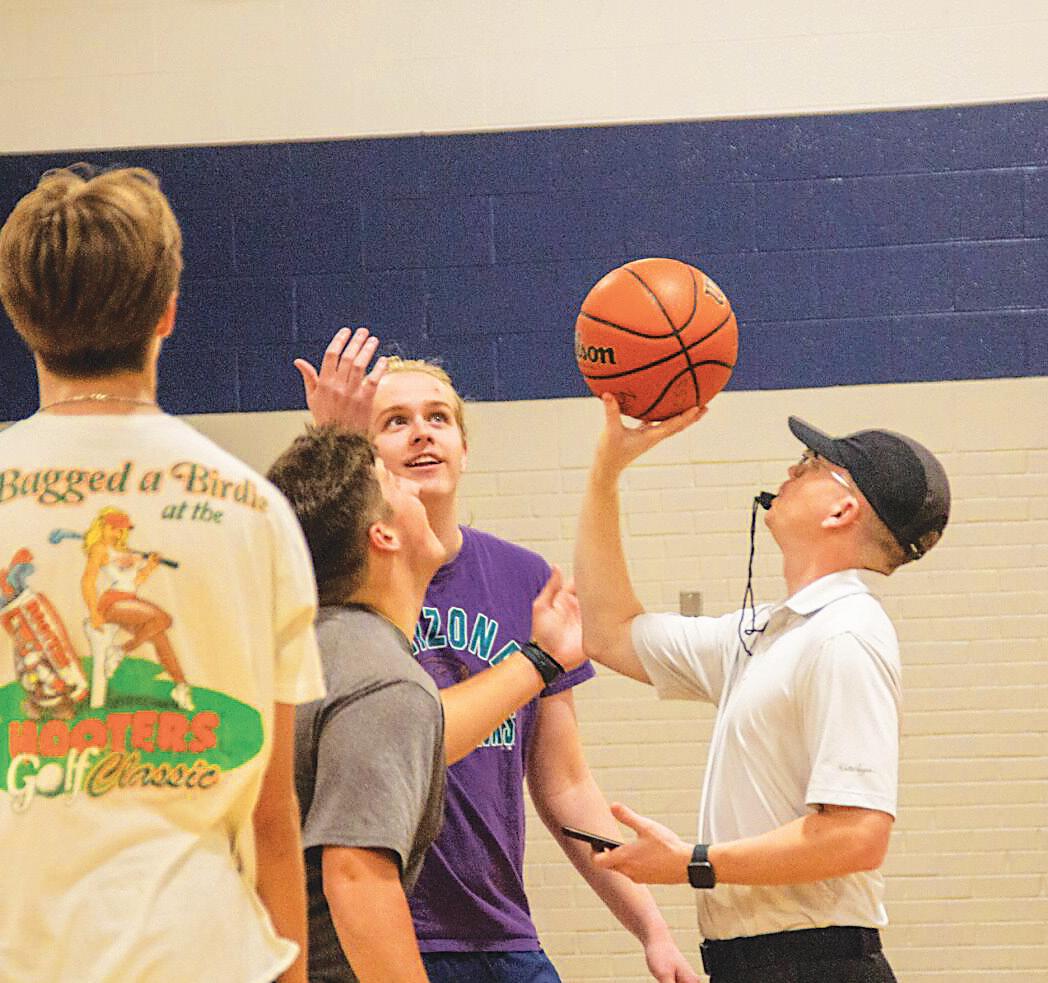
Rose State Campus welcomes back intramural sports to its grounds.
Brevin Senner, Recruitment and Engagement Specialist at Rose State College, has a new focus–bringing back intramural sports.
The newly, faculty-led organization hosted a table at Raider Days, bringing three different sports and seasons.
The last time Rose State provided intramural sports on campus, the events were student-led. Because there was a lull in participation, Senner became motivated to change the model to a faculty-led activity. That decision led to him now being in charge of the organization this year on campus.
Intramural sports were last held in 2022. This event was a Rose State Village coed team. Now intramural sports has manifested as
an entire organization after the five week summer trial. However, there is a big difference in how things looked back then in the program, versus now.
“It's as if it was cycled in and out because of the circumstances of how students are here for only two years,” Senner explained. “As part of my job, I'm making sure they don't have to worry about running the program, they can just participate.”
Many of the clubs at
Rose State are studentled, which sets intramural sports apart. At Raider Days, many students took an interest in the table, which fueled Senner's fire for the program.
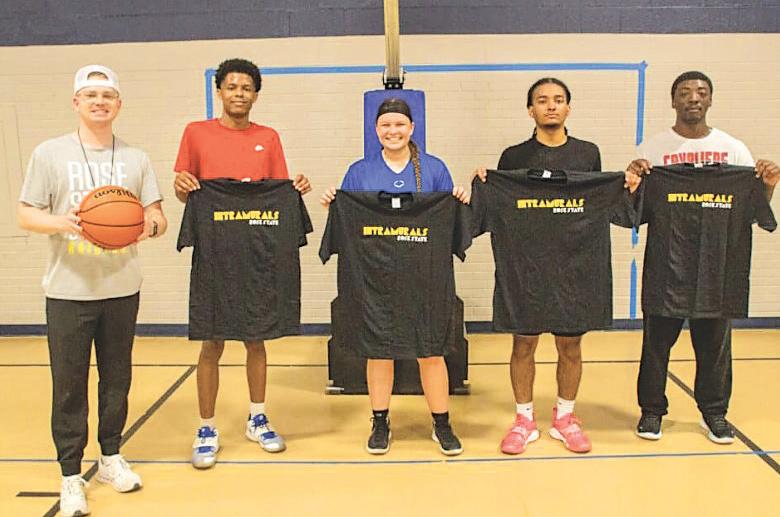
This year there are three sports available on campus: basketball, volleyball and dodgeball. Trinity Streater, a Rose State Alumni, played on the summer basketball team that held somewhat of a
Page 3
Precautions were taken to ensure the bacteria didn't affect anyone on campus, this meant showers were prohibited on campus. (Photo by Pennina Jackson)
Brevin Senner (right) coaching Intramurals summer teams. (Photo provided by Kaitlyn Weldon)
Pennina Jackson
Amour
Photography Editor Reporter
FEATURES
Study Smart, Stress Less, Beat Burnout
For many students, the first week of school can be overwhelming. It’s easy to fall into the trap of feeling overwhelmed when faced with new schedules, assignments and expectations. Now, even though academics are vital, keeping a healthy balance is crucial to prevent burnout.
Creating a realistic routine is one of the best ways for students to achieve balance. Break up tasks into smaller, more manageable sections. For instance, create a focused study session where you take in one piece of the topic at a time. This can help avoid mental exhaustion. Implementing the “Pomodoro technique,” which involves studying for 25 to 30 minutes and taking a 5-minute break, keeps motivation levels high and enables the brain to recharge.
Students should plan time for leisure and fun activities in addition to their studies. These times serve as stress relievers, whether it’s through journaling, working out, listening to music or being outside. Simple exercises that can boost productivity include stretching, deep breathing and taking quick walks in between classes. Students who engage in social activities, like joining a club or interacting with peers, find themselves less alone and adjusting more easily.
Making rest and self-care a priority is equally crucial. Focus and energy levels are directly impacted by getting enough sleep, eating a healthy diet and staying hydrated. When it comes to studying, a rested mind is far more productive than one that is worn out.
Combining productive study techniques with downtime helps students manage their mental health and makes schoolwork much easier. Striking a balance early on helps students perform well in class and enjoy the experience without feeling burned out, as the first week of school truly sets the tone for the semester.
safety measures to keep everyone safe,” Radcliffe said.
determined the findings to be inconclusive due to the tests being conducted prior to updated testing guidance from IWC Innovations.”
As of Sept. 12, Rose State continues to work with officials on the matter by implementing IWC’s updated testing protocols.
"[We] expect to receive more definitive results by Sept. 19, at which time IWC will return to campus to assess the findings and provide recommendations for any additional steps necessary under Rose State College’s water management plan," Jordan said.
Professor Daniel Radcliffe discussed the importance of transparency amid the crisis.
“What matters is that they have been open and honest in keeping people informed about what’s going on while also taking
Students agreed with Radcliffe.
“I learned [about the bacteria] from an announcement on the Canvas homepage; later, I saw it on the news,” said freshman Brooklynn Brown. “I think that Rose State handled it well by draining the water tanks and flushing the bacteria out of the system.”
While students said the campus-wide Canvas announcement was an appropriate way to notify students of the bacteria, some suggested there should have been oncampus posters/signs that informed students and faculty about the situation.
Jordan added that the school’s response would have been much different and would have included medical treatment if a confirmed case had been identified.
However, as of this issue, the situation has been managed through retesting, disinfection and flushing.
"We continue to flush the campus water system regularly, and showers in the Wellness Center remain closed," Jordan said. "There have been no reported illnesses due to Legionella, and the overall health risk remains very low, as Legionella must be aerosolized to pose a risk and primarily affects older adults or individuals with weakened immune systems."
Rose State officials are optimistic about the safety of the campus community because of the measures that have already been put in place and the ongoing monitoring that is occurring.
With both Autumn House, which is not affiliated with Rose State College, and the Rose State campus both being
Letters to the Editor:
The 15th Street News welcomes and encourages letters to the editor. Letters should be a maximum of 300 words and are subject to editing for obscenity, clarity and space. Submissions must include name, major and phone number. 15th Street News reserves the right to not publish submitted letters.
Letters to the editor may be hand-delivered to FA110.
Policies:
The 15th Street News is a designated public forum. Student editors have the authority to make all content decisions without censorship or advance approval. Columns, commentaries and letters to the editor are personal opinions of the writers and do not necessarily reflect the views of 15th Street News or other students, faculty or administrators of the college.
Anyone having a complaint may contact the Editor-in-Chief through, 15thstreetnews@ gmail.com.
15th Street News is a member of OCMA, OPA, ACP, and the Society of Professional Journalists.
This publication is printed by the Edmond Sun, issued by RSC and authorized by the Advisor of Student Publications.
RSC in compliance with Titles VI and VII of the Civil Rights Act of 1964, as amended, Executive Order 11246, as amended, Title IX of the Education Amendments of 1972, Americans with Disabilities Act of 1990 and other federal laws and regulations does not discriminate on the basis of race, color, sex, age, national origin, religion, disability, sexual orientation or status as a veteran in any of its policies, practices or procedures.
This includes, but is not limited to, admissions, employment, financial aid and educational services.
found to have Legionella in the pipes, Midwest City businesses expressed concern with their water supply.
Amber, a manager at the HTeaO location near Rose State, said there was worry that if Legionella was found in Rose State's water supply, it could mean the bacteria might be in Midwest City’s water. However, she said HTeaO filters its water twice with minerals that guarantee purification.
Right now, city officials emphasize remaining cautious, putting health first and making sure that Autumn House and the Rose State campus are secure places for everyone. Legionella symptoms may appear 2–14 days after exposure and include fever, cough, shortness of breath, headache, muscle aches, fatigue and confusion. See a doctor if you are experiencing any of these symptoms.
Staff Members
Editor-in-Chief
Michelle Johnson
Assistant Editor
Shannon Little
Photography Editor
Pennina Jackson
News Editor
Madilyn Drywater
Graphic Artist
Michelle Johnson
Cartoonists
Kiely Elder
D.J. Jensen
Shannon Little
Assignment
Editor
Kalen Sirls
Online Editor
Xander Strickland
Reporters
Amour Ivy
Kelcie Petty
Quentin Couch
Spring Byington
Digital Content & Engagement
Editors
Aleisha Brown
Ilias Bertrand
Student Publications Adviser
Darcy Delaney-Nelson
WATER, from Page 1
Pennina Jackson Photography Editor
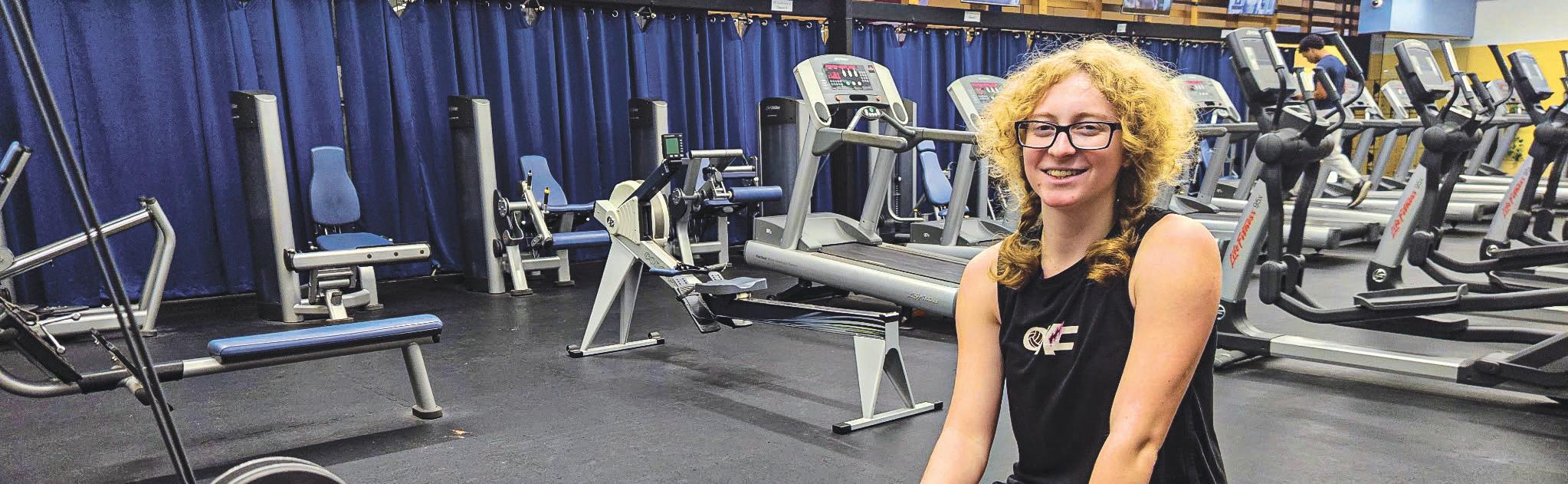
Working out allows the body to produce more dopamine, this can help you stay focused on work. (Photo by Amy Rocha)
LOCAL NEWS
Connecting through Clubs
Kalen Sirls Assignment Editor
As the new semester begins, many students seek a sense of belonging
beyond the classroom. For students wanting to connect to a community of like minded individuals, clubs and extracurricular activities are a great place
“The environment at Rose State is so contagious because of the relationships that are formed through these kinds of clubs. The laughter and authenticity of the community keeps people coming back.”
-Austin Borjas, the Coordinator of Campus Activities and Service Learning
to start. Rose State offers a multitude of clubs that cater to different interests. College can be a difficult experience to navigate, especially as a new student. These clubs and organizations offer a space where students can unapologetically be themselves and meet others to create a strong community around them.
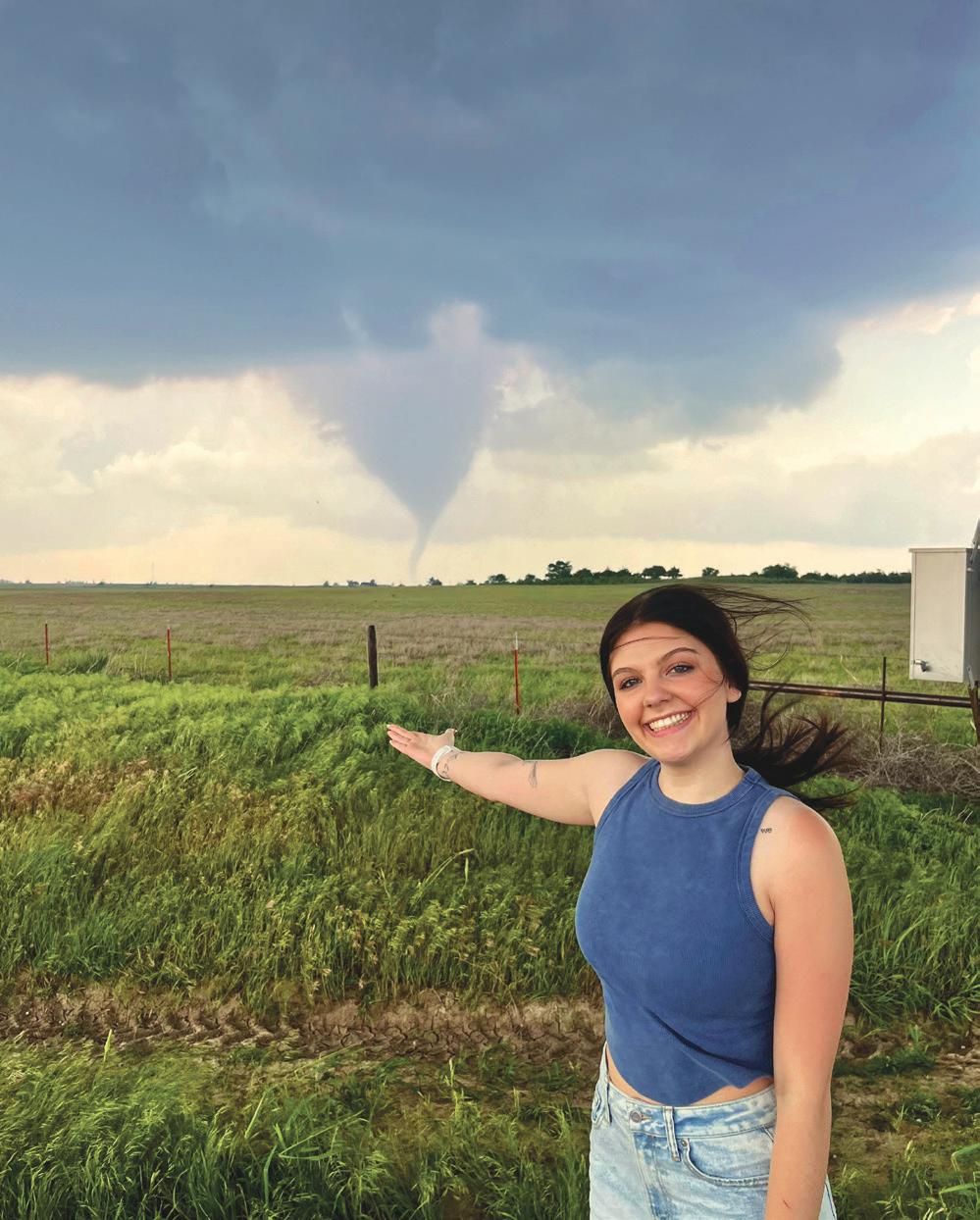
Student led clubs have the ability to cultivate a student’s passion that may not be taught in the classroom and can even be considered niche. One example of a club started on passion is the newly launched Weather Club, founded by sophomore Jayden Garvin. A club on campus that focuses on studying meteorology, Garvin stated that she has had an interest in weather since she was 7 years old and decided to start this club because there was nothing like it available at Rose State.
“Living in Oklahoma is a great place for studying the weather because we truly see it all from tornadoes to extreme heat waves,” Garvin said.
The Weather Club invites students to dive into meteorology, connect with others who share similar curiosities and explore Oklahoma’s famously unpredictable climate.
“If you want to find a community and a fascination for weather, the Weather Club is a great place to start,” Garvin said. Clubs like these SPORTS, from Page 1
trial run before integrating into campus.
“My favorite part about it was meeting new people and they all became my friends. Getting to play basketball, getting to know all of them and getting a little bit of exercise,” Streater says.
It’s also a fun thing for everybody, especially college kids, kind of taking a break from classes and homework, having fun with old friends and new friends.
During the summer, there were 4 games every
Thursday for 5 weeks, and a tournament held at the end. This semester, basketball and volleyball will be 4 weeks and dodgeball 3 weeks. The seasons will be played out one after the other. This will hopefully give students the opportunities to participate in one or multiple sports.
“I think maybe what is lacking from other colleges in organizations, it might just be a job, or it's for service hours that they're helping out. What sets Rose State apart, is the staff members and the students, and how much we love and
highlight the importance of student initiatives in shaping campus culture. Whether students are interested in academics, arts, culture or specific hobbies, Rose State’s organizations serve as a reminder that the college experience is about more than grades—it’s about finding a place to belong. Austin Borjas, the Coordinator of Campus Activities and Service Learning, emphasized the lasting impact of involvement.
“The environment at Rose State is so contagious because of the relationships that are formed through these kinds of clubs. The laughter and authenticity of the community keeps people coming back,” Borjas said.
Borjas mentioned that he is very passionate about student involvement and his actions also align with that statement. He regularly encourages students to support one another, stressing that mutual encouragement is the foundation of success.
“Students are excited about getting involved and they are excited about building relationships, but what they struggle with is follow through,” Borjas said. “You can dream big, but it comes down to participation.”
Ultimately, clubs and organizations are not just extracurricular add-ons— they are an essential part of the college experience. They provide opportunities for leadership, creativity, service and growth, while
also helping students feel connected to campus life. A complete list of all clubs that are offered on campus is provided on the Rose State website under Student Life. Participation is encouraged and everyone is welcome to find a place where they can connect, contribute and belong.
Follow this link below to the clubs and organizations page.

are involved in sports,” Senner explains. It's all about helping the students find a new love, a past love, and keep growing that as it grows into the future.”
Senner is in hopes that more students begin to inquire about the organization. If interested in learning more you can follow up on instagram @ rscintramuralsports, or stop by his office in the student engagement to learn more information about intramural sports.
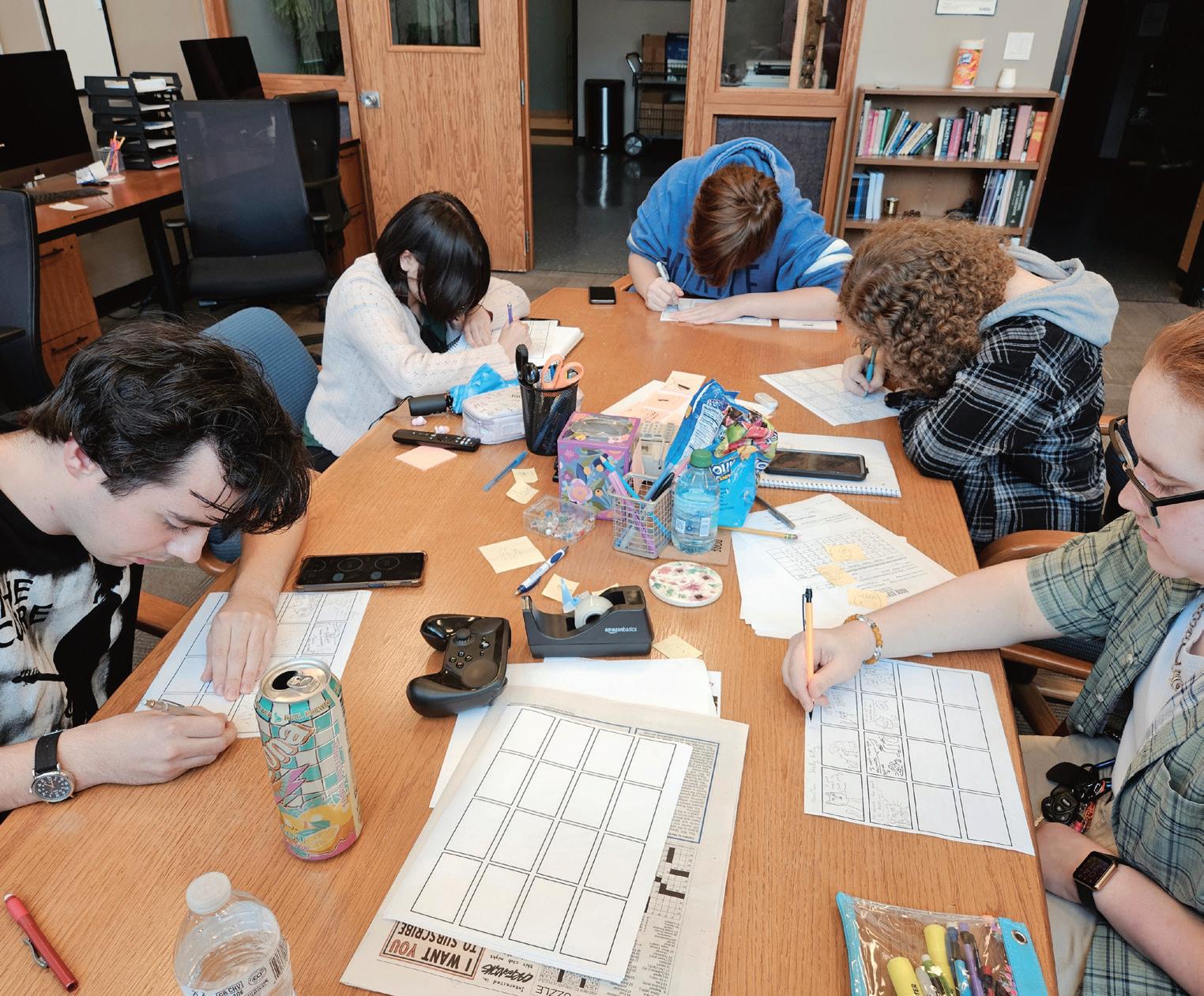
There are a multitude of different clubs one can find on campus, such as the Cartooning Club. They learn, discuss, share and even make comics for the newspaper. (Photo by Michelle Johnson)
Intramurals Championship team 2025 summer league (Photo provided by Kaitlyn Weldon)
Jayden Garvin storm chasing in the fields of Oklahoma. (Photo by Jayden Garvin)
LOCAL NEWS
Online Labs and AI: Maintaining Critical Thinking
“AI is a modern iteration of a tool that you can use to help you see how a problem is solved. Just because the computer is shooting free throws for you, doesn’t mean you’re going to be able to when you sit in front of me or a proctor.”
Xander Strickland Online Editor
Changes to the educational sphere flew in the years after 2020, but one thing remains constant: the need for critical thinking, according to staff and professors at Rose State.
The first version of ChatGPT was released three years ago on Nov. 30, 2022. Developed by OpenAI, ChatGPT is an example of generative language modeling, or more commonly called GenAI. GenAI is distinct from true AI because it functions like the predictive text suggestions in one’s phone, and not as a conscious artificial intelligence.
Examples of GenAI are present today in many facets of life with dozens of interactive chatbots available, providing suggestions on daily productivity, answering questions and discussing hypotheticals.
-Professor Steven Fowler, engineering coordinator
Before the first iteration of ChatGPT was released, many countries around the world were just coming off the first waves of the COVID-19 pandemic. The total number of COVID-19 deaths first began to decline in 2022, according to publicly posted information on the Centers for Disease Control and Prevention’s website. In 2021, the United States reached a record yearly high of over 460,000 deaths where COVID-19 was either an underlying or contributing cause. In 2022, the yearly estimate fell to just under 250,000 deaths.
During the pandemic, people around the world still needed ways to continue their lives while staying protected. Changes were made in education to permit the progression of professional careers without compromising the safety of students, staff and faculty.
One such change was the increase of all-online
coursework. At Rose State College, they offer 100% online courses, FLEX courses which are taken online or in the classroom e and hybrid courses that are partially online.
As time and distance from the pandemic grow, questions regarding the efficacy of online coursework–especially online labs–come into focus. Discussions about online labs highlight techniques that can only be mastered in person.
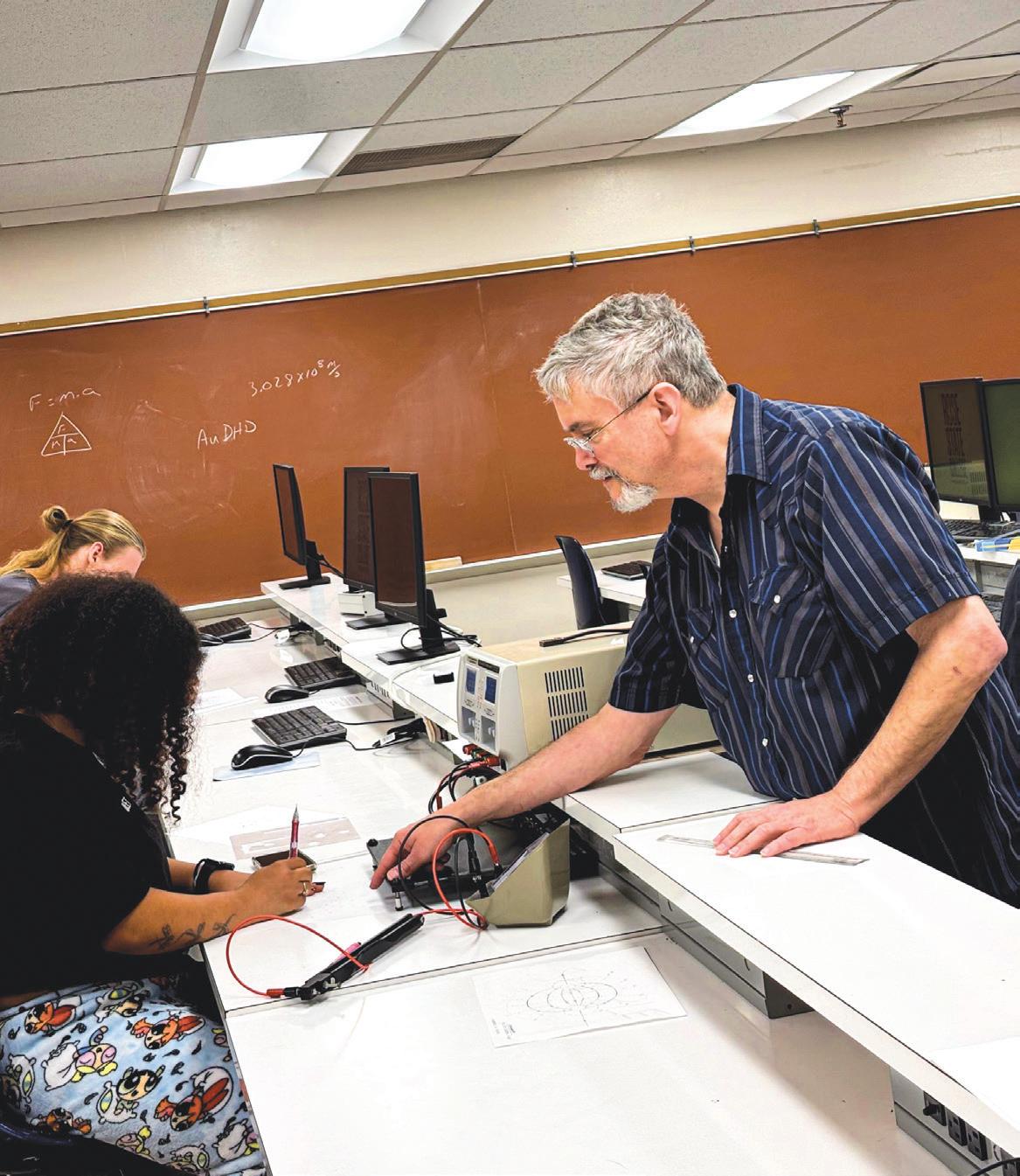
“The core issue is handson experience,” said Professor James Gilbert, physics coordinator at Rose State College. “So-called getting your hands dirty. Measuring something is different from watching me take a measurement.”
Students ask how these technologies can be used as learning tools. According to Professor Steven Fowler, the answer lies in practicing critical thinking skills.
“AI is a modern iteration

of a tool that you can use to help you see how a problem is solved,” he said. “Just because the computer is shooting free throws for you, doesn’t mean you’re going to be able to when you sit in front of me or a proctor.”
Students ask how using ChatGPT will affect how their coursework is graded. Fowler has one solution to identify reliance on GenAI in writing assignments.
“The Generative AI platforms are designed to make things up, like garbage references that don’t exist,” he said. “If you ask it to write for you, you always have to be very careful about that, and you need to put eyes on the original source.”
wouldn’t recommend an online lab. They need to be here in person for the full experience.”
Addressing every new class this semester, Fowler has advice on the use of GenAI.
“Learn, just like any other tool, learn how to use it effectively as a tool. To my colleagues, I would say challenge yourself to figure out how you can use AI to have the students do more than they would be able to do without it,” he said. “The bar is much higher. You can challenge them to do so much more, if your goal is to get them to use AI responsibly. We want to use it as a tool. We want to get them to use it as a tool to do more than they could do without it, like what we do with calculators. At the end of the day, we still need people to be able to think critically and solve problems.”
What are the perspectives of professors and staff members on the subject of online labs, as opposed to hands-on practice?
“There’s pros and cons,” Gilbert said. “For students not pursuing a STEM major, it can be a viable option. It won’t necessarily handicap them in the future. But for someone majoring in physics, chemistry, or biology, I
Gilbert went on to explain, “It’s like watching someone ice skate on TV. You can learn something from it, but it’s not the same as putting the skates on and doing it yourself.”
Rose State College’s resident Lab Support Specialist, Stephen Lynch, had more to add regarding online labs.
“I think any lab really needs to have a handson component,” he said. “You can’t really work with microbes online, in a microbiology lab. You have to experience streaking the plate, looking through a microscope.”
Lynch argued that some courses may benefit from online labs more than others.
“If you have a lab over statistics and it’s all about number crunching, online lab is fine, because you can do that on any computer,” he said. “But in physics, when you’re catching a meter stick or running a pendulum or something like that, it’s hard to do that online and take quantitative data.”
Lynch also considered the pros and cons of using GenAI in the field of environmental science and beyond.
“I believe the pros would be, you can analyze data
faster with generative AI, but will it leave data out and not give you the most qualified answer,” he said. “Sometimes, when you’re looking at data, there are outliers you need to disregard or investigate. No guarantee that generative AI would do that.”
Lynch highlighted that GenAI may lack the critical thinking ability to catch errors.
"It takes a human to look at a graph that doesn't make sense and notice that the axes are mislabeled," he said.
The practice of critical thinking remains a high priority, according to Lynch, Gilbert and Fowler. Flex courses will persist into the future, even as pandemic-spurred flexibility may decline. Whether online, hands-off learning can continue to be a tool for college students remains to be seen.
Lynch asserted that AI is best used as an assisting tool, and until it is refined, it may make mistakes. In its current forms, GenAI is unable to reliably deliver information that is internally consistent. The oversight of an individual capable of thinking critically and making sure the data makes sense is still required.
Stephen Lynch works as a go-between for students and lab instruction as a lab support specialist. (Photo by Pennina Jackson)
Steven Fowler explains the fundamental tank problem to his introductory engineering class. (Photo by Pennina Jackson)












Constitution Week Runs from the 15th-18th Follow @rosestate for more information



-
P.M.
College Foundation Golf Tournament 9 A.M. - 3 P.M. John Conrad Golf Course































'The
Pursuit of
Happyness'
Pennina Jackson Photography Editor
"The Pursuit of Happyness" (2006), starring Will Smith, is among one of most uplifting movies students can watch when they’re feeling overwhelmed by stress. The film masterfully conveys themes of tenacity, resolve and optimism even amid the most dire circumstances. This movie is based on the true story of Chris Gardner. This story follows Gardner, a meek salesperson, who makes an investment in a medical product that doesn’t sell. After his relationship breaks apart, he faces the difficulty of raising his small boy alone. He soon endures financial hardship and he and his son are evicted from their home. Unemployed and homeless, Gardner isn’t giving up. Knowing that only one individual will ultimately be awarded a full-time position, he is able to land an unpaid internship with a prominent brokerage firm. Gardner is resolute in his daily presence, learning and moving forward even though he and his child have slept in shelters and even public restrooms.
This movie’s connection to the difficulties students
'The Queen’s Gambit:' A Book and TV Review
Madilyn Drywater News Editor
"The Queen’s Gambit" is a novel by Walter Tevis, published in 1983. It tells the story of a young girl named Beth Harmon, who becomes a chess prodigy at a young age. She navigates the world as the only girl in competitive class during the cold war era of the '60s, while struggling with substance abuse. Like others, I became intrigued by this book, when "The Queen’s Gambit" TV series came out in 2020. In that same year, "The Queen’s Gambit" became the most streamed limited TV series on Netflix starring Anya Taylor-Joy. As I watched the series, I thoroughly enjoyed the characters, scenery, and overall story. After I finished the series, I began to wonder if I would enjoy the book just as much as the TV series.
encounter such as, academic pressure, future uncertainty or feelings of defeat when things do not go as planned is what makes this story so potent for them. The movie’s moral is clear; perseverance and self-belief can unlock doors that previously seemed unattainable, but success does not come without challenges.
Gardner’s advice to his son, “Never let anybody tell you, you can’t do something,” is among the movie’s most memorable quotes. “Not even myself — you have to protect your dream.” Students find great resonance in this message, which serves as a reminder that while setbacks are temporary, their potential is permanent.
In the end, "The Pursuit of Happyness" forages a strong sense of empowerment rather than sympathy. It demonstrates how adversity can build resilience and how hope and perseverance alter a person’s course in life, even in the face of dire circumstances. This film serves as more than just entertainment for stressedout students; instead, it serves as a reminder to preserve, never give up and never lose hope in their goals.
variations, I found only subtle differences between the book and TV series. One of the main differences between the book and TV series was how Beth looked. Throughout the book, Beth is described as a female with brown hair and unremarkable features, while in the TV series, she is pretty and has red hair. The other differences between the book and TV series did not have any impact on how the story unfolded.
As for similarities, the book and TV series were almost identical in telling the story the book laid out, which is somewhat rare for book-to-movie/ TV series adaptations. Although some, myself included, found "The Queen’s Gambit" TV series to be fascinating and very well-written, some would say otherwise.
As I began to work through "The Queen’s Gambit", I found myself having to watch the TV series again to fully visualize what was happening in the book. The book often discussed various chess moves and variations in detail that I could not grasp until I watched the specific episode of the TV series that covered that chess move or variation. Unlike typical book to show
According to an article published by The New Yorker 100, the author explains how they first read "The Queen’s Gambit" by Walter Tevis, and how as they began to watch the series, they did not recognize Beth's character. The author goes on to explain how they felt loss for the story told in the TV series, citing the main reason being that they felt Joy-Taylor, who plays Beth in the series, was unfit to play the chess prodigy because of her looks.









Another person critiqued the unrealistic recovery Beth has when she is struggling with substance and alcohol abuse, and how this does not really show a realistic perspective on what addicts go through when working toward sobriety. Despite what critics and others say about "The Queen’s Gambit," the TV series helped introduce many into the world of chess.
During the pandemic, many people were looking for something to occupy
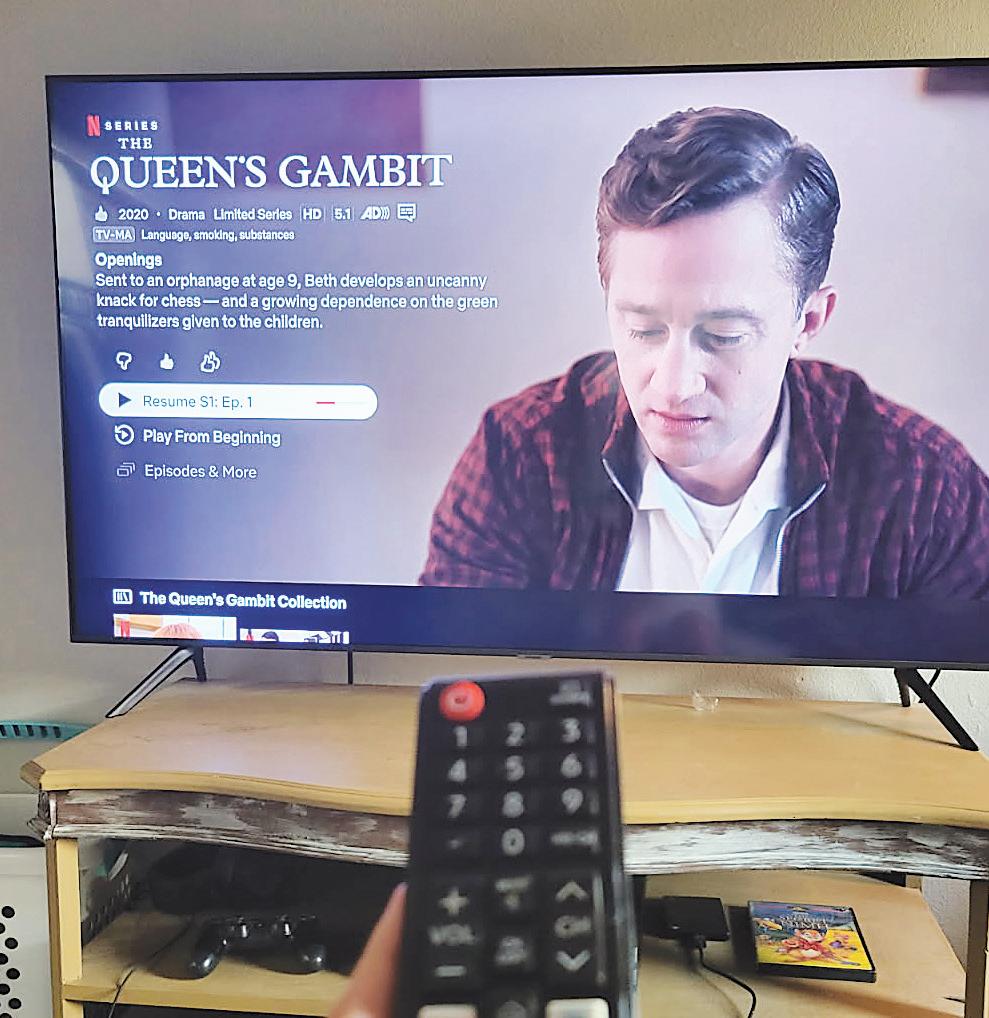


their time spent indoors. Many turned to TV, spending weeks watching the latest show Netflix or Hulu had to offer. When "The Queen’s Gambit" came into the spotlight, people began desiring to play chess due to watching Beth easily beat her opponents.
According to an article published by The Boar, chess sets purchased and sign-ups for chess websites rose significantly with the release of "The Queen’s Gambit." The article discusses the reasons for chess’s rise in popularity. One of these reasons being that it makes chess look fun. The other reason is that "The Queen’s Gambit" tells the story of a girl who was not afraid to be bold, and continued to play competitive chess, despite many in the chess world overlooking her because of her gender.
All in all, I enjoyed both the book and TV series because it told an interesting story. I would recommend this TV series and book to anyone who enjoys stories centered around strong female characters.
Capturing a moment of the Pursuit of Happyness.
(Photo by Pennina Jackson)
The Queen's Gambit was first a book. (Photo by Madilyn Drywater)
"The Queen's Gambit" is currently streaming on Netflix. (Photo by Madilyn Drywater)