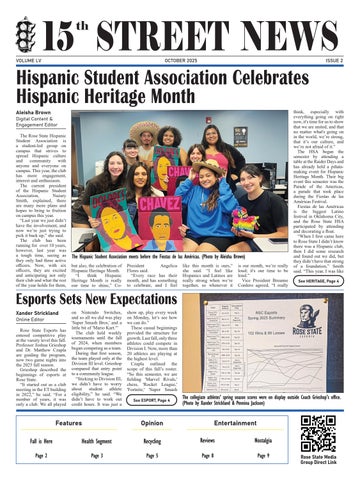

Hispanic Student Association Celebrates Hispanic Heritage Month
The Rose State Hispanic Student Association is a student-led group on campus that strives to spread Hispanic culture and community with anyone and everyone on campus. This year, the club has more engagement, interest and enthusiasm.
The current president of the Hispanic Student Association, Nazary Smith, explained, there are many more plans and hopes to bring to fruition on campus this year.
“Last year we just didn’t have the involvement, and now we’re just trying to pick it back up,” she said.
The club has been running for over 10 years, however, last year was a tough time, seeing as they only had three active officers. Now, with six officers, they are excited and anticipating not only their club and what the rest of the year holds for them,
but also, the celebration of Hispanic Heritage Month.
“I think Hispanic Heritage Month is really our time to shine,” Co-
President Angelica Flores said.
“Every race has their month, and has something to celebrate, and I feel
Esports Sets New Expectations
Xander Strickland Online Editor
Rose State Esports has entered competitive play at the varsity level this fall.
Professor Joshua Grieshop and Dr. Matthew Czapla are guiding the program, now two game nights into the 2025 fall season.
Grieshop described the beginnings of esports at Rose State.
“It started out as a club meeting in the ET building in 2022,” he said. “For a number of years, it was only a club. We all played
on Nintendo Switches, and so all we did was play 'Super Smash Bros,' and a little bit of 'Mario Kart.'”
The club held weekly tournaments until the fall of 2024, when members began competing as a team.
During that first season, the team played only at the Division III level. Grieshop compared that entry point to a community league.
“Sticking to Division III, we didn’t have to worry about student athlete eligibility,” he said. “We didn’t have to work out credit hours. It was just a
show up, play every week on Monday, let’s see how we can do.”
These casual beginnings provided the structure for growth. Last fall, only three athletes could compete in Division I. Now, more than 20 athletes are playing at the highest level.
Czapla outlined the scope of this fall’s roster.
“So this semester, we are fielding 'Marvel Rivals,' chess, 'Rocket League,' 'Fortnite,' 'Super Smash
like this month is ours,” she said. “I feel like Hispanics and Latinos are really strong when we’re together, so whenever it
is our month, we’re really loud; it's our time to be loud.”
Vice President Breanne Cordero agreed, “I really
think, especially with everything going on right now, it's time for us to show that we are united, and that no matter what's going on in the world, we’re strong, that it’s our culture, and we’re not afraid of it.”
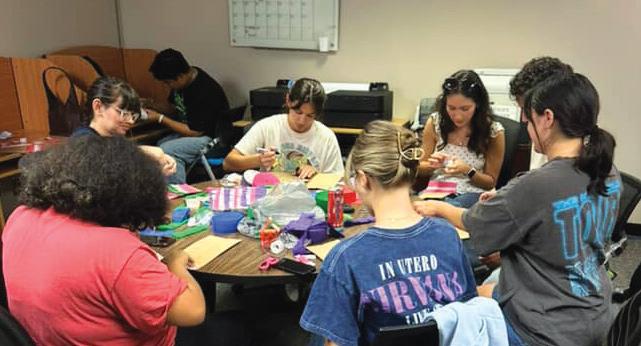
The HSA began the semester by attending a table at the Raider Days and has already held a piñatamaking event for Hispanic Heritage Month. Their big event this semester was the Parade of the Americas, a parade that took place during the Fiestas de las Américas Festival.
Fiestas de las Américas is the biggest Latino festival in Oklahoma City, and the Rose State HSA participated by attending and decorating a float.
“When I first came here to Rose State I didn’t know there was a Hispanic club, then I did some research and found out we did, but they didn’t have that strong of a foundation,” Smith said. “This year, I was like
See HERITAGE, Page 4
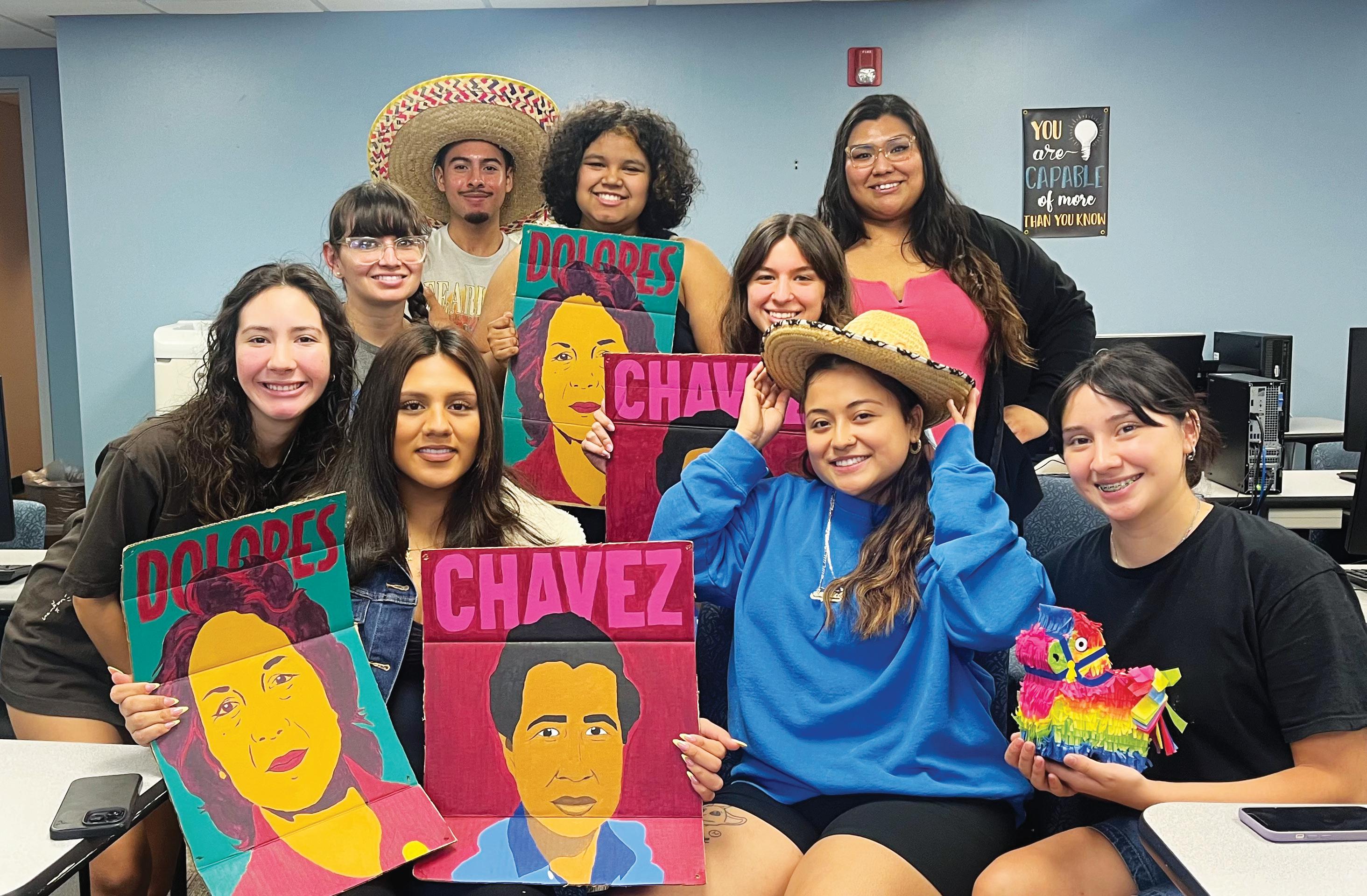
The Hispanic Student Association meets before the Fiestas de las Américas. (Photo by Aleisha Brown)
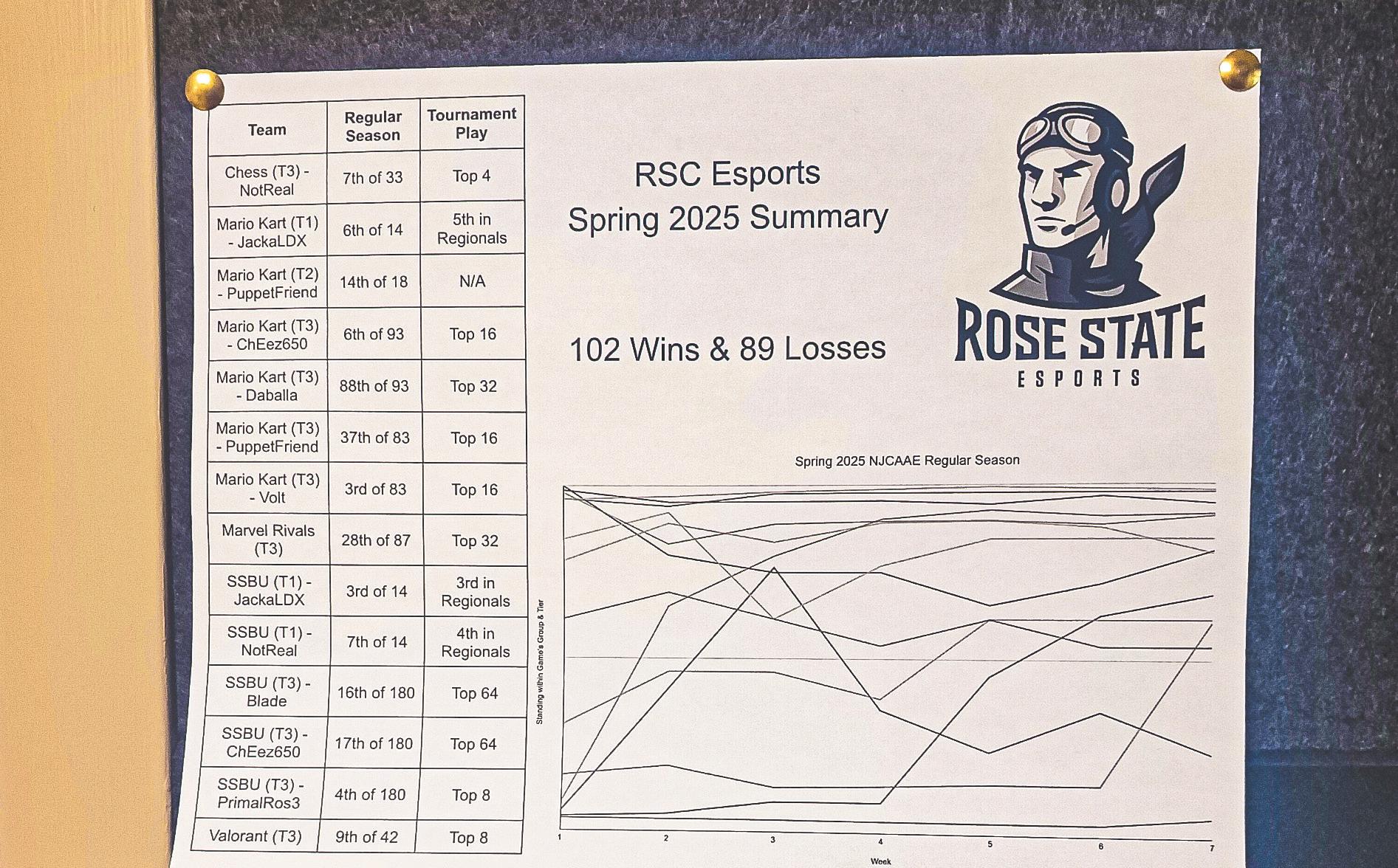
The collegiate athletes' spring season scores were on display outside Coach Grieshop's office. (Photo by Xander Strickland & Pennina Jackson)
Aleisha Brown
Engagement Editor
Falling Into the New Season
Kalen Sirls Assignment Editor
As the heat of the summer fades, cool breezes usher in the start of the fall season. When the leaves begin to fall from trees and change from green to yellow and orange, the energy on campus begins to shift. You can find students walking around campus with their favorite warm drink in hand and wearing their favorite sweaters that have been locked away in their closets. The start of fall also signals the beginning of the holiday season.
The summer heat has overstayed its welcome but the change isn’t just about the weather; it’s about the mood. When the sun starts setting earlier and the breeze picks up, campus life takes on a quieter, cozier rhythm. People pause to sit on benches under the changing trees or take the long way to class just to walk through piles of leaves. Even the most familiar spots—a courtyard, a library window, the steps of an old building—look different when they’re framed by
orange leaves and golden light.

Inside, the atmosphere shifts too. The library feels warmer, more inviting. Study corners fill up with students tucked into sweatshirts, laptops glowing, headphones on and papers spread across tables. Campus cafés smell like cinnamon and caramel now, with seasonal drinks filling the air with sweet spice. Late afternoons seem to invite people to stay a little longer, sipping something warm while finishing assignments or just catching up with friends.
“I really like the feeling that fall brings overall on campus,” said Genesis Coleman, a freshman.
“Things are calmer and people are getting excited for the holidays. Also, I get to finally wear all of my sweaters in my closet that I haven’t touched in so long.”
That calm also brings a little nostalgia. The approach of the holiday season is in the air—

decorations starting to pop up in dorm windows, talk of fall break plans buzzing in hallways. For many students, it’s a reminder of home: the smell of baking, family dinners and cozy nights in watching comfort movies and shows.
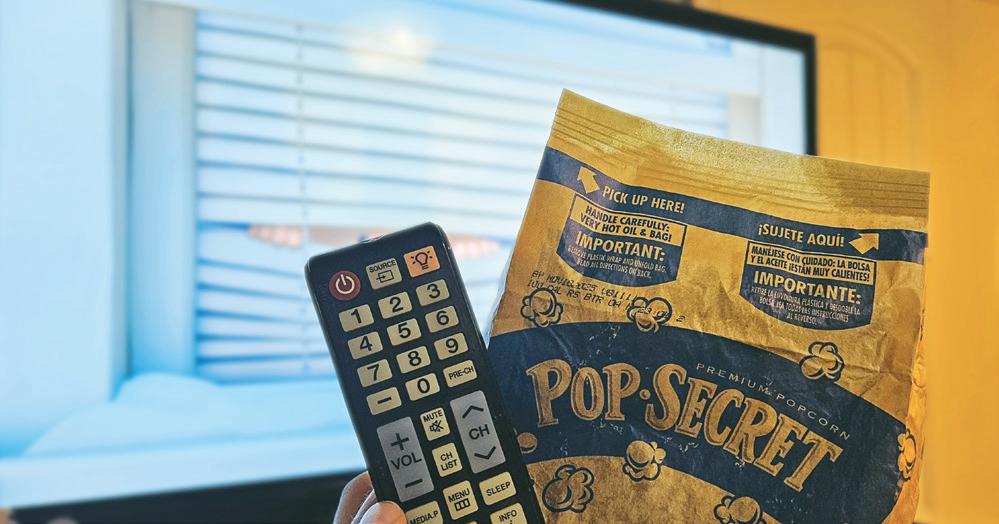
“Monster House is one of my favorite movies that gets me into the fall and Halloween spirit. I don’t really dress up for Halloween anymore so watching movies like that really get me in the mood for the holidays,” said Freshman Cynthia Valdiviezo.
Even the weather itself seems to shape daily routines. Mornings are cool
enough for a quick walk before class, and evenings make indoor time feel welcoming instead of stuffy. The crisp air brings a sense of relief after months of heat, like a reset button on the semester.
Fall on campus is more than a season—it’s a mood, a shift you can feel as soon as you step outside. Whether it’s crunching through leaves on your way to class, sipping a pumpkin latte in the library or just enjoying the cool air after a long lecture, autumn gives students a chance to slow down, settle in and savor the small moments.
Letters to the Editor:
The 15th Street News welcomes and encourages letters to the editor. Letters should be a maximum of 300 words and are subject to editing for obscenity, clarity and space. Submissions must include name, major and phone number. 15th Street News reserves the right to not publish submitted letters.
Letters to the editor may be hand-delivered to FA110.
Policies:
The 15th Street News is a designated public forum. Student editors have the authority to make all content decisions without censorship or advance approval. Columns, commentaries and letters to the editor are personal opinions of the writers and do not necessarily reflect the views of 15th Street News or other students, faculty or administrators of the college.
Anyone having a complaint may contact the Editor-in-Chief through, 15thstreetnews@ gmail.com.
15th Street News is a member of OCMA, OPA, ACP, and the Society of Professional Journalists.
This publication is printed by the Edmond Sun, issued by RSC and authorized by the Advisor of Student Publications.
RSC in compliance with Titles VI and VII of the Civil Rights Act of 1964, as amended, Executive Order 11246, as amended, Title IX of the Education Amendments of 1972, Americans with Disabilities Act of 1990 and other federal laws and regulations does not discriminate on the basis of race, color, sex, age, national origin, religion, disability, sexual orientation or status as a veteran in any of its policies, practices or procedures.
This includes, but is not limited to, admissions, employment, financial aid and educational services.
Staff Members
Editor-in-Chief & Graphic Design
Michelle Johnson
Assistant Editor
Shannon Little
Photography
Editor
Pennina Jackson
News Editor
Madilyn Drywater
Assignment
Editor
Kalen Sirls
Online Editor
Xander Strickland
Cartoonists
Shannon Little
D.J. Jensen
Reporters
Spring Byington
Quentin Couch
Amour Ivy
Kelcie Petty
Bailee Whorton
Digital Content & Engagement
Editors
Aleisha Brown
Ilias Bertrand
Student Publications Adviser
Darcy Delaney-Nelson
Sunflowers bloom in late summer marking the transition into fall. (Photo by Michelle Johnson)
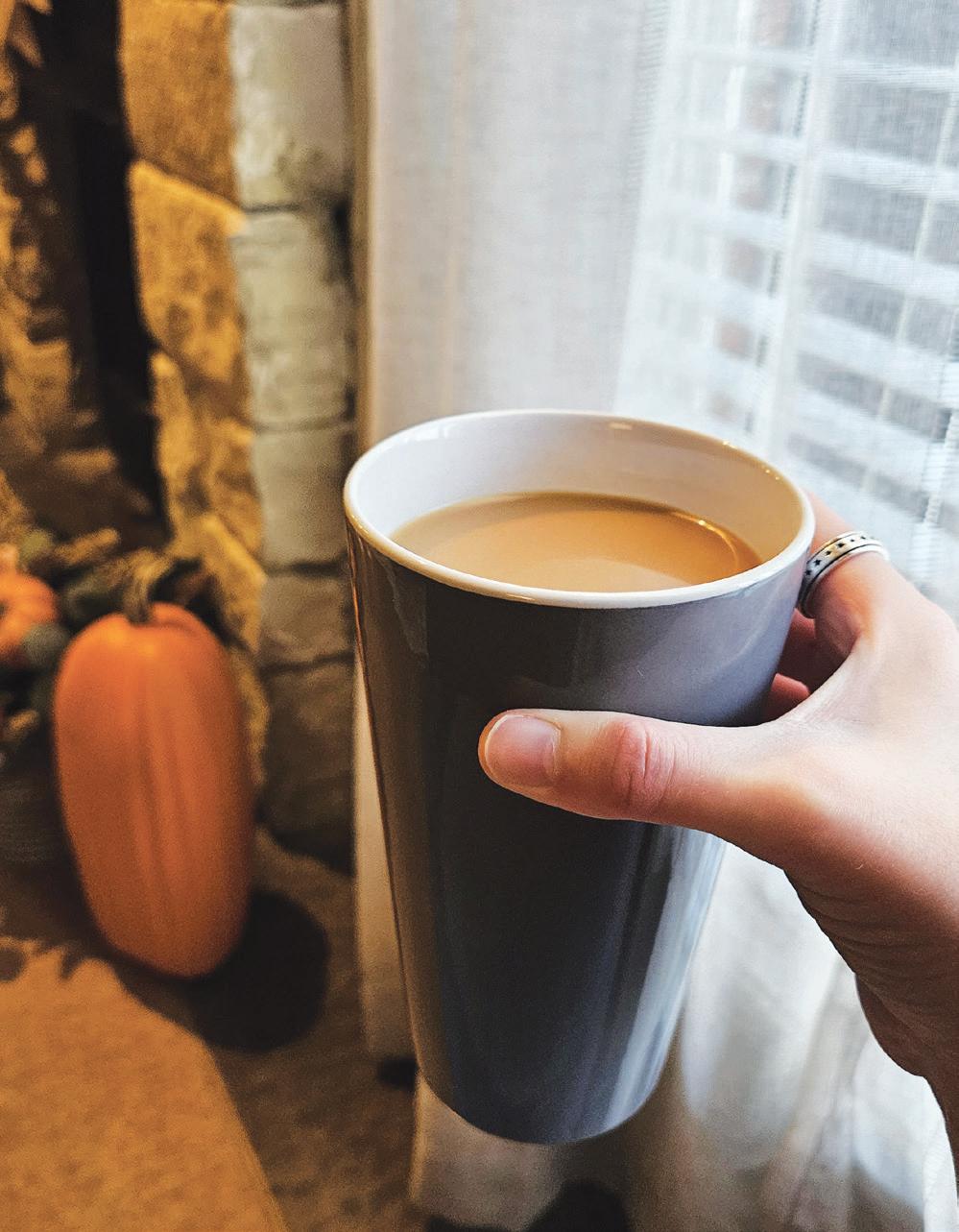
A warm cup of coffee is a great way to start the day. (Photo by Michelle Johnson)
HEALTH Reaching Peak Athleticism Vitamin C: The Essential Nutrient with Timeless Benefits
“Things like proper nutrition, healthy sleep habits and personal fitness all have a big impact on an athlete's performance.”
-Coach Matthew Czapla
Quentin Couch Reporter
Athletes whether it’s volleyball, esports, soccer, softball, baseball and many more, all have one thing in common. It’s the fact that they are all pushing to be the best at their respective sport. However, there is a difference between trying to be the best at a sport, and adopting a healthy lifestyle that allows your body to compete at the highest level.
To go more in depth, there are two ways to describe the way an athlete can help themselves compete to the best of their ability. You can describe it as technical and nontechnical. Technical is the way they practice in their respective sport.
So, like how a baseball player perfects their swinging stance to be able to have the best shot at hitting the ball, or a volleyball player practices their serves to make sure they hit it across the net as much as possible.
Non-technical is your eating, sleep and workout habits that help your body perform to its best ability.
Technical learning is the first thing you do when you first start playing sports growing up, as you don’t really lean into anything else other than learning the sport itself. Although in most sports growing up you’ll have practices where you’re running or you’ll have your coach remind you to drink plenty of water.
This is overall a great thing to do when you first start playing sports, as you’re getting your body into good shape. But really, you aren’t able to reach your peak form at this time
themselves as well.”
Non-technical learning can start at most stages in life. It not only helps with your body relating to sports, but it can help you feel better overall.
of your life, so being able to understand the sport from a young age and learn all of the technical things of what sport you play is going to set you apart from the rest.
Contrary to what was stated earlier, there are instances of amazing athletes learning a sport when they are in their late teens and going on to play professionally. Although this is a minority with the right coaches and opportunity, anyone can become great.
“So for the sports that I have played, the technical things that I have worked on is, passing, spiking, shooting and being watchful to the situations and surroundings, handeye coordination, breathing as well,” said Samantha Walker, a Criminal Justice major at Rose State College. “It makes you better because it keeps me in shape and it helps with communication skills and the better you are on your team the more people try to push to become better
Just as an example two of the best athletes in their respective sport LeBron James and Chris Paul have very strict eating, sleep and workout habits.
Even if you aren’t a professional athlete, you want to be doing all of these things to improve your body.
“Things like proper nutrition, healthy sleep habits and personal fitness all have a big impact on an athlete's performance,” Dr. Matthew Czapla, the coach for Rose State Esports said. But as an athlete, you have to take all of those things to the next level because if you don't, not only will you limit your body but you’ll limit the potential of your technical abilities as well.
Overall, technical and non-technical attributes go hand and hand with each other. But to be the best athlete possible you have to be willing to work on both of these attributes equally. The best athletes in the world strive not only to be the best physically but also the best mentally to be able to compete at the highest level.
Pennina Jackson Photography Editor
Most people immediately picture a glass of orange juice or another citrus fruit when they think of vitamin C. This vital nutrient has long been praised as a defense against colds, an immune system booster and an important component of general health. However, ascorbic acid, another name for vitamin C, is much more than just a common cure for sniffles. This super vitamin is essential to human health, helping with everything from wound healing to cellular defense.
The human body is unable to synthesize vitamin C on its own, unlike many other animals. This implies that our daily demands are fully met by our diet. Now, according to the National Institutes of Health, the recommended dietary amount (RDA) for adults is around 90 milligrams for men and 75 milligrams for women. That might not seem like much, but it’s important because those who do not get enough vitamin C face the risk of getting scurvy. It was a notorious sailor’s sickness that made lengthy sea trips more exhausting and caused weakness and bleeding gums.
Scurvy is not the most common disease these days, but vitamin C deficiency is still a problem. This is for those especially with poor diets, certain medical problems or restricted access to fresh food.
It’s not simply a myth that vitamin C boosts immunity. According to research by the National Library of Medicine, vitamin C promotes the development and functionality of white blood cells. This aids in the body’s defense against
Where to Look for It

illnesses. Additionally, it strengthens skin barriers, which helps keep viruses out of the body in the first place. Although taking vitamin C supplements won’t make you avoid getting a cold, research indicates that taking them on a daily basis may help to lessen the severity. It also helps shorten the duration of respiratory infections. Now, vitamin C has many advantages outside of the immune system. Its antioxidant properties, which neutralize free radicals that can harm cells and cause chronic illnesses, like cancer and heart disease, are among its most effective functions. Vitamin C is a team player in cellular defense because of this antioxidant function, which also aids in the regeneration of other antioxidants like vitamin E.
According to the National Library of Medicine, Vitamin C is also necessary for the synthesis of collagen. The protein collagen is responsible for the formation of connective tissue in bones, cartilage, blood vessels and skin. The body finds it difficult to keep blood vessels robust, heal wounds, and
maintain healthy skin when vitamin C levels are low. For this reason, it is frequently used in topical serums intended to brighten complexion and lessen aging symptoms in the beauty industry.
The role of vitamin C in preventing heart disease continues to be studied. Vitamin C may help prevent heart disease by decreasing oxidative stress, enhancing endothelial function (the condition of blood vessel linings), and lowering blood pressure in certain people.
In the meanwhile, researchers are looking into how it affects brain function. The brain is particularly susceptible to oxidative injury because of its high metabolic rate. Although further research is required to demonstrate its significance in preventing neurodegenerative diseases like Alzheimer's disease, vitamin C's antioxidant qualities may preserve neurons and perhaps promote neurotransmitter function.
Although they are not the only fruits, citrus fruits like oranges, grapefruits and lemons are traditional sources of vitamin C. Brussels sprouts, broccoli, kiwis, strawberries and bell peppers often contain even greater levels per serving. Supplements are easily accessible and usually regarded as safe when taken at approved dosages for people who find it difficult to obtain enough through diet alone. Moderation is important, though. For certain people, high vitamin C intakes (more than 2,000 mg daily) might cause kidney stones and other digestive problems like diarrhea. The best way to meet daily requirements, according to health experts, is through dietary sources.
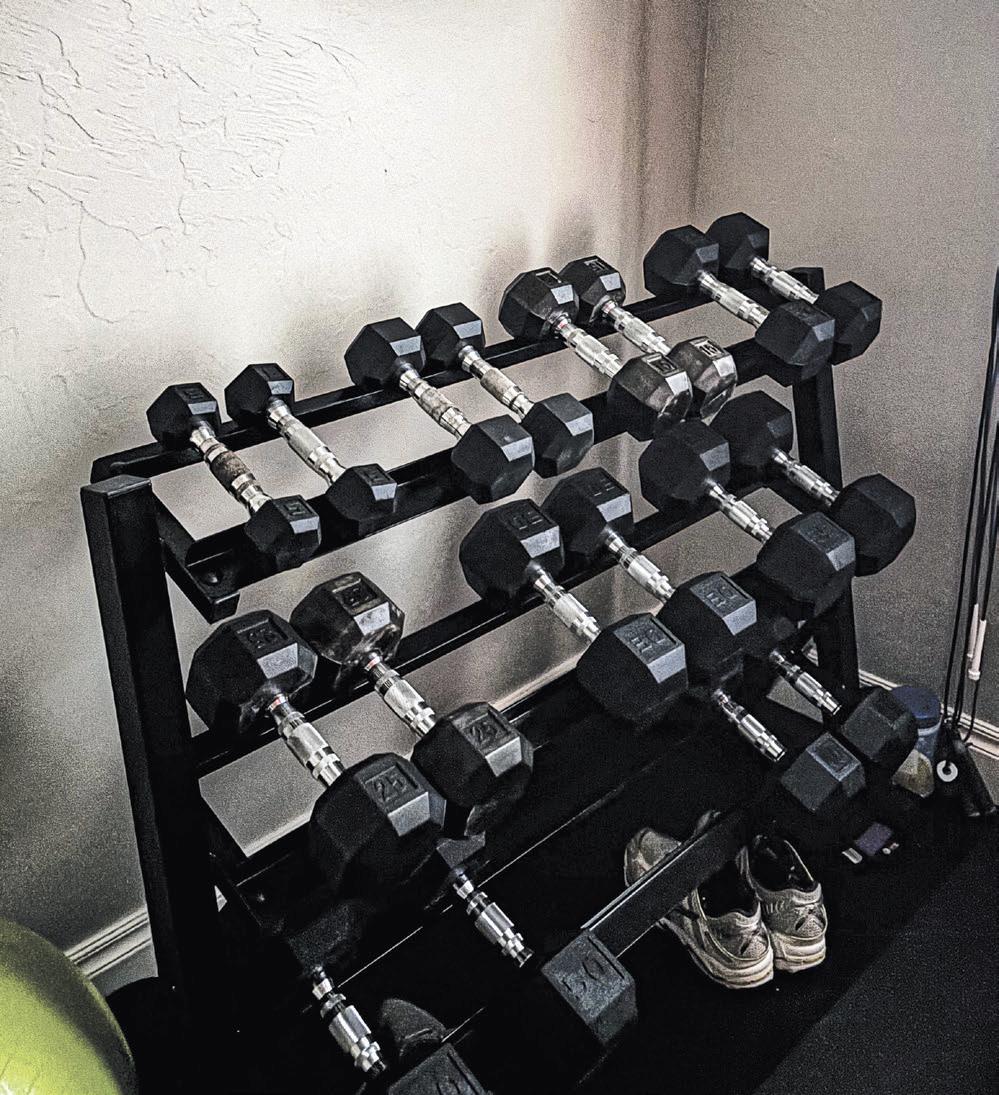
Ensure you are doing the right exercises. It is important to prevent injury. (Photo by Pennina Jackson)
Orange juice is a good source of vitamin C. (Photo by Pennina Jackson)
How Rose State College Shaped the Oklahoma City Metro
Bailee Whorton Reporter
Rose State College, once a modest institution with a single building and a handful of students, has grown to become a cornerstone of the Oklahoma City metro area. Initially founded as Oscar Rose Junior College in 1970, its history reflects a deep commitment to meeting the evolving educational, economic, and community needs of its surrounding areas. From its humble beginnings, Rose State has steadily developed into an educational institution that not only trains students but also actively contributes to the local economy, workforce, and community outreach.
In 1968, citizens of Midwest City, Del City and Eastern Oklahoma City voted to create what was then known as MidDel Junior College. The school officially opened its doors in 1970 with only one building and a handful of students. In 1971, the college was renamed Oscar Rose Junior College in honor of the late Oscar Rose, a prominent local school superintendent. Its mission was simple but powerful: to provide accessible and affordable education to
local residents.
The institution quickly became known for its community-focused approach, providing practical, hands-on learning opportunities that directly benefited the region. The school’s reputation for affordability and quality education attracted students from across the Oklahoma City metro area, further solidifying its role as a crucial community asset.
The 1980s marked a significant period of growth for the institution. In April 1983, the name was officially changed to Rose State College, signaling a broader scope and an evolving commitment to serve the community.
Over the years, the campus expanded from a single building to a sprawling 22-building complex, introducing a diverse range of programs designed to meet the workforce needs of the Oklahoma City metro area. This physical growth also symbolized its increasing influence in local workforce development and community support. By offering courses in emerging fields like technology, healthcare and business, Rose State positioned itself as a leader in job readiness and career development.
One of Rose State’s
defining features has been its focus on workforce development. By partnering with Tinker Air Force Base, one of the region's largest employers, the college established programs aimed at equipping both civilian and military personnel with the skills needed for the aerospace industry. This partnership not only enhanced educational opportunities for service members but also strengthened the local economy.
Through specialized training programs and targeted educational pathways, Rose State prepared countless students for critical roles in defense and technology sectors. Additionally, Rose State’s emphasis on handson learning meant students were gaining practical experience alongside theoretical knowledge, making them job-ready upon graduation.
According to Chris Shaneyfelt, an academic advisor for the Humanities Department who has been with Rose State since 2005, the college’s growth is evident not only in its physical expansion but in its embrace of modern learning methods.
“When I started, we didn’t have online classes,” Shaneyfelt recalls. “Now there’s a large student
population that needs those classes. The campus has transformed significantly with the addition of modern facilities like the Student Union, the Learning Resource Center, the Tanenbaum Center and expanded Health Sciences programs. The introduction of a bachelor's degree in Cyber Security also marked a new chapter in its academic offerings.”
Despite these advancements, Shaneyfelt emphasizes that Rose State remains a closeknit community.
“It still feels like family. The connections here are real and lasting,” he said.
This sense of community has become one of Rose State’s defining characteristics, contributing to high student retention rates and strong alumni engagement. Many former students return to campus for community events, workshops and reunions, maintaining their connection long after graduation.
The college’s influence extends far beyond its academic programs. Through initiatives like small business advising, professional training courses, and lifelong learning programs, Rose State has become a pillar of community support. Its Communication Center, established in 1998, provided a venue
“The sense of community at Rose State is unmatched. It’s not just about the classes; it’s about the people who support you along the way.”
-Addie Wilson, Rose State Alumna
for the arts and cultural events, while the Health Sciences Annex, built in 2001, became a hub for healthcare education fields critical to local economic stability. These facilities not only enhanced educational opportunities but also served as community gathering points, reinforcing Rose State’s role as a cultural and educational hub. The campus frequently hosts public events, including theater productions, concerts and community fairs that bring local residents together.
For alumni like Anna Shaw and Addie Wilson, Rose State was more than just a stepping stone; it was a launchpad for personal and professional growth. Shaw and Wilson both transferred to Southwestern Oklahoma State University to continue their education.
Shaw credits Rose State’s supportive environment for helping her find her path.
“Rose State gave me the tools I needed to succeed, but more importantly, it gave me confidence,” she said.
Wilson echoed this sentiment, emphasizing the college's lasting impact on her academic journey.
“The sense of community at Rose State is unmatched. It’s not just about the classes; it’s about the people who support you along the way.”
Both Shaw and Wilson expressed gratitude for the mentorship and guidance they received from faculty and staff, which they say made their transition to a four-year university much smoother.
Laci Rohr, an alumna who now teaches at Take a Bow Dance Studio, recalls how her time at Rose State prepared her not only academically but also socially.
“You’re part of something bigger here, but
it still feels personal. I still stay connected with people I met in my first year,” Rohr shared.
Her experience reflects the strong community bonds that Rose State fosters, which many alumni carry with them long after graduation. Rohr noted that the relationships she built with faculty were crucial to her confidence in pursuing her passion for teaching dance. As Rose State College looks to the future, its commitment to the community remains steadfast. With continued investments in infrastructure, technology and academic programs, the college is poised to meet the evolving needs of its students and the Oklahoma City metro area. Its partnerships with local businesses and industries ensure that Rose State remains a key player in workforce development and economic growth. New projects and community initiatives are constantly being introduced to keep up with the demands of a growing and changing population. From its beginnings as a one-building junior college to its current status as a leader in community education, Rose State College’s legacy of growth and community impact is undeniable. As it prepares for the next chapter, its mission to provide accessible education and foster community connections remains at the heart of its success. Looking ahead, the college’s commitment to innovation, community service, and student success promises to further solidify its role as a cornerstone of the Oklahoma City metro area for generations to come.
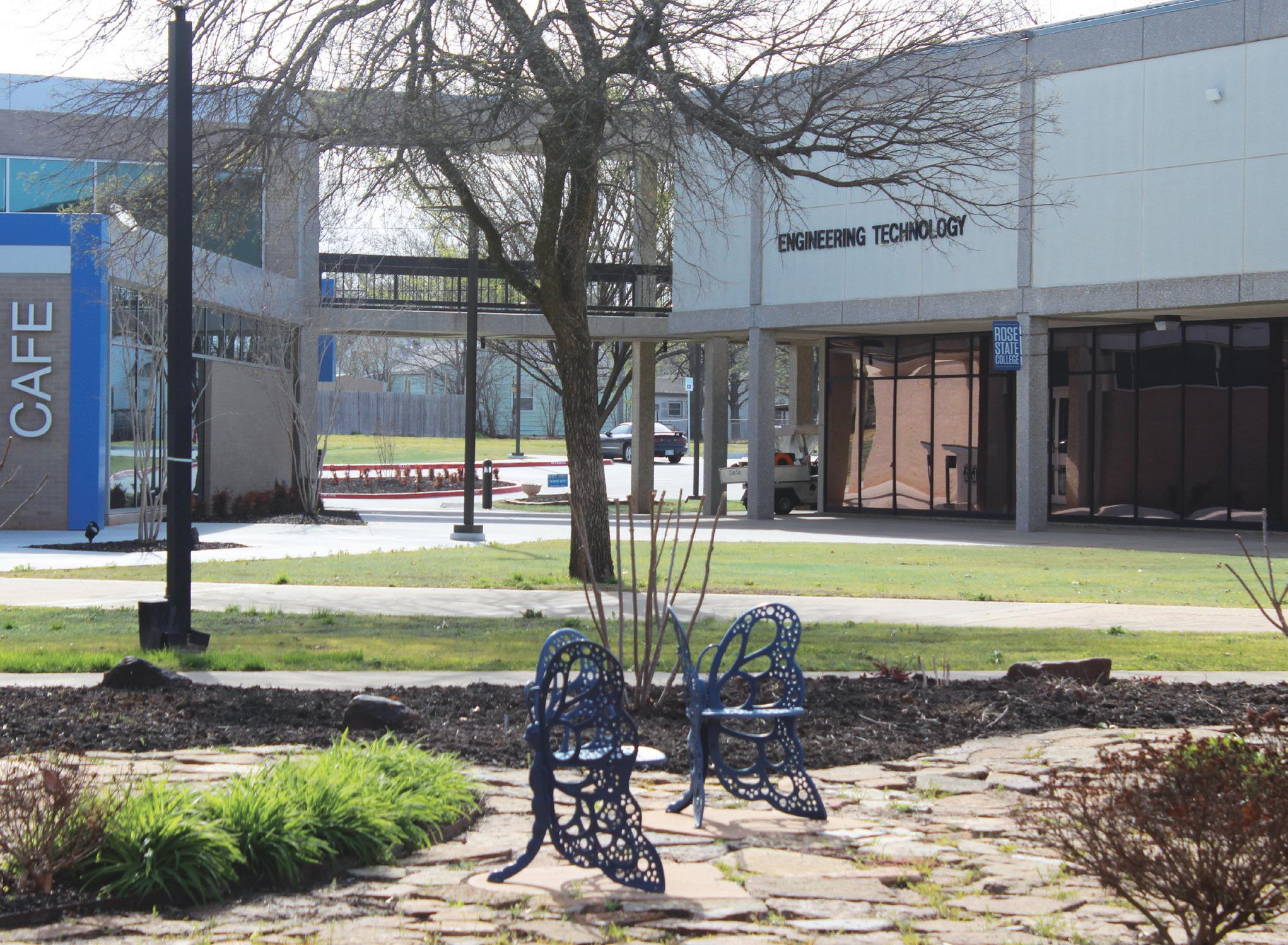
Rose State is located less than 15 minutes from downtown Oklahoma City. (Photo by Ariel Bryant)
Reduce, Reuse, Recycle, Rose State OPINION & LOCAL NEWS
Should Rose State implement more green initiatives in its campus?

Spring Byington Reporter
At the end of each semester, students and teachers alike are left with piles of notes and papers that eventually get forgotten about or thrown away. College campuses throughout the United States produce hundreds of pounds of solid waste every year. Rose State College previously engaged in more ecofriendly practices, like recycling. Maybe it is about time for us to bring that back.
Starting small would be ideal; the faculty and staff in
lets do something, lets get it popping again. We have a strong community, and that's what this club is all about.”
Smith said the club is open to Hispanics and nonHispanics alike.
“People think they have to be Hispanic to join, but I always say you do not have to be Hispanic; we want you to come and join the fiesta,” Smith said.
The HSA, along with their festival planning, have
every division of Rose State College use an exceptional amount of paper, for instance. Placing paper bins in offices throughout the school would make a dramatic change in the amount of waste that leaves our campus.
On average, untreated paper typically takes anywhere from two to six weeks to decompose in ideal conditions. However, coated or laminated papers, like those used in magazines, can range anywhere from several months and even years to properly decompose.
Rose State College is a growing school, and it
plans to create Boo Baskets this month, a potluck in November around Thanksgiving, and to sell hotplates to fundraise.
The Hispanic Student Association holds meetings every week for all members, in the upstairs computer room in the Campus Resource Center. The club is open to every Rose State student. You can reach out via their Instagram, @rosestatehsa.
would be a good initiative to implement these practices to keep up with larger schools in our area. The University of Oklahoma, the University of Central Oklahoma and Oklahoma State University all have recycling on their campuses, which shows a growing commitment to sustainability. If Rose State chose to engage in more ecofriendly practices, it would enhance our reputation as a sustainable institution.
“Recycling can educate people and help encourage responsible waste management and that becoming a recycling campus can be one more step toward making us a better
campus,” said Jazmyne Boyles-Vance, an academic advisor at Rose State.
Not only can implementing recycling on our campus enhance our reputation, but it can teach people the importance of waste management and help improve the environment.
“Having recycling on campus can help the environment,” said Angelica Flores, a student at Rose State. “One reason why is because colleges produce a large amount of waste, and adding recycling will help keep this waste from ending up in landfills, which can help prevent water and air pollution. Secondly,
educating students on the importance of recycling can bring the community on campus together. This will create a habit that is lifelong and can help them create the type of environment they want to live in for the long run.”
Overconsumption and waste reduction have been the talk of the town for Americans in more recent years, and college campuses are in the top 3 for producing a good portion of that waste.
Recycling on campus has more benefits, but there are cons that come with said benefits. Due to the amount of waste campuses produce, like paper, food, disposable cutlery and plates, it would not be cost-effective to attempt to recycle it all.
However, reducing, reusing and recycling would cause a good portion of waste to no longer be placed in landfills, which would inevitably decrease pollution. Overconsumption of food and food waste is a big problem across college campuses throughout the country too. There are thousands of entities that have their own garden to grow food, which is later used in the cafeteria. Agriculture programs teach students about farming and cattle ranching, which is a benefit for the campus as well. This does not need to happen overnight, but a paper bin would be a good start.
ESPORTS, from Page 1
Brothers. Ultimate,' 'Valorant' and 'Mario Kart 8,'” he said.
Game selection is shaped by student interest.
“It starts as a poll; what games do people want to play. Then tryouts, then from that they figure out which kinds of teams they could field successfully,” Czapla said.
Divisions of play are set in three tiers.
Division I is varsity level competition, Division II is intermediate and Division III only requires membership in the Rose State community.
Czapla noted the shift in participation. “This semester, we are entirely Rose State students. Our goal as a program is to move as much towards a Division I as we can, because that's varsity level, right? And we want to be playing at that high level. I think that's what the athletes and the competitors want to see, is the highest level gameplay they can be seen,” he said. Most of the current roster now competes in Division I. Czapla laid out the expectations for varsity play. “The expectations are much higher,” he said. “The athletes are required to have exercise hours per week. They're required to attend study hall. They’re required to practice for the games they're competing in. Outside of that, these are all new expectations that we have for them. So with that being said, because the expectations are higher for them, for everything, these athletes are working their butts off.”
Scholarships are not yet tied to varsity participation. The program is in its third official season, beginning with fall 2024. Both coaches hope that the program’s rapid growth will lead to scholarship funding in the near future.
Czapla looked ahead to the rest of the fall semester. “This is our first real semester for most of these sports, competing at Division I,” he said. “So our hope is that we're establishing that foundation this semester of excellence and high competition, that they can carry our teams forward into the spring and beyond.”
Microplastics can be found everywhere including our bodies, scientists are still researching the potential long term side effects this could cause. (Photo by Michelle Johnson)
Hispanic Student Association hosts a Piñata making event. (Photo provided by Breanne Cordero)
OPINION
Investing as a College Student
Investing during college can seem daunting to some, especially when you have little to no money to invest with. There can be advantages however.
Shannon Little Assistant Editor
Starting your investing journey during your college years has advantages. Time in the market or in the bank lets you take advantage of the eighth wonder of the world, compound interest. You may only be investing little by little, but by doing so, you gain good money-saving habits to help make your future brighter. Three things are needed before you start.
1. Be Debt-Free
You are likely to not have any debt as a college student, and that’s a good thing. Having a credit card can be good, but if you lack the discipline to track your purchases and make sure you have enough to pay it off at the end of the month, you could be facing up to 17.24% to 26.24% APR (Annual Purchase Rate). I personally suggest not getting one. Getting out of debt actually has a higher return than investing. If you spend $1,000 on a credit card with 25% interest and you don’t pay it off on time. You end up paying $1,250, but if you pay it off on time you only pay the $1,000. Thus you get a $250 increase in your funds, by paying it off on time you fight the cost of interest.
Once those are settled, you need to figure out what your goals are and what you’re building to. Are the goals short-term or long-term?
For short-term, you want to put your money in a High-Yield Savings Account. These accounts are safe, but also don’t have as high returns as
the stock market. You don’t want your money sitting around. As time progresses, money loses value due to inflation. Putting that capital to work is the best way to fight inflation.
Stocks are great for the long-term. You do not want to save for a shortterm goal in the market.
2. Create An Emergency Fund
Three to six months of income is typically what you aim for. If you’re living at home, your living expenses are going to be lower than someone living on their own. It’s not a bad thing to still be living at home to save money. The money spent on rent could be put towards a down payment on a house, car or other investments. Having funds for an unexpected expense is very important. A lot of people who are older and full time in the workforce don’t even have an emergency fund. Unforeseen car trouble can place you into unwanted debt, costing you more in the long run.

3. Build a Budget
Knowing what you spend your money on is crucial to securing your wealth in the future. You can follow the 50-30-20 rule to start. 50% goes to your expenses. 30% goes to your recreational activities. 20% goes to saving/investing. This is not set in stone, though. Everyone’s budgets can be different as long as you’re budgeting. That’s the important part. If you buy a bottle of soda every day for $2.00, that adds up to $730.00 a year. If you saved that $730.00 for just one year and put it into a savings account or investment that earns 5% a year, it would grow to $931.69 after five years and grow to $3,155.02 after 30 years. Watching your expenses is key to having your money work for you instead of you working for money.
Stocks go up and down with the changes in the American economy, but historically, it has trended up. Now that doesn’t mean there’s no risk at all. Investing in an index fund is much safer than individual companies. An index fund is a collection of companies curated by a group of researchers. You

pay a fee for it, but it is much safer. Think of it like investing in the American economy versus just one company that can lose its value overnight. You can lose your money, but only when you sell at a loss. You may see your stocks lose value, but don’t sell. You want to hold onto them for the long game. Don’t worry about momentary losses; the price will trend back upwards eventually. As a rule, don’t buy stocks just because someone told you to. You should always research on your own to the point where you are personally confident in investing in it. What I just described is a passive way of buying stocks. You can take a more active approach to stocks, but it is way riskier. This is known as day trading. Trying to time the market is difficult. Buying and selling at the right times takes lots of research and time, which a college student probably doesn’t
have. You are taxed for your capital gains (The extra value gained when selling a stock for more than you paid for it), but the rate is reduced if you hold the stock for longer than a year. Try not to approach the stock market emotionally to avoid making rash decisions.
The best time to buy is today. With the passive approach, you want to invest a little every month and not worry about the price. You are in this for the long haul. This is the strategy Warren Buffett utilities.
Famous investor Warren Buffett has been quoted as saying, “The stock market is a device for transferring money from impatient people to patient people.”
You aren’t going to see 10 times the profits in just a few months or years. But with the magic of compound interest and consistent saving, you can see your investments grow exponentially.
There are more ways
to invest, like real estate, bonds and crypto. But one of the best investments, though, is yourself. Good health, education, and your own business are great examples of this. Starting early, being consistent, and having patience are the pivotal elements of being prepared for the future. I didn’t go over all the available information, but I suggest you look at the free online pamphlet made by the SEC (Securities Exchange Commission) titled Saving and Investing for Students. There is a wealth of knowledge online and in books to help you manage your money. Building good habits while you’re young and thinking about the future is extremely beneficial. Your future self will thank you.
You can't predict the future. Even though the stock market goes up and down, it trends upwards. (Photo by Alesia Kozik, provided by Pexels)
O ctober





'The Secret of NIMH': A Book and Movie Review
Madilyn Drywater News Editor
Have you ever revisited a childhood movie or TV show? And when you watched it, you realized that maybe you should not have been allowed to watch that movie or TV show?
Whether the movie or show had references to more adult topics, or was too dark and scary for a child’s mind, these movies and TV shows were still a part of your childhood. I had these same thoughts as I rewatched one of my favorite childhood movies, "The Secret of NIMH," released in 1982.
"The Secret of the NIMH" tells the story of a widowed mouse named Mrs. Brisby, who is taking care of her sick child, Timothy, and trying to find a cure for his sickness. Along the way she meets many interesting characters, and ultimately finds out how her husband died and the secrets he had.
After rewatching the
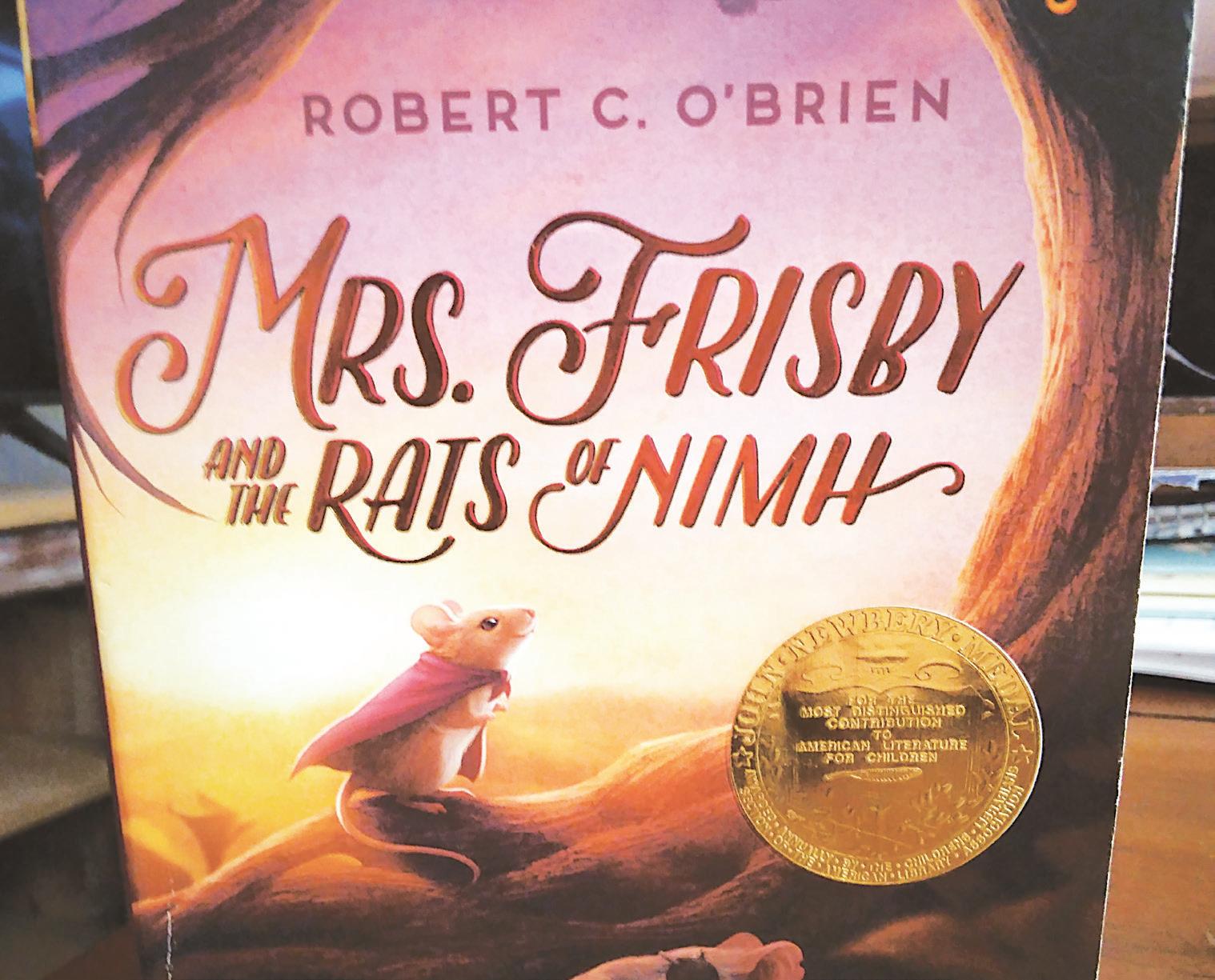
movie, I researched the 1971 book that the movie was based on called "Mrs Frisby and the Rats of NIMH" by Robert C. O'Brien.
As I read through the book, I began to notice some major differences between the movie and its source material.
Although the book and movie have similarities such as the characters and setting, the overall story that is told differs. For example in the movie, there is a magical element that is sprinkled throughout the story that shows Mrs. Frisby being given a magical amulet that only helps her toward the end of the movie. While in the book, there is no magical element at all, rather it tells a story of survival.
Another key difference I noticed between the book and movie is that the movie does not always follow the book in some ways, such as Mrs. Frisby’s name being changed to Mrs. Brisby in the movie. Lastly, the book gives more clarity to the
story than the movie.
After comparing both the movie and book, I began to search online, trying to find what others had to say about "The Secret of NIMH". In a review by Collider, the author focuses on the movie’s dark scenes and mature themes, highlighting that these features are what make "The Secret of NIMH" unique. The review then delves deeper into how Don Bluth, the film’s director, created this story visually by introducing dark and hard life lessons to children. The review also mentions how science and magic are uniquely blended together as well.
Another review by THE GEEK SHOW, praises the movie for its unique storytelling, as well as, giving a little insight into how Bluth, the director, broke away from Disney to create his own production company.
Overall, I had a mixed opinion about "The Secret of NIMH" movie and
the book it was based on. Although I enjoyed the movie for its visuals, acting and setting, the book gave more context into what the story was about,
even though, at times I grew bored of the book because of its slow-pacing.
All in all, this movie is an interesting experience and I would recommend
checking this movie out if you are a fan of Bluth’s other works, or are looking for a unique film to watch and experience.
Breaking Barriers, 'Extraordinary Attorney Woo' Balances Drama and Authenticity
Pennina Jackson Photography Editor
After its 2022 Netflix debut, “Extraordinary Attorney Woo” quickly rose to the top of streaming charts and won over fans outside of South Korea. At its core is Woo Youngwoo, a young lawyer with autism spectrum disorder who combines intelligence, integrity and vulnerability to successfully negotiate the strict legal system. The series is unique, not only because of its emotional appeal, but also because of its deft integration of legal accuracy and characterdriven storytelling.
Park Eun-bin plays Woo Young-woo, a young lawyer who excelled in her class at Seoul National University. Her distinct style of thinking, which is focused on details, patterns and her cherished whales, enables her to view legal situations from angles that others may overlook. Every episode introduces a new legal dilemma ranging
from corporate misconduct, inheritance conflicts, criminal defense and medical incompetence. The
show is grounded in realism rather than melodrama because the cases frequently reflect actual problems in

South Korea's legal system.
“Extraordinary Attorney Woo's” dedication to strike a balance between accessibility and understanding is what sets it apart. Although they don't shy away from complexity, the legal matters are presented in a style that is understandable to a wide audience. The courtroom process, agreements and the murky aspects of justice that attorneys frequently deal with are all shown to viewers. The show continuously exhibits an understanding of real Korean legal systems, even though some elements— like the emotional climaxes or the pace of trials—are dramatized for entertainment purposes.
The series provides a surprisingly educational overview of South Korean law for people who are not familiar with it, highlighting its limitations and cultural quirks. Now, the way it portrays autism is equally important. The show treats Woo's
character with respect, but in a dramatic way. It draws attention to the difficulties she encounters, such as discrimination at work and social misunderstandings, as well as the exceptional advantages that result from her viewpoint.
Many commentators praise the series for igniting discussions on neurodiversity in professional settings, despite others claiming the portrayal romanticizes or simplifies elements of ASD.
Ultimately, Extraordinary Attorney Woo is successful because it humanizes the characters inside the
courtroom stories rather than just repeating them. It is emotionally compelling enough to connect with viewers on a personal level while being sufficiently informed to satisfy those who are interested in the law. In addition to providing entertainment, the show promotes, teaches and challenges stereotypes. In a media environment that frequently ignores neurodiversity and the realities of the legal field, Extraordinary Attorney Woo demonstrates that empathy and expertise can create remarkable television.
"The Secret Life of the NIMH" is based on the 1971 book "Mrs. Frisby and the Rats of NIMH." (Photo by Madilyn Drywater)
Law through new eyes. (Photo by Pennina Jackson)
'Extraordinary Attorney Woo' is streaming on Netflix. (Photo by Michelle Johnson)
ENTERTAINMENT
Gen Z Navigates Nostalgia

Petty Reporter
Taylor Swift once wrote, “Nostalgia is a mind’s trick. If I’d been there, I’d hate it,” for her song “I Hate It Here.” This quote remains ever relevant as we see more media and content rely on or gain inspiration from nostalgia.
Media has always been something that complements and takes from the past, modern times are no different. Reboots, revivals and remakes continue to be made. They function as a way of pulling in old fans and gaining new ones. From “iCarly” to “Ghostbusters” there’s likely talk of a franchise or piece of media getting a reboot or revival. However, there has been increasingly more criticism for these reboots.
“I don’t really like remaking something just to remake it,” said Conner Gaetke, an engineering major at Rose State. Adding, “If it’s a good story I don’t mind.”
“I don’t really like them, I prefer the original shows,” said Kai Bear, a freshman at North Rock Creek. Adding, “I feel like [reboots] just ruin them.”
If there is such a disinterest in reboots, then why do they keep happening? Well, for one, they get money and views.
“Cobra Kai” season one, a TV revival of the “Karate Kid” franchise, has a 95% audience rating on Rotten Tomatoes. “Ghostbusters: Frozen Empire” made $202 million at the box office.
Despite critiques often being made at them, it is clear they maintain a level of relevancy.
Another common belief is that studios are just not being creative.
“I think they’re running out of ideas,” Gaetke said.
A common sentiment shared by people who criticize reboots. While many production studios do have unique ideas for movies, these can seem like they are drowned out by blockbusters.
For studios, media that relies heavily on what came before is safe to invest in. Reboots, revivals and remakes come with a fanbase ready to go. People want to see how different writers and directors will take the story or characters, even if they don’t like the change. It is not just through reboots that studios show the audience what has been done, many shows and movies that tell a unique story still rely on nostalgia bait.
The hit show “Stranger Things” used a 1980s setting to draw fans in. The creators also took inspiration from many popular ‘80s media, such as
in the show about the flaws that came with the 1980s. “Stranger Things” addresses racism with the characters of Lucas and Erica Sinclair, who are some of the few black people in the fictional town of Hawkins, Indiana.
“Stranger Things” also depicts the struggles that came with being gay in the ‘80s, through the characters of Robin Buckley and Will Byers. It even discusses issues like the decline of main streets due to an increase in shopping malls. It brings realness to a fantastical world.
Addressing the bad with the good is what can set apart a show or movie from all the other media that depicts the past. It can make for unique and more compelling storytelling.
Of course, we do not just see an uptick in nostalgia through the media, it presents itself through fashion too.
“E.T. The Extra-Terrestrial” and “Stand by Me.”
“Stand by Me” is an ‘80s film that takes place in the 1950s, the concept of writing a show to take place in the past is nothing new. As mentioned, the media typically likes to pay homage to the past. The movie “Grease” came out in 1978, this movie took place in the 1950s. “Back to the Future” (1985) sees Marty McFly venture back to the ‘50s. “Dazed and Confused” came out in 1993 but is set in the 1970s.
There is nothing wrong with taking a look back into the past. It’s something we as humans and creatives have done for a while. However, the reason many of these films are hits is because they were something new and different when they came out; they were fresh. Often, nostalgia bait shows can feel lackluster because they are not a new concept, they fall flat.
Another conversation that comes up when talking about nostalgic media, is the idea of romanticizing the past. There is often an idea that showing a particular time period is condoning all baggage that comes with the decade. The best shows and movies address this.
One of the reasons that “Stranger Things” became so popular is that they had hard conversations
do with the quality and longevity of clothing.
“I think the kids are seeing the impact that clothes … have on the [environment,]” said Shannon Repka, manager of Griffin Antiques.
Many are opting for vintage clothing to lessen the amount of clothing that goes into landfills. Making clothes last for as long as possible is a good thing when the fashion industry often tosses items.
Older fashion items can also have a more timeless feel to them, instead of going for what is trendy now, purchasing classic items can promote keeping and wearing them. Many times, older items may just look cooler.
were to investigate the past, you would see they were doing the same. However, if we are to, it is important to do so carefully.
LGBTQ+ activist and author Leslie Feinberg wrote “At night I’d sing a song about the way life used to be … so that no one would ever confuse nostalgia with wanting to return,” in her novel “Stone Butch Blues.” This distinction is necessary when exploring trends of the past.
Again, this is not a new concept. The 1980s saw a rise in 1950s inspired fashion. The 1990s had a lot of elements that were pulled from the 1960s and 1970s.
We see this again as Gen Z began to love “Y2K” fashion on TikTok. However, it should be noted that much of their fashion was inspired more by early to mid-2000s style, rather than what was popular at the turn of the century.
Now, late Gen Z and Gen Alpha have started to reminisce on early 2010s fashion, increasing the nostalgia cycle expeditiously.
Why the increase in love for pre-2016 fashion?
While there are many factors, a lot of it has to
“They just have better designs than modern day,” said Garrett Smith, freshman and history major at Seminole State, about vintage tee-shirts. Smith has been interested in vintage fashion since his freshman year of high school.
Some like vintage fashion because it looks “dated.” Again, we see nostalgia at the forefront. Many creators have taken to social media sites like TikTok and Instagram to show off their outfits and finds.
These creators often also address the romanticization that comes with nostalgia. You may be likely to see a post or bio that reads, “vintage clothes, not vintage values.” Like the best nostalgia-based shows, these creators too discuss the problems with their preferred decade of history.
There is nothing wrong with taking inspiration from the past, in fact if you
It is important to not erase struggles with romanticization. It is also important for us as a society to learn from the past. Take what previous times did right, adapt it and mold it for modern times. However, it is just as important to look at what they did wrong, to learn not to repeat it.
Just like fashion from the past, reboots and revivals are not inherently bad, but just like fashion they should be analyzed and looked at critically. People don’t hate reboots or revivals because they are automatically bad, they are criticized when studios take a lazy route with them. If reboots and revivals were to always be done with care and love, many may have less of a disdain for them.
Nostalgia can have negative connotations, especially when tied to culture. However, media and clothing based on the past decade can be a way for young people to examine history and safely explore the past. This will not go away, but it can be done with intention and care to maximize creativity and minimize harm.

Kelcie
Gen Z is starting to feel a sense of longing for "the good old days." (Photo by Michelle Johnson)
Media predating Gen Z is often looked at as nostalgic. (Photo by Michelle Johnson)
ENTERTAINMENT
Photo Album: 'Feeling Orange'
Michelle Johnson Editor-in-Chief & Graphic Design
In spirit of Halloween, I have put together an album that expresses this spooky season. This includes the sporadic nature of Oklahoma weather. I hope that everyone enjoys this month and has a happy Halloween. Hopefully, this year it will be dry and not too cold when trick-or-treating.