The Superyacht Report
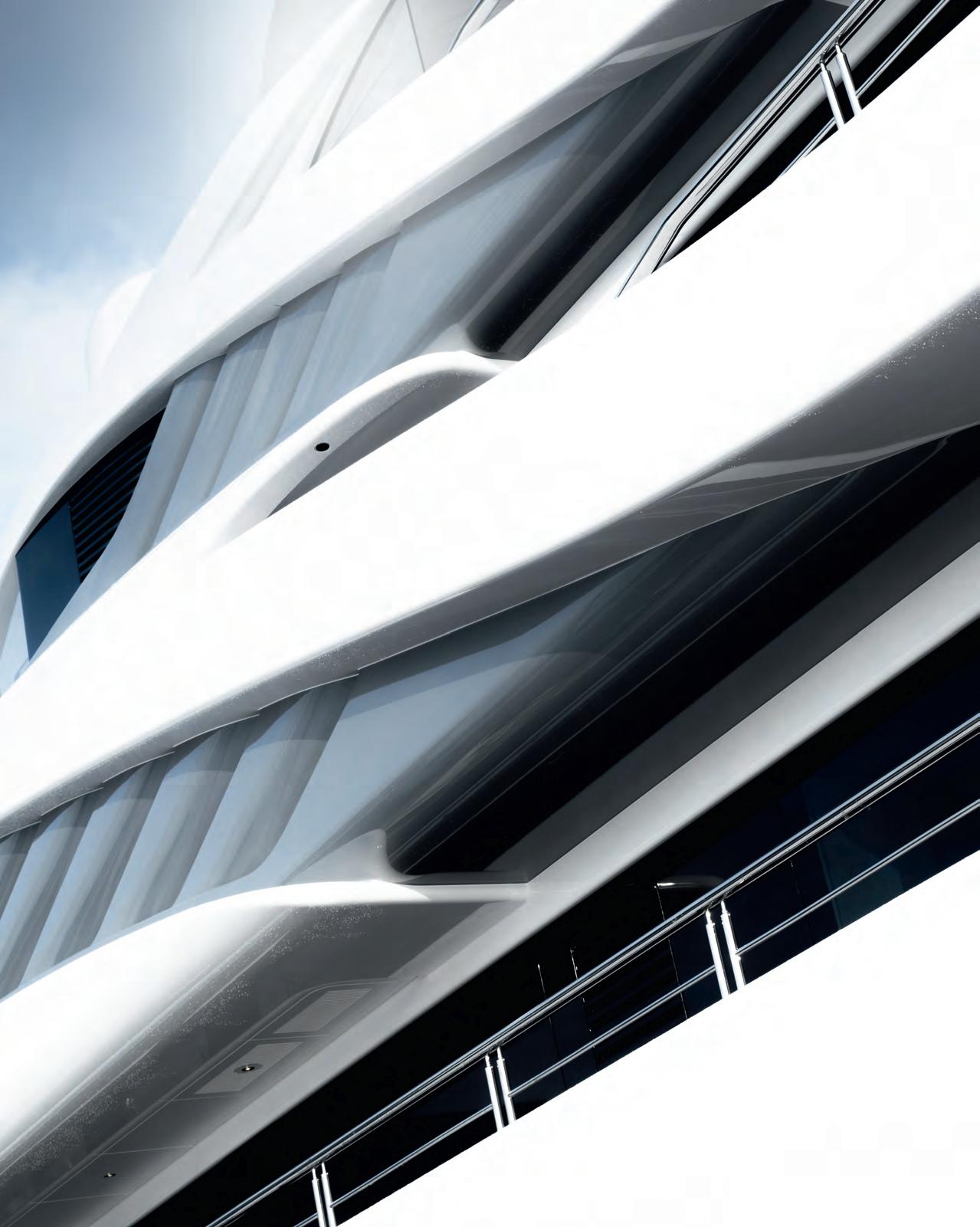
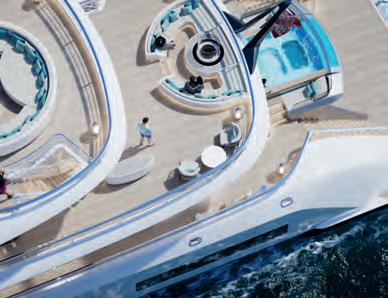
88m | Launched
ISTANBUL - FORT LAUDERDALE
REAL INTELLIGENCE … SHARING IS CARING?
Let’s build a data bank across the whole marina eco system to increase the industry’s understanding of the value and impact of the large-yacht sector.
Over the years I’ve had myriad conversations with a variety of companies and captains asking if they will share data, information and financials and there have been a wide range of responses, from no way to maybe all the way through to yes of course, we all need to know what’s happening.
About six years ago, I discovered an organisation called STR Global, and pre-COVID it was part of my mission to explore this model and bring it to market. The basic premise is that every hotel group provides anonymised and redacted occupancy and average room rate data for their beds and F&B across their properties, STR would then take the data, plug it into their system, analyse it and create monthly, quarterly and annual reports on the health of their industry. It has become the benchmark that everyone in the hospitality industry relies on and if you are part of the data-supply network, you get the reports in return for your input. Similar situations appear in the real estate, aviation and automotive sectors. However, in yachting there seems to be a corporate veil over the various data sets that sit amongst the various companies and superyachts, with NDAs, confidentiality and privacy all being cited as barriers to delivery.

BY MARTIN H. REDMAYNE
On pages 44-49 in this Report, we share with you an initial OPEX teaser, an ongoing research project being managed by The Superyacht Agency, that is designed to rebuild and upgrade our operational expenditure data, to help governments, local authorities and investors understand the value and impact of the large-yacht sector. Many years ago, we produced a really valuable economic report for an Asia superyacht hub that clearly demonstrated that by attracting a handful of large yachts, this occupancy would deliver far more economic impact than a couple of 1,500 PAX cruise ships.
More recently, we’ve been looking at the berth demand/supply imbalance across the Mediterranean to explore how many yachts in the future will potentially occupy the Med versus how many existing and future berths there are. Like the STR Global Reports scenario, it seems that
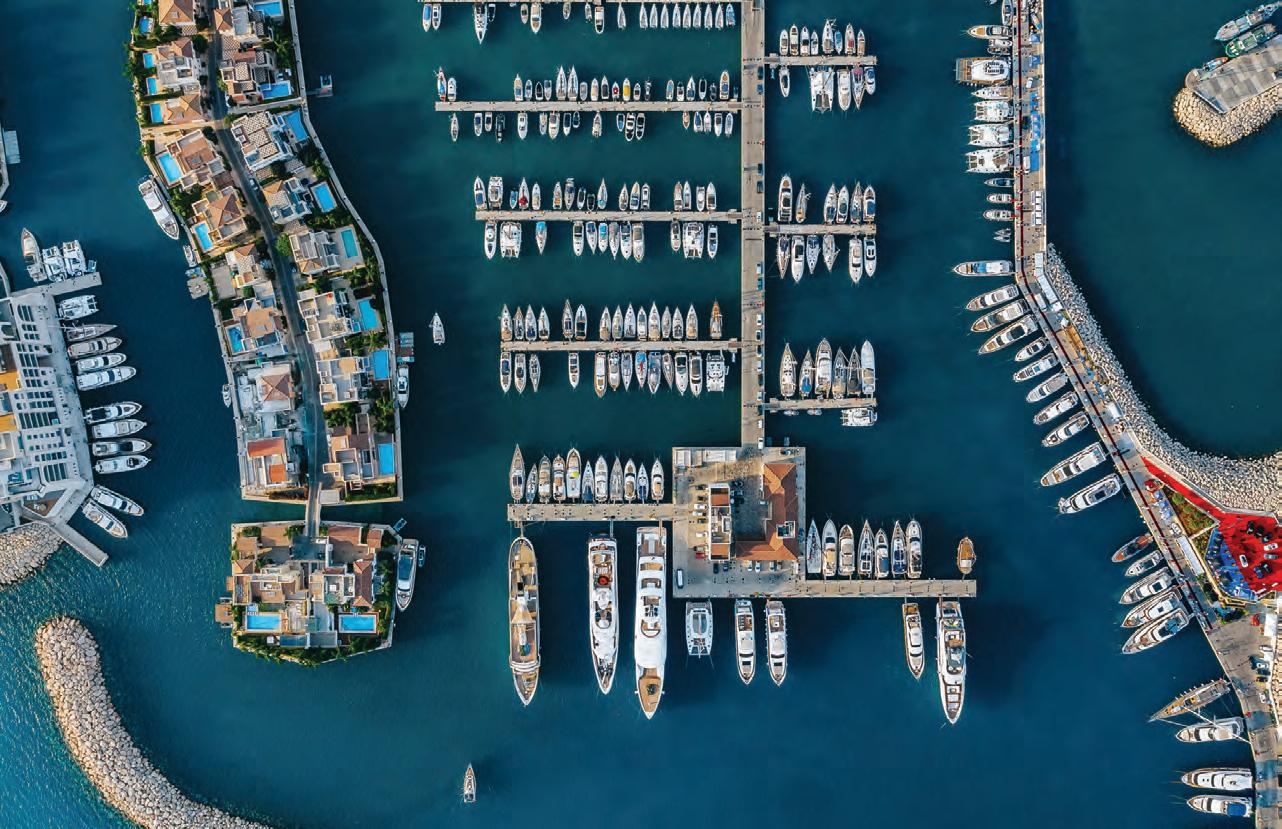
there is no current centralised data on the number and scope of berths across the marina landscape, yet investors seem to be in a feeding frenzy for this waterborne real estate. When you consider the investment being made in the marina sector perhaps now is the time to start focusing on the data side of the industry. Not fleet performance, who’s built what and where, who sold what and for how much based on the last asking price, that’s the easy stuff, but the economics and capacity of our industry.
Doesn’t it make huge sense for every marina company/investor/owner to apply a similar model to STR Global and build an industry-wide data bank, anonymised and redacted, that shares occupancy levels, average rates and berth mix across the marina eco system. Essentially this would help quantify and qualify how the market is performing and help investors put the capital where it’s needed most.
Finally, with our previous OPEX survey in 2015, we managed to encourage over 450 yachts to share their operational financials, all confidential and purely aligned with size of yacht, no names, in order to build a solid data set that helps the market understand the impact and value of visiting superyachts and demonstrate to owners what the typical cost of ownership can look like.
So I leave you with this thought and ask for all of your input. If we can learn to share qualitative and quantitative data across the various sectors, especially marinas and yachts, we start to show the people that matter what is really happening in the superyacht space.
As a closing comment, I had a really interesting chat in Mallorca with the CEO of a major yacht agency who said very clearly, we have so much operational and financial data, we don’t always know what to do with it, but we know it will be useful if it’s analysed and presented intelligently. Suffice to say this conversation is ongoing and we hope to have more conversations with other companies who are holding unique intelligence that can help the industry grow, mature and evolve. The future is all about real intelligence, with the Ai part helping us all to use and analyse it faster. MHR
Guest columns
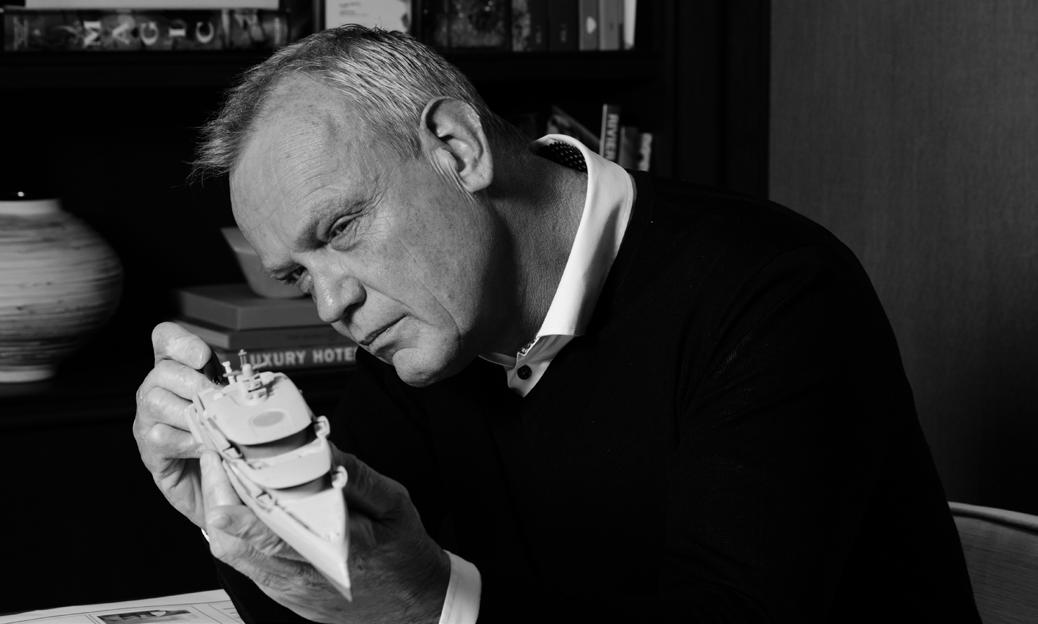
The asset you can’t see: why technical knowledge is the next frontier of superyacht value
The industry’s most overlooked asset isn’t the engineering or the interiors, it’s the operational knowledge embedded in the vessel itself. Jonathan Lee, CEO of Sentini Marine, argues that protecting that knowledge is no longer optional.
Luxury isn’t what’s visible, it’s what works consistently, without strain
What is the answer when chefs’ hours-of-rest compliance is compromised by operational demands? Brennan Dates presents the solutions to an imperfect structure.
CVs tell stories, professional registries verify careers
James Battey explains how the newly launched Yacht Workers Council aims to raise the floor.
Operational defensibility at sea
Why structured safety management matters more than ever, by Giles Sedgman, Head of Yacht Management at Praxis.
From racing theatre to working reality
What has foiling actually taught the industry?
Luca Rizzotti sets out the case ...
The regulatory race to the top in superyachts
Phil Noad, Deputy Global Director, Safety & Compliance, Cayman Registry, explains why a harmonised international yacht code would not be in the interest of the yachting industry.
Who gets to work in yachting? –and who never gets the chance?
Chris Frisby, COO at UKSA, argues that yachting has a pipeline problem and its reluctance to take on green crew is breaking the system it depends on …
The cost of entry
Are start-ups being left out of the room? Xanthe Bowater, founder of WaveWellness Solutions, explores how new-thinking and practical solutions can reach the people who could benefit from them most.
The perfect ratio of work, family and loyalty
The UK government’s impounding of Phi is only part of the story. Captain Guy Booth on family, values, Indian epiphanies and the cost of refusing to walk away …
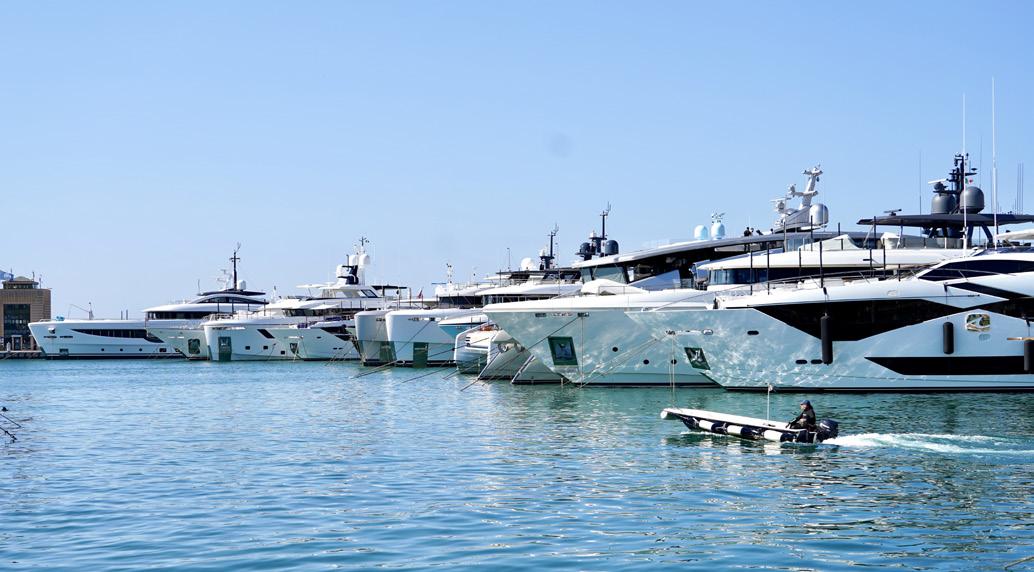
No fuel. No fun. Can we still afford to charter?
Alexander Griffiths attends MYBA to find out how operational costs are affecting the demand for charter.
Captains, you are your internet service provider! 26 Ernesto Esposito, Head of Technical Sales and Account Management at Omniaccess, on how to provide what may be the second most important on-board necessity after food: reliable and fast connection at sea.
From captain to CEO
After almost three decades in command, Nigel Marrison makes the case that seamanship and safety are no longer enough for a superyacht captain to lead a modern maritime enterprise.
Meeli Lepik, founder and chief consultant of Holistic Yacht Interiors, reflects on authority, connection and what the superyacht industry must confront to secure its future.
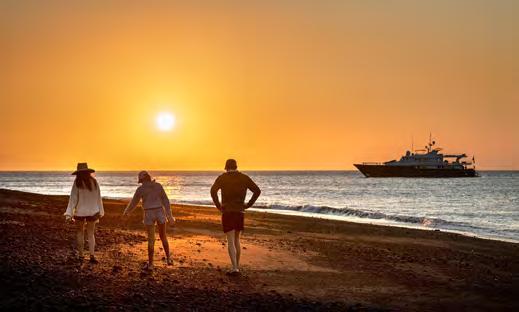
Gayle Patterson, director of yachting at Pelorus Yachting, on placing a heart-rate monitor on a humpback whale, shark tagging in the Galapagos, solar-powered 70-metre yachts and where experiential charter demand is heading.

The land that time forgot
Deep within the south-western Pacific, Papua New Guinea remains one of the world’s last truly undiscovered superyacht destinations. One captain reflects on eight extraordinary days, and why this is the frontier that keeps calling him back.
What yachting refuses to say out loud
Women in yachting are speaking out. Captain Kelly Gordon asks why the industry is still not listening.
Whalesong at Navidad Bank
What do 500 humpback whales look like from the deck of a superyacht? How EYOS, Yachts For Science and a 57-metre Feadship filled a 45-year gap in the scientific record, and what the fleet should make of it.
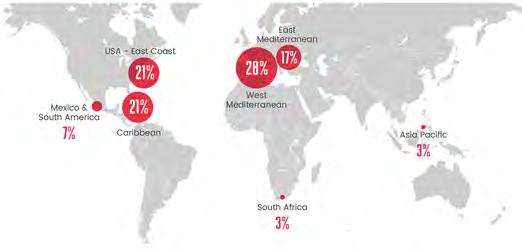
OpEx survey: What does a visiting yacht actually leave behind?
Help us build a clearer picture of superyacht operational spend and economic contribution ...
The invisible luxury
61 Andy ‘Ivy’ Brennan and director of DG Maritime Steve Monk advocate for mentoring, and how promoting from within can protect the yacht’s culture.
Olesinski Real-Time Refit: the captain’s new superpower 82 Changing the way owners and captains approach upsizing ...

Midnight amongst the ice
Accidental ‘Ice Queen’ Captain Maiwenn Beadle was the first woman to captain a superyacht through the Northwest Passage. As yachting moves into Polar waters, she reflects on what the Arctic teaches about leadership and why how you handle a mistake matters more than the mistake itself.
Sexual assault on board: flag of convenience no shield from U.S. courts 99
In a recent case, a yacht crewmember sexually assaulted in Antigua had the vessel arrested when it reached Fort Lauderdale. Her case has far-reaching implications for owners and insurers.
The Superyacht Report
QUARTER 2/2026
For more than 30 years The Superyacht Report has prided itself on being the superyacht market’s most reliable source of data, information, analysis and expert commentary. Our team of analysts, journalists and external contributors remains unrivalled and we firmly believe that we are the only legitimate source of objective and honest reportage. As the industry continues to grow and evolve, we are forthright in our determination to continue being the market’s most profound business-critical source of information.
Guest Authors
James Battey
Yacht Workers Council
Maiwenn Beadle
Captain
Xanthe Bowater
WaveWellness Solutions
Andy ‘Ivy’ Brennan Royal Navy (Ret’d)
Brennan Dates
Chef
Ernesto Esposito
OmniAccess
Chris Frisby
UKSA
Kelly Gordon
Captain
Alexander Griffiths
Tidal Communications
Jonathan Lee
Sentini Marine
Meeli Lepik
Holistic Yacht Interiors
Nigel Marrison
Captain
ISSN 2046-4983
The Superyacht Report is published by TRP Magazines Ltd (trading as The Superyacht Group)
Copyright © TRP Magazines Ltd 2026 All Rights Reserved. The entire contents are protected by copyright Great Britain and by the Universal Copyright convention. Material may be reproduced with prior arrangement and with due acknowledgement to TRP Magazines Ltd. Great care has been taken throughout the magazine to be accurate, but the publisher cannot accept any responsibility for any errors or omissions which may occur.
The Superyacht Report is available within The Superyacht Group Library, which is open to everyone in our audience so you can enjoy the highest quality journalism and analysis in the market – Reports Worth Reading. Download or read at your leisure on your desktop or your tablet: https://issuu.com/the-superyacht-group
Editor-In-Chief
Martin H. Redmayne martin@thesuperyachtgroup.com
News Editor
Conor Feasey conor@thesuperyachtgroup.com
INTELLIGENCE
Senior Research Analyst
Amanda Rogers amanda@thesuperyachtgroup.com
Data Analyst
Miles Warden miles@thesuperyachtgroup.com
DESIGN & PRODUCTION
Content Manager & Production Editor Felicity Salmon felicity@thesuperyachtgroup.com
Ryan Melogy
Maritime attorney
Steve Monk
DG Maritime
Phil Noad Cayman Registry
Adria Notari
Maritime attorney
Justin Olesinski Olesinski
Luca Rizzotti Foiling Organization
Giles Sedgman Praxis
SuperyachtNews
Spanning every sector of the superyacht sphere, our news portal is the industry’s only source of independent, thoroughly researched journalism. Our team of globally respected editors and analysts engage with key decision-makers in every sector to ensure our readers get the most reliable and accurate business-critical news and market analysis.
Superyachtnews.com
The Superyacht Report
The Superyacht Report is published four times a year, providing decision-makers and influencers with the most relevant, insightful and respected journalism and market analysis available in our industry today.
Superyachtnews.com/reports/thesuperyachtreport
The Superyacht Agency
Drawing on the unparalleled depth of knowledge and experience within The Superyacht Group, The Superyacht Agency’s team of brilliant creatives, analysts, event planners, digital experts and marketing consultants combine four cornerstones – Intelligence, Strategy, Creative and Events – to deliver the most effective insights, campaigns and strategies for our clients. www.thesuperyachtagency.com
YOUR COATING CONSULTANTS
Follow The Superyacht Group channels on LinkedIn
@thesuperyachtgroup
@thesuperyachtgroup @superyachtobserver @superyachtagency
Join The Superyacht Group Community
By investing in and joining our inclusive community, we can work together to transform and improve our industry. Included in our Essential Membership is a subscription to The Superyacht Report, access to SuperyachtIntel and access to high-impact journalism on SuperyachtNews.
Explore our membership options here: www.superyachtnews.com/shop/p/MH
With over 25 years of experience, we have overseen more than 150 successful new-build and refit projects in all major international yacht locations. Trust us for state-of-theart materials, cutting-edge technology and unparalleled expertise. Guarantee a flawless finish with WREDE Consulting.
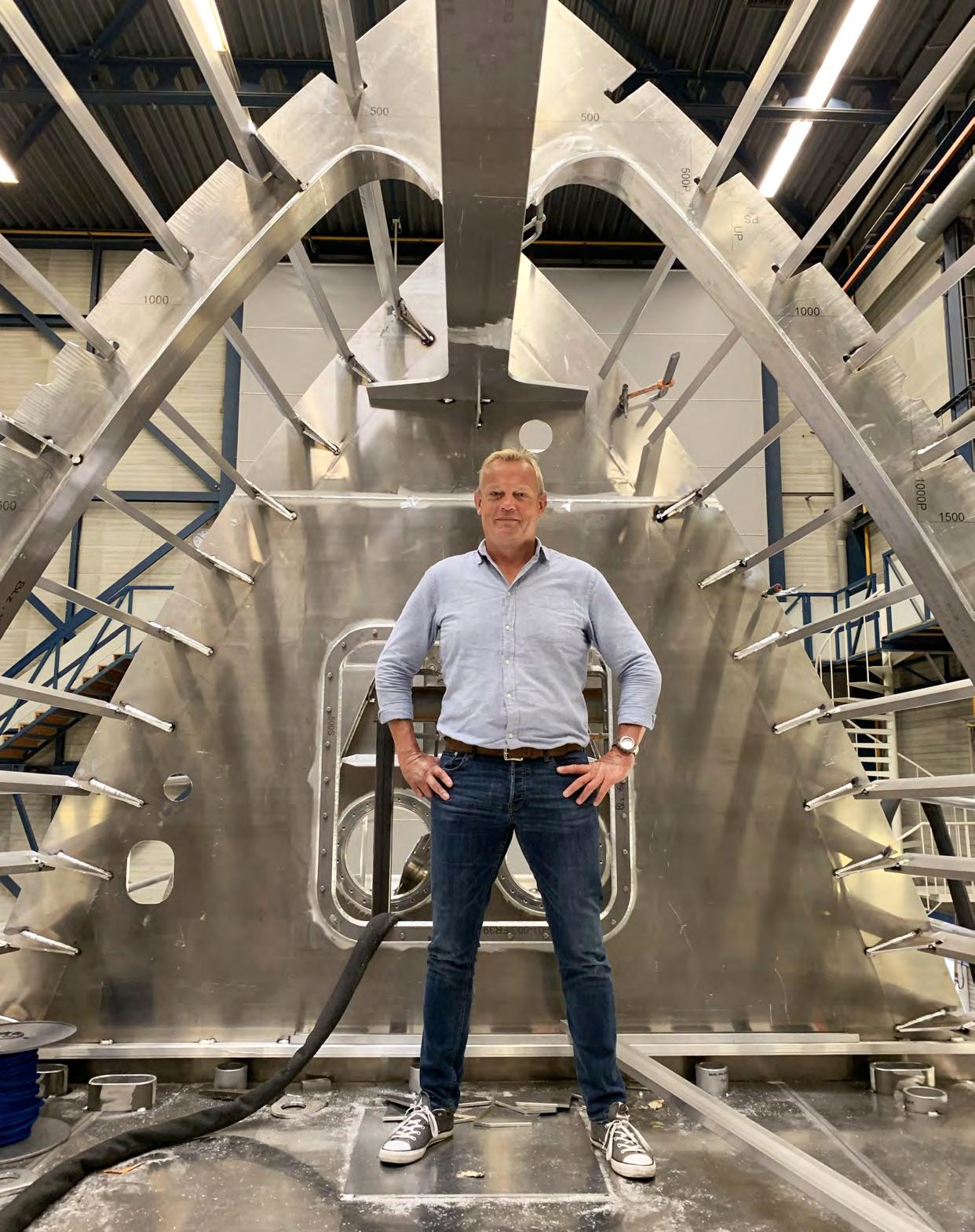
The perfect ratio of work, family and loyalty
The UK government’s impounding of Phi is only part of the story. Captain Guy Booth on family, values, Indian epiphanies and the cost of refusing to walk away …
BY CONOR FEASEY
Interview – Captain Guy Booth
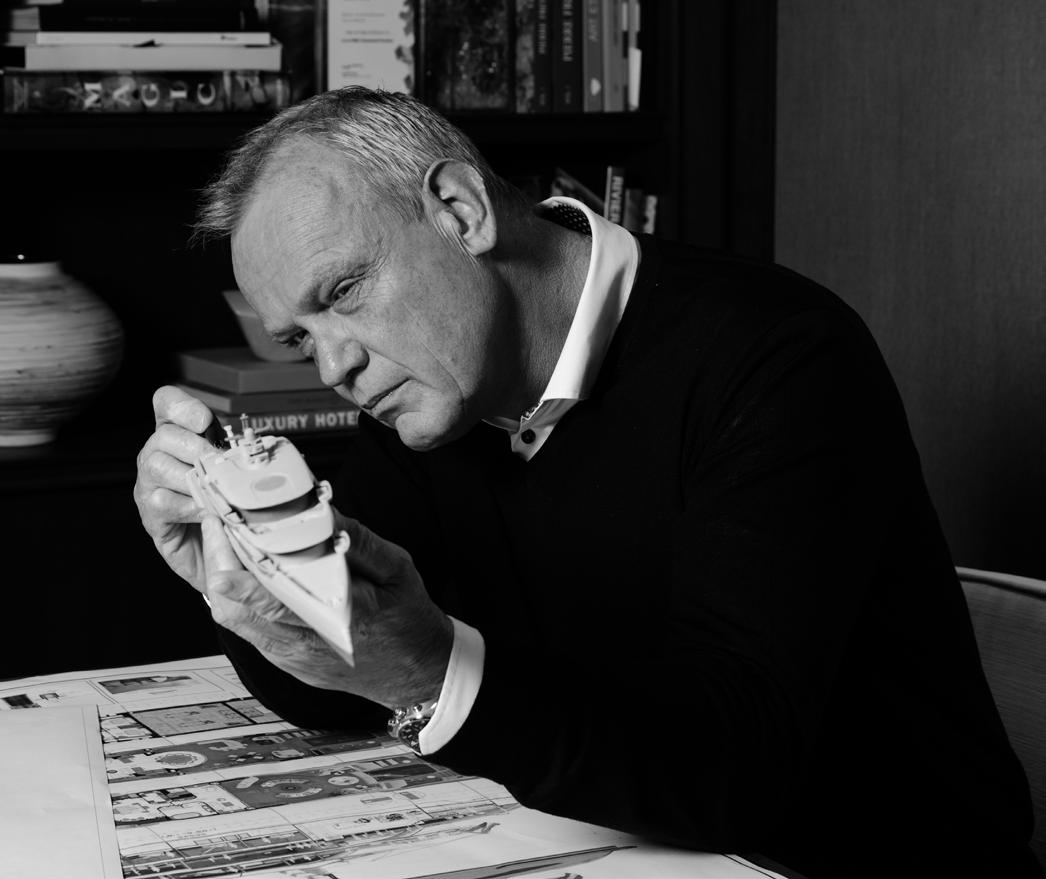
“Turn the VHF radio on in the bridge and the crew mess on VHF channel 13, please. And turn the volume up high in case the port calls you. All right, thanks, buddy. Ciao.” As Captain Guy Booth puts down his phone to resume our video call, the pleasantries we had exchanged but minutes earlier subtly fade. He apologises, explaining there had been a shorepower issue, but the subtext weighs heavily as I ask him how he has been. It has been almost a year since we last spoke, following the Supreme Court ruling against Phi’s appeal.
“Me, personally? Yeah, mate, a bit shit, really,” he says. “I'll let you edit that.” (I don’t.)
What he describes is a tedious, GroundhogDay delirium that has constricted his existence for the past four years – a monotonous struggle he has endured and one that’s taken its toll. But as he sits in his home office on the English south coast, Booth still cuts the figure of “a lifer” through and through. A seasoned mariner, over three decades in yachting, a wall of awards and the unmistakable bearing of a man who has spent more of his life on water than off it. Except he isn’t at sea and hasn’t been for some time.
“I've done 31 years in yachting on some spectacular boats, even won several awards. Four years ago, I was the keynote speaker at every conference going and now there’s not much in my inbox. I should be enjoying the fruits of 40-plus years of being on the water. I should be in the sun, going to exotic locations, running a beautiful yacht, Phi or another, all around the world. And, you know, doing the commute up to London on the M23 and the M25, sitting on a boat with a skeleton crew doing basic maintenance ...”
He stops and takes a breath as he removes his glasses. “Look, I know that there are many people, especially middle-aged blokes, who are battling with real depression, genuine depression. So, I can’t really use that term in deference to them. But I have had some dark times where I've questioned my own worth, my own values, my motivation structure. I have battled. I've had all sorts of questions about this. I went through a period of not being terribly motivated to get up in the morning. Phi was, is, 16 years of my life. There are four years of the build, two and a half years of the project development and then probably a decade of working closely with the owner. My entire career, I kept saying to my wife that all I wanted to find was a genuine, human owner. Someone smart and respectful of the crew and the team. A visionary who wants to build a genuinely

new boat. That’s my apex, right? Especially a Royal Huisman.”
There is an inescapable synonymity in the collective memory of Booth, Phi and its owner, Sergei Naumenko. Behind the scenes, the pair had spent over a decade poring over boat designs, learning and growing together, their lives becoming increasingly intertwined as their kids grew and families became both friends and project partners (Lynette, Booth’s wife, heads HR and procurement for Phi). The endeavour is very much a family affair, personal and professional life blending into the perfect ratio. And despite Naumenko not being sanctioned by any state nor proven to have any political influence, they have nonetheless watched the flagship of his fleet sit idle by the Thames for four years, the subject of a detention order that has long outlasted the minister who issued it. It has brought Booth some dark moments.
So, why stay, I ask. Booth shrugs and replies, “The boss asked me the same thing”. The duo were talking over a glass of wine a few months ago when the bewildered owner questioned why Booth remained on an immobile vessel, likening the arrangement to clipping the wings of a pilot. The truth is it has required a monumental shift in Booth, but one he feels he’s achieved through changes in his lifestyle, thought processes and daily patterns to come out on top. But now, he says, he is ready for battle and has the ECHR in his crosshairs.
It was all a matter of “going back to basics.” He cut his seventy-hour work weeks in half, headed back to the gym and changed his diet. He started running on the South Downs every other day with his Cockapoo, Chewie (Chewbacca is his government name). He rediscovered his love for classic rock, acoustic blues and reggae on his vintage turntables and traded in
Booth went back to school, took his engineer’s licence, spent a few years in the engine room and got his first captain’s job in 2002. “I’ve never looked back since. As I said, it has been an accidental career.”
the worn-out manuals for Sapiens, Bad Blood, the Asimov he had not picked up in decades and his son’s GCSE texts. “I wrote down all the reasons why I’m still here, what really matters to me – my family. That is what made me refocus,” he says. Booth’s “fantastic family life” is central to everything he does and his principles, he adds. “That is why I can't leave until this is concluded. For my own self-pride and even my father and the values that I was brought up with.” And those values are a good place to start.
Born in England, Booth emigrated to New Zealand with his parents and older sister in the mid1970s, when his father, an RAF officer, transferred to the Royal New Zealand Air Force. He was, frankly, an annoyingly overachieving all-rounder growing up, playing piano and trumpet in orchestras and bands and setting national secondary school records at middle distance and in the pool, two disciplines that reward patience. He was very much “that guy”. Yet for all his insistence that this has been an accidental career, Booth was by then already a sailor.
Both his parents loved the water and the family spent every New Zealand winter in Fiji, Tonga or New Caledonia on a 50-footer. It was there that his father first taught him to use a sextant, aged 12, and where he would call to his mother saying he has just caught lunch, mask still on, after diving for crayfish for lunch. When his parents eventually retired, the pair planned a three-year circumnavigation. They sold both cars, rented the house out, flew to Newport, Rhode Island and bought a 46-foot ketch called Adastra at the Annapolis Boat Show. The couple returned to New Zealand from their three-year voyage nineteen years and three hip replacements later.
Booth went on to race on 40 and 50-footers at the local yacht club before being selected, in his university years, as part of a three-boat New Zealand race campaign. The salary was modest, but there was plenty of beer, rum and pizza, which in truth is all any student really needs to survive. “It was following a dream,” he recalls. “After a few years of that, I wound up in Antibes and picked up a few Atlantic
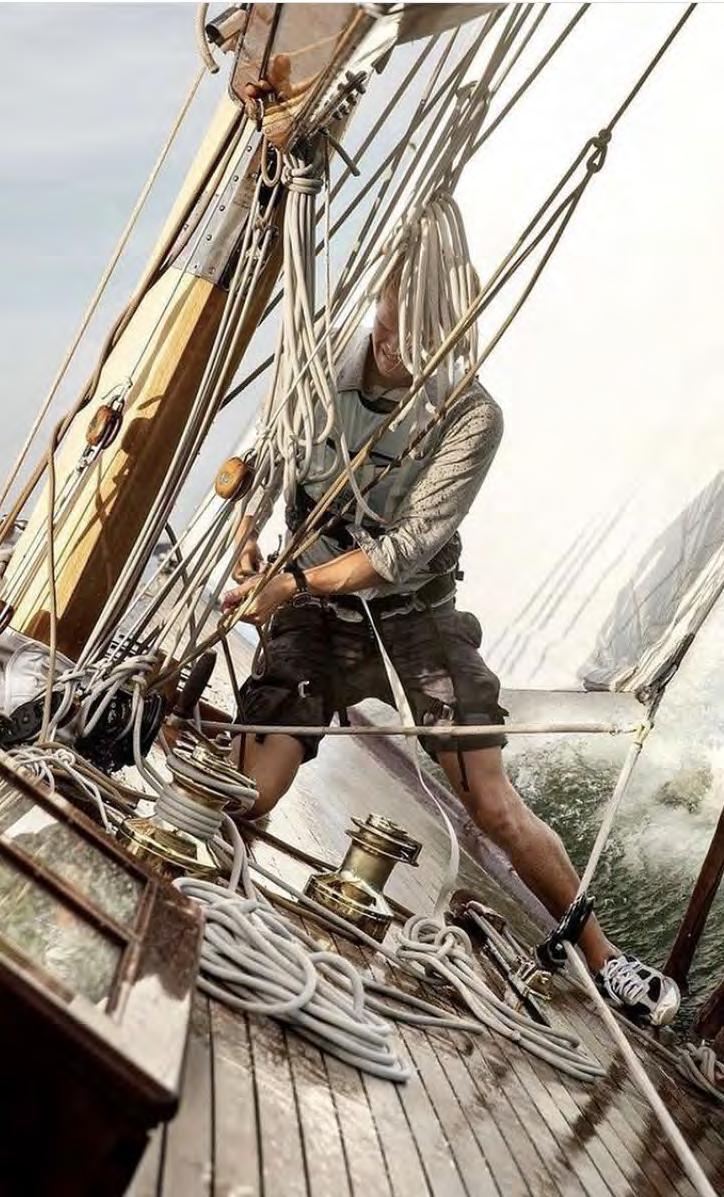

crossings on big sailing boats and kept racing for years all around the Med, the Caribbean, the East Coast of the USA and back down to New Zealand and Australia.”
Then, by his own account, he slid into yachting by accident. At the end of the nineties, he joined a 52-metre Perini Navi as divemaster, dinghy sailing instructor and deckhand under Captain David “Hutch” Hutchison, a storied figure in sailing circles. Booth learned how to polish and shammy until his knuckles bled, taught guests to sail dinghies and scuba dive, then moved on to the Mirabella programme (Mirabella and Mirabella III) for the Vittoria family. That was his introduction to luxury yachting. He went back to school, took his engineer’s licence, spent a few years in the engine room and got his first captain’s job in 2002. “I’ve never looked back since. As I said, it has been an accidental career.”
Like most seasoned captains of his calibre, Booth has the maritime anecdotes you’d probably expect: cracked rudders mid-Atlantic; a 1,200-mile run from the Azores to Barcelona on a rudder bolted back together with steel plates; a Pacific evening with a super pod of three hundred dolphins riding the stern wave for forty-five minutes, manta rays flipping themselves out of the water to clean off barnacles; villagers paddling out at dawn off the Panamanian coast with a dugout canoe full of fruit. But it is his time on land that offers the deepest insight into his values. By the mid-2000s, Booth was captain on a yacht belonging to the New Zealand philanthropist Owen Glenn, working closely with the “firm but fair” businessman during his six-year tenure. Booth describes a strong, clever, business-savvy owner who
guided him as he entered his senior career, helped him to grow and even covered the bar tab at his and Lynette’s wedding.
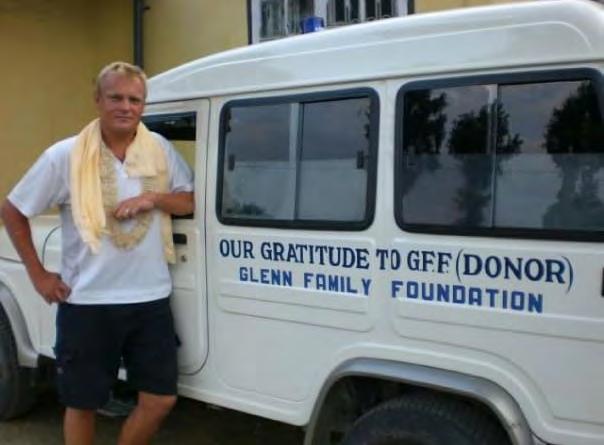
Glenn’s philanthropic outfit funds development work in the Himalayan hill country of north-east India, close to the Nepalese border. Five years into Booth’s stint on board, Glenn noticed his drive had plateaued, that he was going through the motions. “He said to me, ‘You’re bored on here. You can do all this with one hand. My problem out in India is that I don't have anybody on the ground. I’ve got all these ideas, but nobody can get the job done. Would you like to go out to India?” Needless to say, Booth immediately put his life in a backpack and subsequently spent three months sleeping in a hut in the mountains. This was the adventure he needed.
Working alongside the Lions Club International, local doctors and church groups, he helped build a library for a girls’ school, ran medical camps where people walked for days to get cataract drops, built water-sanitation plants, converted Land Rovers into mobile ambulances and introduced animal husbandry, livestock and cooperative farming. It took some warming up too – a broad six-foot-three “blonde bloke” hauling a backpack into a village where the tallest person came up to his chest was not what anybody had ordered. Moreover, the villagers initially assumed Booth to be the benefactor of the programme. “I had to say to them through an interpreter, I’m not the benefactor, I work for him, I’m an engineer. Look at my working man hands,” he laughs.
It was when he met an elderly couple that the budding engineer, now in his early thirties, had one of the more profound experiences of his life. The village elders were immobile, living in a squalid shack no bigger than a garage and could no longer climb the stairs to their house, having to shimmy on their backsides to get to and from it. This couldn’t do, Booth thought. He would build them a new house, but first, he needed materials.
The foundation required rock, and naturally, the riverbed and source of said rock was three-quarters of a mile below the village, straight down the sheer mountain. And while some of us may not be versed in the transport of individual river rocks hundreds of metres up a mountain in the Indian heat, Booth assures that the best technique was loading them into a woven basket on your back, supported by a strap over the forehead, padded with folded cloth, hands underneath the basket, eight to ten rocks a load. We’ll have to take his word for it.
The endeavour was a slog of mighty proportions as he and two others took to the task, trudging up and down the mountain as the sun moved across the Himalayan sky. But, little by little, word of
The years that followed were about choosing who to climb the career ladder with, rather than climbing for climbing’s sake. As the boats got bigger, the crew lists got longer and many of the young people he sailed with in his twenties and thirties stayed in his life and in the industry, some running boats of their own.
their mission spread, with more joining, coming to lend a hand (and presumably their heads too). By lunchtime, there were a dozen of them. By day three, thirty people were moving up and down the mountainside, a human anthill with men carrying materials and women cooking food in woks, others bringing drinking water. The whole community had come together to help their own and Booth was at the centre of it all, hauling alongside them, as one of them.
“By the end, we were bushed. We were bleeding and dirty and sweating and lying down on the ground exhausted, eating rice with our hands. No language between us. But when you’re looking at a bloke beside you and he’s just as knackered as you are and you’re eating the rice, and you look at him, put your thumbs up and go – ‘good’. And they reply with their hands and their language, ‘I hear you, brother’. You’re drinking a big jug of water and you hand it to him and he drinks it. Person to person, you just think we are all the same, we are all human.”
The new house comprised a sturdy combination of wood and corrugated iron, built around a claybrick stove at standing height so the elderly couple wouldn't have to crouch to cook. Six months in, Booth came back to England to get married. After the wedding, he flew Lynette, a self-proclaimed London city girl, straight back to India. The village threw a festival to welcome them back with coloured flags, a banquet of food and the whole community in attendance. He was greeted like a son.
The experience absolutely transformed Booth’s view of the world. “It brought back values that my parents had worked so hard to instil and that perhaps over time I'd disconnected from. Respect for everyone, no matter where they’re from or what they look like, or who they pray to. A real, genuine understanding, not just the philosophy, but a first-hand experience and a belief that we are all the same. We all want the same things: food, shelter, companionship, six feet to lie down and some form of working activity that yields a sense of accomplishment. And family.
“It also showed me just how resilient I can be with the power of the mind. Going into yachting, there are some long days and difficult challenges. Weather, gear failure, difficult guests, demanding, unreasonable crew. It takes resilience to face all of those with humility and not to point fingers and blame everybody. To reflect first of all on what could I have done differently to make a better outcome. You must look in the mirror first.”
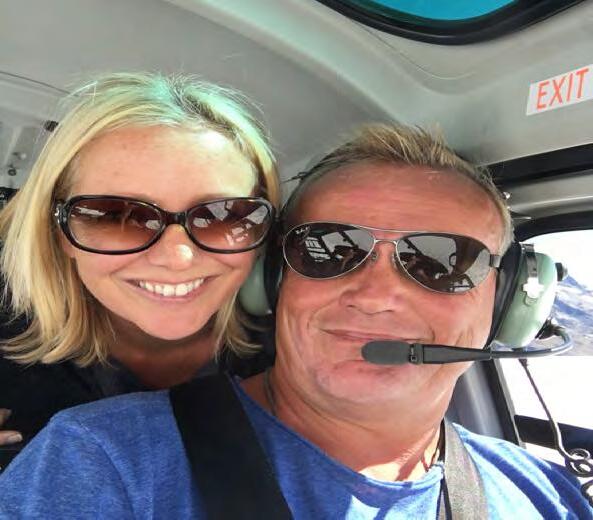
The Himalayan months had reignited the perspective of life first found while at anchor off the Fijian coast all those years ago. What he brought back to the bridge was a different way of running things. Booth had never been the kind of captain who stood on the wing in whites. Even on a forty-metre, he was still driving the tender, doing wash-downs, turning the laundry over, helping where he could. India sharpened that instinct. The years that followed were about choosing who to climb the career ladder with, rather than climbing for climbing’s sake. As the boats got bigger, the crew lists got longer and many of the young people he sailed with in his twenties and thirties stayed in his life and in the industry, some running boats of their own. And after all those years of searching, the project of a lifetime arrived.
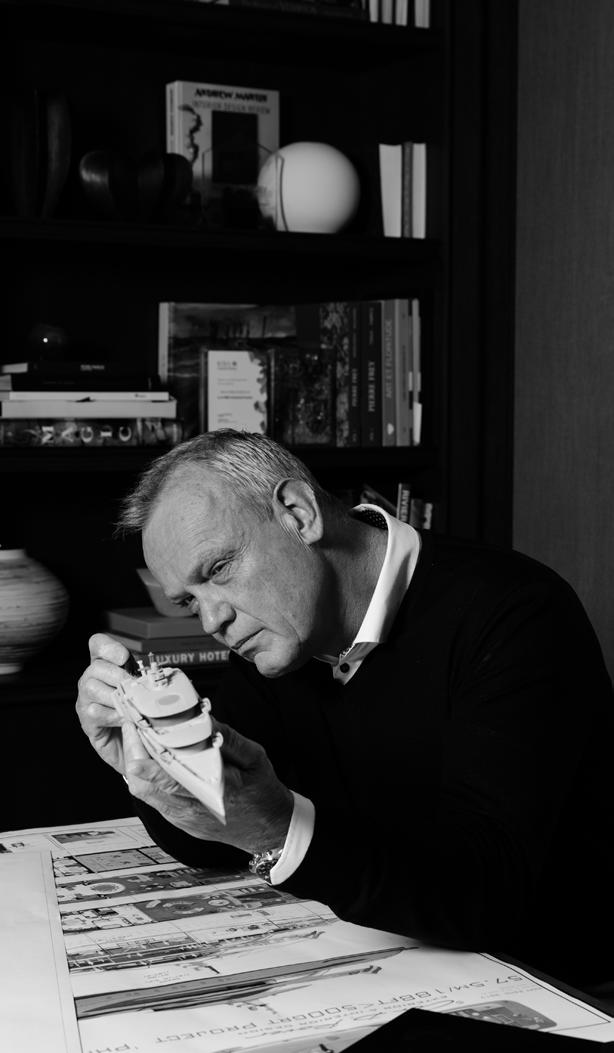
Working on Phi might have been a labour of love, but it was labour, nonetheless. The owner wanted something game-changing. To do something that had never been done before. The pair spent two and a half years developing the concept, discussing the boats they admired, what they thought worked and what didn’t. They spent their evenings over tables with photographs sprawled across them, scribbling in notepads as wastepaper baskets filled up. Booth had also returned to school to learn how to use AutoCAD, reading into the early hours of the morning until he was cross-eyed, learning what he needed to be useful in the build conversations.
Naumenko had been approached by several
wife, heads HR and procurement for Phi .
of the industry’s established yacht management companies, each pitching glossy, chapter-and-verse proposals to run the build. He sat down with Booth in Türkiye, where his current yacht was berthed, the proposals stacked in front of him. “He went through them chapter by chapter,” Booth recalls. “‘Can you do that?’ he’d ask me. ‘You could do that, right?’, sure. I’d say. Technical management, yeah, I’d need some resources, but I could do that. Financial management? No problem, sure, I can. And then he said, ‘Now, what about your wife?”
Lynette had a career in business in the City before the children and Naumenko knew it. The pages kept turning, the questions kept coming. Could she handle HR, payroll, employment contracts? Procurement, for two new superyachts, everything not covered by the build, of which Booth notes with a grin, there are sizeable loads of. What followed were Friday night meetings for the duration of the build. Two couples, two video calls, two halves of one long conversation. “The first half would be with me and we’re talking about gyro stabilisers or exhaust stack heat recovery systems. And then the second half is all about glassware and silverware and crockery and bed linens. Before you know it, my wife and I, my chief engineer, my chief officer, my chief stew, our lawyer, our accountant, our consultant, I’ve got a whole management team. As I said, it’s been an accidental career.”
Named after the Greek letter for the perfect ratio, Phi was the epitome of the eureka moment on its inception. With the family running the project, the next decision was the yard and there are only so many people you can call on for something truly fully custom. They knew they wanted a sailing yacht hull on a motoryacht. Lightweight without compromising rigidity. Several of the bigger established yards were approached, most said no. “Other big builders said, ‘That’s not how we do it’. And Royal Huisman said, ‘We’ve never done anything like that. But we can do it.’ Their group of wonderfully nerdy, intelligent, driven engineers and problem solvers came back with pages and pages of custom engineering solutions that had never been done before but were necessary for Phi.”
It’s a sore subject within the context. Years of trial, error and painstaking efforts to make something genuinely different, only to have the boat collecting
Lynette, Booth’s
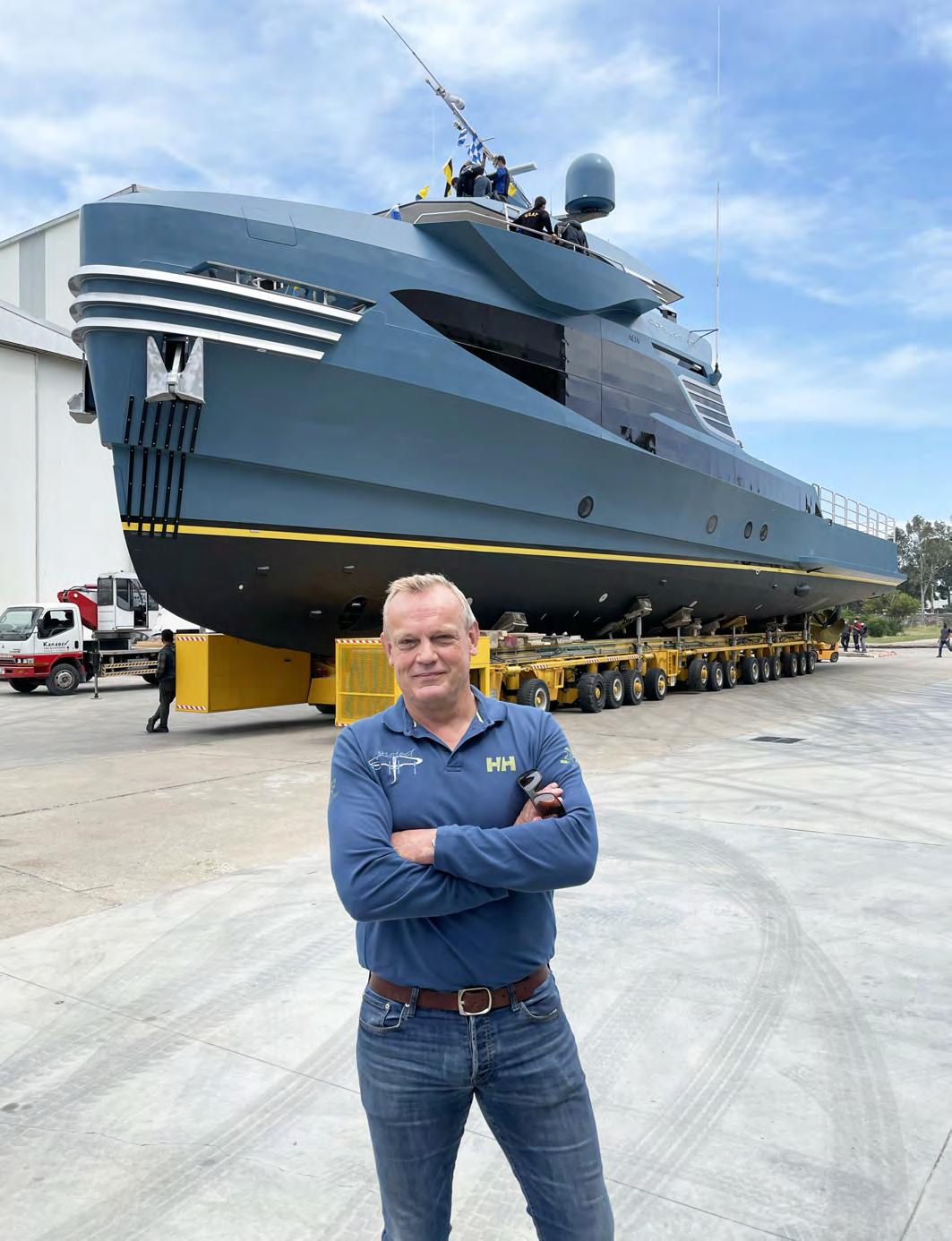
Phi means so much to so many minds and hands that worked on the project, not least Booth –and it’s why he refuses to give up.
dust in a London loch. The naval architects at Van Oossanen, the exterior designer Cor D. Rover and the interiors team at Lawson Robb all took it on as a flagship project. It should be one of the crown jewels of the fleet; it is only one of two motoryachts ever built by Royal Huisman and that means something to everyone who worked on it. And even in an operational sense, the vessel is teeming with acute features that hadn’t been seen previously: extra-wide teak walk-arounds that let crew board a tender without clambering over high bulwarks in front of guests and outboard sun lounges with glass floors, suspended over the sea and reserved for the crew.
Phi means so much to so many minds and hands that worked on the project, not least Booth – and it’s why he refuses to give up. “I liken Phi to my third child and four years ago, she was diagnosed with leukaemia. Four years of pain and suffering. What do I do? Do I stand up and walk away and join another family that’s got three healthy children? Do I fuck. I roll my sleeves up, I do what my dad taught me to do – I knuckle down. And leukaemia is curable.”
So now they look to the ECHR. The UK Supreme Court ruling last summer went against Phi’s appeal, exhausting the domestic options. They firmly believe the ECHR will side with the plaintiff. He remains non-sanctioned anywhere, by anyone. The British court has separately granted permission to pursue a claim for damages. Booth won’t disclose the figure, but it will be “massive”. The Department for Transport does not have that kind of money on its books and if the ECHR finds for Naumenko and a damages claim succeeds, the bill is paid from the treasury, right from the public purse.
Phi’s detention, in Booth’s view, was the work of a single morally bankrupt politician who has since left office, looking to climb the ladder by appearing tough on Russia. The current government has inherited the consequences of that decision and now has no clean way out. There is, in any case, a second route to the same outcome. If the war in Ukraine ends before the ECHR rules, the legal basis for Phi’s detention falls away and so does the damages claim. The boat is released, the government pays nothing, the public purse is untouched. Booth believes this is not lost on
Westminster. “The only way the British government will let us go is if the war ends, and then we can’t claim damages, because the reason for detention no longer exists. So, I think, personally, I believe delay tactics are in play.”
What concerns the wider industry is what Phi suggests about the UK as a jurisdiction. Naumenko was never sanctioned, he has never had political influence in Russia. The detention rested on a direction made by a Transport Secretary in the immediate aftermath of an invasion, and has now outlived him in politics, multiple governments and several legal challenges. If that can happen to one boat, it can happen to any.
“The government has decided that the war that America and Israel are currently conducting in Iran and Palestine is not our war. It is an illegal war, and yet they’ve not sanctioned any Israeli or American assets,” Booth explains bluntly. “But couldn’t they say that an American owner’s superyacht in London, we’re going to sanction that to show Mr Trump that we do not approve? That’s exactly the same. And now the British government don’t know how to get out of it without getting egg all over their face.”
Naumenko himself is in failing health. The boat his family helped design and live alongside for sixteen years is now a source of anguish rather than pride. “He is nowhere near as in love with the boat as he once was,” Booth says, “and his family aren’t either.” Booth’s own hope is that the case runs its course, that the owner does not negotiate, that Phi is released either by an ECHR ruling or by the end of the war and that Naumenko then pursues the maximum damages available to him.
I can’t help but feel a deep level of admiration for Booth as our call begins to wind down. ECHR aside, the road ahead is filled with tangible promise. The level of passion and pride he has is palpable as he describes his latest projects. He is managing several boats, with permission from the owner of Phi, of course. But he is also working around a drawing board once more. “We are working on a replacement for Phi Phantom [the 36-metre Alia Yacht that was built to act as a support vessel for Phi]. So, it’s going to be a companion vessel to Phi. We might even use the same hull as Phi, because I've never been to sea in anything quite like it. It is phenomenal at sea. The hull is beautiful. The most exciting part of that is propulsion, because a lot has changed in terms of available, accessible tech.”
This is where he belongs and it’s a place he’s fought hard to return to. And so, with a pang of professional guilt, I ask him, knowing what he knows now, would he do the same thing again?
“If I could speak to my younger self now, I would tell him to start saving money earlier,” he laughs. “Believe me, I had a good time in my twenties and thirties. I earned good money, travelled a lot, bought a lot of toys. But other than that, I would say do it all again, exactly as you’ve done it. This is what I impart to my children now. I’m 55 and I still don’t know what I want to be when I grow up. The universe will show you your path as it has shown me mine.”
When we had spoken last summer, in the immediate aftermath of the Supreme Court ruling, Booth had told me what he wanted from the end. “It’s a matter of honour for me now. For the owner’s family, for my own family, for my own sense of achievement. If I walk away from it, I would be forever defeated and that’s just not in my nature. I want to steam off down the Thames one day with my middle finger in the air. Then watch with glee as our lawyers serve papers on Mr Shapps, because that’ll happen.” He is slightly more measured this time around. “I’m staying with Phi until it reaches a conclusion,” he says with a knowing smile. “Then I’m going to go cruising – I want to and I need to.” CF
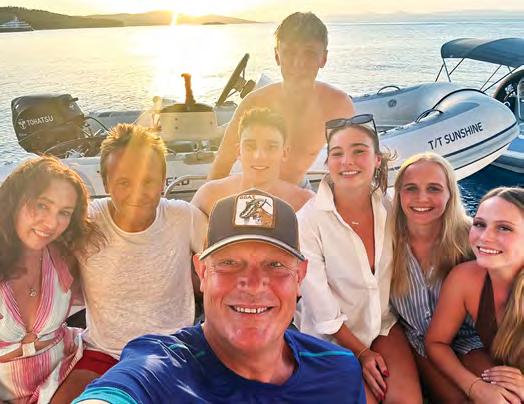
When not working on yachts, Booth hires them for family holidays. With his extended family in Croatia, a favourite summer cruising destination.
by Jonathan Lee
The asset you can’t see: why technical knowledge is the next frontier of superyacht value
As superyachts grow in complexity, the industry’s most overlooked asset isn’t the engineering or the interiors, it’s the operational knowledge embedded in the vessel itself. Jonathan Lee, CEO of Sentini Marine, argues that protecting that knowledge is no longer optional.
The superyacht industry has always known how to protect what it can see, such as paintwork, teak decks, designer furniture and the owner’s privacy. Enormous resources are directed at preserving the visible quality of an asset worth tens or hundreds of millions, but as vessels become increasingly sophisticated, a quieter, more consequential form of value is being overlooked.
That value is technical knowledge, not manuals, not a folder of shipyard drawings, but a living, vesselspecific body of verified operational understanding, the kind that tells a chief engineer not just what a system does, but how it was installed on this yacht, how it interacts with adjacent systems and what has changed since delivery.
When that knowledge exists in structured, accessible form, it underpins everything: smoother sailing, safer operation, faster fault resolution, cleaner refits, stronger resale confidence. When it doesn’t, the cost is measured in time, in avoidable damage and in risk that never fully announces itself until something goes wrong.
The knowledge that leaves with the crew
Crew turnover is an accepted reality in yachting – senior engineers leave, captains change, refit teams complete their work and move on. What is less often acknowledged is what departs with them: a significant portion of the vessel’s operational memory. Modern superyachts are delivered with documentation that was designed primarily for the build process, such
as shipyard drawings, OEM manuals and certification records. That material reflects how the yacht was designed to be built but it rarely captures how the yacht was actually built, how systems have been adapted in service or how the vessel’s unique infrastructure should be navigated by a crew encountering it for the first time.
The gap is filled by institutional knowledge, the kind held by the engineer who commissioned the vessel, the captain who managed its first refit, the technician who knows which access panel conceals which junction. When those people leave, so does that understanding. The yacht remains; however, its context does not.
For owners, that erosion creates real expense as fault-finding takes longer, new crew require more intensive
on-boarding and refit teams spend billable time rediscovering information that should already be documented. Warranty claims become harder to evidence without a clear operational record.
Documentation as a strategic asset
The conventional view of technical documentation positions it as a compliance requirement: something produced at build, stored somewhere accessible and consulted when things go wrong. Our argument is that this view undervalues what documentation can actually do.
When produced with genuine operational rigour, vessel-specific, verified and structured to reflect the yacht as it actually exists in service, technical documentation becomes something more durable. It creates a transferable operational memory. It allows any qualified engineer, regardless of their prior history with the vessel, to understand its infrastructure
with confidence. It gives management companies a consistent baseline that survives personnel changes. And it gives future buyers something increasingly rare in a transaction: clarity.
Buyers in today’s market are not simply assessing aesthetics and specification, they are assessing risk. How robustly has the vessel been managed? How quickly can a new team understand its systems? How much operational knowledge is embedded in the asset itself, rather than residing in the memory of whoever happens to be on board at the time of inspection?
A yacht with strong technical continuity answers those questions before they are asked. One without it introduces uncertainty at precisely the moment when confidence matters most.
Building the case for invisible continuity
The argument we make is straightforward: as-built documentation
is not merely a record of completion, it’s a strategic investment in preserving what the vessel knows about itself. For shipyards, it represents an opportunity to deliver a more complete product. For owners and their representatives, it provides long-term asset protection that operates quietly but persistently. For management companies, it reduces dependence on informal knowledge transfer and improves operational consistency. For buyers, it provides evidence of stewardship.
Millions are spent each year protecting the visible quality of superyachts. The next frontier is protecting something less tangible, but no less valuable: the knowledge that makes those assets operable, transferable and resilient across a full working life.
A superyacht’s value is not only defined by how beautifully it was built; it is also defined by how well its knowledge survives. JL
“The real opportunity is to treat technical documentation not as an afterthought, but as part of the yacht’s enduring value. When that knowledge is verified, structured and maintained, it becomes part of the asset itself.”
No fuel. No fun. Can we still afford to charter?
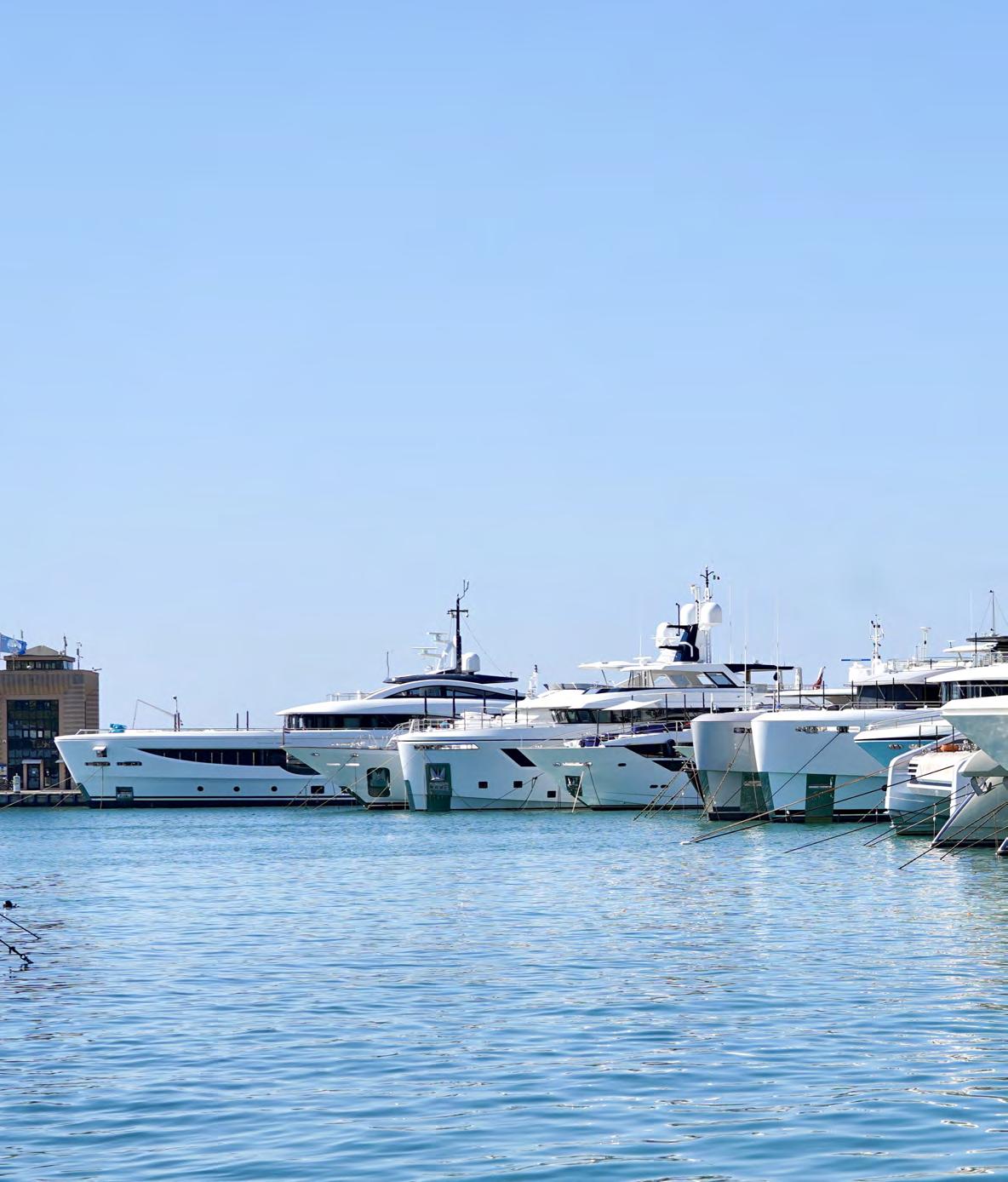
Alexander Griffiths of Tidal Communications attends MYBA to find out how operational costs are affecting the demand for charter.
The MYBA Charter Show
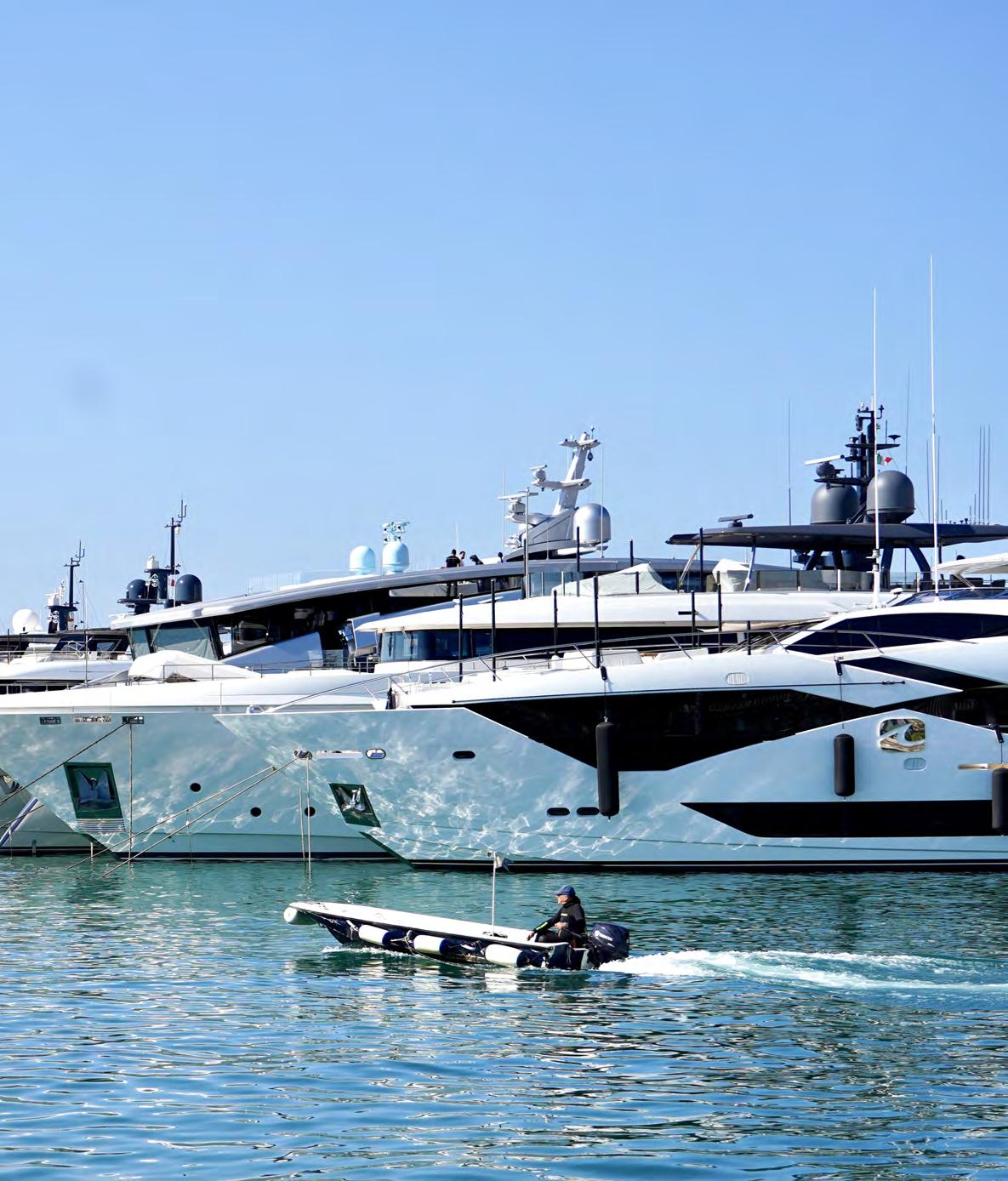
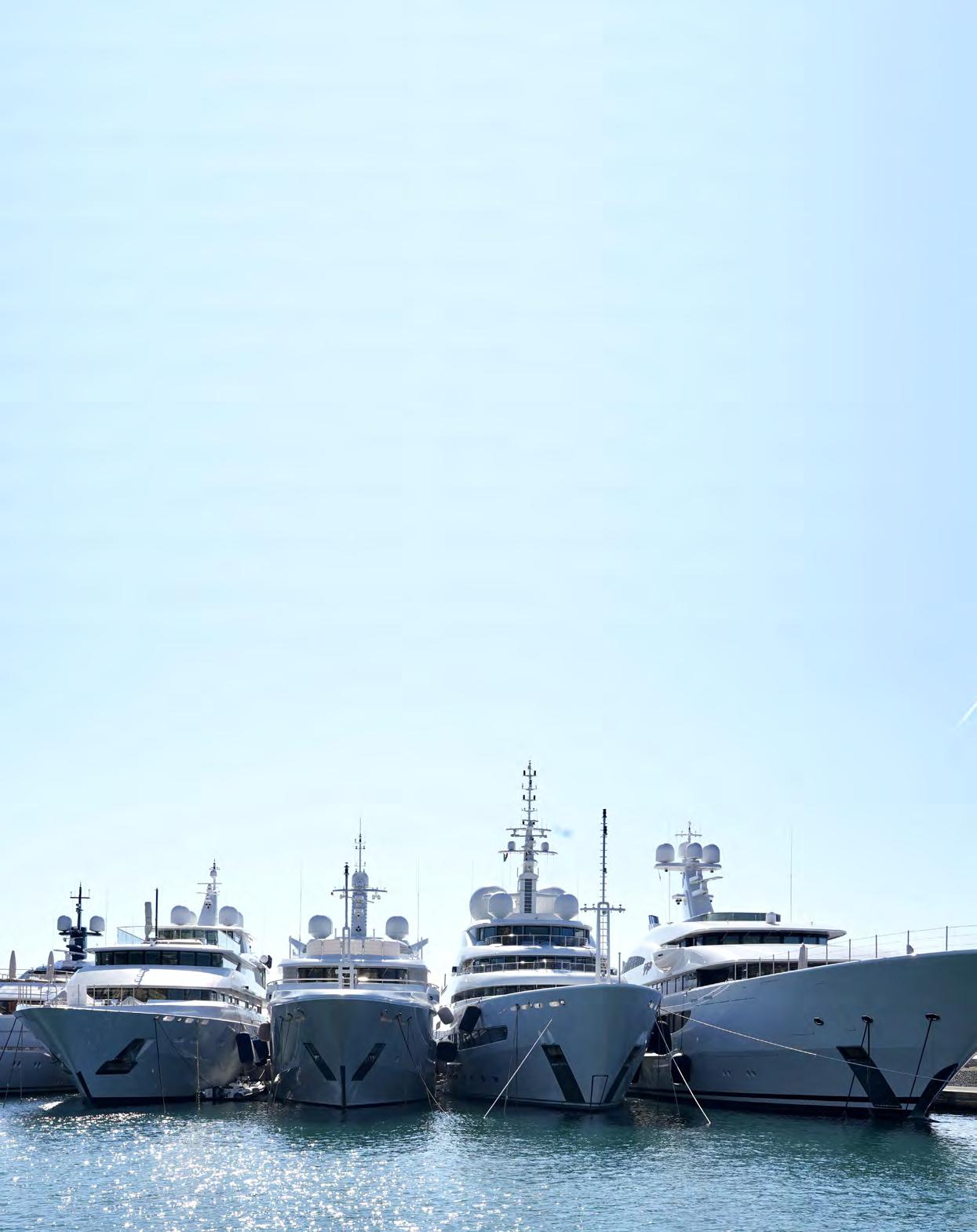
Well … yes, and here we go again. Boat season. The big one, anyway. With most of the charter fleet now repositioned in the Med and most of their respective charter managers in Sanremo for the MYBA Charter Show – the first major European charter event on the calendar – if I wanted to get a true read on how this season will play out, this was precisely where I needed to be.
And after being stung by a steep price hike for the no-longer-so-aptly-named budget flight and then paying through the nose at pretty much every turn, money – or the lack of it – was top of my mind. I wanted to know whether this ultimate tier of travel and hospitality was feeling the pinch or whether it was an experience exclusively reserved for pedestrian travellers like myself.
“The market was completely dead for about four weeks,” Harrison MacManus of Cecil Wright told me. “This was from mid-February to just after Easter. Global events cause insecurities, and with insecurities comes hesitation. No one wants to commit months in advance. They wait till the last minute, and when they come to the negotiating table, they come aggressively.”
I felt quite clever for a brief moment after joining the very simple dots of high costs ≠ lower demand, and skipped off for a celebratory Spritz. But my a-ha moment was soon shattered. I thought I’d stop by to poke my head around the recently refurbished Emocean. My first surprise was how beamy it was – wow! And my second was when Captain Alex mentioned the prep work underway for their forthcoming busy season – damn! The Spritz would have to wait. I had to understand why.
“Most of the bookings were made last season,” Frédéric Cretin of Camper & Nicholsons, Emocean’s charter manager, explained as we settled on the shaded foredeck. “People love the boat, they love the crew. She’s a young, high-volume yacht with contemporary options. But you’re not wrong about the market slowdown. Since the conflict, all markets have been volatile and there's a real concern about fuel rations.”
Jet fuel is the big one. With the ongoing conflict between the White House and Iran, and the latter pushing even deeper into a bruise with pain receptors that reach every single one of us – oil price – travel was not only getting more expensive, it was looking impossible. In the weeks leading up to MYBA, major airlines were pulling flights, reporting losses, and European ministers were announcing bleak PSAs of nearly empty fuel reserves. It was then not a question of costs, but a question of security.
Even if you own a jet – if there’s no fuel, there’s no fuel – travel was seemingly going to be off the cards. I was feeling quite glum about the prospects and tendering across the marina hardly perked me up. What should have been a pleasant five-minute passage became somewhat depressing as my companion on the open-topped tender, a superyacht supplier, regaled me about how provisions could become nearly impossible to supply due to the current fuel climate – “but we have an electric fleet of lorries,” he smiled at me. Every cloud, I thought, musing about how he could potentially sweep up the market if nothing abates.
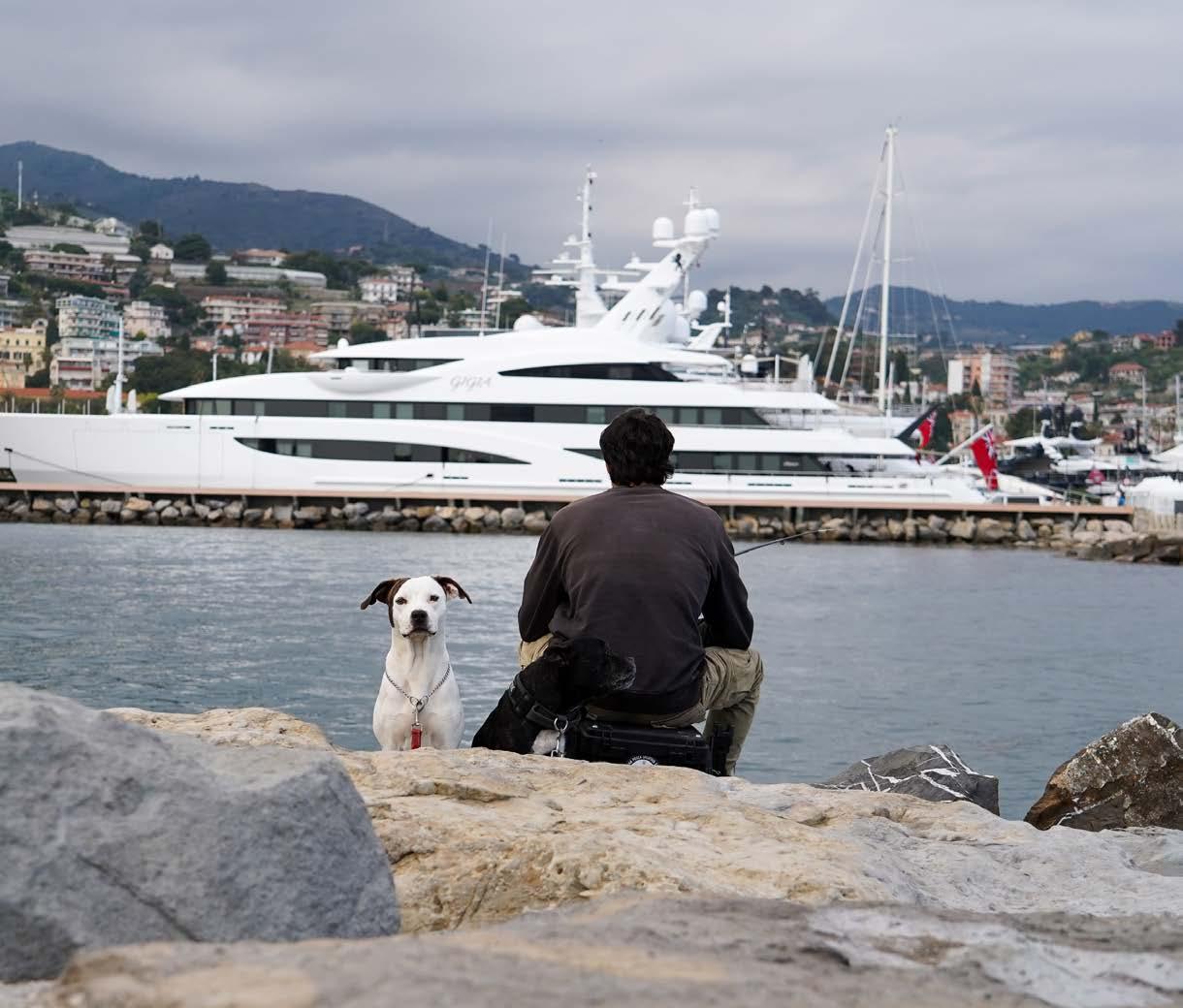
With what I learned thus far, it would hardly be presumptuous of me to expect a knee-jerk reaction from some owners to pull their yachts from the charter market, concerned about their assets running out of muscle power and becoming stranded. And after walking the full 92-metre length of Gigia en route to the bigger boats of the show, I thought I’d climb aboard to see whether I was right. “We actually had charter guests scheduled for disembarkation when the war broke out in Venezuela,” the chief engineer told me. “As the airport shut down in St Barts, we offered our guests a no-expense extension on their trip to weather out the momentarily no-fly blackout.”
The crew went above and beyond. My Aperoldenying quest continued. I went on to have a quick-fire run of captain interviews about fuel, and here’s what I found out: some were talking of more selective itineraries – local, carefully planned routes for reduced fuel burn – while others, if they hadn’t already refuelled ahead of the season, were finding new bunkering locations. North Africa, with its proximity and attractive rates (approx. €1 p/ litre), seemed a hit, but the captain of Coral Ocean looked a little bemused when I pressed the question to him. “Of course, we always find the most costeffective fuel solutions, just as we would for any other provision, but let's not forget we’re sat on board a Lürssen,” he said, smiling. I looked around and must admit, it was bloody lovely. “Coral Ocean is completely optimised for efficiency. I was just comparing data with the captain of a similar-sized vessel, and we burn roughly 50 per cent less fuel than they do. Incredible.”
For those like me who are less savvy with the financial intricacies of charter bookings, my snap assumption that rising operational costs result in more expensive charter rates was soon dismissed. Fuel is a cost shouldered by the guest (makes sense) and is redacted post-charter from the Advance
Provisioning Allowance (APA). And as one captain kindly explained to me, “We treat this budget as if it’s our own. We provision at the best rates we can, we build up our reserves in advance, when possible, and we stretch each cent as far as it can go.”
To talk numbers, roughly an additional 30 per cent of any given charter rate is locked away in a fund to cover all running expenses – and often the crew gratuity too. Whatever remains is reimbursed to the client. Pre-pandemic charter guests were setting less aside, but the heady mix of a fluctuating market and global insecurities quickly ran APAs dry, and the rate had to be corrected.
“Covid taught us a lot,” Marie Molls of IYC explained to me as two finely detailed porcelain cups
“Less costs, [it’s] more about legislation ... we changed flag and became Monégasque. Now with Monaco, we can charter for 90 days without any personal tax levies.”


brimming with fresh Italian coffee were placed on our table by the attentive crew of the golden-hulled 50-metre Raja2. “We all became more resilient, more flexible and quicker to find solutions – we had to. This market disruption is merely a blip compared with what we experienced then.”
The industry came out of the pandemic with renewed momentum. Shipyard orderbooks hit record highs, while charter demand surged as a new wave of clients discovered the appeal of life at sea. Lisa Airasca of Fraser Yachts described an unprecedented influx of enquiries across generations and nationalities, many from first-time charterers seeking privacy and flexibility. At the height of this demand, availability was tight, with the most desirable yachts booking out well in advance. As new builds entered the market and more owners considered charter, supply gradually expanded, bringing the market closer to balance. “The yachts that captured this demand most successfully,” she noted, “were those that made guests feel at home,” reflecting a broader shift toward comfort, personalisation and experience-driven design.
I checked my watch with the bitter realisation that, unlike everyone else in Portosole Marina, I was tediously slow at finding the solution. Forget the cocktail … lunch was now scuppered. Frustrated that this commission was the only thing in the way of basking in the Italian sun, I saw hope on the horizon. Sails! Let’s forget this whole fuel palaver. Unfurl the canvas and do away with it. There’s the story … and hope for lunch. I jogged down the dock
and waved at the beaming Radostina Trifonova of Denison.
In all my haste, it took me a minute to realise where I was standing. Swathes of teak, polished chrome and high-gloss woodwork surrounded me. It was a regal setting; it had to be a Perini … it was. I had settled in a deep seat on the aft deck with Trifonova and Captain Ukic. Ice water was served. “So tell me,” I asked, admiring my settings once again on the 40-metre Ellen, “how is everything going?”
“Business is good, bookings are getting longer,” Trifonova explained. “We’ve had many inquiries for three-plus weeks – not only for Ellen, which is under our management, but for numerous yachts across our fleet.” That’s counterintuitive for my report on trends, I thought gloomily. Rats! So I turned to the captain and directly asked whether the owner was feeling the pinch of rising costs. “Less costs, more about legislation,” Ukic replied. “It wasn’t so long ago that we changed flag and became Monégasque. Under our old flag state, the family was paying VAT when they used the yacht privately. Now with Monaco, we can charter for 90 days without any personal tax levies.”
Interested to know whether other owners are considering alternative practices to optimise the finances of their prized assets, I flicked through the show marketing fodder and spotted two newcomers to the charter market: the 26-metre sailing cat Mirovia and the iconic My Tempest, both just completing extensive refits. I sat down with the
DISCOVERIES FROM THE DOCK
Are charter rates getting more expensive?
No – not at face value anyway. Charter rates are still well within margins following post-Covid price corrections. Guests do shoulder costs for fuel or provisions, so they can expect that these will eat more into the APA than before.
How are owners reducing operational costs?
Many ways. Reflagging for favourable VAT rates, finding alternative suppliers for provisions and sourcing fuel as cheaply as possible. North Africa is a good option for some.
Is there a specific size segment feeling the pinch?
Big ticket charter yachts are well-insulated. And brand-new yachts have an exclusive edge. Smaller and slightly older yachts require flexing a stronger marketing muscle to attract bookings.
Are charter yachts optimally positioned?
Not always. Hot spots are naturally covered, yet further-flung regions are thin. Moving yachts into new locations takes work and financially persuasive power – three or four bookings could do it.
What challenges could we see for the 2026 season?
Prime berths in hotspots like Corsica and SoF fill up fast. When charters are booked last-minute, it is difficult (read: sometimes impossible) to guarantee placements in the most desired areas.
What is the best way to market a yacht?
Boat shows remain king. Brokers are incredibly unlikely to recommend yachts they haven’t set foot on – I mean, why would they? Yachtfolio, digital marketing tools and partnership events are also supreme awareness assets.
Is the geopolitical climate influencing bookings?
Some smaller yachts are localising their itineraries to mitigate relocation costs, while heightened tensions across the Middle East have deterred others from cruising anywhere east of Italy.
“Anything big built in the last couple of years is a magnet for charter guests. Experiencing the unexperienced naturally has its appeal.”
two respective captains and they both assured me that neither owner is interested in the enterprise of charter. They both want to keep the crew sharp, offset a few costs and ultimately share the cool experience they both offer: Mirovia is chasing the purist sailing adventures, while My Tempest has brought the golden era of Bridget Bardot-esque St Tropez cruising to the modern client.
As I was pondering whether demand was there for the unique, I walked past the oddly-shaped and wildly popular This Is It and watched a throng of people eyeing up the oldest – and my personal favourite –yacht of the show, Over The Rainbow. I guess so, I mused! But if anyone was to know, it was Burgess. They're incredibly well-versed at shaping yearslong itineraries for a whole range of expeditions, the purpose-driven charters of the converted 45.6-metre Scantilla Maris being just one example.
“People are still exploring and opening new horizons, taking their yachts with a seven-star service to destinations that don’t have that level of luxury onshore,” says Frederica Findlater of Burgess. “Last summer we had two big boats with busy charter programmes in Norway, but it is always a juggle of supply and demand.”
Companies at the scale of Burgess are well protected from the tug-of-war of supply and demand, seeing as they offer the full suite of services. As it is often common for owners to select the same brokerage house to both manage their yachts and their charter programmes, the service becomes holistic. It’s not cheap to relocate a yacht. And ultimately, these decisions – as with nearly all decisions – are financial. How much can these costs be insulated through charter?
They’re not the most common, but there has been a string of global adventurers. Hemisphere under Burgess successfully circumnavigated the globe three times with selective charter offerings in key destinations. TWW Yachts developed a great programme for La Datcha and is currently outlining an itinerary for the big Damen After You, while Fraser is sketching out a very cool, adventurefocused programme for the freshly refitted 73m iceclass explorer Planet Nine. The adventurous spirit of
these commercially minded owners provides a testing ground for lesser served destinations.
As the sun was setting, and my stomach was now noticeably audible, I found myself in quite a privileged perch aboard another Perini Navi with a wine glass in hand (finally!), and funnily enough, back in the company of Harrison MacManus. We got onto the topic of the 122-metre Kismet – the motoryacht of 2025 – which Cecil Wright exclusively represents. “She had loads of inquiries,” MacManus explained. “Look, anything big built in the last couple of years is a magnet for charter guests. Experiencing the unexperienced naturally has its appeal.”
I could see the show officials winding everything down and knew this was my last chance to find out whether this magnetism was just as strong for yachts so new to the market that they were making their global debut at this very show. It was time to see Alva.
The dock immediately melted away when I stepped on board. I was wrapped in a subtly textured, linenwhite blanket of tranquillity. Everywhere I looked was inviting soft tones, and it soon made sense when I discovered the yacht was a beacon for the health and wellness inclined.
“Before anyone had even seen Alva, we were receiving inquiries,” said Caroline Antlett of Christie Yachts. “It’s a real testament to the reputation of the shipyard and the crew. However, we very much prioritise the quality of clients who will charter the yacht over the volume of bookings. It is important to the owner and Christie Yachts to put the right charter clients on board who are going to respect the yacht and crew.”
So it seems the game of charter chess remains an epic battle of financial management, expectation management and strategic placements around the world, against a backdrop of inflation, war and insecurity. And after sitting down with the managers handling the strategy and the captains helming the fleet, there wasn’t even a flicker of stress. I can confidently report that despite the very momentary dry patch, charter demand remains strong, rates remain stable, and the captains and crew will move mountains to ensure operational costs are kept to a minimum. AG
Images by Alexander Griffiths, Tidal Communications
Captains, you are your internet service provider!
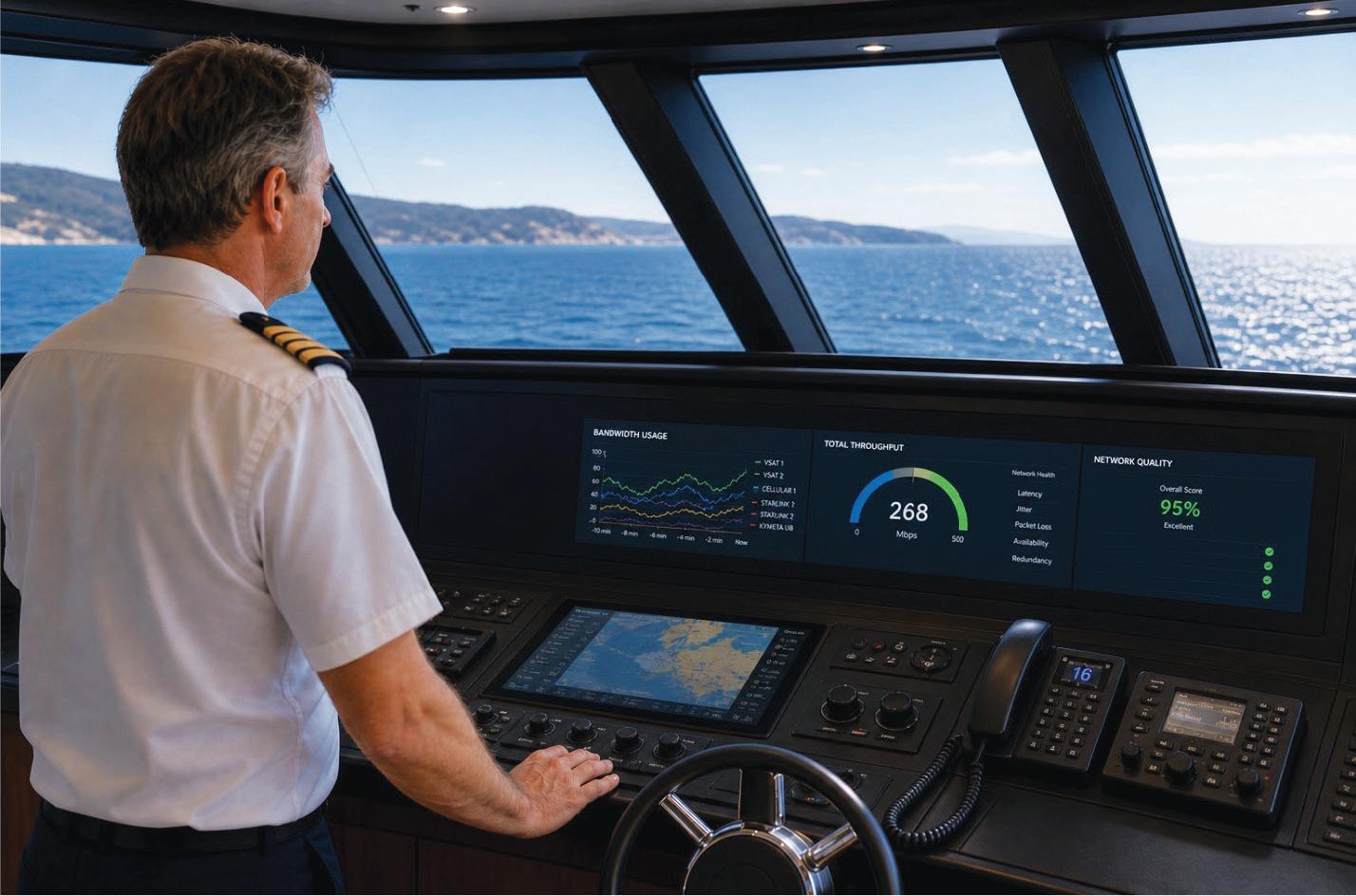
Ernesto Esposito, Head of Technical Sales and Account Management at Omniaccess, on how to provide what may be the second most important on-board necessity after food: reliable and fast connection at sea.
Iam sure that you have heard these stories multiple times over the past couple of years: that Starlink cannot be your only source of connectivity on board; that you need a back-up in case Starlink fails; that you should not remove your VSAT antennas yet as they can still be useful in many situations; and so on. While these may sound like appeals from internet service providers (ISPs) trying to defend revenue streams affected by the launch of what many consider the ultimate fast and economical solution for internet at sea, there is another side to the story that, fortunately, many captains are wisely valuing: internet connectivity is a necessity, but it cannot be DIY – at least not on a floating and mobile asset like a vessel.
Indeed, the experience ISPs have with their customers when they are desperately seeking a solution after losing internet access is priceless. And it is no mystery that their success depends heavily on how customers perceive their support service. I come from many years of working with mobile network vendors and operators, and I have experienced those situations first hand. Nights spent in data centres restoring internet service across different geographies and mornings spent in ISPs’ boardrooms reviewing what caused them tough times with their customers and designing mitigation plans.
I have also experienced it first hand as a customer and I do not think I have ever met anybody who feels good when unexpectedly being disconnected from the internet. I am in my mid-forties, so I know how to survive without internet –but think of the newer generations (including many of today’s yacht owners), who are deeply attached to their online lives. Therefore, being disconnected is widely considered unacceptable these days, and that’s why all of us have at least an internet fibre and a cellular subscription.
Any engineer like me knows perfectly well that technology fails and
that if you are not the customer but the service provider, you are responsible for avoiding those unacceptable events at all costs – or you will lose your customers. Let us apply this to the yachting context and answer a couple of simple questions: is having no internet acceptable for my owner and guests? Do I want to bet my career and reputation on a single technology that, at some point, will inevitably fail?
Captains and engineers are, in effect, the ultimate service providers to their guests, and they receive significant pressure to provide quick solutions to the outage of what may be the second most important on-board necessity after food. Perhaps not in a smelly data centre or a grey industrial-estate boardroom like I’ve experienced, but the surrounding environment hardly matters when people are deprived of what has become one of their basic needs.
Continuing with familiar shorebased analogies, have you ever wondered why your mobile phone can still almost always find a 2G network when faster 4G and 5G are unavailable? It is because mobile service providers have a solid mitigation plan: the vintage 2G (or GSM). We all know 2G is slow, but it can save the day when we need to make an important call or send a message.
Does this scenario resonate with those working in yachting when considering low earth orbit ( LEO) services like Starlink versus older satellite connections? If so, you can see why experienced ISPs recommend having a backup connectivity plan – not only for entertainment purposes, but for safety too.
The good news is that on a yacht you can have a back-up plan far better than a 64kbps 2G connection. While Starlink has become the status quo for fast internet connectivity, new players in the LEO satellite internet services arena have entered the market, such as Eutelsat OneWeb and Amazon LEO. The former is already available in most established yachting areas such as the
Meeting service expectations is another key factor that any service provider (you!) must focus on ... speed is not usually the users’ main concern, the performance of their applications and devices is.
Mediterranean and the Caribbean, as well as many other regions, targeting global coverage by the end of this year. The latter has begun launching satellites and signing partnerships with internet service providers, with maritime commercial availability forecast for during 2027.
And if you still have those VSAT antenna domes installed on your yacht, they can still be of great value. Like their shore-based sibling, 2G, they can provide almost global coverage, with the added advantage of allowing you to choose what bandwidth you need and when. Yes, VSAT is expensive compared with Starlink or other LEO services – but how much is your owners’ and guests’ satisfaction worth?
Finally, although cellular remains a valid option too, I am focusing on what can provide consistent internet coverage beyond proximity to shore, that is satellite-based connectivity.

From our experience – especially on vessels with a high density of internet users such as 100-metreplus superyachts and cruise ships – guest questionnaires have shown that internet quality is a major contributor to customer satisfaction and can significantly influence the positive or negative rating of their overall on-board experience.
So do we all agree that Starlink, plus another LEO service and why not VSAT too, if the system is on board, could form a solid contingency plan for your guests’ satisfaction? A LEO + LEO + GEO set-up that can protect you from those unexpected moments when technology lets you down. Or a LEO + LEO + GEO bundle that can maximise internet experience and efficiency on board, especially during high season. If you add the fact that such combinations are increasingly engineered by leading ISPs to be simple to combine and manage, then it becomes close to a no-brainer for most yachts.
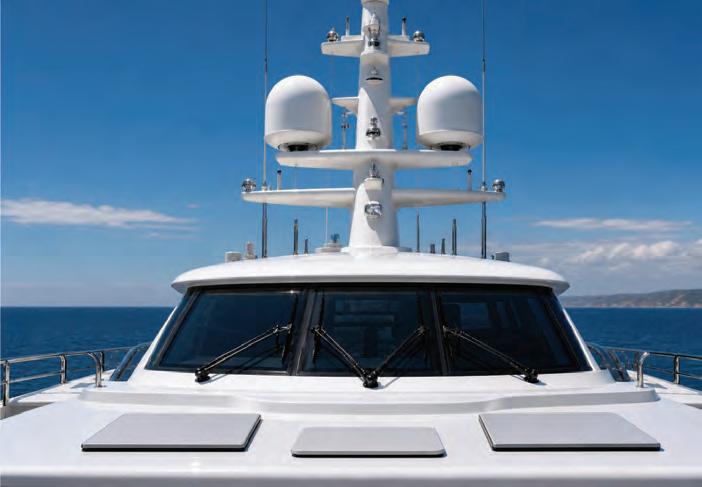
From a technical point of view, the main building blocks for a bulletproof LEO-LEO-GEO solution are as follows:
• Antennas, ideally two for each ser-vice (for example a pair of Starlink Performance Gen 3, a pair of Intellian or Kymeta Eutelsat OneWeb antennas, and a pair of VSAT domes).
• A simple service bundle including data allowance from all these technologies.
• A connectivity control dashboard that can be accessed and used from anywhere.
• A platform capable of automatically switching between, or bonding together, multiple connections, always with security features capable of detecting and blocking external cybersecurity threats and, of course, built-in redundancy to minimise downtime.
• A capable on-board network infrastructure able to accommodate gigabits of data, from cable types and categories
VSAT antenna domes can still be of great value. Like their shore-based sibling, 2G, they can provide almost global coverage, with the added advantage of allowing you to choose what bandwidth you need and when.
Jitter Moderate
Packet
Direction Asymmetric (i)
to each piece of equipment’s capabilities – again, with redundancy in mind.
• A proper Wi-Fi coverage design, because you can have the best internet solutions and network equipment installed, but if you have weak coverage spots or interference, you will still suffer poor internet service.
The good news is that some of these building blocks are probably already implemented on your yacht, so in most cases this should not be a major undertaking.
But internet is like a highway: when you enter with your car, you expect to reach your destination faster and without issues along the way. If something deviates from those expectations, we feel stress (a study showed that video re-buffering increases stress levels by a third). And the larger that highway is, the higher our expectations of a smooth drive become. Yet there is always a chance that things may not go as planned due to traffic, unexpected accidents along the way, etc.
Meeting service expectations is another key factor that any service provider (you!) must focus on. Even when the above LEO-LEO-GEO plan is in place for fast and uninterrupted internet, speed is not usually the users’ main concern, the performance of their applications and devices is.
This is called Quality of Experience (QoE). From our experience – especially on vessels with a high density of internet users such as 100-metre-plus superyachts and cruise ships – guest questionnaires
have shown that internet quality is a major contributor to customer satisfaction and can significantly influence the positive or negative rating of their overall on-board experience. Hence the importance of the Mean Opinion Score (MOS), which is vital for many businesses. For a yacht, MOS may not be as critical as it is for a cruise ship, but for charter operations the same concept applies simply on a smaller scale. It may also be relevant for private yachts, especially when owners and guests require business continuity while on board.
Managing QoE, however, is not a trivial task, although there are some interesting tools that can help.
Starting from the basics, every application has different requirements in terms of network performance. For instance, if you use a video-streaming application to watch a film, it is important that your network connection is fast enough to provide a smooth experience and high video resolution. If you are gaming online, latency and jitter (variation in latency) are much more critical than speed. If you are videoconferencing, jitter and packet loss are critical (see table above).
Starlink generally meets all these requirements, but on-board network infrastructure limitations, temporary impairments or congestion issues may still affect performance.
There are solutions on the market that can help you monitor your guests’ experience, such as the new OmniAccess Unity®, based on their latest virtualised
Symmetric (hi)
edge platform, where you can view clear graphical indicators relating to network reliability, speed and stability that directly affect guest experience. With the same platform, you can also implement application steering strategies across multiple connections, and automated failover and data packets duplication, to maximise performance and resilience in a LEO-LEO-GEO environment.
The bottom line
Yachting is living through one of its best eras for innovation in a sector that, for years, was limited by the lack of fast connectivity compared with life ashore. Innovation, powered by digitalisation, is what will allow a luxury asset to remain truly luxurious without technological compromise.
Captains, you are the ultimate service providers to your guests. You have access to multiple connectivity technologies. You have the latest tools to monitor and maximise their performance. You have the power to make your guests’ on-board experience unique without compromises, and you can rely on the experience of premium maritime ISPs that, for decades and still today, have been offering expert support and innovation born from years of listening to you and your guests during challenging situations. So challenge your ISP by seeking continuous innovations in your on-board internet solutions, and you will avoid those emergency calls to their support centre and those spikes of stress level to your guests, your customers. EE
YOUR
LOYAL & MOST TRUSTED SUPERYACHT PARTNER IN TÜRKIYE.
We have one mission and one promise.
To ensure that every Owner, Guest, Charter Client, Captain, Purser, Crew Member and Engineer enjoys every minute that they spend in our beautiful country and on our incredible coastline.
Trusted provider of Yacht Management, Provisioning, Bunkers, Transport, Berthing, Crew Placement, Shipyard Services, Charter, Brokerage and all key services required by Superyachts and their guests / crew while visiting Turkiye.
From captain to CEO
After almost three decades in command, Nigel Marrison makes the case that seamanship and safety are no longer enough for a superyacht captain to lead a modern maritime enterprise.
As the global fleet and scale of superyachts continue to grow, new cruising regions open up and emerging markets develop, the role of the modern superyacht captain is evolving. Captains are no longer simply the master of a vessel.
Today’s yachts operate as complex enterprises, representing assets worth tens, and often hundreds, of millions of euros. They employ diverse multinational crews, manage multi-million-euro operating budgets and operate across multiple jurisdictions, demanding regulatory environments and increasingly complex legislative frameworks.
As the sector expands, stakeholder expectations rise and regulation continues to tighten. Command today is no longer only about navigation, seamanship and safety, it’s about leadership – in a broader sense than the role has traditionally required.
Increasingly, the captain’s role resembles that of a chief executive officer. A modern captain is responsible not only for operational performance but also for strategic planning, on-board culture, risk management, governance and the long-term stewardship of a highly valuable asset.
Deloitte’s research into modern CEOs highlights an important shift in leadership thinking. The most effective leaders focus not simply on short-term results but on building organisations that endure, grounding their decisions in long-term resilience, stakeholder trust and responsible stewardship. For superyacht captains, the parallel is clear. Command is not just about delivering successful trips or charter seasons but about safeguarding the longterm performance, reputation and operational integrity of the vessel.
Deloitte, for example, describes the modern CEO as operating simultaneously across four core roles: strategist, catalyst, operator and steward. This framework provides a useful way of looking at how the role of the superyacht captain is evolving.
Viewed through this leadership model, it becomes clear that the modern captain is already operating as something more than a traditional vessel commander – increasingly acting as the leader of a maritime enterprise. In many respects, this is simply an acknowledgement of what the role has quietly become over the past two decades.
Captains today safeguard assets worth €20 million to 100-plus million, manage operating budgets that can exceed €5 million annually, lead crews of 12 to 30 or more professionals, oversee major refits and shipyard periods and ensure vessels operate safely, efficiently and to the highest professional standards across a complex international regulatory landscape. In many respects, the captain’s bridge has become the boardroom of a floating organisation.
In my own career, spanning more than 25 years in the superyacht sector – the majority of that time in command of yachts up to 60 metres – I have increasingly come to view the role as leading a complex maritime enterprise. More recently, through developing operational frameworks exploring governance, efficiency, performance and risk management in yacht operations, that perspective has only strengthened.
The modern captain is therefore operating, in many respects, as the CEO of a floating enterprise, not in the corporate sense but as a ‘captain of enterprise and operations’.
The four roles of the modern superyacht captain
Viewed through the leadership lens described in Deloitte’s CEO research, the role of the modern superyacht captain can be understood across four interconnected responsibilities: operator, steward, strategist and catalyst.
Traditionally, the captain’s role has centred on operational command: seamanship, safety and the efficient running of the vessel. The wider
The modern captain is operating, in many respects, as the CEO of a floating enterprise, not in the corporate sense but as a ‘captain of enterprise and operations’.
responsibilities of stewardship, strategy and culture have often sat in the background. As yacht operations become more complex and scrutiny from owners, regulators, managers and other stakeholders continues to grow, those responsibilities are moving increasingly into the foreground.
1. The captain as operator
At its core, command remains operational. Seamanship, navigation, safety, technical oversight and regulatory compliance continue to sit at the heart of the role. Passage planning, itinerary and guest logistics, crew leadership, engineering and maintenance oversight, and the day-to-day coordination of vessel operations all remain fundamental responsibilities of command.
Everything else depends on the vessel being run safely, professionally and efficiently. But operational excellence alone is no longer enough. Leadership research increasingly reflects this broader view of the role. In Deloitte’s CEO research, adaptability and resilience consistently emerge as defining qualities of modern leadership, alongside strong communication, strategic thinking and emotional intelligence.
These are not abstract corporate traits. They are the same qualities captains rely on every day: navigating uncertainty, responding to changing conditions, making decisions under pressure and leading teams through demanding operational environments.
In many respects, the leadership challenges faced on the bridge mirror those faced in the boardroom.
2. The captain as steward
Beyond operations, the captain also acts as steward of the vessel and its owner – safeguarding a highly valuable asset while protecting the reputation that surrounds it.
This responsibility extends far beyond basic compliance. It involves managing operational risk, maintaining regulatory standards and best-practice credibility, protecting the vessel’s long-term value and ensuring the yacht operates responsibly in the environments and communities it visits.
Captains today sit at the intersection of multiple stakeholders: owners, management companies, regulators, financiers, insurers, crew, brokers, guests and wider society. Each brings expectations around safety, transparency, accountability and responsible operation.
Ultimately, the conduct of the vessel reflects
Captains make decisions that shape the long-term value, credibility and viability of the vessel – from refit planning and technical upgrades to operational efficiency, stakeholder engagement, crew structure and cruising programmes.
directly on its owner. In a sector that is increasingly visible and subject to greater scrutiny, maintaining operational credibility and reputational integrity becomes an important part of modern command. Stewardship therefore becomes central to the captain’s role, preserving the integrity of the asset while maintaining trust with those who depend on it.
Ultimately, the captain is responsible for both the operation of the vessel and its reputation.
3. The captain as strategist
Modern command increasingly requires strategic thinking. Captains make decisions that shape the long-term value, credibility and viability of the vessel – from refit planning and technical upgrades to operational efficiency, stakeholder engagement, crew structure and cruising programmes.
These decisions influence far more than the next trip or charter season. They affect the vessel’s operational performance, lifecycle planning, regulatory preparedness and ultimately its longterm asset value.
Captains occupy a unique vantage point within yacht operations. Making informed decisions increasingly relies on clear visibility of how the vessel performs day to day across environmental, social and governance factors, supported by reliable and cohesive operational data.
Working closely with owners, managers, shipyards, suppliers and crew, captains are able to identify opportunities to improve efficiency, mitigate risk and strengthen the resilience of both the vessel and the overall business model.
Strategic leadership in this context is about protecting the long-term integrity of the vessel, its operation and its reputation. In this sense, the captain helps set the direction of the vessel over time, ensuring it continues to operate to the highest professional standards within an increasingly complex operating environment.
4. The captain as catalyst
While operations, stewardship and strategy shape how the vessel functions, the human dimension of command ultimately determines how well it performs. Superyachts operate as small, highperformance organisations. Crew live and work together in demanding environments where professionalism, trust and teamwork are essential. In this context, the captain plays a central role in setting the tone on board – establishing standards, building culture and creating an environment where people are valued and can perform at their best.
However, the catalyst role increasingly extends beyond internal leadership. In collaboration with the owner, the captain also helps define the values that shape how the vessel operates. Those values influence the purpose, mission and direction of the operation, informing how the yacht approaches environmental responsibility, crew wellbeing, community engagement and the wider impact it can have both locally and globally.
When values, leadership and operations align, the vessel becomes more than a platform for travel or leisure, it becomes a professional operation capable of delivering positive social and environmental outcomes alongside exceptional owner and guest experiences. The captain acts as a catalyst –aligning people, purpose and professionalism to drive performance, responsibility and meaningful impact.
In conclusion, the modern superyacht captain therefore operates across far more than navigation and vessel management. The role now spans operations, stewardship, strategy and people leadership –responsibilities that increasingly resemble those of an enterprise leader.
The captain is no longer simply the master of a vessel, but the leader of a complex maritime organisation, the captain of enterprise and operations. NM
Guest Column by Brennan Dates
Luxury isn’t what’s visible, it’s what works consistently, without strain
What is the answer when chefs’ hours-of-rest compliance is compromised by operational demands? Brennan Dates presents the solutions to an imperfect structure …
What defines luxury on a superyacht?
From the outside, it’s immaculate service, flawless food and immediate response to any request, but behind the scenes, there’s a structural contradiction the industry has yet to address: the level of service expected on charter is often incompatible with legal ‘hours-of-rest’ requirements for chefs.
On paper, the rules of compliance are clear. Under current maritime labor frameworks, crew must receive defined rest periods within a 24-hour cycle. In practice, the chef’s role during a guest trip makes that difficult – often impossible – to achieve without compromising the product.
Consider the operational reality: a typical charter day involves early breakfast preparation, random guest requests, crew meals, guest meals, provisioning management, cleaning
the galley and late-night orders if guests are partying on board or getting back from the club. On smaller yachts, this is handled by a single chef, a lone warrior. On larger yachts, even with a sous chef or two, the guest expectations are even higher, and service times still compress any available rest windows to the point where ‘hours of rest’ compliance becomes a grumbled fantasy rather than a reality.
This is not a question of discipline or poor planning, it’s a structural issue. The system expects restaurant-level output, on demand, across extended hours, without enough staff to legally cover the hours. Something has to give – and too often, it is hours of rest.
The industry knows this is happening. Captains try to manage it as best they can and galley teams work through the heavy demands of guest trips.
If the goal is to maintain high standards while aligning with legal frameworks, the solution is not stricter paperwork, it’s operational adjustment.

If the industry wants both compliance and performance, it needs to stop managing the symptoms and fix the structure.
Flag states understand the pressure, but the hours written down often look correct on paper and don’t fully show how much people are actually working. This creates a gap between the rules and real life, which can affect crew wellbeing, safety and the long-term success of a programme.
Fatigue is not an abstract concern. In a galley, it increases the likelihood of injury, reduces consistency and impacts decision-making under pressure. Over time, it contributes to burn-out and high turnover, both of which are costly to owners and disruptive to the guest experience.
If the goal is to maintain high standards while aligning with legal frameworks, the solution is not stricter paperwork, it’s operational adjustment.
First, staffing needs to be looked at differently. Crew set-ups often favour visible service roles, while the galley runs with the bare minimum. Shifting that balance – adding one more chef instead of another junior role elsewhere – makes a real difference. It allows proper shifts, protects rest time, and better food for guests and crew, while leading to more consistent service.
Second, the role of the yacht chef should be more clearly defined within regulatory and operational frameworks. Unlike many other positions on board, the chef’s workload is directly tied to unpredictable guest behaviour and extended 24-hour service expectations. Treating it as a standard shift-based role without accounting for these variables leads to a system that doesn’t work in anyone’s best interest, including the owners.
Third, equipment standards need to reflect the reality of the environment. A yacht galley is not a domestic kitchen. Even on a 30-metre yacht, the volume and frequency of food production exceed what residential equipment is designed to handle. Yet it is still common to see domestic-grade appliances installed under the label of ‘professional’.
This is a false economy. Domestic equipment under sustained load fails more frequently, requires more attention from the engineers and slows down production. In contrast, properly specified commercial, marine-grade equipment is built for continuous use, easier maintenance
and consistent output. It reduces downtime, improves workflow and directly supports compliance by making the operation more efficient.
No private residence operates at this level – preparing multiple meals daily for 20 to 50 people, often with bespoke requests and tight turnaround times. Superyacht galleys are closer to highperformance commercial kitchens, and they should be equipped and staffed accordingly from the outset.
This isn’t about spending more, it’s about getting the set-up right. The crew and equipment need to match the level of service expected. In the context of a new build or refit, adding another chef or using proper commercial equipment is a small adjustment. The real cost shows up when the galley is stretched: fatigue, mistakes and constant turnover.
Luxury is not what’s visible, it’s what works consistently, without strain. That requires an operational model that supports the people delivering it. If the industry wants both compliance and performance, it needs to stop managing the symptoms and fix the structure. BD
Between command and connection
A reflection
on authority, connection
and what the superyacht industry must confront to secure its future.
BY MEELI LEPIK
Why we sail
Before the bright white hulls and the New Year´s celebration at St Barth, before Beluga and Starlink, there was a reason.
Someone stood at the edge of the water and felt something – a pull, an inexplicable, almost irrational desire to cast off the lines, to trust the wind and to go, against logic and disregarding safety because the human spirit demanded it.
That is why we sail and we learned to love the sea. Yet somewhere between the first wooden boats and today’s superyachts, a shift happened. The “why”–that original, elemental impulse – was gradually eclipsed by the “what” and the “how” and “who”, followed by performance metrics, delivery schedules and legacy hierarchies built less on purpose than on precedent.
Today, the superyacht industry stands at its own crossroads, not on the water, but within itself. A new generation has arrived at the dock. They are talented, connected and unafraid. The question that now hangs in the salt air is not whether they are ready to sail, it’s whether the industry is ready to let them take the helm.
The architecture of authority
For generations, seafaring has been a strange mixture of escape and ultimate mastery.
Respect and positions were earned slowly. You began at the bottom, deferred to those above, and, in time, if you were patient, skilled and willing
to prevail, authority was granted. It was a system built on respect for experience and in many ways, it worked, but authority, wisdom and emotional intelligence are not the same things.
Today, superyachts have grown rapidly in size and complexity. What began as love for the sea is now a complex floating luxury hotel, with, let’s say, some sea features. A 100-plus-metre vessel is, in operational terms, a multi-million-euro enterprise requiring sophisticated leadership across technical, logistical and human dimensions. In most industries of comparable scale, leading at that level requires a degree or two, and leadership development is a structured, ongoing process. In yachting, it remains largely informal, often even random, awarded through longevity rather than capability.
The result is predictable: technically exceptional individuals are placed in command without the tools to manage people, team dynamics or organisational culture. Too often, toxic behaviours are not corrected – they are carried upward, normalised and replicated. Part of it is because we still rely a lot on personal reference. A poor manager can give an excellent recommendation to a poor crew member and so the ball rolls further.
Authority, in the old model, was positional. It came with the title, the years of service, the grey at the temples and in weathered stripes on epaulettes. It commanded silence in the briefings and deference on deck. It did not invite questions, especially not from the youngest in the room.
Meeli Lepik, founder and chief consultant of Holistic Yacht Interiors (front right), with the interior team on board M/Y Areti in 2018.
A different kind of sailor
They grew up differently – not better or worse, just differently.
The young people now entering the job market were raised in a world shaped by positive psychology, inclusion and constant feedback – a world of instant access, instant response and instant visibility. There is little tolerance to boredom but a constant reach to instant gratification. They received reward for participating and were told they could become anything – and they believed it.
This is not a flaw but it does create tension because real life still has its limits. If you are uncomfortable with weapons, perhaps the police force or military is not for you. If you cannot handle blood, becoming a surgeon may not be the right career path. In the same way, yachting is not an easy industry. Regardless of the size of the vessel or the prestige of the programme, it is a hard career. Rewarding yes, but demanding – physically, mentally and emotionally.
A personal trainer once told me that, with the right system and focus, almost anyone can be trained to become a national champion, particularly in a smaller country. European champions, however, already require natural talent and the very select few Olympic medallists must push the limits of human nature. There have been a few discussions in the media recently about top athletes, where they opened up to say that coming to a podium needed too many sacrifices. And now is the question: how much one should be expected to endure? How well do the means serve the purpose?
The young people now entering the job market were raised in a world shaped by positive psychology, inclusion and constant feedback –a world of instant access, instant response and instant visibility ... They received reward for participating and were told they could become anything – and they believed it.
Talented professionals leave or, more accurately, they do not choose yachting at all – not because they lack resilience, but because they cannot find it as an environment where they feel seen, heard or valued.
The operation of the last yacht I worked on was among the most complex in the industry. We even referred to it internally as the “Olympic league” and one had to deliver at that level every day, every month, every year. Standards were exceptionally high and we had to turn down some great, for sure capable, applications only because they were not at that stage in their career yet.
Performance at top level is not only about skillset, but equally about mental capability, and here, another gap becomes visible. The industry speaks more openly than ever about mental health, and so, it should. Obviously, there is no room for bullying or, God forbid, physical violence, yet even some of the main advocates of crew well-being are admitting that many young people entering the profession are already struggling. What we consistently fail to distinguish is this: mental health does not automatically equal mental fitness. The two are related, but they are not the same. One is a condition to be supported, the other is a capacity to be developed.
Performance vs connection
Performance does not exist in isolation. Teams work in an atmosphere of emotional safety. The connection is built on relationships, trust and the ability to function as a cohesive unit under pressure. Crew naturally builds a bond through living closely together and, to some extent, being responsible for each other’s life at sea. However, we have never been formally taught how to create that connection either as crew members or later as leaders. It is assumed to happen and often it does not. Critically speaking, we do not measure it either.
The issues with performance are rooted not in a lack of talent or training, but because of
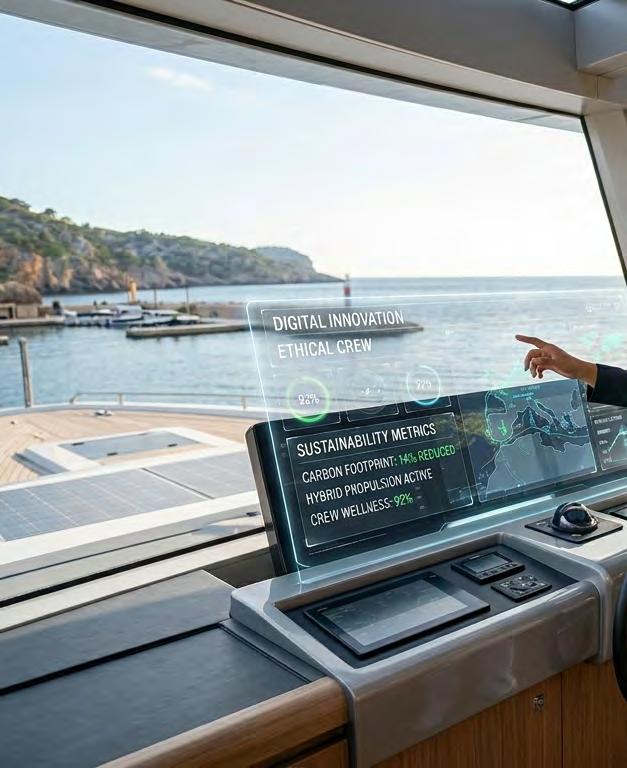
disconnection. We measure technical output, we assess CoCs, sea time and Silver Service training, but we have no credible framework for evaluating the quality of relationships within a team – yet it is felt by everyone. As a result, highly capable individuals can fail in environments where connection is absent and no one identifies why. That is, connection with others, with the purpose, but more importantly perhaps within themselves because they may not have enough self-reflection to understand the essence of their career choice. This challenge intensifies with youth, who have grown up more digitally connected than ever, yet being the
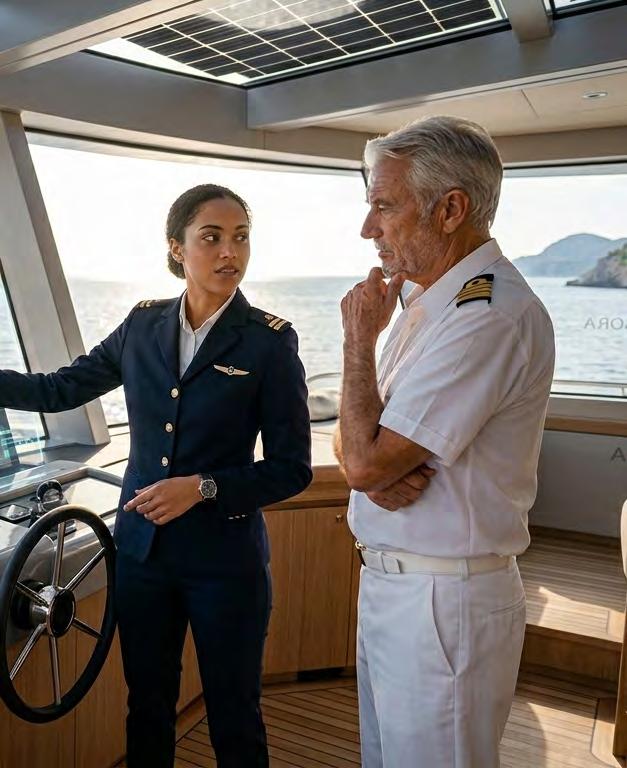
loneliest generations so far in terms of human interaction. So in times of trouble, they are more comfortable turning to a device instead of a fellow human.
Then we have the traditional hierarchy of seafaring meeting new values. One seeks clarity, defined roles and accountability, the other seeks meaning, voice and inclusion. Between the two, friction is not a possibility but rather a certainty –unless actively managed.
What we are losing
The cost of not addressing this is already visible across yachting industry, but it takes two to tango. Talented professionals leave or, more accurately, they do not choose yachting at all – not because they lack resilience, but because they cannot find it as an environment where they feel seen, heard or valued. As a result, the industry faces a growing workforce shortage. Few reflect to ask why. Instead, the situation is often reduced to a convenient narrative: that the new generation is lazy, weak or lacks stamina.
What is rarely acknowledged is that this is not simply an issue based on your year of birth, but a leadership matter. Meanwhile, promotion continues to reward endurance over leadership capability. Without deliberate intervention, the same patterns repeat across vessels, programmes and generations.
Yet the challenge is not one-sided. Recently I delivered introductory training to a group of young hospitality students wishing to enter the yachting industry. What I anticipated would be a fulfilling exchange felt genuinely disorienting: questions arrived disconnected from context. Expectations were misaligned from reality – everyone wanted to be a boss and have a desk job...? At points I found myself wondering whether I was showing the wrong slides or accidentally participating in a social experiment rather than a professional induction. Those absurd Instagram reels about Gen Z job interviews to laugh about was suddenly my reality.
It would be easy to attribute this again to generational difference and move on, but that would miss the point. Young people today communicate differently, process information differently and understand things differently and, perhaps most significantly, set boundaries more clearly and earlier than previous generations ever did. Maybe this is not weakness but awareness – not desper-ately engaging in a system that clearly does not resonate with their lifestyle and needs. What one generation accepted as the price of entry, the other questions entirely.
We must welcome experienced leaders who understand the dynamics between people, not only operations and results; and encourage young professionals who respect process, not only outcome.
The assistant dynamic once popularised in The Devil Wears Prada movie – long hours, unreasonable demands, unquestioned authority – was, for many, an accepted reality, even aspirational. Today, it is more often seen as irrational, even a sign of warning and a reflection of poor leadership rather than a pathway to excellence.
It is a different operating model and one the industry has not yet learned to work with. Perhaps the long-accepted model of 16-hour days in the service of others, at the expense of personal life is no longer as rewarding and sustainable as once assumed.
Boundaries and belonging
Boundaries are not the enemy of performance; they are, in fact, part of it.
The greatest value, for all its limitations, is that traditional hierarchy provides clarity: defined roles, clear expectations, structured accountability. Remove it entirely without replacing it with something equally coherent and the result is not freedom, it is confusion.
We are now seeing experimental operational models emerge across the yachting industry: concepts where guest and crew spaces are shared (Oceanco); where different categories of crew operate within the same environment under divergent expectations (REV Ocean). In these settings, the boundary between professional and personal life becomes increasingly difficult to locate.
Such tendencies reflect genuine societal shifts toward more fluid, integrated working environments; call it as close as it gets to Fatboy loungers and pets in offices. For some individuals, it works well but, as cool as it sounds, people still need space – psychological as well as physical. The walls are coming up in open-plan offices again, too.
I personally have stepped away from an excellent programme only due to the proximity to the principal´s family. The integration was just too complete. For others, such closeness is precisely what makes the work rewarding. I often think that perhaps it is one of the qualities that actually help one through the long days, but that difference matters. And the industry needs frameworks that can hold both realities.
The new helm
The future of superyacht leadership is not a contest between the generations; it is not experience versus innovation or tradition versus transformation. That framing is a false one and it is precisely the kind of binary thinking that keeps industries anchored when they should be underway. Instead, the future belongs to integration. We must welcome experienced leaders who understand the dynamics between people, not only operations and results; and encourage young professionals who respect process, not only outcome, and understand that real connection and growth take time and is often hard and messy process – while celebrating the organisations that offer structure but also create space for human realities within it.
Who chooses the music
The essence of working at sea has not changed, it is still about challenge, about precision, about operating in an environment that demands complete honesty –with the elements, with your crew, with your guests and with yourself. There is no room for illusion at sea and there never has been.
The real shift is not generational, it is human. That is what the future now demands. However, it will not be an easy voyage. The nature of the yachting industry remains unchanged: those who pay choose the music and expect others to dance with a smile. Strategies, frameworks and conversations can be designed in wheelhouses and forum panels, but their adoption ultimately depends on those who own the stage. The real question is whether leaders, both on board and ashore, have the courage to communicate the message honestly or whether the default remains silent compliance from below, frustration directed at the new generation and responsibility pushed onto the client, until the industry loses the very people it depends on. Leadership, in this context, is defined not only by setting direction, but by the willingness to listen when nobody is dancing, because the horizon does not move. How we reach it – and who we allow to stand at the helm – does. ML
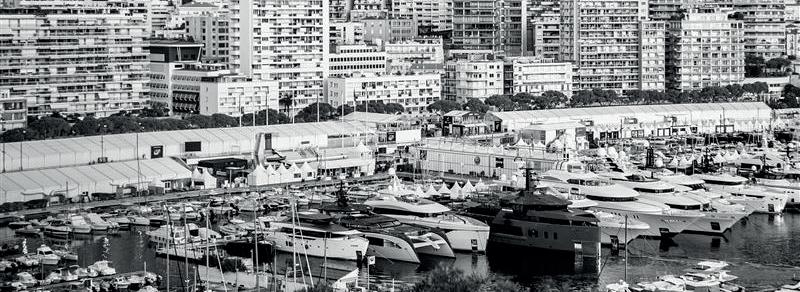
IT’S TIME TO STAND OUT FROM THE CROWD
01 UNRIVALLED INSIGHTS
INTELLIGENCE
We deliver the superyacht industry’s most trusted insights using our network of key stakeholders and decision-makers.
STRATEGY
We build brands and businesses from the ground up - with purpose, DNA and multi-channel marketing strategies.
03
CREATIVE
02
INFORMED DECISIONS
From brand identities to full-scale campaigns, we develop standout visuals, digital platforms and marketing assets. INSPIRED SOLUTIONS
CONNECTIONS
We offer high-level gatherings, and meaningful conversations that move the market forward.
04
INCREDIBLE EXPERIENCES

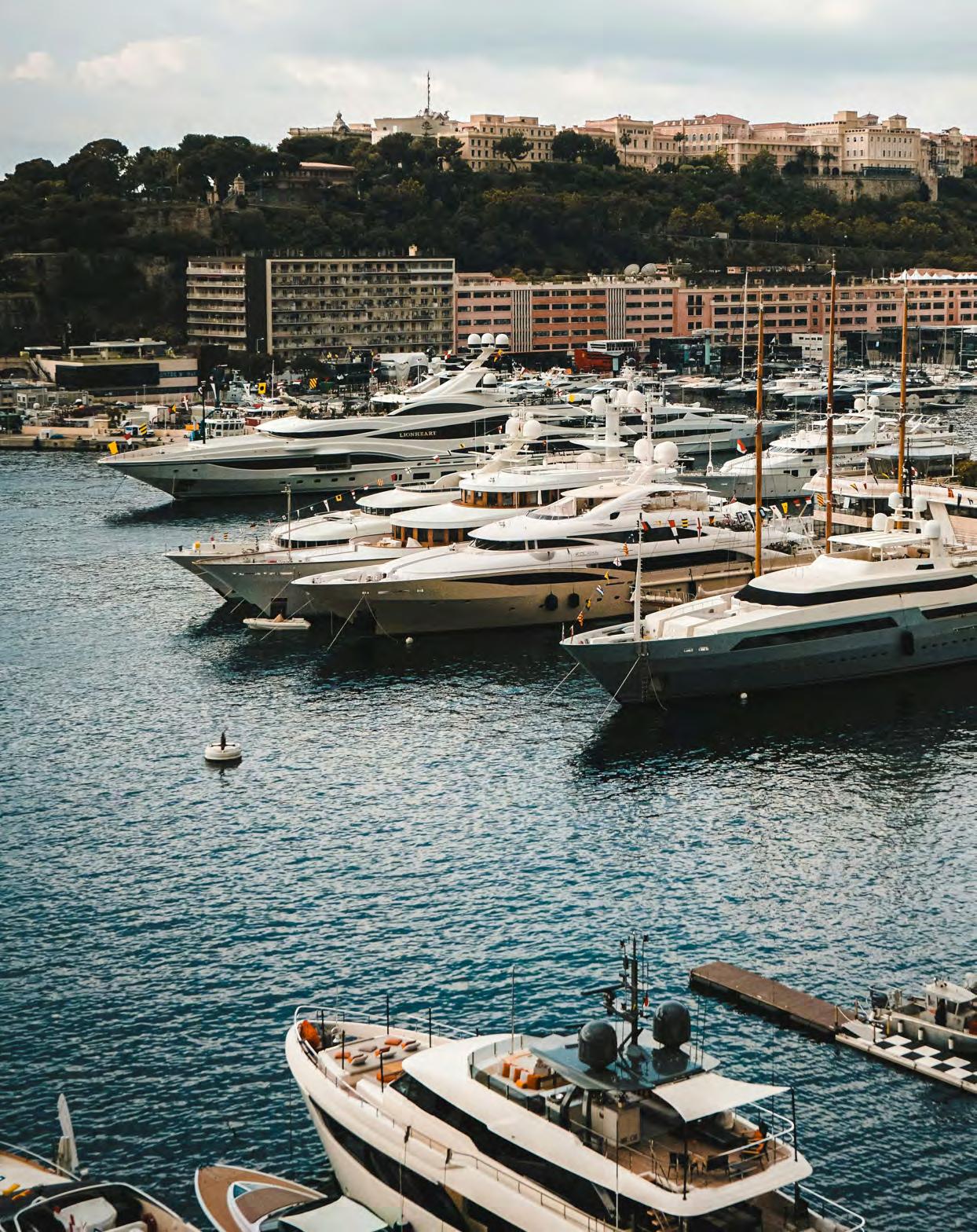
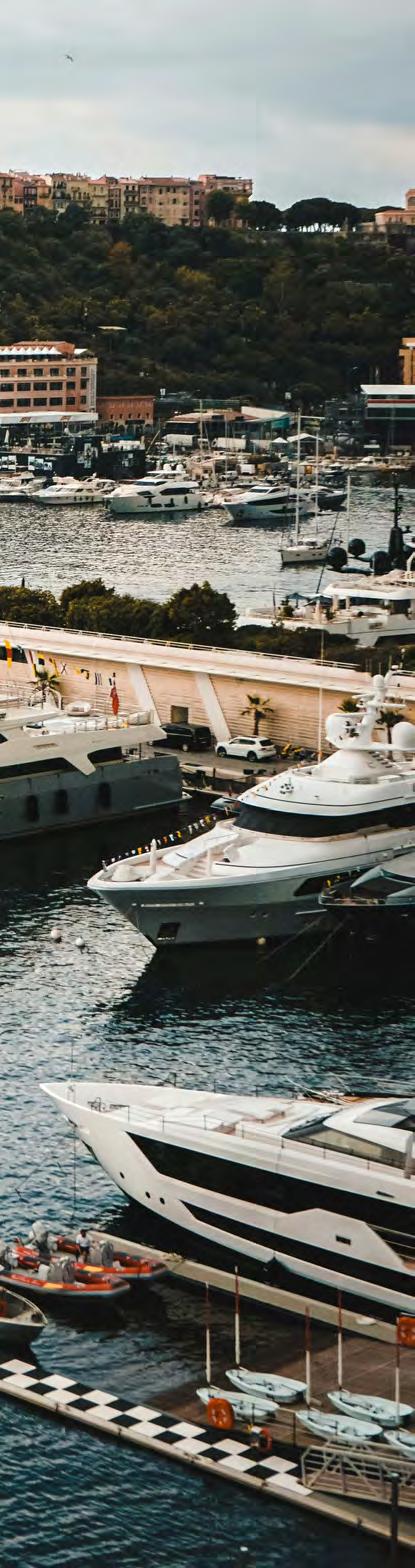
What does a visiting yacht actually leave behind?
Help us build a clearer picture of superyacht operational spend and economic contribution ...
BY THE SUPERYACHT INTELLIGENCE TEAM
Industry professionals – captains, first officers, senior crew, charter brokers and yacht agents – are contributing to our OpEx and Economic Impact survey, building a picture of superyacht operating costs and economic contribution that stretches from the engine room to the local economy. Here is what the data says so far.
The respondents
CAPTAINS 82%
28-83M YACHTS 10+ YEARS’ EXPERIENCE
28-83M
YACHT SIZE RANGE REPRESENTED ACROSS CAPTAIN RESPONSES
SENIOR CREW 6%
COMMERCIAL CHARTER YACHTS MEDITERRANEAN
The fleet at a glance
2-28 CREW EMPLOYED YEAR ROUND
CHARTER BROKERS & YACHT AGENTS 12%
MEDITERRANEAN, ASIA PACIFIC & SOUTH PACIFIC
7 REGIONS REPRESENTED, FROM THE MEDITERRANEAN TO THE SOUTH PACIFIC
A finding that can reframe the whole picture
GUESTS RARELY LEAVE THE YACHT; THEY MOSTLY STAY ON BOARD
That is one of the early findings emerging from the survey, and if it holds, it has the potential to reframe the economic contribution argument entirely. If guests are not the primary source of local spending, what is?
The data points to three things: the vessel’s operational spend, the crew’s own wages spent ashore and the concentrated spending during refit periods. The economic case for superyachts may rest less on guest shopping trips and more on structural, year-round spending that happens whether or not anyone is at the swim platform. Whether this holds true across different vessel types, usage profiles and cruising regions is a question the data is only beginning to answer.
What
would bring guests ashore more?
“MORE UNIQUE LOCAL EXPERIENCES AND EXCURSIONS”
TOP RESPONSE FROM CREW SURVEYED
Local economic contribution
OVER 80% OF GOODS AND SERVICES ARE SOURCED LOCALLY
Early findings from yachts cruising in the Pacific region suggest that over 80% of goods and services across key spending categories are sourced locally at the visiting destination, from provisions and guest ancillaries, to fuel, cleaning and maintenance. With fuel alone capable of reaching €/$100k per week or more on 60 to 80-metre yachts, the local injection from a single port call can be substantial.
But is this picture consistent across all cruising regions and vessels or does local sourcing vary significantly depending on where a yacht drops anchor? The full picture is still emerging and with every additional response it becomes clearer.
Biggest barrier to more local vessel spend? “PREFERENCE FOR INTERNATIONAL SUPPLIERS”
TOP RESPONSE FROM BROKERS & AGENTS SURVEYED
The crew economy – a hidden local multiplier
Even with limited time ashore during peak season, as few as 0-2 days per month, crew personal spending in local ports adds up meaningfully. Clothing and fashion alone can account for €/$1,000-2,000 per month per crew member earning in the €/$5,0008,000 net monthly range on commercial Mediterranean charter yachts.
SPEND RANGE PER MONTH (€/$)
Annual operating budgets
Alongside the local economic contribution findings, the survey is capturing what it costs to operate these vessels, much of which flows into the economies they visit. FUEL & LUBE OIL (€/$)
62% REPORT BUDGETS OVER €/$2M ANNUALLY
ANNUAL OPERATING BUDGET (€/$)
Captures yachts from 28-83m
How operational costs are trending
33% of captains report annual budgets rising year-on-year
50% of captains report stable budgets
17% see significant variability year-on-year
Operational spend per charter week – 60 to 80-metre vessels
GUEST PROVISIONS (F&B; €/$) 2.5-5K
GUEST ANCILLARIES (€/$) 1-2.5K
REPAIRS & MAINTENANCE (€/$) 2.5-5K
Based on predefined spend ranges.
APA AS PERCENTAGE OF CHARTER FEE 25-30%
Key insights
Owner time on board - private, minimal charter vessels AN AVERAGE OF 17 WEEKS PER YEAR
OWNERS ARE ON BOARD FOR ROUGHLY 4 MONTHS, WHILE THE VESSEL, CREW AND COSTS TYPICALLY RUN FOR ALL 12.
Crew & wages
ONE OF THE HIGHEST COSTS AT EVERY SIZE
EVEN ON A MID-SIZED YACHT WITH A BELOW €/$4M ANNUAL BUDGET, MONTHLY CREW WAGES WHEN THE OWNER AND THEIR GUESTS ARE ON BOARD CAN REACH UP TO €/$100K OR MORE, AND THIS IS OFTEN EXCLUSIVE OF THE CAPTAIN'S SALARY. WAGES TYPICALLY RUN YEAR-ROUND, NOT JUST WHEN GUESTS ARE ON BOARD.
The APA principle
TYPICALLY 25-30% OF THE CHARTER FEE ON TOP OF THE BASE PRICE
THE ADVANCE PROVISIONING ALLOWANCE COVERS PROVISIONS, EXCURSIONS AND EXTRAS. IT REPRESENTS A SUBSTANTIAL ADDITIONAL SPEND ON TOP OF THE BASE CHARTER PRICE, MUCH OF WHICH MAY ENTER THE LOCAL ECONOMY.
Shipyard & refit
UP TO 24 WEEKS IN YARD EACH YEAR
BETWEEN 4 AND 24 WEEKS ANNUALLY IN MAINTENANCE AND REPAIR. REPRESENTING WHAT MAY BE A SIGNIFICANT AND OFTEN OVERLOOKED INJECTION INTO SPECIALIST MARINE SECTORS, ONE THAT RARELY FEATURES IN CONVENTIONAL ECONOMIC AND TOURISM REPORTING, YET MEANINGFUL TO THE PORTS AND LOCAL INDUSTRIES THAT SERVICE THESE VESSELS.
Where these yachts cruise
Behind these operational costs lies a fleet that is rarely stationary. Responses span seven cruising regions, with the Mediterranean, Caribbean and US East Coast accounting for the majority of time at sea. This reflects the classic transatlantic circuit that defines the calendar for much of the global superyacht fleet. Most respondents cruised more than one region in the past 12 months.
Only crew on board
How a typical year can be structured
Charter guests on board
Owner & guests on board Shipyard / Refit
Illustrative of a typical year based on average responses from primarily privately operated vessels. Operational structure varies by vessel and usage profile. Categories are not intended to represent mutually exclusive segments of the year; weeks may overlap across operational modes (e.g. crew only and in shipyard/refit categories).
These early findings come from key industry professionals, each perspective adding a layer to the same underlying question: what does a visiting superyacht actually contribute to the economies of the places it visits?
The picture emerging is more structural and more compelling than a simple count of guest restaurant bills. Superyachts generate substantial local spend across provisions, fuel, marina services, maintenance, guest experiences and crew wages. The fuller the dataset, the stronger and more credible that case becomes. Every additional response adds precision to a picture that is still taking shape.
Share your experience and perspective and help build a clearer picture of superyacht operational spend and economic contribution.
by James Battey
CVs tell stories, professional registries verify careers
James Battey explains how the newly launched Yacht Workers Council aims to raise the floor.
Yachting prides itself on excellence. At its best, it delivers high-performing teams, strong leadership and operations that reflect the value of the asset, but that’s only part of the story. Spend enough time in the industry and a different pattern emerges, one where “minimum” has quietly become the operating baseline: minimum crewing, minimum compliance and minimum rest, at least on paper. This happens not because people don’t care, but because the system allows it
For 21 years, I assumed that would change, that someone would bring structure to the way crew are represented, that a proper professional baseline would emerge and that the gap between what the industry says it is and how it actually operates would be closed, but it never was.
The issue isn’t a lack of regulation as STCW, MLC and certification frameworks all exist, the problem is fragmentation – different flags,
different interpretations and different operational standards depending on where you sit. What is technically compliant isn’t always what most would recognise as professional and that inconsistency is most visible when it comes to people. Two crew members can hold the same qualifications, present similar CVs and claim comparable experience, yet perform at entirely different levels, because a CV tells a story, but it doesn’t verify a career.
In most industries, that wouldn’t be acceptable – there are established systems that validate the individual behind their qualifications and offer a recognised baseline that provides clarity, consistency and accountability. Yachting has never built that baseline so the Yacht Workers Council (YWC) was created to address this gap, not by adding another layer of regulation but by connecting what already exists into something usable.
In practice, YWC functions as a professional registry for yacht crew. It creates a single, verified profile that brings together identity, certifications, sea time and career history in one place. Certifications are verified, sea time is validated through systems such as Digital Sea Service, and career history and references are structured in a way that can be reviewed and relied upon. Background checks can also be integrated where required. The objective is straightforward: to remove the guesswork.
For captains, managers and recruiters, it provides a clear and consistent view of who they are employing. For crew, it creates a portable professional record they control, one that moves with them, rather than being rebuilt each time they change vessel. This is significant as it creates a verified baseline as well as offering operational efficiency, and because such visibility changes behaviour.
Early implementation has already highlighted what many in the industry have long suspected but struggled to evidence: inconsistent record keeping, difficulty validating historical sea time, and discrepancies between claimed and demonstrable experience. These are not isolated issues, nor are they necessarily the result of bad actors, they are the natural outcome of a system that has never required a consistent standard.
That changes the moment a baseline is introduced. Once verification becomes normalised, “minimum” is no longer enough – standards become measurable, hiring becomes more transparent and accountability moves from assumption to evidence.
For the majority of operators who are already running professional
programmes, it allows good practice to be seen and relied upon and, at the same time, makes it significantly harder for poor practices to sit behind technical compliance. After all, this is how industries mature, by improving structure rather than increasing regulation.
The superyacht sector continues to grow, both in asset value and operational complexity, yet the framework supporting its workforce has remained inconsistent. You cannot continue to scale an industry of this size and expectation without putting equal structure around the people who make it function – without crew, nothing operates. This is not a criticism of the industry. In many cases, individuals and teams are performing at an exceptionally high level despite the limitations of the system around
them, but without consistency, clarity and accountability, outcomes will always vary.
YWC is an attempt to address that at its root, to create a unified, professional baseline that supports the good, exposes the weak and provides a standard the industry can build from.
The industry does not lack talent, investment or ambition, but what it has lacked until now is a consistent way of verifying and recognising the people within it. If we want this industry to evolve, it won’t be handed to us, we have to build it and YWC is a step in that direction. It’s for crew who genuinely want change, and the opportunity now exists to be part of shaping both their own careers and the standards of the industry as a whole. JB
In many cases, individuals and teams are performing at an exceptionally high level despite the limitations of the system around them, but without consistency, clarity and accountability, outcomes will always vary.
DESTINATION
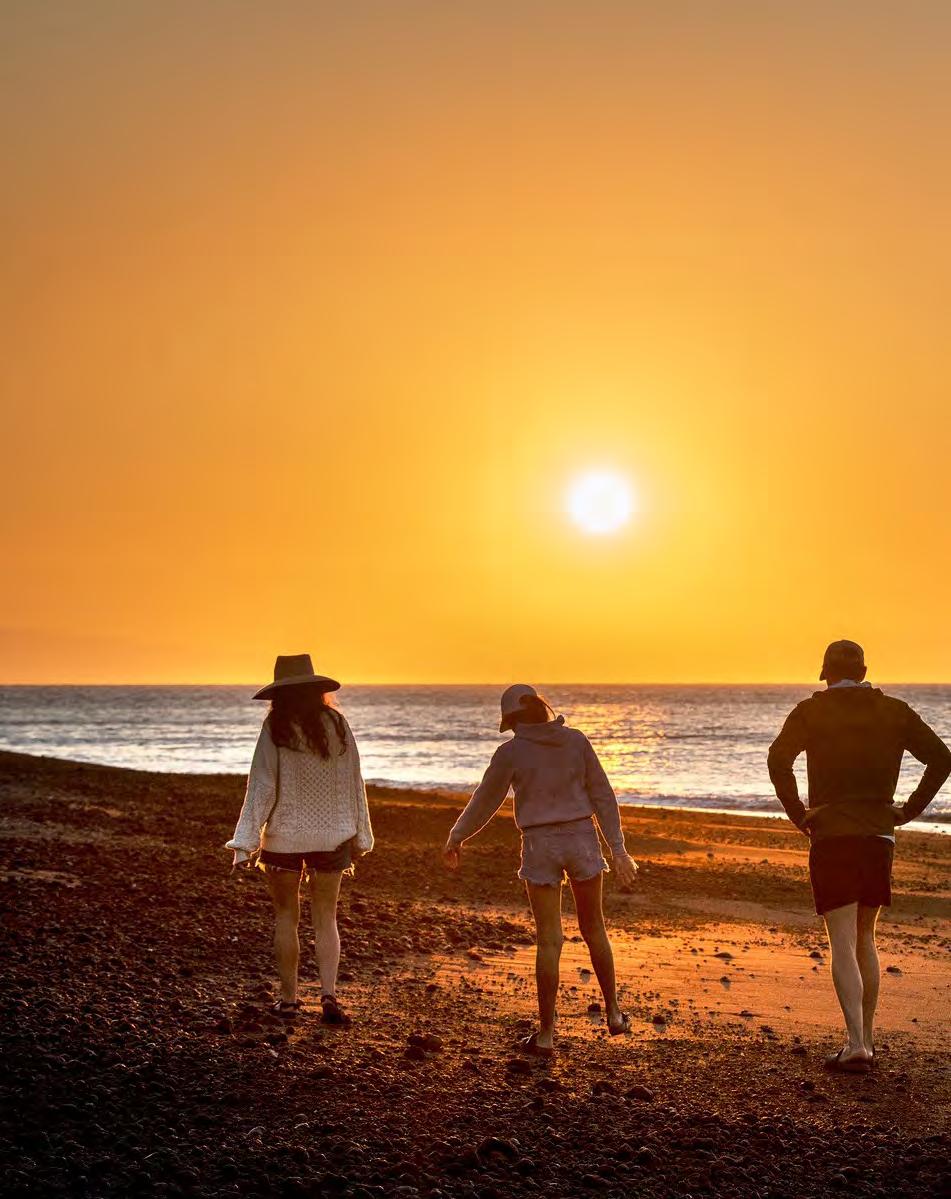
DESTINATION UNKNOWN
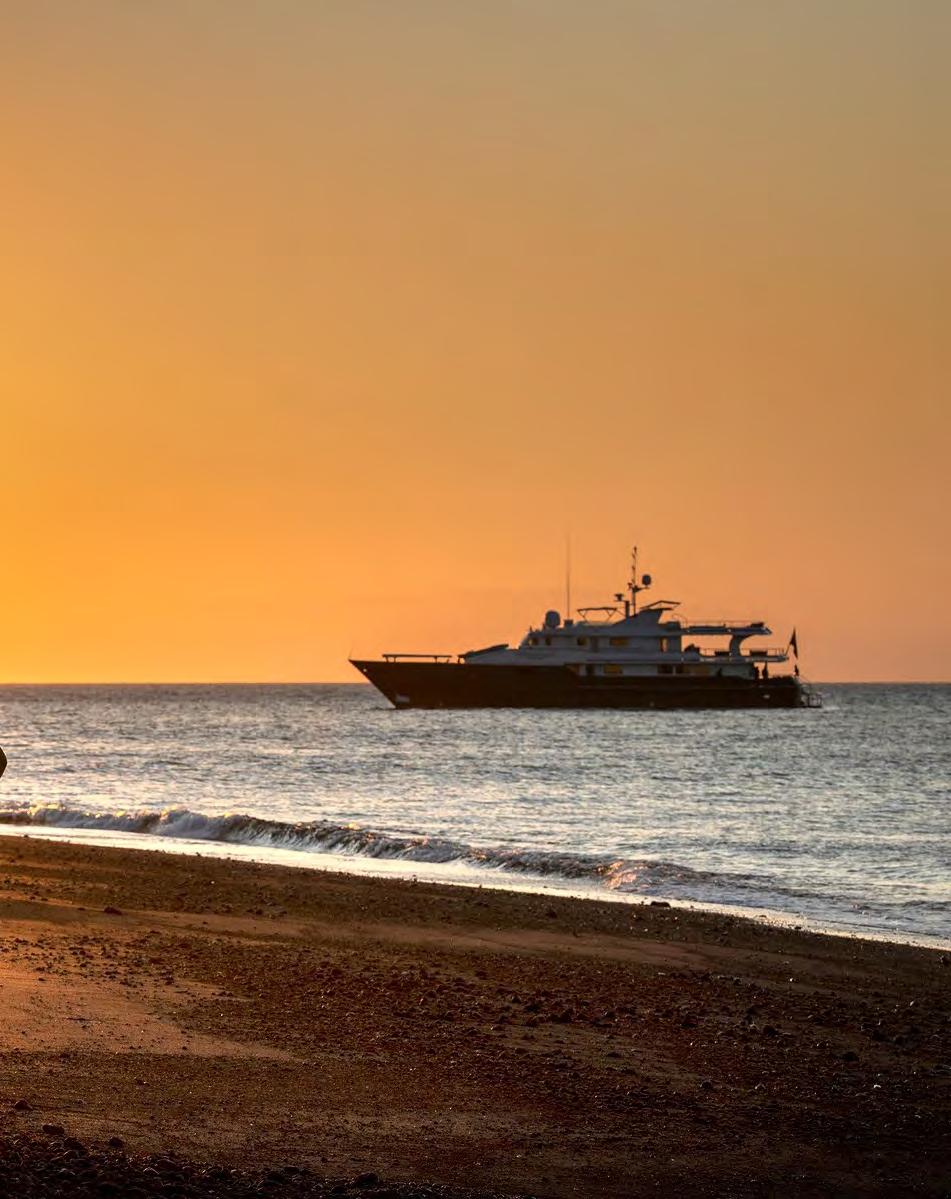
Gayle Patterson, director of yachting at Pelorus
Yachting, on placing a heart-rate monitor on a humpback whale, shark tagging in the Galapagos, solar-powered 70-metre yachts and where experiential charter demand is heading.
BY CONOR FEASEY
“Owners want a connection with the sea.”
We hear it all the time. Walk the docks and the proof, you’d think, is in the acreage of glass, the beach club square-metreage and the height of the infinity pool above the waterline. But connection to the deep blue means infinitely more than proximity and aesthetics, as a growing cohort of guests want to know where the yacht is going, what is happening in the water once it gets there and whether anyone on board will be doing more than watching it through a window.
We’re seeing this in the destinations some charterers are chasing, swapping a glass of rosé on the aft along the Côte d’Azur for destinations far and unknown in the waters of the poles, Indonesia, French Polynesia, the Galápagos and the Maldives. All are regions Pelorus Yachting says are running hottest in its enquiry book, a list that reads more like a map of the planet’s most diverse ecosystems.
I sat down with Gayle Patterson, director of yachting at Pelorus Yachting, to understand what is driving this change and where this growing sector of the market is heading.
“I think Covid, to a certain extent, was when people suddenly thought ‘I want to tick off a lot of bucket-list destinations’. There are a few destinations in the world that have really opened to exploration yachting. For example, the Indonesian fleet has almost tripled in the last decade. Some destinations have suddenly opened up; we’re also seeing a younger generation of charterers who very much don’t just want to go and sit and drink wine. They want to be active and to continue their healthy lifestyle. Wellness is a big factor and that ties into the conservation, the idea of giving back and being part of something.
“Destinations that we have a lot of interest for are Antarctica, the Arctic, Indonesia and French Polynesia. They’re the regions that are really coming up in force. We don't always have the yachts available there, unfortunately, particularly for Antarctica, but they’re certainly destinations that are very much now implanted on the charter map of the world. The wider industry is offering these destinations, infrastructure is growing and new yachts are coming onto the market.”
Much of the demand is multigenerational, where families are driving a sizeable share of these bookings and the educational pull of putting children alongside working scientists is a formative
factor of what lands on the calendar in the first place. The cohort behind those bookings is one that built away from the Mediterranean season. “A lot of our clients are very open-minded. It might be clients who have come to us because they’re fed up with traditional yachting and want to do something different. They've come to us because they’re young and adventurous,” adds Patterson.
The headline example from the past Pelorus Yachting season was in the Antarctic. A family booked a charter built around a dual heli-ski operation, then asked for scientists on board, paying for them out of their own pocket. The team that came with the charter ran a whale-tagging programme alongside the skiing.
“We had a support staff of over 20. The client actually paid for scientists to come on board and they were geo-tagging the whales, which led to a heart rate monitor being attached to a whale shortly after the charter. For the client to have contributed to that with his family and his children, it was a defining moment of the trip. It wasn’t necessarily the purpose, but for him, it was something totally unique and one of the best experiences. Getting hands-on and seeing what people do, but actually

The behavioural pattern of one client carrying the appetite from whales to tropical reefs is the mechanism by which that capital actually starts to move and garner tangible results for the scientific community.
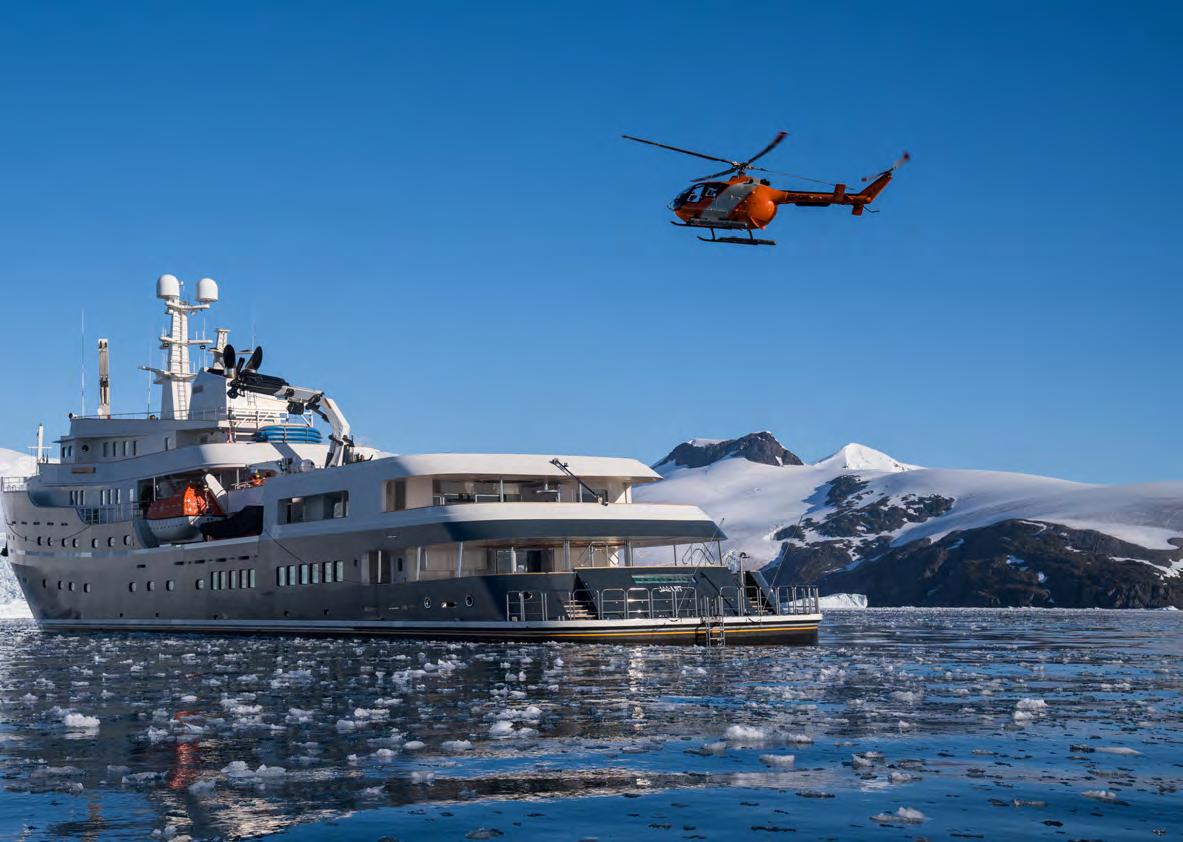
being able to say they’ve done that, is completely unique. You’re helping with the bigger picture, helping long-term conservation, rather than just being in the moment.”
It’s a pretty radical feat that a first-of-its-kind cetacean physiology data point, which used to belong in a research vessel’s log, now has found a place in a superyacht charter debrief and the family that funded it disembarks, having watched their children sit alongside the scientists who made it happen. It’s a holistic approach to closing the gap between experiential charter of the most opulent proportions and providing a genuinely purposeful connection to the world we reside.
The momentous occasion completely changed what the client wanted from his next charter too. Patterson explains the client returned to Pelorus Yachting a few months later, this time for the Maldives and arriving with a query of what the team can actually do when they get there, rather than a standard itinerary. “His first question was, ‘How can I get involved? What can I do in terms of marine
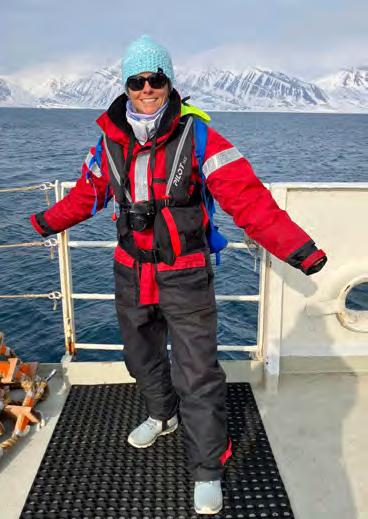
Left: Patterson in Svalbard.

“We hand-select the scientists to make sure that they’re also able to share their expertise and all of their knowledge with the clients. It really is an education piece ... There’s a harmony amongst the charter and the team.”
conservation in the Maldives?’ While he might not want to carry on looking after the whales, it certainly triggered and developed a greater awareness to then continue broader conservation efforts. Then it’s global, rather than very specific. These clients do have rather large budgets that are life-changing, or career-changing sometimes, for the scientists and for the scientific projects that we support, because suddenly having a huge influx in donations or support and awareness can really change the outcome and speed up a lot of the results.”
This is where the conversation really lies for bringing superyachting and science together where a fortnight of high-net-worth funding can underwrite a programme that would otherwise spend months, if not longer, chasing the same money. The behavioural pattern of one client carrying the appetite from whales to tropical reefs is the mechanism by which that capital actually starts to move and garner tangible results for the scientific community. The Galápagos is where this model is being run next with actual conviction, with a programme that is now coming together, took six to eight months to assemble, from identifying the right scientists to lining up dates, yachts and local partners. Patterson explains that the company does not plug into a single big NGO but instead constructs these charters around local scientists and local organisations, vetted over months and channelled through the Pelorus Foundation rather than dropped into a general fund.
“We don’t necessarily just work with one organisation,” she says. “We do a lot of research diligently in terms of who is on the ground, who they work for, what they’re looking at. It’s not just one company. We have the Pelorus Foundation as well and they have great local contacts on the ground to
make sure that we are choosing the best. You want to make sure you’ve got the most impact, rather than sending money to a big organisation were.”
The programme works are run from Hermes from Ecuadorian shipyard Factoria Naval Morla S.A. Famorsa, and entails photographic identification and acoustic tracking of hammerhead pups around Mosquera, a separate research thread following mobula and manta migrations through the archipelago and hands-on tortoise monitoring in the Santa Cruz highlands. Guests are brought into the project at whatever capacity they want, where some opt to simply take the briefings and watch the data come back in the evening, but others go out on the tenders with the scientists.
The model only works because of who Pelorus Yachting puts on board, since field science, by its nature, can be repetitive, slow and often deeply unglamorous and a client paying serious money for a charter of it will lose patience fast if the scientists cannot also share their methods and findings. But Patterson explains that this is all factored into the plan in the first place. “We hand-select the scientists to make sure that they’re also able to share their expertise and all of their knowledge with the clients. It really is an education piece. The scientists aren’t so focused on what they’re doing that they’re also integrating clients, sharing their knowledge and getting the clients excited around that. There’s a harmony amongst the charter and the team.”
The crew end of the equation matters as much, where yachting’s standard trade-off is that a tip-line job in extraordinary places is still an occupation of service of extremely high standards. Conservation work softens that, partly because the crew gets to be in the room when the science happens and partly because they end up doing some of it.
Wildlife in the Galápagos – one of the regions running hottest in Pelorus Yachting’s enquiry book.
“Generally, it’s been very well received. The crew who are cruising in these unusual destinations are really keen to learn more about the destination in which they’re cruising. We work closely with the captain and the crew to make sure that it doesn’t impact their day-to-day work negatively, but also integrate them into the project as well, making sure that the tender drivers come from the crew, not just from the expedition staff and making sure that the crew are also getting involved in the project. The more people you’ve got engaged, the more excited the clients become as well. The scientists also feel supported from all sides.”
The kit matters too. Captain Arctic, the 70-metre solar-and-wind expedition yacht due for delivery later this year, has been built by French Polar outfit Selar at Chantier Naval de l’Ocean Indien in Mauritius and will be chartered through Pelorus Yachting. It runs on five 35-metre rigid solar sails carrying close to 2,000 square metres of photovoltaic panels, with electric propulsion that doubles as hydro-generation under sail. Bureau Veritas has also certified a 90 per cent reduction in CO2 against comparable vessels. The yacht will cruise Norway, Svalbard and Greenland, captained by Sophie Galvagnon, Selar’s co-founder, who has spent over 17 years working in the Arctic as a captain and ice pilot.
“That’s the destination I’m really excited about now – the Arctic,” says Patterson. “I think Svalbard is a really cool and special destination. The new generation of yachts that will be cruising in these very fragile ecosystems, that’s the future of yachting. That’s what I’m super excited about.”
A purpose-built low-impact platform entering the charter fleet for the high-latitude season is a litmus test for where this segment of the market is heading. The Antarctic charter that produced the heart-rate monitor was, in the end, a week’s adventure holiday turned conservation project, and these requests are only becoming more frequent.
For some, there is still nothing better than the long lunch off Antibes. But for others, adventure waits in waters the fleet has not yet reached and the rest of the industry is starting to follow. Builders are pushing the boundaries of operational efficiency for the region’s clients now want to reach, operators are building working relationships with the scientific communities on the round, and clients are pushing for charters in destinations unknown.
“The new generation of yachts will be cruising in these very fragile ecosystems,” Patterson adds. “This is the future of yachting.” CF
On board Hermes , where guests are brought into the research projects at whatever capacity they want.
Operational defensibility at sea
Why structured safety management matters more than ever, by Giles Sedgman, Head of Yacht Management at Praxis.
Having spent 16 years at sea specialising in safety and operational management across private and commercial yachts, I have seen first hand how the captain’s role has evolved. The challenge today is no longer simply running a safe and efficient yacht, it’s being able to demonstrate, consistently and under increasing scrutiny that the yacht is being operated to a defensible professional standard.
The significant growth in the industry, driven by the expansion of the global fleet and increased demand for skilled crew and dependable shoreside-support services, combined with geopolitical instability, higher owner expectations and expanding compliance pressures, is reshaping the risk profile associated with yacht ownership and operation. For captains, this means a greater emphasis on consistency, oversight and demonstrable best practice on board.
Flag states and insurers increasingly expect to see robust on-board practices supported by clear, accurate and accessible records. While a formal Safety Management System (SMS) may not always be a regulatory requirement, the expectation for documented
drills, maintenance tracking, crew familiarisation and incident reporting is becoming increasingly difficult to ignore.
Captains and senior crew are increasingly expected to maintain a credible framework for on-board safety management, and a formalised, yacht-specific support system helps ensure critical actions are not missed and that a culture of best practice is embedded and maintained onboard. Done well, it strengthens safety, improves operational discipline and supports a better experience for owners, guests and crew alike. Demonstrating structured operational practices, with timely reporting and reliable audit trails, positions the yacht as a lowerrisk, better-managed asset, providing assurance for the owner alongside insurability and reputational protection.
While a properly supported, bespoke digital SMS can add genuine operational value, captains are also right to be cautious. At Praxis, we have seen incidences of poorly designed and implemented systems that have simply added another layer of administration rather than improving safety or efficiency. An SMS only adds value if it provides one
consolidated system for managing drills, maintenance schedules, defect reporting, incident logs, document control, crew familiarisation and audit preparation. The objective is not simply to digitise paperwork, but to create operational continuity and reduce dependency on individual memory or informal processes.
That continuity is becoming increasingly important as crew turnover rises across the industry. Captains can no longer rely solely on institutional knowledge held by long-serving senior crew. A structured system helps preserve standards between rotations, improves handovers and ensures critical operational knowledge is retained on board even as personnel change. In practice, this reduces the risk of inconsistent procedures, missed maintenance items or gaps in familiarisation.
Many private yachts already have some form of best-practice process onboard, but these arrangements are often fragmented across paper-based and digital systems and are not used to their full potential. In many cases, the administrative burden falls on the captain or senior crew, taking up time that could be better spent leading the
Guest Column by Giles Sedgman
team, supporting the crew and enhancing the owner and guest experience.
Viewed through that lens, management support should not be seen purely as an added cost. If a captain is spending substantial time each week maintaining an in-house system, there is a direct operational cost to the yacht. By contrast, a well-designed digital SMS supported by a management company can significantly reduce reporting time, improve visibility, and create a more efficient, defensible record of compliance and best practice. In many cases, the resulting time savings alone can justify the investment.
In practical terms, implementing a properly supported, integrated digital SMS:
• provides clear evidence that best practice is being followed on board and creates a reliable audit trail
• strengthens the yacht’s safety culture and helps reduce the likelihood of onboard incidents
• builds owner and guest confidence by demonstrating that the yacht is operated to a high standard
• improves the yacht’s risk profile in the eyes of flag, class and insurers
• saves time by giving crew an efficient, unified, easy-to-use system that reduces administration and frees them
to focus on operations and service
• provides the reassurance of shoreside support should an incident occur
What a supported digital SMS should deliver in practice
The operational benefits are significant. A captain should not need to chase multiple spreadsheets, paper records and disconnected crew notes simply to confirm whether drills have been completed, certificates remain current or maintenance items have been closed out. A well-designed system provides immediate visibility into outstanding actions, completed tasks and where attention is needed. That can save the captain and senior crew considerable operational hours each week, while improving accountability and reducing duplication of effort.
The commercial implications are equally important. When records are incomplete or systems appear informal, the yacht may face greater scrutiny during audits, weaker positioning with insurers, and more questions during incidents, claims or ownership transitions. Conversely, a yacht that can demonstrate consistent on-board processes, timely reporting and reliable records presents as better managed and lower risk. That supports operational resilience, helps protect
The strongest solutions are those that are bespoke to the yacht, straightforward to use on board, supported ashore when needed and capable of fitting around the realities of yacht operations rather than disrupting them.
the owner’s interests and can influence both cost and confidence in the wider management picture.
Captains are also right to be cautious about implementation. Any system that is cumbersome, poorly supported or imposed without proper on-boarding risks becoming another administrative burden rather than a useful operating tool. Crew adoption depends on simplicity, consistency and training, particularly where turnover is high or departments have different working habits. The strongest solutions are those that are bespoke to the yacht, straightforward to use on board, supported ashore when needed and capable of fitting around the realities of yacht operations rather than disrupting them.
Private yachts may face fewer explicit regulatory pressures than commercially compliant yachts, but they are not insulated from operational risk, owner expectations or insurer scrutiny. In both settings, the captain benefits from clearer oversight, better continuity between crew changes and stronger evidence that the yacht is being run to a high standard.
For captains reviewing their current setup, the first step is straightforward: can your key maintenance safety and reporting records be accessed quickly, updated consistently and presented confidently if challenged by insurers, auditors, flag state representatives or owners? If the answer is uncertain, there is likely a gap between the operational systems on board and the level of scrutiny the industry increasingly expects.
The direction of travel is clear. Across the industry, operational transparency and evidential accountability are becoming defining expectations of modern yacht management. For captains, the question is no longer whether structured systems add value, but whether existing onboard processes remain robust enough to withstand increasing operational, commercial and regulatory scrutiny. GS
Guest Column by Giles Sedgman
Leadership roles in modern yachting
The invisible luxury
Andy ‘Ivy’ Brennan and director of DG Maritime Steve Monk advocate for mentoring, and how promoting from within can protect the yacht’s culture.
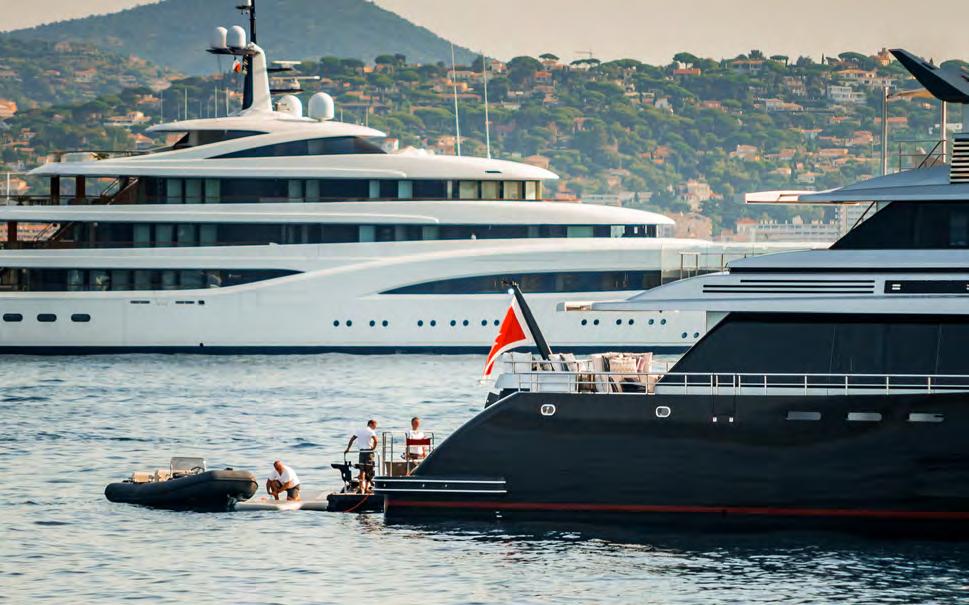
The modern superyacht industry develops talent faster than experience can accumulate. Certificates are earned quickly, promotions follow and ambitious crew advance rapidly through the ranks. Yet judgement, leadership and operational confidence develop more slowly. This is where mentoring becomes essential.
Long before certification frameworks existed, the maritime world relied on apprenticeships. In traditional trades, crafts and maritime professions, progression was earned slowly through observation, repetition and responsibility. A young sailor, engineer or shipwright learned not simply by studying a manual, but by watching experienced professionals perform their work day after day.
The maritime world has always understood a simple truth: competence cannot be rushed. Seamanship, judgement and leadership were historically cultivated over time, not awarded through assessment. The old saying that “experience is written in mistakes survived” reflects a reality every seasoned captain recognises. Good decisions at sea are rarely theoretical; they are informed by hundreds of experiences accumulated across years of service.
For centuries, the structure was clear. Junior crew learned their role from someone more experienced, gradually taking on responsibility as their skills developed. The process was deliberate, sometimes slow, but it produced professionals whose authority rested on competence forged through real-world experience rather than classroom assessment alone.
Modern yachting operates in a very different environment. Today’s industry is highly professionalised and supported by an extensive network of certification programmes. These are essential and represent a significant step forward in standardising safety and competence, while providing owners reassurance that recognised professional standards are being met. However, while certification validates knowledge, it cannot fully rep-
licate the depth of judgement that develops through real-world experience on board.
The pace of modern career progression has accelerated compared to traditional maritime pathways. While this has created opportunity for ambitious crew, it has introduced pressures. The fundamental truth remains unchanged: experience, judgement and leadership ability cannot be rushed without consequence.
In the superyacht industry, where operational standards must be flawless and the owner experience paramount, mentoring serves as the bridge between certification and true professional readiness.
The modern crew reality: speed, certificates and pressure Today’s superyacht crew operate in a career environment unlike any previous generation. Professional qualifications are more accessible and more in demand, and career pathways are clearly defined. The global nature of the industry provides a constant flow of opportunity, and for motivated individuals, progression through the ranks can happen quickly.
Certificates have effectively become the currency of advancement. Each new qualification opens the door to greater responsibility, higher salaries, increased standing within the industry and more senior roles. This system encourages ambitious crew to continue investing in training and development, which is overwhelmingly positive for industry standards.
However, the incentives embedded in the current system also encourage speed. A junior crew member who gains a new certificate often faces a simple choice: remain on board and wait for a promotion opportunity that may arise or move to another yacht where the qualification immediately translates into a higher rank with increased pay. In many cases, changing yachts becomes the fastest route to advancement.
This dynamic creates a form of mobility that has become normalised
Leadership roles demand more than procedural knowledge. They require the ability to quickly recognise patterns, anticipate problems and make decisions with incomplete information.
Today’s crew are often highly capable, enthusiastic and well trained ... the challenge is simply that certification progression can sometimes move faster than experiential development.
within the industry. Crew move frequently, chasing the next step in their career. While this mobility benefits individuals seeking rapid progression, it also means that paper qualifications can sometimes outpace the depth of experience needed to support them. (It is also worth recognising the financial losses and operational disruption experienced by yachts when proven crew members depart for promotion. However, exploring this issue fully lies beyond the scope of this article.)
The result is not a lack of ability or motivation. In fact, today’s crew are often highly capable, enthusiastic and well trained. The challenge is simply that certification progression can sometimes move faster than experiential development. A second engineer may hold the correct certification for a chief engineer role yet still lack the operational exposure required to confidently manage a critical system failure at sea. A deck officer may be technically qualified for command but may not yet have accumulated enough varied operational experience to make complex judgement calls under pressure.
These gaps are rarely visible on paper, but they become very quickly apparent when responsibility increases. Without mentoring structures to support development, newly promoted crew can find themselves navigating roles that require a level of confidence and pattern recognition that only time and guidance can provide.
What happens when foundations are weak?
When promotions occur before professional foundations are fully formed, the consequences tend to surface quickly. The issue is rarely technical competence. Most crew reaching senior positions are capable professionals who understand their roles. The problem lies deeper – in the areas of decision-making, judgement and confidence under pressure.
Leadership roles demand more than procedural knowledge. They require the ability to quickly recognise patterns,
anticipate problems and make decisions with incomplete information. These skills, often referred to as heuristics, cannot be learned effectively in short courses. They develop gradually through experience and reflection on real-world decisions and their outcomes.
When crew step into senior roles prematurely, a number of invisible risks start to emerge: confidence and responsibility can become misaligned; a crew member may technically hold authority yet privately question their readiness to exercise it. This internal tension creates a level of cognitive strain that is often invisible to others on board.
Decision-making becomes more stressful because the individual lacks a library of previous, similar situations to draw upon. Pattern recognition – the mental shortcut that allows experienced professionals to assess risk quickly and accurately – has not yet fully developed. In absence of those mental reference points, decisions feel heavier and are often made more slowly than the operational situation demands.
Stress increases and mistakes begin to carry greater emotional weight. The fear of making the wrong call can lead to hesitation, over-correction or an over-reliance on rigid procedures where flexible judgement would normally apply. As operational resilience declines, the crew’s ability to recover quickly from problems also weakens and, depending on the scale of the error, the financial consequences can be significant.
This is where imposter syndrome
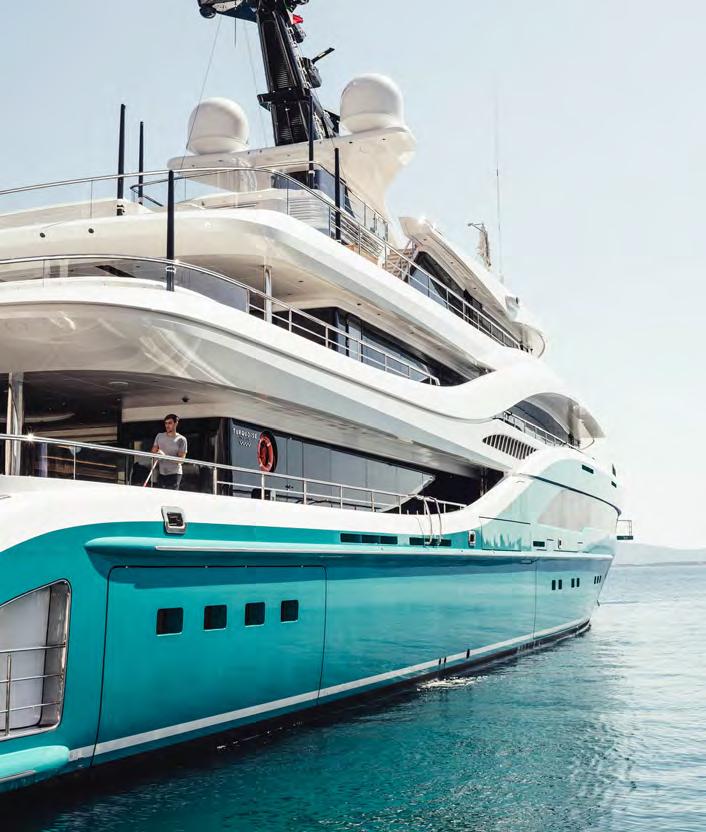
When a crew member feels that their development is actively supported, their relationship with the yacht shifts from transactional employment to meaningful professional growth. Instead of asking, “What is my next job?”, they begin asking, “What is my next step here?”.
often appears. Crew who have worked hard to achieve their positions may begin to question whether they truly belong in them. The situation becomes even more complicated when these same individuals are expected to mentor junior crew. Leadership roles often include training and development responsibilities, yet many newly promoted officers have never experienced effective mentoring themselves.
Without guidance, mentoring responsibilities become unclear. Instead of developing people, new leaders may default to correcting tasks, focusing on immediate performance rather than long-term development of their team. Over time, this dynamic can lead to disengagement. Crew begin to feel overwhelmed by responsibility, frustrated by uncertainty and disconnected from the enjoyment that originally drew them to the industry. When this happens, departure becomes an attractive option.
Why active mentoring keeps crew on board
Strong mentoring programmes fundamentally change this dynamic. Mentoring provides something that many crew members quietly seek to build their professional confidence but rarely articulate: a sense of long-term direction. When a crew member feels that their development is actively supported, their relationship with the yacht shifts from transactional employment to meaningful professional growth.
Instead of asking, “What is my next job?”, they begin asking, “What is my next step here?”. This distinction is crucial.
Active mentoring helps crew understand how they will progress, what skills they need to develop and how their current responsibilities contribute to their future roles. Clarity replaces uncertainty and meaningful guidance replaces guesswork.
This stability encourages loyalty. Crew who feel invested in are far less likely to leave. They see a future on board rather than searching for one elsewhere. The relationship between captain, heads of department and junior crew becomes more collaborative and less hierarchical. Mentoring also improves communication across the yacht. When leadership messages are supported by strong mentoring relationships, guidance from the bridge or senior leadership tends to travel quickly and more effectively through the crew structure. Junior crew
Mentoring also fosters a deeper form of loyalty as crew who feel genuinely developed by a yacht’s leadership team often develop a strong sense of ownership over the vessel and the experience it delivers.
understand not only what is expected of them, but why those expectations exist. This strengthens cohesion across departments and builds a shared understanding of operational standards.
For captains and owners, this cohesion is invaluable. It fosters a stable environment where crew operate with confidence and alignment rather than uncertainty and hesitation, reducing operational pressure while elevating the owner’s experience on board.
Promote
from within: safer, smarter
progression
One of the most significant advantages of a strong on-board mentoring culture is that it prepares crew for internal promotion. Promotion from within is one of the safest and most effective strategies available to captains and owners alike. When a crew member steps into a new role on board a yacht they already know, the transition is far smoother than introducing an entirely new person to the environment.
Internal candidates already understand the operational rhythms of the yacht. They know the owner’s preferences, the dynamics of the crew and the expectations of the leadership team. They have observed how decisions are made and how challenges are managed. This familiarity significantly mitigates the risk associated by employing an external crew member.
From an operational perspective, promoting from within preserves continuity. It avoids the disruption that often accompanies new hires who must learn the yacht’s systems, procedures and culture from the beginning. From an owner’s perspective, internal promotions are often invisible. Service remains seamless, standards remain consistent and the experience on board continues uninterrupted.
Effective mentoring makes this possible. Without mentoring, promotion is based primarily on certificated eligibility. With mentoring, promotion is based on readiness. That difference matters: crew who have been effectively mentored step into new roles prepared rather than pressured; they understand the expectations placed upon them and have already developed the confidence to meet those demands.
In an industry where operational complexity and seasonal uncertainty are common, reducing risk through internal progression is both a strategic and economic advantage.
Loyalty to the owner, not just the role Mentoring also fosters a deeper form of loyalty as crew who feel genuinely developed by a yacht’s leadership team often develop a strong sense of ownership over the vessel and the experience it delivers. Their loyalty extends beyond the contract they signed or the role they occupy; instead, it becomes connected to the owner’s experience itself.
This form of loyalty is difficult to measure, yet easy to recognise. It reveals itself in the small details: the discretion shown during sensitive moments, the consistency of service throughout long charters and the care taken in maintaining systems the owner may never see. Mentored crew take pride in the yacht because they feel part of its success in delivering the required owner’s experience. Crew do not simply perform tasks, they protect the environment that the yacht represents.
For owners, this commitment is invaluable. Superyachts are not merely assets, they are personal spaces designed to deliver relaxation, privacy and enjoyment. A strong mentoring culture helps cultivate that connection.
Protecting the owner’s oasis
For many owners their yacht represents a sanctuary from the pressures of professional life – a place where familiarity, discretion and trust are essential, and high crew turnover undermines this environment. Frequent changes in personnel introduce unfamiliar faces, disrupt established service routines and weaken the sense of continuity that many owners value deeply. Even highly competent new crew require time to integrate into a yacht’s culture and to fully understand the nuances of the owner’s preferences. Mentoring helps prevent this disruption.
When crew remain on board longer and develop professionally within the same yacht, stability begins to emerge, service becomes intuitive and crew anticipate needs rather than simply reacting to requests.
This creates what might be described as an invisible luxury. Owners may never see the mentoring conversations taking place between senior and junior crew;
Superyachts are not merely assets, they are personal spaces designed to deliver relaxation, privacy and enjoyment. A strong mentoring culture helps cultivate that connection.
they may never observe the deliberate development strategies a captain has quietly established behind the scenes, but they experience the end results: the yacht runs smoothly, the crew operate with a quiet confidence, and the atmosphere on board remains calm, professional, relaxed and welcoming.
This is the environment that develops when a strong mentoring culture is actively maintained on board.
From being mentored to mentoring others
As crew progress through the ranks, many find themselves expected to mentor others earlier than they anticipated. A bosun may suddenly become responsible
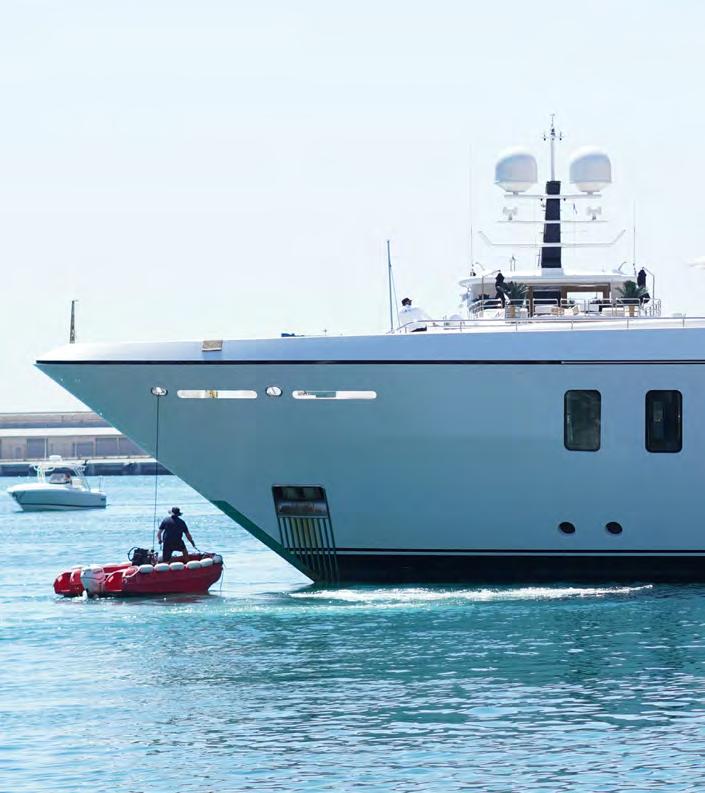
The strongest mentoring cultures share common characteristics. They are visible, intentional and supported by leadership. Captains and heads of departments actively invest in their teams, while peer mentoring strengthens collaboration across departments.
for guiding junior deckhands; a chief stewardess may need to support new interior crew arriving mid-season; engineers frequently train junior technicians while simultaneously managing complex systems. In these situations, technical competence alone is not enough. Mentoring and leadership are skills in their own right. They require emotional intelligence, patience and the ability to communicate knowledge clearly and constructively.
Without guidance, new leaders often fall into a common trap: focusing entirely on task correction. They correct mistakes, enforce standards and manage workloads, but they struggle to develop the individuals beneath them. Effective mentoring shifts this perspective. It encourages leaders to ask questions rather than simply provide answers and helps them recognise when a mistake represents a learning opportunity rather than a disciplinary moment. Over time, this approach creates stronger professionals and helps build a more resilient leadership culture on board the yacht.
Building leaders early
Leadership should not begin with promotion. In the superyacht environment, many of the most capable leaders begin
developing mentoring skills long before they hold formal authority.
Simple habits can make a meaningful difference. Sharing experience during routine tasks reinforces knowledge, while explaining why procedures exist builds deeper understanding. Informal training sessions – or toolbox talks – develop communication skills, and learning how to provide constructive feedback helps crew support one another professionally.
Effective mentoring also requires listening. Asking thoughtful questions and encouraging reflection allows junior crew to develop their own judgement rather than relying entirely on instruction. When experienced crew openly discuss mistakes or challenges from earlier in their careers, it normalises learning and strengthens credibility. Over time, these small behaviours create a culture where development is continuous rather than hierarchical. Mentoring becomes part of everyday professional life on board, strengthening both competence and safety.
The strongest mentoring cultures share common characteristics. They are visible, intentional and supported by leadership. Captains and heads of departments actively invest in their teams, while peer mentoring strengthens collaboration across departments.
The long-term benefits are significant: yachts with strong mentoring cultures often experience lower crew turnover, stronger operational performance and enhanced reputations within the industry. Crew operate with greater confidence, communication improves and recruitment, when necessary, becomes easier.
There are also clear economic advantages. Recruiting, relocating and onboarding new crew are expensive and time-consuming processes. When mentoring improves retention and prepares crew for internal promotion, these costs decline. Operational mistakes also reduce as experience and judgement develop, lowering the risk of equipment damage, delays or service disruption.
Most importantly, mentoring builds pride. Crew who feel supported and developed take genuine ownership of their work and of the yacht itself. They care for the vessel in ways that help preserve both operational integrity and long-term capital value.
Mentoring is not simply a leadership style. In today’s superyacht industry, it is a strategic choice, one that protects culture, strengthens stability and resilience, reduces operational costs and quietly enables exceptional owner experience. AB | SM
What the 50 to 55-metre charter fleet can learn from M/Y Persefoni
What makes Persefoni one of the Greek islands’ most operationally complete superyachts – and what the wider 50 to 55-metre class can learn from it…
Managing motoryacht Persefoni across multiple Greek island seasons has given us a perspective on the 50 to 55-metre charter class that is difficult to acquire any other way: an intimate, operational understanding of what it actually takes to run a vessel of this size to the standard that the Greek islands demand and a genuine appreciation for how rarely that standard is fully met. Persefoni meets these demands and here is what that looks like in practice and why we believe it is worth the industry’s attention.
The range that changes everything
The Greek islands are not a tidy chain. They are spread across four distinct and geographically diverse groups – the Saronic Gulf, the Cyclades, the Ionian Islands and the Dodecanese – connected by open sea passages that demand genuine operational range, not the optimistic figures that appear on specification sheets.
Persefoni carries 150,000 litres of fuel, supporting a genuine operational range of 5,000 nautical miles at a 14-knot cruising speed. That figure is the difference between a vessel that can explore Greece and a vessel that can explore all of Greece – the Dodecanese in May, the Cyclades in
June, the Saronic in July, the Ionian in August and September – without a single itinerary decision being made on the basis of fuel capacity rather than guest preference. It is a freedom that transforms the quality of the programme Persefoni can offer and one that distinguishes the yacht from a meaningful proportion of the 50 to 55-metre class whose realworld range falls well short of their listed specification.
Stability that performs in real Aegean conditions
The second area where Persefoni genuinely excels is at-anchor stability, and it is worth being specific about why this matters in the Greek islands rather than in the general superyacht context. In the Cyclades, the summer Meltemi builds through the afternoon and routinely produces exposed anchorage conditions that test at-anchor stability to its limits. A vessel rolling in a Cycladic roadstead is not delivering the experience its guests were sold. Persefoni’s at-anchor stabilisers are rated and tested to zerospeed performance in realistic Aegean conditions, not a theoretical specification. In practice, this means that wherever Persefoni drops anchor across the Greek island groups, the yacht remains completely stable and composed. Guests sleep soundly, the interior crew works without bracing and the galley operates
at full capacity. This is what genuine atanchor stability looks like and it is one of the details that separates Persefoni from vessels that treat stabiliser specification as a marketing checkbox rather than an operational commitment.
A refit that was done in full
In 2023, Persefoni completed a comprehensive refit programme overseen by Emperio Yachting Alliance that addressed mechanical systems, guest spaces, on-deck amenities, tender and toys infrastructure, and the full range of operational systems that a crew of 13 relies on across a five-month Greek island season. This was not a cosmetic refit, it was a root-and-branch investment in the vessel’s operational integrity, and the result is a superyacht that carries the structural confidence of a Lloyd’sclassified Mariotti hull built in 2012 with the operational currency of a vessel that was comprehensively updated three years ago.
The distinction matters because it directly affects the crew’s ability to deliver. A vessel whose infrastructure is current is a vessel whose crew can focus entirely on the guest experience rather than managing a maintenance backlog alongside the demands of a full charter programme. Persefoni’s 2023 refit created exactly that environment and it shows in the consistency of the standard it delivers across a full season.
The crew complement that makes quality possible
Persefoni carries 13 professional crew for 12 guests. That ratio is the operational foundation on which everything else rests. Every department is properly resourced. The deck team has the numbers to run a watersports programme that includes two Yamaha WaveRunners, two F5S SEABOBs, an E-Foil, kayaks, paddleboards and a Castoldi Jet Tender while simultaneously managing passages, anchor watches and tender operations across the full range of Greek island environments.
The interior crew delivers a hospitality standard that is genuinely five-star rather than aspirationally so. And the chef –whose credentials include training at one of Athens’ finest Michelin-recognised restaurants – has the galley support to produce genuinely exceptional food every day of the season, not just on the first charter of the year. The volcanicsoil produce of the Cyclades, the fresh catch of the Ionian’s harbour fishermen, the wild herbs of Kefalonian hillsides – Persefoni’s galley engages with the extraordinary natural larder of the Greek
Invest in what the Greek islands actually demand – genuine range, genuine stability, a comprehensive refit, a properly resourced crew – and the Greek islands will reward you with the finest superyacht programme in the Mediterranean.
islands with a seriousness and creativity that reflects a chef working at their best, properly supported.
The design that has stood the test of time
Persefoni was unveiled at the Monaco Yacht Show in 2012 as part of one of Mariotti’s most celebrated series –designed by Luca Dini Design & Architecture, whose signature philosophy of restraint, proportion and natural light has produced an interior that has aged with remarkable grace across thirteen Mediterranean seasons. At 928 gross tonnes across a 10.5-metre beam, Persefoni carries a volume that creates living spaces of genuine palatial generosity, a spatial quality that positions it favourably against significantly newer and longer vessels.
The master suite’s hydraulic balconies open directly over the water. An additional balcony from the main deck foyer extends this connection between interior and the Greek seascape throughout the vessel. Six staterooms accommodate 12 guests in spaces of warmth, light and considered detail. Although not a new vessel, Persefoni’s Italian DNA and timeless design continue to set a standard that the wider 50 to 55-metre class would do well to study.
What this means for the industry
At Emperio Yachting Alliance, our management philosophy is straightforward: invest in what the Greek islands actually demand – genuine range, genuine stability, a comprehensive refit, a properly resourced crew – and the Greek islands will reward you with the finest superyacht programme in the Mediterranean. Persefoni is the proof of that philosophy in practice. It is a vessel that was built correctly, refitted properly, crewed at the right level and managed with an uncompromising commitment to the standard that the world’s greatest cruising ground deserves.
The industry’s conversation about the Greek islands should be held to the same standard. Full vessel details are available at the Persefoni website. Management enquiries to Emperio Yachting Alliance. Images by Studio Reskos.
Guest Column
by Luca Rizzotti
From racing theatre to working reality
What has foiling actually taught the industry? Luca Rizzotti sets out the case ...
Ask most superyacht captains about foiling and the conversation tends to start with the America’s Cup. Fiftyknots+ speeds, AC75s flying past Auckland and Barcelona, the SailGP circuit putting the same technology in front of stadium crowds – foiling as broadcast spectacle.
That part of the story is well rehearsed. Less rehearsed is the parallel one, which is more useful for anyone responsible for a tender programme or a chase boat fleet. Foiling has become engineering, engineering that holds up under commercial duty cycles and after-sales contracts, and that can be specified in a tender package without a footnote.
Two decades of America’s Cup campaigns and seven seasons of SailGP have funded an iteration cycle no commercial maritime programme could have afforded on its own: carbon structures pushed beyond aerospace tolerances, active flight control loops solved at millisecond resolution, foil
geometries refined through hundreds of variants, battery and propulsion systems tested to failure in regatta venues from Sydney to Cagliari.
The boats were built for entertainment while the data went somewhere else, into a small group of companies that have spent the past five years turning that knowledge into commercial product. Their boats no longer look like Cup foilers, they look like tenders, pilot boats, water taxis. But what has really changed is the experience of being on board.
A foiling tender does not slam. The hull rises clear of the chop and the bumpy ride that defines a planing tender simply does not happen. The engine, when electric, makes almost no sound and there is no hull pounding the surface. Guests arrive at dinner dry and able to talk about something other than the crossing. This is the part that does not appear in spec sheets; it is the part a chief stewardess notices first.
Energy consumption follows the same logic. A foiling hull lifted clear of the water has dramatically lower drag than a planing hull pushing through it and the fuel saving is substantial enough to change the operational economics of the tender programme.
For yachts cruising in jurisdictions where emissions zones, marine reserves and wake restrictions tighten every season, the same hull behaviour that delivers the comfort also delivers the regulatory access. A foiling chase boat keeps station with a sailing programme without disturbing the racecourse or the anchored fleet. A foiling tender can approach a protected anchorage in conditions where a conventional one would be turned away.
The technical maturity supporting all of this has come from racing, but it has been translated by a small number of companies into commercial product. Vessev, in Auckland, has put a hydrofoiling vessel into certified
What the America’s Cup and SailGP have contributed to the broader industry is the engineering maturity of the components a foiling boat needs to be a working tool, from control system to certification pathway, all of which has moved in the past five years from possible to ordinary.
passenger service under Maritime New Zealand certification, with elements designed to international DNV standards, and is now positioning a luxury configuration aimed at tender duty. Candela has industrialised electric hydrofoiling at the recreational and small-passenger scale, with a foil architecture engineered to fail safely at a designed breaking point if the boat strikes a submerged object. Artemis Technologies, in Belfast, has built its eFoiler platform around retractable hydrofoils with replaceable leading edges. Navier, in California, has taken a similar architecture into the high-end dayboat market. The convergence is in the engineering principles, not the marketing.
What matters here is that the technology has reached a level of supportability the superyacht segment can actually accept. After-sales infrastructure has been built around commercial customers in pilotage and scheduled passenger operations, where uptime is contractual and parts
availability is not negotiable. The Port of Tyne is taking delivery of the United Kingdom's first electric foiling pilot boat in 2026 on a service argument. Pilot operations do not buy prototypes. And this is the threshold the superyacht segment requires. A tender is not allowed to be unreliable, a chase boat is not allowed to need the founder on speed dial. What has shifted in the last few years is that foiling boats no longer require that kind of relationship with the maker; they are equipment that comes with a service contract.
The questions that remain are about specification and whether the operational profile of a given yacht justifies the capital cost, whether the marina infrastructure on the cruising route can supply the charging required, where the platform is electric, and whether the crew is prepared for a vessel that asks slightly different things of its driver, particularly in the transitions between foiling and displacement modes. None of these has a universal answer.
What the America’s Cup and SailGP have contributed to the broader industry, then, is not speed. The industry was never going to need 60 knots. The contribution is the engineering maturity of the components a foiling boat needs to be a working tool, from control system to certification pathway, all of which has moved in the past five years from possible to ordinary. The boats now reaching superyacht docks are equipment and they can be specified accordingly. LR
Luca Rizzotti is Founder at Foiling Organization, Founder and President at the Foiling Week and WeAreFoiling, AC40 Class Manager, The Magenta Project Ambassador, Editorial Board Member at Journal of Sailing Technology and VP at Moth Class.
THE LAND THAT
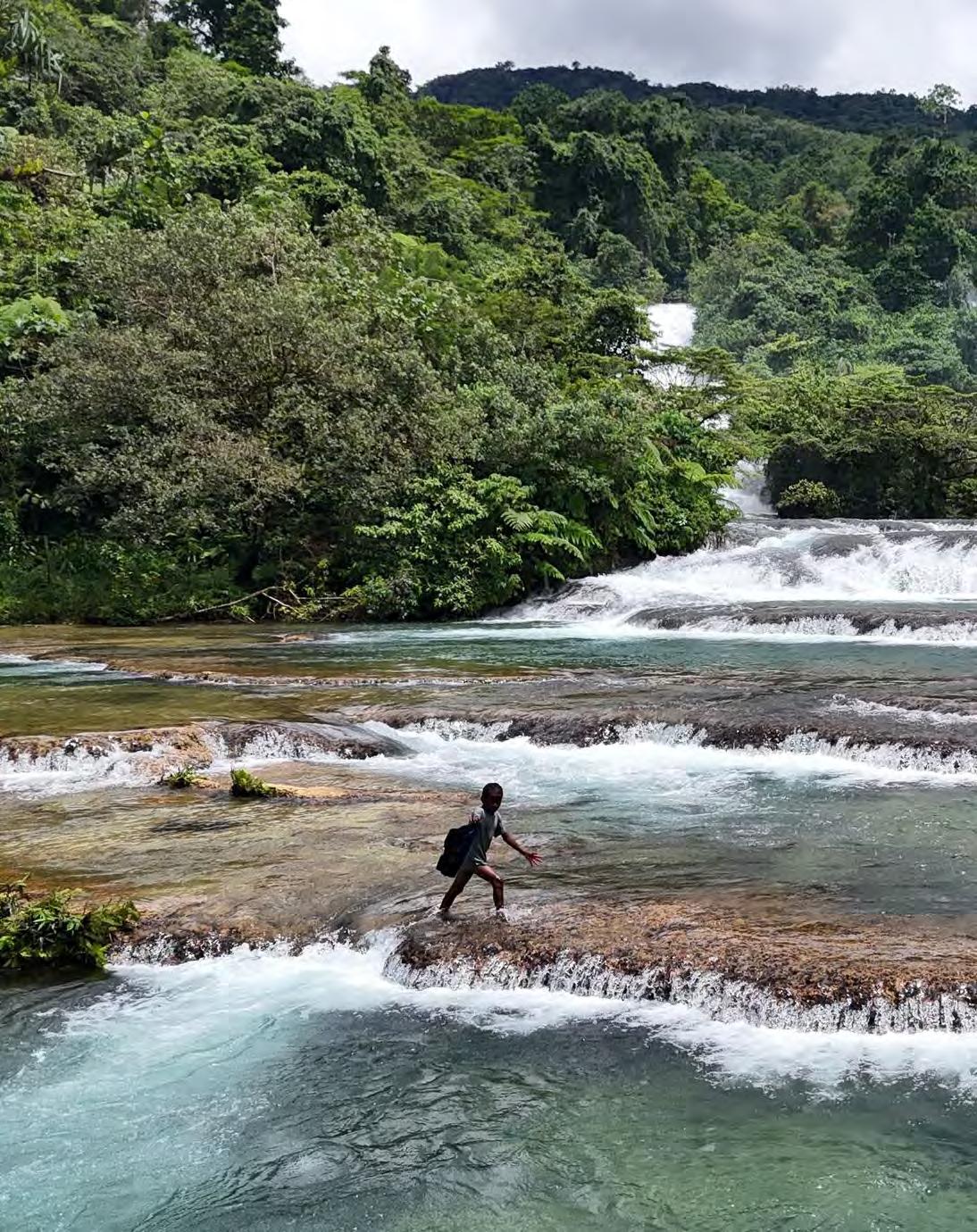
A unique tour around Papua New Guinea
A unique tour around Papua New
THAT TIME FORGOT

Deep within the south-western Pacific, Papua New Guinea remains one of the world’s last truly undiscovered superyacht destinations. One captain reflects on eight extraordinary days, and why this is the frontier that keeps calling him back.
Igrew up watching Jacques Cousteau’s extraordinary 1960s’ documentary ‘River of Crocodile Men’ about the tribal communities living on the Sepik River. There was something about the rawness of it, the density of the jungle, the smoke rising over the water at dawn, lives lived entirely beyond the reach of the modern world that never left me. Now decades into my maritime career, I’ve sailed a great deal of the world’s oceans, yet Papua New Guinea remains unlike anywhere else I have been. It has the rare and vanishing quality of feeling genuinely undiscovered.
My first visit came twenty years ago, during a round-the-world passage that began in Hull in the north of England – not the most glamorous departure point, it must be said – and wound its way down the coast of France, across to Panama, through Tahiti, New Zealand, up through the South Pacific and on to Papua New Guinea, before returning via Australia. It made a huge impression on me. The second visit left an even deeper mark. When you return to a place after two decades, you measure it differently. You notice what has changed and, in Papua New Guinea’s case, you are struck by how much has not.
The mining industry has established a foothold and development is visible from the air around Port Moresby and Madang, but push beyond the port towns and out into the archipelagos and you find a country that still operates in a different time. The sky is ever changing; there are crystal-blue seas and volcanoes smoulder on the horizon. More than 800 languages are spoken across its islands and highlands. For those in the superyacht industry who speak of ‘off-grid’ experiences, Papua New Guinea is the genuine article.
Planning the expedition
In late 2024, I captained a 60-metre superyacht on an eight-day exploration of Papua New Guinea’s north-east coast, working in close partnership with the expedition specialists Cookson Adventures. Some captains are uncertain about the value of partnering with specialists of this kind. My view, having experienced it, is unambiguous: the depth
of expertise, the shore support, the pre-trip logistics and the relationships Cookson Adventures had already built on the ground transformed what could have been a complicated voyage into something seamless and far richer for the guests. It meant no challenge can’t be met and nothing was left to chance so if there was opportunity to do something, we could really go for it.
Cookson Adventures’ Project Manager Max Balbernie joined us on board to lead the off-yacht programme. He’d proposed Papua New Guinea to the clients from the outset. They were busy people who wanted to feel as though they had genuinely dropped off the map and were looking to enjoy the solitude, without any distractions. Papua New Guinea, Max told them, was exactly the right destination. He was right.
Critical to the trip’s success was the groundwork laid well in advance. Max conducted a full reconnaissance of our intended route, visiting every anchorage and coral island in person. As he explained to me afterwards: “Reconnaissance in Papua New Guinea is essential. Every anchorage is locally owned or controlled, and many of the negative stories that circulate about yachting in PNG stem from vessels arriving unannounced. The recce allowed us to build relationships with the right people, secure access to anchorages, and ensure local communities knew when we were coming and what to expect. It was equally valuable on land, where the same principles applied to activities and guest experiences. In many cases, access could be as specific as being permitted to anchor on one side of a bay but not the other. That level of detail made the final itinerary far more reliable.”
We also relied heavily on our local agent, Nathan Brooks, a man with deep experience in the territory and an instinctive understanding of the local political landscape. He was like our man in Havana. Papua New Guinea remains a tribal country, divided across highlanders and lowlanders, coastal communities and metropolitan centres. Having a fixer who has the contacts, the patience and the cultural fluency to navigate local bureaucracy was incredibly helpful.
“Papua New Guinea places so remote, leave asking yourself ever return. It — and the second greater one.”
Guinea is one of those remote, so different, that you yourself whether you will It leaves an impression second time, it left an even
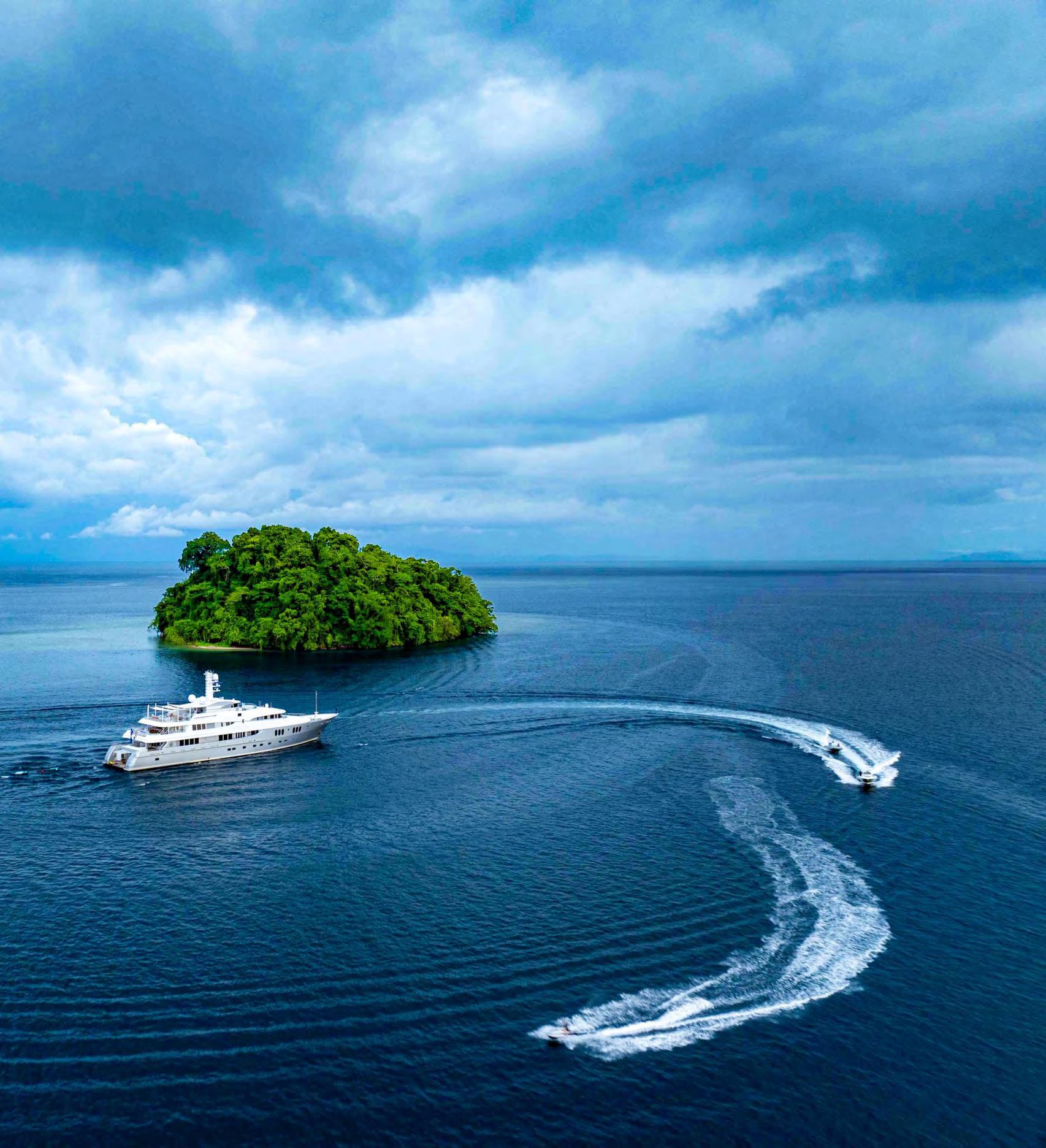
AUSTRALIA
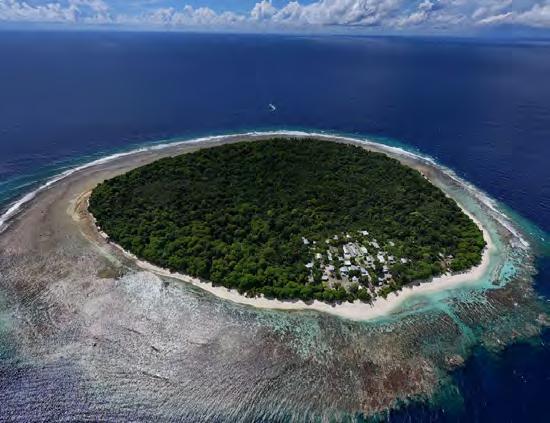
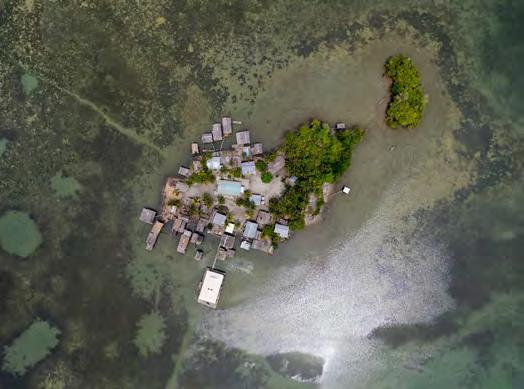
DUKE OF YORK ISLANDS
KIMBE BAY
GAROVE ISLAND
NAKANI MOUNTAINS
HOSKINS AIRPORT
PORT MORESBY
MADANG
RABAUL AIRPORT
BISMARCK ARCHIPELAGO
PAPUA NEW GUINEA
SOUTH PAPUA
CENTRAL PAPUA
SOLOMON ISLANDS

Arrival: Madang and the Duke Of York Islands Madang served as our entry port, providing the provisions, logistics and agent support we needed before heading out into more remote waters. One of our biggest challenges was that PNG has no centralised clearance system; captains must check in and out of each port and coastal territory individually, which can test a schedule. Max managed this elegantly, arranging immersive shore experiences for the guests during clearance formalities such as visits to megapod egg hunters and encounters with ‘spirit men’ performing fire dances, so that bureaucracy never intruded on the charter.
Our guests had flown in privately and Max had arranged for an immigration officer to travel from Port Moresby to Rabaul airport to process their arrival, saving a capital city stop. Bags were sent ahead to the yacht while the guests began their immersion immediately: a tour of the local market, a private visit to the Second World War Museum with a historian, then arrival aboard. It set the tone perfectly.
The superyacht itself – a spacious Germanbuilt yacht with generously proportioned interiors and excellent stowage for tenders, dive gear and watersports equipment – was well suited to the itinerary. But, as with any expedition of this nature, the most important element was the crew. Operating in remote destinations over extended periods demands resilience, genuine curiosity and a positive attitude that guests can feel. This was a team that embraced everything Papua New Guinea offered, and the atmosphere on board with the guests reflected it.
The first extended cruise took us to an anchorage in the Duke of York Islands, where the guests were welcomed with a traditional sing-sing ceremony
and explored the jungle on foot. The diving and snorkelling here is exceptional. We saw pods of dolphins, reef sharks and marine life of breathtaking density. To preserve the yacht as a private sanctuary, the diving and security team operated from a separate live-aboard. We sent an instructor ahead by dive boat to recce the best sites before the guests followed on the tender.
Garove Island and Kimbe Bay
Garove Island is one of those anchorages that stays with you. You sail into a partially submerged volcanic caldera. It is a place that rarely sees visitors beyond private yachts – and it feels it. The Bismarck Archipelago offered naturally sheltered cruising throughout, the prevailing southerly winds held off by islands and reefs, which made the whole voyage entirely free of weather anxiety.
Our interactions with the local tribal communities at Garove were handled with care and sensitivity. Max had visited during the recce and introductions had been made so we arrived not as strangers but as expected guests. The clients wanted to make a tangible contribution, so donations were made to the community and the local school, along with practical items they had requested: footballs, fishing nets and rice. While here, it was a quieter moment that moved me most. While the guests were ashore, several locals came out to the yacht in their canoes to barter, as it turned out, live parrots and handcrafted jewellery for dry goods. The crew and I were very moved by it, it was a very gentle interaction. They were almost indifferent to whether the exchange happened at all. They came, I think, out of simple human curiosity and the wish to interact with us.
Max had his own highlight from this anchorage: local fishermen paddling out after dark to fish in the


“The Nakanai Mountains are how I imagine the Garden of Eden. Reaching it on foot would take seven to nine days of jungle hiking. Helicopter access opens up places that would otherwise simply be inaccessible.”
MAX BALBERNIE, COOKSON ADVENTURES
light cast by the yacht. There was no artificial light in the area and it was the kind of image that reminds you of the privilege of being there.
From Garove we cruised overnight to the Kove region and then west to Kimbe Bay for two days of beach bonfires, fishing and picnic set-ups along one of the richest marine ecosystems on earth. A night dive off Restorff Island was, by unanimous agreement, exceptional.
The Nakanai Mountains
The penultimate day was unlike anything else on the itinerary. While guests were finishing breakfast, we repositioned slightly down the coast, leaving a short tender ride to a helipad. Cookson Adventures had arranged helicopter access deep into the Nakanai Mountains. This is a remote highland community that, on foot, would require a seven-to-nine-day jungle trek to reach. By helicopter, it took 30 minutes.
What made the experience complete was the approach taken by the crew. The chef prepared an exceptional packed lunch. One of the stewardesses flew ahead with the expedition team to the mountain community, ensuring that guests arrived to find the same standard of food and service they would expect on the yacht itself. It’s a small detail, but it speaks to the mindset that defines a truly exceptional charter: the understanding that adventure and quality are not opposites.
Max described the setting as “how I imagine the Garden of Eden” — a remote mountain dwelling community that never sees tourists, surrounded by thundering waterfalls, set against a lush jungle backdrop. Helicopter access, he noted, did not merely serve the guests but allowed us to support this remote local community, which was able to benefit from this level of tourism.
Departure and what remains
On departure day, the clients took a short tender ride to Hoskins Airport and flew on from there. Behind the scenes, there was a final tranche of paperwork – permissions, clearances, the hiring of a local fire crew to stand by on the runway for take-off.
In the weeks that followed, I found myself doing extensive research into further cruising areas: New Ireland, the Sepik River delta, the remote reefs of Milne Bay. Our original plan had been to continue exploring with the owner after the charter, and even though that did not come to pass, the research only confirmed what I had come to believe: Papua New Guinea is one of the genuinely great undiscovered superyacht destinations.
For captains and yacht managers considering it, go in with the right mindset, partner with specialists who know the territory, find a local agent who understands the politics and do not underestimate the logistics. The country will challenge you in ways that more established destinations will not, but with the right preparation, there is no challenge that cannot be met. The rewards, the marine life, the cultural encounters, the sheer remoteness of it are extraordinary.
Papua New Guinea is a place so far from the world’s established yachting circuits that every captain and every guest who reaches it asks the same question on departure: will I ever come back? I am already planning my third visit. This time, I will not leave it another twenty years.
Words by the captain in partnership with Cookson Adventures / www.cooksonadventures.com
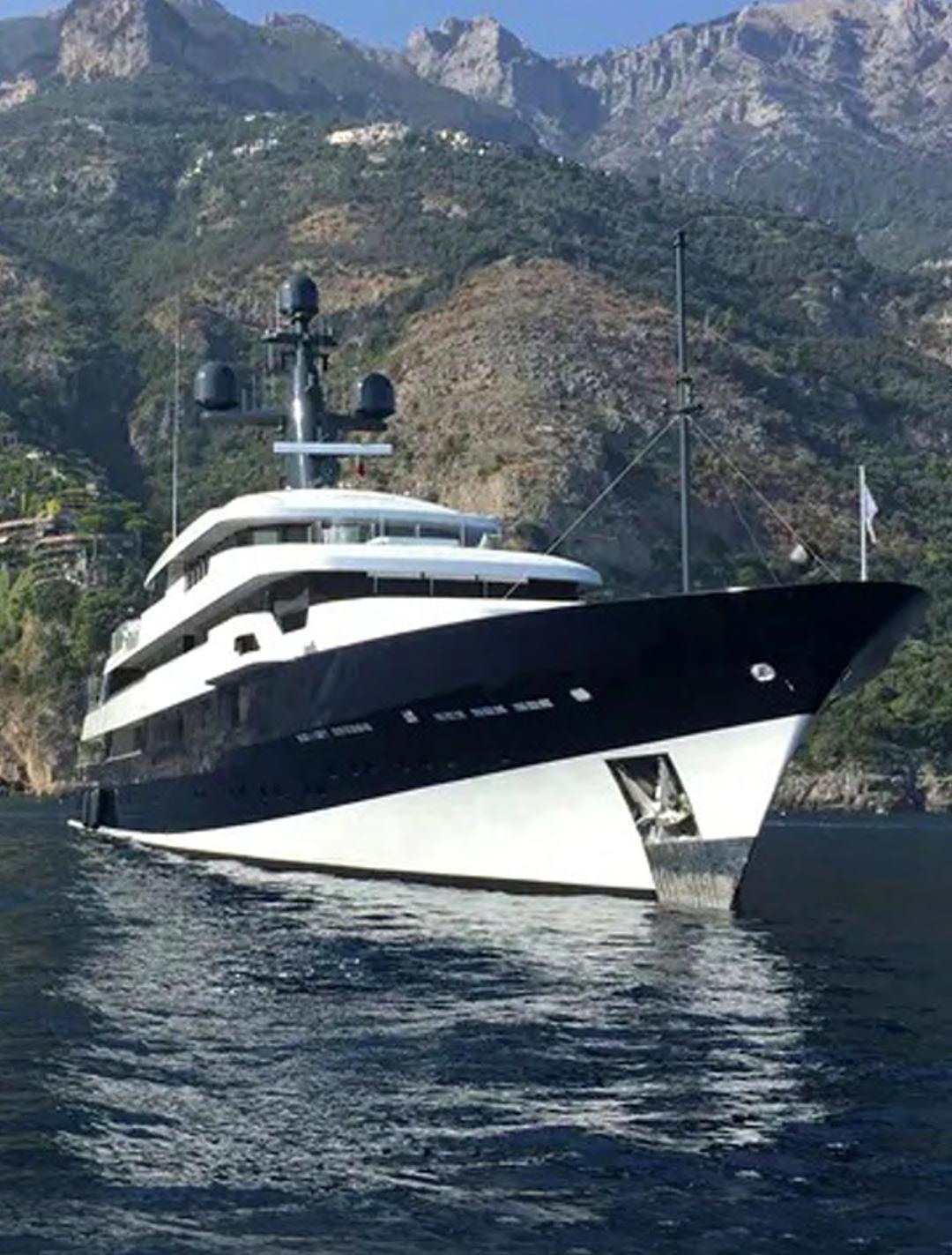
OLESINSKI REAL-TIME REFIT: THE CAPTAIN’S
Changing the way owners and captains
approach upsizing ...
BY JUSTIN OLESINSKI
There is a conversation that happens in the superyacht world with remarkable regularity, and experienced captains know it well. The owner, who has spent three or four seasons on their yacht, begins hinting they are ready for more: more space, capability, zones, a larger sun deck, a beach club that is more than just a bathing platform or simply wanting a more modern exterior. Their yacht they once considered was their forever boat no longer meets their needs and they are now imagining going bigger.
The traditional options to this conversation have always followed a classic path: upsize with a new-build or brokerage yacht. New builds are a substantial time and cost investment and for many life is too short to wait. The second-hand market offers a more immediate solution but can only go so far matching and meeting the owner’s requirements.
A third option, rarely considered because of its complexity, is the transformational refit. These substantial rebuilds are more than a mere facelift and create a solution that meets all an owner’s needs.
Olesinski launched and won the innovation Passerelle Pitch Award at this year’s YARE with their Real-Time Refit process (ORTR) that is proven to combine the positives of new builds and refits.
The owner’s dilemma
To understand why Olesinski RealTime Refit matters so profoundly for owners contemplating a step change in yacht size, it helps to understand the psychological and practical barriers that typically obstruct that decision.
A 55-metre owner who would like everything a 65 to 70-metre offers faces a genuinely difficult calculation. A new build can command €70 to €100 million with delivery windows that stretch
well beyond the point where today’s enthusiasm remains intact. The owner’s commitment is huge given they will not see their yacht completed for years and is based on conceptual sketches and renderings hoping that their taste and requirements remain unchanged.
The second-hand route offers a different set of problems. Available yachts in this sector are finite in number, with the best examples frequently sold quickly and quietly. Yachts that reach the open market then require the new owner to accept the yacht was designed for someone else who had different needs.
The real alternative
For owners seriously considering moving up in size, the implications of this process are profound and captains are uniquely positioned to help their owners.
The starting point is a fundamental reframing of what a refit can achieve. The superyacht industry has long understood that a well-executed refit can add years of life to a yacht and meaningfully update her aesthetic. What has been less explored is the extent to which a refit can genuinely transform scale. Extending an entirely new deck level to create more living space that rivals a yacht five or ten metres longer or adding a beach club where none existed. These are not marginal improvements, they are step-changes in the ownership experience, achieved on a hull whose performance characteristics and class history are already known.
The economics become compelling when examined clearly. A well-chosen and maintained 55 to 65-metre brokerage yacht and that has been through a transformational refit effectively delivers the space and amenity of a 70 to 75-metre new build, can represent a saving of thirty, forty, or even fifty per cent against a comparable new construction and be delivered in twelve to eighteen months
A refit can genuinely transform scale ... these are not marginal improvements, they are stepchanges in the ownership experience, achieved on a hull whose performance characteristics and class history are already known.
The owner is no longer weighing up the gap between what they see and what they want. They are evaluating the distance between where the yacht is today and where it could realistically be in eighteen months, visualised with precision, validated by a team of naval architects and costed against alternatives they already understand.
rather than three to four years. The owner does not simply save money, they save time as they start enjoying the result of their investment sooner.
The obstacle, historically, has been convincing the owner that the transformation is not only an option, but that it is possible and attractive before they commit. No owner of serious means will authorise a multi-millionpound refit based simply on discussions and concepts; they need to see the whole package with costs, timings and design. With Olesinski Real-Time Refit they can in a single collaborative day. The conversation moves from abstract possibility to concrete vision in a matter of hours.
Process: Traditional vs Olesinski
Real-Time Refit
Traditionally significant superyacht refit restyles or rebuilds have taken the approach where the owner or owner’s team search for a suitable donor yacht, review a number of designers on brokers’ books and choose their favourite designer simply based on a few, often irrelevant concepts based on other yachts. Once chosen, the designer only has a few hours to understand the owner’s personality, likes, dislikes, needs, concerns, expectations, style, tastes, inspirations and aspirations. All these variables are then, over a few weeks or months, condensed into a concept that is based on flaky information that
may be used as the foundation of a multimillion-pound project. The designer designs, the owner decides.
Once a suitable donor yacht has been chosen and wishlist finalised Olesinski can deliver a fully explored concept that meets the owners and all stakeholders needs within a week. Perhaps more importantly this engages and enthuses the owner as they are now the designer.
Is it really novel?
The Olesinski Real-Time Refit Process is the innovative and clever combination of over 20 experienced naval architects and designers and AI, both in-house and open source. They can explore and manipulate a multitude of feasible concept options collaboratively with the owner in real-time.
The technology underpinning the process was born by their R&D department over a decade ago, in collaboration with Southampton University and the Alan Turing Institute. The result is a modelling system of considerable sophistication capable of generating and modifying complex three-dimensional yacht designs at breakneck speeds.
In the preparation phase, Olesinski gathers all available information, often limited to broker brochures and uses in-house AI techniques to generate an adjustable 3D model within days. This model is then refined to approximately 90 per cent accuracy, capturing existing hull and deck form with genuine fidelity.
Their project team then adds the design proposals into this master model.
On the day of the kick-off meeting, with all stakeholders present, Olesinski show their first-hit concept to the owner, owner’s representative, captain and yard project managers on a wall projection or screen. In the background, remotely their project team are plugged into the live 3D master model. The owner is shown the initial proposal and invited to change anything or everything. Point to the transom and ask for the bathing platform to be extended, two minutes later … done and visible from all angles, not as a rough approximation but based on an accurate representation of the donor yacht. Any change is interrogated by their experienced team who can immediately highlight any proposal that may have adverse structural or flag implications. At the end of the day, a resolved concept is completed and highresolution renders are generated for the owner to take away.
The second-hand acquisition: changing perception and opening potential
The application of ORTR that carries perhaps the greatest immediate value for captains is its use during the active search for a larger yacht. When an owner is viewing candidates in the brokerage market, the captain’s role is critical, not only in assessing technical condition but in helping the owner see past the
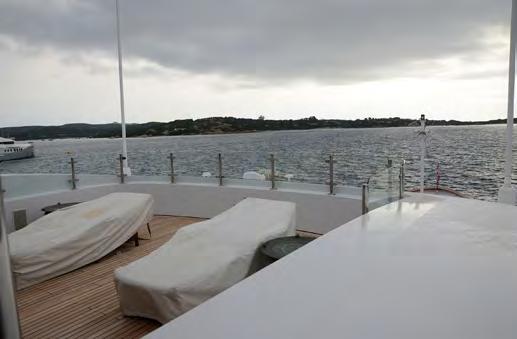
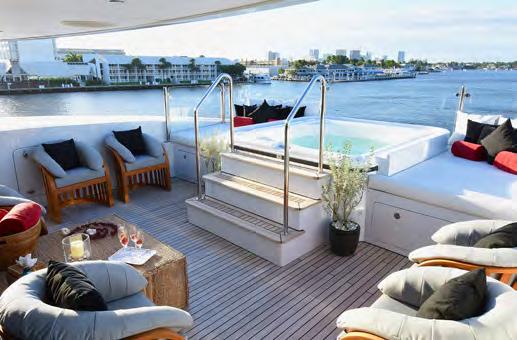
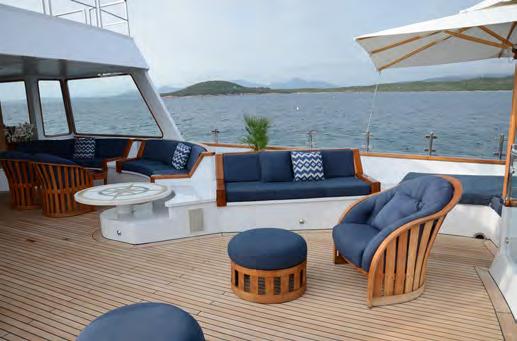
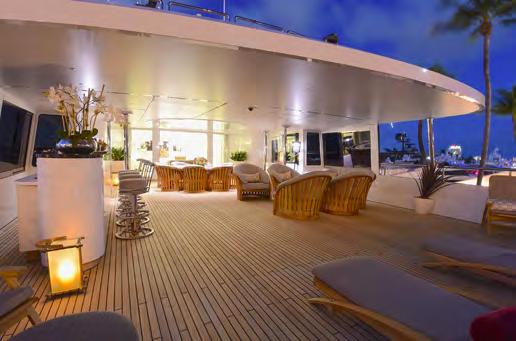
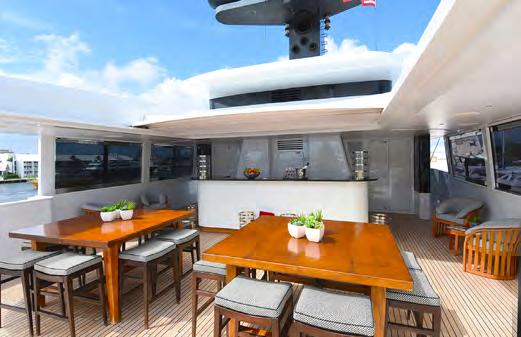
Forward upper: before and after.
Maiin deck: before and after.
Helideck: before and after.
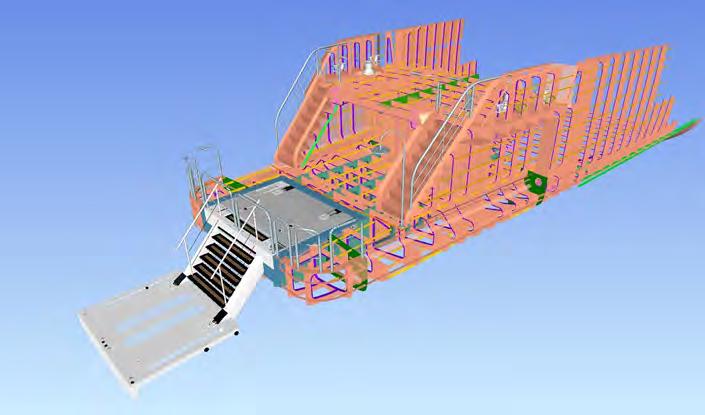
limitations of what exists today to the potential of what could exist tomorrow.
This is where ORTR becomes a genuinely transformative tool in the captain’s hands. Armed with nothing more than photographs of a yacht under consideration or a copy of the general arrangement plan, the captain can engage Olesinski to prepare a firstpass concept of what that yacht could become after a serious refit. This can be ready within days, before the owner has made any commitment whatsoever. The viewing of the yacht is no longer purely an evaluation of present condition, it becomes a preview of future potential – the owner standing on the aft deck of a yacht they might buy, already looking at photorealistic images on a screen showing how that same deck could be extended, reconfigured and transformed.
The owner is no longer weighing up the gap between what they see and what they want. They are evaluating the distance between where the yacht is today and where it could realistically be in eighteen months, visualised with precision, validated by a team of naval architects and costed against alternatives they already understand. Yachts that previously might have been dismissed as too dated or too small for serious consideration enter the frame as outstanding value propositions. The captain who can make this case, supported by credible visuals, is not simply advising. They are actively shaping the owner's investment decision in a way that is both valuable and deeply trusted.
Rebuilds require someone to initiate it, someone who understands both the yacht and the owner well enough to know when the conversation is ready to have. That person is almost always the captain.
Why the captain is the key
Rebuilds require someone to initiate it, someone who understands both the yacht and the owner well enough to know when the conversation is ready to have. That person is almost always the captain.
The captain knows which elements of the current yacht frustrate the owner most and what the owner admires about other yachts they have seen in the anchorage. They know whether the priority is volume, exterior styling, operational capability or simply the statement that a larger yacht makes. This knowledge and process shapes the initial proposal in ways that immediately resonate with the owner. The concept feels personal because it is personal, drawn from the captain's intimate understanding of how this owner actually uses their yacht.
The captain who can bring this approach into conversation with an owner is not simply facilitating a design process, they are demonstrating a level of strategic thinking and industry awareness that owners value enormously. They are shortcutting a decision into a focused, visual, actionable proposition.
The refined concept proposal can then be issued to the yard to quote far more accurately, reducing financial fat being added for unknowns, reducing cost even further. JO
To explore how Real-time Refit could help you and your owner contact Olesinski. Studio@olesinski.co.uk
Bathing platform.
by Phil Noad
The regulatory race to the top in superyachts
Phil Noad, Deputy Global Director, Safety & Compliance, Cayman Registry, explains why a harmonised international yacht code would not be in the interest of the yachting industry.
The mother of all ‘yacht codes’ was the UK Maritime and Coastguard Agency’s Code of Practice for the Safety of Large Commercial Sailing and Motor Vessels published in 1997, commonly referred to as the ‘MCA Large Yacht Code (LY1)’. It was superseded by LY2 and LY3 before being rebranded as the Red Ensign Group (REG) Yacht Code in 2017 to better reflect the contribution made by other members of the REG (for example Bermuda, British Virgin Islands, Cayman Islands, Gibraltar, Isle of Man, Jersey etc.).
The Code is an equivalence to several International Maritime Organisation and International Labour Organisation Conventions (that is Load Line, Safety of Life at Sea (SOLAS) and the Maritime Labour Convention). The development of the Code was based on the consideration that full compliance with the provisions of the above-mentioned international conventions was often incompatible with yacht designs.
A fundamental tenet of the Code is to achieve an equivalent level of safety
to the international conventions. The other leading yacht flags, Malta and The Republic of the Marshall Islands (RMI), published their first national yacht Codes in 2006 and 2013, respectively.
Within the last couple of years, the REG, Malta and RMI have all updated their yacht codes to include the SOLAS provisions for ‘Alternative Design and Arrangements (ADAs)’ to accommodate more innovative designs and to support the adoption of alternative fuels. There has also been a convergence in many other areas, such that for yachts >500gt the requirements are virtually aligned. For yachts <500gt the most significant difference (or anomaly) is that the REG Code has a wave height limitation for short-range yachts (as these vessels are permitted to have lesser window strengths, lower heights for ventilation openings and no damage stability), whereas the Malta and RMI Codes do not currently explicitly state a wave height limitation for shortrange yachts. It is probably worth pointing out that the classification
society of the vessel will likely have established an ‘operational envelope’ (that is significant wave height ‘v’ speed) based on structural strength, rather than weathertight integrity, and so class should be ensuring that the master is aware of these operational limitations.
Over the years, there have been voices suggesting a harmonised international yacht code, which would necessarily be administered by an IMO committee and various working groups. From our stakeholder discussions, the overwhelming consensus is that this would not be in the interest of the yachting industry for numerous reasons.
Firstly, there is sufficient convergence between the leading national yacht codes that designers, builders, and classification societies are now able to deal comfortably with the minor differences.
Secondly, the success of the REG Yacht Code has been built on inclusivity with industry engagement at all levels, from
crew and management companies to designers and builders. The working groups have been arranged in major yacht building hubs such as Italy and The Netherlands to ensure individuals and small companies can afford to contribute and have a real sense of ownership. Such meetings have always been well attended and resulted in positive feedback. The REG Yacht Code is agile. It can be readily amended to incorporate new safety requirements for yacht specific trends in design (such as ‘nemo’ rooms, folding platforms, beach clubs, the carriage of helicopters, submersibles and perhaps now e-VTOLs) and to include lessons learned from accidents and incidents.
Due to the size, reach and workload of the IMO it has many competing priorities. By way of example, many of the international Code and Convention amendments now being discussed at IMO working groups won’t come into force until 2032 and beyond. The yacht industry is more innovative and dynamic than some other sectors of the maritime industry, not just in design but also operation, and so is best served by flag states with a keen interest and specialist knowledge of yachting that can readily adapt their
regulations to meet the industry’s needs.
None of the leading yacht flag states compromise when it comes to safety or crew welfare, so regulatory competition remains healthy. We see the same with classification societies, where being the first to market with new rules to safely deal with novel designs and arrangements helps drive their growth and investment in resources and specialist personnel.
The International Association of Classification Societies (IACS) has done an admirable job in promoting uniform technical standards for merchant ship construction over the past 50 years, and the recently formed Yacht Safety and Environmental Consortium (YSEC) will no doubt also have a similar impact in yachting. A certain degree of harmonisation in base rules, unified interpretations and requirements sets a level playing field without stifling an individual member’s innovation.
This brings me back to the title of this piece, ‘The Regulatory Race to the Top in Superyachts’. Our goal must be to provide owners, charterers and
their families, guests and crew with a safe and comfortable living and working environment, while constantly adapting to new trends.
We often hear that crew make the experience but then see designs with an insufficient number of crew cabins for the ‘hotel’ operations or sized to the minimum requirements, which often leads to a high turnover of crew. Owner’s might express surprise after a devastating fire that their 20-millioneuro, 499gt short-range yacht didn’t have a sprinkler system or after a collision that it sunk as there was no requirement for damage stability. Our own experience with owners is that they support a race to the top in terms of safety and Cayman Registry will always be there to assist in this endeavour.
Hopefully, we have illustrated the importance of keeping the codes and the broad industry engagement in their current dynamic form, to ensure that changes can be identified and realised both quickly and efficiently to support the needs of the innovative yacht sector, and to provide some healthy competition. The same would not be achieved with an IMO-administered yacht code. PN
The yacht industry is more innovative and dynamic than some other sectors of the maritime industry, not just in design but also operation, and so is best served by flag states with a keen interest and specialist knowledge of yachting that can readily adapt their regulations to meet the industry’s needs.
MIDNIGHT AMONGST
Accidental ‘Ice Queen’ Captain Maiwenn Beadle was the Northwest Passage. As yachting moves into Polar leadership and why how you handle a mistake

AMONGST THE ICE
was the first woman to captain a superyacht through Polar waters, she reflects on what the Arctic teaches about mistake matters more than the mistake itself.

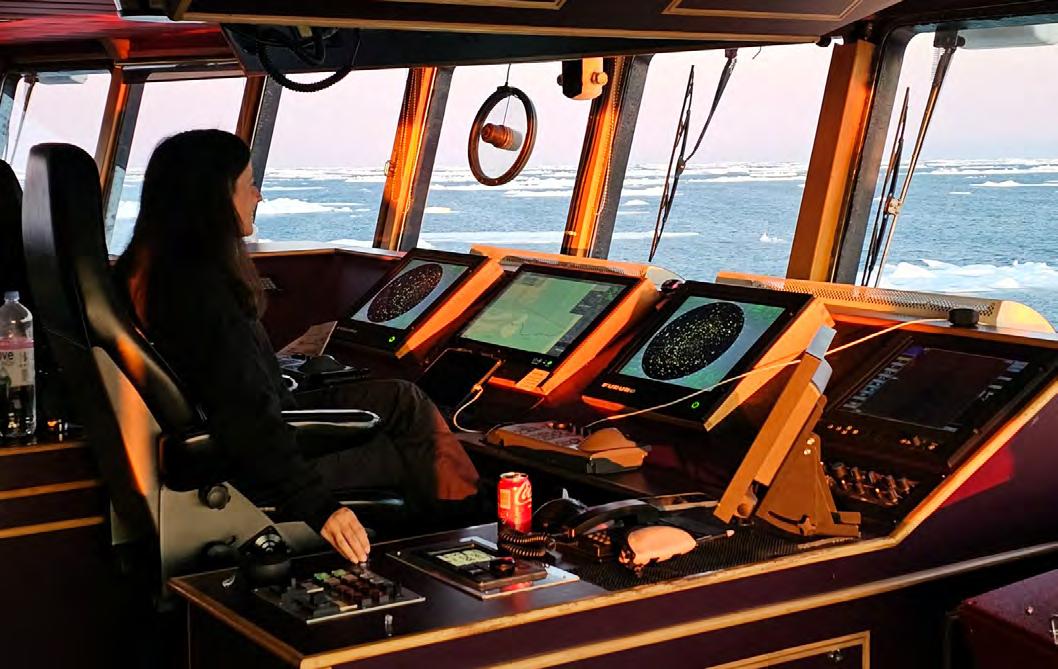
There is a tap, tap on my cabin door, “Good evening, Captain. It’s midnight, all is well and I have ice ahead.” My second officer has just woken me to ask for my help. As I step onto the bridge, the sun is due north and just touching the horizon. As the watch progresses, it moves west to east, its fiery orange light illuminating a line of large bergs to our north. Some of them are the size of ships, others the size of small football stadiums. But this isn’t our concern; this is just business as normal, another day at the office. My Mate’s concern is a line of targets on the radar, due West, straight ahead. It stretches across the entire screen, north to south across our path. From this distance, now about six miles away, it is an unbroken barrier across the screen.
You can see this ice line on the ice chart, laid out on the chart table next to the weather and the voyage plan, downloaded from the Danish Met Office earlier in the day. It is clearly delineated, but on the ice chart, it’s marked to the north of our position. During the 24 hours since the chart was issued, it has now drifted south with the East
Greenland current. There it is, though, clearly visible on the latest satellite image, curving to the front and south of us, a great spiral arm wrapped around our current position.
Somehow, someone has missed the night order requesting we approach Scoresby Sund from the south to avoid the predicted drift and to approach the Bay inside the ice by running close to shore. But now isn’t the time to think about who and why, my officers have the authority to adjust course and I know they made what they felt was the correct decision while surrounded by what looked like open water.
When you hand someone the authority to make a decision, you can only accept that decision in the present, resolve any issues, support their thought process and let them learn. We have all made this mistake as we start ice navigating, wanting to believe the information from our eyes. Our brains constantly seek to fit the world around us into a box we understand and they struggle to grapple with this totally alien world. But presently that’s not what is important; we have a long watch ahead of
us tonight and a lot of ice to navigate. My mate won’t make the same mistake again and right now I can see her discomfort; there’s no need for words, lesson learned.
The band of ice is just coming into sight, lit by the low golden light, the densest band a few miles wide. From the chart and the satellite, I can see it is sea ice, seven or eight tenths, medium-sized floes up to two metres thick, drifting south and curving away 20 miles behind our current position. For a normal vessel, this would mean turning round and following back around into clearer water. But Nansen Explorer is A1 Ice Class and the vessel is built for this. The sea ice is decaying and starting to fall apart. The density of the floes leaves enough room for it to weave its way through with just an occasional nudge. I am not going back to bed for a few hours, but my second officer keeps the con and together we push our way through to the more open water behind.
The Arctic has a way of reminding you that you are in a completely alien environment. In the far north, navigation takes on a different shape. Success is about planning, attention and discipline and most of all about the ability to assimilate changes and sail with them. In this environment, one plan isn’t going to be enough and your schedule is not the most overriding factor. Here, it’s not going to be easy and success is not guaranteed.
This is the hardest form of navigation there is. Arctic sailing and expedition work demand far more than technical ability. They require the capacity to interpret a landscape that is constantly changing. Ice is never still, it fractures, drifts, compresses and reforms in response to forces that are not visible. The weather evolves quickly and often without warning. Light behaves differently, flattening distance and distorting perception. In such conditions, traditional markers of progress like speed, efficiency and completion can become secondary. What matters is the ability to ask the right questions at the right time and to adjust decisions based on what is actually happening rather than what was expected.
Modern vessels may be equipped with advanced navigation systems, access to real-time satellite data and this technology indicates where ice has been, but it cannot fully predict where it will move next. Every ice chart is at least 24 hours delayed; clouds obscure a satellite
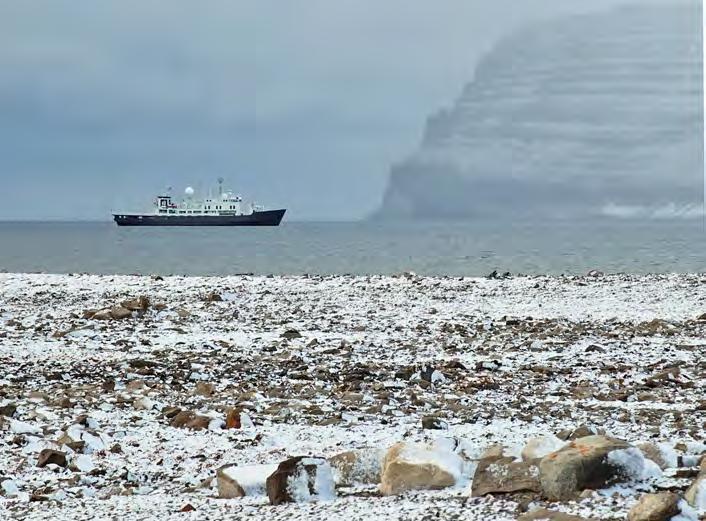
This is the hardest form of navigation there is. Arctic sailing and expedition work demand far more than technical ability. They require the capacity to interpret a landscape that is constantly changing.
image, wind and current shifts. The interpretation of the outcome remains a human responsibility.
As yachting moves into these fragile and beautiful environments, it can be challenging to adjust the way we operate, to become aware of our own limitations and to accept those of our vessel. There is a strong drive to deliver the standards normal to other areas of yachting – to push the boundaries, go a little further, to get the next Instagram shot. It’s easy to forget the unforgiving nature of a place that is at times literally beyond the end of the charts and the reach of outside support.
I never did ask who changed the route that night, although sometimes late at night on the bridge, I think about it. My officer called me in plenty of time and that to me was the critical decision. The fact that they must always feel comfortable calling me, for any question
at any time, and that they never felt that they might be berated for doing so was something that I sometimes had to remind myself of before I spoke. My second officer is now first officer on The World, a 45,000gt cruise ship, and she wears those three stripes with well deserved pride. MB
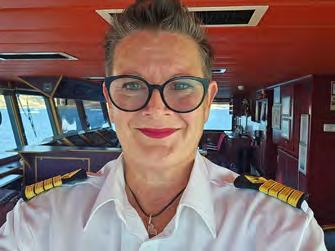
What yachting refuses to say out loud
Women in yachting are speaking out. Captain Kelly Gordon asks why the industry is still not listening.
If you ask the industry, they will tell you that the conversation around women’s safety in yachting has changed, but the fact is, it has not changed nearly as much as the glossy brochures, recruitment videos and polished industry panels would suggest.
The superyacht world still sells a powerful fantasy of gorgeous anchorages, elite service, adventure, financial freedom and a lifestyle few landbased careers can match. But behind the polished teak, white uniforms and carefully curated guest experiences, there has always been another reality shaped by hierarchy, isolation, power imbalance and a deeply ingrained culture of silence.
What has changed is that women are now speaking out.
Over the last several years, more women working at sea – stewardesses, deckhands, officers, engineers, chefs and junior crew too – have begun speaking more openly about harassment, intimidation, bullying, assault, discrimination and retaliation. What was once confined to private conversations in crew messes or WhatsApp groups is now being discussed in surveys, industry forums, podcasts, training sessions and confidential reporting channels. And for the first time, those stories are being supported by structured data.
Organisations like the International Seafarers’ Welfare and Assistance Network (ISWAN), through its Yacht Crew Help Line, have reported increasing numbers of crew reaching out about abuse, bullying, harassment, discrimination and violence. More and
more crew members are willing to seek help and document their experiences rather than suffer in silence, but in all statistics, we still see that women are disproportionately affected.
At a broader level, maritime bodies such as the International Maritime Organization and Women’s International Shipping & Trading Association have also drawn attention to the persistent gender imbalance across maritime industries and the barriers women continue to face in career progression and inclusion. While yachting often has a higher proportion of women than commercial shipping, particularly in interior departments, that representation has never guaranteed safety, equity or protection from abuse.
To its credit, parts of the industry have begun to respond. More yachts now have formal antiharassment policies, clearer HR reporting structures, welfare contacts and structured crew induction processes. Some management companies have introduced behavioural and leadership training. Some captains actively set expectations around professionalism, boundaries and respect from day one. There is also growing recognition that “crew culture” is not harmless if it normalises excessive drinking, sexualised banter, exclusionary behaviour or retaliation against those who speak up. That is progress, but there is still a long way to go.
The structural conditions that allow abuse to go unchallenged still exist. Yachting is an enclosed working environment where crew live and where
they work, often in shared cabins, with limited privacy and long, unpredictable hours. The chain of command is rigid and access to future employment is heavily influenced by references and reputation. In such a system, informal consequences matter as much as formal ones.
A junior stewardess may still be warned that making a complaint could “ruin her career”. A deckhand may be advised to stay quiet until the season ends. And even where formal blacklisting does not exist, the reality is that word travels quickly through a tightly connected industry.
That creates constant concerns for crew, male and female, before speaking up: Is this serious enough to risk my job? Will I be believed? Is this person friends with others above me? Will I be labelled difficult or unprofessional? Will this follow me into my next contract?
Another issue that has not shifted enough is the way harassment is still too often minimised or reframed as interpersonal conflict rather than a safety issue. If a crewmember is being cornered, touched without consent, sexually pressured, intimidated, stalked, humiliated or punished for setting boundaries, that is not “crew drama”. It is not a misunderstanding, it’s a workplace safety failure.
And yet for women in particularly, the burden still often falls to them to manage the risk themselves: Watch your drink. Don’t walk alone. Don’t be too friendly. Don’t speak up too soon. Don’t upset senior crew. Don’t misinterpret signals. Don’t make it awkward. These are survival strategies, not structural solutions.
There is also still a persistent issue of role-based sexism. Interior departments, where women are heavily represented in yachting, are often expected to absorb emotional labour, maintain harmony and “keep things running smoothly”, even in the presence of inappropriate behaviour. This can blur professional boundaries and make misconduct easier to dismiss. Meanwhile, women on deck, in
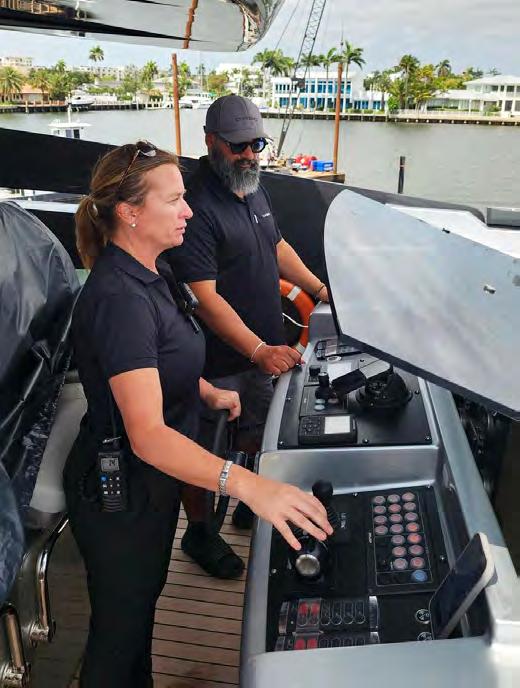
engineering or in leadership roles may still face credibility challenges, physical assumptions about capability or subtle exclusion from informal networks.
So the question becomes what needs to be said out loud for change to actually happen.
We need to say that prestige does not equal safety
We need to say that luxury environments can conceal exploitation just as effectively as any other workplace, sometimes more effectively, because privacy, mobility and discretion are built into the model.
We need to say that being “like family on board” can become dangerous when it replaces accountability.
Perhaps most importantly, we need to say that reporting harm is not disloyalty to the industry; it is one of the few mechanisms that can actually improve it.
We need leadership that acts, not just listens, reporting systems that are trusted, not performative, captains who intervene early and owners who understand that crew wellbeing is a top priority.
We need to say that leadership silence is not neutrality, it actively shapes culture.
We need to say that owners, management companies, recruiters and senior crew all influence what is tolerated, rewarded or ignored.
And perhaps most importantly, we need to say that reporting harm is not disloyalty to the industry; it is one of the few mechanisms that can actually improve it. In that context, several organisations and leadership initiatives are helping shift the conversation from awareness to action.
As I mentioned earlier, ISWAN’s Yacht Crew Help provides confidential, independent, 24/7 support for yacht crew dealing with a wide range of issues including harassment, bullying, abuse, mental health crises and employment concerns. Crucially, it sits outside the chain of command, which matters in an industry where reporting internally can feel unsafe or futile. It also collects anonymised data that helps expose patterns the industry has historically preferred not to see. That data consistently shows that abuse, bullying and harassment remain significant issues, with women disproportionately affected.
Alongside this, Yachtie Minds Matter has become an increasingly visible force for cultural change. Founded by me, it focuses on the intersection between mental health, safety and leadership culture onboard. Its work includes providing access to therapy support, funding for mental health first aid training and industry-wide surveys that examine psychological safety, burnout, substance use and workplace wellbeing.
At the leadership level, change is also beginning to emerge through more open dialogue among captains themselves. Initiatives such as the Tuesday Captain’s Chat, led by Captains Liam Devlin and Scott Kidd, are helping normalise conversations that have historically been avoided in senior leadership spaces. These discussions focus on crew welfare, leadership responsibility, mental health, burnout, workplace culture and the human side of command, topics that
are often left out of formal maritime training despite being central to life on board.
What makes this genuinely significant is the visibility of senior leaders speaking about them openly. In an industry where authority has traditionally been associated with emotional distance and silence, these conversations signal that leadership is not only about operational control but about culture-setting, psychological safety and accountability.
That actually matters for women on board. Culture is shaped by what leaders say, what they tolerate and what they respond to in real time. When captains openly discuss harassment, burnout, mental health and crew welfare, it changes what feels acceptable to ignore.
So when we talk about what needs to be said out loud, we are not just talking about crew behaviour, but we are also talking about leadership behaviour. We need leaders who are adamant that mental health and safety are inseparable and that “good crew culture” is not measured by endurance or compliance, but by trust, accountability and intervention when something is wrong.
The future of yachting will not be defined by how advanced the vessels are, how exclusive the guest experience becomes or how polished the industry appears from the outside, it will be defined by whether the people who keep it running, especially women, junior crew and marginalised workers, can live and work on board without fear of humiliation, coercion, retaliation or dismissal when they report harm.
The industry doesn’t need more awareness campaigns if awareness does not lead to consequences. We need leadership that acts, not just listens, reporting systems that are trusted, not performative, captains who intervene early and owners who understand that crew wellbeing is a top priority. Our voices are loud, especially when we use them together. Let’s change what has been tolerated for far too long. KG

Who gets to work in yachting –and who never gets the chance?
Chris Frisby, COO at UKSA, argues that yachting has a pipeline problem and its reluctance to take on green crew is breaking the system it depends on …
We prioritise standards, training, presentation and professionalism in this market, and yet, when it comes to how people find their way into this industry, the reality is far less deliberate.
What we see is that most people working on yachts today arrived through familiarity. They grew up around boats, had a family connection, met the right person at the right time or could afford to take the financial risk of getting started. That model has worked for decades, but it leaves a much bigger question unanswered: what about the thousands of young people who never see yachting as an option at all?
If we are serious about the future of this industry, about the next generation of captains, officers and crew, we must start earlier, widen the door significantly and confront some uncomfortable truths about what happens once people step through it.
Engaging young people before they rule themselves out
For many young people, maritime simply doesn’t exist as a career option because they lack exposure, rather than lack interest or ability. If no one in your family works in yachting, if your school has no connection to the sea, if cost is a barrier before you even start, then the industry never enters the conversation.
At UKSA we see this clearly. That’s why engaging young people early is critical. Through our work with schools, youth groups and community organisations, we introduce children and teenagers to the water long before career decisions are made.
Our Maritime Futures programme, created in partnership with the King’s Trust, is a five-day residential experience designed specifically for young people who may not thrive in traditional academic settings. It shows them the breadth of maritime careers,
builds confidence, resilience and teamwork, and critically helps them believe they belong.
Many of the young people who attend Maritime Futures are bright, capable and motivated, but disengaged from classroom learning. The maritime environment suits them. It’s practical, real and demands responsibility. Too often, these young people are written off by the system. In reality, they are exactly the sort of people the maritime industry needs.
Without early engagement, the best captains of the future may already be heading down the wrong path, not through lack of talent but through lack of opportunity.
Access still matters –cost is the gatekeeper
Even once interest is sparked, access remains a major barrier. Training costs are high and for young people
Guest Column by Chris Frisby
without financial backing, they can be insurmountable. Yachting is full of stories that begin with “you just have to work hard”, but hard work alone doesn’t pay for qualifications, travel or time without income. We operate on the simple principle that those who can afford to pay should do so and those who can’t are supported.
Around a third of our students come from challenging or financially deprived backgrounds, and bursary funding is often the difference between participation and exclusion. This is all about removing barriers so standards can be met. When access is fair, talent rises. When access isn’t addressed, the industry limits itself to a narrow pool of people who can afford to take risks. For captains and owners, supporting bursaries is a direct investment in a more capable, diverse and sustainable workforce.
The hardest step: getting the first job
Ask any green crew what the hardest part of the journey is and the answer is almost always “getting that first job”. Even with qualifications, determination and the right attitude, breaking into the industry is brutally difficult without additional skills, seasonal experience or the right introduction. The result is a familiar Catch-22: you need experience to get the job, but you need the job to get experience.
Recently, we surveyed industry professionals about what training is needed for new crew. One response from a captain stood out because it was just so honest: "So this past weekend I asked my nine crew: ‘Why should we hire a new green person for our crew?’ They all looked at me and said, ‘Why would you do that to us?’ Then they pleaded with me not to think about it.”
This captain deserves credit. Not only for sharing the feedback openly, but also because he doesn’t agree with it. He actively wants to develop new crew, but the response exposes an industry culture that sees training new entrants as a burden rather than a responsibility. What’s uncomfortable is that every experienced crew member was once green. Every captain had a first job, a first chance and someone who tolerated mistakes while they learned. The question isn’t whether green crew are hard work, but whether an industry that refuses to train its own future workforce can realistically expect that workforce to appear fully formed. If no vessel wants to take the first step, the pipeline breaks.
Structured pathways into employment, clearer entry routes and better collaboration between training providers and vessels would transform outcomes for young people who are qualified, motivated and stuck at the starting line. This is where onboard leadership and culture make a real difference. Taking a considered approach to developing people rather than simply coping with short term pressures, and properly understanding the training candidates bring with them, can make a measurable difference without compromising standards.
Keeping young people once they’re in Recruitment is only half the challenge; retention matters just as much. Young people entering the workforce today have different expectations. They care about progression, welfare, mental health and being heard, but this should be seen as awareness over a weakness. The assumption that young crew should work relentlessly, say nothing and simply be grateful no longer holds.
We’ve recognised this shift. Alongside technical training, we place strong emphasis on soft skills such as communication, resilience, realistic expectations of life at sea and personal accountability. We prepare students honestly for the realities of yachting, the highs and the hardships. But vessels also have a role to play too. Clear progression pathways, supportive leadership and open conversations encourage young crew to stay, develop and commit long term. If the industry wants loyalty, it has to offer more than opportunity and direction in tandem.
What captains and owners can do I’m not here to talk about turning yachts into social projects; this is about recognising the influence vessels and owners already have. Owners increasingly want their leisure and spending to align with their values. Younger generations expect the things they enjoy to contribute positively. Linking yachting with philanthropy through visible, authentic partnerships with training charities creates an opportunity to do both.
There isn’t a lack of generosity in this market, but what it often lacks is coordination and confidence in talking openly about its challenges. If we want competent, committed crew five or ten years from now, we must accept that development is part of the job today. That means planning for entry-level roles, supporting training institutions and shifting the narrative from “why would we hire green crew?” to “how do we develop them well?”
Imagine an industry that proudly invested in people, opened doors wider and built its future consciously. The talent is out there, so it is on us to take the opportunity. CF
Guest Column by Chris Frisby
Sexual assault on board: flag of convenience no shield from U.S. courts
BY ADRIA NOTARI AND RYAN MELOGY
In a recent case, a yacht crewmember sexually assaulted in Antigua had the vessel arrested when it reached Fort Lauderdale. Her case has far-reaching implications for owners and insurers.
She was twenty-five years old and just days into her first contract as a second stewardess,when the male chef came back to her tiny cabin after drinking ashore. She had been forced to share the cabin with the chef, a much older man with years of experience at sea. The yacht was docked at English Harbour, Antigua, and she was asleep in her bunk when he entered. He forced himself into her bed, pinned her down and sexually assaulted her as she fought and begged him to stop.
Eventually, he relented. She stayed awake all night, struggling to make sense of what happened or what should come next. In the morning, the chef apologised by WhatsApp and said it would never happen again. She told her chief stewardess, the chief stewardess told the captain. She made a statement to human resources; she wrote to the Flag State, in St Vincent, asking for help; she reported the assault to the Antiguan police, but none of these reports produced a response that made her feel protected.
Within days, both the chef and the victim were off the vessel. When police finally arrived to investigate, the chef had already quietly flown home. She had resigned and been repatriated. The yacht stayed in the Caribbean and continued to operate.
The conventional understanding in the industry is that when a sexual assault happens on a flag-of-convenience yacht in foreign waters, the crewmember has no remedy. The flag state does not respond, he local authorities will not pursue it and the owner is incorporated somewhere unreachable. The assumption is that the closed loop holds. But in this case, she eventually got in touch with us.
The arrest
A few months after the incident, the vessel docked in Florida. We filed a verified complaint in the U.S. District Court for the Southern District of Florida asserting a preferred maritime lien and claims for unseaworthiness, Jones Act negligence, and failure to provide maintenance and cure. After the court issued a warrant of arrest, the U.S. Marshals Service boarded
the vessel and arrested it at the berth in Fort Lauderdale. The captain and crew were forced to leave the vessel without their personal belongings. One of those crew members was the chef, who had returned to work.
The owner moved to vacate the arrest, arguing that the U.S. court lacked jurisdiction. The vessel flew the St Vincent flag and was owned by a Marshall Islands LLC. The assault happened in Antigua and neither the perpetrator nor the victim was a U.S. citizen. The assault, by their account, had no connection to the Southern District of Florida. The court did not see it that way.
Whether a U.S. district court has admiralty jurisdiction to arrest a vessel is governed by 28 U.S.C. § 1333 and the location-and-connection test from Jerome B. Grubart, Inc. v. Great Lakes Dredge & Dock Co. The questions are two: did the tort occur on navigable waters and does it bear a substantial connection to “traditional maritime activity?” The court found the yacht was on navigable waters when the assault occurred and that sexual assault on a crewmember bore a substantial connection to traditional maritime activity. Both prongs were satisfied and the arrest stood.
Under U.S. law, a maritime lien for unseaworthiness attaches to the vessel itself at the moment of injury. It does
The yacht insurance market is aware of sexual misconduct at sea but has decided to treat that injury as categorically different. It is a choice the industry will eventually be asked to defend.
Adria Notari, U.S. maritime attorney and co-counsel for the plaintiff.
not depend on the flag, the citizenship of the seafarer, the nationality of the perpetrator or whether the tort occurred in U.S. waters. It travels with the vessel. The first time it touches a U.S. port with the lien attached, it is exposed to arrest.
With the arrest upheld, the owner faced a choice. If he did nothing, the court could order the yacht condemned and sold at a U.S. Marshal’s auction. After three and a half months under arrest, the owner posted a $1 million bond to release the yacht and the bond stood in for the vessel in the litigation.
The forum fight
With the bond in place, the owner’s next move was to ask the court to dismiss the case under the doctrine of forum non conveniens (FNC). The argument was that Antigua, where the assault occurred, was the more appropriate place to litigate.
The FNC standard placed the burden on the owner. To dismiss, he had to show three things: that Antigua was an adequate alternative forum, that the private and public interest factors favoured dismissal, and that the case could be reinstated there without prejudice to the plaintiff.
The owner was unsuccessful. The defendant offered no affidavit from Antiguan counsel, no evidence that Antigua provides a comparable civil remedy for seafarer sexual assault and no explanation of how Antiguan procedure could accommodate an in rem proceeding. The court observed relevant evidence was aboard the vessel, which regularly enters U.S. waters, and with the crewmembers who worked on board, none of whom lived in Antigua. The motion was denied.
Resolution
By the time the FNC motion was denied, the case had been in federal court for nearly five months. The case moved into the discovery phase, with the parties trading deposition and document requests, preparing for trial. Nearly a year after the vessel was arrested, both sides met for a court-ordered mediation, where the case was confidentially resolved. The
bond was then discharged and the case was dismissed with prejudice. From the assault in English Harbour to the closing order in Fort Lauderdale, a little over a year had passed.
What this means for owners and insurers
Read the policy. Yacht liability insurance might exclude coverage for sexual misconduct claims. If that exclusion is enforceable, the owner may be personally on the hook for the claim and the defence. Read the language before an incident, not after.
Notify insurer immediately. Yacht policies contain strict notice provisions and delay or concealment of an allegation of sexual assault can affect coverage. Audit the structure. A foreign flag and an offshore SPV do not defeat an in rem arrest. The maritime lien attaches at injury, travels with the vessel and is exposed the first time it touches a U.S. port.
The shield that wasn’t
The flag on the stern can be a shield against scrutiny, but it is not necessarily a shield against accountability. As crew become aware of the remedies that travel with the vessel, more of these cases will be brought in U.S. courts. Yacht owners must understand their insurance coverage before that day arrives. Supplemental sexual assault cover is available and prudent owners are buying it. The deeper question is why standard policies exclude these claims at all. A crewmember sexually assaulted in her bunk is injured in the service of the vessel, the same as a crewmember struck by a falling block. The yacht insurance market is aware of sexual misconduct at sea but has decided to treat that injury as categorically different. It is a choice the industry will eventually be asked to defend. AN | RM
Adria Notari and Ryan Melogy are U.S. maritime attorneys who represent seafarers in injury and abuse cases. They were co-counsel for the plaintiff in the case discussed in this article.
Ryan Melogy, U.S. maritime attorney and co-counsel for the plaintiff.
by Xanthe Bowater
The cost of entry
Are start-ups being left out of the room? Xanthe Bowater, founder of WaveWellness Solutions, explores how newthinking and practical solutions can reach the people who could benefit from them most.
Captains today are being asked to lead through increasing complexity: crew retention, rising expectations, tighter operational pressure and an industry evolving faster than its many systems can keep up. If we are serious about supporting the crew on board these yachts and the final decision makers, there is an uncomfortable question worth asking – how easy is it for new-thinking and practical solutions to reach the people who could benefit from them most?
Let’s focus on the elephant in the room: why are start-ups and innovative businesses being left out of the conversation? In many cases, it comes down to how access to key industry stakeholders is structured. Opportunities to engage with new ideas are often shaped by timing, networks and budget rather than merit or impact of the idea itself. Conversations tend to happen within familiar circles, and while there are increasing efforts to create space for innovation, they often arrive late, are
limited in scope or sit just outside the rooms where decisions are made. When conversations remain within these established networks and platforms, they naturally gravitate toward incremental changes, refining the existing instead of reimagining the future. The outcome is consistent; the pathway between new thinking and real-world application is much narrower than it needs to be. New ideas and businesses are being snuffed out before they get a chance to bring change to the status quo.
My last trip from New Zealand to Palma de Mallorca was a journey that reflects the increasingly global nature of both the superyacht industry and the businesses supporting it. Distance, however, is not the primary barrier. Cost remains the more significant factor. While steps are being made to ensure the end users are present, there are still significant financial barriers in front of the startups building the solutions. We are inviting the end user to the table, while pricing
out the people trying to solve the problem.
The start-up founder is often the only person in the room operating at a loss. These are the people working to tackle some of the industry’s more complex challenges, from mental health to sustainability. Yet, to be part of the conversation, they are often expected to absorb a ‘glitz tax’ for an experience many would gladly trade for a meaningful conversation or a short opportunity to present what they are building.
A registration fee of €500+ for an industry forum may be a standard operational expense for established businesses, but for early-stage founders, particularly those selffunding solutions designed to address systemic challenges within the industry, it represents a more considered decision. It does not necessarily exclude participation, but it does influence who is able to be present in the room.
Recent transparency from organisers has highlighted the actual cost of delivering high-quality events. With significant portions of ticket pricing allocated to marketing, production and hospitality, it is clear that these forums are complex and expensive to run. High-end hospitality is part of the sector’s DNA and I am not suggesting these forums should become budget workshops. However, this prompts a broader question: are current models optimised to encourage the widest range of relevant voices or do they, perhaps unintentionally, reinforce the existing structure of who gets access and when?
In saying this, we should recognise that there have been some positive steps forward. Sponsored tickets and travel support for captains and crew – an initiative launched by the Superyacht Alliance – are long overdue and absolutely necessary. For too long, conversations about crew have taken place without crew in the room. As a founder focused on the ‘human element’, I am a strong supporter of this shift. The yachting
industry needs the voice of the user to keep us engaged in the conversations.
Cost is only part of the challenge. Timing contributes just as much
True inclusion requires a long runway. For anyone travelling internationally, decisions around events are made many months in advance. When the only option available at that point is a high entry cost, the decision is made early –attend or don’t. By the time more accessible options appear, it is often too late. Flights are booked, budgets are committed and the opportunity has already passed.
There is a practical middle ground seen in other industries worth considering. Large-scale events integrate structured pricing tiers for early-stage businesses, recognising both the value they bring and the financial constraints they operate within. A dedicated ‘innovation’ or ‘start-up’ pathway allows emerging companies to contribute to the conversation while still supporting
Innovation should not sit on the edges of this industry, it should sit at the centre of how we think about its future.
the overall cost and objectives of the event.
Clear eligibility criteria, such as business age, turnover or team size, help maintain quality and ensure these spaces are reserved for genuine early-stage ventures. This is not about lowering standards. It is about widening access in a way that remains commercially viable, while recognising it’s a strategic investment for the organisers themselves.
By ensuring that current and future founders are in the mix, they provide greater return for corporate stakeholders who are often looking for the next opportunity to partner, invest or integrate new solutions.
For many founders, the intention to attend exists well in advance. The barrier is not a lack of willingness to invest, but whether that investment feels proportionate to the stage at which they are operating. Without this kind of structure, we risk limiting participation not by relevance or quality, but simply by who can afford to be present.
The intention here is not to criticise, but to question whether we are aligned in moving the industry forward. Innovation should not sit on the edges of this industry, it should sit at the centre of how we think about its future.
It may be time we measure the success of our forums not by the quality of the experience, but by the diversity of the thinking that makes it into the room. Because if we want different outcomes, we need to make space for different thinking. XB
WHALESONG AT NAVIDAD BANK
What do 500 humpback whales look like from the deck of a superyacht? How EYOS, Yachts For Science and a 57-metre Feadship filled a 45-year gap in the scientific record, and what the fleet should make of it.

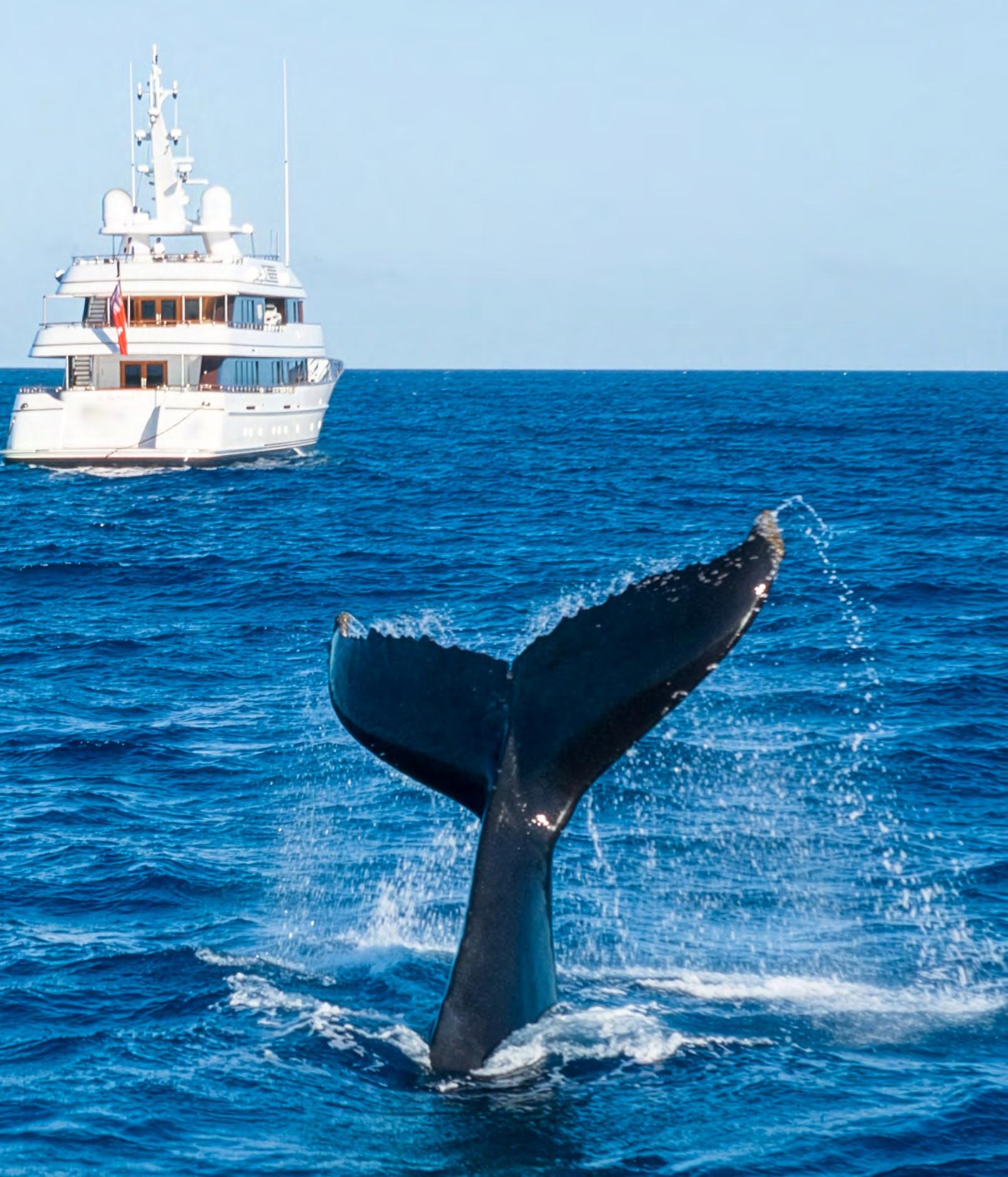
BY CONOR FEASEY
There is an unmistakable sound to a humpback whale coming up for air – a percussive blast of pressure as it breaches the surface to exhale, followed by the pitchy wheeze of the inhale as it draws the salty sea air back into its lungs. Sometimes you are lucky enough to hear a cacophony of raspy breaths when sailing amongst a pod, hearing the dulcet tones of the whale song beneath you. But as those aboard the 57-metre Solace expedition looked across the waters of the Navidad Bank, Dominican Republic, the team on board was treated to a performance of orchestral proportions. As the sun set on an April evening, 513 humpback whales had been sighted in a single day, one of the highest sightings recorded in history and one of the most important breeding grounds to date.
It’s a real marker of progress for global conservation – humpback numbers in the Atlantic are showing a colossal rebound in numbers, returning from the brink of extinction following the industrial whaling era. And the expedition, their findings and, hopefully, the legislation and support that they will result in, all come from a week on a Feadship.
The expedition was part of a scientific survey as Solace sailed to Navidad Bank, a shallow submerged coral bank located about 100 kilometres off the coast of the Dominican Republic and one of the most critical nurseries for Atlantic humpbacks. Despite this, the last published estimate of humpback whale density at Navidad Bank dates back to the late 1970s, long before today’s precision tools made offshore science faster, safer and more accurate.
“Navidad Bank, together with Silver Bank and Samaná Bay, is one of the Caribbean’s most important breeding and mating grounds for the North Atlantic humpback whale,” explains Jonathan Delance, chief conservation officer, Dominican Republic Ministry of Environment and Natural Resources.
“Unlike the other two sites, however, its remoteness and often demanding sea conditions make research and conservation far more difficult to mount. Silver Bank benefits from a natural ‘harbour’ on its northwest side: a reef belt that softens the ocean’s energy and creates a safer setting for responsible vessels to bring guests to experience snorkelling with humpback whales. Samaná Bay, close to ports and services, has become the Caribbean’s premier whale-
watching destination, making long-term research and management significantly easier.”
Under the direction of EYOS Expeditions in partnership with Yachts For Science, on board was a multi-disciplinary team drawn from the Caribbean Cetacean Society, Fundación Puntacana and FUNDEMAR, working under the Dominican Republic’s Ministry of Environment and Natural Resources. The vessel ran constant-speed navigation to allow long-range acoustic monitoring of whale vocalisations, while observers worked from elevated sightlines with stabilised optics, calling every animal into defined sectors under strict anti-duplication protocols.
Over the past decade, EYOS has led and facilitated 35 record-setting voyages to some of the most remote places on Earth, working alongside scientists, explorers and Polar experts. The team has been the first to reach the deepest point in each of the five oceans and has travelled further south than any vessel in history. Even for Jimmy White, EYOS’s manager of technical, science and conservation projects, this was a monumental moment that would reach far beyond personal awe. For those of us who weren’t there, it’s an unfathomably large number to comprehend. It’s a privilege to get a sighting at the best of times, let alone one of the largest recorded numbers in a single day.
“You rarely have that ‘this is big, this matters’ moment, but you know it when it happens. It’s not dramatic, but more a subtle realisation that what you’re seeing hasn’t been properly documented before and this was one of those moments. The scale made it undeniable,” he explains. “Within the first few hours, we knew that this was something undeniably different. The sightings didn’t just kept building. At a certain point, we weren’t asking if it was a good day; we were asking how we were going to keep up with it. That’s when it clicked, that this wasn’t normal, this was exceptional.
“It’s everywhere you look: blows on the horizon, breaches, constant movement. You hear it as much as you see it – the exhale of whales carries across the water. But on deck, it’s controlled intensity. Every sighting is called, logged and verified. The count is rigorous with trained observers, defined sectors and strict protocols to avoid duplication. Even with that
57-metre Feadship Solace .

structure, we were operating at the edge of what’s possible to record accurately. That density is so rare.”
Delance adds that even amid the deep concentration the team on board were in, the feeling was pure elation. “I’ll never forget the look on the team’s faces, their smiles, when we shared the first day’s numbers. We’d even made a friendly wager about what we thought we’d achieve; our ‘optimistic’ guesses still fell short. That kind of surprise was deeply satisfying. It lifted morale immediately and helped quiet the worries we’d been carrying after days of rough weather kept us in port.”
What the findings change now operates on several levels, the first being that the data updates and solidifies the foundation for protecting Navidad Bank as a cornerstone habitat for the recovery of the North Atlantic humpback. The second is more
evidential, as decades of conservation work in Dominican waters, much of it slow, unglamorous and chronically under-resourced, are now demonstrably delivering measurable results for marine mammals and the Navidad Bank survey is the proof. The third is political, however, and it’s arguably where the biggest challenge lies. The findings reinforce the Dominican Republic’s leadership position on ocean conservation and strengthen the case for allocating greater resources and sustained effort to the Silver and Navidad Banks Marine Mammal Sanctuary.
The immediate institutional test sits with the International Whaling Commission (IWC), where colleagues from the Ministry of Environment and the Caribbean Cetacean Society are presenting the preliminary findings at the Scientific Committee meeting in Slovenia, and Delance is careful about
“It’s the integration – the crew and scientists working as one system. That’s what makes this truly effective.”
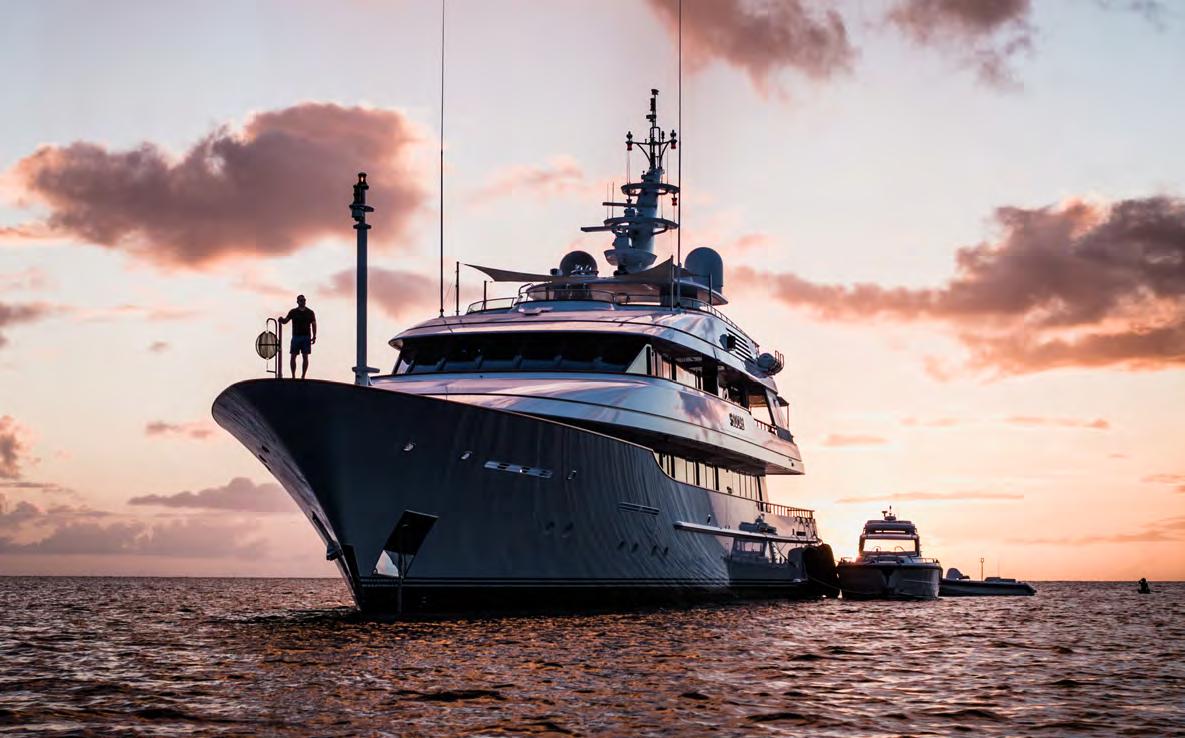
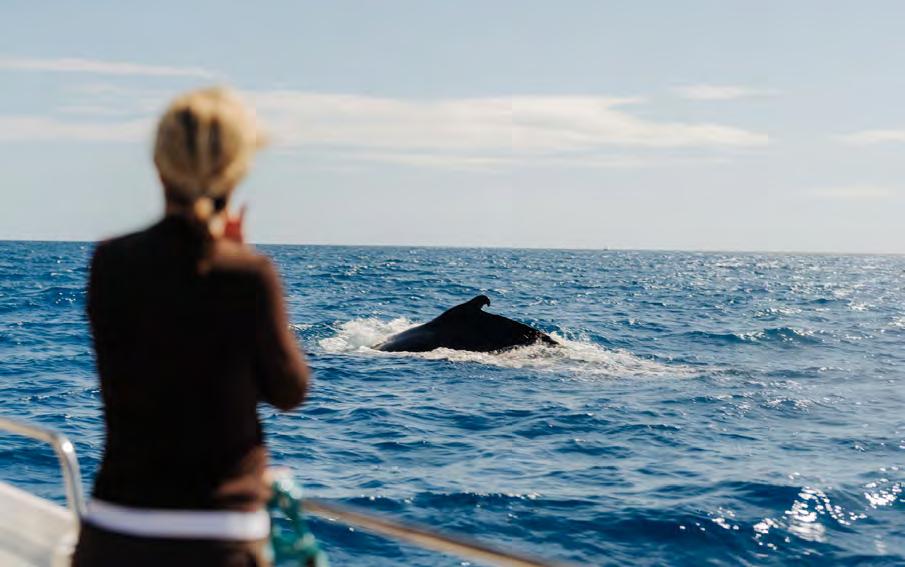
There are still huge gaps in what we understand about the ocean, but the tools to close them now exist, with ample opportunity for yachting to be part of the world it operates in.
what he is asking the IWC to do. The request, he says, is that the commission take the results into account as it shapes recommendations and priorities that strengthen humpback conservation, particularly in the Dominican Republic (DR), where the breeding grounds are a national natural asset.
He is equally candid that IWC action depends on capacity and consensus among member states and observers, which is a polite way of acknowledging that multilateral bodies tend to move quickly. “Even so, credible new science has a way of moving the conversation,” Delance adds. “It attracts further research, brings international attention to the Dominican Republic, migration routes for the species and, critically, helps channel training and capacitybuilding to empower local scientists and improve long-term cetacean conservation.”
I ask Delance if a single expedition has ever genuinely changed conservation outcomes before in practice. In the context of the DR, the first thing that
springs to his mind is Beata Expedition 2024. The vessel itself wasn’t well-prepared in terms of oceanic research capabilities, but a tourism catamaran with all the necessary equipment and capacity to conduct the largest oceanic expedition in the Beata region. That effort resulted in the establishment of the second-largest MPA in DR and the first one to include deep-sea floor ecosystems as part of its conservation objective.
But in the near term, he has already had “overwhelmingly positive” reactions from his peers in the DR. “People are already encouraging us to go deeper and move quickly towards a full scientific publication. A handful of scientists who have advised the project have also taken an initial look at the results, helping us confirm the signal and refine any details,” he says.
“By the time this goes out, colleagues from the Ministry of Environment and the Caribbean Cetacean Society will have presented the preliminary
findings at the IWC meeting in Slovenia. The peerreviewed report will take longer, as it should, but the early reception has been distinctly encouraging.”
To look at this from a yachting perspective, the finding ought to register as a demonstration of what the fleet can do when it chooses to. EYOS secured the vessel, Yachts For Science provided the team – it’s a holistic approach and one that’s bringing in tangible results the likes of Sir David Attenborough would beam at. Solace’s systems allowed for observation and data capture, stabilised optics, elevated sightlines and streamlined logging systems. Dedicated research vessels are shared platforms with multiple disciplines competing for time, space and resources, which inevitably dilutes output.
The model that makes it work is a relatively simple proposition, too. Yachts have the capability and access paired with range, endurance, tenders and highly skilled crew. The fleet has vessels already operating in the most remote parts of the ocean, both in transit and at destination. This distinction gives researchers access to areas often beyond national programmes and the difference is flexibility. Where research vessels follow fixed schedules and routes, yachts can roam, return and expand effort over time. At their core, all yachts are expedition platforms, albeit just underutilised from a scientific perspective.
“But it’s the integration – the crew and scientists working as one system. That’s what makes this truly effective,” adds White. “A yacht with a single, focused science objective removes that friction. It allows for depth, not compromise, and that’s where real discovery happens. Yachts are not a replacement for research vessels; they are a force multiplier.”
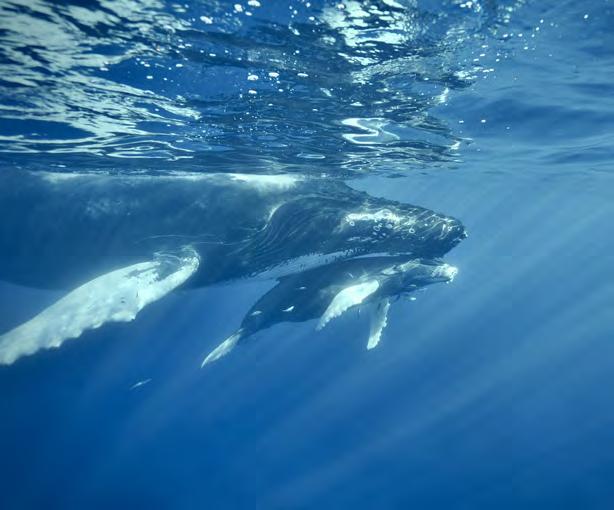
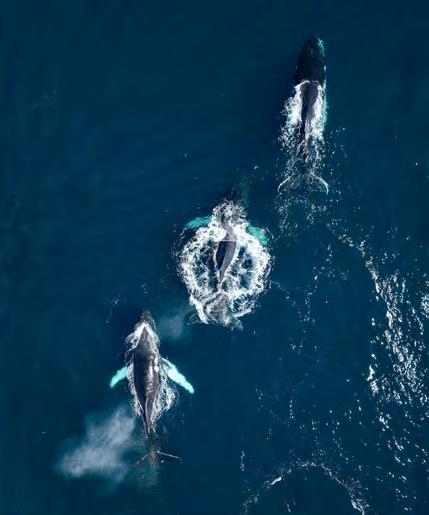
There is no real barrier to entry for what is useful in these circumstances. An owner may assume the scientific value of their vessel will be negligible, but the ripple effects can reach far beyond a single expedition, benefiting the host country, coastal communities, national scientific capacity and the biodiversity those communities depend on. Solace is a case in point.
For White, the appeal of the work is partly the science and partly the choreography of getting it done. “In the Dominican Republic, our science team spoke three different languages, none had worked on a yacht before, and for the crew, it was their first scientific expedition. Every conversation needed translation, every process had to be built from scratch.” From those first days figuring it out, he says, to the moment it all clicks and then to actual discovery, that is the part that stays with him.
There are still huge gaps in what we understand about the ocean, but the tools to close them now exist, with ample opportunity for yachting to be part of the world it operates in. The Navidad Bank expedition could read as a singular event, the product of one well-equipped Feadship and one willing owner, or as the demonstration of a model that can be replicated. Perhaps the answer should be the latter.
The vessel was between charters, with an owner willing to put its decks to work. That was the threshold. “The discovery was driven by Solace’s availability,” White says, “and that’s often how real discoveries happen. It’s easy to go to known places at known times and collect expected data. What we saw reinforces that when you operate outside those windows, you start to challenge assumptions and that’s where the interesting science is.” CF
Image: Caribbean Cetacean Society (CCS)
Image: Caribbean Cetacean Society (CCS)
SILENCE IS NEVER THE ANSWER
Early on in my career, I was interviewing someone at a boat show when a woman walked across his eye line. He clocked her, made a comment, which I ignored, following up with another question, to which he doubled down and said the same thing again. I cut the interview short, went back to the office and made it clear I would no longer be working with him. As a bloke, I’ve been the designated audience for these cretinous remarks plenty of times under the assumption it’s all a bit of banter. But frankly, it’s gross, bloody tedious and pretty pathetic, particularly this genre of middle-aged man narrating a stranger’s body to another man like it’s a personality trait. This happened midday, at work, mid-sentence in an otherwise serious (although now utterly benign) conversation. But I didn’t say anything to him at the time and there are legal reasons I can’t put the specifics in print, which is all part of the bigger problem.
Last year, the industry was forced into conversations it had long avoided. In the wake of Paige Bell’s murder, I spoke to many of you in various capacities about what needed to change, but what has happened since is the question I’ve been asking more recently. The overwhelming consensus is that women don’t feel any safer on board, processes remain the same and the worry that the momentum would vanish as the market grew obsessed with its perception once more has been realised.
Violence against women and girls is a universal societal problem we all face. UN Women reports that about one in three women experiences physical or sexual violence in their lifetime, a number higher still when accounting for non-physical sexual harassment. I would testify that it is closer to one in one – you’d be hard pressed to find a woman who hasn’t been
sexually harassed to some degree. In a yachting context, ISWAN’s 2024-2025 annual report recorded contacts related to abuse, harassment and bullying up by 50 per cent on the year before. The total was 34, the nuance being that ISWAN’s YachtCrewHelp is still a relatively new service. But a recent Women in Yachting survey, asking about the same instances, put the figure upwards of 1,000 and I’ve been told they expect it to double.
So, amid the market’s self-indulging back pats for becoming “more professional”, shrugging these matters off with the attitude of “this is just the world we live in” doesn’t cut it. If I had a euro for every time I saw “excellence” or “unique” plastered across a press release, I’d own the fleet. Sometimes the focus feels so wrong. Why can’t our safety standards be excellent? Why can’t we be unique for the rigour of our checks in the workplace? The market should pride itself on the thing that matters most and that is people. Some will say the industry is far better than it was and we should be grateful. Perhaps. Or maybe the bar was pitifully low to begin with and there is a long way to go still. This is a safeguarding matter at its root, which is exactly what a genuinely professional industry is supposed to do.
Some of the behaviour has to be attributed, in part at least, to a rife obsession with capital letter Owners and Guests and their behaviour. We’ve all heard stories of unnamed dodgy owners who are somehow still put upon these unfathomably high pedestals. Despite the various multijurisdictional quagmires set up to “run the vessel”, owners are employers with an obligation to provide a safe workplace. And this then extends beyond the owner to the management companies and captains, many of whom run yachts that swathes of crew are happy

BY CONOR FEASEY
to work for. But are we really to believe that none of them simply move a problem crew member to another yacht when harassment allegations surface, rather than sacking them? It’s as if the thing to be dealt with were the complaint rather than the behaviour behind it.
Who does all that silence actually serve? It protects the perpetrator, serves the powerful and only works because the rest of us say nothing. The stacks of NDAs signed on the way in are weaponised on the way out with a stew who is paid off and cannot warn the next person. An industry is serious about professionalising should want to tear that culture up and it is these moments that give the industry its seedy “Below Deck” reputation. The argument that if “people don’t like it, they can leave” doesn’t float – they will and the good people in this industry suffer for it.
The prevailing problem is an undercurrent that issues like the safety of women on board are treated, by some at least, as women’s problems alone, but in actuality they are problems that we should all deal with on a human level, not least in a professional capacity. Thankfully, there is an armada of people across our market looking to change this and the obvious caveat to all these negatives is that yachting is brimming with genuinely good boats, top professionals and decent humans who this does not describe. Perhaps they are the ones it falls to most, but it also falls to us men, not only those in senior roles but all of us, to be conscious of our own actions and to speak up, even when it is difficult.
Just as I said nothing all those years ago, silence is an answer in itself. We can’t expect women to make a stand alone, because when men, particularly senior officers, offer no backing, that is the environment that perpetuates the ugly underbelly of a supposedly glamorous market. CF