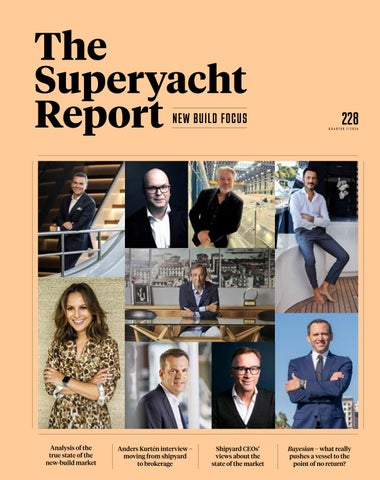
The Superyacht Report

NEW BUILD FOCUS






Anders Kurtén interview –moving from shipyard to brokerage

Our Editor-in-Chief looks at the order book beyond the next five years and sees a fragile economy ahead ...
Letters of intent, laying of the keel, signing a contract or building on spec are all signals that a shipyard is busy and has an active pipeline of real projects, but it delivers no guarantees that these superyachts will actually get delivered when they say they will. On pages 7-32 we have created an intelligence report that is designed to demonstrate that there is a fragile economy in the sector, where a variety of shipyards over the past 25 years have only built one or two yachts, and no matter how many yards you track and how many projects they say they’re building, the only thing that really matters is whether they have delivered a good project and the client is happy.
the sub-40-metre category and what we describe as the real custom superyacht market.

BY MARTIN H.
As you will see from the analysis, we have decided to dissect and present the market in what we would describe as the more accurate comparisons, by sector. We have removed all fleet analysis in the 24 to 30-metre and 30 to 40-metre categories for a variety of reasons. Yes, according to the rules, regulations and various superyacht definitions, a superyacht is categorised as above 24-metre load line length, typically carrying passengers, with a full-time crew. However, by combining all yachts into one industry-wide piece of analysis, the output is skewed in the favour of those yards building the vast majority of the fleet in the smaller tonnage category. It is irrelevant to compare 24-metre yachts to 80-metre-plus yachts, as the value, complexity, customer and demands are so vastly different.
Let’s take a 24-metre Ferretti, for example, with an average volume of 75.0gt and a value of approximately 4,500,000 euros. An 80-metre-plus yacht can have a volume in the region of 2,500 to 3,000gt, the approximate equivalent to 40 of the Ferretti projects, with a value exceeding 180,000,000 euros, and a similar multiplier when compared with the 24-metre asset. Therefore, if a shipyard like Lürssen is building seven 100-metreplus projects, with asset values in excess of 300,000,000 euros each and volumes in excess of 4,000gt each, you start to appreciate the stark differences between
Yes, on paper, the order book looks healthy and there are plenty of shipyards with a project or two in build. While the premium yards and key brands are super busy, the opportunity lies for some startup yards or commercial yards to offer their capacity for a new-build project for a client who’s not willing to wait or is looking for a better deal. However, having a shipyard with a team of craftsmen and the raw materials is only part of the process; making sure the supply chain and subcontractors are willing to support the project or have the capacity to deliver is the difference between a good new-build delivery and a delayed, fractious and stressed project. As you will see from what we describe as the DNA shipyard charts, it shows very clearly the inconsistent performance of the myriad of shipyards in the sector coming and going over the years, delivering perhaps just one project and realising it’s not for the faint hearted. Looking beyond the next five years, when some of the order books will have been filtered out and hopefully delivered what’s in build today, it’s what’s to come next. Is the new-build experience in these new actors or part-time players going to sustain their business model or will they change direction and explore alternative maritime sectors with consistent commercial projects, due to the painful process of building the most demanding projects with demanding clients, where margins become very slim, when projects are delayed? By tracking the past five years, it can be seen how many yards have shifted in the league tables and who has stayed at the top of their game. Looking back to the beginning of the new millennium, the number of yards that have been active in the market is quite incredible, with around 460 shipyards building one or more superyacht over 30 metres.
It’s fascinating to watch the market closely and it’s reasonable to say that today the order books look highly active, but there is a clear ‘caveat emptor’ moment that is on the near-term horizon. MHR
Why yacht buying should not be fun
A process-first view of acquisition discipline, charter viability and operating across global yachting destinations, by independent yacht advisor Patric Daccache.
A new chapter for Water Revolution Foundation –and for our industry
The new executive director of WRF, Leah Werner sets out her vision for raising the standards of environmental performance.
Cyber-securing your new-build yacht by design
Ernesto Esposito of maritime digital solutions company Omniaccess explores the key factors that should be taken into consideration to ensure the safeguarding of vessels from the increasing risk of cyber attack.
Anchoring the future of Britain’s superyacht supply chain
Richard Selby, CEO of British Superyacht, calls for a strategy to improve local infrastructure so that visiting superyachts are encouraged to use homegrown facilities.
How data reveals the real impact of the new-build sector
The new executive director of SYBAss, Robert van Tol, breaks down the facts and figures behind the economic significance of new-build activity and its contribution to the global economy. Navigating excellence
The strategic importance of the owner’s representative and project manager in superyacht construction and refit. By Nicola Nicolai, founder and managing partner of Nicolai Yacht Consulting & Project Management.
without teeth
Matt Roberts, Director of Anchorpoint, spells out why superyacht cybersecurity has never been optional.







CEOs on the state of the market


Market-leading shipyard executives offer a collective diagnosis and a clear barometer of the current new-build landscape.
Designing the human-centred superyacht: the next frontier in safety and performance
How human-centred design, applied from the concept stage, aligns people, systems and leadership to reduce risk, improves reliability and enhances the owner’s experience across the yacht’s lifecycle.
The perfect storm
A commentary on the changing fortunes of Perini Navi –the distinctive shipyard whose heritage fleet comprises a unique DNA ...
and
Moving from shipyard to brokerage isn’t quite the cosmic career jump some might think ...
Building with purpose
If owners really want to connect with the ocean, why not create a culture that supports life below the surface?
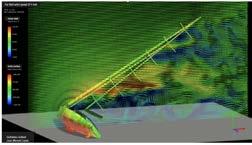
Bayesian – the seconds after knockdown
82 What really pushes a vessel to the point of no return? World-leading stability expert Andy King presents the findings from Gefaell Chamochín and Juan Manuel López’s academic study of the Bayesian disaster.
Andy ‘Ivy’ Brennan explores how new helicopter expectations are reshaping yacht design, crew readiness and global cruising.
Low investment, low loyalty and a workforce at risk. Superyacht Intelligence’s latest report uncovers why yachting’s retention crisis has never been just about pay. The freedom to land
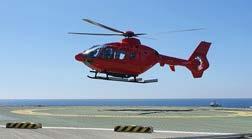
Superyacht helidecks: Designing the ultimate arrival experience
How to future proof your yacht’s aviation capability –safely, discreetly and beautifully. By Ronan McMahon, Commander of VVIP, Oil and Gas and HEMS Operations, Micron Air Services Ltd.
The crew conundrum: training and retention
QUARTER 1/2026
For more than 30 years The Superyacht Report has prided itself on being the superyacht market’s most reliable source of data, information, analysis and expert commentary. Our team of analysts, journalists and external contributors remains unrivalled and we firmly believe that we are the only legitimate source of objective and honest reportage. As the industry continues to grow and evolve, we are forthright in our determination to continue being the market’s most profound business-critical source of information.
Editor-In-Chief
Martin H. Redmayne martin@thesuperyachtgroup.com
News Editor
Conor Feasey conor@thesuperyachtgroup.com
INTELLIGENCE
Senior Research Analyst Amanda Rogers amanda@thesuperyachtgroup.com
Data Analyst
Miles Warden miles@thesuperyachtgroup.com
DESIGN & PRODUCTION
Content Manager & Production Editor Felicity Salmon felicity@thesuperyachtgroup.com
Guest Authors
Andy ‘Ivy’ Brennan Royal Navy (Ret’d)
Patric Daccache Independent yacht advisor
Ernesto Esposito Omniaccess
Andy King Naval architect Ronan McMahon Micron Air Services Ltd
Nicola Nicolai Nicolai Yacht Consulting & Project Management
Matt Roberts Anchorpoint
Richard Selby British Superyacht
Robert van Tol SYBAss
Leah Werner Water Revolution Foundation
ISSN 2046-4983
The Superyacht Report is published by TRP Magazines Ltd (trading as The Superyacht Group) Copyright © TRP Magazines Ltd 2026 All Rights Reserved. The entire contents are protected by copyright Great Britain and by the Universal Copyright convention. Material may be reproduced with prior arrangement and with due acknowledgement to TRP Magazines Ltd. Great care has been taken throughout the magazine to be accurate, but the publisher cannot accept any responsibility for any errors or omissions which may occur.
The Superyacht Report is available within The Superyacht Group Library, which is open to everyone in our audience so you can enjoy the highest quality journalism and analysis in the market – Reports Worth Reading. Download or read at your leisure on your desktop or your tablet: https://issuu.com/the-superyacht-group
SuperyachtNews
Spanning every sector of the superyacht sphere, our news portal is the industry’s only source of independent, thoroughly researched journalism. Our team of globally respected editors and analysts engage with key decision-makers in every sector to ensure our readers get the most reliable and accurate business-critical news and market analysis.
Superyachtnews.com
The Superyacht Report
The Superyacht Report is published four times a year, providing decision-makers and influencers with the most relevant, insightful and respected journalism and market analysis available in our industry today.
Superyachtnews.com/reports/thesuperyachtreport
The Superyacht Agency
Drawing on the unparalleled depth of knowledge and experience within The Superyacht Group, The Superyacht Agency’s team of brilliant creatives, analysts, event planners, digital experts and marketing consultants combine four cornerstones – Intelligence, Strategy, Creative and Events – to deliver the most effective insights, campaigns and strategies for our clients. www.thesuperyachtagency.com
Follow The Superyacht Group channels on LinkedIn
@thesuperyachtgroup
@thesuperyachtgroup @superyachtobserver @superyachtagency
Join The Superyacht Group Community
By investing in and joining our inclusive community, we can work together to transform and improve our industry. Included in our Essential Membership is a subscription to The Superyacht Report, access to SuperyachtIntel and access to high-impact journalism on SuperyachtNews.
Explore our membership options here: www.superyachtnews.com/shop/p/MH
With over 25 years of experience, we have overseen more than 150 successful new-build and refit projects in all major international yacht locations. Trust us for state-of-theart materials, cutting-edge technology and unparalleled expertise. Guarantee a flawless finish with WREDE Consulting.

Strategic analysis of the new-build sector to demonstrate the activity, growth and performance of the market
BY MARTIN H. REDMAYNE
The following pages give a very clear and accurate understanding of how this market has grown, evolved, shifted and stabilised; they also show the evolution of the key players, the fragility of the new ones and the shipyard casualties across the world. We dig into the ownership lifecycle, the investors and flotations and, more importantly, the dominance of certain countries and groups based on their build capacity and delivery consistency.
The new-build market is one that we have tracked and analysed for over 35 years and if you consider the number of shipyards that have formed part of the story, it makes very interesting reading, with plenty of caveats to consider. This market analysis report will demonstrate very clear and concise analysis that highlights the stark differences between the sub 40-metre market and the 40-metre-plus market. The former category represents approx-
imately 80 per cent of the total fleet and is, in our opinion, dominated by production projects and semi-custom projects that are part of a stock build programme. They are linked to wideranging sales and dealer networks, with orders that have the potential to be delayed or shifted into new sales periods if the project doesn’t find a buyer before delivery or remains a stock item and potentially given a new year of delivery. This obviously affects the
It’s important to recognise that being a consistent builder in this market is not only very difficult for many but is to be applauded for those who have driven the market forward, year in year out.
annual reporting of order books in the sub-40-metre category.
By focusing our attention on the primary superyacht category above 40 metres, the market becomes very different, with specific shipyards playing key roles in our three sub-categories that we believe make up the pure superyacht market. Our categories are 40 to 60 metres, 60 to 90 metres and 90 metresplus, and when you dig into the numbers, you can see how the market has shifted and evolved over the past 25 years.
When you appreciate how many shipyards have been active in our 40-metre-plus sector over the past 25 years (approximately 275), with many dropping out of the market after just one or two deliveries, it’s important to recognise that being a consistent builder in this market is not only very difficult for many but is to be applauded for those who have driven the market forward, year in year out. MHR
BY CONOR FEASEY
The following tables illustrate how delivery volumes for each shipyard have evolved relative to their competitors across different vessel size categories and time periods. To assess these changes, each shipyard has been assigned a ranking position, allowing us to track movements up or down over time. The selected time periods highlight which shipyards have gained prominence in recent years and how their focus has shifted with respect to LOA.
Let’s start with Benetti, since the data insists on it. First place in the 40 to 60-metre segment in every time window measured since 2000: overall, over the last 20 years, the last decade and the last five years. One hundred and thirty-one deliveries in total, 44 in the last five years alone. In a market defined by volatility and attrition, that kind of immovable consistency is statistically almost without precedent. No other yard in any size segment comes close.
Behind Benetti, however, the 40 to 60-metre table is the market’s engine room in a constant state of motion. Sanlorenzo has climbed from third overall to a locked-in second, with 34 deliveries in the last five years, pulling clear of the chasing pack. Overmarine moved from sixth to third over the last decade and has held its position. Baglietto sits fourth across every window, with 19 deliveries in the last five years, staying unflustered and reliable. The most aggressive climb belongs to Custom Line, part of the Ferretti Group, from 16th overall to fifth in the last five years with 16 deliveries. Read that alongside fellow Ferretti yard CRN, which fell from 16th overall
to 37th in the last five years, with a single delivery and a deliberate internal reallocation of focus becomes the only plausible explanation. One yard up, one yard down, same group is a matter of portfolio management.
The more instructive movements, though, are the strategic migrations. Heesen sits second all-time at 40 to 60 metres with 67 deliveries, ahead of Sanlorenzo’s entire career total, yet sixth in the last five years with just 11. But when we look at the 60 to 90-metre table, Heesen has climbed from tenth overall to fifth in the last five years, as a yard that earned its place in the tier below and then chose to refocus. Damen Yachting has made a similar journey: fifth all-time at 40 to 60 metres with 48 deliveries, it has dropped to 12th over the last five years with five. At 60 to 90 metres, it is now number one, with 33 deliveries in the last decade and 19 in the last five, overtaking Feadship.
Feadship’s trajectory is arguably the most elegant in the dataset, though, originally ninth overall at 40 to 60 metres, dipping to 12th in the last five years. That’s fine, considering they sit first all-time at 60 to 90 metres (second in the last five) to move to joint first in the last five years, drawing level with Lürssen on eight deliveries apiece at 90 metres plus. It’s a clear move in one direction. Lürssen, on the other hand, runs the same logic from the opposite end of the spectrum, placing fourth overall at 60 to 90 metres with 25 deliveries, but 14th in the last five years with one. Above 90 metres, however, it has never relinquished first position. With thirty-three deliveries since 2000,
it’s build big or go home, so perhaps the tier below becomes a distraction.
One of the subtler stories in the data is the Turkish emergence to concrete prominence. Bilgin has climbed mountains from 22nd overall to seventh in the last five years at 60 to 90 metres, Turquoise from ninth to seventh in the same window and segment, then Mengi Yay from 26th to seventh in the last five years at 40 to 60 metres. Three distinct yards with three parallel ascents, all in recent windows and the visible result of a sustained investment in technical capability that is now converting into consistent delivery.
Then there are the names the data has simply moved past. Trinity Yachts remains seventh all-time at 40 to 60 metres with 37 deliveries, but 22nd at 60 to 90 metres with three, and zero in either segment in the last five years. Christensen is 13th overall with 22 deliveries, then zero in the last five. Palmer Johnson suffered a similar fate, 18th with 20, zero. Sunseeker is eighth since 2000 with 36 deliveries and a mere two in the last five years. These are yards with serious histories and the reputations to match, but the market moved on regardless.
What the tables does not explicitly explain is why some yards sustain and others stall, but it makes the divergence measurable. The yards still climbing identified the segment where their capability is sharpest and built everything around it. They have invested, acquired competitors and built modern reputations. Consistency is the key here and this is what the market values the most. CF
Shipyards that have delivered fewer than 10 yachts since 2000 have been omitted (211 shipyards).
Shipyards that have delivered 2 or fewer yachts since 2000 have been omitted (207 shipyards).
© The Superyacht Agency



BY MARTIN H. REDMAYNE
Tracking shipyards across the world, both in terms of new builds and refit projects, has been a key part of our strategy for the past 30 years, and now analysing and interrogating the data has become the primary mission, to help the market understand what is really happening.
As you will see in the analysis within this brief report, hundreds of shipyards have built one or more superyachts across the globe, with many facilities disappearing without a trace or returning to their core business. The purpose of the following pages is to quantify and clarify the key differences across the primary builder networks in Europe – Italy, Holland and Germany –to present clear arguments and intelligence on their core strengths. The following is a sample of what we are actively researching and analysing in order to support investors and CEOs with their strategies.
Even though there is a global network of shipyards actively building projects, it’s prudent to focus the attention on the primary shipyards in the primary builder nations as there are fragmented players throughout the world that enter the sector with investors and owners who are looking for alternative capacity, either because they are not willing to wait for build slots or they have been convinced that it can be done faster and cheaper elsewhere. As you will see from the delivery pyramid matrix and DNA charts on pages 28 to 31, it is clear that apart from the primary shipyards, there is a relatively sporadic flow of deliveries from the myriad of actors, both new and old.
From the various league tables of shipyards on pages 11 to 13, it is again clear that the market has been dominated by a core list of primary players who have invested, acquired and grown their position over the past 25 years. The additional charts on pages 23 and 24 that demonstrate this dominance by shipyard brand, in each of our core categories, above 40 metres, indicate the shift and success of the stable brands.
Over the next few months we will deliver further analysis by region, to expand the narrative and prove that by segmenting the industry more intelligently you can better understand what is really happening. For example, the USA, which was once one of the primary shipyard networks with a long list of dominant players, has almost disappeared from the 40-metre-plus sector. Türkiye, which is able to claim its strength in the market with a long list of new shipyards building many projects on spec, sits alongside Italy with a core focus on the 24 to 40-metre category of superyachts, with a handful of yards active in the 40-metre-plus sector.
The following pages comprise a regional map of the primary shipyard networks in each country, alongside a delivery chart for projects over 40 metres. This clearly demonstrates their success due to investment in expansive new-build facilities, with significant capacity, but also compares and contrasts the leadership position of the three main countries by their primary size categories.
When focusing attention on the Azimut | Benetti Group, Ferretti Group
and Sanlorenzo, there is absolutely no surprise that without these three networks of brands and shipyards Italy would not dominate the industry. With such a broad portfolio from 24 to 90 metres plus, they are all going to sit at the top of a market’s league table.
Looking closely at Holland and review the expansion of facilities by players like Feadship, Damen Yachting and Oceanco, their capacity and investment strategy have created a market that makes Holland one of the most powerful players in the 40-metre and 60-metre-plus sectors and, in our opinion, should not be compared with the Italian performance tables as they serve two very different markets.
Then finally, when the German market is analysed, we have seen over the years some fragility in the sector, where shipyards have collapsed due to the high risk attached to the 60-metreplus and its primary 90-metre-plus sector, with essentially two main players in Lürssen and Abeking & Rasmussen taking the lead through facility expansion and acquisition.
Looking more closely at the evolution of the primary yards in these three territories what is also interesting is their heritage and origins, with many of the leaders in the sector developing over many decades, with strong family roots in ship and yacht building. In our full State of the Superyacht Market Report, coming out later this year, the evolution, ownership and investor strategy of the shipyard sector will be scrutinised and analysed in detail, to explore the impact and effect on the growth, success and stability of the shipyard market. MHR
Viareggio Ancona
Livorno Cattolica
Avigliana Mondolfo
Fano Sarnico
When considering the map of Italy (opposite) and the concentrated distribution of shipyard facilities, its market dominance as the primary builder comes as no surprise. However, over the years, we have seen famous brands and shipyards shrink away, only to be acquired by the various industrial groups and investors in the country all looking for more capacity as their sales forces and dealer networks reap the rewards of their product development and strategies.
Azimut | Benetti, the Ferretti Group, Sanlorenzo, Italian Sea Group, Palumbo
Group, Baglietto, Overmarine, Tankoa and a few other key Italian players have enjoyed the country’s dominance over the past 25 years, and with the sheer volume of shipyard capacity under their control this is unlikely to ever change. However, many of the groups are financially supported by the profitable and consistent revenues from their production and semi-custom ranges, sold via dealer networks across the world, which allows them to invest in and expand their build capacity. Plus, they typically enjoy a strong customer base who are indoctrinated and almost
locked into the client experience, and through new product development and sales incentives can move up the range, category by category, as their wealth increases.
Each of the major shipyard groups across Italy is reporting very healthy orderbooks, and with regional supply chains and subcontractors close by, they are confident that the market will stabilise; however, without the addition of more facilities or new players, they will be operating at maximum capacity for the next five years. MHR
Amels / Damen
Vlissingen
As a relatively small country, the Netherlands has become one of the most interesting superyacht-building nations in the sector, with some of the most high-tech shipyard facilities, brilliant research and engineering capacity and consistent investment in product excellence, delivering some of the most highly prized and priced assets in the market. It’s estimated that the Dutch superyacht sector now generates more GDP revenue than the commercial shipping sector and as the core network of shipyards has enjoyed an increased demand for even more complex and
challenging projects, this has driven this economic growth.
Looking at the deliveries chart, it’s clear to see how the Dutch shipyard sector has grown in the 60-metre-plus market, with build slots across the primary brands of Feadship, Oceanco and Damen Yachting all in high demand; however, the latter has a completely different model that has proven to be hugely successful in the past 10 years. It will be interesting to see what happens at Heesen with its new investors, as it has played a key role in the past 25 years in terms of consistent build pro-
grammes and deliveries, although the past five years have told a very different story.
Reviewing the core client network across the Dutch shipyard groups, many of them have been highly experienced yacht owners who have migrated up through the various global brand ranks, but more recently, there has been a network of brand new, younger clients who have stepped into their ownership journey by starting with the premium builders, bypassing some of the typical ownership journeys. MHR
Lürssen
Bremen - Vegesack
Bremen - Lemwerder
Bremen - Aumund
Bremen - Berne
Rendsburg
There is one name that has dominated and driven the success of German superyacht building, with its near neighbour remaining focused on being part of the same journey, both of which are now, in essence, the remaining key players in the sector. Lürssen, as a group of shipyards, balancing itself between naval and superyacht, has become synonymous with the ultralarge superyacht category and enjoyed huge success, literally. However, it is expected that its naval division will soon be sold and the focus will remain exclusively in the superyacht space. It has staked its claim on the 90-metreplus sector and witnessed the evolution of the billionaire trends, with Arab royalty, the Russian oligarchy and now the US tech oligarchy all driving the demand for highly complex gargantuan projects,
measured in several thousand GTs and a few hundred million euros.
The demise of brands like Nobiskrug and Blohm+Voss as key German players during the oligarch years has meant that Germany is essentially a network of shipyards now owned or operated by Lürssen or transferred back into commercial or naval activity. The only remaining custom builder which resembles the original family owned superyacht builders of the pre-GFC era is Abeking & Rasmussen, a highly specialised and technically brilliant builder of superyachts, among other things. But like its neighbour, A&R has migrated into the 80-metre-plus and 100-metre-plus category, with consistent growth and investment into their shipyard facilities, with new extended sheds and increased build capacity. However, it
remains focused on one multi-shed facility on the River Weser in Lemwerder, building iconic projects like M/Y Liva O. Within the wider German shipyard network a variety of players have entered the market from commercial shipping or cruise ship sectors, but very few have remained focused on building superyachts, as they seem to have realised that the complexity and customer expectations are the primary barriers to entry and success.
2026 will see one of Lürssen’s busiest years with five major projects scheduled for delivery, ranging from 79 to 134 metres. How it achieves this volume of activity is highly impressive and when you compare the gross tonnage of these five projects with perhaps the volume and value of what’s leaving Azimut | Benetti every year, it is for this reason we should not put every shipyard in the same category. MHR
The three charts that follow sit beneath the headline delivery figures and reveal a sustained concentration of output around a shrinking core of producers Each chart tracks annual deliveries from 2016 to 2025 across three size segments. Deliveries are broken down between the leading producers in each category and an ‘other’ group, illustrating how output among the top shipyards fluctuates relative to the wider field and highlighting shifts in market dominance. A line showing the total number of active shipyards is also included to provide context for the output attributed to the ‘other’ category. When looking at them as a whole, the output is concentrated in fewer hands each year, segment by segment, and does so with a consistency that the segment-by-segment analysis that follows makes measurable. The question of how far that process has advanced and where it shows no sign of slowing is what these charts answer. Let’s break it down.
The five Italian yards in the named group (Benetti, Sanlorenzo, Overmarine, Baglietto and Custom Line) together accounted for just over a fifth of all 40 to 60-metre deliveries in 2016. By 2025 that figure had risen to just over half. The active yard count has not necessarily collapsed over the period: it peaked at 36 in 2024 before falling to 27 in 2025, but it never traces a clean downward line. What has changed is the share of the output that the key players account for. Total deliveries grew from 47 in 2016 to a peak of 78 in 2024 and the ‘other’ category’s share of that output fell from nearly three-quarters to 43 per cent across the period.
Both named yards and the ‘other’ category grew in absolute terms during
BY CONOR FEASEY
2023 and 2024, with the 'other' group actually posting its highest raw total of the period (42 deliveries) in 2024 alongside a peak of 36 active yards. That year suggests a segment in which demand was sufficiently strong to pull in a broader base of producers and the question is whether the yards that contributed to that spike were new entrants gaining traction in the size category or familiar names whose output proved temporary. The sharp correction in 2025, when ‘other’ deliveries fell back to 28 and active yards dropped to 27, implies the latter.
Heesen sits alongside the Italians in the named group as the segment’s single significant non-Italian participant, delivering consistently across the period but rarely exceeding four yachts in any given year. Its presence is not insignificant, but its share of the market has not grown as the segment has and the gap between Heesen and the Italian core has widened as Benetti and Sanlorenzo have scaled output. This segment is by far the most porous for yards trying to enter the market.
Of the three segments, the 60 to 90-metre band is arguably the most revealing, with the ‘other’ category of builders dropping by a quarter. It’s a relatively small market, with annual deliveries ranging from 11 to 19 across the period. What renders it especially interesting is the relationship between the active yard count and the composition of what those yards produce.
The total number of active yards has, with some fluctuation, held broadly stable across the decade. It peaked at 14 in 2018, dipped to seven in 2017 and has settled at 10 in both 2024 and 2025. But within that stable total, the ‘other' category’s output has decreased
sharply, having bottomed out at four in 2022. The high performers, meanwhile, have roughly doubled their collective output over the same period, from six deliveries to 14. The total active yard count has held because the named yards have filled the gap. A similar number of yards remain nominally active, but their output is increasingly concentrated in a smaller core of consistent builders. Feadship and Damen Yachting together accounted for a third of the segment in 2016; by 2025 they accounted for 42 per cent, with each yard delivering four yachts across the year. In a market of 19 total deliveries, two yards producing eight between them represents a serious degree of concentration. Admiral Yachts recorded its most conspicuous year of the period in 2025, delivering three yachts in the segment, its highest tally across the tenyear window and a volume that placed it level with Feadship and Damen. Benetti, meanwhile, has maintained a continuous presence and notable as the only Italian yard in the named group to feature here with any regularity.
90 metres and above
The 90-metre-plus segment is where the logic of concentration reaches its furthest extreme and intersects most directly with the consolidation of industrial capacity through acquisition. The number of active yards delivering in this segment has fallen from five in 2016 to two in both 2024 and 2025. The ‘other’ category, which accounted for a third of deliveries in 2016, has not recorded a single delivery in either of the two most recent years. Every yacht above 90 metres delivered in 2024 and 2025 came from within the highest performing yards. No yard outside that circle has placed a finished vessel in either year. CF
Heesen Yachts
Part of what underpins that decline in active yards is as direct a process of consolidation as it is, perhaps, a slight dip in demand or capability among smaller producers. For example, Lürssen's acquisitions of Blohm+Voss and Nobiskrug, together with its 25 per cent stake in Lloyd Werft, provided considerable German build capacity under a single strategic owner. All three facilities have since recorded either zero or minimal deliveries in recent reporting windows, although several deliveries are expected in 2026.
The result is a market in which
capacity that once appeared in the data as separate, independently active yards now sits within a single corporate structure, one that appears in the delivery tables under one name rather than four. When the dotted line tracking active yards falls from five to two, part of what it describes their absorption into the operations of a yard that already dominated the segment. So this segment is simultaneously consolidated and a little fragile, the former because the productive capability to build at this scale exists in only a handful of facilities anywhere in the world and the latter because the volumes involved are so
small that the absence of a single hull in a given year reshapes the entire picture. What the three charts together describe is a market in which total deliveries have generally grown, but the concentration of the benefit of that growth has been distributed with increasing inequality. The yards accumulating share are those that have invested consistently, built capacity deliberately and in some cases acquired their competitors outright. The yards losing share are not necessarily in absolute decline but simply failing to grow at the pace of their most competitive peers. CF
BY CONOR FEASEY
The previous section measured that concentration from above, tracking where the market’s output has gathered. The DNA charts and graphics showing the number of active shipyards over time in each LOA(m) category that follow approach the same question from beneath. The view is considerably less flattering. How many shipyards have attempted to build superyachts since the turn of the century? How few managed more than one or two builds? How many were absorbed into larger groups or faded into obscurity? Building is a brutal business: the capital demands are unforgiving, client expectations at every level punish inconsistency and the survival rate for new entrants is, as the following data show, shockingly low. Dealing with these figures allows us to identify the shipyards that form the market’s genetic make-up, chart the full breadth of participation, and measure how quickly and consistently it contracts.
The following charts may look confusing at first, but they provide valuable insight into market changes since 2000. They show how some shipyards now dominate certain size categories, while others have stopped building superyachts of specific sizes or left the market altogether. Many shipyards try to enter the market but cannot sustain production. Instead of focusing on individual shipyards, the tables highlight production patterns over time, helping us better understand the industry’s structural dynamics.
Since 2000, 242 shipyards have delivered at least one yacht between 40 and 60 metres. At 60 to 90 metres, the figure is 70. At 90 metres plus, 23. But the staggering statistic is that in each case, close to half built only a single yacht. At 40 to 60 metres, 120 of 242 yards
delivered once and never again. At 60 to 90 metres, 35 of 70. At 90 metres plus, 11 of 23. The fact that the proportion barely shifts between segments tells us that the difficulty of sustaining a build programme is not principally a function of vessel size. Sure, the barriers differ in nature – at the upper end, it is capital intensity and facility scale, but at the lower end, it is commercial competition and margin pressure. Still, the survival rate they produce is remarkably consistent.
In this DNA matrix, each column represents a single shipyard and each row represents a year. A yellow cell denotes a year in which that yard delivered; red designates a year in which it did not. And at first glance, the overwhelming takeaway across every chart is the red abyss. Column after column flashes yellow once, occasionally twice and then turns solid red for the remainder of the period. The few sustained runs of yellow on the left-hand side of each
chart, the yards delivering year after year, are conspicuous precisely because they are surrounded by so much inactivity. In some columns, deliveries stop gradually, thinning out over several years as a yard’s output slows, while in others it’s more abrupt. Each column of red ultimately represents the very human story of a business that tried, a team assembled, a facility invested in and, in the end, a venture that did not survive contact with the realities of what sustains production.
Some of the yards that appear once and vanish are commercial shipyards or naval facilities that took on a one-off commission during a surge in demand, often at the urging of a broker or owner seeking alternative capacity. Others are speculative ventures, backed by investors who saw potential in the market’s growth but underestimated the cost of sustaining a programme beyond a single hull. Other yards are acquired and absorbed (for various reasons). Building
Building one yacht is an accomplishment, but producing a second requires a resilient supply chain, a happy workforce, a steady client pipeline and a project management culture capable of learning from one build and transferring that knowledge.
40 to 60 metres
Number of active shipyards over time in each LOA(m) category © The Superyacht Agency
A TOTAL OF 1,964
40-60M SUPERYACHTS BUILT BY 458 SHIPYARDS
1,268
SUPERYACHTS BUILT BY 242
SHIPYARDS SINCE 2000
529
SUPERYACHTS BUILT BY 110
SHIPYARDS SINCE 2015
229 SUPERYACHTS BUILT BY 74 SHIPYARDS SINCE 2020
60 to 90 metres
A TOTAL OF 441
60-90M SUPERYACHTS BUILT BY 121
SHIPYARDS
342
SUPERYACHTS BUILT BY 70
SHIPYARDS SINCE 2000
150
SUPERYACHTS BUILT BY 36
SHIPYARDS SINCE 2015
82
SUPERYACHTS BUILT BY 21 SHIPYARDS SINCE 2020
one yacht is an accomplishment, but producing a second requires a resilient supply chain, a happy workforce, a steady client pipeline and a project management culture capable of learning from one build and transferring that knowledge. The yards whose columns stay yellow are well-capitalised and succeed because they have structured organisations capable of repeating a complex process without diminishing results. The multitude of single-build columns elsewhere in the chart shows how rare that capability actually is.
The data quantifies the scale of failure. Of the 242 yards delivering a yacht in the 40 to 60-metre segment since 2000, about 70 per cent have not delivered in the last five years the same for 60 to 90 metres, and again for 90 metres-plus. Across all segments, seven in ten yards active since 2000 no longer deliver. Widening the interval to 10 years, roughly half have shut down: 55 per cent at 40 to 60 metres, 49 per cent at 60 to 90, and 48 per cent at 90 metres-plus.
In the 40 to 60-metre category, the high number of disappearances stands out. Yet, this segment continues attracting new entrants at a higher rate than the other two categories. The 40 to 60-metre band serves as the market’s entry point; it’s where ambition meets reality most often and most visibly. Yards keep trying, drawn by growing demand and perhaps by the idea that the lower end of the superyacht market is more accessible. Still, the survival rate does not improve. The three most prolific yards account for about 19 per cent of all deliveries since 2000. Over the last five years, they account for 33 per cent of deliveries, although only 4 per cent of the active yards in this period.
The 60 to 90-metre segment tells a simpler version of the same story. Three yards account for 36 per cent of all deliveries since 2000. Over the last five years, their share has risen to 50
per cent, even though they make up fewer than 14 per cent of active yards. That half the segment’s recent output comes from three shipyards shows a remarkable level of concentration.
At 90 metres and above, the trend is starkly pronounced. Of 23 yards delivering since 2000, over 75 per cent built only one or two yachts. Seven single-build yards in this time period have produced nothing in the last decade. Three yards account for 67 per cent of all deliveries since 2000, rising to 85 per cent in the last five years. Not all departures were failures; some were acquisitions, with others entering insolvency. The decline is driven by absorption as well as collapse.
One data point that runs counter to expectations is the average number of yachts delivered per yard across segments. Since 2000, the figure at 40 to 60 metres is 5.7, at 60 to 90 metres 4.9 and at 90 metres plus 4.1. Those figures are closer together than the difference in project intricacy and cost would suggest. In the most recent fiveyear window they converge further to 4, 3.9 and 3.6 respectively. The yards still active in each segment are operating at broadly comparable output rates, and the divergence between segments lies less in the productivity of the survivors than in how few of them remain. CF
Each chart shows the composition of shipyard deliveries since 2000 for a given LOA(m) category.
Each column represents a shipyard, ordered by total output.
Shipyards with identical delivery patterns are grouped into a single column, with the number of shipyards shown in black boxes at the bottom. Some shipyards have been omitted for space; these are noted on each chart.
If you were told you had a fifty-fifty chance of your business surviving beyond its first project, would you take the bet? It sounds like an absurd proposition, but it’s precisely the reality the data in this report describes. Across every size segment above 40 metres, close to half of all shipyards have built a single yacht since 2000 and never built again. The odds of sustaining a build programme beyond that first delivery are, statistically, no better than a coin toss. And yet yards continue to enter, capital continues to flow in and the market continues to absorb new participants at a rate that bears no relationship to its ability to retain them.
Scarcity carries consequences. If 85 per cent of recent output above 90 metres comes from three yards, 50 per cent of 60 to 90-metre output from three yards and 33 per cent of 40 to 60-metre output from three yards, the capacity to absorb disruption at any one of those producers is limited. A prolonged delay, supplychain issues, a change of ownership or a pivot away from a segment at a single major facility does not simply reduce output, it removes a meaningful fraction of the global ability to build at that scale. The DNA charts are a record of how many have tried and how few have endured, but read forward they are also a barometer of how little redundancy this market has built beneath its most visible players.
There are hundreds of yards across the world and tracking them is a relatively straightforward process, as the lead and build times are measured in years; however, as we have demonstrated in all of the data and analysis, it’s a fragile economy and the industry is supported by three primary countries, with a core list of well-financed and experienced shipyards. When the primary yards are successful and very busy, with secured orders, it allows new players and countries to
BY CONOR FEASEY
explore their entry strategy and offer their capacity to owners who are not willing to wait or want to try their luck.
The data doesn’t lie, it’s very simple, the chances of success in the new-build sector require deep pockets and the ability to sustain more than one or two projects to be a real actor. Several years ago, the criteria to join SYBAss, a shipyard that has delivered four yachts over 45 metres over ten years, makes so much sense when you see the complete picture. It’s fun to read league tables of orders and see where new shipyards are emerging, which countries are growing and building new tonnage, but the proof is well beyond the signature on a contract and metal has been cut or a keel laid, it’s about longevity, stability and consistent delivery.
The message is very clear, no matter where a broker takes you or a captain recommends, the words “caveat emptor” really matter when it comes to new shipyards with a new facility and a new project. Perhaps this will further drive the refit or rebuild sectors, if clients aren’t willing to wait for build slots in the primary yards in the proven countries of origin, like Italy, Holland and Germany. A further, more detailed analysis of the Turkish market is on the horizon and will be published at a later date; while they are listed by some as the second biggest builder of superyachts, by number of units, they have a long way to go in the 40-metre-plus sector.
The yards that dominate this market have earned their position across decades. They have maintained their brands, acquired competitors, invested in facilities and retained the workforce expertise that allows them to repeat a profoundly difficult process without degrading the result. At 90 metres plus, the barriers to entry are so high and the client expectations so exacting that the absence of new entrants is simply the
cost of operating at that scale and the two or three yards capable of doing so have accepted it on terms no newcomer could replicate.
Where the picture becomes more open, and arguably more interesting, is at the lower end. The 40 to 60-metre segment is where intent declares itself. Deliveries in this band have risen sharply across recent years, from 44 in 2020 to a peak of 78 in 2024, and demand shows no sign of structural retreat. For a yard entering the superyacht market, this is the segment that says you have come to play. It is not amateur hour. The data is unambiguous on what happens to those who are not up to it. They build once, perhaps twice and dissolve back to where they came from. But the volume of activity and the growing demand also suggest that for yards with genuine capability, operational discipline and the appetite to sustain a programme across cycles, this segment is where the opportunity lies.
None of this is to say the industry is in poor health. Deliveries are up. Order books are strong. But the data in this report should prompt us to look at the yards that have not only survived but thrived and recognise that what they have achieved perhaps deserves more credit than it typically receives. The yards at the top of each league table have earned their dominance through sustained investment and operational discipline over decades. What is less often acknowledged is the smaller yard that consistently delivers a yacht every two or three years and has done so across a decade or more.
Of every shipyard that has ever delivered a superyacht above 40 metres, roughly one in six is still building today. Several things can be true at once – the market has never had more participants but has also never concentrated so much of its output in so few. CF
All analysis was undertaken by our data and research consultants. We provide bespoke consultancy projects that help client make informed, data-driven decisions. The team is able to create bespoke analysis, strategic research and consultancy reports on any major sector of the industry, whether it be new build, refit, migration, marina development, competitor analysis – and so much more. For more information, contact martin@thesuperyachtgroup.com
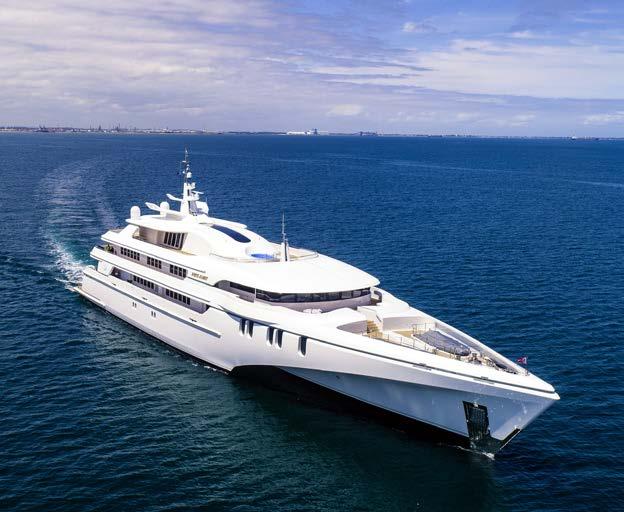






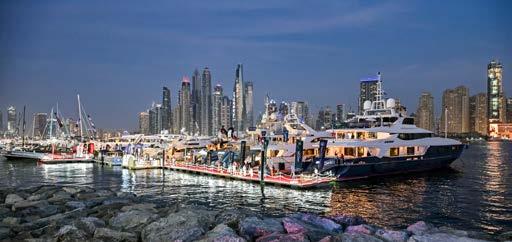
The Dubai International Boat Show (DIBS) enters its 32nd edition in 2026 at a pivotal moment for the global superyacht market. As traditional Mediterranean and US hubs recalibrate around regulation, operational cost pressures and shifting cruising patterns, the Middle East – and Dubai in particular – is consolidating its position as both a winter base and a structural ownership market.
For captains, owners’ representatives, project managers and family offices monitoring emerging centres of gravity in the sector, DIBS 2026 returns to Dubai Harbour from 8 to 12 April to offer more than regional exposure. It provides a practical lens through which to assess how infrastructure, capital migration and marina expansion are reshaping yacht deployment and acquisition trends.
Recent wealth migration data continues to position the UAE among the leading global destinations for high-net-worth relocation. That migration is not abstract. It translates into residency, marina occupancy, waterfront development and sustained demand in the 24-metre-plus segment.
Dubai now hosts 22 marinas with more than 3,750 wet berths and 640 dry berths, materially strengthening capacity for resident and visiting yachts. While berth distribution by LOA varies across facilities, continued investment in shore power, security, crew amenities and technical services has increased operational viability for larger platforms.
The Middle East’s superyacht-tobillionaire ratio remains among the
highest globally, underscoring ownership penetration relative to wealth density. Demand in the 24-metre-plus category continues to trend upward, particularly among resident UHNW families and regionally based entrepreneurs.
Superyacht Avenue: International and regional builders
Within this context, Superyacht Avenue remains the focal point of DIBS 2026. Populated by SYBAss, members – shipyards that account for over 54 per cent of global yachts over 40 metres under construction – the area consolidates leading boatbuilders within a purposedesigned marina environment.
The 2026 edition will see participation from regional anchor Gulf Craft, alongside international names referenced in
the launch announcement, including Azimut, Ferretti Group, Sunseeker and Princess Yachts. This combination reflects both the established European build strength and the growing technical confidence of Middle Eastern yards.
For owners’ teams and technical representatives, the relevance lies in access to decision-makers. The show has evolved from volume display to curated high-value representation, aligning with client expectations in the semi-custom and custom segments.
While headline visitor figures remain significant, the more relevant indicator for this readership is buyer concentration. Previous editions have reported strong VIP participation and international representation across more than 100 countries, reinforcing DIBS’ function as a transactional environment rather than a purely promotional exhibition.
Yachts displayed in recent editions have represented multi-billion-dirham asset value, signalling the show’s alignment with capital-rich markets. For family offices and private client advisors, yacht acquisition in the region is increasingly positioned within a diversified portfolio strategy rather than discretionary indulgence.
Beyond hull display, the Equipment, Supplies and Services (ESS) expo and expanded Innovation Zone respectively
provide insight into the Gulf’s developing technical ecosystem and leisure marine start-ups.
Engineering specialists, propulsion providers and marine systems companies now maintain stronger regional footprints. While Europe retains dominance in heavy refit capacity, incremental service growth in Dubai reduces operational friction for resident yachts and winter-based fleets.
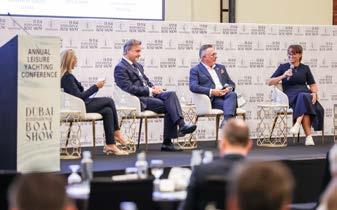
The Annual Dubai Boat Show Leisure Yachting Conference, scheduled for 8 April 2026 at Fairmont The Palm, further enhances the show’s strategic profile. Discussions traditionally focus on sustainability, alternative propulsion,

regulatory evolution and market trends –themes directly relevant to project managers and operational leadership.
Strategic geography and deployment
Dubai’s geographic position between Europe and Asia offers routing flexibility for vessels repositioning between the Mediterranean, Indian Ocean and Southeast Asia. As Saudi Arabia and other GCC states accelerate coastal development and marina investment, future cruising corridors may become increasingly structured.
DIBS functions as a convening node within this emerging network, linking capital, builders, service providers and operational stakeholders.
For The Superyacht Report readership, DIBS 2026 serves less as spectacle and more as market signal. The Middle East is no longer an emergent narrative; it is a defined ownership environment with expanding infrastructure and international yard participation.
The 2026 edition reflects consolidation rather than experimentation. As capital migration, marina capacity and builder engagement continue to align, Dubai’s role within the global superyacht ecosystem appears increasingly structural.
For captains, owners’ teams and advisors evaluating deployment strategy in the Gulf, DIBS 2026 merits close attention.
Entry tickets and trade passes are available at: www.boatshowdubai.com
by Patric Daccache
A process-first view of acquisition discipline, charter viability and operating across global yachting destinations, by independent yacht advisor Patric Daccache.
Buying a yacht is meant to end in fun; however, the acquisition phase should not. Calm, structured and almost boring is usually the sign that you are making decisions from evidence, not from momentum. Romance belongs at anchor rather than in the decision room.
Yachting is built on aspiration, so emotion is engineered into the experience. Listings are written to create desire, photography is commissioned to create mood and viewings are staged to create certainty. None of that is ‘wrong’, it is simply an incomplete picture. The glossy part is curated, the risk rarely is. Most expensive mistakes start with a perfect day and end with a buyer defending a story instead of testing reality.
A yacht is not a consumer purchase
A yacht is an operating system: technical, regulatory, financial and human, where class, flag, insurance clauses, crew competence and maintenance cycles matter more than a sales headline. Ownership begins where the brochure ends. You inherit complexity: documentation quality,
“If the yacht buying process feels exciting, it may be because you are being entertained.”
refit history, survey outcomes, warranty gaps, spare parts strategy, berthing constraints and downtime planning. That reality only becomes visible once you operate across real destinations, in real seasons, with real support limitations.
Destinations define the mission
Different cruising grounds expose different weaknesses. The Bahamas rewards shallow draft and practical tender logistics while forcing respect for weather windows and insurance limitations. The Mediterranean rewards social deck design and guest flow but punishes weak berth planning and peak-season crew intensity. Northern routes demand redundancy and cold-weather capability, while hot and humid regions expose cooling load and supply-chain realities.
If you buy based on a marina viewing alone, you may be buying the wrong ‘perfect’. A yacht that feels effortless tied up in Antibes can behave very differently after a Caribbean season, a repositioning passage or remote cruising where support is limited.
Two valuation traps buyers repeat Refit does not automatically equal value. A refit can be necessary, impressive, beautifully executed and still unrecoverable at resale. Some capital protects safety and reliability, some improves lifestyle, but only some translates into higher price from the next buyer. The market pays for what it trusts and what it can compare, not for every personal upgrade made by owners to suit their own tastes.
Asking price is also not market price: asking is a position, market price is
A deal that survives survey, charter scrutiny and operating reality is worth more than a deal that closes fast and unravels later.
an outcome. Between the two sits the yacht’s market story: time on market, withdrawals, relaunches, pricing patterns and segment conditions. A clean, short exposure negotiates differently from long exposure with repeated relaunches. The brochure will not tell you that, but the market will, if you look.
Total cost of ownership without fantasy
Most buyers do not need perfect certainty, but they do need honest ranges. Crew, insurance, management, maintenance, class, fuel, berthing, refit reserves and planned downtime are not minor details, they are the economic engine of ownership. Too many decisions are made using comfortingly low numbers that make the purchase feel easy rather than realistic numbers that make ownership sustainable. Wealthy owners rarely fear spending, they fear waste, friction and constant operational drama.
Charter is not an income line, it's a business
Many buyers plan to place the yacht into charter and let the asset work. The intention is rational, the execution is where reality arrives.
Charter performance depends on far more than the yacht: who runs it, where it is positioned, how it is marketed, how it is crewed and how it absorbs friction.
Seasonality shapes demand; weather windows and storm seasons shape risk; berth strategy shapes cost and visibility; crew stability shapes repeat bookings and the guest experience; and compliance shapes where you can operate and under what constraints, including permits, local restrictions and insurance clauses.
Charter can be excellent, but only when treated as an operating business with realistic revenue ranges and complete cost assumptions. The yacht is the core asset, the product is service reliability.
Reverse the order: structure first, viewings last
Most buyers start with viewings and end with structure. A professional acquisition process starts with structure and ends with viewings. Start by answering three questions before you look at a single listing:
1.What job must this yacht do – across your real destinations, not your dream destinations?
2.Is this primarily private use, charter or a realistic combination with clear trade-offs?
3.What level of operational complexity are you genuinely willing to manage, including crew size, refit cadence and downtime tolerance?

Then filter by constraints, not desire. Length is a weak filter, meanwhile volume, guest flow, crew flow, privacy architecture, deck usability, technical readiness, operating cost and resale pool are stronger filters. Put market evidence beside technical evidence and treat time on the market, withdrawals and price movements as signals. Validate the asset through documentation and survey as decision gates, not as rituals.
The final discipline is psychological: being willing to walk away. A buyer who is emotionally committed will rationalise problems, a buyer who is process-committed will make clear decisions.
The takeaway for owners, and for the industry
For owners and first-time buyers, the takeaway is simple: protect the dream by professionalising the decision. In the acquisition phase, chase clarity, while keeping fun for the water.
For brokers, managers and shipyards, there is a parallel takeaway: long-term trust is built when the process becomes less theatrical and more transparent. A deal that survives survey, charter scrutiny and operating reality is worth more than a deal that closes fast and unravels later. Make it easier for buyers to choose discipline: show evidence early, bring operating assumptions into the conversation and treat due diligence as a value creating service, not an obstacle.
If the yacht-buying process feels exciting, ask yourself why. If it feels slow, structured and even slightly dull, you may be doing it correctly. Yacht buying should not be fun, yacht ownership should. That is the real luxury today. PD
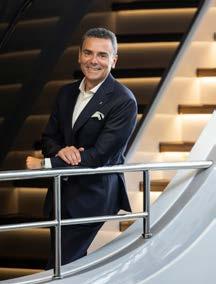

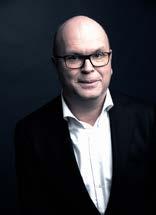

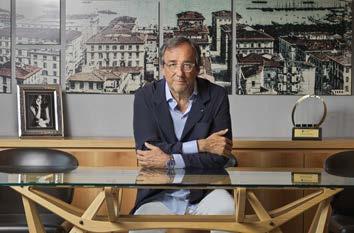
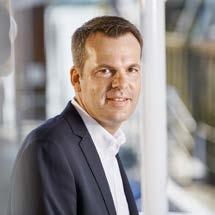

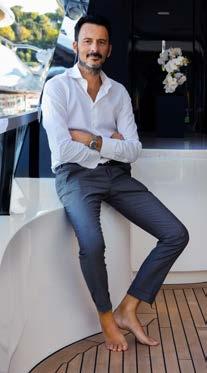
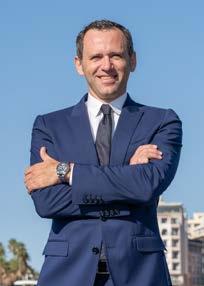
Market-leading shipyard executives offer a collective diagnosis and a clear barometer of the current new-build landscape.
BY CONOR FEASEY
There is no shortage of people willing to tell you where the market is heading. Brokers, project managers, owners’ reps, consultants and journalists all have a view, but the perspective that tends to be least heard in public and arguably the one that matters most belongs to the people who actually run the yards. So we asked nine of the market-leading shipyard executives the important questions to get a true understanding of where the market is and where it is heading. Their answers amount to a collective diagnosis and a clear barometer of the current new-build landscape.
The yards represented here span the full competitive range of the European market, from Royal Huisman, Damen Yachting and Feadship in the Netherlands to Palumbo, Sanlorenzo, Azimut Benetti and Ferretti in Italy, from Abeking and Rasmussen in Germany to Bilgin in Türkiye. Of course, they don’t agree on everything, but the convergence on certain themes is inescapably evident.
It is a near-united front on how they build. The past two to three years have brought a genuine step change in how these yards organise and deliver: facility redesigns, digital tools, closer integration between engineering and production and a concerted push to eliminate the late-stage revisions that have historically
plagued new builds feature in almost every response. Obviously, skilled labour is the constraint that no investment in facilities can fully resolve. Finding the right people, training, keeping and ensuring the craft knowledge that makes these yachts exceptional is passed to the next generation is the essential thread that runs beneath everything else these leaders say. Supply chains have stabilised but remain brittle for specialist components. And in cost management, the ability to maintain quality without haemorrhaging margin is repeatedly cited as the factor most likely to define who thrives.
Yes, order books are strong, but the nature of what is being ordered has shifted. Owners are more considered, more experience-driven and increasingly motivated by how they spend their time on board. Purpose, sustainability and genuine adventure are genuine design drivers here. And when probed on the future, not one of these leaders talks about explosive growth. What they describe instead is a market that will be defined by the quality of what is delivered, the credibility of the yards delivering it and the ability to remain relevant to a generation of owners whose expectations extend well beyond the vessel itself. CF
What changes have you made across your yards over the past two or three years that have genuinely helped construction and what has improved as a result?
Over the past two to three years, we’ve undertaken significant operational improvements across our yards that have genuinely transformed how we approach yacht construction. We’ve redesigned our yard layouts to optimise workflow efficiency. This has involved strategically relocating project teams to work in much closer proximity to the actual yacht construction areas, eliminating unnecessary distances and delays. We’ve also reconfigured how our teams collaborate, breaking down silos so that different disciplines work together more seamlessly throughout the build process rather than in isolated phases. Additionally, we’ve extended our facilities to accommodate these new working arrangements and support the enhanced operational flow.
We’ve seen marked improvements in construction efficiency, with projects progressing more smoothly and predictably. Construction timelines have been reduced as a direct result of these changes. Perhaps most importantly, communication has improved both in terms of speed and quality. Information flows more naturally between teams when they’re physically closer and organisationally aligned, which means issues are identified and resolved faster, and coordination is far more effective.
These improvements haven’t just impacted isolated metrics; they’ve had a positive ripple effect across entire projects. Better team communication directly translates to better construction outcomes, fewer delays and, ultimately, higher quality yachts delivered more efficiently to our clients.
MANAGING DIRECTOR, DAMEN YACHTING
Where is the pressure really building today? What has not worked as well as expected and where do you see the greatest risk to the market?
We’re observing a shift in client behaviour with semi-custom projects. Clients are stepping into the build process later in the timeline, which can create considerable pressure on on-spec builds. This hesitancy adds both financial risk for yards and operational complexity. When clients delay their involvement but still want to make changes deeper into the construction process, it creates tension between accommodating those requests and maintaining delivery schedules for subsequent projects. We believe this hesitance is heavily influenced by ongoing geopolitical unrest, which is clearly impacting the decisionmaking confidence of potential owners.
However, the most substantial threat we see is to the reputation of the superyacht sector itself. With rising antiwealth sentiment and increasing climate concerns among younger demographics, the industry is in genuine danger of becoming irrelevant to future generations of potential yacht buyers. This is not just one yard’s problem, it’s an industry-wide challenge that requires all of us to work together proactively to address. We need to demonstrate our value, our commitment to sustainability and our relevance to society in ways that resonate with evolving values.
Another critical risk lies in skills preservation. As yacht builders, we depend on certain crafts and trades that simply cannot be replaced by AI or robotics. The human touch, the artisan skills, the traditional craftsmanship –these are fundamental to what we do. We must ensure that these hands-on skills are actively transferred to the next generation of craftspeople or we risk losing the very capabilities that make our yachts exceptional.
Looking at different specs, designs and size segments, where are you seeing strength in demand and where are you seeing a softening? What is driving it?
We’re seeing notable strength in specific size segments, particularly an interesting upward shift in entry points. Where owners previously stepped into our sector at around 50 to 55 metres, we’re now seeing newcomers starting at 60 to 65 metres. The 80-metre market has been particularly strong and continues to show robust demand.
Beyond size, we’re observing strong demand for yachts built specifically to accommodate high-value charter propositions. This isn’t just about occasional chartering – these are yachts designed from the outset with professional charter operations in mind, and we believe the changing ownership structures linked to this trend will increasingly influence future designs.
Several factors are shaping current demand patterns. Geography plays a significant role: the geographical influence of owners directly impacts design specifications based on how and where they intend to use their yachts. Different cruising grounds demand different capabilities and features.
More fundamentally, how clients are using their yachts is evolving. Owners are spending more time on board than previous generations did. They’re looking for multifunctionality, yachts that can seamlessly transition between private family use and charter operations. There’s a pronounced shift towards yachts that support social lifestyles and adventure-focused experiences rather than purely formal entertaining.
All of these usage patterns are directly impacting layout decisions and feature specifications. We’re designing spaces that need to work harder and serve multiple purposes, accommodate different guest profiles and support more varied activities than traditional superyacht designs required.

There’s a growing desire to travel with purpose, to experience genuine adventure and to get more out of the time spent on their yachts.
Finally, on a more personal note, how do you see the market developing over the next decade? What does the future look like in reality?
Looking ahead over the next decade, I believe we’ll see the industry shaped by a fundamental shift in how owners view their time on board. There’s a growing desire to travel with purpose, to experience genuine adventure and to get more out of the time spent on their yachts. Owners are increasingly looking for the capability and capacity to do more than simply cruise: they want to engage in science, discovery and meaningful experiences. We’ll see enjoyment combined with mindful travel becoming the norm. This might take the form of creating financial returns through professional charter operations or it could mean owners choosing to be part of a bigger scientific cause, contributing to marine research, conservation efforts or exploration projects.
Sustainability will of course remain incredibly central to everything we do. However, we need to be realistic about what this means in practice. For the industry to truly make a difference, we need owners to foster an understanding of the time and investment required to create genuine impact. This isn’t about quick fixes or superficial gestures, it’s about meaningful, long-term commitment to change.
The future of the new build sector will rise with those yards and owners who embrace this more purposeful approach to yachting, those who see their vessels as platforms for experience, discovery and positive contribution. It will fall for those who cannot adapt to these evolving expectations or who fail to demonstrate genuine relevance to the values of future generations.
GENERAL MANAGER, PALUMBO SUPERYACHTS
What changes have you made across your yards over the past two or three years that have genuinely helped construction and what has improved as a result?
Over the past few years, we’ve focused on modernising our yards, upgrading technology and enhancing project management. Training and specialist hires have strengthened our teams. The result is more efficient builds, shorter build cycles where possible, fewer delays and consistently high craftsmanship, even on complex, customised yachts.
We’ve made targeted investments in advanced 3D design and digital platforms to improve coordination between naval architecture, engineering, and outfitting from the earliest stages. This allows us to identify and resolve technical and integration issues earlier in the process, improving efficiency and reducing delivery risk. In parallel, we’ve strengthened the organisation by appointing senior project managers, systems and electrical integration specialists, and interior and outfitting experts with strong backgrounds in highly customised superyacht builds. Together, these investments have improved execution and predictability as our projects become increasingly complex.
Where is the pressure really building today? What has not worked as well as expected and where do you see the greatest risk to the market?
The biggest pressures today are supply chain delays and skilled labour availability. Looking ahead, political tensions and economic volatility could impact client confidence and financing, while material costs (especially for steel, aluminium and composites) remain hard to predict. Global trade disruptions, from shipping delays to customs issues, also pose risks to delivery timelines.
Looking at different specs, designs and size segments, where are you seeing strength in demand and where are you seeing a softening? What is driving it?
We’re still seeing sustained interest in 45 to 80 metre yachts, particularly models that combine efficiency with long-range cruising and innovative layouts. Owners are increasingly prioritising lifestyle over sheer size: they want yachts that can accommodate extended voyages, provide versatile spaces for work and leisure, and integrate the latest technology. This means the market favours builders who can adapt designs to individual client needs rather than simply offering the largest possible yacht.
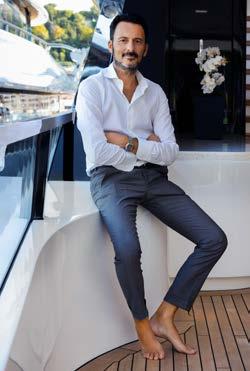
Finally, on a more personal note, how do you see the market developing over the next decade? What does the future look like in reality?
The future will favour builders who combine quality craftsmanship with cutting-edge technology. Owners will demand highly personalised features, intuitive automation and smarter, more connected vessels. The future of the sector belongs to those who can balance these expectations with the realities of global challenges like supply-chain constraints, economic uncertainty and regulatory changes.
CEO, ABEKING & RASMUSSEN
What changes have you made across your yards over the past two or three years that have genuinely helped construction and what has improved as a result?
Deviations from the construction process are now recorded digitally via smartphones by our site supervisors and subcontractors and managed within a centralised system. This has significantly increased the speed of issue resolution, improved transparency across departments and led to measurable gains in efficiency and quality.
In addition, we have digitalised our acceptance processes. Paper on board is becoming increasingly rare – documentation, reporting and sign-offs are now handled digitally and securely. This not only reduces administrative workload but also enhances traceability and accountability.
Currently, we are working on further digitalisation initiatives. The clear objective is to keep the focus on craftsmanship and value creation rather than on managing administrative overhead. By streamlining surrounding processes, we enable our teams to concentrate on what truly matters: building high-quality vessels.
Where is the pressure really building today? What has not worked as well as expected and where do you see the greatest risk to the market?
The market pressure is mounting around talent acquisition. Finding qualified personnel is becoming increasingly difficult. We have already placed a strong focus on building an excellent workforce through intensive apprenticeship programmes and dual study degrees, which ensures a steady pipeline of highly qualified staff. At the same time, the supply chain is seeing a concentration of sub-suppliers. Our strategy is making long-term relationships with established, reliable partners in order to be able to respond quickly to our clients’ specific requests. Another important part of our strategy is to raise the in-house manufacturing rate for core competencies (for example shell doors, movable parts) and to maintain a high level of engineering professionalism.
Looking at different specs, designs and size segments, where are you seeing strength in demand and where are you seeing a softening? What is driving it?
We are concentrating on building vessels in the 60 to 125-metre range. The demand is strengthening for large yachts in the 100-metre-plus range. Clients are also requesting custom technical solutions like bigger glass areas, higher sustainability standards, advanced deck-cover solutions and single-tier engine rooms.
Finally, on a more personal note, how do you see the market developing over the next decade? What does the future look like in reality?
The overall trajectory points towards ever larger vessels. Clients will continue to push the limits of size, complexity and sustainability, demanding more integrated systems and bespoke solutions. To stay competitive, shipyards will need to deepen their core competencies, invest heavily in digital design and production technologies, and maintain a highly skilled workforce capable of delivering these increasingly sophisticated projects.
Clients are requesting custom technical solutions like bigger glass areas, higher sustainability standards, advanced deck- cover solutions and single -tier engine rooms.
PETER NAEYÉ CEO, ROYAL HUISMAN
What changes have you made that have genuinely helped construction – and what has improved?
Over the past few years, one of the most impactful changes has been pushing harder on our concurrent design and engineering methods – bringing designers, engineers, key suppliers and the build teams into the process earlier and keeping them aligned throughout. As complexity rises, the old ‘handover’ model creates too many late surprises. By running key disciplines in parallel, structures, systems integration, serviceability and production engineering, we lock down interfaces earlier, aim for first-time-right and make procurement decisions with far better visibility.
In parallel, we have continued to refine our featherlightconstruction approach, applying weight discipline and smart structural solutions drawn from high-performance sailing to modern, systems-dense yachts. We have used this recently on projects like the 52-metre sportfish yacht Special One and our latest delivery, the 65-metre sailing yacht Aquarius, where controlling weight, centre of gravity and structural efficiency directly improves performance, build quality and the ability to integrate complex systems in limited space. The result is a smoother build flow, fewer late-stage changes and greater schedule and quality predictability without diluting the owner’s individuality.
Where is the pressure building – and what’s the greatest risk to the market?
Today, the pressure points are also where the superyacht sector is getting better – and where strong shipyards can differentiate. The biggest opportunity is mastering systems integration as particularly sailing yachts double in technological complexity every few years. Done well, that means earlier interface definition, tighter coordination with designers, suppliers and class, and building serviceability and redundancy in from the start so the owner experience is protected long after delivery.
Supply chains are also normalising compared with recent years, but specialist components and electronics still require proactive planning. We’ve learned that the winners are the teams that anticipate lead times early, keep close oversight and build flexibility into procurement and engineering decisions, turning uncertainty into schedule protection rather than lastminute disruption.
Where are you seeing strength in demand – and where softening? What’s driving it?
We are seeing strong demand for sailing yachts that are designed for true world-cruising capability, autonomy and sailing experiences that deliver movement and exploration.
The sector will rise and fall on whether we can consistently deliver increasingly complex yachts with integrity and supported long after handover.
Owners increasingly value the long-term ‘whole-yacht’ proposition too: not only an exceptional build, but the confidence that expert support is always available to deliver the owners’ experience and quality time on board.
That is where our service capability matters. Our dedicated service department is on call to advise on operational and maintenance issues, supply parts and dispatch engineers to any part of the globe. With detailed build data and imagery at their fingertips, the team operates as a true ‘rapid response unit’. This continuity supports current and future owners alike, strengthening resale value and helping new owners and crew get the very best from the yacht.
Softening tends to appear when projects become complex for complexity’s sake or when buyers are highly schedulesensitive and less willing to accept the realities of engineering, integration and lead times. At its best, sailing yachts are the ultimate expression of personal freedom and that remains a powerful motivation. In addition, future owners will also enjoy the green footprint advantage: the significant efficiency benefit of free propulsion power.
How do you see the market developing over the next decade – what does the future look like in reality?
Over the next decade, the winners will be the shipyards that can manage complexity reliably, prove sustainability with measurable progress and protect trust through transparency. Our perspective is shaped by a heritage of more than 140 years – we have evolved through repeated step-changes in technology, regulation and owner expectations while keeping the core constant: quality, safety, craftsmanship and innovation. Crucially, that long view is paired with a track record of innovation that has repeatedly become a sector trendsetter – smart solutions developed in-house that have helped reshape practices in our sector.
I expect more hybrid thinking, more focus on serviceability, easiness of operation and lifecycle support, and a broader adoption of proven engineering foundations to shorten timelines without diluting individuality. In reality, the sector will not rise and fall on headline order books alone; it will rise and fall on whether we can consistently deliver increasingly complex yachts with integrity and supported long after handover.
,
What changes have you made across your yards over the past two or three years that have genuinely helped construction and what has improved as a result?
Over the past few years, our main focus has been refinement rather than expansion for its own sake. At the same time, we have strengthened our physical infrastructure to support that refinement properly and we have also created a clear competitive advantage in terms of delivery reliability and timing.
Alongside the evolution of the Bilgin 170 platform, particularly through projects such as NB82 and NB83, we deep-ened the integration between design, engineering and on-site production. One of the most important shifts has been resolving more technical detail earlier in the process, reducing late-stage revisions and increasing build stability. Where solutions proved operationally successful, they were not treated as isolated requests but carefully evaluated and, when meaningful, standardised across the series. This approach has allowed us to improve efficiency and coordination without compromising the individuality of each yacht.
The real strain is visible in skilled labour availability, specialist subcontractor reliability and the synchronisation of increasingly complex technical systems.
Operationally, we have also expanded and optimised our facilities. The extension of our Yalova shipyard has strengthened our capacity for hull construction and early-stage structural works, while a greater strategic focus on our Antalya facility has enhanced outfitting, finishing precision and final delivery control. This distribution of workload across locations has significantly improved scheduling flexibility and workflow continuity.
In parallel, we have implemented stricter milestone tracking, earlier supplier engagement and more integrated
project management oversight to safeguard timelines from the outset. By aligning engineering freeze dates, procurement schedules and production sequencing more precisely, we have significantly reinforced our ability to achieve reliable, on-time deliveries across multiple concurrent builds.
Crucially, our strong in-house engineering capability including control over hull form development and technical platforms continues to provide both design freedom and structural reliability. As a result, we are seeing smoother build cycles, fewer late-stage modifications and stronger delivery predictability across multiple concurrent projects.
Where is the pressure really building today? What has not worked as well as expected and where do you see the greatest risk to the market?
Order books across the industry remain strong, particularly in the 50 to 100-metre range. However, as capacity has expanded globally, maintaining consistent build quality and delivery discipline has become more challenging. The real strain is visible in skilled labour availability, specialist subcontractor reliability and the synchronisation of increasingly complex technical systems.
Supply chains have stabilised compared to previous years, but they are not fully predictable. Certain high-spec components – particularly in advanced AV/IT systems, hybrid propulsion tech-nologies and bespoke interior elements – still carry extended lead times.
Looking at different specs, designs and size segments, where are you seeing strength in demand and where are you seeing a softening? What is driving it?
Demand remains solid across several segments, but the dynamics are more nuanced than the headline order books suggest. In the 50 to 70-metre range, we continue to see consistent strength, particularly for well-developed platforms that combine proven engineering with strong exterior volumes and intelligent deck layouts. Owners in this segment
are often experienced and value efficiency, delivery certainty and operational practicality. They are looking for yachts that feel like larger vessels in terms of lifestyle, but without unnecessary gross tonnage or complexity. Platform maturity and delivery credibility are major decision drivers. The 70 to 100-metre segment is steady and increasingly sophisticated. Clients here are more technically engaged than before. Hybrid readiness, optimised hull efficiency, noise reduction, crew circulation logic and long-term operational costs are central topics in early discussions.
Where we see some softening is not necessarily tied to size but to speculative or opportunistic projects. Buyers are more analytical and less driven by momentum than in previous peaks. Rising build costs, macroeconomic caution and longer delivery timelines encourage more deliberate decision-making.
In short, demand remains healthy, but it is more disciplined, more technical and more experience-driven. Owners are prioritising execution reliability and lifecycle value over novelty.
Finally, on a more personal note, how do you see the market developing over the next decade? Where does the future of the new-build sector rise and fall? What does the future look like in reality?
The sector’s future will rise where there is structural strength: yards with genuine in-house capability, engineering depth and realistic production capacity will continue to perform well. Technical autonomy, especially in hull development, energy systems and integrated platform design, will increasingly define competitive advantage.
Sustainability will also mature. Rather than being a marketing narrative, it will become measurable and regulated. Hybrid propulsion, energy management systems, material efficiency and operational emissions will shape new-build briefs. Clients will expect practical solutions, not conceptual statements. In reality, the next decade will not necessarily bring explosive expansion. It will bring consolidation, refinement and higher standards.
Buyers are more analytical and less driven by momentum than in previous peaks. Rising build costs, macroeconomic caution and longer delivery timelines encourage more deliberate decision-making.
What changes have you made across your yards over the past two or three years that have genuinely helped construction and what has improved as a result?
Over the past three years, we have undertaken a profound transformation of our industrial structure in Tuscany. The first major step was the specialisation of our production sites: we consolidated Benetti’s fibreglass yacht construction at the Viareggio shipyard, enabling the Livorno shipyard to focus exclusively on steel yachts and custom projects. In parallel, we made substantial infrastructure investments to maintain and optimise the production capacity of both Azimut and Benetti. Another key development was the creation of dedicated hubs of excellence: we established the light steel hub, operating between Viareggio and Livorno, which specialises in steel structural components, and the composite hub, a
specialised centre focused on fibreglass and carbon fibre processing for both Azimut and Benetti.
What has not worked as well as expected and where do you see the greatest risk to the market right now?
The Group’s performance remains solid and fully aligned with expectations, reflecting the strength of our brands,
product strategy and global positioning. Looking ahead, we expect renewed momentum from the Asian market. The primary risk factor at present is the broader global climate of uncertainty, a challenge that is not specific to the yachting sector but reflects the complexity of the current geopolitical and macroeconomic environment.
Is the supply chain realistically capable of supporting current order books? Where is pressure showing most and what would make the biggest difference?
Yes. There has been a contraction in new boat production, allowing suppliers to reposition themselves and stabilise their operations. The most significant pressure point now is cost management, and going forward, the ability to effectively manage costs will be a critical factor in making a difference.
Finally, on a more personal note, how do you see the market developing over the next decade? What does the future look like in reality?
In my opinion, there will be a steady and moderate growth in the 30 to 60-metre yacht segment. At the same time, I expect a process of rationalisation and reshuffling among yacht manufacturers, which is a natural and cyclical evolution of any mature industry.
The most significant pressure point now is cost management, and the ability to effectively manage costs will be a critical factor in making a difference.
CHAIRMAN AND CHIEF EXECUTIVE OFFICER, SANLORENZO
What changes have you made across your yards over the past two or three years that have genuinely helped the construction process and what has improved as a result? What is working well?
Over the past three years, we have focused on reinforcing industrial discipline while accelerating our technological capabilities. We have deliberately maintained production at around 70 yachts per year – a conscious commitment to scarcity that protects quality, brand equity and, ultimately, long-term value for our owners.
At the same time, we have significantly raised the bar on innovation. In 2024, we delivered 50Steel Almax, the world’s first superyacht equipped with a green methanol fuel-cell system. Through Bluegame, we introduced the hydrogen-powered BGH, and in 2025 we partnered with MAN to develop the first bi-fuel green methanol engine for a 50-metre yacht.
Operationally, we have continued to invest across our six Italian shipyards, including new photovoltaic systems that reduce CO2 emissions by more than 600 tonnes annually.
The acquisition of Nautor Swan has also been strategically important –allowing us to enter the sailing segment while creating operational synergies that are already improving efficiency and sustainability across the Group.
Where is the pressure really building today? What has not worked as well as expected and where do you see the greatest risk to the market?
In a market shaped by short-term and often unpredictable external factors, Sanlorenzo continues to differentiate itself through positioning, innovation and scarcity. We anticipate the needs of a new generation of owners who are increasingly motivated by wellbeing,
longevity and the scarcity of quality time.
The strength of our order book reflects the close, almost club-like relationship we cultivate with our clients –individuals who recognise themselves in our philosophy.
We continue to see strong resilience in the segment above 30 metres. In contrast, in smaller categories, our scarcity-driven model helps us avoid the cyclical volatility experienced by highervolume manufacturers.
The broader risk for the industry lies elsewhere. Today, technological innovation is moving faster than the infrastructure required to support it. We already have bi-fuel capabilities and advanced systems in place, but their adoption depends on ecosystem readiness – fuel availability, regulatory alignment and global infrastructure. This is where the industry must act collectively if we are to deliver a genuinely sustainable future.
Looking at different specs, designs and size segments, where are you seeing strength in demand, and where are you seeing a softening? What is driving it?
Demand remains strongest in the segment above 30 metres. However, the success of our new concept SHE clearly demonstrates that clients are not simply seeking size – they are seeking originality, sustainability and architectural intelligence.
Our 74Steel flagship, and the continued strength of the Steel line, underline Sanlorenzo’s growing authority in the sub-2,000gt superyacht segment – a space where we intend to consolidate leadership, rather than expand beyond.
The acquisition of Nautor Swan further strengthens our position across complementary segments, particularly in sailing.
Softness is more visible in standardised products below 24 metres, where
I believe the next ten years will not be defined by volume, rather by the quality of innovation. Sustainability will move from differentiation to expectation. A new generation of owner is emerging: more conscious, more informed and expecting transparency, responsibility and technological credibility.
price sensitivity is naturally higher and clients are more exposed to macroeconomic pressures.
Finally, on a more personal note, how do you see the market developing over the next decade? What does the future look like in reality?
As I enter my third decade leading Sanlorenzo, I have witnessed significant transformation, but I believe the next ten years will not be defined by volume, rather by the quality of innovation. Sustainability will move from differentiation to expectation.
A new generation of owner is emerging: more conscious, more informed and expecting transparency, responsibility and technological credibility. This is why we have invested early in fuel-cell systems, bi-fuel engines, hydrogen and sailing.
But the future is not about building more yachts, it is about building better yachts. With greater discipline, stronger architectural identity and a lower environmental impact.
Geographically, I see continued growth in the Americas, while AsiaPacific will play an increasingly strategic role, particularly through our direct presence in the region with Simpson Marine.
However, growth will remain measured. Our model has always been based on control, not acceleration.
JAN-BART
What changes have you made across your yards over the past two or three years that have genuinely helped construction and what has improved as a result?
Jan-Bart Verkuyl:
As always, we are continuously reviewing our building process with a view to look at improving efficiency. We have invested in more craftsman in our yards to have more vertical integration and knowledge we upgraded our internal schools to assist in this.
Bas Nederpelt:
We are more and more implementing new techniques and tools such as 3Dprinting, AI and more focus on sustainability and energy saving.
Where is the pressure really building today? What has not worked as well as expected and where do you see the greatest risk to the market?
Jan-Bart Verkuyl:
Pressure is in making the yachts overly complex. Our aim is to listen to the client and give him or her exactly what they are looking for but also guide the client in making the right decisions that will ensure longevity of the product.
Bas Nederpelt:
As shipyards we all suffered from the high inflation and pressure on the supply chain. When committing to new projects it is important to work with realistic forecasts, a solid (preferably own) workforce and supply chain, and feasible projects – all to avoid disappointments during the build and to enjoy the yacht when delivered.
As we continue to improve our product, reduce the footprint of our yachts and listen to what our clients really want, our product will continue to have desirability.
When committing to new projects it is important to work with realistic forecasts, a solid (preferably own) workforce and supply chain, and feasible projects.

Looking at different specs, designs and size segments, where are you seeing strength in demand, and where are you seeing a softening? What is driving it?
Jan-Bart Verkuyl:
We see inquiries still coming in the entire size range Feadship is building from 40 to 160 metres. If we look at our order portfolio most yachts being built with us are around 80 metres.
Bas Nederpelt:
We see more growth in the larger sizes, mostly full-custom but also for ‘ready to build’ designs that we have on offer. In geopolitically uncertain times, we see a relatively stronger focus on reputable builders and countries.
Finally, on a more personal note, how do you see the market developing over the next decade? Where does the future of the new build sector rise and fall? What does the future look like in reality?
Jan-Bart Verkuyl:
I believe that the yachting lifestyle offers something unique. Being on the water with close friends and family, whatever size [yacht], is one of the best ways to have a really good time together. I believe that as long as we continue to improve our product, reduce the footprint of our yachts and listen to what our clients really want, our product will continue to have desirability.
Bas Nederpelt:
Further to Jan-Bart’s vision we see great opportunities for the best players which are able to adapt to very different world markets, owners varying from late 20s to their 80s by always improving the yachts to make them more attractive and fun, low maintenance, with the lowest possible footprint and with great (resale) value.
CHIEF COMMERCIAL OFFICER, FERRETTI GROUP
What changes have you implemented in your shipyards over the past two or three years that have genuinely supported the construction process and what improvements have resulted from them?
In recent years, particularly at the Ferretti Group Superyacht Yard in Ancona, the construction process has been strengthened through the evolution of integrated design systems and a greater focus on in-house engineering and naval architecture expertise. This approach now enables more precise quality control, a reduction in critical issues during the production phase, and improved coordination between design and production.
At the same time, the enhancement of shipyard organisation and project management – through dedicated teams and continuous collaboration with owners, surveyors and designers – has led to quicker decision-making processes and closer alignment with the owner’s vision.
Energy efficiency and sustainability have also been key areas of development. The adoption of trigeneration systems, photovoltaic installations, LED lighting and advanced climate control systems has resulted in a significant reduction in energy consumption, greater stability of environmental conditions within production areas, and more sustainable processes. In particular, these systems ensure constant temperature levels and controlled humidity throughout the production facilities.
Specifically, the shipyard is equipped with a trigeneration plant that reduces electrical energy consumption by up to 79 per cent and thermal energy consumption for the climate control of production areas by 32 per cent. A photovoltaic system has also been installed across the yard to generate electricity, while all lighting systems have been converted to LED technology, contributing to ongoing improvements
in energy efficiency and sustainability. The facilities comprise nine modern, high-tech sheds, all fully heated, airconditioned and equipped with stateof-the-art machinery.
Where is pressure really building today? What has not worked as expected and where do you see the greatest risk for the market? Today, the greatest pressure is concentrated on the supply chain and the overall customer experience, both of which are affected by a highly fragmented market. The lack of integration among the various players along the value chain leads to inefficiencies and delays, with the risk of eroding the value perceived by the end customer.
To remain competitive, it is therefore essential to adopt a more integrated, end-to-end approach across the entire value chain, ensuring greater consistency, a higher-quality customer experience and stronger loyalty, while avoiding a loss of market share to more structured operators.
Considering different specifications, models and sizes, where do you see strong demand and where do you see a slowdown? What factors are driving these trends?
Ferretti Group operates through seven highly complementary brands, spanning from 8 to 95 metres in length, each designed to respond in a targeted way to the needs of owners with different sailing styles, sizes, usage profiles and product visions. This structure allows the Group to address a broad and diversified demand that, overall, remains solid, albeit with varying dynamics across segments.
Within individual brands, the presence of clearly defined ranges enables owners to choose not only a specific size or performance level, but a true interpretation of life at sea. The different lines on offer provide solutions
Demand remains particularly strong for yachts offering generous spaces, flexible layouts and an increasingly seamless connection between interiors and exteriors, with an on-board experience conceived as an extension of one’s home.
tailored to distinct ways of using a yacht, always combined with very high levels of customisation.
A common factor emerging across all segments is the desire to spend quality time on board, in an environment that brings together comfort, privacy and freedom. Demand therefore remains particularly strong for yachts offering generous spaces, flexible layouts and an increasingly seamless connection between interiors and exteriors, with an on-board experience conceived as an extension of one’s home. In this context, customisation continues to be one of the key drivers of choice, outweighing any clear distinction between growing and declining segments, and rewarding the ability to deliver bespoke solutions, strong product identities and an authentic onboard experience.
Finally, on a more personal level, how do you see the market evolving over the next decade? What will the future look like in real terms?
Over the next decade, the high-end yachting industry will be driven by technological innovation, sustainability and international expansion. The true competitive advantage will lie in the ability to anticipate market changes and to build a direct, continuous dialogue with an increasingly demanding global clientele, offering highly personalised services and tailor-made experiences.
Column by Leah Werner
The new executive director of WRF, Leah Werner, sets out her vision for raising the standards of environmental performance with clear metrics, credible standards and alignment across all stakeholders.
A new chapter for Water Revolution Foundation – and for our industry I trained as a biologist, and for more than the last decade my work has moved between science, law and environmental risk management in some of the most complex settings in the United States. That has included leading environmental risk strategy at some of the highest-risk and most publicly scrutinised hazardous waste sites in the country, where regulatory exposure, public attention and significant financial liability were constant realities.
Working in those environments teaches you how risk actually develops. There are sudden disasters that make headlines, but more often environmental pressure builds gradually. Emissions accumulate, ecosystems weake, and expectations shift until, at some point, action becomes unavoidable and the cost of change is much higher.
There are shipyards experimenting with hybrid propulsion and alternative fuels, designers improving efficiency modelling and owners actively engaging with impact. That progress is real; what is not yet real is change at scale.
That systems perspective is what I bring to the superyacht sector. My intention in this role is to help move sustainability in yachting from aspiration to measurable, system-level practice, because longterm credibility will depend on it.
This industry is built around access to some of the most sensitive marine environments in the world. Coral reefs,
seagrass meadows, coastal wetlands and island economies depend on ecological stability. At the same time, superyachts are energy-intensive assets that largely rely on fossil fuels for propulsion and hotel load, and operate in precisely those fragile regions. While they are not the only source of environmental pressure, their footprint per vessel is substantial.
Long-term credibility will depend on whether environmental performance is treated as central to how this sector evolves rather than as an adjunct to it.

The sector’s capacity for innovation is one of its greatest strengths. There are shipyards experimenting with hybrid propulsion and alternative fuels, designers improving efficiency modelling and owners actively engaging with impact. That progress is real; what is not yet real is change at scale.
Across the fleet, conventional fuels remain the norm, structured environmental performance measurement is not yet standard practice, and efficiency gains are uneven. Incremental progress at the leading edge does not offset cumulative pressure across the system as a whole.
At the same time, the external context is evolving. Across major cruising regions and capital markets, environmental expectations are tightening. Ports are examining emissions, sensitive areas are limiting anchoring, and insurers and lenders are incorporating environmental risk into decision making. The pace differs by region, but superyachts operate
internationally and depend on global financing, insurance and access. They are influenced by cumulative pressures across jurisdictions rather than by the policies of any one country.
In high-risk environments, the turning point always came when data made the issue unavoidable. Once impact was measured and risk was quantified, the conversation moved from opinion to accountability. This is why Water Revolution Foundation places such emphasis on structured measurement. Through the Yacht Environmental Transparency Index, or YETI, we translate environmental performance into comparable metrics that address propulsion demand, hotel load, fuel intensity and lifecycle impact.
Importantly, this work has now been recognised through ISO standardisation. That matters because once environmental performance is anchored in an international standard, it moves beyond voluntary narrative and becomes a shared technical reference point for the sector.
Designers can compare options more consistently, managers can optimise operations with clearer data, brokers can position assets with greater confidence and owners can make decisions based on measurable impact rather than assumption.
My short-term priority is to support the practical adoption of this framework across the sector. In the mid-term, the focus must expand to the existing fleet. Most vessels operating today will remain active for decades and meaningful improvement cannot rely solely on new builds. Refits, operational optimisation, fuel strategy and realistic cruising profiles will determine whether impact is reduced at a pace that reflects ecological reality. At present, the honest assessment is that we are not yet moving at the scale or speed required.
Under my leadership, Water Revolution Foundation will focus on raising the baseline. That means clear metrics, credible standards and alignment across shipyards, management companies, brokers, advisers and owners. No single organisation can shift the sector alone, but shared reference points can help it move in a consistent direction.
The superyacht industry has extraordinary technical capability and creative strength. Long-term credibility will depend on whether environmental performance is treated as central to how this sector evolves rather than as an adjunct to it. LW
BY ANDY 'IVY' BRENNAN
As superyachts grow more complex, safety and performance are increasingly shaped by the human element. This article explores how human-centred design, applied from the concept stage, aligns people, systems and leadership to reduce risk, improves reliability and enhances the owner’s experience across the yacht’s lifecycle.
Modern superyachts are technically exceptional. Their systems, materials, performance capabilities are more advanced than at any time in history. Yet the single greatest determinant of safety, reliability and enjoyment on board remains the human element – succinctly, people.
A yacht is not defined solely by steel, composite and software. It is shaped by the people who give it purpose: the operational crew led by the captain; the shoreside management team, including the designated person ashore (DPA), the broker who brings the project to life, the owner’s representative and, ultimately, the owner, who sets the strategic intent and cadence of the project. Each plays a critical role in planning, building and animating what is, at first, an inanimate object – one the owner will later call home.
Human-centred superyacht design is often misunderstood as being concerned only with crew behaviour and on-board operations, what is commonly labelled “human factors”. In reality it is a far broader discipline. True human-centred design begins at the concept stage, where the yacht’s mission and the manner in which it will be delivered are defined.
From this flow decisions on layout, workflows, information pathways and decision environments, shaped using modern ergonomic and socio-technical engineering principles.
Exceptionally well-designed vessels reduce fatigue, minimise error and improve the flow of information throughout the yacht, allowing captains and crews to think clearly under pressure. The yacht becomes easier to operate, safer to manage and more predictable in its performance. Over time, this approach not only reduces operating costs and mitigates risk but also protects the vessel’s reputation and enhances the owner’s experience, delivering a yacht that performs as beautifully in operation as its aesthetic design promises.
For decades, superyacht innovation has been driven by scale, speed and spectacle. Naval architecture, materials science and propulsion technologies have advanced at an extraordinary pace. Yet as yachts have grown larger and more complex, a persistent truth has become impossible to ignore: technical sophistication alone does not guarantee safety, reliability or operational excellence.
The majority of incidents, inefficiencies and near-misses on board do not originate from a lack of technology. They arise when people are overloaded, fatigued, inadequately rested, poorly supported or forced to operate systems in environments that were never designed around how humans actually think, communicate and make decisions under pressure.
This challenge is not new. The discipline that now underpins humancentred design – ergonomics or human factors engineering – emerged during the Second World War, most notably in military aviation. As aircraft became faster and more complex, accident rates rose despite improvements in engineering. Investigations revealed that many losses were caused not by mechanical failure but by pilots misreading instruments, reaching for the wrong controls and becoming overwhelmed in highstress environments.
The response was revolutionary: instead of expecting humans to adapt endlessly to machines, machines were designed around human capabilities and limitations. Cockpits were redesigned, controls were standardised, instruments prioritised and workloads redistributed. The overall result was a dramatic improvement in safety, performance and mission success – not through better pilots, but through better design that supported human cognition and decision-making.

Human-centred design recognises superyachts as complex socio-technical systems in which people, processes, technology and the operating environment interact continuously.
Andy Brennan, Retired Royal Navy Warfare Officer (Submarine) and MCA Master.
Human-centred design applies these same principles to modern superyachts, recognising them as complex sociotechnical systems in which people, processes, technology and the operating environment interact continuously. When misaligned, risk accumulates quietly; when harmonised operations become calm, resilient and predictably efficient – directly enhancing the owner’s experience on board. For today’s owners, this is no longer theoretical but a strategic imperative; one that protects personal safety of all those on board, preserves reputation and safeguards long-term value across the yacht’s entire lifecycle.
Starting at the only place that matters: the concept stage
The costliest design errors in yachting are rarely structural or mechanical. They are human-system mismatches embedded early in the project: inefficient layouts, confusing on-board information flow, poor access routes or operational concepts that look elegant on paper but prove fragile in practice.
These same weaknesses can also exist within the project team itself. When roles are unclear, communication is fragmented or decision-making authority is ambiguous, achieving a project’s stated aims become difficult – and sometimes impossible – to achieve.
For this reason, a coherent and selfaware project team is as critical as the technical design. Before attempting to optimise the yacht, the team must understand its own internal strengths, limitations and working dynamics; including how decisions are made, how disagreements are resolved and how risk is perceived and managed.
Well-run projects address these issues deliberately, using established leadership and team-development practices to create a shared vision, mutual trust and collective ownership of outcomes – both positive and adverse.

When alignment is achieved, pride, motivation and accountability permeate every stage of the design and build process; significantly increasing the likelihood that the finished yacht will meet, and often exceed, its original operational intent.
True human-centred design therefore begins at the concept stage, before aesthetics are agreed and long before systems are specified. It starts with a fundamental question: how will this yacht actually be used?
Will it be operated at high tempo, such as back-to-back charter activity, or at lower intensity for extended periods of private family use? Will it cruise in remote regions with limited external support or will it remain primarily in ‘well-serviced’ waters? What level of experience will be typical among the crew? How frequently will senior decision makers be required to operate under time pressure or degraded operating conditions?
By accurately defining the yacht’s mission profile early, designers can shape layouts, workflows and systems that actively support optimal human performance rather than undermine it. This approach does not constrain creativity, it channels it towards solutions that function reliably in the real maritime environment – not merely in design studio renderings.
Once the project team is fully formed and aligned with owner’s strategic and operational vision – and those plans have been rigorously tested against maintenance and long-term operational realities – the project reaches a critical threshold: steel is cut. From that point, project momentum accelerates and early decisions become increasingly difficult, costly, and in some cases, impossible to reverse.
Designing for how people think –not how we wish they would Humans are not machines. Attention is finite, and under stress the body’s physiological response rapidly narrows cognitive capacity. When this is com-
pounded by fatigue, judgement degrades long before the individual becomes consciously aware of it. These are not personal shortcomings, but fundamental biological constraints that must be designed for, not ignored.
Human-centred design accepts these realities and creates elegant, practical solutions. On the bridge, this may involve reducing visual clutter, standardising the presentation of information and ensuring critical data requiring immediate action is instantly clear to the officer of the watch. In engineering spaces, it often means improving access, visibility, lighting and other ergonomic factors to reduce error during faultfinding and routine maintenance. In accommodation and service areas, it involves providing facilities that enable
meaningful rest, allowing crew members to recover effectively between watches and sustain peak performance over prolonged periods.
When environments are intuitive and information is clear, captains and crews are freed to exercise sound judgement rather than expend time and effort filtering signal from noise. When systems are poorly aligned with human capability, even the most experienced professionals are placed at a significant disadvantage, increasing the likelihood of unsafe decisions in pressurised operational environments.
The bridge as a cognitive workspace Nowhere is human-centred design more critical than on the bridge. Modern bridges often showcase impressive
Human-centred design examines how crew actually move through the yacht during routine operations –service, watchkeeping, maintenance –and emergency response. By shortening routes, reducing crosstraffic and aligning spaces with adjacent task demands, fatigue can be materially reduced without compromising the high standards of service expected on board.
technology, yet without cognitive discipline and contextual clarity, that technology can increase workload rather than reduce it. A human-centred bridge is designed as a cognitive workspace. Information is prioritised rather than merely displayed. Controls are grouped logically, sightlines support situational awareness and redundancy is implemented to reduce cognitive workload, not to add complexity.
Crucially, such bridges are designed for abnormal operations: emergencies, system failures and unplanned conditions where human performance matters most. Calm, structured decisionmaking under pressure is not accidental; it is the result of deliberate, humancentred design.
However, design alone is only one component of effective decision making. Two equally critical – and often underestimated – factors are the human element itself and the quality of onboard team training. How captains and crew are selected, developed and supported directly determines how well even the best-designed bridge performs in practice.
This is particularly true of the captain. Personality, temperament and their leadership style set the tone for the entire operational environment. Through example and mentorship, the captain shapes not only on-board culture but also the development and confidence of the crew. These human characteristics strongly influence safety culture, communication quality and performance under pressure – yet they remain largely underexamined within the yachting industry.
Crew flow and fatigue: the hidden cost of poor
Fatigue remains one of the most underestimated risks in superyacht operations. Long hours, irregular work patterns and high service expectations are frequently compounded by layouts that demand unnecessary movements, awkward access routes and inefficient task sequencing.
Human-centred design examines how crew actually move through the yacht during routine operations – service, watchkeeping, maintenance – and emergency response. By shortening routes, reducing cross-traffic and aligning spaces with adjacent task demands, fatigue can be materially reduced without compromising the high standards of service expected on board.
These benefits are both immediate and cumulative: fewer errors, improved morale, greater consistency of service and better crew retention. Over time, owners benefit from a calmer onboard atmosphere and a more stable, experienced crew capable of anticipating service requirements and operating the yacht with confidence and discretion.
Leadership, personality and human performance at sea
A yacht’s operational performance is shaped as much by the captain’s personality and temperament as by the vessel’s technical specifications. While certification and sea-going experience are essential to meet the Flag State manning requirements, they offer a limited insight into how an individual thinks, communicates and performs under operational pressure.
Effective captains demonstrate emotional control, acute situational awareness and the adaptability required to make sound decisions in complex or ambiguous circumstances. They must balance safety, service, leadership and commercial expectations – often simultaneously and under significant cognitive pressure.
Progressive owners and shoreside managers must increasingly recognise that selection must extend beyond resumés. Scenario-based interviews, behavioural assessment and psychological screening offer deeper insight into how individuals will perform in the demanding realities of superyacht operations.
The most consequential design decisions are made early –at the concept stage – where mission profile, operational intent and human capability must be considered before steel is cut.
Rotational command is increasingly common on large and complex superyachts, particularly those operating at high tempo or over extended seasons. When well designed, it provides resilience, operational continuity and protection against fatigue at the most senior level. When poorly implemented, it introduces subtle inconsistency that, over time, quietly erodes the very foundations of the yacht’s safety culture.
From a human-centred design perspective, rotational command is not simply a crewing system arrangement. It is a leadership system within the yachts wider human system and must be deliberately designed and supported.
Captains shape the operational environment through their beliefs, biases, communication style and behavioural expectations, guided by the strategic intent set ashore. Within rotational structures, misalignment – even subtle –can generate mixed signals for the crew, increasing cognitive workload and eroding safety margins.
Effective rotational command therefore requires alignment not only in competence but also in character, judgement and leadership philosophy. This alignment begins in selection and is sustained through structured pairing, shared decision frameworks and disciplined handover processes, all supported by shoreside management and the owner’s representative.
Within a rotational command structure, even minor misalignment between captains can be disruptive. Variations in leadership approach –such as tolerance for procedural deviation, responses to error or interpretation of operational limits – may create ambiguity for the crew. Alignment on the procedures embedded within the captain’s orders is therefore essential, ensuring a single, unified framework and seamless continuity during command transitions. Without this clarity, cognitive load increases,
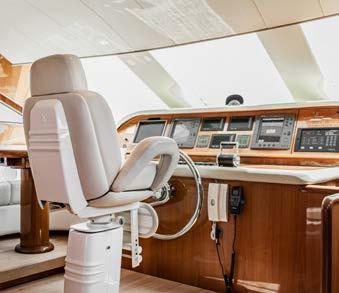
safety margins erode and operational efficiency is compromised.
Training, support and the shoreside interface: building resilience
Traditional maritime training focuses heavily on compliance and procedure. While essential, this alone does not prepare crews for uncertainty, time pressure or emergency response. Humancentred yachts invest in training that develops judgement, teamwork, communication and fatigue management, tailored to the yacht and its operating profile. Equally important is support: clear escalation pathways, realistic schedules and access to shoreside expertise.
Shoreside management and the DPA are critical components of the yacht’s human performance system. Effective DPAs understand operational pressure, respect professional judgement and provide cognitive support during abnormal operations. When shore and yacht processes are aligned, issues are resolved earlier and risk is mitigated quietly and consistently.
The leadership triad: aligning owner, captain and the shore team
Owners and owners’ representatives are often underestimated contributors to the yachting human-factors chain. Together with the captain and the DPA, they form a critical leadership triad that shapes risk tolerance, operational decisionmaking and on board culture. While owners’ representatives bring valuable legal, commercial or technical expertise, limited exposure to day-to-day operations can introduce unintended pressure when expectations not grounded in operational reality, increasing the cognitive load on both captain and crew. When aligned with the captain and shoreside management and attuned to how strategic decisions translate to life on board, the owner’s representative becomes a stabilising force, bridging owner vision, technical delivery and operational execution in complex situations.
The next frontier in superyacht safety and performance will not be defined by technology alone, but by how intelligently yachts are designed around the people who operate them.
the human system
Human-centred superyacht design recognises a simple, but often overlooked truth: captains, engineers, crew, shoreside teams, owner representatives and owners themselves form a single, interconnected human system, with safety and security at its core. Performance, reliability and enjoyment do not emerge from isolated excellence in technology or aesthetics but from the coherence of this system as a whole.
As this article has shown, the most consequential design decisions are made early – at the concept stage – where mission profile, operational intent and human capability must be considered before steel is cut. Layouts, workflows, information pathways and decision environments that align with how people actually think and operate under pressure quietly reduce fatigue, minimise error and enhance resilience over the yacht’s entire lifecycle.
Effective leadership extends beyond command to mentorship. Through example, the captain develops senior officers, who in turn mentor junior crew, ensuring that operational knowledge, professional judgement and on-board traditions are consistently passed through the ranks. The selection, alignment and support of captains – particularly within rotational command structures –therefore directly shape safety margins,
communication quality and crew confidence. When leadership signals are clear, consistent and reinforced through this mentoring chain, crews perform instinctively to world-class standards. When they are not, ambiguity and complexity take hold, and even the most technically advanced yachts see performance quickly erode – not through equipment failure, but through a subtle breakdown of the human element.
Human-centred design is not about control or constraint, but about enabling professionals to perform at their best –consistently and reliably, in both routine and demanding conditions. The next frontier in superyacht safety and performance will not be defined by technology alone, but by how intelligently yachts are designed around the people who operate them. When the human system is deliberately aligned and supported, excellence becomes both achievable – and repeatable.
The author extends sincere thanks to Chris Daine of Sea Daine Recruitment and Steve Monk CMMar, FRIN, AFNI of DG Maritim for their expertise, insight and continued commitment to raising standards in superyacht recruitment and training. Their contributions have helped inform the human-centred perspective reflected throughout this article. AB

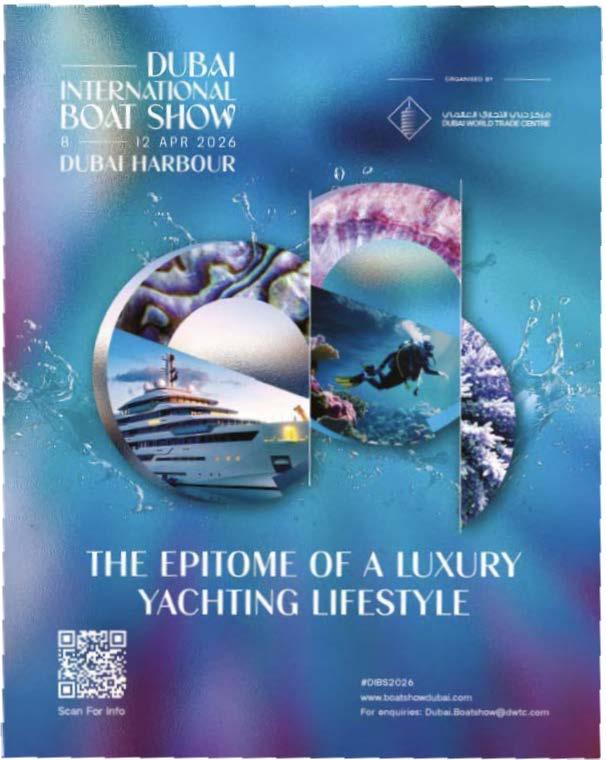
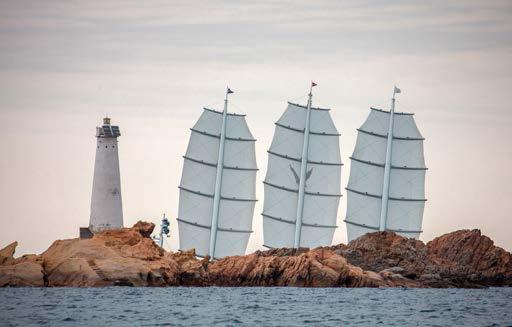
A commentary on the changing fortunes of Perini Navi – the distinctive shipyard whose heritage fleet comprises a unique DNA ...
BY MARTIN H. REDMAYNE
Over the past 35 years, I’ve been a huge fan of the Perini Navi fleet, having worked closely with the original team, spent many hours eating, drinking, sailing, laughing and relaxing with the Perini family and passionate legends like the late Giancarlo Ragnetti, Fabrizio Sgariglia, Burak Akgul, Bruce Brakenhoff, Franco Romani, Moreno di Giusto, Cristina Bernardini and Sara Gianola, many of whom are still active in the market today. I even had the privilege of sailing with many of their owners on sail trials and at the famous Perini Navi Cups in Sardinia.
Perhaps my favourite experience was being alongside the late Tom Perkins on the revolutionary Maltese Falcon, where he knew full well I had to get back to Porto Rotondo to catch my flight back to London, but as the conditions were so perfect, the sun was low and the sea was golden and the late afternoon breeze was optimal, he just kept sailing for another two hours. Essentially, I have many fond memories of this company and being part of what was a true superyacht com-munity, all driven with cool and soph-isticated, almost obsessive, passion by the founder and visionary Fabio Perini.
Now as I reminisce, thinking how unique this
brand was and how they all played a key part in the market – the team, the captains, the owners and many other stakeholders – all working and playing together on a fleet of yachts that were designed for their purpose, which wasn’t necessarily to sail, it’s hard to think of comparable shipyard DNA in our sector today. However, as I look at the situation today and the turbulence that the past ten years has delivered, with the disaster of Bayesian being perhaps the pinnacle of this Perini perfect storm, it’s very difficult to watch. I’d love the opportunity to sit down with Giovanni Constantino, who has picked up the Perini baton (batten) and is running with it, to discuss the real future and opportunity for Perini 2.0, as there is no reason why the original proposition of a comfortable, stable, efficient, environ-mentally conscious motor sailor should not be a success in today’s business climate. Essentially Perini Navi has been and perhaps always will be its own customer category and should never be compared to other products or brands.
The delivery chart that The Superyacht Agency Intelligence team has created (below) clearly demonstrates the decline of the business since 2017 when the business accepted outside investment from
Fenix and implemented new senior management that perhaps had a different agenda that conflicted with the DNA of this great shipyard. The obsession with the busy and congested motoryacht categories and the latent demand for high-performance sailing yachts with hugely expensive rig specs completely disrupted the brand and conflicted with the Perini pedigree. Perinis weren’t meant to sail perfectly or compete with other members of the superyacht sailing fleet; they were their own class of sailing yachts. During the following years, prior to the inevitable bankruptcy, we witnessed the dramatic demise of this once great innovator, a shipyard business that essentially built very attractive and solid, steel-hulled motoryachts with relatively simple rigs but with smart sail-handling systems that spent the majority of their lives motoring around the oceans, with their sail wardrobes being unveiled at the Buckets, and the Superyacht and Perini Navi Cups, which, let’s face it, only happened for a few days of the year. When you look closely at the final stages of the business calendar of this great brand, there were key moments in history that we feel damaged the business’s success: the exceptional award-winning project of Badis (ex-Sybaris), built in 2016, and the equally award-winning motoryacht Grace E built in 2014, both of which took their toll on the shipyard financially. There were other distractions at the time, but it was clear that things were not heading on the right course and Fabio Perini was looking to perhaps change personal tack. Analysis of the delivery data from 2017 all the way through to the time of acquisition by the Italian Sea Group indicates an unhealthy shipyard with essentially some valuable shipyard real estate and a few dormant or distressed projects that were part of the bankruptcy fall-out. Not having access to the details of the deal or due diligence, it’s hard to comprehend the deal value, but as a brand with pedigree and with a valuable legacy, with shipyard real estate and a few orders, but more importantly a fleet of 60-plus yachts in operation, it’s easy to see why the likes of Sanlorenzo, the Italian Sea Group and others were circling the bankruptcy court.
I do believe that the Perini Navi fleet can it’s someone with passion, deep pockets people who live and breathe the brand, the true meaning of owning
can be reborn and if anyone can do it, pockets and a vision, but it also needs the brand, like in their heyday, to reinvigorate owning a Perini Navi.
Now back to the present day and the various media stories and social media commentary about the recorded litigations that have been announced. I can fully understand the motivation to sue or counter sue and the deep frustration that the Bayesian disaster must have generated for the current owner of the Perini brand, as this will no doubt have raised questions among many about sailing yacht stability. However, when you look at the heritage fleet of Perinis, their core success was built on solid, stable and very comfortable motor sailors that sat at anchor in beautiful locations, for the majority of their time afloat and covering hundreds of thousands of nautical miles at the hands of some great captains. When the company diverted its DNA into low-grosstonnage sleek motoryachts, high-performance aluminium-hulled sailing yachts with very expensive carbon rigs, the business changed and I feel that the market became confused and distracted.
Having sat on the flybridge deck and alongside many owners and captains sailing these original Perinis, I’m not sure it was all about performance. Yes, one 56-metre captain would like to beat another 56-metre captain in a regatta, based on tactics, but typically, this was all about having fun, being part of a family and enjoying the moment. When you witnessed a Perini sailing yacht start a Bucket Regatta a couple of hours earlier than a Wally or Southern Wind, you can imagine the competitive and frustrated owner asking the naval architect or designer alongside ‘Can we design one of these things to go faster’, where the eyes light up and the answer will always be yes, but will it still be a Perini pedigree, I’m just not sure.
We still await the full results of the investigation into the Bayesian disaster and whatever it says and whatever the real cause of the catastrophe, I do believe that the Perini Navi fleet can be reborn and if anyone can do it, it’s someone with passion, deep pockets and a vision, but it also needs the people who live and breathe the brand, like in their heyday, to reinvigorate the true meaning of owning a Perini Navi and what it’s like as an owner, captain and crew to be part of a unique superyacht family. MHR
Column by Ernesto Esposito
Ernesto
Esposito, Head of Technical Sales and Account Management at maritime digital solutions company Omniaccess, explores the key factors that should be taken into consideration to ensure the safeguarding of vessels from the increasing risk of cyber attack.
2025 has just concluded with a clear message to all of us: cybersecurity is no longer optional for superyachts. Indeed, our Security Operations Centre, managing more than two thousand vessels, witnessed a significant increase in cyber incidents in the maritime sector – a common trend for organisations both onshore and offshore.
This trend did not go unnoticed by the International Maritime Organization (IMO), classification societies and flag states, which have started implementing requirements to safeguard vessels from cyber incidents that could lead to potential safety concerns.
However, cybersecurity is complex, made up of global and regional regulations, technologies that can help or harm and humans who need to understand the risks behind each of their actions. Responsibilities are sometimes a grey area too, where owners, captains, management companies and shipyards all need to align to ensure everyone performs their due diligence.
So how should you approach it for your new-build project? Let me try to make it simple and break it down into what I consider the three most important aspects for approaching cybersecurity for a yacht: regulations, due diligence and key measures.
Possibly the toughest, yet most important, factor to take into consideration.
Back in 2021, IMO set requirements for the safety and security of vessels through Resolution MSC.428(98). In practice, it required that all yachts integrate cyber-risk management plans into their Safety Management
System (SMS) as defined under the International Safety Management Code (ISM Code). In yachting, this translated into performing a risk assessment to document the current security posture of a vessel and then creating a plan to address at least those domains and assets classified as critical.
Who is subject to these regulations?
All yachts under the ISM, and more specifically commercial yachts over 500gt, those classified as passenger yachts because carrying more than 12 passengers and those engaging in international voyages. Flag states may enforce these regulations too, as the Cayman Islands, Malta and Marshall Islands did.
Cybersecurity risks in yachting cannot be ignored anymore, as the frequency of incidents is increasing with the rise of connectivity and applications used on board.
Our experience shows that while many yachts embraced these requirements, most approached them as a one-off task to mark compliance, when they should be run periodically instead due to the constantly changing threat environment inside and outside a yacht.
In addition and even more important for new-build projects, the International Association of Classification Societies (IACS) set precise cybersecurity requirements for all classed new-build yachts contracted from July 2024, with their UR E26 and E27 resolutions. The main concern here is the exposure to risks of operational technology (OT) systems like propulsion, HVAC and navigation, since their alteration or illicit manipulation could lead to incidents affecting the safety of the vessel and the people on board. So if you are involved in a new-build project you need to adhere to these regulations and integrate cyber-risk management during the design process.
information technology (IT) systems are automatically included in these requirements too, as many interface with OT systems or handle their communications with the external world.
In yachting, something that is pretty common is that inertia leading to ‘repeat what worked before’. We see this happening especially when it comes to technology. If something is known to work, why change it? As an engineer I feel comfortable with that approach too, but things change constantly and quickly around and inside a yacht so it’s important to continuously assess whether there are better solutions to get the job done. In cybersecurity, this is key as it is not a static issue but something that is constantly evolving.
So what are some initial checks you could do to make sure you are making cyber-secure decisions?
1.Assess your suppliers – What security policies and governance are in place at their organisation? Is their personnel trained against cyber risks? Do they use secure remote connection technologies like VPN or Privileged Access Management in their practice?
2.Assess your cybersecurity systems – Is the firewall in your specs of nextgeneration type? Are these systems from top recognised cybersecurity brands? Are their security logs useful for a security operations centre (SOC) in case you contract a 24/7 monitoring and alerting service?
3.Assess your design – Has the network been designed to be segmented? Will there be separation between IT and OT? Will access and identity management be in place?
4.Assess your cybersecurity service provider – Do they hold an ISO 27001 certification to protect the information they manage? Do they have a 24/7 SOC with experts and advanced tools like SIEM, SOAR, etc.? Do they have an incident response team? Can they perform threat intelligence to enrich their SOC knowledge and thus be better prepared to defend you from threats?
Key measures
Cybersecurity is a long-term journey, not a one-off activity. Very often, yacht managers and engineers feel overwhelmed by the number of decisions and aspects they need to deal with to secure their vessels. In this case, relying on expert advice can certainly simplify things.
My personal advice is to start with

some measures that I consider ‘key’ during a new-build project:
1.Network segmentation – Early design of separate guest/amenity zones from operational/critical OT and IT networks (navigation, propulsion, controls), so you avoid recabling and delays at the acceptance tests stage.
2.Access management – Design a centralised access credentials management of all stakeholders involved in new-build projects, based on the principle of just-in-time access which only provides access for the time required to complete certain tasks.
3.Cybersecurity in acceptance tests – factory acceptance test (FAT), hazard acceptance test (HAT) and site acceptance test (SAT) should include cyber tests so that the yacht is delivered with SMS-ready procedures.
The bottom line
Cybersecurity risks in yachting cannot be ignored anymore, as the frequency of incidents is increasing with the rise of connectivity and applications used on board. Maritime regulations are also starting to enforce security measures to new-build yachts, to protect systems on board that are critical for the correct functioning of the vessel and that could create safety risks if attacked by threat actors.
Tackling this modern issue should start with the foundations of new-build projects and not wait for until their delivery, as it can have considerable impacts on the physical and logical set-up of the IT and OT network infrastructures. Consulting with experts in maritime cybersecurity during each phase of a new build may reveal an extremely helpful strategy for a successful and compliant delivery of your project. EE
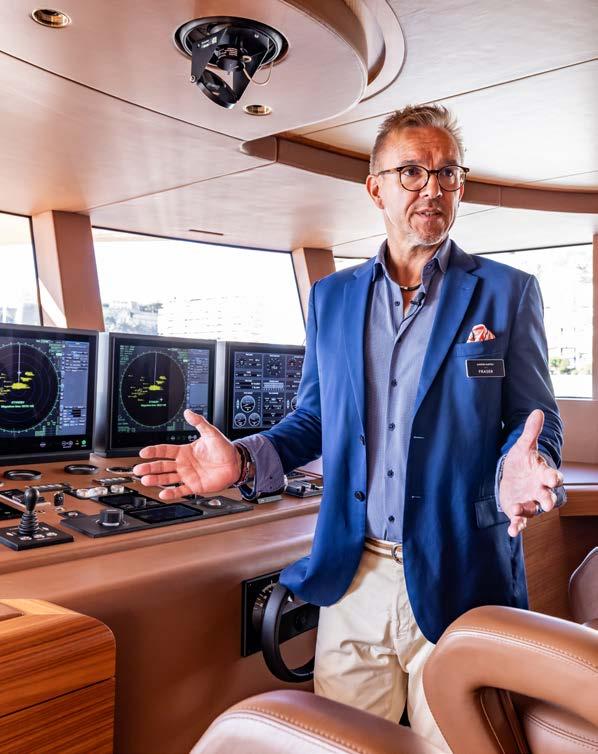

AN INTERVIEW BY CONOR FEASEY
Moving from shipyard to brokerage isn’t quite the cosmic career jump some might think ...
For someone who now sits at the helm of one of the world’s most recognisable brokerage houses, Anders Kurtén talks about the yachting market in a way that feels disarmingly uncorporate. Our discussion doesn’t start with market data, fleet sizes or absorption rates, but with a memory of being carried aboard his grandfather’s boat before he could walk, while spending blue-skied summers in the south-west Finnish archipelago, where small sailing yachts were a simple fact of life. “I never really thought about boating as a hobby,” he reflects. “It was just always there – more like an integral part of life.”
Now the head of brokerage stalwart Fraser, Kurtén’s perspective is vanishingly rare as the Finn moved from dot-com era businesses to restoring wooden classics in a shed to wrestling with the economics of fully custom carbon yachts. It is this long arc – from boat shed to boardroom – that now informs how he thinks about value, risk and where the market might go next. We talk through his business outlook for the future, as Fraser’s performance under Anders is focused on exploiting a structurally scarce market by deepening trust, mining off-market opportunities and reading the right signals.
Yachting was always the backdrop to Kurtén’s existence. That perspective makes his career arc all the more interesting. Before he became CEO of Fraser, Kurtén was on the other side of the superyacht equation. A business degree from the Swedish School of Economics and Business Administration in Helsinki first led to an early web career in the late 1990s and early 2000s, and then to an abrupt pivot. “I woke up one morning and realised that this is not a dress rehearsal,” he says. “For me, it was more important to work with something that actually resonated emotionally.”
It was a radical call to follow his passion while pairing it with his business aptitude, taking a gap year and enrolling at a wooden boatbuilding school, a role he still (sometimes) misses. That, in turn, led to several years of restoring classic wooden yachts by hand. “It was emotionally very satisfying,” he admits, “but financially slightly less so.” Eventually, the pendulum swung back towards the business side of the sector. He took over a small yard in southern Finland, building semi custom performance sailing boats under the Finngulf name, only to see the 2008 global financial crisis expose just how fragile that model had become. The boats were expensive, production builders were getting better and the
three- to four-times price gap no longer made sense.
From there, he crossed the threshold, what he jokingly calls “to the dark side”: almost a decade running marketing and product development for a serial powerboat manufacturer in the Baltic region, building aluminium and GRP bowriders and day cruisers. Midway through his tenure, the company was acquired by Yamaha. Then, in 2019, came the call to take on a very different challenge at the rarefied names high performance composite sailing shipyard, Baltic Yachts.
When Kurtén talks about Baltic, he describes it as a “micro niche within a niche”. The yard’s proposition is unusually pure high end, fully custom sailing superyachts in carbon composite. It is the sharp end of an already rarefied market. “The addressable market, just in terms of projects that even make sense to bid on, is small enough that you can count them on the fingers of your two hands,” he explains.
“So that’s a pretty small box from a business development perspective. What then attracted me to the services side was really the higher clock frequency, the larger global addressable market, and just a much bigger churn, much more that you can do with the business.” On paper, moving from a Finnish shipyard to Monaco-based Fraser in September 2023 looks like a major leap, but the continuity is more interesting than the contrast.
“If you really sort of try to simplify the equation, there’s actually more similarities than there are differences,” he argues.
“Whether you’re constructing a custom yacht or trying to find a customer the dream brokerage yacht, or even just crafting the perfect two week charter itinerary for a dream vacation, really, the goal is the same. Your client has a dream of sorts, and you do your utmost to make it come true. Then, as a CEO, what you’re essentially doing is you’re trying to create an atmosphere that facilitates all the other team members to do their very best and perform at their highest level. And there, it doesn’t really matter whether you’re actually physically crafting products or whether you’re shaping an experience or trying to get to terms with how to sell an owner’s boat best, the fundamentals are the same.”
But if you try to speak with Kurtén using a traditional corporate growth mindset, you quickly find yourself out of step with the company’s definition of success. It’s easy to fixate on market share, but trust remains the fuel of choice when
“I find that most [clients] aren’t really particularly interested in working with the biggest company. They want to work with whoever can provide them with the best solutions and the highest probability of ticking the boxes for whatever the dream may happen to be.”
“My firm conviction is that if you consistently manage to deliver the best solutions across all business areas, then size and volume and business success will follow.”
propelling the company forward. Context matters here: depending on who you ask and how you count, there are perhaps six to seven thousand superyachts over 30 metres around the world. They are all, in varying degrees, idiosyncratically demanding not just in their configuration and history but also in the personalities and circumstances of the people who own or charter them. In that environment of “extreme scarcity”, as he puts it, the idea that clients are drawn to the biggest company by default doesn’t really hold. “I find that most of them aren’t really particularly interested in working with the biggest company,” he says. “They want to work with whoever can provide them with the best solutions and the highest probability of ticking the boxes for whatever the dream may happen to be.”
Fraser’s numbers bear this out, as Kurtén explains that somewhere between 85 and 90 per cent of its business comes from existing clients. The impressive 10 per cent cohort of new owners and charterers typically arrive via word of mouth from friends, peers or advisers who have already had good experiences and are willing to open the door. Of course, there is the acknowledgement that marketing has evolved; digital tools are more sophisticated than they were in the late 1990s when Kurtén first worked online. But in a world where individual transactions can be as emotionally charged as they are financially significant, the single most effective channel remains an old fashioned referral. The result has been some of the strongest years in Fraser’s history, including through the pandemic and its aftermath. Still, Kurtén resists the temptation to rewrite the company’s story around growth alone. “Growth per se is not an outright stated end all, be all,” he says. “My firm conviction is that if you consistently manage to deliver the best solutions across all business areas, then size and volume and business success will follow.”
In an industry often obsessed by the bigger numbers, that stance sounds slightly contrarian. In practice, it may be precisely what has allowed Fraser
to endure for nearly eight decades. From the outside, it is easy to fixate on the headline deals: the handful of 100 metre plus sales that skew annual value statistics and the record pandemic years when transaction volumes spiked. So it stands to informed reason that Kurtén is cautious about drawing sweeping conclusions from any single season, particularly at the very top end.
“We operate in an environment of extreme scarcity,” he explains. “There are some six or seven thousand superyachts over 30 metres, depending on who you ask and how you count – and they’re all, in many perspectives, quite unique. There were around 600 brokerage transactions last year, and we handled 56 of them. It could have been 590 or 650.”
“Even a year is too short a time,” he warns. “There’s a bunch of serendipity that goes into what closes in ’24, what closes in ’25, what closes in ’26. Instead, he looks for what he calls more reliable barometers. One of those sits far below the 100 metre bracket that so often dominates the conversation: the 24 to 30-metre segment. In 2024, transactions in this size range grew from roughly 250 to about 285 boats – a rise of around 15 per cent.
“In 24 to 30 metres we grew from about 250 to 285 transactions, so roughly 15 per cent,” he says. “In some ways, that segment outperformed the rest of the market if you treat the rest as one figure. And that’s important because that’s the most sensitive factor to the parameters that measure actual client sentiment.” At the very large end – 70 metres and above – the market has been chronically short of inventory. New-build prices at the pre-eminent yards are up significantly since Covid, order books are fuller and delivery slots are pushed several years out. Many owners are either unwilling to sell until their next yacht is in the water or decide not to sell at all. That makes the ultra-large bracket a poor proxy for sentiment. A handful of completions or cancellations can move the numbers disproportionately.
Opposite: 64-metre Athos, the largest two-masted schooner in the world, was built by Holland Jachtbouw and extensively refitted by Royal Huisman in 2022
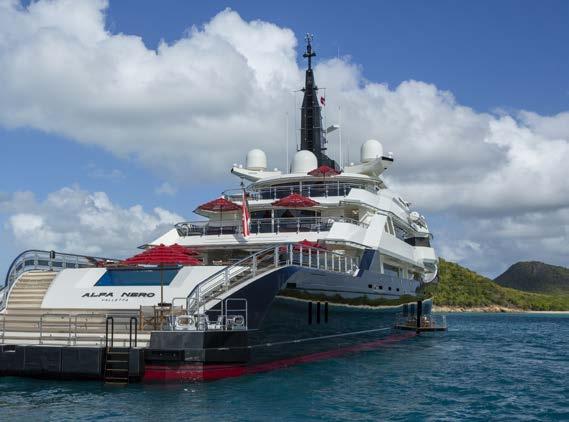
“Theoretically, I would agree that the top end dictates the pace,” he says, “were the top end not significantly inventory restricted, but it is. At the bigger ranges above 70 metres, the last few years have really been characterised by inventory restriction.” By contrast, the 24 to 30-metre band operates with fewer structural constraints. There is more stock, more liquidity and more transparency. It is also crucial for many new owners take their first step into superyachting. “Many times this is not the last yacht they will own and this is not the last charter they will do,” he adds. “Charter, in many cases, was the gateway drug that introduced them to the lifestyle.”
A rebound and outperformance in this range, then, suggests not just that existing players are trading up or sideways, but that new money is willing to commit at a level that responds quickly to changes in sentiment. Coupled with steady overall growth since 2023 – and a pandemic period that he describes as “for all intents and purposes, a positive market aberration” in terms of broadening the client base
–it underpins his reading of a market that is more resilient than many outside the sector assume.
If the data suggests an industry in reasonable health, the conversations behind it point to something more fundamental: a shift in how clients think about what a yacht is for. “Today it is significantly less about the yacht as an object, especially for charter,” Kurtén continues, “and it is much more about where it can take you and with whom, and what you can experience together.” New entrants increasingly start with a scenario rather than a specification, such as multi generational family time, wellness led escapes, off grid exploration and hyper connected weeks that blend work and leisure. A growing cohort of younger clients, in particular, expect to lift and drop their onshore lifestyle almost wholesale onto the water.
This is especially pronounced among younger generations, Kurtén noting that they really expect to be able to take their onshore lifestyle and pretty much
“It’s W, F, Y and I know sounds like a profanity, but it’s not. It’s working from the yacht, which now, due to Starlink, is actually feasible. You can run a board meeting from your yacht without interruption.”
port it directly onto the yacht. Connectivity has been the revolution that makes this possible. What used to be a compromise – fragile links, unreliable streaming, crew scouring islands for DVDs – has been replaced by something far closer to a metropolitan experience.
“It’s W, F, Y and I know sounds like a profanity, but it’s not,” he laughs. “It’s working from the yacht, which now, due to Starlink, is actually feasible. You can run a board meeting from your yacht without interruption.” That, in turn, is changing how long and how often yachts are used, and what they are asked to be: office, spa, restaurant, live music venue, family home and exploration platform, sometimes within a single week. It is also raising the bar for the human infrastructure that enables those experiences.
Nowhere is that escalation more visible than in the job descriptions landing at Fraser’s crewing subsidiary, Crew Network. “Ten years ago, you were looking for a deckhand who had great credentials from a seafaring safety and client relations perspective,” Kurtén says. “Today, ideally he speaks three major European world languages, can mix a mean martini, has a little bit of a singing voice, can accompany himself on a guitar – and if he can run a yoga class or do Pilates or massage, it’s only a bonus.” It might be a slight exaggeration for effect, but not by much. The same expansion is evident across the service hierarchy. Stews are part sommelier, part barista, part events planner. Chefs are asked to handle an ever wider range of cuisines and dietary regimes. Pursers and chief stews need to orchestrate days that can swing from board meetings to beach club parties to silent, wellness led evenings.
To respond, Fraser has had to move well beyond database driven matching. “We actually interview every candidate,” Kurtén stresses. “And then we also work pretty hard on understanding the owners’ requirements – hard requirements, wishes, personality – so that we have the best possibility of crafting a good match. There’s really no shortcut, there’s a lot of hard work. It’s not just gathering CVs and sending them out.”
His experience at Baltic points to a similar lesson in terms of scale. In the run up to the 2008 crisis, many in the sailing sector assumed the future lay in ever larger boats, backed by ever larger construction sheds. The correction that followed exposed the limits of that logic. “Just prior to the global financial crisis, the ethos was that we need a bigger shed, because people are going to want bigger boats,” he recalls. “But the market normalised and really for sailing shipyards the sweet spot still is somewhere between
“Inventory constraints at the large end will remain a structural headwind; it puts a little bit of an onus on working harder on the behind-the-scenes deals and actually tailoring, making sure that where there is demand, you create the supply, if you will.”
110 and 150 feet. That gives you the performance, it gives you the interior volume, and yet you still retain some semblance of a sensation of actually sailing.”
Push much beyond 200 feet, he argues, and the experiential line between a sailing yacht and a motoryacht begins to blur. On the motoryacht side, too, extreme size carries trade-offs with limited access to certain harbours and anchorages, complicated logistics, more support craft and less spontaneity. “You’re actually spot on,” he says when the notion that you can lose freedom as you go larger is put to him. “There’s more hassle, less freedom. So it’s not necessarily a conducive equation.”
That doesn’t mean the sector is about to shrink. If anything, every yacht shrinks as you use it. Once owners live aboard, constraints on space and versatility become more obvious, often prompting a move up in size. But the direction of travel in design is less about raw length and more about how intelligently volume is used and how well the yacht supports the experiences owners now expect. Within that framework, he sees several technologies as already credible for specific profiles: full electric on certain sailing yachts; diesel-electric hybrid as a robust, well-understood solution for many motoryachts; methanol reformers producing hydrogen as an emerging, promising option. But he resists the urge to anoint a single universal answer. The technologies exist, he says, but many have yet to reach full field-proven maturity.
A similar measured scepticism colours his take on AI. On the back office side, he is an enthusiastic user of ChatGPT and other tools. And over time, he sees clear potential in finance, legal, compliance and market intelligence, as well as in marketing content and data driven reporting. But on the client-facing front line, he struggles to see a near-term revolution.
“For the sort of client interfacing part of the job, there’s no major impact yet, nor do I really foresee anything imminently around the corner that would fundamentally change the way we work,” he says. The work there is about trust, nuance and chemistry about reading a room.
As for the wider market, Kurtén describes himself as cautiously optimistic, but he is acutely aware that the spread between best- and worst-case scenarios has widened since the pandemic. “For the last maybe five, six years, ever since the pandemic, we’ve had a really, really interesting forecasting situation where the discrepancy between the worst case and the best case is bigger than we pre-pandemic would have usually expected it to be. Which makes forecasting kind of hard,” he adds. “Inventory constraints at the large end will remain a structural headwind; it puts a little bit of an onus on working harder on the behindthe-scenes deals and actually tailoring, making sure that where there is demand, you create the supply, if you will,” he says.
It’s a forecast that draws on a wealth of experience, but as I ask him to reflect on his career thus far, he smiles and says he loves what he does. “And if I could give any advice to my younger self, at 21, ready to start this journey, I would say have patience. You’re going to need it,” he laughs. It’s advice the market could abide by, too. In the end, though, his outlook is anchored less in spreadsheets than in something both simpler and harder to quantify. In a sector now threaded through with AI tools, alternative fuels and satellite constellations, that may sound quaint. But for Anders Kurtén, it is precisely this mix of advanced technology and very old human impulses that defines the future he is trying to steer Fraser towards, a future where, yes, the numbers matter, but serendipity and trust still play their part. CF
Viraver Technology on how glazing systems can unlock performance and innovation in new-build superyachts.
In new-build superyacht projects, glass is no longer a passive envelope component defined late in the design process. Instead, it has become a key architectural and engineering element, capable of shaping the identity, performance and comfort of a vessel from its earliest conceptual stages.
Unlike refit scenarios, where constraints imposed by existing structures often dictate design choices, new-build projects offer a unique opportunity: the freedom to engineer glazing systems as an integral part of the yacht’s architecture. This shift has opened the door to new technologies, larger surfaces and advanced configurations that redefine what yacht glazing can achieve.
Glass as a design driver
In modern superyacht design, transparency and continuity between interior and exterior spaces are increasingly central themes. Large panoramic windows, curved façades, skylights and uninterrupted glass surfaces are now common features, often defining the visual language of a project.
In a new-build context, glass engineering can be integrated from the very beginning, allowing designers and shipyards to align aesthetic ambitions with structural and regulatory requirements. Early involvement enables accurate definition of glass geometry, curvature, thickness and bonding interfaces, ensuring that glazing solutions enhance – rather than constrain – the overall design.
This approach transforms glass into a design driver, not a technical compromise.
New-build projects allow the full exploitation of modern glazing technologies that are difficult or impossible to implement in refit scenarios. Among these, chemically strengthened glass, structural interlayers and optimised insulating glazing units (IGUs) play a fundamental role.
Chemically strengthened glass offers flexural strength values up to twice those of thermally tempered glass, enabling thinner sections, larger spans and improved resistance to surface damage. When combined with high-performance structural interlayers, these solutions provide the rigidity required for large bonded panels subjected to dynamic marine loads.
The use of IGUs further enhances thermal performance, allowing designers to achieve low U-values while carefully managing solar gain through selective interlayers or coatings. In new builds, these parameters can be optimised in parallel with HVAC design, supporting energy-efficient systems without compromising optical quality.
One of the key advantages of newbuild glazing is the possibility to define performance targets from the earliest design stages. Thermal insulation, solar control, acoustic comfort and optical quality can be engineered together through careful material selection and glass build-up design, rather than being addressed as separate constraints later in the project.
By defining U-value and g-value requirements early on, glazing becomes a strategic contributor to on-board comfort and energy management. Reduced solar loads and improved insulation help achieve more stable interior conditions, particularly in high-exposure areas such as main deck lounges or owner suites.
At the same time, optical quality remains paramount in the yachting sector. Unlike architectural applications, yacht glazing demands minimal distortion, controlled reflectivity and consistent colour perception across large surfaces – requirements that must be engineered specifically for the marine environment.

Glazed deadlights: A new frontier
Among the most discussed innovations in recent years is the development of glazed deadlights. Traditionally, deadlights have been opaque metal elements designed solely for safety and regulatory compliance, requiring manual installation when needed. These solutions not only interrupted natural light but also introduced practical drawbacks: heavy components to handle, time-consuming installation procedures and the need to dedicate valuable onbard space to their storage.
Advances in glass technology and structural engineering are now enabling transparent solutions that combine protection with visual continuity. Glazed deadlights eliminate the need for removable metallic panels, freeing up storage space and simplifying onboard operations, while maintaining the required level of safety.
Their integration requires careful consideration of load cases, redundancy and bonding strategies, as well as close
coordination with class societies. In newbuild projects, however, these systems can be seamlessly incorporated into the vessel’s architecture from the outset, contributing to a more open, efficient and connected on-board environment.
In new-build scenarios, the development of glazing systems evolves in parallel with hull structure, interior layout and installation strategy. This integrated approach allows potential conflicts to be identified and resolved early, reducing the risk of late-stage redesigns.
Close collaboration between designers, shipyards, classification societies and the glazing manufacturer is essential. Structural calculations, material testing and interface definition must all align within the applicable regulatory framework, ensuring both compliance and feasibility.
Viraver’s in-house engineering team supports this process from concept
design through final approval, contributing to effective integration within the project timeline and ensuring that performance targets are met without compromising feasibility and installation requirements.
New-build superyachts represent the highest level of freedom in design – and glass is one of the materials that most clearly reflects this potential. When engineered as part of the initial design process, glazing becomes a powerful tool to enhance comfort, performance and architectural expression.
Through advanced materials, coordinated development, and emerging solutions such as glazed deadlights, modern yacht glazing continues to evolve beyond its traditional role. In doing so, it enables designers and shipyards to create vessels that are not only visually striking but also technically refined and future-ready.
by Richard Selby
Richard Selby, CEO of British Superyacht, calls for a strategy to improve local infrastructure so that visiting superyachts are encouraged to use homegrown facilities.
The British Isles have long been synonymous with maritime excellence. From the historic shipyards of the South Coast to the engineering hubs of the North, our heritage is one of uncompromising quality. However, as we look toward the horizon in 2026, the superyacht industry in the British Isles stands at a critical juncture. While our reputation for design, law and insurance remains world-leading, the domestic physical infrastructure –specifically our supply chain and refit capabilities – requires a strategic evolution.
In Britain’s superyacht industry, we must acknowledge a fundamental truth: the strength of our supply chain is directly proportional to the physical presence of large superyachts in our territorial waters.
The economic catalyst: vessels in vistas
A thriving superyacht supply chain is not built on remote consultations or digital exports alone, it’s sustained by the ‘dockside economy’. When a 60-metre-plus vessel drops anchor in a British port or secures a berth in a
marina, it acts as a floating enterprise. The immediate demand for high-end provisioning, local technical support, concierge services and hospitality creates a trickle-down effect that supports thousands of small and medium-sized enterprises (SMEs) across the British Isles.
Currently, our home marine industry contributes billions of pounds to the national GDP, yet a significant portion of our world-class supply chain –specialists in bespoke cabinetry, advanced composites and marine electronics – often finds itself exporting talent and products to Mediterranean or Caribbean hubs. To improve the domestic supply chain, we must incentivise more large superyachts to operate within British territorial waters.
Increasing the days at sea for the global fleet within the British Isles creates a predictable and robust demand for local services. When a captain knows they can source specialised parts in Poole or secure expert AV/IT technicians in Plymouth without the logistical nightmare of cross-border shipping, the entire ecosystem gains resilience. We then lead the industry by how we service the world’s most sophisticated vessels on our own doorstep.
The refit bottleneck: a call for infrastructure
As the global fleet of superyachts continues to grow – with the past five years seeing a record number of deliveries exceeding 100 metres –the demand for maintenance, repair
We have the brains, the hands and the heritage, but we are currently limited by the footprint of our facilities.
and overhaul (MRO) has reached an all-time high. In the British Isles, we are seeing an encouraging trend: more owners are looking to the UK as a cruising destination, drawn by our rugged coastlines, world-class locations and high-security environment.
However, a glaring disparity has emerged. While the number of superyachts visiting our waters is increasing, our refit facilities are struggling to keep pace. We have the brains, the hands and the heritage, but we are currently limited by the footprint of our facilities.
The lack of large-scale, dedicated refit sheds and dry docks capable of accommodating the modern large superyacht (80 metres-plus) is a significant barrier to growth. Currently, many vessels that cruise the British Isles during the summer season are forced to return to Northern Europe or the Mediterranean for their winter worklist because the UK lacks available slots or the specific infrastructure – such as heavy-lift syncrolifts and climatecontrolled sheds – required for major structural and paint works.
The refit sector is the most labourintensive and high-value segment of the supply chain. A major refit can last from three months to a year, employing hundreds of local contractors simultaneously. When a yacht leaves British waters for a refit elsewhere, the following go with it:
• Highly skilled jobs: Apprenticeships in traditional shipwrighting and modern engineering.
• Innovation opportunities: The testing of green technologies, such as alternative fuels and AI-driven energy management systems.

We need a collaborative effort between the UK government and the private sector to modernise existing docklands and provide the planning flexibility required to build the superyacht hubs of the future.
• Direct local spend: From crew shoreside accommodation and local transport to the procurement of raw materials.
By failing to expand our refit capacity, we are effectively exporting our economic potential. To rectify this, we need a collaborative effort between the UK government and the private sector to modernise existing docklands and provide the planning flexibility required to build the superyacht hubs of the future.
To ensure the British Isles remains a significant hub for the global superyacht community, we must focus on three strategic pillars:
• Promoting the British Isles as a yearround destination: Through promotion and presence on global platforms, we must showcase that our waters are not just for passing through, but also for long and short-term visits.
• Bridging the infrastructure gap: We must advocate for the development of superyacht clusters – dedicated zones where marinas, refit yards and luxury supply chains coexist. This reduces yacht miles and increases
the efficiency of the service sector.
• Harnessing technical excellence: Our supply chain is already innovating in the green transition. By hosting more vessels locally, we provide a live laboratory for the British-made sustainable technologies that will define the next century of yachting.
The superyacht industry is one of the few sectors where Made in Britain still commands an absolute premium. Our designers, lawyers, and craftsmen are the best in the world. However, the physical reality of the industry – the yachts themselves – must be at the heart of our strategy.
By encouraging more large superyachts to operate in British waters and investing urgently in the refit infrastructure they require, we don't just support an industry, we secure a maritime legacy. At British Superyacht, we remain committed to this vision, ensuring that the British Isles are recognised not only for their history, but also as a premier modern destination for the global superyacht fleet. We are currently engaging with interested parties, organisations and government to progress this vision. RS
Technical insight
What really pushes a vessel to the point of no return? World-leading stability expert Andy King presents the findings from Gefaell Chamochín and Juan Manuel López’s academic study of the Bayesian disaster.
We are all aware of the tragic events surrounding the sinking of the sailing yacht Bayesian on 19 August 2024 off the coast of Porticello, Sicilly. We are extremely mindful of the ongoing investigations and proceedings, which must be allowed to run their course. For that reason, this article will not comment further on any speculation or outcomes from these nor on the terrible loss of life.
That being said, we do have a duty to consider the technical aspects of what occurred. Here we have a sailing yacht that was seemingly struck by a weather event, knocked down and then subsequently sank. The yacht was at anchor, with its keel raised and without any sails up.
As an industry, we can ask technical questions as we reflect on what happened and, crucially, on what we can do now to safeguard against similar accidents in the future. We can do this in advance of official investigation reports because we are able to apply modern computing techniques to a very complex and dynamic problem.
Before we consider industry analysis of sailing yacht behaviour, a brief word on what has been officially released so far. The safety investigation undertaken by the Marine Accident Investigation Branch (MAIB) into the sinking of Bayesian published an interim report in May 2025. The MAIB is a UK government organisation that investigates marine accidents involving UK-registered vessels worldwide. According to The United Kingdom Merchant Shipping (Accident Reporting and Investigation) Regulations 2012, Regulation55, the “sole objective of a safety investigation into an accident… shall be the prevention of future accidents” by looking into the “causes and circumstances”. Furthermore, “it shall not be the purpose of such an investigation to determine liability nor… to apportion blame”.
The interim report into the sinking of Bayesian is intended to provide an update to the investigation up until that point. The report provides a narrative of the accident and details of the likely environmental conditions that were experienced.
In due course, the MAIB will be publishing their final report, and this will include additional details that will be available after examining the salvaged wreck of the yacht. It is worth noting that the contents of the final report may change beyond the details presented in the interim report as more information and details come to light.
As part of their interim report, the MAIB presented some initial findings from a stability and windage study. This study was commissioned by the MAIB and took place at the Wolfson Unit for Marine Technology and Industrial Aerodynamics at the University of Southampton.
The summary of the stability investigation describes the content and requirements for Bayesian’s stability information booklet. The report summarises the stability requirements for sailing yachts which are all based on the properties of what are called righting lever curves. A righting lever curve is a graph that shows the transverse sep-
aration between the downwards gravity force and the upwards buoyancy force. They are a fundamental measure of stability for any vessel, and their shape and points of interest are defined by regulation and of great interest to naval architects.
The MAIB report presented the findings of the Wolfson Unit’s computational study which analysed the yacht's behaviour at the time of the accident. The loading condition of the yacht at the time of the accident is currently unknown and so an assumed loading condition was used. This assumed the yacht as being in the most onerous loading condition presented in the approved stability information booklet. This was taken to be the lightloaded condition (with 10 per cent consumables on board) and with the keel raised. The study then analysed the yacht’s stability and behaviour as winds of varying speeds and from different directions were applied.
While the history and details of the sailing yacht stability criteria can be summarised in more detail elsewhere, it is worth noting some high-level details for our understanding:
1.There is a key stability criteria distinction for a yacht such as Bayesian with a moveable keel. When the keel is lowered, the loading conditions in the Stability Information Booklet are analysed against the sailing yacht stability criteria. When the keel is raised, the loading conditions are analysed against the motoryacht stability criteria.
2.The sailing yacht stability criteria are dependent on the shape of the righting lever curve (itself a function of the shape of the yacht, its buoyancy and the loading of the yacht, its centre of gravity) and what is called the downflooding angle. It should be noted that the sailing yacht stability criteria do not consider the exposed windage area.
3.For information, the downflooding angle is the heeling angle at which the first opening, which cannot be closed weathertight or watertight, is immersed. All vessels have downflooding openings
We want to be able to ask ourselves how we can do better, how we can improve safety and how we can make a start on this question while waiting for reports and investigations to conclude.
because they are needed for engine room intakes, exhausts and similar systems. These are the types of openings we are discussing here, rather than large shell doors or central staircases.
4.Lastly, it is also worth noting that the approved Stability Information Booklet for Bayesian refers to the moveable keel as the ‘Board’, but we shall stick with the wording of ‘keel’ for ease of terminology and understanding. The position of the keel is critical to any stability analysis because its function is to lower the yacht’s centre of gravity when it’s lowered, thereby improving the stability characteristics of the vessel.
The Wolfson Unit’s study identified several key findings:
1.That the angle of vanishing stability (the angle at which the yacht has no ability to return to the upright) for the assumed loss condition was just over 70 degrees.
2.That the 72-metre-tall mast accounted for 50 per cent of the total wind heeling moment when the wind was on the beam
3.That the profile of the mast also produced a degree of effective lift, increasing the heeling effect applied by the wind.
4.When in the assumed loss condition and with wind on the beam, a wind speed of just over 63 knots (73mph) would probably result in capsize of the yacht.
We know the general details and findings of the study from the Wolfson Unit. However, we do not yet know any further details about how the investigation was carried out and the methods used. Their work was a ‘desktop’ study, meaning it was carried out on computers using specialist software.
As curious and technical minds, naval architects and engineers are always striving to make safer designs and to ensure that accidents are not repeated. We want to be able to ask ourselves how we can do better, how we can improve safety and how we can make a start on this question while waiting for reports and investigations to conclude.
The Spanish study produced a computer model of a yacht which is akin to Bayesian, using very similar dimensions and as much information as could be gleaned from available technical drawings.
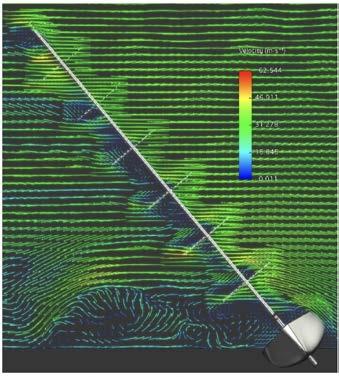
With this approach to finding out more firmly in mind, we can now look at another industry study on the sinking of a sailing yacht. The work has been undertaken by Guillermo Gefaell Chamochín and Juan Manuel López, both naval architects working in Spain.
The study was initially presented at the 64th International Congress of Naval Architecture and Maritime Industry in Gijón, Spain, in March 2025. The subsequent technical reports were produced and shared in English at around the same time. This work was produced and made publicly available just prior to the MAIB interim report. And while independent of the official investigation, their analysis nevertheless indicates a broadly comparable sensitivity to beam-wind knockdown in a keel-up condition.
Their analysis was carried out using computational fluid dynamics (CFD), a modern approach to computer simulation of fluid motion. It is used for problems such as analysing the air over an aeroplane wing, the downforce from a racing car or for studying how water moves around a hull. The computer breaks the fluid down into very tiny particles, or cells, and then solves complex equations for how each cell moves and behaves. The results can show a wide range of properties of the air or water, such as speed, pressure, turbulence and so on.
Naturally, the study conducted in Spain was not privy to the same technical details as the study commissioned by the MAIB at the Wolfson Unit. As such, the Spanish study produced a computer model of a yacht which is akin to Bayesian, using very similar dimensions and as much information as could be gleaned from available technical drawings. The assumed loading condition for the yacht was also slightly different from that of the MAIB. The MAIB assumed a lightload condition with the keel up, whereas the Spanish study considered a slightly deeper condition with a displacement of 543 tonnes. Again, the keel was assumed to be up in the Spanish study.
The Spanish study assumed the yacht to be floating, with the keel up and then to be subjected to a sideways wind force. The wind force was assumed to be exactly on the beam and to be acting in the same
plane as the mast. The CFD calculations were performed to work out how the air moved over the mast, the spreaders and the hull and to analyse how the yacht responded.
The first observation was that the CFD calculation effort was extremely intensive – it takes time for the computer to solve the complex calculations describing how each fluid cell is moving and behaving and this slows down the analysis process. It was also found that the computer time increased as the heel angle of the yacht increased and the flow around the yacht became more complex.
The key finding from the analysis was that a wind speed of 60.5 knots (70mph) gave a dynamic heel angle of over 65 degrees, and beyond this angle, the yacht model could not right itself. The investigation also identified the key distinction between the static steady heel caused by beam wind and the maximum dynamic heel. The static steady heel angle is the heel angle a yacht assumes as the wind is gradually ramped up. The dynamic heel angle, on the other hand, is the heel angle the yacht attains when the wind hits it instantly. To extend these analogies further, think about your ability to stay standing upright if someone slowly and progressively leans on you, versus your ability to do the same if the other person suddenly bumps into you and unsettles you.
The other key finding from the study was that not only is the mast extremely important in terms of the exposed wind area, but the spreaders are important as well. In other words, in analysing the complex air and heeling behaviour of the wind hitting a sailing yacht, the analysis of the mast alone is not sufficient, and the spreaders and other key items should be considered as well.
This is explained by the fact that the spreaders behave in the same manner as that identified for the mast by the MAIB. The exposure of the spreaders to the airflow causes them to act like a kite, generating an element of lift. This lift effect acts like a pulling force, which, when combined with the pushing force from the wind, makes the overall heeling effect at a given wind speed more pronounced. The spreaders were found to have much more impact as the heel angles increased and this is due to them becoming more vertically exposed at greater angles.
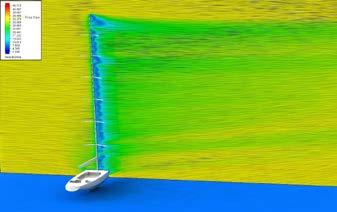
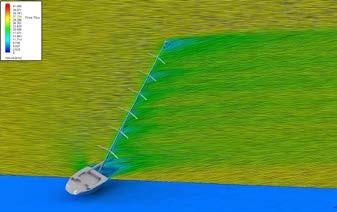
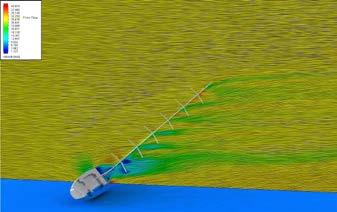
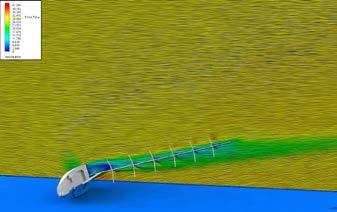
At the time of writing, we have yet to receive any official information from the MAIB about the downflooding openings on Bayesian. However, it is evident that once a sailing yacht has been heeling far enough for downflooding openings (which cannot be closed weathertight or watertight) to become immersed, water will be able to enter the buoyant hull and eventually cause the yacht to sink. This was well understood during the development of the large yacht sailing stability criteria when, nearly 40 years ago, it was noted that wind-induced capsize and downflooding are possible stability failure events for such a vessel. It was described at the time as the event that would knock a sailing yacht down to 90 degrees, at which point the heel angle is arrested when the entire rig is immersed. Then, if the yacht stays in that position and is unable to right itself, downflooding can occur and eventually overcome the yacht.
The stability investigation that was conducted in Spain was extended to consider the subsequent flooding scenario. Again, without Bayesian-specific information, this was performed using assumed downflooding opening positions and, critically, with an assumed internal general arrangement. In a similar method to the CFD analysis of the wind, the flooding has been modelled as tiny particles that move and behave like water.
The study found that the flooding commenced through aft openings before equalising along the yacht’s length as the heel angle increased and more openings are immersed. To be clear again, we are talking about openings for the yacht’s normal operation (vents and intakes), not large shell doors or staircases. The flooding study found that the sailing yacht model took 9 seconds to be heeled to an angle where the first unprotected opening became immersed.
The study also calculated that the yacht model reached 90 degrees in just over 23 seconds. Then, looking at the expected size and immersion of the openings, an estimate was made of the rate of intake of the flood water. The study concluded that it took 2.5 minutes for the sailing yacht model to take on sufficient flood water to overcome and sink the model. This corresponds closely with an anecdotal observation from The New York Times in October 2024,
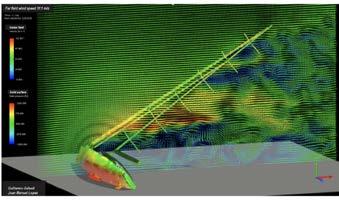
which said that Bayesian had “sunk in two minutes”.
It should be stated that this is an idealised computer flooding simulation and real results can always differ with variables such as air entrapment, internal boundaries and other openings.
At this time, it is not possible to know the extent or method of the stability investigation carried out by the Wolfson Unit for the MAIB. However, the study conducted in Spain on a sailing yacht model of very similar dimensions to Bayesian has given very similar results.
Both studies have identified that knockdown is possible in the mast-only mode with the keel raised, despite slightly different approaches to the assumed loading condition. Using their exact Bayesian model, the MAIB calculated a wind speed of 63 knots before the yacht is unable to right itself – assuming the keel is in the raised position.
The separate study conducted in Spain found that a wind speed of 60.5 knots was required. It is interesting to note that the two yachts and loading conditions are not identical but that the wind speeds are very similar. Both studies have also highlighted the complex behaviour and interaction of the mast, rigging and hull when being heeled over by a wind force.
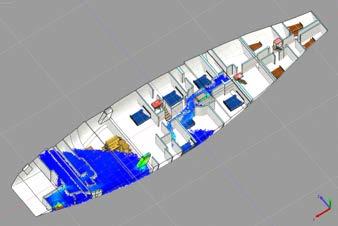
Both studies concluded that there was no possibility of the sailing yacht righting itself beyond a heeling angle of 70 degrees. As can be seen from the flooding investigation conducted in Spain, it was also found that downflooding openings can be immersed before that heel angle is reached and that internal flooding can commence.
But importantly, what this academic study reveals is how rapidly the consequences may unfold once stability is lost. Under beam wind conditions of around 60.5 knots, the modelled yacht develops a dynamic heel exceeding 65 degrees, beyond recovery, with additional aerodynamic lift from the spreaders further increasing the heeling moment. From that point, it’s a rapid progressive sequence – immersion of the first unprotected opening in around nine seconds, heel to 90 degrees in just over 20 seconds and flooding sufficient to sink the vessel in around two and a half minutes within the idealised scenario.
Heeling
Wind speed, m/s
So what next?
There are still plenty of technical questions and aspects that will need answering with respect to the loss of Bayesian. We will have the final MAIB report to review and then we will have to look at what changes need to be made to avoid the same accident happening again. There will also, no doubt, be other technical and complex investigations undertaken.
Of particular interest, we have yet to determine and analyse how the same sailing yacht used in the Spanish study would behave with the keel in the lowered position. We have also yet to consider even more complex and dynamic effects. For example, effects such as hydrodynamics of the hull and keel, the possible force exerted by being anchored, the assumption that the yacht is always upright when struck by wind exactly on the beam and other key dynamic aspects.
We can act now
In this article, we have presented an independent investigation into the behaviour of sailing yachts under beam wind. In doing so, we are not pre-judging any outcomes from a sensitive and critical investigation. Rather, we can think of safety improvement as always our number one technical priority.
In doing so, for existing and prospective sailing yacht owners, we can ask key questions, such as:
1.When was the yacht’s lightweight last assessed?
2. What is in the yacht’s stability booklet?
3.Does the approved stability booklet match how the yacht is operating?
4.What is the yacht’s extreme weather behaviour?
The answer to the last question will not be found in the yacht’s stability booklet. It needs complex computational analysis, like the CFD study that has been shown here. This requires specialist computer software and skilled, knowledgeable engineers. With the goal of improving safety and making decisionmaking information available to those on board, it is worth considering what kinds of operator guidance can be generated from these computer simulations.
For example, perhaps the answer is to generate something like the figure above where the complex computer analysis can be distilled down into a simple graph. In this example from the study conducted in Spain, the steady heel and dynamic heel angles are plotted against the wind speed. The blue and orange curves end when the yacht has no ability to right itself, so we can immediately see a limiting wind speed. It is worth thinking about whether this would be a useful safety consideration for those on board and inform decision-making accordingly.
In reflecting on both the MAIB’s interim findings and the independent Spanish CFD study, it is clear that the
loss of Bayesian highlights the complex interplay of wind speed, aerodynamics, keel position and downflooding angles for modern sailing yachts. While many technical questions remain unresolved pending the final investigation report, the consistency between the two studies underscores a critical need for deeper industry understanding of stability and extreme-weather behaviour. As an industry, we have an opportunity now to engage proactively with advanced analysis methods and improve the guidance available to crew. Ultimately, enhancing the clarity, accessibility and relevance of stability information –supported by modern computational tools – will be essential in helping to reduce the likelihood of similar tragedies in future. AK
Andy King is a naval architect who works for a UK-based marine consultancy. Andy spent a large part of his career at a major Classification Society, where he led on large yacht stability approvals, covering both existing and new build yacht projects. Andy has contributed to stability regulatory development through his work with the Red Ensign Group technical working group and through the United Kingdom delegation at the International Maritime Organization. Andy also teaches yacht stability to future yacht Masters on the Isle of Wight.
by Robert van Tol
The new executive director of SYBAss, Robert van Tol, breaks down the facts and figures behind the economic significance of new-build activity and its contribution to the global economy.
One of the things I would like to develop in my new role as executive director of SYBAss is data availability and its analysis, use and monitoring of the yachting sector, whether it’s data needed to assess environmental impact (the main focus of my seven years at Water Revolution Foundation) or data to analyse the sector’s economic impact. As a sector we need to ensure that what needs protection is protected – and that is the privacy of the client. However, if all data on yachts is locked up by NDAs we disable ourselves to utilise it for various important purposes, not the least to show regulators in a proper quantified way the unique character and useage of yachts, which is significantly different from that of commercial ships.
This also counts for claiming yachting’s contribution to the global
economy. Yachting is redistributing a large part of the wealth of a relatively small group of ultra-high-net-worthindividuals (UHNWIs) among thousands of families worldwide. The following breaks down precisely how much money that is every single year.
Together with The Superyacht Life Foundation, SYBAss commissioned an economic impact study that was delivered at the end of 2025. Impacts were calculated based on the year 2022. The global yachting sector has an annual economic impact of 54 billion euros. The metaphor of an iceberg applies here, where the part above the surface presents an impressive 22.2 billion euros direct impact, but the part below the surface adds an additional 31.7 billion euros of indirect impact as the result of a multiplier effect.
The new-build segment was calculated to have an annual economic impact of 20 billion euros, which is 37 per cent of the total annual economic impact of yachting. While the direct impact of new-build activity was calculated at 7.2 billion euros, the multiplier effect for indirect knock-on impact added another 12.8 billion euros. Elaborating on this multiplier effect, new build exhibited the strongest indirect effects compared to refit, brokerage and charter and fleet operations (relative to its total output impact). This reflects new build’s complex and internationally connected supply chain. The average output multiplier for new build is 2.8, meaning that each euro of production in this segment generates an additional 1.8 euros of output elsewhere in the global economy. This magnitude of new build turned out to be broadly comparable to those observed in other advanced manufacturing industries.

The new-build segment was calculated to have an annual economic impact of 20 billion euros, which is 37 per cent of the total annual economic impact of yachting. While the direct impact of new-build activity was calculated at 7.2 billion euros, the multiplier effect for indirect knock-on impact added another 12.8 billion euros.
The top three major contributors to the new-build impact are:
1) Hull and superstructure construction at 21 per cent
2) Mechanical systems at 20 per cent
3)Luxury interior at 11 per cent.
It will not come at a surprise that the centre of gravity of new build is in Europe at almost 80 per cent, yet this report informed that 135 shipyards were actively building 30-metre-plus yachts globally in 2022. This seems a lot compared to the 24 members SYBAss has. The threshold of having built at least three motoryachts over 40 metres or three sailing yachts over 27 metres over the last 10 years proves a significant barrier. Members represent 33 per cent of current production between 30 and 39 metres, both motor and sailing, and 44.5
per cent over 40 metres, 56 per cent motor and 33 per cent sailing. The market share of SYBAss members goes up exponentially in the bigger size ranges.
I kindly invite you to keep an eye on the online SYBAss channels for further release of this economic impact study’s results, executed by Deloitte and the Spatial Economics faculty at VU University of Amsterdam.
I am obviously biased, but if you ask me, the new-build segment is where the biggest excitement is – turning new designs into reality, gamechanging R&D and innovations and perhaps a new clientele with different dreams and concepts that will redefine the yachting lifestyle, while preserving craftsmanship, feeding thousands of families and taking incredible risks for minor and very
fragile margins. The position of the builders is one that needs the sector’s collective priority, as data proves it is decisive for everyone else’s long-term success.
Together with the clients, the shipyards are the engine of the yachting sector. The glamorous endproduct and jet-set lifestyle often gets the spotlight, but yachting is primarily a blue-collar manufacturing and repair maritime industry, with highly skilled workforces that requires nurturing and continuous development while competing with other industries that look for the same individuals.
So let’s be more supportive of shipyards, as in the end it will benefit all other yachting stakeholders. I am honoured to lead this mission and look forward to work together. RVT
Adding value to yachting
If owners really want to connect with the ocean, why not create a culture that supports life below the surface?
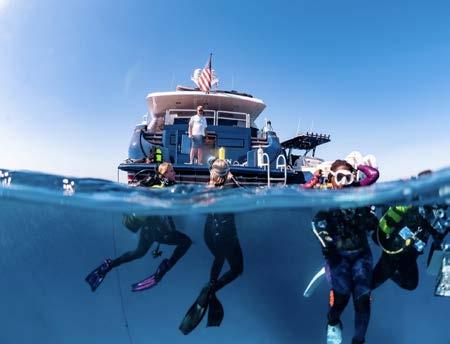
BY CONOR FEASEY
What is the value of anything when you can have it all? It might sound like a philosophical exercise, but for an industry built on the aspirations of the ultra-wealthy, it’s a practical problem. This issue is converging with others and the superyacht sector has been slower to solve them than it would like to admit. One is that yachting has been losing good people for years and failing to inspire a new generation of crew. The second is relevance, as a new generation of owners enters the market with a fresh set of expectations, drawn less to the familiar anchorages than to the places that demand a reason to be there: the fjords, the Arctic, Patagonia, Papua New Guinea. Beneath both of these sits the most blatantly obvious crisis that the ocean these vessels sail on is staring down the barrel of a gun – and the fleet that could do more about it than almost any other is largely choosing not to.
The likes of the International SeaKeepers Society have spent over two decades making the case that superyachts are extraordinary platforms for marine science and that the decision to use them as such is one of the most straightforward and impactful things the industry could do. The scientists are ready, programmes are built, expeditions planned and the opportunities listed. What’s missing, in vessel after vessel, is the decision to say yes. Aubrianna Keith, programme manager at SeaKeepers, has spent the better part of her career trying to change that.
Former yachtie Keith knows what a season feels like from both sides. She built her career as a dive instructor, first officer and underwater photographer (her work has hung in the National Gallery of the Cayman Islands and been published internationally) before a Master’s in Marine Science and Conservation pulled her towards the research side of the water. She now skippers SeaKeepers’ own research vessel out of South Florida. Her journey from crew to scientistcaptain is a precise illustration of what this piece is about – and of how much further the industry still needs to go.
“It’s not just adhering to the bare minimum of MARPOL, but also realising that you can do so much more with this platform than just have it as a holiday vessel. I do see that in many captains. But there are also times when I’m surprised to see that some of these big superyachts, with full crews and owners, are very hesitant to open their vessels to outsiders. I get the privacy thing at that level of wealth, and they don’t want their asset ‘depreciated’ by heavy work. These are struggles at [30 metres and above] where
we may get, for our expeditions, one, two, maybe up to five a year.”
Five vessels a year – from a global fleet of vessels that go everywhere, carry the equipment of a small research institution and anchor in places that science has never been able to reach. The superyacht industry has spent the better part of a decade talking about its relationship with the ocean: boat show panels, sustainability pledges, PR campaigns, award categories ... That number should be embarrassing.
Matthew Zimmerman, CEO of forward-looking sonar systems builder FarSounder, has been watching this from an instructive vantage point. His technology protects vessels from submerged hazards, but it also generates bathymetric data that vessels can choose to share anonymously, feeding it into Seabed 2030, the global initiative working to map the world’s ocean floor, less than a quarter of which has been charted to modern standards. A vessel on a routine Bahamian passage can contribute to ocean science without changing its itinerary by a single mile. He has seen what’s possible when this thinking is taken further but has also seen how rarely it is.
“I would argue that the industry has not done very well in framing this opportunity for the sector," he says diplomatically. “If these vessels are going to go to these places anyway and they’re going to do these things anyway, FarSounder can develop a technology that will reduce their negative impact by avoiding hitting a rock, causing an oil spill, avoiding ploughing through the coral reef and avoiding hitting a whale. Those are all things that have value
A new generation of owners is drawn to the places that require a reason to be there, with a growing appetite for experiences that the traditional charter itinerary cannot offer.
to the vessel operator while they’re doing the things they’re already going to do anyway. If I can also make it have less impact and avert a disaster, that is a positive thing I can personally bring about. But really, it’s a lack of education that we’re fighting against. We need to educate people that you don’t have to do it the way it’s always been done and get something better out of it.”
This is where two crises meet. The crews that engage most deeply with SeaKeepers share a common trait. “Having a crew that is of the mind of ‘this is super important to me. I work on the ocean and I want to give back’, that has always been our most successful relationships within the superyacht industry,” Keith explains. “Sometimes we get the owners reaching out to us, but the majority of the time it comes from the crew.”
This is where the retention argument can be framed more effectively: a crew that’s engaged and happy is more likely to stay, which has direct value to the vessel. So even if the owners don’t care at all about participating in those activities, the crew likely does and having opportunities for the crew to participate is one way to retain and attract the crew they want to keep. Even selfishly, there’s a direct benefit for the owners. And yet the question of value keeps returning. Zimmerman asks: “For someone like you or me, we had to save, we had to choose, we had to work hard to earn. But if you can have anything at any time, what is the value of those things? Observing from the outside in, it seems
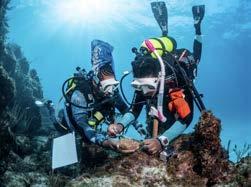
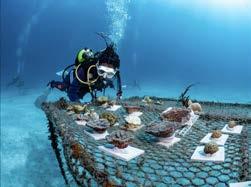
like having a purpose, having an experience, doing something, creating something, brings genuine value to that trip, that asset. And I think that’s still largely untapped in the superyacht sector.”
Speaking to brokerage leaders, like Fraser’s Anders Kurtén in this issue, we are seeing the same shift from where he sits – a new generation of owners drawn to the places that require a reason to be there, with a growing appetite for experiences that the traditional charter itinerary cannot offer. “There is this real sense of connection with the sea,” Zimmerman continues. “People want to go to more exotic places, not the typical yachting hubs. It’s not the Riviera, it’s not the Caribbean. It’s going to the fjords, going to the Arctic, going to Patagonia, Papua New Guinea. It’s just so interesting seeing that shift happening before our eyes.”
This is where yachting science can step in. SeaKeepers’ Discovery Programme connects private vessels with marine scientists who need them, turning yachts into platforms for field research across four chapters operating in the US, UK, Southeast Asia and the South Pacific. The work that results is not peripheral either. In autumn 2025, the 51-metre Discovery yacht Northern Sun spent three weeks in the Banda Sea with Unseen Expeditions and Pattimura University, looking for the elusive coelacanth (a fish the world had assumed extinct for 65 million years until one turned up in a South African fish market in 1938 and which has been seen so rarely since). Having caught a brief glimpse of the prehistoric fish the year before, the team used technical diving and high-resolution
seafloor mapping to hunt for the steep drop-offs and submerged ridgelines where coelacanths are known to shelter. Although the coelacanths avoided their gaze, the scientists found new reef terrain that had not been recorded before. The work was published in Nature.
Meanwhile, the 58-metre Discovery yacht Unbridled spent the 2025 summer season sailing in the remote channels of south-east Alaska with renowned marine ecologist Dr Fred Sharpe, watching humpback whales, blissfully logging where they were, what they were doing and whether the population was healthy. Sharpe has been doing this in Frederick Sound since the late 1980s and the only reason the dataset is continuous is that vessels keep showing up to help him do it. So these are not one-off vanity expeditions but genuine scientific contributions that would not exist without the vessel. The crew of Unbridled is now hosting SeaKeepers and Misión Tiburón to conduct research on populations of highly migratory shark species, such as the great hammerhead, off the coast of Caño Island, Costa Rica, as scientists gather essential data on migration routes, habitat use and potential threats.
“Nobody who’s done it has ever come away underwhelmed and said, I don’t need to do that again. You usually come back and want to do another expedition, feeling that was the best week I ever had on my boat. I learned so much. I was able to really appreciate and understand all of these environments that I’ve been operating in in a way that I never did before,” says Keith. “It’s a completely different, unique experience. You’re an adventurer, you’re an explorer, you’re experiencing something no one else
in the world will ever see. And that’s what yachts can really do, but oftentimes you’re not going to do it if you’re sitting in the same anchorages, having sundowners and going to the same restaurants every year.”
There is a gap between enthusiasm and action that SeaKeepers knows well. Crew follows the stories, tells each other they’d love to do it, then the season starts and the routine takes over. “The hesitation is from the owner or the captain. The only way you’ll be able to convert them is if they are excited about it too, and you can do that by bringing them on board. Often, these vessels are large enough to support not only the research teams but also the owners, and if you get them participating in the research, just experiencing and directly seeing the tangible impact of what your donation is, this is the most tangible kind of donation that you can make. You’re not writing a cheque, you’re hosting people, you’re sharing your world with them, getting them out into the field. And you can experience the research with them a lot of the time,” Keith says.
None of this requires going somewhere extraordinary (for yachts at least); The Bahamas count, the Med counts. Indonesia counts. Most of the ocean floor has never been surveyed to modern standards and even in the most well-travelled yachting waters, the seabed data on a digital chart is often based on old soundings, interpolated estimates or surveys that predate GPS. The display looks complete but the data frequently isn’t. A vessel with the right equipment running on a routine passage is already contributing something real without changing course by a mile.
“These can be as minimal an effort as clicking
“[Even] at the minimal level, there’s a lot that can be done with relatively little cost to the vessel and the guests, providing some sense of purpose and excitement and, by the way, also to the crew that is involved.”
the checkbox in our software to say yes, we will share bathymetry anonymously and contribute to Seabed 2030, or it could be as complex as bringing scientists on board and planning an expedition, teaming up with the International SeaKeepers Society or Yachts for Science,” says Zimmerman. “And it can be even more involved still, to the Ocean Xs and the REVs of the world, where they’re building purpose-built vessels and bringing on purpose-built teams for that work. It’s a whole spectrum, with varying levels of impact and results. But at the minimal level, there’s a lot that can be done with relatively little cost to the vessel and the guests, providing some sense of purpose and excitement and, by the way, also to the crew that is involved.”
There are signs the industry is beginning to understand this, however. SeaKeepers alone has completed a scientist-led expedition and published peer-reviewed publications from work conducted aboard recreational vessels. The Discovery Fleet now spans four chapters across the US, UK, Southeast Asia and the South Pacific, and the programme opportunities page lists new projects on a daily basis.
At the engineering end, the shift is visible too. Yards are starting to build for it rather than retrofit toward it. Icon Yachts’ Project Master was conceived as a science platform from the keel up. Oceanco is building vessels that support Gabe Newell’s Inkfish research fleet as part of its core output. The likes of Damen Yachting, Discovery and Cantiere delle Marche are increasingly equipping their explorer vessels with technology to operate in remote, scientifically significant waters. But it’s also fleet that already exists, sitting at anchor in the same bays it visited last season, that is the opportunity. Most researchers spend their careers working off university vessels that are barely maintained, donated boats with outdated equipment and small centre consoles that were never built for the work. The prohibitive cost in marine science is about getting to the water and having a platform capable of supporting the work once you’re there. A superyacht arrives with
cranes that can lower research equipment over the side, has swim platforms for easy water access, deck space for drone and ROV deployments and crew to handle vessel operations so the scientists can focus on the science.
“The yachts just don’t understand that they already have everything they need and more, most of the time, to be a perfect platform for most of these research projects,” Keith says. “As long as you have available bunks, it’s a safe vessel and you’re willing to host the researchers, usually that is enough.” A day or two of field research doesn’t diminish the holiday. It tends to become the part guests talk about for years afterwards. For owners, it’s unambiguous what it delivers. From a citizen science and conservation perspective, it brings guests a sense of purpose. They have done something with measurable impact, even if it is small. It is still tangible, still real, and they can claim ownership of it. They have helped enable the discovery of something previously unknown.
But for crew, research can break the monotony that inevitably settles in during long seasons built around repetition. Of course, yachting can be extraordinary, but it can also be cyclical. Participating in research reframes that experience, turning a passage into a data run, a dive into a survey, a remote anchorage at a site of potential discovery. Crew turn contributors, learning from scientists and engaging with the environment they work in every day, but rarely have time to truly understand.
In an industry wrestling with retention, that sense of doing something of purpose actually matters. Sure, some yards are building for exploration and a new generation of owners is asking different questions. The industry might be changing, but is it changing fast enough? CF
The Superyacht Report is starting a new series on yachting with a purpose. If you are are operating or building vessels with an oceanographic, scientific or philanthropic cause, get in touch: conor@thesuperyachtgroup.com
01 UNRIVALLED INSIGHTS
We deliver the superyacht industry’s most trusted insights using our network of key stakeholders and decision-makers.
We build brands and businesses from the ground up - with purpose, DNA and multi-channel marketing strategies.
INFORMED DECISIONS
From brand identities to full-scale campaigns, we develop standout visuals, digital platforms and marketing assets. INSPIRED SOLUTIONS
We offer high-level gatherings, and meaningful conversations that move the market forward.
INCREDIBLE EXPERIENCES

by Nicola Nicolai
The strategic importance of the owner’s representative and project manager in superyacht construction and refit. By
Nicola Nicolai, founder
Introduction
Over the years we have witnessed a continuous expansion of the superyacht industry involving a progressive increase in the number of new brands, projects, designs and technologies. Meanwhile, the average size of superyachts has grown alongside their complexity, as well as an incredible number of 5 to 10-plusyear-old yachts approaching major refit for a new life. On the one hand there are the evolving client-driven requirements and trends and on the other, there is an industry trying to adapt its organisation and standards to this new scenario at the same speed, not always without stress on the system and problems during the process.
The creation of a superyacht or the major refit of an existing yacht are the pinnacle of bespoke design, engineering and luxury. It is a journey that transforms a personal vision into a masterpiece. However, the path from initial sketches to the final delivery is paved with technical complexities, regulatory hurdles and significant financial commitments. In this highstakes environment, the owner’s
representative (OR) and project manager (PM) serve as the essential guardians of the owner’s interests, ensuring that the dream does not turn into a logistical burden.
The architect of the owner’s experience
Building a superyacht should be a rewarding passion project, not a source of constant stress. The primary role of the OR is to act as a sophisticated filter. By managing the flow of information between the owner, the shipyard, the designers, the technical experts and the crew, they ensure the process remains seamless.
The value begins during the project selection phase. An experienced OR assists in identifying the shipyard and design studio that best align with the owner’s specific philosophy. This initial matchmaking is critical: selecting a yard based solely on price without considering their expertise in specific materials or hull forms can lead to friction. A professional representative ensures the foundation of the project is solid from day one through meticulous contract management and oversight.
A seamless synergy: selection of the team
One of the most overlooked advantages of having an OR/PM is their network. They help the owner assemble the ‘dream team’ – from the best lighting consultants to the most reliable AV/IT integrators. This holistic approach ensures that the engineering, design and construction teams work in synergy rather than in silos. When the PM handles the technical heavy lifting, the owner is free to focus on the creative milestones: choosing the art and planning the maiden voyage.
Engineering and design: precision from the onset
During the design and engineering phase, the PM’s technical experience becomes indispensable. They act as the ‘technical conscience’ of the project, balancing aesthetic ambition with build and operational reality.
•Technical specifications: The PM scrutinises hundreds of pages of specifications, ensuring the shipyard utilises the highest-quality components rather than standard alternatives.
•Design integration: The PM ensures
that the interior designer’s vision does not compromise the yacht's characteristics for client’s use, crew operation and future maintenance.
•Future-proofing: A skilled PM anticipates evolving regulations, protecting the vessel’s longevity and future market value.
Financial management: cost control and transparency
A common misconception is that hiring an independent management team is an unnecessary expense. In reality, a professional PM is a cost-saving powerhouse. Through rigorous contract negotiation and the strict project and cost management of the scope of work and change orders, they prevent the budget creep that often plagues largescale builds.
By verifying the actual physical progress of the project (milestones), they ensure the owner’s capital is deployed with maximum efficiency.
According to industry insights frequently shared by The Superyacht Group, a dedicated representative can save an owner significantly more than few times their own fee by identifying technical redundancies and avoiding costly retrofits while incrementing the overall scope and quality of the project. It is not rare to hear about projects going over 10 to 15 per cent of the
initial budget during construction with an overall stress for the system, while hiring a professional team can reduce this to less than 1 per cent if duly involved in the very beginning of the journey – even before selecting the shipyard and signing the contract.
e
In the superyacht world, time is the only commodity that cannot be recovered. Delays in shipyard schedules are notoriously frequent due to supplychain issues or labour shortages. A dedicated PM maintains a constant on-site presence, monitoring the critical path of construction.
By anticipating bottlenecks – such as the long lead times required for specialised stabilisers or custom interior marbles – they keep the project on track. Their ability to speak the language of the yard allows them to resolve technical disputes in hours that might otherwise take weeks of formal correspondence, reducing the possible causes of delays down to minimum.
The difference between a standard build and a world-class superyacht lies in the details that are often invisible to the untrained eye: the precision of the hull fairing, the reduction of noise

and vibration, and the redundancy of critical systems.
The PM coordinates third-party surveys and regular inspections, ensuring the shipyard adheres to the highest international standards as well as Class and Flag requirements. This relentless focus on quality not only ensures a superior on-board experience but also drastically increases the resale value. A superyacht with a documented history of professional oversight is infinitely more attractive to the brokerage market.
The construction of a superyacht is a monumental undertaking. Without a dedicated owner’s representative and project manager, an owner is often left navigating a sea of technical jargon and conflicting interests. By integrating the professional OR and PM companies from the start, the process is transformed into a structured, transparent and enjoyable journey.
The result, in most of cases, is a shorter time-to-market, strictly controlled expenditures and an uncompromising level of quality that results in a pleasant, seamless and rewarding experience for the client and all the stakeholders involved in the project such as designers, technical experts shipyard and its contractors. NN
The project manager’s relentless focus on quality not only ensures a superior on-board experience but also drastically increases the resale value. A superyacht with a documented history of professional oversight is infinitely more attractive to the brokerage market.
What follows is the first of two complementary articles focusing on the world of aviation. Here retired Retired Royal Navy Warfare Officer (Submarine) and MCA Master Andy ‘Ivy’ Brennan explores how new helicopter expectations are reshaping yacht design, crew readiness and global cruising.
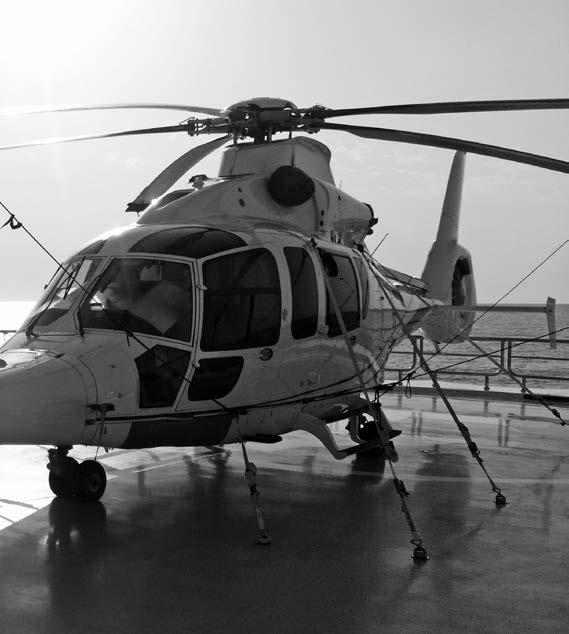
For many yacht owners, the first helicopter landing on board marks a quiet but decisive shift. What begins as a simple convenience –beating the tender, reaching a distant beach, shortening a journey – quickly becomes something far more profound. Geography loosens its grip, remote anchorages no longer feel remote, friends cruising nearby are suddenly close at hand, plans unfold with greater ease, and in moments of urgency, solutions arrive with remarkable speed.
In short, the helicopter changes not just how a yacht moves, but how it is used. Yet as the 2026 summer season approaches, owners across Europe are noticing that helicopter operations at sea now feel different. Not dramatically, not loudly – but unmistakably. Expectations are clearer, questions are asked earlier and decisions feel more structured. And in some cases, operations that once ‘just happened’ now require explanation, evidence and planning – or, when conditions are judged unsuitable, acceptance that the answer is no.
This shift has unsettled some owners. For others, it has delivered something quietly invaluable: certainty. This is the new freedom – the ability to land with confidence, anywhere, without negotiation.
When familiarity is no longer enough
There has been no single rule change that suddenly made helicopter operations more difficult, nor any dramatic regulatory announcement that reshaped the landscape overnight. What has changed is the way expectations are applied – particularly across UK and Europe – where aviation authorities and maritime regulators are now far more closely aligned in how helicopter operations offshore are expected to function.
For years, many helicopter landings on yachts were sustained by experience and goodwill: a familiar pilot, a trusted
captain, an unspoken confidence that if something arose, it would be managed in the moment. That model served the industry well for a long time – until incidents elsewhere demonstrated the limits of reliance on familiarity alone, prompting a more structured legal and operational environment.
Today, helicopter operators work within tighter internal governance, more formalised risk frameworks and clearer lines of accountability. Insurers play a greater role and decision authority is more clearly defined. The margin for informal judgement has narrowed, not through mistrust, but through a collective desire for consistency and resilience. For owners, this shift can feel like unwarranted friction. In reality, it is necessary discipline, the kind that replaces uncertainty with confidence and transforms confidence into consistently safe and predictable outcomes.
Every helicopter landing on a yacht sits at the intersection of two highly regulated environments. One is aviation: the aircraft itself, the pilot, the operational approvals under which the flight is conducted. The other is maritime: the yacht’s structure, its crew and the operating framework that governs how activity is managed on the helideck and in the immediate waters surrounding the vessel.
This evolution has not been driven by yachting in isolation. Across UK and Europe, guidance relied upon by regulators and helicopter operators has steadily converged around a shared understanding of what constitutes an acceptable offshore helicopter landing area and, just as importantly, an acceptable operating environment.
Elements once treated as technical detail now sit at the centre of operational cadence and confidence: deck geometry that reads clearly on approach, obstacle clearance that leaves no ambiguity,
equipment whose serviceability is assured, firefighting capability that is both present and practiced, and deck teams whose roles and training are defined rather than assumed. These are no longer abstract concepts or best intentions; they are codified expectations, reflected in certification, practical training and documented operating standards.
Where once a deck might have been assessed informally, aircraft operators now require evidence – clearly defined limits, procedures that are rehearsed rather than theoretical, and crew competence that can be demonstrated consistently: landing after landing after landing.
Why some yachts look effortless –and others don’t
Speak privately to experienced helicopter pilots or operators and a consistent theme emerges: the most attractive decks are not always the largest or the newest, but the ones that are easiest to read, easiest to approach and the easiest to trust at the point where aviation and maritime worlds meet.
Clarity removes hesitation. When a pilot can read a deck on approach, when operating limits are obvious and when the deck team moves with calm, assured authority, decisions become straightforward. The helicopter lands and the day can unfold as planned, smoothly without compromising expectations.
Uncertainty, by contrast – even minor uncertainty – introduces doubt. That doubt slows decision making, and in modern offshore aviation, hesitation is rarely resolved in the air. More often, it results in a conservative decision not to proceed. The helicopter doesn’t land, expectations shift abruptly and carefully constructed plans unravel far faster than most owners anticipate.
This is not a matter of rigidity, it’s a matter of predictability. The best
operators do not improvise in borderline situations; they rely on recognisable, consistent and proven risk-mitigation models. Owners who can present their yacht clearly within that framework find that helicopter operations stop being recurring challenge and become, once again, an effortless extension of the yacht’s overall capability.
For owners entering the design phase of a new yacht, helicopter capability is one of the most consequential decisions they will make – not because it is glamorous, but because it shapes how the yacht will be used for decades to come.
The critical choice is not whether to include a helideck, but what kind of capability that deck represents. Some helidecks are designed to support private, owner-arranged use. When conditions are ideal and relationships well established, these can work beautifully. Decks conceived as professional operating environments, however – the kind that can be accepted by reputable helicopters at short notice, across different regions and under varying conditions – are fundamentally different.
This distinction is rarely visual. It reveals itself in the way a pilot interprets the approach, the confidence inspired by visible and credible firefighting readiness, the clarity of defined operating limits and the assurance that crew roles and training align with modern standards and expectations.
Across the UK and Europe, these expectations are now assumed by helicopter operators. They are routinely confirmed through early dialogue, document exchanges and the quiet due diligence that takes place well before rotors ever turn. Compliance, in this environment, is no longer about satisfying a single rule in isolation. It is about being immediately understood,
Helicopter operators today are no longer asking whether a crew is experienced, they are asking whether that competence can be demonstrated –procedurally sound, efficient in execution and reinforced through realistic, regular practice.
readily accepted and seamlessly embedded within the yacht’s flagapproved standard and emergency operating procedures – ensuring that even when the unexpected occurs, the response is disciplined, rehearsed and resilient.
Owners who design to this higher standard gain something invaluable: optionality with multiple operators and cruising grounds, and fewer compromises where expectations can be met.
The crew: experience made visible One of the most significant changes of recent seasons has been the way deck team competence is assessed. Helicopter operators today are no longer asking whether a crew is experienced, they are asking whether that competence can be demonstrated – procedurally sound, efficient in execution and reinforced through realistic, regular practice.
Within the UK and European framework governing helicopter operations at sea, this level of demonstrable competence has become the expected standard for those with direct responsibility for landing operations – notably the pilot and yacht’s captain. It is no longer enough to know what to do; crews are expected to show that procedures and drills are understood, rehearsed and applied consistently.
Whether a yacht is anchored off St Tropez for a summer lunch or cruising around anchorages in Sardinia, helicopter operators now look for the same signals of readiness: calm authority on deck, clear allocation of roles and a team that treats helicopter operations as a normal, well-rehearsed part of life on board, not an exceptional event.
The helicopter operator’s perspective is understandable. They are accountable for the safety of the flight yet rely on the yacht’s deck team to manage everything that happens on the helideck and in the
water immediately around the vessel. When confidence exists on both sides, helicopters land. When it does not, hesitation follows – and hesitation either delays the operation or brings it to a halt.
Owning the helicopter … or bringing one with you
One of the most important – and frequently misunderstood – aspects of yacht helicopter operations is who is legally operating the aircraft. When an owner operates a private helicopter themselves, the integration with the yacht can be seamless. The same aircraft, the same crew, the same procedures, operating as a familiar extension of life on board. For some owners, this model offers an exceptional degree of continuity and control, allowing helicopter operations to feel natural rather than transactional.
With that control, however, comes responsibility. Decisions that would otherwise sit with a charter operator now fall within the owner’s sphere of governance. Safety management, documentation, operational judgement and clarity around the boundary between private and commercial use must all be actively and carefully managed. When
done well, the result is an elegant, fluid operation; when done poorly, complexity can surface at precisely the wrong moment.
For many owners, chartering a helicopter remains an attractive alternative. Across the UK and Europe, charter and on-demand helicopter operators work within clearly defined operational frameworks that govern how and where they can fly offshore. Owners benefit from this professional structure, transferring much of the aviation governance to the aircraft operator and allowing helicopter use to remain a service rather than a responsibility or liability.
The trade-off is straightforward. Charter operators cannot invent acceptance criteria, they will only land where their approvals and risk models allow, and where they can quickly build confidence in both the physical helideck and the crew awaiting them. Predictable, well-prepared yachts are easy to accept, ambiguous ones are not.
This is not simply a question of private versus commercial helicopter operations, even though the two sit within very different legal frameworks.
More fundamentally, it is a question of predictability. When an owner operates a private helicopter from a private yacht, the operation sits within a noncommercial sphere. Aircraft, crew and procedures are typically familiar, often long-established and closely aligned with the yacht’s operating culture integrated and flag state requirements. Decisions are taken within a small, trusted circle, and responsibility for safety management and operational judgement sits much closer to the owner and captain. When discipline is maintained and boundaries are clearly understood, the experience can feel effortless.
By contrast, when a helicopter is chartered in, the dynamic changes immediately. The aircraft operator is bound by commercial approvals, audited procedures and defined risk models that leave very little room for discretion. Acceptance of a yacht’s deck is simply not a matter of familiarity or goodwill, but of evidence. Geometry, operating limits, crew competence, procedures and emergency readiness must all be quickly and unequivocally understood. Even when conditions appear favourable, the operator cannot improvise.
Decisions are taken within a small, trusted circle, and responsibility for safety management and operational judgement sits much closer to the owner and captain. When discipline is maintained and boundaries are clearly understood, the experience can feel effortless.
In both cases, the helicopter may look the same and the landing may appear identical to those on board, but behind the scenes, however, the legal responsibilities, decision authority and tolerance for ambiguity are very different. Yachts that present a clear, predictable operating environment tend to succeed in both worlds. Those that rely on assumption or flexibility tend to struggle – particularly when a commercial operator is involved.
What becomes clear across both models is the importance of informed, independent aviation advice. Helicopter operations from yachts sit at the intersection of multiple regulatory regimes, each with its own thresholds, assumptions and points of failure. The rules governing private operations differ fundamentally from those applied to commercial charter flights; and misunderstanding that distinction often
In 2026, the helicopter remains one of the most powerful enablers of life at sea. What has changed is not its role, but the framework that supports it.
reveals itself at the most inconvenient moment – when time, weather or guest expectations leave little margin for error.
For new-build owners and experienced owners alike, the choice of aviation adviser therefore matters enormously. The right advice brings clarity, foresight and confidence to a complex operation, helping an owner design or operate a capability that works reliably across regions and use cases. Poor or incomplete advice, by contrast, can leave a yacht exposed to avoidable refusals, operational constraints or compliance issues that only become visible when it is too late to adapt. In an environment this nuanced, discernment in choosing who to listen to is as important as the helicopter itself.
Owners cruising beyond Europe often ask whether European helicopter expectations ‘travel’ to the Caribbean or the United States. In practice they do –not as paperwork, but as discipline.
Helicopter operators abroad are not looking for European certificates or familiar regulatory labels. What they seek instead are recognisable signals of readiness: clear deck presentation, disciplined procedures, confident crews, and an operating philosophy that mirrors the standards they apply every day in their own approvals.
Yachts that operate to a single global standard tend to encounter fewer surprises. Those that adjust behaviour by region, however well intentioned, often reintroduce uncertainty – and uncertainty breeds doubt. In offshore aviation, doubt remains the natural
enemy of both acceptance and safety. The trick is not to accommodate every local nuance, but to be so clear about capability that regional differences becomes a matter of coordination rather than permission.
This is not a story about regulation tightening its grip on yachting, nor about freedom being constrained by paperwork or process. It is a story about expectations maturing – and, in doing so, becoming more dependable, more transparent and better aligned with how yachts are used in the real world.
For owners who engage thoughtfully with this evolution, the benefits are tangible. Helicopter operations become calmer and more predictable, less vulnerable to last-minute negotiation or unwelcome surprise. Refusals become rarer. Decisions are made earlier and with greater confidence. The experience, for owners and guests alike, feels smoother, more assured – exactly as it should.
Perhaps most importantly, this maturity restores trust at the interface between yacht and helicopter – trust that the deck will be accepted, trust that the crew will perform as expected and trust that when circumstances change –whether through weather, schedule or urgency – the system will respond with resilience rather than hesitation.
In 2026, the helicopter remains one of the most powerful enablers of life at sea. What has changed is not its role, but the framework that supports it. Paired with insight and the right advice, that framework does not diminish freedom, it makes it reliable. AB
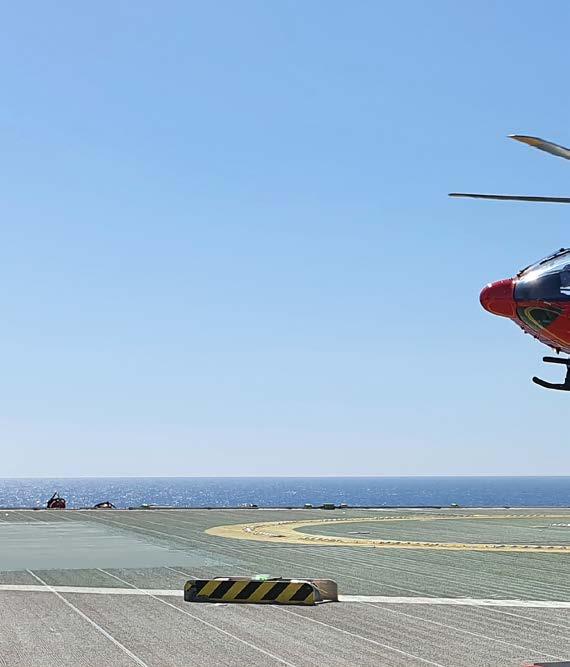
How to future proof your yacht’s aviation capability –safely, discreetly and beautifully. By Ronan McMahon, Commander of VVIP, Oil and Gas and HEMS Operations, Micron Air Services Ltd. An
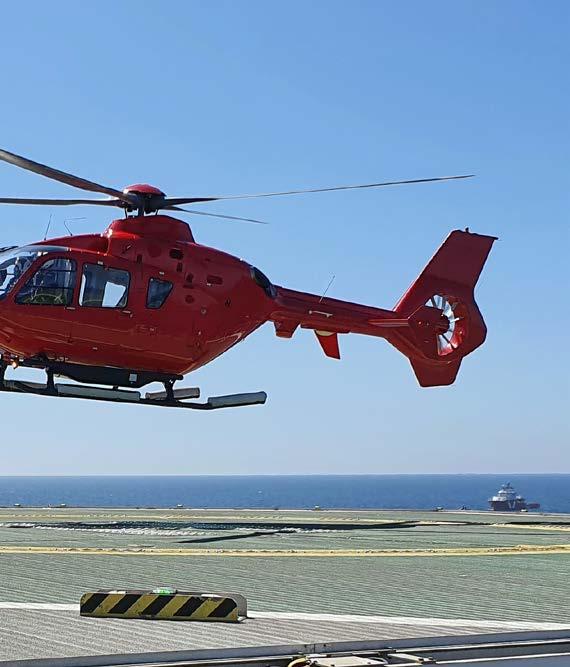
There are few moments in yachting as effortlessly cinematic as a smooth helicopter arrival: the soft thrum overhead, the precision touch down and the quiet transition from sky to yacht. It signals freedom, it signals capability and on the best designed yachts, it feels astonishingly simple.
However, the simplicity is engineered. A helideck is not a circle painted on steel; it’s an aviation ecosystem woven into the yacht’s DNA and the best time to shape it is at the concept stage, when the decisions are inexpensive and the impacts are profound.
Here is the pilot’s inside view: what owners and their representatives should consider to ensure their helicopter enhances – rather than complicates – the superyacht experience.
Begin with the mission, not the machinery
Every successful helideck begins with a simple question: ‘How will the helicopter serve your lifestyle?’ Some owners use the aircraft as a shuttle to shore, others as a secure link between global estates, long range connector or rapid response transport. Where the yacht cruises – Mediterranean, Caribbean, Pacific, high latitudes – matters enormously, so do night operations, luggage profiles, charter supplementation and the frequency of guest movements.
Once the mission is defined, the design becomes clear. Without it, even the most beautiful layout can become operationally flawed.
Location, location … aerodynamics
Renderings often place helidecks where they look spectacular; however, aerodynamics may disagree. Bow decks offer clean approach paths but may require spray management. Stern decks integrate beautifully with hangars but sit near exhaust and superstructure turbulence. Midships decks can look elegant but demand careful airflow modelling.
A wind-over-deck study is one of the highest value, lowest cost design tools available. It turns uncertainty into predictable, pilot friendly handling.
The D value: A decision you will thank yourself for
The D value – the rotor diameter or overall length of the helicopter – governs deck size.
Here is a truth every pilot knows: owners upgrade helicopters more often than they downsize them. Designing for only today’s aircraft almost guarantees structural regret later. Enlarging a helideck post launch is notoriously expensive. If you suspect your next helicopter may be larger, size for it now.
M value: what the deck can safely carry
If the D value tells you how big the helideck must be, the M value tells you how much it can safely carry. Expressed and painted on the deck in tonnes (for example M 12.0t), this figure reflects the certified maximum helicopter mass the structure has been engineered to support, covering static loads, dynamic landing/roll loads and landing impact forces at sea. Getting the M value right early avoids costly strengthening later and ensures that today’s aircraft – and tomorrow’s – can operate safely and without limitation.
Night operations: something to plan, not add later
If there is even a remote chance of returning to the yacht after dinner, avoiding daytime traffic or enabling all weather flexibility, night operations deserve to be part of the initial brief. That means compliant perimeter and touchdown/position marker lighting, a deck status light and a visual landing aid such as a Helicopter Approach Path Indicator (HAPI); plus lighting compatible with cockpit systems (including Helicopter Night Vision Imaging Systems (NVIS), if needed).
Great night decks feel effortlessly calm. They are also visually stunning – a soft halo of precision lighting that elevates the yacht’s aesthetic after dark.
Hangarage: the first line of defence against corrosion
Salt is the helicopter’s natural enemy. It infiltrates bearings, avionics, exposed metals and carbon structures. Protecting the aircraft is not a luxury, it’s a necessity.
A proper hangar, telescopic shelter or high quality protective enclosure will dramatically extend aircraft service life, lower maintenance costs and preserve reliability. Combine this with freshwater washing, corrosion inhibitors and an on-board licensed engineer.
Guests see the helicopter’s elegance, while engineers see its vulnerability, so protect it accordingly.
Fuel, firefighting and power: quiet systems that matter
The essentials that keep operations safe and professional rarely appear in brochures: Jet A 1 with proper filtration and water detection, bonded fuelling, distributed special foam nozzles (DIFFS nozzles) or foam monitors, a well placed fireman’s switch and dependable ground power.
The helidecks that professionals love are not just beautiful, they are predictable.
A helideck is a choreography.
The yacht’s master commands the ship, the aircraft commander commands the aircraft. Their responsibilities overlap during operations and clear SOPs ensure harmony, not friction.
Performance classes – clarity for owners
Pilots often speak of Performance Class 1, 2 and 3. In simple terms:
• PC1 allows a safe continuation or landing after an engine failure – ideal for superyachts.
• PC2 is acceptable in defined conditions but introduces limitations (weight, deck motion, temperature).
• PC3 is typically single engine and unsuitable for demanding overwater operations.
And equally important: your pilots should be instrument rated (IFR qualified). Yacht operations routinely involve marginal coastal weather, haze, sea spray humidity and offshore cloud banks. An instrument rated pilot is legally and operationally equipped to manage reduced visibility, coastal IMC transitions and diversions – expanding your operational window and dramatically improving safety. In the superyacht environment, IFR rated crews are not just preferred, they are considered best practice. If reliability, safety margins and global mobility matter, a PC1 twin engine aircraft flown by experienced, instrument rated crews is the benchmark.
Emergency floats: a small system with outsized importance
For superyacht flying, emergency flotation systems (“floats”) are essential. Even the shortest hop to or from the yacht is flown entirely over water and floats convert a rare ditching from an inversion prone rollover into a stable, upright water landing –buying passengers and crew crucial time. They align with offshore and SAR best practice and materially increase survivability and recovery speed. This isn’t regulatory bureaucracy, it’s prudent seamanship in aviation form.
Own or charter? both can work beautifully
Owning your helicopter ensures consistent crew, bespoke interiors, predictable readiness and an aviation standard tightly integrated with your yacht. Chartering offers flexibility, lower fixed costs and easy substitution when the mission changes. Whichever route you choose, ensure your helideck is built to a standard commercial operators will approve. A concise, professional deck data pack – dimensions, lighting specs, obstacle photos, fuelling procedures – helps operators say “yes” far more often.
People, roles and culture: where safety meets elegance
A helideck is a choreography. The yacht’s master commands the ship, the aircraft commander commands the aircraft. Their responsibilities overlap during operations and clear SOPs ensure harmony, not friction. A trained helideck landing officer (HLO) and competent deck crew are essential. They manage marshalling, guest handling, fuelling, baggage and emergencies – often while appearing invisible to guests. The smoother it looks, the more training lies behind it.
Budget smart, not big
The cost drivers that matter most are the ones planned early: corrosion protection, night lighting, hangar volume, fire-fighting integration, and pilot and crew training. Manufacturer support programmes help stabilise maintenance costs, while dedicated on-board engineers safeguard availability in season. The only expensive surprise is the one you didn’t prepare for.
Access and permissions: the global picture
From French Hélisurface permits to U.S. CBP decals, from local noise rules to anchorage restrictions, aviation permissions vary around the world. A simple planning matrix – destinations, lead times, responsible roles – keeps operations smooth, discreet and compliant.
The perfect helideck is the one you forget about
The helicopter arrives, guests embark or disembark with elegance and the yacht resumes its rhythm almost instantly. That level of seamlessness comes from early design involvement, adherence to proven aviation standards, structured training, attention to detail and experienced oversight.
When all of this is aligned, the helicopter becomes what it should be: an extension of the owner’s lifestyle, a way of compressing time and a pleasure to use. RM
Guest Column
by Matt Roberts
Roberts, Director of Anchorpoint, spells out why superyacht cybersecurity has never been optional.
In 2021, the IMO’s cyber risk management requirements formally came into force. For many in yachting, that moment was framed as a turning point: cyber was finally “on the agenda”, a nudge for owners, captains and managers to take digital risk seriously.
Five years on, it is hard to argue that those expectations have been met. The problem is simple: we got the carrot, but not the stick. The IMO’s framework has largely been treated as guidance rather than as a standard actively enforced. There has been no visible, consistent consequence for failing to meet even basic expectations. As a result, behaviour has changed, but not necessarily for the better. Instead of driving sustained improvement, the regulations have triggered a compliance theatre around cybersecurity. For a sector built on confidentiality, discretion and protecting the interests of ultra-highnet-worth families, that gap is now impossible to justify.
The rise (and waste) of the “one-and-done” cyber assessment The clearest example of this distorted behaviour is the boom in expensive cyber-risk assessments. On paper, these are aligned with the NIST Cybersecurity Framework that
underpins the IMO language: identify, protect, detect, respond and recover. In practice, many programs treat an assessment as an expensive boxticking exercise.
A typical pattern looks like this:
• An operator or owner’s office commissions a detailed assessment, often at high cost.
• The result is a long, highly technical report that few on board or ashore can interpret or connect to daily operations.
• The document is filed away; little or none of it is implemented.
•It reappears years later when a new consultant or auditor asks whether a cyber assessment has been done.
On board, the culture hasn’t shifted. Leadership still tends to regard cyber as a specialist add-on rather than as core to safety, privacy and operational continuity. The crew understand they are accountable for fuel, guests, tenders and toys, but not for the data, systems and connectivity that enable modern yachting. Given the stakes, this is an odd blind spot. Owners and family offices insist on rigorous confidentiality in all their affairs, yet their yachts, among the most visible, connected and complex assets they own, often do not receive equivalent protection in the digital domain.
A very different yacht from five years ago
This disconnect has been amplified by how quickly the technical landscape has shifted. In the past five years, superyachts have gained faster, lowerlatency connectivity as standard. Starlink and other next-generation services have turned vessels into always-on, high-bandwidth environments. Owners expect their yacht to function like a rolling family office and home, with seamless cloud access, remote working, streaming and smart on-board systems.
More connectivity and more integrated systems mean more that can go wrong:
• More personal and financial data moving on and off the vessel
• More remote access points into OT and vessel management systems
• More third-party tools and apps in daily use by crew and guests
• More consumer-grade hardware and software deployed in a quasienterprise environment
Yet the regulatory framework that was late even in 2021 has not meaningfully evolved to reflect this shift. The result is a growing gap between how yachts actually operate and how they are expected to manage cyber risk on paper.
AI: the next gap, already open Artificial intelligence is a prime example of that gap. AI tools are no longer experimental – crews, management teams and owners are already using them, often by pasting operational or personal information into public or semi-public services, or by spinning up private bots and agents on consumer hardware with little regard for configuration or security.
At the same time, there is still no specific, practical guidance on AI risk management from the main maritime bodies. IMO and BIMCO have acknowledged the topic and indicated that updated publications will be released, but no concrete, sector-wide guidance is available today for vessels or operators. This is not because the topic is unknowable. The International Association of Ports and Harbors (IAPH), for example, has already produced considered work on emerging technologies, including AI and quantum computing, and the associated cybersecurity implications. Their publications outline reasonable baseline controls and governance measures that are directly relevant to maritime operations.
The disappointment is that this work has not been actively leveraged or echoed by the organisations that yacht operators most often look to by default. After the delays in bringing the 2021 cyber requirements forward, we appear to be repeating the pattern: recognising the importance late, and offering guidance even later. In the meantime, the industry is quietly improvising with
tools powerful enough to materially change its risk profile.
Yachts are small businesses, not households
A deeper issue is how yachts perceive cybersecurity. Most programs still protect their digital estate with roughly the same mindset and tooling as a well-off household: consumer-grade routers, ad-hoc account management, unstructured device policies and a heavy reliance on personal judgement.
But many superyachts, particularly at the larger end of the fleet, function more like small to medium-sized businesses:
•Dozens of staff with high turnover
• Complex vendor and contractor ecosystems
• Critical operational technology linked to IT networks
• Sensitive personal, financial and travel data
• High public visibility and clear financial motivation for attackers
Viewed through that lens, the logic of using only consumer-grade security (at best) quickly breaks down. The expectations on the bridge and in the engine room already reflect that reality; expectations around digital operations have not caught up. This is not about turning crew into security engineers, it is about acknowledging that many security functions can and should be supported remotely, and that what happens on board must be framed as part of a coherent, programmatic approach, just as it is for safety, maintenance and compliance.

Carrot or stick? The wrong question
All of this raises an uncomfortable question: does yachting actually need a regulatory stick to do what is plainly in owners’ best interests?
Cybersecurity in yachting is not optional and never has been. The industry has long accepted non-negotiable standards for physical safety, guest experience and discretion. It is inconsistent to treat digital security as something that only matters once a regulator threatens enforcement.
Waiting for the next resolution or guideline update is, in many ways, a way of avoiding ownership of the problem. Regulations can set a floor, but they cannot define what is “reasonable and adequate” for a specific yacht, owner profile and operating pattern. That judgement has to be made by family offices, ownership teams, captains and managers.
The role of IMO, BIMCO, and other bodies should now be twofold: to accelerate practical, AI-aware guidance by building on the best available work, and to actively campaign to raise awareness, not just quietly publish documents. But even if that happens tomorrow, it will not remove the need for vessels and ownership teams to think beyond mere compliance.
If you have read this far and hold any responsibility for a yacht, on board or ashore, avoid the temptation to file “cyber” under “regulatory work in progress”. Instead, ask one focused question today: What is the single most important digital dependency of our operation and how do we know it is adequately protected?
If you cannot answer that clearly and with evidence, that is your first action. Whether or not the carrot is attractive or the stick ever arrives, the responsibility already sits with you. MR
Low investment, low loyalty and a workforce at risk. Superyacht Intelligence’s latest report uncovers why yachting’s retention crisis has never been just about pay.
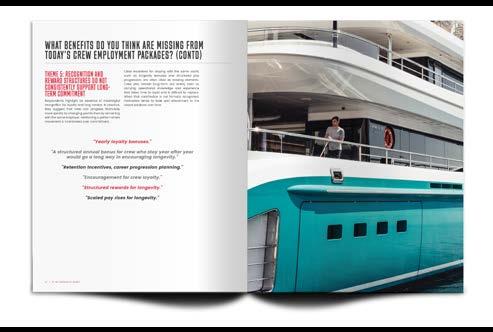
BY CONOR FEASEY AND AMANDA ROGERS
Crew are the custodians of our entire professional ecosystem, owner-facing, service-providing and narrative-defining in a manner that ultimately dictates how the market is perceived by patrons. A gleaming 100-metre vessel with a helideck, a wellness centre and every gadget imaginable, paired with a poor crew experience, is still a poor yacht, it’s that simple. So, knowing this, why is the industry finding it increasingly difficult to retain the crew it already has, let alone attract and develop new entrants?
In the latest findings from Superyacht Intelligence’s Crew Conundrum Survey Report: Training & Retention, we find that the industry is trapped in a self-perpetuating cycle in which low investment drives low loyalty and low loyalty discourages investment. It’s a damning sentiment, but one that demands closer examination.
The report draws on qualitative insights from senior crew, captains and professionals involved in crew recruitment and training. While respondents con-sistently describe a capable, motivated onboard workforce, they also highlight an employment model that remains largely fragmented, inconsistent and heavily dependent on the individual rather than shared industry standards. The latter sits firmly at the centre of the findings.
“Crew are treated as a cost line rather than professionals delivering safety and service.”
It’s an unfortunately familiar tension we’ve become accustomed to in conversations about how the industry approaches investment, which points to the nub rather than scathing calls about a lack of ambition or motivation. Training is widely considered essential, but support remains lacking, especially at the junior stage, where financial burdens are felt more profoundly. And when development is largely self-funded, moving between yachts becomes the most dependable and rational strategy for career advancement.
Recruitment credibility and training standards
The report highlights simmering frustration with recruitment standards. Respondents repeatedly describe an oversaturated market, with too many agencies operating under inconsistent standards. Concerns centre on insufficient verification, exaggerated CVs and a volume-over-quality approach to placements, creating a concoction many believe has left the hiring landscape broken. Notably, several respondents call for more rigorous background checks, stronger reference verification and clearer accountability from recruiters.
Training standards come under similar scrutiny. Many respondents question whether current courses genuinely prove competence or simply certify attendance. One respondent described training as “a factory for printing money, as many students in and out as possible per week, regardless of competency levels.” In actuality, there is a sharp call for development that demonstrates real capability, rather than box-ticking exercises that do little to prepare crew for the realities of the role.
The consequences of this are felt throughout the pipeline, with inconsistent training quality and weak competency validation eroding confidence in certification as a reliable indicator of operational readiness. Respondents also noted that rapid progression without sufficient mentorship or behavioural leadership preparation continues to create capability gaps at senior levels.
Retention is more about leadership, rotation and respect than the salary itself
Broken training promises damage more than morale. They undermine confidence in the entire employment package and accelerate turnover. Obviously, the money matters too, with respondents citing no pay increase for over a decade, financial pressures caused by wages not keeping pace with inflation and demoralising disparities in senior crew salaries. However, the survey revealed that retention is driven much more by the quality of daily life on board than by benefits packages alone, such as stable leadership, predictable rotation, respectful communication and genuine progression opportunities rather than simply higher salaries or bonuses on their own.
Beyond immediate retention, the findings point toward a deeper and more structural uncertainty: whether yachting is experienced as a sustainable career or a temporary phase of life. Respondents implicitly question the long-term stability the sector can realistically offer, what progression looks like over time and what viable pathways exist once sea service is no longer possible. This reframes the challenge from simply why crew leave yachts to why long-term commitment can be difficult to sustain. In that context, turnover becomes less a behavioural issue and more a reflection of limited long-term visibility.
The consequences of this are felt throughout the pipeline, with inconsistent training quality and weak competency validation eroding confidence in certification as a reliable indicator of operational readiness. Respondents also noted that rapid progression without sufficient mentorship or behavioural leadership preparation continues to create capability gaps at senior levels.
Leadership, expectations and a modernising workforce
The survey also reinforces how strongly retention is shaped by daily lived experience on board. Stable leadership, consistent communication and visible professionalism don’t just affect morale but also determine whether employment feels predictable enough to sustain. In this sense, captains and senior crew function not only as operational leaders but as multipliers of either retention or turnover.
Layered across the findings is a subtler shift in expectation. Respondents increasingly reference the ability to plan, maintain balance and understand long-term progression as fundamental to remaining in the sector. These suggest a workforce wanting
The reality is that the challenge lies in creating an employment model that makes working in this industry genuinely viable in the long term.
to align more closely with broader global norms around professionalism and stability, rather than softening in ambition and grit.
Where the employment model really struggles to evolve at the same pace, friction emerges. Uncertainty around shore-based transition, transferable skills and future career pathways shortens participation through lack of long-term visibility –and when long-term futures cannot be clearly seen, commitment inevitably becomes temporary.
This friction is compounded by gaps in communication, conflict resolution, mentorship and emotional intelligence training, which limit leadership effectiveness despite technical competence. Promotion based primarily on sea time rather than management capability further reinforces inconsistency in on-board professional culture, suggesting that the sector's leadership pathway needs as much attention as its recruitment one.
The looming question of professional maturity
Viewed through an operational lens, mobility carries consequences beyond workforce disruption. Repeated recruitment cycles, retraining requirements, loss of institutional knowledge and inconsistency in safety and service all introduce measurable inefficiency. Retention therefore extends beyond wellbeing or culture and becomes a question of continuity, performance and long-term asset value.
The overarching sentiment is that a large share of the fleet still treats these factors as optional extras rather than core employment conditions. Retention, in this sense, is the most accurate barometer of how far the industry has progressed towards genuine professional maturity. The findings describe an industry still operating between two models: one defined by short-term mobility, inconsistent investment and (sometimes misplaced) conditional trust and another built on stability, credibility and long-term professional alignment.
The sector needs to make active decisions to retain experience, thereby strengthening safety, performance, contentment and continuity over time. When crew can’t plan their lives with any confidence, when rotation exists on paper but not in practice and when training commitments vanish without explanation, it’s no surprise that loyalty rapidly dissipates. The reality is that the challenge lies in creating an employment model that makes working in this industry genuinely viable in the long term. The professionals the market so desperately needs want to upskill, have financial security and work under respectful leadership in an environment that supports career progression, not paid for in perks. CF & AR

There is a difference between saying something and having something to say. The bigger difference still is having something to say and deciding not to share it. The industry is in a perpetual state of self-discussion at every boat show, conference and round table with the same conversations from every moderator with a microphone … “Order books, good”, “generational wealth transfer, good.” Everyone sits and nods in agreement; cue applause, coffee break, cocktail reception and a swift return to our desks, the conversations from the past week dissipating into the vacuum. For all the noise this market generates, it remains one of the most opaque industries of its size. We guard data, obscure our benchmarks, treat projects like state secrets and act as if transparency in any regard is a concession of weakness, rather than a tool for betterment. The question is why? Who does that actually serve?
This apparent instinctive urge to protect information, particularly in this digital day and age, is relatively understandable. Unless you’re a skilled welder, it’s a highly competitive market built on exclusivity and scarcity. Shipyards are fishing in a finite pool of clients who have the means and appetite to commission a new yacht. Any perceived advantage, whether that be in pricing, delivery time, operational efficiency or client expectational drivers is highly protected. If you stop and take a moment to look at the data honestly, however, that deeply protected competitive edge is duller than you might think and in some cases already visible. Build slots are known, specs discussed at length between designers, brokers
BY CONOR FEASEY
and surveyors (all under strict NDAs, of course), all before the boat even hits the water. What is actually being protected is the market’s ignorance about itself.
And that ignorance has consequences. When we don’t share information, we are doomed to repeat the same mistakes. These same errors, which could be learned from, play out in a Groundhog Daylike synchronicity across the industry. When operational benchmarks aren’t shared, we begin to make decisions on reputation, rather than evidence, which stagnates genuine growth as the people who can deliver genuine value struggle to distinguish themselves from those who merely claim to. When the market cannot quantify its own dire workforce challenge, its environmental progress or economic contributions without any meaningful precision, it loses the ability to advocate for itself in the moments that matter most. Rightfully or wrongly, the world needs little excuse to turn its gaze to the market and write its own narrative. If the industry continues to choose secrecy over substance, it hands over the pen every time.
The trepidation is understandable and the sentiment that if you share too much, you lose your edge is not lost on me. The fear of opening your books and competitors exploiting that knowledge is perhaps a fair one. It’s easy to understand why the yards at the top resist this most –they have a mystique that justifies a premium. But does the opacity actually erode the credibility of the market they depend on? A sector that cannot measure itself cannot make its case to the next generation of owners, investors or talent. Surely, defence through secrecy
ultimately brings diminishing returns?
We are, despite everything, an industry of remarkably few players. The number of yards capable of sustaining a build programme over multiple cycles is small. The shipyards that have survived and the even smaller number that have thrived depend on a supply chain, a workforce pipeline and a client base that are, in reality, shared resources, whether we acknowledge it or not. The project manager who learns her trade at one facility carries that knowledge to the next. The owner who commissions a 50-metre yacht and returns at 70 is making a decision shaped by the sector’s reputation as a whole, not just the yard they walk into. We are creatures of collaboration as much as we are of competition and pretending otherwise just makes us worse at both.
None of this means yards should publish their margins or hand over their client lists. Transparency is not the same as exposure. What it means is that the industry would benefit, measurably and practically, from a willingness to share the kind of information that raises the standard of the whole market rather than protecting the position of any single player within it: workforce data, buildquality benchmarks, environmental metrics, delivery performance, the operational knowledge that allows good yards to build well and helps the rest understand why they are not.
Those who participate in that exchange will not lose their edge but will instead help build a market that is better understood. The rising tides lift all boats, so maybe we should stop pretending we are each sailing alone. CF



Awlgrip® Gloss Finish Primer combines a show coat and finish primer so you can detect imperfections and prepare for your topcoat in one go – achieving more with less labor. Because it combines two steps in one, you’re not cutting any corners or compromising on the high quality you’ve come to expect from our Awlgrip system – you’re simply being more efficient. www.awlgrip.com