
THE INDEPENDENT NEWSPAPER SERVING NOTRE DAME, SAINT MARY’S AND HOLY CROSS
WEDNESDAY, OCTOBER 15, 2025 | VOL. LX, NO. 22

WEDNESDAY, OCTOBER 15, 2025 | VOL. LX, NO. 22
By Mara Hall and Emily Barlett News Writers
The Kellogg Institute at the University of Notre Dame has partnered with the Center for Global Democracy at Vanderbilt University to fund the 202526 AmericasBarometer Survey after a loss of funding from the United States Agency for International Development.
AmericasBarometer is a project under the Latin American Public Opinion Project.
“[LAPOP] was designed as a series of surveys that would provide essential data on people’s support of democracy, but not only democracy, also institutions. It is broadly used by academics and practitioners, as a unique source of information about public opinion in Latin America,” global affairs professor Laura Gamboa said.
Political science professor and director of the Kellogg Institute Aníbal Pérez-Liñán shared that about 70% of funding for
AmericasBarometer came from USAID. After the loss of this funding, the Center for Global Democracy and the Kellogg Institute have come together and agreed to each pay for half of the cost of conducting the survey for this year. Vanderbilt’s contribution is expected to go toward the researchers and Notre Dame’s contribution is expected to go toward the fieldwork.
“The hope for future years is that Vanderbilt and Notre Dame will continue to collaborate in supporting AmericasBarometer, but, eventually, we are hoping that we will be able to find new sources of funding,” Pérez-Liñán said.
In discussing the funding arrangement for this year, Gamboa was supportive. “It is a far cry from a definite solution to the main problem, but it will certainly help and save LAPOP in the long term,” Gamboa said.
see “Survey” on page 2
By Ada Duru Ak News Writer
As part of the Dean’s Forum, the Keough School of Global Affairs hosted a conversation titled “The Future of International Aid: Reforming a System Under Strain” in the Hesburgh Center auditorium on Oct. 14. David Miliband, president and CEO of the International Rescue Committee and a former British Labour Party politician, delivered the lecture. Miliband was the foreign secretary of the United Kingdom from 20072010 and the Member of Parliament for South Shields in North East England from 2001-2013. He argued that while aid “has been, and continues to be helpful to the poor,” it has not been the main driver of development and must now be redesigned for a world where poverty is increasingly concentrated
in places affected by conflict and climate stress.
According to Miliband, the geography of extreme poverty has shifted dramatically in recent decades. “In 1990, less than one in 10 of the extreme poor lived in conflictaffected countries. Today, over 50% do, and the figure is expected to rise to two-thirds by 2030,” he said.
He shared that 40% of people in fragile or conflict-affected states live on less than three dollars a day, compared with roughly 6% in other developing economies. Climate vulnerability overlaps with fragility, he added, noting that “19 of the 25 countries at the bottom of the Notre Dame Global Adaptation Initiative Index fall into this fragile, conflict-affected group.”
Despite this concentration of need, Miliband said global aid flows are not aligned with poverty patterns. Spending on cross-border “global public goods” such as climate
mitigation, biodiversity and pandemic prevention has increased, often in middle-income countries. “Forty-five percent of aid flows go to lower- and upper-middle-income countries, not the poorest,” he said.
Miliband also pointed to the classification of domestic refugee integration expenses as overseas aid, arguing that this practice diverts funds away from fragile states. “Now is the time for a rethink about the future of international aid, what it is for, how it is delivered and how it is paid for,” he said.
He outlined five priorities for reforming the aid system. First, he called for targeting grant money, which represents over 90% of the global aid budget, to the poorest people in the poorest places. He identified 13 countries where need is most acute,
see “Forum” on page 4
By Claire Lee News Writer
Last week, the Liu Institute for Asia and Asian Studies and the Department of East Asian Languages and Cultures hosted Korea Week on campus. According to the Liu Institute website, the theme, “Crafting Korean Excellence and Celebrating Hangul (the Korean Language),” aimed to showcase “the beauty and excellence of traditional arts and culture,” and celebrate the 579th anniversary of Hangulnal (Korean alphabet day).

Professor Yeonhee Yoon, who coordinates the Korean language program and teaches Korean language and culture courses, shared that the intention behind the theme was to exhibit “the underlying structure, the intellectual, aesthetic and philosophical approach to art and life, that allows modern Korean culture to flourish globally.”
NEWS | PAGE 2
SMC wellness festival
A Friday festival brought flu shots, seasonal treats and wellness activities to SMC.
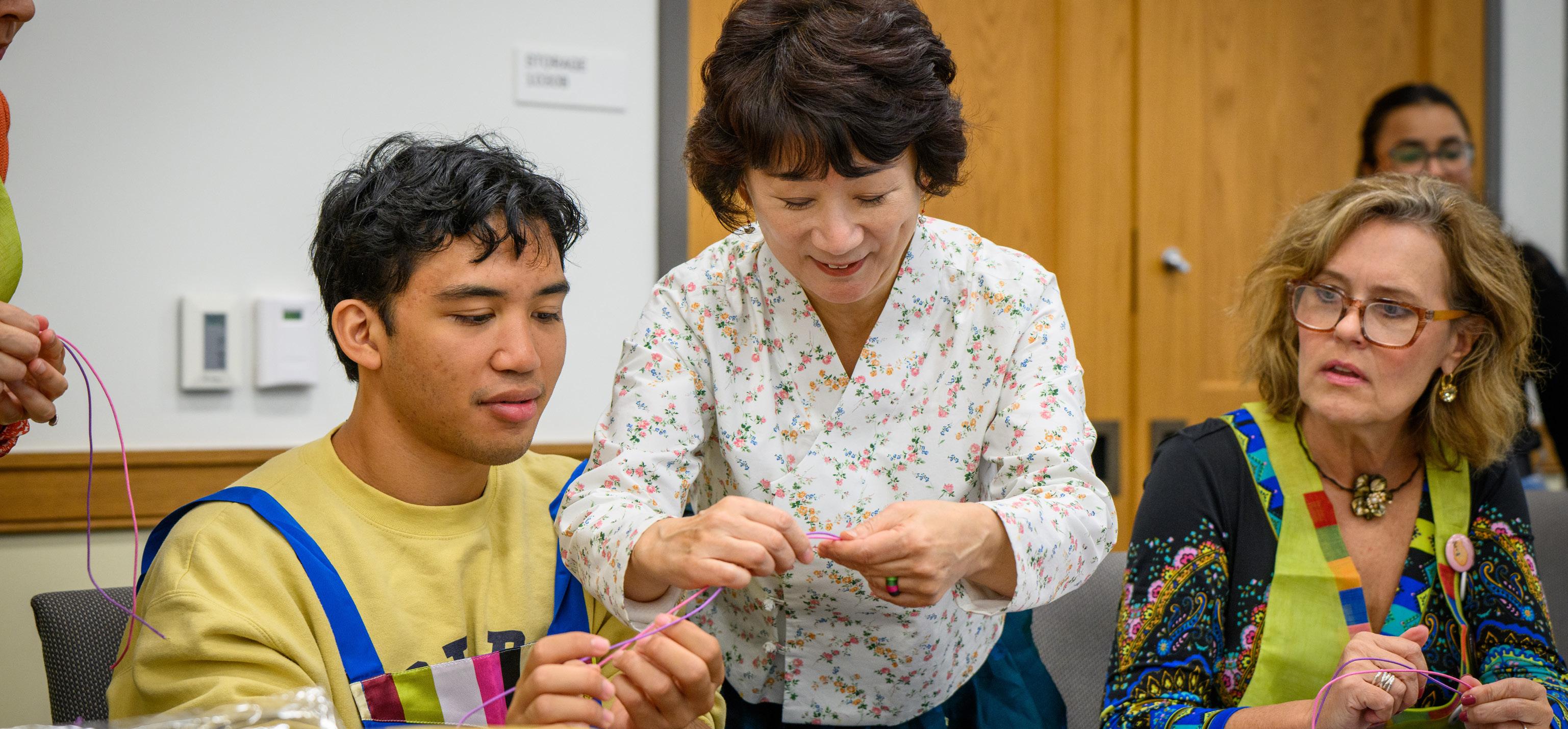
Participants at a Korean knot art workshop taught by artist Karen Ahn. The four-day celebration honored Hangul Day and invited community members to engage with Korean food, art, music and traditions
Korea Week events began on Wednesday with a Korean food feast where students, faculty and staff gathered in the Jenkins Nanovic Hall atrium to taste traditional dishes. “I think [a] moment of delight
OPINION | PAGE 4
Bye biased news
BridgeND’s social media director Isabel Rettino assesses unbiased news network.
was how many people showed up for our food tasting. We underestimated the power of food,” senior communications specialist at the Liu Institute Jennifer Lechtanski said. Following the feast, artist Karen Ahn led a “maedeup”
SCENE | PAGE 7
Saint Mary’s theater
SMC’s staging of “An Enemy of the People” is a profound exploration of integrity.
workshop, teaching attendees the traditional Korean knot art form. Lechtanski, who attended the session, said a personal highlight was “to see everything, the display that Karen brought in, not only her personal collection, but
SPORTS | PAGE 8
ND to face the trojans
From the Coliseum to the Cathedral, USC and ND have a storied history of matchups.
also other handcrafted arts from her mother, and just the history and importance that that artistry has from one generation and being able to share it with others.”
Later that evening, the Korean Performing Arts Institute of Chicago and ASCEND, Notre Dame’s K-pop dance team, performed a traditional Korean music concert. Taihiro Thompson, a student assistant at the Liu Institute, emceed the concert and shared that fellow students who attended the show described the experience as emotional and impactful.
“Being able to see that all live in person was just such a crazy experience because I can literally still feel like the beating in my heart with the drums when they were performing in front of me,” Thompson said, referring to a performance of Samulnori,
see “Korea” on page 4
SPORTS | PAGE 12
ND hockey preview
Irish ice hockey begins their home schedule Thursday against the St. Lawrence Saints.

ndsmcobserver.com
“TO UNCOVER THE TRUTH AND REPORT IT ACCURATELY”
900 Hesburgh Library, Notre Dame, IN 46556
Editor-in-Chief
Liam Kelly
Managing Editor Gray Nocjar
Asst. Managing Editor: Aynslee Dellacca
Asst. Managing Editor: Grace Tadajweski
Asst. Managing Editor: Henry Jagodzinski
Notre Dame News Editor: Sophie Hanawalt
SMC News Editor: Berhan Hagezom
Opinion Editor: Redmond Bernhold
Sports Editor: Noah Cahill
Scene Editor: Peter Mikulski
Photo Editor: Mariella Taddonio
Graphics Editor: Isabelle Rutland
Social Media Editor: Duncan Stangel
Ad Design Manager: Isabelle Rutland
Business Manager: Zack Pohlman
Systems Administrator: Jack MapelLentz
Advertising advertising@ndsmcobserver.com
Editor-in-Chief lkelly8@nd.edu
Managing Editor gnocjar@nd.edu
Assistant Managing Editors adellacca01@saintmarys.edu, gtadajwe@nd.edu, hjagodzi@nd.edu
Business Manager zpohlma2@nd.edu
Notre Dame News Desk shanawal@nd.edu
Saint Mary’s News Desk bhagezom01@saintmarys.edu
Opinion Desk rbernho2@nd.edu
Sports Desk ncahill2@nd.edu
Scene Desk pmikulsk@nd.edu
Photo Desk mtaddonio01@saintmarys.edu
Systems & Web Administrators webmaster@ndsmcobserver.com
Policies The Observer is the independent, daily newspaper published in print and online by the students of the University of Notre Dame du Lac, Saint Mary’s College and Holy Cross College. Editorial content, including advertisements, is not governed by policies of the administration of any institution. The Observer reserves the right to refuse advertisements based on content.
The news is reported as accurately and objectively as possible. Unsigned editorials represent the opinion of the majority of the Editor-in-Chief, Managing Editor, Assistant Managing Editors and department editors. Commentaries, letters and columns present the views of the authors and not necessarily those of The Observer. Opinion space is available to
By Leylany Rivera News Writer
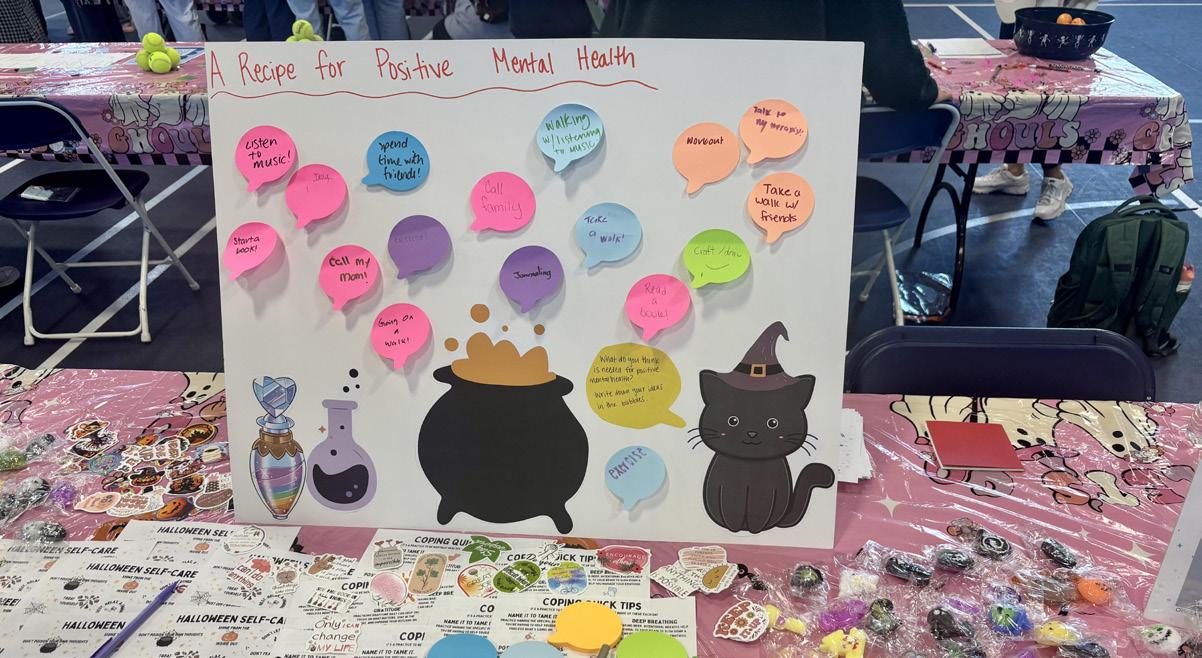
Saint Mary’s College students gathered Friday afternoon at Angela Athletic and Wellness Complex for the annual Fall Wellness Festival, “A Ghoul’s Guide to Good Health,” an event designed to encourage self-care, stress management and community engagement during midterm season.
The festival, hosted by the Saint Mary’s Health and Counseling Center, ran from noon to 3 p.m. and featured a variety of activities, giveaways and Halloween-themed booths from campus organizations. Attendees could receive flu shots, enjoy seasonal treats like caramel and chocolate covered apples and visit tables hosted by groups such as the Cycling Club, HOSA — Future Health Professionals, the Student Government Association, Center for Faith, Action and Ministry, the Mother Pauline Pantry, the Belles Against Violence Office and Saint Mary’s Affiliates of the American Chemical Society. Maddie Maher, a nurse at the Health and Counseling Center, said the festival began during the pandemic as
Continued from page 1
Both Pérez-Liñán and Michael Coppedge, a professor of political science, emphasized the ways that this project positively positions Notre Dame within the larger conversation of democracy.
“The AmericasBarometer is a very important piece in the plans for the democracy initiative, because it positions Notre Dame to be a very important university, a very important player, in the community of comparative research around themes of democracy, polarization, democratic values and so on across the Americas,” PérezLiñán said.
Corrections
The Observer regards itself as a professional publication and strives for the highest standards of journalism at all times. We do, however, recognize that we will make mistakes. If we have made a mistake, please contact us at editor@ ndsmcobserver.com so we can correct our error.
a way to encourage students to get flu shots. “It’s evolved because it used to be literally just come in and get your flu shot. Over the past two years, we’ve expanded it to include some on-campus resources, just as a good refresher for people who may not have attended the activities fair or who just forgot that there were different resources available,” she said.
According to the Belles Wellness Program’s Instagram page, the first 275 students who preregistered for flu shots also received a prize, adding an incentive to stay healthy as colder weather approaches.
The Health and Counseling Center partnered with multiple student groups to make the event both educational and fun. Tables offered interactive games, stress relief tips, information about mental and physical health services and Halloween-themed prizes.
The festival’s timing is intentional, designed to offer students a chance to reset during midterms week. “I think this is essential because leading up to midterms is a very stressful time for students,” Isela Garcilazo, a counselor at the Health and Counseling Center, said. “So I think having this kind of
tradition annually is very important to remind students how to cope with stress, how to manage stress, how to deal with all of the things going on in the world and how to balance those things.”
For many students, the event offered a reminder that wellness extends beyond academics. Freshman Deborah Torres said she appreciated how accessible the festival was and how it fit naturally into her schedule. “It is accessible because it is right inside our fitness center,” Torres said. “It also works with my busy schedule.”
Sophomore Hannah Walsh agreed, saying that the festival offered more than just physical health support. “Events like this are reminders that you are loved and cared for as a college student,” Walsh
said. “It’s really easy to forget that, especially amid midterms and everything.”
As the festival continues to grow, the organizers hope it remains a staple of the fall semesters at Saint Mary’s. Maher said the event represents what the school strives to offer: a campus culture that prioritizes both health and belonging. “It’s really about creating a space where students can pause, take care of themselves and also have some fun,” Maher said.
The Health and Counseling Center plans to expand the event in the coming years, integrating more student organizations and health-related resources to further promote wellness.
Contact Leylany Rivera at lrivera01@saintmarys.edu
Latin American politics,” he said.
Coppedge shared that funding a highly-regarded survey reflects well on the University. “One of the goals of the Democracy Initiative is to strengthen the whole university’s reputation for being a center for democracy studies, for being a center of scholarship on democracy. We already have a really good reputation in political science for studying democracy, but I think this would give us a big shot in the arm because this survey project is, in my judgment, the best, highest quality survey project on
Most of the countries in the Western Hemisphere are surveyed, with the exception of Cuba, sometimes Venezuela and a few small island nations. “It is hard to get public opinion data in authoritarian countries and you do not want to expose interviewers and you do not want to expose people answering the questions,” Gamboa said.
Coppedge said some people are exaggerating the trend of democratic backsliding. “If you average levels of democracy around the world by year, there is a dip there, and it is statistically significant — we can conclude that this is not just normal variation that you might see from
year to year that happens by chance. There’s definitely a trend there, but I don’t want to exaggerate how bad the trend is. Most countries don’t change their regime most of the time in most years, and that is still true,” Coppedge said.
Even if there isn’t strong evidence of declining democratic performance, Coppedge believes that data on perception of government legitimacy serves an important purpose.
“There is a separate valid question, which is ‘how legitimate do people think their government is?’ and that is somewhat independent of how well it actually performs,” said Coppedge citing China, Italy and France as countries in which the public faith in the
government does not match the level of democracy within such governments.
In order to track such changes, Gamboa said it is “so important to have regular measurements of public opinion and it is not like you can go back in time and do them once you get funding. This is something that needs to happen and needs to happen right now.” The data is available to the public and used by a variety of audiences, including academics, researchers, teachers and journalists.
Contact Mara Hall at mhall27@nd.edu and Emily Barlett at ebarlett@nd.edu.
Continued from page 1
including Afghanistan, the Central African Republic, the Democratic Republic of Congo, Haiti, Somalia, South Sudan, Sudan and Yemen.
“29% of the world’s extreme poor live in this subset, but only 9% of official development assistance is allocated to these countries,” he said. “The difference is worth about 35 billion dollars.”
Second, Miliband recommended concentrating on programs that are evidence-based and costeffective. He cited community-based vaccination drives in East Africa that have delivered 20 million vaccine shots for
Continued from page 1
a traditional drumming style. Reflecting on the performance, he expressed regrets that more students hadn’t come to see it.
On Thursday, students and faculty gathered around a Korean culture booth, where they played traditional games such as “Gonggi” and “Ddakji.” Both games were recently popularized by Netflix’s popular show “Squid Game.” In addition, attendees decorated and took home small souvenirs like notebooks and bookmarks.
The celebrations continued Friday with ASCEND’s live K-pop performance on Library Lawn.
Korea Week concluded on Saturday with a bookmark-making workshop off-campus at St. Joseph County Public Library. KK (Kum Kang) Lee, the Liu Institute program manager for research and strategic initiatives, said he was both surprised and encouraged by the turnout of local families and
about two dollars per dose, and a simplified protocol for diagnosing and treating child malnutrition that reduced costs by about 30%. “Donor fragmentation into small projects dilutes impact,” he said. “We need to power money behind the most effective programs.”
He also emphasized the importance of innovation in developing, financing and delivering programs. As an example, Miliband referenced International Rescue Committee projects that use artificial intelligence to reduce disease diagnosis time in the Democratic Republic of Congo from two weeks to five minutes, as well as anticipatory cash transfers that reach families before floods occur. He also discussed new financial mechanisms such as development-bank
children. “I hope the kids take away good memories from the event,” he said, “and keep a positive attitude towards Korean culture.”
According to Lee, Korea Week came together almost by coincidence. He explained that several separate events had been planned, but a collaboration with the Korean Cultural Center of Washington, D.C. helped unify them into a weeklong celebration. The Korean Cultural Center had done campus events before but never in the Midwest region, creating a new experience for both the center and the University.
Additionally, Korea Week also happened to fall on two major Korean holidays, Hangulnal and Chuseok (Korean Thanksgiving). Lee believes the coincidental timing contributed to making the week more meaningful.
One event, the screening of the film “Mal-Mo-E: The Secret Mission” (2019) was held on Hangulnal. The film tells the true story of the Korean Language Society’s efforts to preserve the Korean language during
guarantees, debt swaps and disaster risk insurance as ways to expand humanitarian funding.
In addition to innovation, Miliband believes aid agencies should be held accountable for outcomes rather than inputs. “Educational results, not numbers of teachers trained. Healthy births, not health consultations,” he said. Outcomebased funding, he argued, would reduce bureaucracy and improve efficiency.
Finally, Miliband called for a fairer global distribution of the aid burden. Countries that are members of the Group of Seven (Canada, France, Germany, Italy, Japan, the United Kingdom and the United States) account for about 45% of global GDP but provide roughly three-quarters of global aid. He urged
Japanese occupation of the Korean Peninsula, a time when ruling authorities banned the use of Korean in public institutions and punished preservation efforts.
Before the screening, Yoon introduced the history and meaning behind Hangulnal. “Hangulnal, Korean Alphabet Day, commemorates the creation and proclamation of the Korean alphabet.” She shared that “for the Korean people, Hangul is much more than a writing system. It is a symbol of national pride, intellectual independence and democracy.”
The alphabet was created by King Sejong in the 15th century, who hoped to replace the previous writing system that consisted of complex Chinese characters, Hanja. “[This] meant literacy was confined almost exclusively to the wealthy elite and scholars,” Yoon said. “King Sejong’s purpose was clarity and accessibility,” Yoon said.
Faculty and students have mixed opinions on the level of interest in East Asian cultures. While faculty such as Yoon and Lechtanski
emerging economies to contribute more and noted that the United States allocates about 0.15% of its gross national income to foreign assistance, a figure he said is low by international standards.
Near the end of his lecture, Miliband connected the moral and purposes of international aid. “If we can save people from destitution, we should,” he said. “Those delivering on the ground need to embody commitment to value for money and efficient delivery. Donors need to put clients front and center. The new resources of science and technology should be used to help the world’s poorest, not just the richest.”
He concluded by reminding the audience that effective aid remains essential for addressing global crises.
observed more students interested in the growing number of Asian courses offered on campus, students like Thompson thought engagement with Asian culture has remained relatively stagnant.
“There’s obviously been growth in the Asian community’s numbers, but I wouldn’t say the awareness or interest in Asian culture has grown overall,” Thompson said.
Both faculty and students hope to have more events like Korea Week on campus and look forward to the impact they have on the community.
“I think it’s just important to have these opportunities to honor other cultures. It’s an excellent way to bring people together and sometimes the best way to be able to spread that knowledge is our events like these,” Lechtanski said.
In addition, Lee noted that the efforts to share Asian culture have been community wide. Lee, who lived in Korea for more than 30 years before coming to Notre Dame, said that “even though the number of Korean and
“Today, 80% of acutely malnourished children in conflict zones are not treated. 60% of maternal deaths in childbirth are in fragile states. Over 52 million children in countries affected by conflict are not in school,” Miliband said.
“Effective international aid is the answer to these problems, not the problem itself. There are more resources in the world to do more good than at any time in human history. 1% of the federal budget is not excessive. It can be brought to good use. It is in America’s interest to do so. And from my point of view, the sooner that happens, the better,” he said.
Contact Ada Duru Ak at aak@nd.edu
Korean American students and faculty is small, there’s already a strong passion and interest for Korean culture here.” He referred to ASCEND, Notre Dame’s K-pop dance team made up of diverse students, as an example.
Lee added that cultural events on campus like Korea Week are essential to bridging Notre Dame with the world. Events like Korea Week “make the campus more global and [help students] get to know the world better,” he said.
Yoon echoed his sentiment. “In today’s interconnected world, understanding the culture and history of a major global player like South Korea isn’t niche. It’s a critical component of being an educated global citizen, regardless of whether you study engineering, business or literature.” She hopes that through Korea Week, her “students and colleagues discover[ed] the depth and resilience of Korean culture.”
Contact Claire Lee at clee35@nd.edu
By Oliver Ortega Columnist, “The O.G. Grad Student”
Graduate student appreciation week was in full swing as I began to write this column last week. Once a year, Notre Dame shows its appreciation for the vital role we play on campus by feting graduate students with food, swag and special events. For instance, my Monday morning went from zero to a hundred at the sight of Rise’n Roll donuts outside the library that were just for us. I took two and turned to the other side of the courtyard, where graduate school staff were handing out shirts, knit caps, pens and other branded paraphernalia. I gobbled down the donuts with a cup of coffee. I broke in the shirt during a sweatdrenched four-mile jog. And the pen inked the first draft of this column. Can Notre Dame buy my affection with such trivial things? Truthfully, yes. Feed me, clothe me, and I will be yours forever.
But my friend Subhas Yadav, a third-year Ph.D. student in Spanish, has a point when he says that graduate students get short shrift on campus the rest of the year. A few days after that sugar-addled Monday morning, Subhas and I stood chatting by the statues of Fr. Edmund Joyce and Fr. Theodore Hesburgh, not far from the site of the donut bonanza. More or less, we came to the conclusion that, as older graduate students, it was incumbent upon us to complain about the lack of attention the University pays to us outside of graduate student appreciation week. Indeed, part
of my inspiration for writing this column — The O.G. Grad Student — is that I feel strongly that graduate student issues are overlooked at Notre Dame. The genesis of this column, in fact, was the sudden closure of the graduate student lounge in Hesburgh Library in April. As I wrote last month, Subhas is currently petitioning interim dean Margaret Meserve to open an alternative space for us in the library. We’ll see how that goes.
In the meantime, in the spirit of graduate student appreciation week, I figured I would hone in on an issue affecting many graduate students — new visa rules. At the end of August, the Trump administration proposed a four-year cap on international students. This would have a seismic impact at Notre Dame, where roughly a third of graduate students are international, a much larger proportion than for the undergraduate population. The issue is serious enough that Notre Dame’s graduate student government, which ordinarily stays out of politics, sent out an email last month asking students to oppose the changes during a public comment period. As they noted in the letter, a Ph.D. in the humanities or social sciences can often take six or more years, far exceeding the new limit. Currently, international students are eligible to stay as long as they are enrolled in an educational institution, a rule that is known as “duration of status.”
A friend of mine in the history department has been keeping a close eye on these
developments. Nurullah Hergul, a Ph.D. candidate in his sixth year, is from eastern Turkey. He specializes in medieval histories of Kurdish people in what are today Armenia, Turkey, Iran, Iraq and Syria. On Tuesday, we sat down by the reflection pool in front of the library to talk. When Nurullah saw the email from the GSG last month, he didn’t hesitate to respond to the request for public comment.
“There is so much to read, so much to learn,” he told me. “It is impossible to finish a Ph.D. in four years, even if you are a genius.”
On the one hand, Nurullah feels there are a lot of opportunities in the United States for scholars like him who study niche subjects. Ideally, at the end of his studies, he would find a tenure-track job and stay in the country. But on the other hand, he says living in the United States has lost its luster in the last few years. Before, he bought into the idea of the American dream, and its attendant promise of buying a house, getting a car and raising a family. Now, he doesn’t know if he belongs in the U.S. The new visa rule, he said, makes it “very clear that you come here and then you leave.”
Notre Dame administrators are monitoring the situation closely. At the end of September, Michael Pippenger, vice president and associate provost for internationalization at Notre Dame, sent a letter to the Department of Homeland Security asking them to dismiss the proposal. “The
University of Notre Dame is deeply committed to the engagement and growth of our international student and scholar community, as they enrich our campus community and further our faith-based mission,” Pippenger wrote.
“…[I]t is in the best interest of academic scholarship, our communities, and our nation, to dismiss this proposed rule as currently written.”
In the spirit of graduate student appreciation week, all of us — admins, students,
staff — should work to make our international brethren feel welcome at Our Lady’s University. With a bit of Irish luck and a lot of lobbying, we can topple this proposed change. So says the O.G. Grad Student. Peace.
The views expressed in this column are those of the author and not necessarily those of The Observer.
Contact Oliver Ortega at oortega1@nd.edu
By Isabel Rettino Columnist, “The Bridge”
Imagine you just finished dinner and are about to unwind for the night with your family. Somebody suggests watching the news. What channel will be put on? If your family is like mine, people have different opinions. Always. And it’s always between two options. So, instead of arguing, we turn on SNL’s “The Best of Chris Farley” special. At least that was our routine until my father discovered NewsNation. My father is a man who welcomes differences and encourages discussion. He taught my brothers and me to be open to new ideas, and at the very least to stay consistent, something we do not see in most American politicians. Like I said earlier, my house is a house divided, and until my family discovered NewsNation, the only time
politics were brought up was at Thanksgiving, a day where anything goes. However, now we can agree on at least one thing — a NewsNation correspondent like Chris Cuomo, Leland Vittert or Elizabeth Vargas should be the Notre Dame commencement speaker when I graduate in May because of their ability to navigate difficult topics and not give in to bias, values that Notre Dame hopes to teach its students. News will always be met with bias. Opinions will be shared. What is lacking in major news outlets today? Their ability to engage with both sides of a topic. Instead of a devil’s advocate, the other side is completely ignored, minimized or worse: distorted so the other side is the “bad guys.”
NewsNation is a news channel focused on delivering unbiased, fact-based news to all Americans. While the channel is still growing, there is an
audience listening. As of June 2024, NewsNation is a 24/7 cable news network. Now, like many of you, I was not sold on news that self-identified as “unbiased,” but after watching for months, I can say NewsNation is true to its word. The channel delivers truthful and quality programming each night. NewsNation is not unique in its hourly programming: Introduce a news story and discuss. However, what is unique is who is given a voice on NewsNation. Viewers hear the majority of the news from guest speakers, not the correspondents. Experts from both sides of the spectrum come to the table and attempt to find middle ground for the biggest problems facing America and the world today. Most of the time, experts do not find that middle ground, but I feel good knowing I heard more than just one side of the story.
Chris Cuomo, a former CNN
correspondent, joined the NewsNation team in 2022 and struck common ground between an unlikely duo: Stephen A. Smith and Bill O’Reilly. Cuomo starts each night saying, “Welcome to NewsNation, where the right and left come to be reasonable.” Something my dad says along with him.
So, why am I sharing this with you? Don’t worry, I will get off my soap box soon, but what I really want to stress is that most Americans are in the middle when it comes to politics. I understand it is hard to believe, especially when all we hear is hate. Outlets like NewsNation are gaining traction because Americans are tired of the extremes and want to “come together to be reasonable.” At the very least, NewsNation shows viewers how to have conversations with people who have different opinions.
I saw this firsthand when
BridgeND hosted its annual ConvergeND event last Wednesday, where College Republicans and Democrats met for the first time since 2022. As a member of BridgeND, I had hoped our club’s values of discussion and respectful dialogue would be upheld. Did each side stay true to their convictions? Yes. Did either side interrupt the other? No.
If you take anything away from this, it is that the art of civil discourse is not over. While we might feel polarized as a country, most people can see eye to eye. Most people want to have conversations. And most people should check out NewsNation!
The views expressed in this column are those of the author and not necessarily those of The Observer.
Contact Isabel Rettino at irettino@nd.edu
It’s 2 a.m. on a Wednesday night (or rather, a Thursday morning), and I finally start feeling my eyelids start to droop. “Time to go to bed,” I think. “Finally.” I shut my laptop, pull out a sweater and jeans for the next day and climb up to my lofted bed. After making sure my alarm is set for 7 a.m., I pop in my headphones and settle in for another night of getting just enough sleep to get by.
“How did I get here?” was a frequent thought of mine the first few weeks of college. My high school self would have been absolutely horrified at the state of my once carefully maintained sleep schedule. For the most part, throughout high school, I followed the same normal nightly routine — homework done by 10 p.m., followed by a cup of tea and a TV show before turning in at 11 p.m. But that blissful routine was doomed to die the moment I stepped foot on Notre Dame’s campus. Between evening club meetings, spontaneous night workouts and impromptu two-hour conversations with friends in the hall lounge, my 11 p.m. bedtime slowly extended to midnight, then 1 a.m. and finally 2 a.m. as I consistently struggled to find enough hours in the day to do everything I wanted. Although it feels like I’ve adapted to this weird semi-nocturnal lifestyle, I would honestly prefer not to be wide awake in the middle of the night. Besides, it definitely feels like something is off during the day as I go about my schedule. Maybe it’s the need for caffeine, the midday slump or the struggle for mental clarity when my brain is still foggy with sleep. “But why go to bed earlier knowing I’ll be lying awake for hours, not tired until the clock strikes 2 a.m.? Why wouldn’t I stay up and be productive as long as I’m conscious?” I reason with myself. “Even just talking to friends seems to be a better use of my time than simply lying in bed, waiting to fall asleep. And so the cycle continues.
I know I am far from the only student at Notre Dame who struggles with sleep, and I think it’s time for us to get our priorities straight. We already know it’s important to prepare ourselves for certain things — studying before a test, for example, or practicing consistently with your sports team before a big game. It’s obvious why we do these things: Taking time to make sure we are mentally ready for a task increases the likelihood that we will perform well on it. But why, if we are so committed to

dedicate extensive amounts of time preparing for these academic and athletic activities, do we consistently fail to prepare for something as simple as waking up the next morning?
Perhaps the answer lies in the apparent conflict that exists between sleep and other activities. After all, it seems like allocating time to one demands taking time from the other. But they don’t have to be mutually exclusive. Being a dedicated student or a star athlete doesn’t mean you can’t get sleep; in fact, dedicating your time to other endeavors actually requires that you be well-rested. Sleep rejuvenates our bodies and refreshes our minds, preparing us for the next day’s flurry of work and plethora of tasks to complete. As I’ve learned the hard way — and I’m sure many of you have too — putting sleep last on the priority list is a surefire path to burnout.
It is important to realize that it is possible to be productive without cutting down on precious hours of sleep. Increasing productivity during the day does not require more time, but rather more fruitful time. In other words, maximizing the hours in your day does not require you to infringe on those which should be allocated to sleeping; instead, productivity can be achieved by prudently using the time we are given. And so, although my advice as an unseasoned freshman may
understandably fall on deaf ears, I’d like to offer in closing the top three tips that have helped the most in improving my productivity so far this semester without cutting down on sleep:
1. Eliminate distractions. It’s easy to get things done when you can work uninterrupted. If you really want to get things done, set aside a period of time each day in which you will power off your cell phone, leave your friends and focus on a single task. It might seem hard at first, especially if you’re used to constantly checking your phone or pausing to chat with people. But I promise that if you stick to it, both your _quality and quantity of work produced will greatly improve.
2. Be strategic about socializing. Building relationships with the people around you is one of the best parts of being at college, so make sure you are prepared to take advantage of lots of social opportunities. At the same time, it’s important to establish some general boundaries for yourself, especially during the week, so you don’t get so carried away with friends that you never open your homework. The way I have balanced this is by getting meals, working out and studying with my friends during the week and devoting time to larger social activities like going to the football games on the weekends. By pairing friendship with productive activities when
needed, you will still be able to get things done without missing out on the chance to build connections and share memories with the people around you.
3. Embrace your ideal environment, but be flexible. I have found that it is incredibly difficult for me to study in my room, probably because it’s a space I have come to associate with rest and relaxation. In my subsequent quest for better study spaces, I have learned a lot about the type of environment that helps me be the most productive. After exploring silent library floo rs, the dull roar of Duncan Student Center, sunny benches beside the lake and various undergraduate buildings, I have come to realize that I do my best work when I am in an environment with minimal noise and few people. But sometimes staying in the same spot for too long causes me to lose motivation. I think it’s important for each person to find the type of place that works best for them and embrace it, but also vary where they work from time to time. Even if you normally do your best work in the library, maybe take your laptop outside on a sunny day. Grab a coffee and work on your paper in the café for an hour. Change up your environment so you won’t feel stuck or get bored with your surroundings; you’ll be surprised how much a new point of view inspires and motivates you.
Deciding how we will spend our time is important, and the choice is unique to each person. But whether we prioritize academics, athletics, volunteering, social life or something else, sleep is the underlying thread that weaves them all together. Sleep at night enhances our experiences during the day — it heightens our mental acuity, decreases stress and balances our hormones, to name a few. We want to enjoy every moment of this exciting journey that is life, but at some point, trading hours of sleep at night for hours of pleasure during the day sours our daytime experiences with fatigue and burnout. It’s important to strike a balance between sleep at night and tasks during the day that will allow us to enjoy life to its fullest. For me, maybe lightsout at 11 p.m. is no longer feasible, but staying up until 2 a.m. every night seems excessive and also unnecessary for optimal productivity. I plan to take my own advice on prioritizing sleep, and, if you want to do your best on midterms this week, so should you.
The views expressed in this column are those of the author and not necessarily those of The Observer.
Contact Noirin Dempsey at ndempsey@nd.edu
By Cate Stephens Scene Writer
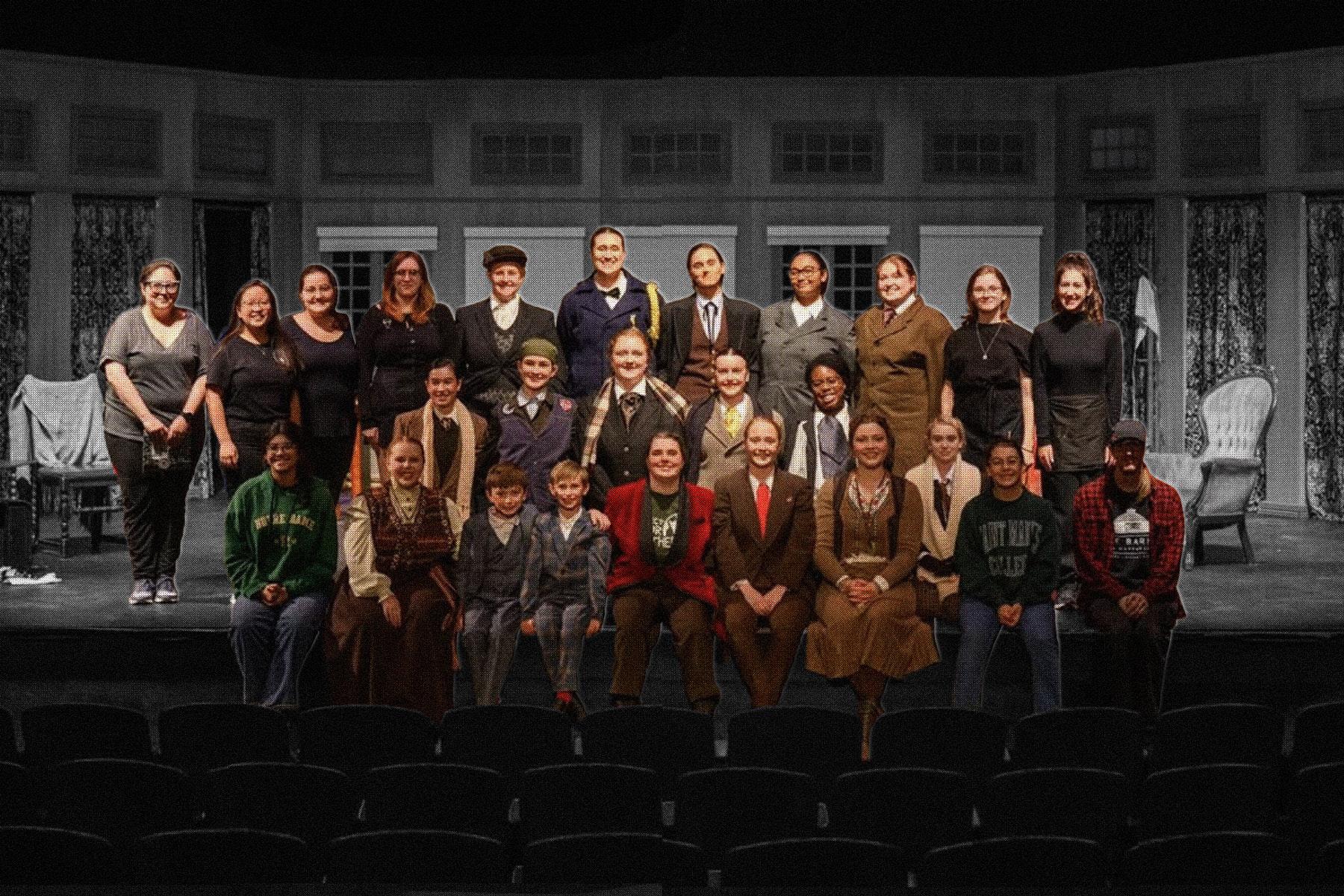
The Saint Mary’s College theatre department presented Henrik Ibsen’s “An Enemy of the People” on Oct. 9, 10 and 12. The production, directed by communication studies, dance and theatre professor Laura Lucci, was based on Arthur Miller’s adaptation of the play. A three-act show with two 10-minute intermissions, the play addressed how free speech, democracy and doing what is right can be easily tarnished for personal gain.
The story follows Dr. Thomas Stockmann, who researches his Norwegian town’s water quality. His suspicions about the springs emerged when he observed visitors to the town having typhoid, skin and gastric issues. When the results determine that the water is bacteria-filled, he grows motivated to solve the problem immediately before a medical epidemic arises. However, his brother and the town’s corrupt mayor, Peter Stockmann, refuse to comply with this request.
The mayor states that bringing this information to the public would ruin the town’s publicity and the water plant reconstruction would cost 300,000 kroner and take two years to build. The local newspaper that initially supported Dr. Stockmann and wanted to spread his findings quickly revokes their interest when the mayor pressures them with the public and economic
backlash they would receive if this implementation ensued. The mayor further uses his power to prevent Stockmann’s plans from coming to fruition by threatening to revoke his town board position, not allowing the doctor to hold a town hall meeting of his findings and threatening a public tax on the construction. Through all this, Thomas Stockmann stays resolute in his beliefs, claiming that the majority opinion is rarely the correct and just one in history. He even exclaims, “The majority is never right until it
does right” and “Before many can know something, one must know it.” This defiance gives him the title of a revolutionary and “an enemy of the people” in the town.
Being shunned by all townspeople except for his family and friend Captain Hoster, Stockmann is evicted from his home, dropped by his patients, his daughter fired from her teaching position and his two young sons pulled from school. However, he insists on continuing his cause. The doctor does what is right at the cost of his wife,
‘Happy Gilmore 2’ is a
By Rosie Maese Scene Writer
“Happy Gilmore” is a cultural classic, featuring a traditional ‘90s movie style, Adam Sandler and an underdog story. The movie put smiles on faces worldwide and is one of Netflix’s most viewed films (number six in Netflix’s global top ten movies). Thus, watchers worldwide were excited when the sequel “Happy Gilmore 2” was announced. However, a sequel made 30 years later concerned me, as it ran a high risk of not properly honoring the original film; luckily, I was proven wrong.
In the midst of Midwestern weather and midterms, I was happy to unwind with the comedy. Curling up under a blanket with comedies like these has always been an excellent way for me to unwind at home and here at Notre Dame. Although I usually find sequels to be obvious cash grabs that are monotonous and unnecessary, the movie adds to the original by nicely blending scenes together with new and old characters. Particularly, the return of Shooter McGavin, along with the introduction of Chubbs’ son, provides a sentimental note for viewers who’ve seen the original movie. Shooter’s transformation and new relationship with Happy made me care about him
character experienced. Two young guest actors playing Stockmann’s sons also brought a charm and touch of humor to the otherwise serious play. Humor in the rest of the play occurred occasionally, but was sparse due to the serious themes and conversations. The play’s dialogue was filled with information necessary to understand the plot, but it was also difficult to follow at times. However, mock flyers of the play’s newspaper were given to audience members in between both intermissions that described the disputes from the townsfolks’ perspective. This provided an interactive experience and more context for the politics of the play. The costumes and sets also wove into the themes of the performance, with the mayor even wearing a red hat with white letters spelling “Ultra Norge”.
family and financial comfort he had known, but considers this steadfastness a strength. In the last line of the play, he proclaims that in order to pursue the truth, you must be strong, and the strong must be lonely. This bittersweet ending does not inform readers of what will happen next in Stockmann’s endeavors and family affairs, but it reveals his willingness to stand for the truth even if most are against him.
The Saint Mary’s actresses did an extraordinary job of displaying the tension and inner turmoil each
Overall, “An Enemy of the People” clearly displays how relentless selfinterest can diminish one’s morality. It demonstrates how quickly those who promote important ideals, such as freedom of speech and the press, may retract them if threatened with personal loss. It is a timeless statement that doing the right thing may be lonely, but perseverance in avoiding submission could eventually result in success. Morality often may be the minority, but that does not mean it is wrong.
Contact Cate Stephens at cstephens01@saintmarys.edu

in a way I never did in the original by becoming a real ally. Chubbs’s son mimicked his father’s supportive role from the first film and gave Happy the supportive shoulder he ultimately needed. This added depth also made the film welcoming to newcomers, since you didn’t need to know the characters’ pasts to follow their journeys and enjoy the story: flashback scenes and tasteful exposition properly contextualized these relationships.
Compared to the original, the sequel is much more grounded in family values. Happy has shifted in maturity from being like a child to growing into a father who is determined to aid and support his family. The film was successful at illustrating the characters’ current struggles by balancing sadder moments with happier ones: not only did you get a good laugh, but you were actually able to relate to and care about the characters. The humor
of Happy fighting with golf clubs and classic comedic one-liners adds a lightheartedness, while more somber moments give it an emotional depth. One scene that stood out to me was when Happy faced the possibility of losing his chance to compete. Instead of merely treating it as a traditional “bump in the road,” the film slowed down to highlight his frustration and his family’s encouragement. Moments like these, along with humorous
and heartfelt dialogue, make the movie feel more substantial than a typical comedy sequel. These moments drive viewers to really root for the characters as if their victories mattered and were grounded in familiar struggles — a hardworking father, supportive family members and people determined to reach goals that most of us can empathize with.
This relatability factor continued by bringing in outside celebrities for smaller roles, which Sandler traditionally does in his films. As a Bad Bunny fan myself (yay, halftime show!), a smile grew on my face when I saw him appear on my screen. Cameos like this add a familiarity to the film that makes me even more emotionally connected to it. Overall, I would definitely recommend “Happy Gilmore 2” to anybody looking for a quick relief or fun laugh with friends. The sequel is able to speak to college students like me by being an enjoyable movie to relax with alone or with friends, while also appealing to the nostalgia of adults who grew up on the original film. The movie’s familiar faces, witty humor and wholehearted themes and dialogue make the film a great escape for anyone. Happy watching!
Contact Rosie Maese at rmaese@nd.edu
By Payton Dymek Sports Writer
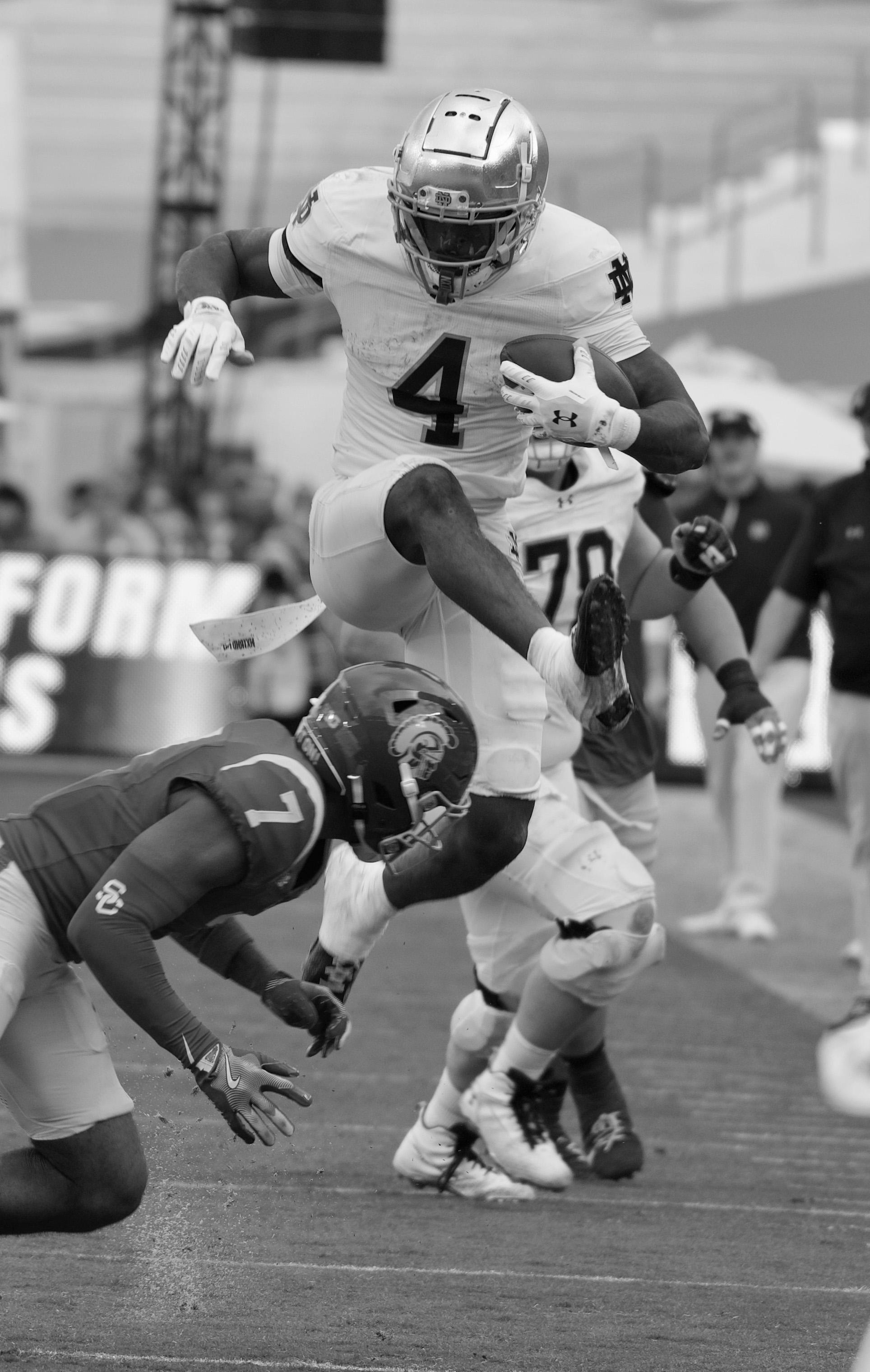
There are two different stories as to how the storied football rivalry between the University of Southern California and the University of Notre Dame came to be.
One has been coined the “conversation between wives.” USC was on the hunt for a new rivalry, so athletic director Gwynn Wilson and his wife were sent to Nebraska to watch Notre Dame play the Nebraska Cornhuskers. After the Irish lost 17-0, Knute Rockne didn’t support the idea of adding a series with the Trojans; however, after minor convincing from the Wilsons, Rockne agreed and the sport’s greatest showdown began.
A different, more historianbacked tale, is the one that many fans believe. According to college football historian Murray Sperber, many colleges in the 1920s were concerned about the commercialization that stemmed from large money payouts that teams would receive from traveling and playing in bowl games. With Notre Dame’s rise in popularity as they collected wins over top programs, they caught the eyes of the Rose Bowl Committee, who pitted midwestern teams against top teams from the West Coast. Rose Bowl member institutions such as Stanford and California refused to play Notre Dame regularly as they viewed the Irish as scholastically inferior, whereas USC coach Gus Henderson reached out to Rockne directly, saying USC would welcome the chance to compete against Notre Dame. Although the Irish played the Cardinal for the Rose Bowl that year in 1925, the Trojans were immediately added to Notre Dame’s annual roster the following year.
The rivalry between the Irish and Trojans began in 1926, with breaks from 1943 to 1945 for World War II and 2020 for the COVID-19 pandemic. It has remained a much anticipated game for fans of both programs, and even those who don’t support either team. With their massive fanbases and storied histories, it’s important to note just how renowned these two programs are. Together, the schools have won a combined 24 national championships and 15 Heisman Trophies (eight for USC — the most in college football — and seven for Notre Dame), have 89 members of the College Football Hall of Fame (46 from Notre Dame and 43 from USC), and 26 members of the Pro Football Hall of Fame (13 from both).
Both teams have given each other their fair share of spoils, ruining the opposition’s seasonlong hard work. The Irish handed the Trojans their first losses of their entire season in 1927, 1947, 1952, 1973 and 1995, while
USC broke the Notre Dame win streak in 1931 and 1971.
In 1968, USC came into the game ranked first in the country while having an undefeated season, riding off the success from eventual Heisman Trophy winner O.J. Simpson, whereas Notre Dame was only 7-2 on the season. Despite Joe Theismann starting at quarterback and throwing a pick-six early in the game, his confidence was un-
USC spoiled Irish title hopes in 1938, 1964, 1970 and 1980. In 1938, Notre Dame was on the road to the national championship, as coming into the game they were ranked first in the nation. However, following the loss, they dropped to fifth — completely losing the chance to be in the national championship. In 1964, the Irish were in the midst of a program turnaround, and under quarterback John Huarte,
and were barely able to put up any points. After losing their season and the rivalry 20-3, they lost to Georgia in the Sugar Bowl soon after.
In 1988, both teams were undefeated and happened to be the top two ranked teams in the country. Lou Holtz, despite public outrage, decided to play USC without Ricky Watters and Tony Brooks, who were suspended.
Wearing their underdog status
fazed, and the Irish led 21-7 at halftime. The Trojans were able to push past the defense and score twice in the back half of the game, and with two unsuccessful field goal attempts from the Irish, the game ended in a tie. The Trojans, then No. 2, played No. 1 Ohio State in the Rose Bowl soon after, and were handed another loss.
led 17-0 at halftime. The Trojans would overcome that deficit to win the game 20-17 behind star players Craig Fertig and Rod Sherman. This loss dropped Notre Dame to third, causing them to lose their chance at the national championship. In 1980, the Irish were once again within reach of a national title, yet they came out with a weak defense
by key games within. The 1920s are when the rivalry began, with the key meetings being the first game in 1926 that ended in a 13-12 Notre Dame win, and the 1927 game when Notre Dame won 7-6 in Soldier Field in front of roughly 120,000 fans. The 1930s saw Rockne’s legacy and the rise of USC’s program. A Notre Dame victory in 1930 was Rockne’s final regular season game, and 1931 saw USC break the Irish’s 26 game winning streak.
In the 1940s, Notre Dame dominated the college football landscape, winning four national titles. However, in 1948, USC tied the Irish and crushed their 21 game winning streak. The 1950s were full of close contests, with an 9-7 win in 1950 for the Trojans and a 23-17 win for the Irish on a late touchdown in 1954. The 1960s were considered the golden age of the rivalry as both teams won national titles and were home to the 1966 game where Notre Dame beat USC 51-0. O. J. Simpson led USC to a 24-7 win the next year, before 1968 and 1969 both ended in ties, which kept tensions high. The 1970s saw lots of ups and downs as in 1973, the Irish won by a large margin, but lost 5524 the year after as USC scored 55 points in 17 minutes. In 1977, the “Green Jersey game” made Notre Dame victorious and helped propel them to a national championship under Dan Devine. 1983 began the decade of dominance for the Irish, as they won the next eleven matchups against the Trojans. This stretch ended in 1996 when USC won 27-20 in overtime, which also happened to be the first game in the series that reached an extra period. USC dominated the first decade after the turn of the century, with Carson Palmer’s 425-yard Heismanclinching game in 2002, the controversial “Bush Push” game in 2005, and the merciless 38-0 shutout in 2007. Notre Dame rebounded under Brian Kelly and Marcus Freeman and has since won six of the last seven matchups.
proudly, the Irish defense, led by Frank Stams and Stan Smagala, and offense, led by Tony Rice, were able to capture a victory, pushing them one step closer to the national championship, which was later clinched with a Fiesta Bowl triumph over West Virginia.
The rivalry can be broken down into periods and defined
This year’s Battle for the Jeweled Shillelagh will mean more than it ever has for the Irish, as a win over USC would give them their best win as they look to return to the College Football Playoff. This weekend will also be a serious test for the offense to complete drives for seven and for the defense to stand up against a Trojan team that put up 489 yards last week against Michigan.
Notre Dame currently leads the rivalry 50-37-5 and is looking to extend its winning streak this Saturday, Oct. 18 at 7:30 p.m. inside historic Notre Dame Stadium.
Contact Payton Dymek at pdymek@nd.edu
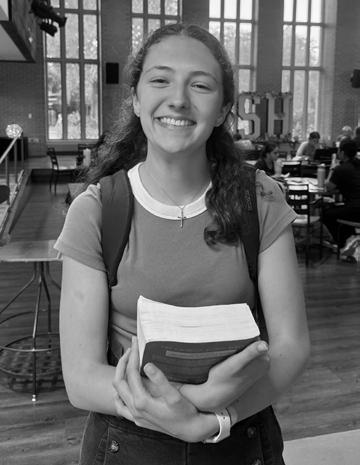
Colbert senior Lyons Hall “15-ish hours.”
Dylan Kellan freshman Sigfried Hall “36 hours.”
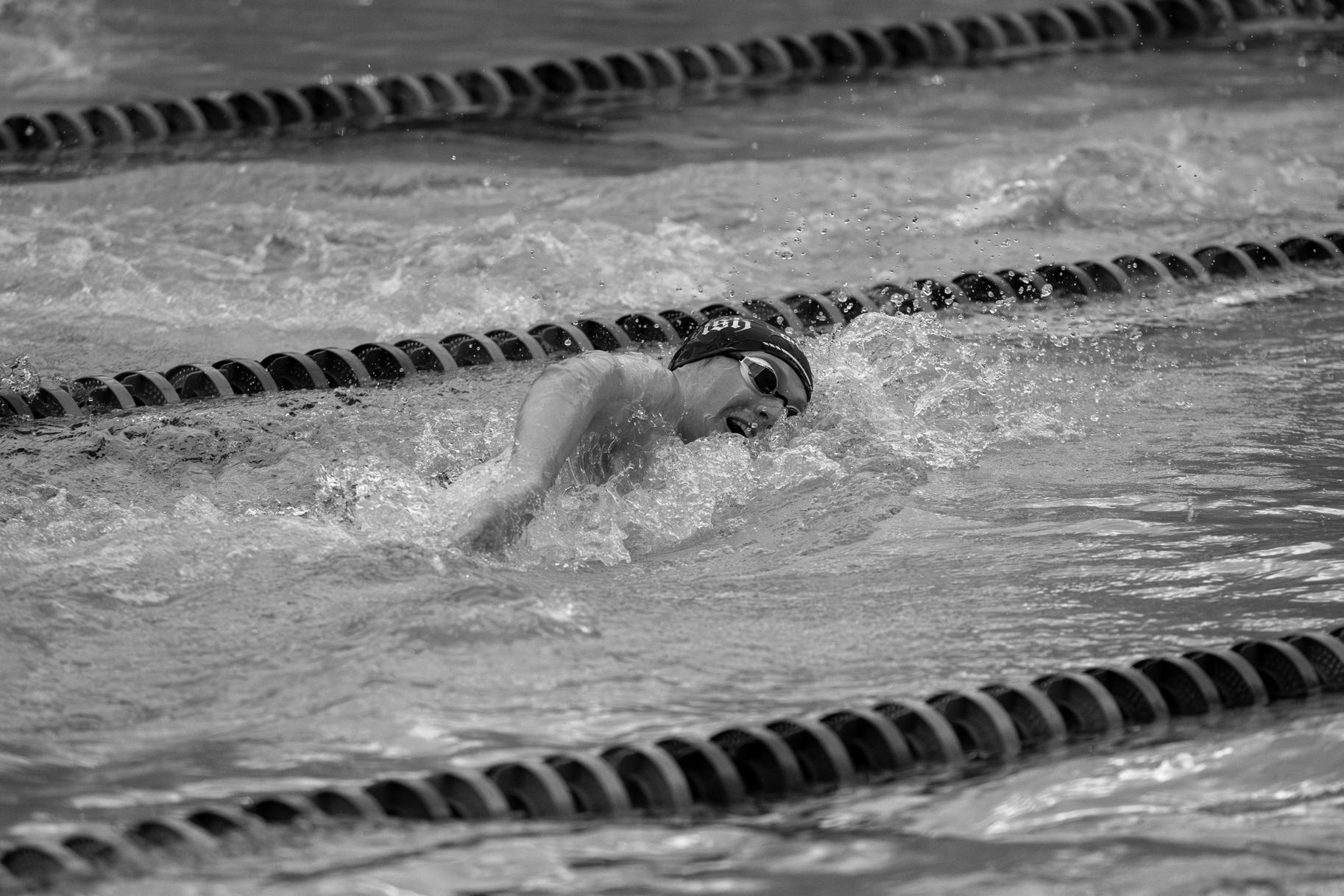
Andrew Gryzenia freshman Keenan Hall “120 hours!”
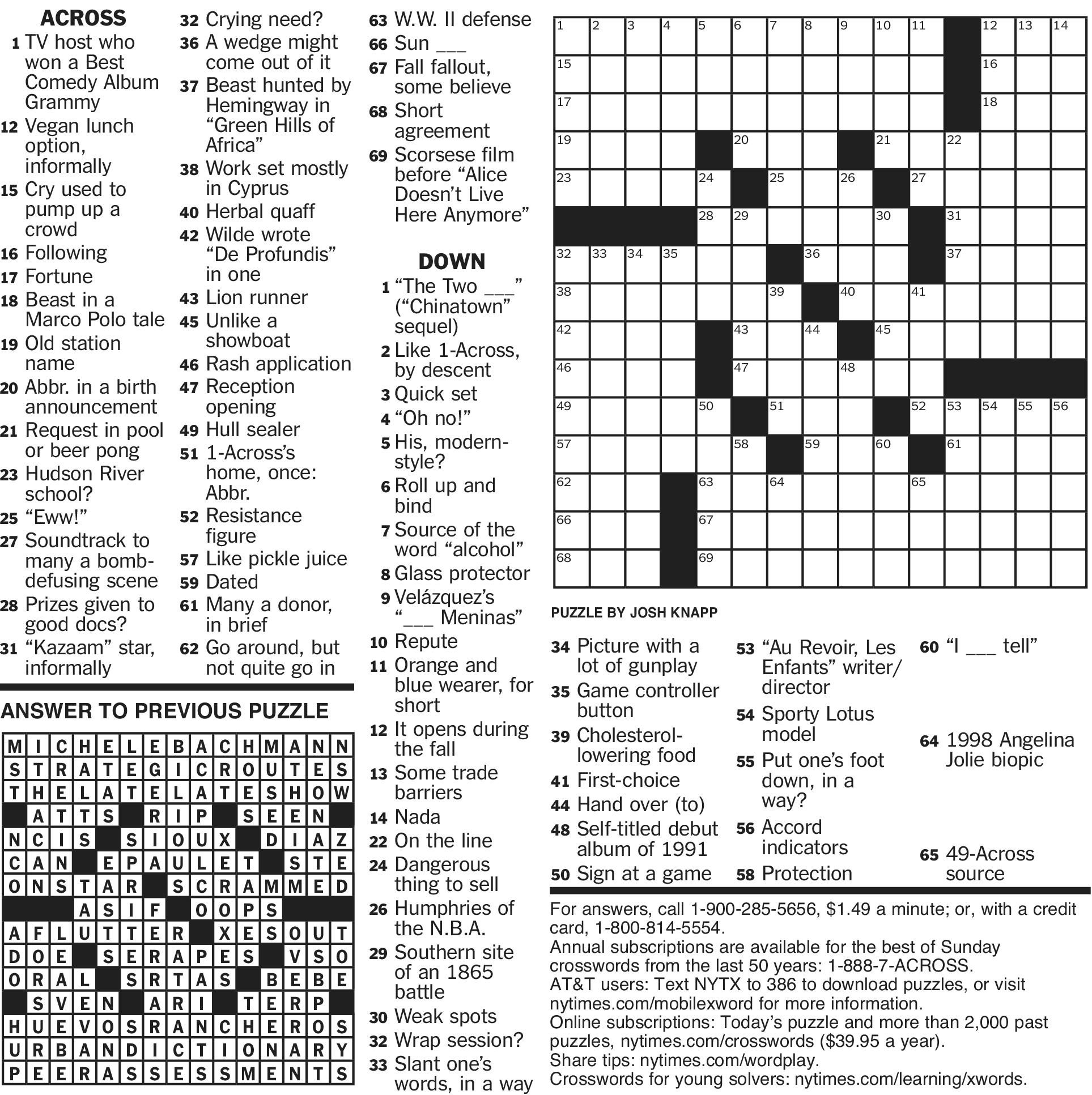
CROSSWORD | WILL SHORTZ
Kellen Gardner freshman Duncan Hall “37 hours.”
Thomas Gaffey sophomore Duncan Hall “24 hours.”
Have an idea for a poll? Email dstangel@nd.edu
What is the best music genre?
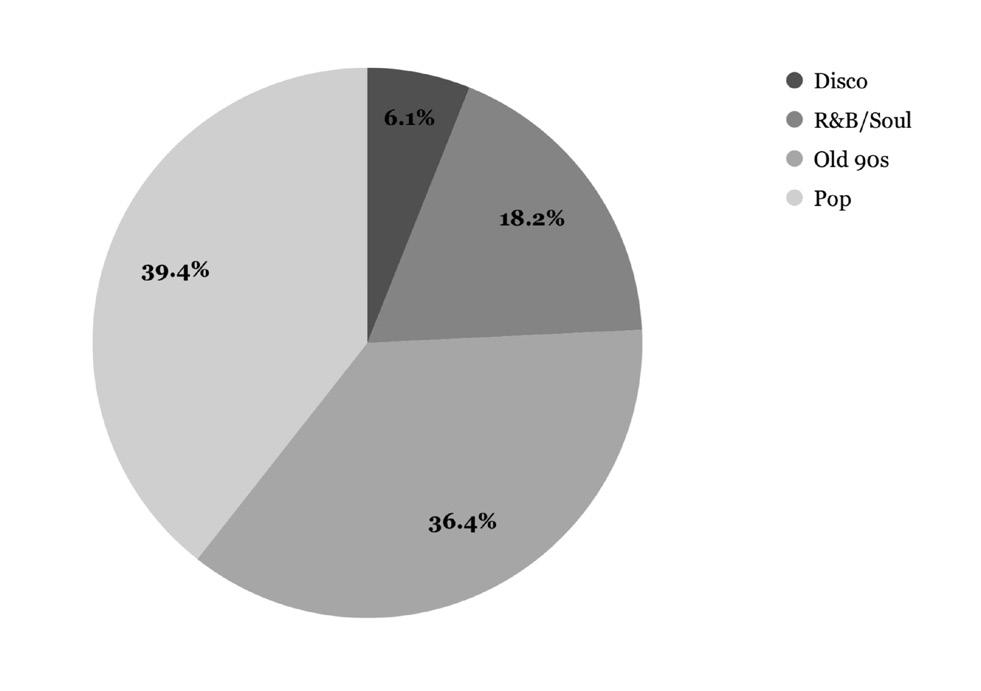
A recent survey conducted by The Observer via Instagram asked students what they thought the best music genre was. A majority of students, 39.4%, thought that pop was the best music genre. In a close second, 36.4% of students thought that old 90s was the best music genre. Some students said that R&B/soul was the best music genre, making up only 18.2% of the vote. Only 6.1% of students reported that disco was the best music genre, making up the smallest share of the votes. Notre Dame students seem to be big fans of pop and the old 90s compared to other music.
Want your event included here? Email news@ndsmcobserver.com
Wednesday
‘The Future of International Aid: Reforming a System’ Lecture by CEO of International Resuce Committee. Hesburgh Center for International Studies
4 p.m. - 5 p.m.
Thursday
Notre Dame men’s hockey vs. St. Lawrence
The Irish face the Saints in their first homegame of the year. Compton Family Ice Arena 7 p.m.
Friday
Cultivating Hope with Cardinal McElroy Conversation with Fr. Dowd on politics and social divides. 215-216 Mckenna Hall
4 p.m. - 5 p.m.
Saturday
Notre Dame football vs. USC
The Irish face their rivals the Trojans. Notre Dame Stadium 7:30 p.m.
Sunday
Film: ‘Monster House’ Animated tale following the misadventures of three teens. Debartolo Performing Arts Center
1 p.m. - 2 p.m.
By Ellie Collins Sports Writer
The Fighting Irish proved a return to form this past Saturday in their impressive performance, especially defensively, against the NC State Wolfpack. With their 36-7 win, Notre Dame improved its record to 4-2 and climbed to No. 13 in the AP College Football Top 25 Poll. As the Irish prepare for the biggest test left on their schedule in their upcoming matchup against rival USC, they have honed the aggression, physicality and confidence that were inconsistent earlier in the season; however, some adjustments still need to be made before Saturday. Here are some highs and lows from this past weekend.
Stock-up: Run defense
Dynamic Wolfpack sophomore running back Hollywood Smothers arrived in South Bend averaging 115.5 yards per game on the ground on 6.9 yards per
touch. The Irish defense controlled the line of scrimmage and limited Smothers to only 46 yards on 12 carries, as senior defensive tackle Gabriel Rubio continued his sterling recent play and junior USC transfer Elijah Hughes flashed with his quickness and ability to penetrate.
Most importantly, the Irish limited Smothers’ home-run ability. He racked up 19 explosive plays (runs of 10 or more yards; receptions of 20 or more yards) in NC State’s first six games; he only managed one against the Irish, for only 10 yards.
A main tenet of Marcus Freeman’s defensive philosophy is to play with clarity, velocity and violence. The Irish certainly did so against a dangerous Wolfpack attack.
Stock-up: Pass catchers
After years of mediocre play at the receiver positions, Notre Dame has an abundance of options for freshman quarterback C.J. Carr to target. Wisconsin
transfer and team captain, senior wide receiver Will Pauling posted his first 100-yard receiving game in the blue and gold and caught a touchdown for the third game in a row. Sophomore wide receiver K.K. Smith notched his first career touchdown on a third-quarter post pass from Carr. The emergence of Pauling and Smith to supplement junior Jordan Faison and senior Malachi Fields makes this the deepest collection of wide receiver talent arguably since the days of Michael Floyd, Golden Tate and Kyle Rudolph. If Jaden Greathouse can recover after missing the last two games with a thigh injury and repeat the form he showed as a star in last year’s College Football Playoff, Carr will have an embarrassment of riches.
Carr’s options, however, are not limited to wide receivers. Senior tight end Eli Raridon had a career-high seven receptions (on seven targets) and his firstever 100-yard game. Healthy
and confident, Raridon looks like he will join the long line of Irish tight ends in the NFL.
Stock-down: Red-zone play calling and execution
For the second straight game, offensive coordinator Mike Denbrock failed to impress in goal-to-go situations. Against Boise State, he decided to involve Carr as a blocker with junior running back Jeremiyah Love taking a direct snap in a fourth-down call at the oneyard line. The wildcat formation didn’t work against the Broncos. It got worse against the Wolfback, as the Irish failed to score touchdowns on four of their trips in the red-zone.
The most questionable decision came in the first quarter when the Irish faced fourth and less than a yard inside the N.C. State five-yard line. Denbrock overthought it and called for a rollout pass, but the Wolfpack were ready for it. Notre Dame prides itself on being a tough, physical
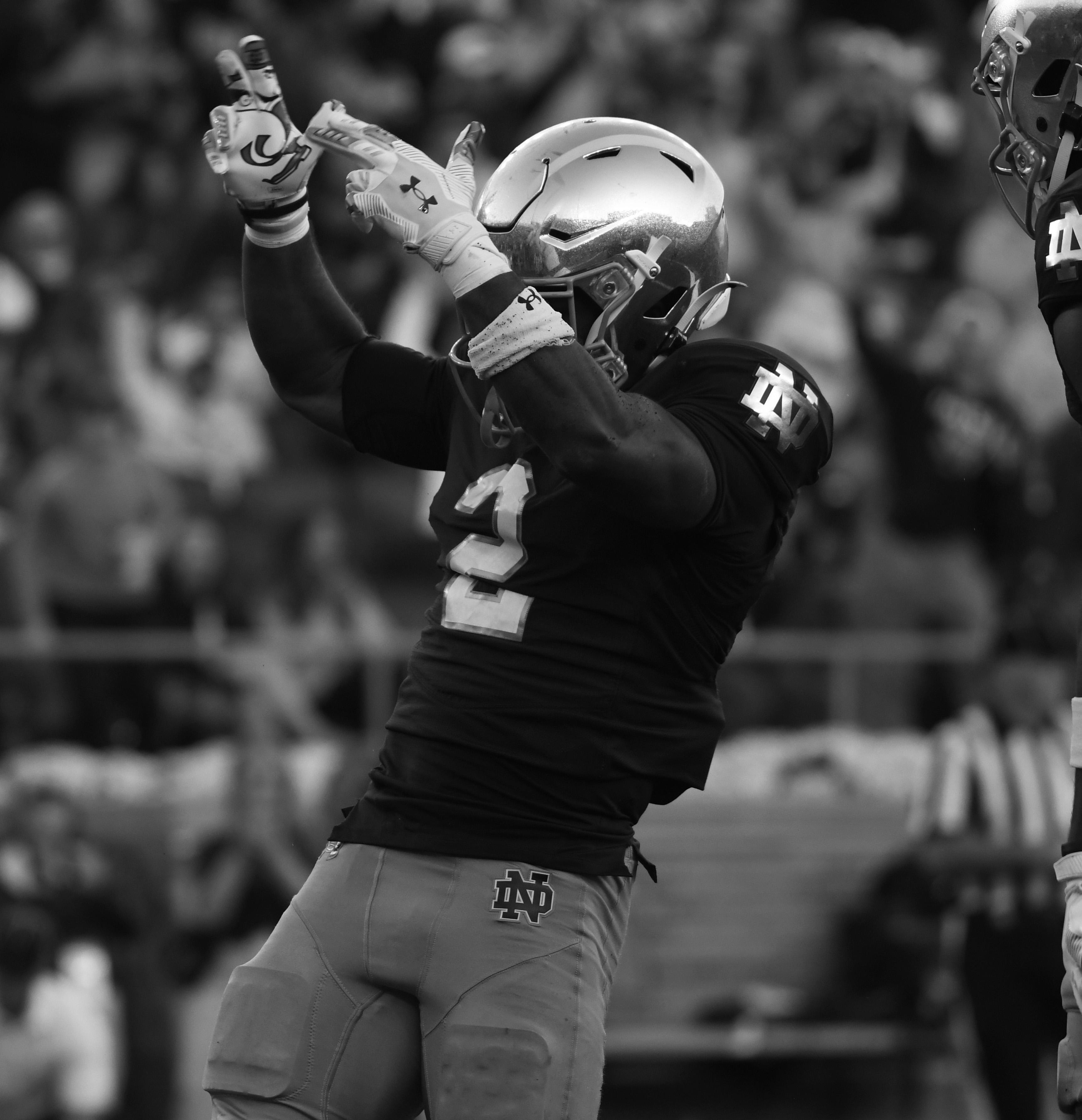
team with a stalwart offensive line. Passing on fourth and inches does not scream tough and physical.
The offense got outfoxed again on another fourth down when he called a one-man route pattern to Fields with no secondary option. NC State blanketed Fields with a platoon of coverage, forcing Carr into a desperation interception
Denbrock has been blessed in recent years with red-zone cheat codes in the form of quarterbacks Riley Leonard and LSU great Jayden Daniels, with their respective running prowess. Carr is not that type of quarterback; it is the coach’s job to adjust.
With USC coming to town, the Irish need to fix the red-zone issues. It starts with the play calling, but given the talent of the offensive line and elite running back tandem Love and fellow junior Jadarian Price, the short-yardage lack of efficiency is alarmingly subpar.
Stock-down: ACC refs
After an embarrassing performance by the ACC officials in the Boise State game in which 24 penalties were accepted and numerous calls were blown, it was “Groundhog Day” in Notre Dame Stadium again on Saturday.
Late in the first half, with the game tied at 7-7, the on-field and replay officials failed to overturn a completion to Wolfpack wide receiver Terrell Anderson on a crucial third down. Anderson clearly used the turf to trap the ball, but the ruling was upheld. NBC rules analyst Terry McAulay termed it “quite possibly the worst replay ruling I’ve seen this season.”
A similar play occurred moments later when junior Irish cornerback Christian Gray appeared to make a critical interception that would have given the Irish the ball in Wolfpack territory. It was ruled incomplete on the field and then upheld by replay, even though Gray appeared to possess greater control than Anderson’s “catch” just one play prior.
It is time for Notre Dame to send a message and explore using other conference referees when it has the choice.
One final stock-up: Notre Dame-USC rivalry
Freeman said he was very confident that the rivalry will be extended at his press conference on Monday. “The head coach of this football program desires to continue this rivalry,” he stated, “and it’s not just because I’m at Notre Dame… I think it’s great for college football and two institutions to continue this rivalry.” Here’s to hoping.
By Claire Watson Associate Sports Editor
As the tri-campus winds down for fall break, Holy Cross College’s basketball teams are gearing up to hit the ground running as they prepare for their upcoming seasons.
Men’s basketball
Last season, the Saints compiled a 9-18 overall record, were 6-14 in conference, 7-7 at home and a dismal 2-11 on the road. That said, six of those overall losses came by 10 points or less.
The team will welcome back many players who had made an impact on the team last year, but they also lost some important contributors.
Guard Justin O’Neal played in every game this past season, averaging 15.5 points per game on 39% shooting, but exhausted his eligibility.
Guard Nash Hostetler also played in all 27 games last season for the Saints and averaged 8.7 points per game on 44% from the field with an average of 4.6 rebounds per game.
Two key returners, sophomore guard AJ Roseman and junior guard Joey Garwood, will spearhead the Saints efforts this year. While only appearing in 16 games last season, Roseman finished averaging 7.3 points and 4.5 rebounds per game. Garwood, on the other hand, was a key starter for the Saints,
competing in all 27 games. He finished his season averaging 17.4 points and 2.9 rebounds a game.
The Holy Cross men’s basketball team will kick off their season with a game against Ancilla College on Oct. 17.
The Saints will kick off their season with an exhibition on Oct. 17 against Ancilla College. The regular season gets underway when Holy Cross hosts East-West University on Oct. 29.
Women’s basketball
Last year the Saints women’s basketball team saw a lot of success as they finished 1613. They look to continue that momentum but will have to fill in the gaps vacated by last
year’s seniors, guards Jordyn Smith and Kayliana Hammel and forward Grace Adams. Smith, who played in 24 games, finished her final year with the Saints averaging 10.6 points and 3.3 rebounds per game while shooting 41% from the field. Next to her was Hammel, who competed in 28 games during her senior year, averaging 9.8 points per game. In addition to this, she averaged 3.2 rebounds a night. Adams, the team’s oncourt leader, played in all 29 games last season, averaging 18.9 points and 10.7 rebounds per game and shot 52% from the floor.
Despite the loss of some personnel, the Saints welcome back strong players,
including sophomore forward Allie Caldwell. Caldwell finished her first campaign playing in all 29 games, 15.7 points per game and 4.4 rebounds per game. Another critical returner is sophomore guard Lilly Toppen. During her freshman season, Toppen played 28 games, averaged 6.1 points and 1.5 rebounds per game.
The women’s basketball team now prepares for their second exhibition this Wednesday, Oct. 15 against Lake Michigan with tip-off set at 6 p.m. The Saints will start the regular season on Oct. 25 with Taylor University.
Contact Claire Watson at cwatson7@nd.edu
By Caloe Peretti Sports Writer
The Notre Dame swimming and diving teams kicked off the 2025-26 season on Friday at Rolfs Aquatic Center, hosting ranked opponents Michigan and Wisconsin. Despite spirited performances, both the men’s and women’s squads fell to the visiting teams. The No. 25 men’s team lost 117-183 to No. 10 Michigan and 143-155 to No. 22 Wisconsin, while the women dropped 82-218 to Michigan and 105.5-194.5 to Wisconsin.
Notre Dame claimed six individual event victories, highlighted by strong showings from senior record-holder and U.S. National Team member Tommy Janton, sophomore Shane Eckler and standout senior divers Daniel Knapp, Benedict Nguyen and Grace Courtney.
The men’s team narrowly missed an early victory in the 200-yard medley relay. The quartet of Janton, freshman Jack Armour, senior Dillon Edge and Eckler finished second in a time of 1:27.43, just 0.03 seconds behind
Michigan. Janton then captured the 100-yard backstroke in 47.24 seconds, while Eckler took the 100-yard freestyle in 43.84 seconds and finished second in the 50 free (19.91). Freshman MinGyo Jang added a third-place finish in the 50 free (20.41).
On the diving board, senior Daniel Knapp won the 1-meter with a score of 324.25, and Ben Nguyen earned first in the 3-meter with 369.00 points. Freshman Matthew Wong impressed with a second-place finish in the 1-meter (313.70).
The women were led by Courtney, who swept both diving events with scores of 291.40 on the 1-meter and 298.25 on the 3-meter. Graduate student Calie Brady finished second in both events, posting 274.25 and 284.80 points, respectively.
On the swimming side, sophomore Carli Cronk placed sixth in the 200 freestyle (1:49.60) and fifth in the 200 butterfly (2:01.41). Freshman Emily Hamill made a strong debut with a sixth-place finish in the 100 backstroke (55.49) and second in the 200
backstroke (1:59.27). Rookies Kate Simon and Becky Rentz also made their mark, finishing fourth and fifth in the 50 freestyle (23.36/23.44).
While the Irish did not top the scoreboard, the seasonopening meet showcased promising performances from both veterans and newcomers. The Irish will return to Rolfs Aquatic Center on Oct. 24 to host regional rival Northwestern in a dual meet at 3:30 p.m.
Contact Caloe Peretti at cperett2@nd.edu
By Payton Dymek Sports Writer
The Notre Dame offense had an incredibly low-scoring game at the half against NC State, sitting at only 10 points, before coming back to win the game 36-7. This win pushed the Irish to 13th in the AP Top 25 poll; however, does the offense that took the field in the first half of Saturday deserve that high of a ranking? Today, we grade each offensive position from both the first and second halves and discuss their contribution to the win against the Wolfpack.
To open the game, redshirt freshman quarterback CJ Carr found early rhythm, only having one costly mistake. Carr was able to spread the ball out well and connected with senior wide receiver Will Pauling two times for gains of 32 and 19
yards, which helped set up junior running back Jeremiyah Love for a 2-yard rushing touchdown. Despite the early 7-0 edge, in the second possession, the offense missed the fourth-and-1 conversion by allowing the Wolfpack defense to sack Carr. The second quarter saw lots of inconsistency and interceptions, with the opening drive having two incompletions to end the series. Although there seemed to be a moment of positivity with a big total of 53 yards to senior tight end Eli Raridon, Carr threw his first interception since the game against Texas A&M. Throughout the end of the half, we saw a dip in accuracy, but consistent aggressiveness that generated explosive plays.
The second half saw moments of rebounds as it started with two incompletions and a struggle to have any rushing yards, before bouncing back to
find sophomore wide receiver KK Smith and junior wide receiver Jordan Faison. Carr was better at reading the NC State defense, throwing deep balls to Smith and another touchdown to Pauling. Carr’s fourth quarter was home to significantly less efficiency and poor game management, as he couldn’t finish long drives, was sloppy with incompletions and fumbles and struggled to sustain longer drives. Overall, Carr connected on 19 of 31 passes, passing for 342 total yards and two touchdowns.
First half grade: “C+.”
Second half: “B.”
Running backs
After a very quiet first half, the Irish running game exploded in the second half, especially for Love, who rushed a total of 86 yards and scored two touchdowns for the Irish, when the Irish went on their 26-0 scoring run. Junior
running back Jadarian Price helped a lot in the second quarter and gained 30 yards for the Irish, but it wasn’t until the second half that the two would properly complement one another to shut down the NC State defense late.
First half grade: “B-.”
Second half: “A-.”
Wide receivers
Notre Dame’s wide receivers made the most of their chances mainly during the second half, yet Pauling opened the game with early plays of 32 and 42 yards in the first quarter, finishing with four receptions for 105 yards and a touchdown. Smith came alive in the second half, especially in the third quarter, with a 10yard pass, a 31-yard catch and then a 12-yard touchdown. The two combined for seven catches and 165 yards, displaying the offensive spark the Irish needed.
First half grade: “B.” Second half: “A.”
Tight ends
If anything on Saturday, Notre Dame needed a reliable player, and Raridon was just that. He caught seven passes for 109 yards, leading the team, with the majority of those receptions coming in the first half, when the offense struggled in other positions. Raridon’s longest gain, a 53-yard reception in the second quarter, set up key scoring chances before halftime. Raridon continued to have a strong and consistent game, including a 36-yard grab in the fourth quarter, demonstrating his ability to demand the ball and make smart plays even when pressure gets high. First half grade: “A.” Second half: “A+.”
Contact Payton Dymek at pdymek@nd.edu
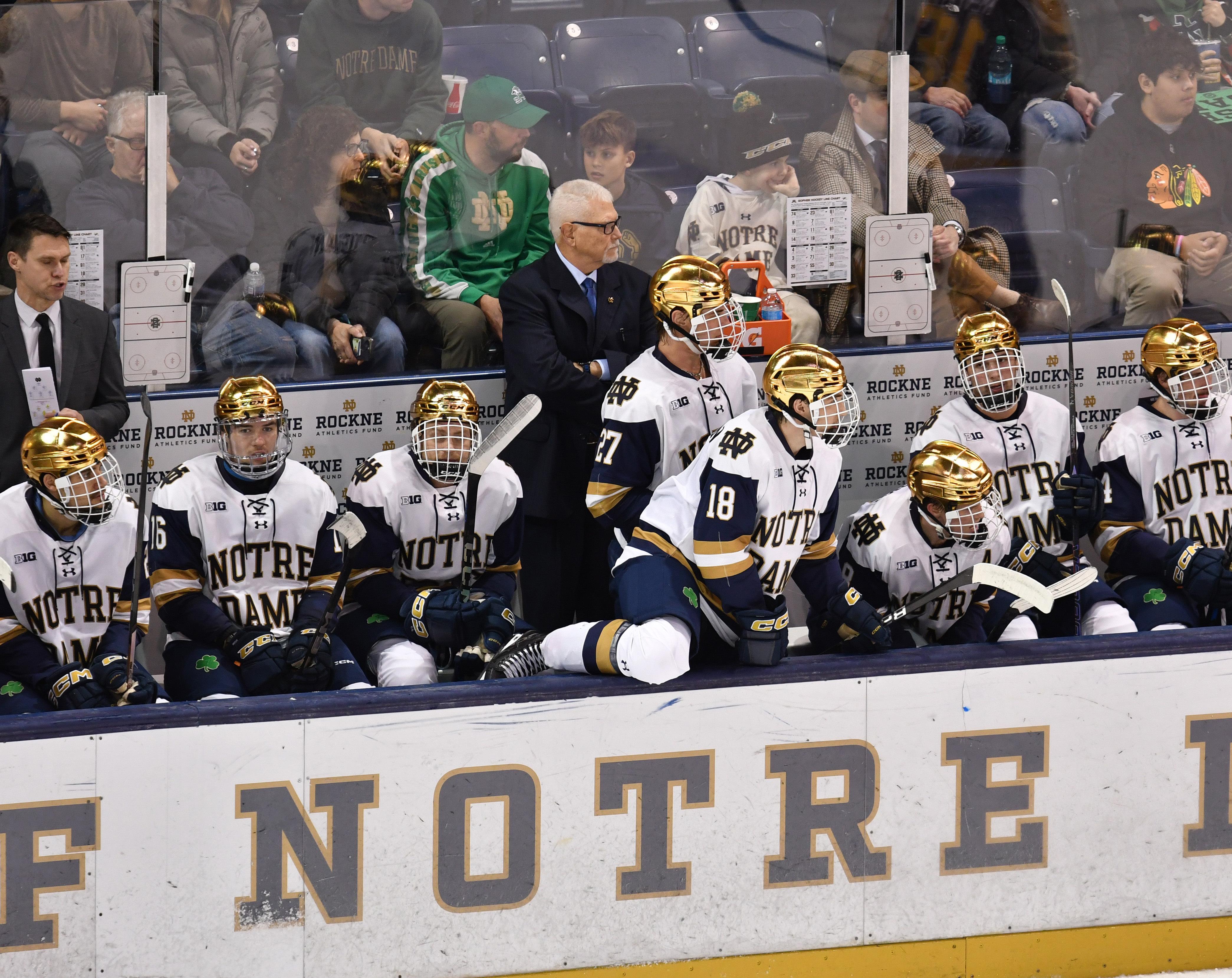
ND HOCKEY
By Nikki Stachurski Sports Writer
Fighting Irish hockey has returned to South Bend as the Irish take on nonconference opponent St. Lawrence in two games this coming weekend. The home opener is this Thursday, Oct. 16, at 7 p.m. with a follow-up game Friday, Oct. 17, at 7 p.m. The Irish are hoping to use the home-ice advantage and record their first wins of the season, especially coming off the losses in the Ice Breaker Tournament last weekend.
While Notre Dame is a member of the Big Ten, St. Lawrence competes in the Eastern College Athletic Conference (ECAC) and plays many private schools with elite hockey programs, including Ivy League squads like Harvard, Princeton, Dartmouth and Yale. The Irish and Saints have played each other four times in the past, with Notre Dame recording three victories. The teams played last October, when Notre Dame beat St. Lawrence 4-1 in Canton, N.Y.
Both teams are anticipated to come into the series strong and searching for success.
Notre Dame will be fighting to establish earlier dominance on offense after trailing to both No. 15 Arizona State and No. 8 Quinnipiac. St. Lawrence will be hoping to replicate their success after recording their first win of the season in their last outing against Vermont.
St. Lawrence is currently 1-3, and is coming into the game confident after beating Vermont 5-2 at home. The Saints are not a particularly high-scoring team, only scoring five goals throughout their first three games, but their offense appears to have found its cohesiveness on the attack against the Catamounts. They have stacked up penalty minutes, far more than their opponents, and their penalty kill has been forced to minimize scoring with the one-man disadvantage.
For the Saints, senior forward Tyler Cristall and junior forward Gunnar Thoreson have been their top-producing
players on offense. Both Cristall and Thoreson have recorded two goals and one assist, and will be players for Notre Dame’s defense to keep an eye on.
Despite coming into South Bend on a win, the Saints still have room for improvement on their offense. Of the 10 goals they have scored, two have been scored on an empty-net and only one on the power play. The remainder of their goals were scored on even strength, but the team needs to emphasize play-making and goals through traffic.
The Irish have a strong freshmen core coming into this season, but veteran players have set an early example of excellence. Graduate student forward Sutter Muzzatti had a phenomenal game against Quinnipiac, scoring both Irish goals of the game. He also recorded an assist against Arizona State, making him the team leader on offense with three points. Junior defenseman Paul Fischer is close behind, with one goal and one assist already. Fischer
played a strong game against Quinnipiac, assisting on Muzzatti’s first goal. Although he has not scored a goal yet this season, senior defenseman Axel Kumlin has been the magic man helping to set up shots, with two assists already. Kumlin has recently shown an innate sense on the attack, making necessary passes to get pucks into the net.
Notre Dame’s offense has had difficulty getting started early in the game, giving up three goals before scoring in the second period against the last two opponents they played. The slow start is not a trend the Irish want to continue, especially when playing tough Big Ten opponents like Michigan at the end of the month. The Irish have proven they can make smart plays and score from distance, so they definitely want to get offensive momentum moving early on to take control of the game.
The Irish defense played their strongest game in the 5-3 loss to Arizona State, where defensemen were successful in limiting
shots on goal and eliminating the need for unnecessary saves by sophomore goaltender Nicholas Kempf. After the game against Quinnipiac, the Irish will definitely need to prioritize seeing Kempf even out his saves and being quicker to recover on rebounds so Notre Dame is not harmed by tap-in goals. Just like in the game against Arizona State, the Irish need their defensemen to work cohesively and be quick on reflexes to give Kempf help defending the crease in order to replicate the strong defense this team has shown they are capable of.
The Irish will be taking on the Saints at home this Thursday, Oct. 16, and Friday, Oct. 17 at 7 p.m. at Compton Family Ice Arena. Irish fans are excited to witness their hockey team back in action against St. Lawrence, and the home-opener weekend is the perfect opportunity to demonstrate Irish success on the ice.