An ugly victory
Notre
Dame struggles but comes through when it matters for 15-12 victory over Pittsburgh
By ANDREW OWENS Associate Sports Editor
PITTSBURGH — It wasn’t pretty. It wasn’t easy. But it was a win.
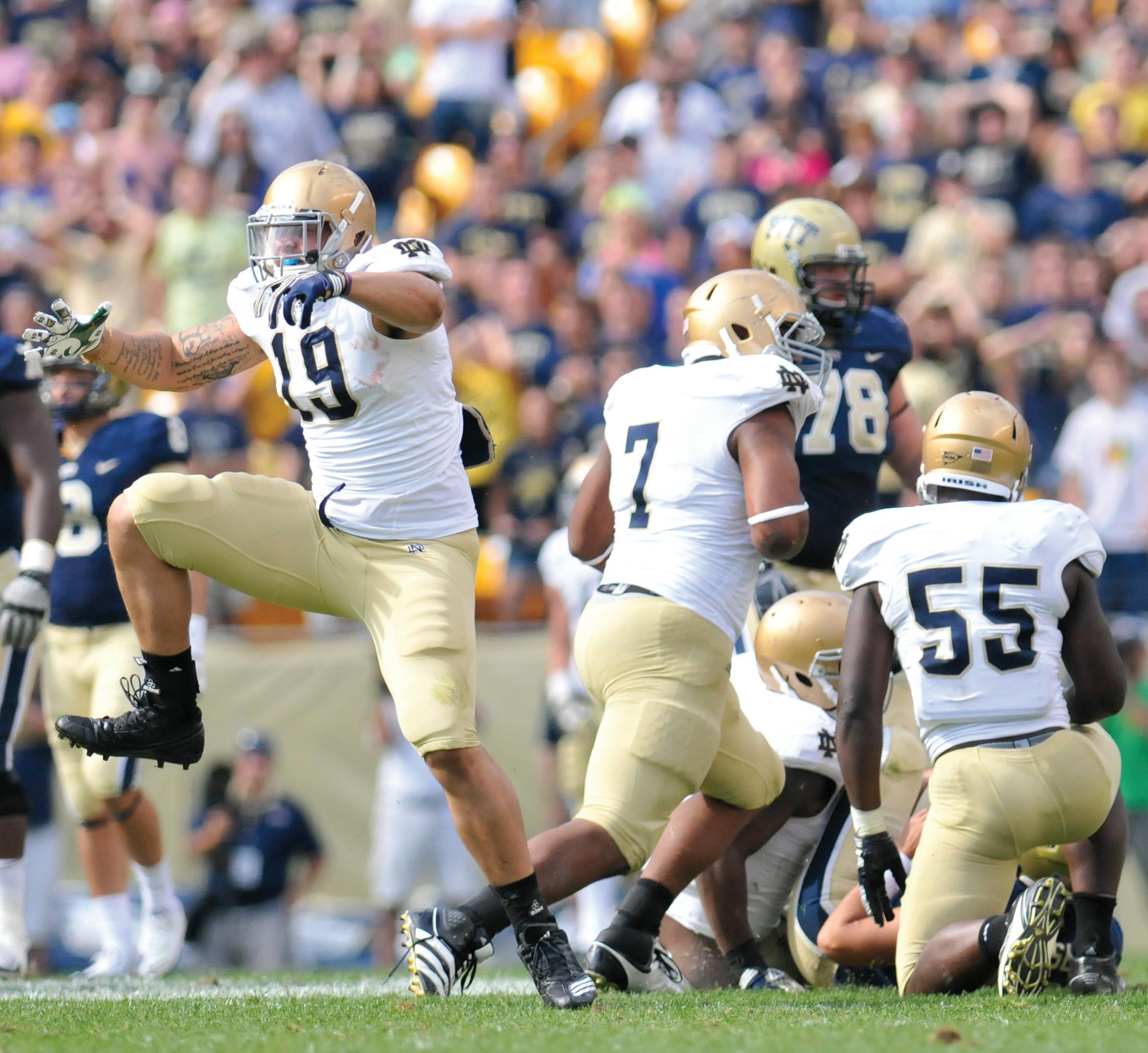
Notre Dame (2-2) scored with less than seven minutes remaining to defeat Pittsburgh (2-2) 15-12 and in doing so, avoided losing its third game in four attempts to start the season.
“Well, [it was] a good win for us obviously,” Irish coach Brian Kelly said. “Hard fought four quarters came down to our ability to put together a very good drive at the end of the game.”
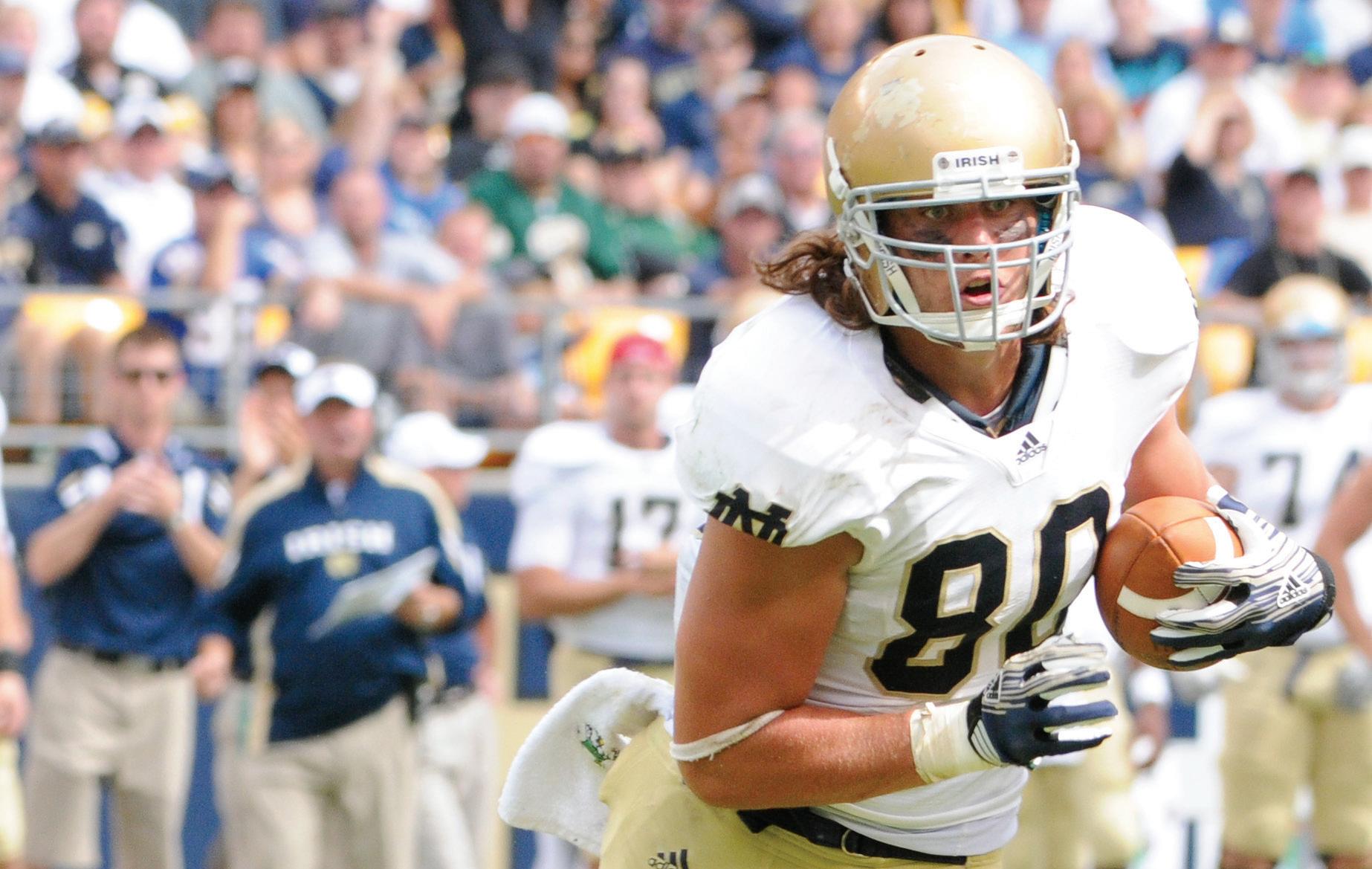
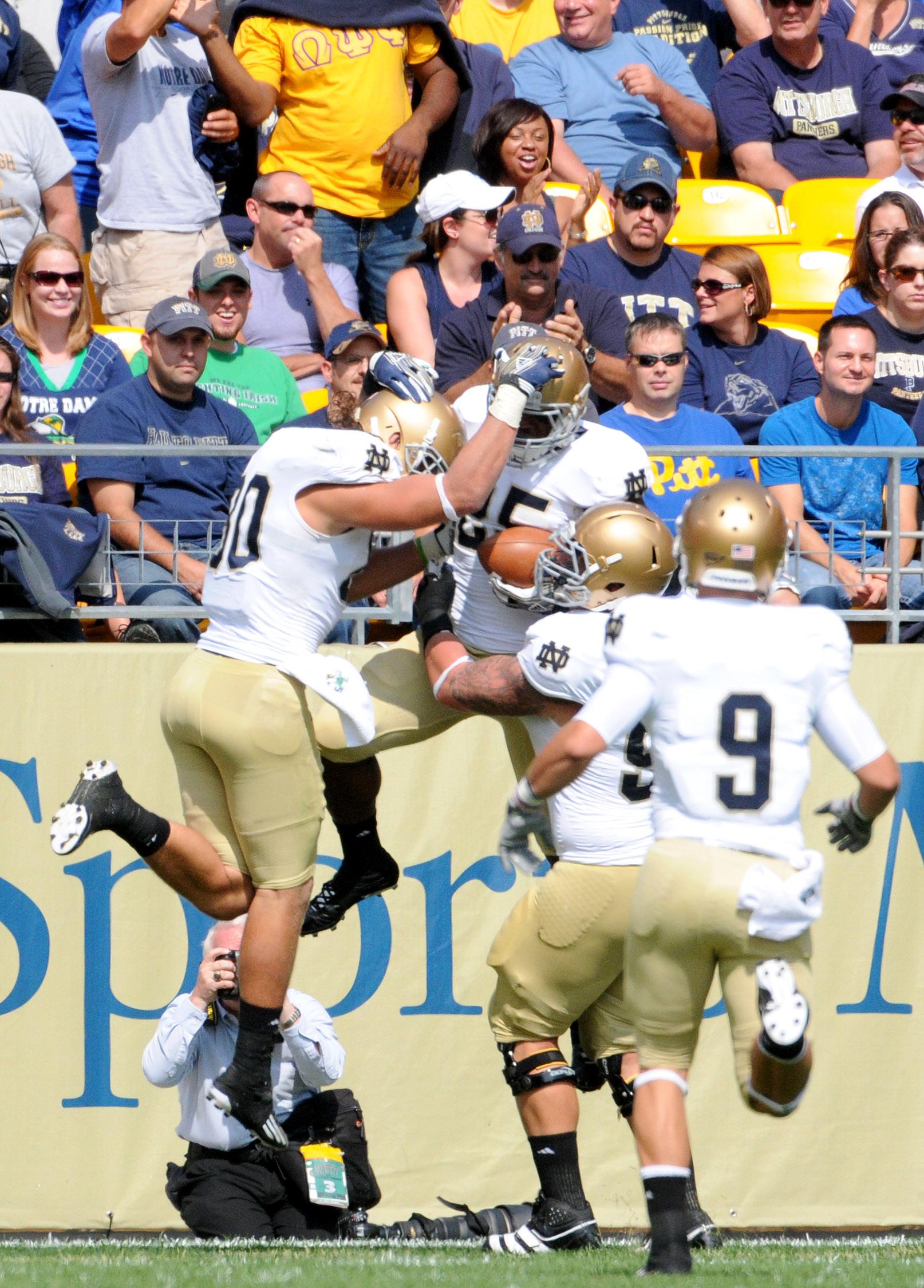
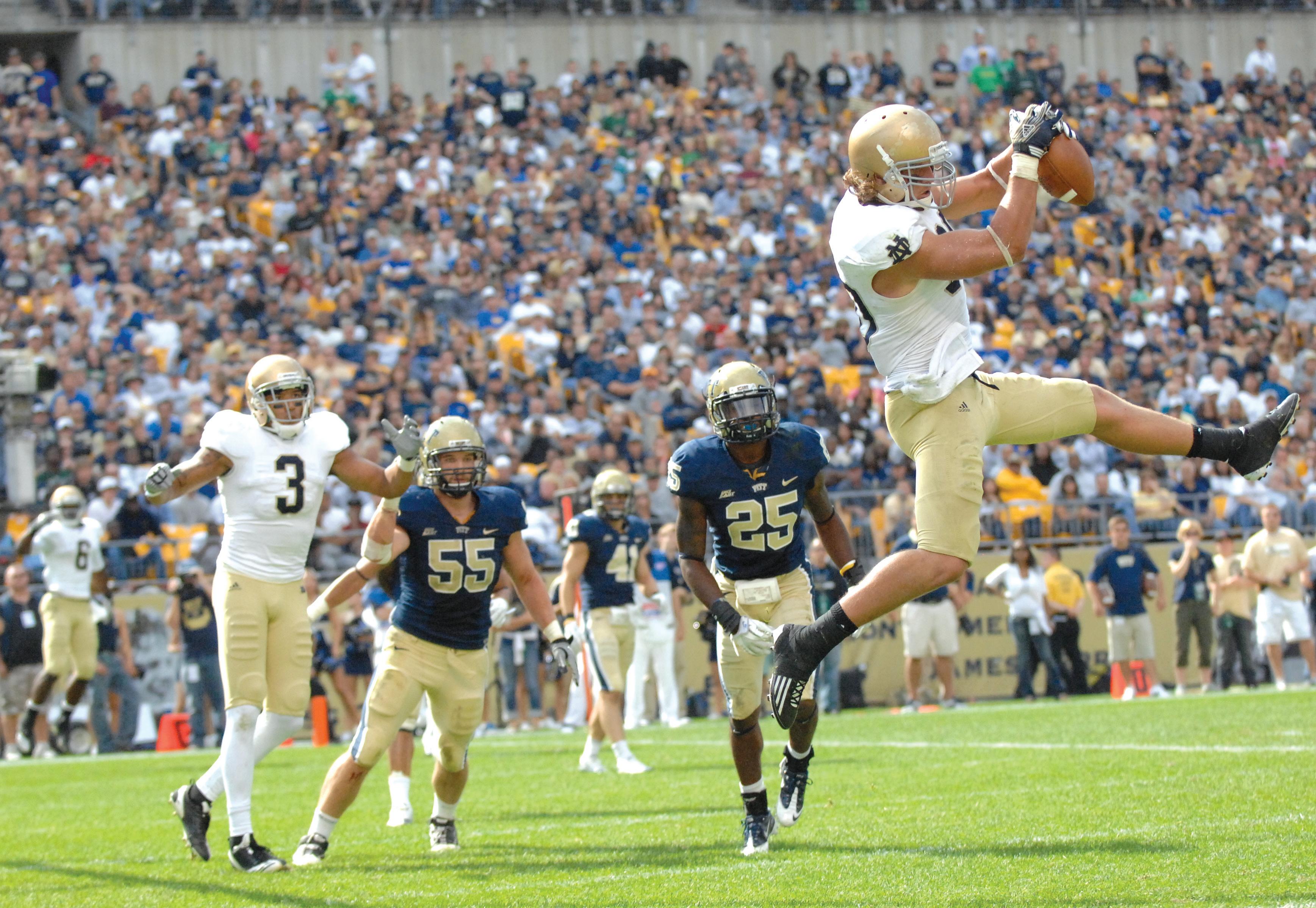
The Irish trailed 12-7 until sophomore quarterback Tommy Rees found junior tight end Tyler Eifert in the end zone for the go-ahead score. The two connected again on a twopoint conversion to give Notre Dame a three-point advantage it would not relinquish. Eifert reeled in four passes on that drive alone for 34 yards.
“Just guys making plays on the last drive was really what stands out,” Kelly said. “Obviously two fourth down conversions, our offensive line getting a big enough push to convert — those are good signs for us in terms of being able to win closely contested football games, because you’re going to have those on the way.”
Pittsburgh coach Todd Graham said he was proud of Pittsburgh’s game plan.
“We’re capable of playing good coverage,” Graham said. “We pressured the quarterback. We had a great plan.
“Defensively, I thought we played well enough to win the game. I like the character of this team and how the players have bought into it. I believe in our football team. We’re getting better.”
The Irish sealed the win late in the fourth quarter when Kelly kept the offense on the field on fourth-and-one from the Pittsburgh 35-yard line with 52 seconds remaining. Rees kept the ball and dove forward to gain the yard and ensure an Irish victory.
“I’m really pleased with our resilience and our toughness,” Kelly said. “We’re playing the kind of football we want our teams to play. It’s not going to be an instant classic, but it certainly is from a football standpoint. [These are] games you have to win on the road.”
Notre Dame compiled 398 yards of total offense but only mustered two scoring drives. Early in the second quarter, senior running back Jonas
player of the game
Tyler Eifert
Notre Dame tight end
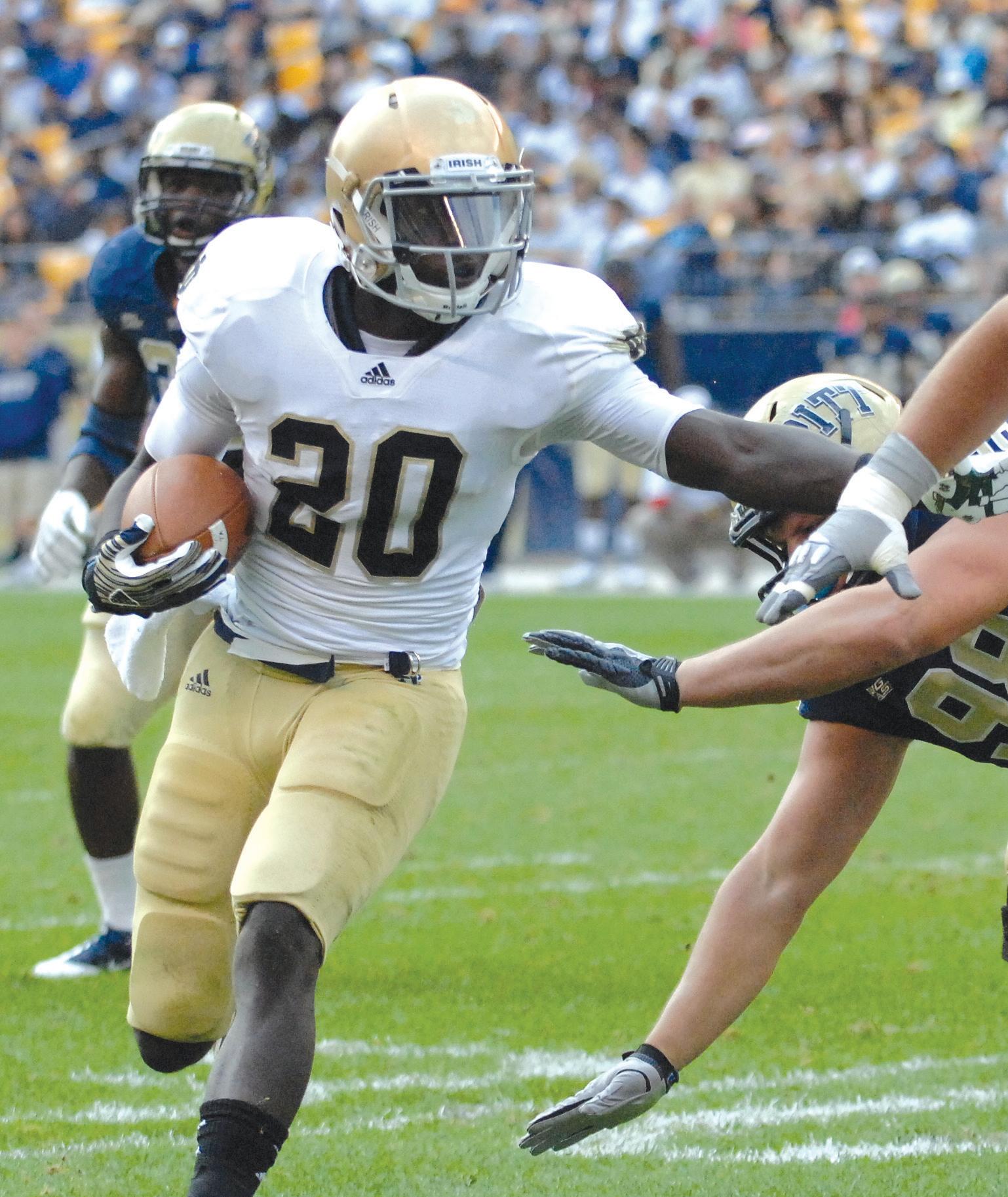
Gray sped away from the Pittsburgh defense and scampered down the sideline for a 79-yard touchdown run. It was the longest Irish run since Terrance Howard broke away from the West Virginia defense for an 80-yard burst in 2000.
“[Gray] only had three carries, but obviously a big run,” Kelly said. “He showed great speed. It was a big time run, when your two-back gets in there and gets a chance and makes a big play, and that’s what we expect from Jonas and that was a big play.”
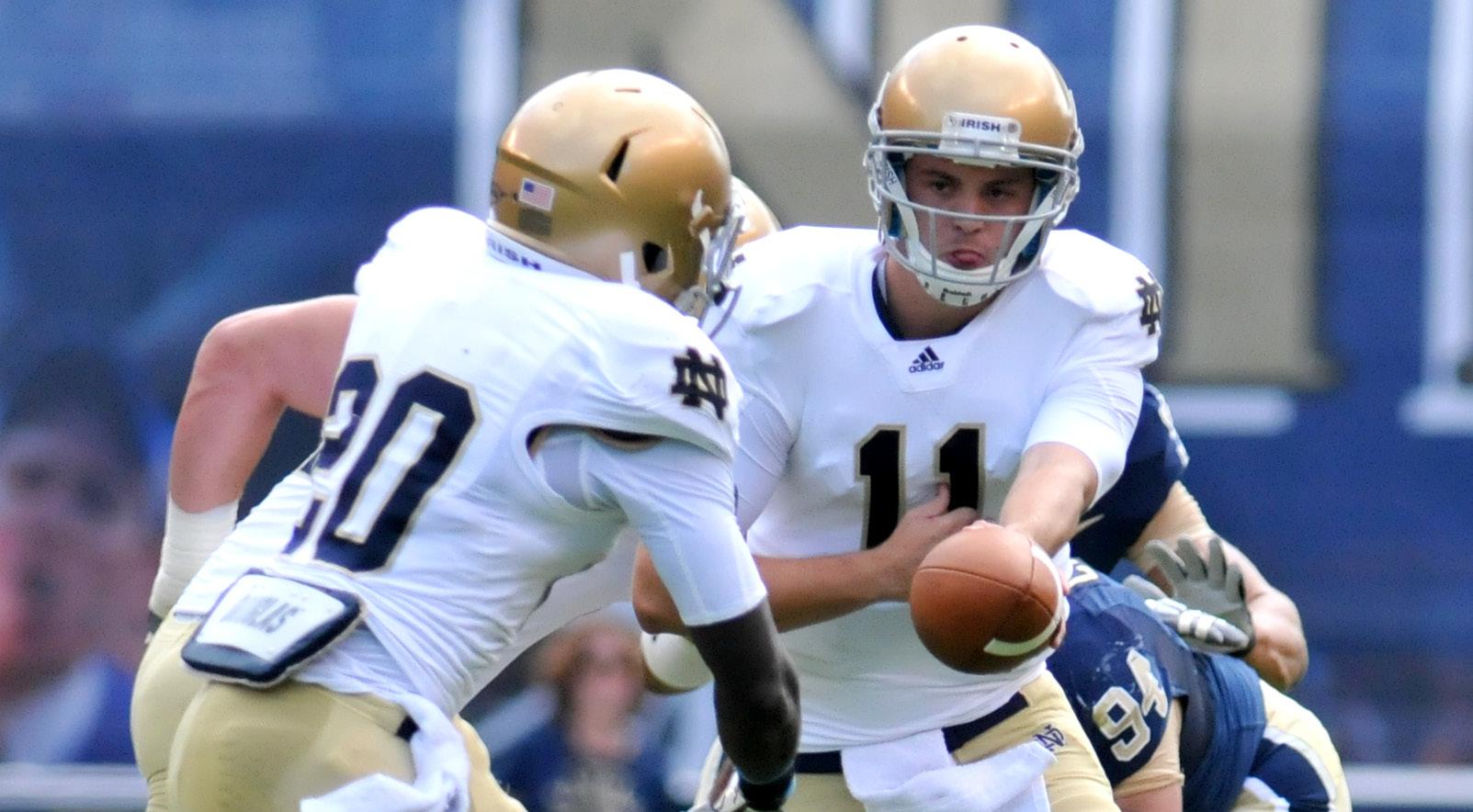
Overall, Notre Dame rushed for 182 yards. In addition to Gray’s 84 yards, junior running back Cierre Wood added 94 yards on 23 carries.
“I thought [Wood] was solid,” Kelly said. “He picked up tough yards inside. A lot of his runs were inside-out and, again, here’s a guy everyone talks about his breakaway speed, but he’s not afraid to stick his nose up in there between the tackles and that’s what he did today.”
Rees was only able to connect with senior receiver Michael Floyd four times for 27
With Michael Floyd doublecovered on every play, Eifert took advantage, recording eight catches for 75 yards and a touchdown.
yards due to the defensive game plan, employed by Graham.
“[They were doing] a lot of things,” Kelly said. “A lot of different coverage variations. They just did a nice job. I thought we adjusted to the things we needed to.
“We started to get some pretty nice flow and rhythm and they had one three-andout in the third quarter, but other than that we made some adjustments at halftime based upon what their game plan is and it’s the first time someone has really aggressively tried to take Michael out of the game.”
After racking up over 500 yards of total offense in the first two games and a 31-point effort against Michigan State, the Irish offense struggled against the Panthers. The Pittsburgh defense utilized new looks against Rees, especially coverages he had not seen before, Kelly said.
“Again, [Rees was] growing up and seeing some things,” Kelly said. “There were some new looks out there for him that he hadn’t seen before that we had to adjust a lot with
stat of the game
8 for 8 completed passes
Sophomore quarterback Tommy Rees completed each of his eight passes on the game-winning drive late in the fourth quarter.
him. After he sees it, he gets much more comfortable. You could see his comfort level that last drive. Like I said at one time it was close to being 13- or 14-out-of-15 at throwing the football.”
Rees completed 24-of-41 passes for 216 yards and turned the ball over twice, giving Notre Dame an NCAAworst 15 turnovers in 2011. The sophomore was poised toward the end of each half, Kelly said.
“The end of the half he did some really good things in terms of throwing the football,” Kelly said. “He was on a really good streak. He had to step up and he didn’t get enough on the interception he threw to Eifert, but you look at him and he knows what’s going on out there. You don’t feel like he’s rattled.”
Senior kicker David Ruffer missed a field goal and the offense was hamstrung by the team’s eight penalties, which lost them 85 yards overall.
“We won’t do anything different [in practice],” Kelly said. “We’ll keep coaching our guys. We do not accept penal-
play of the game
Eifert’s six-yard touchdown catch from Rees in the fourth quarter.
Notre Dame took back the lead for good when Rees found Eifert at the goal line to cap off an 11-play, 85-yard drive.
ties as being part of the game. We demand our guys to pay attention to those things over and over again and hope it turns out better next time.”
With Notre Dame’s September slate now complete and the team holding a 2-2 record, Kelly said he is happy with the competitiveness and development of the squad.
“I told you this many times — I like the way we compete,” he said. “I’d like to win 37-0 too, but winning’s winning. It’s not easy. You go on the road against a BCS team and hold them to 12 points, and find a way to win. I like that development. We’re developing an expectation with our guys that in a close game we’re going to win. Those are good dynamics. We put this one behind us and we have expectations that we’re going to win every game.
“It was a tough, blue-collar kind of day and that’s what was required of everybody and that’s what we got out of our team and it was enough to win and get out of here.”
Contact Andrew Owens at aowens2@nd.edu
quote of the game
“It was a tough, blue-collar kind of day ... that’s what we got out of our team and it was enough to win and get out of here.”
Brian Kelly Irish coach
quarterbacks : Tommy Rees was inaccurate all game long and struggled to read Pittsburgh’s coverages. But when he was most needed, Rees played his best football.
running backs : Cierre Wood had a quiet 94 yards in another typically solid outing. Jonas Gray only had three carries, but one of those was a crucial 79-yard touchdown run.
receivers : Tyler Eifert had a stellar game at tight end, but Michael Floyd could not find a way to shake double coverage. Theo Riddick and TJ Jones struggled to replace him.
offensive line : Pittsburgh’s complex and varied blitzes often confused the line and made Rees’ day difficult. On the late fourth-and-one play, however, the line came up with a huge push.
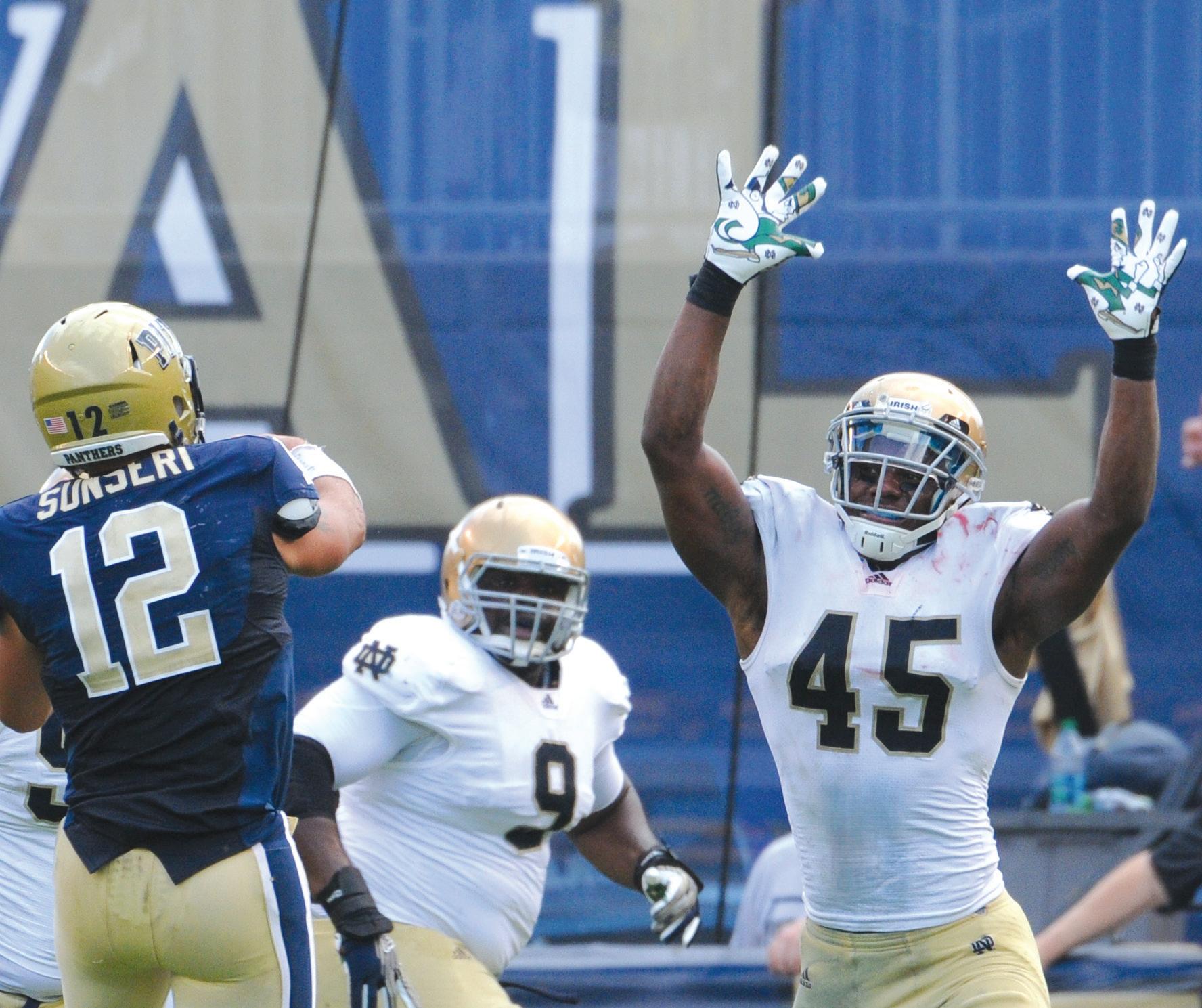
defensive line : Quality play has simply become standard for this unit, which harassed Tino Sunseri all day long and limited dynamic running back Ray Graham to just 61 yards.
linebackers : Darius Fleming had his best game of the season, with three tackles for loss and two sacks. Prince Shembo and Manti Te’o each added sacks and helped contain Graham.
defensive backs : The seondary allowed Sunseri to complete 22 of his 30 passes. Sunseri only had 165 yards, however, as the Irish prevented any long passing plays.
special teams : David Ruffer missed his only field goal attempt, Kyle Brindza had a kickoff go out of bounds and Ben Turk was again underwhelming for a unit that continues to struggle.
coaching : Brian Kelly and Charley Molnar were slow to adjust to Pittsburgh’s defensive changes, but the late-game playcalling focusing on Eifert was absolutely spot-on.
overall : There were a lot of mistakes, and the Irish very easily could have lost this game. But they didn’t, and that’s what really matters.
adding up
the numbers
After three catches on the opening drive, senior receiver Michael Floyd had just one catch the rest of the game.
Notre Dame had its lowest turnover total of the season against Pittsburgh, losing the ball only twice.
Sophomore quarterback Tommy Rees found junior tight end Tyler Eifert four times on the game’s pivotal drive.
Notre Dame recorded eight tackles for loss against the Panthers, including a season-high six sacks.
AAB CB+ 1 2 4 8 89 154 3.15 B+ B+
Irish finally able to win an ugly game
PITTSBURGH — Last week, the Irish took down a ranked team at home, completely shutting down a prolific running game and executing well on offense.
This week, Notre Dame struggled mightily to even break 10 points against a Pittsburgh team that came into the contest ranked 119th in the country against the pass.

Allan Joseph Sports Editor
Yet this week’s win is more encouraging than last week’s, and it might even be more important — because this week, the Irish displayed a quality too often missing in the last few years: the ability to find a way to win despite playing extremely poorly.
Notre Dame teams of the recent past have been talented. When that talent was in sync, the Irish could compete with nearly any team. But when an opponent unveiled an unexpected defense, or concentrated on taking the primary offensive weapon out of the game, the Irish were flummoxed. When a game got ugly, the Irish fell apart and rarely found a way to win despite poor play.
After showing flashes of changing that attitude at the end of 2010,
Notre Dame opened 2011 looking like it had regressed. Despite over 500 yards of offense in each of their first two games, the Irish could not find a way to make a play when they needed one. While 90 percent of the plays went very well for Notre Dame, all of their mistakes happened in the most critical 10 percent.
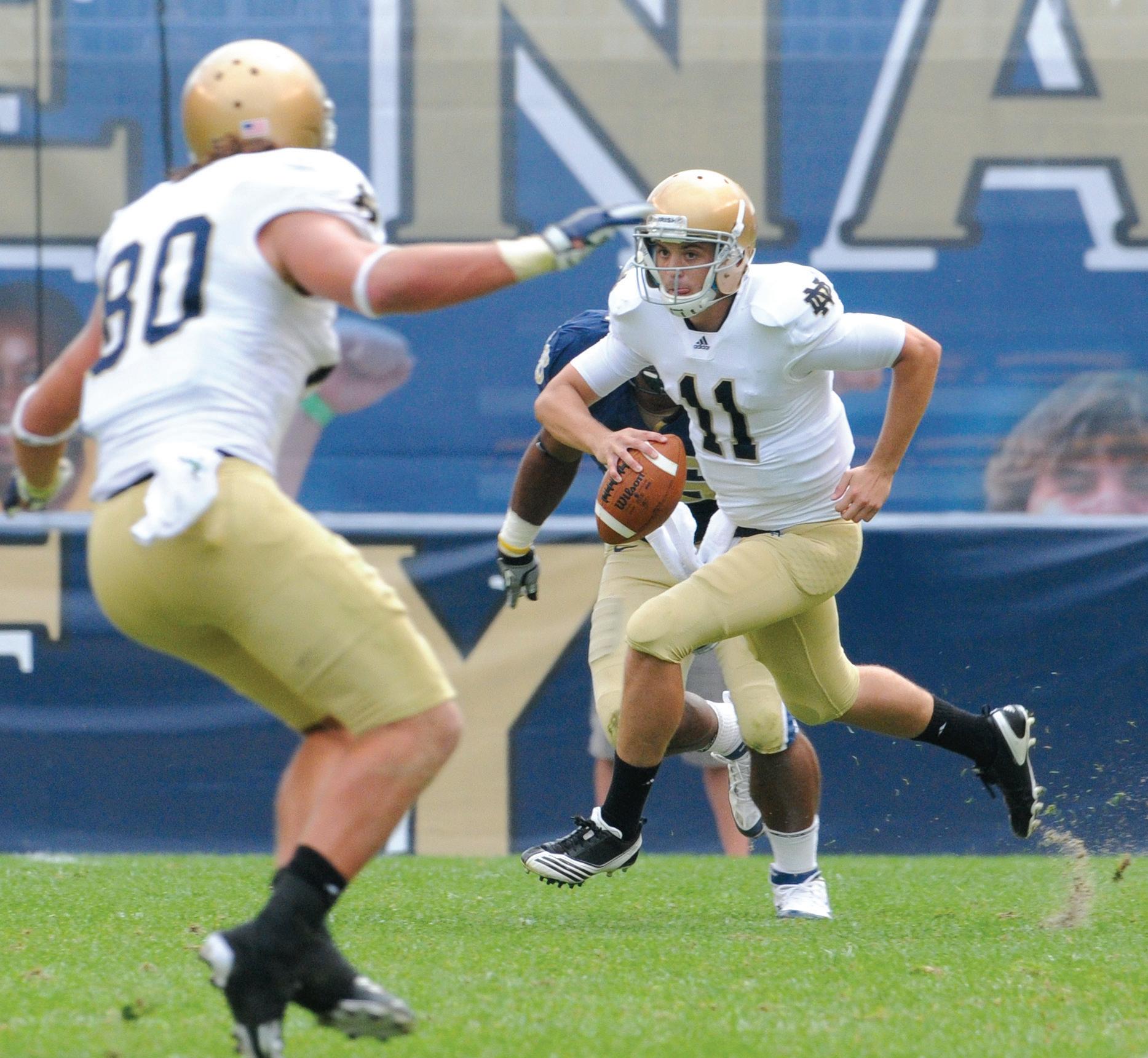
Not so this week. It was an ugly game, especially for the offense. Tommy Rees struggled to find receivers all day, displaying very little of the trademark accuracy that had earned him prolific passing numbers in each of the first two games. Facing blitzing schemes it had never seen on film, the offensive line struggled to adequately protect Rees for much of the game.
Yet when 90 percent of the plays went very poorly, the most important 10 percent were the best snaps the offense took all game. Needing a touchdown to retake the lead, the Irish marched down the field and got the critical points. It wasn’t pretty, but they got it done. After struggling all game, the offense clicked into gear at the most critical moment.
The defense also got in on the act. Two weeks ago, the defense only needed to hold Michigan scoreless for just 30 seconds and couldn’t do so. Saturday was a different story. Pittsburgh quarterback Tino Sunseri had had some success throughout the game, but he had no chance of succeeding late, when it
mattered most. This is an encouraging sign for the Irish. For too long, Notre Dame has struggled in ugly games. It has had difficulty gritting out wins through sheer willpower. Yet that is what elite teams do.
Rarely do top-10 teams breeze through every game on their schedule. There comes a time when every top-tier team must find a way to win in spite of poor play against an inferior — or sometimes superior — opponent.
The Irish are not an elite team. But it cannot become one without the instinct to win. Notre Dame always finds itself in close games. Less-talented teams always play their best against the Irish, even if the Irish don’t. These are the games Notre Dame lost in the past — Tulsa and Navy from 2010 come to mind.
Now it seems things are changing. Notre Dame can grit out an ugly victory. It will have to do so again for this season to be a success. Talent is not enough. Recent history shows that.
But if the Irish can continue to play their best during the most critical points of the game, look out. They will find a way to win a lot more in the future.
Contact Allan Joseph at ajoseph2@nd.edu
The views expressed in this column are those of the author and not necessarily those of The Observer.